Blog

  • Vietnam Briefing: Vietnam Remains “Not Free” On Freedom House’s Internet Freedom Report; Vietnam’s COVID-19 Death Toll Surpasses 18,000 Fatalities

    Vietnam Briefing: Vietnam Remains “Not Free” On Freedom House’s Internet Freedom Report; Vietnam’s COVID-19 Death Toll Surpasses 18,000 Fatalities

    Freedom on the Net 2021: Vietnam remains “Not Free” on internet freedom

    The Vietnamese Magazine reports:

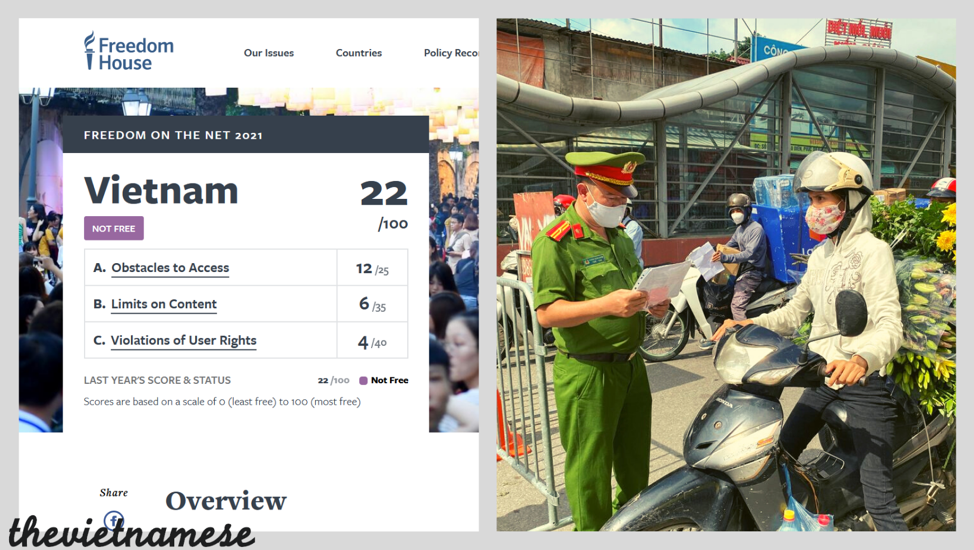
    • On September 21, 2021, Freedom House, a Washington D.C.-based organization, released its annual report Freedom on the Net 2021. In the report, Vietnam scored 22 on a 100-point scale, being classified as “not free” based on Freedom House’s measuring scale.
    • Vietnam’s score this year is 2 points lower than its rating for 24 in 2019 but is equal to its 2020 score, which was also 22.
    • According to Freedom House, three key factors that affect Vietnam’s overall score include the Vietnamese government’s growing pressure on Facebook to restrict and censor content deemed as “sensitive” or “critical” to the state; the government’s censorship, arrests and smear campaigns of several independent candidates during the country’s National Assembly elections; and the draft decree regarding personal data protection that require online platforms to collect and store the personal data of Vietnamese users for providing to the government upon request.
    • In a response to journalists’ queries regarding the results, the Vietnamese Foreign Ministry’s spokeswoman Le Thi Thu Hang said that Freedom House’s report “has no value” since it is a “biased and prejudiced assessment based on untrue information on Vietnam,” reports state-run VietnamPlus. Hanoi has consistently denied the country’s serious violations of basic human rights, while political prisoners are commonly viewed as bargaining chips by the government on the international negotiation table.

    Vietnam releases draft decree on Cybersecurity Administrative Penalties

    From Baker McKenzie:

    Vietnam’s Ministry of Public Security has just released a draft decree on Penalties for Administrative Violations in Cybersecurity to gather public opinion with a deadline of November 18, 2021.

    The draft decree, which consists of four chapters and 51 articles regarding administrative violations, penalties, and remedial measures, is expected to take effect on December 1, 2021.

    According to Baker McKenzie, several key points of the proposed decree include:

    • Scope and subjects of application: Vietnamese and foreign organizations and individuals committing administrative violations in cyberspace.
    • Main areas of sanction for violated object: (i) information security assurance; (ii) personal data protection; (iii) prevention of and combat against cyberattacks; (iv) implementation of cybersecurity protection activities; and (v) prevention of and combat against the use of cyberspace, information technology, and electronic devices to violate the law on social order and safety.
    • Most notably, foreign companies could face sanctions up to 200 million dong (approximately US$8,700) for failing to store users’ data or establish a representative office in Vietnam or failing to authenticate and identify users’ digital accounts with legal ID papers.

    COVID-19 situation in Vietnam

    • As of September 26, 2021, Vietnam has recorded over 476,000 confirmed COVID-19 cases. At the same time, the country’s death toll surpassed18,000 fatalities on September 23, the majority of which were recorded in Ho Chi Minh City and several southern provinces.
    • Migrant workers in Vietnam’s industrial province of Binh Duong are trapped in poverty and hunger, writes the Southeast Asia Globe: “The province’s migrant workers have been hit hard by Covid-19. Many have found themselves confined to small, rented rooms during the strict lockdowns and find it difficult to survive without familial ties in the province and little to no support from the government. Others have had to navigate the overwhelmed medical system and crowded quarantine centres or quarantine within factories to keep companies in operation.”
    • Vietnamese Prime Minister Pham Minh Chinh proposed a plan to ease COVID-19 restrictions and resume production in order to revive a pandemic-hit economy, reports Reuters. “Around Sept. 30, safe localities can ease COVID restrictions and revive business and social activities,” Chinh said during a government meeting. The decision came as Vietnam had seen a drop in infection and death rates, while many foreign investors warned the government that they had relocated their production elsewhere due to strict lockdown rules.
    • Earlier, on September 20, Vietnam’s capital Hanoi started to relax its coronavirus restrictions as it recorded fewer new cases and the majority of its adult population was partially vaccinated, reports Reuters. The city streets became busier last week after authorities removed roadblocks and allowed restaurants to offer takeaway services.
    • Vietnam’s domestic COVID-19 vaccine Nanocovax struggles to be approved amid vaccine shortage, reports Nikkei Asia: “As COVID-19 ravages Vietnam and foreign vaccines continue to be in short supply, the government is ramping up efforts to accelerate the development of domestic vaccines. But the debut of the first Vietnamese vaccine may be pushed back beyond this month as health authorities take extra care to ensure the safety and effectiveness of the vaccines.”
    • COVID-19 vaccines’ arrival in Vietnam: On September 22, South Korea’s presidential office announced that it would donate more than 1 million COVID-19 vaccine doses to Vietnam after President Moon Jae-in met with Vietnamese President Nguyen Xuan Phuc on the sidelines of the U.N. General Assembly in New York. Three days later, on September 25, Cuba exported its three-shot Abdala coronavirus vaccine for the first time to Vietnam, as part of a contract to supply five million doses to Hanoi. Earlier, Italy also announced that it would send an additional 796,000 doses of the AstraZeneca vaccine to Vietnam, on top of more than 800,000 doses previously donated to the country via the COVAX Initiative.
    • The Vietnamese government has approved the purchase of 20 million Chinese-made COVID-19 Sinopharm vaccines, which will be made by the country’s Ministry of Health, reports VnExpress. The Southeast Asian country has received around 20 million Sinopharm doses up to date.
    • Vietnamese dissident Mac Van Trang receives death threats over his criticism of Chinese-made vaccines, reports RFA: “Mac Van Trang, known for his critical voice on sociopolitical issues in Vietnam, said he received threatening calls after he posted stories on the Chinese vaccines on his Facebook page, including a letter he wrote to the Ho Chi Minh City leaders, advising them not to accept millions of doses of the Sinopharm vaccine.”

    Vietnam protests over China Y-20 Aircraft Mission in Spratly Islands

    RFA reports:

    • On September 16, Chinese state media reported that the People’s Liberation Army (PLA) deployed a number of Y-20 large transport aircraft to return troops from three outposts in the Spratly Islands (Hoang Sa), which China calls Nansha, to the mainland.
    • At a press briefing in Hanoi on Thursday, September 23, Foreign Ministry spokeswoman Le Thi Thu Hang said that Vietnam demands that China respect its sovereignty over the Hoang Sa and Truong Sa (Paracel) archipelagoes and immediately stop and not repeat similar activities.
    • The Chinese daily tabloid Global Times quoted the PLA South Sea Fleet as saying that several Y-20 transport aircraft of the PLA Air Force took off from airfields on Fiery Cross Reef, Subi Reef and Mischief Reef last Thursday, “carrying veterans who were garrisoned there to the Chinese mainland.” Previously, such missions were done by ships, it noted.
    • On September 24, general secretary of the Communist Party of Vietnam Nguyen Phu Trong and Chinese President Xi Jinping held a phone conversation, vowing to promote the socialist course of both countries, strengthen cooperation in international and regional affairs, maintain peace and stability in the South China Sea, and oppose the politicization of COVID-19 origins tracing.

    Vietnam Insight: Learn more about Vietnam

    Vietnam is balancing China-US rivalry with deft statecraft, but for how long?

    ThinkChina/ Huynh Tam Sang, Pham Do An/ September 16

    “Vietnam and China’s respective stances on foreign policy have diverged considerably. China’s Belt and Road Initiative reflects its desire for a Beijing-centric world system. But Hanoi strives towards multilateralism and has sought to reduce its economic dependence on Beijing; it seeks to uphold existing international law and norms against the latter.”

    US-Vietnam Relations: From Reconciliation to a Relationship of Substance

    The Diplomat/ Le Hong Hiep/ September 20

    “Despite America’s repeated commitments to respect Vietnam’s political system, some Vietnamese leaders remain paranoid about the vague threat of regime change supposedly caused by America’s “peaceful evolution” scheme. But such fear is misplaced. As Osius’s book shows, America has learned to respect Vietnam’s political interests, and has a strong desire in strengthening ties with Vietnam, especially against the backdrop of its intensifying strategic competition with China. Contrary to these officials’ belief, a stronger relationship with the U.S. will help strengthen, rather than undermine, the regime of the Vietnamese Communist Party. Numerous historical examples, from Chile, Nicaragua, and Cuba to Iran, Iraq, and North Korea, have shown that regimes friendly to the U.S. and its interests will fare much better than hostile ones.”

    ‘We Were Them:’ Vietnamese Americans Help Afghan Refugees

    Associated Press/ Amy Taxin/ September 21

    “For parole, Afghans need the support of a U.S. citizen or legal resident, and some Vietnamese Americans have signed up to sponsor people they have never met, said Tuấn ĐinhJanelle, director of field at the Southeast Asia Resource Action Center. He said a coalition of legal and community groups has secured sponsors for 2,000 Afghans seeking parole. His sister, Vy Dinh, said she’s sponsoring a family of 10 including women in danger for working in medicine and teaching. “As soon as he called, I said, ‘Yes, I am in,’” she said.”

    Japan, Vietnam gently coming together against China

    Asia Times/ Nate Fischler/ September 21

    “To diversify defense ties beyond their traditional US ally, Japan has signed similar defense agreements with other regional powers including the Philippines, Australia and Indonesia. But the Japan-Vietnam deal, in particular, has broad implications for the region, analysts and observers say.”

    Agent Orange atrocities didn’t end in Vietnam

    Asia Times/ Mike Tharp/ September 22

    “During the Vietnam War, the United States sprayed on Vietnam about 40 million liters of Agent Orange and related toxic rainbow herbicides – Agents Purple, White, Green and Pink. All were defoliants aimed at disrupting the jungle canopies, rice crops and other food sources for the Viet Cong.”

    China Courts Vietnam With More COVID-19 Vaccines, Mistrust Remains

    The Diplomat/ Hai Hong Nguyen/ September 24

    “This feeling stems from a Vietnamese lack of confidence in the quality of Chinese vaccines on the one hand, and a long history of suspicion that has been inflamed by recent Chinese actions in the South China Sea.”

    Japan, the U.S. and Vietnam not on same page with China

    The Japan Times/ Mark J. Valencia/ September 26

    “Indeed, while Vietnam’s position may seem at times to be anti-China, this is likely to be flexible. Indeed, it seems doubtful that Vietnam’s leadership will side long term with the U.S. and its allies. Since the debacle in Afghanistan, the U.S. is increasingly viewed as a declining and unreliable partner. China on the other hand is its permanent neighbor and an inexorably rising regional and world power.”
  • Internet Freedom In Vietnam: Prospects And Setbacks

    Internet Freedom In Vietnam: Prospects And Setbacks

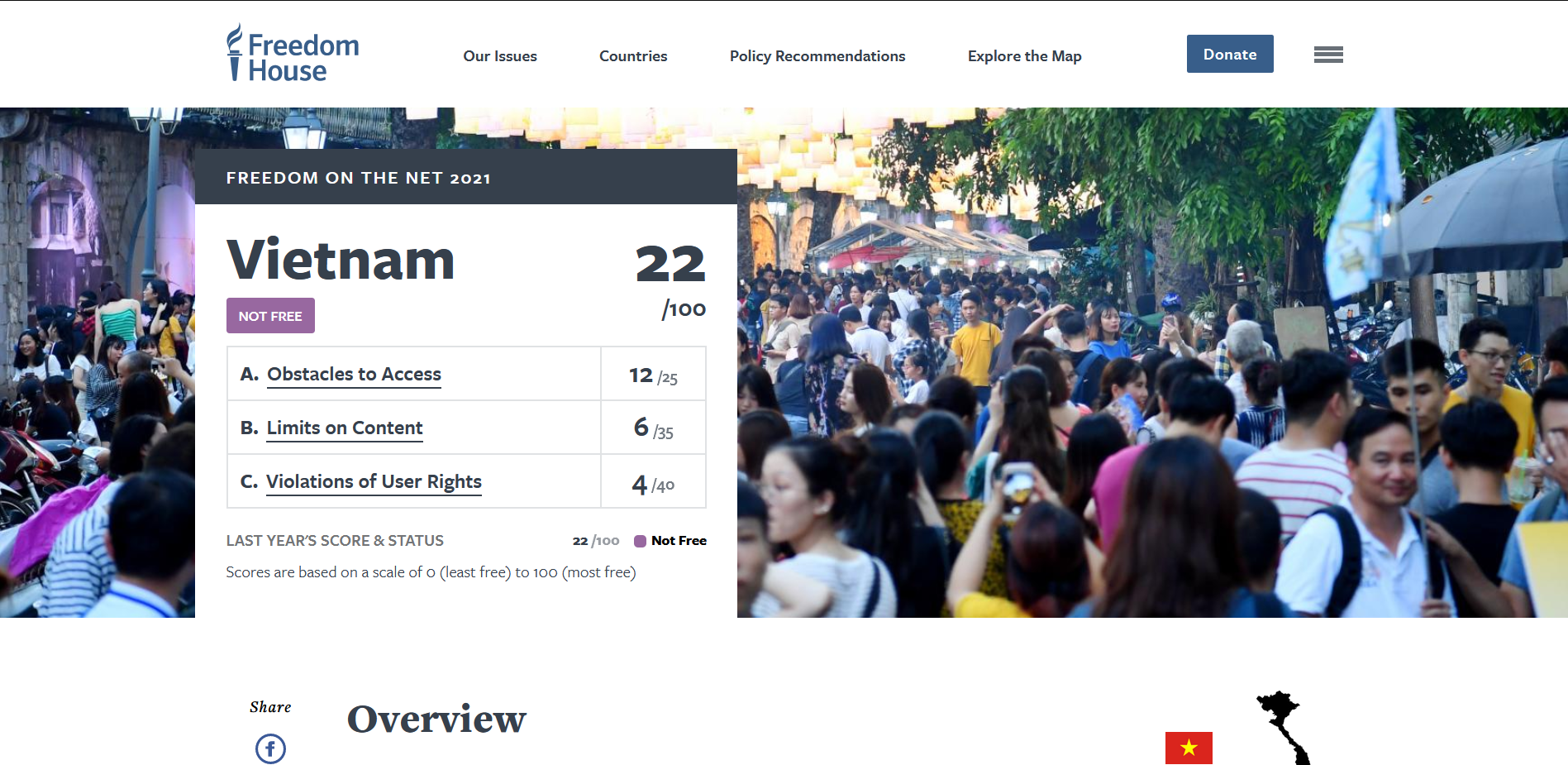
    On September 21, Freedom House, a non-profit organization based in Washington D.C., released its annual “Freedom on the Net” report, classifying[1] Vietnam as “not free” in its annual 2021 ranking.

    A Freedom House chart evaluates the state of internet freedom in 70 countries[2] this year, based on their performance in three different criteria: Obstacles to Access, Limits on Content, and Violation of User Rights. Trinh Huu Long, a co-founder of Legal Initiatives for Vietnam and an editor at The Vietnamese Magazine, is the author of this report’s Vietnam chapter.

    According to Freedom House, the scores are based on a scale of 0 (least free) to 100 (most free). Overall, Vietnam totalled 22 on the 100-point measuring scale, remaining the same as last year’s score and falling two points from the 2019 report.

    Vietnam has been ranked “not free” on the Freedom House report this year. Photo: screenshot/ Freedom House.

    There could be several reasons, and one of them includes the Vietnamese government’s threats to shut down services of foreign social networks, such as Facebook and Google. If those companies refuse to comply with its censorship demands on critical content, the government will shut them down. Meanwhile, the Freedom House report also cites a Vietnamese draft decree on personal data protection released for public comments earlier this year. If passed, this law would require internet providers and technology companies to locally store Vietnamese users’ data in the country and hand it over to the government upon demand.

    Vietnam has also been ranked [3] “not free” in Freedom House’s annual “Freedom in the World” chart. For many local activists, these results are hardly surprising.

    Vietnam has experienced steady economic growth in the past decades, with its youth becoming increasingly active on social media. By the end of 2020, over 70 percent [4] of the country’s population, equal to around 60 million people, had access to the internet. These statistics brought about the development of a new civic space. However, as the Vietnamese Communist Party (VCP) perpetually controls almost every aspect of social life with an iron fist, this rapidly expanding cyberspace, which extends beyond the Party’s reach, is considered an underlying threat to the regime.

    To assert its control over this novel avenue of free speech and dissent, the VCP has employed multiple tactics. Some of their methods include deploying an army of “public opinion shapers” tasked with disseminating propaganda, punishing local dissidents, and applying pressure on foreign companies to aid in its censorship demands.

    Yet, the bigger picture is not as grim as it might look. Despite censorship, online threats, and other hindrances, there are still several bright prospects for the future of internet freedom in Vietnam.

    Opportunities for a More Liberated Internet in Vietnam

    Despite its poor record in limiting online content and history of violating user rights, Vietnam has achieved significant improvements in assuring equal internet access to its citizens, as clarified in the “Obstacles to Access” section.

    Improved internet infrastructure, which leads to faster connection speeds, decreased subscription costs, and high smartphone penetration, has played an essential role in making the internet more affordable and accessible to most people. Given that around two-thirds of the population currently lives in the countryside, social media platforms have become an alternate source of information for specific Vietnamese audiences who stand in opposition to highly propagandized and more traditional forms of media.

    Recent statistics [5] show that television viewership in rural areas fell to 86% while internet penetration reached 91%. Still, Freedom House emphasizes that “connectivity remains out of reach for those living in extreme poverty, which is found in many communities of [ethnic minorities] in mountainous areas.”

    As young Vietnamese become more educated and skilled in technological know-how, they are “increasingly turning to blogs, social media platforms, and other online news sources for information, rather than state television and radio [broadcasts],” Freedom House reported.

    These young tech-savvy internet users also actively acquire new tools, which are “well-known” and “can be found with a simple Google search, for circumventing censorship and bypassing firewalls.”

    Vietnamese people spend more time [6] on social media than their Asian peers, with Facebook and Google services (Youtube and Instagram) among the most popular platforms [7] in the country. As of January 2021, there were about 68 million [8] Facebook users in Vietnam; seven in every 10 Vietnamese people have an account on Facebook.

    While many of its authoritarian counterparts, most notably China, have constructed solid and massive firewalls fencing themselves off international internet services, Vietnamese internet users can still chat with their Facebook friends or watch videos on Youtube. Despite periodic blockages and slowdowns during “sensitive events,” full and comprehensive censorship currently remains impossible for the Vietnamese authorities to implement.

    Dien Nguyen An Luong, a well-known op-ed contributor to The New York Times, provides [9] some reasons to explain why it is too late for Vietnam to control social media.

    First of all, he states that this can be attributed to the country’s lack of financial and technological resources to build domestic social networking services that could challenge those coming from big tech companies in Silicon Valley like China has been doing. Dien adds that Vietnam’s “mild approach to keep internet business and e-commerce growing” has also helped create a “hybrid infrastructure that thrives on developing and adapting faster than the government’s ability to regulate and control.” And finally, he concludes that Vietnamese internet users “have always been able to find workarounds” to the restrictions imposed by their government.

    The Government’s Iron Fist

    Yet, Vietnam still faces several hurdles that hinder the country’s momentum towards a more liberal internet environment. Censorship is perhaps one of the most severe threats.

    As the Vietnamese government is intolerant and fearful of dissent, various methods have been deployed to silence critics and keep online discussions under control. Among these tactics are blocking “toxic” webpages, censoring sensitive content, and forcing social media companies to comply with the state’s censorship demands.

    Vietnam has scored poorly in most criteria in the “Limits on Content” section of the Freedom House’s report. Unlike China, the authoritarian Vietnamese government commonly uses methods to suppress the civic internet space while remaining seemingly “free” on the surface.

    For example, Facebook and Google are still accessible in Vietnam, but their users are always under constant surveillance from cyber security forces. Furthermore, the passing of the controversial and opaque Cybersecurity Law in 2019 has granted Vietnamese authorities more power to request social networking sites to remove and delete content deemed as “anti-state,” “malicious,” or “illegal.”

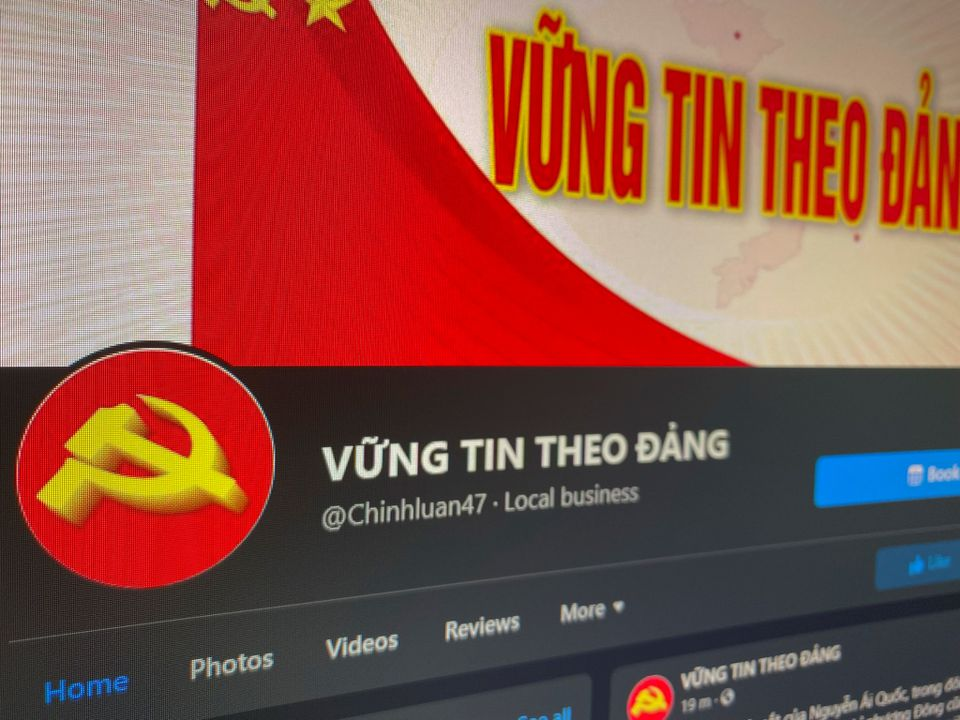
    Besides these “official” practices under the Cybersecurity Law, the VCP has also deployed “unofficial” methods, such as throttling the connection to local servers in order to coerce foreign companies to carry out censorship, harassing activists and journalists, restricting access to blogs or online newspapers which criticize the state, and mobilizing the Force 47 Cyber Unit [10]. Force 47 is an army of online “public opinion shapers” whose job is to steer online discussions in accordance with Party guidelines.

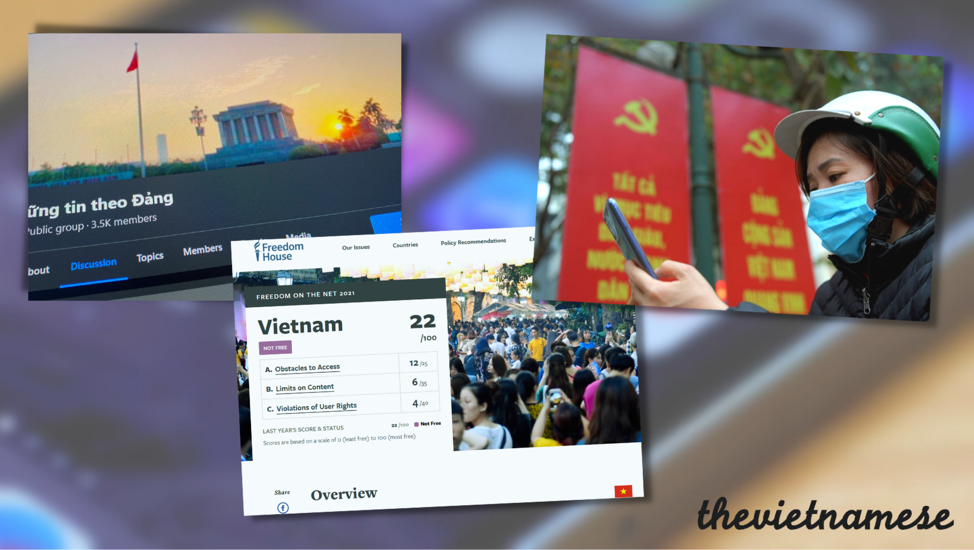
    Screenshot of a Facebook page called ‘Firmly believing in the Party,’ identified by Vietnamese state media as being controlled by ‘Force 47 Cyber Units.’ The photo was taken on July 6, 2021, by Reuters.

    Meanwhile, online speech and freedom of expression have continued to be suppressed, as reported in the “Violations of User Rights” category.

    In theory, the right to freedom of expression and access to information is enshrined in the Vietnamese Constitution. However, Vietnam fell short of its commitment to securing such rights for its citizens. The VCP continues to maintain control of all levels of cyberspace.

    Vietnamese authorities also warned high school and university students not to[11] share, comment on the country’s historical and political disinformation in cyberspace. An article from Luat Khoa Magazine in 2019 states [12] that the reason why there has not been a youth movement in Vietnam compares to other places, such as Hong Kong, is because students have been encouraged not to “read unauthorized posts, [and] circulate unregulated information on social media.” Otherwise, they might risk getting expelled.

    The watchful eye of the government constantly scrutinizes local activists, bloggers, and independent journalists. They can be penalized for simply engaging in online activities such as writing posts, live streaming newsworthy events, or publicizing any information that the government considers “sensitive” or “inappropriate.”

    Legislation [13] is being used to punish and silence online critics, such as Article 109 of the Penal Code, which penalizes citizens “carrying out activities aiming to overthrow the people’s administration,” and Article 117 for those “making, storing, disseminating or propagandizing materials and products that aim to oppose the State of the Socialist Republic of Vietnam.” According to Freedom House, since the legal terms found in these laws are vaguely defined and easily manipulated, the trials and proceedings related to online speech are “often brief, and predetermined.” If found guilty, offenders could also face “years-long prison sentences.”

    To further expand its total control over cyberspace in Vietnam, the VCP has compelled Facebook and Google to become its tools for censorship and harassment of citizens [14]. In a 78-page report, “Let us Breathe!”: Censorship and criminalization of online expression in Viet Nam,”[15] Amnesty International (AI) documents and exposes the current situation of social media users in Vietnam, along with how the repression of online speech is aided by world’s tech giants such as Facebook and Google.

    The AI report illustrates that Vietnamese social media users “face the constant threat of arbitrary arrest, prosecution, and other forms of harassment in retaliation for exercising their right of freedom of expression online.” At the same time, they could also get blocked on social media and have their posts deleted; their personal data could also be handed to the state’s security department if demanded.

    The Vietnamese Ministry of Information and Communications recently introduced a code of conduct [16] to direct the online behavior of social media users, state organizations, and social media providers alike. The new code encourages internet users to “post positive content” about the country while prohibiting those which “affect the interests of the state” and requires social networking sites to “deal with users in accordance with Vietnamese law” by deleting content upon the government’s request.

    The new code, while it is not legally binding [17], has sparked considerable concerns for local internet users and social activists. Many of them fear that the new regulation is a warning sign from the government and will lead to further encroachments in the country’s already restrictive cyberspace.

    Building upon its insatiable desire to shape online discussions, censor “sensitive information,” and harass activists, the VCP wants to further infringe on the personal freedom of more than 60 million internet users in Vietnam by telling them what to think, do, or express on the internet.

    But what is truly disheartening is that Vietnam has all the conditions needed to make internet freedom thrive and prosper; it has the infrastructure in place, and cyberspace has never been more accessible. Yet, it will never reach this ideal if the government continues to maintain and strengthen its grip on freedom while refusing to let its people speak.

    References:

    1. Freedom on the Net 2021 (Vietnam). (2021, September). Freedom House. https://freedomhouse.org/country/vietnam/freedom-net/2021
    2. Internet Freedom Scores. (2021, September). Freedom House. https://freedomhouse.org/countries/freedom-net/scores
    3. Global Freedom Scores. (2021). Freedom House. https://freedomhouse.org/countries/freedom-world/scores
    4. Nguyen, M. N. (2021, July 23). Internet usage in Vietnam – statistics & facts. Statista. https://www.statista.com/topics/6231/internet-usage-in-vietnam/
    5. Lien, H. (2021, June 9). In rural Vietnam, Facebook finds a new approach to growth. Nikkei Asia. https://asia.nikkei.com/Business/Technology/In-rural-Vietnam-Facebook-finds-a-new-approach-to-growth
    6. Quy, N. (2021, February 6). Vietnamese spend more time on internet, social media than Asian peers: report. VnExpress. https://e.vnexpress.net/news/news/vietnamese-spend-more-time-on-internet-social-media-than-asian-peers-report-4232155.html
    7. Nguyen, M. N. (2021b, August 9). Leading social media apps in Vietnam in Q2 2021. Statista. https://www.statista.com/statistics/941843/vietnam-leading-social-media-platforms/
    8. Statista Research Department. (2021, September 10). Countries with the most Facebook users 2021. Statista. https://www.statista.com/statistics/268136/top-15-countries-based-on-number-of-facebook-users/
    9. Luong, D. (2017, November 30). Vietnam Wants to Control Social Media? Too Late.The New York Times. https://www.nytimes.com/2017/11/30/opinion/vietnam-social-media-china.html
    10. Reuters Staff. (2017, December 26). Vietnam unveils 10,000-strong cyber unit to combat “wrong views.” Reuters. https://www.reuters.com/article/us-vietnam-security-cyber/vietnam-unveils-10000-strong-cyber-unit-to-combat-wrong-views-idUSKBN1EK0XN
    11. Tuan, D. (2021, April 29). Nâng cao ý thức pháp luật trên không gian mạng cho học sinh. An Ninh Thủ Đô. https://anninhthudo.vn/nang-cao-y-thuc-phap-luat-tren-khong-gian-mang-cho-hoc-sinh-post464936.antd
    12. Bao, V. (2019, June 23). Vì sao sinh viên Việt Nam không thể biểu tình như sinh viên Hong Kong? Luật Khoa Tạp Chí. https://www.luatkhoa.org/2019/06/vi-sao-sinh-vien-viet-nam-khong-the-bieu-tinh-nhu-sinh-vien-hong-kong/
    13. Vietnam’s Proposed Revisions to National Security Laws. (2015, November 19). Human Rights Watch. https://www.hrw.org/news/2015/11/19/vietnams-proposed-revisions-national-security-laws
    14. Viet Nam: Tech giants complicit in industrial-scale repression. (2020, December 1). Amnesty International. https://www.amnesty.org/en/latest/press-release/2020/12/viet-nam-tech-giants-complicit/
    15. Viet Nam: Let us breathe! Censorship and criminalization of online expression in Viet Nam (ASA 41/3243/2020). (2020, December). Amnesty International.
    16. Phuong Nguyen, James Pearson. (2021, June 18). Vietnam introduces nationwide code of conduct for social media. Reuters. https://www.reuters.com/world/asia-pacific/vietnam-introduces-nationwide-code-conduct-social-media-2021-06-18/
    17. Long, T. H. (2021, June 19). Vietnam: The New Code Of Conduct On Social Media Is Not Legally Binding. The Vietnamese Magazine. https://www.thevietnamese.org/2021/06/vietnam-the-new-code-of-conduct-on-social-media-is-not-legally-binding/
  • The Threat Of A Free And Open Internet In Vietnam

    The Threat Of A Free And Open Internet In Vietnam

    We now live in the Age of Information, where we can access facts, data, or statistics with a simple touch of a button through our phones or computers. With enough time, commitment, and motivation, anyone can attain baseline theoretical knowledge in various fields with access to the internet.

    And if a private individual wants to share what they know, they can easily do so using the many avenues to spread information now available on the World Wide Web. Yet, this ease of access carries with it several caveats, one of which is the rampant spread of misinformation.

    Fake news, bogus statistics, and false narratives have sadly become common as we try to navigate our way through the internet. While trusted news outlets, publishers, and independent journalists are doing their part to weed out disinformation, their efforts are not enough to realistically stop, or at the very least, stifle the spread of these lies.

    And while these experts continue to research and learn about how best to deal with this issue, for now, the challenge falls on private citizens to exercise their judgment and recognize their biases to discern the truth from what is merely a constructed or false reality. Even though humans are far from rational beings touted by various thinkers and philosophers from the past, this should hopefully be enough to slow down misinformation coming from isolated sources.

    Yet, what if campaigns of disinformation were more focused? What if they were run not only by an individual or a small group but by an entire ecosystem that pushes a questionable goal or agenda? And what if this hive mind had enough power, money, and resources to censor alternate sources of information or silence anyone, or anything, that would compromise its meticulously constructed version of the world?

    The U.S Department of State’s 2020 Country Reports on Human Rights Practices: Vietnam tackles several issues plaguing the country: internet freedom. The report states that the Vietnamese government “restricted and disrupted access to the internet, censored online content, imposed criminal sentences for online expression, and monitored private online communications without legal authority.”

    Also mentioned are several restrictions on local internet service providers in the country, which the government controls. Those few that are allowed to operate are either in part or wholly owned by the state, which can actively monitor the online activities of the subscribers of these internet services.

    The report also states that websites that the Vietnamese Communist Party (VCP) considers “politically or culturally inappropriate” are also blocked on the Vietnamese internet and cannot be accessed directly. This group includes international sites owned and operated by Vietnamese people residing overseas and several credible news outlets such as Radio Free Asia, Voice of America, and the BBC Vietnamese news service.

    The meddling of the Vietnamese government does not end there. The report adds the situation of websites and social media networks – such as Facebook and Google – where Vietnam already gives the privilege to operate in the country. Yet, these companies are still being compelled to fully cooperate with the Ministry of Information and Communications to weed out and identify news and information that the government considers “bad” or “toxic.”

    They added that companies and organizations that operate social network sites, host blogs, or provide information about politics, economics, culture, or society must give comprehensive details about their plans and set up their servers within Vietnam. It is done for the convenience of the Vietnamese government so that when it requests the personal information of the account holders, it will undoubtedly have them. Hence, all information collected by these companies is stored for 90 days, with specific metadata being held for up to two years.

    The report highlights the government’s crackdown against private citizens, journalists, and bloggers who use their platforms to criticize and complain about the actions of the VCP or expose the many allegations and manifestations of corruption that plagues the Vietnamese government. These brave men and women, with our co-founder and co-editor, Pham Doan Trang, being one of them, bear the brunt of the government’s ire and often face the possibility of “arrest, short-term detentions, surveillance, intimidation, and the illegal confiscation of [their or their family’s] computers and cell phones.”

    Despite the severity of the restrictions on the Vietnamese internet, this is not something new; it is just another manifestation of the Vietnamese government’s ever-tightening noose around the neck of free speech and press freedom.

    The careful monitoring of websites, internet service providers, social media programs, and bloggers is the latest in a long line of the party’s transgressions against outlets that challenge the narrative the VCP tries so hard to instil as truth. And with the passage of the controversial Cyber Security Law in 2018, it is evident that the government is trying to replicate its success in controlling all forms of printed media in a more modern context, according to an article written in January 2019 by Thoi Nguyen in The Diplomat.

    Yet, with all their control and propaganda, what is this elusive narrative that the VCP is trying so hard to maintain? What is the story they want every one of their citizens to accept as gospel and as the absolute truth?

    The Party is perfect, and that the Party only has the people’s best interests at heart?

    The VCP’s version of reality has itself at the helm of Vietnam; it paints the Party as the almighty saviour of the country from the hands of the West. It construes itself as the central, and perhaps, the sole reason for Vietnam’s miraculous rebirth from conflict and civil war to its current state. The Party believes the VCP, guided by the spirit of Ho Chi Minh, should continue to carry the nation towards progress for all eternity.

    Such is the display of bravado, arrogance, and delusion of the Vietnamese government.

    Hence, it continues its charade, striving to censor masterfully, control, and monitor what occurs in Vietnam’s corner of the internet, a tactic not too different from what China practices. At the same time,  it continues to peddle its story to its citizens and the rest of the world,

    All this leads to a peculiar reversal of roles where misinformation comes not from the flawed thought process of the ill-informed or the writings of misguided conspiracy theorists. Instead, it comes from the precise calculations and machinations of the state, which can control most of what people consume in mainstream media. And if the people are constantly bombarded with lies and misdirection, they will eventually accept these falsehoods as fact and gospel.

    As such, the task of revealing new truths to the Vietnamese people and raising awareness about what is going on outside the government’s online information bubble lies in the hands of individuals. It falls on independent journalists, writers, bloggers, and small online publications to crack open the Vietnamese firewall, despite the risks, to make citizens question what they hold to be true. The threat to the free and open internet in Vietnam is genuine to the government as it exposes their lies and renders them obsolete.

    For when the state fails to provide the truth, it becomes our duty to do it ourselves.

  • New Research: Vietnam Remains “Not Free” On Internet Freedom, Freedom House Says

    New Research: Vietnam Remains “Not Free” On Internet Freedom, Freedom House Says

    Internet freedom in Vietnam has always been at the mercy of state censorship and strict government control. Journalists, bloggers, and activists face the genuine risk of harassment by state forces and even imprisonment. On September 21, 2021, Freedom House, a US-based organization founded to support and defend democracy worldwide, released its annual report titled Freedom on the Net 2021. Disappointingly, Vietnam continues to fare poorly in its metrics and analysis as the situation surrounding Vietnam’s internet freedom continues to worsen year after year.

    Freedom House’s Methodology

    In its annual report, Freedom House rates each country on a scale of 100 to 0, with a score of 100 representing the freest conditions and with 0 signifying the least free. The highest possible score of 100 is then divided into three categories, namely: Obstacles to Access (25 pts.), Limits on Content (35 pts.), and Violations of User Rights (40 pts.). These three categories are then further split into several specific questions, which are then used by Freedom House to determine a country’s appropriate standing.

    Countries that attain a grade between 70-100 are classified as Free, those with scores between 40-69 are noted as being Partly Free, and nations with a score from 0-39 are considered to be Not Free.

    Freedom House’s full methodology can be found here.

    Key Events

    Vietnam’s rating for 2021 in Freedom House’s report is 22, which classifies it as being Not Free. This score is 2 points lower than its rating of 24 in 2019 but is equal to its 2020 score, which was also 22. However, just because Vietnam’s rating is the same in last year’s report does not mean that the situation in the country has remained unchanged. For instance, in 2020, Freedom House reported a temporary connectivity disruption in Đồng Tâm coupled with Facebook’s servers in the country were taken offline in February 2020, which led to a lower accessibility score for that year. No similar issue has happened so far in 2021, which leads to Vietnam having a higher rating in this category. In the same vein, several issues in the past may no longer be present, and several issues today may not have been problematic one or two years prior.

    Freedom on the Net 2021 report begins by listing several key events that affect Vietnam’s overall score.

    Firstly, the report states that the Vietnamese government had threatened to shut down Facebook’s activities in the country if the company refuses to comply with the government’s requests to restrict content it deems to be “sensitive” or “critical.”

    Secondly, the report discusses the prior elections and the Vietnamese government’s censorship, arrests, and smear campaigns related to several independent candidates. Related to this are the long-running and ongoing arrests of activists and bloggers.

    Lastly, the report mentions the draft decree regarding personal data protection, which was released in February 2021; if passed, this would require online platforms to collect and store the personal data of Vietnamese users for the purposes of providing it to the government upon request.

    These events give us much-needed context into how Freedom House came to its rate for Vietnam in its 2021 report.

    Internet Freedom in Vietnam

    Regarding Obstacles to Access, Vietnam scores 12 out of a maximum of 25 points, or around 48 percent of the total. The report states that internet penetration in the country is at around 68.70 percent of the population and that smartphone penetration is at around 61.37 percent. Internet prices have also become more affordable, even to those in rural areas. Despite these positives, connectivity remains an issue for those in extreme poverty and for ethnic minorities who live in remote mountainous regions.

    Any business or firm is allowed to operate as an internet service provider in Vietnam; however, some informal barriers prevent many from doing so. Currently, the Vietnam Posts and Telecommunications Group (VNPT) and Viettel dominate the industry, with these companies controlling 40 percent and 38 percent of the market respectively. The mobile sector is no different, with Viettel accounting for 50.5 percent, VinaPhone 24.6 percent, and MobiFone 21.1 percent, comprising the lion’s share of all subscriptions. As such, smaller companies in both the internet and mobile sectors cannot hope to compete with these already established businesses.

    The Vietnamese government still retains the ability to restrict connectivity on a whim. Various government agencies tasked with regulating and overseeing digital technology remain secretive and operate without public oversight.

    Regarding Limits on Content, Vietnam scores 6 out of a maximum of 35 points, or roughly around 17 percent of the total.

    The Vietnamese government actively and continuously blocks or filters any form of content that, from their point of view, challenges the ruling Vietnamese Communist Party (VCP). High-profile blogs, individuals with many followers, content which promotes religious organizations, and local and international news websites which are critical of the regime are often the targets of government censorship. This 2021 Freedom House report states that Vietnam’s Department of Cybersecurity and High-Tech Crime Prevention has “monitored and blocked almost 3,400 overseas websites that have ‘published harmful and toxic information’ in 2020.” The regime has also threatened to shut down Facebook, and so, even this social media giant was forced to comply and agree to remove content that the VCP deems “anti-state.”

    The passing of the controversial Cyber Security Law in January 2019 has also led to the expeditious removal of content. State authorities have “imposed heavy fines and suspended online publications” for having comments that criticize the regime on their platforms. In addition, mounting government pressure has made social media platforms subservient to the government’s wishes, and in effect, they restrict content that the VCP deems inappropriate.

    The social media accounts of activists and dissidents are also under the constant threat of being suspended for “violating the platform’s community standards.” Even normal internet users, commentators, and journalists have to practice some degree of self-censorship or risk being detained or questioned by the authorities.

    This situation of mass censorship and control gives the Vietnamese government the perfect setting to be able to influence, sway, and dictate public opinion. The report quotes the Oxford Internet Institute (OII) which claims, “Vietnam employs a network of approximately 10,000 people that manipulates information on Facebook and YouTube [, and at] least one government agency is involved.”

    Regarding Violations of User Rights, Vietnam scores 4 out of a maximum of 40 points, or roughly 10 percent of the total.

    Even if the Vietnamese Constitution affirms the rights of freedom of expression, access to information, press freedom, and the like, these are not actually protected by the Vietnamese state. Freedom on the Net 2021 report states that “police routinely flout due process, arresting bloggers and online activists without a warrant or retaining them in custody beyond the maximum period allowed by law.” And it says further that the Cybersecurity Law also “prohibits a wide range of activities conducted online” in addition to putting additional pressure on internet users and social media platforms.

    As of June 2021, according to the report, 235 activists are being held in detention for practicing their freedom of expression. Several journalists, activists, and even ordinary everyday users were also given outrageous prison terms or made to pay hefty fines for their online activities for allegedly violating several provisions under Articles 117 and 331 of the Penal Code. Prominent journalist Pham Thi Doan Trang, a co-founder and editor of The Vietnamese Magazine, has been detained since October 2020 and charged with “creating, storing, and disseminating information, documents, items, and publications opposing the Socialist Republic of Vietnam” under Article 117.

    Also mentioned in the report is the controversy surrounding Bluezone, a COVID-19 tracing app. People were unaware that this application disclosed private user information to the government; in June 2021, the state announced that it would sanction people who did not have this app installed on their mobile phones when they entered certain public areas. This is a blatant infringement of a person’s right to privacy.

    Cases of intimidation and physical violence by the authorities are also noted in the Freedom House report and the names of prominent bloggers and activists who were put under surveillance and de facto house arrest. A notable case cited is the situation of Le Anh Hung, a blogger and democracy activist. Hung was arrested in July 2018 for criticizing Vietnam’s one-party communist state in online posts. He was “beaten with a metal folding chair, tied to his bed, and forcibly medicated while being held in a psychiatric hospital without his consent” in July 2020.

    Conclusion

    The state of internet freedom in Vietnam continues to remain abysmal and disheartening, with no improvement in terms of the protection of the rights of individual users. The state maintains its tight grip on the flow of information by pressuring or outright censoring social media platforms, journalists, and media outlets and by stifling any discussion by everyday people through the internet. It’s business as usual for the VCP even during the height of the COVID-19 pandemic in the country.

    Yet, the report points out that “young, educated Vietnamese people are increasingly turning to blogs, social media platforms, and other online news sources for information, rather than state television and radio broadcasters” and that “tools for circumventing censorship” exist and can be easily found. Hence, while the state may continue on its crusade to monopolize the flow of information, its efforts are failing; the truth is still being spread, and the Vietnamese people are always looking for ways to circumvent the walls being built by the regime.


    Trinh Huu Long, an editor of The Vietnamese Magazine and co-director of Legal Initiatives for Vietnam, is the author of the Vietnam chapter of Freedom House’s Freedom on the Net 2021.

  • Vietnam Briefing: COVID-19 Restrictions Bring Social And Economic Costs To Vietnam; Pham Doan Trang’s Case Accepted By United Nations Working Group on Arbitrary Detention (UNWGAD)

    Vietnam Briefing: COVID-19 Restrictions Bring Social And Economic Costs To Vietnam; Pham Doan Trang’s Case Accepted By United Nations Working Group on Arbitrary Detention (UNWGAD)

    International human rights lawyer submits case of journalist Pham Doan Trang to the United Nations Working Group on Arbitrary Detention (UNWGAD)

    VOA Vietnamese reports:

    • Turkey-based human rights lawyer Kurtulus Bastimar told VOA Vietnamese that he had submitted the case of Pham Doan Trang to the United Nations Working Group on Arbitrary Detention (UNWGAD) over the Vietnamese government’s arbitrary arrest of Doan Trang and its alleged violations of her freedom of speech and right to a fair trial.
    • According to Bastimar, the UNWGAD has accepted his legal submission and is expected to announce an official ruling this September.
    • Pham Doan Trang was arrested in October last year and subsequently charged under Article 88 of the 1999 Penal Code and Article 117 of the 2015 Penal Code.

    COVID-19 situation in Vietnam: Prolonged lockdown brings social and economic costs to Vietnam

    • Quick take: As of September 19, 2021, Vietnam has recorded over 677,000 confirmed COVID-19 cases,  with nearly 17,000 fatalities. Only under 7 percent of the country’s population has been fully vaccinated.
    • Ho Chi Minh City risks social and economic costs as COVID-19 lockdown is extended until the end of September, reports Nikkei Asia: “The city has failed to meet the criteria for lifting the lockdown. The two-week average of new daily cases must drop continuously from the prior two weeks and be lower than half of the infections in the week with the highest COVID-19 caseload. But new cases have remained around 5,000 to 6,000 over the past few days.”
    • Major retailers rethink Vietnam as a manufacturing hub over prolonged coronavirus restrictions, writes CNBC: “The obstacles in Vietnam join a litany of other supply chain troubles, ranging from a shortage of cargo shipping containers to backlogged ports and a limited number of truck drivers. Some companies that moved their manufacturing out of China and into Vietnam in the past few years — in a bid to diversify their supply chains and avoid tariffs — have gone as far as to say they are bringing production back to China.”
    • Vietnamese migrant workers were found hiding in a freezer truck as they tried to return home from Ho Chi Minh City, reports VnExpress: “Fifteen people were found hiding inside a refrigerated truck at a Covid-19 checkpoint in the south-central Binh Thuan Province on Sunday. The 15 passengers, who all had negative coronavirus test certificates, claimed they did not know they would be transported in a refrigerated truck.”
    • Vietnam approves the Cuban-made Abdala vaccine for use as it is battling its worst COVID-19 outbreak, reports Reuters. The approval of Abdala, which becomes the eighth COVID-19 vaccine approved for use in Vietnam, comes amid the country’s low vaccination rates and its urgent need for coronavirus vaccinations. The vaccine approval announcement came hours after Vietnamese President Nguyen Xuan Phuc left Hanoi for an official visit to Havana.
    • Donations of vaccines and medical equipment to arrive in Vietnam: On September 16, Vietnam received more than 850,000 doses of the AstraZeneca vaccine donated by Germany via the COVAX Initiative. On the same day, the Japanese Ministry of Foreign Affairs also announcedthat Japan would provide Vietnam with personal protective equipment to help the country fight against the COVID-19 pandemic.
    • Ho Chi Minh City introduces “green pass” certificates for vaccinated citizens, aiming to boost vaccination rates and foster economic recovery, reports VnExpress: “The passes, valid for six months, were expected to allow holders to undertake certain activities without normal coronavirus restrictions, like domestic and international travel and participating in public events.”

    Vietnamese president to seek allies against COVID-19 during U.S. visit for the U.N. General Assembly session

    VOA News reports:

    • According to Vietnam’s Foreign Ministry, Vietnamese President Nguyen Xuan Phuc will pay an official visit to Cuba from September 18 to September 20 before arriving in New York to attend the 76th session of the United Nations General Assembly. He will be in the United States from September 21 to September 24.
    • The global battle against COVID-19 is expected to be a top priority issue during Phuc’s trip as he will meet with other leaders in New York to discuss ways of controlling the pandemic and speeding up economic recovery, said Vietnam’s Deputy Minister of Foreign Affairs Dang Hoang Giang.
    • This will be the first U.S. visit by a Vietnamese leader since the country’s 13th National Party Congress in late January.

    World Bank report: Climate change could trigger a migration influx of 216 million people, including migrants from Vietnam’s Mekong Delta region

    Reuters reports:

    “Such movements will put significant stress on both sending and receiving areas, straining cities and urban centers and jeopardizing development gains, the report said.

    For instance, the sea-level rise threatens rice production, aquaculture, and fisheries, which could create an out-migration hotspot in Vietnam’s low-lying Mekong Delta. But the Red River Delta and central coast region, where those people are likely to flee, face their own threats, including severe storms.”


    Vietnam Insight: Learn more about Vietnam

    Vietnamese love the US, and China cannot change that

    Nikkei Asia/ Dien Luong/ September 13

    “With two-thirds of the country’s nearly 100 million born after the Vietnam War, Vietnamese youth account for a quarter of the total population. It is those people who are the bedrock of public opinion, a fact corroborated by various polls indicating an unwavering favorability among Vietnamese toward the U.S.”

    Vietnam Welcomes Top Officials From China, Japan

    The Diplomat/ Sebastian Strangio/ September 13

    “While Kishi’s visit had been postponed from an earlier date due to COVID-19, the fact that it lined up so perfectly with Wang’s visit offered a textbook display of Vietnam’s foreign policy approach, born from its fraught history of relations with China, which since the end of the Cold War has been based on an approach of establishing good relations with as many nations as possible in order to maximize its strategic room for maneuver.”

    What’s in the Newly Regionalized Japan-Vietnam Defense Partnership?

    The Diplomat/ Prashanth Parameswaran/ September 13

    “Japan-Vietnam defense relations have seen their fair share of advances in recent years. Apart from shared concerns in areas ranging from the cyber domain to aspects of China’s behavior, this is aligned with the broader objectives of both countries, with Vietnam strengthening ties with a range of powers as part of its omnidirectional foreign policy and Japan boosting ties with Southeast Asian countries and ASEAN as a whole as part of its own Indo-Pacific vision. That has continued over the past few months, headlined by Prime Minister Suga Yoshihide’s visit to Vietnam last October.”

  • Religion Bulletin, July 2021: Government Discusses Religious Resources In The Realm Of Social Welfare

    Religion Bulletin, July 2021: Government Discusses Religious Resources In The Realm Of Social Welfare

    https://2xjs7y10oiyz26vqxu2hok6y-wpengine.netdna-ssl.com/wp-content/uploads/2021/08/image-7.jpeg
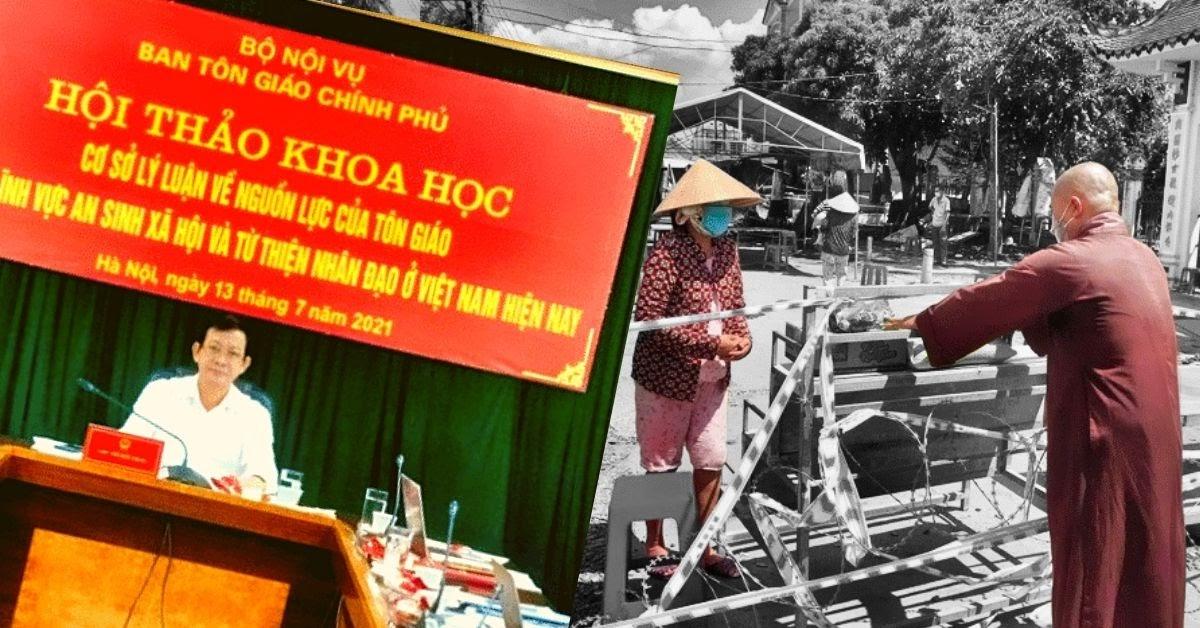
    Photo: Government Committee for Religious Affairs (left), Giac Ngo Newspaper.

    Dear readers,

    We know you and your loved ones may be experiencing difficult days as the pandemic rages on. We hope you all remain safe and healthy.

    As all of Vietnam faces down the fourth wave of COVID-19, religious activities, as with other activities involving gatherings of people, carry the risk of spreading disease. This fact has caused the public to become more or less averse to religion.

    We should not forget that religious organizations have been a sizeable resource in helping the community through difficult times.

    Over the past few weeks, Ho Chi Minh City has faced a crisis in social welfare, and religious organizations have stepped up to support the people. However, compared to other countries in the region and with the south before 1975, religious, philanthropic activities nowadays encounter many obstacles.

    This July, the Government Committee for Religious Affairs organized a seminar on religious organizations’ resources and their relationship to social welfare. When will these religious organizations be able to conduct charity independently and without hindrance?

    The Government’s Reach

    The Government Committee for Religious Affairs discusses religious resources in the realm of social welfare

    On July 13, 2021, the Government Committee for Religious Affairs convened a seminar with some researchers, religious dignitaries, and representatives of central ministries and branches to take stock of the resources religious organizations possess for social welfare and philanthropic activities. [1]

    The seminar was organized as Ho Chi Minh City (HCMC) faced a severe social welfare crisis due to the government’s tightening of social distancing guidelines to contain a COVID-19 outbreak.

    The Government Committee for Religious Affairs stated that the seminar aimed to evaluate the ability of religious organizations to function as independent entities in charity and social welfare activities.

    Nguyen Anh Chuc, deputy head of the committee, stated that these religious organizations’ activities were still unorganized and spontaneous.

    “Because of this, there needs to be a clear and transparent legal corridor in social welfare work, as well as increased coordination between the Fatherland Front and religious organizations,” Chuc declared.

    https://2xjs7y10oiyz26vqxu2hok6y-wpengine.netdna-ssl.com/wp-content/uploads/2021/08/image-1.png
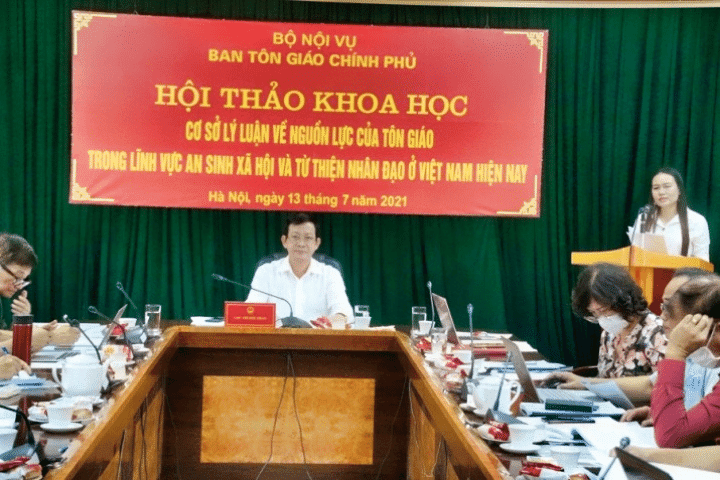
    Scene from a seminar organized by the Government Committee for Religious Affairs. Photo: Government Committee for Religious Affairs.

    After 1975, social welfare and philanthropic activities conducted by religions were disrupted. Many facilities, such as schools, hospitals, relief organizations, and orphanages, were confiscated by the government and banned from operating.

    Today, religious organizations are allowed to operate in preschool education (kindergarten) and vocational training, but only to a minimal degree. They have not yet been allowed to resume general education activities.

    For nearly five decades, the government has asserted that religious organizations must focus strictly on religion and help the state implement policies establishing national unity. This view has led to policies that precisely control the participation of religious organizations in other areas.

    Article 55 of the 2016 Law on Faith and Religion permits religious organizations “to participate in educational, training, medical, social welfare, philanthropic, and humanitarian activities in accordance with relevant laws.”

    However, the 2016 law and other codes and legal documents do not regulate specific charitable and social welfare activities, nor the level or conditions of participation for religious organizations. The legal recognition of religious organizations is still minimal, and they are not allowed to set up their organizations for charitable activities.

    Furthermore, the state strictly controls the resources of religious organizations in charity and social welfare activities. For example, religions seeking to fundraise domestically or accept foreign aid must undergo very complicated procedures.

    In reality, charity and humanitarian activities are the core values of many religions. Currently, religious organizations still maintain a few charitable activities but only on a small scale. Current policy does not allow them to operate on a larger or more professional scale, as before 1975.

    Read more: After five decades of prohibition, will the doors to professional charity by religions be opened?

    Central Propaganda Department issues instructions for propaganda regarding ethnic groups and religions

    The articles you read and the television programs you watch about religion may be part of a state propaganda campaign.

    On July 19, 2021, the Central Propaganda Department issued guidelines for state agencies and press organizations on propaganda about ethnicity and religion. [2]

    According to the guidelines, propaganda about ethnic groups and religions will focus on cadres, party members, and residents in areas deemed “complicated and sensitive” (remote, upland, and border areas with many religious practitioners). The substance of the propaganda will include the state’s policies and achievements in matters of religion and ethnicity and its rebuttals to the accusations of independent press and human rights organizations regarding religious and ethnic issues.

    The propaganda will be issued comprehensively overall mass media, in newspapers, on social media, in the streets, and even during religious sessions.

    https://2xjs7y10oiyz26vqxu2hok6y-wpengine.netdna-ssl.com/wp-content/uploads/2021/08/image-2.png
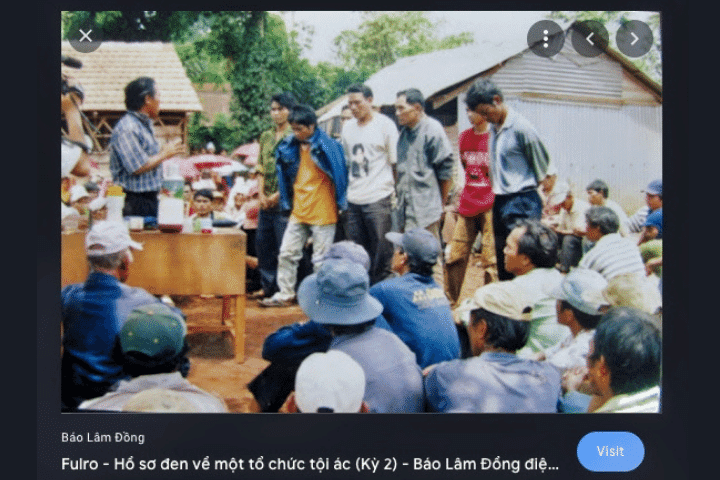
    An article from Lam Dong Newspaper with the headline “Fulro – the black record of a criminal organization.” It is one of the many propaganda articles on ethnicity and religion that were published in April 2021. Photo: screenshot.

    The guidelines also state the Ministry of Information and Communication has the task of controlling mass media on ethnic and religious issues and must strictly punish those who provide incendiary or false information.

    The Ministry of Education and Training is responsible for inserting propaganda on ethnicity and religion into the educational curriculum at every level of study.

    The guidelines assert that it is necessary to fight against and criticize activities that “propagate false religions, incite practitioners to oppose the regime, […] practice superstitions, […] and distort the truth on democracy, ethnic equality, and freedom of belief and religion in Vietnam.”

    The Vietnamese government maintains complete control over ethnic and religious affairs. Upland areas with large ethnic minority populations are subject to more stringent rules than urban areas. Even though the government recognizes the religious activities of ethnic minorities, they must be reported and are closely monitored.

    Religion 360*

    Risk of COVID-19 infection for prisoners of conscience in prisons and temporary detention centers

    According to The 88 Project, Vietnam currently holds in its custody 179 prisoners of conscience. Another 37 are in temporary detention, waiting to be tried for “crimes” related to their political activities or freedom of speech. Among those serving their sentences or in temporary detention, 59 cases have to do with freedom of religion. [3]

    As COVID-19 rapidly spreads across many locations, prisons and temporary detention centers also face a high risk of infections. The most recent example involves an outbreak among detainees at the Chi Hoa Detention Center in HCMC; on July 7, 2021, the HCMC Department of Health reported 81 cases of COVID-19 there, including 45 cadres and 36 inmates. [4]

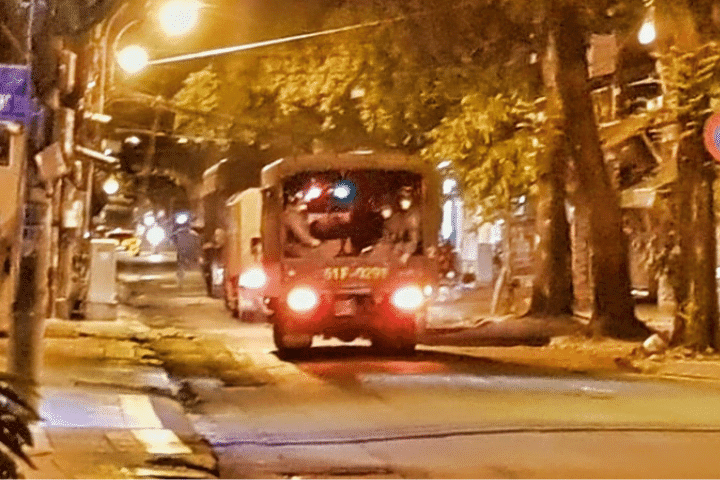
    Before that, on the evening of July 6, the press had reported a prison riot at the same detention center. [5] According to information provided by the government, the riot was caused by an inmate who created a scene while the detention center was conducting COVID-19 screening. The press reported that riot police were mobilized to the detention center to handle the disturbance and that people in the surrounding area heard gunshots coming from the detention center.

    https://2xjs7y10oiyz26vqxu2hok6y-wpengine.netdna-ssl.com/wp-content/uploads/2021/08/image-3.png
    A regiment of riot police leave the Chi Hoa Detention Center on the night of July 6, 2021. Photo: Dinh Van / HCMC Municipal Committee.

    On July 7, some inmates were transferred to the T30 Detention Center in Cu Chi Suburban District to implement social distancing. [6] However, the authorities have not released any further information on the COVID-19 situation at the Chi Hoa Detention Center.

    The government has stated that prisons and detention centers across the country were strictly implementing COVID-19 prevention measures. [7] Nonetheless, the disease has spread throughout Hanoi, HCMC, and the Mekong Delta, bringing with it concerns of infection in areas of dense incarceration, particularly given that more than 500 suspected cases of infection were discovered at the Bo La Drug Rehabilitation Facility in Binh Duong Province at the end of July 2021. [8]

    The government has not made any announcements on vaccinating criminals or prisoners. Currently, all temporary detention centers and prisons have stopped inmate visitations.

    More than 1,000 practitioners, monks, and nuns volunteer to look after COVID-19 patients in Ho Chi Minh City

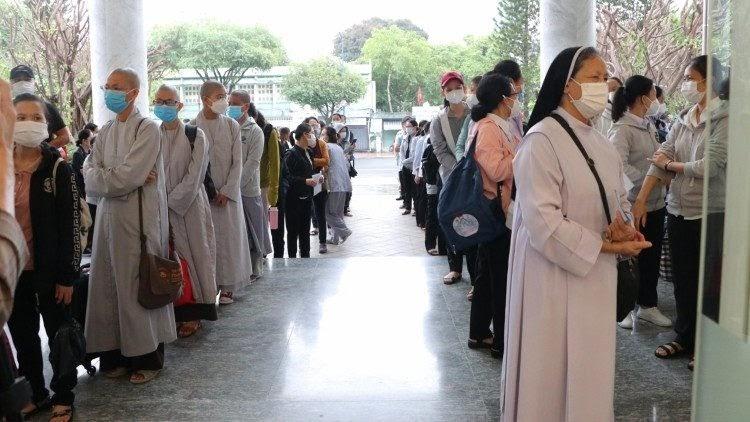
    As of July 20, 2021, more than 1,000 practitioners, monks, and nuns of Buddhism, Catholicism, and Protestantism have volunteered to serve at field hospitals in HCMC. [9] This number continues to grow.

    On July 22, about 300 more volunteers of different religions set out to COVID-19 treatment hospitals in the city of Thu Duc to support patient care.

    https://2xjs7y10oiyz26vqxu2hok6y-wpengine.netdna-ssl.com/wp-content/uploads/2021/08/image-8.jpeg
    On July 7, 2021, 299 more volunteers of different religious organizations began spreading themselves out across three field hospitals in HCMC. Photo: Vatican News.

    Before this, the Vietnamese Fatherland Front Committee in HCMC had called on “all classes of people, religious organizations, and compatriots” to support the fight against the COVID-19 pandemic, [10] marking a rare occasion where the government officially sought the support of religious organizations.

    The COVID-19 pandemic still rages in HCMC. The current number of infected persons has exceeded 100,000 and continues to increase. According to the Ministry of Health, as of August 6, 2021, more than 2,000 people have died.

    New Religions

    You may not have heard of the activities of new religions, but that does not mean these religions don’t exist. New religions are developing all over Vietnam. Before judging their activities, we should first understand how they suffer daily harassment from the state and the press.

    7 Falun Gong practitioners punished for gathering during lockdown

    On July 7, 2021, Tuoi Tre News reported that seven Falun Gong practitioners were administratively punished by the authorities of Tan Hung Commune, Cai Be Suburban District, Tien Giang Province, for gathering while the province was implementing social distancing. [11]

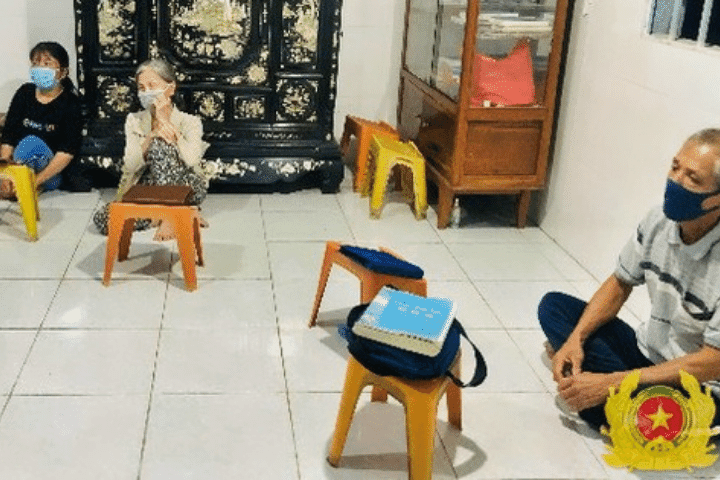
    According to the article, on June 24, 2021, six people gathered at a household in the commune to practice Falun Gong together. Each person was fined 7.5 million dong ($328) for violating local pandemic regulations.

    The sanction of this Falun Gong group was not an isolated incident. In 2020, when pandemic regulations were not applicable, the government continuously banned this group from operating and sanctioned them for various other reasons. [12]

    Local authorities and the press heavily condemn the Falun Gong movement, and they have seen it as a “false religion” that gravely affects people’s health. However, the religion has developed across many provinces and cities, and many practitioners claim that they benefit from its practice.

    https://2xjs7y10oiyz26vqxu2hok6y-wpengine.netdna-ssl.com/wp-content/uploads/2021/08/image-4.png
    Three of the seven Falun Gong practitioners were administratively punished on June 24, 2021, in Tien Giang. Photo: provided by police.

    Since the beginning of 2021, the government’s obstruction of Falun Gong activities has not appeared in media as much as in 2020. Reasons may include the government’s increased propaganda activities hindering the religion’s practice and the complications surrounding the COVID-19 pandemic.

    At the end of May 2021, the press heavily covered the case of infections at the Phuc Hung Missionary Church in HCMC. On May 29, 2021, Go Vap District police issued a decision to move ahead with prosecution for the crime of “spreading a dangerous and infectious disease to others.” [13] As of the end of July 2021, police have not released more information about this case.

    Chairman of Mang Yang Suburban District, Gia Lai Province: no followers of the Ha Mon religion remain

    If you’ve been following previous religious news, you’re probably familiar with the fact that the government considers the Ha Mon religion in the Central Highlands a “false” one. The religion is currently facing extinction in Gia Lai Province.

    In July 2021, a Mang Yang Suburban District representative told Dan Vietnewspaper that the district no longer had anyone who followed the Ha Mon religion. According to Le Trong, chairman of the suburban district’s People’s Committee, “those who were lured and deceived into following the false Ha Mon religion were educated and mobilized to return to their families” and received local support “to reintegrate into the community.” [14]

    Trong also revealed how the government propagandizes and mobilizes, including “evaluating impoverished and borderline-impoverished households.”

    According to Trong, villagers will “evaluate impoverished and borderline-impoverished households (those who previously followed the false religion in particular, and the entire population in general)” according to the principles of democracy and fairness. From there, the locality will come up with “suitable approaches,” such as bank loans and participation in agricultural expansion programs and models, etc.

    The statement indicates that the Mang Yang Suburban District government has used the household poverty line to force families to give up the Ha Mon religion. This act is contrary to official regulations. [15] The household poverty line is based on per capita income and deprivation in accessing essential social services.

    https://2xjs7y10oiyz26vqxu2hok6y-wpengine.netdna-ssl.com/wp-content/uploads/2021/08/image-9-1024x685.jpeg
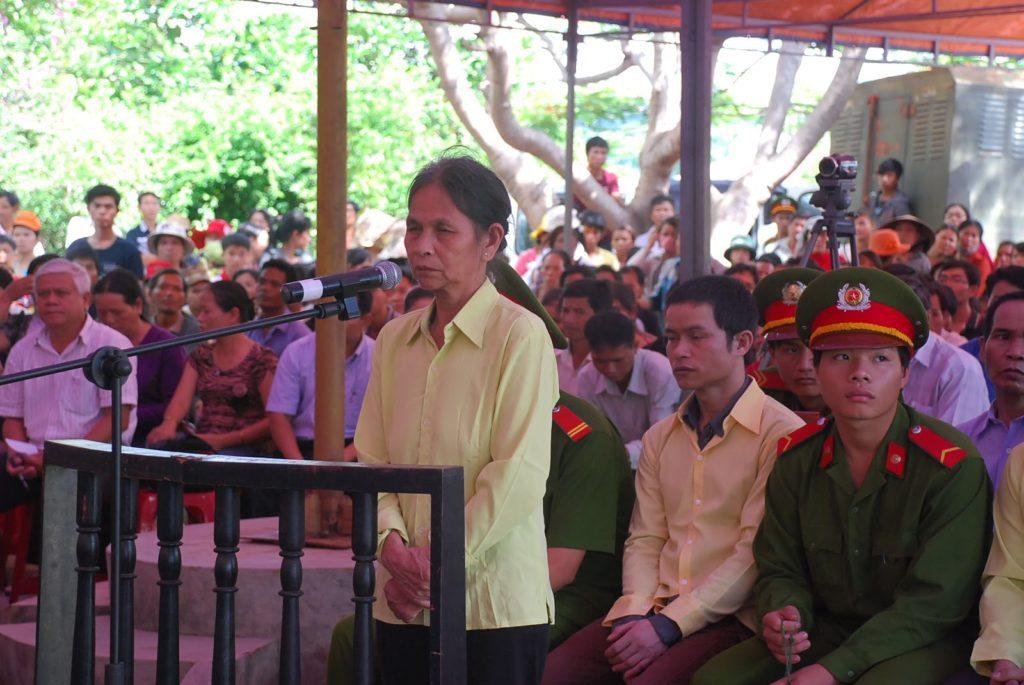
    Y Gyin, the founder of the Ha Mon religion, was sentenced to 3 years in prison during a May 2013 preliminary trial held in mobile court. Photo: Quang Hoi/ Border DefenseNewspaper.

    Over the years, many Central Highland Montagnards who belong to unrecognized religious groups have attested that the local authorities punish them economically by not approving impoverished household designations and bank loan applications, stripping them of social welfare benefits, or refusing to provide administrative services such as ID card provisions and marriage registrations.

    The Mang Yang Suburban District People’s Committee chairman has also stated that the government has encouraged the children of families who follow the Ha Mon religion to continue going to school.

    Several witnesses have told Luat Khoa that local authorities in the Central Highlands increase tuition fees for families who belong to unrecognized religious groups as a form of punishment.

    In July 2021, the People’s Army Newspaper also reported that “the Ha Mon religion no longer existed on Gia Lai land.” [16] The Ha Mon religion uses Catholic teachings as life precepts; practitioners do not go to church but practice rituals at home. In 2011, the religion had 1,357 followers in Mang Yang Suburban District.

    New religions in Dak Nong

    The Dak Nong News reported that the province saw numerous activities carried out by new religions and that provincial authorities were tackling these religious groups. [17]

    https://2xjs7y10oiyz26vqxu2hok6y-wpengine.netdna-ssl.com/wp-content/uploads/2021/08/image-5-523x1024.png
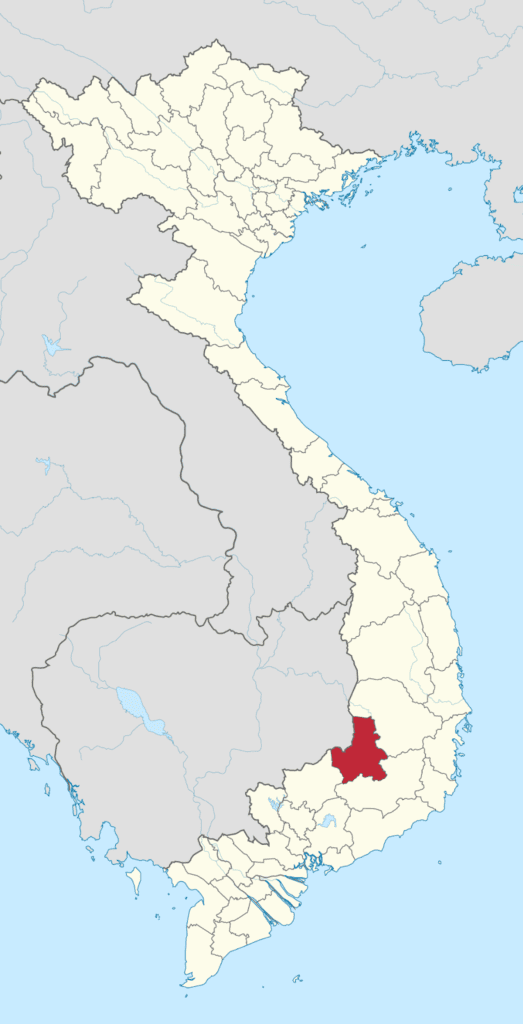
    Dak Nong province is shaded red on this map of Vietnam. Photo: TUBS.

    Religious activities considered illegal in the province include “building structures for the purpose of unauthorized religious activities; improperly using the name of the ‘Vietnamese Protestant Church’ for associations and groups, and causing difficulties in the state’s management of religion.”

    The newspaper cited two cases in the Dak Nia Commune, Gia Nghia Suburban District, accused of conducting for-profit religious activities but did not provide any evidence. In both cases, it was alleged that temples were built without government permission.

    Furthermore, the provincial Religious Affairs Committee reported that land was being illegally donated and transferred to build religious facilities, that religious activities were being self-organized without the participation of a state-recognized sangha, and that group religious activities were unregistered with local authorities.

    People following new religions are becoming increasingly common in Vietnam. However, it is challenging for these religions to meet the strict government requirements for recognition according to the Law on Faith and Religion.

    Tuyen Quang police: alerting the people not to follow “religion seeking to firmly establish the rule of law at its heart”

    After Hai Duong Province, Tuyen Quang provincial police also alerted people to the activities of the “religion seeking to establish the rule of law at its heart firmly.” [18]

    Police reported that the religion attracted participants through live videos on social media, including content that criticized political, social, and religious situations.

    Like Hai Duong provincial police, Tuyen Quang provincial police on social media urged people not to listen to the shared information and invitations to join the religion. Police claim the religion’s statements violate state laws, propagate superstitions, and take advantage of beliefs for personal gain.

    “Subjects of the ‘religion seeking to establish the rule of law at its heart’ firmly have taken advantage of the right to freedom, democracy, and freedom of speech, as well as taken advantage of belief and religion to operate illegally,” the Capital Security Newspaper said, citing the announcement by Tuyen Quang provincial police.

    Information on this religion has been removed from popular social media platforms in Vietnam, such as Youtube and Facebook.

  • A Vietnamese Sentenced To Five Years In Jail For “Spreading Coronavirus”: Rules For The People But Not For The Government

    A Vietnamese Sentenced To Five Years In Jail For “Spreading Coronavirus”: Rules For The People But Not For The Government

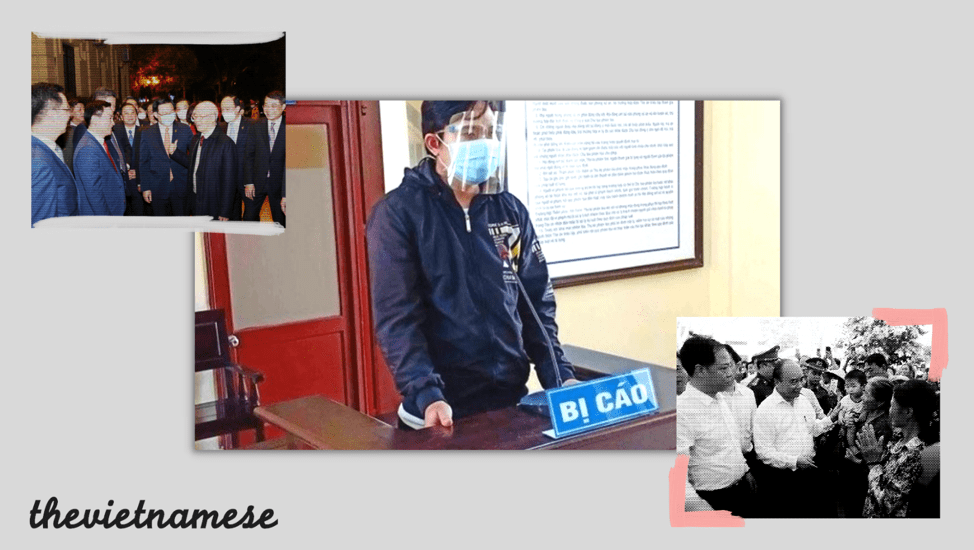
    Last week, on September 6, when the news of a Vietnamese man being sentenced to five years in prison for “transmitting coronavirus” by a court in Ca Mau Province made international headlines, it vehemently startled a substantial number of foreign readers.

    One day later, in the country’s southernmost province of Ca Mau, a local doctor was officially prosecuted for having “irresponsible manners which cause serious consequences.” More specifically, he was accused [1] of spreading coronavirus by deliberately administering treatment to an ill patient without properly testing him for coronavirus and informing local authorities of the case. The patient later tested positive for COVID-19.

    Looking back a little further, in June, a Protestant church in Ho Chi Minh City, Revival Ekklesia Mission, became [2] an unlikely scapegoat for a wave of criticisms targeting them for hosting religious events, which are believed to have eventually led to a significant coronavirus outbreak in the city. The church’s founding pastors, a husband, and a wife were then officially charged under criminal prosecution for “transmitting dangerous infectious diseases to other people.” The wife, nonetheless, firmly believed that her church was not the source of the new cluster since they always correctly followed health guidelines from local authorities.

    In reality, these are just a few examples among dozens of similar cases where individuals have been targeted, fined, or charged under causes of “deliberately spreading disease” or “flouting anti-coronavirus measures” since the beginning of the COVID-19 pandemic in Vietnam. In most cases, the defendants are working-class citizens struggling to make ends meet day by day. Now, they are facing pending criminal prosecutions and harsh criticisms from state media for their alleged “recklessness and indiscipline.”

    Setting aside all legal grounds for imprisoning or penalizing citizens on charges of “spreading disease,” it is utterly unfair how criminal prosecutions are deployed to punish ordinary people. At the same time, the Vietnamese government is given a free pass, despite being responsible for mishandling the coronavirus through controversial policies and their fault in hosting mass gathering events that could have been the original cluster of the current COVID-19 outbreaks.

    Who is responsible for the current wave of infections?

    Not long before the current wave of COVID-19 infections in Vietnam, which has had a catastrophic effect on the country’s economy and healthcare system, the Vietnamese government was confident that it had put coronavirus under its heel through the conventional methods of isolation and contact tracing.

    The complacent attitudes caused by the nation’s initial success in containing the virus, according to Major General Vu Quoc Binh [3], a former military medical director, have led to a “perplexing” situation where the authorities made mistakes in allowing large crowds to gather before the ongoing outbreak, being assured that the situation was still controllable. Meanwhile, the government did not prioritize vaccination when case numbers were still low, he added.

    In late April, when the Delta variant was believed to have arrived in Vietnam[4], people were still allowed to freely travel across the country during a long holiday without being given any preventive measures. Only around 0,01 percent [5] of the country’s population was fully vaccinated at that time.

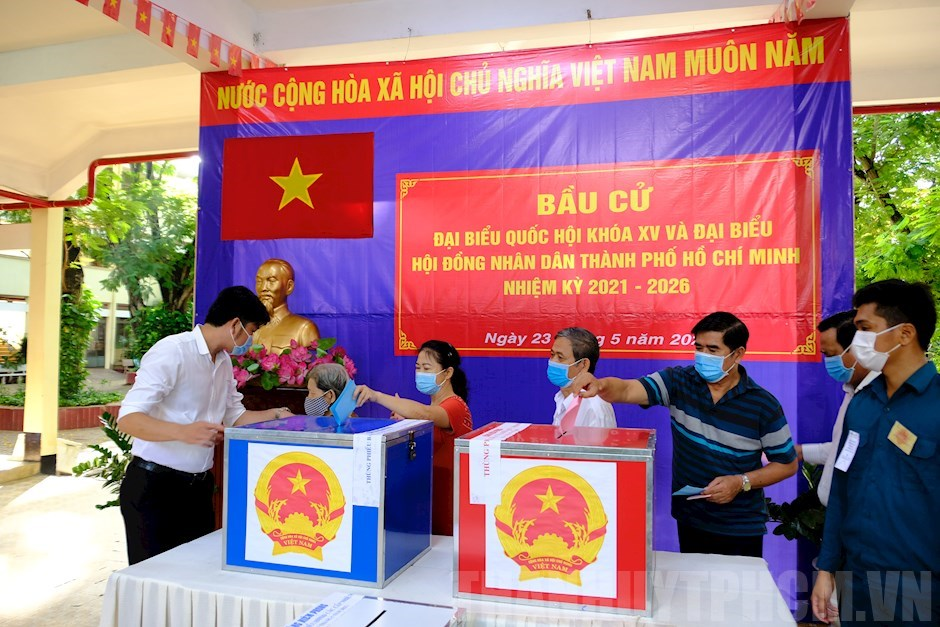
    On May 23, the country’s general election day, Vietnamese citizens were encouraged to directly go to voting polls to elect their National Assembly representatives in a large rubber-stamp legislative council; at the same time, COVID-19 infections started to break out in several northern provinces. On the other hand, the government vowed to “successfully organize” the political event at the cost of potential coronavirus transmission due to mass gatherings at the polls.

    A voting poll in Ho Chi Minh City. Photo: hcmcpv.org.vn.

    About one month later, in late June, the Vietnamese Ministry of Education still proceeded with [6] a plan to hold the national graduation examinations on July 7 and 8, which would take place in all of the country’s 63 provinces and municipalities. For instance, in Ho Chi Minh City, it was estimated [7] that nearly 90,000 students, along with 15,000 examiners, would be gathering in around 160 locations in the city to take part in the exams. At the time, daily coronavirus infections in Ho Chi Minh City stood at a 3-digit number; in late July, the city started to record [8] thousands of new confirmed cases every day.

    The examples mentioned above have not considered other significant missteps by the government, including an identity card registration program, where local residents were asked to replace their old identity cards with electronic ones at police stations, which nurtured an environment for disease transmission.

    In addition, there were the chaotic scenes of cramped vaccination venues [9] and congestion roadblocks [10] where people were crowded together to show their “travel permits,” a scheme used to limit the number of commuters on the streets. Overall, they exposed that the Vietnamese authorities’ mismanagement and inefficient plans harm more than good in improving the pandemic.

    Scapegoating the vulnerables

    From those experiences, it is conceivable that the current spread of virus infections is possibly the consequence of the Vietnamese government’s mishandling of the disease. However, none of the officials responsible for such failure has been held accountable, punished, or voluntarily resigned in the same way that other ordinary citizens have been fined, prosecuted, and jailed for “spreading infectious diseases.”

    Those indictments and the imprisonment of people for allegedly violating anti-coronavirus protocols are not only unfair, but they also do not effectively fix the root cause of the ongoing problem.

    In its purest form, the punishments applied have not necessarily been aimed at controlling or preventing the spread of the disease but rather to intimidate the public and shift blame to more vulnerable subjects through a scapegoating strategy [11].

    Most of the time, violators of pandemic regulations have been blamed for their “lack of discipline” for flouting COVID-19 laws, such as avoiding complying with compulsory isolation rules or declaring health conditions. However, these indications are invincibly reflecting the true feelings of local residents during this tumultuous time: scared, hopeless and angry.

    COVID-19 patients protested in a quarantine camp in Binh Duong Province over the shortage of food and necessities. Photo: Tin Tuc Viet Nam.

    Most Vietnamese people have been in dire straits since the country went into periodic lockdowns earlier this year. They are scared of being taken to poor and unclean quarantine facilities if tested positive while no one can take care of their sick parents or young children. Some people face financial strains and have lost hope that they will not return to their hometowns due to strict lockdown measures. At the same time, many others become angry that high-level government officials were somehow immune to punishment for breaking social distancing rules [12] while ordinary people would receive heavy fines [13] for doing so. These stories provide us a more authentic picture of the ongoing anti-coronavirus scheme in Vietnam.

    If the “war against COVID-19 [14],” an ostentatious metaphor commonly used by the Communist Party, does exist, the ordinary Vietnamese people are the losers of this battle.

    References:

    1. Duc, V. (2021, September 7). Khởi tố bác sỹ làm lây lan dịch bệnh. Báo Công An Nhân Dân. https://cand.com.vn/Phap-luat/khoi-to-bac-sy-lam-lay-lan-dich-benh–i627297/
    2. Richard C. Paddock, Chau Doan. (2021, June 2). Spared for Months, Vietnam Faces a Wave of New Infections. The New York Times. https://www.nytimes.com/2021/06/02/world/asia/vietnam-covid-ho-chi-minh.html
    3. Bac Pham, Bennett Murray. (2021, September 14). Counting the cost of Vietnam’s Covid meltdown. Asia Times. https://asiatimes.com/2021/09/counting-the-cost-of-vietnams-covid-meltdown/
    4. Huong, L. T. (2021, August 11). Delta variant outbreak challenges Vietnam’s COVID-19 response strategy. The Brookings Institution. https://www.brookings.edu/blog/order-from-chaos/2021/08/11/delta-variant-outbreak-challenges-vietnams-covid-19-response-strategy/
    5. Coronavirus (COVID-19) Vaccinations. (n.d.). Our World in Data. https://ourworldindata.org/covid-vaccinations
    6. Huynh, T. (2021, June 26). Bộ GD-ĐT: 63 tỉnh, thành tổ chức thi tốt nghiệp THPT đợt 1 cùng ngày. Tuoi Tre Online. https://tuoitre.vn/bo-gd-dt-63-tinh-thanh-to-chuc-thi-tot-nghiep-thpt-dot-1-cung-ngay-20210626200317418.htm
    7. L.Đ.O. (2021, June 30). TPHCM “mạo hiểm” khi tổ chức thi tốt nghiệp THPT đợt 1?Lao Dong Online. https://laodong.vn/giao-duc/tphcm-mao-hiem-khi-to-chuc-thi-tot-nghiep-thpt-dot-1-925514.ldo
    8. Hang, T. (2021, July 24). 3.991 ca mắc COVID-19 sáng 24/7, nhiều nhất vẫn là TP Hồ Chí Minh. Báo Công An Nhân Dân. https://cand.com.vn/y-te/Sang-24-7-them-3-991-ca-mac-COVID-19-Long-An-bo-sung-them-1-288-ca-benh-i621409/
    9. Huong, T. (2021, June 25). TP.HCM: Hàng ngàn người xếp hàng chờ tiêm vắc xin Covid-19 ở Nhà thi đấu Phú Thọ. Thanh Nien Online. https://thanhnien.vn/thoi-su/tphcm-hang-ngan-nguoi-xep-hang-cho-tiem-vac-xin-covid-19-o-nha-thi-dau-phu-tho-1404282.html
    10. LĐO. (2021, September 6). Chốt kiểm soát “vùng đỏ” Hà Nội lại đông đúc: Có lúng túng, dễ lây nhiễm. Lao Dong Online. https://laodong.vn/y-te/chot-kiem-soat-vung-do-ha-noi-lai-dong-duc-co-lung-tung-de-lay-nhiem-950298.ldo
    11. Minh, H. (2021, June 4). Đại dịch, bản năng đổ lỗi, và những cuộc săn dê tế thần. Luật Khoa Tạp Chí. https://www.luatkhoa.org/2021/06/dai-dich-ban-nang-do-loi-va-nhung-cuoc-san-de-te-than/
    12. Chinh, Y. K. (2021, September 16). Ý thức chống dịch: dân trí thấp hay quan trí lỏng? Luật Khoa Tạp Chí. https://www.luatkhoa.org/2021/09/y-thuc-chong-dich-dan-tri-thap-hay-quan-tri-long/
    13. Thiet, K. (2021, August 10). Thêm 16 trường hợp bị xử phạt vì ra đường tập thể dục, bất chấp quy định phòng chống dịch. Báo Đồng Nai Điện Tử. http://www.baodongnai.com.vn/tintuc/202108/them-16-truong-hop-bi-xu-phat-vi-ra-duong-tap-the-duc-bat-chap-quy-dinh-phong-chong-dich-3072372/
    14. Jason, N. (2021, September 12). Why Did The Vietnamese Communist Party Militarize Its Fight Against COVID-19? The Vietnamese Magazine. https://www.thevietnamese.org/2021/09/why-did-the-vietnamese-communist-party-militarize-its-fight-against-covid-19/
  • September, School, And The Politics Of Memory

    September, School, And The Politics Of Memory

    September is when the school year starts in Vietnam. However, this academic cycle is like no other, as the country is struggling with a deadly virus that claimed more than 10,000 lives last month. [1] How will this pandemic be remembered by those who survive? How will it be taught in schools in the years to come? Who will remember the missteps of the government, and will they demand justice for those whose deaths should have been avoided? We must not forget that a large part of Vietnam’s political landscape is the politics of memory, because as George Orwell once said in 1984, ‘he who controls the past controls the future; he who controls the present controls the past.’ My journey through schools, first in Vietnam and then overseas, illustrates why education and the politics of memory are intimately connected.

    ‘Under the roof of the socialist school’

    I am a researcher, and most of the people I interview for my research are activists and supporters of various social and political movements in contemporary Vietnam. These people are also around my age and come from Vietnam’s post-war generation. Every time I ask about their school experience, they almost always jokingly start with “under the roof of the socialist school”; they then tell me about a time when they were completely unaware of, or even lied to, about many historical events, including the 1968 Hue massacre, the fall of Saigon, the existence of re-education camps, the boat people exodus, or the border war with China. If the truth of these events was widely known, it would raise serious questions about the crimes North Vietnam’s government committed against central and southern Vietnamese and the legitimacy of the Vietnamese Communist Party (VCP).

    For us who come from the post-war generation [2], our education has been entirely engineered by the government under the leadership of the VCP. Thus, there is little surprise that some people and events were glorified while others were vilified or completely erased from public consciousness [3]. After all, one cannot secure one’s rule without being seen as legitimate, and in the case of the VCP, the spectre of the past is a constant threat to its contested legitimacy. The singular narrative in which the VCP is portrayed as the brave and glorious liberator of the Vietnamese people was told and repeated throughout the 12 years of our education through textbooks, symbols, rituals, and an elaborate system of rewards and punishments to reinforce these ideas.

    Needless to say, I grew-up to become a VCP-nationalist – someone who equates loving Vietnam with believing blindly in the VCP. Likewise, I also ended up believing that modern-day Vietnam was the culmination of the VCP’s countless victories, especially during the ‘War Against America to Save the Country’ (Kháng chiến chống Mỹ cứu nước); I was made to believe that the VCP was “on the right side of history.” This singular narrative is easy to digest for children and teenagers because of its simple dichotomy of hero and villain, supported by a complex system of other institutions – especially the media – that echoes the same story.

    Looking back, I can still vividly recall how proud I was when I became a member of the Communist Youth League at the age of 15. I remember humming one of the Party’s hymns as I walked home after attending the membership ceremony. It was not easy for me to escape the preconceptions of my childhood and the sad reality is that many Vietnamese people cannot.

    Pedagogy of the oppressed [4]

    When I left Vietnam to pursue my bachelor’s degree, my sociology and history classes challenged this singular narrative from my childhood and managed to deconstruct the VCP’s simplified and skewed perspective of the world. Yet, my most eye-opening experience did not happen in the classroom.

    I remember stumbling upon a stack of books in the university library. They were a collection of stories about the Vietnamese Boat People who survived their exodus. These pages held more than just tales of tragedy and of sinking ships. They held the sorrow of husbands and wives separated by circumstance with little to no hope of ever seeing each other again. They carried the rage and despair of fathers watching their daughters being raped and killed right in front of their eyes. They contained the hopelessness and ennui of throwing corpses into the sea and of the countless lives left broken even after rescue. These stories stood in stark contrast to the image of Vietnam peddled by the VCP. Yet, I could not deny them; the pain and suffering of my countrymen were too raw and too real. The Vietnam I once knew, a Vietnam built on a shoddy foundation of strategically crafted lies and upfront deception, slowly began to crumble.

    It was this evening in the library that changed me forever. Since then, I have become my own educator, gradually undoing what had been done to me “under the roof of the socialist school.” After getting my bachelor’s degree, I continued my education and had the opportunity to study the history of the Vietnam War (instead of the “War Against America”). I also write about contemporary events in Vietnam with the knowledge of how the past helps shape the present. This path I have chosen, albeit not easy, is nonetheless deeply rewarding. Its reward is both personal, as it gives me an avenue to re-build and express my authentic self and collective because I can speak for those whose stories have been erased from history.

    Having said all this, education is not confined within formal institutions; I just happen to follow an academic path. Most of my research interviewees have learned through their own means. While I found my first moment of truth in the library, they may have found theirs as they participated in the street protests of the early 2010s in Vietnam, read blogs and websites that have become widely accessible thanks to the rise of the internet in the country, talked to their church members, or met with people of the Vietnamese diaspora. Regardless of the different routes we took, what we share in common is the self-awareness we gain as members of disenfranchised groups: Catholics, “the losing side,” southern Vietnamese, northerners who did not side with the victors, or protesters who were beaten up simply because they peacefully exercised their rights. We also share our role as keepers of the stories the powerful would rather erase.

    Free schools and revolutionary journalism

    I do not foresee the education system in Vietnam undergoing any radical change. I anticipate that the pictures of the long line of vans waiting in front of the crematorium in Saigon, the thousands of faces behind the death statistics, the grief of their loved ones, the indignation of those who have been pushed further into poverty because of the collapsed welfare system, and countless others whose lives have been overturned in the past weeks with endless confusing and incoherent decisions made by the government, will once again be at risk of being written off of history. It is likely that students will not be told about the year 2021 the way it has happened. Thus, no difficult questions will be raised about the (lack of) competency, accountability, and morality of those in power [5].

    However, if history – the history of the oppressed – has anything to teach us, it is the power of Free Schools and revolutionary journalism. We must not forget that Phan Chu Trinh established Free Schools across Vietnam to teach what the French did not allow us – their subjugated people – to learn. We must not also forget that Phan Boi Chau spent his entire life conducting revolutionary journalism, not only to educate and inform but also to cultivate a sense of authentic identity for the Vietnamese people, without which we would not have had the basis to organize ourselves and achieve national independence [6]. I trust that if we could revive the spirit and practices of the days of the two Phans, with Free Schools and revolutionary journalism being once again a vibrant part of civic life in Vietnam, we will not only do justice to the past and to those whose stories would otherwise not be told, but also to our future generations and to the prospects of a better Vietnam we all deserve.

    References:

    1. Johns Hopkins Coronavirus Resource Center. “New deaths” for August was 10,067. Available at: https://coronavirus.jhu.edu/region/vietnam. Retrieved on 3 September 2021.
    2. Vietnam’s post-war generation is defined as people born between the end of Vietnam War in 1975 and the years of Đổi Mới 1986-1989.
    3. See Vu, T. (2014). Triumphs or tragedies: A new perspective on the Vietnamese revolution. Journal of Southeast Asian Studies, 45(2), pp 236–257. Reviewing the contents of textbooks used in the cultural revolution led by the VCP, Vu concludes that such education “sought to indoctrinate people, not to enlighten them in the normal sense of the word”, and one of the consequences could be “enslav[ing] people by limiting their information to one particular way of thinking in order to create obedient subjects of the state” (p. 252).
    4. We borrow the name of Brazilian educator Paulo Freire’s famous work Pedagogy of the Oppressed, first written in 1968, for this section.
    5. We suggest readers to also read Bia Dua’s article Chúng ta còn lại gì nếu ngày mai hết dịch?, published on Luat Khoa on 1 September 2021, to get a more detailed picture of the devastation in Vietnam, and the author’s thoughts and sentiments as a resident of Saigon in these sad and difficult days. Available at: https://www.luatkhoa.org/2021/09/chung-ta-con-lai-gi-neu-ngay-mai-het-dich/?fbclid=IwAR1FtFrxrw3aHp_Pii1D3S2mOMh2muTbjThwIZ4VeLLDGi_JOZcEJN_-Zdk
    6. See Duiker, W. (1976). The rise of nationalism in Vietnam, 1900-1941. Ithaca & London: Cornell University Press. An elaborate discussion of Phan Chu Trinh’s Free Schools, Phan Boi Chau’s journalism, and the significance of these works in creating the identity of the Vietnamese people, can be found in Part 1 Scholar-Patriots (pp. 21-101) of the book.
  • Vietnam Briefing: Prosecutions Against Bao Sach Journalists; Beijing Seeks To Reaffirm Its Influence In The South China Sea

    Vietnam Briefing: Prosecutions Against Bao Sach Journalists; Beijing Seeks To Reaffirm Its Influence In The South China Sea

    Prosecutions against members of online-based Bao Sach (Clean Newspaper) outlet

    RFA reports:

    • On Wednesday, September 8, Vietnamese authorities indicted five journalists from the Bao Sach group, an independent journalism project, on charges of “abusing democracy and freedom to infringe on state interests.”
    • According to the indictment issued by the Procuracy of Thoi Lai District, Can Tho City, the Bao Sach journalists posted “reactionary information and videos” and delved into information that was “inappropriate, distorting, against the country’s interests, and slanderous of the people’s administration,” in violation of Article 331 of Vietnam’s Penal Code.
    • The five indicted journalists are: Truong Chau Huu Danh, Nguyen Thanh Nha, Doan Kien Giang, Nguyen Phuong Trung Bao, and Le The Thang. Thang remains under house arrest, while the other four members have been arrested and detained.
    • According to state media, the indictment also states that the group’s members have allegedly “taken advantage of the freedom of speech and press” to write and upload “unverified, negative, biased and false” information on their Facebook fan page, Facebook group, and YouTube channel.
    • In the Freedom in the World 2021 report by Washington D.C.-based Freedom House, Vietnam scored three out of 40 in political rights, and 16 out of 60 in civil liberties. The Vietnamese Communist Party has consistently shown little tolerance for dissident and opposition voices, while many independent journalists and publishers in the country have continually faced harassment, arrests, or even imprisonment.

    Former vice president of the Vietnam Independent Journalism Association (IJAVN) denied citizenship rights

    RFA reports:

    • Vietnamese authorities have rejected petition letters calling for an investigation into legal proceedings against detained blogger Nguyen Tuong Thuy, a former vice president of IJAVN, who is currently serving an 11-year jail term for “making, storing, and disseminating documents and materials for anti-state purposes” under Article 117 of Vietnam’s Penal Code.
    • According to Nguyen Thi Lan, Thuy’s wife, her husband had called home from the An Phuoc Detention Center, Binh Duong Province, telling her that he had asked the detention center to send his petition letters to the procuracy and other agencies. However, the central authorities responded by saying that he did not have citizenship rights, which is ridiculous and unreasonable, Lan told RFA Vietnamese.
    • “The authorities did, however, suggest that he request an appeal to reconsider the court decision if he did not agree with it,” Lan added. “They said his petition was not valid because he no longer had necessary citizen rights to file it.”
    • Nguyen Tuong Thuy was indicted along with two other IJAVN members, Pham Chi Dung and Le Huu Minh Tuan, on November 10, 2020, for “making, storing, and disseminating documents and materials for anti-state purposes” under Article 117 of Vietnam’s Penal Code. He was sentenced to 11 years in prison along with Tuan, while Dung was given 15 years.

    Another member of the U.S.-based Provisional Government of Vietnam was charged for “carrying out activities to overthrow the government”

    RFA reports:

    • On Friday, September 10, Vietnamese authorities arrested and charged a woman with “carrying out activities to overthrow the government,” making her the third person this year detained for joining the Provisional Government of Vietnam, an exile Vietnamese opposition group based in Orange County, California.
    • Le Thi Kim Phi, 62, used a Facebook profile under the name “Phi Kim” to connect with members of the organization, said the investigation division of the An Giang Police.
    • The Vietnamese government designated the group a terrorist organization in January 2018 after members were charged with a plot to attack Ho Chi Minh City’s Tan Son Nhat International Airport with petrol bombs ahead of a major holiday the year before.

    COVID-19 situation in Vietnam

    • Overall, Vietnam has surpassed 600,000 confirmed COVID-19 cases with more than 15,000 deaths recorded. As of now, less than 5 percent of the country’s population has been fully vaccinated.
    • Vietnam sentenced a man to five years in jail for “spreading coronavirus,” reports The New York Times: “The man, Le Van Tri, 28, was convicted of “spreading dangerous infectious diseases” to eight people, one of whom died from virus complications. His sentence for failing to comply with Covid-19 quarantine restrictions also included a fine of 20 million dong, around $880.”
    • Hunger became a reality for tens of thousands of Vietnamese during the COVID-19 pandemic, writes The Guardian. “The government promised to feed everyone and enlisted the military to help deliver supplies to those in need, but vast swaths of the population have received nothing. Last week, Vietnamese media reported that more than 100 people in one district had protested over the lack of help.”
    • Standing at 4.95 percent, Ho Chi Minh City has the highest COVID death rate in Southeast Asia, reports Nikkei Asia: “The city’s death rate stands out in the region. The short-term fatality rate in neighboring Cambodia stood at 2.38% while Thailand’s was 1.34% although the kingdom is battling its worst outbreak of the virus so far, with around 15,000 new cases a day, according to Our World in Data.”
    • The Hayat-Vax coronavirus vaccine has been approved for emergency use in Vietnam, reports Reuters. The vaccine, which is manufactured in China and packaged in the United Arab Emirates, is the seventh vaccine to be endorsed in the Southeast Asian country.
    • European investors are considering relocating their operations in Vietnam over harsh COVID-19 restrictions, reports Reuters. “A sharp rise in coronavirus cases since late April has seen movement restrictions imposed widely, affecting workers and forcing many companies to suspend operations, which resulted in falls in August exports, industrial output and retail sales.”

    Chinese Foreign Minister Wang Yi’s trip to Vietnam

    • On Friday, September 10, Chinese Foreign Minister Wang Yi arrived in Vietnam for a three-day visit, with a goal of reasserting Beijing’s influence in the country following high-profile visits by U.S. Vice President Kamala Harris and U.S. Defense Secretary Lloyd Austin.
    • In an official statement, Wang warned Vietnam of interference from “regional outsiders” in the South China Sea issue, urging the country to “treasure the hard-won peace and stability” and refrain from unilateral moves that could “complicate the conditions” or “magnify conflicts” over territorial disputes between the two countries. “[We should] send a positive message to the international community that the people of China and Vietnam have the wisdom to manage conflicts, and further expand areas of cooperation,” he added.
    • China also offered Vietnam an additional three million vaccine doses during Wang’s visit, raising the number of vaccines donated from China to the country to 5.7 million doses.
    • Meanwhile, Japan’s Defense Minister Nobuo Kishi was also in Vietnam on Saturday, where he signed a deal allowing the transfer of defense equipment and technology from Japan to Vietnam amid China’s growing military influence, reports Associated Press. Minister Kishi said the signed deal elevates their defense partnership “to a new level” and that Japan plans to deepen defense ties between Vietnam and Japan through “multinational joint exercises” among other things.

    Vietnam Insight: Learn more about Vietnam

    US, China dueling for power on the Mekong

    Asia Times/ Bertil Lintner/ September 5

    “While in Singapore, Harris said that ‘our partnerships in Singapore, in Southeast Asia, and throughout the Indo-Pacific are a top priority for the United States.’ She also spoke against China’s excessive claims in the South China Sea, a message she repeated during her subsequent trip to Vietnam.

    But the odds are arguably stacked against Washington on the Mekong. China is moving ahead faster and with more determination than the US in asserting its influence on Mekong River nations.

    Because China sits at the river’s headwaters and has shown its power to turn it off at will, the MRC, Mekong-US Partnership, and Japan’s initiatives seem destined to become sideshows in another rising contest for regional influence.”

    Washington’s Challenge in Southeast Asia: The View From Vietnam

    The Diplomat/ Ngo Minh Tri/ September 8

    “If the U.S. wants stronger support and closer partnership with Vietnam and other Southeast Asian countries, it must change the approach, rebalancing its focus away from security to focus on the economic cooperation that is central to the future prosperity of Vietnam and other ASEAN members. Geographic proximity and economic interdependence mean that Southeast Asian nations are reluctant to treat China as a hostile adversary.”

    Vietnam in pragmatic balancing act between China, US

    Asia Times/ Hai Hong Nguyen/ September 10

    “Overall, the main purpose of Wang’s trip to Hanoi is to pull Vietnam back from getting closer to the US and at the same time floating a message to the US that China’s ties with Vietnam are unbreakable.

    Vietnam has been successful and greatly benefited from maintaining the balance in its relationship with both the United States and China. However, Vietnam’s approach is more pragmatic than it once was. It will not be dragged into the competition or rivalry between the two major powers.”

  • Why Did The Vietnamese Communist Party Militarize Its Fight Against COVID-19?

    Why Did The Vietnamese Communist Party Militarize Its Fight Against COVID-19?

    When the Ho Chi Minh City authorities decided to deploy troops to enforce an antivirus lockdown during the last week of August 2021, they caught local people off guard.

    The move, which came amid the rise in both Covid-19 infections and deaths in the city, has been seen as the last strategic card adopted by the Vietnamese government in its arduous and yet controversial battle to “defeat the virus.”

    According to state media, military troops will help enforce the lockdown until September 15, taking on the duty of barring people from going outside and providing necessities to quarantined residents.

    However, this has brought little peace of mind to local communities.

    Despite firm reassurances from the local government that military troops would take on the duty of buying and delivering food during the quarantine period, panic buying broke out even before the lockdown, while several opinions circulated on social media cast doubt that the preliminary action was to quell potential riots.

    Since the beginning of Covid-19, military-style rhetoric against the disease has appeared frequently in Vietnam’s state-run media and newspapers.

    Some might argue that these grandiose war-like bombasts and military mobilizations are not exclusively confined to Vietnam. Still, given the country’s authoritarian political landscape where speech is often suppressed and orders arbitrarily passed, these have been abused by the Communist government to spread propaganda and shirk off the responsibilities for its failure to handle Covid-19.

    Military rhetoric

    Vietnam has used military rhetoric since the early phase of the pandemic, with the flashy anti-coronavirus slogan of “fighting the virus as if we are fighting an enemy.” Depicting coronavirus as “an invader,” Vietnamese officials announced a war on the disease, vowing to “defeat” it through drastic operations and comprehensive “tactics.” [1]

    In Vietnam’s epidemiological “war,” each person is portrayed [2] as “a soldier.” Each family is “a fortress” in fighting “an invisible enemy,” [3] namely Covid-19. Healthcare workers have been zealously described as “superheroes,” [4] while infected patients are “subjects” [5] who need to be “swept out” [6] of the community.

    Last year, in June, when the Communist country successfully contained the first wave of infections and maintained a zero death toll, its leaders declared “a victory” [7] in the battle against Covid-19. Its success, said [8] the deputy prime minister, was primarily thanks to “the leadership of the Party, the state and the entire political system.”

    “Fighting the virus as if we are fighting an enemy,” a street board displaying Vietnam’s anti-coronavirus slogan. Photo: AFP.

    Looking from the historical perspective, the Vietnamese Communist Party has since boasted about its significant role in defending its independence from French colonialism and American imperialism.

    Likewise, the warlike discourse on the coronavirus disease is nothing but a manipulative tactic utilized by the Communist Party to spread propaganda and reinforce its “legitimate” reign on every aspect of Vietnamese society. By intertwining the use of military rhetoric and the country’s previous military victories, the propaganda department has maneuvered the public into believing that the war against Covid will prevail under the Party’s leadership, just as has happened in the past.

    The battleground

    While the political rhetoric has dominated Vietnam’s state-run newspapers, a military mobilization is simultaneously taking place in real life.

    Since August 23, military troops carrying rifles have been present at roadblocks in Ho Chi Minh City. These soldiers have been tasked with checking commuting permissions or delivering food and medicine to local households. The government called in the military to enforce the policy adopted by the city authorities to limit unnecessary movement to help curb the spread of the infection. Meanwhile, a comprehensive propaganda campaign [9] has been implemented to sway public opinion into supporting this strategy.

    Almost a week later, as many expected, the army mobilization program began to expose its incompetence and proved ineffective in relieving the burdens of maintaining a stable food supply delivery to Ho Chi Minh City’s citizens. In reality, substantial shopping demands from customers overloaded the capacity of the army’s workforce, causing essential goods to be congested and accumulated at the supply center; at the same time, Vietnam’s daily Covid-19 confirmed cases continue to reach new milestones [10], nearly every passing week.

    The failure of this policy eventually compelled local authorities to discontinue the program, allowing [11] delivery drivers to carry out their everyday operations.

    Soldiers with rifles and batons guarding roadblocks in Ho Chi Minh City. Photo: Doc Lap/ Thanh Nien Online.

    So why did the Vietnamese authorities still proceed to implement this strategy, as, from the beginning, it had been proved to be inefficient?

    The idea of utilizing military force to solve the problem by enforcing stringent lockdowns is also widely supported by pro-government critics on social media. In explaining the failures of Vietnam’s anti-coronavirus strategy, they argue, it is due to the lack of city residents’ discipline in complying with health guidelines, not from the state’s inefficient policies in handling the pandemic. And imposing stricter measures, such as conducting a martial-style intervention, could help improve the ongoing situation.

    According to Huynh Cong Duong, [12] a writer for Luat Khoa Magazine, this tumultuous circumstance represents an underlying effort by the Vietnamese government to shift the blame to citizens. The consequence of this blame-shifting mindset, Huynh Cong Duong concludes, might “pose a significant threat” to civilian efforts on public issues, such as health and social security and the future of policy building in the country.


    As the aggressive hyperbole and military approach appear to be of little help, the Vietnamese Communist Party has to adopt more practical methods to get ahead in the fight against the coronavirus. There are two options that the Party might consider.

    Firstly, the government needs to admit the loopholes and mistakes in its anti-coronavirus policies and make human rights matters more inclusive in the epidemiological protocols.

    Secondly, when the public’s trust in the government and state media is severely eroding, the Communist authorities should recognize and promote the critical role of Vietnam’s civil society organizations and religious groups in picking up the slack where they struggle. [13] Not only do civil society and religions help alleviate the effects of Covid-19 on local communities, but they also become a beacon of reassurance and hope [14] for Vietnamese people during these challenging times, an important mission that none of the Party mouthpieces or army units could ever accomplish.

    It is time for the Communist Party to adjust its approach towards the Covid-19 pandemic.

    References:

    1. Những chiến thuật của Việt Nam trước “giặc” COVID-19. (2020, April 20). VietnamPlus. https://special.vietnamplus.vn/2020/04/20/chien-thuat-chong-covid-19-viet-nam/
    2. TP.HCM: Phát huy tinh thần “mỗi người dân là một chiến sĩ; mỗi gia đình, tổ dân phố, khu phố là một pháo đài chống dịch.” (2021, May 27). HCDC. https://hcdc.vn/category/thong-tin/viem-phoi-cap-do-virus-ncov/tphcm-phat-huy-tinh-than-moi-nguoi-dan-la-mot-chien-si-moi-gia-dinh-to-dan-pho-khu-pho-la-mot-phao-dai-chong-dich-67931aad42e0787f04c62ab852e6c0d2.html
    3. Hoa, Q. (2021, August 8). Quyết liệt hành động để sớm đẩy lùi “kẻ thù vô hình” COVID-19. VietnamPlus. https://www.vietnamplus.vn/quyet-liet-hanh-dong-de-som-day-lui-ke-thu-vo-hinh-covid19/732256.vnp
    4. Khuong, T. (2021, June 26). Hàng ngàn bức thư tay sưởi ấm các ‘siêu anh hùng’ chống dịch Covid-19 ở TP.HCM. Thanh Nien Online. https://thanhnien.vn/doi-song/hang-ngan-buc-thu-tay-suoi-am-cac-sieu-anh-hung-chong-dich-covid-19-o-tphcm-1400833.html
    5. L.Đ.O. (2021, August 8). Thông tin mới nhất về những đối tượng F0 COVID-19 được cách ly tại nhà. Lao Dong Online. https://laodong.vn/suc-khoe/thong-tin-moi-nhat-ve-nhung-doi-tuong-f0-covid-19-duoc-cach-ly-tai-nha-939623.ldo
    6. Not, T. (2021, August 17). Chủ tịch tỉnh An Giang kêu gọi chung tay quét sạch F0. Lao Dong Online. https://nld.com.vn/thoi-su/chu-tich-tinh-an-giang-keu-goi-chung-tay-quet-sach-f0-20210817114001702.htm
    7. D. Hai & D. Linh, D. H. D. L. (2020, June 14). Tại sao Việt Nam chiến thắng dịch COVID-19? Vietnam Ministry of Health. https://ncov.moh.gov.vn/en/-/tai-sao-viet-nam-chien-thang-dich-covid-19-
    8. Ibid., [7]
    9. Quan, V. V. (2021, August 31). Quân đội “lo từ A đến Z” và những kỹ thuật tuyên truyền chính trị kinh điển. Luật Khoa Tạp Chí. https://www.luatkhoa.org/2021/08/quan-doi-lo-tu-a-den-z-va-nhung-ky-thuat-tuyen-truyen-chinh-tri-kinh-dien/
    10. Nga, L. (2021, August 30). Vietnam confirms 14,219 new Covid-19 cases. VnExpress. https://e.vnexpress.net/news/news/vietnam-confirms-14-219-new-covid-19-cases-4348606.html
    11. Đi chợ hộ tại TP HCM: Quân đội “chào thua”, shipper trở lại. (2021, August 30). BBC Vietnamese. https://www.bbc.com/vietnamese/vietnam-58381909
    12. Duong, H. C. (2021, August 25). Cảm tình quân phiệt trên đường phố Sài Gòn. Luật Khoa Tạp Chí. https://www.luatkhoa.org/2021/08/cam-tinh-quan-phiet-tren-duong-pho-sai-gon/
    13. Luke Hunt. (2021, July 28). In Vietnam, Civil Society Is Picking up the Slack Where Authorities Struggle. The Diplomat. https://thediplomat.com/2021/07/in-vietnam-civil-society-is-picking-up-the-slack-where-authorities-struggle/
    14. Thanh, T. (2021, August 22). Trong hoảng loạn, tôn giáo đang giúp trấn an – việc mà nhà nước không làm được. Luật Khoa Tạp Chí. https://www.luatkhoa.org/2021/08/trong-hoang-loan-ton-giao-dang-giup-tran-an-viec-ma-nha-nuoc-khong-lam-duoc/