Blog

  • Vietnam: Free Press is Not Free

    Vietnam: Free Press is Not Free

    Vietnam always boasts an impressive record of having over 800 newspapers, thousands of publications, tens of thousands of journalists, a national news agency, hundreds of TV channels and broadcasting channels, as well as hundreds of online newspapers and magazines, as evidence that there is a free press in the country.

    Yet at the same time, it remains one of the top countries that practice the tightest Internet surveillance and censorship as evaluated by Freedom House in 2017 and has also been named one of the top five state enemies of the Internet around the world by Reporter Sans Frontiers.

    Obviously, the government and its supporters have frequently complained that the international human rights associations were biased with their reports and not treating Vietnam fairly.

    So, is Vietnam’s free press free, as claimed by its government?

    One of the latest administrative decisions from the country’s Ministry of Information and Communications (MIC) on November 14, 2017, could shed some light on the answer.

    The MIC-issued order effectively prohibited the online magazine Nguoi Quan Ly (The Manager), from engaging in any and all publication activities for three months, due to an article it had published in relation to the anti-corruption campaign in Binh Phuoc Province dated August 21, 2017. Further, the magazine was also fined 40 million VND (approximately 1,800.00 USD) for this piece and had to immediately and permanently remove such article.

    The offending article is entitled “Binh Phuoc: Newspapers are standing on the sidelines of the campaign to prevent and fight against corruption?”

    Given the fact that Secretary General Nguyen Phu Trong of the Vietnamese Communist Party (VCP) has long been tooting his image as a leader with a staunch stand on fighting corruption, it could be a bit confusing for some in trying to understand as to why Nguoi Quan Ly received quite a harsh fine for that particular article.

    But it is also this very call to fight corruption from the VCP that apparently had caused Nguoi Quan Ly such an agonizing fate.

    Corruption is one of the more sensitive issues to the Vietnamese government because it could carry the most detrimental effect on the VCP’s legitimacy. And in Vietnam, it is the VCP’s leadership that counts, not the civic government. Thus, the VCP has to defend its own legitimacy at any costs, and writings on the topic of corruption must be strictly monitored. In other words, the press should write about corruption as being directed by the VCP’s orders.

    Understanding the Party’s ultimate goal of keeping an impeccable image in the eyes and minds of its people, would further help us understand why the press in Vietnam cannot be free, as long as the VCP retains its leadership role.

    With plenty of traditional newspapers, as well as online magazines and news sites in Vietnam, none of them could really be free to write as they please. Instead, all of them are only allowed to write as instructed by the directives and missives they receive from the VCP’s Central Propaganda Department, not just on sensitive issues like corruption but apparently all issues.

    It has been an old joke in the country that Vietnam has many newspapers, but only one editor-in-chief, the Chief of the VCP’s Central Propaganda Department.

    Nguoi Quan Ly online magazine was shut down for three months and had to pay a hefty fine because the published article could probably be construed as a direct attack on the Central Propaganda Department’s authorities.

    In the offending article, the magazine criticized the Binh Phuoc’s Provincial Office of the Central Propaganda Department for hindering the media and journalists’ efforts in covering stories about corruption in the area, in particular, by the issuance of Missive No. 598-CV/BTGTU.

    According to Nguoi Quan Ly’s article, Missive No. 598-CV/BTGTU effectively ordered all media in the area to write only about “positive” results of the VCP’s fight against corruption. In other words, they were supposed to report only on how great the government had been in carrying out those anti-graft campaigns.

    The article further stated, if one was to follow Missive No. 598-CV/BTGTU, then it would mean he/she would not be able to raise any potential issues regarding the probable government’s wrongdoings, any incidents of corruption in the area, or present their investigation on the potentially corrupted officials. Instead, they could only praise the government and its officials on a great job that they had done with the anti-graft campaign. Therefore, the article continued to argue, the missive was in direct conflict with the VCP’s own anti-corruption mission as detailed by the Politburo.

    The article did not state any other information, except quoting and analyzing the contents of Missive No. 598-CV/BTGTU. But that was enough for the MIC to penalize it with a high fine and shut it down for three months.

    Speaking to BBC-Vietnamese edition, journalist Mai Quoc An said he could not understand why Nguoi Quan Ly was penalized so harshly for this particular article, as they were just reporting the correct contents of Missive No. 598-CV/BTGTU. On his Facebook account, An also published a photograph of the very missive, so that netizens could see its contents themselves and compared to what Nguoi Quan Ly had written.

    From An’s Facebook account, we also learned that the entire editorial board, writers, and staff of Nguoi Quan Ly had resigned from their positions on November 16, 2017, two days after the administrative sanction became public. That, however, is a rare form of defiance from Vietnam’s mainstream media in situations like this.

    What more often seen is that when faced with an administrative order penalizing them for exercising their rights under freedom of the press, none of the newspapers or their writers would fight back. They all rather accepted the sanctions, paid the fines, and lived with the reality that their publication may very well be closed indefinitely after the sanctioning period due to the competitive nature of the field.

    An also told BBC that he believed no one had ever challenged the validity of these administrative decisions in court. An is no stranger to this method of controlling the press in Vietnam. He used to work for Sai Gon Tiep Thi, a popular magazine that was forced to close its operation in early 2014 after 19 years of publication. Many suspected that Sai Gon Tiep Thi was closed down because it was deemed to have gotten too close to the VCP’s comfort in writing more and more about issues, which the Party considered to be, highly sensitive political matters.

    While the decision to fine Nguoi Quan Ly obviously did not spell out the exact reasons and instead stated that the offending article “contained misleading information which led to serious consequences”, once we compared the contents of the offending article to that of Missive No. 598-CV/BTGTU, the MIC seemed to have failed at their reasoning.

    If anything, this latest round of investigating and monetary fining publications (along with Nguoi Quan Ly, at least two other newspapers were fined for their articles) by the MIC indirectly reaffirmed the fact that free press in Vietnam after all, does not stand a chance to be free. One is only free to write as long as he or she keeps in line with the orders and missives of the Central Propaganda Department and the VCP.

    It is the so-called centralized democracy which operates the VCP, that also dictates an absolute obedience to the Party in many aspects of society, especially those that related to the news and media. And as such, newspapers like Nguoi Quan Ly was penalized not because their articles contain untruths or misleading information, but because they showed the slightest sight of disobeying the orders of the VCP and its Central Propaganda Department.

    Vietnamese journalists and reporters, after all, does have a duty to “protect the platforms, ideology, and policies of the Party,” according to the country’s Press Law 2016, which took effect on January 1, 2017.

  • “Piss on Trump” Opens Up Much Needed Debates on Individual Rights Among Vietnamese

    “Piss on Trump” Opens Up Much Needed Debates on Individual Rights Among Vietnamese

    In the late night of November 11, 2017, I saw the picture of Vietnamese singer Mai Khoi, a pro-democracy artist who has been dubbed “the Vietnamese Lady Gaga” by Western media in the past two years, holding a sign saying, “Piss on you, Trump” where the word “peace” was crossed out and written over by “piss”.

    She was protesting President Trump, who, in her words, was “a misogynistic man”, and unlike his predecessor Barack Obama, had failed to mention the critical conditions of human rights defenders in Vietnam during his trip for the APEC 2017 meetings.

    2017 marks the year that the pro-democracy movement there has experienced some of the worst crackdowns in recent times. During Trump’s visit, activists reported that they were being followed and that police guarded their houses, many also had to take refuge from their homes temporarily. Even before the trip, rumors have been circulating around that more arrests were to be made in the coming days, which worried many observers.

    Yet, for Mai Khoi’s one-person protest, I did not think much of it at first. I chuckled at her sign, and then because of the report on Twitter by American journalist Bennett Murray, who works for German media, that police had started to harass her, I became a bit worried. But still, I went to bed hoping she would not get into too many troubles with the government. She is a public figure, the police would have been a bit more careful, I thought.

    What I would never expect was to wake up the next day and found out not only that she was still being harassed by the police, but a backlash against Mai Khoi on social media in Vietnam also began. Even more perplexed was the fact that the critics not only were members of the general public or the government’s Internet trolls but also from some of the pro-democracy and pro-human rights camps inside and outside the country. And there were so many arguments being thrown around from everyone, myself included.

    Mai Khoi was criticized for protesting against Trump instead of Xi Jinping who also in Hanoi at the same time because some thought Xi is the bigger enemy of all Vietnamese. Afterall, it was China that went after our sea waters, not the U.S.

    There were people who complained that her message was too crude, or that it was not good manners to treat Trump that way. People even suspected that the Vietnamese government had allowed her to protest to make the U.S. president to “lose face.” Had she replaced the word Trump with Xi, she would have been beaten up right then and there by the Vietnamese authorities, some said.

    The worst criticism probably was about her choice of fashion. Mai Khoi was also scolded for not wearing a bra. No proper woman would dress like that, so she did not deserve the right to protest, was the explanation of one critic. Many people demanded that she must give a reason to protest Trump. Not liking Trump or just hating his guts was not good enough, they argued, we hated Xi Jinping because the Chinese took our islands, but why did you have to hate Trump? What did Trump ever do to Vietnam and Vietnamese people?

    Those who supported her simply stated that it was her right to protest and that it did not matter what her reasons were. Mai Khoi had the right to choose whom to protest against, and she did not have to offer a reason for why she picked Trump and not Xi.

    So you can see how one could come to tear her hair out, trying to understand the phenomenon, like I was. And as the events unfolding before my own eyes, with each and every Facebook status and comment of people debating over Mai Khoi’s conduct, it started to dawn on me. We, the current generation of Vietnamese, have all been scrambling for pieces of information on human rights and individual freedoms without any guiding light for so long. And as such, each person was trying to scratch the architecture of those concepts based on his or her own understanding, which may or may not be in line with the already existed international standards.

    And because the difference in understanding the very same concepts among us was so large that it seems as if everyone was fighting with each other, one way or another, about whether Mai Khoi had the right to protest the way she did. It was then that I could see why our thoughts and arguments were so different from each other, or why we had spent so much time to debate.

    But who could blame us for wanting to go through such lengthy debates to get to the bottom of our arguments with one another? We were born and raised in an extremely closed society for such a long time. And for about half of our population, it has also been two, three generations living under a one party’s rule, one way of life, where individualism was banished from society to give space to communal and collective living.

    Today, we are still living in a society that values uniformity and conformity over diversity, because our totalitarian political system controls our every single move. Worse, our ancestors also preserved a culture of obedience and filial piety and passed it on to us, where individual expressions were neither encouraged nor welcomed.

    Not only that none of us was taught about human rights and freedom in school, books on these subjects were not that easy to get printed and sold in Vietnam. We also have not experienced using suitable platforms to engage in meaningful debates or learn how to agree to disagree. Engaging in political debates was not something that we could claim we were particularly trained for.

    We had no experience living with different political views and diverse ways of life. In other words, we all thought we wanted to live in pluralistic society while in fact, we had no idea what it meant.

    The Internet was the miracle that arrived and took many of us to a different world when it introduced us to new, and at the time could have been somewhat strange to some, concepts.

    Nevertheless, instinctively, many of us knew that we wanted to experience living with the values of liberty, freedom, and individual rights. With every single aspect of our life, from our homes to our schools, from our bedrooms to our classrooms, from family life to society, being kept under a tight control, the pressure to take off the lid was unstoppable.

    And with that, in the past twenty years since the Internet was first introduced in Vietnam, each of us had slowly learned – mostly by ourselves – how to push up that lid, so that we could reach the definition of human rights and liberty that many societies had long been established as universal and common values.

    And though these values could have tasted like fresh dews in the early morning to us when we first had them, we also need to learn how not to choke on them.

    The Mai Khoi’s incident was just another example of us still learning how to best apply the definitions of individual rights and freedom in our everyday’s life. Pro-democracy activist Paulo Nguyễn Hồ Nhật Thành wrote on his Facebook this morning: “Mai Khoi (unintentionally) created a debate where both sides, for and against her, had to utilize all that they had learned in order to create their best arguments, while members of the public could watch and learn … Only by having more debatable incidents like this, could us then, as a society, truly absorb the concepts of individual rights and freedom”.

    I happen to agree with Paulo. As painful and uncomfortable as we are in having to debate with other people, including our dear friends who do not agree with us, we must continue this practice. At least, we are doing something that the generations before us were not afforded the opportunity to do so, and that is to open up dialogues and to engage each other in discussing our individual rights with our social issues as the backdrop.

    Only through practice then we can come to have a common, better, and more thorough understanding of the freedoms we are all fighting for. This, I believe, is something Vietnamese people and activists can agree on.

    We may disagree what freedom and individual rights mean, but nevertheless, we all want to have them and practice them. We may fight about what is the definition of pluralism, but there is no doubt that many of us do not want to continue living under the current one country-one leading party’s regime.

  • Joining UN Convention Against Torture Does Not Seem to Stop Police Brutality from Tormenting Vietnam

    Joining UN Convention Against Torture Does Not Seem to Stop Police Brutality from Tormenting Vietnam

    Vietnam soon faces the UN’s review compliance on the implementation of the 1984 United Nations Convention against Torture and Other Cruel, Inhuman or Degrading Treatment or Punishment (UNCAT), which it became the 81st signatory on November 7, 2013.

    Despite a showing of strong commitment from the Vietnamese Ambassador to the UN at the time of signing, Le Hong Trung, who condemned all “acts of torture and cruel, inhuman or degrading treatment of persons and to better protect and promote fundamental human rights”, police brutality and death in police detention remain some of the most urgent social issues in the country today.

    Less than a year since the Vietnam’s National Assembly ratified UNCAT in November 2014 and submitted the ratification to UN on February 5, 2015, 17-year old Do Dang Du died from injuries to the head and body while being held in police custody at Chuong My District, Hanoi on October 10, 2015. His death shocked the nation.

    Police records showed Do Dang Du was taken to Bach Mai hospital in early October 2015, where died from head injuries two days after. Photo credits: Anh Ba Sam blog

    14 lawyers immediately petitioned to the Minister of Ministry of Public Security (MPS), the Chief Procurator of the Supreme People’s Procuracy, and the Chief of Hanoi Police Department to get the details of his arrest and detention.

    As it turned out, Du’s death might have been avoided because he was not supposed to be detained at all.

    According to some of the lawyers from this group of 14 who petitioned to review his case, under Section 2 of Article 303 of Vietnam’s Code of Criminal Procedures, a minor being alleged to have committed a “less serious” crime, such as theft, was supposed to be released on his own recognizance. Du’s mother confirmed that he was arrested in August 2015 for stealing two million VND (about 90 USD) from a neighbor and taken into police detention, where he was held until taken to the hospital due to injuries from a physical assault in early October 2015.

    Yet, Chuong My District Police stood by and continued to affirm that their detention of Du for some two months was done according to laws. However, other facts surrounding this case compelled people to question police’s involvement in Du’s death and demanded more answers.

    First, while Du’s three teenager cellmates were arrested and charged with the assault and battery which caused his death, their reasons for getting into an altercation with Du failed to convince the public and Du’s family. The main perpetrator, Vu Anh Binh, also 17-year old, confessed that he had assigned Du to wash their dishes, but because Du did not wash them well enough, leaving them still dirty, Binh got angry and beat him up.

    Attorneys for Do Dang Du’s family after being assaulted. Photo credits: Tuoi Tre newspaper.

    Du’s family then retained two attorneys, Le Luan and Tran Thu Nam, from the group of 14 to represent them in the matter of their son’s death, but the lawyers soon became victims of physical violence as well. On November 3, 2015, attorneys Luan and Nam were assaulted by a group of eight thugs on their way to visit Du’s mother. The victims identified one of the perpetrators to be Chuong My District police officer Cuu, and they also told the media that they believed the police had followed them since they agreed to represent Du’s family.

    Speaking to BBC News – Vietnamese edition at the time, Attorney Tran Quoc Thuan, former Deputy Director for the Office of the National Assembly, demanded that an independent investigation unit should have been convened to invest the police officers of Chuong My District to avoid conflict of interest. Attorney Thuan also mentioned to BBC that some 226 people had died in police custody in recent years.

    Attorney Thuan’s claim was based on Vietnam MPS’ own representation to his former employment, the Office of the National Assembly, in 2015 regarding deaths in police custody from 2011-2014, which curiously was not mentioned by the Vietnamese government in their report submitted in July 2017 to the UN regarding the first year of implementing UNCAT from 2015-2016.

    However, in the report to the UN, the government did admit deaths and other incidents of police brutality indeed happened. But the numbers from the government, of course, are nowhere near 226. In fact, it is difficult to decipher the exact number from the 51-page report, which also did not include any allegations of death in police detention that Vietnamese newspapers and social media had reported in 2015 and 2016.

    What more disturbing is the fact that the report from the Vietnamese government delineates the reality that police brutality often goes unpunished. Impunity is at the heart of this problem, and the government has yet to demonstrate they have dealt with it efficiently.

    For example, Paragraph 100 of the report stated: “From 2010 to 2015, People’s Courts had not handled any cases regarding the obtainment of testimony by duress and bribing or forcing another person to give false testimony or provide false documents”.

    Further, it provided that in the same five-year period, the Vietnamese courts “only handled and tried 10 cases with the total 26 defendants who committed torture offenses”. Eight out of those 10 cases involved police officers and prison’s guards. (In Vietnam, prison’s guards are also police officers because according to the laws, the MPS has direct control over all prisons in the country).

    The family of a victim in one the newest deaths in police detention in Vietnam took his body to the streets to demand justice in July 2017. Police of Ninh Thuan, Phan Rang Province claimed Nguyen Hong De (26-year-old) had hung himself in the temporary holding cell.

    Even when police officers were prosecuted and tried for having committed torture of suspects and/or prisoners, they often received very light sentence. Take for example the case of four police officers of Dak Trung prison in Dak Lak Province, listed in Annex 11 of the Vietnamese government’s report to the UN, none of the police officers involved in a prisoner’s death while in their custody was handed actual prison terms.

    These four police officers admitted to using “corporal punishment” on a prisoner, Truong Thanh Tuan, during the morning of September 23, 2010. Tuan died on the way to the hospital the very same evening from “respiratory distress syndrome and cardiovascular collapse”. The officers were tried and convicted of “using corporal punishment” under Article 298 of Vietnam’s Penal Code, and their sentence was the minimum “penalty of warning”, which translated into “no jail time”.

    Paragraph 45 of the report, the government acknowledged that their laws allow for many other penal code provisions to prosecute criminal acts that carry “torture nature”, some are specifically applicable to police officers, such as “causing death to people in the performance of official duties” (Article 97), “inflicting injury on or causing harm to the health of other persons while performing official duty” (Article 107), “ill-treating other persons” (Article 110), humiliating other persons (Article 121). Vietnam’s laws also allowed for charging perpetrators with multiple offenses for committing the same criminal conducts.

    But in reality, the same report also showed that Vietnam’s justice system had not prosecuted any of the listed perpetrators with multiple charges, even when their laws allow for it. In all of the reported cases, the police officers were charged and tried for only one crime, “using corporal punishment” under Article 298.

    Taking into consideration the facts and the applicable laws, people have to ask why the offending police officers were not charged with any other crimes besides “corporal punishment” and thus always received just a slap on the wrists for causing serious injuries and even death to suspects and prisoners?

    The difference between only charging the offenders with one crime instead of multiple crimes in Vietnam is quite large, and we could see it by studying the facts in one of the most talked about cases involving police brutality in the past five years, the case of Ngo Thanh Kieu of Phu Yen Province.

    According to the government report, the 20-year-old Kieu was arrested for theft in the morning of May 13, 2012. He was then interrogated by several police officers of Tuy Hoa District, Phu Yen Province that day, where he was handcuffed and beaten. He was interrogated multiple times on the same day and continued to be interrogated even after showing obvious signs of physical assault. By 5:40 pm, Kieu died on the way to the hospital from injuries to the head which had caused drama to his skull.

    The police officers defendants in Ngo Thanh Kieu’s case at trial. Photo credits: Zing news.

    While the involved officers were tried and sentenced to prison from nine months to eight years, they were charged, again, only with “applying corporal punishment” under Article 298. Moreover, the highest-ranking officer involved, Le Duc Hoan, Deputy Head of the Investigation Agency of Tuy Hoa District Police, was only charged with “negligence, causing serious consequences” while carrying out official tasks.

    It was Hoan who had ordered the other police officers to conduct the interrogation of the victim even after Kieu had shown signs of suffering rounds of physical assault during the first questioning. Yet in the end, it was also Hoan that received the lightest sentence of nine months and was allowed to serve it on probation, meaning he did not have to spend a single day in jail.

    The government’s report to the UN also failed to mention that two of the five defendants appealed and got their sentences reduced sufficiently in September 2016. Nguyen Than Thao Thanh was sentenced to eight-year imprisonment but got reduced to five years, while Nguyen Tan Quang’s two-year imprisonment became two-year probation.

    Had they been charged with all of the criminal provisions applicable to their illegal conducts, the offending police officers who caused the death of Ngo Thanh Kieu could have faced up to 30 year-imprisonment on a combined sentencing under Article 50 of the Penal Code if convicted.

    The story of Ngo Thanh Kieu is not the last to tell about torture and police brutality in Vietnam. In 2017, I have documented nine cases where people died in police detention from January 2016 to September 2017. To date, no one had yet been prosecuted in relation to these cases.

    As long as the problem with impunity continues to be as serious as police brutality in Vietnam, it seems that there is still a long way to go for UN CAT to be effectively implemented. At the very least, however, Vietnam should begin aggressively investigating, prosecuting, and trying the perpetrators according to the standards of their current laws, where multiple charges should be filed against those who committed such horrendous crimes against the victims’ basic human rights and took away their most sacred one, their right to life.

  • Vietnam’s Cybersecurity Draft Law: Made in China?

    Vietnam’s Cybersecurity Draft Law: Made in China?

    During the first part of last year’s November, the National Assembly of China passed the Law on Cybersecurity and established its effective date to be June 1, 2017.

    Then come June 2017, five days after said law went into effect in China, the Vietnam’s Ministry of Public Security (MPS) sent their own proposal regarding a draft of the Cybersecurity Law to the Vietnamese government. It has been claimed that this draft law was the result of a legislative process which began to take place since July 2016, when the National Assembly scheduled Cybersecurity Law as one of its agenda’s items then. The MPS then also established their own drafting team and an editing group to work on the drafts of Vietnam’s Cybersecurity Law in late March this year.

    After going through various collections of public comments and four draft versions of the law, the final draft (Draft Law) now is in the hands of the National Assemblymen and women. It would be among the items to be discussed when they meet at the end of 2017, and if all things go according to plan, Vietnam’s Cybersecurity Law will get approved and signed into laws by the middle of next year.

    Yet, whether purposefully or unintentionally, Vietnam’s Draft Law has shocked many people because it is almost identical to that of China’s.

    In their proposal submitted to the government, the MPS stressed that they have researched, and thus taken into considerations Cybersecurity laws from China, Japan, the Czech Republic, South Korea, and the U.S when drafting the Draft Law.

    I have to make it clear that I do not have any evidence to conclude the Vietnamese government has indeed copied China’s Cybersecurity Law. Moreover, if both countries are functioning under an identical political system, then the use of identical legislative tools would be very understandable. This is even more likely when the MPS openly admitted that they have considered Chinese laws as stated. Besides, copying or learning from other countries’ legislative experiences do not necessarily mean negative consequences.

    However, let’s just go straight to comparing Vietnam’s 4th draft of the Cybersecurity Law currently sitting on the desks of the National Assembly’s members and the English translation of the Chinese laws, to see how much they are alike to one another, and whether such similarities will bring negative consequences to Vietnamese people.

    1. Two documents, one technical term

    There is one technical term in the Vietnamese Draft Law that one should pay close attention to, which is the “critical information system regarding national security” in Article 9.

    In the China’s version, there is a similar technical term: “critical information infrastructure” in Article 31.

    Both laws centered on these two technical terms, and their definitions are also very much alike. Both are used to define any information, that if being under attack, they would bring harms to national security, social order and public safety.

    That information – as mentioned in both Vietnam’s and China’s Cybersecurity Law – would then include energy, finance, transportation, media, and publications, as well as electronic governance.

    However, the Draft Law of Vietnam also includes military-security, national secrets, banking, natural resources and environment, chemicals, medicine, and other national security structures.

    The Draft Law also does not distinguish between private companies and government agencies when applying the concept of “critical information system regarding national security”. Based on the context of said law’s wordings, the targeted entities are implied to be both of them. The government and the enforcing authorities could also interpret this law as broad as possible.

    Baker & McKenzie, in their analysis of the Chinese Cybersecurity Law, has warned all companies whose may have established relationships with those entities which fall under the regulatory perimeters of said law, that this law could very well be applicable to them.

    The agencies and enterprises who are within the application of this law shall abide the technical measures and regulations as set by the government, and submit themselves to be under the direct control and observation of the MPS. They will have to obtain all necessary business permits to operate and maintain their equipment while at the same time, must cooperate with the authorities in monitoring users’ information.

    These regulations between Vietnam and China are identical.

    2. Directly target information considered to be dangerous to the regime

    It is not surprising to learn that both Vietnam and China are extremely concerned about cybersecurity.

    As detailed in the proposal from the MPS, the Draft Law of Vietnam focuses on underlining the importance of “preventing, fighting against, and neutralizing all activities using cyberspace to intrude national security; subverting against the Socialist Republic of Vietnam; propagandizing to destroy the ideology, the internal affairs, and the common national unification; inciting mass protests; and obstructing cybersecurity, from the reactionary forces and those who are enemies of the State”.

    Further, Article 22 of the Draft Law clearly states that the Vietnamese government would apply all necessary technical methods to treat such information.

    Article 12 of the Chinese Cybersecurity Law has a similar provision when it prohibits Internet users from using “the network to engage in activities endangering national security, national honor, and interests, inciting subversion of national sovereignty, the overturn of the socialist system, inciting separatism, undermining national unity, advocating terrorism or extremism, inciting ethnic hatred and ethnic discrimination, disseminating violent, obscene or sexual information, creating or disseminating false information to disrupt the economic or social order, as well as infringing on the reputation, privacy, intellectual property or other lawful rights and interests of others, and other such acts”.

    3. Requiring all Internet users to provide true identity

    Article 47 of the Vietnamese Draft Law specifically demands all Internet service providers to require “users to provide true and correct personal information. If any user refuses to comply, the service providers shall have the responsibility to deny that user service”.

    At the same time, Internet service providers must establish their own verification system to ensure the accuracy and veracity of the information provided by the service users according to Article 33.

    Article 24 of the Chinese Cybersecurity Law has the same language as those contained in the Vietnamese Draft Law’s Article 47.

    Once businesses and the State can obtain users’ detailed personal information, there will be no guaranty that they would not use it for improper purposes, and would not harm such users.

    4. The server is required to be localized within Vietnam’s territory and the providers will have to transmit their data overseas

    This requirement has proven to be the most controversial in the past few days among the public in Vietnam.

    Article 34 of the Draft Law requires “foreign corporations and providers, in order to provide telecommunications and Internet services in Vietnam, must … obtain business permits to operate, maintain a local representative agency, and the server which manages Vietnamese users’ data shall be stored within the national territory of the Socialist Republic of Vietnam”.

    Article 48 further provides, all personal information and important data concerning national security shall be stored within the national territory of Vietnam. In the event that someone wants to transfer such information overseas, then a security assessment shall be performed according to the related governmental agencies’ requirements.

    These rules and regulations have caused many Vietnamese concerns, that Google, Facebook, other social media platforms, email providers, and cloud computing service providers will soon pack up and leave Vietnam’s market.

    Surprisingly, Article 37 of the Chinese version also provides for similar regulations as the two above-mentioned Draft Law’s articles.

    As recent as this past June, tech giant Apple had to cooperate with a Chinese corporation to invest in a database center to comply with this specific provision. Microsoft, IBM, and Amazon had complied as well.

    5. Forcing users and providers to act as informants

    If the Draft Law gets passed into law, Internet users, telecom and Internet providers must cooperate thoroughly with the government.

    Article 45 requires those who engage in activities using cyberspace must strictly comply with the government’s guidelines and shall allow the government to enforce their cybersecurity’s measures and safeguards.

    Moreover, all service providers must work with the government to provide actual identities of those Internet users, while at the same time, shall have the responsibility to fend off all information which is deemed to be detrimental to the State, according to Articles 46 and 47.

    Again, we find the same regulating language in China’s Cybersecurity Law. This time is located at Article 28, which demands that “network operators shall provide technical support and assistance to public security organs’ and state security organs; lawful activities preserving national security and investigating crimes”.

    6. Forcing tech companies to follow government’s technical standards

    Article 46 mandates all businesses involved in the production and putting in commerce digital products, as well as providing Internet services, shall be in accordance with the provisions of laws and with the “mandatory quality assurance of State standards”, before releasing their products to the market.

    The State also shall pass laws which set the standards for the hardware and software to be used with the above-mentioned technical measures, as well as make sure that the applicable entities shall comply.

    This provision also serves as the legal basis for the State to enact the necessary decrees and orders, regulating the specificity of the technical measures mentioned and how to enforce such measures.

    Compare to China, the Chinese government had required all new computers to be pre-installed with the automatic content-control software – Green Dam – and also forced businesses, including Google, to have this software installed on all their computers.

    The fact that the Vietnamese government had become increasingly more and more interfering with the technical measures regarding the high-tech market highlights the fact that it has opened the doors for corruption and abuse of power from the MPS, the Ministry of Defense (MOD), Ministry of Science and Technology, and other related governmental agencies.

    7. Forcing all entities that have relations with “critical information” to be evaluated by the State when buying hardware and software.

    Articles 11, 16, and 48 of the Draft Law gives the MPS, the MOD, and other State’s agencies, the authority to review equipment, networks products, and services which may be related to the national critical data system before they could be put into use or upgrade.

    This is similar to Article 35 of China’s Cybersecurity Law.

    Accordingly, this regulation means that any governmental agency or private business – who maintains an information system which related to energy, national finance, banking, transportation, chemicals, medicine, natural resources and environment, media, news and publishing, shall go through the MPS and/or the MOD when purchasing the necessary hardware, software, Internet service provider for their operation.

    It probably makes sense to see this regulation being applied to government’s agencies, but the fact that it is stepping into fields such as banking, medicine, news, and publishing, raises questions about the State’s ambition in controlling information in society at large.

    These regulations would grant the police and military the all-access key to both government’s agencies’ and private businesses’ hardware and software. This would be an opportunity for them to exert pressure on other agencies, businesses, as well as putting the whole society at risk for corruption and abuse of power.

    —

    The above were only seven strikingly obvious similarities between the Vietnam’s Draft Law and China’s Cybersecurity Law. With an in-depth reading of both documents, one probably finds, even though smaller, much more alike features.

    This article is translated into English by Tran Vi from the article “Dự luật An ninh mạng: Hàng Việt Nam ‘Made in China’?“ that was published on Luat Khoa magazine on November 4th, 2017.

  • Wrongful Death Sentences Sent A Loud and Urgent Cry to Reform Vietnam’s Criminal Procedures

    Wrongful Death Sentences Sent A Loud and Urgent Cry to Reform Vietnam’s Criminal Procedures

    Wrongful convictions almost always share a few disturbingly similar characteristics in Vietnam. First, they mostly happened in rural areas. And second, the majority of the people involved, be it the victims, witnesses, or alleged perpetrators, are often poor, and some even have little or little education.

    In any case, the defendants quickly found themselves victims of police brutality and thus were coerced to confess. Most of the time, no effective legal counsel would be available. Worse of it, it would be certain that the court will convict with little or close to zero credible evidence and hastily sentence them to the maximum terms. There have been many cases where defendants were sentenced to death based on almost nothing but the very confession that the police had beaten them into giving up.

    Therefore, the country’s need for criminal justice reform is real and urgent. And the death penalty cases below, featuring the stories of three young men in their twenties, all convicted, sentenced, and incarcerated to await their executions during the past decade, would convince even the toughest critics.

    Ho Duy Hai:

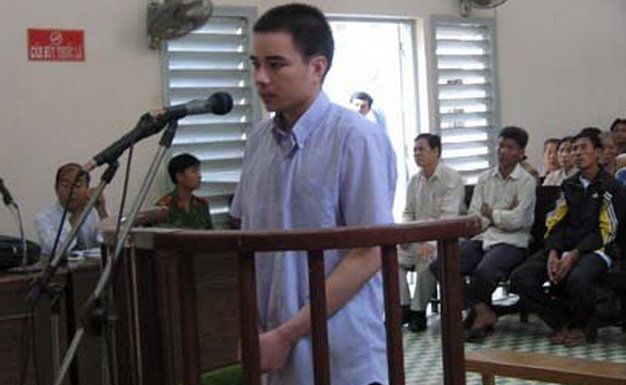
    Ho Duy Hai at one of his court hearings. Photo credit: Thanh Nien Newspaper.

    Hai was a 23-year-old recent college graduate, eagerly waiting to start his new life when he got convicted of double homicide and robbery in 2008.

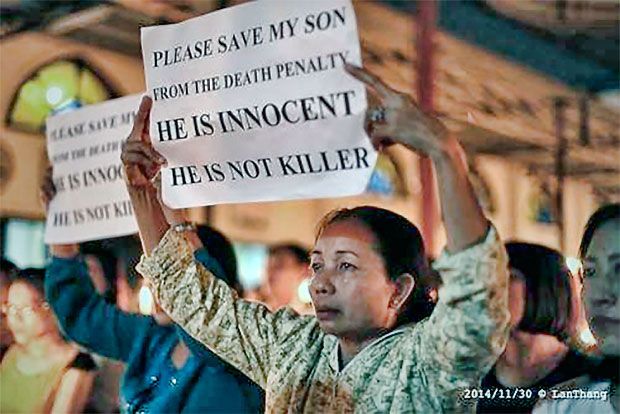
    Social media in Vietnam came to know of Hai’s case when his younger sister, Thuy, created a Facebook group in November 2014 to raise awareness about his conviction and plead for his life. At that time, Hai’s family had just received notice from the Long An Province Police Department that they would execute him on December 5, 2014.

    Devastated by the news, his family then desperately turned to social media, the dissidents, and various independent human rights groups to save Hai’s life. Vietnamese people began to learn about one of Vietnam’s most peculiar death penalty cases. Due to pressure from both the public in Vietnam and international organizations, on December 4, 2014, then-President Truong Tan Sang personally ordered a halt of his execution – which would have been carried out the next day.

    Despite the fact that a special team of jurists and legislative members was set up to investigate wrongful convictions in 2014 and 2015 and that the Deputy Commissioner of the National Assembly’s Judiciary Committee at the time – Le Thi Nga – already reported to Congress, there were serious violations committed by the police and prosecution in Hai’s case, he had yet been granted a review and remained incarcerated.

    By next March, it would have been ten years since the day his life as a free man was abruptly ended. And as flimsy as they are, the so-called evidence that sent Hai to the firing squad still soundly stands.

    The case dates back to the night of January 14, 2008, when two young women were killed at the Cau Voi Post Office in Thu Thua District, Long An Province. According to the case file, the victims’ throats were cut, and one of them received blow injuries to the head while another one was almost decapitated. The perpetrator allegedly took some 1,400,000 VND (approximately 70 USD), mobile phones, and pieces of jewelry from the scene.

    On March 22, 2008, Hai was arrested and tried for the double murder even when none of the fingerprints left at the scene matched his, there was no physical evidence to tie him to the case, and there were testimonies that other men were seen at the crime scene during the night of the murders.

    Even more disastrous, according to the indictment, one of the prosecution’s witnesses, Nguyen Van Thu, later purchased a knife at a local market and gave it to the police, vowing that it would have matched the size and shape of the knife from the scene. That was enough for the police to conclude that they had sufficiently determined the murder weapon. What happened next was more bizarre; this very “purchased” weapon was indeed admitted into evidence as part of the case file that convicted Ho Duy Hai of double murder and sentenced him to death in December 2008.

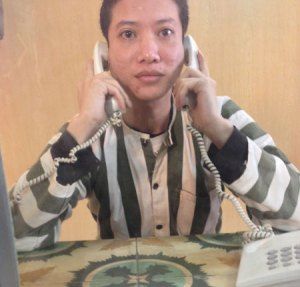
    During their visitation, Hai told his mother and aunt that he was beaten up by the police and tortured during his pre-trial detention to confess to the crimes. Also, according to his family, Hai’s appeal process began immediately after the conviction, but the court system repeatedly denied review.

    With his family, including his mother, aunt, and younger sister, on his side, Hai continues on what seems to be an indefinite journey to fight for justice.

    Le Van Manh:

    Le Van Manh. Photo credit: Cong an Nhan dan Newspaper.

    Approximately one year after the campaign to save Ho Duy Hai appeared on Vietnam’s social media in October 2015, people again learned of the facts in yet another irregular wrongful death penalty case.

    On October 16, 2015, the family of death-row inmate Le Van Manh received a written notice from the People’s Court of Thanh Hoa Province, informing them about procedures to pick up and bury his body after execution, which was scheduled for October 26, 2015. Le Van Manh was convicted of robbery, rape, and murder of a 14-year-old girl in July 2005.

    On October 25, 2015, Amnesty International issued a statement on behalf of Le Van Manh, urging the Vietnamese government to spare his life and investigate allegations that he was tortured in police custody. Like Ho Duy Hai, Manh’s execution was halted due to domestic and international pressure. And also, like Hai, Manh continued to be incarcerated since then, with little progress in his plea for justice.

    From 2005-2008, Le Van Manh underwent a total of seven court hearings, including three trials, three appeals, and one cassation trial. In all of his court hearings, Manh vehemently denied all of the charges and retracted his earlier confessions, alleging that he had to confess after being beaten by both the police officers investigating his case and his cellmates who were acting under police’s instructions.

    According to the case’s official records, the victim, Hoang Thi Loan, whose date of birth was August 15, 1991, was raped and murdered in Yen Thinh Ward, Yen Dinh District, Thanh Hoa Province, in March 2005. The authorities believed that Loan went to the bank of the Cau Chay River within the Yen Thinh Ward to use the bathroom on March 21, 2005. By nightfall, her family realized that she had disappeared. The family organized a search for her but to no avail. By the 13:00 hour on March 22, 2005, Loan’s body turned up at the bank of Cau Chay River within Xuan Minh Ward, Tho Xuan District, also in Thanh Hoa Province.

    On March 30, 2005, the Thanh Hoa Province’s Forensics Office concluded that Hoang Thi Loan died from strangulation with signs of water asphyxia and that the victim was raped before she was killed.

    On April 20, 2005, Le Van Manh, who was 23-year old at the time, was arrested pursuant to a temporary arrest warrant issued by the investigative police unit of Dong Nai Province for an entirely different matter, suspected robbery and attempting to flee criminal custody, earlier that month.

    However, according to the criminal complaint, just three days later, by April 23, 2005, a confession letter, claimed to be written by Le Van Manh while in police detention addressed to his father, had surfaced, admitting guilt to the rape and murder of Hoang Thi Loan. The police were in time to confiscate this letter and used it to prove Manh’s guilt. The criminal complaint further showed that the investigation relied on the testimony of a 9-year-old child – who had limited education and was interviewed by the police without parental permission – for leads.

    As in Ho Duy Hai’s case, there was no physical evidence to tie Manh to the alleged rape and murder. The only evidence presented by the prosecution was Manh’s confession letter, which he already retracted. Nevertheless, Le Van Manh was charged with the rape and murder of Hoang Thi Loan, tried, and sentenced to death.

    Nguyen Van Chuong:

    Nguyen Van Chuong. Photo credit: Giaoduc.net.vn.

    Nguyen Van Chuong’s official case file reveals that it could probably be the strongest one among these three to demonstrate how police brutality affected criminal investigation in Vietnam because the suspects and witnesses also fell victim to such cruel practice.

    The only evidence used to convict Chuong was his and his co-defendants’ confessions. These confessions, again, were alleged by the defendants that the police obtained them through torture.

    His parents recalled how Chuong had described the police would handcuff him so that he was hanging and only the tips of his toes would touch the floor, then they would beat him repeatedly until he confessed.

    Court’s dockets confirmed that Chuong and other defendants had all petitioned for review after the appellate court confirmed their convictions in November 2008. From prison, on April 7, 2009, Chuong sent his mother a t-shirt where he had used bamboo toothpicks to sew on his plea of innocence.

    Not only the defendants alleged that they were tortured by the police during the investigation to confess, but Chuong’s alibi witnesses had also come forward and alleged they were physically abused by the authorities.

    According to the police’s investigation file, on the night of July 14, 2007, around 21:00 hour, a high-ranking police officer, Nguyen Van Sinh, of the Hai An District, Hai Phong City, was attacked by knives and suffered severe injuries. Officer Sinh died at 8:00 A.M. the next morning from the wounds he received during the attack.

    By August 3, 2007, police arrested Nguyen Van Chuong, who was born in 1983 and a resident of Trung Tuyen village, Binh Dan Ward, Kim Thanh District, Hai Duong Province. At the time of his arrest, Chuong was a factory worker in Hai Phong, married, and had no criminal records. Chuong was also the owner of Thien Than coffee shop in Hai An District, Hai Phong City. Together with Chuong, two other men, Do Van Hoang and Vu Toan Trung, were also arrested.

    On August 4, 2007, Chuong’s 20-year-old younger brother – Nguyen Trong Doan – obtained written declarations from various witnesses who swore under oath that they had met with Chuong in his hometown, in Kim Thanh District of Hai Duong City at the time Officer Sinh was attacked in Hai Phong City, which is some 40 km away. In other words, Chuong had an alibi and witnesses to support it.

    But instead of investigating the validity of his alibi, the police arrested Chuong’s brother, Doan, alleging that Doan manipulated evidence and witnesses to help Chuong conceal his crimes. Ironically, Doan was arrested at the police station in Hai Phong City when he came to provide the police with testimonies from witnesses who were with his brother during the night of the alleged crime.

    One of Chuong’s alibi witnesses was Tran Quang Tuat, who later told Tien Phong newspaper in November 2007 that the police had intimidated him into changing his testimony about Chuong’s whereabouts while Officer Sinh was attacked.

    Another person, Trinh Xuan Truong, petitioned to the People’s Supreme Procuracy Office on September 10, 2013, and claimed that the police had beaten him up, burnt him with cigarettes, threatened to arrest him, and ordered him to change his testimony from being with Chuong in a different city during the night of the attack to did not see Chuong that night.

    By January 27, 2008, the Hai Phong City Police Department finalized their investigation and concluded in their criminal complaint that Chuong, along with two co-conspirators, Trung and Hoang, had confessed to using a knife to rob Officer Sinh for money to buy heroin, resulting in his death from knife injuries the morning after.

    On June 12, 2008, Chuong and his co-defendants were tried for murder, and he was given the death penalty while the other two received a life sentence and 20 years imprisonment, respectively. It is worth noticing that Trung, the defendant who received the 20-year imprisonment, was the grandson of a woman who received an outstanding medal from the regime in the past; thus, the law allows him a lighter sentence.

    Nguyen Trong Doan, Chuong’s younger brother, was also sentenced to two years imprisonment for “concealing criminals” because he was trying to bring Chuong’s alibi witnesses forward.

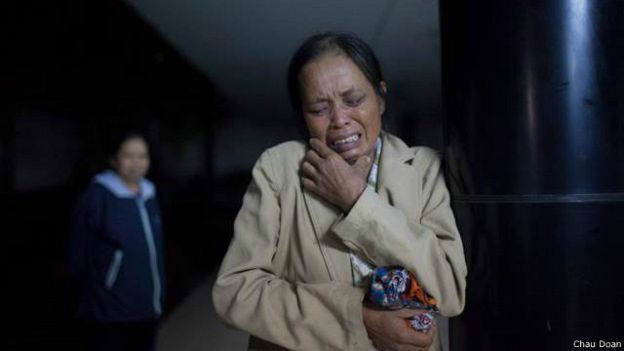
    Like Ho Duy Hai and Le Van Manh, Chuong has been incarcerated since his arrest, and his execution could happen anytime. And also, like the other two families, Chuong’s parents, especially his father, became his strongest and most outspoken advocates on Facebook. During a teleconference with us in early 2016, Chuong’s dad, Nguyen Truong Chinh, disclosed that he had left their home to come to Hanoi to petition for a review of Chuong’s case. With all of their valuables sold to pay for Chuong’s legal case and appeals, his father had lived among land-grabs victims’ community and worked as a motorbiker for hire to earn a meager salary.

    Yet, the future looks bleak when courts refuse to grant review, and legal options are running out for Ho Duy Hai, Le Van Manh, Nguyen Van Chuong, and other death-row mates, unless major reforms regarding criminal procedures occur in Vietnam. Until then and there, their lives could only depend on other people’s mercy and how much and how often the international community exerted pressure on the Vietnamese government.

  • Why President Trump Will Be Much Happier as the Leader of Vietnam

    Why President Trump Will Be Much Happier as the Leader of Vietnam

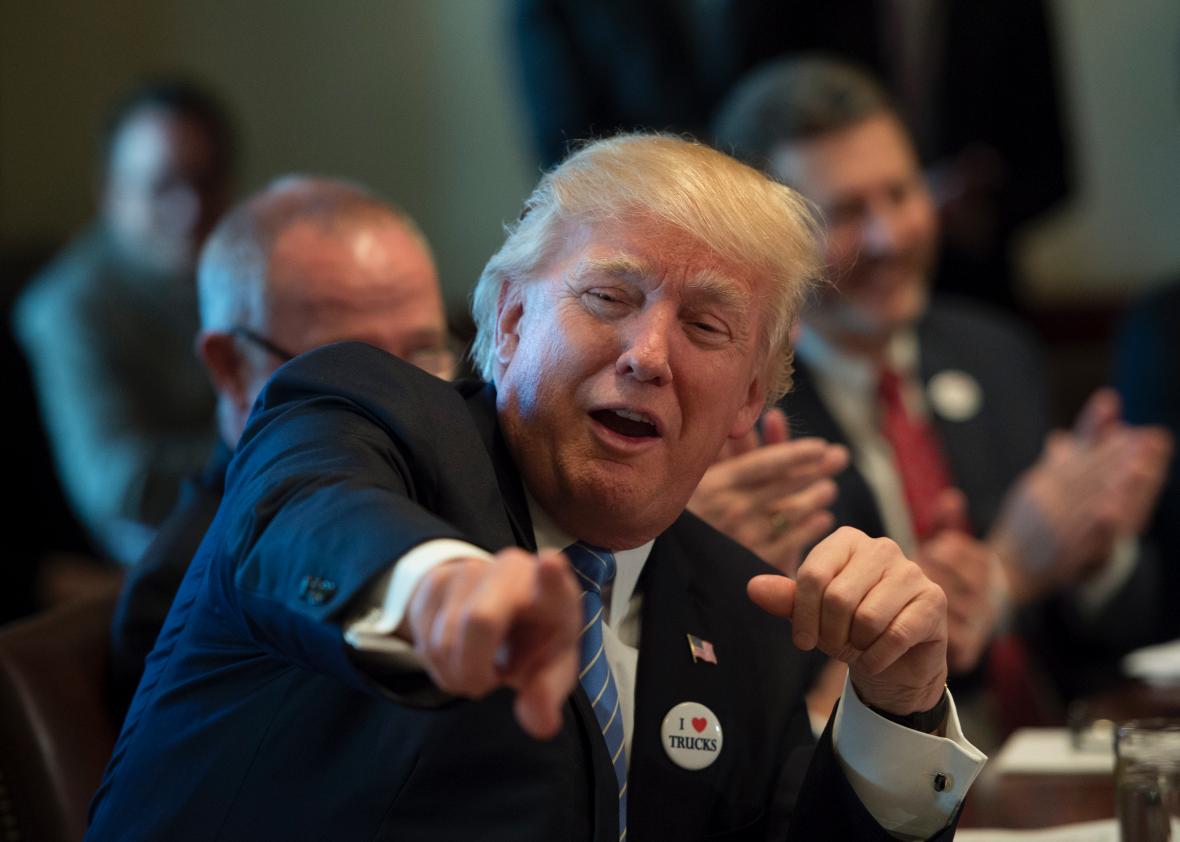
    President Donald Trump is coming to Vietnam on an official visit for the APEC meetings from November 10-11. He could have been in this country much sooner had he not avoided the draft during the Vietnam War.

    I am not sure President Trump knows where Vietnam exactly is on the map (which is quite usual for a lot of foreigners), but he will certainly fall in love with the country when he comes here this time, especially after hearing what I am about to disclose.

    Let me take this opportunity to send him a few words of regards and explain to him why I think so.

    But before I forget, let’s start with the same premise: one must be a member of the Communist Party of Vietnam to become the country’s leader.

    1. Forget about the Democrats: They are already extinct.

    The last time Vietnamese people saw a glimpse of a “democrat” was back in … 1988, when the fake Democratic party (yeah, we had such things back then – they were basically puppets formed by the communists themselves) disbanded under the order of the Communist Party. Basically, President Trump, you and your chosen party will enjoy absolute power here.

    The Vietnam’s Constitution clearly states that the Communist Party is the force which leads both the government and society. In fact, it is the only one ruling the country.

    So, no worries about the opposition. You’re far, far away from Hillary Clinton, Bernie Sanders, and Nancy Pelosi. You will win every election, and win big. When I say “big”, that means more than 90% of the popular votes where every single eligible adult in the country will vote, not just the “landslide victory” last year in the U.S.

    2. You have the entire Congress in your party’s hand, not just a simple majority.

    There is no need to battle with anyone in Congress. “Repeal and Replace” could be done very easily, right then and there. As well as the tax bill. And the annual budget bill. Basically, everything and anything.

    Congressional hearings are extremely rare for top leaders like you. Your cabinet members may be questioned by Congress, but in general, no one would throw stones in their faces like how the Democrats treat you, your staff, and the Republicans. Congress is also more laid back, as they only meet twice a year, each time for one month.

    How could Vietnam achieve such harmony between the Executive branch and the Legislative branch?

    Just imagine your Republican fellows occupy 95% of the seats in Congress and the remaining 5% are all your friends and good friends. This is because our unique election laws were designed to prevent non-communist candidates from running right from the first place. Nobody else but communist members and their close allies can go pass the three rounds of pre-election vetting, which of course are held by the communist-organized body called the Fatherland Front (such patriotic name, you will love it!).

    3. You don’t have to deal with the media because independent news does not exist.

    I know the media in the States is extremely annoying, and they just never leave you alone. Here in Vietnam, you are untouchable. What does that mean? It means you can do whatever and say whatever, not a single journalist dares to criticize you.

    Heaven on Earth! Why is that?

    Because you and your party control the entire media. So, there is no CNN, no Washington Post, no New York Times, leave alone Stephen Colbert and Trevor Noah. Only Fox News, Breitbart and the likes are allowed. Not only that, those that are allowed must also report news as they were ordered by you and your party. Imagine, even Steven Colbert must listen to and follow every word of yours! That’s true respect, isn’t it?

    Some crazy leftists at organizations like Freedom House and Reporters Without Borders may put your country at the bottom of the Press Freedom Index, but who cares, right?

    4. Just in case anyone criticizes you, you can always lock them up, for years.

    We have already put thousands of dissidents in jail already. In the past, we even made them…disappeared.

    Really, if you find anyone who writes some short statement about you on Facebook or Twitter that annoys you, then your police can come and arrest such person right away, then put him/her in jail for, says two years or more without trials. The courts – which totally under your direct control – could also sentence a lawyer to seven years of imprisonment if he dares to sue you. Or, they could put another lawyer who always criticizes you (imagine the ACLU and their lawyers, I know how much you hate them) in prison for five years because…he has criticized you.

    You often feel frustrated that it takes forever to lock up that woman, right? In Vietnam, we recently locked up a woman whom the government does not like very much in June – a female pro-democracy blogger called Mother Mushroom – for ten full years after a day of trial, sweet and simple. (By the way, your wife, Melania, gave Mother Mushroom the Women of Courage award earlier this year, though. So, I thought you would want to check with her on this, just to be safe.)

    5. There is no court that would stop you from issuing or enforcing executive orders.

    This is an interesting part. Of course, you must be very upset with those federal courts issuing restraining orders on your travel bans one after another. In fact, you also know that you must deal with Ruth Bader Ginsburg, Sonia Sotomayor, and others at some points. Furthermore, you cannot be certain whether Neil Gorsuch may turn his back on you one day and side with those leftists all the way on issues like abortion and affirmative action cases.

    But, here in Vietnam, every single judge will be your party’s members (I mean the “sworn allegiance to” kind of members, not just registered voters), and they will always obey your party’s rules from the top down. That means whatever is your call, they will follow. No questions asked!

    The so-called “judicial review” also does not exist in our country. A lot of executive orders and legal documents are clearly unconstitutional, but no one gives a damn. Let me give you an example.

    Four years ago, our Prime Minister Nguyen Tan Dung signed two decrees, 72 and 174, regulating that criticizing the government on the Internet was prohibited and could be fined up to $4,700 USD (about twice the average annual income for a Vietnamese). Those two decrees were not only unconstitutional, but also directly contradicting international human rights law, and were widely condemned by the international community, including your country back then. But so far, no one had been able to challenge them in any court in Vietnam because simply put, our judicial system was set up in such a way that such efforts would be futile from the beginning: no courts will accept those filings. Problems solved.

    6. The term “special prosecutor” is non-existent and will never come into existence.

    Investigating our country’s top leaders is absolutely impossible. In fact, none of them has been in such situation since the Communist Party took power in 1945.

    You would love this fact: Vietnamese prosecutors cannot investigate any communist member without the party’s permission. Thus, it is outright prohibited! Nobody is going to thumb their nose into your and your family’s business.

    There is no Robert Mueller here, believe me. Never.

    7. Tax returns? They are there, but rules don’t apply to you.

    In Vietnam, everyone knows our leaders are rich. Maybe some of them are even as rich as you are. But no one knows exactly how rich they are, and no one dares to ask them to show their tax returns.

    We have a huge (I mean really, bigly huge) problem with transparency. Another left-wing (perhaps fake?) organization called Transparency International ranks Vietnam at 113/176 on their Corruption Perceptions Index in 2016 with only 33/100 scores. But that’s a good thing for you, right?

    If you are the top leader in Vietnam, you don’t have to bother with the media complaining about your frequent flights to Mar-a-Largo or how much money you have made off your presidency because no one will have the guts to ask. And those who do, you can just put them in jail. What a life!

    8. Last, but not least: Endless golfing.  

    This, nevertheless, is as important as anything I have mentioned above. You love golf, and we, the Vietnamese, do too. We basically have golf courses popping up at every single corner across our country. And, you can play golf as much as you want, just remember to not disappear for too long during your term. The public doesn’t even know you go play golf, let alone complain about it – because there is no “fake news” here to report on that, only your news, remember?

    Is this the vision of the great country that you have been talking about, or perhaps, maybe dreaming of?

    Then, President Trump, welcome to Vietnam!

  • New Report: Four Ways the Vietnamese Government Controls Religious Practitioners

    New Report: Four Ways the Vietnamese Government Controls Religious Practitioners

    A new report suggests that there are four methods the Vietnamese government uses to control the practice of religion in the country: 1) using legal documents and other administrative regulations; 2) using the propaganda apparatus; 3) dividing to rule; 4) using physical violence (beating, intimidation, imprisonment).

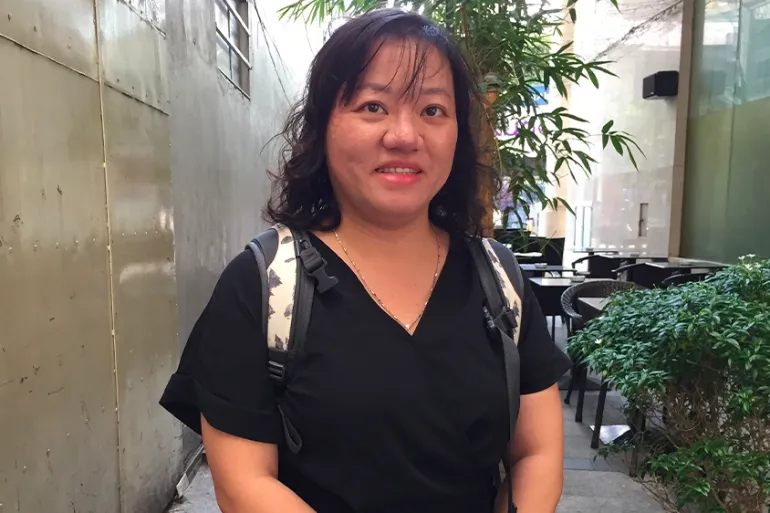
    The report, “Assessment of the 2016 Law on Belief and Religion in relation to the Exercise of the Right to Freedom of Religion and Belief in Vietnam”, was researched and written by journalist Pham Doan Trang and other members of the Religions Research Group – an independent civil society group in Vietnam.

    Not only pointing out the government’s tactics, the report also analyzes the Vietnam’s Law on Belief and Religion 2016 and compares it to the international human rights standards.

    The report in English is available to download here (PDF) with the authors’ consent.

    The Vietnamese version of the report can be found here.

  • Vietnam Government Claims to Work with Google and Facebook to Remove Thousands of Anti-government Content

    Vietnam Government Claims to Work with Google and Facebook to Remove Thousands of Anti-government Content

    Vietnam’s head of the Internet management authority, Nguyen Thanh Lam, has repeatedly claimed that the government has been working with Facebook and Google to remove thousands of videos and accounts from these tech giants’ platforms, according to the country’s mainstream media.

    During a press conference on July 7, 2017, the former prominent journalist made the announcement that Youtube, a Google’s product, had removed 3,000 video clips that contained “toxic content” and Facebook had also removed 600 accounts that were fake or contained information that distorted individuals and organizations.

    Among those 600 accounts are 132 accounts that frequently distorted or smeared the Communist Party, the government, groups, and individuals, VietNamNet reported.

    In an interview with VietNamNet, Nguyen Thanh Lam also expressed his appreciation to Google and Facebook for their cooperation with the Vietnam’s government.

    “They understand why we made such requests”, said Mr. Nguyen.

    Facebook sent Monika Bickert, Head of Global Policy Management, to Vietnam on April 26 to meet with the Minister of Information and Communication Truong Minh Tuan. According to the Vietnam News Agency, Ms. Bickert told the minister that Facebook was willing to cooperate with the Vietnamese government to block toxic content that violates the local laws.

    During the meeting, the Facebook’s representative also made a commitment that they would create a separate channel to process Vietnam’s requests.

    A month later, Eric Schmidt, the Chairman of Google’s parent company Alphabet Inc., met Prime Minister Nguyen Xuan Phuc in Hanoi. He reportedly said that “Google will cooperate with the government” to prevent and remove bad information on Youtube.

    Mr. Nguyen Thanh Lam noted that it had been easier to convince Youtube than Facebook: “There was toxic information that Youtube already removed or blocked but Facebook does not”.

    We found no information about Vietnam’s requests in 2017 on Google Transparency Report and Facebook’s Government Requests Report, potentially because they have only released reports until 2016.

    The Google’s report shows Vietnam has made five content removal requests to Google since 2010. It is not confirmed that Google has actually cooperated with the Vietnamese government to remove the mentioned contents.

    However, the tech giant’s website highlights two content removal requests made by the Vietnamese government. One is a blog that “allegedly contained information about the military and criticized the government”, and one is “to remove search results on a particular word that generated results that contained allegedly unflattering depictions of past Vietnamese leaders.” Google declined both requests.

    It has been 20 years since Larry Page and Sergey Brin created Google. It is the same period of which Vietnam has been connected to the Internet. The country currently has approximately 50 million Internet users which amount to more than half of the population, and 45 million Facebook users. Both platforms are the most popular search engine and social network in Vietnam respectively.

    Yet, the two tech giants are now considered as real threats to the government as they help people access uncensored information about the communist regime and generate political discussions.

    In October 2013, Dinh Nhat Uy – the brother of a jailed activist – was sentenced to one year and three months of probation only for using Facebook to criticize the government.

    A prominent human rights activist, blogger Nguyen Ngoc Nhu Quynh (Mother Mushroom), was also sentenced to 10 years of imprisonment in June 2017 partly for posting articles that “contain untruthful and baseless information” about the Communist Party and its sole-leadership over the political system of Vietnam.

    The government usually uses three internationally-condemned criminal provisions, Article 79, 88 and 258, to put dissidents and activists in jail.

    Not only criminalizing online expression, Hanoi also puts administrative sanctions on those who voice their dissents on the Internet. Websites’ owners, social networks, and Internet users may be fined up to US$4,700 for “criticizing the government, the Party or national heroes” or “spreading propaganda and reactionary ideology against the state”

    Many Facebook users and bloggers have been fined under these regulations, according to a Freedom House’s report.

    It is significant to note that the Vietnamese government has made claims about receiving cooperation from Google and Facebook since early 2017, in the middle of a new crackdown on the democracy movement that has led to at least 16 activists and dissidents being arrested or convicted.

    In 2014, Vietnam was named as an enemy of the Internet by Reporters Without Borders, a France-based human rights organization.

  • Timeline: The Formosa Environmental Disaster

    Timeline: The Formosa Environmental Disaster

    (Updated on October 6, 2017)

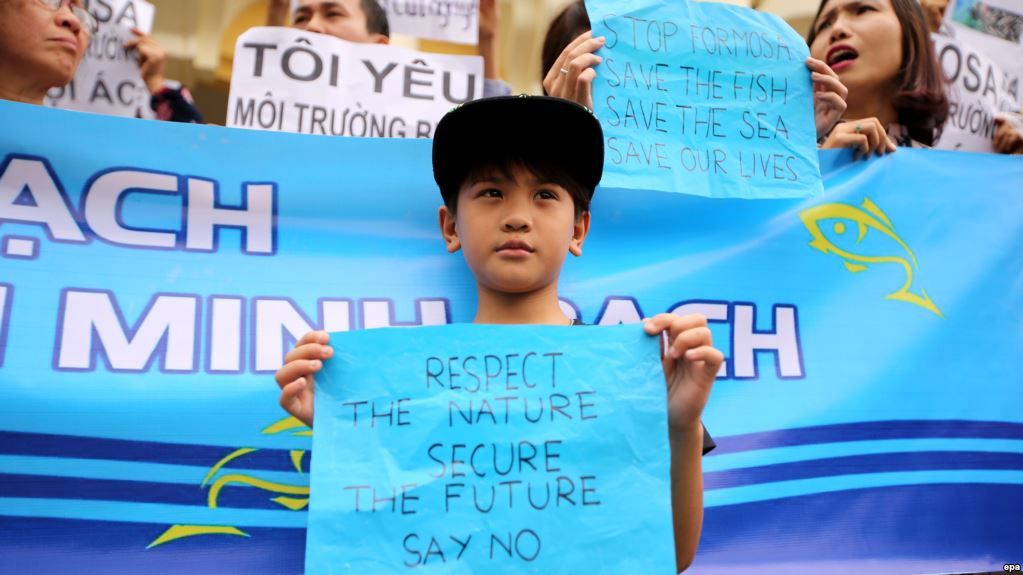
    The Vietnam marine life disaster, also known as the Formosa disaster or the fish death disaster, was a water pollution crisis breaking out in Vietnam at least from April 6, 2016. Its most obvious demonstration was the massive fish deaths in the seas of four provinces in central Vietnam: Ha Tinh, Quang Binh, Quang Tri, and Thua Thien-Hue.

    The main perpetrator was identified as Hung Nghiep Formosa Ha Tinh, Ltd. (FHS), who discharged toxic industrial waste into the sea through their underwater drainage pipes. Formosa itself accepted responsibility for the disaster on June 30, 2016.

    Government statistics estimated that at least 115 tons of free-swimming fish, 140 tons of farmed fish, and 67 tons of clams were killed as a result of water pollution. However, real figures must be times higher than these, with tons of shrimp, cuttle, squid, and other kinds of aquatic animals killed as well.

    The disaster also cost human lives. At least a diver (Le Van Ngay) was killed after diving in the polluted sea water, a woman (Linh) died of poisonous fish, and a couple (Mr. Le Van Lam and Mrs. Nguyen Thi Huong) got cancers after working for FHS as keepers of their chemical stocks. At least 21 other divers, dozens of fishers and seafood-consumers reported they had got health problems due to their direct or indirect link with the disaster.

    The tragic toll caused by the disaster may never be precisely estimated or get public as a result of bad governance and unaccountability.

    Worse, and most importantly, the marine life disaster involved a humane and political crisis when the Vietnamese government fails to ensure relevant compensation for the victims; they even go further by brutally suppressing voices of dissent. Widespread human rights violations have made 2016 and 2017 dark years for democracy and freedom in Vietnam, characterized by arbitrary detentions, police violence targeted at civilians, and increasing imprisonment of peaceful activists.

    Since October 2016, dozens of activists have been arrested and faced charges related to their activities to protest at Formosa and demand environmental rights. To name some: Nguyen Ngoc Nhu Quynh, Nguyen Van Hoa, Hoang Duc Binh, Nguyen Van Oai, Nguyen Viet Dung.

    Others have been hunted nationwide, inter alia Bach Hong Quyen, Thai Van Dung, Tran Minh Nhat.

    Many have been victims of government-sponsored violence, inter alia Truong Minh Tam, Hoang My Uyen, Vu Huy Hoang, Le My Hanh, Trinh Dinh Hoa, Tran Hoang Phuc, Huynh Thanh Phat.

    2016

    April 2016

    April 4

    Fisherman Nguyen Xuan Thanh (36 years old, a resident of Ba Dong hamlet, Ky Phuong commune, Ky Anh district, Ha Tinh) dived into the sea and unexpectedly discovered a giant waste discharge pipe. This pipe has a diameter of about 1m. It was discharging a yellow liquid.

    The pipe was identified as a submerged pipe belonging to the Formosa corporation, 1.5km in length, buried under the seabed. Formosa confirmed that they have an underground sewage system connecting directly from the Formosa project site in the Vung Ang economic zone to the sea.


    “Already discovered it three years ago” Mr. Nguyen Trung Huynh (born in 1968, a resident of Ky Anh commune) has worked as a sea diver for tens of years. He said three years ago, around 2013, he discovered a pipe buried under the seabed. “At the time I was working for Belgium. The people here said the pipe must be from Belgium, but when I checked, I told them it wasn’t, this pipe belonged to Formosa. I notified the environmental police.

    The police, the marine police, and the environmental police hired me to dive and reached that area. I did so, took some video footage and photographs and submitted everything to them. They said, “We will investigate this issue.” Then we didn’t hear from them for years, the local people continued to fish as usual. In April 2016, we discovered that they discharged waste liquid.”

    (Mr. Nguyễn Trung Huỳnh discussed with Green Trees, on 19 August 2016)

    April 6

    Residents in the two hamlets, Hai Phong 1 and 2 (Ky Loi commune, Ky Anh district, Ha Tinh) lost over two tons of groupers and red snappers when they were almost ready for harvest. [1]

    According to Nguyen Thai Bao (resident of Tay Ha hamlet, Ky Ha commune, Ky Anh district, Ha Tinh), until the noon of April 6, more than 4,000 red snappers and sea basses – which were over a month old and raised in cages – still ate and moved around as usual. However, around 2 p.m. on April 7, when the tide rose and pushed sea water in, the fish swam slowly and then died en mass. [2]

    Not only farmed fish, but wild (free-swimming) fish also died. “Around 9 a.m. on April 6, Mr. Chu Van Dai – a diver working in the area undersea where Formosa Steel Plant discharged waste in Vung Ang (Ha Tinh) – discovered much dead fish surrounding the pipe’s opening. Mr. Dai felt a bitter sensation in his mouth, exhaustion, and toxin in the water. The whole team of 15 divers felt that seawater tasted different and toxic. Their bodies felt ill so they asked to be off work. A few days later, the local people saw much dead fish drifted to the seaside of different types, some lived in deep water.” [3]

    April 6-8

    During these three days, in the three communes Ky Loi, Ky Ha and Ky Ninh (of Ky Anh district), all of the fish belonging to 14 households raising fish in cage, with 18 cages containing different types of fish (red snapper, cobia, grouper, sea bass, etc.) died in mass. Among these were 37,200 breeders, 2,120 kg commercial fish. The damage was over 1 billion Vietnamese dong, approximately USD $45,000.

    Wild fish also died in mass in Vung Ang sea (around Son Duong island, Vung Ang port, and Vinh river’s estuary). [4]

    April 10

    Dead fish drifted into the coast along Quang Dong commune, Quang Trach district, Quang Binh. Dead fish continued to spread southward, to seaside along Nhan Trach, Nhat Le, Bao Ninh, Ngu Thuy, etc. [5]

    April 11

    The Northern Environmental Monitoring and Aquatic Diseases Center (Aquaculture Research Institute 1 – MARD) published an announcement about the results of their unscheduled monitoring after the abnormal fish deaths took place in Ky Anh, Ha Tinh.

    The announcement concluded that virus causing disease was not the cause of this phenomenon, rather fish died in mass due to “toxic agents in the water” in Vung Ang coast. According to this Center, toxin agents originated from untreated wastewater discharged directly into the sea and rivers, polluting seawater and intoxicated fish. [6]

    April 15

    Tens of fish cages belonging to 60 households living in An Cu Dong, Lang Co town, Phu Loc district, Thua Thien-Hue died en mass in a few days, with the largest number of fish dying on April 15. Damage was estimated to be up to hundreds of millions of dong.

    According to Mr. Mai Van Xi – Deputy Head of the Division of Agriculture and Rural Development in Phu Loc district, not only farmed fish but also wild fish living in the Lang Co lagoon died.

    April 19

    After eating fish collected on the seaside, Tran Thanh Thuy (8 years old, Quang Phu commune, Quang Trach district, Quang Binh) vomited and had diarrhea. Her family took her to the commune medical center and she was treated with intravenous drip and monitored. VietNamNet reported this incident and advised people not to buy and sell or eat dead fish while waiting for the authorities to identify the toxic agents. [7]

    April 20

    A report from the Department of Agriculture and Rural Development in Thue Thien-Hue stated that the amount of PO4 (phosphate) at a benthic layer is 1mg per liter, while the maximum allowable norm is 0.5 mg per liter only. This increased pH concentration. A sudden and drastic increase of PO4 and pH in the water may have shocked the fish and kill them. [8]

    April 21

    The Deputy Director of the Aquaculture Department under MARD, Pham Khanh Ly, told the press that the government task force is vertical management agencies, however, the Vung Ang industrial zone (including the Vung Ang Thermal Power Plant and Formosa industrial zone) has foreign elements, so they need to form an interdisciplinary task force, with the Prime Minister’s direction, before they can carry out an inspection. [9]

    April 22

    On the night of 21st and early morning of 22nd April, more than 20 residents of Bo Trach district, Quang Binh province were rushed to emergency service after they ate poisonous seafood in a restaurant in Phuc Trach Commune. Most of the 200 guests who ate the same meal had symptoms of stomachache, nausea, and diarrhea. [10]

    Minister of Industry and Trade Tran Tuan Anh signed a document about sending a task force to the Hung Nghiep Formosa Ha Tinh Co., Ltd. (FHS). [11]

    An inspection team of the MONRE led by the Head of the Department of Environment, Nguyen Van Tai, carried out an inspection at the Petro Vietnam Power Corporation in Ha Tinh (Ky Anh Town, Ha Tinh) and the FHS (Vung Ang economic zone, Ha Tinh). [12]

    The General Secretary of the VCP, Nguyen Phu Trong, also led a mission to visit and check on the Formosa project’s progress, specifically the Iron and Steel Complex Project and the Son Duong Formosa Ha Tinh (FHS) deep-sea port. In addition, he also visited some production sites in Ha Tinh. He did not once mention the ongoing fish death. [13]

    April 23

    Responding to an interview question from the Giao Thong (Transportation) newspaper about whether people should continue to eat sea fish and swim in waters where dead fish no longer appeared, Mr. Dang Ngoc Son, Vice-Chair of the Ha Tinh Provincial People’s Committee, said: “For now, many aquatic products raised in cages in Vung Ang (Ha Tinh) are growing normally. Seafood such as squid, shrimp, crab and fish that are alive can be consumed. Furthermore, people can swim in these waters without feeling worried.” [14]

    April 24

    Le Van Ngay (born 1970, from Khanh Hoa), a diver working for Nibelc Company (the building contractor for Formosa’s breakwater in Son Duong port), died mysteriously a hospital. A few hours before, he suffered from chest pains and breathing difficulties during work and was taken to hospital for emergency treatment. [15]

    April 25

    Mr. Chou Chun Fan, Deputy Head of Formosa’s External Relations Department, Head of the Formosa Office in Ha Noi, said this in a conversation over-the-phone with Tuoi Tre (Youth) newspaper: “It is impossible to build a steel plant here without leaving any impact on fish and shrimp. Of course, we try to build a plant that meets the State’s requirements. Yet it is normal to lose some things as you gain some things. Just like how when we use this area to build our plant, the soil here is no longer good for growing rice. Between these two things, we must choose one, whether I want to catch fish and shrimp or I want to build a modern steel industry? When this area was cleared the local authorities already made a plan to support fishermen to switch jobs, why do they need to keep fishing in this area?

    Do you want to keep fishing or do you want to keep the plant? Go ahead and make your decision. If you want both, even the Prime Minister can’t satisfy you…” [16] Mr. Chou Chun Fan’s comment angered the Vietnamese public on the Internet.

    April 26

    Quang Binh province called for an urgent meeting. The Chair of the Provincial People’s Committee, Mr. Nguyen Huu Hoai, ordered a ban on swimming in the sea during this time to prevent any mishaps.

    The Thua Thien-Hue Department of Natural Resources and Environment announced that they received the analysis result from the water sample taken from Lang Co lagoon and Lang Co seaport (Lang Co town, Phu Loc), the seaside along Quang Cong commune (Quang Dien), Dien Huong, Dien Hai (Phong Dien). According to the analysis, the total nitrogen content (nitrogen, chemical symbol N) calculated on ammonium content (NH4), heavy metal chromium content (chromium, chemical symbol Cr) exceeds the limit allowed by the National Technical Regulation on seawater quality and National Technical Regulation on surface water quality.

    This result also pointed out that the cause of both wild fish and farmed fish’s death was not a disease but rather a very powerful agent – a toxic in the water originating from somewhere north of Thua Thien-Hue province. [17]

    On the same day, the Ha Tinh newspaper published an article titled “The sea is now clearer, the environment is no longer polluted”. [18] This article encouraged fishermen to continue their work, and “overcome obstacles and losses”. This article was criticized by even mainstream press (such as the Petro Times). [19]

    In the afternoon, Mr. Chou Chun Fan and the management team in Ha Tinh organized a press conference and bowed to apologize for their statement of “choose fish or choose steel.”

    A petition signed by Vietnamese people appeared on the website “We the People” managed by the White House. This petition requested the American government to assist Vietnam in evaluating the environmental impacts that Formosa Steel Plant was making. This petition was created in English by a person named T.N.

    April 27

    The Quang Binh Department of Culture – Information & Tourism reported that about 30% tourists coming to Quang Binh canceled their tours and hotel bookings at hotels along the beach in Dong Hoi city during the holiday 30/4-1/5. All restaurants along the beach suffered from slow business due to the fish death.

    The first press conference about the fish death crisis was scheduled to begin at 4 p.m. in Ha Noi to announce the cause. However, the press conference was called off, while hundreds of reporters were still waiting outside.

    Finally, around 8 p.m., the press conference began and was chaired by the Deputy Minister of Natural Resources and Environment, Mr. Vo Tuan Nhan. The MONRE considered two possible causes of the mass fish death: “One cause could be toxic chemicals discharged from human activities on land and in the sea. The second cause could be an abnormal natural phenomenon, in combination with human impact, which leads to the algal bloom, or red tide as it is commonly known around the world.”

    Mr. Vo Tuan Nhan also said: “Up to now, through inspection and collection of evidence, we have not been able to infer the relationship between Formosa’s plants and the mass fish death.”  [20]

    A female reporter raised a question about heavy metals found in seawater, according to the report prepared by the Thua Thien-Hue Department of Natural Resources and Environment, and the coming tourist season. Deputy Minister Vo Tuan Nhan interrupted her: “Don’t ask that question. That question damages our country.”

    The press conference only lasted for 10 minutes and did not provide sufficient information for hundreds of reporters. It disappointed many people.

    April 28

    Minister of Natural Resources and Environment Tran Hong Ha and local authorities and scientists had a working session at the FHS. After that, he told the press that he would bear the responsibilities[21]. He also said that, according to Vietnamese law (Article 101 of the Environmental Protection Law, effective since 2015), discharging waste liquid through an underground pipe is not allowed; and he would order Formosa to bring the underground pipe to the ground for monitoring. [22]

    The MARD reported the result of water sample testing in a governmental meeting, rejecting the theory of red tide. “We can eliminate the cause of the abnormal natural phenomenon in combination with human impact to create algal bloom, which is commonly known as red tide around the world.” [23]

    The human rights activist Truong Minh Tam, a member of the Vietnam Path Movement, was arrested by the Ha Tinh and Quang Binh police for “shooting video and taking photographs in Ky Loi commune, Ky Ha commune and Dong Yen parish” in Ky Anh commune.

    Hundreds of fishermen in Canh Duong commune, Quang Trach district, Quang Binh province protested fiercely during hot noon on the 28th, 29th and 30th of April, demanding the government to expel Formosa from Vietnam and return clean sea to the people. The protest blocked traffic on National Highway 1 – the connection between the North and the South.

    April 30

    The Director of Da Nang Department of Natural Resources and Environment, Mr. Nguyen Dieu, and many other staffs of the Department in this city swam in the sea at Pham Van Dong beach (Son Tra district), in order to confirm that seawater in Da Nang was not polluted. Up to that point, dead fish still appeared and drifted to Da Nang seaside. [24]

    Facebooker Chu Manh Son was arrested in Quang Trach District, Quang Binh Province by the Ha Tinh police while he was filming the demonstration on National Highway 1A using a mobile phone.

    May 2016

    May 1

    Thousands went on demonstrations in major cities such as Hanoi, Saigon, Da Nang, Nha Trang, and Vung Tau. In Hai Phong, demonstrations were held with banners hung on buses.

    Minister of Information and Communications Truong Minh Tuan and a group of journalists went out to eat “Vung Ang seafood” to show that the sea had been free from pollution already, that patriotism meant to eat fish and take sea swimming…

    May 2

    The 19.00 TV newscast by Vietnam Television (VTV) relayed reportage from the ANTV (a TV channel owned by the police) announcing that the police of Ha Tinh and Quang Binh “took into custody two guys who incited people”, i.e. activists Truong Minh Tam and Chu Manh Son.

    May 4

    People of Nhan Trach Commune (Bo Trach District, Quang Binh Province) found a reddish brown line of about 1.5 km long, 10 m wide, running along the coastline of 5 villages, very close to the shore. Prof. and Ph.D. Nguyen Ngoc Lam of Nha Trang Oceanography Institute assumed that it might be signs of algal bloom or red tide. In the morning of the following day, May 5, the colored line disappeared. [25]

    May 5

    20:00, two Chinese-born Vietnamese citizens, Lau Nhat Phong (A Lau) and Mac Vi Luc held a sit-in on Nguyen Hue walking street of Ho Chi Minh City to raise their voice on the dead sea disaster in central Viet Nam. Just in about 10 minutes, both were captured and detained in the police station of Ben Nghe ward until dawn the next day.

    May 8

    Public protests continued to break up in Ha Noi, Saigon. They were brutally suppressed. In Saigon, the local government deployed strange forces, whose functions were unknown, to snatch slogans, beat and arrest protesters. Hoang My Uyen, a young woman who was carrying her child in the march, was blown up and kicked on her face. Her photo, with scratches on the face, hugging her child in a panic, provoked public indignation on the Internet. Dozens of people were arrested and held at local “social protection centers”. They were beaten, electrocuted, and locked for 2-3 days.

    In Hanoi, dozens of people were also arrested and held at various police stations. However, they were released within the day.

    May 13

    A newspaper named “Nong thon Ngay nay” (Countryside Today) got a fine of VND 140 million for publishing two articles on the “The gioi Tiep thi” (Marketing World) magazine. The articles were titled “The people are always those left behind” and “The lament of fish.”

    Paulus Nguyen Thai Hop, Bishop of Vinh Diocese, sent an open letter titled “Public letter on the catastrophic pollution of the marine environment in central Vietnam.” The Vietnam Television described the letter as “a biased depiction of the occurrence, exaggerated, causing anxiety, and using provocative language to abet the parishioners.”

    The Office of the United Nations Commission on Human Rights (OHCHR) in Bangkok proclaimed their worries about the increasing violence against the demonstrators for Vietnam’s environment.

    May 14

    HCMC Police gave information to the press that, “Upon investigation and collection of information, it is affirmed that the terrorist organization named Viet Tan held a crowded muster, disturbing public order in the city on May 1st and 8th.” The police also blackened Huynh Thanh Phat, a young blogger, said Phat “had two previous convictions, hometown in An Giang but wandering mainly in HCMC like a vagabond. He participated actively gathered and disturbed in a spontaneous manner.” [26]

    May 15

    In Quynh Luu district, Nghe An province, thousands of parishioners surrounded the district’s committee office, asking to carry out investigation and clarify the cause of mass fish deaths.

    In Saigon, the police suppressed, breaking up every gathering at April 30 Park. Huynh Ngoc Chenh, an ex-journalist, held a sit-in by himself. He was taken a photo by a blogger and photojournalist named Bui Dzu. The photograph soon became famous, captioned “The Lonely Man”, clearly reminiscent of “The Tank Man” in the 1989 Tiananmen Square protest.

    At the end of the day, still, a small protest broke out like a streak of lightning at An Dong market, participated by Nguyen Nu Phuong Dung (a.k.a. Miu Manh Me), Lau Nhat Phong (A Lau) and some other young people.

    In Hanoi, after walking along Hoan Kiem lake for about 3 or 4 minutes, a group of about 20 youths wearing fish-shape masks was arrested by the police and civil defense force. They were soon pushed up on a bus and taken into custody for hours.

    May 23

    Traffic Police Squad 14 (the Hanoi Police) uncovered and seized a truck carrying about four metric tons of rotten fish en route Hanoi. [27]

    May 29

    In VTV’s talk-show “60 Open Minutes”, whose theme was “Sharing on social media, what is it for?”, MC Ta Bich Loan questioned Phan Anh, another MC, on his sharing of a clip by VTC News about an experiment on dead fish that the VTC team carried out in Vung Ang. Loan asked Phan Anh what his motive was in sharing the clip. Hong Thanh Quang, a police-background journalist, and Pham Manh Ha, a behavioral psychologist, also questioned him aggressively. The program aroused a storm of public opinion among the facebookers. The great majority of people supported Phan Anh and were indignant with Loan and Quang. After the talk-show, Phan Anh became even more famous for his words, “Don’t be silent.”

    The VTC’s video clip was about an experiment in which “the fish died within only 2 minutes’ swimming in Vung Ang’ sea water”. It was broadcast on the VTC’s Evening News of April 26 and got bitterly criticized by state-owned newspapers and du luan vien (public opinion shapers), who alleged it to be “dishonest” and “misleading”.

    June 2016

    June 1

    Blogger Nguyen Chi Tuyen (a.k.a. Anh Chi) started a campaign, “To knock pans for transparency”: Everybody knocked their pans in the kitchen at a certain time to ask the government to clarify information about the cause of dead fish, and, at the same time, wrote slogans on the wall of the kitchen. The activities would be live streamed on Facebook, or filmed and replayed later.

    June 2

    Mai Tien Dung, Minister and Chairman of the Government Office, announced at the government’s monthly press conference that “the reason for mass fish deaths had been found but not yet made public, for it is pending counter argument”, that is they were waiting for independent consultancy, both local and international, to ensure objectivity. [28]

    June 5

    Green Trees held a protest march in Hanoi in celebration of the World Environmental Day, sending out the message of “Our future in our hands.” The protesters urged for transparency of mass fish deaths and questioned the role of the National Assembly in the crisis. The march lasted only 10 minutes before it was broken up by the police and civil defense force. The protesters were taken on buses to police stations again.

    June 9

    Angelina Trang Huynh, a member of the Viet Tan (Viet Nam Reform Party, an exile Vietnamese political party in the US), wrote on her Facebook page: The US Ambassador to Vietnam, Ted Osius, had spoken at the briefing on June 9th at the Center for Strategic and International Studies (CSIS), Washington D.C., that he used to put forth an official expression to Hanoi’s leaders, saying that the United States could help find out the cause of fish deaths and deal with the environmental disaster, but Hanoi refused. To his knowledge, until then, some Vietnamese and US scientists still had some cooperation, but the Vietnamese government had denied any official assistance.

    June 10

    Quang Tri’s Department of Health issued the official document No. 549 to the local People’s Committee regarding the inspection, testing, and processing of the frozen seafood which could not be sold due to extremely toxic chemicals found in the fish following the mass fish death incident. [29]

    June 11

    Inter-branch forces of Quang Tri sealed and confiscated 25 metric tons of scads contaminated with phenol, an extremely toxic chemical, at Dung Thuoc enterprise (An Duc 3 village, Cua Tung townlet, Vinh Linh District, Quang Tri province). [30]

    Vo Van Hung, Director of Quang Tri’s Department of Agriculture and Rural Development, assumed that the issuance of a certificate of offshore fishing and certificate of safe seafood were rather proper. “Issuance of such certificates is to affirm that the fish is clean, yet it does not guarantee safety.” [31]

    June 12

    Hundreds of parishioners in Quynh Luu district, Nghe An province marched on National Highway 37, starting from Phu Yen Church, to ask the government to “protect the environment, the Vietnamese race, and the country.” They also raised objection against blackening Reverend Father Paulus Nguyen Thai Hop by the Vietnam Television.

    June 20

    At 9:00 p.m. Hanoi time, PTS Our Island, a Taiwanese broadcast, released a TV report on the fish death disaster in central Vietnam.

    The report was also posted on PTS’ YouTube video channel and translated into Vietnamese by Vietnamese activists, evoking strong emotions from the audience. That was the first time a media agency made a TV report about the desperate situation of the fishermen and protesters for environmental protection in Vietnam. Ironically the media agency was a foreign company, and even more, it was from Formosa’s homeland, Taiwan.

    June 30

    Tran Hong Ha, Minister of Natural Resources and Environment, told the VnExpress news site that he had experienced 84 stressful days. He said: “Formosa Ha Tinh could not deny (its responsibility) as we made a list of 53 violations they committed, ranging from the defects in design and construction to poor operation.” “Phenol and cyanide are the main and direct cause of mass fish deaths. We have full data and unbiased evidence to affirm that phenol and cyanide were from the coking plant of Formosa Ha Tinh.” [32]

    At 17:00, the government held a press conference to proclaim the cause of fish deaths: It was Hung Nghiep Formosa Ha Tinh Steel Co., Ltd. (FHS) that was the perpetrator. Chen Yuan Cheng, chairman of the company, apologized and pledged to pay VND 11,500 billion (approx. USD $500 million) as compensation.

    Minister and Chairman of the Government Office Mai Tien Dung stated, “Formosa admitted its wrongdoings before the Vietnamese people and made five commitments on compensation and assistance. One should not hit a man when he is down,” “A prosecution against it is something that needs considering. The Vietnamese are naturally tolerant and generous.”

    In the evening and at night, dozens of famous facebookers, including lawyers, journalists, human rights activists, etc., raised their frustrated voice to protest vehemently the government who used its discretionary power to negotiate with Formosa and accept an utterly irrelevant compensation. From urging investigation and advocating transparency, independent CSOs now changed their goals to petitioning for criminal proceedings against Formosa or its expulsion from Vietnam, “Formosa get out.”

    July 2016

    July 4

    MONRE leader Tran Hong Ha once stated that Formosa would be forced to bring the underwater waste pipe to the ground for monitoring but now toned down his voice, “The problem is not the underwater pipeline but waste water. Is the waste processed in accordance with environmental standards before it is discharged into the environment through the pipeline? Is the control over it to ensure that the waste is safe made explicit, and if there is a breakdown, what is the possible alternative for it? In case the processed waste reaches the standards, it may be discharged through the current underwater pipeline.” [33]

    July 7

    Around 3,000 people of Con Se parish, Ba Don town, Quang Binh province, which is 50 km from the Formosa, went on a march, asking the government to shut down the steel company.

    July 11

    The Inspectorate of Ha Tinh’s Department of Natural Resources and Environment, together with environmental police, entered the farm of Le Quang Hoa (director of Ky Anh Urban Environment Company) in Ky Trinh Ward, Ky Anh town, to examine its operation. Over 100 tonnes of waste from Formosa was found illegally buried underground.

    Mr. Hoa explained to Tuoi Tre newspaper that the 100 tonnes were domestic waste of the plant, “It is normal mud, not hazardous waste. It is from some waste treatment stations inside Formosa.” [34]

    Although Ky Anh Urban Environment Company was not the unit to deal with industrial waste, it had before signed a processing contract with Formosa.

    July 12

    Liberty Times Net, a Taiwanese website, reported that on July 11, Fu Yuan Hong, Deputy Chairman of Formosa Chemicals and Fibre Corporation, provided data to reverse and deny the investigative conclusion by the Vietnamese government. Hong’s act was commonly understood as “retracting the statement.” [35]

    July 13

    Upstream dams near Formosa’s waste landfill site in Ky Anh district suddenly discharged a great amount of water, which was thought to be at Formosa’s request. Local people suspected that such discharge was to destroy the evidence of buried waste. [36]

    July 15

    The Radio Free Asia (RFA) published results of the first independent test on fish in central Viet Nam. Nguyen Anh Tuan, a pharmacist in Hanoi, who did the test in late June in Quang Ngan commune, Quang Dien District, Thua Thien Hue Province, reported that every index for the scad was below safety standard, or that the scad contained cyanide, phenol, asen, cadmium, and lead. The cuttlefish was contaminated with phenol, a poison not allowed in food.

    This independent test, he said, meant that the state should immediately provide a list of the toxic chemicals that caused massive fish deaths and use it as a base to thoroughly and precisely assess the quality of marine products, thereby find ways to help fishermen with their livelihood, to ensure food safety and protect consumers.

    July 23

    Nguyen Thi Kim Ngan, Chairwoman of the Vietnam National Assembly, presided the first press conference one day after taking office. She said the National Assembly would supervise and monitor closely the case of Formosa, and she would personally meet Vo Kim Cu (former secretary of the party cell and chairman of Ha Tinh province, currently a deputy of the 14th National Assembly) for a warning. However, with regard to the protection of national sovereignty, she said, “A number of organizations and individuals raised their voice to call upon the people to do something, but what have they done for the country? Nothing yet.”

    July 24

    Vo Kim Cu confirmed with the Tuoi Tre that the issuance of the 70-year investment license to Formosa is in accordance with the laws.

    “On the assessment of the project, there were opinions of 12 concerned ministries, including the offices of interior section, national defense, and security… Then it was reported to the government and it was agreed that Ha Tinh would grant the license. The legal basis for the 70-year land lease for Formosa includes the Investment Law, Land Law, Decision No. 72 and Decree No. 108 by the government, as well as other legal documents regulating foreign direct investment. The 70-year investment license is (also) based on Article 36 of the Investment Law, which deals with investment projects of large size, slow capital recovery, meeting the criteria to encourage investment in sectors such as steel, seaports, electricity, and with employment of 5,000 workers and above. The project of Formosa met all the four criteria, so the license issuance is in accordance with the laws.” [37]

    July 25

    Green Trees sent a petition to dismiss Vo Kim Cu from his deputy title for his violations of law when signing a document beyond his authority, slackening control, giving Formosa full powers to cause a lot of faults which lead to the environmental disaster. The petition was submitted to Nguyen Thi Kim Ngan, Chairwoman of the National Assembly, and the Standing Committee of the National Assembly as well, but there was no feedback.

    August 2016

    August 1

    Su Chih Fen, a Taiwanese congresswoman, member of the Democratic Progressive Party, had her passport confiscated and was detained at Noi Bai International Airport for nine hours while she was leading a delegation to Vietnam to inspect FHS. Vietnamese state-owned newspapers published a piece of news that there was a Taiwanese congresswoman going to Ha Tinh to inspect FHS, without mentioning the fact that she was blocked at the airport by the MPS and prevented from doing entry procedures. Thanks to the help of Nguyen Anh Tuan, a civil society activist, together with numerous local people, Su managed, at last, to get to Ha Tinh (with stringent limits), accompanied by two victims of the Formosa disaster the next day, August 2.

    August 7

    Thousands of parishioners in Dong Yen parish, Ky Anh district, Ha Tinh province went on a march to call for environmental protection, “Clean environment, clean conscience, and clean morality.” The march got to the main gate of FHS. The police, especially mobile ones, were deployed in great number to defend the corporation.

    August 15

    Over 4,000 parishioners of Quy Hoa parish, also in Ky Anh District, Ha Tinh Province took a march from the church to the district people’s committee, asking for the local government’s transparency of compensation to fishermen.

    August 21

    The parishioners of Quy Hoa continued to march.

    August 22

    In Dong Ha City (Quang Tri Province), in the morning, the MONRE and Vietnam Academy of Science and Technology held a conference to review the assessment results of the current state of the marine environment of the four provinces (Ha Tinh, Quang Binh, Quang Tri and Thua Thien – Hue). Tran Hong Ha, Minister of MONRE, asserted, “Nearly all the waters in central Vietnam are safe.” He said it is now safe to swim and raise aquaculture, and that there are only some areas 15 km from the coastline, such as Son Duong, east of Nhat Le sea, Son Tra… that need more monitoring on the safety level.

    At noon, Mr. Ha together with more than ten leaders of the central provinces went swimming at Cua Viet beach and ate seafood at a restaurant in the area.

    August 25

    Nguyen Thanh Phong, Head of Department of Food Safety and Hygiene (Ministry of Health), said to the VnExpress that “Even if the environment were restored and the seawater gained standard requirements for swimming, it would not be sure that the seafood will be safe to eat,” “The result of observation on phenol and cyanide is for reference, with the MONRE to assess the pollution of marine environment, not the basic data on which food safety level is rated.” [38]

    September 2016

    September 1

    Approximately 2,000 people in Ky Ha (Ky Anh, Ha Tinh) held a peaceful rally to urge the government to expel Formosa and end its operation in Vietnam. The local authorities sent in police forces accompanied by propaganda bandwagons, but these forces were unable to disperse the rally.

    At midday, local authorities agreed to meet some representatives of the protesters. The meeting, held at the Ky Anh People’s Committee office, was fruitless: the local government said they had no jurisdiction in the case; it’s the central government’s business. Moreover, they denied recognizing the disaster as an environmental disaster, insisting that it was “an environmental incident” only. Obviously, this was a euphemism to make the disaster more acceptable to the public.

    September 13

    Bishop Nguyen Thai Hop of the Vinh diocese signed the establishment of the Committee for Supporting Victims of the Marine Disaster.

    September 22

    1,088 families in Ky Loi (Ky Anh, Ha Tinh) collectively requested to be given a compensatory payment of over 2,000 billion VND (approximately USD $80 million).

    September 26-27

    Thousands of people based in the two districts of Quynh Luu and Ky Anh in Ha Tinh province filed civil petitions against Hung Nghiep Formosa Ha Tinh Steel Co., Ltd. The Ky Anh People’s Court itself received 506 petitions demanding a compensation of 56 billion VND (nearly US$ 2.5 million).

    September 29

    PM Nguyen Xuan Phuc issued Decision 1880/QD-TTg on the awarding of compensation for those affected by the massive fish deaths in Ha Tinh, Quang Binh, Quang Tri, and Thua Thien-Hue. Under this Decision, the compensation for the affected shall be calculated from April to September 2016 with funding sourced from the $500 million compensation paid by Formosa.

    The Decision listed seven categories of victims: 1. seafood harvesting; 2. aquatic breeding; 3. salt production; 4. coastal seafood business activities; 5. fishing logistics; 6. coastal tourism services; and 7. seafood stockpiling and purchase.

    The provincial People’s Committees of the four affected provinces shall instruct owners of vessels or owners of aquatic and salt production facilities to calculate the amount of compensation required for victims. The People’s Committees are required to review the compensation for affected victims and send their findings to MARD before October 5. MARD shall verify the compensation for each locality and report it to the Ministry of Finance before submitting it to the PM for approval before October 10, 2016.

    October 2016

    October 2

    About 13,000 people attended the biggest ever demonstration against Formosa in Ky Anh district. The protesters surrounded the steel company, holding signs demanding Formosa to get out of Vietnam. Police and army troops were deployed to protect the Taiwanese investor, who closed all its doors to the angry crowd.

    At 9.30, troops were put to flight. Live video footages taken at the scene showed police and soldiers fleeing in panic. The protesters scaled walls, waving flags and banners, and chanting, “Formosa has collapsed,” “Authorities, close Formosa down for the future of our nation.” The demonstration remained peaceful, however. At midday, the crowd dispersed in an orderly and peaceful manner.

    Though the crowd flocked to thousands of people in the biggest ever demonstration, state-controlled media did not mention it at all. The Thanh Nien’s website published a brief piece of news covering the event, but it was quickly removed after a few minutes. The Voice of Vietnam (VOV) and the local Ha Tinh newspaper, at the same time, reported that there was a gathering of Catholics to cause public disorder and disrupt Formosa’s operation.

    October 3

    Priest Nguyen Dinh Thuc, leading Song Ngoc parish of the Vinh diocese, went to a local court to submit a formal request for compensation on behalf of 619 households in the three towns of Quynh Ngoc, Quynh Tho and Son Hai (Quynh Luu district, Nghe An province), which are located about 180 km from FHS. Hundreds of people in his parish joined him on the way.

    Of these 619 households, nearly 400 are Catholics, the remainders are non-Catholics. The amount they demanded was VND 445,968, 380,000. Their request had been sent to the National Assembly, the government office, the Nghe An People’s Committee, and the lower-rank Quynh Luu People’s Committee.

    The NA remained silent.

    October 5

    The Ky Anh People’s Court rejected the 506 petitions by the people from Quynh Luu and Ky Anh. Nguyen Van Thang, Chief Judge of the Ha Tinh People’s Court, said in a briefing that the petitioners had failed to prove their factual damages.

    “The rejection of the petitions is pursuant to the Civil Procedural Code. Clause 5, Article 189 of the Code stipulates that a petition must be backed by proofs of the damages caused by the violation of the petitioner’s legitimate rights. Furthermore, Point C, Clause 1, Article 192 cites issues that have been resolved with a valid decision by the relevant authorities. In this case, the compensation process has been already resolved with Decision 1880/QD-TTg by the Government.”

    October 7

    The People’s Committee of Nghe An province urged the Bishop of Vinh Diocese to expel Priest Dang Huu Nam, who manages Phu Yen parochial and is authorized by local petitioners to represent them in the proceedings against Formosa. The local government accused Father Nam of “abetting legal actions” against Formosa and “taking advantage of religious gatherings to incite disorder”.

    October 18

    Green Trees, a Hanoi-based environmental organization, released its first report on the Formosa disaster, “An Overview of the Marine Life Disaster in Vietnam”. The report, clandestinely published in Vietnam, marked the hard effort of an unregistered civil society group to investigate the disaster and push for good governance and accountability. It has three versions in Vietnamese, English, and Taiwanese.

    October 19

    Green Trees visited the National Assembly in Hanoi to hand them 05 copies of their report on Formosa, but the group’s goodwill was treated only with vigilance and antipathy.

    November 2016

    December 2016

    December 6

    Priest Nguyen Dinh Thuc, who manages Song Ngoc parochial, testified before the Legislative Council and Ministry of Foreign Affairs of Taiwan about the Formosa-related disaster. On behalf of the Vinh diocese’s committee for supporting Formosa victims, he demanded the Taiwanese president and legislature to make an intervention.

     2017

    January 2017

    January 11

    Nguyen Van Hoa (b. 1995), a freelance reporter in central Vietnam, was arrested secretly by the Ha Tinh security officers. His family was not notified of his arrest until one week later.

    Hoa had been very active before when he went around reporting news on the life of people in the Formosa-affected areas. He was believed to work as a correspondent for the Radio Free Asia and several Vietnamese media agencies overseas.

    January 14

    Thousands of fishers in Dong Yen (Ha Tinh province) demonstrated in the rain by blocking National Highway 1A with fishing nets.

    January 19

    A 100-meter streak of red sea water emerged near the dike protection revetment of the Vung Ang seaport, near FHS, local media reported.

    February 2017

    Receiving no relevant feedback from the authorities, petitioners decided to sue FHS for damages and bring it to the court of Ky Anh, the place where FHS is located. They declared beforehand that they would go to the court together on February 14.

    February 7

    Fishers in Quang Tri expressed their concern after their gill nets were found full of strange mud, which made it difficult for them to fish.

    February 12

    Hundreds of Ha Tinh people blocked National Highway 1A after massive dead fish were found in the Quyen river that runs near FHS.

    February 14

    “Bloody Valentine’s Day” in Nghe An province. See the attached report for more detailed information.

    February 17

    Another streak of red sea water was found near the Son Duong seaport in Ky Anh, Ha Tinh.

    In the days after, similar streaks of red bubbling sea water were reportedly seen in the seas of Quang Binh, Da Nang, and Thua Thien-Hue.

    February 26

    Le Quang Nam, Head of the Da Nang Department of Natural Resources and Environment, said the red water emerged in Da Nang as a result of krill shrimps laying eggs.

    February 27

    Fishers in Quang Trach demonstrated, blocking National Highway 1A with fishing nets.

    Phan Van Thong, Head of the Thua Thien-Hue Department of Natural Resources and Environment, said the streaks of red water detected in Ha Tinh and Thua Thien-Hue were actually caused by algal bloom.

    The findings by state offices did not satisfy the public, who kept asking about the cause of the red water flows and whether krill shrimps or algal bloom had caused the same phenomena in the previous years.

    Public concern remained high also because the red water flows reminded the public of the disaster caused by Formosa in 2016 when “red tides” were sometimes seen in the affected seas.

    March 2017

    March 1

    MONRE published its findings which confirmed that most of the chemical substance contained in the water samples met the normal standards.

    March 11

    Green Trees published its independent findings, according to which the water in Ha Tinh seas contained phenol, a poisonous chemical compound, at 56 times higher than standard.

    April 2017

    April 2

    Bach Hong Quyen (b. 1988) and Hoang Duc Binh (b. 1983), two active activists who assisted the Formosa victims in Nghe An and Ha Tinh to claim compensations, went to a café near Trung Nghia church (Loc Ha district of Ha Tinh province) at 9pm, where they met a group of local police. The two sides clashed and Giap, one of the police, drew his gun and shot into the air. Quyen and Binh ran to the church asking for help.

    Subsequently, hundreds of police were deployed to the church, and Catholics in the area quickly came to support Priest Nguyen Cong Binh and the two activists.

    A violent clash broke out between the police and the Catholics, with some people of both sides injured. After the police retreated, the Catholics, in preparation for a planned rally the next day, decided to make additional placards that read, “objections to the police shooting civilians.”

    April 3

    Thousands of people, mostly Catholics, walked to the local People’s Committee of the Loc Ha district to demand relevant compensations for the Formosa victims and to protest at police violence. At 9 am, they managed to occupy the office of the Committee while local officials and their staffs fled.

    In response, Hanoi and Ha Tinh sent in thousands of task force police to surround the area and stamp out the demonstration. A Ha Tinh police officer, Nguyen Bao Trung, in plainclothes, mixed himself in the crowd and threw stones at some local officials in an attempt to trump up a charge against the demonstrators. But the plot was uncovered by the demonstrators, who held Trung down until the end of the day. No more violence was reported, but government-sponsored media described the incidence as utter public chaos and resistance of law enforcement officials. (Initially, they denied that Trung was a police officer but finally admitted that he was a police performing official duties).

    April 5

    Environmental activist Le My Hanh was attacked by a group of government supporters when she was taking a walk around West Lake in Hanoi. Her companion, teacher Trinh Dinh Hoa, was also beaten up and had his glasses broken, causing his nose to bleed.

    Le My Hanh was in Ha Tinh days before and she was filming a lot on some protest rallies by the Catholics in Dong Yen parochial. Her video clips, posted live to Facebook, reached a large audience.

    April 6

    Nguyen Van Hoa was charged with “abusing democratic freedoms to infringe upon the State’s interests” under Article 258 of the Vietnamese Penal Code, the Ha Tinh Newspaper reported. Though Hoa had been in jail since January, only three months later was he officially charged. This means Hoa may have been arbitrarily detained.

    April 8

    The Ha Tinh Newspaper’s website published a piece of news reporting that Nguyen Van Hoa, the 22-year-old activist arrested in January, had “admitted guilt”. Attached to the news was a video footage in which Hoa was filmed reading a confession, admitting that he had “conducted propaganda, abetted demonstrations, incited public disorder, and defamed the Party and the State.” He was also made to call on people not to criticize the state and the party’s policies.

    April 9

    The biking tour held by the Green Trees on the first anniversary of the massive fish deaths was suppressed by Hanoi police and security forces. Around 20 members of the group were arrested by the police who simply labeled them as “anti-state agitators”. Political repression continued in the following days when the police kept exerting pressure on employers and families of the activists to isolate them from the community.

    April 13

    Two young Saigon-based activists, Huynh Thanh Phat (b. 1999) and Tran Hoang Phuc (b. 1995) were kidnapped and assaulted by a group of thugs, possibly plainclothes police after they visited Con Se parochia in Quang Binh province during their trip from Hanoi back to Saigon. Two months later, Tran Hoang Phuc was arrested by the Hanoi security officers on June 29. On July 3, his family was notified by these officers that he was charged with “conducting propaganda against the state” under Article 88 of the Penal Code.

    May 2017

    May 2

    Environmental rights defender Le My Hanh was once again violently attacked at a friend’s residence in HCMC by a group of five individuals believed to be government loyalists. Two of her friends were also assaulted. One of the attackers filmed and posted the video of the attack on his Facebook page with a threatening message.

    Though Hanh and her supporters tried many ways to bring the matter to court, their efforts failed and proved the fact that all violent attacks against peaceful activists are never investigated in obvious criminal cover-up by the police to protect the regime supporters.

    May 12

    The Ha Tinh police issued a wanted warrant for Bach Hong Quyen, charging him with inciting public disorder and chaos in Ha Tinh on April 3, under Article 245 of the Vietnamese Penal Code. The warrant was signed by Tran Hai Trung, Deputy Chief of the Ha Tinh Investigating Police. Quyen fled from Vietnam with the help of many of his supporters nationwide.

    May 15

    The Nghe An police stopped Priest Nguyen Dinh Thuc’s car on his way from Song Ngoc parochia, and abducted Hoang Duc Binh, who was accompanying Father Thuc in the car. Hundreds of local Catholics quickly got to the area to protest at the arbitrary detention and call for Binh’s immediate release. An arrest warrant was only issued against him hours later when the police tried to disperse the gathering.

    Earlier Binh, a member of the Viet Labour Movement, had been very active and vocal in protecting the rights of local people in the disaster-affected area. He now faces three charges: “inciting public disorder”, “resisting persons in the performance of their official duties”, and “abusing democratic freedoms to infringe upon the state’s interest.”

    June 2017

    June 1

    The Tra Vinh People’s Committee said in an official statement that they would revoke the award granted last year to the painting “Dead Sea” by artist Nguyen Nhan. They also said they would confiscate the painting and impose a sanction against the artist. “Dead Sea” depicted a woman fisher sitting on the sand beach, surrounded by plenty of dead fish.

    June 29

    Blogger Nguyen Ngoc Nhu Quynh (a.k.a. Me Nam, or Mother Mushroom) was sentenced by the Khanh Hoa People’s Court to ten years of imprisonment for “conducting propaganda against the state”. The evidence of guilt against her included a hand-made placard calling for government transparency and demanding the prosecution of Formosa.

    September 27

    Activist Nguyen Viet Dung (a.k.a. Dung Phi Ho, b. 1986) was abducted by a group of police when he was taking lunch outside of Song Ngoc church (Nghe An province). The police later told his family that he was arrested for “conducting propaganda against the state” under Article 88 of the Penal Code.

    At the same time, activist Tran Minh Nhat faced being hunted nationwide. A wanted warrant was issued against him back in July, but he was not yet known about it until late September. Both Dung and Nhat had been very active in supporting the Formosa victims in their legal fight for relevant compensation, and they had spent much of the time working in the affected area in central Vietnam.

    References:

    [1] Ngo Tuan, “People in distress due to mass fish deaths for unclear reason”,  Ha Tinh newspaper, April 8, 2016:

    [2] Ibid.

    [3] Lam Chi Cong – Quang Dai, “Fish death catastrophe along the Central coast: A journey of 85 days to search for the cause and perpetrator”, Lao Dong (The Laborer), June 30, 2016.

    [4] http://baohatinh.vn/nong-nghiep/ca-chet-hang-loat-o-bien-vung-ang-do-o-nhiem-nguon-nuoc/112165.htm

    [5] S. Lam – M. Huyen, “Collecting dead fish along the coast, preventing pollution”, Cong an Nhan dan (The People’s Police) newspaper.

    [6] Tuan Nghia, “Fish died en mass in Vung Ang sea due to water pollution”, Ha Tinh newspaper, April 13, 2016.

    [7] Duy Tuan – Hai Sam – Quang Thanh, “Vung Ang dead fish whiten the Central Coast, suspected cause is intoxication from Vung Ang”, VietNamNet, April 20, 2016. This article is no longer available on the Internet.

    [8] Dac Duc, “Sea fish died in 4 Central provinces”,  VnExpress, April 20, 2016.

    [9] Kien Trung – Bao Han, “About fish deaths: ‘We can’t inspect Vung Ang industrial zone’’”, VietNamNet, April 21, 2016.

    [10] Hoang Phuc, “Almost 200 people poisoned after eating seafood ‘suspected’ of being intoxicated”, Nguoi Lao Dong, April 22, 2016.

    [11] “Investigation on environmental law implementation at Formosa”, Tuoi Tre, April 23, 2016:

    [12] Ibid.

    [13] Xuan Sinh, “General Secretary Nguyen Phu Trong visited and worked in Ha Tinh”, Dan Tri (People’s Knowledge), April 22, 2016.

    [14] Van Thanh – Tran Loc, “Ha Tinh Vice-Chair: Rest assured, you can eat fish and swim in Vung Ang”, Giao Thong (Transportation) newspaper, April 23, 2016.

    [15] Thuy Phan, “Diver in Formosa project site dies mysteriously”, Giaoduc.net, April 25, 2016:

    [16] “Formosa representative: ‘Want to catch fish and shrimp or want a plant, make a choice!”, Tuoi Tre, April 25, 2016.

    [17] Nhat Linh, “Fish died in Thua Thien Hue due to heavy metals in seawater”, Tuoi Tre, April 26, 2016.

    [18] The Internet version has been revised to “Sea is now clearer, fishermen strive to restore production”, Ha Tinh newspaper, April 26, 2016.

    [19] “What a Surprise: Sea is clean! Pollution is gone”, PetroTimes, April 27, 2016.

    [20] “No evidence of Formosa’s involvement”, BBC Vietnamese, April 27, 2016:

    [21] Van Dinh, “Minister of Natural Resources and Environment Tran Hong Ha: I admit my shortcoming”, Tuoi Tre, April 28, 2016.

    [22] Xuan Long, “Minister Tran Hong Ha forces Formosa to bring up discharge pipe”, Tuoi Tre, April 30, 2016.

    [23]“Red tide rejected as a cause”, BBC Vietnamese, April 28, 2016.

    [24] Nguyen Dong, “A number of key staffs in Da Nang swim in the sea to disprove rumor”, VnExpress, April 30, 2016.

    [25] Hoang Tao – Hoang Phuong, “Reddish brown line appears close to Quang Binh shore”, VnExpress, May 4, 2016.

    [26] Vien Su, “Viet Tan incites public disorder, taking advantage of the fish death incident”, Tuoi Tre, May 14, 2016.

    [27] Huy Nam, “Truck filled with 4 tons of dead fish caught running to Hanoi”, VnMedia, May 24, 2016:

    [28] K. Hung – Le Thanh, “We have found the cause of the fish deaths, but not publicized yet to wait for counter argument”, Tuoi Tre, June 2, 2016: http://tuoitre.vn/tin/chinh-tri-xa-hoi/moi-truong/20160602/ba-bo-truong-tham-gia-hop-bao-quanh-vu-ca-chet/1111879.html

    [29] Nguyen Vuong, “What does the local government say about the 25 tons of fish containing phenol?”, VTCNews, June 12, 2016.

    [30] Ibid.

    [31] Ibid.

    [32] Pham Hieu – Vo Van Thanh, “‘I’ve experienced 84 stressful days’, said Minister Tran Hong Ha”, VnExpress, June 30, 2016.

    [33] Tuan Anh – Manh Quan, “Following the Formosa disaster, many major issues need addressing”, Dan Tri, July 4, 2016.

    [34] Van Dinh, “100 tons of Formosa’s wastes found buried in a farm director’s garden”, Tuoi Tre, July 12, 2016.

    [35] Available in Taiwanese.

    [36] “Water discharge near the processing site under Formosa’s request”, Doi song & Phap luat (Life & Law), July 14, 2016.

    [37] Vien Su, “Formosa would have created huge revenues had the incident not occurred, said Mr. Vo Kim Cu”, Tuoi Tre, July 24, 2016.

    [38] Nam Phuong, “That the sea is clean enough for swimming does not guarantee the fish are safe to eat, said the Ministry of Health”, VnExpress, August 25, 2016.
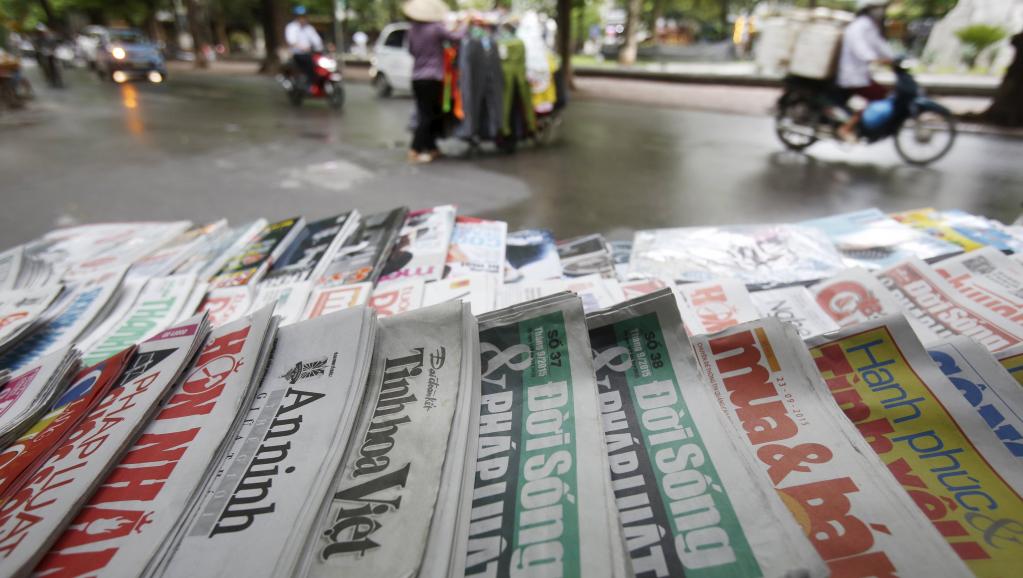
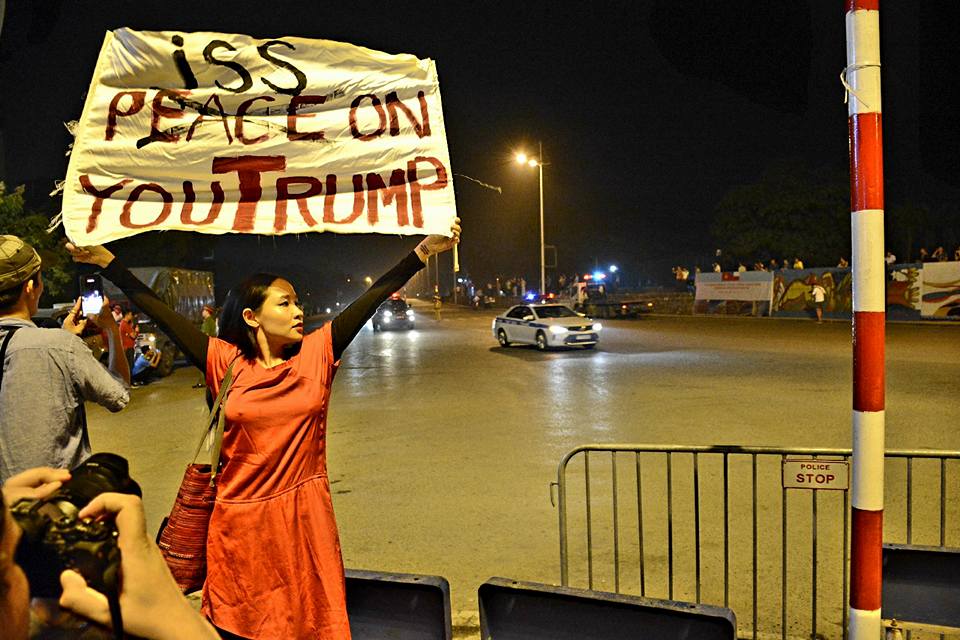
  • About us

    The Vietnamese Magazine is an independent and non-profit online magazine that focuses on Vietnam’s politics. It was launched on November 8th, 2017, by a group of Vietnamese activists and independent journalists, aiming to raise public awareness on the human rights situation and political development in Vietnam among the international community. The magazine is owned and managed by Legal Initiatives for Vietnam (LIV), a 501(c)(3) nonprofit organization registered in California, United States.

    While advocating for human rights and democracy in Vietnam, we continue to follow the journalistic principles of truth, fairness, and impartiality.

    The Vietnamese Magazine is inspired by generations of independent journalists and human rights activists, who risk their lives to advocate for press freedom and a peaceful transition to democracy in Vietnam. It is also inspired by some foreign independent media outlets, such as Rappler, the Cambodia Daily, the Irrawaddy, Prachatai, and their roles in the democratic developments in our neighboring countries.

    Thus, The Vietnamese Magazine strives to be a platform for every Vietnamese individual – who shares our dreams, visions, and daily struggles for a democratic country where the rule of law and human rights are respected – to raise their voice and bring their issues to the world stage.


    Team members

    Trần Quỳnh-Vi

    Co-founder and managing editor, based in Taipei City, Taiwan.

    Trần Quỳnh Vi. Photo credit: Trịnh Hữu Long/ LIV.

    She was a litigation lawyer in Menlo Park and San Jose, California, before becoming a democracy advocate and journalist in 2015. Apart from being a member of LIV’s leadership, she is in charge of The Vietnamese Magazine, an English publication covering Vietnam’s law and politics, and advocacy.

    She specializes in Vietnam’s freedom of expression and criminal justice, and is also a strong advocate for the abolition of the death penalty. In 2021, Vi was accepted as a Democracy and Human Rights Service Fellow at the Taiwan Foundation for Democracy (TFD). She also has a master’s degree in journalism from Columbia University, Graduate School of Journalism.

    Phạm Đoan Trang

    Co-founder and editor, based in Vietnam.

    Trần Quỳnh Vi. Photo credit: Trịnh Hữu Long/ LIV.

    She is one of the most prominent journalists in Vietnam and has worked for various media outlets such as VnExpress, VietNamNet, and Phap luat TP. Ho Chi Minh since 2000. She became a democracy activist in the early 2010s and has been involved in various social movements and educational activities. Aside from working as an editor for LIV (including The Vietnamese and Luat Khoa magazines), she was also the leading author of the Liberal Publishing House and has written many books on political and legal affairs in Vietnam.

    As a result of her excellence and contribution, she has been awarded by People In Need, Reporters Without Borders, Martin Ennals Foundation, US Department of State, the Canadian and the United Kingdom governments, and Committee to Protect Journalists. She was arrested by Vietnamese authorities in October 2020 and was sentenced to nine years of imprisonment for “spreading propaganda against the state.”

    She currently serves her sentence in An Phuoc Prison, Binh Duong province, Vietnam.

    Trịnh Hữu Long

    Co-founder and editor-in-chief, based in Taipei, Taiwan.

    Trịnh Hữu Long. Photo credit: tcnn.org.tw.

    Aside from being a member of LIV’s leadership and an editor of The Vietnamese Magazine, he is in charge of Luat Khoa Magazine, a Vietnamese publication covering Vietnam’s law and politics. He began his career in 2008 as a legal counsel for some companies in Hanoi and became a democracy advocate and journalist in 2011. He has worked for various media and human rights organizations such as Tia Sáng magazine (2011-2012), Tuổi Trẻ newspaper (2012), and VOICE (2013-2016).

    He has a background in law and Asia-Pacific studies, specializing in Vietnam’s constitutional law, freedom of expression, internet freedom, and criminal justice, as well as Taiwan’s democratization. He has written and translated several books in politics and has been an author of the Vietnam Chapter of Freedom House’s Freedom on the Net reports since 2021.


    Submissions:

    Please submit your pitches to editor@thevietnamese.org.
    And submit your article using this form: thevietnamese.org/submission
    Our rate is $150 for a 1,500-word article.

    Contact:

    Address: 1520 E. Covell Suite B5 – 426, Davis, California, United States 95616

    Email address: editor@thevietnamese.org