Blog

  • Vietnam Briefing: Pham Doan Trang Marks First Year In Jail; Vietnam Faces Labor Shortage As Migrant Workers Flee Industrial Cities For Home

    Vietnam Briefing: Pham Doan Trang Marks First Year In Jail; Vietnam Faces Labor Shortage As Migrant Workers Flee Industrial Cities For Home

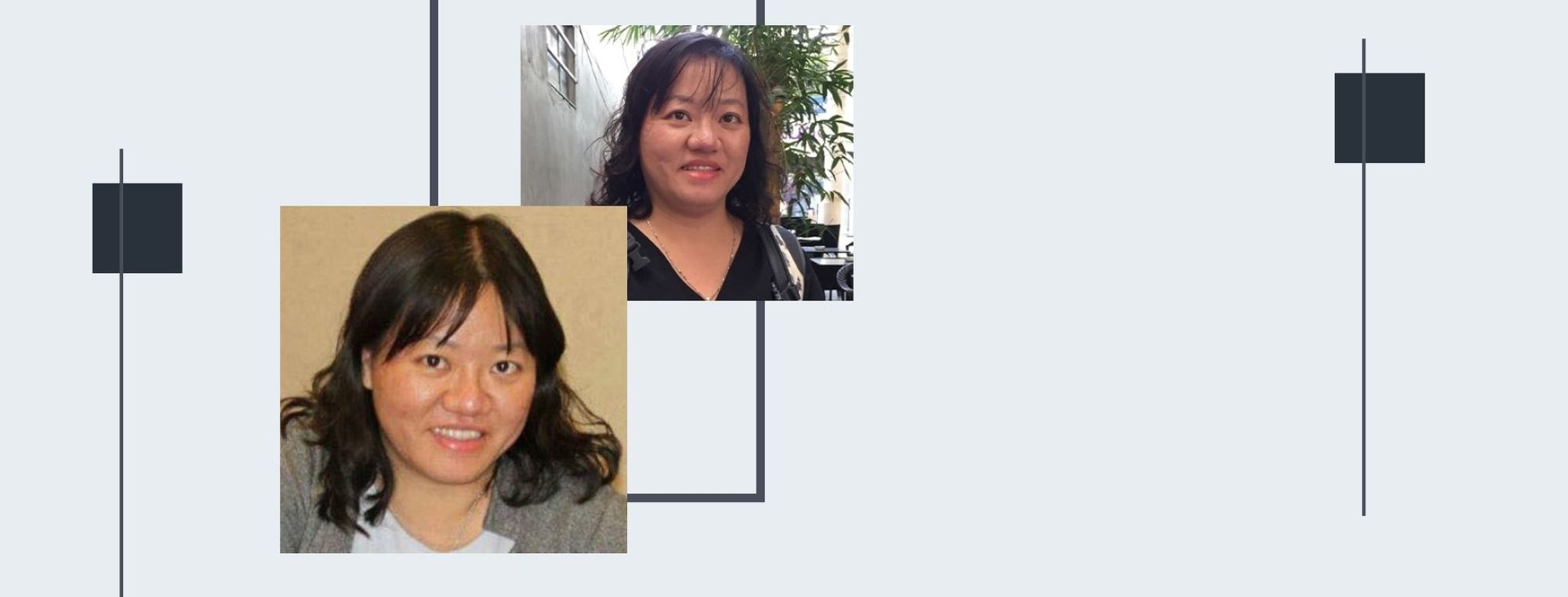
    Journalist Pham Doan Trang marks her first year in jail

    • Around midnight on October 6, 2020, journalist Pham Doan Trang was arrested by the Vietnamese authorities and subsequently prosecuted on charges of “making, storing, spreading information, materials, items for the purpose of opposing the State of the Socialist Republic of Vietnam.”
    • According to Doan Trang’s family, and one of her defending lawyers, Le Van Luan, the People’s Procuracy of Hanoi completed an official indictment against her and submitted her case to the People’s Court of Hanoi on August 30, but it did not notify her family and lawyers about the decision until October 6. Meanwhile, investigation results and the official indictment against Doan Trang have still not yet been made available.
    • Pham Doan Trang has been held incommunicado since her arrest and denied personal visitations by her family and lawyers.

    Vietnamese woman suing the authorities for alleged human rights violations

    RFA reports:

    • On Tuesday last week, Hoang Thi Phuong Lan, a Vietnamese woman who was violently forced by local authorities to take a coronavirus test, said that she would file a lawsuit against the government.
    • “I have the right not to let anyone touch my body, and what they did was absolutely wrong from a legal standpoint, and it also went against the regulations on pandemic prevention and control,” Lan said during a livestream video on her Facebook. “It was wrong that they decided to give me a fine even after they were able to get my specimen. Therefore, I am taking legal action,” she said.
    • According to Lan, she also received the local government’s decision to fine her two million dong (around US$88) for health law violations. Lan added that she was offered no opportunity to negotiate with local authorities on the decision.
    • However, Lan’s case is only one example of many incidents where Vietnamese authorities are caught on video committing coercive measures and violence against citizens during the COVID-19 pandemic.

    COVID-19 situation in Vietnam

    • As of October 10, 2021, Vietnam has recorded more than 836,000 confirmed COVID-19 cases, while the total death toll in the country has surpassed 20,000 fatalities. Less than 15 percent of the country’s population has received two doses of the COVID-19 vaccine.
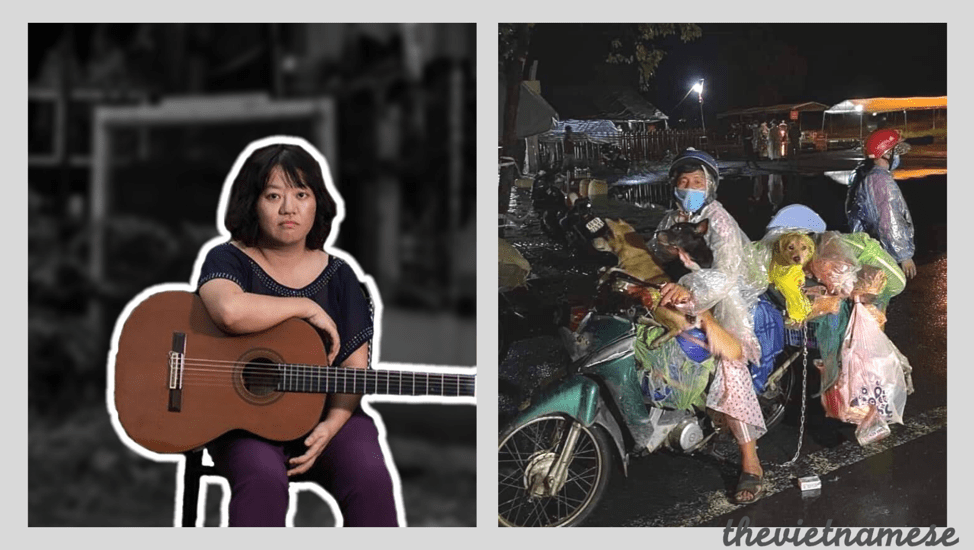
    • Vietnamese authorities reportedly killed and cremated a local man’s pets as part of a COVID-19 preventive measure, causing a public outrage, reports VnExpress. Last Friday, Pham Minh Hung, a migrant worker in Long An Province, confirmed that his 13 dogs were killed by the local authorities in Ca Mau Province as he drove his wife and all of their pets on his motorbike while following his wife’s sister-in-law and her family to their hometown in Khanh Hung Commune, Ca Mau Province. At a checkpoint as they entered the locality, they tested positive for COVID-19 and were later transferred to an isolation facility for treatment; their pets were killed shortly afterwards over fear of the virus spreading. Another three dogs and a cat, which Hung previously gave to his accompanying relatives, also met the same fate.
    • Vietnam plans to reopen key tourist attractions for vaccinated tourists from approved countries, reports Reuters. From December this year, vaccinated tourists from countries with low COVID-19 risk will be allowed to visit the country’s popular destinations, including UNESCO world heritage site Halong Bay and Hoi An, the highlands town of Dalat and beach destination Nha Trang. The move is seen as an effort by the Vietnamese government to boost its heavily affected tourism sector, which has been hit hard by COVID-19 restrictions.
    • Ho Chi Minh City’s industrial workforce has shrunk as migrant workers returned to their hometowns, reports VnExpress: “Only 50 percent of employees have returned to work at industrial parks and export processing zones, causing a severe labor shortage. Pham Duc Hai, deputy head of the Ho Chi Minh City Steering Committee for Covid-19 Prevention and Control, said on Monday that of around 288,000 workers, only around 135,000 have turned up.”
    • Return of migrant workers to Mekong Delta provinces sparks fears of potential COVID-19 outbreaks, reports VnExpress. According to local authorities, the insufficient isolation capability of localities, the substantial number of returning workers and limited medical capacity have become major concerns for receiving provinces in the event of an outbreak.
    • COVID-battered supply chains set Vietnam on a shaky road towards recovery, writes Nikkei Asia: “But a potential recovery remains precarious, said Tuan Chu, an economist at RMIT University Vietnam, pointing to two labor risks. Thousands of jobless migrants fled Ho Chi Minh City as soon as lockdown eased on Friday. The city counted 288,000 workers in industrial areas before the exodus, compared with 135,000 now. Besides worker scarcity, Chu said this mass migration could trigger a rise in virus cases in the provinces. Will authorities invoke lockdowns again if the caseload explodes? That is a worry that also may keep job-seekers from returning to economic zones, he said.”
    • The public is calling on the government to set price controls for COVID-19 test kits as shortages, alleged price gouging and government corruption may have caused price surges, reports RFA: “Though rapid test kits cost around 35,000 dong (US$1.54) on the international market, a lack of supply in the Southeast Asian country forced provinces and cities to bid against each other, causing wholesale prices within the country to skyrocket, said Dang Hong Anh, chairman of the Vietnam Young Entrepreneurs Association.”
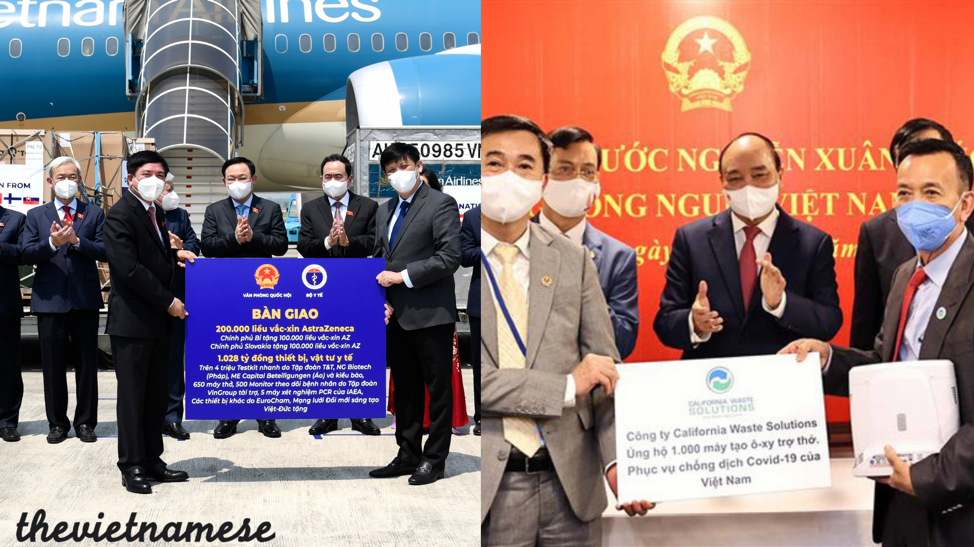
    • COVID-19 vaccines to arrive in Vietnam: On October 6, Australia delivered over 300,000 AstraZeneca COVID-19 vaccine doses to Vietnam while promising to assist the country in purchasing another 3.7 million doses. Meanwhile, on October 8, the United States Embassy in Hanoi announced that 397,800 doses of Pfizer-BioNTech vaccine had arrived in Vietnam, with more vaccines to arrive in a few days, bringing the total number of vaccine donations from the United States to Vietnam to nearly 8.5 million doses.

    Vietnam arrests a Facebook user for criticizing the government’s controversial COVID-19 policies

    RFA reports:

    • On October 4, Vietnamese authorities arrested a Facebook user and subsequently charged him with “abusing freedom and democracy” for writing a series of online posts they said had defamed the country’s leaders.
    • Vo Hoang Tho, 36, a resident of Vietnam’s southern city of Can Tho, had allegedly published 47 posts on his Minh Long Facebook page criticizing government efforts to prevent and control the spread of COVID-19 in the one-party Communist state, according to state media.
    • The Vietnamese government’s controversial COVID-19 policies to contain the pandemic, which include community lockdowns and other harsh restrictions, are widely unpopular in Vietnam. Tho’s arrest was just the latest in a continuing crackdown on Facebook users who use the popular social media platform to voice dissenting views.

    Vietnam calls on China to be accurate and objective with history regarding the Chinese television series “Ace Troops”

    VnExpress reports:

    • On October 7, state media reported that Foreign Affairs Ministry spokeswoman Le Thi Thu Hang had called on China to look at history ‘accurately and objectively’ while responding to questions about “Ace Troops,” a Chinese television series, with allegedly inaccurate and wrongful historical depictions.
    • The allegedly historical inaccuracies were detected after comments made on social media platform Baidu regarding a trailer for “Ace Troops” described the story as being set in the 1980s when “the Vietnamese army was getting stronger […] and launching invasions into China.” Chinese website Manyanu said the series was about “Chinese soldiers in a self-defence counterattack against Vietnam,” which is regarded as contrary to facts by the Vietnamese netizens.
    • Hang said Vietnam requests that China properly abide by the mutual understanding of the important partnership between Vietnam and China, regarding “friendly and objective propaganda that fosters societal foundations beneficial for the development of both countries’ relations.” She also added that Vietnam’s consistent stand on historical issues is to “look towards the future” and to look at history “accurately and objectively.”

    Vietnam Insight: Learn more about Vietnam

    Vietnam’s Hidden Debt to China Expose its Political Risks

    The Diplomat/ Zachary Abuza, Phuong Vu/ October 8

    “Vietnam has famously eschewed China’s Belt and Road Initiative (BRI), but it has been the recipient of over $16.3 billion in Chinese project financing from 2000-2017. A new report on Chinese economic assistance programs sheds some light on Vietnam and suggests that the country is increasing its debt burden to China far beyond what is commonly thought; creating political risk and impacting Vietnam’s potential policies toward its neighbor to the north, which is already prone to bullying and intimidation.”

    Counting the cost of Vietnam’s Covid collapse

    Asia Times/ David Hutt/ October 7

    “By late September, many of the lockdown measures were lifted in Hanoi, the capital. On October 1, Ho Chi Minh City’s industrial parks, construction projects, malls, hospitality facilities, and restaurants for takeaways were allowed to resume operations.

    While there is currently anger over how the communist authorities have handled the pandemic this year, seen in complaints and grievances posted on social media, not everyone believes that the ruling party’s reputation will suffer much in the long run.”

    Nominees and ‘Backyard Companies’: How Vietnamese Officials Conceal Their Illicit Wealth

    Fulcrum/ Le Hong Hiep/ October 7

    “As such, the absence of Vietnamese politicians and government officials in the Pandora Papers does not mean that Vietnamese officials are less corrupt than their foreign counterparts. A more plausible explanation is that they have other ways, though less sophisticated but still effective in the Vietnamese context, to hide their illicit wealth. One common measure is to use nominees to hold assets in Vietnam on their behalf.”

    From Delay to Desperation: The Story of Sinophobia and COVID-19 Vaccines in Vietnam

    The Diplomat/ Travis Vincent/ October 6

    “Yet the public does not see eye to eye with the communist government’s approval and purchase of Chinese vaccines. On top of that, many expressed distrust of and discontent with the government’s lack of transparency about the availability and allocation of vaccines, as well as the gravity of the pandemic situation in the economic hub of Ho Chi Minh City, which is now leading the country for both COVID-19 cases and fatalities, after an almost virus-free year.”

    Vietnamese rights activist marks first year in jail

    Asia Times/ Stewart Rees/ October 5

    “There is currently little to be positive about for proponents of free speech in Vietnam. Despite this, in February Vietnam announced its intention to run as a candidate for membership of the United Nations Human Rights Council for the 2023-2025 term.

    If Vietnam is serious about its desire to contribute to the development of global human rights it should look to put its own house in order first. Unconditionally releasing Pham Doan Trang would be a good place to start.”
  • October 9, 2009: Six Peaceful Activists Sentenced For Pro-Democracy Activities

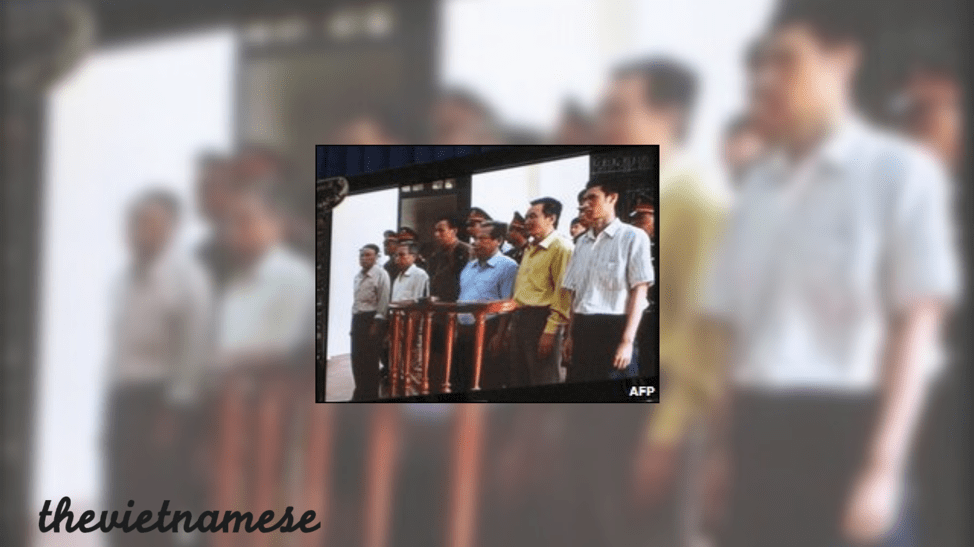
    October 9, 2009: Six Peaceful Activists Sentenced For Pro-Democracy Activities

    What happened?

    On this day, 12 years ago, a group of six democracy activists was sentenced to prison, with sentences ranging from two years to six years in prison, in addition to various months or years of house arrest. Their sentences prompted criticism from many international organizations, such as Human Rights Watch and Reporters Without Borders.

    These activists were arrested earlier in 2008 for hanging pro-democracy banners on a bridge along the Hanoi-Hai Phong Highway. The government accused them of “spreading propaganda against the government and Communist leaders” under Article 88 of the 1999 Penal Code. Article 88 was one of the most frequently used charges to silence political dissent in Vietnam during the last decades.

    The group of six activists includes well-known activist and novelist Nguyen Xuan Nghia, activist Nguyen Van Tinh, land rights activist Nguyen Kim Nhan and Nguyen Van Tuc, ex-Communist member Nguyen Manh Son, and Ngo Quynh, a university student. Nghia and Tuc are alleged to be members of Bloc 8406, a pro-democracy organization that used to be prominent but was violently suppressed during the early 2010s. At the time of the arrests, most of the activists were already in their 60s, but Ngo Quynh was only 25 years old.

    Following the trial of these activists, other democracy activists were also sentenced in 2010, including teacher Vu Hung, blogger Pham Thanh Nghien, and activist Pham Van Troi. According to the BBC Vietnamese, the intensified crackdown of pro-democracy activities was due to the approaching Communist Party Congress in 2011.

    While it has been more than a decade since the sentencing of the above activists, it is essential to remember that the Vietnamese government continues to crack down on peaceful pro-democracy activists and give them unjust sentences for their political longevity.

    Where are these activists now?

    The six activists detained in 2009 were all subsequently released when their prison terms ended between 2011-2014.

    However, Nguyen Kim Nhan was arrested again in 2011, almost immediately after he was released from prison upon completing his 2-year sentence; he received another nearly six years in prison.

    Nguyen Van Tuc, released in 2012, is currently in prison after being accused of “aiming to overthrow the government” in 2018 under Article 79 of the 1999 Penal Code. Tuc received a sentence of imprisonment for 13 years, and his family members have spoken out about his deteriorating health behind bars.

    Nguyen Xuan Nghia, the activist who received the longest sentence of six years in 2009, was again harassed by the police in 2018 for “storing banned books.”

    Examining the life of the democratic activists who have served years in prison shows us that the government has never treated them with respect despite how peaceful, intellectual or patient. It is as if the government is sending a clear political message: you have to be on our side, or we will eliminate you.

    While the article today is about the sentencing of activists from twelve years ago, we keep seeing similar treatment patterns with democracy activists or writers throughout recent years.

    Citations:

    1. BBC News Tiếng Việt. (2011, June 8). Ông Nguyễn Kim Nhàn bị bắt. https://www.bbc.com/vietnamese/vietnam/2011/06/110608_nguyenkimnhan_arrest
    2. BBC News Tiếng Việt. (2012, September 10). Nhà bất đồng chính kiến ra tù. https://www.bbc.com/vietnamese/vietnam/2012/09/120910_dissident_released
    3. BBC News Tiếng Việt. (2018b, April 10). 13 năm tù cho nhà hoạt động Nguyễn Văn Túc. https://www.bbc.com/vietnamese/43710106
    4. B.T. (2009, September 7). Tổ chức Phóng Viên Không Biên Giới (RSF) kêu gọi Việt Nam trả tự do cho các blogger. RFI Tiếng Việt. http://www1.rfi.fr/actuvi/articles/118/article_5213.asp
    5. Human Rights Watch. (2009, August 19). Vietnam: Release Peaceful Democracy Advocates. https://www.hrw.org/node/237562/printable/print
    6. Human Rights Watch. (2020, October 28). Vietnam: Free Political and Religious Detainees. https://www.hrw.org/news/2011/04/07/vietnam-free-political-and-religious-detainees#
    7. Nhân Dân. (2012, November 2). Y án sơ thẩm đối với bị cáo Nguyễn Kim Nhàn và đồng bọn trong vụ án tuyên truyền chống Nhà nước. https://nhandan.vn/thoi-su-phap-luat/y-an-so-tham-doi-voi-bi-cao-nguyen-kim-nhan-va-dong-bon-trong-vu-an-tuyen-truyen-chong-nha-nuoc-387812/
    8. Pham, N. (2009, October 9). Six Vietnamese activists jailed. BBC News. http://news.bbc.co.uk/2/hi/asia-pacific/8299406.stm
    9. Radio Free Asia. (2020a, October 11). Cựu tù chính trị-nhà văn Nguyễn Xuân Nghĩa bị bắt đi làm việc. https://www.rfa.org/vietnamese/news/vietnamnews/Former-political-prisoner-summoned-05232018100346.html
    10. Radio Free Asia. (2020b, October 11). Sức khỏe tù chính trị Nguyễn Văn Túc tồi tệ thêm. https://www.rfa.org/vietnamese/news/vietnamnews/ailing-political-prisoner-nguyen-van-tuc-health-worsened-in-prison-03152019083039.html
    11. Radio Free Asia. (2020c, October 11). Tù nhân lương tâm Nguyễn Kim Nhàn được trả tự do. https://www.rfa.org/vietnamese/news/vietnamnews/conscience-prisoner-nknhan-get-early-release-2-months-10072016085459.html
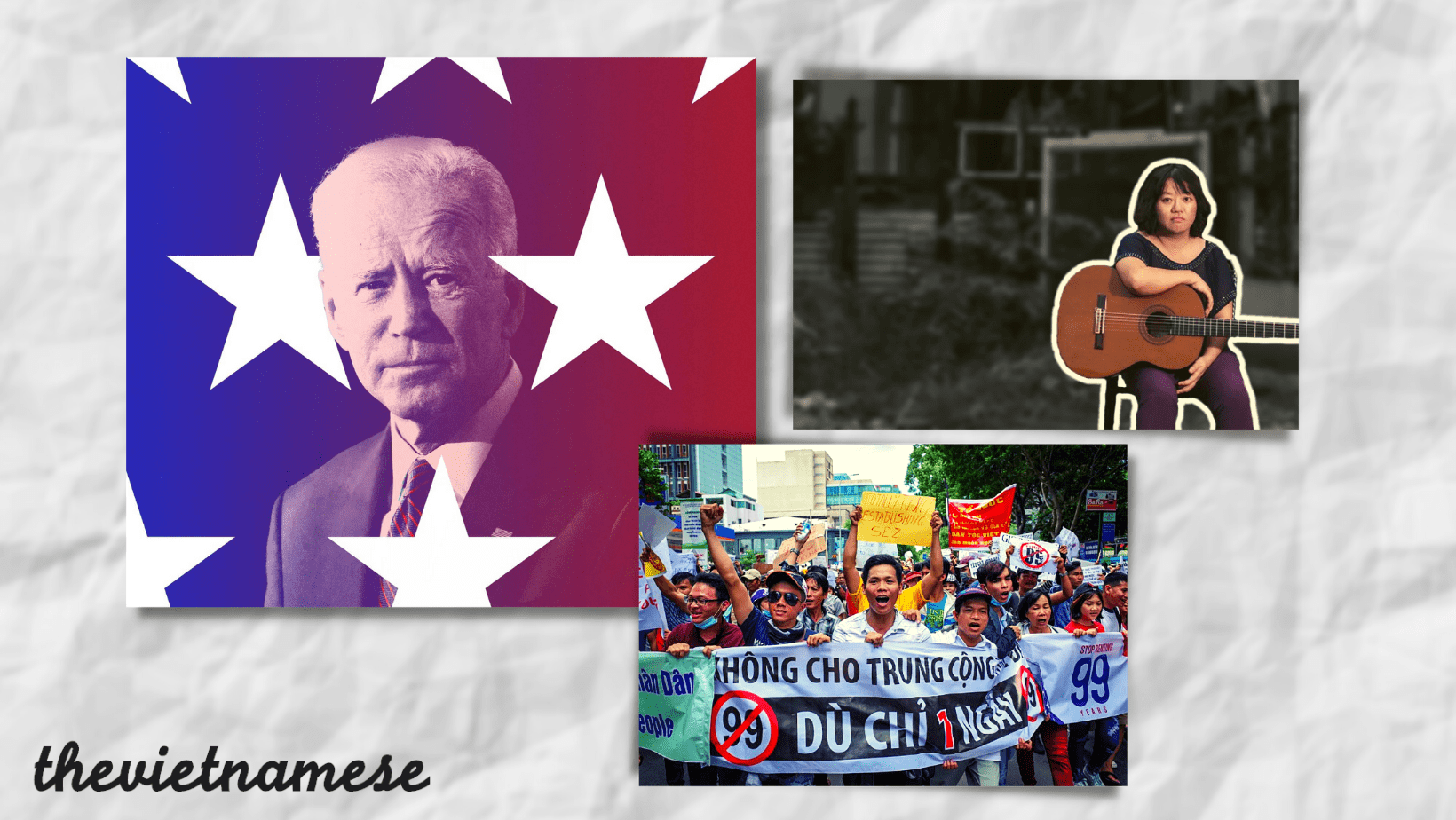
  • Biden’s Emphasis On Soft Power And What It Means For Vietnam’s Democracy Movement

    Biden’s Emphasis On Soft Power And What It Means For Vietnam’s Democracy Movement

    President Joe Biden has repeatedly emphasised “soft power” in his foreign policy speeches. Will this policy work in Vietnam? And how will it affect Vietnam’s democracy movement?

    Biden’s emphasis on soft power: what’s in store for Vietnam and should one believe it?

    It’s almost a year into Joe Biden’s presidency. Throughout his tenure, two keywords, “relentless diplomacy” and “soft power,” have echoed in every corner where US foreign policy is concerned: from the ending of the “forever war” in Afghanistan to the reorganisation of trans-Atlantic relations, and to engagement with Asia. The challenges for which President Biden will implement his “relentless diplomacy” and “soft power” approach are, in short, the covid pandemic, climate change, and China[1].

    Vietnamese readers can be assured of Biden’s serious interest in Asia by, amongst others, the appointment of a competent expert Kurt Campbell [2] as the White House coordinator for the Indo-Pacific region, US support for Taiwan and its alliance with Japan, vaccine donations, and, most recently, Vice President Kamala Harris’ visit to the region and Vietnam specifically.

    Regarding China, Biden’s promise [3] of “fighting corruption, defending against authoritarianism, and advancing human rights” will be arguably the most effective tool for the United States in the realm of soft power. Economic and military strength notwithstanding, the Chinese regime is infamous for its authoritarian governance and long record of human rights violations. Ironically, China’s military strength, as observed in its actions in the South China Sea, makes its draconian image even more despicable.

    By contrast, the era of Pax Americana, despite criticisms of US imperialism, has built an overall image of the United States as a promoter of human rights and democracy. Although the recent Afghanistan debacle has damaged the reputation of the United States, Biden has been quick to assert [4] that the new era of US foreign policy will be about “lifting people up around the world” and “renewing and defending democracy”.

    Speaking of Pax Americana, Biden’s emphasis on “soft power” and “relentless diplomacy” happens in a context different than that of American leaders of the past who boasted about a US “moral imperative” and “doing the right thing” only to turn a cold shoulder to their allies when the tide of geopolitics turned. In the post-Americana era, despite Biden’s denial/rejection [5] of the imminent “China-US Cold War”,  it is widely recognised (as indicated by the US “pivot to Asia”[6]) that US national interests depend on whether or not the United States can counter China’s plays in Asia. As such, one can expect Biden’s words to have substance rather than just simply paying lip service.

    Biden’s “soft power” in Vietnam: the state-versus-people conundrum

    When it comes to China and human rights, there is a clear distinction between the perspectives of the Vietnamese state and the Vietnamese people. At the most basic level, Vietnamese leaders have little to no concern for the interests of their people because their positions are not determined by voters. Vietnam’s election is well known for being a farce [7].

    The divergence between the Vietnamese public and the Vietnamese government on China could not be clearer. When the government approved a bauxite project related to China in 2009, the Vietnamese people signed a petition to oppose it. When the people took to the streets in the early years of the 2010s to oppose China’s territorial claims in the South China Sea, the government cracked down on these protests and detained several protesters. When the Special Economic Zone bill was announced, it was perceived by the Vietnamese public as giving questionable privileges to China and also was seen as a threat to Vietnam’s national security. As a result, massive protests broke out in the streets in 2018 and the bill was shelved as a result.

    Most recently, the use of China’s COVID vaccines in Vietnam has been met with public resistance and fierce criticism of the government. Anti-China protesters’ shouts of, “Coward to the enemy, cruel to the people!” (“Hèn với giặc, ác với dân!”), is precisely the Vietnamese people’s attitude towards their government on China.

    At this point, one may argue: “But the Vietnamese government has also spoken up against China many times, so it cannot be as pro-China as the above-mentioned events indicate.” This is true and quite a few analyses [8] have highlighted the stake for the Vietnamese government in playing US-China politics wisely instead of simply bowing to China. However, it is important to understand that when Vietnamese leaders do stand up to China, it is often “all bark and no bite.”[9] More importantly, whether Vietnamese leaders shake hands with Biden or with Xi, or play the superpowers off against each other, they do so first and foremost based on their, or the Communist Party’s, own interest [10], rather than on the interests of the country and the people.

    Thus, it is highly unlikely that the United States will find a true ally in the Vietnamese government in its state-to-state diplomacy against China. Because of this, the US will also find it difficult to tap into the Vietnamese public’s anti-China sentiment. Hanoi has shown little to no concern about how Vietnamese citizens feel or about what they want, and it has unreservedly deployed force to quell anti-China protests and online dissent in the past.

    The road to promoting human rights in Vietnam does not seem promising either, especially the rights to free speech, peaceful assembly, association, and fair trial. The promise of US leaders to “respect Vietnam’s political system” [11] seems rather odd because the very existence and stability of Vietnam’s political system rest on the suppression of exactly those rights. The relentless arrests of people who speak critically of the government on their Facebook pages and of those who ran as independent candidates in the lead-up to the May 2021 national election are just some examples.

    What has played out so far in the field of human rights does not show much innovation. State-to-state talks about the situation of human rights in the country, assistance for specific high-profile activists who have been arrested and who are on trial, and US leaders holding meetings with local activists are all par for the course. It remains to be seen if Biden’s administration will open a new chapter of human rights promotion through public diplomacy or if it will lead to more of the same: the worsening of human rights and democratic freedoms in Vietnam.

    Public diplomacy and soft power: a look into the books

    The term “public diplomacy” was first coined in 1965 by Edmund Gullion, founder of the Edward R. Murrow Center of Public Diplomacy at Tufts University (Cull, 2009) [12]. Definitions vary but all agree that public diplomacy is a foreign policy practice entailing nation A engaging with the public of nation B in order to influence B’s foreign policy through bottom-up pressure to A’s advantage (Bettie, 2014) [13]. In short, it is about image projection and national branding, which is distinctly different from traditional diplomacy which consists of state-to-state engagement.

    In the work of historian Nicholas J. Cull (2008) [14], activities that count as public diplomacy include (1) presenting new policy ideas to the foreign public (i.e., advocacy), (2) exportation of culture to foreign countries as well as two-way cultural exchanges, and (3) international broadcasting (i.e., reaching a foreign public through mass media).

    While public diplomacy can be understood as a channel of persuasion, soft power is the content that gives a nation the power to persuade the foreign public. Prominent soft power scholar, Joseph S. Nye Jr., defines soft power as the attractiveness of a nation that lies in its culture, including its language, arts, cuisine, institutions, brands, and moral values (Nye, 2008) [15]. Soft power goes hand-in-hand with public diplomacy, as “public diplomacy tries to attract by drawing attention to these potential resources through broadcasting, subsidizing cultural exports, arranging exchanges, and so forth” (Nye, 2008, p. 95) [16].

    Soft power may also be drawn from hard power. The presence of US military forces in the South China Sea to aid countries bullied by China communicates certain moral values to the people of those countries. However, underlying such a presence in the more complex and pragmatic interests of the United States than simply a normative or moral stance.

    Using the above discussion on public diplomacy and soft power, how would President Biden’s plans for Vietnam measure up? What would his roadmap navigating the state-versus-people conundrum in the country look like?

    Evaluating Biden’s diplomacy and navigating Vietnam’s state-versus-people conundrum

    Biden’s words promise a new era of US diplomacy, but his actions so far still seem to be following classic state-to-state diplomacy and militaristic intervention more than what is prescribed for public diplomacy and soft power.

    Furthermore, public diplomacy has always been a component in US foreign policy in previous administrations through supporting local registered civil society organisations and non-formal oppositional actors. Thus, with Biden’s emphasis on “soft power,” his administration will disappoint if over the next few years it rehashes many or most of the previous administrations’ actions; this old approach is effectively circumscribed by the state-versus-people conundrum mentioned earlier.

    However, the good news for the United States is that despite the disastrous presidency of Donald Trump and the many upheavals in US politics and society, public opinion [17] in Vietnam is still in favour of the United States, especially when compared to China. The soft power is already there.

    As Vietnamese people have grown increasingly more concerned about Hong Kong and Taiwan, their opinion will also be shaped by how the United States intervenes in the Taiwan – China situation. The collapse of Hong Kong has done serious damage to the image of the West, but it is still looking good on the Taiwan front. In addition, the story of Taiwan is not just about standing up to China; it is also about nation-building and the nationalistic pride of a people who chose democracy over dictatorship.

    In summary, US soft power in/over Vietnam will come from the stories of human rights, democracy of the US itself, and its defence of Taiwan against China. This soft power will come across even stronger if US public diplomacy also promotes Taiwan as the protagonist in the region, as a counter to Chinese politics, and as an inspiring story of Asian democratisation. These narratives will further widen the gap between Vietnamese hearts and minds and China, while simultaneously raising aspirations for democratisation amongst the Vietnamese people. In doing so, the United States will also not give a reason for the Vietnamese state-owned media to be hostile towards democratisation and the Vietnamese democracy movement. State propaganda cannot accuse America of imposing Western political ideas and values, nor of hypocrisy and one-upmanship if the US approaches the issue in this way.

    Having said earlier that the Vietnamese government has shown little to no concern about the Vietnamese people’s anti-China sentiments and that it uses brute force against human rights and democracy activists, what is the point of raising aspirations for democratisation and being critical of China? The point to be made is precisely about the kind of mass awareness and feeling of efficacy that will translate into the political agency and oppositional collective action. Old school public diplomacy has come short of this task and has failed to help the Vietnam democracy movement gain strength in numbers.

    My conversations with prominent activists in Vietnam’s human rights and democracy movement show that the seemingly invincible power of the Vietnamese government to repress dissent, the crackdown on protests, and carry on with unpopular policies, comes from the fact that the human rights and democracy movement is small in number and that the majority of the public lack the theoretical scaffolding to help them translate their discontent with the government and nationalistic sentiment into coherent and organised demand for democratisation.

    This article, written from my perspective as a Vietnamese, a scholar, and a supporter of collective action towards democracy for Vietnam, has suggested a few ways for American diplomats and foreign policy experts to walk President Biden’s talk.

    Meanwhile, Luat Khoa Tap Chi, a well-respected independent news outlet that serves Vietnamese readers, has already beefed up its column on Taiwan as an inspiring example of democracy for the Vietnamese. The comrades of Luat Khoa are also planning their next step, with Taiwan and mass awareness at the core of their strategy. The Biden administration, with the aim of utilizing soft power, should not miss this opportunity to work with them.

    Bibliography:

    1. Ash, T., G. (2020, 7 Nov). What will President Biden’s United States look like to the rest of the world? The Guardian.
    2. Green, M., J. (2021, 13 Jan). Biden makes his first bold move on Asia. The Guardian.
    3. Tran, B., T. (2021, 3 Jun). No Trade-off: Biden can both Deepen US-Vietnam Ties and Promote Human Rights. United States: Center for Strategic and International Studies.
    4. Borger, J. (2021, 21 Sep). Biden promises end to ‘relentless war’ and start of ‘relentless diplomacy’. The Guardian.
    5. ibid.
    6. ibid.
    7. Vu, A. & Gerin, R. (2021, 21 May). Vietnam goes to the polls with state-approved candidates offering little choice. Radio Free Asia.
    8. Nguyen, T., T., Q. (2021, 30 Sep). Trans-Pacific partner membership and the love triangle of Vietnam – Taiwan – China. The Vietnamese.
    9. Reed, A. (2021, 14 Mar). The enemy of my enemy: tensions between the US, China, and Vietnam. The Vietnamese.
    10. ibid.
    11. Tran, B., T. (2021, 3 Jun). No Trade-off: Biden can both Deepen US-Vietnam Ties and Promote Human Rights. United States: Center for Strategic and International Studies.
    12. Cull, N. (2009). Public Diplomacy Before Gullion: the Evolution of a Phrase. In: Snow, N. and Taylor, P. (eds). Routledge Handbook of Public Diplomacy (pp. 19-23). Tayler & Francis.
    13. Bettie, M., L. (2014). The Fulbright program and American public diplomacy (unpublished doctoral thesis). The University of Leeds, Leeds, United Kingdom.
    14. Cull, N. (2008). The Cold War and the United States Information Agency. Cambridge:Cambridge University Press.
    15. Nye, J. (2008). Public diplomacy and soft power. The Annals of the American Academy of Political and Social Science, 616, pp. 94-109.
    16. ibid.
    17. Seah, S. et al., (2021). The state of Southeast Asia: 2021. Singapore: ISEAS Yusof Ishak Institute.
  • Tightening The Noose: The Latest Developments In Vietnam’s Assault On Internet Freedom

    Tightening The Noose: The Latest Developments In Vietnam’s Assault On Internet Freedom

    On August 25, 2021, U.S. Vice President Kamala Harris met with several of Vietnam’s top leaders. According to a report by Reuters, while the focus of their dialogue centered on the South China Sea dispute and the strengthening of U.S presence in the region, she also brought up several human rights concerns with the Vietnamese government. Although Harris did not provide details about what they had discussed, the vice president assured the press that “[the United States] was “not going to shy away” from difficult conversations with countries the United States has partnerships with.

    Prior to her arrival, Vietnam was already dealing with a surge in Covid-19 infections, which resulted in lockdowns and travel restrictions in several places in the country, including Ho Chi Minh and Hanoi. As of September 26, Vietnam has tallied over 476,000 confirmed cases with 18,000 deaths. The Vietnamese government’s approach to containing the spread of the virus has been questionable at best with its use of state media and propaganda to control the narrative and deployment of the military to enforce lockdown measures.

    Yet, despite the ongoing health crisis and the dialogue with the U.S. vice president, Vietnam continues its crackdown, detention, and imprisonment of several online critics, journalists, and activists.

    Freedom on the Net 2021

    Freedom House, a US-based organization founded to support and defend democracy worldwide, released its annual Freedom on the Net report on September 21, 2021. This report analyzes the state of accessibility and censorship of a country’s cyber domain, alongside violations of internet users’ rights, and ranks each nation as being Free, Partly Free, or Not Free. It comes as no surprise that Vietnam continues to fare poorly in this regard; it has been classified as Not Free for three consecutive years and has been performing terribly under the standards set by Freedom House.

    This research highlights several aspects of the state of internet freedom in Vietnam. Regarding accessibility, Freedom House states that smartphone and internet penetration in the country has been good with internet prices becoming more affordable. However, connectivity continues to remain an issue for those living in extreme poverty and for ethnic minorities who live in the remote mountainous areas of Vietnam. Censorship also continues to be practiced by the Vietnamese government as it blocks or filters content coming from individuals and organizations that are critical of the regime. Predictably, Vietnam’s violation of internet-user rights is just as rampant compared to prior years with “police routinely [flouting] due process, arresting bloggers and online activists without a warrant or retaining them in custody beyond the maximum period allowed by law.”

    CIVICUS: Latest Developments in Vietnam

    On September 27, 2021, CIVICUS, an international alliance of various organizations that aim to strengthen citizen action and civil society worldwide, released its own report that details more recent events regarding the state of internet freedom in Vietnam. Similar to Freedom House, CIVICUS classifies Vietnam as Closed according to its own standards; a country with this rating exhibits “a complete closure of civic space” where “an atmosphere of fear and violence prevails, where state and powerful non-state actors are routinely allowed to imprison, seriously injure and kill people with impunity.” Criticism of those in power is also severely punished. Likewise, media freedom is virtually non-existent and the internet is heavily censored.

    The CIVICUS report begins by highlighting the cases of several Facebook users who were arrested or imprisoned under Articles 117 and 331 of Vietnam’s Criminal Code. Nguyen Van Lam and Tran Hoang Minh were both found guilty by Vietnamese courts of violating these statutes on July 20, 2021. Lam was sentenced to nine years in prison for “posting anti-state writings and sharing videos and other content, including broadcasts considered politically subversive,” and for “creating, storing, disseminating information and materials against the Socialist Republic of Vietnam.” Minh was given five years of jail time for “abusing democratic freedom” and for his objections to the Dong Tam land dispute incident.

    The report continues with the arrests of Facebookers Tran Hoang Huan and Bui Van Thuan, on August 10, 2021, and August 30, 2021, respectively. Huan’s recent posts voiced his objections and concerns regarding Vietnam’s use of Chinese-made COVID-19 vaccines. He was charged by the Tien Giang People’s Procuracy for “making, storing and spreading or propagandizing information or documents against the state under Article 117 of the Penal Code.”  Bui Van Thuan was arrested in his home by policemen who pretended to be medical workers. Bui Van Thuan’s wife, Trinh Nhung, stated with The 88 Project that Thuan had previously posted “biting commentaries against the government’s handling of COVID-19 and other political issues.”

    The more recent cases of Nguyen Thuy Duong and Nguyen Duy Linh are also mentioned in the report. CIVICUS states that Amnesty International had reported on September 2, 2021, that Duong had been fined 5 million dong (US$220) for sharing a Facebook post that accused Vietnamese authorities of neglect during the COVID-19 lockdown. This post blamed the government for the rampant spread of hunger among city residents during this time. Nguyen Duy Linh was arrested on September 14 and charged by state authorities with “conducting anti-state propaganda” under Article 117 of the country’s Criminal Code.

    Updates regarding the case of detained human rights defender, journalist, and co-founder of The Vietnamese and the Luat Khoa online magazines, Pham Doan Trang, are also included in the CIVICUS report. On September 6, 2021, the government informed Doan Trang’s lawyer, Luan Le, that his client would be “formally indicted with ‘conducting propaganda against the Socialist Republic of Vietnam under Article 88 of the 1999 Penal Code.” Despite her case being brought to the attention of the United Nations Working Group on Arbitrary Detention (UNWGAD), she still faces the very real possibility of being sentenced to 20 years imprisonment.

    Radio Free Asia’s coverage regarding the arrest of five journalists from the Facebook-based news outlet, Bao Sach (Clean Newspaper) is also mentioned in the report. Truong Chau Huu Danh, Nguyen Thanh Nha, Doan Kien Giang, Nguyen Phuong Trung Bao, and Le The Thang were charged with violating Article 331 of Vietnam’s Criminal Code for posting “anti-state and reactionary information” which delved into information that was “inappropriate, distorting, against the country’s interests, and slanderous of the people’s administration.” Thang is currently released on bail while the other four journalists are still in detention. Truong Chau Huu Danh, the founder of Bao Sach, also faces the additional charge of posting stories that “generated bad interactions between internet users in the cyber environment” which “propagandized, distorted, defamed and seriously slandered Party organizations and local Party committees.”

    Tran Huu Duc and Le Thi Kim Phi were accused by the authorities of using Facebook to connect with members of the U.S.-based Provisional Government of Vietnam, an organization founded in 1991 by former soldiers and refugees who remained loyal to the South Vietnamese government after the war. Than Huu Duc was arrested in January 2021 and charged under Article 109 of Vietnam’s Penal Code for “gathering information on Nghe An residents … for a referendum on naming [Provisional Government of Vietnam] member, Dao Minh Quan, as president of Vietnam.” Duc was also accused of “posting political content online” that opposed government policies and “slandering leaders of Vietnam’s ruling Communist Party.” In September 2021, Le Thi Kim Phi was arrested and charged under the vague clause of “carrying out activities to overthrow the government.”

    In January 2018, the Provisional Government of Vietnam was labeled a “terrorist organization” by the Vietnamese authorities.

    Additional Restrictions on Internet Freedom

    Following the passage of the controversial Cybersecurity Law in 2018, the CIVICUS report further mentions a draft of a government decree which further restricts internet freedom by limiting live-streaming on popular social media sites. CIVICUS states that, “under the terms of the decree, any account that operates on a social media platform in Vietnam and has more than 10,000 followers must provide contact information to authorities” and that “only registered accounts will be allowed to live-stream.” The draft also imposes additional responsibilities on social media providers, requiring them to block or remove content within 24 hours if they receive a “justified complaint” from an individual or organization.

    When passed this decree, coupled with the already draconian Cybersecurity Law, will serve to further cement the Vietnamese Communist Party’s (VCP) rule over the country’s already restrictive cyberspace, putting social media users more at risk of the government’s retribution and reducing social media platforms to tools of government surveillance.

    Freedom on the Net 2021 provides an overall look at the state of internet freedom in Vietnam while the CIVICUS report presents recent, documented, and specific events that support Freedom House’s outlook on the country. Both illustrate a very grim and depressing reality about Vietnam: that despite international pressure, in the form of U.S Vice-President Harris’ visit, and the ongoing COVID-19 pandemic, the VCP is more concerned about maintaining power and control over its people than prioritizing their welfare and safety during these difficult times; the Party would rather control the narrative than work to give actual aid to much of its struggling populace.

    In the end, the actions of the Vietnamese government serve only as a reminder of its ineptitude during times of crisis and its callousness to the plight of everyday Vietnamese; in its relentless attack against internet freedom and freedom of speech, the more pressing and immediate threats to the welfare of the Vietnamese people remain half-heartedly addressed.

    Citations:

    1. Bose, N. (2021, August 25). U.S. VP Harris offers Vietnam support to counter Beijing in the South China Sea. Reuters. Retrieved September 28, 2021, from https://www.reuters.com/world/asia-pacific/us-vp-harris-offers-vietnam-support-counter-beijing-south-china-sea-2021-08-25/
    2. Jaffe, A. (2021, August 26). Harris says she urged Vietnam to free political dissidents. – The Diplomat. Retrieved September 29, 2021, from https://thediplomat.com/2021/08/harris-says-she-urged-vietnam-to-free-political-dissidents/
    3. Nguyen, J. (2021, August 19). State media and social media during the COVID-19 pandemic: A tale of two cities in Vietnam. The Vietnamese. Retrieved September 29, 2021, from https://www.thevietnamese.org/2021/08/state-media-and-social-media-during-the-covid-19-pandemic-a-tale-of-two-cities-in-vietnam/
    4. Nguyen, J. (2021, September 12). Why did the Vietnamese Communist Party militarize its fight against COVID-19? The Vietnamese. Retrieved September 29, 2021, from https://www.thevietnamese.org/2021/09/why-did-the-vietnamese-communist-party-militarize-its-fight-against-covid-19/
    5. Shahbaz, A., & Funk, A. (n.d.). Freedom on the net 2021: The global drive to control Big Tech. Freedom House. Retrieved September 30, 2021, from https://freedomhouse.org/report/freedom-net/2021/global-drive-control-big-tech
    6. Reed, A. (2021, September 21). New research: Vietnam remains “not free” on internet freedom, Freedom House says. The Vietnamese. Retrieved Sept 30, 2021, from https://www.thevietnamese.org/2021/09/new-research-vietnam-remains-not-free-on-internet-freedom-freedom-house-says/
    7. Huu Long, T. (2021, September 21). Vietnam: Freedom on the net 2021 country report. Freedom House. Retrieved October 1, 2021, from https://freedomhouse.org/country/vietnam/freedom-net/2021
    8. C. I. V. I. C. U. S. (2021, September 27). CRACKDOWN ON ONLINE CRITICS PERSISTS IN VIETNAM AS NEW DECREE CONTROLLING LIVESTREAMING PROPOSED. Civicus. Retrieved September 29, 2021, from https://monitor.civicus.org/updates/2021/09/27/crackdown-online-critics-persists-vietnam-new-decree-controlling-livestreaming-proposed/
    9. Civicus. (2020, April 7). ONLINE DEBATE ON DONG TAM INCIDENT FOLLOWED BY PANDEMIC SILENCED BY VIETNAM AUTHORITIES. Civicus. Retrieved October 1, 2021, from https://monitor.civicus.org/updates/2020/04/07/online-debate-dong-tam-incident-followed-pandemic-silenced-vietnam-authorities/
    10. The 88 Project (2021, September 6). Vietnam free expression newsletter no. 34/2021 – week of August 30-September 5. The 88 Project. Retrieved September 29, 2021, from https://the88project.org/newsletter-no-34-2021/
    11. Finney, R. (2021, September 3). Vietnamese facebook user fined for ‘fake news’ as criticism grows of government’s handling of pandemic. Radio Free Asia. Retrieved September 30, 2021, from https://www.rfa.org/english/news/vietnam/fine-09032021182640.html
    12. Whong, E. (2021, September 10). Vietnam indicts five journalists from Facebook-based outlet. Radio Free Asia. Retrieved September 30, 2021, from https://www.rfa.org/english/news/vietnam/baosach-09092021174755.html
    13. Finney, R. (2021, September 14). Vietnam court sentences member of ‘Provisional Government’ to three-year prison term. Radio Free Asia. Retrieved October 29, 2021, from https://www.rfa.org/english/news/vietnam/court-08182021185109.html
    14. Gerin, R. (2021, September 14). Third Vietnamese charged for Facebook connections with US-based Exile Group. Radio Free Asia. Retrieved September 30, 2021, from https://www.rfa.org/english/news/vietnam/le-thi-kim-phi-09102021183034.html
  • Vietnam Says It Is Promoting And Defending Human Rights, But The Reality Proves Otherwise

    Vietnam Says It Is Promoting And Defending Human Rights, But The Reality Proves Otherwise

    In Vietnam, the beginning of this October marks two significant events that challenge and reflect upon the country’s actual circumstance over its commitment to uphold human rights values: the one year anniversary of the arrest of journalist Pham Doan Trang and the mass exodus of migrant workers who have had to use all sorts of means to return to their hometowns due to the lack of help from the government.

    Earlier, in March, Vietnam also announced its candidacy for the United Nations Human Rights Council (UNHRC) for the agency’s 2023-2025 term. This announcement has astonished many local pro-democracy activists and critics, who have expressed their opposition to such a move.

    According to the UNHRC’s membership requirements [1], member states running for the seats need to fulfill their “contribution to the promotion and protection of human rights,” and once they gain the council’s membership, the members must bear the responsibility to “uphold high human rights standards.”

    However, given the one-party Communist state’s poor human rights record and its consistently oppressive policies and actions in curtailing the people’s fundamental civil and political rights, Vietnam’s legitimacy to become a member of the UNHRC should remain out of the question [2].

    On the one hand, Vietnam’s state-controlled media has been seen praising [3] the country’s efforts in securing a seat at the United Nations body, betting on its early successful containment of COVID-19 and the donations of masks and medical equipment to other countries. From the government’s reasoning, keeping people safe and protecting their daily livelihoods are crucial to the promotion of human rights. “The country has tackled the pandemic head-on, putting the people at the center of all its efforts,” state media quoted Vietnamese Foreign Minister Pham Binh Minh as saying at the UNHRC’s 46th Regular Session.

    On the other hand, the apprehension of journalist Pham Doan Trang and the dire situation of Vietnamese migrant workers during the fourth wave of the COVID-19 pandemic in the country provide us with a contrasting narrative. Those unparalleled stories vividly portray an authoritarian government that shows virtually no tolerance for dissenting opinions, in addition to highlighting its disregard for the most basic human rights, which are recognized in the U.N.’s Universal Declaration of Human Rights and the country’s own Constitution.

    Pham Doan Trang and her freedom of speech

    Pham Doan Trang was arrested by the Vietnamese authorities at around midnight on October 6, 2020, and she has been held incommunicado since her detainment. Her arrest came only hours after officials from Vietnam and the United States held a video conference for the two countries’ 24th annual Human Rights Dialogue. However, Doan Trang, her friends and colleagues, and also the readers of her books, had long been anticipating her arrest.

    As a dedicated journalist and a prominent writer, Pham Doan Trang has devoted her career to documenting and writing about controversial social issues and human rights violations committed by the Vietnamese government. She also publishes books popularizing general knowledge about politics, laws, and human rights for the Vietnamese people.

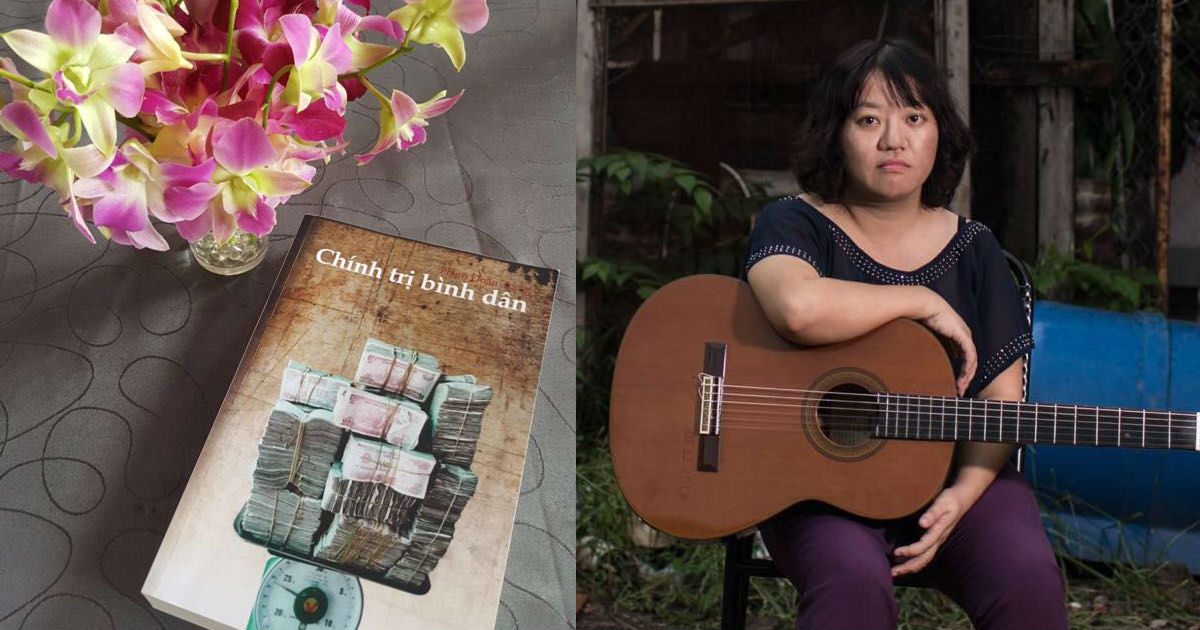
    Pham Doan Trang and her book “Politics for The Masses.” Photo: Luat Khoa Magazine.

    In theory, the Vietnamese Communist Party (VCP) has consistently trumpeted[4] its respect for the people’s right to freedom of speech, right to access to information, and press freedom, which were promised to its citizens under the Constitution. But in reality, the VCP has systematically harassed and detained independent journalists and activists [5], restricted access [6] to critical online newspapers and blogs, including The Vietnamese Magazine and Luat Khoa Magazine, and tracked down and intimidated [7] anyone who disagrees with its political doctrine.

    To the international community and admirers of her work, Doan Trang has only done what a journalist should be doing: report truthfully and inform the global audience about alleged human rights abuses by the VCP. What the Vietnamese government has been doing to silence opposition critics and dissidents like her only exposes the country’s serious violations of basic human rights and its lack of commitment to steadfastly protect those fundamental rights of its citizens.

    The homebound journeys of Vietnamese migrant workers

    Also at the beginning of October, heartrending photos and video footage of thousands of migrant workers rushing to return to their hometowns were widely shared on Vietnamese social media. These migrant workers decided to flee big cities en masse due to financial difficulties that affected them as a result of COVID control measures and the lack of help from the government. “We are tired,” one migrant worker said [8].

    On their way home, many of the laborers were seen breaking through the barricades at checkpoints set up by local authorities, with many beaten by security forces and some even seen begging the officers to let them through. According to the government, these methods were to prevent the wave of mass migrations that resulted from concerns about the transmission of the coronavirus. Despite facing many hurdles and uncertainty during their homebound journeys, those migrant workers hardly had any other choice.

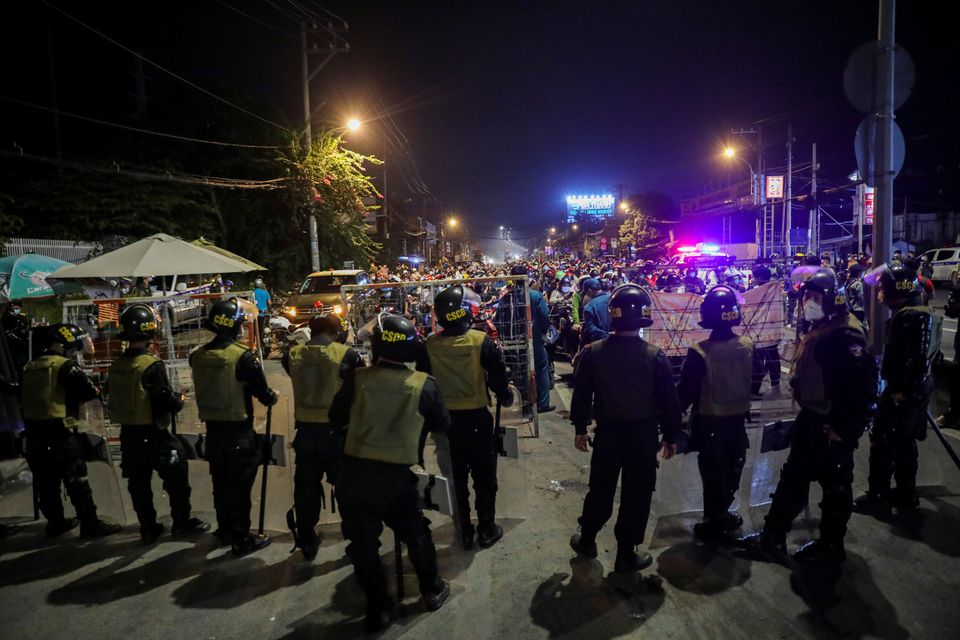
    Police and security forces guard a checkpoint in Ho Chi Minh City as people, who are mostly migrant workers, attempt to return to their hometowns. The photo was taken on September 30, 2021, by Reuters/ Stringer.

    This abrupt and large-scale migration wave was a result of Vietnam’s months-long abusive lockdown mandates [9], which largely excluded human rights matters from its protocols, and the negligence of the government regarding the well-being, and more importantly, the dignity of workers.

    As written in the Universal Declaration of Human Rights, the Vietnamese people in general, and migrant laborers in particular, have the right to freedom of movement and residence within their own country; they also have the right to be treated with dignity and to seek their own security of life. Those allegedly unlawful actions by the Vietnamese government are clearly blatant violations of universal human rights, which are ironically the key conditions that the VCP must meet to gain its seat at the UNHRC.

    Steward Rees, an advocacy associate with The 88 Project, a non-profit organization that promotes free speech in Vietnam, suggests [10] that if Vietnam is genuinely serious about contributing to the development of global human rights, unconditionally releasing Pham Doan Trang would be a good place to start.

    References:

    1. Membership of the Human Rights Council. (2020). United Nations Human Rights Council. https://www.ohchr.org/en/hrbodies/hrc/pages/membership.aspx
    2. Jamal, U. (2021, March 17). Should Vietnam become a member of the UN Human Rights Council? ASEAN Today. https://www.aseantoday.com/2021/03/should-vietnam-become-a-member-of-the-un-human-rights-council/
    3. VNA. (2021, March 15). Vietnam stands for election to UNHRC in 2023–2025 tenure. VietnamPlus. https://en.vietnamplus.vn/vietnam-stands-for-election-to-unhrc-in-20232025-tenure/197570.vnp
    4. VNA. (2021b, July 8). Press freedom in Vietnam – Undeniable objective reality. VietnamPlus. https://en.vietnamplus.vn/press-freedom-in-vietnam-undeniable-objective-reality/204350.vnp
    5. Database of persecuted activists in Vietnam. (n.d.). The 88 Project. Retrieved October 6, 2021, from https://the88project.org/database/
    6. Freedom House. (2021, September). Freedom on The Net 2021 (Vietnam). https://freedomhouse.org/country/vietnam/freedom-net/2021
    7. Human Rights Watch. (2021). World Report 2021: Vietnam. https://www.hrw.org/world-report/2021/country-chapters/vietnam
    8. Reuters. (2021, October 4). “We are tired”: Workers flee Vietnam’s largest city as long lockdown eases. Reuters. https://www.reuters.com/world/the-great-reboot/we-are-tired-workers-flee-vietnams-largest-city-long-lockdown-eases-2021-10-04/
    9. Nguyen, J. (2021, July 21). How The Latest Outbreak Reveals The Darker Side Of Vietnam’s Anti-Coronavirus Strategy. The Vietnamese Magazine. https://www.thevietnamese.org/2021/07/how-the-latest-outbreak-reveals-the-darker-side-of-vietnams-anti-coronavirus-strategy/
    10. Rees, S. (2021, October 5). Vietnamese rights activist marks first year in jail. Asia Times. https://asiatimes.com/2021/10/vietnamese-rights-activist-marks-first-year-in-jail/
  • Pham Doan Trang Is A Journalist, Her Profession Is Not A Crime

    Pham Doan Trang Is A Journalist, Her Profession Is Not A Crime

    As I am writing this beginning line, my mind is flooded with memories of Pham Doan Trang. I also realize that it has been almost seven years since I said goodbye to her before she left the United States to return to Vietnam. We had become friends and spent seven months together in the United States, and I have not seen her since December 2014. I also have not been able to contact her or speak with her on the phone since October 6, 2020. Vietnamese police arrested her near midnight that day in Saigon. My last text message to her was “Trang, answer me,” which I sent the night she was detained.

    Doan Trang can be classified as many things, depending on the person you speak with. She is a journalist, an activist, a teacher, a political person who opposes the Vietnamese Communist Party, a prominent figure of the democracy movement in Vietnam, and more. Yet, for me, Doan Trang is a friend, a very close friend, and that’s it. My only hope is to help set my friend free because she has not done anything wrong. She deserves to be free so that she can continue to write.

    And yet, sadly, her writing is precisely the reason that has put her in prison in Vietnam.

    In Vietnam, writing or producing verbal speech (YouTube, TikTok, etc.) can be a severe crime when you refuse to obey the government’s censorship system or self-censor on your own. If you look at the details of any political case in Vietnam, I guarantee that you will only find the alleged wrongdoings to be the uncensored writings and speeches produced by these defendants. It does not matter how the Vietnam government classifies their crimes as “abusing democratic rights” or “propagandizing against the state,” their crimes are always their writing and speech.

    For Doan Trang, I can also think of another aspect in which she has irritated the Vietnamese authorities even more. She was not just a journalist; she was also trying to encourage more people to write and be more aware of politics in Vietnam. I was one of the people she inspired to take writing as a profession and focus more on Vietnam’s human rights and political affairs.

    In my writing career, I have two people to be grateful for: my two co-founders of Legal Initiatives for Vietnam (LIV), Trinh Huu Long and Pham Doan Trang. If I had not met them in life, I don’t think I would have been confident enough to write in either Vietnamese or English, especially as a journalist.

    I left Vietnam and came to the United States when I was 12-years-old. I was not too young to think of myself as a native speaker in English, but I was not too old to be confident in my ability to write in Vietnamese either. However, after meeting Trinh Huu Long and Pham Doan Trang in 2014, they changed my life as I believed in their cause and decided to co-found LIV. Starting from that point, I began to promote human rights, democracy, and the rule of law in Vietnam through journalism. Trinh Huu Long may be the first teacher in journalism for me, but Doan Trang is the inspiration for my decision to change my career from law to journalism.

    Many people have asked me why I decided to quit my legal profession and started working for a non-profit organization that focuses on Vietnam. Maybe this career change was not advantageous for them and could be stepping down in life. But Doan Trang’s last words before she left the United States stuck with me throughout these years: “Every country needs a generation of young people who will sacrifice their lives to build a better society for others. If our generation refuses to take up this job for Vietnam, then who else will? Do we wait for the next generation to sacrifice for our country and choose an easier life now?”

    Doan Trang chose to take up this task to promote human rights in Vietnam, and she left America to go back to Vietnam, knowing that she would be imprisoned in the future. Then, for me, the decision of giving up my life as a litigation lawyer to write about human rights and political issues in Vietnam seemed to be a much easier job when I compared myself with Doan Trang.

    She’s inspired me, and we both have the same goal: to put Vietnam on the map for international audiences and encourage more Vietnamese people to care about human rights and democracy. To write about these issues should not be a crime in any nation because we only want to educate the public. What did we do so wrong that my friend Pham Doan Trang has spent one year incommunicado in Vietnam?

    The Vietnamese government cannot explain away Pham Doan Trang’s case or any political cases that have sent hundreds of dissidents to decades in jail. However, I hope the international community and foreign governments can speak up louder and be more explicit against this injustice.

    Journalism is not a crime; writing about politics and human rights is not a crime. Vietnam continues to suppress the free press and the freedom of speech much harder now, which is not an action the international community should condone. Please speak up for those imprisoned by the Vietnam government, such as Pham Doan Trang, because we are on the right side of history.

  • Statement On The First Anniversary Of The Arrest Of Journalist Pham Doan Trang

    Statement On The First Anniversary Of The Arrest Of Journalist Pham Doan Trang

    October 7, 2021 marks the first anniversary of the arrest of journalist Pham Doan Trang by the Vietnamese authorities. She was taken into custody that day and was subsequently charged with “conducting propaganda against the Socialist Republic of Vietnam” under Article 88 of 1999 Penal Code and “making, storing, spreading information, materials, items for the purpose of opposing the State of the Socialist Republic of Vietnam” under Article 117 of 2015 Penal Code.

    (Previous reports say she was arrested near midnight of October 6, 2020.)

    Since then, she has been held incommunicado. Neither family visitation nor legal representation is granted, her family and lawyer confirmed with LIV. In late August 2021, Hanoi’s Bureau of Security Investigation informed Doan Trang’s lawyer that the state’s investigation against her had concluded and that they had recommended a formal indictment based on Article 88, indicating that the Article 117 charge had been dropped. She now faces a possible 20-year prison sentence.

    As a journalist, Pham Doan Trang has dedicated her career to documenting and shedding light on the many atrocities and human rights violations committed by the Vietnamese government, despite the constant threat to her life and safety. Her work has been appreciated by Vietnamese people inside and outside of Vietnam, and has granted her international acclaim. She has also helped bring the attention of the global community towards the abuses of the Vietnamese Communist Party.

    Legal Initiatives for Vietnam, Luat Khoa Magazine, and The Vietnamese Magazine stand firm on our condemnation of the actions committed by the Vietnamese government against our co-founder, Pham Doan Trang. The constant harassment she faced from the state, coupled with her arrest and detention, are clear and blatant violations of her right to free speech. Likewise, they constitute a direct attack against the free press and independent unbiased journalism. In the words of our Co-director and Editor-in-Chief of The Vietnamese Magazine, Tran Quynh Vi, “A journalist should be allowed to report and a writer must be able to publish her books in every corner of this world. Journalism is not a crime and journalists should not be treated as criminals. The suppression of these basic human rights should be treated as a crime.”

    We once again call on our friends and colleagues to demand the unconditional and immediate release of Pham Doan Trang, as well as the dropping of all bogus criminal charges lobbed against her. We will continue to push for what is right and just until she is given her freedom.

    DOWNLOAD (PDF)

    Legal Initiatives for Vietnam

    Luat Khoa Magazine

    The Vietnamese Magazine

  • Journey To The West: Vietnamese Top Leaders’ Recent Vaccine Diplomacy

    Journey To The West: Vietnamese Top Leaders’ Recent Vaccine Diplomacy

    In the past month, newly-elected Vietnamese leaders have been seen “touring” Western countries, from Europe to the Americas. From the chairman of the National Assembly Vuong Dinh Hue, who went to Europe, to President Nguyen Xuan Phuc, who went to the United States and Cuba, both are parts of the “four pillars” (tứ trụ) leaders – those at the very top of the Vietnamese political system.

    Not only are they two of the most important leaders of Vietnam; they are also newly-elected: although they have re-sworn their terms in the office about three months ago in July, they have held power since April of this year. But that is a different topic for another day.

    In other words, these trips are important. National leaders who were just elected do not just go to other countries on official trips for no reason at all. Whatever they were doing in Western countries, it must have been calculated to yield significant political impact on their new term in office.

    But what exactly were they doing, or hoping to achieve from these trips?

    Despite what the Vietnamese state media is telling you about “comprehensively promoting economic and international cooperation,” the most important reason is very simple: getting more COVID vaccines for Vietnam. Is it to genuinely help the people back home to access vaccines or rather it is to save face after the government’s poor handling of the crisis in recent months?

    Vuong Dinh Hue in Europe

    On the occasion of the fifth session of the World Conference of Speakers of Parliament in Austria and the ongoing European Union – Vietnam Free Trade Agreement (EVFTA), Chairman Hue’s six-day trip to Europe in early September seems to serve multiple purposes as he mainly visited Austria, Belgium, and Finland.

    However, upon the conclusion of the trip, the most important highlights according to Vietnam’s state-controlled media were all COVID-related. In an article published by Vietnamnet about Hue’s achievements during the trip, it was all about him successfully bringing back foreign-donated COVID vaccines or equipment, with the exception of buying 50 million COVID vaccine doses HIPRA from Spain (this vaccine is still in trial, so the doses are not being delivered immediately to Vietnam). In an interview with a high-ranking diplomat accompanying Hue on the trip, more than half of Vietnam Plus’ article is about Hue asking the EU to send more vaccines to Vietnam. VTV coverage of his trip reflects similar patterns.

    Nguyen Xuan Phuc in the Americas

    While Vuong Dinh Hue might have had more reasons to go to Europe than Nguyen Xuan Phuc, the COVID vaccine agenda in Phuc’s trip to the Americas – the United States and Cuba – is significantly more obvious. According to the deputy minister of foreign affairs Dang Hoang Giang, President Phuc’s main objective in the United States was to give a speech in the United Nations General Assembly and to meet with pharmaceutical companies to talk about vaccine supplies. Additionally, Phuc’s trip to Cuba also coincided with Vietnam’s very recent approval of Cuba’s Abdala vaccine.

    Questions arise about Vietnam’s plan to battle COVID

    COVID vaccines being the priority of the two leaders’ foreign trips makes even more sense as we take into account the role of Prime Minister Pham Minh Chinh, another of the four pillars, who at the moment holds direct decision-making power over domestic COVID policy.

    As we know that the COVID pandemic is shaping the “four pillars” priorities during their new terms, I believe that there are two questions that arise.

    First, why did the Vietnamese government have to wait so long to actually conduct vaccine negotiations abroad?

    Vaccine diplomacy is good for a rising middle power like Vietnam, and the country had an advantage last year as it had an extremely low infection and mortality rates. While the mentioned leaders did not hold de-facto power until April 2021, they seemingly inherited little concrete plans from their predecessors about obtaining the vaccines or conducting early vaccine diplomacy. This is why the government’s abrupt fundraising plan for a “COVID vaccine fund” in June seems to reflect a lack of preparation at least and systematic governmental incompetence at most.

    This lack of preparedness eventually resulted in the newly-elected leaders literally begging for vaccines in foreign countries after Vietnam suffered from months of restrictions with the number of total cases approaching 1 million. Though the vaccination rates in Vietnam are getting better, and more vaccine supplies are always better for the people, it is definitely not a good look for these leaders and the government itself, despite what the state-controlled media tries to tell us.

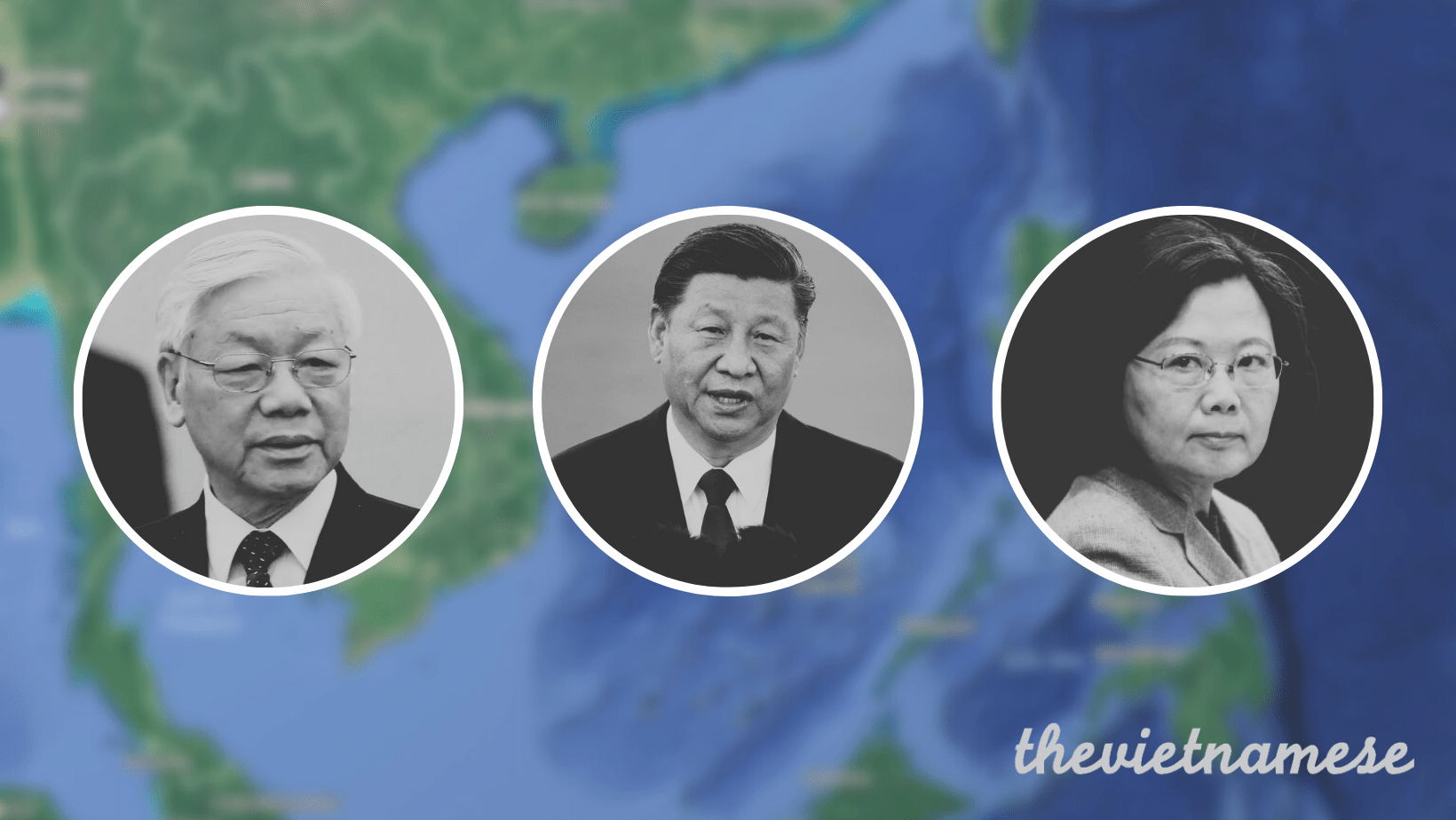
    Second, I believe that we should also ask the question: What is Nguyen Phu Trong, the remaining member of the “four pillars” elite club, and arguably the most powerful, contributing to the government’s COVID plans?

    He is the oldest and longest-serving of the “four pillars” leaders. He also held the Communist Party’s secretary-general position over the past decade. While Chinh is tasked with the heavy-lifting duty of curbing domestic infections and Hue and Phuc are busy abroad, Nguyen Phu Trong seems to remain hidden behind the curtain. His most recent public appearances include an official meeting with leaders from Laos and Cambodia and speeches about corruption.

    While this makes sense because, in theory, the leader of the Communist Party cannot interfere in the executive function of the government, we must ask ourselves if this is really the case, and whether secretary-general Trong is dodging responsibility for the most serious national and legitimacy crisis that the Communist Party and the Vietnamese government have faced in recent years.

    Citations

    Ban Thời Sự. (2021, September 12). Chuyến thăm châu Âu của Chủ tịch Quốc hội – Sự khẳng định về “một Quốc hội hành động, một Việt Nam chủ động, nỗ lực.”Báo Điện Tử VTV. https://vtv.vn/chinh-tri/chuyen-tham-chau-au-cua-chu-tich-quoc-hoi-su-khang-dinh-ve-mot-quoc-hoi-hanh-dong-mot-viet-nam-chu-dong-no-luc-20210912192101944.htm

    Bhatia, G., Dutta, P. K., & McClure, J. (2021, October 3). Vietnam: the latest coronavirus counts, charts and maps. Reuters. https://graphics.reuters.com/world-coronavirus-tracker-and-maps/countries-and-territories/vietnam/

    Hoang T. H. (2021, September 13). Kết quả quan trọng chuyến thăm các nước châu Âu của Chủ tịch Quốc hội. VietnamPlus. https://www.vietnamplus.vn/ket-qua-quan-trong-chuyen-tham-cac-nuoc-chau-au-cua-chu-tich-quoc-hoi/740268.vnp

    M.H. (2021a, September 10). Chuyến thăm châu Âu của Chủ tịch Quốc hội Vương Đình Huệ thể hiện chính sách đa dạng và độc lập của Việt Nam. Thông Tấn Xã Việt Nam. https://baotintuc.vn/thoi-su/chuyen-tham-chau-au-cua-chu-tich-quoc-hoi-vuong-dinh-hue-the-hien-chinh-sach-da-dang-va-doc-lap-cua-viet-nam-20210910194112584.htm

    Ministry of Health Online Portal. (2021, September 25). Thủ tướng chủ trì cuộc họp Ban Chỉ đạo Quốc gia phòng, chống dịch COVID-19. Ministry of Health. https://moh.gov.vn/tin-noi-bat/-/asset_publisher/3Yst7YhbkA5j/content/thu-tuong-chu-tri-cuoc-hop-ban-chi-ao-quoc-gia-phong-chong-dich-covid-19

    N.D. (2021b, September 16). Chủ tịch nước Nguyễn Xuân Phúc sẽ gặp doanh nghiệp sản xuất vắc xin của Mỹ. Tuổi Trẻ Online. https://tuoitre.vn/chu-tich-nuoc-nguyen-xuan-phuc-se-gap-doanh-nghiep-san-xuat-vac-xin-cua-my-20210916123224642.htm

    Nguyen, D. (2021, June 30). Vietnam’s Unprecedented COVID-19 Challenge Compounded By A Deficit Of Trust In The Government. The Vietnamese Magazine. https://www.thevietnamese.org/2021/06/vietnams-unprecedented-covid-19-challenge-compounded-by-a-deficit-of-trust-in-the-government/

    Reuters. (2021, September 18). Vietnam approves Abdala vaccine as president visits Cuba. https://www.reuters.com/world/asia-pacific/vietnam-approves-cubas-abdala-vaccine-use-against-covid-19-2021-09-18/

    T.H. (2021c, September 22). Ban Chỉ đạo được kiến nghị Bộ Chính trị xử lý cán bộ, đảng viên tham nhũng, tiêu cực. Vietnamnet. https://vietnamnet.vn/vn/thoi-su/chong-tham-nhung/ban-chi-dao-duoc-kien-nghi-bo-chinh-tri-xu-ly-can-bo-dang-vien-tham-nhung-tieu-cuc-777124.html

    T.H., & P.H. (2021d, September 12). 70 hoạt động dày đặc tại 3 nước Châu Âu của Chủ tịch Quốc hội Vương Đình Huệ. Vietnamnet. https://vietnamnet.vn/vn/thoi-su/quoc-hoi/70-hoat-dong-day-dac-tai-3-nuoc-chau-au-cua-chu-tich-quoc-hoi-vuong-dinh-hue-774198.html

    The Vietnamese Magazine. (2021, July 26). Vietnam Briefing: COVID-19 Crisis Deepening While The National Assembly Convened To Elect State Leadership. https://www.thevietnamese.org/2021/07/vietnam-briefing-covid-19-crisis-deepening-while-the-national-assembly-convened-to-elect-state-leadership/

    Thông Tấn Xã Việt Nam. (2021, September 26). Cuộc gặp cấp cao Việt Nam – Campuchia – Lào. Vietnamnet. https://vietnamnet.vn/vn/thoi-su/chinh-tri/cuoc-gap-cap-cao-viet-nam-campuchia-lao-778199.html

  • Vietnam Briefing: Vietnamese Public Outrage Over A Woman Being Coerced Into COVID-19 Testing; Migrant Workers Rush To Flee Ho Chi Minh City After Travel Restrictions Are Lifted

    Vietnam Briefing: Vietnamese Public Outrage Over A Woman Being Coerced Into COVID-19 Testing; Migrant Workers Rush To Flee Ho Chi Minh City After Travel Restrictions Are Lifted

    A Vietnamese woman coerced into COVID-19 testing infuriates the public

    • On September 28 video footage showing Vietnamese police and security forces breaking into a woman’s apartment in Vinh Phu Ward, Binh Duong Province to force her to get tested for COVID-19. As the video began to spread on social media in Vietnam it caused outrage among the public.
    • The woman, Hoang Thi Phuong Lan, was seen being forcibly escorted to the COVID-19 testing venue by two police officers who pinned her arms behind her; her child was heard crying in the background as the police led her away. According to Lan, she was teaching an online class at that time and had already tested negative for COVID-19 at home. Lan added that she did not want to take the test again in a crowded area, expressing concerns about potential virus transmission. Also in the video, an officer was heard criticizing her for her “lack of discipline” and threatening to fine her. She later tested negative for COVID-19.
    • On September 29 at a meeting with Lan, authorities of the ward where she lives made an apology for their inappropriate actions, citing “a sense of urgency” while they were “on a mission.” She rejected the apology, saying that the apprehension “harmed” her health and “offended” her dignity. Previously, Lan had posted the video of her coercion on Facebook, consulting the public for legal procedures to sue the alleged officers.
    • On the same day, an article regarding the incident was posted on Tuoi Tre Online, a state-owned news outlet, quoting a lawyer as saying that the local authorities’ actions were “in violation of human rights.” The article was briefly online before being removed from its webpage, with no official reason given for the removal.

    COVID-19 situation in Vietnam

    • As of October 3, 2021, Vietnam has recorded over 800,000 confirmed COVID-19 cases and more than 19,000 fatalities. Meanwhile, the country has seen a significant drop in coronavirus cases and related deaths with an average number of daily cases standing at around 7,400 for the past week, while the national average daily fatality rate has been 105. More than 10 percent of the Vietnamese population has been fully vaccinated.
    • Vietnam’s COVID-19 hotspot Ho Chi Minh City could have around 40 percent unrecorded cases of its official tally, reports Reuters. In an official report, positive rapid tests of around 150,000 people have not been accounted for in the tally of total confirmed cases in the city. Ho Chi Minh City has so far recorded over 370,000 coronavirus cases; if 150,000 more cases were included in the official number, it would reduce the city’s death rate from over 3.8 percent to 2.75 percent.
    • Ho Chi Minh City ends citywide virus lockdown after 3 months of restrictions on movements, reports Associated Press. Beginning on October 1, the city’s residents will be able to leave their homes, while restaurants will be allowed to offer takeaway services and other essential businesses can reopen. However, social distancing measures will still be enforced, schools and public transport remain closed, and gatherings of more than 10 people outside are banned.
    • At the same time, thousands of migrant workers were seen fleeing Ho Chi Minh City after COVID-19 lockdown in the city was lifted, reports Nikkei Asia. Long and harsh lockdown measures have taken a toll on Vietnamese migrant workers’ health and their livelihoods. Many of the laborers were required to sleep in factories to maintain production output while others were left jobless and forced to live off their savings. Relaxed restrictions allow factories in industrial parks, export processing zones and high-tech parks to resume their operations, on the condition that all workers must be fully vaccinated.
    • As migrant workers rushed to leave Ho Chi Minh City for home, scenes of heavy congestion and clashes between laborers and police had been seen at several checkpoints in the city’s suburbs, reports RFA. Multiple videos circulated on social media showing that many workers broke through barricades and fought with police, while others knelt in the street and pleaded with the police to let them through as they had run out of money to stay in the city. State-run media in Vietnam has largely ignored the disturbing situation of migrant workers; on the other hand, they have been reporting on the local authorities’ timely assistance in helping people return to their hometowns.
    • Vietnam to miss GDP target this year as COVID-19 squeezes its economy, writes Nikkei Asia: “The growth figure for the third quarter, anticipated by the end of this month, is being widely projected at under 2% — worse than the same quarter of 2020. A wave of infections and a strict COVID-19 lockdown squeezed the southern commercial hub of Ho Chi Minh City, and experts warn the impact could weigh on the economy beyond the third quarter unless the country manages to accelerate vaccinations.”
    • Vietnam received an additional 1.5 million COVID-19 vaccine doses from the United States, reports VnExpress: “A batch of 1,499,940 million Pfizer-BioNTech Covid-19 vaccine doses has been delivered to Vietnam by the U.S. through global vaccine access mechanism Covax. The new batch followed three previous vaccine donations from the U.S. to Vietnam through Covax, totalling to 7.5 million doses so far, according to a Saturday press release by the U.S. Embassy in Hanoi.”
    • Vietnam and Russia reached an agreement on COVID-19 Sputnik V vaccine supplies, according to the Vietnamese ambassador to Moscow. Previously, Vietnam had domestically produced a test batch of Russia’s Sputnik V and expected to receive another 20 million doses from Russia this year.
    • On September 29, one million doses of the Chinese-made Hayat-Vax COVID-19 vaccine also arrived in Hanoi, reports VnExpress. The vaccines’ arrival, which marks the first Hayat-Vax doses to land in Vietnam, belongs to a commercial contract of 30 million doses signed by Vietnamese pharmaceutical firm Vimedimex.

    British warship stops in Vietnam after transiting through the Taiwan Strait

    RFA reports:

    • British Royal Navy frigate HMS Richmond has arrived in Vietnam on a four-day friendly visit after transiting through the Taiwan Strait, which angered China. On September 27, China condemned the frigate’s passage through the Taiwan Strait, saying the United Kingdom is “carrying out a meaningless display of presence with an insidious intention.”
    • The British Royal Navy posted a picture of the frigate docked in Cam Ranh Bay on Friday, followed by a video on its Twitter page saying in Vietnamese: “Hello Vietnam! So proud for Richmond to have an opportunity to visit your beautiful country.”
    • A statement from the British Embassy in Hanoi said, “the ship’s presence underlines the U.K.’s commitment to the Indo-Pacific region, at the heart of which lies the U.K.’s partnership with Vietnam.” It also said the HMS Richmond and Vietnamese partners will conduct “bilateral cooperation activities,” without giving further details.

    Sea rises due to human-made climate crisis threaten Vietnam’s low lying areas

    The Guardian reports:

    “Like much of the region, Vietnam is threatened by flooding and sea rises caused by the human-made climate crisis. More than 15% of the country is below five metres above sea level – compared with just 4.2% in the UK. Of the world’s larger mainland nations, only the Netherlands has more low-lying land.”


    Vietnam Insight: Learn more about Vietnam

    Trans-Pacific Partner Membership And The Love Triangle Of Vietnam – Taiwan – China

    The Vietnamese Magazine/ Tan Trung Nguyen Quoc/ September 30

    “A couple of days after China’s and Taiwan’s announcements on the CPTPP, President Xi Jinping had a phone call with General Secretary Nguyen Phu Trong. This action raised some questions on whether Vietnam would act as an agent of China inside the CPTPP to prevent the accession effort of Taiwan.

    If it has to, the Vietnamese government is very unlikely to side with Taiwan; no country has ever dared to, including the United States.

    But upon understanding the socioeconomic situation between Vietnam, Taiwan, and China, it is also reasonable to argue that Vietnam gains nothing by explicitly objecting to Taiwan’s membership in the CPTPP. The economic ties between Taiwan and Vietnam are too significant to be sacrificed.”

    In Rare Three-Party Conclave, Vietnam Pushes Back Against Growing Chinese Influence

    The Diplomat/ Sebastian Strangio/ September 28

    “The unusual meeting of party heads speaks to the rising concern in Hanoi that its two erstwhile clients are being drawn slowly into China’s widening orbit. In recent years, Laos and Cambodia have become magnets for Chinese capital and business people of varying degrees of probity, who have established interlocking relationships with the two countries’ respective ruling elites. This has been franked by increasingly close ties with the Chinese government, which have lavished Cambodia and Laos with “no-strings” financing and infrastructure developments.”

    What Vietnam’s President Sought to Achieve at the 76th UNGA

    The Diplomat/ Le Dinh Tinh/ September 28

    “Phuc goes to New York this time to set the stage for the wrapping up of Vietnam’s 2020-2021 tenure as a non-permanent member of the U.N. Security Council. Vietnam’s membership will be remembered for its heightened focus on critical topics such as protection of civilians and essential infrastructure works in conflict areas, the safeguarding of women and children during armed conflicts, the settlement of bombs and mines left by war, U.N. peacekeeping operations, climate change, and peace and security challenges.”

    Vietnam bids to woo Cambodia, Laos from China

    Asia Times/ David Hutt/ September 27

    “Most Southeast Asian countries are now well-rehearsed in the art of geopolitical hedging, particularly by trying to play the United States and China off against one another and never taking sides in order to extract ever greater economic and political benefits from both.

    In a similar fashion, Laos and Cambodia are now also hedging between their historic ally Vietnam and their new superpower partner China.”

    Webinar: Reviewing the First Six Months of Prime Minister Pham Minh Chinh

    ISEAS Yusof Ishak Institute

    Date: October 06 2021

    Time (GMT+8): 10:00 am – 11:15 am

    Perspectives: Thinking the unthinkable about China’s CPTPP application

    VnExpress/ Pham Quang Vinh/ September 26

    “As for CPTPP members, they need to carefully re-examine their goals and interests in the pact’s original give-and-take package, in return for having accepted the high standards insisted on by the U.S. They should also consider what their likely benefits will be in terms of competitive advantages, market diversification and reducing dependency on one source.

    This is a very critical issue for Vietnam as a member of the CPTPP and RCEP. It requires the nation to be very cautious in reviewing its relationships with all partners to ensure its interest, independence and autonomy.”

    Perspectives: Vietnam should walk the talk in climate actions

    VnExpress/ Nguyen Dang Anh Thi/ September 30

    “The Vietnamese people have already been experiencing pain from climate change impacts. Cutting GHG emissions in the country must be achieved through practical and responsible climate actions using the best available resources.

    There is no hope of international support for Vietnam to deal with climate change if its policymakers don’t walk the talk of sustainability.”

  • Trans-Pacific Partner Membership And The Love Triangle Of Vietnam – Taiwan – China

    Trans-Pacific Partner Membership And The Love Triangle Of Vietnam – Taiwan – China

    A discussion with some students in my Theory on State and Law class back in 2020 led me to a surprising revelation: over 50 percent of them have visited Taiwan. They could remember and name their favourite tourist attractions, either Sun Moon Lake near Taichung, the “Spirited Away” Jiufen to the country’s northwest, or the vibrant streets of Ximending in Taipei. For them, Taiwan seemed to be a lively place – an exemplar of modernity, politeness, and peacefulness.

    Not only that, many of them had paid a visit to the Chiang Kai-Shek Memorial Hall and took pictures with his infamous Lincoln-like statue. Most unexpectedly, they knew that Taiwan was not China, or at least Mainland China. One student mentioned that her Chinese visa was useless for visiting Taiwan, and she suggested that the Taiwanese visa application process was more straightforward. And Chiang Kai-Shek, as they described, could be someone akin to their “Uncle Ho” in Vietnam.

    For a country where the youth hardly know the Vietnamese heads of state – the president, the prime minister, or the general secretary – their knowledge of Taiwan was astonishing.

    ***

    I have come to realize that the depiction of Taiwan in Vietnam has changed dramatically over the past 20 years.

    During the 90s, Taiwan was infamously known in Vietnam for the poor and old Taiwanese farmers who could not get married in their hometowns, wandering the most disenfranchised areas of Vietnam’s rural areas to look for brides.

    Nowadays, Taiwan is considered a cultural, economic, and intellectual hub of the region – a place worth living in, especially in the eyes of Vietnamese youth. What has caused this distinct shift in perspective? Perhaps it is the billions of US dollars worth of investments pouring into Vietnam from Taiwan since the 1990s.

    Dubbed by Professor Samuel C. Y. Ku as the “Southward Policy” of Taiwan, at the beginning of 1993, Taiwanese presidents started to privately visit and form business ties with Southeast Asian countries that had no formal diplomatic relations with the Republic of China (ROC) before.

    The objectives on the surface were clear: (1) expanding two-way economic, trade, and investment relations with these countries; and (2) expanding the production size of Taiwanese enterprises, while at the same time reducing the trade and human resource dependence on mainland China.

    More importantly, Taiwanese leadership hoped that such a close connection between economies would strengthen substantive relations between governments, allowing them to participate in other international and regional commercial and political activities.

    In Vietnam, Taiwan succeeded in certain aspects. Taiwan has a decisive say in the contemporary economic stability of Vietnam. Taiwanese enterprises ownroughly 2,500 projects, and they have invested over US$30 billion in the country. Bilateral trade between Vietnam and Taiwan has just exceeded US$16 billion, and most of Vietnam’s exported labor is directed towards Taiwan. Any political instability or economic issues that are not in favor of this arrangement will impact Vietnam’s performance.

    On the other hand, China continues to be seen as a taboo in Vietnamese cultural and intellectual discussions. The recent promotion of the Chinese propaganda military drama named Ace Troops (Chinese: 王牌部队; Vietnamese: Vương bài) has again sparked debates and serious boycotts in Vietnam. Focusing on stories about the establishment and the development of the Chinese People’s Liberation Army, Ace Troops glorifies the Sino-Vietnam War of 1979 and the continuous border/maritime skirmishes during the 80s. By praising the conflicts that led to hundreds of thousands of Vietnamese casualties as heroic and patriotic wars, it can be seen why this drama infuriates China’s southern neighbour.

    Even though Taiwan has the same claims as to the People’s Republic of China regarding the South China Sea, it appears to be a much milder, friendlier, and negotiable partner to the Vietnamese public.

    ***

    One week after China expressed its desire to be a part of the Comprehensive and Progressive Agreement for Trans-Pacific Partnership (CPTPP), Taiwan also formally applied for a seat in this organisation.

    Taiwan has reasons to hasten its membership in this organization. If it fails to secure a seat in time, it would have to go through the consultation process with all the signatories, which would, at this point, include China, and then protect its interests before a CPTPP Council where Beijing would already hold a seat.

    Taiwan had experienced this kind of stubbornness and tantrum-throwing behaviour of China when it dealt with the WTO. During the 2000s, Beijing had repeatedly refused to attend any dispute resolution proceedings between themselves and Taiwan, justifying this on the grounds that these issues were solely the internal affairs of China.

    A couple of days after China’s and Taiwan’s announcements on the CPTPP, President Xi Jinping had a phone call with General Secretary Nguyen Phu Trong. This action raised some questions on whether Vietnam would act as an agent of China inside the CPTPP to prevent the accession effort of Taiwan.

    If it has to, the Vietnamese government is very unlikely to side with Taiwan; no country has ever dared to, including the United States.

    But upon understanding the socioeconomic situation between Vietnam, Taiwan, and China, it is also reasonable to argue that Vietnam gains nothing by explicitly objecting to Taiwan’s membership in the CPTPP. The economic ties between Taiwan and Vietnam are too significant to be sacrificed.

    Moreover, such an effort requires fierce political commitment and diplomatic loyalty to mainland China, and Vietnam rarely exhibits this in the international arena. Recently, at the 48th session of the Human Rights Council, a declaration of 65 countries denounced the interference in China’s internal affairs by several actors under the pretext of human rights. Vietnam, however, did not participate. Vietnam’s action is a bit cold for two socialist neighbouring countries that claim to have a golden friendship.

    Yet, this action illustrates one essential facet of Vietnam’s diplomatic playbook: pragmatism. Taiwan has been a beneficial friend to the Vietnamese government and remains hopeful for the country’s economic recovery and internal stability after the pandemic.