Tag: #wp

  • Religion Bulletin – May 2020

    The Report on Religious Freedom in Vietnam is published on the second Monday of each month. If you would like to contribute information to the report, please send it to tongiao@luatkhoa.org or editor@thevietnamese.org.

    This report will provide information on other legal provisions outside of the Code on Religion that also limit the right to freely practice religion in Vietnam, such as the regulations regarding publication as stated in the section [The Government’s Hand]. As in previous reports, you can read prominent news regarding religious freedom in [Religion 360°], in which a few followers of Falun Gong were fined when they passed out flyers that the government deemed to be illegal. [On This Day] retells the story of Vietnamese Montagnards escaping to Cambodia in 2015. Under [Did You Know?], you can also learn about the dramatic decrease of the number of people who follow Hoa Hao Buddhism and Cao Daism during the past 10 years.

    The Government’s Hand

    Imagine that you were in a photocopy shop to print some flyers about religion such as advising people to believe in Christ, or even simpler, promoting fasting and meditation under a religion that you trust.

    You have printed the flyers and will pass them out to your relatives, neighbors, friends, and even strangers who sit in the park. A few minutes later, the police come and detain you. They even take you to the police station to interrogate you, and if you voluntarily performed those acts, the police will confiscate all of your flyers and cite you for an administrative violation.

    That is what has happened to Falun Gong proselytizers who were arrested and fined when they passed out flyers that the government had not approved. From March to May 2020, there were at least 22 Falun Gong adherents who were arrested because they possessed and passed out flyers promoting their religion (find the detailed story in the [Religion 360°] section).

    This is the method that the Vietnamese government uses to control the publishing of religious materials.

    Regulations Regarding Publication under Vietnam Laws Contributed to a Tightening of the Freedom of Religion

    Under the Law on Publication 2012, Vietnam does not allow independent publishers to register and operate. Publication can only be done by those who hold permits that were issued to governmental departments, civil society organizations, and associations controlled by the Vietnamese Communist Party.

    In practice, publishing houses in Vietnam often obtain permits for book stores and book companies. Even though we can say that publication activities are getting easier in Vietnam, it is not the same situation with sensitive topics such as politics and religion.

    The Law on Publication 2012 did try to open up the regulations about providing permits for materials that are “given, gifted, or lent” (Article 4), which were not clarified in the previous code of 2004.

    The materials that were being deemed as “given, gifted, or lent ” all had to be permitted to be published. If not, the publisher could be fined for violating Article 27 for publishing and disseminating materials that were not allowed under Decree 159/2013/NĐ-CP.

    The Law on Publication 2012 also stipulates that the government forbids “publishing, printing, and disseminating” any materials that are deemed to be “superstitious” (Article 10). At the same time, only governmental departments regulating culture and religion may decide whether a material is superstitious or not. As a result, the label of “superstitious” is being applied to almost all of the new religions and beliefs in Vietnam.

    Concurrently, the government also regulated that the Committee for Religious Affairs has the sole authority to “publish Bibles, prayer books and mantras, religious teachings, fiction and religious readings produced by religions that are allowed to be practiced in Vietnam”.

    Individuals Do Not Have the Right to Publish Religious Materials

    The recent arrests and administrative fines given to Falun Gong proselytizers have been widely published in the state-owned media and serve as a warning to individual citizens that they do not have the right to distribute materials without the state’s consent, especially religious materials.

    On the other hand, the Law on Publication 2012 also stipulates that besides governmental departments and organizations belonging to the Communist Party, only businesses and entrepreneurs may apply for permits to distribute published materials (Article 36). Distribution also includes materials that could be “given, gifted, or lent”. This regulation allows the government to administratively fine individuals who distribute materials, including even those that were already permitted.

    Therefore, if an individual person wants to print, sell, or just distribute freely a published material, then he or she could be fined administratively or could be prosecuted under the Penal Code. For example, the government could deem such material as information that opposes the regime.

    Facing strict government rules and regulations regarding publishing, the new religions are continuously finding different ways to publicize their beliefs while being classified as “cults” by the regime.

    Being forbidden to distribute materials, new religious groups have found other ways to disseminate their beliefs, with social media being the most common method.

    Phap Mon Dieu Am (in Vietnamese), a new religion founded by Master Ruma, has been rising in popularity over the past few years, and has a YouTube channel with more than 24,000 subscribers and over 9 million views. People who want to follow Master Ruma can fill in an online form and wait for a “messenger” of this sect to meet with them in person and instruct them on how to practice their religion.

    [Religion 360°]

    At Least 22 Falun Gong Proselytizers Arrested

    From March to May 2020, there were at least 22 Falun Gong proselytizers detained and fined administratively in 12 provinces and cities throughout Vietnam.

    These people were arrested because they possessed flyers with information about Falun Gong and also content accusing the Chinese government of suppressing this spiritual movement.

    There was an increase in the number of arrests after the Committee for Religious Affairs announced to all provinces and cities that “cults and extremist religions” have taken advantage of COVID-19 to promote their beliefs.

    However, a few Falun Gong practitioners that we interviewed told us that practicing and promoting Falun Gong were just a voluntary act.

    According to news reports in Vietnam, these arrests were made because the people had passed out flyers without government consent, according to the Decree involving news media and publication.

    After they were arrested, each person had to pay a fine according to their own conduct and based on the flyers and the other materials that they had used to promote their beliefs. In Ha Tinh Province, a man was fined 25 million dong when he was found to be in possession of several boxes of Falun Gong materials. In Vinh Long Province, a 41-year-old woman was fined 4 million dong after she was found to have passed out four books containing information on Falun Gong at a bank.

    The central government of Vietnam has yet to decide on whether to  consider Falun Gong as a religion in the country. However, in a few provinces, the local authorities have already deemed Falun Gong a cult and so not authorized to practice in Vietnam.

    There are still no statistics specifying the number of Falun Gong proselytizers in Vietnam, but some of the members believe that their population is rising.

    However, the news media in Vietnam describes the Falun Gong with skepticism, asserting that the Falun Gong movement is illegal and also against science so the media  continues to publish propaganda to discourage people from following it.

    The number of Falun Gong adherents arrested in provinces and cities:

    Province Name Number of arrests
    1 Dien Bien 1
    2 Quang Ninh 1
    3 Thai Binh 1
    4 Nghe An 4
    5 Ha Tinh 5
    6 Quang Ngai 2
    7 Binh Thuan 1
    8 Ho Chi Minh City 1
    9 Binh Phuoc 2
    10 Dong Nai 2
    11 Vinh Long 1
    12 Ba Ria – Vung Tau 1
    Estimated Total 22

    The Government Refusal to Issue a Passport to a Catholic Priest

    On May 29, 2020, Father Nguyen Van Toan wrote on his Facebook page that he received a notice from the government rejecting his application for a new passport.

    Father Toan stated that he accidentally found out that the government refused to provide him with a passport because the Hanoi police accused him of conducting activities against the State.

    Father Nguyen Van Toan is a 40-year-old priest of the Redemptorist Church, Thai Ha Parish, Hanoi. He often criticized the government publicly at his masses and he was once arrested when he protested in Hanoi.

    The Family of a Prisoner of Conscience Ho Duc Hoa: The Nam Ha Prison Reduced Hoa’s Prayer Time to just Once a Week

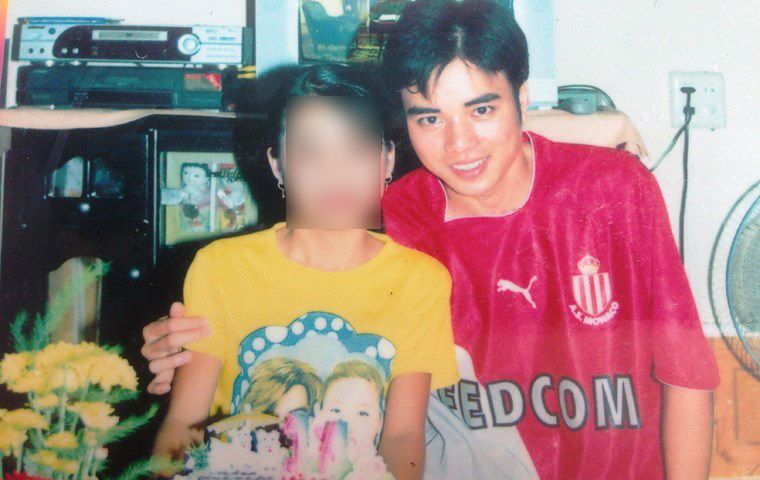
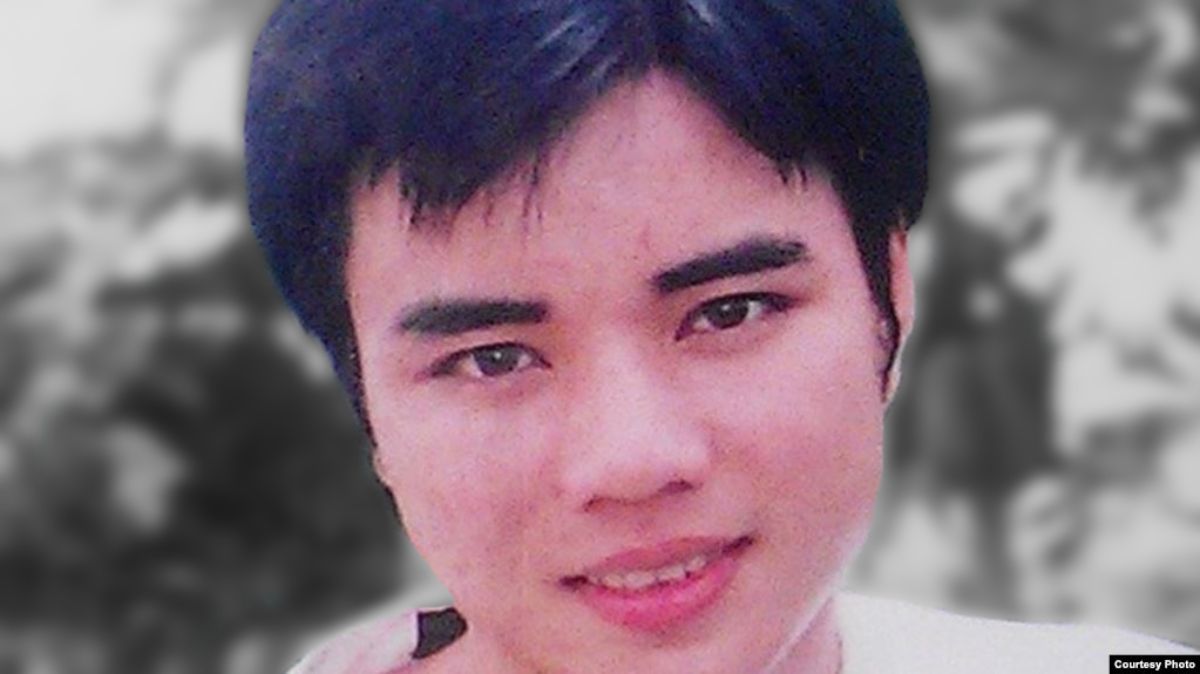
    The Association to Protect Freedom of Religion said on May 25, 2020, that the family of prisoner of conscience Ho Duc Hoa informed them during a telephone call from prison that the Nam Ha Prison in Ha Nam Province, had reduced his time to read his Bible and pray. He is now only allowed to pray once a week, compared to before when the prison allowed him to pray every day.

    Ho Duc Hoa, 46, was tried in the beginning of 2013 with 13 other young activists who were either Catholics or Protestants for subversion against the state. While his co-defendants were sentenced to between two and four years in prison, Ho Duc Hoa was handed a harsh 13-year sentence.

    RFA reported in August 2019 that Ho Duc Hoa’s family received a letter from him in which he complained about his deteriorating health,  complaining about a stomach problem, an enlarged intestine, as well as  high blood pressure, hemorrhoids, and also vertebrae problems. Between May and August 2019, Nam Ha Prison denied Ho Duc Hoa’s request to go to a hospital for a medical examination.

    Restrictions on the time to read the Bible or other religious books are often reported by prisoners of conscience in Vietnam.

    [On This Day]

    Vietnamese Montagnards Who Fled Vietnam to Cambodia Rejected for Political Asylum

    In May 2015, the representative of the Vietnam Border Defence Force in Dak Lak Province confirmed that many Montagnards had fled from the Central Highlands to Cambodia.

    Colonel Nguyen Luong Hoa, the political commissar of the Border Defence Force in Dak Lak Province, claimed that Vietnamese Montagnards were being lured to Cambodia to fight against the Vietnamese government.

    According to human rights organizations LICADHO and Human Rights Watch, in March 2015, the Cambodian government confirmed that it had recognized 13 Montagnards from Vietnam as political asylum seekers at the end of 2014. However, Cambodia rejected about 100 other Montagnards who also fled from Vietnam,  including 54 people who were forced to return to Vietnam during the early months of 2015.

    In January 2015, a representative from a local human rights organization in Cambodia informed AFP that about 13 Montagnards crossed the border from Vietnam. These refugees stated that they ran away from Vietnam to Cambodia because they were fleeing oppression at home.

    In May 2015, a group representing Ratanakiri Province of Cambodia, which shares a border with Gia Lai Province of Vietnam, traveled to discuss some issues with the provincial governments of Central Highlands. During this meeting, the two sides also talked about regulating the number of Montagnards fleeing from Vietnam to Cambodia.

    The Montagnards are an indigenous people living mainly in the Central Highlands among  20 ethnicities. Beginning in the 2000s, Montagnards continuously crossed borders to flee Vietnam and escaped to Cambodia and Thailand for political asylum.

    These Vietnamese refugees stated that they were suffering a lot of oppression from the government with regard to their religious rights, land rights, poverty and racial discrimination. If they raised their voices to object, they would be persecuted. However, the Vietnamese government said that the refugees fled the country because they were lured into an anti-state scheme or because of economic hardship.

    The Central Highlands is a dangerous mountainous area and so the government has tried to isolate the people in that region from the rest of the population in the country. Until this day, independent journalists and human rights defenders could hardly contact the people who live in the Central Highlands due to these above-stated reasons.

    [Did You Know?]

    Cao Daism and Hoa Hao Buddhism Have A Lot Less Followers Nowadays

    Both of these religions were established during the time the French colonized the south of Vietnam, and they attracted many followers for decades up until 1975.

    Cao Daism Suffered a 76 Percent Decline in Followers During the Last 10 Years

    In 1930, the Cao Dai religion had about 500,000 to 1 million followers when the entire population of the south of Vietnam was about 4 to 4.5 million, according to the records collected by Jayne Susan Werner and sent to the Governor-General of French Indochina on December 14, 1934.

    According to the Committee for Religious Affairs, from 1930 to 1975, followers of the Cao Dai religion grew steadily to about 2 million.

    However, based on  an article in the Los Angeles Times, probably using information collected prior to 1975, there may be as many as 4 million Cao Dai followers. This number seems to be correct if one looks at all of the Cao Dai temples from the south to the central provinces of Vietnam.

    Yet in 2009, the Committee for Religious Affairs estimated that Cao Dai followers in Vietnam numbered only 2.4 million people.

    From the census in 2019, the population of Cao Dai followers has fallen to 556,234 people,  a 76 percent reduction since 2009.

    Hoa Hao Buddhism Suffered a 31 Percent Reduction of Followers in the Last Decade

    Just like Cao Daism, Hoa Hao Buddhism has suffered a reduction of the number of its followers during the last 10 years.

    In 2009, the Bureau for Religious Affairs of Can Tho City confirmed that there were 1.43 million Hoa Hao Buddhists in Vietnam. However, in 2019, the number of Hoa Hao Buddhists had fallen to 983,079 people, a 31 percent drop from the year 2009.

    Before 1975, there were 2 million Hoa Hao Buddhists living in the west of South Vietnam, concentrated in An Giang and Chau Doc provinces.

    What Caused the Reduction of Followers?

    We could not find any report that offered reasons relating to the drastic reduction of the followers for these two religions. We believe the reason for this reduction could be as follows:

    1. The harsh government control over these two religions

    After 1975, the new regime tried to erase these two religions but it was forced to recognize Cao Daism and Hoa Hao Buddhism after it failed to eradicate them. The government recognized Cao Daism in 1997 and Hoa Hao Buddhism in 1999.

    The independent followers of these two religions often stated that the regime only allowed the followers that  obeyed  government instructions and controls to become the leaders of the two “official” and “recognized” associations for Cao Daism and Hoa Hao Buddhism.

    After 1975, the activities of these two major religions were significantly restricted  by the government. Followers could no longer conduct charity work and education and missionary work were also forbidden, preventing the two religions from being practiced as freely as before.

    More than that, the government implemented strict punishment of any followers who opposed the government’s handling of religions, such as applying the Penal Code or suppressing and harassing critics on a daily basis.

    After the government recognized these two religions at the end of the 1990s, it also clarified how it would keep them from expanding. The religious practices of these two religions were once celebrated widely in the south of Vietnam, but are now restricted locally with strict controls by the government.

    2. Young People Distance Themselves from Religion

    The education system in Vietnam has always discouraged the discussion of religions and religious activities in society.

    Educational books often teach children about loyalty to the Communist Party and to follow the law, but they rarely discuss traditional values and religious beliefs within the community.

    The mass media is controlled by the State and newspapers, television and radio also do not discuss religion.

    We do not have statistics on the number of followers of these two religions during different times, but the current government policy is to try to stop them from developing through the enactment of a numbers of drastic rules and regulations to control religious practices.

    3. Identification Cards Are the Only Method for Counting Followers of Specific Religions

    All identification cards in Vietnam specify a person’s religious affiliation.

    In reality, to reduce potential problems involving religion, such as being discriminated against in recruitment to some governmental departments or joining the Communist Party, many families may declare that they are not members of any religion even though they actually follow a religion.

    On the other hand, some police officers put down “no religion” when processing identification cards for people, possibly  to reduce the number of followers of a religion or to reduce its influence.

  • Religion Bulletin – April 2020

    The Report on Religious Freedom in Vietnam is published on the first Monday of each month. If you would like to contribute information to the report, please send it to tongiao@luatkhoa.org or editor@thevietnamese.org.

    April’s [Religion 360°] will cover the month’s main religious developments, including the arrest of three ethnic Bahnar followers of the Ha Mon religion, the arrests of numerous Falun Gong proselytizers, and a number of other stories. We look back at the April 2004 protests over land and religious freedom in the Central Highlands in [On This Day]. And finally, [Did you know?] will discuss the custom of ancestral worship, which was almost wiped out after 1975.

    Religion 360°

    Three ethnic Bahnar arrested in March 2020 with no connection to FULRO

    According to Health & Life newspaper, three ethnic Bahnar, Ju,56, Lup, 50, and Kunh, 32 were arrested by Gia Lai provincial police on March 19, 2020, in a matter unrelated to FULRO (Front United Front for the Liberation of Oppressed Races) operations.

    Kunh revealed to investigators that he was not directed or supported by FULRO forces, and that he had only kept in contact with an individual named Y Khoet, who was a follower of the Ha Mon religion in Kontum Province.

    According to the above article, beginning in July 2012, the three arrested men would hide deep in the jungle during the day and then sneak into the village at night to talk to young people about the Ha Mon religion. On March 19, 2020, police arranged the capture of all three.

    (From left) Lup and Ju were arrested by Gia Lai provincial police on March 19, 2020. Source: D.A.

    Many arrested for propagating Falun Gong after the Government Committee for Religious Affairs warned that “new religions may take advantage of the COVID-19 pandemic”

    At the beginning of April, the website of the Government Committee for Religious Affairs announced its request to all provinces and cities to be on-guard for and prevent “extremist religious sects” from taking advantage of the COVID-19 pandemic to “assemble and incite large gatherings of people”.

    The announcement also stated that provinces and cities needed to prevent people from transforming their residences into houses of worship, as well as organizing illegal collections of money for religious sects.

    According to Procuracy, the online newspaper of the Supreme People’s Procuracy, at the end of March and beginning of April, Ha Tinh provincial police arrested and administratively punished four women and one man for illegally propagating Falun Gong as they distributed masks and religious pamphlets to residents.

    Nghe An Newspaper also reported that three women were arrested and administratively punished at the end of March for illegally propagating Falun Gong.

    Two of the five individuals arrested by Ha Tinh provincial police at the beginning of April 2020 for illegally propagating Falun Gong in Ha Tinh. Source: Procuracy Newspaper.

    In mid-April, provinces and cities made announcements regarding the supervision and prevention of activities by new religious sects, which they referred to as “strange religions” and “heresies” on their websites.

    Similar to Khanh Hoa Province, Dak Lak provincial authorities reported that the “strange religions” in the region were: the “Supreme Master Ching Hai organization, Falun Gong, and the activities of extremist Protestant religious sects (such as the “Church of God and Heavenly Mother”, “Saving Grace”, “The Graceful Path”, “New Heaven and Earth” and otheres).” Besides these new religious groups, Binh Thuan provincial authorities also identified a number of others, such as the Buddhists of Miraculous Sound, Religion of Consistence, and the Supreme Order of Dragon & Flower.

    Authorities of Hoa Binh Province in northern Vietnam announced that they are assigning the provincial Bureau of Internal Affairs the task of determining which illegal religious activities are those of “religious groups”, “assemblies”, and “religious organizations”.

    Venerable Thich Tue Sy to lead the Unified Buddhist Church of Vietnam

    On April 18, the Unified Buddhist Church of Vietnam announced the decision of the former Fifth Patriarch Thich Quang Do regarding the transfer of full church leadership powers to the Venerable Thich Tue Sy.

    According to this decision, once Venerable Thich Tue Sy meets the requirements, he will convene an extraordinary assembly on behalf of the Patriarchal Institute to elect all positions in Hoa Dao Pagoda.

    The Venerable Thich Quang Do signed the decision on May 24, 2019, before he passed away February 22, 2020. The signing ceremony was recorded, and Venerable Thich Tue Sy was present with many others.

    Venerable Thich Tue Sy

    Birth name: Pham Van Thuong

    Birthdate: February 15, 1943

    Entered monastery: 1950

    Age: 77
    Native region: Quang Binh Province

    According to the Lotus Library, Venerable Thich Tue Sy is an erudite scholar of philosophy and Buddhism. He is fluent in many foreign languages and has contributed to the translation of many foreign books.

    Before 1975, he participated in teaching and management at Van Hanh University. In 1984, he was arrested along with other monks while protecting the university after the authorities confiscated the property to turn it into Su Pham University. He was imprisoned until 1988, when he was sentenced to death for attempting to overthrow the state and establish a revolutionary organization. In 1998, his sentence was reduced, and he was released. According to RFA, he was kept under very strict house arrest until 2004.

    7 Catholic priests punished for violating COVID-19 social distancing orders

    According to VnExpress, on April 16, 2020, Ha Tinh Province decided to administratively punish seven Catholic priests for assembling parishioners for prayers during the government-ordered social distancing period.

    The authorities stated that on April 4 and 5, six parishes in Ha Tinh organized prayer sessions for hundreds during church ceremonies.

    Each priest was fined from 5 to 7.5 million dong (US$216 to US$325).

    Government social-distancing orders were in effect from March 28, to April 22, 2020. During this time, religious activities and assemblies were greatly restricted; many instead took place on social media.

    On This Day

    Large protests in the Central Highlands, April 2004

    In April 2004, Vietnamese journalists reported that protests had broken out on April 10–11 in the three Central Highland provinces of Dak Lak, Gia Lai, and Dak Nong.

    According to VnExpress, approximately 10,000 people participated in the protests on those two days.

    The VnExpress article, along with other state newspapers, reported that local residents rode farm vehicles and motorcycles carrying deadly hunting weapons, swords, sticks, crossbows, and rock. The protestors caused riots by destroying property and stealing food items along the protest path.

    The chairman of the Dak Lak Province People’s Committee, Nguyen Van Lang, asserted that these riots were organized by FULRO forces demanding the establishment of a separate, autonomous state.

    However, according to Human Rights Watch (HRW), the primary reasons for the riots were harsh religious policies, unjust land policies, and government failure to guarantee social welfare in the Central Highlands. After protests in 2000, police launched several large waves of suppression against locals who wanted to practice independent religions.

    Describing the method of suppression, the chairman of the Dak Lak Province People’s Committee stated: “In the latest event, we simply used the riot police and self-defense militia to restore order. After we gathered the women and children together, we explained to them that we had directed buses here to drive them directly back to their villages, so they could return to their normal lives.”

    However, according to HRW, police used excessive force, killing 8 local people on the streets, while many others died behind bars.

    The authorities did not announce the number of arrests after these protests. Nevertheless, an article in Vanguard Newspaper reported that in the last two months of 2004 alone, Gia Lai provincial police had arrested 146 local people with alleged ties to FULRO.

    Siu Wiu, an ethnic Jrai, was forced to undergo extrajudicial re-education for participating in the 2004 protests. He stated to us that he went through re-education with 180 residents of Gia Lai. They had to labor heavily from morning to night while lacking sufficient food and shelter.

    After the protests in 2004, the Central Highlands remained the site of many other protests by locals demanding religious freedom and the right to own land.

    Did You Know?

    Ancestral worship was abolished by the state after 1975 but was later revived as a national tradition

    After the Saigon government fell in 1975, folk religious activities in the South were seen as “meaningless ceremonies”, “superstitions”, or “old-fashioned customs”. Ancestral worship was one of many activities that the state tried to abolish.

    In the North, spiritual activities began to be abolished in 1940 after the Communist Party began to control a number of northern areas. In 1994, a study showed that for every 35 Vietnamese families surveyed (including those of cadres), only one family worshipped its ancestors. [12]

    Research has revealed a number of reasons why the state limited or prohibited many religious activities after 1975:

    • It believed religious activities were “superstitious”, “backwards”, and limited human capability by convincing people to believe in the mystical.
    • It saw the worship of dead people as a “meaningless ceremony”.
    • It believed religious activities were a tool of the feudal class to exploit the people.
    • It believed faith and religious activities were tools used by foreigners to take advantage of the masses and control the country, because ultimately, religions and faith practices in Vietnam all originated from overseas: Catholicism and Protestantism are both from the West, and Buddhism, Confucianism, and Daoism entered Vietnam from China.

    According to Professor Philip Taylor, though they were prohibited, folk religious activities continued on in multi-faceted fashion, especially when the government opened up its doors to enact “Doi Moi” (economic and political reform in the mid-1980s).

    In the late 1990s, government policy regarding faith and religion began to be researched for carrying out reform. The following reasons convinced the government to place religious and faith activities under its strict control:

    • The ideology behind proletarian revolution was no longer effective in the era of globalization, especially as Communism collapsed across the world.
    • The Vietnamese economy cratered when the government tried to centralize it.
    • Vietnamese state researchers pointed out that faith and spiritual activities contributed effectively to building nationalism, especially ancestor worship.
    • Ancestor worship had also been used to maintain the legitimacy of the Communist Party, such as to “give thanks” to “revolutionary heroes” who sacrificed themselves for national independence.
    • The desire to attract overseas Vietnamese back to their homeland to re-invest and support relatives. Ancestral worship activities were encouraged to draw overseas Vietnamese back to their homeland.

    In 2004, after nearly 30 years of abolishing customs and ceremonial offerings, the state officially recognized faith activities, but through a different lens.

    According to the National Assembly’s 2004 Decree #21 regarding religion and faith: “Faith activities are activities that express the worship of ancestors; commemorating and honoring those who have served the country, the community….” Article 5 of this Decree affirms that ancestral worship is a national tradition.
    See more: Vietnam after April 30th, 1975: how “superstition” became “national character” – Part 2

  • Religion Bulletin – March 2020

    The Report on Religious Freedom in Vietnam is published on the first Monday of each month. If you would like to contribute information to the report, please send it to tongiao@luatkhoa.org or editor@thevietnamese.org.

    In this report, we will learn about the hotspot of the Central Highlands region in Vietnam where the government is intent on terminating FULRO (the United Front for the Liberation of Oppressed Races) and other new religions via [Religious HotSpot] and [The Government’s Hand]. Also, “The day the Honorable Master Huynh disappeared” and the current police tactics in suppressing this celebrating day will be discussed in [Religion 360°] and [On This Day]. In the [Did You Know?] section, you will receive some information explaining the history of the indigenous people in the Central Highlands.

    The Religious HotSpot

    The Central Highlands – Region:

    ·      Area: 5.400.000 hectares

    ·      Provinces: Kon Tum, Gia Lai, Dak Lak, Dak Nong, and Lam Dong

    ·      Ethnicities: More than 30 (Indigenous groups and other ethnic groups migrating from the north of Vietnam)

    ·      Population: 5.6 million in 2019

    ·      Major religions: Catholicism and Protestantism

    ·      New religions: Ha Mon, De Ga Protestantism, Montagnard Evangelical Church Of Christ, Buu Toa Three Sects, etc.

    ·      Significant Issues: land rights, new religions and the right to autonomy.

    ·      Popular criminal codes from the Penal Code 2015 are often used in prosecuting people regarding religious freedom: Sabotaging implementation of solidarity policies (Article 116), Activities against the people’s government (Article 109), Organizing, coercing, instigating illegal emigration for the purpose of opposing the people’s government (Article 120); Illegal emigration for the purpose of opposing the people’s government (Article 121); and Disturb public order (Article 318).

    Today, the Central Highlands region consists of five provinces, Dak Lak, Dak Nong, Gia Lai, Lam Dong, and Kon Tum. The Central Highlands’s area is about 54,000 km2, estimated at 16.4% area of Vietnam. Map courtesy of the East West Center.

    According to the Police Department in Ho Chi Minh City’s newspaper, on March 19, 2020, the Gia Lai police arrested three individuals who follow the Ha Mon religion who were hiding in the forest: Ju, 56,, Lup, 50, and Kunh 32. The Gia Lai police declared that these three people were suspects who escaped and continued to urge people to rise against the government.

    From left to right: Lup, Kunh and Ju after their arrest. Photo courtesy of: Tran Hieu.

    These three arresteed men all come from Kret Krot Village, H’Ra Ward, Mang Yang District, Gia Lai Province. In April 2016, there were also two additional persons sentenced to 6 and 7 years in prison in a case involving five people who were connected to De Ga Protestantism.

    According to the newspaper Nationality and Development, many people who lived in Kret Krot Village have joined Ha Mon religion since 2016. The government described the Ha Mon religion as based on the same beliefs as Catholics, except the followers do not worship in churches, which were places that the authorities allowed people to worship according to their religions. However, Ha Mon practitioners only worship at home in smaller groups. In 2012, there were more than 3,500 people from Bana and Sedang ethnicities practicing Ha Mon in three provinces, Gia Lai, Kon Tum, and Dak Lak. The government also categorized Ha Mon as a superstitious religion that would negatively affect the lives of the people since it would cause them to just pray and refuse to work. Authorities also designated this religion as destroying the national unity because the followers would force other people to practice the same faith.

    More than that, the authorities also classified Ha Mon as a joint force with FULRO to rise against the government in Tay Nguyen.

    During the past few years, the government continued its persecution of people who were deemed to be connected with FULRO in Tay Nguyen. In 2019, there were two individuals who were sentenced to 10 and 7 years in prison in Gia Lai Province. Furthermore, during the same time, the government also suppressed and harassed the followers of different religions that the government banned in the Central Highlands.

    The harassment and torture of indigenous people in the Central Highlands by the government had caused many of these people to flee to Thailand for political asylum. At this time, there are more than 500 indigenous people from Vietnam’s Central Highlands currently seeking asylum in Thailand.

    According to Political Analysis magazine published by the National Politics of Ho Chi Minh Institute, the government accused FULRO and De Ga Protestantism recently renewed their activism and with new religions, such as Supreme Master Qing Hai and Bo Khap Brau, they have organized strikes and probably even violent chaos in the future.

    The History of the Unsettled Mountainous Region

    Central Highlands is located in a mountainous area of Vietnam, distancing itself from the rice delta. Since the Vietnam War, the Central Highlands has been an unsettled land where the indegineous groups did not accept the migration of the Kinh ethnic (the majority ethnicity in Vietnam) to  the highlands. The migration of Kinh ethnicity after 1954 has caused the indigenous groups to lose their land and to have their culture assimilated.

    This map details the different ethnicities in Indochine, separating each by language (Monroq Publisher – Paris, 1917). The green section is the area of Bana, Ma, Stieng, Lat, and Co-ho ethnicities. The gray section is for the Gia-rai people, which shares the same language with the Cham, E-de, Raglai, and Churu. The light red area is the former region of Annam.

    FULRO was formed in the 1950’s to fight for the indigenous people’s right to autonomy in the Central Highlands, also for the Cham people in the coastal provinces in Central Vietnam and as well as the Khmer Krom in the south. However, this front was known for creating many significant conflicts in the Central Highlands before 1975, when it was fighting for indigenous people’s right to autonomy on lands, culture, and politics.

    After the fall of Saigon in 1975, a few media reports stated that this front continued its fight with the new regime but later moved its operation to Cambodia to hide. In 1992, 400 people – who were the members of this front – were relocated to Western countries for political asylum.

    According to Human Rights Watch, beginning in the 1980’s, the new regime in Vietnam continued a suppressive policy to eradicate religions while allowing massive migration to the Central Highlands. With an increased population, hunger and famine followed, effectively reducing the voices of the indigenous people.

    “A lot of Montagnard people began to see that they were poor and underdeveloped. They felt that their lives were below the standards of those people who lived in the delta areas, the foreigners, and even the indigenous ethnic groups who came from the highlands in the north,” according to a special report in 1998 written by Neil L. Jamieson, Le Trong Cuc, and A. Terry Rambo. “The lack of money, food, and the right to receive natural resources, public access (to education, healthcare, information), these people face the risks of losing all of their most valuable resources: their confidence and dignity. They not only lack money and resources. In the end, the highlands area is always underdeveloped compared to the delta plain. The problem is that nowadays, there are more people who come to realize that they are poor.”

    Until the 2000’s, demonstrations calling for religious freedom often happened in the Central Highlands. The authorities and their media outlets accused FULRO of organizing these demonstrations, using land rights and religious freedom to rise against the government. In the end, starting from 2004, the government also accused FULRO of organizing various groups to practice De Ga Protestantism and using religions to mobilize people to oppose the regime.

    Religions in the Central Highlands

    In the 1950’s, there were American missionaries who came to Vietnam and converted indigenous people in the Central Highlands to follow Protestantism. The indigeneous people practiced Protestantism along with the Catholicism that the French introduced earlier, but they also kept their traditional polytheism which was passed from generation to generation in the past centuries.

    After 1975, the government classified religions and beliefs being practiced in Tay Nguyen as illegitimate because they were deemed to be superstitions just like other prohibited religions.

    However, the number of people who followed Protestantism in Tay Nguyen increased dramatically, increasing by about  432 percent from 1975 to 1999 to 228,618 followers. While they were forbidden from practicing their religions, these followers gathered to practice their religious beliefs in locations far from the government’s watch. Beginning in the end of the 1990’s, the authorities started to allow the people to attend a few churches that the government allowed to operate. However, many others continued to practice their religion privately because they did not want to go to the churches that were organized by the government. Because of their poverty and a feeling that they were being suppressed, coupled with their petitions about land rights that were not being resolved, a few religious groups organized protests and demonstrated against the government in the 2000s.

    Kpă Hung, 44, stated that he did not have any trust in the government. Kpă said that the government arrested him three times and the last time resulted in a 12-year-imprisonment in 2004 because he participated in demonstrations. “They tortured me and they said that was because I believed in Protestantism and Jesus Christ,” said Kpă, “and they would beat me up and torture me because they said that it was just like in the movies about Jesus Christ.”

    Kpă Hùng in a village in Cambodia where he traveled with his family before they came to Thailand. Photo courtesy of: Cambodia Daily

    “The day of protesting was just to have transparency, and to have the Vietnamese government  correct its mistakes about corruption,” he said, explaining his reasons for joining the demonstrations in the 2000s. “But the government would never agree to change!”

    Due to its geography and the control of the government, media and international observers could not access this area. The indigenous people of the Central Highlands who are currently seeking asylum in Thailand, have stated that every month, a few families escaped from there to Bangkok to apply for political asylum because the Vietnamese government suppressed their religious freedom or because they have lost their lands. The outdoor trials involving religions and FULRO are still widely happening in the Central Highlands.

    The Government’s Hand

    Life for Indigenous People under the Government’s Hand

    In the past years, the government continued to maintain a harsh policy against indigenous groups. Any member of these groups that raised his or her voice to protest this policy in terms of the practice of religion without government approval would receive a heavy prison sentence.

    During one of our investigations into the Vietnamese Montagnards living in Bangkok, Siu Wiu, a 43-year-old asylum seeker in Thailand, could still recall how he was sent to a re-education camp in 2004. At that time, he was being detained with 180 indigenous people from different ethnicities. In 2008, Siu Wiu kept encouraging people from his village to demonstrate to demand religious rights, land rights, and the release of indigenous people from prison. Siu Wiu was sentenced to 10 years in prison after this protest.

    In 2017, Gia Lai Province prosecuted five people who were accused of receiving instructions from members of FULRO living overseas to conduct activities against the government. The authorities concluded that these five people were preparing to oppose the government’s great unity program. However, although the conclusion was that they only attempted a crime, the sentences given were very harsh. On April 5, 2017, the People’s Court of Gia Lai Province sentenced Rơ Ma Đaih, 31, to 10 years in prison, Puih Bop, 61, and Ksor Kam, 55, to nine years in prison, and Rơ Lan Kly, 58, and Rơ Lan Kly, 55, to eight years each.

    The trial of Rơ Ma Đaih and four others on April 5, 2017. Photo courtesy: Danang Police Department’s newspaper.

    During the last year, we have been  gathering information on the most common tactics used by the government in its suppression of religious activities by religious groups that it does not recognize. We have also gathered details on how the government terminated activities that it deemed connected to FULRO in the Central Highlands.

    Harassment and Suppression of People who Practiced Religion privately

    Sen Nhiang, 34, of the Jrai ethnicity, escaped to Thailand in 2014 when the authorities in Ia Le Ward, Chu Puh District, Gia Lai Province, closed down a village church and arrested people who practiced their religion independently.

    Before that, Sen practiced his religion privately with a group of people where he had to leave his house at 3:00 o’clock in the morning to avoid the police who watched his house. Police also surveilled his house, refusing to allow him to leave on the days he wanted to practice his religious belief and even on the days that he wanted to farm on his land. Sen was always afraid that the police would arrest him.

    During the three months after Sen made his escape, the police often came to his house and threatened his wife, asking her to contact him and tell  him to return to Vietnam. For many nights, the police also stayed over at his house and waited for him to come back as they thought he was hiding in the woods.

    Also during the same months, three members of Sen’s group were sentenced to eight years, nine years, and 11 years respectively when they were found guilty of allegedly destroying the nation’s “great unity.”

    Jen (the name was changed to keep this person anonymous) stated that his father escaped from Chu Puh District, Gia Lai Province, to Bangkok in 2013. In Vietnam, Jen’s mother was frequently questioned by the police because the government wanted to information about her husband. “Every month, they would ask me to go to the committee’s office, they assaulted me and they defamed me,” she said. “They questioned me about whether my husband would call me from Thailand or not, which vehicle he used, and what did he go to Thailand to do.” After Jen’s father escaped from Vietnam, Jen quit school because the school fees skyrocketed. There were also other women, who are currently living in the asylum center in Thailand also said that the police kept surveillance on their homes after their husband fled Vietnam.

    Refusal to Provide Identification Papers

    In the asylum center in Thailand, many of the Vietnamese Montagnards do not have proper identification papers because the Vietnamese government refused to provide those to them. This is an effective punishment to those who continue to practice their religion independently.

    When Sen Nhiang got married, he could not register his marriage. In the end, he was forced to pay 2 million Vietnam dong (approximately US$90) to the local committee to get the marriage certificate.

    When they do not have identification papers, indigenous people are unable to travel far to work because they would not be able to follow the rule on registering for a temporary household registration. A lot of the people who are seeking asylum in Bangkok did not possess passports when they escaped Vietnam, and so had to pay from US$500 to US$1,000 USD to get out of the country illegally. This method is one  way the government exerts its control over people and reduces their chance to leave Vietnam.

    Arbitrary Detention and Torture

    From our interviews with the indigenous asylum seekers who currently live in Thailand, we have learned that they were detained arbitrarily and tortured in different prisons.

    Nay Them, 36, said that he was arrested and detained for 32 days in 2008 before the government released him. In the temporary prisons he was beaten until he was unconscious because the police wanted to force him to confess about his brother-in-law who had organized protests and who hid in the forest. Nay told us that the police of Phuoc Thin tied him to a chair and beat him with a log and also used a taser on him. The police beat him up many times before he was released.

    Nay Them and his daughter in Thailand in 2019. Photo courtesy: Luat Khoa magazine

    Tay Nguyen is the highlands with mountains where many of the Montagnard villages are far away from the province’s financial districts and main cities, so that the people did not have connections with other human rights defenders to speak up about their arrests. For many years, Tay Nguyen is deemed as an unwelcoming place for foreign journalists. These were the reasons that the situation of arbitrary detention has not been mentioned in the news and also on social media.

    Public Guilt Admission Meetings and Outdoor Trials

    After the demonstrations happened in the year 2000, the government continued to organize the “public guilt admission” meetings and used “outdoor trial” as its method to strictly warn the people to stay away from religious practice, not to escape Vietnam and also stay away from opposing the government.

    On November 22, 2019, the police of Krong Buk District of Dak Lak Province organized a meeting to criticize people who they deemed to be in relation with FULRO in front of 300 residents in Cu Blang village, Pong Drang Ward.

    On May 7, 2019, another “guilt admission conference” was organized with 150 villagers. At this conference, Kpa Nam, 36-year-old, admitted his guilt in public because he had joined FULRO and promised that he would not follow instructions from FULRO.

    Kpa Nam was a person that was involved in the case of Rah Lan Hip, 39-year-old, and got accused of “damaging the nation’s unity policy.” Rah Lan Hip was tried in an “outdoor trial” on August 9, 2019 where he was sentenced to 7-year-imprisonment.

    In 2013, The People’s Court of Gia Lai Province tried 8 people also in an “outdoor trial” where the defendants were accused of damaging the nation’s unity. In 2017, this court also sentenced 5 other people in another “outdoor trial”.

    In the third Universal Periodic Review of Vietnam in 2019, the government accepted the recommendation from Denmark, calling to “abolish immediately at all levels the exercise of outdoor trials to ensure the right to presumption of innocence, effective legal representation and fair trials.”

    Religion 360°

    Hoa Hao Buddhism Commemorate 73 Years Its Founder Huynh Phu So “Disappeared”

    In March 2020, a few Hoa Hao Buddhists organized a 73rd commemoration of the day their founder and master, Huynh Phu So, disappeared. The Hoa Hao Buddhists call this “the Day our Honorable Master disappeared”.

    The followers of Hoa Hao Buddhism believed that their founder, Huynh Phu So, went missing on April 16, 1947, in Dong Thap Province during a meeting with the members of the Viet Minh Front – an organization that the Vietnam Communist Party formed in the south of Vietnam during the French occupation. The disappearance of Huynh Phu So has never been fully investigated, and some of the Hoa Hao Buddhists believe the Viet Minh assassinated him at that meeting.

    “The day our honorable master disappeared” is one of the big three ceremonies of Hoa Hao Buddhism. After 1975, the new government prohibited followers from commemorating this day publicly, even though Hoa Hao Buddhism was recognized as an official religion in 1999. This commemoration is only recognized by the followers of the Pure Hoa Hao Buddhism Sect, a religious organization that is not recognized by the government.

    The website of the Pure Hoa Hao Buddhist Sect announced that followers celebrated the commemoration in their homes in An Giang Province. The followers commemorated this day by decorating their ceremonial altars in their homes, preparing altars in their yards, and putting banners in front of their homes to prepare for the ceremony.

    An altar placed in the front of a Hoa Hao follower’s home. Photo courtesy of: Pure Hoa Hao Buddhist Sect

    Even though the followers celebrated that day in peace, the police still set up posts to observe them and prevented followers from organizing the commemoration together. A member of the Pure Hoa Hao Buddhist Sect, Le Quang Hien, described how the police put up a post 500 meters away from the center of the sect to disrupt the travel of the followers on March 17, 2020.

    The police post 500 meters from the center of the Pure Hoa Hao Buddhist Sect. Photo courtesy of: Le Quang Hien.

    On This Day

    The List of Police’s Obstructions during the Commemoration of “The Day Master Huynh Disappeared”

    In the end of February 2010, RFA reported that the police were involved in an altercation with local people who participated in a ceremony at Quang Minh Temple, which was an independent temple of Hoa Hao Buddhism. The participating members who came to the ceremony stated that they could not enter the temple because the police stopped them. This was the location where the yearly commemoration of “the Day the Master Huynh Disappeared” was often celebrated.

    As RFA reported, on February 28, 2010,Tran Kim Long stated that the police assaulted him when he tried to enter the Quang Minh Temple. Long said that he recognized a few officers in that group who worked at the Cho Moi District Police Station in An Giang Province.

    Vo Van Diem, the caretaker of the Quang Minh Temple, stated that on February 28 that followers and the police of Cho Moi District got involved in an altercation. Diem said that the police did not provide any written decision for the government forbidding followers to participate in the ceremony, only telling the followers that the government had not agreed to allow the people to have ceremonies in this temple.

    In the same RFA news report, the news agency said that in a telephone call that the local police refused to answer RFA’s questions about the altercation while another police officer denied the incident happened.

    In March 2014, when Quang Minh Temple was organizing the commemoration of “the Day Master Huynh Disappeared”, the police and followers again got into another altercation.

    Vo Van Buu told RFA that he was assaulted by two strangers on March 25, 2014 when he was waiting for the bus after the police prevented him from entering Quang Minh Temple. Buu also said that a few days before, police stopped followers from entering the temple to prepare for the ceremonies.

    Buu also stated that the police stationed forces in different areas to prevent followers from organizing themselves for ceremonies, such as in Long Giang Ward (Cho Moi District). The police also stormed Nguyen Van Vinh’s house  seizing everyone’s cell phones and escorting people present there back to their homes, after which they refused to let them leave their houses. In Vinh Long Province, the police did not let Ha Tan leave his house. In Dong Thap, the police prevented Nguyen Van Tho from leaving his home on the “Day Master Huynh Disappeared.”

    In 2016, also on this day of celebration, a few followers stated that they were beaten up  by police, who blocked them from leaving their houses.

    Le Cong Thu, a Hoa Hao Buddhist in Long Dien B Ward, Cho Moi District, An Giang Province, told RFA that on April 1, 2016 he was attacked by a group of people, including police, after traffic police stopped him to verify his papers while he was on his way  to a ceremony commemorating “the Day Master Huynh Disappeared.” Thu also stated that during that same time, Tran Thanh Giang and Vo Van Buu, who lived in the same district as him, were harassed by strangers and had shrimp paste thrown at them.

    On April 22, 2016, two other Hoa Hao Buddhists – Nguyen Ngoc Tan and. Nguyen Thi Lien, were stopped and attacked on their way home after participating in the commemoration at the house of another member of the Pure Hoa Hao Buddhist Sect.

    Did You Know?

    The Questions about the Enigmatic Central  Area

    How many indigenous ethnicities in Tay Nguyen?

    In the early 20th century, when the Central Highlands was still quite difficult to access,researchers believed that the indigenous population of this region was between 300,000-500,000 people, with three major tribes: Bana, Sedang, and Jrai. Moreover, there were also people of Lat, Ma, Stieng, and Sre in the Lang-biang Plateau and the Gia-rinh Plateau. The Mnong people also lived in the southwest part of Dak Lak Plateau and the northwest part of Lang-biang Plateau.[2]

    Today, there are more than 20 indigenous ethnicities in the Central Highlands. Furthermore, there are other ethnicities that migrated from North Vietnam who now live in this region  together with the indigenous people.

    What is the ancestry of the indigenous people in Tay Nguyen?

    There has not yet been an accurate definition for the ancestry of the indigenous groups in the Central Highlands. However, researchers agree that these ethnicities have been assimilated by the Cham people and become subsidiaries of the Champa Kingdom. They once lived along the coastal areas but later yielded to the Cham and moved to the high mountain of Truong Son in the Central Highlands.

    A French researcher, Jacques Dournes, believed that the difficulty in accessing the mountainous area had caused the ethnicities to form their own languages just as the legend continued to be passed on. The indigenous people told Dournes that “many years ago, the ancestors spoke the same language, but eventually they could not understand each other anymore when they traveled far from each other.”

    When the Cham people lost power, Vietnamese took control of the area, but the Montagnards still lived freely in their region. The mountains, forest, rivers, creeks, and animals still belonged to the Montagnards, who decided when  they would pay tribute to the Vietnamese-Annam court. After the French arrived, this area was studied in more detail.

    From top to bottom, left to right. A woman and man of Chinese descent in Saigon, and a Cambodian woman. The bottom: Vietnamese woman, Honorable Phan Thanh Gian, and two men of the Stieng ethnic group. Photo courtesy of: Hippolyte Arnoux và Emile Gsell, published in 1880.

    Why Were the Indigenous People of the Central Highlands Called Montagnards?

    “Montagnard” which means “Highlander,” or “Mountain Man” in French, was the term that the French used when they colonized Vietnam to describe the indigenous people in the Central Highlands with more than 20 different ethnicities. These ethnicities had lived in the forests and mountains of the Central Highlands before the Kinh ethnicity (the majority ethnic group in Vietnam) set foot there. The Ede, Jrai, and Bana had a larger population than the K’ho, Sedang, Stieng, Ma, etc. After 1954, the Republic of South Vietnam continued to call these ethnicities Montagnards. Following 1975, the word “Montagnard” was no longer used, with the new government classifying these groups as “minor ethnicities”.

    Which religions do the indigenous people of the Central Highlands follow?

    For many generations, the indigenous peoples practiced polytheism, They believed that the many gods that they worshipped would protect them if they lived in peace with nature in the inhospitable mountainous area. All of the activities of the indigenous people here focused on their polytheistic beliefs, including childbirth, marriage, finding land to farm, harvesting, pandemics and death and funerals.

    At the end of the 19th century, Western missionaries came to the Central Highlands where they hid from the Vietnamese court because promoting Catholicism was punishable by death. As such, the missionaries converted the minor ethnic groups in this area to Catholicisims, and so Christianity flourished in the Central Highlands during the French colonization. In the 1950’s, Protestantism became more popular in the Central Highlands when American missionaries arrived.

    How many indigenous people follow Protestantism today?

    According to Political Analysis magazine published by the Ho Chi Minh National Academy of Politics, in 2018, there were 450,000 indigenous people in the Central Highlands, with the migrating ethnicities from the north of Vietnam currently following Protestantism.

    This is the number of followers who practice religions approved by the government, which consists of 1,665 groups, 300 sections, and 120 churches and praying centers. The minor ethnicities that practice Protestantism have significant numbers which include: E De (133,593), Gia Rai (82,604), Bah Nar (35,309), K’Ho (74,864), M’Nong (23,284), and Xe Dang (6,473).

  • Luat Khoa and The Vietnamese’s Press Release on the Indictment of Three Members of The Independent Journalists Association of Vietnam (IJAVN)’s

    As media organizations, Luat Khoa and The Vietnamese magazines vehemently denounce the three recent arrests of the three members of IJAVN: Le Huu Minh Tuan (detained on June 12, 2020), Nguyen Tuong Thuy (detained on May 23, 2020, and Pham Chi Dung (detained on November 21, 2019).

    All of these three journalists were charged with the crime “publish, store, and disseminate or propagandize information, documentation, and products against the Social Republic of Vietnam” (Article 117 of Vietnam’s current Penal Code). This penal code has already been viewed as a blatant violation of people’s freedom of speech and free press by many human rights organizations.

    IJAVN – together with running its Vietnam Thoi Bao newspaper – is a regular civil society organization formed under the right to associate, and it sets to implement the right for a free press and promote an independent and decent media for Vietnam.

    Luat Khoa and The Vietnamese magazines share and support the values in which the IJAVN pursues.

    As journalists, we ultimately care for the safety of our other colleagues. We consider the reality of a government trying to silence any journalist to be an imminent threat to us and anyone who practices free speech.

    Silencing journalists is also a violation of the right to read free and independent media of the people.

    We have realized that the call for the government of Vietnam to release immediately and unconditionally these three journalists of IJAVN would be unrealistic in the situation of Vietnam. However, that action is the only righteous conduct that the Vietnamese government could act right now, and therefore, we call on them to immediately do so.

    We also call on all of the journalists, the activists, the public, the international organizations, and the foreign governments to jointly monitor and pressure the Vietnamese authorities to release the three journalists, Pham Chi Dung, Nguyen Tuong Thuy, and Le Huu Minh Tuan; and to call on the government to respect the Vietnamese people’s right for a free press and the freedom to form associations.

    ___

    To contact us, please email editor@luatkhoa.org.

  • Vietnamese Activists React to Facebook Taking Down “Anti-state” Posts

    Vietnamese Activists React to Facebook Taking Down “Anti-state” Posts

    In mid-April, Reuters broke the news that Facebook agreed to censor so-called “anti-state” posts after the Vietnamese government put pressure on the social networking site and took local servers offline, slowing down traffic. Since the news broke, the activist and politically-engaged community in Vietnam has been determined to jump over another hurdle in its struggle for freedom of expression.

    Thao Dinh, an activist in Hanoi who formerly worked as director of communications for VOICE, a Vietnamese human rights NGO, said she has used Facebook much less since learning about the content restrictions and has switched to other platforms.

    “Diversity is important,” Dinh said. “The worst scenario is one platform becoming a monopoly. So I would recommend people use as many services as they want depending on their needs, such as Twitter, YouTube, Facebook, Blogs, LinkedIn, Reddit, Quora, Telegram, except the platforms spying on us for the government.”

    Additionally, Vietnamese activists are urging their fellow countrymen, if they choose to use Facebook, to be wary about sharing sensitive and personal information on the platform. Hoang Dung advised his network on Facebook to adjust their settings and clear their  “Off-Facebook Activity” which is a summary of activity that businesses and organizations share about your interactions, such as visiting their apps or websites.

    Vi Yen Nguyen, the training manager at VOICE, shared on her profile three other alternatives to Facebook: Signal, Telegram, and Wire.

    Vi Yen wrote, “Facebook was faced with pressure by the Vietnamese government and gave up. It is no longer a reliable platform. Although admittedly, in this censorship case, Facebook is only a victim.”

    (Vi Yen Nguyen’s quote was in Vietnamese: “Facebook đã chào thua trước áp lực của chính quyền Việt Nam. Nó không còn là một nơi đáng tin cậy. Dù phải thừa nhận rằng, trong vụ kiểm duyệt này, Facebook cũng chỉ là một nạn nhân.”)

    Human Rights Watch said that Facebook should have resisted.

    “Facebook has set a terrible precedent by caving to the government of Vietnam’s extortion,” said John Sifton, Asia advocacy director at Human Rights Watch. “Now other countries know how to get what they want from the company, to make them complicit in violating the right to free speech. The government of Vietnam shouldn’t have throttled the platform’s traffic in the first place, but Facebook shouldn’t have agreed to its demands.”

    In a statement, a Facebook spokesperson said that the Vietnamese government “has instructed us to restrict access to content which it has deemed to be illegal in Vietnam. We believe freedom of expression is a fundamental human right, and work hard to protect and defend this important civil liberty around the world. However, we have taken this action to ensure our services remain available and usable for millions of people in Vietnam, who rely on them every day.”

    The UN’s Guiding Principles on Business and Human Rights require businesses such as Facebook to “respect human rights,” including avoiding infringements and addressing adverse impacts in which they are involved. As a member of the Global Network Initiative, Facebook has pledged that it will protect the human rights of users when they are confronted with government demands inconsistent with international human rights standards.

    “It’s hard to see how Facebook can live up to its human rights obligations when it’s helping Vietnam censor free speech,” Sifton said.

    The pressure on Facebook coincides with a new decree by the Vietnamese government implementing monetary fines for people and internet companies for posting or publishing a sweeping range of items with “forbidden contents”, materials that promote “reactionary ideas”, “have not been allowed for circulation, have been prohibited for circulation or have been confiscated.”

    The United States and other countries should have better utilized their diplomatic leverage to support Facebook in their stance against pressure from the government of Vietnam, Human Rights Watch said. Other businesses and business groups should have stood more publicly with the company to prevent the government’s strong-arm tactics.

    The reluctance of Vietnamese activists to continue using Facebook has created new market opportunities for other social networks. Dinh recently got her Twitter profile officially verified.

    “Since #Facebook is lowering its standards to protect human rights in #Vietnam, Twitter and other platforms are having a great opportunity for growing in [the] Vietnam market,” she tweeted.

  • Religion Bulletin – February 2020

    Religion Bulletin – February 2020

    The Report on Religious Freedom in Vietnam is published on the first Monday of each month. If you would like to contribute information to the report, please send it to tongiao@luatkhoa.org or editor@thevietnamese.org.

    Government interferes in religions’ internal affairs

    In our February report, we attempt to provide an understanding of how the Vietnamese government is interfering in the internal affairs of religious organizations in [The Government’s Reach] section. In February 2018, the government sentenced six Hoa Hao Buddhist followers; rediscover the case in [On This Day] section. The remaining section covers the passing of the Venerable Thich Quang Do and the lesser-known self-immolations that occurred in Vietnam after 1975.

    The Government’s Reach

    How the Vietnamese government has interfered in the internal affairs of religious organizations

    Since 1975, the Vietnamese government has maintained broad and deep interference in the internal affairs of religious groups. Religious groups recognized by the state have no choice but to accept such interference from the government. Those religious organizations that choose to resist face a high possibility that the government will retaliate in multiple ways.

    Catholic priest impeded from holding mass

    At the beginning of January 2020, Father Nguyen Dinh Thuc wrote on his Facebook that from August 2019, he has been denied permission to hold mass during prayer sessions in Binh Duong, Dong Nai, and Saigon. Father Thuc stated that local police came to the churches, threatening him and forbidding him from holding mass.

    “In August 2019, I was to attend a pastor’s mass in Dong Nai. The night before mass, he called me and told me that police had spoken to his superiors and said that if Father Thuc held mass, then the entire ceremony would be cancelled. So the superiors told me not to come,”, Father Thuc said of the government’s harassment.

    https://lh3.googleusercontent.com/VYbwMvEQSvqDhhzY8K30-BXIRG7-KezK70bsJWTtwbrxBr6idv-uTYb5A08ZilxQ_SJqJQeWGqnH54eoFep1qHFb4_KbtLS_bGO_gwTVa3i-MqXwlFdiHvZQH2iNZvG2C8sgGyXX
    Father Nguyen Dinh Thuc. Source: Nguyen Dinh Thuc’s Facebook.

    Police preventing Father Thuc from holding mass is understood as retribution, the kind that religious activists regularly encounter when they displease the government.

    Father Nguyen DInh Thuc, age 42, head of Song Ngoc parish, Vinh diocese, Nghe An province, has been repeatedly harassed by the government the past few years, particularly in 2016 when he spoke up against Formosa polluting the central Vietnamese coast.

    His activities calling for greater human rights have caused him an increasing amount of trouble. According to The 88 Project, he was banned from leaving the country twice in 2017 and 2019 for national security reasons. Currently, the government has begun engaging in a variety of methods to limit Father Thuc’s religious activities.

    Police interfere in disagreement over An Hoa Tu temple’s renovation

    In September 2019, An Giang provincial police put on house arrest a group of dignitaries of the Pure Hoa Hao Buddhist Church (unrecognized by the government) to prevent them from attending a meeting of the Hoa Hao Buddhist Church – the only Hoa Hao Buddhist organization recognized by the state—regarding the repair of An Hoa Tu Temple.

    The disagreement between these two churches began in July 2019, when the Hoa Hao Buddhist Church announced that they would be replacing the roof of An Hoa Tu temple, one of the religion’s main temples and a site of pilgrimage for all Hoa Hao Buddhists. The roof renovation met with opposition from the Pure Hoa Hao Buddhist Church from the very start.

    Instead of letting the two churches solve the problem themselves, local authorities decided to intervene.

    In September 2019, An Giang provincial police warned the management committee of the Pure Hoa Hao Buddhist Church “not to incite followers” regarding the renovation. Police assured the management committee that the An Giang provincial people’s committee had only permitted the replacement of the roof, not the demolition of the entire temple.

    After this warning, six members of the Pure Hao Hao Buddhist Church were blocked by a group of individuals on the way to An Hoa Tu temple and beaten, on the day that the roof tiles were to be replaced. (See details: Report on Religious Freedom in Vietnam – October 2019). To this day, local authorities brush off the attack, which left several injured.

    The government interferes with a Cao Dai temple’s right of ownership

    According to human rights group BPSOS, in 2017, an independent Cao Dai temple in Phu Thanh A commune, Tam Nong suburban district, Dong Thap province was confiscated by the authorities and given to a representative of Sect 1997, one among a number of Cao Dai organizations recognized by the state (1997).

    During the affair, Mr. Duong Ngoc Re was asked by Phu Thanh A communal authorities and the Tam Nong district police to meet on March 20th, 2017, in order to force him to hand over the temple to Sect 1997. When he refused, the authorities took possession of the temple that same day. The very next day, Sect 1997 had one of its representatives read out the paperwork in the presence of local authorities, who then approved the transfer.

    According to BPSOS, in the last two decades, 285 of approximately 300 Cao Dai temples have been appropriated by Sect 1997 with government support.

    A history of the Vietnamese government’s interference in the internal affairs of religious organizations

    After 1975, the Vietnamese Communist Party aimed to push the country towards socialism. As such, religions in the south were not allowed to operate freely as they had before. In the north, religious activities had been severely curtailed by the government since 1954.

    According to southern Buddhist monks, after taking control of the south on April 30th, 1975, the Southern Provisional Revolutionary Government limited all religious activities, many places of worship were confiscated and turned into administrative offices, Buddhist statues were destroyed, religious offices in charge of social affairs were all closed, many practitioners were arrested and imprisoned without trial.

    Overt government interference in the internal affairs of religions officially began on November 11, 1977 with the pulmugation of Resolution #297-CP regarding “One policy for religion”. In the resolution, opening classes, convening internal meetings, appointments or transfers of dignitaries, and even followers assisting in religious activities—all had to be approved by the government.

    During this time, besides strictly controlling religious activities, the government also began to find ways to eliminate churches and associations of traditional Vietnamese religions and establish their own that were loyal to the state.

    For example, with Buddhism, the government instigated divisions within the Unified Buddhist Church of Vietnam (established in 1964). According to the Venerable Thich Quang Do, at the beginning of 1980, the government invited a number of church leaders to meet to discuss the unification of the religion, when it should have been an internal affair. In 1981, the government then recognized the Buddhist Church of Vietnam with a number of members from the Unified Buddhist Church of Vietnam. After the Buddhist Church of Vietnam was established, the Unified Buddhist Church of Vietnam has suffered discrimination and suppression to this very day.

    According to BPSOS, after attempts to eliminate the Cao Dai religion failed, the state established Sect 1997 in 1997. The Cao Dai Holy See in Tay Ninh went from being a well-oiled machine organizing religious activities over a wide area to simply a branch with circumscribed reach and subject to strict government control.

    With Hoa Hao Buddhism, the government only recognized it as a religion in 1999 after the Government Committee For Religious Affairs accepted a component of the Committee Representing Hoa Hao Buddhism. Other branches of Hoa Hao Buddhism that existed before 1975 were not recognized and became illegal.

    In 1999, the state replaced Resolution #297-CP with Resolution #26/1999/ND-CP, but maintained its broad powers to interfere as before. However, the latest resolution further restricted religious freedom because it increased the number of jurisdictions religions were subject to. For example, carrying out the ordination of a monk in Buddhism or similarly, a priest in Catholicism would require the consent of the prime minister himself.

    On the outside, religious activities in Vietnam appear stable because they have been thoroughly subsumed by the state and the political objectives of the Communist Party. Religious sects and associations that choose to remain independent suffer the government’s interminable abuse and suppression.

    In 2016, Vietnam passed the Law on Faith and Religion, to go into effect in 2018. The 2016 Law on Faith and Religion contained many improvements compared to prior regulations. However, the spirit of this law remains the same: tight control of religious freedom by maintaining state interference in the internal affairs of religious organizations:

    Interference in the internal organization of religious groups

    The 2016 Law on Faith and Religion stipulates that if a religious organization wants to amend its charter (Article 24), or split, merge, unify with other religious organizations (Clause 3, Article 29), then it must seek approval from the government. Regarding personnel, the state reserves the right to approve or disapprove of nominations for positions in religious organizations (Clause 5, Article 34).

    Under the 2016 Law on Faith and Religion, the government uses Resolution 162/2017/ND-CP to more strictly control religious organizations. This resolution stipulates that Vietnamese citizens must seek government approval if they seek to organize activities linked to overseas religions. The resolution also requires local, religious gathering places to seek government approval of any changes in representatives.

    Interference in religious groups’ training programs

    According to the 2016 Law on Faith and Religion, all religious organizations must have their training classes approved by the government (Clause 3, Article 38). Classes teaching Vietnamese history or Vietnamese law on the basis of religious training must follow the guidelines set out by the Ministry of Education and Training, the Ministry of Justice, and all related bodies (Article 40).

    Interference in freedom of association

    The 2016 Law on Faith and Religion has many stipulations that limit freedom of association, even within religious organizations. Meetings that involve multiple religions or foreign elements require approval from the central government (Article 44).

    Religious organizations that want to organize festivals or congresses must seek approval from the central or local authorities (Clause 3, Article 45). Religious organizations that invite foreign speakers (Article 48) or desire to join international religious organizations must seek the approval of the state (Article 53);

    Interference in religious groups’ management of property and finances

    In regards to religious grounds such as temples and churches, the 2016 Law on Faith and Religion stipulates that the commune’s people’s committee, in conjunction with the Fatherland Front, must organize an election and recognize a representative and a management committee for that property (Clause 3, Article 11). Accounts containing funds collected from religious activities, such as mass, must be reported to the state, with clear statements on how the funds will be used.

    Resolution 162/2017/NĐ-CP also states that prior to carrying out collection activities and donation drives, religious organizations must report the details, methods, objectives, and duration of such events to the government.

    Outside of regulations related to religion, the Vietnamese government is also able to use many other provisions to suppress religious freedom, such as those related to public assembly, disturbing security and order, and publishing, as well as those found in the Cybersecurity Law … all are used to suppress religious organizations not recognized by the state.

    Religion 360°

    Venerable Thich Quang Do passed away

    On February 20th, 2020, Venerable Thich Quang Do, Patriarch of the Unified Buddhist Church of Vietnam passed away at Tu Hieu Temple (Ho Chi Minh City) at the age of 91.

    He was among activists that the Vietnamese government kept under house arrest the longest. In 1982, after the government established the Buddhist Church of Vietnam, authorities confined him to a temple in Thai Binh for 10 consecutive years. In 1995, he was sentenced to 5 years in prison after he voluntarily return to Ho Chi Minh City to help flood rescue efforts in the Mekong Delta. After he got out of prison in 1998, he served five years house arrest in Ho Chi Minh City. In 2003, just as he had completed his house arrest, authorities prevented him from leaving Thanh Minh Zen Monastery in Ho Chi Minh City, until mid-2018 when he was forced to leave.

    https://lh6.googleusercontent.com/NIUT3xv-BgMs0qmzjEAnfXcYM4zBVgX9laNRzIjyfXqjeo4jtOfVfpF442uNe0b9wlXq3ui3aoC7zkvZkd3TU59xLgnxpJ-QYx_AOXV_loPxjG59fOV8zpb8sD6A6JFKvwXAoWxw
    Thich Quang Do during his trial in Ho Chi Minh City, August 1995, with the Venerable Thich Khong Tanh, Thich Nhat Ban, Thich Tri Luc, and two retired scholars Dong Ngoc, Nhat Thuong. Source: Vietnamese Buddhist.

    From 1975 until he passed away, Venerable Thich Quang Do never had the freedom to operate, as he explained to Al-Jazeera in 2007: “We’re prisoners in our own homeland, where our government decides who has the right to speak and who has to keep their mouth shut.”

    Since the establishment of the Buddhist Church of Vietnam, the Unified Buddhist Church of Vietnam has faced fierce repression from the government:

    “They [the government] have not ended their discrimination and repression of the United Buddhist Church of Vietnam. Church activities the last 30 years have been very difficult (to organize). Preaching and teaching are not permitted, opening schools is not permitted, […] If they have an opportunity to get rid of [the church], then they’ll use it. For many decades, [I’ve been stuck] in this one room […] Every two months, I have a hospital visit. That’s it. No one comes in or out, and I can’t go anywhere. And even to the hospital, [police] follow”, Venerable Thich Quang Do told Radio Free Asia at the end of 2012.

    https://lh6.googleusercontent.com/aTPSFWm3ddhRt7Bj0AGkxueB6EME9HqrT_PkCOMIGT2Q_pL0yqeAuf2Kttce5aqr0y9bI_l8GVSLZDJF3MYQYXEfIoFs01zKTZndHqmTMhny9SbMK-zL-qUTQRQWcCkM1Q8ezSv4
    A picture of Venerable Thich Quang Do in his room at the Thanh Minh Zen Monastery on September 3rd, 2018. Source: Buddhism International Office of Information.

    Venerable Thich Quang Do became the fifth Patriarch of the Unified Buddhist Church of Vietnam in 2011. He had worked for the church since it was established in 1964. From 1975 onwards, he and a number of southern monks continued to guide the Unified Buddhist Church of Vietnam through the government’s persistent discrimination and repression.

    On This Day

    Six Hoa Hao Buddhists sentenced to prison

    The independent followers of Hoa Hao Buddhism in the Mekong Delta have been among the most repressed religious communities in Vietnam. In February 2018, six Hoa Hao Buddhists were sentenced to prison for “disturbing public order” and “obstructing officials”.

    Six individuals, among them four members of the same family, were sentenced to prison on February 9th, 2008. The An Phu District People’s Court sentenced Mr. Bui Van Trung, age 56, to six years; Ms. Le Thi Hen, age 58, to two years in-absentia, Ms. Bui Thi Bich Tuyen, age 38, to three years; Mr. Bui Van Tham, age 33, to six years; Mr. Nguyen Hoang Nam, age 38, to four years; and Ms. Le Hong Hanh, age 41, to three years.

    https://lh3.googleusercontent.com/S-O6xJIAx3aTgI85HalyNh8RJJtW4YN071nqeiyZ8xAvokbCjoe5GnuDSE7iuZQGqxsSCSuS-a9DtjTR1dV8eB3zWT_Vn_fTsdVRrgJ94tzldnRrl7JC6Ht0vZ4UQUJIsC6fTJQl
    The six Hoa Hao Buddhists sentenced to prison, from left to right, top to bottom: Mr. Bui Van Trung, Mr. Bui Van Tham, Ms. Le Thi Hen, Ms. Bui Thi Bich Tuyen, Ms. Le Hong Hanh, and Mr. Nguyen Hoang Nam.

    According to BBC Vietnamese, the case occurred the night of April 19th, 2017, when Bui Van Trung’s family invited people over to his house to mark the anniversary of a passing. The day before, plainclothes police had set up a checkpoint to block people from attending the event at Mr. Trung’s house.

    According to the indictment from the People’s Investigation Bureau of An Phu suburban district, An Giang province, at approximately 6:30 PM on April 19th, 2017, three people were on motorbike on the way to Mr. Trung’s house, when they were stopped by traffic police to check paperwork. Stating that they had not broken any traffic laws, the three refused to provide any. At that time, Mr. Nam, Ms. Hanh, Mr. Trung, and his family approached and refused to let police confiscate the motorbike because the three stopped individuals refused to present their paperwork. The event quickly escalated into a protest. Those on Mr. Trung’s side accused the authorities of entrapping the people coming to his house to attend the anniversary. As a result, they raised their voices and created signs protesting the religious repression occurring.

    On June 26th, 2017, police arrested Mr. Trung and his son Tham. The day after, Mr. Nam was also taken in. Ms. Hanh was arrested on November 13th, 2017. During the interrogation process, Mr. Trung and others denied “disturbing public order”.

    For many years, the An Giang provincial authorities had kept tight watch over Mr. Trung’s family because they frequently organized independent religious activities. In 2012, Mr. Trung was sentenced to 4 years in prison for “disturbing public order” and “obstructing officials”.

    The government frequently uses the crimes of “disturbing public order” and “obstructing officials” to punish religious, democracy, and human rights activists.

    Did You Know?

    Many self-immolations took place after 1975

    Did you know: after 1975, many religious organizations in the south went through a very dark period. Southerners at the time saw hundreds of temples confiscated, settings for social activities re-purposed, and many religious activities forbidden. Perhaps most painful were the less-publicized self-immolations, conducted to demand the state respect religious freedom.

    The first self-immolation occurred in Can Tho on November 2nd, 1975. Abbot Thich Hue Hien and 11 Buddhist nuns of the Duoc Su Zen Monastery immolated themselves in the temple, about 30 kilometers from Can Tho. Only when the immolations were covered by international media a year later did authorities begin their own investigation.

    However, after the investigation, the government told Amnesty International that Abbot Thich Hue Hien had conspired to kill the nuns because he was afraid of being exposed for a sex scandal.

    Venerable Thich Quang Do and a number of monks from the Unified Buddhist Church of Vietnam disputed the results of the government’s investigation, deepening the conflict between the government and the church. In April 1977, many of the church’s monks were arrested and tortured. Venerable Thich Thien Minh was one of those arrested, ultimately dying in prison in October 1978.

    In an interview with Venerable Thich Thien Quang after he escaped the country to Indonesia in 1979, he stated that in the last two years, there were approximately 18 southern nuns who self-immolated to push for religious freedom. Self-immolations continued into the 1990s.

    On May 21st, 1993, an unknown man immolated himself at Thien Mu Temple (Hue). The authorities stated that the individual was not a Buddhist and that the immolation was due to a personal problem.

    However, the authorities did not explain why the individual traveled nearly 1000 miles to self-immolate at Thien Mu Temple. Several days after the immolation, the authorities interrogated Thich Tri Tuu, the head of Thien Mu Temple, which lead to a large protest in Hue.

    Another self-immolation occurred May of 1994 in Vinh Long. Thich Hue Thau, a member of the Buddhist Church of Vietnam, immolated himself on May 28th, 1994. Thich Hue Thau’s older brother, Le Trung Truc, told Christian Science Monitor: “My younger brother could not live without independence (in religious activities), so he decided to end it”.

    Mr. Truc said that Thich Hue Thau self-immolated after authorities prevented him from practicing at any of the temples in the province because he was a member of the Unified Buddhist Church of Vietnam. He also stated that his younger brother had mobilized a group of Buddhists to walk all the way to Hanoi to protest the numerous high taxes on farmers. However, the group was blocked before it was able to leave Vinh Long province. Immediately after, the authorities asked Thau to close his own temple. A few days after that, he self-immolated behind his temple during the night.

    Translated by Will Nguyen

  • Religion Bulletin – January 2020

    The Report on Religious Freedom in Vietnam is published on the first Monday of each month. If you would like to contribute information to the report, please send it to tongiao@luatkhoa.org or editor@thevietnamese.org.

    The Vietnamese government views all developing religions today as heresy. Our [Flashpoint] section seeks to show you how the struggle between the Dien Bien provincial authorities and developing religions is unfolding. Discover the fascinating aspects of developing religions of the past in [Did You Know?] section. It’s been 15 years since Zen Master Thich Nhat Hanh was allowed to return to Vietnam; read about it in the [On This Day] section.

    Flashpoint

    Dien Bien province

    • Region: northwestern Vietnam
    • Area: 9,541.2 km2
    • Number of ethnic minority groups: 21
    • Population: approximately 576.700 (2017)
    • Predominant religions: Protestantism, Catholicism, and Buddhism
    • Developing religions: The Faith of Ho Chi Minh’s Spirit, Buddhists of Miraculous Sound, Doan Trang, Familial Tradition of the Lac Viet, Falun Gong, Gie Sua, Lady Do, and the World Mission Society Church of God
    • The number of arrests related to developing religions in 2019: more than 22 people
    • Concern: suppression of developing religions
    • Methods of suppression: preventing proselytization, imprisoning proselytizers, forcing citizens to sign vows to abandon their religion.

    The current emergence of developing religions:

    Dien Bien is a province in northwestern Vietnam with predominantly mountainous terrain; most of its land area borders Laos, with a small portion bordering China.

    According to the Dien Bien provincial government, the province has seen in the past few years the emergence of many new religions, which they refer to as “heresy”. These religions mainly gather large groups of people to proselytize, acts which the government claims both are illegal and take advantage of people.

    According to the Dien Bien provincial government, at the end of 2017, the province discovered that the Gie Sua religion was proselytizing mainly those of the Mong ethnic minority group. In 2019, Dien Bien province had 1,208 followers of the Gie Sua religion. Though it did not describe the religion clearly, both the Dien Bien government and the police force used the press to propagate the idea that it was a strange, heretical religion that caused harm to law and order and needed to be stopped.

    According to the Dien Bien Phu Newspaper, a propaganda arm of the provincial government, the World Mission Society Church of God appeared in the province in 2018, spread to Pu Nhi commune, Dien Bien Dong suburban district, but was able to be quashed by the government in time.

    The Buddhists of Miraculous Sound was first discovered by the Dien Bien provincial authorities in 2009 with approximately 10 followers in the city of Dien Bien Phu. The religion was started in 2004 by a Vietnamese individual named Tran Tam, who also goes by “Master Ruma”, with many offices around the world. Tran Tam converted a number of Vietnamese in Laos and Cambodia, and then afterwards, carried the faith to Vietnam. The Buddhists of Miraculous Sound use a number of meditation practices from both Buddhism and Catholicism.

    Another northern province with followers from this religion is Vinh Phuc, which borders Hanoi on the northeast. According to the Vinh Phuc provincial government, Tran Tam has entered Vietnam and been deported many times. Vinh Phuc province has uniformly rejected all applications for activities related to the Buddhists of Miraculous Sound.

    https://lh3.googleusercontent.com/6gSTUeGcmtatF3CZPSglTU3cjC85W99SyUQmf3OA9pvvdSHzCKRNX_Y5YC3IngkeXv8aIIPJc9UJCAa2Mn_Nxa-3IkxdaydosEF2MPORbkiLilVdBSPloYDAPuWY4u6CYVvz_JIg
    Police of Muong Nhe suburban district, Dien Bien province advise people not to follow new religions. Source: Dienbientv.vn.

    Methods the government uses to eliminate developing religions

    Opinion pieces published by the Dien Bien provincial government regarding developing religions all revolve around how to eliminate them.

    According to the Dien Bien provincial authorities, in order to eliminate these religions, they’ve had to prevent conversion sessions, arrest proselytizers, force followers to sign pledges abandoning the religion, or introduce or reintroduce followers to state-sanctioned religions.

    “The masterminds, the heads of these heretical groups must be firmly dealt with, […]. Here’s a typical example: recently, police gathered, arrested, and prosecuted a number of individuals who led the establishment of the “Mong State”, one of which was involved in proselytizing people into the Gie Sua heretical religion […], By April 9th, 2019, 14 individuals representing 14 households, and 74 followers of the Gie Sua religion in the mountainous village of Na Co Sa 3, Na Co Sa commune (Nam Po suburban district) had […] signed pledges to abandon the religion”, Dien Bien Phu Newspaper, Dien Bien province.

    In the first ten months of 2019, authorities in the suburban district of Muong Nhe arrested 22 people involved in “heretical” religious activities. By May 2019, the Dien Bien provincial government stated that it had convinced 1,006 followers to abandon the Gie Sua religion and that it would continue such efforts to completely eliminate the religion from the province.

    “We visited them house-by-house, speaking with residents so that they better understand. We asked them to sign pledges to leave the Gie Sua religion, to not listen, to not believe propaganda arguing for the establishment of the “Mong Kingdom”. […] As of now, the Na Co Sa Military Border Post has gotten 55 households/325 individuals to sign pledges abandoning the heretical religion”, Commander Vu Van Hanh, Na Co Sa Military Border Post, responding to Dien Bien Phu Newspaper in February 2020.

    The Government’s Reach

    There’s no room for new religions in Vietnam

    Emerging new religions in Vietnam appear to be effectively nipped in the bud with labels like “heresy” and “strange faith”.

    “Activities spreading superstition affect the social fabric. They have the clearest and broadest influence on the population in places where these new religions (heresy, strange faiths) appear: Supreme Master Ching Hai, Long Hoa Maitreya, Treasured Temple of the Three Religions, Protestant Word of Life…” Lê Minh Quang – Deputy Head of the Lam Dong Provincial Party Committee.

    In an article published March 2015, the Government Committee For Religious Affairs documented 60 counts of new religions, “a number of which are heretical, negatively influencing order, morality, lifestyles, customs, habits, culture, and health.”

    Though there was no official list of these heretical religions, a publication of the Central Propaganda Committee divided these “heretical religions” into three groups. The first group included religions that sprung up locally from Protestant foundations (Dega Protestantism, Vietnam Protestant Church of Christ, Prayer Committee for Protestant Revivalism, the Lutheran Fellowship Church of Vietnam and America) and Buddhist foundations (Trang Huong Quang, Maitreya Buddhism, Treasured Temple of the Three Religions, Peaceful Sky, Great Ancestral Orthodox Church…). The remaining group contains those religions that were imported from overseas, such as Supreme Master Ching Hai, Falun Gong, Charismatic Revival, Yiguandao, Wuwei,…

    These religions obviously cannot register their activities with the government, as their proselytizing efforts are essentially illegal. The government subjectively deems them “heretical religions” by default, rather than through any judicial review.

    In terms of Protestant denominations that have no been officially recognized, the government has issued Directive #01/2005/CT/TTg, which allows people to sign up for group activities through local authorities. However, this directive is not applicable for those new religions with Protestant foundations.

    In 2015, the Lam Dong provincial authorities “firmly disallowed registration” of any group religious activities by Tran Xuan Vinh, a follower of the Vietnam Protestant Word of Life Church (seen as a “heretical religion” under its previous name Charismatic Revival). According to the Lam Dong authorities, there are currently 37 families in the province that still congregate for this religion.

    The government attaches the label “heresy” on these religions based on characteristics that one could also find among other state-sanctioned religions in Vietnam: founders calling themselves the heads of religions, collecting money to build temples and shrines, developing organizations; proselytizing by appealing to people’s trials and tribulations; drawing in family members; not carrying out traditional customs. Moreover, these new religious groups, after being punished, run the risk of becoming seen as anti-government.

    Human Rights Watch’s World Report 2020: the Vietnamese government has yet to do anything to improve freedom of religion

    “Religious groups which are not officially recognized, including some branches of the Cao Dai and Hoa Hao religions, Catholicism, Protestantism, and Buddhism face constant monitoring and threats of harassment and intimidation.” – World Report 2020, Human Rights Watch

    With its long-standing “achievements” in religious oppression, Vietnam is one of a number of countries closely followed by international organizations. In the past 20 years, Human Rights Watch (HRW) has repeatedly criticized the Vietnamese government for systematically oppressing fundamental civil and political rights, especially the religious freedom of local minority groups and unrecognized religious groups.

    Its latest report revealing much of the same, HRW states that the Vietnamese government continues to monitor every move made by religious groups and is prepared to strongly suppress at a moment’s notice. The government continues to use regulations to limit religious freedom, police to harass religious activities, and courts to punish religious activists and dissidents with jail terms.

    https://lh6.googleusercontent.com/hs7hvR4iskHTgySQH9VXLBGgQaLdd421oi-q3YS42S58UswZ2qCKWHh0Ihmze5OsAJMwH8B90L56GSPH8CuL-XSt18q1qKfEzY9rdiJjxsQ6MkzV2C9Za0V6hbHWH_WG21iyvUdC
    Rah Lan Hip, 39, of Jrai ethnicity, was sentenced by the People’s Court of Gia Lai Province to 7 years in prison and 3 years house arrest in August 2019 for his religious activities in the Central Highlands.

    “Although the authorities allow many churches and temples within state control to organize worship and offerings, they still forbid religious activities that are contrary to “national interest”, “public order”, or “greater unity”. These arbitrary categories include many ordinary religious activities,” HRW concluded about religious freedom in Vietnam in 2019.

    HRW’s observations reveal that Vietnam has not fulfilled the obligations it stated it had during the country’s Universal Periodic Review before the UN Human Rights Council in June 2019. During the session, Vietnam had “accepted the recommendation” from Italy and Angola to reduce bureaucratic procedures surrounding religious activities. It also accepted a recommendation from Poland guaranteeing that it would carry out the 2016 Law on Faith and Religion in accordance with international standards. In its pledge to the United States, Vietnam agreed to allow Protestants and other groups in its northwest to register their activities; however, it has so far refused to do the same for groups in the Central Highlands.

    See more: When the Central Highlands are no longer home (How did the Thuong people escape the Central Highlands?)

    On This Day

    15 years ago today, Vietnam permitted Zen Master Thich Nhat Hanh to return home

    “For 40 years, we tried to arrange our return to Vietnam. Finally, in December of 2005, I was given permission to return to my homeland…”

    – Thich Nhat Hanh, in his book The Art of Power.

    In January of 2005, Zen Master Thich Nhat Hanh, together with approximately 200 individuals, returned to Vietnam. The Vietnamese state allowed him and his Buddhist delegation to return home for 10 weeks.

    Thich Nhat Hanh’s first trip back home after 40 years gave him a favorable impression of the government, even though police stringently checked his delegation. His delegation was able to convince the government to allow public prayer sessions in Ho Chi Minh City, Hue, and Hanoi.

    However, he was not allowed to meet with dignitaries of the Unified Buddhist Church of Vietnam (a Buddhist organization that was re-established in 1991 and repeatedly suppressed by the state) in Ho Chi Minh City.

    This trip was the first time Hanh has been allowed by the Vietnamese authorities to return home since he traveled to the United States to advocate an end to the Vietnam War in 1966. In the entirety of his time overseas, he never stopped advocating an end to the devastating war. Up until 1975, Hanh, along with those inside the country directed social programs, chief among them the Youth School for Social Service and the Committee on Vietnamese Reconstruction and Development. After 1975, Thich Nhat Hanh began programs to rescue refugees escaping Vietnam by boat, along with many other humanitarian activities.

    When the war ended, he settled in Paris and established a center for meditation studies. From then onwards, thousands of people from all over the world became disciples of Hanh and his Plum Village Tradition. Thich Nhat Hanh would become one of world’s most influential Vietnamese.

    Prior to his return in 2005, Hanh’s books were not permitted wide publication inside the country. Even now, a number of his books have not been published in Vietnam, like Lotus in a Sea of Fire.

    https://lh6.googleusercontent.com/8zEga7Kzi419PXm94UsEYiQLixiAT56a8XFMHMRiR_etUveVYoQ6hBfRMmEYzBiZzLNTin-RsurZuleyMpFMvsDksKCT9YIuQB7W_1rZU1dhlknICoT-HmPq3aJKdKEOwwlcVLaA
    Thich Nhat Hanh and his students walk along a path in Hue, during his first return to Vietnam in 2005. Source: PVCEB.

    Did You Know?

    The mystery of past new religions in the South

    The South during French colonization and the Republican era saw the birth of many new religions, a few of which are still growing vibrantly to this day.

    These religions, when they first emerged, displayed characteristics that today’s government would deem “heretical”, including sharing a foundation with larger religions like Buddhism and Daoism, founders calling themselves the heads of religion, and attracting followers by treating unusual illnesses.

    Let’s go through a number of strange aspects of these past new religions in order to better understand the new religions of today. The religions below have all been recognized by the Vietnamese government.

    Hoa Hao Buddhism

    In 1939, in the village of Hoa Hao, Tan Chau district, Chau Doc province (today known as An Giang province), a young man not yet 20 years old announced that he had lived through several incarnations of suffering and was sent down by the Buddha to “save all living creatures”. From that moment, Hoa Hao Buddhism was born and the young man became the religion’s founder.

    That young man was named Huynh Phu So; legend has it he was born emaciated and sickly, but upon his return from the Bay Nui area, he made a complete transformation, speaking eloquently, and possessing an excellent command of Buddhism.

    Concerned about the large following that Hoa Hao Buddhism had, the French colonial authorities accused Huynh Phu So of being mentally ill, had him psychologically treated in Saigon, then put him under house arrest in Bac Lieu.

    See more: The turbulent and tragic history of Hoa Hao Buddhism

    Cao Dai

    If the Cao Dai religion came into existence today, it’s very likely the authorities would find every way to eliminate it due to its mystical nature.

    The Cao Dai religion emerged in the South during French colonial rule. This religion has its roots in an activity that is still seen as superstitious to this day: seances. According to the religion’s history, the first followers of Cao Dai were able to connect to souls that conveyed a request from the Jade Emperor to establish the religion.

    Cao Dai’s mission is to unify the “Triple Schools” of Buddhism, Daoism, and Confucianism. On top of this, it also fuses five larger religions (Five Branches) into one, including Buddhism, Daoism, Catholicism, and Confucianism. Because of this, Cao Dai worships 8 individuals who represent the Triple Schools and the Five Branches.

    See more: Squarely in the South, the origins of Cao Dai

    Curious Fragrance of Treasure Mountain

    “Curious Fragrance of Treasure Mountain” is a religion that emerged in the middle of the 19th century. It was founded in the Mekong River Delta by a man whose identity is still unclear, a man named Doan Minh Huyen, born in 1807.

    According to Tran Van Dong, folk tales claim that Doan Minh Huyen was able to attract many followers because he was able to heal people using natural water; he would give sick people ashen water and fresh flowers to consume as an offering to the Buddha. Doan Minh Huyen also announced a Long Hoa Festival, where Maitreya would appear and receive practitioners.

    Curious Fragrance of Treasure Mountain is a religion whose foundation is Buddhism; however, unlike Buddhism, it does not require followers to leave their homes (to become monks or nuns), eat vegetarian, or set up costly altars; rather, its followers simply worship a red sheet of fabric.

    Translated by Will Nguyen

  • Ho Duy Hai’s Case Reaffirmed, Sentenced to Death Again

    Ho Duy Hai’s Case Reaffirmed, Sentenced to Death Again

    On May 8, 2020, around 15:30 Hanoi’s time, the 17 members-committee of the Supreme People’s Court of Vietnam reaffirmed Ho Duy Hai’s lower courts’ decisions and again sentenced him to death. They have also denied the petition for a cassation trial from the Supreme People’s Procuracy of Vietnam.

    Hai’s death sentence has been affirmed

    In its statement denying the petition from the Judicial Committee of the Supreme People’s Procuracy of Vietnam, the committee even though agreed there were prosecutorial mistakes. Still, its members believed those mistakes did not change the character of the case. Accordingly, the Judicial Committee of the highest court believed that the lower courts have duly convicted Hai and sentenced him to death. Therefore, they affirmed the lower courts’ decisions, effectively sentenced Hai to death again.

    Ho Duy Hai’s family and his lawyer after the decision was announced. Photo courtesy: Nguyen Xuan Dien

    The Judicial Committee of the Supreme People’s Court believed these prosecutorial mistakes did not change the character of the case. Yet, if we look at them from an international law perspective, they might have violated the defendant’s right to a fair trial. The errors admitted by the government were among the followings:

    • No murder weapons. The alleged “weapons” were purchased at a market by the police.
    • Hai’s DNA, fingerprints were not found at the crime scene.
    • Hai also was convicted of ‘robbery’ in the same case, but the police could not find any of the items alleged to be robbed by him.
    • No eyewitness identified Hai at the crime scene.

    Technically, there was no physical evidence. The only evidence in the case was Hai’s confession. Under Vietnam’s laws, the confession could not be the sole evidence used to convict defendants.

    Would Hai’s life be saved under Vietnam’s laws?

    The cassation trial is the highest court’s proceeding in a case in Vietnam. But Hai still has three options (link is in Vietnamese) under Vietnam’s laws to save his life.

    1. The National Assembly could intervene and request the Judicial Committee of the Supreme People’s Court to conduct a meeting to review the cassation trial’s decision.
    2. The Head of the Supreme People’s Procuracy of Vietnam petitioned, or the Chief Justice of the Supreme People’s Court requested the Judicial Committee to review their decision in the cassation trial.
    3. The President of Vietnam pardons the death sentence.

    The cassation trial of Ho Duy Hai during the past three days has created a lot of public discussion in Vietnam. People have discussed the case because many of them saw the injustice of Ho Duy Hai’s judgment during the last twelve years.

    Representative Le Thanh Van at the National Assembly. Photo courtesy: Bao Moi

    One of the National Assembly’s members, Mr. Le Thanh Van, a representative Ca Mau province, has also expressed his opinion on his Facebook account. Mr. Le said that he would do all that he could to push for Vietnam’s Congress to intervene with this case. He stated that the decision of the cassation trial is unconvincing and not persuasive enough.

    Numerous attorneys and journalists also expressed on social media that the decision of the cassation trial’s decision was not fair. They believed that Ho Duy Hai should have been released. One of them was Huy Duc, the author of the book The Winning Side (Ben Thang Cuoc).

  • Ho Duy Hai’s Cassation Trial

    Ho Duy Hai’s Cassation Trial

    On May 6, 2020, a cassation trial started for Ho Duy Hai – a death-row inmate in Vietnam. His mother has been requesting the courts to review his wrongfully convicted case for the past decade. In one of our previous articles, we detailed the facts of his wrongful conviction in 2008.

    This trial is expected to last for three days at the Supreme People’s Court of Vietnam in Hanoi which is the highest court of the country. It is led by Mr. Nguyen Hoa Binh, the current Chief Justice of Vietnam.

    Below is the summary of the first day of Hai’s cassation trial.

    What is a cassation trial?

    The Supreme People’s Court of Vietnam on May 6, 2020. Photo courtesy: Justice Newspaper

    The cassation trial is a special court proceeding in Vietnam to review the lower court’s decisions. There must be a petition asking the highest court for a review because of irregularities or illegal conduct in the lower court’s proceedings.

    This proceeding does not review the facts of the case. Rather, the review only focuses on whether there have been prosecutorial mistakes which influence the decision of the lower courts.

    The decision from a cassation trial could result in six different ways:

    1. Affirm the lower courts’ decisions and deny the petition for a cassation trial;
    2. Void the lower courts’ decisions and order a new investigation of the case;
    3. Void the lower courts’ decisions and order a new trial;
    4. Void the lower courts’ decisions and halt the case;
    5. Amend the lower courts’ decisions, and
    6. Halt the cassation trial.

    What is the stand of the Supreme People’s Procuracy of Vietnam on this case?

    In Ho Duy Hai’s case, after receiving a request for a petition in his case from Hai’s family, the Supreme People’s Procuracy of Vietnam petitioned for a cassation trial at the end of 2019. At the cassation trial on May 6, 2020, the Supreme People’s Procuracy of Vietnam stated its decision to request this trial as follows:

    Accordingly, as reported by Justice newspaper in Vietnam, the decisions from both the trial court and appellate court in Ho Duy Hai’s case were inconsistent with the objectivity of the case; the gathering and examining of evidence and data were not completed, and the case contained a lot of conflicting issues but was not clarified. The Supreme People’s Procuracy of Vietnam requested “the highest court to void both the trial and appellate decisions in Ho Duy Hai’s case for ‘robbery’ and ‘murder’, as well as issue an order for a new investigation.”

    Ho Duy Hai’s Lawyer, Tran Hong Phong, is the first attorney to attend a cassation trial in the history of Vietnam

    Attorney Tran Hong Phong. Photo courtesy: VNExpress

    Cassation trial is a review court, not for arguing facts or procedures. In Vietnam, cassation trial does not allow lawyers for the defendant. However, from Tuoi Tre newspaper, the highest court has made an exception in this case to invite Ho Duy Hai’s attorney to attend.

    Attorney Tran Hong Phong is the first lawyer for a defendant to attend the cassation trial. From Mr. Phong, the court invited him because it saw him as a person with related responsibility in the case as he got some evidence. The evidence raised by Mr. Phong and Hai’s family included the testimony of an eyewitness. The eyewitness had told the police at the time that he saw a young man at the crime scene, but that person was not Ho Duy Hai. The eyewitness did not know Ho Duy Hai at the time and he did not recognize the person he saw was Hai.

    However, after the morning session of the first day of the cassation trial, Mr. Phong was asked to not come to the other sessions of the case. The court will continue the case with discussions of the court and the other governmental entities.

    Ho Duy Hai’s family believes justice will come when Hai is exonerated

    Hai’s younger sister, Ho Thi Thu Thuy, stated: “I desperately hope that this trial will happen in a transparent, equal manner and that it will practice justice. If this trial exonerates my older brother Hai, then I will believe justice is still present in Vietnam. If it concludes like the other previous decisions to deem him guilty, then Vietnam does not have justice and the law in Vietnam would not worth our respect to upholding.”

    Some pictures during the first day of Ho Duy Hai’s cassation trial

    Ho Duy Hai’s family, including his aunt, his mother, and his younger sister and attorney Tran Hong Phong
    Chief Justice Nguyen Hoa Binh began the trial. Photo courtesy: Vietnam News Agency
    Member of the Supreme People’s Procuracy of Vietnam. Vietnam News Agency
  • Vietnam: Putting Up with Facebook

    Vietnam: Putting Up with Facebook

    This article was originally published in SEAPA.org on June 3, 2019. As Facebook recently announced that it would agree to significantly increase censorship of “anti-state” posts for Vietnamese users, according to Reuters, we would think this article is providing a glimpse of how life is for an independent news media in Vietnam while we have to deal with both Facebook and the government for our right to publish stories. Please note that the stories and incidents provided in here happened in 2018 and 2019.

    ***

    “No, no. I think Facebook is worse than your communist government.”

    That was a retort from a friend of mine, a foreign researcher on international laws on human rights, after hearing me comparing Facebook’s handling of its content restriction policies to the authoritarian ruling style of the Vietnamese regime.

    “At least,” my friend continued, “Vietnam will charge an activist with a specific Penal Code, 117, 109, 331, or whatever, for writing stories that it disapproves of. From what you are saying, you don’t even know why Facebook deleted your articles. That is even more arbitrary.”

    He made his comments as a joke. But he actually may have a point — a good one at that.

    We had been talking on the phone, and I was venting that Facebook had decided to unilaterally delete four articles from the fan page of Luat Khoamagazine, an online publication that I manage with Trinh Huu Long, another Vietnamese activist. The reason? According to Facebook, the stories have violated its “community standards.”

    No explanation was offered, our appeal was swiftly denied, and the decision was final. All four articles were gone a day after we posted them on Facebook.

    How did we manage to offend the “community” on Facebook that it had to delete our stories that quick?

    I wish that Facebook would care enough to explain to us why writing about the US-China trade war, Donald Trump’s life before he became president of the United States, and the border dispute between Vietnam and Cambodia, would be considered offensive.

    The fourth and last “offending” piece, however, was a long, detailed analysis of different “isms” and why people choose certain ideologies to follow. Its removal, in particular, has caused me to believe that the requests to delete our stories must have come from the Vietnamese government. After all, discussing these issues — especially dancing around the idea that people can choose different ideologies for themselves — could only be “offending” to a regime controlled by the Communist Party in Hanoi. The one that penned a constitutional clause to designate its own political party to be the only leadership force in Vietnam’s government and society.

    To add insult to injury, during the same time, Facebook allowed a comment from an Internet troll to remain on the review session of our page. The troll called us “animals that betrayed (the country and) not worth anyone’s attention.” Our report on this troll has remained unanswered to date; the hateful comment is still there, mocking us every day.

    I have had to use a lot of my own speculations in piecing together what was going behind the scenes between Facebook and our government in this past year because Facebook has been keeping secret everything about its operation in Vietnam.

    To start with, we do not have a country’s representative from Facebook to deal directly with civil society and independent media. Also, besides not telling the users which community standard a removed post has violated, the names of third-party firms that conduct fact-checking for Facebook in Vietnam are not disclosed. These entities, which hold such high authority to review and decide which content can be allowed and what should be deleted, function totally in the dark.

    That is why dealing with Facebook this past year, at times, has felt worse than writing and publishing in defiance of an authoritarian state like Vietnam: Because we have no idea who is on the side of Facebook.

    With the new cybersecurity law passed in 2018 — which took effect earlier this year, in January — I would expect that in 2019, the compliance rate from Facebook to remove contents in Vietnam will increase more drastically. Now the Vietnamese government can just say that requests that may well compromise privacy as well as freedom of expression are all supported by its “legal process” under the new law. Under the new legislation, the law enforcement’s power to make requests to service providers such as Facebook has become potentially boundless. As soon as they open an investigation, the police could start making requests for data, private and otherwise, without any warrant and without any judicial oversight.

    People outside of Vietnam may wonder, why do you still use Facebook?

    It is a legitimate question. My reply is, if it is solely for personal leisure, I will not use it.

    But we must put Facebook and its social-media platform in the context of a country like Vietnam. In Vietnam, we do not have a real-time civic space. People cannot organize or assemble peacefully on the streets without risking arrest and imprisonment. Independent media like our Luat Khoa magazine is slandered as a product of “reactionary forces” by state publications, such as the People’s Armed Forces online news site. Our website has been blocked by the government. If we attempt to open and operate from a brick-and-mortar office, it probably will get shut down by the police within 10 minutes.

    The Vietnamese government could not even tolerate the political satire stirred up by Kim Jong-un impersonator Howard X, swiftly deporting him days ahead of the summit between the North Korean leader and U.S. President Donald Trump in Hanoi in February 2019. It certainly would never allow the flourishing of an independent press.

    And so both the activists and the public in Vietnam have turned to online activism and utilized cyberspace as our civic space. Since the first mass protests broke out in the summer of 2011 (and lasted for three months), protests have been organized on Facebook. Incidents of corruption, social problems such as child abuse, sexual harassment — these stories and more have been reported first on social media. Usually, they then become viral and then get coverage in regular news.

    The online civic-space movement needs to continue and not lose its momentum. Until the day that we find another, more suitable solution, Vietnamese activists will have to engage with the people and with one another on this platform that now has over 50 million users. Yet while we continue to use Facebook, we also push for it to be transparent about its policies and business practices. We are not asking Facebook to help us with our work. We ask that it be frank and up front with us.

    “Secretive,” “non-transparent,” and “unaccountable” — these are words we often use to describe our government functions. We certainly do not want to start using them for Facebook.