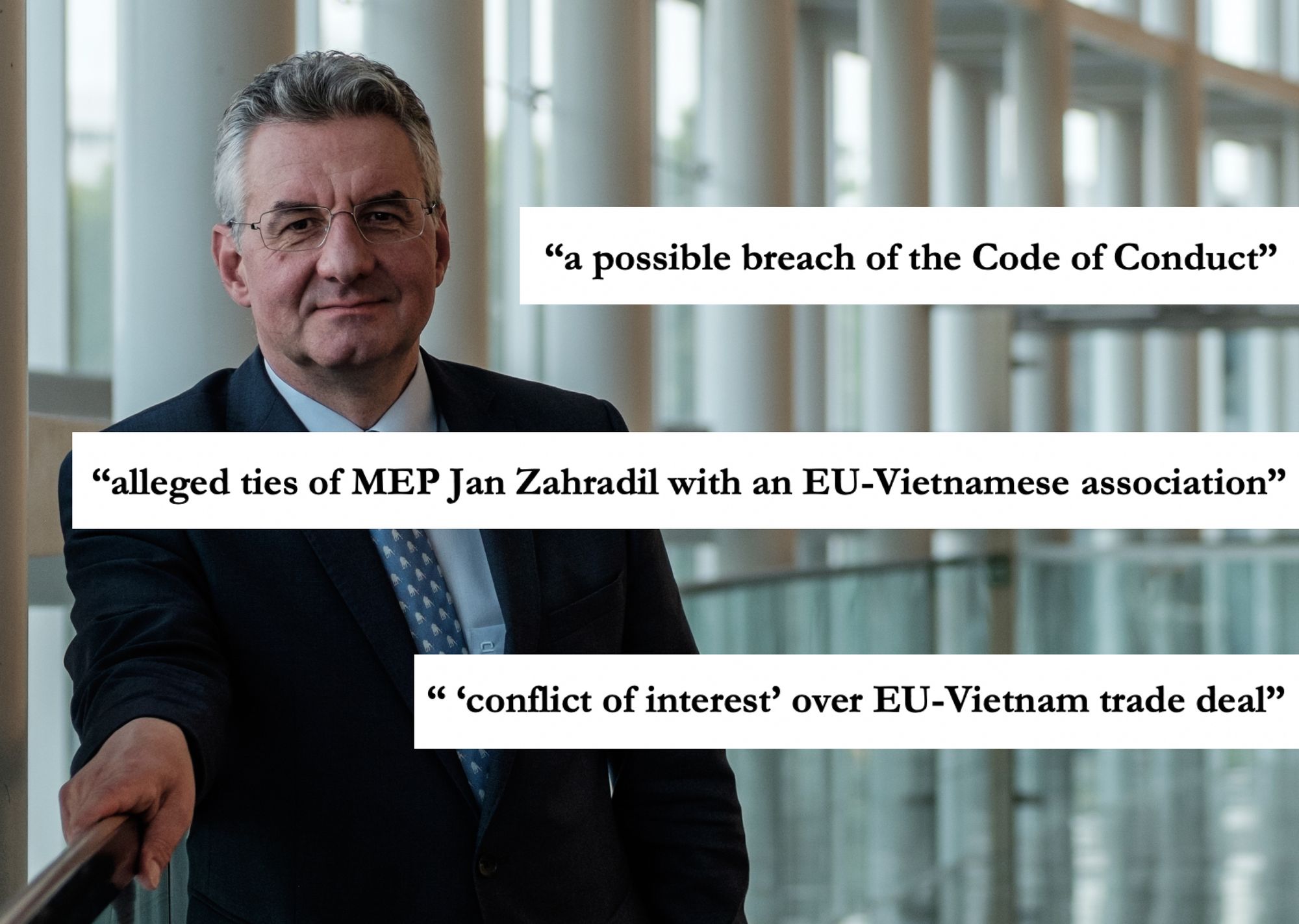
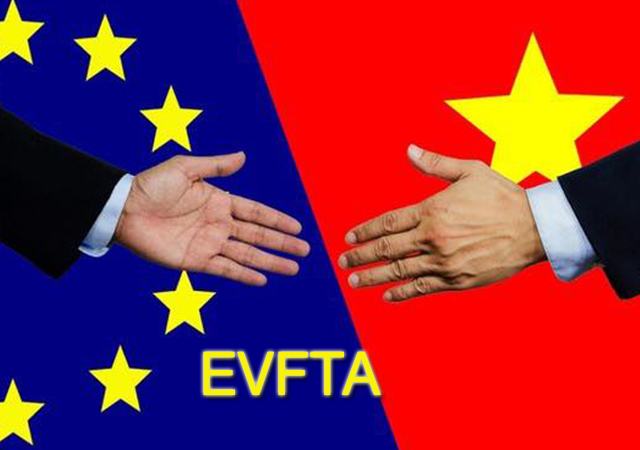
Member of European Parliament (MEP) Jan Zahradil, who is currently the rapporteur (or facilitator) for a free trade agreement (EVFTA) and an investment protection agreement (IPA) between the European Union and Communist Vietnam, has failed to disclose his links to the Vietnamese Communist Party, in possible violation of the European Parliament Code of Conduct, a letter to the President of the European Parliament (EP) has revealed.
The letter, sent by Philippe Lamberts, one of the co-presidents of the Greens/European Free Alliance Group, cites a recently published article by the EU Observer which accuses Zahradil of a “conflict of interest” after it was revealed that Zahradil failed to disclose that he was chairman of the Advisory Council to the Federation of Overseas Vietnamese Associations in Europe (FOVAE).
The FOVAE is itself set up under the guidance of the Vietnamese Fatherland Front (VFF), a broad-based political organization controlled by the Vietnamese Communist Party. The Vietnamese Fatherland Front has been comparedto China’s United Front in its influence operations, and a 2016 official report from the Czech government confirmsthat the VCP uses the FOVAE as a means to control overseas Vietnamese communities.
The EU Observerreports that Zahradil is also chair of a parliamentary “friendship group” to Vietnam, which is “[o]ften billed as a means to increase cultural understanding, promote values, and better inform the public […but is] in fact often backdoor entries for pariah governments seeking greater access to the European Parliament.”
In response, Zahradil sought to downplay the FOVAE and friendship group’s significance, citing the former’s inactivity and the latter’s informality. Ample evidence found by the EU Observer calls both of these assertions into question.
In particular, the EU Observer cites examples from Vietnam’s own state-run media which show a healthy relationship between Zahradil and active FOVAE chairman Hoang Dinh Thang (who is also on the Presidential Committee of the VFF). Another articlefrom the Vietnam People’s Army website touts the efficacy of the parliamentary “friendship group” in advocating for the EVFTA.
Regardless of these two groups’ relevance, Zahradil’s failure to disclose his links may directly violate Article 3 of the European Parliament’s Code of Conduct, which requires that “Members shall disclose, before speaking or voting in plenary or in one of Parliament’s bodies, or if proposed as a rapporteur, any actual or potential conflict of interest in relation to the matter under consideration”.
Jan Zahradil is of Czech origin and has been an MEP since 2004. He is a member of the Civic Democratic Party and part of the rightwing Eurosceptic group “European Conservatives and Reformists” (ECR) in the EP. In addition to rapporteur for the EVFTA and IPA, he is also vice-chair of the EP’s International Trade Committee (INTA).
Although the EVFTA and IPA have both been signed by Vietnam and their EU counterparts, the agreements (and their amendments) must be formally ratified by the European Parliament at its plenary session in February 2020 in order to take effect. NGOs and democracy groups insist Vietnam’s deteriorating human rights record must be improved before the EU proceeds with these agreements.
Update: Jan Zahradil has resigned from his position as rapporteur for the EVFTA, effective December 10th.
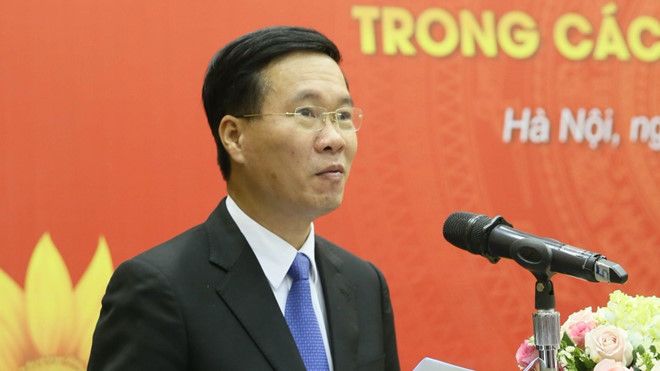
At a conference on “Strengthening Party-building Work in Press Organizations” last Friday, Mr. Vo Van Thuong, head of Communist Vietnam’s Central Propaganda Committee, reminded attendees that the press must serve the Vietnamese Communist Party (VCP) and the revolution in order to function “stably” and “without error”.
Referring to a government plan ratified earlier in the year to develop and manage press throughout the country until 2025, Thuong stated that the time for debate had passed and that strict implementation was now key. According to state media and in sentiment echoed by Thuong, the press serves as “an important channel to fight against incorrect information, fake news, news critical of the regime, and that which makes people lose trust in the Party-State.”
In his remarks at the conference, Thuong stressed the importance of ideological work in press organizations and making sure Party cadres and Party members guard against signs of political, ideological, and moral decay. In particular, Thuong warned against signs of “self-development” and “self-evolution”, negative terms that refer to the shift towards liberal democratic values–values which are anathema to the ruling Communist Party.
In this vein, Thuong took to admonishing journalists who lacked “proper training” and were critical of society but not sufficiently critical of themselves. He also stressed the importance of proper training for leadership and suggested greater oversight of the Party committees and organizations involved in press organizations, particularly when it comes to adherence to Party regulations.
“In order to help press organizations develop self-awareness and a more proper nature, we should do as a number of comrades have stated: ‘Sometimes those who educate [Party members and cadres] must themselves be educated’,” Thuong stated.
Thuong reminded attendees that Vietnam’s journalists were journalists of the revolution, journalists of the Party, and journalists of the state; as such, they should work closely with the Central Propaganda Committee, the Ministry of Information and Communication, various central Party committee blocs, and the Vietnamese Journalists Association, in order to strengthen the leadership of the Party.
The plan approved April 2nd of this year also seeks to streamline Communist Vietnam’s press environment, limiting government bodies to one newspaper and one magazine, with a shift to electronic rather than print forms, and with the “Vietnamese Communist Party E-Newspaper” and the Central Propaganda Committee serving as the “core” of the country’s press structure.
Along with head of propaganda, Thuong is also currently a member of the Politburo (short for “Political Bureau”, the leading body of the Vietnamese Communist Party), and the secretary of the Central Committee (from which members of the Politburo are chosen). In the past, Thuong was deputy secretary of the Ho Chi Minh City (HCMC) Standing Committee, first secretary of the Central Committee of the HCMC Communist Youth Union, and secretary of the Quang Ngai Provincial Party Committee.
According to Reporters Without Borders, Vietnam ranks 176th out of 180 countries in terms of press freedom. Although freedom of the press is guaranteed by Article 25 of the 2013 Vietnamese Constitution, Communist Vietnam is a one-party, authoritarian state that does not tolerate challenges to its power. It controls all official media, newspapers, and publishing houses in the country and regularly censors material that does not conform to sanctioned historical or political narratives.
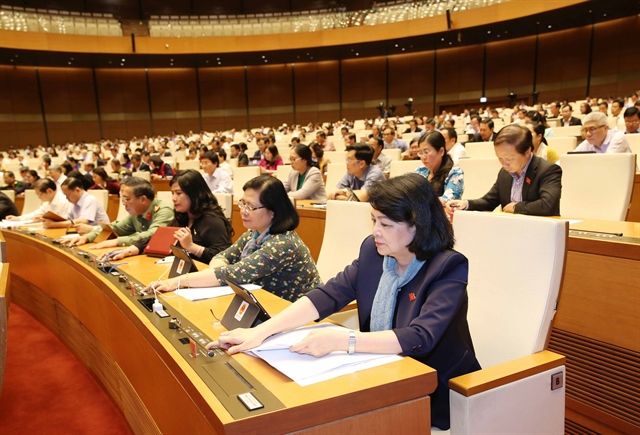
On November 25, the National Assembly (NA) of Vietnam passed amendments to its Law on Entry, Exit, Transit, and Residence of Foreigners that would allow visa-free entry into coastal economic zones, as well as enable visa status changes from inside the country. The amendments were approved with 83.6% of the vote and go into effect July 1, 2020.
The amendments stipulate that in order for a coastal economic zone to quality for the visa-free exemption, it must be separate from the mainland, possess clearly defined territory and boundaries, have an international airport, and must not compromise national security or national defense.
Of note in the amendments is the alternate phrasing “special administrative-economic unit” used to refer to areas affected by the new law. The phrase “special economic zone” (SEZ) is considered sensitive after nationwide protests broke out in June of 2018, in opposition to a Special Economic Zones (SEZ) law that was being considered before the NA. The law would have established SEZs in Van Don, Bac Van Phong, and Phu Quoc, but widespread concern that the SEZs would be overrun by Chinese investors prompted the NA to shelve the law.
Some Vietnamese have notedthat Van Don and Phu Quoc of the previously-shelved SEZ law both qualify for visa-free entry under the new amendments, sparking concerns that the government is attempting to circumvent popular opposition. Representatives of the NA themselves have expressedconcerns that opening up these areas to visa-free travel may pose a national security threat and have requested greater government regulation.
But Vo Trong Viet, chairman of the NA Committee on National Defense and Security, has argued that “the amendments would make it easier for foreigners to stay in Vietnam to learn about the market, and look for jobs and investment opportunities without wasting time and money on immigration procedures.”
Also included in the amendment is a stipulation allowing foreigners to change or renew their visa status while inside Vietnam, instead of having to leave the country entirely, as was previous practice. The amendment allows for visa changes by individuals in specific circumstances: “visitors who can prove they are investors or representatives of foreign organizations that make legal investments in Vietnam” and their family members, as well as foreign workers who receive job offers or enter with e-visas (provided they have the requisite work permit or work permit exemption).
Vietnam’s National Assembly, elected in 2016 and currently in its 14th session, consistsof 496 members, 475 of which belong to the Communist Party (the remaining 21 are independents). Though largely considered a “rubber stamp” parliament due to a lack of public consultation and debate, discussions over pieces of legislation have increased in recent years, and the NA has begun to assume a larger political role in the eyes of the public. The NA meets twice a year to formally ratify laws, with individual members serving five-year terms.
Elections for the 15th session of the NA are set to take place in 2021.
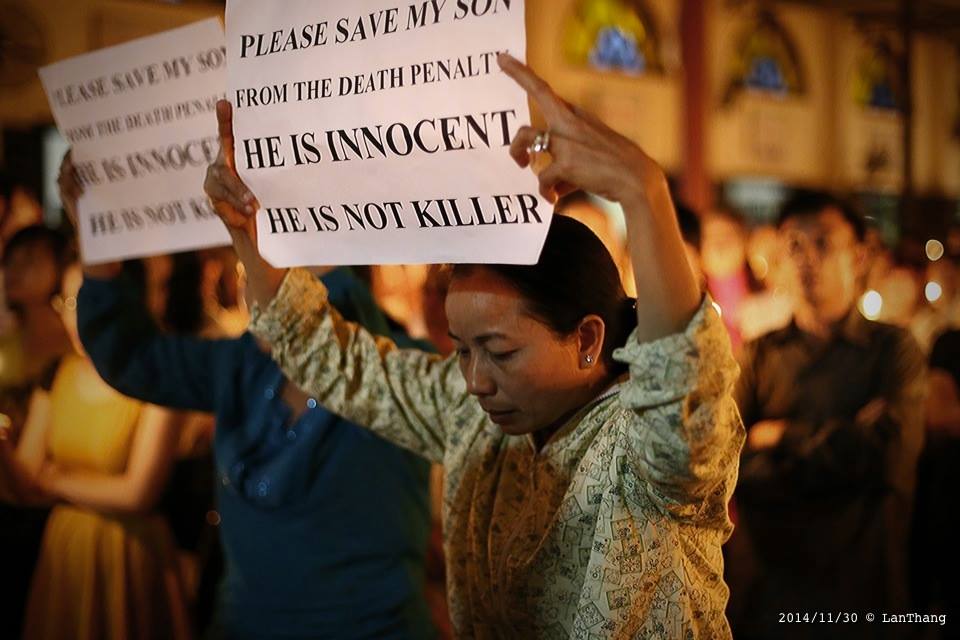
After more than 10 years of petitioning the Vietnamese government, Nguyen Thi Loan (pictured above) says a huge weight has been lifted off her shoulders. Her son, Ho Duy Hai, who had been found guilty of murder in 2008 and was sitting on Vietnam’s death row for eleven years, now has another chance at life.
As such, the SPP has requested that Vietnam’s Supreme Court toss out all previous rulings, including the original 2008 conviction by a Long An provincial court, as well as a 2009 appellate judgment by the Ho Chi Minh City Supreme Court of Appeals which upheld the death sentence. The SPP’s latest request also supersedes its own October 2011 refusal to halt the sentence after repeated petitions from Loan.
Ho Duy Hai’s 2008 case involves the murder of two sisters, Nguyen Thi Thu Van, 22, and Nguyen Thi Anh Hong, 24, who were killed at Cau Voi Post Office in Long An province, which borders Ho Chi Minh City to the southwest. The women, who both lived and worked at the post office, were found at the foot of a set of stairs, two meters apart, with their necks slit and their heads showing signs of blunt force trauma. The robbery and double murders occurred on the evening of January 14, 2008, about 4.5 kilometers from Hai’s house. It was not until two months later that Hai was implicated. He had known the two employees and could not provide an alibi the night of the murders. Police subsequently arrested him and charged him with murder on March 21, 2008.
Ho Duy Hai during his trial on December 1, 2008. Photo: Hoang Phuong / Thanh Nien.
Hai was only 23 when he was sentenced to death on December 1, 2008, but both he and his mother have consistently proclaimed his innocence. Though Hai could not remember clearly what he was doing the night of the murders, he claimed police beat and tortured him into falsely confessing.
Other cited shortcomings in the investigation included a lack of fingerprints at the scene of the crime to corroborate Hai’s “confession”, an inability to confirm the murder weapon(s), purchased items used to replace “lost” evidence at the scene of the crime, inconsistent witness testimonies, and a lack of time of death for the two victims to corroborate Hai being at the scene, among others.
For more than a decade, Hai’s mother petitioned all levels of government to intercede in her son’s case, even holding banners in front of the General Secretary, Prime Minister, and the President’s offices. She also enlisted the help of activists, dissidents, and human rights groups on social media to spread awareness. In December 2014, when Hai was only a day away from lethal injection, the Long An provincial court decided to temporarily suspend his sentence due to uproar over the nagging inconsistences in Hai’s case.
The case became so high-profile that National Assembly (NA) representative Le Thi Nga, who was the deputy head of the NA’s Judicial Committee at the time, became involved. She personally investigated the case’s inconsistencies, confirming that “there were serious violations committed by the police and prosecution in Hai’s case.” Her tenacity, attention to detail, and personal care for Hai’s mother has earned her praise on social media, who have held her up as a model NA representative.
Ms. Le Thi Nga, National Assembly representative, and deputy head of the NA’s Judicial Committee from 2007-2016. She is currently head of the Judicial Committee. Photo: Hoang Long / Vietbao
If the Vietnamese Supreme Court accepts this latest SPP request, then there are two possible outcomes for Hai: his case will either be suspended and all charges dropped or he will be re-investigated and re-tried.
If the Supreme Court decides the former, then Hai will walk away from death row a free man. If it decides the latter, then Hai’s case is essentially back to square-one, as if he had just been arrested. Hai would remain in police custody (i.e. virtually imprisoned, as is Vietnamese custom for those who have been arrested but not yet charged with a crime). The murders for which he was convicted would be re-investigated by police, after which the Long An prosecutor’s office would decide whether to charge Hai with a crime. If they do, then the trial, sentencing, and appeals process would repeat itself. If they don’t, then Hai has yet another path to freedom.
Regardless of the outcome, Hai’s mother is all gratitude for what has been achieved so far: “I want to thank every soul, both inside and outside the country, for caring so deeply for Hai. I will be grateful to you all for the rest of my life, for supporting my family and walking together with us on this long path.”
On November 20, 2019, Father Nguyen Dinh Thuc, a Vietnamese Catholic priest, posted on his Facebook page that he was not allowed to leave Vietnam to go to Japan to meet with the Pope during the papal visit to Asia. The immigration police gave Father Thuc a document explaining the reason why the government did not allow him to travel abroad. It stated that the priest was banned from leaving Vietnam because the authorities believed they were preventing possible crimes against “national security and public order” according to Article 21, Section 6 of Decree 136/2007/ND-CP. This decree was issued (link in Vietnamese) by Vietnam’s executive branch on August 17, 2007.
This was not the first time Father Thuc was prevented from traveling overseas. About two years ago, he was also blocked from traveling to Taiwan to attend meetings with Taiwanese civil society organizations regarding an environmental disaster involving a Taiwan enterprise, the Formosa Plastics Corporation. In one of Vietnam’s four central coastal provinces, Father Thuc had helped some of the victims of the Formosa incident voice their concerns over a legal fight and the aftermath of the disastrous environmental situation.
The case of Father Thuc again demonstrates how the Vietnamese government bans human rights activists from traveling in order to stop them from participating in international advocacy efforts. The Vietnamese authorities have confiscated the passports of more than 100 Vietnamese activists, banning them from traveling by citing the same legal section: Decree 136/2007/ND-CP. Activists are deemed by police as a threat to Vietnam’s national security and public order when they go abroad.
This incident also explains why we seldom see activists from Vietnam taking part in international advocacy for human rights in Vietnam. And even when activists do travel, they may not want to expose themselves publicly during advocacy events for Vietnam’s human rights because they could lose their passports upon returning home. Dinh Thao, an environmental and human rights activist, had her passport confiscated after being detained for several hours by police after returning to Vietnam this month. In the last three years, she traveled the world publicly advocating for human rights in Vietnam, and the confiscation of her passport was the price she had to pay for her actions.
The story of Dinh Thao is the same dilemma that almost all Vietnamese activists have had to deal with in the past five or six years. If they travel abroad and publicly advocate for human rights in Vietnam, they face the possibility of being blocked from traveling again after they return to Vietnam. When Vietnam underwent its second Universal Periodic Review (UPR) in 2014, activists accused the government of reprisals when it prevented activists from leaving the country to advocate for Vietnam’s human rights. Among them, Paulo Nguyen Ho Nhat Thanh, Pham Chi Dung, and Nguyen Bac Truyen were not allowed to depart the country to go to Geneva, Switzerland in January and February 2014 when their passports were confiscated. Pham Le Vuong Cac was also detained and had his passport confiscated in August 2014 when he returned to Vietnam after attending the UPR in Geneva. During the last UPR in 2019, Nguyen Thi Kim Khanh, wife of political prisoner Truong Minh Duc, participated in advocacy activities to raise her husband’s case in Europe and was detained for five hours upon her arrival in Vietnam. The police also took her passport without any judicial oversight, stating it was for national security.
Without their passports, these activists are prevented from traveling abroad and if they leave the country without it, they risk being considered illegal immigrants or worse, being accused of taking part in human trafficking schemes.
The ban on activists traveling overseas is illegal, and it also directly violates Vietnam’s 2013 Constitution. Article 23 of the Constitution guarantees that “citizens shall enjoy the freedom of movement and of residence within the country; and can freely travel abroad and return home from abroad.” By issuing governmental decrees like Decree 136/2007/ND-CP in 2007, the Vietnamese government has violated the rights of its citizens.
These decrees were not introduced, debated, and passed by the legislative branch but were executive orders whose constitutionality should ideally be decided by a judicial review. Sadly, Vietnam’s court system is not independent, and there is no constitutional court in the country. The government is able to issue unconstitutional decrees to suppress people’s rights without having any form of checks and balances.
The right of movement has met the same fate as the right for peaceful assembly: both of these rights have been violated by governmental decrees with the people having no means at all to fight back. In Vietnam, the National Assembly’s Standing Committee has the right to exercise the power to interpret the law, including constitutional law. This is the committee that can decide whether a law or a decree is constitutional. Unfortunately, the Standing Committee has never exercised that power.
The government also does not notify activists when it puts their names on a “no travel ban” list, and some of them only find out upon arrival at the airport, as was the case of Father Thuc. Some people, such as Dinh Thao, had their passports confiscated by the police immediately after they returned to Vietnam from overseas.
And yet, when the authorities infringe upon these activists’ right of movement, the police do not even follow the prescriptions as stated in Decree 136/2007/ND-CP. Article 22, Section 1(d) of this decree states that if a person is prevented from traveling because he or she is suspected to be a threat to national security or public order, such a decision to ban travel must be issued by the minister of the Ministry of Public Security – the head of the national police. In reality, none of the documents banning activists from traveling are signed by the minister. In the latest case of Father Thuc, the decision was signed by an immigration police officer, Lieutenant Colonel Phan Huan.
Human rights activists in Vietnam face blatant violations of their rights by the government daily as reprisals for their work, but the government cannot stop the democracy movement from expanding. The activist community continues to grow and they willingly face harassment and imprisonment. In recent years, Vietnam has arrested more people for political dissent and handed down harsher sentences. Posting on Facebook with information that the government dislikes may land a person in jail for a decade, as we saw earlier this month. But at the same time, more people are willing to write and expose corruption and official wrongdoing in Vietnam. This is a time for political change and Vietnamese citizens want to be a part of this change. They are increasingly daring to face the consequences.
In all of the human rights dialogue that the West participates in with Vietnam, putting an end to the travel ban should be top priority. If that happens, then the world will be able to hear Vietnamese activists express their struggles on the international stage. The advocacy to improve the human rights situation in Vietnam should start with eliminating the travel ban now.
Amnesty International and Human Rights Watch have condemned the Vietnamese government for their escalating harassment of an independent publishing house.
Liberal Publishing House, established February 14th, 2019, seeks “to promote human rights and freedom of information in Vietnam by printing and publishing books without censorship from the Vietnamese government”, in a mode similar to samizdat operations in former communist countries of Eastern Europe.
In a statement issued November 27th, Amnesty International and Human Rights Watch stated that Vietnamese “police have harassed and intimidated dozens of people connected to the Liberal Publishing House […] in what appears to be a targeted campaign” against both the publishing house’s readers and workers.
The statement also describes a situation in which police “detained and allegedly tortured a man in custody on October 15 in Ho Chi Minh City, allegedly to force him to confess to working for the publisher. Police detained him for more than 12 hours, during which time he was repeatedly beaten until his nose bled. Since being released he has gone into hiding, fearful of re-arrest.”
The police harassment has been nationwide, striking the three major Vietnamese cities of Hanoi (north), Hue (center), and Ho Chi Minh City (south), as well as the central provinces of Quang Binh and Quang Tri, the south-central province of Phu Yen, and the southern province of Binh Duong. Readers have reportedly been called into police stations for questioning and forced to sign statements declaring they will no longer purchase books from Liberal Publishing House; workers have reportedly been ensnared in police traps while carrying out deliveries.
Liberal Publishing House has acknowledged the police harassment and issued to its readers a series of precautions to take when ordering books, as well as what and what not to say when confronted by police. It has also made available for free a digital copy of its book A Handbook for Families of Prisoners to inform readers of their rights and guide them through the legal process.
Liberal Publishing House’s other titles include Politics for the Common People, Non-Violent Resistance, and the English-language title Politics of a Police State. Dissident blogger Pham Doan Trang, who recently received the 2019 Press Freedom Prize for Impact from Reporters Without Borders in September, is one of the publishing house’s main contributors.
Although freedom of the press is guaranteed by Article 25 of the 2013 Vietnamese Constitution, the Socialist Republic of Vietnam is a one-party, authoritarian state that does not tolerate challenges to its power. It controls all official media and publishing houses in the country and regularly censors material that does not conform to sanctioned historical or political narratives.
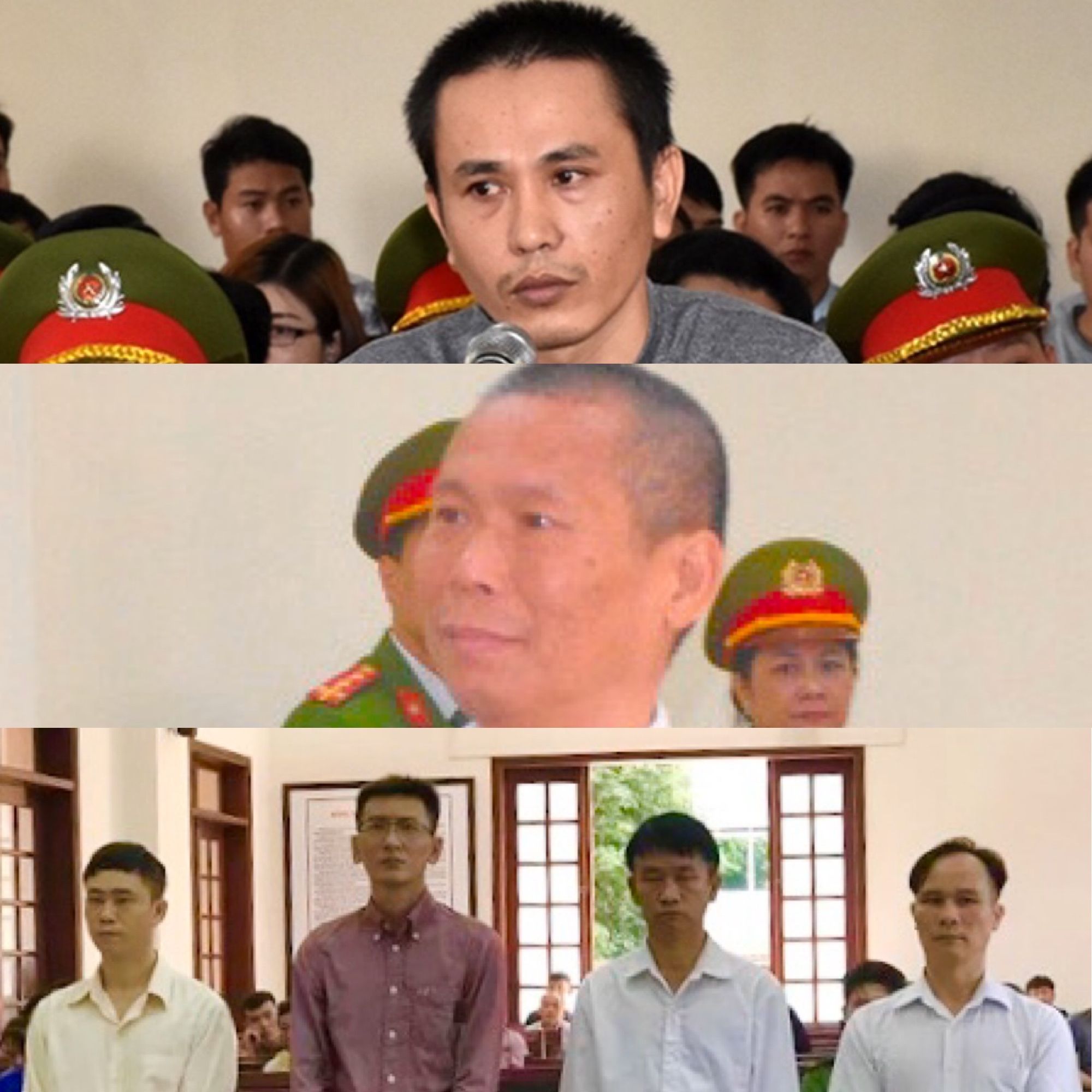
Nguyen Chi Vung (top), Pham Van Diep (middle), Vo Thuong Trung, Doan Viet Hoan, Ngo Xuan Thanh, and Nguyen Dinh Khue (bottom, left to right) . Photo sources: Kien Thuc, Binh An, and Nguoi Lao Dong newspaper, respectively. Composite photo created by Will Nguyen.
In a particularly damaging day for Vietnamese dissidents, six individuals were sentenced to a total of 26 years in prison for opposing the Vietnamese Communist Party (VCP) and the Socialist Republic of Vietnam (SRV). The convictions on November 26, 2019 bookend an active month for Vietnamese security forces, who have arrested and convicted numerous individuals for their on- and offline “anti-state” activities.
Nguyen Chi Vung, 38, was sentenced to six years in prison by a court in the southern Mekong Delta province of Bac Lieu. Vung was convicted under Article 117 of the 2015 Penal Code for “Making, storing, distributing or disseminating information, documents and articles against the SRV”. According to Reuters, Vung had “held 33 livestream sessions on Facebook ‘to share distorted information’ and ‘encourage people to participate in protests during national holidays’”.
Pham Van Diep, 54, was convicted under the same article, with a north-central Vietnamese court in Thanh Hoa sentencing him to nine years in prison and five years probation. His indictment stated that he had a nine-year history of expressing online dissent and that he made frequent Facebook posts criticizing the VCP leadership and SRV policies. According to Tuoi Tre newspaper, he had previously printed and distributed anti-SRV flyers in the Lao capital city of Vientiane. On June 28, 2016, Diep was arrested by Laotian authorities, tried in February of 2018, and sentenced to 21 months in prison for “using the territory of the Lao People’s Democratic Republic to oppose neighboring countries”. Lao authorities took him to the Vietnamese border one month after his trial, where he was allowed to re-enter Vietnam.
In Dong Nai, a province bordering the southern hub of Ho Chi Minh City, four individuals were convicted under Article 118 for “Disruption of security”. According to Vietnamese Human Rights Defenders, “[t]he four convicted were arrested on April 25, 2019, for their intention to participate in a peaceful demonstration scheduled on April 30 to mark the 34th anniversary of the fall of the US-backed Saigon regime”. Vo Thuong Trung, 42, and Doan Viet Hoan, 35, were each sentenced to three years in prison, while Ngo Xuan Thanh, 49, and Nguyen Dinh Khue, 41, each received 28 months.
The convictions of these six individuals in one day comes a little over a week after 43-year-old music teacher Nguyen Nang Tinh was sentenced to 11 years in prison and five years house arrest for violating Article 117. According to his lawyers, a Facebook account making anti-SRV posts used the same name as their client. However, they said the account did not, in fact, belong to him. Tinh was arrested May 29, 2019 and convicted on November 16 in the north-central province of Nghe An.
Last week also saw the high-profile arrest of Pham Chi Dung, a journalist with a doctorate in economics, and a founding chairman of the Independent Journalists Association of Vietnam. Dung, 53, is a former VCP member and is known for his incisive political and economic critiques of both the VCP and SRV. He has written for Voice of America, BBC, Radio Free Asia, NBC News, Nguoi Viet, and Asian Nikkei Review.
Dung’s arrest has been noted by the European Union and condemned by Reporters Without Borders, who hailed him as “an outspoken Vietnamese journalist and leading press freedom defender who for years has been trying to help create an open and informed civil society in Vietnam that is not controlled by its Communist Party.” He is currently being held at the Phan Dang Luu Detention Center in Ho Chi Minh City, one of two centers in the city where political dissidents are usually held while they are being investigated (the other being Chi Hoa Prison). He faces up to 12 years behind bars.
Although freedom of speech, press, and assembly are all guaranteed by Article 25 of the 2013 Vietnamese Constitution, the SRV is a one-party, authoritarian state that does not tolerate challenges to its power. It routinely arrests and convicts activists under Articles 117 and 118 of the penal code, as well as Article 331, which cites “Abusing democratic freedoms to infringe upon the interests of the State”. Such broadly defined articles are regularly used as a catch-all to target citizens who criticize the VCP or demand political reform. The SRV has long claimed that it does not jail prisoners of conscience, only individuals who violate the law. Human rights groups say the two are not mutually exclusive.
Addendum: On November 28, 2019, two more individuals in Dong Nai were convicted under Article 117. Huynh Minh Tam, 41, and his sister Huynh Thi To Nga, 36, were sentenced to nine and five years of prison, respectively, for making Facebook posts critical of the SRV.
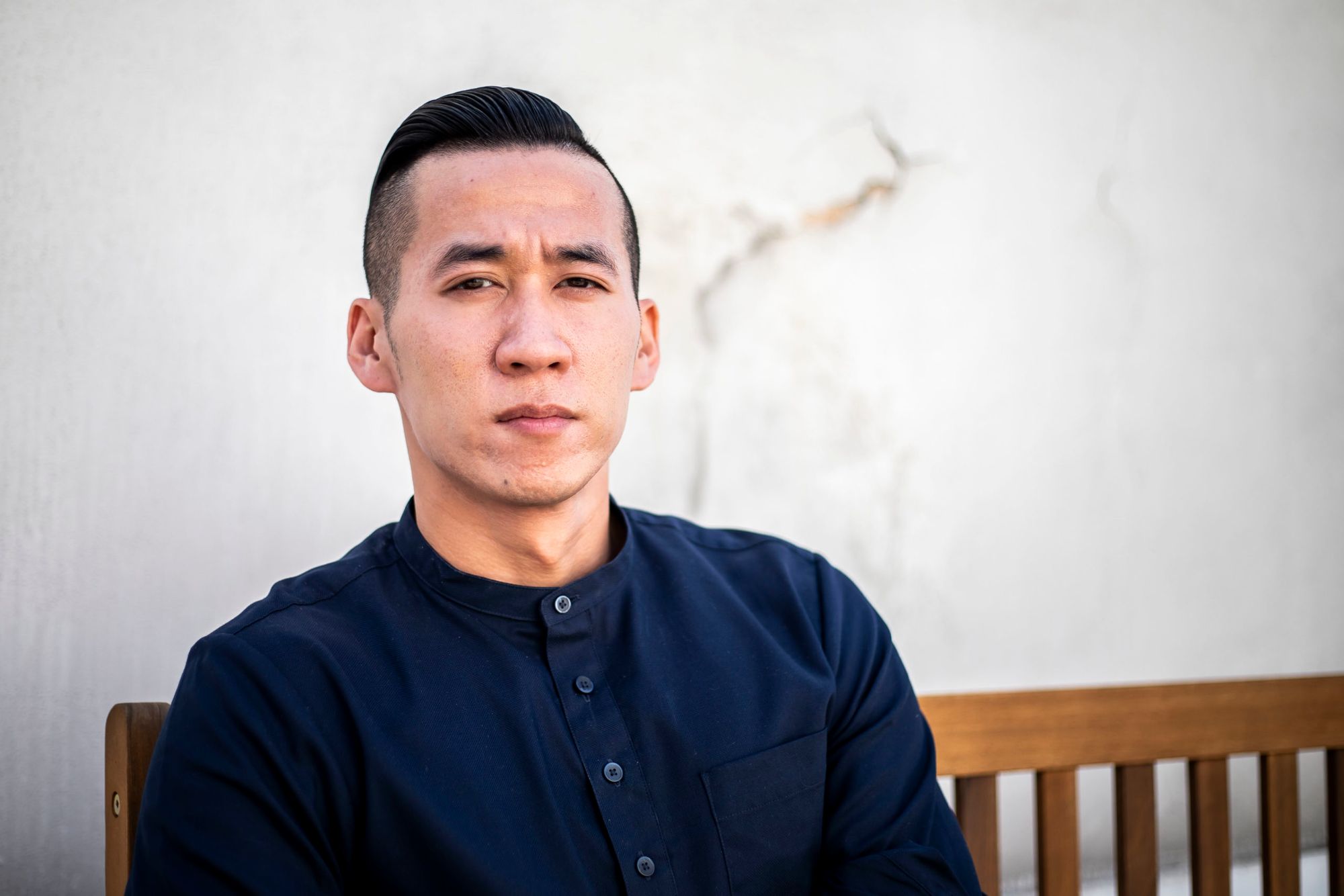
Will Nguyen (age 34) is a Vietnamese-American public policy specialist and an activist for the Vietnamese democracy movement. He was born in Houston, Texas to a refugee family from South Vietnam. He graduated with a Bachelor in East Asian Studies from Yale University and a Master in Public Public Policy from the National University of Singapore. Last June, for participating in an anti- government protest, he was imprisoned in Vietnam; after international pressure, he was released one month later and deported from the country. Photo: Gabriel Kuchta, Deník N.
Wikipedia says the Vietnam War started November 1st, 1955. Of course, that’s according to the Americans. The Vietnamese know well that the long, hellish days lasted much longer than the 20 years before Saigon fell (1975). How could it be otherwise – after all, the vast majority of lives lost in this war were Vietnamese. “In America, the Vietnam War is seen as a strictly American affair. I’d like to remedy that,” Will Nguyen, activist and descendent of South Vietnamese refugees, says in an extended interview with Deník N.
A passage in Michael Herr’s Dispatches reads: “We took a huge collective nervous breakdown, it was the compression and heat of heavy contact generated out until every American in Vietnam got a taste. Vietnam was a dark room full of deadly objects, the VC were everywhere all at once like spider cancer, and instead of losing the war in little pieces over years we lost it fast in under a week. After that, we were like the character in pop grunt mythology, dead but too dumb to lie down. Our worst dread of yellow peril became realized; we saw them now dying by the thousands all over the country, yet they didn’t seem depleted…”
The book written by Herr, an American military reporter, has become symbolic. It cuts like a knife, and it is hard to come by another work that describes as sharply what the Americans experienced in the Vietnam War.
But what did the Vietnamese experience? After all, it was their country. Unfortunately, for nearly its entirety, few saw the war as belonging to the Vietnamese, to their loss. And to this day, the wounds have not healed.
Will Nguyen knows this all too well. He was born in the United States to a woman who fled the communists—a South Vietnamese woman, to be more precise. Except Will doesn’t agree with black-and-white divides, even in his direct experiences with the Vietnamese Communist Party: last year, he was arrested for participating in protests in Ho Chi Minh City. Or is it Saigon? They’re the same city, with two different names; one was used before the communists took over, the other is the name used today. Current maps clearly label the city Ho Chi Minh City, but try using that name with South Vietnamese refugees!
So which is it: Ho Chi Minh City or Saigon?
Nguyen: (Laughs) You tell me. I grew up with Saigon; it wasn’t until later that I found out on-paper, it was Ho Chi Minh City. I currently use both, depending on whom I’m talking to. With southern Vietnamese, I’ll use Saigon; in other contexts, Ho Chi Minh City is more appropriate. For me, either name is fine; I let the person across from me decide.
Yellow star, red stripes
You were born in Houston, as part of the South Vietnamese diaspora – you didn’t spend your childhood in Saigon, right?
When I was young, I didn’t really pay attention to politics. The first time politics hit me in the face, however, when I was doing a school report on my country of origin. I didn’t know what the flag of Vietnam looked like, so I opened up an encyclopedia and drew a pretty red flag with a yellow star. My mother saw it and immediately told me that flag wasn’t the “correct” one! I had to then draw the yellow flag with three red stripes, the one that Vietnamese in the US still use, the flag of South Vietnam.
A combination of the flags of the Democratic Republic of Vietnam (North Vietnam, left) and the Republic of Vietnam (South Vietnam). Photos: Wikimedia Commons, image created by Deník N.
It was until later that I began slowly putting together the pieces of the puzzle. I learned how my aunt fled Saigon on April 29th, 1975, a day before the city fell to the communists; how after she arrived in the States, she helped my mother escape when war broke out between China and Vietnam in 1979. During that time, Vietnam was expelling all those of Chinese origin, so my aunt was able to sponsor my mother and helped her find forged papers claiming Chinese ancestry. My mother reached a refugee camp in Indonesia and from there, traveled to Houston.
In Texas, how did you put together the fragments of war? Americans, and the West by way of the Americans, tend to see the war as a nightmare for themselves. Oftentimes, the Vietnamese are seen as mere accessories, like decoration on military garb, or puppets in the hands of their masters.
I read whatever I could find around me. And the more I read, the more I understood that the majority of books I could find were written by Americans, about Americans; regarding South Vietnamese and the difficulties they faced during the war, you’d be hard pressed to find anything. So I began searching for books written by South Vietnamese. There aren’t very many [in English] and they aren’t very easy to find.
Luckily, I was fortunate enough to study at Yale, with its excellent libraries–whatever books they didn’t have, you could request by order. I read at least 20 or so books written by South Vietnamese authors – government figures, refugees, memoirs of life in South Vietnam before and after the revolution (1975). Similarly, I began researching sources of information from North Vietnam. Generals, spies, and figures in the North Vietnamese politburo.
Because you hit the nail on the head. In America, the Vietnam War is seen strictly as an American affair. Whatever the Americans carried out…
… would have to be suffered.
Exactly! Americans lost about 60,000 lives in Vietnam, a terrible number, but on the Vietnamese side, deaths numbered several million, and this disproportionality is never mentioned. American lives lost is still center-stage. I would like to remedy this. And I believe the first step is researching the war thoroughly from all sides, in order to shed this problematic “black-and-white” framework.
“After Saigon fell, my mother escaped to America. By good fortune, I was born in the States, where I was provided better opportunities. I recognize that my upbringing was ultimately a privilege—one which I want to pay forward by helping native Vietnamese fight for their own freedom and independence of thought. This doesn’t necessarily mean slandering communists.” Photo: Gabriel Kuchta, Deník N.
You know, it’s not just the Americans who are guilty of black-and-white thinking. We Vietnamese have a similar tendency. It’s north or south—nothing in between. But its hard to be surprised at such an ideological divide, solidified as it was by a devastating civil war. It’s still a sensitive topic. Moreover, this north-south division has historical roots. Hanoi, in the north, is seen as the cradle of Vienamese culture; as you go further south, its influence weakens. This is still true today; the Vietnamese Communist Party has a stronger base and more faithful party members in the north.
It’s like with the two Koreas, especially in the older generations. The division between right and wrong, good and bad. And sometimes even in the Czech Republic: in the north the evil communists; the
south, the righteous democrats. But South Korea had a period of authoritarianism, and in Vietnam, communism went hand-in-hand with the anti-colonial struggle for independence.
The interesting thing is the communists weren’t always the only players in Vietnam. Especially in the south, there was a strong nationalist movement spearheaded by non-communists. And in the 1940s, they worked with the communists for the sake of a common goal (Under the leadership of Ho Chi Minh and the Indochinese Communist Party, the Viet Minh – a coalition of northern and southern nationalists formed during the second half of the 1930s in Nanjing, China, was officially re-established in Vietnam in 1941).
Only, the communists had their own vision of an independent Vietnam. They had greater numbers, were better organized, and were more ruthless, so in the end, they swallowed whole the other nationalists, completely obliterated them. Vietnam in the 40s and early 50s was a tumultuous time. French rule followed by the Japanese invasion, famine, then the First Indochina War, then the Viet Minh defeated France in 1954 and the French withdrew. The struggle between Vietnamese communists and Vietnamese non-communists played out against this backdrop and continued through the Cold War era—and it would be this civil struggle that would ultimately determine Vietnam’s fate.
A heavy-handed government
When peace talks began in Geneva in April 1954, Vietnam was de-facto divided: the Democratic Republic of Vietnam declared by Ho Chi Minh in September 1945 ruled the north; the State of Vietnam, aligned with the French, ruled the south. Both Vietnamese states saw themselves as the only legitimate government; the Geneva Accords de-jure recognized this division, establishing a border at the 17th parallel.
Yes, with a plan for nationwide elections in 1956 to determine Vietnam’s fate and unify the country. But the south, led by prime minister Ngo Dinh Diem, knew that they could not win the election. And because the south technically did not sign the Geneva Accords, they refused to hold the elections, claiming that the elections would be rigged by the communists. Instead of the general election, the south held a referendum declaring the establishment of the Republic of Vietnam, with Diem elected president (with a spectacular 98.2% of the vote. In Saigon, President Diem received 600,000 votes out of a total 450,000 registered, according to reports). In Geneva, the US also refrained from signing the accords, which Ngo Dinh Diem counted on.
November 1955: President Diem speaks with standard-bearing members of the Civil Guard during a ceremony marking a denunciation of communism. On November 1st, 1955, America officially begins participating in the conflict in Vietnam by establishing the Military Assistance Advisory Group (MAAG). Photo: PhotoQuest / Getty Images, Flickr, CB BY 2.0.
In the north during that time, the Chinese had convinced Ho Chi Minh to abandon plans for military action in the south and to wait for the election to resolve the big questions. The communists conducted a land reform campaign that killed thousands, while the south pursued its own brutal anti-communist campaign. The CIA embarked on a psychological war, sowing fear and panic among Catholics in the north, convincing perhaps more than a million to flee south.
The Americans encountered the South Vietnamese at the right time. They helped the South Vietnamese in many respects, most obvious of all, financially. I would assert that despite all this assistance, there was one decisive factor: the South Vietnamese had no idea what it meant to be a good citizen in a functioning democracy. To the majority of Vietnamese, the ideals of democracy were in reality, something completely unfamiliar, and as the Vietnamese tried to advance towards democracy…
In short, it was like a circus. Corruption was endemic, clientelism, and on top of that, war with the north. Imagine trying to build a healthy democracy in that environment! The South Vietnamese government was quite heavy-handed and far from resembling any kind of democracy; it was closer to autocracy. During the second republic at the end of the 1960s, after several coup d’etats, things calmed down a bit, elections were conducted properly, and prospects for democracy were looking up. If there was no war, who knows how far it would have progressed. You mentioned South Korea – the path to democracy for them took several decades. Same with Taiwan.
But in South Vietnam, Ngo Dinh Diem’s heavy-handed government only lasted until 1963, when the opposition assassinated him. How were the Americans involved?
Formally, Ngo Dinh Diem was President, but in actuality, he was a dictator. He was a symbol of everything we discussed earlier: authoritarianism, corruption, and nepotism. He came from a well-known family, and his relatives held many high positions of power in a type of oligarchy. There was nothing surprising about him facing powerful opposition.
In the end, a group of South Vietnamese generals decided to test the waters with the Americans. If we wanted to get rid of Diem’s government, the generals probed in a meeting with the CIA, would you support us? Kennedy’s administration gave the green light. But my god! The generals got rid of President Diem in such an awful manner. The Americans didn’t imagine it that way. They thought Diem would live a life in exile, and the government would proceed to reform.
On the Saigon River, Viet Cong take turns on the lookout, October 1966. Photo: Manhai, Flickr, CB BY 2.0.
Instead, President Diem’s assassination opened up Pandora’s box. The ironic thing is some of Kennedy’s advisors warned about this very outcome: while Diem was a dictator and corruption was rampant, there existed no viable alternative to him. And it was true; the country was wracked with one coup d’etat after another. South Vietnam not only became enfeebled, but it endured continuous pressure from North Vietnam and communist insurgents in its own territory. The country’s ability to deliver its people from northern communism weakened by the day.
Up until April 30th, 1975, when Saigon was taken over by the communists. To North Vietnamese, that event was a “liberation”, but for Southerners, it was a “fall”. Is this still true?
Definitely. In the memoirs of South Vietnamese diaspora, they remember April 30th, 1975 and the “Fall of Saigon” with anguish, and not just figures from the older generations, but the majority of the diaspora’s descendents also see the event as an invasion.
And in Vietnam, where the communists have ruled for 45 years now?
The current propaganda is powerful. I believe many Vietnamese see April 30th in a positive way, a victory over colonialism, a liberation, a unification of the country. But the interesting thing is, in the south, when you speak with older people—and obviously this doesn’t happen right away because there are dangers in doing so—but when they trust you enough… my mother and I would often encounter more “sensitive” views when we were traveling around southern Vietnam. For example, taxi drivers would often reminisce positively about what life was like before 1975, as they drove us around the city.
Rosy history
In your travels around Vietnam, you were able to absorb a lot of literature and messaging, especially propaganda posters. These displays tap a lot into the past, right?
Most of them do. But that’s logical because the Vietnamese Communist Party derives its legitimacy from history and regularly reminds the people what it has achieved—1945 and the [August] Revolution, the defeat of the French, Ho Chi Minh, and of course, the greatest achievement of all: the liberation and unification of the country in 1975 [the latter technically occurring in 1976]. It’s like a broken record-player, stuck repeating myths.
A propaganda poster marking 60 years since Hanoi threw off the yoke of French colonialism. Photo: Vuong Tri Binh, Wikimedia CC BY-SA 4.0
And because these pages of history bear the hallmarks of the communist party, most people don’t pay it any heed. Is it a heroic story with a fortunate ending, or is it a happy lie? For some, either case is better than the sad truth. More easily stated, one way or another, many people realize the history is suspiciously rosy. But to find the truth, one must put in the work. It takes effort, and most people simply don’t feel the need.
Why?
Because they’ve directly experienced in their daily lives that the regime they live under doesn’t give them a voice. So the result is political apathy. This is especially true with young people, who have their whole lives ahead of them. They have no desire to rehash the past; they desire a comfortable future, with a high standard of living.
But of course, not all young people are like this; I’ve gotten to know quite a few young activists from Vietnam who feel the truth is worth pursuing. A lot of it has to do with the fact that it’s easier now to find information online. It only takes a little research to reveal why the yellow flag with three red stripes is banned in Vietnam. And why the Vietnamese diaspora numbers millions across the world.
To search for truth, to absorb information and then decide for oneself – that is true independence. Not the propaganda that the regime mouth-feeds the people to maintain its grip on power. Protecting the regime is the government’s number one goal. The Party has to make sure the boat doesn’t rock too much under its feet, and along with propaganda, it must also ensure that the economy develops while it conducts a balancing act between opposing China and allowing Chinese influence.
How are relations between the Vietnamese Communist Party and the Chinese Communist Party?
Very close, in an existential way. Vietnamese communists owe much to their Chinese counterparts, but at the same time, they have to be extremely careful not to be seen as Chinese puppets. This demands sufficiently independent behavior, opposing China in moderation, and at the same time, making sure not to offend their Chinese patrons.
Are they really patrons?
You know, Vietnamese leaders are slowly realizing they’re skating on the thinnest of ice. While I was imprisoned in Saigon, I spoke with police investigators about the situation in the South China Sea, and it was hard to miss the frustration written on their faces. They have to oppose China because that’s part of the Vietnamese national mythology: China is our hereditary enemy, and it’s forever finding ways to swallow Vietnam. If they don’t oppose China, then they face the danger of public opposition. That’s why Hanoi tries to find international support in their case against Chinese aggression. But it’s all one big act. No vociferous pronouncements will change the fact that China currently has the upper-hand in the South China Sea. China is several times larger and stronger than Vietnam, and Hanoi is fully cognizant of this, as well as the fact that Vietnam is economically dependent on China. And besides, the Vietnamese Communist Party imitates the Chinese Communist Party on a fundamental level. Their historic consolidation of power, their land reforms, and more recently, the cybersecurity laws.
And the general secretary? The similarities between Xi Jinping and Nguyen Phu Trong, the head of the Vietnamese Communist Party, can’t be ignored: a strong, hard-line leader, pursuing an anti-corruption campaign.
Of course; if you observe down to a minute-enough level, you’ll always find differences, but the truth is the Vietnamese and Chinese models of rule are quite similar – including the issue of Trong becoming both General Secretary and President. Though for most of its history, the Vietnamese Communist Party has followed the path of collective leadership, Trong has spearheaded an anti-corruption campaign very similar to that of Xi: sure, you’re cleaning up the ranks, but you’re also inserting your own allies into positions of power.
The two parties [and their historical trajectories] are not exact replicas. But there are more than enough similarities to remind us of Mark Twain’s observation: “history doesn’t repeat itself, but it does rhyme.”
Prison bars and television screens
You actually mentioned something I wanted to ask you about: last year, you were incarcerated in Vietnam. You went straight to prison after an anti-government protest in Saigon, right?
I had graduated [from my master’s program] in May and after that, had flown to Vietnam. When I found out [a few days prior] that there would be protests, I decided to attend because I also believed the two proposed laws were harmful to the Vietnamese people.
I walked the streets with protestors, cell phone in hand, recording as much as I could and uploading it immediately onto social media. It wasn’t an easy thing to do because the internet was slowed. The government often finds ways to prevent the spread of information. After a couple of hours, we ran up against a formation of police officers who stopped us and tried to get us to turn away from the city center. But I could tell that the officers were ill-at-ease; they were young, and looked just as worried and fearful as the protestors. It seemed like all it would take was one person to push through to break the line.
So I did it, and they ultimately let us through. But after a few intersections, the police parked a row of pick-up trucks across the road to block it. I wanted to help the people cross the barrier – I knew I could take on a little more risk because I wasn’t a Vietnamese citizen and I didn’t face as serious of punishment as they did. I knew I could be arrested, but to be beaten in the middle of the streets was definitely something I did not expect.
How many people were there around you?
Hard to say, but the streets were impassable, surging with people. They charged me not only with “disturbing public order” but added on the aggravating factor “causing serious traffic congestion”. They blamed me for making 14 people miss their flights.
And what were you facing?
Up to 7 years in prison.
At least you confessed on TV! And that’s yet another similarity between China and Vietnam: a recorded confession broadcast on national television…
It was all for show. In order to maintain their hold on power, the Party choreographs one performance after another and forced televised confessions are just one part of it. I had known about this “song-and-dance” prior to being captured, so I wasn’t surprised when they made me participate. But mostly, nobody was particularly enthusiastic about doing it. It was all pretty tiring: the security officers and I didn’t want to do it, but because the orders were coming from above, we wanted to just get it out of the way.
And you participated?
If I didn’t, it would only complicate things. Not just for me, but also for the investigators, the people who were in charge of (processing) my case. They treated me well enough, though obviously I knew it was related to the fact that I was American and that my case was receiving widespread international attention.
Moreover, I refused to lie. When they wanted me to apologize for causing traffic congestion or for making my friends and family worry, that wasn’t a big deal. But there was a part where they said I tried to flip a police truck and other things. I refused to read that. They accepted it and moved on.
As in there was a script?
The whole thing was so surreal. First, I wasn’t wearing the appropriate clothing, because I was a prisoner, so one of the police officers gave me the button-down shirt off his back to wear. Then, they styled my hair and had me sit down in front of the camera – we did around 5 takes, until I read the script convincingly enough.
The banality of evil
It all sounds like a joke, but in actuality, it’s nothing to laugh at right? Especially those with Vietnamese and not American citizenship.
Exactly. Suddenly, I had fallen into the belly of this oppressive regime I had researched for so many years; it was there that I was able to fully realize that the system ran on fear. It doesn’t have to be the kind of fear that stops your heart or takes your breath away. But as long as that fear becomes an abided part of your life, like an old coat, mundane and commonplace, then the system remains in place.
Like Hannah Arendt has written of, it’s all about the diffusion of responsibility: “I was just following orders!” You’re sitting behind bars, observing how police officers observe you. And you realize that they’re just cogs in the machine. But it’s precisely all of these small cogs that keep the machine going. If they weren’t there, the entire system would collapse. At the same time, they’re all just normal people. Outside of work hours, when they weren’t interrogating me, we would talking to one another like normal people.
With the small detail that you were behind bars and the police officers were in front.
Of course. You know, dehumanizing the other side doesn’t help anyone; don’t even get me started on caricaturing them as demons. I grew up in an environment where people spoke of communists as man-eating devils, and dissident propaganda often depicts Ho Chi Minh with horns. What is this good for? The more you put pressure on them in this way, the more they will dig in their heels in siege mentality. And that mentality leads to an increasingly oppressive regime. I believe in doing the opposite. Jettison the black-and-white paradigm and fracture an otherwise monolithic ideology.
How?
By treating these individuals like human beings. By convincing them that those who want to reform the system are not their enemies. As long as overseas Vietnamese communities across the world continue to demonize the communists as they do, then nothing will change. The banality of evil works both ways: people mold the system, but the system also molds the people. We have to work to fill the gap between the two sides, or at the very least, build some kind of bridge. I’m purposefully avoiding the word “reconciliation” because the communists used it after 1975, and then ultimately sent southerners to re-education camps.
This reminds me of the situation in the Czech Republic after the Velvet Revolution. It’s a shame how the party and corruption went hand-in-hand, but enough people were able to “change outfits” after the transition [to continue their behavior]; some didn’t even bother to change. What’s going to happen if the same people are able to survive reform efforts in Vietnam?
I believe the Vietnamese Communist Party has a right to exist – this is something anti-communists have excluded me for saying, even accusing me of Stockholm Syndrome. But then there are anti-communists who are impressed with Trump and openly support him, and that’s something that’s completely absurd to me.
But most importantly: the Vietnamese Communist Party has four million party members. Their numbers are decreasing, and the Party itself is purifying in an ideological sense, getting smaller and older. But four million is still a lot. What are we going to do with them? Vietnam has suffered several decades of war. Millions have lost their lives, several more million have had to flee their homeland, and hundreds of thousands have lain their corpses at sea in pursuit of freedom… is this not enough? I understand your question, and I can’t say it doesn’t worry me. But what other way do we have to pursue reform but this?
I’m not so naïve as to think that we only need dialogue to reform a totalitarian regime. Obviously you can extend your hand across the table, but if the other side is not willing, then there has to be something to push them to the table. The people must speak up for themselves; they have to march if need be. Reform can’t be achieved without it. And in a similar vein, I also hope that young people reconsider joining the Party.
The economy plays a huge role: Vietnam’s labor productivity is quite low because the regime robs people of their initiative. Those with enough drive, those who can overcome the apathy find happiness overseas, where they go to work or study. But a number return with open eyes. For others, the internet opens their eyes. And people are slowly realizing, it doesn’t pay to be politically apathetic – if you don’t want to decide politics, then someone else will decide for you.
The European Union – Vietnam Free Trade Agreement (EV-FTA) is expected to be a comprehensive win-win deal for both sides, ambitiously seeking to improve trade and boost mutual economic growth. As with all free trade agreements to which the EU is a party to, a human rights clause is built into this FTA with Vietnam. Many EU officials and parliament members that I have met in the past two years through my advocacy for Vietnam’s human rights situation earnestly believe that Vietnam will improve its record once the FTA takes effect.
In the past, these friends have asked me to have some faith in the current regime, assuring me that our Vietnamese human rights activists and defenders will have better days in the future. It is a very typical “give them more time” argument that they expect me to accept. Yet the record shows that Vietnam’s aggression against human rights activists increases every year while government-controlled courts continue to hand out harsh sentences. I often wonder how EU officials still want to convince me to have such faith?
In March 2019, I met with an EU official who was participating in the negotiations of the EV-FTA. She expressed great sympathy for human rights defenders in Vietnam and even realized the situation for human rights there was worrying. And yet, towards the end of our conversation, she asked me what I thought about one of Vietnam’s ministers, whose name I will not disclose. She seemed to be fond of the guy and praised him for belonging to a “progressive group in the Vietnamese Communist Party (VCP)” that she said hopefully would one day push for an improvement in human rights in the country.
As a democracy activist, I personally think that regardless of whether a person is progressive or not, none of the VCP members right now would dare to inch away from the Party’s political monopoly inside the country. And I frankly stated that the Ministry of Public Security – the national police – would never allow any official to raise his or her voice over the human rights situation in Vietnam. Asking for political pluralism, an improvement in the human rights situation, and democracy would place anyone in danger of being sent to prison for more than a decade, as the latest political trials have shown this year.
I met with the official right after attending the United Nations Human Rights Committee’s 125th session in Geneva, Switzerland where the Committee completed its third periodic report on Vietnam’s implementation of the International Covenant on Civil and Political Rights (ICCPR). Vietnam submitted its report after a 13-year delay in December 2017–the original deadline was set for August 2004. The Committee sadly acknowledged that in Vietnam’s review “less information was provided on the actual implementation of ICCPR and application of domestic laws in practice, where concrete data was crucially lacking.”
Vietnam ascended to the ICCPR in 1982, but with regard to complying with the international covenant on human rights, it didn’t actually provide any opportunities for people to learn and exercise their rights. More than that, the government did not allow the Vietnamese people to use the ICCPR in courts to defend themselves when such rights were being violated.
The point is that more than three decades after Vietnam joined the ICCPR, the human rights situation in Vietnam remains hopeless and people’s rights are being violated on a daily basis. How can we believe that the EV-FTA will improve such a situation when the ICCPR has so far failed so miserably?
I began to write this article after receiving the news that a close friend, an activist from Vietnam, had been detained upon arrival at the Noi Bai International Airport, where she was put into detention by 10 security police. Dinh Thao is an environmental and human rights activist who left Vietnam to study and work abroad as an advocate for human rights more than three years ago. She was a medical doctor before becoming an activist and I am sure some of the EU parliament members must remember her because she advocated for Vietnam’s human rights situation in Brussels a few years ago and may have met some of them.
Thao is non-violent and even created a project to educate people about peaceful demonstrations. Yet she was detained by the police immediately after her arrival in Vietnam. What crime did she commit to deserve such treatment? Or is it just simply the fact that the government violated her rights in retaliation for her advocacy internationally for more human rights in Vietnam?
On the same day that Dinh Thao was detained, November 15, 2019, another Vietnamese was sentenced to 11 years imprisonment and five years of house arrest. Nguyen Nang Tinh, a music teacher who also advocated for human rights and democracy for Vietnam, was accused by the state of “propagandizing against the government” via his Facebook posts. Tinh denied that the alleged Facebook account belongs to him, but if you read the posts in that account you’ll see that there was nothing that called for a violent overthrow of the regime. If you search for him online, you will see videos of him teaching young children patriotic songs, songs that demand human rights for the people. How could his activities be called “propaganda against the state”?
As I have worked to protect the human rights of activists in Vietnam for many years, I have often recounted their stories to many Western politicians and officials. The activists I have met are people who had the opportunity to learn about the concept of human rights and who then started to defend such rights for others and also sometimes for themselves. They are the people who believe in the spirit and the universal values of human rights and they also believe that international laws, such as the ICCPR, will protect them. They probably had hoped that the ICCPR would be implemented in Vietnam at their trials. But that hope was never realized because we have never seen arguments articulating any of the articles of the ICCPR, such as Article 19, which protects the freedom of expression, presented in Vietnamese courts.
And as a result, human rights activists and defenders have often typically been sentenced in rushed one-day trials without an independent judiciary. Sometimes the decisions handed down include lengthy jail sentences, as in the case of Nguyen Nang Tinh, which happened this month.
In response to the EU officials who asked me to “have faith” in the regime, I point to a database built by the independent civil society organization The 88 Project, which catalogues the arrest and detention of political prisoners in Vietnam. A representative of that organization informed me a few days ago that in 2018, the Vietnamese government had arrested 145 people. These arrests showed the authorities’ blatant violation of the human rights of citizens. That number was greater than the number of arrests Vietnam made in 2017, 2016, and 2015 combined. In 2018, the number of arrests went up because the government detained and sentenced many people after large demonstrations happened in June 2018, in protest against the new cybersecurity law and the development of special economic zones with Chinese investment.
It is not only human rights activists who are being treated unfairly and who are suffering mistreatment in Vietnam. There are also other groups, such as the workers, for whom the EV-FTA probably has some aspirations to improve their work environment and living standards. Many EU Parliament members have urged the Vietnamese government to quickly ratify the remaining three International Labor Organization (ILO) conventions prior to EU voting on the trade deal. Vietnam has promised to ratify the three ILO conventions over a time period of five years beginning in 2018. However, ratification of international laws is one thing, while the reality of how the Vietnamese authorities have failed to improve workers’ lives is another story.
In Taipei, Taiwan, legal migrant workers from Vietnam went on a protest this month to demand the abolition of broker fees that each of them had to pay to be able to work in Taiwan. These broker fees are considered to be part of the most exploitative system of all of the countries in Southeast Asia from which these workers come from. What does the Vietnamese government know about this system and why does it allow such a broker fee system to continue to exploit their people? Would the EV-FTA be able to eradicate that system to improve the lives of these workers? How can I have the faith to believe that the Vietnamese government will ever take care of these people?
Recently, Prime Minister Hun Sen of Cambodia released 70 opposition activists in order to improve his country’s human rights image after the EU threatened the withdrawal of special trade preferences. Cambodia’s political system has many aspects that are far better than in Vietnam. That country at least has an opposition political party – the Cambodian National Rescue Party (CNRP). On the contrary, the Vietnamese Communist Party has a political monopoly and we don’t have a single other political party.
Running for office as an independent candidate will not lead to any success as the 2016 elections have demonstrated. Being a member of a political party that was formed overseas was the reason that Vietnam sentenced a 70-year-old Vietnamese-Australian man, Chau Van Kham, to 12 years in prison earlier this month.
And yet, the EV-FTA provides for a lot more benefits for Vietnam than compared the trade preferences that Cambodia would get from the EU. How can Cambodia demonstrate a greater willingness to improve its human rights record while Vietnam just keeps getting worse? How can I have faith that Vietnam will eventually improve?
During these days, police brutality in Hong Kong has increased dramatically as we see from the recent news coming out from universities there. And as we support and pray for young people there, I hope none of the international politicians and officials will say “give China more time” so that they can resolve their human rights problems.
In my personal capacity, despite all my efforts, I have yet to make Vietnam’s human rights situation become more well-known in the world. However, I can not look at all of my human rights activists friends in Vietnam and tell them to be patient and to give the government more time.
We need to raise our voices and demand right now that the Vietnamese government make an effort to improve its human rights record. Should Vietnam make some improvements prior to the EU Parliament vote on the FTA trade deal? Yes, absolutely. Vietnam has to show its good faith by releasing the more than 200 political prisoners who are currently serving time and by allowing the emergence of political pluralism with fair and free elections.
On the morning of November 12, 2019, a protest over a land dispute broke out in the Vietnamese capital of Hanoi. However, unlike in other recent protests, the protesters were not beaten up and arrested by the local authorities. This is probably because the people protesting were police officers of Dong Anh District and so their protest was not deemed illegal by the Hanoi government. This scenario was rare and not the typical case for most of those who protest in Vietnam because in most cases protesters have been assaulted and arrested by local authorities.
During the last few years, whenever I have had an opportunity to speak with foreigners, I have defended the right of the Vietnamese people to engage in peaceful assembly, which is protected by Vietnam’s Constitution. The problem is that the government of Vietnam has always classified the right to demonstrate and gather for peaceful assembly as a “disruption of public order,” and so the authorities have arrested hundreds and thousands of its citizens over the years because they joined protests.
As it turns out, many foreigners have the false belief that demonstrating is illegal in Vietnam and that people are not allowed to protest. The largest protest in Vietnam after our civil war ended in 1975 happened last year, in June 2018. And at that same time, The Vietnamese also clarified that the right to protest was not only legal, but it was a people’s constitutional right. Yet government officials continued to condemn the people’s right to demonstrate and have vowed that they will not allow any crowd to gather publicly. One of the most strident officials supporting the banning of all protests is To Lam, the minister of public security – the head of the national police force of Vietnam.
On November 12, 2019, social media and non-governmental media of Vietnam began to report that these police officers had gathered to protest a land dispute involving houses being constructed in Dong Anh district in Hanoi. The cause of the demonstration was very similar to the case of many farmers who had lost their land because of rapid plans for real estate developmental projects in recent years. Those protesting police officers had paid substantial amounts of money to purchase their homes some 17 years ago, but they had not yet received them. The police officers suspected corruption and went to protest against it. In Vietnam’s state-owned media, these protesters were classified as retired police officers who are not currently on active duty. It is likely that the government wants to soften up the fact that it was a case of actual, currently on duty went on protest for their land right to call these protesters as “retired.” However, the land dispute was confirmed to be true as was the fact that these officers did not receive their houses which they had already paid for.
Whether these officers are retired or not, this is one of the very few incidents in which people who belong to a police unit have found themselves in the same position as other victims who have lost their land. In this case, it was the land rights of former police officers that had been violated and they could not find a proper way to resolve the problem. Protesting against alleged corruption was the only option for them to raise their voices and to address this issue.
Police forces in Vietnam have always played a close role in carrying out the government’s actions and will. They have been cast as active members of the Vietnamese Communist Party (VCP) who were assigned to fight opposition movements and the people who do not agree with the way the VCP leads. During the November 12, 2019 incident, the protest by these police officers was not abruptly stopped by the authorities. None of the retired officers got arrested and none were classified as “reactionary forces” in Vietnam’s state-owned media, as has been the case with others who have protested.
This is an indication of the big difference in how the government treats its own police officers versus how it treats Vietnamese citizens during protests. Nevertheless, the protest by police in Dong Anh district earlier this month has underpinned that land disputes are becoming a wild beast in Vietnam. This social problem will not exclude government workers and police who will soon join the masses of people in the country who have suffered the injustice of seeing their land taken from them.
Earlier this year inJanuary, in the Loc Hung Garden Incident, local authorities wrongfully evicted and destroyed over 100 households in Tan Binh district in Ho Chi Minh City. The residents of Loc Hung have filed their petitions and they are continuing their legal struggle with the authorities right up until now. In a major city such as Ho Chi Minh City, the Loc Hung residents have only faced losing their homes and their land but in other remote areas, the victims have faced physical harm and some have even lost their lives. That is the story of death-row inmate Dang Van Hien.
Dang Van Hien and his neighbors from Village 1535, Quang Truc ward, Tuy Duc district, who come from different areas of the country, have become adjusted to living in poverty since the time they were born. They gradually saved up enough money and bought a small piece of land, but all they could afford was property in areas off the beaten track or remotely placed in the jungle. They have been living as the modern “les miserables” in a remote area in Dak Nong province in the Central Highland of Vietnam.
These farmers were there to farm and live peacefully until a private company – Long Son Investment & Commercial – came and disputed their land ownership. Tragedy struck when the government granted Long Son 1,079 hectares of forest land without first doing a proper land survey, which resulted in the company’s claims overlapping the parcels of land owned by these poor farmers. Over the last 10 years, these farmers have tried everything they could to petition the government to correct the improper land assessment. At the same time, Long Son used force to destroy their crops and tried to kick them off their lands and out of their homes.
On October 23, 2016, a deadly altercation happened involving Hien, his friends and the workers of Long Son. Hien fired a self-made gun killing three workers and injuring some others when workers invaded his farm with bulldozers and weapons. He was sentenced to death in 2018 and the highest court upheld his sentence this year. His life may be spared if President Nguyen Phu Trong grants him a reprieve. However, there is no indication that this will happen.
The Vietnam Land Law has faced a lot of controversies and criticisms in public because its ambiguity has resulted in the many land disputes that people have been facing. Yet, because the state wants to securely own all of the land in the country, individuals and private entities cannot own land and can only receive land use rights from the state. As a socialist country, the Communist Party does not allow private property ownership, and yet the law defines nicely that land ownership in Vietnam “belongs to the entire people” “with the State acting as the owner’s representative and uniformly managing land.” The State also gives itself the power to “hand over land use rights to land users in accordance with this Law.” (Article 4, Land Law 2013). This clause that the state shall “hand over land use rights” has created land disputes in Vietnam over the past decades and continues to do so because of corruption.
With the recent story of police officers protesting for their land rights this month in Hanoi, we can see that disputes involving land will continue to be a problematic social issue growing inside the country and that no one will be spared, including government workers and police officers. And if the president of Vietnam does not save the life of Dang Van Hien, Hien will be the first person to be executed due to a land dispute and his case may put more pressure on land administration in Vietnam.
To protect their land rights everyone has to fight, from a poor farmer living in the Central Highlands to the police officers in Vietnam’s capital. The consequences each of them may face for protesting for their rights may be very different. But they all have no other choice but to oppose those who violate their rights. The people have waited patiently and petitioned for 10 or 20 years to protect their rights, but they still have not gotten any response from the judicial system. Corruption and secret deals between some local authorities and real estate developers coupled with an ambiguous law on land administration have worked together to prevent victims of land disputes from having their day in court and receiving justice.