Author: Quynh-Vi Tran

  • State-Owned Media Features Police Brutality With Neutral Headline, Sparks Debate

    State-Owned Media Features Police Brutality With Neutral Headline, Sparks Debate

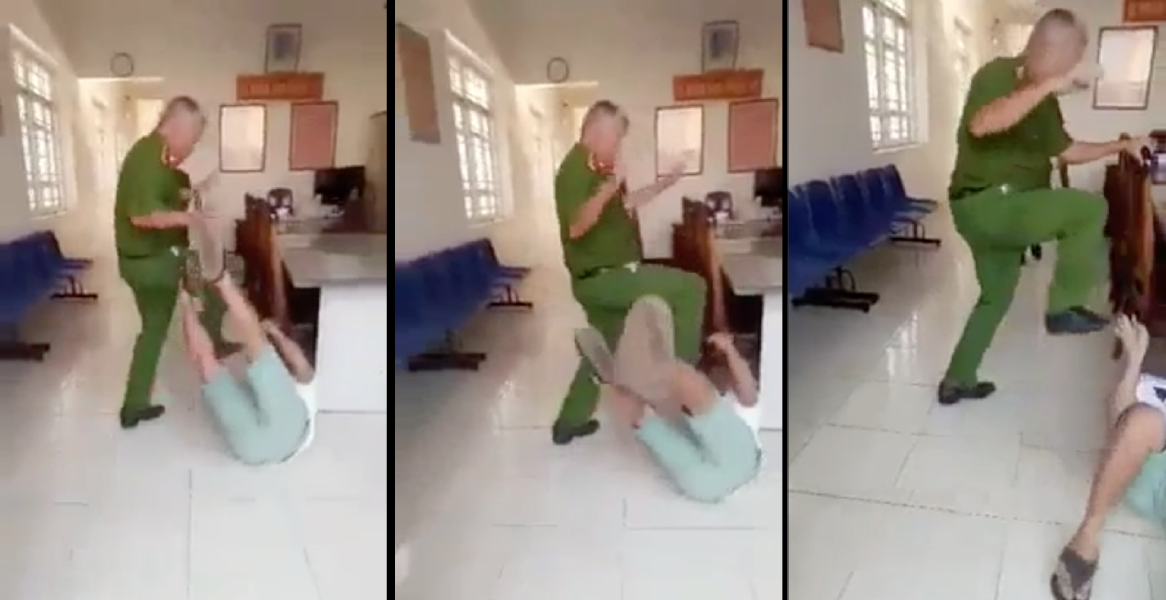
    Yesterday evening, January 29, 2019, Facebookers in Vietnam were circulating a video clip showing a gentleman lying on the ground while another, older man in police uniform was stomping on him, hitting him on the face, head and chest area.

    By the afternoon of January 30, 30219, the story got featured on Tuoi Tre online – one of the largest newspapers in Vietnam. It was one of the rarer times where one could find stories of police’s misconducts featured quickly on state-owned news right after making waves on social media.

    While Tuoi Tre was able to confirm the story and interviewed a supervisor of the police officers involved in the incident, many netizens became very critical of its headline which states: “Temporary Suspension of Deputy Ward Police Officer Using Feet to ‘Take Action’ on Witness.”

    The criticisms targeted the headline for de-escalating an incident of police brutality into something a lot less severe by using vague and ambiguous language like “take action.”

    The term “take action” was actually used by the Head of Tuy Hoa Police Department, Nguyen Van Dung, in his interview with Tuoi Tre regarding the incident.

    Some freelance journalists believed that Tuoi Tre practiced too much self-censorship and that in this situation, they could have used the word “stomp” and would not face any disciplinary action from the Central Committee of Propaganda. Later in the day, another online newspaper, Phap Luat of Ho Chi Minh City also published the same story and used the word “stomp” in the headline.

    Tuoi Tre was slammed with an order to pay a total fine of VND220 million (close to USD10,000) in July 2018 along with a 90 days suspension.

    Back then, the government issued such order after finding that Tuoi Tre had reported news that was “untrue” and causing “severe impacts” when it published an inaccurate story about the late President Tran Dai Quang’s comment on the Law on Demonstration and failed to remove a “nationally divisive” comment left by a reader on another article.

    However, with this story, some readers did come to the defense of Tuoi Tre, stating that it was a clever way of playing with words to get the people’s attention. Also, it should be okay for Tuoi Tre to quote a word used by a person they have interviewed.

    To these people, what more important was the fact that Tuoi Tre dared to swiftly report the incident at length, letting the victim provided a detailed description of the events.

    The victim in the incident was Le Huu Quoc, a resident of Phu Thanh Ward, Tuy Hoa City, Phu Yen Province. Quoc was a witness in an altercation between two other men.

    According to Quoc, he and another person were trying to break up the fight of two others, and the local police have asked all of them to come to the station.

    At the police station of the local ward, Quoc was physically assaulted – as seen in the video clip – by the deputy chief Huynh Minh Le.

    Quoc told Tuoi Tre that when he was at the police station, officer Le started yelling at him, strangled his neck, pushed him to the ground and used his feet to stomp on Quoc. Another officer came and stopped Le.

    After Quoc came home from the station, the police officers – who were fully armed – also arrived at his house later that night, asking him to go back and provide more statement. Quoc refused because he was scared from the treatment he received earlier.

    Quoc said: “I was only a witness, but they had to call a fully armed police force to come and get me like a criminal, causing damage to my reputation. Further, I already came to the station earlier and got beaten up by the deputy chief so I would not go again.”

    Confirming with Tuoi Tre, the Head of Tuy Hoa City Police Department, Nguyen Van Dung, acknowledged the incident and informed the public that the involved officer had been put on leave.

    Vietnam faced increasing public complaints regarding police brutality in recent years. After its first review under UN’s Convention Against Torture in 2018, the government is due to elucidate about five individual cases of death while in police custody by December 7, 2019.

    The debate about Tuoi Tre’s decision to publish the story and its use of certain language for its headline could be continued in the days to come regarding the practice of state’s censorship and self-censorship.

    In the meanwhile, the fact that the story of Le Huu Quoc quickly made the headlines shows the inconvenient truth about police brutality in Vietnam: it continues to happen around the country at an alarming rate, causing detrimental effects on the people and society as a whole.

  • Vietnamese Police Faced New Brutality Allegations Amid State’s Obligations To Follow Up UN’s Recommendations Against Torture

    Vietnamese Police Faced New Brutality Allegations Amid State’s Obligations To Follow Up UN’s Recommendations Against Torture

    Today, January 28, 2019, a driver in Hanoi who was supportive of the movement to fight against illegal BOT (Build-Operate-Transfer) toll booths in Vietnam, Ha Van Nam, was kidnapped by allegedly plainclothes police.

    Nam alleged that he was brutally assaulted, resulting in two broken ribs and other injuries. The perpetrators later threw him at the front gate of Dan Phuong hospital in Hanoi.

    Ha Van Nam and his injuries. Photo courtesy: Truong Chau Huu Danh’s Facebook.

    In recent days, friends and supporters of the protest against “dirty” BOTs in Vietnam have asserted that there are corrupt individuals from the police force who act in concert with thugs and BOT An Suong’s owner to suppress those who challenge the BOT’s legal merits to collect toll money.

    On January 24, 2019, a man named Ngo Cong Tuan from Hanoi was visiting friends in Ho Chi Minh City happened to pass by BOT An Suong and got picked up by the local police of Tan Tao Ward.

    He alleged that he was physically beaten by the police right after he was arrested and the beating continued during the car ride to the station. He was then detained with no criminal charge for two days, from 24-26 January.

    Ngo Van Tuan being taken to the hospital. Photo courtesy: Truong Chau Huu Danh’s Facebook.

    Tuan further alleged the police officers continued to beat him during the detention, ordered him to take off his clothes, and also starved him during the two-day-detention.

    He was released on January 26, 2019, with no investigative report. Almost immediately after his release, Tuan went back to the same police station to report the assault and file a statement, but the police officers tried to close their door on him.

    All of this was captured on a live-stream video posted on Facebook. In the end, Tuan was able to make the report, but he also had to be admitted to a hospital for a check-up.

    Tuan was not part of the BOT protest; he was only a passerby.

    In an unrelated event happened in a different province, on January 28, 2018, while working on location, reporter Ngoc Thanh was involved in a physical altercation with police officers from Ward 4, Vinh Long Province. Thanh received injuries and had to be admitted to the hospital on the same day.

    Reporter Ngoc Thanh in hospital. Photo courtesy: Truong Chau Huu Danh’s Facebook.

    In November 2018, Vietnam underwent its first review under the UN-Convention Against Torture which the country had ratified in 2015.

    In December 2018, the Committee Against Torture issued its concluding observations on the initial report of Viet Nam with specific recommendations to the government.

    Portions of these recommendations specifically raised concerns over allegations of police brutality and death in police custody/detention (Paragraphs 20-23).

    The Committee specifically requested that the State of Vietnam elucidates and informs the Committee about the outcome of the deaths in police custody of the following individuals by December 7, 2019:

    Do Dang Du, a 17-year-old minor, who reportedly died in custody on 5 February 2015 as a result of severe injuries to the head and body while in police custody in Chuong My district, Hanoi;Nguyen Huu Tan, a Buddhist who was detained and whom the police alleged had committed suicide while in custody. No independent investigation of the death was carried out, and the detainee’s family was subjected to reprisals from the local police after complaining to the authorities;Ma Seo Sung, a Hmong Christian who was arrested and detained by the police and allegedly committed suicide by hanging and whose family also received threats of reprisals;Ksor Xiem of the Montagnard Evangelical Church, who died of injuries sustained in police custody, andY Ku Knul a Montagnard Christian who died while under arrest and whose body showed signs of electric shocks.

    Among the above, the case of Do Dang Du shocked the nation when it happened in October 2015, partly because it involved a minor who was detained illegally by the police in Hanoi – the Capital city of Vietnam.

    However, after his family’s attorneys also got physically assaulted by thugs and one police officer in plain clothes, it seemed that information had stopped coming forward.

    Mrs. Nguyen Thi Mai, the mother of Do Dang Du, the most shocking case in the last three years involving deaths in police detention in Vietnam. Photo Courtesy: Chau Doan.

    Neither Du’s family or the public in Vietnam was satisfied with the explanation given by the authorities that he was beaten to death by a cellmate over “dirty dishes.”

    The UN-Committee Against Torture seemed to agree with them when it asked the State to report back to the committee with further details later in 2019.

    However, in reality, the police forces in some 63 provinces all over Vietnam probably did not get informed about the UN-CAT’s findings and recommendations because allegations of police brutality continued to grow in the first month of the new year.

  • Nguyen Phu Trong Released Carp In Celebration Of Tet While Refused To Pardon Tran Huynh Duy Thuc

    Nguyen Phu Trong Released Carp In Celebration Of Tet While Refused To Pardon Tran Huynh Duy Thuc

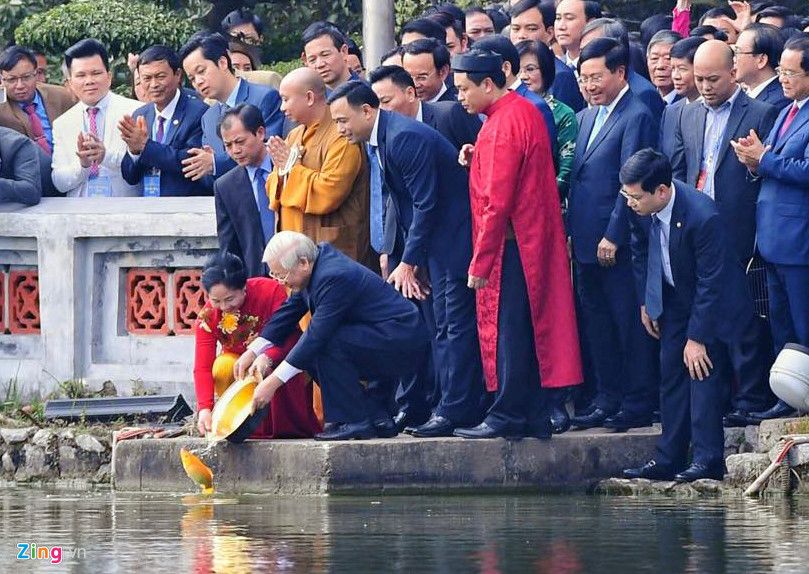
    One of the most widely circulated pictures on Vietnam’s social media in the last 24 hours was probably the picture of President Nguyen Phu Trong releasing a carp into Hoan Kiem Lake on January 26, 2019.

    President Trong was with a group of overseas Vietnamese who were part of a government’s sponsored program to come back to Vietnam to celebrate Tet – which will be on February 5, 2019.

    In Vietnam, like some of its neighboring countries, the Tet’s celebration starts almost a month before with many rituals that have been around for generations.

    Releasing carps into ponds and lakes has been a part of the annual celebration of Tet in some regions of Vietnam, probably more in the Northern provinces than in the South.

    It is being done during the ritual of sending the Kitchen God up to heaven so that he could make the report to the Jade Emperor on the 23rd of the 12th month under the Lunar calendar.

    The carp is believed to be the vehicle that could take the gods up to the sky because of the folklore widely circulated in East Asian cultures: “carp leaping over the dragon’s gate”.

    Moreover, the act of releasing – phóng sinh (放生) – captured carps, birds, and other animals, is believed to be done out of mercy and benevolence in Vietnamese culture.

    Unfortunately, as time goes by, this practice has given rise to other social problems, such as the illegal captures of birds and animals, as well as environmental issues when people release not only the carps but also the plastic bags they use to carry the fish to the releasing waters.

    However, some netizens were criticizing Trong for engaging in the practice of “releasing” this year for an entirely different reason.

    About a week ago, Tran Huynh Duy Thuc’s family and lawyer announced the government still refused to either grant a review of his case or pardon him after 12 petitions and one complaint against the Office of the President.

    Thuc is currently serving his tenth-year of the 16-year-sentence for “subverting against the people’s government” for calling for political pluralism and democracy in the country.

    The criticizing netizens raised the issue that if the government is still detaining over 200 political prisoners, charging them with vaguely defined crimes when they were only exercising their rights to express their political opinions peacefully, then what is the benevolent meaning behind the releasing of the carps by the president?

    Notwithstanding the political dissidents, there are also four wrongful convictions involving the death penalty which President Trong has continued to stay silent about their status. Three of these inmates have spent more than a decade on death-row while the evidence used to convict them have been proven to be improperly admitted.

    Some people believe that it would have been a lot more meaningful for the President of Vietnam to consider releasing citizens who were wrongfully convicted during this time of the year.

  • Facebook’s Community Standards Continue to Hinder Activism in Vietnam

    Facebook’s Community Standards Continue to Hinder Activism in Vietnam

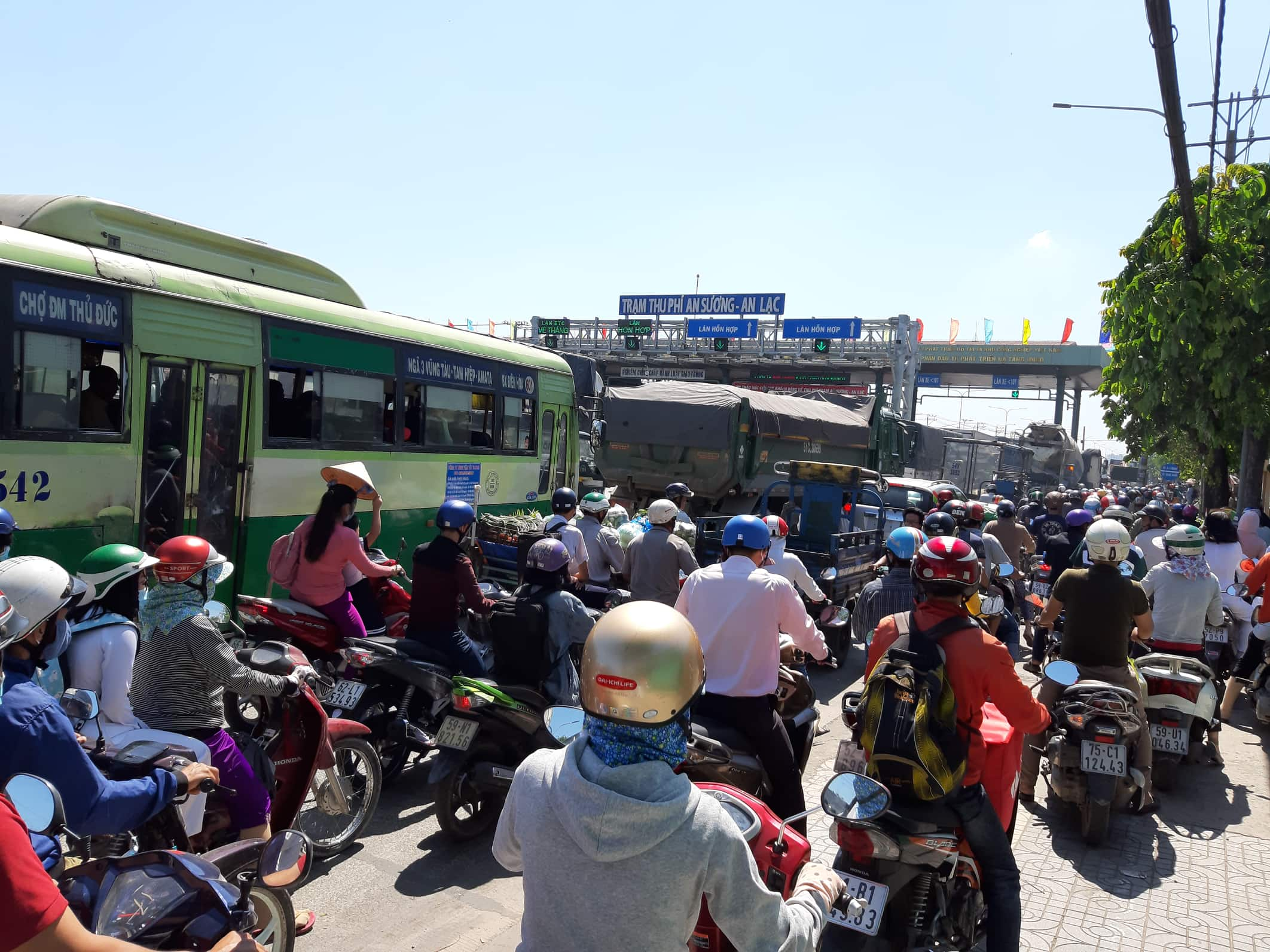
    For almost two months, a group of drivers in Vietnam continuously protested against a BOT (Build-Operate-Transfer) toll booth near Ho Chi Minh City for collecting illegal fees after its contractual time had expired.

    According to the group, BOT An Suong was collecting fees illegally when their contract with the government for the placement of the booth had ended about 32 months ago.

    The owner of the BOT claimed that they had built other transport projects in the area, and hence received the right to continue to collect fees.

    Regardless of who is right and who is wrong about BOT An Suong, the drivers should be allowed to protest and used social media to broadcast their campaign.

    However, an unlikely aide came to the BOT’s owner’s defense: Facebook.

    This is not anything new.

    In Vietnam, Facebook has faced allegations coming from activists that it repeatedly upheld requests (most likely by anonymous users and suspected government’s hired trolls) to shut down or suspend Vietnamese users’ accounts at the request of the authorities to suppress free speech.

    One of the latest casualties was Facebooker Huynh Long who became well known in the past year and a half as someone leading the protests against wrongful BOTs, including the latest one, BOT An Suong.

    The tactics used by Long and his fellow drivers have always been peaceful.

    They just refused to pay when they were driving by BOT An Suong and demanded evidence proving that it could still collect toll fees. They would often live-stream and broadcast the encounters so that others could watch and show support.

    During many of these encounters, it was the community’s support that kept the drivers safe when the BOT hired towing trucks and unknown groups of masked men to intimidate Long and his companions.

    But last night, Facebook informed Long that his account would be suspended for 30 days.

    He joined the increasingly long list of journalists, bloggers, and activists whose accounts have been either shut down or suspended by Facebook in the last six months.

    Activist Hoang Dung’s account has been suspended so regularly that it became a known fact among the activists’ community that Facebook took action against him every time his account disappeared.

    Freelance journalists who published misconducts committed by government’s officials like Le Nguyen Huong Tra and Truong Chau Huu Danh were also among the victims.

    Tra’s account received a blue badge for verification, but that did not help when her account was suspended twice in September 2018.

    What has caused the most frustration to the Vietnamese Facebook users probably is the fact that Facebook would only give out notice of suspension for violating its community standards without any further explanation.

    The users would never know which “standard” they might have violated even when they appealed their cases.

    Moreover, no one knows what the standards that Facebook is using in Vietnam are, or who is the third party’s fact-checker for them inside the country.

    Attempts from the activists’ community to get these answers from Facebook had gone nowhere. At most, they received some evasive responses from Facebook that did not resolve the problem.

    Unlike its neighbor, the Phillippines, where an independent newspaper – Rappler – is one of Facebook’s fact-checkers, the identities of fact-checkers in Vietnam remain a secret.

    In the meanwhile, living in a country like Vietnam where there are already a handful of arbitrary and vague laws that could put one in prison for exercising their freedom of expression, the secretive and non-transparent conduct of Facebook easily angered the community.

    It was not a coincidence that during July 2018, over one hundred thousand Facebook users in Vietnam were signing up on Minds – another social media platform – in just one weekend to make their point to Facebook.

    With the new cybersecurity law enacted and took effect already in Vietnam, Facebook does face pressure from both the government and the 60 million users’ community.

    Vietnam’s Minister of Information and Communications Nguyen Manh Hung had been quite upfront about the government’s desire to build Vietnam’s own social media platform, one that could compete and win over the market from Facebook.

    Part of the main reason that many Vietnamese still rely on Facebook instead of Vietnam’s own Zalo or any other platform is the fact that it is an American product.

    While it may surprise some foreigners, the preference for American made products is a known fact in Vietnam – the country that ranked No. 1 in finding the United States favorable in one PEW’s research in 2017.

    Facebook is also benefiting from the U.S’ rule of law and its Bill of Rights where individual rights, including their right to privacy and free speech, are protected.

    Whether Facebook will uphold these values is crucial to Vietnamese users.

    Failing to demonstrate that it does and will continue to adhere to these democratic values and human rights, Facebook will no longer be attractive in Vietnam.

  • Not Just Football, Some Vietnamese Do Care About Human Rights, Political Pluralism, and Democracy

    Not Just Football, Some Vietnamese Do Care About Human Rights, Political Pluralism, and Democracy

    Throughout 2018 and up until yesterday, January 24, 2019, the world continued to witness Vietnamese people’s love of football exploded, and the South Korean coach, Park Hang-seo, solidified his status as the country’s new, de-facto national hero.

    Images of people stormed the streets or “đi bão” – literally means “ride the storm” in Vietnamese – across major cities after each team’s win seemed to reaffirm that belief.

    While it may be fair to conclude that the majority of Vietnamese cares more about a football match than the other political issues in the country, we probably should pay attention to a different side of Vietnamese society that a foreigner may not see quite readily in recent days.

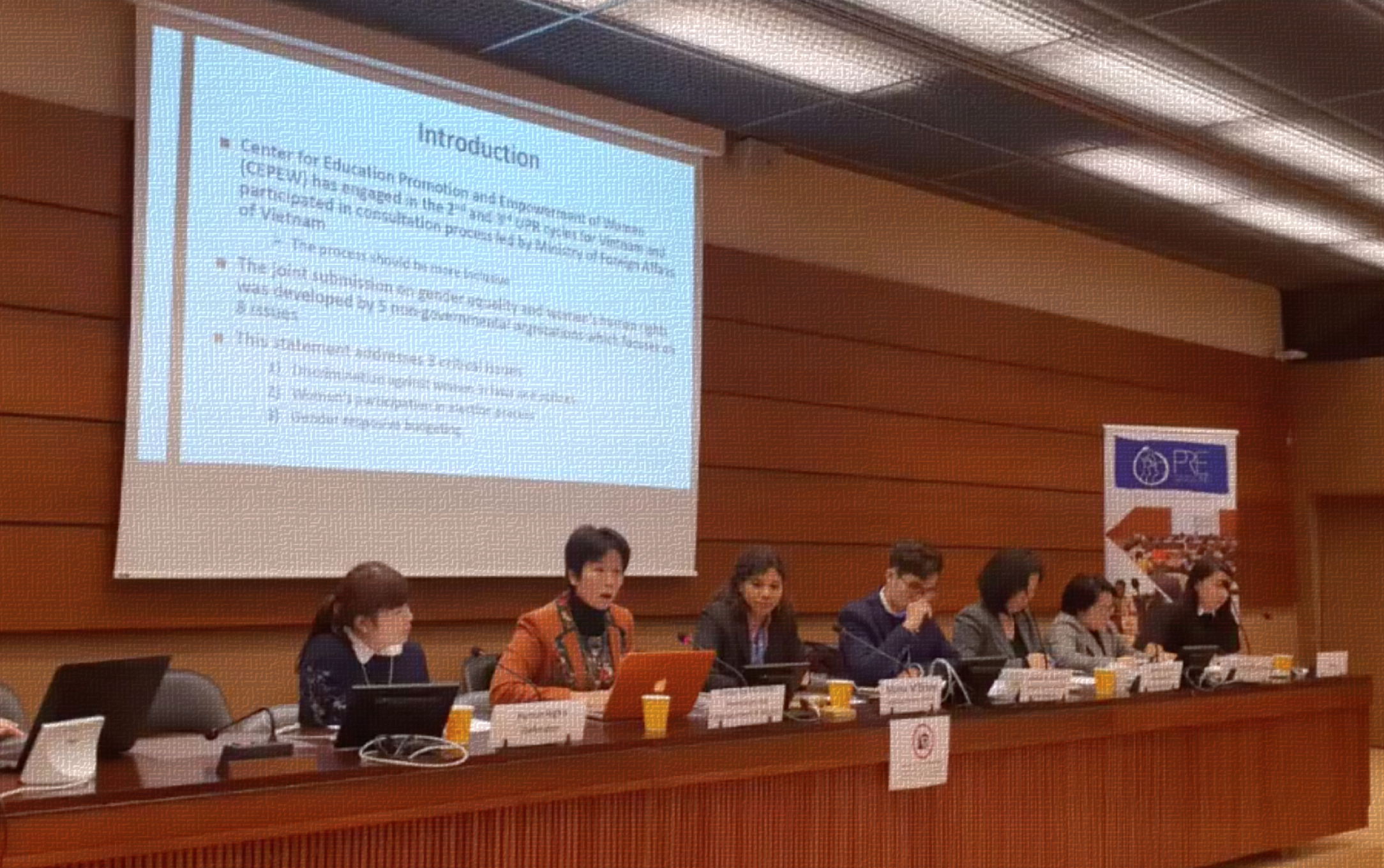
    Two nights before the last football match against Japan during the Asia Cup, from 8:30 P.M. to midnight of January 22, 2018, there was another international event concerning Vietnam: its third Universal Periodic Review (UPR) cycle.

    This particular UN mechanism – which only came into play on the world stage during the past decade – is where a state would undergo peer-review put on by other countries regarding its human rights’ records every 4.5 years.

    It is doubtful that the word UPR is popular, even in the West.

    But the January 22, 2019 event had attracted over 90,000 Vietnamese to tune in and watched to date, with over 4,000 comments and over 1,000 reactions on a live-stream posting by the Facebook page UPR Vietnam.

    UPR Vietnam is a collective effort of independent CSO workers in the country who want to bring more awareness of the human rights conditions in Vietnam to its people.

    Of course, comparing the number of people who went online to watch a UN’s human rights event to a football match does not mean much. But it is only fair if we put it within the context of Vietnam’s political background so that we could see why this group of viewers does show a different side of the country.

    Vietnam is probably a mini version of China with more free internet. That is one of the simplest ways – yet quite correct – to envision the country and its political structure.

    For almost 80 years in the North and more than 43 years in the entire country, the Vietnamese Communist Party ruled the state under a dictatorship.

    In Vietnam, there is no other political party. The VCP is the only political force.

    Young children would be indoctrinated at an early age when they joined the Communist Youth League.

    When they grow up, becoming a member of the VCP could also mean being part of a privileged class because the Party is the leading force that runs the country.

    VCP members take the majority in all branches of the government. The decision of the VCP’s Politburo would trump all others.

    Ho Chi Minh was taught to be loved and admired, even worshipped as the one hero who liberated his people from French colonization. History books spent 90% of the time teaching only historical events happened after 1945 and about how the VCP came to absolute power.

    The intent is clear and simple, to ensure that no one should have even the slightest doubt about the perpetuity of the VCP’s leading role in Vietnam.

    Not a single sign of dissent has been tolerated by the regime, especially in recent years.

    During the past two years, the political will of the VCP seemed to have hardened with 97 arrests of political dissidents compares to 43 in 2017, and 18 in 2016.

    The most significant difference between Vietnam and China is probably the fact that the government has failed to build a “Great Firewall” which let the internet and social media became the much needed civic space where people could come together and discuss current affairs and politics.

    That online space is now under threat with the new cybersecurity law that was passed in June 2018 and took effect on January 1, 2019.

    Along with the new law, a more rigid approach by the VCP in dealing with its own members also emerged.

    At the end of 2018, a well-respected intellectual and a long-time VCP member – Professor Chu Hao – was disciplined by the Party in a series of events which some people have dubbed “the VCP’s waging war against intellects.”

    It seemed, however, the Party and its leader, Secretary General Nguyen Phu Trong, were only acting in line with their manifesto.

    The hope that the Party would reform itself and be tolerable to the ideas of forming democratic institutions and the rule of law which some people might have carried on throughout the past four decades, seemed to have ended bitterly with the former Deputy Minister Chu Hao’s withdrawing himself from the Party.

    Getting over the status quo is never easy for any given society, not to mention one that has been under decades of authoritarianism.

    The fact that there is still a minority group of people (most of them are under 40-year-old) who – despite being born and grew up in such a political context – still cares about human rights does matter.

    It matters because only five years ago, during the last UPR cycle, not a lot of people in Vietnam know much about human rights and could care less about the UPR process.

    It matters, even more, when the one recommendation from the Czech Republic to Vietnam during this UPR cycle, asking the government to allow political pluralism and democracy in the country, also became one of the most read news of January 2019 on Luat Khoa online magazine just 24 hours after being published.

    Recognizing that there is a small, young sector of the population who is still willing to speak up when faced with harassment and even imprisonment as the government hardened its oppression methods, is, therefore, essential.

    It is the other image of Vietnamese that the world needs to take notice because we are more than just a fun, tropical travel destination with good foods and hard-core football fans.

    Although a new draconian cybersecurity law went into effect earlier this year, there are still people who refuse to censor themselves or curb their online activism in any way.

    Instead, they have continued fighting for what they believe is right.

    They are the drivers protesting against BOT An Suong, the lawyers and activists exposing the government’s wrongdoing in Loc Hung vegetable garden’s forced eviction, the environmentalists trying to save the rainforest in #SaveTamDao campaign, and many more.

  • #SaveTamDao: A Cry for Help from Vietnam’s Primary Rainforest

    #SaveTamDao: A Cry for Help from Vietnam’s Primary Rainforest

    One of Vietnam’s most famous preserved national parks – Tam Dao – is crying for help.

    Tam Dao is among the country’s oldest primary rainforests, locates in the Red River Delta – arguably, the heart of Vietnam.

    But the heart of Vietnam is bleeding from deforestation committed by business interest groups.

    It faces imminent danger from a development project calls Tam Dao II, jointly sponsored by Vinh Phuc Province and Sun Group – a private enterprise.

    Sun Group is among of the largest real estate development corporations in Vietnam, but it also faces the most accusations from environmentalists and environmental protection groups as one of the worst violators in major deforestations happening across the nation.

    A group of Vietnamese discovered back in October 2018 that the National Park was closed and visitors were not allowed to enter.

    Facebook’s community in Vietnam immediately suspected that a private company must have obtained the right to develop their real estate project in the area.

    After all, in recent years, Vietnamese people have repeatedly uncovered one deforestation disaster after another in primary rainforests throughout this tropical country.

    Every time, the citizens found out that the deforestation resulted from improper conducts of both the provincial government and the private company that won the bid for the development project.

    Every time, the last line of defense in protecting the rainforests of Vietnam has been the online campaigns organized by ordinary citizens.

    This time, it is the same.

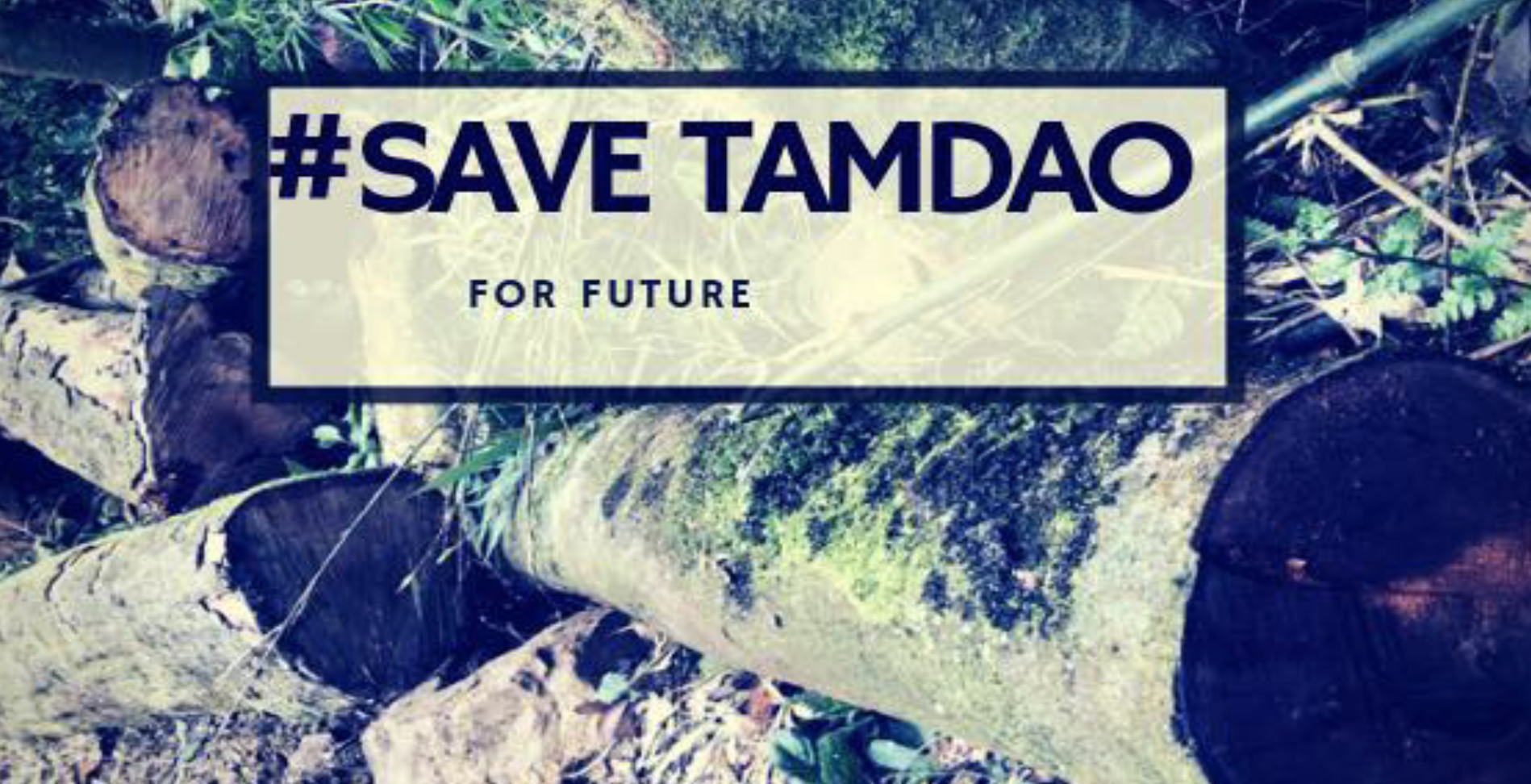
    A group of environmentalists created a new Facebook group with a new hashtag #SaveTamDao.

    What are the people trying to save? What is Tam Dao?

    Tam Dao National Park is a 36,000 hectares primary rainforest, preserving the original ecosystem of the Red River Delta that has been around for some 160,000 million years.

    Standing tall at about 1,200 meters above sea level with the highest peak reaching up to 1,500 meters and about 80 km from Hanoi, Tam Dao is known not only for its natural beauty but also the sanctuary and profound spiritual impact it imprints on visitors.

    Since 1996, the government has designated Tam Dao as a national park with the highest level of protection.

    In 2006, an attempt to develop a resort in Tam Dao with Vietnam Partner, LLC (registered in the U.S.) as the investor was proposed. However, it quickly came to an indefinite halt after facing opposition and harsh criticisms from scientists and others who work on rainforest preservation.

    Ten years later, it seemed as if the old development project was revived quietly by a new investor.

    According to the Facebook group – Save Tam Dao – in 2016, the commencement of the resort development project was witnessed by Vietnam’s top officials, including Prime Minister, Nguyen Xuan Phuc, and representatives from Sun Group.

    300 hectares of forest land belongs to the national park will be converted to land that could be used in development projects this time.

    Most worrisome, as in other development projects on forest lands across the country, the government did not disclose the Environmental Impact Assessment (EIA) to the public.

    The community and the people to date have not had the opportunity to participate in the EIA process.

    They could not even take a look at the development’s map.

    During an attempt to hike up Tam Dao recently, a group of citizens has obtained testimony from the residents living in a village at the bottom of the trail, that there must be a plan in place to build a “huge hotel.”

    This group also took pictures along the way, showing logs from the rainforest’s hundred-year-old trees lying around after got chopped off.

    According to Lonely Planet, “there are at least 64 mammal species (including langurs) and 239 bird species in the park” and added, “illegal hunting remains a big problem”.

    From Vietnamnet online newspaper in 2016:

    “Tam Dao National Park is covered by a rich flora, consisting of 490 species from 34 genera and 130 families.

    Tam Dao National Park is also home to 281 species of fauna from 281 genera, 84 families and 26 orders belonging to 4 main classes: animals, birds, reptiles and amphibious ones.

    Among the variety of life forms in the park are several rare species, including cheek black monkey, Tam Dao snake-head fish, silver pheasant wood grouse, etc.”

    According to Save Tam Dao group, the development project, as planned, will cause detrimental and irreversible impacts on the rainforest’s rich ecosystem which in turn, will affect the livelihood of the nearby residential areas and the people who rely on it for their sources of clean water and air.

    Pictures from Save Tam Dao Facebook group showing illegal logging and deforestation in Tam Dao National Park:

  • Tran Huynh Duy Thuc: A Decade Behind Bars

    Tran Huynh Duy Thuc: A Decade Behind Bars

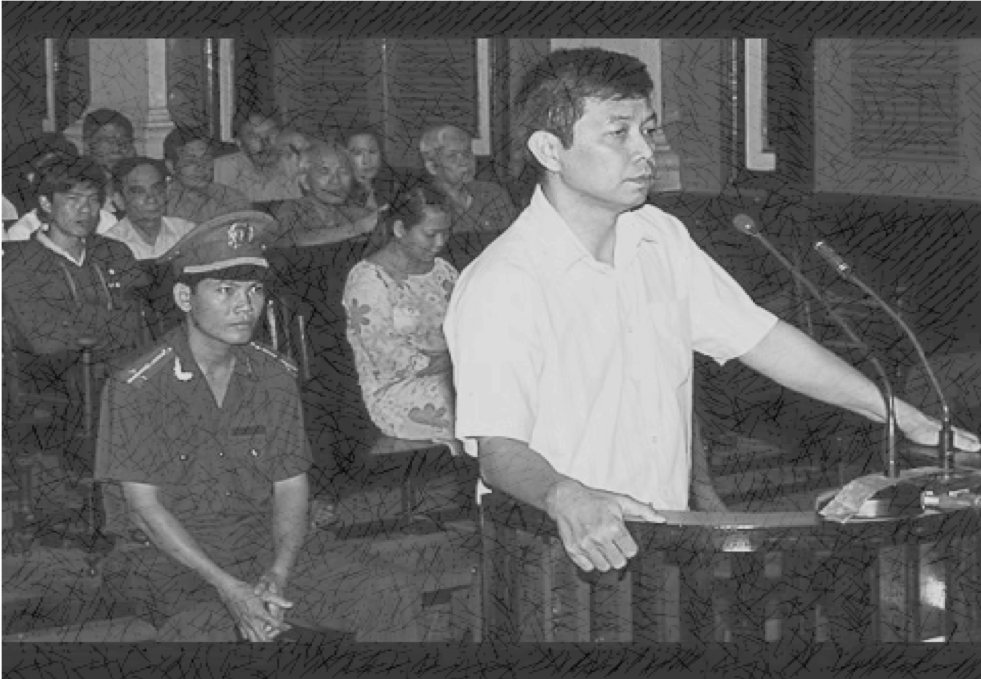
    Nine years ago, on January 20, 2010, the People’s Court of Ho Chi Minh City convicted Tran Huynh Duy Thuc, Le Cong Dinh, Le Thang Long and Nguyen Tien Trung under Article 79 of the 1999 Penal Code for “subversion against the people’s government.”

    Tran Huynh Duy Thuc was sentenced to 16 years in prison and five years probation which technically meant five more years under house arrest.

    Thuc was arrested in May 2009, and for almost a decade, the unique case of a successful entrepreneur turned dissident continued to be the highest profile among the hundreds of political prisoners and dissidents in the country.

    Article 79 has faced harsh criticisms from the international community.

    During Vietnam’s 2nd UPR cycle in 2014, the Vietnamese government accepted the recommendations to amend this and other arbitrary penal codes under the “national security” section, to ensure they would not be used to infringe the people’s human rights.

    However, in reality, the amended Penal Code of 2015 did not change the situation in any way. The crime “subversion against the state” remains as Article 109 under the new code.

    Thuc’s indictment described his criminal conducts included the act of forming and persuading people to join the Chan research group, to write and publish online articles defaming the government, creating division among the Vietnamese Communist Party.

    The prosecution further alleged that he had attempted to reach out and establish a relationship with leaders of the VCP, with the intent of re-shaping their political opinion to change the regime, and that he had planned to manufacture a document named “The Vietnam Path” to subvert against the State.

    The Vietnamese government’s point of view on “subversion against the State” is often not shared by the international community, especially democratic nations in the West.

    The heart of the problem lies in Section 1, Article 4 of Vietnam 2013 Constitution which states:

    The Communist Party of Vietnam – the Vanguard of the Vietnamese working class, simultaneously the vanguard of labourers and of the Vietnamese nation, the faithful representative of the interests of the working class, labourers and the whole nation, acting upon the Marxist-Leninist doctrine and Ho Chi Minh’s thought, is the leading force of the State and society.

    Because of this political monopoly, the VCP and the State of Vietnam became interchangeable in the mind of Hanoi’s regime.

    The leaders of the VCP would not hesitate in sentencing people who hold a different political philosophy than theirs to prison for decades because questioning the ultimate leadership of the Party equates “overthrowing the government.”

    This viewpoint effectively puts the VCP at odds with the universal values of human rights, in particular, the right to freedom of expression where holding a different political opinion, calling for pluralism and a multi-party system cannot be deemed criminal.

    In Tran Huynh Duy Thuc’s case, the defendants were also found guilty because the government further alleged that they were members of the Democratic Party and had started to write a new constitution.

    As one may correctly guess, organizing a political party in Vietnam – as in Thuc’s case – could also be construed as an act to “subvert the government.”

    Vietnam, at press time, has only one political party.

    Thuc has received the offer to be released into exile on numerous occasions, but he turned them down, stating that he would finish his full prison term instead of having to leave his home country indefinitely.

    The offer to be released into exile to political prisoners in Vietnam is not a release.

    It is more like a suspension of the sentence for either medical or humanitarian reasons. The released prisoners would not be able to come back to Vietnam, effectively being banned from their own country.

    When the Penal Code was amended, Thuc’s attorney has argued that the government should release him according to Section 3 of Article 109. Because at most, the evidence provided by the prosecution could only show that the defendants were in “preparation” to commit a crime under Section 3, with the maximum sentence of five years.

    His petition for a review of the case under the new Penal Code has gone unanswered.

    On December 13, 2018, Julie Ward, a Member of the European Parliament representing the North West of England, sent a letter to the President of Vietnam – Nguyen Phu Trong – (who is also the leader of the VCP), calling for an unconditional, in-country release of Tran Huynh Duy Thuc. The letter addressed the concerns over allegations from his family that he had suffered abuse in prison.

    A group of the EU Parliament’s MEPs, including Ms. Ward, has stated in more than one occasion that the release of prisoners of conscience like Tran Huynh Duy Thuc would be a critical condition for them to support the EU-Vietnam FTA.

    On this 9th anniversary of his conviction, U.S. House Representative Zoe Lofgren also called for Tran Huynh Duy Thuc’s release and denounced the mistreatment of political prisoners by Vietnamese authorities.

  • Protest Against BOT: How Vietnamese Drivers Fight Back

    Protest Against BOT: How Vietnamese Drivers Fight Back

    BOT, this three-letter-word probably does not have any special meaning for anyone but the Vietnamese people. It is a daily nightmare for many commuters in the country of close to 95 million in population.

    BOT stands for Build-Operate-Transfer, which is a form of contracts between a private company and the government that has become very popular in transport projects across Vietnam. By April 2018, it was estimated that 67 BOT(s) were in operation throughout the country.

    To put it simply, in a typical BOT development plan, the government would contract with a private company to build a transport project – for example, a section of a highway or a new highway bridge – and later allowed the company to operate a toll booth for a number of years to collect money from commuters to recover their investment.

    However, in Vietnam, once these BOT(s) began to open toll booths to collect fees, some of them faced enormous opposition from the people, namely the drivers who were subjected to paying such fees.

    In August 2017, a massive protest initiated by drivers when BOT Cai Lay in Tien Giang Province began to collect fees had lasted for days, causing this toll booth to stop collecting fees indefinitely.

    The drivers’ reason for protesting the fees was because the toll booth was wrongly situated, collecting money from people who did not use the road that was constructed under the BOT project.

    On August 6, 2017, the drivers started to use small bills to pay for the toll fees – which range from 35.000 VND – 180.000 VND – creating long delays on the highway in many days. After about two weeks, the BOT’s owner had no choice but to close down the toll (“xả trạm” in Vietnamese) and let traffic goes through without collecting the required fees until the government could come up with a resolution.

    BOT Cai Lay, however, remains completely shut down from December 2017 until today, while both the local and central governments have yet to finalize a plausible, alternative plan to resolve the problems. Their latest proposal – announced on January 15, 2019 – was to reduce the fees and extend the collecting period, but such a plan still failed to address the concern about the wrong location.

    In early December 2018, allegations regarding another wrongly situated BOT stormed both social media and the news in Vietnam because this toll booth is stationed on the most important highway in the country – National Highway 1 – at the outskirt of Ho Chi Minh City in Binh Tan District.

    The drivers alleged that the toll booth continued operating after its contractual time with the government had ended for more than 31 months, collecting fees that it was not entitled to. When being confronted, the owner of the BOT – IDICO company – claimed that the toll remained because it had built other transport projects nearby and could continue to collect fees.

    However, the drivers did not accept this explanation, stating that if IDICO had constructed other projects, the toll should be stationed in those areas.

    BOT An Suong locates at a critical junction for traffic entering and leaving Ho Chi Minh City, and the toll collects fees both ways for at least 15.000 VND each. For those who have to travel through this area daily, the amount they pay could be quite substantial in any given month.

    On December 6, 2018, about one hundred drivers showed up to protest the fees collection at An Suong, and they faced hundreds of men, as well as police officers and civil security forces. A group of men wearing masks opened the door of a protesting driver’s car, dragged out Le Thai Hung who was sitting on the passenger’s seat and physically assaulted him.

    Hung was then taken to the nearby police station by the same group where he alleged that he got beaten up during his 12-hour detention. The police did not charge him; they later released him and said he fell and suffered injuries.

    On January 14, 2019, the story of BOT An Suong got heated again on social media where four drivers (one of them is journalist Truong Chau Huu Danh) who protested the fees collection at this toll booth were detained illegally in an alley nearby for over 30 hours.

    The victims live-streamed their plight where they were confined in a car, surrounded by hundreds of masked men and police throughout the night.

    Their three cars were picked up by a towing truck which they claimed was acting under the order of the owner of the BOT. They were towed from the BOT to an alley about 50 meters nearby where the four persons were held against their will. Barricades were put up at the only entrance/exit of a dead-end alley, effectively stopped them from leaving. They also claimed that their cars were damaged due to the removal. A fifth person was attacked and taken away earlier in the evening of January 14, and his car later was towed to an unknown place.

    In the live-stream clips, viewers could see police officers were present at the scene but failed to act and protect the victims from both the removal and the false imprisonment. Also present at the scene was a large group of men in “blue masks” who acted most aggressive, yet it was impossible to know their true identity.

    The four continued staying together in one car, a Ford Ranger, where no one was allowed to get close to them. Food delivery, their lawyer (who came by the next morning), and even an ambulance, all were denied entry.

    Around 9:00 P.M., one of the drivers, Huynh Long, stepped off the car to find a restroom and disappeared. He later was found unharmed, but his wallet and cellphones were taken.

    Long said he was held against his will by a group of men on motorbikes, who then rode around town with him and threatened him to stop his protest against BOT An Suong. They later left him stranded on the streets after taking his belongings, but Long got help and was able to come back to the alley the following morning to be with his friends.

    By January 15, 2019, the police attempted a few times to write up their investigative report about the incident, and the four victims finally were allowed to leave the scene in the late evening. They stated that they would initiate legal action against those who were involved in the false imprisonment.

    On January 16, 2019, the protest by the drivers and others continued at An Suong, asking the BOT to stop collect fees. One driver said in a live-stream on Facebook that he has prepared for the worst, and that if the BOT’s owner would again try to detain drivers, he could last up to ten days.

    At about 2:00 P.M. local time, according to the same protesting driver, the toll booth gave up and let cars pass through without having to pay.

    There is a Facebook group of drivers who participated in these BOT protests in recent years calls Friends on the Long Road (Bạn Hữu Đường Xa).

    One of the reasons these protests were successful and received public support was the fact that a lot of Vietnamese people got frustrated when they have paid a lot of taxes for improving and maintaining road conditions, and yet the country’s infrastructure and transportation remained the worst in the world.

    Further, whether it was the Formosa environmental disaster, the land eviction in Loc Hung garden, or these BOT projects, the people did not get to participate in the decision-making process nor were they even consulted. Often, the public never knew about these projects until they became disastrous for the people’s daily life.

  • Timeline Of The Loc Hung Garden Incident

    Timeline Of The Loc Hung Garden Incident

    The forced eviction at Loc Hung vegetable garden in Saigon on January 4 and 8, 2019 joined the long list of land disputes between the people and the State of Vietnam. We are putting together a timeline of events that have happened to date and will continue to update as this story develops.

    December 20, 2018

    News about a possible forced eviction came about on December 20, 2018, on social media. Blogger and human rights activist, Pham Doan Trang, reported on her Facebook that according to the residents at Loc Hung, 50 local police officers from different forces in Ward 6 of District Tan Binh showed up at the garden area, demanding the residents to allow them to perform an administrative check. By 1:30 p.m., the police withdrew.

    December 29, 2018

    The People’s Committee of Ward 6 issued an announcement, stating that they would begin a forced removal of all illegal constructions that were built after January 1, 2018, which also notified the residents that the time for such removal would take place within 90 days from January 2, 2019. It is unclear if all residents received the announcement.

    January 3, 2019

    During the night of January 1, 2019, the residents announced on social media that the local authorities have brought in barbed wires, frequency disrupting machine, forklifts, and bulldozers to the garden’s area.

    January 4, 2019

    At daybreak, a group of some 400 people from different police and security forces showed up at Loc Hung and began to block street access to the garden, starting from the Bay Hien intersection to Thanh Thai and To Hien Thanh streets. The removal of some 40 houses lasted from 7:30 A.M. until 6:00 P.M., during which time 20 people were arrested and taken to the Ward 6’s police station for opposing it.

    The residents insisted that they had never received any order for such removal.

    January 7, 2019

    During the night, hundreds of police officers and civil security personnel were ordered to go to Loc Hung where the public speakers – on high volume – were announcing the government would only remove illegally built constructions. Cao Ha Chanh, one of the persons serving on the board of representatives for the families living at Loc Hung, recalled that the removing force still did not provide the people with any legal documents regarding the order to remove before they started to take down the homes.

    January 8, 2019

    Starting at 5:30 a.m., approximately 1.000 officers from different police forces and others entered Loc Hung garden. Similar to what happened on January 4, 2019, the authorities blocked off the streets leading to the area by putting up the barbed wires. To gain entry, people must show the police their identification. As soon as they arrived, they began arresting those residents identified as “leaders” in the community, including Cao Ha Truc.

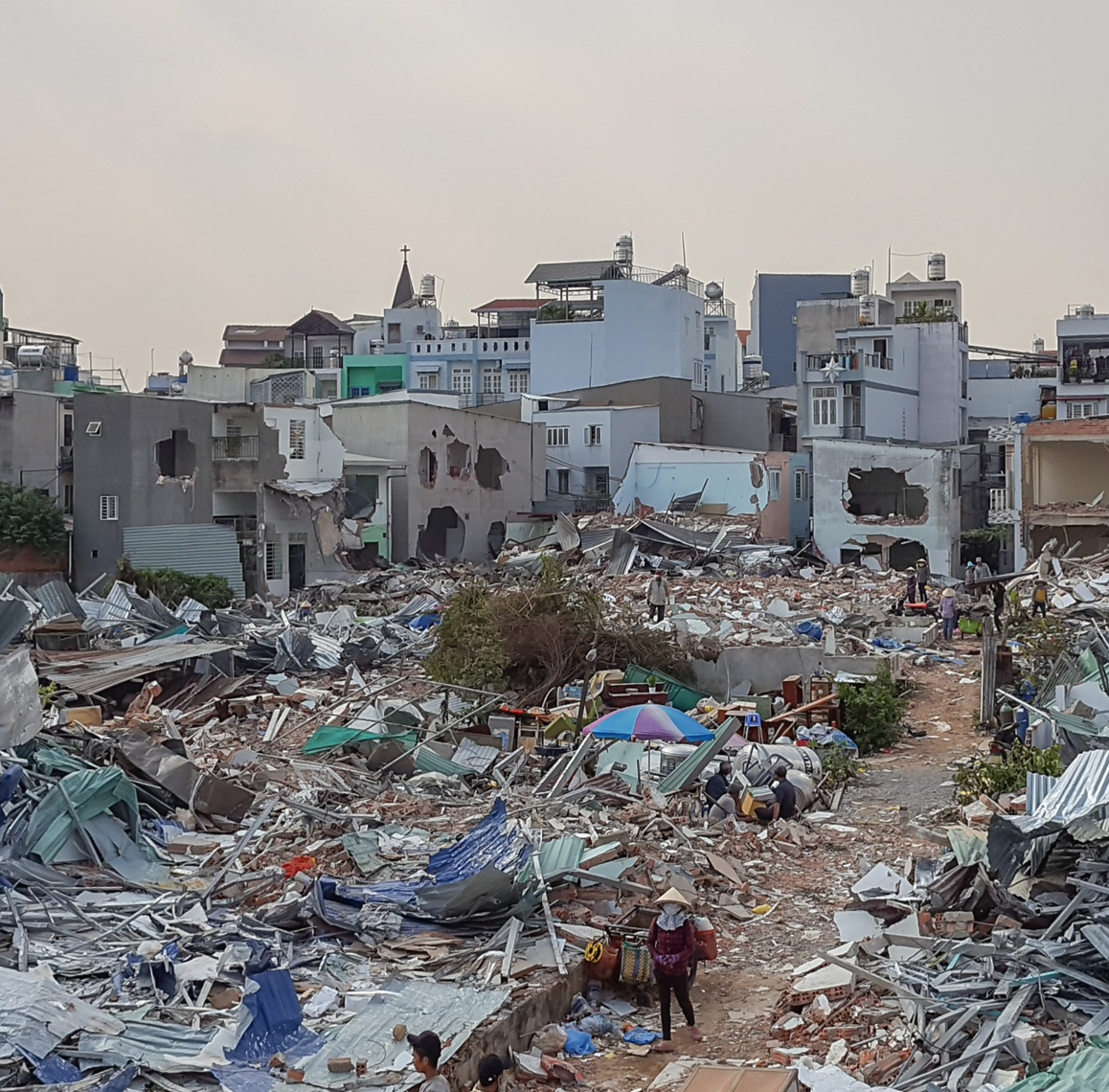
    Electricity and internet were cut off in the area. By 7:30 A.M., the forklifts and excavators were put to work as the authorities began to tear down the residents’ homes. By the end of the day, all of the houses at Loc Hung garden were demolished. The residents estimated there were about 200 homes.

    Among the now homeless people were some 20 disabled veterans who served in the former South of Vietnam’s military who do not have a family and they were being taken care of by the residents and the priests from the Redemptorists Church.

    On the same day, Amnesty International – Southeast Asia office – publicly denounced the Vietnamese government’s decision to remove the houses forcefully belong to Loc Hung’s residents.

    January 9, 2019

    In the early hours of the day, the police released Cao Ha Truc and other residents who got arrested the day before.

    The Ho Chi Minh City Police Department’s newspaper was among the first state-owned media reported on the removal of Loc Hung Garden’s houses, which the government estimated to be around 120 in total. Accordingly, the People’s Committee of Ward 6 stated that the removal of the illegal constructions was carried out under proper legal procedures.

    January 10, 2019

    Tuoi Tre and a few others also reported the story, mostly to allow the District Tan Binh’s authorities to make their argument public, that they have only “enforced the removal of illegal constructions on a public area and not a forced eviction in a land recovery matter.”

    Further, the People’s Committee of Tan Binh District confirmed with the media that they had followed the proper legal procedures when organizing the enforcement team to take down a total of 112 construction projects without a permit at Loc Hung between January 4-9, 2019.

    January 11, 2019

    Chris Hayes, a Labor Party’s member of the Australian Parliament, and a Vietnamese-Australian bishop, Vincent Nguyen Van Long, both called on the Vietnamese government to cease from enforcing the removal of Loc Hung resident’s houses, stating that it is a violation of the people’s freedom of religion and belief.

    On the same day, the Secretary of the Vietnamese Communist Party’s Ho Chi Minh City division, Nguyen Thien Nhan spoke about Loc Hung for the first time.

    VnExpress quoted him saying: “there are many things which should be normal, but those who are plotting against the government would still abuse them to incite (others). As seen in a few cases in 2018, the city had learned from our experience so that we would not confront the people, but we will use propaganda activities to let them understand.”

    January 12, 2019

    The local authorities put up a large panel in the area, announcing a public construction was going to be developed after the removal team had flattened out the entire Loc Hung vegetable garden. On the same day, some of the residents met with a group of lawyers who have expressed interest in providing legal assistance.

    January 13, 2019

    The Committee for assistance in the development project regarding the public school at Ward 6, District Tan Binh, HCM City (the project to be developed at Loc Hung) announced the assistance policy that the District was going to be provided for those who were farming on the land. Accordingly, on January 10, 2019, the People’s Committee of HCM City approved the assistance proposal for those who have been using the land at Loc Hung garden for agriculture purpose at the rate of 7,055,000 VND/m2.

    Attorney Trinh Vinh Phuc published a few photographs of the documents provided by the residents of Loc Hung in support of their claim for legal possession of the land.

    January 14, 2019

    At 9:00 A.M. a group of religious leaders of the Interfaith Council together with some of the priests from the Redemptorists Church in Saigon went to visit the residents of Loc Hung. In the afternoon, Bishop Paolo Nguyen Thai Hop also came to visit at around 3:00 P.M. During both the morning and afternoon visits of these religious leaders, the local government used loud public speakers to interfere with their prayers and speeches to the residents.

    Summary of Factual Disputes Regarding Loc Hung:

    The disputed land consists of 4.8 hectares in Ward 6, District Tan Binh, which includes parcels 126-5, 128-5, 129-5, and 131-101-5 according to the No. 12 Map (of the old recordings). The location of the land is as follows: the North West touches Alley 9/24 Cach Mang Thang Tam Street, the South West touches Hung Hoa Street, The South East touches Chan Hung Street, and the North East touches the current existing residence.

    The People’s Committee of Tan Binh District claims this land is public because, before April 30, 1975, it was under the management and control of the former Republic of South Vietnam’s Department of Telecommunication and was used as a telecommunication tower. After April 30, 1975, the new government took control of the land according to Decision 111/CP dated April 14, 1977, issued by the Government Council, and continued to use the telecommunication tower.

    On the contrary, Loc Hung’s residents claim that the original owner before April 30, 1975, was the Catholics Church of Vietnam who had granted them the right to farm on such land. After April 30, 1975, the residents continued to live and farm on the land undisrupted and without dispute with other people. After the Law on Land 1993 took effect in Vietnam, the residents have been petitioning the government in almost 20 years for the right to possess and usage of the land. However, the government did not respond to their petitions.

    (To Be Continued)

    References:

    Loc Hung Vegetable Garden Continues To Be Harrassed (RFA-Vietnamese)

    Loc Hung Vegetable Garden “Devasted after Forced Removal” (BBC-Vietnamese)

    Loc Hung Vegetable Garden Under Siege (BBC-Vietnamese)

    Forced Removal of 110 Households Was Done According to Law (HCM City Police Department Newspaper)

    Forced Removal of 112 Illegally Constructed Houses in The Vegetable Garden (Tuoi Tre)

    Tan Binh District Speaks About the Forced Removal at ‘Loc Hung Vegetable Garden’(Vietnamnet)

    Australian MP and Vietnamese-Australian Bishop Speaks Up About Loc Hung Incident (RFA-Vietnamese)

    HCM City Forced Removal of 112 Houses Built on Public Land (VNExpress)

    Tan Binh District Provides More than 7M VND/m2 in Assistance for Loc Hung Vegetable Garden (Tuoi Tre)

  • The Real Casualty of the Loc Hung Garden Incident: the People’s Trust

    The Real Casualty of the Loc Hung Garden Incident: the People’s Trust

    When the officials of Tan Binh District in Ho Chi Minh City gathered over one thousand police officers and other forces to bulldoze some 200 houses at Loc Hung Garden, they destroyed not only the shelters of a few hundred people but something even more important.

    What also crumbled and laid buried deep in the rubble was the people’s trust in the current regime–or whatever was left of it.

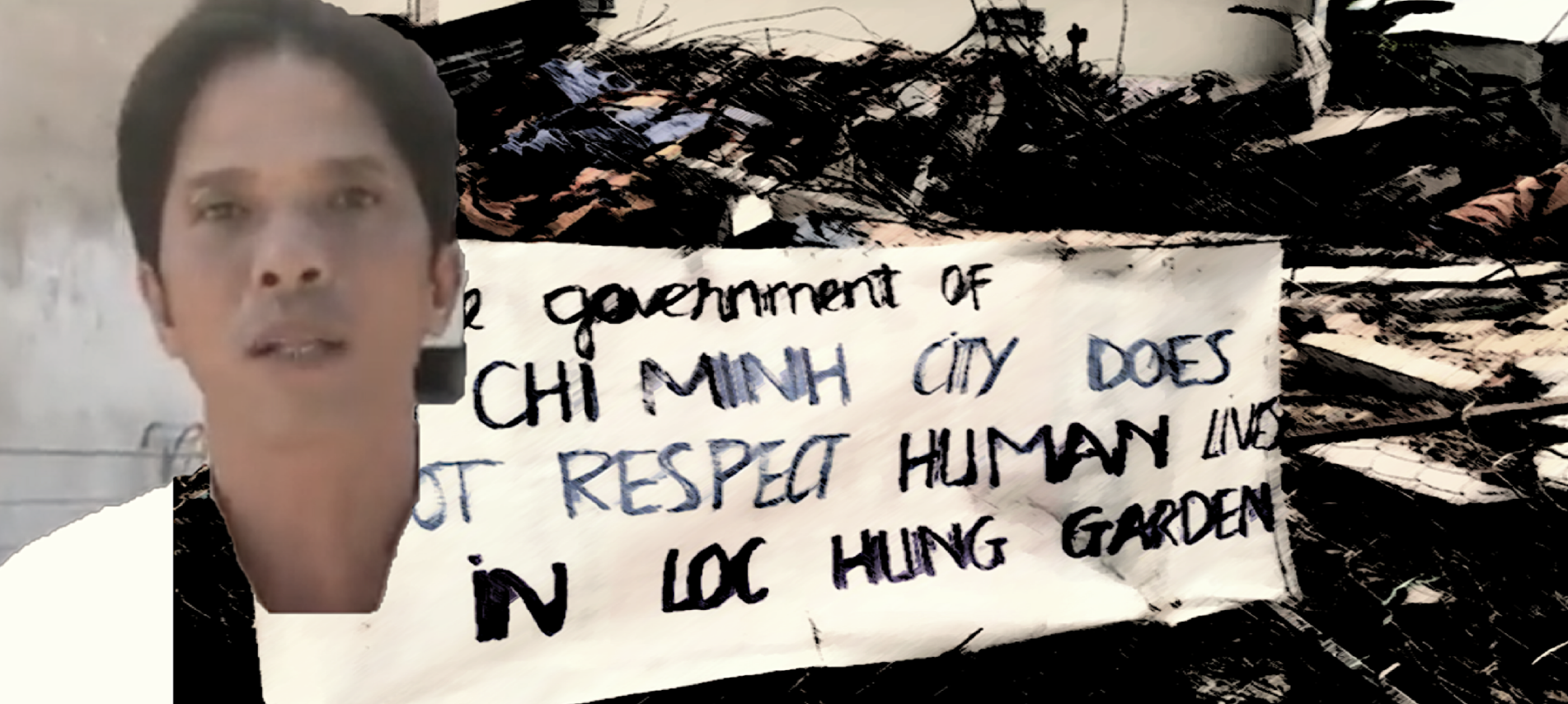
    “I have to tell you honestly, the trust between the people of this community and the government has totally broken down over the decades. We cannot trust them after so many broken promises. They have told us that they would meet with us and provide us with documents about the projects, the plans. We’ve received nothing. There is no trust.”

    Cao Ha Truc, one of the persons representing the 124 households living in Loc Hung Garden, spoke to me over the telephone on January 9, 2019, about 12 hours after he was released from the police station and came back to a home that was no longer there.

    Truc told me that he was a vegetable farmer until the local authorities engaged in what he called “shady tactics” a few years ago to stop him and others from continuing their farming.

    In a video clip recorded earlier in the day, he said:

    “They oppressed us by cutting off our means of survival, by letting water flood our vegetable fields, and we could not live (properly) for eight years.

    We could not raise cats and dogs because they would die when the land was submerged. The meter-high water took a month to drain, but then the environment became polluted. We had to find other means of living.

    We’ve lived here through three generations by farming vegetables, but now we have to flatten out the land and build the four-level houses to keep on living.”

    Truc was refuting the government’s claim that the residents living in Loc Hung were constructing houses illegally when it confirmed that some 112 homes were demolished on January 8, 2019.

    Loc Hung Garden is a complicated legal issue involving land rights and land possession, with the case beginning to beleaguer the Ho Chi Minh City government in the late 1990s.

    The Vietnamese government has faced increasing legal headaches concerning land disputes over the years, due to rapid nationwide development.

    Land Disputes Developing with and within Land Development

    Vietnam’s economy grew exponentially in the past three decades after the communist regime decided to “open up” and explore a “free market with socialist characteristics.” In big cities like Hanoi and Saigon, some investment and development projects crashed head-on with the former way of life: farming.

    As Vietnam has been an agricultural society for thousands of years, the fact that there were farmers in the big cities probably shouldn’t surprise anyone. However, the clash between the old and new ways of life – coupled with a lack of clear legal framework – has created long-lasting social, economic, and political problems.

    The Loc Hung Garden incident was not the first and definitely will not be the last of its kind.

    In Vietnam currently, there are hundreds of thousands of land-lost victims who are known as “dân oan” in Vietnamese, often translated as “victims of injustice” in English.

    As of January 8, 2018, some may want to add another 124 households from the Loc Hung area to this population.

    At the same time, the local government has not exactly been transparent about the legal basis to support their claim to the land.

    What the public knows thus far includes a still-pending development project for a public school system from K-12 on the land where Loc Hung Garden is located, and that this project was postponed numerous times during the last five years.

    Before that, both the city and the district’s officials had failed to carry out the other public construction projects they previously proposed for the area.

    In report No. 6035/UBND-NCPC sent to the Government Inspectorate dated October 20, 2016, the People’s Committee of Ho Chi Minh City admitted two critical matters:

    1) The public school development project has yet to be executed and was still only a prospect, and

    2) The land dispute with the residents at Loc Hung Garden would have continued to be classified as a “complicated and long-term petition” as the project had already started.

    The report and its conclusion indicate that the government always recognized the land dispute at Loc Hung Garden was not a matter of black-and-white and that it anticipated a lengthy legal battle with the residents once the project began.

    Information on the pending development project, as well as the proposal on compensation and relocation of the residents, is not made readily available to either the residents of Loc Hung or the public at-large as prescribed by law.

    Was There Due Process?

    The official reason given by the authorities (the People’s Committees of both the Tan Binh District and the 6th Ward) for tearing down the hundreds of homes was to enforce the order to remove illegal structures at Loc Hung Garden.

    For the enforcement and removal to take place, the law in Vietnam requires the authorities to provide three critical documents with sufficient public notice to the violating individuals or entities:

    1. The report conducted by the appropriate authorities on the violation
    2. The decision to penalize the violation, and
    3. The decision to enforce

    (Law on Land 2013, Law on Administrative Penalization 2012, Decision 166/2013/NĐ-CP on Enforcement of Judgment, and Decision 102/2014/NĐ-CP on Administrative Penalization Relating to Land – all links in Vietnamese).

    These documents should also be served to the violating individuals and entities, giving them an opportunity to remedy the violations voluntarily.

    Cao Ha Truc told me he did not receive any of the three required documents but cautioned that he could not speak for all others in the area.

    The state-owned newspaper that published the story about Loc Hung also did not enclose copies of these essential documents.

    When I called the office of the People’s Committee of Tan Binh District and asked for copies of the documents to be provided electronically according to law, I was turned down. The desk person stated that I would need to show up in person to make my request.

    The law prescribes a specific duty to the enforcing authorities, which is to establish that the required documentation exists and that the affected people are duly notified. When the government has yet to provide them, we cannot conclude that there was due process.

    Who Owns the Land in Vietnam?

    Land in Vietnam “belongs to the entire people with the State acting as the owner’s representative and uniformly managing land. The State shall hand over land use rights to land users in accordance with this Law.” (Article 4, 2013 Law on Land).

    I noticed the word “shall” was added in the English translation that I found online. Its addition makes a significant legal difference.

    The 2013 Law on Land provides in detail a long list of specific scenarios where the Vietnamese government would hand over land rights use to the people. At the same time, it also prescribes another list of situations where the government could perform land reclamation and land requisition.

    The main legal issues in the Loc Hung Garden case have always centered on the farmers’ right to possess the land and their land use rights from 1975 until now.

    The government claims they acquired the land and the other 1.2 hectares nearby from the now-defunct South Vietnam’s postal services under Government Council Decision No. 111/CP dated April 14, 1977.

    The residents claim that Decision No. 111/CP only covers the 1.2 hectares because the 4.8 hectares in question have been used for farming during the last 60 years in an undisrupted and undisputed manner. They also claim that the 4.8 hectares belong to the Catholic Church and the church gifted it to the farmers in 1954.

    All parties involved agree on the size of the disputed land and the fact that the current government did allow residents to continue living and farming on the property undisrupted since 1975.

    On January 8, 2019, the Tan Binh District’s division of the Central Propaganda Committee issued a publication, stating that the residents who had been living and farming at Loc Hung Garden would be entitled to compensation according to the policy for agriculture lands.

    What would be the justification to compensate the residents if there wasn’t any legal basis for them to live there in the first place?

    And more importantly, is any amount of monetary compensation enough to gain back the people’s trust in their government?