Author: Quynh-Vi Tran

  • Wrongful Death Penalty Cases And The Families That The Inmates Left Behind

    Wrongful Death Penalty Cases And The Families That The Inmates Left Behind

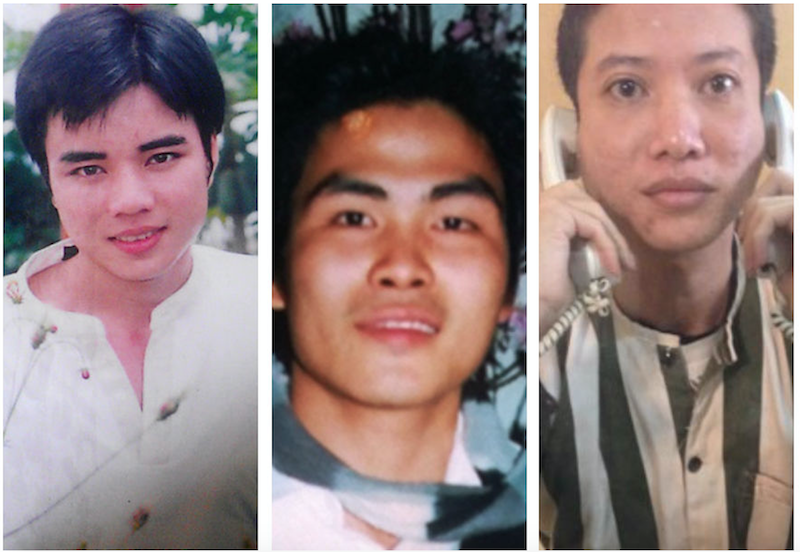
    Mrs. Loan began to cry softly as she spoke to me one afternoon in late March, when I called to ask if there were any updates on her son Ho Duy Hai, who is sitting on death row in Long An province on a wrongful conviction.

    “He is so young, and yet already has suffered over a decade of imprisonment,” she told me over the phone. “I want him to come back home and live a normal life. I want him to get married, and have a child. Sometimes, I just really wish to have a paternal grandchild and that both of my children could live with me like in those happy days before.”

    I have been in contact with the Hai family for the past four years, since I first joined the community of Vietnamese bloggers and activists calling for the suspension of Hai’s execution in December 2014, after then President Truong Tan Sang issued an order to stop his execution. It was  then that I began studying his case a bit more and learned that the evidence submitted for his conviction was invalid, and quite frankly, illegal.

    For example, the local authorities wanted to ensure Hai was found guilty and so they purchased a knife at a market and marked it as “similar” to the weapon that they alleged Hai had used in committing the robbery and murder of two women. And with such “evidence,” Hai was convicted and sentenced to death in 2008, when he was a recent college graduate, and just 23-years-old.

    Throughout these years, I have also gotten closer to two more families of Vietnamese who have been handed wrongful death penalties. Those include the families of Nguyen Van Chuong and Le Van Manh. These two men also were convicted and sentenced to death in their 20s with no evidence and following alleged torture by police officers. These three groups of parents meet every month in Hanoi and go together to petition the government to overturn the wrongful conviction of their sons. Each month, if they saved enough money to buy supplies, they will also visit their sons in prison. All of the men were convicted and have been kept behind bars for more than a decade.

    Yet, visiting their sons is not quite an easy task because of the financial strain on these families. The words of Le Van Manh’s mother – Mrs. Viet – broke my heart during our most recent telephone call, also in March this year. “If I manage to earn enough money, then I will go to see my son, but making money to support my family is quite difficult given my age,” she told me. “So for some months, I have not been able to see Manh.”

    My colleague based in Vietnam told me that catching fish and other aquatic creatures at the river near Mrs. Viet’s house was the main source of her income. Yet, her determination to fight against his unjust conviction has been so powerful.

    I asked her if she was able to talk about his case when she visited him in jail. “The officers don’t like me to talk about it, but I tell Manh anyways,” she said. “Manh needs hope and the information that people have not forgotten him and are fighting for him gives him hope.”

    Mr. Chinh, Nguyen Van Chuong’s father, also has the same fighting spirit. He sends me documents and updates me on Facebook about his son’s case. This year, Mr. Chinh shared with me that the Supreme People’s Procuracy Office in Hanoi contacted him and invited him to go see them. The office told Mr. Chinh that they had sent a request for a trial for cassation in Nguyen Van Chuong’s case. However, the Supreme People’s Court of Vietnam denied such a request without giving any apparent reason. The Procuracy Office used that excuse and the denial to tell Mr. Chinh to stop contacting them. However, that was not a legally sound argument. First, the office recognized that the case needed to be reviewed. Second, the law allows the office to continue sending their request, even after the denial. In fact, the Procuracy Office should continue to submit their requests for Nguyen Van Chuong and not tell his father to forget about the case.

    The cost for discussing the details of their cases with their family members during visitations has been quite severe for Nguyen Van Chuong and Le Van Manh. Both of them claimed that they were shackled 24 hours a day a few times. Nguyen Van Chuong’s father also told me that Chuong was being beaten up by other inmates in his prison and being forced to sign a letter for the local authorities confessing to the murder he was convicted of. Yet, the families and the inmates did not yield in front of these pressures and they kept on petitioning for a review of their cases.

    Different than Ho Duy Hai, both Chuong and Manh already had children before their conviction. But their wives could not withstand the pressure of having a spouse that was given a death penalty conviction and so they left their children to be raised by Chuong’s and Manh’s parents. The responsibility to raise the children while still trying to exonerate the two men greatly added to the burden of the two families, who are already straining to survive. The grandparents are elderly and cannot find jobs that provide a fair and reasonable income. But at the same time, they have to provide support for a lot of people in their families.

    In Vietnam, there is no organization that really focuses on the issue of the anti-death penalty or that assists people with wrongful convictions. And even though I work on this issue, my non-profit organization is not recognized by the Vietnamese government and our work is classified as “reactionary” conduct. More than that, none of the death row inmates would be allowed visitations by an organization or non-family persons, not even the International Committee of the Red Cross. The inmates are shut off from society entirely and can not have any contact with  people and organizations that care about their cases. In fact, visitations by independent organizations working on behalf of inmates, including those sitting on death row, was a request made by the Committee Against Torture  in its concluding observations for Vietnam in 2018.

    As the person who has brought these three cases before the different international law reviews, such as the Committee Against Torture and the Universal Periodic Review of Vietnam, where specific inquiries were asked about them, it is very frustrating for me that international law – such as the International Covenant on Civil and Political Rights (ICCPR) – had not been used for the benefit of the wrongfully-accused inmates. The Human Rights Committee (a body of independent experts that monitors implementation of the ICCPR) sadly acknowledged the fact that the covenant could not actually be implemented by the people of Vietnam in its third periodic report on Vietnam early in 2019.

    The families of Hai, Chuong, and Manh don’t really have support from the public or civil society organizations that operate in Vietnam. They are almost alone during their monthly petitioning to the authorities in Hanoi. They need to find some financial resources to buy supplies to visit their sons each month. More than that, no one actually assists them with funds to buy paper and pay postage fees to send their monthly petitions. And yet, none of the parents will call for financial support from the public for their families when I spoke to them. Instead, they all told me that they just want a review of the cases in an independent court of law.

    Their determination and belief in justice and rule of law always encourages and inspires me to continue to bring their cases to more people, which I will do until the day that these cases are  fairly reviewed and rightfully settled.
  • Pham Doan Trang Received Prize for Impact from Reporters Without Borders’ 2019 Press Freedom Awards

    Pham Doan Trang Received Prize for Impact from Reporters Without Borders’ 2019 Press Freedom Awards

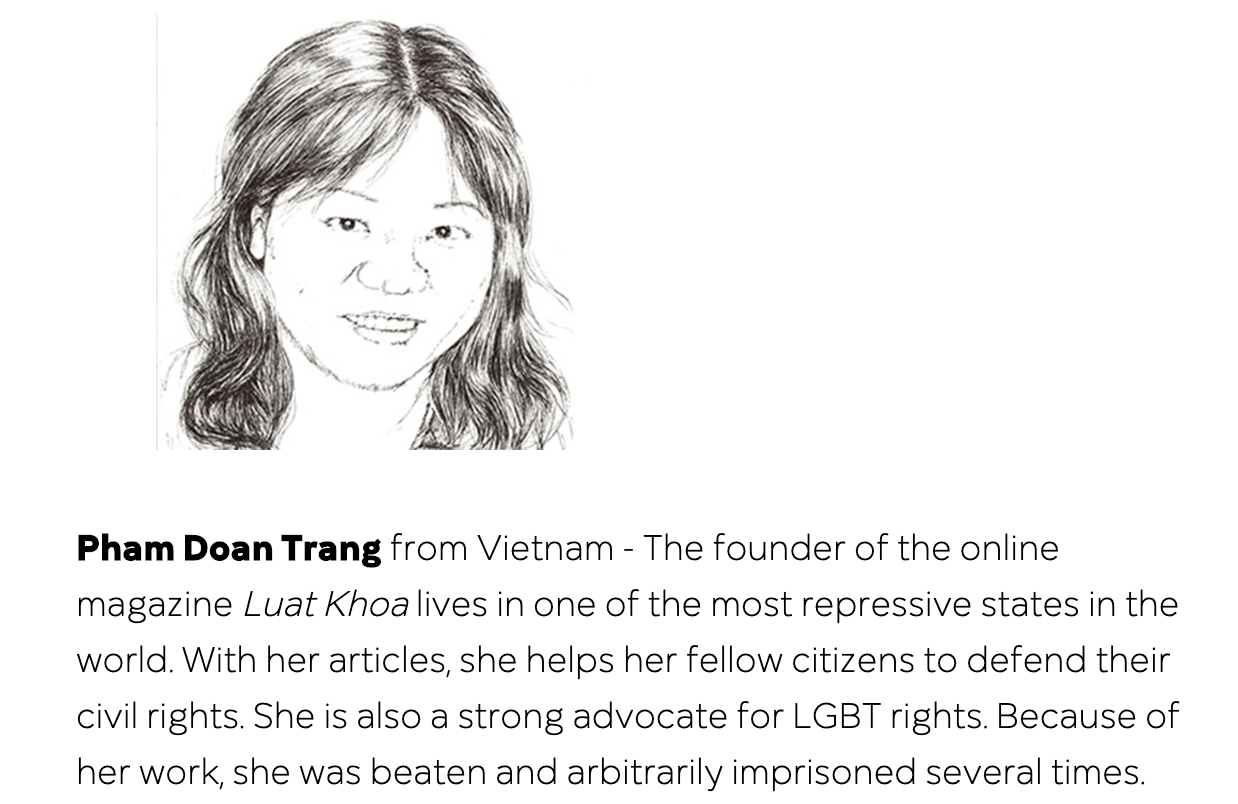
    On September 12, 2019, our editor Pham Doan Trang had received the Prize for Impact from Reporters Without Borders’ Press Freedom Awards 2019 in Berlin, Germany.

    Trang was not able to travel and received her award in person. Instead, our editor Trinh Huu Long and also the editor-in-chief for Luat Khoa magazine was representing Trang to accept it.

    Being her colleagues, The Vietnamese magazine’s staff is delighted and honored that Doan Trang received the Impact award. We have all been inspired and moved by her tireless efforts – as she stated – to make sure that “journalism is not a crime anywhere in the world.” Together with her, we all work for Vietnam to soon be a democratic country.

  • Vietnam: Lawyer Disbarred For Speaking Ill Of Regime and The Communist Party

    Vietnam: Lawyer Disbarred For Speaking Ill Of Regime and The Communist Party

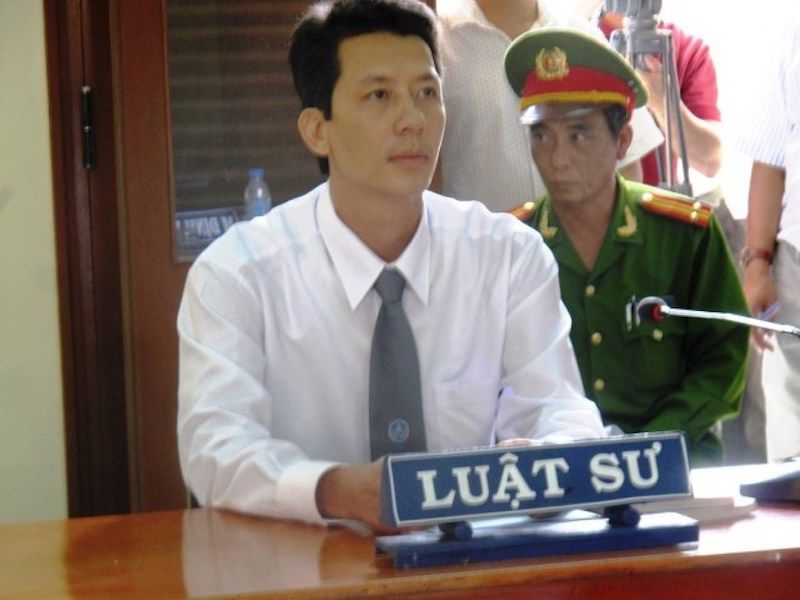
    “I have lost my license to practice law forever, with no apparent recourse available,” Vo An Don, one of Vietnam’s most well-known lawyers in recent years, lamented on Facebook on April 9, 2019. Last week, a high court in Danang ruled that the minister of justice’s decision to affirm his disbarment in 2018 remained effective and final.

    The 42-year-old lawyer from Phu Yen province, however, is widely recognized for his fierce advocacy. In the past five years, Don took on cases involving some of the more popular political dissidents, such as blogger Mother Mushroom. But he gained the most public attention when he represented the family of Ngo Thanh Kieu,  a man who died while in custody after being beaten by the police in 2014. Don had demonstrated tireless efforts in bringing those who committed police brutality to justice in Kieu’s case. Yet on November 26, 2017, he was disciplined by his provincial bar association, and his bar license was taken away. In April 2019, the People’s High Court in Danang sided with the disciplinary decision and let the decision stayed.

    According to Tuoi Tre newspaper, the reason for the disciplinary action was because of Don’s “abuse of democratic freedoms to write and to give interviews to foreign press and broadcasters to defame lawyers, the prosecutorial bodies, the (Communist) Party and the State of Vietnam with the intent to incite, propagandize, and misrepresent the truth which had negatively affected the reputation of the Party, the State, the prosecutorial bodies, and other Vietnamese lawyers.”

    The Phu Yen Provincial Bar Association’s decision to disbar him came only a few days before the appeal trial of Mother Mushroom, which was on November 30, 2017. Don stated at the time in an interview with BBC-Vietnamese that such a decision was probably politically motivated.

    It was not the first time, however, that his local bar association had attempted to discipline Vo An Don. In another interview with RFA in 2014, Don already disclosed that the Phu Yen Provincial Bar Association had tried, unsuccessfully, to disbar him a few times during his representation of the family of Ngo Thanh Kieu. But Don was unfazed and continued with the case, successfully bringing the offending officers to justice.

    The case of Ngo Thanh Kieu was probably the first one in recent years where the court convicted a group of police officers for causing death to a suspect in custody. Public opinion, however, was split about the sentences handed down to the former police. Some people thought that the jail terms were too light as the longest one was only a five-year-imprisonment. At the same time, many people also saw Vo An Don as the lawyer who fought for the people’s rights and stood against what they perceived as a corrupt system.

    The unintended popularity could be the root of the troubles that later followed the lawyer, who practiced law in one of the poorest areas in Vietnam. Don is often dubbed the “farmer lawyer” in social media because he still has to continue farming to support his family. Practicing law in an honest way, he said, cost him opportunities to “get rich” because he refused to be part of the widespread corruption in Vietnam’s judiciary. His popularity and his candid words about the profession together made him an unpopular person among his fellow attorneys. His allegation of corruption among lawyers was one of the statements that cost him his bar license, as reported by The Law newspaper in Ho Chi Minh City on May 24, 2018.

    After the Phu Yen Provincial Bar Association issued its disciplinary decision on November 26, 2017, Vo An Don petitioned the Vietnam Bar Federation in December 2017 for a review.  Over 100 Vietnamese lawyers signed a petition asking the Federation to stand by its member’s freedom of expression and stated that the disciplinary action would be a dangerous precedent for the law profession. The Federation still rejected his petition on May 21, 2018.

    Don continued to appeal his case with the Ministry of Justice later last year, but the minister of justice also decided against him.

    Finally, in December 2018, Don initiated a lawsuit against the administrative decision to uphold the disciplinary action by the minister of justice. But as stated, the court system also did not side with him and effectively allowed the disbarment to remain in effect. The high court in Danang agreed that the dismissal of Don’s case by a lower court was proper.

    Both courts had reasoned that the minister of justice’s decision to uphold the disbarment was done within a professional and social organization – the Vietnam Bar Federation. Such a decision did not fall under the categories of subject matters that could be decided in a lawsuit against an administrative order.

    At this time, even Vo An Don does not seem to think that there could be any other recourse for him. In the meantime, Don’s case has raised sufficient concerns about the freedom of expression of lawyers in Vietnam and whether their human rights will continue to be subjected to professional disciplinary actions.

  • Exploring Tam Dao National Park, Group Of Vietnamese Youths Robbed And Beaten By Unknown Men

    Exploring Tam Dao National Park, Group Of Vietnamese Youths Robbed And Beaten By Unknown Men

    “My body crumbled because of the pain, but this group of strangers continued to beat me while using words to taunt me: ‘Aren’t you scared now, Hung? Don’t you care about your friend, dear?’”

    In a Facebook’s post, the victim, Ta Manh Hung, recounted the horrible experience that he and four of his friends encountered on the evening of April 6, 2019, on Tam Dao mountain.

    The group was traveling together that weekend, hoping to explore one of Vietnam’s most praised national parks and its rainforest, located in Vinh Phuc province near Hanoi. Prepared to spend the night at a camping grounds inside the forest, yet halfway to the destination, their journey was abruptly cut short when about a dozen strangers, all males, surrounded the group. The men then proceeded to use force to tie each of the youngsters to a tree stump about 20 meters apart and then they assaulted them.

    The ordeal lasted for a couple of hours until nightfall, and when the weather began to get cold in the forest, the assailants decided to take off. They left the victims still tied up and took all of their personal property, including their mobile phones, cameras, watches, Kindles, back-up chargers, and the wallets that contained their identification papers.

    Cold, scared and beaten, these youngsters, however, were able to use their teeth to slowly untie each other. Afterward, they managed to go to the nearby Tay Thien Pagoda to seek refuge for the night. The next day, local people helped them report the incident to the police of Tam Dao district.

    The group’s violent encounter was first reported on Facebook in Vietnam last week. As it went viral, the public started to demand answers from the local authorities, prompting the mainstream media also to cover the story. In an interview with Nation (Tổ Quốc) newspaper, the police of Vinh Phuc province stated that they took the incident seriously and that they would handle it according to the law and regulations.

    The public’s anger, however, may also be explained by the fact that Tam Dao national park has attracted the concern of many in recent months. Vietnamese people were wary that an ongoing development project, being constructed in the center of the rainforest might destroy its natural landscape and ecosystem.

    A little more than three months ago, there were reports that Tam Dao’s primary rainforest and its diverse fauna and flora were under threat of environmental destruction.

    Sun Group – one of Vietnam’s largest real estate developers – together with the government of Vinh Phuc province had initiated the construction of a resort in the middle of the national park. While the developers insisted that they were building an “ecotourism” project, environmentalists in the country decried the idea, stating that it would cause irreversible damages to the hundred-million-year-old rainforest’s ecosystem.

    A Facebook group called Save Tam Dao started to document the current stages of theSun Group development project. It also called on others to join in and save the rainforest. Save Tam Dao has received quite a lot of support from Facebook users in Vietnam, especially among the younger generation.

    Last month, together with other environmental activists and organizations, this group also initiated an online petition with Avaaz.org, calling on the Ministry of Natural Resources and Environment to publicly reveal the project’s Environmental Impact Assessment.

    Groups of youngsters have also started to travel more frequently to Tam Dao to take pictures of nature’s beauty. Some of those pictures, however, also showed the devastating damage that the resort’s development project had created thus far.

    Hung’s group attempted to do the same thing during the previous weekend: travel to Tam Dao and explore the rainforest’s beauty. But its members tragically had a terrorizing encounter where they were robbed and assaulted.

    It was, however, quite peculiar that the attackers also forced the group to give up the passwords of their phones. Once able to gain access, they then immediately began reviewing all of the stored messages and photos at once.

    Hung was the only one that had refused to give up his passwords. As he later stated, he did not want unknown strangers to intrude on his privacy. The moment he did not comply, his suffering increased. These men tied him up, covered his head and beat him for hours, trying to get him to give up the password.

    Irritated by his continuing refusal, the assailants threatened to plant drugs on his body and report him to the police. Then, they carried him up, still with his head covered, and told him that they would throw him down the abyss. Seeing Hung did not respond to the threats, they started to put various types of insects inside his clothes to let them bite him. To prevent others from hearing his screams, they stuffed Hung’s mouth with some handkerchief.

    What was so important that the assailants were willing to use such tactics to gain access to Hung’s phone and would even use torture to get it? We may have to wait for the police investigation report to find out more.

    This latest attack, however, raised many questions about public security and safety in the area. Tam Dao is a national park; it belongs to all of the people, and all of its people should be able to enjoy its beauty safely. But right now, it seems that not only the rainforest at Tam Dao is crying for help but so are the ones who love it.

  • Online Campaign “If not NOW then WHEN?” Seeks To Stop Sexual Abuse In Vietnam

    Online Campaign “If not NOW then WHEN?” Seeks To Stop Sexual Abuse In Vietnam

    An uncommonly successful online campaign is happening in Vietnam with thousands of signatures and with momentum is still going strong. The campaign – “If not NOW then WHEN?” – initiated by seven civil society groups and organizations on Change.org, is the Vietnamese people’s latest and loudest response to a series of highly publicized cases of sexual abuse and violence against women and children uncovered recently in the country.

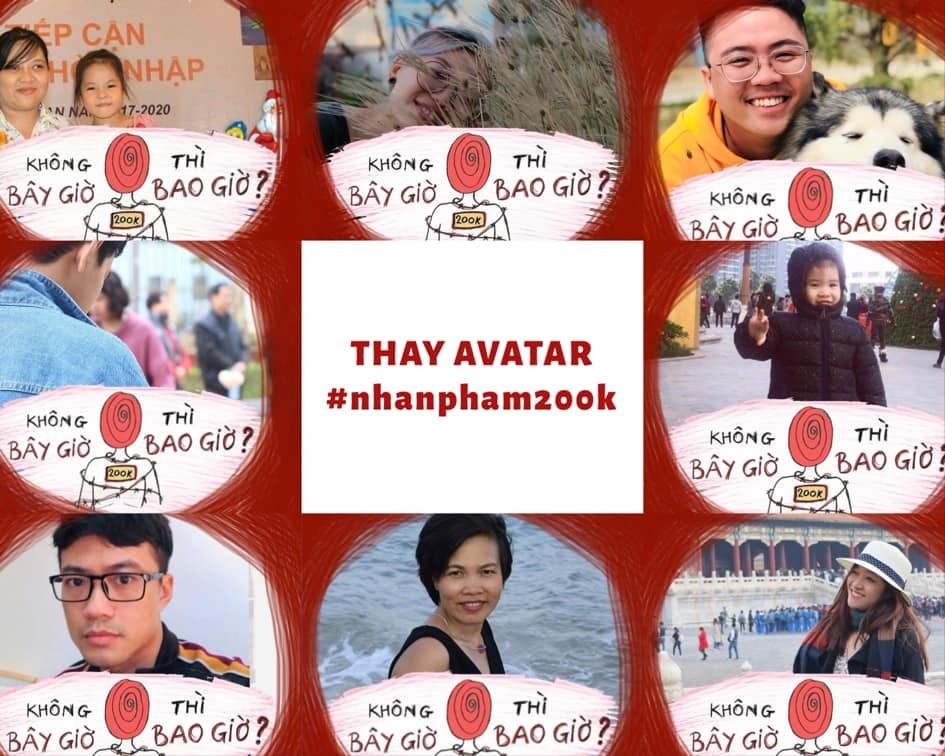
    In addition to signing this petition, hundreds of Facebookers also changed their avatars to include a frame with the slogan “If not NOW then WHEN?” and the hashtag #nhanpham200k (dignity200k) to promote this campaign.

    The “200k” hashtag refers to the 200,000 VND amount that the Hanoi police has fined the perpetrator in a recent sexual assault case in March 2019. Although the perpetrator was captured on an elevator’s security cameras while assaulting a woman by kissing her on the mouth, the authorities decided to treat the case as an administrative violation and did not file charges against him. Such a decision has angered the entire nation that has watched the story where his criminal actions unfold on social media, leading some activists and organizations to decide to take action.

    The “If not NOW then WHEN?” campaign was launched within a few days after the administrative fine of 200,000 VND was made public. And because the organizers want to stress that a person’s dignity is worth more than the 200,000 VND fine, they have included the hashtag #nhanpham200.

    Citing loopholes in the law which allow for unjust decisions such as the 200,000 VND case, the campaign calls on citizens to demand Chairwoman Nguyen Thi Kim Ngan and other members of Vietnam’s National Assembly to take action and change the laws. Their goal is to appeal to the legislative branch to make changes in the Penal Code so that it would be more effective in both punishing the perpetrators in sexual harassment and sexual violence cases and preventing future sexual crimes.

    According to Facebooker Ngoc Diep, one of the first activists who has initiated this campaign, the campaigners will collect signatures until early May 2019. Then, they will send them directly to the National Assembly before the beginning of their next congressional meeting – which is expected to commence on May 20, 2019.

    By April 9, 2019, more than 13,000 people have signed the petition even though Change.org recently has been blocked in a few areas in Vietnam. It means that those who have signed the petition from Vietnam must take an extra step, which is to get over the firewall before they can add their names to the petition.

    It also means that the demands contained within the petition are of great concern for a lot of Vietnamese people.

    Why is there such a tremendous response from the public to this petition that led to so many people taking the time and making an effort to make a point about this issue?

    Ngoc Diep explained that the campaign has identified with the people’s realization that there are loopholes in the law, which renders the system ineffective in bringing justice to the victims of sexual harassment and sexual abuse in the country.

    Recently, several cases of sexual attacks on women and children have caused outrage in society, and yet the legal system was unable to bring the perpetrator to justice. The case in the elevator with the 200,000 VND fine was just one of many such cases.

    In another case, a teacher was accused of inappropriately touching his fifth-grade students, but the authorities claimed that his conduct did not fall under the current definition of sexual abuse. The teacher went unpunished.

    A suspect in a brutal beating and raping of a 9-year-old girl was allowed bail because the authorities found his conduct did not fall under the “extremely severe” category that would demand pre-trial detention.

    Just a few days after the petition “If not NOW then WHEN?” had started, another video clip appeared on social media showing a toddler being grabbed and kissed by an older male stranger in an elevator in Ho Chi Minh City.

    The campaign and its supporters have felt an even stronger sense of urgency now, that such change is not only needed but is also inevitable. They want to raise public awareness about sexual harassment and sexual abuse and demand that “the legitimate rights and interests of the people” be protected.

    As such, they are hoping that more signatures will be added to the petition in the upcoming days. It is hoped that the increasing public pressure that comes with the petition will then force lawmakers to face this current social crisis of sexual harassment and sexual abuse and institute changes.

    Among the demands, the campaign emphasizes the critical role of civil society organizations in raising community awareness, as well as preventing sexual crimes.

    The campaigners are especially concerned with the lack of specific and coherent definitions for a variety of conduct that would constitute sexual harassment in the current Penal Code. They also pointed out that the law should also provide for better protection mechanisms for victims of sexual abuse and violent sexual crimes.

    The Penal Code is not the only one that needs changes, according to these activists. The Civil Code also needs to be reformed with the guidelines for victims to receive restitution being improved.

  • The Socialist Republic of Vietnam: The Country That Rejects Political Pluralism

    The Socialist Republic of Vietnam: The Country That Rejects Political Pluralism

    A colleague recently showed me a picture of a document entitled “Personal History” that her friend had sent over. This person was applying for a new job, and even in this day and age, he still had to submit this intrusive Communist-era form along with his employment application, even though the job was private-sector.

    This document, in particular, caught my attention because it asked detailed questions about an applicant’s participation in political parties, and quite interestingly, included whether or not he or she had an affiliation with any “reactionary” political parties before 1975, the watershed year in which Vietnam was de-facto reunited under communist party leadership.

    The idea of having to include a “Personal History” when applying for a job nowadays is quite perplexing, given the fact that Vietnam has been a “one-party-state” with the Vietnamese Communist Party (VCP) effectively controlling the state apparatus for the past 44 years. Vietnamese under 35 years old have always lived with only one party.

    After the Vietnam War, when the two former rival nations of North and South Vietnam de-jure reunited and formed the current Socialist Republic of Vietnam in July 1976, political parties turned into fiction, starting with the official dissolution of all parties previously existing in the former South.

    The 1980 Constitution, Vietnam’s first after reunification, granted the VCP absolute leadership over the state and its people with Article 4, a much-maligned article that has survived two rounds of constitutional amendments in 1992 and 2013.

    By 1988, the VCP officially became the only party remaining in the country. Two other political parties which had been the allies of the VCP in the North during the Vietnam War, the Social Party and the Democratic Party, announced their dissolution after having completed their “historic mission.”

    Even after admitting that these two parties had always followed its directives and never really acted as political opposition forces, the VCP implemented a zero tolerance policy towards other political organizations, allies or not. History, according to the VCP, had decisively chosen the one-party system for the country.

    Observers later commented that it was the looming revolutions in the Soviet Bloc at the time which had caused the VCP to quickly sweep away any remnants of a pluralistic past.

    It probably was the right decision for the Party’s survival. Vietnam to this day remains one of the last few communist countries in the world, with the VCP effectively consolidating power under its authoritarian rule. In 2006, dissident Hoang Minh Chinh, a former member and general secretary of the Democratic Party, announced his party’s re-establishment and openly challenged the authority of the VCP. His efforts, however, were short-lived. Hoang Minh Chinh passed away in 2008 after losing his battle to cancer.

    In March 2019, the Secretariat of the VCP announced that it would begin implementing Directive 33-CT/TW, to develop and strengthen the Party’s membership within the private sector. The directive called for recruitment of new Party members among the leadership of private enterprises, a move that strongly indicated the Party’s continued unwillingness to end its current political monopoly.

    It may be a surprise for many Westerners to learn that today, North-Korea has more political parties than Vietnam. As such, elections in Vietnam are probably even more pointless and uneventful than its neighboring communist brothers in Asia although all of them are close to 100% predictable.

    In Vietnam, all candidates must get their pre-approval from the VCP by going through a mandatory three-round-vetting process organized by one of its affiliated organizations, the Vietnamese Fatherland Front, before their names could proceed to the ballots.

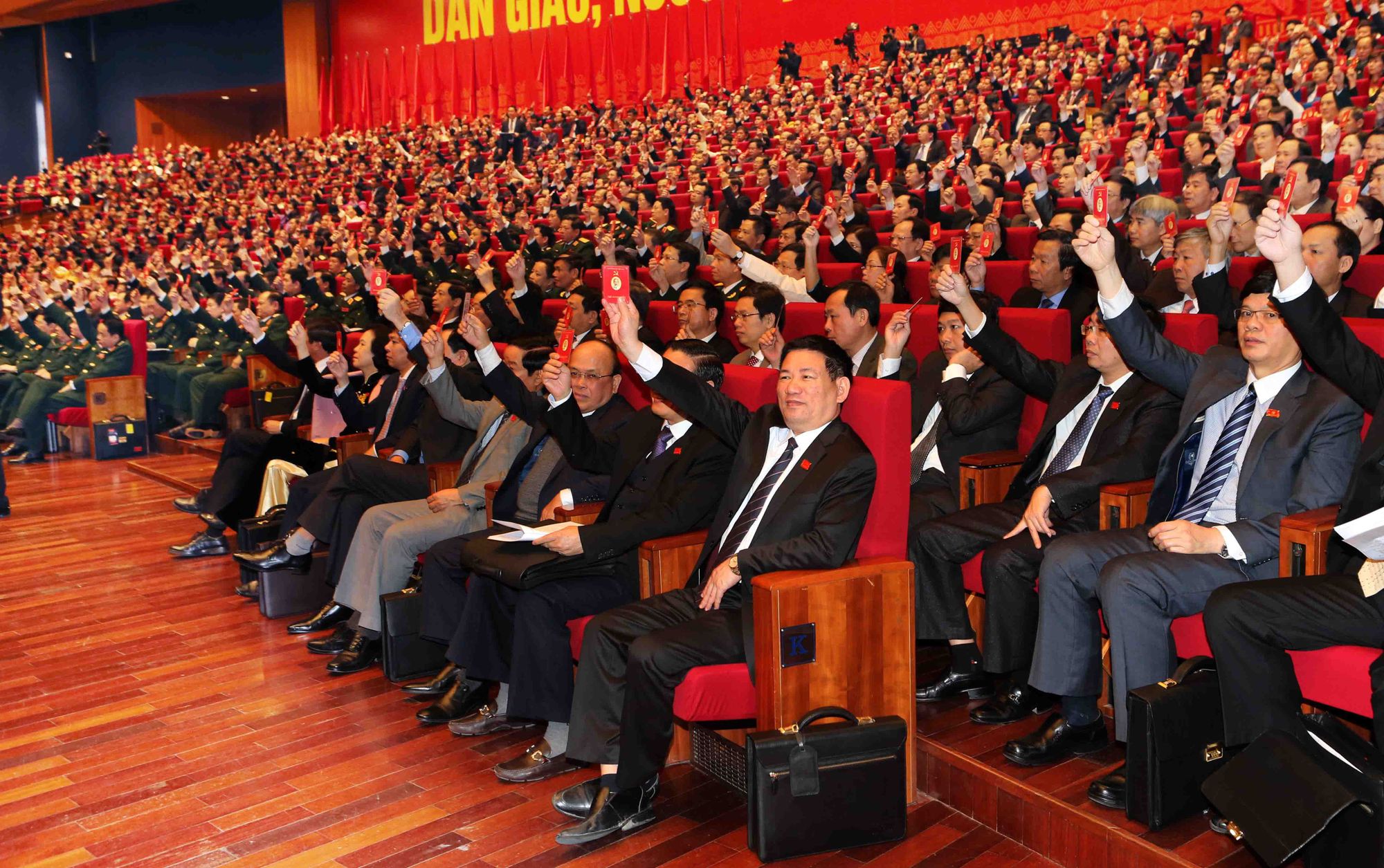
    As the result of this rigorous vetting procedure, nearly all of the 500 seats in the country’s National Assembly (the legislative body and the only group that is elected by the people during elections) belong to the VCP. A handful of “independent” seats go to VCP-approved candidates who are not official party members but have already pledged allegiance to the VCP’s directives.

    The National Assembly – according to Vietnam’s Constitution – should be the most powerful branch in the government because it is supposedly “formed by the people, of the people, and for the people.” However, due to the Party’s total control of the electoral process and the complicity of the National Assembly, Vietnamese people do not have much to say in their country’s affairs.

    In June 2018, after members of the National Assembly showed overwhelming support for the new Cybersecurity law, with nearly 97% of member voting yes, citizens started calling their assembly representatives to question how they had voted. Over 90% of these representatives refused to respond, with the majority of them not even bothering to pick up the phone.

    Members who did pick up loudly shouted back at the callers and told them that they had no right to question their representatives’ votes. When confronted with the fact that the constitution explicitly affords citizens this specific right, representatives abruptly hung up.

    All of these interactions between members of the National Assembly and citizens were documented on social media. It became an awakening moment for some Vietnamese because it was quite clear to them that this legislative body was not working “for the people”.

    However, bringing up the issue of political pluralism with the current ruling party is harmful to those who dare to ask.

    Nothing could land a Vietnamese person in jail quicker than a public announcement that he or she will start a political party. The formation of any kind of political organization alone, like the Brotherhood of Democracy which involves dissident attorney Nguyen Van Dai, or the more recent Coalition for Vietnamese Self-Determination, would cost its members decades behind bars.

    All “national security crimes,” as defined in the Penal Code and as interpreted in actual cases at trial, equates any faint sign of opposition against the VCP’s directives and policies with subversion against the people’s government or propagandizing against the state.

    On October 23, 2018, VCP General Secretary Nguyen Phu Trong was confirmed president of Vietnam by the National Assembly with 99.79% of the votes. Trong was described as a “party builder rather than a reformist” in a recent piece penned by the experienced Swedish diplomat, Börje Ljunggren, who was Sweden’s Ambassador to Vietnam in the late 1990s.

    Trong is, indeed, a stern protector of the VCP’s manifesto, and his famous words in February 2010 is often quoted by the Party’s numerous propaganda materials:

    “Vietnam has yet to perceive the objective necessity of having a pluralistic regime, at least for now.”

    Former Ambassador Ljunggren, however, has suggested that to fully realize the country’s economic power in this new era, Vietnam must “dar[e] to move beyond the party-state [to] realiz[e] Vietnam’s huge potential.”

    His observation echoes that of other foreign governments and international human rights experts, who all recently recommended that Vietnam allows political pluralism to continue its progress.

    These messages, however, may not be enough to convince the Party’s leaders. The government stubbornly continues to credit the VCP for its economic development, again and again echoing Trong’s words from almost a decade ago that the Party does not need any political opposition. Indeed, the March 2019 directive doubles down on the Party’s determination to hold onto power.

    It is unlikely that the quest for political pluralism in Vietnam will find answers from within the VCP, including its reformists if there are any.

    The future for a pluralistic society in Vietnam is more likely to be found in the growing independent civil society movement and the younger generation. While observers from outside Vietnam may not always see the growth and tireless efforts of these activists, they exist. And while the VCP refuses to acknowledge them, these activists persevere.

    One example would be the organized advocacy against the recently-implemented Cybersecurity Law, which has been spearheaded collectively by many young activists across the country who remain hopeful for change. And while the law continues to be “in effect,” the government remains in a dilemma as it has not been able to provide an implementation decree for the law – a requirement in Vietnam if the law is going to be carried out in full force.

    The struggle, of course, continues. It is, however, important to acknowledge the fact that such a struggle for change, for democracy and abolishing the political monopoly in Vietnam, exists.

  • Vietnam: State-Owned People’s Army Newspaper Defamed Independent Media, Civil Society Organizations

    Vietnam: State-Owned People’s Army Newspaper Defamed Independent Media, Civil Society Organizations

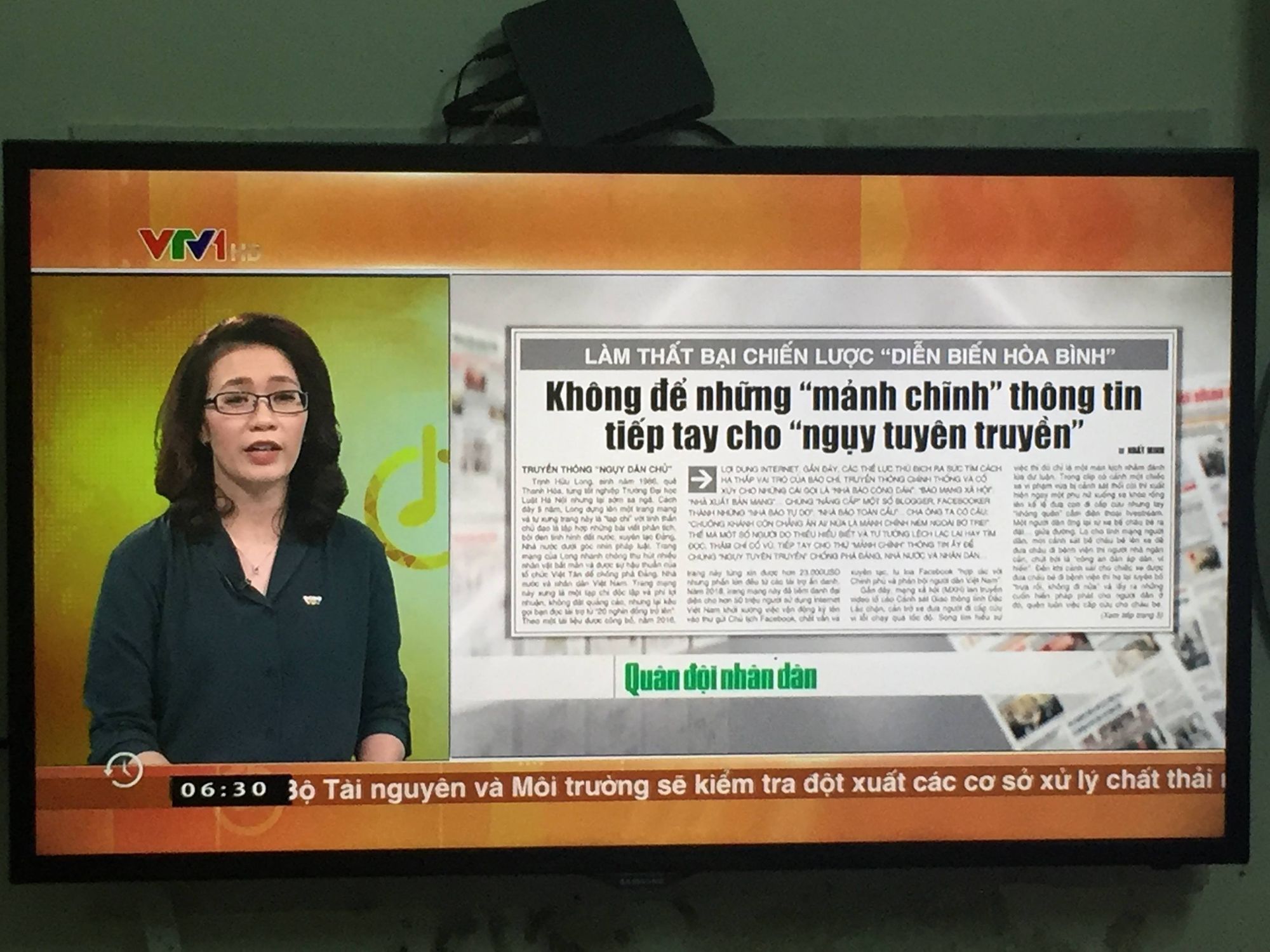
    On March 25, 2019, in what could have been a classic libel case, the online newspaper of the Vietnamese Armed Forces defamed some independent newspapers, media, and civil society organizations, including our Vietnamese site – Luat Khoa magazine in an article written by author Nhat Minh.

    Vietnam’s national television VTV 1 also broadcasted the same article during its morning news on the same day.

    The article accused Luat Khoa magazine and its editor-in-chief, Trinh Huu Long, to have received support from Viet Tan, an overseas Vietnamese political party that has been classified as a “terrorist organization” by the regime.

    Among other things, it also alleged that independent newspapers, media, and civil society organizations such as Luat Khoa, Cong Hoa TV, Vietnam Path Movement, and so forth, were promoting “fake democracy,” and that the real intention of these organizations was to misrepresent information about the Vietnamese Communist Party and the government by portraying them in a negative light.

    According to the author, some forms of citizen journalism and blogging by individuals who exposed wrongdoings and injustice in society could be criminal conducts.

    Examples of bloggers recently imprisoned for exercising their freedom of expression, such as Phan Kim Khanh and Nguyen Van Hoa, were named in the article to support the writer’s position.

    The article, in many ways, reinforced the Vietnamese government’s view of independent media in the country. It was this very same view which probably had put Vietnam at number 176 out of 180 on the Reporters Without Border’s World Press Freedom Index in 2018.

    It may be a challenge for Vietnam to name one independent media from the list of over 800 news outlets it often uses to prove press freedom exists in the country.

    Nevertheless, the article suggested criminal prosecution against the activists and journalists operating these organizations. It also called for stronger and more effective collaboration from the tech companies – such as Facebook and Google – in compliance with the new cybersecurity law.

    The article reconfirmed what the Vietnamese government has continued claiming in the past one and a half years, that Facebook has already established a separate channel to resolve requests from Vietnam regarding any information deemed to have violated the country’s social media (rules).

    It also paraphrased an unnamed official from the Cybersecurity Bureau of the Ministry of Public Security (Vietnam’s National Police Department) and declared that “Google and Facebook both found Vietnam’s cybersecurity law is ‘suitable’ and will research on amending their policies to be in line with Vietnam’s law.”

    The article included a quote from Ann Lavin – Google’s Director of Public Policy and Government Affairs in Asia-Pacific – stating that “Google would respect and follow the domestic laws of host countries, including Vietnam.”

    However, the author failed to make it clear to the readers that Ms. Lavin’s quote was taken from a conversation she had with the then Minister of Information and Communication, Truong Minh Tuan, in January 2018 – almost one year before the new cybersecurity took effect. The fact that she is no longer working at Google was also left out.

    The article did provide statistics on the removals of contents allegedly done by Google and Facebook upon the government’s request.

    It stated that by “the end of June 2018, Google had removed 6,700/7,800 clips from YouTube – a Google’s product – including 300 clips carried subverting contents, inciting subversion against the VCP and the government and 6 YouTube channels got blocked completely.”

    It further claimed that “Facebook also removed 1,000 links (out of 5,000 requests) which were deemed to have violated Vietnam’s laws, 107 fake accounts, 137 accounts that defamed, misrepresented, and propagandized against the VCP and the government.”

    The information listed on the Google Transparency Report and Facebook’s Government Requests Report for 2018 does not seem to exactly collaborate the claims in the People’s Army Newspaper’s article.

    However, these companies’ reports did show a worrying trend of increasing content restrictions in Vietnam and the seeming willingness of tech giants to comply with the government’s requests.

    Among the four requests for contents removal from Vietnam listed by Google during the reporting period dated between January-June 2018, we found a particularly troubling one.

    Accordingly, the Authority of Broadcasting and Electronic Information, Ministry of Information and Communications in Vietnam had asked Google to remove “over 3,000 YouTube videos that mainly criticized the Communist Party and government officials.” Google admitted that they “restricted the majority of the videos from view in Vietnam, based on Decree 72.”

    Decree 72 is a controversial legal document, seeking to curtail the people’s ability to share information on the internet in Vietnam since 2013, half a decade before the cybersecurity law came into existence.

    As for Facebook, their reports indicated that the company had complied with a total of 265 content restrictions requests from the Vietnamese government during the first six months of 2018 compares to 22 requests from July-December 2017.

    Facebook also released some Vietnamese users’ data to the government upon requests under legal process and emergency requests.

    From January-June 2017, Facebook received four requests involving five accounts where they released some information to 25% of the requests. From July-December 2017, Facebook released information in response to 38% of the eight requests, affecting 12 user accounts.

    In the first six months of 2018, however, the Vietnamese government made a total of 12 requests which involved 26 accounts, but Facebook only released data in response to 17% of the requests.

    The above statistics showed a concerning trend because, before 2017, Facebook’s transparency report indicated that it had never released users’ data to the government under any circumstances.

    Reports from Vietnamese activists on the grounds in the past 12 months, however, also indicated a much larger number of accounts removal and content restrictions on Facebook.

  • Vietnam Will Soon Follow China’s Social Credit System?

    Vietnam Will Soon Follow China’s Social Credit System?

    Nguyen Anh Tuan, CEO of Boston Global Forum, during his presentation at the Vietnam Internet Forum 2019 recently took place in Hanoi on March 20-21, 2019, proposed that governments should use AI technology to grade their citizens’ social credit.

    The online business newspaper Cafe Biz Vietnam reported, Nguyen Anh Tuan suggested that blockchain technology should be used to reward “good citizens.”

    And while his definition of a “good citizen” described those who uphold the universal values of human rights and the rule of law under such standards set by the United Nations, the very idea of proposing a “social credit system” to grade citizens in a country like Vietnam worried people that it would be the same model China is currently implementing.

    It is probably a bit unrealistic at the moment to expect the government of Vietnam – who is among the worst violators of citizens’ rights in the world – to uphold international standards on human rights and the rule of law.

    Reporters Without Border continuously ranks the country among the bottom five on its World Press Freedom Index, a fact that was raised by the members of the UN Human Rights Committee during the country’s review under the International Covenant on Civil and Political Rights (ICCPR) earlier this month.

    CIVICUS insists on continue listing Vietnam as a “closed” society where views of political dissents are not tolerated and severely punished.

    Right now, 218 political prisoners are serving a sentence in Vietnam.

    At the very same time that Nguyen Anh Tuan was presenting his speech, Vietnam sentenced another man, Le Minh The, to two-year-imprisonment for posting on Facebook and calling for democratization and separation of powers.

    Nguyen Anh Tuan was not a name unfamiliar to the Vietnamese public. He was the founder of Vietnamnet, a state-owned media online newspaper which, at one time, was the leading online news site in Vietnam. He was once considered by the government of Vietnam as one of its up and coming stars, especially in the field of information and technology.

    After leaving his post as the editor-in-chief of Vietnamnet in about 2011, Tuan moved to expand his career in the United States. He attended school at Harvard Business School, served on the boards of various foundations before founding his own Tran Nhan Tong Foundation, and later the Boston Global Forum in 2012.

    His introduction on the website of Boston Global Forum states:

    “Tuan is recognized globally for his pivotal role as a Vietnam Government reformist, who has successfully fostered freedom-of-expression, vigorous open debate and private enterprise in a nation that has become a leader in commerce, culture, and the innovation as well as a close ally of the West.

    Tuan served on the Harvard Business School Global Advisory Board from 2008 to 2016. He also serves on the Board of Trustees of the Free-for-All Concert Fund in Boston.”

    His accomplishments are well-praised by American scholars and politicians throughout the years. Curiously, however, not one of them mentioned even once the worrying human rights situation in Vietnam while discussing Tuan’s contributions to improving the quality of life for Vietnamese people.

    While Tuan no longer has any relationship with Vietnamnet, this very newspaper has been promoting heavily for the new cybersecurity law during the past year.

    A quick search on Google for Vietnamnet together with the term cybersecurity law in Vietnamese (luật an ninh mạng) will yield dozens of articles in a few seconds.

    Concerns grow day by day over the new cybersecurity law of 2018 which many people see as a direct violation of Article 19 – Freedom of Expression – under the ICCPR.

    This new law allows police authorities to request internet service providers, both international and domestic, to turn over users’ data as soon as they open an investigation without warrants and with no judicial oversight.

    Last summer, in protest of Facebook’s potential collaboration with the Vietnamese government and the new cybersecurity law, hundreds of thousands of Vietnamese Facebook users started to sign up for Minds, another social media platform.

    However, once the Vietnamese users found out that Nguyen Anh Tuan of Boston Global Forum was among the members of Minds’ Advisory Board, they quickly grew cold of the new platform.

    Given the latest presentation from Nguyen Anh Tuan on AI technology and the proposed “social credit system,” it is, perhaps, that the Vietnamese users were correct in having their skepticism over any technology with his name on it all along.

  • A Sexual Predator Walked Free As Arbitrary Application Of The Law Failed Everyone In Vietnam

    A Sexual Predator Walked Free As Arbitrary Application Of The Law Failed Everyone In Vietnam

    A perpetrator in a sexual assault case was caught on tape in Hanoi where he forcefully came onto a woman in an elevator of a building and kissed her on the lips.

    The news coincided with what would have been about one year after the #MeToo movement first marked its impact in Vietnam. Last year, an intern at Tuoi Tre newspaper went public about her sexual harassment allegations against her boss in April 2018.

    The recent sexual assault case stirred up even more public outrage in Vietnam this time and made headlines on international news outlets as well.

    It is because the police in Hanoi only issued an administrative fine against the perpetrator where the whole world had already watched what he did to the woman and believed criminal charges should have been filed.

    Images of him assaulted the victim was spreading rapidly online, but anger erupted on social media – from both men and women alike – after the authorities announced the fine of 200,000 VND (Approximately USD 8).

    The public felt that the legal system had failed them.

    During March 11-12, 2019, Vietnam underwent its third review under the International Covenant for Civil and Political Rights (ICCPR) in front of the Human Rights Committee in Geneva, Switzerland. The recurring theme for the line of questions from the Committee concentrated on the ability of Vietnamese citizens to utilize their national legal framework to protect their human rights.

    Vietnam’s legal system often faced criticisms from the international community due to its arbitrary application of the law in political cases. Vaguely defined penal codes under the category of “national security” crimes have been used to silence dissidents.

    Most often, political opinions are all deemed to be either act of subversion against the people’s government or propaganda against the state.

    And as such, for a while, arbitrary application of vague penal codes seem to be the problem that only political dissidents face in the country. Naturally, the call to reform the legal system in Vietnam has mostly been originating from this same group.

    However, all of that has changed in March 2019 with this sexual assault case.

    In just one night, an online campaign started by two young female activists, Ngoc Diep Dao and Nguyet Ha, on change.org gathered over 2,000 signatures.

    The petition calls for legal reforms in the country with a specific request to the National Assembly to pass new legislation protecting victims of sexual assault and sexual harassment.

    In recent months, the sexual assault in the building’s elevator was not the only case where the law failed to protect the victims of sexual assault and violence.

    A nine-year-old girl alleged that a male adult raped and beat her, but the suspect was allowed to be released on bail because the authorities had deemed that his conducts were not dangerous enough to the community.

    A male teacher who inappropriately touched his fifth graders was not criminally prosecuted.

    The inability and unwillingness to prosecute the alleged perpetrators in these cases strongly highlighted the concerns of the Human Rights Committee during the ICCPR review: Vietnamese people currently do not have the support of a functional legal system to address their grievances when their human rights and their dignity are being violated.

    The law enforcement, in the “elevator assault” case, arbitrarily applied a decree on protecting public order and preventing domestic violence instead of using a criminal code on assault.

    The authorities’ excuse that Vietnam has yet to pass a specific penal code to punish the perpetrator in sexual assault and sexual harassment cases and therefore the law could not further protect the victim – as in the case at hand – is not a legally sound argument.

    The forceful and unwanted kiss on the lips is a classic assault and battery. Vietnamese authorities in the past had sentenced a young woman to nine-month-imprisonment for slapping a police officer. The slap on the cheek or an unwanted kiss on the mouth have the same criminality in nature: they are both conducts that fall under the category of battery and assault.

    While specific, well-defined sexual assault and battery crimes should and must be included in Vietnam’s Penal Code, at the same, we shall not tolerate the police who refused to apply a regular battery and assault charge against the perpetrator either.

    It seemed that the Deputy Prime Minister, Truong Hoa Binh, might have agreed. On March 22, 2019, he had requested the City of Hanoi and its police to conduct a review of the case.

    In the meanwhile, the people continue to voice their demand to change the current legal framework to protect victims of sexual assault and harassment.

    Even though change.org itself is being blocked here and there in the country this year (coincidently after the new Cybersecurity took effect earlier in January), by the time this article goes to press, close to 4,000 Vietnamese people and 14 civil society organizations have signed the petition during the past four days.

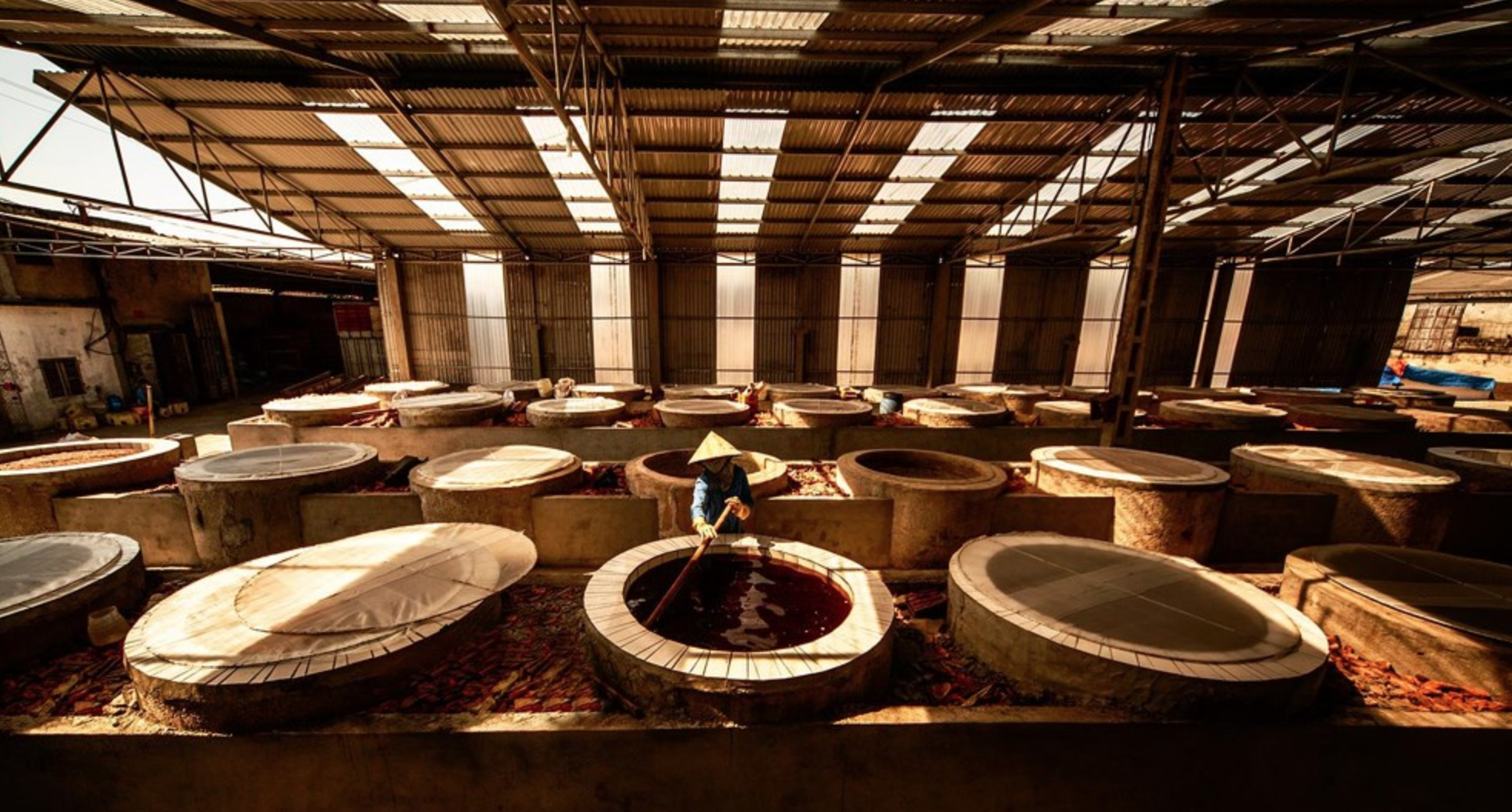
  • Vietnam: Social Media Successfully Forced Government To Leave Traditional Fish Sauce Alone (For Now)

    Vietnam: Social Media Successfully Forced Government To Leave Traditional Fish Sauce Alone (For Now)

    Social media in Vietnam carries quite a force when it comes to having a say in public affairs, and the government is well aware of that. The effect of the new cybersecurity law of 2018 and its attempt to reign in the people’s power remain to be seen. However, the vibrant online civic space in Vietnam just recently proved how effective it could be in fighting against illogical and unreasonable governmental regulations.

    This time, it was all about the fish sauce which for the majority of Vietnamese people, could very well be the essence of their souls. If anything could cause an uprising in the country, interference with the people’s consumption of their fish sauce might very well be it.

    Three years ago, when the disastrous Formosa marine pollution erupted, the fear of not being able to have a safe supply of fish and salt (the main ingredients for making the fish sauce) prompted thousands of Vietnamese to take to the streets.

    So for this reason alone, one would assume that it must take a very gutsy governmental department to take on a fight against the producers of this national treasure.

    To everyone’s surprise, the Bureau of Production and Market Development for Agriculture Produce (Bureau) in Vietnam emerged in early March 2019 as the one who was willing to put on the hat of such a fierce fighter.

    The Bureau proposed a new set of rules and regulations, detailing the practical steps that all who wish to produce fish sauce in the country must follow.

    This particular bureau might have underestimated the outrage from not only the fish sauce producers but also the Vietnamese people at large when the proposed regulation went public.

    It could partly be that the making of fish sauce is quite diverse and supposedly done according to the unique traditions and techniques in each region in Vietnam.

    Similarly, not many of us would imagine instructing all French winemakers how their bottles of wine should be made or telling the whole Italian cheesemakers that they must follow their government’s detailed steps to produce their mozzarella.

    More importantly, for years, the traditional fish sauce producers in Vietnam have been fighting against a few large food corporations who had created a monopoly which mass-produced not fish sauce, but its substitutes.

    It turned out that there were two kinds of sauce involved in this battle.

    The traditional fish sauce is organically made from fish and salt, and it takes longer to yield the final products.

    The other is a chemically induced sauce that may smell like fish sauce but catered to an entirely different taste.

    This non-traditional fish sauce substitutes, however, have dominated the market in Vietnam during the past two decades because they are considerably cheaper.

    Nevertheless, the traditional fish sauce continues to survive throughout this battle even though their products cost more than those manufactured by the big factories.

    Perhaps, because, in recent years, Vietnamese people begin to favor the traditional taste both for health reasons and for protecting the keepsake of their national identity.

    I remember this one time when attending college in California, as I was passing by an apartment complex near my school, I suddenly felt the presence of my motherland and nostalgically yearned for my mama’s cooking while the distinctive aroma filled the air from one of the studios.

    I am probably not alone in having such an experience where one associates fish sauce with memories of her homeland, making it an essential part of who she is.

    And there it went, in the last few weeks, the Vietnamese people were not shy in expressing themselves on social media and letting the government knows that they were firmly against the proposal to regulate the traditional fish sauce’s production.

    Their outpouring anger was enough for the Deputy Minister of the Ministry of Science and Technology to quickly announce on March 12, 2019, that the proposed regulation for fish sauce production would be halted indefinitely.

    But the abrupt halt did not calm down the public and the traditional fish sauce producers. For the people, the attempted regulation seemed to disproportionately favor one corporation in particular, Masan Group, who had dominated the fish sauce substitutes market in Vietnam.

    Almost three years ago, the traditional fish sauce producers had suffered a different attack from another controversy allegedly concocted by a Public Relations firm – T&A Ogilvy – who worked with major food corporations, including Masan.

    Back in December 2016, mass media in Vietnam picked up a story from the survey sponsored by T&A Ogilvy where it claimed that 95% of all fish sauce samples collected nationwide contained an alarming amount of arsenic content.

    The story was later proven to be entirely false, and the Prime Minister, Nguyen Xuan Phuc, himself ordered an inquiry into the survey’s claims. Nevertheless, the traditional fish sauce producers already suffered losses when consumers panicked and avoided consumption.

    This time around, the Vietnamese public seemed to believe that the latest proposed governmental regulation just proved that Masan would not give up on this ambitious dream of becoming the only producer for fish sauce in the country and that the government chose to stay on the corporation’s side.

    Because fish sauce is not only a staple in many people’s diet but also a part of their identity, they came to doubt the government’s actual intention for attempting to regulate the production of such caused them.

    On social media, people alleged that this whole incident just showcased the intricately entwined relationship between the Vietnamese government and the conglomerates – such as Masan Group.

    To have such an allegation coming from its people should be a worrying sign for a regime that has been trying to maintain its dwindling legitimacy like Vietnam. And while the battle is not quite finished, social media will continue to be the much needed civic space for Vietnamese people to voice their concerns and exercise their rights.