Author: Quynh-Vi Tran

  • Latest Review Under UN’s Human Rights Treaty Body Highlighted Vietnam’s Dismal Records

    Latest Review Under UN’s Human Rights Treaty Body Highlighted Vietnam’s Dismal Records

    “How do you explain or assess that Vietnam is ranked 175 out of 180 countries in the Reporters Sans Frontiers’ 2018 World Press Freedom Index?”

    The question from Mr. Fathalla, a member of the UN Human Rights Committee, succinctly summed up Vietnam’s human rights situation, especially when it came to those rights involving the people’s freedom of expression.

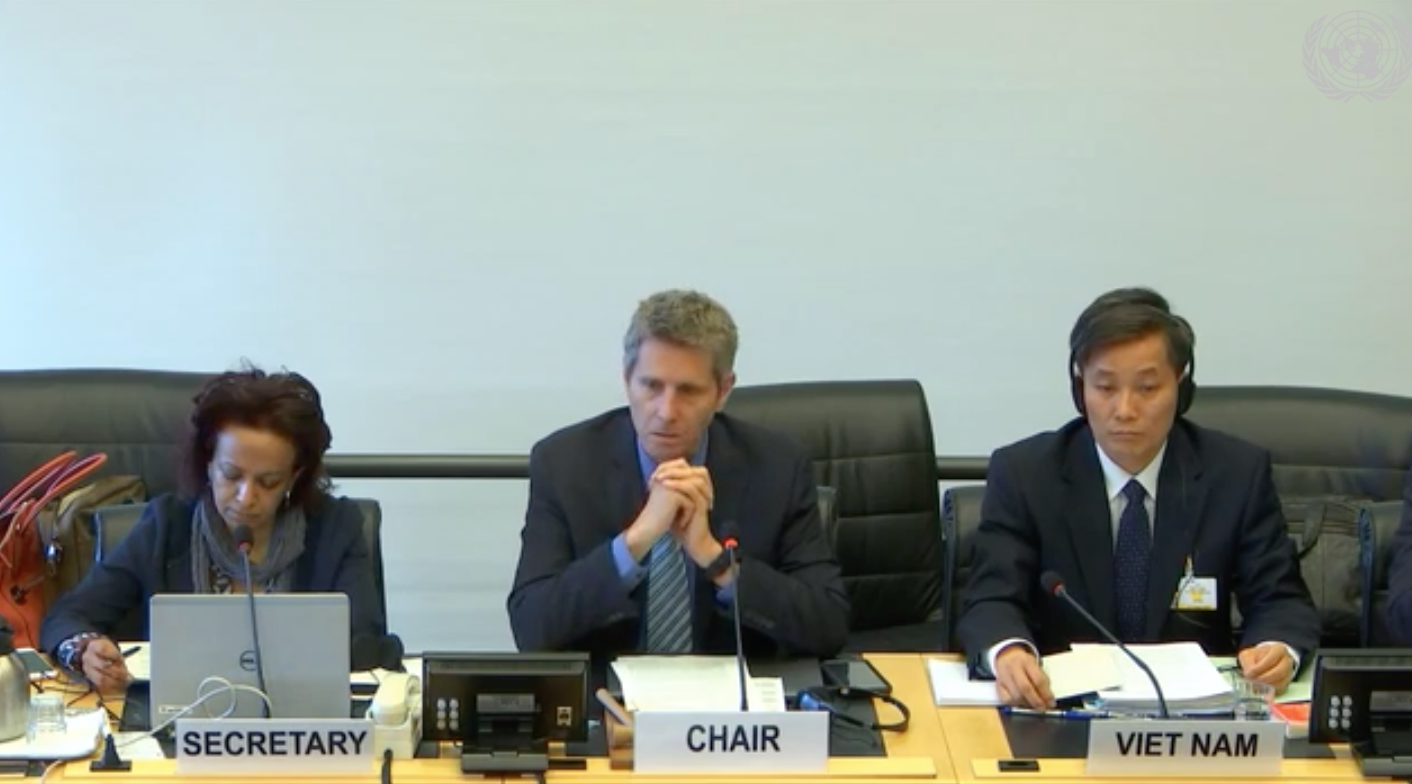
    Between March 11 and 12, 2019 and during their 125th session, the Human Rights Committee completed their review of Vietnam’s compliance and implementation of the International Covenant on Civil and Political Rights (ICCPR) in Geneva, Switzerland.

    Vietnam was 13 years overdue in submitting its third report for the review, which was due in August 2004. As a result, there was a 15-year-gap between the last review and this recent one.

    Nevertheless, the questions from the Committee during the two-day-proceeding painted an accurate, but very worrying picture of the human rights situation in the country right now.

    The Committee questioned specific contents of the new 2018 Cybersecurity Law and the 2016 Press Law regarding their possible violations of Article 19 of the ICCPR on freedom of expression.

    There was scrutiny over the independence of the judiciary in Vietnam where all judges seemed to be members of the Vietnamese Communist Party.

    Lawyers were disbarred for being human rights defenders themselves, or just by merely took on politically sensitive cases, such as those involved police brutality and torture committed by the state’s officials.

    The most recently amended Penal Code has taken a step further in limiting and curtailing the practice of law when it requires lawyers to make mandatory reports on their clients in a few specific instances – for example when it involves a “national security” crime – or risk being prosecuted themselves.

    At the same time, the penal code sections relating to “national security” are used almost exclusively against human rights defenders and political dissidents in Vietnam. As such, the mandatory report requirement seems to especially deny this group of people their right to a fair trial with competent legal assistance.

    There were also concerns from the Committee over the fact that police brutality had become more prevalent in recent years due to impunity.

    Prison conditions in general, and especially the treatment of human rights defenders in prison, were also brought up repeatedly during the proceeding, where the Committee rejected Vietnam’s attempt to brush off the issue by offering evidence of some handful visits to prisons by foreign embassies in recent years.

    The Committee’s members instead referred to the UN’s Committee Against Torture’s recommendations after the review of Vietnam under the Convention in November 2018, where numerous alarming issues regarding the poor conditions in Vietnam’s prisons were addressed, such as the use of shackle and solitary confinement.

    Vietnam was named as one of the world’s top executioners in 2016 by an Amnesty International’s report on the death penalty, after the Ministry of Public Security released some rare statistics in February 2017, stating that 429 prisoners were executed between August 8, 2013, and June 30, 2016, at an average rate of 147 executions per year.

    At the review, facts involved the wrongful convictions involving two death-row inmates, Ho Duy Hai and Le Van Manh, were also addressed in details by members of the Committee.

    The rights of indigenous people in Vietnam also took center after reports on their religious persecution and forced statelessness were submitted to the Committee in advance by NGOs working on these issues. Among them were Boat People SOS, Viet Nam Coalition Against Torture (VN-CAT), Council of Indigenous Peoples in Today’s Viet Nam (CIP-TVN), The Advocates for Human Rights and Tai Studies Center, Khmers Kampuchea-Krom Federation, and Hmong United for Justice.

    The UN received close to thirty shadow reports from civil society organizations before the review, which included both independent groups and NGOs that have an affiliation with the Vietnamese government.

    The Human Rights Committee is expected to issue their concluding observations in the coming months.

  • EU Officials Raised Concern Over Worrying Human Rights Situation In Vietnam

    EU Officials Raised Concern Over Worrying Human Rights Situation In Vietnam

    “The human rights situation in Vietnam is worrying,” according to Commissioner for Trade of the European Union, Cecilia Malmström, after her meeting with independent Vietnamese civil society organizations on March 14, 2019.

    When announcing the adoption of the EU-Vietnam trade and investment agreements (EV-FTA) in October 2018, Commissioner Malmström had hoped that such agreements would “help spread European high standards and create possibilities for in-depth discussions on human rights and the protection of citizens.”

    However, during recent months, the human rights situation in Vietnam did not improve.

    Instead, it became more concerning.

    Commissioner Malmström is not the only EU official who has expressed concerns over the worrying trend of suppression on human rights in Vietnam in recent months.

    32 MEPs from across the political spectrum of the EU Parliament signed a letter back in September 2018, calling on the EU to demand specific human rights improvements from Vietnam before the ratification of the EV-FTA.

    EU Spokesperson on Foreign Affairs and Foreign Policy, Maya Kocijancic, also confirmed in an interview with Radio Free Asia earlier this month, that during the 8th EU-Vietnam Human Rights Dialogue held in Brussels on March 4, 2019, the EU had addressed specific cases of prisoners of conscience with the Vietnamese delegation.

    Ms. Kocijancic also stated during the same interview that the annual dialogue “raised a wide range of issues related to freedom  of expression, cybersecurity, the death penalty, environmental and labor rights, cooperation within the United Nations framework.”

    As of today, The 88 Project’s database documented 21 Vietnamese activists are held in pre-trial detention. There are 218 other activists currently serving a prison sentence; among them, 30 are female activists and 51 indigenous political prisoners.

    According to VOICE (Vietnamese Overseas Initiative for Conscience Empowerment), one of the organizations attended the meeting with Commissioner Malmström, the unconditional and in-country release of Vietnamese prisoners of conscience must be the first human rights benchmark before the ratification of the EV-FTA.

  • Wife of Arbitrarily Detained Facebooker: He Only Exercised His Constitutional Rights

    Wife of Arbitrarily Detained Facebooker: He Only Exercised His Constitutional Rights

    The Prime Minister of Vietnam, Nguyen Xuan Phuc, announced today at a preparatory meeting for the DPRK-US summit in Hanoi that the country needs to “prove to the whole world that it is peaceful, friendly and orderly … as (the core of) its culture, a way of life of Vietnamese people.”

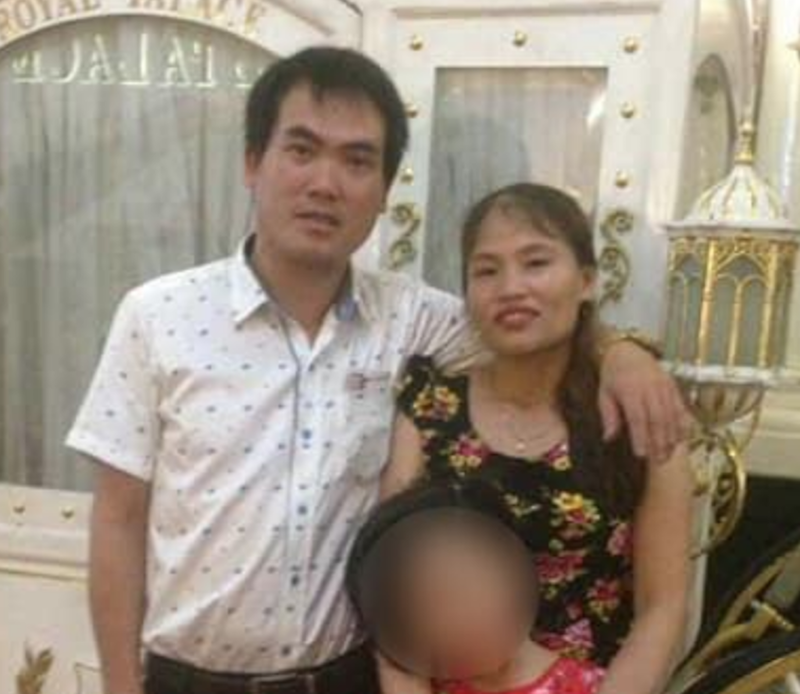
    The price to pay for such an image could very well be the freedom of those who dare to exercise their constitutional rights like Le Thi Khanh’s husband, Tran Thanh Phuong.

    For almost six months, Le Thi Khanh, a garment maker in Ho Chi Minh City, has not been able to see her husband who was taken away by the local authorities since September 1, 2018.

    Her husband is Tran Thanh Phuong, a Facebooker who has been in police detention for attempting to participate in a protest during the celebration of Vietnam’s National Day.

    As a pre-emptive strike, the police “invited” Phuong to come to the local station to talk to them, but they then detained him without a formal arrest warrant, according to his wife.

    At first, Khanh could still bring her husband food and meet him once a day at the local police station of their ward.

    But on September 7, 2018, when she went to see her husband, the police told her they had transferred him to a different location yet refused to tell her where.

    Khanh then went to the District’s Police Department to look up her husband’s whereabouts.

    There, the police asked her to provide them with her marriage certificate before allowing visitation. Once she did, they promised her that she would get to see him on October 10, 2018.

    Came October 10, 2018, Khanh packed some food to bring to her husband with high hopes that she could see him, but again she was disappointed.

    The District’s police told her they had transferred him to No. 4, Phan Dang Luu Street which is the detention center under the Ho Chi Minh City Police Department, The Security Investigative Unit.

    She immediately went to No. 4 Detention Center and was able to confirm that her husband was, indeed, held there.

    Since then, she was only able to send him food every two months, but the authorities have yet to allow visitation.

    She also has no idea what crimes her husband has been charged with because no one would tell her anything.

    But Khanh was aware that Phuong was using his Facebook to look up information relating to Vietnam’s Constitution, as well as the exercise of their constitutional rights.

    “My husband often read different groups’ postings on Facebook about disseminating our Constitution. He said we should read to gain our own knowledge so that when the police arrest us, we could know what rights we have and demand them,” Khanh told us.

    Not being to know how her husband has been doing was an ordeal which Khanh went through in the past six months while trying to make end’s meet to raise the couple’s two daughters, entirely on her own now.

    Tran Thanh Phuong has effectively been held incommunicado by various police forces in Ho Chi Minh City since September 7, 2018.

    Khanh also told us that on October 15, 2010, the police even tried to summon her 13-year-old daughter to come in for questioning on the 19th regarding their investigation of the case.

    She, of course, refused to comply with the outrageous request.

    Phuong was alleged to be a member of a dissident group calls “Constitution” (Hiến pháp).

    The group’s members have been arrested and detained arbitrarily by the Vietnamese authorities from September 2018 to date.

    While the members acknowledged that they participated in the June 10, 2018’s mass protest against the then draft bills of the cybersecurity and the Special Economic Zones law, all information surrounding their activities – including those coming from the authorities – could not openly show their criminal liability.

    One of them has been arrested, tried, convicted and sentenced to five-year-imprisonment.

    In that case, the defendant – Huynh Truong Ca – was alleged by the government to have live-streamed 40 clips on Facebook criticizing the government, the Communist Party, and calling on people to exercise their constitutional right: participate in demonstrations.

    Such conduct, however, not only could not constitute the legal merits of a crime but also was a person’s political opinion which international human rights law protects.

    Notwithstanding international law standards, the government of Vietnam often violates even its constitution while suppressing people during protests and arresting them.

    The 2013 Constitution guarantees all Vietnamese people the right to assemble and to demonstrate peacefully.

    The absence of a valid constitutional protection mechanism, however, has allowed the government’s unlawful activities continued.

    Crowd control’s measures in Vietnam were recently broadcasted internationally when the Hanoi’s security police detained and questioned the Kim Jong-un and Donald Trump impersonators duo ahead of the DRPK-US summit.

    The police’s intention to avoid any remote possibility of people gathering during the event was apparent when they demanded the two’s itinerary while in Hanoi and had since surveilled their movements.

    Spontaneous gatherings in public are frown upon by the VCP because its leaders could not and would not risk the chance – however slim – of having a protest breaks out, especially during a highly observed event like the Kim-Trump peace summit.

    Since September 2018 to date, The Vietnamese has documented over a dozen incidents of arbitrary arrest and detention. More than half of them involved the members of the Constitution group where Tran Thanh Phuong is a member.

  • Vietnam, Where A Folk Hero And His Incense Burner Became A Political Dilemma

    Vietnam, Where A Folk Hero And His Incense Burner Became A Political Dilemma

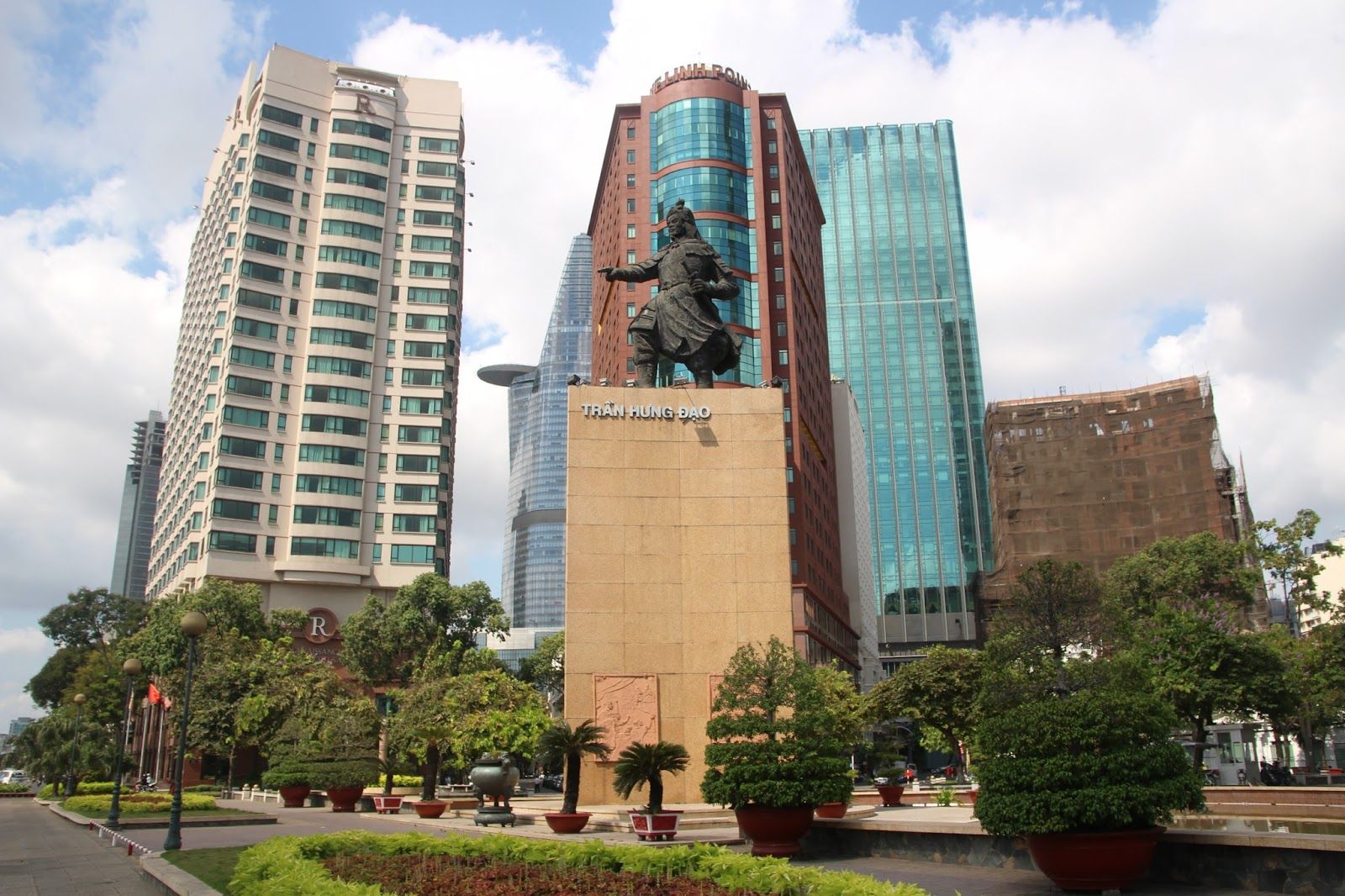
    Some Vietnamese had sarcastically joked in the past few days that the “spirit” of Grand Lord  (in some other translations, Grand Prince) Tran Hung Dao (1228-1300 AD), a General of the Tran Dynasty (1225-1400AD), just became the country’s newest victim of injustice due to the forced removal of his property.

    Three days ago, the giant incense burner which has been placed in front of the Tran Hung Dao statue during the last five decades was suddenly removed by the city on February 17, 2019.

    Taking away the incense burner could be seen as an inexcusable behavior in a society where veneration of ancestors and past national heroes still plays a significant role in the people’s beliefs and religious practices.

    The decision indeed has caused an angry storm that swept across Facebook in Vietnam with no signs of slowing down, despite the following explanation offered by the city’s officials.

    The incense burner suddenly became a political dilemma for the Vietnamese Communist Party’s leadership in Ho Chi Minh City.

    Tran Hung Dao, whose real name was Tran Quoc Tuan (Hung Dao was his posthumous title), probably is the most revered General in Vietnamese history.

    His statue has stood tall at Bach Dang Pier of Saigon River, in Ben Nghe Ward, District 1, Ho Chi Minh City, untouched since 1967.

    To pay respect to Tran Hung Dao, people would come, burn incense, and put them in the giant incense burner in front of the statue.

    During certain commemorating events, some people also come to the location and burn incense.

    In the morning of February 17, 2019, however, the top leaders of Ho Chi Minh City allowed a forklift to come and remove the giant incense burner that had been part of the statue since it was first installed.

    The timing of the removal was probably the most insulting factor, according to those who were offended by it.

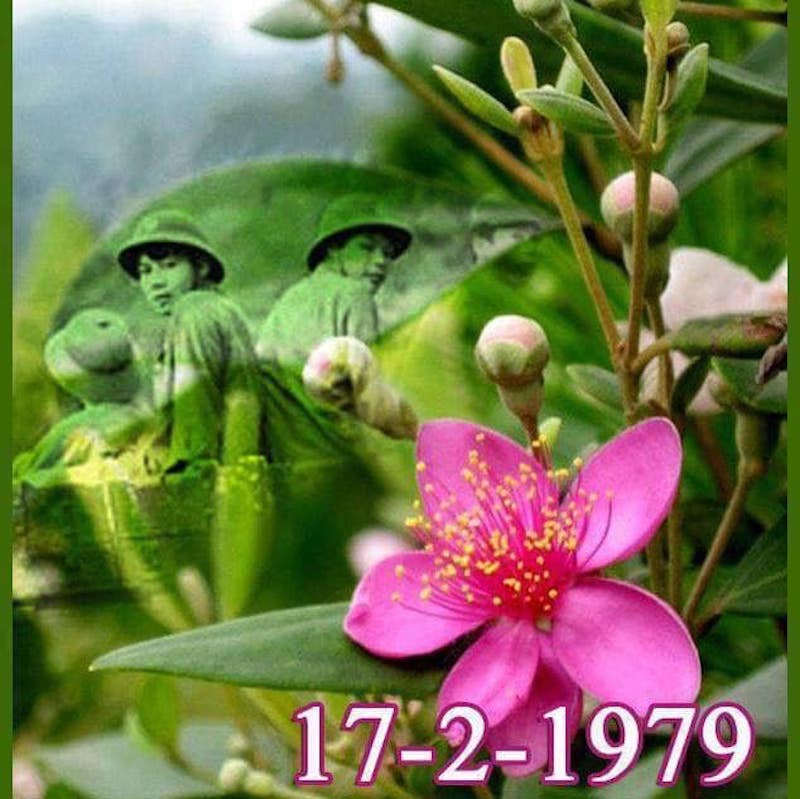
    February 17, 2019, marked the 40th commemoration of the Vietnam-China Border War which lasted over a decade. Vietnam claimed the loss of over 60,000 lives from just between February 17, 1979, to March 4, 1979.

    Vietnamese people revered Tran Hung Dao as a folk hero because he represents the people’s resistance against China’s aggression.

    For generations of Vietnamese, regardless of religious background, Tran Hung Dao was a Sage who had saved the country and its people three times from the Mongols and the Yuan Dynasty which ruled over China and a vast territory in Asia and Europe during the 13th century. His statute had risen to the level of a deity that people worship with the deepest respect.

    Known for his military skills during the battles on waters in ancient time, the modern Vietnamese saw him as the protector of their naval forces. The pier where his statue locates also got named after his famous battlefield: Bach Dang River.

    At a time when China has become more aggressive in the South China Sea, any signs of remote disrespect to Tran Hung Dao could cause an uproar among the Vietnamese people, and this time, it certainly did.

    During the last three days, social media in Vietnam was full of posts and comments about what happened to the Grand Prince Tran’s statue. They range from satire, criticism, to even cursing at the decision makers. All major newspapers in the country also wrote about the story.

    Adding oil onto the fire, however, more people became upset when the Secretary of the VCP’s Division in District 1 of Ho Chi Minh City – Tran Kim Yen – explained to the media about the city’s decision on February 18, 2019.

    According to Ms. Yen, proper worshipping activities should be done at temples and pagodas. The city had decided that the incense burner should be at the Tran Hung Dao Pagoda in Tan Dinh Ward, so they removed it and placed it at the “appropriate” location.

    Many people were not satisfied with the decision, especially when it was unilaterally decided by the officials without public consultation.

    Opponents of the decision quickly pointed out that there is an incense burner at the King Ly’s statue in Hanoi where top VCP’s leaders come together and burn incense to pay respect during the Lunar New Year every year.

    They also posted pictures of incense burners standing in front of many statues of Ho Chi Minh across the country to dispute the official’s explanation that worshipping activities could only be done in temples and pagodas.

    Some people – like dissident attorney Le Cong Dinh – questioned the fact that the explanation came from a leader of the VCP, and not from the administrative branch of the government. He also initiated an online protest, requesting the city government to put back the incense burner.

    Not forget to mention, the night before the removal, social media in Vietnam was circulating a document stamped “Secret,” allegedly coming from the VCP.

    The document requested that the local authorities must stop self-organized groups from organizing any events to commemorate February 17, 1979, at the statue’s location.

    The removal of the incense burner created an ongoing discontentment among not only the residents of Ho Chi Minh City but the Vietnamese people at large, where they raised questions about the ability to lead of the VCP’s officials in Ho Chi Minh City.

  • Death-Row Inmate Dang Van Hien May Get A Second Chance At Life

    Death-Row Inmate Dang Van Hien May Get A Second Chance At Life

    On February 18, 2019, the defense attorneys for Dang Van Hien – a farmer in Dak Nong Province who was sentenced to death in January 2018 – received a letter from the People’s Supreme Court in Hanoi, asking them to supplement further information in support of Hien’s request for a trial by cassation.

    The letter is a good sign. It indicates that Hien’s case may get a review of both the law and the facts by the highest court in Vietnam.

    It gives him hopes that his life could be saved.

    Dang Van Hien killed three men and injured 13 others during a physical altercation between him and the workers of Long Son Investment & Commercial Company in October 2016.

    The call to save Hien, whose death sentence was confirmed by an appellate court in Ho Chi Minh City last July, surprisingly, received a significant amount of public sympathy in Vietnam.

    Right after the appellate court’s decision was announced, in five days, 3,500 people signed an online petition, asking the President of Vietnam to spare his life.

    On July 17, 2018, the Presidential Office demanded the Chief Justice of the Supreme People’s Court, the Chief Procurator of the Supreme People’s Procuracy Office, and the Ministry of Public Security to review and report back the details of the case.

    The public seemed to side with Hien and agreed that while he committed murder, there were extenuating circumstances that should save his life from execution.

    Long Son had been involved in a bitter land dispute for almost a decade with the farmers living in Hien’s village, Village 1535 in Quang Truc Ward, Tuy Duc District, a remote area deep into the forest of Dak Nong Province.

    Dang Van Hien’s case was an agonizing tale of a farmer who started from scratch, trying to build a life on a piece of land which representing the hard-earned money that he and his wife had worked so hard for.

    He was a member of the Nung ethnic minority in Vietnam who had very limited education.

    But Hien believed in working hard and to this day, believed in the legal system.

    He tried to petition to the central government to resolve the dispute between him and Long Son company for almost ten years.

    He was not the instigator of the deadly event happened on October 23, 2016.

    He earnestly believed that he was protecting his land and his family when they were attacked by the company’s workers, with bulldozers and self-made weaponry.

    He turned himself into the police, believing that the law would be fair to him. He and his family tried to compensate the families of the victims for their losses.

    Those were the extenuating circumstances that 3,500 Vietnamese people believed should spare Dang Van Hien’s life.

    But their sympathy could have also come from the fact that land disputes have become one of the most pressing social and political problems in Vietnam during the past three decades, ever since the Vietnamese Communist Party (VCP) started to implement their economic reforms under the Doi Moi policy in the late 1980s.

    The growth of both the private sector and quasi-government enterprises crashed head-on with landowners across the country in many development projects throughout the years.

    On top of that, the legal framework involving land rights in Vietnam is extremely complicated, yet still could not resolve the most important issue confronting the authorities.

    How to balance the communist concept that all lands supposedly belong to the people and still be able to justify the granting of the right to occupy and use the land to preferably private companies over a regular person?

    In recent years, story after story continuously exposed incidents of local government in Vietnam giving the conglomerates a more favored treatment when granting them land use rights in real estate development projects.

    The victims of the wrongful, forced removals under the Thu Thiem Project in Ho Chi Minh City had spent over 20 years in petitioning their cases to no avail.

    Just last month, Sun Group – one of the largest real estate development companies in Vietnam – faced an accusation from environmental activists that they are building a resort in the heart of the country’s famous national park, Tam Dao.

    Land-grabbing has become the reality that the majority of Vietnamese people acknowledges. When conflicts happen, it would be somewhat natural for them to act more sympathetic towards the land-lost victims.

    There is always the possibility that anyone in Vietnam could be the next victims of land-grabbing activities, as seen in the case of Loc Hung Vegetable Garden this year, which may also explain this sympathetic reaction from the public as seen in Hien’s case.

    In Hien’s case, their sympathy may get him a second chance at life.

  • Vietnam-China Border War 1979: When Vietnamese People Refused To Forget

    Vietnam-China Border War 1979: When Vietnamese People Refused To Forget

    Foreigners often assume – wrongfully – that the last war the Vietnamese people remember fighting was the one where the Americans were involved.

    It is not.

    Foreigners also often do not fully understand why a large number of Vietnamese people would protest when China acts aggressively in the Southeast Asian Sea or South (of) China Sea.

    Is it because the Chinese colonized us Vietnamese for one thousand years and continuously fought us during our entire history?

    It is not, not entirely.

    It is true that from our earliest history until this century, China’s aggression towards us has never ceased to exist.

    But, we were forced to resist primarily because our government in the past almost three decades, as it attempted to be closer to their ideological big brother, tried to blur our past conflicts with China.

    We were forced to remember because we felt that there has been an attempt to erase this collective memory from us.

    Ever since Vietnam signed a treaty with China to end the decade long Border War after their secret negotiations in Chengdu in 1990, our history books spent only a few paragraphs discussing the recent battles between us and China.

    Until very recently, writing about China’s aggression and the bloody history between the two countries in the 20th century was strictly forbidden by the Propaganda Central Committee of the Vietnamese Communist Party (VCP).

    Those journalists and bloggers – such as Osin Huy Duc, Pham Doan Trang, Mother Mushroom, The Wind Trader, and Trung Bao – who dared to lead the way almost a decade ago on writing about the restricted contents have paid a hefty price. For some of them, their professional life ended, and for some others: jail time.

    The people’s attempts to commemorate these battles and those who died were faced with arrest, detention and physical assaults by our police force every year.

    Remembering the dead during the anniversary of their passing – or Ngày Giỗ – is a staple ritual in the Vietnamese culture.

    Remembering those who had given up their lives to protect our lands is seen as a responsibility which the people expect from their government.

    When our government chose silence over commemorating those who died to protect our sovereignty, as Vietnamese, we refused to forget.

    We refused to forget the 74 soldiers of the Republic of South Vietnam’s naval force whom we lost in the battle of January 19, 1974 – the day China invaded Paracels Island.

    We refused to forget the 68 soldiers from the People’s Army of Vietnam who died resisting China’s attack at the Johnson South Reef on March 14, 1988, in the Spratly Islands.

    And every February, we could not forget the most gruesome memory of the massacre in the Northern provinces during the Border War of 1979, which many witnesses could still recall today.

    We saw the relationship between the Chinese Communist Party (CCP) and the VCP has trenched in the blood of innocent lives.

    Thousands of Vietnamese people and soldiers died at the hands of the Chinese PLA during the Border War.

    One research paper entitled China’s War Against Vietnam, 1979: A Military Analysis conducted in 1982 by King C. Chen and published by the School of Law of the University of Maryland in 1983, had estimated that each side lost about 30,000 soldiers from February 17, 1979, to March 5, 1979.

    Vietnam estimated the number of lives it had lost during the Border War was around 60,000 people.

    Has it not been for the internet that was roaming free in Vietnam since the early 2000s until now, the younger generations of Vietnamese would not be able to learn about our history.

    It was also because of the internet, Vietnamese people learned about the Tiananmen massacre, and the plight of the Tibetans and the Uyghurs under China’s occupation.

    We fear the day that Vietnam would be the next Tibet or East Turkestan if China’s aggression continues.

    When our National Assembly tried to pass the Special Economic Zones in June 2018, our government reaffirmed this worst fear that Vietnam could be under the direct control of the most terrible dictatorship in the world.

    Naturally, thousands of people turned to the streets as they did in 2007/2008, 2011, 2012, 2013, 2014, and so forth.

    The June 2018 protest, however, was estimated to be the most massive demonstration in contemporary Vietnam’s history after April 1975, and it was not organized by any groups of dissidents.

    It was probably an automatic response to China’s aggression, a force of resistance that might have been ingrained in most of our genetic makeups.

    The majority of Vietnamese people do distinguish the CCP as the main culprit, not all people of Chinese descent.

    In 2014, there were reports of riots burning down Chinese-owned factory, but the identities of those rioters were dubious to the public.

    Some suspected that the “riots” was part of the police’s tactic to suppress the peaceful demonstration against China for bringing their oil rig – Haiyang 981 – into Vietnam’s waters at the time.

    Regardless, Vietnamese people quickly denounced the riots, as well as any call for violence against Chinese people and their property.

    This year, 2019, it was the first time that all of Vietnam’s major newspapers published the detailed historical events to commemorate the February 1979 Border War with China.

    However, few trusted that our government has truly meant to give the dead their well-earned respect after 40 years.

    Last night, a document stamped “Secret” was circulating Facebook in Vietnam, allegedly came from the VCP’s leaders in Ho Chi Minh City, asking the local authorities to not letting self-organized groups – such as the Le Hieu Dang Club – to organize their events commemorating February 17, 1979.

    This morning, social media reported that the local police forces were arresting dissidents who went to Ly Thai To statue in Hanoi and Tran Hung Dao statue in Ho Chi Minh City to commemorate the event.

    Among the arrested were blogger Anh Chi Tuyen (Nguyen Chi Tuyen), poet Phan Dang Lu, Facebookers Dang Bich Phuong, Le Hong Hanh, and Hong Ha.

    The people often chose the statues of Ly and Tran as the commemorating locations because they were our national heroes who fought off the “enemies from the North” in our history.

    In Ho Chi Minh City, the local authorities were quite “creative” when they used a forklift to take away the giant incense burner (lư hương) so that no one could offer the incense to the dead, effectively stopping any commemoration activity at once.

    While the good faith of our government again was being called into question today, February 17, 1979, had already become a historical event that the contemporary Vietnamese memorialized because we, the people, refused to forget.

  • Robbery Unwittingly Exposes Potential Corruption In Vietnam

    Robbery Unwittingly Exposes Potential Corruption In Vietnam

    The story first sounded like the twisted plot of a comedy about feudal Vietnam a few centuries back. It went like this:

    Three bad guys robbed a court official’s post and shocked the township when news on the enormous amount of money the robbers had taken, spread like wildfire. The officials scrambled to explain the origin of the funds while trying to scale down its size, but only to raise even more suspicion on their corruption among the public.

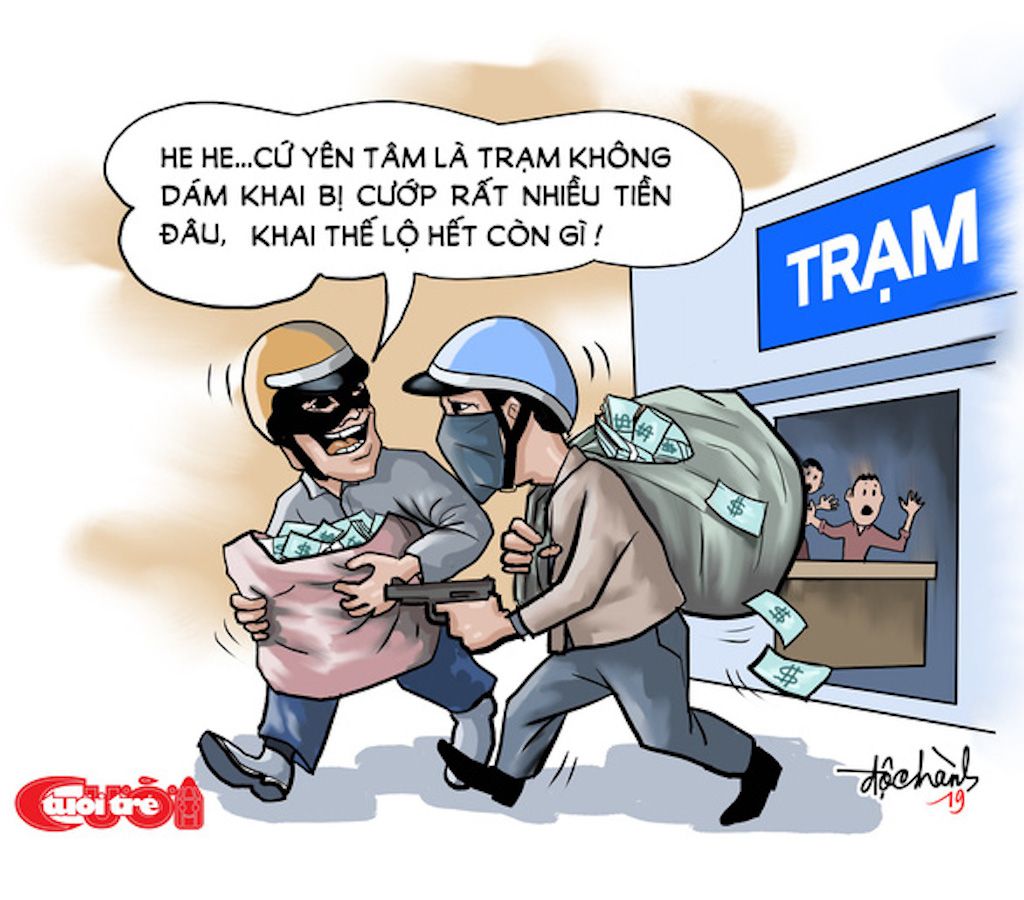
    It was, however, not a movie plot but a real story in Vietnam 2019 with a small difference: the location of the robbery was a well-known BOT (Build-Operate-Transfer) toll booth near Ho Chi Minh City.

    During the Tet celebration last week, three men robbed the BOT booth of the Ho Chi Minh City-Long Thanh-Dau Giay expressway in Dong Nai Province. They allegedly took over 2B VND or approximately 86k USD at once. The amount was rumored to be from only one shift of the BOT’s collection activities that day.

    Netizens were quick to point out that the robbery happened during the biggest holiday in the country where traffic flow through the main highways and expressways decreased dramatically in Vietnam, leading people to believe that the usual amount this particular BOT booth collects during a regular day would have been a lot higher.

    The BOT’s owner – Vietnam Expressway Services Engineering Joint Stock Company (VEC E) – tried to diffuse the situation in an interview with Tuoi Tre newspaper on February 8, 2019, the day after, stating that the amount taken was collected from eight different shifts, not one.

    But by then, the amount taken by the robbers was no longer the public’s primary concern.

    Instead, people started to demand answers on the validity of the very existence of the toll booth. According to the Facebook page of journalist Ngo Nguyet Huu, the information on how long this particular BOT could continue to collect toll fees seemed to be missing.

    Quick math on the average amount of money the BOT booth could generate daily raised more concerns over the potential sum that could have been taken illegally from the commuters if it indeed, did not have the authority to collect.

    Some people had pointed out that the BOT booth in question has been operating long enough for it to recover the costs of construction and make enough money in return, casting more doubts on the legality of its existence.

    To add fuel to the fire, on February 11, 2019, people on social media went livid when VEC E announced that it would refuse services to two particular vehicles at their Ho Chi Minh-Dau Giay BOT booth indefinitely, alleging the drivers of these cars “had incited disorder behaviors.” Its decision would have the effect of not letting these two cars use the expressway where the BOT booth is located.

    Almost immediately, netizens started to call VEC E’s action “unconstitutional,” violating the people’s freedom of movement. Others questioned the company’s authority to enforce their decision. Although considered as a “quasi” government enterprise in Vietnam due to its investment structure, whether VEC E could act under “state action” is still debatable.

    The people’s anger has caused the Transportation Department to immediately reassure the public on February 12, 2019, that it will not allow VEC E to refuse services and that all violations at BOT booths should be dealt with according to Vietnam’s administrative procedures.

    Allegations of corruption involving BOT booths have been raised in numerous cases in Vietnam recently, and some saw VEC E’s announcement as evidence of BOT’s investors acting under the “protection” of the authorities.

    A group of drivers acting as Vietnam’s freedom riders has been protesting against some BOT booths where they openly questioned the legality of some of these booths.

    Their works faced intimidation, false imprisonment, and physical assaults by masked men in civilian clothes when they protested at or near the locations of these BOTs.

    When these drivers tried to complain to the authorities but only received a slow, and sometimes even no response from the local police forces, the public began to suspect shady business deals between the owners of the BOT projects and the officials.

    One of the latest incidents of intimidation happened just last Saturday night, February 9, 2019. A driver names Nguyen Quang Tuy alleged that he was physically assaulted and suffered significant injuries after getting involved in a minor dispute over payment types at Ben Thuy BOT in Nghe An Province.

    More Vietnamese people have become vocal and voiced their complaints and discontentment about the BOT fees because they see these as unreasonable additions to the transportation taxes already imposed on them by the government for roads maintenance.

    During the past two years, with more than 60 booths stationed throughout the country’s main highways and expressways, BOT is a social and political problem that could only get more severe with time.

  • Vietnam: When Workers’ Rights Face Resistance From A Socialist Government

    Vietnam: When Workers’ Rights Face Resistance From A Socialist Government

    Vietnam’s dismal human rights records in 2017 and 2018 could play a role in delaying the ratification of the much anticipated European Union-Vietnam Free Trade Agreement (EV-FTA) this year.

    A group of MEPs from across the EU Parliament’s political spectrum has repeatedly demanded that Vietnam improves its human rights conditions before they would vote on the trade deal.

    The latest demand was a joint letter to President Nguyen Phu Trong on February 1, 2019, sent by nine MEPs on the case of Hoang Duc Binh, an environmental and labor rights activist who was sentenced to 14-year-imprisonment in 2018.

    Releasing political dissidents and activists would indeed be a sensitive issue for the communist regime to compromise, even for the sake of clinching the ambitious EV-FTA deal where Vietnam could expect a 15% GDP gain.

    But there has always been another human rights condition which one would assume that it should have received natural cooperation from the socialists in Hanoi: the ratification of the remaining three ILO (International Labor Organization) conventions.

    That, however, has not been the case.

    Vietnam, while rejoined the ILO since 1993, to date, has yet to ratify the following three conventions:

    ILO Convention No. 87 – Freedom of Association and Protection of the Right to Organize Convention, 1948 (No. 87)ILO Convention No. 98 – Right to Organise and Collective Bargaining Convention, 1949 (No. 98)ILO Convention No. 105 – Abolition of Forced Labour Convention, 1957 (No. 105)

    In late 2018, Vietnam ratified the Comprehensive and Progressive Agreement for Trans-Pacific Partnership (CP-TPP) where a specific clause (Article 19) also addresses similar conditions regarding labor and workers’ rights.

    On the ground, the Vietnamese government is proposing a roadmap that could take almost five years to get all three ILO conventions ratified.

    It is not fast enough for the EU’s MEPs, and as of right now, these ILO conventions continue to be part of the obstacles to move the EV-FTA forward.

    Vietnam maintains that its current Labor Code and legal framework would protect the rights of workers in the country while waiting for the Draft of the amended Labor Code to be reviewed and passed by its Congress later in 2019, paving the way for the ratification of the ILO conventions to take place between now and 2023.

    In reality, impracticality contradicts the government’s claim.

    For example, it is not meaningful to discuss the right of association and the protection of the right to organize according to ILO Convention No. 87 when Vietnam, to date, has refused to pass laws on the freedom of association and the right to assemble and demonstrate although their Constitution of 2013 guarantees these rights to all of its people.

    Participation in demonstrations, moreover, could likely lead to arrest, detention, and conviction for “inciting public disorder” in Vietnam.

    In June 2018, mass protests broke out in a few major cities against the then pending draft bills of the cybersecurity law and the development of three special economic zones in Vietnam. In response, the police arrested and detained hundreds of people.

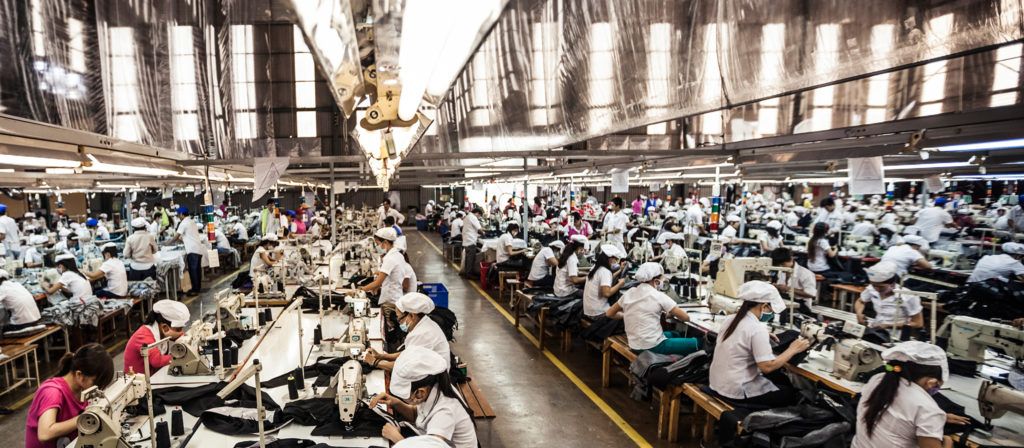
    One of the “hot spots” considered by the police of Ho Chi Minh City as reported by state-owned media at the time, was near the Taiwanese Pou Yuen factory in Binh Tan District where some workers did join in the protests between June 9 and June 13, 2018.

    According to the organization The 88 Project, more than 60 people were arrested, tried, and sentenced to between 24-36 months imprisonment due to their participation in those demonstrations. Some of them are believed to be factory workers from the outskirts of Ho Chi Minh City.

    The legal system continues to create hurdles in the registration processes for independent organizations. It is an issue which the UN Human Rights Committee has brought up with Vietnam before its upcoming CCPR (Covenant on Civil and Political Rights) review in March 2019.

    At the end of 2016, Vietnam had attempted – but failed – to pass the Law on Association when it faced a defiant opposition from civil society organizations, both registered and unregistered.

    One of the reasons which caused the majority of NGO workers in Vietnam to go against the proposed bill then, was because it attempted to criminalize the receiving of foreign funding and gave preferential treatment to GONGO(s) (Government-organized non-governmental organizations).

    The Vietnam General Confederation of Labour (VGCL) – the only labor union in Vietnam right now – is not only a GONGO but also takes directives from the Vietnamese Communist Party.

    During his speech in front of the National Assembly on November 2, 2018, the Vice-Chairman of the VGCL, Ngo Duy Hieu, cautiously reaffirmed that the ratification of the CP-TPP requires Vietnam to recognize independent unions while tried to cast doubts on their credibility.

    At the same time, the government has yet to legally recognize any organization – large or small – formed by private citizens that could remotely represent an independent union for workers.

    Vietnam, in 2017, reported an estimated population of approximately 26M workers in a variety of different industries.

    The possibility of getting arrested and jailed under the current legal scheme, however, did not seem to deter a portion of these Vietnamese workers from exercising their rights.

    Protests organized by workers continued to happen in Vietnam regardless, with the most common reason often linked to improving wages and working conditions – which ILO Convention 97 on collective bargaining could help.

    Indeed, the government probably has already anticipated that the ratification of the ILO conventions would encourage even more workers to come together and organize themselves, independent from the VGCL in the future, once the legal landscape changes.

    It is a slippery slope that Hanoi fears as it may spread to other sectors in society, which could explain the cautious approach in their proposed roadmap for the ratification of the three ILO conventions.

    Accordingly, Vietnam proposed that they will present the National Assembly with the Draft of the amended Labor Code in May 2019 and expected the new law would pass at the next congressional meeting in October 2019. Also in 2019, the President will present ILO Convention No. 98 to the National Assembly for ratification. Next, it would be ILO Convention 105 in 2020, and finally ILO Convention No. 87 to be presented in 2023.

    The proposed roadmap by the Vietnamese government, however, seems to have failed to convince the EU Parliament that workers’ rights are being protected, enough to move the EV-FTA forward.

    The European Council has delayed their vote for EV-FTA last month. With the deadline for amendments also get postponed indefinitely, it is unlikely that the current EU Parliament will vote on the EV-FTA before their upcoming election in May 2019.

  • Vietnamese Communist Party Turns 89, And The People May Have Had Enough

    Vietnamese Communist Party Turns 89, And The People May Have Had Enough

    February 3, 2019, the Vietnamese Communist Party celebrates its 89th anniversary.

    In a recent speech to commend the auspicious event, Secretary General Nguyen Phu Trong wrote: “The Party stays strong, the country prospers, the people concur.”

    However, on Facebook, the people’s reactions to both Trong’s writing and other propaganda, do not seem to show a public consensus as to the VCP’s leadership role in Vietnam.

    Today, the users’ reactions to a posting on Facebook seem to suggest the Party’s legitimacy is being called into question by the very people it tries to lead.

    A Facebook page names Vietnam’s Politics (Chính trị Việt Nam) identifies itself as a source for government’s news and uses a webpage domain of www.nguyenxuanphuc.org – which also is the name of the country’s current Prime Minister.

    The website posted a piece of writing entitles “Our Party” (Đảng Ta) in celebration of the anniversary.

    The writing did not deviate far from other propaganda materials in past decades, praising the accomplishment of the VCP, reaffirming its leading role in society for years to come, and confessing the love of the Vietnamese people for the Party.

    However, Facebook users were not willing to let that slides and quickly took the opportunity to express their distrust and unhappiness with the way “Our Party” has been leading society and the country in the comment section.

    A few hours after its posting on Facebook, the piece received over 400 reactions from Vietnamese users, about one-fourth of them was the “laughing” icon.

    Not stopping at that, the majority of the people who commented also raised a series of issues, such as corruption and nepotism within the VCP. They also questioned the legality of the recent National Assembly’s election result and pointed out the wealth discrepancy between the VCP’s members and the non-member citizens.

    The overall picture of the people’s reactions on the post shows an alarming sense of distrust in the VCP, leaving doubts to the other readers as to whether the VCP could still maintain the position of the leading and only political party in the country indefinitely.

    Other reactions from the Vietnamese people to the political events in another country during the past few weeks may cause the leaders of the VCP more worries.

    The recent political turmoil in Venezuela has been receiving a lot of attention in Vietnam with the majority of the people supporting Juan Guaidó, the leader of the opposition front. When Nicolas Maduro used the example of another Vietnam to warn against an American invasion, he probably did not know that the majority of Vietnamese are strong supporters of the Trump administration’s decision to back his political opponent.

    Back to the comments on this posting, it is not difficult to detect that the support for the VCP among its non-member citizens is waning. While the VCP certainly can continue to enjoy the political monopoly for being the only political party in the country, even its top officials may not be sure of its future – if and when a political opposition surfaces.

    The lacking of confidence that it still has the mandate to maintain the legitimacy among the majority of Vietnamese people could explain the VCP’s enhanced oppression against political dissidents in recent years.

    Most recent was the Party’s effort to silent online criticisms with the new cybersecurity law of 2018.

    Vietnamese internet users appear to be very well aware of the purpose and intention of the government in passing such law.

    One comment on the post did mention the potential application of the new cybersecurity law against internet users in cases like this: “The page administrator purposely posted this (writing) to incite the people to react and then (the government) threatens us with the cybersecurity law.”

    At the same time, there are no clear signs that online activism in Vietnam has been slowing down since the new law takes effect earlier this year although it is true that just in January 2019, there have been reports of two confirmed arrests of Facebookers and one incident of police questioning a university student over his Facebook’s activities.

    Vietnam has been increasingly repressive in the past two years. Not only the number of arrests have been steadily on the rise, but the sentences in political cases also became a lot harsher compared to a few years ago, often in the range of one to two decades behind bars.

  • Vietnam: Court Sentenced Doctor For Involuntary Manslaughter, Ignited Public Outrage

    Vietnam: Court Sentenced Doctor For Involuntary Manslaughter, Ignited Public Outrage

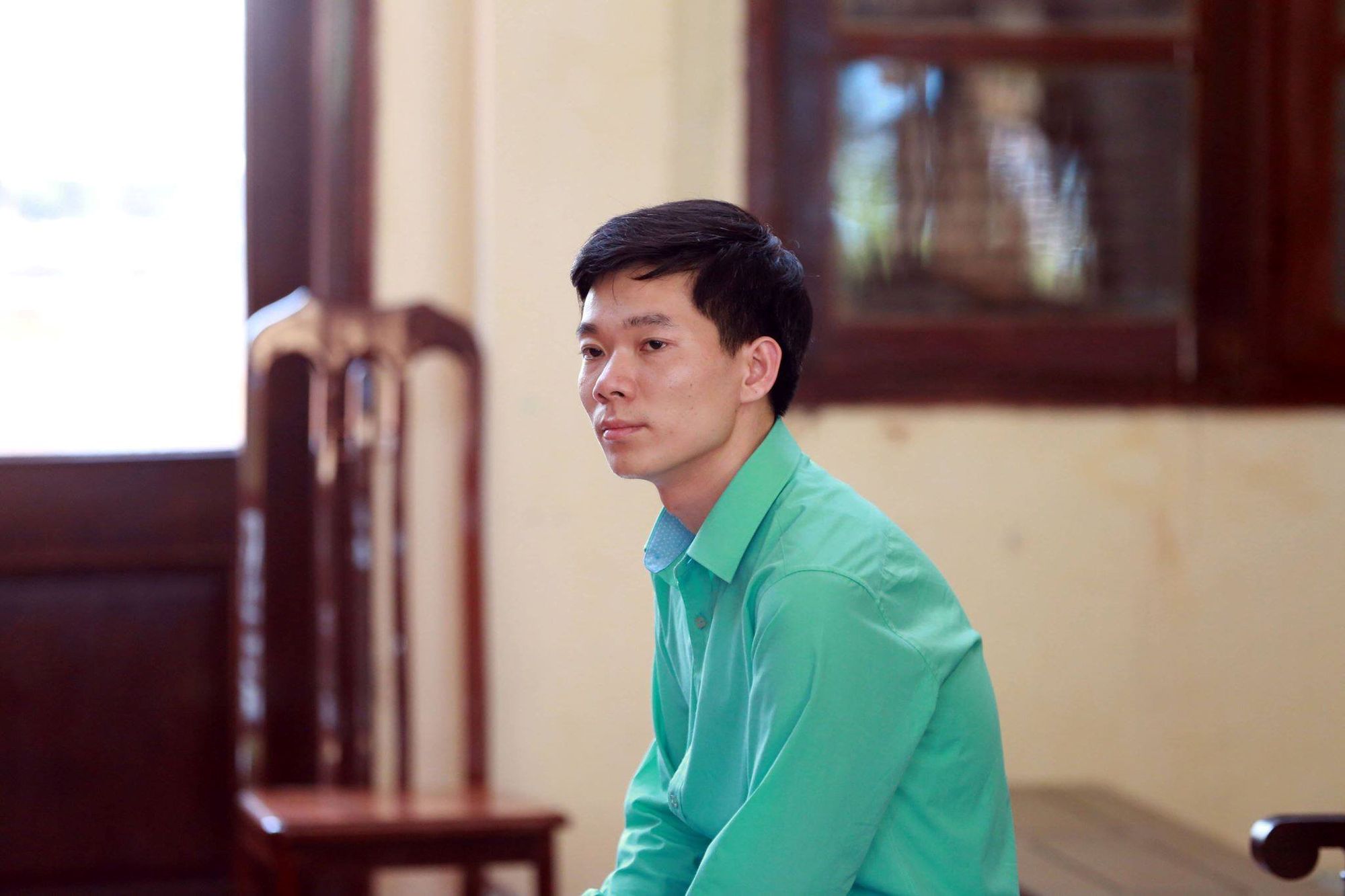
    On January 30, 2019, The People’s Court of Hoa Binh Province found Dr. Hoang Cong Luong guilty of involuntary manslaughter and sentenced him to 42-month-imprisonment.

    The verdict caused an outcry across different sectors in Vietnam’s society, especially among other doctors who did not agree with the court’s reasoning.

    They believed that Dr. Luong did not breach his duty of care as a medical doctor.

    Dr. Luong was a former nephrologist at Hoa Binh General Hospital who was charged with involuntary manslaughter for failing to check the RO (reverse osmosis) water before initiating a hemodialysis treatment in May 2017, causing 18 patients to suffer anaphylactic-like symptoms – eight of whom later died as a result.

    A total of seven people were put on trial this year for “involuntary manslaughter” under Article 98 and “negligence of responsibility, causing serious consequences” under Article 285 of the 1999 Penal Code.

    The case was initially tried in May 2018 where Dr. Luong was charged with Article 285. The court dismissed the case and returned the file to the prosecution for re-investigation in June 2018.

    The prosecution came back and formally filed charges against Dr. Luong for involuntary manslaughter in December 2018. The second trial commenced in January 2019.

    According to the trial court’s verdict of yesterday, Dr. Luong was guilty because he failed to wait for the documentation confirming the water’s safety before initiating the dialysis. Instead, Dr. Luong relied on the verbal confirmation of the staff in charge.

    The court’s reasoning also put Dr. Luong in the position of a gatekeeper, which many doctors disagreed and argued that would have required nephrologists to be more than medical service providers.

    According to these Vietnamese doctors, the failure to wait for the appropriate documentation was only an administrative mistake, not enough to constitute his criminal culpability.

    They also argued that other doctors would have used the same method as Dr. Luong because having the documentation – in reality – does not make any difference compares to the verbal confirmation of the staff before starting the dialysis. Delaying the dialysis to wait for the documentation could also cost the patients their lives.

    According to the community of doctors standing with Dr. Luong, when faced with such circumstances, whether he had waited for the documentation or went ahead with a verbal confirmation, nothing could have changed the fact that the water was contaminated and Luong could never detect such contamination.

    The evidence at trial also established that the water in question was contaminated due to improper cleaning performed by the maintenance staff.

    One of the witnesses, Nguyen Huu Dung, the Head of the Dialysis Department of Bach Mai Hospital in Hanoi, testified that the responsibility to maintain the water safety was one of the maintenance department, not the treating physician.

    Regardless of the testimony from the experts and the doctors’ community standards, the court still decided Dr. Luong had committed involuntary manslaughter.

    Throughout the process, not only the public and the doctors’ community stood by Dr. Luong, but all of the victims’ families have also pleaded with the court to exonerate him. Their action constituted one of the conditions under Vietnam’s laws which could exempt Dr. Luong from criminal liability under Article 29, Penal Code of 2015.

    While the new penal code only took effect on January 1, 2018, which was after the alleged medical malpractice had happened, Vietnamese laws allowed the retroactive application of any section that could have benefited the accused.

    For his defense, Dr. Luong should have been able to use any section involving the extenuating circumstances, and other exemptions from criminal liability under the recently amended 2015 Penal Code, to defend his action. That did not happen.

    The public outrage, in this case, started since its commencement where the director of the hospital, Truong Quy Duong, was first exempt from prosecution and was able to leave the country to go abroad to Canada back in 2018.

    Due to public pressure and Dr. Luong’s lawyers’ argument, he was later charged with negligence and had to return to stand in the second trial.

    Other doctors had pointed out that the absence of a national standard for dialysis procedures should make the Ministry of Health liable in this case as well.

    The case also revealed more unanswered questions regarding the maintenance of the RO water system being used in dialysis at Hoa Binh General Hospital.

    As the director of that hospital, should the responsibility of overseeing the maintenance and operation of all departments belongs to Truong Quy Duong, and that he should have been ultimately held liable for the death of the patients?

    The case of Dr. Hoang Cong Luong has become one of the most controversial criminal cases in recent years, underlining issues that challenge Vietnam’s legal system today and in years to come.

    People questioned the neutrality and fairness of the court and the role of the prosecution in this case. Was the prosecution’s decision to file charges against Dr. Luong for involuntary manslaughter done according to laws?

    Not only there is a lacking of the standard of care for doctors in medical malpractice cases in the country, but also, there are other criminal procedures’ issues that urgently need reform, such as evidence admissibility and the standard for expert witnesses’ testimony.