Author: Quynh-Vi Tran

  • Self Immolation in Vietnam: A Victim of Injustice’s Agonizing Act In Defiance

    Self Immolation in Vietnam: A Victim of Injustice’s Agonizing Act In Defiance

    In the afternoon of July 2, 2018, a man committed self-immolation in the center of Hanoi, Vietnam’s capital city, a few steps away from the Central Citizen Reception Committee’s office on Ngô Thì Nhậm Street.

    He was later identified as 58-year-old Bùi Hữu Tuân, former village chief of Đạo Ngạn Village, Hợp Đồng Ward, Chương Mỹ District, Hanoi.

    The victim is now in critical conditions with severe burns to the whole body.

    Mr. Tuân was charged with Article 356 of Vietnam’s Penal Code for “abusing official position, power in the performance of official duties.”

    He was supposed to begin his sentence of 3-year-imprisonment today, July 3, 2018. In the last act of defiance, one day before its commencement, he desperately protested the injustice of the trial and his conviction.

    He was charged, tried, and convicted with not only insufficient evidence, but the evidence at trial showed that the prosecution did not even have any evidence for one element of the crime they had charged him with.

    His son told VOA Vietnamese in an interview on July 2, 2018, that after Tuân failed to get the Central Citizen Reception Committee’s office agreed to halt his sentencing while reviewing his complaint to the Government Inspectorate, he went outside and committed the self-immolation.

    Article 356 prescribes: “Any person who, for personal gain or other self-seeking purposes, abuses his/her power or position in performance of official duties to act against his/her official duties and as a result causes property damage of from VND 10,000,000 to under VND 200,000,000 or infringes upon state interests, lawful rights and interests of another organization or individual shall face a penalty of up to 03 years’ community sentence or 01 – 05 years’ imprisonment.”

    From Pháp luật Thành phố Hồ Chí Minh (The Law – Hochiminh City) newspaper, the most damning evidence against Tuân was that he – as the village chief – allegedly accepted money, along with the requests of some 23 families in the village, to ask the local government to give them lands to build their ancestors’ shrines and worship places. Yet, none of this money went to Tuân or any of his two co-defendants, as it was donated to the village.

    The local procuracy’s office (the prosecution in Vietnam) and the court further alleged that he had overstepped his authorities in giving out land slots to the villagers, and thus had committed a crime under the above penal code.

    According to them, he had abused his “official duties” even though some people questioned whether the village chief position could be considered an “office”.

    At the trial court level, Tuân was convicted and sentenced to the maximum term prescribed by law: 5-year-imprisonment. The appeal trial upheld his conviction but reduced the sentence to 3 years.

    The appellate court’s decision in upholding his conviction with actual imprisonment was the last straw for Bùi Hữu Tuân, and he committed the unimaginable act of setting himself on fire.

    From a legal standpoint, Tuân was correct in protesting his conviction and his sentence because the first element of the crime “abusing official position, power in the performance of official duties” seemed to have been conveniently ignored throughout his criminal proceedings.

    In the same article published back in November 2017, Pháp Luật newspaper reported that it was established at trial that all of the money which Tuân and his co-defendants received from the villagers, was donated to various community services projects in the village.

    Neither Tuân or any of his co-defendants had used any portion of the money for personal gains.

    In other words, it is almost certain that the prosecution would not be able to prove the first element of the crime alleged against him, that he did commit an act for personal gain or other self-seeking purposes.

    Worse, the evidence further showed that Tuân did submit the villagers’ requests to the ward’s officials, asking them to give out the land to people for burial and worship purposes. Pháp Luật newspaper also wrote, back in November 2017, that they had interviewed the villagers independently and were told that the local officials were present, at all times, to survey the land with the defendants.

    And while Tuân and two of his deputy chiefs were tried and convicted, none of the ward’s officials had to face criminal charges even though the same evidence could be used against them.

    By the same token, it could be argued that if the evidence were not enough to file charges against the local officials, then it certainly would not be enough to convict Tuân and the co-defendants.

    Undeniably, Tuân’s trial and conviction again delineate the inefficient and broken legal system in Vietnam where people can be charged, tried, and convicted with no evidence to prove the required elements of the crime.


  • “Minds” over Facebook: Vietnamese Netizens’ Great Cyber Exodus?

    “Minds” over Facebook: Vietnamese Netizens’ Great Cyber Exodus?

    In the past two days, the “F-Generation” of Vietnam started what seems to be an online exodus when many well-known Facebookers announced that they are moving on to Minds.com – an alternate platform for social media.

    The “F” in F-Generation stands for “Facebook” as the online social media giant has a dominant presence in the country where some statistics raised the number of users to be between 50 to 60 million.

    For about two months, people had been protesting both online and offline against the latest Cybersecurity law which was passed by an overwhelming 86.86% of the National Assembly.

    The law raised concerns over Internet users’ privacy, people’s freedom of expression, and their right to access the Internet.

    Brad Adams, Asia director at Human Rights Watch, declared: “This bill, which squarely targets free expression and access to information, will provide yet one more weapon for the government against dissenting voices. It is no coincidence that it was drafted by the country’s Ministry of Public Security, notorious for human rights violations.”

    In less than two days, some of the prominent Facebookers have received thousands of subscribers over at their freshly minted Minds accounts.

    In the same time, reports of pages and personal accounts have been taken down by Facebook also surfaced.

    Trương Thị Hà, a victim of police brutality during the last “Black Sundays” protest, announced on Minds this morning that her account has been deactivated by Facebook.

    After she posted a letter to her university professor, asking him to explain why he stood there while the police brutalized her during her detention after the protest, that very post was deleted for “violating Facebook community standards” at about 8:30 a.m. Then, her entire account seemed to have disappeared by 10:40 a.m.

    According to author Claire Bernish who wrote about Minds back in June 2015, Facebook could finally meet its match. Minds gives users the familiarity with many features they have already accustomed to on Facebook while commits to protecting their privacy.

    “Minds takes the government’s eyes out of the equation by encrypting private messages and using open-source code that any programmer can check,” Bernish explained.

    “We are a free and open-source platform to launch your digital brand, social network, and mobile app. We are also a social network ourselves. It is a global social network of social networks,” the Minds team declared.

    The hacker collective Anonymous also backed Minds, citing the fact that the founders of the new online social media shared the same vision of those who use the Internet for activism.

    According to the Wired UK: “Two of those on the Minds team – Bill Ottman and Lori Fena – have strong backgrounds dealing with privacy and freedom of expression issues and are both known for their internet-related activism. It is likely these are the type of people that the company is hoping to attract – those with a cause, who want to build something and share it openly with others who may also have a cause.”

    President Trần Đại Quang signed the Cybersecurity bill into law on June 25, 2018, although some 27,000.00 signatures of citizens who had expressed their objection to the proposal of the law, were delivered to his office during the prior weekend.

    It seems as if the activists and human rights defenders from Vietnam might have found a friend in Minds because the reason they chose Facebook in the first place, was to use the platform as a tool to advance a cause: promoting human rights and democracy in the country.

    While not all of them agreed to the solution of leaving Facebook and saw that as a sign of defeat, the silence from Facebook during the last two months as the Cybersecurity law stormed the nation could force many activists to reconsider whether to continue to use it as their primary platform. Most are still using both platforms, but all seemed to agree that if Facebook agreed to comply with the new Cybersecurity, then it could mean they will have to leave for good.

    Vietnamese netizens are no strangers to such online “resettlement.” Back in 2009, when Yahoo 360 blog closed down its operation, Facebook quickly became the next best choice in the country.

    Almost ten years later, while Facebook could still enjoy its reign in the country as the most used online social media platform, the power of Vietnamese users should not be underestimated by anyone.

    Afterall, Vietnamese are a group of people whose contemporary history entwined with mass migration and exodus. They have a lot of experience with starting over, yet again, and they will not be afraid to do so.

  • Saigon Is Under De-facto Martial Law

    Saigon Is Under De-facto Martial Law

    June 17, 2018| Hundreds of people were stopped, detained, searched, and later taken to a temporary holding center set up in the heart of Saigon (aka Ho Chi Minh City) for apparently no reasons.

    The government, this time, did not even announce that there were any “illegal” public gatherings as in the previous weekend where thousands of people protested against the cybersecurity and Special Economic Zones draft laws.

    What they have done instead, was to preemptively take a strike at all of the citizens who were happened to be in those hot spots of last week’s protest. Some did go out to the streets with the intent to participate in a demonstration, but they could not even start.

    From the early morning, all types of police, secret police, and security forces have filled up various areas in Saigon. Many coffee shops near the Notre Dame Cathedral Basilica were asked to close by the authorities.

    One witness reported that police were arresting people at a McDonald’s nearby. The only group that acted provocatively was the police and other security forces, this person wrote on Facebook.

    The security forces watched every single bystander, people who happened to pass through the area. Anyone who looked “suspicious” to them would get stopped, asked for identification, searched, and demanded to show their phones where any pictures that were taken would get deleted.

    All were done without any probable cause and of course, without a warrant.

    It seemed as if the law no longer existed there. The city was under siege by its police force, and the people lived under martial law.

    Worse, there would likely be no recourse in a court of law for the victims, even if some of them could gather enough courage to file a complaint against the authorities.

    One person who was arrested while working near Nguyễn Văn Bình Books Street and detained until that evening said on Facebook, that she felt the experience eerily reminded her with words from Anne Frank’s Diary.

    She also recalled that others were taken into separate rooms and some got beaten up by the police. The beatings must be very violent because everyone at that detention center could hear the screams. When they tried to run towards the room to help, the police stopped them with threats of physical violence, recalled by another witness.

    The victim – who later got identified as Trinh Toan – was taken to the hospital for head injuries and reported to be in a coma since.

    Those who got released were cited for “disrupting public disorder,” ironically.

    Another witness live-streamed to tell her story after her release. She described how she and other Catholics got picked up by the police on their way to church. They were taken to that very same detention center in Tao Dan Park and later were both beaten and abused verbally.

    A Vietnamese overseas detailed how the security forces physically subdued him and assaulted him while he was strolling near his house close to Hoang Van Thu Park. The police only released him after he screamed out some profanity in English and revealed his foreign nationality.

    Some other people were already taken into police custody with no warrant a few days before last Sunday.

    One of them was Nguyen Tin. He described the police physically assaulted him, smacking his face repeatedly when he refused to speak and answer questions while in custody. The right to remain silent does exist in Vietnam, but in this case, it failed to protect the citizen.

    Almost all of the pro-democracy activists in Vietnam had plainclothes officers surveilled their homes this past week to prevent them from leaving the house and joined the protest.

    On social media, many more people were reported missing in the past 48 hours, and efforts by civil society groups are ongoing to document and identify those who were arrested, detained and/or suffered abuse.

    Phil Robertson from Human Rights Watch tweeted today:

    “Brutality of #Vietnam authorities attacking activists opposed to new internet surveillance law is really off the charts! Time for #Hanoi to be called out by U.N. Human Rights Council, U.N. General Assembly for their rights crimes!”

    From the June 10, 2018 protest, the authorities might have arrested about 300 people in Saigon alone. One of them was an American citizen, Will Anh Nguyen, whose story made headlines internationally. Vietnam police filed charges against Nguyen for “disturbing public order” on June 15, 2018, and continued to hold him in detention.

    This past weekend, Saigon was the city that got suppressed the hardest. It is estimated that over 100 people arrested and detained and the number of injuries caused by police brutality is still being counted.

  • The Right to Protest In Vietnam Is Not Only Legal, It’s Constitutional

    The Right to Protest In Vietnam Is Not Only Legal, It’s Constitutional

    On June 14, 2018, AFP reported, the spokesperson of Vietnam’s Ministry of Foreign Affairs, Le Thi Thu Hang, told reporters that Vietnam was holding an American citizen of Vietnamese descent, Will Anh Nguyen, under the suspicion of “disrupting public order.”

    Online video clips showed Nguyen being dragged away by several men with his head covered in blood, and that he was thrown into the back of a police car. Later that day, news surfaced on Vietnam’s social media that he was arrested for being part of the demonstration.

    One probably would stop and wonder: Is protesting illegal in this country?

    Simply put, the right to protest is not only legal in Vietnam, but it is also the people’s constitutional right.

    Article 25 of Vietnam’s 2013 Constitution prescribes:

    The citizen shall enjoy the right to freedom of opinion and speech, freedom of the
    press, of access to information, to assemble, form associations and hold
    demonstrations. The practice of these rights shall be provided by the law.

    Not only that, Article 166 of the 2015 Penal Code makes it a crime to infringe upon the human rights of others with the maximum sentence of up to five years in prison.

    Nguyen very likely did not violate any law when participating in a march in Ho Chi Minh City while on vacation; the problem was: he had exercised his universal human rights in the wrong country.

    His arrest is now making international headlines where most of the major media outlets have covered the story, and it also brings many people’s attention to the right to protest in Vietnam.

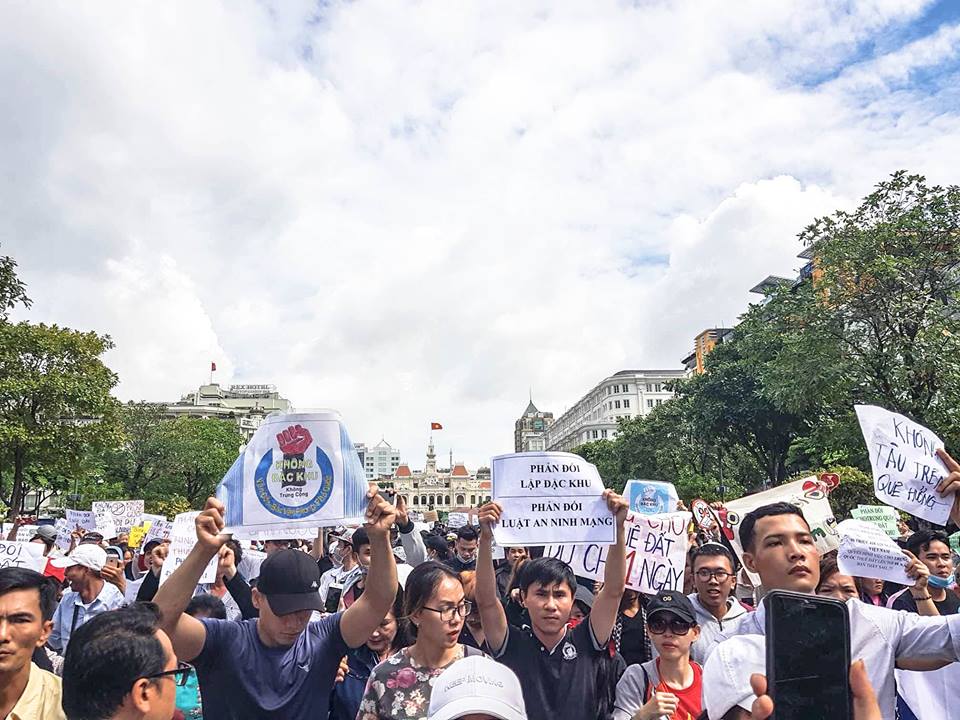
    As in all of the protests that happened before, this time, again there were allegations that the police used excessive force to suppress the peaceful demonstrators.

    Yes, in one province – Binh Thuan – riots broke out between the protestors and the police, but everywhere else, they were mostly peaceful, including the one that Will participated.

    The UN Human Rights Office for South-East Asia stated on June 14, 2018: “We are particularly concerned about allegations that some protesters were beaten by law enforcement authorities.”

    Any seasoned pro-democracy activists and human rights defenders will tell you what has happened to Will Anh Nguyen this past weekend is the same routine violation of human rights in Vietnam when people dare to exercise the right to demonstrate.

    First, Vietnam still has no law providing for the practice of any of the rights stated in Article 25 of the Constitution.

    While the legislative body of the nation kept delaying passing such a law, the government in March 2005 issued Decree 38/2005/NĐ-CP to regulate “public gatherings”.

    Accordingly, a public gathering of more than five people must be approved by the Provincial People’s Committee, unless it was organized by the government or social and/or political organizations belong to the government.

    This Decree has been quite effectively used by the government to wrongfully break up protests and to arrest people in the past. Nevertheless, its language has been denounced by both legal experts in Vietnam and the international community because of human rights violations.

    It is worth noting that the Decree does not mention the word “demonstration” anywhere, so it can be argued that legally, it cannot be used to regulate protests.

    Thus, in 2011, during the height of another wave of protests across the country, a group of activists and lawyers petitioned the National Assembly’s Standing Committee for a review of Decree 38.

    Vietnam does not have a constitutional court. Instead, the National Assembly has the power to interpret the Constitution, but to date, they have not responded to the petition filed back in 2011.

    In fact, the National Assembly of Vietnam has never exercised this power to interpret the law.

    In a nutshell, the law on the practice of demonstration seems to have been strategically delayed while an allegedly unconstitutional government’s decree will act as the only official tool to round up peaceful protesters and arresting them.

    The nation-wide protests broke out in Vietnam last Sunday, June 10, 2018, against the proposed Special Economic Zones (SEZ) and the cybersecurity draft laws, were estimated to have had thousands of people marching.

    Some sources believed around 300 people were later arrested in Ho Chi Minh City alone, and one of them was Will Anh Nguyen.

    Since his detention on Sunday afternoon, his family has been actively working with the U.S embassy to get him released.

  • Enhanced Restrictions In Cybersecurity Bill Shows Vietnam Is NOT Ready To Commit To EU-FTA’s Human Rights Clause

    Enhanced Restrictions In Cybersecurity Bill Shows Vietnam Is NOT Ready To Commit To EU-FTA’s Human Rights Clause

    In recent days, the people in Vietnam, again and again, have proven that social media was the most effective platform to express their discontent with various social and political issues in the country.

    Around the first week of May 2018, people’s outpoured anger over an appellate court’s decision which reduced the sentence for a convicted child molester had forced the country’s top court – the court of cassation – to swiftly responded and reaffirmed the original sentence.

    And just this week, when citizens discovered that their National Assembly was going to pass a law to create three Special Economic Zones (SEZ) at Vân Đồn, Bắc Vân Phong, and Phú Quốc, they again took to Facebook to express their objection to the government’s plan. Then, they used the social media to organize the actual demonstration.

    The call for a nationwide protest on one Facebook page received more than 160,000.00 shares and close to 140,000.00 reactions within days.

    Social media has proven that it still is the most effective tool to disseminate information in Vietnam and to raise awareness on a variety of issues.

    It was precisely seven years ago this summer that a nationwide anti-China’s aggression in the South China Sea – Vietnam’s East Sea – broke out because of a call to protest on Facebook by the page Nhật Ký Yêu Nước – Patriotic Diary.

    Since 2011, social media has witnessed the emerging democracy movement in the country where it served as the birthplace of many independent civil society organizations, online newspapers, and media agencies.

    With some current 30 million Facebook users in a recent statistics, neither the government or its people would underestimate the power of social media and Facebook in Vietnam.

    In both of the recent incidents, the people’s power prevailed, at least for now.

    By the early morning of June 9, 2018, the Vietnamese government officially announced the SEZ bill would be postponed until the fall session of the National Assembly.

    However, it does not mean that the government is ready to throw in the towel.

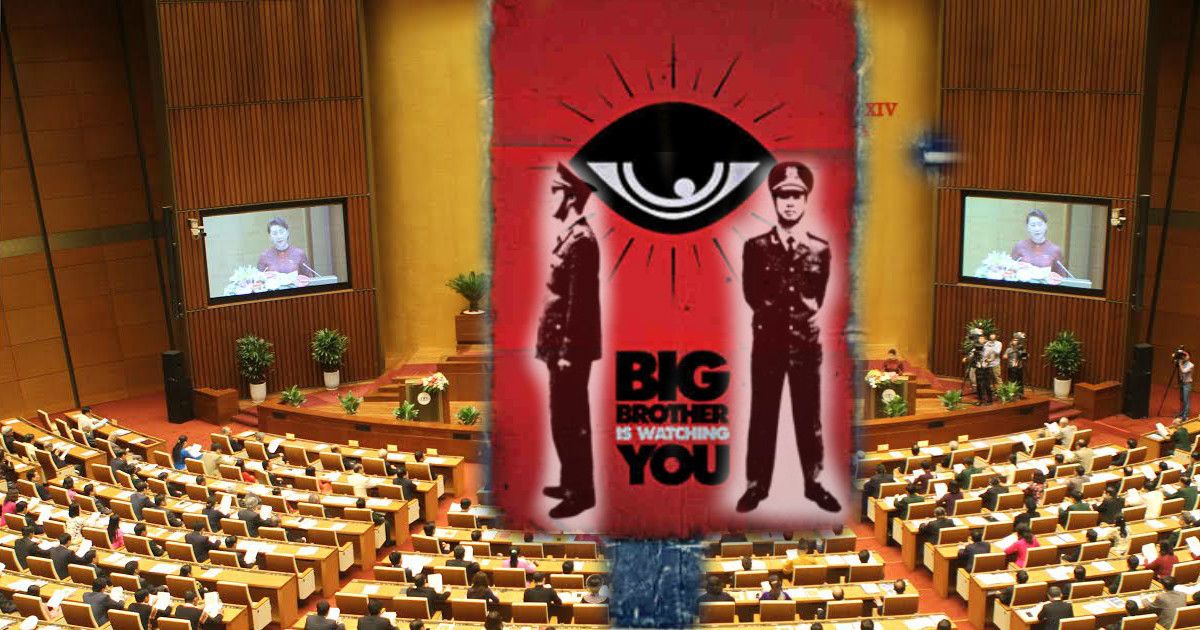
    Another bill is pending for approval by the National Assembly on June 12, 2018, and it is what would become the infamous Cybersecurity law with at least seven strikingly similar provisions when compares to China’s laws.

    More concerning is the fact that these provisions are more than “copy and paste” paragraphs from China’s laws. They are in direct violation of international human rights standards.

    Explicitly, in 2016, the Human Rights Council passed a resolution without a vote, to include an addition to Article 19 of the Universal Declaration of Human Rights, recognizing the right to Internet access is a human right.

    The goals and objectives of this Cybersecurity bill will violate Article 19 because it gives the government and the police power to demand readily accessible information to all citizens’ Internet usage data whenever they want and without any due process.

    Internet service providers will act as informants for the government, voluntarily give up users’ activities to police.

    Foreign corporations such as Google, Facebook, Microsoft, Apple, and so forth, will most likely comply with Vietnam’s request to have their servers – which contain Vietnamese users’ data – to be stationed in Vietnam and must have an operating office located inside the country.

    It would mean all of these companies’ stored data within Vietnam’s national territory will have to be given up to police once they demand it.

    The European Union, its parliament, and its member countries should take careful notes of this Cybersecurity bill when they consider the ratification of the EU-Vietnam Free Trade Agreement (EU-FTA) in early 2019.

    As in all EU trade agreements, the human rights clause have been maintained by EU officials and politicians as an essential condition, and that they reserve the power to suspend the agreement if there are going to be gross violations.

    The Chair of the European Parliament’s Committee for International Trade, Bernd Lange, during his visit to Hanoi in September 2017, even declared that human rights and labor rights are at the center of the continued discussions about the FTA between Vietnam and EU.

    If this Cybersecurity bill is passed, it will very well be in contradictions with the human rights clause of the EU-FTA. The U.S. government, Amnesty International, and Human Rights Watch all seem to have taken this view.

    The U.S. Embassy in Hanoi urged Vietnam in their statement issued late June 8, 2018, not to pass this bill, citing concerns that such law “may not be consistent with Vietnam’s international trade commitments.”

    At the same time, Amnesty International and Human Rights Watch both declared that if the Cybersecurity bill is passed and goes into effect, it would violate Vietnamese people’s freedom of expression and their privacy.

    Some Vietnamese are worrying that they might have spent too much time and efforts on the SEZ bill and neglect the one on Cybersecurity, letting it slips through.

    Undoubtedly, the main reason that many Vietnamese were willing to take their anger from Facebook to the streets regarding the SEZ bill and in a certain extent, direct such outrage at their government this past week, was the China factor.

    The people believed that the law would give Chinese investors and corporations an advantage as to the future development in those three locations.

    Tensions between Vietnam and China are historical facts that no regime could re-write. It does not help either that in recent years, China’s rising aggression in the East Sea would continue to remind the younger generations in Vietnam that China has been, still is, and will be a threat to their nation’s sovereignty.

    “Bringing the elephants home to demolish your ancestors’ grave” – an idiom that has been recited over and over again online during the past week – is probably the image many Vietnamese have in mind when they protest the SEZ bill.

    If the Cybersecurity bill passes, the government can construe this very phrase (when use to object any of its decision – such as the SEZ bill this time) as “information which propagandizes, misrepresents, and defames the People’s government” according to its Article 15, and that will be the reason for people to find themselves in trouble with the laws.

  • From #MeToo to ‘Creating Our Own Tables’: How High Is The Glass Ceiling in Vietnam?

    From #MeToo to ‘Creating Our Own Tables’: How High Is The Glass Ceiling in Vietnam?

    The glass ceiling for women in Vietnam, to me, is as high as the sky for most.

    Recent stories about sexual assault and other violent crimes against young girls and women not only caught the public attention but also gave observers glimpses of a patriarchal society which has remained – for centuries – the same in term of gender equality.

    On May 28, 2018, Phụ Nữ (Women) newspaper published an online story, detailing a groping incident three days before, where the victim was one of the biggest music stars in Vietnam, Mỹ Tâm. As one of the most beloved pop singers in the country, known to many of her fans as the Queen of Ballads, Mỹ Tâm probably has one of the largest fan bases, if not the largest.

    But none of that great fame was able to protect her from being a victim of sexual assault.

    To add insult to injuries, Mỹ Tâm was assaulted while performing on stage at a private event in front of the whole audience, yet all she could do was to retreat to the backstage.

    No one came to assist her; no one confronted the perpetrator who was mentioned in the article as an “important official.” The only kind gesture to show some sympathy for Mỹ Tâm was the fact that someone dared to make a report to the press.

    It is still a big taboo for women who accuse men of sexual harassment and assault in a country like Vietnam because there would always be the fear that the public may not be sympathetic toward the victims.

    It is true that when compares to other East Asian countries like its neighboring Japan, Vietnamese society shows signs that it is catching on to the #MeToo movement where people publicly support the victims.

    The recent alleged rape allegations made by an intern at Tuổi Trẻ newspaper helped demonstrated this point.

    But in a culture where, for thousands of years, women have been taught and praised for being able to keep quiet of their sufferings while making sacrifices for the sake of others, victim-blaming in most cases should come as no surprise.

    People may not defend the perpetrators, but they will judge the women if they don’t fit the “proper” Vietnamese woman standard.

    On April 27, 2018, dancer Phạm Lịch publicly alleged rocker Phạm Anh Khoa had made improper sexual advances at her. About a week later, another female dancer Nga My and an unnamed stylist also made public allegations against Pham Anh Khoa for sexual misconducts. And while Khoa eventually apologized for his behaviors on May 15, 2018, he only did so after UNFPA dropped him as one of its goodwill ambassadors, his appearances on TV were canceled, and a rock concert in Hochiminh City pulled the plug on him.

    The public backlash against Khoa began after an NGO that works to promote gender equality in Vietnam, CSAGA, organized an event for him to explain his side of the story.

    People quickly pointed out that CSAGA was given Khoa a platform to normalize improper and illegal behaviors against women because he was not acknowledging any faults, he was explaining that his conducts were “industry standards.” Phạm Lịch recently told reporters that she could not find any work for the past month after making her allegations against Khoa public. It is not too far-fetched to infer that she is likely being punished by the industry for breaking the silence on sexual abuse.

    Both Khoa and CSAGA apologized immediately after the backlash, but with his half-hearted attempt to explain himself, Khoa inadvertently opened the pandora box and revealed a culture of subtle victim-blaming in Vietnam.

    Such a culture became even more vividly portrayed just last week when a nude model alleged that a famous artist had raped her at work. Many commentators online, including democracy activists and lawyers, shifted the burden of proof to the alleged victim and insisted that she must prove she had forcibly fought back during her ordeal or it would not be rape.

    No means no simply was not enough.

    The victim’s credibility was questioned, and her job as a nude model took away a significant portion of public sympathy. People, women included, scoffed at her story when information surfaced that the perpetrator allegedly had used a condom.

    Just this week, the case of alleged child abuse against Minh Tiệp, a sports newscaster at the national television broadcasting company VTV shows how victim-blaming extends to cases involving teenage girls as well.

    When first asked about the alleged abuse, Minh Tiệp used the media to paint the victim, his 15-year-old sister-in-law, as a “bad girl.” She was, according to him, someone who has been dating as early as in 6th grade and always talked back at him and his wife, her older sister, while they were trying to teach her right from wrong.

    A member of Vietnam’s National Assembly – Phạm Tất Thắng – played down the case as “one of those that should be dealt with by the family,” even after the father of the teenager told newspapers that Minh Tiệp slapped his daughter. Mr. Pham is a Vietnamese congressperson who belongs to a committee which deals with culture, education, women, children, and teenagers matters.

    These stories should not come as surprises once you realized that they all attempted to portray the victims as being “improper.”

    Because the “proper” Vietnamese woman only dresses and speaks in an approved manner, she will not work certain jobs, and above all, she endures her sufferings for the sake of others. She will not bring attention to herself and definitely keeps quiet about her injuries and her pains if they would bring shame to her family.

    This proper woman thus is a virtuous one who would sacrifice all that she is for the well-being of her loved ones, and for that, she has been idealized, worshipped and expected to be placed on a pedestal throughout Vietnamese history for future generations of girls and young women to follow.

    We were taught folklores like Quan Âm Thị Kính, a woman who was being misunderstood all her life, wrongfully accused of crimes she never committed and yet she never tried to explain herself. She would keep her mouth shut and endured the injustice until the day she died, and only after death that her name was cleared.

    Then there was the story of Thiếu phụ Nam Xương, a lady wrongfully accused of infidelity by her husband who left for military service and returned home years later. Again, just like Thị Kính, talking back and explaining herself were not the options. And like the other story, our heroine could only use death to prove her innocence, so she killed herself.

    Being demurred, forcing oneself to bite her tongue instead of speaking up, and learning the ability to suffer in silence and not complaining are virtues that aspiring young girl was told to keep.

    I grew up in such a society for the first 12 years of my life, and despite being raised by parents who would raise other people’s eyebrows for the way they let me speak my mind and shout back at them when I think they were wrong, I had mastered those virtues by the age of 5. I was often seen as a quiet girl, sitting properly and politely with a half smile on her face, whose voice was rarely heard when visiting homes of my parents’ friends. I had convinced myself then, that conforming to societal norms would be the best and easiest way to save myself and my parents from unnecessary headaches.

    For the next twenty years though, my life drastically changed as my family immigrated and I was growing up in the West, adapting to a new set of values. I have grown up to become a Westernized woman, one that my parents’ old friends from Vietnam could no longer recognize as the same quiet and demurred child they have met back in the home country.

    But who could believe that it only took less than 15 months of living in the old settings among Vietnamese people to morph my 30’s something-year-old self back to my pre-teen’s personality?

    I work in the NGO sector, and one would have thought that I must be among comrades who promote the same values as mine – gender equality included – but I have found that I needed to put in twice the efforts compared to my male counterparts in most things that I do. I always felt the need to prove my self-worth to others, and I was constantly looking for approval. Even in my field of work – where people often believe they are somewhat more progressive than the rest of society – it still seems as if the “seats reserved at the table” are only offered to women who fit the “proper” descriptions.

    So I bit my tongue instead of speaking back and letting others know how I felt, how I did not agree with them, and how I thought that they were wrong. I sacrificed my happiness to keep others happy. I had changed so much that I could not recognize myself when I stared at the woman in the mirror on the wall one day in the middle of Southeast Asia, and I broke down, completely.

    If life was this difficult for me – a woman with an advanced degree from the West – imagine how it would be for those who have fewer opportunities and those who never had the chance to live outside of Vietnam.

    While I was lucky to get out of that environment to save myself a trip to the emergency room for depression treatment, it dawned on me how high the glass ceiling is for most Vietnamese women. The #MeToo movement has brought many important issues about women’s rights to the discussion table in Vietnam, and I hope gender equality will now receive the attention it deserves.

  • People in Vietnam Openly Challenge Appellate Court’s Decision in Child Molestation Case, Demanding Tougher Sentence

    People in Vietnam Openly Challenge Appellate Court’s Decision in Child Molestation Case, Demanding Tougher Sentence

    On May 11, 2018, an appellate court in Bà Rịa-Vũng Tàu Province reviewed the verdict of the lower court in a child molestation case and reduced the sentence for the convicted, from a three-year prison term to 18 months sentencing with no actual jail time.

    People became outraged as soon as the appellate verdict came out.

    Some are particularly critical over one of the mitigating factors considered by the appellate court: the convicted person is a member of the Vietnamese Communist Party whose dedications and contributions to his profession in the banking field was noted.

    According to Vietnam’s 2015 Penal Code, Article 51(v), any person convicted of a crime (not necessary VCP members), who could demonstrate past dedications and contributions in their professional capacity, may receive considerations for a mitigating factor.

    Thuỷ, 78-year-old, was initially been convicted of multiple charges, involving different victims. However, the appellate court dismissed all but one conviction against him, citing insufficient evidence for the rest. Couple with his past contributions, his elder age also played a role in his reduced sentence.

    But the people are not convinced, and they quickly showed their disagreement on social media.

    Child molestation, like child sexual abuse and even sexual harassment, has recently earned public awareness in Vietnam, where more victims are willing to speak out against it, and the public strongly demands perpetrators are appropriately prosecuted.

    Thus, the recent appellate decision in Nguyễn Khắc Thuỷ’s case is seen by many as if the court has taken a step backward and against the momentum to raise awareness about sexual abuse crimes in society.

    The Association for Children’s Right Protection of Hochiminh City (Hội bảo vệ quyền trẻ em TP Hochiminh) also condemned the court’s decision.

    Attorney Trần Thị Ngọc Nữ – Head of the association – commented in a conversation with Kenh 14 news: “a person who was convicted of any crimes, especially crimes against children, shall not receive a sentence with no actual jail time.”

    The People’s Supreme Procuracy Office of Bà Rịa-Vũng Tàu Province also confirmed with Người Lao Động newspaper on May 13, 2018, that their office had submitted an urgent report to their superiors in Hochiminh City regarding their concerns over the appellate court’s decision.

    A trial of cessation would be the next step in the case, and the public’s close monitoring of this matter could mean that the judicial authorities may take it up for further review.

    In the past two days, a petition was created in on Change.com where people request a higher court’s review of the case. It has managed to receive over 8,000 signatures and still being shared widely on social media in Vietnam.

  • Has Vietnam Already Violated the To-Be-Ratified Free Trade Agreement with the EU?

    Has Vietnam Already Violated the To-Be-Ratified Free Trade Agreement with the EU?

    After Hoàng Đức Bình’s 14-year sentence was affirmed by an appellate court in Vietnam on April 24, 2018, one of the state-owned newspapers, Người Lao Động (NLD), published a story about Bình’s case on the same day, explaining the government’s reasons behind his harsh sentence.

    In one paragraph, NLD wrote:

    “Taking advantage of the marine life environmental incident in the Central, and as the Vice-Chairman of Viet Labor Movement, Hoàng Đức Bình began to organize The Association of Fishermen in the Central with the intent to form an external organization, mobilizing forces, attracting Catholics, fishermen in the Central to join that organization; selecting ‘nucleus’ who could incite demonstration to disturb the peace and security.”

    Not only international human rights laws protect the right of the people to form associations and organize protests, Vietnam repeatedly acknowledges and agrees to not infringe on these rights of its people in various international treaties and agreements. One of the more recent ones is the free trade agreement (FTA) with the European Union (EU).

    About two and a half years before Bình’s trial, in October 2015, Vietnam and the EU have agreed on the text concerning the terms of the FTA between them.

    At the same time, EU and its member countries have repeatedly maintained, that they are “fully committed to implementing the 2030 Agenda and its Sustainable Development Goals into EU policies.”

    One of EU’s commitments to implementing the 2030 Agenda is to include in their free trade agreements, rules on trade and sustainable development as well as a human rights clause.

    In the case of the Vietnam-EU FTA, that language is under Chapter 15 of the agreement, entitles Trade and Sustainable Development.


    Article 3, Paragraph 2, Sub-paragraph (a) of Chapter 15 states:

    “Each Party reaffirms its commitments, in accordance with its obligations deriving from the membership of the ILO and the ILO Declaration on Fundamental Principles and Rights at Work and its Follow-up, adopted by the International Labour Conference at its 86th Session in 1998, to respect, promote and effectively implement the principles concerning the fundamental rights at work, namely:

    a) the freedom of association and the effective recognition of the right to collective bargaining;”

    The importance of this chapter and the human rights clause are also highlighted by the Chair of the European Parliament’s Committee for International Trade, Bernd Lange, during his visit to Hanoi in September 2017. That human rights and labor rights are at the center of the continued discussions about the FTA between Vietnam and EU.

    Many could imply that the criminalization of Hoàng Đức Bình’s conduct for organizing people and forming an association of fishermen in the Central of Vietnam appears to be in direct violation of the Trade and Sustainable Development Chapter and the human rights clause of the Vietnam-EU FTA.

    The European Parliament Think Tank assessed in February 2018, that the FTA with Vietnam “has been described as the most ambitious deal of its type ever concluded between the EU and a developing country. Not only will it eliminate over 99 % of customs duties on goods, but it will also open up Vietnamese services markets to EU companies and strengthen protection of EU investments in the country.”

    They also opined that the Vietnam-EU FTA is estimated to boost Vietnam’s economy as much as 15 % of GDP, with Vietnamese exports to Europe growing by over one third.

    The parties are hopeful that the FTA will be ratified by EU Parliament (and also by its member-states on issues involving investment) by the end of this year, or by 2019 at the latest.

    However, the recent affirmation of Vietnam’s court regarding Hoàng Đức Bình’s 14-year sentence for organizing and participating in protests against Taiwan’s Formosa Hà Tĩnh Steel Corporation raises questions over the good faith of Hanoi in keeping up their end of the bargain when it comes to human rights and labor rights.

    If Vietnamese government is sending people to prison with a very harsh sentence for exercising their freedom of association before the FTA is ratified, then what and how does EU plan to keep them in check once the dust is all settled?

    Perhaps, this is a legitimate question for the EU-Vietnam Human Rights Dialogue to provide the public with a more definitive answer later this year?

  • Two Years Later, Formosa Toxic Pollution Still Sends People to Prison in Vietnam

    Two Years Later, Formosa Toxic Pollution Still Sends People to Prison in Vietnam

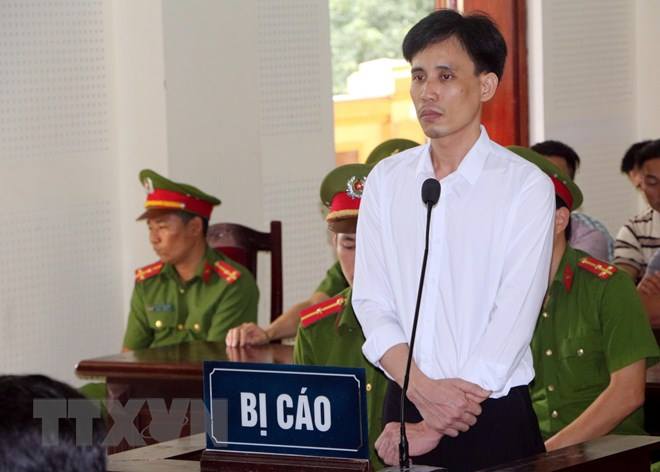
    April 24, 2018| After an approximate three-hour hearing, the Appellate Court of Nghe An Province, Vietnam, affirmed the 14-year sentence for blogger and human rights defender, Hoàng Đức Bình, in relation to the 2017 protests of Catholic fishermen in the areas affected by the Formosa environmental disaster.

    Hoàng Đức Bình, a member of the Viet Labor Movement, was sentenced earlier this year by a trial court in February.

    The story on the marine pollution caused by Taiwan’s Formosa Hà Tĩnh Steel Corporation broke out two years ago in Vietnam, prompting a nationwide protest in April and May 2016 where people demanded the company closed its steel mill business and ceased all of its operations.

    Formosa admitted in May 2016 that they were responsible for the toxic spill from their factory into the local sea in violations of Vietnam’s laws, and agreed to pay 500 million USD for damages in a confidential settlement with the Vietnamese government.

    The toxic pollution caused by Formosa is estimated to have affected the livelihood of people along more than 200 km of local seawaters in four coastal provinces of Central Vietnam.

    To date, the public in Vietnam still has very little information regarding the settlement agreement while many affected families have yet to receive their shares in the settlement.

    Thus, local people continued their protests against Formosa, and Hoàng Đức Bình was among them.

    One of the activities Bình participated in, was to travel with fishermen from Quỳnh Lưu District, Nghệ An Province to the local courts in Hà Tĩnh Province – where Formosa is located – to file their civil suits against the company in February 2017, and the authorities of Nghệ An Province arrested him after that.

    Attorney Nguyễn Khả Thành, one of Bình’s lawyers, announced the court’s decision on his Facebook today.

    According to his lawyer, Hoàng Đức Bình was convicted on two separate charges under Vietnam’s 1999 Penal Code. Article 257 is for “resisting officers acting under their duty,” and Article 258 is for “abusing freedoms and democratic rights to infringe upon the State’s interest or the rights and interests of other entities and individuals.”

    Bình was given the maximum sentence – 7 years – for each of the offenses, which implied that the court found his conduct to be “seriously harmful” to the public according to the sentencing guidelines of Articles 257 and 258.

    Hoàng Đức Bình maintained that all he did was to accompany the fishermen and a Catholic priest in traveling from Nghệ An to Hà Tĩnh to file their civil suits.

    Nghệ An Province was not among the list of the four provinces to receive compensation from Formosa’s 500M USD settlement, and hence, the need for fishermen there to file lawsuits to recover for their alleged damages arose.

    On September 25, 2015, just a few months before the story of Formosa marine life disaster broke the news, world leaders have agreed on what now is known as the 17 Sustainable Developmentment Goals. Among them, the seriousness of climate change due to humans’ activities is highlighted, and that countries have agreed, future economic development must go hand in hand with environmental protection and respect for human rights.

    After the trial court convicted Bình for a total of 14 years in February this year, UN experts and Special Rapporteurs issued a joint statement, condemning his arrest and sentence and demanded his release.

    “Imprisoning bloggers and activists for their legitimate work raising public awareness on environmental and public health concerns is unacceptable,” said Baskut Tuncak, Special Rapporteur for Human Rights and Hazardous Substances and Wastes.

    “We call on the authorities to release Hoang Duc Binh and Nguyen Nam Phong who were detained following their efforts to raise awareness and ensure accountability in relation to the spill of the Formosa Steel plant. Authorities must ensure that Viet Nam’s rapid economic expansion does not come at the expense of human rights, in particular those of local communities and workers.”

    Another lawyer of Hoàng Đức Bình, Hà Huy Sơn, also wrote on his Facebook today: Bình told him that before his trial in February 2018, he was beaten up by death-row inmates who were put in the same cell as his.

    Attorney Sơn also added in the same status, that the only witnesses participated in the trial were the traffic police officers involved in the alleged incident, and none of the video clips capturing the event were allowed to be introduced. He then concluded, the court has violated Vietnam’s criminal procedures and that the verdict is therefore unjust.

  • Will #MeToo finally have its break in Vietnam?

    Will #MeToo finally have its break in Vietnam?

    In the late evening of April 18, 2018, many journalists in Vietnam began to share on social media a story that could come with the power to shatter the nation’s culture of playing down sexual harassment in the workplace and silencing victim.

    A female intern at Tuổi Trẻ newspaper was rumored to have attempted to commit suicide and was hospitalized, after alleging that she was raped by her superior. Tuổi Trẻ is considered one of the largest – if not the largest – state-owned newspaper in Vietnam, owned by the Ho Chi Minh City Chapter of the Communist Youth Union.

    By the next day, information about the alleged attacker surfaced, again, via social media.

    Tuổi Trẻ – while along with some 800 other state-owned media did not publish an official story – yet did announce that they have suspended journalist Đặng Anh Tuấn – whose pen name is Anh Thoa – the Head of Tuổi Trẻ television news because of the allegations.

    But at the same time, the editorial board denied in the same announcement that the intern was admitted to the hospital due to an attempted suicide.

    On April 20, 2018, the faculty at the university where the victim is enrolled, delivered a deadly blow to Tuổi Trẻ’s editorial board.

    In possibly one of the very first moves ever done by a university in the country for cases involving sexual harassment of their students, the Head of the Department of Journalism and Communications of The Vietnam National University Ho Chi Minh City sent an official letter to the editorial board at Tuổi Trẻ, demanding them to perform a formal investigation and provide the public with an explanation.

    What surprised people was the fact that the faculty of the university stood by their student’s allegations by clarifying and denouncing Tuổi Trẻ’s description of her conditions in their press announcement.

    The letter read, in parts:

    “We would like to bring your attention to this specific issue so that it could be dealt with directly, that Student ‘Doe’ has endured a prolonged period of psychological trauma which produced catastrophic effects on both her physical and mental health, which in turn deteriorated her health and led her to face the negative decision concerning her life.”

    The current story of the female journalist intern from Vietnam resembles very closely the ordeal of Japanese journalist Shiori Ito last year, who went public with the allegation that veteran journalist, Noriyuki Yamaguchi, raped her in April 2015.

    But while Ms. Ito currently has to fight not only her ongoing legal battle but also a culture that preferred silence and shaming victims in a country like Japan – where #Metoo could not quite take off – the situation may be different in Vietnam this time.

    It is encouraging to see that Vietnamese men and women – especially women – from all walks of life came out in support of the victim. The hashtags #MeToo and #letherdoherjob have been surfacing on Vietnam’s social media since Wednesday’s night, and they keep spreading.

    First, other female journalists shared equally horrific stories about how they and their female colleagues too, were harassed and assaulted at works.

    The amount of compassion – from journalists who used to work at Tuổi Trẻ – for the victim is also comforting to know. The reactions from many of the popular and veteran journalists on social media in the country are also positive.

    The message from the majority was actually quite simple and clear: speak up if you have been a victim or know a victim; and call on Tuổi Trẻ to perform a thorough investigation and be transparent and accountable to the victim and the public.

    But make no mistake that the culture of victim blaming and silencing does not exist in the country.

    On the contrary, as in any other patriarchal society, Vietnam carries its own baggage, full of prejudice against female victims in most of the sexual harassment and sexual violence cases.

    In Vietnam, while sexual harassment in the workplace was recognized in the Labour Code for the first time almost three years ago in May 2015, many victims still do not speak up or come forward with their stories.

    One reason could be that there are still no clear and well-defined legal definitions for conducts that would constitute sexual harassment.

    According to CARE, an international organization working on gender-based violence in Hanoi, Vietnam, 78.2% of victims of sexual harassment in the workplace are women.

    Without a clear legal framework to protect them, female workers in Vietnam dare not to speak up because they are afraid of losing their job.

    In 2014, ActionAid International Vietnam reported that their survey of over 2,000 women in Hanoi and Ho Chi Minh City revealed, that 87% of those answered have been a victim of sexual harassment in public where 67% of the bystanders who witnessed such conducts did nothing to help the victims. 31% of female students also reported that they were sexually harassed in public.

    Many of the stories published on social media in Vietnam in the past two days seem to show a pattern. The perpetrators often targetted young interns who are still in school or female employees who are freshly minted from college.

    Inexperienced, young, and in need of a job, the victims – who are also facing a culture that got influenced heavily by Confucianism with very strict standards when it comes to gender roles – would incline to choose to quit their jobs and internalize their emotional wounds rather than speaking up against the perpetrator.

    Yet, now, there is hope with the latest case involving the Tuổi Trẻ’s intern.

    In the past two days, Facebook statuses have shown an influx of stories of similar experiences and offers of support.

    People published allegations of sexual harassment and misconduct against the Director of the largest legal online research company in the country, Thư viện Pháp luật (The law library) online. This story again was a rumor among the legal professionals but never brought to broader public attention.

    Female activists in the country already start calling on people to use the hashtag #MeToo. And while it is true that we still have to continue looking out for development, it is not too early to say that #MeToo has made an important breakthrough in Vietnam where many have begun to say, Vietnam needs #MeeToo now.