It’s a new week and Vietnam Briefing’s mission is to keep our readers up to date on developments in Vietnam. As we missed the briefing last week, here is the key news of the past two weeks.
Vietnam has started to roll out COVID-19 vaccines
The Vietnamese government started administering the first COVID-19 vaccinations doses on March 8. Frontline workers, including doctors, nurses and technicians at designated hospitals combatting COVID-19 are among the first to receive the vaccines produced by Oxford University and AstraZeneca.
High court affirms verdict on Dong Tam case
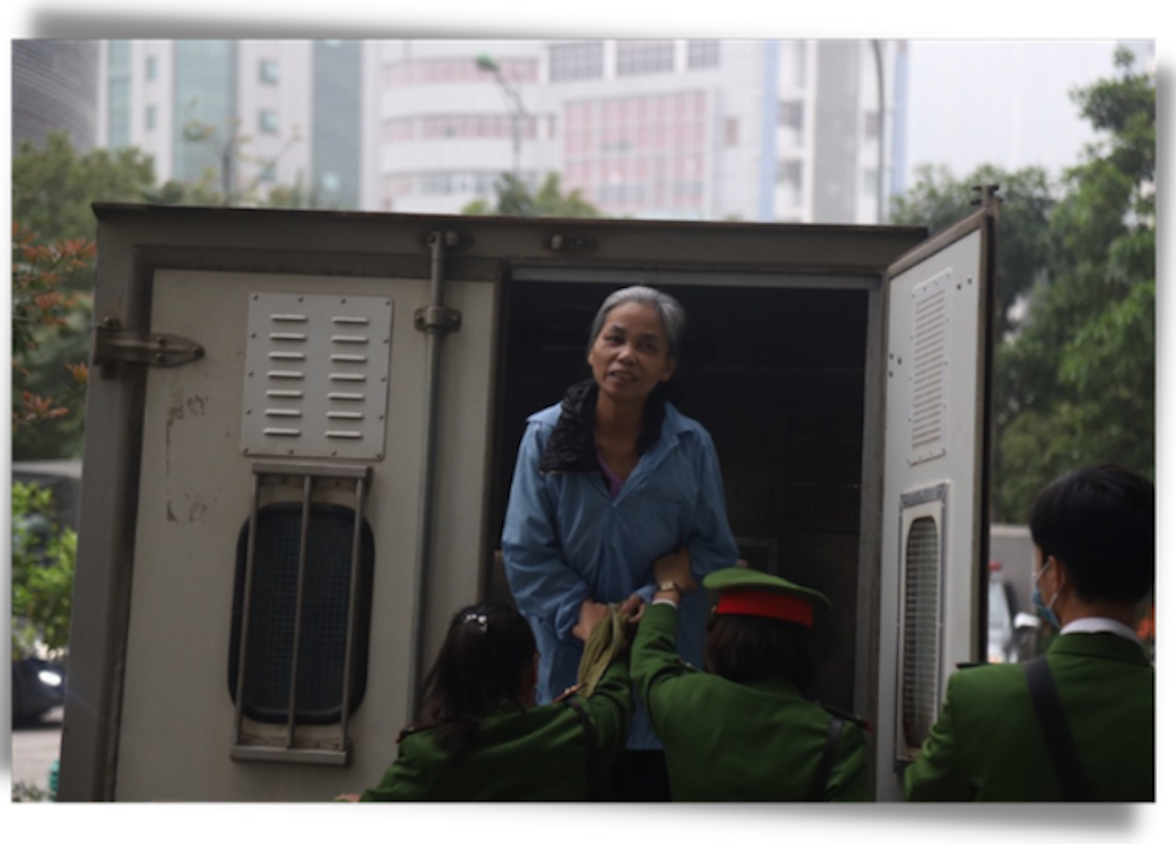
The appellate trial of the Dong Tam case (March 8-9) went just as everyone expected: no overturning of any sentences and no amendment to the lower court’s verdict. The sentences of the six defendants remain the same, including two death penalties.
A fair trial? It’s hardly a thing in Vietnam. Take the word of Phil Robertson of Human Rights Watch:
“There are still many unanswered questions about what happened during the Dong Tam raid that authorities have never been willing to clarify.”
“We are also deeply troubled by the information brought out in the defense lawyers’ report, stating that police used torture on some defendants to force them to confess, raising fundamental concerns about the fairness of the entire trial.”
A historic case, yes. The Dong Tam case is undoubtedly one of the most important and consequential events in Vietnam’s post-1975 history. Those who wish to study the country’s history of land struggles and party-controlled judiciary should take a very close look into the case as it is among the most well-documented events and it provides an intensive account of the issues.
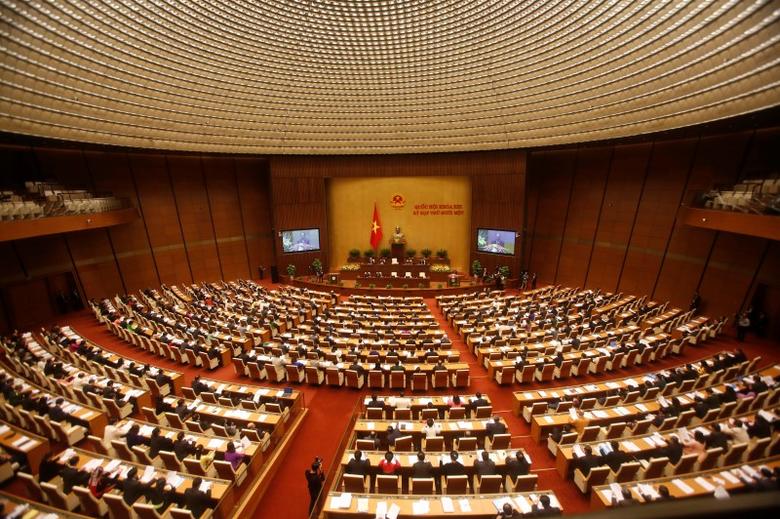
The National Assembly is in the final days of its current term. Yet, it may elect new state leaders just before the election.
In an unexpected, but not unprecedented, move, the Communist Party’s Central Committee is sending three candidates to the National Assembly’s last session of the term for confirmation of three top state positions: president, prime minister, and chair of the National Assembly.
The Party and state media provided no information about who the candidates are, but you don’t need them to name names in order to know who these people are. Vietnamese people often read between the lines and listen to internet influencers – some they believe have inside information – to know what’s going on.
So who are they? Current Prime Minister Nguyen Xuan Phuc for president, Pham Minh Chinh for prime minister, and Vuong Dinh Hue for National Assembly chair. VCP General Secretary Nguyen Phu Trong is not seeking reelection for the presidency, although he is now running for a National Assembly seat.
What’s special about that? It’s not about who for what, it’s about timing. If elected in April during the last session of the current National Assembly, which is almost certain, the candidates will only serve a few months until the end of the current term. After the general election on May 23, the new National Assembly will convene in July and repeat the same process of electing the same people to the same positions. That’s what happened in April 2016, right before the last general election, which was held more than a month later. And we don’t think there are many people who can explain why the VCP has to rush to do such a repetitive process. The logic behind this remains a mystery to the public.
Man arrested after declaring intention to run for office
This is not something that happened the last time we had an election in 2016 (yes, I know how hard it is to call it an election, but let’s use the word for now). A 61-year-old man named Tran Quoc Khanh was arrested on March 9 and accused of “making, storing, spreading information, materials, items for the purpose of opposing the State of Socialist Republic of Vietnam” under Article 117 of the Penal Code.
He is known for his frequent Facebook activities including live-streaming on human rights and corruption in Vietnam. The arrest was conducted by Ninh Binh Provincial Police shortly after Mr. Tran declared his intention of running for a National Assembly seat.
Something to note: Unlike the exciting election season in 2016 when dozens of activists and independent candidates campaigned for office, despite all failing, there are almost no independent candidates running for office this time.
Here is what the incoming National Assembly may look like
Remember what we mentioned about this two weeks ago? Here is an infographic from the state news agency’s article titled “Expected structure of deputies of the 15th National Assembly.” Yes, the election is more than two months away, but the government has already “expected” the results.
Freedom House drops Vietnam’s freedom score
This time every year, the US-based human rights group Freedom House announces its widely-cited work: Freedom in the World Index. And unlike the recent years, Vietnam’s score dropped 1 point in the 2021 index, down to 19/100 and remains in the “Not Free” group of countries.
What was Vietnam’s response to this? Ministry of Foreign Affairs spokesperson Le Thi Thu Hang said on March 11 that Vietnam has consistently protected and promoted human rights. That’s the government’s usual way of dealing with such queries from reporters who work for the international media. We have no knowledge of any reporter from the Vietnamese media asking about such issues, and we doubt anybody ever does.
Vietnam joins China, Russia and India to block UN Security Council’s condemnation of Myanmar’s coup
The United Nations, especially its Security Council, has been reluctant to make any strong statements on the military coup in Myanmar. On March 9, they failed to agree on such a statement, and Vietnam, as a non-permanent member of the council, jointly blocked the effort with China, Russia, and India.
Context:
Vietnam is the fourth biggest foreign investor in Myanmar as of January 2021, with 19 projects and approximately US$1.5 billion invested there.
Vietnam’s military has close ties to Myanmar’s military businesses, such as Mytel.
Vietnam commemorates the 33rd anniversary of the Gac Ma incident
March 14 has been a sensitive date in Vietnam over the past 12 years since the public started to learn about the bloody incident of Gac Ma.
The Gac Ma incident happened on March 14, 1988, when Chinese warships fired on a group of mainly unarmed Vietnamese troops in Gac Ma Reef (Johnson South), killing 64 of them. Gac Ma (Johnson South Reef), Colin and Len Dao (Lansdowne) Reefs are part of the Truong Sa (Spratly) Islands where the two countries both claim sovereignty. It’s rumored that Vietnam’s then-Minister of National Defense ordered that there be no resistance to the Chinese.
Why sensitive? Not many things in Vietnam are as sensitive as the country’s relations with China. The Vietnamese government censored information about the Gac Ma incident for over 20 years until the early 2010s. Even now, many state media outlets do not mention China in their stories about Gac Ma Reef, although the government has increasingly tolerated open discussions about the topic.
What to watch? Citizens, mostly dissidents and activists, spread information about the Gac Ma incident on social media, criticizing the government’s handling of China, and they also go to cemeteries and temples to commemorate the soldiers who lost their lives on that day. They often face government harassment due to these activities.
Go deeper:Here is some useful material to understand more about the issue, including a video clip of the 1988 incident.
French warship visits Vietnam
Shortly after completing a patrol in the South China Sea in February, the French Navy sent a warship to Vietnam on March 9, where it spent four days in Cam Ranh Port (southern Vietnam) for helicopter repairs.
The South China Sea is certainly a place global superpowers can’t afford to ignore due to its strategic position in terms of security and trade, especially when China has aggressively claimed sovereignty over most parts of the sea with its nine-dash line.
Cam Ranh Port is a familiar name to those who study security in the region. It is a strategic deep water bay in the south of Vietnam and it played a crucial role in the Vietnam War. This is where the Soviet Union, and later Russia, stationed troops from 1979 to 2002.
Despite COVID-19, Vietnam’s economy has remained resilient, expanding by 2.9 percent in 2020—one of the highest growth rates in the world—and with growth projected to be 6.5 percent in 2021, thanks to strong economic fundamentals, decisive containment measures and well-targeted government support, according to the IMF’s latest annual assessment of the country’s economy.
“Back when the Heritage Foundation published its first index [of Economic Freedom] in 1995, Vietnam scored 41.7 points. By 2005, this had risen to 48.1 points and in 2010 it climbed further to 49.8 points. What is remarkable is the huge increase in economic freedom since 2015, when Vietnam was awarded a score of 51.7. Since then, Vietnam has added another 10 points to reach 61.7 points today—an increase of 20 points since 1995!”
“China may not feel comfortable if Vietnam pursues stronger security ties with the U.S. and its allies, but it is China’s aggressive behaviors in the South China Sea that have pushed Vietnam into this course of action. China should adjust its approach or risk pushing Vietnam and other regional countries further toward the United States.”
“Politically, certain reforms may also be explored, but mainly to streamline and increase the efficiency of the political system, not to democratize it. Vietnamese leaders believe that political stability is a precondition for economic development, and they will not tolerate any developments that may destabilize the political system.”
The Protestant Church of Christ faces threat of heavy government repression.
Five ethnic Thuong, pictured left, endured a government criticism session in front of residents on the night of January 15, 2021. Photo: MSFJ News.
[The Government’s Reach]
Phu Yen provincial authorities suppress the Protestant Church of Christ: Criticism session in the dark of night
Three years ago, an ethnic Thuong from the Central Highlands was arrested by Thai police. He expected to be deported back to Vietnam according to an extradition order from Vietnamese police. The man was named A Ga, and he was a follower of the Protestant Church of Christ.
When he was arrested in Thailand, A Ga had been a refugee in Bangkok for six years with his wife and children. He lived in an area with hundreds of ethnic Thuong refugees who had fled the Central Highlands. Similar to A Ga, a significant number of them were wanted by Vietnamese police for organizing illegal border crossings. A large portion of these crossings were for their own family members, with the remaining consisting of fellow Protestants.
While in a Thai prison, A Ga prayed to avoid deportation to Vietnam. Three months later, he was sitting on a plane with his wife and children; the destination was not Vietnam, but rather, the Philippines. The US State Department had intervened in his case. After they spent a period of time in the Philippines, A Ga’s family was resettled in the U.S.
On January 15, 2021, A Ga’s name appeared during a government criticism session of five ethnic Thuong in Ia Lam Commune, Song Hinh District, Phu Yen Province.
Video source: MSFJ News.
In the darkness, his name echoed along with those of five other ethnic Thuong standing in front of police, local leaders, and villagers. The scene resembled a trial. Villagers were forced to sit and listen to the government’s charges against the five for participating in the Protestant Church of Christ.
The five simultaneously criticized were Mr. Nay Y Blang, Mr. Nay Y Loi, Mr. Ksor Y Blang, Mr. Hwing Y Nuk, and Mr. Ro Da. Police stated that there were two other ethnic Thuong who were also subject to criticism but were not present at the meeting.
“Unauthorized prayers”
At the start of the criticism session, the authorities stated that the five named individuals had taken advantage of ethnic and religious issues to disrupt national unity, conspired to participate in the United Front for the Liberation of Oppressed Races, better known by its acronym FULRO, and distorted the policies of the party and the state.
However, the government failed to present any evidence showing how the five had violated the law as charged.
Mr. Nay Y Blang, 50, was accused by the government of holding a key role in the activities of the Protestant Church of Christ in Phu Yen Province.
Authorities asserted that Y Blang disrupted stability, security, and order by allowing his home to be used for public religious activities. Blang was said to have connected with former inmate friends—members of FULRO—and locals to participate in the Protestant Church of Christ, where they listened to A Ga and others overseas spread false propaganda about a lack of human rights and religious freedom in Vietnam.
Blang was also accused of organizing “unauthorized prayers,” including a service on August 19, 2020 to mark the “International Day Commemorating the Victims of Acts of Violence Based on Religion or Belief,” an international holiday designated by the United Nations. Even Blang’s sharing of pictures of church activities was deemed by the government to be illegal.
Pressured to renounce the church
Pastor A Dao, a member of the Protestant Church of Christ’s Management Board, told RFA that the five members were pressured to renounce the church during the criticism session.
“The government forced them to renounce the Protestant Church of Christ, declaring that the state could not accept opposition; they were made to sign paperwork renouncing the church. But a number of our brothers remained resolute,” A Dao stated to RFA.
RFA quoted Mr. Y Krek Bya, who described the criticism sessions as lasting from 6 pm to past 9 pm; Bya stated that the sessions failed to get all five people to publicly declare their abandonment of the church.
“When the session let out, they said that if the men refused to renounce the church, and if protests broke out in any form, then the men would be imprisoned, where they would be met with a heavy hand or even killed,” Bya told RFA.
“Criticism before the people”
Criticism sessions related to religion and conducted in front of residents have been known in the Central Highlands since the 2000s. That was when religious movements combined with the struggle for human rights began to bloom in the region.
During these sessions, authorities would bring residents in to witness and listen to the “improper activities” of those being criticized. The objective was to force those such people to cease their religious activities and to discourage anyone else from participating in activities not supported by the state.
These criticism sessions are seldom covered in the state press. The clip of the criticism session above was surreptitiously recorded by a resident.
On one rare occasion, on July 4, 2020, Gia Lai provincial police reported their criticism session of a 50-year-old ethnic Thuong. The subject of the criticism was Mr. Puih Hong, a resident of Ia Grang Commune in Ia Grai District, Gia Lai Province. Authorities asserted that he had crossed the border to Cambodia many times and that he had misrepresented policies in Vietnam regarding religion and national unity.
Mr. Puih Hong standing before residents and the authorities during a criticism session organized by the government on July 4, 2020. Photo: Gia Lai provincial police.
Currently, Vietnamese law does not contain any regulations related to public criticism sessions. The state, however, most likely considers such sessions as a type of propaganda tool that it can use to convey the law to the people.
International organizations have long considered criticism sessions to be an affront to human dignity.
The precarious fate of the Protestant Church of Christ
For religious organizations in Vietnam, it is not enough that their activities be purely religious. These groups must also express full support for state policies to receive permission to operate.
Before he became a refugee in Thailand, A Ga had on many occasions submitted forms to his commune people’s committee to register religious activities, only to be uniformly rejected.
The Law on Faith and Religion contains a regulation regarding “the registration of organized religious activities,” but it also contains another regulation that denies permission to anyone violating Article 5.
Article 5 of the Law on Faith and Religion stipulates behaviors that are forbidden. In Paragraph 4 of the article, subsection ‘a’ forbids actions that “violate national defense, security, national sovereignty, order, societal safety, the environment,” while subsection ‘d’ forbids “ethnic divisions; religious divides, including between those who follow a religion and those who do not, and between those of different faiths and religions.”
There are no specific definitions for “violations of national defense, security, order, societal safety” and “ethnic divisions, religious divides.” These regulations become useful barriers the government can use to forbid religious activities it does not agree with.
The Protestant Church of Christ was established in 2006. In 2016, the church announced that it had more than 1,500 members.
The Protestant Church of Christ has been suppressed by the government for more than a decade. However, the organization is not spoken of in the state press nearly as much as those religious groups described as anti-government, such as Dega Protestantism, and the Ha Mon religion.
Recently, as the above religions have been nearly wiped out, the Protestant Church of Christ appears to be the government’s next target.
A member of the Protestant Church of Christ being interrogated by police. Photo: Security TV.
In July 2020, Security TV, an information channel run by the Ministry of Public Security, aired a report accusing the Protestant Church of Christ of using overseas funds to oppose the Vietnamese governments.
Colonel Nguyen The Luc, deputy director of Dak Lak provincial police, stated that the anti-government religious activities in the Central Highlands had both been found in the Dega Protestantism and the Protestant Church of Christ.
The government stated that the church had 27 operating locations in five provinces and cities (Kon Tum, Dak Lak, Binh Phuoc, Lam Dong, and Tra Vinh). Phu Yen is likely a newer area for the group.
The Protestant Church of Christ includes both native and overseas members; among them are former prisoners that remain under government watch, as well as current refugees in Thailand. With members having such diverse origins, and a government haunted by enormous protests in the Central Highlands during the 2000s, this religious organization will undoubtedly face heavy-handed suppression.
[Religion 360*]
Pledges to “voluntarily renounce false religions” in Dien Bien
Half of a form “pledging voluntary renouncement of false religion” in Dien Bien Province. Photo: Dien Bien Phu Newspaper.
A report by the Dien Bien Phu Newspaper, a publication run by the provincial government, revealed portions of a form requesting that residents pledge not to follow religions unrecognized by the state.
The article stated that troops at the Nam Ke border defense post, in Muong Nhe District of Dien Bien Province, had advocated that residents not practice illegal religions. Signing “pledges to voluntarily renounce false religions” was one of the many solutions advocated in the effort to convince people not to practice such religions.
The photograph above shows that the pledges come pre-written by the government; the person signing the pledge merely has to sign his or her name, declare that they are renouncing the false religion, and agree to carry out the government’s requests.
The article confirms that the government continues to actively block the spread of new religions in Dien Bien Province.
Commemorative banner at Phuoc Buu Temple spray-painted black
A banner belonging to the Phuoc Buu Temple was spray-painted black. Photo: Phuoc Buu’s Facebook page.
On January 18, 2021, Phuoc Buu Temple’s Facebook page posted a photograph of a temple banner that was spray-painted black. The temple is located in Xuyen Moc District of Ba Ria – Vung Tau Province. The temple belongs to the Unified Buddhist Sangha of Vietnam.
Printed on the banner was: “Paying respectful remembrance – mourning the late Venerable Thich Thanh Tinh, Sangha member of the Unified Buddhist Sangha of Vietnam.”
A large X was spray-painted in the middle of the banner, and the word “unified” was completely obscured.
The Phuoc Buu Temple is regularly harassed by local authorities for following the Unified Buddhist Sangha of Vietnam. In 2019, the government set up cameras pointing straight at the temple gates to monitor the temple’s religious activities.
Vietnam has 8,000 Falun Gong practitioners, with 600 locations of practice
Falun Gong practitioners in Hanoi in 2018. Photo: Southeast Asia Globe.
On January 19, 2021, in a live seminar on new religions in Vietnam, Ms. Nguyen Thi Dieu Thuy, a cadre from the Government Committee for Religious Affairs, confirmed that currently in Vietnam there are approximately 8,000 Falun Gong practitioners, with 600 locations of practice in the country’s cities and provinces.
In the same seminar, Assistant Professor Ngo Duc Thao, deputy chairman of the Advisory Council on Ethnicity and Religion (belonging to the Fatherland Front Central Committee), stated that new religions that desired permission to operate must help the state achieve socialism and national unity and must proselytize according to Vietnamese law.
Thao also stated that Vietnam would be hard-pressed to recognize Falun Gong, as the religion had a political past in which it demanded democracy and human rights in China.
In past years, numerous Falun Gong practitioners have been prevented by police from spreading the religion in many provinces and cities.
Hanoi police demand to see man’s family separation form to recognize him as a Buddhist
The article in Giac Ngo Newspaper regarding police demanding to see an individual’s family separation form to confirm his declaration as a Buddhist. Photo: Screenshot.
The issue started when the author arrived at the Police Department’s Office of Administration and Social Order in Hanoi to request a re-issue of his ID card indicating his religious affiliation. The cadre there requested that Khoi present his family separation acknowledgement to prove he was a Buddhist, as he had written on his reissuance application.
Khoi explained that he was not separated from his family (as a monk or nun would be), but that he was a Buddhist (in practice). He also stated that he had a certificate confirming his refuge, practicing in a home provided for by a temple. He wanted to put his religion as Buddhist on his new ID.
According to Khoi, the cadre however responded: “Seeing that your head isn’t shaved and that you aren’t wearing a robe obviously means you haven’t separated from your family! But, your certificate confirming your refuge doesn’t verify your status as a Buddhist. You have to have the family separation acknowledgment issued by the Buddhist Church of Vietnam.”
A number of Giac Ngo’s readers confirmed that they were also asked by police to provide their family separation acknowledgements to confirm their Buddhist status if they wanted to put it down as their religion on their ID.
Luat Khoa sought to verify this information with a number of other Buddhists. However, individuals that the magazine spoke to stated that their local authorities accepted their declarations as Buddhists without any need for a family separation acknowledgement.
Police in different provinces and cities appear to apply different standards towards religious declarations. Many people suspect that the state’s count of Buddhist followers is inaccurate because of these inconsistent standards.
According to data from the first census that recorded the number of religious practitioners in 1999, Vietnam had 7.1 million Buddhists. In 2019, the General Bureau of Statistics announced that the number of Buddhists had dropped to 4.6 million. As such, Buddhism is no longer the largest religion in Vietnam.
[On This Day]
Law on Faith and Religion: three years in effect
The Vietnamese National Assembly as it passed the Law on Faith and Religion in 2016. Photo: National Assembly Newspaper.
On January 1, 2018, the new Law on Faith and Religion took effect. The law was passed by the National Assembly in 2016, replacing Legal Directive 21/2004/PL-UBTVQH11 and Decree 92/2012/NĐ-CP regarding religion.
Contradicting the state’s declaration that the law would protect and enact freedom of religion, the Law on Faith and Religion has in reality become a tool for the government to stifle religious activities in Vietnam.
After three years of enforcement, unrecognized religious organizations remain unable to pass through the government’s filter. The Unified Buddhist Church of Vietnam, though it has been in operation longer than the Buddhist Church of Vietnam, is still seen as an illegal organization.
New religions in the northwest and the Central Highlands are unable to register organized religious activities due to the regulations.
The government is growing ever more obvious in its discriminatory treatment. It appears religious organizations are divided into two categories: positive (absolute support for state policies), and negative (conducting purely religious activities, fighting for human rights, or operating free from state control).
Religious organizations are still banned from providing education to the public, such as running schools and universities. Many religions have participated in public education in the south before 1975 and the north before 1954. Nowadays, these religious organizations are banned from running schools.
The government maintains complete decision-making power over land belonging to religious organizations, including construction on and renovation of religious grounds.
Regulations within this law allow the government to easily interfere in the internal affairs of religious organizations. For example, in 2020, a representative of the Government Committee for Religious Affairs demanded that the Tien Thien Cao Dai Church carry out instructions as if they were internally issued: “Establish regulations for public dignitaries and rankings; establish regulations to resolve complaints and grievances; elect dignitaries of adequate standards for the Church’s Upper House, Standing Committee, and Lower House”. Another example of government interference includes the land dispute with the Phu Lam Cao Dai Temple in Phu Yen province.
The 2016 Law on Faith and Religion and the process by which the law is enforced reveal that the government sees these religious organizations more as state bodies than as civil ones.
We release the Vietnam Briefing every Monday, Vietnam time, with an emphasis on politics and foreign affairs. The briefing today is mainly about the different kinds of elections Vietnam is going to have this year.
COVID-19:
COVID-19 vaccinations will be rolled out this month.
Hai Duong Province will end lockdown from March 3.
Hanoi’s closure order for street vendors, cafes and historical sites has remained unchanged, but just as we briefed last week, many places are still open.
We are starting to know what the next National Assembly will look like
It’s true. We don’t need to wait until the general election ends on May 23 or for the results to be released in June. The National Assembly’s Standing Committee revealed in early February and last week the “tentative proportion” or “tentative allocation,” of seats for Parliament’s next term (2021 – 2026).
This means we can now see which government and Communist Party bodies will tentatively hold how many seats in the National Assembly.
The tentative number of seats is officially stated in the Standing Committee’s Resolution 1185/NQ-UBTVQH14, which is dated February 5, 2021 and which was debated again last week during the committee’s session that ended on February 23.
More details:
Approximately 95 members of the National Assembly are members of the Communist Party of Vietnam’s (CPV) Central Committee, including 12-14 members of the Politburo and the Central Secretariat.
Members from the central government: 207 (41.4 percent).
Members from the military: 12 (excluding the minister of national defense).
Members from the police: 2 (excluding the minister of public security).
Other seats are also planned to be allocated to other government and party bodies.
Context:
The general election will be held on May 23 for both the National Assembly and local legislative bodies at all three levels (province, district, and commune). The results are expected to be released in June. The first National Assembly session will be held in July, mainly to elect top officials of all three branches of the central government.
General elections are held every five years, shortly after the Communist Party congresses.
Free and fair elections? That’s what the government says, but it’s not the view of Freedom House, a human rights organization, in its 2020 report: “Elections to the National Assembly are tightly controlled by the CPV, which took 473 of the body’s 500 seats in the 2016 balloting. Candidates who were technically independent but vetted by the CPV took 21 seats. More than 100 independent candidates, including many young civil society activists, were barred from running in the elections.”
Curious about how this election works? Pay close attention to two things: the role of the Fatherland Front – the Communist Party’s external arm – as a vetting agency and how the government deals with independent candidates.
Vietnam to run for a seat at the United Nations’ Human Rights Council
That’s what the Deputy Prime Minister announced last week before a United Nations’ session in Geneva, Switzerland.
Vietnam apparently doesn’t have a good record on human rights. But just like other authoritarian states such as China, Cuba, and Saudi Arabia, it has a chance to win one out of 47 seats on the United Nations’ Human Rights Council’s 2023-2025 term.
Context:
Vietnam was elected to the very council once in 2013, serving a two-year term from 2014 to 2016.
Government persecution targeting dissidents and human rights defenders has been increasingly harsh over the past five years, according to the data collected by The 88 Project.
Vietnam has consistently been categorized as a “Not free” country by the international rights group Freedom House.
Vietnam is currently a non-permanent member of the UN Security Council, and it will serve until the end of this year.
Vietnamese ambassador runs for re-election to International Law Commission
It seems Vietnam is actively seeking more influence on the international stage. Here is another election at the United Nations that Vietnam is campaigning for, according to VietnamPlus:
“Vietnam’s permanent missions to the United Nations (UN) in New York and Geneva have recently sent diplomatic notes to the UN and member countries informing them of the candidacy of Ambassador Nguyen Hong Thao to the International Law Commission (ILC) for the 2023-2027 term, marking the official start of the Vietnamese candidate’s campaign for re-election to the UN’s important law organ.
In 2016, Ambassador Thao became the first Vietnamese to be elected as an ILC member. During the 2017-2022 term, he actively promoted ILC’s research results, delivered speeches and joined discussions at the ILC.”
The Dong Tam appellate trial will be held on March 8
Remember the high-profile Dong Tam trial in September? The appellate trial opens on March 8 and will last until March 10.
Six defendants have appealed their sentences to the People’s High Court in Hanoi.
What should we expect?
The trial will very likely result in the affirmation of the lower court’s verdict with little or no adjustments to the defendants’ convictions and sentences.
Similar to the trial in September, the appellate trial is expected to be closed to the public, with no independent and international media, and no independent observers allowed to attend; even family members of the defendants may be refused permission to observe the trial.
Amnesty International’s new investigation into hacking group Ocean Lotus
Two weeks ago, we mentioned the hacking group Ocean Lotus in our briefing, indicating that the Vietnamese government is likely behind the effort to target dissidents and foreign entities.
Last week, another report on the matter was released by Amnesty International. Here is what it says:
“Our investigation was not able to attribute Ocean Lotus’ activities to any company or government entity. However, the extensive list of people and organizations targeted by Ocean Lotus over years shows that it has a clear focus on targeting human rights and media groups from Vietnam and neighbouring countries. This raises questions about whether Ocean Lotus is linked to Vietnamese state actors. The consistent evidence linking Ocean Lotus to Viet Nam should trigger the Vietnamese authorities to undertake an impartial, thorough and independent investigation into the group’s unlawful activities and human rights abuses.”
Context:
The Vietnamese government has kept silent on the issue.
The Vietnamese government also has accused Amnesty International of “distorting Vietnam’s reality” and of “intervening in Vietnam’s internal affairs.”
Read more about Vietnam:
Where to now for Vietnam after Trong? (East Asia Forum – Feb 27): “Events over the past year have brought major long-term trends in Vietnam’s domestic and foreign policy to the surface. The country will be less aligned with China. In the next decade, it will likely have its first non-conservative leader since the Cold War’s end but its leaders continue to value the Leninist state model.”
Vietnam’s unresolved leadership question (East Asia Forum, Feb 25): “Pham Minh Chinh emerged as a new star. […] Chinh is also a potential candidate to succeed General Secretary Trong when Trong vacates his position. In that case, Chinh will have reached a position his predecessors — Nguyen Tan Dung and Nguyen Xuan Phuc — wanted but did not get. The question is whether Trong wants and has enough time to groom Chinh to handle the roles of general secretary and state president.”
Supply chain bottlenecks in Vietnam (Bangkok Post, Mar 1): “Vietnam’s economy has fared better than that of almost any other country except China during the Covid-19 crisis. It grew by 2.9% last year while most other countries fell into recession. One consequence of the crisis was that manufacturers realised the importance of diversifying supply chains, and many accelerated the China Plus One policies that they had initiated because of the US-China trade war. This led to a surge of investment in Vietnam from global manufacturers last year.”
Capital meant for Myanmar may seek havens in Vietnam and Cambodia(Nikkei Asia, Feb 27): “The military coup in Myanmar has forced investors who had earmarked capital for the country to look for nearby alternatives. Delta Capital, Anthem Asia and other funds that have solely focused on Myanmar are adopting a wait-and-see approach, and those with a wider geographic footprint are funneling money to destinations like Cambodia and Vietnam. Vietnam is especially frothy.”
Mitsubishi pulls out of Vinh Tan 3 coal project in Vietnam (Reuters, Feb 26): “Mitsubishi Corp has decided to pull out of the Vinh Tan 3 power plant in Vietnam, two sources familiar with the company’s thinking on the matter told Reuters, as it shifts away from carbon intensive businesses in the face of climate change. Mitsubishi’s move to exit the estimated $2 billion project shows how willing Japanese companies and financiers are to drop their once-strong support for coal amid pressure from shareholders and activists.”
It was a week of Tet (Lunar New Year), containing COVID-19, a new draft decree on personal data protection, and an unexpected appointment of a military general to the top seat of the Communist Party’s propaganda commission.
COVID-19
Vietnam is expected to secure 60 million doses of vaccines, Minister of Health Nguyen Thanh Long said on February 19. One day earlier, the health agency announced that 204,000 doses of the vaccine will be available in Vietnam by February 28.
The cafes, street restaurants, and historical sites closure order in Hanoi has remained unchanged, but in fact, many cafes and restaurants are still open.
It’s been a long time since a military general led the Communist Party’s propaganda machine
One needs to look back to the 1980s to see military generals running the Communisty Party’s propaganda departments. Le Quang Dao, Dang Quoc Bao, and Tran Do were the ones holding this position back then. General Tran Do later became known as the high-ranking member of the Party who called for a multiparty political system in Vietnam in the 1990s; he was expelled from the Party in 1999.
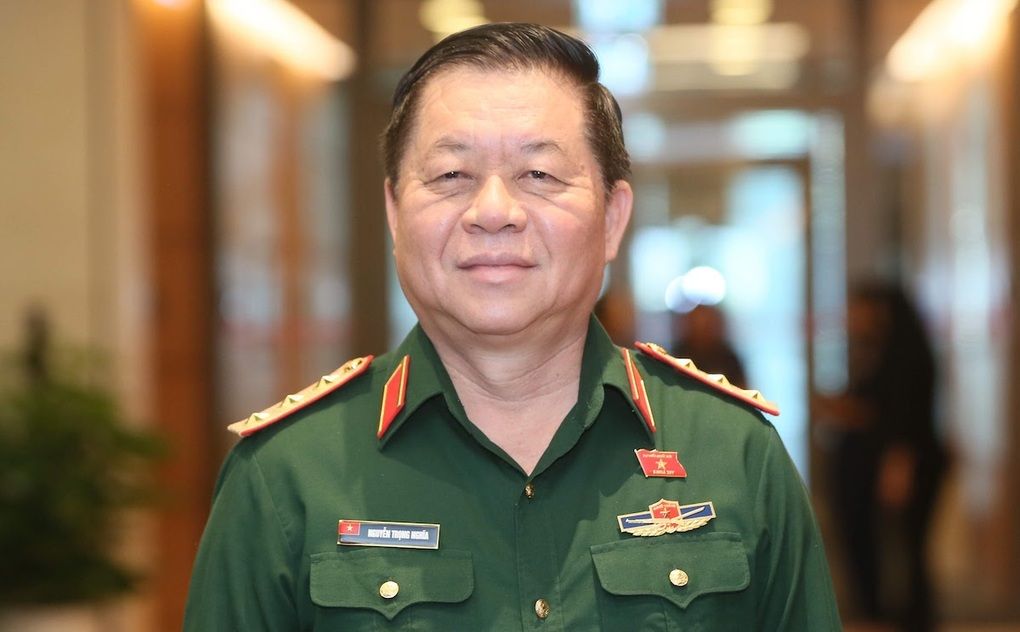
Not until last week, however, had another general been appointed to the position. Sen. Lt. Gen. Nguyen Trong Nghia was named the chairperson of the Party Central Committee’s Commission for Popularisation and Education (also known as the Commission for Propaganda) on February 18. He previously served as vice chairman of the General Department of Politics of the Vietnam People’s Army.
One unusual thing to note: He’s not yet a member of the Politburo, making him the first non-Politburo-member to chair the commission since the 1990s.
Propaganda experience: RFA reported: “Nguyen, 59, had previously overseen the creation in 2017 of a 10,000-member army cyber unit, Task Force 47, which monitored political comment online, countering statements opposing Vietnam’s ruling party.”
Context: The military has already occupied two out of 18 seats in the Politburo, which is also an unusually high number because over the past 20 years only the Minister of National Defence has held the position. If Gen. Nghia is going to be appointed as a member of the Politburo in the coming years, that would make a record three generals in that Party body.
Here comes another attempt to detail the Cybersecurity Law
It’s been almost three years since Vietnam’s National Assembly passed the highly controversial Cybersecurity Law. No guidance on the law’s implementation has been given as the central government usually does in the case of decrees, circulars, and decisions.
A draft decree was made available to the public for comments at the end of 2018, but it quickly disappeared after a huge backlash from domestic and international actors.
Earlier this month, the Ministry of Public Security’s website announced another draft decree to address personal data protection.
You can find the full text of this document in Vietnamese here (Google Drive link). The draft decree is available for public consultation from February 9 to April 9.
We have taken a look at the text and here are nine takeaways.
Spoiler: The draft decree has a lot to do with the government dealing with foreign services, such as Facebook and Google. It is not necessarily good news for these companies.
Vietnam – Myanmar relations amidst political instability in Myanmar
Three things you need to know about Vietnam’s position on the political tensions in Myanmar after the military overthrew the elected government led by the National League for Democracy.
First, the government called on the international community to further support the transition to democracy in Myanmar, matching the wishes and interests of the people of Myanmar, as reported by VietnamPlus. This statement was made on February 15 by Ambassador Le Thi Tuyet Mai, Permanent Representative of Vietnam to the United Nations, the World Trade Organisation (WTO) and other international organisations in Geneva, during a session of the United Nations Human Rights Council.
Second, four days later, Ambassador Le Thi Tuyet Mai made another statement at a session of the WTO, saying Vietnam wanted to strengthen its trade ties with Myanmar. According to VietnamPlus: “Vietnam hails Myanmar’s achievements in structural reforms and impressive economic growth in the past year, and wants to continue bolstering the economic-trade and investment ties with the nation in the time to come, a Vietnamese diplomat said.”
Third, Vietnam’s military has significant investments in Myanmar in cooperation with the country’s military. A rights group named Justice for Myanmar released an investigative report in December 2020 accusing Viettel – a Vietnamese military telecommunications corporation – of assisting the Myanmar military in war crimes and crimes against humanity through Myanmar’s Mytel company.
China’s police chief visits Vietnam
Mr. Zhao Kezhi, the Minister of Public Security of China, visited Vietnam and was received by top government officials: CPV General Secretary and State President Nguyen Phu Trong, Prime Minister Nguyen Xuan Phuc, Minister of Public Security To Lam, and Minister of National Defense Ngo Xuan Lich.
“Zhao, during the meeting, expressed hopes that the two sides could enhance the synergy between the China-proposed Belt and Road Initiative and Vietnam’s ‘Two Corridors and One Economic Circle’ plan, expand and grow the economic, trade and investment cooperation, so as to better benefit the people of the two countries.”
84 percent of Vietnamese choose the United States over China
This is according to a survey released by ISEAS Yusof-Ishak Institute in Singapore on February 10, making Vietnam the second country in ASEAN that favors the United States the most.
Survey question: If ASEAN were forced to align itself with one of the two strategic rivals, which should it choose?
New report by the US Congressional Research Service on relations with Vietnam
The US Congressional Research Service released a report on the US-Vietnam relations on February 16, 2021. This report is meant to inform US lawmakers on matters relating to Vietnam.
Quotes:
“China’s actions in the South China Sea have led the United States and Vietnam to intensify security collaboration. In 2016, the Obama Administration removed remaining US restrictions on sales of lethal weapons and related services to Vietnam. Applications to export all defense items, lethal and non-lethal, are subject to a case-by-case review by the State Department’s Directorate of Defense Trade Controls. The Obama and Trump Administrations prioritized bilateral maritime assistance, including providing 24 new coast guard patrol vessels, aerial drones, coastal radar, and two decommissioned U.S.”
“Although the Trump Administration continued the annual bilateral human rights dialogue and criticized Vietnam’s human rights record in various annual reports and selected statements, it did not appear to assign a high priority to human rights in its overall approach to Vietnam.”
We are happy to introduce our weekly Vietnam Briefing that will be published every Monday (Vietnam time). We will produce the briefings by carefully selecting worthy news stories from verifiable and trusted sources, including Vietnam’s independent and mainstream media, civil society groups, as well as our own sources. In line with the publication’s code of conduct, we will practice no self-censorship and we pledge to be truthful, honest, and fair.
If you have any questions, please feel free to contact us: editor@thevietnamese.org.
Kon Tum provincial police formally express the government’s position on Falun Gong.
To our readers:
In 2020, we began to publish monthly bulletins on religion in Vietnamese on Luat Khoa and in English on The Vietnamese in order to record events affecting freedom of religion and faith in Vietnam.
In addition to these religion bulletins, Luat Khoa also regularly publishes articles on freedom of religion and it has also created an English-language database on the same topic.
Luat Khoa’s efforts in 2020 on freedom of religion remain modest. To prepare content for 2021, we hope readers will contribute suggestions for religious topics at tongiao@luatkhoa.org or editor@thevietnamese.org.
[Religion 360*]
Authorities accuse Falun Gong of intending to establish an opposition political force
In December 2020, provincial and municipal authorities continued to block the spread of Falun Gong.
Police and the state-run press have asked citizens not to spread Falun Gong, not to share information regarding the religion on social media, and to report to police anyone “propagandizing” the religion.
Information drawn from the state press indicates that in 2020, the authorities confiscated materials to spread Falun Gong from at least 71 people.
These people were normally stopped as they were individually handing out flyers and gifting keychains and books. No reports indicate that these people spread Falun Gong in any organized manner.
Provincial and municipal authorities have consistently blocked the spread of Falun Gong by citing that the state had yet to permit the distribution of the religion’s flyers.
However, in December 2020, Kon Tum provincial police took this policy one step further in expressing the government’s position on Falun Gong.
Kon Tum provincial police stated that Falun Gong uses its focus on health and exercise as a cover to lure people into joining the religion. They also accused Falun Gong adherents of asking the government for legal recognition in order to form an opposition political force in Vietnam.
Below are the cities and provinces that have investigated and confiscated materials from Falun Gong practitioners in December 2020.
Hai Duong Province: Keychains with propaganda content confiscated from two people
According to VTC Newspaper, Thanh Mien district police in Hai Duong Province investigated a 61-year-old woman for promoting Falun Gong among students on December 2, 2020.
The woman was investigated by police for handing out keychains containing a link to a Falun Gong website for students. Police confiscated 190 of the woman’s keychains.
Also in Hai Duong Province, police confiscated 10 greeting cards and 24 keychains belonging to a 26-year-old woman who was handing out materials promoting Falun Gong on December 23, 2020.
Quang Ninh: Falun Gong books and flyers confiscated prior to distribution
On December 29, 2020, Tien Yen district police in Quang Ninh Province reported that they had requested a woman turn in Falun Gong materials that she was storing at her residence. Police confiscated 40 books, 6 flyers, and 10 keychains containing Falun Gong content from the woman.
Photo: Quang Ninh provincial police.
The items were confiscated for containing material promoting Falun Gong, a religion not yet permitted by the state.
Bac Ninh Province: Two Falun Gong students prevented from proselytizing by police
A number of unsourced photographs and videos shared on social media showed two Falun Gong students in Bac Ninh encountering difficulties with police on the night of December 22, 2020.
Photo: Vietnamese History Forum.
According to the photographs and video, a man and a woman dressed in Santa costumes on the occasion of Christmas spread Falun Gong materials in a public area.
The police officer in the clip stated that a number of Catholics were “upset” at the pair’s actions and reported them. Police ordered the two to the police station for questioning.
State journalists have yet to report on this case.
Head of Pure Hoa Hao Buddhism’s Central Oversight Committee prevented from attending prayer ceremony
On December 15-16, 2020, Can Tho city police prevented Mr. Nguyen Van Dien, head of the Pure Hoa Hao Buddhism’s Central Oversight Committee, from attending a prayer ceremony.
According to the Pure Hoa Hao Buddhism, on the afternoon of December 15, 2020, a group of plainclothes individuals from Can Tho city police arrived at Dien’s residence to demand that he not attend an important prayer ceremony at its temple.
On the morning of December 16, 2020, police continued to demand that a driver not take Dien to the ceremony.
Two Can Tho city police officers sit opposite Dien. Photo: Pure Hoa Hao Buddhism.
The organization’s website stated that police stopped Dien by using COVID-19 and the ban on assemblies as a pretense. However, only Dien was prevented from attending the ceremony. Moreover, other ceremonies in the area were allowed to carry on as normal.
Pure Hoa Hao Buddhism is not recognized by the state. Members of this organization are regularly obstructed at gatherings and events.
Ho Chi Minh City authorities return five religious properties to the Saigon Archdiocese
According to the Ho Chi Minh City Party Committee website, municipal authorities “gifted” five religious properties to the Saigon Archdiocese on December 21, 2020. The reason for this “gift” was not provided.
The Saigon Archdiocese confirmed the return of the religious properties belonging to five parishes: Tan Lap Parish, Cong Thanh Parish (District 2), Tan My Parish (Hoc Mon), Tan Hiep Parish (Hoc Mon), and Binh An Parish (District 8).
The Archdiocese website confirmed that the government had “returned” the properties to them.
According to Archbishop Nguyen Nang’s statement during a meeting, these were religious properties that the parishes had lent to the state after 1975 to serve as schools. He stated further that the archdiocese was “delighted to receive back the properties, in order to provide necessary services for parishioners” and that he hoped the other properties would also be returned if the city was able to build new schools.
A meeting between the Saigon Archdiocese and the Ho Chi Minh City authorities on December 2t, 2020. Photo: Saigon Archdiocese.
After 1975, Catholic organizations in southern Vietnam lent many properties to the state for educational purposes.
To this day, the number of properties lent has not been precisely established. Conflicts between the state and the Catholic church continue to occur.
Thien An Abbey’s shrine to the Virgin Mary vandalized
In December 2020, the area around Thien An Abbey that was dedicated as the shrine to the Virgin Mary (Thua Thien – Hue Province) was trespassed upon by strangers many times.
The monks stated that many stone benches and greenery in the area were vandalized and that the grounds of the shrine were sullied with dirt. The abbey has reported the incident to the authorities, but the area around the shrine continues to be vandalized.
Pictures of the vandalized shrine were taken by Thien An Abbey.
For more than 20 years, Thien An Abbey has been in limbo due to a land dispute between the abbey and local residents and Thua Thien – Hue provincial authorities.
Events indicate that the authorities and local households have teamed up in their land disputes with the abbey.
Government prevents the Unified Buddhist Sangha from distributing free aid
According to the Unified Buddhist Sangha, Huong Tra commune authorities in Thua Thien – Hue Province prevented the church from distributing free aid to flood victims at the end of December 2020.
Afterwards, authorities confiscated all gift vouchers and prevented residents from coming to Long Quang Monastery to receive free aid.
The reason authorities gave for the obstruction was that as the Unified Buddhist Sangha was not recognized by the state, and therefore distributing free aid was illegal.
[On This Day]
Letter from the House of Representatives on freedom of religion in Vietnam
Chair of the House Committee on Foreign Relations, Edward R. Royce, and U.S. Ambassador to Vietnam, Daniel J. Kritenbrink. Photo: CFUS News (left), AFP (right).
In December 2017, Mr. Edward R. Royce, chair of the House Committee on Foreign Relations, sent a letter to Mr. Daniel J. Kritenbrink, US ambassador to Vietnam, to express his concerns about freedom of religion in the country.
In the letter, Royce expressed his concerns about the new Law on Faith and Religion, which was set to go into effect on January 1, 2018.
“I fear that this new law will form the basis for continued mistreatment of those who seek to practice their faith in Vietnam,” he wrote.
Royce’s fears have become a reality.
In the past three years, state organizations have taken advantage of the law’s nebulous regulations to control religious activities.
Most recently, the Vietnamese Protestant Church (Southern branch) had to postpone its clerical congress for not sufficiently meeting the requirements of the Law on Faith and Religion. Specifically, they had not sent the roster of candidates to the Government Committee for Religious Affairs prior to the congress.
Royce’s fears about the Vietnamese government using ambiguous national security concerns as pretext to suppress religious activities also proved to be true.
In a number of areas in the northwest, authorities have tightly controlled religious activities. The Protestant Church of Christ in the Central Highlands is even seen as a threat to national security.
If you have any suggestions or would like to join us in writing reports, please email us at: tongiao@luatkhoa.orgor editor@thevietnamese.org
This article was written in Vietnamese by Trinh Huu Long and previously published in Luat Khoa Magazine on February 18, 2021. The translation was done by the author.
It’s been almost three years since Vietnam’s National Assembly passed the highly controversial Cybersecurity Law. No guidance on the law’s implementation has been given as the central government usually does in the case of decrees, circulars, and decisions.
A draft decree was made available to the public for comments back at the end of 2018, but it quickly disappeared after receiving huge backlash from domestic and international actors.
Earlier this month, the Ministry of Public Security’s website announced another draft decree which was to address personal data protection.
You can find the full text of this document in Vietnamese here (Google Drive link). The draft decree is available for public consultation from February 9 to April 9.
We have taken a look at the text and below are nine takeaways.
1. Two types of personal data
The draft decree categorizes personal data as two types: basic and sensitive.
Basic personal data includes information about personal identification, such as name, date of birth, place of birth, address, nationality, ethnicity, marital status, and ID number. One thing, however, is unclear: “data containing online activities and history.”
Sensitive personal data includes political and religious opinions; health, genes, sex, biometrics; finances; sexual life; residence; social networking; and others.
2. Individual right to personal data
Individuals have a wide range of rights regarding their personal data as follows:
To consent or refuse data processing by others of one’s own personal data;
To be informed of personal data being processed by others;
To demand an end of data processing; to file complaints about violations;
To demand compensation in cases of data abuse;
Sensitive personal data should not be released. Plus, no release of basic personal data is allowed should it negatively affect its owner. The draft decree doesn’t specify the term “to release personal data” and whom the data is released to besides the public, but based on the wording of Article 6, the draft seems to be only addressing releases to the public.
3. Circumstances in which personal data is being processed without consent
According to Article 10, all personal data, regardless of being basic or sensitive, is subject to being processed (collection, storing, and use) without consent in the following circumstances:
Matters relating to national security, public security, and public order;
Emergencies where the freedoms, or the health and life of the owner’s personal data or of the community’s are being involved;
Investigations and convictions of legal violations;
Conducting research and gathering statistics (after de-identifying the data);
Other circumstances according to the law and international treaties.
The last circumstance, “other circumstances according to the law,” is a loophole that is widely used in the legal system of Vietnam to give the government’s executive branch, especially ministries, an almost unlimited ability to interpret laws and regulations using circulars and executive decisions.
4. Personal data being processed without informing its owner
According to the draft decree, the owners of personal data are normally informed should their data be processed by government agencies or other legal actors.
However, there are three exceptions to the rule, and the most concerning is the second one (Item b, Section 3, Article 11): “In case the processing of personal data is constituted by the law, international agreements, and international treaties.”
This is another loophole in an important matter relating to the transparency of personal data processing.
5. The establishment of the Committee on Personal Data Protection
A new government agency called the Committee on Personal Data Protection is going to be established. It will be set up under the central administration.
The Ministry of Public Security (MPS) can appoint no more than six members to the Committee upon the cabinet’s approval.
The Committee is closely tied to the MPS Department of Cybersecurity and Hi-Tech Crimes Prevention as it is headquartered at the department and chaired by the department’s head officer.
6. Permit required for processing sensitive personal data
Article 20 requires that parties who want to process sensitive personal data must register with the Committee on Personal Data Protection.
However, the Article excludes activities by government agencies relating to law enforcement, judicial procedures, heath, social security, and scientific research. That means these agencies don’t need to register. Also, the Article leaves another loophole for other authorities to exploit by attaching a clause saying “other activities according to the law.”
What remains after excluding the above-mentioned government agencies? Enterprises and non-governmental organizations, both domestic and international ones. Services such as social media, banking, and healthcare must register with the Committee.
7. Permit required for conducting cross-border transfer of personal data
This is directly related to foreign services operating in Vietnam or domestic services operating in other countries, especially technology companies.
Article 21 states that four conditions must be met before a party can make a cross-border transfer of personal data:
Data owner’s consent;
Storing the original copy of the data in Vietnam;
Providing documents that prove the data receiving countries have personal data protection regulations at the same or higher level than that of this decree;
Obtaining a written approval from the Committee.
The second and third conditions can be waived should the data processing party provide statements regarding their commitment on protecting the data.
The data processing party must archive records of data transferring within three years, and stop transmitting data should data leaks or abuses occur, or should they no longer have sufficient capacity to protect the data, or the data owner is incapable/ having difficulties protecting his/her rights and interests.
The Committee on Personal Data Protection will routinely inspect data transmitting parties once a year.
The requirement of storing data’s original copy in Vietnam will likely make it a bit more difficult for foreign social networks, email services, and e-commerce activities to operate in Vietnam. According to Google expert Duong Ngoc Thai, Facebook is unlikely to store users’ personal data in Vietnam but rather just cache data to make access to its services faster.
8. Administrative fines can be up to 5 percent of the total revenue of a company in the Vietnam market
Those who violate the regulations on personal data protection are subject to fines of 50 million dong or 5 percent of their total revenue in the Vietnam market.
Simultaneously, violators can also be banned from processing personal data for 1 to 3 months and may have their data processing licenses revoked.
If not allowed to collect, store and use users’ personal data, online services will probably not be able to function the way they do currently.
The decree doesn’t specify how the government can prohibit online services from processing personal data, but the Cybersecurity Law provides the government with the authority to order the telecommunications companies to block services and sources of information that are deemed to be harmful to society.
9. Effectivity
The draft decree is expected to take effect on December 1, 2021, as stated in the document.
The COVID-19 situation continued to worsen throughout the Lunar New Year and serious measures have been put in place.
Hanoi has decided to temporarily close coffee shops, street restaurants, and historical sites from midnight, February 16.
Students in Hanoi will have to study online until February 28, following similar decisions by Hai Duong, Binh Thuan, Thanh Hoa, Binh Dong, and Binh Phuoc provinces.
Ho Chi Minh City’s students will continue to study online until February 28.
The chairperson of the Hanoi People’s Committee proposed that Prime Minister Nguyen Xuan Phuc close universities located in the capital until the end of February. These universities are under the authority of the central government, and not the local government.
Hai Duong, a northern province near Hanoi, will be locked down from February 16 for 15 days and citizens have been ordered to stay home. Only essential movements and businesses are allowed. Schools are closed until at least February 28.
Vietnam – one of Asia’s top-performing economies during the pandemic
“Vietnam was one of Asia’s top-performing economies in 2020 and among the few countries that managed to record growth last year as authorities globally scrambled in their battle against the coronavirus pandemic. It saw 2.9 percent growth in 2020, narrowly edged out by the Taiwan economy’s 2.98 percent growth.”
A state-owned media journalist arrested for defaming provincial officials
It’s not unusual hearing news stories about journalists being arrested in Vietnam. Mr. Pham Bui Bao Thy (Phạm Bùi Bảo Thy) – the head of the representative office of Giáo dục và Thời đại (Education and Era) newspaper in central Vietnam – was arrested and charged by Quang Tri provincial police with “abusing democratic and freedom rights to infringe on the State’s interests and rights and the interests of organizations and individuals” under Article 331 of the Penal Code, according to Tuoi Tre and the Vietnam News Agency.
The provincial police have accused him of using anonymous Facebook accounts to spread baseless information and to defame some top government officials in the province.
The police have put him under a two-month detention order.
Another person named Le Anh Dung (Lê Anh Dũng) was also arrested in the same case. Voice of Vietnam (VOV) reported that Mr. Dung, 56, lived in Ho Chi Minh city and he is accused of administering the accounts.
Article 331, previously Article 258 of the Penal Code, is widely condemned by rights groups such as Amnesty International and Human Rights Watch. Several human rights defenders and dissidents have been arrested and convicted of the crime, including well-known journalists such as Nguyen Huu Vinh, also known as Anh Ba Sam (2014), and Truong Chau Huu Danh (2020).
Is a government-backed hacking group targeting dissidents?
The lotus is seen as a symbol of Vietnam. Look at the national flagship airline’s logo and you will see it. And now, technology experts believe that a hacking group named OceanLotus, potentially linked to the Vietnamese government, is targeting dissidents and human rights organizations.
The Committee to Protect Journalists, an international rights group, released an interview with Steven Adair, president and co-founder of Volexity, a US-based cybersecurity company that has studied OceanLotus, on February 1. Below is a part of the interview:
“Question: Is it possible to say whether state actors are behind OceanLotus?
Answer: We definitely believe it’s out of Vietnam, but whether it’s a government agency, a contractor working for them, or something else, we don’t claim that we know that. We look at the immense level of effort and resources to maintain all the infrastructure and identify the victims. It’s not something anyone’s going to do in their spare time.”
Human Rights Watch: Vietnam among countries using COVID-19 to justify free speech violations
A report released on February 11 by Human Rights Watch lists Vietnam among countries taking advantage of the COVID-19 pandemic to advance the governments’ agenda of suppressing human rights, especially the right of free speech.
Quote:
“Authorities in at least seven countries have blocked individual news reports or ordered online media or social media users to remove or edit Covid-19 related content. Vietnamese authorities summoned 650 Facebook users between January and March to question them about publishing false information relating to the pandemic, forced all of them to remove their posts, and fined over 160 of them. Vietnamese law does not only target incorrect information, but information that is deemed to defame or insult others’ reputation or honor.”
France’s nuclear attack submarine patrols in the South China Sea
On February 17, a lot of Vietnamese people inside and outside of Vietnam, as well as the state-owned media, will be speaking about the border war with China that started exactly 42 years ago. Anti-China sentiment has been strong in Vietnam, and many people wanted to see world superpowers harshly confront China on issues such as trade, human rights, security, and so on. Territorial disputes in the South China Sea are among them. Vietnamese people are desperate to see the United States and other countries on their side. Last week, France seemed to make a strong statement on the issue.
“The French nuclear attack submarine SNA Emeraude recently conducted a patrol in the South China Sea, Defence Minister Florence Parly announced this week, sparking questions over the timing and tensions in Asia’s hotly contested waters.”
Xi Jinping urges Vietnam to “stand against the instigation of external forces” on the South China Sea issue
It was Lunar New Year in Vietnam and China last week. The two countries’ top leaders, Nguyen Phu Trong of Vietnam and Xi Jinping of China, had a phone conversation on February 8 to exchange wishes and to discuss various issues, according to Xinhuanet, China’s state-owned media agency. Here are a few things to note from this conversation.
Quote:
“China, Xi added, is willing to work with Vietnam to accelerate the synergy of the Belt and Road Initiative with the ‘Two Corridors, One Economic Belt,’ promote the construction of cross-border economic cooperation zones between the two countries, and explore exchanges and cooperation in such fields as healthcare, digital economy and humanities.
The two sides should strengthen coordination and cooperation on international and regional issues, firmly uphold the international system with the United Nations at its core, oppose protectionism and unilateralism, and support a fast entry into force of the Regional Comprehensive Economic Partnership agreement, Xi noted.
China and Vietnam, he said, should properly manage the maritime differences and stand against the instigation of external forces to promote the development of regional peace and stability.”
“I believe my life is firmly tied to the nation’s.”
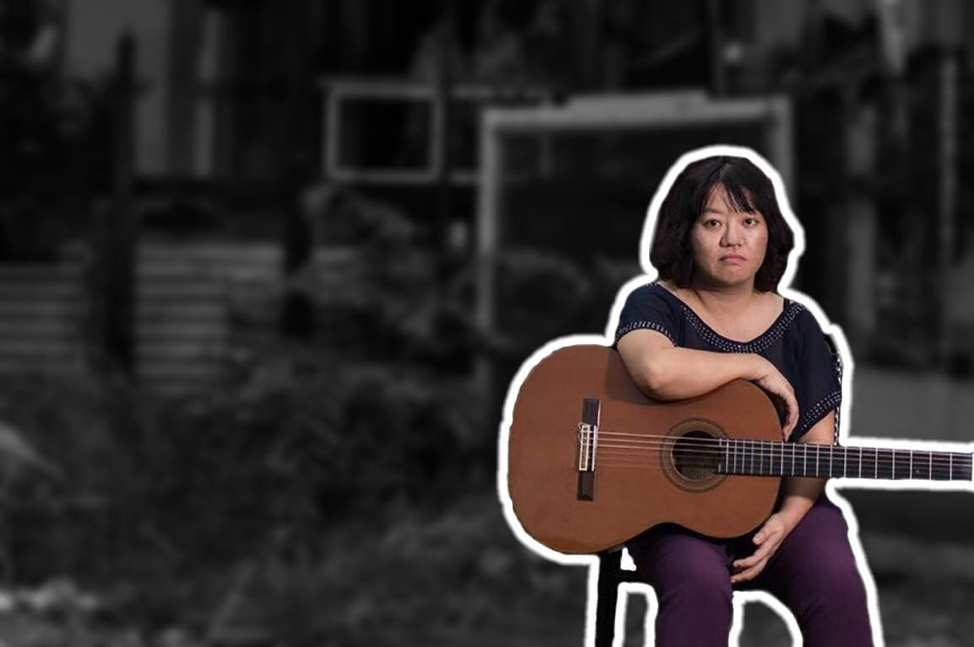
For at least the past 12 years, Pham Doan Trang has been one of the most prominent names in Vietnamese politics, and her arrest on October 6, 2020, has her staring down 20 years in prison.
So, who is Pham Doan Trang?
Pham Doan Trang
Birth name: Pham Thi Doan Trang Birthdate: May 27, 1978 Birthplace: Hanoi Profession: Democracy activist, journalist Location: Currently being held in Temporary Detention Camp #1, Alley 702, Phuc Dien Ward, Nam Tu Liem District, Hanoi. Quotations without citations are taken from writings on Doan Trang’s blog: phamdoantrang.com.
Growing up with the music of the Beatles
Hanoi youth in the 1970s. Photo: ngoisao.net.
Pham Doan Trang is the youngest child in a family of teachers. Her grandparents taught history and math at Hang Ken School, and her mother and father were also teachers. During the subsidy period, Doan Trang grew up in a poor residential area in southern Hanoi. Shewrote about her childhood in her blog:
Like many other children, I was scared of ghosts. This fear only grew when we had to sleep amidst blackouts so dark we couldn’t see our own fingers. Looking out the window, the alleyways were pitch black. There was a burned-out house whose gray walls were charred black. The owner of the house had died in a fire long ago, and no one lived there anymore. There was another house in which the husband and wife died in an accident, and the children lived with the grandparents; no one dared go there either.
In 2nd grade, a neighbor’s cassette player strongly stirred little Doan Trang’s curiosity as it played Beatles’ songs one after the other. Her soul was set aflutter with these hits. From that point on, she began studying English so she could sing Beatles songs.
“In 7th grade, I began struggling with my neighbor’s cassette player to listen to and transcribe the songs where I tried my best to record the lyrics,” she said. “I started borrowing my friends’ personal songbooks where they had the lyrics written out to transcribe the Beatles songs, complete with incorrect English spellings and spotty grammar…. I grew up with the music of the Beatles”.
In college
Doan Trang during her freshman year at Hanoi Foreign Trade University in 1996. Photo: Pham Doan Trang’s Facebook profile.
From 1996-2000, Doan Trang studied at Hanoi Foreign Trade University, majoring in international economics. It was during this time that she and her classmates first connected to the internet. In her blog, she described her college years in Vietnam:
Back then, the internet was only barely establishing itself in Vietnam, and students were quite shy and cautious when surfing online…. We didn’t have books, but we could already see the events in reality were not really accurately described in those books anyway. Moreover, who would let the students just willy-nilly visit the companies and large organizations to find out the truth…. Because of that, students of my time especially focused on studying the one resource that was most useful: online economic articles, either written or translated by journalists. Countless generations of economics students got their education through these articles.
Baby steps towards journalism
Doan Trang interviewing Ms. Hoang Thi Minh Ho (1914-2017), wife of businessman Trinh Van Bo, in 2010. Photo: Pham Doan Trang’s Facebook profile.
In the winter of 2000, after graduating from university, Doan Trang began a stint at the e-newspaper VnExpress, which had just been established. She wrote about that time in her blog:
I remember fondly the winter of 2000, those days and months when I was just starting out in journalism. Sometimes when I think back, I picture myself as a child, dazed and naïve, scared of everything and everyone. I was scared of many things, but most of all, I was scared of miswriting.
After a period of time as newsroom secretary at VnExpress, Doan Trang switched over to television at the digital TV channel VTC (Vietnam Television Corporation).
During her journalism career, Doan Trang has stated that with the exception of sports, she wrote about all sorts of topics—including those which couldn’t be published in the media.
“Trang the Ridiculous”
Doan Trang’s blog. Photo: screenshot.
In August 2006, Doan Trang established her blog phamdoantrang.org, which helped her connect with friends in and outside the country, as well as providing her with a platform with which to write about things that could not be published in the media. The blog remains to this day.
When writing her blog, she used the name “Trang the Ridiculous”.
“I started my blog … originally and purely as a means to practice writing in English,” she wrote. “As such, you can see right away that Trang the Ridiculous’ blog became a gathering place for the ridiculous and the recalcitrant.”
After a number of years, Doan Trang’s blog moved beyond its original purpose.
Sympathizing with the weak
One of the many things that haunted Doan Trang was the fate of the weak around her.
When I was young and living with my parents in a poor neighborhood in southern Hanoi, I remember the women who shouted to themselves, hoarse out of fear and hopelessness, “my child, oh my child….” I remember the tired faces of those struggling to survive, working countless jobs with no names: pedaling cyclos and bicycles, repairing shoes, carving chopsticks, etc. I remember asking myself why so many people around me died young; I once asked my friend, why is human life here worth so little, and he responded: “Whose life? You think your life is worth something?”
“If I had the power to change anything in Vietnam,” she wrote, “I would say that the country lacks an environment where human beings are respected.”
Speaking up is tied to the nation
Journalist Pham Doan Trang when she was working for state newspapers. Photo: Tuoi Tre Online.
Doan Trang once wrote on her blog that life would be so much easier if we closed our eyes to the suffering around us.
She has said that the first reason most people don’t say what they think is innate fear, fear of being blamed, fear of responsibility, fear of isolation. The second reason is, perhaps, that people are not perceptive enough to see the problem or their self-interest in the problem. Even worse, they may only see the penalty in speaking up, believing that speaking up won’t change anything anyway; maybe they feel that the problem is not even relevant to them.
I’ve worked in a number of organizations, and I recognize that people will speak up, and only speak up, when they see themselves as part of the organization. People only strongly attach themselves to the nation when they feel they have shared visions for the future; only then will they feel inspired to turn these visions into reality.
Quitting VTC Television
In March 2007, Doan Trang announced that she would step down from VTC and move to the e-newspaper VietNamNet.
I was like many of us: obsessed with working in television, to the point of madness. I brought (just a portion of) the flame I had from when I was 12 or13 and 19 or 20 to my time working as a visual journalist at VietNamNet TV. I was fortunate that I didn’t pour my whole self into it, otherwise I would have lost even more than I did those 10 years. One day, the pragmatic voice inside of me cried out: “Trang, is it worth it?”.
Mobilizing for LGBT rights
The cover of Bóng – a biography of LGBT figure Nguyen Van Dung, written by authors Hoang Nguyen and Doan Trang. Photo: Global Span (“Nhịp Cầu Thế Giới”).
In 2007, a man named Nguyen Van Dung recounted his life and the LGBT world he inhabited in a trailblazing book called Glass – Biography of a Gay Man, authored by Doan Trang and Hoang Nguyen.
The biography shook society, revealing for the first time the world of LGBT in Vietnam.
Nguyen Van Dung became a popular figure and one of Doan Trang’s friends, and the book, which was used to mobilize for LGBT rights, became a bestseller.
Working as a state journalist
Doan Trang worked for the e-newspaper VietNamNet when Nguyen Anh Tuan was still editor-in-chief. Photo: thongtincongnghe.com.
In 2008-2009, Doan Trang became the first Vietnamese journalist to write an in-depth analysis on Sino-Vietnamese relations. The articles resonated strongly among Vietnamees when they appeared in Vietnam Weekly, a specialty page of VietNamNet.
Prior to that, at the end of 2007, bloggers in Hanoi and Ho Chi Minh City organized ground-breaking protests to oppose China’s establishment of Tam Sa (Sansha) City, an island in the disputed area of the sea, which Vietnam also claims sovereignty over.
In 2007, Doan Trang wrote extensively about her experiences as a journalist in Vietnam.
I like being around those who are different from me, especially those who are quirky or even eccentric. I crave novelty. So, I rarely regret spending too much time or energy on work. I don’t think you can excel at something if you don’t love it. And if you love it and you do it well, in turn, it will change you in positive ways. Obviously, [overworking] can still ruin your life, but unhappiness can spring even from one’s happiness.
However, never will I be an effective journalist if I feel unhappiness weighing down on my heart.
If you’re a Vietnamese journalist, you’ll have many more reasons to feel sad. Whether this sadness is worthwhile depends on you. But if you sincerely want peace, perhaps you shouldn’t become a journalist.
Detained for nine days
Journalist Doan Trang in 2009. Photo: Pham Doan Trang’s Facebook profile.
In 2009, an unexpected event caused Doan Trang’s life to veer in a different direction.
On August 27, 2009, blogger Wind Trader, whose real name is Bui Thanh Hieu, was arrested. The next day, Doan Trang was also arrested, and then blogger Mother Mushroom, whose real name is Nguyen Ngoc Nhu Quynh, was arrested a few days after that.
Police stated that all three individuals had infringed upon national security by printing t-shirts opposing the establishment of bauxite mines in the Central Highlands.
All three individuals were released one after the other after nine days in detention. At the time, Doan Trang was a reporter for Vietnam Weekly (VietnamNet). She wrote about her detention in her blog:
Among the three bloggers, I was perhaps the most ‘unjustly’ arrested; I didn’t participate in the t-shirt printing at all, had never laid eyes on the shirts, or even been consulted about them. Now, when I occasionally think back to that event, it’s of one sad thought: I didn’t even get to wear my shirt, not even once….
Fired by VietnamNet
Doan Trang during an award ceremony held by the publication Ho Chi Minh City Law. Photo: Pham Doan Trang’s Facebook profile.
After her arrest and detention in 2009, Doan Trang was fired by VietnamNet; no reason was given.
During the dark, depressing winter days of 2009, [Professor Dang Phong] remained one of three individuals who helped me keep the flame alive. I couldn’t give in to their rottenness. I couldn’t.
During the dark, depressing winter days of 2009, [Professor Dang Phong] remained one of three individuals who helped me keep the flame alive. I couldn’t give in to their rottenness. I couldn’t.
After that upheaval, Doan Trang went to work for the Ho Chi Minh City Law newspaper.
I was lucky to cross paths with Ho Chi Minh City Law newspaper during those difficult days, when the lingering effects of my time in detention remained serious, when I lived under constant suspicion and when I myself couldn’t trust anyone.
“A history of Vietnamese blogs”
Doan Trang in a protest against Chinese antagonism on June 5t, 2011. Photo: Lan Thang.
In June 2012, Doan Trang released “A History of Vietnamese Blogs” on her personal blog to mark the 7th anniversary of Yahoo! 360°’s arrival in Vietnam. Yahoo! 360° opened up a world of information for Vietnamese citizens. It became the online literary movement and provided social and political commentaries.
In addition to working for Ho Chi Minh City Law newspaper, Doan Trang also wrote articles for other publications, including Tia Sang (Ray of Light), Nhip Cau The Gioi (Global Span – a Vietnamese newspaper in Hungary), and a number of other publications.
During this period, Doan Trang continued to write in-depth analyses on Sino-Vietnamese relations. She was the first journalist in Vietnam to write about the Vietnam-China dispute over the South China Sea, which was a very politically sensitive issue in the country that the government just started to lift up its censorship in the past five years.
On the morning of August 5, 2012, Doan Trang was arrested when she participated in an anti-China protest in Hanoi. This arrest led Doan Trang to become more involved with human rights activities and began her works as a Human Rights Defender in Vietnam.
Pham Doan Trang became a Human Rights Defender
In 2012, Doan Trang became one of the first Vietnamese journalists to report on human rights violations occurring inside the country to the outside world.
That same year, Scrap Paper (Giay Vun) Publishing House published Doan Trang’s book And the Fourth Power, as well as a number of other works of which she was co-author, including The F Generation. In the same year, Knowledge Publishing House published Vietnam and the East SeaDispute, which Doan Trang co-authored.
In March 2013, as the Vietnamese government was seeking citizen feedback on its new draft of the Constitution, Doan Trang began writing a series of articles called What I Tell Myself and Others, which sought to disseminate basic knowledge about politics and human rights where she wrote:
Isn’t this an amazing opportunity for us to learn about our Constitution, the law, constitutionality, human rights and citizens’ rights…? This writer asks for even more: this is an occasion to push all of us Vietnamese citizens, especially young people, to try caring about politics a bit more. How about it?
Moving away from state journalism
Doan Trang during a 2012 press conference held by state-owned Oil and Gas Group regarding East Sea issues. Photo: Pham Doan Trang’s Facebook profile.
In 2013, Doan Trang announced that she was leaving Ho Chi Minh City Law. By this point, she had worked for more than 10 different state media outlets. She then made the decision to go overseas and participate in international advocacy.
The next year, Doan Trang traveled to the United States at the invitation of Villa Aurora, a prestigious artists’ residence, and the University of Southern California.
Human rights advocacy for Vietnam
Doan Trang and a number of other activists in front of the UN Headquarters in New York, January 24, 2014. Photo: Doan Trang’s blog.
From the end of 2013, Doan Trang embarked on many trips to the United States, Europe, and Thailand to advocate for human rights in Vietnam. In particular, Doan Trang was part of a delegation of civil society advocates during a number of international events, including the Universal Periodic Review session on human rights at the UN in February 2014 and the Canadian Senate hearings on human rights in Vietnam in April 2014.
Co-founding Luat Khoa Magazine
Three of the four co-founders of Luat Khoa Magazine. Photo: liv.ngo.
On November 5, 2014, readers first laid eyes on Luat Khoa Magazine, a publication dedicated to law, politics, and human rights and founded by Doan Trang and a number of others.
In her blog, she introduced Luat Khoa:
I understand the fear of not knowing anything about the law, of not knowing even where to begin to escape that immense jungle. I understand how overwhelming these things can be, and I know (in part) what it’s like to be involved in matters related to “courts” with a voice too weak to have any say, not knowing what to do or who to believe, never mind using the law to defend oneself….
Broadly speaking, discovering the law and studying jurisprudence are the first steps on the road to building a state governed by rule of law.
Police retaliation upon returning home
Doan Trang in a meeting with US senators visiting Vietnam in May 2015. Photo: Pham Doan Trang’s Facebook profile.
On January 26, 2015, Doan Trang returned to Vietnam. She was detained at the airport for 15 hours and was closely monitored after returning home. Afterwards, she was arbitrarily arrested by police when she served as a translator for the families of death row inmates Ho Duy Hai and Nguyen Van Chuong in an advocacy meeting with the New Zealand Embassy in Hanoi.
Two weeks after she returned to Vietnam, police disseminated explicit pictures of Doan Trang taken from her computer, which they had confiscated six years earlier.
In March 2015, police poured glue into the locks of Doan Trang’s home, preventing her from attending a meeting at the German Embassy in Hanoi.
Assaulted by police during protests against felling trees in Hanoi
Doan Trang, carrying a backpack, was dragged by police during protests on April 26h, 2015. Photo: Phan Tat Thanh.
On the morning of April 26, 2015, the group For a Green Hanoi organized a march to prevent the Hanoi authorities from cutting down trees in the city. During the protest, police strong-armed Doan Trang and many other protestors onto buses. Doan Trang recalled the incident:
After the march was disrupted on Sunday, when everyone was gathered in front of the Long Bien district police station, Mr. La Viet Dung checked in on me: “You were dragged over a manhole this morning, weren’t you?” he asked.
I remember I was lost in the middle of the crowd, images rushing past in a blur, but I recall seeing a stretch of green sky and a sea of undulating faces, young and old, of both the citizens and police.
Demanding the release of individuals at the police station
Doan Trang together with activists Dinh Thao and Luu Van Minh on the night of September 23, 2015. Photo: Le Anh Hung.
Doan Trang participated in many attempts to free those arbitrarily held at police stations.
On the night of September 23, 2015, six young individuals of the channel Conscience TV were arbitrarily detained. That same day, Doan Trang and other activists arrived at the Hai Ba Trung District police station in Hanoi to demand their release. She and others organized a small protest in front of the station, where they were assaulted by the police.In December 2015, Doan Trang uploaded “Timeline of the capital’s tree-felling ‘campaign’” in both English and Vietnamese on her blog.
Arrested on the way to meet President Barack Obama
In May 2016, Doan Trang took a car from Saigon – where she had just undergone knee surgery – to Hanoi to meet American president Barack Obama. However, she was apprehended by police several hours south of Hanoi and held for 26 hours in Ninh Binh Province.
After being arbitrarily detained in Ninh Binh, she returned to Saigon and continued to be harassed by police at a friend’s residence where she was staying.
From this point onwards, up until her most recent arrest, Doan Trang was repeatedly harassed by police in all sorts of ways. Anytime a diplomatic delegation came to Hanoi, she would be put under house arrest for many weeks prior to its arrival.
Resumption of book and report writing on the environment, politics, and human rights
Doan Trang along with Ms. Le Thi Minh Ha, wife of blogger Nguyen Huu Vinh, during the release of Anh Ba Sam on March 23, 2016 in Hanoi. Photo: JB Nguyen Huu Vinh.
In 2016, Doan Trang participated in writing and editing the bilingual (English-Vietnamese) book Anh Ba Sam, about blogger Anh Ba Sam, whose real name is Nguyen Huu Vinh. The book was released on Amazon a week before Mr. Vinh’s preliminary trial in March 2016.
Beginning in February 2016, as the Vietnamese government was organizing elections for representatives of the National Assembly’s 14th term and of the People’s Councils at all levels, Doan Trang wrote a good deal about the processes on her blog.
The book Overview of Vietnam’s Marine Environmental Disaster. Photo: Liberal Publishing House.
In October 2016, the group Green Trees published the book Overview of Vietnam’s Marine Environmental Disasteron Amazon, with Doan Trang and other activists as co-authors. The book laid out the timeline of events during and after Hung Nghiep Formosa Ha Tinh’s polluting of beaches in mid-2016. Also in the same year, the book From Facebook Down to the Streets was published on Amazon.
Supporting other activists
Doan Trang standing with crutches to the right of Green Trees group members in a photo taken in 2016. Photo: Anh Ba Sam.
Few outsiders know that Doan Trang is more than just an activist; she also guides young people on how to become activists themselves. For these young people, she is a rare kind of teacher, imparting on them knowledge and skills that they can’t learn anywhere else.
The days writing Politics for the Common People
Doan Trang in 2017. Photo: Thinh Nguyen.
In 2017, Doan Trang wrote Politics for the Common People while she was under house arrest in Hanoi. In July 2017, she left Hanoi for Saigon in order to evade police harassment.
On September 22, 2017, Politics for the Common People was published by Scrap Paper Publishing House and Green Trees. The book aimed to spread basic political knowledge to everyday people, especially the young involved in social and human rights activism.
Cover of Politics for the Common People. Photo: Liberal Publishing House.
I wrote [Politics for the Common People] while under tight police supervision in Hanoi; I couldn’t do anything or go anywhere. I felt like I couldn’t breathe—literally…. Meanwhile, in some other location, their boss, sitting in an air-conditioned room, directed them to closely follow the ‘suspect’, research the suspect’s habits, her daily routine, her path to and from home, and how items are arranged in her house….
If I didn’t have my guitar by my side, I probably would’ve gone insane…. But, to me, all of that isn’t important; what’s important is that people read the book. The more people that read it, the better.
In 2017 and 2018, Doan Trang stated that at least 300 copies of Politics for the Common People were confiscated by Danang police as they were being transported from Poland to Vietnam.
Link to purchase the book: Amazon (print), Smashwords (digital).
Receiving the Homo Homini Award
Doan Trang in a documentary film shown at the Homo Homini Award ceremony in Prague, Czech Republic. Photo: People In Need.
In February 2018, People In Need, an internationally-renowned non-profit organization based in the Czech Republic, bestowed upon Doan Trang the Homo Homini Award, given annually to honor valiant political and human rights activists and journalists across the world. Doan Trang was unable to leave Vietnam to receive the award.
Days of horror
Photo: People In Need.
In February 2018, Doan Trang was kidnapped by police and interrogated about Politics for the Common People;upon returning home to Hanoi to celebrate the Lunar New Year with her family, she was put under house arrest.
At the beginning of March, police continued to hold her captive as she tried to find ways to escape Hanoi. Ultimately, Doan Trang was able to escape to Saigon, but her health was quite frail.
One day at the end of May, Doan Trang returned to Hanoi. As soon as she stepped off the bus in Hanoi, police were waiting for her. She was forced to resume house arrest because the authorities were afraid she would “instigate” the masses to protest two bills: the SEZ Law and the Cybersecurity Law.
With the help of friends and readers, Doan Trang escaped the Hanoi police one more time, traveling to Saigon. During this escape, she seriously injured her hands climbing over high walls, which she did in spite of her aching knees.
The next book
From left: Nguyen Anh Tuan, Pham Doan Trang, and Trinh Huu Long. Photo: Luat Khoa Magazine.
In June 2018, when protests against the two proposed laws broke out, Doan Trang joined hands with jurist Trinh Huu Long and activist Nguyen Anh Tuan to write Studying Public Policy through the Case of SEZs. In mid-December 2018, the book was published by Luat Khoa Magazine.
Admitted to the hospital after a brutal police assault
Doan Trang was admitted to the hospital after police broke up singer Nguyen Tin’s concert. Photo: Pham Doan Trang.
On August 15, 2018, Doan Trang was assaulted by plainclothes police while attending an evening concert by singer Nguyen Tin. The concert was broken up by police, who interrogated and beat both organizers and attendees.
Doan Trang recounted how six plainclothes police officers beat her with a motorcycle helmet and some custom-made weapons. Police confiscated her computer and I.D. documents during the event.
The next day, she was admitted to the hospital suffering a concussion. At the hospital, police kept an eye on her as though she were a criminal; no friends or readers were allowed to speak with her. She was bedridden for the next three weeks.
Only later did Doan Trang learn that the concert was disrupted by police because they suspected Doan Trang was going to use the event to distribute Politics for the Common People and other “anti-state” materials.
Homeless
Doan Trang’s living situation became increasingly precarious as she no longer had her identification papers and police scoured for her everywhere. Vietnam’s tenant registration system effectively worked to make life difficult for an independent journalist like her. She believes that police even forced her neighbors in Hanoi to sign pledges to immediately report her if they saw her.
In January 2019, Loc Hung Garden – where Doan Trang was living – was torn down by the authorities. From then on, half her time and energy was spent trying to find a place to live while on the run from police and while her hands and feet were seriously injured. Doan Trang was unable to walk more than a few hundred meters and could not ride a motorcycle.
Injured and exhausted, Doan Trang felt her journalism career was coming to a close in the face of relentless government pursuit.
Unable to live a normal life
Doan Trang and saxophonist Dang Vu Luong in Ky Anh District, Ha Tinh Province, March 2017. Photo: Pham Doan Trang’s Facebook profile.
For more than three years beginning in July 2017, Doan Trang lived in at least 60 different locations across Vietnam. She traveled for over three years on a pair of injured legs, weighed down by a pervasive fear, while being constantly beaten, assaulted, and beleaguered by police. She described her life in her blog:
Working as an independent journalist and author under a totalitarian regime means that you can be arrested and interrogated, even assaulted, at any time without any way to protect yourself and unable to freely move around the country….
One could also be placed under house arrest or become essentially homeless. You can’t go out and enjoy yourself or even walk down the street because someone could be following you, or even worse, a complete stranger could suddenly attack you from behind.
Your family is closely monitored, and police might make trouble for your friends and supporters .… You have to live with the perpetual feeling that you are an enemy of the state, deserving of punishment ….
You certainly won’t die, because they have no intention of killing you. But you can no longer live normally like other people or like you had before. Misery, depression, and mental breakdowns will all pile on to wreak havoc and slowly kill you.
Receiving the Press Freedom Award from Reporters Without Borders
Doan Trang received the Reporters Without Borders Press Freedom Award, September 12, 2019. Photo: Trinh Huu Long / Luat Khoa Magazine.
On September 12, 2019, Reporters Without Borders awarded Doan Trang the 2019 Press Freedom Award Prize for Impact.
Responding to BBC Vietnamese, Doan Trang spoke of her wishes after receiving the prize:
I hope that in the near future, more people in Vietnam will continue to strongly speak up, to express their views and political opinions on social and political matters.
I especially hope for the appearance of more writers, more independent journalists, more professional bloggers, and even more state journalists, who will participate in democratizing society through the media.”
Unable to live and unable to write
Doan Trang with musician Tuan Khanh and activist Pham Thanh Nghien. Photo: Tuan Khanh’s Facebook profile.
In her most trying days, Doan Trang was neither able to live nor to write.
In February 2019, she founded and became an editor for Liberal Publishing House.
In July 2020, Doan Trang and a number of translators announced that they would publish the book Fighting Impunity, translated from a work by Safeguard Defenders providing instructions on how to use Magnitsky Laws to sanction human rights violators. In addition, Liberal Publishing House also produced other works on human rights, politics, and democracy.
After Liberal Publishing House released a number of books and reports, police sought to disrupt its activities by any means possible. Many book distributors and recipients were followed, threatened, and assaulted by the authorities.
Report on the Dong Tam Village Incident
The cover of Fighting over Senh Field: A Report on the Dong Tam Village Attack. Photo: Liberal Publishing House.
In February 2020, a month after riot police shot at Dong Tam villagers in the middle of the night, Liberal Publishing House published a bilingual (English-Vietnamese) work called Fighting over Senh Field: A Report on the Dong Tam Village Attack.
Fighting over Senh Field had five authors, including: Doan Trang, activist Will Nguyen, and activists Can Thi Theu and her two sons Trinh Ba Phuong and Trinh Ba Tu. Ms. Theu and her two sons were arrested before the preliminary trial for murder and obstruction of officials in Dong Tam.
IPA honors Liberal Publishing House
Doan Trang in a documentary shown during her acceptance of the Prix Voltaire 2020 award. Photo: screenshot.
At the beginning of June 2020, the International Publishers Association (IPA), the world’s largest association of publishers, awarded Liberal Publishing House the Prix Voltaire 2020 Award. The award is given to publishing organizations around the world that best embody IPA’s spirit of independent publishing.
At the beginning of July 2020, Doan Trang announced her withdrawal from Liberal Publishing House, citing her “ailing health” and “security threats to members of LPH”.
A few weeks later, Liberal Publishing House became embroiled in a scandal after Doan Trang publicly accused a high-level manager in the organization of corruption. The spat dragged on, with the other side claiming that Doan Trang’s accusations were false. The matter remains to be settled, but the person whom Doan Trang accused also withdrew from Liberal Publishing House.
Arrested after the third report on Dong Tam
Ho Chi Minh City police lead Doan Trang from her home late on the night of October 6, 2020. Photo: Pham Doan Trang’s Facebook profile.
At 11:30 pm on the night of October 6, 2020, Ho Chi Minh City Police arrested Doan Trang, and extradited her to Hanoi the following day.
Police charged her with “propaganda against the state” as stipulated in Article 88 of the 1999 Penal Code and “making, storing, or distributing information, materials, and items to oppose the State” as stipulated in Article 117 of the 2015 Penal Code.
Police arrested Doan Trang on the very day Vietnam and the United States held their annual human rights dialogue, detaining her shortly after the event ended.
Doan Trang in a documentary about Liberal Publishing House, shown at the Frankfurt Book Fair. Photo: Screenshot/IPA.
Shortly before her arrest, Doan Trang and Will Nguyen had announced the release of the 3rd edition of the Dong Tam Report, in both English and Vietnamese.
Doan Trang introduced the report on Facebook: “On September 25, we released the 3rd and most complete edition of the Dong Tam Report to readers. It is bilingual and twice as thick as the February edition. Strangely, I was also able to break my own personal record: I lost 7 kg of body weight.”
Doan Trang’s arrest occurred before she was able to participate in a live discussion at the world’s most prestigious event for publishers – Frankfurt Bookfair – from October 14-18, 2020. In September 2020, IPA announced on its website that Doan Trang would be attending the event.
International response to her arrest
The Vietnamese government’s arrest and indictment of journalist Pham Doan Trang sparked a sweeping international backlash.
After her arrest, the Czech Republic’s foreign minister Tomáš Petříček recalled on his Twitter and Facebook accounts that Doan Trang had been bestowed the Homo Homini Award for her bravery and contributions to protecting human rights.
US Assistant Secretary of State for Democracy, Human Rights, and Labor, Robert A. Destro, wrote on Twitter that the United States condemned the arrest of activist Pham Doan Trang and called for her immediate release.
Doan Trang probably didn’t want to be detained, but she knew she would be arrested and sentenced one day. She had long prepared for it.
Right after Doan Trang’s arrest, her friends made public a letter that she had left behind. “Ideally, I’d like to be free (and allowed to stay in Vietnam instead of being expelled), with the goals achieved,” she wrote.
She touched upon three objectives that she hoped readers would leverage her imprisonment to achieve.
The first goal was to tie her imprisonment to advocacy for new laws to reform how Vietnam conducts elections and constitutes its National Assembly.
The second one was to encourage people to read her books.
And the third goal was for democracy activists to use her imprisonment to negotiate with the Vietnamese government, with a focus on new legislation for elections and National Assembly formation.
***
In 2011, Doan Trang was still affected by the repercussions of her 2009 arrest. Back then, Trang could have chosen a different path, one that led to a quieter life – but she didn’t.
In a 2011 post, she imagined asking her late grandfather:
“Oh grandfather, when you were alive, did you ever think that your grandchild would grow up to be a ‘disaffected’, ‘disruptive’, ‘danger to national security’, grandfather?” And then I would ask him: “Should people love their country, should they tie themselves to their nation, grandfather?”
Today, Doan Trang undoubtedly has an answer.
***
This article was written by Tran Phuong and previously published on Luat Khoa Magazine on October 25, 2020. The translation was done by Will Nguyen.
The municipal government is being sued for borrowing a church’s school and not returning it, along with other news.
You’re reading the November 2020 Religion Bulletin.
Religion 360* includes noteworthy stories such as: the Ho Chi Minh City People’s Committee recently being sued by the Saigon Archdiocese, the Vietnamese Protestant Church (Southern region) being unable to hold its congress due to the Government Committee for Religious Affairs’ desire to check the church’s roster of candidates, and state media implicitly confirming that the committee limits proselytizing activities in areas of Dien Bien Province.
On This Day highlights the story of Hoang Duc Oanh, the bishop of Kon Tum Diocese, who was repeatedly prevented from holding mass at parishioners’ residences. Did You Know introduces the case of the “Barnyard” Protestant Church.
[Religion 360*]
More than 40 years after Thi Nghe Parish lent the school to the state, usage rights of the Phuoc An – Thi Nghe Private School today belong to Phu Dong Elementary School. Photo: Ho Chi Minh City Office of Education – Training.
The Saigon Archdiocese sues the Ho Chi Minh City People’s Committee, demands the return of the Phuoc An – Thi Nghe School
On November 30, 2020, the Saigon Archdiocese granted Father Phero Nguyen Thanh Tung, head of Thi Nghe parish, the authority to file suit against the Ho Chi Minh City People’s Committee for granting usage rights of two of the church’s school grounds to another entity.
The suit was sent to the Ho Chi Minh City People’s Court.
Prior to 1975, these two school grounds were the site of the Phuoc An – Thi Nghe Private School, managed by Thi Nghe Parish.
After 1975, the parish executed a form handing the two school grounds over to the state for use as a public school, today known as Phu Dong Elementary School, at 22B Xo Viet Nghe Tinh St., 19th Ward, Binh Thanh District, Ho Chi Minh City.
However, in July 2020, the Binh Thanh District People’s Committee notified Thi Nghe Parish that the Ho Chi Minh City People’s Committee granted Phu Dong Elementary School the usage rights to these two school grounds in 2013.
After receiving the notice, the parish stated that although it lent the schools to the state, it still owned them outright, based on a 1975 agreement between the Ho Chi Minh City Office of Education and the Vietnamese Catholic Education Contact Committee.
In the lawsuit, the parish proposed that the court strike down the decision granting usage rights of the two school grounds to Phu Dong Elementary School and re-confirm the parish’s ownership of them.
We will continue to provide updates regarding this case.
The Vietnamese Protestant Church (Southern region) postpones its congress due to the Government Committee for Religious Affairs’ demand to see the church’s roster of candidates
Photo: The Vietnamese Protestant Church (Southern region).
On November 25, 2020, the Greater Federation of the Vietnamese Protestant Church (Southern region) postponed its congress of the clergy due to a lack of a permit from the Government Committee for Religious Affairs.
Afterwards, the Government Committee for Religious Affairs requested the church abide by Article 34 of the Law on Faith and Religion. According to the article, a church must provide the Government Committee for Religious Affairs the roster of candidates for the clergy. Only when this roster is approved by the government committee can the congress can be organized.
The church stated that its clergy selections, organized according to its own constitution, were always recognized by the state, that it had always tended the list of winning candidates to the government after the selections.
Currently, the church still has not received any word regarding the upcoming congress.
This case reveals the extent to which the Law on Faith and Religion (2016) exercises control over religious organizations. The state does not treat religious organizations in Vietnam as civil entities. Recently, the Government Committee for Religious Affairs even sought to control the religious activities of Vietnamese residing overseas.
Did the government establish no-proselytizing zones in Muong Nhe District?
Public Security agents advising residents not to follow new religions. Photo: VOV.
Throughout the past year, state journalists have regularly reported on the religious situation in the northwest, a treacherous, mountain area populated by local ethnic minorities.
In a Voice of Vietnam (VOV) web article published November 20, 2020 on religious activities in the Muong Nhe District of Dien Bien Province, an ethnic minority villager stated: “I studied to become a pastor in Ho Chi Minh City, so I understand religion. I only propagate among groups (religious activities) permitted by the state; if the state does not grant permission, then I won’t propagate.”
In the same article, Mr. Vui Van Nguyen, chairman of the Muong Nhe District People’s Committee, stated that the authorities were closely monitoring “18 groups yet to receive permission to conduct religious activities.” The government sends cadres and police down to the groups regularly to ascertain their histories and activities.
Furthermore, the religious groups must register their syllabi every year. Religious activities such as Christmas and Lunar New Year must receive government permission.
The article reveals that the government seems to be establishing areas in which it limits the transmission of religion, applying rather strict controls over Muong Nhe District.
The northwest region is an area religious activists have difficulty accessing, partly due to the government’s strict controls, but also partly due to the religious community’s relative isolation from activists. News of religious conflicts in the area rarely made it to the general public.
German parliamentarian sponsors Hoa Hao Buddhist currently serving prison sentence
German parliamentarian Martin Patzelt and Hoa Hao Buddhist Bui Van Tham. Photo: WELT (left), RFA (right).
On November 26th, 2020, German parliamentarian Martin Patzelt announced that he was sponsoring a Hoa Hao Buddhist prisoner of conscience, Bui Van Tham, 3), currently serving a six-year prison sentence.
Tham was arrested in June 2017, and he was later sentenced to six years in prison for disturbing public order and obstruction of officials. Five others were sentenced in the same case, including Tham’s parents and older sister. Currently, Tham’s father and sister are still serving their sentences.
Martin stated to the RFA that he sought to galvanize prisoners of conscience with this sponsorship and that he also hoped that his action might improve the treatment of people behind bars. He said further that he hoped his act would also show the Vietnamese government that the international community was carefully following Hanoi’s incarceration of prisoners of conscience.
Tham’s case began on April 19, 2017, when police prevented individuals from attending a death anniversary at Tham’s residence. Traffic police handed out administrative fines and confiscated the vehicles of those in attendance. Immediately afterwards, Tham’s family along with two other practitioners organized a protest directly in traffic to oppose the authorities’ suppression of religion.
Using traffic police to obstruct religious practitioners from congregating is a well-worn government tactic. Tham’s family is one of many Hoa Hao Buddhist families who have been oppressed in An Giang Province. Prior to this case, Tham and his father had previously served time in jail for allegedly disturbing public order.
Prisoner of conscience in the case of the “Bia Son Public Justice Council” released early
Ms. Do Thi Hong (left), who was released early, and Mr. Le Trong Cu, another defendant in the case. Photo: People’s Public Security Daily.
On November 2t, 2020, the human rights organization BPSOS reported that a practitioner of the An Dan religion, Do Thi Hong, 63, was released four years and three months early from prison. In 2013, Hong was sentenced to 13 years in prison for allegedly acting to overthrow the state.
According to Tuoi Tre newspaper, Hong was charged with this crime after participating in the Bia Son Public Justice Council, an organization that the government stated was using religious activities and ecological travel to overthrow the state. However, state journalists did not specify Hong’s role in the case.
Before he was held in pre-trial detention, Mr. Nguyen Thai Binh, another defendant in the case, told RFA that the Bia Son Public Justice Council was simply a religious organization where its members also had a travel business. Binh was sentenced to 12 years in prison.
Twenty others were sentenced in the same case; one was given probation, 18 were sentenced from 12 to 17 years in prison, and the last was sentenced to 10 years in prison.
[On This Day]
Authorities prevent Bishop Hoang Duc Oanh of Kon Tum Diocese from holding mass at parishioners’ residences
Bishop Hoang Duc Oanh when he served as the Bishop at Kon Tum Diocese. Photo: Kon Tum Diocese.
In November 2010, Hoang Duc Oanh, bishop of Kon Tum Diocese, relayed the story of how Gia Lai provincial authorities prevented him from holding mass at parishioners’ residences.
The story could very well have taken place hundreds of years ago, when Catholicism was ruthlessly persecuted in Vietnam.
In September 2010, Bishop Hoang Duc Oanh sent a letter to the chairman of the Gia Lai Province People’s Committee recounting how provincial police harassed parishioners.
After a mass was held at the house of a Kon Chro District resident, police invited the resident in for questioning several days in a row. Police forced this individual to sign a form acknowledging illegal assembly and pledging to no longer allow mass to be held in his residence. In K’Bang district, the bishop stated that residents were so terrified that no one dared to offer their house for mass.
In the letter, the bishop also requested the authorities allow the construction of a church in each district so that residents would have a place to practice their faith.
After two months of no response regarding the construction of churches, Bishop Oanh continued to travel to say masses. After mass was over at a residence in Kon Chro District, police arrived to issue a warning to the homeowner. Police issued reprimand reports to the next two houses. Upon arriving in K’Bang district, Bishop Oanh’s 16-member entourage was blocked by civil defense, who awaited further instructions from commune authorities. After receiving no response from commune authorities, the entire entourage returned home.
The next day, two families that had organized the mass were invited in for questioning by the Commune People’s Committee. They were accused of illegally holding a mass and had to sign forms promising not to repeat the offense.
The Central Highlands is among the most religiously restrictive areas in Vietnam. Bishop Oanh stated that there were districts in the area called “white districts”, where there was no religion; anyone who chose to live or work in the area either had to give up their religion or practice no religion at all.
[Did You Know]
Case of the “Barnyard” Protestant Church
Ten years ago, in the 28th Ward of Binh Thanh District (Ho Chi Minh City), there was a Protestant church that operated in a dilapidated shed, a shed that was once a barnyard.
The founder of the church was a tailor who had unjustly lost his land. In turn, he helped others sue for their land, and he even served two years in prison after he was charged with insulting the district chairman in 2004.
In 2007, he founded a Protestant church in a friend’s barnyard. The barnyard was also the place he, his disabled wife, and their son stayed after their home was cleared away by the authorities.
That man was Pastor Duong Kim Khai of the Vietnamese Mennonite Church. After operating the church for three years, the number of attendees grew to about 20. Pastor Khai even established the “Barnyard” Protestant Church in Ben Tre Province. Many of this church’s attendees were residents who had unjustly lost their land.
In 2010, the church was rocked by an event that nearly destroyed it.
A religious gathering at the “Barnyard” Protestant Church. Photo: VPEF.
In August 2010, Pastor Khai was arrested and charged with “acting to overthrow the people’s government.” In May 2011, Khai was tried along with six others, including four who belonged to his church in Ben Tre Province.
Afterwards, Khai and two other defendants were accused of participating in Viet Tan, an overseas political party which has been categorized as a terrorist group and banned in Vietnam. Viet Tan, at that time, also subsequently confirmed this fact.
The preliminary trial in Ben Tre Province sentenced Khai to six years in prison. Three of the other six defendants were sentenced to five, seven, and eight years. The remaining three were sentenced to two years in prison for the same crime of “acting to overthrow the people’s government”.
Lawyer Huynh Van Dong, who defended Khai and the other defendants, stated that none of his clients violated either Vietnamese law or international law.
After the initial trial, Dong was expelled from the Dak Lak Lawyers Association for not respecting the tribunal, not paying dues, and not participating in trials assigned by the association.
The initial trial was virtually closed to the public. Victims of injustice and practitioners of the “Barnyard” Protestant Church had police show up on their doorstep and demand they not come to the trial. Security was tight around the courthouse. The American diplomatic mission from its embassy in Vietnam requested to attend the trial but was denied permission.
In August 2011, during the appellate trial in Ho Chi Minh City, Pastor Khai’s sentence was reduced to five years in prison.
Pastor Khai completed his sentence in August 2015. His wife had passed away three years before. The barnyard no longer remained, and he and his son were forced to stay at the house of a fellow pastor.
Pastor Duong Kim Khai before and after serving his sentence. He left prison in 2015. Photo: RFI (left), Dan Luan (right).
We are happy to introduce our weekly Vietnam Briefing that will be published every Monday (Vietnam time). We will produce the briefings by carefully selecting worthy news stories from verifiable and trusted sources, including Vietnam’s independent and mainstream media, civil society groups, as well as our own sources. In line with the publication’s code of conduct, we will practice no self-censorship and we pledge to be truthful, honest, and fair.
The situation has been worsening over the past week. After new cases were recently reported in Hai Duong, Hai Phong, Hanoi, Bac Ninh, Quang Ninh, Dien Bien, Ha Giang, and now Binh Duong, Ho Chi Minh City and Gia Lai also have identified patients with COVID-19. In addition, one staff member of Tan Son Nhat International Airport was found to have COVID-19, according to the Ministry of Health. The airport remains in operation though. This data was updated at 10:00 pm on Sunday.
Tet, the Vietnamese Lunar New Year, is fast approaching (February 10-16) and many people are trying to find ways to return home for family gatherings. Unfortunately, the coronavirus is also finding ways to continue to infect people.
Fireworks for the Lunar New Year’s Eve have been canceled in various parts of the country, including Ho Chi Minh City. In Hanoi and Hai Phong, each city will have just one show instead of 30 and 12, respectively.
Meet the new leadership of the Vietnamese Communist Party
The Communist Party’s 13th Congress ended last Monday morning, February 1, 2021, one day earlier than planned due to COVID-19 concerns.
The main part of the Congress’s agenda was to elect a new leadership for the party. Two hundred members of the Central Committee were elected by the Congress on Saturday, January 30, and the Committee convened the next day to elect members of the Politburo, the general secretary, and members of the Central Disciplinary Commission.
The results were announced the same day. Current general secretary Nguyen Phu Trong won re-election. The next three seats in line are current prime minister Nguyen Xuan Phuc, the head of the Party Central Committee’s Organization Commission, Pham Minh Chinh, and the secretary of the Hanoi Party Committee, Vuong Dinh Hue. Together, they are often called “The Gang of Four,” or the “Four Pillars,” holding the top seats of the Party and State.
The public in Vietnam is often informed of the results well in advance by some Internet influencers who seem to have insider information. Now, the rumor is that Nguyen Xuan Phuc will be the president, Pham Minh Chinh will be the prime minister, and Vuong Dinh Hue will be the chairperson of the National Assembly.
Of course, we have to wait until June or July, 2021, after Vietnam’s general election on May 23, 2021, to know if the rumors are correct. However, in the past, these rumores have often proved to be true.
Hard numbers: Only 19 out of 200 members of the Central Committee – the elite club of the party – are women; and only one woman was elected to the Politburo, reducing the number from three in the previous term.
After the Party Congress
As we mentioned in an earlier article, the Communist Party’s Politburo would routinely convene right after the Party Congress to assign positions to its members. Now we have started to know at least two of those positions.
February 6, 2021: In Hanoi, Vo Van Thuong was appointed the standing secretary of the Party Secretariat – a small but powerful Party body that is responsible for overseeing the daily activities of the Party, directly assisting the Politburo.
Who is he? Thuong, 51, was born in the southern province of Vinh Long. He is a young and rising star in the VCP, and he will take the fifth position in the Party leadership. He previously served as the head of the Central Propaganda Commission, and was formerly the standing deputy secretary of the Ho Chi Minh City Party Committee, the secretary of Quang Ngai Province Party Committee, the secretary of the Central Committee of the Communist Youth Union, as well as having served in other positions.
Context: No member from the South faction (in the South of Vietnam) won any of the top seats in the so-called Gang of Four (Party’s general secretary, president, prime minister, and chairperson of the National Assembly).
February 6, 2021: In Hanoi, Tran Tuan Anh, who currently heads the Ministry of Industry and Trade, was appointed commissioner of the Party’s Central Economic Commission.
Who is he? Anh has been the head of the Ministry of Industry and Trade since 2016. He was previously the deputy minister of that same ministry and also was the deputy commissioner of the Central Economic Commission. Anh was also the vice president of the Can Tho City People’s Committee and he also served as Vietnam’s consul general in San Francisco, in the United States.
What is special about him? Now 57, Anh is notably a son of Vietnam’s former president Tran Duc Luong (1997 – 2006).
Now, Vietnam’s general election
The Communist Party’s election is now over, and the next general election will take place on May 23, 2021 to elect members of the National Assembly and local government representatives.
The current chairperson of the National Assembly, Nguyen Thi Kim Ngan, wasted no time and immediately sprang into actions. She publicly announced that the national legislative body aimed to have 25 – 50 outside-of-the-party members; 207 members from the central government, 293 members from local governments; 50 members under 40 years old; at least 18 percent of members from ethnic minorities, and at least 35 percent women, according to Thanh Nien newspaper.
Who formally decides the numbers? The Standing Committee of the National Assembly. It will meet on February 22, 2021 to discuss the matter further.
Backlash: Nguyen Thi Kim Ngan’s statement immediately drew backlash from social media users who criticized her and the ruling Communist Party – the only legally operating political party in Vietnam – for trying to fake a general election.
China’s construction of military bases near the border with Vietnam
One of the most popular political news stories of last week was reports that China had been constructing two military bases close to the border with Vietnam. The following is a quote from Tuoi Tre News:
“Vietnam is verifying reports of a Chinese surface-to-air missile base being constructed near the China-Vietnam border,” Le Thi Thu Hang, spokesperson of the Vietnamese Ministry of Foreign Affairs, said at a press conference in Hanoi on Thursday. The missile base is reportedly located in Ningming County in southwestern Guangxi, China, about 20 kilometers away from China’s border with Vietnam. The unverified information also stated that the missile base is situated about 40 kilometers away from another construction site, believed to be a military heliport.”
More details with satellite images have been published by Dai Su Ky Bien Dong, a nonprofit research group dedicated to the South China Sea issue.
Tran Huynh Duy Thuc ends his hunger strike
Political prisoner Tran Huynh Duy Thuc ended his hunger strike on February 3, 2021. His family announced the news via a Facebook page named after him.
He started his hunger strike more than two months ago, demanding the government consider his petition to reduce his sentence of 16 years imprisonment and release him in accordance with a new provision of the 2015 Penal Code. From his family, he only consumed milk during his strike. Tran Huynh Duy Thuc was convicted in 2009 for “conducting activities against the state” under Article 79 of the then-Penal Code.
He told his family members via a phone call that he had achieved his main goal of the hunger strike which was to “keep a light burning during our country’s revolution.”
Neither the family nor the government provided any information about whether or not his appeal petition is under consideration.
Still no news about imprisoned democracy activist Pham Doan Trang
Neither her attorney or family members have had any contact with jailed democracy activist Pham Doan Trang since she was arrested by Vietnam’s police on October 6, 2020. She has been held incommunicado in Hanoi since her arrest.
Family members of Pham Doan Trang’s have visited the No. 1 Detention Center in Hanoi weekly to give her personal supplies, but they have not been allowed to meet her and no communication has been allowed.
Vietnam’s Criminal Procedures Code allows investigative agencies to hold those suspected of national security crimes incommunicado until the investigation is completed.
Pham Doan Trang is a co-founder of The Vietnamese and Luat Khoa magazines. You can learn more about her here and about the Party’s crackdown on the opposition movement under General Secretary Nguyen Phu Trong here.