Author: demo_admin

  • Vietnam Election 2021: Twelve Milestones That All Voters Should Know

    Vietnam Election 2021: Twelve Milestones That All Voters Should Know

    This article was written in Vietnamese by Hong Anh and previously published in the Luat Khoa Magazine on February 26, 2021. The translation carries some revisions of the original article that we have sought the author’s consent.


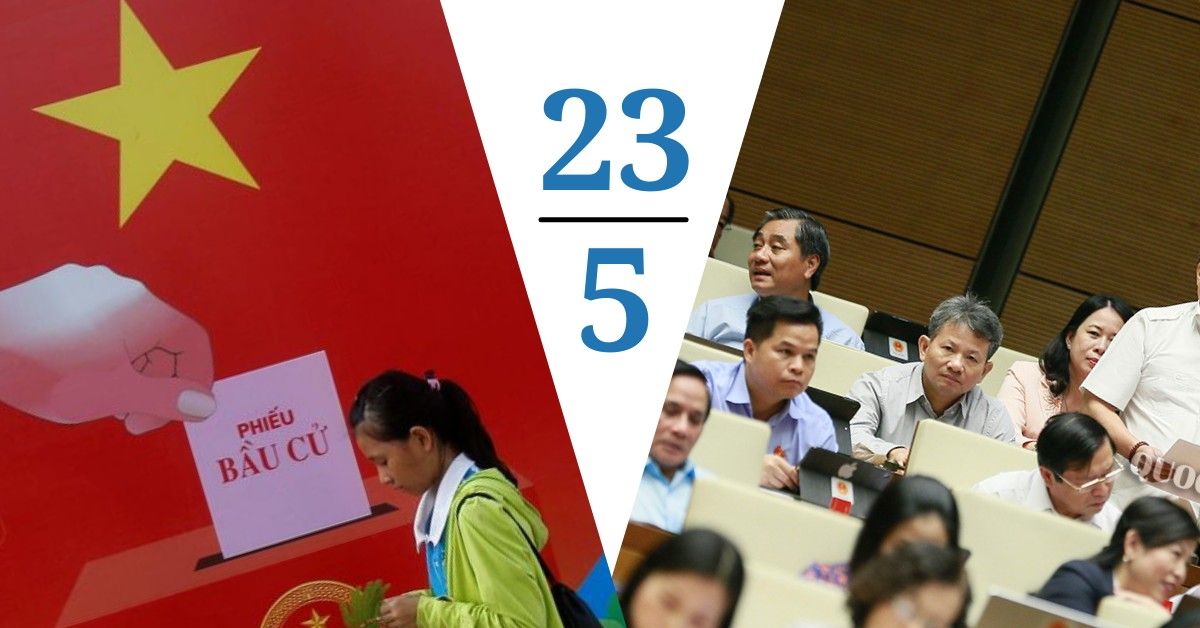
    On May 23, 2021, the entire population of Vietnam will vote for their National Assembly deputies and the People’s Councils at all levels. No matter who they are, no matter where they live, as long as they hold Vietnamese nationality and are over 18, the citizens will have the right to vote.

    One may be thinking that she or he does not need to understand the voting procedures in Vietnam because the country just has only one political party so that elections probably don’t mean anything.

    We disagree.

    It is correct that Vietnam is an authoritarian regime, and probably many people know this as well. However, we suggest that trying to understand our system right now is still a better strategy if we want to strive for a democratic election in the future. We think it is a better option than just complying and voting unconsciously or strictly complaining and disregarding it.

    It is because if we want to understand democracy, then we should try to understand the complicated yet undemocratic Vietnam’s electoral system currently is.

    The following 12 milestones will explain in detail Vietnam’s electoral process.

    Right around Tet (Lunar New Year), Vietnamese people probably heard from the public loudspeakers in their areas that the local governments have established their election committees. Each province, district, and commune will have its electoral committee, organizing and overseeing elections in their localities.

    The Provincial Election Commission is responsible for organizing the election of the National Assembly deputies (NA deputies) and the deputies of the People’s Council (PC deputies) at the provincial level. Election committees at district and commune levels are responsible for electing members of the People’s Council at the same level.

    These committees will handle candidate applications.

    Self-nominated or independent candidates may be pretty disappointed to learn that there are no positions for independent members (who are not from the Vietnam Communist Party [VCP] or holding a role in the government) in these committees. The heads of these committees are usually secretaries and deputy secretaries of the Party committees in provinces and cities (see examples of members of the provincial election committee in Quang Ninh and Hung Yen).

    In democratic countries, political parties often cannot know how many seats their party will definitely hold in the parliament until after the ballots get counted and announced.

    In Vietnam, it is the opposite. We can know well in advance the backgrounds of those who will be structured by the VCP to have a seat in the National Assembly and the People’s Councils at all levels. Being “structured” by the VCP has the same meaning as being positioned in these seats by the Party’s selection.

    The current National Assembly Standing Committee has already drafted the plan to structure the deputies into the new National Assembly. The “new” National Assembly is the one that the people will vote for on May 23, 2021.

    At the same time, the current Standing Committee of the National Assembly has also instructed the provinces to build their structure of their People’s Councils at all levels in their respective provinces.

    There will be 500 seats in the 15th National Assembly, including 207 deputies working at the central level of the VCP and the government. Two-hundred ninety-three (293) deputies will include those who are working at the local government level. The list can be found here for more details.

    This is also the expected number of seats that the National Assembly will reserve for people who belong to the Party’s agencies, the government, the police, the army, mass organizations, and so forth. These people are called “recommended” candidates. A total of 427 (out of 500) seats are in this category. These seats are expected to be approved in the first “hiệp thương” consultation conference.

    There will be seats for independent or non-communists deputies and they will be among the remaining 73 deputies. They will be nominated by the provinces and cities. However, the party, state agencies, and provincial departments may also have a share of these 73 seats.

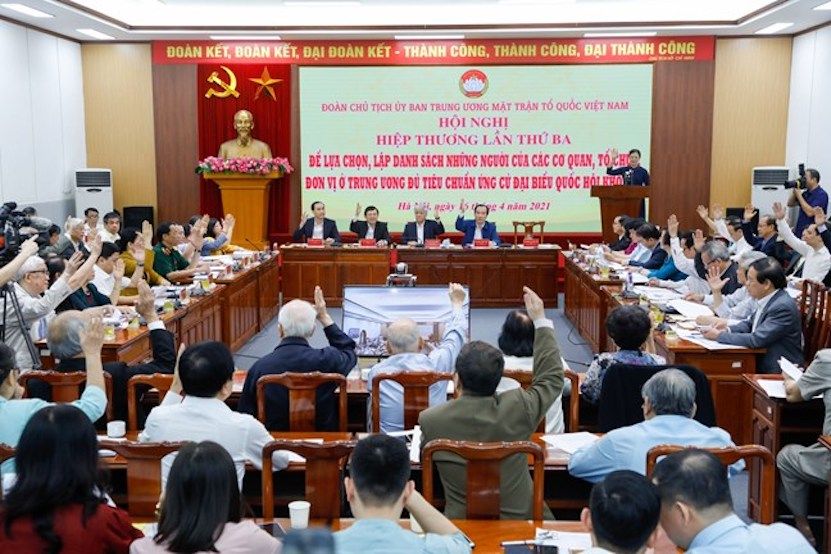
    For many people, these “hiệp thương” consultations are perhaps the strangest electoral proceedings in Vietnam. They compose a vetting and negotiating process so that the Vietnam Fatherland Front will come up with the list of the VCP’s approved candidates for the ballots.

    Literally, this is the decisive activity organized by the Vietnam Fatherland Front and its other member organizations. The Vietnam Fatherland Front and its branches are considered to represent all parts of society, including NGOs and political parties as well.

    These consultative conferences are held at all levels, from central to local.

    The Vietnam Fatherland Front is an important body during the election in Vietnam. This agency will have to ensure that the election takes place as expected by the Party and the government, with the right structure and composition of candidates. It is also the body that is empowered to oversee all elections.

    The first consultation meeting will have an agreement on the number of “recommended people” to be candidates for National Assembly deputies and People’s Councils at all levels.

    By February 17, 2021, the first “hiệp thương” consultation conference was completed at the central and local levels. The localities have also announced the number of “recommended” candidates.

    For example, Binh Dinh Province has decided to introduce 13 candidates to the National Assembly, including three people at the central government level to stand for candidacy and the remaining 10 people will be for the locality. However, Binh Dinh Province issued a regulation saying that the central government can only have seven elected National Assembly deputies, three representatives at the central level, and four representatives at the local level.

    This means that three candidates from the central government will inevitably be elected, leaving only 10 local candidates competing with each other for the other four spots. The workplaces of these 10 people are also predetermined, including provincial leaders, departments, organizations. There is, however, no structure for self-nominated people.

    After the first “hiệp thương,” it is expected that the number and composition of candidates for the National Assembly of localities will be adjusted by the National Assembly Standing Committee for the first time.

    The central government, the provinces, and cities will use this adjustment as the basis to select specific people in their localities to run for the National Assembly.

    For the candidates of the deputies of People’s Councils at all levels, the Standing People’s Councils may adjust the number and structure of the “recommended” candidates.

    Candidates for the National Assembly and People’s Councils at all levels have about three weeks to apply for their candidacy.

    During this time, the Party’s agencies, governmental units, unions, the military, the police, and so forth will also introduce their officials who will run in the election and hold voters’ opinion gatherings at the workplaces of those officials.

    During this step, the self-nominees only submit their applications. The respective local electoral committee will consider their records to be valid or not.

    This second conference will be organized in order to prepare a preliminary list of candidates for the National Assembly and representatives of the People’s Councils at all levels, including both the “recommended” and self-nominated candidates (if any).

    After this second “hiệp thương” consultation, another conference will be held in the residential areas where the candidates reside so that the residents in such areas can voice their opinions about the candidates. For the self-nominated candidates, there must also be another, separate conference at their workplace to gather the opinions of the people who work in the same unit as the candidates.

    During this time, one may be invited to a conference of voters to comment on candidates for the National Assembly and People’s Councils at all levels.

    The rule does not require everyone to come to these conferences. However, these conferences can only be held if there are more than 55 voters (applied to areas that have more than 100 voters), or where at least 50 percent of the voters participate (if those areas have less than 100 voters). If the number of voters is not met, you can request to stop the conference.

    For non-partisan candidates, in addition to the conference of voters where they reside, it is also necessary to organize another conference to gather voters’ opinions about them at work.

    If you are a Vietnamese citizen, age 18 or older, your name will appear on the electoral roll. This list is posted at the headquarters of the commune people’s committee and the polling station. You will be given a ballot. Even those people who reside for less than 12 months in any locality will also likely be on that locality’s electoral roll.

    Persons who are not allowed to vote are those whose voting right was taken by a court, death-row inmates, or people currently serving a prison sentence and not entitled to probation.

    This third conference is held to finalize the list of qualified candidates for the National Assembly and People’s Council at all levels based on the results of the voter conferences.

    For the “recommended” candidate for the National Assembly, this third conference must also be based on the adjustment of the National Assembly Standing Committee (the second adjustment comes right after the second “hiệp thương” consultation meeting closes).

    The candidates who get a pass after the third “hiệp thương” consultation conference are the ones who will be on the ballots for which you will vote for. The list of these people will be announced no later than 25 days prior to the election date.

    The National Election Council will announce the official candidate list to run for the National Assembly. Election committees at all levels will announce the official candidate list for those running for People’s Council deputies at each level.

    During this time, if you are a voter, you may be invited to attend a voter conference. This is a conference where the candidates will persuade you to vote for them. Each candidate will read out his or her campaign during these conferences.

    In addition to the voter-meeting conference, you may also listen to the radio, watch television, or read newspapers to get the introduction of the candidates. This is the only campaign allowed to take place close to the voter meeting.

    The general election will happen on May 23, 2021, in Vietnam. This is the day when the public loudspeaker system works most actively. You may also see many people flocking to the polls. On televisions, the news will also focus on broadcasting information about the election. In some rural places where the voters have difficulty traveling, the election may take place sooner.

    The Vietnamese government continuously repeats that everyone has the right to vote for our deputies of the National Assembly and the People’s Councils at the provincial, district, and commune levels. For those who cannot get to the polling booth, such as the disabled, the elderly, or people being treated at a hospital, the authorities will have a voting team that will bring the ballot box to them. Vietnam also reported that the voting turnout in Vietnam is incredibly high for the last elections, mostly 98-99% of the entire population have voted.

    Yet, voting is a right, and whether to vote or not to vote is your decision.

    We write this article to only explain Vietnam’s full electoral process and we must admit that it is such a complicated one, with almost absolute priority for the cadres of the Party, the government, and the state organizations.

    Unfortunately, whether the people prefer this electoral process or not, it is still the only method to elect representatives in Vietnam, a country that is still very far from having democratic elections.

    In Vietnam, do we really elect the persons who we wholeheartedly support, or are we just following and accepting the government’s wishes and plans? For now, it seems that the people in Vietnam can only elect the candidates that the VCP selects and approves.
  • Vietnam Briefing: Land Rights Activists Jailed Ahead Of Election

    Vietnam Briefing: Land Rights Activists Jailed Ahead Of Election

    The Vietnam Briefing, which is released every Monday morning Vietnam time, is a look at Vietnam’s political developments of the past week.


    The general election enters the final stage

    The general election is two weeks away and will be held on May 23, 2021. Here are the key developments in the election thus far:

    • The National Election Council announced the final list of candidates on April 27 after a long vetting process (we have briefly explained this here). There are a total of 868 candidates running for the 500 seats in the National Assembly.
    • Only 74 non-party candidates made it to the final list, which is approximately 8.5 percent of the total. The Council planned to have 25-50 non-party members who will serve in the next term of the National Assembly.
    • Only nine out of 76 self-nominating candidates survived the vetting process. Among them, surprisingly, is a prominent LGBT activist named Luong The Huy.
    • From now on, candidates can campaign, including meeting with voters and media campaigning. However, campaigns are strictly controlled by the government and are primarily organized by the government.
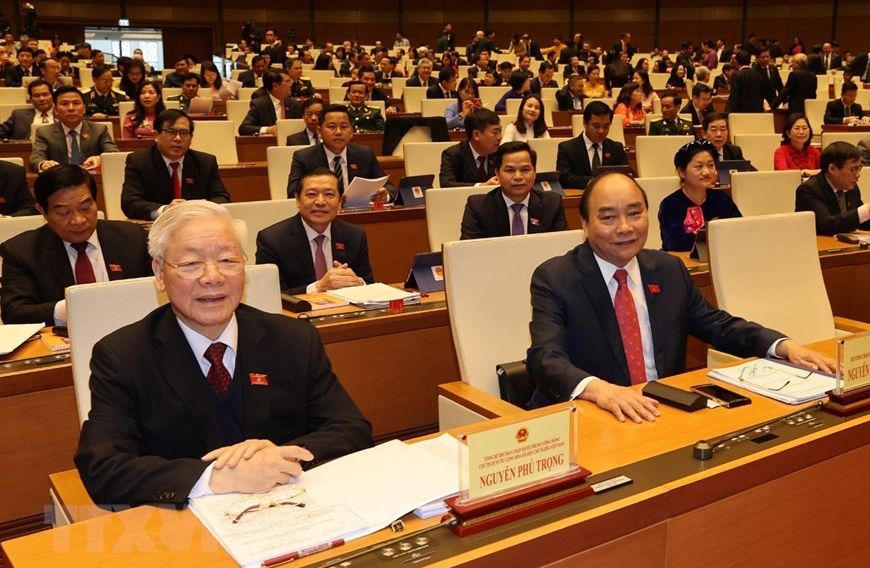
    • All four members of the leadership (the Communist Party’s secretary general, the state president, the prime minister, and the chairperson of the National Assembly are running.

    Two prominent farmer activists sentenced to 8 years each in prison

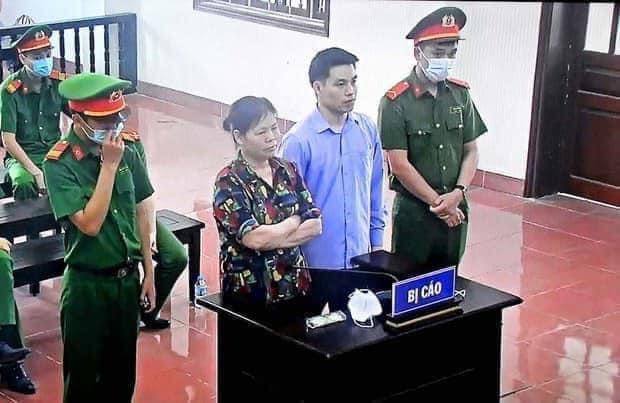
    Since this briefing was initiated in early February, not many weeks have passed without a dissident being persecuted. Last week, on May 5, this happened to two prominent land rights activists, Can Thi Theu, 59, and her son, Trinh Ba Tu, 32, during a trial in Hoa Binh Province.

    They both received an eight-year sentence for “making, storing, distributing or disseminating information, documents, and items against the Socialist Republic of Vietnam,” an activity that is criminalized under Article 117 of the Penal Code. Human rights groups, both inside and outside of Vietnam, have long condemned the criminal provision as an undemocratic and anti-human rights provision that is used to silence critics.

    Context:

    • The conviction is based on the two defendants’ live streaming videos on Facebook that were deemed to be anti-government, according to the indictment and state media.
    • Can Thi Theu is a longtime and prominent land rights activist who leads a group of farmers in Duong Noi (Ha Noi). The group claims that they are victims of forced land eviction. Her two sons, Trinh Ba Tu and Trinh Ba Phuong are both involved in her activism and are currently detained with Trinh Ba Phuong while awaiting trial.

    Talk about land rights in Vietnam:

    • The 2013 Constitution states that all land belongs to the people and is managed by the government. This is a legacy of the Soviet-influenced 1980 Constitution that was adopted during the height of Vietnam’s era of the centrally planned economy. Since 1986, the ruling Communist Party has adopted a capitalist economic model while still maintaining the old land regime.
    • Land disputes and land evictions have become a major part of Vietnam’s political and economic developments since then, leading to riots, protests, and widespread anger among the public. The most prominent incident was the deadly Dong Tam raid following a land dispute between farmers and the military.
    • Other prominent cases in recent history include Dang Van Hien (2016), Van Giang (2012), Doan Van Vuon (2012), Central Highlands (2001 – present), and Thai Binh (1997).

    Vinfast reports customer complaint to … the police

    The biggest story of last week is probably not the resurging of COVID-19. It’s the story of a major domestic automaker, Vinfast, reporting a customer’s complaint to the police.

    That’s what Vinfast announced in a statement after Tran Van Hoang, a customer who bought a car from the company, posted a video on Youtube complaining about technical errors of the car and how the company had dealt with it.

    “Although Mr. Tran Van Hoang proactively removed those clips, we saved all the evidence and have sent our complaints to the police. The police have received our submission and have scheduled a time to work with Mr. Hoang,” the statement said, according to Reuters.

    Vinfast’s statement created a huge backlash from social media users who say the company’s action is to silence critics using their good connections with the government. Their report to the police might result in criminal conviction of Hoang.

    Context:

    • Vinfast is a member of Vingroup, the biggest private corporation in Vietnam, which is led by Pham Nhat Vuong, the first Vietnamese billionaire, who is worth approximately US $10 billion.
    • Vingroup is the dominant player in the real estate industry in Vietnam, something that is not possible to achieve without extremely good connections with the government, given the fact that Vietnam is still ruled by the political monopoly of the Communist Party. Little transparency is practiced in terms of how land is distributed.
    • This is not the first time a Vingroup company has asked police to intervene in one of its conflicts with customers.
    • Such actions by Vingroup are condemned as examples of crony capitalism and potentially result in criminal charges and free speech violations in Vietnam. The Financial Times published one of the most popular and comprehensive accounts of the rise of Vingroup in 2019 that provides further details.

    New report on Vietnam’s religious freedom released by the US government

    Quote from the Annual Report 2021 by the US Commission on International Religious Freedom:

    “In 2020, religious freedom conditions in Vietnam generally trended the same as in 2019. The government actively enforced the Law on Belief and Religion, which, as written and implemented, contravened international human rights standards and systematically violated religious freedom, particularly of independent religious groups but also of government-recognized groups.”

    Five articles published by The Vietnamese are cited in this report.


    Learn more about Vietnam:

    Independent Journalists in Vietnam: The Clampdown Against Critics Continues

    The Diplomat | May 3, 2021

    “Vietnam’s independent journalists are under siege, and there is little cause for optimism.”

    The economic agenda taking shape under Vietnam’s new leader

    Le Hong Hiep/Nikkei Asia | May 4, 2021

    “Chinh’s idea is to create new growth centers supported by economic policies and administrative reforms beyond tax or land incentives that will drive the national economy toward sustainable and innovation-based growth. The goal is to help Vietnam escape the middle-income trap and achieve high-income status by 2045.”

    New research: The salience of the Northern and Southern identity  in Vietnam

    Asian Politics & Policy/Mai Truong

    “Abstract: This paper explores the salience of the north-south identity in Vietnam. Using focus groups and survey data, we argue that Vietnam is characterized by asymmetric ingroup bias, where southerners hold higher levels of ingroup favoritism and outgroup discrimination than the north. However,  while north-south identity exists, its salience is limited because it crosscuts with other social identities. Survey data show little difference between the north and the south regarding nationalism, support for redistribution, trade,  authoritarian values, and traditional values. There are differences with the south exhibiting lower trust in the government and generalized trust. Also, within Ho Chi Minh  City (HCMC) and Hanoi more specifically, we find lower support for China and higher support for the United States in HCMC than in Hanoi. However, these differences are  relatively muted, and combined with focus group evidence,  suggest that while identity differences exist, they are asymmetric and not as salient as often presumed.”

    New research: Vietnam and the search for security leadership in ASEAN

    Asian Security/Ralf Emmers and Huong Le Thu

    “Abstract: Indonesia has traditionally been viewed as a de facto leader of the Association of Southeast Asian Nations (ASEAN) and the regional body remains the cornerstone of Indonesian foreign policy. The paper addresses the question of whether other member states have become influential actors or even sectoral leaders in their own right by playing a direct role in a particular aspect of ASEAN affairs. This question is addressed by examining the regional policies of Vietnam, a country that has been mostly neglected in the existing ASEAN literature despite its strategic weight. The paper focuses on the evolving role of Vietnam in ASEAN and highlights its diplomatic initiatives, as well as various conditions to evaluate its potential to take up a leading security role in the regional body in the years to come.”

  • Vietnam Briefing: A Busy Week Of Cracking Down On Freedom Of Speech

    Vietnam Briefing: A Busy Week Of Cracking Down On Freedom Of Speech

    We release the Vietnam Briefing every Monday morning, Vietnam time.


    Three Vietnamese journalists arrested over reporting on ‘toll booth’ schemes

    Quote from RFA:

    “Police in southern Vietnam’s Can Tho City on Tuesday arrested three independent journalists connected with the publishing of articles online last year criticizing toll booths set up under a controversial infrastructure funding program, state media sources said.

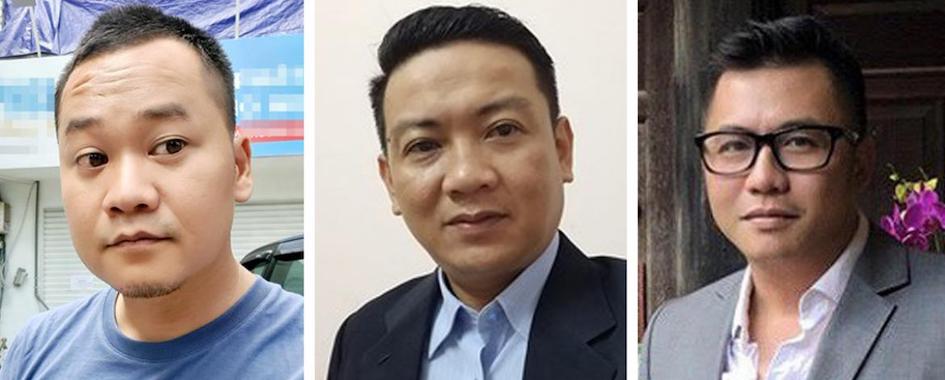
    Nguyen Thanh Nha, Doan Kien Giang, and Nguyen Phuoc Trung Bao—all writers for the popular Facebook page Clean Newspaper, which discusses Vietnamese social issues—were taken into custody in connection with an investigation into the activities of journalist Truong Chau Huu Danh, who was arrested in December.”


    Vietnamese journalist gets eight years for ‘anti-state’ writings

    Quote from RFA:

    “A court in Vietnam sentenced a journalist to eight years Friday for writing anti-state stories and sharing them on social media, her lawyer told RFA.

    The People’s Court in the south-central coastal province of Phu Yen convicted Tran Thi Tuyet Dieu of violating article 117 of the Vietnamese penal code for ‘creating, storing and disseminating information and materials against the Socialist Republic of Vietnam.’”


    Vietnamese Facebook user jailed for two years for ‘abusing democratic rights’

    Quote from RFA:

    “A court in southern Vietnam’s Can Tho City on Thursday sentenced a Facebook user to two years in prison for posting articles and livestream videos criticizing Vietnam’s communist government online, family members and media sources said.

    Le Thi Binh, born in 1976, was arrested in December and charged with ‘abusing the rights to freedom and democracy to threaten the interests of the state’ under Article 331 of Vietnam’s 2015 Penal Code. Her elder brother, Le Minh The, had completed a two-year jail term on the same charge in July.”


    International Commission of Jurists (ICJ) filed new submission to the UN, detailing the government’s use of laws to suppress freedom of expression

    Quote from ICJ:

    “The ICJ highlighted in particular how new laws have been enacted in response to the COVID-19 pandemic that aim at or can be used by State authorities to control information about the pandemic. These laws contain provisions incompatible with human rights law and standards as their vague language makes them prone to abuses. In addition, some   prescribe excessive sanctions, including severe criminal penalties, which are incompatible with the principles of necessity and proportionality.”

    Read the full text here.


    On foreign affairs

    PM wraps up working trip to attend ASEAN Leaders’ Meeting (April 25): “On the Myanmar situation, Chinh affirmed that Vietnam, as a non-permanent member of the UN Security Council for 2020-2021. and the Council’s president for April 2021, has worked to create favorable conditions for the ASEAN member nations to collaborate closely at UN forums in mobilizing support for the bloc’s efforts in approaching and finding suitable solutions to the Myanmar issue.”

    Vietnamese President chairs UNSC’s high-level open debate (April 19): “In his capacity as President of the United Nations Security Council in April 2021, Vietnamese President Nguyen Xuan Phuc on April 19 chaired a High-level Open Debate on ‘Cooperation between the UN and regional organizations in enhancing confidence-building and dialogue in conflict prevention and resolution’, which was held in both online and in-person formats.”

    Japan targets Vietnam for first ASEAN oil-sharing deal (April 21): “The deal is part of Japan’s attempt to build oil-sharing arrangements with Associations of Southeast Asian Nations members. Under one proposal, each participant would build up individual reserves of crude oil, along with gasoline, diesel fuel and other petroleum products, to prepare for disruptions in supplies.”


    A busy week of the South China Sea issue, too

    Vietnamese, Chinese defence ministers hold talks in Hanoi (April 25): “ Both sides agreed that the year of 2020 witnessed complicated developments in the world and regional situation with great risks of instability, creating new challenges to the trend of peace, cooperation and development and greatly impacting the security and development environment of all countries.”

    China, Vietnam agree to boost trust amid South China Sea tensions (April 25): “China and Vietnam have agreed to work together to improve trust amid simmering tensions between the two neighbours over their territorial claims in the South China Sea.”

    Vietnam building up its maritime militia (April 25): “Vietnam is building up its maritime militia in the South China Sea in an apparent challenge to Chinese efforts to dominate the disputed waterway, according to a Chinese military magazine.”

    Indonesia, Vietnam renew calls to finish EEZ negotiations (April 25): “Indonesia and Vietnam have renewed calls to finish ongoing negotiations on the delimitation of the maritime boundary between their exclusive economic zones (EEZ) near the South China Sea to provide clarity and avoid incidents in the waters.”

    Japanese destroyer in Vietnam on friendly visit (April 20): “The visit is part of efforts to boost defense and security cooperation between Vietnam and Japan and maintain the countries’ strategic partnership, officials said.”

    India offers help to Vietnam in warship-building & maintenance (April 20): “India on Tuesday offered all possible help by its defence and other shipyards to Vietnam in construction and maintenance of warships, build.”


    New research on Vietnam’s politics

  • Vietnam Briefing: VCP Has Finalized The List Of Candidates In The Very Election They Are Running For

    Vietnam Briefing: VCP Has Finalized The List Of Candidates In The Very Election They Are Running For

    We release the Vietnam Briefing every Monday morning, Vietnam time.


    The Vietnamese Communist Party is finalizing the list of eligible candidates for the  upcoming general election

    The way elections in Vietnam work is to pre-determine the results, and the way to achieve that is to determine the list of candidates.

    Vietnamese citizens can’t just register themselves as candidates and expect their names will go straight to the candidate listings on the ballots. If they want to be candidates, they have to go through a vetting process called hiệp thương, which is conducted by the Vietnam Fatherland Front, the extended political arm of the Vietnamese Communist Party (VCP). After the third and final round of hiệp thương, the list of candidates will be released and voters can vote for only these candidates.

    The Fatherland Front’s local committees of Hanoi and Ho Chi Minh city did exactly that just last week. Similar events were held in other provinces as well.

    Context:

    • At least two independent candidates have been arrested before the third round of hiệp thương.
    • Dozens of candidates in Hanoi withdrew before the final list was adopted.
    • Almost no dissidents or activists are running for election this year. This is a major change compared to the last election in 2016, when at least 30 of them ran (and failed to make it to the final list).

    A prominent activist, Nguyen Thuy Hanh, was arrested

    Quote from VietnamPlus:

    “Hanoi’s police have taken a woman into custody as they investigate allegations of ‘making, storing, distributing, or disseminating information, documents, and items against the State of the Socialist Republic of Vietnam’ under Article 117 of the 2015 Penal Code.

    The Investigation Security Agency under the municipal Department of Public Security said on April 8 they had arrested Nguyen Thuy Hanh, born in 1963 and living in Thuong Dinh ward, Thanh Xuan district.”

    Context:

    • Nguyen Thuy Hanh has been a prominent advocate for democracy and human rights in Vietnam since 2011. She also participated in several anti-China movements.
    • Hanh ran for election in 2016 as an independent candidate but failed to make it through the VCP’s vetting process.
    • She founded and managed a well-known charity called the 50k Fund (Quy 50k) to assist family members of political prisoners financially for several years before shutting it down in late 2020.

    Read her profile in The 88 Project’s database and an op-ed about her.


    Vietnam unveils tools for taxing and tracking big tech

    Quote from Nikkei Asia:

    “Vietnam is proposing a pair of regulations that would compel global tech players such as Alibaba and Google to hand over more taxes and data, in a move to increase government oversight in one of the world’s fastest-growing digital markets.”


    US stops short of branding Vietnam a currency manipulator

    Quote from Reuters:

    “The U.S. Treasury Department on Friday said Vietnam, Switzerland and Taiwan tripped its thresholds for possible currency manipulation under a 2015 U.S. trade law, but refrained from formally branding them as manipulators.”


    US names new ambassador to Vietnam

    Quote from VnExpress:

    “U.S. President Joe Biden on Thursday nominated Marc Evans Knapper as the new ambassador to Vietnam.

    The Senior Foreign Service member, who will succeed Daniel J. Kritenbrink, is currently serving as the deputy assistant secretary for Japan and Korea in the State Department.

    He has previously served in the U.S. embassies in Seoul, South Korea, Baghdad, Iraq, and Tokyo, Japan, and the State Department’s Office of India Affairs and Office of Japanese Affairs.”


    What’s special about April for Vietnamese?

    April is a special month not only in Vietnam but also in Vietnamese overseas communities. It marks the end of the Vietnam War on April 30, 1975. The event widely divides Vietnamese people around the world with the winning side, which is the ruling Communist Party, celebrates and the losing side mourns. The losing side is millions of people in the South and Vietnamese former refugees as well as their families now settled in countries such as the United States, Canada, and Australia. Discussing the loss of the losing side and the nature of the fall of Saigon is still largely taboo in Vietnam.

    However, this day is not only about the war, it is also the end of the first and the only Vietnamese democracy in history thus far, the Republic of Vietnam.

    Curious about it? Here are the books you might be interested in:


    Learn more about Vietnam

    Why the #MilkTeaAlliance movement has little appeal to Vietnamese youth

    Dien Nguyen An Luong/South China Morning Post | April 16, 2021

    “Against that backdrop, outsiders may wonder why Vietnam’s internet-savvy youth have remained an outlier in the #MilkTeaAlliance. How have Vietnam’s leaders afforded to stave off such a movement? Will anti-government sentiment materialise any time soon in the country? A closer look at how social media and geopolitics have become increasingly interwoven provides some clues.  While some observers have talked up its role, there has been a growing body of evidence that social media alone could not have fanned the likes of Arab Spring-style uprisings.”

    Vietnam’s Great Debate Over Democracy

    Trien Vinh Le/The Diplomat | April 15, 2021

    “Inspired by the development stories of East Asian countries that have experienced the benefits of embracing democratic principles, there are official and informal opinions that Vietnam needs a second Doi Moi centered around political reform. If new political institutions and practices are allowed to emerge and lead to new ways of governing and fresh policy ideas, the economy can pivot to more open and more innovative activities based on science and technology. It is appropriate to ask how the current government system can usher in a new era of economic transformation when so many at the top benefit from the old model based on exploitation of labor and natural resources.”

    Vietnam restores regional balance to top leadership

    Le Hong Hiep/Nikkei Asia | April 14, 2021

    “In an attempt to address southern politicians’ grievances, the party appears to be taking steps to gradually restore the regional balance.  Soon after the 13th congress, the party installed Vo Van Thuong, a politician from the southern province of Vinh Long, as the standing member of its secretariat, the No. 5 position in the party’s hierarchy. Last week, the National Assembly also elected three southerners into senior state and government positions, including Vo Thi Anh Xuan from An Giang Province as vice president, Tran Thanh Man from Can Tho city as deputy chair of the National Assembly, and Le Minh Khai from Bac Lieu Province as one of the deputy prime ministers.”

    How a Vietnam-Malaysia Fishing MOU Could Ease the Wider South China Sea Dispute

    Ralph Jennings/VOA News | April 16, 2021

    “Malaysia and Vietnam intend to sign a memorandum of understanding that experts say could eventually help ease a decades-old, six-party dispute over sovereignty in the resource-rich South China Sea.  Maritime law enforcement agencies from the two Southeast Asian countries aim to sign the memo this year and resolve at least 15 years of trouble over the movement of Vietnamese fishing vessels, the official Bernama news agency in Malaysia reported in early April. Bernama quoted the Malaysian Maritime Enforcement Agency director-general saying he’s confident the deal, now in its final stages, will solve the issue of Vietnamese fishing boats that enter Malaysian-claimed waters.”

  • Reporters Without Borders Calls For The Release Of Pham Doan Trang

    Reporters Without Borders Calls For The Release Of Pham Doan Trang

    On April 7, 2021, Reporters Without Borders (RSF) released a press statement condemning the arrest of jailed Vietnamese journalist Pham Doan Trang.

    Phan Doan Trang, co-founder and editor of the online magazines The Vietnamese and Luât Khoa, and a recipient of the 2019 RSF Press Freedom Prize for Impact, was arrested at her home on the night of October 6, 2020. She was taken away by plainclothes policemen and has not been heard from since She has been denied access to a lawyer and her family has also been unable to contact her. Currently, she faces up to 20 years in prison under Article 117 of the Vietnamese Penal Code, under the charge of engaging in “anti-state propaganda”.

    Daniel Bastard, the head of RSF’s Asia-Pacific desk, says: “The Vietnamese Communist Party’s current leadership… needs to understand that history will hold them to account for the crackdown on press freedom …. They can save face by freeing Pham Doan Trang and all of the other unjustly detained journalists.”

    This is not the first time RSF has demanded her release. On October 7, 2020, just one day after her arrest, it published its first statement which echoes much of the same sentiments here. It has also launched an international awareness campaign to fight for her cause.


    Support from Other RSF Laureates

    Several other RSF awardees have called for Phan Doan Trang’s immediate and unconditional release. They have also released several videos in various social media outlets to show their support for her, and to help bring this situation to the attention of the international community.

    Tomasz Piatek, a Polish journalist and an RSF prize recipient in 2017, addressed Vietnam’s leaders:, “I am asking you to release my friend from prison immediately and stop harassing and tormenting her for writing the truth. If you want to present yourself to the world as politicians and leaders of the Socialist Republic of Vietnam, you must immediately stop harassing your citizens and give your citizens the right to the truth.”

    Swati Chaturvedi, an Indian journalist and Reporters Without Borders prize awardee in 2018, said, “RSF stands for the fight of all journalists. Please help and speak out for my colleague, my Vietnamese colleague Pham Doan Trang right now.”

    Can Dündar, a Turkish journalist, documentary filmmaker and 2016 RSF laureate, similarly asked that the Vietnamese authorities release Phan Doan Trang and to respect the freedom of the media.

    Inday Espina-Varona, a Filipina journalist and awardee of RSF’s Prize for Independence in 2018, stated that Pham Doan Trang “has been charged with disseminating information that opposed the state of Vietnam… [it is] every journalist and citizen’s obligation to criticise and when necessary to oppose policies and actions inimical to the welfare and rights of people… it is also the duty of journalists and citizens wherever we are in the world to stand up when those who seek to do the right thing are battered for their efforts.”


    Statement from the Publication:

    The Vietnamese joins Reporters Without Borders and our other international allies in demanding for the expedient release of Pham Doan Trang. The trumped-up charges against her are clearly false and the only thing she is guilty of is providing Vietnamese citizens with accurate and independent information free from the manipulation and misdirection of the Vietnamese government and its selfish misguided agenda.

    The fight for freedom, democracy, and a better tomorrow for Vietnam continues and we at The Vietnamese will do our part to see this through till the end.

    To show your support for this cause, kindly consider signing this petition for the swift release of our co-founder, colleague, and friend.

  • The Women Of Possibilities

    The Women Of Possibilities

    This article was published in Vietnamese by Luat Khoa Magazine on March 8, 2019. The translation was done by Will Nguyen. More than two years after the Vietnamese article was published, all three women in this article have been arrested and charged with national security laws in Vietnam. We do not want their stories to go in silence, so we translate them to tell the world about who these women are: the women of possibilities.


    March 8, is International Women’s Day, and Vietnam celebrates this holiday wholeheartedly.

    However, no mainstream newspapers will write about the three women in this article. No organizations will honor them. No solemn ceremony will have them as guests. And among those who “care” about them the most are usually…the Vietnamese police.

    They say things few people say.

    They do things few people do.

    They’ve accepted risks that few people dare accept.

    In actuality, they’re part of a world that few care about or dwell on; for these individuals, few are willing to stand by their side.

    The women we speak of in this special piece represent the hidden aspirations, the beautiful reflections, the burning dreams of an entire nation. They’re singing for us a song of freedom, nurturing a better future for each and every one of us.

    Nguyen Thuy Hanh

    https://2xjs7y10oiyz26vqxu2hok6y-wpengine.netdna-ssl.com/wp-content/uploads/2019/03/nguyen-thuy-hanh.jpg
    Activist Nguyen Thuy Hanh. Photo: Huynh Ngoc Chenh. Graphic: Luat Khoa Magazine.

    In February of 2016, a wave of independent candidates competed for seats in the National Assembly, setting off a movement that was the largest of its kind in post-1975 Vietnam. Approximately 30 candidates had signed up, only for the “consultation” process to remove them from the roster. Nguyen Thuy Hanh was among them.

    Different from Party-nominated candidates, independent candidates announced their action plans. And different from nearly all independent candidates, Nguyen Thuy Hanh was the rare voice that included women’s rights in her platform. She called for stricter laws on violence against women and human trafficking, encouraged job creation, and pushed for education policies and legal support for women.

    Born in 1963, Nguyen Thuy Hanh is a Hanoi woman whose soul is full of art and romance. She has participated in civil society struggles since the 2011 anti-China protests, when protesting was especially taboo not just in the minds of state officials but the vast majority of ordinary citizens.

    Over nearly eight years, having participated in tens of protests and having been beaten and arrested many times, she has witnessed Vietnamese society slowly change, from opposing the right to protest to respecting and then supporting it. When boisterous, nationwide protests broke out on June 10th, 2018 and tens of thousands of people took to the streets to oppose the Special Economic Zones and Cybersecurity Laws, Nguyen Thuy Hanh was perhaps one of the most elated, for her contributions had normalized what had previously been one of the most “sensitive” acts in society.

    However, Nguyen Thuy Hanh’s name is more often connected to the “50k Fund”, which she created to financially support prisoners of conscience and their families.  The fund started at the beginning of 2018, originating from a brief, online fundraiser to help a number of activists on trial. Hanh had received several fold the amount requested and thus, the idea for a future fund to help activists at-risk unexpectedly came into being.

    The 50k Fund aimed to help with difficult situations lesser known to the public, and its name was purposefully chosen to encourage people to donate small amounts, rather than >50,000 VND (~2.20 USD), popularly believed to be the minimum for charity. Such small amounts also assuaged donor fears of police harassment.

    To this day, Nguyen Thuy Hanh’s 50k Fund has received thousands of donations, totaling many billions of VND (~hundreds of thousands of USD), all of which are documented in detail on her public Facebook account.

    The 50k Fund’s meaningfulness goes beyond providing prisoners of conscience everyday material support. It also awakens the emotions of ordinary citizens, encouraging them to care more about politics and helping them overcome the intangible fear constraining their hearts and minds. The 50k Fund normalizes and makes concrete that which is considered “political” or “sensitive”, bringing to citizens the full splendor and meaning of civil society struggle.

    A lover of beauty and romance, Nguyen Thuy Hanh draws a long, brilliant stroke for the Vietnamese democracy movement.

    Can Thi Theu

    https://2xjs7y10oiyz26vqxu2hok6y-wpengine.netdna-ssl.com/wp-content/uploads/2019/03/can-thi-theu-2.jpg
    Peasant leader Can Thi Theu. Photo: RFA. Graphic: Luat Khoa Magazine.

    People normally think of peasant leaders as something from their history classes, as figures only found in textbooks. But Can Thi Theu is a real-life, flesh-and-blood peasant leader, a heart beating strongly within the body politic.

    The life of this courageous woman is connected to the phrase “Duong Noi’s disenfranchised citizens”. Duong Noi is a ward in Ha Dong District. Prior to 2008, it was part of Ha Tay Province, but today, it has been incorporated into Hanoi. Can Thi Theu’s name is probably not mentioned very often in domestic or international press, and she doesn’t have her own English-language Wikipedia page. From 2007, she became one of thousands of disenfranchised citizens who lost their land when the government forcefully reclaimed agricultural and cemetery land in Duong Noi for new urban construction projects.

    The “disenfranchisement” of farmers like Can Thi Theu lies in their complete exclusion from the process, from project planning all the way to land acquisition.

    They were not consulted about compensation or relocation assistance, and the government did not provide them any kind of vocational training after taking away their livelihoods. Furthermore, the gravesites of their ancestors were leveled without notification of their displacement.

    As a woman born in the year of the Tiger (1962), Can Thi Theu rose among the thousands of disenfranchised citizens to become leader, with her strategic mind, her ability to see in the short- and the long-term, and her skill in thwarting police tactics.

    Her leadership skills also manifest in her ability to endure and sacrifice for others, forever taking the hit while protecting those in her care. She is patient and looks past the small, unimportant details to achieve the peasant movement’s longer-term goals. It must be remembered that these farmers lost their land 12 years ago; it’s not easy to keep Duong Noi a hot topic to this day.

    The price that Can Thi Theu had to pay was not small. She was twice imprisoned (2014 – 2015 and 2016 – 2018) for a total of two years and 11 months, for obstruction of officials and disturbing public order.

    From prison in the Central Highlands, she wrote a letter home to her fellow citizens before the 2017 Lunar New Year: “Fight to the end, to demand the return of our land, our right to live, and our rights as human beings, which the communist regime has stolen from my family and those who share our plight.”

    You read that properly. Northern farmer Can Thi Theu is not afraid of calling out the “elephant in the room”, the direct perpetrators of the injustice that she and farmers like her have had to endure.

    Can Thi Theu became the face of one of the greatest forms of injustice that Vietnamese citizens contend with, when she fell victim to the Vietnamese Communist Party’s larcenous land policy, which it has consistently carried out for decades.

    She is also a living representative for those fighting to abolish “universal ownership” of land, seeking to establish legitimate, private land ownership rights for every individual. Every act in Vietnamese history has been intimately tied to land, and Can Thi Theu has placed herself center-stage for the next.

    Pham Doan Trang

    https://2xjs7y10oiyz26vqxu2hok6y-wpengine.netdna-ssl.com/wp-content/uploads/2019/03/pham-doan-trang.jpg
    Activist Pham Doan Trang. Photo: Tri Dung. Graphic: Luat Khoa Magazine.

    If someone believed that it was impossible to be a bona-fide journalist in Vietnam’s mainstream media environment, then Pham Doan Trang proves the opposite. She has 12 years of experience as a sterling journalist at VnExpress, VietNamNet, and Ho Chi Minh City Law, with reams of critical stories and excellent documentations.

    If someone believed that journalists and intellectuals in Vietnam faced insurmountable political restrictions, then Pham Doan Trang proves the opposite.

    She constantly embarks on endless explorations to (un)cover the most sensitive, most dangerous, most censored topics.

    She also does not limit herself within the rigid confines of mainstream newspapers; instead, she uses all the tools at her disposal to write and publish. Independent newspapers, overseas newspapers, blogs, social media, samizdat—Doan Trang has adeptly utilized them all to convey information to her readers.

    For Doan Trang, the concept of “hitting the ceiling” is completely foreign; she is forever someone who lifts those ceilings so that others may have more breathing room.

    If someone believed that they were unable to surmount material, physical, and even spiritual difficulties, then Pham Doan Trang proves the opposite.

    A small and frail woman with numerous scars and injuries, she has had to endure countless assaults by police, drifting through more than 35 different locations across the country over the past 20 months to escape police pursuit and continue her work.

    She lives frugally, no different from those provincial students in the 90s, who left to study in the city, but people would see her write consistently and prolifically.

    Politics for the Common People, Non-violent Resistance, and Studying Public Policy Through the Case of SEZs are just some of the many titles she’s penned over the years.

    Born in 1978, Doan Trang belongs to the post-war generation and grew up when the country and the world were changing at dizzying speeds. Unsatisfied with the disorderly state of the country, people like Doan Trang saw it as their role to address these disorders. For her, there is always work to do, and she does so, without rest.

    Doan Trang swears by a lifetime oath: to never leave Vietnam, not even for a day, while it remains without democracy.

    Doan Trang personifies fierceness and does not compromise with evil or cowardice. But she is also full of romance and forever searches for beauty in the strums of a guitar.

    She inspires people to stand up, to take steps and discover the beauty of politics. With knowledge and vigor, she represents for many the aspiration for a democratic Vietnam, the light of hope in the dark depths of despair, and the ability for oneself to embody that hope.

    Doan Trang talks the talk and walks the walk, inspiring many with what could be; her life, simply put, is a powerful testament to what could be.


    The three women in this piece embody the possibilities. They have defied political and gender stereotypes that weigh down their every step. The meaning of March 8th has never lain in flowers or gifts; it lies in the women who fight for what is right and just.

    This March 8, we reserve flowers for women like Nguyen Thuy Hanh, Can Thi Theu, and Pham Doan Trang.

  • Vietnam Briefing: Meet The New State Leadership

    Vietnam Briefing: Meet The New State Leadership

    We release the Vietnam Briefing every Monday morning.


    The rumors were right. Meet the new state leadership

    We reported correctly in our first briefing on February 8 that there were rumors that current Prime Minister Nguyen Xuan Phuc, Pham Minh Chinh, the head of the Party Central Committee’s Organization Commission and Vuong Dinh Hue, the secretary of the Hanoi Party Committee, would be named president, prime minister, and chairperson of the National Assembly, respectively.

    What is happening in the last session of the National Assembly is proving the rumors are right.

    Vuong Dinh Hue took over the chairperson position of the National Assembly on March 31 after his predecessor, Nguyen Thi Kim Ngan, was released from duty the previous day by the legislative chamber’s resolution. The Communist Party quickly appointed the then-minister of finance, Dinh Tien Dung, to replace Hue as the party chief of Hanoi on April 3.

    The National Assembly also relieved Nguyen Xuan Phuc from the prime minister post and Nguyen Phu Trong from the president post on April 3, paving the way for elections of Nguyen Xuan Phuc to be president and Pham Minh Chinh to be prime minister this week. Phuc was already nominated to the post on April 2.

    When this entire process ends tentatively by the end of April 5, the political tradition of having a “gang of four” sharing four top seats of the party and the state will be restored.


    Another journalist is arrested

    Nguyen Hoai Nam, a former investigative journalist working for the mainstream media, was arrested on April 2 in Ho Chi Minh City. He is currently under pre-trial detention and is charged with “abusing democratic freedoms to infringe upon the interests of the State, lawful rights and interests of organizations and/or citizens.”

    Who is Nam? VnExpress says he was a former reporter at Thanh Nien (Youth), Phap Luat TPHCM (HCMC Law), Vietnam Television and Phap Luat Viet Nam (Vietnam Law). The news agency added that Nam had posted on his Facebook account several articles challenging police investigations into violations at Vietnam Inland Waterways Administration, which it said had  resulted in the arrest of its former deputy head Tran Duc Hai in 2019.

    According to VnExpress: “The reporter implicated 15 people who had allegedly committed violations regarding the case, 12 more than determined by police. He went on to accuse the investigators of ‘letting the criminals off the hook.’”

    The nature of the charge:

    • The charge is based on Article 331 of the 2015 Penal Code, previously known as Article 258 of the 1999 Penal Code.
    • The criminal provision is widely condemned by both domestic and international human rights groups as vague and as used by the government to silence critics.
    • Activists ran a campaign called the “258 Campaign” to advocate for the abolition of the provision.

    Four citizens convicted of spreading anti-state propaganda

    Publicly saying bad things about the Communist Party might well result in being imprisoned for years in Vietnam. That’s what happened to four citizens in Khanh Hoa Province on March 30.

    Nguyen Thi Cam Thuy, 45, was sentenced to  nine years in prison, Ngo Thi Ha Phuong, 25, to seven years and Le Viet Hoa, 59, to five years, VnExpress reported.

    Another person, Vu Tien Chi, was sentenced to 10 years in prison in Lam Dong Province.

    Just like Article 331 and Article 258, this criminal provision has received a high degree of criticism from human rights groups inside and outside of Vietnam.


    Read more about Vietnam:

    The US Department of State’s human rights report on Vietnam

    “The Socialist Republic of Vietnam is an authoritarian state ruled by a single party, the Communist Party of Vietnam, and led by General Secretary and President Nguyen Phu Trong, Prime Minister Nguyen Xuan Phuc, and Chairwoman of the National Assembly Nguyen Thi Kim Ngan. The most recent National Assembly elections, held in 2016, were neither free nor fair; there was limited competition among Communist Party-vetted candidates.”

    Drinking coffee in the US? Worry about forests in Vietnam, study says

    Mongabay | April 2, 2021

    “The U.S.’s thirst for coffee drives forest loss in central Vietnam, while Germany’s craving for cocoa is doing the same in West Africa, a landmark study that tracks the drivers of deforestation across borders found.”

    Vietnam Should be More Proactive in Global Governance

    The Diplomat | March 30, 2021

    “After its COVID-19 successes, Vietnam is well positioned to play a more energetic role on the global stage.”

    The Vietnamese Recovery Is Made in America

    Wall Street Journal | March 30, 2021

    “Vietnam’s economy is growing again, on the back of a strong rise in exports. The Southeast Asian nation looks to be one of the most clear-cut international beneficiaries of the U.S. stimulus package.”

    How The Vietnamese State Uses Cyber Troops to Shape Online Discourse

    ISEAS | March 3, 2021

    • The operations of Vietnam’s public opinion shapers and cyber-troops reveal that the online discourse is manipulated to enforce the Communist Party’s line.
    • Vietnamese authorities constantly grapple with the vexing question: How to strike a delicate balance between placating critical public sentiment online while ensuring that it does not spill over into protests against the regime.
    • When it comes to methods, targets and motives, there appears to be significant crossover between public opinion shapers and the government’s cyber troops.
    • The Vietnamese state cyber-troops have been encouraged to use real accounts to massreport content. This helps explain why it is the only Southeast Asian state to publicly acknowledge having a military cyber unit.
    • The lack of political and technological wherewithal presents an uphill battle for these cyber-troops in influencing Vietnam’s online information environment.
  • Vietnam Briefing: Another Congressional Candidate Arrested While Congress Elects New Leaders

    Vietnam Briefing: Another Congressional Candidate Arrested While Congress Elects New Leaders

    The Vietnam Briefing is released every Monday.


    Another congressional candidate arrested

    Independent journalist Le Trong Hung, a candidate for the National People’s Congress, was arrested on March 27 by Hanoi local police, VOA cited his family.

    He had filed his candidacy earlier this year and his application was approved by election officials.

    Hung is known for running his social media-based TV channel called Chan Hung TV, that broadcasted information about victims of injustice, including  farmers who had lost their land and people who had been wrongfully convicted.

    Besides Hung, another person arrested after declaring his candidacy is Tran Quoc Khanh, as we reported two weeks ago. The general election will be held on May 23, 2021.


    The National Assembly is convening to decide top state positions

    If things go as planned, Vietnam will have a new president, a new prime minister and a new chairperson of the National Assembly potentially by April 7.

    Some other top seats of the National Assembly and the cabinet will also be considered.

    It’s now officially announced that current Prime Minister Nguyen Xuan Phuc will be nominated to be president of the state.


    Tension in the South China Sea

    Not only has China sent warplanes into Taiwan’s air space over the past week, but also hundreds of Chinese vessels have also massed in disputed areas in the South China Sea.

    From Reuters:

    “Vietnam’s Foreign Ministry spokeswoman Le Thi Thu Hang on Thursday said the Chinese vessels at the reef, which Hanoi calls Da Ba Dau, had infringed on its sovereignty.

    ‘Vietnam requests that China stop this violation and respect Vietnam’s sovereignty,’ Hang told a regular briefing.

    A Vietnamese coastguard vessel could be seen moored near the disputed area on Thursday, according to ship tracking data published by the Marine Traffic website.

    Hang said Vietnam’s coastguard was ‘exercising its duties as regulated by laws’, including international law.”


    Rapping Vietnam Ambassador Daniel Kritenbrink tapped as Joe Biden’s top Asia envoy

    He made headlines last month in Vietnam by rapping in both English and Vietnamese. Now he’s nominated for one of the top seats in the US State Department.

    From The South China Morning Post:

    “The US ambassador who made a splash in Vietnam by making a rap video may soon get a promotion – to be the top diplomat for Asia under President Joe Biden. Daniel Kritenbrink, a career diplomat who speaks Chinese and Japanese, was nominated by Biden to be the assistant secretary of state for East Asia and the Pacific, a White House statement said.”


    Learn more about Vietnam:

    Vietnam proves immune to China’s vaccine diplomacy campaign

    March 27, 2021 | Nikkei Asia

    “It would be a stretch to accredit that one comment as an accurate measure of public sentiment in Vietnam toward the Chinese-made vaccine. But in Southeast Asia, Vietnam has remained a prominent outlier to China’s fanfare vaccine diplomacy campaign.”

    Biden can address Vietnam’s currency valuation without Section 301

    March 27, 2021 | East Asia Forum

    “While there were intense talks during the Trump administration — including a call between Trump and Vietnamese Prime Minister Nguyen Xuan Phuc — there are no reports suggesting any ongoing talks with the Biden administration.”

    China, Vietnam Lead Three-Speed Asian Recovery, World Bank Says

    March 26, 2021 | Bloomberg

    “A three-speed recovery is taking hold across East Asia and the Pacific, with China and Vietnam already beating their pre-pandemic levels of economic growth while other countries could take years more to heal, according to World Bank projections.”

    Vietnam’s New Government Election: The Sooner the Better?

    March 23, 2021 | Fulcrum

    “There is little reason for the Community Party of Vietnam to repeat its “fast track” procedure to get a new government in place. The Party’s reputation is best served by its playing by the rules.”

    Why Biden Sends Warships to the South China Sea, Just as Trump Did

    March 22, 2021 | VOA News

    “U.S. President Joe Biden is keeping pace with his predecessor in the frequency of American warships sent to Asia, analysts believe, a way to get a foothold in contested seas and routinize warnings aimed at the region’s strongest maritime force, Beijing.”

  • Religion Bulletin, February 2021: German Parliament To Hold Hearing On Religious Freedom In Vietnam

    A police colonel takes charge of religion as the German Parliament takes note of Vietnam.

    https://2xjs7y10oiyz26vqxu2hok6y-wpengine.netdna-ssl.com/wp-content/uploads/2021/03/image5-jpg.jpg
    The German Parliament expects to have a hearing on religious freedom in Vietnam on April 14, 2021. Left: Markus Grubel, German Federal Government Commissioner for Global Freedom of Religion (Source: Janine Schmitz/photothek.net). Right: Police prepare to demolish a funeral home belonging to the Duong Van Minh religion in 2013. (Source: Youtube Thanh Phạm, as cited by BPSOS).

    Religion Bulletin, February 2021:

    • [Religion 360*]
      • German Parliament to release report on religious freedom in Vietnam and other countries
      • Family asks for intervention as prisoner of conscience Phan Van Thu’s health deteriorates
      • Dak Lak provincial police prevent members of the Protestant Church of Christ from conducting religious activities
      • An ethnic Thuong Protestant is arrested as he takes his child to school
      • Deputy head of the Internal Security Bureau becomes deputy head of the Government Committee for Religious Affairs 
    • [On This Day]
      • 12 proposals Zen Master Thich Nhat Hanh made to the Vietnamese government regarding Buddhism and religious freedom
    • [Did You Know?]
      • The Hmong Duong Van Minh religion under the government’s hand


    [Religion 360*]

    German Parliament will hold a hearing on religious freedom in Vietnam and other countries

    In past years, Vietnam has encountered a number of issues with Germany. There may be one more to add to the pile as the German Parliament prepares to release a report on international religious freedom April 14, 2021. The report details the dire situation regarding religious freedom in Vietnam.

    Germany takes this year’s congressional hearing particularly seriously.

    In a press release on the report on international religious freedom in 2020, Dr. Gerd Müller, German development minister, stated: “In countries where no progress is made on this over long periods, we do not simply continue our government-to-government cooperation but, instead, shift our focus to strengthening civil society and supporting the humanitarian work carried out by the churches [in those countries].”

    Dr. Müller used Myanmar as an example to demonstrate that Germany keeps its word. He stated that Germany had cut off ties with the Myanmar government, transferring direct aid to Muslim Rohingya refugees who had fled to Bangladesh to escape the Myanmar Army’s ethnic genocide.

    https://2xjs7y10oiyz26vqxu2hok6y-wpengine.netdna-ssl.com/wp-content/uploads/2021/03/image-15.jpeg
    Dr. Gerd Müller, German development minister. Photo: AFP.

    For decades, international organizations have stated that the Vietnamese government has not made any noteworthy improvements on religious freedom.

    The report on international religious freedom was ratified by the German cabinet on October 28, 2020. In it, Vietnam was accused of engaging in serious and systematic suppression of religious practitioners, including those of the Duong Van Minh religion in the northeast, Protestants in the Central Highlands, and those of the Cao Dai, Hoa Hao, and Catholic religions, who seek independence in their activities.

    The report also stated that the Catholic Church in Vietnam had faced difficulties for years due to ambiguous laws and regulations, established to manage the non-profit and charitable activities of religious communities.

    The fact that religious practitioners faced heavy punishment was also highlighted by the report’s confirmation that followers continued to endure multiple forms of violence.

    Family asks for intervention as prisoner of conscience Phan Van Thu’s health deteriorates

    Prisoner of conscience Phan Van Thu, 73, who received the heaviest sentence in the case of the Bia Son Public Justice Council, is currently suffering health setbacks and is in dire need of medical care.

    Thu’s wife, Vo Thi Thanh Thuy, stated that ever since he transferred prisons in 2017, his health has steadily declined. Thu had a history of illness before he was arrested in 2012, including: diabetes, heart failure, high blood pressure, and rheumatoid arthritis. Doctors have confirmed Thu is in need of regular medical treatment at a hospital.

    https://2xjs7y10oiyz26vqxu2hok6y-wpengine.netdna-ssl.com/wp-content/uploads/2021/03/image-16.jpeg
    Phan Van Thu in 2013. Photo: Free Journalists Club.

    In an official form sent to Gia Trung Prison in Binh Dinh Province requesting medical care for her husband, Phan Van Thu’s wife recalled that he had to go to the emergency room while serving his sentence in 2018.

    She requested that the prison give him a complete check-up as soon as possible, along with a specific treatment plan.

    The case of the Bia Son Public Justice Council went to trial for the first time in February 2013 and is most likely the religious freedom-related case with the highest number of defendants in the history of Vietnamese law. Twenty-two members of this council received heavy sentences, from 10 years to life in prison. Phan Van Thu, who led the organization, received a life sentence.

    According to state media, the court convicted the members of acting to overthrow the people’s government. One member asserted, on the contrary, that their activities were strictly religious in nature.

    Dak Lak provincial police prevent members of the Protestant Church of Christ from conducting religious activities

    What would you do if you wanted to conduct religious activities legally, but the commune authorities refused to accept your registration form? According to the Ethnic Thuong for Justice webpage, on February 20, 2021, members of the Protestant Church of Christ in Dak Lak Province were forbidden by police from conducting religious activities.

    In a one-minute and thirty-second video posted on social media, two police officers are seen filling out a form citing church members’ “unlawful religious activities”.

    According to the 2016 Law on Faith and Religion, individuals who seek to organize religious assemblies must register with commune authorities. Religious groups who gather without registering are seen by police as being in violation of the law.

    However, authorities openly discriminate against the Protestant Church of Christ. A member of the church stated that commune authorities refused to issue a permit for their religious gathering.

    An ethnic Thuong Protestant is arrested as he takes his child to school

    The webpage Ethnic Thuong for Justice reported that an ethnic Thuong Protestant was suddenly arrested by police as he was taking his child to school on February 26, 2021.

    https://2xjs7y10oiyz26vqxu2hok6y-wpengine.netdna-ssl.com/wp-content/uploads/2021/03/image-17.jpeg
    Y Thinh Nie holding a self-made banner celebrating International Human Rights Day, December 10, 2020. Photo: Ethnic Thuong for Justice.

    The arrested individual is reportedly Y Thinh Nie, 42, a resident of Drai Si Highland Village, Ea Tar Commune, Cu Mgar District, in Dak Lak Province.

    Two days prior to his arrest, police had arrived at his residence to invite him to the station for questioning. He refused citing a lack of paperwork.

    The webpage also reported that Nie’s arrest had to do with his taking pictures to mark the International Day Commemorating the Victims of Acts of Violence Based on Religion or Belief (August 22, 2020) and International Human Rights Day (December 10, 2020).

    Deputy head of the Internal Security Bureau becomes deputy head of the Government Committee for Religious Affairs

    On February 3, 2021, the Government Committee for Religious Affairs added a new deputy head. However, all state channels which reported on the assumption of office avoided discussing the cadre’s background.

    https://2xjs7y10oiyz26vqxu2hok6y-wpengine.netdna-ssl.com/wp-content/uploads/2021/03/image-18.jpeg
    Nguyen Tien Trong, the new deputy head of the Government Committee for Religious Affairs, (left) receives his appointment. Photo: Ministry of the Interior.

    The new deputy head of the Government Committee for Religious Affairs (GCRA) is police colonel Nguyen Tien Trong. Before being appointed to the GCRA, Trong was deputy head of the Ministry of Public Security’s Internal Security Bureau.

    The Internal Security Bureau is the bureau responsible for combatting alleged reactionaries, terrorists, and threats to security, including those of a religious nature.

    As with other leaders of the GCRA, there were not many details on Trong’s background. GCRA simply reported that Trong is an ethnic Kinh, non-religious, from Bac Giang, and a graduate with a bachelor’s degree in security reconnaissance. GCRA did not disclose Trong’s previous positions and work units.


    [On This Day]

    12 proposals Zen Master Thich Nhat Hanh made to the Vietnamese government regarding Buddhism and religious freedom

    https://2xjs7y10oiyz26vqxu2hok6y-wpengine.netdna-ssl.com/wp-content/uploads/2021/03/image-19.jpeg
    Thich Nhat Hanh and the followers at Plum Village held a procession along Hoan Kiem Lake in 2005. Photo: PVCEB.

    In February 2010, Zen Master Thich Nhat Hanh – one of a number of monks highly respected by the Vietnamese public – issued 12 proposals to the government on the millennial anniversary of Hanoi.

    Among these 12 proposals two were related to freedom of religion.

    First, he petitioned the government to grant prisoners amnesty, including those prisoners who were charged just because they were “contributing ideas of improvement to the government; calling for pluralism, multiple political parties, and multiple churches; and calling for freedom of religion and freedom of speech.”

    Second, he asked that Buddhist dignitaries both in- and outside the country to combine forces to “establish a single, private Buddhist church, one that stands completely outside of politics.”

    Zen Master Thich Nhat Hanh was forbidden from returning home to Vietnam after an anti-war advocacy tour he conducted in 1966. It was not until 2005 that he was permitted to return. After returning home, his books began to be published in Vietnam, with the exception of those that touched upon freedom of religion or politics.

    On his return home, Hanh has made proposals to the Vietnamese government to enact political and religious reforms that he felt were necessary, but to this day, the authorities continue to use strict policies to control religion. According to human rights organization The 88 Project, the Vietnamese government currently holds approximately 73 individuals as prisoner for their religious activities and for fighting for religious freedom.


    [Did You Know?]

    The Hmong’s Duong Van Minh religion under the government’s hand

    In March 2014, an ethnic Hmong named Hoang Van Sang was sentenced by the Yen Son District People’s Court, Tuyen Quang Province, to 18 months in prison, in accordance with Article 2258 of the Penal Code, for abusing democratic freedoms to infringe upon the interests of the State and the legitimate rights and interests of organizations and/or citizens.

    Tran Thu Nam, Sang’s defense attorney, uniformly rejected the court’s decision, stating that Sang could not be convicted according to Article 258 based on the activities he conducted with a number of other Hmong.

    According to Nam, Sang and a number of other Hmong practitioners of the Duong Van Minh religion had agreed to pool money to build a morgue. Sang took on responsibility for purchasing the construction materials. For merely doing that, he was sentenced to 18 months in prison.

    A week after Sang’s trial, another trial involving three ethnic Hmong practitioners of the Duong Van Minh religion began in Ham Yen District, Tuyen Quang Province.

    According to RFA, that morning, police blocked intersections connecting the court to villages with Duong Van Minh practitioners. But police were unable to block all unpaved paths to the court; approximately 150 ethnic Hmong took a shortcut in the four-hour preceding to protest the trial.

    Similar to Sang, the three defendants were also convicted according to Article 258, with each receiving a different sentence: 24 months, 18 months, and 15 months in prison, respectively.

    Six years have passed and ethnic Hmong still resolutely follow the Duong Van Minh religion, despite the government’s heavy-handed oppression of the group.

    According to the German Foreign Ministry, in October 2018, practitioners of the Ha Mon religion in 68 residential neighborhoods issued an SOS to the United Nations, the European Union, and the United States.

    A report by the US State Department on religion stated that in 2019, Vietnamese police used electric rods and automatic rifles to attack a group of Duong Van Minh practitioners who were organizing festivities for Tet. The incident occurred in Na Heng Hamlet, Nam Quang Commune, Bao Lam District, Cao Bang Province.

    https://2xjs7y10oiyz26vqxu2hok6y-wpengine.netdna-ssl.com/wp-content/uploads/2021/03/image-20.jpeg
    Duong Van Minh, founder of the religion which carries his name. Photo taken in 2015 in Hanoi. Source: JB Nguyen Huu Vinh.

    According to the overseas Vietnamese-language press (RFI, Nguoi Viet), the Duong Van Minh religion appeared during the 1980s. Its main objective is to make  Hmong faith customs surrounding funerals and marriages more progressive and hygienic. The religion was founded by Mr. Duong Van Minh, who currently resides in Tuyen Quang Province.

    Important in the religion is the construction of small housing structures that are used as “funeral homes.” In these structures are a number of items, including holy crosses and wooden toads and swallows that are used during ceremonies.

    These structures have been destroyed by the Vietnamese authorities for being built without a permit and for propagating a “false religion.” The government and state media both assert that the Duong Van Minh religion is a false one, arguing that the religion discourages people from work and study, disrupts traditional customs, and leads people to form groups that disobey the government’s religious and social policies.

    https://2xjs7y10oiyz26vqxu2hok6y-wpengine.netdna-ssl.com/wp-content/uploads/2021/03/image6-jpeg-1024x598.jpg
    Police destroy a “funeral home” belonging to the Duong Van Minh religion in 2013. (Source: Youtube Thanh Phạm, as cited by BPSOS).

    Practitioners of the Duong Van Minh religion, however, have told the overseas media that they work to alter the rituals by which they worship the dead.

    A 2020 radio report by the People’s Ministry of Public Security Communications Bureau stated that there were approximately 8,000 ethnic Hmong practitioners of the Duong Van Minh religion, in four provinces (Tuyen Quang, Bac Can, Cao Bang, and Thai Nguyen).

  • Vietnam Briefing: A Prominent Writer Dies, Sparking Discussions Of His Works And Censorship

    Vietnam Briefing: A Prominent Writer Dies, Sparking Discussions Of His Works And Censorship

    The Vietnam Briefing is released every Monday.

    Last week, we had a new chief of external relations of the Communist Party, a detained activist being transferred to an unknown facility, and a prominent writer passed away.


    Police transferred a detained land rights activist to another facility without informing his family of the details of the sudden move

    Detained land rights activist Trinh Ba Phuong’s family says they were informed by officials of Hanoi No 1. Detention Center on March 19 during a prison visit that Phuong had been transferred to another detention facility. The officials have given them no further information about the move.

    Who is  Phuong? He is a prominent land rights activist who is part of a group of farmers in Duong Noi, a rural area of Hanoi, who have been evicted from their land by the government since 2008. They claim the land acquisition was illegal and the compensation was extremely low. Phuong’s mother, Can Thi Theu, and father, Trinh Ba Khiem, have been imprisoned several times since then. Theu, and Trinh Ba Tu – Phuong’s brother, were arrested and detained again in June 2020 in the same case with Phuong. They are all charged under Article 117 of the Penal Code, which is “making, storing or disseminating information, documents, materials and items against the Socialist Republic of Vietnam.”

    One thing to note: In Vietnam, the government agency in charge of detention facilities and the investigative agencies are both under the authority of the Ministry of Public Security.


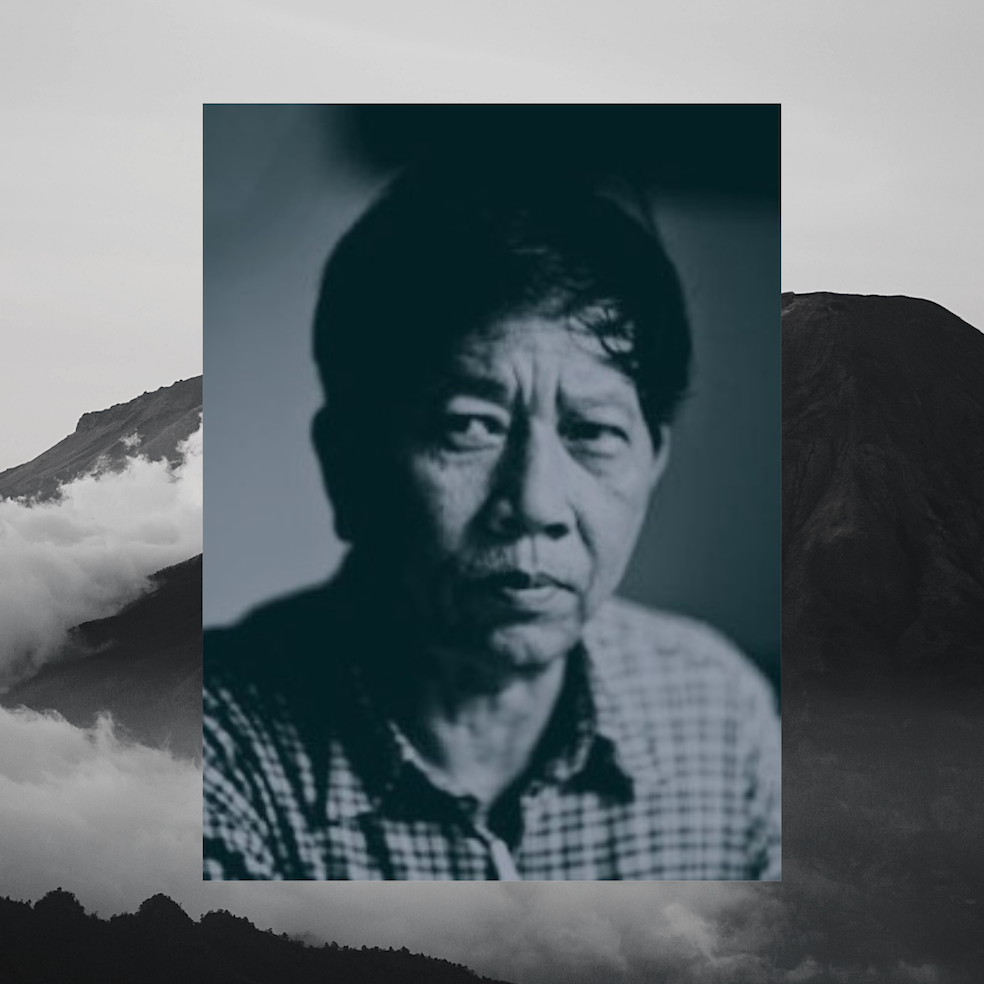
    Prominent writer Nguyen Huy Thiep passes away at 72

    If you talk about Vietnam’s literature and censorship, Nguyen Huy Thiep is the name you need to pay attention to. He is one of the most prominent Vietnamese writers since the Vietnam War. His death sparked discussions on social media on his work and how he suffered from heavy censorship.

    Scholar Thomas Bass wrote:

    “Thiep began his meteoric career in 1987, and already by 1988 he had published his collected works and celebrated what everyone was calling ‘the year of Nguyen Huy Thiep’. In 1989, the film of ‘The General Retires’ was released, and by 1990 Thiep was being installed as a member of the Writers’ Association. But this is also the year that copies of his works began disappearing from book stores. Nhan Dan, the party newspaper, published two essays attacking Thiep, claiming that he had ‘betrayed the Vietnamese Revolution by toppling sacred heroes in Vietnamese history’ and that he was ‘deceived by the chimera of pre-1975 Saigon’. The denunciation campaign continued until 1991, when the police raided Thiep’s house, carried off his books and manuscripts, and provoked a turning point in his life. This also marks a turning point in Vietnamese literature, when the country’s brief, five-year experiment with Renovation ended in the dark age that persists today.”


    VCP has a new chief of external relations

    Following the Party Congress in January-February, the Politburo continued to  appoint new personnel to top Party positions. On March 19, Le Hoai Trung was appointed head of the Commission for External Relations.

    Who is he? Trung served as deputy minister of foreign affairs since 2010, and Vietnam’s ambassador to the United Nations in New York (2011-2014). He was elected to  the Party’s Central Committee in 2016 and 2021.


    Learn more about Vietnam:

    Should Vietnam become a member of the UN Human Rights Council?

    ASEAN Today | 19 March 2021

    “The UNHRC should push Vietnam to implement existing action plans to improve human rights conditions in the country, rather than offering it a place in the forum. If Vietnam becomes a member of the UNHRC, it will not only discredit the UN body’s standing but will also legitimize Vietnam’s policies of oppression.”

    Vietnam Must Be Pleased With the Biden Administration… For the Most Part

    The Diplomat | 16 March 2021

    “…the Biden administration appears to emphasize not only shared national interests, but values as well, such as democracy, freedom, and human rights. For Hanoi, there is likely a certain amount of trepidation regarding the potential consequences of engaging with a more vocal Washington on these issues, which are extremely sensitive for Vietnamese Communist Party (VCP) leaders. Additionally, Hanoi likely has concerns about whether the Biden administration will take action against Vietnam for Trump-era allegations that it is a currency-manipulator as well as potential U.S. sanctions against Vietnam for purchasing Russian military equipment under the Countering America’s Adversaries Through Sanctions Act.”