Tag: #wp

  • Religion Bulletin, January 2021: Criticism Session In The Dark Of Night

    The Protestant Church of Christ faces threat of heavy government repression.

    Five ethnic Thuong, pictured left, endured a government criticism session in front of residents on the night of January 15, 2021. Photo: MSFJ News.

    [The Government’s Reach]

    Phu Yen provincial authorities suppress the Protestant Church of Christ: Criticism session in the dark of night

    Three years ago, an ethnic Thuong from the Central Highlands was arrested by Thai police. He expected to be deported back to Vietnam according to an extradition order from Vietnamese police. The man was named A Ga, and he was a follower of the Protestant Church of Christ.

    When he was arrested in Thailand, A Ga had been a refugee in Bangkok for six years with his wife and children. He lived in an area with hundreds of ethnic Thuong refugees who had fled the Central Highlands. Similar to A Ga, a significant number of them were wanted by Vietnamese police for organizing illegal border crossings. A large portion of these crossings were for their own family members, with the remaining consisting of fellow Protestants.

    While in a Thai prison, A Ga prayed to avoid deportation to Vietnam. Three months later, he was sitting on a plane with his wife and children; the destination was not Vietnam, but rather, the Philippines. The US State Department had intervened in his case. After they spent a period of time in the Philippines, A Ga’s family was resettled in the U.S.

    On January 15, 2021, A Ga’s name appeared during a government criticism session of five ethnic Thuong in Ia Lam Commune, Song Hinh District, Phu Yen Province.

    Video source: MSFJ News.

    In the darkness, his name echoed along with those of five other ethnic Thuong standing in front of police, local leaders, and villagers. The scene resembled a trial. Villagers were forced to sit and listen to the government’s charges against the five for participating in the Protestant Church of Christ.

    The five simultaneously criticized were Mr. Nay Y Blang, Mr. Nay Y Loi, Mr. Ksor Y Blang, Mr. Hwing Y Nuk, and Mr. Ro Da. Police stated that there were two other ethnic Thuong who were also subject to criticism but were not present at the meeting.

    “Unauthorized prayers”

    At the start of the criticism session, the authorities stated that the five named individuals had taken advantage of ethnic and religious issues to disrupt national unity, conspired to participate in the United Front for the Liberation of Oppressed Races, better known by its acronym FULRO, and distorted the policies of the party and the state.

    However, the government failed to present any evidence showing how the five had violated the law as charged.

    Mr. Nay Y Blang, 50, was accused by the government of holding a key role in the activities of the Protestant Church of Christ in Phu Yen Province.

    Authorities asserted that Y Blang disrupted stability, security, and order by allowing his home to be used for public religious activities. Blang was said to have connected with former inmate friends—members of FULRO—and locals to participate in the Protestant Church of Christ, where they listened to A Ga and others overseas spread false propaganda about a lack of human rights and religious freedom in Vietnam.

    Blang was also accused of organizing “unauthorized prayers,” including a service on August 19, 2020 to mark the “International Day Commemorating the Victims of Acts of Violence Based on Religion or Belief,” an international holiday designated by the United Nations. Even Blang’s sharing of pictures of church activities was deemed by the government to be illegal.

    Pressured to renounce the church

    Pastor A Dao, a member of the Protestant Church of Christ’s Management Board, told RFA that the five members were pressured to renounce the church during the criticism session.

    “The government forced them to renounce the Protestant Church of Christ, declaring that the state could not accept opposition; they were made to sign paperwork renouncing the church. But a number of our brothers remained resolute,” A Dao stated to RFA.

    RFA quoted Mr. Y Krek Bya, who described the criticism sessions as lasting from 6 pm to past 9 pm; Bya stated that the sessions failed to get all five people to publicly declare their abandonment of the church.

    “When the session let out, they said that if the men refused to renounce the church, and if protests broke out in any form, then the men would be imprisoned, where they would be met with a heavy hand or even killed,” Bya told RFA.

    “Criticism before the people”

    Criticism sessions related to religion and conducted in front of residents have been known in the Central Highlands since the 2000s. That was when religious movements combined with the struggle for human rights began to bloom in the region.

    During these sessions, authorities would bring residents in to witness and listen to the “improper activities” of those being criticized. The objective was to force those such people to cease their religious activities and to discourage anyone else from participating in activities not supported by the state.

    These criticism sessions are seldom covered in the state press. The clip of the criticism session above was surreptitiously recorded by a resident.

    On one rare occasion, on July 4, 2020, Gia Lai provincial police reported their criticism session of a 50-year-old ethnic Thuong. The subject of the criticism was Mr. Puih Hong, a resident of Ia Grang Commune in Ia Grai District, Gia Lai Province. Authorities asserted that he had crossed the border to Cambodia many times and that he had misrepresented policies in Vietnam regarding religion and national unity.

    https://2xjs7y10oiyz26vqxu2hok6y-wpengine.netdna-ssl.com/wp-content/uploads/2021/02/image-8.png
    Mr. Puih Hong standing before residents and the authorities during a criticism session organized by the government on July 4, 2020. Photo: Gia Lai provincial police.

    Currently, Vietnamese law does not contain any regulations related to public criticism sessions. The state, however, most likely considers such sessions as a type of propaganda tool that it can use to convey the law to the people.

    International organizations have long considered criticism sessions to be an affront to human dignity.

    The precarious fate of the Protestant Church of Christ

    For religious organizations in Vietnam, it is not enough that their activities be purely religious. These groups must also express full support for state policies to receive permission to operate.

    Before he became a refugee in Thailand, A Ga had on many occasions submitted forms to his commune people’s committee to register religious activities, only to be uniformly rejected.

    The Law on Faith and Religion contains a regulation regarding “the registration of organized religious activities,” but it also contains another regulation that denies permission to anyone violating Article 5.

    Article 5 of the Law on Faith and Religion stipulates behaviors that are forbidden. In Paragraph 4 of the article, subsection ‘a’ forbids actions that “violate national defense, security, national sovereignty, order, societal safety, the environment,” while subsection ‘d’ forbids “ethnic divisions; religious divides, including between those who follow a religion and those who do not, and between those of different faiths and religions.”

    There are no specific definitions for “violations of national defense, security, order, societal safety” and “ethnic divisions, religious divides.” These regulations become useful barriers the government can use to forbid religious activities it does not agree with.

    The Protestant Church of Christ was established in 2006. In 2016, the church announced that it had more than 1,500 members.

    The Protestant Church of Christ has been suppressed by the government for more than a decade. However, the organization is not spoken of in the state press nearly as much as those religious groups described as anti-government, such as Dega Protestantism, and the Ha Mon religion.

    Recently, as the above religions have been nearly wiped out, the Protestant Church of Christ appears to be the government’s next target.

    https://2xjs7y10oiyz26vqxu2hok6y-wpengine.netdna-ssl.com/wp-content/uploads/2021/02/image-9.png
    A member of the Protestant Church of Christ being interrogated by police. Photo: Security TV.

    In July 2020, Security TV, an information channel run by the Ministry of Public Security, aired a report accusing the Protestant Church of Christ of using overseas funds to oppose the Vietnamese governments.

    Colonel Nguyen The Luc, deputy director of Dak Lak provincial police, stated that the anti-government religious activities in the Central Highlands had both been found in the Dega Protestantism and the Protestant Church of Christ.

    The government stated that the church had 27 operating locations in five provinces and cities (Kon Tum, Dak Lak, Binh Phuoc, Lam Dong, and Tra Vinh). Phu Yen is likely a newer area for the group.

    The Protestant Church of Christ includes both native and overseas members; among them are former prisoners that remain under government watch, as well as current refugees in Thailand. With members having such diverse origins, and a government haunted by enormous protests in the Central Highlands during the 2000s, this religious organization will undoubtedly face heavy-handed suppression.

    [Religion 360*]

    Pledges to “voluntarily renounce false religions” in Dien Bien

    https://2xjs7y10oiyz26vqxu2hok6y-wpengine.netdna-ssl.com/wp-content/uploads/2021/02/image-13.png
    Half of a form “pledging voluntary renouncement of false religion” in Dien Bien Province. Photo: Dien Bien Phu Newspaper. 

    A report by the Dien Bien Phu Newspaper, a publication run by the provincial government, revealed portions of a form requesting that residents pledge not to follow religions unrecognized by the state.

    The article stated that troops at the Nam Ke border defense post, in Muong Nhe District of Dien Bien Province, had advocated that residents not practice illegal religions. Signing “pledges to voluntarily renounce false religions” was one of the many solutions advocated in the effort to convince people not to practice such religions.

    The photograph above shows that the pledges come pre-written by the government; the person signing the pledge merely has to sign his or her  name, declare that they are renouncing the false religion, and agree to carry out the government’s requests.

    The article confirms that the government continues to actively block the spread of new religions in Dien Bien Province.

    Commemorative banner at Phuoc Buu Temple spray-painted black

    https://2xjs7y10oiyz26vqxu2hok6y-wpengine.netdna-ssl.com/wp-content/uploads/2021/02/image-10.png
    A banner belonging to the Phuoc Buu Temple was spray-painted black. Photo: Phuoc Buu’s Facebook page.

    On January 18, 2021, Phuoc Buu Temple’s Facebook page posted a photograph of a temple banner that was spray-painted black. The temple is located in Xuyen Moc District of Ba Ria – Vung Tau Province. The temple belongs to the Unified Buddhist Sangha of Vietnam.

    Printed on the banner was: “Paying respectful remembrance – mourning the late Venerable Thich Thanh Tinh, Sangha member of the Unified Buddhist Sangha of Vietnam.”

    A large X was spray-painted in the middle of the banner, and the word “unified” was completely obscured.

    The Phuoc Buu Temple is regularly harassed by local authorities for following the Unified Buddhist Sangha of Vietnam. In 2019, the government set up cameras pointing straight at the temple gates to monitor the temple’s religious activities.

    Vietnam has 8,000 Falun Gong practitioners, with 600 locations of practice

    https://2xjs7y10oiyz26vqxu2hok6y-wpengine.netdna-ssl.com/wp-content/uploads/2021/02/image-11.png
    Falun Gong practitioners in Hanoi in 2018. Photo: Southeast Asia Globe.

    On January 19, 2021, in a live seminar on new religions in Vietnam, Ms. Nguyen Thi Dieu Thuy, a cadre from the Government Committee for Religious Affairs, confirmed that currently in Vietnam there are approximately 8,000 Falun Gong practitioners, with 600 locations of practice in the country’s cities and provinces.

    In the same seminar, Assistant Professor Ngo Duc Thao, deputy chairman of the Advisory Council on Ethnicity and Religion (belonging to the Fatherland Front Central Committee), stated that new religions that desired permission to operate must help the state achieve socialism and national unity and must proselytize according to Vietnamese law.

    Thao also stated that Vietnam would be hard-pressed to recognize Falun Gong, as the religion had a political past in which it demanded democracy and human rights in China.

    In past years, numerous Falun Gong practitioners have been prevented by police from spreading the religion in many provinces and cities.

    Hanoi police demand to see man’s family separation form to recognize him as a Buddhist

    https://2xjs7y10oiyz26vqxu2hok6y-wpengine.netdna-ssl.com/wp-content/uploads/2021/02/image-12.png
    The article in Giac Ngo Newspaper regarding police demanding to see an individual’s family separation form to confirm his declaration as a Buddhist. Photo: Screenshot.

    On January 22, 2021, journalist Chu Minh Khoi of Giac Ngo Newspaper publicly expressed doubts regarding the official number of Buddhists in Vietnam.

    The issue started when the author arrived at the Police Department’s Office of Administration and Social Order in Hanoi to request a re-issue of his ID card indicating his religious affiliation. The cadre there requested that Khoi present his family separation acknowledgement to prove he was a Buddhist, as he had written on his reissuance application.

    Khoi explained that he was not separated from his family (as a monk or nun would be), but that he was a Buddhist (in practice). He also stated that he had a certificate confirming his refuge, practicing in a home provided for by a temple. He wanted to put his religion as Buddhist on his new ID.

    According to Khoi, the cadre however responded: “Seeing that your head isn’t shaved and that you aren’t wearing a robe obviously means you haven’t separated from your family! But, your certificate confirming your refuge doesn’t verify your status as a Buddhist. You have to have the family separation acknowledgment issued by the Buddhist Church of Vietnam.”

    A number of Giac Ngo’s readers confirmed that they were also asked by police to provide their family separation acknowledgements to confirm their Buddhist status if they wanted to put it down as their religion on their ID.

    Luat Khoa sought to verify this information with a number of other Buddhists. However, individuals that the magazine spoke to stated that their local authorities accepted their declarations as Buddhists without any need for a family separation acknowledgement.

    Police in different provinces and cities appear to apply different standards towards religious declarations. Many people suspect that the state’s count of Buddhist followers is inaccurate because of these inconsistent standards.

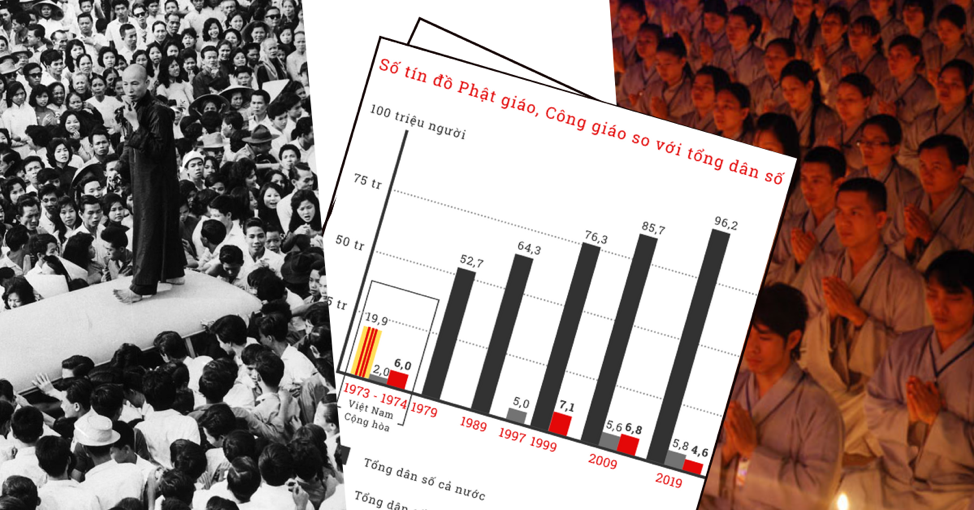
    According to data from the first census that recorded the number of religious practitioners in 1999, Vietnam had 7.1 million Buddhists. In 2019, the General Bureau of Statistics announced that the number of Buddhists had dropped to 4.6 million. As such, Buddhism is no longer the largest religion in Vietnam.

    [On This Day]

    Law on Faith and Religion: three years in effect

    https://2xjs7y10oiyz26vqxu2hok6y-wpengine.netdna-ssl.com/wp-content/uploads/2021/02/image-14.png
    The Vietnamese National Assembly as it passed the Law on Faith and Religion in 2016. Photo: National Assembly Newspaper.

    On January 1, 2018, the new Law on Faith and Religion took effect. The law was passed by the National Assembly in 2016, replacing Legal Directive 21/2004/PL-UBTVQH11 and Decree 92/2012/NĐ-CP regarding religion.

    Contradicting the state’s declaration that the law would protect and enact freedom of religion, the Law on Faith and Religion has in reality become a tool for the government to stifle religious activities in Vietnam.

    After three years of enforcement, unrecognized religious organizations remain unable to pass through the government’s filter. The Unified Buddhist Church of Vietnam, though it has been in operation longer than the Buddhist Church of Vietnam, is still seen as an illegal organization.

    New religions in the northwest and the Central Highlands are unable to register organized religious activities due to the regulations.

    The government is growing ever more obvious in its discriminatory treatment. It appears religious organizations are divided into two categories: positive (absolute support for state policies), and negative (conducting purely religious activities, fighting for human rights, or operating free from state control).

    Religious organizations are still banned from providing education to the public, such as running schools and universities. Many religions have participated in public education in the south before 1975 and the north before 1954. Nowadays, these religious organizations are banned from running schools.

    The government maintains complete decision-making power over land belonging to religious organizations, including construction on and renovation of religious grounds.

    Education within religious organizations also faces interference. Two subjects, history and Vietnamese law, must be taught according to the Government Committee for Religious Affairs’ syllabus.

    Regulations within this law allow the government to easily interfere in the internal affairs of religious organizations. For example, in 2020, a representative of the Government Committee for Religious Affairs demanded that the Tien Thien Cao Dai Church carry out instructions as if they were internally issued: “Establish regulations for public dignitaries and rankings; establish regulations to resolve complaints and grievances; elect dignitaries of adequate standards for the Church’s Upper House, Standing Committee, and Lower House”. Another example of government interference includes the land dispute with the Phu Lam Cao Dai Temple in Phu Yen province.

    The 2016 Law on Faith and Religion and the process by which the law is enforced reveal that the government sees these religious organizations more as state bodies than as civil ones.
  • Vietnam Briefing: 2021 Is Going To Be A Busy Year Of Elections

    Vietnam Briefing: 2021 Is Going To Be A Busy Year Of Elections

    We release the Vietnam Briefing every Monday, Vietnam time, with an emphasis on politics and foreign affairs. The briefing today is mainly about the different kinds of elections Vietnam is going to have this year.


    COVID-19:

    • COVID-19 vaccinations will be rolled out this month.
    • Hai Duong Province will end lockdown from March 3.
    • Hanoi’s closure order for street vendors, cafes and historical sites has remained unchanged, but just as we briefed last week, many places are still open.

    We are starting to know what the next National Assembly will look like

    It’s true. We don’t need to wait until the general election ends on May 23 or for the results to be released in June. The National Assembly’s Standing Committee revealed in early February and last week the “tentative proportion” or “tentative allocation,” of seats for Parliament’s next term (2021 – 2026).

    This means we can now see which government and Communist Party bodies will tentatively hold how many seats in the National Assembly.

    The tentative number of seats is officially stated in the Standing Committee’s Resolution 1185/NQ-UBTVQH14, which is dated February 5, 2021 and which was debated again last week during the committee’s session that ended on February 23.

    More details:

    • Approximately 95 members of the National Assembly are members of the Communist Party of Vietnam’s (CPV) Central Committee, including 12-14 members of the Politburo and the Central Secretariat.
    • Outside-of-the-party members: 25-50 (5-10 percent).
    • Members from the central government: 207 (41.4 percent).
    • Members from the military: 12 (excluding the minister of national defense).
    • Members from the police: 2 (excluding the minister of public security).
    • Other seats are also planned to be allocated to other government and party bodies.

    Context:

    • The general election will be held on May 23 for both the National Assembly and local legislative bodies at all three levels (province, district, and commune). The results are expected to be released in June. The first National Assembly session will be held in July, mainly to elect top officials of all three branches of the central government.
    • General elections are held every five years, shortly after the Communist Party congresses.
    • Free and fair elections? That’s what the government says, but it’s not the view of Freedom House, a human rights organization, in its 2020 report: “Elections to the National Assembly are tightly controlled by the CPV, which took 473 of the body’s 500 seats in the 2016 balloting. Candidates who were technically independent but vetted by the CPV took 21 seats. More than 100 independent candidates, including many young civil society activists, were barred from running in the elections.”

    Curious about how this election works? Pay close attention to two things: the role of the Fatherland Front – the Communist Party’s external arm – as a vetting agency and how the government deals with independent candidates.


    Vietnam to run for a seat at the United Nations’ Human Rights Council

    That’s what the Deputy Prime Minister announced last week before a United Nations’ session in Geneva, Switzerland.

    Vietnam apparently doesn’t have a good record on human rights. But just like other authoritarian states such as China, Cuba, and Saudi Arabia, it has a chance to win one out of 47 seats on the United Nations’ Human Rights Council’s 2023-2025 term.

    Context:

    • Vietnam was elected to the very council once in 2013, serving a two-year term from 2014 to 2016.
    • Government persecution targeting dissidents and human rights defenders has been increasingly harsh over the past five years, according to the data collected by The 88 Project.
    • Vietnam has consistently been categorized as a “Not free” country by the international rights group Freedom House.
    • Vietnam is currently a non-permanent member of the UN Security Council, and it will serve until the end of this year.

    Vietnamese ambassador runs for re-election to International Law Commission

    It seems Vietnam is actively seeking more influence on the international stage. Here is another election at the United Nations that Vietnam is campaigning for, according to VietnamPlus:

    “Vietnam’s permanent missions to the United Nations (UN) in New York and Geneva have recently sent diplomatic notes to the UN and member countries informing them of the candidacy of Ambassador Nguyen Hong Thao to the International Law Commission (ILC) for the 2023-2027 term, marking the official start of the Vietnamese candidate’s campaign for re-election to the UN’s important law organ.

    In 2016, Ambassador Thao became the first Vietnamese to be elected as an ILC member. During the 2017-2022 term, he actively promoted ILC’s research results, delivered speeches and joined discussions at the ILC.”


    The Dong Tam appellate trial will be held on March 8

    Remember the high-profile Dong Tam trial in September? The appellate trial opens on March 8 and will last until March 10.

    Six defendants have appealed their sentences to the People’s High Court in Hanoi.

    What should we expect?

    • The trial will very likely result in the affirmation of the lower court’s verdict with little or no adjustments to the defendants’ convictions and sentences.
    • Similar to the trial in September, the appellate trial is expected to be closed to the public, with no independent and international media, and no independent observers allowed to attend; even family members of the defendants may be refused permission to observe the trial.

    Learn more about the Dong Tam case:


    Amnesty International’s new investigation into hacking group Ocean Lotus

    Two weeks ago, we mentioned the hacking group Ocean Lotus in our briefing, indicating that the Vietnamese government is likely behind the effort to target dissidents and foreign entities.

    Last week, another report on the matter was released by Amnesty International. Here is what it says:

    “Our investigation was not able to attribute Ocean Lotus’ activities to any company or government entity. However, the extensive list of people and organizations targeted by Ocean Lotus over years shows that it has a clear focus on targeting human rights and media groups from Vietnam and neighbouring countries. This raises questions about whether Ocean Lotus is linked to Vietnamese state actors. The consistent evidence linking Ocean Lotus to Viet Nam should trigger the Vietnamese authorities to undertake an impartial, thorough and independent investigation into the group’s unlawful activities and human rights abuses.”

    Context:

    • The Vietnamese government has kept silent on the issue.
    • The Vietnamese government also has accused Amnesty International of “distorting Vietnam’s reality” and of “intervening in Vietnam’s internal affairs.”

    Read more about Vietnam:

    Where to now for Vietnam after Trong? (East Asia Forum – Feb 27): “Events over the past year have brought major long-term trends in Vietnam’s domestic and foreign policy to the surface. The country will be less aligned with China. In the next decade, it will likely have its first non-conservative leader since the Cold War’s end but its leaders continue to value the Leninist state model.”

    Vietnam’s unresolved leadership question (East Asia Forum, Feb 25): “Pham Minh Chinh emerged as a new star. […] Chinh is also a potential candidate to succeed General Secretary Trong when Trong vacates his position. In that case, Chinh will have reached a position his predecessors — Nguyen Tan Dung and Nguyen Xuan Phuc — wanted but did not get. The question is whether Trong wants and has enough time to groom Chinh to handle the roles of general secretary and state president.”

    Supply chain bottlenecks in Vietnam (Bangkok Post, Mar 1): “Vietnam’s economy has fared better than that of almost any other country except China during the Covid-19 crisis. It grew by 2.9% last year while most other countries fell into recession. One consequence of the crisis was that manufacturers realised the importance of diversifying supply chains, and many accelerated the China Plus One policies that they had initiated because of the US-China trade war. This led to a surge of investment in Vietnam from global manufacturers last year.”

    Capital meant for Myanmar may seek havens in Vietnam and Cambodia (Nikkei Asia, Feb 27): “The military coup in Myanmar has forced investors who had earmarked capital for the country to look for nearby alternatives. Delta Capital, Anthem Asia and other funds that have solely focused on Myanmar are adopting a wait-and-see approach, and those with a wider geographic footprint are funneling money to destinations like Cambodia and Vietnam. Vietnam is especially frothy.”

    Mitsubishi pulls out of Vinh Tan 3 coal project in Vietnam (Reuters, Feb 26): “Mitsubishi Corp has decided to pull out of the Vinh Tan 3 power plant in Vietnam, two sources familiar with the company’s thinking on the matter told Reuters, as it shifts away from carbon intensive businesses in the face of climate change. Mitsubishi’s move to exit the estimated $2 billion project shows how willing Japanese companies and financiers are to drop their once-strong support for coal amid pressure from shareholders and activists.”

  • Vietnam Officially Announces National Decline In The Number Of Buddhist Followers, Shocking Its Buddhist Sangha

    Vietnam Officially Announces National Decline In The Number Of Buddhist Followers, Shocking Its Buddhist Sangha

    According to Vietnam’s official statistics, in 2019, the religion with the largest number of followers in the country is Catholics with 5.9 million people. The number of followers of Buddhism is 4.6 million, ranking second. However, the numbers reported by this census contradict statistics from other state agencies, leading religious leaders and followers in Vietnam to question its accuracy.

    The Giac Ngo Newspaper – a Buddhist media – reported that this news “shocked” some monks, and that some  believers “burst into tears” when they heard the news. Many people naturally assumed that Vietnam would have more Buddhists than any other religious group.

    However, over the years, followers, monks and as well as senior sangha officials in Vietnam, have gone from one disappointment to another because the number of Buddhists has fallen dramatically in state statistics.

    The number of Buddhists in the 2009 Population and Housing Census was 6.8 million, a decrease of about 300,000 compared to 1999. Even so, Buddhism remained the religion with the largest number of followers in Vietnam.

    The situation only changed with the 2019 census results.

    In that year, the government announced that the number of Buddhists decreased by 30 percent compared to 2009. From 2019, Buddhism has lost its top position in the number of followers in Vietnam according to the State census.

    Over the past 50 years, Vietnam’s general population increased, but the number of Buddhist followers decreased

    Buddhism – a religion of about 2,000 years of development in Vietnam – now has only 4.6 million followers, accounting for about 4.78 percent of the total population.

    Meanwhile, the number of people who claimed to be Buddhist in the Republic of Vietnam (which only consisted of the south of Vietnam and a portion of the center) in 1963 was 9 to 11 million, accounting for 70 percent to 80 percent of the south’s total population as stated in the estimates that the US Central Intelligence Agency (CIA) compiled that year.

    The current figure of 4.6 million Buddhists is also less than the number of followers identified by the CIA as active Buddhists in the Republic of Vietnam in 1974, which was about 5-6 million.

    After 1975, the vibrant religious culture in the south suffered a period of “government watch” for more than 15 years. During that time period, major religions were restricted in their practices and the smaller religions were completely banned.

    According to State Magazine, a research journal of the Ministry of Home Affairs, in the first two censuses of 1979 and 1989, Vietnam did not record the number of religious followers.

    By the early 1990s, Vietnam began to officially recognize the religions that were previously popular in the South but which were banned after 1975, such as Hoa Hao and Cao Dai Buddhism. In 1999, the government started to keep statistics on the number of religious followers in the country.

    Nevertheless, as more statistics were completed, it was observed that the number of Buddhist followers were reported as having fallen. Throughout the three censuses (in 1999, 2009, and 2019), the number of Buddhists decreased by 35 percent while the national population increased by about 26 percent

    Graphics from Luat Khoa Magazine based on the data sources below.

    The Vietnam Buddhist Sangha refutes the state figures, but also does not publicize its own membership numbers

    Looking back, in 2012, the Buddhist Sangha of Vietnam opined about the number of Buddhists in Vietnam after the 2009 census results were published.

    Although Most Venerable Thich Bao Nghiem, vice chairman of the board of directors and head of the Board of the Dharma Preaching of the Central Vietnam Buddhist Sangha, acknowledged the 2009 census is quite “large, serious, and objective,” he also said at the time: “The statistical results …. about Buddhism are not accurate for many different reasons.” He explained that in Vietnam, apart from those who claim to follow other religions, the rest are really “followers of Buddhism, who love Buddhism and are influenced by Buddhism”. If one accepts Thich Bao Nghiem’s reasoning, then the number of followers of Buddhism in Vietnam could have been about 78 million in 2009 – which is the number we get when we subtract all people who declared themselves to have a different religion than Buddhism from the national population at that time.

    However, in 2019, the Vietnam Buddhist Sangha was again surprised when the State census stated that the number of Buddhist followers declined further and that Buddhism was no longer the religion with the most followers in Vietnam.

    Despite this continuing disappointment, over the years, the Vietnam Buddhist Sangha – with nearly 40 years of operation and the only state-recognized Buddhist organization in the country – still has not published the number of its own followers. The only official figure for Buddhists in Vietnam comes from state statistics.

    Meanwhile, other religions have tallied and announced the numbers of their own followers. For example, in 2018, the Vietnam Catholic Bishops’ Council announced that the whole country had about 7 million Catholics (Vietnam’s state statistics put the number at just about 5.86 million). Overseas branches of Hoa Hao Buddhism also stated that there were about 3 million Hoa Hao Buddhists in 2010 (state statistics in 2009 said just 1.3 million).

    Figures for the number of Buddhist followers from other state agencies are also inconsistent

    Unable or unwilling to declare the number of its own Buddhist believers, the Buddhist Sangha currently uses statistics from the Government Committee for Religious Affairs.

    Accordingly, the Sangha often uses the estimate given by Tran Thi Minh Nga that she used when she wrote an article in 2014 on the website of the Government Committee for Religious Affairs. Nga said that up to June 2010, Buddhism had had about 10 million followers in Vietnam.

    Meanwhile, the number of Buddhists in 2009 announced by the General Statistics Office was only 6.8 million.

    Nga did not cite the data source that she mentioned in her article at that time. In 2014, she was the deputy director of the Buddhist Department of the Government Committee for Religious Affairs. Currently, she is serving as the deputy head of the Government Committee for Religious Affairs.

    In a report on religious freedom in Vietnam in 2019, the US Department of State also used data from the Government Committee for Religious Affairs, which in January 2018 stated that about 14.9 percent of the total population was Buddhist. If applying this ratio to the total population in 2019, the number of Buddhists would have been about 14.3 million.

    According to Associate Professor Hoang Thu Huong of the University of Social Sciences and Humanities, the National University of Hanoi, Buddhist monks believe that Buddhists must include both 1) those believers who take refuge in the Three Jewels or Triple Gem (also known as the “Three Refuges”), and also 2) those who identify themselves as being influenced under Buddhism. Dr. Huong also said that because the criteria for inclined towards Buddhism could not be included in statistics survey questions, and that could be why the number of Buddhist followers differs among different state agencies.

    However, during the period of the Republic of Vietnam, the CIA recorded both of these statistics, including active believers (possibly including the Three Refuges) and self-proclaimed and sympathetic Buddhists.


    (*) Data sources for the chart listed above.


    This article was written in Vietnamese by Thai Thanh and previously published in Luat Khoa Magazine on February 18, 2021. The translation was done by Luu Ly.

  • Vietnam Briefing: Military General Appointed To Lead Party’s Propaganda

    Vietnam Briefing: Military General Appointed To Lead Party’s Propaganda

    It was a week of Tet (Lunar New Year), containing COVID-19, a new draft decree on personal data protection, and an unexpected appointment of a military general to the top seat of the Communist Party’s propaganda commission.


    COVID-19

    • Vietnam is expected to secure 60 million doses of vaccines, Minister of Health Nguyen Thanh Long said on February 19. One day earlier, the health agency announced that 204,000 doses of the vaccine will be available in Vietnam by February 28.
    • The cafes, street restaurants, and historical sites closure order in Hanoi has remained unchanged, but in fact, many cafes and restaurants are still open.

    It’s been a long time since a military general led the Communist Party’s propaganda machine

    One needs to look back to the 1980s to see military generals running the Communisty Party’s propaganda departments. Le Quang Dao, Dang Quoc Bao, and Tran Do were the ones holding this position back then. General Tran Do later became known as the high-ranking member of the Party who called for a multiparty political system in Vietnam in the 1990s; he was expelled from the Party in 1999.

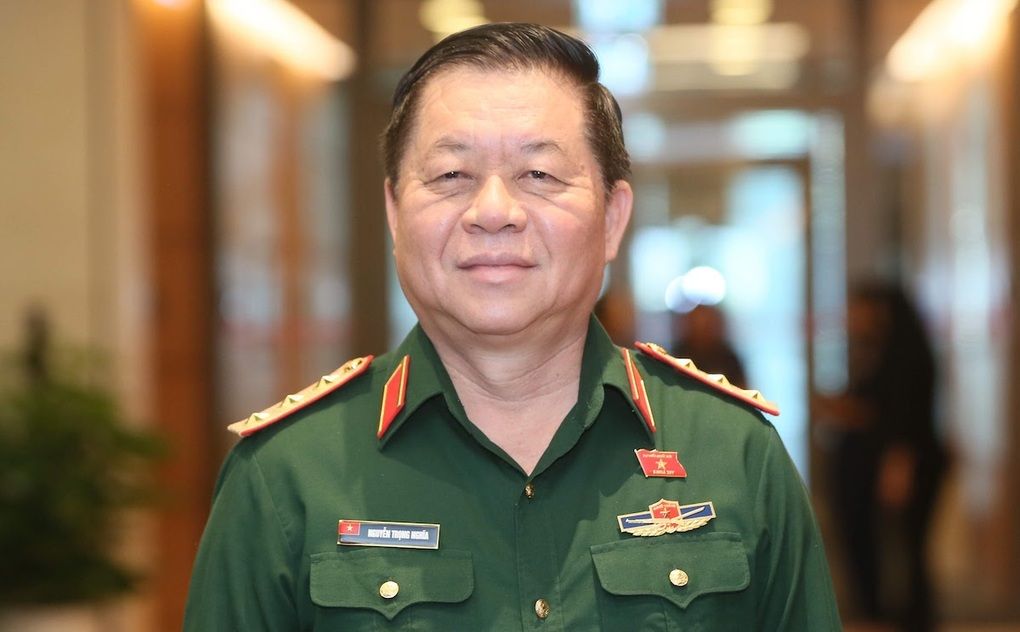
    Not until last week, however, had another general been appointed to the position. Sen. Lt. Gen. Nguyen Trong Nghia was named the chairperson of the Party Central Committee’s Commission for Popularisation and Education (also known as the Commission for Propaganda) on February 18. He previously served as vice chairman of the General Department of Politics of the Vietnam People’s Army.

    One unusual thing to note: He’s not yet a member of the Politburo, making him the first non-Politburo-member to chair the commission since the 1990s.

    Propaganda experience: RFA reported: “Nguyen, 59, had previously overseen the creation in 2017 of a 10,000-member army cyber unit, Task Force 47, which monitored political comment online, countering statements opposing Vietnam’s ruling party.”

    Context: The military has already occupied two out of 18 seats in the Politburo, which is also an unusually high number because over the past 20 years only the Minister of National Defence has held the position. If Gen. Nghia is going to be appointed as a member of the Politburo in the coming years, that would make a record three generals in that Party body.


    Here comes another attempt to detail the Cybersecurity Law

    It’s been almost three years since Vietnam’s National Assembly passed the highly controversial Cybersecurity Law. No guidance on the law’s implementation has been given as the central government usually does in the case of decrees, circulars, and decisions.

    A draft decree was made available to the public for comments at the end of 2018, but it quickly disappeared after a huge backlash from domestic and international actors.

    Earlier this month, the Ministry of Public Security’s website announced another draft decree to address personal data protection.

    You can find the full text of this document in Vietnamese here (Google Drive link). The draft decree is available for public consultation from February 9 to April 9.

    We have taken a look at the text and here are nine takeaways.

    Spoiler: The draft decree has a lot to do with the government dealing with foreign services, such as Facebook and Google. It is not necessarily good news for these companies.


    Vietnam – Myanmar relations amidst political instability in Myanmar

    Three things you need to know about Vietnam’s position on the political tensions in Myanmar after the military overthrew the elected government led by the National League for Democracy.

    • First, the government called on the international community to further support the transition to democracy in Myanmar, matching the wishes and interests of the people of Myanmar, as reported by VietnamPlus. This statement was made on February 15 by Ambassador Le Thi Tuyet Mai, Permanent Representative of Vietnam to the United Nations, the World Trade Organisation (WTO) and other international organisations in Geneva, during a session of the United Nations Human Rights Council.
    • Second, four days later, Ambassador Le Thi Tuyet Mai made another statement at a session of the WTO, saying Vietnam wanted to strengthen its trade ties with Myanmar. According to VietnamPlus: “Vietnam hails Myanmar’s achievements in structural reforms and impressive economic growth in the past year, and wants to continue bolstering the economic-trade and investment ties with the nation in the time to come, a Vietnamese diplomat said.”
    • Third, Vietnam’s military has significant investments in Myanmar in cooperation with the country’s military. A rights group named Justice for Myanmar released an investigative report in December 2020 accusing Viettel – a Vietnamese military telecommunications corporation – of assisting the Myanmar military in war crimes and crimes against humanity through Myanmar’s Mytel company.

    China’s police chief visits Vietnam

    Mr. Zhao Kezhi, the Minister of Public Security of China, visited Vietnam and was received by top government officials: CPV General Secretary and State President Nguyen Phu Trong, Prime Minister Nguyen Xuan Phuc, Minister of Public Security To Lam, and Minister of National Defense Ngo Xuan Lich.

    China’s Xinhuanet reported:

    “Zhao, during the meeting, expressed hopes that the two sides could enhance the synergy between the China-proposed Belt and Road Initiative and Vietnam’s ‘Two Corridors and One Economic Circle’ plan, expand and grow the economic, trade and investment cooperation, so as to better benefit the people of the two countries.”


    84 percent of Vietnamese choose the United States over China

    This is according to a survey released by ISEAS Yusof-Ishak Institute in Singapore on February 10, making Vietnam the second country in ASEAN that favors the United States the most.

    Survey question: If ASEAN were forced to align itself with one of the two strategic rivals, which should it choose?


    New report by the US Congressional Research Service on relations with Vietnam

    The US Congressional Research Service released a report on the US-Vietnam relations on February 16, 2021. This report is meant to inform US lawmakers on matters relating to Vietnam.

    Quotes:

    “China’s actions in the South China Sea have led the United States and Vietnam to intensify security collaboration. In 2016, the Obama Administration removed remaining US restrictions on sales of lethal weapons and related services to Vietnam. Applications to export all defense items, lethal and non-lethal, are subject to a case-by-case review by the State Department’s Directorate of Defense Trade Controls. The Obama and Trump Administrations prioritized bilateral maritime assistance, including providing 24 new coast guard patrol vessels, aerial drones, coastal radar, and two decommissioned U.S.”

    “Although the Trump Administration continued the annual bilateral human rights dialogue and criticized Vietnam’s human rights record in various annual reports and selected statements, it did not appear to assign a high priority to human rights in its overall approach to Vietnam.”


    We are happy to introduce our weekly Vietnam Briefing that will be published every Monday (Vietnam time). We will produce the briefings by carefully selecting worthy news stories from verifiable and trusted sources, including Vietnam’s independent and mainstream media, civil society groups, as well as our own sources. In line with the publication’s code of conduct, we will practice no self-censorship and we pledge to be truthful, honest, and fair.

    If you have any questions, please feel free to contact us: editor@thevietnamese.org.

  • Religion Bulletin, December 2020: Falun Gong Encounters Troubles With The Authorities

    Kon Tum provincial police formally express the government’s position on Falun Gong.

    To our readers:

    In 2020, we began to publish monthly bulletins on religion in Vietnamese on Luat Khoa and in English on The Vietnamese in order to record events affecting freedom of religion and faith in Vietnam.

    In addition to these religion bulletins, Luat Khoa also regularly publishes articles on freedom of religion and it has also created an English-language database on the same topic.

    Luat Khoa’s efforts in 2020 on freedom of religion remain modest. To prepare content for 2021, we hope readers will contribute suggestions for religious topics at tongiao@luatkhoa.org or editor@thevietnamese.org.


    [Religion 360*]

    Authorities accuse Falun Gong of intending to establish an opposition political force

    In December 2020, provincial and municipal authorities continued to block the spread of Falun Gong.

    Police and the state-run press have asked citizens not to spread Falun Gong, not to share information regarding the religion on social media, and to report to police anyone “propagandizing” the religion.

    Information drawn from the state press indicates that in 2020, the authorities confiscated materials to spread Falun Gong from at least 71 people.

    These people were normally stopped as they were individually handing out flyers and gifting keychains and books. No reports indicate that these people spread Falun Gong in any organized manner.

    Provincial and municipal authorities have consistently blocked the spread of Falun Gong by citing that the state had yet to permit the distribution of the religion’s flyers.

    However, in December 2020, Kon Tum provincial police took this policy one step further in expressing the government’s position on Falun Gong.

    Kon Tum provincial police stated that Falun Gong uses its focus on health and exercise as a cover to lure people into joining the religion. They also accused Falun Gong adherents of asking the government for legal recognition in order to form an opposition political force in Vietnam.

    Below are the cities and provinces that have investigated and confiscated materials from Falun Gong practitioners in December 2020.

    Hai Duong Province: Keychains with propaganda content confiscated from two people

    According to VTC Newspaper, Thanh Mien district police in Hai Duong Province investigated a 61-year-old woman for promoting  Falun Gong among students on December 2, 2020.

    The woman was investigated by police for handing out keychains containing a link to a Falun Gong website for students. Police confiscated 190 of the woman’s keychains.

    https://2xjs7y10oiyz26vqxu2hok6y-wpengine.netdna-ssl.com/wp-content/uploads/2021/01/1-1.png
    Confiscated keychains containing messages promoting Falun Gong. Photo: Hai Duong Newspaper.

    Also in Hai Duong Province, police confiscated 10 greeting cards and 24 keychains belonging to a 26-year-old woman who was handing out materials promoting Falun Gong on December 23, 2020.

    Quang Ninh: Falun Gong books and flyers confiscated prior to distribution

    On December 29, 2020, Tien Yen district police in Quang Ninh Province reported that they had requested a woman turn in Falun Gong materials that she was storing at her residence. Police confiscated 40 books, 6 flyers, and 10 keychains containing Falun Gong content from the woman.

    https://2xjs7y10oiyz26vqxu2hok6y-wpengine.netdna-ssl.com/wp-content/uploads/2021/01/2-1.png
    Photo: Quang Ninh provincial police.

    The items were confiscated for containing material promoting Falun Gong, a religion not yet permitted by the state.

    Bac Ninh Province: Two Falun Gong students prevented from proselytizing by police

    A number of unsourced photographs and videos shared on social media showed two Falun Gong students in Bac Ninh encountering difficulties with police on the night of December 22, 2020.

    https://2xjs7y10oiyz26vqxu2hok6y-wpengine.netdna-ssl.com/wp-content/uploads/2021/01/3-2.png
    Photo: Vietnamese History Forum.

    According to the photographs and video, a man and a woman dressed in Santa costumes on the occasion of Christmas spread Falun Gong materials in a public area.

    The police officer in the clip stated that a number of Catholics were “upset” at the pair’s actions and reported them. Police ordered the two to the police station for questioning.

    State journalists have yet to report on this case.


    Head of Pure Hoa Hao Buddhism’s Central Oversight Committee prevented from attending prayer ceremony

    On December 15-16, 2020, Can Tho city police prevented Mr. Nguyen Van Dien, head of the Pure Hoa Hao Buddhism’s Central Oversight Committee, from attending a prayer ceremony.

    According to the Pure Hoa Hao Buddhism, on the afternoon of December 15, 2020, a group of plainclothes individuals from Can Tho city police arrived at Dien’s residence to demand that he not attend an important prayer ceremony at its temple.

    On the morning of December 16, 2020, police continued to demand that a driver not take Dien to the ceremony.

    https://2xjs7y10oiyz26vqxu2hok6y-wpengine.netdna-ssl.com/wp-content/uploads/2021/01/5.png
    Two Can Tho city police officers sit opposite Dien. Photo: Pure Hoa Hao Buddhism.

    The organization’s website stated that police stopped Dien by using COVID-19 and the ban on assemblies as a pretense. However, only Dien was prevented from attending the ceremony. Moreover, other ceremonies in the area were allowed to carry on as normal.

    Pure Hoa Hao Buddhism is not recognized by the state. Members of this organization are regularly obstructed at gatherings and events.


    Ho Chi Minh City authorities return five religious properties to the Saigon Archdiocese

    According to the Ho Chi Minh City Party Committee website, municipal authorities  “gifted” five religious properties to the Saigon Archdiocese on December 21, 2020. The reason for this “gift” was not provided.

    The Saigon Archdiocese confirmed the return of the religious properties belonging to five parishes: Tan Lap Parish, Cong Thanh Parish (District 2), Tan My Parish (Hoc Mon), Tan Hiep Parish (Hoc Mon), and Binh An Parish (District 8).

    The Archdiocese website confirmed that the government had “returned” the properties to them.

    According to Archbishop Nguyen Nang’s statement during a meeting, these were religious properties that the parishes had lent to the state after 1975 to serve as schools. He stated further that the archdiocese was “delighted to receive back the properties, in order to provide necessary services for parishioners” and that he hoped the other properties would also be returned if the city was able to build new schools.

    https://2xjs7y10oiyz26vqxu2hok6y-wpengine.netdna-ssl.com/wp-content/uploads/2021/01/4-1.png
    A meeting between the Saigon Archdiocese and the Ho Chi Minh City authorities on December 2t, 2020. Photo: Saigon Archdiocese.

    After 1975, Catholic organizations in southern Vietnam lent many properties to the state for educational purposes.

    To this day, the number of properties lent has not been precisely established. Conflicts between the state and the Catholic church continue to occur.


    Thien An Abbey’s shrine to the Virgin Mary vandalized

    In December 2020, the area around Thien An Abbey that was dedicated as the shrine to the Virgin Mary (Thua Thien – Hue Province) was trespassed upon by strangers many times.

    The monks stated that many stone benches and greenery in the area were vandalized and that the grounds of the shrine were sullied with dirt. The abbey has reported the incident to the authorities, but the area around the shrine continues to be vandalized.

    https://2xjs7y10oiyz26vqxu2hok6y-wpengine.netdna-ssl.com/wp-content/uploads/2021/01/7.png
    Pictures of the vandalized shrine were taken by Thien An Abbey.

    For more than 20 years, Thien An Abbey has been in limbo due to a land dispute between the abbey and local residents and Thua Thien – Hue provincial authorities.

    Events indicate that the authorities and local households have teamed up in their land disputes with the abbey.


    Government prevents the Unified Buddhist Sangha from distributing free aid

    According to the Unified Buddhist Sangha, Huong Tra commune authorities in Thua Thien – Hue Province prevented the church from distributing free aid to flood victims at the end of December 2020.

    Afterwards, authorities confiscated all gift vouchers and prevented residents from coming to Long Quang Monastery to receive free aid.

    The reason authorities gave for the obstruction was that as the Unified Buddhist Sangha was not recognized by the state, and therefore distributing free aid was illegal.


    [On This Day]

    Letter from the House of Representatives on freedom of religion in Vietnam

    https://2xjs7y10oiyz26vqxu2hok6y-wpengine.netdna-ssl.com/wp-content/uploads/2021/01/6.png
    Chair of the House Committee on Foreign Relations, Edward R. Royce, and U.S. Ambassador to Vietnam, Daniel J. Kritenbrink. Photo: CFUS News (left), AFP (right).

    In December 2017, Mr. Edward R. Royce, chair of the House Committee on Foreign Relations, sent a letter to Mr.  Daniel J. Kritenbrink, US ambassador to Vietnam, to express his concerns about freedom of religion in the country.

    In the letter, Royce expressed his concerns about the new Law on Faith and Religion, which was set to go into effect on January 1, 2018.

    “I fear that this new law will form the basis for continued mistreatment of those who seek to practice their faith in Vietnam,” he wrote.

    Royce’s fears have become a reality.

    In the past three years, state organizations have taken advantage of the law’s nebulous regulations to control religious activities.

    Most recently, the Vietnamese Protestant Church (Southern branch) had to postpone its clerical congress for not sufficiently meeting the requirements of the Law on Faith and Religion. Specifically, they had not sent the roster of candidates to the Government Committee for Religious Affairs prior to the congress.

    Royce’s fears about the Vietnamese government using ambiguous national security concerns as pretext to suppress religious activities also proved to be true.

    In a number of areas in the northwest, authorities have tightly controlled religious activities. The Protestant Church of Christ in the Central Highlands is even seen as a threat to national security.


    If you have any suggestions or would like to join us in writing reports, please email us at: tongiao@luatkhoa.org or editor@thevietnamese.org

  • Chief Justice Nguyen Hoa Binh Elected To The VCP’s Politburo. What Does This Mean?

    Chief Justice Nguyen Hoa Binh Elected To The VCP’s Politburo. What Does This Mean?

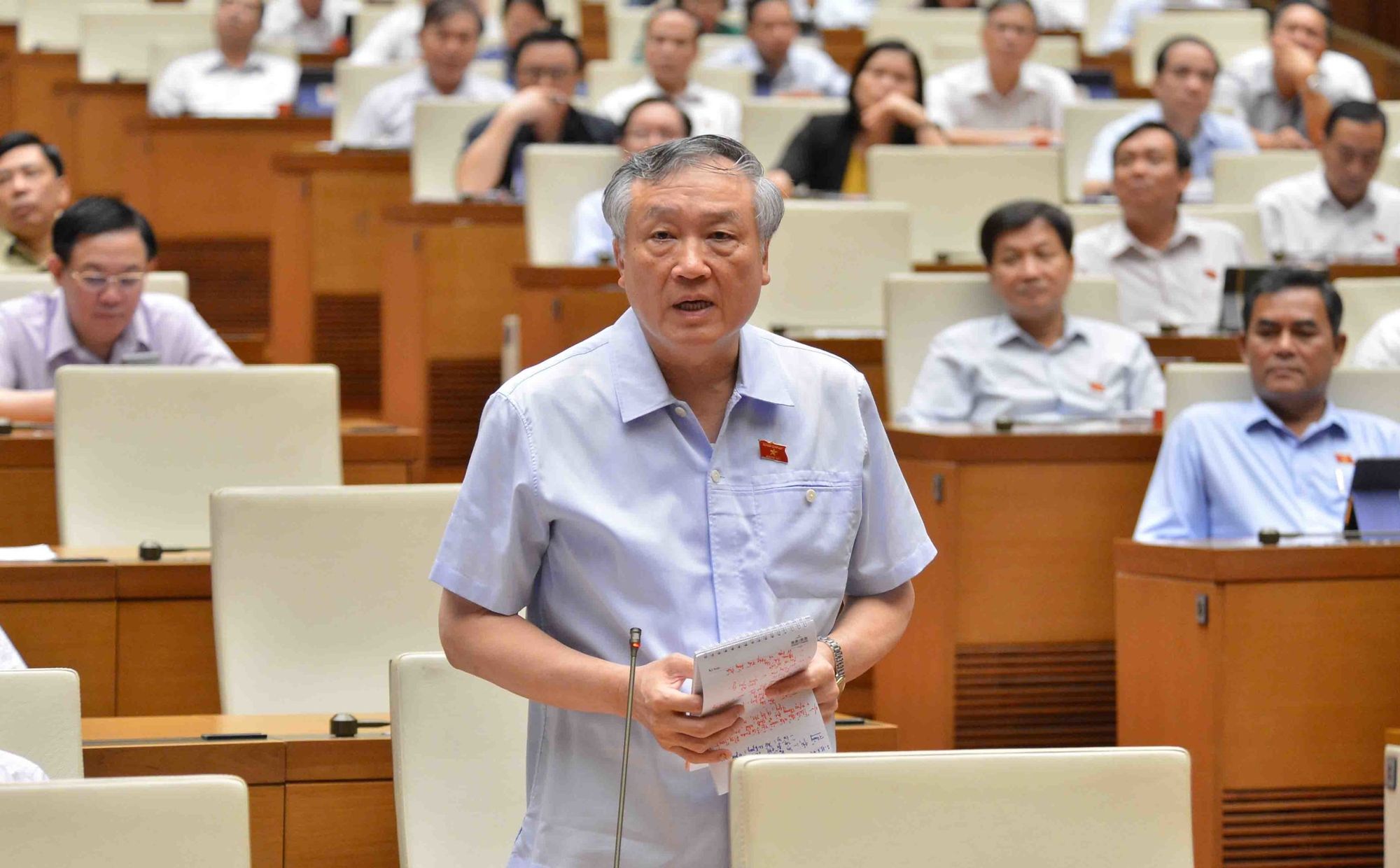
    First, it means that the chief justice of the Supreme People’s Court, Nguyen Hoa Binh, has been officially promoted. He was elected to the Politburo for the first time on January 31, 2021, at the first meeting of the VCP 13th Central Committee.

    Nguyen Hoa Binh is the second chief justice in the history of Vietnam’s Supreme People’s Court to be elected to the Politburo. The Politburo is the agency that chooses the most powerful politicians in the Party.

    The other chief justice on the Politburo was also named Hoa Binh, but had the surname Truong; he was elected to the Politburo in January 2016 at the 12th Party Congress. However, Truong Hoa Binh was moved into an executive position as the deputy prime minister almost immediately thereafter, when Vietnam’s National Assembly met in a special session during April of that same year. During that time, it was Nguyen Hoa Binh who replaced Truong Hoa Binh as the chief justice of the Supreme People’s Court and he held this position since.

    If Nguyen Hoa Binh can continue to be the chief justice for the next five years, it will be the very first time that the Supreme People’s Court has had someone with real power in the Politburo.

    A chief justice in the past was not a very meaningful position in the Party. Up to now, there have been only a few chief justices that were included as members of the Central Committee.

    In addition to the two “Hoa Binhs” mentioned above, there were only two others, Pham Hung and Nguyen Van Hien. The other three chief justices – Pham Van Bach, Tran Cong Tuong, and Trinh Hong Duong – were not even selected as members of the Central Committee. The absence of the chief justices in the Central Committee glaringly emboldened the Party in how it dealt with  the judicial branch in Vietnam’s political system. That is, the Party did not see the judiciary as a body with significant power.

    One would think that judges and justices should not be members of the only political party in the country so that they can be neutral and independent. One would hope that the judicial branch would remain neutral so that we can have fair trials in the country. However, in reality, this is not the case in Vietnam.

    Vietnam does not have an independent judicial branch and the above standard cannot be applied in this country. One’s position within the Party determines the actual political power of a party member, and not any state position one may also hold. The Politburo is the agency that Vo Van Kiet – at one time – had considered to be “superior” to the Central Committee, and gaining a position on the Politburo was the ultimate political goal for the most ambitious and successful Party members in Vietnam.

    Phiên tòa giám đốc thẩm vụ án Hồ Duy Hải ngày 6/5/2020. Ảnh: TTXVN.
    Chief Justice Binh (standing) in the cassation hearing of the Ho Duy Hai case on May 6, 2020. Photo courtesy: VNA.

    Being in the Politburo is a reward that the Communist Party gave Nguyen Hoa Binh. We do not know enough to say what he did to receive such an honor. But what he has done in the past five years may possibly offer us some clues.

    His appointment is most likely a reward for his role in directing the courts to hear a series of prominent cases related to the “anti-graft” campaign that General Secretary Nguyen Phu Trong started. For the first time in Vietnam’s contemporary history, many high-ranking party members were tried and convicted with extremely heavy sentences: Dinh La Thang, Nguyen Bac Son, Truong Minh Tuan, Trinh Xuan Thanh, and others.

    Other prominent cases may also include the cassation trial of the death row inmate Ho Duy Hai and the Dong Tam trial in 2020.

    Also, there were many political cases in the past five years which the Party deemed to be closely related to the security of the regime. These include cases related to the Independent Journalists Association of Vietnam (2020), the Brotherhood of Democracy (2016), Nguyen Ngoc Nhu Quynh (blogger Mother Mushroom, 2017), etc. From 2016 to date, the number of dissidents who have been tried has increased much higher than in the past, to the point that the opposition has almost been wiped out in Vietnam.

    If the VCP rewarded Chief Justice Nguyen Hoa Binh for the way he handled the cases mentioned above, then we can see that it only encouraged the judicial branch to be more of a supportive team player within the authoritarian regime the Party has created, and that trials cannot be considered independent or the place to resolve injustices in society.

    This means that people, such as wrongful death-row inmate Ho Duy Hai, a peasant who was tried and convicted for fighting for his land as was Le Dinh Chuc of Dong Tam Village, or those political dissidents like Pham Chi Dung and Tran Huynh Duy Thuc, who have almost no chance to plead for justice.

    Nguyen Hoa Binh was directly involved in the cassation trial of Ho Duy Hai in May 2020, and he was the person who continuously insisted that Ho Duy Hai was guilty, despite all the evidence that Hai’s attorney presented in court. Nguyen Hoa Binh was the center of widespread public criticism during the cassation trial, but he was still promoted by the VCP.

    The rise of Chief Justice Binh only proves that the Party is willing to disregard public opinion in order to keep its political power. Now, with his promotion, activists who are involved with the democracy movement in Vietnam may suffer more consequences. With this new position that makes him more powerful than before, Binh may begin to punish those who once made him lose face by criticizing him in public.

    It is true that the fact that Chief Justice Nguyen Hoa Binh was elevated to the Politburo may slightly enhance the status of the judicial branch in Vietnam’s political system. However, that doesn’t mean that the courts in Vietnam will be fairer and more independent. If Nguyen Hoa Binh’s promotion means anything, it is that the courts will act more like the powerful tools of the VCP so that the Party can continue to strengthen its one-party political power in the country.


    This article was written in Vietnamese by Trinh Huu Long and previously published in Luat Khoa Magazine on February 2, 2021. The translation was done by Jade NG.

  • 9 Takeaways From Vietnam’s Draft Decree On Personal Data Protection

    9 Takeaways From Vietnam’s Draft Decree On Personal Data Protection

    This article was written in Vietnamese by Trinh Huu Long and previously published in Luat Khoa Magazine on February 18, 2021. The translation was done by the author.


    It’s been almost three years since Vietnam’s National Assembly passed the highly controversial Cybersecurity Law. No guidance on the law’s implementation has been given as the central government usually does in the case of decrees, circulars, and decisions.

    A draft decree was made available to the public for comments back at the end of 2018, but it quickly disappeared after receiving huge backlash from domestic and international actors.

    Earlier this month, the Ministry of Public Security’s website announced another draft decree which was to address personal data protection.

    You can find the full text of this document in Vietnamese here (Google Drive link). The draft decree is available for public consultation from February 9 to April 9.

    We have taken a look at the text and below are nine takeaways.

    1. Two types of personal data

    The draft decree categorizes personal data as two types: basic and sensitive.

    Basic personal data includes information about personal identification, such as name, date of birth, place of birth, address, nationality, ethnicity, marital status, and ID number. One thing, however, is unclear: “data containing online activities and history.”

    Sensitive personal data includes political and religious opinions; health, genes, sex, biometrics; finances; sexual life; residence; social networking; and others.

    2. Individual right to personal data

    Individuals have a wide range of rights regarding their personal data as follows:

    • To consent or refuse data processing by others of one’s own personal data;
    • To be informed of personal data being processed by others;
    • To demand an end of data processing; to file complaints about violations;
    • To demand compensation in cases of data abuse;
    • Sensitive personal data should not be released. Plus, no release of basic personal data is allowed should it negatively affect its owner. The draft decree doesn’t specify the term “to release personal data” and whom the data is released to besides the public, but based on the wording of Article 6, the draft seems to be only addressing releases to the public.

    According to Article 10, all personal data, regardless of being basic or sensitive, is subject to being processed (collection, storing, and use) without consent in the following circumstances:

    • Matters relating to national security, public security, and public order;
    • Emergencies where the freedoms, or the health and life of the owner’s personal data or of the community’s are being involved;
    • Investigations and convictions of legal violations;
    • Conducting research and gathering statistics (after de-identifying the data);
    • Other circumstances according to the law and international treaties.

    The last circumstance, “other circumstances according to the law,” is a loophole that is widely used in the legal system of Vietnam to give the government’s executive branch, especially ministries, an almost unlimited ability to interpret laws and regulations using circulars and executive decisions.

    4. Personal data being processed without informing its owner

    According to the draft decree, the owners of personal data are normally informed should their data be processed by government agencies or other legal actors.

    However, there are three exceptions to the rule, and the most concerning is the second one (Item b, Section 3, Article 11): “In case the processing of personal data is constituted by the law, international agreements, and international treaties.”

    This is another loophole in an important matter relating to the transparency of personal data processing.

    5. The establishment of the Committee on Personal Data Protection

    A new government agency called the Committee on Personal Data Protection is going to be established. It will be set up under the central administration.

    The Ministry of Public Security (MPS) can appoint no more than six members to the Committee upon the cabinet’s approval.

    The Committee is closely tied to the MPS Department of Cybersecurity and Hi-Tech Crimes Prevention as it is headquartered at the department and chaired by the department’s head officer.

    6. Permit required for processing sensitive personal data

    Article 20 requires that parties who want to process sensitive personal data must register with the Committee on Personal Data Protection.

    However, the Article excludes activities by government agencies relating to law enforcement, judicial procedures, heath, social security, and scientific research. That means these agencies don’t need to register. Also, the Article leaves another loophole for other authorities to exploit by attaching a clause saying “other activities according to the law.”

    What remains after excluding the above-mentioned government agencies? Enterprises and non-governmental organizations, both domestic and international ones. Services such as social media, banking, and healthcare must register with the Committee.

    7. Permit required for conducting cross-border transfer of personal data

    This is directly related to foreign services operating in Vietnam or domestic services operating in other countries, especially technology companies.

    Article 21 states that four conditions must be met before a party can make a cross-border transfer of personal data:

    • Data owner’s consent;
    • Storing the original copy of the data in Vietnam;
    • Providing documents that prove the data receiving countries have personal data protection regulations at the same or higher level than that of this decree;
    • Obtaining a written approval from the Committee.

    The second and third conditions can be waived should the data processing party provide statements regarding their commitment on protecting the data.

    The data processing party must archive records of data transferring within three years, and stop transmitting data should data leaks or abuses occur, or should they no longer have sufficient capacity to protect the data, or the data owner is incapable/ having difficulties  protecting his/her rights and interests.

    The Committee on Personal Data Protection will routinely inspect data transmitting parties once a year.

    The requirement of storing data’s original copy in Vietnam will likely make it a bit more difficult for foreign social networks, email services, and e-commerce activities to operate in Vietnam. According to Google expert Duong Ngoc Thai, Facebook is unlikely to store users’ personal data in Vietnam but rather just cache data to make access to its services faster.

    8. Administrative fines can be up to 5 percent of the total revenue of a company in the Vietnam market

    Those who violate the regulations on personal data protection are subject to fines of 50 million dong or 5 percent of their total revenue in  the Vietnam market.

    Simultaneously, violators can also be banned from processing personal data for 1 to 3 months and may have their data processing licenses revoked.

    If not allowed to collect, store and use users’ personal data, online services will probably not be able to function the way they do currently.

    The decree doesn’t specify how the government can prohibit online services from processing personal data, but the Cybersecurity Law provides the government  with the authority to order the telecommunications companies to block services and sources of information that are deemed to be harmful to society.

    9. Effectivity

    The draft decree is expected to take effect on December 1, 2021, as stated in the document.

  • Vietnam’s 13th Party Congress: Women Have No Place In Politics

    Vietnam’s 13th Party Congress: Women Have No Place In Politics

    This article was written in Vietnamese by Trinh Huu Long and previously published in Luat Khoa Magazine on February 3, 2021. The translation was done by Ha Thanh.

    * * *

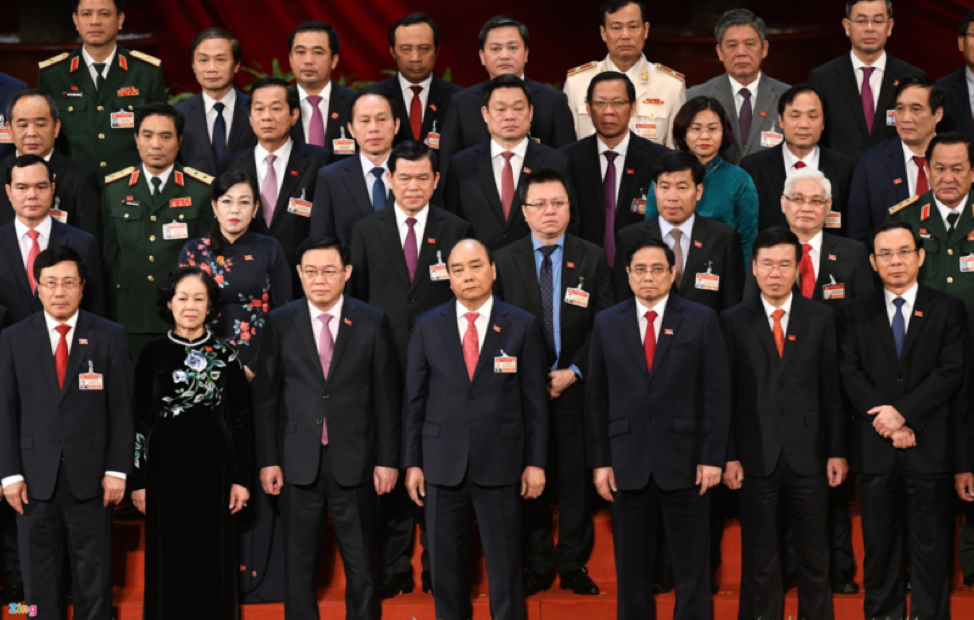
    Only 9.5 percent of the members of the Central Committee of theVietnamese Communist Party (VCP) are women, or just 19 out of 200 members. Of these, 18 women are official members and one is an alternate member.

    What do these numbers tell us?

    Let’s take a look at some other numbers first.

    In the Politburo (the Party’s most powerful body), only one member out of 18 is a woman, Truong Thi Mai. Mai is currently the head of the Central Mass Mobilization Department of the Central Committee, a not-so-important organ of the Party. Also, it is expected that Mai probably will not hold any important position in the next five years.

    Among the new five members of the Secretariat – the body assisting the Politburo – one is a woman. Her name is Bui Thi Minh Hoai. Yes, while it is true that the Politburo could send more members to this body in the future, even if it does, it can only add one more woman, which would be its only female member, Truong Thi Mai.

    Compared to the 12th Party Congress, the number of female members in the Party’s Central Committee has fallen by one person, and the number of female Politburo members has decreased by two.

    None of the female Central Committee members of the 13th session may possibly hold key positions in the Party or the State. In the previous session, five years ago, Nguyen Thi Kim Ngan became the chairwoman of Vietnam’s 12th National Assembly. Now, the “gang of four” or the “four pillars,” will just be made up of males.

    However, if we look at the (arguably) equivalent of the VCP’s Central Committee, which is the National Assembly, we see a different picture.

    The percentage of women in the National Assembly over the past 10 years has often been around 25 percent. Now, it is close to 27 percent, which is a lot higher if we compare it to the number of females in the Central Committee. Furthermore, this gender ratio is expected to remain unchanged in the National Assembly election in May 2021.

    In 2018, Vietnam was among the top three countries in Southeast Asia with the highest proportion of women in its Congress, along with Laos (28 percent) and the Philippines (28 percent).

    In the world, the percentage of female delegates in Vietnam’s Congress is even higher than the United States (23 percent), the Czech Republic (23 percent), South Korea (19 percent), Hungary (12 percent), Japan (10 percent), and even exceeds the global average of 25 percent.

    Isn’t that great news? Unfortunately, the answer is No.

    It is because the National Assembly is of little significance in Vietnam. Every Vietnamese citizen acknowledges the fact that our Congress has no real authority. It is nothing more than the place that rubber stamps the Politburo’s and the Party Central Committee’s decisions.

    In Vietnamese, people usually call the National Assembly the agency of “puppets” where its delegates just nod and approve Party decisions.

    Real political power only rests in the VCP and its committees.

    The Politburo is a gathering of about 20 of the most powerful Party members. However, the Central Committee is also becoming increasingly powerful, and we could say it has become the main power center within the Party. Obtaining a position within the Central Committee is one of the key goals of any serious and ambitious Vietnamese Communist politician. Failure to enter the “Central” (the word commonly used to refer to the Central Committee) is often regarded as the end of a Party member’s political life because he or she would be one of the voices that carries no authority.

    The fact that women only make up less than 10 percent of the Central Committee, therefore, can be considered as a reflection of their actual position in Vietnam’s politics.

    Of course, the proportion of female politicians in the localities may be higher. However, for an authoritarian regime with only one political party like Vietnam, where the central government dominates almost every aspect of society, being a part of the Central Committee gives its members actual political authority.

    Why is the proportion of women in politics in Vietnam so low?

    https://2xjs7y10oiyz26vqxu2hok6y-wpengine.netdna-ssl.com/wp-content/uploads/2021/02/image-4.png
    National Assembly Chairwoman Nguyen Thi Kim Ngan presents flowers to the Standing Committee of the Central Presidium of the Vietnam Women’s Union. Photo courtesy: Ministry of Home Affairs.

    Gender stereotypes are considered to be a major barrier to climbing the political ladder in Vietnam. Research by Oxfam shows that all genders in Vietnam prefer male leaders. To them, men are viewed as more suited for leadership roles, and also have the masculine qualities that are also believed  to be the necessary qualities of a good leader.

    In spite of all the good rhetoric about fairness and gender equality promoted by the VCP propaganda machine, and despite its putting on a seemingly pretty face on the proportion of women in politics, Vietnam, in fact, is still almost exclusively dominated by men.

  • Vietnam Should Stand In Solidarity With The People Of Myanmar

    Vietnam Should Stand In Solidarity With The People Of Myanmar

    On February 1 2021, the Myanmar military arrested and detained several prominent figures from the National League for Democracy (NLD), the ruling party of Myanmar prior to the recent coup. Among those arrested were Aung San Suu Kyi and President Win Myint.

    This was followed by a swift declaration of a state of emergency and the entrenchment of  military cronies in the Myanmar government. Min Aung Hlaing, the figurehead of this new budding dictatorship, stated that it was inevitable that the military would seize control; he alleged that last year’s election, which the military resoundingly lost, was fraudulent and that this coup was their way to ensure a smooth and stable transition towards “a genuine and disciplined demoractic system.” The actions of the Myanmar military have been met by both local and international backlash, criticism, and scrutiny despite their attempt to justify the coup.

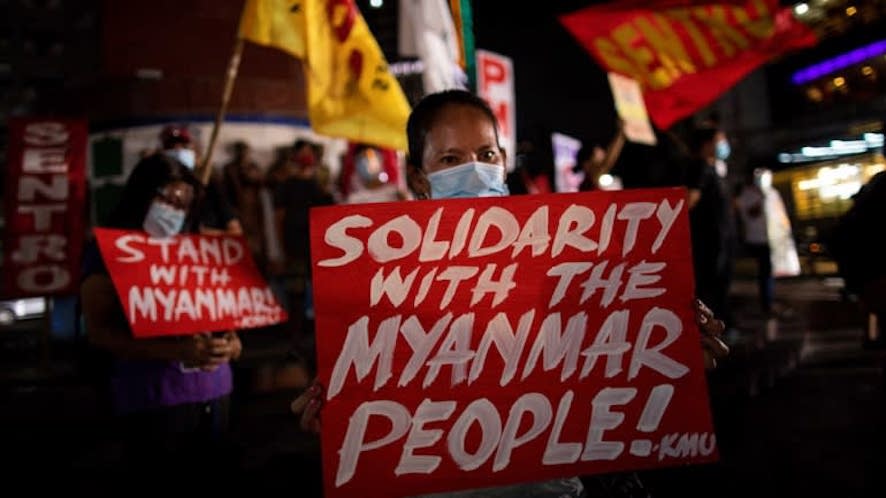
    Unprecedented numbers of Myanmar citizens have gathered to express their disapproval and anger towards the military through constant and relentless demonstrations and protests; some have even been arrested for their participation in these events. Even though the new regime has been attempting to quell these gatherings through the disruption of internet services, limiting telecommunications access, and through the enforcement of curfews, the Myanmar people have hardly faltered – they continue to remain steadfast and resolute in the face of escalating violence by Min Aung Hlaing’s fledgling dictatorship.

    On the international stage, the residents of other nations have organized demonstrations of their own in solidarity with their brothers and sisters in Myanmar. Likewise, private citizens, NGOs, and various media outlets have been spreading awareness of the situation and have placed the actions of this dictatorship under the scrutiny of the rest of the free world. Some foreign countries, such as the United States, now under the Biden administration, have imposed economic sanctions to pressure the Myanmar military into compliance.

    The United Nations Human Rights Council, despite the dissenting voices of China, Bolivia, Venezuela, Russia, and the Philippines, has also made several demands of the current ruling power of Myanmar, such as a call for the immediate lifting of the declaration of the state of emergency and the release of all arbitrarily detained individuals.

    Justice for Myanmar, a group of undercover activists that aims to improve the lives of all people in their homeland, has recently published a list of people, businesses, and organizations under the control and sway of the military junta. These entities provided the Myanmar military with assets and sources of revenue that aided it in its systemic takeover of the country that further lined the pockets of those in control.

    Justice for Myanmar calls on “the international community to impose immediate comprehensive and targeted sanctions against the Myanmar military in response to their Feb 1 coup and their continuing violations of international law, including their campaign of genocide against the Rohingya and war crimes and crimes against humanity in ethnic regions.”

    This published report lists 133 businesses fully or partially controlled by the Myanmar military, the names of 174 directors of those businesses, 112 other businesses which the military gets additional income from, and 32 state-owned enterprises that were formerly under the control of civilian institutions. While a majority of the businesses stated are based in Myanmar, there are a number which operate in other neighboring countries such as Vietnam, South Korea, and Japan.

    Yadanar Maung, the spokesperson for Justice For Myanmar, states that the “brutal and illegitimate Feb 1 coup, is enabled by their business interests. The Myanmar military leadership uses business to enrich themselves at the expense of the Myanmar people and finance their brutal campaigns of repression….” He then adds that several international businesses such as Kirin Holdings and Viettel empowered the Myanmar military and that their continued operation in the country will only serve to further embolden the junta to commit further atrocities against its people.

    With money being an essential factor in the military takeover, one of the most effective ways to aid the struggle of the citizens of Myanmar is through severing relations with those institutions and companies that actively do business with the junta.

    In Vietnam, as private citizens in our own country, something as simple as refusing to patronize businesses like Viettel is a start. Those with direct connections to organizations that work with the businesses on the list may take it a step further and call for these groups to distance themselves from the junta. With enough people, we could even petition our government to look into whether or not they actively do business with any of the corporations in the report in a bid to expose and terminate these agreements.

    Yet, something as simple and cliche-sounding as discussing this issue with family and friends serves this purpose as well.

    After all, the situation in Myanmar is not a story in a vacuum, but rather it is one of many tales regarding the struggle of freedom against the ever rising threat of authoritarianism in the world. It is merely one chapter in the anthology of human history, of the conflict between those who persevere for the betterment of all against those who would enrich only themselves at the expense of everyone else.

    As such, the events in Myanmar cannot be willfully ignored, and we have to stand as a unified front against tyranny, selfishness, and deceit. And thankfully, a few exceptions notwithstanding, the rest of the world seems to be on the same page.

    All in all, the Justice for Myanmar report, the words of its spokesperson, and all the corollary information derived from the available facts underscore the reality that this coup was not the result of grave injustice, nor the misplaced nationalistic sentiments of the Myanmar military; it is the result of the callousness and unending greed of those who would willingly choose to set their nation ablaze rather than let power slip from their fingertips through legitimate democratic mechanisms.

    It is the last resort of a delusional group of people destined to fade into the annals of history as nothing more than a footnote in a textbook. Times are changing and the people of Myanmar have spoken. True democracy will come to them in time as it has come to several other nations in the past. And while the fight rages in the streets of Naypyidaw all the way to the alleys of Kawthaung, the united people of the free world stand in solidarity, in kinship, and in brotherhood with the Myanmar citizens in their struggle for lasting democracy and freedom.

    In Vietnam, we are hoping that our human rights and democracy activists will also take the opportunity to stand in solidarity with the people of Myanmar.

  • Vietnam Briefing: Tet, COVID-19, Journalists, And The South China Sea

    Vietnam Briefing: Tet, COVID-19, Journalists, And The South China Sea

    COVID-19

    The COVID-19 situation continued to worsen throughout the Lunar New Year and serious measures have been put in place.

    • Hanoi has decided to temporarily close coffee shops, street restaurants, and historical sites from midnight, February 16.
    • Students in Hanoi will have to study online until February 28, following similar decisions by Hai Duong, Binh Thuan, Thanh Hoa, Binh Dong, and Binh Phuoc provinces.
    • Ho Chi Minh City’s students will continue to study online until February 28.
    • The chairperson of the Hanoi People’s Committee proposed that Prime Minister Nguyen Xuan Phuc close universities located in the capital until the end of February. These universities are under the authority of the central government, and not the local government.
    • Hai Duong, a northern province near Hanoi, will be locked down from February 16 for 15 days and citizens have been ordered to stay home. Only essential movements and businesses are allowed. Schools are closed until at least February 28.

    Vietnam – one of Asia’s top-performing economies during the pandemic

    Report from CNBC on February 10:

    “Vietnam was one of Asia’s top-performing economies in 2020 and among the few countries that managed to record growth last year as authorities globally scrambled in their battle against the coronavirus pandemic. It saw 2.9 percent growth in 2020, narrowly edged out by the Taiwan economy’s 2.98 percent growth.”


    A state-owned media journalist arrested for defaming provincial officials

    It’s not unusual hearing news stories about journalists being arrested in Vietnam. Mr. Pham Bui Bao Thy (Phạm Bùi Bảo Thy) – the head of the representative office of Giáo dục và Thời đại (Education and Era) newspaper in central Vietnam – was arrested and charged by Quang Tri provincial police with “abusing democratic and freedom rights to infringe on the State’s interests and rights and the interests of organizations and individuals” under Article 331 of the Penal Code, according to Tuoi Tre and the Vietnam News Agency.

    The provincial police have accused him of using anonymous Facebook accounts to spread baseless information and to defame some top government officials in the province.

    The police have put him under a two-month detention order.

    Another person named Le Anh Dung (Lê Anh Dũng) was also arrested in the same case. Voice of Vietnam (VOV) reported that Mr. Dung, 56, lived in Ho Chi Minh city and he is accused of administering the accounts.

    Article 331, previously Article 258 of the Penal Code, is widely condemned by rights groups such as Amnesty International and Human Rights Watch. Several human rights defenders and dissidents have been arrested and convicted of the crime, including well-known journalists such as Nguyen Huu Vinh, also known as Anh Ba Sam (2014), and Truong Chau Huu Danh (2020).


    Is a government-backed hacking group targeting dissidents?

    The lotus is seen as a symbol of Vietnam. Look at the national flagship airline’s logo and you will see it. And now, technology experts believe that a hacking group named OceanLotus, potentially linked to the Vietnamese government, is targeting dissidents and human rights organizations.

    The Committee to Protect Journalists, an international rights group, released an interview with Steven Adair, president and co-founder of Volexity, a US-based cybersecurity company that has studied OceanLotus, on February 1. Below is a part of the interview:

    “Question: Is it possible to say whether state actors are behind OceanLotus?

    Answer: We definitely believe it’s out of Vietnam, but whether it’s a government agency, a contractor working for them, or something else, we don’t claim that we know that. We look at the immense level of effort and resources to maintain all the infrastructure and identify the victims. It’s not something anyone’s going to do in their spare time.”


    Human Rights Watch: Vietnam among countries using COVID-19 to justify free speech violations

    A report released on February 11 by Human Rights Watch lists Vietnam among countries taking advantage of the COVID-19 pandemic to advance the governments’ agenda of suppressing human rights, especially the right of free speech.

    Quote:

    “Authorities in at least seven countries have blocked individual news reports or ordered online media or social media users to remove or edit Covid-19 related content. Vietnamese authorities summoned 650 Facebook users between January and March to question them about publishing false information relating to the pandemic, forced all of them to remove their posts, and fined over 160 of them. Vietnamese law does not only target incorrect information, but information that is deemed to defame or insult others’ reputation or honor.”


    France’s nuclear attack submarine patrols in the South China Sea

    On February 17, a lot of Vietnamese people inside and outside of Vietnam, as well as the state-owned media, will be speaking about the border war with China that started exactly 42 years ago. Anti-China sentiment has been strong in Vietnam, and many people wanted to see world superpowers harshly confront China on issues such as trade, human rights, security, and so on. Territorial disputes in the South China Sea are among them. Vietnamese people are desperate to see the United States and other countries on their side. Last week, France seemed to make a strong statement on the issue.

    Quoted from AFP:

    “The French nuclear attack submarine SNA Emeraude recently conducted a patrol in the South China Sea, Defence Minister Florence Parly announced this week, sparking questions over the timing and tensions in Asia’s hotly contested waters.”


    Xi Jinping urges Vietnam to “stand against the instigation of external forces” on the South China Sea issue

    It was Lunar New Year in Vietnam and China last week. The two countries’ top leaders, Nguyen Phu Trong of Vietnam and Xi Jinping of China, had a phone conversation on February 8 to exchange wishes and to discuss various issues, according to Xinhuanet, China’s state-owned media agency. Here are a few things to note from this conversation.

    Quote:

    “China, Xi added, is willing to work with Vietnam to accelerate the synergy of the Belt and Road Initiative with the ‘Two Corridors, One Economic Belt,’ promote the construction of cross-border economic cooperation zones between the two countries, and explore exchanges and cooperation in such fields as healthcare, digital economy and humanities.

    The two sides should strengthen coordination and cooperation on international and regional issues, firmly uphold the international system with the United Nations at its core, oppose protectionism and unilateralism, and support a fast entry into force of the Regional Comprehensive Economic Partnership agreement, Xi noted.

    China and Vietnam, he said, should properly manage the maritime differences and stand against the instigation of external forces to promote the development of regional peace and stability.”

    Vietnam’s major mainstream media outlets, such as The Government’s Portal, Nhan Dan, VOV, and Tuoi Tre, didn’t report the above-mentioned points of the conversation.