Tag: #wp

  • Ho Chi Minh – From Political Monument To God Of Prayers – Part 2

    Ho Chi Minh – From Political Monument To God Of Prayers – Part 2

    This article was written in Vietnamese by Vo Van Quan and was previously published in the Luat Khoa Magazine on February 1, 2021.


    The religion Way of Uncle Ho aims to start a spiritual revolution in order to save the nation from foreign enemies, both past and present. This revolution also aspires to harmonize the balance between the worlds found in this religion’s metaphysical framework. These worlds include the Heavenly realm, the Buddha’s realm, the Earthly realm, and the Yin realm.

    “A spiritual heavenly revolution.

    Replace the old, change to the new. This religion will bring the people and our country up and we will no longer be slaves of others.

    From now on there will be a new order. By the law of God, by the demand of our ancestors.”

    According to the teachings of this religion, the Heavenly realm rules over the other three realms. However, the blasphemous behavior, attitude, and way of worship in the Earthly realm destabilizes the harmony of the other worlds.

    This religion espouses that, because of Ho Chi Minh’s achievements, the purity of his soul, and his moral conduct on earth, his soul was “elected” to become the leader of the Heavenly Palace upon passing away. Henceforth, he leads the spiritual revolution which claims to promote the right path to reach heaven in the material world.

    https://2xjs7y10oiyz26vqxu2hok6y-wpengine.netdna-ssl.com/wp-content/uploads/2021/02/image-1024x812.jpeg
    Photo: Hochiminh.vn.

    In Chapter 4 of “New Religions and State’s Response to Religious Diversification in Contemporary Vietnam,” the author Hoang Van Chung summarizes the eight issues that this revolution wants to address:

    1. A mistaken understanding of the origins of the Vietnamese people and the their neglect of ancestor worship;

    2. The overuse of joss paper and objects;

    3. The incorrect performance of traditional rituals to the Mother Goddess;

    4. A mistake in dating the death anniversary of Ho Chi Minh;

    5. The invalidity of rituals of spiritual possession;

    6. The pervasive worship of foreign spirits and gods, such as the Indian Buddha, Jesus Christ, and Chinese spiritual figures (Guan Yin or Bodhisattva);

    7. Disrespect for heroic martyrs; and

    8. Making mistakes in medical diagnosis and the treatment of illnesses caused by spiritual entities.

    The religious texts of the Peace Society state:

    “In the twenty-first century

    The first Vietnamese Buddha was born.”

    Monism has since become the motto of Ho Chi Minh’s religion. This religion states that the Vietnamese people can only worship the Vietnamese Buddha: “Uncle Ho.” Worship of any other foreign power also goes against their tenets and beliefs.

    “Do not worship foreign gods

    We worship our own Buddha in our country.”

    Most importantly, Vietnam is seen as the leader of the entire revolutionary process that determines the future of mankind; this demonstrates a somewhat extreme form of nationalism.

    “Vietnam is the eldest son of the Emperor.

    Born first in the Earthly world.”

    If people disobey the Jade Buddha’s commands, natural disasters, epidemics, wars, and social disorder will befall human society. This punishment is therefore not limited to  just one nation or to one group of people, but extends to the entire world.

    What is the Way of Uncle Ho’s religious practice?

    The Ho Chi Minh religion has its own form of exorcism and this practice, in general, is very popular in the north. However, Madam Xoan believed that those who perform this act, if they come from the Mother Goddess religion or other popular sects, would often lose their cognitive abilities. On the contrary, Madam Xoan claimed she was a disciple of the Jade Buddha, so she could hear and preach the voice of the Jade Buddha without losing her reason.

    As for worship, adherents of this religion are guided to worship Ho Chi Minh at home.

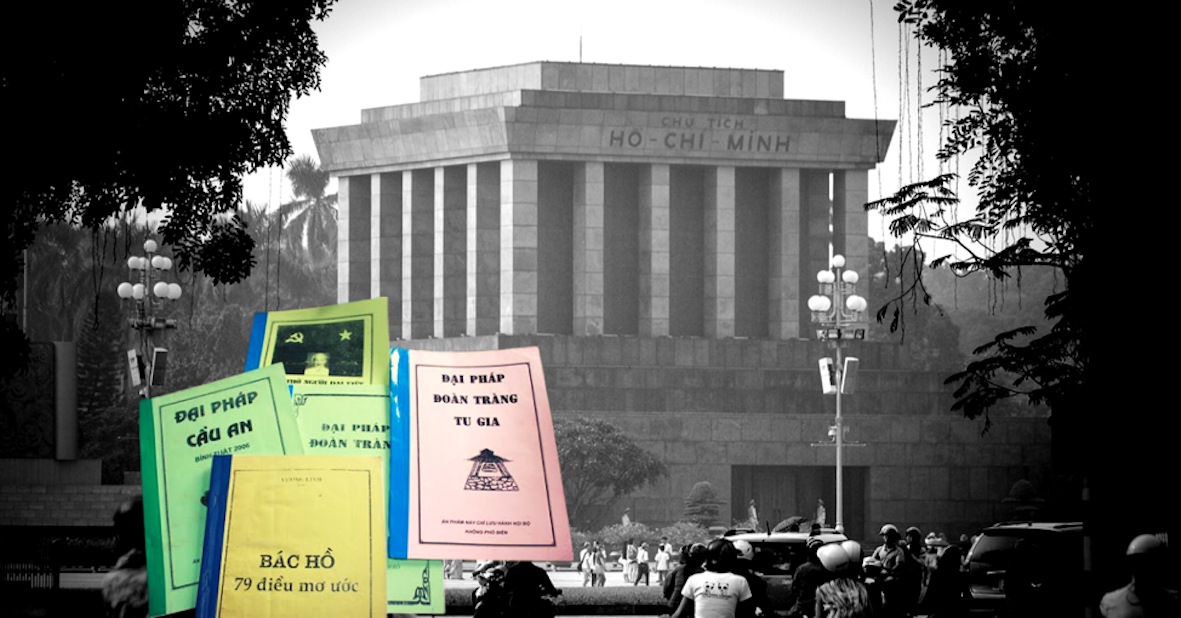
    These worshipers have an altar that includes a statue or photo of Ho Chi Minh, the Communist Party’s version of the Vietnamese flag, and a bowl of incense. This altar should also be higher than all other altars in the house. Each day believers are required to offer fresh flowers, cakes, or fruits. Prayer is optional, but burning joss paper and other objects is prohibited. Their holidays also follow the official Vietnamese national holiday calendar which somewhat shows the religion takes a political stance.

    One of the Ho Chi Minh Shrines in Ben Tre. Photo: The Vietnamese.

    With respect to mass religious gatherings, the Peace Society spends most of its time performing activities such as the annual ancestral worship ceremony, which obviously includes Ho Chi Minh and the martyrs. They also provide magic spells and incantations.

    It is also quite interesting to note that the Way of Uncle Ho has a very high anti-Chinese sentiment.

    According to the leaders of the Peace Society, evil spirits are the wandering souls of the Chinese invaders who died years ago. They still haunt Vietnam, harm the people’s health, and negatively influence the future of the nation.

    “Don’t listen to evil spirits. In the past, they were the enemy who deceived us and harmed us.

    They admired evil and always wanted to invade our country.”

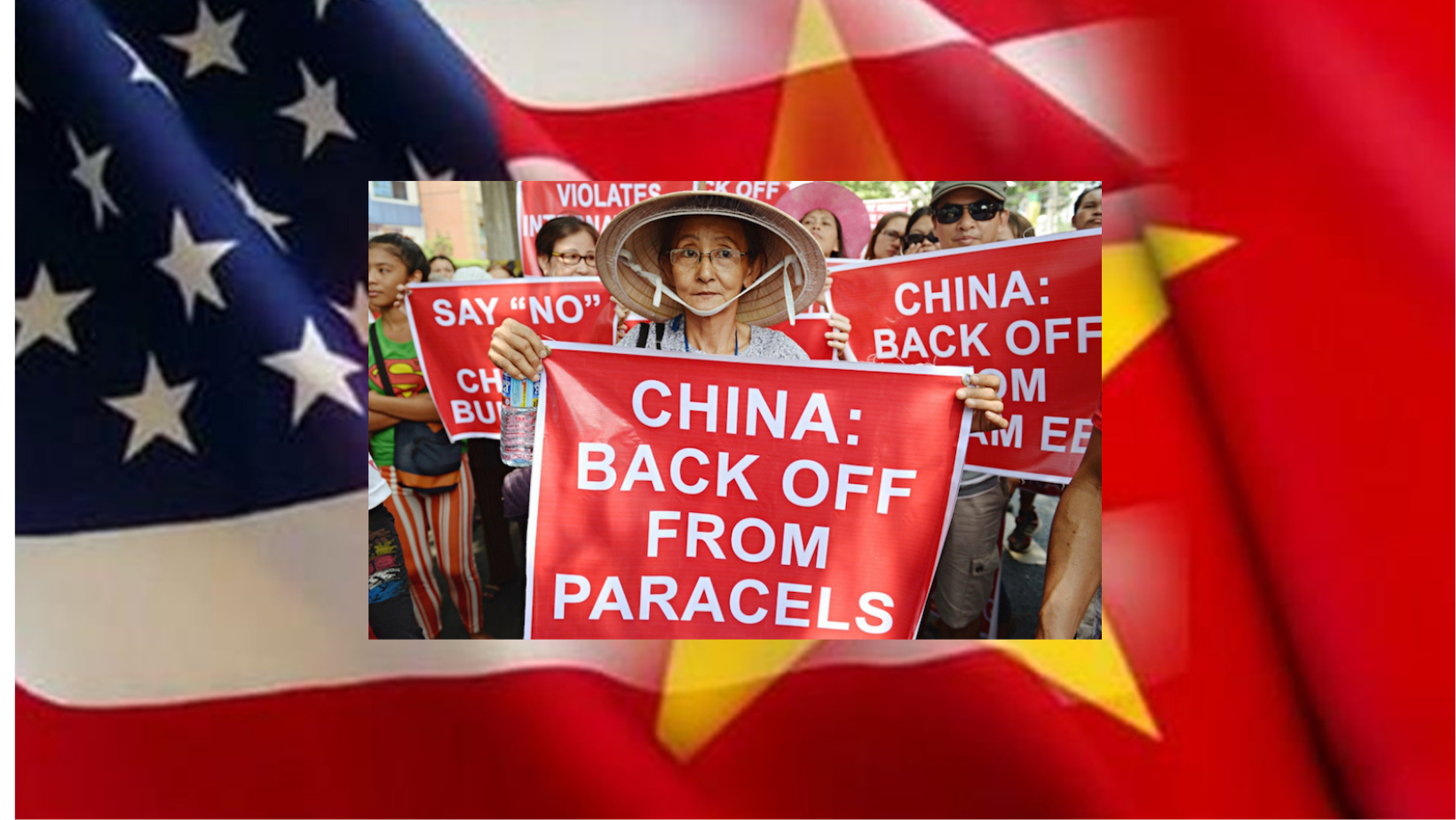
    When the Hai Duong 981 drilling rig entered Vietnamese territorial waters in 2014, Madam Xoan and 400 other followers gathered, prayed, and condemned the behavior of the enemy in the north, the Chinese.

    “I pray to Uncle Ho, he will pour out the safe water

    […] So that he could protect our sovereignty over seas and islands

    from being  invaded, in heaven and on earth.”


    Madam Xoan has repeatedly tried to register this religion with the Vietnamese government, but the answer from officials is usually to wait for a decision from their superiors. She is also believed to have close connections with more than 30 figures in the central government, including scientists working in state agencies, ministry officials, and intellectuals interested in studying and learning about this religion.

    According to research estimates, there are believed to be more than 10,000 official followers of the Way of Uncle Ho, and major ceremonies take place with more or less a thousand believers in attendance. This is a significant figure if you consider the fact that other domestic religions are slowly dying.

    In addition, although not officially recognized, the followers of Ho Chi Minh’s religions, such as the Jade Buddha, receive approval from the government, along with the ability to exercise their freedom of religion easier than others.

    However, these were the study’s conclusions up to the time of publication (2017).

    In more recent times, the Way of Uncle Ho as the Jade Buddha has also fallen under the close scrutiny of local authorities. For example, the People’s Public Security newspaper published an article that claimed the Way of Uncle Ho had used Ho Chi Minh’s image with “misguided claims,” such as alleging that it “received Uncle Ho’s blessings” and its leaders offered some medicinal leaves to cure all diseases of the people. The authorities of some provinces, such as Vinh Phuc, also warned that this religion was an act of “illegal” religious activities.

    The Vietnamese government is now in a dilemma. Should it maintain the treatment of Uncle Ho as a well-loved political figure and expect all Vietnamese citizens to continue worshiping his life? Or will the authorities rein in the Way of Uncle Ho and other cults and illegal religions involving Ho Chi Minh, and deal with these religious activities as it has often dealt with other different religions in the country? Only time will tell us how the authoritarian government of Vietnam will act on this issue.

  • Ho Chi Minh – From Political Monument To God Of Prayers – Part 1

    This article was written in Vietnamese by Vo Van Quan and was previously published in the Luat Khoa Magazine on January 31, 2021.


    “The nation of Vietnam will stand forever

    with Jade Buddha – Chí Minh – Ái Quốc”

    (A quote from a 2010 prayer)

    The process of globalization in Vietnam has made major religions such as Buddhism and Christianity overshadow the silent development of local belief systems. However, overlooking them would be a mistake.

    In a certain sense, these domestic religions most accurately and clearly reflect the dynamics of religious beliefs among the masses, and they can also show some of the implications of development in Vietnam’s societal relationships.

    The religion called “Way of Ho Chi Minh as the Jade Buddha” (referred to as the Way of Uncle Ho in this article) is one significant example we can use to learn about how religion is practiced or how it is imbibed by the Vietnamese people. Up till now, there has not been an official study, or even an official government statement, on this strange and peculiar religion.

    In the development framework of the research program “Boundaries of Religious Freedom: Regulating Religion in Diverse Societies,” Dr. Hoang Van Chung gives us a clearer and deeper look at the development of Ho Chi Minh’s religion in Chapter 4 of “New Religions and the State’s Response to Religious Diversification in Contemporary Vietnam.”

    Dr. Chung is currently the head of the Department for Research on Policy and Law on Religion at the Institute for Religious Studies, under the Vietnam Academy of Social Sciences. He obtained his Ph.D. in Sociology from La Trobe University (Australia) in 2014, and was a scholar with the ISEAS-Yusof Ishak Institute (Singapore).

    It is important to note that even though his book was published in 2017, the accompanying data in the study of Ho Chi Minh City was collected from 2011 to 2012. Therefore, there is a gap between the information provided by the author and the present state of this religion.

    Một hình ảnh được cho là điện thờ Hồ Chí Minh của tín đồ đạo Hồ Chí Minh. Ảnh: Blog Tìm tòi và Lượm lặt.
    Ho Chi Minh statue is worshipped at the Ho Chi Minh Shrine. Photo: Search and Gathering Blog.

    How was the “Way of Uncle Ho” formed?

    According to a research by Dr. Chung published in 2016, a Madam Xoan founded the Way of Uncle Ho at the Peace Shrine (now called the Peace Temple) on January 1, 2001.

    Madam Xoan, 73, experienced a miserable childhood in Nam Dinh Province. She lost her mother at a young age, had to live with her father and stepmother, and began working at the age of just 15. She also attempted suicide many times. At the age of 19, she married a notary public and had four children.

    Everything changed when she became seriously ill just before she turned 30. It was reported that Xoan was unconscious and that the pain she felt in one finger was so intense that it had to be completely amputated.

    Meanwhile, doctors could not find the reason for her illness nor determine the cause of the disease. One day while she was waiting to be treated in Hanoi, she heard a strange voice telling her that she was not sick but that this was just a test to see if she was qualified to serve a higher purpose. This voice also affirmed that Mrs. Xoan had spiritual inclinations.

    She immediately quit her factory job and became a humble merchant buying and selling joss paper. During the next 5 years, Mrs. Xoan continued to be guided by this voice and her financial situation gradually improved. By the time she was able to clearly hear and fully communicate with this voice, she gave up her small business to study the supernatural.

    In 1989, Mrs. Xoan heard the voice again commending her for being the first person chosen by the Heavenly Palace to complete her assigned mission.

    From politicians to gods

    Since the 2000s, the stories of individuals who have achieved great success and have become rich for relying on the help of Ho Chi Minh’s Jade Buddha have been compiled by the Peace Society of Heavenly Mediums (the religious leaders of the religion “Way of Uncle Ho”). These stories were then spread among the followers of this belief system.

    For instance, there is also a similar story about an entrepreneur who worked in the construction industry. The story claims that he became very rich because of his obedience to “Uncle Ho.” To show his sincerity, he donated 200 million dong to the Peace Temple. This amount was then used to upgrade and renovate  this place of worship.

    Ho Chi Minh’s image has come a long way in the last century, morphing from a simple politician who was close to the people, to a god capable of interfering in and controlling the lives, happiness, and success of everyone who lives on Earth.

    What happened?

    Tổng Bí thư, Chủ tịch nước Nguyễn Phú Trọng dâng hương cúng bái Chủ tịch Hồ Chí Minh tại Hà Nội năm 2019. Ảnh: TTXVN.
    General Secretary cum State President Nguyen Phu Trong offers incense to worship President Ho Chi Minh in Hanoi in 2019. Photo: VNA.
    Đoàn đại biểu của Đảng Cộng sản Việt Nam và người dân Cao Bằng dâng hương, dâng hoa tại Đền thờ Chủ tịch Hồ Chí Minh tại Cao Bằng. Ảnh: pacbo.vn.
    The delegation of the VCP and the people of Cao Bang offer incense and flowers at the Ho Chi Minh Temple in Cao Bang. Photo: pacbo.vn.

    Clearly, the deification of Ho Chi Minh did not begin with Vietnamese civilians.

    Dr. Chung’s research indicated that numerous other studies have linked Ho Chi Minh’s death with the Vietnam Communist Party’s (VCP) own propaganda campaign. The State has intervened in directing or encouraging the remembrances of Ho Chi Minh. This has turned a mere ritual into the worship of the late leader.

    Dr. Chung also concluded that many other researchers also pointed out that the VCP had a very clear goal of building a cult of personality around Ho Chi Minh. From promoting Uncle Ho’s supposed divine moral qualities to building up various myths about him, the VCP wants to make this version of Ho Chi Minh the formal history.

    However, the most interesting point that Dr. Chung stated was that the VCP only expected to limit this phenomenon about Uncle Ho as a personal cult within the realms of the “ancestor worship” belief model. By doing that, the VCP wanted to connect the history of Vietnam’s national democracy movement and its communist movement, leading it to national success in the future. Once they establish this basis, the VCP, a political conglomerate founded by Uncle Ho, would have solidified more of its legitimacy.

    The author emphasizes that the goals of the VCP and the desires of the masses in worshiping Ho Chi Minh are different.

    The VCP’s model of worship of Ho Chi Minh is considered less religious and less superstitious. Therefore, Dr. Chung asserts that the religions associated with this political leader, such as the Way of Uncle Ho as the Jade Buddha, were “undesirable consequences” of state policy. The government’s efforts regarding the remaking of Ho Chi Minh’s image, if compared to people’s beliefs, are heterogeneous.

    There are a lot of questions for Dr. Chung when he stated this argument.

    It is because in Vietnam, we are seeing a common phenomenon that state agencies regularly promote the worship of Uncle Ho. The government placed Ho Chi Minh statues and photographs in many temples in the north of Vietnam, and offered incense to commemorate Ho Chi Minh during big national holidays, and the like.

    If we follow Dr. Chung’s reasoning and assumption that the state did not want, or at least did not foresee, the formation of a religion centered around Ho Chi Minh, I think his argument is a bit unpersuasive.

    In the context that the Vietnamese economy had just opened up and the practice of worship had just reformed since the 1990s, the nature of the people’s curiosity and experimentation for new religions and beliefs is obviously evident. Therefore, it is fairly certain to foresee that the people will eagerly want to join a new religion like the Way of Uncle Ho as the Jade Buddha if it is offered.

    (To be continued)

  • Vietnam Briefing: Meet The New State Leadership

    Vietnam Briefing: Meet The New State Leadership

    We release the Vietnam Briefing every Monday morning.


    The rumors were right. Meet the new state leadership

    We reported correctly in our first briefing on February 8 that there were rumors that current Prime Minister Nguyen Xuan Phuc, Pham Minh Chinh, the head of the Party Central Committee’s Organization Commission and Vuong Dinh Hue, the secretary of the Hanoi Party Committee, would be named president, prime minister, and chairperson of the National Assembly, respectively.

    What is happening in the last session of the National Assembly is proving the rumors are right.

    Vuong Dinh Hue took over the chairperson position of the National Assembly on March 31 after his predecessor, Nguyen Thi Kim Ngan, was released from duty the previous day by the legislative chamber’s resolution. The Communist Party quickly appointed the then-minister of finance, Dinh Tien Dung, to replace Hue as the party chief of Hanoi on April 3.

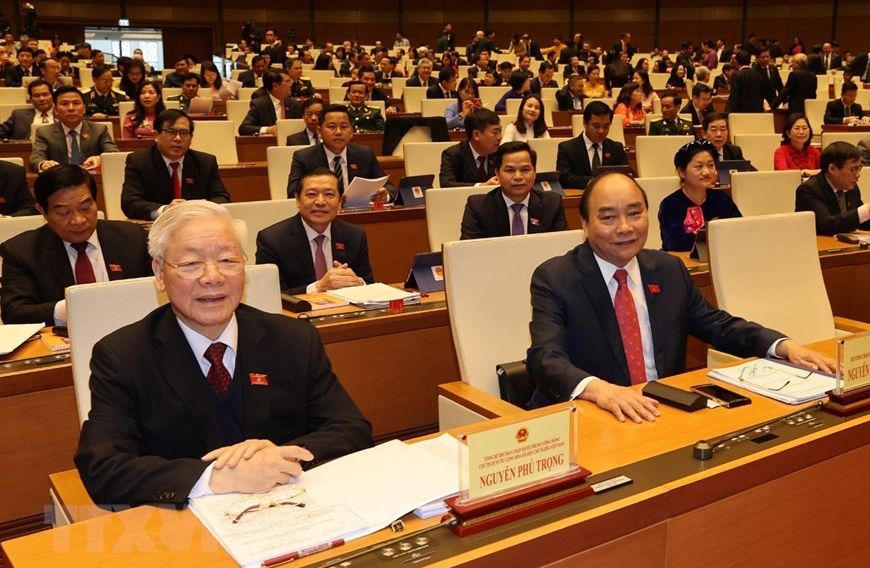
    The National Assembly also relieved Nguyen Xuan Phuc from the prime minister post and Nguyen Phu Trong from the president post on April 3, paving the way for elections of Nguyen Xuan Phuc to be president and Pham Minh Chinh to be prime minister this week. Phuc was already nominated to the post on April 2.

    When this entire process ends tentatively by the end of April 5, the political tradition of having a “gang of four” sharing four top seats of the party and the state will be restored.


    Another journalist is arrested

    Nguyen Hoai Nam, a former investigative journalist working for the mainstream media, was arrested on April 2 in Ho Chi Minh City. He is currently under pre-trial detention and is charged with “abusing democratic freedoms to infringe upon the interests of the State, lawful rights and interests of organizations and/or citizens.”

    Who is Nam? VnExpress says he was a former reporter at Thanh Nien (Youth), Phap Luat TPHCM (HCMC Law), Vietnam Television and Phap Luat Viet Nam (Vietnam Law). The news agency added that Nam had posted on his Facebook account several articles challenging police investigations into violations at Vietnam Inland Waterways Administration, which it said had  resulted in the arrest of its former deputy head Tran Duc Hai in 2019.

    According to VnExpress: “The reporter implicated 15 people who had allegedly committed violations regarding the case, 12 more than determined by police. He went on to accuse the investigators of ‘letting the criminals off the hook.’”

    The nature of the charge:

    • The charge is based on Article 331 of the 2015 Penal Code, previously known as Article 258 of the 1999 Penal Code.
    • The criminal provision is widely condemned by both domestic and international human rights groups as vague and as used by the government to silence critics.
    • Activists ran a campaign called the “258 Campaign” to advocate for the abolition of the provision.

    Four citizens convicted of spreading anti-state propaganda

    Publicly saying bad things about the Communist Party might well result in being imprisoned for years in Vietnam. That’s what happened to four citizens in Khanh Hoa Province on March 30.

    Nguyen Thi Cam Thuy, 45, was sentenced to  nine years in prison, Ngo Thi Ha Phuong, 25, to seven years and Le Viet Hoa, 59, to five years, VnExpress reported.

    Another person, Vu Tien Chi, was sentenced to 10 years in prison in Lam Dong Province.

    Just like Article 331 and Article 258, this criminal provision has received a high degree of criticism from human rights groups inside and outside of Vietnam.


    Read more about Vietnam:

    The US Department of State’s human rights report on Vietnam

    “The Socialist Republic of Vietnam is an authoritarian state ruled by a single party, the Communist Party of Vietnam, and led by General Secretary and President Nguyen Phu Trong, Prime Minister Nguyen Xuan Phuc, and Chairwoman of the National Assembly Nguyen Thi Kim Ngan. The most recent National Assembly elections, held in 2016, were neither free nor fair; there was limited competition among Communist Party-vetted candidates.”

    Drinking coffee in the US? Worry about forests in Vietnam, study says

    Mongabay | April 2, 2021

    “The U.S.’s thirst for coffee drives forest loss in central Vietnam, while Germany’s craving for cocoa is doing the same in West Africa, a landmark study that tracks the drivers of deforestation across borders found.”

    Vietnam Should be More Proactive in Global Governance

    The Diplomat | March 30, 2021

    “After its COVID-19 successes, Vietnam is well positioned to play a more energetic role on the global stage.”

    The Vietnamese Recovery Is Made in America

    Wall Street Journal | March 30, 2021

    “Vietnam’s economy is growing again, on the back of a strong rise in exports. The Southeast Asian nation looks to be one of the most clear-cut international beneficiaries of the U.S. stimulus package.”

    How The Vietnamese State Uses Cyber Troops to Shape Online Discourse

    ISEAS | March 3, 2021

    • The operations of Vietnam’s public opinion shapers and cyber-troops reveal that the online discourse is manipulated to enforce the Communist Party’s line.
    • Vietnamese authorities constantly grapple with the vexing question: How to strike a delicate balance between placating critical public sentiment online while ensuring that it does not spill over into protests against the regime.
    • When it comes to methods, targets and motives, there appears to be significant crossover between public opinion shapers and the government’s cyber troops.
    • The Vietnamese state cyber-troops have been encouraged to use real accounts to massreport content. This helps explain why it is the only Southeast Asian state to publicly acknowledge having a military cyber unit.
    • The lack of political and technological wherewithal presents an uphill battle for these cyber-troops in influencing Vietnam’s online information environment.
  • The Price Of Progress

    The Price Of Progress

    The aftermath of the war left Vietnam in shambles. As the conflict that raged and surged within its borders came to an end, the country was left bleeding, battered, and broken. With millions dead, an almost non-existent economy, and a bleak uncertain future under the questionable leadership of the Communist Party, Vietnam was beginning to look more and more like a lost cause, destined to be another failed state under the selfish rule of tyrannical forces.

    However, no one would have expected Vietnam to be where it stands today.

    Since Vietnam opened its economy to international trade in 1986, the country has undergone a massive and abrupt shift. It morphed from being one of the poorest nations in the world to being one of the fastest growing economies in Southeast Asia. Case in point, between the years 2002 to 2018, Vietnam’s GDP increased 2.7 times which, according to the World Bank, lifted 45 million people out of poverty.

    Vietnam’s economy has also shown surprising resilience in the face of the ongoing global pandemic. While other countries in the Southeast Asian sphere have been greatly suffering due to COVID-19, Vietnam has been keeping itself afloat; some might even argue that it is thriving.

    Aside from keeping infection rates under control, Vietnam’s GDP actually grew a surprising 2.6 percent in the third quarter of last year, passing even Singapore and Malaysia. Because of its commendable handling of the pandemic and its perceived economic stability, Vietnam is shaping up to be an alternate hub for manufacturing as international businesses begin to pull out of China.

    Yet, economic growth and financial stability is only one way to measure the worth of a nation. While Vietnam seems to be doing admirably well in this regard, it is floundering in several other aspects. To be more specific, in its observation of human rights, and in the protection of several of its most marginalized citizens.

    The Human Rights Measurement Initiative’s (HRMI) 2020 Country Report on Vietnam presents several findings that both highlight Vietnam’s economic success and its key failings as a country.

    In terms of Quality of Life, Vietnam has performed reasonably well in the categories of Health, Housing, and Work but its ranking regarding food accessibility still falls below the benchmark.

    This report states that “Vietnam is performing better than many countries in East Asia for the rights to housing (89.5%), work (91.3%), and health (94.6%). This suggests that the Vietnamese government is using its resources fairly effectively so that people have access to housing and work. These scores have also increased steadily since 2007, suggesting that the quality of life in Vietnam is increasing.”

    However, in regards to food, the Human Rights Measurement Initiative also believes that Vietnam could manage its resources better to ensure that more of its citizens do not go hungry.

    It is also important to take note of some caveats in the given information. The report makes an effort to highlight the fact that Housing does not actually refer to having a place to live in.

    Rather, it refers to sanitation access and access to potable drinking water. As such, several respondents have stated that some people are at risk of having these rights violated. Some of these people include street children, homeless youth, and surprisingly, human rights advocates.

    The category for Work also needs slight clarification. The 91.3 percent figure refers to people who are NOT absolutely poor. This means that anyone who lives on more than a meager amount of  US$3.20 a day is counted towards this number.

    Granted, even with Vietnam’s less than stellar performance regarding food accessibility and concerns regarding housing and work, what the Vietnamese government has done so far is, to a small degree, admirable and we have to give credit where credit is due, political beliefs notwithstanding. If we go solely by the data presented regarding Quality of Life, and also taking into consideration the state Vietnam was in after the war, what it has accomplished is somewhat commendable.

    But the report does not end there. And as more information is presented, the more sinister reality behind the facade begins to reveal itself.

    Regarding the upholding of civil and political rights, it is clear that Vietnam is performing miserably. In all aspects presented in the report under the categories of  Safety from the State and Empowerment, Vietnam’s scores range from Bad to Very Bad and these scores have only been getting worse with the passage of time.

    The data heavily implies that the Vietnamese government doesn’t seem to care about protecting, or even at the very least acknowledging, the universal human rights of its citizens.

    The report also notes several groups of people whose rights are at most danger of being violated. One fact that immediately stands out is that these groups are common in all the lists provided within the report itself. Some of these people-at-risk include: members of labour unions, people engaged in or suspected of political violence, journalists, people with particular religious beliefs and practices, immigrants, and human rights advocates.

    In general, if a person has particular political affiliations or beliefs that don’t align with what the Vietnamese government espouses, or if they believe in a religion that isn’t part of the mainstream zeitgeist, their rights to work, freedom from arbitrary arrest, freedom from disappearance, freedom from torture, assembly and association, and freedom of opinion and expression are actively hindered, ignored, or violated by the government.

    In effect,  the HRMI report presents a two-faced Vietnam.

    On the one hand, you have Vietnam as a rising cub economy. This is the face of Vietnam that is often read or heard about in mainstream news outlets.

    This is the Vietnam that Western economists praise to high heavens for being able to steer itself away from total collapse towards some semblance of stability and even growth. This is the Vietnam that the communist  government wants its citizens to be proud of.

    On the other hand, you have Vietnam as a heartless oppressor of its own people. This is the Vietnam that is willing to go to drastic lengths to silence or restrict any form of discontent, dissent, and differing points of view.

    This is the Vietnam that shows no concern for those it tramples under its heels as it marches forward towards a selfish vision of progress and growth that benefits only those who hold the reins.

    This is the Vietnam that is willing to pay for the price of progress with the rights, liberties, and lives of its own citizens.

    This is the face that very few get to see.

    But it doesn’t have to be this way. There are many avenues to progress and growth, and the road is never set in stone. History has shown us time and time again that nations formed on a foundation of dialogue, compromise, and free speech tend to outlast the rest and stand firm against the test of time.

    Governments can work with their citizens, even with those who hold beliefs or thoughts that go against the grain to bring about benefits that everyone can enjoy. This kind of progress is possible, and it is attainable.

    However, the question isn’t “Can Vietnam go on this path?” The response to this should be apparent; if Vietnam can pull itself from the brink of collapse to be where it is today, of course it can.

    In reality, the question stands as such,“Is the Vietnamese government willing to do so?”

    And this query is a lot harder to answer.

  • Vietnam Briefing: Another Congressional Candidate Arrested While Congress Elects New Leaders

    Vietnam Briefing: Another Congressional Candidate Arrested While Congress Elects New Leaders

    The Vietnam Briefing is released every Monday.


    Another congressional candidate arrested

    Independent journalist Le Trong Hung, a candidate for the National People’s Congress, was arrested on March 27 by Hanoi local police, VOA cited his family.

    He had filed his candidacy earlier this year and his application was approved by election officials.

    Hung is known for running his social media-based TV channel called Chan Hung TV, that broadcasted information about victims of injustice, including  farmers who had lost their land and people who had been wrongfully convicted.

    Besides Hung, another person arrested after declaring his candidacy is Tran Quoc Khanh, as we reported two weeks ago. The general election will be held on May 23, 2021.


    The National Assembly is convening to decide top state positions

    If things go as planned, Vietnam will have a new president, a new prime minister and a new chairperson of the National Assembly potentially by April 7.

    Some other top seats of the National Assembly and the cabinet will also be considered.

    It’s now officially announced that current Prime Minister Nguyen Xuan Phuc will be nominated to be president of the state.


    Tension in the South China Sea

    Not only has China sent warplanes into Taiwan’s air space over the past week, but also hundreds of Chinese vessels have also massed in disputed areas in the South China Sea.

    From Reuters:

    “Vietnam’s Foreign Ministry spokeswoman Le Thi Thu Hang on Thursday said the Chinese vessels at the reef, which Hanoi calls Da Ba Dau, had infringed on its sovereignty.

    ‘Vietnam requests that China stop this violation and respect Vietnam’s sovereignty,’ Hang told a regular briefing.

    A Vietnamese coastguard vessel could be seen moored near the disputed area on Thursday, according to ship tracking data published by the Marine Traffic website.

    Hang said Vietnam’s coastguard was ‘exercising its duties as regulated by laws’, including international law.”


    Rapping Vietnam Ambassador Daniel Kritenbrink tapped as Joe Biden’s top Asia envoy

    He made headlines last month in Vietnam by rapping in both English and Vietnamese. Now he’s nominated for one of the top seats in the US State Department.

    From The South China Morning Post:

    “The US ambassador who made a splash in Vietnam by making a rap video may soon get a promotion – to be the top diplomat for Asia under President Joe Biden. Daniel Kritenbrink, a career diplomat who speaks Chinese and Japanese, was nominated by Biden to be the assistant secretary of state for East Asia and the Pacific, a White House statement said.”


    Learn more about Vietnam:

    Vietnam proves immune to China’s vaccine diplomacy campaign

    March 27, 2021 | Nikkei Asia

    “It would be a stretch to accredit that one comment as an accurate measure of public sentiment in Vietnam toward the Chinese-made vaccine. But in Southeast Asia, Vietnam has remained a prominent outlier to China’s fanfare vaccine diplomacy campaign.”

    Biden can address Vietnam’s currency valuation without Section 301

    March 27, 2021 | East Asia Forum

    “While there were intense talks during the Trump administration — including a call between Trump and Vietnamese Prime Minister Nguyen Xuan Phuc — there are no reports suggesting any ongoing talks with the Biden administration.”

    China, Vietnam Lead Three-Speed Asian Recovery, World Bank Says

    March 26, 2021 | Bloomberg

    “A three-speed recovery is taking hold across East Asia and the Pacific, with China and Vietnam already beating their pre-pandemic levels of economic growth while other countries could take years more to heal, according to World Bank projections.”

    Vietnam’s New Government Election: The Sooner the Better?

    March 23, 2021 | Fulcrum

    “There is little reason for the Community Party of Vietnam to repeat its “fast track” procedure to get a new government in place. The Party’s reputation is best served by its playing by the rules.”

    Why Biden Sends Warships to the South China Sea, Just as Trump Did

    March 22, 2021 | VOA News

    “U.S. President Joe Biden is keeping pace with his predecessor in the frequency of American warships sent to Asia, analysts believe, a way to get a foothold in contested seas and routinize warnings aimed at the region’s strongest maritime force, Beijing.”

  • Oppression Through Greed: What The Myanmar Military And Vietnam Stand To Gain

    Oppression Through Greed: What The Myanmar Military And Vietnam Stand To Gain

    More than a month has passed since the start of the Myanmar coup and since then various notable events have taken place. At the start of the takeover, several prominent figures of the ruling National League for Democracy (NLD) were arrested and detained. Among those taken into custody were Aung San Suu Kyi and President Win Myint of the NLD .

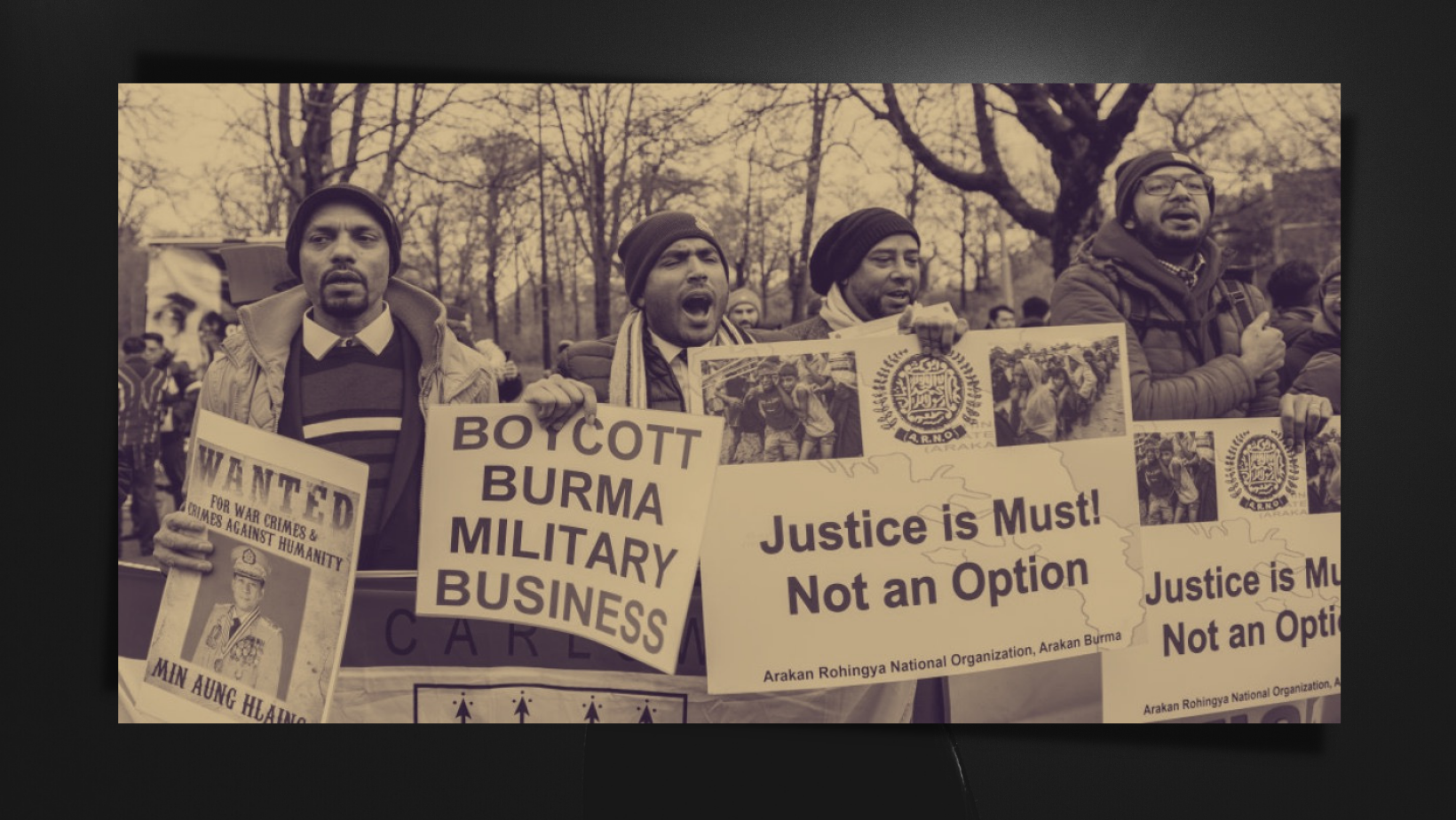
    The following weeks were then marked by massive demonstrations and acts of civil disobedience by the citizens of Myanmar. Crowds of people from all walks of life continue to gather to protest around the country in a display of anger and frustration against the fledgling dictatorship of Min Aung Hlaing.

    The Myanmar military has responded with escalating acts of violence and control typical of any authoritarian state. Initially, they tried to shut down forms of communication and when these proved to be less than effective, they resorted to using physical force against their own citizens. To date, at least 149 people have been killed and countless more have been arrested.

    While the Myanmar military continues to claim that its takeover was inevitable due to its alleged and unsupported claims of election fraud, the truth is much less conspiratorial. It is the result of the callousness and unending greed of those who would willingly choose to set their nation ablaze rather than let power slip from their fingertips.

    Information has been released and verified that exposes the connections the Myanmar military has with several local and international corporations and businesses; these business interests continue to be the main driving force behind the Myanmar military’s oppressive and repressive actions.

    Yet, how much money do they actually stand to gain?

    In December 2020, Justice for Myanmar, a movement which aims to expose systemic oppression and human rights violations in the country, released a comprehensive report that details the involvement of the Myanmar military with Mytel and Viettel. The report then explains how these three entities work in tandem to further line their pockets while committing grave violations of human rights. Viettel is publicly known to be a state-owned enterprise with direct ties to both the Communist Party of Vietnam and the Ministry of Defense.

    Then, on March 4, 2021, Justice for Myanmar released additional information regarding this issue. While its previous report explores the structure and the effects of the symbiotic relationship of the military, Mytel, and Viettel, this more recent exposé focuses more on the financial aspect of the situation.

    Justice for Myanmar claims that Military generals involved in this operation may be entitled to more than US$700 million after five to nine years since the start of Mytel’s business venture and a further US$450 million in the five years after that.

    This is due to the military owning more than 28 percent of shares in Mytel through Star High, a subsidiary of the Myanmar Economic Corporation, which is a Myanmar military conglomerate.

    However, when the other domestic investor – Myanmar National Telecom Holdings (MNTH) – was unable to keep its financial obligations and was forced to sell a number of its total shares in Mytel to Star High, causing the military owns more shares of Mytel.

    In effect, the military actually owns as much as 39 percent of Mytel in shares while 49 percent belongs to Viettel. The remainder goes to the other smaller investors that came from MNTH.

    Viettel also stands to achieve significant financial gain through this arrangement.

    Viettel was essential in the establishment of Mytel itself. In Mytel’s first three years of operation, Justice for Myanmar reported that Viettel “agreed to provide the lion’s share of the US$1.38 billion needed by Mytel in its first three years by investing US$169 million in its shares and lending it up to US$903 million.”

    Aside from this, Viettel also dedicated staff and personnel to train and establish Mytel’s workforce. Interest is also paid to Viettel from the loan taken by Mytel on top of the 2 percent annual management fee from yearly profits.

    Mytel also has allegedly made deals with some Vietnamese banks as well. This report stated that Mytel had entered into a US$40 million five year loan with Vietnam’s TP Bank.

    It is clear that this arrangement stands to be very financially lucrative for those involved, and while the ethics of both military and sizable foreign ownership in commercial businesses is, to an extent, debatable, the danger with Mytel lies in the nature of the company itself.

    Mytel is not just any company; it is a telecommunications company. And it is often the case that governments and militaries have malicious vested interests in controlling telecommunications.

    There is already evidence available that the Myanmar military is using Mytel to infringe on the rights of the already oppressed Rohingya minority. Being a telecommunications company also gives the Myanmar military direct access to information it can use to strengthen and extend its hold on the country.

    Justice For Myanmar spokesperson Yadanar Maung states that, “Every phone call on the Mytel network and every kilobyte of data finances the people’s oppression. The brutal and corrupt Myanmar military junta is motivated by personal profit and it is greed that drives their brazen and bloody attacks on the people.” His words and sentiments seem to be echoed by a few of Mytel’s former business partners.

    In response to its militarization, some of Mytel’s domestic and international business partners and investors have grown concerned.

    Singaporean payments firm Coda has removed Mytel from it’s payment channels and International Power Generation, (IPG), a local investor, has taken initial steps to distance itself from the company. While the actions of Coda and IPG are commendable and other investors in Mytel should follow suit, it still remains doubtful if this will have any significant and immediate effect.

    After all, the fact remains that the three-way relationship between Mytel, Viettel, and the Myanmar military is only one of more than 100 business channels that the Myanmar military uses to fatten its coffers. Should one avenue be shut down, others continue to remain open for them to exploit and use. With the amount or resources available at their disposal, it should only be a minor inconvenience for them to open up alternative methods for monetary gain. But, this is hardly a surprise. In fact, it is expected.

    The struggle for true freedom and democracy has never been an easy fight. It has always been a Sissyphean battle, an uphill and treacherous climb against overwhelming odds. And once you reach the top, there is also no guarantee that you can stay there.

    Oftentimes, a nation finds itself on the zenith of the hill only to stumble and fall partway or even descend all the way to the very bottom. Yet, as believers in a better tomorrow for ourselves and for all, we pick ourselves up and try again. We stand and climb as many times as it takes, for a future we might not even get to see.

    And here lies the beauty of the struggle.

    While the Myanmar military and other authoritarians like it fight to amass wealth and hoard as many pieces of magic paper they can get, others fight for something much greater than themselves: an idea, a dream, a possibility.

    What activists, protestors, and demonstrators in Myanmar, and in the rest of the world stand to gain cannot be measured in billions, or even trillions of dollars. Rather, its value can only be glimpsed in the people’s eyes as they continue to stand firm, shoulder-to-shoulder, against tyranny and against terror.

    Now is the time to stand with the people of Myanmar; for the good of one is for the good of all.

  • Religion Bulletin, February 2021: German Parliament To Hold Hearing On Religious Freedom In Vietnam

    A police colonel takes charge of religion as the German Parliament takes note of Vietnam.

    https://2xjs7y10oiyz26vqxu2hok6y-wpengine.netdna-ssl.com/wp-content/uploads/2021/03/image5-jpg.jpg
    The German Parliament expects to have a hearing on religious freedom in Vietnam on April 14, 2021. Left: Markus Grubel, German Federal Government Commissioner for Global Freedom of Religion (Source: Janine Schmitz/photothek.net). Right: Police prepare to demolish a funeral home belonging to the Duong Van Minh religion in 2013. (Source: Youtube Thanh Phạm, as cited by BPSOS).

    Religion Bulletin, February 2021:

    • [Religion 360*]
      • German Parliament to release report on religious freedom in Vietnam and other countries
      • Family asks for intervention as prisoner of conscience Phan Van Thu’s health deteriorates
      • Dak Lak provincial police prevent members of the Protestant Church of Christ from conducting religious activities
      • An ethnic Thuong Protestant is arrested as he takes his child to school
      • Deputy head of the Internal Security Bureau becomes deputy head of the Government Committee for Religious Affairs 
    • [On This Day]
      • 12 proposals Zen Master Thich Nhat Hanh made to the Vietnamese government regarding Buddhism and religious freedom
    • [Did You Know?]
      • The Hmong Duong Van Minh religion under the government’s hand


    [Religion 360*]

    German Parliament will hold a hearing on religious freedom in Vietnam and other countries

    In past years, Vietnam has encountered a number of issues with Germany. There may be one more to add to the pile as the German Parliament prepares to release a report on international religious freedom April 14, 2021. The report details the dire situation regarding religious freedom in Vietnam.

    Germany takes this year’s congressional hearing particularly seriously.

    In a press release on the report on international religious freedom in 2020, Dr. Gerd Müller, German development minister, stated: “In countries where no progress is made on this over long periods, we do not simply continue our government-to-government cooperation but, instead, shift our focus to strengthening civil society and supporting the humanitarian work carried out by the churches [in those countries].”

    Dr. Müller used Myanmar as an example to demonstrate that Germany keeps its word. He stated that Germany had cut off ties with the Myanmar government, transferring direct aid to Muslim Rohingya refugees who had fled to Bangladesh to escape the Myanmar Army’s ethnic genocide.

    https://2xjs7y10oiyz26vqxu2hok6y-wpengine.netdna-ssl.com/wp-content/uploads/2021/03/image-15.jpeg
    Dr. Gerd Müller, German development minister. Photo: AFP.

    For decades, international organizations have stated that the Vietnamese government has not made any noteworthy improvements on religious freedom.

    The report on international religious freedom was ratified by the German cabinet on October 28, 2020. In it, Vietnam was accused of engaging in serious and systematic suppression of religious practitioners, including those of the Duong Van Minh religion in the northeast, Protestants in the Central Highlands, and those of the Cao Dai, Hoa Hao, and Catholic religions, who seek independence in their activities.

    The report also stated that the Catholic Church in Vietnam had faced difficulties for years due to ambiguous laws and regulations, established to manage the non-profit and charitable activities of religious communities.

    The fact that religious practitioners faced heavy punishment was also highlighted by the report’s confirmation that followers continued to endure multiple forms of violence.

    Family asks for intervention as prisoner of conscience Phan Van Thu’s health deteriorates

    Prisoner of conscience Phan Van Thu, 73, who received the heaviest sentence in the case of the Bia Son Public Justice Council, is currently suffering health setbacks and is in dire need of medical care.

    Thu’s wife, Vo Thi Thanh Thuy, stated that ever since he transferred prisons in 2017, his health has steadily declined. Thu had a history of illness before he was arrested in 2012, including: diabetes, heart failure, high blood pressure, and rheumatoid arthritis. Doctors have confirmed Thu is in need of regular medical treatment at a hospital.

    https://2xjs7y10oiyz26vqxu2hok6y-wpengine.netdna-ssl.com/wp-content/uploads/2021/03/image-16.jpeg
    Phan Van Thu in 2013. Photo: Free Journalists Club.

    In an official form sent to Gia Trung Prison in Binh Dinh Province requesting medical care for her husband, Phan Van Thu’s wife recalled that he had to go to the emergency room while serving his sentence in 2018.

    She requested that the prison give him a complete check-up as soon as possible, along with a specific treatment plan.

    The case of the Bia Son Public Justice Council went to trial for the first time in February 2013 and is most likely the religious freedom-related case with the highest number of defendants in the history of Vietnamese law. Twenty-two members of this council received heavy sentences, from 10 years to life in prison. Phan Van Thu, who led the organization, received a life sentence.

    According to state media, the court convicted the members of acting to overthrow the people’s government. One member asserted, on the contrary, that their activities were strictly religious in nature.

    Dak Lak provincial police prevent members of the Protestant Church of Christ from conducting religious activities

    What would you do if you wanted to conduct religious activities legally, but the commune authorities refused to accept your registration form? According to the Ethnic Thuong for Justice webpage, on February 20, 2021, members of the Protestant Church of Christ in Dak Lak Province were forbidden by police from conducting religious activities.

    In a one-minute and thirty-second video posted on social media, two police officers are seen filling out a form citing church members’ “unlawful religious activities”.

    According to the 2016 Law on Faith and Religion, individuals who seek to organize religious assemblies must register with commune authorities. Religious groups who gather without registering are seen by police as being in violation of the law.

    However, authorities openly discriminate against the Protestant Church of Christ. A member of the church stated that commune authorities refused to issue a permit for their religious gathering.

    An ethnic Thuong Protestant is arrested as he takes his child to school

    The webpage Ethnic Thuong for Justice reported that an ethnic Thuong Protestant was suddenly arrested by police as he was taking his child to school on February 26, 2021.

    https://2xjs7y10oiyz26vqxu2hok6y-wpengine.netdna-ssl.com/wp-content/uploads/2021/03/image-17.jpeg
    Y Thinh Nie holding a self-made banner celebrating International Human Rights Day, December 10, 2020. Photo: Ethnic Thuong for Justice.

    The arrested individual is reportedly Y Thinh Nie, 42, a resident of Drai Si Highland Village, Ea Tar Commune, Cu Mgar District, in Dak Lak Province.

    Two days prior to his arrest, police had arrived at his residence to invite him to the station for questioning. He refused citing a lack of paperwork.

    The webpage also reported that Nie’s arrest had to do with his taking pictures to mark the International Day Commemorating the Victims of Acts of Violence Based on Religion or Belief (August 22, 2020) and International Human Rights Day (December 10, 2020).

    Deputy head of the Internal Security Bureau becomes deputy head of the Government Committee for Religious Affairs

    On February 3, 2021, the Government Committee for Religious Affairs added a new deputy head. However, all state channels which reported on the assumption of office avoided discussing the cadre’s background.

    https://2xjs7y10oiyz26vqxu2hok6y-wpengine.netdna-ssl.com/wp-content/uploads/2021/03/image-18.jpeg
    Nguyen Tien Trong, the new deputy head of the Government Committee for Religious Affairs, (left) receives his appointment. Photo: Ministry of the Interior.

    The new deputy head of the Government Committee for Religious Affairs (GCRA) is police colonel Nguyen Tien Trong. Before being appointed to the GCRA, Trong was deputy head of the Ministry of Public Security’s Internal Security Bureau.

    The Internal Security Bureau is the bureau responsible for combatting alleged reactionaries, terrorists, and threats to security, including those of a religious nature.

    As with other leaders of the GCRA, there were not many details on Trong’s background. GCRA simply reported that Trong is an ethnic Kinh, non-religious, from Bac Giang, and a graduate with a bachelor’s degree in security reconnaissance. GCRA did not disclose Trong’s previous positions and work units.


    [On This Day]

    12 proposals Zen Master Thich Nhat Hanh made to the Vietnamese government regarding Buddhism and religious freedom

    https://2xjs7y10oiyz26vqxu2hok6y-wpengine.netdna-ssl.com/wp-content/uploads/2021/03/image-19.jpeg
    Thich Nhat Hanh and the followers at Plum Village held a procession along Hoan Kiem Lake in 2005. Photo: PVCEB.

    In February 2010, Zen Master Thich Nhat Hanh – one of a number of monks highly respected by the Vietnamese public – issued 12 proposals to the government on the millennial anniversary of Hanoi.

    Among these 12 proposals two were related to freedom of religion.

    First, he petitioned the government to grant prisoners amnesty, including those prisoners who were charged just because they were “contributing ideas of improvement to the government; calling for pluralism, multiple political parties, and multiple churches; and calling for freedom of religion and freedom of speech.”

    Second, he asked that Buddhist dignitaries both in- and outside the country to combine forces to “establish a single, private Buddhist church, one that stands completely outside of politics.”

    Zen Master Thich Nhat Hanh was forbidden from returning home to Vietnam after an anti-war advocacy tour he conducted in 1966. It was not until 2005 that he was permitted to return. After returning home, his books began to be published in Vietnam, with the exception of those that touched upon freedom of religion or politics.

    On his return home, Hanh has made proposals to the Vietnamese government to enact political and religious reforms that he felt were necessary, but to this day, the authorities continue to use strict policies to control religion. According to human rights organization The 88 Project, the Vietnamese government currently holds approximately 73 individuals as prisoner for their religious activities and for fighting for religious freedom.


    [Did You Know?]

    The Hmong’s Duong Van Minh religion under the government’s hand

    In March 2014, an ethnic Hmong named Hoang Van Sang was sentenced by the Yen Son District People’s Court, Tuyen Quang Province, to 18 months in prison, in accordance with Article 2258 of the Penal Code, for abusing democratic freedoms to infringe upon the interests of the State and the legitimate rights and interests of organizations and/or citizens.

    Tran Thu Nam, Sang’s defense attorney, uniformly rejected the court’s decision, stating that Sang could not be convicted according to Article 258 based on the activities he conducted with a number of other Hmong.

    According to Nam, Sang and a number of other Hmong practitioners of the Duong Van Minh religion had agreed to pool money to build a morgue. Sang took on responsibility for purchasing the construction materials. For merely doing that, he was sentenced to 18 months in prison.

    A week after Sang’s trial, another trial involving three ethnic Hmong practitioners of the Duong Van Minh religion began in Ham Yen District, Tuyen Quang Province.

    According to RFA, that morning, police blocked intersections connecting the court to villages with Duong Van Minh practitioners. But police were unable to block all unpaved paths to the court; approximately 150 ethnic Hmong took a shortcut in the four-hour preceding to protest the trial.

    Similar to Sang, the three defendants were also convicted according to Article 258, with each receiving a different sentence: 24 months, 18 months, and 15 months in prison, respectively.

    Six years have passed and ethnic Hmong still resolutely follow the Duong Van Minh religion, despite the government’s heavy-handed oppression of the group.

    According to the German Foreign Ministry, in October 2018, practitioners of the Ha Mon religion in 68 residential neighborhoods issued an SOS to the United Nations, the European Union, and the United States.

    A report by the US State Department on religion stated that in 2019, Vietnamese police used electric rods and automatic rifles to attack a group of Duong Van Minh practitioners who were organizing festivities for Tet. The incident occurred in Na Heng Hamlet, Nam Quang Commune, Bao Lam District, Cao Bang Province.

    https://2xjs7y10oiyz26vqxu2hok6y-wpengine.netdna-ssl.com/wp-content/uploads/2021/03/image-20.jpeg
    Duong Van Minh, founder of the religion which carries his name. Photo taken in 2015 in Hanoi. Source: JB Nguyen Huu Vinh.

    According to the overseas Vietnamese-language press (RFI, Nguoi Viet), the Duong Van Minh religion appeared during the 1980s. Its main objective is to make  Hmong faith customs surrounding funerals and marriages more progressive and hygienic. The religion was founded by Mr. Duong Van Minh, who currently resides in Tuyen Quang Province.

    Important in the religion is the construction of small housing structures that are used as “funeral homes.” In these structures are a number of items, including holy crosses and wooden toads and swallows that are used during ceremonies.

    These structures have been destroyed by the Vietnamese authorities for being built without a permit and for propagating a “false religion.” The government and state media both assert that the Duong Van Minh religion is a false one, arguing that the religion discourages people from work and study, disrupts traditional customs, and leads people to form groups that disobey the government’s religious and social policies.

    https://2xjs7y10oiyz26vqxu2hok6y-wpengine.netdna-ssl.com/wp-content/uploads/2021/03/image6-jpeg-1024x598.jpg
    Police destroy a “funeral home” belonging to the Duong Van Minh religion in 2013. (Source: Youtube Thanh Phạm, as cited by BPSOS).

    Practitioners of the Duong Van Minh religion, however, have told the overseas media that they work to alter the rituals by which they worship the dead.

    A 2020 radio report by the People’s Ministry of Public Security Communications Bureau stated that there were approximately 8,000 ethnic Hmong practitioners of the Duong Van Minh religion, in four provinces (Tuyen Quang, Bac Can, Cao Bang, and Thai Nguyen).

  • Vietnam Briefing: A Prominent Writer Dies, Sparking Discussions Of His Works And Censorship

    Vietnam Briefing: A Prominent Writer Dies, Sparking Discussions Of His Works And Censorship

    The Vietnam Briefing is released every Monday.

    Last week, we had a new chief of external relations of the Communist Party, a detained activist being transferred to an unknown facility, and a prominent writer passed away.


    Police transferred a detained land rights activist to another facility without informing his family of the details of the sudden move

    Detained land rights activist Trinh Ba Phuong’s family says they were informed by officials of Hanoi No 1. Detention Center on March 19 during a prison visit that Phuong had been transferred to another detention facility. The officials have given them no further information about the move.

    Who is  Phuong? He is a prominent land rights activist who is part of a group of farmers in Duong Noi, a rural area of Hanoi, who have been evicted from their land by the government since 2008. They claim the land acquisition was illegal and the compensation was extremely low. Phuong’s mother, Can Thi Theu, and father, Trinh Ba Khiem, have been imprisoned several times since then. Theu, and Trinh Ba Tu – Phuong’s brother, were arrested and detained again in June 2020 in the same case with Phuong. They are all charged under Article 117 of the Penal Code, which is “making, storing or disseminating information, documents, materials and items against the Socialist Republic of Vietnam.”

    One thing to note: In Vietnam, the government agency in charge of detention facilities and the investigative agencies are both under the authority of the Ministry of Public Security.


    Prominent writer Nguyen Huy Thiep passes away at 72

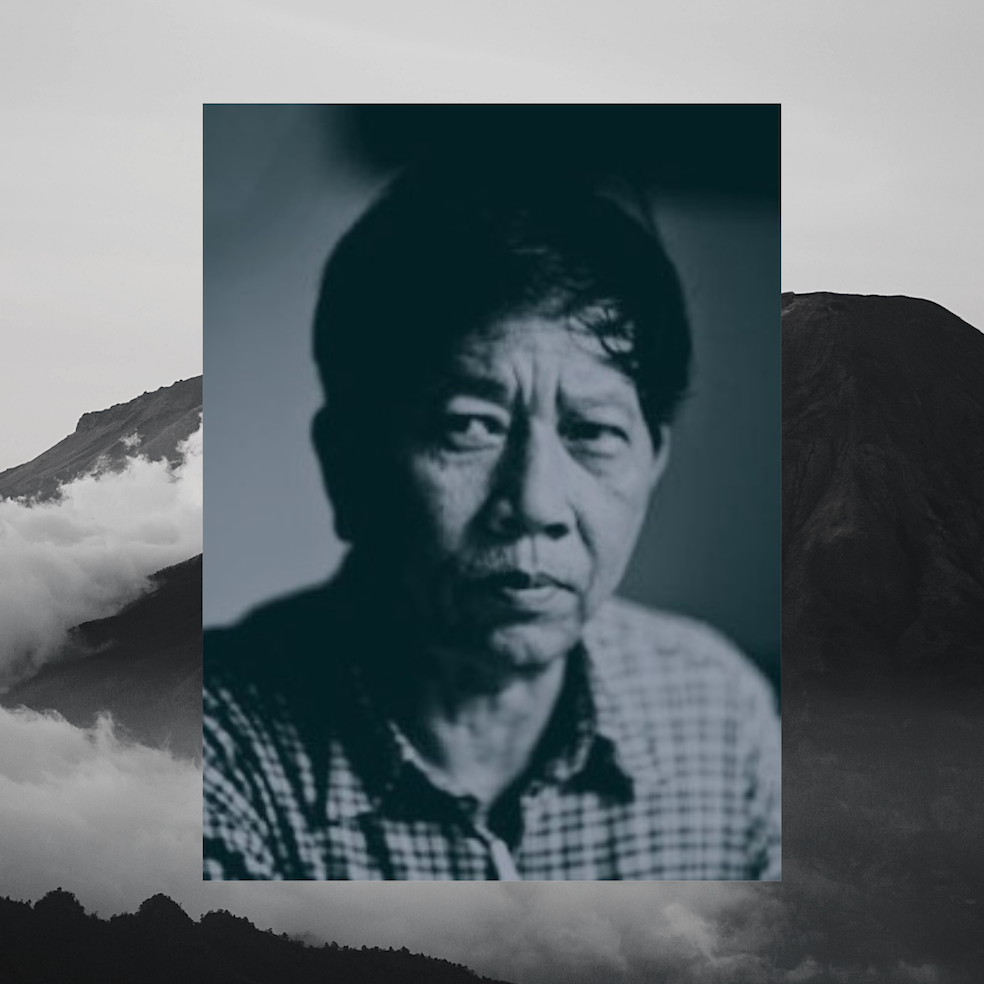
    If you talk about Vietnam’s literature and censorship, Nguyen Huy Thiep is the name you need to pay attention to. He is one of the most prominent Vietnamese writers since the Vietnam War. His death sparked discussions on social media on his work and how he suffered from heavy censorship.

    Scholar Thomas Bass wrote:

    “Thiep began his meteoric career in 1987, and already by 1988 he had published his collected works and celebrated what everyone was calling ‘the year of Nguyen Huy Thiep’. In 1989, the film of ‘The General Retires’ was released, and by 1990 Thiep was being installed as a member of the Writers’ Association. But this is also the year that copies of his works began disappearing from book stores. Nhan Dan, the party newspaper, published two essays attacking Thiep, claiming that he had ‘betrayed the Vietnamese Revolution by toppling sacred heroes in Vietnamese history’ and that he was ‘deceived by the chimera of pre-1975 Saigon’. The denunciation campaign continued until 1991, when the police raided Thiep’s house, carried off his books and manuscripts, and provoked a turning point in his life. This also marks a turning point in Vietnamese literature, when the country’s brief, five-year experiment with Renovation ended in the dark age that persists today.”


    VCP has a new chief of external relations

    Following the Party Congress in January-February, the Politburo continued to  appoint new personnel to top Party positions. On March 19, Le Hoai Trung was appointed head of the Commission for External Relations.

    Who is he? Trung served as deputy minister of foreign affairs since 2010, and Vietnam’s ambassador to the United Nations in New York (2011-2014). He was elected to  the Party’s Central Committee in 2016 and 2021.


    Learn more about Vietnam:

    Should Vietnam become a member of the UN Human Rights Council?

    ASEAN Today | 19 March 2021

    “The UNHRC should push Vietnam to implement existing action plans to improve human rights conditions in the country, rather than offering it a place in the forum. If Vietnam becomes a member of the UNHRC, it will not only discredit the UN body’s standing but will also legitimize Vietnam’s policies of oppression.”

    Vietnam Must Be Pleased With the Biden Administration… For the Most Part

    The Diplomat | 16 March 2021

    “…the Biden administration appears to emphasize not only shared national interests, but values as well, such as democracy, freedom, and human rights. For Hanoi, there is likely a certain amount of trepidation regarding the potential consequences of engaging with a more vocal Washington on these issues, which are extremely sensitive for Vietnamese Communist Party (VCP) leaders. Additionally, Hanoi likely has concerns about whether the Biden administration will take action against Vietnam for Trump-era allegations that it is a currency-manipulator as well as potential U.S. sanctions against Vietnam for purchasing Russian military equipment under the Countering America’s Adversaries Through Sanctions Act.”

  • Vietnam Briefing: Dong Tam And The General Election

    Vietnam Briefing: Dong Tam And The General Election

    It’s a new week and Vietnam Briefing’s mission is to keep our readers up to date on developments in Vietnam. As we missed the briefing last week, here is the key news of the past two weeks.


    Vietnam has started to roll out COVID-19 vaccines

    The Vietnamese government started administering the first COVID-19 vaccinations doses on March 8. Frontline workers, including doctors, nurses and technicians at designated hospitals combatting COVID-19 are among the first to receive the vaccines produced by Oxford University and AstraZeneca.


    High court affirms verdict on Dong Tam case

    The appellate trial of the Dong Tam case (March 8-9) went just as everyone expected: no overturning of any sentences and no amendment to the lower court’s verdict. The sentences of the six defendants remain the same, including two death penalties.

    A fair trial? It’s hardly a thing in Vietnam. Take the word of Phil Robertson of Human Rights Watch:

    “There are still many unanswered questions about what happened during the Dong Tam raid that authorities have never been willing to clarify.”

    “We are also deeply troubled by the information brought out in the defense lawyers’ report, stating that police used torture on some defendants to force them to confess, raising fundamental concerns about the fairness of the entire trial.”

    A historic case, yes. The Dong Tam case is undoubtedly one of the most important and consequential events in Vietnam’s post-1975 history. Those who wish to study the country’s history of land struggles and party-controlled judiciary should take a very close look into the case as it is among the most well-documented events and it provides an intensive account of the issues.

    Learn more about the case:


    The National Assembly is in the final days of its current term. Yet, it may elect new state leaders just before the election.

    In an unexpected, but not unprecedented, move, the Communist Party’s Central Committee is sending three candidates to the National Assembly’s last session of the term for confirmation of three top state positions: president, prime minister, and chair of the National Assembly.

    The Party and state media provided no information about who the candidates are, but you don’t need them to name names in order to know who these people are. Vietnamese people often read between the lines and listen to internet influencers – some they believe have inside information – to know what’s going on.

    So who are they? Current Prime Minister Nguyen Xuan Phuc for president, Pham Minh Chinh for prime minister, and Vuong Dinh Hue for National Assembly chair. VCP General Secretary Nguyen Phu Trong is not seeking reelection for the presidency, although he is now running for a National Assembly seat.

    What’s special about that? It’s not about who for what, it’s about timing. If elected in April during the last session of the current National Assembly, which is almost certain, the candidates will only serve a few months until the end of the current term. After the general election on May 23, the new National Assembly will convene in July and repeat the same process of electing the same people to the same positions. That’s what happened in April 2016, right before the last general election, which was held more than a month later. And we don’t think there are many people who can explain why the VCP has to rush to do such a repetitive process. The logic behind this remains a mystery to the public.


    Man arrested after declaring intention to run for office

    This is not something that happened the last time we had an election in 2016 (yes, I know how hard it is to call it an election, but let’s use the word for now). A 61-year-old man named Tran Quoc Khanh was arrested on March 9 and accused of “making, storing, spreading information, materials, items for the purpose of opposing the State of Socialist Republic of Vietnam” under Article 117 of the Penal Code.

    He is known for his frequent Facebook activities including live-streaming on human rights and corruption in Vietnam. The arrest was conducted by Ninh Binh Provincial Police shortly after Mr. Tran declared his intention of running for a National Assembly seat.

    Something to note: Unlike the exciting election season in 2016 when dozens of activists and independent candidates campaigned for office, despite all failing, there are almost no independent candidates running for office this time.


    Here is what the incoming National Assembly may look like

    Remember what we mentioned about this two weeks ago? Here is an infographic from the state news agency’s article titled “Expected structure of deputies of the 15th National Assembly.” Yes, the election is more than two months away, but the government has already “expected” the results.


    Freedom House drops Vietnam’s freedom score

    This time every year, the US-based human rights group Freedom House announces its widely-cited work: Freedom in the World Index. And unlike the recent years, Vietnam’s score dropped 1 point in the 2021 index, down to 19/100 and remains in the “Not Free” group of countries.

    What was Vietnam’s response to this? Ministry of Foreign Affairs spokesperson Le Thi Thu Hang said on March 11 that Vietnam has consistently protected and promoted human rights. That’s the government’s usual way of dealing with such queries from reporters who work for the international media. We have no knowledge of any reporter from the Vietnamese media asking about such issues, and we doubt anybody ever does.


    Vietnam joins China, Russia and India to block UN Security Council’s condemnation of Myanmar’s coup

    The United Nations, especially its Security Council, has been reluctant to make any strong statements on the military coup in Myanmar. On March 9, they failed to agree on such a statement, and Vietnam, as a non-permanent member of the council, jointly blocked the effort with China, Russia, and India.

    Context:

    • Vietnam is the fourth biggest foreign investor in Myanmar as of January 2021, with 19 projects and approximately US$1.5 billion invested there.
    • Vietnam’s military has close ties to Myanmar’s military businesses, such as Mytel.

    Vietnam commemorates the 33rd anniversary of the Gac Ma incident

    March 14 has been a sensitive date in Vietnam over the past 12 years since the public started to learn about the bloody incident of Gac Ma.

    The Gac Ma incident happened on March 14, 1988, when Chinese warships fired on a group of mainly unarmed Vietnamese troops in Gac Ma Reef (Johnson South), killing 64 of them. Gac Ma (Johnson South Reef), Colin and Len Dao (Lansdowne) Reefs are part of the Truong Sa (Spratly) Islands where the two countries both claim sovereignty. It’s rumored that Vietnam’s then-Minister of National Defense ordered that there be no resistance to the Chinese.

    Why sensitive? Not many things in Vietnam are as sensitive as the country’s relations with China. The Vietnamese government censored information about the Gac Ma incident for over 20 years until the early 2010s. Even now, many state media outlets do not mention China in their stories about Gac Ma Reef, although the government has increasingly tolerated open discussions about the topic.

    What to watch? Citizens, mostly dissidents and activists, spread information about the Gac Ma incident on social media, criticizing the government’s handling of China, and they also go to cemeteries and temples to commemorate the soldiers who lost their lives on that day. They often face government harassment due to these activities.

    Go deeper: Here is some useful material to understand more about the issue, including a video clip of the 1988 incident.


    French warship visits Vietnam

    Shortly after completing a patrol in the South China Sea in February, the French Navy sent a warship to Vietnam on March 9, where it spent four days in Cam Ranh Port (southern Vietnam) for helicopter repairs.

    The South China Sea is certainly a place global superpowers can’t afford to ignore due to its strategic position in terms of security and trade, especially when China has aggressively claimed sovereignty over most parts of the sea with its nine-dash line.

    Cam Ranh Port is a familiar name to those who study security in the region. It is a strategic deep water bay in the south of Vietnam and it played a crucial role in the Vietnam War. This is where the Soviet Union, and later Russia, stationed troops from 1979 to 2002.


    Events to watch:

    Mainland Southeast Asia: power, protest and participation

    March 23, 2021 3 pm, Auckland, Wellington

    Three expert scholars will contextualise developments in Thailand, Myanmar and Vietnam, followed by a discussant response and Q&A

    Speakers: Thitinan Pongsudhirak (Thailand), Wai Wai Nu (Myanmar), Nguyen Khac Giang (Vietnam). Discussant: Natasha Hamilton-Hart. Chair: Emeritus Professor Roberto Rabel

    Hosted by the Centre for Strategic Studies: NZ


    Learn more about Vietnam:

    Vietnam: Successfully Navigating the Pandemic | IMF, 10 March 2021:

    Despite COVID-19, Vietnam’s economy has remained resilient, expanding by 2.9 percent in 2020—one of the highest growth rates in the world—and with growth projected to be 6.5 percent in 2021, thanks to strong economic fundamentals, decisive containment measures and well-targeted government support, according to the IMF’s latest annual assessment of the country’s economy.

    How Economic Reforms of the 1980s Changed the Face of Vietnam | National Interest, 12 March 2021:

    “Back when the Heritage Foundation published its first index [of Economic Freedom] in 1995, Vietnam scored 41.7 points. By 2005, this had risen to 48.1 points and in 2010 it climbed further to 49.8 points. What is remarkable is the huge increase in economic freedom since 2015, when Vietnam was awarded a score of 51.7. Since then, Vietnam has added another 10 points to reach 61.7 points today—an increase of 20 points since 1995!”

    Vietnam, ASEAN, and the US-China Rivalry in the Indo-Pacific | The Diplomat, 13 March 2021:

    “China may not feel comfortable if Vietnam pursues stronger security ties with the U.S. and its allies, but it is China’s aggressive behaviors in the South China Sea that have pushed Vietnam into this course of action. China should adjust its approach or risk pushing Vietnam and other regional countries further toward the United States.”

    “Politically, certain reforms may also be explored, but mainly to streamline and increase the efficiency of the political system, not to democratize it. Vietnamese leaders believe that political stability is a precondition for economic development, and they will not tolerate any developments that may destabilize the political system.”

  • The Enemy Of My Enemy: Tensions Between The US, China, And Vietnam

    The Enemy Of My Enemy: Tensions Between The US, China, And Vietnam

    The Vietnam War is a stain upon the fabric of recent human history. This bloody and violent conflict, fought on the premise of conflicting ideals and against the intangible boogeyman of Marx and Engels, resulted in the deaths of more than 3 million Vietnamese, the majority of which were civilian casualties. It has likewise led to the diaspora of more than 2 million other Vietnamese people and to the initial political and economic isolation of Vietnam from the rest of the world.

    Nearly five decades after the end of the fighting, the scars of the conflict still remain fresh in the eyes of those who lived through the war. For those fortunate enough to have been born after the war, these scars are but whispers at the back of their minds – almost silent and unobtrusive.

    However, these scars are always lingering somewhere in the corner of their minds. One would assume that both parties to the fighting, Vietnam and the United States, would have deep-seated animosity towards each other due to their entanglement in this conflict. However, this doesn’t seem to be the case. Diplomatic and economic ties between the US and Vietnam were reestablished in 1995, just two decades after the end of the Vietnam War.

    A report by the US Congressional Research Service, published on February 16, 2021, details several key components regarding current US-Vietnam relations. To date, the United States is Vietnam’s 2nd largest trading partner, only trailing behind China. Growing Chinese hegemony in the region has also led to stronger bonds between the US and Vietnam in matters of security and sovereignty.

    While it appears that the connection between these two nations is forged out of practicality and necessity more than anything else, with the United States needing allies in the Southeast Asian frontier and with Vietnam needing the commerce and trade to strengthen its economy, the two countries have been able to create and maintain several mutually beneficial arrangements with each other, despite their shared and bloody history of fighting and conflict.

    Yet, there still remain several issues which continue to hinder these relations from developing at a much quicker pace. One is the uneasy three-way tension among the United States, Vietnam, and China.

    China, as mentioned earlier, continues to remain Vietnam’s number one partner in trade. Likewise, both countries share similar political systems, which the US Congressional report stated provides “a party-to-party channel for communication” and also contributes to “often similar official world-views.” Being two of only a handful of nations led by Communist parties, there is a strange sense of kinship and familiarity that exists between the two sides. However, recent events have put a drastic strain on Sino-Vietnamese relations as well.

    For more than a decade, China has been claiming most of the South China Sea as part of its sovereign jurisdiction using its controversial and fraudulent Nine-Dash Line myth to support its expansion. It has also been illegally encroaching into the territories of Vietnam and the other Southeast Asian nations for its own personal gain.

    Mainland China has harassed and sunk many maritime vessels from several Southeast Asian countries, illegally harvested fish and other natural resources from these contested waters, and has been building several artificial islands to solidify its hold in this corner of the world. The Mainland’s aggressive, bullish, egoistic, and selfish actions have not only negatively impacted the people and governments of Southeast Asia, but have also caused drastic and irreparable damage to the environment.

    In response, Vietnam has made several international protests regarding China’s actions and has also increased its visibility in the region by expanding its offshore energy exploration program and by implementing its own land reclamation projects. It has also fostered better relations with other maritime powers such as Japan, India, and, of course, the United States, in an attempt to intimidate China and force it to rethink some of its expansionist policies and actions.

    Because of the increased security collaboration between the US and Vietnam, the Obama administration removed all restrictions on selling Vietnam lethal weapons in 2016. Donald Trump’s presidency continued this show of goodwill by providing Vietnam with 24 new coast guard patrol vessels, aerial drones, coastal radar, and two decommissioned US Coast Guard Hamilton-class cutters.

    Yet, Vietnam rarely joins the United States in undertaking large scale diplomatic actions without taking into consideration how China will react. Vietnam’s protests against the Mainland regarding the South China Sea also seem to have minimal effect in the region; in fact, China’s presence has even increased in recent years.

    Despite the tangible support of the United States and the backing of most of the international community, Vietnam’s condemnations and actions have merely been a form of lip service: all bark and no bite. The Vietnamese government’s crackdown on those critical of its policies against China isn’t doing it any favors either.

    In effect, Vietnam finds itself in a bind and is caught between the whims and desires of two irreconcilable world powers.

    On the one hand, you have the United States: a significant trading partner with links to the rest of the free world, but also the cause of much destruction and death in Vietnam’s recent history. On the other, you have China: Vietnam’s largest trading partner and a source of much revenue for the government, but whose expansionist policies are currently threatening and challenging its sovereignty.

    At the moment, Vietnam seems content to play both world powers off against each other in an attempt to squeeze as many benefits as it can from the United States and China. However, the longer the Vietnamese government tries to appease both sides, the more it stands to lose in the long run; the longer Vietnam wears the mantle of neutrality and passivity, the more citizens that will lose faith and trust in the Party. And a government without the backing and support of its citizens, is a complete and utter failure.

    So, should Vietnam pick a side? Should it finally choose between Uncle Sam and Chairman Mao? Is Vietnam even currently in a position to make such a polarizing decision?

    Granted, the economic backlash of this choice has the potential to be quite severe; cutting ties with either your first or second largest trading partner is more than enough to destabilize Vietnam’s growing economy. There is little to no guarantee that China will stop expanding into contested waters if Vietnam decides to fully comply with all of China’s demands. There is also no telling what the United States will do either. With so many variables to consider and so many unknowns, perhaps the most prudent and wisest decision would be to maintain the status quo.

    The answers to these questions  may best be left to economists and experts and we will only know in retrospect if Vietnam ends up making the right decision.

    Ultimately, what will be scrutinized and criticized by believers in democratic ideals is whether or not the Vietnamese government has acted in accordance with the whims and desires of its citizens. Yet, the Human Rights Group reported that given Vietnam’s track record of silencing dissent, its foray into the mass surveillance of its citizens, and other abuses, this remains extremely doubtful.

    Whatever the Vietnamese government decides to do regarding the enemy of its past and the enemy of its present will no doubt benefit the Party first, with the country and its people being merely afterthoughts in the Party’s  grand scheme. And perhaps this is the greatest tragedy of it all.