This op-ed article was written in Vietnamese by Ly Minh and previously published in Luat Khoa Magazine on November 6, 2020. The translation was done by Jade NG.
***
Although I am a Vietnamese citizen, I anxiously watched the US presidential election in November 2020. Many of my friends in Vietnam also did the same thing. We eagerly watched every turn of that election as if we were personally voting for our own head of state.
The Vietnamese public’s interest in the US presidential election every four years can be seen through the headlines of our newspapers. The mainstream media updates many Vietnamese readers on every step of the thrilling race to the White House.
Looking eagerly at the news every day about the US presidential election, I cannot help but wonder whether or not the Vietnamese people earnestly wish to elect their own leaders.
In the political context of Vietnam, I understand that this question is a taboo. Needless to say, everyone knows that the current political regime in Vietnam does not allow the Vietnamese to exercise their voting right as in the United States.
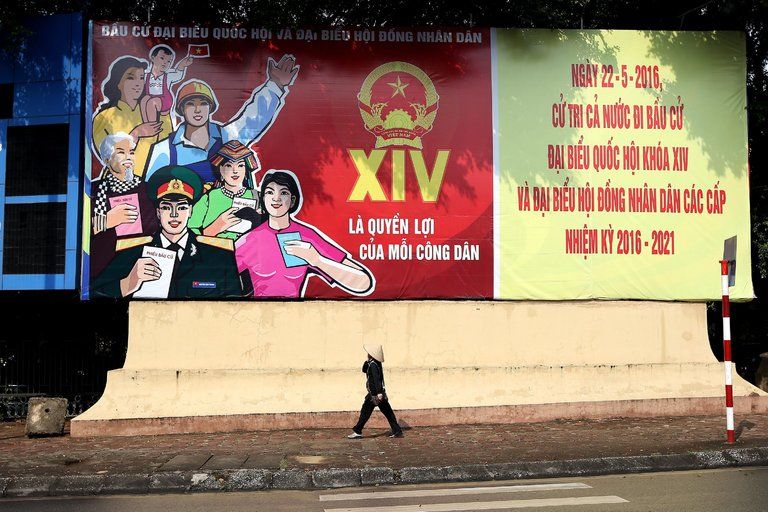
Theoretically, the Vietnamese elect their National Assembly delegates through the National Assembly election once every five years. Then, on behalf of the Vietnamese people, the National Assembly delegates elect our national leaders.
Thus, elections in Vietnam ironically have been going on smoothly, albeit with many predictable results. Surprises rarely happen in those elections. Throughout my own monitoring of the National Assembly elections in Vietnam, I found the saying “the Party selects, the People elect” a very reasonable way to explain the development and the results of elections in Vietnam.
The secret desire of many Vietnamese people, including myself, is to have the freedom to make our decisions and to choose our state leaders, and even the National Assembly delegates who actually represent our voices when deciding the big decisions for the country.
That desire is expressed indirectly by many people through monitoring and discussing the US presidential election, as if we were voting for our own state leaders. A friend of mine lamented on Facebook: “I look at the US election and all I can feel is pain for the Vietnamese people.”
It is impossible not to feel hurt.
Governance is democratic when each vote of the citizens decides who the leaders will be. Every vote influences the final result. The thrill of the US election right up until the last minute was because those of us who watched the election’s progress could see the importance of each ballot cast by the American voters.
Because each person’s vote is so important, the presidential candidates of the US must find ways to enlist the support of their voters, to specialize their campaigns for each state, to come up with policies that please local voters to gain support for the candidates, and even to try to entice the neutral voters.
Meanwhile, looking back at the political situation in Vietnam, my country’s people have no decisive voice in deciding who will become our leaders. Therefore, in Vietnam, many people are not excited about politics and are not interested in who will become the general secretary, the president of the country, the president of the National Assembly, and the prime minister. It is simply because Vietnamese citizens do not have the right, through their votes to influence the selection of these above positions.
Those who are knowledgeable about politics in Vietnam understand that the Party decides all the leadership positions in the country. Some three or four million members of the ruling Communist Party decide for almost 100 million Vietnamese people. Party members also decide all of the major issues of the country through their secret meetings, where the press is not allowed to cover any news. And the public? The public only knows about the results which are often announced by Party officials after those meetings.
This is the reality about the Vietnamese political situation that I, a Vietnamese citizen, am forced to accept. But I personally think that many people who also accept that reality do not comprehensively support it.
Of course, I fully understand that some supporters of the current regime would argue that the Vietnamese people have the right to vote for the head of the country through the National Assembly delegates. However, I just want to ask two simple questions. First, do you remember who you voted for in a recent election? Second, do you feel happy when your delegate wins the election or sad when she or he fails?
Having an election such as in the United States is a distant dream for the Vietnamese. Nevertheless, I have only a small dream, which is that our local people can one day elect the leaders of their wards or communes, free and fair, by themselves. Hopefully, my dream will come true soon so that in the future I can proudly tell my children and grandchildren that I have elected our ward president in a past election.
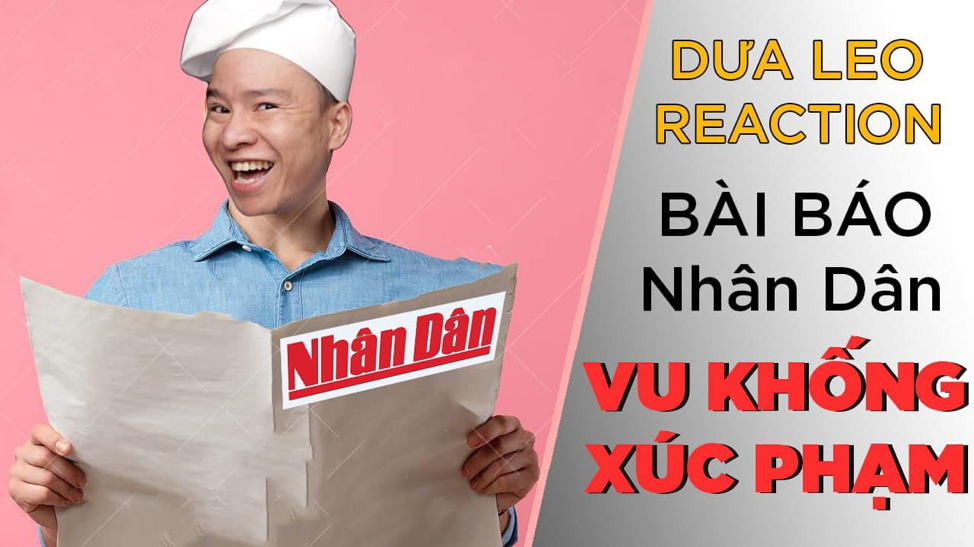
One week ago, followers of Dua Leo – one of Vietnam’s most prominent stand-up comedians – weren’t expecting him to release a “lawsuit reaction” video.
The incident resulted from an article published in Nhan Dan (The People), a Party mouthpiece, on January 8, 2021. The article, which was titled “Disguised as spreading knowledge to distort and undermine the nation’s image,” was by a writer named Viet Quang, and it targeted Dua Leo for his vlogs and videos published on his Youtube channel.
That article is seen as part of a campaign to delegitimize and clamp down on influential opposition voices as the Party ramps up for its 13th National Party Congress.
Mr. Nguyen Phuc Gia Huy, also known by his stage name Dua Leo, in one of his vlogs. Photo courtesy: nguoi-viet.com/ screenshot.
The stand-up comedian and his journey
Nguyen Phuc Gia Huy, commonly known by his stage name Dua Leo, which means cucumber in Vietnamese, is a Vietnamese stand-up comedian. He first came across stand-up comedy after watching one of Pablo Francisco’s videos; Francisco is an American stand-up comedian famous for his voice impersonating skills. Having graduated from the University of Economics with a bachelor’s degree in foreign trade, Mr. Huy had worked for several companies before deciding that he wanted to be a stand-up comedian.
Being a unique performer in a relatively new comedy field, there’s much room for this young talent to rise. But unlike his fellow counterparts, Dua Leo embarked on a different journey: using comedy as an alternative method to raise people’s awareness of social issues and tangible problems. He also created content for various topics, including history, science, politics, and even mental health. For that reason, Mr. Huy touted his role as being similar to that of a chef who cooks and serves people delicious meals, in his case, creating and spreading useful knowledge.
Dua Leo touted himself a “chef,” who “cooks and serves” useful knowledge to other people. Photo courtesy: nguoi-viet.com/ screenshot.
Funny, informative, and approachable, Dua Leo’s videos quickly drew a large number of viewers and subscribers, mostly young people who are aware of the current situation and who are eagerly pushing for systemic change in Vietnam. Currently, Dua Leo’s Facebook fanpage and Youtube channel have over one million followers and 700,000 subscribers, respectively.
No mercy for opposition voices
Despite being an influential icon for the young, Mr. Huy is not particularly favored by the authorities.
This is not the first time the comedian has provoked the ire of the government.
In 2016, he was first summoned by Ho Chi Minh city police after claiming in one of his videos that “there’s no freedom of speech in Vietnam.” After the incident, Mr. Huy made a video addressing his fans, under the stage name Dua Leo, reassuring them that nothing would stop him from doing what he is doing now. “I just want to deliver a simple message in this video: I’m just a comedian, as I always am, and my main goal is to gain [as many] views and likes for my videos [as possible],” he sarcastically joked. “[And] my secondary goal is as important as my main goal, [and that] is to make Vietnam a better country.”
Dua Leo raised concerns about the “National Cybersecurity Law”, which went into effect in 2019, expressing the fear that it would be used to suppress opposition voices. Photo courtesy: nguoi-viet.com/ screenshot.
The shaming in Nhan Dan is another warning from the government, aimed at those who refuse to follow Party guidelines when speaking on social media.
The author of the Nhan Dan article accused Mr. Huy of “faking the activity of spreading knowledge to obtain illegitimate donations with illicit intentions,” together with “colluding with overseas Vietnamese and foreign-based Vietnamese language news outlets – which have unfavorable views towards the Vietnamese Communist Party, government, and the people of Vietnam.”
On top of that, the writer also sourly slammed Mr. Huy for “being discontented” with the country’s current situation, accusing him of being “delusional of self abilities and knowledge,” or “dumb” and “child-minded.” Even worse, the author attempted to humiliate the comedian, claiming that “he’s popularly admired for his confident and eloquent manner, despite [his] physical disabilities.”
Notwithstanding being one of the biggest and fastest growing markets for social networks, there is little free space for dissenting opinions in Vietnam. Social networking sites such as Facebook and Youtube, which served mainly as “non-censored” platforms for local dissidents to voice their opinions in the country, are often under strict government scrutiny.
Standing up for justice
Nevertheless, in order to deal with the powerful Propaganda Department that sets its own rules, the only way to fight back is to play by their rules.
In one of his latest moves, Mr. Huy announced that he had hired a law firm to file a lawsuit for “defamation and humiliation,” demanding apologies from the newspaper as well as that the article be taken down.
The lawsuit concluded that the article was entirely based on personal assumptions without any concrete or fact-based evidence. Furthermore, it argued that the writer had falsely accused Mr. Huy of criminal wrongdoings, without any court judgement or going through any legal proceedings.
In his reaction video, Dua Leo constantly emphasized that this move was not a tit-for-tat response, but rather a so-called legal “case study” for people: everyone is equal under the law, therefore we should seek legal protections even when justice appears not to be on our side. And more importantly, he reaffirmed, everyone is innocent until proven guilty.
As of January 26th, Nhan Dan newspaper had further published two sequences, on January 23rd and 24th, respectively. These two articles, which threatened Mr. Huy to “turn back before it is too late,” are nothing if not a retaliation move after the comedian had decided to file a lawsuit against its smearing campaign.
One day after the publication, on January 25th, Dua Leo had released another reaction video, repeatedly condemning the newspaper for “groundless and unjustified accusations.” At the same time, the comedian also publicly released all the lawsuit papers on his Facebook fan page, as he carried on legal processes. And at the bottom of his post, Dua Leo did not forget to use the hashtag #JusticeWillPrevail.
Dua Leo publicly released the legal papers on his Facebook fan page. Photo courtesy: Dua Leo Facebook fan page/ screenshot.
As many activists, journalists, and prisoners of conscience are still being locked up in jail for defending human rights and freedom of speech, the fight for justice is not yet over in Vietnam.
And just like those brave people, Dua Leo is a stand-up comedian who is standing up for a good cause.
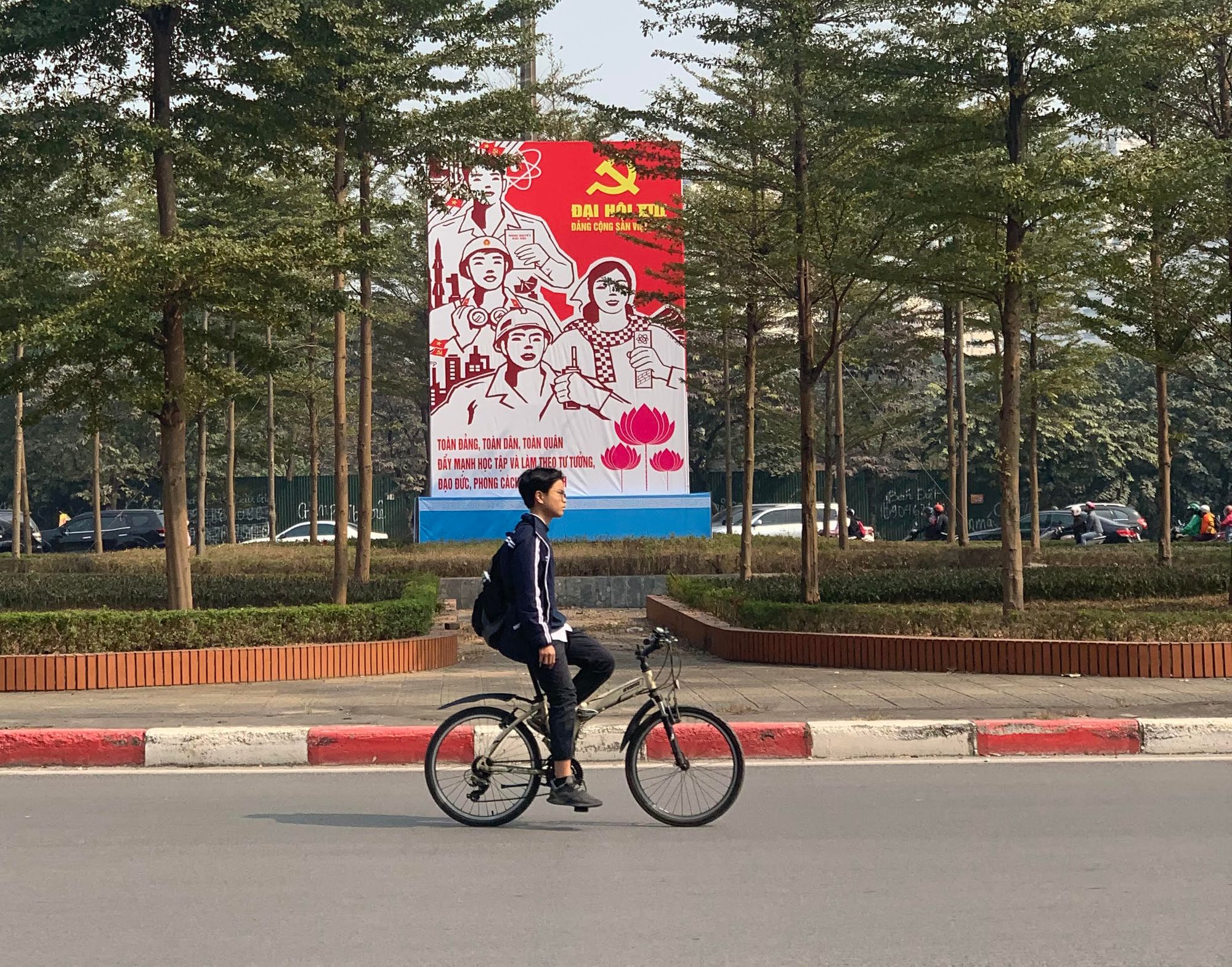
Political party conventions are part of a country’s politics, but in Vietnam, it’s a special part. It’s not about the parties nominating candidates for public offices, but rather the only legally operated political party in the country deciding the government’s top seats and the country’s direction.
No one needs to call the party by its full name. Often, people call it “the Party”, or “Đảng”; sometimes “our Party”, or “Đảng ta”. The word “Đảng” (Party) is almost always written with a capital “Đ”. Thus, unlike how Americans call the Democratic Party’s conventions the “DNC” and the Republican Party’s conventions the “RNC”, the Communist Party of Vietnam’s conventions, or congresses, are often called “the Party Congress” (Đại hội Đảng). Say it to anyone in Vietnam and they know exactly what you mean.
Now, the next congress of the Communist Party of Vietnam (CPV) is approaching. Here is everything you need to know to understand the event.
What is “the Party Congress?”
The Party Congress, or its full name, the National Congress of the Communist Party of Vietnam, is “the highest governing body” of the Party as stated in its charter. The Party Congress makes the most important decisions relating to Party leadership and direction as follows:
It reviews the implementation of the Congress’ previous term’s resolutions;
It determines the next term’s direction and policies;
It determines whether or not to amend the Party’s two highest instruments: the Party Platform and Charter.
It decides the number of members of the Party Central Committee and elects the next term’s members.
How often does the Congress take place?
Every five years as you may have heard?
Not really. The party has only held 12 congresses throughout the 91 years of its existence. The approaching one is the 13th Party Congress. That means one congress every seven years on average.
CPV congresses have only taken place every five years since the 6th Party Congress in 1986, the one that shifted the country’s direction away from a centrally planned economy towards capitalism with a widely known grand policy called “Đổi Mới” (Renovation). The previous congresses were held inconsistently in 1935, 1951, 1960, 1976, and 1982, mainly due to armed conflicts and wars with the French, the Americans, and the Chinese.
How long is a Congress?
The 13th Party Congress will run for nine days, from January 25 to February 2, 2021, in Hanoi.
The previous congresses lasted four to nine days.
Who participates in the Congress?
A total of 1,587 delegates are coming to the capital to attend the 13th Party Congress, representing 5.1 million Party members, according to the CPV’s head of External Affairs.
They come from the Party’s committees in provinces, central government bodies, state-owned corporations, the military, the police, etc. Among the delegates, 194 are entitled to attend the Congress without having been elected, while another 15 delegates are appointed. The rest are elected.
Often, identities of delegates reflect one of the most popular concepts of the party’s governance: proportional representation, or cơ cấu. As a Communist party that claims to strongly uphold values such as equality for all, the proportional representation concept aims to make sure that delegates represent all groups within society, including from different classes, geographic regions, different genders, ethnicities, religions, occupations, branches of government, representatives from civil society – who are heavily controlled by the government, and the private sector. This broad membership makes the Party Congress look more representative and more legitimate on the surface while not actually having a more meaningful and substantial representation.
How does the Congress elect the Party leadership?
Do the Party’s congresses elect the top party leaders? It always looks like that, but it is not true, and many people have a misconception of how the Party leadership is elected.
One needs to take a look at the CPV’s Central Committee Decision No. 244 to understand how the party’s elections work. And it turns out that the congresses only elect members of the Central Committee. The Central Committee, in turn, elects members of the Politburo, the general secretary, and members of the Disciplinary Committee during the Congress .
The Congress will elect around 200 members of the Central Committee per the previous term’s Central Committee’s proposal, including some 20 alternate members who have the right to participate in the Committee’s conferences, but have no voting rights. The current Party leadership will introduce this proposal to the Congress, and the delegates will have to approve it before the Congress moves on to elect members of the Committee. The list of candidates consists of people nominated by the previous term’s Central Committee, people nominated by delegates at the Congress, and self-nominated candidates.
Due to the Party’s principle of democratic centralism (nguyên tắc tập trung dân chủ) and the internal culture of making decisions collectively rather than individually, it’s rare to see delegates seeking candidacy themselves. Most candidates nominated at the Congress must be approved by their own delegations.
After being elected, members of the Central Committee will convene its first conference, called hội nghị trung ương, to elect around 15 members of the Politburo (Bộ Chính trị) – a party body that is considered the most powerful group of Vietnamese politicians. Again, the electoral process is pretty much the same as is an election in the Central Committee.
The general secretary, seen as the leader of the Party, is the most powerful politician of the country, and is also elected by the Central Committee, chosen from among members of the Politburo. The seat has been held by Mr. Nguyễn Phú Trọng since 2011.
After finishing the election, members of the Central Committee return to the Congress to report the results in a plenary session. The new members of the Politburo will go to the stage amidst long applause, a lot of congratulations, and flowers being handed out. The newly-elected general secretary will make an inaugural speech, and later the closing remarks. A new five-year term begins.
By this time, the public knows who the members of “the gang of four” are, the top four Party members who share the four highest offices of the country: general secretary, president, prime minister, and chair of the National Assembly. The chief justice position, although the most powerful office of an entire branch of government, has never been important enough within Party ranks to be considered as a part of “the gang of four.” That says almost everything about how insignificant the judiciary is in Vietnam.
Does the Congress hold actual power as stated in the Party’s Charter?
Not really.
The agenda of the Congress is largely set by the previous term’s Central Committee. Delegates are elected or appointed under a process entirely controlled by the previous term’s Central Committee. The Committee also decides a set of qualifications for members of the next term’s Central Committee, Politburo, and even the general secretary position. Only those who meet the qualifications can be nominated to the Congress, and with a very high likelihood of being elected. The majority of candidates are nominated by the Committee.
For example, the 10th Party Congress in 2006 needed to elect 160 members for the Central Committee. There were 207 candidates approved by the Congress for the election, which included the majority of 174 candidates nominated solely by the previous term’s Central Committee. The other 31 out of 207 candidates were nominated by the Congress, and only 2 self-nominated candidates.
Often, the Central Committee holds conferences up until days just before the Congress to determine the proposal for the Congress agenda, including the lists of candidates for Party leadership. Take the 15th conference of the Central Committee as an example. This was the last conference of the current Committee, which took place on Jan 16-17, 2021, one week before the Congress and began to approve “special nominees” and other personnel issues. One of the “special nominees” is believed to be General Secretary Nguyen Phu Trong, 67, because he does not meet the age requirement (that a candidate be no older than 65) to be elected as a member of the Politburo. Furthermore, he is not eligible to seek a third consecutive term under the Party Charter, unless the Congress amends the Charter.
Drafted resolutions and any amendments to the Party’s platform are also prepared by the Central Committee.
The Central Committee’s agenda, in turn, is largely determined by the Politburo. Therefore, the Central Committee and the Politburo, not the Congress, hold most of the Party’s actual power. The Congress has been seen mainly as a rubber stamp institution within the Party, formally approving almost everything the Central Committee proposes.
What happens after the Congress?
Shortly after the Congress ends, the Politburo will begin to hold meetings to assign roles to its members. At that time, it will announce members in charge of the party’s other committees (except the Disciplinary Committee), the Party committees of the capital – Hanoi City, the Party committee of the leading economic city, Ho Chi Minh City, and so on.
Almost four months after the Congress concludes, on May 23, the nation’s general election will take place, electing members of the National Assembly – the legislative body of the central government. When the National Assembly convenes for its first session in June or July, we will see most members of the Central Committee holding representative seats, and the National Assembly will elect the Communist Party’s leaders for the offices of president, vice president, prime minister, deputy prime ministers, ministers, chair of the National Assembly, chief justice, chief prosecutor, and so forth.
By then, the entire electoral process, started more than a year earlier at the grassroots level of the Communist Party, will be completed.
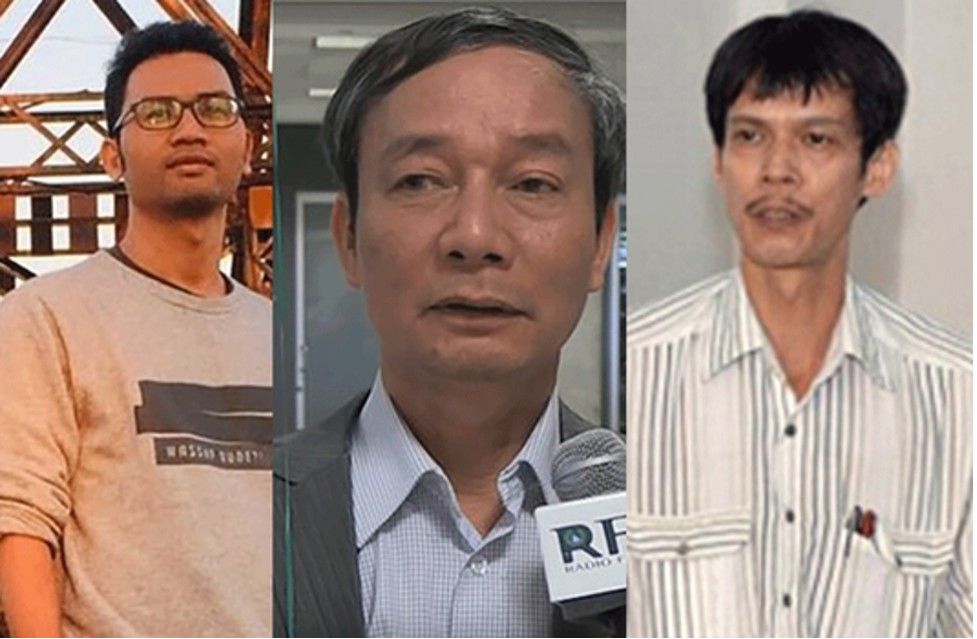
We, the undersigned media organizations, condemn the arrest, detention, and the upcoming trial of the three journalists, Pham Chi Dung, Nguyen Tuong Thuy, and Le Huu Minh Tuan. The Vietnamese government has charged them with Section 2, Article 117, of the 2015 Penal Code (revised in 2017) for “making, storing, spreading information, materials, items that contain distorted information about the people’s government.” The trial is expected to commence on January 5, 2021, at the People’s Court of Ho Chi Minh City.
The three journalists mentioned above have been active members of the Independent Journalists Association of Vietnam (IJAVN). Mr. Pham Chi Dung is the president, Mr. Nguyen Tuong Thuy is the vice-president, and Mr. Le Huu Minh Tuan is the editor. All three have also been journalists for the Vietnam Time newspaper, a media organization of the IJAVN.
These journalists are being persecuted and brought to trial because they have exercised their rights of free speech, free press, and the freedom of assembly. These are the fundamental human rights that both Vietnam’s Constitution and international law wholeheartedly recognized. The Vietnamese regime may use whichever propaganda to rationalize its decision, but it cannot change the facts and the reality of this case. The truth is that in Vietnam, the current regime has put itself in the same position as the feudal monarchies of the past and is sentencing people in a literacy inquisition.
We declare that we stand with Pham Chi Dung, Nguyen Tuong Thuy, Le Huu Minh Tuan, and the IJAVN to build a free media in Vietnam. We demand the Vietnamese government immediately and unconditionally release the three journalists.
We are introducing a photo collection of Vietnam in 2020 taken by photographer Giang Pham. In it, there will be no medical staff, no politician, no breaking news. This photo collection tells another story – the story of endurance and the story of ordinary people in Vietnam.
The photographer wrote to introduce this collection:
Twelve months ago, not many people would think that 2020 would be such a challenging year.
The pandemic came, and it has been staying without any check-out date, shifting people’s lives all over the world into an unexpected direction.
Since the outbreak of Covid-19, Vietnamese people have traveled on a roller-coaster ride, ups and downs, hope and despair, and joy and anger.
The fight against Covid-19, the health of our economy, and the collective efforts to mitigate the negative impacts on society have been ubiquitous on Vietnamese coffee tables every morning.
But life keeps moving on.
Despite the pandemic, and no matter if Covid-19 has come closer to their neighborhood, Vietnamese people live their daily lives, as usual, and unusual.
This photo collection covers Vietnamese people’s daily lives in the year 2020. It was from the mountainous northwestern provinces to the country’s southernmost land, from the urban dwellers in the big cities to the farmers of ethnic minorities in the countryside, who might never be mentioned in the stories throughout the year covered by other media.
Farmers in Cai Mon flower village, Cho Lach District harvested flowers before transported to Ho Chi Minh City to sell for Tet holiday (Vietnamese Lunar New Year). Ben Tre, Vietnam, January 2020.
Flower trading boats were at Binh Dong floating market in days prior to Tet (Vietnamese Lunar New Year) holiday. Saigon, Vietnam, January 2020.
A man carried incense sticks for worship rituals in Lantern Festival – the biggest annual festival of Chinese Vietnamese community – in the early days of the Covid-19 outbreak in Vietnam. Saigon, Vietnam, February 2020.
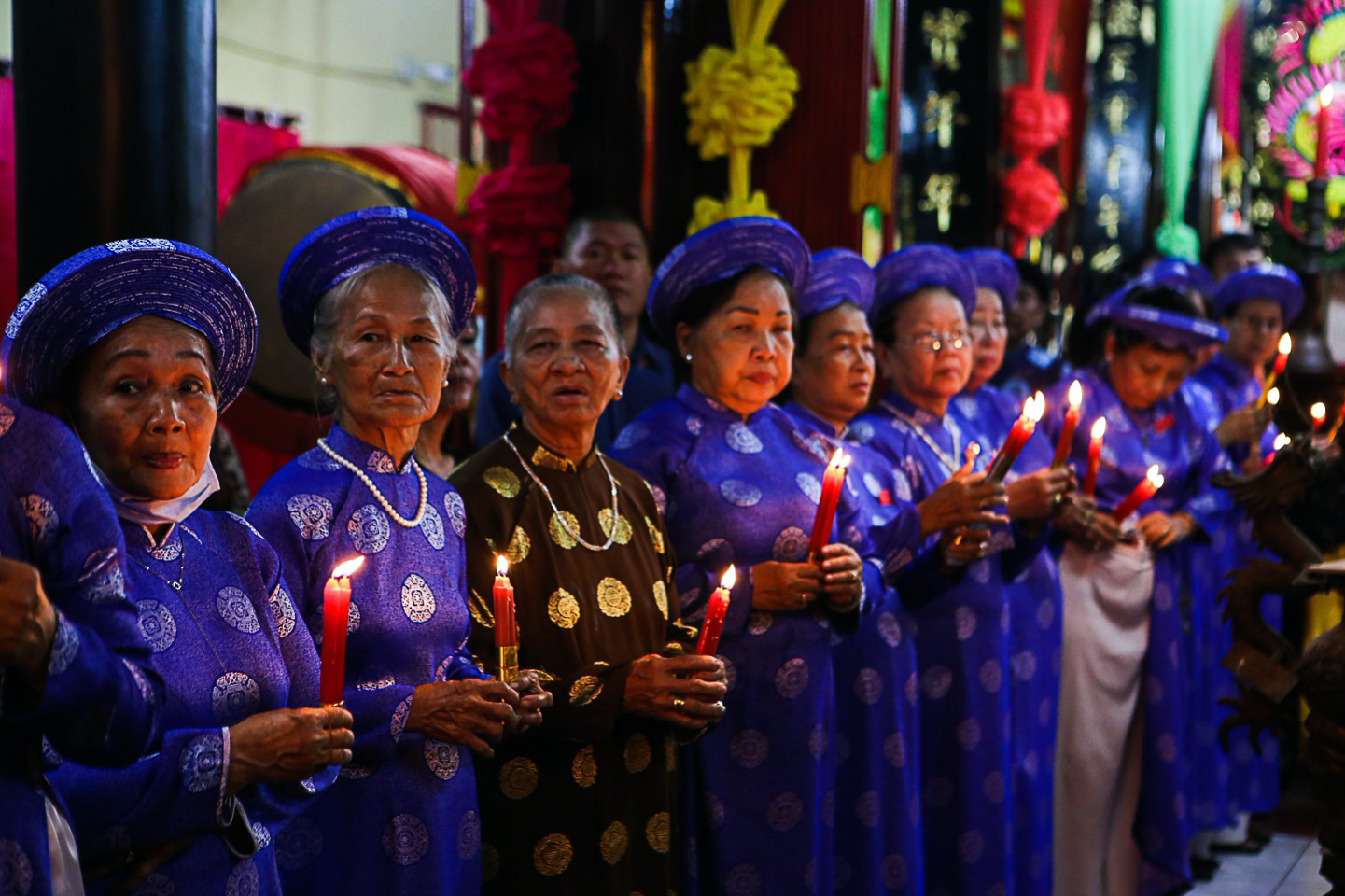
Elderly women who served for the annual Ky Yen (Pray for Peace) Festival at Phu Nhuan communal house. Saigon, Vietnam, February 2020.
A groom brought home his bride, who lived in the same village, on their wedding day in Dong Anh District. Ha Noi, Vietnam, March 2020.
Women did their laundry by the bank of Huong (Perfume) River. Hue, Vietnam, March 2020.
A woman sent her prayer during Jingzhe ceremony in On Lang assembly hall. Saigon, Vietnam, March 2020.
A man got his coffee delivered from a cafe in the neighborhood during the social distancing period. Saigon, Vietnam, April 2020.
Locals rowed their boat for fishes along Dong Nai river. Dong Nai, Vietnam, June 2020.
Street traders navigate under a heavy rain in the flooded Binh Quoi area. Saigon, Vietnam, June 2020.
A fisherman looked for fish on Quan Chanh Bo canal in Duyen Hai district, where the massive Duyen Hai Power Generation Complex located. Tra Vinh, Vietnam, June 2020.
Inside a hammock cafe in the outskirts of Ho Chi MInh City, Vietnam where hired labors rested every night for 20,000 VND (around 1 USD). Saigon, Vietnam, August 2020.
A girl helped her family to prepare raw field rat meat in Binh Long Commune, the biggest field rat market in the country. An Giang, Vietnam, September 2020.
A woman of Red Dao ethnic and her neighbors smiled while loading chayote bags for their trader. Lao Cai, Vietnam, September 2020.
A worker put cinnamon leaves and barks into distiller to produce cinnamon oil. Yen Bai, Vietnam, September 2020.
Children crossed a suspension bridge to return home with gifts for Mid-Autumn Festival in their village. Bac Kan, Vietnam, September 2020.
A man comforted his sick daughter who was in pain at the National Pediatric Hospital. Hanoi, Vietnam, September 2020.
Inside the kitchen of a M’nong family where they prepared for their dinner. Unlike the major Kinh ethnic group, M’nong people today still have a matriarchal social system. Dak Lak, Vietnam, October 2020.
Workers commuted to their workplace by crossing Tam Giang river on a local ferry. Ca Mau, Vietnam, December 2020.
A male shaman of Cham ethnic danced during a Rija Dayep ritual at a Cham family in Bau Truc village. Ninh Thuan, Vietnam, December 2020.
Farmers harvested sugarcanes in K’Bang district. Gia Lai, Vietnam, December 2020.
A Bana patriarch was inside his village communal house, which also served as a church for religion services. Kon Tum, Vietnam, December 2020.
Elementary students were seen during a study activity at their school. Dak Nong, Vietnam, December 2020.
Children from a Bana village finished their class at a branch of Kapakolong primary school. This branch was built to help students avoid travelling too far to reach their schools. Kon Tum, Vietnam, December 2020.
Vietnam makes no progress with freedom of religion, which remains tightly controlled.
Vietnam is among countries with the greatest diversity of religions, but it is also among those that suppress freedom of religion most heavily.
In 2020, ethnic Thuong in the Central Highlands, Hoa Hao Buddhists, independent Cao Dai practitioners, and followers of new religions in the northwest all had to pay the price for exercising their freedom of religion.
1. No place for new religions
Muong Nhe District police in Dien Bien Province urge residents not to follow new religions. Photo: Dienbientv.vn.
Vietnam possesses a great diversity of religions, but the government is quite strict with new ones.
Recently, a woman introduced me to Phap Mon Dieu Am. She advised me to eat vegetarian and call a phone number to receive “messages that will be imprinted on your heart”.
Phap Mon Dieu Am is a new religion, and the Vietnamese government prohibits spreading it.
Authorities worry that new religions will destabilize security and spur anti-government activities. All new religions are referred to generally as “heresies.”
In the northwest region, especially Dien Bien Province, two new religions have sprouted, known as the Gie Sua and the Ba Co Do religions.
The province has initiated criminal proceedings against three people for “acting to overthrow the people’s administration” and “harboring criminals” in relation to the Gie Sua religion.
Dien Bien police also acknowledged that it has pressured residents to sign forms giving up their new religions.
“We went from house to house, explaining things to the residents and asking them to sign pledges giving up the Gie Sua religion, to not believe in the propaganda about establishing “the Mong Kingdom,” Major Vu Van Hanh told the Dien Bien Phu Paper in February 2020.
“As of today, the Na Co Sa border defense post has gotten 55 households/325 individuals to sign pledges giving up their heresies”, he said.
Despite the government’s threats, other new religions continue to silently operate across the country.
The Government Committee For Religious Affairs stated in 2015 that there were approximately 60 instances of new religions in Vietnam.
And yet, throughout Vietnam, people could sometimes unexpectedly hear information about these strange, new religions like Phap Mon Dieu Am, Thanh Hai Vo Thuong Su, Gie Sua, Ba Co Do, Hoang Thien Long, Phap Mon Di Lac, Buu Toa Tam Giao, or Hoi Thanh Duc Chua Troi Me…
2. Ethnic Thuong livingunder strict religious policies
Two of the three ethnic Ba-Na individuals arrested on March 19, 2020 for practicing the Ha Mon religion. Photo: Tran Hieu.
Since 1975, the Thuong ethnic group has been beleaguered as they have never been in their history.
After the government forced them to give up their traditional faiths, many converted to Catholicism and Protestantism. However, the Thuong have not been able to escape government harassment and are not allowed to freely organize their religious activities.
Peaceful civil activities such as gatherings and protests are all seen as linked to heresies.
Dega Protestantism, Ha Mon, and the Protestant Church of Christ are all seen as heresies that mislead the masses.
In March 2020, three Ba Na followers of the Ha Mon religion that had absconded into the jungle for seven years were arrested on suspicion of spreading anti-state propaganda. In June, rather than being charged, the three underwent criticism sessions before the people.
In July, another ethnic Thuong underwent a public criticism session for illegally crossing the border to Cambodia many times, propagating “heresy”, and distorting state policies.
Thuong refugees in Thailand have stated that members of their ethnic group from the Central Highlands escape across the Vietnamese border every month. Currently, there are a little over 500 Thuong refugees in Thailand.
3. Interfering in the internal affairs of religious organizations
The arms of the state reach deep into the internal affairs of religions.
In June 2020, the Government Committee For Religious Affairs ordered the Tien Thien Cao Dai Temple to “create regulations for active dignitaries and functionaries, as well as regulations to resolve letters of petition and grievance, and the selection of dignitaries to be applied to its followers”. These regulations should be the internal matters that the religious organizations voluntarily manage, but the government is directing them to comply with specific instructions.
In Phu Yen Province, local authorities and the Tay Ninh Holy See Cao Dai Great Temple, Vietnam’s largest Cao Dai organization, tried to take over the independent Phu Lam Cao Dai temple in June 2020.
In a conference marking 25 years of state management of the Cao Dai religion, “the church of churches,” i.e. the Government Committee For Religious Affairs, stated that it will increase its research to study more closely the Cao Dai religion and to manage this religion, preventing it from further splintering and having internal conflicts between the religion’s own organizations.
In June 2020, the Diocese of Vinh decided to retire Dang Huu Nam, a clergyman well-known for his civil society activities. After the decision, the People’s Daily and many anonymous pro-government web pages stated that the removal was well-deserved because of Nam’s anti-government activities.
4. Arresting Falun Gong practitioners
The two women arrested by Ha Tinh Province police at the beginning of April 2020 for illegally spreading Falun Gong. Photo: Kiem Sat Newspaper.
As of October 2020, at least 66 Falun Gong practitioners have been arrested and punished administratively for storing or distributing flyers regarding the religion. You may yourself see in public spaces a number of people practicing Falun Gong, numbers which are growing by the day in Vietnam.
However, distributing flyers or practicing Falun Gong with others at home are considered violations of the law. In Quang Tri, a high school principle was harshly disciplined for inviting a large number of people to his home to practice Falun Gong.
In July 2020, police arrested 28 people for attending a lecture on Falun Gong at a residence in Ha Tinh Province.
Local authorities state that spreading Falun Gong violates the law because the religion has yet to be recognized by the state.
But Falun Gong practitioners disagree with this.
“Our connections are very loose,” a Falun Gong practitioner stated in an interview with Luat Khoa. “We don’t organize into associations or anything like Catholicism or Buddhism.”
LIV, the organization that manages Luat Khoa magazine, has archived information regarding Falun Gong practitioners that have been arrested. This list is a part of a database on freedom of religion in Vietnam, which can be found at: https://www.liv.ngo/data/
Readers can also check out a number of other Luat Khoa articles to find out more about the Falun Gong: Is practicing Falun Gong legal?…, and our Religion Bulletins from May, June, and September.
5. Controlling publishing
Arrested Falun Gong practitioners have been administratively punished based on a decree regarding publishing. Specifically, they were punished for distributing flyers without government approval.
Publication policies are particularly strict when it comes to religion or politics.
In 2012, the government stipulated that the borrowing or gifting of publications between citizens requires government permission.
The Government Committee For Religious Affairs manages the Religion Publishing House and is the department in charge of censorship for religious publications.
Control of publishing certainly exercises a heavy influence on the development of religions, and it is impossible to avoid the idea that the government censors with a heavy hand to purposefully limit this development.
6. Punishing individuals
Venerable Thich Quang Do. Photo: AFP.
In February 2020, Vietnam’s longest imprisoned monk Venerable Thich Quang Do passed away.
Before 1975, Venerable Quang Do actively mobilized for the Unified Buddhist Church of Vietnam. After 1975, he continued to lead this delegation, despite fierce government suppression that continued until his death.
Many other religious dignitaries remain subject to the government’s control and punishment.
In January 2020, the head of Song Ngoc Parish Father Nguyen Dinh Thuc stated that he was banned from holding mass beginning in August 2019. Father Thuc is widely known by the public for his civil society activities among central Vietnamese fishermen after the Formosa environmental disaster. Between 2017 and 2019, the government banned him from traveling overseas twice.
In February 2020, a Khmer monk named Seun Ty had his passport confiscated for two weeks, with the government threatening that he had violated Vietnam’s Cybersecurity Law. In May 2020, authorities refused to issue a passport to Nguyen Van Toan, a clergyman that often publicly criticized the government.
After issuing complaints about discriminatory treatment, including instances of torture, families of a number of imprisoned religious activists stated that they had lost touch with their loved ones behind bars.
The government disapproves of religious activists linking with diplomatic missions of their own accord.
The authorities ordered four religious activists in the Central Highlands, Pastors Nguyen Ngoc Khanh, Y Kuan E Ban, Y Quy Bdap, and Y Khen Bdap to come in for questioning after they met with an American delegation regarding religious freedom.
7. Obstructing freedom of association
In 2020, the Unified Buddhist Church of Vietnam and the Pure Hoa Hao Buddhist Church continued to operate without legal recognition. As in previous years, members of the group were prevented by police from conducting ceremonies at their headquarters in March and July.
A number of members of the Unified Buddhist Church of Vietnam stated that the government interfered in the February 2020 funeral of Venerable Thich Quang Do, stripping them of the right to manage the event. The attempted seizure of the Phu Lam Cao Dai Temple also demonstrates that the government does not accept the idea of practitioners there operating independently.
8. Seizing property and possessions
St. Joseph School, which is part of the Da Minh Tam Hiep Parish, is currently a medical facility within the Dong Nai General Hospital. Photo: The Dominican Sisters of St. Catherine Siena Tam Hiep.
The government has moved from seizing religious properties after 1975 to now “re-appropriating” them.
In 2020, Thi Nghe Parish in Ho Chi Minh City and the Dominican Sisters of St. Catherine Siena Tam Hiep in Dong Nai Province stated that the usage rights for two schools that the government previously borrowed were quietly transferred to state entities.
Policies from 2003 related to land and properties of religious organizations helped local authorities gain usage rights over religious properties that they were “borrowing.”
Currently, religious organizations do not have the legal grounds to demand their properties back if the government refuses to return them.
Religious organizations that possess large pieces of land can also become targets of harassment.
In Thua Thien – Hue Province, Thien An Abbey and provincial authorities are in conflict over the abbey’s land and property. The abbey’s 107 hectares of land has been continually chipped away by the government since 1975, without notification nor compensation.
In June 2020, Thien An Abbey’s forests were attacked by individuals who cut down trees and sawed deeply into the roots of many conifers.
On August 13, 2020, an area household mobilized a group of men to hammer down stakes and put up barbed wire on a part of Thien An Abbey’s land.
Another problem is that religious organizations are not allowed to sell or purchase land and must wait on the government to provide it.
In Ninh Binh Province, members of the Dong Dinh Parish were extremely upset when local authorities refused to give their land to their church. After the parishioners had donated the land to the government to pass to the church in accordance with the law, commune cadres announced that they would not turn the land over to the church but instead, would build a flood-prevention dyke between the current church land and the land parishioners had given to the government.
9. Religious organizations hit with reprisals
Letters police sent to members of Phu Lam Temple inviting them in for questioning. Photo: Cao Dai Orthodox Preservation.
In August 2020, a crowd that included residents and commune cadres protested for two days on land disputed by Thien An Abbey, local households, and the government. The crowd hung up banners and used loudspeakers to decry the monks “taking their land.”
In Phu Yen Province, after supporting the unsuccessful takeover of Phu Lam Temple, provincial authorities invited five members of the temple in for questioning. Authorities threatened these members, telling them that they had to accept the government’s takeover order.
In 2020, Central Highland provincial authorities accused the Protestant Church of Christ of using religious activities to incite people to oppose the government. Many members of this church were taken in for interrogation.
10. Controlling the press
The Vietnamese government maintains a monopoly over all official media. With regard to religious issues, Vietnam’s journalists present information according to government instruction. In February 2020, Tuoi Tre Newspaper had to remove an article about Venerable Thich Quang Do’s career.
In June 2020, many publications simultaneously posted articles rejecting accusations in a 2019 international report regarding religion issued by the United States. In August 2020, the monks of Thien An Abbey issued a rebuttal to a report by Thua Thien – Hue Radio and Television, stating that it was untruthful and smeared the monks.
In recent years, all official newspapers in Vietnam have criticized the Falun Gong movement and its ‘impropriety.” These publications have only conveyed government views rather than the views of its adherents.
Two Catholic webpages, Good News To The Poor and VietCatholic, remain blocked in Vietnam, as are many press organizations that speak up for religious freedom, such as VOA, RFA, BBC, RFI, and Luat Khoa Magazine.
There are no private television or radio stations that operate freely in Vietnam.
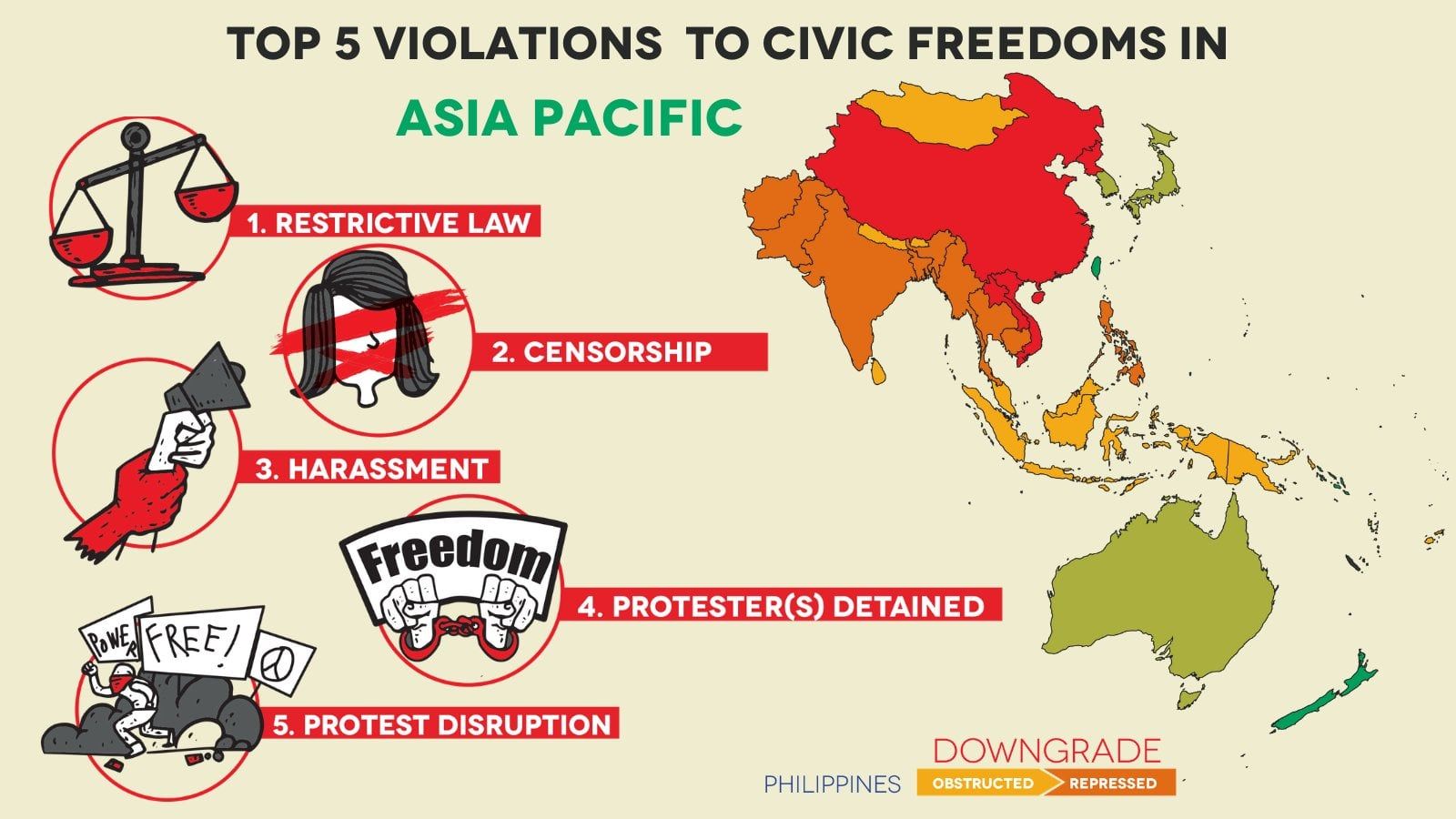
On December 8, 2020, international organization CIVICUS – a global alliance of civil society organisations and activists dedicated to strengthening citizen action and civil society throughout the world – revealed its 2020 Monitor report which tracks Civic Space worldwide.
“Civic space is the bedrock of any open and democratic society. When civic space is open, citizens and civil society organisations are able to organise, participate and communicate without hindrance. In doing so, they are able to claim their rights and influence the political and social structures around them. This can only happen when a state holds by its duty to protect its citizens and respects and facilitates their fundamental rights to associate, assemble peacefully and freely express views and opinions. These are the three key rights that civil society depends upon. The CIVICUS Monitor analyses the extent to which the three civil society rights are being respected and upheld, and the degree to which states are protecting civil society.”
More than 20 organizations collaborate on the CIVICUS Monitor to provide an evidence base for action to improve civic space on all continents. Civic space in 196 countries is categorized as either closed, repressed, obstructed, narrowed or open, based on a methodology which combines several sources of data on the freedom of association, peaceful assembly and expression.
CIVICUS Monitor shows that out of 25 countries in Asia, Vietnam and three other countries, China, Laos, and North Korea, are rated “closed.”
The new CIVICUS Monitor report also indicates that 90 percent of countries in Asia repress civic freedoms. It also raised concerns about attacks on the media and vilification of human rights defenders.
“Our research shows that civic freedoms, including the freedom of expression, assembly and association, continue to be violated across the region. The percentage of people living in Asian countries with closed, repressed or obstructed civic space is nearly 90 percent,” said Josef Benedict, Asia-Pacific Civic Space researcher for CIVICUS.
The report also stated that “in Vietnam, where civic space is rated ‘closed’ … the authorities continue to harass those who criticize the one-party regime. Scores of individuals were arrested or jailed after summary trials under an array of restrictive laws for ‘abusing democratic freedoms’ and ‘anti-state propaganda’, including activists, bloggers and Facebook users. Most recently, the Vietnamese authorities arrested human rights defender Pham Doan Trang – one of the nation’s most prominent independent journalists.”
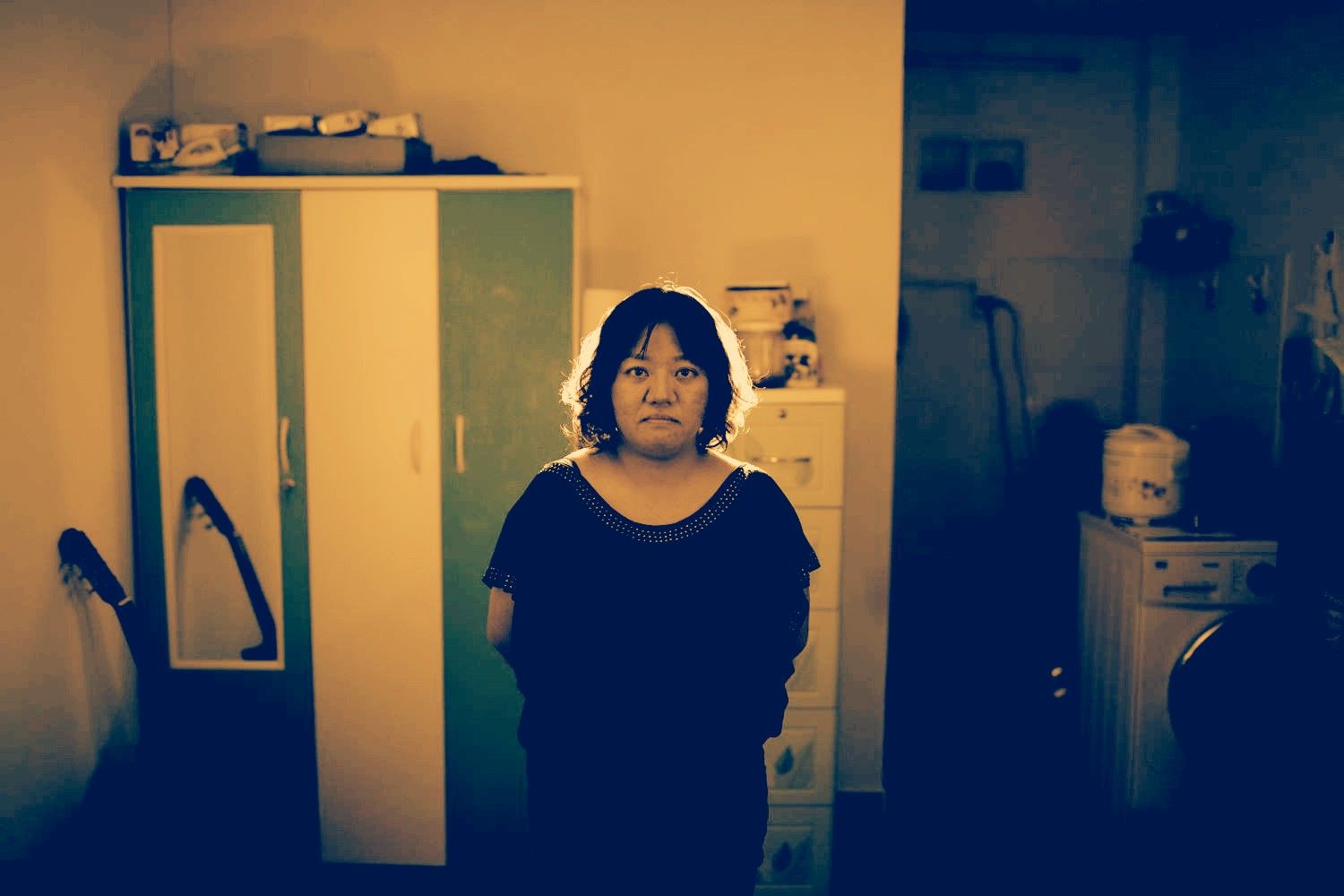
Journalist Pham Doan Trang. Photo Courtesy: Pham Doan Trang Facebook.
Furthermore, the report also notes that “the persecution against independent publishers, The Liberal Publishing House, has continued in 2020 after a brief pause due to the pandemic.” It further reports that “members of the Independent Journalists Association of Vietnam – the last independent journalist organization in the country – have also been arrested and prosecuted. Human rights groups raised serious unfair trial concerns and allegations of torture in the Dong Tam trial, which has led to convictions. Many activists were kept under surveillance, or detained for months without access to legal counsel and subjected to abusive interrogations.”
Dong Tam Trial. Photo Courtesy: Tuoi Tre newspaper.
The ASIA-PACIFIC ratings overview can be found here.
Two months after journalist Pham Doan Trang’s arrest, Reporters Without Borders (RSF) recently launched a campaign calling for her unconditional release. The campaign includes a petition and a video of Doan Trang’s five Vietnamese overseas colleagues voicing their support for her.
Pham Doan Trang was arrested at her home in Saigon on the night of October 6, 2020. She is the co-founder of Legal Initiatives for Vietnam and worked as an editor for both Luat Khoa magazine and The Vietnamese magazine before her arrest.
She is charged with “conducting propaganda against the Socialist Republic of Vietnam” under Article 88 of the 1999 Penal Code, and “making, storing, spreading information, materials, items to oppose the State of the Socialist Republic of Vietnam” under Article 117 of the 2015 Penal Code (revised in 2017). She is facing up to a 20-year sentence if convicted.
In 2019, RSF awarded Pham Doan Trang the Press Freedom Prize for Impact. Daniel Bastard, the head of RSF’s Asia-Pacific desk, in his statement calling for her release, wrote:
“Because of her bravery and her generosity, Pham Doan Trang has become a symbol of the fight to provide her fellow Vietnamese citizens with reliable, independent journalism. By signing this petition for her release, you demonstrate a commitment to press freedom in a country where all the media are strictly controlled by the communist party’s propaganda bureau. You also express your solidarity with Vietnamese civil society, which is now very active despite state censorship.”
According to RSF, Vietnam has languished for years near the bottom of RSF’s World Press Freedom Index and is ranked 175th out of 180 countries in the 2020 Index.
By the most conservative estimates, the amount of money citizens pay to fund Party congresses at just the local level is enough to keep the Government Inspectorate running for more than 25 years.
***
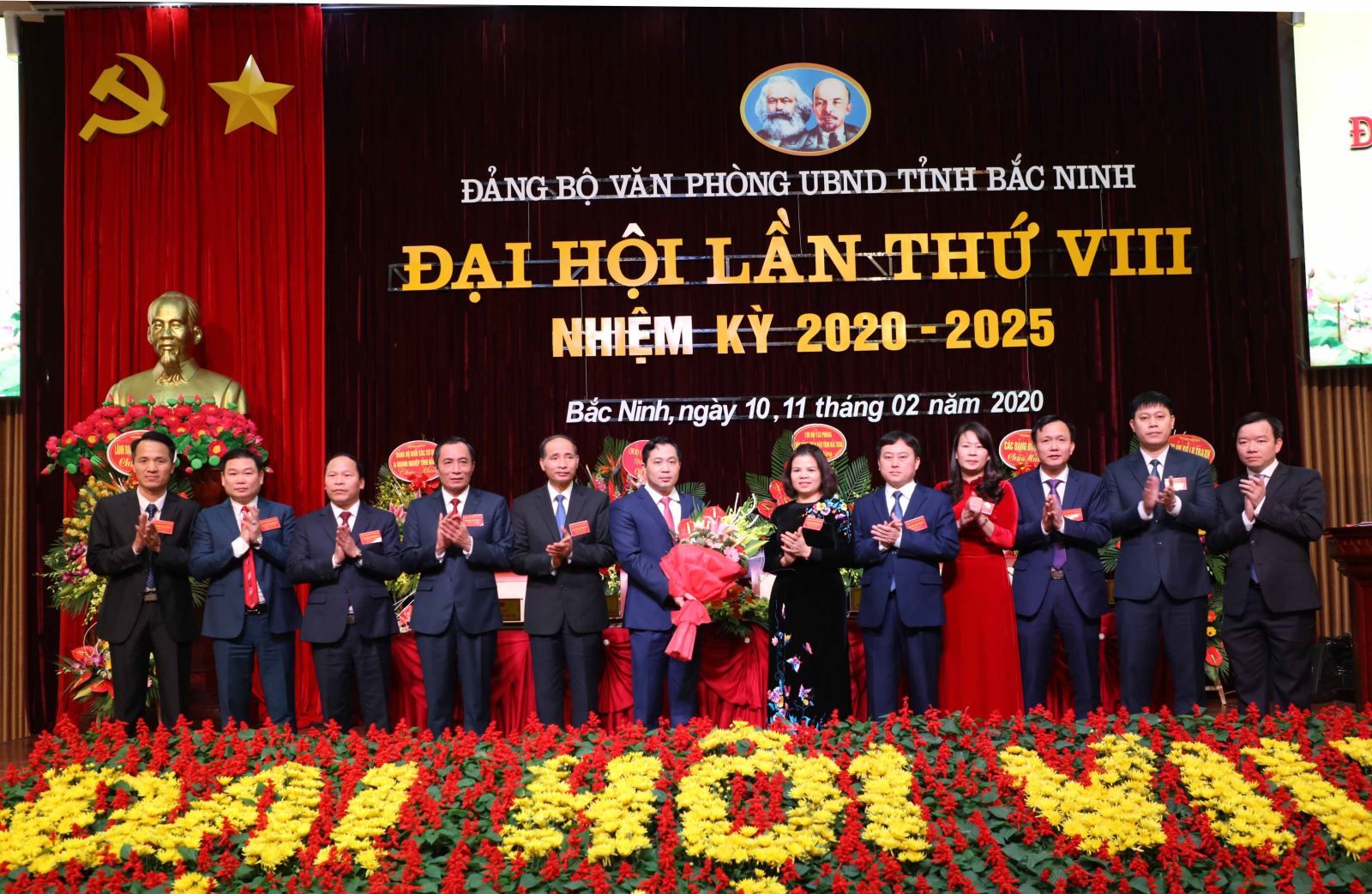
Local party committees throughout the country have begun organizing party congresses to elect “elite” representatives to attend the 13th National Party Congress, an event which occurs every five years. They will elect members to the Party’s Central Committee, from which the Secretariat and the Politburo will be drawn, as well as those positions seen as stepping stones to Vietnam’s top leadership posts.
However, these strictly party affairs actually draw from the government’s budget, tapping into taxpayer money that could be used for state administration or policies supporting people’s livelihoods.
This article will summarize a number of counter-intuitive but actual political realities that Vietnamese citizens have faced for decades and will most certainly continue to face if fundamental changes do not occur.
Total expenditures undisclosed, possibly quite large
Before diving deep into legal issues, we’ll provide a general overview on how budgets are used for Party congresses. Currently, costs associated with organizing Party congresses remain ambiguous.
The general scope of regulations in the Law on Access to Information excludes transparency regarding the operational finances of political and socio-political groups.
On the other hand, the State Budget Law contains Article 15, which stipulates responsibility for publicizing the state budget. However, the law only regulates this responsibility in regards to governmental bodies rather than political organizations.
Finding information on the costs of organizing the Party Congress specifically, and the costs of running party organizations more generally, forced me to try my luck with reports from the Ministry of Finance, the state management body directly responsible for the budget and national expense.
Accordingly, we found that the Ministry of Finance established a separate website that was quite easy to navigate and use. However, the detailed budget information provided was not helpful for readers, regardless of what they were looking for.
Take this example from April 15, 2020: the Ministry of Finance issued an estimated implementation of the 2020 Quarter I budget, that is, the time period during which finance plans and preparation costs for Party congresses are laid out beginning in May.
However, the roster of expenditures only lists three accounts: normal costs (the highest, at 343 trillion dong, or US$14.7 billion), interest and debt costs, and salary reform costs. The estimate clearly is of no use to citizens who want to inspect and oversee financial transparency.
Because of this opacity, I’m forced to look for sources of information at lower levels and with broader scope. Such a manner of research will reduce the ability to generalize regarding the financial “voraciousness” of Party congresses. However, this seems to be the only way to actually get an understanding of such expenditures.
For example, this past April, official correspondence from the Lang Son Province People’s Committee sent to the Ministry of Finance asked for financial support in organizing the province’s Party congresses for the 2020-2025 term. The amount requested ran upwards of 85 billion dong for these fleeting party events.
More specifically, the provincial People’s Committee requested nearly 10 billion dong for the provincial Party Congress and 66 billion dong for district-level congresses. There were even expenditures totaling more than 10 billion dong to “renovate and repair service projects for the Party Congress at all levels”(these fixed expenses should have been calculated separately according to the law; it is unknown how this is permissible).
More importantly, it must be remembered that Lang Son is a mountainous and sparsely populated province, with few party members and a cost of living that ranks among the lowest in the country.
In another document that I found from the Quang Tri Township People’s Committee (a district-level body), promulgated on February 28, 2020, the amount of money this committee requested that the provincial Finance Office send to the Central government in Hanoi for approval for its locale reached 5.7 billion dong.
According to the document, money spent to cover the expenses of representatives and guests for the two-day Party Congress at the commune-level alone would amount to almost 800 million dong, propaganda work in service of the congress would be 150 million dong, and money “for direct supplement payment” would be nearly 300 million dong.
Another district, Huong Hoa, requested 2.5 billion dong in funds for district-level Party congresses and 5.1 billion dong for commune-level ones, totaling approximately 7.6 billion dong.
Quang Tri Province has 10 district-level administrative units, Lang Son has 11. The population of Quang Tri is about 600,000 and Lang Son about 800,000; both provinces have among the smallest populations in the country, and both economies perform below the national average.
Therefore, if I use the figure for Lang Son (85 billion dong) as the average for each province, then I can extrapolate that the total costs for organizing Party congresses in all 64 cities and provinces is nearly 5.5 trillion dong, not including the central Party organizations and the National Party Congress. And this is a conservative estimate.
According to the data Luat Khoa Magazine has gathered in previously articles, this amount is enough to keep the Government Inspectorate and the Government’s Committee for Ethnic Minority Affairs operating for more than 25 years, with enough left over to fund the Ministry of Agriculture and Rural Development—one of Vietnam’s pivotal ministries—for up to a year (the 2020 estimate is 5.3 trillion dong.
Laws about the Party’s funding are regulated by the Party’s Central Office.
This is not some kind of sensational headline to attract readers; it’s the truth.
In the State Budget Law mentioned above, Articles 36 and 38 tell us that both local and central budgets are also responsible for funding the activities of political organizations (i.e. the Communist Party of Vietnam).
In Items 7 and 8 of Article 8, which covers the state budget’s principles of operation, the operational expenses of sociopolitical-industrial organizations, social organizations, and socio-industrial organizations are handled according to principles of self-sufficiency; the state budget only covers tasks the government assigns. The state budget was created to help political and socio-political organizations balance their operational books.
That’s the extent of what the State Budget Law says about the Communist Party of Vietnam’s coffers.
Government Decree 163/2016 provides a bit more detail to the State Budget Law, stating in Article 9 that the government “entrusts the Ministry of Finance to lay out specifics in the management and use of the state budget for Vietnamese Communist Party bodies.”
The Ministry of Finance’s Circular 40/2017 has regulations on business expenses and conference organizing fees which give us a bit of hope in understanding how the budget is used for Party activities more generally and Party congresses at all levels more specifically, by providing us a legal basis on paper.
But right in the circular, the Ministry of Finance affirms that the use of the budget for “the National Party Congress of the Vietnamese Communist Party, Party congresses at all levels up to the national level, conferences of all bodies under the Vietnamese Communist Party”will be implemented separately according to levels of jurisdiction, but it does not specify which levels.
So we’re left to ask, which level or levels of jurisdiction ultimately decide the budget for the Party congresses?
I gradually realized that it was difficult to find any kind of legal basis managing how the budget is used for Vietnamese Communist Party activities.
The “legal” basis often cited in related documents mostly stems from Decision #99-QĐ/TW, issued May 30, 2012 by the Party Central Secretariat, promulgating regulations on Party business expenses, of Party organizations at the fundamental level and those directly above (“Decision 99”).
Expenses of all Party congresses up to the 13th National Party Congress this year are regulated by Decision 3989-QĐ/VPTW, issued August 16, 2019 by the Central Party Office.
As of now, I haven’t been able to find the entire text of Decision 3989, possibly because it was only circulated internally. But this, perhaps, demonstrates best the contradictory manner in which the Vietnamese Communist Party handles budget transparency.
Particularly with Secretariat’s Decision 99, we can see that this document contains regulations that seem to carry more force than even legal documents issued by the National Assembly.
In essence, Party organizations have jurisdiction over establishing and assigning expense estimates, as well as allocating funds and also regulations for balancing the books – all while using the state budget; this decision also regulates tasks by the people’s committees at all levels, as well as other government bodies responsible for ensuring funding for Party activities.
A concrete example in Item 1, Article 5 of Decision 99, states:
“Based on approved estimates, people’s committees in communes, wards, and townships are responsible for guaranteeing operating expenses at the committee level, must balance the books according to regulations in the State Budget Law, and must report to their committee level and the committee level directly above.”
As such, when speaking of jurisdiction and general scope, documents issued by Party organizations are no less valid than laws passed by the National Assembly or decrees issued by the government.
***
The problems that I’ve expounded on above are not new. They’ve existed in this political system over the whole of Vietnam for more than 40 years. However, when trillions of dong are spent simply for the Communist Party to pick its own board of leaders, then taxpayers all over the country should accelerate discussions on why this phenomenon keeps occurring.
One budget nurturing two states—how can this be seen as the only way to manage Vietnam’s public finances?
The original Vietnamese version of this article was written by Bui Cong Truc and published on Luat Khoa Tap chi. Translated by Will Nguyen.
The Vietnamese Magazine would like to thank the Asia Democracy Chronicles under the Asia Democracy Network for kindly giving us the permission to re-publish this article.
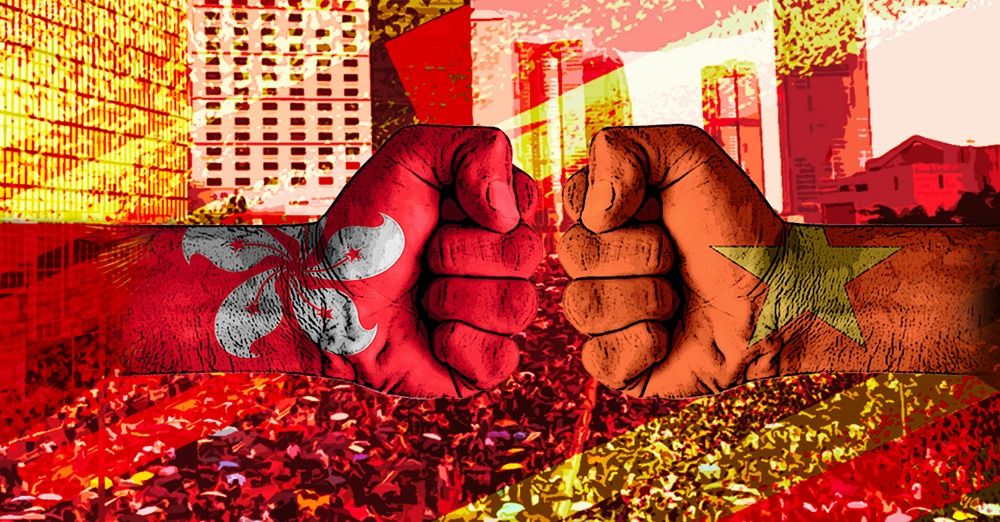
Why Vietnam strongly supports the former British colony’s fight for freedom
Many Vietnamese citizens hold Hong Kong freedom fighters Joshua Wong, Nathan Law, and Agnes Chow Ting in high regard. The Vietnamese cheer when a government expresses support for the former British colony’s fight for freedom. And they mourn whenever there is a crackdown—or a pro-democracy activist gets arrested or dies.
Many Vietnamese consider Hong Kong’s young activists (from left to right) Nathan Law, Joshua Wong, and Agnes Chow Ting as icons of democracy.
One might ask, why does Vietnam support Hong Kong’s pro-democracy movement? The answer lies in the two country’s shared history and similar political movements.
Bloody battles
Vietnam’s long history of battling China spans more than 2,000 years. It’s fair to say that the country’s history is basically one of surviving next to China. After all, Vietnam was colonized by China for about 1,000 years before it finally gained its independence in 938 AD. Most national heroes worshipped as gods in Vietnam today are those who fought China over the past 200 decades, such as Hai Ba Trung (1st century, fought the Han dynasty), Ba Trieu (3rd century, fought the Eastern Wu dynasty), Ly Nam De (6th century, fought the Liang administration), Phung Hung (8th century, fought the Tang dynasty), Ngo Quyen (10th century, fought the Southern Han dynasty, ended China’s 1,000-year domination over Vietnam), Ly Thuong Kiet (11th century, fought the Song dynasty), Tran Hung Dao (13th century, fought the Yuan dynasty), Le Loi and Nguyen Trai (15th century, fought the Ming empire, ended a 20-year domination over Vietnam), Nguyen Hue and Bui Thi Xuan (18th century, fought the Qing dynasty).
Today, some of the most central and important avenues in major cities of Vietnam are named after these national heroes.
In 1979, Chinese troops invaded Vietnam, waging a two-month bloody strike along the 600-kilometer border that the two nations share. This was followed by battles along the borders for another 10 years. Not many countries in the world have had such a long and complicated history with China as Vietnam does. As a result, the anti-Chinese sentiment seems to be deeply rooted in Vietnam’s culture.
Fast forward to today: The territorial dispute over the South China Sea—which also involves Taiwan, the Philippines, Malaysia, and Brunei—is also a factor behind this sentiment. China claims almost all of the area bounded by its nine-dash line. Vietnam claims sovereignty over islands in the Paracel Islands and Spratly Islands, as well as an exclusive economic zone that overlaps with China’s claims.
In 1988, China and Vietnam clashed in the South China Sea when China’s warships attacked and killed 64 Vietnamese soldiers and seized the Johnson Reef. Another battle in recent history was in 1974, when South Vietnam’s navy lost some islands in the Paracel Islands to China’s hands after a bloody battle that left 74 casualties and dozens of others injured. Skirmishes still break out between the two countries, something the Vietnamese frown on.
Vietnam’s long history of battling China spans more than 2,000 years. Its ongoing territorial dispute with the latter over the South China Sea also explains the Southeast Asian nation’s anti-China sentiment and partly accounts for its support for Hong Kong’s pro-democracy movement.
Amid territorial disputes over these islands, Vietnamese people bear the brunt of China’s economic activity in their country. Poor-quality products from China (electronics, clothes, food, etc.) are being sold in Vietnam, and while people complain about shoddy goods from the mainland, they have not found a way to stop the sales of these goods within their borders. More than 91,500 Chinese workers were also living across the country as of January 2020, sometimes making up China towns and clashing with local people.
A Chinese-built section of Hanoi’s new urban railway “has come under fire after reports of deferred deadlines, cost overruns, and dangers to passers-by from falling materials,” reports the Financial Times. Given these trouble at sea, some people even suspect China of wanting to destroy Vietnam’s economy.
Pro-democracy sentiment
Although Vietnam is no longer a communist country and has a market-driven economy, the Communist Party remains the only legal political party. The party requires all Vietnamese to study communism and to worship communist leaders such as Ho Chi Minh, Karl Marx, and Vladimir Lenin.
The society created by the communist regime is marked by corruption and inequality. Yet by an ironic twist of fate, it saved the Vietnamese people from the starvation that the party itself created before it began an economic reform program called Doi Moi in 1986. It abandoned the centrally planned economy model to open up the country to private businesses and foreign investments – a system which it eventually called the “socialist-oriented market economy”. Although Vietnamese people acknowledge that the country has improved significantly economically, severe corruption and deep inequality are among the biggest threats to the regime’s legitimacy. Vietnamese people are well aware that bad governance is the root cause of a slew of major challenges afflicting their lives such as unsafe food, land disputes, low wages, heavy pollution, low-quality education and healthcare, poor infrastructure, wrongful convictions, and a wide range of other human rights abuses.
The state of public governance in Vietnam is similar to China’s – a combination of a communist one-party rule that suppresses human rights and a party-controlled market economy that favors members and sympathizers of the party. It is a system that puts a premium on economic development at the expense of fundamental freedoms.
But while the pro-democracy bias may seem to overlap with the anti-communist sentiment, these are not exactly the same for Vietnamese people. Some of them oppose the communist regime but embrace other authoritarians at the same time. Many Vietnamese admire South Korean dictator Park Chung-hee, Chinese nationalist leader Chiang Kai-shek, and Singapore’s founding father Lee Kuan Yew, who was known for his authoritarian leadership style. This, while they lean toward democratization and support democratic movements such as the ones in Hong Kong, Burma, and Venezuela.
Mass movements
Mass protests introduced a radical change in a repressive regime like Vietnam. More than 30 years after the Vietnam War, joining a mass protest had been taboo in Vietnam, with the attendant risk of going to jail for decades. Few people dared to gather in the streets. Society had been frozen by fear.”
However, reports that China established administrative units in disputed areas in the South China Sea in late 2007 angered the Vietnamese public. Suddenly, mass protests against the Chinese government broke out in the capital city, Hanoi. More protests followed in Ho Chi Minh City in early 2008.
This confused the Communist Party. They had dealt with protests before, but those involved economic issues. These protests were about protecting the country’s territorial integrity, which was at the core of the nationalism that the party had spent its whole history building. Decades of fighting—from the independence struggle with the French before 1945, the Dien Bien Phu victory in 1954, the Vietnam war with the United States, and 10 years of conflict with China starting in 1979—helped build the communist party’s legitimacy.
Eventually, the party cracked down on the protests. Party members could not tolerate any form of social mobilization that could potentially challenge their power.
However, the lamp of freedom had already been lit in the hearts of many Vietnamese. They realized that they must have the right to demonstrate, the right to speech, the right to participate in politics to protect their country, all of which are being suppressed by the Communist Party. For the first time in the country’s history since 1975, Vietnam saw a protest movement in 2011, which lasted for almost three months, from June to August.
In 2014, more anti-China protests flared up across the country, involving not only activists but also workers, farmers, and students, due to China’s deployment of the Haiyang Shiyou 981 oil rig to Vietnamese waters. A similar mass movement happened in June 2018 when the Parliament attempted to pass a special economic zones bill that were seen to open up three strategic areas in Vietnam for China.
In 2014, Vietnamese people took to the streets to protest China’s deployment of an oil rig in the disputed South China Sea.
It is significant to note that most of the mass protests in Vietnam for at least the last decade have been anti-China. All protests have been severely suppressed by the government.
Movie magic
The silver screen has also influenced Vietnam’s perspective on Hong Kong. Hong Kong films have been overwhelmingly popular in Vietnam for decades. These include “The Legend of Condor Heroes” (1994), “Detective Investigation” (1995), “Demi-Gods and Semi-Devils” (1997), “Triumph in the Skies” (2003), among others. It’s not easy to find a Vietnamese over 30 years old that has never watched a Hong Kong film or is unfamiliar with Hong Kong film stars.
Beyond movies, Hong Kong is also a popular tourist destination among Vietnamese, especially during summer and New Year’s holiday.
Until the late 1980s, Hong Kong played the role of a “port of first refuge” for Vietnamese people fleeing political persecutions and abject poverty in their country following the end of the Vietnam War. In 1989 alone, more than 300 Vietnamese boat people landed in Hong Kong daily. The peak of the migration wave was when Hong Kong became home to 200,000 Vietnamese asylum seekers.
Supporting the democratic movement in Hong Kong came naturally to these refugees, who feel forever indebted to the now beleaguered city.
Hong Kong served as the “port of first refuge” for Vietnamese people fleeing political persecutions after the Vietnam War.
There’s no doubt that Hong Kong pro-democracy movement fits perfectly into the Vietnamese people’s worldview, which has been shaped by the latter’s long and complicated history of dealing with China and communism, as well as nationalist and anti-government fervor.