“No one is above the law, but no law is above basic decency, justice, and kindness.”
This sentence is one of the first things you will see on my Facebook profile, right below my profile photograph.
Today I want to share some thoughts about that quote, mostly in light of the recent tragedy in which 39 people were found dead in a refrigerated lorry in Essex, in the United Kingdom. I am not a professional lawyer, and I don’t claim to know everything about this issue. But I think some people need to reexamine their concept of “rule of law” and what it really means.
I do believe no one is, or at least no one should be, above the law. And this applies to everyone from presidents to illegal immigrants. It is true that illegal border crossing is a violation of the law. Staying and working in a country without proper legal documentation is also a violation of the law. Growing marijuana is a violation of the law in the UK. There is no question about that. And, if any persons violate the law, they should be tried in a fair and just manner, and if found guilty, should be punished accordingly.
That said, I completely agree that the 39 people who died in that lorry were violating British law as they illegally entered the country and had intended to stay and work there illegally, without paying taxes. Had they been alive and arrested by the authorities at the border or afterward, I would have completely agreed that they must be given a fair trial, and if found guilty of committing a crime, should have been convicted and punished according to UK immigration laws, which I assume to be deportation. If they had violated any other laws against the community where they intended to reside, they also should have been tried and punished in accordance with the law as mentioned above. It’s that simple. You break the law, you get punished by the law.
On the other hand, doing something legal isn’t always right, and doing something illegal is not always wrong. No law is above basic decency, justice, and kindness, that is my belief. And that extends to the way you treat people, even those who break the law.
Some people say that we shouldn’t have mercy or empathy for those who break or try to break the law. Some accuse these people of being “parasites”, “greedy” and “stupid”, who “disgrace” their own countries of origin in the eyes of the world. I’m not sure that those who work hard in another country to support their families at home can be described as “parasites”, “greedy”, “stupid”, or a “disgrace”. But I am certain the majority of people in the world do not see looking down on their less fortunate compatriots as a virtue or a source of pride. I think this shows a lack of basic decency and respect for other fellow human beings.
Some people say that the 39 people who died deserved their fate because they broke the law and had to pay the price, that they should’ve seen it coming. These 39 people, of course, would’ve broken several laws had they been successful in their (supposed) attempts. Are any of these laws punishable by death? Not that I know of. Do you think anyone who violates these laws should be given the death penalty? I don’t, and I’m fairly sure most people don’t either.
So how, exactly, did these people “deserve to die” for breaking those laws? How, exactly, did these people “deserve to die” for wanting to make more money even if they and their families were not that desperate? How, exactly, did these people “deserve to die” for not choosing the legal way to work overseas?
People who break the law deserve punishment in accordance with the law. But they don’t deserve to die, especially in that manner. It is not just.
Such responses demonstrate a lack of empathy and kindness that is, unfortunately, still quite common, not just in Vietnam, but also around the world, despite many efforts to promote the importance of empathy in our society. Empathy is the ability to put yourself in someone else’s shoes to understand their rationale and feelings. We cannot be kind to others without having empathy, without being able to look beyond ourselves and focus instead on other people.
Understanding the context is an important first step in developing empathy and kindness. Context is integral at every step of the legal process, from lawmaking to handing judgments and punishments, and in the everyday assessment of any situation or person. Jumping to conclusions without considering all contextual information and imposing your own views onto the problem can be dangerous, as you will be focusing on the surface problem and blinded to other underlying issues. You won’t be able to understand fully and correctly either the whole picture itself or the people involved. That lack of understanding will lead to bad solutions that won’t solve problems, but which will likely make things even worse.
Most importantly, I believe kindness makes the world a better place. Don’t confuse being kind to be lenient. It is not mutually exclusive to hand out just judgments and punishments while at the same time trying to understand and treat people well to help them right their wrongs. That is what I believe to be restorative justice instead of retributive justice. I suggest we not focus on their shortcomings, but rather on how we, as a society, as a country, as humanity can help the victims’ families and prevent as many people as possible from suffering such tragedies ever again. That requires not cruelty and apathy, but a balance of rationality and empathy.
The rule of law doesn’t mean you must uphold the law over people without exception. It doesn’t mean people who break the law are bad and don’t deserve our mercy or respect. It doesn’t mean that we can just punish someone and be done with it. We need more than just the rule of law to run our society in a way that improves most if not all of us. We need to have basic human decency, justice, empathy, and kindness in dealing with each other.
This tragedy is a failure and a lesson for all of us Vietnamese as a society and as a country.
A perpetrator in a sexual assault case was caught on tape in Hanoi where he forcefully came onto a woman in an elevator of a building and kissed her on the lips.
The news coincided with what would have been about one year after the #MeToo movement first marked its impact in Vietnam. Last year, an intern at Tuoi Tre newspaper went public about her sexual harassment allegations against her boss in April 2018.
The recent sexual assault case stirred up even more public outrage in Vietnam this time and made headlines on international news outlets as well.
It is because the police in Hanoi only issued an administrative fine against the perpetrator where the whole world had already watched what he did to the woman and believed criminal charges should have been filed.
Images of him assaulted the victim was spreading rapidly online, but anger erupted on social media – from both men and women alike – after the authorities announced the fine of 200,000 VND (Approximately USD 8).
The public felt that the legal system had failed them.
During March 11-12, 2019, Vietnam underwent its third review under the International Covenant for Civil and Political Rights (ICCPR) in front of the Human Rights Committee in Geneva, Switzerland. The recurring theme for the line of questions from the Committee concentrated on the ability of Vietnamese citizens to utilize their national legal framework to protect their human rights.
Vietnam’s legal system often faced criticisms from the international community due to its arbitrary application of the law in political cases. Vaguely defined penal codes under the category of “national security” crimes have been used to silence dissidents.
Most often, political opinions are all deemed to be either act of subversion against the people’s government or propaganda against the state.
And as such, for a while, arbitrary application of vague penal codes seem to be the problem that only political dissidents face in the country. Naturally, the call to reform the legal system in Vietnam has mostly been originating from this same group.
However, all of that has changed in March 2019 with this sexual assault case.
In just one night, an online campaign started by two young female activists, Ngoc Diep Dao and Nguyet Ha, on change.org gathered over 2,000 signatures.
The petition calls for legal reforms in the country with a specific request to the National Assembly to pass new legislation protecting victims of sexual assault and sexual harassment.
In recent months, the sexual assault in the building’s elevator was not the only case where the law failed to protect the victims of sexual assault and violence.
A nine-year-old girl alleged that a male adult raped and beat her, but the suspect was allowed to be released on bail because the authorities had deemed that his conducts were not dangerous enough to the community.
A male teacher who inappropriately touched his fifth graders was not criminally prosecuted.
The inability and unwillingness to prosecute the alleged perpetrators in these cases strongly highlighted the concerns of the Human Rights Committee during the ICCPR review: Vietnamese people currently do not have the support of a functional legal system to address their grievances when their human rights and their dignity are being violated.
The law enforcement, in the “elevator assault” case, arbitrarily applied a decree on protecting public order and preventing domestic violence instead of using a criminal code on assault.
The authorities’ excuse that Vietnam has yet to pass a specific penal code to punish the perpetrator in sexual assault and sexual harassment cases and therefore the law could not further protect the victim – as in the case at hand – is not a legally sound argument.
The forceful and unwanted kiss on the lips is a classic assault and battery. Vietnamese authorities in the past had sentenced a young woman to nine-month-imprisonment for slapping a police officer. The slap on the cheek or an unwanted kiss on the mouth have the same criminality in nature: they are both conducts that fall under the category of battery and assault.
While specific, well-defined sexual assault and battery crimes should and must be included in Vietnam’s Penal Code, at the same, we shall not tolerate the police who refused to apply a regular battery and assault charge against the perpetrator either.
It seemed that the Deputy Prime Minister, Truong Hoa Binh, might have agreed. On March 22, 2019, he had requested the City of Hanoi and its police to conduct a review of the case.
In the meanwhile, the people continue to voice their demand to change the current legal framework to protect victims of sexual assault and harassment.
Even though change.org itself is being blocked here and there in the country this year (coincidently after the new Cybersecurity took effect earlier in January), by the time this article goes to press, close to 4,000 Vietnamese people and 14 civil society organizations have signed the petition during the past four days.
Social media in Vietnam carries quite a force when it comes to having a say in public affairs, and the government is well aware of that. The effect of the new cybersecurity law of 2018 and its attempt to reign in the people’s power remain to be seen. However, the vibrant online civic space in Vietnam just recently proved how effective it could be in fighting against illogical and unreasonable governmental regulations.
This time, it was all about the fish sauce which for the majority of Vietnamese people, could very well be the essence of their souls. If anything could cause an uprising in the country, interference with the people’s consumption of their fish sauce might very well be it.
Three years ago, when the disastrous Formosa marine pollution erupted, the fear of not being able to have a safe supply of fish and salt (the main ingredients for making the fish sauce) prompted thousands of Vietnamese to take to the streets.
So for this reason alone, one would assume that it must take a very gutsy governmental department to take on a fight against the producers of this national treasure.
To everyone’s surprise, the Bureau of Production and Market Development for Agriculture Produce (Bureau) in Vietnam emerged in early March 2019 as the one who was willing to put on the hat of such a fierce fighter.
The Bureau proposed a new set of rules and regulations, detailing the practical steps that all who wish to produce fish sauce in the country must follow.
This particular bureau might have underestimated the outrage from not only the fish sauce producers but also the Vietnamese people at large when the proposed regulation went public.
It could partly be that the making of fish sauce is quite diverse and supposedly done according to the unique traditions and techniques in each region in Vietnam.
Similarly, not many of us would imagine instructing all French winemakers how their bottles of wine should be made or telling the whole Italian cheesemakers that they must follow their government’s detailed steps to produce their mozzarella.
More importantly, for years, the traditional fish sauce producers in Vietnam have been fighting against a few large food corporations who had created a monopoly which mass-produced not fish sauce, but its substitutes.
It turned out that there were two kinds of sauce involved in this battle.
The traditional fish sauce is organically made from fish and salt, and it takes longer to yield the final products.
The other is a chemically induced sauce that may smell like fish sauce but catered to an entirely different taste.
This non-traditional fish sauce substitutes, however, have dominated the market in Vietnam during the past two decades because they are considerably cheaper.
Nevertheless, the traditional fish sauce continues to survive throughout this battle even though their products cost more than those manufactured by the big factories.
Perhaps, because, in recent years, Vietnamese people begin to favor the traditional taste both for health reasons and for protecting the keepsake of their national identity.
I remember this one time when attending college in California, as I was passing by an apartment complex near my school, I suddenly felt the presence of my motherland and nostalgically yearned for my mama’s cooking while the distinctive aroma filled the air from one of the studios.
I am probably not alone in having such an experience where one associates fish sauce with memories of her homeland, making it an essential part of who she is.
And there it went, in the last few weeks, the Vietnamese people were not shy in expressing themselves on social media and letting the government knows that they were firmly against the proposal to regulate the traditional fish sauce’s production.
Their outpouring anger was enough for the Deputy Minister of the Ministry of Science and Technology to quickly announce on March 12, 2019, that the proposed regulation for fish sauce production would be halted indefinitely.
But the abrupt halt did not calm down the public and the traditional fish sauce producers. For the people, the attempted regulation seemed to disproportionately favor one corporation in particular, Masan Group, who had dominated the fish sauce substitutes market in Vietnam.
Almost three years ago, the traditional fish sauce producers had suffered a different attack from another controversy allegedly concocted by a Public Relations firm – T&A Ogilvy – who worked with major food corporations, including Masan.
Back in December 2016, mass media in Vietnam picked up a story from the survey sponsored by T&A Ogilvy where it claimed that 95% of all fish sauce samples collected nationwide contained an alarming amount of arsenic content.
The story was later proven to be entirely false, and the Prime Minister, Nguyen Xuan Phuc, himself ordered an inquiry into the survey’s claims. Nevertheless, the traditional fish sauce producers already suffered losses when consumers panicked and avoided consumption.
This time around, the Vietnamese public seemed to believe that the latest proposed governmental regulation just proved that Masan would not give up on this ambitious dream of becoming the only producer for fish sauce in the country and that the government chose to stay on the corporation’s side.
Because fish sauce is not only a staple in many people’s diet but also a part of their identity, they came to doubt the government’s actual intention for attempting to regulate the production of such caused them.
On social media, people alleged that this whole incident just showcased the intricately entwined relationship between the Vietnamese government and the conglomerates – such as Masan Group.
To have such an allegation coming from its people should be a worrying sign for a regime that has been trying to maintain its dwindling legitimacy like Vietnam. And while the battle is not quite finished, social media will continue to be the much needed civic space for Vietnamese people to voice their concerns and exercise their rights.
Foreigners often assume – wrongfully – that the last war the Vietnamese people remember fighting was the one where the Americans were involved.
It is not.
Foreigners also often do not fully understand why a large number of Vietnamese people would protest when China acts aggressively in the Southeast Asian Sea or South (of) China Sea.
Is it because the Chinese colonized us Vietnamese for one thousand years and continuously fought us during our entire history?
It is not, not entirely.
It is true that from our earliest history until this century, China’s aggression towards us has never ceased to exist.
But, we were forced to resist primarily because our government in the past almost three decades, as it attempted to be closer to their ideological big brother, tried to blur our past conflicts with China.
We were forced to remember because we felt that there has been an attempt to erase this collective memory from us.
Ever since Vietnam signed a treaty with China to end the decade long Border War after their secret negotiations in Chengdu in 1990, our history books spent only a few paragraphs discussing the recent battles between us and China.
Until very recently, writing about China’s aggression and the bloody history between the two countries in the 20th century was strictly forbidden by the Propaganda Central Committee of the Vietnamese Communist Party (VCP).
Those journalists and bloggers – such as Osin Huy Duc, Pham Doan Trang, Mother Mushroom, The Wind Trader, and Trung Bao – who dared to lead the way almost a decade ago on writing about the restricted contents have paid a hefty price. For some of them, their professional life ended, and for some others: jail time.
The people’s attempts to commemorate these battles and those who died were faced with arrest, detention and physical assaults by our police force every year.
Remembering the dead during the anniversary of their passing – or Ngày Giỗ – is a staple ritual in the Vietnamese culture.
Remembering those who had given up their lives to protect our lands is seen as a responsibility which the people expect from their government.
When our government chose silence over commemorating those who died to protect our sovereignty, as Vietnamese, we refused to forget.
We refused to forget the 74 soldiers of the Republic of South Vietnam’s naval force whom we lost in the battle of January 19, 1974 – the day China invaded Paracels Island.
We refused to forget the 68 soldiers from the People’s Army of Vietnam who died resisting China’s attack at the Johnson South Reef on March 14, 1988, in the Spratly Islands.
And every February, we could not forget the most gruesome memory of the massacre in the Northern provinces during the Border War of 1979, which many witnesses could still recall today.
We saw the relationship between the Chinese Communist Party (CCP) and the VCP has trenched in the blood of innocent lives.
Thousands of Vietnamese people and soldiers died at the hands of the Chinese PLA during the Border War.
One research paper entitled China’s War Against Vietnam, 1979: A Military Analysis conducted in 1982 by King C. Chen and published by the School of Law of the University of Maryland in 1983, had estimated that each side lost about 30,000 soldiers from February 17, 1979, to March 5, 1979.
Vietnam estimated the number of lives it had lost during the Border War was around 60,000 people.
Has it not been for the internet that was roaming free in Vietnam since the early 2000s until now, the younger generations of Vietnamese would not be able to learn about our history.
It was also because of the internet, Vietnamese people learned about the Tiananmen massacre, and the plight of the Tibetans and the Uyghurs under China’s occupation.
We fear the day that Vietnam would be the next Tibet or East Turkestan if China’s aggression continues.
When our National Assembly tried to pass the Special Economic Zones in June 2018, our government reaffirmed this worst fear that Vietnam could be under the direct control of the most terrible dictatorship in the world.
Naturally, thousands of people turned to the streets as they did in 2007/2008, 2011, 2012, 2013, 2014, and so forth.
The June 2018 protest, however, was estimated to be the most massive demonstration in contemporary Vietnam’s history after April 1975, and it was not organized by any groups of dissidents.
It was probably an automatic response to China’s aggression, a force of resistance that might have been ingrained in most of our genetic makeups.
The majority of Vietnamese people do distinguish the CCP as the main culprit, not all people of Chinese descent.
In 2014, there were reports of riots burning down Chinese-owned factory, but the identities of those rioters were dubious to the public.
Some suspected that the “riots” was part of the police’s tactic to suppress the peaceful demonstration against China for bringing their oil rig – Haiyang 981 – into Vietnam’s waters at the time.
Regardless, Vietnamese people quickly denounced the riots, as well as any call for violence against Chinese people and their property.
This year, 2019, it was the first time that all of Vietnam’s major newspapers published the detailed historical events to commemorate the February 1979 Border War with China.
However, few trusted that our government has truly meant to give the dead their well-earned respect after 40 years.
Last night, a document stamped “Secret” was circulating Facebook in Vietnam, allegedly came from the VCP’s leaders in Ho Chi Minh City, asking the local authorities to not letting self-organized groups – such as the Le Hieu Dang Club – to organize their events commemorating February 17, 1979.
This morning, social media reported that the local police forces were arresting dissidents who went to Ly Thai To statue in Hanoi and Tran Hung Dao statue in Ho Chi Minh City to commemorate the event.
Among the arrested were blogger Anh Chi Tuyen (Nguyen Chi Tuyen), poet Phan Dang Lu, Facebookers Dang Bich Phuong, Le Hong Hanh, and Hong Ha.
The people often chose the statues of Ly and Tran as the commemorating locations because they were our national heroes who fought off the “enemies from the North” in our history.
In Ho Chi Minh City, the local authorities were quite “creative” when they used a forklift to take away the giant incense burner (lư hương) so that no one could offer the incense to the dead, effectively stopping any commemoration activity at once.
While the good faith of our government again was being called into question today, February 17, 1979, had already become a historical event that the contemporary Vietnamese memorialized because we, the people, refused to forget.
Throughout 2018 and up until yesterday, January 24, 2019, the world continued to witness Vietnamese people’s love of football exploded, and the South Korean coach, Park Hang-seo, solidified his status as the country’s new, de-facto national hero.
Images of people stormed the streets or “đi bão” – literally means “ride the storm” in Vietnamese – across major cities after each team’s win seemed to reaffirm that belief.
While it may be fair to conclude that the majority of Vietnamese cares more about a football match than the other political issues in the country, we probably should pay attention to a different side of Vietnamese society that a foreigner may not see quite readily in recent days.
Two nights before the last football match against Japan during the Asia Cup, from 8:30 P.M. to midnight of January 22, 2018, there was another international event concerning Vietnam: its third Universal Periodic Review (UPR) cycle.
This particular UN mechanism – which only came into play on the world stage during the past decade – is where a state would undergo peer-review put on by other countries regarding its human rights’ records every 4.5 years.
It is doubtful that the word UPR is popular, even in the West.
But the January 22, 2019 event had attracted over 90,000 Vietnamese to tune in and watched to date, with over 4,000 comments and over 1,000 reactions on a live-stream posting by the Facebook page UPR Vietnam.
UPR Vietnam is a collective effort of independent CSO workers in the country who want to bring more awareness of the human rights conditions in Vietnam to its people.
Of course, comparing the number of people who went online to watch a UN’s human rights event to a football match does not mean much. But it is only fair if we put it within the context of Vietnam’s political background so that we could see why this group of viewers does show a different side of the country.
Vietnam is probably a mini version of China with more free internet. That is one of the simplest ways – yet quite correct – to envision the country and its political structure.
For almost 80 years in the North and more than 43 years in the entire country, the Vietnamese Communist Party ruled the state under a dictatorship.
In Vietnam, there is no other political party. The VCP is the only political force.
Young children would be indoctrinated at an early age when they joined the Communist Youth League.
When they grow up, becoming a member of the VCP could also mean being part of a privileged class because the Party is the leading force that runs the country.
VCP members take the majority in all branches of the government. The decision of the VCP’s Politburo would trump all others.
Ho Chi Minh was taught to be loved and admired, even worshipped as the one hero who liberated his people from French colonization. History books spent 90% of the time teaching only historical events happened after 1945 and about how the VCP came to absolute power.
The intent is clear and simple, to ensure that no one should have even the slightest doubt about the perpetuity of the VCP’s leading role in Vietnam.
Not a single sign of dissent has been tolerated by the regime, especially in recent years.
During the past two years, the political will of the VCP seemed to have hardened with 97 arrests of political dissidents compares to 43 in 2017, and 18 in 2016.
The most significant difference between Vietnam and China is probably the fact that the government has failed to build a “Great Firewall” which let the internet and social media became the much needed civic space where people could come together and discuss current affairs and politics.
That online space is now under threat with the new cybersecurity law that was passed in June 2018 and took effect on January 1, 2019.
Along with the new law, a more rigid approach by the VCP in dealing with its own members also emerged.
At the end of 2018, a well-respected intellectual and a long-time VCP member – Professor Chu Hao – was disciplined by the Party in a series of events which some people have dubbed “the VCP’s waging war against intellects.”
It seemed, however, the Party and its leader, Secretary General Nguyen Phu Trong, were only acting in line with their manifesto.
The hope that the Party would reform itself and be tolerable to the ideas of forming democratic institutions and the rule of law which some people might have carried on throughout the past four decades, seemed to have ended bitterly with the former Deputy Minister Chu Hao’s withdrawing himself from the Party.
Getting over the status quo is never easy for any given society, not to mention one that has been under decades of authoritarianism.
The fact that there is still a minority group of people (most of them are under 40-year-old) who – despite being born and grew up in such a political context – still cares about human rights does matter.
It matters because only five years ago, during the last UPR cycle, not a lot of people in Vietnam know much about human rights and could care less about the UPR process.
It matters, even more, when the one recommendation from the Czech Republic to Vietnam during this UPR cycle, asking the government to allow political pluralism and democracy in the country, also became one of the most read news of January 2019 on Luat Khoa online magazine just 24 hours after being published.
Recognizing that there is a small, young sector of the population who is still willing to speak up when faced with harassment and even imprisonment as the government hardened its oppression methods, is, therefore, essential.
It is the other image of Vietnamese that the world needs to take notice because we are more than just a fun, tropical travel destination with good foods and hard-core football fans.
Although a new draconian cybersecurity law went into effect earlier this year, there are still people who refuse to censor themselves or curb their online activism in any way.
Instead, they have continued fighting for what they believe is right.
They are the drivers protesting against BOT An Suong, the lawyers and activists exposing the government’s wrongdoing in Loc Hung vegetable garden’s forced eviction, the environmentalists trying to save the rainforest in #SaveTamDao campaign, and many more.
When the officials of Tan Binh District in Ho Chi Minh City gathered over one thousand police officers and other forces to bulldoze some 200 houses at Loc Hung Garden, they destroyed not only the shelters of a few hundred people but something even more important.
What also crumbled and laid buried deep in the rubble was the people’s trust in the current regime–or whatever was left of it.
“I have to tell you honestly, the trust between the people of this community and the government has totally broken down over the decades. We cannot trust them after so many broken promises. They have told us that they would meet with us and provide us with documents about the projects, the plans. We’ve received nothing. There is no trust.”
Cao Ha Truc, one of the persons representing the 124 households living in Loc Hung Garden, spoke to me over the telephone on January 9, 2019, about 12 hours after he was released from the police station and came back to a home that was no longer there.
Truc told me that he was a vegetable farmer until the local authorities engaged in what he called “shady tactics” a few years ago to stop him and others from continuing their farming.
In a video clip recorded earlier in the day, he said:
“They oppressed us by cutting off our means of survival, by letting water flood our vegetable fields, and we could not live (properly) for eight years.
We could not raise cats and dogs because they would die when the land was submerged. The meter-high water took a month to drain, but then the environment became polluted. We had to find other means of living.
We’ve lived here through three generations by farming vegetables, but now we have to flatten out the land and build the four-level houses to keep on living.”
Truc was refuting the government’s claim that the residents living in Loc Hung were constructing houses illegally when it confirmed that some 112 homes were demolished on January 8, 2019.
Loc Hung Garden is a complicated legal issue involving land rights and land possession, with the case beginning to beleaguer the Ho Chi Minh City government in the late 1990s.
The Vietnamese government has faced increasing legal headaches concerning land disputes over the years, due to rapid nationwide development.
Land Disputes Developing with and within Land Development
Vietnam’s economy grew exponentially in the past three decades after the communist regime decided to “open up” and explore a “free market with socialist characteristics.” In big cities like Hanoi and Saigon, some investment and development projects crashed head-on with the former way of life: farming.
As Vietnam has been an agricultural society for thousands of years, the fact that there were farmers in the big cities probably shouldn’t surprise anyone. However, the clash between the old and new ways of life – coupled with a lack of clear legal framework – has created long-lasting social, economic, and political problems.
The Loc Hung Garden incident was not the first and definitely will not be the last of its kind.
In Vietnam currently, there are hundreds of thousands of land-lost victims who are known as “dân oan” in Vietnamese, often translated as “victims of injustice” in English.
As of January 8, 2018, some may want to add another 124 households from the Loc Hung area to this population.
At the same time, the local government has not exactly been transparent about the legal basis to support their claim to the land.
What the public knows thus far includes a still-pending development project for a public school system from K-12 on the land where Loc Hung Garden is located, and that this project was postponed numerous times during the last five years.
Before that, both the city and the district’s officials had failed to carry out the other public construction projects they previously proposed for the area.
In report No. 6035/UBND-NCPC sent to the Government Inspectorate dated October 20, 2016, the People’s Committee of Ho Chi Minh City admitted two critical matters:
1) The public school development project has yet to be executed and was still only a prospect, and
2) The land dispute with the residents at Loc Hung Garden would have continued to be classified as a “complicated and long-term petition” as the project had already started.
The report and its conclusion indicate that the government always recognized the land dispute at Loc Hung Garden was not a matter of black-and-white and that it anticipated a lengthy legal battle with the residents once the project began.
Information on the pending development project, as well as the proposal on compensation and relocation of the residents, is not made readily available to either the residents of Loc Hung or the public at-large as prescribed by law.
Was There Due Process?
The official reason given by the authorities (the People’s Committees of both the Tan Binh District and the 6th Ward) for tearing down the hundreds of homes was to enforce the order to remove illegal structures at Loc Hung Garden.
For the enforcement and removal to take place, the law in Vietnam requires the authorities to provide three critical documents with sufficient public notice to the violating individuals or entities:
The report conducted by the appropriate authorities on the violation
These documents should also be served to the violating individuals and entities, giving them an opportunity to remedy the violations voluntarily.
Cao Ha Truc told me he did not receive any of the three required documents but cautioned that he could not speak for all others in the area.
The state-owned newspaper that published the story about Loc Hung also did not enclose copies of these essential documents.
When I called the office of the People’s Committee of Tan Binh District and asked for copies of the documents to be provided electronically according to law, I was turned down. The desk person stated that I would need to show up in person to make my request.
The law prescribes a specific duty to the enforcing authorities, which is to establish that the required documentation exists and that the affected people are duly notified. When the government has yet to provide them, we cannot conclude that there was due process.
Who Owns the Land in Vietnam?
Land in Vietnam “belongs to the entire people with the State acting as the owner’s representative and uniformly managing land. The State shall hand over land use rights to land users in accordance with this Law.” (Article 4, 2013 Law on Land).
I noticed the word “shall” was added in the English translation that I found online. Its addition makes a significant legal difference.
The 2013 Law on Land provides in detail a long list of specific scenarios where the Vietnamese government would hand over land rights use to the people. At the same time, it also prescribes another list of situations where the government could perform land reclamation and land requisition.
The main legal issues in the Loc Hung Garden case have always centered on the farmers’ right to possess the land and their land use rights from 1975 until now.
The government claims they acquired the land and the other 1.2 hectares nearby from the now-defunct South Vietnam’s postal services under Government Council Decision No. 111/CP dated April 14, 1977.
The residents claim that Decision No. 111/CP only covers the 1.2 hectares because the 4.8 hectares in question have been used for farming during the last 60 years in an undisrupted and undisputed manner. They also claim that the 4.8 hectares belong to the Catholic Church and the church gifted it to the farmers in 1954.
All parties involved agree on the size of the disputed land and the fact that the current government did allow residents to continue living and farming on the property undisrupted since 1975.
On January 8, 2019, the Tan Binh District’s division of the Central Propaganda Committee issued a publication, stating that the residents who had been living and farming at Loc Hung Garden would be entitled to compensation according to the policy for agriculture lands.
What would be the justification to compensate the residents if there wasn’t any legal basis for them to live there in the first place?
And more importantly, is any amount of monetary compensation enough to gain back the people’s trust in their government?
The Social Republic of Vietnam is known to be notorious for its land management system since the day of its inception.
‘People’s ownership of land,’ whilst sounds misleadingly progressive, has never meant spatial justice for Vietnamese citizens nor intended to guarantee national housing security. Government leaders, alongside with pro-government scholars, often and explicitly, assert that the so-called ‘People’s ownership of land’ is a necessary evil to preserve economic growth.
Under this system, the local government can act as a proxy (or to lend support) to investors, corporations and impose price controls with regards to buying land and property from ordinary citizens for commercial and/or industrial purposes, without the application of any market mechanism. Indeed, the system does accelerate the land-acquisition process, but it also entails corruption, nepotism, and large-scale internal displacement. Unsurprisingly, in 2017, after decades of reforms, 70% of all national administrative complaints and accusations are still land-related.
And again, the story of unresolved land dispute conflicts repeated in Dang Van Hien case.
Long Son Commercial and Investment Company (Long Son), an investor granted the right of using land by the provincial authorities of Dak Nong, decided that it was time to carry out an all-in attack on any farmer who involved in land disputes with Long Son and was not willing to comply with its eviction demands.
It is also noteworthy that these long-lived conflicts between the company and the involved farmers, including defendants Dang Van Hien, Ninh Viet Binh, Ha Van Truong, have all been reported to the competent officialdom, but the farmers only received silence back.
The position of the local government, until now, is still unknown. However, it was these eight years of constant terror tactics and threats made by Long Son toward the farmers, reportedly, that had led to the tragic ending of three deaths and several other injuries in October 2016.
On October 23, 2016, armed with ‘primitive weapons’ and several bulldozers, over thirty workers of Long Son Company advanced into the farms on the disputed lands, leveled half thousands of cash crops and surrounded the farmer’ houses in groups.
The farmers then responded with their improvised firearms. Dang Van Hien fired his gun in the air with the hope of dismissing the crowd. The attempt was unsuccessful and triggered further escalation from Long Son’s employees with rocks and bulldozers approaching. Desperate and probably was also in fear, in the end, Hien and Binh shot aimlessly into the group of workers even after they turned around and ran away. Three persons were killed and 13 others injured.
In the first trial by the lower court earlier this January, when the court announced the verdict that Hien received the death sentence for the murders, the attendees turned the courthouse into chaos. Unfortunately, the court of appeal has recently agreed with the first-instance court and upheld the judgment. And again, the villagers from Hien’s neighborhood reacted with outpouring outrage, and in a sense, out of despair right at the court’s doorsteps.
Legalwise, the court’s decision now faces widespread criticism from lawyers and independent scholars where most of them concur that the punishment for Hien is too harsh and unnecessary. It was the responsibility of Long Son, whose actions in the past eight years were both unlawful and provoking, which have caused the farmer’s retaliatory measures. Some are also pressing on the fact that both the trial and appellate courts have failed to consider the numerous mitigating factors in favour of Hien under Vietnam’s Penal Code. These include the fact that Hien voluntarily turned himself in and he and his family have made financial reparation to the victim’s families.
Politically speaking, the court seems to be, arguably, insensitive about the nature of the case. Land disputes have been and will continue to be the most problematic social conflict in Vietnam, and an unconvinced judgment like this will only consolidate public notion on the relationship between interest groups, crony capitalists, and the government.
On the other hand, some believe the judgment is deliberative. Activists contend that the judgment is a signal to landowners and dissidents alike, warning them that any conduct deemed to be challenging to the ultimate authority of the government in distributing land and assigning land purposes will never be tolerated in Vietnam.
Nevertheless, if the President of the Socialist Republic of Vietnam, Tran Dai Quang, refuses to grant Dang Van Hien a reprieve this week and the competent judicial branches also fail to request a reconsideration of the case by compelling a trial by cassation, Hien could very soon be the first farmer getting executed due to a land dispute in the history of the Communist Party’s ruling in the country. And that would be a very worrying sign for the deterioration of land administration under the current regime.
The glass ceiling for women in Vietnam, to me, is as high as the sky for most.
Recent stories about sexual assault and other violent crimes against young girls and women not only caught the public attention but also gave observers glimpses of a patriarchal society which has remained – for centuries – the same in term of gender equality.
On May 28, 2018, Phụ Nữ (Women) newspaper published an online story, detailing a groping incident three days before, where the victim was one of the biggest music stars in Vietnam, Mỹ Tâm. As one of the most beloved pop singers in the country, known to many of her fans as the Queen of Ballads, Mỹ Tâm probably has one of the largest fan bases, if not the largest.
But none of that great fame was able to protect her from being a victim of sexual assault.
To add insult to injuries, Mỹ Tâm was assaulted while performing on stage at a private event in front of the whole audience, yet all she could do was to retreat to the backstage.
No one came to assist her; no one confronted the perpetrator who was mentioned in the article as an “important official.” The only kind gesture to show some sympathy for Mỹ Tâm was the fact that someone dared to make a report to the press.
It is still a big taboo for women who accuse men of sexual harassment and assault in a country like Vietnam because there would always be the fear that the public may not be sympathetic toward the victims.
It is true that when compares to other East Asian countries like its neighboring Japan, Vietnamese society shows signs that it is catching on to the #MeToo movement where people publicly support the victims.
The recent alleged rape allegations made by an intern at Tuổi Trẻ newspaper helped demonstrated this point.
But in a culture where, for thousands of years, women have been taught and praised for being able to keep quiet of their sufferings while making sacrifices for the sake of others, victim-blaming in most cases should come as no surprise.
People may not defend the perpetrators, but they will judge the women if they don’t fit the “proper” Vietnamese woman standard.
On April 27, 2018, dancer Phạm Lịch publicly alleged rocker Phạm Anh Khoa had made improper sexual advances at her. About a week later, another female dancer Nga My and an unnamed stylist also made public allegations against Pham Anh Khoa for sexual misconducts. And while Khoa eventually apologized for his behaviors on May 15, 2018, he only did so after UNFPA dropped him as one of its goodwill ambassadors, his appearances on TV were canceled, and a rock concert in Hochiminh City pulled the plug on him.
The public backlash against Khoa began after an NGO that works to promote gender equality in Vietnam, CSAGA, organized an event for him to explain his side of the story.
People quickly pointed out that CSAGA was given Khoa a platform to normalize improper and illegal behaviors against women because he was not acknowledging any faults, he was explaining that his conducts were “industry standards.” Phạm Lịch recently told reporters that she could not find any work for the past month after making her allegations against Khoa public. It is not too far-fetched to infer that she is likely being punished by the industry for breaking the silence on sexual abuse.
Both Khoa and CSAGA apologized immediately after the backlash, but with his half-hearted attempt to explain himself, Khoa inadvertently opened the pandora box and revealed a culture of subtle victim-blaming in Vietnam.
Such a culture became even more vividly portrayed just last week when a nude model alleged that a famous artist had raped her at work. Many commentators online, including democracy activists and lawyers, shifted the burden of proof to the alleged victim and insisted that she must prove she had forcibly fought back during her ordeal or it would not be rape.
No means no simply was not enough.
The victim’s credibility was questioned, and her job as a nude model took away a significant portion of public sympathy. People, women included, scoffed at her story when information surfaced that the perpetrator allegedly had used a condom.
Just this week, the case of alleged child abuse against Minh Tiệp, a sports newscaster at the national television broadcasting company VTV shows how victim-blaming extends to cases involving teenage girls as well.
When first asked about the alleged abuse, Minh Tiệp used the media to paint the victim, his 15-year-old sister-in-law, as a “bad girl.” She was, according to him, someone who has been dating as early as in 6th grade and always talked back at him and his wife, her older sister, while they were trying to teach her right from wrong.
A member of Vietnam’s National Assembly – Phạm Tất Thắng – played down the case as “one of those that should be dealt with by the family,” even after the father of the teenager told newspapers that Minh Tiệp slapped his daughter. Mr. Pham is a Vietnamese congressperson who belongs to a committee which deals with culture, education, women, children, and teenagers matters.
These stories should not come as surprises once you realized that they all attempted to portray the victims as being “improper.”
Because the “proper” Vietnamese woman only dresses and speaks in an approved manner, she will not work certain jobs, and above all, she endures her sufferings for the sake of others. She will not bring attention to herself and definitely keeps quiet about her injuries and her pains if they would bring shame to her family.
This proper woman thus is a virtuous one who would sacrifice all that she is for the well-being of her loved ones, and for that, she has been idealized, worshipped and expected to be placed on a pedestal throughout Vietnamese history for future generations of girls and young women to follow.
We were taught folklores like Quan Âm Thị Kính, a woman who was being misunderstood all her life, wrongfully accused of crimes she never committed and yet she never tried to explain herself. She would keep her mouth shut and endured the injustice until the day she died, and only after death that her name was cleared.
Then there was the story of Thiếu phụ Nam Xương, a lady wrongfully accused of infidelity by her husband who left for military service and returned home years later. Again, just like Thị Kính, talking back and explaining herself were not the options. And like the other story, our heroine could only use death to prove her innocence, so she killed herself.
Being demurred, forcing oneself to bite her tongue instead of speaking up, and learning the ability to suffer in silence and not complaining are virtues that aspiring young girl was told to keep.
I grew up in such a society for the first 12 years of my life, and despite being raised by parents who would raise other people’s eyebrows for the way they let me speak my mind and shout back at them when I think they were wrong, I had mastered those virtues by the age of 5. I was often seen as a quiet girl, sitting properly and politely with a half smile on her face, whose voice was rarely heard when visiting homes of my parents’ friends. I had convinced myself then, that conforming to societal norms would be the best and easiest way to save myself and my parents from unnecessary headaches.
For the next twenty years though, my life drastically changed as my family immigrated and I was growing up in the West, adapting to a new set of values. I have grown up to become a Westernized woman, one that my parents’ old friends from Vietnam could no longer recognize as the same quiet and demurred child they have met back in the home country.
But who could believe that it only took less than 15 months of living in the old settings among Vietnamese people to morph my 30’s something-year-old self back to my pre-teen’s personality?
I work in the NGO sector, and one would have thought that I must be among comrades who promote the same values as mine – gender equality included – but I have found that I needed to put in twice the efforts compared to my male counterparts in most things that I do. I always felt the need to prove my self-worth to others, and I was constantly looking for approval. Even in my field of work – where people often believe they are somewhat more progressive than the rest of society – it still seems as if the “seats reserved at the table” are only offered to women who fit the “proper” descriptions.
So I bit my tongue instead of speaking back and letting others know how I felt, how I did not agree with them, and how I thought that they were wrong. I sacrificed my happiness to keep others happy. I had changed so much that I could not recognize myself when I stared at the woman in the mirror on the wall one day in the middle of Southeast Asia, and I broke down, completely.
If life was this difficult for me – a woman with an advanced degree from the West – imagine how it would be for those who have fewer opportunities and those who never had the chance to live outside of Vietnam.
While I was lucky to get out of that environment to save myself a trip to the emergency room for depression treatment, it dawned on me how high the glass ceiling is for most Vietnamese women. The #MeToo movement has brought many important issues about women’s rights to the discussion table in Vietnam, and I hope gender equality will now receive the attention it deserves.
In a surprising move right before the 7th Party Central Committee plenary meeting, a group of Vietnamese Communist Party (VCP) members and citizens have publicly demanded – in a letter – that the General Secretary, Nguyễn Phú Trọng, discloses his personal assets in according with the VCP’s own rules.
The demand was quickly spread on social media in Vietnam in the past three days.
The plenary meeting, which commences on Monday, May 7, 2018, in Vietnam, concentrates on discussions involving the integrity, capacity, and merits of the Party’s strategic personnel.
The timing of both the letter and the plenary meeting is at the high of the anti-graft campaign initiated by the Party’s chief in the past two years, right after his power was successfully consolidated at the last Party’s Congress in 2016.
For a long time, the question concerning personal assets of Party’s leaders and high officials has been on the mind of the people in Vietnam where corruption is high.
But this is probably the first time that a group of Party’s members publicly asking the Head of the Party to be transparent about his own assets and declare them.
Mr. Trọng, of course, could keep silent and does not have to respond to the letter.
Dr. Nguyễn Quang A, a long-time dissident intellect and one of the signatories of this letter, is not optimistic either: “I believe it is highly probable that he would not respond at all”.
While Trọng could continue to stay in his safe zone and only respond to the public and the press in pre-arranged conferences as he has done in the past, this time, there are three important reasons for him to consider responding to this written demand from his own comrades.
Trọng should have his assets declaration form ready because the laws required him to do so.
Vietnam’s laws required that officials – which include the VCP leaders – have to prepare an annual assets declaration form.
Accordingly, “officials are defined as Vietnamese citizens who are either elected, appointed, or approved to hold a position or title, according to their terms in the VCP’s system.” – (Article 4, Vietnam Law on Cadres and Civil Servants).
Trọng is not only the General Secretary, he is also a current member of the National Assembly.
Vietnam’s laws then also require that all candidates running for the National Assembly have to submit assets declaration forms prior to the election.
This is done in according to the 2012 amendments to the Law on Preventing Corruption.
If Trọng refuses, he indirectly declares he is above not only the law but the Party as well.
As the General Secretary who famously declares: “the Constitution (of Vietnam) is the most important legal document after the VCP’s Manifesto,” Trọng must act according to the Secretariat of the VCP’s Decision 99/QD-TW, issued on October 3, 2017, where it clearly states that the assets of all Party’s leaders “must be public for the people to know.”
One must understand the crucial role of the Secretariat in the VCP and how powerful this body is to appreciate Decision 99/QD-TW. According to the VCP’s rules, this is the body which governs the daily operation of the Party. Mr. Trọng is also a member of the Secretariat.
If he refuses to comply with the Secretariat’s decision, then he has violated the core principle of the Communist Party: centralized democracy. The VCP operates in a system where the minority must obey the majority; subordinates must obey upper management; an individual must obey the organization.
Thus, while an individual may disagree with a decision of the Party, that individual must still “strictly complies”.
As a person who dedicates his life to sustain the Party, Mr. Trọng must know that this principle decides the VCP’s survival. If he doesn’t respect it, then he has put himself above the Party.
No one will believe Trọng is committed to fighting corruption when he refuses to be transparent about his own assets.
Transparency International ranked Vietnam as the second most corrupted country in Asia after India in March 2017.
The VCP’s chief has initiated an ambitious campaign against corruption in the past two years, a Vietnamese version of Xi Jinping’s “killing tigers, swatting flies.”
Earlier this year, he reaffirmed such commitment to weed out corruption at all levels by famously declared there would be “no off-limit zones” for the campaign.
The slogan “Burn the Furnace” became well-known to many Vietnamese, where corrupted officials are seen as “wood logs” ready to be thrown into the fire.
Trinh Xuan Thanh – a more famous “wood log” who was sentenced to life in prison earlier this year – gained international attention when German police alleged that Vietnamese secret services had kidnapped Thanh in broad daylight in the middle of Berlin last summer.
Vietnam insisted that Thanh came back to Vietnam voluntarily to turn himself in.
While the international community may think that repairing a deteriorating diplomatic relationship with Germany is crucial for Vietnam, such task is still secondary when compares to maintaining the VCP’s legitimacy with its own people.
The public in Vietnam is clearly divided over Trinh Xuan Thanh’s case.
One of the main reason for those who support the government’s conducts – including the alleged kidnapping – in such matter is because they want to believe in the commitment of the Party and of Mr. Trọng in fighting against corruption.
But their belief does not come blindly.
An important question has been lurking among the public in Vietnam – and yet no one has dared to raise it – was whether Trọng has ever committed corruption himself and if that is the case, then would he be prosecuted as well?
An even more important question concerns over the legitimacy of this “Burn the Furnace” campaign initiated by Trọng. Is he really committed to fighting against corruption or is he using such a campaign to target and eliminate other factions within the VCP?
For now, most people in Vietnam probably would not go that far to question Trọng’s intention over his anti-graft campaign, but they do want to know whether he is a “clean” official.
And for this, Trọng would need to be transparent about his own assets by providing to the public his assets declaration form according to laws.
Social activist Nguyễn Anh Tuấn comments, “whether Mr. Trọng is transparent about his own assets will say a lot about the legitimacy of the anti-corruption campaign he has initiated”.
“If he is transparent about his assets, then it is great because his subordinates would have no excuse to delay declaring their own. The public and the press will have some basis for monitoring officials”.
“On the contrary, if he ignores the people’s request this time, then they have reasons to question his commitment to fighting corruption”.
The Vietnamese would like to thank the author, Mr. Will Nguyen, who has given us permission to republish his article, North/South, which was first published in New Naratif.
April 30, 2018|I’ve always been into the idea of counterparts—“separate but equal”, to borrow the politically dangerous phrase. Captain Planet, Sailor Moon, The Mighty Morphin’ Power Rangers—these shows were always particular favourites of mine as a child because each contained an episode or arc where analogues to the good guys arose: Captain Pollution and his team of toxic “planeteers”, the Four Sisters of the Black Moon, or the Dark Rangers. I find the inherent sense of balance in counterparts intensely satisfying, like yin-yang writ large.
As I’ve grown older, this affinity for correlates extended to international politics, in particular, ideologically-opposed, directionally-split countries, i.e. North and South Korea, or East and West Germany.
The time when the modern Vietnamese nation-state existed as two separate entities naturally possesses a particular gravity in my mind, as I’m sure it does in the minds of many overseas Vietnamese. After all, that pair’s existence, its mutual antagonism, and one’s annihilation of the other is single-handedly responsible for the dispersal of Vietnamese people across the globe, a burst of human photons in one of many collisions between communism and anti-communism.
I was born in America; unbeknownst to me at the time, all the Vietnamese I ever encountered were former citizens of the Republic of Vietnam (i.e. South Vietnam) or as I’d known it, Vietnam. There was no alternative, no other. The yellow flag with three red stripes were ubiquitous and the only representation of Vietnam I knew.
The “right” and “wrong” anthem
Encarta Encyclopedia 97 provided me the first hint of another truth, of another “Vietnam” – the “evil” one, I would quickly learn. I remember doing a project in fifth grade which required us to produce a “country profile” on a nation of our choosing. I referred to the CD-ROM encyclopedia and, without giving it much thought, copied out the red flag with yellow star, Vietnam’s official flag as listed within the country’s entry.
My grandmother was the first to “correct” me, scolding me as Encarta played “Tiến Quân Ca”, the national anthem of North Vietnam from 1945-1975, and after the war, the official one of all Vietnam. That was not the “real” anthem, she told me. The information in that article was “wrong”. When I asked her what the real anthem was, she hummed “Tiếng Gọi Công Dân” – the national anthem of South Vietnam from 1948–1975 – a tune I was much more familiar with.
As I finished up my project, I asked my mother to look over my work. What she did, whether intentional or not, resounds with me to this day. Rather than make me remove my drawing of the yellow-starred red flag, she had me draw South Vietnam’s red-striped yellow flag next to it, presenting both flags as equally valid.
It took me at least another two decades to realise this, but my mother’s simple gesture was both an extremely powerful teaching moment and a representation of my intellectual angst with the overseas Vietnamese identity. It was my first taste of the concept of contradictory but co-existing truths.
Growing up, I never gave that distant land of Vietnam too much thought; the framework for that place and its people had been set up for me. We (the southerners) were the good guys; they (the northerners) were the bad. Everything we said was true; everything they said was lies. I never wondered why we were the ones living in another country.
College, membership in an active Vietnamese student association, and a kind-hearted Vietnamese professor ushered in a new era of knowledge for me. I began taking my first steps toward balance, and further steps towards the truth… or rather, truths.
North to South
In Vietnam, “nam tiến”, literally meaning “march to the south”, refers to the expansion of Vietnam southwards, from the Red River Delta down to the Mekong River Delta. This development shapes Vietnam’s long-standing stereotypes between northerners and southerners. Contrary to people who like to compare the shape of Vietnam to a bamboo yoke or the letter ‘S’, I like to think of the state in more metaphysical terms: a past-oriented north that flows to a future-oriented south.
Photo courtesy: Wikipedia. /
The Red River Delta is held up as the “birthplace” of Vietnam, the traditional seat of culture and politics. The northern region and its people are perceived as conservative, ascetic, and prone to resource and food shortages. This has bred a northern character that prizes resilience, indirect communication, the concept of “face” (linked to the concept of one’s honour and prestige), and a muted cuisine that uses fewer herbs and spices.
As the state advanced into Cham and Khmer territory, a separate centre of power began developing in the south, attracting those drawn to “frontier” life and a multi-cultured existence. By virtue of self-selection, Vietnam’s expansion south drew the free-wheeling, the forward-looking, the liberal, the cosmopolitan. The south was more abundant in food and resources; Saigon – formerly known by its Khmer name Prey Nokor and currently by its Sino-Vietnamese name Ho Chi Minh City – drew traders from the world over, and life was on the whole, easier and more prosperous.
These historical circumstances have defined what it means to be a southerner: we speak with a relaxed drawl and in a straightforward manner, we cook flavourful, vivacious, eclectic dishes, and we possess a progressive, open outlook that embraces global trends. It was no surprise that the south Vietnamese eagerly adopted American dress, customs, and culture during the 1950s – 1970s.
But it isn’t just a matter of character traits and cuisine; regionalism in its extreme form has repeatedly led to Vietnamese killing Vietnamese. Historian Huy Duc describes Vietnam as a home “whose walls are made of flesh and blood”. It’s not just a metaphor.
North versus South
A civil war in the 17th century proved to be an eerie foreshadowing of events three centuries later. The north and the south were split into two separate polities: “Đàng Ngoài” and “Đàng Trong”, literally the “outside” and the “inside”. The Trinh lords ruled over the north, the Nguyen lords the south. In 1802, the southern Nguyen lords ultimately triumphed over their northern Trinh rivals, uniting the country under its Southern aegis. Inklings of this contentious period still remain in our language: to this day, Vietnamese still say they are going “out” to Hanoi and “into” Saigon.
The 20th-century civil war between North and South was a reverse iteration. The 1954 Geneva Accords split Vietnam into directional counterparts once more – a communist north versus a democratic south – with nationwide elections set to unify the country in two years’ time. Ho Chi Minh was predicted to win. Knowing this, Ngo Dinh Diem declared the formation of an independent southern republic that technically was not signatory to the Geneva Accords and thus un-beholden. The United States supported the non-communist South Vietnamese government, pouring in financial aid. The northern victory in the Vietnam War in 1975 unified the country once more, but different perspectives persist. Depending on who you talk to, 30 April 1975 – the day the People’s Army of Vietnam and the Viet Cong captured Saigon – is described either as a liberation or an invasion.
Depending on who you talk to, 30 April 1975 is described either as a liberation or an invasion
My mother regularly reminds me I’m from the south. When I first began taking Vietnamese language classes in college and started pronouncing my v’s, qu’s, and final consonant n’s, she and my eldest aunt jested that I’d “become a northerner”. In class, I quickly learned that much of the Vietnamese I spoke at home was heavily marked by southern vocabulary used pre-1975. The enormous amount of South Vietnamese who had transplanted themselves in the 1970s and 1980s had led to the creation of communities that were essentially living time capsules.
The southernness of my spoken Vietnamese comes and goes depending on how inebriated I am, but the pride is palpable. On the first day of my advanced Vietnamese class at the College of Humanities and Social Sciences in Ho Chi Minh City in 2012, the professor asked me where I was from – “Will là người gì?”
Without thinking, I responded, “Will là người nam (I’m a Southerner).”
Taken aback but pleasantly surprised, the professor said that, in her 30 years of teaching, she’d never heard such a response from a “foreign-born”. I quickly corrected myself – “Will là người Mỹ gốc Việt (I’m a Vietnamese-American)” – but the identity ambiguity persists.
Conversations
My investigation of the history between the north and south often involved prodding fellow southerners with sensitive topics. Once, I asked my Vietnamese professor in college in the United States about one of the war’s alternate names in Vietnam – “Chiến tranh chống Mỹ cứu nước (The war to resist America and save the nation)” – which heavily implied that we southern Vietnamese were imperialist collaborators. (For the record, the first South Vietnamese president, Ngo Dinh Diem, and his brother, Ngo Dinh Nhu, were both assassinated with tacit American support for not being compliant enough.) It was a mind-blowing experience to later see the phrase in propaganda posters on the streets of Saigon.
I had, of course, to thoroughly research the other side as well; I read numerous books and watched countless interviews from individuals on the Communist side, both those based in Hanoi as well as those hidden away in the jungles of South Vietnam.
On my first trip to Vietnam in the summer of 2007, I took liberties during my research project on gay culture in Saigon to randomly ask locals their thoughts on the war, on life post-1975, on their current government.
A propaganda poster displayed in Da Nang. Similar posters can be found in Ho Chi Minh City and other Vietnamese cities. By Dragfyre [CC BY-SA 3.0 (https://creativecommons.org/licenses/by-sa/3.0)], from Wikimedia Commons /
“These colorful billboards… on every corner. They’re so strange, aren’t they?” That was how I broached the topic with the motorcycle drivers. Casual. Open-ended. The propaganda signs, with their blocky, solid-colored, Soviet-style imagery, were a genuine curiosity to me. They were government-sanctioned, overtly political signs, exalting the Communist Party’s leadership in history, in the South’s “liberation”, in developing a “modern”, civilised Vietnam. And they were literally everywhere. As we drove by the myriad signs peppered around the city, I would use the occasion to ask the moto-drivers their opinions of the political status quo.
“They’re a bunch of liars.”
“They don’t really care about the people.”
As one driver zoomed past a particularly large mansion, he told me that it was the residence of a prominent Communist Party member. There was a consistent sense of cynicism among these working class motorists.
An older, southern woman’s story was particularly interesting, as she was old enough to have experienced the “liberation” and the years that followed. I met her through a family friend of my mother’s. (My mother had been terrified for my safety; I was the first family member to return to Vietnam since they fled, and I would be traveling completely alone as the child of a “collaborating” family.)
Upon arriving at the house, I was impressed by how large and modern it was. It had granite countertops, hardwood floors, and classic, imposing cherrywood furniture. This was luxury by Vietnamese standards; with at least four motorcycles sitting in the spacious courtyard, it was clear this family was relatively well off.
Auntie and I were sitting in the living room having a casual chat about our families, when the conversation turned to what life was like immediately after 30 April 1975.
At this point, she got up to close all the doors and windows, drawing the curtains. She whispered for the rest of the conversation. Her family had been businesspeople during the Republican era, accumulating a good deal of wealth. After the Communists came to town, local party members, aware of the family’s affluence, found an excuse to confiscate the house. It was impossible to dispute the move, so the family decided to work within the new system, establishing enough political connections to eventually reclaim the house within a decade or so. There was a healthy dose of disdain for the powers-that-be in her stories, but her family’s resilience, tenacity, and resourcefulness overshadowed all else for me. It was an injustice corrected through cunning manipulation of an alien political system. That she was still paranoid about being overheard 20 years later speaks volumes of the pervasive and oppressive surveillance state the Vietnamese live under.
A different perspective came in the form of a Northern shopkeep at a propaganda poster shop. She’d noticed my many visits to her shop, and figuring out that I was Việt Kiều (overseas Vietnamese), took the initiative to engage me in conversation about history and politics.
I was taken aback but excited by her friendliness and eagerness to help me understand Vietnam. She told me to ask her anything I wanted. Aware that I was part of a Southern family that had fled after the war, she knew I’d been served a healthy dose of skepticism regarding Communism and the current political regime, and tried her best to argue for the other side. She’d moved to Ho Chi Minh City, she said, after its liberation.
“When you work against the victors, you are naturally apprehensive when they arrive”
I got straight to the prickly issues. Why had so many people from the South fled? What of the re-education camps? How can the powers-that-be call the current system “democratic” when there’s only one party in charge?
“People fled because they feared retribution,” she said. “When you work against the victors, you are naturally apprehensive when they arrive.”
The re-education camps, she went to on say, were not all that bad: “The ones I visited even had nice gardens and flower beds. And in any case, you have to understand the situation that the new government was in. You had an entire population grow up under an enemy’s regime. When you come to power, you have to make sure this group cooperates, you have to make sure this group is educated in the ways of the new regime.”
Her answers started to waver, though, when it came to the current “democratic” system. “We have elections. We have voting. We have representatives who form a national assembly,” she said.
“Yeah, but all that stuff doesn’t really matter when you can only pick representatives from one party,” I argued back. “If everyone is forced to follow the same ideology, the same ideas, choice is a moot point. True democracy involves multiple parties.” She disagreed, insisting that because the organs existed, democracy existed in Vietnam.
Conviction and democracy
To be sure, truth is a sensitive topic on both sides; I’d had just grown up entrenched in the anti-communist camp rather than the anti-capitalist one. Various attempts to remedy the situation have led to some rather awkward moments. I remember a conversation between my aunt and my mother where my mother said she had to give credit to the Communist government for keeping the country together and growing the economy at an appreciable clip, but my aunt quickly retorted that my uncle – who had served in the South Vietnamese army – would have maimed her if he heard her talking like that.
I’m still researching today, adopting a less polarised, more nuanced approach to the war and its competing ideologies than perhaps my mother would like. During a BBC interview, southerner Nguyen Thi Binh, former foreign minister of the Provisional Revolutionary Government of the Republic of South Vietnam and prominent Communist figure at the Paris Peace Accords, was asked for her thoughts on Vietnamese dissidents and their desire for a better nation. She retorted: “How are they any different from me?”
The dichotomy of “good versus evil” had been so deeply ingrained in the narratives of north and south that, until I heard that comment, I’d never really thought of it that way. These people, these Communists, laid down their lives for their ideals, for their country, and perhaps most meaningfully, for their countrymen. Can, or should, we cynically believe that those who fought on the northern side sacrificed the spring of their lives, and sometimes their lives altogether, simply to gain power at the expense of their fellow Vietnamese?
What, on the other hand, was the South fighting for? Trudging through American history books, one would be hard-pressed to find any real, fleshed-out answer beyond “the domino theory”, a theory that argued that the fall of one country to Communism would lead to a domino effect among its neighbours. Reading such material, it was hard not to buy into the (Hanoian) idea that South Vietnam was a propped-up American creation. In fact, the more I researched, the more I realised that it was a deep sense of ambivalence among the southern population that lead to South Vietnam’s embarrassingly quick demise.
When asked why they were fighting and what they were fighting for, South Vietnamese soldiers often turned out not to be very firm believers in their own cause. Boots and uniforms stripped off and abandoned in place by soldiers deserting on 30 April 1975 testify to that fact.
The wartime South Vietnamese population might not have been able to answer the question of “what are we fighting for?”, but the next few decades of economic mismanagement and political oppression after unification would provide a resounding answer, especially for those not able to escape the country.
By the early 2010s, after nearly a decade of research and reading, my viewpoint had matured from “acknowledge that our side may have been ‘wrong’, and then find out what happened on both sides” to “never lose sight of the fact that democracy as the South attempted to espouse it trumps the totalitarian communism adopted by the North.” Both were foreign, imposed ideologies, and the fact that one conquered the other has no bearing on virtue. As the Vietnamese author and political dissident Duong Thu Huong so eloquently put it: “Beauty does not always triumph.”
Though film and media are thoroughly dominated by northerners, southern defiance is coming to the surface. “We only learn how to cherish things when we’ve already lost them,” the 2017 trailer of Cô Ba Sài Gòn (The Tailor) begins. The southern voiceover is immediately followed by a close-up of Saigon’s city hall, with the camera focused squarely on the flagpole – there the flag of South Vietnam flutters. Yellow with three red stripes. It is subtle but perceivable for those who look for it.
But of course, if that is too subtle for you, you can always rewind a few seconds and there staring you in the face from the very moment the trailer starts is the flag on the áo dài. The tailor’s hand gently caresses a swath of yellow with three red stripes. Genuinely ask yourself if this is all coincidence. Of all the patterns in the world that the filmmakers could have featured on the dress, why this one? And why does the voiceover make the statements she does as this pattern is displayed?
A slow zoom-out, followed by shots of economic prosperity and vibrant displays of traditional áo dài to emphasise the blossoming of Vietnamese culture under a “fascist”, “puppet” regime. That these scenes managed to make it onto the big screen directly undermines the communist narrative of Saigon needing to be “liberated”. A particularly salient question asked among dissidents, both in and outside the country, is “who liberated whom?” Did the impoverished North really liberate the wealthier South? Or was it the other way around? Moreover, what exactly did the South need liberating from? A comfortable, prosperous, peaceful life?
The film champions the preservation of the áo dài – the traditional Vietnamese outfit – over Western fashions in 1960s Saigon, but the subversive message, wrapped in the garb of an innocent movie about fashion, is unmistakable. For South Vietnam, the loss is more political than cultural: no longer do citizens possess freedom, democracy, and a vibrant civil society. Even if imperfectly practised in South Vietnam, greater freedom of expression brought prosperity and a society of better quality than what Vietnam has today. Many Vietnamese, unable to express dissatisfaction with the status quo at the ballot box, vote with their feet. Leaving the country is the dream for those who have means to do so; Hanoi readily acknowledges that Vietnam suffers from brain drain.
Even so, it must be acknowledged that the war was a manifestation of North and South both wanting the best for the Vietnamese people while choosing drastically different paths. It would be unforgivably cynical to believe otherwise, to view either government as monolithic entities not made of Vietnamese individuals who loved their country. The root of the conflict stemmed from both sides competing to be the only good. Both the North and the South had causes they believed to be just – a fact which native and overseas Vietnamese have yet to fully accept.
On paper and in diplomatic circles, there is only one “true” Vietnam. Although the Republic of Vietnam ceased to exist after 30 April 1975, it lives on in the hearts and minds of millions of Vietnamese who abhor communist totalitarianism. It lives on in its enforced absence within Vietnam’s national discourse. A silent, de facto ban of the yellow flag with three red stripes, of any positive mention of the southern republic, of anything related to the former state is, in a way, perpetuating South Vietnam’s existence. And if history is any indication, the South remembers.
About the Author:
WILL NGUYEN
Will Nguyen considers himself a “Schrödinger’s cat” of East and West. He is Vietnamese or American, depending on who’s looking. Will graduated from Yale University in 2008, with a Bachelor’s in East Asian Studies. He is currently completing his Master in Public Policy at the Lee Kuan Yew School of Public Policy (NUS), where he has pursued topics of Vietnamese history, culture, and politics.
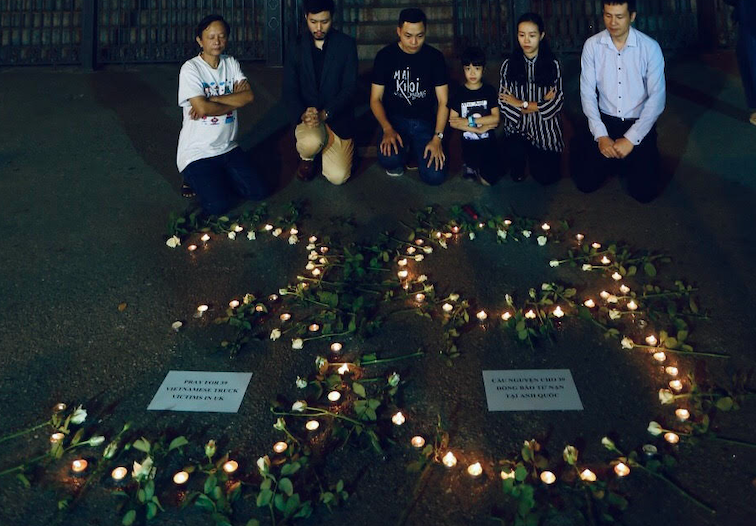

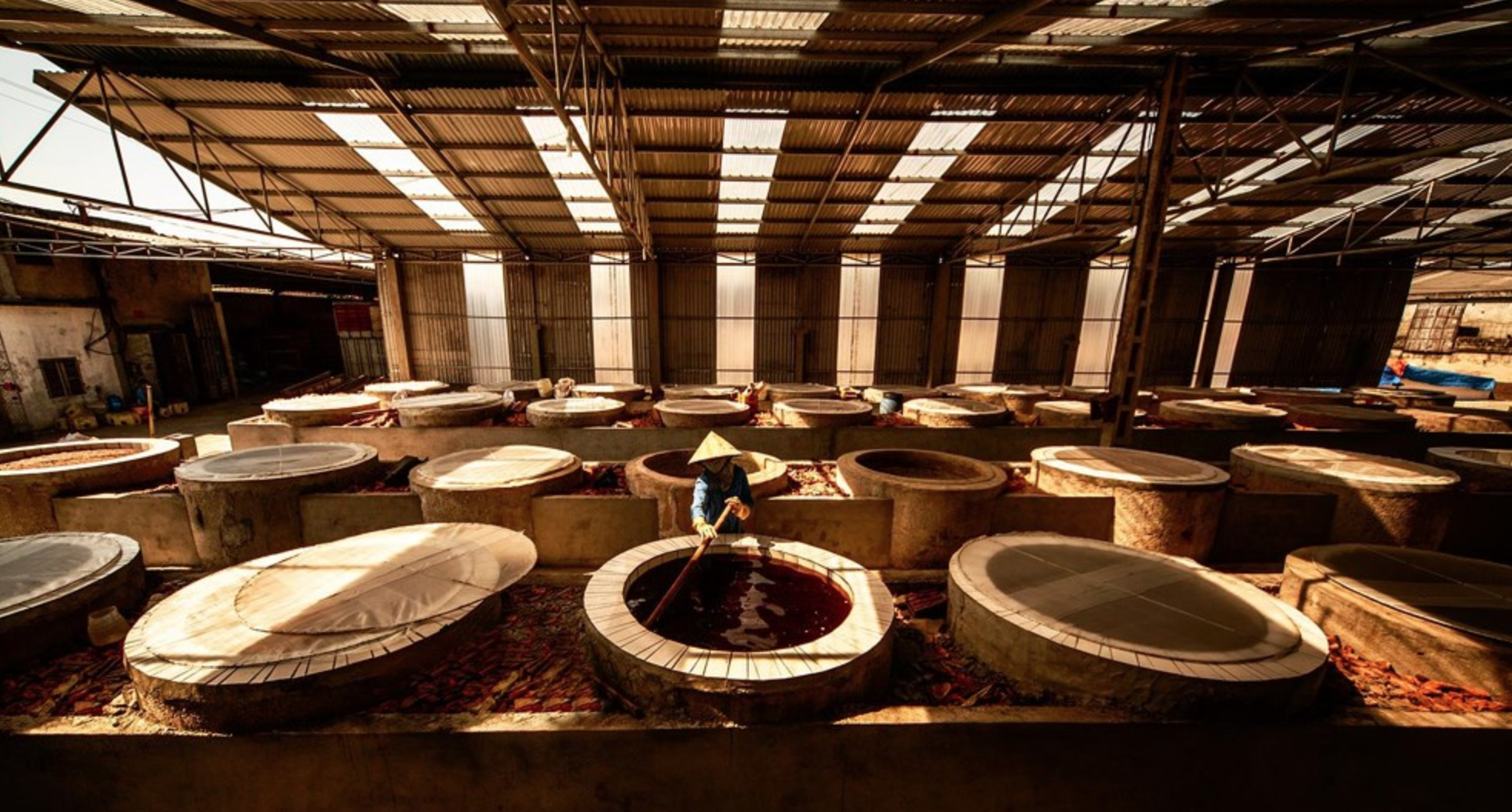
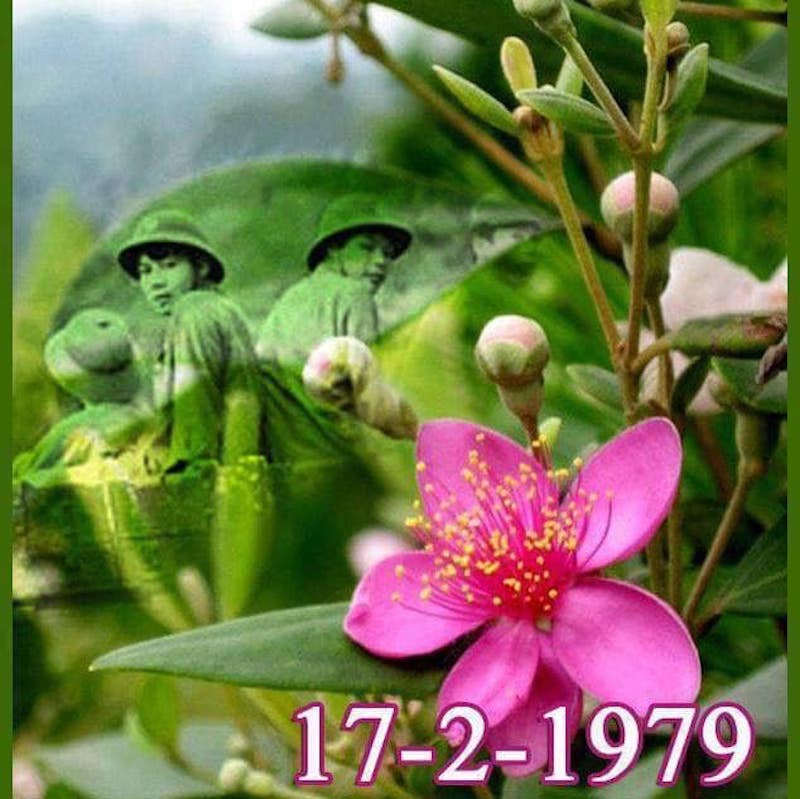
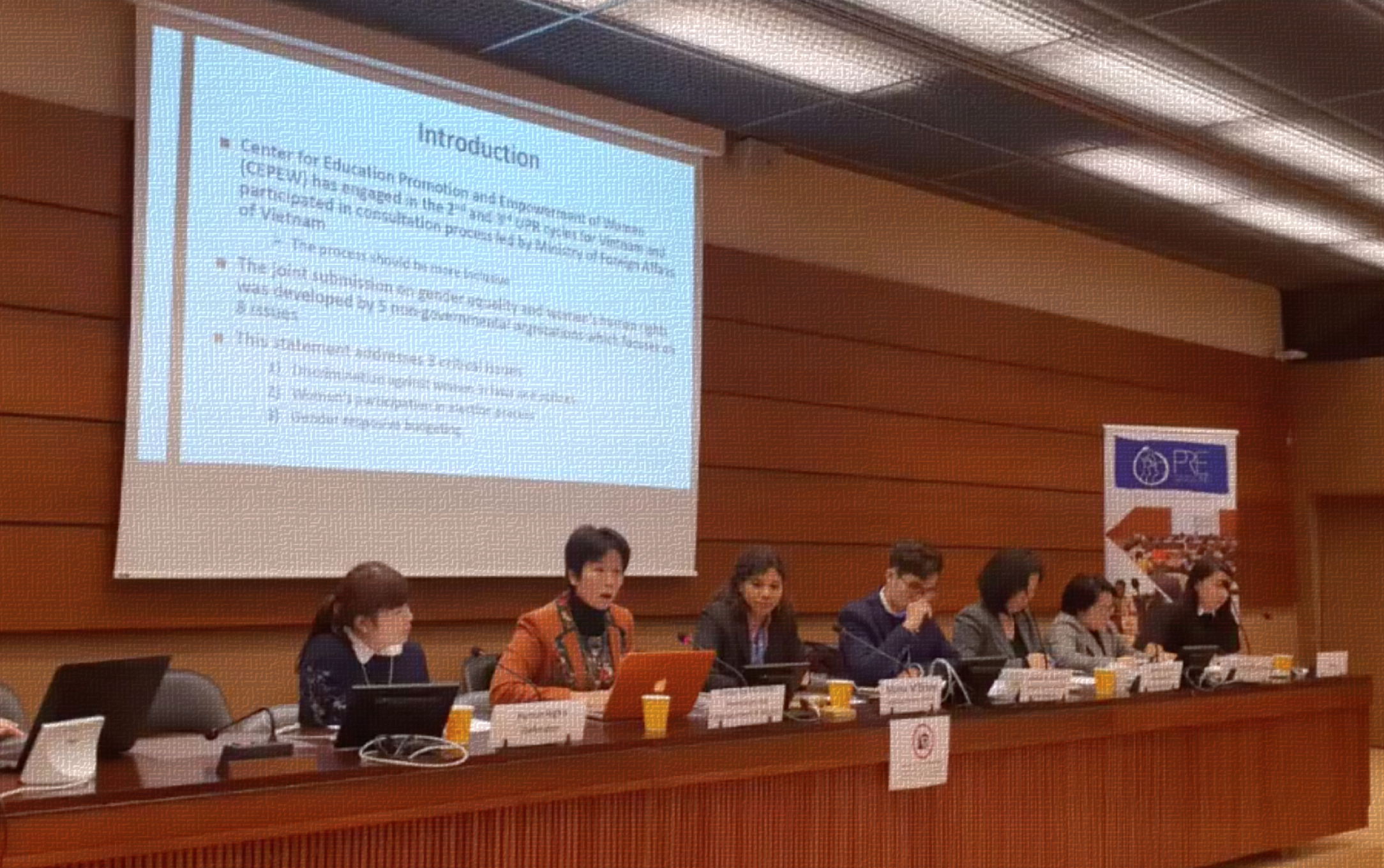
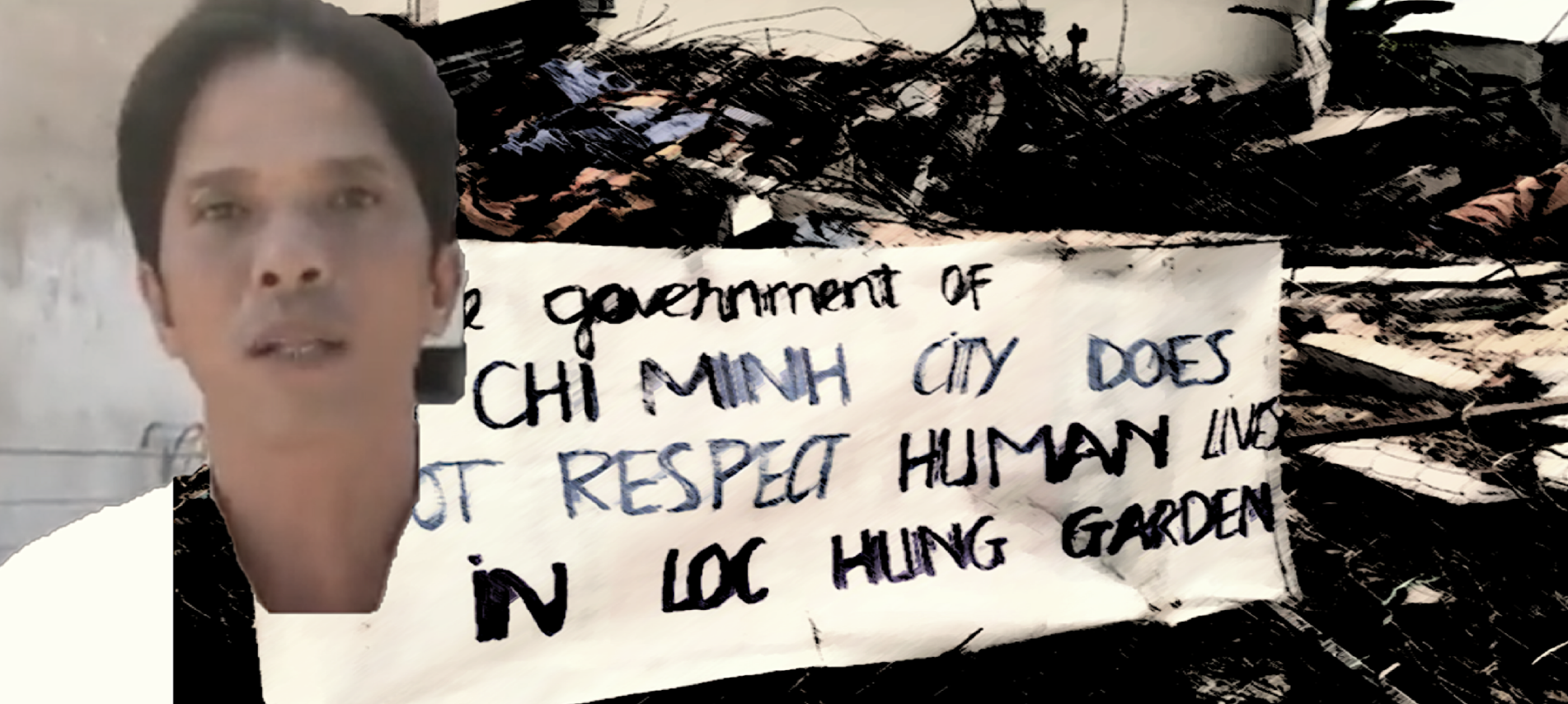
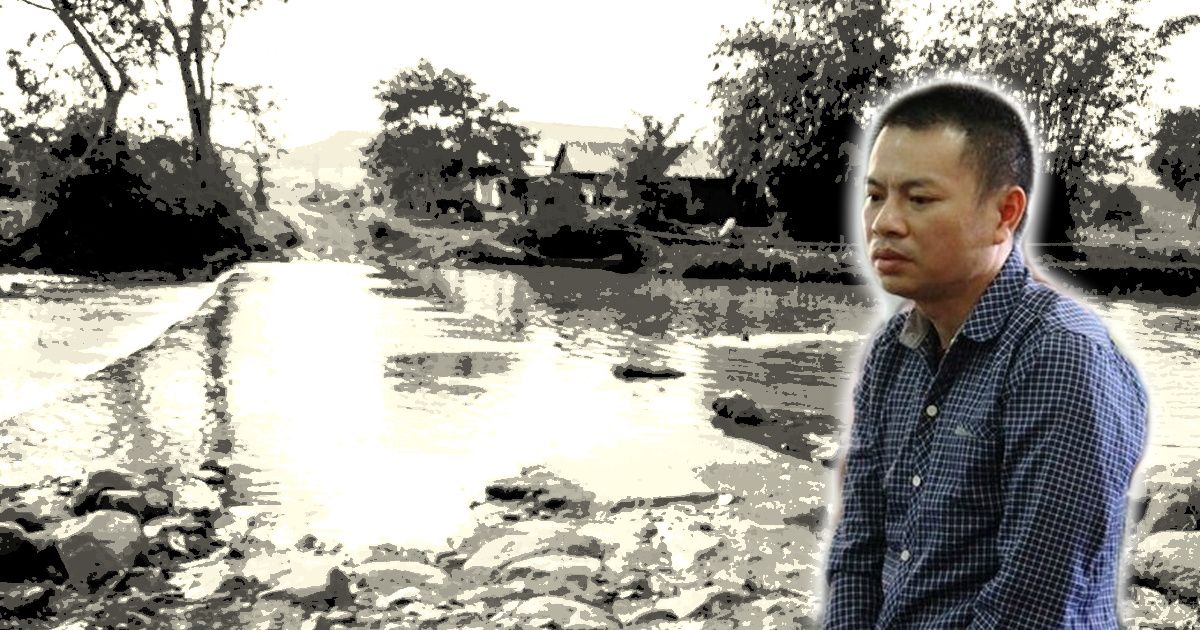

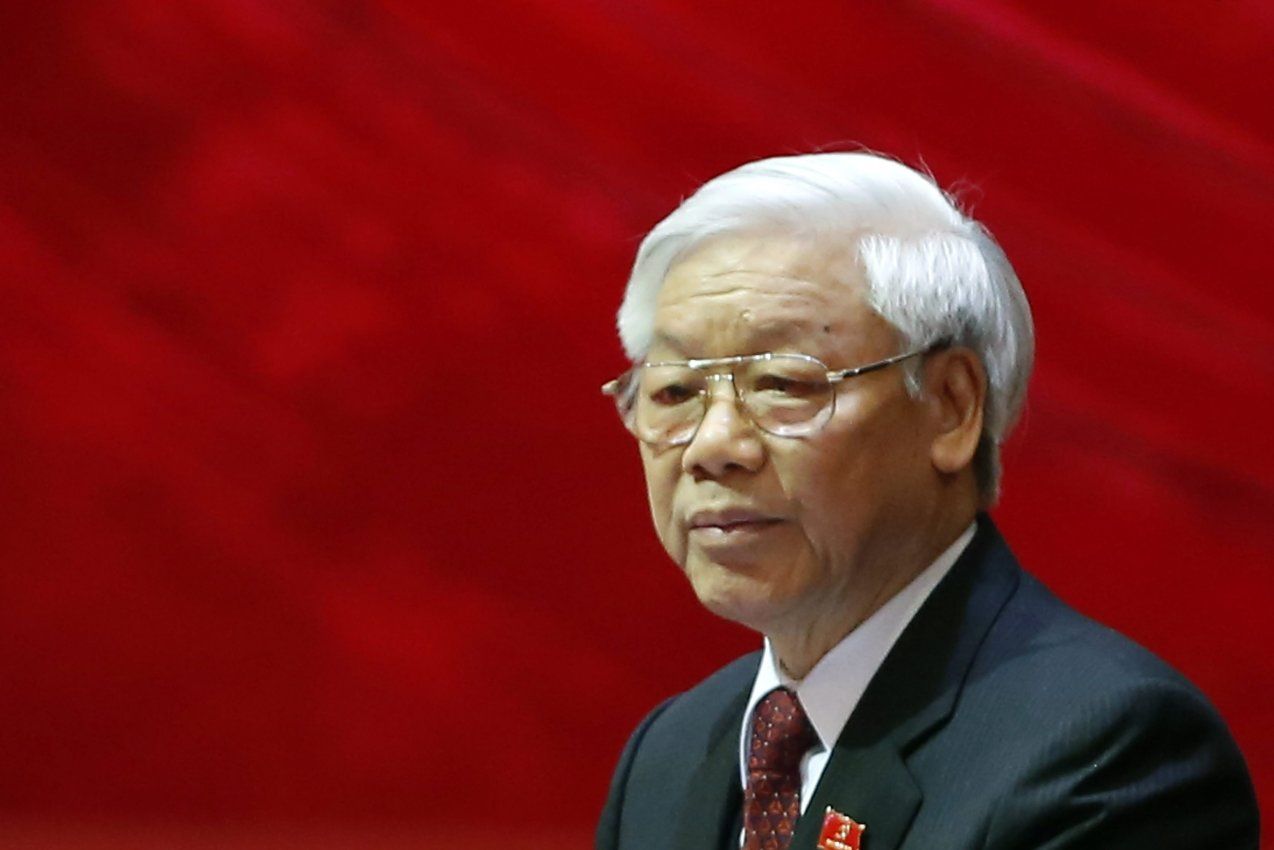
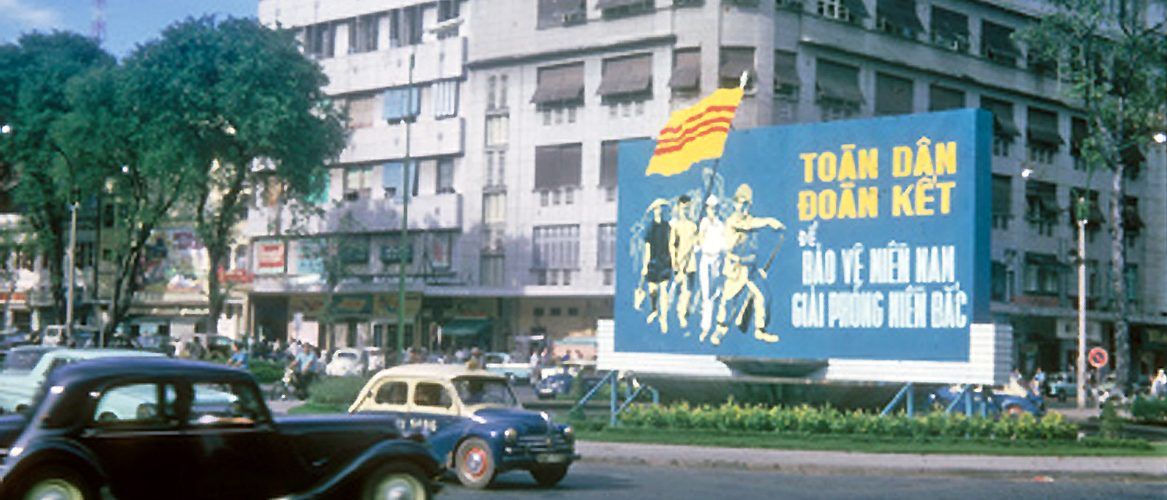


 WILL NGUYEN