Tag: Opinion-Section

  • Ao Dai, The Freedom Index, And An Election Goes Uninterested In Vietnam

    Ao Dai, The Freedom Index, And An Election Goes Uninterested In Vietnam

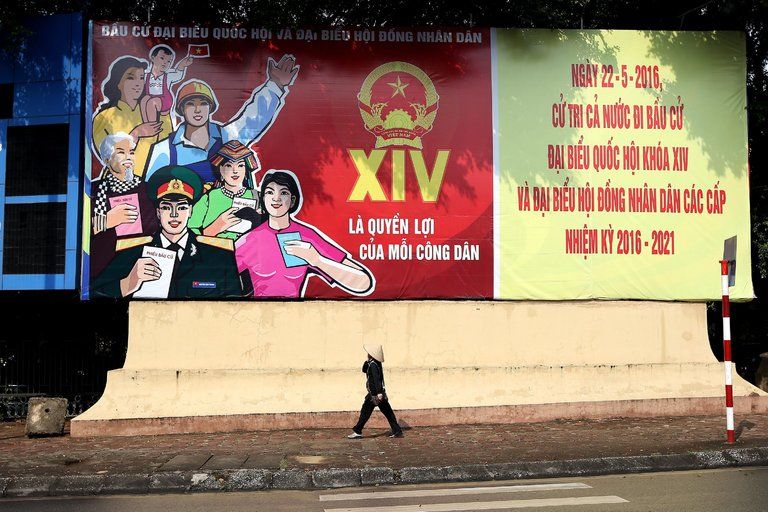
    Why are so few paying attention to this country’s grand affairs, such as our upcoming general election on May 23, 2021?

    Maybe the op-ed article written in Vietnamese by Huynh Minh Triet that was previously published in the Luat Khoa Magazine on March 17, 2021, would offer us some perspectives on this question? The translation was done by Hoai Huong.

    ***

    In March 2021, with the most crucial election in Vietnam about to start in two months which should be the event that attracts the most public attention in the country, what has sparked controversy was a Japanese adult movie and a freedom-ranking list of a foreign organization.

    Freedom House, an international non-governmental organization, on March 5 categorized Vietnam as a country that has neither political freedom nor internet freedom. The online Vietnamese population immediately rushed to the Freedom House Facebook page, scolding it both in English and Vietnamese. Even the postings on this account that were irrelevant to Vietnam also came under fire.

    Furthermore, on March 10, Japan released a soft porn movie in which the main actress, who wore a Vietnamese ao dai, was a young girl of Vietnamese origin. Again, the online population in Vietnam vehemently protested, expressing their hurt feelings because the movie humiliated them. The press quickly gathered the most impressive comments to prove that the national superiority complex had been hurt.

    Wow, if only our national affairs captured public attention in the same way as Japanese sex movies or the Freedom House rankings!

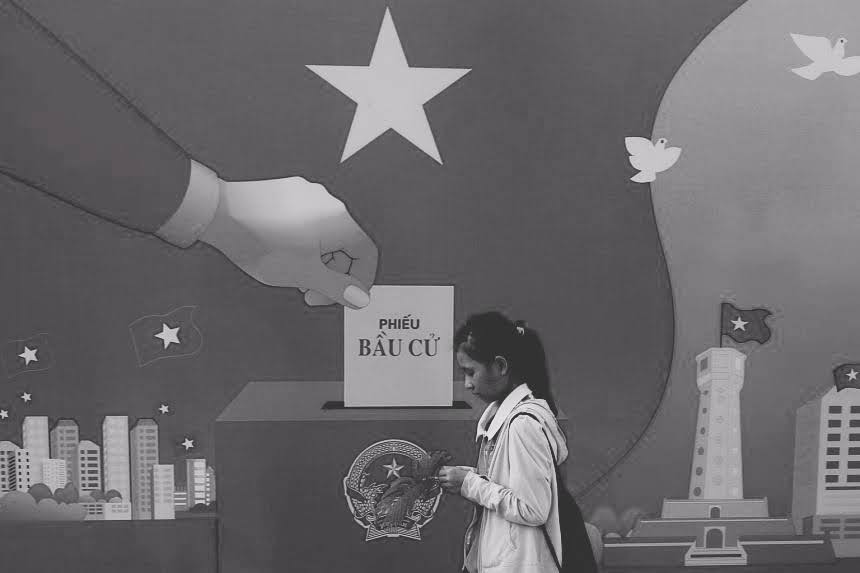
    Vietnam is currently undergoing the tense process where our general election on May 23 has the utmost important responsibility to select our National Assembly’s deputies who will represent all of us. Nevertheless, such a significant event received virtually no considerable discussion on social media.

    On March 9, Tran Quoc Khanh, an independent candidate, was arbitrarily arrested. His news was covered superficially in newspapers and mentioned on just a few Facebook accounts of interested individuals. Word of the arrest came and went unnoticed among the online population.

    Aren’t the Vietnamese interested in elections?

    No, they are. But just not with their own country’s elections.

    The Vietnamese were one of the peoples around the world most enthusiastic about the US presidential election in 2020, and their fondness for Donald Trump might have contributed to this phenomenon.

    Vietnamese people created all kinds of news channels to support Trump and made all kinds of projections and comments about the US election on social media platforms. We grew openly hostile to one another and even humiliated one another because we supported different candidates in the US presidential election. Worse still, following the election, the Vietnamese online population rushed the US Embassy Facebook account to express frustration over the failure of their idol Trump.

    In Vietnam’s elections, however, things were different. No relationships turned sour when the VCP arranged for Nguyen Phu Trong to seize power again. There were no vehement protests or objections when candidates who were not Vietnamese Communist Party members were detained or had their names crossed off the list.

    However, we discussed US voting laws with great passion and many of us cursed “the damn Democratic Party” for allegedly wanting to ease restrictions so that illegal immigrants could vote. Many shouted with joy when Trump criticized voting via postal services as he claimed this would lead to cheating. In fact, however, many of us have never seen a ballot box in Vietnam.

    Is it true that a political system in which the people can only vote for candidates recommended by the Party is so perfect that we do not care about domestic elections?

    No, definitely not.

    Are we so insensitive to our responsibilities, while having surplus energy for trivial matters that are not even related to Vietnam?

    Probably.

    But there may be another reason: that is because we are scared.

    The widespread fear from the land reform campaign (in North Vietnam in the early 1950s) has not actually subsided. Fears have now been heightened by the 2018 Cyber Security Law – an identical copy of China’s. Under this new law, all that we speak up about or write about on social media platforms can be used as a pretext for the authorities to harass and arrest us.

    Few of us dare to confront the authorities because we are all afraid of being murdered in a police station, upon which the government will claim that we have “committed suicide due to a guilty conscience,” as it has stated during Vietnam’s review under the International Covenant on Civil and Political Rights in March 2019 to rationalize the unusually high number of people who died unexplained in police stations.

    Thus, in the face of events really close to us and of great importance, we remain silent and “project” our depression onto safer events such as Japanese adult films and the freedom rankings of an organization thousands of miles away.

    A Myanmar demonstrator under arrest in the capital city Yangon on February 27th, 2021. Photo: Reuters

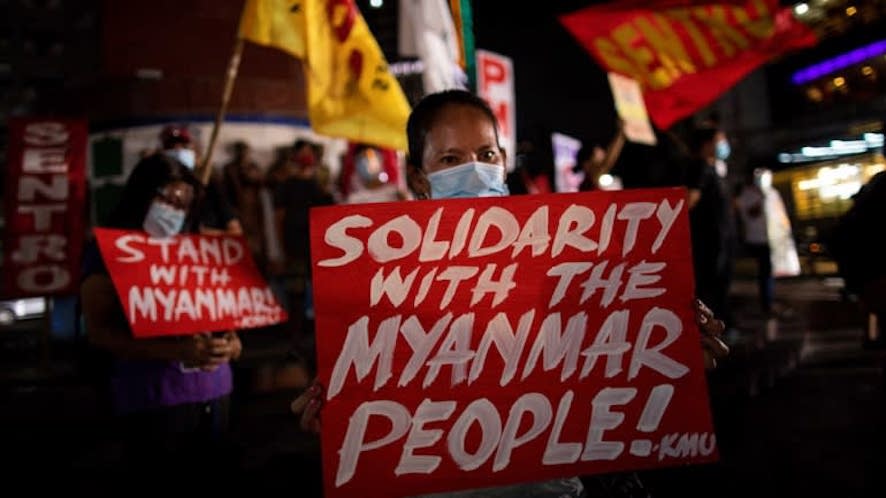
    Now, let’s take a look at a neighboring country, Myanmar. At the time I wrote this article, 150 people had been killed while taking part in demonstrations to protest against the military coup that overthrew the democratically-elected government led by Aung San Sui Kyi. For the Burmese, the ballot is their life. For us Vietnamese, how many of us can’t be bothered to even think about the weight our ballot can carry?

    Freedom is not free. The Myanmar people are declaring with dignity that they are ready to pay an exorbitant price to have freedom.

    We may feel free to criticize the Freedom House rankings, but this does not render us freer.

    So, how can we change this? I have not come up with an answer yet. But if most of us keep staying silent for our own sake, and then throw our bursting surplus energies into things which are trivial or less important – and also less risky – to preserve the self-respect of a cowardly collective consciousness, then we will never find the answer.

  • When Calls To Free Pham Doan Trang Are Not Enough

    When Calls To Free Pham Doan Trang Are Not Enough

    This op-ed article was written in Vietnamese by Trinh Huu Long and was previously published in the Luat Khoa Magazine on October 10, 2020.


    Every time an activist is arrested, several campaigns for his or her release emerge in response to the government’s persecution of human rights. This method is the oldest, most common, and most familiar form the common citizenry uses to call for justice.

    I have been a part of those movements and have even organized several campaigns many times in the past nine years.

    Yet, despite everything, I constantly ask myself if these calls to action actually do any good? “How long am I going to do this,” I ask myself, “and are there any benefits to this or not?” These are just some of the questions that constantly linger in the back of my mind.

    Most likely, those arrested will remain in prison; their sentence will be upheld. In fact, the length of the individual’s  imprisonment might even be made longer. Despite all our work, more and more people are still being incarcerated. There has been no change in our laws or institutions, despite all our efforts at home and abroad.

    And even if we’re blessed with the smallest amount of luck, those arrested are granted asylum in another country, defeating the primary purpose of our campaigns.

    Pham Doan Trang, imprisoned activist, blogger, journalist, and co-founder of The Vietnamese and Luat Khoa online magazines has put some of my concerns to rest.

    “I do not need my own freedom; I need something much more significant than that: freedom and democracy for the whole of Vietnam,” she wrote in a letter on May 27, 2019, her 41st birthday, and while she was on the run from the police. “This goal sounds grandiose and far-fetched, but reaching it is actually possible with everyone’s help.”

    Doan Trang wanted this letter to be released to the public only when she was indeed convicted and not when she was merely detained. Eventually, she was arrested and now faces a sentence of up to 20 years in prison.

    If Doan Trang merely wanted freedom for herself, she had at least two opportunities to attain this in the past.

    The first was after her nine-day criminal detention in 2009. If she was obedient and ceased all her activities regarding sensitive topics and cut all her ties with social elements deemed “anti-state,” she would have continued to live a safe and full life.

    The second was when she studied in the United States and could have chosen a path towards residency or citizenship. In fact, at least three agencies and organizations wanted to sponsor her permanent stay in America.

    So, why did Doan Trang choose to return to her homeland? It is because she understands that her freedom means nothing compared to the whole of Vietnam. Vietnam needs people to step up and work for the freedom of everyone.

    Such a concept is simple and easy to understand, yet making it a reality is challenging to attain.

    Doan Trang could have chosen to contribute to Vietnam’s fight from the outside as many others, including myself, are doing. Yet, she chose the most complex, most painful, and most difficult way to contribute to the cause. She returned home and faced the problem head-on. She published various works, wrote books, and even taught about democracy and freedom right in front of the police.

    Doan Trang often told me that the best way to fight is to be an example, to be an inspiration for others to do the same. Only then can we, as a society, start to see what democracy, human rights, and the rule of law look like in reality. Words without actions are meaningless.

    Sadly, I do not know how successful Doan Trang’s efforts have been, nor how many lives have been touched by her words and deeds. But regarding her arrest in October 2020, I would like to say this.

    Activists have a saying called “sharing fire,” which means sharing the tasks and responsibilities of dangerous activities with many people to reduce individual risk. Sometimes we coordinate with each other, but more often than not this is not the case; people passively participate in this phenomenon without discussing plans in advance.

    What if the deeds Doan Trang had done in the past five years were divided among five or 10 people, would she still have been arrested? More recently, if she had not produced the two Dong Tam reports, would she be in jail right now?

    She often told me that these things are not difficult to accomplish and that there are many people who share similar ideas with her. If so, why are there so few people standing up for what is right? Granted, some people do, and Doan Trang was one of them. Yet because of inaction, apathy, or fear, she and the handful of brave, noble souls like her shoulder the entire risk.

    Many of them will go to jail, while those who are content to watch from the sidelines will get angry again. They will once again clamor for the release and freedom of those imprisoned. But in the end, nothing gets done. Rinse and repeat.

    Will we Vietnamese forever play the same old games with the government? Will we continue to sheepishly and ineffectively demand the release of our friends? Then, when nothing gets done, will we once again forget and return to the tolerated normalcy of life in this great prison that the government has made?

    Things will be different if more people actively do their part to create social change, just like Doan Trang. Doing so has two advantages.

    The first is to “share the fire” with those still fighting to reduce their risk and limit their chance of getting captured. Government resources are limited, and they can only invest in monitoring and controlling a few people.

    Those outside Vietnam can do their part as well. For instance, to write something similar to the Dong Tam Report, we just need to collect data on the internet and conduct interviews online or through the phone. It is not necessary to live in Vietnam physically to accomplish these tasks.

    The second is to normalize press freedom, independent publishing, and political activities considered “sensitive.”

    When these activities become commonplace, the government will be forced to accept them. This was observed in the past when private businesses were considered illegal. Nonetheless, they continued to operate, and gradually the government had to admit that these establishments were a fundamental component of the country’s economy. Since 1986, the state no longer considers owning a private business a criminal offense.

    For me, the best way to help Doan Trang and people like her is to play a more active role. Eventually, everyone will benefit when the political space expands. No one will ever be arrested or imprisoned again for writing or publishing books. I will no longer have to clamor for one person’s freedom every single time someone gets arrested. I will finally be able to rest.

    Calls for Freedom are good, but they are often not enough. We should release ourselves from the shackles of fear, apathy, and apprehension to actively fight for progress and change.

    Doan Trang has completed her mission and the responsibility now falls on our shoulders. Even if she were to be released tomorrow, even if she chooses to stay in Vietnam or decided to leave, the fight continues in each one of us.

    And if you love Doan Trang, I implore you to do what she would have done.

  • Election in Vietnam: The Whims Of The Few Or The Will Of The Masses?

    Election in Vietnam: The Whims Of The Few Or The Will Of The Masses?

    This article was written in Vietnamese by Vo Van Quan and was previously published in the Luat Khoa Magazine on February 4, 2020.


    Regulation 214

    On February 2, 2002, Vietnam’s Politburo officially announced Regulation 214 on the Standard Framework for titles of cadres belonging to the Central Executive Committee, the Politburo, and the Secretariat.

    Accordingly, the Politburo amended and supplemented specific provisions on the required qualities and capabilities of important internal party positions.

    To put it simply, Regulation 214 is comparable to job descriptions and position requirements that we often see in job listings. As for members of the Party Central Committee, Regulation 214 requires them “to be a representative of political courage, ethical qualities and working ability; have the capacity to organize the successful implementation of the Party’s policies and duties.”

    If one is a member of the Politburo and the Secretariat, the candidate must be “an official member of the Central Committee for a full term or more; has experienced and completed essential tasks in key leadership positions at the provincial level.”

    However, it is worth mentioning that Regulation 214 does not set out specific criteria for certain titles such as the president, prime minister, or chairperson of the National Assembly, all of which are state positions. Theoretically, these are not party positions and are therefore outside the influence of the VCP’s internal politics.

    Regulation 214, however, dictates that the person in the position of State president is required to have “high prestige,” a “solidarity center”, and  “comprehensive, outstanding” talent; while the prime minister must “stand out comprehensively … in strategic planning for socio-economic development, national defense and security, [possess] sensitive thinking, [be] dynamic, decisive”.

    Obviously, it can be understood that the VCP was setting the criteria for its members to consider in order to have a basis for nominating, recommending, voting, and selecting “ideal” candidates for the National Assembly and the People’s Council in 2021.

    However, with the electoral mechanism in Vietnam, it is completely understandable that the Party’s Regulation 214 will be used to determine leading positions in the State. However, these regulations still have to be approved by a group of 17 members of the Politburo.

    So, are the above rules able to replace the popular vote? Are the Vietnamese people so incapable of choice that they must give authority to the elites (such as the VCP) to choose their leaders?

    Một cuộc họp của Bộ Chính trị - Đảng Cộng sản Việt Nam, tháng 5/2019. Ảnh: TTXVN.
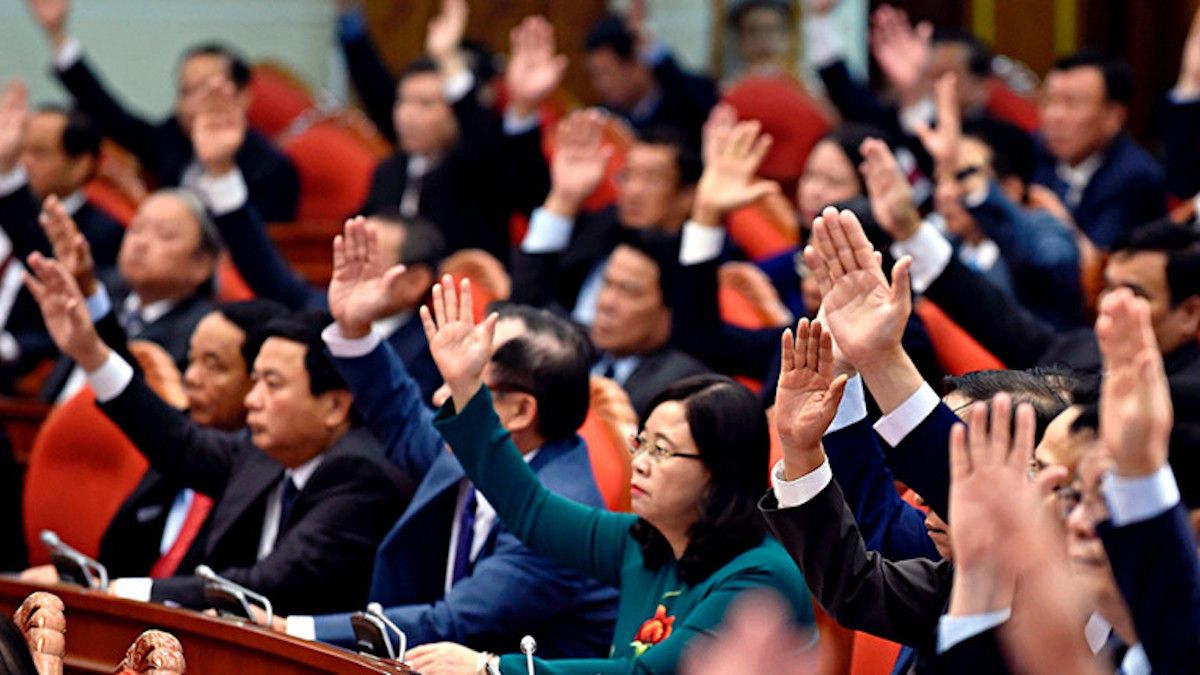
    A meeting of the Politburo – Communist Party of Vietnam, May 2019. Photo: VNA.

    The political elite

    An argument exists to justify the Communist Party’s electoral mechanism. This argument is that the Vietnamese people are not well educated, are easily provoked, and are unsuitable for democratic elections. So, it is better for an elite minority to choose the country’s  leaders; this elite minority is now believed to be the VCP.

    Such an argument is found not only in Vietnam but in other parts of the world as well.

    For instance,  theories such as technocracy (a model of governance that believes that only experts in certain fields can be elected to corresponding positions in government related to their field of expertise) and epistocracy (a system that assumes only “qualified” citizens with enough information and political authority can vote or run for government) are not really new.

    The famous 19th century philosopher John Stuart Mill used to support an electoral system based on voters’ caste and professional work. Experts who have complex knowledge and skills get six votes, farmers and merchants get three or four, skilled workers two, and unskilled workers one ballot.

    More recently, Jason Brennan in his article The Case Against Democracy also promotes a political environment where only qualified and knowledgeable citizens should be allowed to vote or stand for office.

    He writes that most of the political questions in contemporary life have become too complex for common voters to understand; they are too fond of simple answers to complex questions. Worse, he argues that the common people are not only ignorant, but that they also believe that they know more than what they actually do; they even claim that they are right. He believes that this makes their political decisions ignorant and stupid.

    Brennan does not propose a voting model based on qualifications and educational levels like Mill, but rather recommends a test of voters’ political capacity before allowing them to vote.

    The rules of the VCP electoral mechanism seem to be loosely based on or inspired by these  two aforementioned technocratic and epistocratic theories:

    • Party members are considered “qualified” citizens who make the initial decisions regarding the formation of government through voting among themselves to elect members of the Party Central Committee. Then, the members of the Party Central Committee who are considered “high quality” citizens choose the “elite” members who will sit in the Politburo and the Secretariat seats, and also thoroughly become the state leaders, regardless of the outcome of local popular elections.
    • Meanwhile, the Politburo, which claims its membership to be the technocratic masters, sets the required standards for the new leaders, and then nominates and fills in the state positions for Vietnam.

    The VCP considers this a brilliant method to select the top leaders for the country. But is it?

    The defects of democratic elections

    Democratic elections are clearly not liked by everyone, and some even find them to be very disappointing. The election of former US President Donald Trump is a very fitting example.

    Ông Donald Trump và phu nhân đi bầu vào tháng 11/2016. Ảnh: Getty Images.
    Donald Trump and Melania Trump were at voting booths in November 2016. Photo: Getty Images.

    During the primaries in the 2016 US presidential election, as many as 50 Republican Party members openly voiced their disapproval of Donald Trump.

    Specifically, General Michael Hayden (a four-star general, and former director of the CIA and NSA) said that Trump did not have the right temperament to lead. More specifically, he said that Trump lacked the personality, patience, disposition, knowledge, curiosity, or even the willingness to learn. These qualities, according to Hayden, are needed by candidates to be deserving of the title of president of the United States.

    Using similar language, David French, a writer of The Dispatch, never concealed that he belonged to the “Anti-Trump” movement. He strongly affirmed that personality is essential in being a world leader. A person’s temperament, knowledge, and integrity will shape his or her behavior. And even though the democratic process and expert advisors can help shape and steer a president lacking in these qualities, mistakes can still happen, especially for someone as stubborn as Trump.

    In the end, with his victory in the 2016 election, Trump showed that he was well supported by a large number of American voters, regardless of how many critics said that he was not worthy enough or deserving of the US presidency. In fact, during the middle of his impeachment fiasco, Trump’s ratings were not only stable, they also increased.

    I will not go too deep in regards to Trump, because his assessment is still very controversial, even among the Vietnamese. However, this entire situation gives us this sliver of truth: people sometimes may vote for unworthy candidates.

    ajorities in many countries are dissatisfied with their democracy

    The above-listed statistics is rather a detailed study conducted by Pew Research on voter views of candidates for elected positions in the United States, which found that voters did not take into consideration the quality and competency of political candidates.

    Only 47 percent said that the quality of the candidates was good, and even less than 5 percent rated the quality and competence of the candidates as very good. The remaining 52 percent had a negative view. As for the presidency, 58 percent said they were not satisfied with the choices they had.

    Furthermore, according to Pew, people in democratic countries tend to be dissatisfied with the way their countries operate. The list includes centuries-old democracies such as the United States and Great Britain. In line with this, the people’s opinions of their elected officials are also not high.

    For instance, in Greece, up to 90 percent of the population believes that their elected officials do not care about the will, views, and aspirations of ordinary citizens.

    Also, more than 58 percent of the US population share this opinion about their own politicians. Even though the indicators of transparency and corruption in the United States have always been evaluated positively by independent organizations, up to 69 percent of respondents agree with the opinion that national politicians are both corrupt and decadent.

    In some African countries, democratic elections have turned into a game of those who can spend the most money to rile the mob.

    So then, why have most nations in the world still chosen to maintain a universal electoral system? Why has most of the world not surrendered political power to the elites who are allegedly more knowledgeable, educated, and are supposed to have leadership qualities that can help them steer and rule a country?

    There is much to discuss about leaders who are chosen by the people, and those chosen by the elite.

    The first misconception of those who oppose popular elections is that they think the majority will end up choosing the wrong candidates. In the same vein, they also believe that this choice should be left to the “elite.” They think that this small group of people can accurately decide without being influenced by interest groups, personal preferences, or other hidden agendas. These claims are utterly baseless.

    Even Mill himself realized that countries needed to build a system that fully reflected current attitudes in society, and the idea of an administration full of economists frightened him.

    For instance, why should a lawyer get three times the votes of a skilled worker when law is such a broad and diverse field? Politics and welfare issues are just small specializations in law and not all lawyers are knowledgeable enough to talk about them, let alone determine the best course of action in a field they may not be trained in.

    Regarding Jason Brennan’s voter-competency test model, David Runciman, a professor of politics at Cambridge University, identifies that this model just pushes his questions to the starting point and fails to answer any more.

    Who will be considered qualified to prepare this test model? College professors? They also have their own political interests and opinions. Economists? They may be talkative on a variety of market rules, but their predictions about the future of the market are often incorrect.

    And Brennan, himself a university lecturer, has probably also seen countless students cramming knowledge into their heads just to pass exams.

    Proponents of the “epistocracy” model also have to deal with the fact that the educated, and also the elites, are in fact influenced by the crowd and are biased just like everyone else in the world.

    As social scientists Larry Bartels and Christopher Achen pointed out: History shows that intellectual groups, elite or not, can be as deviated from political morality and political thinking as anyone else.

    There are shortcomings and problems in today’s modern electoral and representative democracy, but this does not mean that it is neither efficient nor just. As in marriage, anyone can choose the wrong partner, similar to how we can elect the wrong person. But with democracy, various checks and balances exist that can help ensure that the system can function as intended. As with marriage, we can get divorced and then marry again.

    And when the people’s decision-making power is taken away, words such as “ability,” “quality,” “elite,” “technocrat,” or “epistocratic” are just flimsy excuses for control.

  • Vietnam Should Stand In Solidarity With The People Of Myanmar

    Vietnam Should Stand In Solidarity With The People Of Myanmar

    On February 1 2021, the Myanmar military arrested and detained several prominent figures from the National League for Democracy (NLD), the ruling party of Myanmar prior to the recent coup. Among those arrested were Aung San Suu Kyi and President Win Myint.

    This was followed by a swift declaration of a state of emergency and the entrenchment of  military cronies in the Myanmar government. Min Aung Hlaing, the figurehead of this new budding dictatorship, stated that it was inevitable that the military would seize control; he alleged that last year’s election, which the military resoundingly lost, was fraudulent and that this coup was their way to ensure a smooth and stable transition towards “a genuine and disciplined demoractic system.” The actions of the Myanmar military have been met by both local and international backlash, criticism, and scrutiny despite their attempt to justify the coup.

    Unprecedented numbers of Myanmar citizens have gathered to express their disapproval and anger towards the military through constant and relentless demonstrations and protests; some have even been arrested for their participation in these events. Even though the new regime has been attempting to quell these gatherings through the disruption of internet services, limiting telecommunications access, and through the enforcement of curfews, the Myanmar people have hardly faltered – they continue to remain steadfast and resolute in the face of escalating violence by Min Aung Hlaing’s fledgling dictatorship.

    On the international stage, the residents of other nations have organized demonstrations of their own in solidarity with their brothers and sisters in Myanmar. Likewise, private citizens, NGOs, and various media outlets have been spreading awareness of the situation and have placed the actions of this dictatorship under the scrutiny of the rest of the free world. Some foreign countries, such as the United States, now under the Biden administration, have imposed economic sanctions to pressure the Myanmar military into compliance.

    The United Nations Human Rights Council, despite the dissenting voices of China, Bolivia, Venezuela, Russia, and the Philippines, has also made several demands of the current ruling power of Myanmar, such as a call for the immediate lifting of the declaration of the state of emergency and the release of all arbitrarily detained individuals.

    Justice for Myanmar, a group of undercover activists that aims to improve the lives of all people in their homeland, has recently published a list of people, businesses, and organizations under the control and sway of the military junta. These entities provided the Myanmar military with assets and sources of revenue that aided it in its systemic takeover of the country that further lined the pockets of those in control.

    Justice for Myanmar calls on “the international community to impose immediate comprehensive and targeted sanctions against the Myanmar military in response to their Feb 1 coup and their continuing violations of international law, including their campaign of genocide against the Rohingya and war crimes and crimes against humanity in ethnic regions.”

    This published report lists 133 businesses fully or partially controlled by the Myanmar military, the names of 174 directors of those businesses, 112 other businesses which the military gets additional income from, and 32 state-owned enterprises that were formerly under the control of civilian institutions. While a majority of the businesses stated are based in Myanmar, there are a number which operate in other neighboring countries such as Vietnam, South Korea, and Japan.

    Yadanar Maung, the spokesperson for Justice For Myanmar, states that the “brutal and illegitimate Feb 1 coup, is enabled by their business interests. The Myanmar military leadership uses business to enrich themselves at the expense of the Myanmar people and finance their brutal campaigns of repression….” He then adds that several international businesses such as Kirin Holdings and Viettel empowered the Myanmar military and that their continued operation in the country will only serve to further embolden the junta to commit further atrocities against its people.

    With money being an essential factor in the military takeover, one of the most effective ways to aid the struggle of the citizens of Myanmar is through severing relations with those institutions and companies that actively do business with the junta.

    In Vietnam, as private citizens in our own country, something as simple as refusing to patronize businesses like Viettel is a start. Those with direct connections to organizations that work with the businesses on the list may take it a step further and call for these groups to distance themselves from the junta. With enough people, we could even petition our government to look into whether or not they actively do business with any of the corporations in the report in a bid to expose and terminate these agreements.

    Yet, something as simple and cliche-sounding as discussing this issue with family and friends serves this purpose as well.

    After all, the situation in Myanmar is not a story in a vacuum, but rather it is one of many tales regarding the struggle of freedom against the ever rising threat of authoritarianism in the world. It is merely one chapter in the anthology of human history, of the conflict between those who persevere for the betterment of all against those who would enrich only themselves at the expense of everyone else.

    As such, the events in Myanmar cannot be willfully ignored, and we have to stand as a unified front against tyranny, selfishness, and deceit. And thankfully, a few exceptions notwithstanding, the rest of the world seems to be on the same page.

    All in all, the Justice for Myanmar report, the words of its spokesperson, and all the corollary information derived from the available facts underscore the reality that this coup was not the result of grave injustice, nor the misplaced nationalistic sentiments of the Myanmar military; it is the result of the callousness and unending greed of those who would willingly choose to set their nation ablaze rather than let power slip from their fingertips through legitimate democratic mechanisms.

    It is the last resort of a delusional group of people destined to fade into the annals of history as nothing more than a footnote in a textbook. Times are changing and the people of Myanmar have spoken. True democracy will come to them in time as it has come to several other nations in the past. And while the fight rages in the streets of Naypyidaw all the way to the alleys of Kawthaung, the united people of the free world stand in solidarity, in kinship, and in brotherhood with the Myanmar citizens in their struggle for lasting democracy and freedom.

    In Vietnam, we are hoping that our human rights and democracy activists will also take the opportunity to stand in solidarity with the people of Myanmar.

  • Watching The US Presidential Election While Dreaming About Vietnam’s Free Election At The Commune Level

    Watching The US Presidential Election While Dreaming About Vietnam’s Free Election At The Commune Level

    This op-ed article was written in Vietnamese by Ly Minh and previously published in Luat Khoa Magazine on November 6, 2020. The translation was done by Jade NG.

    ***

    Although I am a Vietnamese citizen, I anxiously watched the US presidential election in November 2020. Many of my friends in Vietnam also did the same thing. We eagerly watched every turn of that election as if we were personally voting for our own head of state.

    The Vietnamese public’s interest in the US presidential election every four years can be seen through the headlines of our newspapers. The mainstream media updates many Vietnamese readers on every step of the thrilling race to the White House.

    Looking eagerly at the news every day about  the US presidential election, I cannot help but wonder whether or not the Vietnamese people earnestly wish to elect their own leaders.

    In the political context of Vietnam, I understand that this question is a taboo. Needless to say, everyone knows that the current political regime in Vietnam does not allow the Vietnamese to exercise their voting right as in the United States.

    Theoretically, the Vietnamese elect their National Assembly delegates through the National Assembly election once every five years. Then, on behalf of the Vietnamese people, the National Assembly delegates elect our national leaders.

    Thus, elections in Vietnam ironically have been going on smoothly, albeit with many predictable results. Surprises rarely happen in those elections. Throughout my own monitoring of the National Assembly elections in Vietnam, I found the saying “the Party selects, the People elect” a very reasonable way to explain the development and the results of elections in Vietnam.

    The secret desire of many Vietnamese people, including myself, is to have the freedom to make our decisions and to choose our state leaders, and even the National Assembly delegates who actually represent our voices when deciding the big decisions for the country.

    That desire is expressed indirectly by many people through monitoring and discussing the US presidential election, as if we were voting for our own state leaders. A friend of mine lamented on Facebook: “I look at the US election and all I  can feel is pain for the Vietnamese people.”

    It is impossible not to feel hurt.

    Governance is democratic when each vote of the citizens decides who the leaders will be. Every vote influences the final result. The thrill of the US election right up until the last minute was because those of us who watched the election’s progress could see the importance of each ballot cast by the American voters.

    Because each person’s vote is so important, the presidential candidates of the US must find ways to enlist the support of their voters, to specialize their campaigns for each state, to come up with policies that please local voters to gain support for the candidates, and even to try to entice the neutral voters.

    Meanwhile, looking back at the political situation in Vietnam, my country’s people have no decisive voice in deciding who will become our leaders. Therefore, in Vietnam, many people are not excited about politics and are not interested in who will become the general secretary, the president of the country, the president of the National Assembly, and the prime minister. It is simply because Vietnamese citizens do not have the right, through their votes to influence the selection of these above positions.

    Those who are knowledgeable about politics in Vietnam understand that the Party decides all the leadership positions in the country. Some three or four million members of the ruling Communist Party decide for almost 100 million Vietnamese people. Party members also decide all of the major issues of the country through their secret meetings, where the press is not allowed to cover any news. And the public? The public only knows about the results which are often announced by  Party officials after those meetings.

    This is the reality about the Vietnamese political situation that I, a Vietnamese citizen, am forced to accept. But I personally think that many people who also accept that reality do not comprehensively support it.

    Of course, I fully understand that some supporters of the current regime would argue that the Vietnamese people have the right to vote for the head of the country through the National Assembly delegates. However, I just want to ask two simple questions. First, do you remember who you voted for in a recent election? Second, do you feel happy when your delegate wins the election or sad when she or he fails?

    Having an election such as in the United States is a distant dream for the Vietnamese. Nevertheless, I have only a small dream, which is that our local people can one day elect the leaders of their wards or communes, free and fair, by themselves. Hopefully, my dream will come true soon so that in the future I can proudly tell my children and grandchildren that I have elected our ward president in a past election.

  • “Law of the Jungle” for Pham Doan Trang

    “Law of the Jungle” for Pham Doan Trang

    This article was written in Vietnamese by songwriter Tuan Khanh and published on The New Viet magazine. The Vietnamese would like to thank The New Viet and author Tuan Khanh for allowing us to translate and publish this article in English. This article was translated into English by Y Chan.

    ***

    While combing through my notes about Pham Doan Trang, I recalled many details which only now have been connected together, which could make up a symbolic book depicting the journey of a young person, from growing up under the socialist educational system to breaking out of the barbed wire of propaganda. She raised her voice to become a symbol of Vietnamese youth born after 1975, who committed themselves to an ideology to help their country rise up.

    But what is no less crucial is that along the same journey, we have also experienced a depiction of Vietnamese law, a legal system that is used by the state as “joss paper” to be burnt in traditional ritual and sanctimonious duties, which in essence is completely meaningless.

    Pham Doan Trang has unwittingly somehow become the main character in a tragic story that unveils, through her blood and tears, the nature of that so-called legal system.

    I have uncovered that brief personal struggle of hers and found three markers that could have predicted many recent events.

    Pham Doan Trang has always opted to fight for democracy in a peaceful manner through her writings. But the “law” that surrounds her is completely the opposite.

    The first marker was in April, 2017, when the situation around Trang had grown intense. The Hanoi police shelved their kind and friendly attitude toward her, opting for other more “direct” measures. It started with a bicycle demonstration in Hanoi that was stopped by the police. The event was meant to commemorate the anniversary of the Formosa environmental disaster, which resulted in massive fish deaths in the seas off the coastal provinces in central Vietnam. Despite not having taken part in the demonstration, Pham Doan Trang was taken to the police station for interrogation.

    “Mother fucker you cuntface!”  Trang recalls a young policeman pointing at her and shouting, angered because he was unable to tell her why she had been detained. When Trang protested against his attitude, the young officer, again unable to respond, shouted again, “I’ll pee in your fucking mouth”. It happened in front of several other police officers, women included. But all stayed dead silent. The incident marked the beginning of a stage when the police no longer treated Trang as a normal citizen who raised her voice on social issues. After that unlawful arrest, journalist Pham Doan Trang started to face much more brutal treatment from the authorities.

    The second marker was June, 2018, when many demonstrations broke out in Saigon and Hanoi, protesting the lack of environmental protections as well as voicing criticisms against the Cyber Security Law and the Special Economic Zone Law. Trang took part in one of the demonstrations. She noticed at the time the presence of a young muscular man who was silently walking beside her. She felt a bit doubtful, but assured herself that the man would do no harm to her, but simply follow her.

    She was wrong. In the midst of all the chaos and confusion when the demonstrators encountered the police, the young man suddenly approached and stamped on her foot to keep it from moving, then very skillfully delivered a kick under her knee. Trang immediately fell to the ground. The ankle joint, severely injured, swelled. The young man quickly vanished. She thought it was just a minor injury that would heal itself within days. But severe pain later forced her to go to the hospital.

    In the two hospitals she visited in Hanoi for examination, after taking X-rays, the doctors all assured her that her injury was nothing serious and that she needed no treatment at all. Later, sensing something was not right, Trang decided to see a doctor she personally knew who worked in a hospital in Saigon. Only then did she find out that the expert kick she had suffered that day had seriously damaged her cruciate ligament, leaving only an almost necrotic lingering fibrous tissue. Had this injury gone undetected for just one more day, she might have had to spend the rest of her life in a wheelchair.

    What is a cruciate ligament? As the doctor explained, it is used to connect the thigh bone (femur) and shin bone (tibia), keeping the lower extremity straight and bearing the body weight while still enabling the folding and stretching activity through the knee joint. When the cruciate ligament is damaged, the thigh bone and shin bone instead of bonding to each other will become two loosely connected bones, and can not form a structure that bears the body weight while standing.

    The kick on the knee will make the knee joint abruptly turn inward, either tearing or stretching the cruciate ligament. This kind of injury is mostly seen in football when a footballer suffers from a malicious foul or in tennis when a player folds his knee while falling down. Or, as in this case, it is the result of a powerful kick from someone who is well trained and knows exactly the consequences of his act. Although having recovered and been saved from losing her leg, Trang now has to spend the rest of her life limping, never again regaining her ability to walk normally.

    The third marker was at the concert of singer Nguyen Tin in August, 2018. The melody was replaced by a continuous banging, the sound of bike helmets being smashed against Trang’s head. The act, performed passionately by four fully-masked young men with strong northern accents who were on motorcycles, lasted until the helmets broke apart.

    According to Trang, right before this beating, she was taken away by the police after they interrupted the concert and arrested several other people, including her. She was pushed into a seven-seater car and driven to a deserted street in the middle of the night. One officer, who seemed to be the man in charge, then ordered her to get out of the car. Having all her personal identification papers and belongings confiscated by the police, Trang protested and tried to explain to the police that there was no way she could get back if she was left alone in that area. The man in charge handed her a 200,000 dong note (less than US$9) and told her to take a taxi.

    Standing in the middle of a street, confused and still in pain after the initial strikes by the police at the concert, Trang noticed the police car did not leave but stopped a few hundred meters away, from where the officers kept watching her. That was then the helmet-attack happened, after four young men on two motorcycles suddenly approached her. The young men immediately got to work without saying anything, striking her on the head, adding the curse “fucking” with every blow. Only when they all left did Trang manage to hobble away and seek help to get to a hospital.

    The stories from the three markers that I point to are filled with countless acts that don’t fit into any legal framework. One can relate such acts to the kind of tactics used by criminal gangs who exert their brutal power to control their turf. The systematic and gang-like attacks used against this woman were planned and coordinated in a perfect manner, and any law-abiding citizen could easily become a victim of such brutality.

    And now when Pham Doan Trang has been arrested under some very obscure laws, the joss paper is burning once again on the legal altar where the laws are put on the stage just for show.

    In the coming trial for Pham Doan Trang, none of these stories will be mentioned. The Vietnamese State never represses its citizens. No peaceful activists have ever been arrested. Only those who break the law are rightfully punished. There are no human rights violations in this country. Vietnam is a country that always respects and ensures human rights. These words will be engraved on the joss paper being burned on the stage where people who put on judge’s robes hand down their law of the jungle.

  • A Letter To Justice Ruth Bader Ginsburg

    A Letter To Justice Ruth Bader Ginsburg

    Dear Justice Ginsburg,

    I hope this letter will somehow reach you in heaven or in the afterlife. I have not seen any evidence for the existence of either place, and I will not presume you prefer one to the other. But I hope there is a place in the cosmos where you have gone after a life well-lived, and that you are happy there. I also hope your husband, Martin Ginsburg, is also there with you and for you, as he had always been. You both deserve each other for eternity.

    I do not intend to put on a pretense that this letter is only for you. The message is addressed to you in death, but I mean to speak to the living. More specifically, I want this letter to be read by my fellow Vietnamese people. This is why I am writing in both English and Vietnamese. I want to talk to my people about your legacy.

    I believe we cannot sincerely treasure a legacy if we do not attempt to understand it as much as we can.

    We can learn a lot from you and how you lived your life. I hope this letter can explore and elaborate a bit more on that possibility. I do apologise beforehand for any misunderstanding or misconception in this letter. It is only a starting point in my own process of learning about you and your life.

    We have heard in the US media in the past few days many cries of how your legacy is being threatened by the Trump presidency and the prospect of the Supreme Court consisting of six conservative-leaning judges, with just three liberal-leaning judges remaining who are likely to protect your legacy.

    But I think your legacy should be understood more widely. Yes, the progressive legal advancements you left behind have been challenged and will continue to be challenged, perhaps even more vehemently.

    But suppose more people worldwide understand the lessons from you and how you lived your life. In that case, I believe the forces that will protect and enhance your legacy will be grown beyond a group of three US Supreme Court justices.

    So, what do I think we Vietnamese people can learn from you and your life? The first thing is feminism.

    What is feminism?

    I am glad to learn that you were not born a feminist (to be honest, it always seems a bit dangerous to be born with an ideology implanted in your head).

    You are now a feminist icon, but you first came to feminism through a process of learning and teaching what you learned.

    This is important as it suggests that any person, no matter what their gender or background, can choose and learn to become a feminist. This matters to me because I am a man born and raised in the heavily patriarchal Vietnamese culture.

    The starting point for your feminism seems to be 1970 when you were a 37-year-old law professor at Rutgers Law School.

    On May 1 of that year, you chaired a student panel on “women’s liberation.” Later that year, in a panel at the Association of American Law Schools’ annual meeting in Chicago, you put forward two arguments. The first is against the stereotyped characterizations of women. The second is about “the infusion into standard curricular offerings of material on sex-based discrimination.”

    According to your book My Own Words (2016), you did not just wake up one day in 1970 and decide to become a feminist. It was the students whom you taught who, in turn, inspired you.

    It is quite inspiring to know that in the late 1960s, there were “newly activist women law students” at the Rutgers Law School. And they inspired their professor to shift her academic focus from court procedure to women’s rights.

    So, you read and researched everything you could on the subject. Within a month, you had perused every federal decision ever published involving women’s legal status, and every relevant law review article.

    In 1971, you taught your first seminar on sex discrimination and the law. Later that year, you started working with the American Civil Liberties Union on two litigation matters concerning sex discrimination, one against men and one against women.

    These two sex discrimination cases provided you the first opportunities to bring your academic research straight from academia’s ivory towers to the judiciary’s dusty colosseums. You retrained yourself from a law professor to become an attorney who could prepare briefs, then present and argue cases in court.

    To root out sex discrimination using the US court system, you and the ACLU chose to persuade the courts that any law that seeks to discriminate purely on the basis of sex is in contravention of the US Constitution. The Equal Protection Clause in that constitution stipulates that the state shall not deny any person within its jurisdiction the equal protection of the laws.

    The case involving sex discrimination against women is Reed v. Reed. While you did not argue this case in court, together with the ACLU director, you did prepare the brief, which was submitted to the US Supreme Court.

    The woman in the case, Sally Reed, was not allowed to administer her deceased teenage son’s small estate. The state law stated that only men were allowed to administer the estate of relatives who died without a will.

    Having heard the arguments, the US Supreme Court ruled that the state law is unconstitutional. This is because the state law did discriminate solely based on sex and thus protected Sally Reed’s husband but not her. The law, therefore, denied protecting Sally Reed at least equal to how it protected her husband.

    In the case of sex discrimination against men, you acted on behalf of Charles Moritz. Moritz was denied a tax deduction for the cost of providing care to his elderly and invalid mother. The law stated that such tax deduction was only available for women and formerly married men. Moritz was a single man.

    In this case, you worked in partnership with your husband, Martin Ginsburg, a brilliant tax attorney. Both of you argued the case in the United States Court of Appeals for the Tenth Circuit.

    The court heard your arguments and ruled in favour of Moritz. In passing the judgment, the judges relied on the US Supreme Court’s decision in the case you had worked on earlier that year: Reed v. Reed.

    As a result of the above cases, several laws that discriminated purely on the basis of sex were changed or abolished. A lot of such laws discriminated against men as well as women.

    The year 1971 was just the beginning. The years that followed saw you produce “a tsunami of articles about gender and law that flooded law journals.” You also argued and won six landmark cases on sex discrimination in the US Supreme Court.

    I started this section of the letter by asking what feminism is, then together with you, I jumped from feminism to women’s liberation to women’s rights to sex discrimination.

    So, what really is feminism then? Does feminism mean the absence of sex discrimination?

    Yes. To you, to advance feminism is to promote gender equality.

    Your feminism seems not to be focusing on the sole advancement of women’s rights at the expense of men’s rights. Both men and women deserve to have their rights protected.

    Your view of feminism may be a revelation to many members of my sex. Many men view feminism with fear and disdain. For they think that feminists are coming for their rights and that the only way to satisfy a feminist is for a man to sacrifice all his rights, privileges, and entitlements.

    I guess it made sense for you to adopt such a view of feminism: As a lawyer, you had to rely on the US Constitution’s powers to strike down discriminatory laws.

    And that constitution, written by a group of white men in the 18th century, never mentions women, sex, or gender.

    There was an attempt to introduce the Equal Rights Amendment to the US Constitution, which says that “equality of rights under the law shall not be denied or abridged by the United States or by any State on account of sex.” This amendment was passed by the US Congress in 1972, but it was never ratified by the states, and so it is now dead in the water.

    Therefore, the only words in the US Constitution that could be relied on to fight sex discrimination are the Equal Protection Clause’s very words.

    So that is your feminism: the legal advancement of gender equality standing on the shoulders of the giant – the US Constitution.

    It is a type of feminism that is not merely for preaching. It was forged through the sleepless nights on your work desk through the myriad of lectures, seminars, debates, and then through the US courts’ intense scrutiny, including the highest court in the land.

    Your legally pragmatic view of feminism is termed by legal scholars as “formal equality.” It has undoubtedly helped many men and women in protecting their rights, as we have seen from the effects of your first legal victories and the legal victories that came after.

    But in reading about you, I have also learned that your view of feminism is not free from criticisms.

    The limits and future of your feminism

    It has been pointed out by your most vocal critics that out of the six landmark cases on sex discrimination which you won in the Supreme Court, you argued for equality for men in four of those cases.

    Professor Judith Baer, in her essay titled “Advocate on the Court: Ruth Bader Ginsburg and the Limits of Formal Equality“, criticised you, saying that your legally pragmatic view of feminism is too obsessed with protecting both men and women, to the extent that it hurts women.

    Because men and women are naturally different and men already enjoy certain advantages over women in society, the insistence on treating both men and women the same in the eyes of the law can actually hurt women more than men.

    This is perhaps explained more clearly and vividly by Catharine MacKinnon, a radical feminist legal scholar:

    “Almost every sex discrimination case that has been won at the Supreme Court level has been brought by a man. Under the rule of gender neutrality, the law of custody and divorce has been transformed, giving men an equal chance at custody of children and at alimony. Men often look like better “parents” under gender-neutral rules like level of income and presence of nuclear family, because men make more money and (as they say) initiate the building of family units. In effect, they get preferred because society advantages them before they get into court, and law is prohibited from taking that preference into account because that would mean taking gender into account.”

    This failure of the law to consider the fact that a group in society may traditionally enjoy certain advantages and privileges over other groups is very significant in the eyes of many of your critics.

    These critics have argued that your feminism is white feminism – a kind of feminism that seems to benefit only white women who already enjoy certain economic benefits and social privileges more than women of colour.

    Having read the criticisms against your feminism, I am concerned for anyone who chooses to celebrate you as a feminist icon without first going through a critical evaluation of your feminism.

    I have felt a certain uneasiness upon seeing some women of my colour celebrating you as a feminist icon purely through the universalist prism, which sees that women anywhere are the same and any difference due to race, social class, or religion does not matter at all.

    But I do not agree with those who have claimed that your legal work has helped destroy all affirmative action programs that help women.

    That view is deliberately exaggerated and fails to consider the facts that you advocated for women’s affirmative actions in 1975. Later, as a Supreme Court judge in 2003, you argued for affirmative action to address societal discrimination.

    I am quite curious to learn more about how you square the two: the need to ensure equal protection of the laws and the need for affirmative action, or positive discrimination, to rectify “both civil and social inequalities and helps disadvantaged groups achieve a measure of freedom within the societies that oppress them”). But that is for another day.

    Here, another criticism can be suggested: Your feminism helps advance formal equality for both men and women. So what?

    Unlike in the United States, we have no problem with formal equality in Vietnam.

    Our Constitution enshrines women’s rights and has done this since 1946. Our Gender Equality Law came into effect in 2007.

    Yet, it would be an overstatement to say that the women in Vietnam enjoy a kind of gender equality that allows them to flourish.

    On the global scale in 2020, Vietnam is ranked 31 out of 153 countries in ensuring women’s economic participation and opportunity, 93 out of 153 in ensuring women’s educational attainment, 151 out of 153 in ensuring women’s health and survival, and 110 out of 153 in ensuring women’s political empowerment.

    Vietnamese women, on average, still earn $130 less than Vietnamese men per year.

    On a more micro-scale view I can still see that many women in my country suffer from sexual abuse, domestic violence, and extreme misogyny.

    I am ashamed to see that some of this Vietnamese misogyny has been shown in many things written about you on the Vietnamese social media in recent days.

    Some Vietnamese people seem unable to get over the fact that you supported the women’s right to abortion. They claimed that you were obsessed with killing unborn children.

    The fact is that you simply supported women’s right to choose, following your feminism. As you said to the US Senate in your confirmation hearing, “[i]t is essential to woman’s equality with man that she be the decisionmaker, that her choice be controlling. If you impose restraints that impede her choice, you are disadvantaging her because of her sex“.

    More than anything, such a hostile attitude towards abortion rights – which tends to be seen amongst Vietnamese men of older generations – betrays an underlying belief that Vietnamese women are not entitled to own and control their wombs.

    Suppose a Vietnamese woman’s decision to abort offends a Vietnamese man’s religious belief in the sanctity of her child’s life. In that case, it is the Vietnamese woman who is wrong, not the Vietnamese man. That seems to be what some Vietnamese people, men, and women, still believe, 74 years after the Vietnamese Constitution proudly announced that women shall have the same rights as men.

    So, it appears we need more than “formal equality”, to make Vietnam a better place for women.

    Does that mean your feminism is obsolete to us Vietnamese? That would be an overstatement based on only a partial understanding of your feminism.

    Professor Joan Williams argued that, as a lawyer, you fought for women’s rights with more than just a steely insistence on gender equality.

    In your legal briefs and later court decisions, you aimed to deconstruct the traditional male-female divide in which men must be the bread-winners, and women must be the dependants and caregivers.

    For example, in the case of Charles Moritz we discussed earlier, Moritz was discriminated against by the law because the law back then refused to recognise the possibility that a single man can be a caregiver for his elderly mother. Caregivers must be women or formerly married men (who have family members they could care for).

    Your legal arguments did not just point to the Equal Protection Clause. You sought to deconstruct that traditional assumption that caregivers must not be single men. In doing so, you reconstructed a new premise for the law: caregivers can be women, married men, single men, whoever has someone they have to care for.

    Social roles are social constructs. If a social role results in unfairness, we must attempt to deconstruct and then reconstruct that social role.

    It is another surprise to learn that your feminism originally was not only inspired by your law students. It was inspired by your research on Swedish laws and legal reforms in the 1960s.

    Back then, Swedish advocates argued that “imprisonment in the masculine role is at least as great a problem to men as conformity to a feminine ideal is to women” and “that a debate on liberation and equality must be about how men as well as women are forced to act out socially determined stereotypes.”

    Adopting such stances, you became a constructive feminist who “defines equality as treating men and women the same but only after deconstructing the existing norms defined by and around men and masculinity, and reconstructing existing institutions in ways that include the bodies and traditional life patterns of women.“

    Maybe you described your constructive feminism best in your own words:

    “[W]ere I Queen, my principal affirmative action plan would have three legs. First, it would promote equal educational opportunity and effective job training for women, so they would not be reduced to dependency on a man or the state. Second, my plan would give men encouragement and incentives to share more evenly with women the joys, responsibilities, worries, upsets, and sometimes tedium of raising children from infancy to adulthood. (This, I admit, is the most challenging part of the plan to make concrete and implement.) Third, the plan would make quality day care available from infancy on. Children in my ideal world would not be women’s priorities, they would be human priorities.”

    Here are perhaps hints of a future of gender equality that the Vietnamese people can consider.

    We have formalised gender equality, but how far have we attempted to reconstruct the existing norms and institutions to free both men and women?

    Why is it so easy for Vietnamese men to assume and joke that if a young woman is wealthy, she must have a “sugar daddy”?

    Why were many Vietnamese people irked to see a 17-year-old girl celebrating a bit prematurely when she was on the verge of winning a television contest against three male opponents?

    Maybe I am reading too much into these behaviours. Still, I suspect they are because of the expectations deeply rooted in our culture about how women should live and should behave. Such expectations seem to dictate that, in her role, a young woman cannot become rich on her own; and that, in her role, a young girl should not over-celebrate and should not live true to her emotions.

    On the other side of the coin, I suspect that there are other deeply rooted expectations that imprison the Vietnamese men in specific roles as much as the Vietnamese women.

    I have yet to see these expectations, roles, and social norms being debated and deconstructed by the Vietnamese people. But I am hopeful that one day they will be.

    The letter is now quite long. I do not want to bore both you and my Vietnamese audience too much, so I will stop here.

    I hope to write to you another time. So that I can discuss more things I have learned from you, things that my Vietnamese people can also know to further their pursuits of freedom and happiness.

    I thank you for your feminism, and I wish you a good eternal rest.

    Yours sincerely,

    Nam Quynh
  • With Economic Development Comes Greater Government Oppression: Why the EU Must Reconsider Its Free Trade Deal with Vietnam

    With Economic Development Comes Greater Government Oppression: Why the EU Must Reconsider Its Free Trade Deal with Vietnam

    On the same day in 2020 that Vietnam chaired its first Security Council meeting in New York, just a few hours earlier and some 8000 miles away near its capital, Hanoi, the Communist Party of Vietnam directly attacked Dong Tam village for refusing to give up its land.

    The result? Police shot dead Dong Tam’s beloved leader and former Party village chief, Le Dinh Kinh, an 84-year-old veteran who had been a Party member for 57 years; three police officers also died after falling down a sky-light, ostensibly pursuing “suspects” who resisted the authorities. Twenty two villagers have subsequently been arrested, with twenty being charged with murder. If convicted, these villagers could face the death penalty.

    The Dong Tam land seizure event of last week is therefore a watershed moment in Vietnam’s post-war history for many reasons. First, it marks for the first time in the age of social media an open and deadly clash between the Party and its once loyal support base: villagers in northern Vietnam. According to a 2015 Bloomberg finding, almost 70% of Party members live in the north, even though the north is home to less than half of the country’s population of 96 million.

    Second, it shows the Party’s determination in ending the dispute, no matter the costs, and the great lengths it will go to muzzle public outcry afterwards, both on- and offline.

    Just two days after the incident, the Ministry of Information, which controls and censors all media content in Vietnam, called for Facebook – by far the most popular social media platform in Vietnam, used by some 55 million netizens – to be punished for ‘not following Vietnamese laws’ in allowing ‘distortion and fake news’ to be spread on its platform.

    Following official warnings and thanks to a large cyber-troop force the government employs, some users reporting on Dong Tam have been locked out of their accounts or had content taken down by Facebook, a fact Amnesty International has confirmed in recent days.

    Offline, the Party’s determination couldn’t be more clear. Less than 24 hours after the incident, the most senior member of the Politburo and Vietnam’s top leader, Party General Secretary Nguyen Phu Trong, posthumously awarded the officers killed the title of “martyr”, designating them as first-class heroes.

    A week later, in an elaborate ceremony held at the State Funeral House, the Prime Minister himself along with other Politburo members, including the powerful Minister of Public Security, attended the funeral, noting that the officers ‘sacrificed their lives to protect national security’.

    It is, indeed, not surprising that the Party views the incident as a matter of significant national security. After all, though land disputes are common in Vietnam because the government does not recognize private land ownership, never before has an entire village dared to resist government seizure of its land at all costs and announce its intentions accordingly on Youtube and Facebook.

    With Vietnam’s economy expected to grow faster in the next decade, land designated for development purposes and seized by the government will likely exacerbate the security situation on the ground if not dealt with decisively. In the case of Dong Tam, the land seizure was for Viettel Group, Vietnam’s military-run communications company. They had to act.

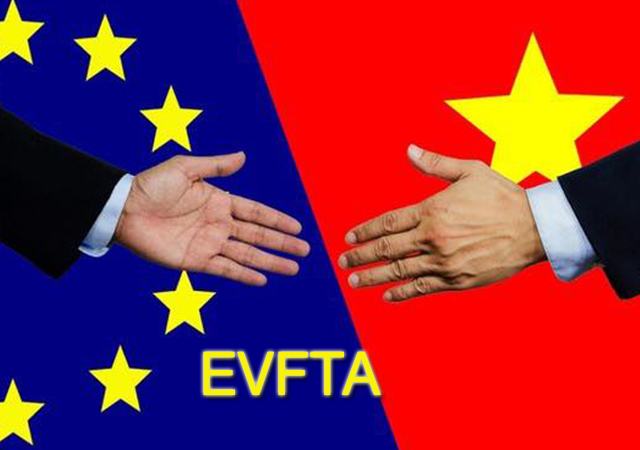
    But the timing could not have been worse. In the coming days, the EU Parliament’s Trade Committee is expected to vote on the EU – Vietnam Free Trade Agreement, worth 42 billion dollars annually and described by the EU as ‘the most ambitious free trade deal ever concluded with a developing country’. If passed, it will go to Parliament for a final vote on February 10.

    According to Human Rights Watch, already there is significant concern among some EU MEPs regarding Vietnam’s worsening human rights record. Just last month, they also discovered that the trade deal rapporteur, MEP Jan Zahradil, has institutional links with the Party, leading to his immediate resignation.

    With the latest incident in Dong Tam, it is also important for the 751 MEPs to realize that while the deal will bring more economic benefits to Vietnam, without clear and concrete human rights benchmarks, the deal will likely provide more incentives for the Party loyal and powerful to grab more land from the poor for developments without proper compensation and recourse.

    As a result, if passed in its present form, expect more land losses and tragic deaths in villages across Vietnam, not less. After all, 65% of Vietnam’s population still lives in rural areas.

    As for the Security Council of which Vietnam is the President this month, expect no resolutions on the matter. Dang Dinh Quy, head of Vietnam’s permanent mission in New York, is a Communist Party member himself.

  • Vietnam’s Travel Bans Infringe on Activists’ Rights And Violate Own Constitution

    Vietnam’s Travel Bans Infringe on Activists’ Rights And Violate Own Constitution

    On November 20, 2019, Father Nguyen Dinh Thuc, a Vietnamese Catholic priest, posted on his Facebook page that he was not allowed to leave Vietnam to go to Japan to meet with the Pope during the papal visit to Asia. The immigration police gave Father Thuc a document explaining the reason why the government did not allow him to travel abroad. It stated that the priest was banned from leaving Vietnam because the authorities believed they were preventing possible crimes against “national security and public order” according to Article 21, Section 6 of Decree 136/2007/ND-CP. This decree was issued (link in Vietnamese) by Vietnam’s executive branch on August 17, 2007.

    This was not the first time Father Thuc was prevented from traveling overseas. About two years ago, he was also blocked from traveling to Taiwan to attend meetings with Taiwanese civil society organizations regarding an environmental disaster involving a Taiwan enterprise, the Formosa Plastics Corporation. In one of Vietnam’s four central coastal provinces, Father Thuc had helped some of the victims of the Formosa incident voice their concerns over a legal fight and the aftermath of the disastrous environmental situation.

    The case of Father Thuc again demonstrates how the Vietnamese government bans human rights activists from traveling in order to stop them from participating in international advocacy efforts. The Vietnamese authorities have confiscated the passports of more than 100 Vietnamese activists, banning them from traveling by citing the same legal section: Decree 136/2007/ND-CP. Activists are deemed by police as a threat to Vietnam’s national security and public order when they go abroad.

    This incident also explains why we seldom see activists from Vietnam taking part in international advocacy for human rights in Vietnam. And even when activists do travel, they may not want to expose themselves publicly during advocacy events for Vietnam’s human rights because they could lose their passports upon returning home. Dinh Thao, an environmental and human rights activist, had her passport confiscated after being detained for several hours by police after returning to Vietnam this month. In the last three years, she traveled the world publicly advocating for human rights in Vietnam, and the confiscation of her passport was the price she had to pay for her actions.

    The story of Dinh Thao is the same dilemma that almost all Vietnamese activists have had to deal with in the past five or six years. If they travel abroad and publicly advocate for human rights in Vietnam, they face the possibility of being blocked from traveling again after they return to Vietnam.  When Vietnam underwent its second Universal Periodic Review (UPR) in 2014, activists accused the government of reprisals when it prevented activists from leaving the country to advocate for Vietnam’s human rights. Among them, Paulo Nguyen Ho Nhat Thanh, Pham Chi Dung, and Nguyen Bac Truyen were not allowed to depart the country to go to Geneva, Switzerland in January and February 2014 when their passports were confiscated. Pham Le Vuong Cac was also detained and had his passport confiscated in August 2014 when he returned to Vietnam after attending the UPR in Geneva. During the last UPR in 2019, Nguyen Thi Kim Khanh, wife of political prisoner Truong Minh Duc, participated in advocacy activities to raise her husband’s case in Europe and was detained for five hours upon her arrival in Vietnam. The police also took her passport without any judicial oversight, stating it was for national security.

    Without their passports, these activists are prevented from traveling abroad and if they leave the country without it, they risk being considered illegal immigrants or worse, being accused of taking part in human trafficking schemes.

    The ban on activists traveling overseas is illegal, and it also directly violates Vietnam’s 2013 Constitution. Article 23 of the Constitution guarantees that “citizens shall enjoy the freedom of movement and of residence within the country; and can freely travel abroad and return home from abroad.” By issuing governmental decrees like Decree 136/2007/ND-CP in 2007, the Vietnamese government has violated the rights of its citizens.

    These decrees were not introduced, debated, and passed by the legislative branch but were executive orders whose constitutionality should ideally be decided by a judicial review. Sadly, Vietnam’s court system is not independent, and there is no constitutional court in the country. The government is able to issue unconstitutional decrees to suppress people’s rights without having any form of checks and balances.

    The right of movement has met the same fate as the right for peaceful assembly: both of these rights have been violated by governmental decrees with the people having no means at all to fight back. In Vietnam, the National Assembly’s Standing Committee has the right to exercise the power to interpret the law, including constitutional law. This is the committee that can decide whether a law or a decree is constitutional. Unfortunately, the Standing Committee has never exercised that power.

    The government also does not notify activists when it puts their names on a “no travel ban” list, and some of them only find out upon arrival at the airport, as was the case of Father Thuc. Some people, such as Dinh Thao, had their passports confiscated by the police immediately after they returned to Vietnam from overseas.

    And yet, when the authorities infringe upon these activists’ right of movement, the police do not even follow the prescriptions as stated in Decree 136/2007/ND-CP. Article 22, Section 1(d) of this decree states that if a person is prevented from traveling because he or she is suspected to be a threat to national security or public order, such a decision to ban travel must be issued by the minister of the Ministry of Public Security – the head of the national police. In reality, none of the documents banning activists from traveling are signed by the minister. In the latest case of Father Thuc, the decision was signed by an immigration police officer, Lieutenant Colonel Phan Huan.

    Human rights activists in Vietnam face blatant violations of their rights by the government daily as reprisals for their work, but the government cannot stop the democracy movement from expanding. The activist community continues to grow and they willingly face harassment and imprisonment. In recent years, Vietnam has arrested more people for political dissent and handed down harsher sentences. Posting on Facebook with information that the government dislikes may land a person in jail for a decade, as we saw earlier this month. But at the same time, more people are willing to write and expose corruption and official wrongdoing in Vietnam. This is a time for political change and Vietnamese citizens want to be a part of this change. They are increasingly daring to face the consequences.

    In all of the human rights dialogue that the West participates in with Vietnam, putting an end to the travel ban should be top priority. If that happens, then the world will be able to hear Vietnamese activists express their struggles on the international stage. The advocacy to improve the human rights situation in Vietnam should start with eliminating the travel ban now.

  • How Can The EU Parliament Convince Us That Vietnam Will Improve Its Human Rights Record When Dissidents Continue To Get Jailed For Exercising Their Rights?

    How Can The EU Parliament Convince Us That Vietnam Will Improve Its Human Rights Record When Dissidents Continue To Get Jailed For Exercising Their Rights?

    The European Union – Vietnam Free Trade Agreement (EV-FTA) is expected to be a comprehensive win-win deal for both sides, ambitiously seeking to improve trade and boost mutual economic growth. As with all free trade agreements to which the EU is a party to, a human rights clause is built into this FTA with Vietnam. Many EU officials and parliament members that I have met in the past two years through my advocacy for Vietnam’s human rights situation earnestly believe that Vietnam will improve its record once the FTA takes effect.

    In the past, these friends have asked me to have some faith in the current regime, assuring me that our Vietnamese human rights activists and defenders will have better days in the future. It is a very typical “give them more time” argument that they expect me to accept. Yet the record shows that Vietnam’s aggression against human rights activists increases every year while government-controlled courts continue to hand out harsh sentences. I often wonder how EU officials still want to convince me to have such faith?

    In March 2019, I met with an EU official who was participating in the negotiations of the EV-FTA. She expressed great sympathy for human rights defenders in Vietnam and even realized the situation for human rights there was worrying. And yet, towards the end of our conversation, she asked me what I thought about one of Vietnam’s ministers, whose name I will not disclose. She seemed to be fond of the guy and praised him for belonging to a “progressive group in the Vietnamese Communist Party (VCP)” that she said hopefully would one day push for an improvement in human rights in the country.

    As a democracy activist, I personally think that regardless of whether a person is progressive or not, none of the VCP members right now would dare to inch away from the Party’s political monopoly inside the country. And I frankly stated that the Ministry of Public Security – the national police – would never allow any official to raise his or her voice over the human rights situation in Vietnam. Asking for political pluralism, an improvement in the human rights situation, and democracy would place anyone in danger of being sent to prison for more than a decade, as the latest political trials have shown this year.

    I met with the official right after attending the United Nations Human Rights Committee’s 125th session in Geneva, Switzerland where the Committee completed its third periodic report on Vietnam’s implementation of the International Covenant on Civil and Political Rights (ICCPR). Vietnam submitted its report after a 13-year delay in December 2017–the original deadline was set for August 2004. The Committee sadly acknowledged that in Vietnam’s review “less information was provided on the actual implementation of ICCPR and application of domestic laws in practice, where concrete data was crucially lacking.”

    Vietnam ascended to the ICCPR in 1982, but with regard to complying with the international covenant on human rights, it didn’t actually provide any opportunities for people to learn and exercise their rights. More than that, the government did not allow the Vietnamese people to use the ICCPR in courts to defend themselves when such rights were being violated.

    The point is that more than three decades after Vietnam joined the ICCPR, the human rights situation in Vietnam remains hopeless and people’s rights are being violated on a daily basis. How can we believe that the EV-FTA will improve such a situation when the ICCPR has so far failed so miserably?

    I began to write this article after receiving the news that a close friend, an activist from Vietnam, had been detained upon arrival at the Noi Bai International Airport, where she was put into detention by 10 security police. Dinh Thao is an environmental and human rights activist who left Vietnam to study and work abroad as an advocate for human rights more than three years ago. She was a medical doctor before becoming an activist and I am sure some of the EU parliament members must remember her because she advocated for Vietnam’s human rights situation in Brussels a few years ago and may have met some of them.

    Thao is non-violent and even created a project to educate people about peaceful demonstrations. Yet she was detained by the police immediately after her arrival in Vietnam. What crime did she commit to deserve such treatment? Or is it just simply the fact that the government violated her rights in retaliation for her advocacy internationally for more human rights in Vietnam?

    On the same day that Dinh Thao was detained, November 15, 2019, another Vietnamese was sentenced to 11 years imprisonment and five years of house arrest. Nguyen Nang Tinh, a  music teacher who also advocated for human rights and democracy for Vietnam, was accused by the state of “propagandizing against the government” via his Facebook posts. Tinh denied that the alleged Facebook account belongs to him, but if you read the posts in that account you’ll see that there was nothing that called for a violent overthrow of the regime. If you search for him online, you will see videos of him teaching young children patriotic songs, songs that demand human rights for the people. How could his activities be called “propaganda against the state”?

    As I have worked to protect the human rights of activists in Vietnam for many years, I have often recounted their stories to many Western politicians and officials. The activists I have met are people who had the opportunity to learn about the concept of human rights and who then started to defend such rights for others and also sometimes for themselves. They are the people who believe in the spirit and the universal values of human rights and they also believe that international laws, such as the ICCPR, will protect them. They probably had hoped that the ICCPR would be implemented in Vietnam at their trials. But that hope was never realized because we have never seen arguments articulating any of the articles of the ICCPR, such as Article 19, which protects the freedom of expression, presented in Vietnamese courts.

    And as a result, human rights activists and defenders have often typically been sentenced in rushed one-day trials without an independent judiciary. Sometimes the decisions handed down include lengthy jail sentences, as in the case of Nguyen Nang Tinh, which happened this month.

    In response to the EU officials who asked me to “have faith” in the regime, I point to a database built by the independent civil society organization The 88 Project, which catalogues the arrest and detention of political prisoners in Vietnam. A representative of that organization informed me a few days ago that in 2018, the Vietnamese government had arrested 145 people. These arrests showed the authorities’ blatant violation of the human rights of citizens. That number was greater than the number of arrests Vietnam made in 2017, 2016, and 2015 combined. In 2018, the number of arrests went up because the government detained and sentenced many people after large demonstrations happened in June 2018, in protest against the new cybersecurity law and the development of special economic zones with Chinese investment.

    It is not only human rights activists who are being treated unfairly and who are suffering mistreatment in Vietnam. There are also other groups, such as the workers, for whom the EV-FTA probably has some aspirations to improve their work environment and living standards. Many EU Parliament members have urged the Vietnamese government to quickly ratify the remaining three International Labor Organization (ILO) conventions prior to EU voting on the trade deal. Vietnam has promised to ratify the three ILO conventions over a time period of five years beginning in 2018. However, ratification of international laws is one thing, while the reality of how the Vietnamese authorities have failed to improve workers’ lives is another story.

    In Taipei, Taiwan, legal migrant workers from Vietnam went on a protest this month to demand the abolition of broker fees that each of them had to pay to be able to work in Taiwan. These broker fees are considered to be part of the most exploitative system of all of the countries in Southeast Asia from which these workers come from. What does the Vietnamese government know about this system and why does it allow such a broker fee system to continue to exploit their people? Would the EV-FTA be able to eradicate that system to improve the lives of these workers? How can I have the faith to believe that the Vietnamese government will ever take care of these people?

    Recently, Prime Minister Hun Sen of Cambodia released 70 opposition activists in order to improve his country’s human rights image after the EU threatened the withdrawal of special trade preferences. Cambodia’s political system has many aspects that are far better than in Vietnam. That country at least has an opposition political party – the Cambodian National Rescue Party (CNRP). On the contrary, the Vietnamese Communist Party has a political monopoly and we don’t have a single other political party.

    Running for office as an independent candidate will not lead to any success as the 2016 elections have demonstrated. Being a member of a political party that was formed overseas was the reason that Vietnam sentenced a 70-year-old Vietnamese-Australian man, Chau Van Kham, to 12 years in prison earlier this month.

    And yet, the EV-FTA provides for a lot more benefits for Vietnam than compared the trade preferences that Cambodia would get from the EU. How can Cambodia demonstrate a greater willingness to improve its human rights record while Vietnam just keeps getting worse? How can I have faith that Vietnam will eventually improve?

    During these days, police brutality in Hong Kong has increased dramatically as we see from the recent news coming out from universities there. And as we support and pray for young people there, I hope none of the international politicians and officials will say “give China more time” so that they can resolve their human rights problems.

    In my personal capacity, despite all my efforts, I have yet to make Vietnam’s human rights situation become more well-known in the world. However, I can not look at all of my human rights activists friends in Vietnam and tell them to be patient and to give the government more time.

    We need to raise our voices and demand right now that the Vietnamese government make an effort to improve its human rights record. Should Vietnam make some improvements prior to the EU Parliament vote on the FTA trade deal? Yes, absolutely. Vietnam has to show its good faith by releasing the more than 200 political prisoners who are currently serving time and by allowing the emergence of political pluralism with fair and free elections.