Tag: 39 Vietnamese

  • Vietnam Briefing: Vietnam Remains “Not Free” On Freedom House’s Internet Freedom Report; Vietnam’s COVID-19 Death Toll Surpasses 18,000 Fatalities

    Vietnam Briefing: Vietnam Remains “Not Free” On Freedom House’s Internet Freedom Report; Vietnam’s COVID-19 Death Toll Surpasses 18,000 Fatalities

    Freedom on the Net 2021: Vietnam remains “Not Free” on internet freedom

    The Vietnamese Magazine reports:

    • On September 21, 2021, Freedom House, a Washington D.C.-based organization, released its annual report Freedom on the Net 2021. In the report, Vietnam scored 22 on a 100-point scale, being classified as “not free” based on Freedom House’s measuring scale.
    • Vietnam’s score this year is 2 points lower than its rating for 24 in 2019 but is equal to its 2020 score, which was also 22.
    • According to Freedom House, three key factors that affect Vietnam’s overall score include the Vietnamese government’s growing pressure on Facebook to restrict and censor content deemed as “sensitive” or “critical” to the state; the government’s censorship, arrests and smear campaigns of several independent candidates during the country’s National Assembly elections; and the draft decree regarding personal data protection that require online platforms to collect and store the personal data of Vietnamese users for providing to the government upon request.
    • In a response to journalists’ queries regarding the results, the Vietnamese Foreign Ministry’s spokeswoman Le Thi Thu Hang said that Freedom House’s report “has no value” since it is a “biased and prejudiced assessment based on untrue information on Vietnam,” reports state-run VietnamPlus. Hanoi has consistently denied the country’s serious violations of basic human rights, while political prisoners are commonly viewed as bargaining chips by the government on the international negotiation table.

    Vietnam releases draft decree on Cybersecurity Administrative Penalties

    From Baker McKenzie:

    Vietnam’s Ministry of Public Security has just released a draft decree on Penalties for Administrative Violations in Cybersecurity to gather public opinion with a deadline of November 18, 2021.

    The draft decree, which consists of four chapters and 51 articles regarding administrative violations, penalties, and remedial measures, is expected to take effect on December 1, 2021.

    According to Baker McKenzie, several key points of the proposed decree include:

    • Scope and subjects of application: Vietnamese and foreign organizations and individuals committing administrative violations in cyberspace.
    • Main areas of sanction for violated object: (i) information security assurance; (ii) personal data protection; (iii) prevention of and combat against cyberattacks; (iv) implementation of cybersecurity protection activities; and (v) prevention of and combat against the use of cyberspace, information technology, and electronic devices to violate the law on social order and safety.
    • Most notably, foreign companies could face sanctions up to 200 million dong (approximately US$8,700) for failing to store users’ data or establish a representative office in Vietnam or failing to authenticate and identify users’ digital accounts with legal ID papers.

    COVID-19 situation in Vietnam

    • As of September 26, 2021, Vietnam has recorded over 476,000 confirmed COVID-19 cases. At the same time, the country’s death toll surpassed18,000 fatalities on September 23, the majority of which were recorded in Ho Chi Minh City and several southern provinces.
    • Migrant workers in Vietnam’s industrial province of Binh Duong are trapped in poverty and hunger, writes the Southeast Asia Globe: “The province’s migrant workers have been hit hard by Covid-19. Many have found themselves confined to small, rented rooms during the strict lockdowns and find it difficult to survive without familial ties in the province and little to no support from the government. Others have had to navigate the overwhelmed medical system and crowded quarantine centres or quarantine within factories to keep companies in operation.”
    • Vietnamese Prime Minister Pham Minh Chinh proposed a plan to ease COVID-19 restrictions and resume production in order to revive a pandemic-hit economy, reports Reuters. “Around Sept. 30, safe localities can ease COVID restrictions and revive business and social activities,” Chinh said during a government meeting. The decision came as Vietnam had seen a drop in infection and death rates, while many foreign investors warned the government that they had relocated their production elsewhere due to strict lockdown rules.
    • Earlier, on September 20, Vietnam’s capital Hanoi started to relax its coronavirus restrictions as it recorded fewer new cases and the majority of its adult population was partially vaccinated, reports Reuters. The city streets became busier last week after authorities removed roadblocks and allowed restaurants to offer takeaway services.
    • Vietnam’s domestic COVID-19 vaccine Nanocovax struggles to be approved amid vaccine shortage, reports Nikkei Asia: “As COVID-19 ravages Vietnam and foreign vaccines continue to be in short supply, the government is ramping up efforts to accelerate the development of domestic vaccines. But the debut of the first Vietnamese vaccine may be pushed back beyond this month as health authorities take extra care to ensure the safety and effectiveness of the vaccines.”
    • COVID-19 vaccines’ arrival in Vietnam: On September 22, South Korea’s presidential office announced that it would donate more than 1 million COVID-19 vaccine doses to Vietnam after President Moon Jae-in met with Vietnamese President Nguyen Xuan Phuc on the sidelines of the U.N. General Assembly in New York. Three days later, on September 25, Cuba exported its three-shot Abdala coronavirus vaccine for the first time to Vietnam, as part of a contract to supply five million doses to Hanoi. Earlier, Italy also announced that it would send an additional 796,000 doses of the AstraZeneca vaccine to Vietnam, on top of more than 800,000 doses previously donated to the country via the COVAX Initiative.
    • The Vietnamese government has approved the purchase of 20 million Chinese-made COVID-19 Sinopharm vaccines, which will be made by the country’s Ministry of Health, reports VnExpress. The Southeast Asian country has received around 20 million Sinopharm doses up to date.
    • Vietnamese dissident Mac Van Trang receives death threats over his criticism of Chinese-made vaccines, reports RFA: “Mac Van Trang, known for his critical voice on sociopolitical issues in Vietnam, said he received threatening calls after he posted stories on the Chinese vaccines on his Facebook page, including a letter he wrote to the Ho Chi Minh City leaders, advising them not to accept millions of doses of the Sinopharm vaccine.”

    Vietnam protests over China Y-20 Aircraft Mission in Spratly Islands

    RFA reports:

    • On September 16, Chinese state media reported that the People’s Liberation Army (PLA) deployed a number of Y-20 large transport aircraft to return troops from three outposts in the Spratly Islands (Hoang Sa), which China calls Nansha, to the mainland.
    • At a press briefing in Hanoi on Thursday, September 23, Foreign Ministry spokeswoman Le Thi Thu Hang said that Vietnam demands that China respect its sovereignty over the Hoang Sa and Truong Sa (Paracel) archipelagoes and immediately stop and not repeat similar activities.
    • The Chinese daily tabloid Global Times quoted the PLA South Sea Fleet as saying that several Y-20 transport aircraft of the PLA Air Force took off from airfields on Fiery Cross Reef, Subi Reef and Mischief Reef last Thursday, “carrying veterans who were garrisoned there to the Chinese mainland.” Previously, such missions were done by ships, it noted.
    • On September 24, general secretary of the Communist Party of Vietnam Nguyen Phu Trong and Chinese President Xi Jinping held a phone conversation, vowing to promote the socialist course of both countries, strengthen cooperation in international and regional affairs, maintain peace and stability in the South China Sea, and oppose the politicization of COVID-19 origins tracing.

    Vietnam Insight: Learn more about Vietnam

    Vietnam is balancing China-US rivalry with deft statecraft, but for how long?

    ThinkChina/ Huynh Tam Sang, Pham Do An/ September 16

    “Vietnam and China’s respective stances on foreign policy have diverged considerably. China’s Belt and Road Initiative reflects its desire for a Beijing-centric world system. But Hanoi strives towards multilateralism and has sought to reduce its economic dependence on Beijing; it seeks to uphold existing international law and norms against the latter.”

    US-Vietnam Relations: From Reconciliation to a Relationship of Substance

    The Diplomat/ Le Hong Hiep/ September 20

    “Despite America’s repeated commitments to respect Vietnam’s political system, some Vietnamese leaders remain paranoid about the vague threat of regime change supposedly caused by America’s “peaceful evolution” scheme. But such fear is misplaced. As Osius’s book shows, America has learned to respect Vietnam’s political interests, and has a strong desire in strengthening ties with Vietnam, especially against the backdrop of its intensifying strategic competition with China. Contrary to these officials’ belief, a stronger relationship with the U.S. will help strengthen, rather than undermine, the regime of the Vietnamese Communist Party. Numerous historical examples, from Chile, Nicaragua, and Cuba to Iran, Iraq, and North Korea, have shown that regimes friendly to the U.S. and its interests will fare much better than hostile ones.”

    ‘We Were Them:’ Vietnamese Americans Help Afghan Refugees

    Associated Press/ Amy Taxin/ September 21

    “For parole, Afghans need the support of a U.S. citizen or legal resident, and some Vietnamese Americans have signed up to sponsor people they have never met, said Tuấn ĐinhJanelle, director of field at the Southeast Asia Resource Action Center. He said a coalition of legal and community groups has secured sponsors for 2,000 Afghans seeking parole. His sister, Vy Dinh, said she’s sponsoring a family of 10 including women in danger for working in medicine and teaching. “As soon as he called, I said, ‘Yes, I am in,’” she said.”

    Japan, Vietnam gently coming together against China

    Asia Times/ Nate Fischler/ September 21

    “To diversify defense ties beyond their traditional US ally, Japan has signed similar defense agreements with other regional powers including the Philippines, Australia and Indonesia. But the Japan-Vietnam deal, in particular, has broad implications for the region, analysts and observers say.”

    Agent Orange atrocities didn’t end in Vietnam

    Asia Times/ Mike Tharp/ September 22

    “During the Vietnam War, the United States sprayed on Vietnam about 40 million liters of Agent Orange and related toxic rainbow herbicides – Agents Purple, White, Green and Pink. All were defoliants aimed at disrupting the jungle canopies, rice crops and other food sources for the Viet Cong.”

    China Courts Vietnam With More COVID-19 Vaccines, Mistrust Remains

    The Diplomat/ Hai Hong Nguyen/ September 24

    “This feeling stems from a Vietnamese lack of confidence in the quality of Chinese vaccines on the one hand, and a long history of suspicion that has been inflamed by recent Chinese actions in the South China Sea.”

    Japan, the U.S. and Vietnam not on same page with China

    The Japan Times/ Mark J. Valencia/ September 26

    “Indeed, while Vietnam’s position may seem at times to be anti-China, this is likely to be flexible. Indeed, it seems doubtful that Vietnam’s leadership will side long term with the U.S. and its allies. Since the debacle in Afghanistan, the U.S. is increasingly viewed as a declining and unreliable partner. China on the other hand is its permanent neighbor and an inexorably rising regional and world power.”
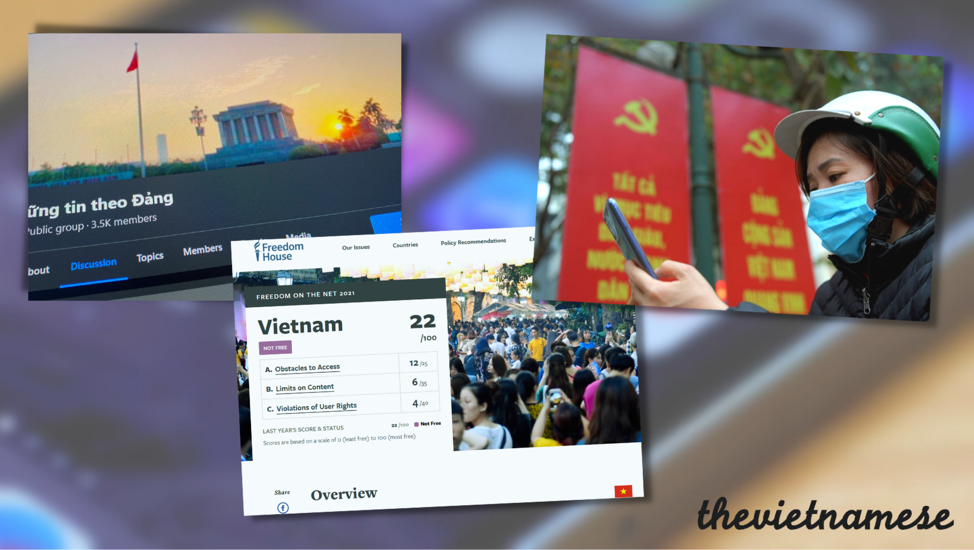
  • Internet Freedom In Vietnam: Prospects And Setbacks

    Internet Freedom In Vietnam: Prospects And Setbacks

    On September 21, Freedom House, a non-profit organization based in Washington D.C., released its annual “Freedom on the Net” report, classifying[1] Vietnam as “not free” in its annual 2021 ranking.

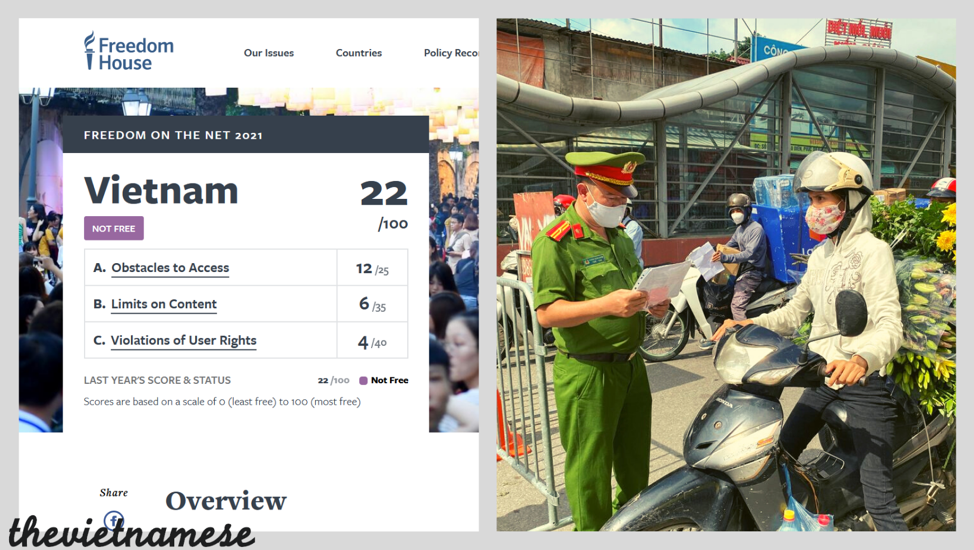
    A Freedom House chart evaluates the state of internet freedom in 70 countries[2] this year, based on their performance in three different criteria: Obstacles to Access, Limits on Content, and Violation of User Rights. Trinh Huu Long, a co-founder of Legal Initiatives for Vietnam and an editor at The Vietnamese Magazine, is the author of this report’s Vietnam chapter.

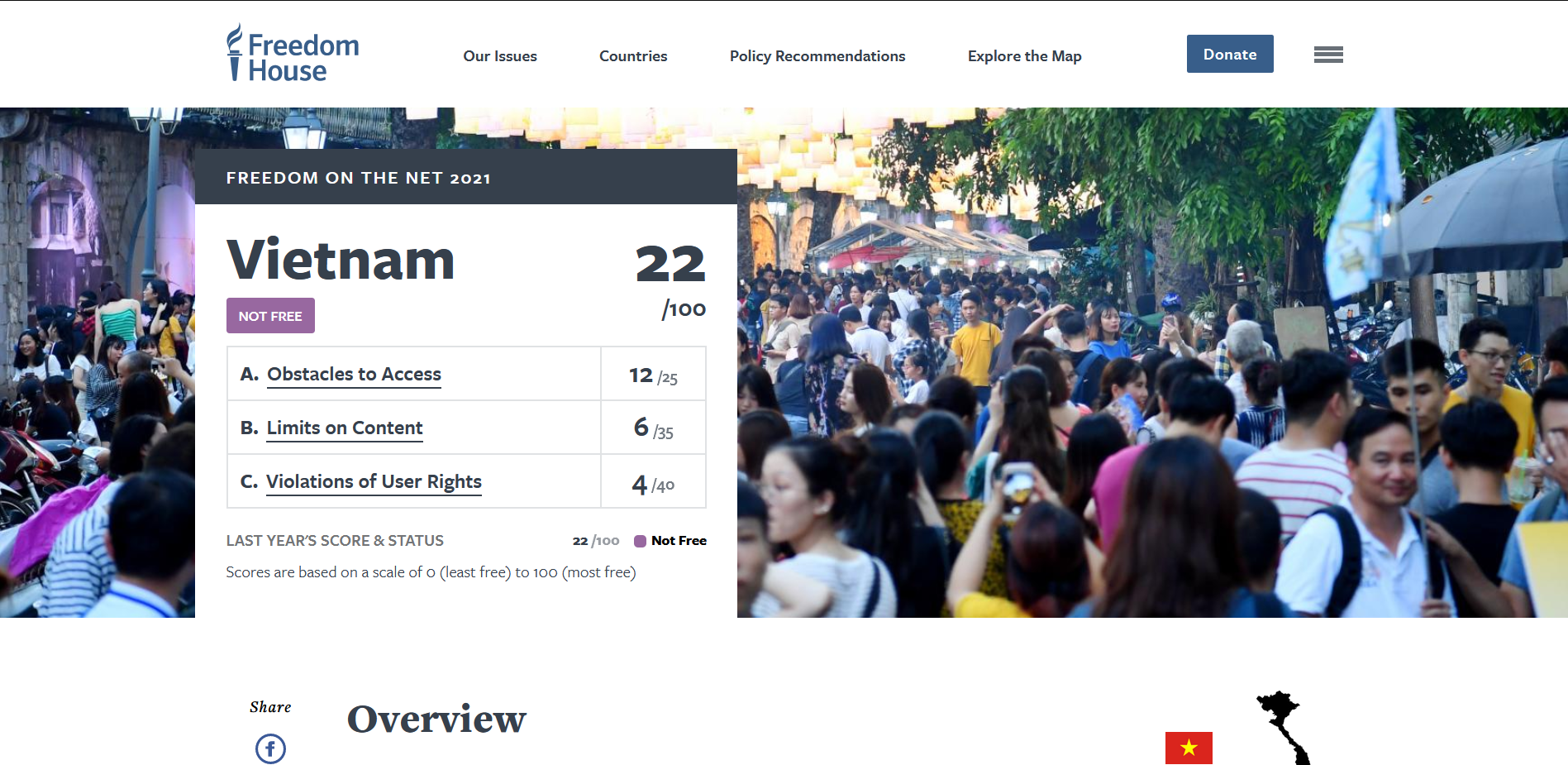
    According to Freedom House, the scores are based on a scale of 0 (least free) to 100 (most free). Overall, Vietnam totalled 22 on the 100-point measuring scale, remaining the same as last year’s score and falling two points from the 2019 report.

    Vietnam has been ranked “not free” on the Freedom House report this year. Photo: screenshot/ Freedom House.

    There could be several reasons, and one of them includes the Vietnamese government’s threats to shut down services of foreign social networks, such as Facebook and Google. If those companies refuse to comply with its censorship demands on critical content, the government will shut them down. Meanwhile, the Freedom House report also cites a Vietnamese draft decree on personal data protection released for public comments earlier this year. If passed, this law would require internet providers and technology companies to locally store Vietnamese users’ data in the country and hand it over to the government upon demand.

    Vietnam has also been ranked [3] “not free” in Freedom House’s annual “Freedom in the World” chart. For many local activists, these results are hardly surprising.

    Vietnam has experienced steady economic growth in the past decades, with its youth becoming increasingly active on social media. By the end of 2020, over 70 percent [4] of the country’s population, equal to around 60 million people, had access to the internet. These statistics brought about the development of a new civic space. However, as the Vietnamese Communist Party (VCP) perpetually controls almost every aspect of social life with an iron fist, this rapidly expanding cyberspace, which extends beyond the Party’s reach, is considered an underlying threat to the regime.

    To assert its control over this novel avenue of free speech and dissent, the VCP has employed multiple tactics. Some of their methods include deploying an army of “public opinion shapers” tasked with disseminating propaganda, punishing local dissidents, and applying pressure on foreign companies to aid in its censorship demands.

    Yet, the bigger picture is not as grim as it might look. Despite censorship, online threats, and other hindrances, there are still several bright prospects for the future of internet freedom in Vietnam.

    Opportunities for a More Liberated Internet in Vietnam

    Despite its poor record in limiting online content and history of violating user rights, Vietnam has achieved significant improvements in assuring equal internet access to its citizens, as clarified in the “Obstacles to Access” section.

    Improved internet infrastructure, which leads to faster connection speeds, decreased subscription costs, and high smartphone penetration, has played an essential role in making the internet more affordable and accessible to most people. Given that around two-thirds of the population currently lives in the countryside, social media platforms have become an alternate source of information for specific Vietnamese audiences who stand in opposition to highly propagandized and more traditional forms of media.

    Recent statistics [5] show that television viewership in rural areas fell to 86% while internet penetration reached 91%. Still, Freedom House emphasizes that “connectivity remains out of reach for those living in extreme poverty, which is found in many communities of [ethnic minorities] in mountainous areas.”

    As young Vietnamese become more educated and skilled in technological know-how, they are “increasingly turning to blogs, social media platforms, and other online news sources for information, rather than state television and radio [broadcasts],” Freedom House reported.

    These young tech-savvy internet users also actively acquire new tools, which are “well-known” and “can be found with a simple Google search, for circumventing censorship and bypassing firewalls.”

    Vietnamese people spend more time [6] on social media than their Asian peers, with Facebook and Google services (Youtube and Instagram) among the most popular platforms [7] in the country. As of January 2021, there were about 68 million [8] Facebook users in Vietnam; seven in every 10 Vietnamese people have an account on Facebook.

    While many of its authoritarian counterparts, most notably China, have constructed solid and massive firewalls fencing themselves off international internet services, Vietnamese internet users can still chat with their Facebook friends or watch videos on Youtube. Despite periodic blockages and slowdowns during “sensitive events,” full and comprehensive censorship currently remains impossible for the Vietnamese authorities to implement.

    Dien Nguyen An Luong, a well-known op-ed contributor to The New York Times, provides [9] some reasons to explain why it is too late for Vietnam to control social media.

    First of all, he states that this can be attributed to the country’s lack of financial and technological resources to build domestic social networking services that could challenge those coming from big tech companies in Silicon Valley like China has been doing. Dien adds that Vietnam’s “mild approach to keep internet business and e-commerce growing” has also helped create a “hybrid infrastructure that thrives on developing and adapting faster than the government’s ability to regulate and control.” And finally, he concludes that Vietnamese internet users “have always been able to find workarounds” to the restrictions imposed by their government.

    The Government’s Iron Fist

    Yet, Vietnam still faces several hurdles that hinder the country’s momentum towards a more liberal internet environment. Censorship is perhaps one of the most severe threats.

    As the Vietnamese government is intolerant and fearful of dissent, various methods have been deployed to silence critics and keep online discussions under control. Among these tactics are blocking “toxic” webpages, censoring sensitive content, and forcing social media companies to comply with the state’s censorship demands.

    Vietnam has scored poorly in most criteria in the “Limits on Content” section of the Freedom House’s report. Unlike China, the authoritarian Vietnamese government commonly uses methods to suppress the civic internet space while remaining seemingly “free” on the surface.

    For example, Facebook and Google are still accessible in Vietnam, but their users are always under constant surveillance from cyber security forces. Furthermore, the passing of the controversial and opaque Cybersecurity Law in 2019 has granted Vietnamese authorities more power to request social networking sites to remove and delete content deemed as “anti-state,” “malicious,” or “illegal.”

    Besides these “official” practices under the Cybersecurity Law, the VCP has also deployed “unofficial” methods, such as throttling the connection to local servers in order to coerce foreign companies to carry out censorship, harassing activists and journalists, restricting access to blogs or online newspapers which criticize the state, and mobilizing the Force 47 Cyber Unit [10]. Force 47 is an army of online “public opinion shapers” whose job is to steer online discussions in accordance with Party guidelines.

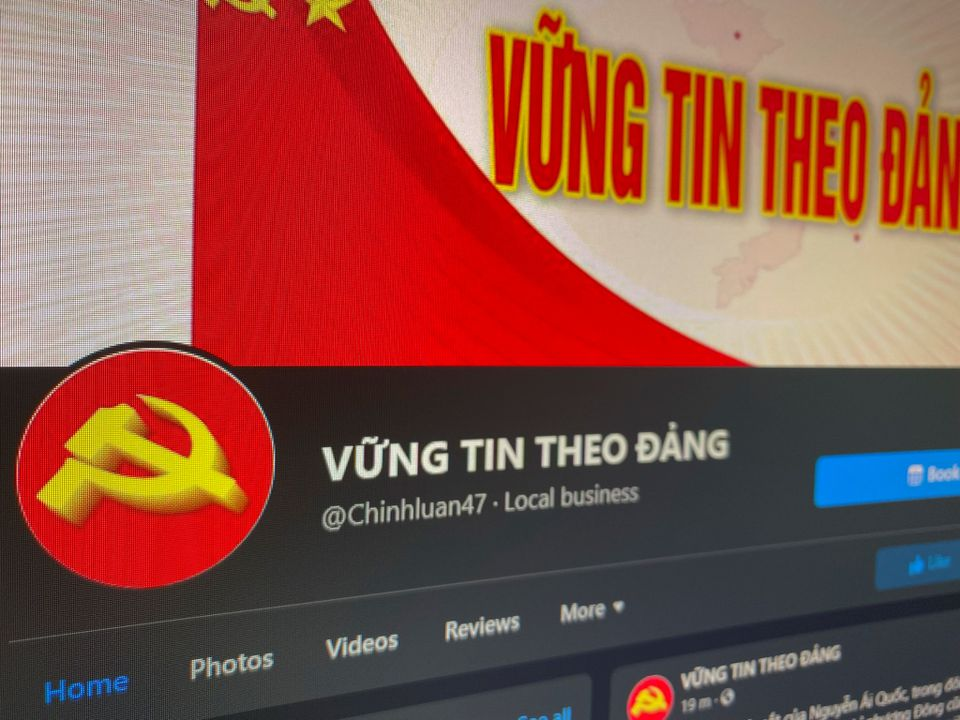
    Screenshot of a Facebook page called ‘Firmly believing in the Party,’ identified by Vietnamese state media as being controlled by ‘Force 47 Cyber Units.’ The photo was taken on July 6, 2021, by Reuters.

    Meanwhile, online speech and freedom of expression have continued to be suppressed, as reported in the “Violations of User Rights” category.

    In theory, the right to freedom of expression and access to information is enshrined in the Vietnamese Constitution. However, Vietnam fell short of its commitment to securing such rights for its citizens. The VCP continues to maintain control of all levels of cyberspace.

    Vietnamese authorities also warned high school and university students not to[11] share, comment on the country’s historical and political disinformation in cyberspace. An article from Luat Khoa Magazine in 2019 states [12] that the reason why there has not been a youth movement in Vietnam compares to other places, such as Hong Kong, is because students have been encouraged not to “read unauthorized posts, [and] circulate unregulated information on social media.” Otherwise, they might risk getting expelled.

    The watchful eye of the government constantly scrutinizes local activists, bloggers, and independent journalists. They can be penalized for simply engaging in online activities such as writing posts, live streaming newsworthy events, or publicizing any information that the government considers “sensitive” or “inappropriate.”

    Legislation [13] is being used to punish and silence online critics, such as Article 109 of the Penal Code, which penalizes citizens “carrying out activities aiming to overthrow the people’s administration,” and Article 117 for those “making, storing, disseminating or propagandizing materials and products that aim to oppose the State of the Socialist Republic of Vietnam.” According to Freedom House, since the legal terms found in these laws are vaguely defined and easily manipulated, the trials and proceedings related to online speech are “often brief, and predetermined.” If found guilty, offenders could also face “years-long prison sentences.”

    To further expand its total control over cyberspace in Vietnam, the VCP has compelled Facebook and Google to become its tools for censorship and harassment of citizens [14]. In a 78-page report, “Let us Breathe!”: Censorship and criminalization of online expression in Viet Nam,”[15] Amnesty International (AI) documents and exposes the current situation of social media users in Vietnam, along with how the repression of online speech is aided by world’s tech giants such as Facebook and Google.

    The AI report illustrates that Vietnamese social media users “face the constant threat of arbitrary arrest, prosecution, and other forms of harassment in retaliation for exercising their right of freedom of expression online.” At the same time, they could also get blocked on social media and have their posts deleted; their personal data could also be handed to the state’s security department if demanded.

    The Vietnamese Ministry of Information and Communications recently introduced a code of conduct [16] to direct the online behavior of social media users, state organizations, and social media providers alike. The new code encourages internet users to “post positive content” about the country while prohibiting those which “affect the interests of the state” and requires social networking sites to “deal with users in accordance with Vietnamese law” by deleting content upon the government’s request.

    The new code, while it is not legally binding [17], has sparked considerable concerns for local internet users and social activists. Many of them fear that the new regulation is a warning sign from the government and will lead to further encroachments in the country’s already restrictive cyberspace.

    Building upon its insatiable desire to shape online discussions, censor “sensitive information,” and harass activists, the VCP wants to further infringe on the personal freedom of more than 60 million internet users in Vietnam by telling them what to think, do, or express on the internet.

    But what is truly disheartening is that Vietnam has all the conditions needed to make internet freedom thrive and prosper; it has the infrastructure in place, and cyberspace has never been more accessible. Yet, it will never reach this ideal if the government continues to maintain and strengthen its grip on freedom while refusing to let its people speak.

    References:

    1. Freedom on the Net 2021 (Vietnam). (2021, September). Freedom House. https://freedomhouse.org/country/vietnam/freedom-net/2021
    2. Internet Freedom Scores. (2021, September). Freedom House. https://freedomhouse.org/countries/freedom-net/scores
    3. Global Freedom Scores. (2021). Freedom House. https://freedomhouse.org/countries/freedom-world/scores
    4. Nguyen, M. N. (2021, July 23). Internet usage in Vietnam – statistics & facts. Statista. https://www.statista.com/topics/6231/internet-usage-in-vietnam/
    5. Lien, H. (2021, June 9). In rural Vietnam, Facebook finds a new approach to growth. Nikkei Asia. https://asia.nikkei.com/Business/Technology/In-rural-Vietnam-Facebook-finds-a-new-approach-to-growth
    6. Quy, N. (2021, February 6). Vietnamese spend more time on internet, social media than Asian peers: report. VnExpress. https://e.vnexpress.net/news/news/vietnamese-spend-more-time-on-internet-social-media-than-asian-peers-report-4232155.html
    7. Nguyen, M. N. (2021b, August 9). Leading social media apps in Vietnam in Q2 2021. Statista. https://www.statista.com/statistics/941843/vietnam-leading-social-media-platforms/
    8. Statista Research Department. (2021, September 10). Countries with the most Facebook users 2021. Statista. https://www.statista.com/statistics/268136/top-15-countries-based-on-number-of-facebook-users/
    9. Luong, D. (2017, November 30). Vietnam Wants to Control Social Media? Too Late.The New York Times. https://www.nytimes.com/2017/11/30/opinion/vietnam-social-media-china.html
    10. Reuters Staff. (2017, December 26). Vietnam unveils 10,000-strong cyber unit to combat “wrong views.” Reuters. https://www.reuters.com/article/us-vietnam-security-cyber/vietnam-unveils-10000-strong-cyber-unit-to-combat-wrong-views-idUSKBN1EK0XN
    11. Tuan, D. (2021, April 29). Nâng cao ý thức pháp luật trên không gian mạng cho học sinh. An Ninh Thủ Đô. https://anninhthudo.vn/nang-cao-y-thuc-phap-luat-tren-khong-gian-mang-cho-hoc-sinh-post464936.antd
    12. Bao, V. (2019, June 23). Vì sao sinh viên Việt Nam không thể biểu tình như sinh viên Hong Kong? Luật Khoa Tạp Chí. https://www.luatkhoa.org/2019/06/vi-sao-sinh-vien-viet-nam-khong-the-bieu-tinh-nhu-sinh-vien-hong-kong/
    13. Vietnam’s Proposed Revisions to National Security Laws. (2015, November 19). Human Rights Watch. https://www.hrw.org/news/2015/11/19/vietnams-proposed-revisions-national-security-laws
    14. Viet Nam: Tech giants complicit in industrial-scale repression. (2020, December 1). Amnesty International. https://www.amnesty.org/en/latest/press-release/2020/12/viet-nam-tech-giants-complicit/
    15. Viet Nam: Let us breathe! Censorship and criminalization of online expression in Viet Nam (ASA 41/3243/2020). (2020, December). Amnesty International.
    16. Phuong Nguyen, James Pearson. (2021, June 18). Vietnam introduces nationwide code of conduct for social media. Reuters. https://www.reuters.com/world/asia-pacific/vietnam-introduces-nationwide-code-conduct-social-media-2021-06-18/
    17. Long, T. H. (2021, June 19). Vietnam: The New Code Of Conduct On Social Media Is Not Legally Binding. The Vietnamese Magazine. https://www.thevietnamese.org/2021/06/vietnam-the-new-code-of-conduct-on-social-media-is-not-legally-binding/
  • The Threat Of A Free And Open Internet In Vietnam

    The Threat Of A Free And Open Internet In Vietnam

    We now live in the Age of Information, where we can access facts, data, or statistics with a simple touch of a button through our phones or computers. With enough time, commitment, and motivation, anyone can attain baseline theoretical knowledge in various fields with access to the internet.

    And if a private individual wants to share what they know, they can easily do so using the many avenues to spread information now available on the World Wide Web. Yet, this ease of access carries with it several caveats, one of which is the rampant spread of misinformation.

    Fake news, bogus statistics, and false narratives have sadly become common as we try to navigate our way through the internet. While trusted news outlets, publishers, and independent journalists are doing their part to weed out disinformation, their efforts are not enough to realistically stop, or at the very least, stifle the spread of these lies.

    And while these experts continue to research and learn about how best to deal with this issue, for now, the challenge falls on private citizens to exercise their judgment and recognize their biases to discern the truth from what is merely a constructed or false reality. Even though humans are far from rational beings touted by various thinkers and philosophers from the past, this should hopefully be enough to slow down misinformation coming from isolated sources.

    Yet, what if campaigns of disinformation were more focused? What if they were run not only by an individual or a small group but by an entire ecosystem that pushes a questionable goal or agenda? And what if this hive mind had enough power, money, and resources to censor alternate sources of information or silence anyone, or anything, that would compromise its meticulously constructed version of the world?

    The U.S Department of State’s 2020 Country Reports on Human Rights Practices: Vietnam tackles several issues plaguing the country: internet freedom. The report states that the Vietnamese government “restricted and disrupted access to the internet, censored online content, imposed criminal sentences for online expression, and monitored private online communications without legal authority.”

    Also mentioned are several restrictions on local internet service providers in the country, which the government controls. Those few that are allowed to operate are either in part or wholly owned by the state, which can actively monitor the online activities of the subscribers of these internet services.

    The report also states that websites that the Vietnamese Communist Party (VCP) considers “politically or culturally inappropriate” are also blocked on the Vietnamese internet and cannot be accessed directly. This group includes international sites owned and operated by Vietnamese people residing overseas and several credible news outlets such as Radio Free Asia, Voice of America, and the BBC Vietnamese news service.

    The meddling of the Vietnamese government does not end there. The report adds the situation of websites and social media networks – such as Facebook and Google – where Vietnam already gives the privilege to operate in the country. Yet, these companies are still being compelled to fully cooperate with the Ministry of Information and Communications to weed out and identify news and information that the government considers “bad” or “toxic.”

    They added that companies and organizations that operate social network sites, host blogs, or provide information about politics, economics, culture, or society must give comprehensive details about their plans and set up their servers within Vietnam. It is done for the convenience of the Vietnamese government so that when it requests the personal information of the account holders, it will undoubtedly have them. Hence, all information collected by these companies is stored for 90 days, with specific metadata being held for up to two years.

    The report highlights the government’s crackdown against private citizens, journalists, and bloggers who use their platforms to criticize and complain about the actions of the VCP or expose the many allegations and manifestations of corruption that plagues the Vietnamese government. These brave men and women, with our co-founder and co-editor, Pham Doan Trang, being one of them, bear the brunt of the government’s ire and often face the possibility of “arrest, short-term detentions, surveillance, intimidation, and the illegal confiscation of [their or their family’s] computers and cell phones.”

    Despite the severity of the restrictions on the Vietnamese internet, this is not something new; it is just another manifestation of the Vietnamese government’s ever-tightening noose around the neck of free speech and press freedom.

    The careful monitoring of websites, internet service providers, social media programs, and bloggers is the latest in a long line of the party’s transgressions against outlets that challenge the narrative the VCP tries so hard to instil as truth. And with the passage of the controversial Cyber Security Law in 2018, it is evident that the government is trying to replicate its success in controlling all forms of printed media in a more modern context, according to an article written in January 2019 by Thoi Nguyen in The Diplomat.

    Yet, with all their control and propaganda, what is this elusive narrative that the VCP is trying so hard to maintain? What is the story they want every one of their citizens to accept as gospel and as the absolute truth?

    The Party is perfect, and that the Party only has the people’s best interests at heart?

    The VCP’s version of reality has itself at the helm of Vietnam; it paints the Party as the almighty saviour of the country from the hands of the West. It construes itself as the central, and perhaps, the sole reason for Vietnam’s miraculous rebirth from conflict and civil war to its current state. The Party believes the VCP, guided by the spirit of Ho Chi Minh, should continue to carry the nation towards progress for all eternity.

    Such is the display of bravado, arrogance, and delusion of the Vietnamese government.

    Hence, it continues its charade, striving to censor masterfully, control, and monitor what occurs in Vietnam’s corner of the internet, a tactic not too different from what China practices. At the same time,  it continues to peddle its story to its citizens and the rest of the world,

    All this leads to a peculiar reversal of roles where misinformation comes not from the flawed thought process of the ill-informed or the writings of misguided conspiracy theorists. Instead, it comes from the precise calculations and machinations of the state, which can control most of what people consume in mainstream media. And if the people are constantly bombarded with lies and misdirection, they will eventually accept these falsehoods as fact and gospel.

    As such, the task of revealing new truths to the Vietnamese people and raising awareness about what is going on outside the government’s online information bubble lies in the hands of individuals. It falls on independent journalists, writers, bloggers, and small online publications to crack open the Vietnamese firewall, despite the risks, to make citizens question what they hold to be true. The threat to the free and open internet in Vietnam is genuine to the government as it exposes their lies and renders them obsolete.

    For when the state fails to provide the truth, it becomes our duty to do it ourselves.

  • New Research: Vietnam Remains “Not Free” On Internet Freedom, Freedom House Says

    New Research: Vietnam Remains “Not Free” On Internet Freedom, Freedom House Says

    Internet freedom in Vietnam has always been at the mercy of state censorship and strict government control. Journalists, bloggers, and activists face the genuine risk of harassment by state forces and even imprisonment. On September 21, 2021, Freedom House, a US-based organization founded to support and defend democracy worldwide, released its annual report titled Freedom on the Net 2021. Disappointingly, Vietnam continues to fare poorly in its metrics and analysis as the situation surrounding Vietnam’s internet freedom continues to worsen year after year.

    Freedom House’s Methodology

    In its annual report, Freedom House rates each country on a scale of 100 to 0, with a score of 100 representing the freest conditions and with 0 signifying the least free. The highest possible score of 100 is then divided into three categories, namely: Obstacles to Access (25 pts.), Limits on Content (35 pts.), and Violations of User Rights (40 pts.). These three categories are then further split into several specific questions, which are then used by Freedom House to determine a country’s appropriate standing.

    Countries that attain a grade between 70-100 are classified as Free, those with scores between 40-69 are noted as being Partly Free, and nations with a score from 0-39 are considered to be Not Free.

    Freedom House’s full methodology can be found here.

    Key Events

    Vietnam’s rating for 2021 in Freedom House’s report is 22, which classifies it as being Not Free. This score is 2 points lower than its rating of 24 in 2019 but is equal to its 2020 score, which was also 22. However, just because Vietnam’s rating is the same in last year’s report does not mean that the situation in the country has remained unchanged. For instance, in 2020, Freedom House reported a temporary connectivity disruption in Đồng Tâm coupled with Facebook’s servers in the country were taken offline in February 2020, which led to a lower accessibility score for that year. No similar issue has happened so far in 2021, which leads to Vietnam having a higher rating in this category. In the same vein, several issues in the past may no longer be present, and several issues today may not have been problematic one or two years prior.

    Freedom on the Net 2021 report begins by listing several key events that affect Vietnam’s overall score.

    Firstly, the report states that the Vietnamese government had threatened to shut down Facebook’s activities in the country if the company refuses to comply with the government’s requests to restrict content it deems to be “sensitive” or “critical.”

    Secondly, the report discusses the prior elections and the Vietnamese government’s censorship, arrests, and smear campaigns related to several independent candidates. Related to this are the long-running and ongoing arrests of activists and bloggers.

    Lastly, the report mentions the draft decree regarding personal data protection, which was released in February 2021; if passed, this would require online platforms to collect and store the personal data of Vietnamese users for the purposes of providing it to the government upon request.

    These events give us much-needed context into how Freedom House came to its rate for Vietnam in its 2021 report.

    Internet Freedom in Vietnam

    Regarding Obstacles to Access, Vietnam scores 12 out of a maximum of 25 points, or around 48 percent of the total. The report states that internet penetration in the country is at around 68.70 percent of the population and that smartphone penetration is at around 61.37 percent. Internet prices have also become more affordable, even to those in rural areas. Despite these positives, connectivity remains an issue for those in extreme poverty and for ethnic minorities who live in remote mountainous regions.

    Any business or firm is allowed to operate as an internet service provider in Vietnam; however, some informal barriers prevent many from doing so. Currently, the Vietnam Posts and Telecommunications Group (VNPT) and Viettel dominate the industry, with these companies controlling 40 percent and 38 percent of the market respectively. The mobile sector is no different, with Viettel accounting for 50.5 percent, VinaPhone 24.6 percent, and MobiFone 21.1 percent, comprising the lion’s share of all subscriptions. As such, smaller companies in both the internet and mobile sectors cannot hope to compete with these already established businesses.

    The Vietnamese government still retains the ability to restrict connectivity on a whim. Various government agencies tasked with regulating and overseeing digital technology remain secretive and operate without public oversight.

    Regarding Limits on Content, Vietnam scores 6 out of a maximum of 35 points, or roughly around 17 percent of the total.

    The Vietnamese government actively and continuously blocks or filters any form of content that, from their point of view, challenges the ruling Vietnamese Communist Party (VCP). High-profile blogs, individuals with many followers, content which promotes religious organizations, and local and international news websites which are critical of the regime are often the targets of government censorship. This 2021 Freedom House report states that Vietnam’s Department of Cybersecurity and High-Tech Crime Prevention has “monitored and blocked almost 3,400 overseas websites that have ‘published harmful and toxic information’ in 2020.” The regime has also threatened to shut down Facebook, and so, even this social media giant was forced to comply and agree to remove content that the VCP deems “anti-state.”

    The passing of the controversial Cyber Security Law in January 2019 has also led to the expeditious removal of content. State authorities have “imposed heavy fines and suspended online publications” for having comments that criticize the regime on their platforms. In addition, mounting government pressure has made social media platforms subservient to the government’s wishes, and in effect, they restrict content that the VCP deems inappropriate.

    The social media accounts of activists and dissidents are also under the constant threat of being suspended for “violating the platform’s community standards.” Even normal internet users, commentators, and journalists have to practice some degree of self-censorship or risk being detained or questioned by the authorities.

    This situation of mass censorship and control gives the Vietnamese government the perfect setting to be able to influence, sway, and dictate public opinion. The report quotes the Oxford Internet Institute (OII) which claims, “Vietnam employs a network of approximately 10,000 people that manipulates information on Facebook and YouTube [, and at] least one government agency is involved.”

    Regarding Violations of User Rights, Vietnam scores 4 out of a maximum of 40 points, or roughly 10 percent of the total.

    Even if the Vietnamese Constitution affirms the rights of freedom of expression, access to information, press freedom, and the like, these are not actually protected by the Vietnamese state. Freedom on the Net 2021 report states that “police routinely flout due process, arresting bloggers and online activists without a warrant or retaining them in custody beyond the maximum period allowed by law.” And it says further that the Cybersecurity Law also “prohibits a wide range of activities conducted online” in addition to putting additional pressure on internet users and social media platforms.

    As of June 2021, according to the report, 235 activists are being held in detention for practicing their freedom of expression. Several journalists, activists, and even ordinary everyday users were also given outrageous prison terms or made to pay hefty fines for their online activities for allegedly violating several provisions under Articles 117 and 331 of the Penal Code. Prominent journalist Pham Thi Doan Trang, a co-founder and editor of The Vietnamese Magazine, has been detained since October 2020 and charged with “creating, storing, and disseminating information, documents, items, and publications opposing the Socialist Republic of Vietnam” under Article 117.

    Also mentioned in the report is the controversy surrounding Bluezone, a COVID-19 tracing app. People were unaware that this application disclosed private user information to the government; in June 2021, the state announced that it would sanction people who did not have this app installed on their mobile phones when they entered certain public areas. This is a blatant infringement of a person’s right to privacy.

    Cases of intimidation and physical violence by the authorities are also noted in the Freedom House report and the names of prominent bloggers and activists who were put under surveillance and de facto house arrest. A notable case cited is the situation of Le Anh Hung, a blogger and democracy activist. Hung was arrested in July 2018 for criticizing Vietnam’s one-party communist state in online posts. He was “beaten with a metal folding chair, tied to his bed, and forcibly medicated while being held in a psychiatric hospital without his consent” in July 2020.

    Conclusion

    The state of internet freedom in Vietnam continues to remain abysmal and disheartening, with no improvement in terms of the protection of the rights of individual users. The state maintains its tight grip on the flow of information by pressuring or outright censoring social media platforms, journalists, and media outlets and by stifling any discussion by everyday people through the internet. It’s business as usual for the VCP even during the height of the COVID-19 pandemic in the country.

    Yet, the report points out that “young, educated Vietnamese people are increasingly turning to blogs, social media platforms, and other online news sources for information, rather than state television and radio broadcasters” and that “tools for circumventing censorship” exist and can be easily found. Hence, while the state may continue on its crusade to monopolize the flow of information, its efforts are failing; the truth is still being spread, and the Vietnamese people are always looking for ways to circumvent the walls being built by the regime.


    Trinh Huu Long, an editor of The Vietnamese Magazine and co-director of Legal Initiatives for Vietnam, is the author of the Vietnam chapter of Freedom House’s Freedom on the Net 2021.

  • September, School, And The Politics Of Memory

    September, School, And The Politics Of Memory

    September is when the school year starts in Vietnam. However, this academic cycle is like no other, as the country is struggling with a deadly virus that claimed more than 10,000 lives last month. [1] How will this pandemic be remembered by those who survive? How will it be taught in schools in the years to come? Who will remember the missteps of the government, and will they demand justice for those whose deaths should have been avoided? We must not forget that a large part of Vietnam’s political landscape is the politics of memory, because as George Orwell once said in 1984, ‘he who controls the past controls the future; he who controls the present controls the past.’ My journey through schools, first in Vietnam and then overseas, illustrates why education and the politics of memory are intimately connected.

    ‘Under the roof of the socialist school’

    I am a researcher, and most of the people I interview for my research are activists and supporters of various social and political movements in contemporary Vietnam. These people are also around my age and come from Vietnam’s post-war generation. Every time I ask about their school experience, they almost always jokingly start with “under the roof of the socialist school”; they then tell me about a time when they were completely unaware of, or even lied to, about many historical events, including the 1968 Hue massacre, the fall of Saigon, the existence of re-education camps, the boat people exodus, or the border war with China. If the truth of these events was widely known, it would raise serious questions about the crimes North Vietnam’s government committed against central and southern Vietnamese and the legitimacy of the Vietnamese Communist Party (VCP).

    For us who come from the post-war generation [2], our education has been entirely engineered by the government under the leadership of the VCP. Thus, there is little surprise that some people and events were glorified while others were vilified or completely erased from public consciousness [3]. After all, one cannot secure one’s rule without being seen as legitimate, and in the case of the VCP, the spectre of the past is a constant threat to its contested legitimacy. The singular narrative in which the VCP is portrayed as the brave and glorious liberator of the Vietnamese people was told and repeated throughout the 12 years of our education through textbooks, symbols, rituals, and an elaborate system of rewards and punishments to reinforce these ideas.

    Needless to say, I grew-up to become a VCP-nationalist – someone who equates loving Vietnam with believing blindly in the VCP. Likewise, I also ended up believing that modern-day Vietnam was the culmination of the VCP’s countless victories, especially during the ‘War Against America to Save the Country’ (Kháng chiến chống Mỹ cứu nước); I was made to believe that the VCP was “on the right side of history.” This singular narrative is easy to digest for children and teenagers because of its simple dichotomy of hero and villain, supported by a complex system of other institutions – especially the media – that echoes the same story.

    Looking back, I can still vividly recall how proud I was when I became a member of the Communist Youth League at the age of 15. I remember humming one of the Party’s hymns as I walked home after attending the membership ceremony. It was not easy for me to escape the preconceptions of my childhood and the sad reality is that many Vietnamese people cannot.

    Pedagogy of the oppressed [4]

    When I left Vietnam to pursue my bachelor’s degree, my sociology and history classes challenged this singular narrative from my childhood and managed to deconstruct the VCP’s simplified and skewed perspective of the world. Yet, my most eye-opening experience did not happen in the classroom.

    I remember stumbling upon a stack of books in the university library. They were a collection of stories about the Vietnamese Boat People who survived their exodus. These pages held more than just tales of tragedy and of sinking ships. They held the sorrow of husbands and wives separated by circumstance with little to no hope of ever seeing each other again. They carried the rage and despair of fathers watching their daughters being raped and killed right in front of their eyes. They contained the hopelessness and ennui of throwing corpses into the sea and of the countless lives left broken even after rescue. These stories stood in stark contrast to the image of Vietnam peddled by the VCP. Yet, I could not deny them; the pain and suffering of my countrymen were too raw and too real. The Vietnam I once knew, a Vietnam built on a shoddy foundation of strategically crafted lies and upfront deception, slowly began to crumble.

    It was this evening in the library that changed me forever. Since then, I have become my own educator, gradually undoing what had been done to me “under the roof of the socialist school.” After getting my bachelor’s degree, I continued my education and had the opportunity to study the history of the Vietnam War (instead of the “War Against America”). I also write about contemporary events in Vietnam with the knowledge of how the past helps shape the present. This path I have chosen, albeit not easy, is nonetheless deeply rewarding. Its reward is both personal, as it gives me an avenue to re-build and express my authentic self and collective because I can speak for those whose stories have been erased from history.

    Having said all this, education is not confined within formal institutions; I just happen to follow an academic path. Most of my research interviewees have learned through their own means. While I found my first moment of truth in the library, they may have found theirs as they participated in the street protests of the early 2010s in Vietnam, read blogs and websites that have become widely accessible thanks to the rise of the internet in the country, talked to their church members, or met with people of the Vietnamese diaspora. Regardless of the different routes we took, what we share in common is the self-awareness we gain as members of disenfranchised groups: Catholics, “the losing side,” southern Vietnamese, northerners who did not side with the victors, or protesters who were beaten up simply because they peacefully exercised their rights. We also share our role as keepers of the stories the powerful would rather erase.

    Free schools and revolutionary journalism

    I do not foresee the education system in Vietnam undergoing any radical change. I anticipate that the pictures of the long line of vans waiting in front of the crematorium in Saigon, the thousands of faces behind the death statistics, the grief of their loved ones, the indignation of those who have been pushed further into poverty because of the collapsed welfare system, and countless others whose lives have been overturned in the past weeks with endless confusing and incoherent decisions made by the government, will once again be at risk of being written off of history. It is likely that students will not be told about the year 2021 the way it has happened. Thus, no difficult questions will be raised about the (lack of) competency, accountability, and morality of those in power [5].

    However, if history – the history of the oppressed – has anything to teach us, it is the power of Free Schools and revolutionary journalism. We must not forget that Phan Chu Trinh established Free Schools across Vietnam to teach what the French did not allow us – their subjugated people – to learn. We must not also forget that Phan Boi Chau spent his entire life conducting revolutionary journalism, not only to educate and inform but also to cultivate a sense of authentic identity for the Vietnamese people, without which we would not have had the basis to organize ourselves and achieve national independence [6]. I trust that if we could revive the spirit and practices of the days of the two Phans, with Free Schools and revolutionary journalism being once again a vibrant part of civic life in Vietnam, we will not only do justice to the past and to those whose stories would otherwise not be told, but also to our future generations and to the prospects of a better Vietnam we all deserve.

    References:

    1. Johns Hopkins Coronavirus Resource Center. “New deaths” for August was 10,067. Available at: https://coronavirus.jhu.edu/region/vietnam. Retrieved on 3 September 2021.
    2. Vietnam’s post-war generation is defined as people born between the end of Vietnam War in 1975 and the years of Đổi Mới 1986-1989.
    3. See Vu, T. (2014). Triumphs or tragedies: A new perspective on the Vietnamese revolution. Journal of Southeast Asian Studies, 45(2), pp 236–257. Reviewing the contents of textbooks used in the cultural revolution led by the VCP, Vu concludes that such education “sought to indoctrinate people, not to enlighten them in the normal sense of the word”, and one of the consequences could be “enslav[ing] people by limiting their information to one particular way of thinking in order to create obedient subjects of the state” (p. 252).
    4. We borrow the name of Brazilian educator Paulo Freire’s famous work Pedagogy of the Oppressed, first written in 1968, for this section.
    5. We suggest readers to also read Bia Dua’s article Chúng ta còn lại gì nếu ngày mai hết dịch?, published on Luat Khoa on 1 September 2021, to get a more detailed picture of the devastation in Vietnam, and the author’s thoughts and sentiments as a resident of Saigon in these sad and difficult days. Available at: https://www.luatkhoa.org/2021/09/chung-ta-con-lai-gi-neu-ngay-mai-het-dich/?fbclid=IwAR1FtFrxrw3aHp_Pii1D3S2mOMh2muTbjThwIZ4VeLLDGi_JOZcEJN_-Zdk
    6. See Duiker, W. (1976). The rise of nationalism in Vietnam, 1900-1941. Ithaca & London: Cornell University Press. An elaborate discussion of Phan Chu Trinh’s Free Schools, Phan Boi Chau’s journalism, and the significance of these works in creating the identity of the Vietnamese people, can be found in Part 1 Scholar-Patriots (pp. 21-101) of the book.
  • Toward Greener Pastures: A Reflection On Human Trafficking In Vietnam

    Toward Greener Pastures: A Reflection On Human Trafficking In Vietnam

    In October 2019, 39 people were found dead inside a sealed refrigeration trailer in Grays, Essex, in the United Kingdom. Initially thought to be Chinese, these people were, in fact, Vietnamese, mostly from Nghe An and Ha Tinh provinces in the north-central region of Vietnam, who had left their families and their homeland for a minuscule chance at a better life.

    “They were treated worse than cattle,” DCI Daniel Stoten, the lead investigator, told The Guardian.  This tragic event is now commonly known as the Essex Lorry Deaths.

    In response to this tragedy, Nguyen Xuan Phuc, who was the prime minister of Vietnam at that time, ordered an investigation into the incident. He ordered the Ministry of Public Security, the Foreign Ministry, and the two central provinces of Nghe An and Ha Tinh to investigate and find out cases of Vietnamese citizens being brought illegally to foreign countries and strictly handle the violations.

    Yet, after almost two years, despite the sentencing and imprisonment of the people involved with the trafficking crimes and the investigations by Vietnam and other foreign governments, human trafficking in Vietnam continues to thrive.

    Deutsche Welle, a media organization based in Germany, reports that the ongoing surge of COVID-19 cases in the country is pushing more and more Vietnamese citizens to turn towards smuggling and human trafficking to make ends meet. Despite the country’s closed borders, people are still able to move in and out of the country through routes passing through neighboring Myanmar and China.

    Michael Brosowski, the co-founder of the Hanoi-based Blue Dragon Foundation, a charity organization that deals with child rescue and human trafficking, mentions in the article that most of the cases he’s been handling involve women and girls from ethnic minorities. He also adds that there have been reports of girls being forced to work in karaoke bars, which are likely fronts for brothels.

    Human trafficking is a messy, disturbing, and heartbreaking issue. Yet, the fact that it continues to this day and that some people willingly choose to engage in it, or are left with no other choice but to resort to it, only underscores the importance and necessity of open dialogue and addressing it in the public sphere. In the context of Vietnam, it is essential to reflect on why it continues to be so prevalent and on why it has remained cancer growing seemingly unchallenged in Vietnamese society.

    Human Trafficking in Vietnam

    The United Nations defines human trafficking as “the recruitment, transportation, transfer, harboring or receipt of people through force, fraud or deception, with the aim of exploiting them for profit.” They add that “men, women, and children of all ages and from all backgrounds can become victims of this crime” and that the people who operate such practices often use “violence, fraudulent employment agencies, or fake promises of education and job opportunities to trick and coerce their victims.”

    The U.S. Department of State’s global report on human trafficking provides several facts and statistics regarding the troubled state of this issue in Vietnam and lays out several recommendations that the country should take in order to better improve this situation. Likewise, our own Jason Nguyen, in his pieceregarding human trafficking, summarizes many of the key points and features of this aforementioned report.

    To put it simply, The U.S. Department of State classifies Vietnam under its Tier 2 watchlist; this means that the country has not met its minimum standards in terms of eliminating human trafficking but is at least trying to do so. Continued failure to act and a lack of concrete action may lead Vietnam to be reclassified as Tier 3; countries that fall under this bracket will be barred from getting any financial assistance from the United States. Vietnamese citizens will also face heightened immigration restrictions and the assets of Vietnamese officials in the United States will be frozen as well.

    Regarding the actions Vietnam is currently undertaking to address human trafficking, Nguyen writes that the country has ramped up prosecution against human traffickers and has passed legal revisions to terminate ludicrous brokerage fees; these fees, if too steep, cannot be realistically paid. In effect, workers end up indebted to their employers

    With regards to specific legislation, Nguyen notes that Articles 150 and 151 of the Penal Code are specific anti-trafficking provisions that aim to dissuade would-be traffickers; both carry hefty prison sentences and associated fines. Yet, despite being called “sufficiently stringent” in the U.S. Department of State’s report, the implementation of these laws is not ideal. Despite having more charges filed against human traffickers, the number of investigations and convictions has actually decreased. Poor data collection, inadequate monitoring, and problematic evidence collection continue to hinder Vietnam’s fight against human trafficking, despite the government providing personnel and state forces anti-trafficking training.

    The U.S. Department of State report also alleges that some Vietnamese government officials, at the commune and village levels, were complicit in the practice of trafficking itself. They allegedly accepted bribes from traffickers, overlooked trafficking indicators, and even demanded large sums of money from the victims prior to reuniting them with their families.

    As for the victims and perpetrators of human trafficking themselves, Nguyen writes that “over 60 percent of victims come from ethnic minority groups” and that both traffickers and their victims “share poor economic and educational backgrounds.” He also notes that most traffickers are also illiterate and have not finished high school.

    The Borgen Project, a non-profit organization that aims to make fighting poverty part and parcel of the U.S foreign policy, also notes several facts that highlight the plight of Vietnamese human trafficking victims; men, women, and children are all fair game in this industry and their servitude ranges from forced labor in various physically intensive industries, such as manufacturing or agriculture, to prostitution and sex work in brothels.

    Addressing the Issue

    The U.S. Department of State’s global report does an exceptional job in presenting the current state of human trafficking in Vietnam. Likewise, it also provides several suggestions and recommendations that the country should prioritize to improve the situation as soon as possible. Nguyen condenses these as follows:

    1. Bolstering collaboration with NGOs and civil society;
    2. Amending existing loopholes;
    3. Training law enforcement officials in domestic trafficking cases;
    4. Implementing policies;
    5. Increasing national funding for provincial-level authorities to assist victims of trafficking; and
    6. Inviting independent bodies to verify that the government has terminated forced labor in rehabilitation centers.

    These suggestions are all well and good but they mostly seem to deal with the effects and the aftermath of human trafficking itself; even preventative measures such as information campaigns and policy formation skirt the root of the problem. They fail to get to the heart of the issue and sadly this almost guarantees that human trafficking in Vietnam will continue to exist and grow.

    How then should we approach Vietnam’s human trafficking problem?

    As mentioned earlier, the victims and perpetrators of human trafficking in the country do not come from privilege nor wealth. They are not from the upper or middle classes of society, nor have they completed their formal education; some cannot even read. They come from ethnic minorities and face daily challenges that would seem alien to those blessed with the sanctity of comfort. They constantly live in extreme poverty, and due to their actual and perceived lack of choice, are forced to latch onto any opportunity that comes their way just to be able to bring home food for themselves and for their families. Necessity and despair force both traffickers and their victims to do what they think they need to do, even if it means resorting to illegal and dehumanizing means.

    The hopeless deceive the hopeless with promises of greener pastures and a better life while concealing the risks, dangers, and reality.

    Inequality, poverty, and social disparity are at the center of this issue and if Vietnam desires long-lasting permanent change regarding human trafficking, these need to be rightfully addressed and resolved.

    Granted, non-governmental organizations and volunteer groups, such as the Blue Dragon Children’s Foundation, exist and are already doing their part to help alleviate this situation. However, they lack the funds, manpower, and machinery to continuously push forward to bring about definite progress; only the Vietnamese government has an abundance of all three. And yet, the government seems content with keeping the status quo and staying at Tier 2.

    Hence, unless some form of change occurs within the government, or the human trafficking trade suddenly becomes less lucrative for those corrupt and morally bankrupt officials involved in it, more Vietnamese people face the risk of suffocating to death in a cramped enclosed space, thousands of miles away from their homes and loved ones.

    Bibliography:

    1. BBC News. (2021, January 22). Essex lorry deaths: Men jailed for killing 39 migrants in trailer. BBC News. https://www.bbc.com/news/uk-england-essex-55765213.
    2. Gentleman, A. (2020, December 21). Essex lorry deaths: two found guilty over manslaughter of 39 Vietnamese people. The Guardian. https://www.theguardian.com/uk-news/2020/dec/21/essex-lorry-trial-two-found-guilty-over-deaths-of-39-vietnamese-people.
    3. Thuy, H. (2019, October 27). PM orders investigation into overseas trafficking of Vietnamese citizens – VnExpress International. VnExpress International – Latest news, business, travel, and analysis from Vietnam. https://e.vnexpress.net/news/news/pm-orders-investigation-into-overseas-trafficking-of-vietnamese-citizens-4002921.html.
    4. Bohane, H. (2021, June 11). Vietnam: Human trafficking on the rise amid COVID: DW: 11.06.2021. DW Made for Minds. https://www.dw.com/en/vietnam-human-trafficking-on-the-rise-amid-covid/a-57853994
    5. The United Nations: Office on Drugs and Crime. (n.d.). Human-Trafficking. United Nations : Office on Drugs and Crime. https://www.unodc.org/unodc/en/human-trafficking/human-trafficking.html.
    6. Office To Monitor And Combat Trafficking In Persons. (2021, July 1). 2021 Trafficking in Persons Report: Vietnam. United States Department of State. https://www.state.gov/reports/2021-trafficking-in-persons-report/vietnam/
    7. Nguyen, J. (2021, July 17). Q&A: What You Should Know About The Human Trafficking Situation In Vietnam. The Vietnamese. https://www.thevietnamese.org/2021/07/qa-what-you-should-know-about-the-human-trafficking-situation-in-vietnam/.
    8. Minh, H. L. (2020, January 18). 10 Facts About Human Trafficking in Vietnam. The Borgen Project. https://borgenproject.org/10-facts-about-human-trafficking-in-vietnam/.
  • Vietnam: In The Middle Of The COVID-19 Pandemic, They Are The Ones Being Left Behind

    Vietnam: In The Middle Of The COVID-19 Pandemic, They Are The Ones Being Left Behind

    Since the first infections were detected in the country, Vietnam has surpassed[1] 100,000 Covid-19 cases spanning 62 out of its 63 provinces and more than 1,000 deaths. As the pandemic shows no signs of vanishing anytime soon, especially in the southern provinces, this Southeast Asian country faces both a healthcare and economic crisis.

    The Vietnamese Communist Party, as usual, has been deploying propaganda, at maximum capacity, to placate the public. Vigorous slogans, from promises of “leaving no one behind” to “protecting people’s lives remain a top priority” [2], are dominating state media and pro-government online groups on social media.

    However, the reality is far gloomier than the Party’s political discourse.

    Besides revealing the darker side [3] of Vietnam’s epidemiological strategy, the pandemic also deepens the increasingly widening gap between the haves and have-nots and between the people with power and those without.

    The Workers

    According to the Vietnam General Statistics Office report, [4] nearly 13 million workers were negatively affected by the economic downturn caused by the third and fourth wave of Covid-19 outbreaks. This number includes [5] about 557,000 people who lost their jobs, 4.3 million people who had their working hours cut, those who had to take time off from work or had to rotate shifts, and another 8.5 million who had their income reduced.

    The pandemic has had an impartial effect on the Vietnamese labor market, but so far, freelance and manual workers are among those who got hit the hardest.

    In Vietnam, the term “freelance workers” has a very different connotation compared to the West. This workforce primarily consists of senior citizens, the impoverished, and college graduates, who lack physical health and certain skills that the average employer often deems necessary. They are known for doing various unskilled jobs, such as being street vendors, motorbike drivers, lottery ticket sellers, and the like.

    These freelance workers usually rely on their own labor to make ends meet daily while lacking health insurance and many personal savings, so they are at a greater risk of getting infected with the coronavirus or becoming financially strained under lockdown measures and other anti-coronavirus restrictions. Furthermore, stagnant economic activities, coupled with the government’s ineffective financial assistance schemes, seem to add [6] to their struggle.

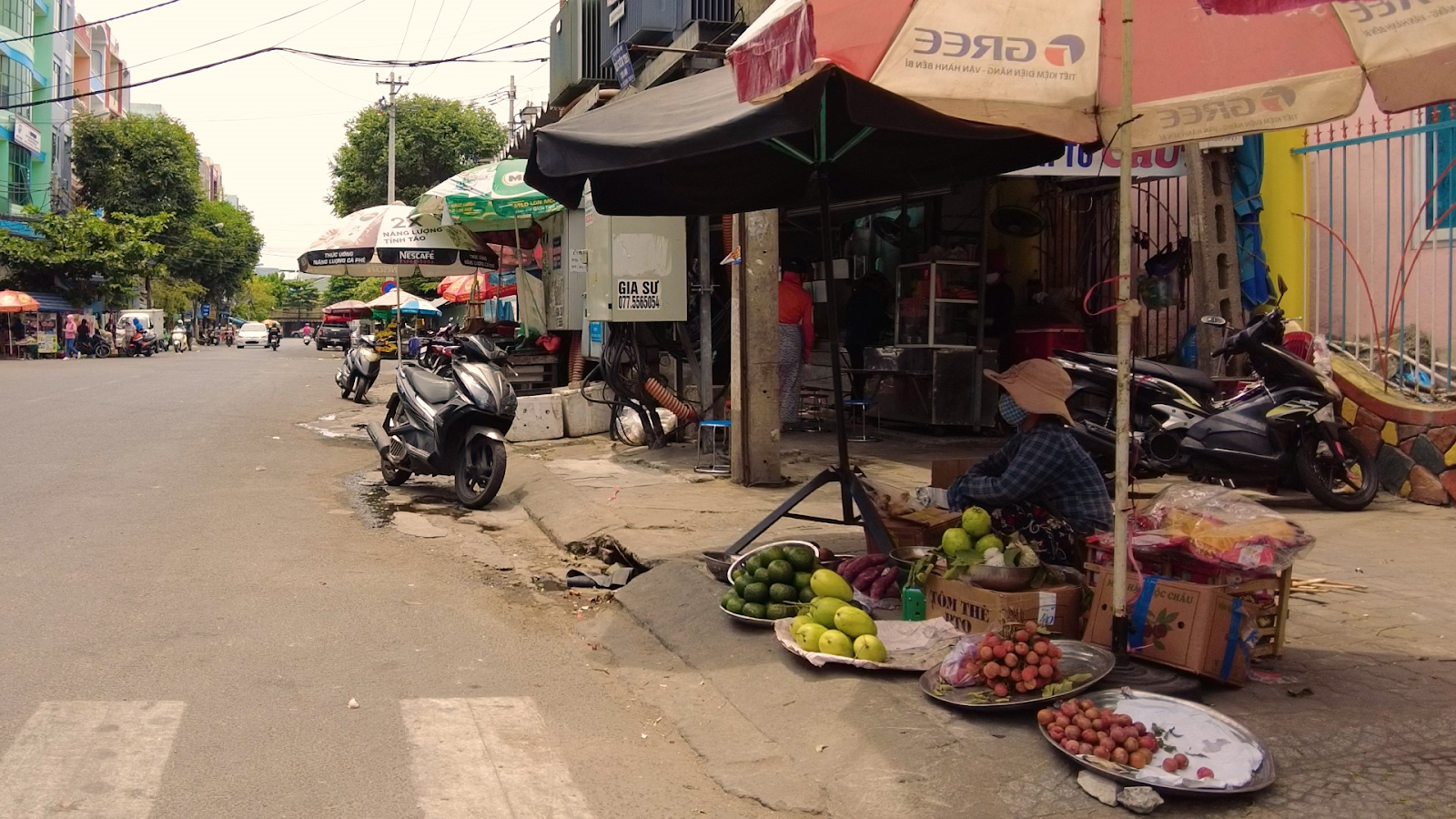
    A street vendor in Da Nang City. Photo: RFA.

    At the same time, factory workers, the backbone of Vietnam’s export-oriented economy, are also facing another set of challenges in the midst of the pandemic.

    When coronavirus infections started to spread inside many factories during the latest outbreak, most workers were required to be quarantined inside their workplaces while continuing production in a strategy known as “dual goal.” [7] This strategy aimed to control infections while at the same time maintaining industrial production.

    However, risky working environments and the factories’ poor accommodations have sparked anger among many workers, causing them to flee their workplaces. Meanwhile, on social media, many people have also expressed their disagreement with the decisions of local authorities, repeatedly condemning[8] them for compromising workers’ health for cash.

    Besides rigid anti-coronavirus measures, the “ho khau” system, a household registration scheme used in Vietnam, has created another burden for these unskilled workers, especially for migrants from poorer provinces seeking manual jobs in big cities and industrial zones.

    More specifically, this household registration system denies migrant workers the eligibility to receive public services and welfare assistance where they temporarily live and work, such as healthcare and education, unless they register with local police.

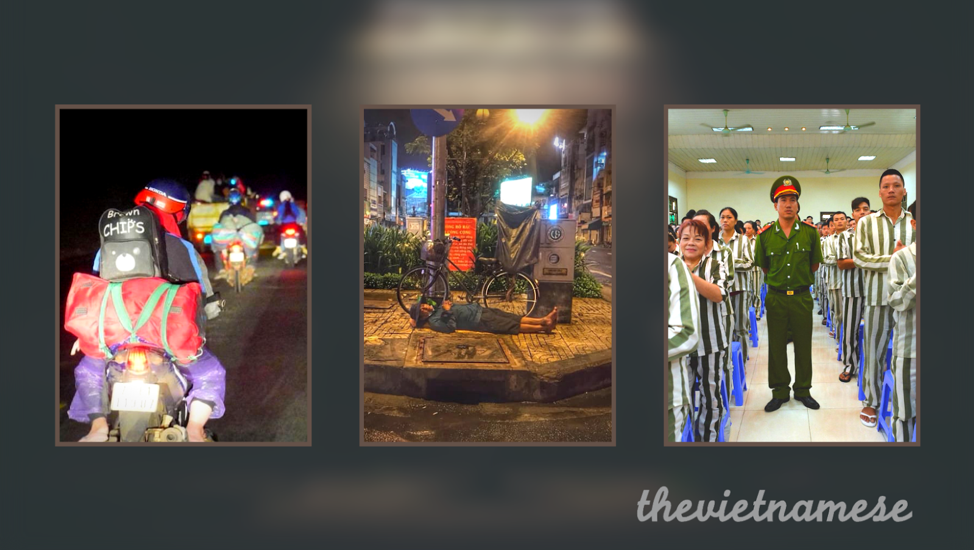
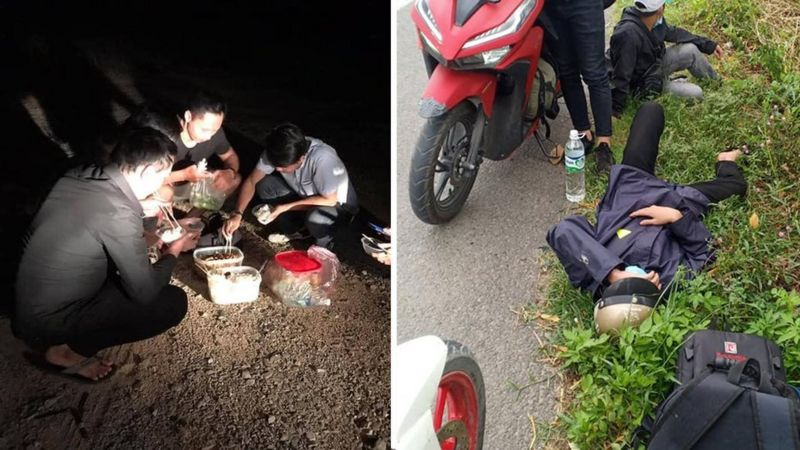
    Many migrant workers chose to return to their hometowns by motorbikes. Photo: Người Huế ở Sì Gòn (Facebook group)/ BBC Vietnamese.

    Nevertheless, Vietnam’s bureaucratic public services, alongside rampant corruption in the registration process, leaves many of them living illegally without legitimate status. As a result, when several southern industrial provinces and the economic hub of Ho Chi Minh City remained under lockdown to battle the latest outbreak of Covid-19, a large number of these employees were left with no choice but to return to their hometowns to avoid infection and to overcome the financial difficulties caused by their unemployment.

    Over the past few weeks, a massive exodus of migrant workers has been seen, with workers risking their lives on arduous journeys to go back home. Many choose motorbikes, and some attempted to make it on foot, [9] with several unfortunate souls losing their lives along the way. In response, several provinces have publicized official announcements citing the Covid-19 infection risk to urge migrant workers not to return home [10] or to “go back to where they started.” [11]

    This dire situation has led to an outcry on Vietnamese social media. Many users are questioning the government’s response and criticizing its failure to provide financial assistance to these people, secure safer means of homebound transportation, and provide housing in adequate quarantine facilities.

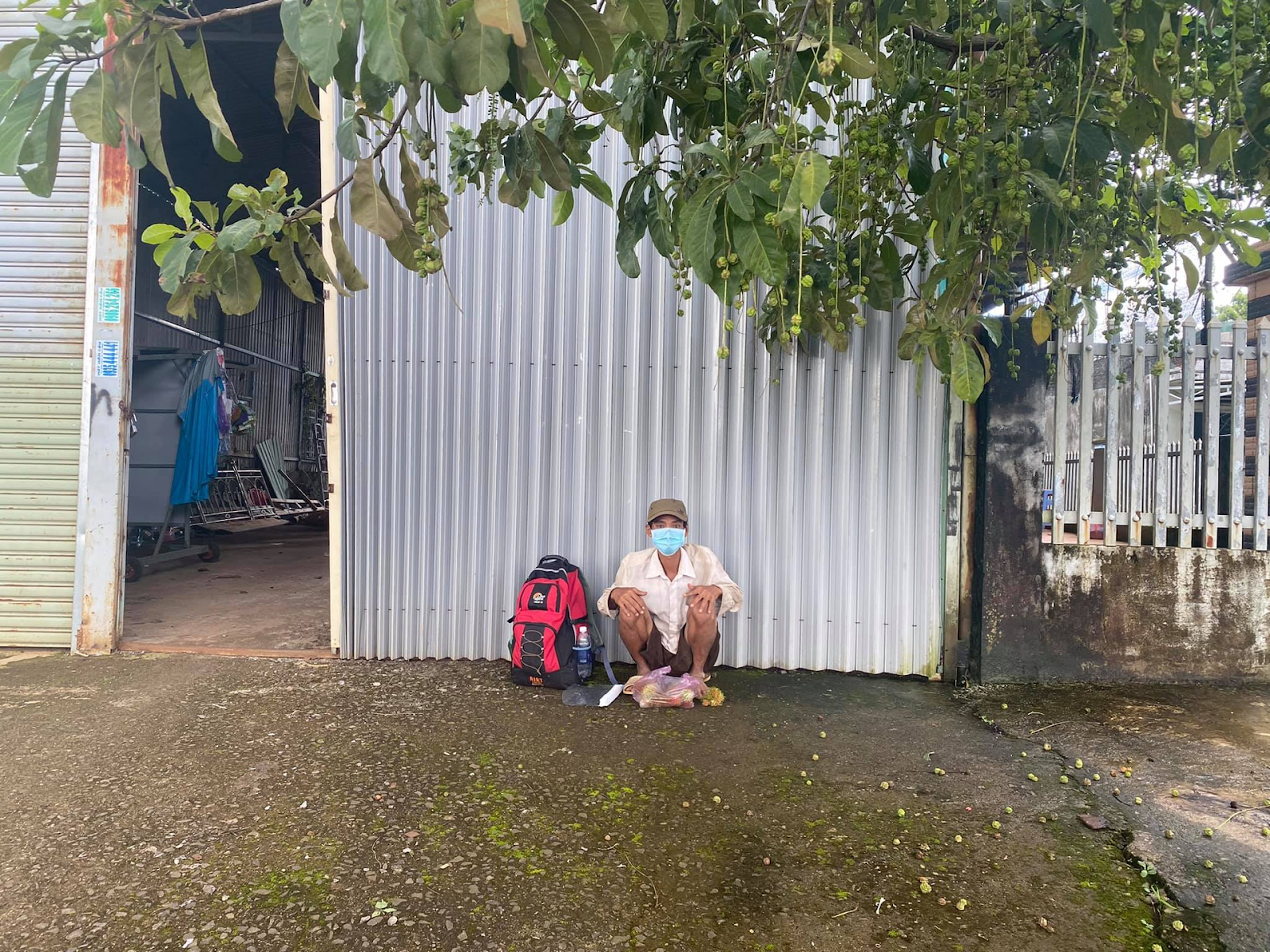
    A worker walked more than 180 km in 16 days from Dak Lak Province to his sister’s house in Binh Phuoc Province, as he did not have enough money for a bus ride. Photo: Zing News/ provided by the worker.

    Inmates, Prisoners of Conscience, and Addicts

    Multiple prisons and rehabilitation centers, especially in several southern localities, have also become new hotspots of infections during the fourth wave of the Covid-19 outbreak in Vietnam.

    On July 7, local authorities declared [12] that Chi Hoa Prison, a detention center located in Ho Chi Minh City, had recorded more than 80 people infected with Covid-19, including detainees and correctional officers. As the situation worsened, riots began to erupt [13] inside the facility as the rapid spread of coronavirus fueled fear among hundreds of inmates.

    A few weeks later, on July 23, all of the staff and addicts [14] at Bo La Rehabilitation Center, a facility located in the southern province of Binh Duong, tested positive for Covid-19. At the same time, a mental health hospital in Ho Chi Minh City also diverted a part of its functionality to treat Covid-19 patients, including many infected mental health patients, as surging cases overloaded healthcare capacity in the city.

    The infrastructure of detention and rehabilitation centers in Vietnam in general and other public facilities have long been infamously known for their degradation, poor living conditions, and maltreatment of prisoners and patients.

    Riot police vans were seen leaving the Chi Hoa Prison after reportedly being deployed to quell riots. Photo courtesy: Dinh Van/ VnExpress.

    Several family members of prisoners of conscience have also expressed their concerns over the safety of their relatives amid the Covid-19 situation. During interviews with RFA Vietnamese, [16] many expressed concerns that the proximity of sleeping quarters, poor living conditions, and limited information about the prisoners threaten the well-being of the people being kept inside the cells.

    Currently, prisoners, addicts, and mental health patients are not part of the official list [17] of 16 qualified priority groups to receive Covid-19 vaccinations, despite promises of future vaccination opportunities. However, given Vietnam’s ongoing vaccine shortage, these people will likely be the last to receive the vaccine.

    Other Vulnerable Groups

    The latest vaccination scandals [18] include a woman and her husband being prioritized to get vaccinated thanks to her father’s connections and a decision from Ho Chi Minh City authorities to lend Vingroup, a local conglomerate, 5,000 Moderna doses from the COVAX initiative to inoculate its staff, raise questions about equal access to the Covid-19 vaccine for all Vietnamese citizens.

    From a broader perspective, the political landscape in Vietnam is deepening the inequality in vaccine distribution. Government officials with strong connections or powerful corporations with economic clout can “cut in line” [19] to get vaccinated first, taking away inoculation opportunities from others, especially those who are most vulnerable once infected.

    As of July 19, [20] Ho Chi Minh City has officially begun vaccinating older adults and patients with underlying health conditions in the fifth phase of its inoculation campaign. Still, authorities have neither provided further information on the screening process nor medical assistance should side effects occur in these high-risk groups. Meanwhile, vaccination schedules for other vulnerable groups, such as the homeless, war veterans, and the disabled have remained undisclosed.

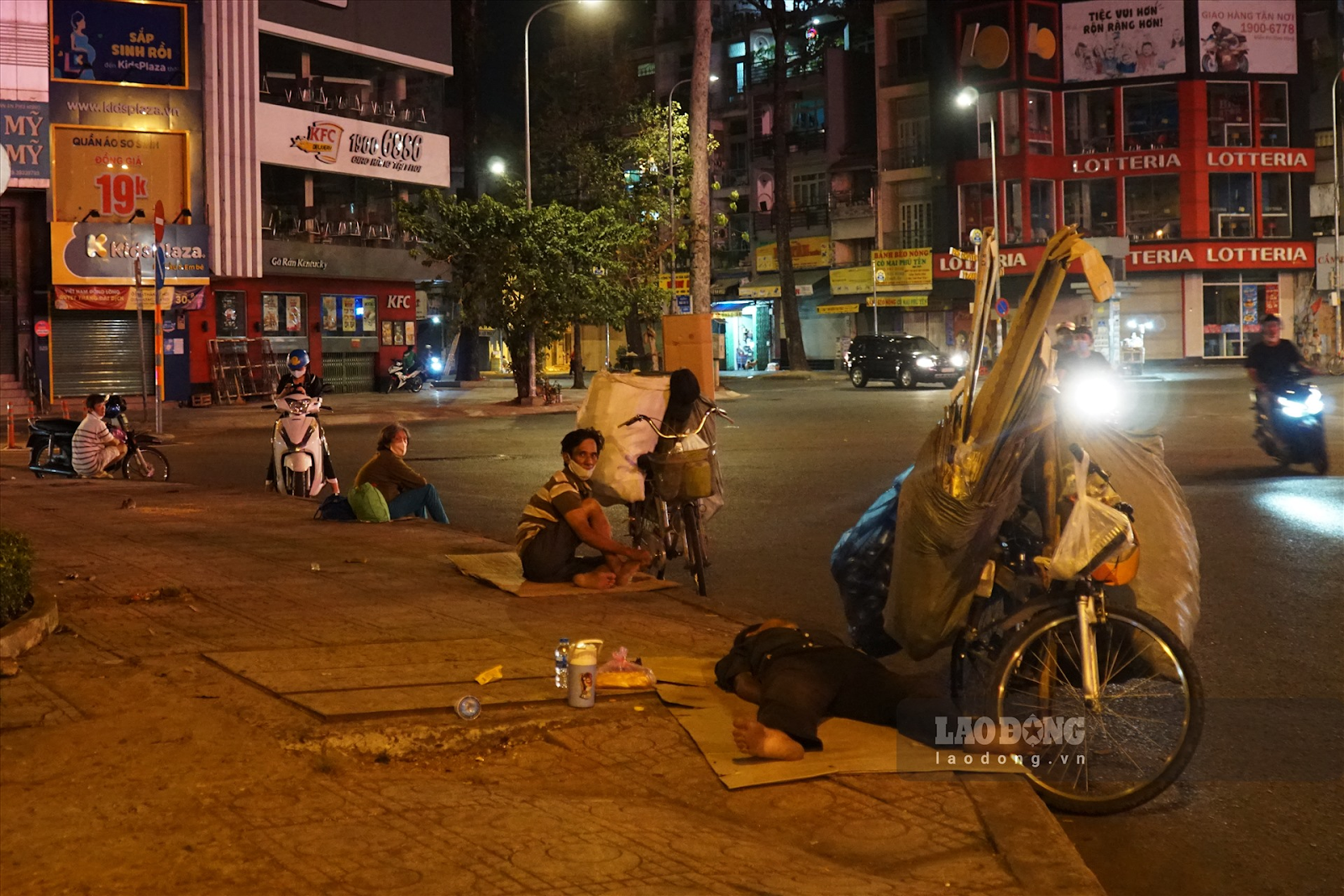
    Homeless people in Ho Chi Minh City amid the Covid-19 pandemic. Photo: Lao Dong.

    The Communist Party, since the very first days of its establishment, has prided itself on being “a Party of the people, of the working class.” [21] The Party manifests its ideology in the notion that their ultimate goals are “nothing other than the interests of the [working] class, the people and the nation” to build a more “democratic, wealthy and equal Vietnam.”

    Almost a century later, the Covid-19 pandemic has fully uncovered what the Party has been dedicating its whole lifespan to achieving benefits for itself and those living dependent on the corrupt system. Ironically, the poor, migrant workers or prisoners of conscience have never been of great concern to the Communist regime.

    As the dark clouds of Covid-19 continue to loom large over Vietnam, the tragic fates of those voiceless and powerless people mentioned above seem astoundingly more genuine than the Party’s empty promises.

    Bibliography:

    1. Số liệu Covid-19 tại Việt Nam. (2021, August 2). VnExpress. https://vnexpress.net/covid-19/covid-19-viet-nam
    2. Tiep, P. (2021, May 16). Quyết tâm đẩy lùi dịch COVID-19, bảo vệ sức khỏe nhân dân là trên hết. Báo Công An Nhân Dân. https://cand.com.vn/Su-kien-Binh-luan-thoi-su/Quyet-tam-day-lui-dich-COVID-19-bao-ve-suc-khoe-nhan-dan-la-tren-het-i605680/
    3. Jason, N. (2021, July 21). How The Latest Outbreak Reveals The Darker Side Of Vietnam’s Anti-Coronavirus Strategy. The Vietnamese Magazine. https://www.thevietnamese.org/2021/07/how-the-latest-outbreak-reveals-the-darker-side-of-vietnams-anti-coronavirus-strategy/
    4. Bang, L. (2021, July 7). Over 1.1 million people unemployed, nearly 13 million others affected by Covid-19 pandemic. Vietnamnet. https://vietnamnet.vn/en/society/over-1-1-million-people-unemployed-nearly-13-million-others-affected-by-covid-19-pandemic-753558.html
    5. VOA News. (2021, July 16). Vietnam Shops for Vaccines in Hopes of Avoiding More Lockdowns. VOA. https://www.voanews.com/covid-19-pandemic/vietnam-shops-vaccines-hopes-avoiding-more-lockdowns
    6. RFA. (2021, June 7). Lao động tự do chật vật trong đợt dịch COVID-19 thứ tư. Đài Á Châu Tự Do. https://www.rfa.org/vietnamese/in_depth/freelance-workers-struggle-during-the-fourth-covid-19-outbreak-06072021145713.html
    7. Việt Nam có nên vận dụng “mục tiêu kép” trong lúc này? (2021, May 27). Đài Á Châu Tự Do. https://www.rfa.org/vietnamese/in_depth/should-vietnam-maintain-dual-goal-now-05272021111728.html
    8. Ibid., [7]
    9. Nhi, T. (2021, July 26). Người đàn ông đi bộ 16 ngày từ Đắk Lắk về Bình Phước để tránh dịch. Zing News. https://zingnews.vn/nguoi-dan-ong-di-bo-16-ngay-tu-dak-lak-ve-binh-phuoc-de-tranh-dich-post1243231.html
    10. Nguyen, C. (2021, August 1). Xót xa cả gia đình gặp nạn trên đường về quê tránh dịch Covid-19. Người Lao Động. https://nld.com.vn/thoi-su/xot-xa-ca-gia-dinh-gap-nan-tren-duong-ve-que-tranh-dich-covid-19-20210801092125848.htm
    11. Ngoc, N. (2021, July 31). Từ 1/8, dân Quảng Ngãi buộc quay lại nơi xuất phát. Tiền Phong. https://tienphong.vn/tu-1-8-dan-quang-ngai-buoc-quay-lai-noi-xuat-phat-post1360999.tpo
    12. Tinh, D. (2021, July 7). TP.HCM: Ổ dịch tại Trại tạm giam Chí Hòa có 81 ca nhiễm Covid-19. Thanh Niên Online. https://thanhnien.vn/thoi-su/tphcm-o-dich-tai-trai-tam-giam-chi-hoa-co-81-ca-nhiem-covid-19-1410289.html
    13. Trại Chí Hòa: Hàng trăm phạm nhân nổi dậy sau khi 81 người nhiễm COVID-19 trong trại. (2021, July 7). Đài Á Châu Tự Do. https://www.rfa.org/vietnamese/news/vietnamnews/chi_hoa_riot-07072021052110.html
    14. Canh, N. (2021, July 23). Toàn bộ những người ở cơ sở cai nghiện ma tuý Bố Lá dương tính với SARS-CoV-2. Báo Công An Nhân Dân. https://cand.com.vn/y-te/Toan-bo-nhung-nguoi-o-co-so-cai-nghien-ma-tuy-Bo-La-duong-tinh-i621306/
    15. Anh, T. (2021, July 25). TP HCM lập bệnh viện điều trị người tâm thần mắc Covid-19. VnExpress. https://vnexpress.net/tp-hcm-lap-benh-vien-dieu-tri-nguoi-tam-than-mac-covid-19-4330137.html
    16. Son, T. (2021, July 7). COVID-19 xâm nhập trại giam: lo lắng cho an nguy của các tù nhân. Đài Á Châu Tự Do. https://www.rfa.org/vietnamese/in_depth/families-of-prisoners-of-conscience-worry-as-covid-spreads-in-prisons-07072021080636.html
    17. Thanh, A. (2021, July 11). [Infographic] Những nhóm mở rộng được ưu tiên tiêm vắc-xin Covid-19. Người Lao Động. https://nld.com.vn/thoi-su/infographic-nhung-nhom-mo-rong-duoc-uu-tien-tiem-vac-xin-covid-19-20210711011752387.htm
    18. The Vietnamese Magazine. (2021, July 26). Vietnam Briefing: COVID-19 Crisis Deepening While The National Assembly Convened To Elect State Leadership. The Vietnamese Magazine. https://www.thevietnamese.org/2021/07/vietnam-briefing-covid-19-crisis-deepening-while-the-national-assembly-convened-to-elect-state-leadership/
    19. Minh, N. (2021, July 22). Có bao nhiêu “cháu ngoại” đã trót lọt chen hàng để tiêm vaccine trước? Luật Khoa Tạp Chí. https://www.luatkhoa.org/2021/07/co-bao-nhieu-chau-ngoai-da-trot-lot-chen-hang-de-tiem-vaccine-truoc/
    20. L.Đ.O. (2021, July 19). Người già, người có bệnh nền tại TPHCM được tiêm vaccine tại bệnh viện. Người Lao Động. https://laodong.vn/y-te/nguoi-gia-nguoi-co-benh-nen-tai-tphcm-duoc-tiem-vaccine-tai-benh-vien-932236.ldo
    21. L.Đ.O. (2020, January 28). Đảng của dân tộc, Đảng của giai cấp công nhân. Người Lao Động. https://laodong.vn/thoi-su/dang-cua-dan-toc-dang-cua-giai-cap-cong-nhan-778528.ldo
  • The Intertwining Of Science, Politics, And Ideology In Vietnam’s COVID-19 Crisis

    The Intertwining Of Science, Politics, And Ideology In Vietnam’s COVID-19 Crisis

    Amidst the COVID-19 crisis, a moment for science

    The escalation of COVID-19 in Vietnam, especially in Saigon (officially known as Ho Chi Minh City), is sending millions of people into crisis. They have struggled on multiple fronts, from healthcare and making sense of varying isolation requirements to obtaining food and necessities amidst strict yet incoherent travel bans and supply shortages.

    The double target of trying to contain COVID-19 while simultaneously continuing economic activities that the government persistently defended and adhered to since the start of the pandemic has been abandoned. This is indicative of how serious the situation has become. Over the past few weeks, Saigonese have experienced life in a way they could never have imagined.

    In this grim picture, Tuoi Tre Online reported on July 10, 2021, that Ho Chi Minh City’s Party Committee Secretary Nguyen Van Nen is now looking to scientists for advice.[1] The secretary’s words were quoted widely in the news:

    I feel that we need to consult the scientists…. At any time, I want specialists and scientists to see flaws in our strategy to fight the pandemic and contact me; I will consider their advice and respond timely.

    A Facebook influencer reacted to this news with a sense of irony and bitterness:[2]

    So what expertise have you relied on to fight the pandemic? Anything but science? Have you been kidding your citizens all along? For one and a half years now, have you been playing with the life and death of millions of people? So, after all, is it true that the tools you have taken to fight a pandemic are simply government decrees and [the manpower of] the Communist Youth League? I feel so ashamed of being led by national leaders who are both blind and arrogant.

    It is rather apparent that in a pandemic, one had better look to the scientists. So, why is a government official only bringing them to the table now? The next question is, how critical can scientists be, with a government that does not like criticism? At the highest level, one must wonder where science and scientists are in the decision-making concerning public matters in non-democratic Vietnam? A look into the Vietnamese Communist Party’s (VCP) ideology that it has followed and its practices could explain this conundrum.

    In ideology: the suppression of civil society and communicative rationality

    In the United Kingdom, at the start of the pandemic, the Scientific Advisory Group for Emergencies was activated. Since then, it has been working closely with the government as an external body to advise on making appropriate decisions regarding COVID-19 in the country. The importance and weight of scientific advice cannot be underestimated; UK scientists successfully convinced Prime Minister Boris Johnson and his cabinet to abandon their herd immunity strategy and adopt a nationwide lockdown in March 2020.

    Without this lockdown, the United Kingdom could have seen 80 percent of its people infected and 500,000 deaths.[3] On the other side of the Atlantic Ocean, the physician-scientist and immunologist Anthony Fauci, in his role as the chief medical advisor to the US president, has been a pillar in handling COVID-19 in the United States.

    Liberal democracy entails the practice of taking advice from scientists and not restraining those who deliver honest yet uncomfortable truths to people in positions of power. The two hallmarks of liberal democracy that shape this practice are civil society and communicative rationality.[4]

    Civil society in a liberal democracy comprises actors and institutions that are supposed to be independent of the state and who act to balance state power. Therefore, universities and the myriad of civil associations in democratic countries are autonomous and can freely critique the conduct of the government or oppose laws and policies they view as problematic without fear of punishment.

    On the other hand, communicative rationality, an ideal of liberal democracy, means that people arrive at a collective agreement about something via genuine, intelligible conversations. Thus parliamentary debate and rebuttal in classroom discussions are part and parcel of a healthy democratic life and politics.

    Nowhere in the ideological textbook of the VCP can one find any sign of friendliness towards the idea of an autonomous, independent civil society, nor communicative rationality in the way the state relates to other estates in society. The Vietnamese government condemns independent civil society as a strategy of ‘hostile forces’ to undermine political stability.[5] Following the Marxist-Leninist ideology, the Communist leaders control civil society and use civil society organizations, such as the press, schools, and mass associations, to garner consent from the people for its rule.[6] Likewise, the Party believes in ‘self-criticism,’ rather than opposition or open, genuine debate in the National Assembly or in other venues where the state and citizens can talk to each other.[7]

    In practice: the strategic mobilization of scientists while confining them within governable spaces

    Since 1975, the Vietnamese State could be described as developmental. In the pursuit of economic growth and technological and social development, the state needs the expertise of scientists and intellectuals. This is evidenced by the existence of a wide range of research and scientific centers and institutions funded by the State that operate within the scope prescribed for them by the government. However, the system ensures that scientists and intellectuals employed in these research centres do not threaten the state.[8]

    Despite these state-employed scientists and intellectuals, the Vietnamese government rarely describes its style of governance as “evidence/science-based.” This suggests that the VCP still aspires to be a good disciple of Marxism-Leninism when it comes to organizing the political system and governance. “The Party knows best” is apparently its motto. In other words, the Party sees itself as the supreme source of authority and expertise. This also makes Vietnam’s developmentalism different from, for example, Japan’s.  Japan’s developmentalism is based on rationality, whereas Vietnam’s is based on ideology.[9]

    Speaking of rationality, communicative rationality still has no place in Vietnam’s politics nor in the civil sphere. The National Assembly has shown little sign of becoming a place for open, genuine debate about public matters. Critical thinking is still lacking in the way students are educated. The free press is still a wild dream for Vietnam.

    I interviewed the head of Luat Khoa Tap Chi not long ago. He described the prominent culture in Vietnam as a “culture of obedience and singular thinking” rather than critical thinking and genuine, intelligible debate. Last but not least, we shall not forget that in 2007, when the Institute of Development Studies was established by renowned intellectuals and scientists of the country to speak truth to power, it went into so much trouble with the government and was eventually disbanded.[10]

    Prospects of the VCP democratizing itself?

    Not so much. In Saigon, what the Party Committee Secretary Nguyen Van Nen said about consulting scientists is most likely just a moment of him forgetting the Party’s line he should be toeing. Indeed, just a week after his statement, a Facebook influencer reposted on his Facebook page a VNExpress interview with Vu Thanh Tu Anh of Fulbright University Vietnam, which reportedly was removed from VNExpress’s website immediately after it was posted.[11] In this interview, Tu Anh discusses some failures in the government’s strategy to contain COVID-19.[12]

    In conclusion, for scientists to speak truth to power, or at least to save Vietnam from this deadly pandemic, they require a change in both ideology and politics, which the VCP seems to be neither willing nor ready to take.

    Bibliography:

    1. Bí thư Thành ủy TP.HCM gặp gỡ các chuyên gia, nhà khoa học cùng bàn cách chống dịch COVID-19, 10 July 2021. Tuổi Trẻ Online. Available at: https://tuoitre.vn/bi-thu-thanh-uy-tp-hcm-gap-go-cac-chuyen-gia-nha-khoa-hoc-cung-ban-cach-chong-dich-covid-19-20210710120636333.htm
    2. Thai Hao’s Facebook page, 10 July 2021. The full post is available at: https://www.facebook.com/permalink.php?story_fbid=1029231357886052&id=100023975920044
    3. Grey, Stephen & MacAskill, Andrew, 7 April 2020. Special Report: Johnson listened to his scientists about coronavirus – but they were slow to sound the alarm. Reuters. Available at: https://www.reuters.com/article/us-health-coronavirus-britain-path-speci-idUSKBN21P1VF
    4. The background of my understanding of liberal democracy in this paragraph comes from Alexis de Tocqueville (on civil society) and Jurgen Habermas (on communicative rationality).
    5. See, for example, an article in Cong an Nhan dan, available at: http://cand.com.vn/Chong-dien-bien-hoa-binh/Canh-giac-thu-doan-loi-dung-xa-hoi-dan-su-de-chong-pha-che-do-581991/; another one in Nhan dan, available at: https://nhandan.vn/tin-tuc-su-kien/xa-hoi-dan-su-mot-thu-doan-cua-dien-bien-hoa-binh-392081/
    6. The reality of ‘state-led civil society’ in Vietnam, most prominent before the late 1980s, is discussed widely in the academic literature. For example, I suggest Landau, I. (2008). Law and civil society in Cambodia and Vietnam: A Gramscian perspective. Journal of Contemporary Asia, 38(2), 244–258; and Salemink, O. (2006). Translating, interpreting, and practicing civil society in Vietnam: A tale of calculated misunderstanding. In D. Lewis & D. Mosse (Eds.), Development Brokers and Translators: The Ethnography of Aid and Agencies (pp. 101–126). Kumarian Press.
    7. See, for example, a discussion session organized by a mass organization, in Tortosa, A. (2012). Grassroots democracy in rural Vietnam: A Gramscian analysis. Socialism and Democracy, 26(1), 103–126. https://doi.org/10.1080/08854300.2011.645661
    8. See Morris-Jung, J. (2017). Reflections on governable spaces of activism and expertise in Vietnam. Critical Asian Studies, 49(3), 441–443. https://doi.org/10.1080/14672715.2017.1339448
    9. For more on developmentalism and plan-rationality versus plan-ideology, see Johnson, C. (1993). The Japanese miracle. In MITI and the Japanese miracle: The growth of industrial policy, 1925-1975 (pp. 1–34). Stanford University Press; and Woo-Cumings, M. (Ed.). (1999). Introduction: Chalmers Johnson and the politics of nationalism and development. In The developmental state (pp. 1–31). Cornell University Press.
    10. Morris-Jung, J. (2015). The Vietnamese bauxite controversy: Towards a more oppositional politics. Journal of Vietnamese Studies, 10(1), 63–109.
    11. Thanh Nguyen’s Facebook post, 17 July 2021. Available at: https://www.facebook.com/paulothanhnguyen/posts/4395856270458582
    12. On 20 July 2021, another scientist, Vu Hong Nguyen, also shared on his Facebook page that his contribution to a TV program in Vietnam about COVID-19 vaccines was abruptly removed. He explains that his skeptical view of the Chinese vaccine Sinopharm, which he planned to talk about in the TV program, was not welcome. He titles this post on his Facebook page as ‘Do not let politics interfere with science’. Nguyen’s Facebook post is available at: https://www.facebook.com/vu.nguyen.758/posts/4726456800701987
  • How The Latest Outbreak Reveals The Darker Side Of Vietnam’s Anti-Coronavirus Strategy

    How The Latest Outbreak Reveals The Darker Side Of Vietnam’s Anti-Coronavirus Strategy

    Last year, when the novel coronavirus Covid-19 ravaged the healthcare system and economy of even the most developed countries in the world, Vietnam’s early success in containing infections and keeping the death toll low drew praise and even admiration from the international media and community.

    “Fighting the pandemic as if we are fighting an enemy,” the country’s anti-coronavirus slogan declared.

    Vietnam’s early successful anti-coronavirus protocols primarily focused on isolating infected areas, facilitating rapid contact tracing, mandatory hospitalization of infected patients and their close contacts, as well as imposing fines on those who broke the social distancing rules.

    Though efficient as these protocols might seem, as experts point out [1], only a few countries possess control structures that Vietnam has in order to deal with the pandemic, let alone being willing to carry them out under actual circumstances.

    Since the control playbook helped the country get through the very first waves of Covid-19 infections, the most recent outbreak has revealed the darker sides of how Vietnam handles the pandemic in its rigid and yet abusive nature.

    When “collective benefits” dwarf human rights

    In Vietnam, the need to curb the pandemic seems to have outmatched other substantial matters, such as upholding certain human rights [2] and looking after people’s livelihoods.

    As the Southeast Asian country witnessed [3] its highest surge of Covid-19 cases in recent days, more measures, including strict lockdown and movement restrictions, have been put in place. Ho Chi Minh City [4] and the entire southern region [5] remain under lockdown while adopting Directive 16 of the government, an anti-coronavirus protocol, to curb the spread of Covid-19.

    Directive 16 [6] requires all citizens to follow disease control guidelines and stay at home, except for “necessary duties,” while restricting gatherings of more than two people in public places, halting all means of transportation, and so on.

    Although not legally binding [7], the new ordinance raises public concerns about whether the authorities’ policies for “curbing the pandemic” interfere with fundamental human rights, such as the freedom of movement and speech.

    People can be coerced into compliance or fined if they go outside without a “reasonable purpose”[8] or post content deemed to be “false information”[9] on social media.

    These terms, “reasonable,” “necessary,” or “false,” of course, are arbitrarily defined by local authorities.

    Barbed wire fences were set up in a quarantine area in District 3, Ho Chi Minh City (July 2021). Photo: Sy Dong/ Thanh Nien Online.

    Since Ho Chi Minh City has undergone a citywide lockdown, there have been over 12,000 cases [10] in which people were fined for “violating anti-coronavirus regulations.” That would include more than 2,000 cases [11] where people were fined for going outside, despite reports that they were properly wearing masks and keeping a safe distance. More ironically, the authorities even set a daily quota [12] for how many people to be fined.

    Besides its legal ambiguity, Directive 16 is also being abused [13] by police officers and security forces to serve their interests in the name of containing the coronavirus. Petty corruption and alleged misconduct are commonplace.

    Multiple personal experiences, videos, and short clips circulating on social media show the truth behind the curtain of the “ideal anti-coronavirus model,” [14] about which Vietnamese authorities brag so enthusiastically.

    In one video, policemen and security guards were seen entering a house and grappling with a local family, allegedly accusing them of violating social distancing measures for selling essential produce. The security forces later confiscated all the produce, and they then dragged the homeowner into their vehicle.

    This woman was seen being dragged to a police car by security forces. Photo: Screenshot/Thanh Nien Online.

    The lack of independent oversight of the power of law enforcement, along with the absence of transparency on Covid-19 stimulus and relief policies, is nurturing an environment where abuse of power [15] and corruption [16] flourish.

    Other similar videos and Facebook posts showing police taking advantage of anti-coronavirus measures to harass passers-by, arbitrarily fine people, penalize street vendors, or implicitly ask for bribes are not difficult to find on social media.

    Behind the successful anti-coronavirus model

    The “effective” methods that helped Vietnam overcome the first three waves of Covid-19 infections, in reality, are not immune to shortcomings and inefficiency.

    “Tracing, mapping and quelling the virus,”[17] the strategy which operates on the principle of tracing infected patients, isolating residential areas, and administering treatment, although appearing to be successful at first, comes at the cost of hurting the Vietnamese economy and causing many to be unemployed. Furthermore, the procedure of providing financial assistance to affected families is often long and bureaucratic.

    Meanwhile, the effectiveness of centralized quarantine camps, where Covid-19 patients and their direct contacts are compulsorily held while awaiting testing and treatment, remains still a big question.

    The so-called quarantine camps were hailed by state media [18] as “effectively functioning” to curb the coronavirus outbreaks, and therefore should remain “a top priority method.”

    Young children were isolated inside a quarantine camp in Phu Yen Province. Photo courtesy: Soha.vn

    Nevertheless, the surge in cases in recent weeks, which overloaded the capacity [19] of those camps, coupled with their poor and unsanitary conditions, put both asymptomatic patients and healthy people at risk of being mutually infected. Also, since the quarantine requirements are applied to everyone regardless of age, children were subject to isolation and staying away from their parents, whereas home quarantine could be a more feasible option.

    While too focused on the idea of “fighting the virus,” Vietnam also trails behind [20] other neighboring Southeast Asian countries in securing a vaccination supply, as well as ramping up inoculation programs. As of now, only above 0.3 percent [21] of Vietnam’s population is fully vaccinated.

    Only around 0.3 percent of Vietnam’s population is fully vaccinated (July 19th). Source: Our World in Data/screenshot.

    Meanwhile, as the government asks its citizens [22] to donate to the ‘vaccine fund’ as cases spike, questions [23] regarding the transparency of the fund, along with promises of equal access to Covid-19 vaccines [24] for all citizens, remain unanswered.


    Last June, the New York Times published an article [25] warning Vietnam to brace itself for a fresh wave of Covid-19 infections while suggesting the country’s luck in containing the disease might be “running out” this time.

    The Vietnamese government, facing the shortcomings and challenges of its anti-coronavirus strategy, rather than admitting the faults, consulting experts’ advice, and making appropriate adjustments to improve the situation, continues to defend its mistakes. The government has perpetually shifted the blame to “reactionary forces” for spreading “distorted information”[26] or the New York Times for a “biased evaluation” [27] in claiming that the country’s success in containing previous infections was based on luck.

    Whether Vietnam was lucky in its past Covid-19 handling is still unclear; however, we can ostensibly see the secret behind the success of the Communist regime’s strategy: its anti-coronavirus playbook only works at the expense of the well-being of ordinary citizens.

    Bibliography:

    1. Bill Hayton, Tro Ly Ngheo. (2020, May 12). Vietnam’s Coronavirus Success Is Built on Repression. Foreign Policy. https://foreignpolicy.com/2020/05/12/vietnam-coronavirus-pandemic-success-repression/
    2. H.R.W. (2020, March 19). Human Rights Dimensions of COVID-19 Response. Human Rights Watch. https://www.hrw.org/news/2020/03/19/human-rights-dimensions-covid-19-response
    3. Reuters. (2021, July 9). Vietnam sees record coronavirus cases as curbs tighten. Reuters. https://www.reuters.com/world/asia-pacific/vietnam-sets-covid-19-vaccination-targets-new-curbs-unrolled-2021-07-09/
    4. BBC. (2021, July 7). TP HCM giãn cách xã hội “quyết liệt” theo Chỉ thị 16 từ 0h 9/7. BBC Tiếng Việt. https://www.bbc.com/vietnamese/vietnam-57750819
    5. Associated Press. (2021, July 18). Vietnam puts southern region in lockdown as surge grows. AP News. https://apnews.com/article/asia-pacific-world-news-health-coronavirus-pandemic-vietnam-958c8f737c497b2330f1af69c84bae18
    6. Cong, H. (2021, July 7). TP HCM giãn cách xã hội theo Chỉ thị 16. VnExpress. https://vnexpress.net/tp-hcm-gian-cach-xa-hoi-theo-chi-thi-16-4296651.html
    7. Percy, N. (2020, April 4). Chỉ thị 16 có giá trị pháp lý không? – Không. Luật Khoa Tạp Chí. https://www.luatkhoa.org/2020/04/chi-thi-16-co-gia-tri-phap-ly-khong-khong/
    8. Son, T. (2021, July 14). Xử phạt dân ra đường: vừa không hợp tình vừa thiếu cơ sở pháp lý! Đài Á Châu Tự Do. https://www.rfa.org/vietnamese/in_depth/punishing-people-leaving-their-houses-in-lockdown-time-is-ruthless-and-lack-of-legal-base-07142021094348.html
    9. RFA. (2021c, July 2). Lâm Đồng phạt 30 triệu đồng ba người đưa tin sai về dịch COVID-19 trên mạng xã hội. Đài Á Châu Tự Do. https://www.rfa.org/vietnamese/news/vietnamnews/lam-dong-fined-three-people-vnd-30-million-for-spreading-false-information-about-covid-19-07022021082827.html
    10. An, D. (2021, March 17). TPHCM: Phạt hơn 12.000 vụ vi phạm Chỉ thị 16 với số tiền 3,3 tỷ đồng. Công an TP.Hồ Chí Minh. https://congan.com.vn/doi-song/tphcm-phat-hon-12000-vu-vi-pham-chi-thi-16-voi-so-tien-33-ty-dong_116102.html
    11. Ibid., [8]
    12. Phuong, V. (2021, July 13). Phường ở TP.HCM giao chỉ tiêu phạt người vi phạm Chỉ thị 16: Quận chấn chỉnh ngay. Thanh Niên Online. https://thanhnien.vn/doi-song/phuong-o-tphcm-giao-chi-tieu-phat-nguoi-vi-pham-chi-thi-16-quan-chan-chinh-ngay-1413746.html
    13. Chan, Y. (2021, July 15). Con virus không gây ra bệnh lộng quyền, nó chỉ làm lộ rõ bản chất của các “đầy tớ.” Luật Khoa Tạp Chí. https://www.luatkhoa.org/2021/07/con-virus-khong-gay-ra-benh-long-quyen-no-chi-lam-lo-ro-ban-chat-cua-cac-day-to/
    14. Van, N. (2021, July 6). Việt Nam – mô hình lý tưởng trong phòng chống dịch COVID-19. Sức Khỏe & Đời Sống. https://suckhoedoisong.vn/viet-nam-mo-hinh-ly-tuong-trong-phong-chong-dich-covid-19-n196626.html
    15. RFA. (2021d, July 19). Giám đốc Hợp tác xã cấp khống giấy thông hành cho con gái bị phạt 7,5 triệu đồng. Đài Á Châu Tự Do. https://www.rfa.org/vietnamese/news/vietnamnews/director-of-cooperation-determine-control-travel-warrants-granted-to-his-daughter-received-a-7-million-07192021090444.html
    16. Hoang, T. (2020, December 10). Xét xử cựu giám đốc CDC Hà Nội và đồng phạm nâng giá máy xét nghiệm COVID-19. Tuổi Trẻ Online. https://tuoitre.vn/xet-xu-cuu-giam-doc-cdc-ha-noi-va-dong-pham-nang-gia-may-xet-nghiem-covid-19-2020120922563448.htm
    17. Hai, S. (2021, June 11). Khẩn trương truy vết, khoanh vùng dập dịch triệt để nhằm khống chế các chuỗi lây bệnh. Trang Tin Điện Tử Đảng Bộ Thành Phố Hồ Chí Minh. https://www.hcmcpv.org.vn/tin-tuc/khan-truong-truy-vet-khoanh-vung-dap-dich-triet-de-nham-khong-che-cac-chuoi-lay-benh-1491879154
    18. Yen, N. (2021, June 2). Cách ly tập trung vẫn là biện pháp quan trọng hàng đầu. Báo Công an Nhân Dân. http://cand.com.vn/Su-kien-Binh-luan-thoi-su/Cach-ly-tap-trung-van-la-bien-phap-quan-trong-hang-dau-644093/
    19. Tien, V. (2021, June 27). Tình hình Covid-19 hôm nay 27.6: Khu cách ly quá tải, TP.HCM sắp cho “tự quản” F1 tại nhà. Thanh Niên Online. https://thanhnien.vn/thoi-su/tinh-hinh-covid-19-hom-nay-276-khu-cach-ly-qua-tai-tphcm-sap-cho-tu-quan-f1-tai-nha-1405218.html
    20. Tomoya Onishi. (2021, June 25). Vietnam backpedals on COVID-19 vaccination targets. Nikkei Asia. https://asia.nikkei.com/Spotlight/Coronavirus/COVID-vaccines/Vietnam-backpedals-on-COVID-19-vaccination-targets2
    21. Share of people vaccinated against COVID-19, Jul 19, 2021. (n.d.). Our World in Data. https://ourworldindata.org/covid-vaccinations?country=VNM
    22. AFP. (2021, June 8). Vietnam begs public for “vaccine fund” donations after virus surge. Yahoo News. https://sg.news.yahoo.com/vietnam-begs-public-vaccine-fund-091017383.html
    23. Chinh, Y. K. (2021, July 13). 4 câu hỏi về chiến dịch tiêm vaccine COVID-19 của Việt Nam. Luật Khoa Tạp Chí. https://www.luatkhoa.org/2021/07/4-cau-hoi-ve-chien-dich-tiem-vaccine-covid-19-cua-viet-nam/
    24. Tuan, V. (2021, July 10). Thủ tướng: “Mọi người bình đẳng trong tiếp cận vaccine.” VnExpress. https://vnexpress.net/thu-tuong-moi-nguoi-binh-dang-trong-tiep-can-vaccine-4307457.html
    25. Richard C. Paddock, Chau Doan. (2021, June 2). Spared for Months, Vietnam Faces a Wave of New Infections. The New York Times. https://www.nytimes.com/2021/06/02/world/asia/vietnam-covid-ho-chi-minh.html
    26. Department Of News. (2021, July 19). Bác bỏ luận điệu xuyên tạc về công cuộc chống dịch COVID-19 của Việt Nam. VTV. https://vtv.vn/xa-hoi/bac-bo-luan-dieu-xuyen-tac-ve-cong-cuoc-chong-dich-covid-19-cua-viet-nam-20210719192125814.htm
    27. Quan, M. (2021, June 24). Nói Việt Nam ‘may mắn’ trong chống dịch Covid-19 là thiếu khách quan. Báo Thế Giới và Việt Nam. https://baoquocte.vn/noi-viet-nam-may-man-trong-chong-dich-covid-19-la-thieu-khach-quan-149357.html
  • The Socialist Irony: Vietnamese Companies Exploit Labor And Damage The Environment In Cameroon

    The Socialist Irony: Vietnamese Companies Exploit Labor And Damage The Environment In Cameroon

    “…it is like destroying forest in other people’s backyards, not in ours.” – A quote from an informant working for a Vietnamese timber logging company, according to EIA.

    Various Vietnamese companies are damaging Cameroon’s forests and its economy through logging activities in the country, according to a new report by the Environmental Investigation Agency (EIA), an international non-profit organization aiming to protect the global climate.

    In an investigative report, the EIA said that these companies extracting timber to export back to Vietnam were violating export laws and were engaging in labor exploitation and discrimination, tax evasion, illegal logging, and other things.

    The Vietnamese socialist government has consistently condemned the imperialism and economic exploitation that has resulted from capitalism. In a recent article about socialism, Nguyen Phu Trong, the Secretary General of the Vietnamese Communist Party (VCP), declared that the country should strive for “sustainable development… instead of usurping natural resources and destroying the environment.” A socialist government is regarded as the alternative to capitalist countries which have failed to address the problems of environmental damage and labor exploitation.

    However, this issue highlights that companies coming from a government of such ideology are perfectly capable of environmental, economic, and labor abuses – especially when it concerns less developed countries.

    Timber is largely used as the architectural materials for Buddhist temples and private houses in Vietnam. Previously, the market was dominated by timber extracted and exported from Laos and Cambodia; but the companies have moved to Cameroon due to its relaxed laws surrounding logging.

    Vietnam is now the second-largest timber processing hub in Asia, only after China.

    The total value of timber imports and exports from the prominent timber processing countries in Asia. Graphic: EIA. 

    The private companies named in the report include Dai Loi Trading Co. Ltd., Xuan Hanh Wood Company, Thang Long Import-Export Company Ltd., Hai Duong Wood Import-Export Company Ltd., and an unregistered Vietnamese company represented by someone known as Le Jessan Tan. All of these companies are reportedly private companies, meaning no links with the government have been found.

    The EIA reportedly conducted this independent investigation for three years before releasing the report in late 2020. The report is titled “Tainted Timber, Tarnished Temples: How the Cameroon-Vietnam Timber Trade Hurts the Cameroonian People and Forests.”

    Environmental and labor abuses in Vietnam

    In its ideological doctrine, the VCP consistently claims that the socialist government is “of the people, by the people, and for the people.” Land in Vietnam is also constitutionally “owned by the people,” and the private ownership of land is theoretically unconstitutional. The VCP’s socialism is understood as a way to uplift the common people by limiting the power of private businesses and corporations.

    Despite Vietnam’s commitment to socialism, stories about environmental and labor exploitation are not new in the country’s private sector. With various sources of natural resources and a large population providing cheap laborers, the country is ripe for exploitation.

    The case of Formosa in 2016 is an example. During this time, Hung Nghiep Formosa Ha Tinh, Ltd., a Vietnamese private company, was heavily polluting the seas in central Vietnam, leading to massive fish and other marine life deaths. The primary investor of Hung Nghiep Formosa Ha Tinh, Ltd. is the Taiwanese Formosa Plastics Group.

    Human lives have also been a loss. As the results of such massive fish deaths, some people died or became seriously ill, with others even believed to have developed cancer, from either diving in the sea, eating poisonous fish, or as the result of exposure to the company’s chemicals.

    For years, various cases of illegal timber trade in Vietnam have been reported. There have been 30,000-50,000 cases of forest violations per year, according to statistics provided by the international non-profit organization Preferred by Nature. The organization also regards Vietnam as one of the most high-risk countries regarding the illegal timber trade.

    Even state-controlled media outlets in Vietnam sometimes publish opinion articles criticizing the Vietnamese government’s handling of environmental issues.

    According to this graph, Vietnam is among the most high-risk countries in terms of the illegal timber trade. Graphic: Preferred by Nature. 

    Workers in Vietnam also face tremendous hardships and, in many cases, outrageous exploitation.

    For example, cases of forced labor in drug detention centers have been reported, in which people struggling with drug addiction were not only forced to provide free labor but were also tortured. In the garment industry, child labor is among the common practices. Even among the “normal” workers – those who are non-criminal adults and are able-bodied-mistreatment, underpayment and lack of social security were also frequently reported.

    Because of this, it is not surprising that there are similar and even worse cases committed by Vietnamese companies abroad.

    Unethical activities in Cameroon

    Vietnamese companies are accused of various unethical activities in Cameroon, including violation of export laws, tax evasion, illegal harvesting, disregarding the illegal origin of timber, and abuse of workers.

    In the name of profit, the companies casually commit these illegal activities. According to the report, to maximize profits, the companies hired workers for years without a proper contract or social security guarantees. They frequently discriminated against, underpaid, and abused Cameroon workers.

    The companies also avoided paying taxes in Cameroon by mostly conducting transactions with cash. From 2014 to 2017, around $300 million went unreported when timber was being exported to Vietnam, according to the EIA investigation.

    Alongside these violations, the companies also turn a blind eye to illegal timber, even if such timber originated from terrorist organizations. In fact, according to EIA, the company Dai Loi was reportedly buying timber that originated from Hezbollah.

    One informant from one of the Vietnamese private companies compared the way Vietnamese and French companies inspect timber in Cameroon. According to the informant in the report, the French asked many questions regarding the origin of the timber, such as whether child labor was involved. But the Vietnamese only care about whether there is documentation to bypass the Vietnamese customs, even if the timber was harvested illegally. The informant said:

    “We wouldn’t care less about your wrongdoings. Just give me whatever papers that the customs require…”

    Vietnamese customs also do not care about illegal logging because “it is like destroying forest in other people’s backyards, not in ours.”

    Imports of logs from Cameroon to China, Vietnam, and the EU during the period of 1992-2018. A lot of Vietnamese timber companies moved from Laos and Cambodia to Cameroon due to its relaxed laws governing logging. Graphic: EIA.

    Policy recommendations for Vietnam

    The EIA report recommends the Vietnamese government do the bare minimum: official acknowledgments of the loopholes in importing timber, followed by more effective regulations regarding fraudulent paperwork and financial transactions of private timber companies.

    So far, half a year after the report’s release, no state-controlled media in Vietnam has reported on the situation. There have been no official statements and no apologies.

    Based on his article on socialism, Nguyen Phu Trong would argue that these flaws exist because the country is in the “transition period” to socialism. This means that existing exploitation is not the government’s ideology but rather the inevitable reality of the global capitalist, market-oriented economy. Furthermore, these companies are private and not government-affiliated, so it is not the system’s fault.

    Let us assume that this argument is true. If so, however, it is even more important and urgent for Vietnamese leaders and policymakers to acknowledge the unethical activities of these companies and come up with more effective regulations to demonstrate their commitment to socialism – which, according to their own arguments, is supposed to be healthier for the environment, the economy and workers.

    Or are we supposed to wait endlessly for an unambiguous date of a successful transition to socialism?