Tag: 39 Vietnamese

  • An Authoritarian Nightmare: The Self-Nomination Movement In 2016

    An Authoritarian Nightmare: The Self-Nomination Movement In 2016

    “The dream for authoritarian regimes is to reap the fruits of electoral legitimacy without running the risks of democratic uncertainty.”
    Andreas Schedler, professor of political science.

    Despite being a one-party state, the Vietnamese Constitution does allow non-party members and self-nominated candidates to compete for the National Assembly election. Because of this, the Vietnamese Communist Party (VCP) often claims that elections in Vietnam are democratic and represent the true will of the people.

    However, the story is not that simple.

    Self-nominated candidates, especially those who are independent and without affiliation with the VCP, experience extreme hardships in their election races, as the VCP deploys multiple tactics to barricade truly independent candidates from winning elections.

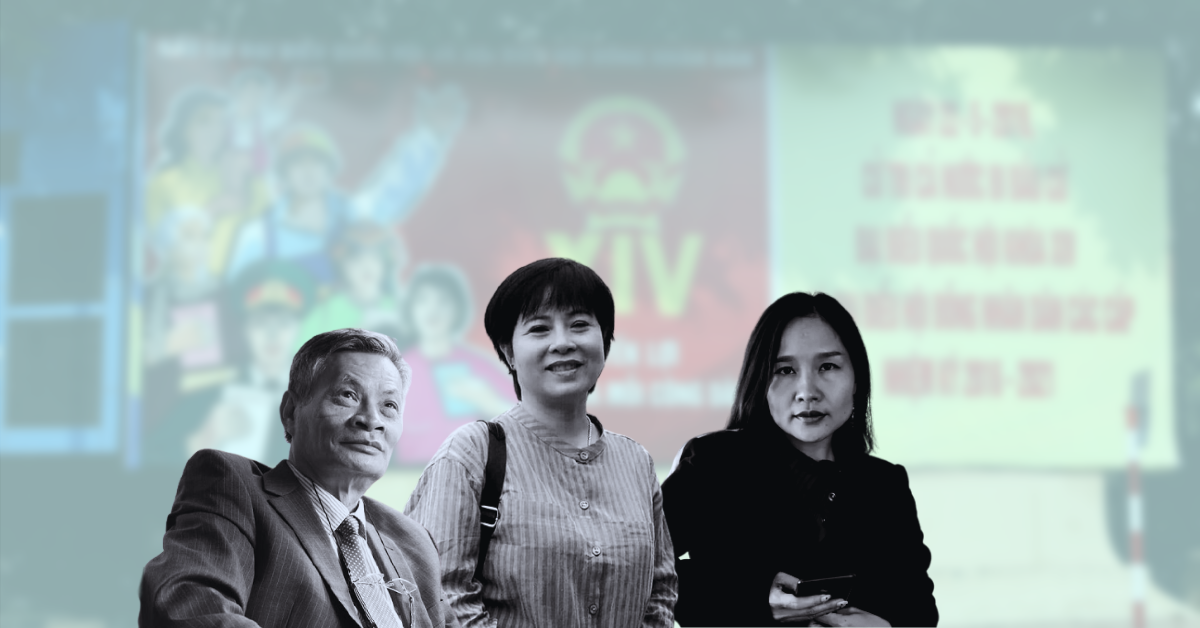
    In 2016, a group of activists, dissidents, and non-party members decided to nominate themselves en masse to run in the National Assembly election. Their objective? Not to win. Instead, they hoped to shed light on the unfairness of Vietnamese elections and the VCP’s treatment of genuinely independent candidates.

    Some media outlets called the phenomenon a “democratic experience.” Some researchers considered it as Vietnam’s one-of-a-kind social movement, in which participants collectively mobilized and presented unprecedented coordination.

    Stanford University post-doctoral fellow Nhu Truong examines the self-nomination movement in her article “Opposition Repertoires under Authoritarian Rule: Vietnam’s 2016 Self-Nomination Movement.” She documents the movement and argues that it happened due to the combination of two factors: the right timing and the common activist interests of the participants. Her research focuses on those who exclusively identified themselves with the movement.

    Nhu Truong is a scholar of the Walter H. Shorenstein Asia-Pacific Research Center at Stanford University, specializing in authoritarianism and communist regimes. Her article appeared in Cambridge University’s academic publication Journal of East Asian Studies.

    The Movement

    How did the movement happen? If Vietnam allows non-party and self-nominated candidates, did any similar movements happen before?

    Self-nominated candidates are actually not a new phenomenon in Vietnam because it has been allowed since 1992. State officials have also repeatedly affirmed that discrimination against independent candidates is illegal.

    However, genuinely independent candidates remain incredibly underrepresented. This is because not all self-nominated candidates are non-party members or without VCP affiliations. The VCP might even back some self-nominated party members to win to appear more democratic.

    Even if we assume all self-nominated candidates are independent and present opposition to the VCP, the number is awfully inadequate. Over the years, less than 1 percent of self-nominees eventually won their election. Non-party delegates in the National Assembly have never exceeded 15 percent.

    Why? Because, like its Chinese counterpart, the VCP has many tactics to manipulate elections to its own benefit.

    The number of self-nominees with valid applications, those who got on the ballot, and those who won the election. Data by Paul Schuler. Graphic by Son Nguyen/The Vietnamese. 

    Aware of the severe lack of political diversity, a group of activists, dissidents, and non-party members collectively nominated themselves to prove that the electoral system in Vietnam is rigged and discriminatory.

    Unlike self-nominees before and after them, these self-nominees stood out because of their planned collective mobilization. The movement started as the result of a famous civil society activist Nguyen Quang A, who issued a rallying call on Facebook. Nguyen Quang A laid out a rational action plan, including adhering to current legal frameworks despite its shortcomings and establishing collective support groups online for self-nominees to help each other.

    A list of over 30 self-nominated, non-party candidates was then presented on the movement’s Facebook page. These candidates publicly aligned with the movement as well as its slogan “My rights, I exercise”(Quyền ta, ta cứ làm), which stresses the movement’s adherence to the law in Vietnam.

    The list of candidates included many prominent activists and dissidents other than Nguyen Quang A, such as human rights lawyer Vo An Don, who defended exile blogger Mother Mushroom, journalist Nguyen Tuong Thuy, who led an association of independent journalists and recently jailed activist Nguyen Thuy Hanh.

    Unfortunately, all self-nominated candidates who aligned themselves with the movement were eliminated before getting their names on the ballot. Despite getting 100 percent of approval from his meeting with local constituents (one of the steps in the election procedure), Tran Dang Tuan, the former director-general of the state-controlled Vietnam National Television, was later disqualified by the National Election Council.

    The Council did not cite any particular reasons for eliminating him.

    In the 2016 election, only two self-nominated candidates were elected. Both of them were VCP members.

    This movement, as Dr. Truong pointed out, might not strictly qualify as a “social movement” in its scientific definition as a “sustained campaign of claim-making” that uses “repeated performance” to advertise the cause, and has a common identity based on “networks, tradition, and solidarities.” It is because the movement lacked a cohesive common identity despite massive coordination and a shared social circle.

    However, this self-nominated movement is still useful to understand the collective political mobilization in Vietnam.

    The Right Timing

    All politicians need good timing in order to broaden their chance of getting elected, especially for non-party candidates running in an election in an authoritarian state. And indeed, the 2016 election presented a lot of opportunities for independent party critics to rise.

    The period leading up to the 2016 election was a particularly bad time for the VCP with a prominent corruption scandal of former Prime Minister Nguyen Tan Dung that resulted in party elites infighting, and the first-ever vote of no confidence in the National Assembly. The years 2011-2016 also witnessed numerous incidents causing massive outrage, such as the Formosa environmental disaster case, which caused serious environmental consequences and cost human lives.

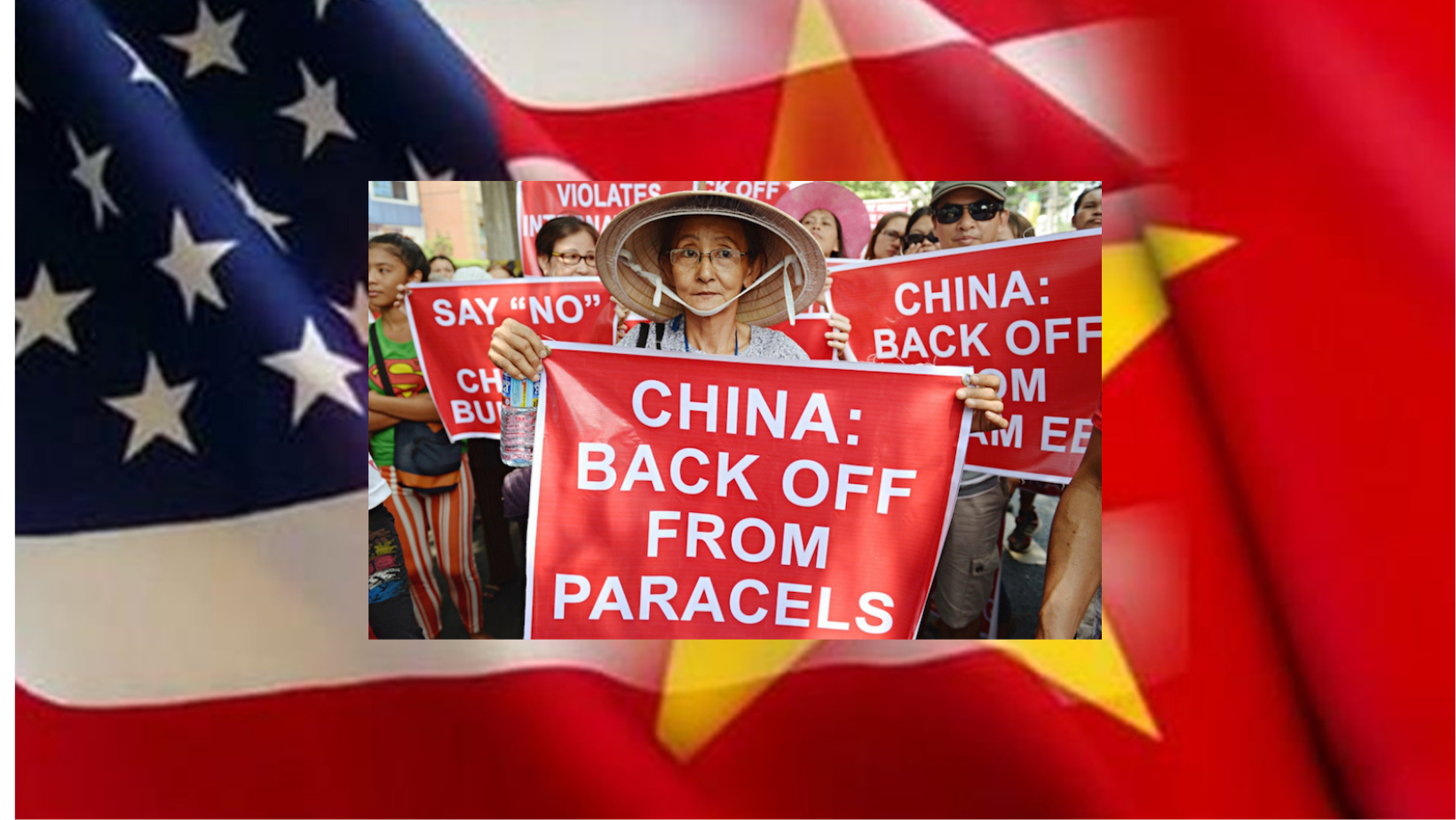
    This period of time witnessed an “expansion of public criticism,” according to scholar Benedict Kerkvliet. There were protests all over the country, not only because of the Formosa case but also because of the  Hanoi local government’s decision to replace and/or cut down around 6,700 trees for an urban project. There were also nationalist protests, which condemned China’s sovereign claims in the South China Sea and called out the government’s dependence on China.

    At the same time, the Trans-Pacific Partnership (TPP) agreement between the United States and Vietnam, which was signed in early 2016, pressured Vietnam to entertain domestic reforms as a part of the deal. TPP also advocated the government to let civil societies participate in policymaking. Activists viewed this as a golden opportunity.

    But good timing and a favorable political climate were not enough to form such a collective mobilization, even though they were indeed important, argued Nhu Truong. The movement was made possible also by the struggles shared between the activists, which motivated them to mobilize together.

    The Common Struggle

    Nationalism, environmentalism, and democratization are the three common activist spheres of those participating in the movement. According to Nhu Truong, those who were concerned with all three spheres of social contention were most likely to join the self-nomination movement.

    This is because those who participated in all three activist spheres were more likely to form a relationship with each other. No one initially thought that they would participate in such a movement, but common advocacy activities allowed them to meet both online and offline, resulting in common social circles that are valuable for collective mobilization.

    This linkage was also intensified by the intense usage of social media in Vietnam and later proved to be useful through Nguyen Quang A’s rallying call on Facebook.

    Therefore, the self-nomination movement in 2016 should not be viewed as a separate and impulsive movement, but rather the consequence of years of activism and shared frustration with the VCP.

    Those whose interests intersected were more likely to participate in the movement. Original image: Nhu Truong. Design by Son Nguyen/The Vietnamese. 

    The Regime’s Response

    Without a doubt, the regime was not happy with such a movement. There were typical efforts to discredit the movement’s participants via the state-controlled media, by accusing them of “distorting and smearing” the regime and the election, “preparing a coup,” and “being backed by the reactionary press and terrorists.”

    There was only some rare and minimum support from government officials. For example, Vu Trong Kim, the secretary-general of Vietnam Fatherland Front, an organization aligned with the VCP, said that “No one is allowed to create difficulties for the self-nominees, that is against the law.”

    All candidates in the movement were still eliminated before getting their names on the ballot, if not by the VCP-controlled local voters then by the VCP-influenced National Election Council.

    But the regime did not stop at simply disqualifying the candidates. Although it did not forcefully suppress the movement, it still monitored and harassed important figures, such as Nguyen Quang A. Notably, he was arrested on his way to a meeting with then U.S President Barack Obama.

    Only two self-nominated candidates won in the 2016 election. Both of them were Party members. Statistics: Nhu Truong. Design: Son Nguyen/The Vietnamese 

    In the end, the regime still consistently claimed that elections in Vietnam are democratic because everyone could run for election, regardless of party membership. The self-nomination movement in 2016 proves otherwise.
  • A Prisoner’s Dilemma: The State Of Human Rights Defenders In Vietnam

    A Prisoner’s Dilemma: The State Of Human Rights Defenders In Vietnam

    Since the United Nations released the first World Report on the Situation of Human Rights Defenders in 2018, the many human rights violations committed by the Vietnamese Communist Party (VCP) have slowly come under international scrutiny.

    Many of the same issues presented in the report mentioned above, such as the VCP’s active restriction of the rights to freedom of expression, freedom of assembly and association, or a fair trial with due process, continue to persist three years down the line. Even though fewer Vietnamese citizens were convicted in 2020 than in 2019, more were persecuted through other means for simply exercising their supposedly protected rights.

    The 88 Project’s 2020 Human Rights Report on Vietnam explores, details, and highlights the many struggles that Vietnamese activists faced that year. And much to everyone’s expectations and disappointment, Vietnam continues to fail in its international obligations to protect the right of free speech and the well-being of its human rights defenders.

    People at Risk

    Sharing similarities with the data presented by the Human Rights Measurement Initiative, the report states that, “[o]f the 35 people arrested in 2020, nine were women…. The top areas of activism of those arrested in 2020 were democracy activists (16), land rights (11), human rights (9), and freedom of expression (8) [and] [t]he most common occupations of those arrested in 2020 were farmers (8), journalists (4), and teachers (3).”

    Of those arrested, eight were denied legal representation for the charges filed against them, four were not allowed to be visited by friends or family, six were part of small religious sects, and nine came from ethnic minority groups.

    Several high-profile activists were also jailed, such as Pham Doan Trang, a writer and co-founder of the Luat Khoa and The Vietnamese online magazines, and Pham Chi Dung, president of the Independent Journalists Association of Vietnam (IJAVN).

    Eleven online commentators were also taken into custody in 2020, and their number makes up roughly 31 percent of all arrests made that year. The most shocking thing is that these people were brought to jail even though they were not members of any specific civil society group; they were arrested for the sole reason that they chose to air  their grievances against the Vietnamese government.

    In summation, it is clear that no one is safe from the VCP. It hardly matters to them if you are an activist fighting tooth and nail for your principles and beliefs or an average citizen trying to be as discreet as possible. If you publicly express any discontent or disapproval with the government’s actions you run the genuine risk of being put under the spotlight and you will not be safe from the Communist Party’s malicious retribution.

    The Injustice of the Law

    The charges facing those arrested are based on specific provisions in the 2015 Vietnamese Penal Code.

    To be specific:

    1. Article 118: disrupting security
    2. Article 331: abusing democratic freedoms
    3. Article 117: conducting propaganda against the state
    4. Article 330: resisting officers in the performance of their official duties

    These statutes, according to Brad Adams, executive director of Human Rights Watch’s Asia Division, involve national security in Vietnam laws which “are vaguely defined and often used arbitrarily to punish critics, activists, and bloggers.”

    He adds, “it’s even more outrageous to lock up someone for five years just because the government arbitrarily decides that they are preparing to criticize the government.”

    Yet, this is far from the only maltreatment faced by those arrested.

    Several detained individuals have also been denied access to legal representation, meaning that they were sent directly to trial without consulting with a lawyer. And even if they were allowed to meet an attorney, the lawyers were often not given all of the relevant material they might have needed to help defend their client in court.

    Additionally, the appeals of political prisoners for reduced sentences or a retrial are often ignored by the judiciary or are not granted. In 2020, only two who appealed their case, Dang Thi Hue and Bui Manh Tien, successfully had their pleas heard. Yet, the sentences of each one were only reduced by three months.

    It is apparent that the Vietnamese legal system is skewed against human rights defenders and activists. They are not afforded the legal remedies that they are entitled to by law, and they are also not given proper and impartial trials or allowed to use arbitration to plead their cases.

    The Vietnamese government actively refuses to abide by the due process standards that it has codified into law. In any other democratic country, this kind of behavior would not be acceptable. But in a one-party state run by strongmen, this is sadly the norm.

    Life Behind Bars

    For those already incarcerated, their situation is far from ideal. According to The 88 Project’s report, political prisoners are often “forced into severe physical and psychological conditions” such as the “denial of family communications, denial of adequate healthcare, forced mental health treatment, solitary confinement, and punitive prison transfers.”

    The COVID-19 pandemic has only served as further justification for the Vietnamese government to deny people proper and humane treatment.

    The report also details the situations of several imprisoned activists in 2020, such as Hoang Duc Binh, Chau Van Kham, and Nguyen Van Tuc, who are not only barred from meeting or even speaking with their family but are also denied medical care for their severe and underlying health conditions.

    Le Anh Hung and Pham Chi Thanh are the names of other political prisoners made to undergo mental health treatments despite being perfectly sane and normal; they, and others like them,  are forced to take anti-psychotic medication and are made to undergo ethically questionable psychiatric therapies which border on torture.

    The appalling conditions that political prisoners face in Vietnam are vicious, nasty, and inhumane. They are treated even worse than livestock; they are seen as pariahs, not deserving of even the slightest modicum of respect.

    The prison situation reflects what the VCP thinks about the citizens of the country. The moment you become inconvenient, detrimental, or even a minor nuisance to their unchecked power and greed, they will not hesitate to use force, torture, or even to threaten you with the possibility of death to crush your body and spirit.

    ***

    The tactics used by the Vietnamese government and its state agents against activists and human rights defenders are nothing new; these actions are what they’ve been doing for decades now.

    However, due to the ongoing global pandemic, the VCP feels emboldened to further step on the necks of the people it thinks are a danger to its position in society. The Party is willing to toss away the humanity and decency of its citizens just to sate their never-ending lust for riches and power.

    The authorities use force and fear in tandem to scare the populace into silence and compliance.

    Yet, as imposing and threatening the VCP wants itself to appear, it has failed to acknowledge one simple fact: these acts of oppression against Vietnamese citizens betray the Party’s fear and paranoia.

    In reality, the authorities are the ones who are scared. They live in fear that one day, the people may grow wise to the truth: that real power lies not in the state or its corrupt institutions but within the farmer, the student, the teacher, the journalist, and the worker. It is found in the breasts of mothers, fathers, and their children, and in the hearts of all those who desire a better future for themselves and those they love.

    The Vietnamese government continues to act with impunity, not because of its abundance of strength but because of its lack of strength.

  • Election in Vietnam: The Whims Of The Few Or The Will Of The Masses?

    Election in Vietnam: The Whims Of The Few Or The Will Of The Masses?

    This article was written in Vietnamese by Vo Van Quan and was previously published in the Luat Khoa Magazine on February 4, 2020.


    Regulation 214

    On February 2, 2002, Vietnam’s Politburo officially announced Regulation 214 on the Standard Framework for titles of cadres belonging to the Central Executive Committee, the Politburo, and the Secretariat.

    Accordingly, the Politburo amended and supplemented specific provisions on the required qualities and capabilities of important internal party positions.

    To put it simply, Regulation 214 is comparable to job descriptions and position requirements that we often see in job listings. As for members of the Party Central Committee, Regulation 214 requires them “to be a representative of political courage, ethical qualities and working ability; have the capacity to organize the successful implementation of the Party’s policies and duties.”

    If one is a member of the Politburo and the Secretariat, the candidate must be “an official member of the Central Committee for a full term or more; has experienced and completed essential tasks in key leadership positions at the provincial level.”

    However, it is worth mentioning that Regulation 214 does not set out specific criteria for certain titles such as the president, prime minister, or chairperson of the National Assembly, all of which are state positions. Theoretically, these are not party positions and are therefore outside the influence of the VCP’s internal politics.

    Regulation 214, however, dictates that the person in the position of State president is required to have “high prestige,” a “solidarity center”, and  “comprehensive, outstanding” talent; while the prime minister must “stand out comprehensively … in strategic planning for socio-economic development, national defense and security, [possess] sensitive thinking, [be] dynamic, decisive”.

    Obviously, it can be understood that the VCP was setting the criteria for its members to consider in order to have a basis for nominating, recommending, voting, and selecting “ideal” candidates for the National Assembly and the People’s Council in 2021.

    However, with the electoral mechanism in Vietnam, it is completely understandable that the Party’s Regulation 214 will be used to determine leading positions in the State. However, these regulations still have to be approved by a group of 17 members of the Politburo.

    So, are the above rules able to replace the popular vote? Are the Vietnamese people so incapable of choice that they must give authority to the elites (such as the VCP) to choose their leaders?

    Một cuộc họp của Bộ Chính trị - Đảng Cộng sản Việt Nam, tháng 5/2019. Ảnh: TTXVN.
    A meeting of the Politburo – Communist Party of Vietnam, May 2019. Photo: VNA.

    The political elite

    An argument exists to justify the Communist Party’s electoral mechanism. This argument is that the Vietnamese people are not well educated, are easily provoked, and are unsuitable for democratic elections. So, it is better for an elite minority to choose the country’s  leaders; this elite minority is now believed to be the VCP.

    Such an argument is found not only in Vietnam but in other parts of the world as well.

    For instance,  theories such as technocracy (a model of governance that believes that only experts in certain fields can be elected to corresponding positions in government related to their field of expertise) and epistocracy (a system that assumes only “qualified” citizens with enough information and political authority can vote or run for government) are not really new.

    The famous 19th century philosopher John Stuart Mill used to support an electoral system based on voters’ caste and professional work. Experts who have complex knowledge and skills get six votes, farmers and merchants get three or four, skilled workers two, and unskilled workers one ballot.

    More recently, Jason Brennan in his article The Case Against Democracy also promotes a political environment where only qualified and knowledgeable citizens should be allowed to vote or stand for office.

    He writes that most of the political questions in contemporary life have become too complex for common voters to understand; they are too fond of simple answers to complex questions. Worse, he argues that the common people are not only ignorant, but that they also believe that they know more than what they actually do; they even claim that they are right. He believes that this makes their political decisions ignorant and stupid.

    Brennan does not propose a voting model based on qualifications and educational levels like Mill, but rather recommends a test of voters’ political capacity before allowing them to vote.

    The rules of the VCP electoral mechanism seem to be loosely based on or inspired by these  two aforementioned technocratic and epistocratic theories:

    • Party members are considered “qualified” citizens who make the initial decisions regarding the formation of government through voting among themselves to elect members of the Party Central Committee. Then, the members of the Party Central Committee who are considered “high quality” citizens choose the “elite” members who will sit in the Politburo and the Secretariat seats, and also thoroughly become the state leaders, regardless of the outcome of local popular elections.
    • Meanwhile, the Politburo, which claims its membership to be the technocratic masters, sets the required standards for the new leaders, and then nominates and fills in the state positions for Vietnam.

    The VCP considers this a brilliant method to select the top leaders for the country. But is it?

    The defects of democratic elections

    Democratic elections are clearly not liked by everyone, and some even find them to be very disappointing. The election of former US President Donald Trump is a very fitting example.

    Ông Donald Trump và phu nhân đi bầu vào tháng 11/2016. Ảnh: Getty Images.
    Donald Trump and Melania Trump were at voting booths in November 2016. Photo: Getty Images.

    During the primaries in the 2016 US presidential election, as many as 50 Republican Party members openly voiced their disapproval of Donald Trump.

    Specifically, General Michael Hayden (a four-star general, and former director of the CIA and NSA) said that Trump did not have the right temperament to lead. More specifically, he said that Trump lacked the personality, patience, disposition, knowledge, curiosity, or even the willingness to learn. These qualities, according to Hayden, are needed by candidates to be deserving of the title of president of the United States.

    Using similar language, David French, a writer of The Dispatch, never concealed that he belonged to the “Anti-Trump” movement. He strongly affirmed that personality is essential in being a world leader. A person’s temperament, knowledge, and integrity will shape his or her behavior. And even though the democratic process and expert advisors can help shape and steer a president lacking in these qualities, mistakes can still happen, especially for someone as stubborn as Trump.

    In the end, with his victory in the 2016 election, Trump showed that he was well supported by a large number of American voters, regardless of how many critics said that he was not worthy enough or deserving of the US presidency. In fact, during the middle of his impeachment fiasco, Trump’s ratings were not only stable, they also increased.

    I will not go too deep in regards to Trump, because his assessment is still very controversial, even among the Vietnamese. However, this entire situation gives us this sliver of truth: people sometimes may vote for unworthy candidates.

    ajorities in many countries are dissatisfied with their democracy

    The above-listed statistics is rather a detailed study conducted by Pew Research on voter views of candidates for elected positions in the United States, which found that voters did not take into consideration the quality and competency of political candidates.

    Only 47 percent said that the quality of the candidates was good, and even less than 5 percent rated the quality and competence of the candidates as very good. The remaining 52 percent had a negative view. As for the presidency, 58 percent said they were not satisfied with the choices they had.

    Furthermore, according to Pew, people in democratic countries tend to be dissatisfied with the way their countries operate. The list includes centuries-old democracies such as the United States and Great Britain. In line with this, the people’s opinions of their elected officials are also not high.

    For instance, in Greece, up to 90 percent of the population believes that their elected officials do not care about the will, views, and aspirations of ordinary citizens.

    Also, more than 58 percent of the US population share this opinion about their own politicians. Even though the indicators of transparency and corruption in the United States have always been evaluated positively by independent organizations, up to 69 percent of respondents agree with the opinion that national politicians are both corrupt and decadent.

    In some African countries, democratic elections have turned into a game of those who can spend the most money to rile the mob.

    So then, why have most nations in the world still chosen to maintain a universal electoral system? Why has most of the world not surrendered political power to the elites who are allegedly more knowledgeable, educated, and are supposed to have leadership qualities that can help them steer and rule a country?

    There is much to discuss about leaders who are chosen by the people, and those chosen by the elite.

    The first misconception of those who oppose popular elections is that they think the majority will end up choosing the wrong candidates. In the same vein, they also believe that this choice should be left to the “elite.” They think that this small group of people can accurately decide without being influenced by interest groups, personal preferences, or other hidden agendas. These claims are utterly baseless.

    Even Mill himself realized that countries needed to build a system that fully reflected current attitudes in society, and the idea of an administration full of economists frightened him.

    For instance, why should a lawyer get three times the votes of a skilled worker when law is such a broad and diverse field? Politics and welfare issues are just small specializations in law and not all lawyers are knowledgeable enough to talk about them, let alone determine the best course of action in a field they may not be trained in.

    Regarding Jason Brennan’s voter-competency test model, David Runciman, a professor of politics at Cambridge University, identifies that this model just pushes his questions to the starting point and fails to answer any more.

    Who will be considered qualified to prepare this test model? College professors? They also have their own political interests and opinions. Economists? They may be talkative on a variety of market rules, but their predictions about the future of the market are often incorrect.

    And Brennan, himself a university lecturer, has probably also seen countless students cramming knowledge into their heads just to pass exams.

    Proponents of the “epistocracy” model also have to deal with the fact that the educated, and also the elites, are in fact influenced by the crowd and are biased just like everyone else in the world.

    As social scientists Larry Bartels and Christopher Achen pointed out: History shows that intellectual groups, elite or not, can be as deviated from political morality and political thinking as anyone else.

    There are shortcomings and problems in today’s modern electoral and representative democracy, but this does not mean that it is neither efficient nor just. As in marriage, anyone can choose the wrong partner, similar to how we can elect the wrong person. But with democracy, various checks and balances exist that can help ensure that the system can function as intended. As with marriage, we can get divorced and then marry again.

    And when the people’s decision-making power is taken away, words such as “ability,” “quality,” “elite,” “technocrat,” or “epistocratic” are just flimsy excuses for control.

  • Ho Chi Minh – From Political Monument To God Of Prayers – Part 1

    This article was written in Vietnamese by Vo Van Quan and was previously published in the Luat Khoa Magazine on January 31, 2021.


    “The nation of Vietnam will stand forever

    with Jade Buddha – Chí Minh – Ái Quốc”

    (A quote from a 2010 prayer)

    The process of globalization in Vietnam has made major religions such as Buddhism and Christianity overshadow the silent development of local belief systems. However, overlooking them would be a mistake.

    In a certain sense, these domestic religions most accurately and clearly reflect the dynamics of religious beliefs among the masses, and they can also show some of the implications of development in Vietnam’s societal relationships.

    The religion called “Way of Ho Chi Minh as the Jade Buddha” (referred to as the Way of Uncle Ho in this article) is one significant example we can use to learn about how religion is practiced or how it is imbibed by the Vietnamese people. Up till now, there has not been an official study, or even an official government statement, on this strange and peculiar religion.

    In the development framework of the research program “Boundaries of Religious Freedom: Regulating Religion in Diverse Societies,” Dr. Hoang Van Chung gives us a clearer and deeper look at the development of Ho Chi Minh’s religion in Chapter 4 of “New Religions and the State’s Response to Religious Diversification in Contemporary Vietnam.”

    Dr. Chung is currently the head of the Department for Research on Policy and Law on Religion at the Institute for Religious Studies, under the Vietnam Academy of Social Sciences. He obtained his Ph.D. in Sociology from La Trobe University (Australia) in 2014, and was a scholar with the ISEAS-Yusof Ishak Institute (Singapore).

    It is important to note that even though his book was published in 2017, the accompanying data in the study of Ho Chi Minh City was collected from 2011 to 2012. Therefore, there is a gap between the information provided by the author and the present state of this religion.

    Một hình ảnh được cho là điện thờ Hồ Chí Minh của tín đồ đạo Hồ Chí Minh. Ảnh: Blog Tìm tòi và Lượm lặt.
    Ho Chi Minh statue is worshipped at the Ho Chi Minh Shrine. Photo: Search and Gathering Blog.

    How was the “Way of Uncle Ho” formed?

    According to a research by Dr. Chung published in 2016, a Madam Xoan founded the Way of Uncle Ho at the Peace Shrine (now called the Peace Temple) on January 1, 2001.

    Madam Xoan, 73, experienced a miserable childhood in Nam Dinh Province. She lost her mother at a young age, had to live with her father and stepmother, and began working at the age of just 15. She also attempted suicide many times. At the age of 19, she married a notary public and had four children.

    Everything changed when she became seriously ill just before she turned 30. It was reported that Xoan was unconscious and that the pain she felt in one finger was so intense that it had to be completely amputated.

    Meanwhile, doctors could not find the reason for her illness nor determine the cause of the disease. One day while she was waiting to be treated in Hanoi, she heard a strange voice telling her that she was not sick but that this was just a test to see if she was qualified to serve a higher purpose. This voice also affirmed that Mrs. Xoan had spiritual inclinations.

    She immediately quit her factory job and became a humble merchant buying and selling joss paper. During the next 5 years, Mrs. Xoan continued to be guided by this voice and her financial situation gradually improved. By the time she was able to clearly hear and fully communicate with this voice, she gave up her small business to study the supernatural.

    In 1989, Mrs. Xoan heard the voice again commending her for being the first person chosen by the Heavenly Palace to complete her assigned mission.

    From politicians to gods

    Since the 2000s, the stories of individuals who have achieved great success and have become rich for relying on the help of Ho Chi Minh’s Jade Buddha have been compiled by the Peace Society of Heavenly Mediums (the religious leaders of the religion “Way of Uncle Ho”). These stories were then spread among the followers of this belief system.

    For instance, there is also a similar story about an entrepreneur who worked in the construction industry. The story claims that he became very rich because of his obedience to “Uncle Ho.” To show his sincerity, he donated 200 million dong to the Peace Temple. This amount was then used to upgrade and renovate  this place of worship.

    Ho Chi Minh’s image has come a long way in the last century, morphing from a simple politician who was close to the people, to a god capable of interfering in and controlling the lives, happiness, and success of everyone who lives on Earth.

    What happened?

    Tổng Bí thư, Chủ tịch nước Nguyễn Phú Trọng dâng hương cúng bái Chủ tịch Hồ Chí Minh tại Hà Nội năm 2019. Ảnh: TTXVN.
    General Secretary cum State President Nguyen Phu Trong offers incense to worship President Ho Chi Minh in Hanoi in 2019. Photo: VNA.
    Đoàn đại biểu của Đảng Cộng sản Việt Nam và người dân Cao Bằng dâng hương, dâng hoa tại Đền thờ Chủ tịch Hồ Chí Minh tại Cao Bằng. Ảnh: pacbo.vn.
    The delegation of the VCP and the people of Cao Bang offer incense and flowers at the Ho Chi Minh Temple in Cao Bang. Photo: pacbo.vn.

    Clearly, the deification of Ho Chi Minh did not begin with Vietnamese civilians.

    Dr. Chung’s research indicated that numerous other studies have linked Ho Chi Minh’s death with the Vietnam Communist Party’s (VCP) own propaganda campaign. The State has intervened in directing or encouraging the remembrances of Ho Chi Minh. This has turned a mere ritual into the worship of the late leader.

    Dr. Chung also concluded that many other researchers also pointed out that the VCP had a very clear goal of building a cult of personality around Ho Chi Minh. From promoting Uncle Ho’s supposed divine moral qualities to building up various myths about him, the VCP wants to make this version of Ho Chi Minh the formal history.

    However, the most interesting point that Dr. Chung stated was that the VCP only expected to limit this phenomenon about Uncle Ho as a personal cult within the realms of the “ancestor worship” belief model. By doing that, the VCP wanted to connect the history of Vietnam’s national democracy movement and its communist movement, leading it to national success in the future. Once they establish this basis, the VCP, a political conglomerate founded by Uncle Ho, would have solidified more of its legitimacy.

    The author emphasizes that the goals of the VCP and the desires of the masses in worshiping Ho Chi Minh are different.

    The VCP’s model of worship of Ho Chi Minh is considered less religious and less superstitious. Therefore, Dr. Chung asserts that the religions associated with this political leader, such as the Way of Uncle Ho as the Jade Buddha, were “undesirable consequences” of state policy. The government’s efforts regarding the remaking of Ho Chi Minh’s image, if compared to people’s beliefs, are heterogeneous.

    There are a lot of questions for Dr. Chung when he stated this argument.

    It is because in Vietnam, we are seeing a common phenomenon that state agencies regularly promote the worship of Uncle Ho. The government placed Ho Chi Minh statues and photographs in many temples in the north of Vietnam, and offered incense to commemorate Ho Chi Minh during big national holidays, and the like.

    If we follow Dr. Chung’s reasoning and assumption that the state did not want, or at least did not foresee, the formation of a religion centered around Ho Chi Minh, I think his argument is a bit unpersuasive.

    In the context that the Vietnamese economy had just opened up and the practice of worship had just reformed since the 1990s, the nature of the people’s curiosity and experimentation for new religions and beliefs is obviously evident. Therefore, it is fairly certain to foresee that the people will eagerly want to join a new religion like the Way of Uncle Ho as the Jade Buddha if it is offered.

    (To be continued)

  • The Enemy Of My Enemy: Tensions Between The US, China, And Vietnam

    The Enemy Of My Enemy: Tensions Between The US, China, And Vietnam

    The Vietnam War is a stain upon the fabric of recent human history. This bloody and violent conflict, fought on the premise of conflicting ideals and against the intangible boogeyman of Marx and Engels, resulted in the deaths of more than 3 million Vietnamese, the majority of which were civilian casualties. It has likewise led to the diaspora of more than 2 million other Vietnamese people and to the initial political and economic isolation of Vietnam from the rest of the world.

    Nearly five decades after the end of the fighting, the scars of the conflict still remain fresh in the eyes of those who lived through the war. For those fortunate enough to have been born after the war, these scars are but whispers at the back of their minds – almost silent and unobtrusive.

    However, these scars are always lingering somewhere in the corner of their minds. One would assume that both parties to the fighting, Vietnam and the United States, would have deep-seated animosity towards each other due to their entanglement in this conflict. However, this doesn’t seem to be the case. Diplomatic and economic ties between the US and Vietnam were reestablished in 1995, just two decades after the end of the Vietnam War.

    A report by the US Congressional Research Service, published on February 16, 2021, details several key components regarding current US-Vietnam relations. To date, the United States is Vietnam’s 2nd largest trading partner, only trailing behind China. Growing Chinese hegemony in the region has also led to stronger bonds between the US and Vietnam in matters of security and sovereignty.

    While it appears that the connection between these two nations is forged out of practicality and necessity more than anything else, with the United States needing allies in the Southeast Asian frontier and with Vietnam needing the commerce and trade to strengthen its economy, the two countries have been able to create and maintain several mutually beneficial arrangements with each other, despite their shared and bloody history of fighting and conflict.

    Yet, there still remain several issues which continue to hinder these relations from developing at a much quicker pace. One is the uneasy three-way tension among the United States, Vietnam, and China.

    China, as mentioned earlier, continues to remain Vietnam’s number one partner in trade. Likewise, both countries share similar political systems, which the US Congressional report stated provides “a party-to-party channel for communication” and also contributes to “often similar official world-views.” Being two of only a handful of nations led by Communist parties, there is a strange sense of kinship and familiarity that exists between the two sides. However, recent events have put a drastic strain on Sino-Vietnamese relations as well.

    For more than a decade, China has been claiming most of the South China Sea as part of its sovereign jurisdiction using its controversial and fraudulent Nine-Dash Line myth to support its expansion. It has also been illegally encroaching into the territories of Vietnam and the other Southeast Asian nations for its own personal gain.

    Mainland China has harassed and sunk many maritime vessels from several Southeast Asian countries, illegally harvested fish and other natural resources from these contested waters, and has been building several artificial islands to solidify its hold in this corner of the world. The Mainland’s aggressive, bullish, egoistic, and selfish actions have not only negatively impacted the people and governments of Southeast Asia, but have also caused drastic and irreparable damage to the environment.

    In response, Vietnam has made several international protests regarding China’s actions and has also increased its visibility in the region by expanding its offshore energy exploration program and by implementing its own land reclamation projects. It has also fostered better relations with other maritime powers such as Japan, India, and, of course, the United States, in an attempt to intimidate China and force it to rethink some of its expansionist policies and actions.

    Because of the increased security collaboration between the US and Vietnam, the Obama administration removed all restrictions on selling Vietnam lethal weapons in 2016. Donald Trump’s presidency continued this show of goodwill by providing Vietnam with 24 new coast guard patrol vessels, aerial drones, coastal radar, and two decommissioned US Coast Guard Hamilton-class cutters.

    Yet, Vietnam rarely joins the United States in undertaking large scale diplomatic actions without taking into consideration how China will react. Vietnam’s protests against the Mainland regarding the South China Sea also seem to have minimal effect in the region; in fact, China’s presence has even increased in recent years.

    Despite the tangible support of the United States and the backing of most of the international community, Vietnam’s condemnations and actions have merely been a form of lip service: all bark and no bite. The Vietnamese government’s crackdown on those critical of its policies against China isn’t doing it any favors either.

    In effect, Vietnam finds itself in a bind and is caught between the whims and desires of two irreconcilable world powers.

    On the one hand, you have the United States: a significant trading partner with links to the rest of the free world, but also the cause of much destruction and death in Vietnam’s recent history. On the other, you have China: Vietnam’s largest trading partner and a source of much revenue for the government, but whose expansionist policies are currently threatening and challenging its sovereignty.

    At the moment, Vietnam seems content to play both world powers off against each other in an attempt to squeeze as many benefits as it can from the United States and China. However, the longer the Vietnamese government tries to appease both sides, the more it stands to lose in the long run; the longer Vietnam wears the mantle of neutrality and passivity, the more citizens that will lose faith and trust in the Party. And a government without the backing and support of its citizens, is a complete and utter failure.

    So, should Vietnam pick a side? Should it finally choose between Uncle Sam and Chairman Mao? Is Vietnam even currently in a position to make such a polarizing decision?

    Granted, the economic backlash of this choice has the potential to be quite severe; cutting ties with either your first or second largest trading partner is more than enough to destabilize Vietnam’s growing economy. There is little to no guarantee that China will stop expanding into contested waters if Vietnam decides to fully comply with all of China’s demands. There is also no telling what the United States will do either. With so many variables to consider and so many unknowns, perhaps the most prudent and wisest decision would be to maintain the status quo.

    The answers to these questions  may best be left to economists and experts and we will only know in retrospect if Vietnam ends up making the right decision.

    Ultimately, what will be scrutinized and criticized by believers in democratic ideals is whether or not the Vietnamese government has acted in accordance with the whims and desires of its citizens. Yet, the Human Rights Group reported that given Vietnam’s track record of silencing dissent, its foray into the mass surveillance of its citizens, and other abuses, this remains extremely doubtful.

    Whatever the Vietnamese government decides to do regarding the enemy of its past and the enemy of its present will no doubt benefit the Party first, with the country and its people being merely afterthoughts in the Party’s  grand scheme. And perhaps this is the greatest tragedy of it all.

  • Vietnam’s 13th Party Congress: Women Have No Place In Politics

    Vietnam’s 13th Party Congress: Women Have No Place In Politics

    This article was written in Vietnamese by Trinh Huu Long and previously published in Luat Khoa Magazine on February 3, 2021. The translation was done by Ha Thanh.

    * * *

    Only 9.5 percent of the members of the Central Committee of theVietnamese Communist Party (VCP) are women, or just 19 out of 200 members. Of these, 18 women are official members and one is an alternate member.

    What do these numbers tell us?

    Let’s take a look at some other numbers first.

    In the Politburo (the Party’s most powerful body), only one member out of 18 is a woman, Truong Thi Mai. Mai is currently the head of the Central Mass Mobilization Department of the Central Committee, a not-so-important organ of the Party. Also, it is expected that Mai probably will not hold any important position in the next five years.

    Among the new five members of the Secretariat – the body assisting the Politburo – one is a woman. Her name is Bui Thi Minh Hoai. Yes, while it is true that the Politburo could send more members to this body in the future, even if it does, it can only add one more woman, which would be its only female member, Truong Thi Mai.

    Compared to the 12th Party Congress, the number of female members in the Party’s Central Committee has fallen by one person, and the number of female Politburo members has decreased by two.

    None of the female Central Committee members of the 13th session may possibly hold key positions in the Party or the State. In the previous session, five years ago, Nguyen Thi Kim Ngan became the chairwoman of Vietnam’s 12th National Assembly. Now, the “gang of four” or the “four pillars,” will just be made up of males.

    However, if we look at the (arguably) equivalent of the VCP’s Central Committee, which is the National Assembly, we see a different picture.

    The percentage of women in the National Assembly over the past 10 years has often been around 25 percent. Now, it is close to 27 percent, which is a lot higher if we compare it to the number of females in the Central Committee. Furthermore, this gender ratio is expected to remain unchanged in the National Assembly election in May 2021.

    In 2018, Vietnam was among the top three countries in Southeast Asia with the highest proportion of women in its Congress, along with Laos (28 percent) and the Philippines (28 percent).

    In the world, the percentage of female delegates in Vietnam’s Congress is even higher than the United States (23 percent), the Czech Republic (23 percent), South Korea (19 percent), Hungary (12 percent), Japan (10 percent), and even exceeds the global average of 25 percent.

    Isn’t that great news? Unfortunately, the answer is No.

    It is because the National Assembly is of little significance in Vietnam. Every Vietnamese citizen acknowledges the fact that our Congress has no real authority. It is nothing more than the place that rubber stamps the Politburo’s and the Party Central Committee’s decisions.

    In Vietnamese, people usually call the National Assembly the agency of “puppets” where its delegates just nod and approve Party decisions.

    Real political power only rests in the VCP and its committees.

    The Politburo is a gathering of about 20 of the most powerful Party members. However, the Central Committee is also becoming increasingly powerful, and we could say it has become the main power center within the Party. Obtaining a position within the Central Committee is one of the key goals of any serious and ambitious Vietnamese Communist politician. Failure to enter the “Central” (the word commonly used to refer to the Central Committee) is often regarded as the end of a Party member’s political life because he or she would be one of the voices that carries no authority.

    The fact that women only make up less than 10 percent of the Central Committee, therefore, can be considered as a reflection of their actual position in Vietnam’s politics.

    Of course, the proportion of female politicians in the localities may be higher. However, for an authoritarian regime with only one political party like Vietnam, where the central government dominates almost every aspect of society, being a part of the Central Committee gives its members actual political authority.

    Why is the proportion of women in politics in Vietnam so low?

    https://2xjs7y10oiyz26vqxu2hok6y-wpengine.netdna-ssl.com/wp-content/uploads/2021/02/image-4.png
    National Assembly Chairwoman Nguyen Thi Kim Ngan presents flowers to the Standing Committee of the Central Presidium of the Vietnam Women’s Union. Photo courtesy: Ministry of Home Affairs.

    Gender stereotypes are considered to be a major barrier to climbing the political ladder in Vietnam. Research by Oxfam shows that all genders in Vietnam prefer male leaders. To them, men are viewed as more suited for leadership roles, and also have the masculine qualities that are also believed  to be the necessary qualities of a good leader.

    In spite of all the good rhetoric about fairness and gender equality promoted by the VCP propaganda machine, and despite its putting on a seemingly pretty face on the proportion of women in politics, Vietnam, in fact, is still almost exclusively dominated by men.

  • Vietnam Should Stand In Solidarity With The People Of Myanmar

    Vietnam Should Stand In Solidarity With The People Of Myanmar

    On February 1 2021, the Myanmar military arrested and detained several prominent figures from the National League for Democracy (NLD), the ruling party of Myanmar prior to the recent coup. Among those arrested were Aung San Suu Kyi and President Win Myint.

    This was followed by a swift declaration of a state of emergency and the entrenchment of  military cronies in the Myanmar government. Min Aung Hlaing, the figurehead of this new budding dictatorship, stated that it was inevitable that the military would seize control; he alleged that last year’s election, which the military resoundingly lost, was fraudulent and that this coup was their way to ensure a smooth and stable transition towards “a genuine and disciplined demoractic system.” The actions of the Myanmar military have been met by both local and international backlash, criticism, and scrutiny despite their attempt to justify the coup.

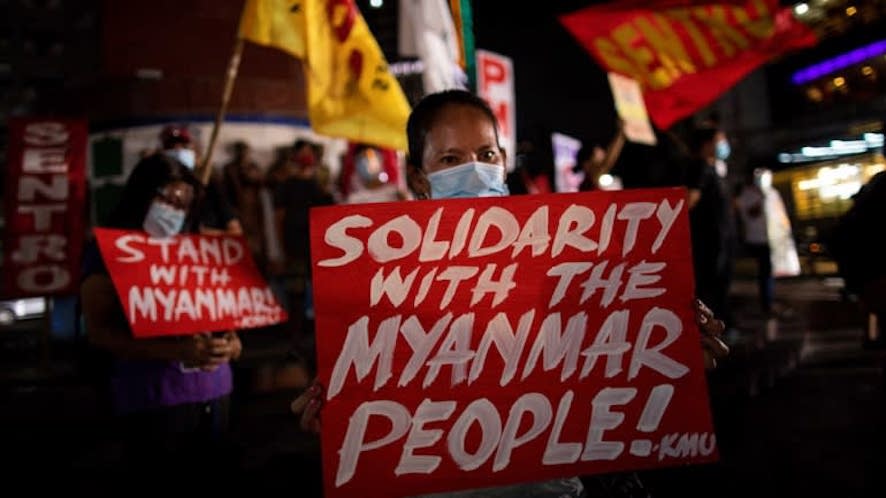
    Unprecedented numbers of Myanmar citizens have gathered to express their disapproval and anger towards the military through constant and relentless demonstrations and protests; some have even been arrested for their participation in these events. Even though the new regime has been attempting to quell these gatherings through the disruption of internet services, limiting telecommunications access, and through the enforcement of curfews, the Myanmar people have hardly faltered – they continue to remain steadfast and resolute in the face of escalating violence by Min Aung Hlaing’s fledgling dictatorship.

    On the international stage, the residents of other nations have organized demonstrations of their own in solidarity with their brothers and sisters in Myanmar. Likewise, private citizens, NGOs, and various media outlets have been spreading awareness of the situation and have placed the actions of this dictatorship under the scrutiny of the rest of the free world. Some foreign countries, such as the United States, now under the Biden administration, have imposed economic sanctions to pressure the Myanmar military into compliance.

    The United Nations Human Rights Council, despite the dissenting voices of China, Bolivia, Venezuela, Russia, and the Philippines, has also made several demands of the current ruling power of Myanmar, such as a call for the immediate lifting of the declaration of the state of emergency and the release of all arbitrarily detained individuals.

    Justice for Myanmar, a group of undercover activists that aims to improve the lives of all people in their homeland, has recently published a list of people, businesses, and organizations under the control and sway of the military junta. These entities provided the Myanmar military with assets and sources of revenue that aided it in its systemic takeover of the country that further lined the pockets of those in control.

    Justice for Myanmar calls on “the international community to impose immediate comprehensive and targeted sanctions against the Myanmar military in response to their Feb 1 coup and their continuing violations of international law, including their campaign of genocide against the Rohingya and war crimes and crimes against humanity in ethnic regions.”

    This published report lists 133 businesses fully or partially controlled by the Myanmar military, the names of 174 directors of those businesses, 112 other businesses which the military gets additional income from, and 32 state-owned enterprises that were formerly under the control of civilian institutions. While a majority of the businesses stated are based in Myanmar, there are a number which operate in other neighboring countries such as Vietnam, South Korea, and Japan.

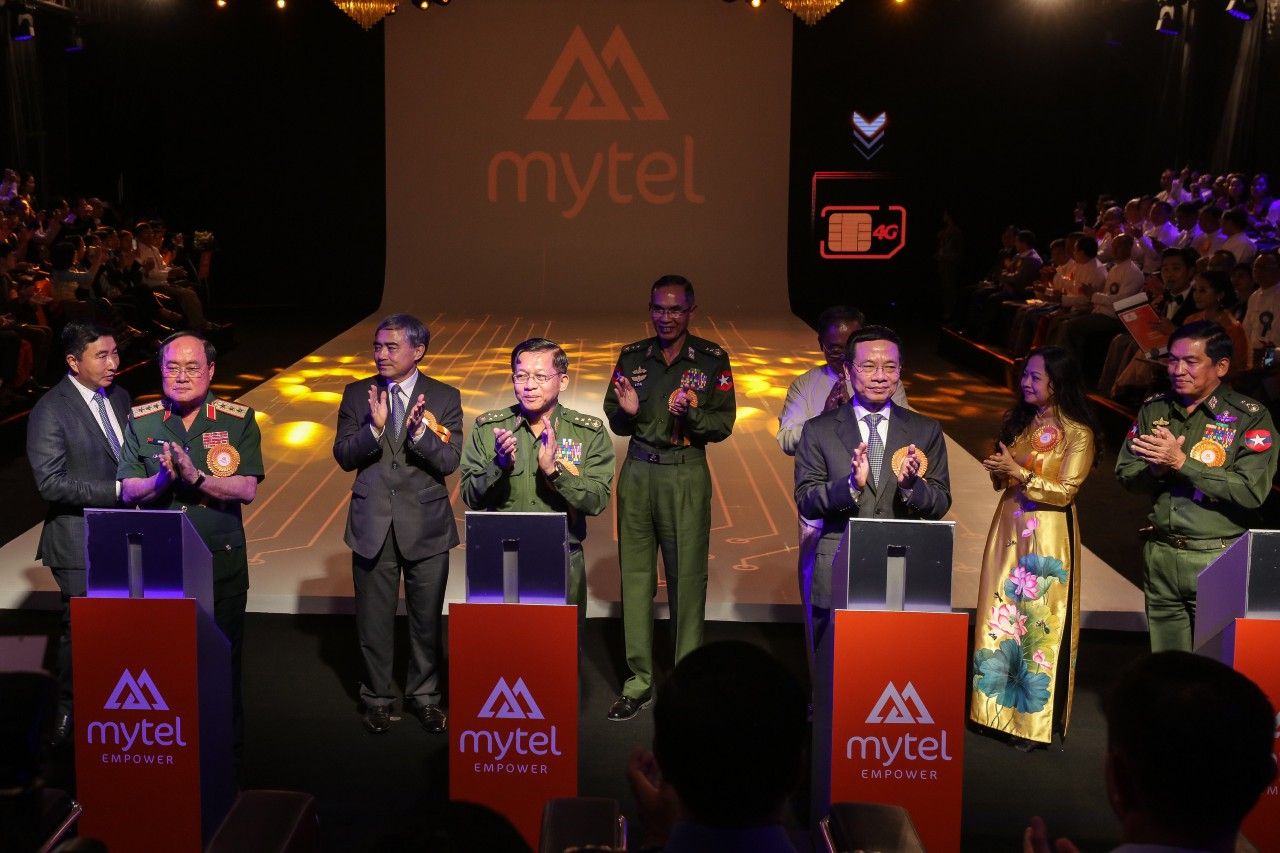
    Yadanar Maung, the spokesperson for Justice For Myanmar, states that the “brutal and illegitimate Feb 1 coup, is enabled by their business interests. The Myanmar military leadership uses business to enrich themselves at the expense of the Myanmar people and finance their brutal campaigns of repression….” He then adds that several international businesses such as Kirin Holdings and Viettel empowered the Myanmar military and that their continued operation in the country will only serve to further embolden the junta to commit further atrocities against its people.

    With money being an essential factor in the military takeover, one of the most effective ways to aid the struggle of the citizens of Myanmar is through severing relations with those institutions and companies that actively do business with the junta.

    In Vietnam, as private citizens in our own country, something as simple as refusing to patronize businesses like Viettel is a start. Those with direct connections to organizations that work with the businesses on the list may take it a step further and call for these groups to distance themselves from the junta. With enough people, we could even petition our government to look into whether or not they actively do business with any of the corporations in the report in a bid to expose and terminate these agreements.

    Yet, something as simple and cliche-sounding as discussing this issue with family and friends serves this purpose as well.

    After all, the situation in Myanmar is not a story in a vacuum, but rather it is one of many tales regarding the struggle of freedom against the ever rising threat of authoritarianism in the world. It is merely one chapter in the anthology of human history, of the conflict between those who persevere for the betterment of all against those who would enrich only themselves at the expense of everyone else.

    As such, the events in Myanmar cannot be willfully ignored, and we have to stand as a unified front against tyranny, selfishness, and deceit. And thankfully, a few exceptions notwithstanding, the rest of the world seems to be on the same page.

    All in all, the Justice for Myanmar report, the words of its spokesperson, and all the corollary information derived from the available facts underscore the reality that this coup was not the result of grave injustice, nor the misplaced nationalistic sentiments of the Myanmar military; it is the result of the callousness and unending greed of those who would willingly choose to set their nation ablaze rather than let power slip from their fingertips through legitimate democratic mechanisms.

    It is the last resort of a delusional group of people destined to fade into the annals of history as nothing more than a footnote in a textbook. Times are changing and the people of Myanmar have spoken. True democracy will come to them in time as it has come to several other nations in the past. And while the fight rages in the streets of Naypyidaw all the way to the alleys of Kawthaung, the united people of the free world stand in solidarity, in kinship, and in brotherhood with the Myanmar citizens in their struggle for lasting democracy and freedom.

    In Vietnam, we are hoping that our human rights and democracy activists will also take the opportunity to stand in solidarity with the people of Myanmar.

  • Vietnam Briefing: VCP’s Leadership Formed Amidst COVID-19 Resurgence

    Vietnam Briefing: VCP’s Leadership Formed Amidst COVID-19 Resurgence

    We are happy to introduce our weekly Vietnam Briefing that will be published every Monday (Vietnam time). We will produce the briefings by carefully selecting worthy news stories from verifiable and trusted sources, including Vietnam’s independent and mainstream media, civil society groups, as well as our own sources. In line with the publication’s code of conduct, we will practice no self-censorship and we pledge to be truthful, honest, and fair.

    If you have any questions, please feel free to contact us: editor@thevietnamese.org.


    COVID-19

    The situation has been worsening over the past week. After new cases were recently reported in Hai Duong, Hai Phong, Hanoi, Bac Ninh, Quang Ninh, Dien Bien, Ha Giang, and now Binh Duong, Ho Chi Minh City and Gia Lai also have identified patients with COVID-19. In addition, one staff member of Tan Son Nhat International Airport was found to have COVID-19, according to the Ministry of Health. The airport remains in operation though. This data was updated at 10:00 pm on Sunday.

    Tet, the Vietnamese Lunar New Year, is fast approaching (February 10-16) and many people are trying to find ways to return home for family gatherings. Unfortunately, the coronavirus is also finding ways to continue to infect people.

    Fireworks for the Lunar New Year’s Eve have been canceled in various parts of the country, including Ho Chi Minh City. In Hanoi and Hai Phong, each city will have just one show instead of 30 and 12, respectively.


    Meet the new leadership of the Vietnamese Communist Party

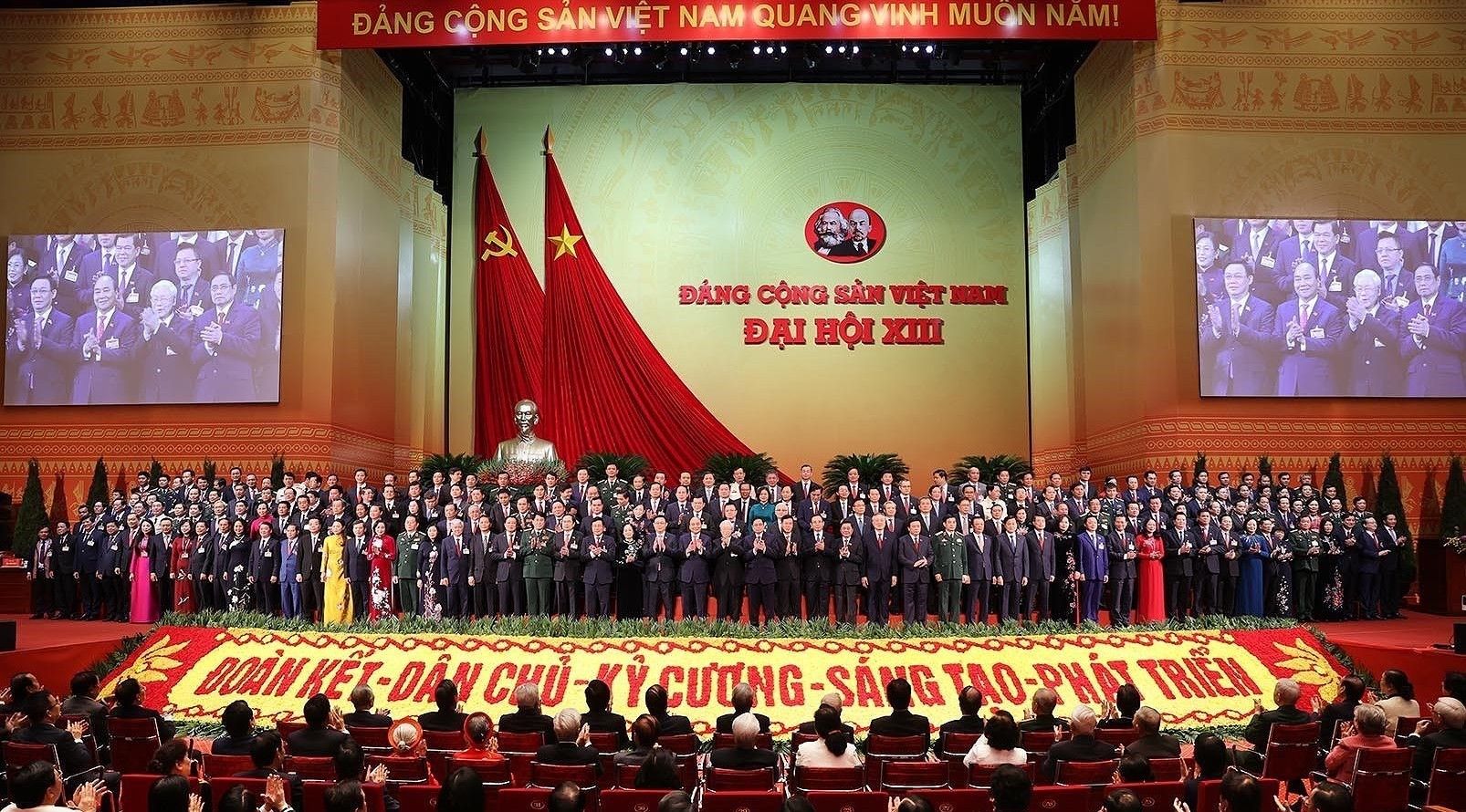
    The Communist Party’s 13th Congress ended last Monday morning, February 1, 2021, one day earlier than planned due to COVID-19 concerns.

    The main part of the Congress’s agenda was to elect a new leadership for the party. Two hundred members of the Central Committee were elected by the Congress on Saturday, January 30, and the Committee convened the next day to elect members of the Politburo, the general secretary, and members of the Central Disciplinary Commission.

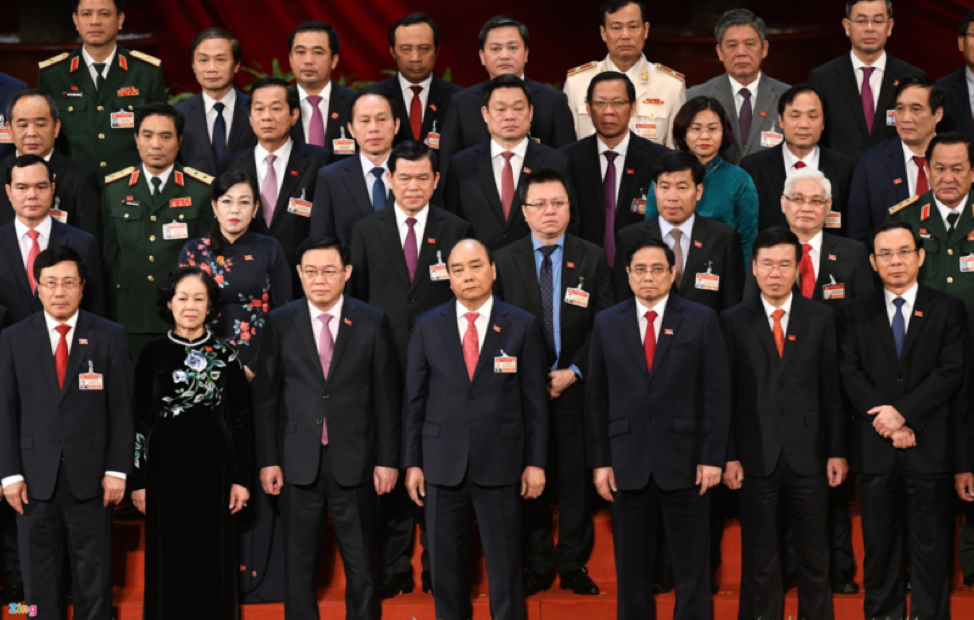
    The results were announced the same day. Current general secretary Nguyen Phu Trong won re-election. The next three seats in line are current prime minister Nguyen Xuan Phuc, the head of the Party Central Committee’s Organization Commission, Pham Minh Chinh, and the secretary of the Hanoi Party Committee, Vuong Dinh Hue. Together, they are often called “The Gang of Four,” or the “Four Pillars,” holding the top seats of the Party and State.

    The public in Vietnam is often informed of the results well in advance by some Internet influencers who seem to have insider information. Now, the rumor is that Nguyen Xuan Phuc will be the president, Pham Minh Chinh will be the prime minister, and Vuong Dinh Hue will be the chairperson of the National Assembly.

    Of course, we have to wait until June or July, 2021, after Vietnam’s general election on May 23, 2021, to know if the rumors are correct. However, in the past, these rumores have often proved to be true.

    Hard numbers: Only 19 out of 200 members of the Central Committee – the elite club of the party – are women; and only one woman was elected to the Politburo, reducing the number from three in the previous term.


    After the Party Congress

    As we mentioned in an earlier article, the Communist Party’s Politburo would routinely convene right after the Party Congress to assign positions to its members. Now we have started to know at least two of those positions.

    February 6, 2021: In Hanoi, Vo Van Thuong was appointed the standing secretary of the Party Secretariat – a small but powerful Party body that is responsible for overseeing the daily activities of the Party, directly assisting the Politburo.

    Who is he? Thuong, 51, was born in the southern province of Vinh Long. He is a young and rising star in the VCP, and he will take the fifth position in the Party leadership. He previously served as the head of the Central Propaganda Commission, and was formerly the standing deputy secretary of the Ho Chi Minh City Party Committee, the secretary of Quang Ngai Province Party Committee, the secretary of the Central Committee of the Communist Youth Union, as well as having served in other positions.

    Context: No member from the South faction (in the South of Vietnam) won any of the top seats in the so-called Gang of Four (Party’s general secretary, president, prime minister, and chairperson of the National Assembly).

    February 6, 2021: In Hanoi, Tran Tuan Anh, who currently heads the Ministry of Industry and Trade, was appointed commissioner of the Party’s Central Economic Commission.

    Who is he? Anh has been the head of the Ministry of Industry and Trade since 2016. He was previously the deputy minister of that same ministry and also was the deputy commissioner of the Central Economic Commission. Anh was also the vice president of the Can Tho City People’s Committee and he also served as Vietnam’s consul general in San Francisco, in the United States.

    What is special about him? Now 57, Anh is notably a son of Vietnam’s former president Tran Duc Luong (1997 – 2006).


    Now, Vietnam’s general election

    The Communist Party’s election is now over, and the next general election will take place on May 23, 2021 to elect members of the National Assembly and local government representatives.

    The current chairperson of the National Assembly, Nguyen Thi Kim Ngan, wasted no time and immediately sprang into actions. She publicly announced that the national legislative body aimed to have 25 – 50 outside-of-the-party members; 207 members from the central government, 293 members from local governments; 50 members under 40 years old; at least 18 percent of members from ethnic minorities, and at least 35 percent women, according to Thanh Nien newspaper.

    Who formally decides the numbers? The Standing Committee of the National Assembly. It will meet on February 22, 2021 to discuss the matter further.

    Backlash: Nguyen Thi Kim Ngan’s statement immediately drew backlash from social media users who criticized her and the ruling Communist Party – the only legally operating political party in Vietnam – for trying to fake a general election.


    China’s construction of military bases near the border with Vietnam

    One of the most popular political news stories of last week was reports that China had been constructing two military bases close to the border with Vietnam. The following is a quote from Tuoi Tre News:

    “Vietnam is verifying reports of a Chinese surface-to-air missile base being constructed near the China-Vietnam border,” Le Thi Thu Hang, spokesperson of the Vietnamese Ministry of Foreign Affairs, said at a press conference in Hanoi on Thursday. The missile base is reportedly located in Ningming County in southwestern Guangxi, China, about 20 kilometers away from China’s border with Vietnam. The unverified information also stated that the missile base is situated about 40 kilometers away from another construction site, believed to be a military heliport.”

    More details with satellite images have been published by Dai Su Ky Bien Dong, a nonprofit research group dedicated to the South China Sea issue.


    Tran Huynh Duy Thuc ends his hunger strike

    Political prisoner Tran Huynh Duy Thuc ended his hunger strike on February 3, 2021. His family announced the news via a Facebook page named after him.

    He started his hunger strike more than two months ago, demanding the government consider his petition to reduce his sentence of 16 years imprisonment and release him in accordance with a new provision of the 2015 Penal Code. From his family, he only consumed milk during his strike. Tran Huynh Duy Thuc was convicted in 2009 for “conducting activities against the state” under Article 79 of the then-Penal Code.

    He told his family members via a phone call that he had achieved his main goal of the hunger strike which was to “keep a light burning during our country’s revolution.”

    Neither the family nor the government provided any information about whether or not his appeal petition is under consideration.

    Know more about him here:

    Rights groups snub Vietnam prisoner over hunger strike (Asia Times, January 17, 2021)
    Profile: Tran Huynh Duy Thuc (The 88 Project)


    Still no news about imprisoned democracy activist Pham Doan Trang

    Neither her attorney or family members have had any contact with jailed democracy activist Pham Doan Trang since she was arrested by Vietnam’s police on October 6, 2020. She has been held incommunicado in Hanoi since her arrest.

    Family members of Pham Doan Trang’s have visited the No. 1 Detention Center in Hanoi weekly to give her personal supplies, but they have not been allowed to meet her and no communication has been allowed.

    Vietnam’s Criminal Procedures Code allows investigative agencies to hold those suspected of national security crimes incommunicado until the investigation is completed.

    Pham Doan Trang is a co-founder of The Vietnamese and Luat Khoa magazines. You can learn more about her here and about the Party’s crackdown on the opposition movement under General Secretary Nguyen Phu Trong here.

  • Is The VCP “More Democratic” Than The CCP?

    Is The VCP “More Democratic” Than The CCP?

    This article was written in Vietnamese by Bui Cong Truc and previously published in Luat Khoa Magazine on January 20, 2021. The translation was done by Luu Ly.

    * * *

    How is the VCP “more democratic” than the CCP?

    Most of the active communist parties today are more or less based on the Soviet Communist Party model.

    The system originated with the majority power of the Party National Congress. This congress elects a minority group called the Communist Party Central Executive Committee (the Central Committee, for short).

    Theoretically, the Central Committee is the governing body that decides most of the important issues in terms of policies and personnel in the Communist Party organization. However, the organs elected by this body have certain privileges, and can completely surpass the power of the Central Committee itself, depending on the time period.

    These agencies include the Political Bureau (aka the Politburo), the Secretariats, or a typical body of the Soviet Union Communist Party, the Organizational Bureau.

    So are the power structures of both Communist parties similar? How has the individual history of each party, the Chinese Communist Party of China (CCP) and the Vietnamese Communist Party (VCP), affected each country’s economic and social development? This article will  provide readers with more information about the fundamental differences between these two Communist brothers.

    Two leaders of the two Communist parties, Xi Jinping and Nguyen Phu Trong. Photo taken during Nguyen Phu Trong’s visit to China in 2017. Photo: Xinhua News Agency.

    Conflicts between the Central Committee and the Politburo

    Many people accept, as common sense, that the Politburo is the central power for both the VCP and the CCP. However, the party rules of these two brothers have many differences.

    The first notable point is that the Central Committee of the CCP has only been  required to meet once a year since Deng Xiaoping reformed and re-institutionalized the political apparatus. Many Chinese observers assert that this was an intentional effort to limit the frequency of the CCP Central Committee’s meetings so that the authority of the body would be reduced as much as possible.

    The pressure to democratize within this Party is not insignificant and not recent, but for many reasons, these proposals have been unsuccessful. Arguably, the CCP’s Central Committee only plays a behind-the-scenes role, compared to the main playerr, the Politburo.

    Regulations in Vietnam are different. According to Article 16 of the VCP Charter, the Central Committee of the Party must meet at least twice a year.

    The fact that the Central Committee of the VCP meets more than once a year does not seem to say much about the different power structures of the two parties. However, in reality, the most important issues require a decision of this body. If we compare the total number of meetings and resolutions of the Party’s central organs in the two countries, especially since Deng Xiaoping’s faction took power, the VCP’s Central Committee has twice as many meetings as its Chinese counterpart.

    For example, only in 2016 did the VCP Central Committee convene the conference four times, with important contents including redefining the working regulations of the Central Committee, the Politburo, and the Secretariats; the working regulations of the Central Inspection Committee; regulations on the implementation of the Party Charter; and the regulations on the inspection, supervision and discipline of the Party. These were all important meetings to help Nguyen Phu Trong’s political coalition gain the upper hand. Once he was the leader of the control group within the VCP, his famous “anti-corruption” campaign followed and it has been the most controversial issue in Vietnam in  recent years.

    Another feature that is also noticed by many international commentators when comparing the two parties is the number of times that resolutions of a party’s central body are referred to in official legal documents.

    According to statistics cited by three experts, Regina Abrami (Harvard), Edmund Malesky (Chicago), and Yu Zheng (Connecticut), the percentage of legal normative documents promulgated by competent state agencies that cited Central Committee resolutions by the VCP Central Committee was quite high, averaging 23 percent. Meanwhile, this rate in China was only 5.5 percent.

    This statistic shows the direct influence of the VCP’s Central Committee on the policy making process. The difference of more than 17 percentage points is also an indication that the VCP’s Central Committee plays a greater role than its Chinese counterpart, at least on a legislative basis.

    https://2xjs7y10oiyz26vqxu2hok6y-wpengine.netdna-ssl.com/wp-content/uploads/2021/01/image1-3-1024x605.jpg
    This table compares the powers of the CCP and VCP Central Committees through two criteria: the number of meetings and the proportion of legal documents that quote the agency’s resolutions (Abrami, Malesky, & Zheng, 2008).

    The differences in the real power of the Central Committee of the CCP and the VCP are not limited to the numbers. In some specific political events, the power of the VCP’s Central Committee is also more clearly shown.

    For example, in 1997, when General Secretary Do Muoi decided to retire before the end of his term, his replacement Le Kha Phieu, was selected after an unusual meeting of the entire Central Committee.

    This approach is in stark contrast to the cases of Hu Yaobang and Zhao Ziyang in China. Finding replacements for these two to take the seat of general secretary was a private matter decided in Politburo secret meetings. In these meetings, there were also many retired “revolutionary elders” who did not have a role in deciding the next generation of leaders, according to the Party Charter.

    Not only that, in 2001, the Central Committee of the VCP even vetoed the Politburo’s request to allow Le Kha Phieu to continue holding the position of general secretary. Instead, the Central Committee elected Nong Duc Manh, who was the president of Vietnamese National Assembly at that time, to fill the most powerful seat.

    In 2006, former Prime Minister Vo Van Kiet also wrote an open letter to the Politburo requesting it to respect collective intelligence and the democratic decision of the Party’s Central Committee, and not make the Politburo the “superior” body.

    On the Chinese side, there has never been any case where the Central Committee directly and flatly opposed a proposal by the Politburo.

    So far, many people have questioned whether the VCP’s Central Committee still has real power over the Politburo, as well as if it has followed in the footsteps of it’s elder brother in the north.

    There is still reason to believe that the traditional competition between the 176 members representing various factions and schools within the Central Committee of the Communist Party still exists.

    The historical path of the two political parties

    So what is the reason for the difference between the VCP and the CCP? Many scholars often point to the history of the two political parties.

    For China, although Mao Zedong was seen as the CCP’s supreme leader for a long time, the power rivalry between factions within the party remained fierce, until Deng Xiaoping restored order according to his wishes.

    First, the policies of political and economic reform after the dire consequences left behind by Mao were enacted from the top down, and specifically from the Politburo. In a time when the Party’s political bodies were mostly ragged and lost across China, the top-down orientation seemed to make things easier to manage. This increased the legitimacy of a few powerful individuals in the Politburo.

    Not only that, but the Tiananmen Incident in 1989 created more controversy between the groups of “hard players” and “soft players” towards the protesters. The controversy further fueled the desire of Deng Xiaoping and the elites to concentrate more power, and to limit the mass discussions, of the Central Committee – which they saw as an impediment to the process of fast decision making and effective policy enforcement.

    https://2xjs7y10oiyz26vqxu2hok6y-wpengine.netdna-ssl.com/wp-content/uploads/2021/01/China-Deng-Xiao-ping-005-1-1024x819.jpg
    Mao Zedong and Deng Xiaoping in 1959. Photo: Kyodo News/ Associated Press.

    With Deng Xiaoping officially succeeding in selecting the general secretary without the consent of the Party’s Central Committee (a serious violation of the Party’s Charter), the few minorities in China gradually took control of political power.

    Since 1989, the three positions of the troika in the power structure of the socialist state of China have been the general secretary of the Communist Party, president of the State, and chairman of the Chinese Central Military Commission, all traditionally held by one person, which have been Jiang Zemin, Hu Jintao, and now Xi Jinping respectively.

    Prior to the 7th Party Congress in 1991, it can be said that the troika model in Vietnam was not much different from the Soviet Union. The general secretary had a central position in the Party with an important influence on its political policy and direction, while the chairperson of the Council of Ministers was the head of the executive branch with the obligation to enforce and guarantee the Party’s orientation. And finally, there was the president of the State, but that position often just has a symbolic meaning.

    However, the three titles of general secretary, prime minister, and president are the real “three-pillars” of power in the contemporary Vietnamese political apparatus.

    What happened?

    Some researchers point out that after the period of bad experiments with macroeconomic and microeconomic policies, chaos emerged in Vietnam’s society. Some senior leaders within the Party, such as Nguyen Van Linh and Vo Van Kiet, wished to promote more key reforms to revitalize Vietnam. One of the first things they did was to diversify and turn the Central Committee into a more authoritative institution, which they hoped in the future would be the point of consensus for the new reforms they proposed.

    Their first success was the  increase in the number of members of this body. Starting in 1986, during the 6th National Congress, leaders in the Party’s provincial committees began to be elected to the Central Committee, thereby displaying a large force supporting economic and political reforms.

    By the 7th Congress, Vo Van Kiet successfully persuaded the Party to allow local representatives to get nominated and elected as official members of the Central Committee. With that change, the voting power of local leaders was strengthened, making them  a majority group within the Party.

    https://2xjs7y10oiyz26vqxu2hok6y-wpengine.netdna-ssl.com/wp-content/uploads/2021/01/kiet_1.jpg
    Vo Van Kiet, who was the advocate of empowering the Party’s Central Committee. Photo courtesy: VNA.

    Obviously, the reformists’ wishes could only be fulfilled quite smoothly after the remaining four symbols of the Communist Party’s anti-colonial era, including Le Duan, Le Duc Tho, Pham Hung, and Truong Chinh, had passed away. After their deaths, the Party was left with a power vacuum, which created opportunities for the resurgence of the reform faction.

    According to many studies, before the 7th Congress of the VCP, two factions arose and became rival forces in the Party.

    The first group was made up of  former central leaders, or the Marx theorists, who had found a common voice under the leadership of general secretary Do Muoi.

    The second group, as previously mentioned, was the technocratic leaders, who tended to modernize and came from the grassroots level, such as Vo Van Kiet and his ally in the south, Phan Van Khai.

    By 1990, another group wanted to participate in defining the power model, and it was led by Le Duc Anh. Le Duc Anh was the commander-in-chief of the Vietnamese armed forces on the Cambodian battlefield, and he had just returned home. He wanted to strengthen the military’s role in governance, and he favored economic reform, but he also wanted to control its pace.

    During the 7th Congress, after these three groups compromised with one another, the VCP’s new tradition of power was formed. All three factions would have power and this was codified in the 1992 Constitution – which could be the most important outcome of the compromise. Do Muoi continued to hold the post of general secretary, Vo Van Kiet became prime minister and General Le Duc Anh succeeded to  the presidency.

    * * *

    In 1996, Le Kha Phieu was expecting to hold both the presidency and the position of general secretary, with a goal of unifying state power in a way that would be similar to China’s model. Nevertheless, this effort was unsuccessful. In 2018, when Nguyen Phu Trong concurrently held both of the aforementioned titles after President Tran Dai Quang died, people began to worry that a Chinese power structure model was being formed in Vietnam. That concern is not without foundation.

    Besides, there is not enough information to significantly compare whether the Vietnamese “three-pillars” model or the Chinese “monopoly” model is better. Some scholars argued that decision-making through a majority of a large body – such as the Party’s Central Committee – would reduce extremization and give highly compromising decisions. However, some other experts would argue that these compromising decisions only showed the lack of a definite direction from the Party’s central authority. It could deem that the Party only served a few politicians’ self-interests, considering the one-party and authoritarian political environment in Vietnam.

    When we examine whether the VCP or CCP can be deemed more “democratic,” it must be pointed out that neither system includes “the people” in their decision-making process. The members in both of these parties are still more concerned with their own power within their respective parties.

  • Vietnam-Myanmar, A Tale Of Two Systems: The Takeover Of Telecommunications By Authoritarian Governments And The Military

    Vietnam-Myanmar, A Tale Of Two Systems: The Takeover Of Telecommunications By Authoritarian Governments And The Military

    A report submitted by Justice for Myanmar, a movement which aims to expose systemic oppression and human rights violations in the country, on December 20, 2020, released details regarding the involvement of Viettel and other international businesses in the Myanmar telecommunications sector. This piece of investigative journalism states that “the commercial partnerships established between these businesses and Mytel (Myanmar’s newest mobile network operator) show that they are complicit in the abuses committed by the Myanmar military.”

    An even more concerning factor would be the connivance of the Vietnamese government itself. Viettel is a state-owned enterprise operated by Vietnam’s Ministry of Defense and it is also the fourth largest stakeholder in Mytel. Hence, the Vietnamese government appears to have a direct hand in the affairs of another sovereign nation. In the same vein, Mytel itself has its own fair share of controversies and scandals hounding it since its inception.

    While a large number of businesses are named in the report, Mytel and Viettel are given more attention and both play an integral role in the scandal surrounding the Myanmar telecommunications sector. The remainder of this article will shed light on both these companies and will examine the reasons for their involvement in this issue.

    Mytel is Myanmar’s fourth mobile network operator. It launched in June 2018 and from the report, it was envisioned to be “a successful collaboration between the private sector and [the] Union government” of Myanmar. In the two years it has been in operation, Mytel has amassed more than 10 million subscribers and their quarterly profits are estimated to be at around US$25 million. On the surface, Mytel appears to be your typical for-profit communications business. However, the aforementioned report exposes the truths, lies, and intricacies within this corporation.

    Justice for Myanmar also stated that 28 percent of Mytel’s shares are publicly owned, the shares under the control of Star High Co. Ltd., a privately registered company that is a subsidiary of the Myanmar Economic Corporation (MEC), a military-controlled conglomerate.

    A lack of transparency regarding the company’s finances also plagues Mytel with public shareholders not being informed of how the company’s profits are being used. The report also highlights that the communication infrastructure built by Mytel is being utilized by the Myanmar military to aid in their oppression of the Rohingya ethnic minority. With the advent of 5G coming into the region, these human rights violations and abuses will only intensify.

    Unlike Mytel, Viettel is publicly known to be a state-owned enterprise with direct ties to both the Communist Party of Vietnam and the Ministry of Defense. Since its establishment in 1989 as a construction company, the enterprise has gradually evolved and is now the leading force in the Vietnamese telecommunications sector. The company’s reach has also extended to other fields as well, such as the real estate and investment sectors. It’s involvement in Myanmar began in 2010 and its sway and influence in that country has only grown since then. According to the report, aside from being a major shareholder in Mytel, Viettel has also been actively aiding the modernization of Myanmar’s military through providing equipment and training. In effect, Vietnam Ministry of Defense, a foreign government entity, is aiding and complicit in the multitude of war crimes and human rights violations of the Myanmar military.

    It is apparent that both these companies, Viettel and Mytel, are heavily influenced, or even controlled, by their country’s respective governments and military. Yet, what benefits could these twin pillars of the state stand to gain from their involvement in the telecommunications sector? Why are these two towers of nationhood so fascinated with controlling communications?

    The meddling of the government and the military in telecommunications is not something new. This is most apparent when we look at the various authoritarian states of the past. Mass surveillance, wiretapping, and undercover spy rings are the tricks of the trade and these were heavily used to observe and control citizens living under the heels of these regimes.

    For instance, a 2015 report by Amnesty International asserted that the Stasi surveillance network had around 174,000 informants, which made up about 2.5 percent of the working population of East Germany during the Cold War. The amount of information this network was able to amass about both citizens and foreign tourists is both staggering and horrifying; this information was then used to influence public opinion, identify dissidents, and control the general population. Since the fall of the Berlin Wall in 1989, around 2.75 million people have asked to see their files in the Stasi database. While this is just one prime example of how totalitarian states use the personal information of their citizens, this has been fairly consistent throughout history. No matter which era, the play has been the same: authoritarian regimes collect information from just about everyone and use this knowledge to quash any dissenting thoughts people might hold and to quell any actions the government might find subversive.

    This is exactly what we see in how the Myanmar military treats the Rohingya people. Several Mytel towers are built inside military bases found within ethnic areas. In doing so, Mytel subverts the need for negotiations and the consent of the local communities in order to expand its communications network inside those locations. The townships of Ann, Kengtung, and Lashio have suffered the brunt of the abuses by the Myanmar military with thousands of citizens displaced from their homes, a lack of food and water, extrajudicial killings, forced disappearances, torture, and constant surveillance all made possible due to the infrastructure established by Mytel, with the invisible hand of the Vietnamese government pulling the strings from behind the scenes.

    While surveillance has historically been known to be the main reason governments and militaries desire to control telecommunications, in the case of Viettel and Mytel, a lucrative avenue for corruption presents itself.

    The Justice For Myanmar report also mentions that the profits the Myanmar military makes through Mytel are hidden through proxy shareholders and military shell companies. While 23 percent of the profit goes to 11 Myanmar investors, another 28 percent goes to the state-owned enterprise, Star High Co. Ltd. Although Star High is registered as a private company, it is listed as a public company on both the Mytel website and official government documents. Shares in this company also belong to individual members. Moving through Star High, the money flows and changes hands several times and at the end of it all, no one can really tell where the money goes. The remaining 49 percent of the profit, the lion’s share, goes to Viettel Global JSC, and at the end, reaches Vietnam’s Ministry of Defense.

    In the case of Mytel and Viettel, corruption and control appear to be the main forces that fuel how the Vietnamese and Myanmar governments and militaries act. A symbiotic relationship has been formed between all players involved that benefits those in-charge, but at the cost of human rights, and more importantly, human lives.

    The lives of their citizens and those underrepresented are treated not even as commodities, but as obstacles that need to be discarded, ignored, or eliminated. Yet, the dramatic irony of it all is that the same advancements in telecommunications used by governments and military to push their agendas also provide others with the means to identify and lay bare the truth for all the world to see. At the end of the day, all truths will be exposed, all lies will be debunked, and all will be laid bare at the feet of justice.