Blog

  • Freedom Of Speech In Vietnam: Where Government Is The Boss

    Freedom Of Speech In Vietnam: Where Government Is The Boss

    In ASEAN, there are still stories of the independent media that will give us inspiration and encouragement. Here are the two examples of those stories.

    First story

    Two years ago, a tuk-tuk took a group of international journalists along alleys full of twists and turns in Chiang Mai, Thailand, before stopping in front of a private radio station.

    Uncle Sangmuang Mangkorn, the colleague and guide, then gave the journalists a tour around the radio station and showed us the facilities of MAP Radio.

    MAP stands for the Migrant Assistance Programme, and it is a foundation that runs several community radio stations in support of migrant workers in Chiang Mai and Mae Sot.

    Most people have a preconception of radio stations being quite large and full of modern equipment and technology. Yet, the MAP Radio office is far from this ideal. Inside were just two small transmitting rooms and two employees working on a live program. This was all they had.

    Warmly referred to as “Uncle” Sangmuang, he and some of his close friends founded MAP Radio in 1966 when an influx of Myanmar migrants came to Chiang Mai to work at construction sites. Myanmar workers frequently got into trouble in Thailand, and they had no avenues available to access information that would be essential for the duration of their stay. MAP Radio operates both as a radio station focusing on labor rights, health, education and an organization to help and campaign for migrant workers. MAP Radio also broadcasts in some of the workers’ mother tongues.

    A recording room at MAP Radio – Migrant Assistance Programme. Photo: MAP Radio/Facebook

    Second Story

    In 2018, Malaysiakini, a 4-language online newspaper in Malaysia, issued a publication concerning deaths in police stations. The paper discovered that only one-fourth of these deaths captured public attention. Hence, the paper created a separate web page to gather information about these deaths, teach basic ways to protect oneself from abuse by authorities, and share the experiences of victims under arrest.

    In 2021, Malaysiakini was fined RP $500,000 (more than USD $120,000) by a court in Malaysia on charges that readers’ comments on its website resulted in a decline of public trust in the judiciary system. Immediately after the court’s ruling, Malaysiakini called on its readers to make donations to help it pay the fine. Within a few hours, they had collected more than the amount needed.

    Compared to the rest of Southeast Asia and the world, freedom of speech and free press in Vietnam has a quite different fate.

    Vietnam: When the government acts as the big boss

    In 2018, a Vietnamese activist, Nguyen Ngoc Nhu Quynh, was sentenced to 10 years in prison for collecting information about unexplained deaths in police stations. After spending two years in jail, she was exiled to the United States for political reasons.

    Fast forward towards the year 2020, it was a terrible one for the press in Vietnam as mainstream media continued to operate under government control.

    Vietnam’s independent press development has taken a step backward during the past two years. We now do not have Bao Sach (The Clean Newspaper) anymore because its founding members have been arrested in late 2020 and early 2021.

    Three members of the Independent Journalists Association of Vietnam, journalist Pham Doan Trang, land rights activist Can Thi Theu, and her two sons, together with many others, were also detained in 2020 and 2021. At some of their trials, heavy sentences were handed out.

    Vietnam imprisoned all of them for speaking out against abuses by the government and participating in activities that displeased the authorities.

    In a few months, Chung Hoang Chuong, the owner of a SIM card shop in Ninh Kieu Town, Can Tho, will complete his 18-month sentence. He was arrested in early 2020 for posting comments concerning the Dong Tam incident. The final post on his Facebook account attracted around 1,400 comments, many of which criticized him for his daring anti-state viewpoints.

    The government uses penal charges against people who exercise their right of freedom of speech in Vietnam when it feels that that such speech negatively affects the interests of the Vietnamese Communist Party. In these charges, the authorities always regarded the Party’s interests as the people’s; when the Party’s interests are compromised, so are the people’s.

    From left, Pham Chi Dung, Nguyen Tuong Thuy, and Le Huu Minh Tuan – three members of the Vietnamese Independent Journalists Association of Vietnam, convicted according to Article 117 of the Penal Code. Photo: Luat Khoa.

    The VCP always regurgitates the idea that the people are masters of Vietnam. But in reality, the Party and the government behave like they are the bosses of the people. At a moment’s notice, they are ready to punish a particular civilian if he/she criticizes them. Here, the VCP shows its true colors; party leaders are the true masters of the land and not a government whose primary responsibility is to serve the people.

    In a particular business, the owner has the right to punish or dismiss some workers since he holds ownership of the company. However, Vietnam is not owned by the Party; ownership of this land belongs to us, the people.

    In Myanmar, the military regime has controlled the country for a long time. Following the transfer to a civilian government, the military, by default, accounts for 25 percent of seats in the National Assembly. Nonetheless, the central and local governments should be run by civilian leaders.

    The political system in Vietnam is similar, if not worse, than the situation in  Myanmar; replace the term “Myanmar junta” with “one-party regime” to see these similarities. The National Assembly, the courts, the People’s Procuracy, and the central and local authorities are under the control of VCP members. Even in elections, the Party handpicks candidates to ensure the Party’s continued existence and dominance. Such an administration leaves the people with no other option than obedience.

    Side effects of controlling the press

    Have you ever wondered how one gets daily news and information about Vietnam? He or she may listen to the radio in the morning, reads online papers in the afternoon, and watches TV or follows social media after work in the evening. In Vietnam, except for social media platforms, all other sources of information are controlled by the State.

    A civilian reads a Party newspaper in Hanoi. Photo: AFP.

    Imagine for a moment that you live in a neighborhood where residents can buy groceries at only one store. Whatever the store is selling will decide what you eat each day. If the commodities are plentiful and diverse, your family can be assured that they will receive proper nutrition. However, if what is being sold is neither nutritious nor varied, you are left with no other choice than to accept what the store has available. In other words, your family’s health and yours depend entirely on what the store owner has for sale.

    Now, let’s visualize that there are lots of stores in your neighborhood. In case you dislike what’s available in one, you can go to another instead. Better products will be available to you since competition exists among the stores to provide the best goods and services. They respect your demands because satisfying their customers’ needs means they get more enormous profits.

    Controlling the press is similar to allowing people to do their shopping at only one store. For decades, Vietnamese authorities have dictated what people should know and what they should not;  they have decided which media outlets are permitted to operate, how they should function, and which types of news are not allowed to be released. This whole mechanism determines what information you can get and how you can obtain it.

    Thus, the responsibility falls on an independent press to become the best way for information to reach the people. An ordinary civilian has no time to look into matters that don’t personally affect his or her life. Take, for example, the suspicious construction of toll booths, a stretch of forest cleared and made into a golf course, the sale of counterfeit medicines, corrupt government officials, the misallocation of the national budget, and the troubles in reforming the education system. For all these things to reach the ears of the masses, we need the involvement of the free press. Only when journalists are free from the risk of persecution and imprisonment can they provide this critical information.

    Regrettably, each of us has been forced to do our shopping at the only one store for a tremendously long time. Even worse, we dare not speak about our need for information because it is too dangerous. Some of us do not even know what information we need in the first place.

    Without proper access to information, the people are robbed of their right to make counter-arguments, and they become increasingly less and less able to make their voices heard. Eventually, they relinquish their own land’s mastership and become puppets of those who hold the strings.


    This article was written in Vietnamese by Tan Thanh and was previously published in the Luat Khoa Magazine on April 24, 2021.

  • Religion Bulletin, March 2021: More Ethnic Montagnards Under Scrutiny For Religious Activities In Phu Yen

    [Religion Flashpoints]

    Map and data source: Phu Yen Province People’s Committee

    Phu Yen police: “Where are the papers certifying this group site?”

    In March 2021, the Youtube page DAK LAK NEWS published a clip showing the authorities and commune police arriving to stop the religious activities of Montagnards in Khit Village, Ia Lam Commune, Song Hinh District, Phu Yen Province.

    More than 10 ethnic Montagnards, including seniors, women, and children, sat and listened to the allegations as police prepared to file a report against them.

    Source: DAK LAK NEWS.

    Based on a government representative’s recitation of the document, the incident occurred at an unspecified date. Police vehemently objected to a phone user recording the meeting.

    Police repeatedly and loudly asked: “Where are the papers certifying this group site?”.

    This is likely a case of the police and the authorities attempting to prevent religious activities at “unauthorized” congregation sites, in accordance with the 2016 Law on Religion and Faith.

    According to this law, when registering group religious activities, registrants must declare to local authorities the religious activities and festivals to be organized. The local authorities can then either approve or deny the permit for group religious activities.

    In January 2021, Phu Yen provincial authorities organized a public interrogation of five ethnic Montagnard people for following the Protestant Church of Christ (UMCC) in Ia Lam Commune, Song Hinh District.

    That was not the only interrogation session ethnic Montagnard Protestants have faced in Phu Yen.

    Another group of Protestants under scrutiny in Phu Yen Province

    At the beginning of April 2021, Public Security News reported that Phu Yen provincial police and Song Hinh district police put detained four ethnic Montagnard for public interrogation following UMCC. The public interrogation took place in Song Hinh village or, Song Hinh district.

    https://2xjs7y10oiyz26vqxu2hok6y-wpengine.netdna-ssl.com/wp-content/uploads/2021/04/image-20.jpeg
    From left: Ma Lang, Ma Sing, Ma Duyen, and Ma Phep during their public interrogation in Song Hinh Village, Song Hinh District. Photo: People’s Public Security Newspaper.

    According to the article, Ma Lang, Ma Sing, Ma Duyen, and Ma Phep were accused of following UMCC, connecting with individuals overseas to carry out unauthorized religious activities, and providing information on social issues in order to lower Vietnam’s reputation before the international community.

    During the public interrogation session, Ma Lang stated that he would leave UMCC.

    The article also accused the human rights organization BPSOS of “spreading propaganda, developing armed forces, and enticing” numerous ethnic Montagnards into following UMCC. Currently, there is no information on any other form of punishment meted out to the four ethnic Montagnards.

    Phu Yen will likely be a religious flashpoint in 2021. The recent suppressive activities demonstrate that the government is putting pressure on ethnic Montagnard Protestants, especially followers of the Protestant Church of Christ.

    [Religion 360*]

    A Hanoi club accused of spreading superstitions

    On March 23, 2021, Greater Unity Newspaper (Báo Đại Đoàn Kết), an organization of the Vietnamese Fatherland Front, launched a series of articles on a club that the newspaper asserted was spreading superstitions and deceiving its members.

    The reported club, named the Humanity Club (HC), has operated in Hanoi since July 2019. The club is legally registered as a limited liability company.

    Greater Unity Newspaper accused the Humanity Club of spreading superstitions regarding spirits, collecting and modifying the teachings of other religions to propagate to members, and forcing members to raise money for charity.

    Greater Unity Newspaper also cited former members who now opposed to the club.

    https://2xjs7y10oiyz26vqxu2hok6y-wpengine.netdna-ssl.com/wp-content/uploads/2021/04/image-16.jpeg
    A meeting of the Humanity Club. Photo: Humanity Club.

    After Greater Unity Newspaper’s series on the Humanity Club, state organizations began intervening. Below is the official timeline of events:

    • March 23, 2021: Greater Unity Newspaper launches reports on the Humanity Club.
    • March 27, 2021: Secretary of the Hanoi Party Committee demands the Hanoi People’s Committee begin an investigation to clarify and verify the information. 
    • March 29, 2021:
      • The Government Committee For Religious Affairs confirms that the Humanity Club’s activities spread superstitions. 
      • The Office of Publishing, Printing, and Distribution suspends publication of the book “God Bestows upon Mankind an Intellectual Foundation” (book of Dharma) used by the Humanity Club.
    • March 30, 2021: The Government Committee For Religious Affairs confirms that the book of Dharma has elements of superstition, causes fear and confusion among readers, and negatively impacts citizen morale.
    • March 31, 2021: the Ministry of Public Security announces an investigation of the Humanity Club.
    • April 1, 2021: The Humanity Club announces a temporary suspension of operations and moves out of its headquarters.
    • April 2, 2021: The Hanoi Committee For Religious Affairs announces that it will conduct an interdisciplinary inspection of the Humanity Club.

    According to Vietnamnet – a state-owned newspaper – a club member stated that the club had, of its own volition, returned all money it had received from the individual on April 7, 2021, including dues and other donations.

    The club’s website and Facebook page announced a temporary suspension of operations in order to find a new venue. It has yet to publish any response to the accusations of Greater Unity Newspaper and other government bodies.

    Bac Kan: Two groups from the World Mission Society Church of God prevented from practicing religion

    According to Youth Newspaper, on March 27, 2021, Bac Kan city police blocked two groups of the World Mission Society Church of God from carrying out religious activities and confiscated a number of religious materials.

    The first group consisted of six people and operated at a private residence in the Tong Neng Cluster, Huyen Tung Ward, Bac Kan City. The second group included five people and operated from a hostel in Duc Xuan Ward, Bac Kan City.

    https://2xjs7y10oiyz26vqxu2hok6y-wpengine.netdna-ssl.com/wp-content/uploads/2021/04/image-17.jpeg
    The first group of the World Mission Society Church of God prevented by Bac Kan city police from operating. Photo: Quoc Huy / Youth Newspaper.

    Bac Kan city police stated that this church was not recognized by the government. It accused the church of organizing group religious activities, “complicating social order and muddling the religious lives of citizens.”

    According to VietCatholic News, the World Mission Society Church of God was established in South Korea and arrived in Vietnam in 2001.

    In 2018, the state press and the Vietnamese government began paying attention to the organization, putting pressure on the church’s operating groups. The Vietnamese government sees the World Mission Society Church of God as a cult.

    An Hoa Parish: Pray for the land seized by the state

    On March 29, 2021, An Hoa Parish (in the city of Da Nang) organized a prayer session for a piece of parish land that the government was partitioning and selling.

    According to Thai Ha Media, the piece of land is owned by An Hoa Parish. Before 1975, it was the parish’s Gioan XXIII School.

    An Hoa Parish was established in 1960, and the majority of parishioners are northerners who moved south in 1954.

    After 1975, the Gioan XXIII School, along with other parish structures, including a printing press and a livestock farm, were requisitioned by the government. For years, the school was left abandoned, and the land on which it sits is now being partitioned and sold.

    https://2xjs7y10oiyz26vqxu2hok6y-wpengine.netdna-ssl.com/wp-content/uploads/2021/04/image-18-1024x576.jpeg
    This piece of land was previously the site of An Hoa Parish’s Gioan XXIII School. Photo: An Hoa Parish.

    An Hoa Parish stated that it had sent 12 complaints to Da Nang authorities from May 23, 2019, to January 16, 2021, but never received any kind of response. On January 16, 2021, An Hoa Parish reported that it rejected the Da Nang Office of Natural Resources and the Environment’s proposal regarding the parish’s complaints. The parish did not elaborate on the content of the proposal.

    Pure Hoa Hao Buddhist Church: Determined to celebrate “Virtuous Master Huynh’s Disappearance Day”

    The Pure Hoa Hao Buddhist Church announced that it would, by all means, celebrate “Virtuous Master Huynh’s Disappearance Day” this year, even if it meant facing government suppression.

    “Virtuous Master Huynh’s Disappearance Day,” also called “Virtuous Master’s Disappearance Day,” is a holiday to commemorate the work of Huynh Phu So, the founder of Hoa Hao Buddhism, and his disappearance after a meeting with the Viet Minh on February 25, 1947. To this day, no one knows what actually happened to him.

    After April 30, 1975, Hoa Hao Buddhism was banned. It was not until 1999 that the government allowed the religion to operate again, through a newly-formed church tightly controlled by the state. This new church has never celebrated “Virtuous Master’s Disappearance Day”.

    Hoa Hao Buddhists still do not know when the state will allow them to openly celebrate this important holiday.

    In years past, the Pure Hoa Hao Buddhist Church still celebrated the holiday, though under tight supervision. Activities had to be limited as much as possible.

    Practitioners were allowed to hang up signs and set up altars, but only in their private residences. Other Buddhist holidays, however, are allowed by the government to be celebrated publicly on the streets and with large gatherings.

    Ministry of Home Affairs: the government is paying special attention to the religious activities of indigenous peoples

    The year 2021 will remain a difficult one for indigenous peoples, as the government remains highly concerned about their religious activities.

    https://2xjs7y10oiyz26vqxu2hok6y-wpengine.netdna-ssl.com/wp-content/uploads/2021/04/image-19.jpeg
    A meeting of the Ministry of Home Affairs regarding the religious activities of ethnic minorities. Photo: Government Committee For Religious Affairs.

    The Ministry of Home Affairs reported that currently, there are approximately 2.8 million indigenous people who are religious. Among them, the majority follow Buddhism (mainly Khmer) and Protestantism.

    In a conference on the religious activities of indigenous peoples, the Ministry confirmed that the government was paying particular attention to the topic.

    The Ministry of Home Affairs stated that there remained activities that took advantage of religion to incite protests and destabilize security and order, and also noted the emergence and operation of many new religious phenomena in a number of ethnic minority areas.

    In the conference, Vu Chien Thang, deputy head of the Ministry of Home Affairs and head of the Government Committee For Religious Affairs, stated that moving forward, the Government Committee For Religious Affairs would maintain closer cooperation with the National Assembly’s Committee For Ethnic Minority Affairs regarding the religious activities of indigenous groups.

    Without participating in state-controlled religious organizations, the indigenous community has almost no other way to engage in religious activities. The government continues to see those outside their control as threats to national security.

  • Vietnam Briefing: The Election Is Over. But The Fate Of Party Critics Is Still Grim.

    Vietnam Briefing: The Election Is Over. But The Fate Of Party Critics Is Still Grim.

    The Vietnam Briefing, which is released every Monday morning Vietnam time, is a look at Vietnam’s political developments of the past week.


    The 2021 National Assembly election is over. Rumors are spreading.

    It is reported that almost 70 million people were expected to cast their ballots yesterday, Sunday, May 23. The election witnessed the nominations of 866 candidates, with 500 seats up for grabs in the parliament.

    The number of non-party candidates this year is lower than the last election in 2016, falling from 97 to only 74 candidates. Recently, the National Assembly includes just around 8 percent of independent members, while Party members account for 92 percent of the parliamentary seats.

    How does the National Assembly election work in Vietnam? Is it democratic? Could non-party members run for election? These questions are answered by The Vietnamese’s recently published articles: “The Odds Against Your Favor: How Does The National Assembly Election In Vietnam Work?” and “An Authoritarian Nightmare: The Self-Nomination Movement In 2016.”

    Surprise at the last minute: Published articles about independent candidate Luong The Huy on state media have disappeared since Saturday evening, as reported by BBC News Vietnamese service.

    Rumors are spreading on social media. This was expected. It happens as usual.

    • Some voters went on Facebook to report that they saw some voters holding several ballots in hand and election officers did nothing, suspectedly committing electoral fraud. This is probably the most common rumor about elections in Vietnam for decades now.
    • Some other voters said there were election officers instructing them who to vote for.
    • Those who had a chance to witness vote counting in previous elections said there was very suspicious and unexplainable conduct behind closed doors that didn’t follow official guidelines, such as the transfer of invalid ballots into valid boxes.
    • As the media in Vietnam is controlled by the government, there has been no known investigation by journalists to verify these rumors with concrete evidence. The existence of rumors in Vietnam’s politics, and how many ordinary people believe in them, say a lot about how intransparent the system is.

    Activist Pham Doan Trang recognized as an honorary member of German writer-activist organization

    Last Wednesday, the German branch of Poets, Essayists, and Novelists (PEN) recognized activist and prisoner of conscience Pham Doan Trang as an honorary member. PEN is an international organization aimed at defending “persecuted and suppressed writers” as well as advocating for freedom of speech.

    Using its announcement in German, PEN advocated for Trang’s immediate and unconditional release and condemned the Vietnamese authority’s brutal treatment of her. PEN also recognized Trang’s work as a co-founder and editor for The Vietnamese and Luat Khoa Magazine, as well as her human rights report on the Dong Tam land dispute, co-authored with activist Will Nguyen.

    Trang is a co-founder of Legal Initiatives for Vietnam (LIV), which publishes The Vietnamese and Luat Khoa. She is the author of many books focused  on educating the Vietnamese people about politics, such as “Politics for the Common People” and “Nonviolent Resistance.” In 2019, Trang was awarded the Prize for Impact from Reporters Without Borders.

    In 2020, Trang was imprisoned by the Vietnamese authorities and charged with “conducting propaganda” against the state. Up until now, after more than seven months in prison, she is still being held incommunicado. Her family and her lawyer have not been allowed to meet with her.


    Independent journalists face persecution

    The investigation of the Báo Sạch (Clean Newspaper) case has been finalized with Can Tho Police formally recommending the city’s People’s Procuracy to prosecute four journalists of the group: Truong Chau Huu Danh, Nguyen Phuoc Trung Bao, Doan Kien Giang, and Nguyen Thanh Nha.

    They now face up to seven years in prison, on the charge of “abusing democratic freedom” under Article 331 of the Penal Code.

    The investigative agency said it would continue to investigate other suspected activities of the group. They did not rule out the possibility of filing new charges against the group’s members under Article 337 of the Penal Code, which is “deliberate disclosure of classified information; appropriation, trading, destruction of classified documents.”


    COVID-19 in Vietnam: Panic, panic, and panic.

    Panic took over Vietnam as the country witnessed new surges of COVID-19 cases. Even though the number of cases in Vietnam has been low compared to other countries, only around 1 percent of the population has been vaccinated. The Vietnamese government has promised to distribute the COVID-19 vaccines for free, but those who have gotten the shot so far are mostly front-line workers, diplomats, and military officers.

    At the moment, only AstraZeneca is available in Vietnam.

    The desperation for COVID-19 vaccines has manifested itself in the form of tourism. According to Tuoi Tre News, a travel company in Ho Chi Minh City recently launched a new “vaccination tour” for their customers. This “tour” would take customers to the United States to get vaccinated with one of the three options: Pfizer/BioNTech, Moderna, and Johnson & Johnson. Pricing starts at almost $2,000. The travel package is said to target “business people, high-income earners, and white-collar workers.”

    The government has said it will buy and deliver 31 million doses of the Pfizer vaccine by the end of this year. Vietnam currently has three domestically produced vaccines, but none of them have been approved. Although Vietnam is producing the Russian Sputnik V vaccine, the country has not considered Chinese vaccines. Public opinion in Vietnam, filled with anti-China sentiment, has shown much distrust of China’s vaccine diplomacy.


    Vietnam’s stance on the Israel-Palstinian conflict

    Despite the VCP’s historical connection to Palestine as fellow anti-imperialist revolutionaries, the country has taken a moderate stance on the Israel-Palestinian conflict. While state-controlled media outlets dramatically state that Vietnam condemns violence in the conflict, the country actually has not taken a side in the conflict, only condemning general “attacks targeting civilians.” Dang Dinh Quy, Vietnam’s ambassador to the United Nations, only suggested that “both sides, especially Israel” should “respect international humanitarian law.”

    Why doesn’t Vietnam side with Palestine? Even though siding with Palestine would provide a chance for the VCP to demonstrate its commitment to anti-imperialist ideology, which is ideal for communist propaganda, Vietnam’s long-standing defense policy prohibits it from “siding with one country against another.” Although the defense policy does have some room for flexible consideration on a case-by-case basis, it seems that playing the ideological game is not Vietnam’s priority anymore.


    Learn more about Vietnam:

    Vietnam’s National Assembly Vote: A Futile Gesture

    The Diplomat/Mu Sochua/May 19, 2021

    “As in previous elections, the Vietnamese Communist Party (VCP), which runs one of the few remaining single-party states in the world, is expected to dominate the polls and extend its rule for the next five years. Voter turnout on polling day is also expected to be high, if previous elections are anything to go by, despite an intensified crackdown on human rights over the last few years.”

    Vietnam may not want China’s Covid-19 vaccines, but how long can it stay immune to them?

    South China Morning Post/Dien Nguyen An Luong/May 20, 2021

    “Leaving China-developed jabs off the table altogether risks derailing efforts to expedite a much-needed vaccination drive, which could dent extraordinarily high public approval ratings of the government’s handling of the pandemic. But a nod to Chinese shots is likely to force the authorities to grapple with an even more daunting challenge: how to talk an increasingly anti-China audience at home into taking them.”

    Full steam ahead on Vietnam’s anti-corruption campaign

    East Asia Forum/Hai Hong Nguyen, UQ/May 20, 2021

    “Public attention is being drawn to how Trong and the new 18-member Politburo will decide on the fate of the ‘three big fish’ and former members of the Politburo: former party boss of Hanoi Hoang Trung Hai, former party boss of Ho Chi Minh City Le Thanh Hai and former governor of the State Bank of Vietnam Nguyen Van Binh. All three men were disciplined last year.”

    Do China and Vietnam Have Similar Alliance Policies?

    The Diplomat/Khang Vu/May 18, 2021

    “Similar to China, Vietnam also has a formal alliance commitment to Laos that survived the end of the Cold War. Vietnam is famous for its “Three Nos” defense policy – no military alliances, no foreign military bases on Vietnamese territory, and no reliance on any country to combat others – but its alliance with Laos is the exception to its alliance policies the same way North Korea is to China. Scholars often consider the Sino-Korean alliance to be a deviant case that goes beyond the scope of existing alliance theories. However, the existence of another deviant Vietnam-Laos case implies that there is a pattern that is worth further research, especially so when Vietnam and China are communist countries that once fought a common U.S. enemy. Deviant cases are significant in the sense that they can be the exceptions that prove the rule. Ignoring them can risk selecting on the dependent variable, which could lead to biased results in studies of Chinese and Vietnamese alliance policies.”

    China and the US: Who Has More Influence in Vietnam?

    The Diplomat/Mengzhen Xia and Dingding Chen/May 21, 2021

    “As soon as the Biden administration came into power in the United States, Washington decided to strengthen its Indo-Pacific strategy, intending to highlight its presence in Asia and to deter the rise of China. Vietnam, fresh off a year of serving as the ASEAN chair and currently a non-permanent member of the United Nations Security Council through 2021, is becoming increasingly important in this effort. Washington seeks to upgrade U.S.-Vietnam ties and deepen their “comprehensive partnership” with an eye toward balancing and confining China. Both China and the United States are competing to exert a positive – and bigger – influence on Vietnam through various economic and political policies, such as the Belt and Road Initiative from China and maritime security cooperation from the United States.”


    Events to watch this week:

    Seminar: Responsiveness in the Shadow of Repression: Vietnam and China Compared

    Date: May 27
    Organizer: Southeast Asia Program, Stanford University

  • An Authoritarian Nightmare: The Self-Nomination Movement In 2016

    An Authoritarian Nightmare: The Self-Nomination Movement In 2016

    “The dream for authoritarian regimes is to reap the fruits of electoral legitimacy without running the risks of democratic uncertainty.”
    Andreas Schedler, professor of political science.

    Despite being a one-party state, the Vietnamese Constitution does allow non-party members and self-nominated candidates to compete for the National Assembly election. Because of this, the Vietnamese Communist Party (VCP) often claims that elections in Vietnam are democratic and represent the true will of the people.

    However, the story is not that simple.

    Self-nominated candidates, especially those who are independent and without affiliation with the VCP, experience extreme hardships in their election races, as the VCP deploys multiple tactics to barricade truly independent candidates from winning elections.

    In 2016, a group of activists, dissidents, and non-party members decided to nominate themselves en masse to run in the National Assembly election. Their objective? Not to win. Instead, they hoped to shed light on the unfairness of Vietnamese elections and the VCP’s treatment of genuinely independent candidates.

    Some media outlets called the phenomenon a “democratic experience.” Some researchers considered it as Vietnam’s one-of-a-kind social movement, in which participants collectively mobilized and presented unprecedented coordination.

    Stanford University post-doctoral fellow Nhu Truong examines the self-nomination movement in her article “Opposition Repertoires under Authoritarian Rule: Vietnam’s 2016 Self-Nomination Movement.” She documents the movement and argues that it happened due to the combination of two factors: the right timing and the common activist interests of the participants. Her research focuses on those who exclusively identified themselves with the movement.

    Nhu Truong is a scholar of the Walter H. Shorenstein Asia-Pacific Research Center at Stanford University, specializing in authoritarianism and communist regimes. Her article appeared in Cambridge University’s academic publication Journal of East Asian Studies.

    The Movement

    How did the movement happen? If Vietnam allows non-party and self-nominated candidates, did any similar movements happen before?

    Self-nominated candidates are actually not a new phenomenon in Vietnam because it has been allowed since 1992. State officials have also repeatedly affirmed that discrimination against independent candidates is illegal.

    However, genuinely independent candidates remain incredibly underrepresented. This is because not all self-nominated candidates are non-party members or without VCP affiliations. The VCP might even back some self-nominated party members to win to appear more democratic.

    Even if we assume all self-nominated candidates are independent and present opposition to the VCP, the number is awfully inadequate. Over the years, less than 1 percent of self-nominees eventually won their election. Non-party delegates in the National Assembly have never exceeded 15 percent.

    Why? Because, like its Chinese counterpart, the VCP has many tactics to manipulate elections to its own benefit.

    The number of self-nominees with valid applications, those who got on the ballot, and those who won the election. Data by Paul Schuler. Graphic by Son Nguyen/The Vietnamese. 

    Aware of the severe lack of political diversity, a group of activists, dissidents, and non-party members collectively nominated themselves to prove that the electoral system in Vietnam is rigged and discriminatory.

    Unlike self-nominees before and after them, these self-nominees stood out because of their planned collective mobilization. The movement started as the result of a famous civil society activist Nguyen Quang A, who issued a rallying call on Facebook. Nguyen Quang A laid out a rational action plan, including adhering to current legal frameworks despite its shortcomings and establishing collective support groups online for self-nominees to help each other.

    A list of over 30 self-nominated, non-party candidates was then presented on the movement’s Facebook page. These candidates publicly aligned with the movement as well as its slogan “My rights, I exercise”(Quyền ta, ta cứ làm), which stresses the movement’s adherence to the law in Vietnam.

    The list of candidates included many prominent activists and dissidents other than Nguyen Quang A, such as human rights lawyer Vo An Don, who defended exile blogger Mother Mushroom, journalist Nguyen Tuong Thuy, who led an association of independent journalists and recently jailed activist Nguyen Thuy Hanh.

    Unfortunately, all self-nominated candidates who aligned themselves with the movement were eliminated before getting their names on the ballot. Despite getting 100 percent of approval from his meeting with local constituents (one of the steps in the election procedure), Tran Dang Tuan, the former director-general of the state-controlled Vietnam National Television, was later disqualified by the National Election Council.

    The Council did not cite any particular reasons for eliminating him.

    In the 2016 election, only two self-nominated candidates were elected. Both of them were VCP members.

    This movement, as Dr. Truong pointed out, might not strictly qualify as a “social movement” in its scientific definition as a “sustained campaign of claim-making” that uses “repeated performance” to advertise the cause, and has a common identity based on “networks, tradition, and solidarities.” It is because the movement lacked a cohesive common identity despite massive coordination and a shared social circle.

    However, this self-nominated movement is still useful to understand the collective political mobilization in Vietnam.

    The Right Timing

    All politicians need good timing in order to broaden their chance of getting elected, especially for non-party candidates running in an election in an authoritarian state. And indeed, the 2016 election presented a lot of opportunities for independent party critics to rise.

    The period leading up to the 2016 election was a particularly bad time for the VCP with a prominent corruption scandal of former Prime Minister Nguyen Tan Dung that resulted in party elites infighting, and the first-ever vote of no confidence in the National Assembly. The years 2011-2016 also witnessed numerous incidents causing massive outrage, such as the Formosa environmental disaster case, which caused serious environmental consequences and cost human lives.

    This period of time witnessed an “expansion of public criticism,” according to scholar Benedict Kerkvliet. There were protests all over the country, not only because of the Formosa case but also because of the  Hanoi local government’s decision to replace and/or cut down around 6,700 trees for an urban project. There were also nationalist protests, which condemned China’s sovereign claims in the South China Sea and called out the government’s dependence on China.

    At the same time, the Trans-Pacific Partnership (TPP) agreement between the United States and Vietnam, which was signed in early 2016, pressured Vietnam to entertain domestic reforms as a part of the deal. TPP also advocated the government to let civil societies participate in policymaking. Activists viewed this as a golden opportunity.

    But good timing and a favorable political climate were not enough to form such a collective mobilization, even though they were indeed important, argued Nhu Truong. The movement was made possible also by the struggles shared between the activists, which motivated them to mobilize together.

    The Common Struggle

    Nationalism, environmentalism, and democratization are the three common activist spheres of those participating in the movement. According to Nhu Truong, those who were concerned with all three spheres of social contention were most likely to join the self-nomination movement.

    This is because those who participated in all three activist spheres were more likely to form a relationship with each other. No one initially thought that they would participate in such a movement, but common advocacy activities allowed them to meet both online and offline, resulting in common social circles that are valuable for collective mobilization.

    This linkage was also intensified by the intense usage of social media in Vietnam and later proved to be useful through Nguyen Quang A’s rallying call on Facebook.

    Therefore, the self-nomination movement in 2016 should not be viewed as a separate and impulsive movement, but rather the consequence of years of activism and shared frustration with the VCP.

    Those whose interests intersected were more likely to participate in the movement. Original image: Nhu Truong. Design by Son Nguyen/The Vietnamese. 

    The Regime’s Response

    Without a doubt, the regime was not happy with such a movement. There were typical efforts to discredit the movement’s participants via the state-controlled media, by accusing them of “distorting and smearing” the regime and the election, “preparing a coup,” and “being backed by the reactionary press and terrorists.”

    There was only some rare and minimum support from government officials. For example, Vu Trong Kim, the secretary-general of Vietnam Fatherland Front, an organization aligned with the VCP, said that “No one is allowed to create difficulties for the self-nominees, that is against the law.”

    All candidates in the movement were still eliminated before getting their names on the ballot, if not by the VCP-controlled local voters then by the VCP-influenced National Election Council.

    But the regime did not stop at simply disqualifying the candidates. Although it did not forcefully suppress the movement, it still monitored and harassed important figures, such as Nguyen Quang A. Notably, he was arrested on his way to a meeting with then U.S President Barack Obama.

    Only two self-nominated candidates won in the 2016 election. Both of them were Party members. Statistics: Nhu Truong. Design: Son Nguyen/The Vietnamese 

    In the end, the regime still consistently claimed that elections in Vietnam are democratic because everyone could run for election, regardless of party membership. The self-nomination movement in 2016 proves otherwise.

  • The Power Of Your Ballot

    The Power Of Your Ballot

    As election day approaches for seats in the Vietnamese National Assembly, it is important to take a step back and reflect on the significance of this political exercise as a whole and on our role as voters.

    It is common knowledge that several aspects of this entire electoral process are suspicious or perhaps even fraudulent. As such, a large portion of the Vietnamese population may choose not to vote at all, even though they seem to care greatly about the politics and elections of other foreign nations. At first glance, their actions are logical and make total sense.

    Why should Vietnamese citizens continue to take part in a rigged electoral system where their votes will not matter in the end? Why should they take time off from their day and exert effort to indulge in the whims of a government that hardly even cares about the well-being of its people? After all, non-participation is a form of civil disobedience in itself, and in most cases, it is effective and it works.

    Yet, in the context of Vietnam, perhaps another way to express discontent might be more effective in bringing about lasting social and political change.

    A History of Fraud and Deception

    The Vietnamese government has constantly alleged a remarkable voter turnout since the 2002 election for the National Assembly, according to the IFES Election Guide. To be specific, Vietnam tallied 98.85 percent in 2002, 99.52 percent in 2011, and 99.35 percent in 2016. It is also expected that government claims for the turnout for the upcoming election will remain in a similar range.

    Yet, according to some experts, election results in Vietnam come as no surprise as these tallies could be mere fabrications, highly exaggerated, and may not accurately reflect reality. To support their opinions, these experts – such as Mu Sochua, a board member of ASEAN Parliamentarians for Human Rights (APHR), and a former Cambodian Member of Parliament – state that the VCP will enlarge these numbers by relying on proxy voting – wherein one person can vote for his/her entire family – and pressuring local authorities to ensure high voter turnouts in their regions.

    Contrived voter statistics is not the only thing the Vietnamese government is guilty of; its claim of free and fair elections is also deceptive. Candidates for the National Assembly are closely scrutinized and vetted by the Vietnamese Fatherland Front, an arm of the VCP. In the upcoming elections, out of 868 candidates vying for 500 seats, only nine are self-nominated, with six of these also reported to be members of the VCP as well. From this, we can see that pluralism and choice are all but non-existent.

    Prior elections also illustrate this phenomenon and the distinct lack of choice. A report by Freedom House states that out of the 500 seats available for the National Assembly in 2016, 473 were taken by Vietnamese Community Party members while “independent” candidates, who were also vetted by the VCP, took 21.

    Independent candidates and those who are not part of the Communist Party also face an uphill battle in their bid to be candidates in the elections. While most don’t even pass the Vietnamese Fatherland Front’s scrutiny, some are imprisoned or pressured into rescinding their intention to run.

    The arrests of Le Trong Hung, Nguyen Quang Tuan, and Tran Quoc Khanh, as reported by Amnesty International, stand as recent examples.

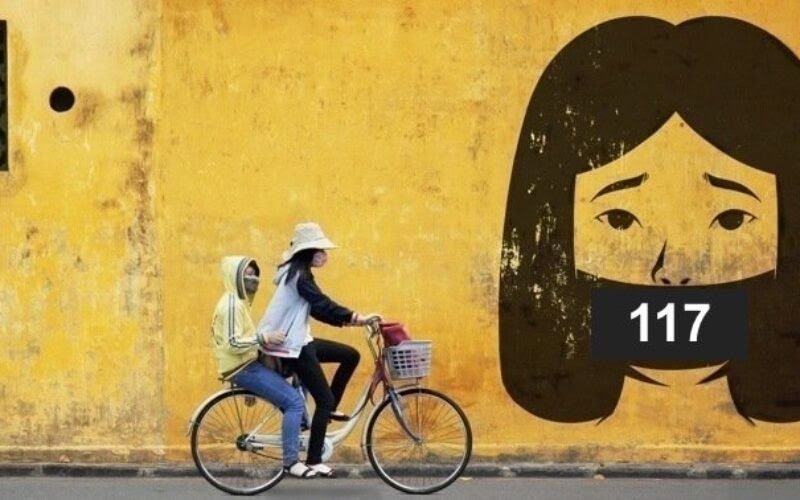
    Le Trong Hung was a citizen journalist who worked for Chan Hung TV and Nguyen Quang Tuan was a medical doctor. Tran Quoc Khanh ran a popular social media account, which he used to comment on social issues and to criticize the Vietnamese government. All three were independent candidates running for seats in the National Assembly in the upcoming election. However, they were arrested for allegedly violating Article 117 of Vietnam’s penal code, a statute which Amnesty International claims in the report, “ …violates Viet Nam’s international human rights obligations” and that Article 117 “should be repealed or substantially amended…”

    To top all of this, the result of the National Assembly elections is more or less carved-in-stone and predetermined months in advance. This can be seen in the “tentative proportion” or “tentative allocation” data released by the National Assembly’s Standing Committee. The committee has portioned the number of available seats and through this, we can get a fairly clear picture of who will get “elected” and what the priorities of the National Assembly will be over the next five years.

    To Vote or Not to Vote

    Hence, we are faced with a conundrum.

    Given the state of elections in Vietnam with all the deceit, manipulation, and unfairness involved, would it be proper and appropriate to still vote come election day, or would non-participation in the system itself be the better alternative?

    The usual reaction, when faced with such a situation, would, of course, be the road of passivity and non-compliance. Ergo, to choose not to participate in the elections at all.

    This perspective is all well and good. After all, a lack of voters usually implies a government’s lack of legitimacy and the absence of its citizens’ trust. However, legitimacy does not seem to be the VCP’s concern and they would be more than happy to pad the actual number of voters through the use of various statistical anomalies.

    On the other hand, choosing to vote seems to be a fruitless and purposeless course of action when the result is more or less predetermined several months in advance.

    At the end of the day, it appears that no matter what we decide to do with regards to the elections, the Vietnamese government and the Communist Party emerge as the true victors.

    Rays of Hope

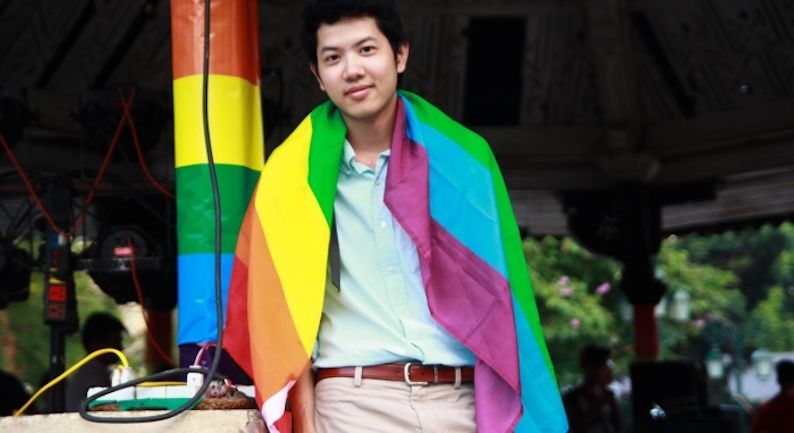
    And yet, you have someone like Luong The Huy, an openly homosexual man, civil society activist, and gender expert, who is one of the few self-nominated candidates who somehow managed to slip through the Vietnamese Fatherland Front’s obscure vetting process.

    On election day, May 23, he and a few other candidates will take on a seemingly hopeless fight for a slim chance at winning a single seat in the National Assembly. The odds and the deck are stacked against them, but they still continue to push back; they refuse to remain silent in passive acceptance.

    And while most of us cannot run for any government position, choosing to vote is the next best thing; even though it feels like an exercise in futility, we should still force ourselves to vote come election day.

    Even though our choice may not matter, our mere participation in the simplest of democratic freedoms given to us shows the VCP that we are concerned and invested in the direction the country is moving towards. Even if the election is rigged from the start, the mere act of supporting a candidate that does not agree with the Party’s schemes shows the Party that we will not take kindly to the government’s machinations and ploys. Even the act of submitting a blank ballot carries much more weight than simply not voting at all.

    The VCP thrives on the growing apathy and passivity of its people and could care less about legitimacy. Hence, choosing to vote and then deciding to vote properly becomes an act of rebellion; it becomes revolutionary in that it respects the concept and sanctity of the democratic process itself rather than the Vietnamese government as an institution. And if enough people unite and vote for those actually deserving of a seat in the National Assembly, there is a minuscule chance that perhaps true and lasting change and reform can slowly come from within.

    The strength of your ballot lasts beyond election day and extends far into the uncertain future. And when your time comes to make a decision, we hope you make the right choice.

  • The Odds Against Your Favor: How Does The National Assembly Election In Vietnam Work?

    The Odds Against Your Favor: How Does The National Assembly Election In Vietnam Work?

    Vietnam has been consistently categorized as “not free” and “authoritarian” by many organizations, such as Freedom House and The Economist. The Economist went so far as to rank Vietnam at the bottom of its Democracy Index in Asia – only ahead of Afghanistan, China, Laos, and North Korea. Annual human rights reports of various human rights organizations, such as The 88 Project, also document the government’s continuous blatant and brutal suppression of political dissent.

    One of the most prominent reasons attributed to the country’s abuse of power and authoritarianism? Undemocratic elections.

    Authoritarian regimes around the world often conduct elections to appear more legitimate and democratic. Elections in authoritarian countries such as Russia, China, or Cambodia are often performative, as they mostly result in the same people or party holding on to power. Similarly, Vietnam also has elections, but it is hard to call the elections democratic given its methodology and context as a one-party state – which only recognizes the Vietnamese Communist Party (VCP).

    But how do elections work in Vietnam? Are there non-Party candidates and how do they get nominated? Is the election effective in forming political competition and avoiding the VCP’s monopoly on power? As the 2021 National Assembly election approaches, this article answers these questions using Professor Paul Schuler’s scholarly writing on Vietnamese politics.

    Paul Schuler, assistant professor at the University of Arizona, is a scholar studying authoritarian regimes in East and Southeast Asia, with a particular focus on contemporary Vietnamese politics. His book, “United Front: Projecting Solidarity through Deliberation in Vietnam’s Single-Party Legislature,” was published earlier this year by Stanford University Press. This article is based on Chapter Two, “How Elections Work in Vietnam.”

    What is the electoral system in Vietnam?

    The electoral system in Vietnam is a bloc voting system, in which each district is distributed two or three seats in the National Assembly. Each voter can vote for as many candidates as he or she wishes, as long as they do not exceed the number of seats available for their district.

    How do candidate numbers get determined?

    The National Election Council and provincial boards are tasked with overseeing details of the elections, such as the number of candidates and the candidates who appear on the ballot. The Council determines the number per province, while the provincial boards determine the number per district. However, this premature election process is ripe for manipulation.

    Up until 2015, there were no regulations regarding the competitiveness of district elections, meaning there were no laws surrounding the number of candidates competing for a seat. As a result, there were cases of districts with three slots, but only four candidates competing. The 2015 Election Law regulates that the number of candidates per district must be at least two more than the number of seats up for grabs. For example, if a district has two seats available, there have to be four candidates at the minimum.

    The Vietnam National Assembly Standing Committee (VNASC), a combination of those leading the National Assembly, such as the chairperson and his/her deputies, also greatly influences this process. The law allows VNASC to rewrite or amend election law as it sees fit. In fact, Vietnam’s election law has been changed before every election. This gives the VNASC the power to potentially manipulate the election right before it even begins.

    Can people run for election without being a Communist Party member?

    If Vietnam is a one-party state that only recognizes the VCP, could people run for elections without being a member of the VCP? If they can, does that mean there is effective political opposition to the VCP?

    The short answer to the first question is yes. And indeed, the VCP has been using this fact as proof of democratic credibility, claiming anyone could become a delegate. But the story is much more complicated than that because the answer to the second question is no.

    There are two types of candidates that, theoretically, would introduce political diversity: non-party members and self-nominated candidates. While the two categories often overlap (independent candidates who self-nominated such as activist Nguyen Thuy Hanh), they are not the same. The case of Duong Trung Quoc is an example. He was a non-party candidate, but he was nominated by the Vietnam Historians Association, an organization related to the Fatherland Front (an umbrella group of organizations aligned with the VCP).

    Here is where the story gets complicated. There is no guarantee that all non-party members and self-nominees will be able to present meaningful challenges to the VCP. This is because there are non-party members who get nominated by organizations related to the Fatherland Front, such as Duong Trung Quoc. There are also VCP members who nominate themselves. Candidates falling under these categories are still counted as non-party and self-nominated members, despite links to the VCP.

    Even if we assume that all non-party members will be able to effectively compete with the VCP, the VCP still retains a great degree of monopoly on power. The percentage of non-party delegates has never exceeded 15 percent. In 2016, despite the surge of independent candidates, the percentage of non-party members in the legislature dropped to 5 percent – the lowest percentage since 1976. And the number of self-nominees is always very small.

    Why is the number of non-party and self-nominated candidates so compromised? This is because of the design of the vetting process.

    How does the candidate vetting process work?

    There are five “gates” in the process of narrowing down the number of candidates. These steps, however, allow possibilities for the VNASC to determine election results as it sees fit – perhaps even before the election starts.

    Participating in the elections, there are two modes of nominations: central nominees and local/provincial nominees. Those nominated by the central government are more influenced by the VCP, and hence, enjoy a more favorable procedure.

    Gate 1: Quota determination for the next National Assembly

    This is the initial stage of the election in which the VNASC determines the demographic quota for the next National Assembly – the desired structure of the subsequent National Assembly.

    In 2007, for example, the National Assembly was to include “150 women, 50 non-party members, 70 delegates under forty years old, and 160 incumbents,” according to Paul Schuler. The determination goes as far as imposing quotas on “how many members of the Fatherland Front, the government, and the local party apparatus should be selected.” During this step, the VNASC tasks the provinces with choosing certain provincial candidates to fulfill the quota.

    Hence, this predetermined structure of the National Assembly is criticized for hurting self-nominated candidates, who were not considered for when the VNASC drew up the quota. How do the self-nominees – who might not satisfy the determined structure – fit in?

    Gate 2: Candidate introduction

    This is the step in which people submit their self-nomination, followed by an announcement of self-nominees who have successfully completed their applications. In this announcement, candidates nominated by the province in step 1 are called “introduced” (được giới thiệu) candidates, distinguishing from “self-nominated” candidates (tự ứng cử).

    Gates 3 and 4: Meeting constituent and the candidates’ co-workers

    This is the step that is considered the “red line” for self-nominated candidates, as it disqualifies many unfavored candidates from competition due to manipulation of the process as well as the underhanded persuasion of public opinion.

    After the introduction of nominees, two meetings are held between the candidates and the local constituents to assess and vote on the candidates. While both types of nominees are required to meet with the voters in their neighborhood, central nominees simply meet with their co-workers in one of the meetings – increasing their chance of passing the round.

    The odds are also stacked against self-nominated candidates as the Party has the power to determine who could present at the meetings, as well as exerting pressure on others not to vote for their unfavored candidate. Indeed, Schuler’s research shows that people with an affiliation to the VCP are 14-22 percent more likely to be chosen for these meetings than those without an affiliation with the VCP. Local officials also conduct door-to-door campaigns to discredit self-nominated candidates if they are not favored by the VCP.

    In other words, the meetings which were supposed to represent the constituent’s democratic will, are actually just occasions and excuses to exclude unfavored candidates.

    Meetings with predominantly VCP supporting voters are considered the ‘red line’ for self-nominated candidates. Table & Data by Paul Schuler. Design by Son Nguyen/The Vietnamese. 

    Gate 5: The final ballot

    At this stage, reports from the vetting rounds are submitted to the National Election Council, which determines the final list of candidates appearing on the ballot in each province. The list is then sent to the provinces to produce the final ballot.

    Over the years, the number of self-nominated candidates who have gotten on the ballot and won the election has been alarmingly low. Those who got their names on the ballot account for just around 6 to 11 percent of the valid applications. Only less than 1 percent of valid self-nominated candidates eventually were elected (see illustration below).

    Numbers of self-nominees with valid applications, those who got on the ballot, and those who won the election. Data by Paul Schuler. Design by Son Nguyen/The Vietnamese. 

    (More information about the vetting process and election milestones can be found here.)

    Are there possibilities for manipulation?

    Yes. As explained above, the VNASC has many ways to interfere in the election, perhaps even before the election itself starts. The vetting process, while being presented to ensure the candidates’ qualifications, actually is a way for the VCP to identify dissidents and eliminate them from the competition, paving the way for favorable and conforming candidates.

    Other than manipulating the election to eliminate dissidents, the VCP also manipulates it to safeguard the victory of the people it wants to win. Additionally, for the VCP high-ranking “star” candidates, the election is also a chance for them to fabricate that these officials have the overwhelming support of the people.

    There are several ways this can be done. For example, “sacrificial lambs” could be introduced into the election as candidates. Then, they are placed into competition with the high-ranking candidate, as the provincial authority could decide on the candidates’ placement into different voting blocs. As these “sacrificial lambs” are supposed to lose, the star candidate with name recognition easily wins with overwhelming support.

    This is evident in the 2021 election. Nguyen Phu Trong, the secretary-general of the VCP, and one of the most important figures in the government is placed into competition with a vice-principal of a high school, the head of a Hanoi local government agency specializing in architecture, a researcher in rural development, and a commander of local forces in Hanoi.

    Another way to ensure the star candidate wins is simply to avoid the placement of star candidates into the same race. This is easily arranged, considering the fact that the provincial authorities have the power to arrange bloc placements.

    Is the electoral system in Vietnam democratic?

    This piece has presented the many ways in which the electoral process in Vietnam is  manipulated to the benefit and desires of the VCP. However, there are still rules not mentioned above that restrict the ability of the candidates to campaign and the people’s ability to choose.

    There are some rules about campaigning that are debatably beneficial, such as forbidding candidates to raise funds or use personal wealth to run for office to prevent the monopoly of the rich in politics. However, there are various other restrictions that mostly aim to retain the power of the VCP. For example, candidates are not allowed to organize campaign rallies, and they can only campaign through the state-controlled mass media. They may also meet their voters, but only through meetings organized by the Fatherland Front.

    Even with all of the restrictions, voters only have around a month to get to know the candidates before voting.

    At this point in the article, perhaps you have already formed an opinion or two about whether the system is democratic or not.

  • Ao Dai, The Freedom Index, And An Election Goes Uninterested In Vietnam

    Ao Dai, The Freedom Index, And An Election Goes Uninterested In Vietnam

    Why are so few paying attention to this country’s grand affairs, such as our upcoming general election on May 23, 2021?

    Maybe the op-ed article written in Vietnamese by Huynh Minh Triet that was previously published in the Luat Khoa Magazine on March 17, 2021, would offer us some perspectives on this question? The translation was done by Hoai Huong.

    ***

    In March 2021, with the most crucial election in Vietnam about to start in two months which should be the event that attracts the most public attention in the country, what has sparked controversy was a Japanese adult movie and a freedom-ranking list of a foreign organization.

    Freedom House, an international non-governmental organization, on March 5 categorized Vietnam as a country that has neither political freedom nor internet freedom. The online Vietnamese population immediately rushed to the Freedom House Facebook page, scolding it both in English and Vietnamese. Even the postings on this account that were irrelevant to Vietnam also came under fire.

    Furthermore, on March 10, Japan released a soft porn movie in which the main actress, who wore a Vietnamese ao dai, was a young girl of Vietnamese origin. Again, the online population in Vietnam vehemently protested, expressing their hurt feelings because the movie humiliated them. The press quickly gathered the most impressive comments to prove that the national superiority complex had been hurt.

    Wow, if only our national affairs captured public attention in the same way as Japanese sex movies or the Freedom House rankings!

    Vietnam is currently undergoing the tense process where our general election on May 23 has the utmost important responsibility to select our National Assembly’s deputies who will represent all of us. Nevertheless, such a significant event received virtually no considerable discussion on social media.

    On March 9, Tran Quoc Khanh, an independent candidate, was arbitrarily arrested. His news was covered superficially in newspapers and mentioned on just a few Facebook accounts of interested individuals. Word of the arrest came and went unnoticed among the online population.

    Aren’t the Vietnamese interested in elections?

    No, they are. But just not with their own country’s elections.

    The Vietnamese were one of the peoples around the world most enthusiastic about the US presidential election in 2020, and their fondness for Donald Trump might have contributed to this phenomenon.

    Vietnamese people created all kinds of news channels to support Trump and made all kinds of projections and comments about the US election on social media platforms. We grew openly hostile to one another and even humiliated one another because we supported different candidates in the US presidential election. Worse still, following the election, the Vietnamese online population rushed the US Embassy Facebook account to express frustration over the failure of their idol Trump.

    In Vietnam’s elections, however, things were different. No relationships turned sour when the VCP arranged for Nguyen Phu Trong to seize power again. There were no vehement protests or objections when candidates who were not Vietnamese Communist Party members were detained or had their names crossed off the list.

    However, we discussed US voting laws with great passion and many of us cursed “the damn Democratic Party” for allegedly wanting to ease restrictions so that illegal immigrants could vote. Many shouted with joy when Trump criticized voting via postal services as he claimed this would lead to cheating. In fact, however, many of us have never seen a ballot box in Vietnam.

    Is it true that a political system in which the people can only vote for candidates recommended by the Party is so perfect that we do not care about domestic elections?

    No, definitely not.

    Are we so insensitive to our responsibilities, while having surplus energy for trivial matters that are not even related to Vietnam?

    Probably.

    But there may be another reason: that is because we are scared.

    The widespread fear from the land reform campaign (in North Vietnam in the early 1950s) has not actually subsided. Fears have now been heightened by the 2018 Cyber Security Law – an identical copy of China’s. Under this new law, all that we speak up about or write about on social media platforms can be used as a pretext for the authorities to harass and arrest us.

    Few of us dare to confront the authorities because we are all afraid of being murdered in a police station, upon which the government will claim that we have “committed suicide due to a guilty conscience,” as it has stated during Vietnam’s review under the International Covenant on Civil and Political Rights in March 2019 to rationalize the unusually high number of people who died unexplained in police stations.

    Thus, in the face of events really close to us and of great importance, we remain silent and “project” our depression onto safer events such as Japanese adult films and the freedom rankings of an organization thousands of miles away.

    A Myanmar demonstrator under arrest in the capital city Yangon on February 27th, 2021. Photo: Reuters

    Now, let’s take a look at a neighboring country, Myanmar. At the time I wrote this article, 150 people had been killed while taking part in demonstrations to protest against the military coup that overthrew the democratically-elected government led by Aung San Sui Kyi. For the Burmese, the ballot is their life. For us Vietnamese, how many of us can’t be bothered to even think about the weight our ballot can carry?

    Freedom is not free. The Myanmar people are declaring with dignity that they are ready to pay an exorbitant price to have freedom.

    We may feel free to criticize the Freedom House rankings, but this does not render us freer.

    So, how can we change this? I have not come up with an answer yet. But if most of us keep staying silent for our own sake, and then throw our bursting surplus energies into things which are trivial or less important – and also less risky – to preserve the self-respect of a cowardly collective consciousness, then we will never find the answer.

  • Vietnam Briefing: The First Openly Gay Candidate Running For Election

    Vietnam Briefing: The First Openly Gay Candidate Running For Election

    The Vietnam Briefing, which is released every Monday morning Vietnam time, is a look at Vietnam’s political developments of the past week.


    That’s it. The election is here.

    This is the last briefing before the general election on Sunday, May 23. Candidates spent the last week busying themselves with voter meetings and media campaigns.

    Changes in the final list of candidates: After the extensive vetting process and the finalizing of the list of candidates, the National Election Council made a few changes last week with three candidates removed from the list. The Council announced that those who had been removed had all filed to withdraw from the candidacy themselves, which had had been accepted by the Council.

    • Among them is the prominent case of Nguyen Quang Tuan, the director of Hanoi Heart Hospital, officially due to “physical conditions and other reasons.” He is reportedly involved in a corruption probe relating to the hospital during his time as director of the hospital.

    A candidate to pay attention to: Luong The Huy is one of nine self-nominated candidates who survived the vetting process and made it to the final list in the National Assembly election. He is also running for a seat on the Hanoi City’s People’s Council. Huy, 33, a leading civil society activist and gender expert, has already made history by being the first openly gay candidate to run for election in Vietnam.


    Nguyen Phu Trong talks about socialism

    On Sunday, Vietnam’s state media simultaneously published an 8,000-word essay about the country’s path to socialism written by the top political leader: Nguyen Phu Trong, the secretary-general of the Communist Party.

    Main message: As usual, Trong has only three points to make: denouncing capitalism and democracy in the world, delegitimizing the opposition, and justifying Communist rule in Vietnam as a regime truly “of the people, by the people, and for the people.” He also promoted the “socialist-oriented market economy” and “socialist democracy” to emphasize how significant it is that the VCP continues to take the role of leading the country.

    What’s missing? Although published one week before the election, the essay provided no account of multiparty, free and fair elections, while insisting that “democracy is the nature of the socialist regime.”

    Nothing new. The Party’s top leader usually has to play the role of the leading voice in philosophy and theoretical issues. The secretary general often gives speeches and publishes essays and books discussing the issues, proving he is philosophically knowledgeable enough to lead the Party and the country to the ultimate goal of socialism. Trong is even more than a party leader. He’s spent almost his entire career as the Party theorist and previously served as  the chair of the Party’s Central Council for Theoretical Studies, the top think tank that influences its platform.


    Learn more about Vietnam

    Vietnam’s tug of war with China over Laos

    The Diplomat/ Nguyen Khac Giang/ May 12, 2021

    “Hanoi’s geopolitical survival is also linked to Laos. Vietnam has land borders with only China, Cambodia, and Laos. Given the complex history and perpetual distrust of Beijing’s intentions, forming a unified ‘Indochina’ political bloc to safeguard against possible northern encroachment has always been a priority in Hanoi’s strategic thinking. The last time they failed in the late 1970s, North Vietnam had to fight wars on both sides of the country and was on the brink of total collapse. In addition, since China’s support for Cambodian Prime Minister Hun Sen’s government has drawn Cambodia securely into its orbit, Vietnam cannot afford to lose Laos.”

  • Vietnam Election 2021: Twelve Milestones That All Voters Should Know

    Vietnam Election 2021: Twelve Milestones That All Voters Should Know

    This article was written in Vietnamese by Hong Anh and previously published in the Luat Khoa Magazine on February 26, 2021. The translation carries some revisions of the original article that we have sought the author’s consent.

    On May 23, 2021, the entire population of Vietnam will vote for their National Assembly deputies and the People’s Councils at all levels. No matter who they are, no matter where they live, as long as they hold Vietnamese nationality and are over 18, the citizens will have the right to vote.

    One may be thinking that she or he does not need to understand the voting procedures in Vietnam because the country just has only one political party so that elections probably don’t mean anything.

    We disagree.

    It is correct that Vietnam is an authoritarian regime, and probably many people know this as well. However, we suggest that trying to understand our system right now is still a better strategy if we want to strive for a democratic election in the future. We think it is a better option than just complying and voting unconsciously or strictly complaining and disregarding it.

    It is because if we want to understand democracy, then we should try to understand the complicated yet undemocratic Vietnam’s electoral system currently is.

    The following 12 milestones will explain in detail Vietnam’s electoral process.

    Right around Tet (Lunar New Year), Vietnamese people probably heard from the public loudspeakers in their areas that the local governments have established their election committees. Each province, district, and commune will have its electoral committee, organizing and overseeing elections in their localities.

    The Provincial Election Commission is responsible for organizing the election of the National Assembly deputies (NA deputies) and the deputies of the People’s Council (PC deputies) at the provincial level. Election committees at district and commune levels are responsible for electing members of the People’s Council at the same level.

    These committees will handle candidate applications.

    Self-nominated or independent candidates may be pretty disappointed to learn that there are no positions for independent members (who are not from the Vietnam Communist Party [VCP] or holding a role in the government) in these committees. The heads of these committees are usually secretaries and deputy secretaries of the Party committees in provinces and cities (see examples of members of the provincial election committee in Quang Ninh and Hung Yen).

    In democratic countries, political parties often cannot know how many seats their party will definitely hold in the parliament until after the ballots get counted and announced.

    In Vietnam, it is the opposite. We can know well in advance the backgrounds of those who will be structured by the VCP to have a seat in the National Assembly and the People’s Councils at all levels. Being “structured” by the VCP has the same meaning as being positioned in these seats by the Party’s selection.

    The current National Assembly Standing Committee has already drafted the plan to structure the deputies into the new National Assembly. The “new” National Assembly is the one that the people will vote for on May 23, 2021.

    At the same time, the current Standing Committee of the National Assembly has also instructed the provinces to build their structure of their People’s Councils at all levels in their respective provinces.

    There will be 500 seats in the 15th National Assembly, including 207 deputies working at the central level of the VCP and the government. Two-hundred ninety-three (293) deputies will include those who are working at the local government level. The list can be found here for more details.

    This is also the expected number of seats that the National Assembly will reserve for people who belong to the Party’s agencies, the government, the police, the army, mass organizations, and so forth. These people are called “recommended” candidates. A total of 427 (out of 500) seats are in this category. These seats are expected to be approved in the first “hiệp thương” consultation conference.

    There will be seats for independent or non-communists deputies and they will be among the remaining 73 deputies. They will be nominated by the provinces and cities. However, the party, state agencies, and provincial departments may also have a share of these 73 seats.

    For many people, these “hiệp thương” consultations are perhaps the strangest electoral proceedings in Vietnam. They compose a vetting and negotiating process so that the Vietnam Fatherland Front will come up with the list of the VCP’s approved candidates for the ballots.

    Literally, this is the decisive activity organized by the Vietnam Fatherland Front and its other member organizations. The Vietnam Fatherland Front and its branches are considered to represent all parts of society, including NGOs and political parties as well.

    These consultative conferences are held at all levels, from central to local.

    The Vietnam Fatherland Front is an important body during the election in Vietnam. This agency will have to ensure that the election takes place as expected by the Party and the government, with the right structure and composition of candidates. It is also the body that is empowered to oversee all elections.

    The first consultation meeting will have an agreement on the number of “recommended people” to be candidates for National Assembly deputies and People’s Councils at all levels.

    By February 17, 2021, the first “hiệp thương” consultation conference was completed at the central and local levels. The localities have also announced the number of “recommended” candidates.

    For example, Binh Dinh Province has decided to introduce 13 candidates to the National Assembly, including three people at the central government level to stand for candidacy and the remaining 10 people will be for the locality. However, Binh Dinh Province issued a regulation saying that the central government can only have seven elected National Assembly deputies, three representatives at the central level, and four representatives at the local level.

    This means that three candidates from the central government will inevitably be elected, leaving only 10 local candidates competing with each other for the other four spots. The workplaces of these 10 people are also predetermined, including provincial leaders, departments, organizations. There is, however, no structure for self-nominated people.

    After the first “hiệp thương,” it is expected that the number and composition of candidates for the National Assembly of localities will be adjusted by the National Assembly Standing Committee for the first time.

    The central government, the provinces, and cities will use this adjustment as the basis to select specific people in their localities to run for the National Assembly.

    For the candidates of the deputies of People’s Councils at all levels, the Standing People’s Councils may adjust the number and structure of the “recommended” candidates.

    Candidates for the National Assembly and People’s Councils at all levels have about three weeks to apply for their candidacy.

    During this time, the Party’s agencies, governmental units, unions, the military, the police, and so forth will also introduce their officials who will run in the election and hold voters’ opinion gatherings at the workplaces of those officials.

    During this step, the self-nominees only submit their applications. The respective local electoral committee will consider their records to be valid or not.

    This second conference will be organized in order to prepare a preliminary list of candidates for the National Assembly and representatives of the People’s Councils at all levels, including both the “recommended” and self-nominated candidates (if any).

    After this second “hiệp thương” consultation, another conference will be held in the residential areas where the candidates reside so that the residents in such areas can voice their opinions about the candidates. For the self-nominated candidates, there must also be another, separate conference at their workplace to gather the opinions of the people who work in the same unit as the candidates.

    During this time, one may be invited to a conference of voters to comment on candidates for the National Assembly and People’s Councils at all levels.

    The rule does not require everyone to come to these conferences. However, these conferences can only be held if there are more than 55 voters (applied to areas that have more than 100 voters), or where at least 50 percent of the voters participate (if those areas have less than 100 voters). If the number of voters is not met, you can request to stop the conference.

    For non-partisan candidates, in addition to the conference of voters where they reside, it is also necessary to organize another conference to gather voters’ opinions about them at work.

    If you are a Vietnamese citizen, age 18 or older, your name will appear on the electoral roll. This list is posted at the headquarters of the commune people’s committee and the polling station. You will be given a ballot. Even those people who reside for less than 12 months in any locality will also likely be on that locality’s electoral roll.

    Persons who are not allowed to vote are those whose voting right was taken by a court, death-row inmates, or people currently serving a prison sentence and not entitled to probation.

    This third conference is held to finalize the list of qualified candidates for the National Assembly and People’s Council at all levels based on the results of the voter conferences.

    For the “recommended” candidate for the National Assembly, this third conference must also be based on the adjustment of the National Assembly Standing Committee (the second adjustment comes right after the second “hiệp thương” consultation meeting closes).

    The candidates who get a pass after the third “hiệp thương” consultation conference are the ones who will be on the ballots for which you will vote for. The list of these people will be announced no later than 25 days prior to the election date.

    The National Election Council will announce the official candidate list to run for the National Assembly. Election committees at all levels will announce the official candidate list for those running for People’s Council deputies at each level.

    During this time, if you are a voter, you may be invited to attend a voter conference. This is a conference where the candidates will persuade you to vote for them. Each candidate will read out his or her campaign during these conferences.

    In addition to the voter-meeting conference, you may also listen to the radio, watch television, or read newspapers to get the introduction of the candidates. This is the only campaign allowed to take place close to the voter meeting.

    The general election will happen on May 23, 2021, in Vietnam. This is the day when the public loudspeaker system works most actively. You may also see many people flocking to the polls. On televisions, the news will also focus on broadcasting information about the election. In some rural places where the voters have difficulty traveling, the election may take place sooner.

    The Vietnamese government continuously repeats that everyone has the right to vote for our deputies of the National Assembly and the People’s Councils at the provincial, district, and commune levels. For those who cannot get to the polling booth, such as the disabled, the elderly, or people being treated at a hospital, the authorities will have a voting team that will bring the ballot box to them. Vietnam also reported that the voting turnout in Vietnam is incredibly high for the last elections, mostly 98-99% of the entire population have voted.

    Yet, voting is a right, and whether to vote or not to vote is your decision.

    We write this article to only explain Vietnam’s full electoral process and we must admit that it is such a complicated one, with almost absolute priority for the cadres of the Party, the government, and the state organizations.

    Unfortunately, whether the people prefer this electoral process or not, it is still the only method to elect representatives in Vietnam, a country that is still very far from having democratic elections.

    In Vietnam, do we really elect the persons who we wholeheartedly support, or are we just following and accepting the government’s wishes and plans? For now, it seems that the people in Vietnam can only elect the candidates that the VCP selects and approves.

  • Persisting Issues In The Vietnamese Garment Industry

    Persisting Issues In The Vietnamese Garment Industry

    In March 2015, workers from Ho Chi Minh City gathered in protest. Despite a heavy police presence, they continued marching along Highway 1, blocking traffic along this main thoroughfare. The workers occupied a factory owned by Pou Yuen Vietnam, a firm that produces footwear for brands such as Nike, Adidas, Lacoste, Converse, and Reebok.

    These disgruntled workers were airing out their grievances against an upcoming social insurance law that would affect their lump-sum separation pay if they quit their jobs.

    This new law stated that those who resign earlier than the mandated age of retirement had to wait until they reached the actual retirement age to access their compensation. This demonstration led to the temporary closure of other factories in the area for safety purposes and led to local city officials engaging in dialogue with the workers.

    In the ensuing dialogue, former vice-minister for Labor, Doan Mau Diep, stated that his department would submit a proposal that would let the workers choose between getting one-time social insurance benefits when they quit or opting to receive benefits upon retirement.

    In a country infamous for its draconian policies that criminalize most forms of dissent, to even get government officials to address the issue is a small victory in itself. However, this situation is an outlier, and, sadly, other scenarios do not end in adequate or bloodless resolutions; Vietnamese laborers who work in the apparel or footwear industries face a slew of other hardships as well.

    In May 2013, the Workers Rights Consortium (WRC) released a paper that discussed the many workers’ rights issues present in the garment industry in Vietnam.

    The report stated that the government did not respect the right of Vietnamese workers to freedom of association and that the State had prosecuted those who attempted to form unions. The paper also argued that workers suffered from several forms of forced labor and were compelled to spend excessive hours at their jobs. Several also experienced some form of gender discrimination and were also paid inadequate wages. The report added that workers  also had to deal with a lack of job security because most were hired on a contractual basis rather than fully employed.

    The WRC report also highlighted several illegal or questionable practices present in the Vietnamese manufacturing industry. The authors claimed that some companies employed child labor and that some factories did not have safety measures that met minimum standards.

    Hence, WRC also stated that the Vietnamese government’s failure to “enforce labor laws leaves workers vulnerable to unlawful employment practices that deny workers earned wages and access to social insurance benefits.”

    Sadly, in the time that has passed since the release of the WRC paper, not much has changed in terms of the protection of workers’ rights. However, the same cannot be said about the evolution of the garments industry.

    In recent years, Vietnam has entered into several international trade agreements, 13 of which “were signed between 2013 and 2019, with more than 50 partners across Asia, Europe, and Latin America.”

    Currently, Vietnam is the world’s 4th largest garments exporter and the 2nd largest footwear exporter. Nearly 6,000 apparel and 3,000 footwear companies comprise these industries, with approximately 80 percent of the workers employed in them being women and migrants from regional areas with no vocational training.

    Vietnam’s apparel and footwear industries continue to prosper and grow alongside the country’s general economy. Yet, while this may bring employment, poverty alleviation, and infrastructure development, it also comes with additional challenges to labor rights.

    On April 15, 2021, the Australian Human Rights Commission (AHRC) in collaboration with Australian Aid, and the Vietnam Chamber of Commerce and Industry (VCCI) published a set of guidelines in a primer entitled “Responsible business conduct and the apparel and footwear industry” to help these two industries in their operations in Vietnam.

    Their goal in releasing these rules was to “highlight some of the human rights challenges and issues that arise in the apparel and footwear industry in [Vietnam] and [to] provide practical steps grounded in international frameworks and principles.” These guidelines “[have]  been designed to assist businesses operating in [Vietnam] to understand and meet their responsibility to respect human rights.”

    These guidelines are based on UN Guiding Principles, which “operate on a three-pillar framework,” also known as the Protect, Respect, Remedy Framework. The three main tenets are:

    1. The duty of the State to protect human rights

    2. Corporate responsibility to respect human rights

    3. Access to an appropriate and effective remedy for victims of business-related abuse

    The UN Guiding Principles are intended to serve as “a global standard for preventing and addressing adverse human rights impacts related to business.” This primer serves as an attempt to apply these standards to Vietnam’s apparel and footwear industries.

    However, implementation is often much harder in practice.

    While there is a noticeable difference in overall choice of words and tone, both the WRC report and the AHRC’s primer discuss the same labor rights issues in Vietnam, despite being published eight years apart. Severe problems, such as child labor, restrictions on the right of freedom of association, and having unsafe working conditions, remain to this day.

    The AHRC’s guidelines also include several Vietnamese laws, which, at least on paper, show the government’s effort to address these persistent problems.

    All in all, the guidelines penned by the AHRC and the other organizations who contributed to the primer seem to be genuine; those involved seem to have the best interests of Vietnam and the garment workers in mind.

    In reality, however, this primer lacks any real force. It clearly states that this guide provides general information only and is not legally binding. The guidance is not intended to constitute legal advice.

    It goes on to say that “Organizations or individuals should seek their own legal advice if they have concerns regarding their compliance with domestic legislation or international standards. Any case studies or examples are included for educational purposes and do not constitute an endorsement of a company or organization.”

    In short, companies and businesses who are part of the apparel and footwear industries have no obligation to follow these guidelines aside from the threat of government intervention if they violate any existing statutes. Yet, with corruption being so widespread and rampant in Vietnamese society, it’s very easy to bribe the government to make officials look the other way.

    For there to be any real and tangible developments regarding labor and human rights in the apparel and footwear industries, change has to come from both directions, it has to come from both the business sector and the State.

    The guidance provided by the AHRC is a step in the right direction; there’s no contesting that. However, without shifts in the policies and the foundation of the government, no semblance of progress or improvement will ever be fully attained.

    Granted, the Vietnamese government has passed many laws which aim to tackle the working conditions in the garment industry. Yet, proper implementation is an entirely different beast compared to the simple passage of a law. And it is in the implementation itself that the Vietnamese State struggles the most as it is actively hindered by corruption and the short-sighted selfishness of politicians and the Party itself.

    Throughout the years, the Vietnamese apparel and footwear industries have grown to be very lucrative ventures for entrepreneurs, investors, and owners. However, it continues to come at the cost of its workers’ rights, lives, and liberties.

    Genuine change will only come if society, as a whole, wills it to happen. It would include not only the private and government sectors but also the people themselves.