Blog

  • Vietnam Briefing: Land Rights Activists Jailed Ahead Of Election

    Vietnam Briefing: Land Rights Activists Jailed Ahead Of Election

    The Vietnam Briefing, which is released every Monday morning Vietnam time, is a look at Vietnam’s political developments of the past week.


    The general election enters the final stage

    The general election is two weeks away and will be held on May 23, 2021. Here are the key developments in the election thus far:

    • The National Election Council announced the final list of candidates on April 27 after a long vetting process (we have briefly explained this here). There are a total of 868 candidates running for the 500 seats in the National Assembly.
    • Only 74 non-party candidates made it to the final list, which is approximately 8.5 percent of the total. The Council planned to have 25-50 non-party members who will serve in the next term of the National Assembly.
    • Only nine out of 76 self-nominating candidates survived the vetting process. Among them, surprisingly, is a prominent LGBT activist named Luong The Huy.
    • From now on, candidates can campaign, including meeting with voters and media campaigning. However, campaigns are strictly controlled by the government and are primarily organized by the government.
    • All four members of the leadership (the Communist Party’s secretary general, the state president, the prime minister, and the chairperson of the National Assembly are running.

    Two prominent farmer activists sentenced to 8 years each in prison

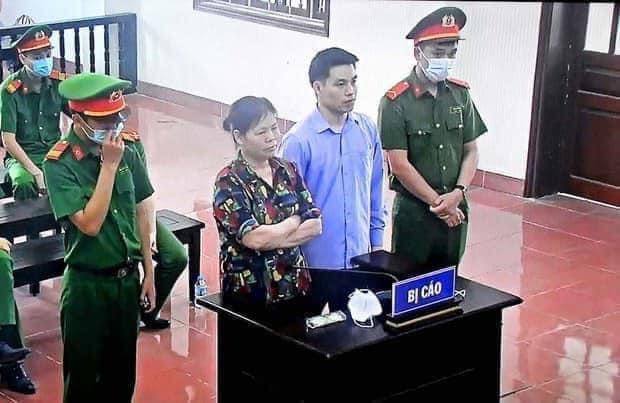
    Since this briefing was initiated in early February, not many weeks have passed without a dissident being persecuted. Last week, on May 5, this happened to two prominent land rights activists, Can Thi Theu, 59, and her son, Trinh Ba Tu, 32, during a trial in Hoa Binh Province.

    They both received an eight-year sentence for “making, storing, distributing or disseminating information, documents, and items against the Socialist Republic of Vietnam,” an activity that is criminalized under Article 117 of the Penal Code. Human rights groups, both inside and outside of Vietnam, have long condemned the criminal provision as an undemocratic and anti-human rights provision that is used to silence critics.

    Context:

    • The conviction is based on the two defendants’ live streaming videos on Facebook that were deemed to be anti-government, according to the indictment and state media.
    • Can Thi Theu is a longtime and prominent land rights activist who leads a group of farmers in Duong Noi (Ha Noi). The group claims that they are victims of forced land eviction. Her two sons, Trinh Ba Tu and Trinh Ba Phuong are both involved in her activism and are currently detained with Trinh Ba Phuong while awaiting trial.

    Talk about land rights in Vietnam:

    • The 2013 Constitution states that all land belongs to the people and is managed by the government. This is a legacy of the Soviet-influenced 1980 Constitution that was adopted during the height of Vietnam’s era of the centrally planned economy. Since 1986, the ruling Communist Party has adopted a capitalist economic model while still maintaining the old land regime.
    • Land disputes and land evictions have become a major part of Vietnam’s political and economic developments since then, leading to riots, protests, and widespread anger among the public. The most prominent incident was the deadly Dong Tam raid following a land dispute between farmers and the military.
    • Other prominent cases in recent history include Dang Van Hien (2016), Van Giang (2012), Doan Van Vuon (2012), Central Highlands (2001 – present), and Thai Binh (1997).

    Vinfast reports customer complaint to … the police

    The biggest story of last week is probably not the resurging of COVID-19. It’s the story of a major domestic automaker, Vinfast, reporting a customer’s complaint to the police.

    That’s what Vinfast announced in a statement after Tran Van Hoang, a customer who bought a car from the company, posted a video on Youtube complaining about technical errors of the car and how the company had dealt with it.

    “Although Mr. Tran Van Hoang proactively removed those clips, we saved all the evidence and have sent our complaints to the police. The police have received our submission and have scheduled a time to work with Mr. Hoang,” the statement said, according to Reuters.

    Vinfast’s statement created a huge backlash from social media users who say the company’s action is to silence critics using their good connections with the government. Their report to the police might result in criminal conviction of Hoang.

    Context:

    • Vinfast is a member of Vingroup, the biggest private corporation in Vietnam, which is led by Pham Nhat Vuong, the first Vietnamese billionaire, who is worth approximately US $10 billion.
    • Vingroup is the dominant player in the real estate industry in Vietnam, something that is not possible to achieve without extremely good connections with the government, given the fact that Vietnam is still ruled by the political monopoly of the Communist Party. Little transparency is practiced in terms of how land is distributed.
    • This is not the first time a Vingroup company has asked police to intervene in one of its conflicts with customers.
    • Such actions by Vingroup are condemned as examples of crony capitalism and potentially result in criminal charges and free speech violations in Vietnam. The Financial Times published one of the most popular and comprehensive accounts of the rise of Vingroup in 2019 that provides further details.

    New report on Vietnam’s religious freedom released by the US government

    Quote from the Annual Report 2021 by the US Commission on International Religious Freedom:

    “In 2020, religious freedom conditions in Vietnam generally trended the same as in 2019. The government actively enforced the Law on Belief and Religion, which, as written and implemented, contravened international human rights standards and systematically violated religious freedom, particularly of independent religious groups but also of government-recognized groups.”

    Five articles published by The Vietnamese are cited in this report.


    Learn more about Vietnam:

    Independent Journalists in Vietnam: The Clampdown Against Critics Continues

    The Diplomat | May 3, 2021

    “Vietnam’s independent journalists are under siege, and there is little cause for optimism.”

    The economic agenda taking shape under Vietnam’s new leader

    Le Hong Hiep/Nikkei Asia | May 4, 2021

    “Chinh’s idea is to create new growth centers supported by economic policies and administrative reforms beyond tax or land incentives that will drive the national economy toward sustainable and innovation-based growth. The goal is to help Vietnam escape the middle-income trap and achieve high-income status by 2045.”

    New research: The salience of the Northern and Southern identity  in Vietnam

    Asian Politics & Policy/Mai Truong

    “Abstract: This paper explores the salience of the north-south identity in Vietnam. Using focus groups and survey data, we argue that Vietnam is characterized by asymmetric ingroup bias, where southerners hold higher levels of ingroup favoritism and outgroup discrimination than the north. However,  while north-south identity exists, its salience is limited because it crosscuts with other social identities. Survey data show little difference between the north and the south regarding nationalism, support for redistribution, trade,  authoritarian values, and traditional values. There are differences with the south exhibiting lower trust in the government and generalized trust. Also, within Ho Chi Minh  City (HCMC) and Hanoi more specifically, we find lower support for China and higher support for the United States in HCMC than in Hanoi. However, these differences are  relatively muted, and combined with focus group evidence,  suggest that while identity differences exist, they are asymmetric and not as salient as often presumed.”

    New research: Vietnam and the search for security leadership in ASEAN

    Asian Security/Ralf Emmers and Huong Le Thu

    “Abstract: Indonesia has traditionally been viewed as a de facto leader of the Association of Southeast Asian Nations (ASEAN) and the regional body remains the cornerstone of Indonesian foreign policy. The paper addresses the question of whether other member states have become influential actors or even sectoral leaders in their own right by playing a direct role in a particular aspect of ASEAN affairs. This question is addressed by examining the regional policies of Vietnam, a country that has been mostly neglected in the existing ASEAN literature despite its strategic weight. The paper focuses on the evolving role of Vietnam in ASEAN and highlights its diplomatic initiatives, as well as various conditions to evaluate its potential to take up a leading security role in the regional body in the years to come.”
  • When Calls To Free Pham Doan Trang Are Not Enough

    When Calls To Free Pham Doan Trang Are Not Enough

    This op-ed article was written in Vietnamese by Trinh Huu Long and was previously published in the Luat Khoa Magazine on October 10, 2020.


    Every time an activist is arrested, several campaigns for his or her release emerge in response to the government’s persecution of human rights. This method is the oldest, most common, and most familiar form the common citizenry uses to call for justice.

    I have been a part of those movements and have even organized several campaigns many times in the past nine years.

    Yet, despite everything, I constantly ask myself if these calls to action actually do any good? “How long am I going to do this,” I ask myself, “and are there any benefits to this or not?” These are just some of the questions that constantly linger in the back of my mind.

    Most likely, those arrested will remain in prison; their sentence will be upheld. In fact, the length of the individual’s  imprisonment might even be made longer. Despite all our work, more and more people are still being incarcerated. There has been no change in our laws or institutions, despite all our efforts at home and abroad.

    And even if we’re blessed with the smallest amount of luck, those arrested are granted asylum in another country, defeating the primary purpose of our campaigns.

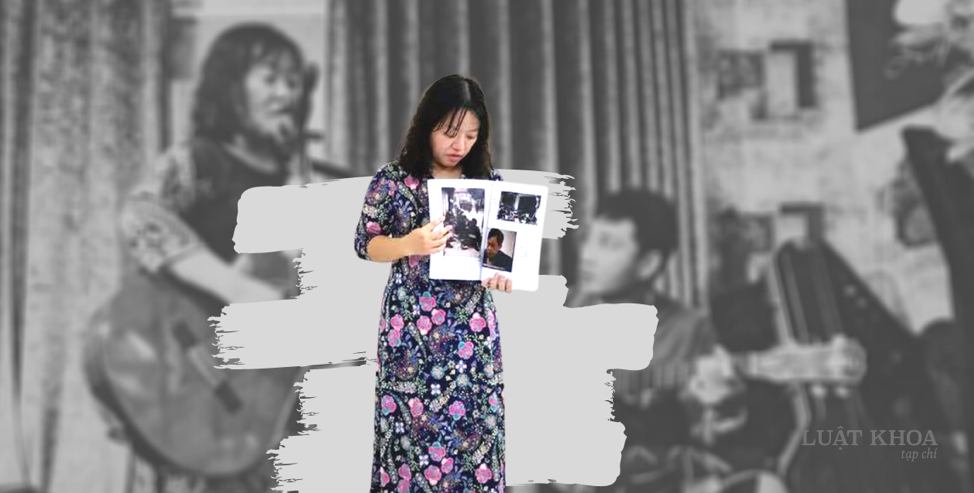
    Pham Doan Trang, imprisoned activist, blogger, journalist, and co-founder of The Vietnamese and Luat Khoa online magazines has put some of my concerns to rest.

    “I do not need my own freedom; I need something much more significant than that: freedom and democracy for the whole of Vietnam,” she wrote in a letter on May 27, 2019, her 41st birthday, and while she was on the run from the police. “This goal sounds grandiose and far-fetched, but reaching it is actually possible with everyone’s help.”

    Doan Trang wanted this letter to be released to the public only when she was indeed convicted and not when she was merely detained. Eventually, she was arrested and now faces a sentence of up to 20 years in prison.

    If Doan Trang merely wanted freedom for herself, she had at least two opportunities to attain this in the past.

    The first was after her nine-day criminal detention in 2009. If she was obedient and ceased all her activities regarding sensitive topics and cut all her ties with social elements deemed “anti-state,” she would have continued to live a safe and full life.

    The second was when she studied in the United States and could have chosen a path towards residency or citizenship. In fact, at least three agencies and organizations wanted to sponsor her permanent stay in America.

    So, why did Doan Trang choose to return to her homeland? It is because she understands that her freedom means nothing compared to the whole of Vietnam. Vietnam needs people to step up and work for the freedom of everyone.

    Such a concept is simple and easy to understand, yet making it a reality is challenging to attain.

    Doan Trang could have chosen to contribute to Vietnam’s fight from the outside as many others, including myself, are doing. Yet, she chose the most complex, most painful, and most difficult way to contribute to the cause. She returned home and faced the problem head-on. She published various works, wrote books, and even taught about democracy and freedom right in front of the police.

    Doan Trang often told me that the best way to fight is to be an example, to be an inspiration for others to do the same. Only then can we, as a society, start to see what democracy, human rights, and the rule of law look like in reality. Words without actions are meaningless.

    Sadly, I do not know how successful Doan Trang’s efforts have been, nor how many lives have been touched by her words and deeds. But regarding her arrest in October 2020, I would like to say this.

    Activists have a saying called “sharing fire,” which means sharing the tasks and responsibilities of dangerous activities with many people to reduce individual risk. Sometimes we coordinate with each other, but more often than not this is not the case; people passively participate in this phenomenon without discussing plans in advance.

    What if the deeds Doan Trang had done in the past five years were divided among five or 10 people, would she still have been arrested? More recently, if she had not produced the two Dong Tam reports, would she be in jail right now?

    She often told me that these things are not difficult to accomplish and that there are many people who share similar ideas with her. If so, why are there so few people standing up for what is right? Granted, some people do, and Doan Trang was one of them. Yet because of inaction, apathy, or fear, she and the handful of brave, noble souls like her shoulder the entire risk.

    Many of them will go to jail, while those who are content to watch from the sidelines will get angry again. They will once again clamor for the release and freedom of those imprisoned. But in the end, nothing gets done. Rinse and repeat.

    Will we Vietnamese forever play the same old games with the government? Will we continue to sheepishly and ineffectively demand the release of our friends? Then, when nothing gets done, will we once again forget and return to the tolerated normalcy of life in this great prison that the government has made?

    Things will be different if more people actively do their part to create social change, just like Doan Trang. Doing so has two advantages.

    The first is to “share the fire” with those still fighting to reduce their risk and limit their chance of getting captured. Government resources are limited, and they can only invest in monitoring and controlling a few people.

    Those outside Vietnam can do their part as well. For instance, to write something similar to the Dong Tam Report, we just need to collect data on the internet and conduct interviews online or through the phone. It is not necessary to live in Vietnam physically to accomplish these tasks.

    The second is to normalize press freedom, independent publishing, and political activities considered “sensitive.”

    When these activities become commonplace, the government will be forced to accept them. This was observed in the past when private businesses were considered illegal. Nonetheless, they continued to operate, and gradually the government had to admit that these establishments were a fundamental component of the country’s economy. Since 1986, the state no longer considers owning a private business a criminal offense.

    For me, the best way to help Doan Trang and people like her is to play a more active role. Eventually, everyone will benefit when the political space expands. No one will ever be arrested or imprisoned again for writing or publishing books. I will no longer have to clamor for one person’s freedom every single time someone gets arrested. I will finally be able to rest.

    Calls for Freedom are good, but they are often not enough. We should release ourselves from the shackles of fear, apathy, and apprehension to actively fight for progress and change.

    Doan Trang has completed her mission and the responsibility now falls on our shoulders. Even if she were to be released tomorrow, even if she chooses to stay in Vietnam or decided to leave, the fight continues in each one of us.

    And if you love Doan Trang, I implore you to do what she would have done.

  • The Collision Of Religion And The Vietnamese State

    The Collision Of Religion And The Vietnamese State

    The Separation of Church and State is a concept that has been accepted and promulgated by several democratic countries in the modern era. While the seeds of this idea were planted during the late Middle Ages and the Reformation, it was only during the early years of the establishment of the United States of America that this idea started to blossom.

    While this concept is often construed to simply mean that religion should not intertwine with politics, the more comprehensive meaning is as follows: “it is the right to practice any faith, or to have no faith [at all].” As such, the state has no right to interject, interfere, or hinder an individual’s practice of his or her beliefs; ideally, no laws or statutes will be passed that will limit a person’s free exercise of his or her faith.

    The Vietnamese Communist Party, however, has chosen to take a radically different approach towards religion.

    Legal Initiatives For Vietnam (LIV) released its legal research in September 2020, penned by Vo Quoc Hung Thinh, in which the author presented the many difficulties, challenges, and hurdles that religious organizations face when they deal with the Vietnamese state.

    The writer also highlights the existing institutionalized discrimination against religions in Vietnam and gives us a glimpse into how the state’s direct interference affects believers as well.

    Faith and Law

    Several documents and resolutions have been passed by the VCP that perfectly illustrate its stance towards religious organizations.

    Vo Quoc Hung Thinh noted in his research that in its Resolution 297/CP Concerning Policy on Religion (1976), the Vietnamese government, at least on paper, claimed to acknowledge the right of freedom of religion and supposedly guaranteed equality under the law.

    However, it also emphasized, “that religions shall not be ‘exploited’ to bring harm to the Socialist State.” This resolution then states that the faithful “shall be educated to ensure the spirit of socialist patriotism” and that “ ‘[r]eactionary’ elements hiding inside religions shall be eradicated.”

    This resolution seems to assume that religious organizations are going to be used to subvert state authority. And while it is possible for this to happen, this is not something specific for religion itself; any coalition or gathering of people can fulfill this role just as well or even better than a Sunday Bible Study group; to focus on religion is discriminatory and goes against the concept of equality under the law.

    Vo Quoc Hung Thinh also noted in his legal research that Resolution 40 –NQ/TW, which focused on religion management in the new situation (October 1, 1981), mentioned several religions that existed in the former Republic of Vietnam (1955-1975) and discussed the “state of socialist enlightenment” among practitioners who belonged to them.

    For instance, regarding the Catholic Church that existed in the former Republic of Vietnam, the current Vietnamese government believed that the followers of this religion were “vulnerable to anti-communist propaganda.”

    Another example would be that of the Unified Buddhist Sangha of Vietnam (UBSV). The resolution stated that the leaders of this religion were already somewhat “re-educated” but that the party needed “to abolish UBSV and unify Buddhism in Vietnam under the supervision of the Communist Party.”

    While this resolution document is quite outdated and old, through it, we can catch a glimpse of how the VCP deals with religious groups.

    The Communist Party monitors both followers and spiritual leaders in Vietnam, gathers data about them, and directly interferes in the teachings and belief systems of religion. This runs contrary to the right of freedom of religion and the separation of church and state.

    Vo also noted that Resolution 25 – NQ/TW, which focused on the National Central Committee on Religion Management (2003), was drafted after the Doi Moi era when Vietnam wanted to join the World Trade Organization.

    This resolution, therefore, removed most of the aggressive language used in prior legislation but kept several “core principles” intact. This particular document stated that “any religion must be recognized by the State and religious activities shall be subject to [the] State’s regulations and supervision.” It also maintained that there were still “reactionary elements” hiding in various religious groups and that the government shall prepare to defeat any of them.

    All three of these resolutions illustrate, that despite the passage of time, not much has changed in the way the VCP thinks about religious organizations. They are still seen as threats to the Party’s power, and as such, have to be destroyed or controlled. And despite what the VCP might claim, the Party does not respect freedom of belief nor provide these groups equal protection under the law.

    Faith and Red Tape

    For religions to be formally recognized in Vietnam, and for them to also have some semblance of protection against state forces, they have to register and be approved by the government.

    Human Rights Watch reported in October 2020 that failure to do so can lead to the arrest, imprisonment, interrogation, and torture of the leaders or followers of these religions. Hence, for the sake of self-preservation, it is in their best interest to comply.

    However, this process is far from convenient.

    In order to be recognized, religious groups in Vietnam first need to obtain a Certificate of Religion Operation. Five years later, they then need to formally apply for official recognition. Only upon completion of these two requirements are they, at least on paper, afforded all the rights, benefits, and protections that they should have been given 10 years earlier.

    This process, which is explained in detail in Vietnam’s Law on Religions and Beliefs 02/2016/QH14 (LBB), passed on November 18, 2016, is also vulnerable to abuse by the Vietnamese authorities.

    LIV’s research paper also highlights the case of the religious group An Dan Dai Dao (ADDD), which was established in 1969. It is a sect of Buddhism which had a network of 14 temples and thousands of followers before 1975. After Saigon fell on April 30, 1975, the new ruling Vietnamese Communist Party accused ADDD of working with the Central Intelligence Agency.

    ADDD was also not granted registration, which led to its properties being taken away by the government; their followers were also forced into hiding.

    In 2003, adherents tried to jumpstart their religion once more due to the perceived reforms going on in Vietnam. However, they were once again persecuted by the state.

    Phan Van Thu of ADDD. Picture: The 88 Project.

    In 2013, Phan Van Thu, the leader of ADDD, was sentenced to life imprisonment while 21 other leaders were sentenced to a collective total of 299 years in prison and 105 years of house arrest. To this day, the ADDD situation holds the record of having the highest sentence ever imposed in a political-religious case in Vietnam.

    Those incarcerated are currently dealing with abuse and maltreatment, and are faced with the very real possibility of death.

    In denying the ADDD sect the right to register, the Vietnamese state branded the group as criminals and treated them as such despite ADDD’s lack of involvement in any political activities.

    The followers of this religion have faced persecution for more than 40 years for simply practicing their faith and holding firm to a belief they deem essential to their human existence. This situation casts a bright light on the black bleeding heart of the VCP and exposes the lengths the government is willing to go to destroy its own people.

    Faith and Freedom

    Even state-approved religious organizations have to constantly deal with the ever-watchful eye of the VCP.

    LIV research also states that these organizations are required to get the state’s permission and approval for various things such as hosting religious events whether inside or outside their designated place of worship or for something as simple as a change in leadership within their organizations.

    The locations where religious structures can be built also require the state’s consent. In effect, rather than portraying strength, the VCP presents itself as being unhealthily obsessed with religious groups, their leaders, and the many people who are part of them.

    This is not at all surprising; as Marx, the father of the hammer and sickle, once stated “religion is the opium of the people.”

    In Communism, religion is seen as something undesirable, as something taboo, and as something that must be purged. We’ve seen this in the history of many Eastern and Central European countries when they were under the rule of the former Soviet Union.

    Vietnam is going through the same motions. Yet, we’ve also seen that after the fall of the USSR, religion never truly went away.

    In religion, people find hope; people find something greater than themselves that they aspire to attain, whether it may be the afterlife, heaven, nirvana, or enlightenment. In faith, they find purpose; they find direction and guidance to help them navigate the tumultuous sea of life with the company of those who choose to travel the same path.

    In belief, they find freedom.

    And this is what the VCP fears the most: that the people will no longer be dependent on them for subsistence and survival. They fear for a time when their countrymen start to dream or come to know of a world outside the Party’s tiny dictatorship. They fear a populace that holds another being in higher regard than the crumbling corpse of Ho Chi Minh.

    The VCP fears becoming obsolete. Yet in the end, that is exactly what it fated to be.

    Long after Vietnam has risen above the shackles of authoritarianism and long after it has reached a future of true and genuine democracy, the Party will be gone.

    But religion will be there to stay.

  • A Prisoner’s Dilemma: The State Of Human Rights Defenders In Vietnam

    A Prisoner’s Dilemma: The State Of Human Rights Defenders In Vietnam

    Since the United Nations released the first World Report on the Situation of Human Rights Defenders in 2018, the many human rights violations committed by the Vietnamese Communist Party (VCP) have slowly come under international scrutiny.

    Many of the same issues presented in the report mentioned above, such as the VCP’s active restriction of the rights to freedom of expression, freedom of assembly and association, or a fair trial with due process, continue to persist three years down the line. Even though fewer Vietnamese citizens were convicted in 2020 than in 2019, more were persecuted through other means for simply exercising their supposedly protected rights.

    The 88 Project’s 2020 Human Rights Report on Vietnam explores, details, and highlights the many struggles that Vietnamese activists faced that year. And much to everyone’s expectations and disappointment, Vietnam continues to fail in its international obligations to protect the right of free speech and the well-being of its human rights defenders.

    People at Risk

    Sharing similarities with the data presented by the Human Rights Measurement Initiative, the report states that, “[o]f the 35 people arrested in 2020, nine were women…. The top areas of activism of those arrested in 2020 were democracy activists (16), land rights (11), human rights (9), and freedom of expression (8) [and] [t]he most common occupations of those arrested in 2020 were farmers (8), journalists (4), and teachers (3).”

    Of those arrested, eight were denied legal representation for the charges filed against them, four were not allowed to be visited by friends or family, six were part of small religious sects, and nine came from ethnic minority groups.

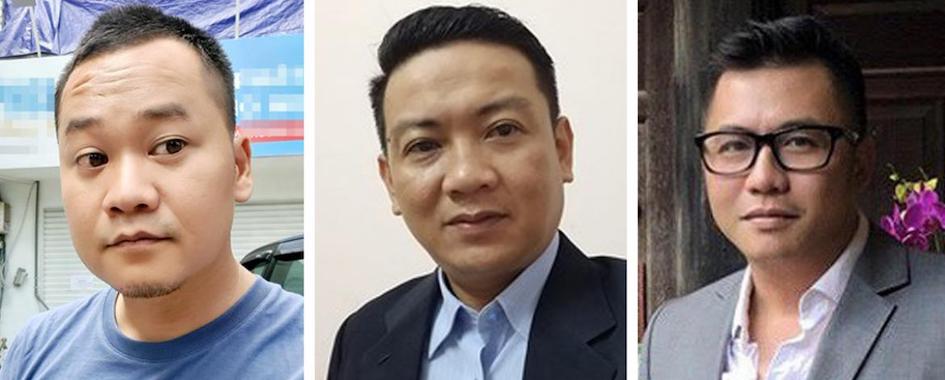
    Several high-profile activists were also jailed, such as Pham Doan Trang, a writer and co-founder of the Luat Khoa and The Vietnamese online magazines, and Pham Chi Dung, president of the Independent Journalists Association of Vietnam (IJAVN).

    Eleven online commentators were also taken into custody in 2020, and their number makes up roughly 31 percent of all arrests made that year. The most shocking thing is that these people were brought to jail even though they were not members of any specific civil society group; they were arrested for the sole reason that they chose to air  their grievances against the Vietnamese government.

    In summation, it is clear that no one is safe from the VCP. It hardly matters to them if you are an activist fighting tooth and nail for your principles and beliefs or an average citizen trying to be as discreet as possible. If you publicly express any discontent or disapproval with the government’s actions you run the genuine risk of being put under the spotlight and you will not be safe from the Communist Party’s malicious retribution.

    The Injustice of the Law

    The charges facing those arrested are based on specific provisions in the 2015 Vietnamese Penal Code.

    To be specific:

    1. Article 118: disrupting security
    2. Article 331: abusing democratic freedoms
    3. Article 117: conducting propaganda against the state
    4. Article 330: resisting officers in the performance of their official duties

    These statutes, according to Brad Adams, executive director of Human Rights Watch’s Asia Division, involve national security in Vietnam laws which “are vaguely defined and often used arbitrarily to punish critics, activists, and bloggers.”

    He adds, “it’s even more outrageous to lock up someone for five years just because the government arbitrarily decides that they are preparing to criticize the government.”

    Yet, this is far from the only maltreatment faced by those arrested.

    Several detained individuals have also been denied access to legal representation, meaning that they were sent directly to trial without consulting with a lawyer. And even if they were allowed to meet an attorney, the lawyers were often not given all of the relevant material they might have needed to help defend their client in court.

    Additionally, the appeals of political prisoners for reduced sentences or a retrial are often ignored by the judiciary or are not granted. In 2020, only two who appealed their case, Dang Thi Hue and Bui Manh Tien, successfully had their pleas heard. Yet, the sentences of each one were only reduced by three months.

    It is apparent that the Vietnamese legal system is skewed against human rights defenders and activists. They are not afforded the legal remedies that they are entitled to by law, and they are also not given proper and impartial trials or allowed to use arbitration to plead their cases.

    The Vietnamese government actively refuses to abide by the due process standards that it has codified into law. In any other democratic country, this kind of behavior would not be acceptable. But in a one-party state run by strongmen, this is sadly the norm.

    Life Behind Bars

    For those already incarcerated, their situation is far from ideal. According to The 88 Project’s report, political prisoners are often “forced into severe physical and psychological conditions” such as the “denial of family communications, denial of adequate healthcare, forced mental health treatment, solitary confinement, and punitive prison transfers.”

    The COVID-19 pandemic has only served as further justification for the Vietnamese government to deny people proper and humane treatment.

    The report also details the situations of several imprisoned activists in 2020, such as Hoang Duc Binh, Chau Van Kham, and Nguyen Van Tuc, who are not only barred from meeting or even speaking with their family but are also denied medical care for their severe and underlying health conditions.

    Le Anh Hung and Pham Chi Thanh are the names of other political prisoners made to undergo mental health treatments despite being perfectly sane and normal; they, and others like them,  are forced to take anti-psychotic medication and are made to undergo ethically questionable psychiatric therapies which border on torture.

    The appalling conditions that political prisoners face in Vietnam are vicious, nasty, and inhumane. They are treated even worse than livestock; they are seen as pariahs, not deserving of even the slightest modicum of respect.

    The prison situation reflects what the VCP thinks about the citizens of the country. The moment you become inconvenient, detrimental, or even a minor nuisance to their unchecked power and greed, they will not hesitate to use force, torture, or even to threaten you with the possibility of death to crush your body and spirit.

    ***

    The tactics used by the Vietnamese government and its state agents against activists and human rights defenders are nothing new; these actions are what they’ve been doing for decades now.

    However, due to the ongoing global pandemic, the VCP feels emboldened to further step on the necks of the people it thinks are a danger to its position in society. The Party is willing to toss away the humanity and decency of its citizens just to sate their never-ending lust for riches and power.

    The authorities use force and fear in tandem to scare the populace into silence and compliance.

    Yet, as imposing and threatening the VCP wants itself to appear, it has failed to acknowledge one simple fact: these acts of oppression against Vietnamese citizens betray the Party’s fear and paranoia.

    In reality, the authorities are the ones who are scared. They live in fear that one day, the people may grow wise to the truth: that real power lies not in the state or its corrupt institutions but within the farmer, the student, the teacher, the journalist, and the worker. It is found in the breasts of mothers, fathers, and their children, and in the hearts of all those who desire a better future for themselves and those they love.

    The Vietnamese government continues to act with impunity, not because of its abundance of strength but because of its lack of strength.

  • Vietnam Briefing: A Busy Week Of Cracking Down On Freedom Of Speech

    Vietnam Briefing: A Busy Week Of Cracking Down On Freedom Of Speech

    We release the Vietnam Briefing every Monday morning, Vietnam time.


    Three Vietnamese journalists arrested over reporting on ‘toll booth’ schemes

    Quote from RFA:

    “Police in southern Vietnam’s Can Tho City on Tuesday arrested three independent journalists connected with the publishing of articles online last year criticizing toll booths set up under a controversial infrastructure funding program, state media sources said.

    Nguyen Thanh Nha, Doan Kien Giang, and Nguyen Phuoc Trung Bao—all writers for the popular Facebook page Clean Newspaper, which discusses Vietnamese social issues—were taken into custody in connection with an investigation into the activities of journalist Truong Chau Huu Danh, who was arrested in December.”


    Vietnamese journalist gets eight years for ‘anti-state’ writings

    Quote from RFA:

    “A court in Vietnam sentenced a journalist to eight years Friday for writing anti-state stories and sharing them on social media, her lawyer told RFA.

    The People’s Court in the south-central coastal province of Phu Yen convicted Tran Thi Tuyet Dieu of violating article 117 of the Vietnamese penal code for ‘creating, storing and disseminating information and materials against the Socialist Republic of Vietnam.’”


    Vietnamese Facebook user jailed for two years for ‘abusing democratic rights’

    Quote from RFA:

    “A court in southern Vietnam’s Can Tho City on Thursday sentenced a Facebook user to two years in prison for posting articles and livestream videos criticizing Vietnam’s communist government online, family members and media sources said.

    Le Thi Binh, born in 1976, was arrested in December and charged with ‘abusing the rights to freedom and democracy to threaten the interests of the state’ under Article 331 of Vietnam’s 2015 Penal Code. Her elder brother, Le Minh The, had completed a two-year jail term on the same charge in July.”


    International Commission of Jurists (ICJ) filed new submission to the UN, detailing the government’s use of laws to suppress freedom of expression

    Quote from ICJ:

    “The ICJ highlighted in particular how new laws have been enacted in response to the COVID-19 pandemic that aim at or can be used by State authorities to control information about the pandemic. These laws contain provisions incompatible with human rights law and standards as their vague language makes them prone to abuses. In addition, some   prescribe excessive sanctions, including severe criminal penalties, which are incompatible with the principles of necessity and proportionality.”

    Read the full text here.


    On foreign affairs

    PM wraps up working trip to attend ASEAN Leaders’ Meeting (April 25): “On the Myanmar situation, Chinh affirmed that Vietnam, as a non-permanent member of the UN Security Council for 2020-2021. and the Council’s president for April 2021, has worked to create favorable conditions for the ASEAN member nations to collaborate closely at UN forums in mobilizing support for the bloc’s efforts in approaching and finding suitable solutions to the Myanmar issue.”

    Vietnamese President chairs UNSC’s high-level open debate (April 19): “In his capacity as President of the United Nations Security Council in April 2021, Vietnamese President Nguyen Xuan Phuc on April 19 chaired a High-level Open Debate on ‘Cooperation between the UN and regional organizations in enhancing confidence-building and dialogue in conflict prevention and resolution’, which was held in both online and in-person formats.”

    Japan targets Vietnam for first ASEAN oil-sharing deal (April 21): “The deal is part of Japan’s attempt to build oil-sharing arrangements with Associations of Southeast Asian Nations members. Under one proposal, each participant would build up individual reserves of crude oil, along with gasoline, diesel fuel and other petroleum products, to prepare for disruptions in supplies.”


    A busy week of the South China Sea issue, too

    Vietnamese, Chinese defence ministers hold talks in Hanoi (April 25): “ Both sides agreed that the year of 2020 witnessed complicated developments in the world and regional situation with great risks of instability, creating new challenges to the trend of peace, cooperation and development and greatly impacting the security and development environment of all countries.”

    China, Vietnam agree to boost trust amid South China Sea tensions (April 25): “China and Vietnam have agreed to work together to improve trust amid simmering tensions between the two neighbours over their territorial claims in the South China Sea.”

    Vietnam building up its maritime militia (April 25): “Vietnam is building up its maritime militia in the South China Sea in an apparent challenge to Chinese efforts to dominate the disputed waterway, according to a Chinese military magazine.”

    Indonesia, Vietnam renew calls to finish EEZ negotiations (April 25): “Indonesia and Vietnam have renewed calls to finish ongoing negotiations on the delimitation of the maritime boundary between their exclusive economic zones (EEZ) near the South China Sea to provide clarity and avoid incidents in the waters.”

    Japanese destroyer in Vietnam on friendly visit (April 20): “The visit is part of efforts to boost defense and security cooperation between Vietnam and Japan and maintain the countries’ strategic partnership, officials said.”

    India offers help to Vietnam in warship-building & maintenance (April 20): “India on Tuesday offered all possible help by its defence and other shipyards to Vietnam in construction and maintenance of warships, build.”


    New research on Vietnam’s politics

  • Is Vietnam Being Ruled By A Diarchy?

    Is Vietnam Being Ruled By A Diarchy?

    This article was written in Vietnamese by Y Chan and previously published in the Luat Khoa Magazine on February 2, 2021.


    The 13th Party Congress ended in Vietnam in February 2021, and the list of the country’s top leaders has finally been leaked after many attempts to keep this information “top secret.”

    Yet, despite the confidentiality and mystique surrounding this event, the identities of Vietnam’s new leaders did not catch anyone by surprise because they were also of no particular interest to the ordinary Vietnamese citizen.

    The names of Vietnam’s top four leaders are Nguyen Phu Trong, Nguyen Xuan Phuc, Pham Minh Chinh, and Vuong Dinh Hue.

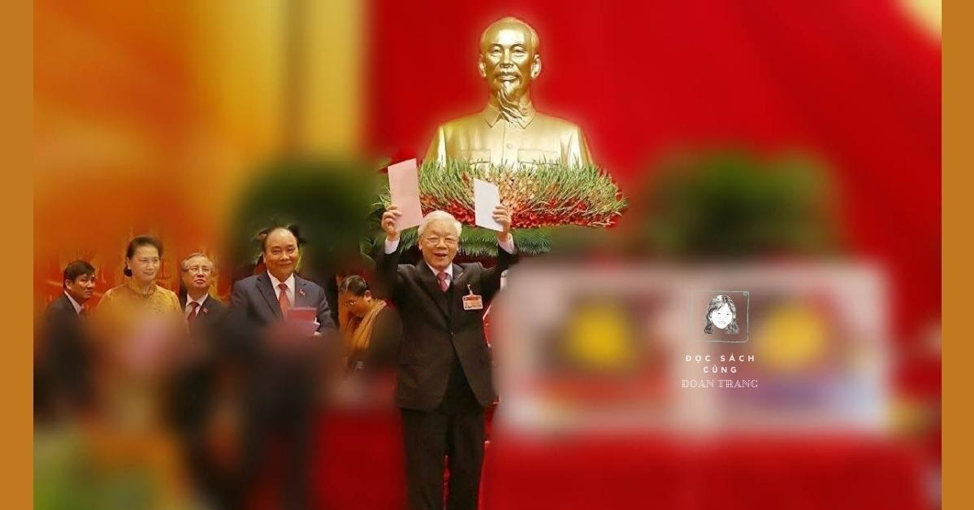
    The rumors also stated that Nguyen Phu Trong would continue to be the general secretary of the Vietnamese Communist Party (VCP). Nguyen Xuan Phuc would be the president of Vietnam. Pham Minh Chinh would be the prime minister, and Vuong Dinh Hue would be the chairperson of the National Assembly. In April 2021, more than a month before the general election of Vietnam, the VCP also announced these top leaders with the same positions that the rumors had spread.

    Knowing the country’s top leaders before they could even vote, it is not a surprise that Vietnamese citizens have been more interested in the US presidential elections than their own.

    Why is this bizarre phenomenon the case in Vietnam?

    The answer lies in the state governance model of a diarchy that restricts Vietnamese citizen representation in government and eliminates all hope of participating in governance.

    In Machinery of the Government, which is in Part VI of the book Politics for the Common People by Pham Doan Trang, the meaning of this phenomenon is fully explained.

    The 1st Rule: The Party Controls the State; the State is in the Party’s Hands

    Part VI begins by explaining the roles, functions, and nature of the three fundamental branches of government in detail.

    Doan Trang introduces the models and activities of the legislative, executive, and judiciary arms of countries worldwide. At the end of each section, the author references the situation in Vietnam.

    Readers can see that while the tripartite branches of government in democratic institutions are designed according to the principle of independence limited by checks and balances, the Vietnamese model is the exact opposite.

    In the legislative branch, we have the National Assembly. In principle, this body is supposed to be the people’s representation, with its members directly chosen by Vietnamese citizens. The National Assembly is supposedly responsible for making laws in accordance with the desires of the people.

    To fulfill this function, the National Assembly needs to truly reflect what the people want, with each delegate acting on behalf of the Vietnamese public.

    In reality, Doan Trang wrote, “at least 95% of the members of the National Assembly belong to the Communist Party.” The few remaining delegates, she continued, “may not be party members at the time of the election, but they may be admitted to the Communist Party in the future, and they are sympathizers of the VCP.”

    With this structure, she concluded that the National Assembly of Vietnam has “deficient actual representation and does not stand for the people at all.” More than that, in effect, the National Assembly’s “ability to supervise and control the executive branch is almost non-existent.”

    In terms of legislation, “since the beginning, the law-making program was based on … the undertakings of the VCP, not on the needs of the people.” In other words, according to Doan Trang,  “making laws is only meant to actualize the resolutions of the VCP.”

    In the executive branch, aside from the head of state and the head of government, the real “big boss” is the man who holds the title of general secretary of the VCP. The general secretary is the “biggest boss” in Vietnam because he controls the VCP.

    Pham Doan Trang described Le Duan, the person who is considered the most powerful general secretary of the VCP. She wrote, “he was not the head of state, nor the head of government. He was just a one-party leader, yet for generations, this general secretary had the power to command the entire political system, in effect, making both the president and the prime minister of Vietnam fade into obscurity from 1976 to his death, 1986.”

    The general secretary is not elected publicly, and his identity is even kept secret until the last minute, even though everyone already suspects who will hold the position.

    The judiciary branch “has the function of interpreting the law and on that basis, has the responsibility of adjudicating and resolving legal disputes,” Doan Trang wrote in her book. To perform this function well, agencies in the judiciary must be neutral and independent. But this is not the case in Vietnam.

    “In Vietnam, the judge must also be a member of the Communist Party,” writes Doan Trang. Yet, you will not find this in any legal document; it is an unwritten law.”

    In summary, as Pham Doan Trang has observed, “Vietnam’s political system seems parliamentary in that it has a president who is not the head of government, and the members of the previous government are selected from Congress and appointed by them as well, with Congress being the most powerful body. However, the Vietnamese political system has a distinct characteristic that sets it apart from other parliamentary regimes: it is a one-party system, and the VCP is central to all three branches of government.”

    The 2nd Rule: The Military Controls the Government; the Government in the hands of the Military

    “Military” is the term used to refer to the armed forces and police of Vietnam.

    Doan Trang dedicates chapter VIII of part VI in her book to a discussion of these two forces.

    Accordingly, “the military and the police play a crucial role because they deal with national sovereignty. […] Briefly, it can say that the police safeguard domestic sovereignty, and the military protects national sovereignty. Without them, these two important components of a country are impossible to retain. Hence, both the military and the police are essential for every independent nation.”

    Doan Trang says that the most critical feature of these forces is “their monopoly and use of weapons and force.”

    “In any country, the military and police are assumed to be the only two forces in society that have the right to use weapons and force when necessary,” she writes. “Society assumes that they have the legitimacy to use weapons and violence.”

    “Because of this, there is always a tendency for both the military and police to abuse their power.”

    The military can build a regime, defend it, or even overthrow it. At the same time, it can also use its power to become the government itself. In a similar vein, Doan Trang also wrote that the police “could dominate the government, intervene in and control the course of policies, monitor every aspect of civilian life, and create a police state or a police government.”

    Democratic countries often take a liberal approach to control this potential problem.

    Accordingly, Doan Trang concluded that “the constitution and laws of a country must ensure that the military is completely neutral, non-political, or out of politics, and that the military system is under the leadership of the civilian government.”

    The military, in this case, she emphasized, “must be loyal to the nation and not to any party or government.” In liberal democracies, this is the way of ensuring that their citizens remain free without the risk of militarization or abuse by state forces.

    The criterion for selecting the US secretary of defense is an illustrative example of this approach. Accordingly, the head of the military must be a civilian and not a person serving in any armed forces.

    If the person nominated for this position has served in the military, he or she must leave the military beforehand and have been a civilian for at least seven years. In American history, there have been three exceptions to this rule.

    The most recent example is that of current US Secretary of Defense Lloyd Austin of President Joe Biden’s administration. Retired General Austin was only out of the service for four years when he was appointed. General James Mattis, who served in this same position in former President Donald Trump’s administration, also had been retired for just four years when he was appointed.

    In these specific cases, US lawmakers unanimously agreed that these appointments should not be seen as a precedent to change this already established rule.

    In contrast, Vietnam and other communist states such as China and North Korea address this issue differently.

    Doan Trang wrote in her book that these countries aim to bring about “the radical politicization of the military, towards allowing the ruling party’s ideology to penetrate the army fully.”

    From “instead of loyalty to the nation, the people, and the constitution,” the military is asked to “be loyal to the ruling party and its ideology.”

    This approach is accomplished by (1) “granting special privileges to the military and the police, especially the officer ruling class,” (2) “fiercely propagating the ruling party’s ideology within the armed forces,” and (3) “punishing, eliminating, and destroying dissident elements within state forces, while rewarding soldiers who are loyal to the Party.”

    This penetration makes the armed forces a powerful tool of the Party in ruling the country. Every aspect of the nation, from security and defense to economic development, culture, and education, every single one has the fingerprints of the military or the police all over them.

    As a result, people can no longer distinguish between the military, the police, and the civilian government.

    ***

    The US Supreme Court once stated that the military is a “special society” separate from civilian life, with its own rules, disciplines, and traditions.

    The laws and regulations of the military are often incompatible with civil society, but the existence of the military allows for the continuation of everyday life.

    However, most people in democratic states are aware that the armed forces should never overwhelm civil society. In communist states where the army governs the people, the nation will inevitably drift towards authoritarianism.

    Those in power rely on the armed forces to rule and control the people.

    If in the past, Vietnam had the Trung sisters, who helped regain freedom for the people and became queens who ruled together, then today we have a regime of diarchy that restricts the people’s right to proper representation in the government and inhibits them from questioning the power of the ruling party.

    The party controls the state, and the state is in the party’s hands. The army controls the government, and the government is also in the hands of the military.

    This is why the secret of the party’s leadership is unsurprising to any citizen of Vietnam because the VCP and its general secretary still rule the country today.

  • Vietnam’s Institutional Corruption: Why Nguyen Phu Trong’s “Blazing Furnace” Will Be Meaningless In The Long Term

    Vietnam’s Institutional Corruption: Why Nguyen Phu Trong’s “Blazing Furnace” Will Be Meaningless In The Long Term

    This article was written in Vietnamese by Vo Van Quan and previously published in the Luat Khoa Magazine on October 6, 2020.


    The term burning furnace (đốt lò in Vietnamese) is a frequently used term in Vietnam to describe the anti-graft campaign that Nguyen Phu Trong pledged would eliminate corruption in the country.

    After nearly ten years of the Vietnamese Communist Party (VCP) being under the leadership of General Secretary Nguyen Phu Trong, many people seem to be proud that the Vietnamese government has done well in its political task of purging the moral degradation that affects the people’s trust in the Party and the State.

    For instance, in the first six months of 2020, Nguyen Phu Trong ordered several investigations of senior party officials: a member of the Politburo, a former member of the Politburo, four current and former members of the Party Central Committee, and 186 other members of the Party who were under the Central Committee’s management. These investigations seem to affect a broad number of Party members.

    Big-name politicians such as Hoang Trung Hai, Dinh La Thang, Le Thanh Hai, Nguyen Duc Chung, Truong Minh Tuan, Nguyen Bac Son, and Tat Thanh Cang, all seem to have either been brought to justice, have been reprimanded for their actions, or have lost any chance for a long-term political position in the future. Since the beginning of the VCP’s Doi Moi policy in 1986, it can be seen as one of the unprecedented successes for the Party.

    However, after the new Party Congress concluded in early 2021, it immediately became apparent that all of these achievements would have been for nothing if another faction becomes the majority in the Party’s leadership.

    If the ruling faction’s victories against corruption under Trong’s leadership have been so triumphant, why are they at risk of falling apart after just one new congress?

    Philosophical or social science discussions related to corruption in Vietnam are sparse. On the  rare occasion that they do take place, they are mainly carried out by members of the VCP themselves to serve their interest.

    This article will introduce another perspective on anti-corruption science and explain why the “blazing furnace” of Nguyen Phu Trong does not have any significant value over the long term.

    The concept itself and the philosophical problems associated with corruption are innumerable. Great philosophers from ancient times, such as Plato and Aristotle, to the more modern era, such as Machiavelli and Montesquieu, all discussed this topic in great detail.

    Hence, to prove the lack of current anti-corruption policies in Vietnam, this article will only focus on these two concepts: individual corruption and institutional/systemic corruption.

    Individual corruption, in the simplest sense, pertains to the selfish actions of a specific person while they work in public service. Such behavior may involve accepting bribes, abusing power, or giving special consideration to family or friends in government deals, contracts, or bidding.

    Personal corruption is at the lowest level in terms of organization and state functions. This concept is often used when corruption is the exception and not the norm of the system.

    Because of this, individual corruption can be present in any country regardless of its development and level of democracy. Individual corruption is inevitable, but it is also the easiest to deal with. Several laws, ethical appeals, and judicial campaigns are aimed at limiting or eliminating it.

    We can immediately recognize that this is the VCP’s current approach to fighting corruption in Vietnam. However, the success rate of stopping individual corruption greatly depends on stopping this form of government misconduct at this level.

    At this point, we need to discuss institutional corruption.

    Professor Dennis F. Thompson of Harvard University, one of the first academics who introduced the concept of institutional corruption, suggests that corruption becomes an integral part of a system in three ways:

    1. Corruption benefits the system’s survival while at the same time undermining it.

    2. Corruption is of an impersonal passive nature.

    3. Corruption becomes a phenomenon that can be generalized to the whole society.

    However, Professor Thompson was speaking about the political situation in the United States, and it would be difficult to apply his theoretical archetype to Vietnam. That said, his ideas can be used as the foundation for analysis.

    Regarding his first point, it can be said that corruption in Vietnam has reached a level of coexistence with the political system because of the close relationship of objective and subjective factors, such as a cumbersome state apparatus, meager wages and benefits, and the overwhelming power of state authority.

    The need to align government interests with those of a large population in Vietnam is not something new.

    Recently, many people in Vietnam were surprised when the Ministry of Public Security announced that the Civil Defense force and the other grassroots security forces had a combined number of 1.5 million people, equivalent to nearly 1.5 percent of the Vietnamese population. And these 1.5 million people are on the government payroll.

    But the story does not stop there. In 2017, official government statistics recorded up to 11 million workers receiving direct salaries from the state budget.

    The number of officials at the commune level is stated to be 1.3 million.

    Units belonging to the public non-business sector, such as education, health, culture, and sports, have more than 73,600 units and employ 2.5 million people. This is a 14.7 percent increase compared to 2012. The number of political organizations, unions, and associations is at 35,100 units, and they employ more than 237,000 people.

    A cumbersome state apparatus keeps the budget in a condition of exhaustion, even though wages and benefits are generally meager. In effect, when people decide to work for the state, they expect something else when they join, and that is power. They can then use this power to generate other sources of income.

    A pattern starts to form. People spend money to gain access to the state apparatus. Then, they use this newly acquired power to participate in various corrupt practices, that become an integral part of maintaining and operating the government machinery of Vietnam.

    Running for office has also become so popular that the head of the Party Inspection Committee of Hanoi had to admit, “Comrades, now people say less than 100 million dong cannot buy a position.”

    Therefore, even though abuse of power, corruption, bribery, budgetary overspending, and the like have become problems and seriously affect the reputation of state agencies, they have become essential in maintaining the existence of the status quo.

    Thus, in Vietnam, corruption has gradually become universally accepted into the system. This means that the decision to commit an act of corruption no longer depends on the rationality or morality of an individual. It has become an instinct of those who participate in the system.

    This phenomenon has also been argued to have become integral to the Vietnamese political apparatus through many studies by both Vietnamese and international scholars.

    For example, in a short study conducted by the Anti-corruption Resources Center, between 2005-2010, 95 percent of the public saw the police force as degenerate and corrupt. The same study also noted that 59 percent of businesses consider the bribes that they have to pay as “additional operating expenses”.

    A more recent study by Nguyen Thai Hoa confirms that corruption and informal fees are some of the biggest drivers of developing the informal economy in Vietnam.

    There is also no mechanism for citizens and civil society organizations to denounce, criticize, and intervene in an organized manner. The process of dealing with corruption depends heavily on the political will of the local Communist Party’s internal forces. Corruption has become a mindset, a culture, or a thought that permeates the entire Vietnamese society, whether in the public or private sectors.

    The above features are consistent with the warnings of Roberto Laver, a guest researcher at the Center for Ethics in Harvard Law School. He said that once corruption becomes ingrained and widespread, the system itself will nurture, or even encourage, corrupt behavior.

    Those who do not participate in acts of corruption or abuse of power quickly discover that they cannot survive in such a system and are often left to fend for themselves. They realize that they must sacrifice their values and ideals and compromise if they want any chance of promotion in their chosen career.

    Looking back at the “blazing furnace” project of General Secretary Nguyen Phu Trong, from central government to local government, from administrative agencies to non-business agencies, from state-owned companies to party committees, we can finally say with certainty that corruption is no longer just a peculiar phenomenon that revolves around an individual’s morality or behavior. It is a type of cancer, festering and growing at the core of Vietnamese society.

    ***

    Due to the above-mentioned nature of institutional corruption, we have grounds to believe that Nguyen Phu Trong’s blazing furnace will end very quickly.

    He can remove one Politburo member or even five Politburo members.

    He can arrest 100 or 200 members of the Party Central Committee.

    He can even purge all Party members of a city if conditions permit.

    But these are merely superficial solutions that fail to address the sickness at the heart of the issue.

    The anxiety of the supporters of the blazing furnace movement in the future is not without basis. In the end, the furnace only burns individual corruption.

    Yet, the corruption that thrives in the veins of the Vietnamese government itself requires more vigorous efforts to excise. And this is something the Communist Party may never dare to do because it will call for an end to the monopoly of the VCP’s political power in Vietnam and replace the authoritarian regime with pluralism.

  • Vietnam Briefing: VCP Has Finalized The List Of Candidates In The Very Election They Are Running For

    Vietnam Briefing: VCP Has Finalized The List Of Candidates In The Very Election They Are Running For

    We release the Vietnam Briefing every Monday morning, Vietnam time.


    The Vietnamese Communist Party is finalizing the list of eligible candidates for the  upcoming general election

    The way elections in Vietnam work is to pre-determine the results, and the way to achieve that is to determine the list of candidates.

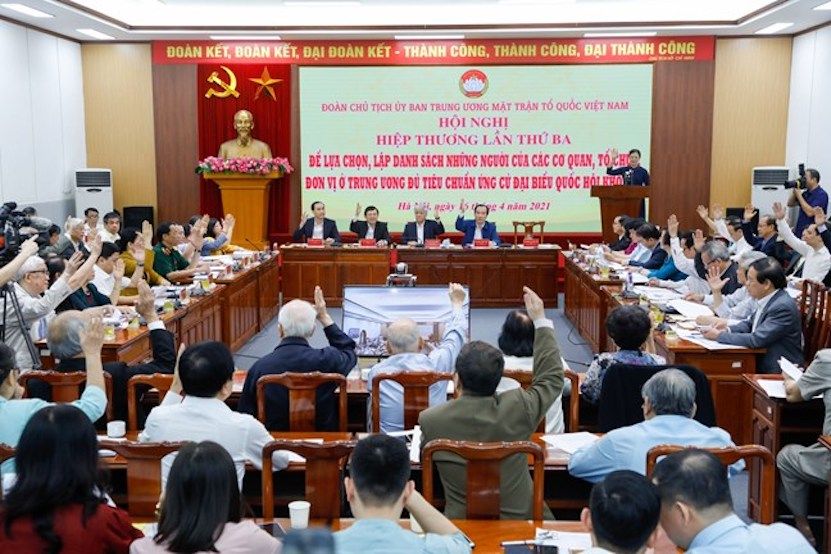
    Vietnamese citizens can’t just register themselves as candidates and expect their names will go straight to the candidate listings on the ballots. If they want to be candidates, they have to go through a vetting process called hiệp thương, which is conducted by the Vietnam Fatherland Front, the extended political arm of the Vietnamese Communist Party (VCP). After the third and final round of hiệp thương, the list of candidates will be released and voters can vote for only these candidates.

    The Fatherland Front’s local committees of Hanoi and Ho Chi Minh city did exactly that just last week. Similar events were held in other provinces as well.

    Context:

    • At least two independent candidates have been arrested before the third round of hiệp thương.
    • Dozens of candidates in Hanoi withdrew before the final list was adopted.
    • Almost no dissidents or activists are running for election this year. This is a major change compared to the last election in 2016, when at least 30 of them ran (and failed to make it to the final list).

    A prominent activist, Nguyen Thuy Hanh, was arrested

    Quote from VietnamPlus:

    “Hanoi’s police have taken a woman into custody as they investigate allegations of ‘making, storing, distributing, or disseminating information, documents, and items against the State of the Socialist Republic of Vietnam’ under Article 117 of the 2015 Penal Code.

    The Investigation Security Agency under the municipal Department of Public Security said on April 8 they had arrested Nguyen Thuy Hanh, born in 1963 and living in Thuong Dinh ward, Thanh Xuan district.”

    Context:

    • Nguyen Thuy Hanh has been a prominent advocate for democracy and human rights in Vietnam since 2011. She also participated in several anti-China movements.
    • Hanh ran for election in 2016 as an independent candidate but failed to make it through the VCP’s vetting process.
    • She founded and managed a well-known charity called the 50k Fund (Quy 50k) to assist family members of political prisoners financially for several years before shutting it down in late 2020.

    Read her profile in The 88 Project’s database and an op-ed about her.


    Vietnam unveils tools for taxing and tracking big tech

    Quote from Nikkei Asia:

    “Vietnam is proposing a pair of regulations that would compel global tech players such as Alibaba and Google to hand over more taxes and data, in a move to increase government oversight in one of the world’s fastest-growing digital markets.”


    US stops short of branding Vietnam a currency manipulator

    Quote from Reuters:

    “The U.S. Treasury Department on Friday said Vietnam, Switzerland and Taiwan tripped its thresholds for possible currency manipulation under a 2015 U.S. trade law, but refrained from formally branding them as manipulators.”


    US names new ambassador to Vietnam

    Quote from VnExpress:

    “U.S. President Joe Biden on Thursday nominated Marc Evans Knapper as the new ambassador to Vietnam.

    The Senior Foreign Service member, who will succeed Daniel J. Kritenbrink, is currently serving as the deputy assistant secretary for Japan and Korea in the State Department.

    He has previously served in the U.S. embassies in Seoul, South Korea, Baghdad, Iraq, and Tokyo, Japan, and the State Department’s Office of India Affairs and Office of Japanese Affairs.”


    What’s special about April for Vietnamese?

    April is a special month not only in Vietnam but also in Vietnamese overseas communities. It marks the end of the Vietnam War on April 30, 1975. The event widely divides Vietnamese people around the world with the winning side, which is the ruling Communist Party, celebrates and the losing side mourns. The losing side is millions of people in the South and Vietnamese former refugees as well as their families now settled in countries such as the United States, Canada, and Australia. Discussing the loss of the losing side and the nature of the fall of Saigon is still largely taboo in Vietnam.

    However, this day is not only about the war, it is also the end of the first and the only Vietnamese democracy in history thus far, the Republic of Vietnam.

    Curious about it? Here are the books you might be interested in:


    Learn more about Vietnam

    Why the #MilkTeaAlliance movement has little appeal to Vietnamese youth

    Dien Nguyen An Luong/South China Morning Post | April 16, 2021

    “Against that backdrop, outsiders may wonder why Vietnam’s internet-savvy youth have remained an outlier in the #MilkTeaAlliance. How have Vietnam’s leaders afforded to stave off such a movement? Will anti-government sentiment materialise any time soon in the country? A closer look at how social media and geopolitics have become increasingly interwoven provides some clues.  While some observers have talked up its role, there has been a growing body of evidence that social media alone could not have fanned the likes of Arab Spring-style uprisings.”

    Vietnam’s Great Debate Over Democracy

    Trien Vinh Le/The Diplomat | April 15, 2021

    “Inspired by the development stories of East Asian countries that have experienced the benefits of embracing democratic principles, there are official and informal opinions that Vietnam needs a second Doi Moi centered around political reform. If new political institutions and practices are allowed to emerge and lead to new ways of governing and fresh policy ideas, the economy can pivot to more open and more innovative activities based on science and technology. It is appropriate to ask how the current government system can usher in a new era of economic transformation when so many at the top benefit from the old model based on exploitation of labor and natural resources.”

    Vietnam restores regional balance to top leadership

    Le Hong Hiep/Nikkei Asia | April 14, 2021

    “In an attempt to address southern politicians’ grievances, the party appears to be taking steps to gradually restore the regional balance.  Soon after the 13th congress, the party installed Vo Van Thuong, a politician from the southern province of Vinh Long, as the standing member of its secretariat, the No. 5 position in the party’s hierarchy. Last week, the National Assembly also elected three southerners into senior state and government positions, including Vo Thi Anh Xuan from An Giang Province as vice president, Tran Thanh Man from Can Tho city as deputy chair of the National Assembly, and Le Minh Khai from Bac Lieu Province as one of the deputy prime ministers.”

    How a Vietnam-Malaysia Fishing MOU Could Ease the Wider South China Sea Dispute

    Ralph Jennings/VOA News | April 16, 2021

    “Malaysia and Vietnam intend to sign a memorandum of understanding that experts say could eventually help ease a decades-old, six-party dispute over sovereignty in the resource-rich South China Sea.  Maritime law enforcement agencies from the two Southeast Asian countries aim to sign the memo this year and resolve at least 15 years of trouble over the movement of Vietnamese fishing vessels, the official Bernama news agency in Malaysia reported in early April. Bernama quoted the Malaysian Maritime Enforcement Agency director-general saying he’s confident the deal, now in its final stages, will solve the issue of Vietnamese fishing boats that enter Malaysian-claimed waters.”

  • Vietnam: The True Victims Of Political Repression

    Vietnam: The True Victims Of Political Repression

    The Absence of Choice

    National elections in any part of the world are always interesting to observe. What occurs in them tends to range from comically hilarious, to shockingly horrifying, to essentially pivotal in the future progress and growth of a country. And as much as some people might say otherwise, whoever wins these elections matter; they are an important factor that determines the direction a nation will steer itself in over the coming few years.

    Living in a Communist state, Vietnamese citizens do not get the same opportunity afforded to other people in democratic countries during their general election. The Vietnamese people do not get to choose the top elected officials in their own nation; such a decision is left to the Politburo.

    In effect, the direction in which the leaders of Vietnam steer the nation tends to be a one-way street with very few deviations to the plan and to the overall end goal.

    While there are indeed some benefits to this kind of system, a long hard look at the failures of communist states of the past tends to raise more than a few eyebrows.

    Hence, it should come as no surprise that a significant number of Vietnamese citizens do not approve of how their government handles elections, or how their leaders run the country.

    Faces in the Crowd

    CIVICUS, a global alliance of civil society organizations and activists dedicated to strengthening citizen action and civil society throughout the world, released a report on March 29, 2021 detailing how several activists in Vietnam were targeted, arrested, detained, or tortured by the government.

    CIVICUS noted that leading up to the conclusion of the 13th National Congress of the Vietnamese Communist Party (VCP) on February 2, 2021, the Vietnamese government and state security forces had been intensifying a crackdown on whoever they perceived to be critical of the regime.

    An alarming  number of Vietnamese citizens were arrested, detained, or even tortured on the basis of trumped-up charges and the overuse of vaguely defined Vietnamese penal laws.

    Following are just some of the people mentioned in the CIVICUS report.

    Tran Duc Thach at his trial. Photo: Tuoi Tre

    Tran Duc Thach, an activist, writer, and co-founder of Vietnam’s Brotherhood for Democracy, was convicted on December 17, 2020. He was charged with subversion under Article 109 of the country’s criminal code and was sentenced to 12 years in prison and three years’ probation.

    State prosecutors claimed that his posts on Facebook “threatened social stability, encroached upon national independence and socialism, reduced people’s trust in the political institution of the state of Vietnam, and infringed upon national security and social safety and order.” On March 24, 2021, his appeal was denied and his sentence was upheld.

    In December 2020, Nguyen Dang Thuong, Huynh Anh Khoa, and Tran Trong Khai were sentenced to serve 18, 15, and 12 months in prison, respectively. The three were administrators of a Facebook political discussion group. They were arrested under Article 331 of the 2015 Penal Code for “abusing democratic freedom rights to infringe upon the benefits of other individuals and/or organisations.”

    Their Facebook group had a following of around 46,000 users before it was shut down.

    From left to right: Le Huu Minh Tuan, Nguyen Tuong Thuy, and Pham Chi Dung. Graphic: Luat Khoa Magazine

    On January 5, 2021, Pham Chi Dung, Nguyen Tuong Thuy, and Le Huu Minh Tuan were convicted for allegedly “making, storing, and disseminating documents and materials for anti-state purposes” under Article 117 of Vietnam’s Penal Code. The three men are all members of the Independent Journalists Association of Vietnam (IJAVN). They wrote blogs and articles critical of the Vietnamese government. Nguyen Tuong Thuy also testified in front of the US House of Representatives in 2014 regarding the lack of freedom in Vietnam.

    Dinh Thi Thu Thuy. Photo: The 88 Project.

    Dinh Thi Thu Thuy, an environmental activist, was jailed for seven years on January 20, 2021, after having been in police custody since April 2020. She was charged with “conducting propaganda against the state,” also under Article 117 of the Penal Code. Thu Thuy had made just a total of five social media posts that had garnered a total of 130 likes and 50 shares.

    Phan Bui Bao Thy and Le Anh Dung, two Vietnamese state media bloggers, were detained on February, 10, 2021, for publishing articles accusing provincial officials in Quang Tri Province of corruption. They were charged with “abusing press freedoms.” Phan Bui Bao Thy was the bureau chief of the online magazine Age and Education.

    More recently on March 9 2021, Tran Quoc Khanh was detained for “defaming the government and distorting its policies.” He had used his personal social media page to post about the state’s human rights abuses, corruption, and the South China Sea. He is currently held in pre-trial detention and if found guilty faces 12 years in prison.

    Tran Huynh Duy Thuc at his trial.

    Nguyen Van Hoa, a contributor for Radio Free Asia (RFA), and Tran Huynh Duy Thuc, an imprisoned blogger, started hunger strikes in protest against the appalling conditions in Vietnamese prisons. Hoa was arrested in the past for filming a toxic waste spill after the Formosa environmental disaster happened in Vietnam in 2016. Tran Huynh Duy Thuc has remained in prison since his arrest in May 2009.

    Nguyen Van Duc Do, an activist currently incarcerated for “carrying out activities aimed at overthrowing the people’s administration” under Article 79 of the 1999 PenalCode, has been in prison since October 5, 2018. Amnesty International reports that he has been in solitary confinement since May 2020 and has been subjected to various forms of torture. According to the human rights group, both his legs were bound by chains for 10 consecutive days. He was also fed food mixed with human excrement.

    The Measure of Their Reach

    These people are just a drop in the ocean compared to the total number of Vietnamese who are facing the ire of the government. In reality, it is difficult to ascertain how many people have been subjected to unjust prosecution by the Communist Party. Yet, the one thread that seems to be in common with all of them is that they were all very vocal in their criticisms.

    It would be easy to claim that only high profile individuals are the target of the ever watchful gaze of state authorities. Yet, Dinh Thi Thu Thuy only made five social posts and she was sentenced to 7 years in prison. Even members of the Vietnamese state media itself – like Phan Bui Bao Thy – were arrested.

    On social media, a person’s message can reach 10, a hundred, a thousand, or even a million people. However, the popularity of your posting hardly even matters in the eyes of the Vietnamese government. If the regime does not approve the message’s content, it will treat everyone equally, everyone as the same, because no one is above the VCP’s supreme authority. That would mean it will arrest and sentence anyone who dares to write in contradiction with its propaganda.

    Anyone is in danger, no one is secure, and even the slightest word critical of the government might be the last one you ever get to say.

    All the people mentioned above and the countless others like them are indeed victims of a government so thin-skinned that it responds to even the slightest whiff of dissent with arrests, coercion, and brute force. Yet, these journalists, activists, and human rights defenders account for just a tiny part of the whole. They are not the only casualties under the Communist regime.

    The actual victims of political repression are you, me, and everyone living and breathing under the iron heels of despots and dictators. And even though Vietnam always insists that it upholds and respects all of the human rights treaties it has entered into, in reality, all citizens are living in fear that one sentence or even one word may destroy our lives and the lives of those we love.

    We are not free, and we will never be truly free if we still condone this type of government Vietnam has.

  • Election in Vietnam: The Whims Of The Few Or The Will Of The Masses?

    Election in Vietnam: The Whims Of The Few Or The Will Of The Masses?

    This article was written in Vietnamese by Vo Van Quan and was previously published in the Luat Khoa Magazine on February 4, 2020.


    Regulation 214

    On February 2, 2002, Vietnam’s Politburo officially announced Regulation 214 on the Standard Framework for titles of cadres belonging to the Central Executive Committee, the Politburo, and the Secretariat.

    Accordingly, the Politburo amended and supplemented specific provisions on the required qualities and capabilities of important internal party positions.

    To put it simply, Regulation 214 is comparable to job descriptions and position requirements that we often see in job listings. As for members of the Party Central Committee, Regulation 214 requires them “to be a representative of political courage, ethical qualities and working ability; have the capacity to organize the successful implementation of the Party’s policies and duties.”

    If one is a member of the Politburo and the Secretariat, the candidate must be “an official member of the Central Committee for a full term or more; has experienced and completed essential tasks in key leadership positions at the provincial level.”

    However, it is worth mentioning that Regulation 214 does not set out specific criteria for certain titles such as the president, prime minister, or chairperson of the National Assembly, all of which are state positions. Theoretically, these are not party positions and are therefore outside the influence of the VCP’s internal politics.

    Regulation 214, however, dictates that the person in the position of State president is required to have “high prestige,” a “solidarity center”, and  “comprehensive, outstanding” talent; while the prime minister must “stand out comprehensively … in strategic planning for socio-economic development, national defense and security, [possess] sensitive thinking, [be] dynamic, decisive”.

    Obviously, it can be understood that the VCP was setting the criteria for its members to consider in order to have a basis for nominating, recommending, voting, and selecting “ideal” candidates for the National Assembly and the People’s Council in 2021.

    However, with the electoral mechanism in Vietnam, it is completely understandable that the Party’s Regulation 214 will be used to determine leading positions in the State. However, these regulations still have to be approved by a group of 17 members of the Politburo.

    So, are the above rules able to replace the popular vote? Are the Vietnamese people so incapable of choice that they must give authority to the elites (such as the VCP) to choose their leaders?

    Một cuộc họp của Bộ Chính trị - Đảng Cộng sản Việt Nam, tháng 5/2019. Ảnh: TTXVN.
    A meeting of the Politburo – Communist Party of Vietnam, May 2019. Photo: VNA.

    The political elite

    An argument exists to justify the Communist Party’s electoral mechanism. This argument is that the Vietnamese people are not well educated, are easily provoked, and are unsuitable for democratic elections. So, it is better for an elite minority to choose the country’s  leaders; this elite minority is now believed to be the VCP.

    Such an argument is found not only in Vietnam but in other parts of the world as well.

    For instance,  theories such as technocracy (a model of governance that believes that only experts in certain fields can be elected to corresponding positions in government related to their field of expertise) and epistocracy (a system that assumes only “qualified” citizens with enough information and political authority can vote or run for government) are not really new.

    The famous 19th century philosopher John Stuart Mill used to support an electoral system based on voters’ caste and professional work. Experts who have complex knowledge and skills get six votes, farmers and merchants get three or four, skilled workers two, and unskilled workers one ballot.

    More recently, Jason Brennan in his article The Case Against Democracy also promotes a political environment where only qualified and knowledgeable citizens should be allowed to vote or stand for office.

    He writes that most of the political questions in contemporary life have become too complex for common voters to understand; they are too fond of simple answers to complex questions. Worse, he argues that the common people are not only ignorant, but that they also believe that they know more than what they actually do; they even claim that they are right. He believes that this makes their political decisions ignorant and stupid.

    Brennan does not propose a voting model based on qualifications and educational levels like Mill, but rather recommends a test of voters’ political capacity before allowing them to vote.

    The rules of the VCP electoral mechanism seem to be loosely based on or inspired by these  two aforementioned technocratic and epistocratic theories:

    • Party members are considered “qualified” citizens who make the initial decisions regarding the formation of government through voting among themselves to elect members of the Party Central Committee. Then, the members of the Party Central Committee who are considered “high quality” citizens choose the “elite” members who will sit in the Politburo and the Secretariat seats, and also thoroughly become the state leaders, regardless of the outcome of local popular elections.
    • Meanwhile, the Politburo, which claims its membership to be the technocratic masters, sets the required standards for the new leaders, and then nominates and fills in the state positions for Vietnam.

    The VCP considers this a brilliant method to select the top leaders for the country. But is it?

    The defects of democratic elections

    Democratic elections are clearly not liked by everyone, and some even find them to be very disappointing. The election of former US President Donald Trump is a very fitting example.

    Ông Donald Trump và phu nhân đi bầu vào tháng 11/2016. Ảnh: Getty Images.
    Donald Trump and Melania Trump were at voting booths in November 2016. Photo: Getty Images.

    During the primaries in the 2016 US presidential election, as many as 50 Republican Party members openly voiced their disapproval of Donald Trump.

    Specifically, General Michael Hayden (a four-star general, and former director of the CIA and NSA) said that Trump did not have the right temperament to lead. More specifically, he said that Trump lacked the personality, patience, disposition, knowledge, curiosity, or even the willingness to learn. These qualities, according to Hayden, are needed by candidates to be deserving of the title of president of the United States.

    Using similar language, David French, a writer of The Dispatch, never concealed that he belonged to the “Anti-Trump” movement. He strongly affirmed that personality is essential in being a world leader. A person’s temperament, knowledge, and integrity will shape his or her behavior. And even though the democratic process and expert advisors can help shape and steer a president lacking in these qualities, mistakes can still happen, especially for someone as stubborn as Trump.

    In the end, with his victory in the 2016 election, Trump showed that he was well supported by a large number of American voters, regardless of how many critics said that he was not worthy enough or deserving of the US presidency. In fact, during the middle of his impeachment fiasco, Trump’s ratings were not only stable, they also increased.

    I will not go too deep in regards to Trump, because his assessment is still very controversial, even among the Vietnamese. However, this entire situation gives us this sliver of truth: people sometimes may vote for unworthy candidates.

    ajorities in many countries are dissatisfied with their democracy

    The above-listed statistics is rather a detailed study conducted by Pew Research on voter views of candidates for elected positions in the United States, which found that voters did not take into consideration the quality and competency of political candidates.

    Only 47 percent said that the quality of the candidates was good, and even less than 5 percent rated the quality and competence of the candidates as very good. The remaining 52 percent had a negative view. As for the presidency, 58 percent said they were not satisfied with the choices they had.

    Furthermore, according to Pew, people in democratic countries tend to be dissatisfied with the way their countries operate. The list includes centuries-old democracies such as the United States and Great Britain. In line with this, the people’s opinions of their elected officials are also not high.

    For instance, in Greece, up to 90 percent of the population believes that their elected officials do not care about the will, views, and aspirations of ordinary citizens.

    Also, more than 58 percent of the US population share this opinion about their own politicians. Even though the indicators of transparency and corruption in the United States have always been evaluated positively by independent organizations, up to 69 percent of respondents agree with the opinion that national politicians are both corrupt and decadent.

    In some African countries, democratic elections have turned into a game of those who can spend the most money to rile the mob.

    So then, why have most nations in the world still chosen to maintain a universal electoral system? Why has most of the world not surrendered political power to the elites who are allegedly more knowledgeable, educated, and are supposed to have leadership qualities that can help them steer and rule a country?

    There is much to discuss about leaders who are chosen by the people, and those chosen by the elite.

    The first misconception of those who oppose popular elections is that they think the majority will end up choosing the wrong candidates. In the same vein, they also believe that this choice should be left to the “elite.” They think that this small group of people can accurately decide without being influenced by interest groups, personal preferences, or other hidden agendas. These claims are utterly baseless.

    Even Mill himself realized that countries needed to build a system that fully reflected current attitudes in society, and the idea of an administration full of economists frightened him.

    For instance, why should a lawyer get three times the votes of a skilled worker when law is such a broad and diverse field? Politics and welfare issues are just small specializations in law and not all lawyers are knowledgeable enough to talk about them, let alone determine the best course of action in a field they may not be trained in.

    Regarding Jason Brennan’s voter-competency test model, David Runciman, a professor of politics at Cambridge University, identifies that this model just pushes his questions to the starting point and fails to answer any more.

    Who will be considered qualified to prepare this test model? College professors? They also have their own political interests and opinions. Economists? They may be talkative on a variety of market rules, but their predictions about the future of the market are often incorrect.

    And Brennan, himself a university lecturer, has probably also seen countless students cramming knowledge into their heads just to pass exams.

    Proponents of the “epistocracy” model also have to deal with the fact that the educated, and also the elites, are in fact influenced by the crowd and are biased just like everyone else in the world.

    As social scientists Larry Bartels and Christopher Achen pointed out: History shows that intellectual groups, elite or not, can be as deviated from political morality and political thinking as anyone else.

    There are shortcomings and problems in today’s modern electoral and representative democracy, but this does not mean that it is neither efficient nor just. As in marriage, anyone can choose the wrong partner, similar to how we can elect the wrong person. But with democracy, various checks and balances exist that can help ensure that the system can function as intended. As with marriage, we can get divorced and then marry again.

    And when the people’s decision-making power is taken away, words such as “ability,” “quality,” “elite,” “technocrat,” or “epistocratic” are just flimsy excuses for control.