Blog

  • Protest Against BOT: How Vietnamese Drivers Fight Back

    Protest Against BOT: How Vietnamese Drivers Fight Back

    BOT, this three-letter-word probably does not have any special meaning for anyone but the Vietnamese people. It is a daily nightmare for many commuters in the country of close to 95 million in population.

    BOT stands for Build-Operate-Transfer, which is a form of contracts between a private company and the government that has become very popular in transport projects across Vietnam. By April 2018, it was estimated that 67 BOT(s) were in operation throughout the country.

    To put it simply, in a typical BOT development plan, the government would contract with a private company to build a transport project – for example, a section of a highway or a new highway bridge – and later allowed the company to operate a toll booth for a number of years to collect money from commuters to recover their investment.

    However, in Vietnam, once these BOT(s) began to open toll booths to collect fees, some of them faced enormous opposition from the people, namely the drivers who were subjected to paying such fees.

    In August 2017, a massive protest initiated by drivers when BOT Cai Lay in Tien Giang Province began to collect fees had lasted for days, causing this toll booth to stop collecting fees indefinitely.

    The drivers’ reason for protesting the fees was because the toll booth was wrongly situated, collecting money from people who did not use the road that was constructed under the BOT project.

    On August 6, 2017, the drivers started to use small bills to pay for the toll fees – which range from 35.000 VND – 180.000 VND – creating long delays on the highway in many days. After about two weeks, the BOT’s owner had no choice but to close down the toll (“xả trạm” in Vietnamese) and let traffic goes through without collecting the required fees until the government could come up with a resolution.

    BOT Cai Lay, however, remains completely shut down from December 2017 until today, while both the local and central governments have yet to finalize a plausible, alternative plan to resolve the problems. Their latest proposal – announced on January 15, 2019 – was to reduce the fees and extend the collecting period, but such a plan still failed to address the concern about the wrong location.

    In early December 2018, allegations regarding another wrongly situated BOT stormed both social media and the news in Vietnam because this toll booth is stationed on the most important highway in the country – National Highway 1 – at the outskirt of Ho Chi Minh City in Binh Tan District.

    The drivers alleged that the toll booth continued operating after its contractual time with the government had ended for more than 31 months, collecting fees that it was not entitled to. When being confronted, the owner of the BOT – IDICO company – claimed that the toll remained because it had built other transport projects nearby and could continue to collect fees.

    However, the drivers did not accept this explanation, stating that if IDICO had constructed other projects, the toll should be stationed in those areas.

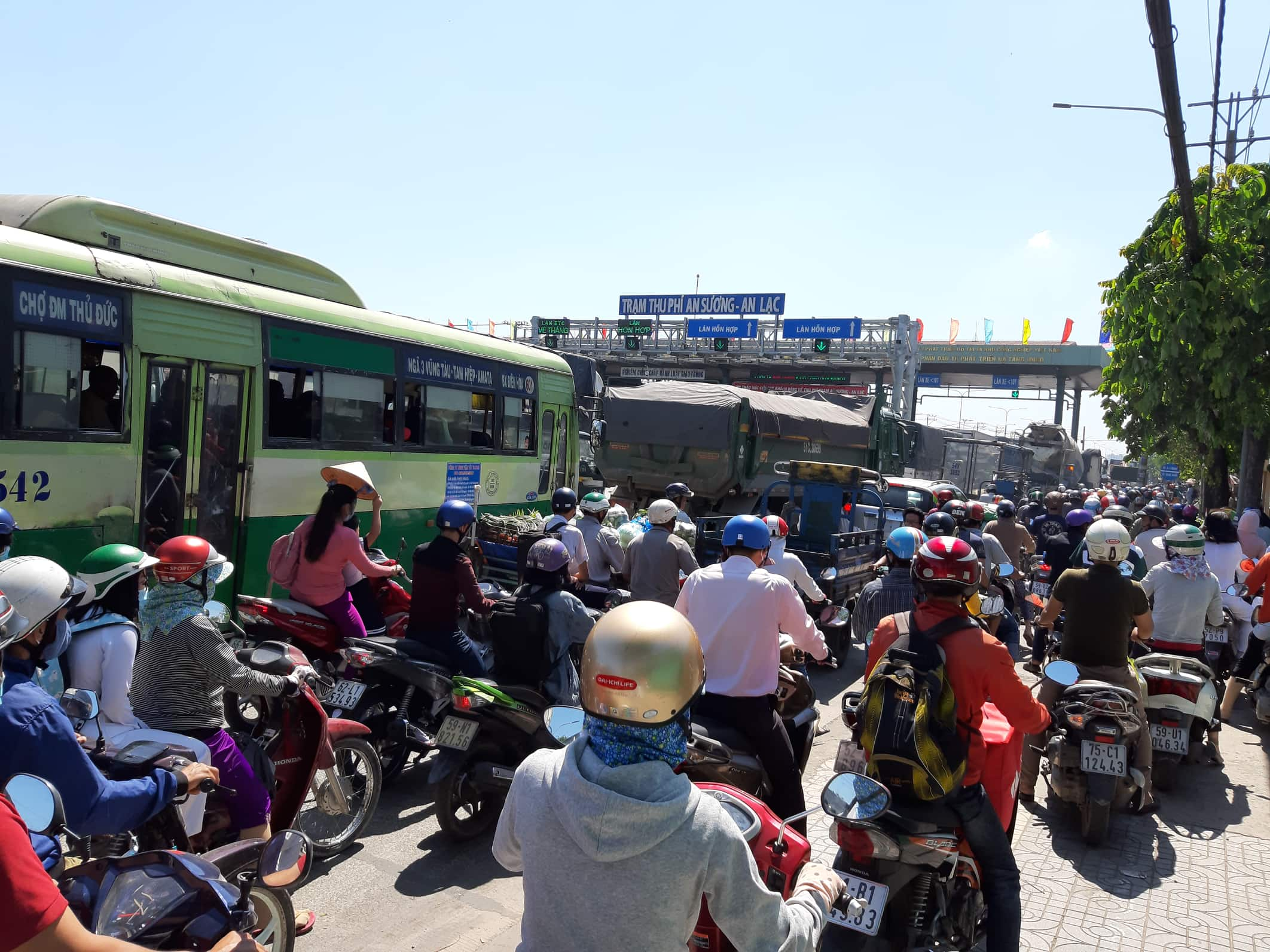
    BOT An Suong locates at a critical junction for traffic entering and leaving Ho Chi Minh City, and the toll collects fees both ways for at least 15.000 VND each. For those who have to travel through this area daily, the amount they pay could be quite substantial in any given month.

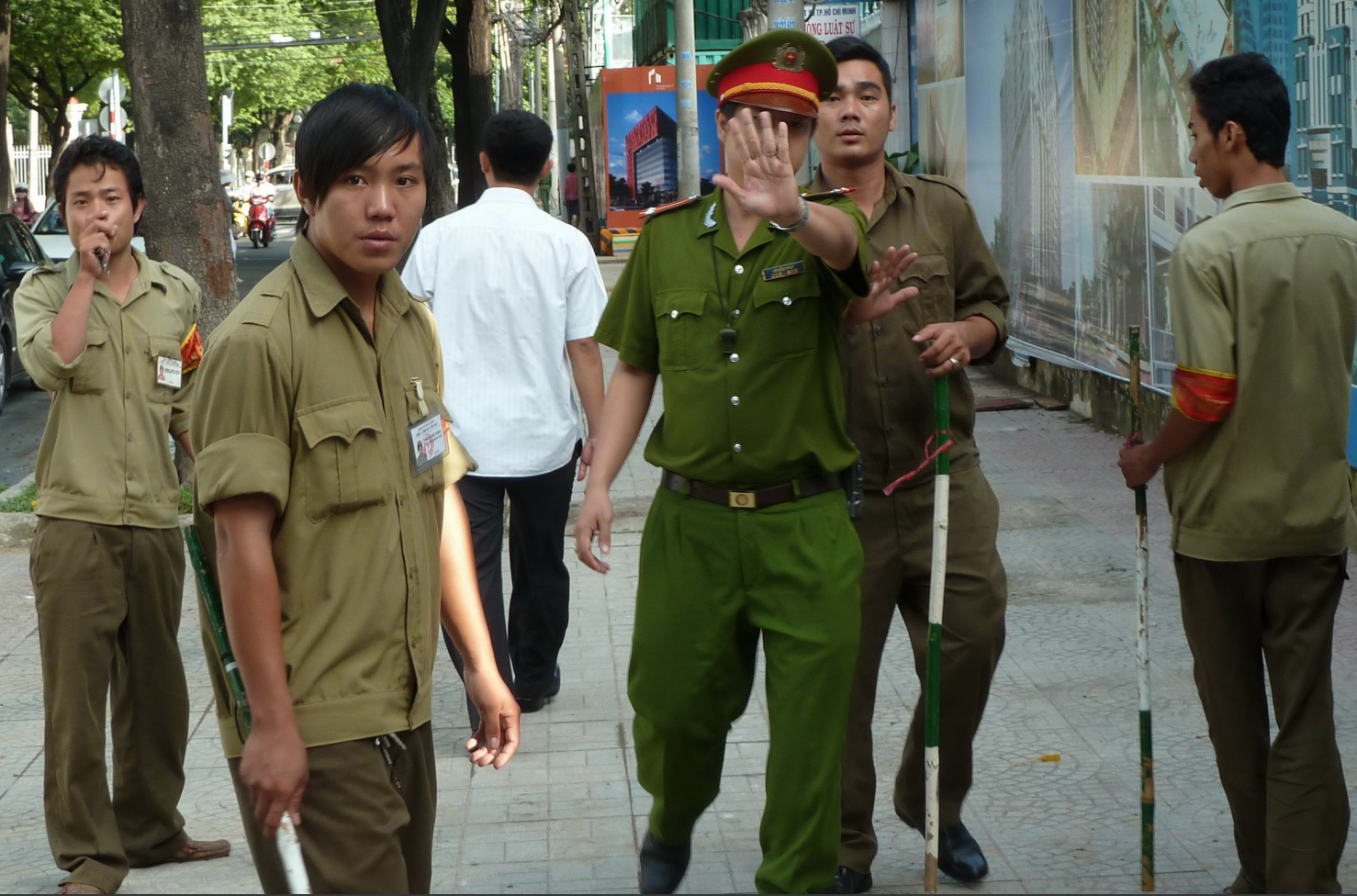
    On December 6, 2018, about one hundred drivers showed up to protest the fees collection at An Suong, and they faced hundreds of men, as well as police officers and civil security forces. A group of men wearing masks opened the door of a protesting driver’s car, dragged out Le Thai Hung who was sitting on the passenger’s seat and physically assaulted him.

    Hung was then taken to the nearby police station by the same group where he alleged that he got beaten up during his 12-hour detention. The police did not charge him; they later released him and said he fell and suffered injuries.

    On January 14, 2019, the story of BOT An Suong got heated again on social media where four drivers (one of them is journalist Truong Chau Huu Danh) who protested the fees collection at this toll booth were detained illegally in an alley nearby for over 30 hours.

    The victims live-streamed their plight where they were confined in a car, surrounded by hundreds of masked men and police throughout the night.

    Their three cars were picked up by a towing truck which they claimed was acting under the order of the owner of the BOT. They were towed from the BOT to an alley about 50 meters nearby where the four persons were held against their will. Barricades were put up at the only entrance/exit of a dead-end alley, effectively stopped them from leaving. They also claimed that their cars were damaged due to the removal. A fifth person was attacked and taken away earlier in the evening of January 14, and his car later was towed to an unknown place.

    In the live-stream clips, viewers could see police officers were present at the scene but failed to act and protect the victims from both the removal and the false imprisonment. Also present at the scene was a large group of men in “blue masks” who acted most aggressive, yet it was impossible to know their true identity.

    The four continued staying together in one car, a Ford Ranger, where no one was allowed to get close to them. Food delivery, their lawyer (who came by the next morning), and even an ambulance, all were denied entry.

    Around 9:00 P.M., one of the drivers, Huynh Long, stepped off the car to find a restroom and disappeared. He later was found unharmed, but his wallet and cellphones were taken.

    Long said he was held against his will by a group of men on motorbikes, who then rode around town with him and threatened him to stop his protest against BOT An Suong. They later left him stranded on the streets after taking his belongings, but Long got help and was able to come back to the alley the following morning to be with his friends.

    By January 15, 2019, the police attempted a few times to write up their investigative report about the incident, and the four victims finally were allowed to leave the scene in the late evening. They stated that they would initiate legal action against those who were involved in the false imprisonment.

    On January 16, 2019, the protest by the drivers and others continued at An Suong, asking the BOT to stop collect fees. One driver said in a live-stream on Facebook that he has prepared for the worst, and that if the BOT’s owner would again try to detain drivers, he could last up to ten days.

    At about 2:00 P.M. local time, according to the same protesting driver, the toll booth gave up and let cars pass through without having to pay.

    There is a Facebook group of drivers who participated in these BOT protests in recent years calls Friends on the Long Road (Bạn Hữu Đường Xa).

    One of the reasons these protests were successful and received public support was the fact that a lot of Vietnamese people got frustrated when they have paid a lot of taxes for improving and maintaining road conditions, and yet the country’s infrastructure and transportation remained the worst in the world.

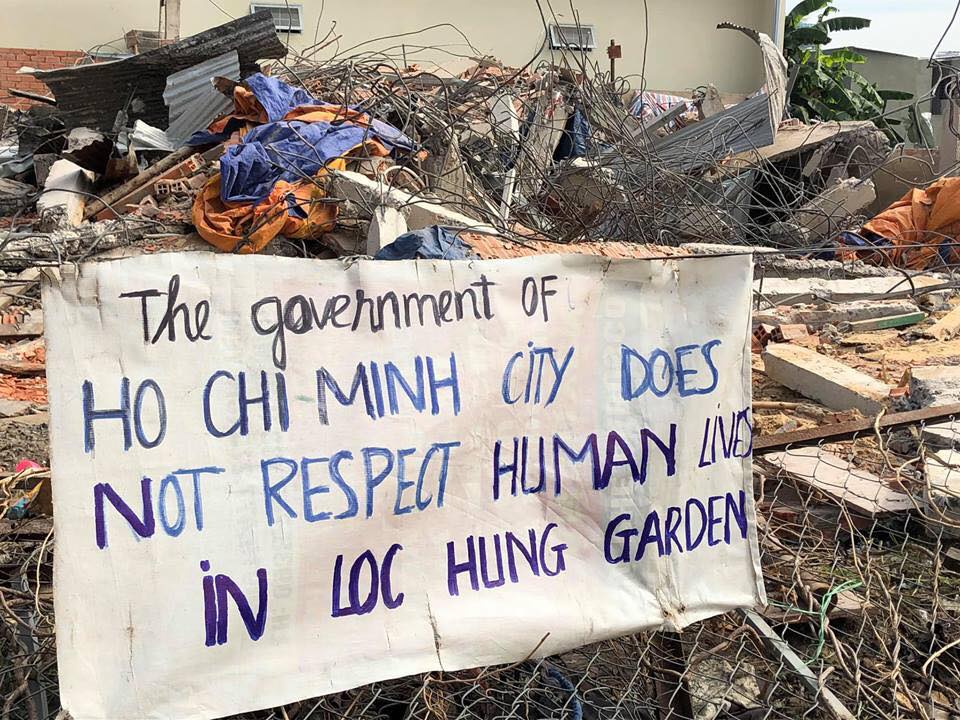
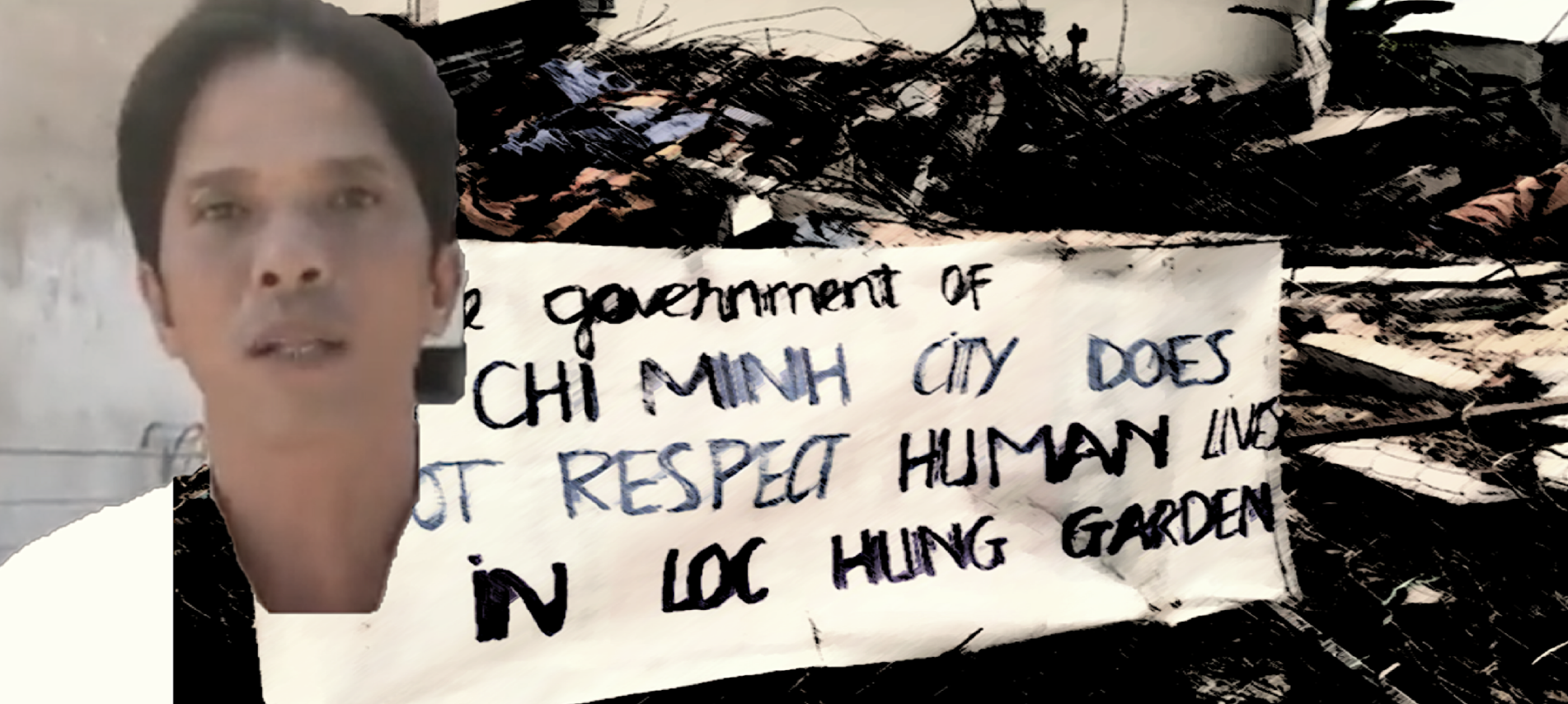
    Further, whether it was the Formosa environmental disaster, the land eviction in Loc Hung garden, or these BOT projects, the people did not get to participate in the decision-making process nor were they even consulted. Often, the public never knew about these projects until they became disastrous for the people’s daily life.
  • Timeline Of The Loc Hung Garden Incident

    Timeline Of The Loc Hung Garden Incident

    The forced eviction at Loc Hung vegetable garden in Saigon on January 4 and 8, 2019 joined the long list of land disputes between the people and the State of Vietnam. We are putting together a timeline of events that have happened to date and will continue to update as this story develops.

    December 20, 2018

    News about a possible forced eviction came about on December 20, 2018, on social media. Blogger and human rights activist, Pham Doan Trang, reported on her Facebook that according to the residents at Loc Hung, 50 local police officers from different forces in Ward 6 of District Tan Binh showed up at the garden area, demanding the residents to allow them to perform an administrative check. By 1:30 p.m., the police withdrew.

    December 29, 2018

    The People’s Committee of Ward 6 issued an announcement, stating that they would begin a forced removal of all illegal constructions that were built after January 1, 2018, which also notified the residents that the time for such removal would take place within 90 days from January 2, 2019. It is unclear if all residents received the announcement.

    January 3, 2019

    During the night of January 1, 2019, the residents announced on social media that the local authorities have brought in barbed wires, frequency disrupting machine, forklifts, and bulldozers to the garden’s area.

    January 4, 2019

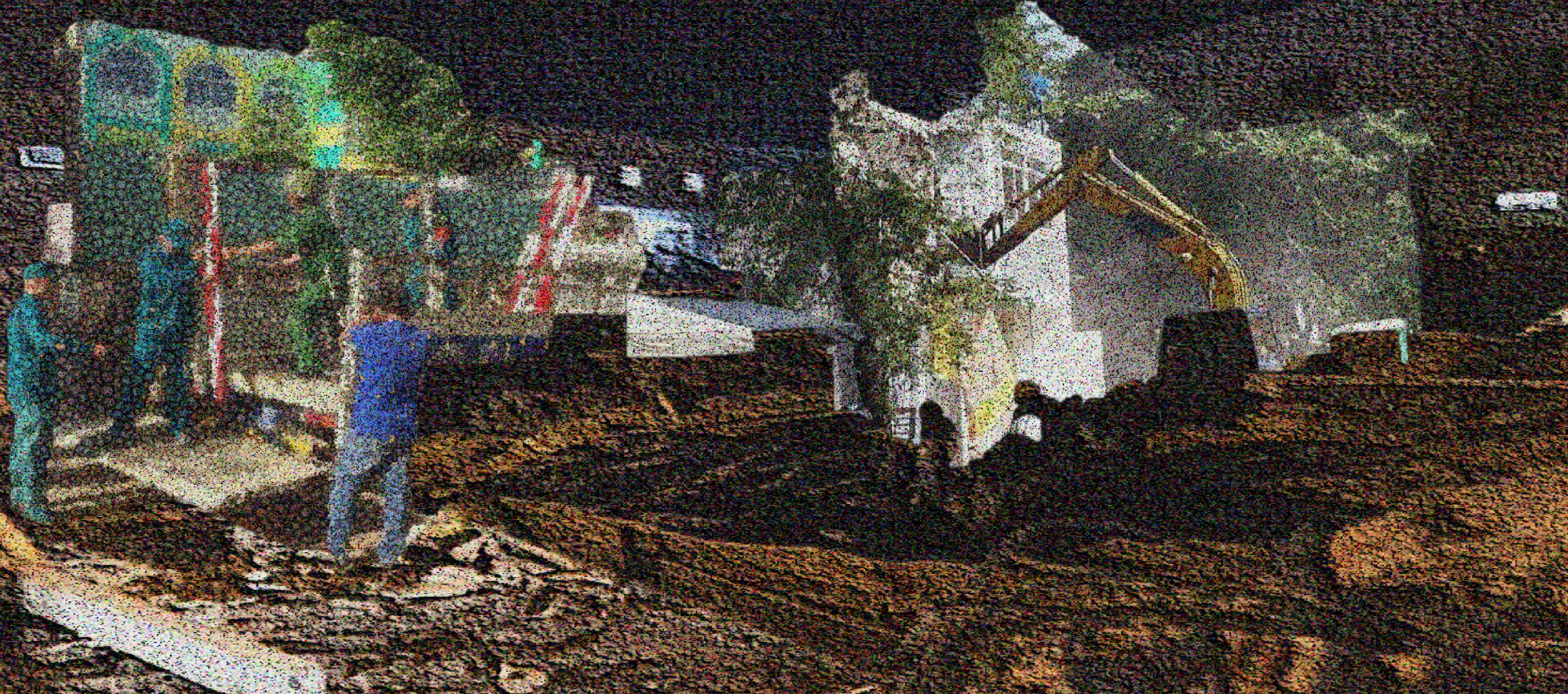
    At daybreak, a group of some 400 people from different police and security forces showed up at Loc Hung and began to block street access to the garden, starting from the Bay Hien intersection to Thanh Thai and To Hien Thanh streets. The removal of some 40 houses lasted from 7:30 A.M. until 6:00 P.M., during which time 20 people were arrested and taken to the Ward 6’s police station for opposing it.

    The residents insisted that they had never received any order for such removal.

    January 7, 2019

    During the night, hundreds of police officers and civil security personnel were ordered to go to Loc Hung where the public speakers – on high volume – were announcing the government would only remove illegally built constructions. Cao Ha Chanh, one of the persons serving on the board of representatives for the families living at Loc Hung, recalled that the removing force still did not provide the people with any legal documents regarding the order to remove before they started to take down the homes.

    January 8, 2019

    Starting at 5:30 a.m., approximately 1.000 officers from different police forces and others entered Loc Hung garden. Similar to what happened on January 4, 2019, the authorities blocked off the streets leading to the area by putting up the barbed wires. To gain entry, people must show the police their identification. As soon as they arrived, they began arresting those residents identified as “leaders” in the community, including Cao Ha Truc.

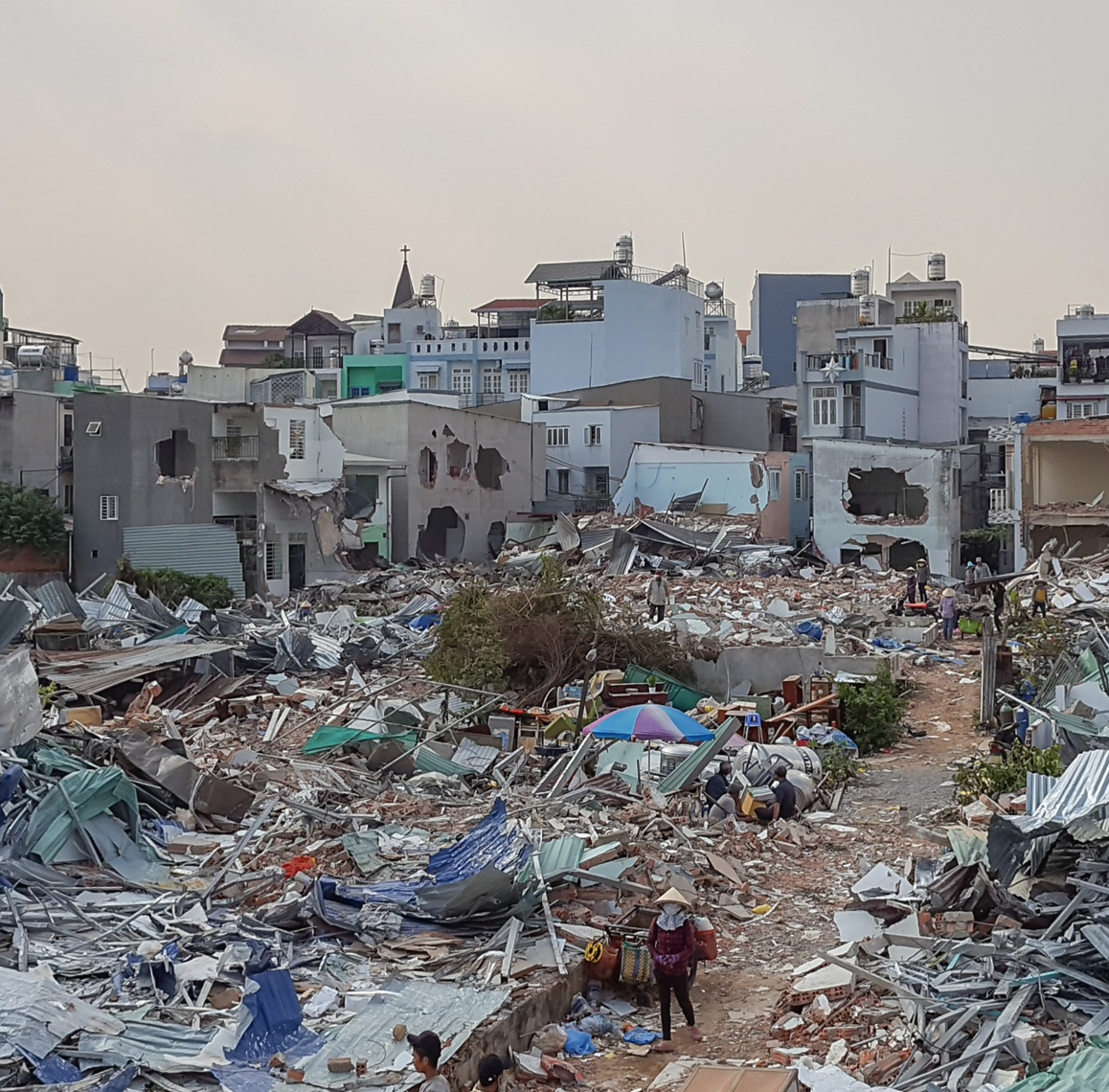
    Electricity and internet were cut off in the area. By 7:30 A.M., the forklifts and excavators were put to work as the authorities began to tear down the residents’ homes. By the end of the day, all of the houses at Loc Hung garden were demolished. The residents estimated there were about 200 homes.

    Among the now homeless people were some 20 disabled veterans who served in the former South of Vietnam’s military who do not have a family and they were being taken care of by the residents and the priests from the Redemptorists Church.

    On the same day, Amnesty International – Southeast Asia office – publicly denounced the Vietnamese government’s decision to remove the houses forcefully belong to Loc Hung’s residents.

    January 9, 2019

    In the early hours of the day, the police released Cao Ha Truc and other residents who got arrested the day before.

    The Ho Chi Minh City Police Department’s newspaper was among the first state-owned media reported on the removal of Loc Hung Garden’s houses, which the government estimated to be around 120 in total. Accordingly, the People’s Committee of Ward 6 stated that the removal of the illegal constructions was carried out under proper legal procedures.

    January 10, 2019

    Tuoi Tre and a few others also reported the story, mostly to allow the District Tan Binh’s authorities to make their argument public, that they have only “enforced the removal of illegal constructions on a public area and not a forced eviction in a land recovery matter.”

    Further, the People’s Committee of Tan Binh District confirmed with the media that they had followed the proper legal procedures when organizing the enforcement team to take down a total of 112 construction projects without a permit at Loc Hung between January 4-9, 2019.

    January 11, 2019

    Chris Hayes, a Labor Party’s member of the Australian Parliament, and a Vietnamese-Australian bishop, Vincent Nguyen Van Long, both called on the Vietnamese government to cease from enforcing the removal of Loc Hung resident’s houses, stating that it is a violation of the people’s freedom of religion and belief.

    On the same day, the Secretary of the Vietnamese Communist Party’s Ho Chi Minh City division, Nguyen Thien Nhan spoke about Loc Hung for the first time.

    VnExpress quoted him saying: “there are many things which should be normal, but those who are plotting against the government would still abuse them to incite (others). As seen in a few cases in 2018, the city had learned from our experience so that we would not confront the people, but we will use propaganda activities to let them understand.”

    January 12, 2019

    The local authorities put up a large panel in the area, announcing a public construction was going to be developed after the removal team had flattened out the entire Loc Hung vegetable garden. On the same day, some of the residents met with a group of lawyers who have expressed interest in providing legal assistance.

    January 13, 2019

    The Committee for assistance in the development project regarding the public school at Ward 6, District Tan Binh, HCM City (the project to be developed at Loc Hung) announced the assistance policy that the District was going to be provided for those who were farming on the land. Accordingly, on January 10, 2019, the People’s Committee of HCM City approved the assistance proposal for those who have been using the land at Loc Hung garden for agriculture purpose at the rate of 7,055,000 VND/m2.

    Attorney Trinh Vinh Phuc published a few photographs of the documents provided by the residents of Loc Hung in support of their claim for legal possession of the land.

    January 14, 2019

    At 9:00 A.M. a group of religious leaders of the Interfaith Council together with some of the priests from the Redemptorists Church in Saigon went to visit the residents of Loc Hung. In the afternoon, Bishop Paolo Nguyen Thai Hop also came to visit at around 3:00 P.M. During both the morning and afternoon visits of these religious leaders, the local government used loud public speakers to interfere with their prayers and speeches to the residents.

    Summary of Factual Disputes Regarding Loc Hung:

    The disputed land consists of 4.8 hectares in Ward 6, District Tan Binh, which includes parcels 126-5, 128-5, 129-5, and 131-101-5 according to the No. 12 Map (of the old recordings). The location of the land is as follows: the North West touches Alley 9/24 Cach Mang Thang Tam Street, the South West touches Hung Hoa Street, The South East touches Chan Hung Street, and the North East touches the current existing residence.

    The People’s Committee of Tan Binh District claims this land is public because, before April 30, 1975, it was under the management and control of the former Republic of South Vietnam’s Department of Telecommunication and was used as a telecommunication tower. After April 30, 1975, the new government took control of the land according to Decision 111/CP dated April 14, 1977, issued by the Government Council, and continued to use the telecommunication tower.

    On the contrary, Loc Hung’s residents claim that the original owner before April 30, 1975, was the Catholics Church of Vietnam who had granted them the right to farm on such land. After April 30, 1975, the residents continued to live and farm on the land undisrupted and without dispute with other people. After the Law on Land 1993 took effect in Vietnam, the residents have been petitioning the government in almost 20 years for the right to possess and usage of the land. However, the government did not respond to their petitions.

    (To Be Continued)

    References:

    Loc Hung Vegetable Garden Continues To Be Harrassed (RFA-Vietnamese)

    Loc Hung Vegetable Garden “Devasted after Forced Removal” (BBC-Vietnamese)

    Loc Hung Vegetable Garden Under Siege (BBC-Vietnamese)

    Forced Removal of 110 Households Was Done According to Law (HCM City Police Department Newspaper)

    Forced Removal of 112 Illegally Constructed Houses in The Vegetable Garden (Tuoi Tre)

    Tan Binh District Speaks About the Forced Removal at ‘Loc Hung Vegetable Garden’(Vietnamnet)

    Australian MP and Vietnamese-Australian Bishop Speaks Up About Loc Hung Incident (RFA-Vietnamese)

    HCM City Forced Removal of 112 Houses Built on Public Land (VNExpress)

    Tan Binh District Provides More than 7M VND/m2 in Assistance for Loc Hung Vegetable Garden (Tuoi Tre)

  • The Real Casualty of the Loc Hung Garden Incident: the People’s Trust

    The Real Casualty of the Loc Hung Garden Incident: the People’s Trust

    When the officials of Tan Binh District in Ho Chi Minh City gathered over one thousand police officers and other forces to bulldoze some 200 houses at Loc Hung Garden, they destroyed not only the shelters of a few hundred people but something even more important.

    What also crumbled and laid buried deep in the rubble was the people’s trust in the current regime–or whatever was left of it.

    “I have to tell you honestly, the trust between the people of this community and the government has totally broken down over the decades. We cannot trust them after so many broken promises. They have told us that they would meet with us and provide us with documents about the projects, the plans. We’ve received nothing. There is no trust.”

    Cao Ha Truc, one of the persons representing the 124 households living in Loc Hung Garden, spoke to me over the telephone on January 9, 2019, about 12 hours after he was released from the police station and came back to a home that was no longer there.

    Truc told me that he was a vegetable farmer until the local authorities engaged in what he called “shady tactics” a few years ago to stop him and others from continuing their farming.

    In a video clip recorded earlier in the day, he said:

    “They oppressed us by cutting off our means of survival, by letting water flood our vegetable fields, and we could not live (properly) for eight years.

    We could not raise cats and dogs because they would die when the land was submerged. The meter-high water took a month to drain, but then the environment became polluted. We had to find other means of living.

    We’ve lived here through three generations by farming vegetables, but now we have to flatten out the land and build the four-level houses to keep on living.”

    Truc was refuting the government’s claim that the residents living in Loc Hung were constructing houses illegally when it confirmed that some 112 homes were demolished on January 8, 2019.

    Loc Hung Garden is a complicated legal issue involving land rights and land possession, with the case beginning to beleaguer the Ho Chi Minh City government in the late 1990s.

    The Vietnamese government has faced increasing legal headaches concerning land disputes over the years, due to rapid nationwide development.

    Land Disputes Developing with and within Land Development

    Vietnam’s economy grew exponentially in the past three decades after the communist regime decided to “open up” and explore a “free market with socialist characteristics.” In big cities like Hanoi and Saigon, some investment and development projects crashed head-on with the former way of life: farming.

    As Vietnam has been an agricultural society for thousands of years, the fact that there were farmers in the big cities probably shouldn’t surprise anyone. However, the clash between the old and new ways of life – coupled with a lack of clear legal framework – has created long-lasting social, economic, and political problems.

    The Loc Hung Garden incident was not the first and definitely will not be the last of its kind.

    In Vietnam currently, there are hundreds of thousands of land-lost victims who are known as “dân oan” in Vietnamese, often translated as “victims of injustice” in English.

    As of January 8, 2018, some may want to add another 124 households from the Loc Hung area to this population.

    At the same time, the local government has not exactly been transparent about the legal basis to support their claim to the land.

    What the public knows thus far includes a still-pending development project for a public school system from K-12 on the land where Loc Hung Garden is located, and that this project was postponed numerous times during the last five years.

    Before that, both the city and the district’s officials had failed to carry out the other public construction projects they previously proposed for the area.

    In report No. 6035/UBND-NCPC sent to the Government Inspectorate dated October 20, 2016, the People’s Committee of Ho Chi Minh City admitted two critical matters:

    1) The public school development project has yet to be executed and was still only a prospect, and

    2) The land dispute with the residents at Loc Hung Garden would have continued to be classified as a “complicated and long-term petition” as the project had already started.

    The report and its conclusion indicate that the government always recognized the land dispute at Loc Hung Garden was not a matter of black-and-white and that it anticipated a lengthy legal battle with the residents once the project began.

    Information on the pending development project, as well as the proposal on compensation and relocation of the residents, is not made readily available to either the residents of Loc Hung or the public at-large as prescribed by law.

    Was There Due Process?

    The official reason given by the authorities (the People’s Committees of both the Tan Binh District and the 6th Ward) for tearing down the hundreds of homes was to enforce the order to remove illegal structures at Loc Hung Garden.

    For the enforcement and removal to take place, the law in Vietnam requires the authorities to provide three critical documents with sufficient public notice to the violating individuals or entities:

    1. The report conducted by the appropriate authorities on the violation
    2. The decision to penalize the violation, and
    3. The decision to enforce

    (Law on Land 2013, Law on Administrative Penalization 2012, Decision 166/2013/NĐ-CP on Enforcement of Judgment, and Decision 102/2014/NĐ-CP on Administrative Penalization Relating to Land – all links in Vietnamese).

    These documents should also be served to the violating individuals and entities, giving them an opportunity to remedy the violations voluntarily.

    Cao Ha Truc told me he did not receive any of the three required documents but cautioned that he could not speak for all others in the area.

    The state-owned newspaper that published the story about Loc Hung also did not enclose copies of these essential documents.

    When I called the office of the People’s Committee of Tan Binh District and asked for copies of the documents to be provided electronically according to law, I was turned down. The desk person stated that I would need to show up in person to make my request.

    The law prescribes a specific duty to the enforcing authorities, which is to establish that the required documentation exists and that the affected people are duly notified. When the government has yet to provide them, we cannot conclude that there was due process.

    Who Owns the Land in Vietnam?

    Land in Vietnam “belongs to the entire people with the State acting as the owner’s representative and uniformly managing land. The State shall hand over land use rights to land users in accordance with this Law.” (Article 4, 2013 Law on Land).

    I noticed the word “shall” was added in the English translation that I found online. Its addition makes a significant legal difference.

    The 2013 Law on Land provides in detail a long list of specific scenarios where the Vietnamese government would hand over land rights use to the people. At the same time, it also prescribes another list of situations where the government could perform land reclamation and land requisition.

    The main legal issues in the Loc Hung Garden case have always centered on the farmers’ right to possess the land and their land use rights from 1975 until now.

    The government claims they acquired the land and the other 1.2 hectares nearby from the now-defunct South Vietnam’s postal services under Government Council Decision No. 111/CP dated April 14, 1977.

    The residents claim that Decision No. 111/CP only covers the 1.2 hectares because the 4.8 hectares in question have been used for farming during the last 60 years in an undisrupted and undisputed manner. They also claim that the 4.8 hectares belong to the Catholic Church and the church gifted it to the farmers in 1954.

    All parties involved agree on the size of the disputed land and the fact that the current government did allow residents to continue living and farming on the property undisrupted since 1975.

    On January 8, 2019, the Tan Binh District’s division of the Central Propaganda Committee issued a publication, stating that the residents who had been living and farming at Loc Hung Garden would be entitled to compensation according to the policy for agriculture lands.

    What would be the justification to compensate the residents if there wasn’t any legal basis for them to live there in the first place?

    And more importantly, is any amount of monetary compensation enough to gain back the people’s trust in their government?

  • Loc Hung Garden Incident: Government’s Forced Eviction Is Without Legal Merits

    Loc Hung Garden Incident: Government’s Forced Eviction Is Without Legal Merits

    January 8, 2019| The forced eviction in the area known as Loc Hung vegetable garden in Ho Chi Minh City continued at daybreak today.

    At about 5:50 A.M., Facebookers in Vietnam reported that hundreds of police and plainclothes security police had resumed their demolishment at Loc Hung. By 6:00 A.M., the authorities have arrested Cao Ha Truc, one of the leaders representing the Loc Hung residents in their land dispute with the government during the last 20 years, along with his wife.

    Truc is among the group of people that have lived at Loc Hung all their life, beginning with his grandparents and parents who were migrating from the North of Vietnam after the Geneva Accord took effect and divided the country in half. The Catholics Church had given his family the land they lived on since 1954, and according to him, they have used it to farm vegetables all these years.

    In an interview conducted by an independent news media, Tin Mung Cho Ngươi Ngheo, on January 4, 2019, Truc openly challenged the government on their legal grounds to enforce the eviction of the Loc Hung residents’ homes, asserting that there was no land recovery decision from the authorities.

    A land recovery decision (quyết định thu hồi đất) is the first legal requirement to start the process of enforced eviction under Vietnam’s laws. (Article 71, Law on Land 2013).

    Attorney Trinh Vinh Phuc (who was one of the defense lawyers for Will Nguyen – a Vietnamese American convicted for inciting public disorder when joining the June 2018 protest), was among a few lawyers who openly supported the residents of Loc Hung.

    On his Facebook page, attorney Phuc agreed with Truc and the other residents that the enforcing authorities have yet to produce a land recovery decision to start the eviction process.

    Moreover, the law further requires that fair compensation must be provided for the affected residents and that the government must assist with relocation.

    Loc Hung residents repeatedly claim that the government did not comply with any of those requirements under the law.

    While the image of bulldozers tearing down homes in forced eviction has become a familiar scene in Vietnam’s land dispute cases, the legality of such conduct by the enforcing authorities is questioned. The Law on Land 2013 required that the enforcement team must move both the people and their property outside the enforced area, perform proper inventory, and notify the owners with information on how to reclaim them. The enforcement should also be carried out during regular business hours.

    However, according to human rights activist, Nguyen Ho Nhat Thanh, close to one thousand police officers have been mobilized throughout today to demolish Loc Hung garden. More news on social media indicated that the police were preparing for the demolishment throughout the night, turning on public speakers at maximum volume and asking the residents to leave the area.

    Other bloggers reported that there were at least five bulldozers at the scene, tearing down people’s houses. Cao Ha Truc and his wife were both arrested today because they have been recognized as the residents’ leaders.

    Like the days before, the local authorities also blocked off streets leading to Loc Hung and stopped people from entering the area. The security police of Ho Chi Minh City even surveilled the Church of Redemptorists and prevented the priests from leaving so that they could not go to Loc Hung to show support for the Catholic community there.

    Starting from last night, witnesses described Loc Hung’s residents were living in a war-like zone. People were panicking and beginning to move out their property throughout the night in fear that the forced eviction would soon resume.

    In the middle of the chaos, yet many residents still managed to gather for a candlelight vigil in front of Lady Mary statute and sang their prayers.

    The estimated value of the lost property which the residents will incur is going to be in the billions of VND.

    One of the most vulnerable groups living in Loc Hung is the community of some elderly veterans from the South of Vietnam’s army who do not have an immediate family. Most of these men received injuries during the war and because they were soldiers of the “old regime,” they were not given any opportunities or even proper healthcare under the current regime. Now facing homelessness, their already uncertain future appears to be even bleaker.

    The house of former political prisoners couple, Pham Thanh Nghien and Huynh Anh Tu, is also among those going to be soon torn down at Loc Hung garden. Both of them are well-known dissidents who remain critical of the government after their releases from prison. The couple has a one-year-old daughter with asthma conditions living with them.

    Southeast Asia and the Pacific office of Amnesty International has issued a call for action today, asking the public to contact the local enforcement authorities in Vietnam to demand them to cease their eviction activities in Loc Hung immediately.

  • Vietnam: The Communist Party Declared Internet “A Battlefield”

    Vietnam: The Communist Party Declared Internet “A Battlefield”

    The Head of the Vietnamese Communist Party’s Central Propaganda Committee – Vo Van Thuong – declared, during his concluding remarks at the committee’s year-end congress on December 29, 2018, that “the internet (in Vietnam) has become a new battlefield” for the Party in the fields of politics, thoughts, and culture.

    A day earlier, Thuong also made another remark at a different congress held explicitly by and for the press, telling journalists in the country to overcome having “vague political thoughts” as news reporters, especially when it comes to posting on social media.

    For non-Vietnamese, Mr. Thuong’s position seems to be quite intrigued and puzzling. Why would he get invited to speak to the journalists in the country at their year-end congress? What does his message to the media representatives even mean?

    On the other hand, for some over 800 editors-in-chief of all newspapers in Vietnam, however, Mr. Thuong’s words equate to an ultimatum as he is the chief of all of them. They would write as his committee directs, and take down those articles when the same committee disapproves.

    The Central Propaganda Committee is part of the VCP’s cord internal structure, with a mission to establish “direction for political thoughts in the field propaganda, news media, publishing, arts, and culture” for the Party. In reality, this committee’s job is not only to control the political thinking and shape the ideology of the four million VCP members but also the society in Vietnam as a whole.

    Its job is so essential for the survival of an authoritarian regime which is to ensure that there would only be one political doctrine for every single citizen to follow: communism. Anyone dares to propose other ideas for a different political philosophy, in many cases, face prosecution and long jail time. Any sign of dissent would be deemed as not accepting the ultimate leadership of the VCP in the country, and is a criminal act.

    However, for more than a decade, the VCP has failed to take control of the internet and social media in Vietnam. As the result, the people indeed took such opportunity to create a vibrant online civic space where they openly criticized officials, exposed wrongdoings, and even organized themselves.

    While the government repeatedly applied draconian and vague penal codes to arrest and imprison dissidents and activists for “propagandizing against the State” and “abusing democratic freedoms”, social media – especially Facebook and Youtube – continues to play a vital role in disseminating information which the VCP may disapprove of, such as reporting on human rights abuses and calling for democratization in the country.

    The new cybersecurity law of 2018 is the latest attempt from the government to practice absolute control over the internet in Vietnam. It is then not a surprise for us to hear strong and determining words from the Head of the Central Propaganda Committee, declaring war on bloggers and freelancers on social media.

    However, in the first few days of the year since the cybersecurity law took effect, the discussions on social media in Vietnam remain active and critical of the government.

    The most recent “battle” between Vietnamese netizens and Mr. Thuong’s Central Propaganda Committee happened last week, concerning the news that the VCP’s Politburo has approved more money to fund the development project for a metro system in Ho Chi Minh City.

    On January 4, 2019, most of the major newspapers in Vietnam published one same article online, stating that the Politburo has approved more than 50 billion VND for the construction of two metro lines in Ho Chi Minh City. Immediately, prominent bloggers and dissidents on social media like attorney Le Cong Dinh[1], questioned the legality of that decision.

    In Vietnam, the power to approve funding of similar projects supposedly belongs to the most powerful governmental body – the National Assembly. However, in reality, the Politburo would be the ultimate decision maker.

    In April 2018, when the people of Vietnam questioned the National Assembly’s reasons to pass the Special Economic Zone draft bill, the Chairwoman responded: “the Politburo has already decided, and the draft bill is not unconstitutional. We have to discuss and come up with the bill.”

    Nevertheless, this time, the Politburo seems to have to forego a “battle” on social media. By the end of the day, all of the articles about the funding of the metro project were taken down, probably at the order of the Central Propaganda Committee.

    ***

    [1] Le Cong Dinh was tried together with Tran Huynh Duy Thuc for subversion against the state in January 2010 where he was sentenced to five years imprisonment and three more years under house arrest.

  • Land-Grabbing In Vietnam Gets Serious In Urban Areas

    Land-Grabbing In Vietnam Gets Serious In Urban Areas

    January 4, 2018| In the early hours of the day, various police forces and their accompanying civil security (dân phòng) surrounded an area in Ward 6, District Tan Binh, Ho Chi Minh City known as Loc Hung vegetable garden with bulldozers, firetrucks, and paramedics to forcefully evicted about one hundred households from the land that they have been disputing with the local government for close to two decades.

    The residents have spent years on negotiations with the local government, starting from the time the price for their land skyrocketed and the area became desired for development in the early 2000s.

    The two sides could not agree on the price. It is estimated that with such a prime location, the value should be more than 100M VND per meter square, but the government rezoned the area and only offered the people around the range of a few hundreds of thousands VND per meter square. The millions of VND in the difference between the two prices eventually killed the talks, and the authorities declared they would use forced eviction in the last few days of 2018.

    Now, only less than a week into the new year, the police and security forces were barricading and blocking traffic and people from coming into the area so that they could begin demolishing the residents’ homes starting from around 9:00 A.M.

    Throughout the day, our editor, Pham Doan Trang, reported from the scene and stated on her Facebook page that the security police also stationed in front of many dissidents’ homes in Saigon and even arrested Nguyen Tri Dung, the son of blogger Dieu Cay (Nguyen Van Hai) at his home in District 3. Nguyen Tri Dung was later released in the evening of January 4, 2019.

    By 9:20 A.M. the authorities cut off electricity, 3G, and Wifi at Loc Hung. The police began to tear down people’s houses in the area with all means available, from shovel and hammer to bulldozer, while calling on the people to voluntary leave the area.

    88 households would become homeless without compensation for their land once the demolishment is finished.

    By 11:00 A.M., a large area surrounding the garden was completely sealed off by the police. Witnesses described on Facebook that they were asked to provide identification and not allowed to enter.

    Face-bookers continued to report the demolishment and the dispute between the local police and the residents with updates and even live-stream videos.

    Aerial view of Loc Hung. Sources: Facebook Nguyen Dat An.

    According to the residents, Loc Hung is a piece of land estimated to be in between four and six hectares, belongs to the Catholics Church of Vietnam since 1954 with proper documentation, including deeds and other recordings from the former South of Vietnam’s regime. Also, starting from 1954, there were Catholics who migrated from the North of Vietnam to the South after the Geneva Accord took effect that settled in the area. This community has been living in Loc Hung continuously for generations.

    In 1993, the residents were trying to register for their right to possess and use the land with the local government (in Vietnam, individual citizens do not own their land as all lands belong to “the people” and under the state’s management, but they can register for the right to possess and usage). The residents alleged that the government intentionally ignored their petitions to record land right’s usage.

    Unable to register their land, the people could not construct and develop the area, and instead, relied on vegetable farming to make a living. Their peaceful existence became the thorn in the eyes of the local authorities as the price for the land continued to increase.

    Nevertheless, to this day, Loc Hung garden has never been part of any development project, and it is also the most cogent argument the residents and their supporters have against the local government, that there is no imminent reason for the forced eviction and the destruction of hundreds of houses.

    By 6:00 P.M. it was reported that at least four people were arrested and some houses have been torn down. The residents strongly opposed the eviction and protested. One person even lay down in front of a bulldozer to protest.

    A man lay down in protest. Source: Amen TV

    As of press time, there were a total of at least ten people arrested and ten houses destroyed.

    The forced eviction came during the time Vietnamese people starting to get ready for the Lunar New Year which will be on February 5, 2019. Seeing hundreds of people become homeless from a land dispute in the middle of the largest urban city in the country has angered many users on Facebook. Information continued to be shared throughout the day, despite the new cybersecurity law went into effect on January 1.

    Land disputes and land-grabbing have always been among the most severe issues which test the government’s ability to govern since Vietnam embarked on the economic reform in the late 1980s.

    The government of Ho Chi Minh City is already in the middle of a heated controversy regarding land-grabbing and development started from the 1990s in the Thu Thiem peninsula. Forced eviction and ill-planning relocation plans of people living in the development area have dragged the government’s ambitious dream for Thu Thiem through the mud for over 20 years.

    Adding Loc Hung – and close to one hundred people living there – to the mix, raises even more concerns about Vietnam’s failure to handle development projects according to the U.N.’s Sustainable Development Goals.

    The Vietnamese communist government has been trying to demonstrate their ability to promote the 16 SDG’s goals with their development projects, especially during their negotiation with the EU for the EU-VN Free Trade Agreement. However, the reality of land-grabbing and forced eviction happening in the country throughout the past few decades cast severe doubts on the government’s claim.

    As of tonight, at least ten households in Loc Hung are homeless and without any compensation from the government.

  • Vietnam Rings In 2019 with More Restrictions on Citizens’ Freedoms

    Vietnam Rings In 2019 with More Restrictions on Citizens’ Freedoms

    During the last week of December 2018, Vietnam’s state-owned newspapers flooded the country’s social media with articles on rules and tips for writing and blogging in a new era of internet usage, all in preparation for the 2018 Cybersecurity Law taking effect on New Year’s Day.

    In the days leading to the country’s cyber D-day, on December 30, 2018, with the headlines “How to Write to Express your Political Opinion on the Internet without Violating the Law?” Tuoi Tre online newspaper essentially summarized the ultimate paradox for people living under one of the most repressive countries around the world.

    While the article elicits opinions from a wide range of interviewees, from intellects and heads of certain IT firms to regular social media users, they all repeat the same government’s mantra: practice self-censorship and avoid criticism of the Party and the state, so that you can have the right to express yourself.

    Like the headlines itself, the “opinion” of the group of people interviewed in this article seems to be blissfully ignorant of the international standards for freedom of expression, in particular, Article 19 of the International Covenant on Civil and Political Rights, where a government not only cannot criminalize people for stating their political opinions but is also not allowed to censor them.

    It is not surprising that the article of Tuoi Tre did not consider critical opinions of the government to be worthy of political opinions and instead endorsed the same old government’s propaganda which had been recycled throughout the past seven decades, that one could have an opinion about anything in Vietnam, except those that criticize the Party and the government. After all, all newspapers in the country are considered to be the arms and legs of that propaganda machine.

    Another leading newspaper in Vietnam, Thanh Nien, also published an article on December 29, 2018, warning people to steer clear of “The 14 Ways to Violate the New Cybersecurity Law” with the first paragraph declaring the use of social media “to gather and call on other people to incite disorder” among the prohibited acts. The language of this paragraph is nothing new; it is the same as Decree 38 which has been used for regulating public gatherings in Vietnam, an ordinance that legal experts in the country have repeatedly questioned its constitutionality since its issuance in 2005.

    Praising the accomplishments of the Party and the state, as well as reciting their propaganda, are not only welcome but also considered to be parts of the Vietnamese journalists’ obligations according to the “Code of Conduct” published by the Vietnamese Journalists Association (VJA).

    The VJA, however, is an organization formed by the government according to its Media and Press Law of 2016 (link in Vietnamese), and these obligations are statutory. The Vietnamese authorities may think that by legislating journalists’ conducts, it would give them the appearance of a society that respects the rule of law. However, in reality, perhaps the only thing such laws could further demonstrate would probably be the systematic abuse of press freedom in the country.

    Nevertheless, the Vietnamese government is now ready to roll out the “code of model behaviors” for people who use social media in the new year, and the VJA has taken an extra step this past week with the announcement of its “Eight Rules for Journalists to Behave on Social Media” on December 25, 2018.

    Among others, most notably is the requirement that journalists are not to “post any news, articles, pictures, or audio recordings on social media or repost speech and opinions in opposition to the way, policy, and guideline of the Party or the State.”

    Not stopping at that, the new rules for journalists according to the VJA also require that while online, they are not going to “comment, give an opinion or share any information which contains the purpose of inciting or engaging others to react negatively, as well as those issues that are political, economic, cultural, societal, relating to defense security, and external affairs,…with complexity and sensitivity which need consensus as well as positive and constructive observation and behaviors for society”.

    Effectively, the new arbitrarily worded regulations for journalists, when being applied together with the new cybersecurity bill, could mean that the sharing of any information considered to be critical of a proposed law, such as the still pending draft bill on the Special Economic Zones which ignited the nationwide protests in June 2018 for example, may be deemed illegal and criminal by the government starting in 2019.

    At the same time, state-owned media in Vietnam also welcomed the news of the CP-TPP (Comprehensive and Progressive Agreement for Trans-Pacific Partnership) taking effect at the end of December 2018. In the new year, Vietnam continues to push for the EU-Vietnam Free Trade Agreement to be ratified by the EU Parliament in March 2019. Both of these trade agreements demand serious improvement on the human rights situation in Vietnam, directly and indirectly.

    However, in 2018, The 88 Project reported:

    – Vietnam arrested 103 people (up from 43 in 2017)
    – 120 activists were tried
    – At least 22 of those who tried were females
    – 35 had known religious affiliations
    – 11 were sentenced to between 10 and 14 years
    – Two received the sentence of between 15 and 19 years
    – One person, Le Dinh Luong, was sentenced to 20 years

    In total, 210 people are serving jail sentences for their peaceful activism in Vietnam with 19 more await trial.

    Whether the Vietnamese government will yield to international pressure and improve its human rights records, or follows through and starts enforcing the new suppressive law on bloggers and journalists in 2019, the message from the activists’ community is unanimous: they will continue to write and express their opinions regardless. Before the Cybersecurity Law of 2018, Vietnam already has enough penal codes to send their political dissidents to prison for a long time.

  • Five Facts About Vietnam’s Death Sentences and Executions in 2018

    Five Facts About Vietnam’s Death Sentences and Executions in 2018

    The death penalty in Vietnam is classified as “state secret.” But from time to time, bits and pieces of information from the government do surface, giving the public some glimpses on the statistics and the details of the practice in the country.

    Amnesty International previously reported that Vietnam was among the top Five recorded executors in the world in 2016. The worrying trend continues well into 2018.

    1. Vietnam sentenced more people to death in 2018 compares to 2017 and executed people, on average, every week

    On November 13, 2018, the government reported to the National Assembly the status of sentence implementation in the year 2018 and stated that there was a “dramatic increase from 2017, with 122 more (cases).” The government’s report also confirmed that 85 executions took place in the country this year which means that on average, Vietnam executed at least one person per week.

    Although Vietnam had reduced the number of offenses subjected to the death penalty in the past decade, eliminating a total of 15 offenses which carry capital punishment, the number of people sentenced to death actually doubled during the same time period. There were 1,134 inmates sentenced to death between July 1, 2011, and June 30, 2016, according to the Ministry of Public Security’s Report on executions carried out in the previous five years dated January 4, 2017.

    2. The name of the lethal drugs used for executions in Vietnam is still UNKNOWN

    The method of execution in the country was changed from the firing squad to lethal injection in September 2011 when the government issued Decree 82/2011/NĐ-CP (link in Vietnamese). However, in 2013, Decree 47/2013/NĐ-CP (link in Vietnamese) was issued and effectively taking out the names of the lethal drugs previously stated in Decree 82 because Vietnam could not import them from the European Union due to an export ban.

    The government, since then, has stopped providing the names of the drugs and how they are being used in executions although Vietnam has accepted the recommendations from New Zealand and Switzerland during its last Universal Periodic Review (UPR) cycle in 2014 to be more transparent on the death penalty issue.

    3. The right to a fair trial is severely infringed with no effective legal representation

    On August 28, 2018, the People’s Court in Ho Chi Minh City sentenced a 34-year-old South African man to death for drug trafficking. According to the indictment, in early June 2016, Tyron Coetzee was arrested at Tan Son Nhat International Airport in Ho Chi Minh city after the authorities found 1.46 kilogram of cocaine in his bag. The state assigned Coetzee an attorney, but the person did not speak English and could only meet with him once, on the day of his trial.

    Testimonies from other families of death row inmates repeatedly stated that their attorneys often faced with obstacles when trying to meet with the prisoners.

    In the case of farmer Dang Van Hien, both the trial and appellate courts failed to apply possible mitigating factors for extenuating circumstances, effectively affirming his death sentence in July 2018.

    4. The UN Committee Against Torture (UN-CAT) raised concerns over the mistreatment of prisoners on death row in its initial report on Vietnam in 2018

    In particular, the CAT Committee is concerned about the “reports of the physical and psychological suffering of persons sentenced to the death penalty as a result of their particularly harsh conditions of detention that may amount to torture or ill-treatment, including solitary confinement in unventilated cells; inadequate food and drink; being shackled round-the-clock; being subjected to physical abuse; and who often commit suicide and develop psychological disorders as a result.”

    The Committee recommended that Vietnam allows visits of death-row inmates by international organizations, especially the International Committee of the Red Cross so that conditions of detention centers could be independently observed and monitored.

    5. Vietnam continues to violate Article 6 of the International Covenant on Civil and Political Rights (ICCPR)

    Vietnam currently imposed the death penalty on 18 offenses with more than half of them being non-violent crimes and drug-related offenses.

    Article 6(2) of the ICCPR – which Vietnam has been a party since 1982 – states: “In countries which have not abolished the death penalty, sentence of death may be imposed only for the most serious crimes.”

    There are, however, at least four offenses in the 2015 amended Penal Code carrying the death penalty in direct violation of Article 6 of the ICCPR:

    • Attempting to overthrow the people’s administration (Article 109)
    • Espionage (Article 110)
    • Embezzling property (Article 353)
    • Receiving bribes (Article 354)

    Article 109 is the new version of Article 79 in the 1999 Penal Code, which has often been used against political dissident in the country, including entrepreneur Tran Huynh Duy Thuc and attorney Nguyen Van Dai.

  • World Report On The Situation Of Human Rights Defenders: UN Expert Urges Vietnam To Stop Criminalize Activists

    World Report On The Situation Of Human Rights Defenders: UN Expert Urges Vietnam To Stop Criminalize Activists

    This week, the office of UN Special Rapporteur on the Situation of Human Rights Defenders, Michel Forst, released the first global survey on the situation of human rights defenders in 12 years, since the landmark Global Survey conducted in 2006 by the then UN Special Representative Hina Jilani.

    Regarding the situation in Vietnam, the report states:

    “Human rights defenders are physically attacked, criminalized, given long sentences, held in detention without trial, and tortured and subject to degrading treatment while imprisoned. The government retains strict control over the media, restricts the registration and activities of civil society organizations, and suppresses peaceful assemblies.”

    The report noted that while Vietnam guarantees all citizens their human rights, in practice, several law decrees are regularly applied to restrict the rights of human rights defenders.

    “Citizens do not enjoy the right to a fair trial and to due process. Arbitrary detention is frequently used. The government tries to silence human rights defenders and bloggers, including through physical attacks, torture, criminalization, solitary confinement and degrading treatment in detention. The government exercises strict control on the media and the work of journalists. It takes harsh action against peaceful protests.

    There are more than 100 political prisoners in Viet Nam, some serving lengthy prison sentences for the legitimate exercise of their rights. The right to fair trial and due process is not respected. Human rights defenders who face particularly high risks are those who criticize the government, including journalists, bloggers, labor rights defenders, and land and environmental rights defenders.”

    While Vietnam is party to most core international human rights treaties, the report pointed out that the country “has neither accepted any treaty-based individual complaints procedures nor treaty-based inquiry procedures.” Moreover, it also noted that Vietnam has yet to accede to the Optional Protocol of the Convention against Torture (CAT-OP), the Second Optional Protocol to the International Covenant on Civil and Political Rights aiming to the abolition of the death penalty (CCPR-OP2-DP).

    In 2018 alone, the report stated that the “2016 Law on Belief and Religion that came into effect in 2018 imposes strict registration requirements and enables state interference into the activities and internal affairs of religious groups. It provides the authorities with discretion to penalize unsanctioned religious activity. It includes a clause prohibiting religious practices that damage ‘the national great unity, harm state defense, national security, public order and social morale’ (Article 5).”

    The Penal Code which was amended in 2015 and came into effect in 2018, is found by the Special Rapporteur to be regularly applied against human rights defenders, in particular, “activities aiming to overthrow the people’s administration (Article 109, previously Article 79 in the 1999 Penal Code); undermining 333 national unity policy (Article 116, previously 87); conducting propaganda against the State (Article 117, previously 88); disrupting security (Article 118, previously 89); causing public disorder (Article 318, previously 245) and abusing democratic freedoms to infringe upon the interests of the State (Article 331, previously 258).”

    The report also was alarmed by the provision of the newly amended Penal Code that would make defense lawyers liable for “not reporting some types of serious crimes committed by their client.”

    On the issue of government’s regulating people’s use of the internet, Decree No. 72/2013/ND-CP of July 15, 2013, on the management, provision and use of internet services and online information, as well as Decree No. 174/2013/ND-CP of November 13, 2013 on penalties for administrative violations against regulations on post and telecommunications, information technology and radio frequency, were mentioned in the report to demonstrate how freedom of expression and freedom to access the internet are further curtailed in Vietnam.

    The report raised serious concerns over the new Cybersecurity Law passed in June 2018, requiring “global technology firms such as Facebook and Google to store ‘important’ personal data in Viet Nam, open local offices, remove offensive content upon the request of the government. It also allows the government to conduct an audit of their information systems.”

    The Special Rapporteur took note that “there are no laws, policies, or practices that protect the rights of human rights defenders,” and described various cases of human rights defenders being harassed, physically assaulted, arbitrarily arrested and detained, unfairly tried and imprisoned. From the April 2018 trial of the Brotherhood of Democracy to the harsh and unfair sentences given in the cases of Tran Kim And, Le Thanh Tung, Luu Van Vinh, Nguyen Van Hoa, Nguyen Viet Dung, and Le Dinh Luong, they were all mentioned with specific details in the report.

    The prison conditions of Mother Mushroom and Tran Thi Nga, as well as the attack on human rights defenders and blogger Pham Doan Trang in August 2018, were used as examples for the treatment of women HRDs in Vietnam.

    In regards to government’s suppression on demonstrations and disperses public assemblies, the report wrote: “When people gathered in 2016 to demonstrate against the Formosa company after the waste spill, the authorities used tear gas and excessive force to disperse the crowd. In June 2018, when thousands of people gathered in different places to protest a proposal to allow foreign firms to have 99-year leases in new special economic zones. The police detained protesters and subject some to beatings before releasing them.”

    The report also noted that during the past 12 years, the office of the Special Rapporteur had sent numerous communications to the government of Vietnam with regards to the dire conditions of human rights defenders in the country, but most of them did not receive a reply.

    The Special Rapporteur urges the government to “cease the criminalization of human rights defenders and to release all who have been detained and imprisoned for the legitimate exercise of their right to freedom of opinion, expression, assembly, and association.

    He also “urges the government to ensure that the detention of prisoners adheres to the Standard Minimum Rules for the Treatment of Prisoners (the Nelson Mandela Rules) and that everyone enjoys the right to a fair trial and due process. He calls for the government to review, amend and/or repeal laws that restrict the rights of human rights defenders and to introduce legislation, policies and administrative practices that protect human rights defenders. He recommends that the government become party to the other core human rights treaties and to establish a national human rights institution that is fully compliant with the Paris Principles.”

    The complete World Report can be accessed here.

  • How Closed Is Civic Space in Vietnam?

    How Closed Is Civic Space in Vietnam?

    UPDATE ON DECEMBER 20, 2018: The correct decree number has been included after more information was released by the organizers of the conference mentioned in this article.

    Today, December 19, 2018, the police in Hanoi disrupted an event and forced the organizers to discontinue the Third Annual Conference on the Roles of Government, Civil Society, and other Related Stakeholders in Providing and Monitoring Public Services (Third Annual Conference) which was supposed to last until tomorrow. The conference was organized by several NGOs and CSO working groups in the country, and its disruption again shows alarming signs that civic space in Vietnam is not only closed but getting more restrictive.

    As a sunny state in Southeast Asia that often gets praised on many travel and food networks channels, the scores which different international indexes give Vietnam on individual freedoms, such as the classification as a “closed” society by CIVICUS, don’t seem to match up.

    However, Vietnam is a country with many paradoxes and the political atmosphere more often than not has proven to be extremely repressive for civil society.

    From a few sources on social media, the Hanoi authorities cited an archaic decree as their reasons to stop the above conference. It was not the often used Decree 38/2005/NĐ-CP (Decree 38) (link in Vietnamese), which requires public gatherings of more than five people to seek approval from the Provincial People’s Committee.

    This time, the local authorities used a decree that was originated to regulate people’s gatherings during wartime dated back in 1957: Decree 257-TTg (link in Vietnamese). Decree 257 sought to provide the implementation guidelines for Presidential Order 101-SL/L.003 (link in Vietnamese) executed by Ho Chi Minh on May 20, 1957, on the right to freedom of association.

    Ironically, while the language of both Decree 257 and Presidential Order 101-SL/L.003 stated the requirement to give 24 hours notice (including verbal notice) of gatherings which would be similar to the Third Annual Conference; neither one mandated such gatherings must be discontinued if notice was not given. More than six decades later, the authorities in Hanoi insist that the Third Annual Conference had to end.

    In recent years, despite what the Constitution of 2013 says about the right to peaceful assembly, the Vietnamese authorities, however, often applied Decree 38 to regulate “public gatherings. This decree would allow law enforcement to disperse crowds and mandates the police and army to cooperate with local authorities “to ensure the public order in case of need.”

    Here is the first paradox, which is about the nature of Decree 38 and Decree 257, as these are laws that were not passed by the country’s legislative body – the National Assembly. They were orders issued by the administrative branch of the government. One would think that they should be deemed unconstitutional when contradicted directly with what the current Constitution said about the right to peaceful assembly in Vietnam when it was last amended in 2013. But that is not the case.

    In reality, the Constitution is often ignored completely, and Decree 38 has been the sword that the police force frequently used to cut right through people’s civil rights again and again. And now, even a decree dated back to June 14, 1957, like No. 257, could trump the current Constitution.

    The second paradox is that only one week ago, on December 12, 2018, Ambassador Duong Chi Dung, the Head of Vietnam’s Permanent Mission in Geneva, cited in his speech at the UPR pre-session (an event organized by UPR-Info), that Vietnam, since the last Universal Periodic Review (UPR) cycle in 2014 had implemented 96% of all recommendations it had accepted from the member states to improve human rights conditions in the country.

    13 out of the 182 recommendations Vietnam supported back in June 2014 requested the government to guarantee the people’s freedom of peaceful assembly and association. In practice, from 2014 to date, not only that Decree 38 is still being widely and arbitrarily applied in the country, but the authorities now started to enforce another decree which should have been considered obsolete under the country’s current legal framework, seeking to curtail the freedom of association further.

    Back to the conference that got stopped mid-way in Hanoi today, even disregarding the constitutionality of Decree 38 and 257, another paradox was the fact that it was not taken place in “public.” The location of the event was at The Hanoi Club, a private hotel.

    The definition of “public places,” like the constitutionality of Decree 38 or Decree 257 itself, was never explained or defined in a court of law. While it could arguably be correct to say that the Standing Committee of the National Assembly is entrusted with the power to “interpret the Constitution,” they have never attempted to exercise such power. The judiciary in Vietnam has not been showing interest in taking up the task either.

    In the meanwhile, the Ministry of Public Security – the national police force – has taken full advantage of maneuvering Decree 38 – and now, Decree 257 – at their will, without any judicial oversight. What happened today at the Third Annual Conference in Hanoi raised more doubts about the space reserved for civil society organizations to operate freely and independently in Vietnam.