Blog

  • Death-Row Inmate Dang Van Hien May Get A Second Chance At Life

    Death-Row Inmate Dang Van Hien May Get A Second Chance At Life

    On February 18, 2019, the defense attorneys for Dang Van Hien – a farmer in Dak Nong Province who was sentenced to death in January 2018 – received a letter from the People’s Supreme Court in Hanoi, asking them to supplement further information in support of Hien’s request for a trial by cassation.

    The letter is a good sign. It indicates that Hien’s case may get a review of both the law and the facts by the highest court in Vietnam.

    It gives him hopes that his life could be saved.

    Dang Van Hien killed three men and injured 13 others during a physical altercation between him and the workers of Long Son Investment & Commercial Company in October 2016.

    The call to save Hien, whose death sentence was confirmed by an appellate court in Ho Chi Minh City last July, surprisingly, received a significant amount of public sympathy in Vietnam.

    Right after the appellate court’s decision was announced, in five days, 3,500 people signed an online petition, asking the President of Vietnam to spare his life.

    On July 17, 2018, the Presidential Office demanded the Chief Justice of the Supreme People’s Court, the Chief Procurator of the Supreme People’s Procuracy Office, and the Ministry of Public Security to review and report back the details of the case.

    The public seemed to side with Hien and agreed that while he committed murder, there were extenuating circumstances that should save his life from execution.

    Long Son had been involved in a bitter land dispute for almost a decade with the farmers living in Hien’s village, Village 1535 in Quang Truc Ward, Tuy Duc District, a remote area deep into the forest of Dak Nong Province.

    Dang Van Hien’s case was an agonizing tale of a farmer who started from scratch, trying to build a life on a piece of land which representing the hard-earned money that he and his wife had worked so hard for.

    He was a member of the Nung ethnic minority in Vietnam who had very limited education.

    But Hien believed in working hard and to this day, believed in the legal system.

    He tried to petition to the central government to resolve the dispute between him and Long Son company for almost ten years.

    He was not the instigator of the deadly event happened on October 23, 2016.

    He earnestly believed that he was protecting his land and his family when they were attacked by the company’s workers, with bulldozers and self-made weaponry.

    He turned himself into the police, believing that the law would be fair to him. He and his family tried to compensate the families of the victims for their losses.

    Those were the extenuating circumstances that 3,500 Vietnamese people believed should spare Dang Van Hien’s life.

    But their sympathy could have also come from the fact that land disputes have become one of the most pressing social and political problems in Vietnam during the past three decades, ever since the Vietnamese Communist Party (VCP) started to implement their economic reforms under the Doi Moi policy in the late 1980s.

    The growth of both the private sector and quasi-government enterprises crashed head-on with landowners across the country in many development projects throughout the years.

    On top of that, the legal framework involving land rights in Vietnam is extremely complicated, yet still could not resolve the most important issue confronting the authorities.

    How to balance the communist concept that all lands supposedly belong to the people and still be able to justify the granting of the right to occupy and use the land to preferably private companies over a regular person?

    In recent years, story after story continuously exposed incidents of local government in Vietnam giving the conglomerates a more favored treatment when granting them land use rights in real estate development projects.

    The victims of the wrongful, forced removals under the Thu Thiem Project in Ho Chi Minh City had spent over 20 years in petitioning their cases to no avail.

    Just last month, Sun Group – one of the largest real estate development companies in Vietnam – faced an accusation from environmental activists that they are building a resort in the heart of the country’s famous national park, Tam Dao.

    Land-grabbing has become the reality that the majority of Vietnamese people acknowledges. When conflicts happen, it would be somewhat natural for them to act more sympathetic towards the land-lost victims.

    There is always the possibility that anyone in Vietnam could be the next victims of land-grabbing activities, as seen in the case of Loc Hung Vegetable Garden this year, which may also explain this sympathetic reaction from the public as seen in Hien’s case.

    In Hien’s case, their sympathy may get him a second chance at life.

  • Vietnam-China Border War 1979: When Vietnamese People Refused To Forget

    Vietnam-China Border War 1979: When Vietnamese People Refused To Forget

    Foreigners often assume – wrongfully – that the last war the Vietnamese people remember fighting was the one where the Americans were involved.

    It is not.

    Foreigners also often do not fully understand why a large number of Vietnamese people would protest when China acts aggressively in the Southeast Asian Sea or South (of) China Sea.

    Is it because the Chinese colonized us Vietnamese for one thousand years and continuously fought us during our entire history?

    It is not, not entirely.

    It is true that from our earliest history until this century, China’s aggression towards us has never ceased to exist.

    But, we were forced to resist primarily because our government in the past almost three decades, as it attempted to be closer to their ideological big brother, tried to blur our past conflicts with China.

    We were forced to remember because we felt that there has been an attempt to erase this collective memory from us.

    Ever since Vietnam signed a treaty with China to end the decade long Border War after their secret negotiations in Chengdu in 1990, our history books spent only a few paragraphs discussing the recent battles between us and China.

    Until very recently, writing about China’s aggression and the bloody history between the two countries in the 20th century was strictly forbidden by the Propaganda Central Committee of the Vietnamese Communist Party (VCP).

    Those journalists and bloggers – such as Osin Huy Duc, Pham Doan Trang, Mother Mushroom, The Wind Trader, and Trung Bao – who dared to lead the way almost a decade ago on writing about the restricted contents have paid a hefty price. For some of them, their professional life ended, and for some others: jail time.

    The people’s attempts to commemorate these battles and those who died were faced with arrest, detention and physical assaults by our police force every year.

    Remembering the dead during the anniversary of their passing – or Ngày Giỗ – is a staple ritual in the Vietnamese culture.

    Remembering those who had given up their lives to protect our lands is seen as a responsibility which the people expect from their government.

    When our government chose silence over commemorating those who died to protect our sovereignty, as Vietnamese, we refused to forget.

    We refused to forget the 74 soldiers of the Republic of South Vietnam’s naval force whom we lost in the battle of January 19, 1974 – the day China invaded Paracels Island.

    We refused to forget the 68 soldiers from the People’s Army of Vietnam who died resisting China’s attack at the Johnson South Reef on March 14, 1988, in the Spratly Islands.

    And every February, we could not forget the most gruesome memory of the massacre in the Northern provinces during the Border War of 1979, which many witnesses could still recall today.

    We saw the relationship between the Chinese Communist Party (CCP) and the VCP has trenched in the blood of innocent lives.

    Thousands of Vietnamese people and soldiers died at the hands of the Chinese PLA during the Border War.

    One research paper entitled China’s War Against Vietnam, 1979: A Military Analysis conducted in 1982 by King C. Chen and published by the School of Law of the University of Maryland in 1983, had estimated that each side lost about 30,000 soldiers from February 17, 1979, to March 5, 1979.

    Vietnam estimated the number of lives it had lost during the Border War was around 60,000 people.

    Has it not been for the internet that was roaming free in Vietnam since the early 2000s until now, the younger generations of Vietnamese would not be able to learn about our history.

    It was also because of the internet, Vietnamese people learned about the Tiananmen massacre, and the plight of the Tibetans and the Uyghurs under China’s occupation.

    We fear the day that Vietnam would be the next Tibet or East Turkestan if China’s aggression continues.

    When our National Assembly tried to pass the Special Economic Zones in June 2018, our government reaffirmed this worst fear that Vietnam could be under the direct control of the most terrible dictatorship in the world.

    Naturally, thousands of people turned to the streets as they did in 2007/2008, 2011, 2012, 2013, 2014, and so forth.

    The June 2018 protest, however, was estimated to be the most massive demonstration in contemporary Vietnam’s history after April 1975, and it was not organized by any groups of dissidents.

    It was probably an automatic response to China’s aggression, a force of resistance that might have been ingrained in most of our genetic makeups.

    The majority of Vietnamese people do distinguish the CCP as the main culprit, not all people of Chinese descent.

    In 2014, there were reports of riots burning down Chinese-owned factory, but the identities of those rioters were dubious to the public.

    Some suspected that the “riots” was part of the police’s tactic to suppress the peaceful demonstration against China for bringing their oil rig – Haiyang 981 – into Vietnam’s waters at the time.

    Regardless, Vietnamese people quickly denounced the riots, as well as any call for violence against Chinese people and their property.

    This year, 2019, it was the first time that all of Vietnam’s major newspapers published the detailed historical events to commemorate the February 1979 Border War with China.

    However, few trusted that our government has truly meant to give the dead their well-earned respect after 40 years.

    Last night, a document stamped “Secret” was circulating Facebook in Vietnam, allegedly came from the VCP’s leaders in Ho Chi Minh City, asking the local authorities to not letting self-organized groups – such as the Le Hieu Dang Club – to organize their events commemorating February 17, 1979.

    This morning, social media reported that the local police forces were arresting dissidents who went to Ly Thai To statue in Hanoi and Tran Hung Dao statue in Ho Chi Minh City to commemorate the event.

    Among the arrested were blogger Anh Chi Tuyen (Nguyen Chi Tuyen), poet Phan Dang Lu, Facebookers Dang Bich Phuong, Le Hong Hanh, and Hong Ha.

    The people often chose the statues of Ly and Tran as the commemorating locations because they were our national heroes who fought off the “enemies from the North” in our history.

    In Ho Chi Minh City, the local authorities were quite “creative” when they used a forklift to take away the giant incense burner (lư hương) so that no one could offer the incense to the dead, effectively stopping any commemoration activity at once.

    While the good faith of our government again was being called into question today, February 17, 1979, had already become a historical event that the contemporary Vietnamese memorialized because we, the people, refused to forget.

  • Vietnamese Police Continue Questioning People Over Facebook Activities

    Vietnamese Police Continue Questioning People Over Facebook Activities

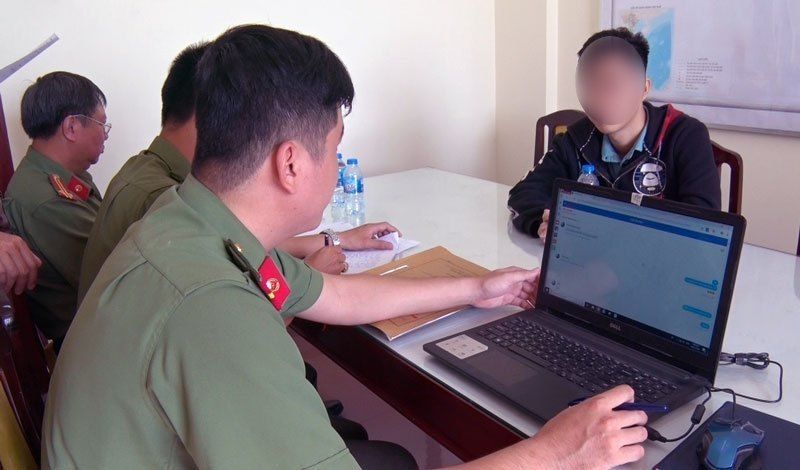
    The police force in Ben Tre Province, Vietnam seemed to have been quite busy in the last few months, going after people’s postings on Facebook.

    In January 2019, their Domestic Security Bureau took a university student in and questioned him over his Facebook’s usage, including whether he had joined a group calls “Liking BBC Vietnamese” (Thích BBC Tiếng Việt) – which the police classified as “politically hostile.”

    On February 13, 2019, Vietnamnet newspaper reported that Ben Tre provincial police conducted an investigation and interrogated a 35-year-old man, Phan Chi Toan, about his Facebook’s activities under the username “Phan Rio.”

    Police alleged that the Facebook account calls Phan Rio was conducting “subversion against the people’s government.”

    How did he do it according to the authorities?

    He did so by joining numerous groups, allegedly “politically hostile” towards the Vietnamese Communist Party (VCP) and the State, posting, sharing, and commenting on contents that incited demonstrations, as well as propagating to defame the policies, guidelines, and directions of the VCP and the government.

    The police had not formally charged Toan with a crime but did declare that they would proceed with the case according to the regular procedures.

    The same Vietnamnet’s article further mentioned that the People’s Committee of Mo Cay Bac District, also in Ben Tre Province, had fined a 55-year-old man – Dang Tri Thuc – under Government’s Decree 174/2013/ND-CP, Article 64, Section 4, for using his Facebook account to incite public demonstration in December 2018.

    Accordingly, Thuc, a driver, was accused of using the live-stream feature on Facebook to make video clips, calling on others to protest on a few major road intersections on December 22 and 28. He allegedly admitted guilt, confessed and promised he would not repeat the offense, so the authorities fined him with 15M VND or approximately 650 USD.

    Decree 174/2013/ND-CP, Article 64: Violations against regulations on websites/ news websites

    Section 4. A fine ranging from VND 30,000,000 to VND 50,000,000 shall be imposed for any of the following violations:

    a) Propagating information against the Socialist Republic of Vietnam; sabotaging the bloc of great national unity at a degree of severity which is still not liable to criminal prosecutions;

    b) Propagating information with the aims of inciting war of aggression, causing hatred between ethnic groups or people of countries, inciting violence or propagating reactionary thought at a degree of severity which is still not liable to criminal prosecutions;

    c) Distorting history, denying the revolutionary achievements or offending the nation, people or national heroes at a degree of severity which is still not liable to criminal prosecutions.

    While the right to demonstrate is constitutionally protected in Vietnam, the government had routinely violated this right by applying their Decree 38/2005/NĐ-CP – to regulate “public gatherings – during protests to arrest the participants.

    Since the nationwide mass protests broke out in June 2018 against the draft bills on the cybersecurity law and the development of three special economic zones, the security police have continued to track down those who had participated and made arrests in different cities and provinces.

    The family of a woman names Doan Thi Hong from Binh Thuan Province has recently made a public plea on social media, alleging that Hong was taken into police custody by a group of plainclothes police on September 2, 2018. She was a participant in the same June 2018 protest mentioned above.

    Although she has a young child under 36-month-old at the time of the arrest, which under Vietnam’s laws is a factor to consider against pre-trial detention, her sister claimed that Hong had been arbitrarily kept incommunicado since September of last year.

    According to her sister, Hong was not a dissident and only exercised her right to protest that one time.

    It seems that the police’s recent investigations targetting Facebook’s activities and usage in Vietnam also focus primarily on the average users and not necessarily the more well-known bloggers and dissidents.

  • Robbery Unwittingly Exposes Potential Corruption In Vietnam

    Robbery Unwittingly Exposes Potential Corruption In Vietnam

    The story first sounded like the twisted plot of a comedy about feudal Vietnam a few centuries back. It went like this:

    Three bad guys robbed a court official’s post and shocked the township when news on the enormous amount of money the robbers had taken, spread like wildfire. The officials scrambled to explain the origin of the funds while trying to scale down its size, but only to raise even more suspicion on their corruption among the public.

    It was, however, not a movie plot but a real story in Vietnam 2019 with a small difference: the location of the robbery was a well-known BOT (Build-Operate-Transfer) toll booth near Ho Chi Minh City.

    During the Tet celebration last week, three men robbed the BOT booth of the Ho Chi Minh City-Long Thanh-Dau Giay expressway in Dong Nai Province. They allegedly took over 2B VND or approximately 86k USD at once. The amount was rumored to be from only one shift of the BOT’s collection activities that day.

    Netizens were quick to point out that the robbery happened during the biggest holiday in the country where traffic flow through the main highways and expressways decreased dramatically in Vietnam, leading people to believe that the usual amount this particular BOT booth collects during a regular day would have been a lot higher.

    The BOT’s owner – Vietnam Expressway Services Engineering Joint Stock Company (VEC E) – tried to diffuse the situation in an interview with Tuoi Tre newspaper on February 8, 2019, the day after, stating that the amount taken was collected from eight different shifts, not one.

    But by then, the amount taken by the robbers was no longer the public’s primary concern.

    Instead, people started to demand answers on the validity of the very existence of the toll booth. According to the Facebook page of journalist Ngo Nguyet Huu, the information on how long this particular BOT could continue to collect toll fees seemed to be missing.

    Quick math on the average amount of money the BOT booth could generate daily raised more concerns over the potential sum that could have been taken illegally from the commuters if it indeed, did not have the authority to collect.

    Some people had pointed out that the BOT booth in question has been operating long enough for it to recover the costs of construction and make enough money in return, casting more doubts on the legality of its existence.

    To add fuel to the fire, on February 11, 2019, people on social media went livid when VEC E announced that it would refuse services to two particular vehicles at their Ho Chi Minh-Dau Giay BOT booth indefinitely, alleging the drivers of these cars “had incited disorder behaviors.” Its decision would have the effect of not letting these two cars use the expressway where the BOT booth is located.

    Almost immediately, netizens started to call VEC E’s action “unconstitutional,” violating the people’s freedom of movement. Others questioned the company’s authority to enforce their decision. Although considered as a “quasi” government enterprise in Vietnam due to its investment structure, whether VEC E could act under “state action” is still debatable.

    The people’s anger has caused the Transportation Department to immediately reassure the public on February 12, 2019, that it will not allow VEC E to refuse services and that all violations at BOT booths should be dealt with according to Vietnam’s administrative procedures.

    Allegations of corruption involving BOT booths have been raised in numerous cases in Vietnam recently, and some saw VEC E’s announcement as evidence of BOT’s investors acting under the “protection” of the authorities.

    A group of drivers acting as Vietnam’s freedom riders has been protesting against some BOT booths where they openly questioned the legality of some of these booths.

    Their works faced intimidation, false imprisonment, and physical assaults by masked men in civilian clothes when they protested at or near the locations of these BOTs.

    When these drivers tried to complain to the authorities but only received a slow, and sometimes even no response from the local police forces, the public began to suspect shady business deals between the owners of the BOT projects and the officials.

    One of the latest incidents of intimidation happened just last Saturday night, February 9, 2019. A driver names Nguyen Quang Tuy alleged that he was physically assaulted and suffered significant injuries after getting involved in a minor dispute over payment types at Ben Thuy BOT in Nghe An Province.

    More Vietnamese people have become vocal and voiced their complaints and discontentment about the BOT fees because they see these as unreasonable additions to the transportation taxes already imposed on them by the government for roads maintenance.

    During the past two years, with more than 60 booths stationed throughout the country’s main highways and expressways, BOT is a social and political problem that could only get more severe with time.

  • Vietnam: When Workers’ Rights Face Resistance From A Socialist Government

    Vietnam: When Workers’ Rights Face Resistance From A Socialist Government

    Vietnam’s dismal human rights records in 2017 and 2018 could play a role in delaying the ratification of the much anticipated European Union-Vietnam Free Trade Agreement (EV-FTA) this year.

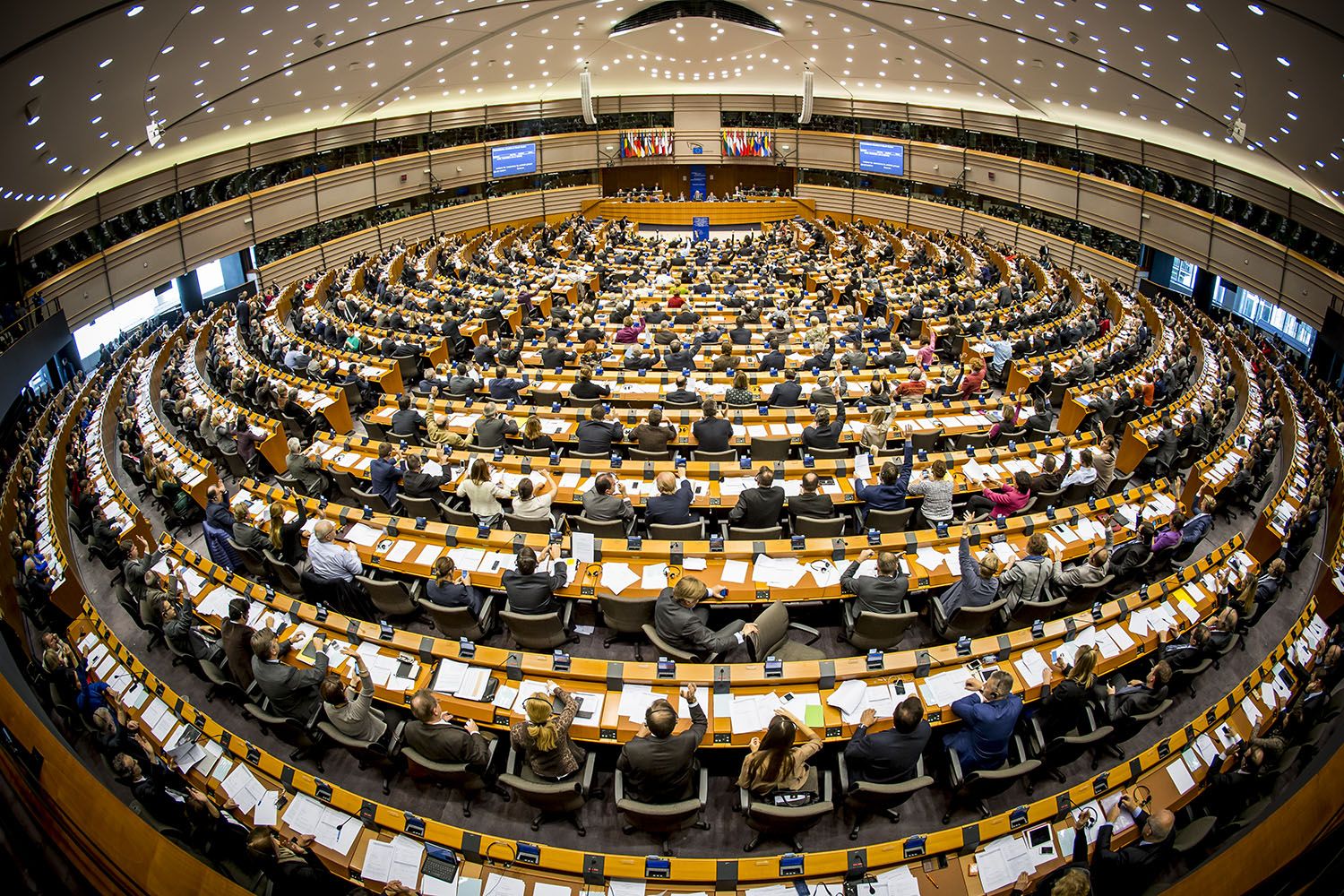
    A group of MEPs from across the EU Parliament’s political spectrum has repeatedly demanded that Vietnam improves its human rights conditions before they would vote on the trade deal.

    The latest demand was a joint letter to President Nguyen Phu Trong on February 1, 2019, sent by nine MEPs on the case of Hoang Duc Binh, an environmental and labor rights activist who was sentenced to 14-year-imprisonment in 2018.

    Releasing political dissidents and activists would indeed be a sensitive issue for the communist regime to compromise, even for the sake of clinching the ambitious EV-FTA deal where Vietnam could expect a 15% GDP gain.

    But there has always been another human rights condition which one would assume that it should have received natural cooperation from the socialists in Hanoi: the ratification of the remaining three ILO (International Labor Organization) conventions.

    That, however, has not been the case.

    Vietnam, while rejoined the ILO since 1993, to date, has yet to ratify the following three conventions:

    ILO Convention No. 87 – Freedom of Association and Protection of the Right to Organize Convention, 1948 (No. 87)ILO Convention No. 98 – Right to Organise and Collective Bargaining Convention, 1949 (No. 98)ILO Convention No. 105 – Abolition of Forced Labour Convention, 1957 (No. 105)

    In late 2018, Vietnam ratified the Comprehensive and Progressive Agreement for Trans-Pacific Partnership (CP-TPP) where a specific clause (Article 19) also addresses similar conditions regarding labor and workers’ rights.

    On the ground, the Vietnamese government is proposing a roadmap that could take almost five years to get all three ILO conventions ratified.

    It is not fast enough for the EU’s MEPs, and as of right now, these ILO conventions continue to be part of the obstacles to move the EV-FTA forward.

    Vietnam maintains that its current Labor Code and legal framework would protect the rights of workers in the country while waiting for the Draft of the amended Labor Code to be reviewed and passed by its Congress later in 2019, paving the way for the ratification of the ILO conventions to take place between now and 2023.

    In reality, impracticality contradicts the government’s claim.

    For example, it is not meaningful to discuss the right of association and the protection of the right to organize according to ILO Convention No. 87 when Vietnam, to date, has refused to pass laws on the freedom of association and the right to assemble and demonstrate although their Constitution of 2013 guarantees these rights to all of its people.

    Participation in demonstrations, moreover, could likely lead to arrest, detention, and conviction for “inciting public disorder” in Vietnam.

    In June 2018, mass protests broke out in a few major cities against the then pending draft bills of the cybersecurity law and the development of three special economic zones in Vietnam. In response, the police arrested and detained hundreds of people.

    One of the “hot spots” considered by the police of Ho Chi Minh City as reported by state-owned media at the time, was near the Taiwanese Pou Yuen factory in Binh Tan District where some workers did join in the protests between June 9 and June 13, 2018.

    According to the organization The 88 Project, more than 60 people were arrested, tried, and sentenced to between 24-36 months imprisonment due to their participation in those demonstrations. Some of them are believed to be factory workers from the outskirts of Ho Chi Minh City.

    The legal system continues to create hurdles in the registration processes for independent organizations. It is an issue which the UN Human Rights Committee has brought up with Vietnam before its upcoming CCPR (Covenant on Civil and Political Rights) review in March 2019.

    At the end of 2016, Vietnam had attempted – but failed – to pass the Law on Association when it faced a defiant opposition from civil society organizations, both registered and unregistered.

    One of the reasons which caused the majority of NGO workers in Vietnam to go against the proposed bill then, was because it attempted to criminalize the receiving of foreign funding and gave preferential treatment to GONGO(s) (Government-organized non-governmental organizations).

    The Vietnam General Confederation of Labour (VGCL) – the only labor union in Vietnam right now – is not only a GONGO but also takes directives from the Vietnamese Communist Party.

    During his speech in front of the National Assembly on November 2, 2018, the Vice-Chairman of the VGCL, Ngo Duy Hieu, cautiously reaffirmed that the ratification of the CP-TPP requires Vietnam to recognize independent unions while tried to cast doubts on their credibility.

    At the same time, the government has yet to legally recognize any organization – large or small – formed by private citizens that could remotely represent an independent union for workers.

    Vietnam, in 2017, reported an estimated population of approximately 26M workers in a variety of different industries.

    The possibility of getting arrested and jailed under the current legal scheme, however, did not seem to deter a portion of these Vietnamese workers from exercising their rights.

    Protests organized by workers continued to happen in Vietnam regardless, with the most common reason often linked to improving wages and working conditions – which ILO Convention 97 on collective bargaining could help.

    Indeed, the government probably has already anticipated that the ratification of the ILO conventions would encourage even more workers to come together and organize themselves, independent from the VGCL in the future, once the legal landscape changes.

    It is a slippery slope that Hanoi fears as it may spread to other sectors in society, which could explain the cautious approach in their proposed roadmap for the ratification of the three ILO conventions.

    Accordingly, Vietnam proposed that they will present the National Assembly with the Draft of the amended Labor Code in May 2019 and expected the new law would pass at the next congressional meeting in October 2019. Also in 2019, the President will present ILO Convention No. 98 to the National Assembly for ratification. Next, it would be ILO Convention 105 in 2020, and finally ILO Convention No. 87 to be presented in 2023.

    The proposed roadmap by the Vietnamese government, however, seems to have failed to convince the EU Parliament that workers’ rights are being protected, enough to move the EV-FTA forward.

    The European Council has delayed their vote for EV-FTA last month. With the deadline for amendments also get postponed indefinitely, it is unlikely that the current EU Parliament will vote on the EV-FTA before their upcoming election in May 2019.

  • Vietnamese Communist Party Turns 89, And The People May Have Had Enough

    Vietnamese Communist Party Turns 89, And The People May Have Had Enough

    February 3, 2019, the Vietnamese Communist Party celebrates its 89th anniversary.

    In a recent speech to commend the auspicious event, Secretary General Nguyen Phu Trong wrote: “The Party stays strong, the country prospers, the people concur.”

    However, on Facebook, the people’s reactions to both Trong’s writing and other propaganda, do not seem to show a public consensus as to the VCP’s leadership role in Vietnam.

    Today, the users’ reactions to a posting on Facebook seem to suggest the Party’s legitimacy is being called into question by the very people it tries to lead.

    A Facebook page names Vietnam’s Politics (Chính trị Việt Nam) identifies itself as a source for government’s news and uses a webpage domain of www.nguyenxuanphuc.org – which also is the name of the country’s current Prime Minister.

    The website posted a piece of writing entitles “Our Party” (Đảng Ta) in celebration of the anniversary.

    The writing did not deviate far from other propaganda materials in past decades, praising the accomplishment of the VCP, reaffirming its leading role in society for years to come, and confessing the love of the Vietnamese people for the Party.

    However, Facebook users were not willing to let that slides and quickly took the opportunity to express their distrust and unhappiness with the way “Our Party” has been leading society and the country in the comment section.

    A few hours after its posting on Facebook, the piece received over 400 reactions from Vietnamese users, about one-fourth of them was the “laughing” icon.

    Not stopping at that, the majority of the people who commented also raised a series of issues, such as corruption and nepotism within the VCP. They also questioned the legality of the recent National Assembly’s election result and pointed out the wealth discrepancy between the VCP’s members and the non-member citizens.

    The overall picture of the people’s reactions on the post shows an alarming sense of distrust in the VCP, leaving doubts to the other readers as to whether the VCP could still maintain the position of the leading and only political party in the country indefinitely.

    Other reactions from the Vietnamese people to the political events in another country during the past few weeks may cause the leaders of the VCP more worries.

    The recent political turmoil in Venezuela has been receiving a lot of attention in Vietnam with the majority of the people supporting Juan Guaidó, the leader of the opposition front. When Nicolas Maduro used the example of another Vietnam to warn against an American invasion, he probably did not know that the majority of Vietnamese are strong supporters of the Trump administration’s decision to back his political opponent.

    Back to the comments on this posting, it is not difficult to detect that the support for the VCP among its non-member citizens is waning. While the VCP certainly can continue to enjoy the political monopoly for being the only political party in the country, even its top officials may not be sure of its future – if and when a political opposition surfaces.

    The lacking of confidence that it still has the mandate to maintain the legitimacy among the majority of Vietnamese people could explain the VCP’s enhanced oppression against political dissidents in recent years.

    Most recent was the Party’s effort to silent online criticisms with the new cybersecurity law of 2018.

    Vietnamese internet users appear to be very well aware of the purpose and intention of the government in passing such law.

    One comment on the post did mention the potential application of the new cybersecurity law against internet users in cases like this: “The page administrator purposely posted this (writing) to incite the people to react and then (the government) threatens us with the cybersecurity law.”

    At the same time, there are no clear signs that online activism in Vietnam has been slowing down since the new law takes effect earlier this year although it is true that just in January 2019, there have been reports of two confirmed arrests of Facebookers and one incident of police questioning a university student over his Facebook’s activities.

    Vietnam has been increasingly repressive in the past two years. Not only the number of arrests have been steadily on the rise, but the sentences in political cases also became a lot harsher compared to a few years ago, often in the range of one to two decades behind bars.

  • Vietnamese Police Questioned University Student Over Facebook Postings

    Vietnamese Police Questioned University Student Over Facebook Postings

    On February 1, 2019, the Domestic Security Bureau of Ben Tre Province interviewed Tran Ngoc Phuc, a 21-year-old student of Ton Duc Thang University in Ho Chi Minh City at their station.

    Dong Khoi online newspaper, a publication of the VCP’s Provincial Committee in Ben Tre, published the story on the same day.

    According to the article, the police accused Phuc, a resident of Tan Phu Commune, Chau Thanh District, Ben Tre Province, of using his personal account to propagandizing against the Vietnamese Communist Party and the State.

    Namely, Phuc was using Facebook under the name “Ngoc Phuc” to join several “politically hostile” groups. Among them, was “The South of Vietnam” (Miền Nam Việt Nam), Fanclub of Saigon Capital (Đô thành Sài Gòn Fanclub), and  “Liking BBC Vietnamese” (Thích BBC Vietnamese).

    Phuc also allegedly admitted to the police that he was indeed the Facebooker Ngoc Phuc and that he had posted, shared, and commented on specific contents.

    The police had deemed these contents as materials which “propagandized, sabotaged the thoughts, distorted the direction, objectives, and policy of the VCP, the laws of the State and distorted (the image of) the leader Ho Chi Minh.”

    Formal charges against Phuc had not been filed, but the police indicated that they would continue to build the case and follow the regular legal procedures in this case.

    During the first month since the new Cybersecurity Law took effect in Vietnam on January 1, 2019, there were several reports that the police had questioned and detained some Facebookers.

    Rights groups, online campaigners, bloggers, activists, and dissidents continuously criticize the new law for further curtailing freedom of speech and shrinking the online civic space in Vietnam.

  • EU Parliament’s Members Ask Vietnam To Release Activist Hoang Duc Binh, Reiterate Human Rights Benchmark for EV-FTA

    EU Parliament’s Members Ask Vietnam To Release Activist Hoang Duc Binh, Reiterate Human Rights Benchmark for EV-FTA

    February 1, 2019, a group of nine EU Parliament’s members from different political parties, jointly sent a letter to Vietnam’s President Nguyen Phu Trong, asking for the unconditional release of environment and labor rights defender, Hoang Duc Binh.

    The letter reminded Vietnam that “the promotion and protection of fundamental rights must remain a common benchmark” for the continuing negotiation of the Free Trade Agreement between the European Union and Vietnam.

    According to the MEPs’ letter:

    The EVFTA commits the European Union and Vietnam to respect and effectively implement such principles and fundamental rights as provided in the ICCPR.

    The European Council has delayed the EV-FTA’s ratification process due to “technical reasons” according to two other MEPs, Jude Kirton-Darling and Ramon Tremosa. They released a video clip on January 22, 2019, demanding that Vietnam improves its human rights records for the EV-FTA to proceed.

    Almost one year ago, on February 6, 2018, a court in Central Vietnam convicted Hoang Duc Binh on two separate charges, “resisting officers acting under their duty,” and “abusing freedoms and democratic rights to infringe upon the State’s interest or the rights and interests of other entities and individuals.” (Articles 257, 258 of the 1999 Penal Code, amended as 330, 331 under the 2015 Penal Code).

    Binh was sentenced to the maximum term of 7 years for each of the offenses, which meant that the court found his conduct to be “seriously harmful” to the public according to the sentencing guidelines.

    Binh maintained his innocence, stating that all he did was accompanying a group of fishermen and a Catholic priest to travel from Nghe An to Ha Tinh to file their civil suits against Formosa Ha Tinh Steel Corporation.

    Formosa Ha Tinh was the main culprit that had paid 500M USD to settle the damages they caused in the environmental disaster which affected four coastal provinces in Central Vietnam back in 2016.

    In recent months, Hoang Duc Binh’s family has raised concerns about his deteriorating health conditions after each visitation.

    The letter was signed by Barbara Lochbihler (Greens/EFA), Wajid Khan (S&D), Petras Austrevicius (ALDE), Anne-Marie Mineur (GuE), Ana Gomes (S&D), Karoline Graswander-Hainz (S&D), Reinhard Bütikofer(Greens/EFA), David Martin (S&D), and Marietje Schaake (ALDE).

    The MEPs asked that Hoang Duc Binh “to be immediately and unconditionally released” and that he will be “allowed to remain inside his home country, Vietnam, and not forced into exile as a precondition for his release.”

  • Former Political Prisoner, Truong Duy Nhat, Disappeared In Thailand After Seeking Refugee Status With UN

    Former Political Prisoner, Truong Duy Nhat, Disappeared In Thailand After Seeking Refugee Status With UN

    Last Friday, January 25, 2019, former political prisoner, Truong Duy Nhat, was last seen at the office of the UN HCR – The Refugee Agency in Bangkok, Thailand.Nhat was there to register himself as an asylum seeker after leaving Vietnam earlier in the month.According to his family and friends, no one had heard from him since last Saturday, and they could not contact him.Nhat has left Vietnam for Thailand for about 21 days, said his family.The family was able to confirm that Nhat was not held by Thailand’s IDC (Immigration Detention Center). They also obtained further information today that Thai authorities, up to this point, did not arrest Nhat either.Nhat’s phone number in Thailand is not turned off, but no one answered the calls. His wife and daughter are worried about his safety and well-being as they are still unable to get in touch with him.Truong Duy Nhat was sentenced to two-year-imprisonment in 2014 under Article 258 of the 1999 Penal Code. Nhat was arrested in May 2013 and held in detention until his trial.The government alleged some of his blog entries on the Blog “Another Point of View” (Một Góc Nhìn Khác) was “abusing democratic freedoms to infringe the interest of the state”.His blog was indeed critical of the government and the leaders of the Vietnamese Communist Party.One of the entries published in April 2013 was calling for the resignation of Prime Minister Nguyen Tan Dung and the VCP’s General Secretary Nguyen Phu Trong for their perceived political and economic mismanagement.After his release in 2015, Nhat continued with his blogging and resided in Da Nang, Vietnam.Nhat’s wife is still in Vietnam, but his daughter is studying in Vancouver, Canada. They are asking members of the public to come forward with any useful information regarding his whereabouts.

  • Political Prisoner Ngo Hao Suffered Minor Stroke In Prison, Health Deteriorated

    Political Prisoner Ngo Hao Suffered Minor Stroke In Prison, Health Deteriorated

    On January 30, 2018, The Vietnamese received information that political prisoner Ngo Hao had suffered a minor stroke in prison. According to his wife, the prison’s center in An Diem, Quang Nam Province did not inform his family directly.

    The family learned about his conditions on social media when the brother of Hoang Duc Binh, another prisoner of conscience, posted about it on Facebook.

    During the last family visit on January 27, 2019, the family observed that “he was very sick and shaking a lot while walking.”

    In January 2015, the government relocated him from Phu Yen Province – his hometown – to An Diem prison center in Quang Nam Province.

    Relocation of political prisoners to prison centers hundreds of miles away from their hometowns is a common tactic used by the Vietnamese authorities, making visitations increasingly difficult for the family.

    In Hao’s situation, his wife is also suffering from chronic disease, and the visitations have taken a toll on her health.

    Ngo Hao was arrested in February 2013, tried and convicted in September 2013 under Article 79 of the 1999 Penal Code for “subverting against the people’s government.”

    He was sentenced to 15-year-imprisonment and five-year probation thereafter.

    His appeal was denied in December 2013 after less than two hours of hearing where neither his lawyer or Hao was allowed to fully state their defense.

    He was held incommunicado prior to the hearing and his family was only notified of the appeal on the day it happened.

    The government alleged that Hao received money from an overseas Vietnamese group to plot a Jasmine revolution-type in Vietnam to overturn the Vietnamese Communist Party.

    The evidence produced by the prosecution consisted of writings he published online regarding using UN reporting mechanisms to assist political prisoners and contacting Human Rights Watch to report on human rights violations in Vietnam.

    Hao did help 14 members of Hoa Hao Buddhist sect to send their communication about human rights violations to the UN.

    Hao was an army officer of the former Republic of South Vietnam who was imprisoned from 1977 until 1997 – when he was released for medical reasons.

    Article 79 of the 1999 Penal Code had been amended; the new code section for “subversion” now is Article 109 of the 2015 Penal Code.

    Ngo Hao’s case could benefit from the same argument which the lawyer for Tran Huynh Duy Thuc has claimed, that under the new penal code, the acts committed by the defendant was only “in preparation to commit a crime” according to Section 3, Article 109. This argument, if suceeds, could reduce the maximum prison time to five years.

    Notwithstanding the above legal argument, under international human rights law, the imprisonment of a person for the peaceful exercise of their individual rights – such as the freedom of expression – has been declared arbitrary arrest and detention.

    Ngo Hao’s wife and son are asking the international community to pay attention to his case and demand an immediate and unconditional release.

    Ngo Hao could be one of the oldest political prisoners serving a sentence in Vietnam right now. Born in 1948, he is turning 71 this year. Hao would now be in his sixth year of the 15-year-term.

    They are afraid that Hao would not be able to make it until the end of his 15-year-imprisonment term after observing his deteriorating health conditions during the last visit earlier this month.