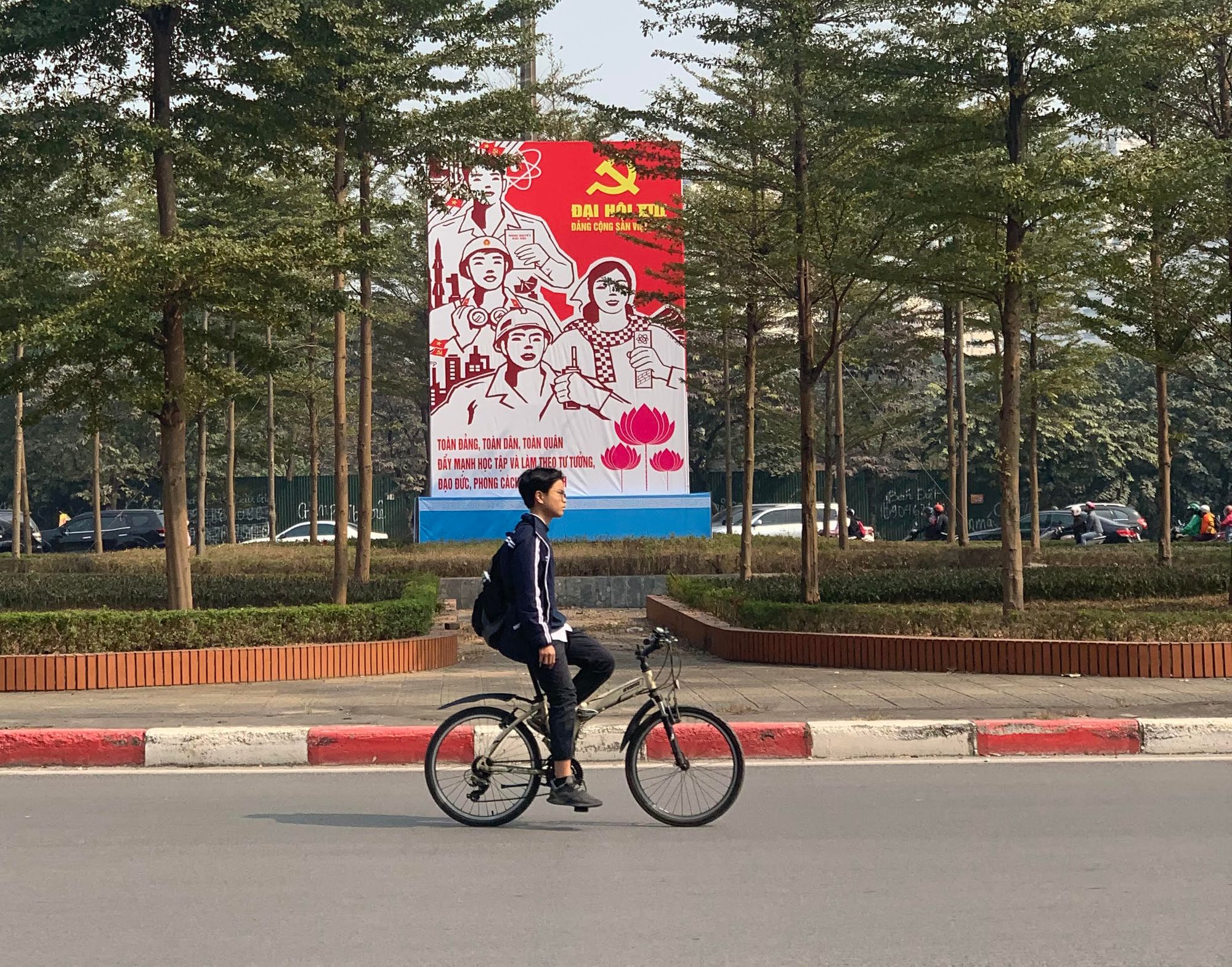
Political party conventions are part of a country’s politics, but in Vietnam, it’s a special part. It’s not about the parties nominating candidates for public offices, but rather the only legally operated political party in the country deciding the government’s top seats and the country’s direction.
No one needs to call the party by its full name. Often, people call it “the Party”, or “Đảng”; sometimes “our Party”, or “Đảng ta”. The word “Đảng” (Party) is almost always written with a capital “Đ”. Thus, unlike how Americans call the Democratic Party’s conventions the “DNC” and the Republican Party’s conventions the “RNC”, the Communist Party of Vietnam’s conventions, or congresses, are often called “the Party Congress” (Đại hội Đảng). Say it to anyone in Vietnam and they know exactly what you mean.
Now, the next congress of the Communist Party of Vietnam (CPV) is approaching. Here is everything you need to know to understand the event.
What is “the Party Congress?”
The Party Congress, or its full name, the National Congress of the Communist Party of Vietnam, is “the highest governing body” of the Party as stated in its charter. The Party Congress makes the most important decisions relating to Party leadership and direction as follows:
It reviews the implementation of the Congress’ previous term’s resolutions;
It determines the next term’s direction and policies;
It determines whether or not to amend the Party’s two highest instruments: the Party Platform and Charter.
It decides the number of members of the Party Central Committee and elects the next term’s members.
How often does the Congress take place?
Every five years as you may have heard?
Not really. The party has only held 12 congresses throughout the 91 years of its existence. The approaching one is the 13th Party Congress. That means one congress every seven years on average.
CPV congresses have only taken place every five years since the 6th Party Congress in 1986, the one that shifted the country’s direction away from a centrally planned economy towards capitalism with a widely known grand policy called “Đổi Mới” (Renovation). The previous congresses were held inconsistently in 1935, 1951, 1960, 1976, and 1982, mainly due to armed conflicts and wars with the French, the Americans, and the Chinese.
How long is a Congress?
The 13th Party Congress will run for nine days, from January 25 to February 2, 2021, in Hanoi.
The previous congresses lasted four to nine days.
Who participates in the Congress?
A total of 1,587 delegates are coming to the capital to attend the 13th Party Congress, representing 5.1 million Party members, according to the CPV’s head of External Affairs.
They come from the Party’s committees in provinces, central government bodies, state-owned corporations, the military, the police, etc. Among the delegates, 194 are entitled to attend the Congress without having been elected, while another 15 delegates are appointed. The rest are elected.
Often, identities of delegates reflect one of the most popular concepts of the party’s governance: proportional representation, or cơ cấu. As a Communist party that claims to strongly uphold values such as equality for all, the proportional representation concept aims to make sure that delegates represent all groups within society, including from different classes, geographic regions, different genders, ethnicities, religions, occupations, branches of government, representatives from civil society – who are heavily controlled by the government, and the private sector. This broad membership makes the Party Congress look more representative and more legitimate on the surface while not actually having a more meaningful and substantial representation.
How does the Congress elect the Party leadership?
Do the Party’s congresses elect the top party leaders? It always looks like that, but it is not true, and many people have a misconception of how the Party leadership is elected.
One needs to take a look at the CPV’s Central Committee Decision No. 244 to understand how the party’s elections work. And it turns out that the congresses only elect members of the Central Committee. The Central Committee, in turn, elects members of the Politburo, the general secretary, and members of the Disciplinary Committee during the Congress .
The Congress will elect around 200 members of the Central Committee per the previous term’s Central Committee’s proposal, including some 20 alternate members who have the right to participate in the Committee’s conferences, but have no voting rights. The current Party leadership will introduce this proposal to the Congress, and the delegates will have to approve it before the Congress moves on to elect members of the Committee. The list of candidates consists of people nominated by the previous term’s Central Committee, people nominated by delegates at the Congress, and self-nominated candidates.
Due to the Party’s principle of democratic centralism (nguyên tắc tập trung dân chủ) and the internal culture of making decisions collectively rather than individually, it’s rare to see delegates seeking candidacy themselves. Most candidates nominated at the Congress must be approved by their own delegations.
After being elected, members of the Central Committee will convene its first conference, called hội nghị trung ương, to elect around 15 members of the Politburo (Bộ Chính trị) – a party body that is considered the most powerful group of Vietnamese politicians. Again, the electoral process is pretty much the same as is an election in the Central Committee.
The general secretary, seen as the leader of the Party, is the most powerful politician of the country, and is also elected by the Central Committee, chosen from among members of the Politburo. The seat has been held by Mr. Nguyễn Phú Trọng since 2011.
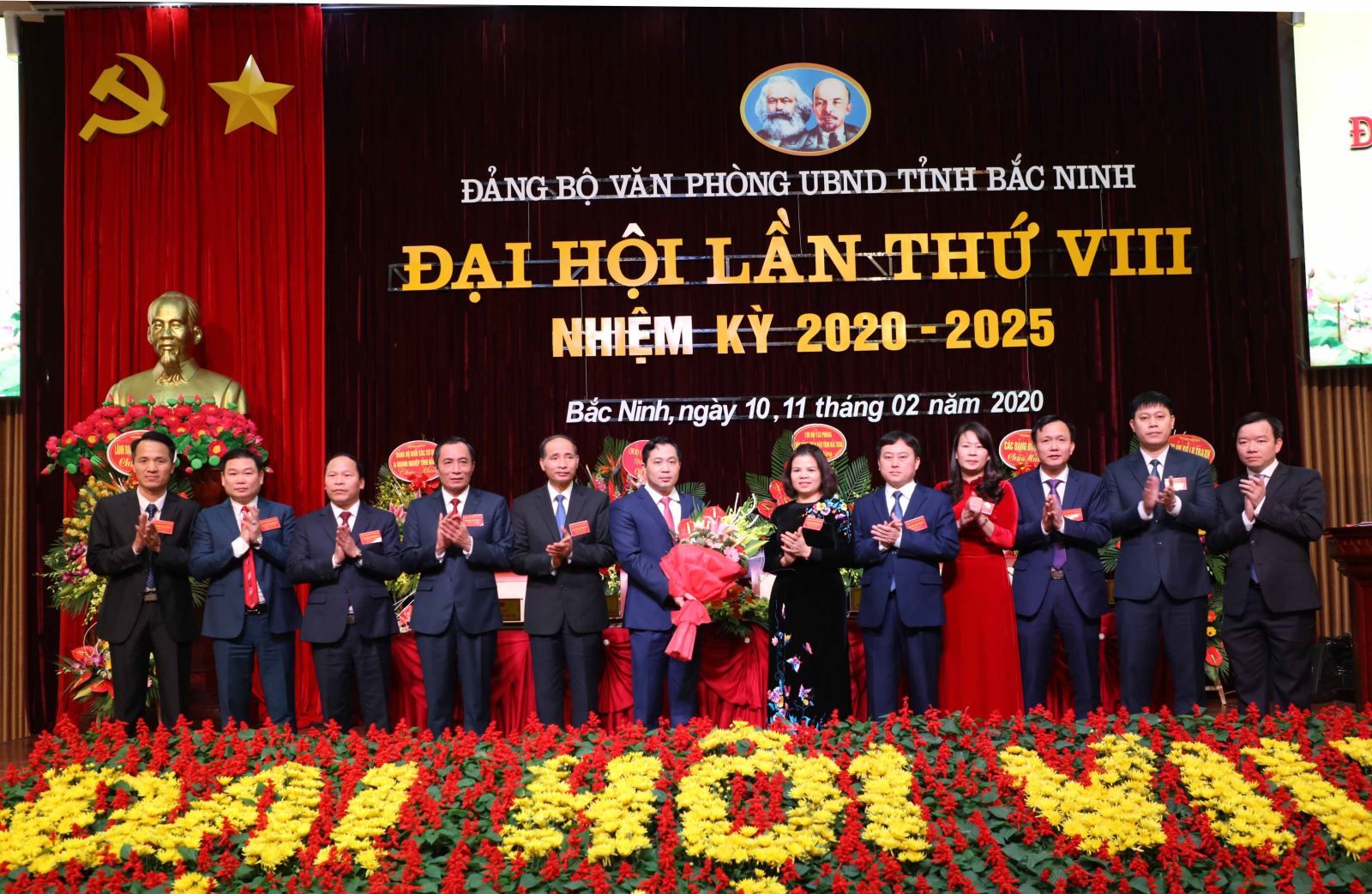
After finishing the election, members of the Central Committee return to the Congress to report the results in a plenary session. The new members of the Politburo will go to the stage amidst long applause, a lot of congratulations, and flowers being handed out. The newly-elected general secretary will make an inaugural speech, and later the closing remarks. A new five-year term begins.
By this time, the public knows who the members of “the gang of four” are, the top four Party members who share the four highest offices of the country: general secretary, president, prime minister, and chair of the National Assembly. The chief justice position, although the most powerful office of an entire branch of government, has never been important enough within Party ranks to be considered as a part of “the gang of four.” That says almost everything about how insignificant the judiciary is in Vietnam.
Does the Congress hold actual power as stated in the Party’s Charter?
Not really.
The agenda of the Congress is largely set by the previous term’s Central Committee. Delegates are elected or appointed under a process entirely controlled by the previous term’s Central Committee. The Committee also decides a set of qualifications for members of the next term’s Central Committee, Politburo, and even the general secretary position. Only those who meet the qualifications can be nominated to the Congress, and with a very high likelihood of being elected. The majority of candidates are nominated by the Committee.
For example, the 10th Party Congress in 2006 needed to elect 160 members for the Central Committee. There were 207 candidates approved by the Congress for the election, which included the majority of 174 candidates nominated solely by the previous term’s Central Committee. The other 31 out of 207 candidates were nominated by the Congress, and only 2 self-nominated candidates.
Often, the Central Committee holds conferences up until days just before the Congress to determine the proposal for the Congress agenda, including the lists of candidates for Party leadership. Take the 15th conference of the Central Committee as an example. This was the last conference of the current Committee, which took place on Jan 16-17, 2021, one week before the Congress and began to approve “special nominees” and other personnel issues. One of the “special nominees” is believed to be General Secretary Nguyen Phu Trong, 67, because he does not meet the age requirement (that a candidate be no older than 65) to be elected as a member of the Politburo. Furthermore, he is not eligible to seek a third consecutive term under the Party Charter, unless the Congress amends the Charter.
Drafted resolutions and any amendments to the Party’s platform are also prepared by the Central Committee.
The Central Committee’s agenda, in turn, is largely determined by the Politburo. Therefore, the Central Committee and the Politburo, not the Congress, hold most of the Party’s actual power. The Congress has been seen mainly as a rubber stamp institution within the Party, formally approving almost everything the Central Committee proposes.
What happens after the Congress?
Shortly after the Congress ends, the Politburo will begin to hold meetings to assign roles to its members. At that time, it will announce members in charge of the party’s other committees (except the Disciplinary Committee), the Party committees of the capital – Hanoi City, the Party committee of the leading economic city, Ho Chi Minh City, and so on.
Almost four months after the Congress concludes, on May 23, the nation’s general election will take place, electing members of the National Assembly – the legislative body of the central government. When the National Assembly convenes for its first session in June or July, we will see most members of the Central Committee holding representative seats, and the National Assembly will elect the Communist Party’s leaders for the offices of president, vice president, prime minister, deputy prime ministers, ministers, chair of the National Assembly, chief justice, chief prosecutor, and so forth.
By then, the entire electoral process, started more than a year earlier at the grassroots level of the Communist Party, will be completed.
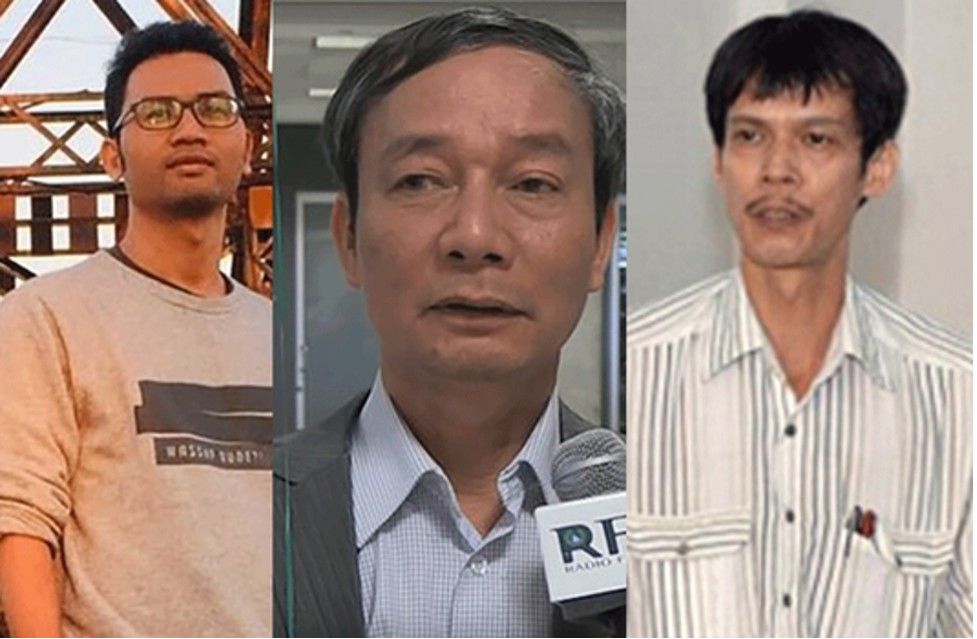
We, the undersigned media organizations, condemn the arrest, detention, and the upcoming trial of the three journalists, Pham Chi Dung, Nguyen Tuong Thuy, and Le Huu Minh Tuan. The Vietnamese government has charged them with Section 2, Article 117, of the 2015 Penal Code (revised in 2017) for “making, storing, spreading information, materials, items that contain distorted information about the people’s government.” The trial is expected to commence on January 5, 2021, at the People’s Court of Ho Chi Minh City.
The three journalists mentioned above have been active members of the Independent Journalists Association of Vietnam (IJAVN). Mr. Pham Chi Dung is the president, Mr. Nguyen Tuong Thuy is the vice-president, and Mr. Le Huu Minh Tuan is the editor. All three have also been journalists for the Vietnam Time newspaper, a media organization of the IJAVN.
These journalists are being persecuted and brought to trial because they have exercised their rights of free speech, free press, and the freedom of assembly. These are the fundamental human rights that both Vietnam’s Constitution and international law wholeheartedly recognized. The Vietnamese regime may use whichever propaganda to rationalize its decision, but it cannot change the facts and the reality of this case. The truth is that in Vietnam, the current regime has put itself in the same position as the feudal monarchies of the past and is sentencing people in a literacy inquisition.
We declare that we stand with Pham Chi Dung, Nguyen Tuong Thuy, Le Huu Minh Tuan, and the IJAVN to build a free media in Vietnam. We demand the Vietnamese government immediately and unconditionally release the three journalists.
We are introducing a photo collection of Vietnam in 2020 taken by photographer Giang Pham. In it, there will be no medical staff, no politician, no breaking news. This photo collection tells another story – the story of endurance and the story of ordinary people in Vietnam.
The photographer wrote to introduce this collection:
Twelve months ago, not many people would think that 2020 would be such a challenging year.
The pandemic came, and it has been staying without any check-out date, shifting people’s lives all over the world into an unexpected direction.
Since the outbreak of Covid-19, Vietnamese people have traveled on a roller-coaster ride, ups and downs, hope and despair, and joy and anger.
The fight against Covid-19, the health of our economy, and the collective efforts to mitigate the negative impacts on society have been ubiquitous on Vietnamese coffee tables every morning.
But life keeps moving on.
Despite the pandemic, and no matter if Covid-19 has come closer to their neighborhood, Vietnamese people live their daily lives, as usual, and unusual.
This photo collection covers Vietnamese people’s daily lives in the year 2020. It was from the mountainous northwestern provinces to the country’s southernmost land, from the urban dwellers in the big cities to the farmers of ethnic minorities in the countryside, who might never be mentioned in the stories throughout the year covered by other media.
Farmers in Cai Mon flower village, Cho Lach District harvested flowers before transported to Ho Chi Minh City to sell for Tet holiday (Vietnamese Lunar New Year). Ben Tre, Vietnam, January 2020.
Flower trading boats were at Binh Dong floating market in days prior to Tet (Vietnamese Lunar New Year) holiday. Saigon, Vietnam, January 2020.
A man carried incense sticks for worship rituals in Lantern Festival – the biggest annual festival of Chinese Vietnamese community – in the early days of the Covid-19 outbreak in Vietnam. Saigon, Vietnam, February 2020.
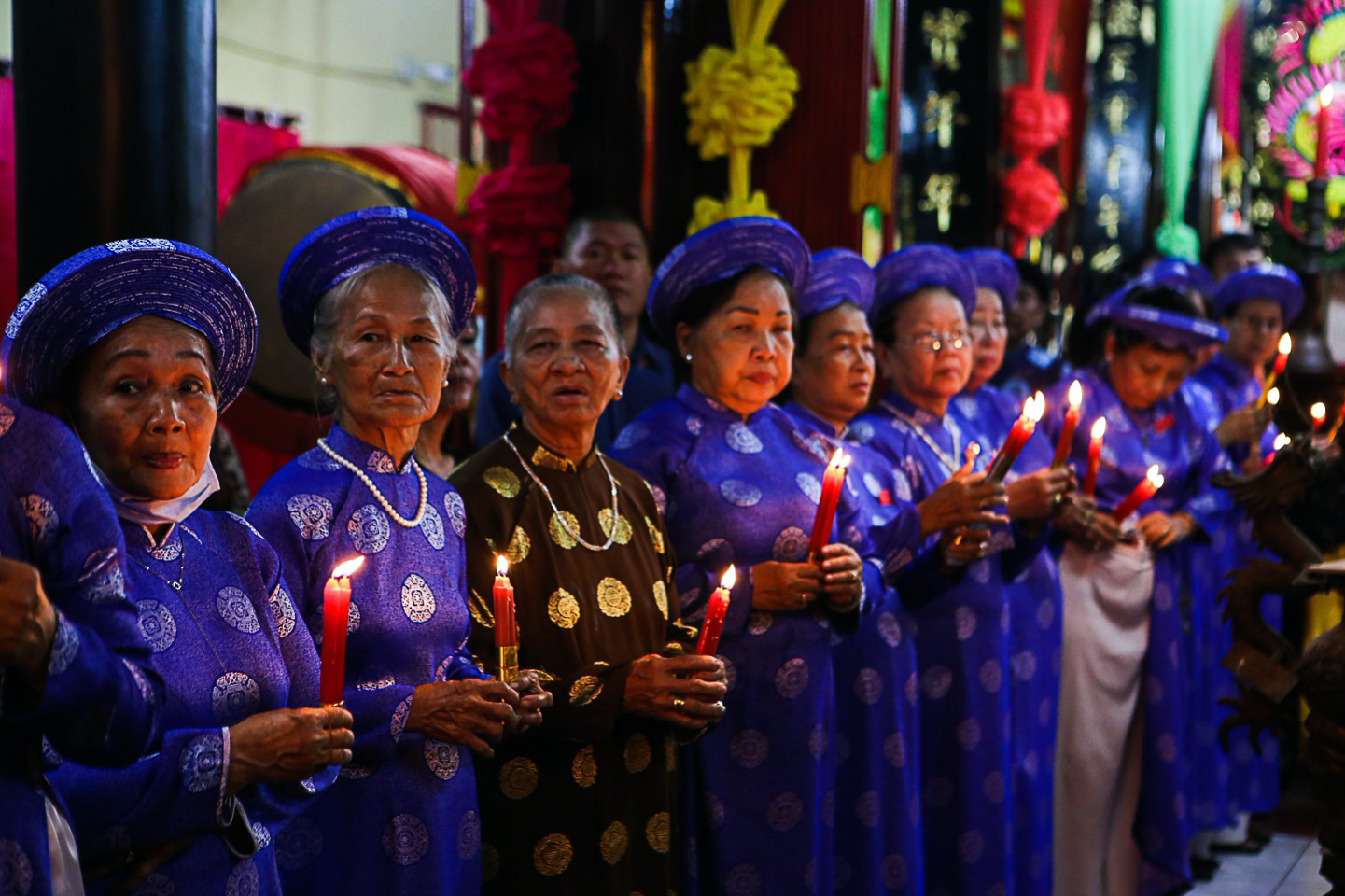
Elderly women who served for the annual Ky Yen (Pray for Peace) Festival at Phu Nhuan communal house. Saigon, Vietnam, February 2020.
A groom brought home his bride, who lived in the same village, on their wedding day in Dong Anh District. Ha Noi, Vietnam, March 2020.
Women did their laundry by the bank of Huong (Perfume) River. Hue, Vietnam, March 2020.
A woman sent her prayer during Jingzhe ceremony in On Lang assembly hall. Saigon, Vietnam, March 2020.
A man got his coffee delivered from a cafe in the neighborhood during the social distancing period. Saigon, Vietnam, April 2020.
Locals rowed their boat for fishes along Dong Nai river. Dong Nai, Vietnam, June 2020.
Street traders navigate under a heavy rain in the flooded Binh Quoi area. Saigon, Vietnam, June 2020.
A fisherman looked for fish on Quan Chanh Bo canal in Duyen Hai district, where the massive Duyen Hai Power Generation Complex located. Tra Vinh, Vietnam, June 2020.
Inside a hammock cafe in the outskirts of Ho Chi MInh City, Vietnam where hired labors rested every night for 20,000 VND (around 1 USD). Saigon, Vietnam, August 2020.
A girl helped her family to prepare raw field rat meat in Binh Long Commune, the biggest field rat market in the country. An Giang, Vietnam, September 2020.
A woman of Red Dao ethnic and her neighbors smiled while loading chayote bags for their trader. Lao Cai, Vietnam, September 2020.
A worker put cinnamon leaves and barks into distiller to produce cinnamon oil. Yen Bai, Vietnam, September 2020.
Children crossed a suspension bridge to return home with gifts for Mid-Autumn Festival in their village. Bac Kan, Vietnam, September 2020.
A man comforted his sick daughter who was in pain at the National Pediatric Hospital. Hanoi, Vietnam, September 2020.
Inside the kitchen of a M’nong family where they prepared for their dinner. Unlike the major Kinh ethnic group, M’nong people today still have a matriarchal social system. Dak Lak, Vietnam, October 2020.
Workers commuted to their workplace by crossing Tam Giang river on a local ferry. Ca Mau, Vietnam, December 2020.
A male shaman of Cham ethnic danced during a Rija Dayep ritual at a Cham family in Bau Truc village. Ninh Thuan, Vietnam, December 2020.
Farmers harvested sugarcanes in K’Bang district. Gia Lai, Vietnam, December 2020.
A Bana patriarch was inside his village communal house, which also served as a church for religion services. Kon Tum, Vietnam, December 2020.
Elementary students were seen during a study activity at their school. Dak Nong, Vietnam, December 2020.
Children from a Bana village finished their class at a branch of Kapakolong primary school. This branch was built to help students avoid travelling too far to reach their schools. Kon Tum, Vietnam, December 2020.
Vietnam makes no progress with freedom of religion, which remains tightly controlled.
Vietnam is among countries with the greatest diversity of religions, but it is also among those that suppress freedom of religion most heavily.
In 2020, ethnic Thuong in the Central Highlands, Hoa Hao Buddhists, independent Cao Dai practitioners, and followers of new religions in the northwest all had to pay the price for exercising their freedom of religion.
1. No place for new religions
Muong Nhe District police in Dien Bien Province urge residents not to follow new religions. Photo: Dienbientv.vn.
Vietnam possesses a great diversity of religions, but the government is quite strict with new ones.
Recently, a woman introduced me to Phap Mon Dieu Am. She advised me to eat vegetarian and call a phone number to receive “messages that will be imprinted on your heart”.
Phap Mon Dieu Am is a new religion, and the Vietnamese government prohibits spreading it.
Authorities worry that new religions will destabilize security and spur anti-government activities. All new religions are referred to generally as “heresies.”
In the northwest region, especially Dien Bien Province, two new religions have sprouted, known as the Gie Sua and the Ba Co Do religions.
The province has initiated criminal proceedings against three people for “acting to overthrow the people’s administration” and “harboring criminals” in relation to the Gie Sua religion.
Dien Bien police also acknowledged that it has pressured residents to sign forms giving up their new religions.
“We went from house to house, explaining things to the residents and asking them to sign pledges giving up the Gie Sua religion, to not believe in the propaganda about establishing “the Mong Kingdom,” Major Vu Van Hanh told the Dien Bien Phu Paper in February 2020.
“As of today, the Na Co Sa border defense post has gotten 55 households/325 individuals to sign pledges giving up their heresies”, he said.
Despite the government’s threats, other new religions continue to silently operate across the country.
The Government Committee For Religious Affairs stated in 2015 that there were approximately 60 instances of new religions in Vietnam.
And yet, throughout Vietnam, people could sometimes unexpectedly hear information about these strange, new religions like Phap Mon Dieu Am, Thanh Hai Vo Thuong Su, Gie Sua, Ba Co Do, Hoang Thien Long, Phap Mon Di Lac, Buu Toa Tam Giao, or Hoi Thanh Duc Chua Troi Me…
2. Ethnic Thuong livingunder strict religious policies
Two of the three ethnic Ba-Na individuals arrested on March 19, 2020 for practicing the Ha Mon religion. Photo: Tran Hieu.
Since 1975, the Thuong ethnic group has been beleaguered as they have never been in their history.
After the government forced them to give up their traditional faiths, many converted to Catholicism and Protestantism. However, the Thuong have not been able to escape government harassment and are not allowed to freely organize their religious activities.
Peaceful civil activities such as gatherings and protests are all seen as linked to heresies.
Dega Protestantism, Ha Mon, and the Protestant Church of Christ are all seen as heresies that mislead the masses.
In March 2020, three Ba Na followers of the Ha Mon religion that had absconded into the jungle for seven years were arrested on suspicion of spreading anti-state propaganda. In June, rather than being charged, the three underwent criticism sessions before the people.
In July, another ethnic Thuong underwent a public criticism session for illegally crossing the border to Cambodia many times, propagating “heresy”, and distorting state policies.
Thuong refugees in Thailand have stated that members of their ethnic group from the Central Highlands escape across the Vietnamese border every month. Currently, there are a little over 500 Thuong refugees in Thailand.
3. Interfering in the internal affairs of religious organizations
The arms of the state reach deep into the internal affairs of religions.
In June 2020, the Government Committee For Religious Affairs ordered the Tien Thien Cao Dai Temple to “create regulations for active dignitaries and functionaries, as well as regulations to resolve letters of petition and grievance, and the selection of dignitaries to be applied to its followers”. These regulations should be the internal matters that the religious organizations voluntarily manage, but the government is directing them to comply with specific instructions.
In Phu Yen Province, local authorities and the Tay Ninh Holy See Cao Dai Great Temple, Vietnam’s largest Cao Dai organization, tried to take over the independent Phu Lam Cao Dai temple in June 2020.
In a conference marking 25 years of state management of the Cao Dai religion, “the church of churches,” i.e. the Government Committee For Religious Affairs, stated that it will increase its research to study more closely the Cao Dai religion and to manage this religion, preventing it from further splintering and having internal conflicts between the religion’s own organizations.
In June 2020, the Diocese of Vinh decided to retire Dang Huu Nam, a clergyman well-known for his civil society activities. After the decision, the People’s Daily and many anonymous pro-government web pages stated that the removal was well-deserved because of Nam’s anti-government activities.
4. Arresting Falun Gong practitioners
The two women arrested by Ha Tinh Province police at the beginning of April 2020 for illegally spreading Falun Gong. Photo: Kiem Sat Newspaper.
As of October 2020, at least 66 Falun Gong practitioners have been arrested and punished administratively for storing or distributing flyers regarding the religion. You may yourself see in public spaces a number of people practicing Falun Gong, numbers which are growing by the day in Vietnam.
However, distributing flyers or practicing Falun Gong with others at home are considered violations of the law. In Quang Tri, a high school principle was harshly disciplined for inviting a large number of people to his home to practice Falun Gong.
In July 2020, police arrested 28 people for attending a lecture on Falun Gong at a residence in Ha Tinh Province.
Local authorities state that spreading Falun Gong violates the law because the religion has yet to be recognized by the state.
But Falun Gong practitioners disagree with this.
“Our connections are very loose,” a Falun Gong practitioner stated in an interview with Luat Khoa. “We don’t organize into associations or anything like Catholicism or Buddhism.”
LIV, the organization that manages Luat Khoa magazine, has archived information regarding Falun Gong practitioners that have been arrested. This list is a part of a database on freedom of religion in Vietnam, which can be found at: https://www.liv.ngo/data/
Readers can also check out a number of other Luat Khoa articles to find out more about the Falun Gong: Is practicing Falun Gong legal?…, and our Religion Bulletins from May, June, and September.
5. Controlling publishing
Arrested Falun Gong practitioners have been administratively punished based on a decree regarding publishing. Specifically, they were punished for distributing flyers without government approval.
Publication policies are particularly strict when it comes to religion or politics.
In 2012, the government stipulated that the borrowing or gifting of publications between citizens requires government permission.
The Government Committee For Religious Affairs manages the Religion Publishing House and is the department in charge of censorship for religious publications.
Control of publishing certainly exercises a heavy influence on the development of religions, and it is impossible to avoid the idea that the government censors with a heavy hand to purposefully limit this development.
6. Punishing individuals
Venerable Thich Quang Do. Photo: AFP.
In February 2020, Vietnam’s longest imprisoned monk Venerable Thich Quang Do passed away.
Before 1975, Venerable Quang Do actively mobilized for the Unified Buddhist Church of Vietnam. After 1975, he continued to lead this delegation, despite fierce government suppression that continued until his death.
Many other religious dignitaries remain subject to the government’s control and punishment.
In January 2020, the head of Song Ngoc Parish Father Nguyen Dinh Thuc stated that he was banned from holding mass beginning in August 2019. Father Thuc is widely known by the public for his civil society activities among central Vietnamese fishermen after the Formosa environmental disaster. Between 2017 and 2019, the government banned him from traveling overseas twice.
In February 2020, a Khmer monk named Seun Ty had his passport confiscated for two weeks, with the government threatening that he had violated Vietnam’s Cybersecurity Law. In May 2020, authorities refused to issue a passport to Nguyen Van Toan, a clergyman that often publicly criticized the government.
After issuing complaints about discriminatory treatment, including instances of torture, families of a number of imprisoned religious activists stated that they had lost touch with their loved ones behind bars.
The government disapproves of religious activists linking with diplomatic missions of their own accord.
The authorities ordered four religious activists in the Central Highlands, Pastors Nguyen Ngoc Khanh, Y Kuan E Ban, Y Quy Bdap, and Y Khen Bdap to come in for questioning after they met with an American delegation regarding religious freedom.
7. Obstructing freedom of association
In 2020, the Unified Buddhist Church of Vietnam and the Pure Hoa Hao Buddhist Church continued to operate without legal recognition. As in previous years, members of the group were prevented by police from conducting ceremonies at their headquarters in March and July.
A number of members of the Unified Buddhist Church of Vietnam stated that the government interfered in the February 2020 funeral of Venerable Thich Quang Do, stripping them of the right to manage the event. The attempted seizure of the Phu Lam Cao Dai Temple also demonstrates that the government does not accept the idea of practitioners there operating independently.
8. Seizing property and possessions
St. Joseph School, which is part of the Da Minh Tam Hiep Parish, is currently a medical facility within the Dong Nai General Hospital. Photo: The Dominican Sisters of St. Catherine Siena Tam Hiep.
The government has moved from seizing religious properties after 1975 to now “re-appropriating” them.
In 2020, Thi Nghe Parish in Ho Chi Minh City and the Dominican Sisters of St. Catherine Siena Tam Hiep in Dong Nai Province stated that the usage rights for two schools that the government previously borrowed were quietly transferred to state entities.
Policies from 2003 related to land and properties of religious organizations helped local authorities gain usage rights over religious properties that they were “borrowing.”
Currently, religious organizations do not have the legal grounds to demand their properties back if the government refuses to return them.
Religious organizations that possess large pieces of land can also become targets of harassment.
In Thua Thien – Hue Province, Thien An Abbey and provincial authorities are in conflict over the abbey’s land and property. The abbey’s 107 hectares of land has been continually chipped away by the government since 1975, without notification nor compensation.
In June 2020, Thien An Abbey’s forests were attacked by individuals who cut down trees and sawed deeply into the roots of many conifers.
On August 13, 2020, an area household mobilized a group of men to hammer down stakes and put up barbed wire on a part of Thien An Abbey’s land.
Another problem is that religious organizations are not allowed to sell or purchase land and must wait on the government to provide it.
In Ninh Binh Province, members of the Dong Dinh Parish were extremely upset when local authorities refused to give their land to their church. After the parishioners had donated the land to the government to pass to the church in accordance with the law, commune cadres announced that they would not turn the land over to the church but instead, would build a flood-prevention dyke between the current church land and the land parishioners had given to the government.
9. Religious organizations hit with reprisals
Letters police sent to members of Phu Lam Temple inviting them in for questioning. Photo: Cao Dai Orthodox Preservation.
In August 2020, a crowd that included residents and commune cadres protested for two days on land disputed by Thien An Abbey, local households, and the government. The crowd hung up banners and used loudspeakers to decry the monks “taking their land.”
In Phu Yen Province, after supporting the unsuccessful takeover of Phu Lam Temple, provincial authorities invited five members of the temple in for questioning. Authorities threatened these members, telling them that they had to accept the government’s takeover order.
In 2020, Central Highland provincial authorities accused the Protestant Church of Christ of using religious activities to incite people to oppose the government. Many members of this church were taken in for interrogation.
10. Controlling the press
The Vietnamese government maintains a monopoly over all official media. With regard to religious issues, Vietnam’s journalists present information according to government instruction. In February 2020, Tuoi Tre Newspaper had to remove an article about Venerable Thich Quang Do’s career.
In June 2020, many publications simultaneously posted articles rejecting accusations in a 2019 international report regarding religion issued by the United States. In August 2020, the monks of Thien An Abbey issued a rebuttal to a report by Thua Thien – Hue Radio and Television, stating that it was untruthful and smeared the monks.
In recent years, all official newspapers in Vietnam have criticized the Falun Gong movement and its ‘impropriety.” These publications have only conveyed government views rather than the views of its adherents.
Two Catholic webpages, Good News To The Poor and VietCatholic, remain blocked in Vietnam, as are many press organizations that speak up for religious freedom, such as VOA, RFA, BBC, RFI, and Luat Khoa Magazine.
There are no private television or radio stations that operate freely in Vietnam.
Religious activists in Vietnam are paying a heavy price, sometimes putting their lives on the line.
The former head of Thien An Abbey has been prevented from returning home after traveling to Europe to treat a suspected poisoning. Check out [The Government’s Reach] to find out how the government punishes religious activists. For the first time, figures for the number of Falun Gong practitioners in Vietnam are available; see them in [Religion 360*]. In [On This Day], a reminder of how the government installs surveillance cameras in many temples, and how the assault of six Hoa Hao Buddhist practitioners last year remains uninvestigated.
If you have any suggestions or would like to join us in writing reports, please email us at: tongiao@luatkhoa.org or editor@thevietnamese.org.
The Government’s Reach: A history of punishing religious activists
Clergyman prevented from returning home to Vietnam after treatment for suspected poisoning
The former head of Thien An Abbey – Father Anthony Nguyen Huyen Duc – is still waiting for the Vietnamese government to allow him to return home.
After a period of leading Thien An Abbey’s resistance against the government’s land reclamation attempts, Father Duc traveled to Europe to seek medical treatment after a suspected poisoning.
After his second medical treatment in Germany, he returned to Vietnam in September 2019, only to be told by police to return to Europe.
“Right when I returned to Hanoi, I was questioned by police. High-level officers asked that I return to Europe because they could not ensure my safety or my life if I stayed in Vietnam, that it would be extremely adverse for the Thien An community if I stayed at the abbey,” the organization BPSOS reported, quoting from a letter Father Duc sent to leaders of the Order of St. Benedict.
On October 16, 2020, the German diocese’s Committee for Justice and Peace sent a letter toVietnam’s Justice Committee requesting they allow Father Duc to return to Vietnam.
The German committee requested that the Vietnamese government return the abbey’s confiscated property, cease its violence, protect and respect sacred religious objects, and uphold the right to freedom of religion.
Father Nguyen Huynh Duc’s health conditions after a suspected poisoning. Photo: Good News To [sic] The Poor
BPSOS quoted Father Duc who stated that doctors in Europe also believe he had been poisoned.
Duc believes he was poisoned during the 2016 Lunar New Year at Thien An Abbey, when a person invited him to drink their tea and coffee.
“Right after the person left, I immediately felt sharp pains in my neck and head, aches down to my bones, my jaw became extremely sensitive and teeth came loose, I was unable to walk… a large (3 cm diameter) patch of my hair fell out…. Afterwards, I asked the sitting head Father Bruno for permission to travel to Europe,” BPSOS published, quoting from a letter written by Father Duc in August 2020.
Father Nguyen Huyen Duc was the head of Thien An Abbey from 2014 to 2017. The abbey is known for its heated and long-running land dispute with Thua Thien – Hue provincial authorities.
Thua Thien – Hue Province rejects Father Duc as head of Thien An Abbey
In past years, Thua Thien – Hue provincial authorities did not accept Father Duc’s presence at Thien An Abbey.
In December 2017, they requested leaders of the Order of St. Benedict to remove him as head of the abbey.
The authorities stated that Father Duc had allowed many unauthorized construction projects on disputed land, organized clergy appointments without permission, and obstructed government work.
After the government’s requesting letter, Father Duc took time off to travel to Europe for medical treatment. Leadership of the abbey was passed to another person.
In May 2019, as Father Duc was preparing to resume his position as head of Thien An Abbey, provincial authorities continued to insist that he should not take up the position.
In a May 2019 document, provincial authorities accused Father Duc of “distorting the situation, and inciting ethnic hatred and opposition against the Socialist Republic of Vietnam” while he was getting medical treatment overseas.
Methods used to suppress religious activists
Religious activists like Father Duc have long endured many forms of harassment and suppression. Below are the systematic methods in which religious activists are suppressed, methods which are sometimes openly carried out by police, and at other times, by anonymous individuals.
Smear tactics
In February 2018, many anonymous pro-state web pages published information alleging that Father Duc had entered a hotel with a woman.
According to the Catholic webpage Good News To The Poor, Father Duc’s stay at the hotel occurred in September 2017
Accordingly, Father Duc had arranged to meet with a group of overseas Vietnamese from Canada at the hotel in Ho Chi Minh City. This meeting was facilitated by a woman who was acquainted with both sides.
When Father Duc checked into his hotel room, approximately 100 plainclothes and uniformed police officers poured into the hotel in a prostitution raid. Father Duc was interrogated in a room. Police ultimately forced the woman to sit next to Father Duc and took a picture of them together.
Rumors intended to smear individuals are regularly posted on anonymous pro-state websites and shared with the public. The source of these rumors is one big question mark.
There are reasons to believe that Vietnamese police are directly involved. In 2008, after Zen master Thich Nhat Hanh’s Letter #31 spoke of religious freedom and politics in Vietnam, the first students of Hanh’s Plum Village met with difficulties.
In August 2008, Plum Village students were expelled from Bat Nha Monastery and continuously harassed in a variety of ways.
During the Bat Nha Monastery affair, the People’s Public Security Daily — the official mouthpiece for police — published an article citing a number of anonymous sources regarding the romantic relationship between Zen Master Nhat Hanh and Nun Chan Khong, as well as the dictatorial way in which Nun Chan Khong controlled Plum Village.
The article was published precisely when Plum Village was receiving public support in the Bat Nha Monastery affair.
Screenshot of the article published by the People’s Public Security Daily, regarding Nun Chan Khong and Zen Master Nhat Hanh.
Assault
According to the webpage Good News To The Poor, in September 2017, a car driving Father Duc’s delegation was purposefully rammed by a pick-up truck after they visited Father Dang Huu Nam – who advocated parishioners sue the company Formosa for polluting the central Vietnamese coast. Father Nam stated that this same pick-up truck had purposefully rammed his vehicle many times.
In October 2019, six independent Hoa Hao Buddhists were ambushed and attacked by a group of people on the road to An Hoa Temple. These six practitioners were planning to prevent a roof re-tiling at the temple but were attacked before arriving. A practitioner threatened to cut his own throat and set himself on fire as they were being attacked by unidentified individuals.
The six Hoa Hao Buddhists after the night of the assault (Photo: RFA) and the temple roof being re-tiled (Photo: Hoa Hao Buddhist Church).
The individuals who assault religious activists are often unidentified plainclothes people, and police normally do not pursue any kind of investigation after such incidents are reported.
In December 2015, Father Dang Huu Nam stated with Good News To The Poor that his vehicle was blocked by a group of 20 individuals, who pressured him to get out of the car and then proceeded to surround him and beat him.
“As the crowd of thugs beat me, the police chief of An Hoa Commune stood by on the side of the road and did nothing,” Father Nam told Good News To The Poor.
In June 2018, according to a Cali Today article, Mr. Hua Phi, an independent Cao Dai dignitary in Lam Dong, was beaten and his beard shaved. He stated that an individual identifying himself as police brought in dozens of others who entered his residence, “covering his head and beating” him repeatedly. The incident occurred just three days before he was to have a dialogue with the Australian Embassy regarding human rights issues.
Accusations of disturbing public order
Religious activists in Vietnam must be very careful in their conflicts with the authorities. Five out of six Hoa Hao Buddhists are in jail because of their clash with traffic police in April 2017.
These six practitioners, four of whom are from the same family, had opposed the traffic police confiscating the vehicles of those arriving at their house for a death anniversary. The tug-of-war between the two sides quickly turned into a case of disturbing public order and obstruction of officials.
In recent years, many social activists have been charged with disturbing public order in their conflicts with police.
Travel bans
Being prevented from returning home, as discussed at the beginning of the article with the case of Thien An Abbey’s clergyman, is rare. More frequently, religious activists are forbidden from traveling overseas; either the government confiscates their passports or they are not issued one at all.
In February 2020, a Khmer monk named Seun Ty had his passport confiscated for two weeks. Police accused Mr. Seun Ty of violating the Cybersecurity Law.
Monk Seun Ty has his passport confiscated by Soc Trang province police for two weeks. Photo: VOA.
In 2017 and 2019, authorities refused to allow Father Nguyen Dinh Thuc, head of Song Ngoc parish, to travel overseas.
The issue of travel bans on religious and social activists remains unresolved.
Religion 360*
Dien Bien Province continues to pressure residents to give up new religions
From the end of September to the beginning of October 2020, many state newspapers reported on the Gie-sua and Ba Co Do religions “raging in Dien Bien Province”.
The Voice of Vietnam (VOV) newspaper, a government mouthpiece, stated that in Dien Bien Province, 112 individuals returned to the Gie-sua religion after giving it up previously, while 294 others were currently following the Ba Co Do religion in Muong Nhe district.
Two so-called “propaganda” sessions regarding heretical religions in Dien Bien Province in 2019 (above) and September 2020. Photo: Dien Bien Phu Daily, People’s Public Security Daily.
Ms. Nguyen Thanh Huyen, vice-chair of the Public Relations Commission of the Dien Bien Provincial Committee stated that the government would push people who followed unrecognized faiths to give up their religion.
“A number of mountain villages have regulations and conventions, one of which states that anyone who participates in these religions [Gie-sua, Ba Co Do,…] will not receive [the benefits] of the regime and its policies”, Ms. Huyen stated to VOV.
Dien Bien provincial authorities reported that the Gie-sua and Ba Co Do religions operate differently from one another but shared the same goal of establishing an autonomous Mong state.
Muong Nhe district police chief Major Vu Van Hung added that authorities were using Protestant dignitaries to push people to give up these “heretic religions”.
“We’ve organized groups penetrating into households that follow these religions, courting group leaders and putting Protestant dignitaries in influential areas so that villagers will give up their religions. But the most economical method must be us using our resources to prevent unauthorized proselytizing online. Only then will we be effective,” Major Hung stated to VOV.
Two people in Ca Mau arrested and punished administratively for spreading Falun Gong
Vietnamese police continue to arrest practitioners of Falun Gong for spreading the religion.
The Ca Mau Daily reported that Ca Mau city police administratively punished two individuals on October 1, 2020 for distributing Falun Gong flyers without permission.
The Falun Gong flyers that city police confiscated from two arrestees. Photo: Ca Mau Daily
Two individuals with the initials N.T.G and N.T.H were arrested on September 21, 2020 after distributing approximately 65 flyers to parents and students in front of a school’s gate. Police confiscated from the two 177 flyers and 30 books on Falun Gong.
According to statistics from Luat Khoa, at least 66 Falun Gong practitioners have been arrested and administratively punished for spreading the religion since the beginning of 2020.
Lam Dong Province television: More than 8,300 Falun Gong practitioners in Vietnam
On October 22, 2020, Lam Dong Radio and Television broadcast a report stating that across the country, there were more than 8,300 Falun Gong practitioners. Lam Dong Province, in particular, has about 110 practitioners.
The news was particularly noteworthy, as up to this point, no one had an accurate count of Falun Gong practitioners in Vietnam. However, Lam Dong Radio and Television did not cite the source of this figure.
A Falun Gong practitioner during her interview with the Lam Dong Provincial Police. Photo: Luat Khoa Magazine.
According to the report, Lam Dong Province had a number of party members, veterans, and teachers who practiced and spread Falun Gong. Among them was a deputy commune head.
The report stated that spreading the practice in Lam Dong Province was both illegal and harmed the people.
“Falun Gong is a religion that opposes science, convincing people that you can treat sickness without going to the hospital, it distracts people from finding livelihoods”, Lam Dong Radio’s reporters noted.
Provincial radio and television stated that those spreading Falun Gong in Lam Dong were being sent materials from other provinces.
Government Committee for Religious Affairs acknowledges some Cao Dai organizations “operate independently” and “splinter in resistance”
On October 27, 2020, the Government Committee For Religious Affairs acknowledged that there were “Cao Dai organizations that operate independently and splinter in resistance” during a conference on religious management in Ben Tre Province.
The Government Committee For Religious Affairs’ Conference on Cao Dai in Ben Tre (Photo on right: Government Committee For Religious Affairs). The unsuccessful seizure of Phu Lam independent temple by the government-supported Tay Ninh Holy See Cao Dai Church in June 2020 (Photo: RFA).
However, the article described the conference without going into detail about the splintering or independent activities of the Cao Dai organizations.
As covered in Luat Khoa’s September 2020 Religion Bulletin, a number of independent Cao Dai temples are currently being pressured to merge with those temples being recognized by the government.
In recent years, the government has been helping state-recognized temples “take over” independent Cao Dai temples.
Although nearly all independent Cao Dai temples operate in a purely religious manner, the government views their independence as a security risk.
“Familiarizing the law” to religious practitioners
From the end of September through all of October 2020, the Government Committee For Religious Affairs organized conferences on “advocating the law to religious practitioners” in many locations: Hai Phong, Kon Tum, Gia Lai,Binh Dinh, and Bac Giang.
These conferences sought to familiarize Vietnam’s practitioners with the state’s strict religious management regulations. Furthermore, conferences in a number of provinces and cities also held exchanges on the teaching of two subjects, Vietnamese history and Vietnamese law, on the premises of religious organizations.
This is one way in which the state controls the people’s views over religions in Vietnam. Religious practitioners had to pay attention not just to legal regulations but also to the ways state bodies treat them.
Similar conferences are expected to take place across many other provinces and cities.
On This Day
Government installs camera in front of temple gates
In October 2019, numerous monks raised objections to the government’s installation of a surveillance camera pointing directly at their temple’s front gates.
In Ba Ria – Vung Tau Province, Venerable Thich Vinh Phuoc stated that authorities had installed a camera in front of Phuoc Buu Temple before he had left for the United States to advocate for religious freedom.
“It’s been more than just Phuoc Buu Temple; for over a year, they’ve installed many cameras in Xuyen Moc District, as well as the whole Ba Ria – Vung Tau Province,” Venerable Vinh Phuoc told RFA.
The government also installed a surveillance camera at another temple in Ho Chi Minh City.
“Since 2000, there have been many difficulties because Thien Quang Temple refuses to abide by the Buddhist Church of Vietnam (BCV). Their [BCV’s] management has been unbearable, stifling”, Venerable Thich Thien Thuan told RFA regarding the reason for the surveillance cameras.
Also in Ho Chi Minh City is Venerable Thich Khong Tanh. He is temporarily residing at Giac Hoa Temple, which also had surveillance cameras installed.
“When I asked, they explained that the cameras were simply fulfilling a responsibility to monitor,” Venerable Khong Tanh told RFA. “These surveillance cameras deter democracy allies and friends from coming.”
In recent years, the government has installed surveillance cameras to monitor all kinds of activists.
These activists have stated that the government wants to monitor who comes and goes from their residences, as well as the activists’ own routines. During special occasions such as visits from foreign delegations, security forces will prevent activists from leaving their homes.
After a year, police still have not investigated the assault of six Hoa Hao Buddhists
This October marks one year since the roof of Hoa Hao Buddhism’s An Hoa Temple was re-tiled. It also marks one year since six independent Hoa Hao Buddhists were beaten on the way to prevent this re-tiling.
The scuffle occurred on October 7, 2019, at the Thuan Giang ferry pier, about 1.7 kilometers away from An Hoa Temple.
The independent Hoa Hao Buddhists had all along opposed plans to re-tile the An Hoa Temple roof. However, the state-recognized Hoa Hao Buddhist Church moved forward with the plans anyway, ignoring the opposition.
The six independent Hoa Hao Buddhists involved include Vo Van Thanh Liem, Le Thanh Thuc, Nguyen Thanh Tung, Vo Thi Thu Ba, To Van Manh, and Le Thanh Truc.
Mr. Thanh Liem stated toRFA: “When we arrived at Thuan Giang ferry, there were about 40-50 people blocking us; they beat Mr. To Van Manh, Mr. Le Thanh Thuc, and Nguyen Thi My Trieu, and my granddaughter, Vo Thi Thu Ba, had her phone smashed. I saw that they were about to beat me so I poured gasoline on myself to threaten self-immolate, attempting to cut my own throat, and they ran off. They used long sticks and beat people so hard that the sticks were smashed to pieces”.
Today, more than one year after the scuffle, police still have not initiated an investigation into the matter.
On December 8, 2020, international organization CIVICUS – a global alliance of civil society organisations and activists dedicated to strengthening citizen action and civil society throughout the world – revealed its 2020 Monitor report which tracks Civic Space worldwide.
“Civic space is the bedrock of any open and democratic society. When civic space is open, citizens and civil society organisations are able to organise, participate and communicate without hindrance. In doing so, they are able to claim their rights and influence the political and social structures around them. This can only happen when a state holds by its duty to protect its citizens and respects and facilitates their fundamental rights to associate, assemble peacefully and freely express views and opinions. These are the three key rights that civil society depends upon. The CIVICUS Monitor analyses the extent to which the three civil society rights are being respected and upheld, and the degree to which states are protecting civil society.”
More than 20 organizations collaborate on the CIVICUS Monitor to provide an evidence base for action to improve civic space on all continents. Civic space in 196 countries is categorized as either closed, repressed, obstructed, narrowed or open, based on a methodology which combines several sources of data on the freedom of association, peaceful assembly and expression.
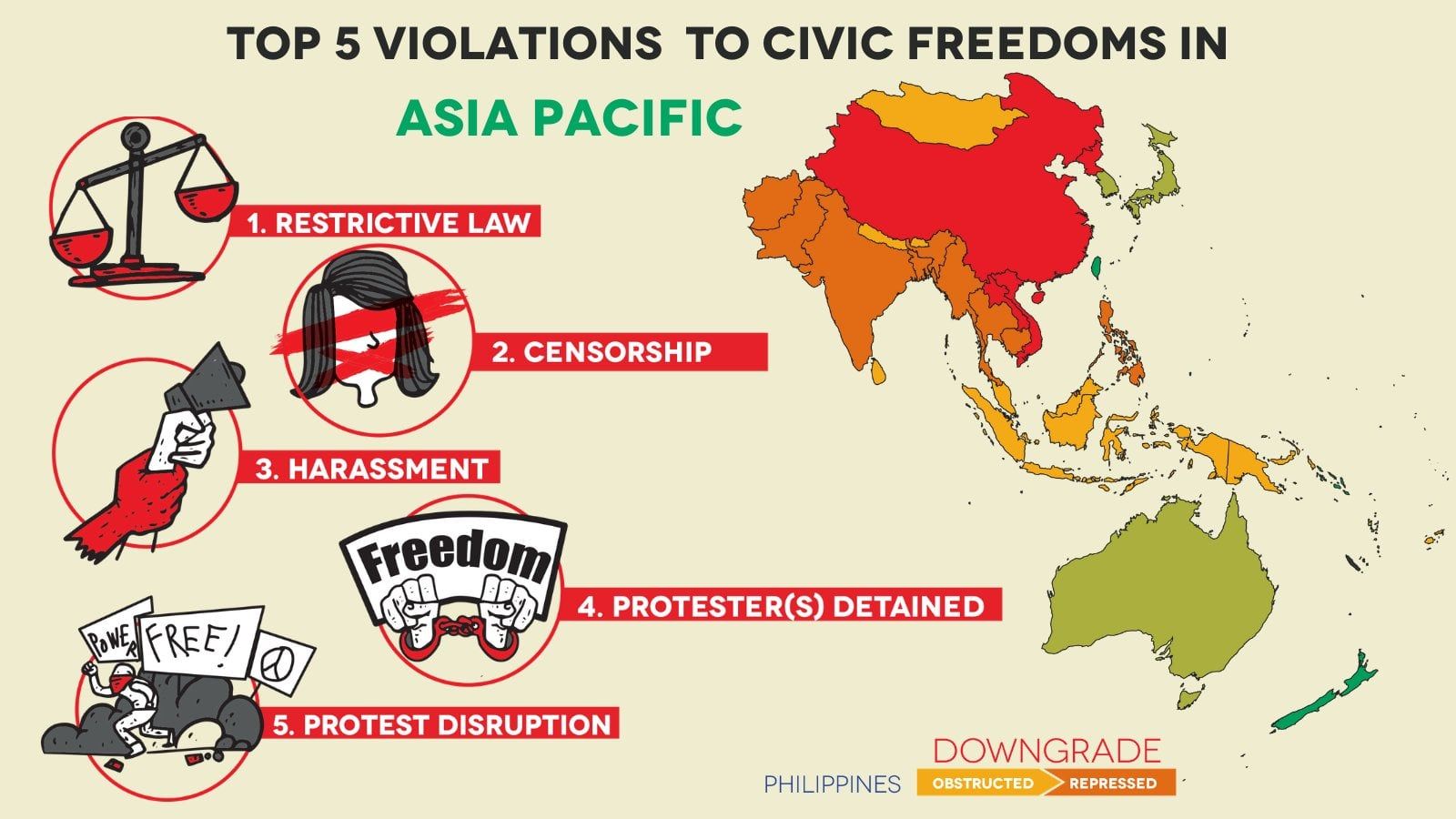
CIVICUS Monitor shows that out of 25 countries in Asia, Vietnam and three other countries, China, Laos, and North Korea, are rated “closed.”
The new CIVICUS Monitor report also indicates that 90 percent of countries in Asia repress civic freedoms. It also raised concerns about attacks on the media and vilification of human rights defenders.
“Our research shows that civic freedoms, including the freedom of expression, assembly and association, continue to be violated across the region. The percentage of people living in Asian countries with closed, repressed or obstructed civic space is nearly 90 percent,” said Josef Benedict, Asia-Pacific Civic Space researcher for CIVICUS.
The report also stated that “in Vietnam, where civic space is rated ‘closed’ … the authorities continue to harass those who criticize the one-party regime. Scores of individuals were arrested or jailed after summary trials under an array of restrictive laws for ‘abusing democratic freedoms’ and ‘anti-state propaganda’, including activists, bloggers and Facebook users. Most recently, the Vietnamese authorities arrested human rights defender Pham Doan Trang – one of the nation’s most prominent independent journalists.”
Journalist Pham Doan Trang. Photo Courtesy: Pham Doan Trang Facebook.
Furthermore, the report also notes that “the persecution against independent publishers, The Liberal Publishing House, has continued in 2020 after a brief pause due to the pandemic.” It further reports that “members of the Independent Journalists Association of Vietnam – the last independent journalist organization in the country – have also been arrested and prosecuted. Human rights groups raised serious unfair trial concerns and allegations of torture in the Dong Tam trial, which has led to convictions. Many activists were kept under surveillance, or detained for months without access to legal counsel and subjected to abusive interrogations.”
Dong Tam Trial. Photo Courtesy: Tuoi Tre newspaper.
The ASIA-PACIFIC ratings overview can be found here.
The September 2020 Religion Bulletin focuses on the Cao Dai religion, with information on the seizures of independent Cao Dai temples in [The Government’s Reach]; the assault on the Phu My Cao Dai Temple practitioners eight years ago in [On This Day]; and we introduce the Cao Dai sects that are exempt from having to join one unified organization in [Did You Know?]. [Religion 360°] brings you information regarding the arrests and punishment endured by Falun Gong practitioners, along with other news.If you have any suggestions or would like to contribute reports to the Religion Bulletin, please email us at: tongiao@luatkhoa.org or editor@thevietnamese.org
After a period of peaceful practice, Cao Dai practitioners are now facing harassment from state-backed Cao Dai groups who are attempting to take over their temples.
The case of Phu Lam Cao Dai Temple
Phu Lam Cao Dai Temple is located in Cluster 5 of Phu Lam Township, in the city of Tuy Hoa, Phu Yen Province. This temple was built in 1964 and restored in 1999.
The authorities assert that this temple is under the management of the Tay Ninh Holy See of the Cao Dai Great Temple*, the largest Cao Dai organization recognized by the state (in 1997) and also known as “Sect 1997”.
Phu Lam Temple overseer Cao Van Minh states that he and temple practitioners simply want to follow their own religious orthodoxy and that they do not accept the leadership of Sect 1997.
Phu Lam Cao Dai Temple. Photo: Thanhthatcaodai.
However, the Tay Ninh Holy See Cao Dai Great Temple stated that the Phu Lam Temple falls under its management and sent people to take over the temple with the backing of local authorities.
How did the forceful seizure of Phu Lam Cao Dai Temple transpire?
June 18, 2020:
Event 1: Overseer Cao Van Minh was invited to the Phu Dong Ward People’s Committee one morning for questioning; the committee firmly requested him to be there at 8:30 AM sharp.
Event 2: Local cadres and a group of the followers of the Tay Ninh Holy See, on orders from the Tay Ninh Holy See of the Cao Dai Great Temple, arrived to take over Phu Lam Temple.
Event 3: Overseer Nguyen Ha of Nhon Ly Cao Dai Temple, another independent temple in Binh Dinh Province, arrived to support fellow practitioners at Phu Lam Temple.
Event 4: A group of Phu Lam practitioners opposed the (Holy See’s) take-over order and closed the gates. The two sides engaged in heated arguments over the order.
Sect 1997 followers arrive at Phu Lam Temple. Photo: RFA.
July 28, 2020:
Son Thanh Dong Commune police (Phu Yen Province) invited Mr. Truong Minh Le, a Phu Lam Temple follower, in for questioning on July 30, 2020 regarding the public disturbance on June 18, 2020.
The invitation letter from the police sent to Mr. Truong Minh Le. Photo: Cao Dai Orthodox Preservation.
July 30, 2020
Son Thanh Dong Commune police (Phu Yen Province) continued to invite Phu Lam Temple practitioners in for questioning on August 4, 2020 regarding the public disturbance on June 18, 2020, including Mr. Huynh Tan Luc, Ms. Doan Thi Mieu, and Ms. Tran Thi Hong.
It seems that no practitioners of Sect 1997 were called in for questioning regarding the disturbance.
Invitation letters from the police sent to Huynh Tan Luc, Doan Thi Mieu, and Tran Thi Hong. Photo: Cao Dai Orthodox Preservation.
August 20, 2020
Overseer Nguyen Ha and fellow practitioner Nguyen Van Danh were invited in for questioning on August 21, 2020 by Quy Nhon city and Binh Dinh provincial police regarding their “religious activities.”
Invitation letters from the police sent to Nguyen Ha and Nguyen Van Danh. Photo: Cao Dai Orthodox Preservation.
August 21, 2020:
Danh relayed that he was asked by police if he had accompanied Ha to Phu Lam Temple. Danh confirmed that he did not, and the interrogation moved to whether he had accepted gifts from a supply delegation – a charity event carried out by Hua Phi, a Cao Dai follower, whom authorities view as anti-state and who is also joint chairman of the Interfaith Council of Vietnam.
Ha said that police warned him not to come to Phu Lam Temple again, during Sect 1997’s next take-over attempt. Police also questioned him regarding his relationship with Hua Phi and the Venerable Thich Khong Tanh, a member of the Unified Buddhist Church of Vietnam and the Interfaith Council of Vietnam.
September 1, 2020:
Cao Van Minh receives an invitation letter from the Phu Dong Ward People’s Committee to come in for questioning on September 3, 2020.
The invitation letter from the Phu Dong Ward People’s Committee sent Cao Van Minh to support Sect 1997’s takeover of Phu Lam Temple. Photo: Cao Dai Orthodox Preservation.
September 3, 2020:
Cao Van Minh arrives at the Phu Dong Ward People’s Committee for questioning with Tuy Hoa City representatives (from the Fatherland Front, Women’s Association, and Office of the Interior) and Phu Dong Ward People’s Committee representatives.
The authorities state that Minh should accept the Holy See’s take-over order. Minh asserts that he will not organize any welcoming or acceptance of Sect 1997’s take-over order. Minh also asserts that his followers did not disturb public order on June 18, 2020, when Sect 1997 came to take over their temple.
The interrogation
Below is an excerpt from Nguyen Ha’s interrogation on August 21, 2020, as relayed by him personally:
Binh Dinh Province police: Did you enter Phu Lam Temple in Phu Yen Province recently?
Nguyen Ha: Yes.
Police: To do what? Nguyen Ha: I came to emotionally support fellow practitioners, protect their beliefs and to close the gates to prevent a number of heretics from entering.
Police: Are you aware that the Tay Ninh Cao Dai Great Temple ordered Mr. Pham Xuan Thanh to Phu Lam Temple to administer it?
Nguyen Ha: Yes, that’s Thanh’s business. It has nothing to do with us.
Police: Thanh is recognized by the state, unlike what you all are doing.
Nguyen Ha: Whether the state recognizes us or not is the state’s business; I and fellow practitioners simply want to preserve the original teachings that God has laid out. The current Cao Dai religious organization, with state intervention, has destroyed the original teachings.
Police: If in the future, the Great Temple puts forth someone else to administer Phu Lam Temple, would you still come to support temple practitioners?
Nguyen Ha: Yes, I would.
Police: Who is Mr. [Hua] Phi to you? Nguyen Ha: Mr. Phi and I are fellow practitioners who seek to protect the original teachings.
Police: Have you and Phi established any organization?
Nguyen Ha: We have not established any organization, only the Khoi Nhan Sanh Cao Dai Religious Committee to visit fellow practitioners around the country who have maintained the faith and to share among ourselves the difficulties of our spiritual practice. We also remind them to preserve the original teachings of Duc Chi Ton, and to not be swayed.
Police: Were you aware of Abott [Thich] Khong Tanh’s life history when you allowed him to come to Nhon Ly Temple to distribute presents for people?
Nguyen Ha: Venerable Thich Khong Tanh and I are fellow religious dignitaries; if he arrives at my temple, then naturally, I have to receive him.
Police: Are you aware of whether his life history is good or bad?
Nguyen Ha: Whether it’s good or bad is your business with him. As for me, I know he is a good person, which is why I have connected across religions with him. He always comes to Nhon Ly Temple with open arms, handing out presents for our older individuals both in and outside the temple. It is an act of great generosity, nothing unseemly for you all to oppose.
Police: Mr. Khong Tanh opposes the state…
Nguyen Ha: As soon as anyone disobeys the state, even if that person or their acts are good, it all becomes bad; you even try to accuse them of being anti-state so you can frame them. But if a person listens to the state, even if they are actually bad, they remain a “good person”.
Look at Pham Xuan Thanh [who was sent to take-over Phu Lam Temple] for example. Do you check to see what kind of practitioner he is before you appoint or promote him? This is how religious values are lost. And then you force us to accept your decisions; what is the meaning of this?
Police: Do you participate in the Interfaith Council of Vietnam? Nguyen Ha: No.
Police: You do not participate now, but will you join in the future? Nguyen Ha: Whether I participate or not is my business.
Police: We’re letting you know, if you enter Phu Lam Temple again and police handle you roughly, we won’t be able to help you. Don’t say we didn’t warn you.
Nguyen Ha: This whole time you’ve only helped those carrying out your orders; when have I ever needed your help?
The drive to eliminate all independent Cao Dai temples
Phu Lam Temple is one of a number of Cao Dai temples standing separate from Sect 1997. These independent temples assert that the state has interfered with religious practices and that they thus desire to operate independently.
When the religion was first established in 1926, Cao Dai practitioners all belonged to the Tay Ninh Holy See, but later in the 1930s and 1940s, the Cao Dai reigion splintered into different sects.
The Tay Ninh Holy See, headquarters of the Tay Ninh Holy See Cao Dai Church. Photo: Vashikaran Rajendrasingh.
After 1975, the Cao Dai religion was forbidden to operate until the end of the 1980s. From 1995, the government began to recognize Cao Dai temples as religious organizations. Today, there are approximately 10 Cao Dai organizations that are legally recognized as temples. Besides these, there are approximately 20 other Cao Dai organizations that legally operate but are not considered as temples.
In recent years, independent temples such as Phu Lam Temple have been pressured by the authorities and other churches to “reunite” and return to the administration of the churches from which they splintered. The purpose of this coercion is to control religious activities, what the state refers to as “reorganizing and regulating” religious activities. Currently, there are no precise numbers on how many temples have refused to “reunite”. In 2007, the Government Committee on Religious Affairs stated that the Ban Chinh Dao Cao Dai Temple had 40 temples that had not reunited.
According to Mr. Cam Sinh, a Cao Dai practitioner of the Overseas Tay Ninh Holy See, beginning in 2013, the Vietnamese government enacted Resolution 92/2012/NĐ-CP regarding the Implementation of the 2004 Law on Faith, which led to many temple seizures and consolidations with state-recognized Cao Dai temples.
In 2012, Ms. Nguyen Bach Phung, a Cao Dai practitioner well-known for actively fighting for the independence of temples, stated that the government was interfering in the internal affairs of the Cao Dai religion and causing conflicts.
“This matter [of disputes has] occurred in many places, including Long Binh Temple in Go Cong, An Ninh Tay Temple in Long An Province, Phu My Temple in Binh Dinh Province, and An Nhon Temple. The state caused difficulties for practitioners when they went from house to house to pressure our people to join the state-approved Chuong Quan Council, Tuy Phuoc Temple in Binh Dinh, Phu Suong Temple in Phu Yen…”. Ms. Bach Phung stated that in a number of places, conflicts broke out between members of Cao Dai temples and independent temples.
Mr. Nguyen Dinh Thang, director of the organization Boat People SOS, stated that since 1997, the Vietnamese government has helped Sect 1997 “occupy” approximately 300 Cao Dai temples.
The take-over of these independent temples regularly met with opposition from the affected practitioners, opposition which police then used to frame practitioners for disturbing public order.
Religion 360°
Summarizing 25 years of state management of the Cao Dai religion
On September 18, 2020, the Government Committee for Religious Affairs organized a conference to summarize 25 years of state management of the Cao Dai religion.
Attending the conference were cadres from the relevant central committees and cadres from the 35 provinces that have Cao Dai practitioners, totaling approximately 200 cadres altogether.
The conference was held by the Government Committee for Religious Affairs regarding 25 years of managing the Cao Dai religion. Photo: Government Committee for Religious Affairs.
The Committee said that the state’s achievements in managing the Cao Dai religion had allowed Cao Dai establishments to renovate and build structures, practitioners to actively participate in charitable and purely religious activities, and prompted the majority of dignitaries, their activities, and Cao Dao practitioners to abide by the law.
The Committee also acknowledged that some Cao Dai dignitaries were moving to separate from state-recognized temples and religious bodies, that some temples were facing conflicts, and that a number of religious activities violated the Law on Faith and Religion.
The former head of the Committee, and currently deputy minister of the Ministry of the Interior, Mr. Vu Chien Thang, stated that in the future, the government needed to instruct state-recognized temples on the appointment of overseas Cao Dai dignitaries, increase research on Cao Dai management methods, and coordinate with other branches, such as propaganda, public relations, the Fatherland Front, the army, and the police to address the “complicated issues related to Cao Dai activities”.
Cam My District, Dong Nai Province, prosecutes 6 Falun Gong proselytizers
The Dong Nai Province People’s Committee news website reported that Cam My District recently prosecuted 6 Falun Gong practitioners for illegally spreading the faith.
This news website also stated that these individuals would completely cover their faces when entering people’s homes in the district to promote Falun Gong. These individuals had been previously warned to cease their proselytizing activities and not drag others into the faith.
Cam My District authorities stated that the Falun Gong movement was not yet recognized as a “faith or religious organization” and thus proselytizing activities were illegal.
The city of Hai Phong suppresses Falun Gong proselytizing activities
According to the People’s Public Security Newspaper, Hai Phong city authorities were closely monitoring groups of Falun Gong practitioners. The article stated that Hai Phong City Police Department had confirmed more than 10 groups, with approximately 160 individuals “practicing Falun Gong”.
The article said that from the beginning of 2020 until now, the Hai Phong City Police Department had prosecuted seven cases related to “mobilizing and illegally spreading the Falun Gong movement.”
Readers can find more details regarding the arrest and prosecution of Falun Gong proselytizers in our data regarding freedom of religion: https://airtable.com/shrYIDdMrohUbQztF
Eleven years of “struggle” to eliminate the Ha Mon religion in Mang Yang District, Gia Lai Province
In September 2020, the Mang Yang District People’s Committee of Gia Lai Province summarized the results of 11 years of struggle to eliminate the “Ha Mon heresy” that began in 2009.
According to the summary, the district prosecuted 10 individuals who followed the Ha Mon religion for disrupting national unity. Furthermore, authorities arrested 71 individuals, “campaigned to voluntarily turn in” 55 individuals who absconded to the jungle, and eliminated 15 groups with more than 242 followers of the Ha Mon religion.
According to the Vietnamese authorities, the Ha Mon religion operates in all of the Central Highland provinces and that Mang Yang District was merely one of many areas in which the religion operated. The authorities assert that the Ha Mon religion is heretical and is being used by members of FULRO to oppose the Vietnamese state.
The government’s “war” against the Thuong ethnic minority’s religious freedom in the Central Highlands is currently directed at three religious groups: Dega Protestantism, the Ha Mon religion, and the Protestant Church of Christ.
Pastor A Dao released from prison early
On September 18, 2020, Vietnamese authorities released early from prison Pastor A Dao, who had served four years of his five-year sentence for organizing illegal border crossings.
State journalists did not report on Pastor A Dao’s early release.
Pastor A Dao. Photo: Unknown.
Mr. A Dao, 39, is a well-known pastor among the ethnic Thuong refugees in Thailand. He was arrested on August 18, 2016 after returning home from a religious conference in East Timor. After he was arrested, he was held incommunicado for five days. Vietnamese police accused him of organizing illegal border crossings to Thailand for ethnic Thuong. Police stated that he coordinated with Mr. A Ga, a Protestant pastor, and at the time, a refugee in Thailand. Mr. A Dao rejected the government’s accusations.
On August 28, 2017, the Gia Lai Province People’s Court sentenced Pastor A Dao to five years in prison for organizing illegal border crossings. In January 2018, Mr. A Ga was arrested by Thai police and was extradited back to Vietnam, but the United States intervened and gave him and his family political asylum in the United States.
On This Day
Phu My Cao Dai Temple practitioners assaulted during a seizure in September 2012
For years, practitioners of independent Cao Dai temples have lived in fear, under pressure from both the government and other Cao Dai churches to “consolidate”.
On September 16, 2012, Phu My Cao Dai Temple practitioners in Binh Dinh Province publicly denounced the Tay Ninh Holy See Cao Dai Church (Sect 1997), accusing it of hiring thugs to attack them in their own temple. Mr. Nguyen Huu Khanh reported to RFA that a total of six practitioners of the Phu My Temple were assaulted that day.
“Because practitioners here follow the Chon Truyen Orthodoxy, and not the Chuong Quan Council – that is, they don’t follow “state-run” Cao Dai organization –, they [Sect 1997] came to seize our personal property and the temple of the Bao Thu Chon Truyen. They’re using the Chuong Quan Council, which is backed by the government, to break in to our temple”, Mr. Khanh stated as he explained why and how Phu My Temple practitioners were attacked.
Local police were on the scene during the scuffle but did not intervene and did not initiate an investigation or press charges.
People sent by Sect 1997 assault Phu My Temple practitioners. Photo: DVOV/BPSOS.
Mr. Nguyen Ha, an independent Cao Dai practitioner and staunch defender of independent churches, stated that previously Phu My Temple had been under the administration of Sect 1997’s Chuong Quan Council, but after seeing that it was controlled by the government, the temple seceded, suffering the consequences.
Regarding the scuffle, the person who was in charge of Cao Dai affairs in the Government Committee for Religious Affairs stated to RFA: “They must resolve their own religion’s internal matters. The state merely guarantees order and security for them to carry out their religious protocols”.
Did You Know?
The Cao Dai religion in Vietnam has a number of different religious organizations, many of which are recognized by the state
Among religions in Vietnam, the Cao Dai religion appears exempt from having to organize a “unified” structure, as other religions must do.
Currently, the Cao Dai religion has approximately 10 religious organizations recognized by the state.
Meanwhile, within Hoa Hao Buddhism there exists many religious organizations but the state only recognizes one. Buddhism also has two sects; the Unified Buddhist Sangha of Vietnam was established in 1964 and operates to this day, but the government only recognizes the Buddhist Sangha of Vietnam established in 1981.
Not only are there 10 religious organizations recognized by the government but there are approximately 20 other Cao Dai organizations that operate legally and independent: Thuong De Cao Dai, Cao Thuong Temple, Nam Thanh Temple, Pho Thong Giao Ly Dai Dao Institution, Lien Hoa Cuu Cung Thien Dao Path of Study, Tan Minh Quang Temple, Huynh Quang Sac Temple, Thien Truoc Temple, and the Bau Sen Temple.
These Cao Dai temples and organizations historically branched out because of disagreements over religious practices. However, despite the splintering, the state and its temples are pressuring (independent) temples to return to their original church.
Below is information regarding the Cao Dai religious organizations and temples recognized by the Vietnamese government:
The Tay Ninh Holy See Cao Dai Temple, headquarters of the Tay Ninh Holy See Cao Dai Church. Photo: Vashikaran Rajendrasingh.
1/10
Tay Ninh Cao Dai Holy See
Year established: 1926 Current headquarters: Tay Ninh Holy See, Pham Ho Phap Highway, Long Hoa Ward, Hoa Thanh Township, Tay Ninh Province. Year recognized, post-1975: 1997 Number of practitioners: 1,510,000 (2011)
This is the earliest established, as well as the largest, Cao Dai organization today. The Cao Dai organizations that have emerged afterwards are all the result of internal disputes and splintering from the original Tay Ninh Holy See in the 1930s and 1940s.
After 1975, the Tay Ninh Cao Dai Holy See was seen as “heretical” and due to previous anti-communist activities, was forced to shut down. It was not until 1997 that the authorities officially recognized this organization. To this day, independent Cao Dai practitioners refer to it as “state-run Cao Dai”, to indicate that the entire organization is completely controlled by the state.
The Ben Tre Holy See of the Ban Chinh Dao Cao Dai. Photo: Ban Chinh Dao Cao Dai
2/10
Ban Chinh Dao Cao Dai
Year established: 1934 Current headquarters: Ben Tre Holy See, 100c Truong Dinh, 6th Ward, Ben Tre Province. Year recognized, post-1975: 1997 Number of practitioners: 971,000 (2011) Number of temples and shrines directly administered: 258 (2011)
The Ban Chinh Dao Cao Dai split from the Tay Ninh Holy See in 1934, and then split further into the Ban Chinh Ben Tre Cao Dai and Ban Chinh Do Thanh Cao Dai. In 1994, these two blocs reunited to form the Ban Chinh Dao Cao Dai. The Vietnamese state recognized this organization in 1997.
Chau Minh Holy See of Tien Thien Cao Dai. Photo: hvcd thuongtaothanh/Youtube.
3/10
Tien Thien Cao Dai
Year established: after 1930 Current headquarters: Chau Minh Holy See, T884 Road, Tien Thuy, Chau Thanh, Ben Tre Province. Year recognized, post-1975: 1995 Number of practitioners: 79,000 (2011) Number of temples and shrines directly administered: 132 (2011)
Tien Thien Cao Dai was established in My Tho after two dignitaries, Mr. Le Van Lich and Mr. Nguyen Huu Chinh, were ejected from Tay Ninh Cao Dai. After a period of changes, the Tien Thien Cao Dai split into two sects in 1963, Tien Thien Minh Duc and Tien Thien Chau Minh. In 1995, these two sects were “made whole again”, taking the name Tien Thien Cao Dai and receiving recognition from the Vietnamese government.
Chon Ly Cao Dai Holy See. Photo: Chon Ly Cao Dai.
4/10
Chon Ly Cao Dai
Year established: 1931 Current headquarters: Chon Ly Cao Dai Holy See, 193 Nguyen Trung Truc, My An Hamlet, My Phong Commune, My Tho City, Tien Giang Province. Year recognized, post-1975: 2000 Number of practitioners: 7,000 (2011), 14,000 (2017) Number of temples and shrines directly administered: 33 (2011)
This is the earliest sect to separate from Tay Ninh Cao Dai. Due to a disagreement, Mr. Nguyen Van Ca, who at the time was equivalent to an archbishop in the Catholic church, returned to My Tho to practice his own religion. In 1932, he established the Minh Ly Dao Cao Dai, which he later changed to the Minh Chon Ly Cao Dai or Chon Ly Cao Dai.
Ngoc Sac Holy See of the Minh Chon Dao Cao Dai. Photo: Huynh Lam.
5/10
Minh Chon Dao Cao Dai
Year established: 1934 Current headquarters: Ngoc Sac Holy See, Xom So Hamlet, Ho Thi Ky Commune, Thoi Binh District, Ca Mau Province. Year recognized, post-1975: 1996 Number of practitioners: 30,500 (2011) Number of temples and shrines directly administered: 49 (2011)
Minh Chon Dao Cao Dai was established by Mr. Tran Dao Quang after he split from Chon Ly Cao Dai over differences in religious practices. Quang, along with others, practiced independently in Bac Lieu, then founded Minh Chon Dao Cao Dai in 1934.
Ngoc Kinh Holy See of Bach Y Lien Doan Chon Ly Cao Dai. Photo: Bach Y Lien Doan Chon Ly Cao Dai.
6/10
Bach Y Lien Doan Chon Ly Cao Dai
Year established: 1936 Current headquarters: Ngoc Kinh Holy See, #675, Hoa An Hamlet, Mong Tho Commune, Chau Thanh District, Kien Giang Province. Year recognized, post-1975: 1998 Number of practitioners: 4,500 (2011) Number of temples and shrines directly administered: 13 (2011)
When they saw that religious practices had deviated from the original forms, a number of Chon Ly Cao Dai practitioners broke off and established a separate sect called Bach Y Lien Doan Chon Ly Cao Dai. The phrase “Bach Y,” which means white clothes in Vietnamese, stems from the fact that dignitaries of this sect all wear white.
Hoang Dao Heavenly Temple of Binh Duc Viet Nam Cao Dai. Photo: Viet Nam Cao Dai/Youtube.
7/10
Binh Duc Viet Nam Cao Dai
Year established: 1960 (predecessor was Viet Nam Cao Dai) Current headquarters: Hoang Dao Heavenly Temple, Cho Hamlet, Area 4, Binh Duc Commune, Chau Thanh District, Tien Giang Province. Year recognized, post-1975: 2011 Number of practitioners: 7,000 Number of temples directly administered: 9 (2011)
Viet Nam Cao Dai originally splintered from Chon Ly Cao Dai. At the beginning, Mr. Nguyen Van Nam and others split from Chon Ly Cao Dai and practiced separately in a place called Ben Tranh, after which they returned to Binh Duc Commune in My Tho Province to found Viet Nam Cao Dai – the Central Church in 1960. The majority of practitioners at the headquarters in Ben Tranh moved to the headquarters in Binh Duc, hence the two names Ben Tranh Viet Nam Cao Dai and Binh Duc Viet Nam Cao Dai. The Vietnamese government recognized the Binh Duc Viet Nam Cao Dai in 2011. Viet Nam Cao Dai has produced its own holy texts.
Trung Hung Temple of Truyen Giao Cao Dai. Photo: Daderot.
8/10
Truyen Giao Cao Dai
Year established: 1939 Current headquarters: Trung Hung Temple, 63 Hai Phong, Thach Thang Ward, Hai Chau District, Da Nang City Year recognized, post-1975: 1996 Number of practitioners: 47,000 (2011) Number of temples and shrines directly administered: 124 (2011)
Truyen Giao Cao Dai mainly operates in central Vietnam. This sect was preceded by the Trung Ky Temple, established after efforts by the Tay Ninh Church to bring the religion to Vietnam’s central region. In 1956, after inaugurating Trung Hung Temple, the sect changed its name to Truyen Giao Cao Dai.
The Central Holy See of Cau Kho Tam Quan Cao Dai. Photo: Cau Kho Tam Quan Cao Dai Church/Facebook.
9/10
Cau Kho Tam Quan Cao Dai
Year established: 1937 Current headquarters: Central Holy See, An Thai Hamlet, Tam Quan Township, Hoai Nhon District, Binh Dinh Province. Year recognized, post-1975: 2000 Number of practitioners: 9,000 (2011) Number of temples and shrines directly administered: 33 (2011)
Cau Kho Tam Quan Cao Dai took shape after a number of dissatisfied practitioners from Tay Ninh Cao Dai returned to Saigon to practice at Cau Kho Cao Dai Temple. In 1937, the Cau Kho Cao Dai sect, Viet Quang Center Church, was established. It is more commonly known as Cau Kho Tam Quan Cao Dai.
The Long Chau Holy See of the Chieu Minh Long Chau Cao Dai. Photo: Thanhthatcaodai.org.
10/10
Cao Dai Chieu Minh Long Chau
Year established: 1956 Current headquarters: Long Chau Holy See, Thanh Loi Hamlet, Tan Phu Thanh Commune, Chau Thanh A District, Hau Giang Province. Year recognized, post-1975: 1996 Number of practitioners: 5,500 (2005) Number of temples and shrines directly administered: 19
Chieu Minh Long Chau Cao Dai was established by followers of Chieu Minh Cao Dai, a sect founded by Mr. Ngo Van Chieu and based on practices to escape the mortal realm. The organizational structure of Chieu Minh Long Chau Cao Dai is simpler and looser than other sects.
Two months after journalist Pham Doan Trang’s arrest, Reporters Without Borders (RSF) recently launched a campaign calling for her unconditional release. The campaign includes a petition and a video of Doan Trang’s five Vietnamese overseas colleagues voicing their support for her.
Pham Doan Trang was arrested at her home in Saigon on the night of October 6, 2020. She is the co-founder of Legal Initiatives for Vietnam and worked as an editor for both Luat Khoa magazine and The Vietnamese magazine before her arrest.
She is charged with “conducting propaganda against the Socialist Republic of Vietnam” under Article 88 of the 1999 Penal Code, and “making, storing, spreading information, materials, items to oppose the State of the Socialist Republic of Vietnam” under Article 117 of the 2015 Penal Code (revised in 2017). She is facing up to a 20-year sentence if convicted.
In 2019, RSF awarded Pham Doan Trang the Press Freedom Prize for Impact. Daniel Bastard, the head of RSF’s Asia-Pacific desk, in his statement calling for her release, wrote:
“Because of her bravery and her generosity, Pham Doan Trang has become a symbol of the fight to provide her fellow Vietnamese citizens with reliable, independent journalism. By signing this petition for her release, you demonstrate a commitment to press freedom in a country where all the media are strictly controlled by the communist party’s propaganda bureau. You also express your solidarity with Vietnamese civil society, which is now very active despite state censorship.”
According to RSF, Vietnam has languished for years near the bottom of RSF’s World Press Freedom Index and is ranked 175th out of 180 countries in the 2020 Index.
By the most conservative estimates, the amount of money citizens pay to fund Party congresses at just the local level is enough to keep the Government Inspectorate running for more than 25 years.
***
Local party committees throughout the country have begun organizing party congresses to elect “elite” representatives to attend the 13th National Party Congress, an event which occurs every five years. They will elect members to the Party’s Central Committee, from which the Secretariat and the Politburo will be drawn, as well as those positions seen as stepping stones to Vietnam’s top leadership posts.
However, these strictly party affairs actually draw from the government’s budget, tapping into taxpayer money that could be used for state administration or policies supporting people’s livelihoods.
This article will summarize a number of counter-intuitive but actual political realities that Vietnamese citizens have faced for decades and will most certainly continue to face if fundamental changes do not occur.
Total expenditures undisclosed, possibly quite large
Before diving deep into legal issues, we’ll provide a general overview on how budgets are used for Party congresses. Currently, costs associated with organizing Party congresses remain ambiguous.
The general scope of regulations in the Law on Access to Information excludes transparency regarding the operational finances of political and socio-political groups.
On the other hand, the State Budget Law contains Article 15, which stipulates responsibility for publicizing the state budget. However, the law only regulates this responsibility in regards to governmental bodies rather than political organizations.
Finding information on the costs of organizing the Party Congress specifically, and the costs of running party organizations more generally, forced me to try my luck with reports from the Ministry of Finance, the state management body directly responsible for the budget and national expense.
Accordingly, we found that the Ministry of Finance established a separate website that was quite easy to navigate and use. However, the detailed budget information provided was not helpful for readers, regardless of what they were looking for.
Take this example from April 15, 2020: the Ministry of Finance issued an estimated implementation of the 2020 Quarter I budget, that is, the time period during which finance plans and preparation costs for Party congresses are laid out beginning in May.
However, the roster of expenditures only lists three accounts: normal costs (the highest, at 343 trillion dong, or US$14.7 billion), interest and debt costs, and salary reform costs. The estimate clearly is of no use to citizens who want to inspect and oversee financial transparency.
Because of this opacity, I’m forced to look for sources of information at lower levels and with broader scope. Such a manner of research will reduce the ability to generalize regarding the financial “voraciousness” of Party congresses. However, this seems to be the only way to actually get an understanding of such expenditures.
For example, this past April, official correspondence from the Lang Son Province People’s Committee sent to the Ministry of Finance asked for financial support in organizing the province’s Party congresses for the 2020-2025 term. The amount requested ran upwards of 85 billion dong for these fleeting party events.
More specifically, the provincial People’s Committee requested nearly 10 billion dong for the provincial Party Congress and 66 billion dong for district-level congresses. There were even expenditures totaling more than 10 billion dong to “renovate and repair service projects for the Party Congress at all levels”(these fixed expenses should have been calculated separately according to the law; it is unknown how this is permissible).
More importantly, it must be remembered that Lang Son is a mountainous and sparsely populated province, with few party members and a cost of living that ranks among the lowest in the country.
In another document that I found from the Quang Tri Township People’s Committee (a district-level body), promulgated on February 28, 2020, the amount of money this committee requested that the provincial Finance Office send to the Central government in Hanoi for approval for its locale reached 5.7 billion dong.
According to the document, money spent to cover the expenses of representatives and guests for the two-day Party Congress at the commune-level alone would amount to almost 800 million dong, propaganda work in service of the congress would be 150 million dong, and money “for direct supplement payment” would be nearly 300 million dong.
Another district, Huong Hoa, requested 2.5 billion dong in funds for district-level Party congresses and 5.1 billion dong for commune-level ones, totaling approximately 7.6 billion dong.
Quang Tri Province has 10 district-level administrative units, Lang Son has 11. The population of Quang Tri is about 600,000 and Lang Son about 800,000; both provinces have among the smallest populations in the country, and both economies perform below the national average.
Therefore, if I use the figure for Lang Son (85 billion dong) as the average for each province, then I can extrapolate that the total costs for organizing Party congresses in all 64 cities and provinces is nearly 5.5 trillion dong, not including the central Party organizations and the National Party Congress. And this is a conservative estimate.
According to the data Luat Khoa Magazine has gathered in previously articles, this amount is enough to keep the Government Inspectorate and the Government’s Committee for Ethnic Minority Affairs operating for more than 25 years, with enough left over to fund the Ministry of Agriculture and Rural Development—one of Vietnam’s pivotal ministries—for up to a year (the 2020 estimate is 5.3 trillion dong.
Laws about the Party’s funding are regulated by the Party’s Central Office.
This is not some kind of sensational headline to attract readers; it’s the truth.
In the State Budget Law mentioned above, Articles 36 and 38 tell us that both local and central budgets are also responsible for funding the activities of political organizations (i.e. the Communist Party of Vietnam).
In Items 7 and 8 of Article 8, which covers the state budget’s principles of operation, the operational expenses of sociopolitical-industrial organizations, social organizations, and socio-industrial organizations are handled according to principles of self-sufficiency; the state budget only covers tasks the government assigns. The state budget was created to help political and socio-political organizations balance their operational books.
That’s the extent of what the State Budget Law says about the Communist Party of Vietnam’s coffers.
Government Decree 163/2016 provides a bit more detail to the State Budget Law, stating in Article 9 that the government “entrusts the Ministry of Finance to lay out specifics in the management and use of the state budget for Vietnamese Communist Party bodies.”
The Ministry of Finance’s Circular 40/2017 has regulations on business expenses and conference organizing fees which give us a bit of hope in understanding how the budget is used for Party activities more generally and Party congresses at all levels more specifically, by providing us a legal basis on paper.
But right in the circular, the Ministry of Finance affirms that the use of the budget for “the National Party Congress of the Vietnamese Communist Party, Party congresses at all levels up to the national level, conferences of all bodies under the Vietnamese Communist Party”will be implemented separately according to levels of jurisdiction, but it does not specify which levels.
So we’re left to ask, which level or levels of jurisdiction ultimately decide the budget for the Party congresses?
I gradually realized that it was difficult to find any kind of legal basis managing how the budget is used for Vietnamese Communist Party activities.
The “legal” basis often cited in related documents mostly stems from Decision #99-QĐ/TW, issued May 30, 2012 by the Party Central Secretariat, promulgating regulations on Party business expenses, of Party organizations at the fundamental level and those directly above (“Decision 99”).
Expenses of all Party congresses up to the 13th National Party Congress this year are regulated by Decision 3989-QĐ/VPTW, issued August 16, 2019 by the Central Party Office.
As of now, I haven’t been able to find the entire text of Decision 3989, possibly because it was only circulated internally. But this, perhaps, demonstrates best the contradictory manner in which the Vietnamese Communist Party handles budget transparency.
Particularly with Secretariat’s Decision 99, we can see that this document contains regulations that seem to carry more force than even legal documents issued by the National Assembly.
In essence, Party organizations have jurisdiction over establishing and assigning expense estimates, as well as allocating funds and also regulations for balancing the books – all while using the state budget; this decision also regulates tasks by the people’s committees at all levels, as well as other government bodies responsible for ensuring funding for Party activities.
A concrete example in Item 1, Article 5 of Decision 99, states:
“Based on approved estimates, people’s committees in communes, wards, and townships are responsible for guaranteeing operating expenses at the committee level, must balance the books according to regulations in the State Budget Law, and must report to their committee level and the committee level directly above.”
As such, when speaking of jurisdiction and general scope, documents issued by Party organizations are no less valid than laws passed by the National Assembly or decrees issued by the government.
***
The problems that I’ve expounded on above are not new. They’ve existed in this political system over the whole of Vietnam for more than 40 years. However, when trillions of dong are spent simply for the Communist Party to pick its own board of leaders, then taxpayers all over the country should accelerate discussions on why this phenomenon keeps occurring.
One budget nurturing two states—how can this be seen as the only way to manage Vietnam’s public finances?
The original Vietnamese version of this article was written by Bui Cong Truc and published on Luat Khoa Tap chi. Translated by Will Nguyen.
The Vietnamese Magazine would like to thank the Asia Democracy Chronicles under the Asia Democracy Network for kindly giving us the permission to re-publish this article.
Why Vietnam strongly supports the former British colony’s fight for freedom
Many Vietnamese citizens hold Hong Kong freedom fighters Joshua Wong, Nathan Law, and Agnes Chow Ting in high regard. The Vietnamese cheer when a government expresses support for the former British colony’s fight for freedom. And they mourn whenever there is a crackdown—or a pro-democracy activist gets arrested or dies.
Many Vietnamese consider Hong Kong’s young activists (from left to right) Nathan Law, Joshua Wong, and Agnes Chow Ting as icons of democracy.
One might ask, why does Vietnam support Hong Kong’s pro-democracy movement? The answer lies in the two country’s shared history and similar political movements.
Bloody battles
Vietnam’s long history of battling China spans more than 2,000 years. It’s fair to say that the country’s history is basically one of surviving next to China. After all, Vietnam was colonized by China for about 1,000 years before it finally gained its independence in 938 AD. Most national heroes worshipped as gods in Vietnam today are those who fought China over the past 200 decades, such as Hai Ba Trung (1st century, fought the Han dynasty), Ba Trieu (3rd century, fought the Eastern Wu dynasty), Ly Nam De (6th century, fought the Liang administration), Phung Hung (8th century, fought the Tang dynasty), Ngo Quyen (10th century, fought the Southern Han dynasty, ended China’s 1,000-year domination over Vietnam), Ly Thuong Kiet (11th century, fought the Song dynasty), Tran Hung Dao (13th century, fought the Yuan dynasty), Le Loi and Nguyen Trai (15th century, fought the Ming empire, ended a 20-year domination over Vietnam), Nguyen Hue and Bui Thi Xuan (18th century, fought the Qing dynasty).
Today, some of the most central and important avenues in major cities of Vietnam are named after these national heroes.
In 1979, Chinese troops invaded Vietnam, waging a two-month bloody strike along the 600-kilometer border that the two nations share. This was followed by battles along the borders for another 10 years. Not many countries in the world have had such a long and complicated history with China as Vietnam does. As a result, the anti-Chinese sentiment seems to be deeply rooted in Vietnam’s culture.
Fast forward to today: The territorial dispute over the South China Sea—which also involves Taiwan, the Philippines, Malaysia, and Brunei—is also a factor behind this sentiment. China claims almost all of the area bounded by its nine-dash line. Vietnam claims sovereignty over islands in the Paracel Islands and Spratly Islands, as well as an exclusive economic zone that overlaps with China’s claims.
In 1988, China and Vietnam clashed in the South China Sea when China’s warships attacked and killed 64 Vietnamese soldiers and seized the Johnson Reef. Another battle in recent history was in 1974, when South Vietnam’s navy lost some islands in the Paracel Islands to China’s hands after a bloody battle that left 74 casualties and dozens of others injured. Skirmishes still break out between the two countries, something the Vietnamese frown on.
Vietnam’s long history of battling China spans more than 2,000 years. Its ongoing territorial dispute with the latter over the South China Sea also explains the Southeast Asian nation’s anti-China sentiment and partly accounts for its support for Hong Kong’s pro-democracy movement.
Amid territorial disputes over these islands, Vietnamese people bear the brunt of China’s economic activity in their country. Poor-quality products from China (electronics, clothes, food, etc.) are being sold in Vietnam, and while people complain about shoddy goods from the mainland, they have not found a way to stop the sales of these goods within their borders. More than 91,500 Chinese workers were also living across the country as of January 2020, sometimes making up China towns and clashing with local people.
A Chinese-built section of Hanoi’s new urban railway “has come under fire after reports of deferred deadlines, cost overruns, and dangers to passers-by from falling materials,” reports the Financial Times. Given these trouble at sea, some people even suspect China of wanting to destroy Vietnam’s economy.
Pro-democracy sentiment
Although Vietnam is no longer a communist country and has a market-driven economy, the Communist Party remains the only legal political party. The party requires all Vietnamese to study communism and to worship communist leaders such as Ho Chi Minh, Karl Marx, and Vladimir Lenin.
The society created by the communist regime is marked by corruption and inequality. Yet by an ironic twist of fate, it saved the Vietnamese people from the starvation that the party itself created before it began an economic reform program called Doi Moi in 1986. It abandoned the centrally planned economy model to open up the country to private businesses and foreign investments – a system which it eventually called the “socialist-oriented market economy”. Although Vietnamese people acknowledge that the country has improved significantly economically, severe corruption and deep inequality are among the biggest threats to the regime’s legitimacy. Vietnamese people are well aware that bad governance is the root cause of a slew of major challenges afflicting their lives such as unsafe food, land disputes, low wages, heavy pollution, low-quality education and healthcare, poor infrastructure, wrongful convictions, and a wide range of other human rights abuses.
The state of public governance in Vietnam is similar to China’s – a combination of a communist one-party rule that suppresses human rights and a party-controlled market economy that favors members and sympathizers of the party. It is a system that puts a premium on economic development at the expense of fundamental freedoms.
But while the pro-democracy bias may seem to overlap with the anti-communist sentiment, these are not exactly the same for Vietnamese people. Some of them oppose the communist regime but embrace other authoritarians at the same time. Many Vietnamese admire South Korean dictator Park Chung-hee, Chinese nationalist leader Chiang Kai-shek, and Singapore’s founding father Lee Kuan Yew, who was known for his authoritarian leadership style. This, while they lean toward democratization and support democratic movements such as the ones in Hong Kong, Burma, and Venezuela.
Mass movements
Mass protests introduced a radical change in a repressive regime like Vietnam. More than 30 years after the Vietnam War, joining a mass protest had been taboo in Vietnam, with the attendant risk of going to jail for decades. Few people dared to gather in the streets. Society had been frozen by fear.”
However, reports that China established administrative units in disputed areas in the South China Sea in late 2007 angered the Vietnamese public. Suddenly, mass protests against the Chinese government broke out in the capital city, Hanoi. More protests followed in Ho Chi Minh City in early 2008.
This confused the Communist Party. They had dealt with protests before, but those involved economic issues. These protests were about protecting the country’s territorial integrity, which was at the core of the nationalism that the party had spent its whole history building. Decades of fighting—from the independence struggle with the French before 1945, the Dien Bien Phu victory in 1954, the Vietnam war with the United States, and 10 years of conflict with China starting in 1979—helped build the communist party’s legitimacy.
Eventually, the party cracked down on the protests. Party members could not tolerate any form of social mobilization that could potentially challenge their power.
However, the lamp of freedom had already been lit in the hearts of many Vietnamese. They realized that they must have the right to demonstrate, the right to speech, the right to participate in politics to protect their country, all of which are being suppressed by the Communist Party. For the first time in the country’s history since 1975, Vietnam saw a protest movement in 2011, which lasted for almost three months, from June to August.
In 2014, more anti-China protests flared up across the country, involving not only activists but also workers, farmers, and students, due to China’s deployment of the Haiyang Shiyou 981 oil rig to Vietnamese waters. A similar mass movement happened in June 2018 when the Parliament attempted to pass a special economic zones bill that were seen to open up three strategic areas in Vietnam for China.
In 2014, Vietnamese people took to the streets to protest China’s deployment of an oil rig in the disputed South China Sea.
It is significant to note that most of the mass protests in Vietnam for at least the last decade have been anti-China. All protests have been severely suppressed by the government.
Movie magic
The silver screen has also influenced Vietnam’s perspective on Hong Kong. Hong Kong films have been overwhelmingly popular in Vietnam for decades. These include “The Legend of Condor Heroes” (1994), “Detective Investigation” (1995), “Demi-Gods and Semi-Devils” (1997), “Triumph in the Skies” (2003), among others. It’s not easy to find a Vietnamese over 30 years old that has never watched a Hong Kong film or is unfamiliar with Hong Kong film stars.
Beyond movies, Hong Kong is also a popular tourist destination among Vietnamese, especially during summer and New Year’s holiday.
Until the late 1980s, Hong Kong played the role of a “port of first refuge” for Vietnamese people fleeing political persecutions and abject poverty in their country following the end of the Vietnam War. In 1989 alone, more than 300 Vietnamese boat people landed in Hong Kong daily. The peak of the migration wave was when Hong Kong became home to 200,000 Vietnamese asylum seekers.
Supporting the democratic movement in Hong Kong came naturally to these refugees, who feel forever indebted to the now beleaguered city.
Hong Kong served as the “port of first refuge” for Vietnamese people fleeing political persecutions after the Vietnam War.
There’s no doubt that Hong Kong pro-democracy movement fits perfectly into the Vietnamese people’s worldview, which has been shaped by the latter’s long and complicated history of dealing with China and communism, as well as nationalist and anti-government fervor.