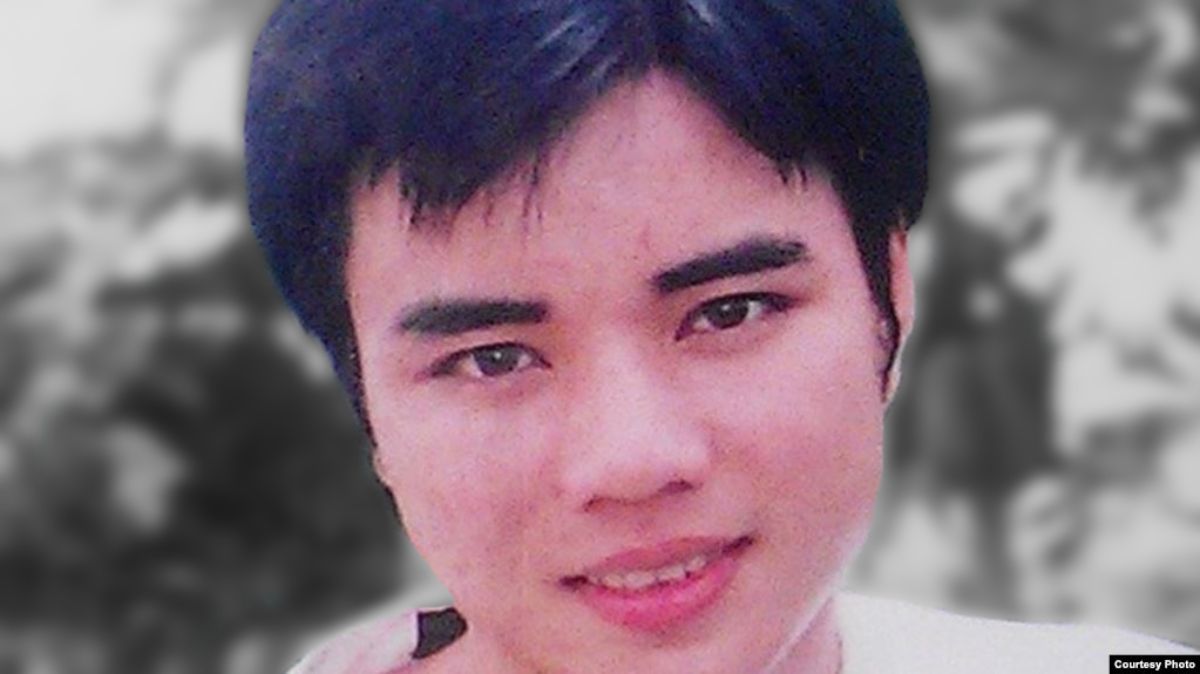
Author: demo_admin

  • Ho Duy Hai’s Case Reaffirmed, Sentenced to Death Again

    Ho Duy Hai’s Case Reaffirmed, Sentenced to Death Again

    On May 8, 2020, around 15:30 Hanoi’s time, the 17 members-committee of the Supreme People’s Court of Vietnam reaffirmed Ho Duy Hai’s lower courts’ decisions and again sentenced him to death. They have also denied the petition for a cassation trial from the Supreme People’s Procuracy of Vietnam.

    Hai’s death sentence has been affirmed

    In its statement denying the petition from the Judicial Committee of the Supreme People’s Procuracy of Vietnam, the committee even though agreed there were prosecutorial mistakes. Still, its members believed those mistakes did not change the character of the case. Accordingly, the Judicial Committee of the highest court believed that the lower courts have duly convicted Hai and sentenced him to death. Therefore, they affirmed the lower courts’ decisions, effectively sentenced Hai to death again.

    Ho Duy Hai’s family and his lawyer after the decision was announced. Photo courtesy: Nguyen Xuan Dien

    The Judicial Committee of the Supreme People’s Court believed these prosecutorial mistakes did not change the character of the case. Yet, if we look at them from an international law perspective, they might have violated the defendant’s right to a fair trial. The errors admitted by the government were among the followings:

    • No murder weapons. The alleged “weapons” were purchased at a market by the police.
    • Hai’s DNA, fingerprints were not found at the crime scene.
    • Hai also was convicted of ‘robbery’ in the same case, but the police could not find any of the items alleged to be robbed by him.
    • No eyewitness identified Hai at the crime scene.

    Technically, there was no physical evidence. The only evidence in the case was Hai’s confession. Under Vietnam’s laws, the confession could not be the sole evidence used to convict defendants.

    Would Hai’s life be saved under Vietnam’s laws?

    The cassation trial is the highest court’s proceeding in a case in Vietnam. But Hai still has three options (link is in Vietnamese) under Vietnam’s laws to save his life.

    1. The National Assembly could intervene and request the Judicial Committee of the Supreme People’s Court to conduct a meeting to review the cassation trial’s decision.
    2. The Head of the Supreme People’s Procuracy of Vietnam petitioned, or the Chief Justice of the Supreme People’s Court requested the Judicial Committee to review their decision in the cassation trial.
    3. The President of Vietnam pardons the death sentence.

    The cassation trial of Ho Duy Hai during the past three days has created a lot of public discussion in Vietnam. People have discussed the case because many of them saw the injustice of Ho Duy Hai’s judgment during the last twelve years.

    Representative Le Thanh Van at the National Assembly. Photo courtesy: Bao Moi

    One of the National Assembly’s members, Mr. Le Thanh Van, a representative Ca Mau province, has also expressed his opinion on his Facebook account. Mr. Le said that he would do all that he could to push for Vietnam’s Congress to intervene with this case. He stated that the decision of the cassation trial is unconvincing and not persuasive enough.

    Numerous attorneys and journalists also expressed on social media that the decision of the cassation trial’s decision was not fair. They believed that Ho Duy Hai should have been released. One of them was Huy Duc, the author of the book The Winning Side (Ben Thang Cuoc).

  • Ho Duy Hai’s Cassation Trial

    Ho Duy Hai’s Cassation Trial

    On May 6, 2020, a cassation trial started for Ho Duy Hai – a death-row inmate in Vietnam. His mother has been requesting the courts to review his wrongfully convicted case for the past decade. In one of our previous articles, we detailed the facts of his wrongful conviction in 2008.

    This trial is expected to last for three days at the Supreme People’s Court of Vietnam in Hanoi which is the highest court of the country. It is led by Mr. Nguyen Hoa Binh, the current Chief Justice of Vietnam.

    Below is the summary of the first day of Hai’s cassation trial.

    What is a cassation trial?

    The Supreme People’s Court of Vietnam on May 6, 2020. Photo courtesy: Justice Newspaper

    The cassation trial is a special court proceeding in Vietnam to review the lower court’s decisions. There must be a petition asking the highest court for a review because of irregularities or illegal conduct in the lower court’s proceedings.

    This proceeding does not review the facts of the case. Rather, the review only focuses on whether there have been prosecutorial mistakes which influence the decision of the lower courts.

    The decision from a cassation trial could result in six different ways:

    1. Affirm the lower courts’ decisions and deny the petition for a cassation trial;
    2. Void the lower courts’ decisions and order a new investigation of the case;
    3. Void the lower courts’ decisions and order a new trial;
    4. Void the lower courts’ decisions and halt the case;
    5. Amend the lower courts’ decisions, and
    6. Halt the cassation trial.

    What is the stand of the Supreme People’s Procuracy of Vietnam on this case?

    In Ho Duy Hai’s case, after receiving a request for a petition in his case from Hai’s family, the Supreme People’s Procuracy of Vietnam petitioned for a cassation trial at the end of 2019. At the cassation trial on May 6, 2020, the Supreme People’s Procuracy of Vietnam stated its decision to request this trial as follows:

    Accordingly, as reported by Justice newspaper in Vietnam, the decisions from both the trial court and appellate court in Ho Duy Hai’s case were inconsistent with the objectivity of the case; the gathering and examining of evidence and data were not completed, and the case contained a lot of conflicting issues but was not clarified. The Supreme People’s Procuracy of Vietnam requested “the highest court to void both the trial and appellate decisions in Ho Duy Hai’s case for ‘robbery’ and ‘murder’, as well as issue an order for a new investigation.”

    Ho Duy Hai’s Lawyer, Tran Hong Phong, is the first attorney to attend a cassation trial in the history of Vietnam

    Attorney Tran Hong Phong. Photo courtesy: VNExpress

    Cassation trial is a review court, not for arguing facts or procedures. In Vietnam, cassation trial does not allow lawyers for the defendant. However, from Tuoi Tre newspaper, the highest court has made an exception in this case to invite Ho Duy Hai’s attorney to attend.

    Attorney Tran Hong Phong is the first lawyer for a defendant to attend the cassation trial. From Mr. Phong, the court invited him because it saw him as a person with related responsibility in the case as he got some evidence. The evidence raised by Mr. Phong and Hai’s family included the testimony of an eyewitness. The eyewitness had told the police at the time that he saw a young man at the crime scene, but that person was not Ho Duy Hai. The eyewitness did not know Ho Duy Hai at the time and he did not recognize the person he saw was Hai.

    However, after the morning session of the first day of the cassation trial, Mr. Phong was asked to not come to the other sessions of the case. The court will continue the case with discussions of the court and the other governmental entities.

    Ho Duy Hai’s family believes justice will come when Hai is exonerated

    Hai’s younger sister, Ho Thi Thu Thuy, stated: “I desperately hope that this trial will happen in a transparent, equal manner and that it will practice justice. If this trial exonerates my older brother Hai, then I will believe justice is still present in Vietnam. If it concludes like the other previous decisions to deem him guilty, then Vietnam does not have justice and the law in Vietnam would not worth our respect to upholding.”

    Some pictures during the first day of Ho Duy Hai’s cassation trial

    Ho Duy Hai’s family, including his aunt, his mother, and his younger sister and attorney Tran Hong Phong
    Chief Justice Nguyen Hoa Binh began the trial. Photo courtesy: Vietnam News Agency
    Member of the Supreme People’s Procuracy of Vietnam. Vietnam News Agency
  • Report on Freedom of Religion in Vietnam – December 2019

    •    Focus:

    1. Police impede festivities for Pure Hoa Hao Buddhism founder Huynh Phu So’s birthday in An Giang province
    2. The Inter-religious Council of Vietnam issues letter protesting religious oppression in Vietnam and China
    3. Conference held regarding two years of implementing the Law on Faith and Religion and supplemental Decree 162/2017/NĐ-CP, which provides further regulatory details and methods of implementation

    •    Changes in laws regarding religion

    There have been no changes and no new state regulations related to the administration of religion.

    •    Events involving religious organizations:

    1. Police impede festivities for Pure Hoa Hao Buddhism founder Huynh Phu So’s birthday in An Giang province

    On December 18, 2019, Mr. Le Quang Hien, chief secretary of the Pure Hoa Hao Buddhism Central Management Board, an organization not recognized by the state, reported that police set up roadblocks at the intersections surrounding the temporary office of the church. These actions were intended to prevent followers from gathering at the church to celebrate the centennial birthday of founder Huynh Phu So on December 20th, 2019.

    Hien stated that police began setting up the post at six in the morning; they did not allow followers to pass through and kept a close watch on the committee’s members.

    “These actions– banning followers from exercising their freedom of faith and preventing citizens from having the freedom of movement–are a grave violation of human rights and freedom of religion”, Hien wrote on his Facebook.

    In Vietnam, religions not recognized by the state face government discrimination. The state sees these groups as high-risk and likely to carry out anti-state activities. As the operational activities of religions often involve gatherings of people, the Vietnamese state regularly prevents followers of non-state-controlled religions from gathering, violating citizens’ freedom of assembly. These obstructive actions are often carried out under false pretenses, such as plainclothes police carrying out administrative, traffic, or vehicle checks. Some go so far as to put followers and activists under house arrest.

    2. The Inter-religious Council of Vietnam issues letter protesting religious oppression in Vietnam and China

    On December 17th, 2019, the Inter-religious Council of Vietnam, an independent alliance established in 1990 representing five of Vietnam’s larger religions, issued a letter of protest regarding the oppression of religion and human rights in Vietnam and China.

    In the protest letter, the Inter-religious Council of Vietnam asserted that the Vietnamese state implemented discriminatory policies towards independent religious groups that refused state control. The council stated that citizens’ freedom of religion and faith were being severely curtailed by the government’s Committee for Religious Affairs, the Fatherland Front, and religious groups established by the state. The state was repressing, threatening, beating, and detaining dignitaries of independent religions, and many religious premises were being threatened, confiscated, or abolished by the state.

    The council also brought up the issue of peaceful democracy, environmental, and social justice activists being charged with anti-government crimes that carried heavy sentences, including journalist Pham Chi Dung, who was recently arrested on November 21st, 2019. Similarly, citizens who express opinions regarding Chinese expansionism are hindered and arbitrarily detained.

    In regards to China, the council condemned the totalitarian control of Beijing’s authoritarian regime exercised over ethnic minorities, religious groups, activists, Uighurs, Kazakhs, and Tibetans. The council also touched on the issue of freedom and democracy in Hong Kong, including the severe and violent repression that students and protesters faced, as well as Chinese encroachment in the East Sea (also known as the South China Sea).

    The council petitioned the European Union to temporarily postpone the EU-Vietnam Free Trade Agreement until civil and political rights in Vietnam, including freedom of religion, were guaranteed in accordance with international law.

    3. Conference held regarding two years of implementing the Law on Faith and Religion and supplemental Decree 162/2017/NĐ-CP, which provides further regulatory details and methods of implementation

    On December 31st, 2019, the Central Committee of the Vietnamese Fatherland Front and the government’s Committee For Religious Affairs organized a conference evaluating two years of implementing the Law on Faith and Religion and a supplemental decree on methods of implementation.

    Beyond achievements in controlling religious activities, Mr. Vu Chien Thang, head of the government’s Committee for Religious Affairs, also stated that in the past two years, the stipulations of the law and its supplementary decree have encountered a number of difficulties: “difficulties such as state management of local-level faiths; advising, implementing, and enforcing policy and related laws that affect one another; surmounting difficulties and inadequacies related to religious land, the management and usage of church property, and the legal institutions themselves”, Thang expressed at the conference.

    In practice, the last two years have seen this law and its supplementary decree only contribute to helping the state further control religious activities in conjunction with current law, rather than improve citizens’ freedom of faith and religion. Both the law and its decree allow the state to broadly and deeply interfere in the internal activities and external interactions (raising funds, accepting donations, or organizing activities…) of religious organizations.

    The law and its supplementary decree divide religious organizations into two different groups. Organizations that desire recognition and legal status must accept the broad and deep interference of the state in its internal affairs, working in tandem with the government to limit freedom of religion. Other organizations refuse state control, desiring to be independent of the government in order to exercise their freedom of religion.  This latter group faces great pressure and the heaviest of restraints from the government.

  • Report on Freedom of Religion in Vietnam – November 2019

    •    Focus:

    1. The government’s Committee For Religious Affairs certifies the Vietnamese Church of Latter-Day Saints.
    2. Hoa Hao Buddhist Tran Thanh Giang is sentenced to eight years in prison for criticizing state leaders on social media.

    •    Changes in laws regarding religion

    There have been no changes and no new state regulations related to the administration of religion.

    •    Events involving religious organizations:

    1. The government’s Committee For Religious Affairs certifies the Vietnamese Church of Latter-Day Saints Vietnam.

    Five years after the state recognized the Provisional Representative Committee, the government’s Committee For Religious Affairs issued the Vietnamese Church of Latter-Day Saints a certificate for the registration of religious activities on November 15th, 2019.

    According to the Great Unity Newspaper, the Church of Latter-Day Saints arrived in Vietnam in 1962 but was forced to cease operations from 1975 to 1995.

    Mr. Hoang Van Tung, head of the church committee, says there are approximately 1000 followers, mainly in Ho Chi Minh City and Hanoi.

    At the certification ceremony, Ms. Thieu Thi Huong, representative of the government’s Committee for Religious Affairs, stated that the certification will create more favorable conditions for the church to move towards legal religious entity status.

    The certification of a number of religious organizations as above reveals the government’s increasingly open attitude towards permitting religious activities, though the decisions still remain largely subjective rather than following any rule of law.

    2. Hoa Hao Buddhist Tran Thanh Giang is sentenced to eight years in prison for criticizing state leaders on social media.

    On November 27th, 2019, the People’s Court of An Giang Province sentenced Tran Thanh Giang, age 48, to eight years in prison for social media writings criticizing the government.

    According to the An Giang Newspaper, on November 2nd, 2018, the Office of Culture – Information of Cho Moi district (An Giang province), in the process of information control, had discovered Giang’s anti-government writings on Facebook and reported him to police. Cho Moi district police searched Giang’s residence, confiscating 14 cell phones, 12 sim cards, and 4 memory cards.

    According to the newspaper, from 2014, Giang used two phone numbers to create a Facebook account with the name “Giang Tran Thanh”. On December 12th, 2018, he changed the name of the account to “Thanh Tran”. Giang used this account to post information opposing the state, defaming the government, and undermining the state’s policy of national and religious unity.

    The government printed evidence from Giang’s Facebook account (3,314 pages of documents and 99 video clips) and email (297 pages of documents) to convict him. Giang’s indictment stated that he used email to contact Nguyen The Quang and requested to join the Vietnamese Democracy Party. Quang transferred numerous materials for Giang to post on Facebook, calling for people to oppose the government.

    In court, Giang rejected the Inspectorate’s accusations. He denied that the Facebook account “Thanh Tran” belonged to him. He also stated that the witnesses were not objective because they had had the previous conflict with him.

    According to RFA, Giang had been an activist for years fighting for the freedom of religion. The An Giang Newspaper said Giang had twice been warned by police for opposing the local government

    In the past few years, Hoa Hao Buddhists have been one of the most often and most severely oppressed religious groups in the south. Hoa Hao Buddhists have been particularly vocal about opposing the government’s strict policies controlling religion and have accepted heavy prison sentences accordingly.

  • Report on Freedom of Religion in Vietnam – October 2019

    •    Focus:

    1. Tay Nguyen highlands – the government continues to uphold oppressive policies against religious groups that refuse state control.
    2. In the southern region – Six Hoa Hao Buddhists were assaulted by security forces on their way to prevent the roof re-tiling of An Hoa Tu temple.
    3. In the southern region – Hoa Hao Buddhist Nguyen Hoang Nam goes on a hunger strike at Xuan Loc Prison Camp.
    4. In the central coastal provinces – the government prepares to take over the educational premises of Tuy Hoa Protestant Church (in Phu Yen) at the end of November 2019.
    5. The state grants recognition to the Vietnamese Pentecostal Gospel Church.

    •    Changes in laws regarding religion:

    There have been no changes and no new state regulations related to the administration of religion.

    •    Events involving religious organizations:

    1. Tay Nguyen highlands – the government continues to uphold oppressive policies against religious groups that refuse state control.

    Dega Protestantism and the Ha Mon religion continue to be the primary targets of elimination by security forces in the Tay Nguyen highlands.

    The government believes both religions are being controlled by FULRO – an armed organization that fought for the autonomy of minorities in the Tay Nguyen highlands but which weakened and disbanded in the 90s – to oppose the state. The government believes that Dega Protestantism was established by former members of FULRO to incite people to demand autonomy in the Tay Nguyen highlands and assert the Ha Mon religion is the heresy that incites and entices many individuals among ethnic minorities.

    The reality is the government solely controls the discourse surrounding these two religions. Journalists do not have the freedom to investigate the activities of religions in the Tay Nguyen highlands, and the region has become the most strictly controlled in terms of religious activities.

    According to the government’s Committee for Religious Affairs (which belongs to the Ministry of the Interior and directly administers tasks to do with religious security), the Ha Mon religion began developing in 1999 in the two provinces of Kon Tum and Gia Lai, with approximately 3,500 followers. The followers of the Ha Mon religion conduct their religious activities in small groups in private residences, similar to Catholic protocol, rather than in a government-sanctioned church. The activities of the Ha Mon religion were seen by the authorities as disruptive of order and security and needed to be halted. In 2013, the founder of the Ha Mon religion, Ms. Y Gyin of the Bana ethnic group, was sentenced to three years in prison along with seven others who were sentenced to a maximum of 11 years in prison, for undermining national unity (Article 87 of the 1999 Penal Code).

    According to the Gia Lai Newspaper, the police of Phu Thien district in Gia Lai province asserted that FULRO was secretly operating in 81 hamlets and villages in the district and needed to be wiped out. District police believe that activities which involve crowds, like weddings, funerals, and birthdays, need to be strictly monitored, as these events serve as covers for unauthorized religious activities that oppose the state.

    After the large-scale protests in the 2000s (and up to 2012) related to religion and land, the government’s oppressive activities have spread to religious groups. The government refuses to accept any religious activities that lay outside of its control. Religious groups, principally Protestants and Catholics, have suffered severe government oppression as they demand their right to freedom of religion.

    According to our sources, in the last two months or so, approximately three families fled across the border from the Tay Nguyen highlands to Bangkok because of religious oppression. Currently, there are more than 500 individuals of ethnic minorities who are refugees in Bangkok, Thailand and another group of more than 20 in Phnom Penh, Cambodia.

    The common forms of government harassment towards religious groups in the Tay Nguyen highlands include:

    • Halting any activities involving groups of people, even if they are not religious in nature
    • Preventing individuals from leaving their home hamlet or village
    • Monitoring the daily activities of all individuals
    • Placing individuals under house arrest on days in which there are religious activities
    • Regularly coming to homes to interrogate individuals or interrogating those who recently returned from other areas
    • Illegally arresting and holding people in custody
    • Torture, beatings
    • Refusing to carry out administrative procedures for a number of families
    • Hunting down and imprisoning those who flee across the border for religious reasons
    • Punishing individuals by giving them jail sentences

    2. Six Hoa Hao Buddhists were assaulted by security forces on their way to prevent the roof re-tiling of An Hoa Tu temple

    At approximately 2 AM on October 7th, 2019, on the day that the roof of An Hoa Tu temple was going to be re-tiled, six Hoa Hao Buddhists (Vo Van Thanh Liem, Le Thanh Thuan, Nguyen Thanh Tung, Cao Thi Thu Ba, To Van Manh, and Le Thanh Truc) were ambushed as they were on the way to An Hoa Tu temple to prevent the roof re-tiling. As the six arrived at the Thuan Giang ferry landing, approximately a kilometer away from An Hoa Tu temple, they encountered a group of individuals who were there waiting for them. This group proceeded to beat the six Buddhists in order to prevent their arrival at the temple.

    Mr. Vo Thanh Liem, age 79, spoke to RFA regarding the assault: “Today [October 7th, 2019] they took the roof tiles off the church, but the church itself remained untouched. Yesterday, they stacked [the tiles] outside the gate, same today. As we arrived at the Thuan Giang ferry landing, about 40-50 individuals blocked us, beating Mr. To Van Manh, Mr. Le Thanh Thuc, and Ms. Nguyen Thi My Trieu; my niece Vo Thi Thu Ba had her phone smashed. Realizing that they were going to beat me as well, I poured gasoline on myself and threatened to end things on my own terms, after which they left. They used long sticks, beating people so hard, the sticks smashed to smithereens.”

    Other Hoa Hao Buddhists also saw that a crowd of security forces was watching over the stacks [of tiles] around An Hoa Tu temple as the roof tiles were being replaced. On October 9th, 2019, Hoa Hao Buddhist Le Tan Tai was held down and assaulted by security forces, who took his phone after believing that he was planning to record the roof re-tiling of An Hoa Tu temple. Tai said he was further slapped in the face by a female plainclothes police officer. Leaders of Pure Hoa Hao Buddhism were also kept under house arrest during the days of the An Hoa Tu temple roof re-tiling.

    The conflict surrounding the renovation of An Hoa Tu temple demonstrates the government’s overreaching interference in the internal affairs of a religion. Religious groups that do not accept government control are not only vulnerable and unable to freely operate but are also assaulted for expressing their opinions. Religious groups that accept state control are protected by security forces, are provided budgets, are allowed to carry out religious activities, and become a force to help the state manage religion as a whole. This disparity in treatment tends to exacerbate rivalries between the different branches of a religion.

    3. Hoa Hao Buddhists dispute the re-tiling at An Hoa Tu temple

    After disagreement regarding the roof re-tiling of the An Hoa Tu temple, the followers of Pure Hoa Hao Buddhism (PHHB) continue to oppose the Hoa Hao Buddhism Central Management Board – which has supervisory rights over An Hoa Tu temple and is the only Hoa Hao Buddhist organization recognized by the government – regarding the replacement of bricks that are still intact at the home temple.

    The followers of PHHB assert that the recent activities regarding the renovation of An Hoa Tu temple are a gradual attempt to completely change the original state of the home temple. They state that this will alter the home temple’s historical markers.

    4. Hoa Hao Buddhist Nguyen Hoang Nam goes on hunger strike at Xuan Loc Prison Camp in Dong Nai province

    According to RFA, the wife of Mr. Nguyen Hoang Nam, a Hoa Hao Buddhist and a prisoner serving his sentence at Xuan Loc Prison Camp, reported that Nam went on a hunger strike for six days, from October 11th – 17th, 2019 to protest his transfer from the area for political prisoners to a cell for drug-related criminals.

    Mr. Nguyen Hoang Nam, a 37-year-old Hoa Hao Buddhist, chose to practice his religion independent of the state. He was sentenced to four years in prison in 2018 for disturbing public order, along with four other Hoa Hao Buddhists, one of whom was sentenced to one year of prison for obstructing officials. According to Human Rights Watch, these verdicts were intended to punish those Hoa Hao Buddhists who demanded religious freedom and refused state control.

    Current conditions in prisons are deplorable, though on the whole, political prisoners are able to enjoy better conditions than normal criminals. However, they can be punished by being transferred to cells with less desirable conditions.

    The following prison conditions need to be improved:

    Using the same water source for eating, drinking, showering, and washing clothes

    Meals that are low-quality, unclean, or lack essential nutrients

    Prisoners being unable to maintain daily bodily hygiene

    Prison cells which are hot, lacking in sunlight, or overcrowded

    Prisoners not receiving sleeping nets and suffering mosquito bites

    Unreliable health care

    The price of food and commodities that prisoners can buy at the canteen being 2 to 3x the market price

    Prisoners being overworked

    5. The government prepares to take over the educational premises of Tuy Hoa Protestant Church (in Phu Yen) at the end of November 2019.

    According to the Tuy Hoa Protestant Church of Phu Yen province, the provincial government issued a notice that it was reclaiming a piece of church land in November 2019. The land, which contained the educational premises of a church at 65 Nguyen Hue, Tuy Hoa city, Phu Yen province, was earmarked for the construction of a pre-school.

    The piece of land is under 1000 square meters and includes classrooms and school grounds; it has since belonged to the church before 1975. The church agreed to let the local government borrow the grounds in 1978 to open an elementary school and a pre-school. From then on, the government refused to return the land, creating a deed and merging the piece of land with the school in 2014. At the beginning of 2019, the municipal government issued a decision to construct Hoang Yen Public Pre-school on the piece of church land, without any negotiations on compensation.

    The church reverend, the Tuy Hoa Protestant Church, and parishioners all opposed the city’s decision. According to RFA, the church opposed the decision by unfurling protest signs. Afterward, provincial police called the reverend down to the station many times to confiscate his banners and threatened to expel him from the province.

    Currently, the Tuy Hoa Protestant Church remains concerned about the fate of their piece of land, fearing that it will be reclaimed unconditionally and lost permanently at the end of November 2019.

    6. The state grants recognition to the Vietnamese Pentecostal Gospel Church.

    Ten years after being permitted to operate, the Vietnamese Pentecostal Gospel Church was recognized by the state as a religious organization on October 24th, 2019, in Ho Chi Minh City.

    The Vietnamese Pentecostal Gospel Church was established in the south in 1972. However, after 1975, the church stopped operating after suffering government oppression; followers were forced to practice in their own homes. In 1989, the church was reinstated and operated under close government supervision. It was not until October 2009 that the government agreed to legalize the church by issuing it a permit to operate.

    7. Conference held for the 2019 third quarter briefings re: the state administration of faith and religion in the cities and provinces of the central coast and the Tay Nguyen highlands

    On October 9th, 2019, the government’s Committee For Religious Affairs along with the People’s Committee of Khanh Hoa Province organized a conference for the 2019 third quarter briefings regarding the state administration of faith and religion in the cities and provinces of the central coast and the Tay Nguyen highlands. The conference brought together the home affairs offices of 17 provinces and cities.

    Although it was a conference related to the administration of religion, the Internal Security Office and the Military Region 5 Command also attended.

    According to Khanh Hoa radio and television, the administration of religion in the final months of 2019 will focus on: continuing the roll-out of the Politburo’s Directive #18 regarding religious tasks in new situations; stepping up the check of land-use certificates for religious premises, and discovering and handling new religious phenomena that adversely affect local order and security in a timely manner.

    The Politburo’s Directive #18 regarding religious tasks in new situations is a directive that still has not been announced to the public. This conference reveals that the government still views unauthorized religious activities as contrary to the law, attempting to tie them to such concepts as “heresy”, “spiritual deviation”, “superstition”, and “disruption of security and order”.
  • Report on Freedom of Religion in Vietnam – September 2019

    •    Focus:

    1. A Protestant in the Tay Nguyen highlands was sentenced to seven years in prison for undermining national unity (supplement to the August 2019 report)
    2. Hoa Hao Buddhists continue to dispute the complete removal of An Hoa Tu temple’s tile roof.
    3. The government’s Committee For Religious Affairs organizes a conference in An Giang for briefings on the third quarter of 2019
    4. 58 dignitaries and officials were elected to the Vietnamese Fatherland Front Committee, bringing the total to 385 members

    •    Changes in laws regarding religion

    There have been no changes and no new state regulations related to the administration of religion.

    •    Events involving religious organizations:

    1. A Protestant in the Tay Nguyen highlands was sentenced to seven years in prison for undermining national unity (supplement to the August 2019 report):
    On August 9th, 2019, the People’s Court of Gia Lai Province sentenced Rah Lan Hip, age 38, a Protestant member of the Jrai ethnic minority and resident of Chu Prong district, to seven years in prison for undermining national unity, under Article 116 of the 2015 Penal Code (amended in 2017), during a mobile trial.

    Information from the People’s Court of Gia Lai Province website states that from June 2018 to March 2019, Rah became acquainted with two Dega Protestants in the United States over social media. Afterward, Rah provided these two individuals with information regarding a fellow Jrai who had just completed his/her jail sentence and another who was still serving his/her sentence, as well as a list of 1304 Dega Protestants in Chu Prong district. The two individuals transferred Rah 18.000.000 VND (~775 USD) to organize four meetings for Protestants in the vein of Dega Protestants in the United States.

    The People’s Court of Gia Lai Province did not provide any other information to prove that Rah committed the crime for which he was indicted: “Rah Lan Hip’s criminal actions listed above are dangerous to society and negatively influence local political security; create division, hatred, and discrimination between the Kinh majority and ethnic minorities; and infringe upon the community of ethnic groups in Vietnam”.

    Rah’s verdict reveals that the authorities still maintain a tight grip on religious activities in the Tay Nguyen highlands. Civil activities of Protestants in the area are regularly accused of having political, anti-government ends.

    The charge of “undermining national unity” (Article 116 of the Penal Code) has been widely used in many years past to imprison those who try to exercise freedom of religion in the Tay Nguyen highlands. The government often frames purely civil religious activities as actions which incite division between religious practitioners and the government.

    In addition, the 2015 Penal Code (amended in 2017) has four laws aimed at prosecuting people involved in illegal border crossings, which has resulted in the arrest and imprisonment of many Protestants of ethnic minority origin. The minimum jail sentence for fleeing abroad is one year, if he or she commits the offense of “organizing or brokering the passage of others to flee abroad or illegally stay abroad” (Article 349). For particularly serious cases involving the crime of “fleeing abroad or illegally staying abroad in order to oppose the people’s administration” (Article 121), the maximum penalty is up to 20 years in prison.

    2. Hoa Hao Buddhists continue to dispute the complete removal of An Hoa Tu temple’s tile roof.
    After more than two months of disagreement over the restoration of An Hoa Tu temple, the followers of Pure Hoa Hao Buddhism (PHHB) and the Hoa Hao Buddhism Central Management Board (HHBCMB) – which has supervisory rights over An Hoa Tu temple and is the only Hoa Hao Buddhist organization recognized by the government– have still not agreed on restoration plans.

    According to information from PHHB, at the beginning of September 2019, provincial-level police intervened in the matter. A number of provincial- and district-level police officers met with followers of PHHB and told them that the People’s Committee of An Giang Province only gave the management board permission to replace the entire tile roof, rather than demolish the whole structure and build a new one. The officers also advised them not to incite followers and kept watch over PHHB officials that same day, as there was a meeting of the Hoa Hao Buddhism Central Management Board regarding the restoration of An Hoa Tu temple.

    The followers of PHHB even accuse Mr. Nguyen Huy Diem, second-in-command of the HHBCMB and a long-time member of the Vietnamese Communist Party (VCP), of not being an actual follower of the religion but merely a stand-in for the government to control the organization.

    The information above reveals that the An Giang provincial authorities still maintain a high level of interference over the internal affairs of religious organizations, including electing party members to serve on the boards of religious organizations.

    •    Events involving the state:

    3. The government’s Committee for Religious Affairs organizes a conference in An Giang for briefings on the third quarter of 2019
    Every quarter of the year, the government’s Committee For Religious Affairs organizes briefings in three regions: the southern provinces, the central coastal provinces, the Tay Nguyen highlands, and the northern provinces. These meetings normally include representatives of the Committee for Religious Affairs and the religious committees of the cities and provinces, occasionally with the participation of the Ministry of Public Security’s Internal Security Office and the People’s Army.

    In the September 25th, 2019 southern provincial briefing for the third quarter of 2019 in An Giang, a representative of the government’s Committee for Religious Affairs summarized the issues of the third quarter and laid out tasks for the provincial religious committees in the next. According to reports on the People’s Committee of An Giang Province website, the conference pressed the religious committees to implement the Law on Faith and Religion and supplemental Decree 162/2017/NĐ-CP (which provides further details on the law, as well as methods of implementation). The decree gives all levels of the government permission to interfere deeply in the internal activities of a religion. The conference also clarified a number of issues in Directive #180-CT/TW of the party’s Central Executive Committee (regarding promoting religious resources in national development), a directive that was not publicly announced by the VCP.

    4. 58 dignitaries and officials were elected to the Vietnamese Fatherland Front Committee (VFF), bringing the total to 385 members
    Over three days, from September 18th- 20th, 2019, the National Congress of the VFF elected 58 dignitaries and officials from all religions that participate in the Central Committee of the VFF, in an event attended by state and VCP representatives. The National Congress is the highest leading body of the VFF and is directed by the Presidium.

    The congress re-elected Tran Thanh Man to serve as chairman of the Central Committee of the VFF. Man is 57 years old and previously held high-level positions in the Can Tho municipal government. In 2017, Man was elected chairman of the Central Committee to replace Nguyen Thien Nhan after Nhan was appointed Secretary of the Municipal Committee of Ho Chi Minh City.

    The conference re-emphasized the role of the Fatherland Front in making sure all parts of society are in lockstep with the VCP in building socialism.

  • With Economic Development Comes Greater Government Oppression: Why the EU Must Reconsider Its Free Trade Deal with Vietnam

    With Economic Development Comes Greater Government Oppression: Why the EU Must Reconsider Its Free Trade Deal with Vietnam

    On the same day in 2020 that Vietnam chaired its first Security Council meeting in New York, just a few hours earlier and some 8000 miles away near its capital, Hanoi, the Communist Party of Vietnam directly attacked Dong Tam village for refusing to give up its land.

    The result? Police shot dead Dong Tam’s beloved leader and former Party village chief, Le Dinh Kinh, an 84-year-old veteran who had been a Party member for 57 years; three police officers also died after falling down a sky-light, ostensibly pursuing “suspects” who resisted the authorities. Twenty two villagers have subsequently been arrested, with twenty being charged with murder. If convicted, these villagers could face the death penalty.

    The Dong Tam land seizure event of last week is therefore a watershed moment in Vietnam’s post-war history for many reasons. First, it marks for the first time in the age of social media an open and deadly clash between the Party and its once loyal support base: villagers in northern Vietnam. According to a 2015 Bloomberg finding, almost 70% of Party members live in the north, even though the north is home to less than half of the country’s population of 96 million.

    Second, it shows the Party’s determination in ending the dispute, no matter the costs, and the great lengths it will go to muzzle public outcry afterwards, both on- and offline.

    Just two days after the incident, the Ministry of Information, which controls and censors all media content in Vietnam, called for Facebook – by far the most popular social media platform in Vietnam, used by some 55 million netizens – to be punished for ‘not following Vietnamese laws’ in allowing ‘distortion and fake news’ to be spread on its platform.

    Following official warnings and thanks to a large cyber-troop force the government employs, some users reporting on Dong Tam have been locked out of their accounts or had content taken down by Facebook, a fact Amnesty International has confirmed in recent days.

    Offline, the Party’s determination couldn’t be more clear. Less than 24 hours after the incident, the most senior member of the Politburo and Vietnam’s top leader, Party General Secretary Nguyen Phu Trong, posthumously awarded the officers killed the title of “martyr”, designating them as first-class heroes.

    A week later, in an elaborate ceremony held at the State Funeral House, the Prime Minister himself along with other Politburo members, including the powerful Minister of Public Security, attended the funeral, noting that the officers ‘sacrificed their lives to protect national security’.

    It is, indeed, not surprising that the Party views the incident as a matter of significant national security. After all, though land disputes are common in Vietnam because the government does not recognize private land ownership, never before has an entire village dared to resist government seizure of its land at all costs and announce its intentions accordingly on Youtube and Facebook.

    With Vietnam’s economy expected to grow faster in the next decade, land designated for development purposes and seized by the government will likely exacerbate the security situation on the ground if not dealt with decisively. In the case of Dong Tam, the land seizure was for Viettel Group, Vietnam’s military-run communications company. They had to act.

    But the timing could not have been worse. In the coming days, the EU Parliament’s Trade Committee is expected to vote on the EU – Vietnam Free Trade Agreement, worth 42 billion dollars annually and described by the EU as ‘the most ambitious free trade deal ever concluded with a developing country’. If passed, it will go to Parliament for a final vote on February 10.

    According to Human Rights Watch, already there is significant concern among some EU MEPs regarding Vietnam’s worsening human rights record. Just last month, they also discovered that the trade deal rapporteur, MEP Jan Zahradil, has institutional links with the Party, leading to his immediate resignation.

    With the latest incident in Dong Tam, it is also important for the 751 MEPs to realize that while the deal will bring more economic benefits to Vietnam, without clear and concrete human rights benchmarks, the deal will likely provide more incentives for the Party loyal and powerful to grab more land from the poor for developments without proper compensation and recourse.

    As a result, if passed in its present form, expect more land losses and tragic deaths in villages across Vietnam, not less. After all, 65% of Vietnam’s population still lives in rural areas.

    As for the Security Council of which Vietnam is the President this month, expect no resolutions on the matter. Dang Dinh Quy, head of Vietnam’s permanent mission in New York, is a Communist Party member himself.

  • Tensions Mount in Aftermath of Attack on Dong Tam Village

    Tensions Mount in Aftermath of Attack on Dong Tam Village

    As details and testimonies slowly emerge from Dong Tam after a surprise government raid early the morning of January 9, tensions between officials and civil society activists continue to mount as the two groups fight to clarify events that led to the deaths of 84-year-old village leader Le Dinh Kinh and three police officers, as well as the arrest of more than 30 villagers.

    Compounding tensions is the fact that Vietnam is a one-party authoritarian state in which all official news, press, and media outlets are controlled by a single communist party. Citizen-journalists make ample use of social media to counter the systemic bias, as the general population struggles to establish the facts.

    State media announcedyesterday that 22 individuals have been charged: 20 for murder, including two of Kinh’s sons, Le Dinh Chuc and Le Dinh Cong, as well as 2 others for obstruction of officials. Murder is among the most serious charges of the Vietnamese penal code, with punishment ranging up to and including the death penalty.

    The clash in Dong Tam was the culmination of a land disputethat had been simmering for years over private farmland earmarked for a military airport (Mieu Mon). Experts statethat land disputes in Vietnam have become increasingly common, at Loc Hung garden in Ho Chi Minh City most recently, due to the ambiguous laws that the ostensibly “communist” country has enacted regarding land ownership.

    According to villager testimonies, around 3 AM the morning of January 9, 2020, approximately 3,000 officers from the police, riot, and armed forces carrying clubs, sticks, guns, shields, and tear gas grenades poured into Dong Tam village (My Duc suburban district, Hanoi), targeting village leader Le Dinh Kinh’s house.

    Collecting eyewitness accounts, citizen-journalist and activist Pham Doan Trang explained: “as violent skirmishes broke out, police used an explosive charge to blow a hole into village leader Kinh’s house, all while firing bullets and tear gas. Other officers tightly sealed off all the paths and alleyways in the village and used German shepherds to hunt down ‘culprits’. The villagers responded with rocks and Molotov cocktails. Police completely collapsed the roof of Le Dinh Kinh’s house and more than 30 members of his extended family were taken away.”

    Trang reports that the Dong Tam area is currently under complete lockdown and no independent journalists have been allowed in, noting state media outlets simultaneously began reporting the same story January 9, citing a single source: Vietnam’s Ministry of Public Security. The brief statement from the ministry stated that a number of officers ‘sacrificed themselves’ in the line of duty, while one ‘hostile culprit’ died.

    It was not until January 10 that state media identified the “hostile culprit” as village leader Le Dinh Kinh himself, who was accused of leading a mob of villagers to “obstruct officials” who were working on constructing a wall delineating Mieu Mon Airport. Officials did not explain why this work was being done at four in the morning, nor why 3000 officers were present in the village rather than closer to the Mieu Mon work site, a few kilometers away. Officials handed over Kinh’s body to villagers the same day (January 10).

    Security footage showing numerous riot police marching through Dong Tam, early on the morning of January 9. Photo: Trinh Ba Tu

    Luong Tam Quang, deputy head of the Ministry of Public Security, explained at a press conference January 14 that Kinh was shot because he was “holding a grenade” and posed a threat to security forces. Quang, however, confirmed that the Ministry of Public Security did not have an arrest warrant for anyone when police stormed Kinh’s private residence.

    Kinh’s wife, Du Thi Thanh, told land rights activist Trinh Ba Tu that Kinh was shot right in front of her, twice in the head, once in the heart, and once in the left foot. A viral video of Kinh’s body on social media showed a single bullet hole near his heart, and an unexplained long surgical scar down his abdomen.

    Kinh’s funeral was held January 13, but the area of Dong Tam remained under high security, with the internet cut. Little to no footage of the funeral is available, and supporters were largely prevented from attending.

    Public outpouringof support for Kinh has been swift on social media, with many seeing him as a exemplary moral leader who consistently fought for the weak. In his lifetime, Kinh was a peasant farmer, a revolutionary soldier who had fought against the Americans, a Communist Party member at 20, head of police in his village, and both party secretary and chairman of the village’s Party committee in the 1980s.

    That the Vietnamese government has killed a model Party member has intellectuals commenting on the inherent symbolism, stating Kinh’s murder represented the communist regime “digging its own grave”.

    Kinh’s wife, Du Thi Thanh, herself suffered harsh mistreatment from the authorities, and in a surreptitiously recorded video that has spread on social media, she details how police slapped and kicked her repeatedly to force her to falsely confess to using grenades and petrol bombs.

    Kinh’s wife, Du Thi Thanh, explains how police repeatedly slapped and kicked her to force her to sign a false confession.

    Her son Le Dinh Cong, adopted daughter Bui Thi Noi, and her grandchildren Le Dinh Doanh and Le Dinh Quang are also likely victims of forced confessions, as their battered images appeared on state television January 13, stoically confessing to making petrol bombs and other weapons to attack police. They admitted they had broken the law, even implicating prominent activist Nguyen Anh Tuan and blogger Le Dung Vova in encouraging “anti-state” activities.

    Screenshots of the Le Dinh Cong, Bui Thi Noi, Le Dinh Quang, and Le Dinh Doanh under duress, as they are forced to confess on state television. Photo: Trinh Ba Tu

    All four subjects were covered in scrapes, black eyes, bruises, and swellings, and looked down as they spoke during the entire recording, appearing to be reading from statements off-camera.

    Forced scripted confessions, particularly those aired on state television, are common in authoritarian regimes, like Vietnam, China, and North Korea.

    State media also reported that Le Dinh Chuc, Le Dinh Kinh’s second son, is laying in a hospital; his condition is unknown.

    The January 14 press conference further identified the three police officers killed in the raid as: Colonel Nguyen Huy Thinh, Captain Pham Cong Huy, and Lieutenant Duong Duc Hoang Quan.

    After days of state media reporting that the villagers attacked and killed the officers by grenades, knives and petrol bombs, deputy head Quang admitted that the three individuals had fallen down a four-meter skylight in Kinh’s residence while pursuing suspects. He alleges that Dong Tam residents, upon seeing the officers in the well, poured gasoline and lit them on fire.

    All three officers have been given posthumous awards and the honorary title of “martyr” by President and Party General Secretary Nguyen Phu Trong for their service.

    Vietnam has cracked down on those challenging the official narrative, and according to citizen-journalist Pham Doan Trang, the government has arrested people in Can Tho, Quang Ngai, and Dak Nong for posting online about the event. She also notes that land rights activists (and brothers) Trinh Ba Tu and Trinh Ba Phuong, who are in direct contact with the Dong Tam villagers and have worked to smuggle information out, are currently at high risk of arrest.

    Facebook itself is now complicit in the oppression, activists say , as the government—using a cybersecurity law it passed in 2018—has succeeded in pressuring the company to remove videos and posts regarding the Dong Tam attack; Vietnam’s own online army has succeeded in bringing down some activists’ profiles through coordinated campaigns.

    An example of a notification that users in Vietnam see for “banned” content. Photo: Dinh Thao

    Vietnamese civil society organizations have responded accordingly, organizing several campaigns to bring awareness to the event, as well as pressure the Vietnamese government to address inconsistencies and unknowns in the government’s “evolving” narrative.

    Luat Khoa Magazine, an independent journal that covers legal and political issues in Vietnam, has mailed a letter to To Lam, head of Vietnam’s Ministry of Public Security with a list of fundamental legal questions for Mr. Lam to answer (English translation here), while a nationwide, weeklong “Pray for Dong Tam” color campaign launched Sunday, Jan 12, calling for calm, mourning, and an objective investigation into what transpired January 9 (English translation here).

    Perhaps most significantly, the “Dong Tam Task Force”, an ad hoc organization established by leading Vietnamese activists, launched January 13 to organize, coordinate, and facilitate fact-finding in the Dong Tam attack (English translation here). It also aims to protect the remaining village witnesses from further government harassment and arrest.

  • Long-simmering Land Dispute in Hanoi Suburb Explodes in Violence, Killing 4

    Long-simmering Land Dispute in Hanoi Suburb Explodes in Violence, Killing 4

    Amid sounds of explosions, screams, and gunfire, the villagers of Dong Tam, a rural commune 35 km southwest of Hanoi, clashed with Vietnamese police in the early morning hours of January 9, killing three police and one civilian, state-controlled media reported this afternoon.

    According to the BBC, at 4 AM, police cordoned off Dong Tam in coordination with local ground forces and attacked villagers over a disputed piece of land. The villagers, who were never officially notified but had only heard through unofficial channels, declared in video recorded an hour before the attack that they would “fight to the death”.

    In a message to fellow Vietnamese citizens, a villager of Dong Tam states that the government is shooting at them. He declares that the villagers will “fight to the death”. Nguyen Anh Tuan

    The land had been earmarkedsince 1980 to form a part of the Mieu Mon military airfield, but in 2015, the plan was expanded to take up more nearby farming land and generalized to become an airport.

    Citizen-blogger social media reports say police burst into the village with tear gas and grenades filled with plastic ball bearings, and descended upon village leader Le Dinh Kinh’s house, shooting and killing one individual, who remains unidentified as of this report.

    Le Dinh Kinh and his son Le Dinh Cong have served as village representatives during repeated land disputes with the government. Media outlets have been unable to reach Le Dinh Cong for comment, but villagers say Cong’s family is in police custody and his father Kinh had gone into hiding a few days prior to the showdown. Prominent activist Anh Chi says those in custody include at least Cong’s daughter-in-law and two other family members.

    Village leaders direct statements to the country and to the world at 3 AM, January 9, an hour before police descend on Dong Tam village, demanding justice and protection against government oppression. Nguyen Anh Tuan

    Another witness describes “thousands of police officers rushing into the village” using flash grenades, firing tear gas, shooting rubber bullets, blocking off all pathways and alleys, and beating villagers indiscriminately, including women and old people. The witness stated that electricity to the village has not been cut, but the internet has.

    According to state media, which quotes an official statement from the Ministry of Public Security, it was villagers who attacked police with “grenades, petrol bombs, and knives” as officials tried to erect a wall delineating Mieu Mon airport. The statement accuses villagers of obstructing official duties and “disturbing public order”, a catch-all often used to describe anti-government actions in Vietnam.

    Dong Tam previously made international headlines in April 2017 when it held hostage 38 government officials and police officers in another land dispute with Viettel, a military-owned telecommunications company.

    Accordingto VNExpress, 46 hectares were granted to Viettel in March of 2015, only for villagers to complain to the government in June of 2016 that the land was being taken away from farming. Villagers were able to successfully fight off land reclamation from late 2016 until February 2017.

    The land dispute came to a head in April 2017 when villagers captured more than three dozen officials and police and held them hostage as leverage for government dialogue. All hostages were released by April 22, after the mayor of Hanoi, major-general Nguyen Duc Chung, came to negotiate with villagers personally.

    The villagers of Dong Tam, in a past meeting regarding the land dispute. Le Dinh Cong sits in green, first row, farthest right. His father Le Dinh Kinh sits two seats to the left, in peach. BBC Vietnamese

    Vietnamese activists and experts believethe central conundrum causing Vietnam’s land disputes lays in the country’s political regime: “how [does one] allocate land in a Communist country that allows quasi-private ownership rights but still considers all land to be state property”?

    Accordingto the NYTimes, “[i]n 2013, Vietnam tweaked its land law in ways meant to introduce more transparency into eminent domain [i.e. government land reclamation] cases. […] But experts say land disputes continue, in part, because the 2013 revisions do not allow private ownership or set clear definitions of what qualifies as the public interest in eminent domain cases.”

    Mike Ives of the NYTimes reports further: “[l]and disputes are common on the fringes of Vietnamese urban areas, where land values are often high; villagers are typically compensated at prices well below market rates for agricultural land that is later rezoned for other uses. John Gillespie, a professor at Monash University in Australia who is an expert on land reform in Vietnam, said in an interview that the disputes tended to be more violent when villagers perceived that business interests outweighed public ones.”

    Dong Tam, with a population of around 9,000, continues to be under siege, according to social media reports. All parties involved remain on edge, with activist Anh Chi stating that “Tuan Ngo, one of lawyers helping the villagers, came to Dong Tam but was stopped outside. He was threatened to be arrested by a man in plainclothes with aggressive words.”

    Images of one of the police officers killed in the clash have also begun circulating on social media, with those on both sides of the land dispute expressing sympathy. Nhu Quynh, whose 27-year old husband appears to have been involved at Dong Tam, inadvertently revealed in her caption that 3000 police officers were deployed. The image (screencaptured below) has since been taken down.

    Translated post: “Oh, my husband!!! Of 3 thousand officers, why did it have to be you?” The Vietnamese

    Le Dung Vova, a well-known activist and writer has stated of land disputes in Vietnam: “Things will not stop at Dong Tam. […] Similar incidents will keep happening everywhere [as in Loc Hung Garden], with different levels of intensity, especially as land resources become more scarce.”

    Update: BBC News has reported that Dong Tam’s leader Le Dinh Kinh has passed away January 10, after clashing with government forces in the early morning hours of January 9.

  • Ranked 32nd Most Powerful Country in the World, Communist Vietnam Set to Assume Greater International Role in 2020

    Ranked 32nd Most Powerful Country in the World, Communist Vietnam Set to Assume Greater International Role in 2020

    U.S. News and World Report ranked Communist Vietnam the 32nd most powerful country in the world in 2019, placing it ahead of nearly all of its peers in the region, with the exception of Singapore, which came in 20th. Of the 80 countries included in the survey, Indonesia ranked 47th, the Philippines 51st, Myanmar 53rd, Thailand 54th, and Malaysia 58th.

    The magazine defines powerful countries as those who “consistently dominate news headlines, preoccupy policymakers and shape global economic patterns” and forms its rankings “based on an equally weighted average of scores from five country attributes that related to a country’s power: a leader, economically influential, politically influential, strong international alliances and strong military.”

    Communist Vietnam rose two spots in the rankings from 2018, bolstered in particular by its high score for “strong military”. The country’s weakest attribute was its lack of “strong international alliances”, an area which is unlikely to improve, according to the country’s recently released defense white paper.

    Communist Vietnam released its 2019 defense white paper November 25, in both English and Vietnamese. It has released such reports irregularly, in 1998, 2004, and 2009. Photo: VNExpress

    The paper was the first of its kind released in more than a decade, and at its official launch November 25, Deputy Minister of National Defense Senior Lieutenant General Nguyen Chi Vinh highlighted the “4 No’s” that would guide Communist Vietnam’s foreign policy: “Vietnam will not join any military alliances, will not associate with one party to oppose another, will not allow foreign countries to set up a military [base] in the country…” and “will not use force or threaten the use of force in international relations” unless it is under attack.

    In an interview with VNExpress, Vinh defended the country’s policy of no military alliances, stating that “Being a part of such an alliance means you have to completely align with one side and possibly have to confront the other, which means more enemies. Vietnam does not stand by any side but peace, reason, justice, and international laws.”

    In writing the white paper, the Central Military Commission (CMC, the highest party organ in Communist Vietnam on military policy) and the Ministry of National Defense (MND) said they consulted with representatives of former senior military leaders, as well as with members of the public who expressed reservations about non-alignment.

    The CMC and the MND defended their position, equating non-alignment with independence: “Countries that are members of such an alliance will be placed under the leadership of one country, normally a large and powerful one, and will have to adhere to that union’s principles, even when they are not entirely compatible with the country. Member nations of such a bloc will no longer be independent and have the autonomy to decide things on their own.”

    Vietnam watchers have acknowledged that the country’s one-party regime is in a difficult position politically, and an active alliance with either the US or China would bring about its own set of challenges, some existential.

    The country’s policy of pacifism, self-defense, non-alignment, and multilateralism, however, belies the strong language it uses against encroachment in the East Sea and even stronger language wielded against “hostile forces” in the domestic realm.

    Without explicitly calling out China as the culprit of “unilateral actions” and “power-based coercion”, a section in the white paper makes Vietnam’s opposition clear:

    New developments in the East Sea, including unilateral actions, power-based coercion, violations international law, militarisation, change in the status quo, and infringement upon Viet Nam’s sovereignty, sovereign rights, and jurisdiction as provided in international law, have undermined the interests of nations concerned and threatened peace, stability, security, safety, and freedom of navigation and overflight in the region.

    Communist Vietnam uses even less-restrained language for its domestic opponents, whom it considers to be at virtual war with:

    The hostile forces who conspire with reactionaries and political opportunists inside the country have no given up their plots against the Vietnamese revolution. They focus on destroying political, ideological foundation with a view to eliminating the leading role of the CPV and the socialist regime in Viet Nam, “depoliticising” the VPA, sowing division in the entire nation’s great unity, and driving a wedge between the people and the CPV and the VPA.

    “Hostile forces” and “reactionaries” “against the revolution” are blanket phrases that the Vietnamese Communist Party (VCP or CPV) reserves for those who seek to end the Party’s monopoly on power. State media routinely uses these terms to describe activists, dissidents, and those who advocate multi-party democracy and liberal values. That the Vietnamese communist revolution ended in 1986 with capitalist market reforms has not abated the usage of these anachronistic and binary terms.

    The VCP also implicitly acknowledges the threat social media and online sources of information pose to “national defense”, and similar to other authoritarian, one-party states, conflates Party security with national security. A cybersecurity law that sparked nationwide protests in 2018 went into effect at the beginning of 2019, and the end of 2019 has seen an upsurge of Vietnamese citizens arrested for writing Facebook posts critical of the communist regime.

    According to the white paper, Communist Vietnam’s defense spending totaled approximately 5.8 billion USD in 2018, equivalent to 2.3 percent of GDP, an increase from 2.23 percent in 2010. For comparison, the United States spends 3.2 percent of GDP on defense, while China spends only 1.9 percent.

    The full English copy of Communist Vietnam’s 2019 defense white paper can be found here, courtesy of Carlyle Thayer, emeritus professor at The University of New South Wales, Canberra.

    Communist Vietnam is also set to assume the rotating chairmanship of the Association of Southeast Asian Nations (ASEAN) from 2020-2021, where according to Thayer, the country will be “in a position to exert strong leadership on Code of Conduct issues [in the East Sea] through bilateral consultations with other ASEAN members and by setting the agenda and issuing the Chairman’s statement at all relevant ASEAN meetings and at all ASEAN Plus meetings.”

    Though ideologically aligned with China, Communist Vietnam has often been the lone member of ASEAN to speak up forcefully against Chinese activities in the East Sea, a trend which looks to continue. Vietnam’s deputy foreign minister, Nguyen Quoc Dung, commented at a lecture at The Institute of Southeast Asian Studies in Singapore that he “hope[s…] during our chairmanship China will show restraint and refrain from these activities [that violate Vietnam’s Exclusive Economic Zone],” adding that “it wasn’t that other ASEAN countries supported China’s actions, but that they did not protest in the same way.”

    Disputed claims in the East Sea (also known as the South China Sea or the West Philippine Sea). Photo: The Economist

    The ASEAN chairmanship rotates through its ten members annually, in alphabetical order. Communist Vietnam last served in the position in 2010.

    Concurrently, 2020 will also see Communist Vietnam serve as a non-permanent member of the UN Security Council (UNSC), a position which it bid on and won by unanimous vote. The two-year term will begin in January 2020, and joining the country on the UNSC will be Estonia, Niger, Saint Vincent and Grenadines, and Tunisia.

    According to The Diplomat, “during [Vietnam’s] campaign for the seat and in comments thereafter, officials have indicated that [their goals] would generally include areas such as promoting sustainable development and advancing preventive diplomacy, drawing on Vietnam’s own historical experience with war and peace as well as contemporary events such as its hosting of the second Trump-Kim summit.” Communist Vietnam last held a seat on the UNSC in 2008-2009.