Author: demo_admin

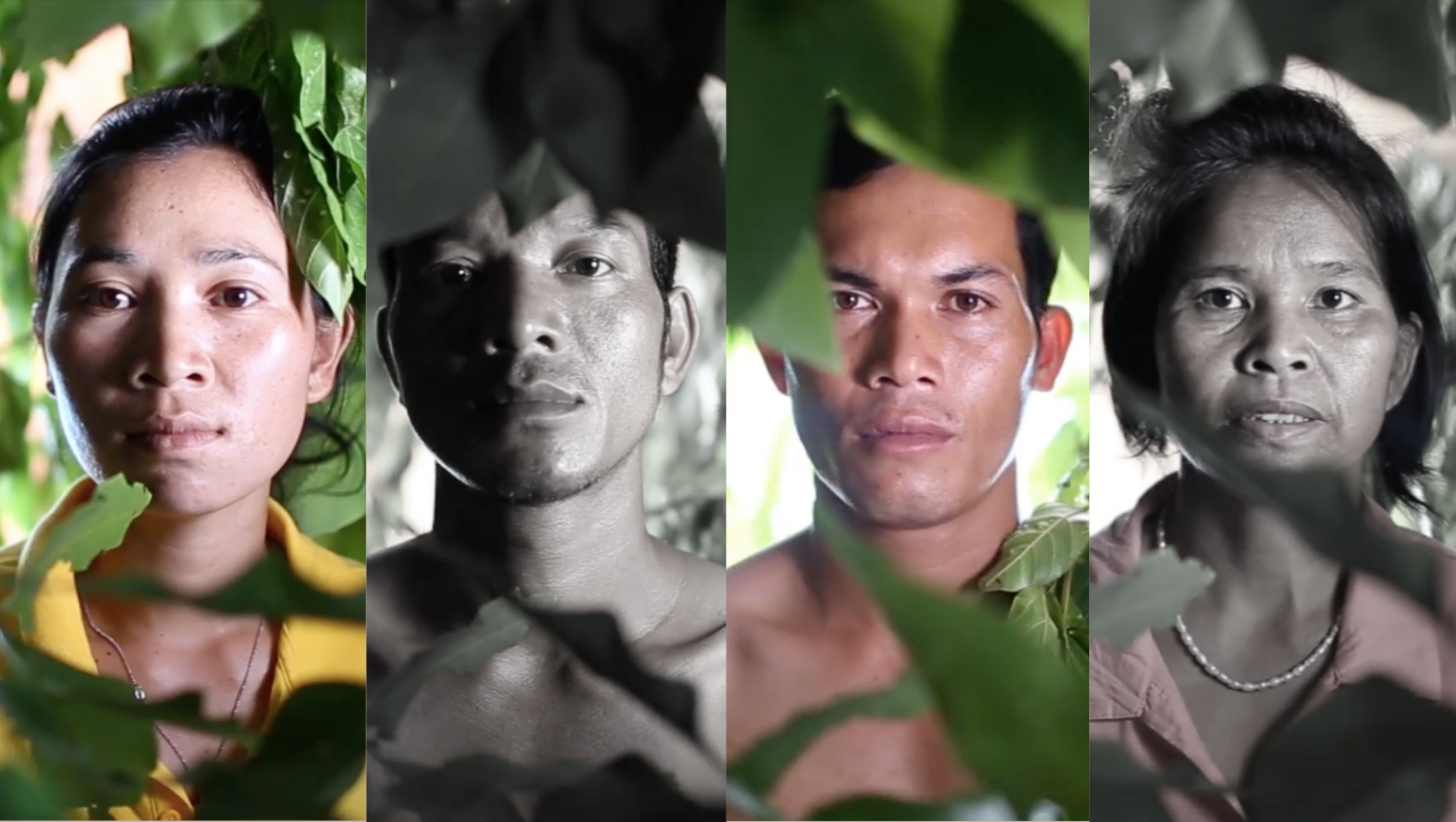
  • Montagnards: Persecuted in Vietnam, Living in Limbo in Thailand

    Montagnards: Persecuted in Vietnam, Living in Limbo in Thailand

    Tran Duy – Ha Anh

    On the morning of April 19, 2008, indigenous villagers of Ia Piar – more than 80 km away from the Gia Lai provincial capital in Pleiku – were heading to their commune people’s committee with well prepared posters and banners calling for religious freedom and the protection of land ownership. They had their own “battle plan” ready, but so did the authorities.

    Soon after the protest began, the villagers, who are Protestants, ran into a group of strangers carrying wooden sticks in their hands. For no reason, the protesters were severely threatened and beaten by these people. To save their lives, the villagers ran off in different directions, except for Nay Them, who was arrested despite not having joined the protest.

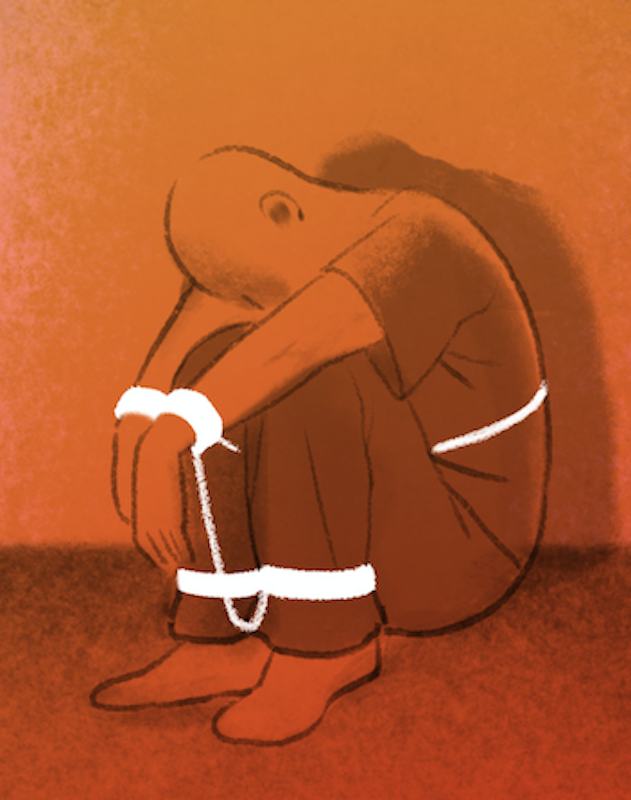
    Nay Them recalls how the meeting room of the district police, where he was first interrogated,  soon turned into a “slaughterhouse”. The police tied him to a chair with electric wires. He was tied so tightly he could barely move, not even a centimeter.

    As if in a Hollywood movie, policemen kept walking around Nay while his whole body was shaking violently after being kicked, slapped, and beaten with batons that directly struck his head. Being shaken up after falling down from the chair, he was beaten over and over again. The people who hit him no longer considered him as one of their compatriots.

    There was no attempt to talk to him nicely or to reason with him. Or maybe it was simply because this tactic is not used for ethnic Jrai people such as Nay. He had no rights at all, not even the right to talk, or to even open his mouth.

    The police insisted that Nay knew exactly where the protestors were hiding. They kept beating him over and again with their hands and a baton. “ Soldiers, plainclothes policemen, mobile policemen and even traffic policemen were enjoying beating me up”, said Nay. “One of them walked around me and finally hit my face with a baton”. Blood splattered from his swollen nose and eyes  until Nay fainted.

    The next day, Nay woke up at a detention center with wounds all over his body. “I was in so much pain my eyes were swollen”, he recalls. “I could sit but could not open my eyes. I could not eat for five days”.

    Ia Piar Commune is almost 80 km away from Pleiku, the provincial capital, and about 17 km away from the district police department.

    Meanwhile, Nay’s brother-in-law, Siu Wiu, the person in charge of the protest, was hiding far away deep in the forest. Siu was a small, muscular Jrai, a typical example of the dark-skinned Montagnards in the Central Highlands. His eyes were as sharp as a cat’s.

    Every policeman in this district knew Siu Wiu. He had been sent to a re-education camp in 2004 under the charge of leading a demonstration. At the camp, Siu met 180 other Jrai people who were exploited while being held prisoner. They worked as sugar cane porters or builders from early morning until evening . “Everyone was beaten by hoe handles no matter who they were – young or senior citizens,” Nay said.

    “We were arrested not for burglary, but for fighting for land protection and religious freedom”, he said. “Do you know if treating us like this is right or wrong?” Siu recalled asking one officer at the camp.

    Two years later, he was set free, the re-education camp having failed to change Siu’s thinking about the government.The camp gave him 160,000 dong, which was just enough to buy a bus ticket home, leaving him without any money to buy anything to eat on his way back to his village.

    Meanwhile, Siu’s family members – all Protestants – continued to be targeted  because they had taken part in the protests. Some had been detained, arrested or imprisoned.

    Siu Wiu was under house arrest while his father, Nay Bro, was imprisoned. “I was not allowed to do anything, and our land was also taken by the government,” Siu said. He added that the government had take three-quarters of his land, leaving just a little than 250 square meter left for farming.

    Facing such difficulties, he called for a protest in front of the people’s committee of the Ia Piar commune. Other villagers joined Siu in the protest.

    “In order to convince the villagers to join this protest, I talked about the truth. They also lost their land so they followed me”, said Siu. “Their beliefs were threatened by the government. Their family members had been sent to prison for religious reasons. The government said that we were free to exchange information, free to communicate. But in fact, we would be arrested whenever we raised our voices.”

    Protests such as this were not uncommon in the Central Highlands of Vietnam. From 2001 to 2008, demonstrations have taken place frequently in the area and thousands of people have fled to Cambodia to escape the government’s revenge.

    One month hiding in the forest was too much for Siu Wiu. He decided to go home to look for more food, but he was detained immediately. “I was arrested at around 4 pm and severely tortured,” he said. “They tied my legs to the chair with a  hammock string and started to beat me until my mouth was swollen, my eyes could not open properly, and my ears were full of blood”.

    Siu was sentenced to 10 years in prison at the end of December 2008.

    Nay Them, who was released right after they caught Siu, never forgot what the policeman told him: “I understand that you don’t know about the protest, but as I was afraid that you would hide some information, I had to beat you first”.

    The experiences of Nay Them, Nay Bro and Siu Wiu show how the Central Highlands of Vietnam is like a large prison for ethnic people who fight for their religious freedom and land rights. The more remote their villages are, the more controlling the local governments are. No law exists in these far-flung regions.

    No lawyers dared to defend them. In addition to being a warning to villagers of the high cost of joining protests, the mobile trials were also a government ruse to make it appear that those charged had been given a fair trial. The trials were a sham. And even when left prison after serving their time, they’d still never be free people.

    Nay Bro had been sentenced to seven years in prison for sabotaging the great unity policy after being accused of organizing protests in 2005. At the detention center, he was imprisoned with 62 other Jrai, Ede and Bana people for their work on behalf of  land rights and religious freedom.

    After being released from prison, the local police kept an eye on him as he remained a suspect in the  plotting of protests.

    “On August 25, 2015, the police came to arrest me again,” said Nay Bro. “They came to my house while I was looking for bamboo shoots in the forest. When I headed back home, my wife informed me that there were 5-6 policemen visiting my house. They asked her to keep me in my house as they wanted to see me the next day. I would rather die in the forest than be put under communist surveillance”.

    Nay Bro took his personal belongings and informed his daughter that he and his wife would be away for a few days to take care of some friends in the hospital. Nay and his wife hid in the forest for more than 11 days.

    Stateless in Thailand

    As a highlander, Nay Bro didn’t believe what lowlanders often said: “If you didn’t do anything wrong, the police would set you free.” From his own experience, he knew that “once  I was imprisoned for the first time, I would have no chance to go home after the second time I was imprisoned”.

    In September 2015, Nay Them helped his parents-in-law travel to Saigon, where they then followed a stranger travelling by bus to Thailand. Crossing the border was the only way to avoid being arrested by the government and sent back to a reform camp or prison. Thailand was the favorite place for Montagnard refugees seeking to escape Vietnam.

    Siu Wiu (right) and his father, Nay Bro, standing in front of their house above a river in Thailand. Nay Bro has been waiting for resettlement for almost 4 years in Bangkok, not knowing what will happen next. Photo: Luat Khoa tap chi.

    The word Montagnard was first used by the French when they ruled Vietnam to refer to the more than 20 different ethnic groups indigenous to the Central Highlands. These indigenous peoples lived in the Central Highlands before the Kinh, or Vietnamese, people arrived. The E-de, Jrai and Bana people have a larger population than other ethnic groups, such as the  K’ho, Sedang, Stieng, and Ma.

    Today, the word Montagnard has disappeared from official state usage,. They are now generally known as “ethnic minority people”.

    Them was arrested in November 2016 after the police discovered  that he was involved in helping his parents-in-law escape across the border to Thailand. He was in a dilemma between asking his in-laws to return  to Vietnam and being prosecuted on the charge of  “forcing others to flee or stay abroad illegally”, which carried a punishment of at least two years in prison.

    Once again, crossing the border was the only way that Nay Them could think of to get out of his predicament. He took his wife, two children and his wife’s younger brother to Thailand with him after having been temporarily released. The arrest warrant was issued immediately after they left.

    In the middle of July 2019, I met Nay Them and his wife’s other eight family members at a refugee camp in a suburb of Bangkok. They lived not far from the WestGate Shopping Mall, in the Bang Dai District, Nonthaburi Province. Siu Wiu came to Bangkok in 2018 after finishing his 10-year prison term.

    Temporary identification cards issued for asylum seekers Nay Them and his family. Photo: Luat Khoa tap chi.

    That day, Nay Them looked exhausted and frustrated. With a big paper board hanging in front of his chest, he and his two year old daughter, who was born in Thailand, wandered around different NGO offices, such as the United Nations High Commissioner for Refugees (UNHCR), begging for help for his wife, who had been detained for over a year.

    Sen Nhiang, a Jrai person who took me to the camp from the MRT station, said “Although living in poor conditions here, I can follow my Protestantism freely. In the worst case, even if I’m arrested, I would not be beaten as the Vietnamese police did to me”.

    Together with his wife and three other children, Sen lived in a 20 square meter room. There were no chairs or tables. A thin mattress lay in a corner, and the only other objects were an  electric fan, clothes, books, a gas cooker, and an empty fridge; a Christian crucifix was placed solemnly in another corner of the room. His three children spoke Jrai and Thai much better than Vietnamese. His wife was sitting in front of their house weaving a towel for overseas Vietnamese who donated rice for her community. For almost a year, Sen had no job, as was the case with other refugees living here. His 14-year old daughter had just broken her arm and he was looking for support to continue her treatment.

    Talking about the status of the Montagnards in Thailand, Grace Bui, a retired US attorney, said that this area is now home to over 500 Montagnards, with approximately 120 children. “Thailand did not sign the United Nations Convention in 1951 on the status of refugees, so Montagnards, despite being recognized as refugees by the UNHCR, are still illegal residents,” she said. “They are not allowed to work, and police can arrest and punish them very harshly.” ”

    Grace has been voluntarily working in the camp over the last four years. She works with overseas Vietnamese to obtain rice donations. Grace asks the INGOs, UNHCR for support for the most needy cases, especially when someone is arrested.

    Y Rin Kpa, an Ede ethnic man from the Central Highlands, who had been in prison for 10 years for  taking part in protests, messaged me via Facebook from a refugee camp in Cambodia. He told me that he was in a camp in Phnom Penh with 27 other Montagnards, including seven children under 14.

    He reported that Cambodian police were strictly surveilling these people. They lived with very limited subsidies and supplies funded by the UNHCR every month. However, their biggest fear wasn’t living under such a demanding situation, but of being deported back to Vietnam, where they could face imprisonment and other abuses. A family of three was forced to go back to Vietnam in June 2019.

    Evan Jones, a coordinator for Asia Pacific Refugee Rights Network, a non-governmental organization that advocates for refugees in the Asia Pacific region, explained why these people don’t want to return to Vietnam.

    “Vietnam is well-known for punishing returnees with prison sentences, harassment, physical abuse and intimidation,” she said. “It has been particularly difficult to keep in contact with Montagnards who have been forcibly returned in the past. This may suggest that they have faced reprisals from the Vietnamese authorities after their return.”

    The Criminal Law issued in 2015 includes four articles for  prosecuting people for illegal border crossings. The shortest prison sentence is one year (Article 349) if charged with organizing or brokering illegal emigration. The law stipulates up to 20 years in prison for particularly serious cases as stated in Article 121, which covers illegal emigration for the purpose of opposing the people’s administration.

    Phil Robertson, deputy director of the Asian Division for Human Rights Watch, has been observing the human rights situation in the Central Highlands for nearly 20 years. He is not optimistic about the situation of Montagnard refugees.

    “Vietnam continues to press hard to persuade the Thai government to force Montagnards to go back.  In Bangkok and nearby provinces, Montagnards live in difficult situations, doing low paying work in the informal sector, and facing problems with access to health and education services for themselves and their children. Most importantly, they don’t know what the future will hold for them, and whether they will ever be safe,” he said. “In Cambodia, Vietnam’s influence is even greater [than in Thailand], so seeking protection is even harder. UNHCR officials and diplomats based in Bangkok and Phnom Penh, who represent governments that resettle refugees, should redouble their efforts to protect the Montagnards, and strongly resist Vietnam’s efforts to force the Montagnards to go back.”

    Despite pressure from the Vietnamese government, the number of Montagnards crossing the border into Thailand is still increasing. “The total number of Montagnards [crossing the border] has increased,” said Sen Nhiang.. “Last month, there were 20 more people coming from Dak Lak. We don’t have enough rice to give them”.

    Sen Nhiang and his wife, sitting in their small studio apartment in Bangkok, recall what made them escape Vietnam to become stateless in Thailand. Photo: Luat Khoa tap chi.

    Vietnamese embassies in both Thailand and Cambodia refused to speak with Luat Khoa about the situation of the Montagnards. In Thailand, the embassy didn’t respond to our emails, faxes or phone calls. In Cambodia, a staff member named Ngoc informed us that he had no information about the status of the Montagnards in Phnom Penh, while the Politburo officer said Ngoc was the only one who could answer our questions.

    The Montagnard refugees don’t speak English or Thai and very little Vietnamese. As a result, it takes them much longer to go through UNHCR procedures to obtain refugee status; after that, they have to wait for approval from a third country to be re-settled. The chance of resettling is uncertain, and nobody is sure what the future will be like.

    Jennifer Harrison, UNHCR spokeswoman in Bangkok, said she could not reveal the total number of Montagnards who are applying for refugee status at UNHCR. She said UNHCR is doing its best to help refugees.

    She said: “UNHCR consistently advocates that refugees and asylum seekers – having been confirmed or claimed to be in need of international protection – cannot be returned to their countries of origin according to the principle of non-refoulement, which prevents states from expelling or returning persons to a territory where their life or freedom would be threatened.”

    Losing all in Vietnam

    For hundreds of years the Montagnards have  depended upon the forests to earn their living and to survive. It’s said that the Montagnards preserved the forests of the Central Highlands to serve the never-ending needs of the Kinh people – the majority of Vietnam’s population. The beds the Kinh people lie on and the chairs they sit on likely come from forests in the Central Highlands.

    The Montagnards sacrificed their own fertilized lands to welcome immigrants from the north when the country was divided into two regions in 1954. And they did this again when the lowlanders moved to the new economic zones on  the order of the government in a move to deal with population growth and unemployment in cities after 1975.

    The Montagnards I met in Thailand said that they had been under surveillance by the Vietnamese government back in the villages in the Central Highlands. First they were not allowed to follow their Protestant beliefs and then they lost their lands.

    The Central Highlands has become the most religiously sensitive areas in Vietnam following a long period of persecution since 1975. Photo: East West Center.

    The Central Highlands is no longer a mysterious land when native customs and customary laws continue to be abolished by the government.

    “When I was a child, I heard from teachers and the commune people’s committee that praying for rain, buffalo stabbing and other traditional practices were considered backward customs and superstition”, said Nay Them. “They asked the village elders to abandon these ancient customs”.

    People eliminated costly rituals and men stopped smoking and drinking once they started to follow Protestantism. And so it was strange in the early 2000s when the government asked the people to restore their traditional customs. Between 2000 and  2004, the government wanted to limit the number of Protestants and so sought to restore these old customs, which were anathema to their religious beliefs.

    “They said that these were the original customs of the Central Highlands, and that following Roman Catholicism and Protestantism were following French and American customs,” said Nay Them. He had witnessed the police take away Bibles away from people  and beat them, but he did not understand why they did it.

    Under strict controls by the local authorities, Nay asked his community to focus on praying at the beginning of the month, but it was also very difficult.  At the beginning of the month, the villagers secretly prayed together at the leader’s house. Every Sunday, the police would come and check all the houses. If they found people praying, they would force them to go to the police station. Police said that this religion was not allowed, especially when the people gathered and prayed at the same place.

    “I went to the public church but what I got was contemptuousness,” said Nay Them. “They also discriminated against me for advocating against the government”.

    Pastor Than Van Truong, who helped some Montagnard families cross the border to Thailand, said that in the 2000s the number of house Protestant groups in the Central Highlands increased sharply. These groups paid much interest to human rights as the local government had been discriminating against them regarding administrative procedures and land disputes. The people  depended on their religious affiliations to share their concerns about such issues.

    There are many Protestants like Nay in the Central Highlands who also need to pray at home.The number of Protestants in the Central Highlands increased by 432% from 1975 to 1999, to a total of 228,618 followers.

    The Protestants in the Central Highlands have long been regarded as a threat to the Communist regime. In 1999, former Prime Minister Phan Van Khai, along with Nguyen Tan Dung, one of the deputy ministers responsible for  the Central Highlands, established the  184 Steering Committee  (the Committee for the Guidance of Correct Thought) to suppress Protestants in the Central Highlands and the northwest.

    “When we pursued and drove away FULRO (the United Front for the Liberation of Oppressed Races) and the rebellious groups, evangelical churches in some places had to be closed….”, according to a committee statement describing its successful effort to control Protestantism in the Central Highlands. “After a few years of taking measures against Protestantism, such as suspending religious activities of Protestantism, dismissing the governing board of deacons, re-educating the clergy in detention camps, closing churches, dealing forcefully with unauthorized religious activities and agitating for the masses to defect from their own religions in fact, Protestant activities have been narrowed and prevented from operating in a normal way”

    FULRO was an armed movement fighting for independence for indigenous people in Vietnam. They fought against both the regime of the Republic of Vietnam and the Viet Cong.  After hiding themselves in the forests in Cambodia, FULRO was disbanded and its members were resettled in the United States at the end of 1992.

    Neil L. Jamieson, Le Trong Cuc, and A. Terry Rambo – three researchers – predicted in a special report published in 1998 that there might be some crisis in the area, and this prediction became true between  2001 and 2008.

    “Many upland people began to see themselves as poor and backward. They felt inferior to lowlanders, to foreigners, and even to some other minority groups”, the researchers wrote in their report. “Lacking money, food, access to natural resources and public services [education, health care, information], they were  on the edge of losing their most precious resources of all: self-confidence and self-respect. It was not just that they lacked money and access to daily necessities. After all, the uplands have always been economically worse off than the lowlands. The problem is that the people gradually became self-conscious about their economic status.”

    In early 2001, thousands of Montagnards paraded from their villages to the government center in the region for a protest. The government then issued a curfew order, cut off the telephone lines, mobilized tanks and mobilized army forces to eliminate the massive protest.

    In order to alleviate the situation, author Nguyen Ngoc suggested former Prime Minister Nguyen Tan Dung, who was in charge of the Central Highlands, to revise land ownership policies, but he refused to do this. Dung sent the protesters work as forced laborers in re-education camps and  prisons.

    Since the 2001protests, the government has claimed that FULRO and its Degar Protestantism, a religious organization that unites the Montagnard Protestants to stand up for their rights, was behind uprisings and activities that were opposed to the government in the Central Highlands. Until now, many Montagnards continue to be persecuted as the government thinks they have links to these organizations.

    In the refugee camp in Bangkok , I had tried to find out the connection between the refugees and Degar Protestantism but the people I spoke to claimed to have no idea about it. Pastor Than Van Truong said that he had asked the Montagnard pastors to get more information about Degar Protestantism but again no one knew anything about it.

    Kpă Hung, a 44-year old Bana man, who was arrested for the  third time in 2004, when he was sentenced to 12 years in prison, lost his faith in the government. “On the protest day, I sought a transparent dialog between the government and the people,” he said. “But they neither admitted their faults nor changed their minds”.

    Meanwhile, Prime Minister Dung has continued to push harsh policies in the Central Highlands during his two succeeding terms as prime minister.

    A former UN staff member in Vietnam told Luat Khoa that the state considered the Central Highlands “very sensitive” in terms of religious and ethnic issues.The United Nations in Vietnam could only intervene in the Central Highlands indirectly through Universal Periodic Reviews (UPR) and visits by the UN special rapporteur.

    Land issues did not improve after a series of misguided policies in the Central Highlands, such as hydropower projects, which allocated most of the land to agroforestry farms and land in forest areas to Vietnamese  and other migrated minority groups from the north. The Montagnards didn’t received any benefits. The Land Law issued in 2003 and 2013 did not solve the land problem for indigenous highlanders.

    An anonymous expert with a decade of experience working on forest lands said that the land issue in the Central Highlands was extremely complicated. He said that land disputes in some areas of the regions accounted for more than 90% of complaints. Land disputes had been taking place among the Montagnards, the government, businesses, the Kinh and other ethnic migrants.

    The expert said that the Montagnards continue to face many disadvantages. “For example, they didn’t have sufficient legal evidence to fight for their land”, he said. “And furthermore, the government did not provide  adequate compensation for the indigenous people who lost their land to the government. Their land was not protected by customary laws and the people didn’t even have the right to agree on prices.”

    The expert said that those indigenous people who didn’t want to fight, moved closer to natural forests, but they once again had  to confront the government.

    He added that the vicious cycle of land loss, land shortages, land disputes and encroachment was a result of multiple factors. “For instance, forest land for ethnic people to cultivate was worth approximately 15 million dong/ha/year. But if they switched to trading crops, the profit would rise to 80-120 million dong/ha/year,” he said.

    The Montagnard families whom I met in Bangkok told me that they had little to no space available for use. They didn’t have enough capital to grow high-value crops so they tried to live day by day.

    Children under threat

    In an old house above the small canal, I found a group of Jrai women painting scenes of their unforgettable escapes from Vietnam. While there, I met Jen, a 20-year-old Jrai girl who had fled to Bangkok the  year before. She spoke a little English and the Jrai language, and she was working hard as a  translator for an American artist who was coming to the camp every weekend to provide painting therapy to her mom and others in the camp.

    Jen’s mother was painting a scene about how she lost her two-year daughter after they passed through the immigration check-point at the border. While she hid herself under the bus she let her daughter go with the guide through the check-point. They reunited two days later in Laos and continued their escape to Thailand.

    The paint of Jen’s mother described her escape to Thailand. Photo: Luat Khoa tap chi.

    When her mother fled to Thailand, Jen was still a child in the Central Highlands. “My two younger sisters and I had to take care of ourselves. We were very scared  right after our parents had left home….” she said. “We cried so much, but we accepted the reality after two or three months, and we tried to be stronger for the next three years”.

    Jen stuttered when describing the time her mother tried to escape from the police after being forced to provide her husband’s contact in Bangkok. “My mother didn’t say that she was about to go to Thailand,” said Jen. “She told me to stay at home and take care of my two younger sisters; then she walked away with my youngest sibling.”

    “When I turned 18-years-old they came to my house and asked if my father had called me or if I had contacted my parents,” she said. “I dared not to speak any words. I was afraid that they would arrest me.”

    Jen said there were many similar cases in her  village. “the police arrested the family members and beat them at the police station”, she said. “When they came to see us, we gathered at the corner and I tried in fear to protect my sisters with my arms.”

    “Once again, the police ordered me to come to their office. They threatened that if I did not call my parents and urge them to return home, I would be put into prison,” she said. “They asked me to give them my parents’ contact information. I answered that I didn’t have any. I was so scared that I only spoke a few words and then burst into tears. They yelled at me. They beat me up. They slapped my face and head. Each night, they sent some people to investigate our house.”

    Jen later decided to give 10 million dong  (about US$430) to the man next door to send her three sisters to Thailand. The money was from her grandmother and her job.

    “At 3:00 am that day, the man took the  three of us to Saigon [Ho Chi Minh City”, she said. “At the Mien Dong Bus Station, he told us to wait until someone picked us up. Finally, a man came and forced us to walk quickly. We jumped into a small car with many people, I had no idea what would happen next. We walked through the river and the jungle. After three days, we arrived in Thailand”.

    To escape the threat of Vietnamese police, children like Jen’s sisters had to go with strangers and travel in dangerous cars with the hope that they would later be able to reunite with their parents. The children faced the danger of being kidnapped, sold to brothels, or forced to work as slaves.

    For the past two decades, only international organizations abroad have been monitoring the situation in the Central Highlands, but they are struggling to get  accurate information due to government restrictions in the area.

    Many NGOs remain silent when asked about the situation in the Central Highlands for fear of government retaliation. World Vision Vietnam, a Christian organization that has helped children in Vietnam for 30 years, declined to comment on the situation of children in persecuted Protestant families in the Central Highlands.

    Phil Robertsonbelieves that the Vietnamese government is trying to cover up its human rights violations in the Central Highlands.

    “The problem is Vietnam sees its abusive treatment of the Montagnards as an internal matter and does everything it can to keep the international community out of this,” said Robertson. “But in reality, what Vietnam is doing to the Montagnards clearly violates international human rights, and so the international community is quite right to be concerned about this.”

    Robertson added that Hanoi severely restricts access to the highlands to keep diplomats and human rights monitors like HRW, UN officials, and international media out of the picture, so it is sometimes difficult to get up-to-date information about what is happening there.

    “By making it difficult to get information from the area,” he said, “Vietnam hopes to make the world forget its blatant discrimination and rights abuses against the Montagnards.”

    “Over the past 20 years, the Montagnard people have gone through hard times, especially during crackdowns by the authorities after protests, but these communities are strong and they continue to persevere in the   face of government repression,” he said.

    A Ga, a Protestant from the Montagnard Evangelical Church Of Christ, has resettled with his family in the United States after seeking asylum in Thailand for six years. However, he is still on watch the list of the Ministry of Public Security in Vietnam and so dares not go back home. In July 2019, he was surprisingly chosen to meet U.S. President Donald Trump at the White House along with other survivors of religious persecution in the world.

    A Ga said that his case caught the attention of U.S. government because he was arrested by Thai police in January 2018. He said he believes the Vietnamese government was involved in his arrest. After three months in detention, he and his family were taken to the Philippines and then flown to the United States. Now he has begun a new life in North Carolina – the place where many Montagnards families have resettled in the past.

    Meanwhile, in the refugee camps in Thailand and Cambodia, Montagnard refugees continue to  live desperate lives, not knowing what the future holds for them.

    While you are reading this article, somewhere on the desolate borders between Vietnam, Cambodia and Laos, there are likely some frightened Montagnard families making the harrowing trip across the border, running away from the Vietnamese government in the hope of finding a new and better life.
  • Login Customizer

    This page is used for Login Customizer plugin. It will not be visible to your readers. Do not delete it.

  • Imprisoned Dissident – Anh Ba Sam – Encountered Odd Events Before Release Date

    Imprisoned Dissident – Anh Ba Sam – Encountered Odd Events Before Release Date

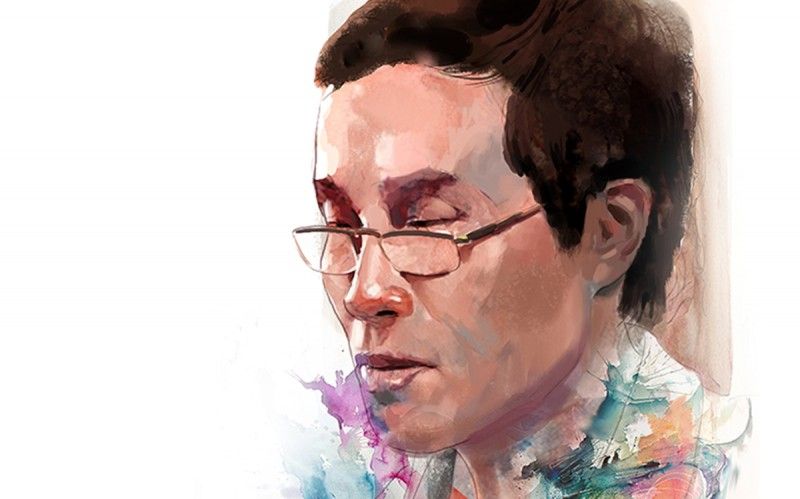
    Journalist Nguyen Huu Vinh (whose pen name is Anh Ba Sam) faced quite a few peculiar encounters in Prison Center Number 5, Yen Dinh district, Thanh Hoa province in recent months.

    According to Le Thi Minh Ha, his wife, on December 9, 2018, a man in a police uniform came to visit Vinh in his prison cell and spent an hour and a half talking to him. At the end of their conversation, the man left behind an envelope full of money and told Vinh that after his release from prison he should support To Lam, the current minister of public security – the national police force in Vietnam.

    Mrs. Ha told Luat Khoa magazine: “My husband recounted the story to me when I visited him. Neither one of us could grasp what was happening. Who was this man and who had directed him to do such a thing? Was he someone who works for To Lam or someone who wanted to harm To Lam? Nevertheless, it could also be intimidation. We think we should publicize this information to protect Vinh.”

    Both Ha and Vinh went to college with the current Minister To Lam in the 1970s, where all three were studying at the People’s Security Academy. This school is where the Vietnamese government trains its future secret police force officers.

    Vinh was arrested on May 5, 2014, and at the time, To Lam was the vice minister of the Ministry of Public Security (MPS). He was held in pre-trial detention for almost two years before being convicted of “abusing democratic freedoms to infringe upon the interests of the state, the rights and interests of other entities and citizens,” and sentenced to five-year-imprisonment on March 23, 2016. Before his arrest, he was the owner of the blog site Anh Ba Sam – one of the most famous online newspapers in Vietnam during the past few years.

    Another event – which also caused Ha to have more concerns over her husband’s safety – happened on January 27, 2019, the day of her monthly visit to Prison Center Number 5.

    She stated that one prison guard had requested to meet her in private and told her: “On the release day (which will be May 5, 2019), if there are only family members then the center will process the paperwork and release him at the gate of the prison. If there are other non-family members accompanying (you), carrying banners and posters with them, then the prison center will take Vinh to a remote area and leave him there by himself.”

    “On March 4, 2019, my husband called me from the prison center in accordance with the monthly allowance of five-minute-phone calls, where he told me that the same prison guard met with him again in private and told him the same thing,” Ha informed Luat Khoa magazine.

    Mrs. Ha had already sent a letter of complaint to Prison Center Number 5 on February 1, 2019, to report the previous incident. She received a response dated February 25, 2019, which insisted that no prison guard had communicated any such content to either her or Vinh at the center.

    Luat Khoa indicated that its reporter contacted the prison center with the number Ha had provided in April 2019, but the person who answered the phone refused to acknowledge the name of the alleged prison guard. Instead, he stated that the name belongs to someone who lives near the prison center. When the Luat Khoa reporter pressed for the current condition of Nguyen Huu Vinh, the person then said he did not know.

    Mrs. Ha had also lodged complaints regarding the threat to release Vinh in a desolate area with Minister To Lam, Prime Minister Nguyen Xuan Phuc, the National Assembly Judicial Committee and its Chairwoman Nguyen Thi Kim Ngan, as well as Ho Thanh Dinh – The head of the Prison Management Bureau. However, all of her complaints eventually were passed down to Prison Center Number 5 to resolve.

    “The person who threatened me and my husband was an officer at Center Number 5, and if all of my complaints were making their way back to this same place, then it would be meaningless. Both of us are feeling anxious and scared now that they (the prison guards) might try to harm Vinh one way or another,” Ha said.

    On March 4, 2019, she also sent a letter to an alumni group consisting of her and Vinh’s former classmates at the People’s Security Academy, to suggest that if any one of them is going to accompany her on his release day, then please don’t bring any banner or poster so that they would be “in compliance with” the prison center’s request.

    *** This story was first written in Vietnamese by Tran Ha Linh for Luat Khoa magazine on April 12, 2019. The Vietnamese has reviewed all of the complaints and letters which Mrs. Ha submitted and the official reply from the prison center. But because we only received information from Mrs. Ha, we decided at this time not to reveal the names of the prison guard or of the man in police uniform mentioned in this story.

  • Vietnam Accused “Hostile Forces” Of “Abusing” Ba Vang Pagoda Story. What Is Ba Vang?

    Vietnam Accused “Hostile Forces” Of “Abusing” Ba Vang Pagoda Story. What Is Ba Vang?

    A number of Vietnam’s state newspapers simultaneously began reporting on an almost identical story in late March 2019. They all accused “hostile forces” of “abusing” the Ba Vang Pagoda Incident to “promote, incite, and entice the people, monks, and Buddhists to fight against the government, generating divisions of religious unity.”

    Such strong words came from an article printed on April 1, 2019, by the VTC News (Vietnam Television Corporation), one of the Vietnamese Communist Party’s largest mouthpieces, which further announced:

    “The hostile forces changed information as a plot to distort the freedom of religion situation in Vietnam.”

    The Ba Vang Pagoda Incident was just the latest addition to the laundry list of accusations made by the Vietnamese government against “hostile forces” over the years. Often, it would accuse them of taking advantages of social problems in Vietnam to incite the public and created friction between the state and its people.

    But what happened at Ba Vang Pagoda? What is this place?

    Why do both the Vietnamese government and its people care so much about it recently?

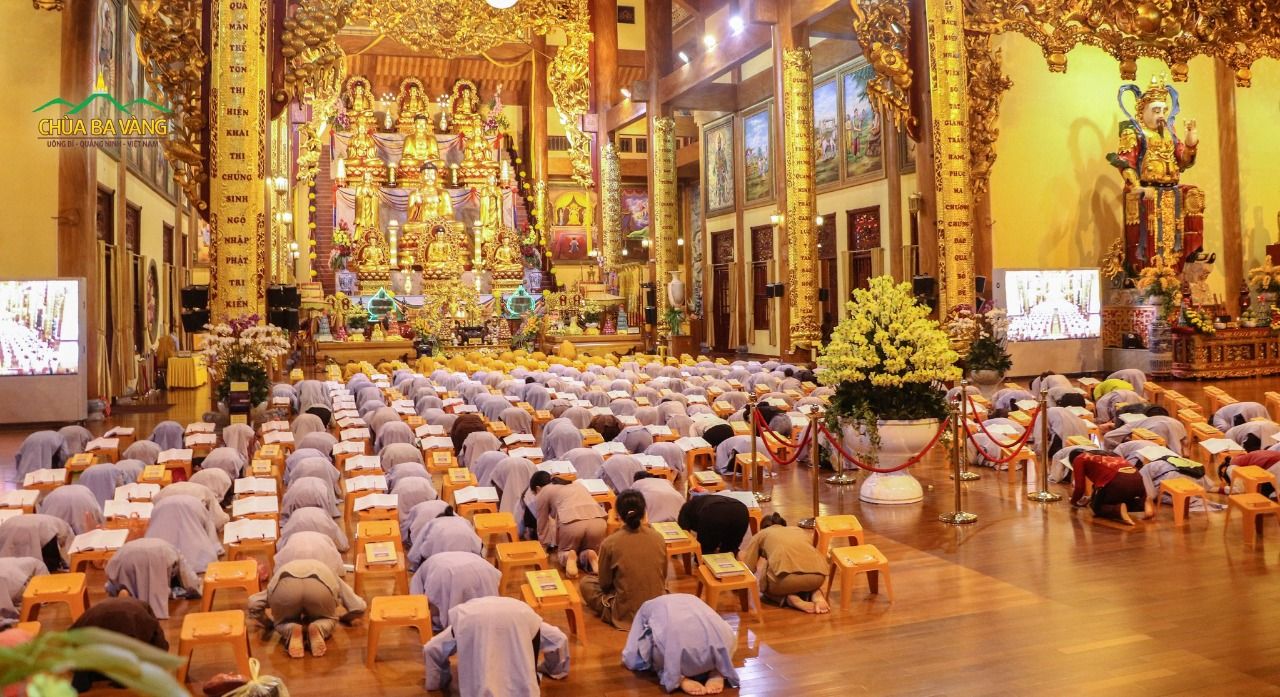
    Ba Vang is a Buddhist temple in Quang Ninh Province, and Abbot Thich Truc Thai Minh belongs to the Vietnam Buddhist Sangha (VBS). The VBS is the only Buddhist Sangha recognized by the Vietnamese government, and it is also a member of the Vietnamese Fatherland Front, an umbrella group of mass movements in Vietnam aligned with the Communist Party of Vietnam.

    Earlier in March 2019, some video clips of a Buddhist follower named Pham Thi Yen preaching in front of thousands of people in Ba Vang Pagoda spread rapidly on Facebook and other social media platforms.

    One clip shows Mrs. Yen discussing the case of a female student who was gang-raped and murdered while on her delivery route earlier this year. Yen explained that the killing was due to the deceased’s evil karma, which she said the deceased had sown in her past life, and for which she must suffer retribution this life. Her speech had angered the entire nation.

    Then, on March 20, 2019, an investigative report in the Lao Dong newspaper entitled “Spreading the dead soul’s vengeance, Ba Vang Pagoda earns tens of millions of US dollars every year,” fueled even more public backlash against the pagoda. The article alleged that religious leaders at the pagoda were performing superstitious activities, such as offering to eliminate bad luck for a large sum of money from its followers.

    Members of the Ba Vang Pagoda preached that all troubles in life sprang from the ghosts of many previous lives before who follow the people until this life to seek revenge for past misdeeds or grudges. If one “wants to be forgiven,” he or she then must “offer money to the ghosts” which they could do it by donating money to Ba Vang.

    On social media, people began to investigate Abbot Thich Truc Thai Minh and his past. In Vietnam, there has always been strong speculation among the public about the entangled, secretive relationship between the Party and the VSB, where high ranking monks and abbots have been elected to the National Assembly, held governmental posts, and have always spoken in support of the VCP.

    The social backlash and public anger towards the Ba Vang Incident prompted a quick reaction from both the government and the VSB. Multiple ministries issued urgent orders to investigate the matter, and the VSB announced that it had disciplined Ba Vang’s abbot.

    But the people refused to let the story de-escalate. Indeed, more and more netizens dug up past videos and pictures Ba Vang had previously used as infomercials. Photos of past and present leaders, such as Prime Minister Nguyen Xuan Phuc, who was shown walking hand in hand with Abbot Thich Truc Thai Minh spread like wildfire on Facebook.

    Facebook users went further and started to suspect openly that the Ba Vang Pagoda Incident was indeed an internal fight between high ranking officials in Vietnam whose business interests had collided. It has been an old rumor among Vietnamese people that some of the large and well-constructed pagodas in the country were places where illegal money laundering activities took place, involving many of the VCP’s officials.

    Some well-known Facebook commentators continued to question the incidents at Ba Vang Pagoda, asking: who had approved the construction and operation of the pagoda, whether it was legal to ‘collect money for superstitious activities,’ who was behind all these activities.

    And as the people continued to probe, the government turned to an old trick, blaming “hostile forces” for the ongoing controversy.

    In the past, the government had accused “hostile forces” of being behind the fight against the operation of illegal BOT toll booths. The protests in June 2018, where thousands of people rallied against the Special Economic Zones and the Cybersecurity law, were also supposedly incited by such forces, according to the state.

  • Sick And Injured Inmates In Vietnam Face Inadequate Medical Treatment, Torture

    Sick And Injured Inmates In Vietnam Face Inadequate Medical Treatment, Torture

    An inmate who was diagnosed with a brain hemorrhage in January 2019 told his family that he did not get proper treatment and was sent back to prison after about a month in the hospital.

    34-year-old Ha Van Truong is currently serving a nine-year-sentence for manslaughter in the case resulting from a land dispute between farmer Dang Van Hien and Long Son Commercial and Investment Company (Long Son), a private company in Dak Nong Province in October 2016.

    On March 31, 2019, Truong was, again, admitted to the hospital with the same diagnosis. But his family informed us last night that his conditions have gotten worse. They also stated that during both of his stay in the hospital, he was subjected to shackling – a practice which international human rights law defines as torture.

    Last year, the trial of Dang Van Hien and Ha Van Truong received extensive news coverage due to an unusually heightened public sympathy for the defendants, who were perceived as victims of land-grabbing. In Vietnam, land-grabbing has become an increasingly urgent social and political issue that the whole nation often paid close attention to.

    After Dang Van Hien was sentenced to death for homicide, more than 3,000 people signed an online petition, asking the president of Vietnam to commute his sentence. Earlier this year, in February 2019, Hien’s case was proceeding towards a trial for cassation – a review of both the law and facts that could give him a second chance at life.

    Truong was initially sentenced to 12-year-imprisonment, but an appellate court in Ho Chi Minh City reduced the term to 9 years which again showed the impact of public support on the case.

    However, Truong has been a victim of police brutality and torture, and he also did not receive adequate medical care. His family told us that Truong suspected his brain hemorrhage was a result of the injuries he received from police beating during his pre-trial detention. Since then, he has been suffering from a chronic headache, but the prison’s medical clinic only gave him pain reliever medication. He did not receive a proper diagnosis until he fainted and was admitted to the hospital in January 2019.

    During his first admission, the authorities waited for two days before informing his family without any specific reasons. Truong was left alone in the hospital with no one to care for him. He was unable to eat solid food, but the police fed him with only rice and pork. The families of other patients had to give him some milk to drink until his family found out about his whereabouts and visited him.

    Truong’s current prognosis is not looking too positive. His family said that his body has been frail so he would need assistance to move around and that he often passed out.

    In such dire conditions, Truong is still subjected to shackle 24/7 even when he is lying on the hospital bed. Initially, the police chained both Truong’s hands and feet, but now, they only applied such treatment to his feet. The use of shackle on inmates is a violation of the UN’s Nelson Mandela Rules on the treatment of prisoners.

    Truong’s situation is not the exception but rather a depiction of the overall picture of prison conditions in Vietnam.

    Families of prisoners of conscience and political dissidents, over the years, repeatedly made allegations about the substandard conditions of Vietnamese prison centers and the mistreatment of prisoners, especially those who needed medical care.

    In 2014, prisoner of conscience Dinh Dang Dinh, a teacher, passed away shortly after his release from prison. Dinh maintained his innocence until the day he died. He was collecting signatures of residents in his hometown to protest the government’s plan to mine bauxite in the Highlands of Central Vietnam. Dinh was arrested in 2011 and sentenced to 6-year-imprisonment in 2013 for propagandizing against the state. When his health deteriorated, he received a pardon and an immediate release, but it was too late.

    His family alleged that the lack of proper medical care and the continued refusal to hospitalize Dinh during his incarceration contributed to his untimely passing.

    In March 2019, the UN Human Rights Committee expressed its concerns about the country’s prison conditions, finding that there were: “consistent reports of poor conditions of detention, including overcrowding, use of prolonged solitary confinement, shackling, abuses by other prisoners at the instigation of prison officials, and non-separation of healthy prisoners from those with contagious diseases, intentional exposure of prisoners to HIV infection, denial of medical care; and punitive transfer of prisoners”.

    Ha Van Truong remains in critical conditions today, but he has been transferred to Cho Ray Hospital in Ho Chi Minh City – one of the top medical facilities in the country. His family continues to hope and pray for a speedy recovery. But at the same time, they also ask: why didn’t he receive adequate medical treatment during his first hospital admission two months ago?

  • Vietnam Continues To Violate People’s Rights After Human Rights Dialogue With EU

    Vietnam Continues To Violate People’s Rights After Human Rights Dialogue With EU

    Less than a day after the Human Rights Dialogue between the European Union and Vietnam on March 4, 2019, was conducted, the Vietnamese police continue to commit blatant violations of the people’s rights.

    Two hours ago, the police came and arrested one of the active members of a group consisting of concerned citizens who have been fighting against what they alleged as illegal activities associated with the BOT (Build-Operate-Transfer) toll booths across Vietnam.

    Ha Van Nam, the victim, posted on Facebook that the police came and searched his house. Later, other Facebookers cited his wife’s statement to confirm his arrest.

    Ha Van Nam was viciously beaten up by men in plainclothes back in January 2019 whom he alleged that they were plainclothes officers. He suffered two broken ribs and other injuries. The perpetrators later threw him at the front gate of Dan Phuong hospital in Hanoi.

    Today, his last post on Facebook stated that the police came to his house and alleged that he committed the crime of “inciting public disorder.”

    “Inciting public disorder” is a crime that has been routinely used against activists and protestors in Vietnam in the most arbitrary manner.

    Often, the government would accuse anyone of committing this crime when they participate in any civil disobedience act.

    Journalist Pham Doan Trang wrote on her Facebook this morning after the incident went viral on social media:

    “Upon the arrest today of driver Ha Van Nam for ‘disrupting peace,’ once again, we highlight that it is time the Vietnamese government immediately decriminalizes and depoliticize civil affairs. We firmly believe that government-endorsed violence with impunity can only lead to more violence in society.”

  • English Speakers In Vietnam Got A Taste Of Censorship Over An Article On Pollution

    English Speakers In Vietnam Got A Taste Of Censorship Over An Article On Pollution

    February 20, 2019, a few foreigners living both inside and outside of Vietnam were sharing the news that an English article published on the site VN Express was taken down before they could read it.

    Some of them suspected that it was the state’s censorship or even the beginning of the enforcement of the new cybersecurity law.

    As of press time, still, the link is not working.

    The article was about the lone man’s trip across the country of a Vietnamese photographer, Nguyen Viet Hung, to raise awareness on marine pollution in Vietnam using what he knows best, photography.

    The story of Hung was becoming quite popular in Vietnam during recent days.

    He is a well-known photographer whose trip was published on social media and a few newspapers, including one that is under the ownership of the Ministry of Public Security, Cảnh Sát Toàn Cầu online (Global Police Force).

    The 3,260 km long journey, dubbed “The Green Journey” on social media, was documented by Hung and his photography skills

    He began his trip in August 2018.

    Along the way, he was documenting the danger of improper waste disposal, especially plastic waste, and its effects on the environment.

    There was an incident where Hung said he felt scared for his life when taking a picture of a truck dumping trash into the ocean because he thought the truck driver was calling more people to come over and intimidate him.

    The story was well-received by the public because it raised concerns over an urgent matter that all Vietnamese people face daily: how to deal with garbage disposal in the country.

    Marine pollution and pollution, in general, have gained more attention among the public because the amount of trash being disposed in Vietnam on a daily basis is quite alarming.

    In 2018, Vietnamese people became even more concerned when a report placed their country among the top five ocean polluters regarding plastic waste became viral.

    Like many other censored topics in Vietnam, we could never fully understand why an article suddenly becomes “unavailable” when the web link stops working.

    One may suspect that it was because the story placed equal responsibility on both the people and the state for marine pollution, where the failure of the garbage disposal system in Vietnam played a significant role.

    Hung said in one of the Vietnamese articles, that while at Sa Ky Harbor in Quang Ngai Province, it was impossible for him to find a garbage can. As the result, all local residents living in the area would dump their trash directly into the waters which they also use for bathing and consuming.

    Regardless of the reason, Nguyen Viet Hung’s photographs bring about a reality that both the Vietnamese people and their government must face: marine pollution in Vietnam is a code red issue where drastic measures, as well as immediate behavioral changes, must happen now.

    Hung had put this succinctly in the only paragraph left from the taken-down article:

    The farther I went, the more I realized that the environment in general and marine environment in particular of our country are being seriously destroyed. Most people are not aware of the scale of the problem, and this should change, Hung said.

    A few photographs from Nguyen Viet Hung’s trip:

    Plastic rubbish filled the land near a market place in Tuy Phong, Binh Thuan Province. Photo Courtesy: Nguyen Viet Hung.
    Lacking proper garbage disposal, people dumped their trash directly into the ocean. Photo courtesy: Nguyen Viet Hung.
    Children were playing near a creek filled with garbage. Photo courtesy: Nguyen Viet Hung.
    A child was picking up near the seashore. Photo courtesy: Nguyen Viet Hung.
  • Vietnamese Police Continue Questioning People Over Facebook Activities

    Vietnamese Police Continue Questioning People Over Facebook Activities

    The police force in Ben Tre Province, Vietnam seemed to have been quite busy in the last few months, going after people’s postings on Facebook.

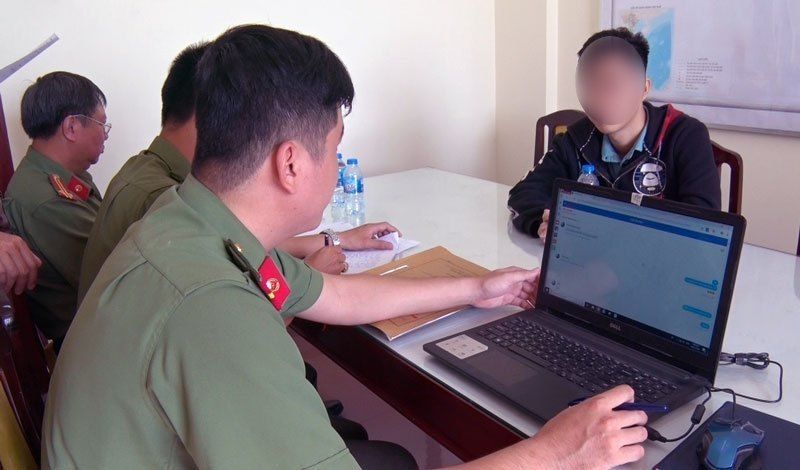
    In January 2019, their Domestic Security Bureau took a university student in and questioned him over his Facebook’s usage, including whether he had joined a group calls “Liking BBC Vietnamese” (Thích BBC Tiếng Việt) – which the police classified as “politically hostile.”

    On February 13, 2019, Vietnamnet newspaper reported that Ben Tre provincial police conducted an investigation and interrogated a 35-year-old man, Phan Chi Toan, about his Facebook’s activities under the username “Phan Rio.”

    Police alleged that the Facebook account calls Phan Rio was conducting “subversion against the people’s government.”

    How did he do it according to the authorities?

    He did so by joining numerous groups, allegedly “politically hostile” towards the Vietnamese Communist Party (VCP) and the State, posting, sharing, and commenting on contents that incited demonstrations, as well as propagating to defame the policies, guidelines, and directions of the VCP and the government.

    The police had not formally charged Toan with a crime but did declare that they would proceed with the case according to the regular procedures.

    The same Vietnamnet’s article further mentioned that the People’s Committee of Mo Cay Bac District, also in Ben Tre Province, had fined a 55-year-old man – Dang Tri Thuc – under Government’s Decree 174/2013/ND-CP, Article 64, Section 4, for using his Facebook account to incite public demonstration in December 2018.

    Accordingly, Thuc, a driver, was accused of using the live-stream feature on Facebook to make video clips, calling on others to protest on a few major road intersections on December 22 and 28. He allegedly admitted guilt, confessed and promised he would not repeat the offense, so the authorities fined him with 15M VND or approximately 650 USD.

    Decree 174/2013/ND-CP, Article 64: Violations against regulations on websites/ news websites

    Section 4. A fine ranging from VND 30,000,000 to VND 50,000,000 shall be imposed for any of the following violations:

    a) Propagating information against the Socialist Republic of Vietnam; sabotaging the bloc of great national unity at a degree of severity which is still not liable to criminal prosecutions;

    b) Propagating information with the aims of inciting war of aggression, causing hatred between ethnic groups or people of countries, inciting violence or propagating reactionary thought at a degree of severity which is still not liable to criminal prosecutions;

    c) Distorting history, denying the revolutionary achievements or offending the nation, people or national heroes at a degree of severity which is still not liable to criminal prosecutions.

    While the right to demonstrate is constitutionally protected in Vietnam, the government had routinely violated this right by applying their Decree 38/2005/NĐ-CP – to regulate “public gatherings – during protests to arrest the participants.

    Since the nationwide mass protests broke out in June 2018 against the draft bills on the cybersecurity law and the development of three special economic zones, the security police have continued to track down those who had participated and made arrests in different cities and provinces.

    The family of a woman names Doan Thi Hong from Binh Thuan Province has recently made a public plea on social media, alleging that Hong was taken into police custody by a group of plainclothes police on September 2, 2018. She was a participant in the same June 2018 protest mentioned above.

    Although she has a young child under 36-month-old at the time of the arrest, which under Vietnam’s laws is a factor to consider against pre-trial detention, her sister claimed that Hong had been arbitrarily kept incommunicado since September of last year.

    According to her sister, Hong was not a dissident and only exercised her right to protest that one time.

    It seems that the police’s recent investigations targetting Facebook’s activities and usage in Vietnam also focus primarily on the average users and not necessarily the more well-known bloggers and dissidents.

  • Vietnamese Police Questioned University Student Over Facebook Postings

    Vietnamese Police Questioned University Student Over Facebook Postings

    On February 1, 2019, the Domestic Security Bureau of Ben Tre Province interviewed Tran Ngoc Phuc, a 21-year-old student of Ton Duc Thang University in Ho Chi Minh City at their station.

    Dong Khoi online newspaper, a publication of the VCP’s Provincial Committee in Ben Tre, published the story on the same day.

    According to the article, the police accused Phuc, a resident of Tan Phu Commune, Chau Thanh District, Ben Tre Province, of using his personal account to propagandizing against the Vietnamese Communist Party and the State.

    Namely, Phuc was using Facebook under the name “Ngoc Phuc” to join several “politically hostile” groups. Among them, was “The South of Vietnam” (Miền Nam Việt Nam), Fanclub of Saigon Capital (Đô thành Sài Gòn Fanclub), and  “Liking BBC Vietnamese” (Thích BBC Vietnamese).

    Phuc also allegedly admitted to the police that he was indeed the Facebooker Ngoc Phuc and that he had posted, shared, and commented on specific contents.

    The police had deemed these contents as materials which “propagandized, sabotaged the thoughts, distorted the direction, objectives, and policy of the VCP, the laws of the State and distorted (the image of) the leader Ho Chi Minh.”

    Formal charges against Phuc had not been filed, but the police indicated that they would continue to build the case and follow the regular legal procedures in this case.

    During the first month since the new Cybersecurity Law took effect in Vietnam on January 1, 2019, there were several reports that the police had questioned and detained some Facebookers.

    Rights groups, online campaigners, bloggers, activists, and dissidents continuously criticize the new law for further curtailing freedom of speech and shrinking the online civic space in Vietnam.

  • EU Parliament’s Members Ask Vietnam To Release Activist Hoang Duc Binh, Reiterate Human Rights Benchmark for EV-FTA

    EU Parliament’s Members Ask Vietnam To Release Activist Hoang Duc Binh, Reiterate Human Rights Benchmark for EV-FTA

    February 1, 2019, a group of nine EU Parliament’s members from different political parties, jointly sent a letter to Vietnam’s President Nguyen Phu Trong, asking for the unconditional release of environment and labor rights defender, Hoang Duc Binh.

    The letter reminded Vietnam that “the promotion and protection of fundamental rights must remain a common benchmark” for the continuing negotiation of the Free Trade Agreement between the European Union and Vietnam.

    According to the MEPs’ letter:

    The EVFTA commits the European Union and Vietnam to respect and effectively implement such principles and fundamental rights as provided in the ICCPR.

    The European Council has delayed the EV-FTA’s ratification process due to “technical reasons” according to two other MEPs, Jude Kirton-Darling and Ramon Tremosa. They released a video clip on January 22, 2019, demanding that Vietnam improves its human rights records for the EV-FTA to proceed.

    Almost one year ago, on February 6, 2018, a court in Central Vietnam convicted Hoang Duc Binh on two separate charges, “resisting officers acting under their duty,” and “abusing freedoms and democratic rights to infringe upon the State’s interest or the rights and interests of other entities and individuals.” (Articles 257, 258 of the 1999 Penal Code, amended as 330, 331 under the 2015 Penal Code).

    Binh was sentenced to the maximum term of 7 years for each of the offenses, which meant that the court found his conduct to be “seriously harmful” to the public according to the sentencing guidelines.

    Binh maintained his innocence, stating that all he did was accompanying a group of fishermen and a Catholic priest to travel from Nghe An to Ha Tinh to file their civil suits against Formosa Ha Tinh Steel Corporation.

    Formosa Ha Tinh was the main culprit that had paid 500M USD to settle the damages they caused in the environmental disaster which affected four coastal provinces in Central Vietnam back in 2016.

    In recent months, Hoang Duc Binh’s family has raised concerns about his deteriorating health conditions after each visitation.

    The letter was signed by Barbara Lochbihler (Greens/EFA), Wajid Khan (S&D), Petras Austrevicius (ALDE), Anne-Marie Mineur (GuE), Ana Gomes (S&D), Karoline Graswander-Hainz (S&D), Reinhard Bütikofer(Greens/EFA), David Martin (S&D), and Marietje Schaake (ALDE).

    The MEPs asked that Hoang Duc Binh “to be immediately and unconditionally released” and that he will be “allowed to remain inside his home country, Vietnam, and not forced into exile as a precondition for his release.”