Tag: #wp

  • June 16, 1954: Ngo Dinh Diem Appointed Prime Minister Of The State Of Vietnam

    June 16, 1954: Ngo Dinh Diem Appointed Prime Minister Of The State Of Vietnam

    The “On This Day” series introduces contemporary Vietnamese history of the twentieth and twenty-first centuries by explaining political events that occurred today in the past.


    What happened?

    On this day, 67 years ago, Ngo Dinh Diem was tapped to be the prime minister of the State of Vietnam. His appointer was Bao Dai, the chief of state, who also was the last emperor of Vietnam under the Nguyen Dynasty, which ended before the formation of this regime.

    This event could be considered one of the most significant political developments in South Vietnam in the post-colonial era. It was the foundation of a political entity that would later become a fierce rival to the Communist regime in the north.

    What was the State of Vietnam?

    The State of Vietnam was the predecessor of what would later become the Republic of Vietnam.

    Because of the famous Battle of Dien Bien Phu, in which the Communist regime in the north launched a massive offensive against the French colonial government[1], the French decided to sign an agreement to transfer their administrative powers to a government headed by a Vietnamese, the former Emperor Bao Dai [2], who was chosen by the French.

    This move by the French colonial administration is called the “Bao Dai solution,” which presented the French and the Americans with an opportunity to retain their influence in the region amid the rising power of the Communists. [3]

    This new State of Vietnam had been  under the French Union since 1949. However, this regime lived a short life as Bao Dai was stripped of power only a few years later by his own appointee as prime minister.

    Who was Ngo Dinh Diem?

    Ngo Dinh Diem is best known for his role as president of the Republic of Vietnam, the regime in the south of Vietnam that ceased to exist when the Vietnam War ended in 1975. He was a Catholic politician in a country with a Buddhist majority, which many say was one of the prime reasons for his downfall.

    The Communist regime often portrayed Ngo Dinh Diem as an American puppet who led an imperial regime controlled by the United States. [4] The Communist regime also saw Diem’s rise to power as undemocratic and illegitimate. However, it also unexpectedly ignored the ironic parallels between such complaints compared to North Vietnam’s own pile of undemocratic practices.

    However, many foreign-based scholars agree that Diem was much more complicated as a political figure than how the Communist regime portrayed him. Some even argued that Diem was as concerned with American intervention as the Communists were and attempted to create an alternative anti-colonial movement to the Viet Minh, leading by the Communists.[5]

    Prior to being made president of South Vietnam, Diem held a role that was lesser known: prime minister of the State of Vietnam.

    Diem was appointed because Bao Dai believed that the newly formed State of Vietnam would need American support and that Diem’s Catholic and anti-Communist background would be an appealing advantage. This was done despite Bao Dai’s alleged awareness that Diem was fond of Cuong De, a Nguyen Dynasty’s royal descendent who had challenged Bao Dai’s legitimacy. [6]

    Later, Diem would overthrow Bao Dai in a referendum in October 1955, which designated Diem as the new head of state and established the Republic of Vietnam. Though the transition was not violent, it did not happen without smear campaigns against Bao Dai, who was viewed as a collaborator with the French colonialists.[7]

    This is not to praise Diem and his administration. On the contrary, the scholarly consensus seems to agree that Diem’s referendum in October 1955 was staged and undemocratic [8], and many have pointed out the shortcomings of his administration. The shocking self-immolation of Buddhist monk Thich Quang Duc was one illustration of the Diem regime’s failure to handle religious affairs, making many Buddhists feel discriminated against compared to Catholics. [9]

    However, it is important to remember that Ngo Dinh Diem was a politician and leader of Vietnam in an important historical chapter, and someone who remains a crucial historical figure to study and discuss. To completely demonize him, and to only study him from the viewpoint of the “winning side,” is to ignore a chapter of Vietnamese history that is scarcely discussed in an equitable manner.

    Bibliography

    [1] Battle of Dien Bien Phu. (2019, September 23). History. https://www.history.com/topics/france/battle-of-dien-bien-phu

    [2] French Indochina/Vietnam (1941–1954). (n.d.). University of Central Arkansas | Political Science. Retrieved June 15, 2021, from https://uca.edu/politicalscience/dadm-project/asiapacific-region/french-indochinavietnam-1941-1954/

    [3] Hess, G. R. (1978). The First American Commitment in Indochina: The Acceptance of the “Bao Dai Solution”, 1950. Diplomatic History (Oxford University Press), 2(4), 331–350. https://doi.org/10.1111/j.1467-7709.1978.tb00441.x

    [4] Nghiem, K. H. (n.d.). Khái quát về Việt Nam lưu trữ Cộng hòa (1955–1975), Phần 1. Faculty of Archival Studies | University of Social Sciences & Humanities. Retrieved June 15, 2021, from http://luutru.hcmussh.edu.vn/?ArticleId=4939505b-d8e6-43d2-b673-f53151a00181

    [5] Miller, E. (2004). Vision, Power and Agency: The Ascent of Ngô Đình Diệm, 1945–54. Journal of Southeast Asian Studies, 35(3), 433–458. https://doi.org/10.1017/s0022463404000220

    [6] The Editors of Encyclopaedia Britannica. (n.d.). Cuong De | Vietnamese prince. Encyclopedia Britannica. Retrieved June 15, 2021, from https://www.britannica.com/biography/Cuong-De

    [7] Chapman, J. M. (2006). Staging Democracy: South Vietnam’s 1955 Referendum to Depose Bao Dai. Diplomatic History, 30(4), 671–703. https://doi.org/10.1111/j.1467-7709.2006.00573.x

    [8] Chapman, J. M. (2006). Staging Democracy, 671-703.

    [9] Nguyen, S. (2021, June 11). June 11, 1963: The Internationally Shocking Self-Immolation Of Buddhist Monk Thich Quang Duc. The Vietnamese Magazine. /2021/06/june-11-1963-the-internationally-shocking-self-immolation-of-buddhist-monk-thich-quang-duc/
  • Overview Of LGBTQ+ Rights In Vietnam

    Overview Of LGBTQ+ Rights In Vietnam

    The Vietnamese Magazine’s “Vietnam Insight” introduces background information on political and human rights issues in contemporary Vietnam.


    Unlike other human rights issues, LGBTQ+ rights are among an extremely few issues in which Vietnam is not widely considered notorious.

    For example, a famous travel blog ranks Vietnam 87 out of 150 countries in its index on safe destinations for LGBTQ+ travellers [1], cited by prominent media outlets such as CNN, USA Today, and The Guardian. While this number might not seem impressive, it is essential to remember that Vietnam was ranked 137 out of 167 countries in The Economist’s democracy index [2] and at the bottom in Southeast Asia.

    This means that Vietnam’s handling of LGBTQ+ issues is not as alarming compared to how it handles other human rights. In a 2015 article, NBC News reported that when it comes to LGBTQ+ rights, Vietnam can even be considered more progressive than the United States. [3]

    However, this does not mean that Vietnam is a paradise for LGBTQ+ people.

    According to a recent report published by the Asia branch of the International Lesbian, Gay, Bisexual, Trans and Intersex Association, many people in the Vietnamese LGBTQ+ community feel like the government is taking advantage of LGBTQ+ rights in Vietnam as compensation for other violations of human rights.[4]

    But what is the reality of LGBTQ+ rights in Vietnam? What rights do LGBTQ+ people have? Is the Vietnamese public and government accepting of LGBTQ+ people? What are some issues that LGBTQ+ people in Vietnam still face? These questions are answered in this article as we walk you through a brief overview of the LGBTQ+ community’s situation in Vietnam.

    Are same-sex relationships criminalized?

    No. Even though same-sex relationships were banned in Vietnam in the early 2000s, the government decriminalized such relationships in 2013.[5]

    In 2000, the law first mentioned same-sex relationships in legal documents. The Law on Marriage and Family was amended in 2000 to incorporate a ban on same-sex cohabitation and same-sex marriage, making it primarily illegal to have a same-sex relationship.

    Under these regulations, same-sex couples who attempted to organize a wedding ceremony, and people participating in these ceremonies, could get fined by the authorities. However, this law did not crack down on same-sex couples who did not co-habit or attempted to get married, even though the police frequently raided many LGBTQ+ friendly establishments.

    In the following years, Vietnam also outlawed various forms of same-sex relationships, such as the adoption of children by same-sex couples or surrogacy and same-sex marriages to foreigners abroad.

    The situation got better in 2012, as the then-Minister of Justice Ha Hung Cuong expressed disapproval of the existing legal discrimination of LGBTQ+ people. It was the first time a high-ranked Vietnamese government official publicly talked about the LGBTQ+ community in a non-discriminatory tone.

    In 2013, same-sex cohabitation and wedding ceremonies were decriminalized in Vietnam.

    Can same-sex couples get married?

    No. Up until now, the law in Vietnam does not recognize same-sex marriages.

    However, as mentioned above, co-habitation among same-sex couples is now permitted, in addition to wedding ceremonies.

    Can transgender people undergo gender transition procedures?

    In principle, yes. However, the situation in Vietnam is more complicated.

    In 2008, a law in Vietnam said gender affirmation surgeries were forbidden for “people whose gender is already correct”[6]. It means that while gender transition procedures were available for intersex people who were thought to have gender defects, they were banned for transgender people who were thought to have no gender issues.

    The situation got better as the country passed a change to the Civil Code in 2015 recognizing the rights to gender transition[7], official recognition of transgender people in Vietnam, making it one of the most progressive countries in Southeast Asia LGBTQ+ rights.

    Although this law was supposed to be implemented by 2017, the reality is that transgender people still faced extreme hardships in accessing gender transition procedures or getting their name and gender changed on paper.

    This was due to the inefficiency of lawmakers, who failed to take into account various specific details on transition procedures. For example, they could not detail the eligibility criteria for pursuing gender transition, the criteria for health providers to accommodate gender transition procedures, or the circumstances in which transgender people could legally change their name or gender on paper, among various other considerations.

    Therefore, even though transgender people technically could undergo gender transition in Vietnam, it remains extremely inaccessible.

    Can transgender people get married?

    Yes, but there are some additional issues.

    Article 37 of the Civil Code states that “Individuals who have undergone gender transition have the right and obligation to change their civil status, and have the civil rights in accordance with this Code and other related regulations.”

    This means that transgender people, after successfully changing their gender on paper, could get married to people of the opposite gender. For example, a transgender woman (male to female) could marry someone legally recognized as male. A transgender man (female to male) could get married to someone legally recognized as female.

    As same-sex marriage is not legally mandated in Vietnam, transgender people cannot marry people of the same gender after the transition. Thus, for instance, a transgender woman cannot marry someone lawfully recognized as female and vice versa.

    However, as mentioned above, the recognition of transgender people and their legal transition have not been implemented in practice.

    Therefore, even though transgender people can marry someone of the opposite gender after transitioning, they still cannot get married and have their marriage legally recognized in practice.

    Is there anti-discrimination law to protect LGBTQ+ people?

    Up to now, there is no anti-discrimination law explicitly aimed at protecting LGBTQ+ people.

    Is Vietnamese society accepting of LGBTQ+ people?

    Even though the law in Vietnam has been more friendly towards LGBTQ+ people (or at least in principle) and the government has been pledging to improve the conditions of the community, LGBTQ+ people in Vietnam still face tremendous discrimination from society and pressure from their families to conform to a “normal” heteronormative life.

    For example, there is an issue of homosexual individuals marrying people of different gender due to the pressure from either society or their family.[8] Homosexual individuals also engage in marriage arrangements with other homosexual individuals of a different gender to please their families on both sides.

    Due to the government’s inefficiency in drafting regulations for transgender people, undergoing hormone therapy or other related medical procedures remains extremely difficult and dangerous, not to mention very costly.[9]

    LGBTQ+ adults are not the only ones facing hardship in their social life. LGBTQ+ students and children in Vietnam also reported violence and discrimination. Oftentimes when students come out as LGBTQ+ people to their family, teachers or friends, they are told that they have “a disease.”[10]

    While Vietnamese society is becoming more open and accepting of the LGBTQ+ community, it can be seen that it is still generally tough for many LGBTQ+ individuals to live a happy and fulfilling life.

    Are there LGBTQ+ politicians or lawmakers?

    So far, there are no known openly LGBTQ+ politicians or lawmakers in Vietnam who hold office in the National Assembly or the local People’s Committee in different regions – the most crucial legislative organs in Vietnam. In Vietnam’s conservative political climate, even the existence of women in Vietnamese politics is scarce.[11]

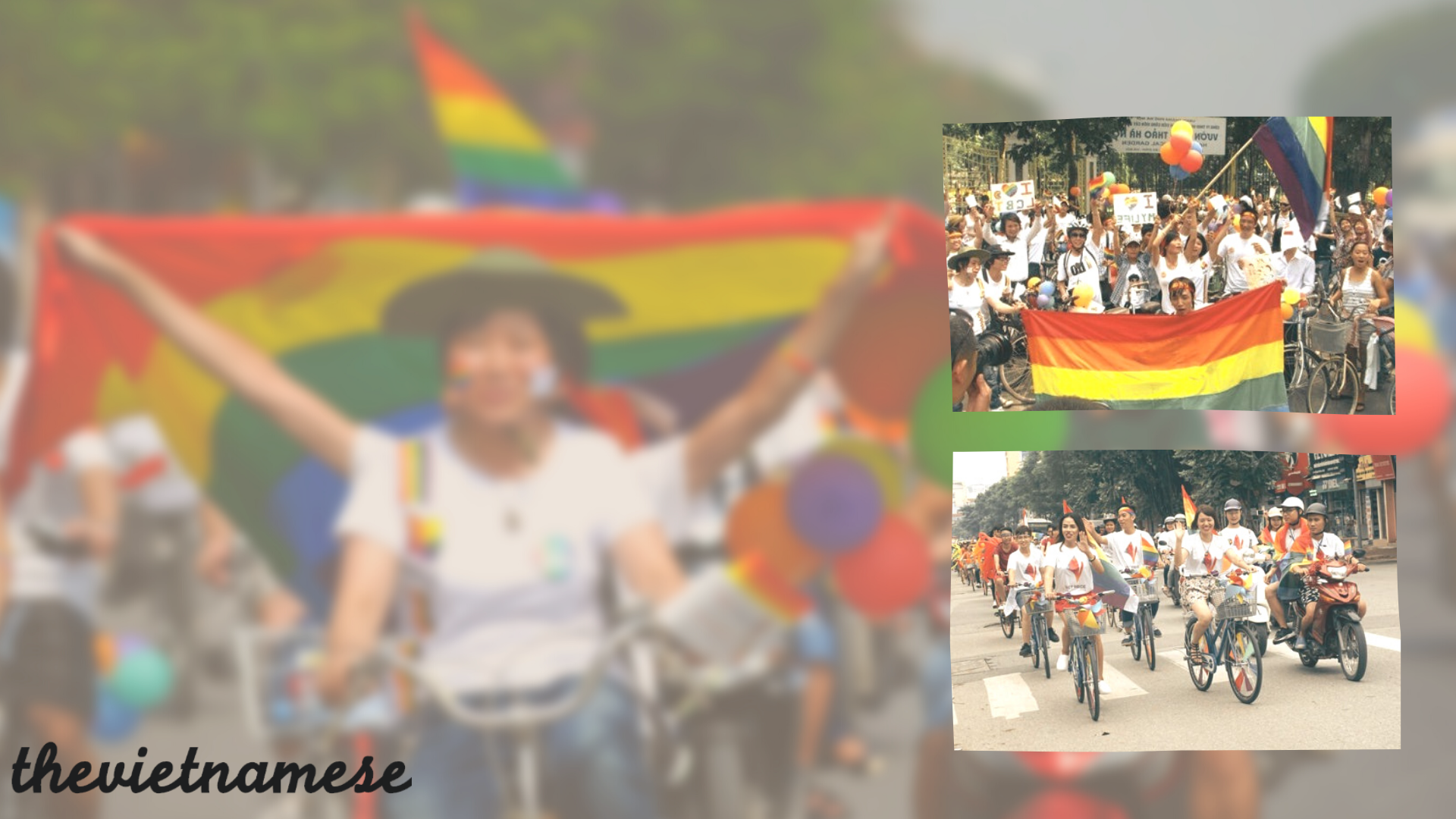
    The 2021 elections for the National Assembly and the local People’s Committee in Hanoi saw the appearance of Luong The Huy, the first openly gay candidate running for both offices. He is also an independent non-party candidate. At age 32, Huy is much younger than the typical member of the National Assembly or the People’s Committee.

    Unfortunately, despite the enthusiastic support from young people, Huy did not win in both elections this year.

    There are very few notable non-governmental organizations which aim to further LGBTQ+ rights in Vietnam. The Institute for Studies of Society, Economy and Environment (ISEE) is currently directed by Luong The Huy in Hanoi and the ICS Center in Saigon.

    In general, the voice of LGBTQ+ people in politics and policymaking is still meager. Because of this, LGBTQ+ issues remain in the “non-priority” bracket of the country’s legislation. As LGBTQ+ people remain unheard of [12], it is not surprising that the government is primarily inefficient in making decisions related to the community.

    Bibliography

    [1] LGBTQ+ Travel Safety – 150 Best & Worst Countries Ranked (2021). (2021, May 7). Asher & Lyric. https://www.asherfergusson.com/lgbtq-travel-safety/

    [2] The Economist Intelligence Unit. (2021). Democracy Index 2020 In sickness and in health? https://www.eiu.com/n/campaigns/democracy-index-2020/

    [3] NBC Universal. (2015, June 11). On Gay Rights, Vietnam is Now More Progressive Than America. NBC News. https://www.nbcnews.com/news/asian-america/gay-rights-vietnam-now-more-progressive-america-n285521

    [4] ILGA Asia. (2021, June). Dare to dream: The ongoing voyage from invisibility to community empowerment, and foray into the region for LGBTIQ in Vietnam. https://www.ilgaasia.org/publications/2021/6/11/lgbtq-rights-report-vietnam-dare-to-dream

    [5] UNDP & USAID. (2014). Being LGBT in Asia: Vietnam Country Report. https://www.usaid.gov/documents/1861/being-lgbt-asia-vietnam-country-report

    [6] iSEE. (2019, January). Hiện trạng trải nghiệm y tế và nhu cầu chuyển đổi giới tính của người chuyển giới ở Việt Nam. http://isee.org.vn/wp-content/uploads/2019/01/Report_Need-experience-on-medical-intervention-of-Transgender-community-in-Vietnam-FINAL.pdf

    [7] Human Rights Watch. (2015, November 30). Vietnam: Positive Step for Transgender Rights. https://www.hrw.org/news/2015/11/30/vietnam-positive-step-transgender-rights

    [8] iSEE. (2018, November). Sống chung cùng giới: Trải nghiệm thực tế và Mưu cầu hạnh phúc lứa đôi. http://isee.org.vn/wp-content/uploads/2018/11/song-chung-cung-gioi-trai-nghiem-thuc-te-va-muu-cau-hanh-phuc-lua-doi..pdf

    [9] Nguyen, S. (2019, June 21). LGBT rights: Vietnam recognises transgender people, but there’s a flaw in its law. South China Morning Post. https://www.scmp.com/week-asia/society/article/3015423/lgbt-rights-vietnam-recognises-transgender-people-theres-flaw-its

    [10] Human Rights Watch. (2020, February). “My Teacher Said I Had a Disease” Barriers to the Right to Education for LGBT Youth in Vietnam. https://www.hrw.org/report/2020/02/13/my-teacher-said-i-had-disease/barriers-right-education-lgbt-youth-vietnam

    [11] Trinh, H. L., & H.T. (2021, February 18). Vietnam’s 13th Party Congress: Women Have No Place In Politics. The Vietnamese Magazine. /2021/02/vietnams-13th-party-congress-women-have-no-place-in-politics/

    [12] Nguyen. LGBT rights. South China Morning Post.

  • Vietnam Briefing: The Election Results Are In. Here Comes 5 More Years Of Party Domination

    Vietnam Briefing: The Election Results Are In. Here Comes 5 More Years Of Party Domination

    The Vietnam Briefing, which is released every Monday morning Vietnam time, looks at Vietnam’s political developments of the past week.


    The 2021 National Assembly Election Results Are Here

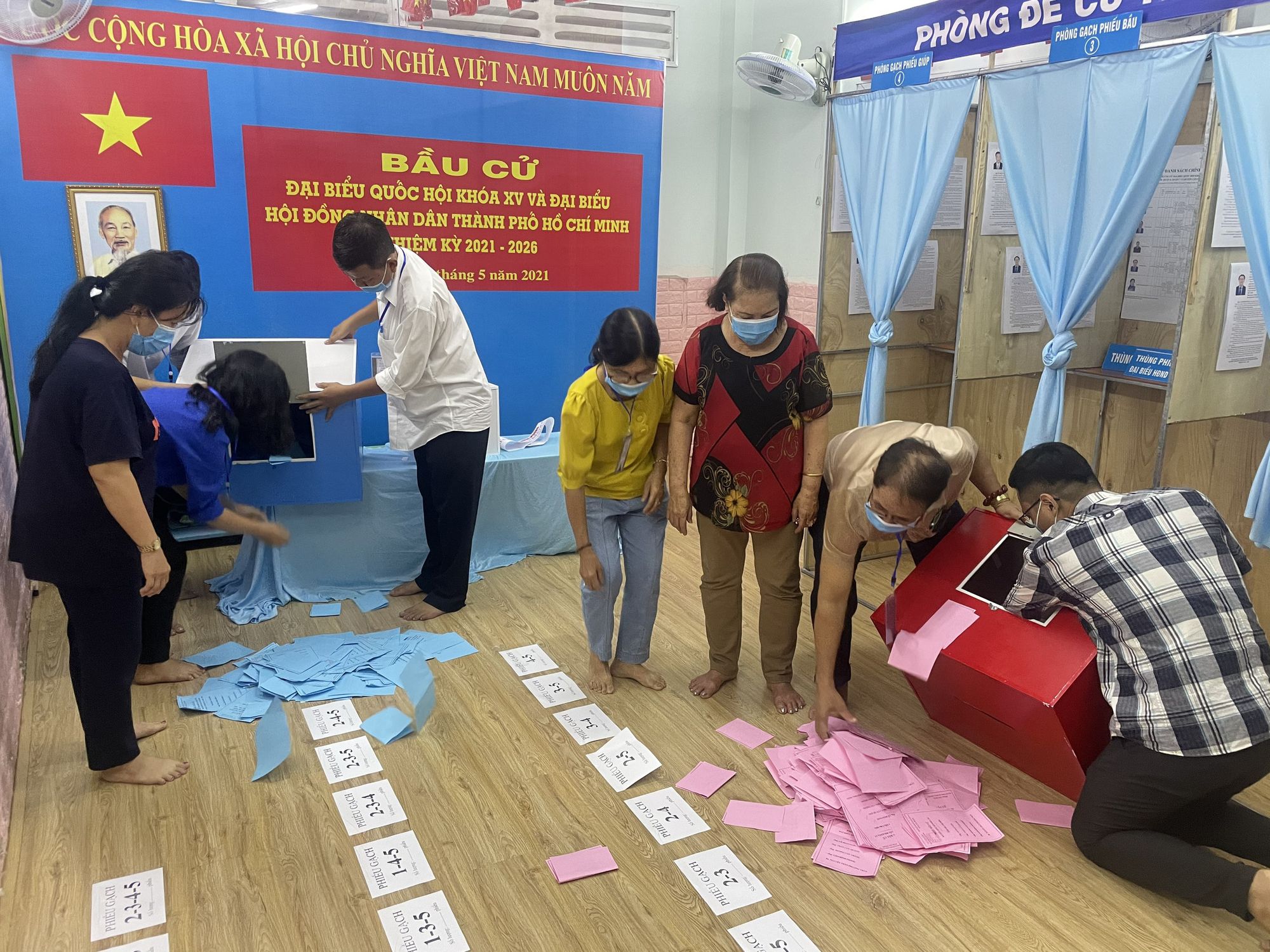
    Last week, the election results for the 15th National Assembly were finally released. The list includes 499 elected officials to the legislative assembly out of a list of 866 nominees in the competition pool. The members of this National Assembly will serve five-year terms until 2026.

    There are supposed to be 500 seats, but one elected candidate was reportedly disqualified due to health issues.

    A performative election? The highlight of the election was the election of “star candidates” – the well-known, high-ranking candidates of the Party who hold the most critical leadership positions in the Politburo.

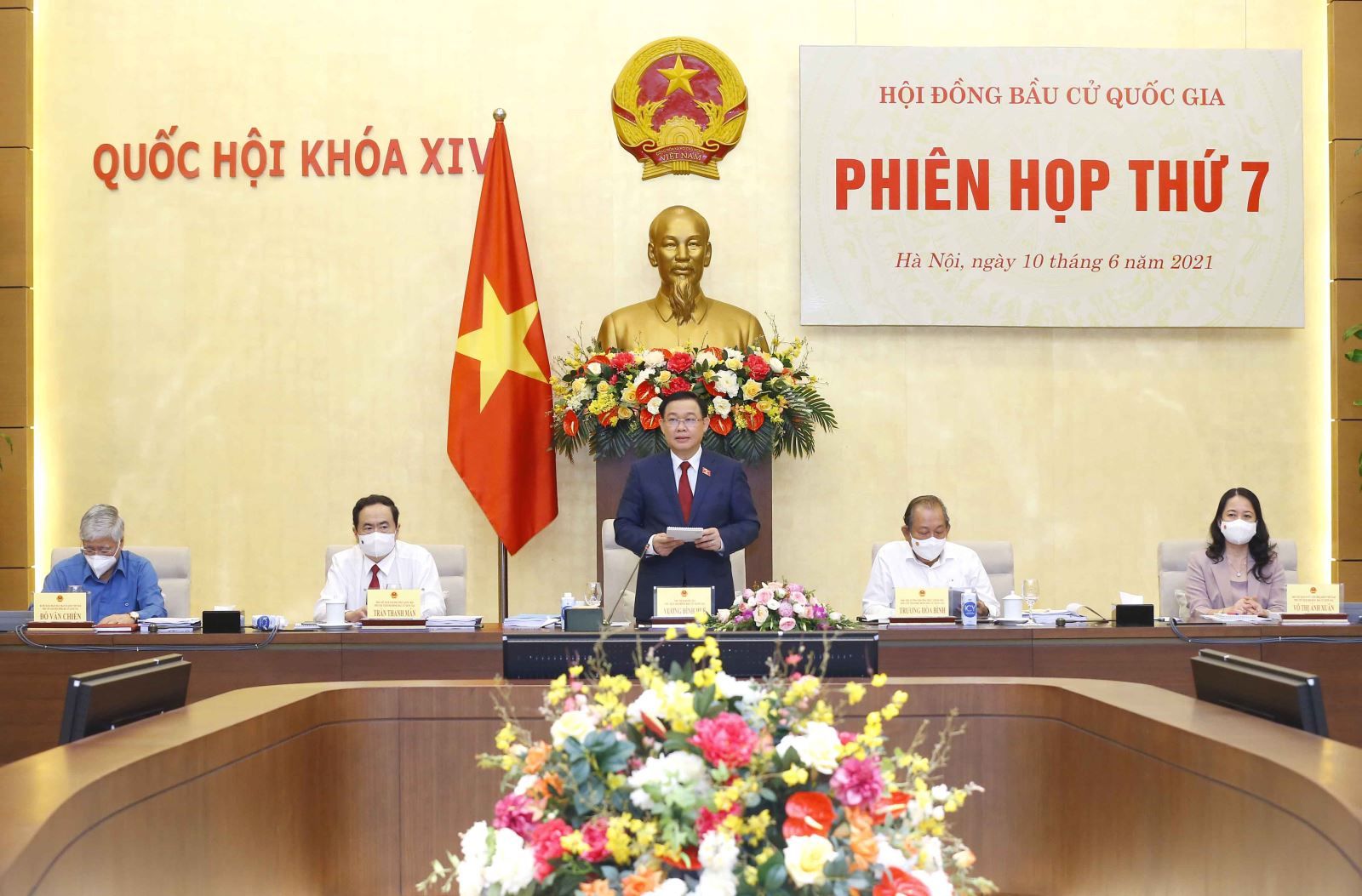
    Notably, the “four pillars” of the Politburo have an extremely high number of votes, ranging from around 93 to almost 100 percent. The “four pillars” include President Nguyen Xuan Phuc, Prime Minister Pham Minh Chinh, Parath Secretary-General Nguyen Phu Trong, and the Chairman of the National Assembly Vuong Dinh Hue.

    Other Politburo members also have a very high number of votes of  at least 90 percent, with only one exception of about 75 percent.

    This was expected because elections in Vietnam are not democratic but rather a chance for the Vietnamese Communist Party (VCP) to demonstrate that its most important members are famously beloved by the people.

    As expected, the election resulted in Party domination: Out of the 499 elected officials, only four were self-nominated candidates.

    The list includes Hoang Van Cuong, vice-president of the public National Economics University; Nguyen Anh Tri, president of the state-controlled National Institute of Hematology and Blood Transfusion; Truong Trong Nghia, deputy chairman of the Ho Chi Minh City Bar Association, and Khuong Thi Mai, managing director of Namsung Aluminum Co., Ltd., a company established in 2014 with full funding from the state.

    All of the self-nominated candidates elected are members of the VCP. This is not surprising, considering the 2016 National Assembly election, in which only two self-nominated candidates were elected, both also Party members. The self-nominated candidates in this year’s election accounted for less than 1 percent of the entire legislative assembly.

    Originally, there were 75 self-nominated candidates, but only nine candidates made it to the final ballot after a rigorous process of elimination, which is known for filtering out dissidents.

    Additionally, it is reported that there are 14 non-party nominees who were elected. However, these non-party candidates were nominated by VCP organizations, making them still tied to the Party. The number of non-party officials only account for 2.8 percent of the whole Assembly.

    According to the state-controlled Vietnam News Agency, the election had a turnout rate of 99.6 percent. The turnout rate  in Vietnam has always been extremely high, and has always been used by the regime to argue that elections are democratic and representative of the people’s will.

    The state also reports that 30 percent of the new National Assembly are women, and around 17 percent are people of ethnic minorities. While this was supposed to illustrate how progressive and representative the new National Assembly is, this is mostly just performative. Since these officials are still tied to the Party one way or another, their independent decision-making power is extremely limited.

    Only less than 10 percent of the new members are people under the age of 40.

    Unfortunate, but not surprising: Luong The Huy, the first openly gay candidate to run in the National Assembly and the People’s Committee election in Vietnam, did not make it in either election. This was expected as Huy was not only a young candidate from a minority background; he was also not affiliated with the VCP and was not endorsed by any VCP organizations.

    To ensure its power in the legislative branch, the VCP has a history of vote manipulation against non-party, independent self-nominated candidates. The election system itself is also known to be rigged against non-VCP candidates.

    Read more on The Vietnamese Magazine’s coverage of Luong The Huy in this election here.


    Another Free Speech Crackdown

    For the past month, since the 2021 elections started to take shape in Vietnam, there has been at least one new case of the regime cracking down on political dissidents every week.

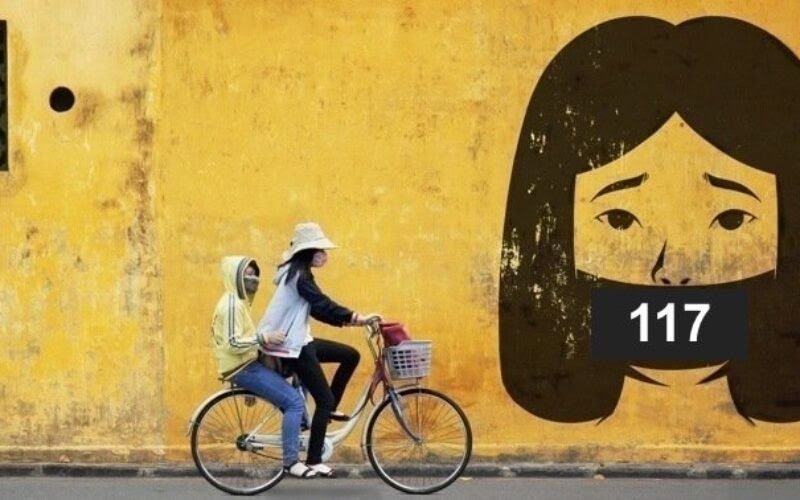
    Last week was no exception: Dang Hoang Minh, an ordinary Facebook user, was sentenced to seven years in prison under the charge of “making, storing, distributing or disseminating information, documents, and items” against the state. This is Article 117 of the Penal Code, commonly used by the regime to crack down on free speech. Just two weeks ago, the same charge was brought against Le Dung Vova, an independent blogger now wanted by the police.

    According to the state-controlled media, Dang Hoang Minh was arrested and charged for uploading to Facebook “information which falsely accused and insulted the leadership credibility of the Party…” Though the state media did not specify what Dang Hoang Minh was accusing the Party of, he was also said to be “insulting the great leader Ho Chi Minh.”

    Since the beginning of this year, at least 21 Vietnamese citizens have been arrested and imprisoned due to their activities on social media, according to Radio Free Asia. All of the dissidents in these cases were charged with Article 117.


    The Situation in the South China Sea

    Last week, Vietnam’s Ministry of Foreign Affairs was busy denouncing actions in the contested Paracel and Spratly islands (known in Vietnamese as Truong Sa and Hoang Sa islands).

    While these denunciations usually concern China, the actions last week came from the Philippines and Taiwan, though the Vietnamese official communication channels generally regard Taiwan as a part of China.

    Derek Grossman, a senior defense analyst of the RAND Corporation, wrote on his social media that the situation in the South China Sea last week was a “useful reminder that China isn’t the only maritime counterclaimant Vietnam is concerned about.”


    COVID-19 in Vietnam

    The Covid-19 situation has not evolved much since the last briefing. The only notable development was perhaps the US putting Vietnam into the “safest for travel” category, although the situation in Vietnam has been rather messy for the past couple of weeks.

    For more information on the general COVID-19 situation in Vietnam, see here.


    Learn more about Vietnam

    China moves forward in soft power struggle for Southeast Asia

    Mark Valencia/Asia Times/ June 10, 2021

    “Remarkably, the US has failed to take full advantage of China’s diplomatic “own goals” – its incursions into Indonesia’s EEZ, its massing of fishing boats in the Philippines’ EEZ, and its maritime provocations of Malaysia and Vietnam in their claimed waters.

    To regain and retain its moral leadership, the US needs to demonstrate that its values and system of government are the best of all for all and that it can and will maintain a competitive edge with China economically and technologically, not just militarily.”

    Why Vietnam Needs to Adopt a Biological Defense Strategy

    Phuong Pham/The Diplomat/June 07, 2021

    “Once regarded as a role model for its successful containment of COVID-19, Vietnam is now in the midst of its fourth wave, its worst since the beginning of the pandemic. Even worse, the stringent measures that previously helped Vietnam put the virus under control have been relatively ineffective, illustrated by the surge in infections since the end of April. This raises a great concern for Vietnam not only with regard to COVID-19 but also on its ability to counter biological threats writ large. With this in mind, Vietnam should establish a national strategy on biological defense in order to help it counter biological threats more effectively, given the current inadequacy of the country’s biological defense capabilities.”

    Vietnam Approves Chinese COVID-19 Vaccine, Reluctantly

    Sebastian Strangio/The Diplomat/June 09, 2021

    “Vietnam’s communist leadership has shown great caution in becoming further indebted to a nation that many Vietnamese – including many within the party and government – view with suspicion.”


    Events to watch this week:

    Webinar: Southeast Asia, the United States and China: Stumbling into the New World Order

    Date: June 18, 2021

    Organizer: ISEAS-Yusof Ishak Institute

  • June 11, 1963: The Internationally Shocking Self-Immolation Of Buddhist Monk Thich Quang Duc

    June 11, 1963: The Internationally Shocking Self-Immolation Of Buddhist Monk Thich Quang Duc

    The “On This Day” series aims to introduce contemporary Vietnamese history of the twentieth and twenty-first centuries by explaining political events that occurred on this day in the past.


    What happened?

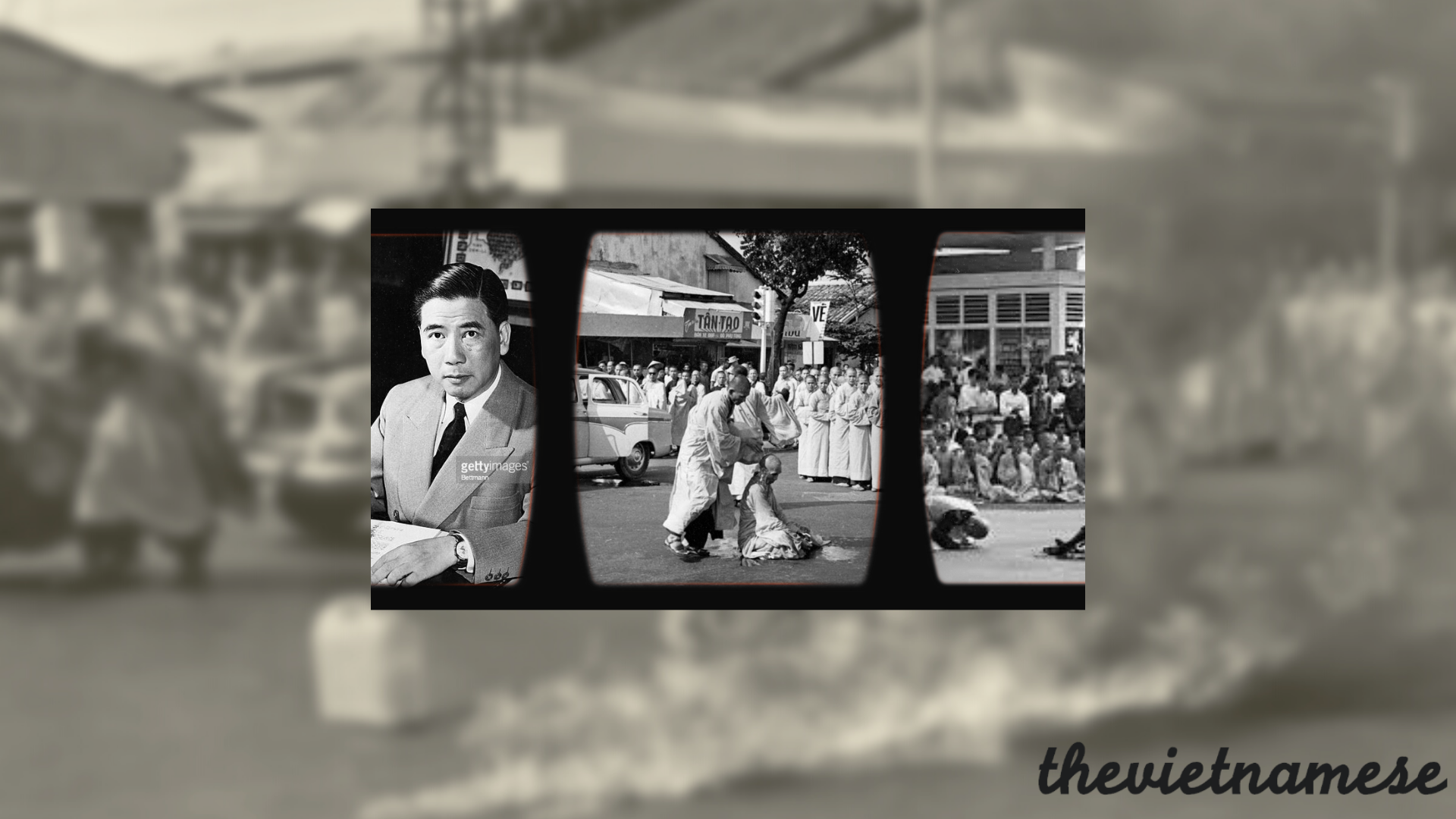
    On the morning of June 11, 1963, an elder Buddhist monk emerged from more than 300 monks protesting on a busy street of Saigon.[1] As the monks formed a circle around him, the elder monk, whose Buddhist name was Thich Quang Duc, stepped forward and sat down in a lotus position. The other monks poured gasoline on him, and one monk handed some matches to Quang Duc.

    Moments later, in a horrifying scene, the elder monk was consumed by fire.

    The onlookers were horrified, and the police present on the street tried to call fire trucks, but the accompanying monks collectively blocked the trucks. Without a doubt, Quang Duc’s self-immolation was a part of a coordinated protest by South Vietnam’s Buddhist monks.

    In the following months after Thich Quang Duc’s self-immolation, at least five other Buddhists committed suicide by burning themselves. His self-immolation also inspired many other Buddhists and bonzes in South Vietnam to do so in the following years.

    As Thich Quang Duc committed suicide publicly, Associated Press photojournalist Malcolm Browne captured the moment. The picture of the burning monk became one of the most circulated and haunting images of the Vietnam War.[2]

    Why did the monk burn himself?

    Thich Quang Duc’s self-immolation prompted multiple interpretations.

    The conventional interpretation from the current Vietnamese Communist state sees the self-immolation as an act of protest against the South Vietnamese government, at the time headed by President Ngo Dinh Diem.[3] Though the leaders expressed some empathy with the Buddhists’ frustration, the South Vietnamese government and its supporters mostly saw them as misled by the Communists.[4] The international public saw the act as protesting the ongoing Vietnam War and the American intervention.

    It is undeniable that the series of Buddhist protests in 1963 in South Vietnam were triggered by the Ngo Dinh Diem regime’s mishandling of religious issues, which made the Buddhists feel like they were discriminated against while their Christian counterparts were given many more benefits.[5]

    However, all of these narratives ignore the fact that the self-immolation and the series of Buddhist protests were a part of the more significant Buddhist crisis ongoing in South Vietnam throughout 1963, motivated by frustration and a unique political ideology.

    According to historian Edward Miller of Dartmouth College, the crisis was the result of not only the regime’s mishandling of religious issues but also because of the Buddhists’ own vision of nation-building for Vietnam, which happened to clash with both the regime in the South as well as the Communists in the North.[6]

    Their political beliefs were neither pro-North Vietnam nor anti-South Vietnam but instead purely Buddhist. They were a part of a more significant movement called Buddhist revival (Chấn Hưng Phật Giáo) that got started in Vietnam at the beginning of the twentieth century.

    Under the belief of Buddhist revival, many monks and Buddhists subscribed to a particular Vietnamese-Buddhist nationalism, which saw Buddhism as the national religion and the only path to Vietnam’s future prosperity.

    Followers of Buddhist revival had a distinctive historical narrative that saw Buddhism as the source of the prosperity of the ancient kingdom Dai Viet, the predecessor of modern Vietnam that flourished around the 10th to the 13th century. The followers of Buddhist revival thought that Vietnam was only weakened and became corrupted due to Chinese colonization and its import of philosophy, from Confucianism to Taoism. Similarly, they viewed both Communism and Ngo Dinh Diem’s Personalist Revolution[7] as Western-imported ideologies that were also unsuitable for Vietnam.

    Thich Quang Duc was a part of this movement. According to Miller, when he came up with the idea of burning himself, Quang Duc understood it as an act of promoting Buddhist reforms and defending his Buddhist revival ideals.

    Therefore, to call the self-immolation of Thich Quang Duc either pro-Communist, anti-Ngo Dinh Diem, or anti-American intervention would be insufficient. His self-immolation was highly political and was meant to express more than just opposition to any regime.

    Bibliography

    [1] Miller, E. (2014). Religious Revival and the Politics of Nation Building: Reinterpreting the 1963 ‘Buddhist crisis’ in South Vietnam. Modern Asian Studies, 49(6), 1903–1962. https://doi.org/10.1017/s0026749x12000935

    [2] Lindsay, J. M. (2012, June 11). TWE Remembers: Thich Quang Duc’s Self-Immolation. Council on Foreign Relations. https://www.cfr.org/blog/twe-remembers-thich-quang-ducs-self-immolation

    [3] Tưởng niệm 50 năm Hòa thượng Thích Quảng Đức tự thiêu. (2013, May 28). vov.vn. https://vov.vn/doi-song/tuong-niem-50-nam-hoa-thuong-thich-quang-duc-tu-thieu-263846.vov

    [4] Vietnam’s Faiths Underlie Rising; Buddhist‐Catholic Disputes Sharpened Under Diem. (1964, September 14). The New York Times. https://www.nytimes.com/1964/09/14/archives/vietnams-faiths-underlie-rising-buddhistcatholic-disputes-sharpened.html

    [5] Joiner, C. A. (1964). South Vietnam’s Buddhist Crisis: Organization for Charity, Dissidence, and Unity. Asian Survey, 4(7), 915–928. https://doi.org/10.1525/as.1964.4.7.01p1727l

    [6] Miller, Religious Revival, 1903–1962.

    [7] Hollingsworth, E. (n.d.). The Church of Ngo: Ngo Dinh Diem’s Personalist Revolution and the Making of Alternative Nationalisms in the Republic of Vietnam, 1954–1963 | MA/MSc in International and World History. Columbia University. Retrieved June 10, 2021, from https://worldhistory.columbia.edu/content/church-ngo-ngo-dinh-diems-personalist-revolution-and-making-alternative-nationalisms

  • Vietnam Briefing: Busy With The Pandemic, But The Government Still Cracks Down On Free Speech

    Vietnam Briefing: Busy With The Pandemic, But The Government Still Cracks Down On Free Speech

    COVID-19 in Vietnam: From Panicking to Pointing Fingers

    For the past two weeks, Vietnam has been in a panic as it supposedly discovered a new COVID-19 variant in the country, which is the mixture of the variants found in the United Kingdom and India. As it turns out, the World Health Organization (WHO) declared that the virus found in Vietnam is not a “new hybrid variant” but rather a part of the existing strain found in India, according to Nikkei Asia.

    WHO’s representative in Vietnam, Kidong Park, said that more observation and monitoring are needed for the next few weeks. For now, the WHO does not alert a new strain of COVID-19 in Vietnam.

    How is the vaccination situation in Vietnam? As mentioned in previous briefings, Vietnam only has the AstraZeneca vaccine widely available in the country. It has been talking to Pfizer and Moderna to either import the vaccines or produce them domestically. Vietnam is also said to be producing the Russian vaccine Sputnik V, and the country is developing its own vaccine. Despite this effort, the country has a meager vaccination rate of only roughly 1 percent of the population so far. Most of those vaccinated have been health workers, diplomats, and the police and military.

    New vaccination developments last week: After resisting China’s vaccine diplomacy for a while, the Chinese vaccine Sinopharm was approved for emergency use by the Ministry of Health this past week. However, public opinion, filled with anti-China sentiment, seems to be resisting the Chinese vaccine. In contrast, people prefer Western developed vaccines and Vietnam’s homegrown NanoCovax vaccine, which is still in trial.

    This move by the Vietnamese government could be seen as a desperate effort to curtail the rising COVID-19 cases in Vietnam and expand the number of vaccinations done in the country. With the anti-China public opinion, however, the government will have a hard time popularizing the Sinopharm option for the Vietnamese people.

    The Vietnamese government has also set up a COVID-19 fund to manage financial resources for buying and producing COVID-19 vaccines. The government aims to reach a $1.1 billion benchmark for the fund to either acquire or make at least 150 million vaccine doses for the country of 100 million people. The government has been fund-raising from people inside as well as outside the country. So far, this fund has received around 200 million dollars (6,600 billion dong) in direct donations and donation guarantees.

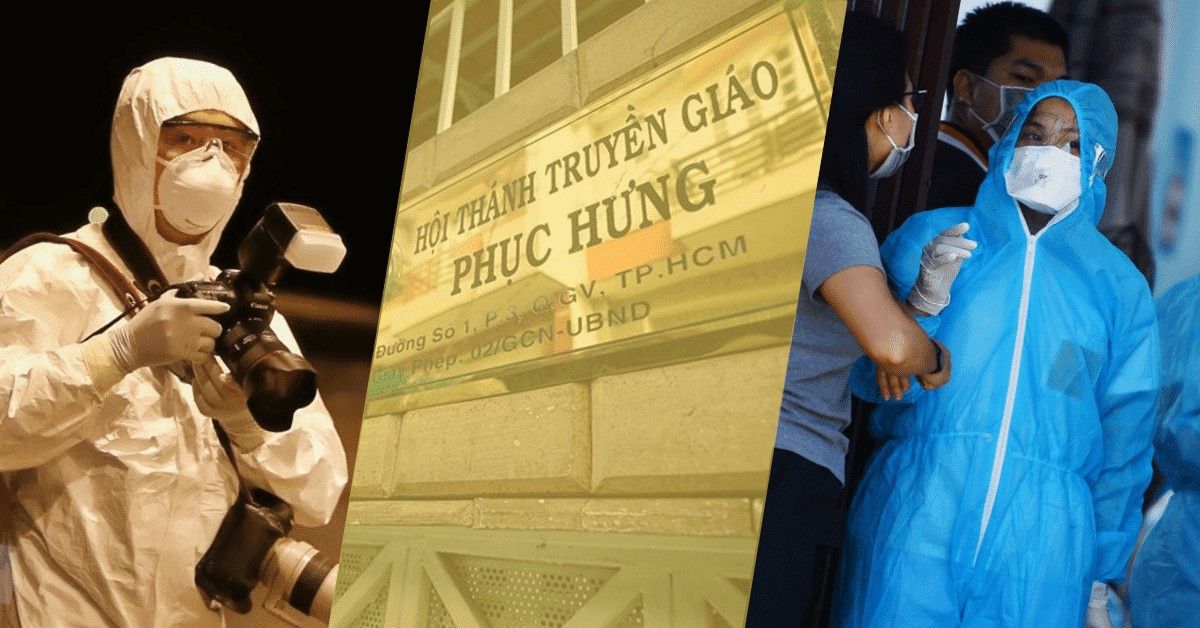
    A new pandemic scapegoat? Since the outbreak in Vietnam became worse, a group of Vietnamese Christian missionaries has been at the target of accusations by the Vietnamese state media. The Protestant group, known as the Revival Ekklesia Mission (Hội thánh Truyền giáo Phục hưng), has been associated with at least 145 cases of COVID-19 infections. The Vietnamese state press reported that the group did not impose social distancing and failed to use masks in its gatherings.

    With some inconclusive details, the state media and public opinion have been extremely harsh on the group, with people posting hateful comments all over the group’s social media. The situation leaves many wondering whether the state-controlled press was scapegoating the religious group as an easy target to blame for the new outbreaks, considering Vietnam’s stigmas surrounding non-Buddhist religious activities.

    Vietnam has now banned gatherings of more than 10 people. This move is seen as a response to the religious group’s new infections.


    The government is cracking down on another blogger

    Last week, the Vietnamese government issued a warrant to search for blogger Le Van Dung, also known as  Le Dung Vova, under the charge of “making, storing, distributing or disseminating information, documents, and items against the Socialist Republic of Vietnam,” according to Article 117 of the Penal Code.

    Le Dung Vova is a blogger who uses his independent platform CHTV to broadcast critical opinions about the government on social media. Previously, in 2019, he was detained by the government when he was live-streaming about the US-North Korea summit in Hanoi. He was detained again later in 2019 when he and his colleagues in CHTV were attending a workshop on the South China Sea. The blogger was eventually released on both occasions.

    Recently, in late May, the police tried to arrest him again under the same charge but failed. The police are said to have gone to his residence to arrest him, but only met his wife and children. According to a report published by BBC Vietnamese, the police confiscated a laptop and two smartphones in his house.

    Article 117 of the Penal Code is one of the typical charges that the regime uses against bloggers and political dissidents. Some other charges include “disrupting security” (Article 118), “abusing democratic freedoms” (Article 331), and “resisting officers in the performance of their official duties” (Article 330).


    The Communist Party celebrates 110 years since Ho Chi Minh’s departure to “seek national liberation”

    Occupied with the COVID-19 pandemic and cracking down on free speech, the government did not forget to continue its propaganda work. Last week, the state-controlled news in Vietnam was flooded with stories about Ho Chi Minh in foreign countries (France, China, Hong Kong, and Russia).

    110 years ago, Ho Chi Minh was said to have left Vietnam to embark on a journey to other countries in order to find a way to liberate the nation. Saigon, now named Ho Chi Minh City, also held a ceremony in the Ho Chi Minh Museum to celebrate “110 years since the late leader’s start on a journey to look for ways to save the country from the colonial yoke,” according to the state-controlled Vietnam News Agency.

    Ho Chi Minh, seen as the founding father of the socialist state and the nation’s liberator, has always been a prominent political figure used by the Communist Party for its propaganda efforts in order to retain power. The Vietnamese Magazine’s series on Ho Chi Minh and how his figure has been worshipped and utilized by the Communist Party can be found here and here.


    Learn more about Vietnam

    Coronavirus: Vietnam approves Sinopharm’s vaccine, but will people take it?

    South China Morning Post/Sen Nguyen/June 05, 2021

    “The news that theWHO has approved China’s Sinovac and Sinopharm vaccines for emergency use, allowing them to be included in the global vaccine-sharing Covax initiative, did little to ease the resistance against Chinese-made vaccines in Vietnam.”

    No Trade-Off: Biden Can Both Deepen U.S.-Vietnam Ties and Promote Human Rights

    Center for Strategic & International Studies (CSIS)/Bich T. Tran/June 03, 2021

    “To improve trust with Vietnam, U.S. policymakers should differentiate revisionist states like China from status-quo communist regimes like Vietnam. A revisionist state seeks to undermine the established international order for the purpose of increasing its relative power in the system. The concept, therefore, concerns a state’s behavior in international affairs. Meanwhile, a communist regime is a matter of domestic politics. China’s excessive claims, reclamation, and militarization of disputed features in the South China Sea; bullying of other claimants, including Vietnam; and engagement in unfair predatory economic practices are signs of a revisionist state. They are not necessarily characteristics of a communist regime. This distinction will help define and develop the U.S.-Vietnam relationship. Furthermore, the Biden administration should reaffirm its respect for Vietnam’s political system.”

    Keeping Strategic Anxieties at Bay: Growing Japan-Vietnam Bonhomie

    The Diplomat/Rahul Mishra/June 4, 2021

    “As one of the fastest emerging regional economies, Vietnam holds a key position in the emerging Indo-Pacific dynamic. A robust and long-term trade and investment partnership with Japan is significant in that context. Both countries are according greater importance to each other, which is manifested in recent initiatives taken by Japan’s Prime Minister Suga Yoshihide. For one, his first foreign visit as Japan’s prime minister was to Vietnam (and then Indonesia) in October 2020, which is a testimony to Japan’s commitment to Vietnam (and the wider ASEAN region). Diplomatic exchanges between the two countries had become regular and more institutionalized under former Japanese Prime Minister Abe Shinzo.”

    Research: Anglo–Vietnamese diplomatic relationship in the seventeenth century: the case of the English East India Company

    International Journal of Asian Studies (Cambridge University Press)/Ngoc Dung Tran/June 02, 2021

    “Drawing on primary materials from the English East India Company (EIC) archives in the British Library (London, UK), this article investigates the early diplomatic encounters between England and Vietnam (Tonkin and Cochinchina) in the seventeenth century. Previous studies have mostly focused on the English trade in Vietnam in that period and their diplomatic missions from the late eighteenth century to 1858 but partly neglected their diplomacy in their first connections with Vietnam (1614–1705). This article thus investigates how the EIC adapted its gift-giving diplomacy to the diverse and shifting political landscape of the Tonkin and Cochinchina kingdoms. While the Trịnh Lords in Tonkin severely limited diplomatic and trade exchanges with EIC agents and other European traders, the Nguyễn Lords in Cochinchina welcomed relations with EIC representatives as it served their ambition to facilitate trade and establish military alliances with other powerful actors in the region.”

  • June 5, 2011 – The Beginning Of The Longest Anti-China Protest Movement In Vietnam

    June 5, 2011 – The Beginning Of The Longest Anti-China Protest Movement In Vietnam

    Our newest section on The Vietnamese Magazine, the “On This Day” series, aims to introduce contemporary Vietnamese history of the twentieth and twenty-first centuries by explaining political events that occurred today in the past.


    What happened on June 5, 2011?

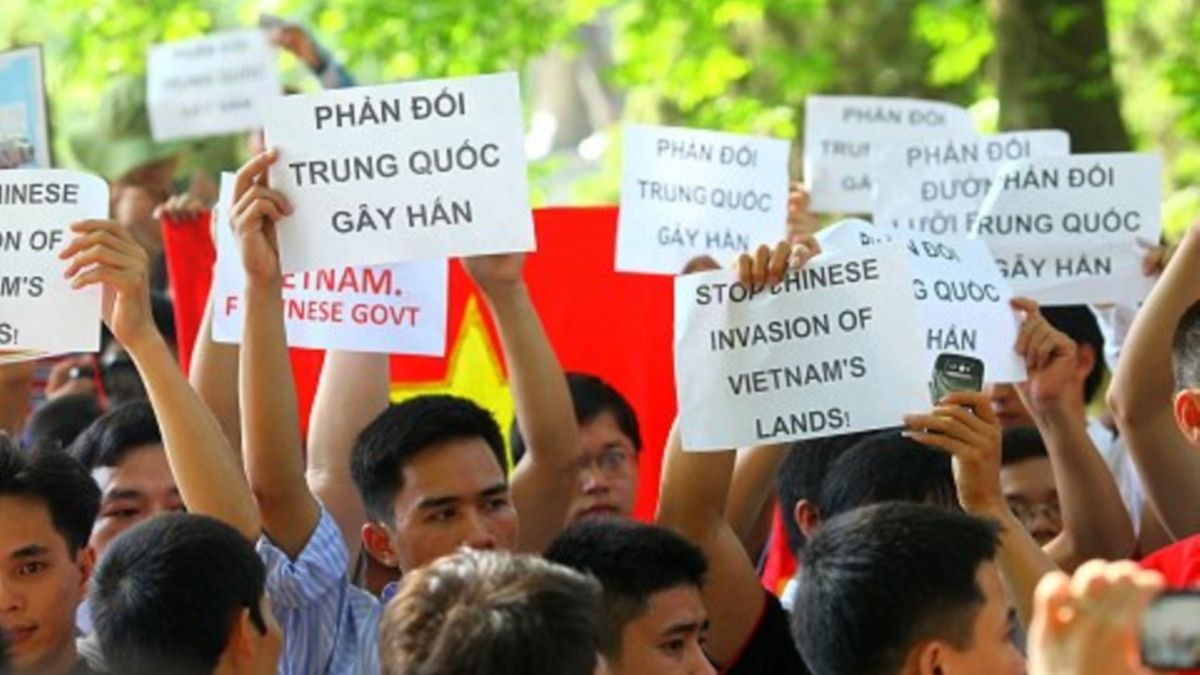
    Public demonstrations and protests are sporadic in Vietnam. But on this day, 10 years ago in 2011, it was the beginning of the longest anti-China protest movement in Vietnam after 1975.

    For almost three months of the summer of that year, a total of 11 protests happened across Vietnam every Sunday, primarily conducted in Hanoi and Saigon, where the Chinese embassy and consulate were placed. Many people call this movement “The Flaming Summer” (Mùa Hè Đỏ Lửa).

    Why were people protesting on that day?

    Since China established the eleven-dash line map (now the nine-dash line map) claiming sovereignty of various regions in the South China Sea, the Vietnamese people have always been angered by China’s claims to the Paracel and Spratly islands, known as the Truong Sa and Hoang Sa islands by the Vietnamese.

    In the summer of 2011, people especially felt provoked by the actions of Chinese vessels in the contested sea. In late May, the news reported that the Chinese vessels were harassing Vietnamese survey vessels and disrupting the Vietnamese vessels’ activities. Later in early June, Chinese ships once again harassed Vietnamese survey ships.

    What was the regime’s response to the protests?

    After supposedly tolerating the protests for a short period of time, the regime nevertheless decided to crack down on the protestors. In late August, the police began to detain people who participated in the protests, forcing 40 protestors onto two buses right after the last rally started on August 21. It was confirmed that at least 47 protestors were arrested. The Hanoi local government warned people against protesting any further.

    What is the legacy of the protests during that summer?

    The waves of anti-China protests in 2011 were not the first nor the last. Earlier in 2007 and 2008, there were also anti-China protests by many bloggers and pro-democracy activists, which also resulted in the government’s crackdown. Later in 2014 and 2018, there were also new anti-China protests.

    However, the protests in 2011 were significant because of their duration, scope, and effect on Vietnam’s pro-democracy discourse. In many ways, it was an unprecedented movement.

    Compared to other anti-China protests, the 2011 protest movement had the most prolonged duration, lasting the entire summer. The demonstrations were also massive compared to others, with the participation of hundreds of people. Some of the rallies were estimated to have around a thousand people. This fact is exceptionally significant for a country infamously known for repressing protests.

    Although the government repressed the protests, they still demonstrated to the Vietnamese government that the people could disagree with the government and willingly show it. Additionally, the protests also sowed the seeds of government criticism among the people. The movement provoked many intellectuals and highly-credited ex-government officers to speak out against the Communist Party and demand democracy.

    Many participants of these protests, such as The Vietnamese Magazine’s co-founder and editor Trinh Huu Long, would later become pro-democracy activists.

    The protests in 2011 were the beginning of “a prolonged civil society movement that still exists nowadays,” said Long.

  • Vietnam Briefing: The Elections Results Have Started To Be Released

    Vietnam Briefing: The Elections Results Have Started To Be Released

    The Vietnam Briefing, which is released every Monday morning Vietnam time, looks at Vietnam’s political developments of the past week.


    The first openly gay candidate lost the People’s Committee election

    Luong The Huy, the first openly gay candidate, and a non-Party member self-nominee lost his election bid to the People’s Committee of Hanoi. In the list of elected candidates published last week, Luong The Huy was not among the 95 elected representatives for Hanoi’s People’s Committee.

    In Vietnam, there are two elections: the People’s Committee election and the National Assembly election. Each province has its own People’s Committees at the provincial, district, and commune levels, while the National Assembly represents the central government’s legislative body. Luong The Huy ran for both the National Assembly and Hanoi’s People’s Committee.

    Both elections follow the bloc voting system, in which a province is divided into different voting blocs based on the province’s districts. Each voting bloc typically elects 3-4 representatives to the People’s Committee from the competition pool of around 5-6 candidates.

    For his People’s Committee election, Huy was placed in voting bloc number 04 in the Hai Ba Trung District. The people who got elected over Huy are all Party members with a prior history of either serving the Vietnamese Communist Party (VCP) or the People’s Committee of Hanoi. The list includes Nguyen Van Nam, the secretariat of the VCP in Hai Ba Trung District, Ho Van Nga, ex-representative on the Committee, and Duong Duc Tuan, ex-vice chairman of the Committee.

    All of these elected candidates are around 51-56 years old. For comparison, Huy is 32 years old.

    These elected candidates are going to serve on the People’s Committee of Hanoi for the next 5 years.

    What’s next? The National Assembly election has not released its results. However, it is very unlikely that he will be elected for the National Assembly.

    Why? Elections in Vietnam have always been rigged against self-nominated, non-Party candidates through various means. The number of self-nominated representatives in the National Assembly has never exceeded 15 percent. In the 2016 election, only two self-nominated candidates got elected – and both of them were Party members.

    Huy’s district was allocated three seats. Among the 5 candidates, apart from Huy, the others included the chairperson of one of the largest state-owned banks, a high-ranking legislator, a government minister, and a deputy principal of a local school. It’s not difficult to anticipate who the winners will be.

    Who is Luong The Huy? Luong The Huy is the first openly gay candidate to run for the National Assembly and the People’s Committee of Hanoi. He is a self-nominated, independent candidate, meaning any VCP institutions did not nominate him and had no VCP membership. Huy is a Fulbright Scholar who studied at the University of California, Los Angeles (UCLA) for his Masters of Law (LLM) specialization in sexuality. He is currently directing the Institute of Studies of Society, Economy and Environment (iSEE), a non-profit organization aiming to promote minority rights in Vietnam.

    As normal, there were many reports and accusations of vote tampering and online smear campaigns directed at independent, self-nominated candidates like Huy. For example, anecdotes of how high schools in Ha Dong District, where Huy’s voting bloc was placed for the National Assembly election, forced students to share false information about him on Facebook, claiming that he committed tax evasion that he was an anti-state foreign-sponsored reactionary. The students were rewarded with higher grades. In another example, voters in his voting bloc said that people at the voting locations instructed them to specifically not vote for him.

    However, as the state controls the official media channels in the country, there is no way to investigate or prove these claims. The state-controlled media has also been very quiet on these accusations.

    On the day of the election, many state-controlled online media channels deleted their posts on Luong The Huy.


    More propaganda is coming

    Last week, President Nguyen Xuan Phuc met and discussed with the Communist Review (Tạp Chí Cộng Sản) to create a forum discussing the VCP’s “important theoretical issues.” In this meeting, the president affirmed that Vietnam’s path to socialism has “become increasingly clear” over the past 35 years since the launch of Doi Moi, a political and economic reform program and that “theoretical issues” (read: propaganda) should be explained and widely spread to serve this path to socialism.

    This seems to imply that the Communist Review is going to be more active and aggressive in defending the Party as well as spreading propaganda.

    In this meeting, Nguyen Xuan Phuc said that the goal of the socialist state of Vietnam is to establish rule of law, democracy and a “socialist-oriented market economy.”

    Though these terms are ambiguous, we could understand that the VCP’s visions of “rule of law” or “democracy”  are drastically different from how these words are used in non-authoritarian countries. Over the years, the VCP has consistently pushed the theoretical argument that the “rule of law” in Vietnam is essentially the rule of the Party, and “democracy” here just means the existence of elections, even if such elections always result in the overwhelming majority of VCP members in the government.

    What is the Communist Review? The Communist Review is a century-old mouthpiece of the VCP. Its main function is to create theoretical arguments to defend the Party’s policies. Even though it is named “Communist,” the Review does not support any communist theories or arguments that contradict the Party’s leadership and legitimacy. In hindsight, the Review is not a communist intellectual journal or a think tank that aids the Party in creating policies, but rather a propaganda mouthpiece that defends the Party’s decisions.


    A busy week with COVID-19 in Vietnam

    Last week was another week of panic for people in Vietnam, with approximately 100 new COVID-19 cases every day. So far, there have been more than 6,000 cases of COVID-19 infections recorded in Vietnam, with 47 deaths, according to the World Health Organization. While this number seems to be modest compared to other countries, it is worth noting that only around 1 percent of the population has been vaccinated – mostly front line workers, diplomats, as well as police and military officers; and only around 28,000 people have been fully vaccinated with a second dose, accounting for just around 0.03 percent of the almost 100-million people population.

    Vietnam’s percentage of vaccinated people based on population is among the lowest in Southeast Asia.

    What COVID-19 vaccines are not widely available in Vietnam? At the moment, only AstraZeneca is available in the country. Vietnam has been negotiating with Moderna to produce the vaccines in the country and is said to be getting 30 million doses of the Pfizer vaccine by the end of this year. It is producing the Russian vaccine Sputnik V in the country, though it has not considered the Chinese vaccines. Vietnam also has three types of vaccines developed domestically, but none of them have been approved yet.

    How strict is the entrance into the country? The Vietnamese government not only has extremely strict entrance requirements, but it even recently tightened the law surrounding entry to the country. Currently, everyone, whether having been vaccinated or not, is required to undergo 21 days of quarantine in a government-mandated location, instead of 14 days like before.

    Last week, the American Chamber of Commerce requested the Vietnamese government to reduce the number of quarantine days to seven days to allow more foreigners to enter the country. The government is considering the proposal, but so far, the entrance restrictions remain tight for everyone, Vietnamese citizens or not.

    Vietnam finds a new virus variant: “Vietnam has discovered a new coronavirus variant that’s a hybrid of strains first found in India and the U.K., the Vietnamese health minister said Saturday,” according to AP/VOA News.


    Learn more about Vietnam

    Cybersecurity in Vietnam: has anything changed?

    Loxology/ Le Ton Viet (Russin & Vecchi Vietnam)/ May 28, 2021

    “Since adoption of the Law on Cybersecurity in 2018, there has been an ongoing conversation opposing the strict regulatory environment that the Law creates. Strict enforcement, it is said, would disrupt the continuous flow of data so important to commercial development. While this conversation has gone on, the Vietnamese Government has not taken any real steps to provide clarification or to enforce the Law. Businesses continue to operate in the shadow of the Law, while awaiting further guidance. But lack of clarity is not new in Vietnam and often serves the Government’s purpose of hands-off control.”

    The Gulf between Chinese and Vietnamese alliance policies

    The Diplomat/ Ngo Di Lan/ May 27, 2021

    “…no matter how we define military alliance, for as long as Vietnamese national power has not caught up to China’s, China and Vietnam will continue to have significantly different alliance policies.”

    New research: “Vietnam’s tentative approach to regional infrastructure initiatives” by Do Mai Lan and Hoang Oanh

    ISEAS/ May 27, 2021

    Executive summary:

    • Vietnam’s Socio-Economic Development Plan 2021-2030 highlights infrastructure development as one of the three strategic breakthroughs.
    • However, financing for infrastructure development remains constrained. State resources fund approximately 90 percent of the country’s infrastructure projects, and mobilising private capital has proven difficult.
    • There are currently many foreign-financed connectivity initiatives in the region, such as China’s Belt and Road Initiative, Japan’s Expanded Partnership for Quality Infrastructure, and projects supported by America’s International Development Finance Corporation.
    • While competition among these initiatives provides Vietnam and regional countries with more funding options, they also come with challenges. Vietnam, therefore, has approached them with some reservations.
    • Moving forward, it is crucial for Vietnam to adopt stringent standards in approving new projects, improve the legal environment to attract private infrastructure investment, develop better national infrastructure master plans, diversify infrastructure investment sources, and refrain from taking sides in pursuing international infrastructure development cooperation.
  • The Socialist Irony: Vietnamese Companies Exploit Labor And Damage The Environment In Cameroon

    The Socialist Irony: Vietnamese Companies Exploit Labor And Damage The Environment In Cameroon

    “…it is like destroying forest in other people’s backyards, not in ours.” – A quote from an informant working for a Vietnamese timber logging company, according to EIA.

    Various Vietnamese companies are damaging Cameroon’s forests and its economy through logging activities in the country, according to a new report by the Environmental Investigation Agency (EIA), an international non-profit organization aiming to protect the global climate.

    In an investigative report, the EIA said that these companies extracting timber to export back to Vietnam were violating export laws and were engaging in labor exploitation and discrimination, tax evasion, illegal logging, and other things.

    The Vietnamese socialist government has consistently condemned the imperialism and economic exploitation that has resulted from capitalism. In a recent article about socialism, Nguyen Phu Trong, the Secretary General of the Vietnamese Communist Party (VCP), declared that the country should strive for “sustainable development… instead of usurping natural resources and destroying the environment.” A socialist government is regarded as the alternative to capitalist countries which have failed to address the problems of environmental damage and labor exploitation.

    However, this issue highlights that companies coming from a government of such ideology are perfectly capable of environmental, economic, and labor abuses – especially when it concerns less developed countries.

    Timber is largely used as the architectural materials for Buddhist temples and private houses in Vietnam. Previously, the market was dominated by timber extracted and exported from Laos and Cambodia; but the companies have moved to Cameroon due to its relaxed laws surrounding logging.

    Vietnam is now the second-largest timber processing hub in Asia, only after China.

    The total value of timber imports and exports from the prominent timber processing countries in Asia. Graphic: EIA. 

    The private companies named in the report include Dai Loi Trading Co. Ltd., Xuan Hanh Wood Company, Thang Long Import-Export Company Ltd., Hai Duong Wood Import-Export Company Ltd., and an unregistered Vietnamese company represented by someone known as Le Jessan Tan. All of these companies are reportedly private companies, meaning no links with the government have been found.

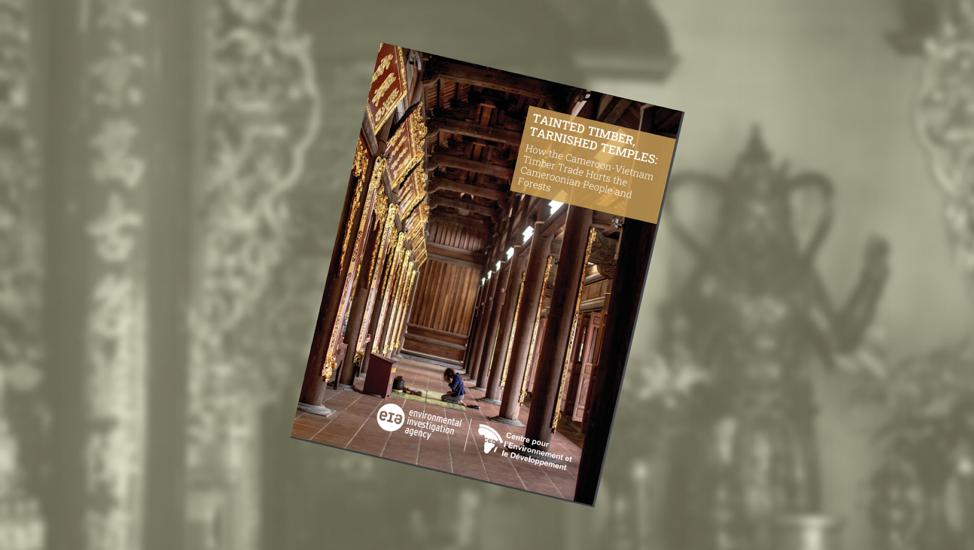
    The EIA reportedly conducted this independent investigation for three years before releasing the report in late 2020. The report is titled “Tainted Timber, Tarnished Temples: How the Cameroon-Vietnam Timber Trade Hurts the Cameroonian People and Forests.”

    Environmental and labor abuses in Vietnam

    In its ideological doctrine, the VCP consistently claims that the socialist government is “of the people, by the people, and for the people.” Land in Vietnam is also constitutionally “owned by the people,” and the private ownership of land is theoretically unconstitutional. The VCP’s socialism is understood as a way to uplift the common people by limiting the power of private businesses and corporations.

    Despite Vietnam’s commitment to socialism, stories about environmental and labor exploitation are not new in the country’s private sector. With various sources of natural resources and a large population providing cheap laborers, the country is ripe for exploitation.

    The case of Formosa in 2016 is an example. During this time, Hung Nghiep Formosa Ha Tinh, Ltd., a Vietnamese private company, was heavily polluting the seas in central Vietnam, leading to massive fish and other marine life deaths. The primary investor of Hung Nghiep Formosa Ha Tinh, Ltd. is the Taiwanese Formosa Plastics Group.

    Human lives have also been a loss. As the results of such massive fish deaths, some people died or became seriously ill, with others even believed to have developed cancer, from either diving in the sea, eating poisonous fish, or as the result of exposure to the company’s chemicals.

    For years, various cases of illegal timber trade in Vietnam have been reported. There have been 30,000-50,000 cases of forest violations per year, according to statistics provided by the international non-profit organization Preferred by Nature. The organization also regards Vietnam as one of the most high-risk countries regarding the illegal timber trade.

    Even state-controlled media outlets in Vietnam sometimes publish opinion articles criticizing the Vietnamese government’s handling of environmental issues.

    According to this graph, Vietnam is among the most high-risk countries in terms of the illegal timber trade. Graphic: Preferred by Nature. 

    Workers in Vietnam also face tremendous hardships and, in many cases, outrageous exploitation.

    For example, cases of forced labor in drug detention centers have been reported, in which people struggling with drug addiction were not only forced to provide free labor but were also tortured. In the garment industry, child labor is among the common practices. Even among the “normal” workers – those who are non-criminal adults and are able-bodied-mistreatment, underpayment and lack of social security were also frequently reported.

    Because of this, it is not surprising that there are similar and even worse cases committed by Vietnamese companies abroad.

    Unethical activities in Cameroon

    Vietnamese companies are accused of various unethical activities in Cameroon, including violation of export laws, tax evasion, illegal harvesting, disregarding the illegal origin of timber, and abuse of workers.

    In the name of profit, the companies casually commit these illegal activities. According to the report, to maximize profits, the companies hired workers for years without a proper contract or social security guarantees. They frequently discriminated against, underpaid, and abused Cameroon workers.

    The companies also avoided paying taxes in Cameroon by mostly conducting transactions with cash. From 2014 to 2017, around $300 million went unreported when timber was being exported to Vietnam, according to the EIA investigation.

    Alongside these violations, the companies also turn a blind eye to illegal timber, even if such timber originated from terrorist organizations. In fact, according to EIA, the company Dai Loi was reportedly buying timber that originated from Hezbollah.

    One informant from one of the Vietnamese private companies compared the way Vietnamese and French companies inspect timber in Cameroon. According to the informant in the report, the French asked many questions regarding the origin of the timber, such as whether child labor was involved. But the Vietnamese only care about whether there is documentation to bypass the Vietnamese customs, even if the timber was harvested illegally. The informant said:

    “We wouldn’t care less about your wrongdoings. Just give me whatever papers that the customs require…”

    Vietnamese customs also do not care about illegal logging because “it is like destroying forest in other people’s backyards, not in ours.”

    Imports of logs from Cameroon to China, Vietnam, and the EU during the period of 1992-2018. A lot of Vietnamese timber companies moved from Laos and Cambodia to Cameroon due to its relaxed laws governing logging. Graphic: EIA.

    Policy recommendations for Vietnam

    The EIA report recommends the Vietnamese government do the bare minimum: official acknowledgments of the loopholes in importing timber, followed by more effective regulations regarding fraudulent paperwork and financial transactions of private timber companies.

    So far, half a year after the report’s release, no state-controlled media in Vietnam has reported on the situation. There have been no official statements and no apologies.

    Based on his article on socialism, Nguyen Phu Trong would argue that these flaws exist because the country is in the “transition period” to socialism. This means that existing exploitation is not the government’s ideology but rather the inevitable reality of the global capitalist, market-oriented economy. Furthermore, these companies are private and not government-affiliated, so it is not the system’s fault.

    Let us assume that this argument is true. If so, however, it is even more important and urgent for Vietnamese leaders and policymakers to acknowledge the unethical activities of these companies and come up with more effective regulations to demonstrate their commitment to socialism – which, according to their own arguments, is supposed to be healthier for the environment, the economy and workers.

    Or are we supposed to wait endlessly for an unambiguous date of a successful transition to socialism?

  • Freedom Of Speech In Vietnam: Where Government Is The Boss

    Freedom Of Speech In Vietnam: Where Government Is The Boss

    In ASEAN, there are still stories of the independent media that will give us inspiration and encouragement. Here are the two examples of those stories.

    First story

    Two years ago, a tuk-tuk took a group of international journalists along alleys full of twists and turns in Chiang Mai, Thailand, before stopping in front of a private radio station.

    Uncle Sangmuang Mangkorn, the colleague and guide, then gave the journalists a tour around the radio station and showed us the facilities of MAP Radio.

    MAP stands for the Migrant Assistance Programme, and it is a foundation that runs several community radio stations in support of migrant workers in Chiang Mai and Mae Sot.

    Most people have a preconception of radio stations being quite large and full of modern equipment and technology. Yet, the MAP Radio office is far from this ideal. Inside were just two small transmitting rooms and two employees working on a live program. This was all they had.

    Warmly referred to as “Uncle” Sangmuang, he and some of his close friends founded MAP Radio in 1966 when an influx of Myanmar migrants came to Chiang Mai to work at construction sites. Myanmar workers frequently got into trouble in Thailand, and they had no avenues available to access information that would be essential for the duration of their stay. MAP Radio operates both as a radio station focusing on labor rights, health, education and an organization to help and campaign for migrant workers. MAP Radio also broadcasts in some of the workers’ mother tongues.

    A recording room at MAP Radio – Migrant Assistance Programme. Photo: MAP Radio/Facebook

    Second Story

    In 2018, Malaysiakini, a 4-language online newspaper in Malaysia, issued a publication concerning deaths in police stations. The paper discovered that only one-fourth of these deaths captured public attention. Hence, the paper created a separate web page to gather information about these deaths, teach basic ways to protect oneself from abuse by authorities, and share the experiences of victims under arrest.

    In 2021, Malaysiakini was fined RP $500,000 (more than USD $120,000) by a court in Malaysia on charges that readers’ comments on its website resulted in a decline of public trust in the judiciary system. Immediately after the court’s ruling, Malaysiakini called on its readers to make donations to help it pay the fine. Within a few hours, they had collected more than the amount needed.

    Compared to the rest of Southeast Asia and the world, freedom of speech and free press in Vietnam has a quite different fate.

    Vietnam: When the government acts as the big boss

    In 2018, a Vietnamese activist, Nguyen Ngoc Nhu Quynh, was sentenced to 10 years in prison for collecting information about unexplained deaths in police stations. After spending two years in jail, she was exiled to the United States for political reasons.

    Fast forward towards the year 2020, it was a terrible one for the press in Vietnam as mainstream media continued to operate under government control.

    Vietnam’s independent press development has taken a step backward during the past two years. We now do not have Bao Sach (The Clean Newspaper) anymore because its founding members have been arrested in late 2020 and early 2021.

    Three members of the Independent Journalists Association of Vietnam, journalist Pham Doan Trang, land rights activist Can Thi Theu, and her two sons, together with many others, were also detained in 2020 and 2021. At some of their trials, heavy sentences were handed out.

    Vietnam imprisoned all of them for speaking out against abuses by the government and participating in activities that displeased the authorities.

    In a few months, Chung Hoang Chuong, the owner of a SIM card shop in Ninh Kieu Town, Can Tho, will complete his 18-month sentence. He was arrested in early 2020 for posting comments concerning the Dong Tam incident. The final post on his Facebook account attracted around 1,400 comments, many of which criticized him for his daring anti-state viewpoints.

    The government uses penal charges against people who exercise their right of freedom of speech in Vietnam when it feels that that such speech negatively affects the interests of the Vietnamese Communist Party. In these charges, the authorities always regarded the Party’s interests as the people’s; when the Party’s interests are compromised, so are the people’s.

    From left, Pham Chi Dung, Nguyen Tuong Thuy, and Le Huu Minh Tuan – three members of the Vietnamese Independent Journalists Association of Vietnam, convicted according to Article 117 of the Penal Code. Photo: Luat Khoa.

    The VCP always regurgitates the idea that the people are masters of Vietnam. But in reality, the Party and the government behave like they are the bosses of the people. At a moment’s notice, they are ready to punish a particular civilian if he/she criticizes them. Here, the VCP shows its true colors; party leaders are the true masters of the land and not a government whose primary responsibility is to serve the people.

    In a particular business, the owner has the right to punish or dismiss some workers since he holds ownership of the company. However, Vietnam is not owned by the Party; ownership of this land belongs to us, the people.

    In Myanmar, the military regime has controlled the country for a long time. Following the transfer to a civilian government, the military, by default, accounts for 25 percent of seats in the National Assembly. Nonetheless, the central and local governments should be run by civilian leaders.

    The political system in Vietnam is similar, if not worse, than the situation in  Myanmar; replace the term “Myanmar junta” with “one-party regime” to see these similarities. The National Assembly, the courts, the People’s Procuracy, and the central and local authorities are under the control of VCP members. Even in elections, the Party handpicks candidates to ensure the Party’s continued existence and dominance. Such an administration leaves the people with no other option than obedience.

    Side effects of controlling the press

    Have you ever wondered how one gets daily news and information about Vietnam? He or she may listen to the radio in the morning, reads online papers in the afternoon, and watches TV or follows social media after work in the evening. In Vietnam, except for social media platforms, all other sources of information are controlled by the State.

    A civilian reads a Party newspaper in Hanoi. Photo: AFP.

    Imagine for a moment that you live in a neighborhood where residents can buy groceries at only one store. Whatever the store is selling will decide what you eat each day. If the commodities are plentiful and diverse, your family can be assured that they will receive proper nutrition. However, if what is being sold is neither nutritious nor varied, you are left with no other choice than to accept what the store has available. In other words, your family’s health and yours depend entirely on what the store owner has for sale.

    Now, let’s visualize that there are lots of stores in your neighborhood. In case you dislike what’s available in one, you can go to another instead. Better products will be available to you since competition exists among the stores to provide the best goods and services. They respect your demands because satisfying their customers’ needs means they get more enormous profits.

    Controlling the press is similar to allowing people to do their shopping at only one store. For decades, Vietnamese authorities have dictated what people should know and what they should not;  they have decided which media outlets are permitted to operate, how they should function, and which types of news are not allowed to be released. This whole mechanism determines what information you can get and how you can obtain it.

    Thus, the responsibility falls on an independent press to become the best way for information to reach the people. An ordinary civilian has no time to look into matters that don’t personally affect his or her life. Take, for example, the suspicious construction of toll booths, a stretch of forest cleared and made into a golf course, the sale of counterfeit medicines, corrupt government officials, the misallocation of the national budget, and the troubles in reforming the education system. For all these things to reach the ears of the masses, we need the involvement of the free press. Only when journalists are free from the risk of persecution and imprisonment can they provide this critical information.

    Regrettably, each of us has been forced to do our shopping at the only one store for a tremendously long time. Even worse, we dare not speak about our need for information because it is too dangerous. Some of us do not even know what information we need in the first place.

    Without proper access to information, the people are robbed of their right to make counter-arguments, and they become increasingly less and less able to make their voices heard. Eventually, they relinquish their own land’s mastership and become puppets of those who hold the strings.


    This article was written in Vietnamese by Tan Thanh and was previously published in the Luat Khoa Magazine on April 24, 2021.

  • Religion Bulletin, March 2021: More Ethnic Montagnards Under Scrutiny For Religious Activities In Phu Yen

    [Religion Flashpoints]

    Map and data source: Phu Yen Province People’s Committee

    Phu Yen police: “Where are the papers certifying this group site?”

    In March 2021, the Youtube page DAK LAK NEWS published a clip showing the authorities and commune police arriving to stop the religious activities of Montagnards in Khit Village, Ia Lam Commune, Song Hinh District, Phu Yen Province.

    More than 10 ethnic Montagnards, including seniors, women, and children, sat and listened to the allegations as police prepared to file a report against them.

    Source: DAK LAK NEWS.

    Based on a government representative’s recitation of the document, the incident occurred at an unspecified date. Police vehemently objected to a phone user recording the meeting.

    Police repeatedly and loudly asked: “Where are the papers certifying this group site?”.

    This is likely a case of the police and the authorities attempting to prevent religious activities at “unauthorized” congregation sites, in accordance with the 2016 Law on Religion and Faith.

    According to this law, when registering group religious activities, registrants must declare to local authorities the religious activities and festivals to be organized. The local authorities can then either approve or deny the permit for group religious activities.

    In January 2021, Phu Yen provincial authorities organized a public interrogation of five ethnic Montagnard people for following the Protestant Church of Christ (UMCC) in Ia Lam Commune, Song Hinh District.

    That was not the only interrogation session ethnic Montagnard Protestants have faced in Phu Yen.

    Another group of Protestants under scrutiny in Phu Yen Province

    At the beginning of April 2021, Public Security News reported that Phu Yen provincial police and Song Hinh district police put detained four ethnic Montagnard for public interrogation following UMCC. The public interrogation took place in Song Hinh village or, Song Hinh district.

    https://2xjs7y10oiyz26vqxu2hok6y-wpengine.netdna-ssl.com/wp-content/uploads/2021/04/image-20.jpeg
    From left: Ma Lang, Ma Sing, Ma Duyen, and Ma Phep during their public interrogation in Song Hinh Village, Song Hinh District. Photo: People’s Public Security Newspaper.

    According to the article, Ma Lang, Ma Sing, Ma Duyen, and Ma Phep were accused of following UMCC, connecting with individuals overseas to carry out unauthorized religious activities, and providing information on social issues in order to lower Vietnam’s reputation before the international community.

    During the public interrogation session, Ma Lang stated that he would leave UMCC.

    The article also accused the human rights organization BPSOS of “spreading propaganda, developing armed forces, and enticing” numerous ethnic Montagnards into following UMCC. Currently, there is no information on any other form of punishment meted out to the four ethnic Montagnards.

    Phu Yen will likely be a religious flashpoint in 2021. The recent suppressive activities demonstrate that the government is putting pressure on ethnic Montagnard Protestants, especially followers of the Protestant Church of Christ.

    [Religion 360*]

    A Hanoi club accused of spreading superstitions

    On March 23, 2021, Greater Unity Newspaper (Báo Đại Đoàn Kết), an organization of the Vietnamese Fatherland Front, launched a series of articles on a club that the newspaper asserted was spreading superstitions and deceiving its members.

    The reported club, named the Humanity Club (HC), has operated in Hanoi since July 2019. The club is legally registered as a limited liability company.

    Greater Unity Newspaper accused the Humanity Club of spreading superstitions regarding spirits, collecting and modifying the teachings of other religions to propagate to members, and forcing members to raise money for charity.

    Greater Unity Newspaper also cited former members who now opposed to the club.

    https://2xjs7y10oiyz26vqxu2hok6y-wpengine.netdna-ssl.com/wp-content/uploads/2021/04/image-16.jpeg
    A meeting of the Humanity Club. Photo: Humanity Club.

    After Greater Unity Newspaper’s series on the Humanity Club, state organizations began intervening. Below is the official timeline of events:

    • March 23, 2021: Greater Unity Newspaper launches reports on the Humanity Club.
    • March 27, 2021: Secretary of the Hanoi Party Committee demands the Hanoi People’s Committee begin an investigation to clarify and verify the information. 
    • March 29, 2021:
      • The Government Committee For Religious Affairs confirms that the Humanity Club’s activities spread superstitions. 
      • The Office of Publishing, Printing, and Distribution suspends publication of the book “God Bestows upon Mankind an Intellectual Foundation” (book of Dharma) used by the Humanity Club.
    • March 30, 2021: The Government Committee For Religious Affairs confirms that the book of Dharma has elements of superstition, causes fear and confusion among readers, and negatively impacts citizen morale.
    • March 31, 2021: the Ministry of Public Security announces an investigation of the Humanity Club.
    • April 1, 2021: The Humanity Club announces a temporary suspension of operations and moves out of its headquarters.
    • April 2, 2021: The Hanoi Committee For Religious Affairs announces that it will conduct an interdisciplinary inspection of the Humanity Club.

    According to Vietnamnet – a state-owned newspaper – a club member stated that the club had, of its own volition, returned all money it had received from the individual on April 7, 2021, including dues and other donations.

    The club’s website and Facebook page announced a temporary suspension of operations in order to find a new venue. It has yet to publish any response to the accusations of Greater Unity Newspaper and other government bodies.

    Bac Kan: Two groups from the World Mission Society Church of God prevented from practicing religion

    According to Youth Newspaper, on March 27, 2021, Bac Kan city police blocked two groups of the World Mission Society Church of God from carrying out religious activities and confiscated a number of religious materials.

    The first group consisted of six people and operated at a private residence in the Tong Neng Cluster, Huyen Tung Ward, Bac Kan City. The second group included five people and operated from a hostel in Duc Xuan Ward, Bac Kan City.

    https://2xjs7y10oiyz26vqxu2hok6y-wpengine.netdna-ssl.com/wp-content/uploads/2021/04/image-17.jpeg
    The first group of the World Mission Society Church of God prevented by Bac Kan city police from operating. Photo: Quoc Huy / Youth Newspaper.

    Bac Kan city police stated that this church was not recognized by the government. It accused the church of organizing group religious activities, “complicating social order and muddling the religious lives of citizens.”

    According to VietCatholic News, the World Mission Society Church of God was established in South Korea and arrived in Vietnam in 2001.

    In 2018, the state press and the Vietnamese government began paying attention to the organization, putting pressure on the church’s operating groups. The Vietnamese government sees the World Mission Society Church of God as a cult.

    An Hoa Parish: Pray for the land seized by the state

    On March 29, 2021, An Hoa Parish (in the city of Da Nang) organized a prayer session for a piece of parish land that the government was partitioning and selling.

    According to Thai Ha Media, the piece of land is owned by An Hoa Parish. Before 1975, it was the parish’s Gioan XXIII School.

    An Hoa Parish was established in 1960, and the majority of parishioners are northerners who moved south in 1954.

    After 1975, the Gioan XXIII School, along with other parish structures, including a printing press and a livestock farm, were requisitioned by the government. For years, the school was left abandoned, and the land on which it sits is now being partitioned and sold.

    https://2xjs7y10oiyz26vqxu2hok6y-wpengine.netdna-ssl.com/wp-content/uploads/2021/04/image-18-1024x576.jpeg
    This piece of land was previously the site of An Hoa Parish’s Gioan XXIII School. Photo: An Hoa Parish.

    An Hoa Parish stated that it had sent 12 complaints to Da Nang authorities from May 23, 2019, to January 16, 2021, but never received any kind of response. On January 16, 2021, An Hoa Parish reported that it rejected the Da Nang Office of Natural Resources and the Environment’s proposal regarding the parish’s complaints. The parish did not elaborate on the content of the proposal.

    Pure Hoa Hao Buddhist Church: Determined to celebrate “Virtuous Master Huynh’s Disappearance Day”

    The Pure Hoa Hao Buddhist Church announced that it would, by all means, celebrate “Virtuous Master Huynh’s Disappearance Day” this year, even if it meant facing government suppression.

    “Virtuous Master Huynh’s Disappearance Day,” also called “Virtuous Master’s Disappearance Day,” is a holiday to commemorate the work of Huynh Phu So, the founder of Hoa Hao Buddhism, and his disappearance after a meeting with the Viet Minh on February 25, 1947. To this day, no one knows what actually happened to him.

    After April 30, 1975, Hoa Hao Buddhism was banned. It was not until 1999 that the government allowed the religion to operate again, through a newly-formed church tightly controlled by the state. This new church has never celebrated “Virtuous Master’s Disappearance Day”.

    Hoa Hao Buddhists still do not know when the state will allow them to openly celebrate this important holiday.

    In years past, the Pure Hoa Hao Buddhist Church still celebrated the holiday, though under tight supervision. Activities had to be limited as much as possible.

    Practitioners were allowed to hang up signs and set up altars, but only in their private residences. Other Buddhist holidays, however, are allowed by the government to be celebrated publicly on the streets and with large gatherings.

    Ministry of Home Affairs: the government is paying special attention to the religious activities of indigenous peoples

    The year 2021 will remain a difficult one for indigenous peoples, as the government remains highly concerned about their religious activities.

    https://2xjs7y10oiyz26vqxu2hok6y-wpengine.netdna-ssl.com/wp-content/uploads/2021/04/image-19.jpeg
    A meeting of the Ministry of Home Affairs regarding the religious activities of ethnic minorities. Photo: Government Committee For Religious Affairs.

    The Ministry of Home Affairs reported that currently, there are approximately 2.8 million indigenous people who are religious. Among them, the majority follow Buddhism (mainly Khmer) and Protestantism.

    In a conference on the religious activities of indigenous peoples, the Ministry confirmed that the government was paying particular attention to the topic.

    The Ministry of Home Affairs stated that there remained activities that took advantage of religion to incite protests and destabilize security and order, and also noted the emergence and operation of many new religious phenomena in a number of ethnic minority areas.

    In the conference, Vu Chien Thang, deputy head of the Ministry of Home Affairs and head of the Government Committee For Religious Affairs, stated that moving forward, the Government Committee For Religious Affairs would maintain closer cooperation with the National Assembly’s Committee For Ethnic Minority Affairs regarding the religious activities of indigenous groups.

    Without participating in state-controlled religious organizations, the indigenous community has almost no other way to engage in religious activities. The government continues to see those outside their control as threats to national security.