Tag: #wp

  • FAQs About The Special Economic Zones and Vietnam’s SEZ Draft Bill

    FAQs About The Special Economic Zones and Vietnam’s SEZ Draft Bill

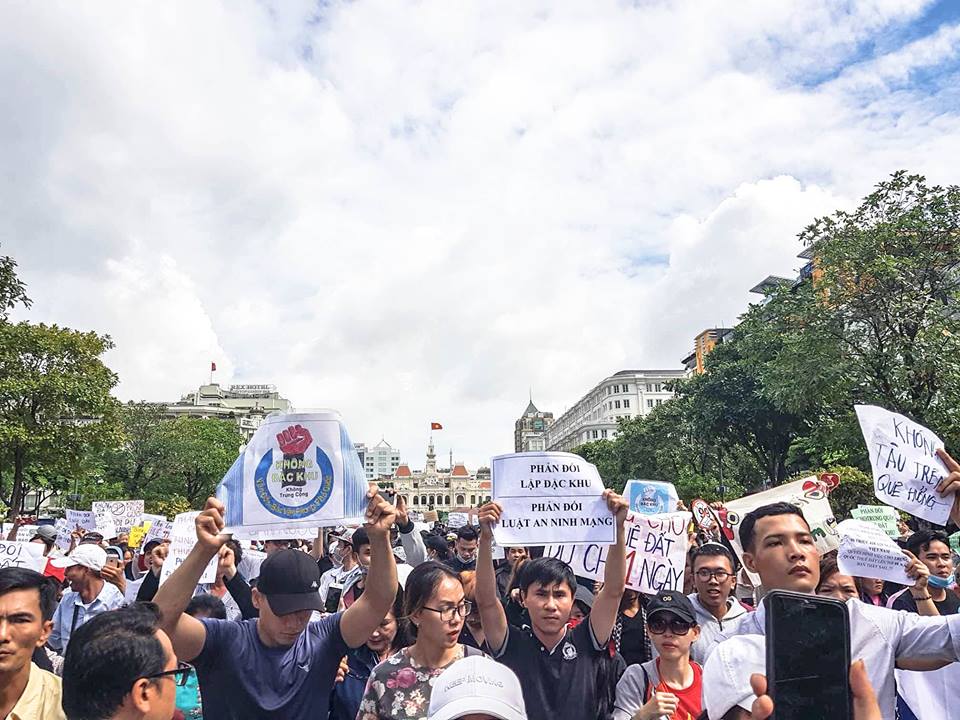
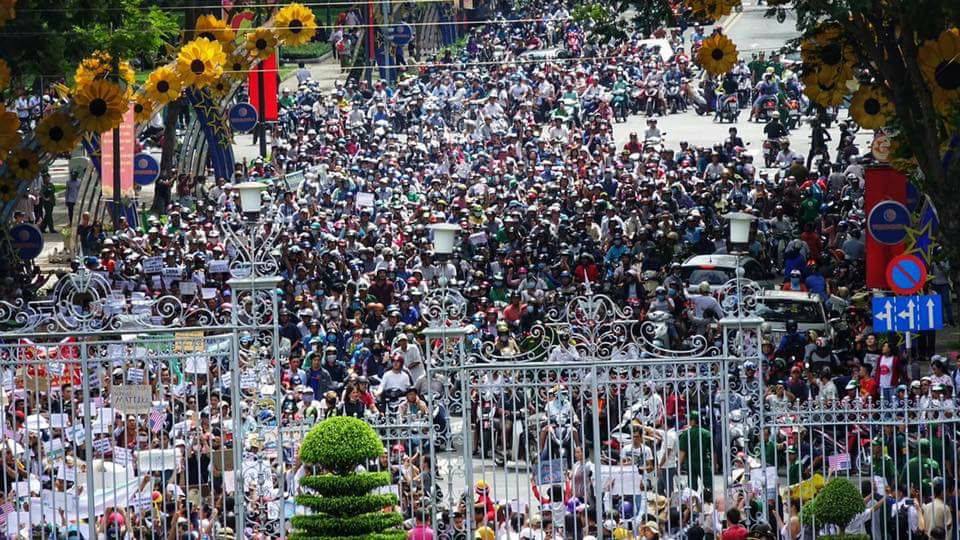
    In June 2018, many were shocked to witness the largest demonstration in Vietnam since the end of the war in 1975, where thousands of people marched on the streets of several major cities. One of the reasons that compelled the Vietnamese people to protest was because of the proposed Special Economic Zones Law, which their National Assembly’s members were going to pass.

    Despite the fact that under public pressure, the draft bill was ultimately announced to be halted until the next National Assembly’s meeting in October 2018, people still protested against it. Their reason? They feared that they were going to lose essential portions of their country to foreign investors, namely, the Chinese. The government of Vietnam, on the contrary, continued to insist on the passing of this law, citing economic development and jobs opportunities for hundreds of thousands.

    Which side is right?

    1. What Is A Special Economic Zone?

    A Special Economic Zone (SEZ) is defined as an area in which business and trade laws are different from the rest of the country.

    Theoretically, an SEZ can attract foreign investment, expand production, create jobs, and boost export-import. However, that would only happen if a set of conditions is met: the rule of law, together with clearly defined laws and regulations that both facilitate production and business activities, which are binding on all investors and able to adjust market failures, as well as other public issues.

    In practice, and in the particular case of Vietnam, the government has yet to make available any information regarding the conditions under which the proposed SEZs will operate.

    Can the SEZs create real jobs for the Vietnamese people? Can they boost production and trade? If they fail, and the nation falling into debts, who would be held accountable, and how? What are the punishments against them? Alternatively, will they say, “It’s none of your concern; it’s the Party and the State’s business”?

    The above questions remain unanswered.

    2. What Is The SEZ Project?

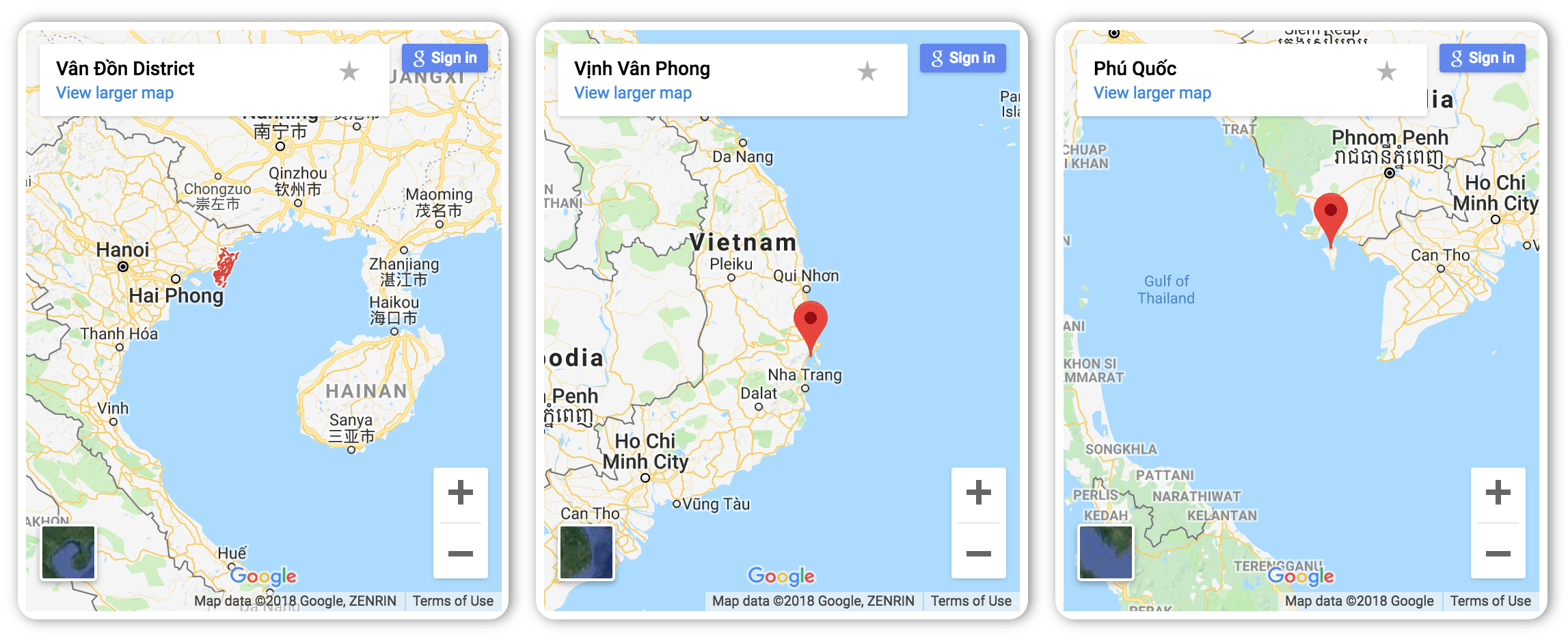
    The SEZ project is a “grand policy” of the Politburo of the Vietnamese Communist Party (VCP), to establish three special economic zones in Van Don (a district in the Northeastern Province, Quang Ninh), Bac Van Phong (of Khanh Hoa Province), and Phu Quoc (of Kien Giang Province) as shown in the picture above. Foreign investors shall be granted special favors in these areas, for example, the 99-year land lease.

    This project is codified in the proposed SEZ Law or the “Law on the Special Administrative-Economic Units”. Traditionally, and as in this time, the government of Vietnam does not publicize the names of the lawmakers concerned in any lawmaking process, so no one knows the architects behind the SEZ Law.

    In case this SEZ Law is found to have contained some defects, or its enforcement would lead to severe consequences, no one, especially Party’s officials, shall be held responsible due to the lack of transparency and accountability in the country.

    3. What Is “Special” About These Three Zones?

    Overall, conditions in Van Don, Bac Van Phong, and Phu Quoc are not favorable for development. These include infrastructure, skills of the labor force, science and technologies, and financial-economic facilities.

    Regarding geographic location, however, all the three districts are located in critically strategic sites of Vietnam, and they hold a crucial implication for national security. To make matters worse, Vietnam’s northern giant neighbor, China, where most of the potential investors would come from, has for centuries been known to keep an ambitious dream of becoming a hegemonic superpower.

    China pays particular attention to Van Don and to Vietnam in general, whom she considers being the “buffer zone” for her to “move southward” to the geo-strategic South China Sea. For this reason, even when the SEZ law does not mention China but only refers to “foreign countries,” obviously China is the only nation the Vietnamese people are concerned about.

    4. What Are The Goals Of The SEZ Project?

    The SEZ project revolves around these promises: the three SEZs shall be where new institutions are tested and adopted with more freedom and less control, where innovation is stimulated, where more jobs are created, and more incomes are generated for local people. In short, the SEZs shall boost production and commerce, and lead to economic growth.

    However, all of those promises remain vague and unfounded. Van Don, Bac Van Phong, and Phu Quo as stated, do not have favorable conditions to establish SEZs, because of poor infrastructure and technological bases and an unskilled labor market.

    Most importantly, no political leader, no official of the VCP and the State shall bear any responsibility if those promises become unfulfilled. If the project fails, or if it causes any adverse consequences for the people and Vietnam, the victims would have no meaningful recourse.

    5. What Are the Potential Consequences Of The SEZs That Vietnamese People Fear?

    5.1. Territorial concession

    By stipulating a land lease of up to 99 years and granting other special privileges to potential Chinese investors, the SEZ Law is paving the way for China to infiltrate Vietnam under her “salami-slicing” strategy.

    Salami slicing is a strategy that the communist Chinese government has used since 1949 to take over territories in the South China Sea and the Himalayan region, in a gradual, step-by-step manner. The tactics were to open the door for Chinese immigrants to settle, do business, set up Chinese language schools, establish their own administrative system, and promote Chinese culture and customs in foreign lands. By doing that, they have legitimized China’s presence and power in the area and gradually built up Chinese autonomy inside Vietnam. If and when the time comes, this group with absolute autonomy could “rise” to demand sovereignty or for the Chinese-controlled area to “exit Vietnam and come back to merge into the motherland of China.”

    5.2. A dumping ground for China’s waste

    The SEZs may face the risk of failing to absorb advanced technologies and management skills, but that’s not it, after all. They are likely to become a market for low-quality products made in China and a dumping ground for her waste, most seriously toxic and e-waste.

    5.3. The conflict between local people and Chinese immigrants

    Overpopulation in China has led to high rates of unemployment and illegal immigration into neighboring countries, especially in Vietnam, where the government with its lousy governance fails to take control of the issue. As a result, bitter conflicts have arisen between local people and Chinese immigrants, which remain unresolved. In recent years, incidents of violent clashes have occurred between Chinese immigrants and the local Vietnamese community in Hai Phong, Quang Ninh, Thanh Hoa, Ha Tinh, as well as other provinces in Vietnam.

    For example, in Quang Ninh in the mid-2000s, Chinese immigrants had thrown stones at Vietnamese people. In Thanh Hoa and Ha Tinh, drunken Chinese workers even falsely imprisoned a few local people after collectively assaulted them.

    5.4. Economic loss

    Accordingly, once the SEZ Law is passed, $70 billion USD shall be invested in the three SEZs, and that is like gambling ours and our children’s future on an uncertain race. Besides, with special favors granted to investors (mostly foreign) who could hardly be controlled, the government would definitely take the risk of substantial tax losses and budget deficits.

    Many precedents can be found for this decision like this. One among them is the bauxite mining project in Tay Nguyen (Vietnam’s Central Highlands), which is also another grand policy of the VCP and the State. It was implemented despite public demonstration, notably the fierce protest from the late military general, Vo Nguyen Giap, and 4,000 Vietnamese intellectuals, domestic and overseas. The grand project lost almost US$170 million between 2013 and 2016. No one among those who made the promises for economic development and job opportunities for the locals were to take any responsibility for this loss.

    With the government’s current institutions and management capacity, the SEZ project cannot and will not ensure economic success. The issue confronting the state is that if it fails like the Tay Nguyen bauxite mining project, no political leader shall bear any responsibility. Worse, if the SEZ project leads to territorial concessions, then it does not matter which leader or official of the VCP and the State takes responsibility, Vietnamese citizens would still suffer the irreversible consequences.

    6. Why Does the VCP Insist On Implementing The Project?

    The answer lies in the entrenchment of crony capitalism, with interest groups collaborating closely with the corrupt central and provincial governments, seeking to gain in grand projects in the name of “development.”

    Also, “the obvious answer is ‘casinos and red-light districts,’ as these SEZs are the only places in Vietnam where these people can do business freely…. another reason that many people are aware of but still reluctant to spell out (for ‘political sensitivity’) is ‘the China factor.’ Otherwise, there is nothing else there” (Nguyen Quang Dy, 2018).

    7. Is There Any Alternative Solution To The SEZ Project?

    Experts point out that the SEZ idea was something that belongs to the last century, that it has become out of date, and that the SEZs are not relevant to the current circumstances of Vietnam. Instead, the urgent thing to do now is to launch a fundamental and comprehensive institutional reform in the nation, focusing on:

    – setting the private sector as the basic economic sector, contracting the state sector to its minimum;
    – recognizing and protecting private ownership of land;
    – establishing democracy, and protecting and promoting freedom rights to mobilize the citizenry for the development cause of the nation.
  • Saying Goodbye to John McCain: Salute to an American Who Helped Changed Vietnam Until His Last Days

    Saying Goodbye to John McCain: Salute to an American Who Helped Changed Vietnam Until His Last Days

    No other foreign politicians have thus far achieved what John McCain was able to do in Vietnam in the recent decades.

    In a country where he was captured, tortured and held as a POW for five years and a half, two of which were in solitary confinement, McCain had emerged during the past thirty-something years as a symbol of integrity and righteousness for Vietnamese people from all walks of life.

    The love and respect which the people, from the once upon a time’s “enemy’s land,” have for John McCain also help answer a question many foreigners often wonder, do Vietnamese hate America or Americans?

    As shown in the case of John McCain, we don’t.

    Vietnamese people paid respect to John McCain by placing flowers at the very same spot where he was shot down and captured during the war. Photo courtesy: Facebook.

    Vietnam – which till this day – continues to be divided by ideologies and remnants of the Civil War (1954-1975), to a certain extent, still haunt its future generations. Till this day, the debate about the legitimacy of the two flags, the yellow-starred red flag of the current regime and the yellow flag of the former Republic of Vietnam in the South, has yet subsided. Nevertheless, John McCain is considered by both the public in Vietnam and among the diaspora communities living overseas, as an American politician who had worked tirelessly to better the lives of many Vietnamese.

    It is well-covered in the news about McCain’s efforts in the normalization of the diplomatic relationship between the two countries in the late 1980’s and early 1990’s. So it could be entirely understandable to see the affection that many Vietnamese people have shown for McCain.

    The lifting of the embargo back in 1994 brought sizeable changes in every day’s lives of the ordinary people. With economic growth, what also came along was the certain rising standard of living for the majority of the population. However, that would not be all of the reasons for why Vietnamese around the globe respect John McCain.

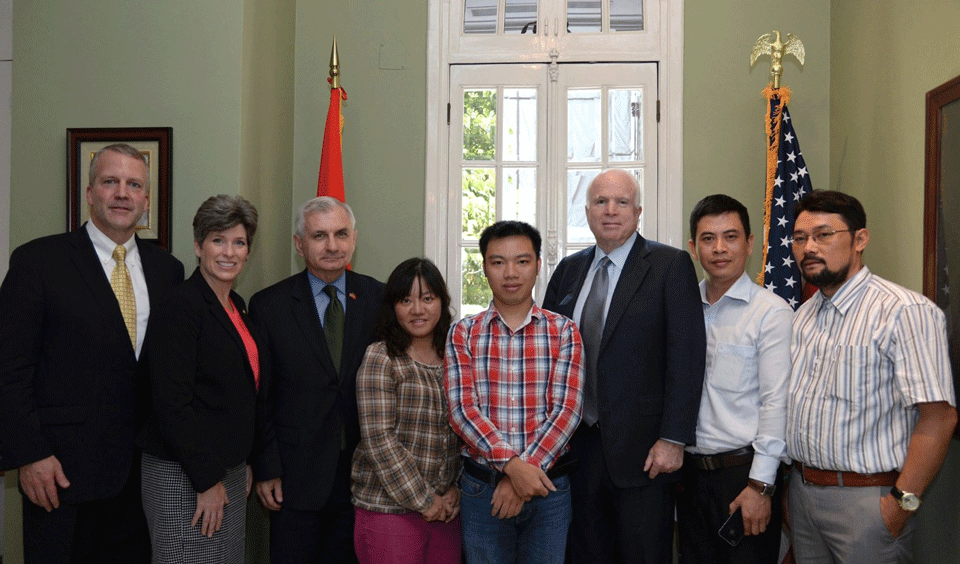
    One of a few stories you will not read about John McCain in Vietnam’s state-run media would be his close ties with the human rights and democracy activists’ community, whom he had continued to fight along their side until his very last days.

    Dissident and former political prisoner, attorney Le Quoc Quan wrote on his Facebook upon learning about John McCain’s passing that as late as June 2017, during his last trip to Vietnam, McCain still insisted on meeting with the human rights and democracy activists in the country like how he had been doing for years.

    While the Vietnamese government could not stop McCain, they tried to intimidate activists like Quan to stay away. But they also failed. Quan recalled, “I still went to see him (McCain) because he is a righteous friend of mine and Vietnam. Even if they (the police) tried to stop me, I would still find a way to go to the meeting. It is my way of delivering this very message to my government.”

    In 2007, John McCain signed a letter to the then President of Vietnam, Nguyen Minh Triet, to demand the release of Quan, who was arbitrarily arrested and detained for a few months. Shortly after the letter was sent and made public, Vietnam did release him.

    Other activists also offered their condolences on social media, recounting numerous times that John McCain spoke up on their behalf and stood by them in their fight for democracy in Vietnam.

    However, McCain’s office was frequented not only by activists from Vietnam and their advocates but also members of the overseas Vietnamese community.

    When working on restoring the United States’ diplomatic relation with Vietnam, McCain did not forget the human rights and democracy agenda in the country. He also remembered the fate of hundreds of thousands of Vietnamese refugees still languishing across numerous camps in Southeast Asia at the time. He certainly did not ignore the South Vietnamese men who had fought along the Americans and suffered retribution after the war ended.

    John McCain participated in the establishing of the Humanitarian Operation, which was a special deal with Hanoi in 1990, to allow the South Vietnamese officers and soldiers who could not escape Vietnam after the fall of Saigon and had undergone the “re-education camps,” sometimes for tens of years, to leave for the United States. By 1994, 50,000 service members of the old South’s regime and their family members have arrived in America.

    After April 1975, the Vietnamese Boat People’s Exodus made international headlights where hundreds of thousands had lost their lives at sea while escaping Vietnam by small fishing boats. The “Orderly Departure Program” was an effort created by the American government to put an end to this tragedy, by offering a special visa policy for Vietnamese to leave Vietnam to the United States directly and not having to escape to a third country first.

    John McCain co-sponsored what was now known as the McCain Amendment to the ODP, which continued to allow unmarried children of the former South Vietnamese officers to immigrate to America with their parents’ refugees status, after the policy concerning their derivative refugee status expired in April 1995.

    The Vietnamese immigrant children under these programs have since grown up and assimilated well into American mainstream society. Tram Ngo, a young Vietnamese American wrote on her Facebook: “McCain championed Vietnamese Boat People when it was politically unpopular to do so. For that, he will always have a dear place in my heart.” Her feelings and sentiment would certainly be mutually shared and acknowledged by many of her peers.

    While John McCain’s five and a half years at the Hanoi Hilton is a well-known fact to many, the Vietnamese state-owned media has not dared to go into the details of his torture and the extent of the physical and mental abuse he suffered while in prison. However, with the blooming of the Internet and especially with the popularity of social media platforms in the past decade inside the country, such information is no longer “state’s secrets.” One could also say that the respect for John McCain accelerated when people learned about the events related to his treatment in prison. He has been widely praised for being able to put the past behind and worked to improve the life of the ordinary Vietnamese.

    Truong Huy San, who is also known as author Huy Duc of The Winning Side (Bên Thắng Cuộc), shared his thoughts about McCain on Facebook:

    “If he had not put aside his weapons and medals and treated them as memorabilia of the past, then he would have stayed all along within the war; if he had harbored vengeance, then his whole life would only have enemies. Moreover, he could only be a ‘war hero,’ but would never become the ‘political hero’ that he was.”

    This post received close to 5,000 reactions within one day.

    A friend, a comrade, a benevolent senator to the refugees, a supporter of the democracy movement, or a political hero? Those are the many sides of John McCain that Vietnamese people see. While each of them could be entirely different from one another, what matters most is that John McCain will forever be a part of this country’s history, not only in the past but as well as in the present and its future.

    In March 2016, John McCain penned an op-ed in the New York Times upon learning of the passing of an American Communist, Mr. Delmer Berg of California, and he cited Donne’s poem to connect himself to Berg. Today, many Vietnamese people around the world – regardless of the ideologies they each hold – would probably want to say the same thing to Mr. McCain:

    “No man is an island, entire of itself.” He is “part of the main.” And I believe “any man’s death diminishes me, because I am involved in mankind.”

    So was Mr. McCain. He didn’t need to know for whom the bell tolls. He knew it tolled for him. And I salute him. Rest in peace.

  • Farmer’s Death Sentence Upheld On Appeal: New Climax For Land Dispute In Vietnam?

    Farmer’s Death Sentence Upheld On Appeal: New Climax For Land Dispute In Vietnam?

    The Social Republic of Vietnam is known to be notorious for its land management system since the day of its inception.

    ‘People’s ownership of land,’ whilst sounds misleadingly progressive, has never meant spatial justice for Vietnamese citizens nor intended to guarantee national housing security. Government leaders, alongside with pro-government scholars, often and explicitly, assert that the so-called ‘People’s ownership of land’ is a necessary evil to preserve economic growth.

    Under this system, the local government can act as a proxy (or to lend support) to investors, corporations and impose price controls with regards to buying land and property from ordinary citizens for commercial and/or industrial purposes, without the application of any market mechanism. Indeed, the system does accelerate the land-acquisition process, but it also entails corruption, nepotism, and large-scale internal displacement. Unsurprisingly, in 2017, after decades of reforms, 70% of all national administrative complaints and accusations are still land-related.

    And again, the story of unresolved land dispute conflicts repeated in Dang Van Hien case.

    Long Son Commercial and Investment Company (Long Son), an investor granted the right of using land by the provincial authorities of Dak Nong, decided that it was time to carry out an all-in attack on any farmer who involved in land disputes with Long Son and was not willing to comply with its eviction demands.

    It is also noteworthy that these long-lived conflicts between the company and the involved farmers, including defendants Dang Van Hien, Ninh Viet Binh, Ha Van Truong, have all been reported to the competent officialdom, but the farmers only received silence back.

    The position of the local government, until now, is still unknown. However, it was these eight years of constant terror tactics and threats made by Long Son toward the farmers, reportedly, that had led to the tragic ending of three deaths and several other injuries in October 2016.

    On October 23, 2016, armed with ‘primitive weapons’ and several bulldozers, over thirty workers of Long Son Company advanced into the farms on the disputed lands, leveled half thousands of cash crops and surrounded the farmer’ houses in groups.

    The farmers then responded with their improvised firearms. Dang Van Hien fired his gun in the air with the hope of dismissing the crowd. The attempt was unsuccessful and triggered further escalation from Long Son’s employees with rocks and bulldozers approaching. Desperate and probably was also in fear, in the end, Hien and Binh shot aimlessly into the group of workers even after they turned around and ran away. Three persons were killed and 13 others injured.

    In the first trial by the lower court earlier this January, when the court announced the verdict that Hien received the death sentence for the murders, the attendees turned the courthouse into chaos. Unfortunately, the court of appeal has recently agreed with the first-instance court and upheld the judgment. And again, the villagers from Hien’s neighborhood reacted with outpouring outrage, and in a sense, out of despair right at the court’s doorsteps.

    Legalwise, the court’s decision now faces widespread criticism from lawyers and independent scholars where most of them concur that the punishment for Hien is too harsh and unnecessary. It was the responsibility of Long Son, whose actions in the past eight years were both unlawful and provoking, which have caused the farmer’s retaliatory measures. Some are also pressing on the fact that both the trial and appellate courts have failed to consider the numerous mitigating factors in favour of Hien under Vietnam’s Penal Code. These include the fact that Hien voluntarily turned himself in and he and his family have made financial reparation to the victim’s families.

    Politically speaking, the court seems to be, arguably, insensitive about the nature of the case. Land disputes have been and will continue to be the most problematic social conflict in Vietnam, and an unconvinced judgment like this will only consolidate public notion on the relationship between interest groups, crony capitalists, and the government.

    On the other hand, some believe the judgment is deliberative. Activists contend that the judgment is a signal to landowners and dissidents alike, warning them that any conduct deemed to be challenging to the ultimate authority of the government in distributing land and assigning land purposes will never be tolerated in Vietnam.

    Nevertheless, if the President of the Socialist Republic of Vietnam, Tran Dai Quang, refuses to grant Dang Van Hien a reprieve this week and the competent judicial branches also fail to request a reconsideration of the case by compelling a trial by cassation, Hien could very soon be the first farmer getting executed due to a land dispute in the history of the Communist Party’s ruling in the country. And that would be a very worrying sign for the deterioration of land administration under the current regime.

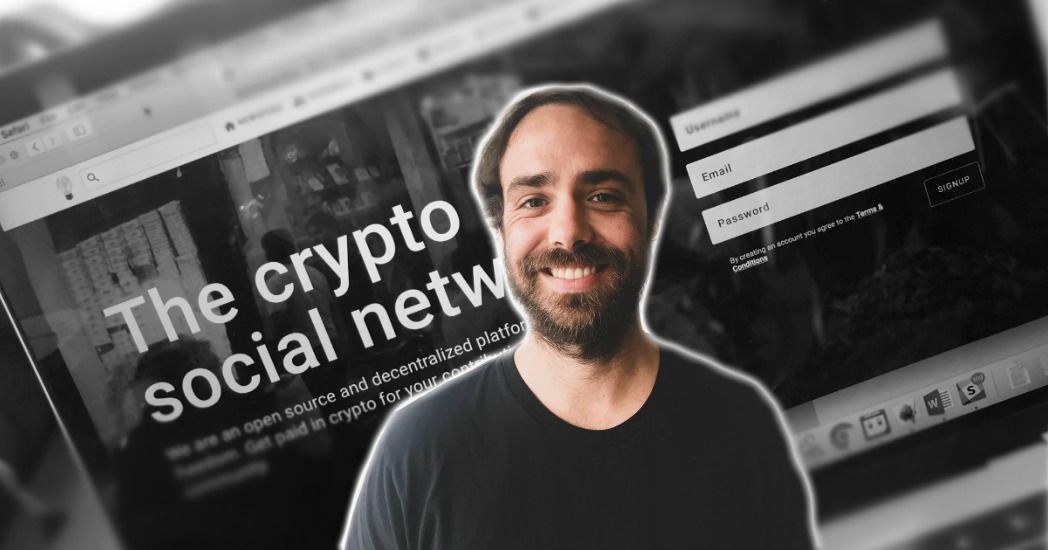
  • MINDS’ CEO: Protect Free Speech, Will Only Respond to U.S Subpoenas

    MINDS’ CEO: Protect Free Speech, Will Only Respond to U.S Subpoenas

    In the past few days, thousands of social media users in Vietnam have relocated to Minds. At the same time, debates erupted where people questioned Minds’ technology, policies, and even the possibilities that Minds would cooperate with the Vietnamese authorities in the future to “sell out” its users.

    Luật Khoa magazine had conducted this interview with Bill Ottman – CEO and co-founder of Minds in response to the concerns mentioned above from the Vietnamese social media community. We are providing our readers with the English version of the interview here.

    ***

    Before this “exodus” of Vietnamese Internet users to Minds, what do you know about Vietnam? (the regime, the economy, the market, human rights situations, etc.)

    Vietnam is a beautiful country but unfortunately run by the Socialist Republic, a communist regime with overreaching power. I studied the Vietnam War pretty extensively and the anti-war movement in the US. I would very much like to learn more about Vietnam Pham Doan Trang, and it would be great to have a live conversation or stream together to discuss your perception of the country, both negatives and positives.

    What do you think of the newly-adopted cybersecurity law in Vietnam?

    I know that the law has disastrous implications for free speech and privacy. It gives the government excessive power to deem certain content ‘prohibited’, thus the ability to become a censorship machine. The law should be taken away before it goes into effect in 2019. It is destined to fail.

    What is Minds’ policy toward customers’ privacy rights?

    Please refer to our recent essay on how we protect user privacy. We are 100% committed to privacy. It is our core philosophy. Principles like ‘zero-knowledge’, end-to-end encryption and decentralization are all crucial for human rights. Our terms state that we comply with US law. If it is legal in the US it can be on Minds. We will not hand over user information to foreign governments or censor based on requests.

    What is Minds’ policy toward the balance between privacy rights and “public security” as the police in authoritarian societies put it?

    Public security is an Orwellian phrase similar to National Security. More privacy and encryption make a nation more secure, not less. More freedom of expression causes a healthy society, not less. Disinformation and propaganda are problems, but research shows that censorship makes these problems even worse. I recently wrote an article about this evidence. This has been proven by top cryptologists and cyber-security experts for a long time like Bruce Schneier and EFF.

    What is your opinion regarding the need to balance the people’s human rights and the state’s efforts against terrorism (both real threats and some imaginable threats)?

    Our general policy is that we require a warrant or equally compelled court order. Our general opinion is not to sacrifice freedom for safety because then we will have neither as Benjamin Franklin said.

    How can we, the Vietnamese Mindsers, as a newly-formed (and maybe, quite small now) community be sure that Minds will fight for our Internet freedom rather than cooperate with the tyrannical government?

    Continually ask questions, communicate with our team about concerns and hold us accountable!

    Inspect our code and have your developers help us make it more secure and uncensorable.

    We heard a lot about the technologies that Minds has been using. Is it true that Minds has been using decentralized, encrypted, and blockchain technologies? If yes, please describe them a little so that we the users learn more about your strength. If no, could you please tell me the difference(s) between Minds and Facebook?

    Yes, we are constantly working to become more decentralized which is why we are currently leveraging technologies like Ethereum and Webtorrent. We will be focusing much more on decentralization and p2p in the future.

    Facebook is plagued by surveillance, secrecy (proprietary software), manipulative algorithms, data scandals, demonetization, censorship and psychological abuse. Minds does the opposite.

    Regarding blockchain, it seems like Minds is now using it only for Token-related activities. Is that right?

    Yes. We use an ERC20 token on the Ethereum blockchain. Our whitepaper discusses how we publish a variety of transactions to smart contracts for our Boost and Wire products. We have an extensive reward system where top contributors earn tokens and can then use the tokens to “Boost” content for more views.

    Right now 1 token gives 1,000 extra views on the content of your choice. We built this in reaction to the suppressive algorithms on facebook which diminish your organic reach and voice. It is a soft form of censorship. Minds will always have 100% organic reach and reward users with more of a voice for participation. The reward system specs can be found here.

    Sorry for asking what seems like a silly question, but why did Minds create the Tokens system? What do you anticipate it to be?

    We created the token in order to reward users for the contributions to the network and move the ad network (consent-based) and peer-to-peer payment and crowdfunding systems to smart contracts on the blockchain. We also created it to battle the restrictive algorithms that have caused organic reach to drop so much on facebook. 1 token currently rewards a user with 1,000 extra impressions on their content by pressing the boost button on their post. We believe people’s voices should be amplified, not silenced. Expanded, not exploited.

    We saw a paragraph in Minds’ privacy policy which states that Minds “discloses potentially personally identifying and personally-identifying information only in response to a subpoena, court order or OTHER GOVERNMENTAL REQUEST [capital mine], or when Minds believes in good faith that disclosure is reasonably necessary to protect the property or rights of Minds, third parties or the public at large.” We are quite concerned about this because it implies that we the users can still have our personal information accessed by the government while the current Vietnamese government is a single-party, police-dominated one. What do you think?

    This does not apply to the Vietnamese government, and we will not hand over personal information to them. We will discuss with our legal team to potentially clarify this language. Essentially, we are founded upon the idea of free expression, and as you will quickly learn, Minds is more uncensored than any other network you will find.

    Is it true that Minds receives some support from the Anonymous?

    Yes, because we allow anonymous accounts. Though anonymous is a decentralized, leaderless group, so it has many branches and I would not want to speak for them all. I imagine not all support us, but some definitely do.

    We only endorse ethical hacking, as a side-note.

    What does Minds expect from Vietnam, or the community of Vietnamese Minders to be exact?

    We hope more thought leaders and netizens will continue to migrate to Minds for Internet freedom. We are dedicated to constantly evolving and improving the platform based on your feedback. This is why we are 100% open source.

    The best way to build the freedom network of the future is for influencers to use our tools like blogs, videos, posting, groups, wallet, tokens and bring their audiences over.

    Do you think of setting up a representative office in Vietnam and/or providing a Vietnamese version of Minds for the Vietnamese people? (English is not our second language, so most people may find it difficult to use Minds in English).

    Yes, this (the Vietnamese version) will be live within a couple of weeks. 🙂 Maybe sooner.

    What is Minds’ strategy regarding China and Asia, Vietnam included and also your worldwide strategy?

    Our strategy is to stick to our principles, continue building better tools and hopefully continue to connect with thought leaders all throughout Asia who can help migrate their audiences off of surveillance platforms.

    Can you tell us a bit more about your internet activism?

    I have been involved in alternative media, freedom of information and privacy activism for about a decade. To me, extreme transparency, open source philosophy, end-to-end encryption and digital rights are crucial for a free society. I helped start organizations on Facebook with millions of followers, but after Facebook’s algorithm and policies got so invasive, it was time to #deletefacebook.

    What is your opinion regarding the trend of large corporations acting in concert with the state/government to become one unified threat to the people’s rights in places like Vietnam?

    This is an unacceptable trend when the line between global corporation and government merges. The people need to activate on other social networks in order to disempower the corrupt corporations and empower emerging, ethical alternatives.

  • Self Immolation in Vietnam: A Victim of Injustice’s Agonizing Act In Defiance

    Self Immolation in Vietnam: A Victim of Injustice’s Agonizing Act In Defiance

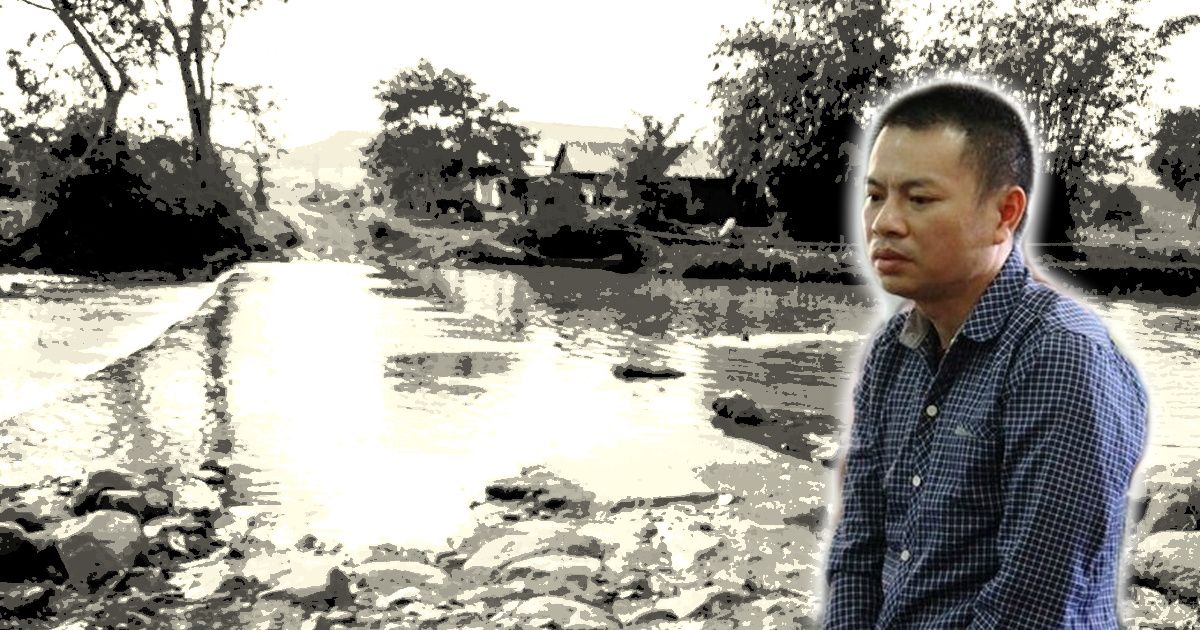
    In the afternoon of July 2, 2018, a man committed self-immolation in the center of Hanoi, Vietnam’s capital city, a few steps away from the Central Citizen Reception Committee’s office on Ngô Thì Nhậm Street.

    He was later identified as 58-year-old Bùi Hữu Tuân, former village chief of Đạo Ngạn Village, Hợp Đồng Ward, Chương Mỹ District, Hanoi.

    The victim is now in critical conditions with severe burns to the whole body.

    Mr. Tuân was charged with Article 356 of Vietnam’s Penal Code for “abusing official position, power in the performance of official duties.”

    He was supposed to begin his sentence of 3-year-imprisonment today, July 3, 2018. In the last act of defiance, one day before its commencement, he desperately protested the injustice of the trial and his conviction.

    He was charged, tried, and convicted with not only insufficient evidence, but the evidence at trial showed that the prosecution did not even have any evidence for one element of the crime they had charged him with.

    His son told VOA Vietnamese in an interview on July 2, 2018, that after Tuân failed to get the Central Citizen Reception Committee’s office agreed to halt his sentencing while reviewing his complaint to the Government Inspectorate, he went outside and committed the self-immolation.

    Article 356 prescribes: “Any person who, for personal gain or other self-seeking purposes, abuses his/her power or position in performance of official duties to act against his/her official duties and as a result causes property damage of from VND 10,000,000 to under VND 200,000,000 or infringes upon state interests, lawful rights and interests of another organization or individual shall face a penalty of up to 03 years’ community sentence or 01 – 05 years’ imprisonment.”

    From Pháp luật Thành phố Hồ Chí Minh (The Law – Hochiminh City) newspaper, the most damning evidence against Tuân was that he – as the village chief – allegedly accepted money, along with the requests of some 23 families in the village, to ask the local government to give them lands to build their ancestors’ shrines and worship places. Yet, none of this money went to Tuân or any of his two co-defendants, as it was donated to the village.

    The local procuracy’s office (the prosecution in Vietnam) and the court further alleged that he had overstepped his authorities in giving out land slots to the villagers, and thus had committed a crime under the above penal code.

    According to them, he had abused his “official duties” even though some people questioned whether the village chief position could be considered an “office”.

    At the trial court level, Tuân was convicted and sentenced to the maximum term prescribed by law: 5-year-imprisonment. The appeal trial upheld his conviction but reduced the sentence to 3 years.

    The appellate court’s decision in upholding his conviction with actual imprisonment was the last straw for Bùi Hữu Tuân, and he committed the unimaginable act of setting himself on fire.

    From a legal standpoint, Tuân was correct in protesting his conviction and his sentence because the first element of the crime “abusing official position, power in the performance of official duties” seemed to have been conveniently ignored throughout his criminal proceedings.

    In the same article published back in November 2017, Pháp Luật newspaper reported that it was established at trial that all of the money which Tuân and his co-defendants received from the villagers, was donated to various community services projects in the village.

    Neither Tuân or any of his co-defendants had used any portion of the money for personal gains.

    In other words, it is almost certain that the prosecution would not be able to prove the first element of the crime alleged against him, that he did commit an act for personal gain or other self-seeking purposes.

    Worse, the evidence further showed that Tuân did submit the villagers’ requests to the ward’s officials, asking them to give out the land to people for burial and worship purposes. Pháp Luật newspaper also wrote, back in November 2017, that they had interviewed the villagers independently and were told that the local officials were present, at all times, to survey the land with the defendants.

    And while Tuân and two of his deputy chiefs were tried and convicted, none of the ward’s officials had to face criminal charges even though the same evidence could be used against them.

    By the same token, it could be argued that if the evidence were not enough to file charges against the local officials, then it certainly would not be enough to convict Tuân and the co-defendants.

    Undeniably, Tuân’s trial and conviction again delineate the inefficient and broken legal system in Vietnam where people can be charged, tried, and convicted with no evidence to prove the required elements of the crime.

  • “Minds” over Facebook: Vietnamese Netizens’ Great Cyber Exodus?

    “Minds” over Facebook: Vietnamese Netizens’ Great Cyber Exodus?

    In the past two days, the “F-Generation” of Vietnam started what seems to be an online exodus when many well-known Facebookers announced that they are moving on to Minds.com – an alternate platform for social media.

    The “F” in F-Generation stands for “Facebook” as the online social media giant has a dominant presence in the country where some statistics raised the number of users to be between 50 to 60 million.

    For about two months, people had been protesting both online and offline against the latest Cybersecurity law which was passed by an overwhelming 86.86% of the National Assembly.

    The law raised concerns over Internet users’ privacy, people’s freedom of expression, and their right to access the Internet.

    Brad Adams, Asia director at Human Rights Watch, declared: “This bill, which squarely targets free expression and access to information, will provide yet one more weapon for the government against dissenting voices. It is no coincidence that it was drafted by the country’s Ministry of Public Security, notorious for human rights violations.”

    In less than two days, some of the prominent Facebookers have received thousands of subscribers over at their freshly minted Minds accounts.

    In the same time, reports of pages and personal accounts have been taken down by Facebook also surfaced.

    Trương Thị Hà, a victim of police brutality during the last “Black Sundays” protest, announced on Minds this morning that her account has been deactivated by Facebook.

    After she posted a letter to her university professor, asking him to explain why he stood there while the police brutalized her during her detention after the protest, that very post was deleted for “violating Facebook community standards” at about 8:30 a.m. Then, her entire account seemed to have disappeared by 10:40 a.m.

    According to author Claire Bernish who wrote about Minds back in June 2015, Facebook could finally meet its match. Minds gives users the familiarity with many features they have already accustomed to on Facebook while commits to protecting their privacy.

    “Minds takes the government’s eyes out of the equation by encrypting private messages and using open-source code that any programmer can check,” Bernish explained.

    “We are a free and open-source platform to launch your digital brand, social network, and mobile app. We are also a social network ourselves. It is a global social network of social networks,” the Minds team declared.

    The hacker collective Anonymous also backed Minds, citing the fact that the founders of the new online social media shared the same vision of those who use the Internet for activism.

    According to the Wired UK: “Two of those on the Minds team – Bill Ottman and Lori Fena – have strong backgrounds dealing with privacy and freedom of expression issues and are both known for their internet-related activism. It is likely these are the type of people that the company is hoping to attract – those with a cause, who want to build something and share it openly with others who may also have a cause.”

    President Trần Đại Quang signed the Cybersecurity bill into law on June 25, 2018, although some 27,000.00 signatures of citizens who had expressed their objection to the proposal of the law, were delivered to his office during the prior weekend.

    It seems as if the activists and human rights defenders from Vietnam might have found a friend in Minds because the reason they chose Facebook in the first place, was to use the platform as a tool to advance a cause: promoting human rights and democracy in the country.

    While not all of them agreed to the solution of leaving Facebook and saw that as a sign of defeat, the silence from Facebook during the last two months as the Cybersecurity law stormed the nation could force many activists to reconsider whether to continue to use it as their primary platform. Most are still using both platforms, but all seemed to agree that if Facebook agreed to comply with the new Cybersecurity, then it could mean they will have to leave for good.

    Vietnamese netizens are no strangers to such online “resettlement.” Back in 2009, when Yahoo 360 blog closed down its operation, Facebook quickly became the next best choice in the country.

    Almost ten years later, while Facebook could still enjoy its reign in the country as the most used online social media platform, the power of Vietnamese users should not be underestimated by anyone.

    Afterall, Vietnamese are a group of people whose contemporary history entwined with mass migration and exodus. They have a lot of experience with starting over, yet again, and they will not be afraid to do so.

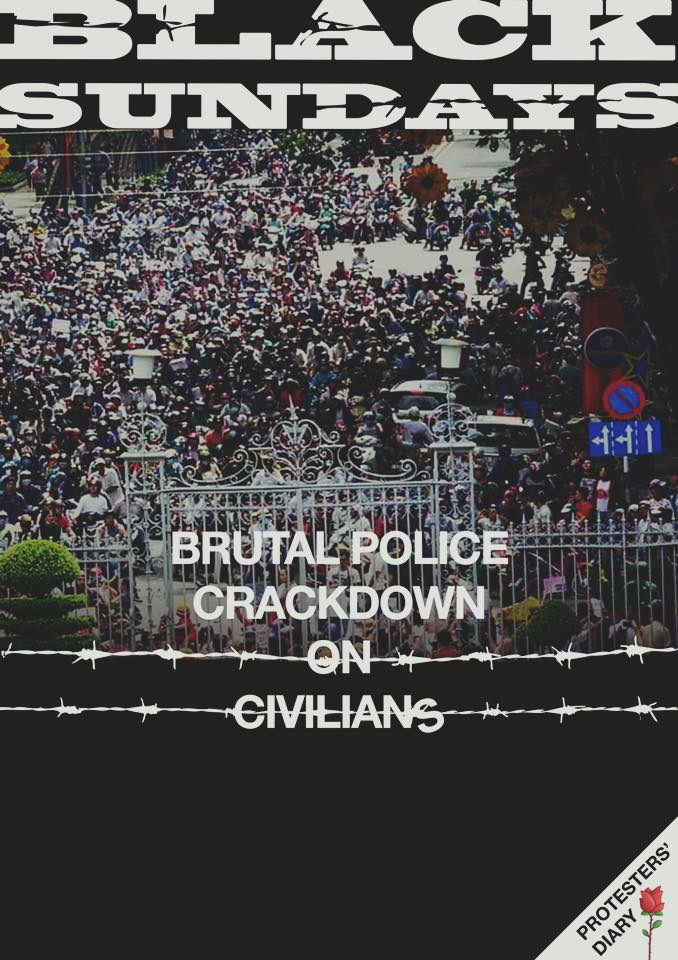
  • Black Sundays Report: Vietnamese People’s Response To Police Brutality During June 2018 Protests

    Black Sundays Report: Vietnamese People’s Response To Police Brutality During June 2018 Protests

    Civilians, victims of police brutality and arbitrary detention, academics, activists, researchers, and a lot more people from all walks of life inside and outside of Vietnam got together and produced a report on the two “Black Sundays” of June 10 and June 17, 2018.

    It is the Vietnamese people’s unified and firm response to the vicious repression by the government during the latest rounds of protest in the country.

    According to the Facebook page of Nhật Ký Biểu Tình (Protestors’ Diary), copies of the report have been delivered to the UN OHCHR, other international NGOs working on human rights as well as various foreign embassies.

    The full report can be downloaded here.

  • Saigon Is Under De-facto Martial Law

    Saigon Is Under De-facto Martial Law

    June 17, 2018| Hundreds of people were stopped, detained, searched, and later taken to a temporary holding center set up in the heart of Saigon (aka Ho Chi Minh City) for apparently no reasons.

    The government, this time, did not even announce that there were any “illegal” public gatherings as in the previous weekend where thousands of people protested against the cybersecurity and Special Economic Zones draft laws.

    What they have done instead, was to preemptively take a strike at all of the citizens who were happened to be in those hot spots of last week’s protest. Some did go out to the streets with the intent to participate in a demonstration, but they could not even start.

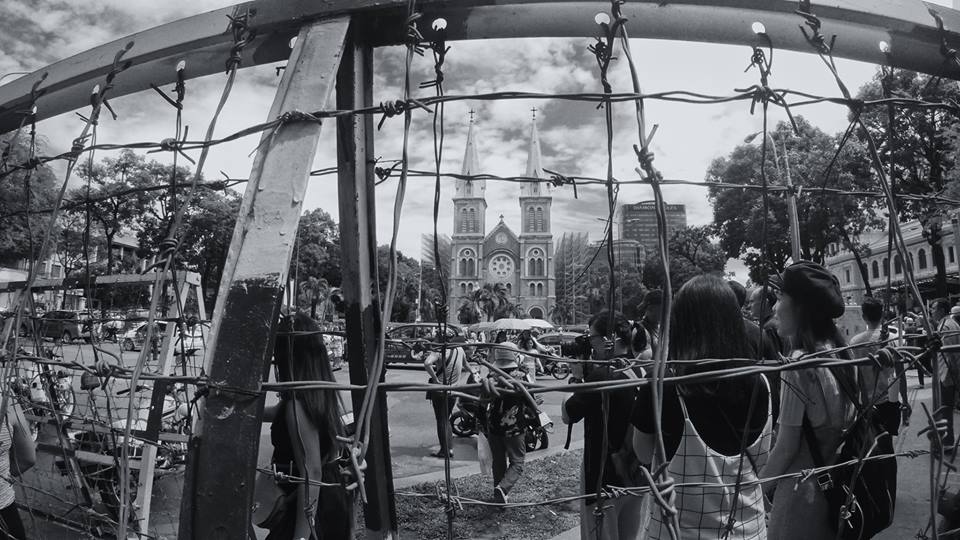
    From the early morning, all types of police, secret police, and security forces have filled up various areas in Saigon. Many coffee shops near the Notre Dame Cathedral Basilica were asked to close by the authorities.

    One witness reported that police were arresting people at a McDonald’s nearby. The only group that acted provocatively was the police and other security forces, this person wrote on Facebook.

    The security forces watched every single bystander, people who happened to pass through the area. Anyone who looked “suspicious” to them would get stopped, asked for identification, searched, and demanded to show their phones where any pictures that were taken would get deleted.

    All were done without any probable cause and of course, without a warrant.

    It seemed as if the law no longer existed there. The city was under siege by its police force, and the people lived under martial law.

    Worse, there would likely be no recourse in a court of law for the victims, even if some of them could gather enough courage to file a complaint against the authorities.

    One person who was arrested while working near Nguyễn Văn Bình Books Street and detained until that evening said on Facebook, that she felt the experience eerily reminded her with words from Anne Frank’s Diary.

    She also recalled that others were taken into separate rooms and some got beaten up by the police. The beatings must be very violent because everyone at that detention center could hear the screams. When they tried to run towards the room to help, the police stopped them with threats of physical violence, recalled by another witness.

    The victim – who later got identified as Trinh Toan – was taken to the hospital for head injuries and reported to be in a coma since.

    Those who got released were cited for “disrupting public disorder,” ironically.

    Another witness live-streamed to tell her story after her release. She described how she and other Catholics got picked up by the police on their way to church. They were taken to that very same detention center in Tao Dan Park and later were both beaten and abused verbally.

    A Vietnamese overseas detailed how the security forces physically subdued him and assaulted him while he was strolling near his house close to Hoang Van Thu Park. The police only released him after he screamed out some profanity in English and revealed his foreign nationality.

    Some other people were already taken into police custody with no warrant a few days before last Sunday.

    One of them was Nguyen Tin. He described the police physically assaulted him, smacking his face repeatedly when he refused to speak and answer questions while in custody. The right to remain silent does exist in Vietnam, but in this case, it failed to protect the citizen.

    Almost all of the pro-democracy activists in Vietnam had plainclothes officers surveilled their homes this past week to prevent them from leaving the house and joined the protest.

    On social media, many more people were reported missing in the past 48 hours, and efforts by civil society groups are ongoing to document and identify those who were arrested, detained and/or suffered abuse.

    Phil Robertson from Human Rights Watch tweeted today:

    “Brutality of #Vietnam authorities attacking activists opposed to new internet surveillance law is really off the charts! Time for #Hanoi to be called out by U.N. Human Rights Council, U.N. General Assembly for their rights crimes!”

    From the June 10, 2018 protest, the authorities might have arrested about 300 people in Saigon alone. One of them was an American citizen, Will Anh Nguyen, whose story made headlines internationally. Vietnam police filed charges against Nguyen for “disturbing public order” on June 15, 2018, and continued to hold him in detention.

    This past weekend, Saigon was the city that got suppressed the hardest. It is estimated that over 100 people arrested and detained and the number of injuries caused by police brutality is still being counted.

  • The Right to Protest In Vietnam Is Not Only Legal, It’s Constitutional

    The Right to Protest In Vietnam Is Not Only Legal, It’s Constitutional

    On June 14, 2018, AFP reported, the spokesperson of Vietnam’s Ministry of Foreign Affairs, Le Thi Thu Hang, told reporters that Vietnam was holding an American citizen of Vietnamese descent, Will Anh Nguyen, under the suspicion of “disrupting public order.”

    Online video clips showed Nguyen being dragged away by several men with his head covered in blood, and that he was thrown into the back of a police car. Later that day, news surfaced on Vietnam’s social media that he was arrested for being part of the demonstration.

    One probably would stop and wonder: Is protesting illegal in this country?

    Simply put, the right to protest is not only legal in Vietnam, but it is also the people’s constitutional right.

    Article 25 of Vietnam’s 2013 Constitution prescribes:

    The citizen shall enjoy the right to freedom of opinion and speech, freedom of the
    press, of access to information, to assemble, form associations and hold
    demonstrations. The practice of these rights shall be provided by the law.

    Not only that, Article 166 of the 2015 Penal Code makes it a crime to infringe upon the human rights of others with the maximum sentence of up to five years in prison.

    Nguyen very likely did not violate any law when participating in a march in Ho Chi Minh City while on vacation; the problem was: he had exercised his universal human rights in the wrong country.

    His arrest is now making international headlines where most of the major media outlets have covered the story, and it also brings many people’s attention to the right to protest in Vietnam.

    As in all of the protests that happened before, this time, again there were allegations that the police used excessive force to suppress the peaceful demonstrators.

    Yes, in one province – Binh Thuan – riots broke out between the protestors and the police, but everywhere else, they were mostly peaceful, including the one that Will participated.

    The UN Human Rights Office for South-East Asia stated on June 14, 2018: “We are particularly concerned about allegations that some protesters were beaten by law enforcement authorities.”

    Any seasoned pro-democracy activists and human rights defenders will tell you what has happened to Will Anh Nguyen this past weekend is the same routine violation of human rights in Vietnam when people dare to exercise the right to demonstrate.

    First, Vietnam still has no law providing for the practice of any of the rights stated in Article 25 of the Constitution.

    While the legislative body of the nation kept delaying passing such a law, the government in March 2005 issued Decree 38/2005/NĐ-CP to regulate “public gatherings”.

    Accordingly, a public gathering of more than five people must be approved by the Provincial People’s Committee, unless it was organized by the government or social and/or political organizations belong to the government.

    This Decree has been quite effectively used by the government to wrongfully break up protests and to arrest people in the past. Nevertheless, its language has been denounced by both legal experts in Vietnam and the international community because of human rights violations.

    It is worth noting that the Decree does not mention the word “demonstration” anywhere, so it can be argued that legally, it cannot be used to regulate protests.

    Thus, in 2011, during the height of another wave of protests across the country, a group of activists and lawyers petitioned the National Assembly’s Standing Committee for a review of Decree 38.

    Vietnam does not have a constitutional court. Instead, the National Assembly has the power to interpret the Constitution, but to date, they have not responded to the petition filed back in 2011.

    In fact, the National Assembly of Vietnam has never exercised this power to interpret the law.

    In a nutshell, the law on the practice of demonstration seems to have been strategically delayed while an allegedly unconstitutional government’s decree will act as the only official tool to round up peaceful protesters and arresting them.

    The nation-wide protests broke out in Vietnam last Sunday, June 10, 2018, against the proposed Special Economic Zones (SEZ) and the cybersecurity draft laws, were estimated to have had thousands of people marching.

    Some sources believed around 300 people were later arrested in Ho Chi Minh City alone, and one of them was Will Anh Nguyen.

    Since his detention on Sunday afternoon, his family has been actively working with the U.S embassy to get him released.

  • Vietnam, A Step Closer to Democracy With The Latest Nationwide Protests?

    Vietnam, A Step Closer to Democracy With The Latest Nationwide Protests?

    June 10, 2018| Nationwide protests broke out in several major cities in Vietnam in the morning and lasted well into the afternoon. As of press time, the demonstrations are still ongoing with reports of several arrests and incidents of police assaulting protestors while observers mostly described the participants as peaceful.

    This time, the protests seemed to have not been organized by any groups, and the more well-known dissidents and activists were not leading the crowd. However, it was the small groups of concerned citizens coming together with substantial knowledge on their right to assemble and protest that made June 10, 2018, both memorable and surprising to people.

    People were gathering and rallying in several cities this morning, Hanoi, Saigon, Nha Trang, Da Nang, and even smaller areas such as My Tho – Tien Giang, Ho Nai – Dong Nai and a few Catholics parishes in Nghe An Province.

    But it may very well be the turn of events in Saigon – Hochiminh City today that has shown a level of political awakening that many observers have not seen before.

    People started to gather at around 8:30 a.m. local time, coming to several areas in Saigon, from the Notre Dame Cathedral Basilica in District One, walking district Nguyen Hue, in front of the U.S. Consulate, to Hoang Van Thu park near Tan Son Nhat airport. From around 500 people at one area to thousands more at another spot.

    The participants have used the Livestream feature on Facebook to record the protests where they showed how knowledgeable the regular persons could be when it comes to their rights as citizens.

    People at one location, while demanding that the police released those who were arrested, have questioned them:

    “Have you read the Constitution. Do you know what Article 25 is? Do you know that arresting protestors is unconstitutional?”

    Even when faced with assaults from police and security forces, the videos showed people were trying to tell each other to remain calm, to document the incidents with photos and videos, and do not fear because: “We did not do anything wrong!”

    In Hanoi, the security forces acted swiftly in rounding up protestors and broke up the rallies. But in Saigon, thousands of people were on the streets, and by the afternoon, it seemed as if the demonstration has become unstoppable even with the police started their crackdown.

    An online call to protest against the draft law creating three Special Economic Zones (SEZ) received over 160,000.00 shares on Facebook this past week. The government acted and postponed the SEZ draft law on early Saturday morning when the probability that the people will take to the streets started looming, but such efforts seemed to be futile.

    The SEZ draft law was not the only bill that the citizens find problematic.

    The people have a major concern regarding the SEZ draft law is because of the China factor. Anti-China rallies are nothing new in Vietnam, and for the past decades, it was the most common reason for the people to let go of their fears and gather on the streets protesting.

    This time, many fear that their government has sold them short to the Chinese investors and that the SEZs will turn into mini China(s) inside Vietnam once the law goes into effect.

    However, there is also the Cybersecurity draft bill pending for a vote on June 12, 2018, where Vietnam attempts to place all of its people under Big Brother’s watch, criminalizing many online activities, from misrepresenting historical facts to merely speaking unfondly of the government.

    Thus, efforts were also made by several civil society groups leading by Hate Change, calling on people to also protest against the Cybersecurity draft law.


    Protestors on motorbikes in Saigon, denouncing the SEZ draft law. Photo Courtesy: Nguyen Nu Phuong Dung’s Facebook.

    One of the groups that showed up early at the Notre Dame Cathedral Basilica in District 1, Saigon, protesting against both draft laws, SEZ and Cybersecurity. Photo Courtesy: Nguyen Nu Phuong Dung’s Facebook.

    The crowd at one spot near Hoang Van Thu park, Saigon. Photo Courtesy: Nguyen Nu Phuong Dung’s Facebook.

    Crowd near Tan Son Nhat airport. Photo Courtesy: Nguyen Nu Phuong Dung’s Facebook.

    People gathered in front of Reunification Palace aka Independence Palace in Saigon. Photo Courtesy: Nguyen Nu Phuong Dung’s Facebook.

    Another group of protestors on motorbikes in Saigon. Photo Courtesy: Nguyen Nu Phuong Dung’s Facebook.

    One protestor being assaulted by the security forces. Photo courtesy: Will Nguyen’s Twitter.

    Security forces arrested people in Hanoi. Photo courtesy: Hien Trinh’s Facebook.

    Security forces arrested people in Hanoi. Photo courtesy: Hien Trinh’s Facebook.

    Protestors against Cybersecurity draft law in Saigon. Photo courtesy: Vi Yen Nguyen

    Young people raised banner against Cybersecurity draft law in Saigon. Photo courtesy: Vi Yen Nguyen

    The pictures above are from today’s protests in Hanoi and Saigon-Hochiminh City. The Vietnamese thanks the owners of these pictures for their courtesy, and please contact us for photo credits because we have received them from a few sources on Facebook and Twitter.