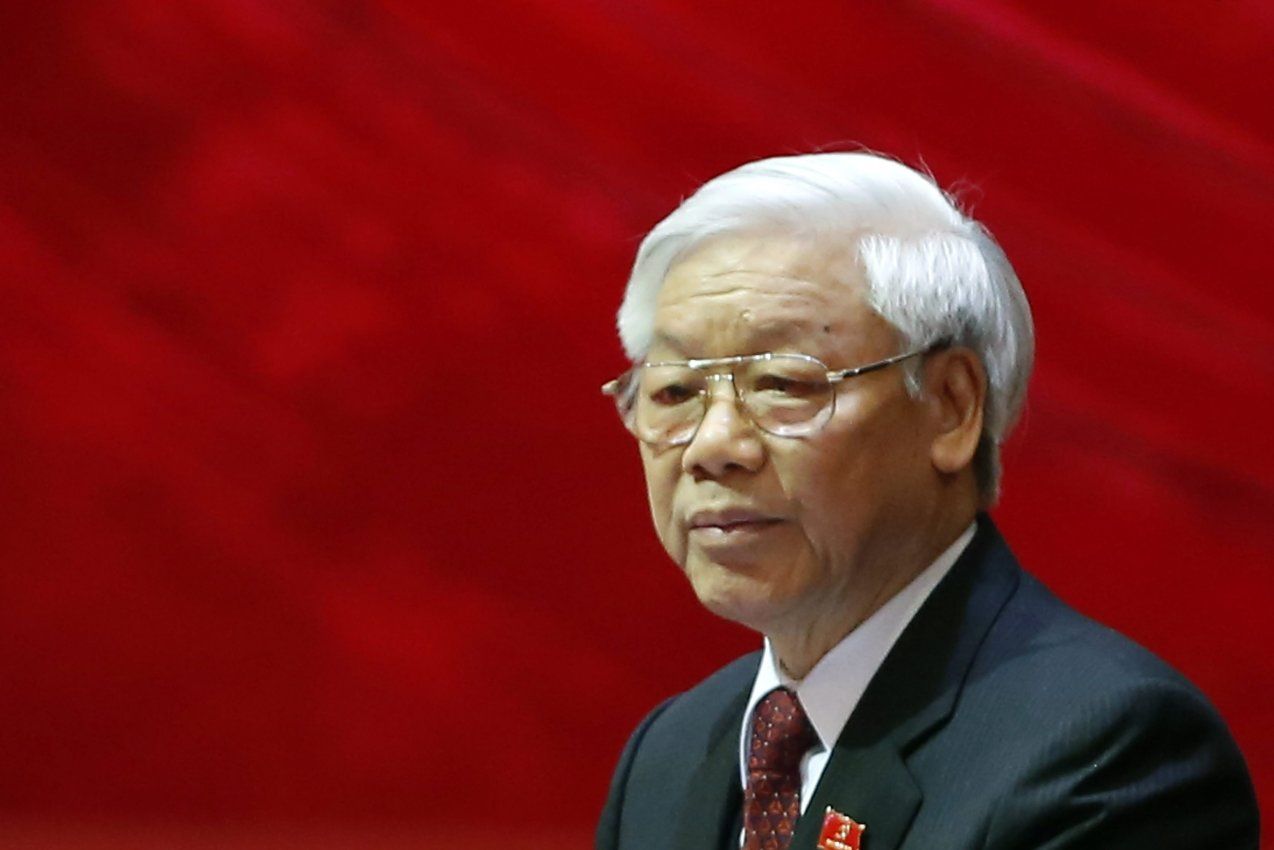
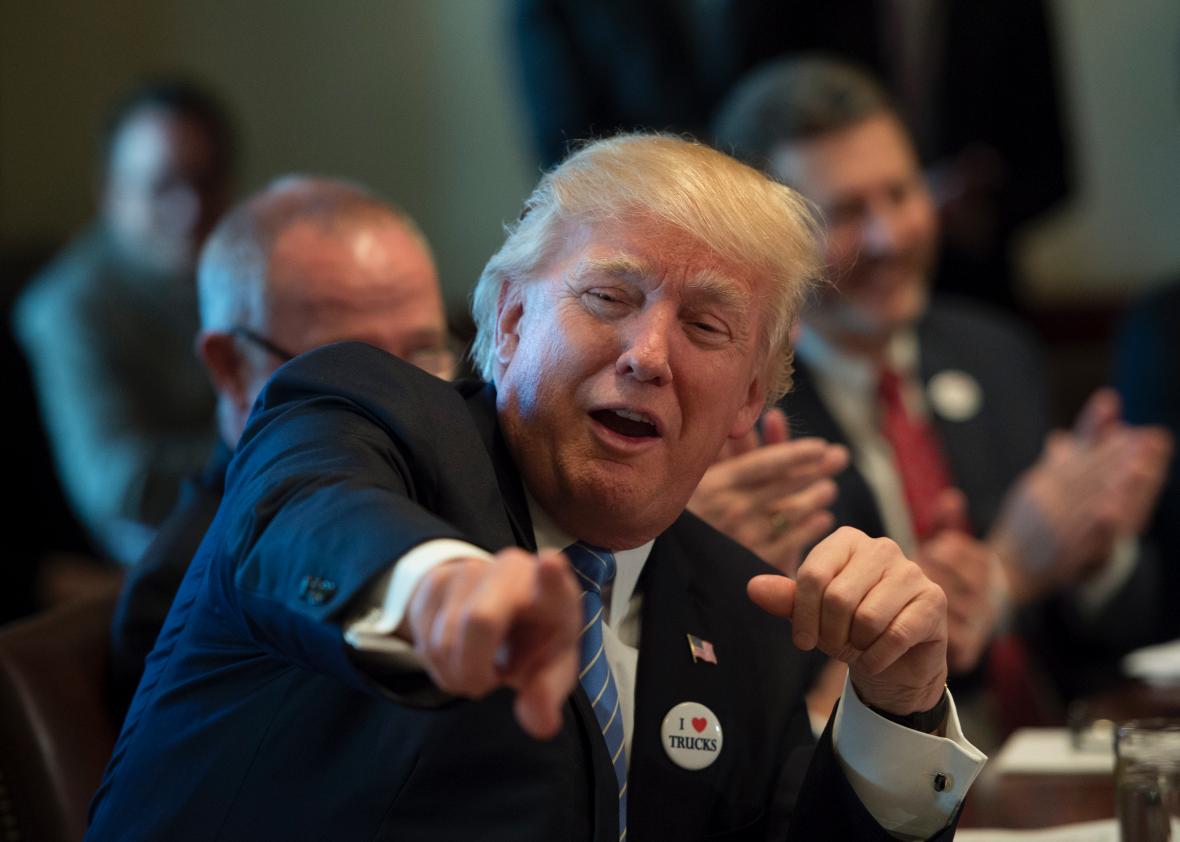
Tag: Politics

  • Vietnamese Communist Party Turns 89, And The People May Have Had Enough

    Vietnamese Communist Party Turns 89, And The People May Have Had Enough

    February 3, 2019, the Vietnamese Communist Party celebrates its 89th anniversary.

    In a recent speech to commend the auspicious event, Secretary General Nguyen Phu Trong wrote: “The Party stays strong, the country prospers, the people concur.”

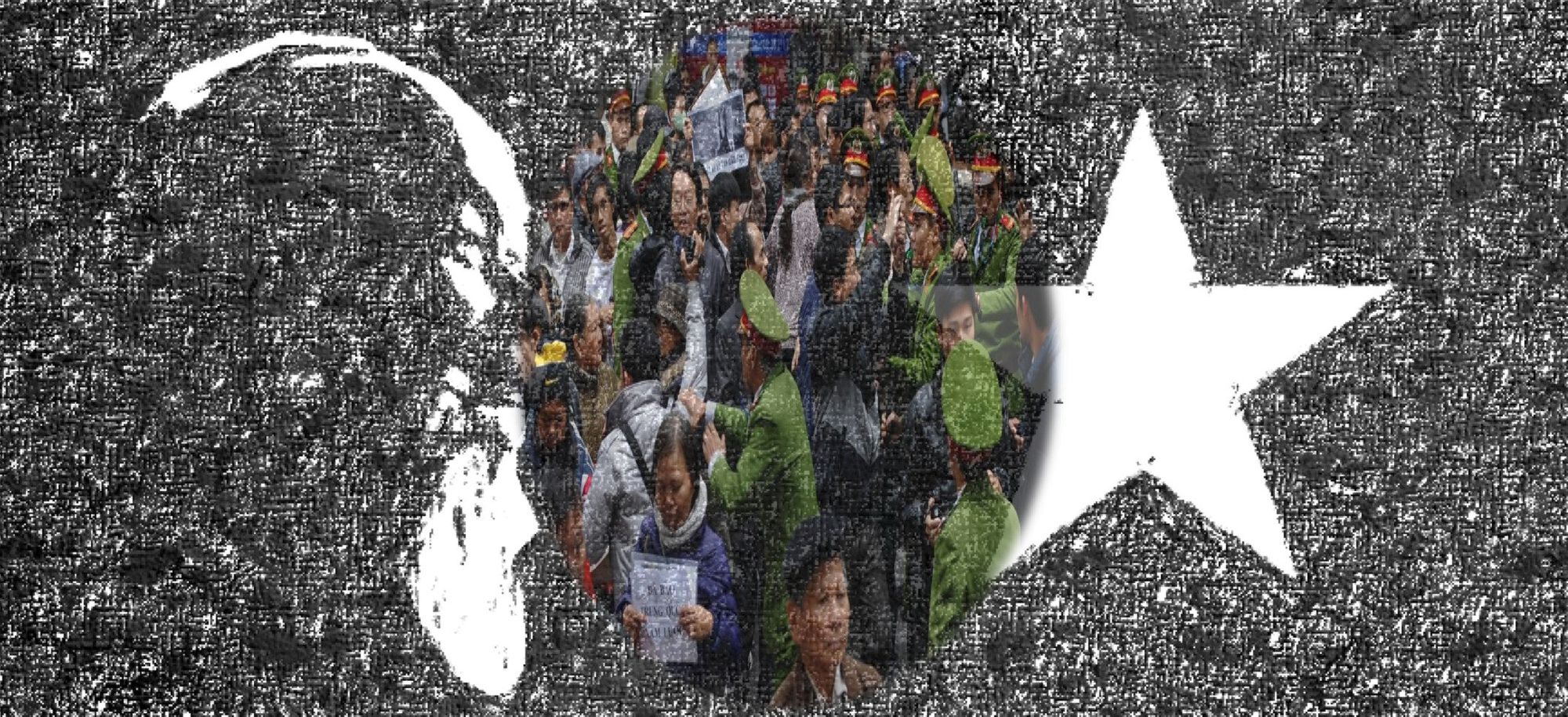
    However, on Facebook, the people’s reactions to both Trong’s writing and other propaganda, do not seem to show a public consensus as to the VCP’s leadership role in Vietnam.

    Today, the users’ reactions to a posting on Facebook seem to suggest the Party’s legitimacy is being called into question by the very people it tries to lead.

    A Facebook page names Vietnam’s Politics (Chính trị Việt Nam) identifies itself as a source for government’s news and uses a webpage domain of www.nguyenxuanphuc.org – which also is the name of the country’s current Prime Minister.

    The website posted a piece of writing entitles “Our Party” (Đảng Ta) in celebration of the anniversary.

    The writing did not deviate far from other propaganda materials in past decades, praising the accomplishment of the VCP, reaffirming its leading role in society for years to come, and confessing the love of the Vietnamese people for the Party.

    However, Facebook users were not willing to let that slides and quickly took the opportunity to express their distrust and unhappiness with the way “Our Party” has been leading society and the country in the comment section.

    A few hours after its posting on Facebook, the piece received over 400 reactions from Vietnamese users, about one-fourth of them was the “laughing” icon.

    Not stopping at that, the majority of the people who commented also raised a series of issues, such as corruption and nepotism within the VCP. They also questioned the legality of the recent National Assembly’s election result and pointed out the wealth discrepancy between the VCP’s members and the non-member citizens.

    The overall picture of the people’s reactions on the post shows an alarming sense of distrust in the VCP, leaving doubts to the other readers as to whether the VCP could still maintain the position of the leading and only political party in the country indefinitely.

    Other reactions from the Vietnamese people to the political events in another country during the past few weeks may cause the leaders of the VCP more worries.

    The recent political turmoil in Venezuela has been receiving a lot of attention in Vietnam with the majority of the people supporting Juan Guaidó, the leader of the opposition front. When Nicolas Maduro used the example of another Vietnam to warn against an American invasion, he probably did not know that the majority of Vietnamese are strong supporters of the Trump administration’s decision to back his political opponent.

    Back to the comments on this posting, it is not difficult to detect that the support for the VCP among its non-member citizens is waning. While the VCP certainly can continue to enjoy the political monopoly for being the only political party in the country, even its top officials may not be sure of its future – if and when a political opposition surfaces.

    The lacking of confidence that it still has the mandate to maintain the legitimacy among the majority of Vietnamese people could explain the VCP’s enhanced oppression against political dissidents in recent years.

    Most recent was the Party’s effort to silent online criticisms with the new cybersecurity law of 2018.

    Vietnamese internet users appear to be very well aware of the purpose and intention of the government in passing such law.

    One comment on the post did mention the potential application of the new cybersecurity law against internet users in cases like this: “The page administrator purposely posted this (writing) to incite the people to react and then (the government) threatens us with the cybersecurity law.”

    At the same time, there are no clear signs that online activism in Vietnam has been slowing down since the new law takes effect earlier this year although it is true that just in January 2019, there have been reports of two confirmed arrests of Facebookers and one incident of police questioning a university student over his Facebook’s activities.

    Vietnam has been increasingly repressive in the past two years. Not only the number of arrests have been steadily on the rise, but the sentences in political cases also became a lot harsher compared to a few years ago, often in the range of one to two decades behind bars.

  • Vietnam: The Communist Party Declared Internet “A Battlefield”

    Vietnam: The Communist Party Declared Internet “A Battlefield”

    The Head of the Vietnamese Communist Party’s Central Propaganda Committee – Vo Van Thuong – declared, during his concluding remarks at the committee’s year-end congress on December 29, 2018, that “the internet (in Vietnam) has become a new battlefield” for the Party in the fields of politics, thoughts, and culture.

    A day earlier, Thuong also made another remark at a different congress held explicitly by and for the press, telling journalists in the country to overcome having “vague political thoughts” as news reporters, especially when it comes to posting on social media.

    For non-Vietnamese, Mr. Thuong’s position seems to be quite intrigued and puzzling. Why would he get invited to speak to the journalists in the country at their year-end congress? What does his message to the media representatives even mean?

    On the other hand, for some over 800 editors-in-chief of all newspapers in Vietnam, however, Mr. Thuong’s words equate to an ultimatum as he is the chief of all of them. They would write as his committee directs, and take down those articles when the same committee disapproves.

    The Central Propaganda Committee is part of the VCP’s cord internal structure, with a mission to establish “direction for political thoughts in the field propaganda, news media, publishing, arts, and culture” for the Party. In reality, this committee’s job is not only to control the political thinking and shape the ideology of the four million VCP members but also the society in Vietnam as a whole.

    Its job is so essential for the survival of an authoritarian regime which is to ensure that there would only be one political doctrine for every single citizen to follow: communism. Anyone dares to propose other ideas for a different political philosophy, in many cases, face prosecution and long jail time. Any sign of dissent would be deemed as not accepting the ultimate leadership of the VCP in the country, and is a criminal act.

    However, for more than a decade, the VCP has failed to take control of the internet and social media in Vietnam. As the result, the people indeed took such opportunity to create a vibrant online civic space where they openly criticized officials, exposed wrongdoings, and even organized themselves.

    While the government repeatedly applied draconian and vague penal codes to arrest and imprison dissidents and activists for “propagandizing against the State” and “abusing democratic freedoms”, social media – especially Facebook and Youtube – continues to play a vital role in disseminating information which the VCP may disapprove of, such as reporting on human rights abuses and calling for democratization in the country.

    The new cybersecurity law of 2018 is the latest attempt from the government to practice absolute control over the internet in Vietnam. It is then not a surprise for us to hear strong and determining words from the Head of the Central Propaganda Committee, declaring war on bloggers and freelancers on social media.

    However, in the first few days of the year since the cybersecurity law took effect, the discussions on social media in Vietnam remain active and critical of the government.

    The most recent “battle” between Vietnamese netizens and Mr. Thuong’s Central Propaganda Committee happened last week, concerning the news that the VCP’s Politburo has approved more money to fund the development project for a metro system in Ho Chi Minh City.

    On January 4, 2019, most of the major newspapers in Vietnam published one same article online, stating that the Politburo has approved more than 50 billion VND for the construction of two metro lines in Ho Chi Minh City. Immediately, prominent bloggers and dissidents on social media like attorney Le Cong Dinh[1], questioned the legality of that decision.

    In Vietnam, the power to approve funding of similar projects supposedly belongs to the most powerful governmental body – the National Assembly. However, in reality, the Politburo would be the ultimate decision maker.

    In April 2018, when the people of Vietnam questioned the National Assembly’s reasons to pass the Special Economic Zone draft bill, the Chairwoman responded: “the Politburo has already decided, and the draft bill is not unconstitutional. We have to discuss and come up with the bill.”

    Nevertheless, this time, the Politburo seems to have to forego a “battle” on social media. By the end of the day, all of the articles about the funding of the metro project were taken down, probably at the order of the Central Propaganda Committee.

    ***

    [1] Le Cong Dinh was tried together with Tran Huynh Duy Thuc for subversion against the state in January 2010 where he was sentenced to five years imprisonment and three more years under house arrest.

  • What Should Be On New President Nguyen Phu Trong’s Agenda?

    What Should Be On New President Nguyen Phu Trong’s Agenda?

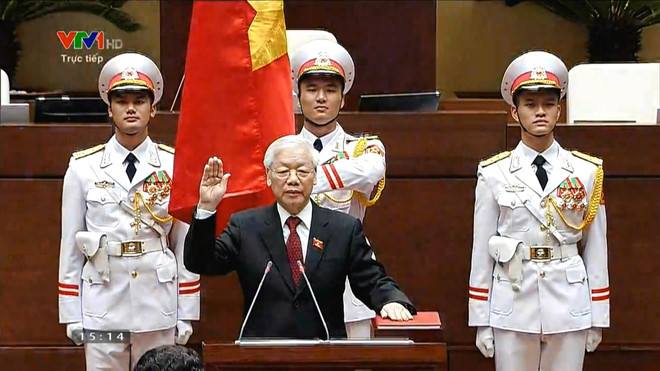
    On October 23, 2018, General Secretary Nguyen Phu Trong took the oath of office as the new president of Vietnam. He was the only candidate introduced by the Central Committee of the Vietnamese Communist Party (VCP).

    Earlier in the day, the National Assembly confirmed Trong by 99.79% in a secret vote, effectively making him one of the most powerful men in the history of the VCP, right up there next to Ho Chi Minh and Le Duan.

    Approximately one month after the funeral of the late president, Tran Dai Quang, the country is about to face a new era under the absolute leadership of Trong.

    Being both the leader of the VCP and the head of state, Trong now possesses the kind of power that has been unseen in Vietnam during the past several decades.

    As state-owned media praises his accomplishments and compares him to Ho Chi Minh, for better or worse, Trong now has the opportunity to lead the country towards an unprecedented future.

    However, great power indeed comes with great responsibilities. For the time being, President Trong’s agenda should take a serious look at a few urgent matters.

    Vietnam’s Cybersecurity Law of 2018

    International human rights groups, such as Amnesty International and Human Rights Watch, have rebuked Vietnam with harsh criticisms regarding its new cybersecurity law throughout this year.

    In a country that ranks 175/180 on the latest Reporters Without Borders’s Press Freedom Index, and is listed as “not free” by Freedom House, the internet plays a vital role in providing Vietnamese citizens with an alternative public sphere. It is where they could express themselves, criticize the authorities, and even mobilize opposition.

    With the new bill, the government seeks to further restrict the people’s freedom of expression and their freedom to access the internet.

    The government plans to do this by targeting service providers and tech giants, such as Facebook and Google, requiring them to store users’ personal data inside Vietnam and to turn such data over to the police upon request.

    The seemingly unlimited power of the police in enforcing the new law – which appears to lack any judicial oversight as detailed in the draft decree released in early October 2018 – raised the most concerns. It also prompted civil society groups to call on the government to indefinitely halt its effective date of January 1, 2019.

    A few even suspected that Vietnam’s new cybersecurity law could very well be the late president’s brainchild. After all, it was during Tran Dai Quang’s tenure as the head of the Ministry of Public Security in 2014 that the national police force formed the Bureau of Cybersecurity.

    Quang also authored the book “Cyberspace: Future and Action” published in 2015 by the MPS, where he outlined the very concept that has become the backbone of the new law which emphasizes the issue of national sovereignty in cyberspace.

    Even in his last days, Tran Dai Quang still refused to take any action on the controversial bill.

    According to Vietnam’s laws, once the National Assembly passes a bill, the president will have 15 days to sign an order publicizing it to complete the process. But back in June 2018, Quang disregarded the plea made by close to 30,000 Vietnamese netizens via an online petition asking him not to publicize the new law.

    However, the new President Trong may not be able to ignore the mounting opposition to the cybersecurity bill.

    As the third cycle of Vietnam’s Universal Periodic Review (UPR) is rapidly approaching in January 2019, one of the most controversial items to be discussed is expected to be this new law.

    Moreover, just this month, Vietnam is one step closer to sealing the deal with the EU for a Free Trade Agreement, one that is believed to be the most ambitious trade deal in which the EU has made with a developing country.

    The EV-FTA, nevertheless, comes with a human rights clause where a material breach could allow the other side to suspend the entire agreement unilaterally.

    Both domestic and international rights groups have analyzed and concluded that the new cybersecurity law violated numerous international human rights standards.

    It is likely that Vietnam, under President Trong’s leadership, will have to address and provide a reasonable resolution regarding this issue before the EU Parliament meets in the spring of 2019 to consider whether it should ratify the FTA.

    Wrongful Death Penalty Cases

    The life of Dang Van Hien, a farmer who killed three workers of an investment company that was involved in land disputes with him and other farmers in his village in Dak Nong Province in almost a decade, is now in the hands of President Trong.

    The case had captured the attention of the entire nation, raising serious questions about the reality of land disputes and land grabbing in Vietnam.

    Over 3,000 people signed an online petition immediately after an appellate court in Ho Chi Minh City affirmed Hien’s death sentence, asking the government to spare his life.

    People believed that there were extenuating circumstances in the case that should overturn the death sentence given to Hien, and they were calling on the president of Vietnam to grant him a reprieve.

    In response to the people’s plea, about one month before his passing, Tran Dai Quang had taken notice of Dang Van Hien’s death sentence.

    In a letter addressed to both the Supreme People’s Court and the Supreme People’s Procuracy Office, Quang requested them to review and report the case to the president’s office.

    Dang Van Hien would be the fourth death penalty case which requires President Trong’s immediate attention.

    During the past decade, three wrongful death penalty cases also captured national attention in Vietnam: Ho Duy Hai, Nguyen Van Chuong, and Le Van Manh.

    Under Vietnam’s laws, the president has the power to pardon death-row inmates and grant a reprieve in criminal cases.

    Since 2005, Le Van Manh had undergone a total of seven court hearings, including three trials, three appeals, and one cassation trial. In total, he has been on death row for 13 years.

    Nguyen Van Chuong has been kept on death row for 11 years, while Ho Duy Hai was sentenced to death ten years ago.

    All the requests for cassation trials and reviews of their sentence were ignored, leaving these three men languishing on death row for more than a decade while their family members, with minimal means, have tried desperately to save them.

    As recent as October 10, 2018, on World Day Against the Death Penalty, these families again attempted to raise public awareness by advocating for their release in Hanoi.

    During Truong Tan Sang’s presidency (2011-2016), he had granted reprieves for 179 death row inmates. In December 2014, President Sang also personally signed an order indefinitely halting Ho Duy Hai’s execution after a public outcry about his case erupted on social media.

    These four well-publicized death penalty cases should become one of President Trong’s priorities.

    It is not only a matter of saving lives, but these cases also carry the Vietnamese people’s hope to see justice being carried out.

    The Ongoing Fight Against Corruption 

    The VCP has meticulously crafted President Trong’s image as a “clean” politician.

    It was his public dedication to fight corruption in Vietnam that distinguished him from his political foe, former Prime Minister Nguyen Tan Dung, during their rivalry for the VCP’s top leadership position, in which Trong came out as the winner in February 2016.

    However, the strong demand for Trong to disclose his personal assets as required by law, first initiated by a group of former VCP members back in May 2018, has been making headlines again in recent months.

    Feeling the pressure mounting during the days leading to his inauguration, the Party provided statements from members of the National Assembly on the same day he took office as the new president, asserting that they had reviewed his assets declaration and that it showed that Trong was “absolutely clean.”

    Corruption remains a critical problem for Vietnam, and it will require President Trong’s immediate attention as it is believed to be the roots of other social and political issues in the country.

    According to Transparency International’s Corruption Perception Index in 2017, Vietnam was rated 35/100, putting the country among the group of “highly corrupted” nations.

  • Vietnamese Government Celebrates National Day By Violating Its Own Constitution

    Vietnamese Government Celebrates National Day By Violating Its Own Constitution

    Today| marks the 73rd year since Ho Chi Minh stood at Ba Dinh Square on September 2, 1945, and proclaimed that all people shall enjoy their natural rights in the pursuit of happiness. Thus, it is quite hard to imagine that the current regime – who is supposedly following Ho Chi Minh’s teachings – has decided to mark such an auspicious occasion with a stern, yet illegal, warning to all citizens: do not go out and protest.

    But that is precisely how the Vietnamese authorities have decided to honor the birth of their nation this year, by loudly ordering the people not to participate in any form of public demonstration on Vietnam’s Independence Day.

    Throughout August, high-ranking officials in the Vietnamese Communist Party have taken turns assaulting the human right to assembly, a right enshrined in Vietnam’s 2013 Constitution.

    First, it was To Lam, head of the Ministry of Public Security (in charge of the national police force). Lam assured the Standing Committee of the National Assembly on August 13, 2018, that the police would take all possible measures to prevent people from participating in protests after he was admonished by Committee members for the mass protests that took place in June.

    A few weeks later, Hanoi city leader and high-ranking police official Nguyen Duc Chung also vowed that he would not allow “any crowds to publicly gather” under his watch during Independence Day weekend.

    Several state-owned media outlets during the past week “coincidentally” published articles condemning both the June 10th protestors and the call on social media accounts for a nationwide protest on September 2nd. The government seems to blame overseas groups, some of which have been declared “terrorist organizations” in recent years by Vietnamese authorities.

    News has also surfaced both on social media and on official news agencies that the police have arrested a small number of individuals disseminating information “against the state”, including one who was caught trying to enter Vietnam through Cambodia with several weapons.

    Minister To Lam has publicly congratulated the police forces of Binh Dinh and Phu Yen provinces for arresting the armed individual whom the government believes to be a member of Viet Tan, one of the aforementioned overseas groups. Viet Tan denied this accusation on the same day the individual was arrested.

    While no protest broke out today, the political sphere remains tense, and Vietnam is not in much of a celebrating mood compared to previous years.

    The Special Economic Zones draft bill is still dangling over citizens’ heads. The people are continuously wary of their country becoming ever more dependent on China.

    The government is not exactly helping, with the national bank announcing last Thursday that the Chinese renminbi could soon be used in trading activities along the country’s northern border, starting in October.

    There were also reports of the internet being down – again – due to cable issues during the last week of August (the fourth time in 2018 thus far). In Vietnam, internet outages often “coincide” with periods of social and political turmoil, as was observed when Vietnamese protested the Taiwanese steel mill, Formosa Ha Tinh, back in May 2016.

    Earlier this month, activists were also brutally assaulted by police officers for simply gathering at a small concert in a Ho Chi Minh City cafe. Many of these activists were also placed under surveillance this holiday weekend.

    Are the reactions from the Vietnamese government in August just overblown paranoia or do they have reason to fear the people?

    It is difficult to say.

    However, we do know from the writings of several state-owned newspapers that the government is extremely wary of anything remotely resembling the “color revolutions” or the Arab Spring in Vietnam. They prefer to take pre-emptive measures, using all means to prevent demonstrations, even if doing so would mean breaking their own laws and constitution.

    Moreover, the Vietnamese government does not distinguish between peaceful dissidents and those who call for a violent overthrow of the government, and the case of one of their most famous political prisoners, Tran Huynh Duy Thuc, is the best example.

    Thuc was sentenced to 16 years imprisonment back in 2009 for “subversion against the state,” and the evidence used to uphold the conviction included his writings pleading with the government to take rapid and immediate action to preserve economic growth and avoid over-dependence on China.

    Before his arrest, Tran Huynh Duy Thuc was one of Vietnam’s most successful entrepreneurs, with the government unable to find any evidence of wrongdoing within his multi-million dollar business after raids. Western countries have offered Thuc political asylum on multiple occasions, but he refuses to leave his country to live in exile.

    His latest defiant act—a hunger strike—protesting what he calls “an unjust judicial system,” again put the Vietnamese government in a predicament: they could not justify his imprisonment to the increasingly informed public. September 2, 2018 marks the 20th day of Thuc’s hunger strike.

    Up until last month, Thuc had received the longest sentence for a political prisoner: 16 years imprisonment, followed by 5 years of house arrest.

    In August, the record was surpassed by Le Dinh Luong, who was sentenced to 20 years imprisonment, again for “subversion against the state.” Luong was known by his peers as an activist who campaigned against the environmental destruction caused by corporations and development projects.

    The VCP has managed – especially in recent years – to ensure that its human rights records rival that of its big Communist brother, China, with more suppression and harsher sentences against activists.

    But will more suppression lead to a stable and peaceful society as the VCP hopes for, or will blurring “peaceful dissent” with “subversion against the state” further chip away at the government’s legitimacy? The answer remains unclear.

    What we do know, however, is that history has never been on the side of regimes that refuse to engage in dialogue with dissenters, that refuses to heed the people’s discontent. One need only look at Vietnam’s own history to see this fact in action.

  • FAQs About The Special Economic Zones and Vietnam’s SEZ Draft Bill

    FAQs About The Special Economic Zones and Vietnam’s SEZ Draft Bill

    In June 2018, many were shocked to witness the largest demonstration in Vietnam since the end of the war in 1975, where thousands of people marched on the streets of several major cities. One of the reasons that compelled the Vietnamese people to protest was because of the proposed Special Economic Zones Law, which their National Assembly’s members were going to pass.

    Despite the fact that under public pressure, the draft bill was ultimately announced to be halted until the next National Assembly’s meeting in October 2018, people still protested against it. Their reason? They feared that they were going to lose essential portions of their country to foreign investors, namely, the Chinese. The government of Vietnam, on the contrary, continued to insist on the passing of this law, citing economic development and jobs opportunities for hundreds of thousands.

    Which side is right?

    1. What Is A Special Economic Zone?

    A Special Economic Zone (SEZ) is defined as an area in which business and trade laws are different from the rest of the country.

    Theoretically, an SEZ can attract foreign investment, expand production, create jobs, and boost export-import. However, that would only happen if a set of conditions is met: the rule of law, together with clearly defined laws and regulations that both facilitate production and business activities, which are binding on all investors and able to adjust market failures, as well as other public issues.

    In practice, and in the particular case of Vietnam, the government has yet to make available any information regarding the conditions under which the proposed SEZs will operate.

    Can the SEZs create real jobs for the Vietnamese people? Can they boost production and trade? If they fail, and the nation falling into debts, who would be held accountable, and how? What are the punishments against them? Alternatively, will they say, “It’s none of your concern; it’s the Party and the State’s business”?

    The above questions remain unanswered.

    2. What Is The SEZ Project?

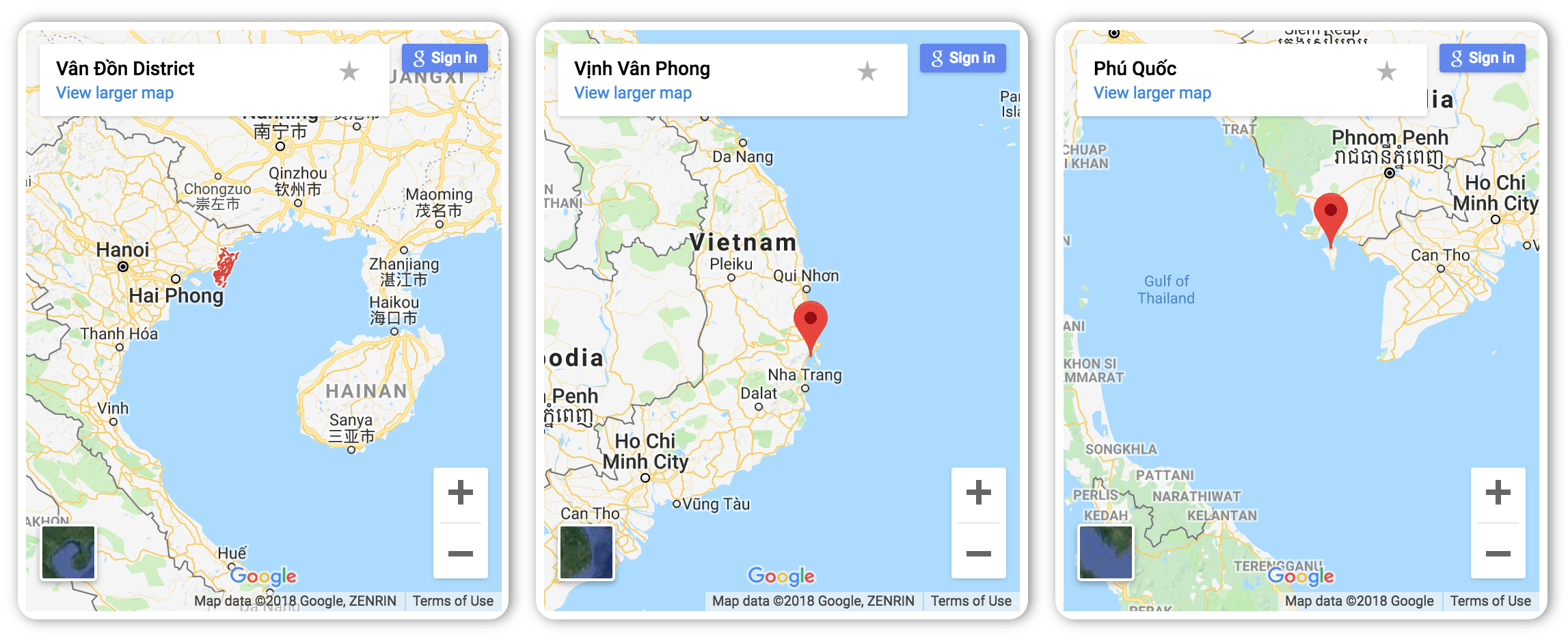
    The SEZ project is a “grand policy” of the Politburo of the Vietnamese Communist Party (VCP), to establish three special economic zones in Van Don (a district in the Northeastern Province, Quang Ninh), Bac Van Phong (of Khanh Hoa Province), and Phu Quoc (of Kien Giang Province) as shown in the picture above. Foreign investors shall be granted special favors in these areas, for example, the 99-year land lease.

    This project is codified in the proposed SEZ Law or the “Law on the Special Administrative-Economic Units”. Traditionally, and as in this time, the government of Vietnam does not publicize the names of the lawmakers concerned in any lawmaking process, so no one knows the architects behind the SEZ Law.

    In case this SEZ Law is found to have contained some defects, or its enforcement would lead to severe consequences, no one, especially Party’s officials, shall be held responsible due to the lack of transparency and accountability in the country.

    3. What Is “Special” About These Three Zones?

    Overall, conditions in Van Don, Bac Van Phong, and Phu Quoc are not favorable for development. These include infrastructure, skills of the labor force, science and technologies, and financial-economic facilities.

    Regarding geographic location, however, all the three districts are located in critically strategic sites of Vietnam, and they hold a crucial implication for national security. To make matters worse, Vietnam’s northern giant neighbor, China, where most of the potential investors would come from, has for centuries been known to keep an ambitious dream of becoming a hegemonic superpower.

    China pays particular attention to Van Don and to Vietnam in general, whom she considers being the “buffer zone” for her to “move southward” to the geo-strategic South China Sea. For this reason, even when the SEZ law does not mention China but only refers to “foreign countries,” obviously China is the only nation the Vietnamese people are concerned about.

    4. What Are The Goals Of The SEZ Project?

    The SEZ project revolves around these promises: the three SEZs shall be where new institutions are tested and adopted with more freedom and less control, where innovation is stimulated, where more jobs are created, and more incomes are generated for local people. In short, the SEZs shall boost production and commerce, and lead to economic growth.

    However, all of those promises remain vague and unfounded. Van Don, Bac Van Phong, and Phu Quo as stated, do not have favorable conditions to establish SEZs, because of poor infrastructure and technological bases and an unskilled labor market.

    Most importantly, no political leader, no official of the VCP and the State shall bear any responsibility if those promises become unfulfilled. If the project fails, or if it causes any adverse consequences for the people and Vietnam, the victims would have no meaningful recourse.

    5. What Are the Potential Consequences Of The SEZs That Vietnamese People Fear?

    5.1. Territorial concession

    By stipulating a land lease of up to 99 years and granting other special privileges to potential Chinese investors, the SEZ Law is paving the way for China to infiltrate Vietnam under her “salami-slicing” strategy.

    Salami slicing is a strategy that the communist Chinese government has used since 1949 to take over territories in the South China Sea and the Himalayan region, in a gradual, step-by-step manner. The tactics were to open the door for Chinese immigrants to settle, do business, set up Chinese language schools, establish their own administrative system, and promote Chinese culture and customs in foreign lands. By doing that, they have legitimized China’s presence and power in the area and gradually built up Chinese autonomy inside Vietnam. If and when the time comes, this group with absolute autonomy could “rise” to demand sovereignty or for the Chinese-controlled area to “exit Vietnam and come back to merge into the motherland of China.”

    5.2. A dumping ground for China’s waste

    The SEZs may face the risk of failing to absorb advanced technologies and management skills, but that’s not it, after all. They are likely to become a market for low-quality products made in China and a dumping ground for her waste, most seriously toxic and e-waste.

    5.3. The conflict between local people and Chinese immigrants

    Overpopulation in China has led to high rates of unemployment and illegal immigration into neighboring countries, especially in Vietnam, where the government with its lousy governance fails to take control of the issue. As a result, bitter conflicts have arisen between local people and Chinese immigrants, which remain unresolved. In recent years, incidents of violent clashes have occurred between Chinese immigrants and the local Vietnamese community in Hai Phong, Quang Ninh, Thanh Hoa, Ha Tinh, as well as other provinces in Vietnam.

    For example, in Quang Ninh in the mid-2000s, Chinese immigrants had thrown stones at Vietnamese people. In Thanh Hoa and Ha Tinh, drunken Chinese workers even falsely imprisoned a few local people after collectively assaulted them.

    5.4. Economic loss

    Accordingly, once the SEZ Law is passed, $70 billion USD shall be invested in the three SEZs, and that is like gambling ours and our children’s future on an uncertain race. Besides, with special favors granted to investors (mostly foreign) who could hardly be controlled, the government would definitely take the risk of substantial tax losses and budget deficits.

    Many precedents can be found for this decision like this. One among them is the bauxite mining project in Tay Nguyen (Vietnam’s Central Highlands), which is also another grand policy of the VCP and the State. It was implemented despite public demonstration, notably the fierce protest from the late military general, Vo Nguyen Giap, and 4,000 Vietnamese intellectuals, domestic and overseas. The grand project lost almost US$170 million between 2013 and 2016. No one among those who made the promises for economic development and job opportunities for the locals were to take any responsibility for this loss.

    With the government’s current institutions and management capacity, the SEZ project cannot and will not ensure economic success. The issue confronting the state is that if it fails like the Tay Nguyen bauxite mining project, no political leader shall bear any responsibility. Worse, if the SEZ project leads to territorial concessions, then it does not matter which leader or official of the VCP and the State takes responsibility, Vietnamese citizens would still suffer the irreversible consequences.

    6. Why Does the VCP Insist On Implementing The Project?

    The answer lies in the entrenchment of crony capitalism, with interest groups collaborating closely with the corrupt central and provincial governments, seeking to gain in grand projects in the name of “development.”

    Also, “the obvious answer is ‘casinos and red-light districts,’ as these SEZs are the only places in Vietnam where these people can do business freely…. another reason that many people are aware of but still reluctant to spell out (for ‘political sensitivity’) is ‘the China factor.’ Otherwise, there is nothing else there” (Nguyen Quang Dy, 2018).

    7. Is There Any Alternative Solution To The SEZ Project?

    Experts point out that the SEZ idea was something that belongs to the last century, that it has become out of date, and that the SEZs are not relevant to the current circumstances of Vietnam. Instead, the urgent thing to do now is to launch a fundamental and comprehensive institutional reform in the nation, focusing on:

    – setting the private sector as the basic economic sector, contracting the state sector to its minimum;
    – recognizing and protecting private ownership of land;
    – establishing democracy, and protecting and promoting freedom rights to mobilize the citizenry for the development cause of the nation.
  • Saying Goodbye to John McCain: Salute to an American Who Helped Changed Vietnam Until His Last Days

    Saying Goodbye to John McCain: Salute to an American Who Helped Changed Vietnam Until His Last Days

    No other foreign politicians have thus far achieved what John McCain was able to do in Vietnam in the recent decades.

    In a country where he was captured, tortured and held as a POW for five years and a half, two of which were in solitary confinement, McCain had emerged during the past thirty-something years as a symbol of integrity and righteousness for Vietnamese people from all walks of life.

    The love and respect which the people, from the once upon a time’s “enemy’s land,” have for John McCain also help answer a question many foreigners often wonder, do Vietnamese hate America or Americans?

    As shown in the case of John McCain, we don’t.

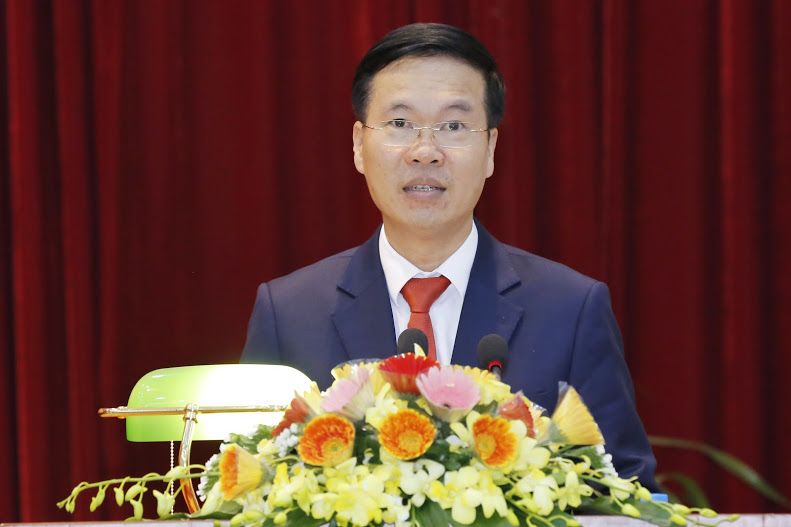
    Vietnamese people paid respect to John McCain by placing flowers at the very same spot where he was shot down and captured during the war. Photo courtesy: Facebook.

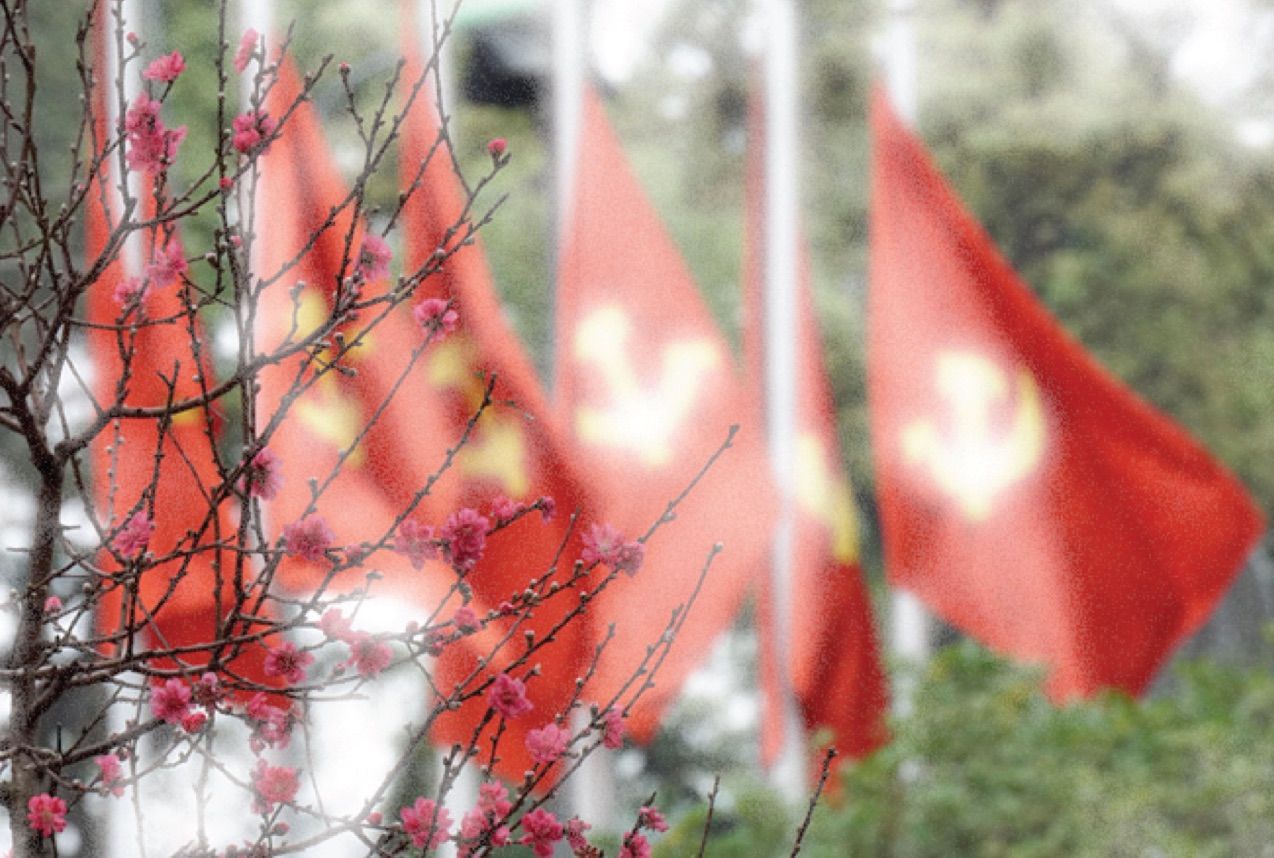
    Vietnam – which till this day – continues to be divided by ideologies and remnants of the Civil War (1954-1975), to a certain extent, still haunt its future generations. Till this day, the debate about the legitimacy of the two flags, the yellow-starred red flag of the current regime and the yellow flag of the former Republic of Vietnam in the South, has yet subsided. Nevertheless, John McCain is considered by both the public in Vietnam and among the diaspora communities living overseas, as an American politician who had worked tirelessly to better the lives of many Vietnamese.

    It is well-covered in the news about McCain’s efforts in the normalization of the diplomatic relationship between the two countries in the late 1980’s and early 1990’s. So it could be entirely understandable to see the affection that many Vietnamese people have shown for McCain.

    The lifting of the embargo back in 1994 brought sizeable changes in every day’s lives of the ordinary people. With economic growth, what also came along was the certain rising standard of living for the majority of the population. However, that would not be all of the reasons for why Vietnamese around the globe respect John McCain.

    One of a few stories you will not read about John McCain in Vietnam’s state-run media would be his close ties with the human rights and democracy activists’ community, whom he had continued to fight along their side until his very last days.

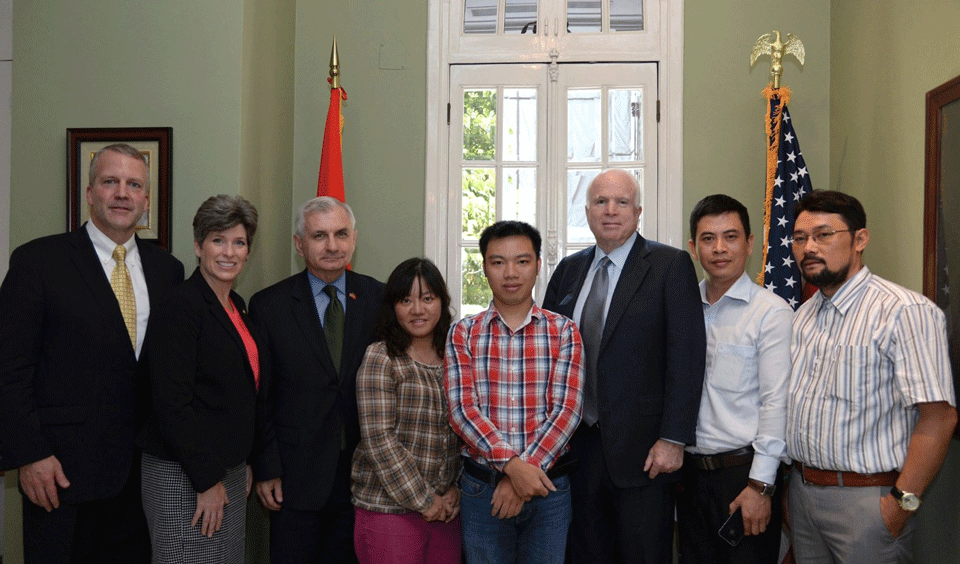
    Dissident and former political prisoner, attorney Le Quoc Quan wrote on his Facebook upon learning about John McCain’s passing that as late as June 2017, during his last trip to Vietnam, McCain still insisted on meeting with the human rights and democracy activists in the country like how he had been doing for years.

    While the Vietnamese government could not stop McCain, they tried to intimidate activists like Quan to stay away. But they also failed. Quan recalled, “I still went to see him (McCain) because he is a righteous friend of mine and Vietnam. Even if they (the police) tried to stop me, I would still find a way to go to the meeting. It is my way of delivering this very message to my government.”

    In 2007, John McCain signed a letter to the then President of Vietnam, Nguyen Minh Triet, to demand the release of Quan, who was arbitrarily arrested and detained for a few months. Shortly after the letter was sent and made public, Vietnam did release him.

    Other activists also offered their condolences on social media, recounting numerous times that John McCain spoke up on their behalf and stood by them in their fight for democracy in Vietnam.

    However, McCain’s office was frequented not only by activists from Vietnam and their advocates but also members of the overseas Vietnamese community.

    When working on restoring the United States’ diplomatic relation with Vietnam, McCain did not forget the human rights and democracy agenda in the country. He also remembered the fate of hundreds of thousands of Vietnamese refugees still languishing across numerous camps in Southeast Asia at the time. He certainly did not ignore the South Vietnamese men who had fought along the Americans and suffered retribution after the war ended.

    John McCain participated in the establishing of the Humanitarian Operation, which was a special deal with Hanoi in 1990, to allow the South Vietnamese officers and soldiers who could not escape Vietnam after the fall of Saigon and had undergone the “re-education camps,” sometimes for tens of years, to leave for the United States. By 1994, 50,000 service members of the old South’s regime and their family members have arrived in America.

    After April 1975, the Vietnamese Boat People’s Exodus made international headlights where hundreds of thousands had lost their lives at sea while escaping Vietnam by small fishing boats. The “Orderly Departure Program” was an effort created by the American government to put an end to this tragedy, by offering a special visa policy for Vietnamese to leave Vietnam to the United States directly and not having to escape to a third country first.

    John McCain co-sponsored what was now known as the McCain Amendment to the ODP, which continued to allow unmarried children of the former South Vietnamese officers to immigrate to America with their parents’ refugees status, after the policy concerning their derivative refugee status expired in April 1995.

    The Vietnamese immigrant children under these programs have since grown up and assimilated well into American mainstream society. Tram Ngo, a young Vietnamese American wrote on her Facebook: “McCain championed Vietnamese Boat People when it was politically unpopular to do so. For that, he will always have a dear place in my heart.” Her feelings and sentiment would certainly be mutually shared and acknowledged by many of her peers.

    While John McCain’s five and a half years at the Hanoi Hilton is a well-known fact to many, the Vietnamese state-owned media has not dared to go into the details of his torture and the extent of the physical and mental abuse he suffered while in prison. However, with the blooming of the Internet and especially with the popularity of social media platforms in the past decade inside the country, such information is no longer “state’s secrets.” One could also say that the respect for John McCain accelerated when people learned about the events related to his treatment in prison. He has been widely praised for being able to put the past behind and worked to improve the life of the ordinary Vietnamese.

    Truong Huy San, who is also known as author Huy Duc of The Winning Side (Bên Thắng Cuộc), shared his thoughts about McCain on Facebook:

    “If he had not put aside his weapons and medals and treated them as memorabilia of the past, then he would have stayed all along within the war; if he had harbored vengeance, then his whole life would only have enemies. Moreover, he could only be a ‘war hero,’ but would never become the ‘political hero’ that he was.”

    This post received close to 5,000 reactions within one day.

    A friend, a comrade, a benevolent senator to the refugees, a supporter of the democracy movement, or a political hero? Those are the many sides of John McCain that Vietnamese people see. While each of them could be entirely different from one another, what matters most is that John McCain will forever be a part of this country’s history, not only in the past but as well as in the present and its future.

    In March 2016, John McCain penned an op-ed in the New York Times upon learning of the passing of an American Communist, Mr. Delmer Berg of California, and he cited Donne’s poem to connect himself to Berg. Today, many Vietnamese people around the world – regardless of the ideologies they each hold – would probably want to say the same thing to Mr. McCain:

    “No man is an island, entire of itself.” He is “part of the main.” And I believe “any man’s death diminishes me, because I am involved in mankind.”

    So was Mr. McCain. He didn’t need to know for whom the bell tolls. He knew it tolled for him. And I salute him. Rest in peace.

  • To Tell or Not To Tell Them About My Personal Assets: A General Secretary’s Dilemma

    To Tell or Not To Tell Them About My Personal Assets: A General Secretary’s Dilemma

    In a surprising move right before the 7th Party Central Committee plenary meeting, a group of Vietnamese Communist Party (VCP) members and citizens have publicly demanded – in a letter – that the General Secretary, Nguyễn Phú Trọng, discloses his personal assets in according with the VCP’s own rules.

    The demand was quickly spread on social media in Vietnam in the past three days.

    The plenary meeting, which commences on Monday, May 7, 2018, in Vietnam, concentrates on discussions involving the integrity, capacity, and merits of the Party’s strategic personnel.

    The timing of both the letter and the plenary meeting is at the high of the anti-graft campaign initiated by the Party’s chief in the past two years, right after his power was successfully consolidated at the last Party’s Congress in 2016.

    For a long time, the question concerning personal assets of Party’s leaders and high officials has been on the mind of the people in Vietnam where corruption is high.

    But this is probably the first time that a group of Party’s members publicly asking the Head of the Party to be transparent about his own assets and declare them.

    Mr. Trọng, of course, could keep silent and does not have to respond to the letter.

    Dr. Nguyễn Quang A, a long-time dissident intellect and one of the signatories of this letter, is not optimistic either: “I believe it is highly probable that he would not respond at all”.

    While Trọng could continue to stay in his safe zone and only respond to the public and the press in pre-arranged conferences as he has done in the past, this time, there are three important reasons for him to consider responding to this written demand from his own comrades.

    Trọng should have his assets declaration form ready because the laws required him to do so.

    Vietnam’s laws required that officials – which include the VCP leaders – have to prepare an annual assets declaration form.

    Accordingly, “officials are defined as Vietnamese citizens who are either elected, appointed, or approved to hold a position or title, according to their terms in the VCP’s system.” – (Article 4, Vietnam Law on Cadres and Civil Servants).

    Trọng is not only the General Secretary, he is also a current member of the National Assembly.

    Vietnam’s laws then also require that all candidates running for the National Assembly have to submit assets declaration forms prior to the election.

    This is done in according to the 2012 amendments to the Law on Preventing Corruption.

    If Trọng refuses, he indirectly declares he is above not only the law but the Party as well.

    As the General Secretary who famously declares: “the Constitution (of Vietnam) is the most important legal document after the VCP’s Manifesto,” Trọng must act according to the Secretariat of the VCP’s Decision 99/QD-TW, issued on October 3, 2017, where it clearly states that the assets of all Party’s leaders “must be public for the people to know.”

    One must understand the crucial role of the Secretariat in the VCP and how powerful this body is to appreciate Decision 99/QD-TW. According to the VCP’s rules, this is the body which governs the daily operation of the Party. Mr. Trọng is also a member of the Secretariat.

    If he refuses to comply with the Secretariat’s decision, then he has violated the core principle of the Communist Party: centralized democracy. The VCP operates in a system where the minority must obey the majority; subordinates must obey upper management; an individual must obey the organization.

    Thus, while an individual may disagree with a decision of the Party, that individual must still “strictly complies”.

    As a person who dedicates his life to sustain the Party, Mr. Trọng must know that this principle decides the VCP’s survival. If he doesn’t respect it, then he has put himself above the Party.

    No one will believe Trọng is committed to fighting corruption when he refuses to be transparent about his own assets.

    Transparency International ranked Vietnam as the second most corrupted country in Asia after India in March 2017.

    The VCP’s chief has initiated an ambitious campaign against corruption in the past two years, a Vietnamese version of Xi Jinping’s “killing tigers, swatting flies.”

    Earlier this year, he reaffirmed such commitment to weed out corruption at all levels by famously declared there would be “no off-limit zones” for the campaign.

    The slogan “Burn the Furnace” became well-known to many Vietnamese, where corrupted officials are seen as “wood logs” ready to be thrown into the fire.

    Trinh Xuan Thanh – a more famous “wood log” who was sentenced to life in prison earlier this year – gained international attention when German police alleged that Vietnamese secret services had kidnapped Thanh in broad daylight in the middle of Berlin last summer.

    Vietnam insisted that Thanh came back to Vietnam voluntarily to turn himself in.

    While the international community may think that repairing a deteriorating diplomatic relationship with Germany is crucial for Vietnam, such task is still secondary when compares to maintaining the VCP’s legitimacy with its own people.

    The public in Vietnam is clearly divided over Trinh Xuan Thanh’s case.

    One of the main reason for those who support the government’s conducts – including the alleged kidnapping – in such matter is because they want to believe in the commitment of the Party and of Mr. Trọng in fighting against corruption.

    But their belief does not come blindly.

    An important question has been lurking among the public in Vietnam – and yet no one has dared to raise it – was whether Trọng has ever committed corruption himself and if that is the case, then would he be prosecuted as well?

    An even more important question concerns over the legitimacy of this “Burn the Furnace” campaign initiated by Trọng. Is he really committed to fighting against corruption or is he using such a campaign to target and eliminate other factions within the VCP?

    For now, most people in Vietnam probably would not go that far to question Trọng’s intention over his anti-graft campaign, but they do want to know whether he is a “clean” official.

    And for this, Trọng would need to be transparent about his own assets by providing to the public his assets declaration form according to laws.

    Social activist Nguyễn Anh Tuấn comments, “whether Mr. Trọng is transparent about his own assets will say a lot about the legitimacy of the anti-corruption campaign he has initiated”.

    “If he is transparent about his assets, then it is great because his subordinates would have no excuse to delay declaring their own. The public and the press will have some basis for monitoring officials”.

    “On the contrary, if he ignores the people’s request this time, then they have reasons to question his commitment to fighting corruption”.

  • Why President Trump Will Be Much Happier as the Leader of Vietnam

    Why President Trump Will Be Much Happier as the Leader of Vietnam

    President Donald Trump is coming to Vietnam on an official visit for the APEC meetings from November 10-11. He could have been in this country much sooner had he not avoided the draft during the Vietnam War.

    I am not sure President Trump knows where Vietnam exactly is on the map (which is quite usual for a lot of foreigners), but he will certainly fall in love with the country when he comes here this time, especially after hearing what I am about to disclose.

    Let me take this opportunity to send him a few words of regards and explain to him why I think so.

    But before I forget, let’s start with the same premise: one must be a member of the Communist Party of Vietnam to become the country’s leader.

    1. Forget about the Democrats: They are already extinct.

    The last time Vietnamese people saw a glimpse of a “democrat” was back in … 1988, when the fake Democratic party (yeah, we had such things back then – they were basically puppets formed by the communists themselves) disbanded under the order of the Communist Party. Basically, President Trump, you and your chosen party will enjoy absolute power here.

    The Vietnam’s Constitution clearly states that the Communist Party is the force which leads both the government and society. In fact, it is the only one ruling the country.

    So, no worries about the opposition. You’re far, far away from Hillary Clinton, Bernie Sanders, and Nancy Pelosi. You will win every election, and win big. When I say “big”, that means more than 90% of the popular votes where every single eligible adult in the country will vote, not just the “landslide victory” last year in the U.S.

    2. You have the entire Congress in your party’s hand, not just a simple majority.

    There is no need to battle with anyone in Congress. “Repeal and Replace” could be done very easily, right then and there. As well as the tax bill. And the annual budget bill. Basically, everything and anything.

    Congressional hearings are extremely rare for top leaders like you. Your cabinet members may be questioned by Congress, but in general, no one would throw stones in their faces like how the Democrats treat you, your staff, and the Republicans. Congress is also more laid back, as they only meet twice a year, each time for one month.

    How could Vietnam achieve such harmony between the Executive branch and the Legislative branch?

    Just imagine your Republican fellows occupy 95% of the seats in Congress and the remaining 5% are all your friends and good friends. This is because our unique election laws were designed to prevent non-communist candidates from running right from the first place. Nobody else but communist members and their close allies can go pass the three rounds of pre-election vetting, which of course are held by the communist-organized body called the Fatherland Front (such patriotic name, you will love it!).

    3. You don’t have to deal with the media because independent news does not exist.

    I know the media in the States is extremely annoying, and they just never leave you alone. Here in Vietnam, you are untouchable. What does that mean? It means you can do whatever and say whatever, not a single journalist dares to criticize you.

    Heaven on Earth! Why is that?

    Because you and your party control the entire media. So, there is no CNN, no Washington Post, no New York Times, leave alone Stephen Colbert and Trevor Noah. Only Fox News, Breitbart and the likes are allowed. Not only that, those that are allowed must also report news as they were ordered by you and your party. Imagine, even Steven Colbert must listen to and follow every word of yours! That’s true respect, isn’t it?

    Some crazy leftists at organizations like Freedom House and Reporters Without Borders may put your country at the bottom of the Press Freedom Index, but who cares, right?

    4. Just in case anyone criticizes you, you can always lock them up, for years.

    We have already put thousands of dissidents in jail already. In the past, we even made them…disappeared.

    Really, if you find anyone who writes some short statement about you on Facebook or Twitter that annoys you, then your police can come and arrest such person right away, then put him/her in jail for, says two years or more without trials. The courts – which totally under your direct control – could also sentence a lawyer to seven years of imprisonment if he dares to sue you. Or, they could put another lawyer who always criticizes you (imagine the ACLU and their lawyers, I know how much you hate them) in prison for five years because…he has criticized you.

    You often feel frustrated that it takes forever to lock up that woman, right? In Vietnam, we recently locked up a woman whom the government does not like very much in June – a female pro-democracy blogger called Mother Mushroom – for ten full years after a day of trial, sweet and simple. (By the way, your wife, Melania, gave Mother Mushroom the Women of Courage award earlier this year, though. So, I thought you would want to check with her on this, just to be safe.)

    5. There is no court that would stop you from issuing or enforcing executive orders.

    This is an interesting part. Of course, you must be very upset with those federal courts issuing restraining orders on your travel bans one after another. In fact, you also know that you must deal with Ruth Bader Ginsburg, Sonia Sotomayor, and others at some points. Furthermore, you cannot be certain whether Neil Gorsuch may turn his back on you one day and side with those leftists all the way on issues like abortion and affirmative action cases.

    But, here in Vietnam, every single judge will be your party’s members (I mean the “sworn allegiance to” kind of members, not just registered voters), and they will always obey your party’s rules from the top down. That means whatever is your call, they will follow. No questions asked!

    The so-called “judicial review” also does not exist in our country. A lot of executive orders and legal documents are clearly unconstitutional, but no one gives a damn. Let me give you an example.

    Four years ago, our Prime Minister Nguyen Tan Dung signed two decrees, 72 and 174, regulating that criticizing the government on the Internet was prohibited and could be fined up to $4,700 USD (about twice the average annual income for a Vietnamese). Those two decrees were not only unconstitutional, but also directly contradicting international human rights law, and were widely condemned by the international community, including your country back then. But so far, no one had been able to challenge them in any court in Vietnam because simply put, our judicial system was set up in such a way that such efforts would be futile from the beginning: no courts will accept those filings. Problems solved.

    6. The term “special prosecutor” is non-existent and will never come into existence.

    Investigating our country’s top leaders is absolutely impossible. In fact, none of them has been in such situation since the Communist Party took power in 1945.

    You would love this fact: Vietnamese prosecutors cannot investigate any communist member without the party’s permission. Thus, it is outright prohibited! Nobody is going to thumb their nose into your and your family’s business.

    There is no Robert Mueller here, believe me. Never.

    7. Tax returns? They are there, but rules don’t apply to you.

    In Vietnam, everyone knows our leaders are rich. Maybe some of them are even as rich as you are. But no one knows exactly how rich they are, and no one dares to ask them to show their tax returns.

    We have a huge (I mean really, bigly huge) problem with transparency. Another left-wing (perhaps fake?) organization called Transparency International ranks Vietnam at 113/176 on their Corruption Perceptions Index in 2016 with only 33/100 scores. But that’s a good thing for you, right?

    If you are the top leader in Vietnam, you don’t have to bother with the media complaining about your frequent flights to Mar-a-Largo or how much money you have made off your presidency because no one will have the guts to ask. And those who do, you can just put them in jail. What a life!

    8. Last, but not least: Endless golfing.  

    This, nevertheless, is as important as anything I have mentioned above. You love golf, and we, the Vietnamese, do too. We basically have golf courses popping up at every single corner across our country. And, you can play golf as much as you want, just remember to not disappear for too long during your term. The public doesn’t even know you go play golf, let alone complain about it – because there is no “fake news” here to report on that, only your news, remember?

    Is this the vision of the great country that you have been talking about, or perhaps, maybe dreaming of?

    Then, President Trump, welcome to Vietnam!