Tag: Politics

  • Vietnam Briefing: VCP’s Leadership Formed Amidst COVID-19 Resurgence

    Vietnam Briefing: VCP’s Leadership Formed Amidst COVID-19 Resurgence

    We are happy to introduce our weekly Vietnam Briefing that will be published every Monday (Vietnam time). We will produce the briefings by carefully selecting worthy news stories from verifiable and trusted sources, including Vietnam’s independent and mainstream media, civil society groups, as well as our own sources. In line with the publication’s code of conduct, we will practice no self-censorship and we pledge to be truthful, honest, and fair.

    If you have any questions, please feel free to contact us: editor@thevietnamese.org.


    COVID-19

    The situation has been worsening over the past week. After new cases were recently reported in Hai Duong, Hai Phong, Hanoi, Bac Ninh, Quang Ninh, Dien Bien, Ha Giang, and now Binh Duong, Ho Chi Minh City and Gia Lai also have identified patients with COVID-19. In addition, one staff member of Tan Son Nhat International Airport was found to have COVID-19, according to the Ministry of Health. The airport remains in operation though. This data was updated at 10:00 pm on Sunday.

    Tet, the Vietnamese Lunar New Year, is fast approaching (February 10-16) and many people are trying to find ways to return home for family gatherings. Unfortunately, the coronavirus is also finding ways to continue to infect people.

    Fireworks for the Lunar New Year’s Eve have been canceled in various parts of the country, including Ho Chi Minh City. In Hanoi and Hai Phong, each city will have just one show instead of 30 and 12, respectively.


    Meet the new leadership of the Vietnamese Communist Party

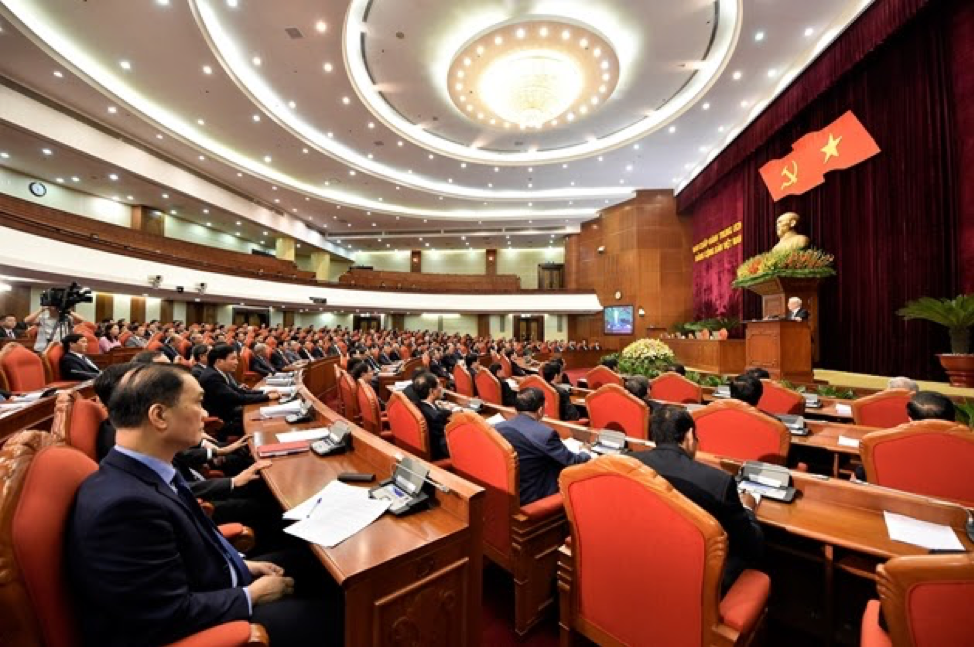
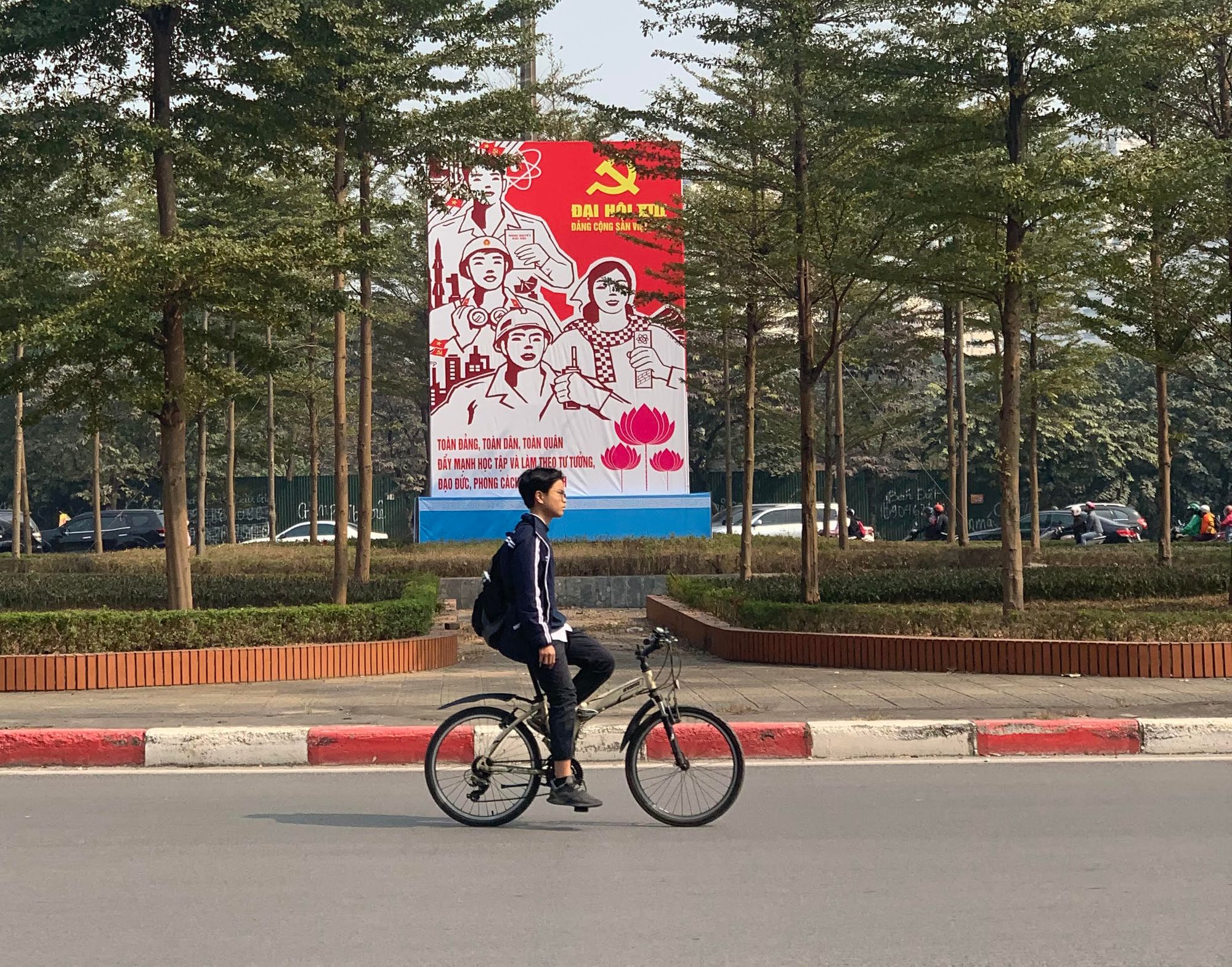
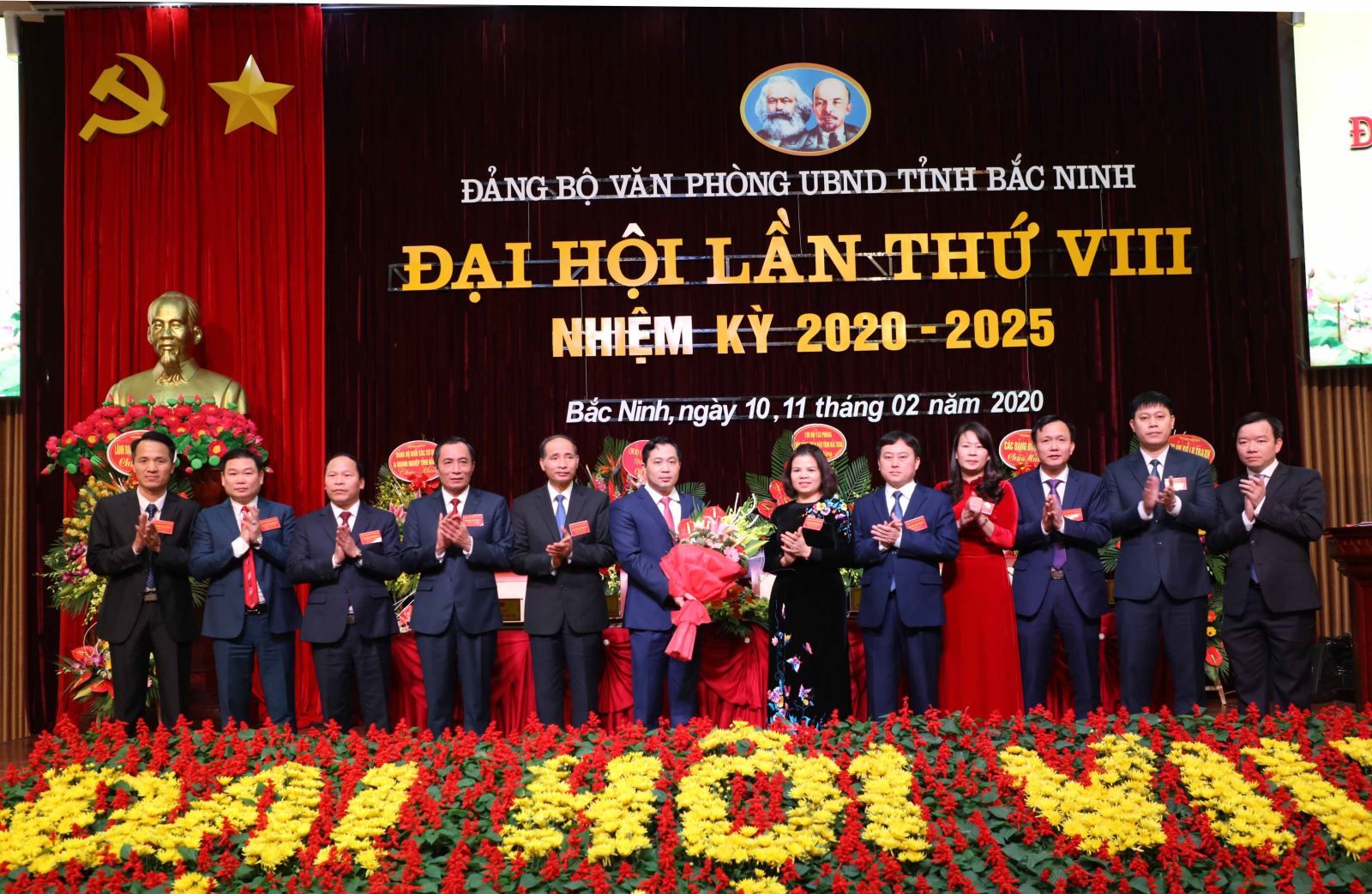
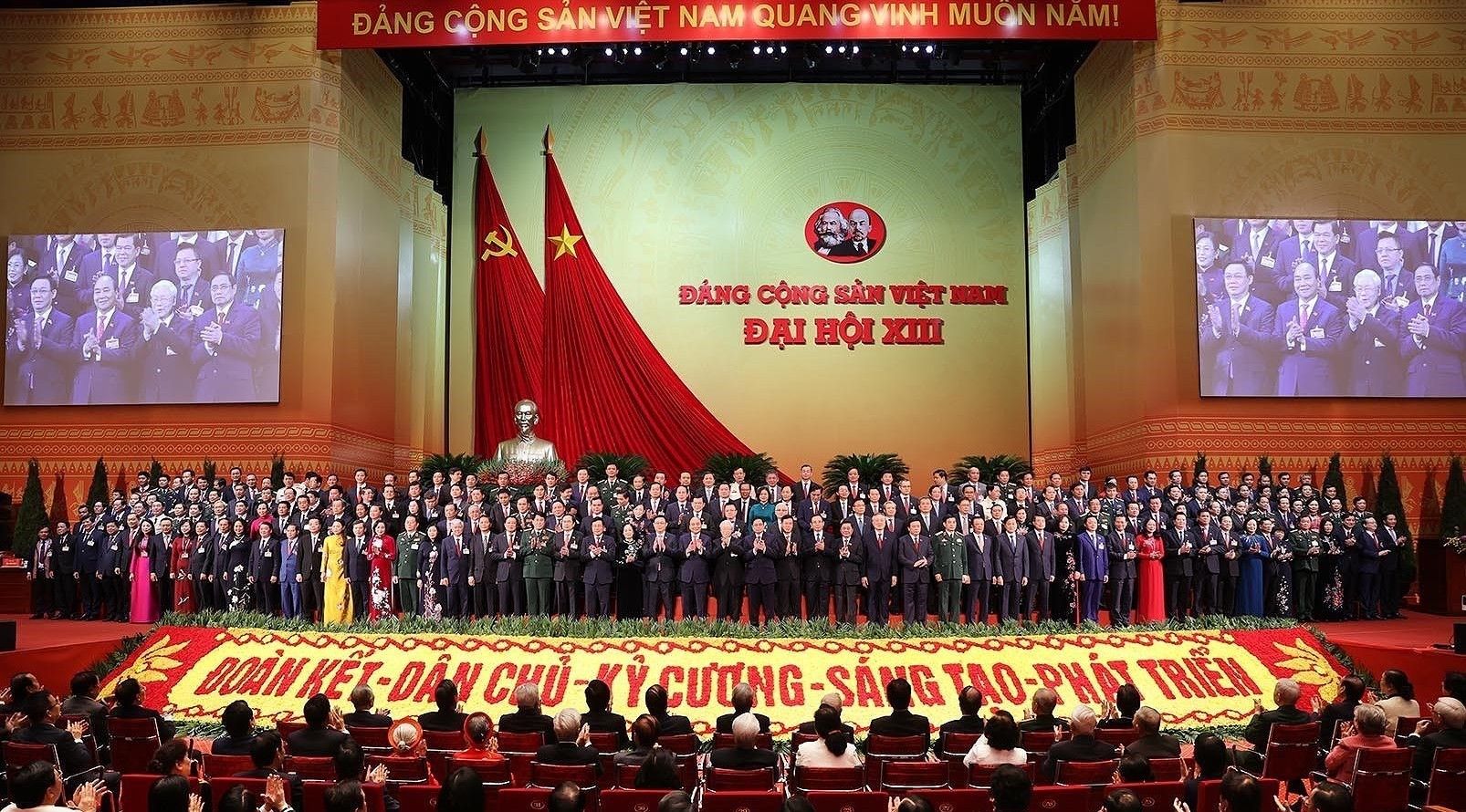
    The Communist Party’s 13th Congress ended last Monday morning, February 1, 2021, one day earlier than planned due to COVID-19 concerns.

    The main part of the Congress’s agenda was to elect a new leadership for the party. Two hundred members of the Central Committee were elected by the Congress on Saturday, January 30, and the Committee convened the next day to elect members of the Politburo, the general secretary, and members of the Central Disciplinary Commission.

    The results were announced the same day. Current general secretary Nguyen Phu Trong won re-election. The next three seats in line are current prime minister Nguyen Xuan Phuc, the head of the Party Central Committee’s Organization Commission, Pham Minh Chinh, and the secretary of the Hanoi Party Committee, Vuong Dinh Hue. Together, they are often called “The Gang of Four,” or the “Four Pillars,” holding the top seats of the Party and State.

    The public in Vietnam is often informed of the results well in advance by some Internet influencers who seem to have insider information. Now, the rumor is that Nguyen Xuan Phuc will be the president, Pham Minh Chinh will be the prime minister, and Vuong Dinh Hue will be the chairperson of the National Assembly.

    Of course, we have to wait until June or July, 2021, after Vietnam’s general election on May 23, 2021, to know if the rumors are correct. However, in the past, these rumores have often proved to be true.

    Hard numbers: Only 19 out of 200 members of the Central Committee – the elite club of the party – are women; and only one woman was elected to the Politburo, reducing the number from three in the previous term.


    After the Party Congress

    As we mentioned in an earlier article, the Communist Party’s Politburo would routinely convene right after the Party Congress to assign positions to its members. Now we have started to know at least two of those positions.

    February 6, 2021: In Hanoi, Vo Van Thuong was appointed the standing secretary of the Party Secretariat – a small but powerful Party body that is responsible for overseeing the daily activities of the Party, directly assisting the Politburo.

    Who is he? Thuong, 51, was born in the southern province of Vinh Long. He is a young and rising star in the VCP, and he will take the fifth position in the Party leadership. He previously served as the head of the Central Propaganda Commission, and was formerly the standing deputy secretary of the Ho Chi Minh City Party Committee, the secretary of Quang Ngai Province Party Committee, the secretary of the Central Committee of the Communist Youth Union, as well as having served in other positions.

    Context: No member from the South faction (in the South of Vietnam) won any of the top seats in the so-called Gang of Four (Party’s general secretary, president, prime minister, and chairperson of the National Assembly).

    February 6, 2021: In Hanoi, Tran Tuan Anh, who currently heads the Ministry of Industry and Trade, was appointed commissioner of the Party’s Central Economic Commission.

    Who is he? Anh has been the head of the Ministry of Industry and Trade since 2016. He was previously the deputy minister of that same ministry and also was the deputy commissioner of the Central Economic Commission. Anh was also the vice president of the Can Tho City People’s Committee and he also served as Vietnam’s consul general in San Francisco, in the United States.

    What is special about him? Now 57, Anh is notably a son of Vietnam’s former president Tran Duc Luong (1997 – 2006).


    Now, Vietnam’s general election

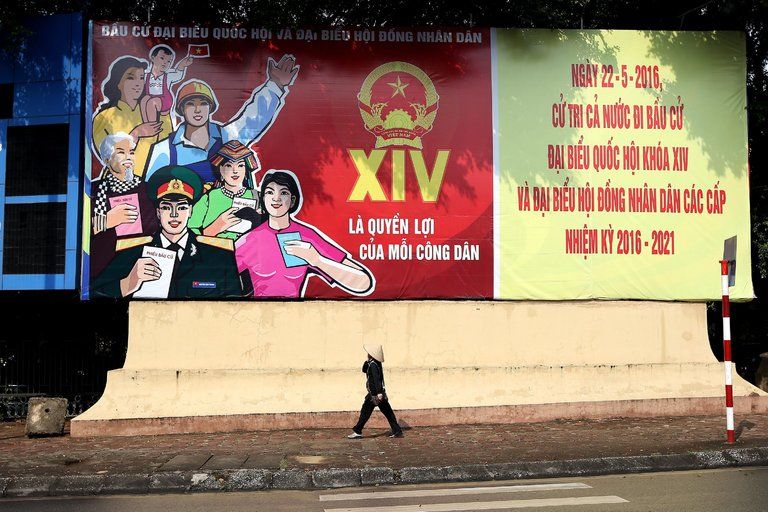
    The Communist Party’s election is now over, and the next general election will take place on May 23, 2021 to elect members of the National Assembly and local government representatives.

    The current chairperson of the National Assembly, Nguyen Thi Kim Ngan, wasted no time and immediately sprang into actions. She publicly announced that the national legislative body aimed to have 25 – 50 outside-of-the-party members; 207 members from the central government, 293 members from local governments; 50 members under 40 years old; at least 18 percent of members from ethnic minorities, and at least 35 percent women, according to Thanh Nien newspaper.

    Who formally decides the numbers? The Standing Committee of the National Assembly. It will meet on February 22, 2021 to discuss the matter further.

    Backlash: Nguyen Thi Kim Ngan’s statement immediately drew backlash from social media users who criticized her and the ruling Communist Party – the only legally operating political party in Vietnam – for trying to fake a general election.


    China’s construction of military bases near the border with Vietnam

    One of the most popular political news stories of last week was reports that China had been constructing two military bases close to the border with Vietnam. The following is a quote from Tuoi Tre News:

    “Vietnam is verifying reports of a Chinese surface-to-air missile base being constructed near the China-Vietnam border,” Le Thi Thu Hang, spokesperson of the Vietnamese Ministry of Foreign Affairs, said at a press conference in Hanoi on Thursday. The missile base is reportedly located in Ningming County in southwestern Guangxi, China, about 20 kilometers away from China’s border with Vietnam. The unverified information also stated that the missile base is situated about 40 kilometers away from another construction site, believed to be a military heliport.”

    More details with satellite images have been published by Dai Su Ky Bien Dong, a nonprofit research group dedicated to the South China Sea issue.


    Tran Huynh Duy Thuc ends his hunger strike

    Political prisoner Tran Huynh Duy Thuc ended his hunger strike on February 3, 2021. His family announced the news via a Facebook page named after him.

    He started his hunger strike more than two months ago, demanding the government consider his petition to reduce his sentence of 16 years imprisonment and release him in accordance with a new provision of the 2015 Penal Code. From his family, he only consumed milk during his strike. Tran Huynh Duy Thuc was convicted in 2009 for “conducting activities against the state” under Article 79 of the then-Penal Code.

    He told his family members via a phone call that he had achieved his main goal of the hunger strike which was to “keep a light burning during our country’s revolution.”

    Neither the family nor the government provided any information about whether or not his appeal petition is under consideration.

    Know more about him here:

    Rights groups snub Vietnam prisoner over hunger strike (Asia Times, January 17, 2021)
    Profile: Tran Huynh Duy Thuc (The 88 Project)


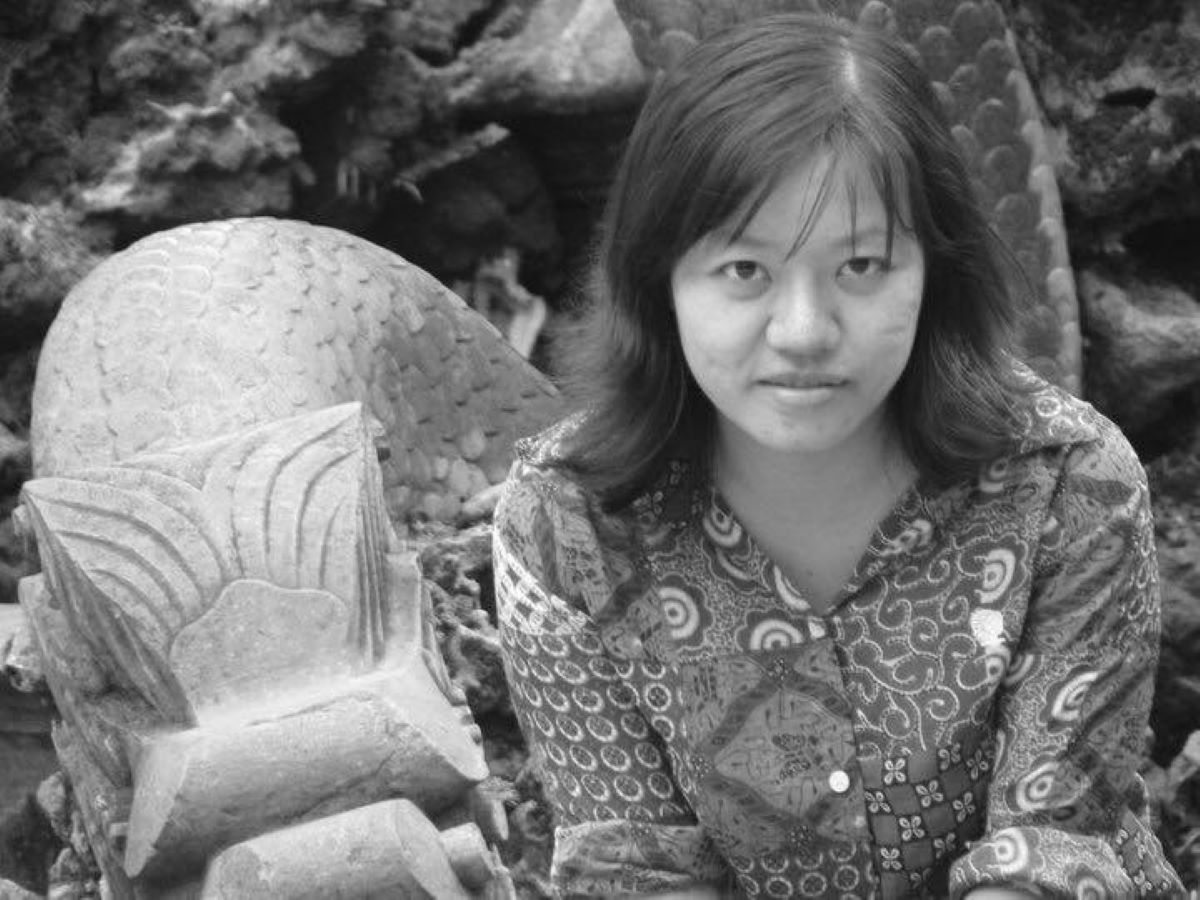
    Still no news about imprisoned democracy activist Pham Doan Trang

    Neither her attorney or family members have had any contact with jailed democracy activist Pham Doan Trang since she was arrested by Vietnam’s police on October 6, 2020. She has been held incommunicado in Hanoi since her arrest.

    Family members of Pham Doan Trang’s have visited the No. 1 Detention Center in Hanoi weekly to give her personal supplies, but they have not been allowed to meet her and no communication has been allowed.

    Vietnam’s Criminal Procedures Code allows investigative agencies to hold those suspected of national security crimes incommunicado until the investigation is completed.

    Pham Doan Trang is a co-founder of The Vietnamese and Luat Khoa magazines. You can learn more about her here and about the Party’s crackdown on the opposition movement under General Secretary Nguyen Phu Trong here.
  • Is The VCP “More Democratic” Than The CCP?

    Is The VCP “More Democratic” Than The CCP?

    This article was written in Vietnamese by Bui Cong Truc and previously published in Luat Khoa Magazine on January 20, 2021. The translation was done by Luu Ly.

    * * *

    How is the VCP “more democratic” than the CCP?

    Most of the active communist parties today are more or less based on the Soviet Communist Party model.

    The system originated with the majority power of the Party National Congress. This congress elects a minority group called the Communist Party Central Executive Committee (the Central Committee, for short).

    Theoretically, the Central Committee is the governing body that decides most of the important issues in terms of policies and personnel in the Communist Party organization. However, the organs elected by this body have certain privileges, and can completely surpass the power of the Central Committee itself, depending on the time period.

    These agencies include the Political Bureau (aka the Politburo), the Secretariats, or a typical body of the Soviet Union Communist Party, the Organizational Bureau.

    So are the power structures of both Communist parties similar? How has the individual history of each party, the Chinese Communist Party of China (CCP) and the Vietnamese Communist Party (VCP), affected each country’s economic and social development? This article will  provide readers with more information about the fundamental differences between these two Communist brothers.

    Two leaders of the two Communist parties, Xi Jinping and Nguyen Phu Trong. Photo taken during Nguyen Phu Trong’s visit to China in 2017. Photo: Xinhua News Agency.

    Conflicts between the Central Committee and the Politburo

    Many people accept, as common sense, that the Politburo is the central power for both the VCP and the CCP. However, the party rules of these two brothers have many differences.

    The first notable point is that the Central Committee of the CCP has only been  required to meet once a year since Deng Xiaoping reformed and re-institutionalized the political apparatus. Many Chinese observers assert that this was an intentional effort to limit the frequency of the CCP Central Committee’s meetings so that the authority of the body would be reduced as much as possible.

    The pressure to democratize within this Party is not insignificant and not recent, but for many reasons, these proposals have been unsuccessful. Arguably, the CCP’s Central Committee only plays a behind-the-scenes role, compared to the main playerr, the Politburo.

    Regulations in Vietnam are different. According to Article 16 of the VCP Charter, the Central Committee of the Party must meet at least twice a year.

    The fact that the Central Committee of the VCP meets more than once a year does not seem to say much about the different power structures of the two parties. However, in reality, the most important issues require a decision of this body. If we compare the total number of meetings and resolutions of the Party’s central organs in the two countries, especially since Deng Xiaoping’s faction took power, the VCP’s Central Committee has twice as many meetings as its Chinese counterpart.

    For example, only in 2016 did the VCP Central Committee convene the conference four times, with important contents including redefining the working regulations of the Central Committee, the Politburo, and the Secretariats; the working regulations of the Central Inspection Committee; regulations on the implementation of the Party Charter; and the regulations on the inspection, supervision and discipline of the Party. These were all important meetings to help Nguyen Phu Trong’s political coalition gain the upper hand. Once he was the leader of the control group within the VCP, his famous “anti-corruption” campaign followed and it has been the most controversial issue in Vietnam in  recent years.

    Another feature that is also noticed by many international commentators when comparing the two parties is the number of times that resolutions of a party’s central body are referred to in official legal documents.

    According to statistics cited by three experts, Regina Abrami (Harvard), Edmund Malesky (Chicago), and Yu Zheng (Connecticut), the percentage of legal normative documents promulgated by competent state agencies that cited Central Committee resolutions by the VCP Central Committee was quite high, averaging 23 percent. Meanwhile, this rate in China was only 5.5 percent.

    This statistic shows the direct influence of the VCP’s Central Committee on the policy making process. The difference of more than 17 percentage points is also an indication that the VCP’s Central Committee plays a greater role than its Chinese counterpart, at least on a legislative basis.

    https://2xjs7y10oiyz26vqxu2hok6y-wpengine.netdna-ssl.com/wp-content/uploads/2021/01/image1-3-1024x605.jpg
    This table compares the powers of the CCP and VCP Central Committees through two criteria: the number of meetings and the proportion of legal documents that quote the agency’s resolutions (Abrami, Malesky, & Zheng, 2008).

    The differences in the real power of the Central Committee of the CCP and the VCP are not limited to the numbers. In some specific political events, the power of the VCP’s Central Committee is also more clearly shown.

    For example, in 1997, when General Secretary Do Muoi decided to retire before the end of his term, his replacement Le Kha Phieu, was selected after an unusual meeting of the entire Central Committee.

    This approach is in stark contrast to the cases of Hu Yaobang and Zhao Ziyang in China. Finding replacements for these two to take the seat of general secretary was a private matter decided in Politburo secret meetings. In these meetings, there were also many retired “revolutionary elders” who did not have a role in deciding the next generation of leaders, according to the Party Charter.

    Not only that, in 2001, the Central Committee of the VCP even vetoed the Politburo’s request to allow Le Kha Phieu to continue holding the position of general secretary. Instead, the Central Committee elected Nong Duc Manh, who was the president of Vietnamese National Assembly at that time, to fill the most powerful seat.

    In 2006, former Prime Minister Vo Van Kiet also wrote an open letter to the Politburo requesting it to respect collective intelligence and the democratic decision of the Party’s Central Committee, and not make the Politburo the “superior” body.

    On the Chinese side, there has never been any case where the Central Committee directly and flatly opposed a proposal by the Politburo.

    So far, many people have questioned whether the VCP’s Central Committee still has real power over the Politburo, as well as if it has followed in the footsteps of it’s elder brother in the north.

    There is still reason to believe that the traditional competition between the 176 members representing various factions and schools within the Central Committee of the Communist Party still exists.

    The historical path of the two political parties

    So what is the reason for the difference between the VCP and the CCP? Many scholars often point to the history of the two political parties.

    For China, although Mao Zedong was seen as the CCP’s supreme leader for a long time, the power rivalry between factions within the party remained fierce, until Deng Xiaoping restored order according to his wishes.

    First, the policies of political and economic reform after the dire consequences left behind by Mao were enacted from the top down, and specifically from the Politburo. In a time when the Party’s political bodies were mostly ragged and lost across China, the top-down orientation seemed to make things easier to manage. This increased the legitimacy of a few powerful individuals in the Politburo.

    Not only that, but the Tiananmen Incident in 1989 created more controversy between the groups of “hard players” and “soft players” towards the protesters. The controversy further fueled the desire of Deng Xiaoping and the elites to concentrate more power, and to limit the mass discussions, of the Central Committee – which they saw as an impediment to the process of fast decision making and effective policy enforcement.

    https://2xjs7y10oiyz26vqxu2hok6y-wpengine.netdna-ssl.com/wp-content/uploads/2021/01/China-Deng-Xiao-ping-005-1-1024x819.jpg
    Mao Zedong and Deng Xiaoping in 1959. Photo: Kyodo News/ Associated Press.

    With Deng Xiaoping officially succeeding in selecting the general secretary without the consent of the Party’s Central Committee (a serious violation of the Party’s Charter), the few minorities in China gradually took control of political power.

    Since 1989, the three positions of the troika in the power structure of the socialist state of China have been the general secretary of the Communist Party, president of the State, and chairman of the Chinese Central Military Commission, all traditionally held by one person, which have been Jiang Zemin, Hu Jintao, and now Xi Jinping respectively.

    Prior to the 7th Party Congress in 1991, it can be said that the troika model in Vietnam was not much different from the Soviet Union. The general secretary had a central position in the Party with an important influence on its political policy and direction, while the chairperson of the Council of Ministers was the head of the executive branch with the obligation to enforce and guarantee the Party’s orientation. And finally, there was the president of the State, but that position often just has a symbolic meaning.

    However, the three titles of general secretary, prime minister, and president are the real “three-pillars” of power in the contemporary Vietnamese political apparatus.

    What happened?

    Some researchers point out that after the period of bad experiments with macroeconomic and microeconomic policies, chaos emerged in Vietnam’s society. Some senior leaders within the Party, such as Nguyen Van Linh and Vo Van Kiet, wished to promote more key reforms to revitalize Vietnam. One of the first things they did was to diversify and turn the Central Committee into a more authoritative institution, which they hoped in the future would be the point of consensus for the new reforms they proposed.

    Their first success was the  increase in the number of members of this body. Starting in 1986, during the 6th National Congress, leaders in the Party’s provincial committees began to be elected to the Central Committee, thereby displaying a large force supporting economic and political reforms.

    By the 7th Congress, Vo Van Kiet successfully persuaded the Party to allow local representatives to get nominated and elected as official members of the Central Committee. With that change, the voting power of local leaders was strengthened, making them  a majority group within the Party.

    https://2xjs7y10oiyz26vqxu2hok6y-wpengine.netdna-ssl.com/wp-content/uploads/2021/01/kiet_1.jpg
    Vo Van Kiet, who was the advocate of empowering the Party’s Central Committee. Photo courtesy: VNA.

    Obviously, the reformists’ wishes could only be fulfilled quite smoothly after the remaining four symbols of the Communist Party’s anti-colonial era, including Le Duan, Le Duc Tho, Pham Hung, and Truong Chinh, had passed away. After their deaths, the Party was left with a power vacuum, which created opportunities for the resurgence of the reform faction.

    According to many studies, before the 7th Congress of the VCP, two factions arose and became rival forces in the Party.

    The first group was made up of  former central leaders, or the Marx theorists, who had found a common voice under the leadership of general secretary Do Muoi.

    The second group, as previously mentioned, was the technocratic leaders, who tended to modernize and came from the grassroots level, such as Vo Van Kiet and his ally in the south, Phan Van Khai.

    By 1990, another group wanted to participate in defining the power model, and it was led by Le Duc Anh. Le Duc Anh was the commander-in-chief of the Vietnamese armed forces on the Cambodian battlefield, and he had just returned home. He wanted to strengthen the military’s role in governance, and he favored economic reform, but he also wanted to control its pace.

    During the 7th Congress, after these three groups compromised with one another, the VCP’s new tradition of power was formed. All three factions would have power and this was codified in the 1992 Constitution – which could be the most important outcome of the compromise. Do Muoi continued to hold the post of general secretary, Vo Van Kiet became prime minister and General Le Duc Anh succeeded to  the presidency.

    * * *

    In 1996, Le Kha Phieu was expecting to hold both the presidency and the position of general secretary, with a goal of unifying state power in a way that would be similar to China’s model. Nevertheless, this effort was unsuccessful. In 2018, when Nguyen Phu Trong concurrently held both of the aforementioned titles after President Tran Dai Quang died, people began to worry that a Chinese power structure model was being formed in Vietnam. That concern is not without foundation.

    Besides, there is not enough information to significantly compare whether the Vietnamese “three-pillars” model or the Chinese “monopoly” model is better. Some scholars argued that decision-making through a majority of a large body – such as the Party’s Central Committee – would reduce extremization and give highly compromising decisions. However, some other experts would argue that these compromising decisions only showed the lack of a definite direction from the Party’s central authority. It could deem that the Party only served a few politicians’ self-interests, considering the one-party and authoritarian political environment in Vietnam.

    When we examine whether the VCP or CCP can be deemed more “democratic,” it must be pointed out that neither system includes “the people” in their decision-making process. The members in both of these parties are still more concerned with their own power within their respective parties.

  • Vietnam-Myanmar, A Tale Of Two Systems: The Takeover Of Telecommunications By Authoritarian Governments And The Military

    Vietnam-Myanmar, A Tale Of Two Systems: The Takeover Of Telecommunications By Authoritarian Governments And The Military

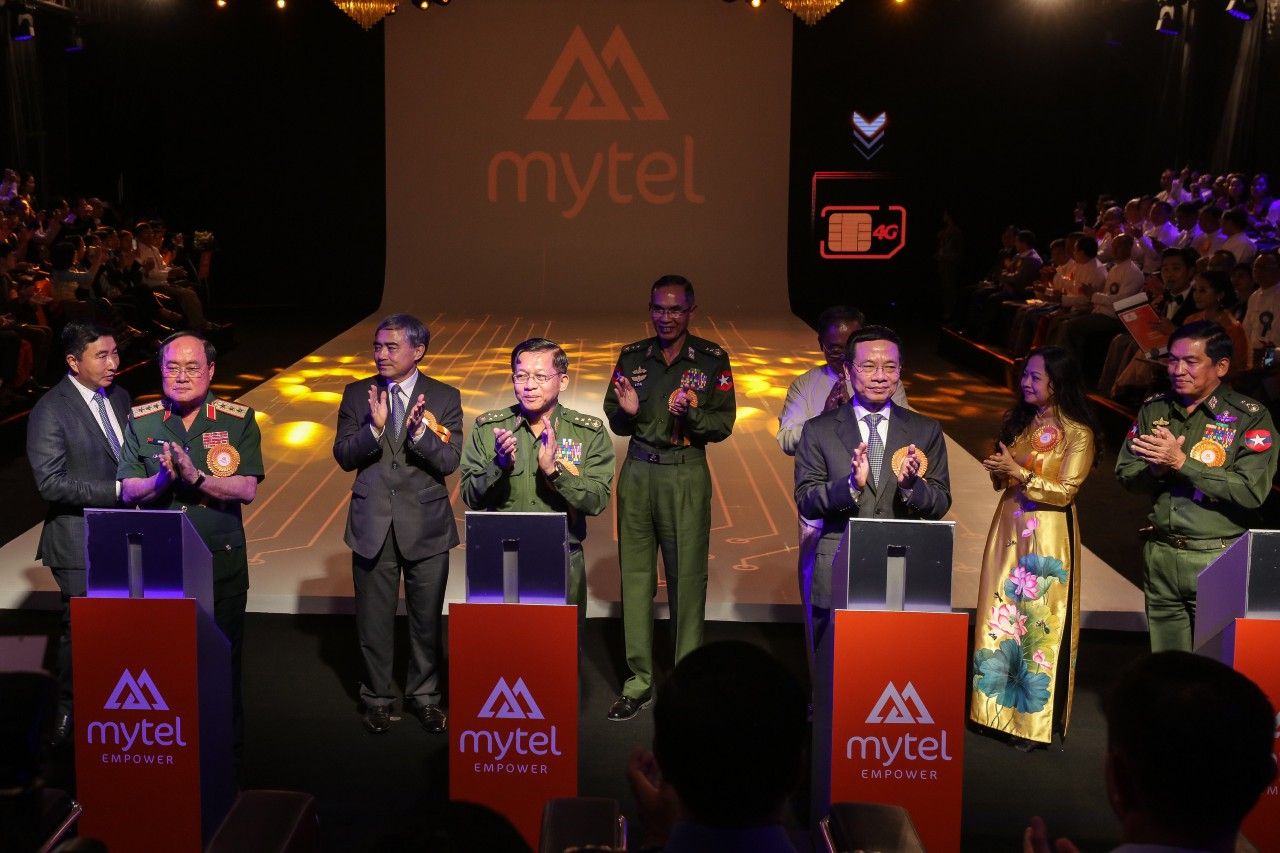
    A report submitted by Justice for Myanmar, a movement which aims to expose systemic oppression and human rights violations in the country, on December 20, 2020, released details regarding the involvement of Viettel and other international businesses in the Myanmar telecommunications sector. This piece of investigative journalism states that “the commercial partnerships established between these businesses and Mytel (Myanmar’s newest mobile network operator) show that they are complicit in the abuses committed by the Myanmar military.”

    An even more concerning factor would be the connivance of the Vietnamese government itself. Viettel is a state-owned enterprise operated by Vietnam’s Ministry of Defense and it is also the fourth largest stakeholder in Mytel. Hence, the Vietnamese government appears to have a direct hand in the affairs of another sovereign nation. In the same vein, Mytel itself has its own fair share of controversies and scandals hounding it since its inception.

    While a large number of businesses are named in the report, Mytel and Viettel are given more attention and both play an integral role in the scandal surrounding the Myanmar telecommunications sector. The remainder of this article will shed light on both these companies and will examine the reasons for their involvement in this issue.

    Mytel is Myanmar’s fourth mobile network operator. It launched in June 2018 and from the report, it was envisioned to be “a successful collaboration between the private sector and [the] Union government” of Myanmar. In the two years it has been in operation, Mytel has amassed more than 10 million subscribers and their quarterly profits are estimated to be at around US$25 million. On the surface, Mytel appears to be your typical for-profit communications business. However, the aforementioned report exposes the truths, lies, and intricacies within this corporation.

    Justice for Myanmar also stated that 28 percent of Mytel’s shares are publicly owned, the shares under the control of Star High Co. Ltd., a privately registered company that is a subsidiary of the Myanmar Economic Corporation (MEC), a military-controlled conglomerate.

    A lack of transparency regarding the company’s finances also plagues Mytel with public shareholders not being informed of how the company’s profits are being used. The report also highlights that the communication infrastructure built by Mytel is being utilized by the Myanmar military to aid in their oppression of the Rohingya ethnic minority. With the advent of 5G coming into the region, these human rights violations and abuses will only intensify.

    Unlike Mytel, Viettel is publicly known to be a state-owned enterprise with direct ties to both the Communist Party of Vietnam and the Ministry of Defense. Since its establishment in 1989 as a construction company, the enterprise has gradually evolved and is now the leading force in the Vietnamese telecommunications sector. The company’s reach has also extended to other fields as well, such as the real estate and investment sectors. It’s involvement in Myanmar began in 2010 and its sway and influence in that country has only grown since then. According to the report, aside from being a major shareholder in Mytel, Viettel has also been actively aiding the modernization of Myanmar’s military through providing equipment and training. In effect, Vietnam Ministry of Defense, a foreign government entity, is aiding and complicit in the multitude of war crimes and human rights violations of the Myanmar military.

    It is apparent that both these companies, Viettel and Mytel, are heavily influenced, or even controlled, by their country’s respective governments and military. Yet, what benefits could these twin pillars of the state stand to gain from their involvement in the telecommunications sector? Why are these two towers of nationhood so fascinated with controlling communications?

    The meddling of the government and the military in telecommunications is not something new. This is most apparent when we look at the various authoritarian states of the past. Mass surveillance, wiretapping, and undercover spy rings are the tricks of the trade and these were heavily used to observe and control citizens living under the heels of these regimes.

    For instance, a 2015 report by Amnesty International asserted that the Stasi surveillance network had around 174,000 informants, which made up about 2.5 percent of the working population of East Germany during the Cold War. The amount of information this network was able to amass about both citizens and foreign tourists is both staggering and horrifying; this information was then used to influence public opinion, identify dissidents, and control the general population. Since the fall of the Berlin Wall in 1989, around 2.75 million people have asked to see their files in the Stasi database. While this is just one prime example of how totalitarian states use the personal information of their citizens, this has been fairly consistent throughout history. No matter which era, the play has been the same: authoritarian regimes collect information from just about everyone and use this knowledge to quash any dissenting thoughts people might hold and to quell any actions the government might find subversive.

    This is exactly what we see in how the Myanmar military treats the Rohingya people. Several Mytel towers are built inside military bases found within ethnic areas. In doing so, Mytel subverts the need for negotiations and the consent of the local communities in order to expand its communications network inside those locations. The townships of Ann, Kengtung, and Lashio have suffered the brunt of the abuses by the Myanmar military with thousands of citizens displaced from their homes, a lack of food and water, extrajudicial killings, forced disappearances, torture, and constant surveillance all made possible due to the infrastructure established by Mytel, with the invisible hand of the Vietnamese government pulling the strings from behind the scenes.

    While surveillance has historically been known to be the main reason governments and militaries desire to control telecommunications, in the case of Viettel and Mytel, a lucrative avenue for corruption presents itself.

    The Justice For Myanmar report also mentions that the profits the Myanmar military makes through Mytel are hidden through proxy shareholders and military shell companies. While 23 percent of the profit goes to 11 Myanmar investors, another 28 percent goes to the state-owned enterprise, Star High Co. Ltd. Although Star High is registered as a private company, it is listed as a public company on both the Mytel website and official government documents. Shares in this company also belong to individual members. Moving through Star High, the money flows and changes hands several times and at the end of it all, no one can really tell where the money goes. The remaining 49 percent of the profit, the lion’s share, goes to Viettel Global JSC, and at the end, reaches Vietnam’s Ministry of Defense.

    In the case of Mytel and Viettel, corruption and control appear to be the main forces that fuel how the Vietnamese and Myanmar governments and militaries act. A symbiotic relationship has been formed between all players involved that benefits those in-charge, but at the cost of human rights, and more importantly, human lives.

    The lives of their citizens and those underrepresented are treated not even as commodities, but as obstacles that need to be discarded, ignored, or eliminated. Yet, the dramatic irony of it all is that the same advancements in telecommunications used by governments and military to push their agendas also provide others with the means to identify and lay bare the truth for all the world to see. At the end of the day, all truths will be exposed, all lies will be debunked, and all will be laid bare at the feet of justice.

  • Everything You Need To Know About Vietnam’s Central Committee Of The VCP

    Everything You Need To Know About Vietnam’s Central Committee Of The VCP

    This article is based on Tran Ha Linh’s “Mọi điều bạn cần biết về Ban Chấp hành Trung ương Đảng Cộng sản Việt Nam,” published in Luật Khoa Magazine, a sister publication of The Vietnamese, on January 28, 2021. The translation is done by Karie Nguyen.

    ***

    The Central Committee of the Vietnamese Communist Party (VCP) is a very powerful governing body of the VCP and it seems to be gaining more influence within the Party day by day.

    What is the Central Committee?

    In a previous article, we explained  that the Party Congress is the highest governing body of the VCP according to its own charter. However, these congresses only happen every five years, and at some times in the past, they could actually be held at longer intervals. Then during the five years between the two congresses, which body will lead the VCP’s activities?

    That body would be the Central Committee. In other words, the Central Committee is the second most important body of the VCP.

    Who are the members of the Central Committee?

    The Central Committee gathers together all of the most powerful members of the VCP. There are about 180 official members (who have the right to cast votes) and approximately 20 alternative members (who do not have the right to vote). This is an approximation because these numbers fluctuate when some members are disciplined (as in the cases of Dinh La Thang, Nguyen Bac Son, and Truong Minh Tuan), or when some pass away (Tran Dai Quang). There are also some members  who resign during their terms for various reasons.

    Almost all of the secretaries of the provincial committees, some of the deputy secretaries of the major cities (such as Hanoi and Ho Chi Minh City), and the secretaries of significant departments (such as the central departments and state enterprises) get selected to the Party Congress to be members of the Central Committee (both of the official and alternative members).

    We also see the prime minister, deputy prime ministers, ministers, and some deputy ministers of the major ministries (such as the Ministry of Public Security or the Ministry of Defense) and directors join the Central Committee.

    Vietnam Television (VTV), the Voice of Vietnam (VOV), the Vietnam Academy of Social Sciences, and the Vietnam Academy of Science and Technology all belong to the central government and have equal standing as the ministries. Therefore, the heads of these organizations can also become members of the Central Committee.

    The National Assembly chairperson, vice-chairperson, and the commissioners of all committees are all included on the Central Committee. There may even be deputy commissioners of some committees participating in the Central Committee.

    The prosecutor general and deputy prosecutor general of the People’s Supreme Procuracy along with the chief justice and deputy justice of the People’s Supreme Court also participate as members of the Central Committee. The leaders of the Vietnamese Fatherland Front, the Vietnam Farmer’s Union, and the Ho Chi Minh Communist Youth Union, etc. are also members of the Central Committee.

    Of course, the members of the Politburo (including the VCP general secretary), and the Secretariat, the heads and deputies of the VCP departments, are all members of the Central Committee.

    Who elects the members of the Central Committee?

    New members of the Central Committee are elected during the Party Congress. Almost all of the new members will be nominated before the congress by the former Central Committee. It is very rare to see any members of the Central Committee get elected if they are not nominated in advance by the Central Committee. Being nominated at the Party Congress or by their self-nomination would not help them get elected.

    In the time period between the two Party Congresses, the Central Committee may also elect more official members from its own alternative members group.

    What are the roles of the Central Committee?

    Because it is acting as the VCP’s main stage, the Central Committee can do the following:

    • Elect the members of the Politburo, the general secretary, the members and the Standing Secretary of the Secretariat, and the members and the commissioner of the Central Commission for Disciplinary Inspection. These are the most important and powerful departments of the VCP.
    • Organize to implement the political platforms of the VCP, the VCP’s charter, the resolutions of the Party congresses, and decisions regarding both foreign and internal affairs. It also focuses on the VCP’s mass mobilization and constructing the VCP’s organizational development, as well as summoning the Party Congress.

    How often does the Central Committee hold its plenary sessions?

    According to the VCP’s charter, the Central Committee will meet every six months, but it can meet more often if it is necessary. The meetings are officially called plenary sessions. If these sessions are held twice a year, then during the five years between the VCP congresses there will have been 10 meetings. However, in recent history, the Central Committee has held between 12-15 sessions, and there were years when they met four times a year, as in 2011, 2015, and 2016.

    It is not a coincidence that the plenary sessions always met before the National Assembly had its sessions. Before the National Assembly conducts its session, there must be a Central Committee plenary session. In that plenary session, the Central Committee, together with Politburo meetings, will not only decide the National Assembly’s agenda, but also the decisions that the National Assembly will make during its session. Of course, the sessions of the National Assembly will not always be conducted as planned by the Central Committee’s original decision. In 2018, the National Assembly was pressured by the public to halt the law on the creation of the three Special Economic Zones. That halt has continued to date and that decision was not something the Central Committee could have expected.

    The first plenary session of a new term of the Central Committee begins during the Party Congress to elect the members of the Politburo, the general secretary, and a few other positions. The Party Congress will end on the next day after the Central Committee finishes its first plenary session and the new leaders of the VCP will be introduced during that final day.

    Are the plenary sessions of the Central Committee open to the public?

    No.

    Even at the National Assembly, which is the nation’s elected legislative body, the Vietnamese people are prevented from attending and observing its sessions. Thus, the plenary sessions of the Central Committee – one of the top governing bodies of the VCP – are not open to the public.

    The plenary sessions are conducted in the conference hall of the Office of the Party Central Committee located at No. 1, Hung Vuong Street, Hanoi, at Ba Dinh Square, the site of many historical events, and where Ho Chi Minh read the Proclamation of Independence of the Democratic Republic of Vietnam on September 2, 1945.

    Only representatives of a few of the special mouthpieces of the government – such as Vietnam Television, the Voice of Vietnam, the Vietnam News Agency, Nhan Dan (The People) newspaper, the VCP online newspaper, and the government’s online newspaper, are allowed to attend. However, these organizations only report on the commencement and the conclusion of these sessions. Everything else is kept secret.

    After the plenary session concludes, the Office of the Central Committee will announce the results of the meeting at a news conference.

    Does the Central Committee have actual power?

    Yes.

    Before Party Congress V (in 1982), the Central Committee had an insignificant role when compared to the Politburo. For example, the third Central Committee was active from 1960 to 1976 for a total of 16 years. Nevertheless, it only conducted 19 plenary sessions. All of the major decisions during those years came from the Politburo and the Party’s Central Military Commission.

    However, starting with its fifth term, and especially the sixth term, the Central Committee conducted more plenary sessions, having at least two sessions per year. During these sessions, the Committee decided and implemented more important policies with regards to the operation of the VCP.

    One reasonable explanation for this was the decentralization of the VCP’s power over the years.

    Before, people like Ho Chi Minh, Le Duan, Le Duc Tho, Truong Chinh, all had extensive influence within the VCP. Perhaps, that was mainly because Vietnam was in a state of war. At that time, the Politburo and the Central Military Commission, and even just a few top leaders, would have enough authority and power to execute their decisions on their own.

    However, beginning in the early 1980’s, the group of the heroic individuals who specifically contributed to the VCP development got older and died and so the group lost its influence in the Party.

    More than that, when Vietnam began to live in a peaceful period, each local province came to have its own individual and unique problems. Therefore, the authority in the VCP had to be shared among the members of the Politburo and also with the local governments, and with other governmental enterprises as well. The decentralization of power in the VCP and also in the government meant that more authority was disbursed to local governments.

    At the same time, there were issues that the Politburo could not decide, and it passed those on to the Central Committee. During the XI term, we had the example of two Politburo members, Prime Minister Nguyen Tan Dung and General Secretary Nguyen Phu Trong, who conflicted with each other a lot during their terms. Their conflict couldn’t be resolved within the Politburo, so they brought it to the Central Committee’s floor. At the 2012 Central Committee’s 6th plenary session, there was a plan to review the prime minister’s responsibilities during his term. The prime minister ended up not being disciplined and was able to retain his position.

    Even though the Central Committee possesses such significant power and has been gaining more control over the years, its agenda can still be dictated by the Politburo. In 2006, Prime Minister Vo Van Kiet penned his letter to the Politburo, asking it to respect the decisions that came from the Central Committee and to quit acting as the higher-level, supervising department of the Committee.

    Based on the VCP’s charter, the agenda and the nomination and election of all the positions in the Central Committee’s plenary sessions should be organized by the Politburo. However, it is still unclear which department has more power between these two most potent governing bodies of the VCP.

    We can only hope that with more research and analysis that we can better understand the organizational power of the VCP.

  • Watching The US Presidential Election While Dreaming About Vietnam’s Free Election At The Commune Level

    Watching The US Presidential Election While Dreaming About Vietnam’s Free Election At The Commune Level

    This op-ed article was written in Vietnamese by Ly Minh and previously published in Luat Khoa Magazine on November 6, 2020. The translation was done by Jade NG.

    ***

    Although I am a Vietnamese citizen, I anxiously watched the US presidential election in November 2020. Many of my friends in Vietnam also did the same thing. We eagerly watched every turn of that election as if we were personally voting for our own head of state.

    The Vietnamese public’s interest in the US presidential election every four years can be seen through the headlines of our newspapers. The mainstream media updates many Vietnamese readers on every step of the thrilling race to the White House.

    Looking eagerly at the news every day about  the US presidential election, I cannot help but wonder whether or not the Vietnamese people earnestly wish to elect their own leaders.

    In the political context of Vietnam, I understand that this question is a taboo. Needless to say, everyone knows that the current political regime in Vietnam does not allow the Vietnamese to exercise their voting right as in the United States.

    Theoretically, the Vietnamese elect their National Assembly delegates through the National Assembly election once every five years. Then, on behalf of the Vietnamese people, the National Assembly delegates elect our national leaders.

    Thus, elections in Vietnam ironically have been going on smoothly, albeit with many predictable results. Surprises rarely happen in those elections. Throughout my own monitoring of the National Assembly elections in Vietnam, I found the saying “the Party selects, the People elect” a very reasonable way to explain the development and the results of elections in Vietnam.

    The secret desire of many Vietnamese people, including myself, is to have the freedom to make our decisions and to choose our state leaders, and even the National Assembly delegates who actually represent our voices when deciding the big decisions for the country.

    That desire is expressed indirectly by many people through monitoring and discussing the US presidential election, as if we were voting for our own state leaders. A friend of mine lamented on Facebook: “I look at the US election and all I  can feel is pain for the Vietnamese people.”

    It is impossible not to feel hurt.

    Governance is democratic when each vote of the citizens decides who the leaders will be. Every vote influences the final result. The thrill of the US election right up until the last minute was because those of us who watched the election’s progress could see the importance of each ballot cast by the American voters.

    Because each person’s vote is so important, the presidential candidates of the US must find ways to enlist the support of their voters, to specialize their campaigns for each state, to come up with policies that please local voters to gain support for the candidates, and even to try to entice the neutral voters.

    Meanwhile, looking back at the political situation in Vietnam, my country’s people have no decisive voice in deciding who will become our leaders. Therefore, in Vietnam, many people are not excited about politics and are not interested in who will become the general secretary, the president of the country, the president of the National Assembly, and the prime minister. It is simply because Vietnamese citizens do not have the right, through their votes to influence the selection of these above positions.

    Those who are knowledgeable about politics in Vietnam understand that the Party decides all the leadership positions in the country. Some three or four million members of the ruling Communist Party decide for almost 100 million Vietnamese people. Party members also decide all of the major issues of the country through their secret meetings, where the press is not allowed to cover any news. And the public? The public only knows about the results which are often announced by  Party officials after those meetings.

    This is the reality about the Vietnamese political situation that I, a Vietnamese citizen, am forced to accept. But I personally think that many people who also accept that reality do not comprehensively support it.

    Of course, I fully understand that some supporters of the current regime would argue that the Vietnamese people have the right to vote for the head of the country through the National Assembly delegates. However, I just want to ask two simple questions. First, do you remember who you voted for in a recent election? Second, do you feel happy when your delegate wins the election or sad when she or he fails?

    Having an election such as in the United States is a distant dream for the Vietnamese. Nevertheless, I have only a small dream, which is that our local people can one day elect the leaders of their wards or communes, free and fair, by themselves. Hopefully, my dream will come true soon so that in the future I can proudly tell my children and grandchildren that I have elected our ward president in a past election.

  • Everything You Need To Know About Vietnam’s 13th National Party Congress

    Everything You Need To Know About Vietnam’s 13th National Party Congress

    This article is mainly based on Tran Ha Linh’s “Mọi điều bạn cần biết về đại hội toàn quốc của Đảng Cộng sản Việt Nam,” published in Luật Khoa Magazine, a sister publication of The Vietnamese, on January 15, 2021.

    ***

    Political party conventions are part of a country’s politics, but in Vietnam, it’s a special part. It’s not about the parties nominating candidates for public offices, but rather the only legally operated political party in the country deciding the government’s top seats and the country’s direction.

    No one needs to call the party by its full name. Often, people call it “the Party”, or “Đảng”; sometimes “our Party”, or “Đảng ta”. The word “Đảng” (Party) is almost always written with a capital “Đ”. Thus, unlike how Americans call the Democratic Party’s conventions the “DNC” and the Republican Party’s conventions the “RNC”, the Communist Party of Vietnam’s conventions, or congresses, are often called “the Party Congress” (Đại hội Đảng). Say it to anyone in Vietnam and they know exactly what you mean.

    Now, the next congress of the Communist Party of Vietnam (CPV) is approaching. Here is everything you need to know to understand the event.

    What is “the Party Congress?”

    The Party Congress, or its full name, the National Congress of the Communist Party of Vietnam, is “the highest governing body” of the Party as stated in its charter. The Party Congress  makes the most important decisions relating to Party leadership and direction as follows:

    • It reviews the implementation of the Congress’ previous term’s resolutions;
    • It determines the next term’s direction and policies;
    • It determines whether or not to amend the Party’s two highest instruments: the Party Platform and Charter.
    • It decides the number of members of the Party Central Committee and elects the next term’s members.

    How often does the Congress take place?

    Every five years as you may have heard?

    Not really. The party has only held 12 congresses throughout the 91 years of its existence. The approaching one is the 13th Party Congress. That means one congress every seven years on average.

    CPV congresses have only taken place every five years since the 6th Party Congress in 1986, the one that shifted the country’s direction away from a centrally planned economy towards capitalism with a widely known grand policy called “Đổi Mới” (Renovation). The previous congresses were held inconsistently in 1935, 1951, 1960, 1976, and 1982, mainly due to armed conflicts and wars with the French, the Americans, and the Chinese.

    How long is a Congress?

    The 13th Party Congress will run for nine days, from January 25 to February 2, 2021, in Hanoi.

    The previous congresses lasted four to nine days.

    Who participates in the Congress?

    A total of 1,587 delegates are coming to the capital to attend the 13th Party Congress, representing 5.1 million Party members, according to the CPV’s head of External Affairs.

    They come from the Party’s committees in provinces, central government bodies, state-owned corporations, the military, the police, etc. Among the delegates, 194 are entitled to attend the Congress without having been elected, while another 15 delegates are appointed. The rest are elected.

    Often, identities of delegates reflect one of the most popular concepts of the party’s governance: proportional representation, or cơ cấu. As a Communist party that claims to strongly uphold values such as equality for all, the proportional representation concept aims to make sure that delegates represent all groups within society, including from different classes, geographic regions, different genders, ethnicities, religions, occupations, branches of government, representatives from civil society – who are heavily controlled by the government, and the private sector. This broad membership makes the Party Congress look more representative and more legitimate on the surface while not actually having a more meaningful and substantial representation.

    How does the Congress elect the Party leadership?

    Do the Party’s congresses elect the top party leaders? It always looks like that, but it is not true, and many people have a misconception of how the Party leadership is elected.

    One needs to take a look at the CPV’s Central Committee Decision No. 244 to understand how the party’s elections work. And it turns out that the congresses only elect members of the Central Committee. The Central Committee, in turn, elects members of the Politburo, the general secretary, and members of the Disciplinary Committee during the Congress .

    The Congress will elect around 200 members of the Central Committee per the previous term’s Central Committee’s proposal, including some 20 alternate members who have the right to participate in the Committee’s conferences, but have no voting rights. The current Party leadership will introduce this proposal to the Congress, and the delegates will have to approve it before the Congress moves on to elect members of the Committee. The list of candidates consists of people nominated by the previous term’s Central Committee, people nominated by delegates at the Congress, and self-nominated candidates.

    Due to the Party’s principle of democratic centralism (nguyên tắc tập trung dân chủ) and the internal culture of making decisions collectively rather than individually, it’s rare to see delegates seeking candidacy themselves. Most candidates nominated at the Congress must be approved by their own delegations.

    After being elected, members of the Central Committee will convene  its first conference, called hội nghị trung ương, to elect around 15 members of the Politburo (Bộ Chính trị) – a party body that is considered the most powerful group of Vietnamese politicians. Again, the electoral process is pretty much the same as is an election in the Central Committee.

    The general secretary,  seen as the leader of the Party,  is the most powerful politician of the country, and is also elected by the Central Committee, chosen from among members of the Politburo. The seat has been held by Mr. Nguyễn Phú Trọng since 2011.

    After finishing the election, members of the Central Committee return to the Congress to report the results in a plenary session. The new members of the Politburo will go to the stage amidst long applause, a lot of congratulations, and flowers being handed out. The newly-elected general secretary will make an inaugural speech, and later the closing remarks. A new five-year term begins.

    By this time, the public knows who the members of “the gang of four” are, the top four Party members who share the four highest offices of the country: general secretary, president, prime minister, and chair of the National Assembly. The chief justice position, although the most powerful office of an entire branch of government, has never been important enough within Party ranks to be considered as a part of “the gang of four.” That says almost everything about how insignificant the judiciary is in Vietnam.

    Does the Congress hold actual power as stated in the Party’s Charter?

    Not really.

    The agenda of the Congress is largely set by the previous term’s Central Committee. Delegates are elected or appointed under a process entirely controlled by the previous term’s Central Committee. The Committee also decides a set of qualifications for members of the next term’s Central Committee, Politburo, and even the general secretary position. Only those who meet the qualifications can be nominated to the Congress, and with a very high likelihood of being elected. The majority of candidates are nominated by the Committee.

    For example, the 10th Party Congress in 2006 needed to elect 160 members for the Central Committee. There were 207 candidates approved by the Congress for the election, which included the majority of 174 candidates nominated solely by the previous term’s Central Committee. The other 31 out of 207 candidates were nominated by the Congress, and only 2 self-nominated candidates.

    Often, the Central Committee holds conferences up until days just before the Congress to determine the proposal for the Congress agenda, including the lists of candidates for Party leadership. Take the 15th conference of the Central Committee as an example. This was the last conference of the current Committee, which took place on Jan 16-17, 2021, one week before the Congress and began to approve “special nominees” and other personnel issues. One of the “special nominees” is believed to be General Secretary Nguyen Phu Trong, 67, because he does not meet the age requirement (that a candidate be no older than 65) to be elected as a member of the Politburo. Furthermore, he is not eligible to seek a third consecutive term under the Party Charter, unless the Congress amends the Charter.

    Drafted resolutions and any amendments to the Party’s platform are also prepared by the Central Committee.

    The Central Committee’s agenda, in turn, is largely determined by the Politburo. Therefore, the Central Committee and the Politburo, not the Congress, hold most of the Party’s actual power. The Congress has been seen mainly as a rubber stamp institution within the Party, formally approving almost everything the Central Committee proposes.

    What happens after the Congress?

    Shortly after the Congress ends, the Politburo will begin to hold meetings to assign roles to its members. At that time, it will announce members in charge of the party’s other committees (except the Disciplinary Committee), the Party committees of the capital – Hanoi City, the Party committee of the leading economic city, Ho Chi Minh City, and so on.

    Almost four months after the Congress concludes, on May 23, the nation’s general election will take place, electing members of the National Assembly – the legislative body of the central government. When the National Assembly convenes for its first session in June or July, we will see most members of the Central Committee holding representative seats, and the National Assembly will elect the Communist Party’s leaders for the offices of president, vice president, prime minister, deputy prime ministers, ministers, chair of the National Assembly, chief justice, chief prosecutor, and so forth.

    By then, the entire electoral process, started more than a year earlier at the grassroots level of the Communist Party, will be completed.

  • Vietnam: Citizens Must Pay Trillions Of Dong For The Party Congress, Regardless Of Party Membership

    Vietnam: Citizens Must Pay Trillions Of Dong For The Party Congress, Regardless Of Party Membership

    By the most conservative estimates, the amount of money citizens pay to fund Party congresses at just the local level is enough to keep the Government Inspectorate running for more than 25 years.

    ***

    Local party committees throughout the country have begun organizing party congresses to elect “elite” representatives to attend the 13th National Party Congress, an event which occurs every five years. They will elect members to the Party’s Central Committee, from which the Secretariat and the Politburo will be drawn, as well as those positions seen as stepping stones to Vietnam’s top leadership posts.

    However, these strictly party affairs actually draw from the government’s budget, tapping into taxpayer money that could be used for state administration or policies supporting people’s livelihoods.

    This article will summarize a number of counter-intuitive but actual political realities that Vietnamese citizens have faced for decades and will most certainly continue to face if fundamental changes do not occur.

    Total expenditures undisclosed, possibly quite large

    Before diving deep into legal issues, we’ll provide a general overview on how budgets are used for Party congresses. Currently, costs associated with organizing Party congresses remain ambiguous.

    The general scope of regulations in the Law on Access to Information excludes transparency regarding the operational finances of political and socio-political groups.

    On the other hand, the State Budget Law contains Article 15, which stipulates responsibility for publicizing the state budget.  However, the law only regulates this responsibility in regards to governmental bodies rather than political organizations.

    Finding information on the costs of organizing the Party Congress specifically, and the costs of running party organizations more generally, forced me to try my luck with reports from the Ministry of Finance, the state management body directly responsible for the budget and national expense.

    Accordingly, we found that the Ministry of Finance established a separate website that was quite easy to navigate and use. However, the detailed budget information provided was not helpful for readers, regardless of what they were looking for.

    Take this example from April 15, 2020:  the Ministry of Finance issued an estimated implementation of the 2020 Quarter I budget, that is, the time period during which finance plans and preparation costs for Party congresses are laid out beginning in May.

    However, the roster of expenditures only lists three accounts: normal costs (the highest, at 343 trillion dong, or US$14.7 billion), interest and debt costs, and salary reform costs. The estimate clearly is of no use to citizens who want to inspect and oversee financial transparency.

    Because of this opacity, I’m forced to look for sources of information at lower levels and with broader scope. Such a manner of research will reduce the ability to generalize regarding the financial “voraciousness” of Party congresses. However, this seems to be the only way to actually get an understanding of such expenditures.

    For example, this past April, official correspondence from the Lang Son Province People’s Committee sent to the Ministry of Finance asked for financial support in organizing the province’s Party congresses for the 2020-2025 term. The amount requested ran upwards of 85 billion dong for these fleeting party events.

    More specifically, the provincial People’s Committee requested nearly 10 billion dong for the provincial Party Congress and 66 billion dong for district-level congresses. There were even expenditures totaling more than 10 billion dong to “renovate and repair service projects for the Party Congress at all levels” (these fixed expenses should have been calculated separately according to the law; it is unknown how this is permissible).

    More importantly, it must be remembered that Lang Son is a mountainous and sparsely populated province, with few party members and a cost of living that ranks among the lowest in the country.

    In another document that I found from the Quang Tri Township People’s Committee (a district-level body), promulgated on February 28, 2020, the amount of money this committee requested that the provincial Finance Office send to the Central government in Hanoi for approval for its locale reached 5.7 billion dong.

    According to the document, money spent to cover the expenses of representatives and guests for the two-day Party Congress at the commune-level alone would amount to almost 800 million dong, propaganda work in service of the congress would be 150 million dong, and money “for direct supplement payment” would be nearly 300 million dong.

    Another district, Huong Hoa, requested 2.5 billion dong in funds for district-level Party congresses and 5.1 billion dong for commune-level ones, totaling approximately 7.6 billion dong.

    Quang Tri Province has 10 district-level administrative units, Lang Son has 11. The population of Quang Tri is about 600,000 and Lang Son about 800,000; both provinces have among the smallest populations in the country, and both economies perform below the national average.

    Therefore, if I use the figure for Lang Son (85 billion dong) as the average for each province, then I can extrapolate that the total costs for organizing Party congresses in all 64 cities and provinces is nearly 5.5 trillion dong, not including the central Party organizations and the National Party Congress. And this is a conservative estimate.

    According to the data Luat Khoa Magazine has gathered in previously articles, this amount is enough to keep the Government Inspectorate and the Government’s Committee for Ethnic Minority Affairs operating for more than 25 years, with enough left over to fund the Ministry of Agriculture and Rural Development—one of Vietnam’s pivotal ministries—for up to a year (the 2020 estimate is 5.3 trillion dong.

    Laws about the Party’s funding are regulated by the Party’s Central Office.

    This is not some kind of sensational headline to attract readers; it’s the truth.

    In the State Budget Law mentioned above, Articles 36 and 38 tell us that both local and central budgets are also responsible for funding the activities of political organizations (i.e. the Communist Party of Vietnam).

    In Items 7 and 8 of Article 8, which covers the state budget’s principles of operation, the operational expenses of sociopolitical-industrial organizations, social organizations, and socio-industrial organizations are handled according to principles of self-sufficiency; the state budget only covers tasks the government assigns. The state budget was created to help political and socio-political organizations balance their operational books.

    That’s the extent of what the State Budget Law says about the Communist Party of Vietnam’s coffers.

    Government Decree 163/2016 provides a bit more detail to the State Budget Law, stating in Article 9 that the government “entrusts the Ministry of Finance to lay out specifics in the management and use of the state budget for Vietnamese Communist Party bodies.”

    The Ministry of Finance’s Circular 40/2017 has regulations on business expenses and conference organizing fees which give us a bit of hope in understanding how the budget is used for Party activities more generally and Party congresses at all levels more specifically, by providing us a legal basis on paper.

    But right in the circular, the Ministry of Finance affirms that the use of the budget for “the National Party Congress of the Vietnamese Communist Party, Party congresses at all levels up to the national level, conferences of all bodies under the Vietnamese Communist Party” will be implemented separately according to levels of jurisdiction, but it does not specify which levels.

    So  we’re left to ask, which level or levels of jurisdiction ultimately decide the budget for the Party congresses?

    I gradually realized that it was difficult to find any kind of legal basis managing how the budget is used for Vietnamese Communist Party activities.

    The “legal” basis often cited in related documents mostly stems from Decision #99-QĐ/TW, issued May 30, 2012 by the Party Central Secretariat, promulgating regulations on Party business expenses, of Party organizations at the fundamental level and those directly above (“Decision 99”).

    Expenses of all Party congresses up to the 13th National Party Congress this year are regulated by Decision 3989-QĐ/VPTW, issued August 16, 2019 by the Central Party Office.

    As of now, I haven’t been able to find the entire text of Decision 3989, possibly because it was only circulated internally. But this, perhaps, demonstrates best the contradictory manner in which the Vietnamese Communist Party handles budget transparency.

    Particularly with Secretariat’s Decision 99, we can see that this document contains regulations that seem to carry more force than even legal documents issued by the National Assembly.

    In essence, Party organizations have jurisdiction over establishing and assigning expense estimates, as well as allocating funds and also regulations for balancing the books – all while using the state budget; this decision also regulates tasks by the people’s committees at all levels, as well as other government bodies responsible for ensuring funding for Party activities.

    A concrete example in Item 1, Article 5 of Decision 99, states:

    “Based on approved estimates, people’s committees in communes, wards, and townships are responsible for guaranteeing operating expenses at the committee level, must balance the books according to regulations in the State Budget Law, and must report to their committee level and the committee level directly above.”

    As such, when speaking of jurisdiction and general scope, documents issued by Party organizations are no less valid than laws passed by the National Assembly or decrees issued by the government.

    ***

    The problems that I’ve expounded on above are not new. They’ve existed in this political system over the whole of Vietnam for more than 40 years. However, when trillions of dong are spent simply for the Communist Party to pick its own board of leaders, then taxpayers all over the country should accelerate discussions on why this phenomenon keeps occurring.

    One budget nurturing two states—how can this be seen as the only way to manage Vietnam’s public finances?

    The original Vietnamese version of this article was written by Bui Cong Truc and published on Luat Khoa Tap chi. Translated by Will Nguyen.

  • Hong Kong’s Next-door Ally

    Hong Kong’s Next-door Ally

    The Vietnamese Magazine would like to thank the Asia Democracy Chronicles under the Asia Democracy Network for kindly giving us the permission to re-publish this article.

    Why Vietnam strongly supports the former British colony’s fight for freedom

    Many Vietnamese citizens hold Hong Kong freedom fighters Joshua Wong, Nathan Law, and Agnes Chow Ting in high regard. The Vietnamese cheer when a government expresses support for the former British colony’s fight for freedom. And they mourn whenever there is a crackdown—or a pro-democracy activist gets arrested or dies.

    Many Vietnamese consider Hong Kong’s young activists (from left to right) Nathan Law, Joshua Wong, and Agnes Chow Ting as icons of democracy.

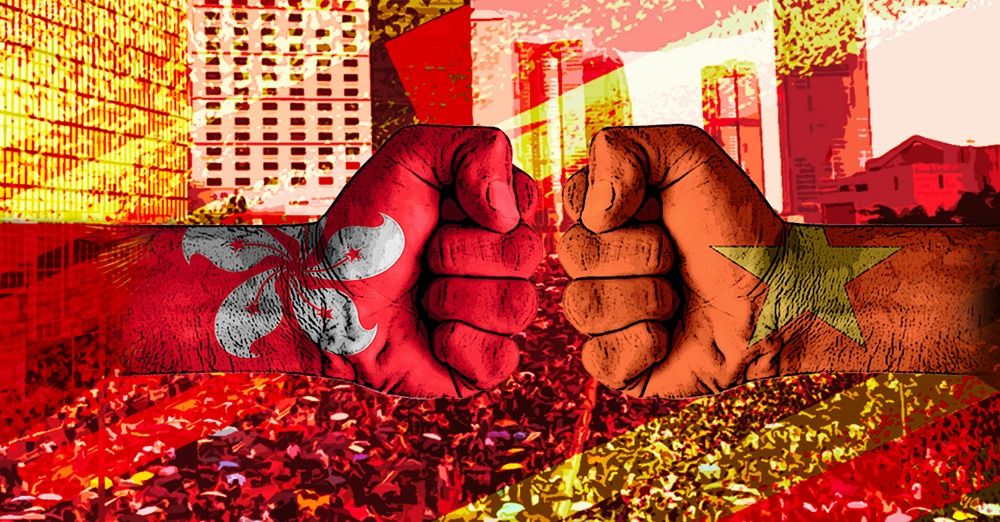
    One might ask, why does Vietnam support Hong Kong’s pro-democracy movement? The answer lies in the two country’s shared history and similar political movements.

    Bloody battles

    Vietnam’s long history of battling China spans more than 2,000 years. It’s fair to say that the country’s history is basically one of surviving next to China. After all, Vietnam was colonized by China for about 1,000 years before it finally gained its independence in 938 AD. Most national heroes worshipped as gods in Vietnam today are those who fought China over the past 200 decades, such as Hai Ba Trung (1st century, fought the Han dynasty), Ba Trieu (3rd century, fought the Eastern Wu dynasty), Ly Nam De (6th century, fought the Liang administration), Phung Hung (8th century, fought the Tang dynasty), Ngo Quyen (10th century, fought the Southern Han dynasty, ended China’s 1,000-year domination over Vietnam), Ly Thuong Kiet (11th century, fought the Song dynasty), Tran Hung Dao (13th century, fought the Yuan dynasty), Le Loi and Nguyen Trai (15th century, fought the Ming empire, ended a 20-year domination over Vietnam), Nguyen Hue and Bui Thi Xuan (18th century, fought the Qing dynasty).

    Today, some of the most central and important avenues in major cities of Vietnam are named after these national heroes.

    In 1979,  Chinese troops invaded Vietnam, waging a two-month bloody strike along the 600-kilometer border that the two nations share. This was followed by battles along the borders for another 10 years. Not many countries in the world have had such a long and complicated history with China as Vietnam does. As a result, the anti-Chinese sentiment seems to be deeply rooted in Vietnam’s culture.

    Fast forward to today: The territorial dispute over the South China Sea—which also involves Taiwan, the Philippines, Malaysia, and Brunei—is also a factor behind this sentiment. China claims almost all of the area bounded by its nine-dash line. Vietnam claims sovereignty over islands in the Paracel Islands and Spratly Islands, as well as an exclusive economic zone that overlaps with China’s claims.

    In 1988, China and Vietnam clashed in the South China Sea when China’s warships attacked and killed 64 Vietnamese soldiers and seized the Johnson Reef. Another battle in recent history was in 1974, when South Vietnam’s navy lost some islands in the Paracel Islands to China’s hands after a bloody battle that left 74 casualties and dozens of others injured. Skirmishes still break out between the two countries, something the Vietnamese frown on.

    Vietnam’s long history of battling China spans more than 2,000 years. Its ongoing territorial dispute with the latter over the South China Sea also explains the Southeast Asian nation’s anti-China sentiment and partly accounts for its support for Hong Kong’s pro-democracy movement.

    Amid territorial disputes over these islands, Vietnamese people bear the brunt of China’s economic activity in their country. Poor-quality products from China (electronics, clothes, food, etc.) are being sold in Vietnam, and while people complain about shoddy goods from the mainland, they have not found a way to stop the sales of these goods within their borders. More than 91,500 Chinese workers were also living across the country as of January 2020, sometimes making up China towns and clashing with local people.

    A Chinese-built section of Hanoi’s new urban railway “has come under fire after reports of deferred deadlines, cost overruns, and dangers to passers-by from falling materials,” reports the Financial Times. Given these trouble at sea, some people even suspect China of wanting to destroy Vietnam’s economy.

    Pro-democracy sentiment

    Although Vietnam is no longer a communist country and has a market-driven economy, the Communist Party remains the only legal political party. The party requires all Vietnamese to study communism and to worship communist leaders such as Ho Chi Minh, Karl Marx, and Vladimir Lenin.

    The society created by the communist regime is marked by corruption and inequality. Yet by an ironic twist of fate, it saved the Vietnamese people from the starvation that the party itself created before it began an economic reform program called Doi Moi in 1986. It abandoned the centrally planned economy model to open up the country to private businesses and foreign investments – a system which it eventually called the “socialist-oriented market economy”. Although Vietnamese people acknowledge that the country has improved significantly economically, severe corruption and deep inequality are among the biggest threats to the regime’s legitimacy. Vietnamese people are well aware that bad governance is the root cause of a slew of major challenges afflicting their lives such as unsafe food, land disputes, low wages, heavy pollution, low-quality education and healthcare, poor infrastructure, wrongful convictions, and a wide range of other human rights abuses.

    The state of public governance in Vietnam is similar to China’s – a combination of a communist one-party rule that suppresses human rights and a party-controlled market economy that favors members and sympathizers of the party. It is a system that puts a premium on economic development at the expense of fundamental freedoms.

    But while the pro-democracy bias may seem to overlap with the anti-communist sentiment, these are not exactly the same for Vietnamese people. Some of them oppose the communist regime but embrace other authoritarians at the same time. Many Vietnamese admire South Korean dictator Park Chung-hee, Chinese nationalist leader Chiang Kai-shek, and Singapore’s founding father Lee Kuan Yew, who was known for his authoritarian leadership style. This, while they lean toward democratization and support democratic movements such as the ones in Hong Kong, Burma, and Venezuela.

    Mass movements

    Mass protests introduced a radical change in a repressive regime like Vietnam. More than 30 years after the Vietnam War, joining a mass protest had been taboo in Vietnam, with the attendant risk of going to jail for decades. Few people dared to gather in the streets. Society had been frozen by fear.”

    However, reports that China established administrative units in disputed areas in the South China Sea in late 2007 angered the Vietnamese public. Suddenly, mass protests against the Chinese government broke out in the capital city, Hanoi. More protests followed in Ho Chi Minh City in early 2008.

    This confused the Communist Party. They had dealt with protests before, but those involved economic issues. These protests were about protecting the country’s territorial integrity, which was at the core of the nationalism that the party had spent its whole history building. Decades of fighting—from the independence struggle with the French before 1945, the Dien Bien Phu victory in 1954, the Vietnam war with the United States, and 10 years of conflict with China starting in 1979—helped build the communist party’s legitimacy.

    Eventually, the party cracked down on the protests. Party members could not tolerate any form of social mobilization that could potentially challenge their power.

    However, the lamp of freedom had already been lit in the hearts of many Vietnamese. They realized that they must have the right to demonstrate, the right to speech, the right to participate in politics to protect their country, all of which are being suppressed by the Communist Party. For the first time in the country’s history since 1975, Vietnam saw a protest movement in 2011, which lasted for almost three months, from June to August.

    In 2014, more anti-China protests flared up across the country, involving not only activists but also workers, farmers, and students, due to China’s deployment of the Haiyang Shiyou 981 oil rig to Vietnamese waters. A similar mass movement happened in June 2018 when the Parliament attempted to pass a special economic zones bill that were seen to open up three strategic areas in Vietnam for China.

    In 2014, Vietnamese people took to the streets to protest China’s deployment of an oil rig in the disputed South China Sea.

    It is significant to note that most of the mass protests in Vietnam for at least the last decade have been anti-China. All protests have been severely suppressed by the government.

    Movie magic

    The silver screen has also influenced Vietnam’s perspective on Hong Kong. Hong Kong films have been overwhelmingly popular in Vietnam for decades. These include “The Legend of Condor Heroes” (1994), “Detective Investigation” (1995), “Demi-Gods and Semi-Devils” (1997), “Triumph in the Skies” (2003), among others. It’s not easy to find a Vietnamese over 30 years old that has never watched a Hong Kong film or is unfamiliar with Hong Kong film stars.

    Beyond movies, Hong Kong is also a popular tourist destination among Vietnamese, especially during summer and New Year’s holiday.

    Until the late 1980s, Hong Kong played the role of a “port of first refuge” for Vietnamese people fleeing political persecutions and abject poverty in their country following the end of the Vietnam War.  In 1989 alone, more than 300 Vietnamese boat people landed in Hong Kong daily. The peak of the migration wave was when Hong Kong became home to 200,000 Vietnamese asylum seekers.

    Supporting the democratic movement in Hong Kong came naturally to these refugees, who feel forever indebted to the now beleaguered city.

    Hong Kong served as the “port of first refuge” for Vietnamese people fleeing political persecutions after the Vietnam War.

    There’s no doubt that Hong Kong pro-democracy movement fits perfectly into the Vietnamese people’s worldview, which has been shaped by the latter’s long and complicated history of dealing with China and communism, as well as nationalist and anti-government fervor.

  • Legal Briefing On Democracy Activist Pham Thi Doan Trang’s Arrest

    Legal Briefing On Democracy Activist Pham Thi Doan Trang’s Arrest

    Pham Thi Doan Trang, a leading democracy activist and a prominent Vietnamese journalist, was arrested on October 6, 2020 in Ho Chi Minh City by Vietnamese police.

    Here is a legal briefing updated on the morning of October 9, Vietnam time.

    What allegations has the Vietnamese government made against Pham Thi Doan Trang?

    Doan Trang is charged with “conducting propaganda against the Socialist Republic of Vietnam” under Article 88 of the 1999 Penal Code, and “making, storing, spreading information, materials, items for the purpose of opposing the State of the Socialist Republic of Vietnam” under Article 117 of the 2015 Penal Code (revised in 2017).

    This is a bit complicated. Why are they charging her with two crimes under two separate penal codes? Here is the context:

    The 1999 Penal Code (revised in 2009) was replaced by the 2015 Penal Code. The 2015 Penal Code went into effect on January 1, 2018 after being revised in 2017.

    The two crimes that Doan Trang is charged with are almost the same. Here is the text:

    Article 88. Conducting propaganda against the Socialist Republic of Vietnam

    1. Those who commit one of the following acts against the Socialist Republic of Vietnam shall be sentenced to between three and 12 years of imprisonment:

    a) Propagating against, distorting and/or defaming the people’s administration;
    b) Propagating psychological warfare and spreading fabricated news in order to foment confusion among the people;
    c) Making, storing and/or circulating documents and/or cultural products with content against the Socialist Republic of Vietnam.

    2. In the case of committing less serious crimes, the offenders shall be sentenced to between 10 and 20 years of imprisonment.

    Article 117. Making, storing, spreading information, materials, items for the purpose of opposing the State of the Socialist Republic of Vietnam

    1. Any person who for the purpose of opposing the State of the Socialist Republic of Vietnam commits any of the following acts shall face a penalty of five to 12 years’ imprisonment:

    a) Making, storing, spreading information, materials, items that contains distorted information about the people’s government;
    b) Making, storing, spreading information, materials, items that contain fabricated information that causes dismay among the people;
    c) Making, storing, spreading information, materials, items to cause psychological warfare.

    2. An extremely serious case of this offence shall carry a penalty of 10 to 20 years’ imprisonment.

    3. Any person who makes preparation for the commitment of this criminal offence shall face a penalty of 1 to 5 years’ imprisonment.

    What does this mean?

    Here is the date you need to remember: January 1, 2018. That’s the day the new and current penal code took effect.

    The only reason Doan Trang is charged with the same crime under both the old and current penal codes is that the government has been “investigating” her activities both before and from January 1, 2018.

    Some people suspect that Doan Trang is linked to the Dong Tam case as she authored and distributed two Vietnamese-English reports on Dong Tam (in February and September 2020). Some others think her case is mainly about her role at the Liberal Publishing House, a samizdat publisher founded in February 2019. But the two charges suggest that the police take the case further than that.

    What did Doan Trang do before 2018?

    Her famous book titled “Politics for the Common People” was published in 2017, and there was a report on the environmental disaster in central Vietnam in 2016. She has been involved in international advocacy work since 2013 and she also played a role in the environmental protest movement in Ha Noi in 2015, as well as other activities

    Who is in charge of the investigation?

    The Investigation Bureau of the Ha Noi Police.

    Although the arrest was jointly conducted by Ha Noi Police, the Ho Chi Minh City Police, and the Ministry of Public Security (MPS), the lead agency is the local government of Ha Noi.

    According to the MPS website, the Investigation Bureau of the Ha Noi Police was the organization that opened the case and filed charges against Doan Trang. The People’s Procuracy of Ha Noi later approved these motions. It is unclear when the motions were filed and approved.

    Where is Doan Trang now?

    The latest information from the mainstream media is that Doan Trang has been transferred to Ha Noi. Ha Noi Police confirmed the information with the Tuoi Tre newspaper.

    Where exactly is Doan Trang being detained? Her family told us that they were informed by Ha Noi Police in the evening of October 8 that she is being detained at Detention Center No. 1 (also known as the new Hoa Lo Prison) in Tu Liem district of Ha Noi.

    How long is the pre-trial detention expected to be?

    According to Article 173 of the Criminal Procedure Code, as the crime Doan Trang is charged with falls under either the very serious or extremely serious categories of both penal codes, the time limit for detention is four months, and can be extended once for three months.

    However, if Doan Trang’s case is categorized as an extremely serious type, the procuracy can extend the detention twice, for four months each time.

    The process may be prolonged due to requests for further investigation from the Procuracy or the provincial-level court of Ha Noi. In this case, it could become very complicated as with the case of blogger Nguyen Huu Vinh, who was detained for 22 months before going to trial.

    When will Doan Trang be allowed to meet with attorneys and receive family visits?

    It’s unclear whether or not Doan Trang will be allowed access to legal representation and to receive family visitation.

    According to Article 74 of the Criminal Procedure Code, “the head of the Procuracy is authorized, when confidentiality of investigations into national security breach is vital, to sanction defense counsels’ engagement in legal proceedings after investigations end.”

    Articles 88 and 117 fall under the national security chapter of the Penal Code, and therefore access to lawyers is not guaranteed. Even if a lawyer is granted permission to assist Doan Trang, his or her access to the accused, in practice, is not always guaranteed.

    Family visitation, according to Article 22 of the Law on Temporary Detention and Custody, depends on the decision of the head of the detention facility. If the investigative agency requests the detention facility not allow the detainee to meet with relatives, the facility head may accept the request, and Doan Trang will not be able to see her family before trial. It’s highly unlikely the facility head would reject such a request by the police.

    Here is what the law says:

    Article 22. Meetings with relatives, defense counsels and consular access of persons held in custody or temporary detention

    […]
    4. The head of a detention facility may not allow a visitor to meet a person held in custody or temporary detention in the following cases, for which he/she shall clearly state the reason:

    a. The visitor, who is a relative of the person held in custody or temporary detention, fails to produce his/her personal identity papers or papers proving his/her relationship with such person, or the case-settling agency has requested in writing the detention facility not to let such person meet with his/her relatives for the reason that such a meeting may seriously affect the settlement of the case; the visitor, who is a defense counsel, fails to produce his/her personal identity paper or paper on the defense for the person held in custody or temporary detention;
    […]

    If visitation is granted, Doan Trang’s family can visit her once a month, with each visit lasting no longer than one hour.

    What’s next?

    We don’t know when the investigation will be completed or when Doan Trang will be presented before the court. However, here is what we can expect:

    • The People’s Procuracy of Ha Noi will issue an indictment prosecuting Doan Trang.
    • The trial will be conducted by the People’s Court of Ha Noi, a provincial-level court.
    • After the trial, if Doan Trang appeals, the case will go up to the People’s High Court in Ha Noi, a tribunal higher than provincial level and lower than the supreme level. Usually, political cases stop after the appellate.
    • There is no chance that the case will be brought to the People’s Supreme Court, the highest tribunal of the land, as it requires motions filed by either the prosecutor general or the chief justice, both controlled by the very ruling Communist Party that wants to silence critics to protect their monopoly.

    Contact Trinh Huu Long: long.trinh@liv.ngo.

  • Ranked 32nd Most Powerful Country in the World, Communist Vietnam Set to Assume Greater International Role in 2020

    Ranked 32nd Most Powerful Country in the World, Communist Vietnam Set to Assume Greater International Role in 2020

    U.S. News and World Report ranked Communist Vietnam the 32nd most powerful country in the world in 2019, placing it ahead of nearly all of its peers in the region, with the exception of Singapore, which came in 20th. Of the 80 countries included in the survey, Indonesia ranked 47th, the Philippines 51st, Myanmar 53rd, Thailand 54th, and Malaysia 58th.

    The magazine defines powerful countries as those who “consistently dominate news headlines, preoccupy policymakers and shape global economic patterns” and forms its rankings “based on an equally weighted average of scores from five country attributes that related to a country’s power: a leader, economically influential, politically influential, strong international alliances and strong military.”

    Communist Vietnam rose two spots in the rankings from 2018, bolstered in particular by its high score for “strong military”. The country’s weakest attribute was its lack of “strong international alliances”, an area which is unlikely to improve, according to the country’s recently released defense white paper.

    Communist Vietnam released its 2019 defense white paper November 25, in both English and Vietnamese. It has released such reports irregularly, in 1998, 2004, and 2009. Photo: VNExpress

    The paper was the first of its kind released in more than a decade, and at its official launch November 25, Deputy Minister of National Defense Senior Lieutenant General Nguyen Chi Vinh highlighted the “4 No’s” that would guide Communist Vietnam’s foreign policy: “Vietnam will not join any military alliances, will not associate with one party to oppose another, will not allow foreign countries to set up a military [base] in the country…” and “will not use force or threaten the use of force in international relations” unless it is under attack.

    In an interview with VNExpress, Vinh defended the country’s policy of no military alliances, stating that “Being a part of such an alliance means you have to completely align with one side and possibly have to confront the other, which means more enemies. Vietnam does not stand by any side but peace, reason, justice, and international laws.”

    In writing the white paper, the Central Military Commission (CMC, the highest party organ in Communist Vietnam on military policy) and the Ministry of National Defense (MND) said they consulted with representatives of former senior military leaders, as well as with members of the public who expressed reservations about non-alignment.

    The CMC and the MND defended their position, equating non-alignment with independence: “Countries that are members of such an alliance will be placed under the leadership of one country, normally a large and powerful one, and will have to adhere to that union’s principles, even when they are not entirely compatible with the country. Member nations of such a bloc will no longer be independent and have the autonomy to decide things on their own.”

    Vietnam watchers have acknowledged that the country’s one-party regime is in a difficult position politically, and an active alliance with either the US or China would bring about its own set of challenges, some existential.

    The country’s policy of pacifism, self-defense, non-alignment, and multilateralism, however, belies the strong language it uses against encroachment in the East Sea and even stronger language wielded against “hostile forces” in the domestic realm.

    Without explicitly calling out China as the culprit of “unilateral actions” and “power-based coercion”, a section in the white paper makes Vietnam’s opposition clear:

    New developments in the East Sea, including unilateral actions, power-based coercion, violations international law, militarisation, change in the status quo, and infringement upon Viet Nam’s sovereignty, sovereign rights, and jurisdiction as provided in international law, have undermined the interests of nations concerned and threatened peace, stability, security, safety, and freedom of navigation and overflight in the region.

    Communist Vietnam uses even less-restrained language for its domestic opponents, whom it considers to be at virtual war with:

    The hostile forces who conspire with reactionaries and political opportunists inside the country have no given up their plots against the Vietnamese revolution. They focus on destroying political, ideological foundation with a view to eliminating the leading role of the CPV and the socialist regime in Viet Nam, “depoliticising” the VPA, sowing division in the entire nation’s great unity, and driving a wedge between the people and the CPV and the VPA.

    “Hostile forces” and “reactionaries” “against the revolution” are blanket phrases that the Vietnamese Communist Party (VCP or CPV) reserves for those who seek to end the Party’s monopoly on power. State media routinely uses these terms to describe activists, dissidents, and those who advocate multi-party democracy and liberal values. That the Vietnamese communist revolution ended in 1986 with capitalist market reforms has not abated the usage of these anachronistic and binary terms.

    The VCP also implicitly acknowledges the threat social media and online sources of information pose to “national defense”, and similar to other authoritarian, one-party states, conflates Party security with national security. A cybersecurity law that sparked nationwide protests in 2018 went into effect at the beginning of 2019, and the end of 2019 has seen an upsurge of Vietnamese citizens arrested for writing Facebook posts critical of the communist regime.

    According to the white paper, Communist Vietnam’s defense spending totaled approximately 5.8 billion USD in 2018, equivalent to 2.3 percent of GDP, an increase from 2.23 percent in 2010. For comparison, the United States spends 3.2 percent of GDP on defense, while China spends only 1.9 percent.

    The full English copy of Communist Vietnam’s 2019 defense white paper can be found here, courtesy of Carlyle Thayer, emeritus professor at The University of New South Wales, Canberra.

    Communist Vietnam is also set to assume the rotating chairmanship of the Association of Southeast Asian Nations (ASEAN) from 2020-2021, where according to Thayer, the country will be “in a position to exert strong leadership on Code of Conduct issues [in the East Sea] through bilateral consultations with other ASEAN members and by setting the agenda and issuing the Chairman’s statement at all relevant ASEAN meetings and at all ASEAN Plus meetings.”

    Though ideologically aligned with China, Communist Vietnam has often been the lone member of ASEAN to speak up forcefully against Chinese activities in the East Sea, a trend which looks to continue. Vietnam’s deputy foreign minister, Nguyen Quoc Dung, commented at a lecture at The Institute of Southeast Asian Studies in Singapore that he “hope[s…] during our chairmanship China will show restraint and refrain from these activities [that violate Vietnam’s Exclusive Economic Zone],” adding that “it wasn’t that other ASEAN countries supported China’s actions, but that they did not protest in the same way.”

    Disputed claims in the East Sea (also known as the South China Sea or the West Philippine Sea). Photo: The Economist

    The ASEAN chairmanship rotates through its ten members annually, in alphabetical order. Communist Vietnam last served in the position in 2010.

    Concurrently, 2020 will also see Communist Vietnam serve as a non-permanent member of the UN Security Council (UNSC), a position which it bid on and won by unanimous vote. The two-year term will begin in January 2020, and joining the country on the UNSC will be Estonia, Niger, Saint Vincent and Grenadines, and Tunisia.

    According to The Diplomat, “during [Vietnam’s] campaign for the seat and in comments thereafter, officials have indicated that [their goals] would generally include areas such as promoting sustainable development and advancing preventive diplomacy, drawing on Vietnam’s own historical experience with war and peace as well as contemporary events such as its hosting of the second Trump-Kim summit.” Communist Vietnam last held a seat on the UNSC in 2008-2009.