Tag: Politics

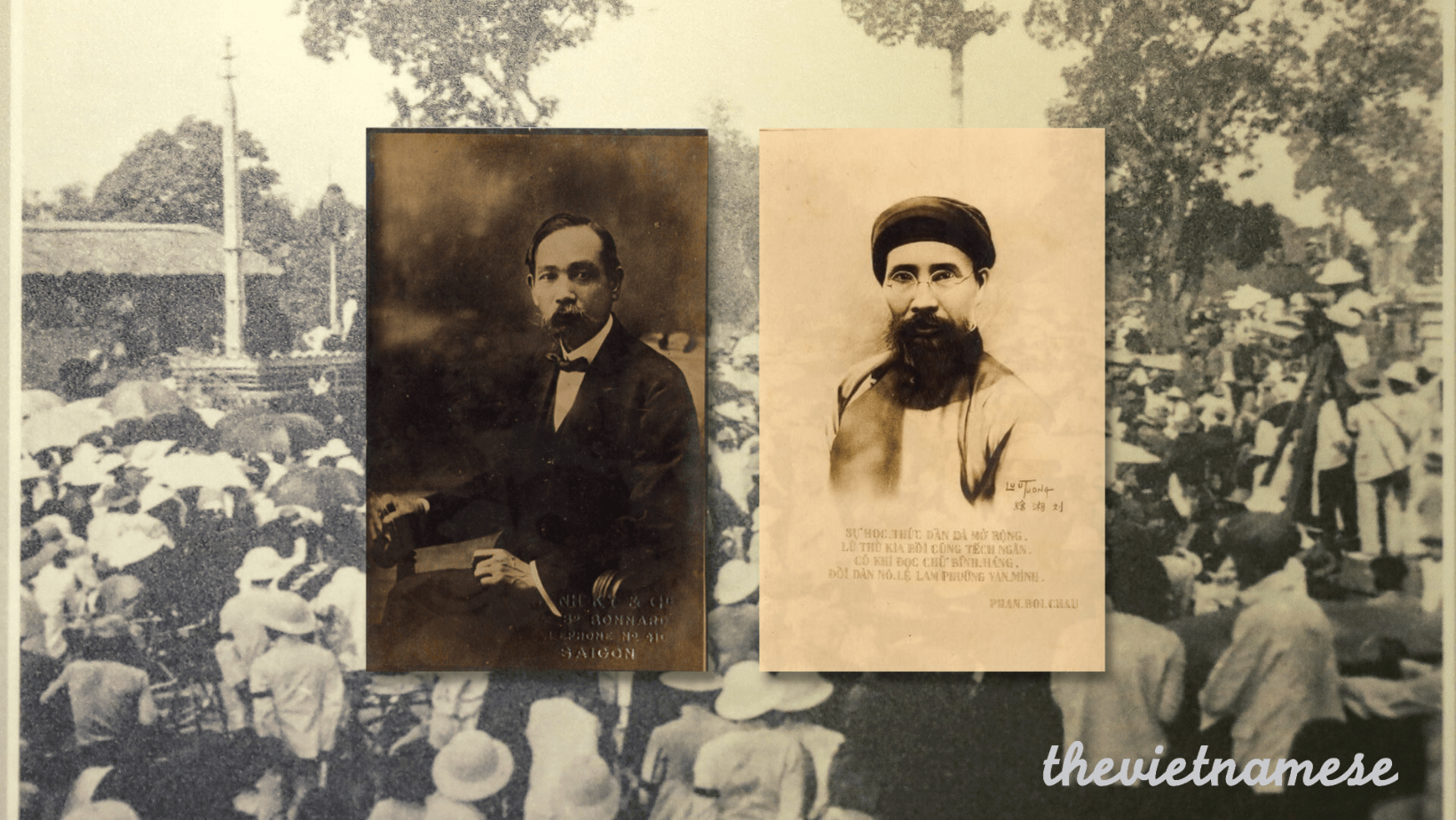
  • The Yin And Yang Of Vietnamese Nationalism: Phan Chau Trinh And Phan Boi Chau’s Thoughts On Vietnam’s Independence

    The Yin And Yang Of Vietnamese Nationalism: Phan Chau Trinh And Phan Boi Chau’s Thoughts On Vietnam’s Independence

    Why Should We Care About Non-Communist Discourse of Vietnamese Nationhood?

    While issues on Vietnamese nationalism have been widely discussed in academia, the English scholarship on Vietnam’s politics and political history since the 1950s has remained ambivalent toward what constitutes the authenticity of modern Vietnamese nationalism.

    The old historiography of the Vietnam War has mistakenly represented Marxist-Leninism as the authentic discourse of Vietnamese nationhood. Prominent Vietnam War historian William Duiker criticized the republican nationalism of Phan Boi Chau as theoretically immature and inherently gullible [1]. As a leading scholar of the new generation of Vietnam War historians, Tuong Vu notes that there was the tendency to allow “the Cần Vương, Đông Du and Việt Minh (the front organization for the Indochinese during the war years) to be lumped together.”[2]

    Under the pervasive influence of party propaganda, the local historiography of Vietnamese nationhood has been dominated by the Marxist dialectical materialist interpretation of history in which republican nationalists are tainted by “bourgeois mentality.”[3]

    For the past two decades, a small number of regime critics and democracy activists have turned to the republican thoughts for new ideas on the future model of Vietnam’s democratization and development.

    In Ha Si Phu’s sophisticated critique of Marxism, Chia Tay Y Thuc He[Abandoning Ideology], the author argues that one crucial precondition for Vietnam transition to democracy is the “People’s Enlightenment” [Dan Tri], which as I will discuss later, is central to Phan Chau Trinh’s discourse of Vietnamese nationhood.

    The idea has been echoed and elaborated in Nguyen Quang A’s Phan Chau Trinh va Thuyet Hien Dai Moi [Phan Chau Trinh and the New Modernization Theory] and Mai Thai Linh’s commentary on the meaning of the 2009’s Vietnamese Bauxite Mining Opposition, Tu Dan Tri Den Dan Khi [From the People’s Enlightenment to the People’s Will]. In contributing to the English and Vietnamese scholarships in Republican Nationalism, I will discuss and compare the political thoughts of Phan Boi Chau and Phan Chau Trinh in great depth.

    French colonial rule was the reality of every Vietnamese person between the late 19th and early 20th centuries, regardless of who they were, what they did, and where they lived. It is more significant to uncover how the experience of living in such a colonial context inspired the development of Vietnamese nationalist thought. Related to this was the increasing access to books and other print materials in the second half of the 19th century.

    During the pre-colonial period, Confucian literati did not have any reason to print their texts for mass consumption. Hence, their writings were only made accessible to a small number of people from the elite class. However, the spread of these writings, alongside many other newer texts, was crucial for the rise of modern Vietnamese nationalism.[4]

    By the end of 1935, about 15 or 20 percent of all children between six and twelve were enrolled in public and private schools. Somewhere between 10 to 20 percent of the population were literate; these figures continued to increase.[5] Likewise, French censorship did not stop the influx of Western, Chinese, and Japanese ideas to Vietnam through the ports of Hai Phong, Hue, Saigon, and Hanoi.

    It was through the translations of propaganda pamphlets, open letters to government officials, textbooks, political manifestos, newspaper columns, public proclamations, petitions to international agencies, translated philosophical and political works, and poems that local people and young Confucian intellectuals started to imagine what the Vietnamese nation could be.[6]

    Inspired by the idea of reforming colonial Vietnam, the young Confucian literati played a vital role in the emergence of modern nationalism through their writings on colonial policies and social reforms. They were a small group of young intellectuals who, after receiving French education at home or studying overseas in Japan or France, became disillusioned with the corrupt and decadent Vietnamese monarchy. They were also enraged by the pervasive socioeconomic inequality between the wealthy landowners and the peasants, the power asymmetry between the mandarins and the people, and the French colonizers’ brutal exploitation of the indigenous people.

    Understanding Republican Nationalism in Phan Boi Chau and Phan Chau Trinh’s Political Theory

    The writings of Phan Boi Chau and Phan Chau Trinh can be seen as the “Yin and Yang” of early Vietnamese nationalism. They can be divided into two distinct discourses: conservative and radical nationalist. [7] Chau was a prominent champion of radical nationalism, while Trinh was a staunch proponent of the Franco-Vietnam alliance.

    Chau and Trinh were the leaders of the Dong Du and the Duy Tan movements respectively and enjoyed several years of friendship. [8] However, Chau’s fixation on taking back the country from the French via borrowing Japanese military support and Trinh’s desire for building a free Vietnam through education and peaceful diplomacy led to much tension between them, and eventually, their friendship ended.

    Some of the significant contributions of their discourse are pointing out the distinction between the king and the nation and the moral decay of the Vietnamese monarchical system, which had been perpetuating false Confucian teachings by the old generation of Vietnamese literati. Vietnamese people had been taught to blindly revere their king without questioning his qualities and policies.[9]

    In the History of Vietnam’s Loss [Vietnam Vong Quoc Su], Phan Boi Chau attributes the loss of Vietnam partially to the corruption and puppetry of the Nguyen Dynasty. He asserts that the “monarchy is a poisonous autocratic regime that sucks the blood of all the Vietnamese people…[and] the people are so ignorant,  [that] they fail to seize their own rights [dan quyen] and the fate of the nation [quoc menh] … [from] these poisonous men.” [10] The corrupt monarchy is the reason why popular rights and patriotism have never been realized in Vietnam because the king’s personal desires often go against the public interest.[11]

    Phan Chau Trinh links popular rights with the ethics of a nation, which was non-existent in Vietnamese society at that time since the people’s love for their nation and their duty to protect it were dwarfed by their love for their king and their duty to serve him as his subjects. Trinh continues, “the people are therefore not aware of the distinction between king and country” and of the legacy their ancestors had left behind.[12]

    Chau’s critique of the monarchical system is a combination of the Confucian (Mencius) vision of democracy, which centers on the idea that the government is responsible for the physical and moral well-being of its people, and the Republican concept of popular sovereignty in which the government is established to serve the interests of the people. [13] In his conception of the nation, the monarch must be treated as part of the government or state rather than above it, and patriotism means being loyal to the people rather than the king.

    Both radical and conservative variants of the discourse on Vietnamese nationhood share the pessimistic view that Vietnamese people were born into a culture that perpetuated this vicious asymmetrical relationship. [14] The social ethics of the nation were lost under the monarchy. Vietnamese people lost their sense of solidarity and the public interest because the mandarins, who were “thirsty for glory bestowed by imperial dynasties,” created “laws that broke down the solidarity among the people” to protect their wealth and power. In other words, the selfishness of the king and mandarins led to their neglect of the public good.

    Conservative and radical nationalists differ in their modus operandi of freeing the nation from French colonialism. The conservatives proposed a non-violent approach towards building an independent Vietnam; they believed that deepening Franco-Vietnam collaboration and peaceful diplomatic relations could salvage the country from its socioeconomic regression and the decay of traditional education and cultural practices.

    They maintained that social, economic, cultural, and political reform require Vietnamese people to learn from Western (particularly French) education, philosophy, and modernization. This idea is predicated upon the belief that the French would, at some point, give Vietnam autonomy and that after a period of modernization, the Vietnamese people would develop intellectually and would have enough material resources for self-rule.

    The “people’s enlightenment [intellectual understanding],” the “improvement of their resources,” and the establishment of modern socio-economic institutions (e.g., academia, public spheres, and commercial enterprises) take precedence over the right to self-determination given the social, economic, political and cultural backwardness of the Vietnamese people.

    The conservatives believed that emphasis on social and economic rights did not come at the expense of failing to protect other civil and political rights. Rather, they held that Vietnamese society’s intellectual and socio-economic modernization was necessary for the development of political freedom. Violence would not be able to achieve true independence without the participation of well-informed and well-educated people. Pushing for immediate self-rule without these preconditions was seen as precarious and futile to Vietnam’s long-term survival. They believed that the genuine independence of the Vietnamese people would not only stem from their freedom to exercise their popular rights but from their capacity to understand how to use these rights to serve both their interests and those of the nation.

    The radical nationalists, by contrast, sought to convince their compatriots of the humiliating situation Vietnam found itself in. Their plan for nation-building involved leading the whole native population to expel the “evil French” out of Vietnam through military means, followed by building a new republican state governed by the people. This “penchant” for raising an armed revolution against the French to achieve national independence rested on Chau’s political doctrine on national independence, which held that a nation was made up of three parts: people, land, and sovereignty. Out of these three, Chau viewed the people as being the most important and the “soul” of the nation. For Phan Boi Chau, a nation is free only if its people are free:

    According to the established national law, a nation [nuoc] must be constituted by three elements: people [nhan dan], land [dat dai], and sovereignty [chu quyen]. Any nation lacking these three components is not considered a nation. Of those three, the people are the most important. Without the people, the land will be left uncultivated and national sovereignty will be lost. The nation survives when the people survive; the nation collapses when the people perish. [15]

    Yet how does one know if a person is free? For Chau, the Vietnamese people are free only if they are free to exercise “dân quyền,” or popular rights:

    In order to determine whether the people exist, one must see whether the rights of the people exist. If these rights are honored, then the people will be respected, and the nation will get strong. If such rights are violated, then people will be held in contempt and the nation will become weak. If such rights are completely lost, then we lose the people and the nation too.[16]

    When the Vietnamese people’s ability to exercise their popular rights was taken away by the French, Vietnam was no longer a free nation, even if territorial sovereignty and the people’s ownership of the land were kept intact.

    Among these popular rights, Chau heavily emphasized the right to non-interference and non-domination from the French and the right to establish a government elected by Vietnamese people under the rule of law. He associated national liberty with the survival of the Vietnamese people and with their freedom to exercise the right to self-rule.

    Specifically, Chau argued that the right to self-determination consisted of the right to be free from the domination and exploitation of the oppressor — the French. An independent Vietnam existed only if the Vietnamese people were free of the master-slave relationship with the French.[17]

    To this end, Chau believed that the demise of the French government in Vietnam marked the birth of a Vietnamese sovereign, whose primary responsibility was to serve the interests of the citizens and to guarantee their freedom to exercise their rights. Each citizen, in return, had the obligation to serve the interests of the national community. The interests of the sovereign and its people were intertwined.

    Phan Boi Chau and Phan Chu Trinh were the Yin and Yang of Vietnamese nationalist discourse. From a cursory look, their ideas may stand in contrast to each other. Nonetheless, a close comparison of their political thought has shown that their visions for Vietnamese nation-building were complementary; one was incomplete without the other.

    Trinh criticized Chau for being impetuous and irrational in his solution for securing the country’s independence, arguing that relying on the French did not necessarily mean that Vietnam would regain its autonomy. Chau may also have been naïve in his belief that Japan would have been willing to help Vietnam defeat France with little political costs, since by the turn of the 20thcentury, Japan had turned into another hungry and ruthless colonizer.

    However, Chau’s writings on popular rights reflected the horrid conditions of France’s brutal exploitation of the native population, something which is understated in Trinh’s own discourse. Chau may have been an avid proponent for human rights protection in colonial Vietnam, yet these rights may not have been respected nor protected if the people failed to understand the significance of these rights in the context of the nation. Trinh maintained that the comprehension of human rights can only happen if the people are educated in Western science and philosophy.

    Trinh could also be said to have been too idealistic in his belief that it would be rational for the French not to have helped in building a strong Vietnam, for doing so would have threatened its colonial rule. Trinh’s conceptions of morality and ethics needed further theorizing and conceptual clarification since he never explained how Confucian teaching could be made compatible with Western theories on national and social ethics. In other words, Trinh had not examined the extent to which the five basic human virtues of Confucianism could be applied to Western philosophical thought.

    In the early 1900s, Vietnamese anti-colonial theory was still in its infancy partly because local scholars still lacked access to the original texts of Western political philosophers. Nevertheless, the writings of Phan Chau Trinh and Phan Boi Chau had a substantial impact on the crystallization of the early Vietnamese national consciousness by elaborating on the concepts of patriotism and popular rights, which were nonexistent in a monarchical Vietnam where the people’s love and duty for their nation were second to their public reverence for the emperor and his family. However, it may be that their thoughts, once again, will find their ways to be beneficial to the democratization and nation-building of Vietnam in this century.

    Bibliography:

    1. William Duiker, The Rise of Vietnamese Nationalism (Ithaca, NY: Cornell University Press, 2008), 9
    2. Tuong Vu, “Vietnamese Political Studies and Debates on Vietnamese Nationalism,” Journal of Vietnamese Studies,Vol. 2, Issue 1 (2007): 191-192.
    3. Patricia Pelley, Postcolonial Vietnam: New Histories of the National Past (Durham, NC: Duke University Press, 2002).
    4. Shawn Frederick McHale, Print and Power: Confucianism, Communism, and Buddhism in the Making of Modern Vietnam, New edition (Honolulu: University of Hawaii Press, 2008), 33.
    5. David G. Marr, Vietnamese Tradition on Trial, 1920-1945 (Univ of California Press, 1981), 34.
    6. Truong Buu Lam, Colonialism Experienced: Vietnamese Writings on Colonialism, 1900-1931 (University of Michigan Press, 2000).
    7. The labeling is used for the purpose of categorization and based on Hue-Tam Ho Tai, Radicalism and the Origins of the Vietnamese Revolution (Harvard University Press, 1996), in which the author labels the anti-colonial activists in the early 1900s who advocated military means of resistance as “radical nationalist.” Thus, the terms “radical” and “conservative” refer to the strategy of resistance rather than their traditional meaning that is often understood as a person’s ideological position. The term “republican” is based on the labeling in Christopher Goscha, The Penguin History of Modern Vietnam: A History (Penguin UK, 2016). For this paper, my interpretations of these discourses are mostly based on their most influential and well-developed representatives, Phan Boi Chau and Phan Chu Trinh for two reasons. First, their texts have influenced Marxist-Leninist discourse and other nationalist discourses. Phan Boi Chau’s militant ideas and his model of democracy influenced Viet Nam Quoc Dan Dang (VNQDD) organizational and revolutionary theory.
    8. In Western tradition, it is the norm to reference authors by their last name. Nonetheless, in Vietnamese culture it is considered formal and polite to address professors, writers, and authors by their first name. Moreover, because the thinkers’ last names are identical, referencing their last name would confuse readers. For the rest of the article, when referencing Phan Chau Trinh and Phan Boi Chau in their full name, I will simply write Trinh and Chau respectively.
    9. Phan, Phan Chau Trinh And His Political Writings, 108. For more criticisms of the monarchy, see Phan Chau Trinh, “Viet Nam Quoc Dan Phan Chau Trinh ky thu Viet Nam Duong Kim Hoang De” in Chuong Thau et. al, ed., Phan Chau Trinh Toan Tap[Complete Works by Phan Chau Trinh], v.3, 135-155.
    10. Phan Boi Chau, “Tan Viet Nam” in Chuong Thau, ed., Phan Boi Chau Toan Tap[Complete Works by Phan Boi Chau], v. 2, 255
    11. For a detailed argument, see Phan Chau Trinh, “Quan Tri Chu Nghia va Dan Tri Chu Nghia” in Chuong Thau et. al, ed., Phan Chau Trinh Toan Tap [Complete Works by Phan Chau Trinh], v.3, 266-283.
    12. Chu Trinh Phan, Phan Châu Trinh and His Political Writings, vol. 49 (SEAP Publications, 2009), 110.
    13. Chau states that: “In this life, without Mencius the notion that “the people as the most important element” [in a nation] would not be realized; without Rosseau, the flag of “popular rights” would not be raised…Those who love themselves definitely love their compatriots, those who love their compatriots love their country, and those who love their country are willing to sacrifice their individual interests to protect their country. This is the true meaning of patriotism. See Phan Chau Trinh, Complete Works, vol .4, (Hue: Thuan Hoa Publishing House, 1990), 32-55.
    14. In Quan Tri Chu Nghia va Dan Tri Chu Nghia, Phan Chau Trinh used the sentence “lot long me da chiu cai nghia vua toi” (p274).
    15. Phan Boi Chau, Complete Works by Phan Boi Chau, v.2, 386
    16. Ibid.
    17. It is difficult to trace the philosophical root of Chau’s conception of liberty, but the following quote shows that that his proposition is a combination of Mencius’s limited version of democracy, which centers on the ideas of the responsibility of government for the physical and moral well-being of the people, and Rosseau’s conception of popular sovereignty in which a government is established from a social contract to serve the interests of the people.
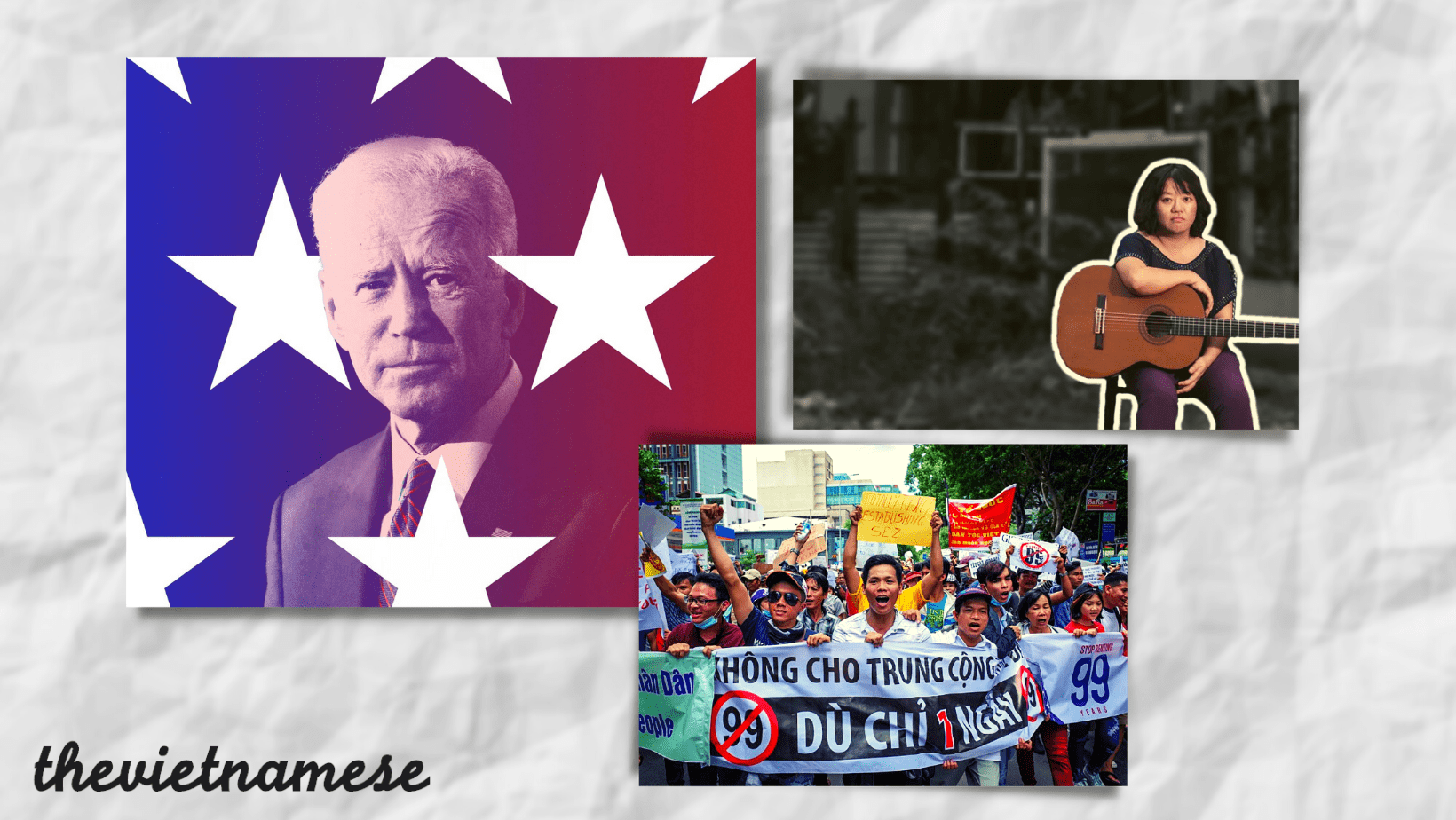
  • Biden’s Emphasis On Soft Power And What It Means For Vietnam’s Democracy Movement

    Biden’s Emphasis On Soft Power And What It Means For Vietnam’s Democracy Movement

    President Joe Biden has repeatedly emphasised “soft power” in his foreign policy speeches. Will this policy work in Vietnam? And how will it affect Vietnam’s democracy movement?

    Biden’s emphasis on soft power: what’s in store for Vietnam and should one believe it?

    It’s almost a year into Joe Biden’s presidency. Throughout his tenure, two keywords, “relentless diplomacy” and “soft power,” have echoed in every corner where US foreign policy is concerned: from the ending of the “forever war” in Afghanistan to the reorganisation of trans-Atlantic relations, and to engagement with Asia. The challenges for which President Biden will implement his “relentless diplomacy” and “soft power” approach are, in short, the covid pandemic, climate change, and China[1].

    Vietnamese readers can be assured of Biden’s serious interest in Asia by, amongst others, the appointment of a competent expert Kurt Campbell [2] as the White House coordinator for the Indo-Pacific region, US support for Taiwan and its alliance with Japan, vaccine donations, and, most recently, Vice President Kamala Harris’ visit to the region and Vietnam specifically.

    Regarding China, Biden’s promise [3] of “fighting corruption, defending against authoritarianism, and advancing human rights” will be arguably the most effective tool for the United States in the realm of soft power. Economic and military strength notwithstanding, the Chinese regime is infamous for its authoritarian governance and long record of human rights violations. Ironically, China’s military strength, as observed in its actions in the South China Sea, makes its draconian image even more despicable.

    By contrast, the era of Pax Americana, despite criticisms of US imperialism, has built an overall image of the United States as a promoter of human rights and democracy. Although the recent Afghanistan debacle has damaged the reputation of the United States, Biden has been quick to assert [4] that the new era of US foreign policy will be about “lifting people up around the world” and “renewing and defending democracy”.

    Speaking of Pax Americana, Biden’s emphasis on “soft power” and “relentless diplomacy” happens in a context different than that of American leaders of the past who boasted about a US “moral imperative” and “doing the right thing” only to turn a cold shoulder to their allies when the tide of geopolitics turned. In the post-Americana era, despite Biden’s denial/rejection [5] of the imminent “China-US Cold War”,  it is widely recognised (as indicated by the US “pivot to Asia”[6]) that US national interests depend on whether or not the United States can counter China’s plays in Asia. As such, one can expect Biden’s words to have substance rather than just simply paying lip service.

    Biden’s “soft power” in Vietnam: the state-versus-people conundrum

    When it comes to China and human rights, there is a clear distinction between the perspectives of the Vietnamese state and the Vietnamese people. At the most basic level, Vietnamese leaders have little to no concern for the interests of their people because their positions are not determined by voters. Vietnam’s election is well known for being a farce [7].

    The divergence between the Vietnamese public and the Vietnamese government on China could not be clearer. When the government approved a bauxite project related to China in 2009, the Vietnamese people signed a petition to oppose it. When the people took to the streets in the early years of the 2010s to oppose China’s territorial claims in the South China Sea, the government cracked down on these protests and detained several protesters. When the Special Economic Zone bill was announced, it was perceived by the Vietnamese public as giving questionable privileges to China and also was seen as a threat to Vietnam’s national security. As a result, massive protests broke out in the streets in 2018 and the bill was shelved as a result.

    Most recently, the use of China’s COVID vaccines in Vietnam has been met with public resistance and fierce criticism of the government. Anti-China protesters’ shouts of, “Coward to the enemy, cruel to the people!” (“Hèn với giặc, ác với dân!”), is precisely the Vietnamese people’s attitude towards their government on China.

    At this point, one may argue: “But the Vietnamese government has also spoken up against China many times, so it cannot be as pro-China as the above-mentioned events indicate.” This is true and quite a few analyses [8] have highlighted the stake for the Vietnamese government in playing US-China politics wisely instead of simply bowing to China. However, it is important to understand that when Vietnamese leaders do stand up to China, it is often “all bark and no bite.”[9] More importantly, whether Vietnamese leaders shake hands with Biden or with Xi, or play the superpowers off against each other, they do so first and foremost based on their, or the Communist Party’s, own interest [10], rather than on the interests of the country and the people.

    Thus, it is highly unlikely that the United States will find a true ally in the Vietnamese government in its state-to-state diplomacy against China. Because of this, the US will also find it difficult to tap into the Vietnamese public’s anti-China sentiment. Hanoi has shown little to no concern about how Vietnamese citizens feel or about what they want, and it has unreservedly deployed force to quell anti-China protests and online dissent in the past.

    The road to promoting human rights in Vietnam does not seem promising either, especially the rights to free speech, peaceful assembly, association, and fair trial. The promise of US leaders to “respect Vietnam’s political system” [11] seems rather odd because the very existence and stability of Vietnam’s political system rest on the suppression of exactly those rights. The relentless arrests of people who speak critically of the government on their Facebook pages and of those who ran as independent candidates in the lead-up to the May 2021 national election are just some examples.

    What has played out so far in the field of human rights does not show much innovation. State-to-state talks about the situation of human rights in the country, assistance for specific high-profile activists who have been arrested and who are on trial, and US leaders holding meetings with local activists are all par for the course. It remains to be seen if Biden’s administration will open a new chapter of human rights promotion through public diplomacy or if it will lead to more of the same: the worsening of human rights and democratic freedoms in Vietnam.

    Public diplomacy and soft power: a look into the books

    The term “public diplomacy” was first coined in 1965 by Edmund Gullion, founder of the Edward R. Murrow Center of Public Diplomacy at Tufts University (Cull, 2009) [12]. Definitions vary but all agree that public diplomacy is a foreign policy practice entailing nation A engaging with the public of nation B in order to influence B’s foreign policy through bottom-up pressure to A’s advantage (Bettie, 2014) [13]. In short, it is about image projection and national branding, which is distinctly different from traditional diplomacy which consists of state-to-state engagement.

    In the work of historian Nicholas J. Cull (2008) [14], activities that count as public diplomacy include (1) presenting new policy ideas to the foreign public (i.e., advocacy), (2) exportation of culture to foreign countries as well as two-way cultural exchanges, and (3) international broadcasting (i.e., reaching a foreign public through mass media).

    While public diplomacy can be understood as a channel of persuasion, soft power is the content that gives a nation the power to persuade the foreign public. Prominent soft power scholar, Joseph S. Nye Jr., defines soft power as the attractiveness of a nation that lies in its culture, including its language, arts, cuisine, institutions, brands, and moral values (Nye, 2008) [15]. Soft power goes hand-in-hand with public diplomacy, as “public diplomacy tries to attract by drawing attention to these potential resources through broadcasting, subsidizing cultural exports, arranging exchanges, and so forth” (Nye, 2008, p. 95) [16].

    Soft power may also be drawn from hard power. The presence of US military forces in the South China Sea to aid countries bullied by China communicates certain moral values to the people of those countries. However, underlying such a presence in the more complex and pragmatic interests of the United States than simply a normative or moral stance.

    Using the above discussion on public diplomacy and soft power, how would President Biden’s plans for Vietnam measure up? What would his roadmap navigating the state-versus-people conundrum in the country look like?

    Evaluating Biden’s diplomacy and navigating Vietnam’s state-versus-people conundrum

    Biden’s words promise a new era of US diplomacy, but his actions so far still seem to be following classic state-to-state diplomacy and militaristic intervention more than what is prescribed for public diplomacy and soft power.

    Furthermore, public diplomacy has always been a component in US foreign policy in previous administrations through supporting local registered civil society organisations and non-formal oppositional actors. Thus, with Biden’s emphasis on “soft power,” his administration will disappoint if over the next few years it rehashes many or most of the previous administrations’ actions; this old approach is effectively circumscribed by the state-versus-people conundrum mentioned earlier.

    However, the good news for the United States is that despite the disastrous presidency of Donald Trump and the many upheavals in US politics and society, public opinion [17] in Vietnam is still in favour of the United States, especially when compared to China. The soft power is already there.

    As Vietnamese people have grown increasingly more concerned about Hong Kong and Taiwan, their opinion will also be shaped by how the United States intervenes in the Taiwan – China situation. The collapse of Hong Kong has done serious damage to the image of the West, but it is still looking good on the Taiwan front. In addition, the story of Taiwan is not just about standing up to China; it is also about nation-building and the nationalistic pride of a people who chose democracy over dictatorship.

    In summary, US soft power in/over Vietnam will come from the stories of human rights, democracy of the US itself, and its defence of Taiwan against China. This soft power will come across even stronger if US public diplomacy also promotes Taiwan as the protagonist in the region, as a counter to Chinese politics, and as an inspiring story of Asian democratisation. These narratives will further widen the gap between Vietnamese hearts and minds and China, while simultaneously raising aspirations for democratisation amongst the Vietnamese people. In doing so, the United States will also not give a reason for the Vietnamese state-owned media to be hostile towards democratisation and the Vietnamese democracy movement. State propaganda cannot accuse America of imposing Western political ideas and values, nor of hypocrisy and one-upmanship if the US approaches the issue in this way.

    Having said earlier that the Vietnamese government has shown little to no concern about the Vietnamese people’s anti-China sentiments and that it uses brute force against human rights and democracy activists, what is the point of raising aspirations for democratisation and being critical of China? The point to be made is precisely about the kind of mass awareness and feeling of efficacy that will translate into the political agency and oppositional collective action. Old school public diplomacy has come short of this task and has failed to help the Vietnam democracy movement gain strength in numbers.

    My conversations with prominent activists in Vietnam’s human rights and democracy movement show that the seemingly invincible power of the Vietnamese government to repress dissent, the crackdown on protests, and carry on with unpopular policies, comes from the fact that the human rights and democracy movement is small in number and that the majority of the public lack the theoretical scaffolding to help them translate their discontent with the government and nationalistic sentiment into coherent and organised demand for democratisation.

    This article, written from my perspective as a Vietnamese, a scholar, and a supporter of collective action towards democracy for Vietnam, has suggested a few ways for American diplomats and foreign policy experts to walk President Biden’s talk.

    Meanwhile, Luat Khoa Tap Chi, a well-respected independent news outlet that serves Vietnamese readers, has already beefed up its column on Taiwan as an inspiring example of democracy for the Vietnamese. The comrades of Luat Khoa are also planning their next step, with Taiwan and mass awareness at the core of their strategy. The Biden administration, with the aim of utilizing soft power, should not miss this opportunity to work with them.

    Bibliography:

    1. Ash, T., G. (2020, 7 Nov). What will President Biden’s United States look like to the rest of the world? The Guardian.
    2. Green, M., J. (2021, 13 Jan). Biden makes his first bold move on Asia. The Guardian.
    3. Tran, B., T. (2021, 3 Jun). No Trade-off: Biden can both Deepen US-Vietnam Ties and Promote Human Rights. United States: Center for Strategic and International Studies.
    4. Borger, J. (2021, 21 Sep). Biden promises end to ‘relentless war’ and start of ‘relentless diplomacy’. The Guardian.
    5. ibid.
    6. ibid.
    7. Vu, A. & Gerin, R. (2021, 21 May). Vietnam goes to the polls with state-approved candidates offering little choice. Radio Free Asia.
    8. Nguyen, T., T., Q. (2021, 30 Sep). Trans-Pacific partner membership and the love triangle of Vietnam – Taiwan – China. The Vietnamese.
    9. Reed, A. (2021, 14 Mar). The enemy of my enemy: tensions between the US, China, and Vietnam. The Vietnamese.
    10. ibid.
    11. Tran, B., T. (2021, 3 Jun). No Trade-off: Biden can both Deepen US-Vietnam Ties and Promote Human Rights. United States: Center for Strategic and International Studies.
    12. Cull, N. (2009). Public Diplomacy Before Gullion: the Evolution of a Phrase. In: Snow, N. and Taylor, P. (eds). Routledge Handbook of Public Diplomacy (pp. 19-23). Tayler & Francis.
    13. Bettie, M., L. (2014). The Fulbright program and American public diplomacy (unpublished doctoral thesis). The University of Leeds, Leeds, United Kingdom.
    14. Cull, N. (2008). The Cold War and the United States Information Agency. Cambridge:Cambridge University Press.
    15. Nye, J. (2008). Public diplomacy and soft power. The Annals of the American Academy of Political and Social Science, 616, pp. 94-109.
    16. ibid.
    17. Seah, S. et al., (2021). The state of Southeast Asia: 2021. Singapore: ISEAS Yusof Ishak Institute.
  • Vietnam: How Powerful Is The Prime Minister?

    Vietnam: How Powerful Is The Prime Minister?

    Among the “four pillars,” the position of prime minister possesses both power and prestige.


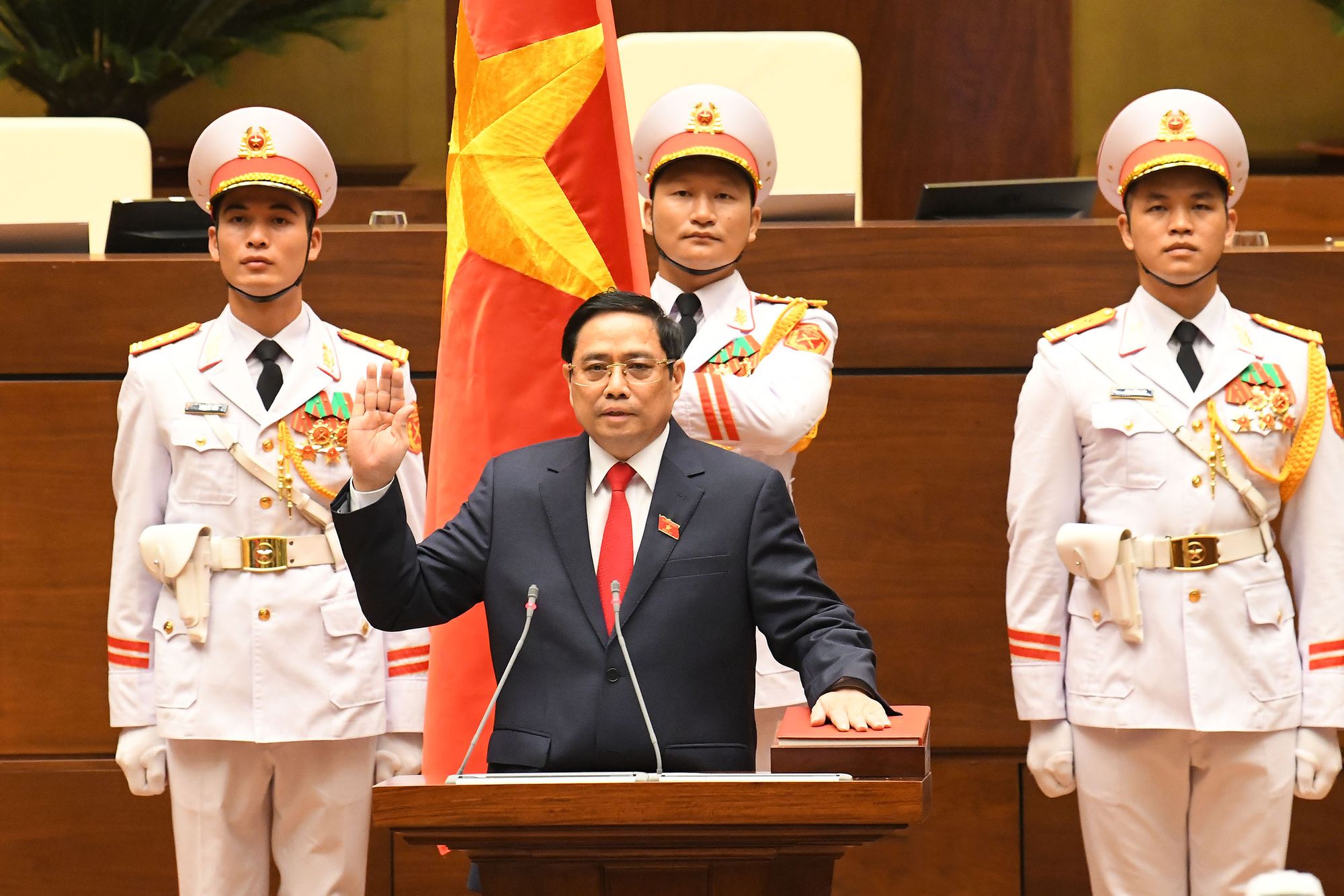
    In the spring of 2021, Vietnam has a new leader: Pham Minh Chinh, a former police intelligence officer and former head of the Vietnamese Communist Party’s Central Organization Commission. On July 26, 2021, Pham Minh Chinh, once again, takes his oath to be the prime minister of Vietnam for the next 5 years.

    One amongst “four pillars of the imperial court”

    In the article “A few things you should know about Vietnam’s National Assembly chairmanship,” we wrote about the formation of the institutional division of power known as the “four pillars,” which includes the general secretary, the state president, the prime minister, and the chairman of the National Assembly.

    If the state president and the chairman of the National Assembly, two among four of the most powerful positions in the Vietnamese Communist Party hierarchy, serve as primarily ceremonial positions, then the prime minister has both pomp and power, possessing broad authority in the governing system.

    The prime ministership was once a position without any notable power. Before Prime Minister Vo Van Kiet’s term (1991-1997), previous prime ministers left a very little mark, except for Ho Chi Minh – who served as both state president and prime minister from 1946-1955.

    Prime ministers after him, such as Pham Van Dong (1955-1987), Pham Hung (1987-1988), and Do Muoi (1988-1991), all served during periods where the government functioned according to the direction and management of the Party, rather than with tools of the executive branch. The same could be said during periods where Ho Chi Minh and Le Duan had overwhelming individual influence over the Party, causing other institutions and positions, including the prime ministership, to be subservient.

    In the 1980 Constitution, the government was called the Council of Ministers, with the prime minister position changed to the chairman of the Council of Ministers. This was an institution of collective leadership, with the powers of the chairman being minimal. With the 1992 Constitution, Vietnam reverted to the government mechanism in which the prime minister was head, concentrating greater power in his hands rather than practicing collective decision-making as in the past. Vo Van Kiet was the first prime minister to enjoy the new system under the 1992 Constitution.

    With the depth and broadness of economic reform, the government’s role in managing national affairs grew by the day to more quickly, effectively, and dynamically respond to domestic and international developments. This increase in authority also served to more adequately address the increasing importance of foreign affairs in the age of globalization. The position of prime minister, thus, became extremely powerful. Nguyen Tan Dung (2006-2016) is seen as the most powerful prime minister ever and once competed fiercely for the position of general secretary.

    Who elects the prime minister?

    Vietnam’s central government is modeled on the parliamentary system, with the central role (theoretically) held by the National Assembly. Constituents elect members of the National Assembly, and the National Assembly elects the government’s leadership figures, including the prime minister. (Obviously, everyone knows who actually “elects” the members of the National Assembly and the prime minister). The prime minister must be a member of the National Assembly.

    Normally, electing the prime minister occurs during the first session of the new National Assembly term, after the general election, which occurs after the Party congress. In 2016, the procedure took an unusual turn: the National Assembly elected the new prime minister in the last meeting of its term in April, preceding the general election by more than a month. After the general election, the new National Assembly then repeated the election of the prime minister one more time. Nguyen Xuan Phuc was sworn into office twice in 2016. Pham Minh Chinh also had the same experience in 2021.

    How powerful is the prime minister?

    The prime minister’s powers are stipulated in Article 98 of the Constitution and Article 28 of the Law on Government Organization (ratified in 2015 and amended in 2019).

    As head of state administration, this position has broad authority, from enforcing laws and organizing personnel to proposing and distributing the budget.

    As a unitary state, the central government has overarching authority, with the prime minister’s power extending from the center all the way to the provinces and cities.

    Outside his separate authority, the prime minister also has general authority over the collective decisions and resolutions of the cabinet.

    For more details, please see the two documents described above. Here, we would like to list a few of the prime minister’s decision-making powers to demonstrate just how influential this position is in the economic sphere:

    ·      Regarding land: has the power to establish a council to assess land usage programs and plans at the national level; approves changes in land usage purposes on rice cultivation fields 10 hectares and above, protected and special-use forest land 20 hectares and above; decides the policy framework for compensation, support, and resettlement in special cases; decides price tables for province-level land in many cases; decides on several cases in which the usage rights for land the state allocates or leases are not auctioned.

    ·      Regarding investment: has the power to approve investment plans on the scale of airports, ports, oil and gas rigs, large urban areas, industrial zones, and export processing zones; approves investment plans overseas in banking, insurance, stocks, and telecommunications…from 400 billion dong and above, along with other projects involving capital of 800 billion dong and above.

    Is prime minister the highest attainable position?

    No. In the party power hierarchy, the general secretary remains at the top and is the most powerful position overall.

    There has never been a prime minister who has risen to become general secretary, except for Do Muoi, who was the chairman of the Council of Ministers. Nearly all served only one or two terms before retiring, except Nguyen Xuan Phuc, who served as prime minister and then stepped down to become state president, a much less powerful position.

    This article describes the power of the prime minister, but in actuality, we have only spoken of it in legal terms and in relation to the order of power in the party. The position’s power is also dependent on the individual’s level of influence within the party.

    To put it another way, a leader’s power is the sum of his or her institutional power and individual sway. If the system bestows power but the individual leader doesn’t have the ability to wield it properly, then he does not have much power at all. Conversely, the system can bestow limited power, but an individual can exercise influence beyond his institutional limits.


    This article was written in Vietnamese by Trinh Huu Long and was previously published in Luat Khoa Magazine on April 6, 2021. The English translation was done by Will Nguyen.

  • Vietnam’s State President: The Captain But Not Really A Captain

    Vietnam’s State President: The Captain But Not Really A Captain

    In Vietnam, the position of state president is like that of a ship captain who completely got separated from the helm.


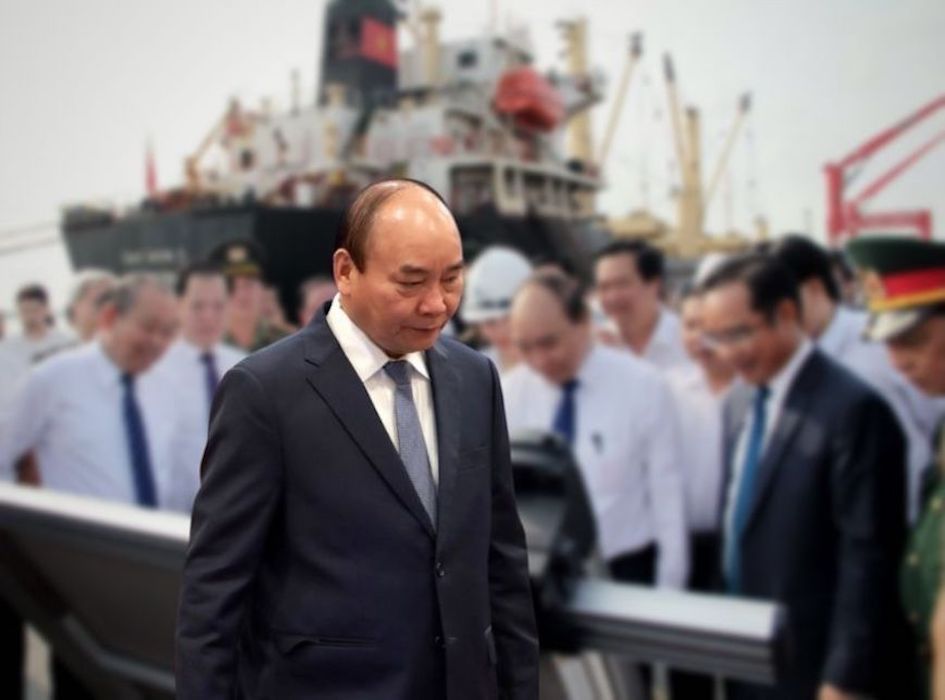
    During his single term as the prime minister, Nguyen Xuan Phuc became popular in the news for his words and promises to transform many provinces and cities in Vietnam into “captains,” from “economic captain” to “developmental captain.” Now, he himself has become the captain of Vietnam, as he accepted the position of state president – the legal head of state.

    But like many other captains of years past, his position as the “captain” of Vietnam is not what it appears. Yes, he will work from No. 2 Hung Vuong Street in Hanoi’s old French palace that dates more than 100 years, where French governors-general and President Ho Chi Minh once sat, but he won’t have much real power.

    “The four pillars” and the parliamentary system

    The state president is normally drawn from the Politburo of the Vietnamese Communist Party-normally, but not always. The exception is Ton Duc Thang, who succeeded Ho Chi Minh and served from 1969 to 1981. Ton Duc Thang was only a Party Central Committee member.

    In history, the most powerful state president of Vietnam was undoubtedly Ho Chi Minh, who held the position for more than 23 years, from 1946 until he died in 1969. During his years of greatest power, Ho Chi Minh also held the highest leadership position in the Communist Party and the position of prime minister until 1955. Between 1955 and 1960, Ho resigned as prime minister but held onto two other positions within the Party: party chairman and general secretary.

    From 1960 onwards, Ho remained the party chairman and state president, but with the rise of Le Duan and his ascension to power, Ho Chi Minh was no longer the center of Vietnam’s political life. From then onwards, the role of state president slowly became largely ceremonial.

    Ton Duc Thang, who was not elected into the Politburo, of course, held the position of state president, but he did not have much influence. His successor, Vo Chi Cong, on the other hand, was a member of the Politburo. But at the time, people didn’t call the position “State President,” but rather, “State Council President,” the council being an institution of collective leadership similar to the collective leadership structure of the Council of Ministers; this structure was originally borrowed from the Soviet Union and Eastern Europe and was incorporated wholesale into Vietnam’s 1980 Constitution.

    It was perhaps the next president, Le Duc Anh (1992-1997), who carved out a noteworthy role for the position of state president when he turned the role into an individual leadership position rather than a collective one. With his powerful influence derived from his time as defense minister, Le Duc Anh, along with General Secretary Do Muoi and Prime Minister Vo Van Kiet, formed what journalist Huy Duc calls the “tripartite division of power.” At the time, the “four pillars” had yet to take shape clearly; it was not until the leadership transition in 1997 that this was established.

    In actuality, the designation “four pillars” refers to the order of power within the Party. At the same time, the position of the state president in a parliamentary system such as Vietnam’s is a formality that only carries ceremonial value rather than any real power.

    What does it mean to be ceremonial?

    The parliamentary system is special in that the person who leads the state (head of state) is not the head of the cabinet. For example, in nearly all European countries, the head of the cabinet is the prime minister, who is simultaneously the majority leader in parliament; the head of state is either the president or the king/queen. We can see that Germany, Belgium, Denmark, and the United Kingdom all have prime ministers as their central political leaders rather than presidents or kings/queens.

    Vietnam is similar. The state president is the head of state, which according to its Constitution is “the person who leads the state, who represents the Socialist Republic of Vietnam domestically and in foreign affairs.” However, the person who leads the state administration is the prime minister, who possesses far-reaching power, as we have analyzed in the article “Vietnam: How powerful is the prime minister?”

    The Constitution grants the state president a number of limited powers that do not appear lacking, but in practice, are quite lacking. These powers include promulgating the Constitution, laws, and decrees, abilities that very much resemble veto power over decrees; numerous powers that relate to proposals to the National Assembly to elect or remove individuals from the highest positions in government; and above all, power as commander-in-chief of the armed forces.

    “Commander-in-chief”sounds enormously powerful. But the command of Vietnam’s armed forces has never laid with the state president; it actually lies with the Politburo and the Central Military Commission (CMC). In recent times, the secretary of the Central Military Committee has always been the Party general secretary, while the deputy minister of the CMC has been the minister of defense. The state president is simply a standing member of the CMC. Nguyen Phu Trong has been the only individual to hold both Party general secretary and state president positions while concurrently serving as the secretary of the CMC.

    Thus, the state president does not actually hold any guns. He doesn’t hold the purse strings either, because control of the treasury is held by the prime minister. The authority of the state president, then, lies in approving military promotions, bestowing awards and honors, and deciding on issues related to citizenship, reprieves, and diplomatic protocols, etc.

    With limited powers, Vietnamese presidents after Ho Chi Minh have never fully exercised their powers on thorny issues, such as dismissing a number of high-ranking positions in the government and the military or vetoing an ordinance from the National Assembly’s Standing Committee.

    Though it has transitioned from a collective leadership role (in the State Council) to an individualized one, the position of state president still represents the collective in announcing decisions and lacks the broad, active powers of the prime minister.

    The real power of the state president perhaps lies in the fact that he has his feet in both the Politburo and the CMC. If it weren’t for this straddling, the state president would be merely a puppet. Thus, when examining the actual power of a Vietnamese political leader, it is not enough to look to the law; one must also look at his or her power within the Party and the individual influence he or she has.

    Nguyen Xuan Phuc has bestowed the title of “captain” on many provinces and cities as his way to encourage them to develop and prosper, though perhaps these provincial and municipal leaders have yet to understand how they were called “captains.” Nguyen Xuan Phuc now has also assumed the position of head of the ship, but he is also no captain.


    This article was written in Vietnamese by Trinh Huu Long and was previously published in Luat Khoa Magazine on April 7, 2021. The English translation was done by Will Nguyen.

  • A Few Things You Should Know About Vietnam’s National Assembly Chairpersonship

    A Few Things You Should Know About Vietnam’s National Assembly Chairpersonship

    Though it is one of the “four pillars” of the Vietnamese government, the National Assembly chairpersonship remains the weakest position.


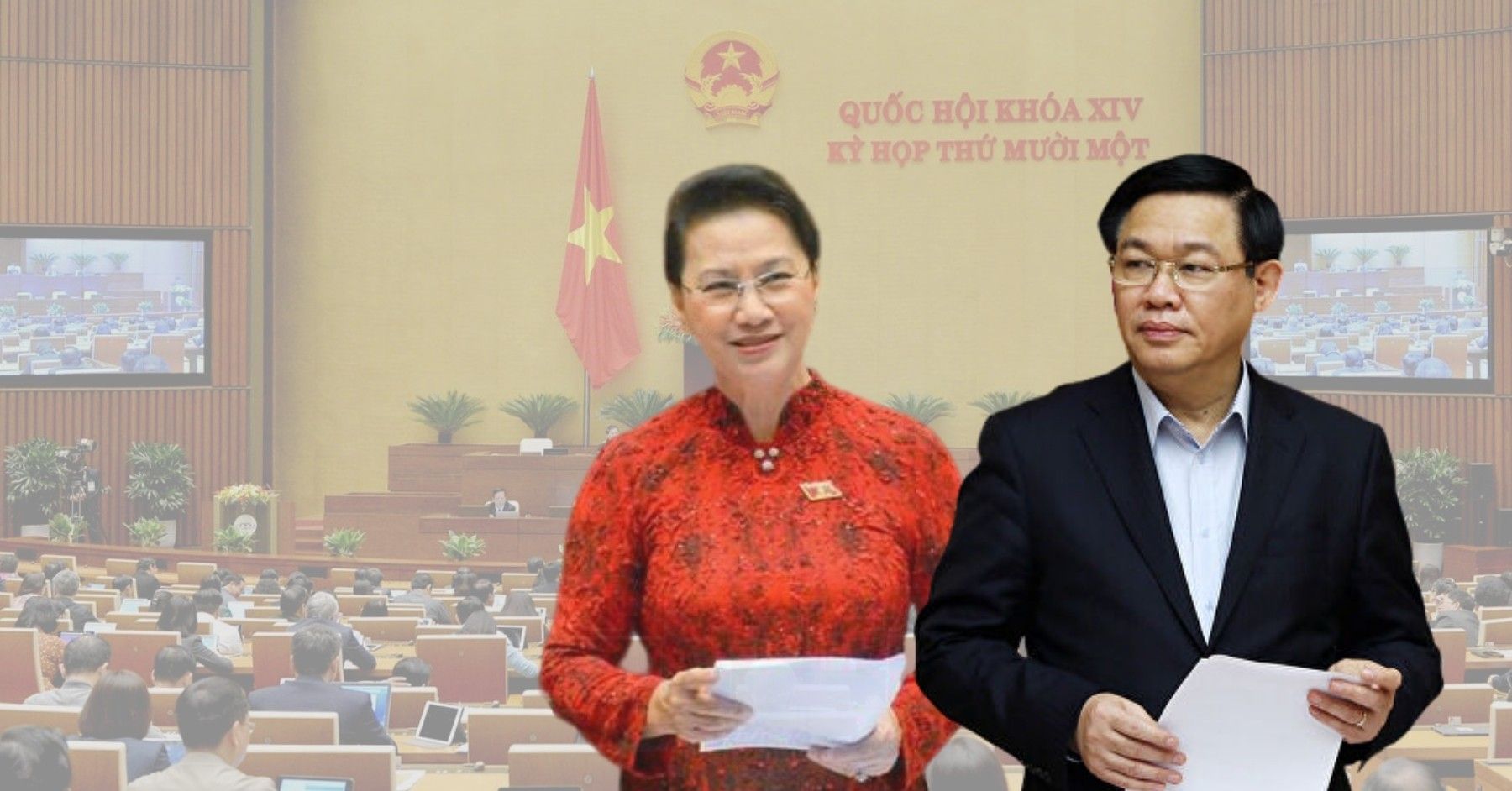
    Vietnam’s National Assembly has been preparing to change its window dressing in late March 2021. No need to wait until the general election wraps up in May 2021; the National Assembly chairmanship had a new occupant in the final days of March. To reaffirm that the election in May did not change Vietnam’s political situation, July 20, 2021 would mark Vuong Dinh Hue’s continuation to serve the same leadership position as the National Assembly chairman for the next 5 years when it re-elected him.

    One amongst the “four pillars of the imperial court”

    Beginning in the mid-1980s, Vietnamese politics slowly moved beyond the individual leadership model and the overpowering influence of Ho Chi Minh and his successor Le Duan. This, in combination with the economic reform process, led to the gradual development of a new institutional division of power. Over time, supreme power was divided among four positions: the general secretary, state president, prime minister, and chairperson of the National Assembly.

    Today, as war has receded into the distance and demands to join the international community grow, the political system functions have begun trending towards laws of the state rather than the directives of the Vietnamese Communist Party. As such, the National Assembly increasingly plays a larger and more dynamic role in the political system.

    However, it wasn’t until 1992, when Nong Duc Manh was elected as National Assembly chairman, that a member of the Politburo occupied the position. Before that, Truong Chinh – a Politburo member – served as chairman of the National Assembly Standing Committee from 1960 to 1981. Still, as stated above, the National Assembly did not play a large role during that time, though it’s hard to say that its role today is large either.

    The National Assembly chairmen after Truong Chinh all worked their way up to become members of the Party Central Committee (such as Le Quang Dạo) or outside the Party Central Committee altogether (e.g., Nguyen Huu Tho).

    All National Assembly chairmen from Nong Duc Manh onwards were members of the Politburo. Though its numbers are among the “four pillars,” the National Assembly chairmanship remains the weakest position and must abide by party decisions.

    Launchpad to power

    Of the five National Assembly chairmen since 1992, two have become general secretary of the VCP’s Central Committee – the highest position in the entire political system: Nong Duc Manh (2001 – 2011) and Nguyen Phu Trong (2011- present).

    In stark contrast, the prime minister’s office has been unable to propel its occupant any further. One after the other, Vo Van Kiet, Phan Van Khai, and Nguyen Tan Dung became prime ministers and then retired, failing to make it to the general secretary. The exception is Nguyen Xuan Phuc, who, rather than retiring after serving as prime minister, is set to become state president; that is, he is taking one step down the ladder of party power.

    Is the National Assembly chairman the “boss” of the National Assembly representatives?

    No.

    In principle, the National Assembly chairman is simply a member of the National Assembly, with all members being equal and everyone retaining one vote. No representative can force another representative to do his or her bidding. The National Assembly chairperson cannot issue any order to a representative, except for limited powers during work assignments with vice National Assembly chairpersons.

    Then what does the National Assembly chairman do?

    He or she mainly coordinates the activities of the National Assembly and the National Assembly’s Standing Committee, presiding over meetings and sessions and ratifying adopted constitutions, laws, resolutions, and ordinances.

    For more details, please see Vietnam’s Constitution and the Law on National Assembly Organization.

    The National Assembly chairman also usually acts as head of the National Electoral Council. This arrangement contains a conflict of interest when a representative (and often also a candidate) organizes elections. In democratic countries, the council must, in principle, be independent of the National Assembly.

    A position almost always reserved for men

    Of the 11 National Assembly chairpersons in Vietnam’s modern history, the only woman to serve in this position was Nguyen Thi Kim Ngan, who held the position from 2016 to 2021. But truth be told, Ngan is the only woman to have ever served as one of the “four pillars.”

    Her predicted successor, Vuong Dinh Hue, will carry on the near-exclusive tradition of men being at the helm of the National Assembly.

    Hue has served as minister of finance (2011-2012), head of the Central Economic Committee (2012-2016), deputy prime minister (2016-2020), and secretary of the Hanoi party committee (2020-current). He has been a member of the Politburo since 2016.


    This article was written in Vietnamese by Trinh Huu Long and was previously published in Luat Khoa Magazine on March 30, 2021. The English translation was done by Will Nguyen.

  • Why Did The Vietnamese Communist Party Suppress Anti-China Nationalism?

    Why Did The Vietnamese Communist Party Suppress Anti-China Nationalism?

    Since the beginning of its history, the Vietnamese Communist Party (VCP) has been portraying itself as a group of nationalists who liberated the country from foreign intervention. History textbooks, propaganda, and official VCP narratives were all dedicated to showing that the VCP is the true heir of Vietnam and that the path to socialism is the destined path of the country.

    However, this nationalistic sentiment contrasts with the Party’s cherished Marxist-Leninist Communist ideology, which states that nationalism is a bourgeoise illusion[1] that distracts people from their struggle with the bourgeoisie and that only international class struggle matters.[2] Such an ideological paradox is even more puzzling as we examine the regime’s responses to the rise of contemporary anti-China nationalism in Vietnam.

    Anti-China nationalist sentiments have been rampant in Vietnam since the late 2000s, as expressed through various protests, demonstrations, and online debates. These sentiments are popular among the anti-communist Vietnamese diaspora and among the people residing in the country who were enraged by China’s territorial claims in the South China Sea. Since 1947, the Chinese Communist Party (CCP) has established an eleven-dash line map (now the nine-dash line map), claiming various islands in the South China Sea, including the Paracel and Spratly islands – or in Vietnamese, the Hoang Sa and Truong Sa islands.[3]

    For years, the CCP has not relinquished claims to what Vietnamese nationalists insist are Vietnam’s rightful territories. Ten years ago, in 2011, anti-China nationalism manifested itself in the form of demonstrations, when hundreds of Vietnamese people protested in front of the Chinese Embassy in Hanoi, demanding China stay out of the Paracel and Spratly islands.[4] However, these demonstrations were met with repression from the Vietnamese regime.[5]

    On the one hand, the VCP faces widespread nationalist criticism from its citizens for depending on China. Such criticism presented a considerable threat for the regime’s long-established narrative as nationalists fighting foreign influence and as the only legitimate ruler of the country.

    On the other hand, the VCP faces the CCP, whom they have relied on for ideological and policy guidance and economic and military aid during wartime. Distancing itself from the CCP would also betray Marxism-Leninism’s internationalist agenda.

    In a research essay, political scientist Tuong Vu, professor at the University of Oregon, examines contemporary anti-China nationalism in Vietnam as well as the Vietnamese regime’s responses. In a research essay titled “The Party v. the People: Anti-China Nationalism in Contemporary Vietnam,” Professor Vu argues that the suppression of anti-China nationalism is in line with the VCP’s international communist ideology, despite the Party’s nationalist image.[6] This article focuses on explaining the VCP’s repressive actions by analyzing their understanding of communism and nationalism.

    Tuong Vu is a professor and head of the Political Science department at the University of Oregon. His research focuses on state formation, nationalism, ideology, and revolutions in East Asia.

    The Construction of Communist Nationalism

    In order to understand why the VCP suppressed anti-China nationalism, we must first grasp the VCP’s understanding of nationalism itself. The VCP sees nationalism as communism, with an emphasis on communist internationalism that promotes solidarity among socialist states. This suggests that opposition to other socialist states – in this case, China – is not seen as nationalism.

    Since its foundation during the French colonial period, the VCP has always pursued two goals simultaneously: achieving national independence, which concerned the French and other foreign intervention, and carrying out a socialist revolution in the country.

    To achieve the former goal,  the VCP has always portrayed itself as a nationalist faction. Even foreign scholars seem to push the popular narrative that VCP leaders like Ho Chi Minh were nationalists first and communists second and that communism was a mere tool for them to achieve national liberation.[7]

    However, Tuong Vu disagrees with this narrative. He thinks that the VCP has always been devoted to communism, even when it pushes a nationalist propaganda. But how did the VCP reconcile being both nationalist and communist, since being the latter means condemning nationalism?

    Tuong Vu offers a simple explanation. Communism has always been portrayed as the best path to achieve liberation as well as decolonization for Vietnam. It was not just regarded as a tool for nationalism, but instead both the means to achieve independence, as well as the end goal for building the nation. Therefore, anyone who does not support communism is deemed unpatriotic.

    In other words, the VCP ties nationalism or patriotism with being loyal to its own causes. This was demonstrated by the former Prime Minister Pham Van Dong, who declared that “to be patriotic is to build socialism.”[8]

    Communist leaders such as Ho Chi Minh and Le Duan have also consistently tried to incorporate nationalism into communism by demonstrating that communist internationalism, solidarity with workers and communists worldwide, is a part of Vietnamese nationalism. [9]

    As Le Hong Phong and Ha Huy Tap, leaders of the Indochinese Communist Party, the predecessor of the VCP, explained in 1936: “We believe in internationalism, not nationalism, but…we should raise the spirit for national liberation while tying it to the interests of the working masses….”

    So nationalism for the VCP is communism. The VCP’s nationalism is particularly tied to its belief in internationalism, which says that “socialist brothers” around the world should find solidarity together instead of fighting each other like capitalist countries.

    Additionally, the VCP also distinguished communist-nationalist movements from the other nationalist movements that it deemed to be bourgeoisie, and as a result it prioritized the former.

    For instance, the VCP endorsed China in the Sino-Indian border war in 1962, even though the Communist Party of India criticized China and supported the Indian government. The VCP saw the Communist Party of India as having “sunken deeply in the bourgeois nationalist mud by colluding with the Indian bourgeoisie to slander a brother communist party,” based on archival materials collected by Tuong Vu.

    This is important because it marks the VCP’s tactic when confronted with a reality that does not fit into their view of communist internationalism.

    The VCP’s actions of justifying reality by creating more theoretical arguments to support its action do not stop there, as its idea of nationalism based on communist internationalism was further challenged by the fact of infighting among communist states the Sino-Soviet split (1956-1966), in which China was at odds with the Soviet Union, and the Sino-Vietnamese border war in 1979, in which China assaulted Vietnam’s border after Vietnam attacked the China-backed Khmer Rouge regime.

    Justifying Reality

    Accommodating reality, the VCP shifted its own narrative on nationalism by focusing more on domestic communist propaganda. Nevertheless, this new narrative still links Vietnamese nationalism with communism and internationalism. This shows that even when Vietnam was threatened by China, the VCP was still following communist internationalism instead of endorsing a more nationalist approach.

    This is evident in the way the VCP has never acknowledged the Sino-Vietnamese border war as a war between socialist brothers. Just as when it justified endorsing China over India in 1962, the VCP argues that the border war was not about communist infighting. The conflict, argues the VCP, was “a fierce struggle between national independence and socialism on the one hand and aggression, expansionism, and chauvinism on the other, between Marxism-Leninism on the one hand and Maoism on the other.” This denial of reality demonstrates a deeply rooted ideological loyalty to Marxism-Leninism.

    In order to demonstrate how the VCP justified the Sino-Soviet split, Tuong Vu looked into the VCP’s construction of historical narratives through the most basic and widespread document: the First-Grade Reader (Tập Đọc Lớp Một), a textbook used to teach first-grade children to read. He compared the two editions of the textbook, the one published in 1956, which was before the Sino-Soviet split, with the one published in 1972, after the split.

    Data by Tuong Vu. Graphic by The Vietnamese Magazine. 

    Firstly, there was significantly more content on communist heroes and less content on other socialist countries in the latter edition. This was due to the prolonged war, which produced more “heroes”, and because the VCP seemed to focus more on glorifying internal communist mobilization after the Sino-Soviet split. Additionally, these communist heroes were portrayed as both nationalist and communist – their struggle was seen as both contributing to the country and the international construction of communism worldwide.

    Secondly, the content on non-communist heroes and patriotism not linked to the VCP was consistently low in both editions, and particularly low compared to the amount of content on communist heroes.

    This reaffirms that the VCP constructed nationalism not based on ethnic lines but rather on political ideology, which suggests that the Party is more likely to align with a foreign communist force than to align with Vietnamese nationalists who reject communism.

    Protests and Deconstruction of Communist Nationalism

    The VCP’s loyalty to communist internationalism as a part of its nationalism was fiercely challenged by the wave of anti-China nationalism in 21st Century Vietnam due to China’s territorial claims in the South China Sea.

    Anti-China opposition in Vietnam is expressed through two main channels: protests and debates on alternative understandings of nationalism. Both of these channels pose significant threats to the VCP’s legitimacy.

    Ten years ago, in 2011, massive anti-China protests broke out on the streets of Hanoi and Ho Chi Minh City, especially in the areas where the Chinese embassy and consulate were located, to protest China’s harassment of Vietnamese fishermen in the Spratly and Paracel islands.[10]

    The protests did not happen just once, but rather multiple times throughout the summer of 2011 for almost three consecutive months. While these protests were significant, they were not the first. In 2008, many democracy activists and bloggers were also arrested or detained for protesting China’s claims in the South China Sea.[11]

    Alongside the protests, many Vietnamese intellectuals started to question the legitimacy of the VCP as Vietnam’s only ruling party and its construction of communist nationalism. Many retired, high-ranking government officials joined in these debates.

    For example, Tong Van Cong, former editor of the state-controlled newspaper Lao Dong, argued that the true wish of the late Ho Chi Minh was to establish democracy for Vietnam rather than achieving socialism at any cost, thus questioning the Party’s nationalism based on ideology, as well as its refusal to institutionalize democracy.[12]

    The late Le Hieu Dang, former vice-president of the Vietnam Fatherland Front in Ho Chi Minh City, a strong umbrella association of communist organizations, also expressed his dissatisfaction with the VCP’s ideological relationship with China.[13]

    While he joined the communist movement during wartime due to his love for his country, Dang argued that the VCP had failed to pay back the debt it owed the Vietnamese people after they fought for and supported the Party. This debt was piled on to the Party’s failed policies based on China’s policy advice, resulting in misery for many Vietnamese people. In contrast, he argued that the VCP owes China nothing. This argument contradicted the Party’s narrative that the country owed China for its generous support for Vietnam in wartime.

    Joshua Kurlantzick, senior fellow on Southeast Asia for the Council on Foreign Relations, believes that the protests did not merely demonstrate anti-China sentiments, but also showed the protesters’ frustration with the government’s repressive actions towards dissents over the years, and the government’s failure to deliver democracy.[14]

    This further explains why the VCP oppressed anti-China protests and saw the protesters as a threat. These protests were seen as opposing a foreign regime and opposing the VCP, the only “legitimate” ruling body in Vietnam.

    Further Problems for the VCP

    Currently, the VCP’s policies towards China are once again being challenged, this time by the COVID-19 pandemic, especially when it comes to vaccines. After resisting China’s vaccine diplomacy for a while, the government has recently approved the Chinese Sinopharm vaccine, and it was met with opposition and hesitation from a lot of Vietnamese people.[15] The VCP’s late approval was either because of its distrust of China’s vaccine diplomacy, or because the public opinion in Vietnam has been strongly anti-China.

    In a survey conducted by the ISEAS-Yusof Ishak Institute in 2021, individuals from Vietnam are the most disapproving of China’s leadership in the pandemic among 10 ASEAN countries, significantly more disapproving than others.[16] In contrast, Vietnam is the most approving of US leadership in the pandemic among these countries, much more so than the average ASEAN country.

    Vietnam is the most disapproving of China among the 10 nations. Data by the ISEAS-Yusof Ishak Institute. Graphic by The Vietnamese Magazine.
    Vietnam is the most approving of the US among the 10 nations. Data by the ISEAS-Yusof Ishak Institute. Graphic by The Vietnamese Magazine. 

    When it comes to the South China Sea, Vietnam also shows the most concern with China’s actions – its encroachment and military activities – rather than the US military presence or an escalation of the situation between the US and China.

    Once again, this is a rather ironic situation, as the ideological doctrine of the VCP has been consistently promoting solidarity with other socialist countries while condemning capitalist and imperialist states such as the United States.

    Data by the ISEAS-Yusof Ishak Institute. Graphic by Son Nguyen/The Vietnamese. 

    This shows that the VCP’s communist internationalism is not working. Arguably, it is even backfiring because Vietnamese public opinion is shifting towards supporting the United States – a capitalist and imperialist superpower according to Vietnam’s propaganda – instead of supporting China – a socialist brother.

    Conclusion

    On the surface, increasing anti-China sentiments among the Vietnamese people seem to be in the VCP’s favor, as it hopes to reclaim the Paracel and Spratly islands.

    However, this anti-China nationalism also presents a great threat to the VCP establishment that is loyal to communist ideology which promotes solidarity among socialist states. It also presents a deeper ideological threat to the VCP, as Vietnamese nationalists begin to question the VCP’s version of nationalism that correlates being a patriot to being a communist.

    The anti-China protests and data on popular opinions suggest that despite the VCP’s efforts, the Vietnamese people are feeling more and more detached from the socialist solidarity with China that the VCP has consistently promoted.

    If the VCP continues to refuse to change its ideological approach to China, and if it continues to repress anti-China nationalism, it runs a grave risk of getting its own Marxist-Leninist legitimacy further questioned and challenged.

    Bibliography

    [1] Crawford, T. (1923, August 15). Bourgeois Nationalism. Marxists Internet Archive. https://www.marxists.org/archive/roy/1923/08/15a.htm

    [2] McLellan, D. T. (1998, July 20). Marxism – Class Struggle. Encyclopedia Britannica. https://www.britannica.com/topic/Marxism/Class-struggle

    [3] Xu, B. (2020, July 15). China’s Maritime Disputes. Council on Foreign Relations. https://www.cfr.org/timeline/chinas-maritime-disputes

    [4] Ide, B. B., & Orendain, B. S. (2011, June 4). Hundreds of Vietnamese Stage Anti-China Protest. Voice of America. https://www.voanews.com/east-asia/hundreds-vietnamese-stage-anti-china-protest

    [5] Vietnam breaks up anti-China protests. (2012, December 9). The Guardian. https://www.theguardian.com/world/2012/dec/09/vietnam-breaks-up-anti-china-protests

    [6] Vu, T. (2014). The Party v. the People: Anti-China Nationalism in Contemporary Vietnam. Journal of Vietnamese Studies, 9(4), 33–66. https://doi.org/10.1525/vs.2014.9.4.33

    [7] Buttinger, J. (1977). The Journal of Developing Areas, 11(3), 423-425. Retrieved June 11, 2021, from http://www.jstor.org/stable/4190492

    [8] Le, H. N. (2016, February 29). Phạm Văn Đồng – Nhà Chính trị, Nhà Văn hóa lớn của Đảng và Dân tộc. Báo Nhân Dân. https://nhandan.vn/tin-tuc-su-kien/pham-van-dong-nha-chinh-tri-nha-van-hoa-lon-cua-dang-va-dan-toc-256438

    [9] Nguyen, C. T. (2018, July 31). Tư tưởng Hồ Chí Minh Về Tinh Thần Yêu Nước. Tạp Chí Quốc Phòng Toàn Dân. http://m.tapchiqptd.vn/vi/theo-guong-bac/tu-tuong-ho-chi-minh-ve-tinh-than-yeu-nuoc-12158.html

    [10] Vandenbrink, R., & Nguyen, A. (2011, June 5). Anti-China Protests in Vietnam. Radio Free Asia. https://www.rfa.org/english/news/vietnam/protests-06052011165059.html

    [11] Human Rights Watch. (2020, October 28). Vietnam: New Round of Arrests Target Democracy Activists. https://www.hrw.org/news/2008/09/12/vietnam-new-round-arrests-target-democracy-activists

    [12] Tong, V. C. (n.d.). Nhân Ngày sinh lần thứ 120 Chủ tịch Hồ Chí Minh: Vì Sao Hồ Chí Minh Đặt Dân Chủ Trước Giàu Mạnh? Bauxite Vietnam. Retrieved June 11, 2021, from https://boxitvn.blogspot.com/2010/05/nhan-ngay-sinh-lan-thu-120-chu-tich-ho_19.html

    [13] Le, H. D. (n.d.). Suy Nghĩ Trong Những Ngày Nằm Bịnh. . .. Bauxite Vietnam. Retrieved June 11, 2021, from https://boxitvn.blogspot.com/2013/08/suy-nghi-trong-nhung-ngay-nam-binh.html

    [14] Kurlantzick, J. (2014, May 16). Vietnam Protests: More Than Just Anti-China Sentiment. Council on Foreign Relations. https://www.cfr.org/blog/vietnam-protests-more-just-anti-china-sentiment

    [15] Nguyen, S. (2021, June 7). Vietnam Briefing: Busy With The Pandemic, But The Government Still Cracks Down On Free Speech. The Vietnamese Magazine. /2021/06/vietnam-briefing-busy-with-the-pandemic-but-the-government-still-cracks-down-on-free-speech/

    [16] Seah, S., Hoang, T. H., Martinus, M., & Pham, T. P. T. (2021, February). The State of Southeast Asia: 2021 Survey Report. ISEAS-Yusof Ishak Institute. https://www.iseas.edu.sg/articles-commentaries/state-of-southeast-asia-survey/the-state-of-southeast-asia-2021-survey-report/

  • Vietnam’s General Election 2021: A Tale Of Three Players

    Vietnam’s General Election 2021: A Tale Of Three Players

    Vietnam’s general election in May 2021, with the surprise factor of Luong The Huy’s independent candidacy, revealed a political landscape of three major players, namely the government led by the Vietnamese Communist Party, a new generation of regime critics, and those who seem to hope to change politics from within. However, the future for free and fair elections in Vietnam remains grim unless the nature of these players is taken into account and supporters of progressive change in Vietnam adopt the right strategy to address it.

    The Vietnamese Communist Party and its government

    In the lead up to and after the May 2021 general election, Public Security News provided a good overview of how the Ministry of Public Security and related governmental agencies “protect” the election. Their actions range from on-site security to the arrests of individuals who are perceived as threats to the fight in cyberspace against international and Vietnamese actors who are critical of the regime and the election. The same can be found in other media outlets under the control of the government, notably Vietnam News Agency’s branch VietnamPlus.

    The fight in cyberspace is intensely ideological. It shows that the government, or more precisely the Vietnamese Communist Party (VCP), firmly rejects democratic principles and institutions and views them as outright wrong.

    For example, the argument that ‘The VCP must not lead or interfere with National Assembly activities because the National Assembly is a representative of the people’ is labelled ‘hostile’ and ‘reactionary.’[1] This accusation suggests that the VCP does not see anything wrong with leading and interfering with the National Assembly.

    Similarly, Vo Van Thuong, a Politburo member and head of the Central Propaganda Department, praises the role of the media in legitimizing the regime and its ideology while also openly affirming the news sector as being state-led than autonomous.[2] Such treatment of the media is typical of a Marxist-Leninist political system. This strict adherence to this ideology shows that Vietnam’s present-day political leaders retain the same ideological shade from two decades ago.[3]

    Anti-VCP forces

    On the other hand, the opposing camp has become significantly more diverse than in the post-war era.[4] There is one group that is composed of domestic pro-democracy activists and dissidents. Some of them have been detained in the lead-up to the election, while the rest continue to provide critical analysis of current events on their personal Facebook pages. The level of articulation in these analyses is generally commendable; they boast high readability with no vulgarity and remain consistent in their call for regime change and democratization.

    Another group comprises people in their 20s and 30s who are highly educated and emigrated abroad following their participation in the 2010-2019 protests. This group is concerned with raising awareness about the importance of free and fair elections and voting rights. Like the first group, it is also clear that this younger generation holds an aspiration for a democratic Vietnam. Yet despite this common thread, there is little evidence that collaboration exists between the first and second groups, despite the assertions of Public Security News.[5]

    In addition to the two groups mentioned above, a seemingly large number of middle-aged individuals, both in and outside of Vietnam, hold strong sentiments against the VCP-led government. These people do not hesitate to describe the National Assembly as merely an extension of the VCP. Likewise, they put little faith in the elections as a whole. Understandably, this is the result of the 1975 upheaval, with which the VCP will have to contend, just as much as the spectre of demised South Vietnam will continue to haunt Hanoi.

    Team Huy

    While the differences and hostilities between the VCP and anti-VCP forces are unmistakably clear, especially in their ideological positions, the much talked about independent candidate, Luong The Huy, and his team of supporters, are the most ambiguous.

    First, it is unclear whether Huy will just be another docile National Assembly member if he is elected or if he desires to push for democratic reforms from the inside. Regarding the latter, this seems to be highly unrealistic. Indeed, one Facebook user wrote on her page that she is not convinced that the National Assembly has autonomy or independence from the VCP, and therefore, she will not be voting for Huy.[6]

    Second, the very passionate team that mobilised support for Huy comprises individuals close to the registered Vietnamese NGO sector or engaged in relatively safe advocacy. They are distinct from the anti-VCP forces mentioned above; in fact, these individuals and those in the anti-VCP camp rarely talk to each other.

    While observing their ‘Hanoi Will Vote for Luong The Huy? (Hà Nội bầu Lương Thế Huy?)’ campaign, I could not help but think that they did what they did simply because the independent candidate happens to be Huy, who is their close friend or beloved colleague. For this reason, it is also not surprising that Huy’s camp seems indifferent to the plight of other independent candidates; they have expressed neither solidarity nor sympathy for those who have ended up in jail.

    Conclusion

    The 2021 election reveals essential lessons for those who want to learn and bring about democratic change in Vietnam.

    First, Marxist-Leninist ideology is still alive and well, as evidenced by the continued dominance of state-led media and the government’s ongoing suppression of critics of the regime. Whether it comes from the heartfelt belief of the communists in Hanoi or it is simply a convenient façade for lack of a better strategy to protect their ruling, democracy supporters, in any case, will have to overcome these ideological hurdles.

    Second, it would be naive to think that Luong The Huy’s candidacy is any indication of a democratic shift in Vietnam’s electoral politics. On the government’s side, the same tactics of silencing, “educating,” and threatening voters against voting for Huy were carried out by cyber forces on the eve of the election.

    Huy and his supporters may have made a portion of Vietnamese youth pay attention to electoral politics, which is commendable due to widespread political apathy in Vietnam. However, in the larger scheme of things, “Team Huy” is, for the most part, a result of the fondness for him as an individual and typical of how Vietnamese NGOs go about politics.

    At any rate, “Team Huy” has not sparked a push for free and fair elections in the future in Vietnam. Instead, hope should be placed on those who have been tempered in the fire of the 2010-2019 protest decade. These people know where they stand and what they are dealing with; they have perseveringly worked to share their dream of free and fair elections with the Vietnamese public.

    Bibliography:

    [1] Vo, N. T. (2021, May 17). “Nêu cao nhận thức bầu cử, ngăn chặn các luận điệu sai trái.” Công an Nhân dân Online. http://cand.com.vn/Chong-dien-bien-hoa-binh/Neu-cao-nhan-thuc-bau-cu-ngan-chan-cac-luan-dieu-sai-trai-641545/

    [2] (2021, Jan 1). “Báo chí góp phần củng cố niềm tin, khơi dậy ý chí tự lực tự cường’” TTXVN/Vietnam+. https://www.vietnamplus.vn/bao-chi-gop-phan-cung-co-niem-tin-khoi-day-y-chi-tu-luc-tu-cuong/687380.vnp

    [3] Martin Gainsborough (2002)’s article “Political change in Vietnam: in search of the middle-class challenge to the state,” in Asian Survey. In this article, Gainsborough cites the example of former General Secretary Nông Đức Mạnh’s assertion that the VCP knows the will of the people, and hence there is no need for opposition, to argue that VCP authoritarianism is rather “heartfelt” and based on “a very different view of state and opposition than that of the West” (p. 706).

    [4] Carlyle Thayer’s (2009) article “Vietnam and the challenge of political civil society,” in Contemporary Southeast Asia.

    [5] Mai A. (2021, May 25). “Ngăn chặn, vô hiệu hóa các hoạt động phá hoại bầu cử.” Công an Nhân dân Online. http://cand.com.vn/Chong-dien-bien-hoa-binh/Ngan-chan-vo-hieu-hoa-cac-hoat-dong-pha-hoai-bau-cu-642820/

    [6] Bui Thuy (2021, May 22). [Photo]. Facebook. https://www.facebook.com/photo.php?fbid=4646369825377746&set=a.542089325805837&type=3

  • An Authoritarian Nightmare: The Self-Nomination Movement In 2016

    An Authoritarian Nightmare: The Self-Nomination Movement In 2016

    “The dream for authoritarian regimes is to reap the fruits of electoral legitimacy without running the risks of democratic uncertainty.”
    Andreas Schedler, professor of political science.

    Despite being a one-party state, the Vietnamese Constitution does allow non-party members and self-nominated candidates to compete for the National Assembly election. Because of this, the Vietnamese Communist Party (VCP) often claims that elections in Vietnam are democratic and represent the true will of the people.

    However, the story is not that simple.

    Self-nominated candidates, especially those who are independent and without affiliation with the VCP, experience extreme hardships in their election races, as the VCP deploys multiple tactics to barricade truly independent candidates from winning elections.

    In 2016, a group of activists, dissidents, and non-party members decided to nominate themselves en masse to run in the National Assembly election. Their objective? Not to win. Instead, they hoped to shed light on the unfairness of Vietnamese elections and the VCP’s treatment of genuinely independent candidates.

    Some media outlets called the phenomenon a “democratic experience.” Some researchers considered it as Vietnam’s one-of-a-kind social movement, in which participants collectively mobilized and presented unprecedented coordination.

    Stanford University post-doctoral fellow Nhu Truong examines the self-nomination movement in her article “Opposition Repertoires under Authoritarian Rule: Vietnam’s 2016 Self-Nomination Movement.” She documents the movement and argues that it happened due to the combination of two factors: the right timing and the common activist interests of the participants. Her research focuses on those who exclusively identified themselves with the movement.

    Nhu Truong is a scholar of the Walter H. Shorenstein Asia-Pacific Research Center at Stanford University, specializing in authoritarianism and communist regimes. Her article appeared in Cambridge University’s academic publication Journal of East Asian Studies.

    The Movement

    How did the movement happen? If Vietnam allows non-party and self-nominated candidates, did any similar movements happen before?

    Self-nominated candidates are actually not a new phenomenon in Vietnam because it has been allowed since 1992. State officials have also repeatedly affirmed that discrimination against independent candidates is illegal.

    However, genuinely independent candidates remain incredibly underrepresented. This is because not all self-nominated candidates are non-party members or without VCP affiliations. The VCP might even back some self-nominated party members to win to appear more democratic.

    Even if we assume all self-nominated candidates are independent and present opposition to the VCP, the number is awfully inadequate. Over the years, less than 1 percent of self-nominees eventually won their election. Non-party delegates in the National Assembly have never exceeded 15 percent.

    Why? Because, like its Chinese counterpart, the VCP has many tactics to manipulate elections to its own benefit.

    The number of self-nominees with valid applications, those who got on the ballot, and those who won the election. Data by Paul Schuler. Graphic by Son Nguyen/The Vietnamese. 

    Aware of the severe lack of political diversity, a group of activists, dissidents, and non-party members collectively nominated themselves to prove that the electoral system in Vietnam is rigged and discriminatory.

    Unlike self-nominees before and after them, these self-nominees stood out because of their planned collective mobilization. The movement started as the result of a famous civil society activist Nguyen Quang A, who issued a rallying call on Facebook. Nguyen Quang A laid out a rational action plan, including adhering to current legal frameworks despite its shortcomings and establishing collective support groups online for self-nominees to help each other.

    A list of over 30 self-nominated, non-party candidates was then presented on the movement’s Facebook page. These candidates publicly aligned with the movement as well as its slogan “My rights, I exercise”(Quyền ta, ta cứ làm), which stresses the movement’s adherence to the law in Vietnam.

    The list of candidates included many prominent activists and dissidents other than Nguyen Quang A, such as human rights lawyer Vo An Don, who defended exile blogger Mother Mushroom, journalist Nguyen Tuong Thuy, who led an association of independent journalists and recently jailed activist Nguyen Thuy Hanh.

    Unfortunately, all self-nominated candidates who aligned themselves with the movement were eliminated before getting their names on the ballot. Despite getting 100 percent of approval from his meeting with local constituents (one of the steps in the election procedure), Tran Dang Tuan, the former director-general of the state-controlled Vietnam National Television, was later disqualified by the National Election Council.

    The Council did not cite any particular reasons for eliminating him.

    In the 2016 election, only two self-nominated candidates were elected. Both of them were VCP members.

    This movement, as Dr. Truong pointed out, might not strictly qualify as a “social movement” in its scientific definition as a “sustained campaign of claim-making” that uses “repeated performance” to advertise the cause, and has a common identity based on “networks, tradition, and solidarities.” It is because the movement lacked a cohesive common identity despite massive coordination and a shared social circle.

    However, this self-nominated movement is still useful to understand the collective political mobilization in Vietnam.

    The Right Timing

    All politicians need good timing in order to broaden their chance of getting elected, especially for non-party candidates running in an election in an authoritarian state. And indeed, the 2016 election presented a lot of opportunities for independent party critics to rise.

    The period leading up to the 2016 election was a particularly bad time for the VCP with a prominent corruption scandal of former Prime Minister Nguyen Tan Dung that resulted in party elites infighting, and the first-ever vote of no confidence in the National Assembly. The years 2011-2016 also witnessed numerous incidents causing massive outrage, such as the Formosa environmental disaster case, which caused serious environmental consequences and cost human lives.

    This period of time witnessed an “expansion of public criticism,” according to scholar Benedict Kerkvliet. There were protests all over the country, not only because of the Formosa case but also because of the  Hanoi local government’s decision to replace and/or cut down around 6,700 trees for an urban project. There were also nationalist protests, which condemned China’s sovereign claims in the South China Sea and called out the government’s dependence on China.

    At the same time, the Trans-Pacific Partnership (TPP) agreement between the United States and Vietnam, which was signed in early 2016, pressured Vietnam to entertain domestic reforms as a part of the deal. TPP also advocated the government to let civil societies participate in policymaking. Activists viewed this as a golden opportunity.

    But good timing and a favorable political climate were not enough to form such a collective mobilization, even though they were indeed important, argued Nhu Truong. The movement was made possible also by the struggles shared between the activists, which motivated them to mobilize together.

    The Common Struggle

    Nationalism, environmentalism, and democratization are the three common activist spheres of those participating in the movement. According to Nhu Truong, those who were concerned with all three spheres of social contention were most likely to join the self-nomination movement.

    This is because those who participated in all three activist spheres were more likely to form a relationship with each other. No one initially thought that they would participate in such a movement, but common advocacy activities allowed them to meet both online and offline, resulting in common social circles that are valuable for collective mobilization.

    This linkage was also intensified by the intense usage of social media in Vietnam and later proved to be useful through Nguyen Quang A’s rallying call on Facebook.

    Therefore, the self-nomination movement in 2016 should not be viewed as a separate and impulsive movement, but rather the consequence of years of activism and shared frustration with the VCP.

    Those whose interests intersected were more likely to participate in the movement. Original image: Nhu Truong. Design by Son Nguyen/The Vietnamese. 

    The Regime’s Response

    Without a doubt, the regime was not happy with such a movement. There were typical efforts to discredit the movement’s participants via the state-controlled media, by accusing them of “distorting and smearing” the regime and the election, “preparing a coup,” and “being backed by the reactionary press and terrorists.”

    There was only some rare and minimum support from government officials. For example, Vu Trong Kim, the secretary-general of Vietnam Fatherland Front, an organization aligned with the VCP, said that “No one is allowed to create difficulties for the self-nominees, that is against the law.”

    All candidates in the movement were still eliminated before getting their names on the ballot, if not by the VCP-controlled local voters then by the VCP-influenced National Election Council.

    But the regime did not stop at simply disqualifying the candidates. Although it did not forcefully suppress the movement, it still monitored and harassed important figures, such as Nguyen Quang A. Notably, he was arrested on his way to a meeting with then U.S President Barack Obama.

    Only two self-nominated candidates won in the 2016 election. Both of them were Party members. Statistics: Nhu Truong. Design: Son Nguyen/The Vietnamese 

    In the end, the regime still consistently claimed that elections in Vietnam are democratic because everyone could run for election, regardless of party membership. The self-nomination movement in 2016 proves otherwise.

  • The Odds Against Your Favor: How Does The National Assembly Election In Vietnam Work?

    The Odds Against Your Favor: How Does The National Assembly Election In Vietnam Work?

    Vietnam has been consistently categorized as “not free” and “authoritarian” by many organizations, such as Freedom House and The Economist. The Economist went so far as to rank Vietnam at the bottom of its Democracy Index in Asia – only ahead of Afghanistan, China, Laos, and North Korea. Annual human rights reports of various human rights organizations, such as The 88 Project, also document the government’s continuous blatant and brutal suppression of political dissent.

    One of the most prominent reasons attributed to the country’s abuse of power and authoritarianism? Undemocratic elections.

    Authoritarian regimes around the world often conduct elections to appear more legitimate and democratic. Elections in authoritarian countries such as Russia, China, or Cambodia are often performative, as they mostly result in the same people or party holding on to power. Similarly, Vietnam also has elections, but it is hard to call the elections democratic given its methodology and context as a one-party state – which only recognizes the Vietnamese Communist Party (VCP).

    But how do elections work in Vietnam? Are there non-Party candidates and how do they get nominated? Is the election effective in forming political competition and avoiding the VCP’s monopoly on power? As the 2021 National Assembly election approaches, this article answers these questions using Professor Paul Schuler’s scholarly writing on Vietnamese politics.

    Paul Schuler, assistant professor at the University of Arizona, is a scholar studying authoritarian regimes in East and Southeast Asia, with a particular focus on contemporary Vietnamese politics. His book, “United Front: Projecting Solidarity through Deliberation in Vietnam’s Single-Party Legislature,” was published earlier this year by Stanford University Press. This article is based on Chapter Two, “How Elections Work in Vietnam.”

    What is the electoral system in Vietnam?

    The electoral system in Vietnam is a bloc voting system, in which each district is distributed two or three seats in the National Assembly. Each voter can vote for as many candidates as he or she wishes, as long as they do not exceed the number of seats available for their district.

    How do candidate numbers get determined?

    The National Election Council and provincial boards are tasked with overseeing details of the elections, such as the number of candidates and the candidates who appear on the ballot. The Council determines the number per province, while the provincial boards determine the number per district. However, this premature election process is ripe for manipulation.

    Up until 2015, there were no regulations regarding the competitiveness of district elections, meaning there were no laws surrounding the number of candidates competing for a seat. As a result, there were cases of districts with three slots, but only four candidates competing. The 2015 Election Law regulates that the number of candidates per district must be at least two more than the number of seats up for grabs. For example, if a district has two seats available, there have to be four candidates at the minimum.

    The Vietnam National Assembly Standing Committee (VNASC), a combination of those leading the National Assembly, such as the chairperson and his/her deputies, also greatly influences this process. The law allows VNASC to rewrite or amend election law as it sees fit. In fact, Vietnam’s election law has been changed before every election. This gives the VNASC the power to potentially manipulate the election right before it even begins.

    Can people run for election without being a Communist Party member?

    If Vietnam is a one-party state that only recognizes the VCP, could people run for elections without being a member of the VCP? If they can, does that mean there is effective political opposition to the VCP?

    The short answer to the first question is yes. And indeed, the VCP has been using this fact as proof of democratic credibility, claiming anyone could become a delegate. But the story is much more complicated than that because the answer to the second question is no.

    There are two types of candidates that, theoretically, would introduce political diversity: non-party members and self-nominated candidates. While the two categories often overlap (independent candidates who self-nominated such as activist Nguyen Thuy Hanh), they are not the same. The case of Duong Trung Quoc is an example. He was a non-party candidate, but he was nominated by the Vietnam Historians Association, an organization related to the Fatherland Front (an umbrella group of organizations aligned with the VCP).

    Here is where the story gets complicated. There is no guarantee that all non-party members and self-nominees will be able to present meaningful challenges to the VCP. This is because there are non-party members who get nominated by organizations related to the Fatherland Front, such as Duong Trung Quoc. There are also VCP members who nominate themselves. Candidates falling under these categories are still counted as non-party and self-nominated members, despite links to the VCP.

    Even if we assume that all non-party members will be able to effectively compete with the VCP, the VCP still retains a great degree of monopoly on power. The percentage of non-party delegates has never exceeded 15 percent. In 2016, despite the surge of independent candidates, the percentage of non-party members in the legislature dropped to 5 percent – the lowest percentage since 1976. And the number of self-nominees is always very small.

    Why is the number of non-party and self-nominated candidates so compromised? This is because of the design of the vetting process.

    How does the candidate vetting process work?

    There are five “gates” in the process of narrowing down the number of candidates. These steps, however, allow possibilities for the VNASC to determine election results as it sees fit – perhaps even before the election starts.

    Participating in the elections, there are two modes of nominations: central nominees and local/provincial nominees. Those nominated by the central government are more influenced by the VCP, and hence, enjoy a more favorable procedure.

    Gate 1: Quota determination for the next National Assembly

    This is the initial stage of the election in which the VNASC determines the demographic quota for the next National Assembly – the desired structure of the subsequent National Assembly.

    In 2007, for example, the National Assembly was to include “150 women, 50 non-party members, 70 delegates under forty years old, and 160 incumbents,” according to Paul Schuler. The determination goes as far as imposing quotas on “how many members of the Fatherland Front, the government, and the local party apparatus should be selected.” During this step, the VNASC tasks the provinces with choosing certain provincial candidates to fulfill the quota.

    Hence, this predetermined structure of the National Assembly is criticized for hurting self-nominated candidates, who were not considered for when the VNASC drew up the quota. How do the self-nominees – who might not satisfy the determined structure – fit in?

    Gate 2: Candidate introduction

    This is the step in which people submit their self-nomination, followed by an announcement of self-nominees who have successfully completed their applications. In this announcement, candidates nominated by the province in step 1 are called “introduced” (được giới thiệu) candidates, distinguishing from “self-nominated” candidates (tự ứng cử).

    Gates 3 and 4: Meeting constituent and the candidates’ co-workers

    This is the step that is considered the “red line” for self-nominated candidates, as it disqualifies many unfavored candidates from competition due to manipulation of the process as well as the underhanded persuasion of public opinion.

    After the introduction of nominees, two meetings are held between the candidates and the local constituents to assess and vote on the candidates. While both types of nominees are required to meet with the voters in their neighborhood, central nominees simply meet with their co-workers in one of the meetings – increasing their chance of passing the round.

    The odds are also stacked against self-nominated candidates as the Party has the power to determine who could present at the meetings, as well as exerting pressure on others not to vote for their unfavored candidate. Indeed, Schuler’s research shows that people with an affiliation to the VCP are 14-22 percent more likely to be chosen for these meetings than those without an affiliation with the VCP. Local officials also conduct door-to-door campaigns to discredit self-nominated candidates if they are not favored by the VCP.

    In other words, the meetings which were supposed to represent the constituent’s democratic will, are actually just occasions and excuses to exclude unfavored candidates.

    Meetings with predominantly VCP supporting voters are considered the ‘red line’ for self-nominated candidates. Table & Data by Paul Schuler. Design by Son Nguyen/The Vietnamese. 

    Gate 5: The final ballot

    At this stage, reports from the vetting rounds are submitted to the National Election Council, which determines the final list of candidates appearing on the ballot in each province. The list is then sent to the provinces to produce the final ballot.

    Over the years, the number of self-nominated candidates who have gotten on the ballot and won the election has been alarmingly low. Those who got their names on the ballot account for just around 6 to 11 percent of the valid applications. Only less than 1 percent of valid self-nominated candidates eventually were elected (see illustration below).

    Numbers of self-nominees with valid applications, those who got on the ballot, and those who won the election. Data by Paul Schuler. Design by Son Nguyen/The Vietnamese. 

    (More information about the vetting process and election milestones can be found here.)

    Are there possibilities for manipulation?

    Yes. As explained above, the VNASC has many ways to interfere in the election, perhaps even before the election itself starts. The vetting process, while being presented to ensure the candidates’ qualifications, actually is a way for the VCP to identify dissidents and eliminate them from the competition, paving the way for favorable and conforming candidates.

    Other than manipulating the election to eliminate dissidents, the VCP also manipulates it to safeguard the victory of the people it wants to win. Additionally, for the VCP high-ranking “star” candidates, the election is also a chance for them to fabricate that these officials have the overwhelming support of the people.

    There are several ways this can be done. For example, “sacrificial lambs” could be introduced into the election as candidates. Then, they are placed into competition with the high-ranking candidate, as the provincial authority could decide on the candidates’ placement into different voting blocs. As these “sacrificial lambs” are supposed to lose, the star candidate with name recognition easily wins with overwhelming support.

    This is evident in the 2021 election. Nguyen Phu Trong, the secretary-general of the VCP, and one of the most important figures in the government is placed into competition with a vice-principal of a high school, the head of a Hanoi local government agency specializing in architecture, a researcher in rural development, and a commander of local forces in Hanoi.

    Another way to ensure the star candidate wins is simply to avoid the placement of star candidates into the same race. This is easily arranged, considering the fact that the provincial authorities have the power to arrange bloc placements.

    Is the electoral system in Vietnam democratic?

    This piece has presented the many ways in which the electoral process in Vietnam is  manipulated to the benefit and desires of the VCP. However, there are still rules not mentioned above that restrict the ability of the candidates to campaign and the people’s ability to choose.

    There are some rules about campaigning that are debatably beneficial, such as forbidding candidates to raise funds or use personal wealth to run for office to prevent the monopoly of the rich in politics. However, there are various other restrictions that mostly aim to retain the power of the VCP. For example, candidates are not allowed to organize campaign rallies, and they can only campaign through the state-controlled mass media. They may also meet their voters, but only through meetings organized by the Fatherland Front.

    Even with all of the restrictions, voters only have around a month to get to know the candidates before voting.

    At this point in the article, perhaps you have already formed an opinion or two about whether the system is democratic or not.

  • Vietnam Election 2021: Twelve Milestones That All Voters Should Know

    Vietnam Election 2021: Twelve Milestones That All Voters Should Know

    This article was written in Vietnamese by Hong Anh and previously published in the Luat Khoa Magazine on February 26, 2021. The translation carries some revisions of the original article that we have sought the author’s consent.


    On May 23, 2021, the entire population of Vietnam will vote for their National Assembly deputies and the People’s Councils at all levels. No matter who they are, no matter where they live, as long as they hold Vietnamese nationality and are over 18, the citizens will have the right to vote.

    One may be thinking that she or he does not need to understand the voting procedures in Vietnam because the country just has only one political party so that elections probably don’t mean anything.

    We disagree.

    It is correct that Vietnam is an authoritarian regime, and probably many people know this as well. However, we suggest that trying to understand our system right now is still a better strategy if we want to strive for a democratic election in the future. We think it is a better option than just complying and voting unconsciously or strictly complaining and disregarding it.

    It is because if we want to understand democracy, then we should try to understand the complicated yet undemocratic Vietnam’s electoral system currently is.

    The following 12 milestones will explain in detail Vietnam’s electoral process.

    Right around Tet (Lunar New Year), Vietnamese people probably heard from the public loudspeakers in their areas that the local governments have established their election committees. Each province, district, and commune will have its electoral committee, organizing and overseeing elections in their localities.

    The Provincial Election Commission is responsible for organizing the election of the National Assembly deputies (NA deputies) and the deputies of the People’s Council (PC deputies) at the provincial level. Election committees at district and commune levels are responsible for electing members of the People’s Council at the same level.

    These committees will handle candidate applications.

    Self-nominated or independent candidates may be pretty disappointed to learn that there are no positions for independent members (who are not from the Vietnam Communist Party [VCP] or holding a role in the government) in these committees. The heads of these committees are usually secretaries and deputy secretaries of the Party committees in provinces and cities (see examples of members of the provincial election committee in Quang Ninh and Hung Yen).

    In democratic countries, political parties often cannot know how many seats their party will definitely hold in the parliament until after the ballots get counted and announced.

    In Vietnam, it is the opposite. We can know well in advance the backgrounds of those who will be structured by the VCP to have a seat in the National Assembly and the People’s Councils at all levels. Being “structured” by the VCP has the same meaning as being positioned in these seats by the Party’s selection.

    The current National Assembly Standing Committee has already drafted the plan to structure the deputies into the new National Assembly. The “new” National Assembly is the one that the people will vote for on May 23, 2021.

    At the same time, the current Standing Committee of the National Assembly has also instructed the provinces to build their structure of their People’s Councils at all levels in their respective provinces.

    There will be 500 seats in the 15th National Assembly, including 207 deputies working at the central level of the VCP and the government. Two-hundred ninety-three (293) deputies will include those who are working at the local government level. The list can be found here for more details.

    This is also the expected number of seats that the National Assembly will reserve for people who belong to the Party’s agencies, the government, the police, the army, mass organizations, and so forth. These people are called “recommended” candidates. A total of 427 (out of 500) seats are in this category. These seats are expected to be approved in the first “hiệp thương” consultation conference.

    There will be seats for independent or non-communists deputies and they will be among the remaining 73 deputies. They will be nominated by the provinces and cities. However, the party, state agencies, and provincial departments may also have a share of these 73 seats.

    For many people, these “hiệp thương” consultations are perhaps the strangest electoral proceedings in Vietnam. They compose a vetting and negotiating process so that the Vietnam Fatherland Front will come up with the list of the VCP’s approved candidates for the ballots.

    Literally, this is the decisive activity organized by the Vietnam Fatherland Front and its other member organizations. The Vietnam Fatherland Front and its branches are considered to represent all parts of society, including NGOs and political parties as well.

    These consultative conferences are held at all levels, from central to local.

    The Vietnam Fatherland Front is an important body during the election in Vietnam. This agency will have to ensure that the election takes place as expected by the Party and the government, with the right structure and composition of candidates. It is also the body that is empowered to oversee all elections.

    The first consultation meeting will have an agreement on the number of “recommended people” to be candidates for National Assembly deputies and People’s Councils at all levels.

    By February 17, 2021, the first “hiệp thương” consultation conference was completed at the central and local levels. The localities have also announced the number of “recommended” candidates.

    For example, Binh Dinh Province has decided to introduce 13 candidates to the National Assembly, including three people at the central government level to stand for candidacy and the remaining 10 people will be for the locality. However, Binh Dinh Province issued a regulation saying that the central government can only have seven elected National Assembly deputies, three representatives at the central level, and four representatives at the local level.

    This means that three candidates from the central government will inevitably be elected, leaving only 10 local candidates competing with each other for the other four spots. The workplaces of these 10 people are also predetermined, including provincial leaders, departments, organizations. There is, however, no structure for self-nominated people.

    After the first “hiệp thương,” it is expected that the number and composition of candidates for the National Assembly of localities will be adjusted by the National Assembly Standing Committee for the first time.

    The central government, the provinces, and cities will use this adjustment as the basis to select specific people in their localities to run for the National Assembly.

    For the candidates of the deputies of People’s Councils at all levels, the Standing People’s Councils may adjust the number and structure of the “recommended” candidates.

    Candidates for the National Assembly and People’s Councils at all levels have about three weeks to apply for their candidacy.

    During this time, the Party’s agencies, governmental units, unions, the military, the police, and so forth will also introduce their officials who will run in the election and hold voters’ opinion gatherings at the workplaces of those officials.

    During this step, the self-nominees only submit their applications. The respective local electoral committee will consider their records to be valid or not.

    This second conference will be organized in order to prepare a preliminary list of candidates for the National Assembly and representatives of the People’s Councils at all levels, including both the “recommended” and self-nominated candidates (if any).

    After this second “hiệp thương” consultation, another conference will be held in the residential areas where the candidates reside so that the residents in such areas can voice their opinions about the candidates. For the self-nominated candidates, there must also be another, separate conference at their workplace to gather the opinions of the people who work in the same unit as the candidates.

    During this time, one may be invited to a conference of voters to comment on candidates for the National Assembly and People’s Councils at all levels.

    The rule does not require everyone to come to these conferences. However, these conferences can only be held if there are more than 55 voters (applied to areas that have more than 100 voters), or where at least 50 percent of the voters participate (if those areas have less than 100 voters). If the number of voters is not met, you can request to stop the conference.

    For non-partisan candidates, in addition to the conference of voters where they reside, it is also necessary to organize another conference to gather voters’ opinions about them at work.

    If you are a Vietnamese citizen, age 18 or older, your name will appear on the electoral roll. This list is posted at the headquarters of the commune people’s committee and the polling station. You will be given a ballot. Even those people who reside for less than 12 months in any locality will also likely be on that locality’s electoral roll.

    Persons who are not allowed to vote are those whose voting right was taken by a court, death-row inmates, or people currently serving a prison sentence and not entitled to probation.

    This third conference is held to finalize the list of qualified candidates for the National Assembly and People’s Council at all levels based on the results of the voter conferences.

    For the “recommended” candidate for the National Assembly, this third conference must also be based on the adjustment of the National Assembly Standing Committee (the second adjustment comes right after the second “hiệp thương” consultation meeting closes).

    The candidates who get a pass after the third “hiệp thương” consultation conference are the ones who will be on the ballots for which you will vote for. The list of these people will be announced no later than 25 days prior to the election date.

    The National Election Council will announce the official candidate list to run for the National Assembly. Election committees at all levels will announce the official candidate list for those running for People’s Council deputies at each level.

    During this time, if you are a voter, you may be invited to attend a voter conference. This is a conference where the candidates will persuade you to vote for them. Each candidate will read out his or her campaign during these conferences.

    In addition to the voter-meeting conference, you may also listen to the radio, watch television, or read newspapers to get the introduction of the candidates. This is the only campaign allowed to take place close to the voter meeting.

    The general election will happen on May 23, 2021, in Vietnam. This is the day when the public loudspeaker system works most actively. You may also see many people flocking to the polls. On televisions, the news will also focus on broadcasting information about the election. In some rural places where the voters have difficulty traveling, the election may take place sooner.

    The Vietnamese government continuously repeats that everyone has the right to vote for our deputies of the National Assembly and the People’s Councils at the provincial, district, and commune levels. For those who cannot get to the polling booth, such as the disabled, the elderly, or people being treated at a hospital, the authorities will have a voting team that will bring the ballot box to them. Vietnam also reported that the voting turnout in Vietnam is incredibly high for the last elections, mostly 98-99% of the entire population have voted.

    Yet, voting is a right, and whether to vote or not to vote is your decision.

    We write this article to only explain Vietnam’s full electoral process and we must admit that it is such a complicated one, with almost absolute priority for the cadres of the Party, the government, and the state organizations.

    Unfortunately, whether the people prefer this electoral process or not, it is still the only method to elect representatives in Vietnam, a country that is still very far from having democratic elections.

    In Vietnam, do we really elect the persons who we wholeheartedly support, or are we just following and accepting the government’s wishes and plans? For now, it seems that the people in Vietnam can only elect the candidates that the VCP selects and approves.