Tag: picks

  • The Power Of Your Ballot

    The Power Of Your Ballot

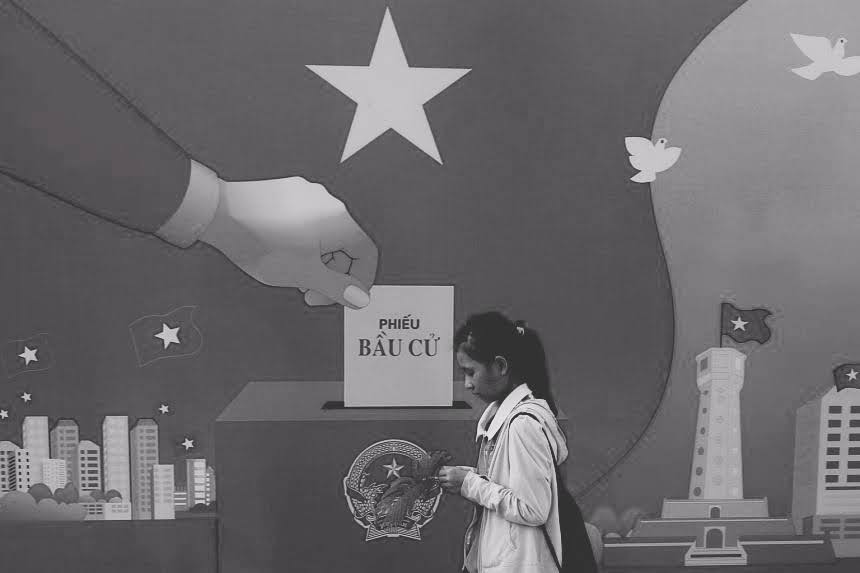
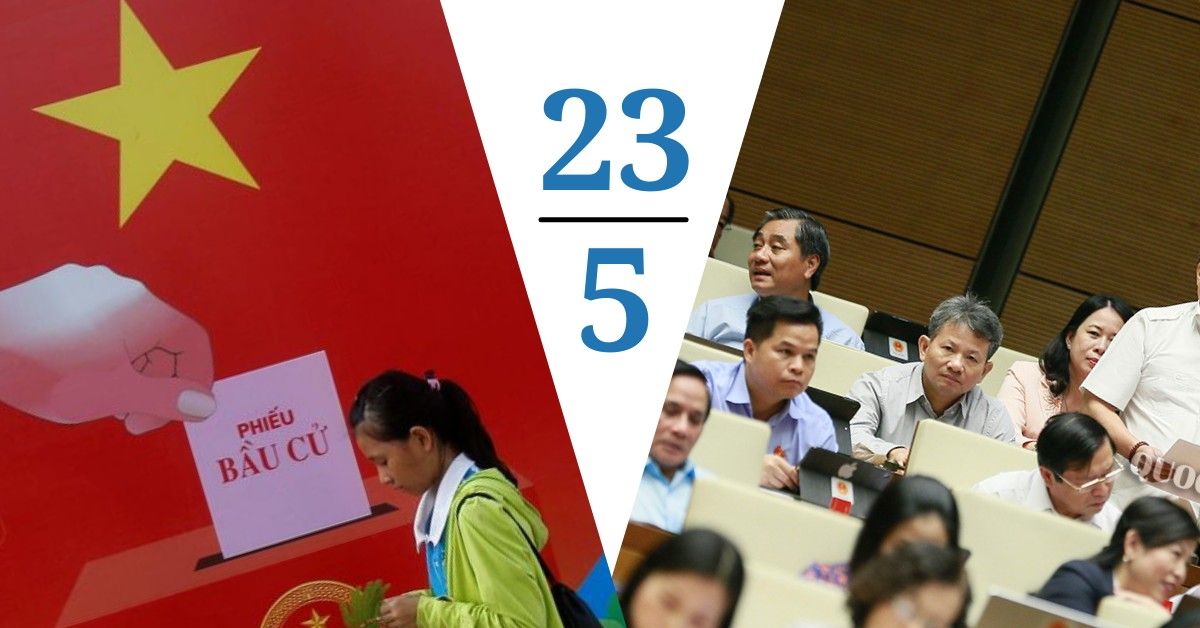
    As election day approaches for seats in the Vietnamese National Assembly, it is important to take a step back and reflect on the significance of this political exercise as a whole and on our role as voters.

    It is common knowledge that several aspects of this entire electoral process are suspicious or perhaps even fraudulent. As such, a large portion of the Vietnamese population may choose not to vote at all, even though they seem to care greatly about the politics and elections of other foreign nations. At first glance, their actions are logical and make total sense.

    Why should Vietnamese citizens continue to take part in a rigged electoral system where their votes will not matter in the end? Why should they take time off from their day and exert effort to indulge in the whims of a government that hardly even cares about the well-being of its people? After all, non-participation is a form of civil disobedience in itself, and in most cases, it is effective and it works.

    Yet, in the context of Vietnam, perhaps another way to express discontent might be more effective in bringing about lasting social and political change.

    A History of Fraud and Deception

    The Vietnamese government has constantly alleged a remarkable voter turnout since the 2002 election for the National Assembly, according to the IFES Election Guide. To be specific, Vietnam tallied 98.85 percent in 2002, 99.52 percent in 2011, and 99.35 percent in 2016. It is also expected that government claims for the turnout for the upcoming election will remain in a similar range.

    Yet, according to some experts, election results in Vietnam come as no surprise as these tallies could be mere fabrications, highly exaggerated, and may not accurately reflect reality. To support their opinions, these experts – such as Mu Sochua, a board member of ASEAN Parliamentarians for Human Rights (APHR), and a former Cambodian Member of Parliament – state that the VCP will enlarge these numbers by relying on proxy voting – wherein one person can vote for his/her entire family – and pressuring local authorities to ensure high voter turnouts in their regions.

    Contrived voter statistics is not the only thing the Vietnamese government is guilty of; its claim of free and fair elections is also deceptive. Candidates for the National Assembly are closely scrutinized and vetted by the Vietnamese Fatherland Front, an arm of the VCP. In the upcoming elections, out of 868 candidates vying for 500 seats, only nine are self-nominated, with six of these also reported to be members of the VCP as well. From this, we can see that pluralism and choice are all but non-existent.

    Prior elections also illustrate this phenomenon and the distinct lack of choice. A report by Freedom House states that out of the 500 seats available for the National Assembly in 2016, 473 were taken by Vietnamese Community Party members while “independent” candidates, who were also vetted by the VCP, took 21.

    Independent candidates and those who are not part of the Communist Party also face an uphill battle in their bid to be candidates in the elections. While most don’t even pass the Vietnamese Fatherland Front’s scrutiny, some are imprisoned or pressured into rescinding their intention to run.

    The arrests of Le Trong Hung, Nguyen Quang Tuan, and Tran Quoc Khanh, as reported by Amnesty International, stand as recent examples.

    Le Trong Hung was a citizen journalist who worked for Chan Hung TV and Nguyen Quang Tuan was a medical doctor. Tran Quoc Khanh ran a popular social media account, which he used to comment on social issues and to criticize the Vietnamese government. All three were independent candidates running for seats in the National Assembly in the upcoming election. However, they were arrested for allegedly violating Article 117 of Vietnam’s penal code, a statute which Amnesty International claims in the report, “ …violates Viet Nam’s international human rights obligations” and that Article 117 “should be repealed or substantially amended…”

    To top all of this, the result of the National Assembly elections is more or less carved-in-stone and predetermined months in advance. This can be seen in the “tentative proportion” or “tentative allocation” data released by the National Assembly’s Standing Committee. The committee has portioned the number of available seats and through this, we can get a fairly clear picture of who will get “elected” and what the priorities of the National Assembly will be over the next five years.

    To Vote or Not to Vote

    Hence, we are faced with a conundrum.

    Given the state of elections in Vietnam with all the deceit, manipulation, and unfairness involved, would it be proper and appropriate to still vote come election day, or would non-participation in the system itself be the better alternative?

    The usual reaction, when faced with such a situation, would, of course, be the road of passivity and non-compliance. Ergo, to choose not to participate in the elections at all.

    This perspective is all well and good. After all, a lack of voters usually implies a government’s lack of legitimacy and the absence of its citizens’ trust. However, legitimacy does not seem to be the VCP’s concern and they would be more than happy to pad the actual number of voters through the use of various statistical anomalies.

    On the other hand, choosing to vote seems to be a fruitless and purposeless course of action when the result is more or less predetermined several months in advance.

    At the end of the day, it appears that no matter what we decide to do with regards to the elections, the Vietnamese government and the Communist Party emerge as the true victors.

    Rays of Hope

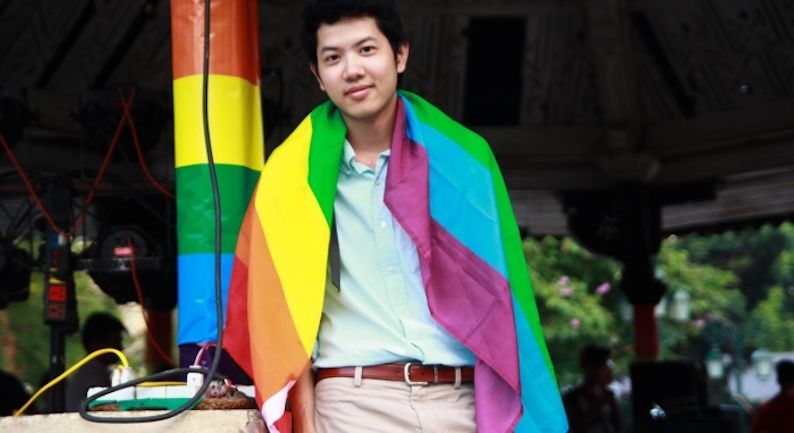
    And yet, you have someone like Luong The Huy, an openly homosexual man, civil society activist, and gender expert, who is one of the few self-nominated candidates who somehow managed to slip through the Vietnamese Fatherland Front’s obscure vetting process.

    On election day, May 23, he and a few other candidates will take on a seemingly hopeless fight for a slim chance at winning a single seat in the National Assembly. The odds and the deck are stacked against them, but they still continue to push back; they refuse to remain silent in passive acceptance.

    And while most of us cannot run for any government position, choosing to vote is the next best thing; even though it feels like an exercise in futility, we should still force ourselves to vote come election day.

    Even though our choice may not matter, our mere participation in the simplest of democratic freedoms given to us shows the VCP that we are concerned and invested in the direction the country is moving towards. Even if the election is rigged from the start, the mere act of supporting a candidate that does not agree with the Party’s schemes shows the Party that we will not take kindly to the government’s machinations and ploys. Even the act of submitting a blank ballot carries much more weight than simply not voting at all.

    The VCP thrives on the growing apathy and passivity of its people and could care less about legitimacy. Hence, choosing to vote and then deciding to vote properly becomes an act of rebellion; it becomes revolutionary in that it respects the concept and sanctity of the democratic process itself rather than the Vietnamese government as an institution. And if enough people unite and vote for those actually deserving of a seat in the National Assembly, there is a minuscule chance that perhaps true and lasting change and reform can slowly come from within.

    The strength of your ballot lasts beyond election day and extends far into the uncertain future. And when your time comes to make a decision, we hope you make the right choice.
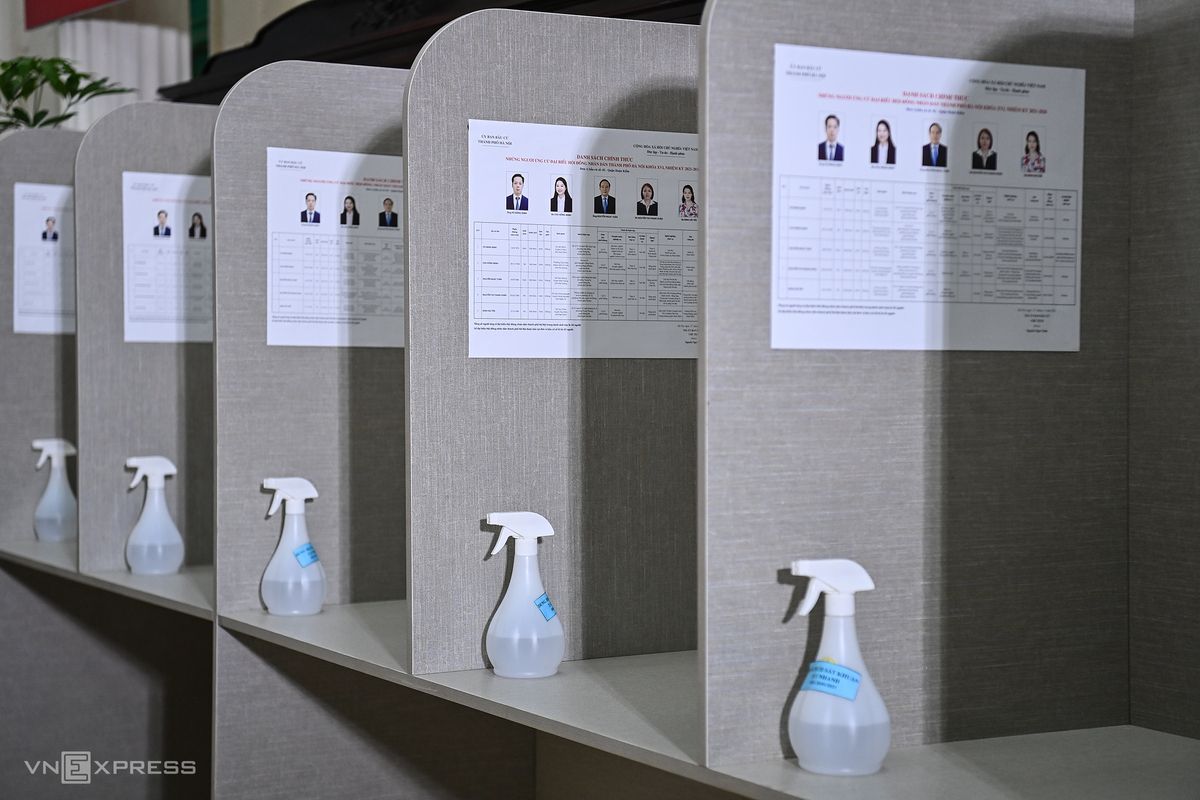
  • The Odds Against Your Favor: How Does The National Assembly Election In Vietnam Work?

    The Odds Against Your Favor: How Does The National Assembly Election In Vietnam Work?

    Vietnam has been consistently categorized as “not free” and “authoritarian” by many organizations, such as Freedom House and The Economist. The Economist went so far as to rank Vietnam at the bottom of its Democracy Index in Asia – only ahead of Afghanistan, China, Laos, and North Korea. Annual human rights reports of various human rights organizations, such as The 88 Project, also document the government’s continuous blatant and brutal suppression of political dissent.

    One of the most prominent reasons attributed to the country’s abuse of power and authoritarianism? Undemocratic elections.

    Authoritarian regimes around the world often conduct elections to appear more legitimate and democratic. Elections in authoritarian countries such as Russia, China, or Cambodia are often performative, as they mostly result in the same people or party holding on to power. Similarly, Vietnam also has elections, but it is hard to call the elections democratic given its methodology and context as a one-party state – which only recognizes the Vietnamese Communist Party (VCP).

    But how do elections work in Vietnam? Are there non-Party candidates and how do they get nominated? Is the election effective in forming political competition and avoiding the VCP’s monopoly on power? As the 2021 National Assembly election approaches, this article answers these questions using Professor Paul Schuler’s scholarly writing on Vietnamese politics.

    Paul Schuler, assistant professor at the University of Arizona, is a scholar studying authoritarian regimes in East and Southeast Asia, with a particular focus on contemporary Vietnamese politics. His book, “United Front: Projecting Solidarity through Deliberation in Vietnam’s Single-Party Legislature,” was published earlier this year by Stanford University Press. This article is based on Chapter Two, “How Elections Work in Vietnam.”

    What is the electoral system in Vietnam?

    The electoral system in Vietnam is a bloc voting system, in which each district is distributed two or three seats in the National Assembly. Each voter can vote for as many candidates as he or she wishes, as long as they do not exceed the number of seats available for their district.

    How do candidate numbers get determined?

    The National Election Council and provincial boards are tasked with overseeing details of the elections, such as the number of candidates and the candidates who appear on the ballot. The Council determines the number per province, while the provincial boards determine the number per district. However, this premature election process is ripe for manipulation.

    Up until 2015, there were no regulations regarding the competitiveness of district elections, meaning there were no laws surrounding the number of candidates competing for a seat. As a result, there were cases of districts with three slots, but only four candidates competing. The 2015 Election Law regulates that the number of candidates per district must be at least two more than the number of seats up for grabs. For example, if a district has two seats available, there have to be four candidates at the minimum.

    The Vietnam National Assembly Standing Committee (VNASC), a combination of those leading the National Assembly, such as the chairperson and his/her deputies, also greatly influences this process. The law allows VNASC to rewrite or amend election law as it sees fit. In fact, Vietnam’s election law has been changed before every election. This gives the VNASC the power to potentially manipulate the election right before it even begins.

    Can people run for election without being a Communist Party member?

    If Vietnam is a one-party state that only recognizes the VCP, could people run for elections without being a member of the VCP? If they can, does that mean there is effective political opposition to the VCP?

    The short answer to the first question is yes. And indeed, the VCP has been using this fact as proof of democratic credibility, claiming anyone could become a delegate. But the story is much more complicated than that because the answer to the second question is no.

    There are two types of candidates that, theoretically, would introduce political diversity: non-party members and self-nominated candidates. While the two categories often overlap (independent candidates who self-nominated such as activist Nguyen Thuy Hanh), they are not the same. The case of Duong Trung Quoc is an example. He was a non-party candidate, but he was nominated by the Vietnam Historians Association, an organization related to the Fatherland Front (an umbrella group of organizations aligned with the VCP).

    Here is where the story gets complicated. There is no guarantee that all non-party members and self-nominees will be able to present meaningful challenges to the VCP. This is because there are non-party members who get nominated by organizations related to the Fatherland Front, such as Duong Trung Quoc. There are also VCP members who nominate themselves. Candidates falling under these categories are still counted as non-party and self-nominated members, despite links to the VCP.

    Even if we assume that all non-party members will be able to effectively compete with the VCP, the VCP still retains a great degree of monopoly on power. The percentage of non-party delegates has never exceeded 15 percent. In 2016, despite the surge of independent candidates, the percentage of non-party members in the legislature dropped to 5 percent – the lowest percentage since 1976. And the number of self-nominees is always very small.

    Why is the number of non-party and self-nominated candidates so compromised? This is because of the design of the vetting process.

    How does the candidate vetting process work?

    There are five “gates” in the process of narrowing down the number of candidates. These steps, however, allow possibilities for the VNASC to determine election results as it sees fit – perhaps even before the election starts.

    Participating in the elections, there are two modes of nominations: central nominees and local/provincial nominees. Those nominated by the central government are more influenced by the VCP, and hence, enjoy a more favorable procedure.

    Gate 1: Quota determination for the next National Assembly

    This is the initial stage of the election in which the VNASC determines the demographic quota for the next National Assembly – the desired structure of the subsequent National Assembly.

    In 2007, for example, the National Assembly was to include “150 women, 50 non-party members, 70 delegates under forty years old, and 160 incumbents,” according to Paul Schuler. The determination goes as far as imposing quotas on “how many members of the Fatherland Front, the government, and the local party apparatus should be selected.” During this step, the VNASC tasks the provinces with choosing certain provincial candidates to fulfill the quota.

    Hence, this predetermined structure of the National Assembly is criticized for hurting self-nominated candidates, who were not considered for when the VNASC drew up the quota. How do the self-nominees – who might not satisfy the determined structure – fit in?

    Gate 2: Candidate introduction

    This is the step in which people submit their self-nomination, followed by an announcement of self-nominees who have successfully completed their applications. In this announcement, candidates nominated by the province in step 1 are called “introduced” (được giới thiệu) candidates, distinguishing from “self-nominated” candidates (tự ứng cử).

    Gates 3 and 4: Meeting constituent and the candidates’ co-workers

    This is the step that is considered the “red line” for self-nominated candidates, as it disqualifies many unfavored candidates from competition due to manipulation of the process as well as the underhanded persuasion of public opinion.

    After the introduction of nominees, two meetings are held between the candidates and the local constituents to assess and vote on the candidates. While both types of nominees are required to meet with the voters in their neighborhood, central nominees simply meet with their co-workers in one of the meetings – increasing their chance of passing the round.

    The odds are also stacked against self-nominated candidates as the Party has the power to determine who could present at the meetings, as well as exerting pressure on others not to vote for their unfavored candidate. Indeed, Schuler’s research shows that people with an affiliation to the VCP are 14-22 percent more likely to be chosen for these meetings than those without an affiliation with the VCP. Local officials also conduct door-to-door campaigns to discredit self-nominated candidates if they are not favored by the VCP.

    In other words, the meetings which were supposed to represent the constituent’s democratic will, are actually just occasions and excuses to exclude unfavored candidates.

    Meetings with predominantly VCP supporting voters are considered the ‘red line’ for self-nominated candidates. Table & Data by Paul Schuler. Design by Son Nguyen/The Vietnamese. 

    Gate 5: The final ballot

    At this stage, reports from the vetting rounds are submitted to the National Election Council, which determines the final list of candidates appearing on the ballot in each province. The list is then sent to the provinces to produce the final ballot.

    Over the years, the number of self-nominated candidates who have gotten on the ballot and won the election has been alarmingly low. Those who got their names on the ballot account for just around 6 to 11 percent of the valid applications. Only less than 1 percent of valid self-nominated candidates eventually were elected (see illustration below).

    Numbers of self-nominees with valid applications, those who got on the ballot, and those who won the election. Data by Paul Schuler. Design by Son Nguyen/The Vietnamese. 

    (More information about the vetting process and election milestones can be found here.)

    Are there possibilities for manipulation?

    Yes. As explained above, the VNASC has many ways to interfere in the election, perhaps even before the election itself starts. The vetting process, while being presented to ensure the candidates’ qualifications, actually is a way for the VCP to identify dissidents and eliminate them from the competition, paving the way for favorable and conforming candidates.

    Other than manipulating the election to eliminate dissidents, the VCP also manipulates it to safeguard the victory of the people it wants to win. Additionally, for the VCP high-ranking “star” candidates, the election is also a chance for them to fabricate that these officials have the overwhelming support of the people.

    There are several ways this can be done. For example, “sacrificial lambs” could be introduced into the election as candidates. Then, they are placed into competition with the high-ranking candidate, as the provincial authority could decide on the candidates’ placement into different voting blocs. As these “sacrificial lambs” are supposed to lose, the star candidate with name recognition easily wins with overwhelming support.

    This is evident in the 2021 election. Nguyen Phu Trong, the secretary-general of the VCP, and one of the most important figures in the government is placed into competition with a vice-principal of a high school, the head of a Hanoi local government agency specializing in architecture, a researcher in rural development, and a commander of local forces in Hanoi.

    Another way to ensure the star candidate wins is simply to avoid the placement of star candidates into the same race. This is easily arranged, considering the fact that the provincial authorities have the power to arrange bloc placements.

    Is the electoral system in Vietnam democratic?

    This piece has presented the many ways in which the electoral process in Vietnam is  manipulated to the benefit and desires of the VCP. However, there are still rules not mentioned above that restrict the ability of the candidates to campaign and the people’s ability to choose.

    There are some rules about campaigning that are debatably beneficial, such as forbidding candidates to raise funds or use personal wealth to run for office to prevent the monopoly of the rich in politics. However, there are various other restrictions that mostly aim to retain the power of the VCP. For example, candidates are not allowed to organize campaign rallies, and they can only campaign through the state-controlled mass media. They may also meet their voters, but only through meetings organized by the Fatherland Front.

    Even with all of the restrictions, voters only have around a month to get to know the candidates before voting.

    At this point in the article, perhaps you have already formed an opinion or two about whether the system is democratic or not.

  • Ao Dai, The Freedom Index, And An Election Goes Uninterested In Vietnam

    Ao Dai, The Freedom Index, And An Election Goes Uninterested In Vietnam

    Why are so few paying attention to this country’s grand affairs, such as our upcoming general election on May 23, 2021?

    Maybe the op-ed article written in Vietnamese by Huynh Minh Triet that was previously published in the Luat Khoa Magazine on March 17, 2021, would offer us some perspectives on this question? The translation was done by Hoai Huong.

    ***

    In March 2021, with the most crucial election in Vietnam about to start in two months which should be the event that attracts the most public attention in the country, what has sparked controversy was a Japanese adult movie and a freedom-ranking list of a foreign organization.

    Freedom House, an international non-governmental organization, on March 5 categorized Vietnam as a country that has neither political freedom nor internet freedom. The online Vietnamese population immediately rushed to the Freedom House Facebook page, scolding it both in English and Vietnamese. Even the postings on this account that were irrelevant to Vietnam also came under fire.

    Furthermore, on March 10, Japan released a soft porn movie in which the main actress, who wore a Vietnamese ao dai, was a young girl of Vietnamese origin. Again, the online population in Vietnam vehemently protested, expressing their hurt feelings because the movie humiliated them. The press quickly gathered the most impressive comments to prove that the national superiority complex had been hurt.

    Wow, if only our national affairs captured public attention in the same way as Japanese sex movies or the Freedom House rankings!

    Vietnam is currently undergoing the tense process where our general election on May 23 has the utmost important responsibility to select our National Assembly’s deputies who will represent all of us. Nevertheless, such a significant event received virtually no considerable discussion on social media.

    On March 9, Tran Quoc Khanh, an independent candidate, was arbitrarily arrested. His news was covered superficially in newspapers and mentioned on just a few Facebook accounts of interested individuals. Word of the arrest came and went unnoticed among the online population.

    Aren’t the Vietnamese interested in elections?

    No, they are. But just not with their own country’s elections.

    The Vietnamese were one of the peoples around the world most enthusiastic about the US presidential election in 2020, and their fondness for Donald Trump might have contributed to this phenomenon.

    Vietnamese people created all kinds of news channels to support Trump and made all kinds of projections and comments about the US election on social media platforms. We grew openly hostile to one another and even humiliated one another because we supported different candidates in the US presidential election. Worse still, following the election, the Vietnamese online population rushed the US Embassy Facebook account to express frustration over the failure of their idol Trump.

    In Vietnam’s elections, however, things were different. No relationships turned sour when the VCP arranged for Nguyen Phu Trong to seize power again. There were no vehement protests or objections when candidates who were not Vietnamese Communist Party members were detained or had their names crossed off the list.

    However, we discussed US voting laws with great passion and many of us cursed “the damn Democratic Party” for allegedly wanting to ease restrictions so that illegal immigrants could vote. Many shouted with joy when Trump criticized voting via postal services as he claimed this would lead to cheating. In fact, however, many of us have never seen a ballot box in Vietnam.

    Is it true that a political system in which the people can only vote for candidates recommended by the Party is so perfect that we do not care about domestic elections?

    No, definitely not.

    Are we so insensitive to our responsibilities, while having surplus energy for trivial matters that are not even related to Vietnam?

    Probably.

    But there may be another reason: that is because we are scared.

    The widespread fear from the land reform campaign (in North Vietnam in the early 1950s) has not actually subsided. Fears have now been heightened by the 2018 Cyber Security Law – an identical copy of China’s. Under this new law, all that we speak up about or write about on social media platforms can be used as a pretext for the authorities to harass and arrest us.

    Few of us dare to confront the authorities because we are all afraid of being murdered in a police station, upon which the government will claim that we have “committed suicide due to a guilty conscience,” as it has stated during Vietnam’s review under the International Covenant on Civil and Political Rights in March 2019 to rationalize the unusually high number of people who died unexplained in police stations.

    Thus, in the face of events really close to us and of great importance, we remain silent and “project” our depression onto safer events such as Japanese adult films and the freedom rankings of an organization thousands of miles away.

    A Myanmar demonstrator under arrest in the capital city Yangon on February 27th, 2021. Photo: Reuters

    Now, let’s take a look at a neighboring country, Myanmar. At the time I wrote this article, 150 people had been killed while taking part in demonstrations to protest against the military coup that overthrew the democratically-elected government led by Aung San Sui Kyi. For the Burmese, the ballot is their life. For us Vietnamese, how many of us can’t be bothered to even think about the weight our ballot can carry?

    Freedom is not free. The Myanmar people are declaring with dignity that they are ready to pay an exorbitant price to have freedom.

    We may feel free to criticize the Freedom House rankings, but this does not render us freer.

    So, how can we change this? I have not come up with an answer yet. But if most of us keep staying silent for our own sake, and then throw our bursting surplus energies into things which are trivial or less important – and also less risky – to preserve the self-respect of a cowardly collective consciousness, then we will never find the answer.

  • Vietnam Briefing: The First Openly Gay Candidate Running For Election

    Vietnam Briefing: The First Openly Gay Candidate Running For Election

    The Vietnam Briefing, which is released every Monday morning Vietnam time, is a look at Vietnam’s political developments of the past week.


    That’s it. The election is here.

    This is the last briefing before the general election on Sunday, May 23. Candidates spent the last week busying themselves with voter meetings and media campaigns.

    Changes in the final list of candidates: After the extensive vetting process and the finalizing of the list of candidates, the National Election Council made a few changes last week with three candidates removed from the list. The Council announced that those who had been removed had all filed to withdraw from the candidacy themselves, which had had been accepted by the Council.

    • Among them is the prominent case of Nguyen Quang Tuan, the director of Hanoi Heart Hospital, officially due to “physical conditions and other reasons.” He is reportedly involved in a corruption probe relating to the hospital during his time as director of the hospital.

    A candidate to pay attention to: Luong The Huy is one of nine self-nominated candidates who survived the vetting process and made it to the final list in the National Assembly election. He is also running for a seat on the Hanoi City’s People’s Council. Huy, 33, a leading civil society activist and gender expert, has already made history by being the first openly gay candidate to run for election in Vietnam.


    Nguyen Phu Trong talks about socialism

    On Sunday, Vietnam’s state media simultaneously published an 8,000-word essay about the country’s path to socialism written by the top political leader: Nguyen Phu Trong, the secretary-general of the Communist Party.

    Main message: As usual, Trong has only three points to make: denouncing capitalism and democracy in the world, delegitimizing the opposition, and justifying Communist rule in Vietnam as a regime truly “of the people, by the people, and for the people.” He also promoted the “socialist-oriented market economy” and “socialist democracy” to emphasize how significant it is that the VCP continues to take the role of leading the country.

    What’s missing? Although published one week before the election, the essay provided no account of multiparty, free and fair elections, while insisting that “democracy is the nature of the socialist regime.”

    Nothing new. The Party’s top leader usually has to play the role of the leading voice in philosophy and theoretical issues. The secretary general often gives speeches and publishes essays and books discussing the issues, proving he is philosophically knowledgeable enough to lead the Party and the country to the ultimate goal of socialism. Trong is even more than a party leader. He’s spent almost his entire career as the Party theorist and previously served as  the chair of the Party’s Central Council for Theoretical Studies, the top think tank that influences its platform.


    Learn more about Vietnam

    Vietnam’s tug of war with China over Laos

    The Diplomat/ Nguyen Khac Giang/ May 12, 2021

    “Hanoi’s geopolitical survival is also linked to Laos. Vietnam has land borders with only China, Cambodia, and Laos. Given the complex history and perpetual distrust of Beijing’s intentions, forming a unified ‘Indochina’ political bloc to safeguard against possible northern encroachment has always been a priority in Hanoi’s strategic thinking. The last time they failed in the late 1970s, North Vietnam had to fight wars on both sides of the country and was on the brink of total collapse. In addition, since China’s support for Cambodian Prime Minister Hun Sen’s government has drawn Cambodia securely into its orbit, Vietnam cannot afford to lose Laos.”

  • Vietnam Election 2021: Twelve Milestones That All Voters Should Know

    Vietnam Election 2021: Twelve Milestones That All Voters Should Know

    This article was written in Vietnamese by Hong Anh and previously published in the Luat Khoa Magazine on February 26, 2021. The translation carries some revisions of the original article that we have sought the author’s consent.


    On May 23, 2021, the entire population of Vietnam will vote for their National Assembly deputies and the People’s Councils at all levels. No matter who they are, no matter where they live, as long as they hold Vietnamese nationality and are over 18, the citizens will have the right to vote.

    One may be thinking that she or he does not need to understand the voting procedures in Vietnam because the country just has only one political party so that elections probably don’t mean anything.

    We disagree.

    It is correct that Vietnam is an authoritarian regime, and probably many people know this as well. However, we suggest that trying to understand our system right now is still a better strategy if we want to strive for a democratic election in the future. We think it is a better option than just complying and voting unconsciously or strictly complaining and disregarding it.

    It is because if we want to understand democracy, then we should try to understand the complicated yet undemocratic Vietnam’s electoral system currently is.

    The following 12 milestones will explain in detail Vietnam’s electoral process.

    Right around Tet (Lunar New Year), Vietnamese people probably heard from the public loudspeakers in their areas that the local governments have established their election committees. Each province, district, and commune will have its electoral committee, organizing and overseeing elections in their localities.

    The Provincial Election Commission is responsible for organizing the election of the National Assembly deputies (NA deputies) and the deputies of the People’s Council (PC deputies) at the provincial level. Election committees at district and commune levels are responsible for electing members of the People’s Council at the same level.

    These committees will handle candidate applications.

    Self-nominated or independent candidates may be pretty disappointed to learn that there are no positions for independent members (who are not from the Vietnam Communist Party [VCP] or holding a role in the government) in these committees. The heads of these committees are usually secretaries and deputy secretaries of the Party committees in provinces and cities (see examples of members of the provincial election committee in Quang Ninh and Hung Yen).

    In democratic countries, political parties often cannot know how many seats their party will definitely hold in the parliament until after the ballots get counted and announced.

    In Vietnam, it is the opposite. We can know well in advance the backgrounds of those who will be structured by the VCP to have a seat in the National Assembly and the People’s Councils at all levels. Being “structured” by the VCP has the same meaning as being positioned in these seats by the Party’s selection.

    The current National Assembly Standing Committee has already drafted the plan to structure the deputies into the new National Assembly. The “new” National Assembly is the one that the people will vote for on May 23, 2021.

    At the same time, the current Standing Committee of the National Assembly has also instructed the provinces to build their structure of their People’s Councils at all levels in their respective provinces.

    There will be 500 seats in the 15th National Assembly, including 207 deputies working at the central level of the VCP and the government. Two-hundred ninety-three (293) deputies will include those who are working at the local government level. The list can be found here for more details.

    This is also the expected number of seats that the National Assembly will reserve for people who belong to the Party’s agencies, the government, the police, the army, mass organizations, and so forth. These people are called “recommended” candidates. A total of 427 (out of 500) seats are in this category. These seats are expected to be approved in the first “hiệp thương” consultation conference.

    There will be seats for independent or non-communists deputies and they will be among the remaining 73 deputies. They will be nominated by the provinces and cities. However, the party, state agencies, and provincial departments may also have a share of these 73 seats.

    For many people, these “hiệp thương” consultations are perhaps the strangest electoral proceedings in Vietnam. They compose a vetting and negotiating process so that the Vietnam Fatherland Front will come up with the list of the VCP’s approved candidates for the ballots.

    Literally, this is the decisive activity organized by the Vietnam Fatherland Front and its other member organizations. The Vietnam Fatherland Front and its branches are considered to represent all parts of society, including NGOs and political parties as well.

    These consultative conferences are held at all levels, from central to local.

    The Vietnam Fatherland Front is an important body during the election in Vietnam. This agency will have to ensure that the election takes place as expected by the Party and the government, with the right structure and composition of candidates. It is also the body that is empowered to oversee all elections.

    The first consultation meeting will have an agreement on the number of “recommended people” to be candidates for National Assembly deputies and People’s Councils at all levels.

    By February 17, 2021, the first “hiệp thương” consultation conference was completed at the central and local levels. The localities have also announced the number of “recommended” candidates.

    For example, Binh Dinh Province has decided to introduce 13 candidates to the National Assembly, including three people at the central government level to stand for candidacy and the remaining 10 people will be for the locality. However, Binh Dinh Province issued a regulation saying that the central government can only have seven elected National Assembly deputies, three representatives at the central level, and four representatives at the local level.

    This means that three candidates from the central government will inevitably be elected, leaving only 10 local candidates competing with each other for the other four spots. The workplaces of these 10 people are also predetermined, including provincial leaders, departments, organizations. There is, however, no structure for self-nominated people.

    After the first “hiệp thương,” it is expected that the number and composition of candidates for the National Assembly of localities will be adjusted by the National Assembly Standing Committee for the first time.

    The central government, the provinces, and cities will use this adjustment as the basis to select specific people in their localities to run for the National Assembly.

    For the candidates of the deputies of People’s Councils at all levels, the Standing People’s Councils may adjust the number and structure of the “recommended” candidates.

    Candidates for the National Assembly and People’s Councils at all levels have about three weeks to apply for their candidacy.

    During this time, the Party’s agencies, governmental units, unions, the military, the police, and so forth will also introduce their officials who will run in the election and hold voters’ opinion gatherings at the workplaces of those officials.

    During this step, the self-nominees only submit their applications. The respective local electoral committee will consider their records to be valid or not.

    This second conference will be organized in order to prepare a preliminary list of candidates for the National Assembly and representatives of the People’s Councils at all levels, including both the “recommended” and self-nominated candidates (if any).

    After this second “hiệp thương” consultation, another conference will be held in the residential areas where the candidates reside so that the residents in such areas can voice their opinions about the candidates. For the self-nominated candidates, there must also be another, separate conference at their workplace to gather the opinions of the people who work in the same unit as the candidates.

    During this time, one may be invited to a conference of voters to comment on candidates for the National Assembly and People’s Councils at all levels.

    The rule does not require everyone to come to these conferences. However, these conferences can only be held if there are more than 55 voters (applied to areas that have more than 100 voters), or where at least 50 percent of the voters participate (if those areas have less than 100 voters). If the number of voters is not met, you can request to stop the conference.

    For non-partisan candidates, in addition to the conference of voters where they reside, it is also necessary to organize another conference to gather voters’ opinions about them at work.

    If you are a Vietnamese citizen, age 18 or older, your name will appear on the electoral roll. This list is posted at the headquarters of the commune people’s committee and the polling station. You will be given a ballot. Even those people who reside for less than 12 months in any locality will also likely be on that locality’s electoral roll.

    Persons who are not allowed to vote are those whose voting right was taken by a court, death-row inmates, or people currently serving a prison sentence and not entitled to probation.

    This third conference is held to finalize the list of qualified candidates for the National Assembly and People’s Council at all levels based on the results of the voter conferences.

    For the “recommended” candidate for the National Assembly, this third conference must also be based on the adjustment of the National Assembly Standing Committee (the second adjustment comes right after the second “hiệp thương” consultation meeting closes).

    The candidates who get a pass after the third “hiệp thương” consultation conference are the ones who will be on the ballots for which you will vote for. The list of these people will be announced no later than 25 days prior to the election date.

    The National Election Council will announce the official candidate list to run for the National Assembly. Election committees at all levels will announce the official candidate list for those running for People’s Council deputies at each level.

    During this time, if you are a voter, you may be invited to attend a voter conference. This is a conference where the candidates will persuade you to vote for them. Each candidate will read out his or her campaign during these conferences.

    In addition to the voter-meeting conference, you may also listen to the radio, watch television, or read newspapers to get the introduction of the candidates. This is the only campaign allowed to take place close to the voter meeting.

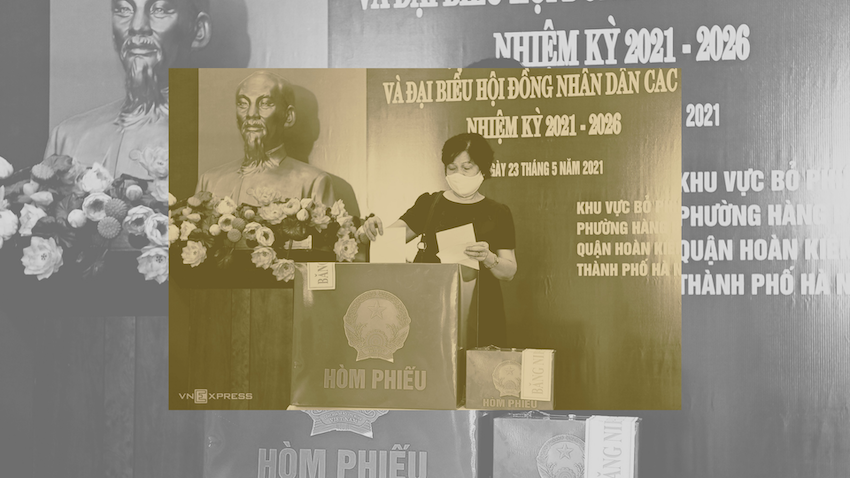
    The general election will happen on May 23, 2021, in Vietnam. This is the day when the public loudspeaker system works most actively. You may also see many people flocking to the polls. On televisions, the news will also focus on broadcasting information about the election. In some rural places where the voters have difficulty traveling, the election may take place sooner.

    The Vietnamese government continuously repeats that everyone has the right to vote for our deputies of the National Assembly and the People’s Councils at the provincial, district, and commune levels. For those who cannot get to the polling booth, such as the disabled, the elderly, or people being treated at a hospital, the authorities will have a voting team that will bring the ballot box to them. Vietnam also reported that the voting turnout in Vietnam is incredibly high for the last elections, mostly 98-99% of the entire population have voted.

    Yet, voting is a right, and whether to vote or not to vote is your decision.

    We write this article to only explain Vietnam’s full electoral process and we must admit that it is such a complicated one, with almost absolute priority for the cadres of the Party, the government, and the state organizations.

    Unfortunately, whether the people prefer this electoral process or not, it is still the only method to elect representatives in Vietnam, a country that is still very far from having democratic elections.

    In Vietnam, do we really elect the persons who we wholeheartedly support, or are we just following and accepting the government’s wishes and plans? For now, it seems that the people in Vietnam can only elect the candidates that the VCP selects and approves.

  • Persisting Issues In The Vietnamese Garment Industry

    Persisting Issues In The Vietnamese Garment Industry

    In March 2015, workers from Ho Chi Minh City gathered in protest. Despite a heavy police presence, they continued marching along Highway 1, blocking traffic along this main thoroughfare. The workers occupied a factory owned by Pou Yuen Vietnam, a firm that produces footwear for brands such as Nike, Adidas, Lacoste, Converse, and Reebok.

    These disgruntled workers were airing out their grievances against an upcoming social insurance law that would affect their lump-sum separation pay if they quit their jobs.

    This new law stated that those who resign earlier than the mandated age of retirement had to wait until they reached the actual retirement age to access their compensation. This demonstration led to the temporary closure of other factories in the area for safety purposes and led to local city officials engaging in dialogue with the workers.

    In the ensuing dialogue, former vice-minister for Labor, Doan Mau Diep, stated that his department would submit a proposal that would let the workers choose between getting one-time social insurance benefits when they quit or opting to receive benefits upon retirement.

    In a country infamous for its draconian policies that criminalize most forms of dissent, to even get government officials to address the issue is a small victory in itself. However, this situation is an outlier, and, sadly, other scenarios do not end in adequate or bloodless resolutions; Vietnamese laborers who work in the apparel or footwear industries face a slew of other hardships as well.

    In May 2013, the Workers Rights Consortium (WRC) released a paper that discussed the many workers’ rights issues present in the garment industry in Vietnam.

    The report stated that the government did not respect the right of Vietnamese workers to freedom of association and that the State had prosecuted those who attempted to form unions. The paper also argued that workers suffered from several forms of forced labor and were compelled to spend excessive hours at their jobs. Several also experienced some form of gender discrimination and were also paid inadequate wages. The report added that workers  also had to deal with a lack of job security because most were hired on a contractual basis rather than fully employed.

    The WRC report also highlighted several illegal or questionable practices present in the Vietnamese manufacturing industry. The authors claimed that some companies employed child labor and that some factories did not have safety measures that met minimum standards.

    Hence, WRC also stated that the Vietnamese government’s failure to “enforce labor laws leaves workers vulnerable to unlawful employment practices that deny workers earned wages and access to social insurance benefits.”

    Sadly, in the time that has passed since the release of the WRC paper, not much has changed in terms of the protection of workers’ rights. However, the same cannot be said about the evolution of the garments industry.

    In recent years, Vietnam has entered into several international trade agreements, 13 of which “were signed between 2013 and 2019, with more than 50 partners across Asia, Europe, and Latin America.”

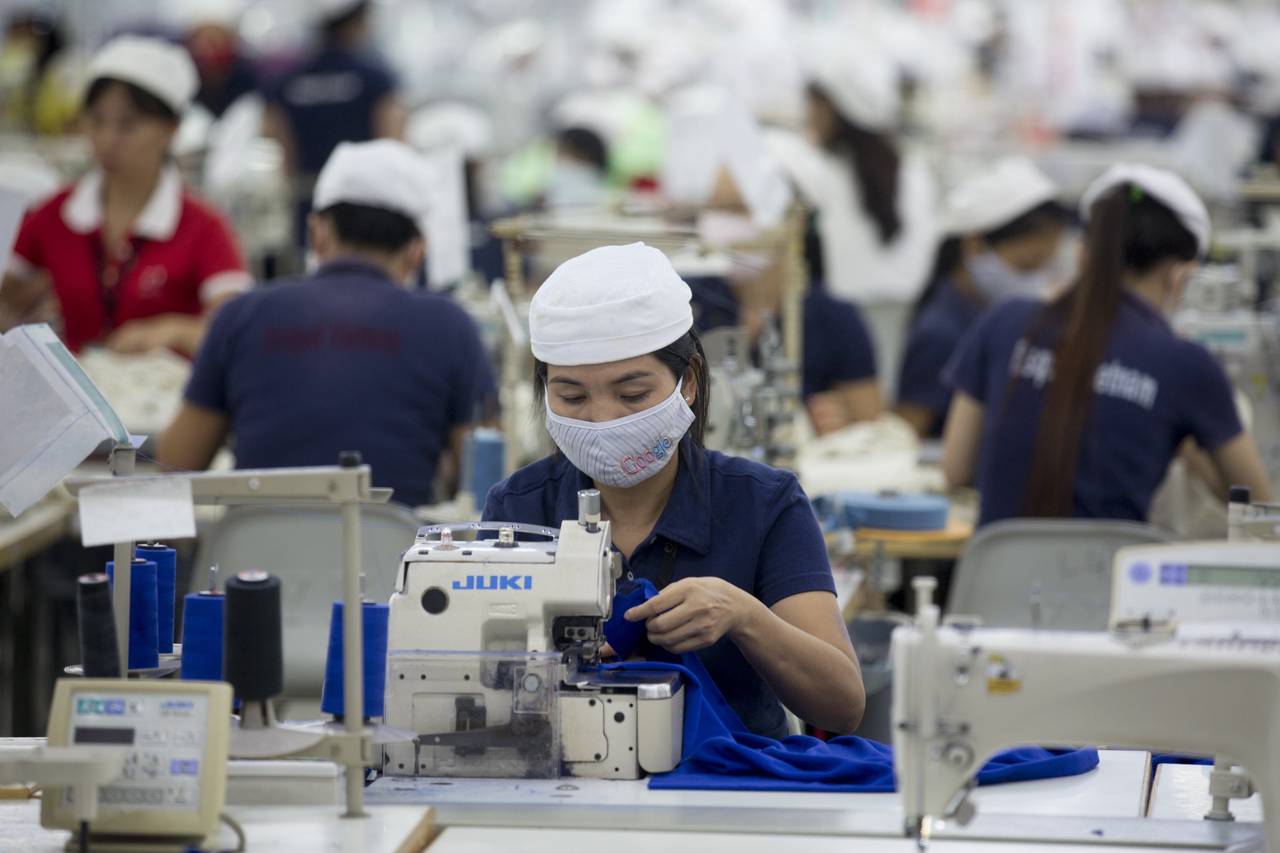
    Currently, Vietnam is the world’s 4th largest garments exporter and the 2nd largest footwear exporter. Nearly 6,000 apparel and 3,000 footwear companies comprise these industries, with approximately 80 percent of the workers employed in them being women and migrants from regional areas with no vocational training.

    Vietnam’s apparel and footwear industries continue to prosper and grow alongside the country’s general economy. Yet, while this may bring employment, poverty alleviation, and infrastructure development, it also comes with additional challenges to labor rights.

    On April 15, 2021, the Australian Human Rights Commission (AHRC) in collaboration with Australian Aid, and the Vietnam Chamber of Commerce and Industry (VCCI) published a set of guidelines in a primer entitled “Responsible business conduct and the apparel and footwear industry” to help these two industries in their operations in Vietnam.

    Their goal in releasing these rules was to “highlight some of the human rights challenges and issues that arise in the apparel and footwear industry in [Vietnam] and [to] provide practical steps grounded in international frameworks and principles.” These guidelines “[have]  been designed to assist businesses operating in [Vietnam] to understand and meet their responsibility to respect human rights.”

    These guidelines are based on UN Guiding Principles, which “operate on a three-pillar framework,” also known as the Protect, Respect, Remedy Framework. The three main tenets are:

    1. The duty of the State to protect human rights

    2. Corporate responsibility to respect human rights

    3. Access to an appropriate and effective remedy for victims of business-related abuse

    The UN Guiding Principles are intended to serve as “a global standard for preventing and addressing adverse human rights impacts related to business.” This primer serves as an attempt to apply these standards to Vietnam’s apparel and footwear industries.

    However, implementation is often much harder in practice.

    While there is a noticeable difference in overall choice of words and tone, both the WRC report and the AHRC’s primer discuss the same labor rights issues in Vietnam, despite being published eight years apart. Severe problems, such as child labor, restrictions on the right of freedom of association, and having unsafe working conditions, remain to this day.

    The AHRC’s guidelines also include several Vietnamese laws, which, at least on paper, show the government’s effort to address these persistent problems.

    All in all, the guidelines penned by the AHRC and the other organizations who contributed to the primer seem to be genuine; those involved seem to have the best interests of Vietnam and the garment workers in mind.

    In reality, however, this primer lacks any real force. It clearly states that this guide provides general information only and is not legally binding. The guidance is not intended to constitute legal advice.

    It goes on to say that “Organizations or individuals should seek their own legal advice if they have concerns regarding their compliance with domestic legislation or international standards. Any case studies or examples are included for educational purposes and do not constitute an endorsement of a company or organization.”

    In short, companies and businesses who are part of the apparel and footwear industries have no obligation to follow these guidelines aside from the threat of government intervention if they violate any existing statutes. Yet, with corruption being so widespread and rampant in Vietnamese society, it’s very easy to bribe the government to make officials look the other way.

    For there to be any real and tangible developments regarding labor and human rights in the apparel and footwear industries, change has to come from both directions, it has to come from both the business sector and the State.

    The guidance provided by the AHRC is a step in the right direction; there’s no contesting that. However, without shifts in the policies and the foundation of the government, no semblance of progress or improvement will ever be fully attained.

    Granted, the Vietnamese government has passed many laws which aim to tackle the working conditions in the garment industry. Yet, proper implementation is an entirely different beast compared to the simple passage of a law. And it is in the implementation itself that the Vietnamese State struggles the most as it is actively hindered by corruption and the short-sighted selfishness of politicians and the Party itself.

    Throughout the years, the Vietnamese apparel and footwear industries have grown to be very lucrative ventures for entrepreneurs, investors, and owners. However, it continues to come at the cost of its workers’ rights, lives, and liberties.

    Genuine change will only come if society, as a whole, wills it to happen. It would include not only the private and government sectors but also the people themselves.

  • Vietnam Briefing: Land Rights Activists Jailed Ahead Of Election

    Vietnam Briefing: Land Rights Activists Jailed Ahead Of Election

    The Vietnam Briefing, which is released every Monday morning Vietnam time, is a look at Vietnam’s political developments of the past week.


    The general election enters the final stage

    The general election is two weeks away and will be held on May 23, 2021. Here are the key developments in the election thus far:

    • The National Election Council announced the final list of candidates on April 27 after a long vetting process (we have briefly explained this here). There are a total of 868 candidates running for the 500 seats in the National Assembly.
    • Only 74 non-party candidates made it to the final list, which is approximately 8.5 percent of the total. The Council planned to have 25-50 non-party members who will serve in the next term of the National Assembly.
    • Only nine out of 76 self-nominating candidates survived the vetting process. Among them, surprisingly, is a prominent LGBT activist named Luong The Huy.
    • From now on, candidates can campaign, including meeting with voters and media campaigning. However, campaigns are strictly controlled by the government and are primarily organized by the government.
    • All four members of the leadership (the Communist Party’s secretary general, the state president, the prime minister, and the chairperson of the National Assembly are running.

    Two prominent farmer activists sentenced to 8 years each in prison

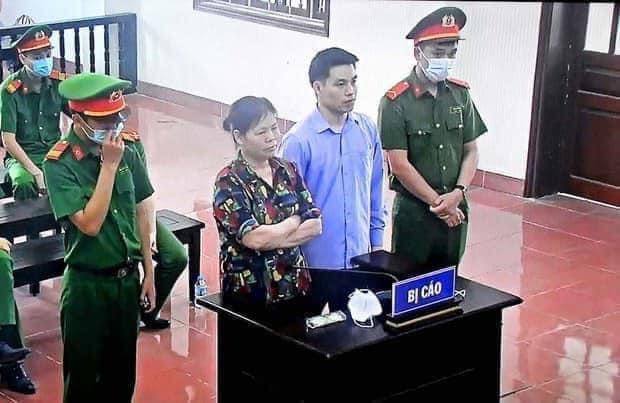
    Since this briefing was initiated in early February, not many weeks have passed without a dissident being persecuted. Last week, on May 5, this happened to two prominent land rights activists, Can Thi Theu, 59, and her son, Trinh Ba Tu, 32, during a trial in Hoa Binh Province.

    They both received an eight-year sentence for “making, storing, distributing or disseminating information, documents, and items against the Socialist Republic of Vietnam,” an activity that is criminalized under Article 117 of the Penal Code. Human rights groups, both inside and outside of Vietnam, have long condemned the criminal provision as an undemocratic and anti-human rights provision that is used to silence critics.

    Context:

    • The conviction is based on the two defendants’ live streaming videos on Facebook that were deemed to be anti-government, according to the indictment and state media.
    • Can Thi Theu is a longtime and prominent land rights activist who leads a group of farmers in Duong Noi (Ha Noi). The group claims that they are victims of forced land eviction. Her two sons, Trinh Ba Tu and Trinh Ba Phuong are both involved in her activism and are currently detained with Trinh Ba Phuong while awaiting trial.

    Talk about land rights in Vietnam:

    • The 2013 Constitution states that all land belongs to the people and is managed by the government. This is a legacy of the Soviet-influenced 1980 Constitution that was adopted during the height of Vietnam’s era of the centrally planned economy. Since 1986, the ruling Communist Party has adopted a capitalist economic model while still maintaining the old land regime.
    • Land disputes and land evictions have become a major part of Vietnam’s political and economic developments since then, leading to riots, protests, and widespread anger among the public. The most prominent incident was the deadly Dong Tam raid following a land dispute between farmers and the military.
    • Other prominent cases in recent history include Dang Van Hien (2016), Van Giang (2012), Doan Van Vuon (2012), Central Highlands (2001 – present), and Thai Binh (1997).

    Vinfast reports customer complaint to … the police

    The biggest story of last week is probably not the resurging of COVID-19. It’s the story of a major domestic automaker, Vinfast, reporting a customer’s complaint to the police.

    That’s what Vinfast announced in a statement after Tran Van Hoang, a customer who bought a car from the company, posted a video on Youtube complaining about technical errors of the car and how the company had dealt with it.

    “Although Mr. Tran Van Hoang proactively removed those clips, we saved all the evidence and have sent our complaints to the police. The police have received our submission and have scheduled a time to work with Mr. Hoang,” the statement said, according to Reuters.

    Vinfast’s statement created a huge backlash from social media users who say the company’s action is to silence critics using their good connections with the government. Their report to the police might result in criminal conviction of Hoang.

    Context:

    • Vinfast is a member of Vingroup, the biggest private corporation in Vietnam, which is led by Pham Nhat Vuong, the first Vietnamese billionaire, who is worth approximately US $10 billion.
    • Vingroup is the dominant player in the real estate industry in Vietnam, something that is not possible to achieve without extremely good connections with the government, given the fact that Vietnam is still ruled by the political monopoly of the Communist Party. Little transparency is practiced in terms of how land is distributed.
    • This is not the first time a Vingroup company has asked police to intervene in one of its conflicts with customers.
    • Such actions by Vingroup are condemned as examples of crony capitalism and potentially result in criminal charges and free speech violations in Vietnam. The Financial Times published one of the most popular and comprehensive accounts of the rise of Vingroup in 2019 that provides further details.

    New report on Vietnam’s religious freedom released by the US government

    Quote from the Annual Report 2021 by the US Commission on International Religious Freedom:

    “In 2020, religious freedom conditions in Vietnam generally trended the same as in 2019. The government actively enforced the Law on Belief and Religion, which, as written and implemented, contravened international human rights standards and systematically violated religious freedom, particularly of independent religious groups but also of government-recognized groups.”

    Five articles published by The Vietnamese are cited in this report.


    Learn more about Vietnam:

    Independent Journalists in Vietnam: The Clampdown Against Critics Continues

    The Diplomat | May 3, 2021

    “Vietnam’s independent journalists are under siege, and there is little cause for optimism.”

    The economic agenda taking shape under Vietnam’s new leader

    Le Hong Hiep/Nikkei Asia | May 4, 2021

    “Chinh’s idea is to create new growth centers supported by economic policies and administrative reforms beyond tax or land incentives that will drive the national economy toward sustainable and innovation-based growth. The goal is to help Vietnam escape the middle-income trap and achieve high-income status by 2045.”

    New research: The salience of the Northern and Southern identity  in Vietnam

    Asian Politics & Policy/Mai Truong

    “Abstract: This paper explores the salience of the north-south identity in Vietnam. Using focus groups and survey data, we argue that Vietnam is characterized by asymmetric ingroup bias, where southerners hold higher levels of ingroup favoritism and outgroup discrimination than the north. However,  while north-south identity exists, its salience is limited because it crosscuts with other social identities. Survey data show little difference between the north and the south regarding nationalism, support for redistribution, trade,  authoritarian values, and traditional values. There are differences with the south exhibiting lower trust in the government and generalized trust. Also, within Ho Chi Minh  City (HCMC) and Hanoi more specifically, we find lower support for China and higher support for the United States in HCMC than in Hanoi. However, these differences are  relatively muted, and combined with focus group evidence,  suggest that while identity differences exist, they are asymmetric and not as salient as often presumed.”

    New research: Vietnam and the search for security leadership in ASEAN

    Asian Security/Ralf Emmers and Huong Le Thu

    “Abstract: Indonesia has traditionally been viewed as a de facto leader of the Association of Southeast Asian Nations (ASEAN) and the regional body remains the cornerstone of Indonesian foreign policy. The paper addresses the question of whether other member states have become influential actors or even sectoral leaders in their own right by playing a direct role in a particular aspect of ASEAN affairs. This question is addressed by examining the regional policies of Vietnam, a country that has been mostly neglected in the existing ASEAN literature despite its strategic weight. The paper focuses on the evolving role of Vietnam in ASEAN and highlights its diplomatic initiatives, as well as various conditions to evaluate its potential to take up a leading security role in the regional body in the years to come.”

  • When Calls To Free Pham Doan Trang Are Not Enough

    When Calls To Free Pham Doan Trang Are Not Enough

    This op-ed article was written in Vietnamese by Trinh Huu Long and was previously published in the Luat Khoa Magazine on October 10, 2020.


    Every time an activist is arrested, several campaigns for his or her release emerge in response to the government’s persecution of human rights. This method is the oldest, most common, and most familiar form the common citizenry uses to call for justice.

    I have been a part of those movements and have even organized several campaigns many times in the past nine years.

    Yet, despite everything, I constantly ask myself if these calls to action actually do any good? “How long am I going to do this,” I ask myself, “and are there any benefits to this or not?” These are just some of the questions that constantly linger in the back of my mind.

    Most likely, those arrested will remain in prison; their sentence will be upheld. In fact, the length of the individual’s  imprisonment might even be made longer. Despite all our work, more and more people are still being incarcerated. There has been no change in our laws or institutions, despite all our efforts at home and abroad.

    And even if we’re blessed with the smallest amount of luck, those arrested are granted asylum in another country, defeating the primary purpose of our campaigns.

    Pham Doan Trang, imprisoned activist, blogger, journalist, and co-founder of The Vietnamese and Luat Khoa online magazines has put some of my concerns to rest.

    “I do not need my own freedom; I need something much more significant than that: freedom and democracy for the whole of Vietnam,” she wrote in a letter on May 27, 2019, her 41st birthday, and while she was on the run from the police. “This goal sounds grandiose and far-fetched, but reaching it is actually possible with everyone’s help.”

    Doan Trang wanted this letter to be released to the public only when she was indeed convicted and not when she was merely detained. Eventually, she was arrested and now faces a sentence of up to 20 years in prison.

    If Doan Trang merely wanted freedom for herself, she had at least two opportunities to attain this in the past.

    The first was after her nine-day criminal detention in 2009. If she was obedient and ceased all her activities regarding sensitive topics and cut all her ties with social elements deemed “anti-state,” she would have continued to live a safe and full life.

    The second was when she studied in the United States and could have chosen a path towards residency or citizenship. In fact, at least three agencies and organizations wanted to sponsor her permanent stay in America.

    So, why did Doan Trang choose to return to her homeland? It is because she understands that her freedom means nothing compared to the whole of Vietnam. Vietnam needs people to step up and work for the freedom of everyone.

    Such a concept is simple and easy to understand, yet making it a reality is challenging to attain.

    Doan Trang could have chosen to contribute to Vietnam’s fight from the outside as many others, including myself, are doing. Yet, she chose the most complex, most painful, and most difficult way to contribute to the cause. She returned home and faced the problem head-on. She published various works, wrote books, and even taught about democracy and freedom right in front of the police.

    Doan Trang often told me that the best way to fight is to be an example, to be an inspiration for others to do the same. Only then can we, as a society, start to see what democracy, human rights, and the rule of law look like in reality. Words without actions are meaningless.

    Sadly, I do not know how successful Doan Trang’s efforts have been, nor how many lives have been touched by her words and deeds. But regarding her arrest in October 2020, I would like to say this.

    Activists have a saying called “sharing fire,” which means sharing the tasks and responsibilities of dangerous activities with many people to reduce individual risk. Sometimes we coordinate with each other, but more often than not this is not the case; people passively participate in this phenomenon without discussing plans in advance.

    What if the deeds Doan Trang had done in the past five years were divided among five or 10 people, would she still have been arrested? More recently, if she had not produced the two Dong Tam reports, would she be in jail right now?

    She often told me that these things are not difficult to accomplish and that there are many people who share similar ideas with her. If so, why are there so few people standing up for what is right? Granted, some people do, and Doan Trang was one of them. Yet because of inaction, apathy, or fear, she and the handful of brave, noble souls like her shoulder the entire risk.

    Many of them will go to jail, while those who are content to watch from the sidelines will get angry again. They will once again clamor for the release and freedom of those imprisoned. But in the end, nothing gets done. Rinse and repeat.

    Will we Vietnamese forever play the same old games with the government? Will we continue to sheepishly and ineffectively demand the release of our friends? Then, when nothing gets done, will we once again forget and return to the tolerated normalcy of life in this great prison that the government has made?

    Things will be different if more people actively do their part to create social change, just like Doan Trang. Doing so has two advantages.

    The first is to “share the fire” with those still fighting to reduce their risk and limit their chance of getting captured. Government resources are limited, and they can only invest in monitoring and controlling a few people.

    Those outside Vietnam can do their part as well. For instance, to write something similar to the Dong Tam Report, we just need to collect data on the internet and conduct interviews online or through the phone. It is not necessary to live in Vietnam physically to accomplish these tasks.

    The second is to normalize press freedom, independent publishing, and political activities considered “sensitive.”

    When these activities become commonplace, the government will be forced to accept them. This was observed in the past when private businesses were considered illegal. Nonetheless, they continued to operate, and gradually the government had to admit that these establishments were a fundamental component of the country’s economy. Since 1986, the state no longer considers owning a private business a criminal offense.

    For me, the best way to help Doan Trang and people like her is to play a more active role. Eventually, everyone will benefit when the political space expands. No one will ever be arrested or imprisoned again for writing or publishing books. I will no longer have to clamor for one person’s freedom every single time someone gets arrested. I will finally be able to rest.

    Calls for Freedom are good, but they are often not enough. We should release ourselves from the shackles of fear, apathy, and apprehension to actively fight for progress and change.

    Doan Trang has completed her mission and the responsibility now falls on our shoulders. Even if she were to be released tomorrow, even if she chooses to stay in Vietnam or decided to leave, the fight continues in each one of us.

    And if you love Doan Trang, I implore you to do what she would have done.

  • The Collision Of Religion And The Vietnamese State

    The Collision Of Religion And The Vietnamese State

    The Separation of Church and State is a concept that has been accepted and promulgated by several democratic countries in the modern era. While the seeds of this idea were planted during the late Middle Ages and the Reformation, it was only during the early years of the establishment of the United States of America that this idea started to blossom.

    While this concept is often construed to simply mean that religion should not intertwine with politics, the more comprehensive meaning is as follows: “it is the right to practice any faith, or to have no faith [at all].” As such, the state has no right to interject, interfere, or hinder an individual’s practice of his or her beliefs; ideally, no laws or statutes will be passed that will limit a person’s free exercise of his or her faith.

    The Vietnamese Communist Party, however, has chosen to take a radically different approach towards religion.

    Legal Initiatives For Vietnam (LIV) released its legal research in September 2020, penned by Vo Quoc Hung Thinh, in which the author presented the many difficulties, challenges, and hurdles that religious organizations face when they deal with the Vietnamese state.

    The writer also highlights the existing institutionalized discrimination against religions in Vietnam and gives us a glimpse into how the state’s direct interference affects believers as well.

    Faith and Law

    Several documents and resolutions have been passed by the VCP that perfectly illustrate its stance towards religious organizations.

    Vo Quoc Hung Thinh noted in his research that in its Resolution 297/CP Concerning Policy on Religion (1976), the Vietnamese government, at least on paper, claimed to acknowledge the right of freedom of religion and supposedly guaranteed equality under the law.

    However, it also emphasized, “that religions shall not be ‘exploited’ to bring harm to the Socialist State.” This resolution then states that the faithful “shall be educated to ensure the spirit of socialist patriotism” and that “ ‘[r]eactionary’ elements hiding inside religions shall be eradicated.”

    This resolution seems to assume that religious organizations are going to be used to subvert state authority. And while it is possible for this to happen, this is not something specific for religion itself; any coalition or gathering of people can fulfill this role just as well or even better than a Sunday Bible Study group; to focus on religion is discriminatory and goes against the concept of equality under the law.

    Vo Quoc Hung Thinh also noted in his legal research that Resolution 40 –NQ/TW, which focused on religion management in the new situation (October 1, 1981), mentioned several religions that existed in the former Republic of Vietnam (1955-1975) and discussed the “state of socialist enlightenment” among practitioners who belonged to them.

    For instance, regarding the Catholic Church that existed in the former Republic of Vietnam, the current Vietnamese government believed that the followers of this religion were “vulnerable to anti-communist propaganda.”

    Another example would be that of the Unified Buddhist Sangha of Vietnam (UBSV). The resolution stated that the leaders of this religion were already somewhat “re-educated” but that the party needed “to abolish UBSV and unify Buddhism in Vietnam under the supervision of the Communist Party.”

    While this resolution document is quite outdated and old, through it, we can catch a glimpse of how the VCP deals with religious groups.

    The Communist Party monitors both followers and spiritual leaders in Vietnam, gathers data about them, and directly interferes in the teachings and belief systems of religion. This runs contrary to the right of freedom of religion and the separation of church and state.

    Vo also noted that Resolution 25 – NQ/TW, which focused on the National Central Committee on Religion Management (2003), was drafted after the Doi Moi era when Vietnam wanted to join the World Trade Organization.

    This resolution, therefore, removed most of the aggressive language used in prior legislation but kept several “core principles” intact. This particular document stated that “any religion must be recognized by the State and religious activities shall be subject to [the] State’s regulations and supervision.” It also maintained that there were still “reactionary elements” hiding in various religious groups and that the government shall prepare to defeat any of them.

    All three of these resolutions illustrate, that despite the passage of time, not much has changed in the way the VCP thinks about religious organizations. They are still seen as threats to the Party’s power, and as such, have to be destroyed or controlled. And despite what the VCP might claim, the Party does not respect freedom of belief nor provide these groups equal protection under the law.

    Faith and Red Tape

    For religions to be formally recognized in Vietnam, and for them to also have some semblance of protection against state forces, they have to register and be approved by the government.

    Human Rights Watch reported in October 2020 that failure to do so can lead to the arrest, imprisonment, interrogation, and torture of the leaders or followers of these religions. Hence, for the sake of self-preservation, it is in their best interest to comply.

    However, this process is far from convenient.

    In order to be recognized, religious groups in Vietnam first need to obtain a Certificate of Religion Operation. Five years later, they then need to formally apply for official recognition. Only upon completion of these two requirements are they, at least on paper, afforded all the rights, benefits, and protections that they should have been given 10 years earlier.

    This process, which is explained in detail in Vietnam’s Law on Religions and Beliefs 02/2016/QH14 (LBB), passed on November 18, 2016, is also vulnerable to abuse by the Vietnamese authorities.

    LIV’s research paper also highlights the case of the religious group An Dan Dai Dao (ADDD), which was established in 1969. It is a sect of Buddhism which had a network of 14 temples and thousands of followers before 1975. After Saigon fell on April 30, 1975, the new ruling Vietnamese Communist Party accused ADDD of working with the Central Intelligence Agency.

    ADDD was also not granted registration, which led to its properties being taken away by the government; their followers were also forced into hiding.

    In 2003, adherents tried to jumpstart their religion once more due to the perceived reforms going on in Vietnam. However, they were once again persecuted by the state.

    Phan Van Thu of ADDD. Picture: The 88 Project.

    In 2013, Phan Van Thu, the leader of ADDD, was sentenced to life imprisonment while 21 other leaders were sentenced to a collective total of 299 years in prison and 105 years of house arrest. To this day, the ADDD situation holds the record of having the highest sentence ever imposed in a political-religious case in Vietnam.

    Those incarcerated are currently dealing with abuse and maltreatment, and are faced with the very real possibility of death.

    In denying the ADDD sect the right to register, the Vietnamese state branded the group as criminals and treated them as such despite ADDD’s lack of involvement in any political activities.

    The followers of this religion have faced persecution for more than 40 years for simply practicing their faith and holding firm to a belief they deem essential to their human existence. This situation casts a bright light on the black bleeding heart of the VCP and exposes the lengths the government is willing to go to destroy its own people.

    Faith and Freedom

    Even state-approved religious organizations have to constantly deal with the ever-watchful eye of the VCP.

    LIV research also states that these organizations are required to get the state’s permission and approval for various things such as hosting religious events whether inside or outside their designated place of worship or for something as simple as a change in leadership within their organizations.

    The locations where religious structures can be built also require the state’s consent. In effect, rather than portraying strength, the VCP presents itself as being unhealthily obsessed with religious groups, their leaders, and the many people who are part of them.

    This is not at all surprising; as Marx, the father of the hammer and sickle, once stated “religion is the opium of the people.”

    In Communism, religion is seen as something undesirable, as something taboo, and as something that must be purged. We’ve seen this in the history of many Eastern and Central European countries when they were under the rule of the former Soviet Union.

    Vietnam is going through the same motions. Yet, we’ve also seen that after the fall of the USSR, religion never truly went away.

    In religion, people find hope; people find something greater than themselves that they aspire to attain, whether it may be the afterlife, heaven, nirvana, or enlightenment. In faith, they find purpose; they find direction and guidance to help them navigate the tumultuous sea of life with the company of those who choose to travel the same path.

    In belief, they find freedom.

    And this is what the VCP fears the most: that the people will no longer be dependent on them for subsistence and survival. They fear for a time when their countrymen start to dream or come to know of a world outside the Party’s tiny dictatorship. They fear a populace that holds another being in higher regard than the crumbling corpse of Ho Chi Minh.

    The VCP fears becoming obsolete. Yet in the end, that is exactly what it fated to be.

    Long after Vietnam has risen above the shackles of authoritarianism and long after it has reached a future of true and genuine democracy, the Party will be gone.

    But religion will be there to stay.

  • A Prisoner’s Dilemma: The State Of Human Rights Defenders In Vietnam

    A Prisoner’s Dilemma: The State Of Human Rights Defenders In Vietnam

    Since the United Nations released the first World Report on the Situation of Human Rights Defenders in 2018, the many human rights violations committed by the Vietnamese Communist Party (VCP) have slowly come under international scrutiny.

    Many of the same issues presented in the report mentioned above, such as the VCP’s active restriction of the rights to freedom of expression, freedom of assembly and association, or a fair trial with due process, continue to persist three years down the line. Even though fewer Vietnamese citizens were convicted in 2020 than in 2019, more were persecuted through other means for simply exercising their supposedly protected rights.

    The 88 Project’s 2020 Human Rights Report on Vietnam explores, details, and highlights the many struggles that Vietnamese activists faced that year. And much to everyone’s expectations and disappointment, Vietnam continues to fail in its international obligations to protect the right of free speech and the well-being of its human rights defenders.

    People at Risk

    Sharing similarities with the data presented by the Human Rights Measurement Initiative, the report states that, “[o]f the 35 people arrested in 2020, nine were women…. The top areas of activism of those arrested in 2020 were democracy activists (16), land rights (11), human rights (9), and freedom of expression (8) [and] [t]he most common occupations of those arrested in 2020 were farmers (8), journalists (4), and teachers (3).”

    Of those arrested, eight were denied legal representation for the charges filed against them, four were not allowed to be visited by friends or family, six were part of small religious sects, and nine came from ethnic minority groups.

    Several high-profile activists were also jailed, such as Pham Doan Trang, a writer and co-founder of the Luat Khoa and The Vietnamese online magazines, and Pham Chi Dung, president of the Independent Journalists Association of Vietnam (IJAVN).

    Eleven online commentators were also taken into custody in 2020, and their number makes up roughly 31 percent of all arrests made that year. The most shocking thing is that these people were brought to jail even though they were not members of any specific civil society group; they were arrested for the sole reason that they chose to air  their grievances against the Vietnamese government.

    In summation, it is clear that no one is safe from the VCP. It hardly matters to them if you are an activist fighting tooth and nail for your principles and beliefs or an average citizen trying to be as discreet as possible. If you publicly express any discontent or disapproval with the government’s actions you run the genuine risk of being put under the spotlight and you will not be safe from the Communist Party’s malicious retribution.

    The Injustice of the Law

    The charges facing those arrested are based on specific provisions in the 2015 Vietnamese Penal Code.

    To be specific:

    1. Article 118: disrupting security
    2. Article 331: abusing democratic freedoms
    3. Article 117: conducting propaganda against the state
    4. Article 330: resisting officers in the performance of their official duties

    These statutes, according to Brad Adams, executive director of Human Rights Watch’s Asia Division, involve national security in Vietnam laws which “are vaguely defined and often used arbitrarily to punish critics, activists, and bloggers.”

    He adds, “it’s even more outrageous to lock up someone for five years just because the government arbitrarily decides that they are preparing to criticize the government.”

    Yet, this is far from the only maltreatment faced by those arrested.

    Several detained individuals have also been denied access to legal representation, meaning that they were sent directly to trial without consulting with a lawyer. And even if they were allowed to meet an attorney, the lawyers were often not given all of the relevant material they might have needed to help defend their client in court.

    Additionally, the appeals of political prisoners for reduced sentences or a retrial are often ignored by the judiciary or are not granted. In 2020, only two who appealed their case, Dang Thi Hue and Bui Manh Tien, successfully had their pleas heard. Yet, the sentences of each one were only reduced by three months.

    It is apparent that the Vietnamese legal system is skewed against human rights defenders and activists. They are not afforded the legal remedies that they are entitled to by law, and they are also not given proper and impartial trials or allowed to use arbitration to plead their cases.

    The Vietnamese government actively refuses to abide by the due process standards that it has codified into law. In any other democratic country, this kind of behavior would not be acceptable. But in a one-party state run by strongmen, this is sadly the norm.

    Life Behind Bars

    For those already incarcerated, their situation is far from ideal. According to The 88 Project’s report, political prisoners are often “forced into severe physical and psychological conditions” such as the “denial of family communications, denial of adequate healthcare, forced mental health treatment, solitary confinement, and punitive prison transfers.”

    The COVID-19 pandemic has only served as further justification for the Vietnamese government to deny people proper and humane treatment.

    The report also details the situations of several imprisoned activists in 2020, such as Hoang Duc Binh, Chau Van Kham, and Nguyen Van Tuc, who are not only barred from meeting or even speaking with their family but are also denied medical care for their severe and underlying health conditions.

    Le Anh Hung and Pham Chi Thanh are the names of other political prisoners made to undergo mental health treatments despite being perfectly sane and normal; they, and others like them,  are forced to take anti-psychotic medication and are made to undergo ethically questionable psychiatric therapies which border on torture.

    The appalling conditions that political prisoners face in Vietnam are vicious, nasty, and inhumane. They are treated even worse than livestock; they are seen as pariahs, not deserving of even the slightest modicum of respect.

    The prison situation reflects what the VCP thinks about the citizens of the country. The moment you become inconvenient, detrimental, or even a minor nuisance to their unchecked power and greed, they will not hesitate to use force, torture, or even to threaten you with the possibility of death to crush your body and spirit.

    ***

    The tactics used by the Vietnamese government and its state agents against activists and human rights defenders are nothing new; these actions are what they’ve been doing for decades now.

    However, due to the ongoing global pandemic, the VCP feels emboldened to further step on the necks of the people it thinks are a danger to its position in society. The Party is willing to toss away the humanity and decency of its citizens just to sate their never-ending lust for riches and power.

    The authorities use force and fear in tandem to scare the populace into silence and compliance.

    Yet, as imposing and threatening the VCP wants itself to appear, it has failed to acknowledge one simple fact: these acts of oppression against Vietnamese citizens betray the Party’s fear and paranoia.

    In reality, the authorities are the ones who are scared. They live in fear that one day, the people may grow wise to the truth: that real power lies not in the state or its corrupt institutions but within the farmer, the student, the teacher, the journalist, and the worker. It is found in the breasts of mothers, fathers, and their children, and in the hearts of all those who desire a better future for themselves and those they love.

    The Vietnamese government continues to act with impunity, not because of its abundance of strength but because of its lack of strength.