The Vietnam Briefing, which is released every Monday morning Vietnam time, looks at Vietnam’s political developments of the past week.
A young military officer found dead
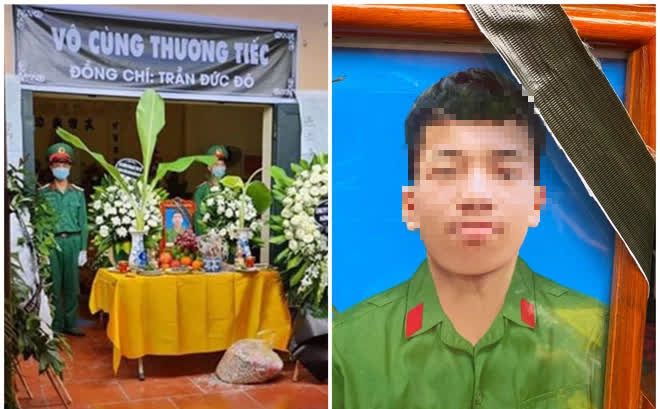
On June 28, a 19-year-old military officer, Tran Duc Do, was found dead while undergoing compulsory military service. Both the military and the state-controlled media push the narrative that the young officer committed suicide and that no abuse or misconduct happened. The officer’s family has been contesting this narrative, as they said that bruises were found on his body, and their son had told them not long before his death that he was being bullied in the military.
The death of the young military officer has caused an uproar on the internet.
The Vietnamese military has a lot to answer for in recent months. This started in January with the military’s violent involvement in the Dong Tam land dispute near Hanoi, followed by the exposure of the military’s ties with the military junta in Myanmar through its telecommunications company, Viettel.
However, unlike these two stories, the general public in Vietnam is particularly concerned with this case of the young military officer, and seems to be more critical of the military regarding this incident.
The young officer’s family has been very vocal about his death, particularly to international press platforms like BBC Vietnamese. The officer’s mother said to the BBC, “If my son’s murderer is not found, the Vietnamese people will not trust the Communist Party anymore.”
On Facebook, some activists also told stories of how the military has been mistreating the family of Tran Duc Do. Activist Nguyen Anh Tuan wrote on his Facebook that the military had been pressuring hospitals from Bac Ninh to Hanoi not to agree to preserve Tran Duc Do’s corpse when the family wanted to delay the funeral so an autopsy could be performed. The internet was also cut in the entire street of Do’s family. According to the activist, Do’s family had to purchase their own refrigerator to preserve his body before his funeral.
On July 1, Tran Duc Do was finally put to rest as his family buried him. However, it seems that his family is still fighting to find the true cause of his death.
Questionable arrests and charges against civil society actors
Last week witnessed the arrest of prominent independent blogger Le Dung Vova, captured by the police a month after an official warrant was issued for his arrest. He was arrested for his “anti-state” writings on social media, a legal offense based on Article 117 of the 2015 Penal Code, one of the typical charges against independent journalists and bloggers.
Previously, he had also been detained twice in 2019: when he and his colleagues at the independent platform CHTV live-streamed about the US-North Korea summit in Hanoi, and when they attended a workshop on the South China Sea, though he was released on both occasions.
Last week also saw the ruling to detain journalist Mai Phan Loi and lawyer Dang Dinh Bach. They were both charged with tax fraud. These two were involved in the VNGO-EVFTA Network, a network of non-governmental organizations (NGOs) founded earlier this year in Vietnam to promote the involvement of NGOs in the implementation of the European Union-Vietnam Free Trade Agreement. They were both the Executive Board members of the VNGO-EVFTA Network.
Loi was the chair of the Scientific Council of the Center for Media in Educating Community. At the same time, Bach was the Law and Policy Research Center for Sustainable Development director. Loi was also a member of civil society activists who met with President Obama in Hanoi during his May 2016 trip. Previously in June 2016, Mai Phan Loi’s journalist ID was revoked by the authorities for conducting a poll on Facebook about the accidents involving Vietnamese naval aircraft.
Former premier of the Republic of Vietnam passes away at 95
Tran Thien Khiem, second in command to President Nguyen Van Thieu of the former South Vietnamese regime, passed away recently on June 23 in California at the age of 95.
During his time as a politician and a prominent military general in the former Republic of Vietnam, Khiem was considered the right-hand man of President Thieu. He was the regime’s premier from 1969 to its last days in 1975, and he was involved in many military coups, particularly the one leading to the death of former President Ngo Dinh Diem. After the war ended, he immigrated to the United States, where he lived a quiet life. Read more about his life here.
Netflix removes movie showing nine-dash line map
Last week, Netflix had to remove a movie from its service in Vietnam due to complaints from the Vietnamese authorities that the movie showed the nine-dash line map, which is China’s map for territorial claims in the South China Sea.
This was not the first time either the Vietnamese authorities or the public were concerned about commercial products due to their showcasing of the nine-dash line map. In April, there was a widespread call to boycott the clothing brand H&M in Vietnam over the speculation that the brand supported the nine-dash line map.
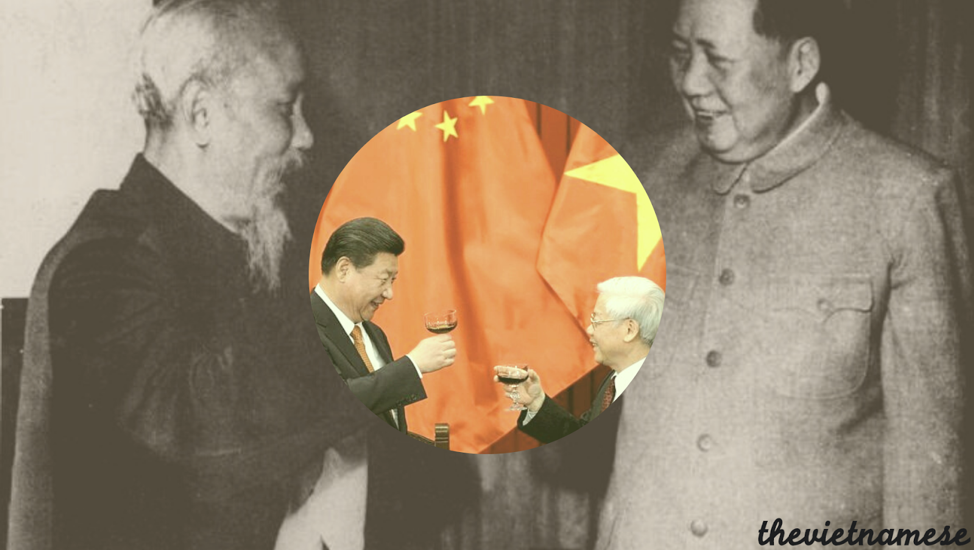
The conflict of territorial claims between China and Vietnam is particularly interesting as the country witnessed the rise of contemporary anti-China nationalism, in contrast to the Communist Party’s propaganda on China’s ideological brother. Read more about this topic in The Vietnamese Magazine’s article published last week, “Why Did The Vietnamese Communist Party Suppress Anti-China Nationalism?”
COVID-19 in Vietnam
New vaccination approval:Moderna was recently approved for emergency use in Vietnam. The other vaccines that have been approved include AstraZeneca, Sputnik V, and Sinopharm.
Vaccination sites are causing fear of superspreaders, according to Nikkei Asia. The situation is leading to calls for better organization of mass vaccination during outbreaks in Vietnam.
“With China making a territorial grab in the South China Sea, American LNG shipments—which would be protected by the U.S. Navy—will continue to hold appeal for the Vietnamese. But without guarantees for U.S. companies, Vietnam could just as easily turn to cheaper and closer LNG sources, such as from Qatar, Australia, and Malaysia. Since President Joe Biden came into office, Vietnam is no longer being pressured by the U.S. the same way on trade. Signaling a less confrontational approach to trade policy, the Treasury Department in April declined to designate Vietnam a “currency manipulator,” as the Trump administration had done in December. U.S. Trade Representative Katherine Tai merely mentioned the concern in an April call with her Vietnamese counterpart.”
“It is still too early to hail a digital economy agreement between Singapore and Vietnam. And it will be an even longer road before Vietnam can align itself with Singapore’s digital trade standards so that both nations can reap the full benefits of any potential agreement. But in agreeing to begin discussions, the two nations mark a recognition of the benefits of a liberalized approach in dealing with the emerging challenges of digital trade. At the very least, by taking the first steps along this road, Vietnam and Singapore have recognized that no single nation can fully enjoy digital trade benefits by imposing protectionist regulations, separating itself from the global digitalization standards. There must be win-win cooperation in order for digital trade to fulfill its full potential.”
“The region should matter in Washington. It contains two U.S. allies: the Philippines and Thailand. There are other major partners, too, including Indonesia, Singapore, and Vietnam. Yet, economic ties in all these countries have shifted toward China as of late. Closer diplomatic ties are likely to follow in many cases, absent concerted U.S. action. Few regional policymakers relish a possible future under China’s sway and mostly want to maintain a balance between the two superpowers—which means they want the United States to stay closely engaged in regional affairs. But it is for precisely this reason that Southeast Asia is so attuned to signs of distraction or muddled thinking in Washington.”
Since the beginning of its history, the Vietnamese Communist Party (VCP) has been portraying itself as a group of nationalists who liberated the country from foreign intervention. History textbooks, propaganda, and official VCP narratives were all dedicated to showing that the VCP is the true heir of Vietnam and that the path to socialism is the destined path of the country.
However, this nationalistic sentiment contrasts with the Party’s cherished Marxist-Leninist Communist ideology, which states that nationalism is a bourgeoise illusion[1] that distracts people from their struggle with the bourgeoisie and that only international class struggle matters.[2] Such an ideological paradox is even more puzzling as we examine the regime’s responses to the rise of contemporary anti-China nationalism in Vietnam.
Anti-China nationalist sentiments have been rampant in Vietnam since the late 2000s, as expressed through various protests, demonstrations, and online debates. These sentiments are popular among the anti-communist Vietnamese diaspora and among the people residing in the country who were enraged by China’s territorial claims in the South China Sea. Since 1947, the Chinese Communist Party (CCP) has established an eleven-dash line map (now the nine-dash line map), claiming various islands in the South China Sea, including the Paracel and Spratly islands – or in Vietnamese, the Hoang Sa and Truong Sa islands.[3]
For years, the CCP has not relinquished claims to what Vietnamese nationalists insist are Vietnam’s rightful territories. Ten years ago, in 2011, anti-China nationalism manifested itself in the form of demonstrations, when hundreds of Vietnamese people protested in front of the Chinese Embassy in Hanoi, demanding China stay out of the Paracel and Spratly islands.[4] However, these demonstrations were met with repression from the Vietnamese regime.[5]
On the one hand, the VCP faces widespread nationalist criticism from its citizens for depending on China. Such criticism presented a considerable threat for the regime’s long-established narrative as nationalists fighting foreign influence and as the only legitimate ruler of the country.
On the other hand, the VCP faces the CCP, whom they have relied on for ideological and policy guidance and economic and military aid during wartime. Distancing itself from the CCP would also betray Marxism-Leninism’s internationalist agenda.
In a research essay, political scientist Tuong Vu, professor at the University of Oregon, examines contemporary anti-China nationalism in Vietnam as well as the Vietnamese regime’s responses. In a research essay titled “The Party v. the People: Anti-China Nationalism in Contemporary Vietnam,” Professor Vu argues that the suppression of anti-China nationalism is in line with the VCP’s international communist ideology, despite the Party’s nationalist image.[6] This article focuses on explaining the VCP’s repressive actions by analyzing their understanding of communism and nationalism.
Tuong Vu is a professor and head of the Political Science department at the University of Oregon. His research focuses on state formation, nationalism, ideology, and revolutions in East Asia.
The Construction of Communist Nationalism
In order to understand why the VCP suppressed anti-China nationalism, we must first grasp the VCP’s understanding of nationalism itself. The VCP sees nationalism as communism, with an emphasis on communist internationalism that promotes solidarity among socialist states. This suggests that opposition to other socialist states – in this case, China – is not seen as nationalism.
Since its foundation during the French colonial period, the VCP has always pursued two goals simultaneously: achieving national independence, which concerned the French and other foreign intervention, and carrying out a socialist revolution in the country.
To achieve the former goal, the VCP has always portrayed itself as a nationalist faction. Even foreign scholars seem to push the popular narrative that VCP leaders like Ho Chi Minh were nationalists first and communists second and that communism was a mere tool for them to achieve national liberation.[7]
However, Tuong Vu disagrees with this narrative. He thinks that the VCP has always been devoted to communism, even when it pushes a nationalist propaganda. But how did the VCP reconcile being both nationalist and communist, since being the latter means condemning nationalism?
Tuong Vu offers a simple explanation. Communism has always been portrayed as the best path to achieve liberation as well as decolonization for Vietnam. It was not just regarded as a tool for nationalism, but instead both the means to achieve independence, as well as the end goal for building the nation. Therefore, anyone who does not support communism is deemed unpatriotic.
In other words, the VCP ties nationalism or patriotism with being loyal to its own causes. This was demonstrated by the former Prime Minister Pham Van Dong, who declared that “to be patriotic is to build socialism.”[8]
As Le Hong Phong and Ha Huy Tap, leaders of the Indochinese Communist Party, the predecessor of the VCP, explained in 1936: “We believe in internationalism, not nationalism, but…we should raise the spirit for national liberation while tying it to the interests of the working masses….”
So nationalism for the VCP is communism. The VCP’s nationalism is particularly tied to its belief in internationalism, which says that “socialist brothers” around the world should find solidarity together instead of fighting each other like capitalist countries.
Additionally, the VCP also distinguished communist-nationalist movements from the other nationalist movements that it deemed to be bourgeoisie, and as a result it prioritized the former.
For instance, the VCP endorsed China in the Sino-Indian border war in 1962, even though the Communist Party of India criticized China and supported the Indian government. The VCP saw the Communist Party of India as having “sunken deeply in the bourgeois nationalist mud by colluding with the Indian bourgeoisie to slander a brother communist party,” based on archival materials collected by Tuong Vu.
This is important because it marks the VCP’s tactic when confronted with a reality that does not fit into their view of communist internationalism.
The VCP’s actions of justifying reality by creating more theoretical arguments to support its action do not stop there, as its idea of nationalism based on communist internationalism was further challenged by the fact of infighting among communist states the Sino-Soviet split (1956-1966), in which China was at odds with the Soviet Union, and the Sino-Vietnamese border war in 1979, in which China assaulted Vietnam’s border after Vietnam attacked the China-backed Khmer Rouge regime.
Justifying Reality
Accommodating reality, the VCP shifted its own narrative on nationalism by focusing more on domestic communist propaganda. Nevertheless, this new narrative still links Vietnamese nationalism with communism and internationalism. This shows that even when Vietnam was threatened by China, the VCP was still following communist internationalism instead of endorsing a more nationalist approach.
This is evident in the way the VCP has never acknowledged the Sino-Vietnamese border war as a war between socialist brothers. Just as when it justified endorsing China over India in 1962, the VCP argues that the border war was not about communist infighting. The conflict, argues the VCP, was “a fierce struggle between national independence and socialism on the one hand and aggression, expansionism, and chauvinism on the other, between Marxism-Leninism on the one hand and Maoism on the other.” This denial of reality demonstrates a deeply rooted ideological loyalty to Marxism-Leninism.
In order to demonstrate how the VCP justified the Sino-Soviet split, Tuong Vu looked into the VCP’s construction of historical narratives through the most basic and widespread document: the First-Grade Reader (Tập Đọc Lớp Một), a textbook used to teach first-grade children to read. He compared the two editions of the textbook, the one published in 1956, which was before the Sino-Soviet split, with the one published in 1972, after the split.
Data by Tuong Vu. Graphic by The Vietnamese Magazine.
Firstly, there was significantly more content on communist heroes and less content on other socialist countries in the latter edition. This was due to the prolonged war, which produced more “heroes”, and because the VCP seemed to focus more on glorifying internal communist mobilization after the Sino-Soviet split. Additionally, these communist heroes were portrayed as both nationalist and communist – their struggle was seen as both contributing to the country and the international construction of communism worldwide.
Secondly, the content on non-communist heroes and patriotism not linked to the VCP was consistently low in both editions, and particularly low compared to the amount of content on communist heroes.
This reaffirms that the VCP constructed nationalism not based on ethnic lines but rather on political ideology, which suggests that the Party is more likely to align with a foreign communist force than to align with Vietnamese nationalists who reject communism.
Protests and Deconstruction of Communist Nationalism
The VCP’s loyalty to communist internationalism as a part of its nationalism was fiercely challenged by the wave of anti-China nationalism in 21st Century Vietnam due to China’s territorial claims in the South China Sea.
Anti-China opposition in Vietnam is expressed through two main channels: protests and debates on alternative understandings of nationalism. Both of these channels pose significant threats to the VCP’s legitimacy.
Ten years ago, in 2011, massive anti-China protests broke out on the streets of Hanoi and Ho Chi Minh City, especially in the areas where the Chinese embassy and consulate were located, to protest China’s harassment of Vietnamese fishermen in the Spratly and Paracel islands.[10]
The protests did not happen just once, but rather multiple times throughout the summer of 2011 for almost three consecutive months. While these protests were significant, they were not the first. In 2008, many democracy activists and bloggers were also arrested or detained for protesting China’s claims in the South China Sea.[11]
Alongside the protests, many Vietnamese intellectuals started to question the legitimacy of the VCP as Vietnam’s only ruling party and its construction of communist nationalism. Many retired, high-ranking government officials joined in these debates.
For example, Tong Van Cong, former editor of the state-controlled newspaper Lao Dong, argued that the true wish of the late Ho Chi Minh was to establish democracy for Vietnam rather than achieving socialism at any cost, thus questioning the Party’s nationalism based on ideology, as well as its refusal to institutionalize democracy.[12]
While he joined the communist movement during wartime due to his love for his country, Dang argued that the VCP had failed to pay back the debt it owed the Vietnamese people after they fought for and supported the Party. This debt was piled on to the Party’s failed policies based on China’s policy advice, resulting in misery for many Vietnamese people. In contrast, he argued that the VCP owes China nothing. This argument contradicted the Party’s narrative that the country owed China for its generous support for Vietnam in wartime.
Joshua Kurlantzick, senior fellow on Southeast Asia for the Council on Foreign Relations, believes that the protests did not merely demonstrate anti-China sentiments, but also showed the protesters’ frustration with the government’s repressive actions towards dissents over the years, and the government’s failure to deliver democracy.[14]
This further explains why the VCP oppressed anti-China protests and saw the protesters as a threat. These protests were seen as opposing a foreign regime and opposing the VCP, the only “legitimate” ruling body in Vietnam.
Further Problems for the VCP
Currently, the VCP’s policies towards China are once again being challenged, this time by the COVID-19 pandemic, especially when it comes to vaccines. After resisting China’s vaccine diplomacy for a while, the government has recently approved the Chinese Sinopharm vaccine, and it was met with opposition and hesitation from a lot of Vietnamese people.[15] The VCP’s late approval was either because of its distrust of China’s vaccine diplomacy, or because the public opinion in Vietnam has been strongly anti-China.
In a survey conducted by the ISEAS-Yusof Ishak Institute in 2021, individuals from Vietnam are the most disapproving of China’s leadership in the pandemic among 10 ASEAN countries, significantly more disapproving than others.[16] In contrast, Vietnam is the most approving of US leadership in the pandemic among these countries, much more so than the average ASEAN country.
Vietnam is the most disapproving of China among the 10 nations. Data by the ISEAS-Yusof Ishak Institute. Graphic by The Vietnamese Magazine.Vietnam is the most approving of the US among the 10 nations. Data by the ISEAS-Yusof Ishak Institute. Graphic by The Vietnamese Magazine.
When it comes to the South China Sea, Vietnam also shows the most concern with China’s actions – its encroachment and military activities – rather than the US military presence or an escalation of the situation between the US and China.
Once again, this is a rather ironic situation, as the ideological doctrine of the VCP has been consistently promoting solidarity with other socialist countries while condemning capitalist and imperialist states such as the United States.
Data by the ISEAS-Yusof Ishak Institute. Graphic by Son Nguyen/The Vietnamese.
This shows that the VCP’s communist internationalism is not working. Arguably, it is even backfiring because Vietnamese public opinion is shifting towards supporting the United States – a capitalist and imperialist superpower according to Vietnam’s propaganda – instead of supporting China – a socialist brother.
Conclusion
On the surface, increasing anti-China sentiments among the Vietnamese people seem to be in the VCP’s favor, as it hopes to reclaim the Paracel and Spratly islands.
However, this anti-China nationalism also presents a great threat to the VCP establishment that is loyal to communist ideology which promotes solidarity among socialist states. It also presents a deeper ideological threat to the VCP, as Vietnamese nationalists begin to question the VCP’s version of nationalism that correlates being a patriot to being a communist.
The anti-China protests and data on popular opinions suggest that despite the VCP’s efforts, the Vietnamese people are feeling more and more detached from the socialist solidarity with China that the VCP has consistently promoted.
If the VCP continues to refuse to change its ideological approach to China, and if it continues to repress anti-China nationalism, it runs a grave risk of getting its own Marxist-Leninist legitimacy further questioned and challenged.
Bibliography
[1] Crawford, T. (1923, August 15). Bourgeois Nationalism. Marxists Internet Archive. https://www.marxists.org/archive/roy/1923/08/15a.htm
[2] McLellan, D. T. (1998, July 20). Marxism – Class Struggle. Encyclopedia Britannica. https://www.britannica.com/topic/Marxism/Class-struggle
[3] Xu, B. (2020, July 15). China’s Maritime Disputes. Council on Foreign Relations. https://www.cfr.org/timeline/chinas-maritime-disputes
[4] Ide, B. B., & Orendain, B. S. (2011, June 4). Hundreds of Vietnamese Stage Anti-China Protest. Voice of America. https://www.voanews.com/east-asia/hundreds-vietnamese-stage-anti-china-protest
[5] Vietnam breaks up anti-China protests. (2012, December 9). The Guardian. https://www.theguardian.com/world/2012/dec/09/vietnam-breaks-up-anti-china-protests
[6] Vu, T. (2014). The Party v. the People: Anti-China Nationalism in Contemporary Vietnam. Journal of Vietnamese Studies, 9(4), 33–66. https://doi.org/10.1525/vs.2014.9.4.33
[8] Le, H. N. (2016, February 29). Phạm Văn Đồng – Nhà Chính trị, Nhà Văn hóa lớn của Đảng và Dân tộc. Báo Nhân Dân. https://nhandan.vn/tin-tuc-su-kien/pham-van-dong-nha-chinh-tri-nha-van-hoa-lon-cua-dang-va-dan-toc-256438
[9] Nguyen, C. T. (2018, July 31). Tư tưởng Hồ Chí Minh Về Tinh Thần Yêu Nước. Tạp Chí Quốc Phòng Toàn Dân. http://m.tapchiqptd.vn/vi/theo-guong-bac/tu-tuong-ho-chi-minh-ve-tinh-than-yeu-nuoc-12158.html
[10] Vandenbrink, R., & Nguyen, A. (2011, June 5). Anti-China Protests in Vietnam. Radio Free Asia. https://www.rfa.org/english/news/vietnam/protests-06052011165059.html
[11] Human Rights Watch. (2020, October 28). Vietnam: New Round of Arrests Target Democracy Activists. https://www.hrw.org/news/2008/09/12/vietnam-new-round-arrests-target-democracy-activists
[12] Tong, V. C. (n.d.). Nhân Ngày sinh lần thứ 120 Chủ tịch Hồ Chí Minh: Vì Sao Hồ Chí Minh Đặt Dân Chủ Trước Giàu Mạnh? Bauxite Vietnam. Retrieved June 11, 2021, from https://boxitvn.blogspot.com/2010/05/nhan-ngay-sinh-lan-thu-120-chu-tich-ho_19.html
[13] Le, H. D. (n.d.). Suy Nghĩ Trong Những Ngày Nằm Bịnh. . .. Bauxite Vietnam. Retrieved June 11, 2021, from https://boxitvn.blogspot.com/2013/08/suy-nghi-trong-nhung-ngay-nam-binh.html
[14] Kurlantzick, J. (2014, May 16). Vietnam Protests: More Than Just Anti-China Sentiment. Council on Foreign Relations. https://www.cfr.org/blog/vietnam-protests-more-just-anti-china-sentiment
[15] Nguyen, S. (2021, June 7). Vietnam Briefing: Busy With The Pandemic, But The Government Still Cracks Down On Free Speech. The Vietnamese Magazine. /2021/06/vietnam-briefing-busy-with-the-pandemic-but-the-government-still-cracks-down-on-free-speech/
[16] Seah, S., Hoang, T. H., Martinus, M., & Pham, T. P. T. (2021, February). The State of Southeast Asia: 2021 Survey Report. ISEAS-Yusof Ishak Institute. https://www.iseas.edu.sg/articles-commentaries/state-of-southeast-asia-survey/the-state-of-southeast-asia-2021-survey-report/
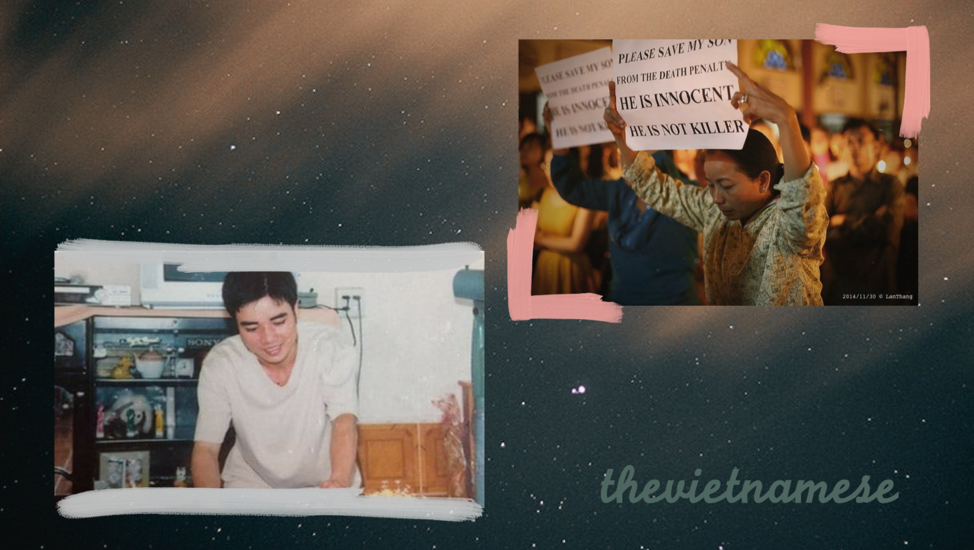
On June 24, 2021, Attorney Tran Hong Phong, the lawyer for Ho Duy Hai and his family in their petition for his wrongful death penalty case, published a letter on his Facebook account, providing a new alibi regarding the case. Five lawyers (including Phong), two journalists working for a law newspaper, and Ho Duy Hai’s family jointly signed the letter.
The letter, which had been previously sent to the Procurator of Supreme People’s Procuracy of Vietnam and the Vietnamese authorities, provides convincing proof [1] to demonstrate that Ho Duy Hai was not the murderer of two post office workers in Long An Province in 2008.
Alternatively, the new evidence shows that on the evening of January 13, 2008, Ho Duy Hai actually did not go to Cau Voi Post Office, where the murder took place, but rather attended the funeral of Ho Chi, also known as Tu Lan, a neighbor who lived just 500 meters from Hai’s house.
Furthermore, the new evidence also shows that Ho Duy Hai was at the funeral from 7:50 pm until 9 pm, which coincides with the time the Long An Police investigative agency alleged he had entered the Cau Voi Post Office, at around 7:30 pm, to murder the two victims at around 8:30 pm allegedly. Seven witnesses, who also attended the funeral, including the deceased’s wife, have confirmed this fact.[2]
Ho Duy Hai received a death penalty for his convictions of homicide and robbery, despite “serious procedural shortcomings”[3] and violations of the defendant’s right to a fair trial.
Although the presumption of innocence has been recognized [7] in its 2015 Criminal Procedures Code, Vietnam has fallen short of actually practicing this principle in its criminal proceedings. Quite commonly, the number of cases and the speed at which a case must be solved dwarf the importance of proper due process to uphold a fair and just trial.
A local lawyer explained [8] that investigative agencies could deploy “professional” methods to extract forced confessions from people since these agencies “often hold prejudices” against the accused. Also, earlier this month, the People’s Court of Dak Song District, in Dak Nong Province, held [9] nearly 60 “pretend” trials, to meet its quota for a local judge to be reappointed, without any real defendants or victims.
However, the new evidence provided by his attorney might prove that Ho Duy Hai was wrongfully convicted, which would be a spark of hope for both the defendant and his family as the possibility of retrial could be high.
To strengthen the validity of the new proof, Attorney Phong confirmed that all seven witnesses “voluntarily provided the information and confirmation letters to affirm that their testimonies are true and vowed to take full responsibility under the law […].”
In their letter, the attorney and the signees demanded Vietnamese government officials expeditiously verify the evidence, review the cassation decision, release defendant Ho Duy Hai on bail while awaiting verification; and review and resolve their previous petitions and demands.
The case of Ho Duy Hai has drawn wide attention from both national and international audiences, as he was convicted of murder and later sentenced to death via an opaque and unfair trial.
Bibliography:
[1] RFA. (2021, June 25). Vụ án Hồ Duy Hải: Luật sư cung cấp bằng chứng ngoại phạm mới. Đài Á Châu Tự Do. https://www.rfa.org/vietnamese/news/vietnamnews/ho-duy-hai-case-lawyer-provides-new-proof-06252021081856.html
[2] HCMC Reporters. (2021, June 25). Vụ án tử tù Hồ Duy Hải: Luật sư cung cấp tình tiết bất ngờ. Dân Việt. https://danviet.vn/vu-an-tu-tu-ho-duy-hai-luat-su-cung-cap-tinh-tiet-bat-ngo-2021062515064789.htm
[3] Will, N. (2019, December 3). After Decade of Petitions, Vietnam to Re-consider Case of Death Row Inmate Ho Duy Hai. The Vietnamese Magazine. /2019/12/after-decade-of-petitions/
[4] Vi, T. Q. (2019, September 29). Wrongful Death Penalty Cases And The Families That The Inmates Left Behind. The Vietnamese Magazine. /2019/09/wrongful-death-penalty-cases-and-the-families-that-the-inmates-left-behind/
[5] Thereporter. (2020a, May 7). Ho Duy Hai’s Cassation Trial. The Vietnamese Magazine. /2020/05/ho-duy-hais-cassation-trial/
[6] Thereporter. (2020b, May 9). Ho Duy Hai’s Case Reaffirmed, Sentenced to Death Again. The Vietnamese Magazine. /2020/05/ho-duy-hais-case-reaffirmed-sentenced-to-death-again/
[7] V.L.L.F. (2018, June 1). Legal experts discuss presumption of innocence, due process principles in criminal proceedings. Vietnam Law and Legal Forum. https://vietnamlawmagazine.vn/legal-experts-discuss-presumption-of-innocence-due-process-principles-in-criminal-proceedings-6244.html
[8] Thi, D. (2021, June 25). Liệu có tái thẩm vụ án Hồ Duy Hải với chứng cứ ngoại phạm mới? Đài Á Châu Tự Do. https://www.rfa.org/vietnamese/in_depth/will-the-ho-duy-hai-case-be-retrial-with-new-alibi-dt-06252021114054.html
[9] Duong, D. (2021, June 6). Tòa huyện lập gần 60 vụ án “ảo” để. . . một thẩm phán được bổ nhiệm lại? Dan Tri. https://dantri.com.vn/xa-hoi/toa-huyen-lap-gan-60-vu-an-ao-de-mot-tham-phan-duoc-bo-nhiem-lai-20210606162322706.htm
Vietnamese people are no strangers to natural disasters or political calamities that demand personal sacrifice and collective effort. Yet, why is the government’s‘COVID-19 Vaccine Fund’ being met with so much public backlash? A closer look into these criticisms reveals a deficit of trust in the government, in more ways than one, with nobody taking the initiative to deal with this problem.
June 2021 saw Vietnam facing a massive COVID-19 outbreak, especially in Saigon (Ho Chi Minh City). By the end of the month, the number of cases remained relatively high. The implications of the government’s difficulty in containing COVID-19 in Saigon are considerable.
First, it is the largest city in Vietnam and the economic flagship of the country. Thus, placing the entire city of Saigon under lockdown is arguably not an option the government would want to entertain. This is evidenced by government officials still stubbornly clinging to their “double target” goal [1] of attempting to suppress COVID-19 while at the same time maintaining economic activities. Time will tell if Vietnam will pull through or if this “double target” will turn into a “double failure.”
Second, the bitter history between Saigon, South Vietnam’s former capital during Vietnam War, and the Communists from Hanoi often resurfaces at times like this. This has cultivated a persistent lack of trust between many Saigonese and government leaders in Hanoi. Thus, it is not surprising to see many angry comparisons by Saigonese. They speak of the government’s unfair treatment of Saigon, as they perceive that less support has been given to the city to cope with the outbreak than was the case with northern provinces. When economic and political concerns are put together, they believe that Saigon is merely seen by the government as a cash cow – heavily milked yet poorly treated by Hanoi leaders.
However, this troubled past between the north and south regions is far from being the only reason for the lack of trust between the state and the people in Vietnam. With the unprecedented high number of daily cases and deaths, the Vietnamese finally realize the urgency of acquiring vaccines. Yet, the government’s COVID-19 Vaccine Fund, which calls for voluntary donations from individual citizens and the corporate sector to buy vaccines from overseas, has been met with strong criticism.
As expressed on social media, these objections seem to boil down to “I can’t trust the government with my money” or “I don’t trust the government to act in my best interest.” This lack of faith in the state is situated against a backdrop of multiple corruption scandals and a lack of transparency throughout the 2010s and taxpayers’ increasing scrutiny of public spending in recent years, which has resulted in their frustration.
To wit, the government announced in late June its plans to build more public statues, with the one in Thanh Hoa province alone costing approximately 255 billion dong (US$11 million).[2] The government could not have chosen a better time, or a better way, to add fuel to the fire.[3]
In a country where anti-China sentiment runs high, the government’s approval of the Sinopharm vaccine and putting it into use only worsens the situation.[4] Skeptics of the VCP and China have every reason to be worried about the money in the COVID-19 Vaccine Fund being used to purchase only the Sinopharm vaccine.
With this perfect opportunity for public intellectuals to speak truth to power, economists Vu Thanh Tu Anh (from the Fulbright School of Public Policy and Management) and Vu Tu Thanh (deputy regional managing director and Vietnam representative for the US-ASEAN Business Council), regrettably miss the point. Tu Anh’s Facebook post on June 8 rightly explained that the COVID-19 Vaccine Fund is a way to correct “government failure.” [5]
However, he mainly focused on the technical workings of the government’s budgeting related to COVID-19. Likewise, Tu Thanh’s post on his own Facebook page, posted on the same day, defends the COVID-19 Vaccine Fund, stating that no vaccine manufacturer in the world can sell its vaccines to non-state actors at the moment and that the government is still responsible for the lion’s share of the amount used to purchase them.[6]
Mistaking politics for policy, both Tu Anh and Tu Thanh fail to address the issues underlying the criticisms of the COVID-19 Vaccine Fund, which are the deficit of trust between Saigon and the north, the lack of confidence of the Vietnamese people towards their government, the bitter irony of billions of Vietnamese dong going to statue-building amidst a pandemic, and concerns about China’s vaccine. They also miss how the government should be held accountable for the “failure” Tu Anh mentioned, a failure of the government’s own making. While these issues are not dealt with, the deficit of trust remains and could worsen over time.
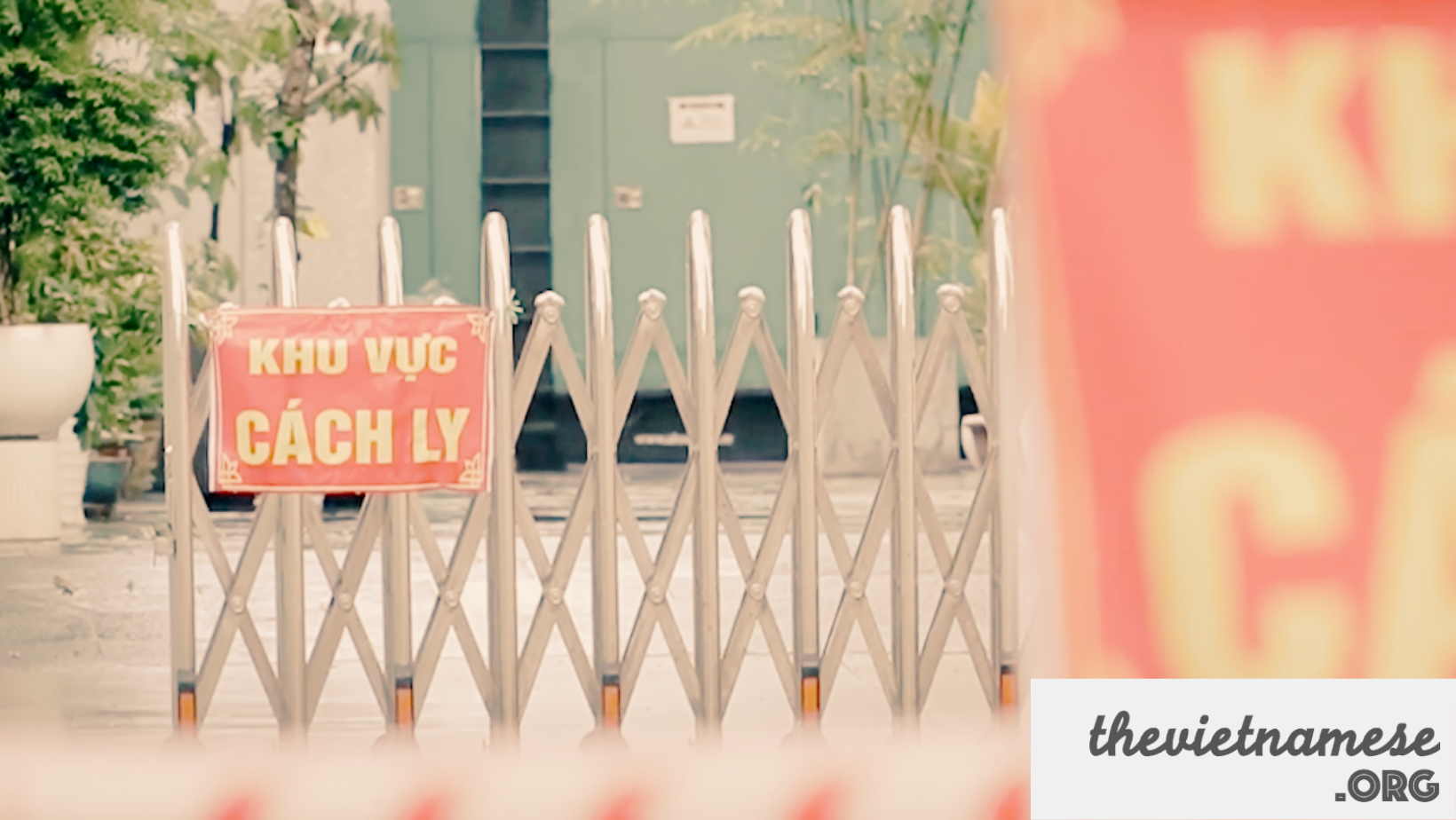
June 2021 has seen Saigon’s neighbourhoods barricaded, one after another, as more and more new cases emerged. A local man poetically, but sadly, called the city, “Thương thành” (City of Pain).[7] Meanwhile, other cities and provinces are nervously watching. The shortage of vaccines alone is challenging to deal with. Yet this summer sees the Vietnamese government running short of both vaccines and the trust of many of its people.
Bibliography:
[1] T.H. (2021, June 3). Sáng tạo trong thực hiện “‘nhiệm vụ kép.’” Hanoi Moi. https://hanoimoi.com.vn/tin-tuc/Doanh-nghiep/1001503/sang-tao-trong-thuc-hien-nhiem-vu-kep
[2] L.H. (2021a, June 25). Thanh Hóa chọn mẫu xây tượng đài, khu lưu niệm 255 tỷ đồng. VNExpress. https://vnexpress.net/thanh-hoa-chon-mau-xay-tuong-dai-khu-luu-niem-255-ty-dong-4299756.html
[3] Facebook user’s criticism of the government’s handling of COVID-19 in Saigon, including its spending on building statues amidst. (2021, June 25). [Status]. Facebook. https://www.facebook.com/manhcuongvu/posts/10208783322656000
[4] Facebook user’s criticism of the Ministry of Health’s approval of the Sinopharm vaccine. (2021, June 4). [Status]. Facebook. https://www.facebook.com/photo?fbid=4596848240329511&set=a.121001917914188
[5] Có nên lập quỹ vaccine phòng covid-19. (2021, June 7). [Status]. Facebook. https://www.facebook.com/permalink.php?story_fbid=5787526994651583&id=100001830205620
[6] Hiểu đúng về Quỹ vắc xin phòng chống COVID-19. (2021, June 8). [Status]. Facebook. https://www.facebook.com/vututhanh/posts/10222662130960010
[7] Thương Thành (2021, June 13). [Status]. Facebook. https://www.facebook.com/le.h.lam/posts/10220397389070232
The Vietnam Briefing, which is released every Monday morning Vietnam time, looks at Vietnam’s political developments of the past week.
Ministry of Foreign Affairs: “Vietnam wholeheartedly respects and protects human rights”
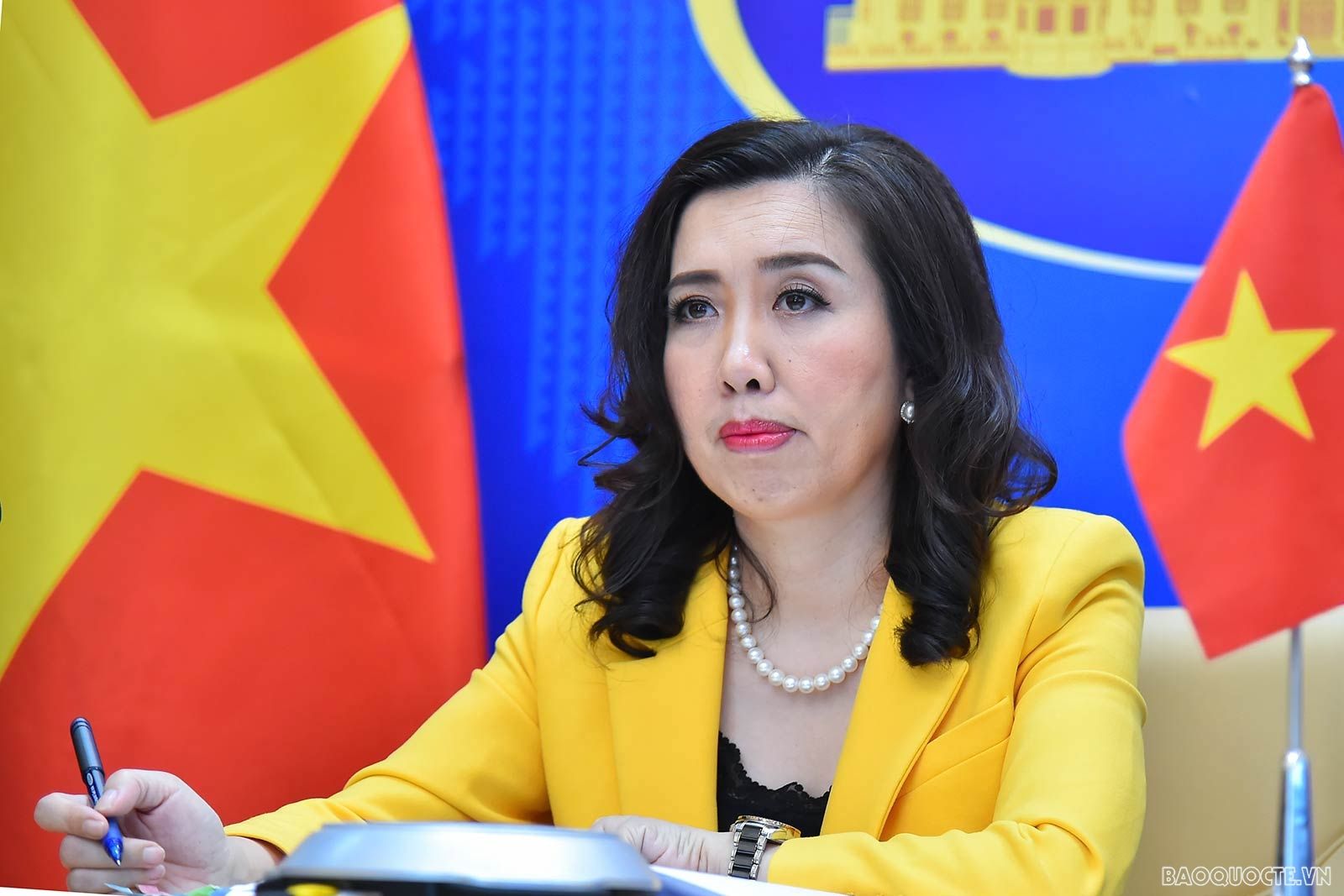
Last week, the spokeswoman of the Ministry of Foreign Affairs, Le Thi Thu Hang, said that Vietnam “always cares about advancing basic human rights” and that the country has “freedom of speech, freedom of press and freedom of information” because “the press in Vietnam is very diverse and more than 70 percent of the population has access to the internet.”
In a meeting last week of the United Nations Human Rights High Commissioner, Ambassador Le Thi Tuyet Mai also affirmed “Vietnam’s consistent policy on promoting and protecting human rights.”
Such claims from the Ministry of Foreign Affairs are outrageous lies, deceptions and fabrications of the human rights reality in Vietnam. Though not surprising, the claims made by Vietnamese foreign affairs officials show that the country has continued to deny the state’s oppression of basic human rights principles, particularly freedom of speech.
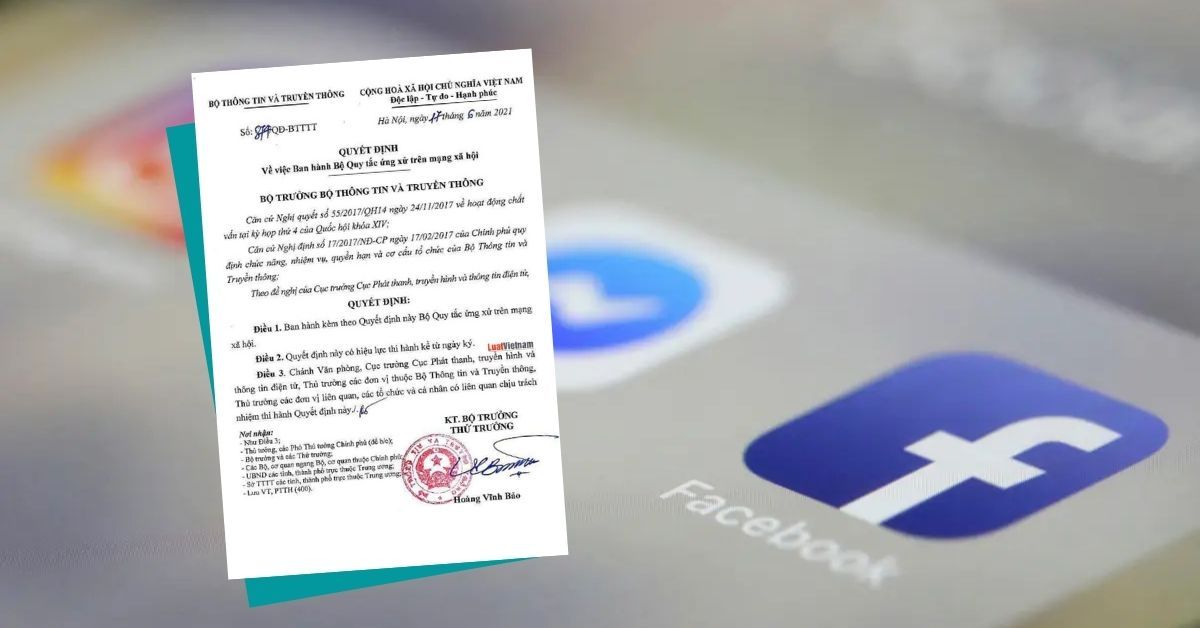
These claims were released in a rather ironic timing, as the country tried to tighten speech control on the internet by releasing a national conduct code just less than two weeks ago.
There are countless examples of the government’s oppression of freedom of speech. For example, Pham Doan Trang, our co-founder and an internationally recognized pro-democracy journalist was imprisoned solely based on charges associated with her critical writings. Unfortunately, she was not the only non-violent writer or activist whom the state arrested. Those who follow The Vietnamese Magazine’s weekly Vietnam Briefing would remember that since the National Assembly election started to kick-off, there have been new cases of arrests and charges against independent journalists, bloggers and activists almost every week.
Additionally, it is absolutely false to equate access to the internet with access to information and even more deceiving to equate the former with freedom of speech. While Vietnam is reportedly the seventh-largest user base in the world for Facebook, the company was pressured by the government to censor content upon the government’s request on the platform. In an article published last week on Revolutionary Press Day, The Vietnamese Magazine also documents how independent or non-state journalism such as ours is heavily censored in the country.
While the government might declare that it is concerned about human rights and climate change, The Vietnamese Magazine also documents various human rights and environmental violations, from the outrageous Formosa case to the labor and environmental damages in Cameroon.
Updates on COVID-19 in Vietnam
China complains about Vietnam’s vaccination: Last week, after the Sinopharm vaccines that China donated to Vietnam arrived, the Chinese Embassy complained that Vietnam failed to honor the agreement to prioritize “Chinese nationals, people who need to travel to China for work, and people who live in border areas.”
So far, Vietnam has yet to update its vaccination priorities and has yet to comment on the Chinese Embassy’s claim, which reportedly spurred a nationalistic outrage in Chinese social media. However, it is known that 500,000 doses of the Sinopharm vaccine have arrived in Vietnam.
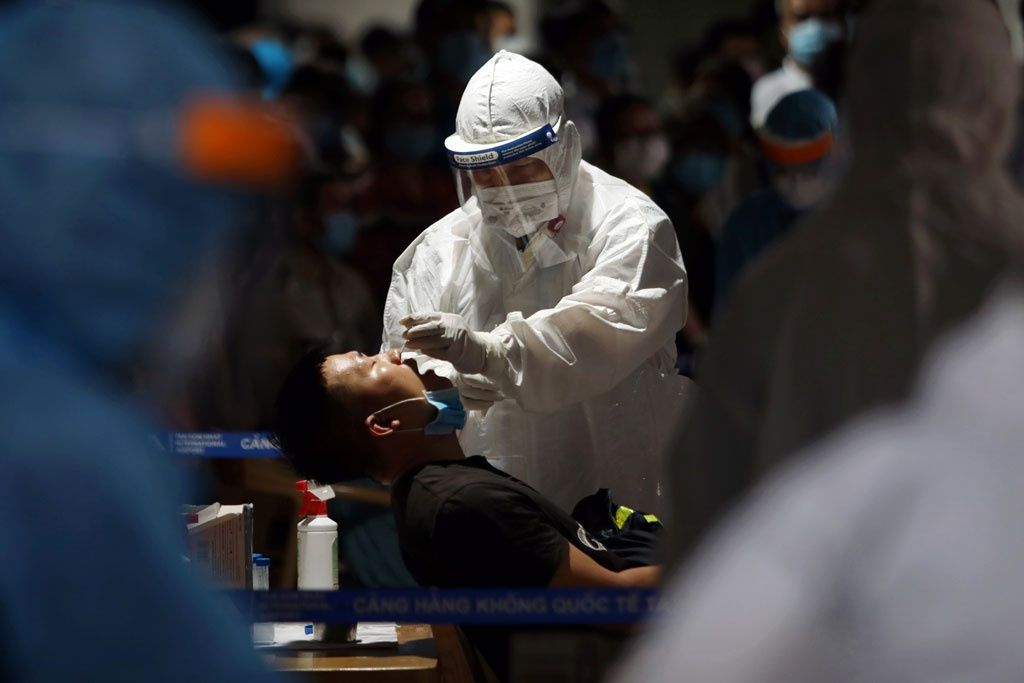
Vaccination priority in Vietnam: So far, access to vaccines in Vietnam is extremely limited. According to Tuoi Tre, a state-controlled media, vaccination priority in the country is mostly prioritizing frontline health workers, police officers, soldiers, and diplomats and diplomatic delegations. Some new vaccination priorities include teachers and staff at educational facilities, people 65 years old and older, and poor people.
The country is also rushing to produce its own vaccine, particularly NanoCovax. This vaccine is “expected to be as good as foreign vaccines,” accord to one state media outlet.
Good news: People who are fully vaccinated only have to fulfil a mandatory quarantine of seven days, a much shorter time than the previous 21-day quarantine, according to a new announcement last week. So far, it is still unclear when this new quarantine law will be implemented. Additionally, it is unclear whether this new requirement will be enforced in the entire country or only in a few locations.
According to state media, Vietnam is also reportedly considering receiving visitors from countries it deems to have “managed COVID-19 outbreaks well, including those that have achieved herd immunity thanks to their vaccination programs.” It is, however, still unclear which countries will be qualified and whether this program will actually be put in place.
This move is seen as a way to boost tourism and the number of foreign visitors. A month ago, the American Chamber of Commerce in Vietnam complained to the government that the lengthy quarantine restrictions discouraged foreign businesspeople from entering the country.
Meanwhile, Vietnam is reportedly strengthening surveillance at the border with Cambodia due to COVID-19 fears, according to Khmer Times. Vietnamese border patrols have been increasingly preventing trespassing over the border in an effort to curtail domestic outbreaks.
“Khanh confided about having a “rough time” in high school, where he was sometimes bullied for feminine mannerisms and underwent what he referred to as a form of “psychological trauma.” He went on to say that he isn’t ready to come out to his parents but said he will soon. Even today in Vietnam, it isn’t uncommon for parents to send their children to see a doctor if they think they are gay or lesbian.
A 2020 Human Rights Watch report outlining details of homophobia and stigma in Vietnam concluded with the need for necessary changes to occur. “The first steps will include correcting the persistent widespread notion that homosexuality is an illness and needs a cure,” the report stated.
Even more disturbing is the prevalence of suicide within Vietnam’s LGBTQ+ community. ‘One of my lesbian friends tried to commit suicide… not long ago because of the family and societal pressure she was under,’ Khanh said.”
“Virus expert Yong Poovorawan, of Chulalongkorn University, said new confirmed Delta cases are expected to rise substantially higher in the near future, which meant the efficiency of vaccines and protection measures could drop because the strain can resist some vaccines.”
“For nearly half a century, Vietnamese victims of Agent Orange have been fighting a losing battle against multinationals that manufactured the toxic defoliant. Their plights have been ignored, their lawsuits dismissed and their voices drowned out.”
“Late last week, Reuters reported that Vietnam’s government had introduced a new national social media “code of conduct,” which encourages its people to post positive content about the country and prohibits anything that violates the law or affects “the interests of the state.”
According to Reuters, which cited a June 17 document from the Ministry of Information and Communications, the code applies to state organizations, social media companies, and all of their Vietnamese users. It states that social media users “are encouraged to promote the beauty of Vietnam’s scenery, people and culture, and spread good stories about good people.”
Kylie P. Torres/Public Relations and Online Engagement/June 25, 2021
“This chapter examines the Vietnam government’s use of TikTok, the world’s fastest-growing app, as a tool to spread public health messages during the COVID-19 pandemic. Although most creators of TikTok content are general users, the application is growing in popularity with brands and organizations. However, the potential of usefulness of the app for broader public relations efforts has yet to be explored. The researcher analyzes the Vietnam government’s COVID-19 TikTok influencer campaign in the context of the Structural Virality of Online Diffusion.”
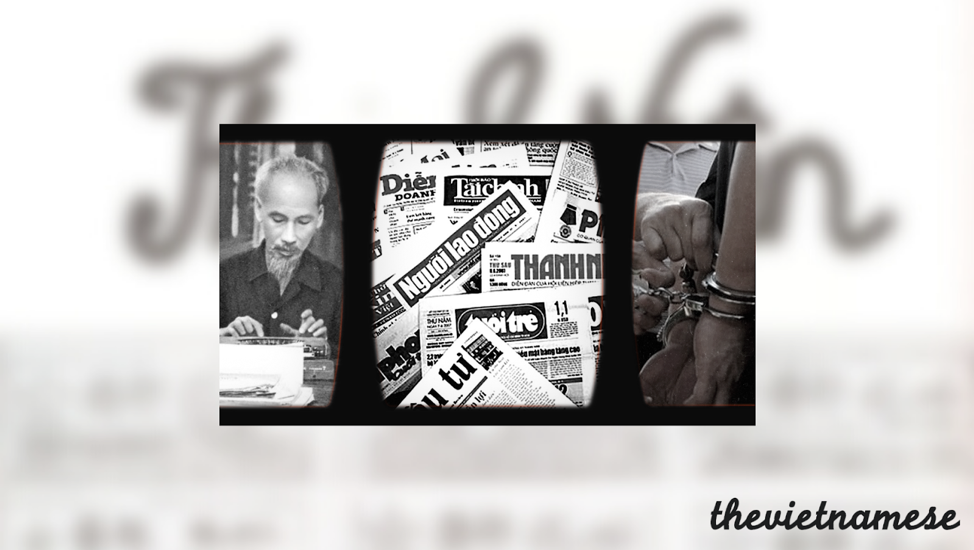
Almost a century ago, a newspaper called Thanh Nien published its first issue[1]. Prior to the existence of Thanh Nien, other newspapers were existing in Vietnam. But Thanh Nien was not just any newspaper. It was a newspaper founded by Ho Chi Minh – the most important revolutionary figure of the Vietnamese Communist Party (VCP). Hence, the day Thanh Nien published its first issue became a day to celebrate “revolutionary reporters and the press” in Vietnam.
This day is still celebrated annually in Vietnam, with articles coming from the state-controlled press commemorating how journalism in Vietnam has “propagated and spread the Party and the government’s paths, as well as reflecting the true will of people from all socioeconomic backgrounds.” [2]
Because of the day’s history, it would be a mistake to think of this day as commencing the right of free speech or free journalism in Vietnam.
How is the state of journalism in Vietnam?
Despite the name “Revolutionary Press Day,” the state of journalism in Vietnam cannot at all be considered “free,” let alone “revolutionary.”
Ranked 175 out of 180 countries by Reporters without Borders [3], the Socialist Republic of Vietnam does not allow freedom of expression or independent journalism. While journalism is usually understood as a tool to “speak truth to power,” journalism in Vietnam is rather a propaganda tool to speak the truth according to power.
This is because journalism in Vietnam is all state-owned. While “official” journalists in Vietnam are sometimes allowed to report corruption, criticism of the Party is strictly forbidden, and those challenging it could face the consequences.[4]
Even among the state-owned journalism platforms, if an article is just critical of either the Party or anyone in power, it would most likely be taken down silently. [5] In more extreme cases, the authorities may punish the newspaper itself. For example, the Phu Nu newspaper was suspended for a month last year because it published a critical investigative article about the Sun Group, one of the largest corporations in Vietnam. [6]
This is further evident in the way journalism is taught in higher education. The most famous journalism school in Vietnam, the Academy of Journalism and Communication (Học viện Báo chí và Tuyên truyền), would actually be the “Academy of Journalism and Propaganda,” if the name was translated honestly from Vietnamese to English. Many university students jokingly call this school “a Party university” (trường Đảng), due to the school’s emphasis on the Party’s propaganda training.
The state of free speech and free journalism in Vietnam is very telling when you look at the very existence of our own organization, which includes The Vietnamese Magazine and Luat Khoa Magazine. The fact is that we cannot work and register in Vietnam, people are blocked from accessing our sites and that we are one of the only remaining independent Vietnamese-run media organizations. One more fact is that other than our directors, Trinh Huu Long and Tran Quynh Vi, all of the organization’s staff writers and editors have to work in the shadows to ensure our own personal safety and the organization’s continuity.
Since the beginning of the elections in 2021, the state has arrested independent bloggers and journalists almost every week, despite the chaotic situation with the COVID-19 pandemic. Many independent journalists have been detained. [7] Our own co-founder, Pham Doan Trang, an internationally recognized pro-democracy journalist, has also been arrested.
Independent journalists are not the only ones arrested by the state. Sometimes, even ordinary Facebook users are detained for critical comments on social media [8]. It is estimated that since the beginning of 2021, at least 21 Vietnamese citizens have been arrested due to activities on social media.
And there are many other examples of how independent and critical journalism in Vietnam has a very grim future [9].
It is puzzling to think about how Ho Chi Minh, the founder of the Socialist Republic of Vietnam, advocated so much for the right to freedom of speech and journalism to see his successors doing the exact opposite.
But why does the state have to go to such length to arrest independent journalists? Why is it so willing to damage its human rights records?
It is because the system is so corrupted with power so concentrated in the hands of certain political and economic elites, which VCP leaders know better than anyone else. They also know that if independent journalism is allowed, the people would be better informed about the system’s flaws and failures, and sooner or later, the VCP will lose its monopoly of power as the only ruling party of Vietnam. They know that their un-innovative propaganda strategies cannot compete with honest and scientific arguments that can only be nurtured under independent journalism. They know that they cannot win in a free speech environment.
So the VCP’s fight with independent journalism is actually a desperate fight to cling to power. Do not let their brand as a “socialist” government fool you. What the VCP is doing against independent journalists is anything but what their founder Ho Chi Minh advocated for during French colonial rule. Their monopoly as the only ruling party is so important that they are willing to arrest, suppress and surveil even the smallest seeds of independent journalism and critical thought.
This is now an authoritarian Party suppressing independent journalists. And on this day, the Vietnam Revolutionary Press Day, we hope you remember that.
Bibliography
[1] Những mốc son của nền báo chí cách mạng Việt Nam. (2021, June 21). Báo Tin Tức. https://baotintuc.vn/infographics/nhung-moc-son-cua-nen-bao-chi-cach-mang-viet-nam-20210621071016833.htm
[2] Nguồn gốc và ý nghĩa Ngày Báo chí Cách mạng Việt Nam 21/6. (2020, June 16). Báo Giao Thông. https://www.baogiaothong.vn/nguon-goc-va-y-nghia-ngay-bao-chi-cach-mang-viet-nam-216-d468998.html
[3] World Press Freedom Index | Reporters Without Borders. (n.d.). Reporters Without Borders. Retrieved June 21, 2021, from https://rsf.org/en/ranking
[4] Vietnam: State Violence v. Bloggers and Journalists. (n.d.). Reporters Without Borders. Retrieved June 21, 2021, from https://rsf.org/en/vietnam
[5] Chính, Y. K. (2021, June 21). Nhân ngày nhà báo, gửi lời trân trọng đến những bài báo bị gỡ bỏ. Luật Khoa Tạp Chí. https://www.luatkhoa.org/2021/06/nhan-ngay-nha-bao-gui-loi-tran-trong-den-nhung-bai-bao-bi-go-bo/
[6] Đình bản 1 tháng báo Phụ Nữ TP.HCM điện tử. (2020, May 28). Tuoi Tre Online. https://tuoitre.vn/dinh-ban-1-thang-bao-phu-nu-tp-hcm-dien-tu-2020052815202924.htm
[8] The Vietnamese Magazine. (2021, June 16). Vietnam Briefing: The Election Results Are In. Here Comes 5 More Years Of Party Domination. /2021/06/vietnam-briefing-the-election-results-are-in-here-comes-5-more-years-of-party-domination/
[9] Human Rights Watch. (2020, January 23). World Report 2020: Rights Trends in Vietnam. https://www.hrw.org/world-report/2020/country-chapters/vietnam
The Vietnam Briefing, which is released every Monday morning Vietnam time, looks at Vietnam’s political developments of the past week.
While the situations in the US and Europe are rapidly reaching a state of normalcy, COVID-19 cases are, once again, surging in Vietnam
It is unclear if the biggest story last week was the new surge of COVID-19 or the national football team’s journey in the World Cup qualifying round. Football seems to be a religion in Vietnam where one of the most circulated newspapers praised the team’s victories as a vaccine for the nation. But here we go, stories about COVID-19:
According to John Hopkins University’s data, the number of cases has reached an all-time high with 470 new cases on June 19, increasing the total number of cases to 13,117 and 64 deaths.
Ho Chi Minh city has been under lockdown since the beginning of May 2021.
Vietnam has received 500,000 Sinopharm vaccine doses donated by China. Naturally, this raises concerns among the public about the safety of the shots.
A few days earlier, nearly one million AstraZeneca vaccines were shipped to Vietnam as a donation from the Japanese government. The Vietnamese public warmly welcomed this.
The pandemic has been a time of tightening internet controls in Vietnam, especially regarding social media. The Minister of Information and Communications issued a national code of conduct for social media on June 17 to push for what they call a “healthy” internet environment. This is what it says:
Users should behave appropriately under the good moral, cultural, and traditional values of the Vietnamese nation.
Users should provide their real identity and should only share news from trusted and mainstream sources of information.
Users are encouraged to share positive information about Vietnam.
Social networks should make their platforms safe and healthy by cooperating with the government to address law violations.
State employees should behave according to the code of conduct.
However, this document is not legally binding as explained by The Vietnamese.
World Refugees Day and the memory of Vietnamese boat people
It was World Refugees Day on June 20, and it is significant to remember that a large part of Vietnamese people in the world are refugees or former refugees.
After Vietnam’s own civil war, which is more known as the Vietnam War, the country’s name quickly became associated with a humanitarian crisis: the plight of the Vietnamese boat people. From the late 1970s to the mid-1990s, over a million people in Southern Vietnam and some from the North crossed the South China Sea, the Gulf of Thailand, and land borders to seek freedom in the Philippines, Malaysia, Indonesia, Thailand, and Hong Kong.
Most of them later resettled in the United States, Canada, Australia, and some European countries; they eventually formed Vietnamese communities in their new homes. They now number in the millions and are vocal in criticising the communist regime in Vietnam. However, some of them, especially those who landed in Hong Kong, got sent back to Vietnam.
It is worth mentioning that some Vietnamese people attempted to cross the sea recently, and their target destinations were Australia and Taiwan.
“The city, has 10 percent of Vietnam’s population but generates 22 percent of Vietnam’s GDP. It is not just the nation’s financial and entrepreneurial dynamo, it’s also the still-not-entirely-reconciled former capital of anti-Communist “South Vietnam.” Since liberation, the sprawling city has sent most of its tax revenues to the central government for redistribution to poorer parts of Vietnam. Over the years, the city authorities seem to have considered it reasonable that they, not officials in Hanoi, should have the deciding voice in how to spend the fraction of locally generated revenues that it is allowed to keep.”
“A surge in Covid-19 cases in Vietnam has prompted a spike in human trafficking and smuggling as people become more financially desperate, rights organizations have warned. Despite Vietnam’s closed borders amid the pandemic, traffickers and smugglers have found new ways to transport people not only within the country but also across borders, they added.”
On June 17, 2021, Reuters reported that Vietnam announced a national code of conduct for social media. This new code would be the national guidelines on social media behavior in Vietnam, where users are encouraged to post positive content about the country. There are certain prohibitions for social media users and companies, requiring that social media providers in Vietnam follow Vietnamese law when “requested by authorities to remove content from their platforms.”
This national code of conduct is Decision 847/QĐ-BTTTT (Decision 847), and it was issued by the Ministry of Information and Communications (MIC).
There are specific prohibitions throughout this decision, and it also lists the individuals and entities that are subject to the regulations. Yet, at the same time, the extent to which it is a legally binding document and how the government will enforce it is still ambiguous.
Nevertheless, we can safely conclude that right now, under Vietnamese law, Decision 847 is NOT a legally binding document.
Why is it not legally binding?
This so-called national code of conduct on social media was issued as a decision from the minister of the MIC. These kinds of decisions in Vietnam are not legally binding documents under the Law on Promulgation of Legislative Documents 2015,
Under its Article 3.1, the Law on Promulgation of Legislative Documents 2015 requires that legally binding documents should be “general rules of conduct, commonly binding, and applied repeatedly to agencies, organizations and individuals nationwide or within a certain administrative division, promulgated by the regulatory agencies and competent persons in this Law, the implementation of which is ensured by the State.”
A minister of any ministry is deemed incompetent to promulgate legal documents if he or she issues only a decision, such as this Decision 847. Only a circular or a joint circular issued by a minister will be deemed legally binding documents. Therefore, Decision 847 cannot be treated as a legally binding document under Vietnamese law.
Decision 847 cannot regulate social media users and providers.
Technically, only binding legal documents can regulate its subjects, but Decision 847 is quite ambiguous.
Article 2 of Decision 847 clearly defines the subjects that are being regulated, including official departments, state employees and officials who use social media. It also states that organizations and individuals who use social media and social media providers are all subjected to its regulations.
Yet, under Article 8, which sets the implementation of Decision 847, it states, “the social users and companies are encouraged to fully execute the content of this decision and propagandize it to other organizations and individuals who are also on social media.”
If Decision 847 only encourages its subjects to follow and propagandize it, it completely defeats the purpose of regulating users and companies on social media in Vietnam. Moreover, the vagueness and ambiguity of this decision reaffirm that it should not be a legally binding government document.
Does the MIC want to regulate all the people, companies, and other governmental agencies in Vietnam with Decision 847?
Typically, a decision from a minister would only affect his or her ministry. However, in developing this national code of conduct on social media, is it the intent of the minister of MIC to instruct and direct how citizens and other government departments should act on social media according to his standards of positivity and morality? Is it his or the government’s duty to coach citizens on behaving in our everyday life?
Who will regulate the ethical and cultural values for the entire Vietnam? This country already lacks an independent court system, and this decision does not have any judicial oversight. So who will get to decide what ethics and culture are if Decision 847 is enforced? Is it the government’s decision to dictate good ethics, and what is a positive culture for Vietnam on social media? What will be the meaning of our freedom of expression if we actually behave and live like this?
Vietnam’s general election in May 2021, with the surprise factor of Luong The Huy’s independent candidacy, revealed a political landscape of three major players, namely the government led by the Vietnamese Communist Party, a new generation of regime critics, and those who seem to hope to change politics from within. However, the future for free and fair elections in Vietnam remains grim unless the nature of these players is taken into account and supporters of progressive change in Vietnam adopt the right strategy to address it.
The Vietnamese Communist Party and its government
In the lead up to and after the May 2021 general election, Public Security News provided a good overview of how the Ministry of Public Security and related governmental agencies “protect” the election. Their actions range from on-site security to the arrests of individuals who are perceived as threats to the fight in cyberspace against international and Vietnamese actors who are critical of the regime and the election. The same can be found in other media outlets under the control of the government, notably Vietnam News Agency’s branch VietnamPlus.
The fight in cyberspace is intensely ideological. It shows that the government, or more precisely the Vietnamese Communist Party (VCP), firmly rejects democratic principles and institutions and views them as outright wrong.
For example, the argument that ‘The VCP must not lead or interfere with National Assembly activities because the National Assembly is a representative of the people’ is labelled ‘hostile’ and ‘reactionary.’[1] This accusation suggests that the VCP does not see anything wrong with leading and interfering with the National Assembly.
Similarly, Vo Van Thuong, a Politburo member and head of the Central Propaganda Department, praises the role of the media in legitimizing the regime and its ideology while also openly affirming the news sector as being state-led than autonomous.[2] Such treatment of the media is typical of a Marxist-Leninist political system. This strict adherence to this ideology shows that Vietnam’s present-day political leaders retain the same ideological shade from two decades ago.[3]
Anti-VCP forces
On the other hand, the opposing camp has become significantly more diverse than in the post-war era.[4] There is one group that is composed of domestic pro-democracy activists and dissidents. Some of them have been detained in the lead-up to the election, while the rest continue to provide critical analysis of current events on their personal Facebook pages. The level of articulation in these analyses is generally commendable; they boast high readability with no vulgarity and remain consistent in their call for regime change and democratization.
Another group comprises people in their 20s and 30s who are highly educated and emigrated abroad following their participation in the 2010-2019 protests. This group is concerned with raising awareness about the importance of free and fair elections and voting rights. Like the first group, it is also clear that this younger generation holds an aspiration for a democratic Vietnam. Yet despite this common thread, there is little evidence that collaboration exists between the first and second groups, despite the assertions of Public Security News.[5]
In addition to the two groups mentioned above, a seemingly large number of middle-aged individuals, both in and outside of Vietnam, hold strong sentiments against the VCP-led government. These people do not hesitate to describe the National Assembly as merely an extension of the VCP. Likewise, they put little faith in the elections as a whole. Understandably, this is the result of the 1975 upheaval, with which the VCP will have to contend, just as much as the spectre of demised South Vietnam will continue to haunt Hanoi.
Team Huy
While the differences and hostilities between the VCP and anti-VCP forces are unmistakably clear, especially in their ideological positions, the much talked about independent candidate, Luong The Huy, and his team of supporters, are the most ambiguous.
First, it is unclear whether Huy will just be another docile National Assembly member if he is elected or if he desires to push for democratic reforms from the inside. Regarding the latter, this seems to be highly unrealistic. Indeed, one Facebook user wrote on her page that she is not convinced that the National Assembly has autonomy or independence from the VCP,and therefore, she will not be voting for Huy.[6]
Second, the very passionate team that mobilised support for Huy comprises individuals close to the registered Vietnamese NGO sector or engaged in relatively safe advocacy. They are distinct from the anti-VCP forces mentioned above; in fact, these individuals and those in the anti-VCP camp rarely talk to each other.
While observing their ‘Hanoi Will Vote for Luong The Huy? (Hà Nội bầu Lương Thế Huy?)’ campaign, I could not help but think that they did what they did simply because the independent candidate happens to be Huy, who is their close friend or beloved colleague. For this reason, it is also not surprising that Huy’s camp seems indifferent to the plight of other independent candidates; they have expressed neither solidarity nor sympathy for those who have ended up in jail.
Conclusion
The 2021 election reveals essential lessons for those who want to learn and bring about democratic change in Vietnam.
First, Marxist-Leninist ideology is still alive and well, as evidenced by the continued dominance of state-led media and the government’s ongoing suppression of critics of the regime. Whether it comes from the heartfelt belief of the communists in Hanoi or it is simply a convenient façade for lack of a better strategy to protect their ruling, democracy supporters, in any case, will have to overcome these ideological hurdles.
Second, it would be naive to think that Luong The Huy’s candidacy is any indication of a democratic shift in Vietnam’s electoral politics. On the government’s side, the same tactics of silencing, “educating,” and threatening voters against voting for Huy were carried out by cyber forces on the eve of the election.
Huy and his supporters may have made a portion of Vietnamese youth pay attention to electoral politics, which is commendable due to widespread political apathy in Vietnam. However, in the larger scheme of things, “Team Huy” is, for the most part, a result of the fondness for him as an individual and typical of how Vietnamese NGOs go about politics.
At any rate, “Team Huy” has not sparked a push for free and fair elections in the future in Vietnam. Instead, hope should be placed on those who have been tempered in the fire of the 2010-2019 protest decade. These people know where they stand and what they are dealing with; they have perseveringly worked to share their dream of free and fair elections with the Vietnamese public.
Bibliography:
[1] Vo, N. T. (2021, May 17). “Nêu cao nhận thức bầu cử, ngăn chặn các luận điệu sai trái.” Công an Nhân dân Online. http://cand.com.vn/Chong-dien-bien-hoa-binh/Neu-cao-nhan-thuc-bau-cu-ngan-chan-cac-luan-dieu-sai-trai-641545/
[2] (2021, Jan 1). “Báo chí góp phần củng cố niềm tin, khơi dậy ý chí tự lực tự cường’” TTXVN/Vietnam+. https://www.vietnamplus.vn/bao-chi-gop-phan-cung-co-niem-tin-khoi-day-y-chi-tu-luc-tu-cuong/687380.vnp
[3] Martin Gainsborough (2002)’s article “Political change in Vietnam: in search of the middle-class challenge to the state,” in Asian Survey. In this article, Gainsborough cites the example of former General Secretary Nông Đức Mạnh’s assertion that the VCP knows the will of the people, and hence there is no need for opposition, to argue that VCP authoritarianism is rather “heartfelt” and based on “a very different view of state and opposition than that of the West” (p. 706).
[4] Carlyle Thayer’s (2009) article “Vietnam and the challenge of political civil society,” in Contemporary Southeast Asia.
[5] Mai A. (2021, May 25). “Ngăn chặn, vô hiệu hóa các hoạt động phá hoại bầu cử.” Công an Nhân dân Online. http://cand.com.vn/Chong-dien-bien-hoa-binh/Ngan-chan-vo-hieu-hoa-cac-hoat-dong-pha-hoai-bau-cu-642820/
[6] Bui Thuy (2021, May 22). [Photo]. Facebook. https://www.facebook.com/photo.php?fbid=4646369825377746&set=a.542089325805837&type=3
The “On This Day” series introduces contemporary Vietnamese history of the twentieth and twenty-first centuries by explaining political events that occurred today in the past.
What happened?
On this day, 67 years ago, Ngo Dinh Diem was tapped to be the prime minister of the State of Vietnam. His appointer was Bao Dai, the chief of state, who also was the last emperor of Vietnam under the Nguyen Dynasty, which ended before the formation of this regime.
This event could be considered one of the most significant political developments in South Vietnam in the post-colonial era. It was the foundation of a political entity that would later become a fierce rival to the Communist regime in the north.
What was the State of Vietnam?
The State of Vietnam was the predecessor of what would later become the Republic of Vietnam.
Because of the famous Battle of Dien Bien Phu, in which the Communist regime in the north launched a massive offensive against the French colonial government[1], the French decided to sign an agreement to transfer their administrative powers to a government headed by a Vietnamese, the former Emperor Bao Dai [2], who was chosen by the French.
This move by the French colonial administration is called the “Bao Dai solution,” which presented the French and the Americans with an opportunity to retain their influence in the region amid the rising power of the Communists. [3]
This new State of Vietnam had been under the French Union since 1949. However, this regime lived a short life as Bao Dai was stripped of power only a few years later by his own appointee as prime minister.
Who was Ngo Dinh Diem?
Ngo Dinh Diem is best known for his role as president of the Republic of Vietnam, the regime in the south of Vietnam that ceased to exist when the Vietnam War ended in 1975. He was a Catholic politician in a country with a Buddhist majority, which many say was one of the prime reasons for his downfall.
The Communist regime often portrayed Ngo Dinh Diem as an American puppet who led an imperial regime controlled by the United States. [4] The Communist regime also saw Diem’s rise to power as undemocratic and illegitimate. However, it also unexpectedly ignored the ironic parallels between such complaints compared to North Vietnam’s own pile of undemocratic practices.
However, many foreign-based scholars agree that Diem was much more complicated as a political figure than how the Communist regime portrayed him. Some even argued that Diem was as concerned with American intervention as the Communists were and attempted to create an alternative anti-colonial movement to the Viet Minh, leading by the Communists.[5]
Prior to being made president of South Vietnam, Diem held a role that was lesser known: prime minister of the State of Vietnam.
Diem was appointed because Bao Dai believed that the newly formed State of Vietnam would need American support and that Diem’s Catholic and anti-Communist background would be an appealing advantage. This was done despite Bao Dai’s alleged awareness that Diem was fond of Cuong De, a Nguyen Dynasty’s royal descendent who had challenged Bao Dai’s legitimacy. [6]
Later, Diem would overthrow Bao Dai in a referendum in October 1955, which designated Diem as the new head of state and established the Republic of Vietnam. Though the transition was not violent, it did not happen without smear campaigns against Bao Dai, who was viewed as a collaborator with the French colonialists.[7]
This is not to praise Diem and his administration. On the contrary, the scholarly consensus seems to agree that Diem’s referendum in October 1955 was staged and undemocratic [8], and many have pointed out the shortcomings of his administration. The shocking self-immolation of Buddhist monk Thich Quang Duc was one illustration of the Diem regime’s failure to handle religious affairs, making many Buddhists feel discriminated against compared to Catholics. [9]
However, it is important to remember that Ngo Dinh Diem was a politician and leader of Vietnam in an important historical chapter, and someone who remains a crucial historical figure to study and discuss. To completely demonize him, and to only study him from the viewpoint of the “winning side,” is to ignore a chapter of Vietnamese history that is scarcely discussed in an equitable manner.
[3] Hess, G. R. (1978). The First American Commitment in Indochina: The Acceptance of the “Bao Dai Solution”, 1950. Diplomatic History (Oxford University Press), 2(4), 331–350. https://doi.org/10.1111/j.1467-7709.1978.tb00441.x
[4] Nghiem, K. H. (n.d.). Khái quát về Việt Nam lưu trữ Cộng hòa (1955–1975), Phần 1. Faculty of Archival Studies | University of Social Sciences & Humanities. Retrieved June 15, 2021, from http://luutru.hcmussh.edu.vn/?ArticleId=4939505b-d8e6-43d2-b673-f53151a00181
[5] Miller, E. (2004). Vision, Power and Agency: The Ascent of Ngô Đình Diệm, 1945–54. Journal of Southeast Asian Studies, 35(3), 433–458. https://doi.org/10.1017/s0022463404000220
[6] The Editors of Encyclopaedia Britannica. (n.d.). Cuong De | Vietnamese prince. Encyclopedia Britannica. Retrieved June 15, 2021, from https://www.britannica.com/biography/Cuong-De
[7] Chapman, J. M. (2006). Staging Democracy: South Vietnam’s 1955 Referendum to Depose Bao Dai. Diplomatic History, 30(4), 671–703. https://doi.org/10.1111/j.1467-7709.2006.00573.x
[8] Chapman, J. M. (2006). Staging Democracy, 671-703.
[9] Nguyen, S. (2021, June 11). June 11, 1963: The Internationally Shocking Self-Immolation Of Buddhist Monk Thich Quang Duc. The Vietnamese Magazine. /2021/06/june-11-1963-the-internationally-shocking-self-immolation-of-buddhist-monk-thich-quang-duc/