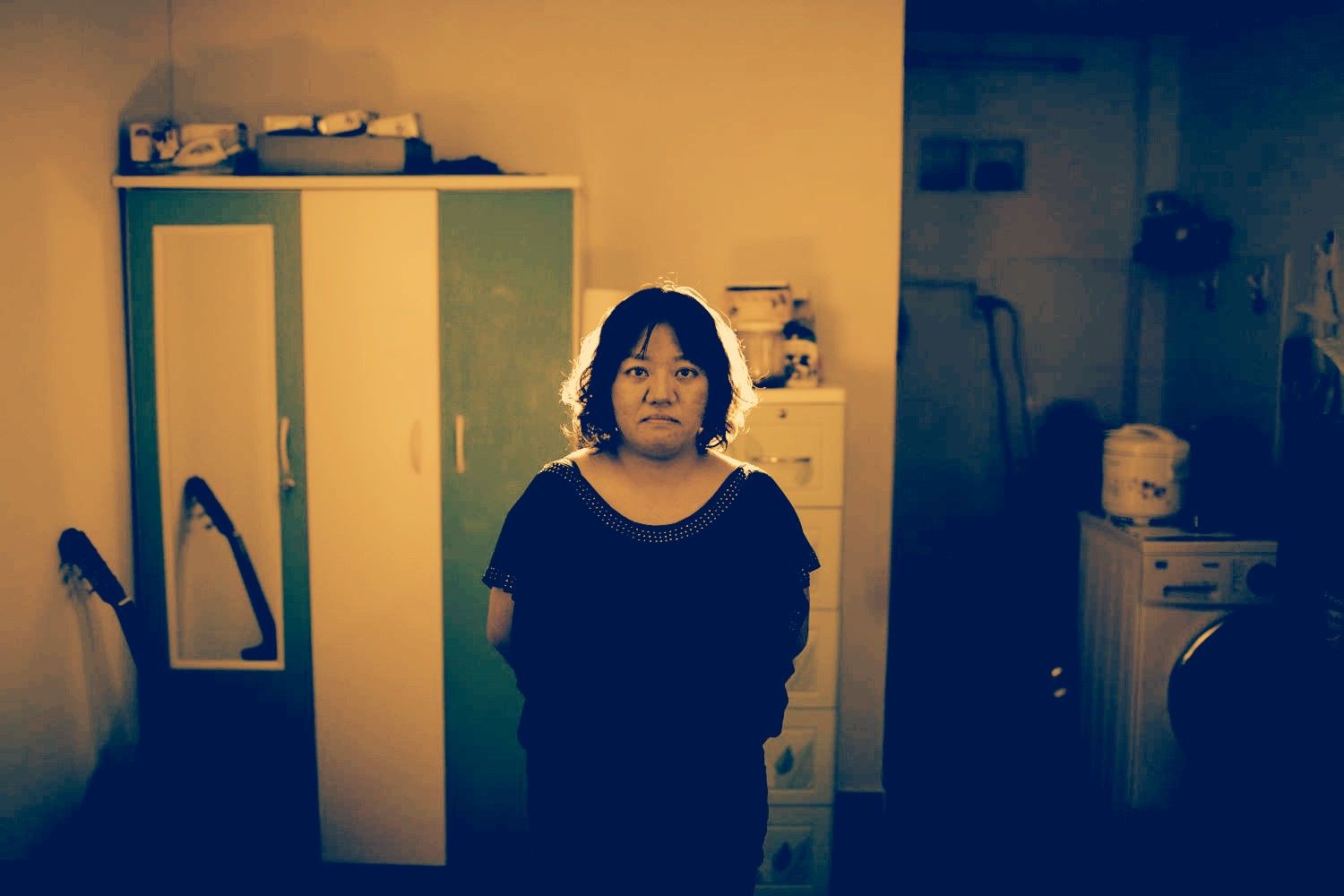
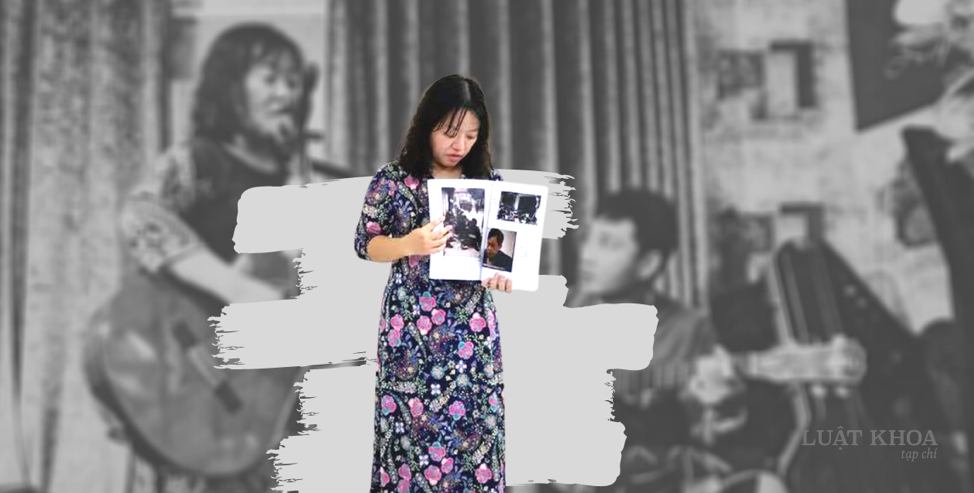
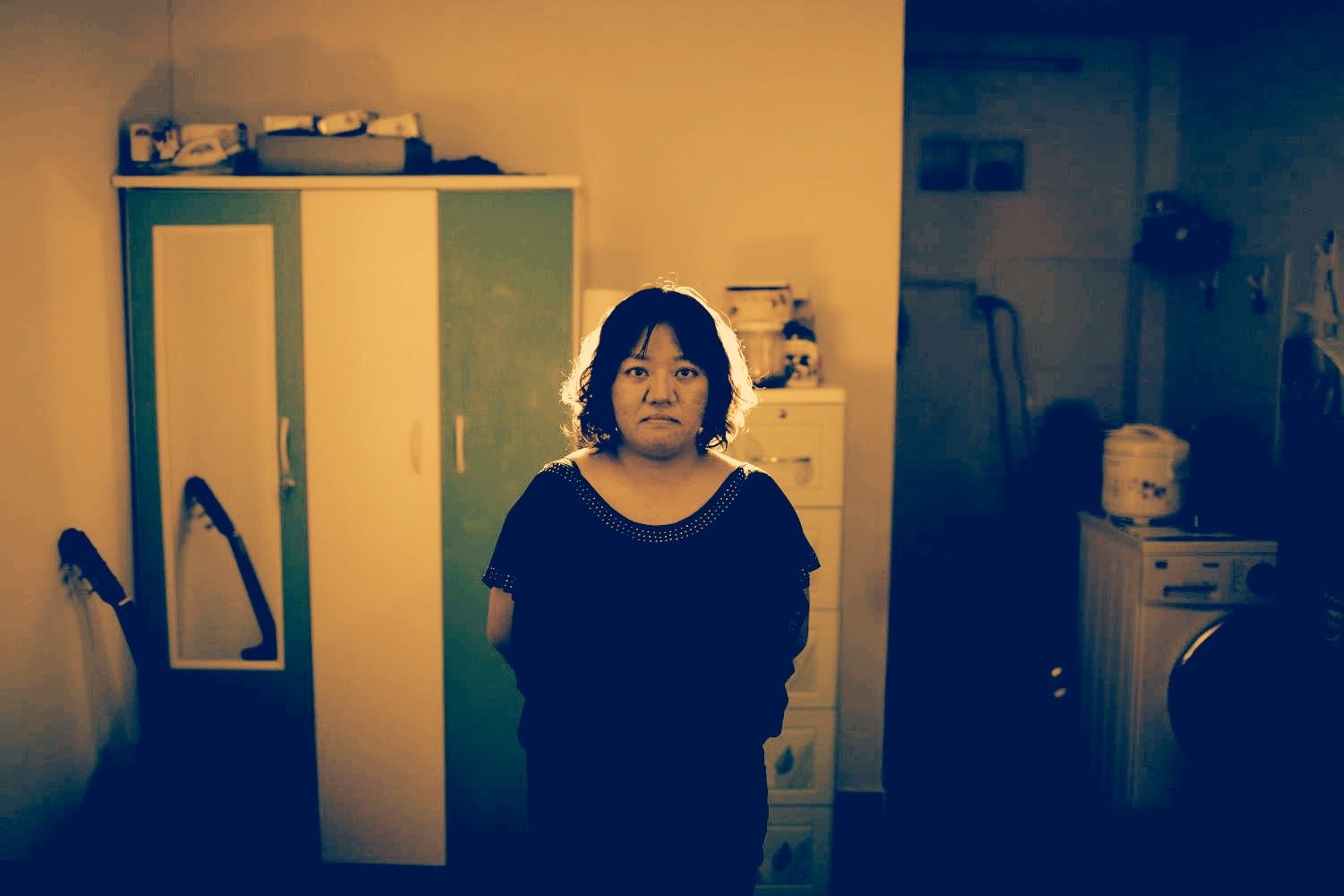
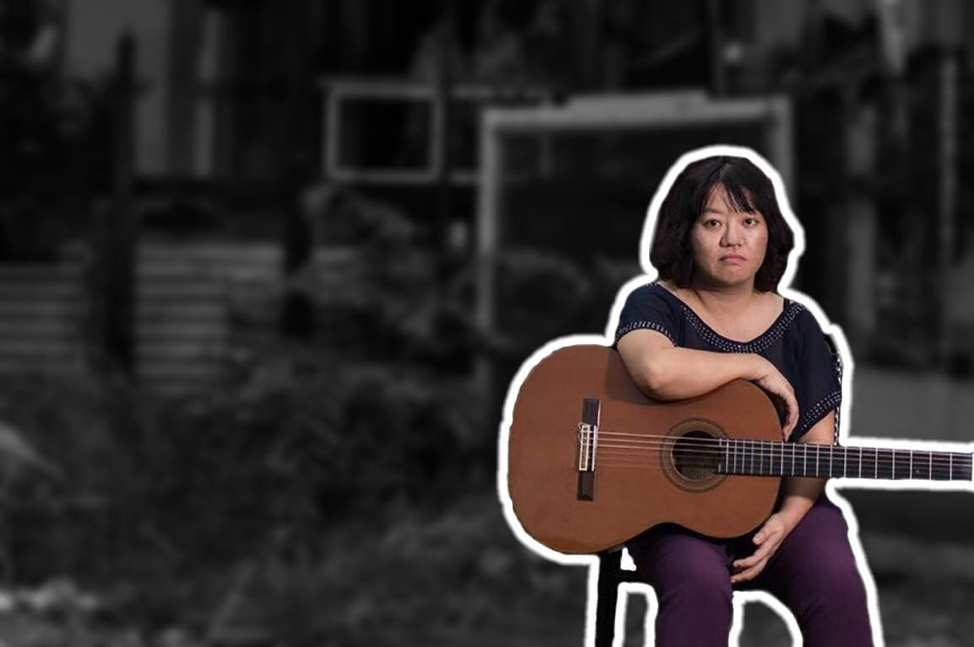
October 7, 2021 marks the first anniversary of the arrest of journalist Pham Doan Trang by the Vietnamese authorities. She was taken into custody that day and was subsequently charged with “conducting propaganda against the Socialist Republic of Vietnam” under Article 88 of 1999 Penal Code and “making, storing, spreading information, materials, items for the purpose of opposing the State of the Socialist Republic of Vietnam” under Article 117 of 2015 Penal Code.
(Previous reports say she was arrested near midnight of October 6, 2020.)
Since then, she has been held incommunicado. Neither family visitation nor legal representation is granted, her family and lawyer confirmed with LIV. In late August 2021, Hanoi’s Bureau of Security Investigation informed Doan Trang’s lawyer that the state’s investigation against her had concluded and that they had recommended a formal indictment based on Article 88, indicating that the Article 117 charge had been dropped. She now faces a possible 20-year prison sentence.
As a journalist, Pham Doan Trang has dedicated her career to documenting and shedding light on the many atrocities and human rights violations committed by the Vietnamese government, despite the constant threat to her life and safety. Her work has been appreciated by Vietnamese people inside and outside of Vietnam, and has granted her international acclaim. She has also helped bring the attention of the global community towards the abuses of the Vietnamese Communist Party.
Legal Initiatives for Vietnam, Luat Khoa Magazine, and The Vietnamese Magazine stand firm on our condemnation of the actions committed by the Vietnamese government against our co-founder, Pham Doan Trang. The constant harassment she faced from the state, coupled with her arrest and detention, are clear and blatant violations of her right to free speech. Likewise, they constitute a direct attack against the free press and independent unbiased journalism. In the words of our Co-director and Editor-in-Chief of The Vietnamese Magazine, Tran Quynh Vi, “A journalist should be allowed to report and a writer must be able to publish her books in every corner of this world. Journalism is not a crime and journalists should not be treated as criminals. The suppression of these basic human rights should be treated as a crime.”
We once again call on our friends and colleagues to demand the unconditional and immediate release of Pham Doan Trang, as well as the dropping of all bogus criminal charges lobbed against her. We will continue to push for what is right and just until she is given her freedom.
Turkey-based human rights lawyer Kurtulus Bastimar told VOA Vietnamese that he had submitted the case of Pham Doan Trang to the United Nations Working Group on Arbitrary Detention (UNWGAD) over the Vietnamese government’s arbitrary arrest of Doan Trang and its alleged violations of her freedom of speech and right to a fair trial.
According to Bastimar, the UNWGAD has accepted his legal submission and is expected to announce an official ruling this September.
Pham Doan Trang was arrested in October last year and subsequently charged under Article 88 of the 1999 Penal Code and Article 117 of the 2015 Penal Code.
COVID-19 situation in Vietnam: Prolonged lockdown brings social and economic costs to Vietnam
Quick take: As of September 19, 2021, Vietnam has recorded over 677,000 confirmed COVID-19 cases, with nearly 17,000 fatalities. Only under 7 percent of the country’s population has been fully vaccinated.
Ho Chi Minh City risks social and economic costs as COVID-19 lockdown is extended until the end of September, reports Nikkei Asia: “The city has failed to meet the criteria for lifting the lockdown. The two-week average of new daily cases must drop continuously from the prior two weeks and be lower than half of the infections in the week with the highest COVID-19 caseload. But new cases have remained around 5,000 to 6,000 over the past few days.”
Major retailers rethink Vietnam as a manufacturing hub over prolonged coronavirus restrictions, writes CNBC: “The obstacles in Vietnam join a litany of other supply chain troubles, ranging from a shortage of cargo shipping containers to backlogged ports and a limited number of truck drivers. Some companies that moved their manufacturing out of China and into Vietnam in the past few years — in a bid to diversify their supply chains and avoid tariffs — have gone as far as to say they are bringing production back to China.”
Vietnamese migrant workers were found hiding in a freezer truck as they tried to return home from Ho Chi Minh City, reports VnExpress: “Fifteen people were found hiding inside a refrigerated truck at a Covid-19 checkpoint in the south-central Binh Thuan Province on Sunday. The 15 passengers, who all had negative coronavirus test certificates, claimed they did not know they would be transported in a refrigerated truck.”
Vietnam approves the Cuban-made Abdala vaccine for use as it is battling its worst COVID-19 outbreak, reports Reuters. The approval of Abdala, which becomes the eighth COVID-19 vaccine approved for use in Vietnam, comes amid the country’s low vaccination rates and its urgent need for coronavirus vaccinations. The vaccine approval announcement came hours after Vietnamese President Nguyen Xuan Phuc left Hanoi for an official visit to Havana.
Donations of vaccines and medical equipment to arrive in Vietnam: On September 16, Vietnam received more than 850,000 doses of the AstraZeneca vaccine donated by Germany via the COVAX Initiative. On the same day, the Japanese Ministry of Foreign Affairs also announcedthat Japan would provide Vietnam with personal protective equipment to help the country fight against the COVID-19 pandemic.
Ho Chi Minh City introduces “green pass” certificates for vaccinated citizens, aiming to boost vaccination rates and foster economic recovery, reports VnExpress: “The passes, valid for six months, were expected to allow holders to undertake certain activities without normal coronavirus restrictions, like domestic and international travel and participating in public events.”
Vietnamese president to seek allies against COVID-19 during U.S. visit for the U.N. General Assembly session
According to Vietnam’s Foreign Ministry, Vietnamese President Nguyen Xuan Phuc will pay an official visit to Cuba from September 18 to September 20 before arriving in New York to attend the 76th session of the United Nations General Assembly. He will be in the United States from September 21 to September 24.
The global battle against COVID-19 is expected to be a top priority issue during Phuc’s trip as he will meet with other leaders in New York to discuss ways of controlling the pandemic and speeding up economic recovery, said Vietnam’s Deputy Minister of Foreign Affairs Dang Hoang Giang.
This will be the first U.S. visit by a Vietnamese leader since the country’s 13th National Party Congress in late January.
World Bank report: Climate change could trigger a migration influx of 216 million people, including migrants from Vietnam’s Mekong Delta region
“Such movements will put significant stress on both sending and receiving areas, straining cities and urban centers and jeopardizing development gains, the report said.
For instance, the sea-level rise threatens rice production, aquaculture, and fisheries, which could create an out-migration hotspot in Vietnam’s low-lying Mekong Delta. But the Red River Delta and central coast region, where those people are likely to flee, face their own threats, including severe storms.”
“With two-thirds of the country’s nearly 100 million born after the Vietnam War, Vietnamese youth account for a quarter of the total population. It is those people who are the bedrock of public opinion, a fact corroborated by various polls indicating an unwavering favorability among Vietnamese toward the U.S.”
“While Kishi’s visit had been postponed from an earlier date due to COVID-19, the fact that it lined up so perfectly with Wang’s visit offered a textbook display of Vietnam’s foreign policy approach, born from its fraught history of relations with China, which since the end of the Cold War has been based on an approach of establishing good relations with as many nations as possible in order to maximize its strategic room for maneuver.”
The Diplomat/ Prashanth Parameswaran/ September 13
“Japan-Vietnam defense relations have seen their fair share of advances in recent years. Apart from shared concerns in areas ranging from the cyber domain to aspects of China’s behavior, this is aligned with the broader objectives of both countries, with Vietnam strengthening ties with a range of powers as part of its omnidirectional foreign policy and Japan boosting ties with Southeast Asian countries and ASEAN as a whole as part of its own Indo-Pacific vision. That has continued over the past few months, headlined by Prime Minister Suga Yoshihide’s visit to Vietnam last October.”
The case of journalist Pham Doan Trang: Investigation process completed, leading to her indictment
On Aug 26, 2021, Hanoi Police announced that they had completed the investigations into Pham Doan Trang on the allegation of “spreading information against the State.” The government is now allowing lawyers to defend her for the first time since she was arrested last October.
Last year, on October 6, Pham Doan Trang was arrested by Vietnamese state security and she was subsequently charged with “conducting propaganda against the Socialist Republic of Vietnam” under Article 88 of the 1999 Penal Code and “making, storing, spreading information, materials, items for the purpose of opposing the State of the Socialist Republic of Vietnam” under Article 117 of the 2015 Penal Code. Since then, Trang has been held incommunicado and denied visits from her family and lawyers.
Trinh Huu Long, a personal representative of Pham Doan Trang, claimedthat her arrest was “completely unconstitutional, [and] in violation of the law.” Pham Doan Trang is a prominent journalist and democracy activist, famously known for her political books written for general readers and articles with sharp criticisms against Vietnam’s Communist government. “The authorities would do better to respect Doan Trang’s work rather than punish her,” Long concluded.
Pham Doan Trang could face up to 20 years in prison if found guilty.
Vietnamese police disguised as health workers arrest a dissident blogger
On Aug 30, Vietnamese police arrested Bui Van Thuan, a dissident Facebook user, for criticizing the government in his online posts, especially his comments on the Dong Tam land dispute incident.
After cutting power to Thuan’s house in Nghi Son Town, Thanh Hoa Province, police officers, disguised as medical workers, asked his wife to let them in to take a health statement. “They said they were in a hurry and urged me to open the door quickly so that they could go to see others, so I invited them to come into the living room,” Thuan’s wife, Trinh Thi Nhung, said.
After getting into the house, a male officer “broke into the bedroom and restrained and handcuffed my husband just as he had woken up and was about to come out,” she said. The police then carried out a search of the house, handcuffing both the blogger and his wife, and confisticating a jar of lime-flavored honey, despite opposition from the family, and a copy of “The Handbook for Families of Prisoners” published by Pham Doan Trang as they left, according to Nhung.
Thuan was later formally prosecuted for “storing publications and materials against the Socialist Republic of Vietnam under Article 117 of Vietnam’s Criminal Code,” according to police documents reviewed by VOA. His arrest came just after the U.S. Vice President Kamala Harris’ visit to Vietnam, where she raised concerns about human rights issues.
Last year, when the dissident blogger was interviewed by the Los Angeles Times, he expressed concerns about Facebook’s compliance with Vietnamese authorities to suppress free speech by suspending dissidents’ accounts and censoring critical voices against the government.
Australia continues to urge Vietnam to release Vietnamese-Australian political prisoner Chau Van Kham
On Aug 30, Australian Minister for Foreign Affairs Marise Payne sent a letter to MP Chris Hayes, advocating for the release of political prisoner Chau Van Kham.
Chau Van Kham was arrested in Jan 2019 in Ho Chi Minh City; he was later sentenced to 12 years in prison for alleged “terrorist activities against the People’s government.” Kham is a member of Viet Tan, a democracy and human rights organization regarded as a “terrorist group” by the Vietnamese government. However, the United Nations considers Viet Tan a “peaceful organization advocating for democratic reform.”
Meanwhile, Chau Van Kham’s family has spent more than two years advocating for his vaccination against COVID-19 once it is made available as the coronavirus situation began to deteriorate in Vietnam, especially with recent outbreaks in many prisons. “My husband is 72 years old, it’s easy for him to get COVID and die there. That’s why I want a vaccine for my husband,” said Trang Chau, his wife.
He was not among those released under an amnesty annually granted on Vietnamese Independence day on September 2.
COVID-19 situation in Vietnam
Quick take: Vietnam has recorded over 520,000 confirmed COVID-19 cases with more than 13,000 deaths. Fully vaccinated people only account for under 3 percent of the country’s population.
Vietnamese Prime Minister Pham Minh Chinh warns of a lengthy battle against COVID-19, reports Reuters. “We cannot resort to quarantine and lockdown measures forever, as it will cause difficulty for the people and the economy,” he said during a meeting with an antivirus committee last Wednesday. The highly transmissive Delta variant has shattered Vietnam’s early success in containing COVID-19 infections.
Ho Chi Minh City, Vietnam’s coronavirus epicenter, is considering a plan to reopen its economic activities from September 15, shifting from the “zero COVID-19” strategy to “living with the virus” policy, reports Reuters. The city has been gripped by a recent sharp rise of coronavirus infections and has remained under stringent lockdown since. So far, half of Vietnam’s confirmed cases, and 80 percent of its fatalities, have been recorded in Ho Chi Minh City.
Vietnam ranked bottom in Nikkei Asia’s Covid Recovery Index, mostly due to the country’s surge in COVID-19 cases, slow vaccination rates and rigid social distancing measures, which caused disruptions in the supply chain. The Nikkei chart ranks more than 120 countries and regions around the world on the assessment of infection management, vaccine rollouts and social mobility. This is the second time Vietnam is listed at the bottom.
Hanoi will send over 1,200 city residents from its largest COVID-19 cluster to a centralized quarantine facility on the city’s outskirts, reports VnExpress. The affected neighborhood, which is located in Thanh Xuan District, has reported more than 300 coronavirus cases since August 23. At the same time, Hanoi authorities are also set to extend lockdown measures until September 21, while maintaining strict COVID-19 restrictions in high risk areas.
Vietnam to receive an additional two million AstraZeneca vaccine doses, reports VnExpress: “Three batches of 2,016,460 AstraZeneca COVID-19 vaccine doses have arrived in Ho Chi Minh City this week. The batches, part of a 30 million dose contract between AstraZeneca and the Vietnam Vaccine JSC (VNVC), arrived on Tuesday and Wednesday.”
Ho Chi Minh City faces a food delivery crisis, reports Nikkei Asia: “The government-led delivery operation became overwhelmed during the first week, prompting the city to issue a written request to local supermarkets and online platforms to participate in delivery services. The move followed an announcement from the city on August 28, allowing as many as 25,000 shippers to join the delivery rollout. However, involving local businesses has done little to improve the situation.”
Ministry of Foreign Affairs spokeswoman makes statement on China’s revised Maritime Traffic Safety Law
On September 1, Ministry of Foreign Affairs spokeswoman Le Thi Thu Hang made a statement on China’s official enforcement of its revised Maritime Traffic Safety Law, reports state-run VietnamPlus: “Vietnam resolutely and persistently safeguards its sovereignty, sovereign rights and jurisdiction over its waters determined in line with the provisions of the 1982 UN Convention on the Law of the Sea (UNCLOS 1982),” said Hang.
On August 27, China’s Maritime Safety Administration announced that foreign vessels entering its “territorial waters,” which refers to its unlawful nine-dash line, must “report ship and cargo information to China’s maritime administrations,” according to the South China Morning Post (SCMP).
The revised Maritime Traffic Safety Law, which took effect on September 1, “comes amid escalating tension between China and rival claimants, as well as Western nations led by the US and its expanded military presence in the region,” writes the SCMP.
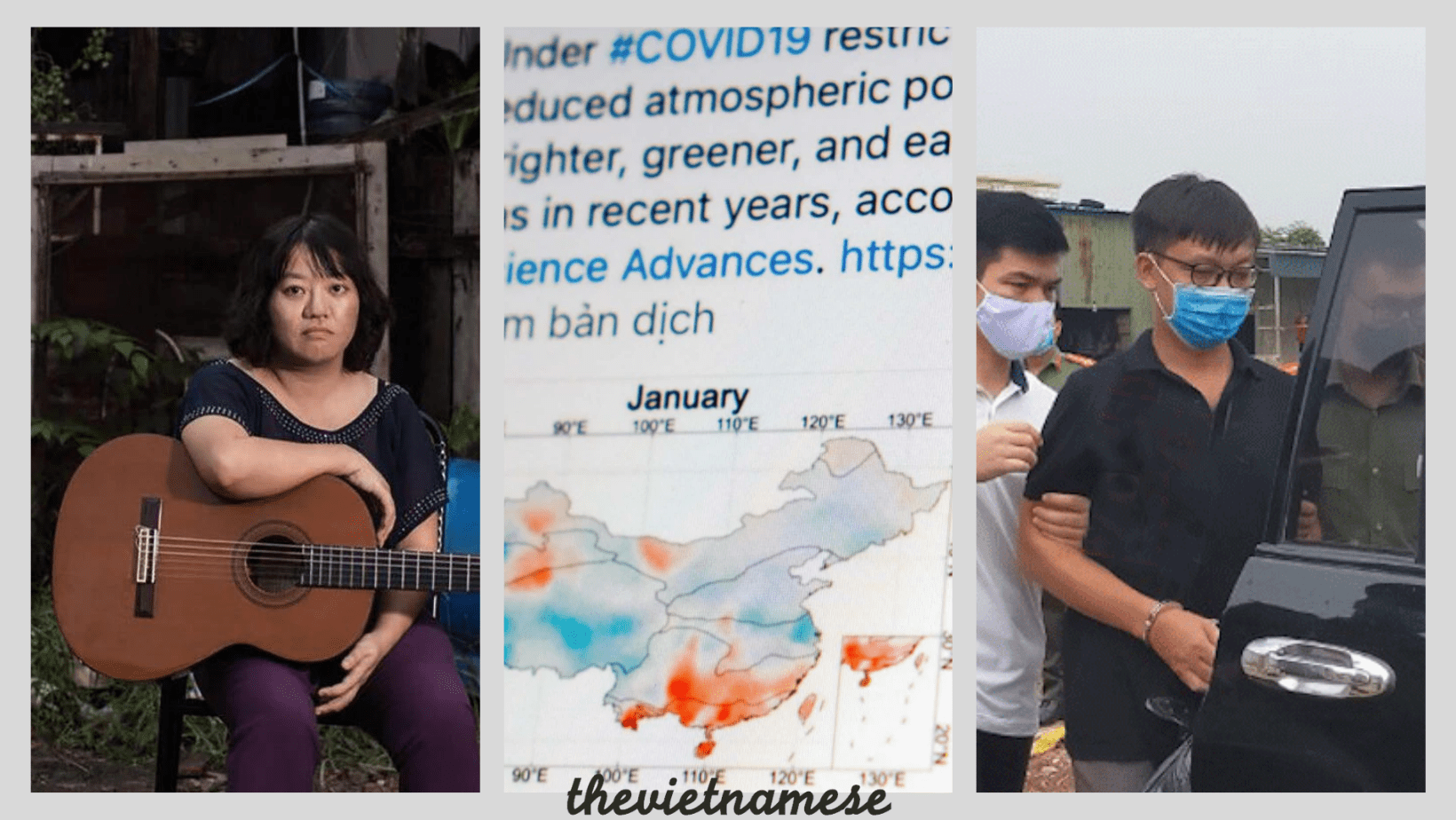
One day later, on August 28, Science Advances magazine took down a Facebook post of an attached scientific research showing China’s nine-dash line map after Vietnam’s social media users flooded its comment section with opposition and criticisms. Despite its effectiveness this time, the aggressive strategy utilized by Vietnamese social media users, or its “public opinion shapers,” has also been deployed to attack pro-democracy activists and foreign ambassadors’ social network accounts in Vietnam, particularly when they raise concerns about the country’s poor human rights record.
The Diplomat/ Le Vinh Trien and Kris Hartley/ September 1
“Anti-epidemic measures developed without collaboration fail to reflect the voices of diverse communities. When the political power among these communities is imbalanced, policy inconsistencies arise and a chain reaction emerges. Case counts rise as people resist restrictive behavior protocols, straining health care capacity and imperiling vulnerable groups. Ultimately, mixed messaging at the policy level widens the trust gap between government and citizens.”
“There is no moral equivalence between North Vietnamese forces and the Taliban. During World War II, the Viet Minh actually supported the United States and its allies by serving as the only Vietnamese force resisting Japan’s invasion of Indochina. This preamble for conflict hardly compares to the Taliban militia, which massacred minority Hazara communities and forced Hindus to carry yellow badges to set them apart from Afghan Muslims—like Jews in Nazi Germany.”
“The Afghans solved their problem by valiantly fighting the Soviet Union forces that invaded their country, and the Vietnamese benefited from the eventual dissolution of the USSR. Little to none of the economic reform that made Vietnam’s economy a vibrant one would likely have happened had the Soviet Union still been around.”
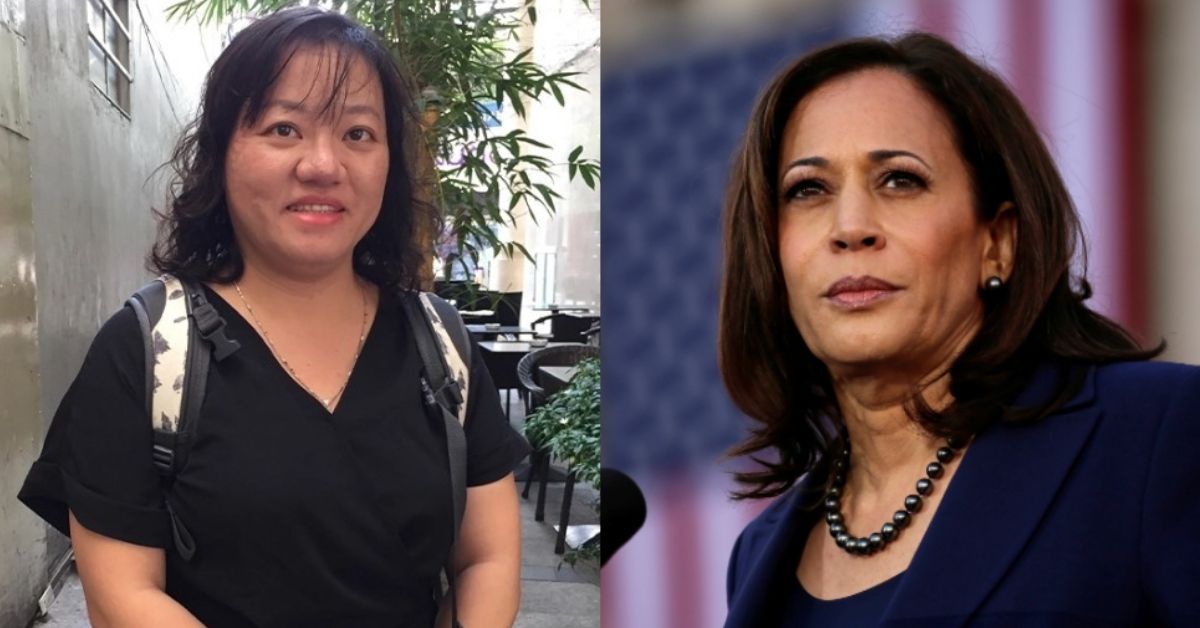
While in Vietnam, Vice President Kamala Harris has significant leverage to make a change: free one of the most prominent journalists and democracy activists in the country.
For the Vietnamese Communist Party, political prisoners are bargaining chips in international negotiations. They sell their own citizens to gain a trade deal or a more favorable security treaty. That’s because they know human rights are the soft spot of major powers, such as the United States and the European Union.
Thus, they release political prisoners in exchange for economic and political gains. The problem is the prisoners are released conditionally: they are expelled from the country. Most of them settle in the United States.
But journalist Pham Doan Trang, one of Vietnam’s most respected journalists, is a different case. Unlike other political prisoners, she has not been indicted or convicted yet; she is a detainee under investigation and still has a chance to be released in Vietnam.
Once the police have determined that an accused person did commit a crime, there is absolutely no way that person can avoid conviction and sentencing. The only option left is to negotiate a settlement in another country, as had happened with some other political prisoners.
Of course, the investigators have now gathered more than enough evidence to make a case against Trang and put her away for up to 20 years. Chances are, the Communist Party has not decided yet on how to move forward with her case to maximize its own interests. All options are still on the table.
Doan Trang has insisted that she doesn’t want to leave the country until it becomes a democracy. As a close friend and colleague of hers for over a decade, I know how painful it is for her to be forced out of her only home, her beloved Vietnam.
As one of the most prominent and talented journalists and democracy activists in Vietnam since the end of the Vietnam War in 1975, she has always aimed at breaking down the censorship curtain that puts the country at the bottom of Reporters Without Borders’ Press Freedom Index. Her writings and activism include various samizdat political books, two independent magazines (Luat Khoa and The Vietnamese), many protest movements, and international advocacy campaigns.
As a result, she was awarded the Homo Homini Prize from People in Need (Czech Republic) in 2017 and the Press Freedom Award by Reporters Without Borders (France) in 2019. But more importantly, Doan Trang’s way of working and living inspires other Vietnamese to stand up for their rights and a better, kinder country.
No authoritarian regime would tolerate her. After years of cat-and-mouse games with the authorities, and many physical assaults, the police have detained Doan Trang since October 7, 2020, charging her with spreading propaganda against the state. The criminal provision has been widely condemned by human rights groups as a way the government silences critics – a clear violation of free speech protected by the Constitution and legally binding international treaties.
Doan Trang was on her way to meet then-president Barack Obama in May 2016 in Hanoi before the police kidnapped her and detained her for the rest of the day. Vice President Harris may not be able to meet Trang in the detention center, but she can surely do a lot to free her in Vietnam.
The trade relations, especially the semiconductor supply chain and strategic partnership are believed to be the reasons Vice President Harris is paying a visit to Vietnam.
In such circumstances, I believe that the United States, and Vice President Harris, in particular, have an excellent chance to push for Doan Trang’s release right in Vietnam while the case is still undecided. And there is a precedent for that.
In June 2007, Vietnam released attorney and democracy advocate Le Quoc Quan after three months of temporary detention and two days before Chairman Nguyen Minh Triet visited the United States. Attorney Le Quoc Quan had not been indicted yet, and a major reason he was freed was a mountain of pressure from the United States government and civil society, such as the National Endowment for Democracy, where Quan did a fellowship before his return to Vietnam.
It is now urgent to push for Doan Trang’s release, before it’s too late.
Legal Initiatives for Vietnam (LIV), a non-profit, non-partisan organization that works to build a truly democratic society in Vietnam through independent journalism, research, and education, released an open letter on August 21, 2021, addressed to the office of the United States Vice President, Kamala Harris.
On October 6, 2020, at 11:30 pm, Pham Doan Trang was arrested by Vietnamese state forces. She was subsequently charged with violating Article 88 of the 1999 Penal Code by “conducting propaganda against the Socialist Republic of Vietnam” and Article 117 of the 2015 Penal Code for “making, storing, spreading information, materials, items for the purpose of opposing the State of the Socialist Republic of Vietnam.”
Following her abduction, she has “been held incommunicado, denied visitation from her family and her lawyers, and she faces up to 20 years of imprisonment.”
Through their open letter, LIV hopes that Vice President Kamala Harris can help push the current state of Vietnamese media towards a freer and more inclusive environment where no journalist needs to fear oppression by their government.
This op-ed article was written in Vietnamese by Trinh Huu Long and was previously published in the Luat Khoa Magazine on October 10, 2020.
Every time an activist is arrested, several campaigns for his or her release emerge in response to the government’s persecution of human rights. This method is the oldest, most common, and most familiar form the common citizenry uses to call for justice.
I have been a part of those movements and have even organized several campaigns many times in the past nine years.
Yet, despite everything, I constantly ask myself if these calls to action actually do any good? “How long am I going to do this,” I ask myself, “and are there any benefits to this or not?” These are just some of the questions that constantly linger in the back of my mind.
Most likely, those arrested will remain in prison; their sentence will be upheld. In fact, the length of the individual’s imprisonment might even be made longer. Despite all our work, more and more people are still being incarcerated. There has been no change in our laws or institutions, despite all our efforts at home and abroad.
And even if we’re blessed with the smallest amount of luck, those arrested are granted asylum in another country, defeating the primary purpose of our campaigns.
Pham Doan Trang, imprisoned activist, blogger, journalist, and co-founder of The Vietnamese and Luat Khoa online magazines has put some of my concerns to rest.
“I do not need my own freedom; I need something much more significant than that: freedom and democracy for the whole of Vietnam,” she wrote in a letter on May 27, 2019, her 41st birthday, and while she was on the run from the police. “This goal sounds grandiose and far-fetched, but reaching it is actually possible with everyone’s help.”
Doan Trang wanted this letter to be released to the public only when she was indeed convicted and not when she was merely detained. Eventually, she was arrested and now faces a sentence of up to 20 years in prison.
If Doan Trang merely wanted freedom for herself, she had at least two opportunities to attain this in the past.
The first was after her nine-day criminal detention in 2009. If she was obedient and ceased all her activities regarding sensitive topics and cut all her ties with social elements deemed “anti-state,” she would have continued to live a safe and full life.
The second was when she studied in the United States and could have chosen a path towards residency or citizenship. In fact, at least three agencies and organizations wanted to sponsor her permanent stay in America.
So, why did Doan Trang choose to return to her homeland? It is because she understands that her freedom means nothing compared to the whole of Vietnam. Vietnam needs people to step up and work for the freedom of everyone.
Such a concept is simple and easy to understand, yet making it a reality is challenging to attain.
Doan Trang could have chosen to contribute to Vietnam’s fight from the outside as many others, including myself, are doing. Yet, she chose the most complex, most painful, and most difficult way to contribute to the cause. She returned home and faced the problem head-on. She published various works, wrote books, and even taught about democracy and freedom right in front of the police.
Doan Trang often told me that the best way to fight is to be an example, to be an inspiration for others to do the same. Only then can we, as a society, start to see what democracy, human rights, and the rule of law look like in reality. Words without actions are meaningless.
Sadly, I do not know how successful Doan Trang’s efforts have been, nor how many lives have been touched by her words and deeds. But regarding her arrest in October 2020, I would like to say this.
Activists have a saying called “sharing fire,” which means sharing the tasks and responsibilities of dangerous activities with many people to reduce individual risk. Sometimes we coordinate with each other, but more often than not this is not the case; people passively participate in this phenomenon without discussing plans in advance.
What if the deeds Doan Trang had done in the past five years were divided among five or 10 people, would she still have been arrested? More recently, if she had not produced the two Dong Tam reports, would she be in jail right now?
She often told me that these things are not difficult to accomplish and that there are many people who share similar ideas with her. If so, why are there so few people standing up for what is right? Granted, some people do, and Doan Trang was one of them. Yet because of inaction, apathy, or fear, she and the handful of brave, noble souls like her shoulder the entire risk.
Many of them will go to jail, while those who are content to watch from the sidelines will get angry again. They will once again clamor for the release and freedom of those imprisoned. But in the end, nothing gets done. Rinse and repeat.
Will we Vietnamese forever play the same old games with the government? Will we continue to sheepishly and ineffectively demand the release of our friends? Then, when nothing gets done, will we once again forget and return to the tolerated normalcy of life in this great prison that the government has made?
Things will be different if more people actively do their part to create social change, just like Doan Trang. Doing so has two advantages.
The first is to “share the fire” with those still fighting to reduce their risk and limit their chance of getting captured. Government resources are limited, and they can only invest in monitoring and controlling a few people.
Those outside Vietnam can do their part as well. For instance, to write something similar to the Dong Tam Report, we just need to collect data on the internet and conduct interviews online or through the phone. It is not necessary to live in Vietnam physically to accomplish these tasks.
The second is to normalize press freedom, independent publishing, and political activities considered “sensitive.”
When these activities become commonplace, the government will be forced to accept them. This was observed in the past when private businesses were considered illegal. Nonetheless, they continued to operate, and gradually the government had to admit that these establishments were a fundamental component of the country’s economy. Since 1986, the state no longer considers owning a private business a criminal offense.
For me, the best way to help Doan Trang and people like her is to play a more active role. Eventually, everyone will benefit when the political space expands. No one will ever be arrested or imprisoned again for writing or publishing books. I will no longer have to clamor for one person’s freedom every single time someone gets arrested. I will finally be able to rest.
Calls for Freedom are good, but they are often not enough. We should release ourselves from the shackles of fear, apathy, and apprehension to actively fight for progress and change.
Doan Trang has completed her mission and the responsibility now falls on our shoulders. Even if she were to be released tomorrow, even if she chooses to stay in Vietnam or decided to leave, the fight continues in each one of us.
And if you love Doan Trang, I implore you to do what she would have done.
This article was written in Vietnamese by Y Chan and previously published in the Luat Khoa Magazine on February 2, 2021.
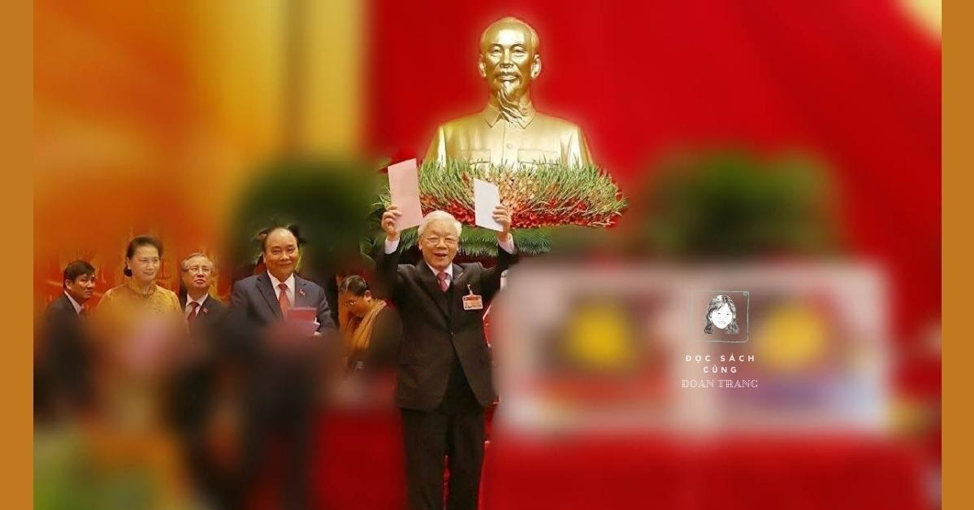
The 13th Party Congress ended in Vietnam in February 2021, and the list of the country’s top leaders has finally been leaked after many attempts to keep this information “top secret.”
Yet, despite the confidentiality and mystique surrounding this event, the identities of Vietnam’s new leaders did not catch anyone by surprise because they were also of no particular interest to the ordinary Vietnamese citizen.
The names of Vietnam’s top four leaders are Nguyen Phu Trong, Nguyen Xuan Phuc, Pham Minh Chinh, and Vuong Dinh Hue.
The rumors also stated that Nguyen Phu Trong would continue to be the general secretary of the Vietnamese Communist Party (VCP). Nguyen Xuan Phuc would be the president of Vietnam. Pham Minh Chinh would be the prime minister, and Vuong Dinh Hue would be the chairperson of the National Assembly. In April 2021, more than a month before the general election of Vietnam, the VCP also announced these top leaders with the same positions that the rumors had spread.
Knowing the country’s top leaders before they could even vote, it is not a surprise that Vietnamese citizens have been more interested in the US presidential elections than their own.
Why is this bizarre phenomenon the case in Vietnam?
The answer lies in the state governance model of a diarchy that restricts Vietnamese citizen representation in government and eliminates all hope of participating in governance.
In Machinery of the Government, which is in Part VI of the book Politics for the Common People by Pham Doan Trang, the meaning of this phenomenon is fully explained.
The 1st Rule: The Party Controls the State; the State is in the Party’s Hands
Part VI begins by explaining the roles, functions, and nature of the three fundamental branches of government in detail.
Doan Trang introduces the models and activities of the legislative, executive, and judiciary arms of countries worldwide. At the end of each section, the author references the situation in Vietnam.
Readers can see that while the tripartite branches of government in democratic institutions are designed according to the principle of independence limited by checks and balances, the Vietnamese model is the exact opposite.
In the legislative branch, we have the National Assembly. In principle, this body is supposed to be the people’s representation, with its members directly chosen by Vietnamese citizens. The National Assembly is supposedly responsible for making laws in accordance with the desires of the people.
To fulfill this function, the National Assembly needs to truly reflect what the people want, with each delegate acting on behalf of the Vietnamese public.
In reality, Doan Trang wrote, “at least 95% of the members of the National Assembly belong to the Communist Party.” The few remaining delegates, she continued, “may not be party members at the time of the election, but they may be admitted to the Communist Party in the future, and they are sympathizers of the VCP.”
With this structure, she concluded that the National Assembly of Vietnam has “deficient actual representation and does not stand for the people at all.” More than that, in effect, the National Assembly’s “ability to supervise and control the executive branch is almost non-existent.”
In terms of legislation, “since the beginning, the law-making program was based on … the undertakings of the VCP, not on the needs of the people.” In other words, according to Doan Trang, “making laws is only meant to actualize the resolutions of the VCP.”
In the executive branch, aside from the head of state and the head of government, the real “big boss” is the man who holds the title of general secretary of the VCP. The general secretary is the “biggest boss” in Vietnam because he controls the VCP.
Pham Doan Trang described Le Duan, the person who is considered the most powerful general secretary of the VCP. She wrote, “he was not the head of state, nor the head of government. He was just a one-party leader, yet for generations, this general secretary had the power to command the entire political system, in effect, making both the president and the prime minister of Vietnam fade into obscurity from 1976 to his death, 1986.”
The general secretary is not elected publicly, and his identity is even kept secret until the last minute, even though everyone already suspects who will hold the position.
The judiciary branch “has the function of interpreting the law and on that basis, has the responsibility of adjudicating and resolving legal disputes,” Doan Trang wrote in her book. To perform this function well, agencies in the judiciary must be neutral and independent. But this is not the case in Vietnam.
“In Vietnam, the judge must also be a member of the Communist Party,” writes Doan Trang. Yet, you will not find this in any legal document; it is an unwritten law.”
In summary, as Pham Doan Trang has observed, “Vietnam’s political system seems parliamentary in that it has a president who is not the head of government, and the members of the previous government are selected from Congress and appointed by them as well, with Congress being the most powerful body. However, the Vietnamese political system has a distinct characteristic that sets it apart from other parliamentary regimes: it is a one-party system, and the VCP is central to all three branches of government.”
The 2nd Rule: The Military Controls the Government; the Government in the hands of the Military
“Military” is the term used to refer to the armed forces and police of Vietnam.
Doan Trang dedicates chapter VIII of part VI in her book to a discussion of these two forces.
Accordingly, “the military and the police play a crucial role because they deal with national sovereignty. […] Briefly, it can say that the police safeguard domestic sovereignty, and the military protects national sovereignty. Without them, these two important components of a country are impossible to retain. Hence, both the military and the police are essential for every independent nation.”
Doan Trang says that the most critical feature of these forces is “their monopoly and use of weapons and force.”
“In any country, the military and police are assumed to be the only two forces in society that have the right to use weapons and force when necessary,” she writes. “Society assumes that they have the legitimacy to use weapons and violence.”
“Because of this, there is always a tendency for both the military and police to abuse their power.”
The military can build a regime, defend it, or even overthrow it. At the same time, it can also use its power to become the government itself. In a similar vein, Doan Trang also wrote that the police “could dominate the government, intervene in and control the course of policies, monitor every aspect of civilian life, and create a police state or a police government.”
Democratic countries often take a liberal approach to control this potential problem.
Accordingly, Doan Trang concluded that “the constitution and laws of a country must ensure that the military is completely neutral, non-political, or out of politics, and that the military system is under the leadership of the civilian government.”
The military, in this case, she emphasized, “must be loyal to the nation and not to any party or government.” In liberal democracies, this is the way of ensuring that their citizens remain free without the risk of militarization or abuse by state forces.
The criterion for selecting the US secretary of defense is an illustrative example of this approach. Accordingly, the head of the military must be a civilian and not a person serving in any armed forces.
If the person nominated for this position has served in the military, he or she must leave the military beforehand and have been a civilian for at least seven years. In American history, there have been three exceptions to this rule.
The most recent example is that of current US Secretary of Defense Lloyd Austin of President Joe Biden’s administration. Retired General Austin was only out of the service for four years when he was appointed. General James Mattis, who served in this same position in former President Donald Trump’s administration, also had been retired for just four years when he was appointed.
In these specific cases, US lawmakers unanimously agreed that these appointments should not be seen as a precedent to change this already established rule.
In contrast, Vietnam and other communist states such as China and North Korea address this issue differently.
Doan Trang wrote in her book that these countries aim to bring about “the radical politicization of the military, towards allowing the ruling party’s ideology to penetrate the army fully.”
From “instead of loyalty to the nation, the people, and the constitution,” the military is asked to “be loyal to the ruling party and its ideology.”
This approach is accomplished by (1) “granting special privileges to the military and the police, especially the officer ruling class,” (2) “fiercely propagating the ruling party’s ideology within the armed forces,” and (3) “punishing, eliminating, and destroying dissident elements within state forces, while rewarding soldiers who are loyal to the Party.”
This penetration makes the armed forces a powerful tool of the Party in ruling the country. Every aspect of the nation, from security and defense to economic development, culture, and education, every single one has the fingerprints of the military or the police all over them.
As a result, people can no longer distinguish between the military, the police, and the civilian government.
***
The US Supreme Court once stated that the military is a “special society” separate from civilian life, with its own rules, disciplines, and traditions.
The laws and regulations of the military are often incompatible with civil society, but the existence of the military allows for the continuation of everyday life.
However, most people in democratic states are aware that the armed forces should never overwhelm civil society. In communist states where the army governs the people, the nation will inevitably drift towards authoritarianism.
Those in power rely on the armed forces to rule and control the people.
If in the past, Vietnam had the Trung sisters, who helped regain freedom for the people and became queens who ruled together, then today we have a regime of diarchy that restricts the people’s right to proper representation in the government and inhibits them from questioning the power of the ruling party.
The party controls the state, and the state is in the party’s hands. The army controls the government, and the government is also in the hands of the military.
This is why the secret of the party’s leadership is unsurprising to any citizen of Vietnam because the VCP and its general secretary still rule the country today.
On April 7, 2021, Reporters Without Borders (RSF) released a press statement condemning the arrest of jailed Vietnamese journalist Pham Doan Trang.
Phan Doan Trang, co-founder and editor of the online magazines The Vietnamese and Luât Khoa, and a recipient of the 2019 RSF Press Freedom Prize for Impact, was arrested at her home on the night of October 6, 2020. She was taken away by plainclothes policemen and has not been heard from since She has been denied access to a lawyer and her family has also been unable to contact her. Currently, she faces up to 20 years in prison under Article 117 of the Vietnamese Penal Code, under the charge of engaging in “anti-state propaganda”.
Daniel Bastard, the head of RSF’s Asia-Pacific desk, says: “The Vietnamese Communist Party’s current leadership… needs to understand that history will hold them to account for the crackdown on press freedom …. They can save face by freeing Pham Doan Trang and all of the other unjustly detained journalists.”
This is not the first time RSF has demanded her release. On October 7, 2020, just one day after her arrest, it published its first statement which echoes much of the same sentiments here. It has also launched an international awareness campaign to fight for her cause.
Support from Other RSF Laureates
Several other RSF awardees have called for Phan Doan Trang’s immediate and unconditional release. They have also released several videos in various social media outlets to show their support for her, and to help bring this situation to the attention of the international community.
Tomasz Piatek, a Polish journalist and an RSF prize recipient in 2017, addressed Vietnam’s leaders:, “I am asking you to release my friend from prison immediately and stop harassing and tormenting her for writing the truth. If you want to present yourself to the world as politicians and leaders of the Socialist Republic of Vietnam, you must immediately stop harassing your citizens and give your citizens the right to the truth.”
Swati Chaturvedi, an Indian journalist and Reporters Without Borders prize awardee in 2018, said, “RSF stands for the fight of all journalists. Please help and speak out for my colleague, my Vietnamese colleague Pham Doan Trang right now.”
Can Dündar, a Turkish journalist, documentary filmmaker and 2016 RSF laureate, similarly asked that the Vietnamese authorities release Phan Doan Trang and to respect the freedom of the media.
Inday Espina-Varona, a Filipina journalist and awardee of RSF’s Prize for Independence in 2018, stated that Pham Doan Trang “has been charged with disseminating information that opposed the state of Vietnam… [it is] every journalist and citizen’s obligation to criticise and when necessary to oppose policies and actions inimical to the welfare and rights of people… it is also the duty of journalists and citizens wherever we are in the world to stand up when those who seek to do the right thing are battered for their efforts.”
Statement from the Publication:
The Vietnamese joins Reporters Without Borders and our other international allies in demanding for the expedient release of Pham Doan Trang. The trumped-up charges against her are clearly false and the only thing she is guilty of is providing Vietnamese citizens with accurate and independent information free from the manipulation and misdirection of the Vietnamese government and its selfish misguided agenda.
The fight for freedom, democracy, and a better tomorrow for Vietnam continues and we at The Vietnamese will do our part to see this through till the end.
To show your support for this cause, kindly consider signing this petition for the swift release of our co-founder, colleague, and friend.
This article was published in Vietnamese by Luat Khoa Magazine on March 8, 2019. The translation was done by Will Nguyen.More than two years after the Vietnamese article was published, all three women in this article have been arrested and charged with national security laws in Vietnam. We do not want their stories to go in silence, so we translate them to tell the world about who these women are: the women of possibilities.
March 8, is International Women’s Day, and Vietnam celebrates this holiday wholeheartedly.
However, no mainstream newspapers will write about the three women in this article. No organizations will honor them. No solemn ceremony will have them as guests. And among those who “care” about them the most are usually…the Vietnamese police.
They say things few people say.
They do things few people do.
They’ve accepted risks that few people dare accept.
In actuality, they’re part of a world that few care about or dwell on; for these individuals, few are willing to stand by their side.
The women we speak of in this special piece represent the hidden aspirations, the beautiful reflections, the burning dreams of an entire nation. They’re singing for us a song of freedom, nurturing a better future for each and every one of us.
In February of 2016, a wave of independent candidates competed for seats in the National Assembly, setting off a movement that was the largest of its kind in post-1975 Vietnam. Approximately 30 candidates had signed up, only for the “consultation” process to remove them from the roster. Nguyen Thuy Hanh was among them.
Different from Party-nominated candidates, independent candidates announced their action plans. And different from nearly all independent candidates, Nguyen Thuy Hanh was the rare voice that included women’s rights in her platform. She called for stricter laws on violence against women and human trafficking, encouraged job creation, and pushed for education policies and legal support for women.
Born in 1963, Nguyen Thuy Hanh is a Hanoi woman whose soul is full of art and romance. She has participated in civil society struggles since the 2011 anti-China protests, when protesting was especially taboo not just in the minds of state officials but the vast majority of ordinary citizens.
Over nearly eight years, having participated in tens of protests and having been beaten and arrested many times, she has witnessed Vietnamese society slowly change, from opposing the right to protest to respecting and then supporting it. When boisterous, nationwide protests broke out on June 10th, 2018 and tens of thousands of people took to the streets to oppose the Special Economic Zones and Cybersecurity Laws, Nguyen Thuy Hanh was perhaps one of the most elated, for her contributions had normalized what had previously been one of the most “sensitive” acts in society.
However, Nguyen Thuy Hanh’s name is more often connected to the “50k Fund”, which she created to financially support prisoners of conscience and their families. The fund started at the beginning of 2018, originating from a brief, online fundraiser to help a number of activists on trial. Hanh had received several fold the amount requested and thus, the idea for a future fund to help activists at-risk unexpectedly came into being.
The 50k Fund aimed to help with difficult situations lesser known to the public, and its name was purposefully chosen to encourage people to donate small amounts, rather than >50,000 VND (~2.20 USD), popularly believed to be the minimum for charity. Such small amounts also assuaged donor fears of police harassment.
To this day, Nguyen Thuy Hanh’s 50k Fund has received thousands of donations, totaling many billions of VND (~hundreds of thousands of USD), all of which are documented in detail on her public Facebook account.
The 50k Fund’s meaningfulness goes beyond providing prisoners of conscience everyday material support. It also awakens the emotions of ordinary citizens, encouraging them to care more about politics and helping them overcome the intangible fear constraining their hearts and minds. The 50k Fund normalizes and makes concrete that which is considered “political” or “sensitive”, bringing to citizens the full splendor and meaning of civil society struggle.
A lover of beauty and romance, Nguyen Thuy Hanh draws a long, brilliant stroke for the Vietnamese democracy movement.
Can Thi Theu
Peasant leader Can Thi Theu. Photo: RFA. Graphic: Luat Khoa Magazine.
People normally think of peasant leaders as something from their history classes, as figures only found in textbooks. But Can Thi Theu is a real-life, flesh-and-blood peasant leader, a heart beating strongly within the body politic.
The life of this courageous woman is connected to the phrase “Duong Noi’s disenfranchised citizens”. Duong Noi is a ward in Ha Dong District. Prior to 2008, it was part of Ha Tay Province, but today, it has been incorporated into Hanoi. Can Thi Theu’s name is probably not mentioned very often in domestic or international press, and she doesn’t have her own English-language Wikipedia page. From 2007, she became one of thousands of disenfranchised citizens who lost their land when the government forcefully reclaimed agricultural and cemetery land in Duong Noi for new urban construction projects.
The “disenfranchisement” of farmers like Can Thi Theu lies in their complete exclusion from the process, from project planning all the way to land acquisition.
They were not consulted about compensation or relocation assistance, and the government did not provide them any kind of vocational training after taking away their livelihoods. Furthermore, the gravesites of their ancestors were leveled without notification of their displacement.
As a woman born in the year of the Tiger (1962), Can Thi Theu rose among the thousands of disenfranchised citizens to become leader, with her strategic mind, her ability to see in the short- and the long-term, and her skill in thwarting police tactics.
Her leadership skills also manifest in her ability to endure and sacrifice for others, forever taking the hit while protecting those in her care. She is patient and looks past the small, unimportant details to achieve the peasant movement’s longer-term goals. It must be remembered that these farmers lost their land 12 years ago; it’s not easy to keep Duong Noi a hot topic to this day.
The price that Can Thi Theu had to pay was not small. She was twice imprisoned (2014 – 2015 and 2016 – 2018) for a total of two years and 11 months, for obstruction of officials and disturbing public order.
From prison in the Central Highlands, she wrote a letter home to her fellow citizens before the 2017 Lunar New Year: “Fight to the end, to demand the return of our land, our right to live, and our rights as human beings, which the communist regime has stolen from my family and those who share our plight.”
You read that properly. Northern farmer Can Thi Theu is not afraid of calling out the “elephant in the room”, the direct perpetrators of the injustice that she and farmers like her have had to endure.
Can Thi Theu became the face of one of the greatest forms of injustice that Vietnamese citizens contend with, when she fell victim to the Vietnamese Communist Party’s larcenous land policy, which it has consistently carried out for decades.
She is also a living representative for those fighting to abolish “universal ownership” of land, seeking to establish legitimate, private land ownership rights for every individual. Every act in Vietnamese history has been intimately tied to land, and Can Thi Theu has placed herself center-stage for the next.
Pham Doan Trang
Activist Pham Doan Trang. Photo: Tri Dung. Graphic: Luat Khoa Magazine.
If someone believed that it was impossible to be a bona-fide journalist in Vietnam’s mainstream media environment, then Pham Doan Trang proves the opposite. She has 12 years of experience as a sterling journalist at VnExpress, VietNamNet, and Ho Chi Minh City Law, with reams of critical stories and excellent documentations.
If someone believed that journalists and intellectuals in Vietnam faced insurmountable political restrictions, then Pham Doan Trang proves the opposite.
She constantly embarks on endless explorations to (un)cover the most sensitive, most dangerous, most censored topics.
She also does not limit herself within the rigid confines of mainstream newspapers; instead, she uses all the tools at her disposal to write and publish. Independent newspapers, overseas newspapers, blogs, social media, samizdat—Doan Trang has adeptly utilized them all to convey information to her readers.
For Doan Trang, the concept of “hitting the ceiling” is completely foreign; she is forever someone who lifts those ceilings so that others may have more breathing room.
If someone believed that they were unable to surmount material, physical, and even spiritual difficulties, then Pham Doan Trang proves the opposite.
A small and frail woman with numerous scars and injuries, she has had to endure countless assaults by police, drifting through more than 35 different locations across the country over the past 20 months to escape police pursuit and continue her work.
She lives frugally, no different from those provincial students in the 90s, who left to study in the city, but people would see her write consistently and prolifically.
Politics for the Common People, Non-violent Resistance, and Studying Public Policy Through the Case of SEZs are just some of the many titles she’s penned over the years.
Born in 1978, Doan Trang belongs to the post-war generation and grew up when the country and the world were changing at dizzying speeds. Unsatisfied with the disorderly state of the country, people like Doan Trang saw it as their role to address these disorders. For her, there is always work to do, and she does so, without rest.
Doan Trang swears by a lifetime oath: to never leave Vietnam, not even for a day, while it remains without democracy.
Doan Trang personifies fierceness and does not compromise with evil or cowardice. But she is also full of romance and forever searches for beauty in the strums of a guitar.
She inspires people to stand up, to take steps and discover the beauty of politics. With knowledge and vigor, she represents for many the aspiration for a democratic Vietnam, the light of hope in the dark depths of despair, and the ability for oneself to embody that hope.
Doan Trang talks the talk and walks the walk, inspiring many with what could be; her life, simply put, is a powerful testament to what could be.
The three women in this piece embody the possibilities. They have defied political and gender stereotypes that weigh down their every step. The meaning of March 8th has never lain in flowers or gifts; it lies in the women who fight for what is right and just.
This March 8, we reserve flowers for women like Nguyen Thuy Hanh, Can Thi Theu, and Pham Doan Trang.
“I believe my life is firmly tied to the nation’s.”
For at least the past 12 years, Pham Doan Trang has been one of the most prominent names in Vietnamese politics, and her arrest on October 6, 2020, has her staring down 20 years in prison.
So, who is Pham Doan Trang?
Pham Doan Trang
Birth name: Pham Thi Doan Trang Birthdate: May 27, 1978 Birthplace: Hanoi Profession: Democracy activist, journalist Location: Currently being held in Temporary Detention Camp #1, Alley 702, Phuc Dien Ward, Nam Tu Liem District, Hanoi. Quotations without citations are taken from writings on Doan Trang’s blog: phamdoantrang.com.
Growing up with the music of the Beatles
Hanoi youth in the 1970s. Photo: ngoisao.net.
Pham Doan Trang is the youngest child in a family of teachers. Her grandparents taught history and math at Hang Ken School, and her mother and father were also teachers. During the subsidy period, Doan Trang grew up in a poor residential area in southern Hanoi. Shewrote about her childhood in her blog:
Like many other children, I was scared of ghosts. This fear only grew when we had to sleep amidst blackouts so dark we couldn’t see our own fingers. Looking out the window, the alleyways were pitch black. There was a burned-out house whose gray walls were charred black. The owner of the house had died in a fire long ago, and no one lived there anymore. There was another house in which the husband and wife died in an accident, and the children lived with the grandparents; no one dared go there either.
In 2nd grade, a neighbor’s cassette player strongly stirred little Doan Trang’s curiosity as it played Beatles’ songs one after the other. Her soul was set aflutter with these hits. From that point on, she began studying English so she could sing Beatles songs.
“In 7th grade, I began struggling with my neighbor’s cassette player to listen to and transcribe the songs where I tried my best to record the lyrics,” she said. “I started borrowing my friends’ personal songbooks where they had the lyrics written out to transcribe the Beatles songs, complete with incorrect English spellings and spotty grammar…. I grew up with the music of the Beatles”.
In college
Doan Trang during her freshman year at Hanoi Foreign Trade University in 1996. Photo: Pham Doan Trang’s Facebook profile.
From 1996-2000, Doan Trang studied at Hanoi Foreign Trade University, majoring in international economics. It was during this time that she and her classmates first connected to the internet. In her blog, she described her college years in Vietnam:
Back then, the internet was only barely establishing itself in Vietnam, and students were quite shy and cautious when surfing online…. We didn’t have books, but we could already see the events in reality were not really accurately described in those books anyway. Moreover, who would let the students just willy-nilly visit the companies and large organizations to find out the truth…. Because of that, students of my time especially focused on studying the one resource that was most useful: online economic articles, either written or translated by journalists. Countless generations of economics students got their education through these articles.
Baby steps towards journalism
Doan Trang interviewing Ms. Hoang Thi Minh Ho (1914-2017), wife of businessman Trinh Van Bo, in 2010. Photo: Pham Doan Trang’s Facebook profile.
In the winter of 2000, after graduating from university, Doan Trang began a stint at the e-newspaper VnExpress, which had just been established. She wrote about that time in her blog:
I remember fondly the winter of 2000, those days and months when I was just starting out in journalism. Sometimes when I think back, I picture myself as a child, dazed and naïve, scared of everything and everyone. I was scared of many things, but most of all, I was scared of miswriting.
After a period of time as newsroom secretary at VnExpress, Doan Trang switched over to television at the digital TV channel VTC (Vietnam Television Corporation).
During her journalism career, Doan Trang has stated that with the exception of sports, she wrote about all sorts of topics—including those which couldn’t be published in the media.
“Trang the Ridiculous”
Doan Trang’s blog. Photo: screenshot.
In August 2006, Doan Trang established her blog phamdoantrang.org, which helped her connect with friends in and outside the country, as well as providing her with a platform with which to write about things that could not be published in the media. The blog remains to this day.
When writing her blog, she used the name “Trang the Ridiculous”.
“I started my blog … originally and purely as a means to practice writing in English,” she wrote. “As such, you can see right away that Trang the Ridiculous’ blog became a gathering place for the ridiculous and the recalcitrant.”
After a number of years, Doan Trang’s blog moved beyond its original purpose.
Sympathizing with the weak
One of the many things that haunted Doan Trang was the fate of the weak around her.
When I was young and living with my parents in a poor neighborhood in southern Hanoi, I remember the women who shouted to themselves, hoarse out of fear and hopelessness, “my child, oh my child….” I remember the tired faces of those struggling to survive, working countless jobs with no names: pedaling cyclos and bicycles, repairing shoes, carving chopsticks, etc. I remember asking myself why so many people around me died young; I once asked my friend, why is human life here worth so little, and he responded: “Whose life? You think your life is worth something?”
“If I had the power to change anything in Vietnam,” she wrote, “I would say that the country lacks an environment where human beings are respected.”
Speaking up is tied to the nation
Journalist Pham Doan Trang when she was working for state newspapers. Photo: Tuoi Tre Online.
Doan Trang once wrote on her blog that life would be so much easier if we closed our eyes to the suffering around us.
She has said that the first reason most people don’t say what they think is innate fear, fear of being blamed, fear of responsibility, fear of isolation. The second reason is, perhaps, that people are not perceptive enough to see the problem or their self-interest in the problem. Even worse, they may only see the penalty in speaking up, believing that speaking up won’t change anything anyway; maybe they feel that the problem is not even relevant to them.
I’ve worked in a number of organizations, and I recognize that people will speak up, and only speak up, when they see themselves as part of the organization. People only strongly attach themselves to the nation when they feel they have shared visions for the future; only then will they feel inspired to turn these visions into reality.
Quitting VTC Television
In March 2007, Doan Trang announced that she would step down from VTC and move to the e-newspaper VietNamNet.
I was like many of us: obsessed with working in television, to the point of madness. I brought (just a portion of) the flame I had from when I was 12 or13 and 19 or 20 to my time working as a visual journalist at VietNamNet TV. I was fortunate that I didn’t pour my whole self into it, otherwise I would have lost even more than I did those 10 years. One day, the pragmatic voice inside of me cried out: “Trang, is it worth it?”.
Mobilizing for LGBT rights
The cover of Bóng – a biography of LGBT figure Nguyen Van Dung, written by authors Hoang Nguyen and Doan Trang. Photo: Global Span (“Nhịp Cầu Thế Giới”).
In 2007, a man named Nguyen Van Dung recounted his life and the LGBT world he inhabited in a trailblazing book called Glass – Biography of a Gay Man, authored by Doan Trang and Hoang Nguyen.
The biography shook society, revealing for the first time the world of LGBT in Vietnam.
Nguyen Van Dung became a popular figure and one of Doan Trang’s friends, and the book, which was used to mobilize for LGBT rights, became a bestseller.
Working as a state journalist
Doan Trang worked for the e-newspaper VietNamNet when Nguyen Anh Tuan was still editor-in-chief. Photo: thongtincongnghe.com.
In 2008-2009, Doan Trang became the first Vietnamese journalist to write an in-depth analysis on Sino-Vietnamese relations. The articles resonated strongly among Vietnamees when they appeared in Vietnam Weekly, a specialty page of VietNamNet.
Prior to that, at the end of 2007, bloggers in Hanoi and Ho Chi Minh City organized ground-breaking protests to oppose China’s establishment of Tam Sa (Sansha) City, an island in the disputed area of the sea, which Vietnam also claims sovereignty over.
In 2007, Doan Trang wrote extensively about her experiences as a journalist in Vietnam.
I like being around those who are different from me, especially those who are quirky or even eccentric. I crave novelty. So, I rarely regret spending too much time or energy on work. I don’t think you can excel at something if you don’t love it. And if you love it and you do it well, in turn, it will change you in positive ways. Obviously, [overworking] can still ruin your life, but unhappiness can spring even from one’s happiness.
However, never will I be an effective journalist if I feel unhappiness weighing down on my heart.
If you’re a Vietnamese journalist, you’ll have many more reasons to feel sad. Whether this sadness is worthwhile depends on you. But if you sincerely want peace, perhaps you shouldn’t become a journalist.
Detained for nine days
Journalist Doan Trang in 2009. Photo: Pham Doan Trang’s Facebook profile.
In 2009, an unexpected event caused Doan Trang’s life to veer in a different direction.
On August 27, 2009, blogger Wind Trader, whose real name is Bui Thanh Hieu, was arrested. The next day, Doan Trang was also arrested, and then blogger Mother Mushroom, whose real name is Nguyen Ngoc Nhu Quynh, was arrested a few days after that.
Police stated that all three individuals had infringed upon national security by printing t-shirts opposing the establishment of bauxite mines in the Central Highlands.
All three individuals were released one after the other after nine days in detention. At the time, Doan Trang was a reporter for Vietnam Weekly (VietnamNet). She wrote about her detention in her blog:
Among the three bloggers, I was perhaps the most ‘unjustly’ arrested; I didn’t participate in the t-shirt printing at all, had never laid eyes on the shirts, or even been consulted about them. Now, when I occasionally think back to that event, it’s of one sad thought: I didn’t even get to wear my shirt, not even once….
Fired by VietnamNet
Doan Trang during an award ceremony held by the publication Ho Chi Minh City Law. Photo: Pham Doan Trang’s Facebook profile.
After her arrest and detention in 2009, Doan Trang was fired by VietnamNet; no reason was given.
During the dark, depressing winter days of 2009, [Professor Dang Phong] remained one of three individuals who helped me keep the flame alive. I couldn’t give in to their rottenness. I couldn’t.
During the dark, depressing winter days of 2009, [Professor Dang Phong] remained one of three individuals who helped me keep the flame alive. I couldn’t give in to their rottenness. I couldn’t.
After that upheaval, Doan Trang went to work for the Ho Chi Minh City Law newspaper.
I was lucky to cross paths with Ho Chi Minh City Law newspaper during those difficult days, when the lingering effects of my time in detention remained serious, when I lived under constant suspicion and when I myself couldn’t trust anyone.
“A history of Vietnamese blogs”
Doan Trang in a protest against Chinese antagonism on June 5t, 2011. Photo: Lan Thang.
In June 2012, Doan Trang released “A History of Vietnamese Blogs” on her personal blog to mark the 7th anniversary of Yahoo! 360°’s arrival in Vietnam. Yahoo! 360° opened up a world of information for Vietnamese citizens. It became the online literary movement and provided social and political commentaries.
In addition to working for Ho Chi Minh City Law newspaper, Doan Trang also wrote articles for other publications, including Tia Sang (Ray of Light), Nhip Cau The Gioi (Global Span – a Vietnamese newspaper in Hungary), and a number of other publications.
During this period, Doan Trang continued to write in-depth analyses on Sino-Vietnamese relations. She was the first journalist in Vietnam to write about the Vietnam-China dispute over the South China Sea, which was a very politically sensitive issue in the country that the government just started to lift up its censorship in the past five years.
On the morning of August 5, 2012, Doan Trang was arrested when she participated in an anti-China protest in Hanoi. This arrest led Doan Trang to become more involved with human rights activities and began her works as a Human Rights Defender in Vietnam.
Pham Doan Trang became a Human Rights Defender
In 2012, Doan Trang became one of the first Vietnamese journalists to report on human rights violations occurring inside the country to the outside world.
That same year, Scrap Paper (Giay Vun) Publishing House published Doan Trang’s book And the Fourth Power, as well as a number of other works of which she was co-author, including The F Generation. In the same year, Knowledge Publishing House published Vietnam and the East SeaDispute, which Doan Trang co-authored.
In March 2013, as the Vietnamese government was seeking citizen feedback on its new draft of the Constitution, Doan Trang began writing a series of articles called What I Tell Myself and Others, which sought to disseminate basic knowledge about politics and human rights where she wrote:
Isn’t this an amazing opportunity for us to learn about our Constitution, the law, constitutionality, human rights and citizens’ rights…? This writer asks for even more: this is an occasion to push all of us Vietnamese citizens, especially young people, to try caring about politics a bit more. How about it?
Moving away from state journalism
Doan Trang during a 2012 press conference held by state-owned Oil and Gas Group regarding East Sea issues. Photo: Pham Doan Trang’s Facebook profile.
In 2013, Doan Trang announced that she was leaving Ho Chi Minh City Law. By this point, she had worked for more than 10 different state media outlets. She then made the decision to go overseas and participate in international advocacy.
The next year, Doan Trang traveled to the United States at the invitation of Villa Aurora, a prestigious artists’ residence, and the University of Southern California.
Human rights advocacy for Vietnam
Doan Trang and a number of other activists in front of the UN Headquarters in New York, January 24, 2014. Photo: Doan Trang’s blog.
From the end of 2013, Doan Trang embarked on many trips to the United States, Europe, and Thailand to advocate for human rights in Vietnam. In particular, Doan Trang was part of a delegation of civil society advocates during a number of international events, including the Universal Periodic Review session on human rights at the UN in February 2014 and the Canadian Senate hearings on human rights in Vietnam in April 2014.
Co-founding Luat Khoa Magazine
Three of the four co-founders of Luat Khoa Magazine. Photo: liv.ngo.
On November 5, 2014, readers first laid eyes on Luat Khoa Magazine, a publication dedicated to law, politics, and human rights and founded by Doan Trang and a number of others.
In her blog, she introduced Luat Khoa:
I understand the fear of not knowing anything about the law, of not knowing even where to begin to escape that immense jungle. I understand how overwhelming these things can be, and I know (in part) what it’s like to be involved in matters related to “courts” with a voice too weak to have any say, not knowing what to do or who to believe, never mind using the law to defend oneself….
Broadly speaking, discovering the law and studying jurisprudence are the first steps on the road to building a state governed by rule of law.
Police retaliation upon returning home
Doan Trang in a meeting with US senators visiting Vietnam in May 2015. Photo: Pham Doan Trang’s Facebook profile.
On January 26, 2015, Doan Trang returned to Vietnam. She was detained at the airport for 15 hours and was closely monitored after returning home. Afterwards, she was arbitrarily arrested by police when she served as a translator for the families of death row inmates Ho Duy Hai and Nguyen Van Chuong in an advocacy meeting with the New Zealand Embassy in Hanoi.
Two weeks after she returned to Vietnam, police disseminated explicit pictures of Doan Trang taken from her computer, which they had confiscated six years earlier.
In March 2015, police poured glue into the locks of Doan Trang’s home, preventing her from attending a meeting at the German Embassy in Hanoi.
Assaulted by police during protests against felling trees in Hanoi
Doan Trang, carrying a backpack, was dragged by police during protests on April 26h, 2015. Photo: Phan Tat Thanh.
On the morning of April 26, 2015, the group For a Green Hanoi organized a march to prevent the Hanoi authorities from cutting down trees in the city. During the protest, police strong-armed Doan Trang and many other protestors onto buses. Doan Trang recalled the incident:
After the march was disrupted on Sunday, when everyone was gathered in front of the Long Bien district police station, Mr. La Viet Dung checked in on me: “You were dragged over a manhole this morning, weren’t you?” he asked.
I remember I was lost in the middle of the crowd, images rushing past in a blur, but I recall seeing a stretch of green sky and a sea of undulating faces, young and old, of both the citizens and police.
Demanding the release of individuals at the police station
Doan Trang together with activists Dinh Thao and Luu Van Minh on the night of September 23, 2015. Photo: Le Anh Hung.
Doan Trang participated in many attempts to free those arbitrarily held at police stations.
On the night of September 23, 2015, six young individuals of the channel Conscience TV were arbitrarily detained. That same day, Doan Trang and other activists arrived at the Hai Ba Trung District police station in Hanoi to demand their release. She and others organized a small protest in front of the station, where they were assaulted by the police.In December 2015, Doan Trang uploaded “Timeline of the capital’s tree-felling ‘campaign’” in both English and Vietnamese on her blog.
Arrested on the way to meet President Barack Obama
In May 2016, Doan Trang took a car from Saigon – where she had just undergone knee surgery – to Hanoi to meet American president Barack Obama. However, she was apprehended by police several hours south of Hanoi and held for 26 hours in Ninh Binh Province.
After being arbitrarily detained in Ninh Binh, she returned to Saigon and continued to be harassed by police at a friend’s residence where she was staying.
From this point onwards, up until her most recent arrest, Doan Trang was repeatedly harassed by police in all sorts of ways. Anytime a diplomatic delegation came to Hanoi, she would be put under house arrest for many weeks prior to its arrival.
Resumption of book and report writing on the environment, politics, and human rights
Doan Trang along with Ms. Le Thi Minh Ha, wife of blogger Nguyen Huu Vinh, during the release of Anh Ba Sam on March 23, 2016 in Hanoi. Photo: JB Nguyen Huu Vinh.
In 2016, Doan Trang participated in writing and editing the bilingual (English-Vietnamese) book Anh Ba Sam, about blogger Anh Ba Sam, whose real name is Nguyen Huu Vinh. The book was released on Amazon a week before Mr. Vinh’s preliminary trial in March 2016.
Beginning in February 2016, as the Vietnamese government was organizing elections for representatives of the National Assembly’s 14th term and of the People’s Councils at all levels, Doan Trang wrote a good deal about the processes on her blog.
The book Overview of Vietnam’s Marine Environmental Disaster. Photo: Liberal Publishing House.
In October 2016, the group Green Trees published the book Overview of Vietnam’s Marine Environmental Disasteron Amazon, with Doan Trang and other activists as co-authors. The book laid out the timeline of events during and after Hung Nghiep Formosa Ha Tinh’s polluting of beaches in mid-2016. Also in the same year, the book From Facebook Down to the Streets was published on Amazon.
Supporting other activists
Doan Trang standing with crutches to the right of Green Trees group members in a photo taken in 2016. Photo: Anh Ba Sam.
Few outsiders know that Doan Trang is more than just an activist; she also guides young people on how to become activists themselves. For these young people, she is a rare kind of teacher, imparting on them knowledge and skills that they can’t learn anywhere else.
The days writing Politics for the Common People
Doan Trang in 2017. Photo: Thinh Nguyen.
In 2017, Doan Trang wrote Politics for the Common People while she was under house arrest in Hanoi. In July 2017, she left Hanoi for Saigon in order to evade police harassment.
On September 22, 2017, Politics for the Common People was published by Scrap Paper Publishing House and Green Trees. The book aimed to spread basic political knowledge to everyday people, especially the young involved in social and human rights activism.
Cover of Politics for the Common People. Photo: Liberal Publishing House.
I wrote [Politics for the Common People] while under tight police supervision in Hanoi; I couldn’t do anything or go anywhere. I felt like I couldn’t breathe—literally…. Meanwhile, in some other location, their boss, sitting in an air-conditioned room, directed them to closely follow the ‘suspect’, research the suspect’s habits, her daily routine, her path to and from home, and how items are arranged in her house….
If I didn’t have my guitar by my side, I probably would’ve gone insane…. But, to me, all of that isn’t important; what’s important is that people read the book. The more people that read it, the better.
In 2017 and 2018, Doan Trang stated that at least 300 copies of Politics for the Common People were confiscated by Danang police as they were being transported from Poland to Vietnam.
Link to purchase the book: Amazon (print), Smashwords (digital).
Receiving the Homo Homini Award
Doan Trang in a documentary film shown at the Homo Homini Award ceremony in Prague, Czech Republic. Photo: People In Need.
In February 2018, People In Need, an internationally-renowned non-profit organization based in the Czech Republic, bestowed upon Doan Trang the Homo Homini Award, given annually to honor valiant political and human rights activists and journalists across the world. Doan Trang was unable to leave Vietnam to receive the award.
Days of horror
Photo: People In Need.
In February 2018, Doan Trang was kidnapped by police and interrogated about Politics for the Common People;upon returning home to Hanoi to celebrate the Lunar New Year with her family, she was put under house arrest.
At the beginning of March, police continued to hold her captive as she tried to find ways to escape Hanoi. Ultimately, Doan Trang was able to escape to Saigon, but her health was quite frail.
One day at the end of May, Doan Trang returned to Hanoi. As soon as she stepped off the bus in Hanoi, police were waiting for her. She was forced to resume house arrest because the authorities were afraid she would “instigate” the masses to protest two bills: the SEZ Law and the Cybersecurity Law.
With the help of friends and readers, Doan Trang escaped the Hanoi police one more time, traveling to Saigon. During this escape, she seriously injured her hands climbing over high walls, which she did in spite of her aching knees.
The next book
From left: Nguyen Anh Tuan, Pham Doan Trang, and Trinh Huu Long. Photo: Luat Khoa Magazine.
In June 2018, when protests against the two proposed laws broke out, Doan Trang joined hands with jurist Trinh Huu Long and activist Nguyen Anh Tuan to write Studying Public Policy through the Case of SEZs. In mid-December 2018, the book was published by Luat Khoa Magazine.
Admitted to the hospital after a brutal police assault
Doan Trang was admitted to the hospital after police broke up singer Nguyen Tin’s concert. Photo: Pham Doan Trang.
On August 15, 2018, Doan Trang was assaulted by plainclothes police while attending an evening concert by singer Nguyen Tin. The concert was broken up by police, who interrogated and beat both organizers and attendees.
Doan Trang recounted how six plainclothes police officers beat her with a motorcycle helmet and some custom-made weapons. Police confiscated her computer and I.D. documents during the event.
The next day, she was admitted to the hospital suffering a concussion. At the hospital, police kept an eye on her as though she were a criminal; no friends or readers were allowed to speak with her. She was bedridden for the next three weeks.
Only later did Doan Trang learn that the concert was disrupted by police because they suspected Doan Trang was going to use the event to distribute Politics for the Common People and other “anti-state” materials.
Homeless
Doan Trang’s living situation became increasingly precarious as she no longer had her identification papers and police scoured for her everywhere. Vietnam’s tenant registration system effectively worked to make life difficult for an independent journalist like her. She believes that police even forced her neighbors in Hanoi to sign pledges to immediately report her if they saw her.
In January 2019, Loc Hung Garden – where Doan Trang was living – was torn down by the authorities. From then on, half her time and energy was spent trying to find a place to live while on the run from police and while her hands and feet were seriously injured. Doan Trang was unable to walk more than a few hundred meters and could not ride a motorcycle.
Injured and exhausted, Doan Trang felt her journalism career was coming to a close in the face of relentless government pursuit.
Unable to live a normal life
Doan Trang and saxophonist Dang Vu Luong in Ky Anh District, Ha Tinh Province, March 2017. Photo: Pham Doan Trang’s Facebook profile.
For more than three years beginning in July 2017, Doan Trang lived in at least 60 different locations across Vietnam. She traveled for over three years on a pair of injured legs, weighed down by a pervasive fear, while being constantly beaten, assaulted, and beleaguered by police. She described her life in her blog:
Working as an independent journalist and author under a totalitarian regime means that you can be arrested and interrogated, even assaulted, at any time without any way to protect yourself and unable to freely move around the country….
One could also be placed under house arrest or become essentially homeless. You can’t go out and enjoy yourself or even walk down the street because someone could be following you, or even worse, a complete stranger could suddenly attack you from behind.
Your family is closely monitored, and police might make trouble for your friends and supporters .… You have to live with the perpetual feeling that you are an enemy of the state, deserving of punishment ….
You certainly won’t die, because they have no intention of killing you. But you can no longer live normally like other people or like you had before. Misery, depression, and mental breakdowns will all pile on to wreak havoc and slowly kill you.
Receiving the Press Freedom Award from Reporters Without Borders
Doan Trang received the Reporters Without Borders Press Freedom Award, September 12, 2019. Photo: Trinh Huu Long / Luat Khoa Magazine.
On September 12, 2019, Reporters Without Borders awarded Doan Trang the 2019 Press Freedom Award Prize for Impact.
Responding to BBC Vietnamese, Doan Trang spoke of her wishes after receiving the prize:
I hope that in the near future, more people in Vietnam will continue to strongly speak up, to express their views and political opinions on social and political matters.
I especially hope for the appearance of more writers, more independent journalists, more professional bloggers, and even more state journalists, who will participate in democratizing society through the media.”
Unable to live and unable to write
Doan Trang with musician Tuan Khanh and activist Pham Thanh Nghien. Photo: Tuan Khanh’s Facebook profile.
In her most trying days, Doan Trang was neither able to live nor to write.
In February 2019, she founded and became an editor for Liberal Publishing House.
In July 2020, Doan Trang and a number of translators announced that they would publish the book Fighting Impunity, translated from a work by Safeguard Defenders providing instructions on how to use Magnitsky Laws to sanction human rights violators. In addition, Liberal Publishing House also produced other works on human rights, politics, and democracy.
After Liberal Publishing House released a number of books and reports, police sought to disrupt its activities by any means possible. Many book distributors and recipients were followed, threatened, and assaulted by the authorities.
Report on the Dong Tam Village Incident
The cover of Fighting over Senh Field: A Report on the Dong Tam Village Attack. Photo: Liberal Publishing House.
In February 2020, a month after riot police shot at Dong Tam villagers in the middle of the night, Liberal Publishing House published a bilingual (English-Vietnamese) work called Fighting over Senh Field: A Report on the Dong Tam Village Attack.
Fighting over Senh Field had five authors, including: Doan Trang, activist Will Nguyen, and activists Can Thi Theu and her two sons Trinh Ba Phuong and Trinh Ba Tu. Ms. Theu and her two sons were arrested before the preliminary trial for murder and obstruction of officials in Dong Tam.
IPA honors Liberal Publishing House
Doan Trang in a documentary shown during her acceptance of the Prix Voltaire 2020 award. Photo: screenshot.
At the beginning of June 2020, the International Publishers Association (IPA), the world’s largest association of publishers, awarded Liberal Publishing House the Prix Voltaire 2020 Award. The award is given to publishing organizations around the world that best embody IPA’s spirit of independent publishing.
At the beginning of July 2020, Doan Trang announced her withdrawal from Liberal Publishing House, citing her “ailing health” and “security threats to members of LPH”.
A few weeks later, Liberal Publishing House became embroiled in a scandal after Doan Trang publicly accused a high-level manager in the organization of corruption. The spat dragged on, with the other side claiming that Doan Trang’s accusations were false. The matter remains to be settled, but the person whom Doan Trang accused also withdrew from Liberal Publishing House.
Arrested after the third report on Dong Tam
Ho Chi Minh City police lead Doan Trang from her home late on the night of October 6, 2020. Photo: Pham Doan Trang’s Facebook profile.
At 11:30 pm on the night of October 6, 2020, Ho Chi Minh City Police arrested Doan Trang, and extradited her to Hanoi the following day.
Police charged her with “propaganda against the state” as stipulated in Article 88 of the 1999 Penal Code and “making, storing, or distributing information, materials, and items to oppose the State” as stipulated in Article 117 of the 2015 Penal Code.
Police arrested Doan Trang on the very day Vietnam and the United States held their annual human rights dialogue, detaining her shortly after the event ended.
Doan Trang in a documentary about Liberal Publishing House, shown at the Frankfurt Book Fair. Photo: Screenshot/IPA.
Shortly before her arrest, Doan Trang and Will Nguyen had announced the release of the 3rd edition of the Dong Tam Report, in both English and Vietnamese.
Doan Trang introduced the report on Facebook: “On September 25, we released the 3rd and most complete edition of the Dong Tam Report to readers. It is bilingual and twice as thick as the February edition. Strangely, I was also able to break my own personal record: I lost 7 kg of body weight.”
Doan Trang’s arrest occurred before she was able to participate in a live discussion at the world’s most prestigious event for publishers – Frankfurt Bookfair – from October 14-18, 2020. In September 2020, IPA announced on its website that Doan Trang would be attending the event.
International response to her arrest
The Vietnamese government’s arrest and indictment of journalist Pham Doan Trang sparked a sweeping international backlash.
After her arrest, the Czech Republic’s foreign minister Tomáš Petříček recalled on his Twitter and Facebook accounts that Doan Trang had been bestowed the Homo Homini Award for her bravery and contributions to protecting human rights.
US Assistant Secretary of State for Democracy, Human Rights, and Labor, Robert A. Destro, wrote on Twitter that the United States condemned the arrest of activist Pham Doan Trang and called for her immediate release.
Doan Trang probably didn’t want to be detained, but she knew she would be arrested and sentenced one day. She had long prepared for it.
Right after Doan Trang’s arrest, her friends made public a letter that she had left behind. “Ideally, I’d like to be free (and allowed to stay in Vietnam instead of being expelled), with the goals achieved,” she wrote.
She touched upon three objectives that she hoped readers would leverage her imprisonment to achieve.
The first goal was to tie her imprisonment to advocacy for new laws to reform how Vietnam conducts elections and constitutes its National Assembly.
The second one was to encourage people to read her books.
And the third goal was for democracy activists to use her imprisonment to negotiate with the Vietnamese government, with a focus on new legislation for elections and National Assembly formation.
***
In 2011, Doan Trang was still affected by the repercussions of her 2009 arrest. Back then, Trang could have chosen a different path, one that led to a quieter life – but she didn’t.
In a 2011 post, she imagined asking her late grandfather:
“Oh grandfather, when you were alive, did you ever think that your grandchild would grow up to be a ‘disaffected’, ‘disruptive’, ‘danger to national security’, grandfather?” And then I would ask him: “Should people love their country, should they tie themselves to their nation, grandfather?”
Today, Doan Trang undoubtedly has an answer.
***
This article was written by Tran Phuong and previously published on Luat Khoa Magazine on October 25, 2020. The translation was done by Will Nguyen.