Tag: News

  • Vietnamese Police Wants to Control People’s Credit Information, Log Chat, and Political Opinions with New Cybersecurity Law

    Vietnamese Police Wants to Control People’s Credit Information, Log Chat, and Political Opinions with New Cybersecurity Law

    On or about October 3, 2018, the Ministry of Public Security of Vietnam quietly released their draft decree on the implementation of the country’s freshly minted Cybersecurity Law of 2018. As of press time, the MPS has yet to announce the draft decree to the public on its website. Instead, they only sent it to a few selected businesses and governmental agencies to collect feedbacks.

    It is expected that this draft will undergo a few revisions.

    We are highlighting a few critical points from the first version dated October 3, 2018, as follows:

    1. Police’s Administration Of People’s Credit Card’s Numbers, Personal Financial History, And Political Opinions

    The issue which generated the most public concern regarding the new Cybersecurity Law that was passed by Vietnam’s National Assembly on June 12, 2018, has centered around the definition of “Internet user’s personal data.” The new law summarily discussed the requirement for Internet providers to store users’ data in Vietnam and provide them to the authorities upon request. The draft decree now seeks to define this term, “personal data,” in details at Article 2, Section 2:

    “Personal data is information in the form of symbols, words, numbers, pictures, sounds, or any like forms to identify the accurate identity of an individual, including:

    1. Data concerning personal information: name and surname, date of birth, place of birth, nationality, profession, position, place of residence, contacting address, email address, telephone number, identification card number, personal identification number, passport number, social benefits insurance card number, credit card number, health conditions, medical history record, financial history record, interests, strengths, political opinions, ethnic origin, race, philosophical beliefs, societal position, biometrics;
    2. Data created by individuals: the content of personal interaction, usage function, realizing conduct, time, acting frequency, selected information chosen to be uploaded, synchronizing or importing from a device;
    3. Data concerning the individual’s relationships: friends, pages, accounts, keywords, groups that the users connected to or interacted with.”

    However, the above section does not constitute the entire list of all data which businesses are required to store and provide to the Bureau of Cybersecurity, Prevention and Opposing High Technology Crimes of the MPS.

    Under Article 54, the draft decree further adds: “information used to create a user’s account” and “data occurred during the use of services, including access history, information regarding the payment for services, IP address used for accessing services, search history habits, log chat, time of the transaction.”

    Moreover, the Bureau of Cybersecurity could also demand businesses to provide information concerning a user’s devices including “information about the device, attributes, activities, identification number, signal, data regarding the installation of the device, network and connectivity, cookie data.”

    2. Businesses Have To Permanently Store Users’ Data, With A Few Exceptions

    Regarding personal data and information used to initialize a user’s account, the draft decree explicitly

    demands 

    that businesses to permanently store the data, either according to the length of their operation or until they cease to provide services.

    For data which could only be generated later, such as IP address, log chat, search habits, they would have to be stored for 36 months.

    3. Governmental Agencies And Businesses Providing Services Will Have One Year From January 1, 2019, To Prepare For Compliance

    The final version of the decree and the Cybersecurity Law are both projected to take effect at the same time, which will be on January 1, 2019. Accordingly, governmental agencies, businesses, and related organizations will then have one year to bring themselves in compliance with such regulations concerning the storage of data, and providing them to Vietnamese authorities upon request, as well as establishing their representative offices or branches in Vietnam.

    It means foreign technology companies that have been providing services to Vietnamese users, such as Google and Facebook, would have to prepare their data center, the technology infrastructure for data storage, as well as registering and opening their offices in Vietnam before January 1, 2020. During the same 12-month period, the Bureau of Cybersecurity under the MPS would also establish their own data center to “store, manage data to be turned over from businesses,” according to Section 6, Article 58.
  • MINDS’ CEO: Protect Free Speech, Will Only Respond to U.S Subpoenas

    MINDS’ CEO: Protect Free Speech, Will Only Respond to U.S Subpoenas

    In the past few days, thousands of social media users in Vietnam have relocated to Minds. At the same time, debates erupted where people questioned Minds’ technology, policies, and even the possibilities that Minds would cooperate with the Vietnamese authorities in the future to “sell out” its users.

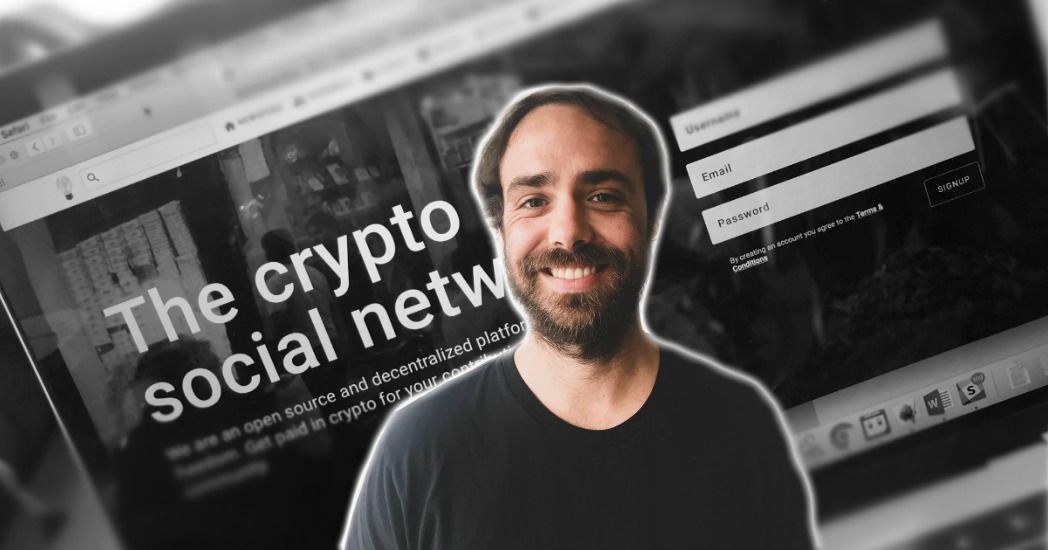
    Luật Khoa magazine had conducted this interview with Bill Ottman – CEO and co-founder of Minds in response to the concerns mentioned above from the Vietnamese social media community. We are providing our readers with the English version of the interview here.

    ***

    Before this “exodus” of Vietnamese Internet users to Minds, what do you know about Vietnam? (the regime, the economy, the market, human rights situations, etc.)

    Vietnam is a beautiful country but unfortunately run by the Socialist Republic, a communist regime with overreaching power. I studied the Vietnam War pretty extensively and the anti-war movement in the US. I would very much like to learn more about Vietnam Pham Doan Trang, and it would be great to have a live conversation or stream together to discuss your perception of the country, both negatives and positives.

    What do you think of the newly-adopted cybersecurity law in Vietnam?

    I know that the law has disastrous implications for free speech and privacy. It gives the government excessive power to deem certain content ‘prohibited’, thus the ability to become a censorship machine. The law should be taken away before it goes into effect in 2019. It is destined to fail.

    What is Minds’ policy toward customers’ privacy rights?

    Please refer to our recent essay on how we protect user privacy. We are 100% committed to privacy. It is our core philosophy. Principles like ‘zero-knowledge’, end-to-end encryption and decentralization are all crucial for human rights. Our terms state that we comply with US law. If it is legal in the US it can be on Minds. We will not hand over user information to foreign governments or censor based on requests.

    What is Minds’ policy toward the balance between privacy rights and “public security” as the police in authoritarian societies put it?

    Public security is an Orwellian phrase similar to National Security. More privacy and encryption make a nation more secure, not less. More freedom of expression causes a healthy society, not less. Disinformation and propaganda are problems, but research shows that censorship makes these problems even worse. I recently wrote an article about this evidence. This has been proven by top cryptologists and cyber-security experts for a long time like Bruce Schneier and EFF.

    What is your opinion regarding the need to balance the people’s human rights and the state’s efforts against terrorism (both real threats and some imaginable threats)?

    Our general policy is that we require a warrant or equally compelled court order. Our general opinion is not to sacrifice freedom for safety because then we will have neither as Benjamin Franklin said.

    How can we, the Vietnamese Mindsers, as a newly-formed (and maybe, quite small now) community be sure that Minds will fight for our Internet freedom rather than cooperate with the tyrannical government?

    Continually ask questions, communicate with our team about concerns and hold us accountable!

    Inspect our code and have your developers help us make it more secure and uncensorable.

    We heard a lot about the technologies that Minds has been using. Is it true that Minds has been using decentralized, encrypted, and blockchain technologies? If yes, please describe them a little so that we the users learn more about your strength. If no, could you please tell me the difference(s) between Minds and Facebook?

    Yes, we are constantly working to become more decentralized which is why we are currently leveraging technologies like Ethereum and Webtorrent. We will be focusing much more on decentralization and p2p in the future.

    Facebook is plagued by surveillance, secrecy (proprietary software), manipulative algorithms, data scandals, demonetization, censorship and psychological abuse. Minds does the opposite.

    Regarding blockchain, it seems like Minds is now using it only for Token-related activities. Is that right?

    Yes. We use an ERC20 token on the Ethereum blockchain. Our whitepaper discusses how we publish a variety of transactions to smart contracts for our Boost and Wire products. We have an extensive reward system where top contributors earn tokens and can then use the tokens to “Boost” content for more views.

    Right now 1 token gives 1,000 extra views on the content of your choice. We built this in reaction to the suppressive algorithms on facebook which diminish your organic reach and voice. It is a soft form of censorship. Minds will always have 100% organic reach and reward users with more of a voice for participation. The reward system specs can be found here.

    Sorry for asking what seems like a silly question, but why did Minds create the Tokens system? What do you anticipate it to be?

    We created the token in order to reward users for the contributions to the network and move the ad network (consent-based) and peer-to-peer payment and crowdfunding systems to smart contracts on the blockchain. We also created it to battle the restrictive algorithms that have caused organic reach to drop so much on facebook. 1 token currently rewards a user with 1,000 extra impressions on their content by pressing the boost button on their post. We believe people’s voices should be amplified, not silenced. Expanded, not exploited.

    We saw a paragraph in Minds’ privacy policy which states that Minds “discloses potentially personally identifying and personally-identifying information only in response to a subpoena, court order or OTHER GOVERNMENTAL REQUEST [capital mine], or when Minds believes in good faith that disclosure is reasonably necessary to protect the property or rights of Minds, third parties or the public at large.” We are quite concerned about this because it implies that we the users can still have our personal information accessed by the government while the current Vietnamese government is a single-party, police-dominated one. What do you think?

    This does not apply to the Vietnamese government, and we will not hand over personal information to them. We will discuss with our legal team to potentially clarify this language. Essentially, we are founded upon the idea of free expression, and as you will quickly learn, Minds is more uncensored than any other network you will find.

    Is it true that Minds receives some support from the Anonymous?

    Yes, because we allow anonymous accounts. Though anonymous is a decentralized, leaderless group, so it has many branches and I would not want to speak for them all. I imagine not all support us, but some definitely do.

    We only endorse ethical hacking, as a side-note.

    What does Minds expect from Vietnam, or the community of Vietnamese Minders to be exact?

    We hope more thought leaders and netizens will continue to migrate to Minds for Internet freedom. We are dedicated to constantly evolving and improving the platform based on your feedback. This is why we are 100% open source.

    The best way to build the freedom network of the future is for influencers to use our tools like blogs, videos, posting, groups, wallet, tokens and bring their audiences over.

    Do you think of setting up a representative office in Vietnam and/or providing a Vietnamese version of Minds for the Vietnamese people? (English is not our second language, so most people may find it difficult to use Minds in English).

    Yes, this (the Vietnamese version) will be live within a couple of weeks. 🙂 Maybe sooner.

    What is Minds’ strategy regarding China and Asia, Vietnam included and also your worldwide strategy?

    Our strategy is to stick to our principles, continue building better tools and hopefully continue to connect with thought leaders all throughout Asia who can help migrate their audiences off of surveillance platforms.

    Can you tell us a bit more about your internet activism?

    I have been involved in alternative media, freedom of information and privacy activism for about a decade. To me, extreme transparency, open source philosophy, end-to-end encryption and digital rights are crucial for a free society. I helped start organizations on Facebook with millions of followers, but after Facebook’s algorithm and policies got so invasive, it was time to #deletefacebook.

    What is your opinion regarding the trend of large corporations acting in concert with the state/government to become one unified threat to the people’s rights in places like Vietnam?

    This is an unacceptable trend when the line between global corporation and government merges. The people need to activate on other social networks in order to disempower the corrupt corporations and empower emerging, ethical alternatives.

  • Vietnam, A Step Closer to Democracy With The Latest Nationwide Protests?

    Vietnam, A Step Closer to Democracy With The Latest Nationwide Protests?

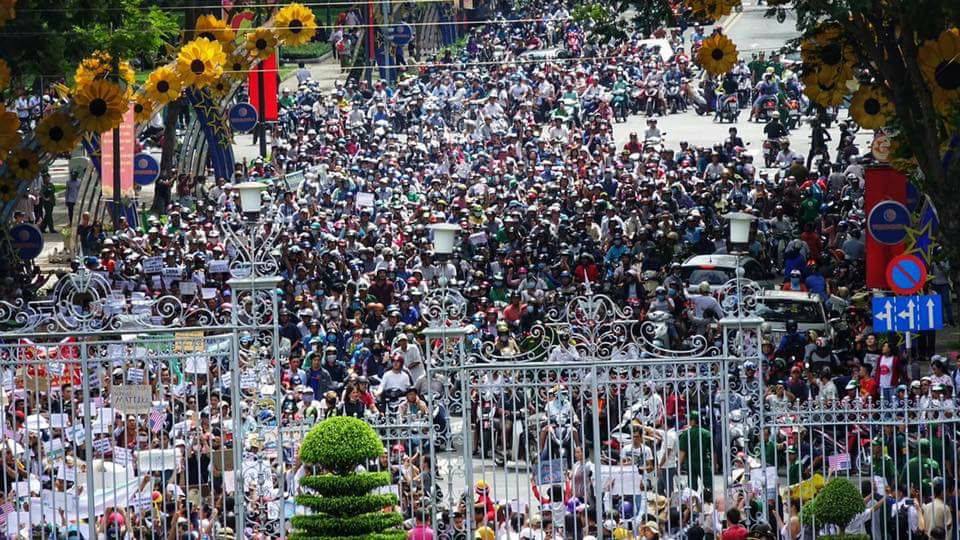
    June 10, 2018| Nationwide protests broke out in several major cities in Vietnam in the morning and lasted well into the afternoon. As of press time, the demonstrations are still ongoing with reports of several arrests and incidents of police assaulting protestors while observers mostly described the participants as peaceful.

    This time, the protests seemed to have not been organized by any groups, and the more well-known dissidents and activists were not leading the crowd. However, it was the small groups of concerned citizens coming together with substantial knowledge on their right to assemble and protest that made June 10, 2018, both memorable and surprising to people.

    People were gathering and rallying in several cities this morning, Hanoi, Saigon, Nha Trang, Da Nang, and even smaller areas such as My Tho – Tien Giang, Ho Nai – Dong Nai and a few Catholics parishes in Nghe An Province.

    But it may very well be the turn of events in Saigon – Hochiminh City today that has shown a level of political awakening that many observers have not seen before.

    People started to gather at around 8:30 a.m. local time, coming to several areas in Saigon, from the Notre Dame Cathedral Basilica in District One, walking district Nguyen Hue, in front of the U.S. Consulate, to Hoang Van Thu park near Tan Son Nhat airport. From around 500 people at one area to thousands more at another spot.

    The participants have used the Livestream feature on Facebook to record the protests where they showed how knowledgeable the regular persons could be when it comes to their rights as citizens.

    People at one location, while demanding that the police released those who were arrested, have questioned them:

    “Have you read the Constitution. Do you know what Article 25 is? Do you know that arresting protestors is unconstitutional?”

    Even when faced with assaults from police and security forces, the videos showed people were trying to tell each other to remain calm, to document the incidents with photos and videos, and do not fear because: “We did not do anything wrong!”

    In Hanoi, the security forces acted swiftly in rounding up protestors and broke up the rallies. But in Saigon, thousands of people were on the streets, and by the afternoon, it seemed as if the demonstration has become unstoppable even with the police started their crackdown.

    An online call to protest against the draft law creating three Special Economic Zones (SEZ) received over 160,000.00 shares on Facebook this past week. The government acted and postponed the SEZ draft law on early Saturday morning when the probability that the people will take to the streets started looming, but such efforts seemed to be futile.

    The SEZ draft law was not the only bill that the citizens find problematic.

    The people have a major concern regarding the SEZ draft law is because of the China factor. Anti-China rallies are nothing new in Vietnam, and for the past decades, it was the most common reason for the people to let go of their fears and gather on the streets protesting.

    This time, many fear that their government has sold them short to the Chinese investors and that the SEZs will turn into mini China(s) inside Vietnam once the law goes into effect.

    However, there is also the Cybersecurity draft bill pending for a vote on June 12, 2018, where Vietnam attempts to place all of its people under Big Brother’s watch, criminalizing many online activities, from misrepresenting historical facts to merely speaking unfondly of the government.

    Thus, efforts were also made by several civil society groups leading by Hate Change, calling on people to also protest against the Cybersecurity draft law.


    Protestors on motorbikes in Saigon, denouncing the SEZ draft law. Photo Courtesy: Nguyen Nu Phuong Dung’s Facebook.

    One of the groups that showed up early at the Notre Dame Cathedral Basilica in District 1, Saigon, protesting against both draft laws, SEZ and Cybersecurity. Photo Courtesy: Nguyen Nu Phuong Dung’s Facebook.

    The crowd at one spot near Hoang Van Thu park, Saigon. Photo Courtesy: Nguyen Nu Phuong Dung’s Facebook.

    Crowd near Tan Son Nhat airport. Photo Courtesy: Nguyen Nu Phuong Dung’s Facebook.

    People gathered in front of Reunification Palace aka Independence Palace in Saigon. Photo Courtesy: Nguyen Nu Phuong Dung’s Facebook.

    Another group of protestors on motorbikes in Saigon. Photo Courtesy: Nguyen Nu Phuong Dung’s Facebook.

    One protestor being assaulted by the security forces. Photo courtesy: Will Nguyen’s Twitter.

    Security forces arrested people in Hanoi. Photo courtesy: Hien Trinh’s Facebook.

    Security forces arrested people in Hanoi. Photo courtesy: Hien Trinh’s Facebook.

    Protestors against Cybersecurity draft law in Saigon. Photo courtesy: Vi Yen Nguyen

    Young people raised banner against Cybersecurity draft law in Saigon. Photo courtesy: Vi Yen Nguyen

    The pictures above are from today’s protests in Hanoi and Saigon-Hochiminh City. The Vietnamese thanks the owners of these pictures for their courtesy, and please contact us for photo credits because we have received them from a few sources on Facebook and Twitter.

  • People in Vietnam Openly Challenge Appellate Court’s Decision in Child Molestation Case, Demanding Tougher Sentence

    People in Vietnam Openly Challenge Appellate Court’s Decision in Child Molestation Case, Demanding Tougher Sentence

    On May 11, 2018, an appellate court in Bà Rịa-Vũng Tàu Province reviewed the verdict of the lower court in a child molestation case and reduced the sentence for the convicted, from a three-year prison term to 18 months sentencing with no actual jail time.

    People became outraged as soon as the appellate verdict came out.

    Some are particularly critical over one of the mitigating factors considered by the appellate court: the convicted person is a member of the Vietnamese Communist Party whose dedications and contributions to his profession in the banking field was noted.

    According to Vietnam’s 2015 Penal Code, Article 51(v), any person convicted of a crime (not necessary VCP members), who could demonstrate past dedications and contributions in their professional capacity, may receive considerations for a mitigating factor.

    Thuỷ, 78-year-old, was initially been convicted of multiple charges, involving different victims. However, the appellate court dismissed all but one conviction against him, citing insufficient evidence for the rest. Couple with his past contributions, his elder age also played a role in his reduced sentence.

    But the people are not convinced, and they quickly showed their disagreement on social media.

    Child molestation, like child sexual abuse and even sexual harassment, has recently earned public awareness in Vietnam, where more victims are willing to speak out against it, and the public strongly demands perpetrators are appropriately prosecuted.

    Thus, the recent appellate decision in Nguyễn Khắc Thuỷ’s case is seen by many as if the court has taken a step backward and against the momentum to raise awareness about sexual abuse crimes in society.

    The Association for Children’s Right Protection of Hochiminh City (Hội bảo vệ quyền trẻ em TP Hochiminh) also condemned the court’s decision.

    Attorney Trần Thị Ngọc Nữ – Head of the association – commented in a conversation with Kenh 14 news: “a person who was convicted of any crimes, especially crimes against children, shall not receive a sentence with no actual jail time.”

    The People’s Supreme Procuracy Office of Bà Rịa-Vũng Tàu Province also confirmed with Người Lao Động newspaper on May 13, 2018, that their office had submitted an urgent report to their superiors in Hochiminh City regarding their concerns over the appellate court’s decision.

    A trial of cessation would be the next step in the case, and the public’s close monitoring of this matter could mean that the judicial authorities may take it up for further review.

    In the past two days, a petition was created in on Change.com where people request a higher court’s review of the case. It has managed to receive over 8,000 signatures and still being shared widely on social media in Vietnam.

  • Will #MeToo finally have its break in Vietnam?

    Will #MeToo finally have its break in Vietnam?

    In the late evening of April 18, 2018, many journalists in Vietnam began to share on social media a story that could come with the power to shatter the nation’s culture of playing down sexual harassment in the workplace and silencing victim.

    A female intern at Tuổi Trẻ newspaper was rumored to have attempted to commit suicide and was hospitalized, after alleging that she was raped by her superior. Tuổi Trẻ is considered one of the largest – if not the largest – state-owned newspaper in Vietnam, owned by the Ho Chi Minh City Chapter of the Communist Youth Union.

    By the next day, information about the alleged attacker surfaced, again, via social media.

    Tuổi Trẻ – while along with some 800 other state-owned media did not publish an official story – yet did announce that they have suspended journalist Đặng Anh Tuấn – whose pen name is Anh Thoa – the Head of Tuổi Trẻ television news because of the allegations.

    But at the same time, the editorial board denied in the same announcement that the intern was admitted to the hospital due to an attempted suicide.

    On April 20, 2018, the faculty at the university where the victim is enrolled, delivered a deadly blow to Tuổi Trẻ’s editorial board.

    In possibly one of the very first moves ever done by a university in the country for cases involving sexual harassment of their students, the Head of the Department of Journalism and Communications of The Vietnam National University Ho Chi Minh City sent an official letter to the editorial board at Tuổi Trẻ, demanding them to perform a formal investigation and provide the public with an explanation.

    What surprised people was the fact that the faculty of the university stood by their student’s allegations by clarifying and denouncing Tuổi Trẻ’s description of her conditions in their press announcement.

    The letter read, in parts:

    “We would like to bring your attention to this specific issue so that it could be dealt with directly, that Student ‘Doe’ has endured a prolonged period of psychological trauma which produced catastrophic effects on both her physical and mental health, which in turn deteriorated her health and led her to face the negative decision concerning her life.”

    The current story of the female journalist intern from Vietnam resembles very closely the ordeal of Japanese journalist Shiori Ito last year, who went public with the allegation that veteran journalist, Noriyuki Yamaguchi, raped her in April 2015.

    But while Ms. Ito currently has to fight not only her ongoing legal battle but also a culture that preferred silence and shaming victims in a country like Japan – where #Metoo could not quite take off – the situation may be different in Vietnam this time.

    It is encouraging to see that Vietnamese men and women – especially women – from all walks of life came out in support of the victim. The hashtags #MeToo and #letherdoherjob have been surfacing on Vietnam’s social media since Wednesday’s night, and they keep spreading.

    First, other female journalists shared equally horrific stories about how they and their female colleagues too, were harassed and assaulted at works.

    The amount of compassion – from journalists who used to work at Tuổi Trẻ – for the victim is also comforting to know. The reactions from many of the popular and veteran journalists on social media in the country are also positive.

    The message from the majority was actually quite simple and clear: speak up if you have been a victim or know a victim; and call on Tuổi Trẻ to perform a thorough investigation and be transparent and accountable to the victim and the public.

    But make no mistake that the culture of victim blaming and silencing does not exist in the country.

    On the contrary, as in any other patriarchal society, Vietnam carries its own baggage, full of prejudice against female victims in most of the sexual harassment and sexual violence cases.

    In Vietnam, while sexual harassment in the workplace was recognized in the Labour Code for the first time almost three years ago in May 2015, many victims still do not speak up or come forward with their stories.

    One reason could be that there are still no clear and well-defined legal definitions for conducts that would constitute sexual harassment.

    According to CARE, an international organization working on gender-based violence in Hanoi, Vietnam, 78.2% of victims of sexual harassment in the workplace are women.

    Without a clear legal framework to protect them, female workers in Vietnam dare not to speak up because they are afraid of losing their job.

    In 2014, ActionAid International Vietnam reported that their survey of over 2,000 women in Hanoi and Ho Chi Minh City revealed, that 87% of those answered have been a victim of sexual harassment in public where 67% of the bystanders who witnessed such conducts did nothing to help the victims. 31% of female students also reported that they were sexually harassed in public.

    Many of the stories published on social media in Vietnam in the past two days seem to show a pattern. The perpetrators often targetted young interns who are still in school or female employees who are freshly minted from college.

    Inexperienced, young, and in need of a job, the victims – who are also facing a culture that got influenced heavily by Confucianism with very strict standards when it comes to gender roles – would incline to choose to quit their jobs and internalize their emotional wounds rather than speaking up against the perpetrator.

    Yet, now, there is hope with the latest case involving the Tuổi Trẻ’s intern.

    In the past two days, Facebook statuses have shown an influx of stories of similar experiences and offers of support.

    People published allegations of sexual harassment and misconduct against the Director of the largest legal online research company in the country, Thư viện Pháp luật (The law library) online. This story again was a rumor among the legal professionals but never brought to broader public attention.

    Female activists in the country already start calling on people to use the hashtag #MeToo. And while it is true that we still have to continue looking out for development, it is not too early to say that #MeToo has made an important breakthrough in Vietnam where many have begun to say, Vietnam needs #MeeToo now.

  • From Nguyễn Văn Đài’s April 5, 2018 Trial – What Constitutes “Overthrowing the People’s Government” in Vietnam?

    From Nguyễn Văn Đài’s April 5, 2018 Trial – What Constitutes “Overthrowing the People’s Government” in Vietnam?

    April 5, 2018 | Nguyễn Văn Đài – probably one of the most prominent dissidents in Vietnam for almost two decades – received one of the harshest sentences for political dissent in recent years.

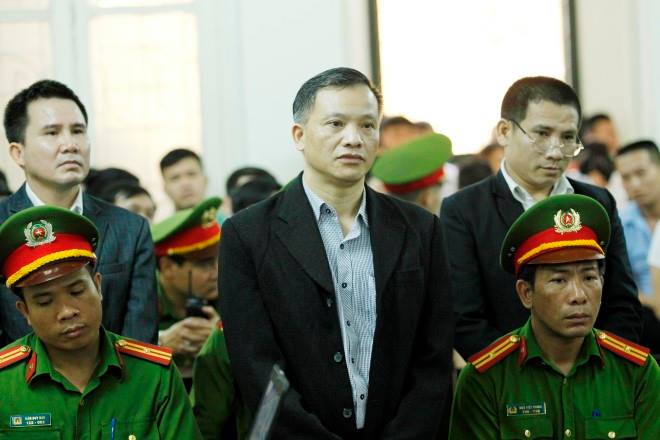
    A court in Hanoi, Vietnam sentenced Nguyễn Văn Đài to 15 years imprisonment and 5 years probation under house arrest. His colleagues tried and convicted in the same case, also received equally harsh sentences. Nguyễn Trung Tôn, 12 years imprisonment and 3 years probation; Trương Minh Đức, 12 years imprisonment and 3 years probation; Nguyễn Bắc Truyển, 11 years imprisonment and 3 years probation; Lê Thu Hà, 9 years imprisonment and 2 years probation; Phạm Văn Trội, 7 years imprisonment and 1 year probation.

    The 48-year old former attorney was among the first group of Vietnamese lawyers who took up political cases in the early 2000’s and defended dissidents, as well as those who were persecuted for exercising religious freedom.

    Đài was the type of lawyer who would defend those accused of the very same crime he is facing today: “conducting activities to overthrow the people’s government.”

    This crime is infamously known among international human rights groups and foreign embassies as the Article 79 of Vietnam’s Penal Code 1999.

    While carrying capital punishment as the maximum sentence, Article 79 however, utterly lacks a clear, well-defined description of conducts which would constitute a person’s criminal liability, and as such, making it impossible for people to cry out mea culpa.

    The law only states that “a person conducting activities to form or participate in any organization to overthrow the people’s government shall be punished as follows,” and then immediately dwells into specifying the sentencing guidelines from twelve years, twenty years, life imprisonment, up to the death sentence for the main perpetrator, and five to fifteen years for those who act as accomplices.

    Because of this ambiguity per se in its language, Article 79 had faced strong criticism from the international community over the years, especially during the last Vietnam’s Universal Periodic Review (UPR) in January 2014.

    Critics continue pointing out, that along with Articles 88 and 258 of the Penal Code, the government has used these criminal provisions almost exclusively against political dissidents and pro-democracy activists, taking advantage of the vague language of these codes to criminalize peaceful protests and suppress political dissent.

    Facing such international pressure during the 2014 UPR, Vietnam agreed to amend Article 79, and they did, in 2015.

    However, except for some minor, cosmetic changes such as the number of the code section from 79 to 109, and adding a category for those who are “preparing to commit the crime” with the punishment ranging from one to five years imprisonment, the remaining of the “new” Article 109 is taken verbatim from Article 79.

    In short, we still have to look to actual cases to define which conducts would constitute the crime of “overthrowing the people’s government” in Vietnam, and in Đài’s case today, such conducts would be:

    “Opening an office, having a website to operate, developing a ‘shortening manifesto’, having a structured organization, having internal and external affairs strategy, operating to increase membership, capacity, …; abusing the right to promote ‘democracy, human rights,’ ‘civil society’ to conceal the objectives of the Brotherhood for Democracy … waiting for the appropriate timing to openly operate in opposition of the government through changing the political structure in Vietnam, developing ‘pluralism with multiple parties’ and a government with ‘separation of powers’ to overthrow the people’s government while using a private sector economy as its basis.”

    The above paragraph was an excerpt taken from the Conclusion section at page 10 of the 16-page long indictment issued on December 31, 2017 against Nguyễn Văn Đài and his five colleagues, Lê Thu Hà (who was arrested together with Đài on December 16, 2015), Nguyễn Bắc Truyển, Nguyễn Trung Tôn, Trương Minh Đức, and Phạm Văn Trội.

    The new Penal Code of Vietnam was not taken effective until January 1, 2018. Thus, Đài and his colleagues were charged with Article 79 of the old code.

    Nguyễn Văn Đài has never shied away from his political ambitions and his outspoken criticism of the current regime, especially regarding the political monopoly the Vietnamese Communist Party (VCP) has over the country.

    In 2006, Đài openly called for the establishment of other political parties and forming political opposition to challenge the VPC’s ruling. According to a research on Vietnam’s democratization advocates conducted by the Australian scholar, Benedict J. Tria Kerkvliet, Nguyễn Văn Đài would fall under the category of those who chose to confront the regime head-on.

    He holds a firm personal belief that every Vietnamese people do have the intellectual capacity and enough knowledge to participate in a pluralistic form of governance with multiple parties.

    He previously wrote that Vietnam had had other political parties in the past, during the 1930’s and the early independent days from 1945-1946. Notably, in the South of Vietnam – before the fall of Saigon – political parties were very active. Moreover, Đài always believes that the current Constitution supports the formation of other political parties besides the VPC.

    His direct challenge to the ruling party’s power resulted in a conviction for “propaganda against the state” under Article 88 in 2007, where he served four years in prison and was released in 2011.

    Coincidentally, 2011, the year in which Đài was released, also marked the beginning of an unprecedented rise of the young pro-democracy and pro-human rights movement in Vietnam.

    Starting in the summer of 2011, Vietnamese people – especially youths – swarmed the streets of major cities such as Hanoi and Saigon, protesting against China’s aggression due to the incident involving the cutting of Vietnam’s Binh Minh vessel’s cable cab in the South China Sea.

    People organized protests through Facebook’s pages, and statuses, calling for massive turnouts all over the country like never seen before, at least not anything like that had happened since after the Vietnam War was over in 1975.

    At first, the government allowed the protests, but when faced with thousands of youths on the streets, they quickly decided to change course and started cracking down on peaceful protesters. Yet this very conduct of the government had opened doors to another era of civil disobedience in Vietnam: the birth of the independent civil society organizations (CSO) movement inside the country. Many of the protesters on those streets in Vietnam six years ago are now the prominent faces of the pro-democracy movement.

    The undeterred Nguyễn Văn Đài quickly caught on to this phenomenon and organized his own CSO – the Brotherhood for Democracy (which got named in the indictment) – continuing pushing for political changes through challenging the one-party rule. A person with charisma, Đài again rose to the occasion, becoming the familiar face during those meetings with foreign officials and diplomats from many embassies in Hanoi.

    And that was documented in his December 2017 indictment as well, where it detailed how he was able to connect with foreign institutions and individuals to secure funding for his CSO – activities that are normal for any non-governmental organization around the world. The indictment even named diplomats from the U.S. and Germany as people who acted as his references.

    It also worths noting that almost two years ago, Vietnam’s National Assembly attempted to pass a law on association with restrictions on receiving “foreign funds.” However, such efforts failed when faced with stern opposition from NGOs and CSOs from Vietnam, both registered and non-registered.

    Thus, except for the indictment in Đài’s case making it out to be a crime, Vietnam’s laws have yet to prohibit NGOs to receive foreign financial aids.

    But the reality remains, that as of right now, Vietnam still only has one political party – the Communist Party – and Nguyễn Văn Đài and his colleagues’ latest trial and conviction demonstrate that any efforts aiming at forming a political opposition would constitute conduct punishable by very long and harsh sentences.

    In December 2008, many people gasped as China sentenced Nobel Peace Prize Laureate, Liu Xiaobo, to 11 years for “suspicion of subversion against the state.”

    Now almost ten years later, in April 2018, using an eerily similar charge against Nguyễn Văn Đài and his colleagues, Vietnam has demonstrated that it too, does not yield to international pressure and would even go the extra miles in sending political dissents to prisons for even longer terms than its communist big brother.

  • Vietnam: Deputy PM’s Flip-Flopped Position Signaled Government Will Take Tough Measures on Cybersecurity Law?

    Vietnam: Deputy PM’s Flip-Flopped Position Signaled Government Will Take Tough Measures on Cybersecurity Law?

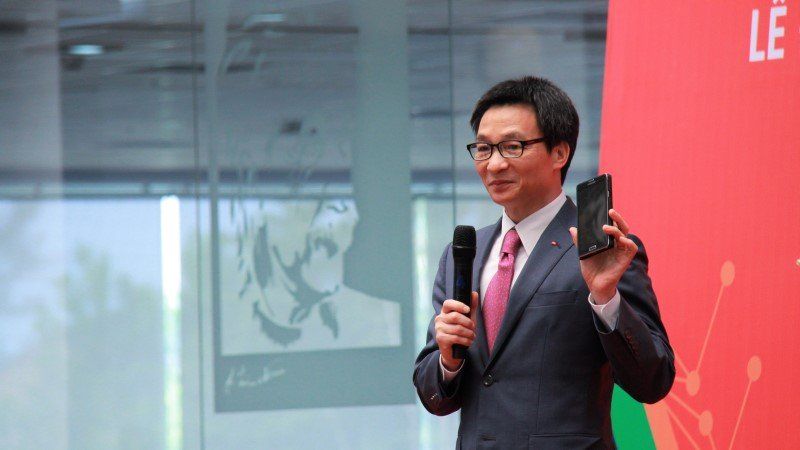
    Once regarded as the poster’s child for – what was hoped by some – the progressive faction within the Communist Party, Deputy Prime Minister Vu Duc Dam, had recently shown his allegiance to the Party’s hardlines, at least on the issue of cybersecurity.

    As the Vietnam’s National Assembly is currently reviewing the latest Draft Law on Cybersecurity, on November 17, 2017, the 54-year old Deputy PM Dam delivered a passionate speech defending why Vietnamese government must control social networks and limit the numbers of Internet users.

    Dam even praised China’s efforts on controlling social media through the use of an Intranet and heavy censorship on search contents.

    But just last year, in March 2016, it was also the same man, Deputy PM Dam, who spoke at a World Bank conference and praised technology, pledging his commitment to support an uncensored Internet in Vietnam.

    “I want to say that now is not the time to discuss the benefits of digital technology, but to affirm: Though digital technology itself has negative sides, this is not by its own faults but rather by those who use it. Thus, we cannot restrain it because of the negative impact, but must find all means to allow it to grow.”

    Would Mr. Dam’s recent change of heart on the issue of Cybersecurity demonstrate the impossibility for Party’s cadres to break free from its political ideology, namely those who are in the Politburo?

    Mr. Dam had long been trusted with the tasks of managing the field of Information and Communications in Vietnam. He has also been viewed as an official who’s more open and friendly with the IT community, given his background working at the National Central Bureau of Post Office and had served as the Deputy Minister of the Ministry of Post Office and Telecommunications.

    It was as recent as February this year, during a talk with FPT University’s students, Dam recalled how he had met with top technology personnel in the country and advised them that the World’s Fourth Industrial Revolution shall be defined by the term “connection”.

    And by connection, Dam meant, “the eight billion equipment which connects at every level, every angle, and does not limit itself to one university, one province, one country but is a global connection. This revolution would have an intimate relationship with technology.”

    So what had changed?

    What would make a man went from one who believed in the ability for people to have a global “connection” as the core element of the Fourth Industrial Revolution to a defender of government’s Internet censorship, and a supporter of an “Intranet” construction – identical to that of China?

    Because now, during his last presentation in front of the National Assembly, Dam also proposed using “technical measures to block, filter or slow down [information] when necessary.”

    The people wonder, who is then, the real Vu Duc Dam and what does he really believe in?

    If there were any hopes for a progressive faction within the Communist Party, Deputy PM Dam probably would be among the top runners to lead such group.

    He was a foreign-educated politician, graduated from university in Brussels, whose popularity rose among the younger population in Vietnam with his English abilities, his support for educational reforms, environmental protection, and his friendliness towards IT community and technology development.

    Yet, Dam’s latest speech on the National Assembly’s floor two Fridays ago showed where his true allegiance lies: The Party’s doctrine which values censorship and putting absolute restraints on free speech.

    Vietnam was a member of the Human Rights Council last year when a resolution was passed without a vote, to include an addition to Article 19 of the Universal Declaration of Human Rights, recognizing the right to Internet access is a human right.

    But that obviously did not stop the government to adamantly insist on tougher Cybersecurity Law, one that mirrored China’s laws. Mr. Dam apparently seems to have forgotten it as well during his latest speech, when he insisted that Vietnam would not break any international law standards with its tougher stand on social media and Internet management.

    The government has recently claimed boastful records in working with Google and Facebook to successfully remove thousands of content that were deemed to be “anti-State” materials during just this year alone.

    Since the Internet was first publicly introduced in Vietnam 20 years ago, now, social media networks have grown to become the main platforms for people to raise their concerns over a number of issues. Many of which would be deemed politically sensitive or even outright dissenting opinions.

    No one seems to deny that both the independent civil society movement and the emerging independent media in the country are the results of ordinary people having access to the Internet.

    As such, the need for an authoritarian government – like Vietnam – to censor and control the Internet and social media networks is real and urgent.

    Deputy PM Dam’s recent defense of the government’s use of technical measures to censor and control the Internet and social media – to some people – adds worries that Vietnam would – by all means – pass the proposed Cybersecurity Draft Law.

    To defend the government’s legitimacy and absolute power, the control over the media had never slipped off the Party’s grips. Deputy PM Dam’s stand on the issue of Cybersecurity could give glimpses of the Party’s unanimity on maintaining that control by expanding and strengthening Internet censorship in the country, regardless of how many factions within the Politburo we may think there are.

  • Press Release: On the Detention of Our Editorial Board Member Pham Doan Trang

    Press Release: On the Detention of Our Editorial Board Member Pham Doan Trang

    In the afternoon of November 16, 2017, the Vietnamese police kidnapped a member of The Vietnamese’s editorial board, Pham Doan Trang, almost immediately after she had left the meeting with the EU delegation in Hanoi held earlier that day.

    The police had illegally seized her personal property, including her cell phone and laptop, and kept them since. Pham Doan Trang was held incommunicado during the entire detention, and legal representation was not allowed.

    By midnight, the police escorted Pham Doan Trang back to her home in Hanoi and continued to surveil her, effectively putting her under house arrest.

    The meeting with the EU delegation was held right before the commencement of their annual Human Rights Dialogue with Vietnam, which is going to be in early December 2017. During the meeting on November 16, Doan Trang provided the EU delegation with an updates report on Vietnam’s current human rights situation, the report on the Formosa environmental disaster, as well as the latest report on the right to religion in Vietnam.

    We strongly condemn the kidnapping, unlawful taking of property and putting Pham Doan Trang under house arrest. These conducts are in direct violation of both Vietnam’s and international laws, and as such, they have put a member of our editorial board in grave danger where both her physical and mental health have been negatively affected, especially when Doan Trang is still undergoing treatment for her previous knees injuries.

    We, therefore, demand that the relevant authorities of Vietnam to immediately intervene and cease the ongoing illegal house arrest, investigate the unlawful individual conducts listed above, and prosecute those who have committed such crimes, in accordance to the current legal standards in Vietnam.

  • Vietnam Government Claims to Work with Google and Facebook to Remove Thousands of Anti-government Content

    Vietnam Government Claims to Work with Google and Facebook to Remove Thousands of Anti-government Content

    Vietnam’s head of the Internet management authority, Nguyen Thanh Lam, has repeatedly claimed that the government has been working with Facebook and Google to remove thousands of videos and accounts from these tech giants’ platforms, according to the country’s mainstream media.

    During a press conference on July 7, 2017, the former prominent journalist made the announcement that Youtube, a Google’s product, had removed 3,000 video clips that contained “toxic content” and Facebook had also removed 600 accounts that were fake or contained information that distorted individuals and organizations.

    Among those 600 accounts are 132 accounts that frequently distorted or smeared the Communist Party, the government, groups, and individuals, VietNamNet reported.

    In an interview with VietNamNet, Nguyen Thanh Lam also expressed his appreciation to Google and Facebook for their cooperation with the Vietnam’s government.

    “They understand why we made such requests”, said Mr. Nguyen.

    Facebook sent Monika Bickert, Head of Global Policy Management, to Vietnam on April 26 to meet with the Minister of Information and Communication Truong Minh Tuan. According to the Vietnam News Agency, Ms. Bickert told the minister that Facebook was willing to cooperate with the Vietnamese government to block toxic content that violates the local laws.

    During the meeting, the Facebook’s representative also made a commitment that they would create a separate channel to process Vietnam’s requests.

    A month later, Eric Schmidt, the Chairman of Google’s parent company Alphabet Inc., met Prime Minister Nguyen Xuan Phuc in Hanoi. He reportedly said that “Google will cooperate with the government” to prevent and remove bad information on Youtube.

    Mr. Nguyen Thanh Lam noted that it had been easier to convince Youtube than Facebook: “There was toxic information that Youtube already removed or blocked but Facebook does not”.

    We found no information about Vietnam’s requests in 2017 on Google Transparency Report and Facebook’s Government Requests Report, potentially because they have only released reports until 2016.

    The Google’s report shows Vietnam has made five content removal requests to Google since 2010. It is not confirmed that Google has actually cooperated with the Vietnamese government to remove the mentioned contents.

    However, the tech giant’s website highlights two content removal requests made by the Vietnamese government. One is a blog that “allegedly contained information about the military and criticized the government”, and one is “to remove search results on a particular word that generated results that contained allegedly unflattering depictions of past Vietnamese leaders.” Google declined both requests.

    It has been 20 years since Larry Page and Sergey Brin created Google. It is the same period of which Vietnam has been connected to the Internet. The country currently has approximately 50 million Internet users which amount to more than half of the population, and 45 million Facebook users. Both platforms are the most popular search engine and social network in Vietnam respectively.

    Yet, the two tech giants are now considered as real threats to the government as they help people access uncensored information about the communist regime and generate political discussions.

    In October 2013, Dinh Nhat Uy – the brother of a jailed activist – was sentenced to one year and three months of probation only for using Facebook to criticize the government.

    A prominent human rights activist, blogger Nguyen Ngoc Nhu Quynh (Mother Mushroom), was also sentenced to 10 years of imprisonment in June 2017 partly for posting articles that “contain untruthful and baseless information” about the Communist Party and its sole-leadership over the political system of Vietnam.

    The government usually uses three internationally-condemned criminal provisions, Article 79, 88 and 258, to put dissidents and activists in jail.

    Not only criminalizing online expression, Hanoi also puts administrative sanctions on those who voice their dissents on the Internet. Websites’ owners, social networks, and Internet users may be fined up to US$4,700 for “criticizing the government, the Party or national heroes” or “spreading propaganda and reactionary ideology against the state”

    Many Facebook users and bloggers have been fined under these regulations, according to a Freedom House’s report.

    It is significant to note that the Vietnamese government has made claims about receiving cooperation from Google and Facebook since early 2017, in the middle of a new crackdown on the democracy movement that has led to at least 16 activists and dissidents being arrested or convicted.

    In 2014, Vietnam was named as an enemy of the Internet by Reporters Without Borders, a France-based human rights organization.