Tag: News

  • Facilitator in EU-Vietnam Free Trade Agreement Fails to Disclose Links to Vietnamese Communist Party, Possibly Violating Code of Conduct

    Facilitator in EU-Vietnam Free Trade Agreement Fails to Disclose Links to Vietnamese Communist Party, Possibly Violating Code of Conduct

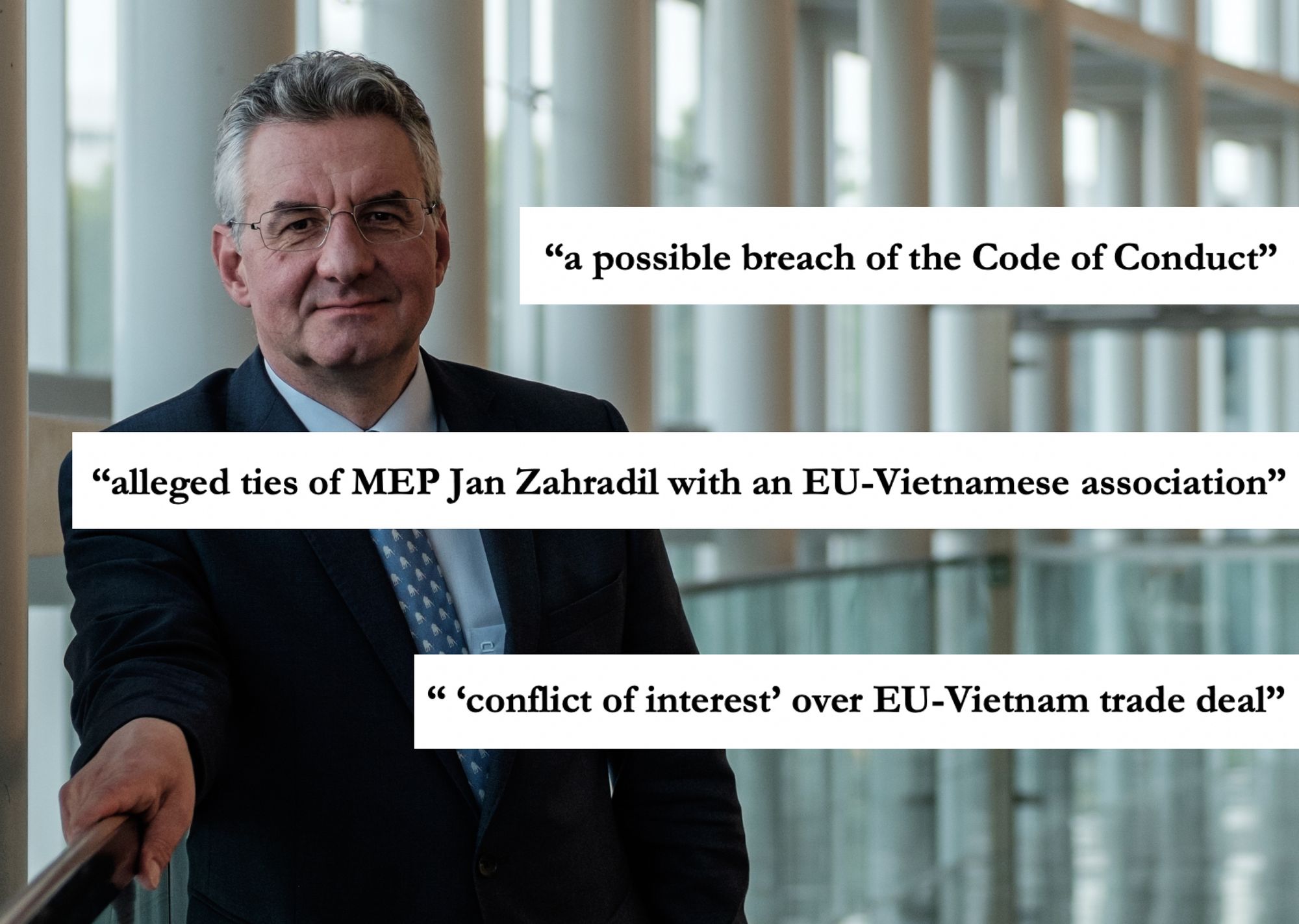
    Member of European Parliament (MEP) Jan Zahradil, who is currently the rapporteur (or facilitator) for a free trade agreement (EVFTA) and an investment protection agreement (IPA) between the European Union and Communist Vietnam, has failed to disclose his links to the Vietnamese Communist Party, in possible violation of the European Parliament Code of Conduct, a letter to the President of the European Parliament (EP) has revealed.

    The letter, sent by Philippe Lamberts, one of the co-presidents of the Greens/European Free Alliance Group, cites a recently published article by the EU Observer which accuses Zahradil of a “conflict of interest” after it was revealed that Zahradil failed to disclose that he was chairman of the Advisory Council to the Federation of Overseas Vietnamese Associations in Europe (FOVAE).

    The FOVAE is itself set up under the guidance of the Vietnamese Fatherland Front (VFF), a broad-based political organization controlled by the Vietnamese Communist Party. The Vietnamese Fatherland Front has been comparedto China’s United Front in its influence operations, and a 2016 official report from the Czech government confirmsthat the VCP uses the FOVAE as a means to control overseas Vietnamese communities.

    The EU Observer reports that Zahradil is also chair of a parliamentary “friendship group” to Vietnam, which is “[o]ften billed as a means to increase cultural understanding, promote values, and better inform the public […but is] in fact often backdoor entries for pariah governments seeking greater access to the European Parliament.”

    In response, Zahradil sought to downplay the FOVAE and friendship group’s significance, citing the former’s inactivity and the latter’s informality.  Ample evidence found by the EU Observer calls both of these assertions into question.

    In particular, the EU Observer cites examples from Vietnam’s own state-run media which show a healthy relationship between Zahradil and active FOVAE chairman Hoang Dinh Thang (who is also on the Presidential Committee of the VFF). Another articlefrom the Vietnam People’s Army website touts the efficacy of the parliamentary “friendship group” in advocating for the EVFTA.

    Regardless of these two groups’ relevance, Zahradil’s failure to disclose his links may directly violate Article 3 of the European Parliament’s Code of Conduct, which requires that “Members shall disclose, before speaking or voting in plenary or in one of Parliament’s bodies, or if proposed as a rapporteur, any actual or potential conflict of interest in relation to the matter under consideration”.

    Jan Zahradil is of Czech origin and has been an MEP since 2004. He is a member of the Civic Democratic Party and part of the rightwing Eurosceptic group “European Conservatives and Reformists” (ECR) in the EP. In addition to rapporteur for the EVFTA and IPA, he is also vice-chair of the EP’s International Trade Committee (INTA).

    Although the EVFTA and IPA have both been signed by Vietnam and their EU counterparts, the agreements (and their amendments) must be formally ratified by the European Parliament at its plenary session in February 2020 in order to take effect. NGOs and democracy groups insist Vietnam’s deteriorating human rights record must be improved before the EU proceeds with these agreements.

    Update: Jan Zahradil has resigned from his position as rapporteur for the EVFTA, effective December 10th.

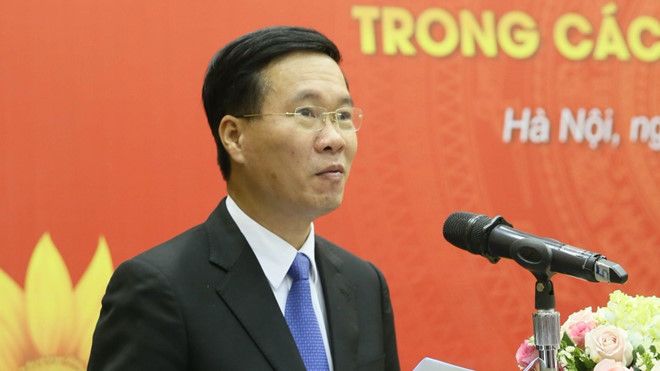
  • Minister of Propaganda Says Vietnam’s Press Should Serve Party, Prevent “Self-Evolution”

    Minister of Propaganda Says Vietnam’s Press Should Serve Party, Prevent “Self-Evolution”

    At a conference on “Strengthening Party-building Work in Press Organizations” last Friday, Mr. Vo Van Thuong, head of Communist Vietnam’s Central Propaganda Committee, reminded attendees that the press must serve the Vietnamese Communist Party (VCP) and the revolution in order to function “stably” and “without error”.

    Referring to a government plan ratified earlier in the year to develop and manage press throughout the country until 2025, Thuong stated that the time for debate had passed and that strict implementation was now key. According to state media and in sentiment echoed by Thuong, the press serves as “an important channel to fight against incorrect information, fake news, news critical of the regime, and that which makes people lose trust in the Party-State.”

    In his remarks at the conference, Thuong stressed the importance of ideological work in press organizations and making sure Party cadres and Party members guard against signs of political, ideological, and moral decay. In particular, Thuong warned against signs of “self-development” and “self-evolution”, negative terms that refer to the shift towards liberal democratic values–values which are anathema to the ruling Communist Party.

    In this vein, Thuong took to admonishing journalists who lacked “proper training” and were critical of society but not sufficiently critical of themselves. He also stressed the importance of proper training for leadership and suggested greater oversight of the Party committees and organizations involved in press organizations, particularly when it comes to adherence to Party regulations.

    “In order to help press organizations develop self-awareness and a more proper nature, we should do as a number of comrades have stated: ‘Sometimes those who educate [Party members and cadres] must themselves be educated’,” Thuong stated.

    Thuong reminded attendees that Vietnam’s journalists were journalists of the revolution, journalists of the Party, and journalists of the state; as such, they should work closely with the Central Propaganda Committee, the Ministry of Information and Communication, various central Party committee blocs, and the Vietnamese Journalists Association, in order to strengthen the leadership of the Party.

    The plan approved April 2nd of this year also seeks to streamline Communist Vietnam’s press environment, limiting government bodies to one newspaper and one magazine, with a shift to electronic rather than print forms, and with the “Vietnamese Communist Party E-Newspaper” and the Central Propaganda Committee serving as the “core” of the country’s press structure.

    Along with head of propaganda, Thuong is also currently a member of the Politburo (short for “Political Bureau”, the leading body of the Vietnamese Communist Party), and the secretary of the Central Committee (from which members of the Politburo are chosen). In the past, Thuong was deputy secretary of the Ho Chi Minh City (HCMC) Standing Committee, first secretary of the Central Committee of the HCMC Communist Youth Union, and secretary of the Quang Ngai Provincial Party Committee.

    According to Reporters Without Borders, Vietnam ranks 176th out of 180 countries in terms of press freedom. Although freedom of the press is guaranteed by Article 25 of the 2013 Vietnamese Constitution, Communist Vietnam is a one-party, authoritarian state that does not tolerate challenges to its power. It controls all official media, newspapers, and publishing houses in the country and regularly censors material that does not conform to sanctioned historical or political narratives.

  • New Visa Rules Make It Easier for Foreigners to Work, Invest in Vietnam’s Coastal Economic Zones

    New Visa Rules Make It Easier for Foreigners to Work, Invest in Vietnam’s Coastal Economic Zones

    On November 25, the National Assembly (NA) of Vietnam passed amendments to its Law on Entry, Exit, Transit, and Residence of Foreigners that would allow visa-free entry into coastal economic zones, as well as enable visa status changes from inside the country. The amendments were approved with 83.6% of the vote and go into effect July 1, 2020.

    The amendments stipulate that in order for a coastal economic zone to quality for the visa-free exemption, it must be separate from the mainland, possess clearly defined territory and boundaries, have an international airport, and must not compromise national security or national defense.

    Of note in the amendments is the alternate phrasing “special administrative-economic unit” used to refer to areas affected by the new law. The phrase “special economic zone” (SEZ) is considered sensitive after nationwide protests broke out in June of 2018, in opposition to a Special Economic Zones (SEZ) law that was being considered before the NA. The law would have established SEZs in Van Don, Bac Van Phong, and Phu Quoc, but widespread concern that the SEZs would be overrun by Chinese investors prompted the NA to shelve the law.

    Some Vietnamese have notedthat Van Don and Phu Quoc of the previously-shelved SEZ law both qualify for visa-free entry under the new amendments, sparking concerns that the government is attempting to circumvent popular opposition. Representatives of the NA themselves have expressedconcerns that opening up these areas to visa-free travel may pose a national security threat and have requested greater government regulation.

    But Vo Trong Viet, chairman of the NA Committee on National Defense and Security, has argued that “the amendments would make it easier for foreigners to stay in Vietnam to learn about the market, and look for jobs and investment opportunities without wasting time and money on immigration procedures.”

    Also included in the amendment is a stipulation allowing foreigners to change or renew their visa status while inside Vietnam, instead of having to leave the country entirely, as was previous practice. The amendment allows for visa changes by individuals in specific circumstances: “visitors who can prove they are investors or representatives of foreign organizations that make legal investments in Vietnam” and their family members, as well as foreign workers who receive job offers or enter with e-visas (provided they have the requisite work permit or work permit exemption).

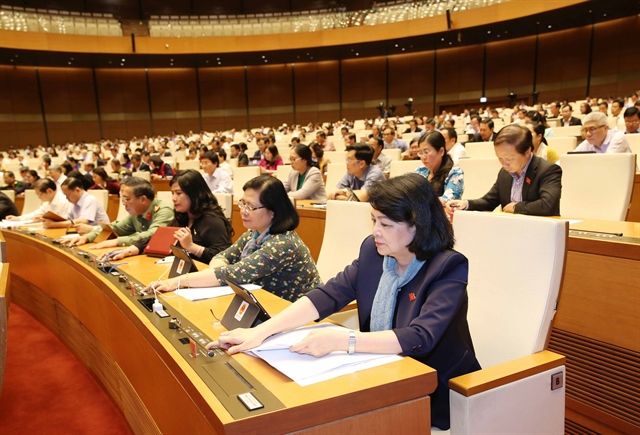
    Vietnam’s National Assembly, elected in 2016 and currently in its 14th session, consistsof 496 members, 475 of which belong to the Communist Party (the remaining 21 are independents). Though largely considered a “rubber stamp” parliament due to a lack of public consultation and debate, discussions over pieces of legislation have increased in recent years, and the NA has begun to assume a larger political role in the eyes of the public. The NA meets twice a year to formally ratify laws, with individual members serving five-year terms.

    Elections for the 15th session of the NA are set to take place in 2021.

  • In Prolific Day, Vietnam Sentences Six Dissidents to Prison for “Anti-state” Activities

    In Prolific Day, Vietnam Sentences Six Dissidents to Prison for “Anti-state” Activities

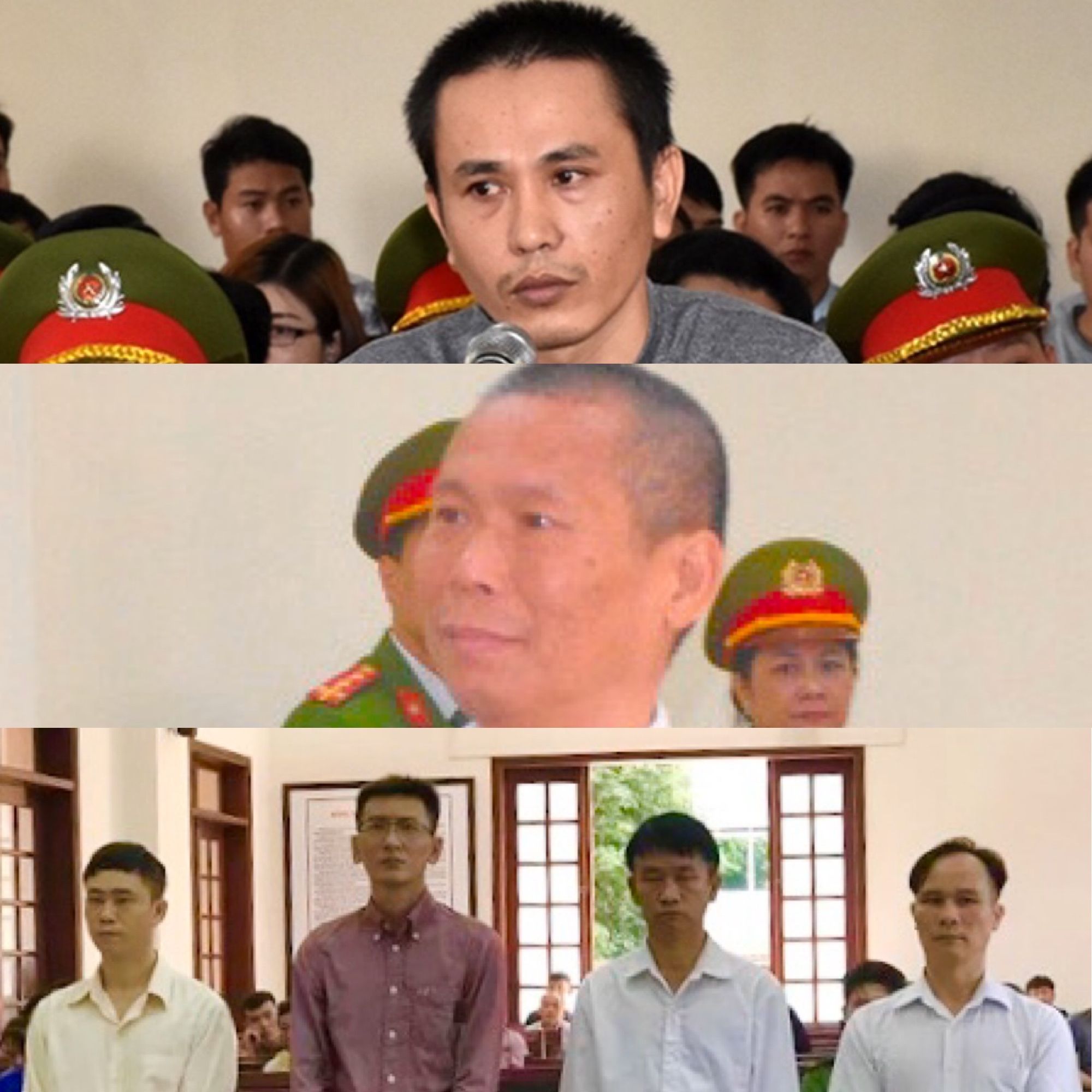
    Nguyen Chi Vung (top), Pham Van Diep (middle), Vo Thuong Trung, Doan Viet Hoan, Ngo Xuan Thanh, and Nguyen Dinh Khue (bottom, left to right) . Photo sources: Kien Thuc, Binh An, and Nguoi Lao Dong newspaper, respectively. Composite photo created by Will Nguyen.

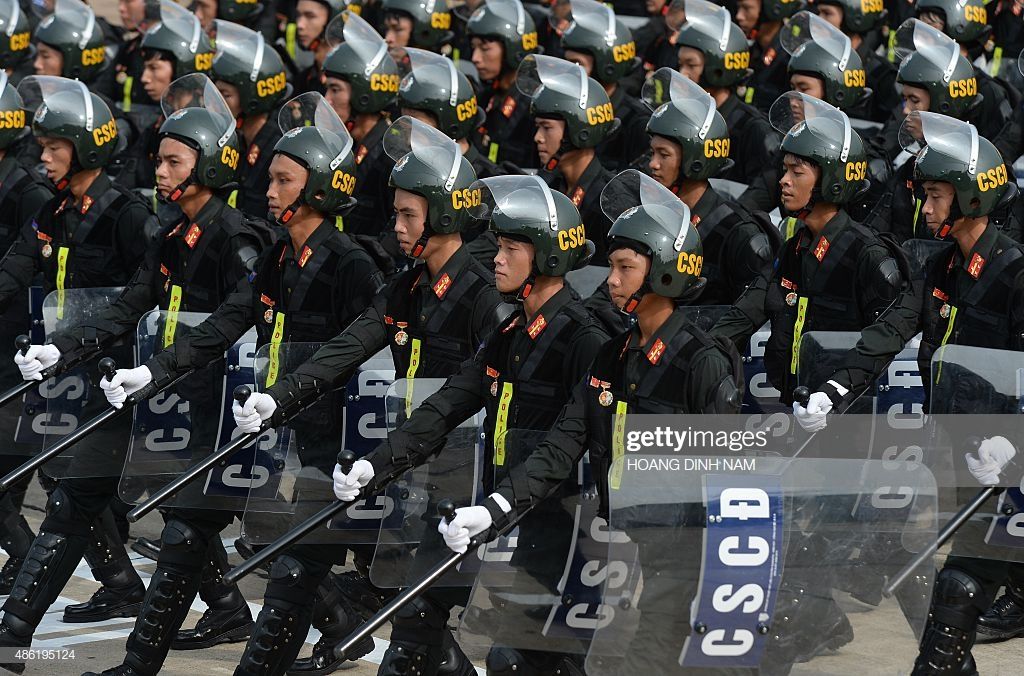
    In a particularly damaging day for Vietnamese dissidents, six individuals were sentenced to a total of 26 years in prison for opposing the Vietnamese Communist Party (VCP) and the Socialist Republic of Vietnam (SRV). The convictions on November 26, 2019 bookend an active month for Vietnamese security forces, who have arrested and convicted numerous individuals for their on- and offline “anti-state” activities.

    Nguyen Chi Vung, 38, was sentenced to six years in prison by a court in the southern Mekong Delta province of Bac Lieu. Vung was convicted under Article 117 of the 2015 Penal Code for “Making, storing, distributing or disseminating information, documents and articles against the SRV”. According to Reuters, Vung had “held 33 livestream sessions on Facebook ‘to share distorted information’ and ‘encourage people to participate in protests during national holidays’”.

    Pham Van Diep, 54, was convicted under the same article, with a north-central Vietnamese court in Thanh Hoa sentencing him to nine years in prison and five years probation. His indictment stated that he had a nine-year history of expressing online dissent and that he made frequent Facebook posts criticizing the VCP leadership and SRV policies. According to Tuoi Tre newspaper, he had previously printed and distributed anti-SRV flyers in the Lao capital city of Vientiane. On June 28, 2016, Diep was arrested by Laotian authorities, tried in February of 2018, and sentenced to 21 months in prison for “using the territory of the Lao People’s Democratic Republic to oppose neighboring countries”. Lao authorities took him to the Vietnamese border one month after his trial, where he was allowed to re-enter Vietnam.

    In Dong Nai, a province bordering the southern hub of Ho Chi Minh City, four individuals were convicted under Article 118 for “Disruption of security”. According to Vietnamese Human Rights Defenders, “[t]he four convicted were arrested on April 25, 2019, for their intention to participate in a peaceful demonstration scheduled on April 30 to mark the 34th anniversary of the fall of the US-backed Saigon regime”. Vo Thuong Trung, 42, and Doan Viet Hoan, 35, were each sentenced to three years in prison, while Ngo Xuan Thanh, 49, and Nguyen Dinh Khue, 41, each received 28 months.

    The convictions of these six individuals in one day comes a little over a week after 43-year-old music teacher Nguyen Nang Tinh was sentenced to 11 years in prison and five years house arrest for violating Article 117. According to his lawyers, a Facebook account making anti-SRV posts used the same name as their client. However, they said the account did not, in fact, belong to him. Tinh was arrested May 29, 2019 and convicted on November 16 in the north-central province of Nghe An.

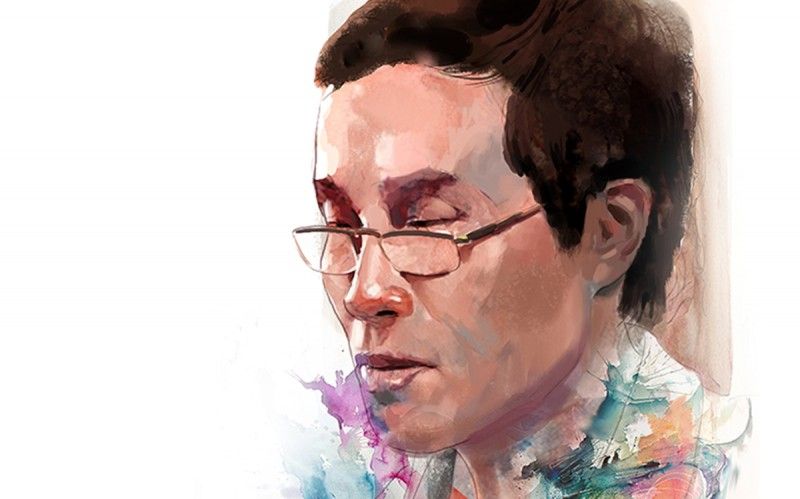
    Last week also saw the high-profile arrest of Pham Chi Dung, a journalist with a doctorate in economics, and a founding chairman of the Independent Journalists Association of Vietnam. Dung, 53, is a former VCP member and is known for his incisive political and economic critiques of both the VCP and SRV. He has written for Voice of America, BBC, Radio Free Asia, NBC News, Nguoi Viet, and Asian Nikkei Review.

    Dung’s arrest has been noted by the European Union and condemned by Reporters Without Borders, who hailed him as “an outspoken Vietnamese journalist and leading press freedom defender who for years has been trying to help create an open and informed civil society in Vietnam that is not controlled by its Communist Party.” He is currently being held at the Phan Dang Luu Detention Center in Ho Chi Minh City, one of two centers in the city where political dissidents are usually held while they are being investigated (the other being Chi Hoa Prison). He faces up to 12 years behind bars.

    Although freedom of speech, press, and assembly are all guaranteed by Article 25 of the 2013 Vietnamese Constitution, the SRV is a one-party, authoritarian state that does not tolerate challenges to its power. It routinely arrests and convicts activists under Articles 117 and 118 of the penal code, as well as Article 331, which cites  “Abusing democratic freedoms to infringe upon the interests of the State”. Such broadly defined articles are regularly used as a catch-all to target citizens who criticize the VCP or demand political reform. The SRV has long claimed that it does not jail prisoners of conscience, only individuals who violate the law. Human rights groups say the two are not mutually exclusive.

    Addendum: On November 28, 2019, two more individuals in Dong Nai were convicted under Article 117. Huynh Minh Tam, 41, and his sister Huynh Thi To Nga, 36, were sentenced to nine and five years of prison, respectively, for making Facebook posts critical of the SRV.

  • Imprisoned Dissident – Anh Ba Sam – Encountered Odd Events Before Release Date

    Imprisoned Dissident – Anh Ba Sam – Encountered Odd Events Before Release Date

    Journalist Nguyen Huu Vinh (whose pen name is Anh Ba Sam) faced quite a few peculiar encounters in Prison Center Number 5, Yen Dinh district, Thanh Hoa province in recent months.

    According to Le Thi Minh Ha, his wife, on December 9, 2018, a man in a police uniform came to visit Vinh in his prison cell and spent an hour and a half talking to him. At the end of their conversation, the man left behind an envelope full of money and told Vinh that after his release from prison he should support To Lam, the current minister of public security – the national police force in Vietnam.

    Mrs. Ha told Luat Khoa magazine: “My husband recounted the story to me when I visited him. Neither one of us could grasp what was happening. Who was this man and who had directed him to do such a thing? Was he someone who works for To Lam or someone who wanted to harm To Lam? Nevertheless, it could also be intimidation. We think we should publicize this information to protect Vinh.”

    Both Ha and Vinh went to college with the current Minister To Lam in the 1970s, where all three were studying at the People’s Security Academy. This school is where the Vietnamese government trains its future secret police force officers.

    Vinh was arrested on May 5, 2014, and at the time, To Lam was the vice minister of the Ministry of Public Security (MPS). He was held in pre-trial detention for almost two years before being convicted of “abusing democratic freedoms to infringe upon the interests of the state, the rights and interests of other entities and citizens,” and sentenced to five-year-imprisonment on March 23, 2016. Before his arrest, he was the owner of the blog site Anh Ba Sam – one of the most famous online newspapers in Vietnam during the past few years.

    Another event – which also caused Ha to have more concerns over her husband’s safety – happened on January 27, 2019, the day of her monthly visit to Prison Center Number 5.

    She stated that one prison guard had requested to meet her in private and told her: “On the release day (which will be May 5, 2019), if there are only family members then the center will process the paperwork and release him at the gate of the prison. If there are other non-family members accompanying (you), carrying banners and posters with them, then the prison center will take Vinh to a remote area and leave him there by himself.”

    “On March 4, 2019, my husband called me from the prison center in accordance with the monthly allowance of five-minute-phone calls, where he told me that the same prison guard met with him again in private and told him the same thing,” Ha informed Luat Khoa magazine.

    Mrs. Ha had already sent a letter of complaint to Prison Center Number 5 on February 1, 2019, to report the previous incident. She received a response dated February 25, 2019, which insisted that no prison guard had communicated any such content to either her or Vinh at the center.

    Luat Khoa indicated that its reporter contacted the prison center with the number Ha had provided in April 2019, but the person who answered the phone refused to acknowledge the name of the alleged prison guard. Instead, he stated that the name belongs to someone who lives near the prison center. When the Luat Khoa reporter pressed for the current condition of Nguyen Huu Vinh, the person then said he did not know.

    Mrs. Ha had also lodged complaints regarding the threat to release Vinh in a desolate area with Minister To Lam, Prime Minister Nguyen Xuan Phuc, the National Assembly Judicial Committee and its Chairwoman Nguyen Thi Kim Ngan, as well as Ho Thanh Dinh – The head of the Prison Management Bureau. However, all of her complaints eventually were passed down to Prison Center Number 5 to resolve.

    “The person who threatened me and my husband was an officer at Center Number 5, and if all of my complaints were making their way back to this same place, then it would be meaningless. Both of us are feeling anxious and scared now that they (the prison guards) might try to harm Vinh one way or another,” Ha said.

    On March 4, 2019, she also sent a letter to an alumni group consisting of her and Vinh’s former classmates at the People’s Security Academy, to suggest that if any one of them is going to accompany her on his release day, then please don’t bring any banner or poster so that they would be “in compliance with” the prison center’s request.

    *** This story was first written in Vietnamese by Tran Ha Linh for Luat Khoa magazine on April 12, 2019. The Vietnamese has reviewed all of the complaints and letters which Mrs. Ha submitted and the official reply from the prison center. But because we only received information from Mrs. Ha, we decided at this time not to reveal the names of the prison guard or of the man in police uniform mentioned in this story.

  • Exploring Tam Dao National Park, Group Of Vietnamese Youths Robbed And Beaten By Unknown Men

    Exploring Tam Dao National Park, Group Of Vietnamese Youths Robbed And Beaten By Unknown Men

    “My body crumbled because of the pain, but this group of strangers continued to beat me while using words to taunt me: ‘Aren’t you scared now, Hung? Don’t you care about your friend, dear?’”

    In a Facebook’s post, the victim, Ta Manh Hung, recounted the horrible experience that he and four of his friends encountered on the evening of April 6, 2019, on Tam Dao mountain.

    The group was traveling together that weekend, hoping to explore one of Vietnam’s most praised national parks and its rainforest, located in Vinh Phuc province near Hanoi. Prepared to spend the night at a camping grounds inside the forest, yet halfway to the destination, their journey was abruptly cut short when about a dozen strangers, all males, surrounded the group. The men then proceeded to use force to tie each of the youngsters to a tree stump about 20 meters apart and then they assaulted them.

    The ordeal lasted for a couple of hours until nightfall, and when the weather began to get cold in the forest, the assailants decided to take off. They left the victims still tied up and took all of their personal property, including their mobile phones, cameras, watches, Kindles, back-up chargers, and the wallets that contained their identification papers.

    Cold, scared and beaten, these youngsters, however, were able to use their teeth to slowly untie each other. Afterward, they managed to go to the nearby Tay Thien Pagoda to seek refuge for the night. The next day, local people helped them report the incident to the police of Tam Dao district.

    The group’s violent encounter was first reported on Facebook in Vietnam last week. As it went viral, the public started to demand answers from the local authorities, prompting the mainstream media also to cover the story. In an interview with Nation (Tổ Quốc) newspaper, the police of Vinh Phuc province stated that they took the incident seriously and that they would handle it according to the law and regulations.

    The public’s anger, however, may also be explained by the fact that Tam Dao national park has attracted the concern of many in recent months. Vietnamese people were wary that an ongoing development project, being constructed in the center of the rainforest might destroy its natural landscape and ecosystem.

    A little more than three months ago, there were reports that Tam Dao’s primary rainforest and its diverse fauna and flora were under threat of environmental destruction.

    Sun Group – one of Vietnam’s largest real estate developers – together with the government of Vinh Phuc province had initiated the construction of a resort in the middle of the national park. While the developers insisted that they were building an “ecotourism” project, environmentalists in the country decried the idea, stating that it would cause irreversible damages to the hundred-million-year-old rainforest’s ecosystem.

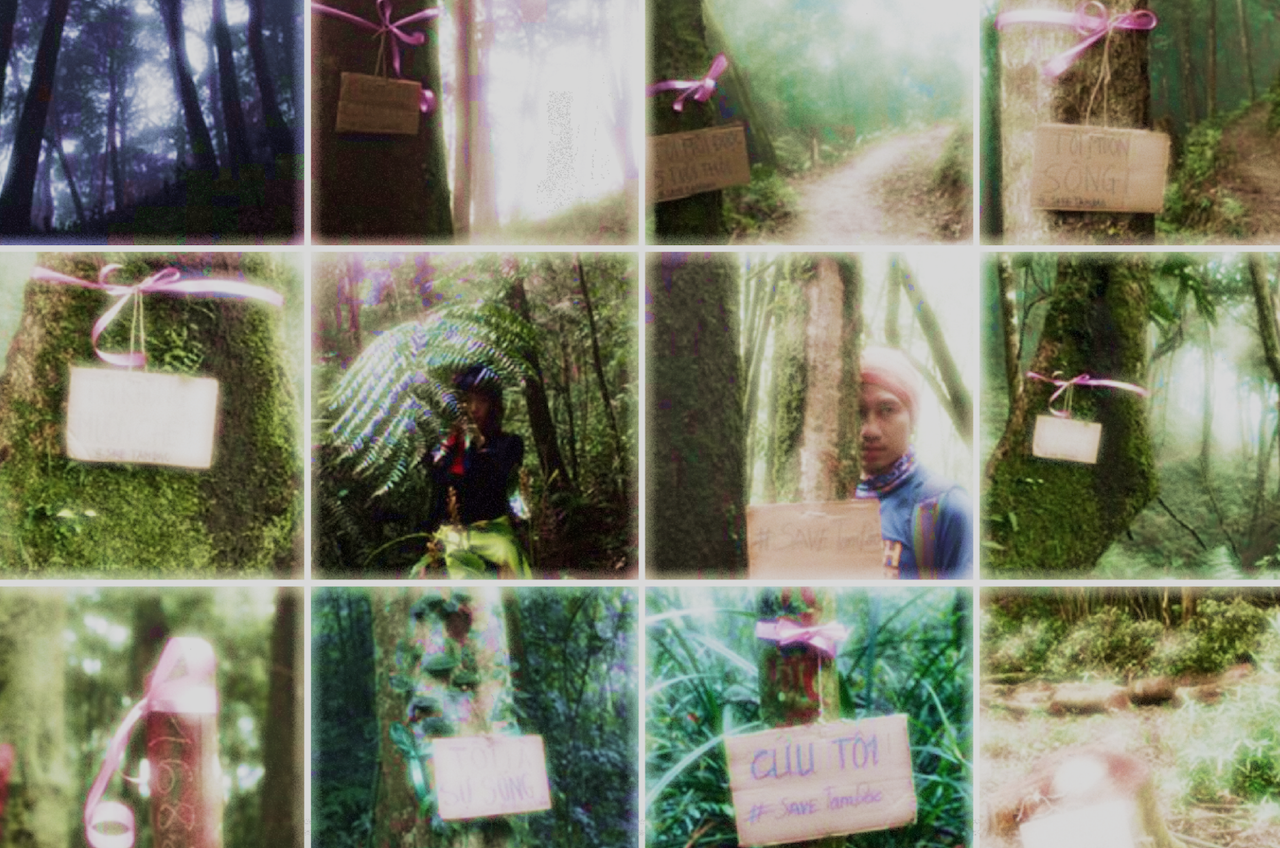
    A Facebook group called Save Tam Dao started to document the current stages of theSun Group development project. It also called on others to join in and save the rainforest. Save Tam Dao has received quite a lot of support from Facebook users in Vietnam, especially among the younger generation.

    Last month, together with other environmental activists and organizations, this group also initiated an online petition with Avaaz.org, calling on the Ministry of Natural Resources and Environment to publicly reveal the project’s Environmental Impact Assessment.

    Groups of youngsters have also started to travel more frequently to Tam Dao to take pictures of nature’s beauty. Some of those pictures, however, also showed the devastating damage that the resort’s development project had created thus far.

    Hung’s group attempted to do the same thing during the previous weekend: travel to Tam Dao and explore the rainforest’s beauty. But its members tragically had a terrorizing encounter where they were robbed and assaulted.

    It was, however, quite peculiar that the attackers also forced the group to give up the passwords of their phones. Once able to gain access, they then immediately began reviewing all of the stored messages and photos at once.

    Hung was the only one that had refused to give up his passwords. As he later stated, he did not want unknown strangers to intrude on his privacy. The moment he did not comply, his suffering increased. These men tied him up, covered his head and beat him for hours, trying to get him to give up the password.

    Irritated by his continuing refusal, the assailants threatened to plant drugs on his body and report him to the police. Then, they carried him up, still with his head covered, and told him that they would throw him down the abyss. Seeing Hung did not respond to the threats, they started to put various types of insects inside his clothes to let them bite him. To prevent others from hearing his screams, they stuffed Hung’s mouth with some handkerchief.

    What was so important that the assailants were willing to use such tactics to gain access to Hung’s phone and would even use torture to get it? We may have to wait for the police investigation report to find out more.

    This latest attack, however, raised many questions about public security and safety in the area. Tam Dao is a national park; it belongs to all of the people, and all of its people should be able to enjoy its beauty safely. But right now, it seems that not only the rainforest at Tam Dao is crying for help but so are the ones who love it.

  • Vietnam Accused “Hostile Forces” Of “Abusing” Ba Vang Pagoda Story. What Is Ba Vang?

    Vietnam Accused “Hostile Forces” Of “Abusing” Ba Vang Pagoda Story. What Is Ba Vang?

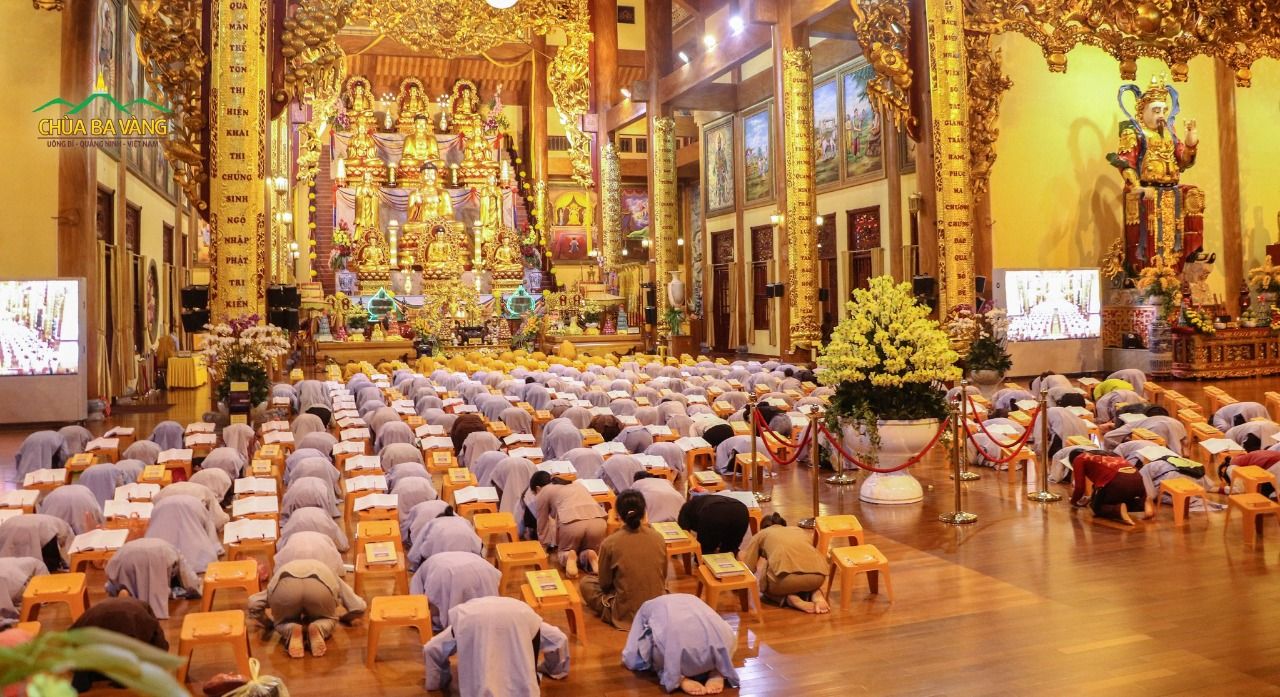
    A number of Vietnam’s state newspapers simultaneously began reporting on an almost identical story in late March 2019. They all accused “hostile forces” of “abusing” the Ba Vang Pagoda Incident to “promote, incite, and entice the people, monks, and Buddhists to fight against the government, generating divisions of religious unity.”

    Such strong words came from an article printed on April 1, 2019, by the VTC News (Vietnam Television Corporation), one of the Vietnamese Communist Party’s largest mouthpieces, which further announced:

    “The hostile forces changed information as a plot to distort the freedom of religion situation in Vietnam.”

    The Ba Vang Pagoda Incident was just the latest addition to the laundry list of accusations made by the Vietnamese government against “hostile forces” over the years. Often, it would accuse them of taking advantages of social problems in Vietnam to incite the public and created friction between the state and its people.

    But what happened at Ba Vang Pagoda? What is this place?

    Why do both the Vietnamese government and its people care so much about it recently?

    Ba Vang is a Buddhist temple in Quang Ninh Province, and Abbot Thich Truc Thai Minh belongs to the Vietnam Buddhist Sangha (VBS). The VBS is the only Buddhist Sangha recognized by the Vietnamese government, and it is also a member of the Vietnamese Fatherland Front, an umbrella group of mass movements in Vietnam aligned with the Communist Party of Vietnam.

    Earlier in March 2019, some video clips of a Buddhist follower named Pham Thi Yen preaching in front of thousands of people in Ba Vang Pagoda spread rapidly on Facebook and other social media platforms.

    One clip shows Mrs. Yen discussing the case of a female student who was gang-raped and murdered while on her delivery route earlier this year. Yen explained that the killing was due to the deceased’s evil karma, which she said the deceased had sown in her past life, and for which she must suffer retribution this life. Her speech had angered the entire nation.

    Then, on March 20, 2019, an investigative report in the Lao Dong newspaper entitled “Spreading the dead soul’s vengeance, Ba Vang Pagoda earns tens of millions of US dollars every year,” fueled even more public backlash against the pagoda. The article alleged that religious leaders at the pagoda were performing superstitious activities, such as offering to eliminate bad luck for a large sum of money from its followers.

    Members of the Ba Vang Pagoda preached that all troubles in life sprang from the ghosts of many previous lives before who follow the people until this life to seek revenge for past misdeeds or grudges. If one “wants to be forgiven,” he or she then must “offer money to the ghosts” which they could do it by donating money to Ba Vang.

    On social media, people began to investigate Abbot Thich Truc Thai Minh and his past. In Vietnam, there has always been strong speculation among the public about the entangled, secretive relationship between the Party and the VSB, where high ranking monks and abbots have been elected to the National Assembly, held governmental posts, and have always spoken in support of the VCP.

    The social backlash and public anger towards the Ba Vang Incident prompted a quick reaction from both the government and the VSB. Multiple ministries issued urgent orders to investigate the matter, and the VSB announced that it had disciplined Ba Vang’s abbot.

    But the people refused to let the story de-escalate. Indeed, more and more netizens dug up past videos and pictures Ba Vang had previously used as infomercials. Photos of past and present leaders, such as Prime Minister Nguyen Xuan Phuc, who was shown walking hand in hand with Abbot Thich Truc Thai Minh spread like wildfire on Facebook.

    Facebook users went further and started to suspect openly that the Ba Vang Pagoda Incident was indeed an internal fight between high ranking officials in Vietnam whose business interests had collided. It has been an old rumor among Vietnamese people that some of the large and well-constructed pagodas in the country were places where illegal money laundering activities took place, involving many of the VCP’s officials.

    Some well-known Facebook commentators continued to question the incidents at Ba Vang Pagoda, asking: who had approved the construction and operation of the pagoda, whether it was legal to ‘collect money for superstitious activities,’ who was behind all these activities.

    And as the people continued to probe, the government turned to an old trick, blaming “hostile forces” for the ongoing controversy.

    In the past, the government had accused “hostile forces” of being behind the fight against the operation of illegal BOT toll booths. The protests in June 2018, where thousands of people rallied against the Special Economic Zones and the Cybersecurity law, were also supposedly incited by such forces, according to the state.

  • Vietnam Continues To Violate People’s Rights After Human Rights Dialogue With EU

    Vietnam Continues To Violate People’s Rights After Human Rights Dialogue With EU

    Less than a day after the Human Rights Dialogue between the European Union and Vietnam on March 4, 2019, was conducted, the Vietnamese police continue to commit blatant violations of the people’s rights.

    Two hours ago, the police came and arrested one of the active members of a group consisting of concerned citizens who have been fighting against what they alleged as illegal activities associated with the BOT (Build-Operate-Transfer) toll booths across Vietnam.

    Ha Van Nam, the victim, posted on Facebook that the police came and searched his house. Later, other Facebookers cited his wife’s statement to confirm his arrest.

    Ha Van Nam was viciously beaten up by men in plainclothes back in January 2019 whom he alleged that they were plainclothes officers. He suffered two broken ribs and other injuries. The perpetrators later threw him at the front gate of Dan Phuong hospital in Hanoi.

    Today, his last post on Facebook stated that the police came to his house and alleged that he committed the crime of “inciting public disorder.”

    “Inciting public disorder” is a crime that has been routinely used against activists and protestors in Vietnam in the most arbitrary manner.

    Often, the government would accuse anyone of committing this crime when they participate in any civil disobedience act.

    Journalist Pham Doan Trang wrote on her Facebook this morning after the incident went viral on social media:

    “Upon the arrest today of driver Ha Van Nam for ‘disrupting peace,’ once again, we highlight that it is time the Vietnamese government immediately decriminalizes and depoliticize civil affairs. We firmly believe that government-endorsed violence with impunity can only lead to more violence in society.”

  • English Speakers In Vietnam Got A Taste Of Censorship Over An Article On Pollution

    English Speakers In Vietnam Got A Taste Of Censorship Over An Article On Pollution

    February 20, 2019, a few foreigners living both inside and outside of Vietnam were sharing the news that an English article published on the site VN Express was taken down before they could read it.

    Some of them suspected that it was the state’s censorship or even the beginning of the enforcement of the new cybersecurity law.

    As of press time, still, the link is not working.

    The article was about the lone man’s trip across the country of a Vietnamese photographer, Nguyen Viet Hung, to raise awareness on marine pollution in Vietnam using what he knows best, photography.

    The story of Hung was becoming quite popular in Vietnam during recent days.

    He is a well-known photographer whose trip was published on social media and a few newspapers, including one that is under the ownership of the Ministry of Public Security, Cảnh Sát Toàn Cầu online (Global Police Force).

    The 3,260 km long journey, dubbed “The Green Journey” on social media, was documented by Hung and his photography skills

    He began his trip in August 2018.

    Along the way, he was documenting the danger of improper waste disposal, especially plastic waste, and its effects on the environment.

    There was an incident where Hung said he felt scared for his life when taking a picture of a truck dumping trash into the ocean because he thought the truck driver was calling more people to come over and intimidate him.

    The story was well-received by the public because it raised concerns over an urgent matter that all Vietnamese people face daily: how to deal with garbage disposal in the country.

    Marine pollution and pollution, in general, have gained more attention among the public because the amount of trash being disposed in Vietnam on a daily basis is quite alarming.

    In 2018, Vietnamese people became even more concerned when a report placed their country among the top five ocean polluters regarding plastic waste became viral.

    Like many other censored topics in Vietnam, we could never fully understand why an article suddenly becomes “unavailable” when the web link stops working.

    One may suspect that it was because the story placed equal responsibility on both the people and the state for marine pollution, where the failure of the garbage disposal system in Vietnam played a significant role.

    Hung said in one of the Vietnamese articles, that while at Sa Ky Harbor in Quang Ngai Province, it was impossible for him to find a garbage can. As the result, all local residents living in the area would dump their trash directly into the waters which they also use for bathing and consuming.

    Regardless of the reason, Nguyen Viet Hung’s photographs bring about a reality that both the Vietnamese people and their government must face: marine pollution in Vietnam is a code red issue where drastic measures, as well as immediate behavioral changes, must happen now.

    Hung had put this succinctly in the only paragraph left from the taken-down article:

    The farther I went, the more I realized that the environment in general and marine environment in particular of our country are being seriously destroyed. Most people are not aware of the scale of the problem, and this should change, Hung said.

    A few photographs from Nguyen Viet Hung’s trip:

    Plastic rubbish filled the land near a market place in Tuy Phong, Binh Thuan Province. Photo Courtesy: Nguyen Viet Hung.
    Lacking proper garbage disposal, people dumped their trash directly into the ocean. Photo courtesy: Nguyen Viet Hung.
    Children were playing near a creek filled with garbage. Photo courtesy: Nguyen Viet Hung.
    A child was picking up near the seashore. Photo courtesy: Nguyen Viet Hung.
  • Vietnam, Where A Folk Hero And His Incense Burner Became A Political Dilemma

    Vietnam, Where A Folk Hero And His Incense Burner Became A Political Dilemma

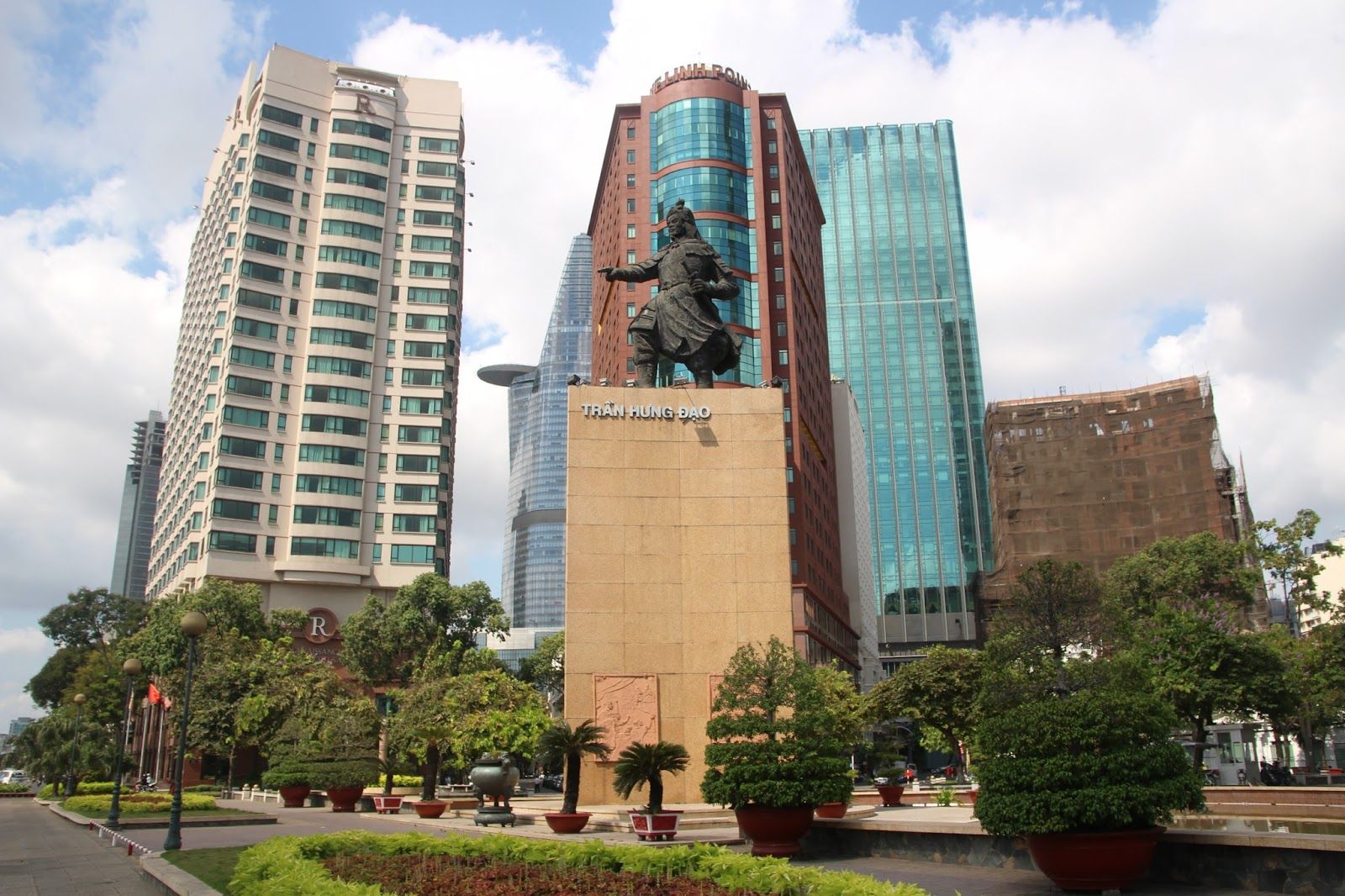
    Some Vietnamese had sarcastically joked in the past few days that the “spirit” of Grand Lord  (in some other translations, Grand Prince) Tran Hung Dao (1228-1300 AD), a General of the Tran Dynasty (1225-1400AD), just became the country’s newest victim of injustice due to the forced removal of his property.

    Three days ago, the giant incense burner which has been placed in front of the Tran Hung Dao statue during the last five decades was suddenly removed by the city on February 17, 2019.

    Taking away the incense burner could be seen as an inexcusable behavior in a society where veneration of ancestors and past national heroes still plays a significant role in the people’s beliefs and religious practices.

    The decision indeed has caused an angry storm that swept across Facebook in Vietnam with no signs of slowing down, despite the following explanation offered by the city’s officials.

    The incense burner suddenly became a political dilemma for the Vietnamese Communist Party’s leadership in Ho Chi Minh City.

    Tran Hung Dao, whose real name was Tran Quoc Tuan (Hung Dao was his posthumous title), probably is the most revered General in Vietnamese history.

    His statue has stood tall at Bach Dang Pier of Saigon River, in Ben Nghe Ward, District 1, Ho Chi Minh City, untouched since 1967.

    To pay respect to Tran Hung Dao, people would come, burn incense, and put them in the giant incense burner in front of the statue.

    During certain commemorating events, some people also come to the location and burn incense.

    In the morning of February 17, 2019, however, the top leaders of Ho Chi Minh City allowed a forklift to come and remove the giant incense burner that had been part of the statue since it was first installed.

    The timing of the removal was probably the most insulting factor, according to those who were offended by it.

    February 17, 2019, marked the 40th commemoration of the Vietnam-China Border War which lasted over a decade. Vietnam claimed the loss of over 60,000 lives from just between February 17, 1979, to March 4, 1979.

    Vietnamese people revered Tran Hung Dao as a folk hero because he represents the people’s resistance against China’s aggression.

    For generations of Vietnamese, regardless of religious background, Tran Hung Dao was a Sage who had saved the country and its people three times from the Mongols and the Yuan Dynasty which ruled over China and a vast territory in Asia and Europe during the 13th century. His statute had risen to the level of a deity that people worship with the deepest respect.

    Known for his military skills during the battles on waters in ancient time, the modern Vietnamese saw him as the protector of their naval forces. The pier where his statue locates also got named after his famous battlefield: Bach Dang River.

    At a time when China has become more aggressive in the South China Sea, any signs of remote disrespect to Tran Hung Dao could cause an uproar among the Vietnamese people, and this time, it certainly did.

    During the last three days, social media in Vietnam was full of posts and comments about what happened to the Grand Prince Tran’s statue. They range from satire, criticism, to even cursing at the decision makers. All major newspapers in the country also wrote about the story.

    Adding oil onto the fire, however, more people became upset when the Secretary of the VCP’s Division in District 1 of Ho Chi Minh City – Tran Kim Yen – explained to the media about the city’s decision on February 18, 2019.

    According to Ms. Yen, proper worshipping activities should be done at temples and pagodas. The city had decided that the incense burner should be at the Tran Hung Dao Pagoda in Tan Dinh Ward, so they removed it and placed it at the “appropriate” location.

    Many people were not satisfied with the decision, especially when it was unilaterally decided by the officials without public consultation.

    Opponents of the decision quickly pointed out that there is an incense burner at the King Ly’s statue in Hanoi where top VCP’s leaders come together and burn incense to pay respect during the Lunar New Year every year.

    They also posted pictures of incense burners standing in front of many statues of Ho Chi Minh across the country to dispute the official’s explanation that worshipping activities could only be done in temples and pagodas.

    Some people – like dissident attorney Le Cong Dinh – questioned the fact that the explanation came from a leader of the VCP, and not from the administrative branch of the government. He also initiated an online protest, requesting the city government to put back the incense burner.

    Not forget to mention, the night before the removal, social media in Vietnam was circulating a document stamped “Secret,” allegedly coming from the VCP.

    The document requested that the local authorities must stop self-organized groups from organizing any events to commemorate February 17, 1979, at the statue’s location.

    The removal of the incense burner created an ongoing discontentment among not only the residents of Ho Chi Minh City but the Vietnamese people at large, where they raised questions about the ability to lead of the VCP’s officials in Ho Chi Minh City.