Tag: COVID-19

  • Why Did The Vietnamese Communist Party Militarize Its Fight Against COVID-19?

    Why Did The Vietnamese Communist Party Militarize Its Fight Against COVID-19?

    When the Ho Chi Minh City authorities decided to deploy troops to enforce an antivirus lockdown during the last week of August 2021, they caught local people off guard.

    The move, which came amid the rise in both Covid-19 infections and deaths in the city, has been seen as the last strategic card adopted by the Vietnamese government in its arduous and yet controversial battle to “defeat the virus.”

    According to state media, military troops will help enforce the lockdown until September 15, taking on the duty of barring people from going outside and providing necessities to quarantined residents.

    However, this has brought little peace of mind to local communities.

    Despite firm reassurances from the local government that military troops would take on the duty of buying and delivering food during the quarantine period, panic buying broke out even before the lockdown, while several opinions circulated on social media cast doubt that the preliminary action was to quell potential riots.

    Since the beginning of Covid-19, military-style rhetoric against the disease has appeared frequently in Vietnam’s state-run media and newspapers.

    Some might argue that these grandiose war-like bombasts and military mobilizations are not exclusively confined to Vietnam. Still, given the country’s authoritarian political landscape where speech is often suppressed and orders arbitrarily passed, these have been abused by the Communist government to spread propaganda and shirk off the responsibilities for its failure to handle Covid-19.

    Military rhetoric

    Vietnam has used military rhetoric since the early phase of the pandemic, with the flashy anti-coronavirus slogan of “fighting the virus as if we are fighting an enemy.” Depicting coronavirus as “an invader,” Vietnamese officials announced a war on the disease, vowing to “defeat” it through drastic operations and comprehensive “tactics.” [1]

    In Vietnam’s epidemiological “war,” each person is portrayed [2] as “a soldier.” Each family is “a fortress” in fighting “an invisible enemy,” [3] namely Covid-19. Healthcare workers have been zealously described as “superheroes,” [4] while infected patients are “subjects” [5] who need to be “swept out” [6] of the community.

    Last year, in June, when the Communist country successfully contained the first wave of infections and maintained a zero death toll, its leaders declared “a victory” [7] in the battle against Covid-19. Its success, said [8] the deputy prime minister, was primarily thanks to “the leadership of the Party, the state and the entire political system.”
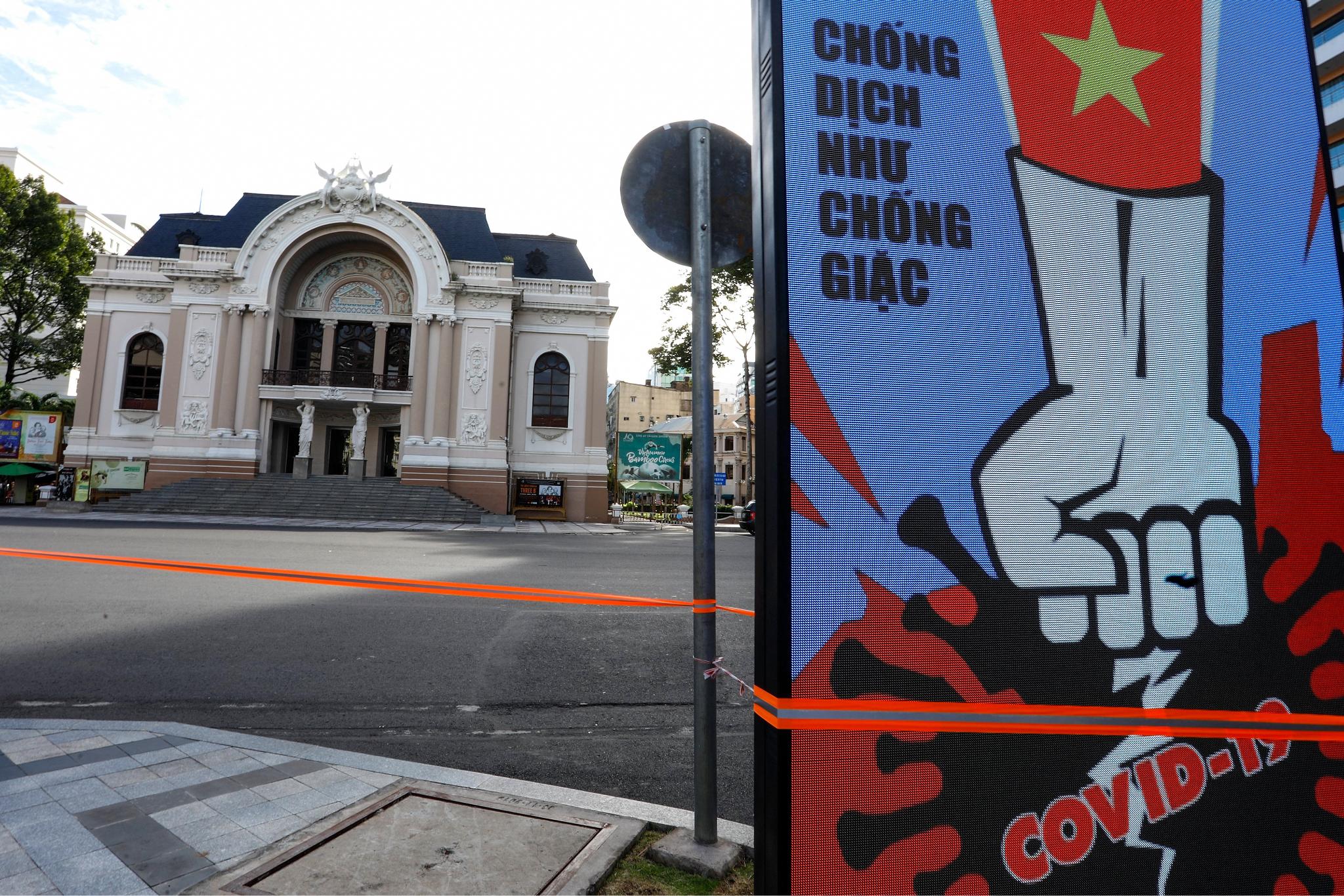
    “Fighting the virus as if we are fighting an enemy,” a street board displaying Vietnam’s anti-coronavirus slogan. Photo: AFP.

    Looking from the historical perspective, the Vietnamese Communist Party has since boasted about its significant role in defending its independence from French colonialism and American imperialism.

    Likewise, the warlike discourse on the coronavirus disease is nothing but a manipulative tactic utilized by the Communist Party to spread propaganda and reinforce its “legitimate” reign on every aspect of Vietnamese society. By intertwining the use of military rhetoric and the country’s previous military victories, the propaganda department has maneuvered the public into believing that the war against Covid will prevail under the Party’s leadership, just as has happened in the past.

    The battleground

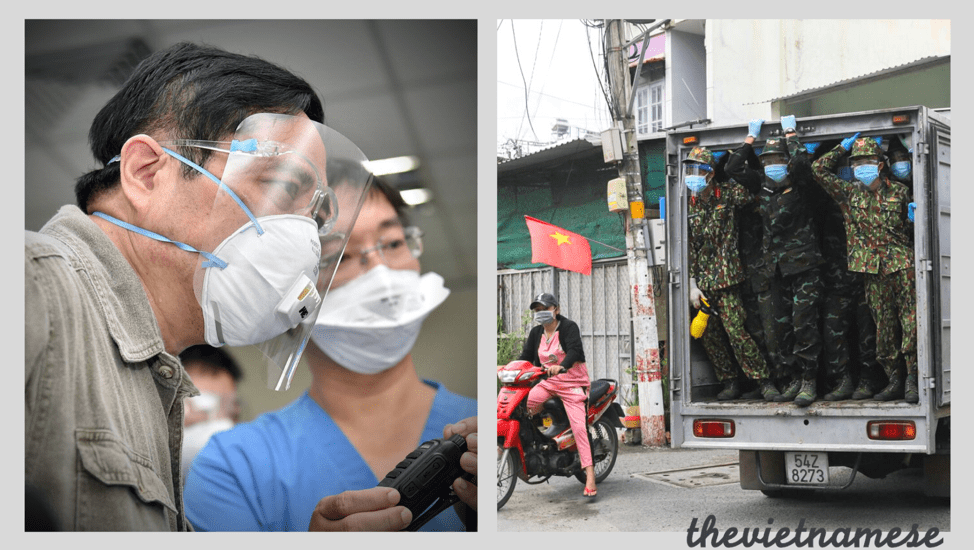
    While the political rhetoric has dominated Vietnam’s state-run newspapers, a military mobilization is simultaneously taking place in real life.

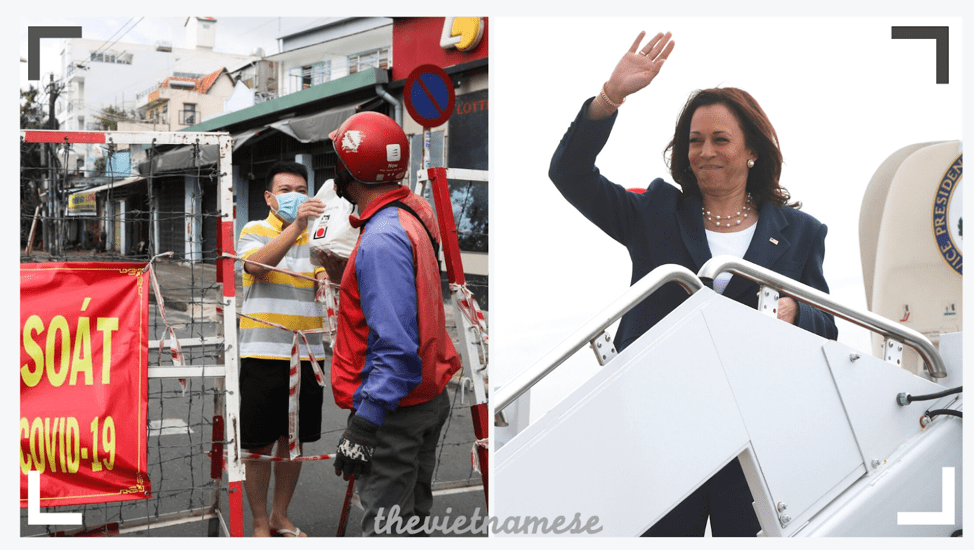
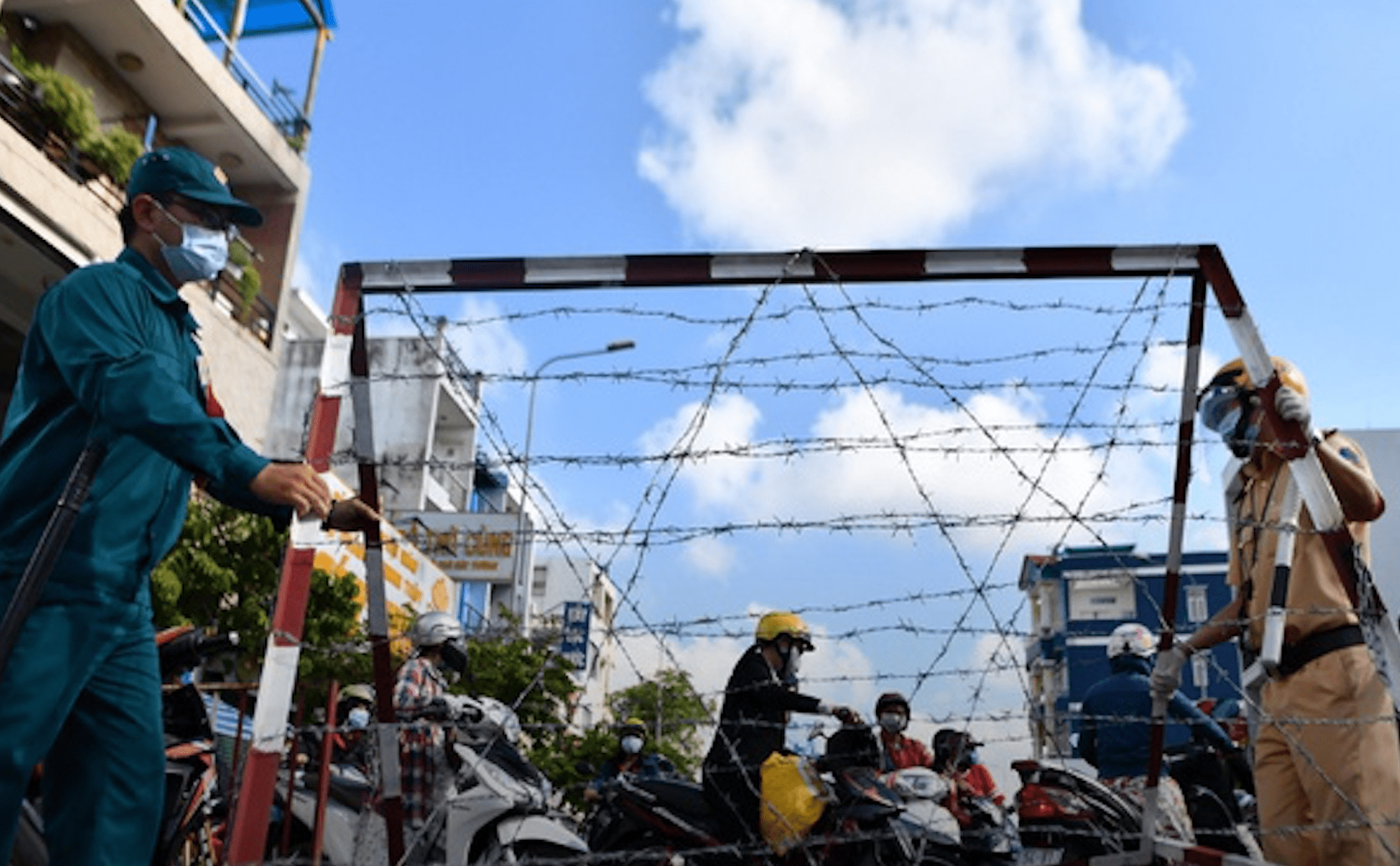
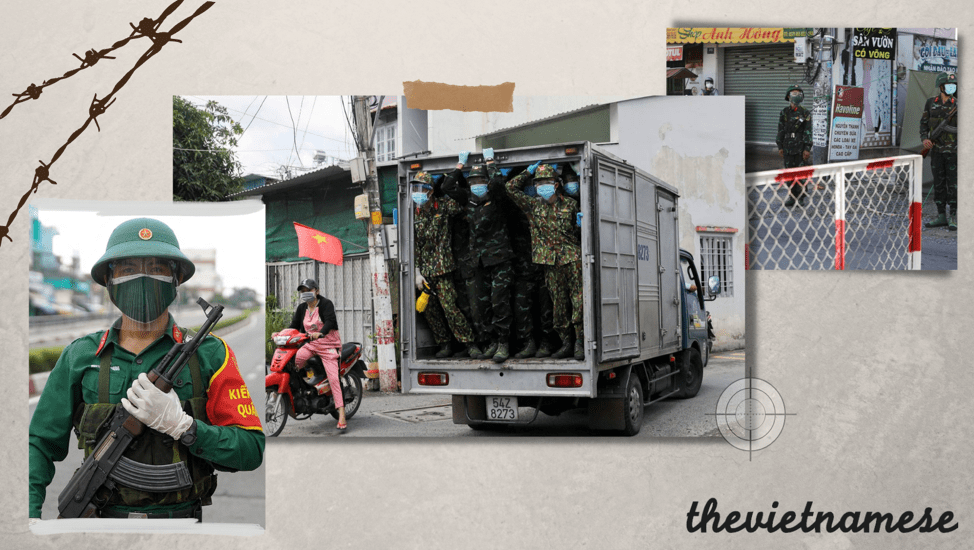
    Since August 23, military troops carrying rifles have been present at roadblocks in Ho Chi Minh City. These soldiers have been tasked with checking commuting permissions or delivering food and medicine to local households. The government called in the military to enforce the policy adopted by the city authorities to limit unnecessary movement to help curb the spread of the infection. Meanwhile, a comprehensive propaganda campaign [9] has been implemented to sway public opinion into supporting this strategy.

    Almost a week later, as many expected, the army mobilization program began to expose its incompetence and proved ineffective in relieving the burdens of maintaining a stable food supply delivery to Ho Chi Minh City’s citizens. In reality, substantial shopping demands from customers overloaded the capacity of the army’s workforce, causing essential goods to be congested and accumulated at the supply center; at the same time, Vietnam’s daily Covid-19 confirmed cases continue to reach new milestones [10], nearly every passing week.

    The failure of this policy eventually compelled local authorities to discontinue the program, allowing [11] delivery drivers to carry out their everyday operations.
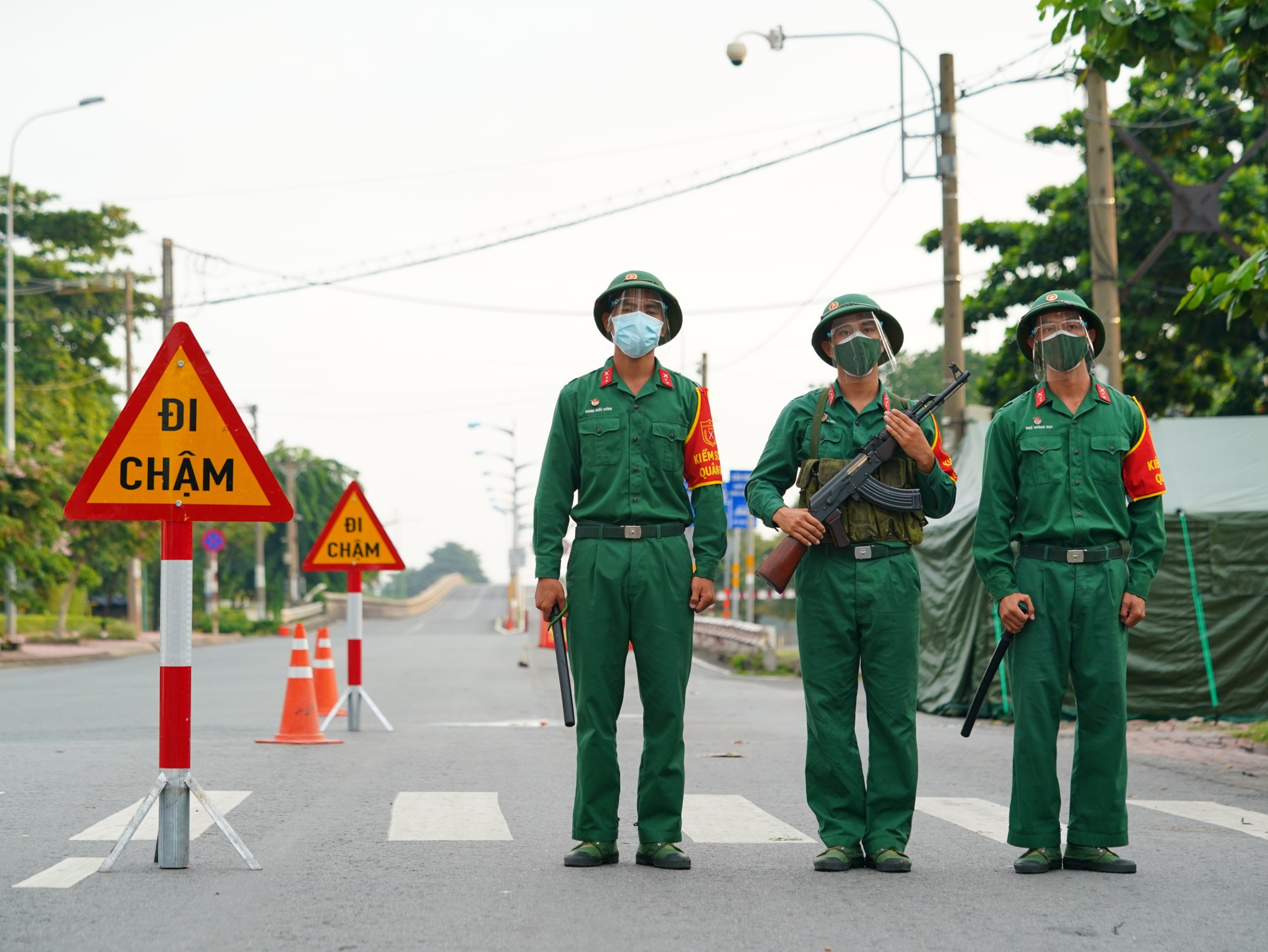
    Soldiers with rifles and batons guarding roadblocks in Ho Chi Minh City. Photo: Doc Lap/ Thanh Nien Online.

    So why did the Vietnamese authorities still proceed to implement this strategy, as, from the beginning, it had been proved to be inefficient?

    The idea of utilizing military force to solve the problem by enforcing stringent lockdowns is also widely supported by pro-government critics on social media. In explaining the failures of Vietnam’s anti-coronavirus strategy, they argue, it is due to the lack of city residents’ discipline in complying with health guidelines, not from the state’s inefficient policies in handling the pandemic. And imposing stricter measures, such as conducting a martial-style intervention, could help improve the ongoing situation.

    According to Huynh Cong Duong, [12] a writer for Luat Khoa Magazine, this tumultuous circumstance represents an underlying effort by the Vietnamese government to shift the blame to citizens. The consequence of this blame-shifting mindset, Huynh Cong Duong concludes, might “pose a significant threat” to civilian efforts on public issues, such as health and social security and the future of policy building in the country.


    As the aggressive hyperbole and military approach appear to be of little help, the Vietnamese Communist Party has to adopt more practical methods to get ahead in the fight against the coronavirus. There are two options that the Party might consider.

    Firstly, the government needs to admit the loopholes and mistakes in its anti-coronavirus policies and make human rights matters more inclusive in the epidemiological protocols.

    Secondly, when the public’s trust in the government and state media is severely eroding, the Communist authorities should recognize and promote the critical role of Vietnam’s civil society organizations and religious groups in picking up the slack where they struggle. [13] Not only do civil society and religions help alleviate the effects of Covid-19 on local communities, but they also become a beacon of reassurance and hope [14] for Vietnamese people during these challenging times, an important mission that none of the Party mouthpieces or army units could ever accomplish.

    It is time for the Communist Party to adjust its approach towards the Covid-19 pandemic.

    References:

    1. Những chiến thuật của Việt Nam trước “giặc” COVID-19. (2020, April 20). VietnamPlus. https://special.vietnamplus.vn/2020/04/20/chien-thuat-chong-covid-19-viet-nam/
    2. TP.HCM: Phát huy tinh thần “mỗi người dân là một chiến sĩ; mỗi gia đình, tổ dân phố, khu phố là một pháo đài chống dịch.” (2021, May 27). HCDC. https://hcdc.vn/category/thong-tin/viem-phoi-cap-do-virus-ncov/tphcm-phat-huy-tinh-than-moi-nguoi-dan-la-mot-chien-si-moi-gia-dinh-to-dan-pho-khu-pho-la-mot-phao-dai-chong-dich-67931aad42e0787f04c62ab852e6c0d2.html
    3. Hoa, Q. (2021, August 8). Quyết liệt hành động để sớm đẩy lùi “kẻ thù vô hình” COVID-19. VietnamPlus. https://www.vietnamplus.vn/quyet-liet-hanh-dong-de-som-day-lui-ke-thu-vo-hinh-covid19/732256.vnp
    4. Khuong, T. (2021, June 26). Hàng ngàn bức thư tay sưởi ấm các ‘siêu anh hùng’ chống dịch Covid-19 ở TP.HCM. Thanh Nien Online. https://thanhnien.vn/doi-song/hang-ngan-buc-thu-tay-suoi-am-cac-sieu-anh-hung-chong-dich-covid-19-o-tphcm-1400833.html
    5. L.Đ.O. (2021, August 8). Thông tin mới nhất về những đối tượng F0 COVID-19 được cách ly tại nhà. Lao Dong Online. https://laodong.vn/suc-khoe/thong-tin-moi-nhat-ve-nhung-doi-tuong-f0-covid-19-duoc-cach-ly-tai-nha-939623.ldo
    6. Not, T. (2021, August 17). Chủ tịch tỉnh An Giang kêu gọi chung tay quét sạch F0. Lao Dong Online. https://nld.com.vn/thoi-su/chu-tich-tinh-an-giang-keu-goi-chung-tay-quet-sach-f0-20210817114001702.htm
    7. D. Hai & D. Linh, D. H. D. L. (2020, June 14). Tại sao Việt Nam chiến thắng dịch COVID-19? Vietnam Ministry of Health. https://ncov.moh.gov.vn/en/-/tai-sao-viet-nam-chien-thang-dich-covid-19-
    8. Ibid., [7]
    9. Quan, V. V. (2021, August 31). Quân đội “lo từ A đến Z” và những kỹ thuật tuyên truyền chính trị kinh điển. Luật Khoa Tạp Chí. https://www.luatkhoa.org/2021/08/quan-doi-lo-tu-a-den-z-va-nhung-ky-thuat-tuyen-truyen-chinh-tri-kinh-dien/
    10. Nga, L. (2021, August 30). Vietnam confirms 14,219 new Covid-19 cases. VnExpress. https://e.vnexpress.net/news/news/vietnam-confirms-14-219-new-covid-19-cases-4348606.html
    11. Đi chợ hộ tại TP HCM: Quân đội “chào thua”, shipper trở lại. (2021, August 30). BBC Vietnamese. https://www.bbc.com/vietnamese/vietnam-58381909
    12. Duong, H. C. (2021, August 25). Cảm tình quân phiệt trên đường phố Sài Gòn. Luật Khoa Tạp Chí. https://www.luatkhoa.org/2021/08/cam-tinh-quan-phiet-tren-duong-pho-sai-gon/
    13. Luke Hunt. (2021, July 28). In Vietnam, Civil Society Is Picking up the Slack Where Authorities Struggle. The Diplomat. https://thediplomat.com/2021/07/in-vietnam-civil-society-is-picking-up-the-slack-where-authorities-struggle/
    14. Thanh, T. (2021, August 22). Trong hoảng loạn, tôn giáo đang giúp trấn an – việc mà nhà nước không làm được. Luật Khoa Tạp Chí. https://www.luatkhoa.org/2021/08/trong-hoang-loan-ton-giao-dang-giup-tran-an-viec-ma-nha-nuoc-khong-lam-duoc/
  • Vietnam Briefing: Vietnam Arrests And Indicts Political Dissidents Amid COVID-19 Pandemic; South China Sea Becomes A Hot Issue Between Vietnam And China

    Vietnam Briefing: Vietnam Arrests And Indicts Political Dissidents Amid COVID-19 Pandemic; South China Sea Becomes A Hot Issue Between Vietnam And China

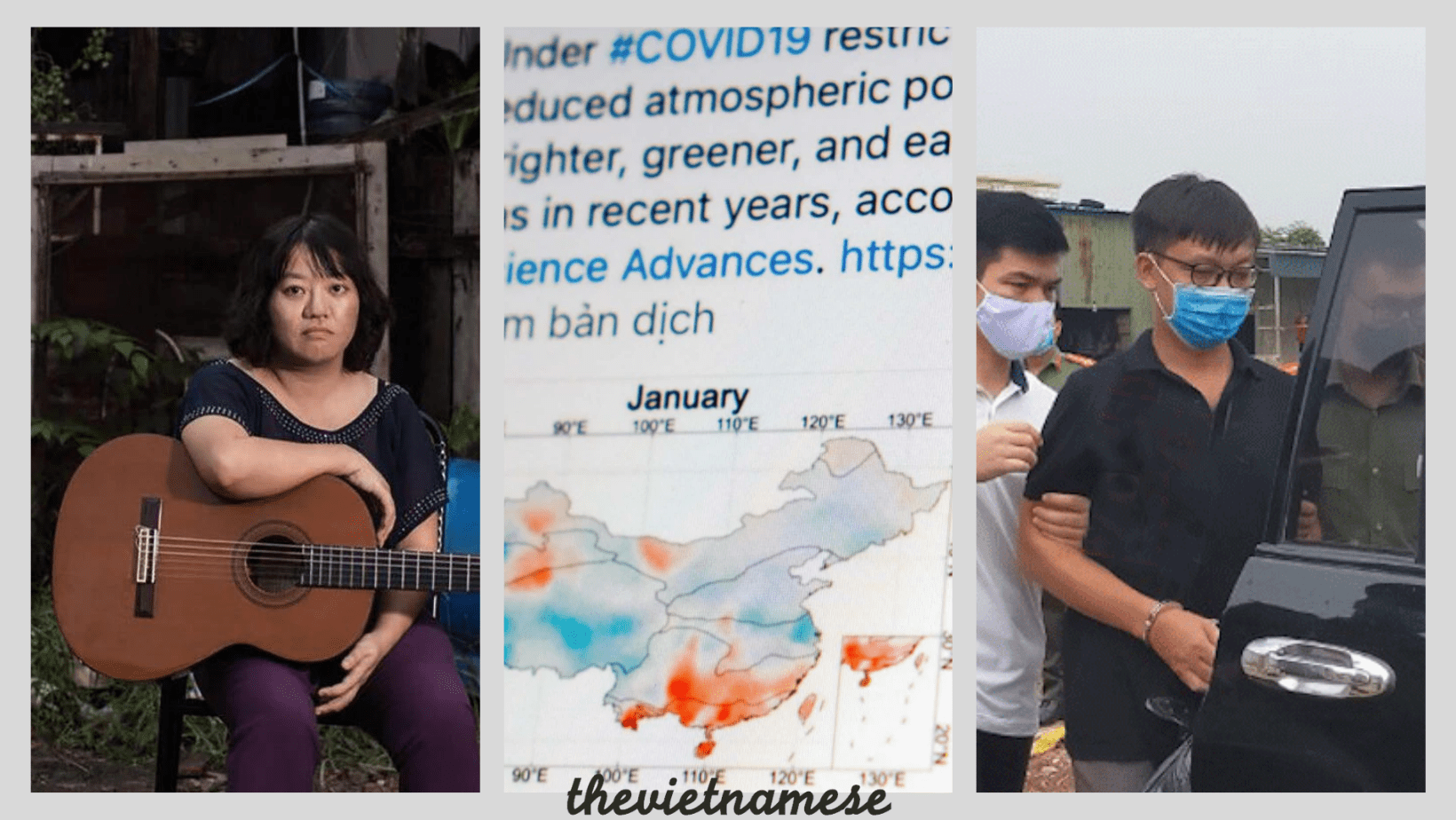
    The case of journalist Pham Doan Trang: Investigation process completed, leading to her indictment

    • On Aug 26, 2021, Hanoi Police announced that they had completed the investigations into Pham Doan Trang on the allegation of “spreading information against the State.” The government is now allowing lawyers to defend her for the first time since she was arrested last October.
    • Last year, on October 6, Pham Doan Trang was arrested by Vietnamese state security and she was subsequently charged with “conducting propaganda against the Socialist Republic of Vietnam” under Article 88 of the 1999 Penal Code and “making, storing, spreading information, materials, items for the purpose of opposing the State of the Socialist Republic of Vietnam” under Article 117 of the 2015 Penal Code. Since then, Trang has been held incommunicado and denied visits from her family and lawyers.
    • Trinh Huu Long, a personal representative of Pham Doan Trang, claimedthat her arrest was “completely unconstitutional, [and] in violation of the law.” Pham Doan Trang is a prominent journalist and democracy activist, famously known for her political books written for general readers and articles with sharp criticisms against Vietnam’s Communist government. “The authorities would do better to respect Doan Trang’s work rather than punish her,” Long concluded.
    • Pham Doan Trang could face up to 20 years in prison if found guilty.

    Vietnamese police disguised as health workers arrest a dissident blogger

    RFA reports:

    • On Aug 30, Vietnamese police arrested Bui Van Thuan, a dissident Facebook user, for criticizing the government in his online posts, especially his comments on the Dong Tam land dispute incident.
    • After cutting power to Thuan’s house in Nghi Son Town, Thanh Hoa Province, police officers, disguised as medical workers, asked his wife to let them in to take a health statement. “They said they were in a hurry and urged me to open the door quickly so that they could go to see others, so I invited them to come into the living room,” Thuan’s wife, Trinh Thi Nhung, said.
    • After getting into the house, a male officer “broke into the bedroom and restrained and handcuffed my husband just as he had woken up and was about to come out,” she said. The police then carried out a search of the house, handcuffing both the blogger and his wife, and confisticating a jar of lime-flavored honey, despite opposition from the family, and a copy of “The Handbook for Families of Prisoners” published by Pham Doan Trang as they left, according to Nhung.
    • Thuan was later formally prosecuted for “storing publications and materials against the Socialist Republic of Vietnam under Article 117 of Vietnam’s Criminal Code,” according to police documents reviewed by VOA. His arrest came just after the U.S. Vice President Kamala Harris’ visit to Vietnam, where she raised concerns about human rights issues.
    • Last year, when the dissident blogger was interviewed by the Los Angeles Times, he expressed concerns about Facebook’s compliance with Vietnamese authorities to suppress free speech by suspending dissidents’ accounts and censoring critical voices against the government.

    Australia continues to urge Vietnam to release Vietnamese-Australian political prisoner Chau Van Kham

    RFA and ABC News report:

    • On Aug 30, Australian Minister for Foreign Affairs Marise Payne sent a letter to MP Chris Hayes, advocating for the release of political prisoner Chau Van Kham.
    • Chau Van Kham was arrested in Jan 2019 in Ho Chi Minh City; he was later sentenced to 12 years in prison for alleged “terrorist activities against the People’s government.” Kham is a member of Viet Tan, a democracy and human rights organization regarded as a “terrorist group” by the Vietnamese government. However, the United Nations considers Viet Tan a “peaceful organization advocating for democratic reform.”
    • Meanwhile, Chau Van Kham’s family has spent more than two years advocating for his vaccination against COVID-19 once it is made available as the coronavirus situation began to deteriorate in Vietnam, especially with recent outbreaks in many prisons. “My husband is 72 years old, it’s easy for him to get COVID and die there. That’s why I want a vaccine for my husband,” said Trang Chau, his wife.
    • He was not among those released under an amnesty annually granted on Vietnamese Independence day on September 2.

    COVID-19 situation in Vietnam

    • Quick take: Vietnam has recorded over 520,000 confirmed COVID-19 cases with more than 13,000 deaths. Fully vaccinated people only account for under 3 percent of the country’s population.
    • Vietnamese Prime Minister Pham Minh Chinh warns of a lengthy battle against COVID-19, reports Reuters. “We cannot resort to quarantine and lockdown measures forever, as it will cause difficulty for the people and the economy,” he said during a meeting with an antivirus committee last Wednesday. The highly transmissive Delta variant has shattered Vietnam’s early success in containing COVID-19 infections.
    • Ho Chi Minh City, Vietnam’s coronavirus epicenter, is considering a plan to reopen its economic activities from September 15, shifting from the “zero COVID-19” strategy to “living with the virus” policy, reports Reuters. The city has been gripped by a recent sharp rise of coronavirus infections and has remained under stringent lockdown since. So far, half of Vietnam’s confirmed cases, and 80 percent of its fatalities, have been recorded in Ho Chi Minh City.
    • Vietnam ranked bottom in Nikkei Asia’s Covid Recovery Index, mostly due to the country’s surge in COVID-19 cases, slow vaccination rates and rigid social distancing measures, which caused disruptions in the supply chain. The Nikkei chart ranks more than 120 countries and regions around the world on the assessment of infection management, vaccine rollouts and social mobility. This is the second time Vietnam is listed at the bottom.
    • Hanoi will send over 1,200 city residents from its largest COVID-19 cluster to a centralized quarantine facility on the city’s outskirts, reports VnExpress. The affected neighborhood, which is located in Thanh Xuan District, has reported more than 300 coronavirus cases since August 23. At the same time, Hanoi authorities are also set to extend lockdown measures until September 21, while maintaining strict COVID-19 restrictions in high risk areas.
    • Vietnam to receive an additional two million AstraZeneca vaccine doses, reports VnExpress: “Three batches of 2,016,460 AstraZeneca COVID-19 vaccine doses have arrived in Ho Chi Minh City this week. The batches, part of a 30 million dose contract between AstraZeneca and the Vietnam Vaccine JSC (VNVC), arrived on Tuesday and Wednesday.”
    • Ho Chi Minh City faces a food delivery crisis, reports Nikkei Asia: “The government-led delivery operation became overwhelmed during the first week, prompting the city to issue a written request to local supermarkets and online platforms to participate in delivery services. The move followed an announcement from the city on August 28, allowing as many as 25,000 shippers to join the delivery rollout. However, involving local businesses has done little to improve the situation.”

    Ministry of Foreign Affairs spokeswoman makes statement on China’s revised Maritime Traffic Safety Law

    • On September 1, Ministry of Foreign Affairs spokeswoman Le Thi Thu Hang made a statement on China’s official enforcement of its revised Maritime Traffic Safety Law, reports state-run VietnamPlus: “Vietnam resolutely and persistently safeguards its sovereignty, sovereign rights and jurisdiction over its waters determined in line with the provisions of the 1982 UN Convention on the Law of the Sea (UNCLOS 1982),” said Hang.
    • On August 27, China’s Maritime Safety Administration announced that foreign vessels entering its “territorial waters,” which refers to its unlawful nine-dash line, must “report ship and cargo information to China’s maritime administrations,” according to the South China Morning Post (SCMP).
    • The revised Maritime Traffic Safety Law, which took effect on September 1, “comes amid escalating tension between China and rival claimants, as well as Western nations led by the US and its expanded military presence in the region,” writes the SCMP.
    • One day later, on August 28, Science Advances magazine took down a Facebook post of an attached scientific research showing China’s nine-dash line map after Vietnam’s social media users flooded its comment section with opposition and criticisms. Despite its effectiveness this time, the aggressive strategy utilized by Vietnamese social media users, or its “public opinion shapers,” has also been deployed to attack pro-democracy activists and foreign ambassadors’ social network accounts in Vietnam, particularly when they raise concerns about the country’s poor human rights record.

    Vietnam Insight: Learn more about Vietnam

    Vietnam Lost Public Buy-in. Its COVID-19 Struggles Followed

    The Diplomat/ Le Vinh Trien and Kris Hartley/ September 1

    “Anti-epidemic measures developed without collaboration fail to reflect the voices of diverse communities. When the political power among these communities is imbalanced, policy inconsistencies arise and a chain reaction emerges. Case counts rise as people resist restrictive behavior protocols, straining health care capacity and imperiling vulnerable groups. Ultimately, mixed messaging at the policy level widens the trust gap between government and citizens.”

    Taliban Comparisons Are Unfair to Vietnam’s Leaders

    Foreign Policy/ Chris Humphrey/ September 1

    “There is no moral equivalence between North Vietnamese forces and the Taliban. During World War II, the Viet Minh actually supported the United States and its allies by serving as the only Vietnamese force resisting Japan’s invasion of Indochina. This preamble for conflict hardly compares to the Taliban militia, which massacred minority Hazara communities and forced Hindus to carry yellow badges to set them apart from Afghan Muslims—like Jews in Nazi Germany.”

    Opinion: A lesson for America from the fall of Saigon in 1975

    CNN/ Hao-Nhien Vu/ August 31

    “The Afghans solved their problem by valiantly fighting the Soviet Union forces that invaded their country, and the Vietnamese benefited from the eventual dissolution of the USSR. Little to none of the economic reform that made Vietnam’s economy a vibrant one would likely have happened had the Soviet Union still been around.”

  • Vietnam Briefing: Results From U.S. Vice President Kamala Harris’ Visit; Vaccine Donations To Arrive In Vietnam Amid Surge In COVID-19 Cases

    Vietnam Briefing: Results From U.S. Vice President Kamala Harris’ Visit; Vaccine Donations To Arrive In Vietnam Amid Surge In COVID-19 Cases

    U.S. Vice President Kamala Harris’ visit to Vietnam: Main takeaways

    • U.S. Vice President Kamala Harris and Vietnam’s top officials met on Wednesday, August 25, carrying out talks on several key areas, including the enhancement of maritime security, boosting economic cooperation, combating climate change and providing healthcare support, reports Reuters.
    • Earlier, on Tuesday, Harris’ flight from Singapore to Hanoi was delayed by more than three hours after the U.S. Embassy in Hanoi was made aware of an “anomalous health incident,” which referred to the mysterious Havana Syndrome.
    • Vietnamese Prime Minister Pham Minh Chinh held an unannounced meeting with Chinese Ambassador Xiong Bo, just before Harris’ arrival, affirming that “Vietnam does not align itself with one country against another.” Beijing also offered Vietnam an additional 2 million doses of Sinopharm vaccine during the meeting.
    • Vice President Harris made sharp criticism at China’s “bullying” in the South China Sea while urging Vietnam to join the United States against Beijing’s advances, reports Associated Press. “We need to find ways to pressure and raise the pressure, frankly, on Beijing to abide by the United Nations Convention on the Law of the Sea, and to challenge its bullying and excessive maritime claims,” Harris said at the opening of a meeting with Vietnamese President Nguyen Xuan Phuc.
    • The U.S. Embassy in Vietnam has signed an agreement with Hanoi authorities, in the presence of Vice President Harris, for a land lease to build a new $1.2 billion embassy campus in the city, reports VnExpress. The new embassy, which will be located in the Cau Giay District, is a project announced by Vietnam and the United States in 2019.
    • Vice President Harris announced that the United States would donateone million Pfizer-BioNTech vaccine doses to Vietnam, bringing the total number of vaccines donated by the United States to the country to six million doses. Meanwhile, a new regional office of the U.S. Centers for Disease Control and Prevention (CDC) will open in Hanoi, with a mission of “protecting Americans and people of the region” and “building key relationships to tackle shared health priorities,” according to the CDC press release.
    • “We’re not going to shy away from difficult conversations,” said Vice President Harris during her meeting with Vietnamese leaders regarding human rights abuses and political activism in Vietnam, according to Associated Press. However, the results of those discussions remain unclear. Overall, Vietnam is notoriously known for its crackdown on freedom of speech and the arrests of political dissidents.
    • Strengthening the U.S.-Vietnam Comprehensive Partnership, from the White House press release: “The Vice President’s travel to Vietnam signifies the United States’ deep commitment not only to the region but also to the U.S. – Vietnam relationship. In bilateral meetings with Vietnamese leaders, Vice President Harris reaffirmed the U.S. commitment to a strong, prosperous, and independent Vietnam, as well a free, open, healthy, and resilient Indo-Pacific region.”

    The Covid-19 situation in Vietnam

    • In total, Vietnam has recorded over 430,000 confirmed Covid-19 cases with more than 10,000 deaths as of Sunday, August 29, 2021.
    • Vietnam to deploy troops to contain the surge of Covid-19 infections in Binh Duong Province, a major manufacturing hub, reports Reuters. The southern province, which is located nearby Ho Chi Minh City, is expected to record an additional 50,000 coronavirus cases over the next two weeks.
    • Vietnam’s Deputy Prime Minister Vu Duc Dam was replaced by Prime Minister Pham Minh Chinh as head of the National Steering Committee for Covid-19 prevention and control. The replacement decision came amid the worst coronavirus outbreak in the Southeast Asian nation.
    • Ho Chi Minh City to resume delivery service operations in the city reports VnExpress. According to local authorities, delivery drivers, popularly known as “shippers” in Vietnam, will be allowed to operate in Covid-19 high-risk districts to relieve shopping demands among locals. Delivery drivers, along with temporary contractors and migrant workers, are among the most vulnerable groups during the Covid-19 pandemic in Vietnam.
    • Vietnam’s homegrown Covid-19 vaccine NanoCovax to be granted emergency use after being approved by The National Committee for Ethics in Biomedical Research, reports VietnamPlus: “The National Committee for Ethics in Biomedical Research under the Ministry of Health (MoH) has agreed that the mid-term results from Nano Covax’s phase 3 clinical trials will be submitted to the Advisory Council for the Registration of Circulation of Drugs and Medicinal Ingredients for considering the issuance of a registration certificate for the conditional circulation of the vaccine.”
    • Covid-19 vaccine donations to Vietnam: Australia donated to Vietnam a total of 403,000 AstraZeneca doses, as part of an “ongoing commitment to help Vietnam in its fight against the pandemic,” wrote the Australian Embassy in Vietnam. Meanwhile, on August 25, Italy also announced its donation of over 800,000 AstraZeneca doses to Vietnam via the COVAX Initiative, while over 500,000 vaccine doses, also made by AstraZeneca, arrived in Hanoi on August 23 as a donation from the Polish government.
    • The Vatican sends financial aid to help Vietnam deal with the Covid-19 pandemic, reports Reuters: “About $70,000 was sent to Bangladesh for continuing recovery assistance from Cyclone Yaas, which left tens of thousands of people homeless last May, and about 100,000 euros to Vietnam, where food supplies have been hit by the COVID-19 pandemic.”

    Vietnam Insight: Learn more about Vietnam

    China’s Wedge Strategy Towards the US-Vietnam Partnership

    The Diplomat/ Khang Vu/ August 25

    “Vietnam falls into a different category of Chinese wedge strategy, in which China seeks to reinforce Vietnamese neutrality, instead of de-aligning it, since Vietnam is not a formal U.S. ally. Hanoi considers itself a neutral country under its “four noes” policy, of “no military alliance, no affiliation with one country to counteract the other, no foreign military base in the Vietnamese territory to act against other countries, and no force or threatening to use force in international relations.” Such a policy is rooted in Hanoi’s search for a balance between ideological values and national security interests, which stipulates that Vietnam only allies with states that share both. Vietnam is officially neutral between the United States and China, since it only shares security interests with the former and ideological values with the latter (as well as strong economic ties to both.)”

    Who is winning the US-China battle for the hearts and minds of Vietnam’s cybersphere?

    South China Morning Post/ Dien Nguyen An Luong/ August 24

    “When both countries sought to burnish their vaccine diplomacy campaigns in Vietnamese cyberspace, the US beat China by a wide margin in terms of positive public reactions, reflecting the fact the Vietnamese public prizes US vaccines over Chinese ones. Such sentiments were reflected in an analysis of Facebook posts and their average engagements on vaccine diplomacy that were among the most engaged content between January and July.”

    Kamala Harris has a chance to stand up for democracy this week. She should take it.

    The Washington Post/ Will Nguyen/ August 23

    “One of the few socialist republics left in the world, Vietnam is an authoritarian state run by a nominally communist party, ruling over a population that is among the most pro-capitalist and pro-American on Earth. The precipitous fall of Afghanistan reveals that the United States cannot simply impose liberal democracy on other countries, even if they share such affinities. The desire for rights and reform must come from the people themselves. And in Vietnam, it is.”

  • Vietnam Briefing: Vietnam Records New COVID-19 Milestones; Human Rights And Regional Cooperation Become Key Issues During U.S. Vice President Kamala Harris’ Visit To Vietnam

    Vietnam Briefing: Vietnam Records New COVID-19 Milestones; Human Rights And Regional Cooperation Become Key Issues During U.S. Vice President Kamala Harris’ Visit To Vietnam

    COVID-19: Vietnam marked new daily infections and deaths record

    • Saturday, August 21, 2021, Vietnam confirmed a total of 13,417 Covid-19 cases, the highest tally since the country detected its first coronavirus infections. On Sunday, the country recorded 737 coronavirus-related deaths, the highest fatality number on any given single day.
    • Quick take: In total, Vietnam’s Covid-19 confirmed cases surpassed 340,000 with over 8,000 deaths. Ho Chi Minh City (HCMC) and other southern provinces remain the country’s largest coronavirus hotspots. As of now, only around 1.7 percent of the country’s population have been fully vaccinated.
    • Panic buying has been seen in HCMC as a result of the local authorities’ decision to impose a stringent lockdown, prohibiting residents from leaving their homes, according to Reuters. Meanwhile, chairman of the city’s People’s Committee, Nguyen Thanh Phong, was removed from his position by the Communist Party, possibly on account of his poor handling of Covid-19.
    • Starting this Monday, HCMC will deploy military troops to enforce the strict stay-at-home order for two weeks amid spiralling Covid-19 infections and deaths in the city, Reuters reports. “We are asking people to stay where they are, not to go outside. Each home, company, factory should be an antivirus fort,” said Pham Duc Hai, deputy head of the city’s coronavirus authority.
    • HCMC official: The city records an average of 240 coronavirus-related deaths every 24 hours. Meanwhile, there are “hundreds of acutely-ill patients and thousands of people wishing to flee the city,” he added.
    • Dr. Kidong Park, World Health Organization Representative in Vietnam: “[Vietnam’s] current healthcare system is under enormous pressure” due to the surge in Covid-19 cases. “There is still a lot of work to be done while the next few weeks are crucial […] to contain the recent outbreaks,” Dr. Park affirmed.
    • Vietnam calls for international support to deal with the pandemic: “We hope that other countries and international organizations would continue to share information, technology, finance, health services, and vaccines so that Vietnam can soon control and fight off this dangerous disease,” said Ms. Le Thi Thu Hang, Vietnam’s Foreign Ministry spokeswoman.
    • The Vietnamese government proposed a plan to distribute around 130,000 tons of rice to over 8.6 million Vietnamese people, who face food shortages because of Covid-19 pandemic effects. The food aid will be distributed to 24 provinces and municipalities in the country.
    • Covid-19 vaccine’s arrival in Vietnam, from VietnamPlus: “Vietnam received an additional 1,209,400 doses of AstraZeneca COVID-19 vaccine on August 19, according to the Vietnam Vaccine JSC (VNVC). This is the ninth batch delivered to Vietnam under the VNVC’s order of 30 million doses with AstraZeneca, which will be handed over to the Ministry of Health at a not-for-profit price.”

    U.S. Vice President Kamala Harris is set to visit Vietnam this Tuesday, human rights issues to be raised

    Families of several Vietnamese prisoners of conscience co-wrote an open letter to Vice President Kamala Harris, asking her to pressure Hanoi for the release of their family members.

    RFA reports:

    • The letter, signed by four prisoners’ wives, informs Harris that many prisoners of conscience are jailed for publicly disagreeing with the government, “which does not happen in a democratic country like the United States.”
    • They request the release of their family members “so the old mother may still see her son, the young wife can again cry on her husband’s shoulder, so the two-digit-prison-terms will not take away the life of one man and the livelihood of his whole family. All because they dare to speak the truth, a very normal action in any democratic nation,” the letter said.
    • The letter was signed by the wives of Truong Minh Duc, serving 12 years in prison for “attempting to overthrow the government;” Nguyen Nang Tinh, serving 11 years for his Facebook posts critical of the government; Luu Van Vinh, serving 15 years for spreading information about a 2016 toxic chemical spill at the Formosa steel plant; and Tran Duc Thach, an author serving 12 years for his writings that expose the corruption, injustice and human rights abuses of the Vietnamese government.
    • According to the California-based Vietnam Human Rights Network, Vietnam currently detains around 300 political prisoners.

    The 88 Project, a human rights advocacy project, along with other 12 human rights organizations, also released an open letter to Vice President Harris prior to her visit.

    The Vietnamese Magazine reports:

    • Released on Wednesday, August 18, 2021, the letter urges the vice president to “emphasize the importance of human rights with Vietnamese leaders” and also calls for specific action to be taken regarding the situation of Tran Huynh Duy Thuc, a prominent Vietnamese democracy activist whose health is slowly deteriorating due to his prolonged hunger strike.
    • In 2010, Thuc was sentenced to 16 years in prison for writing and publishing online articles calling for a multi-party democratic system in Vietnam.
    • Thuc’s imprisonment, detention, and subsequent treatment at the hands of Vietnamese authorities are blatant infringements of his right to a fair trial under the International Covenant on Civil and Political Rights, and the Vietnamese Constitution. He has also been subject to various forms of physical and mental duress which violate the international prohibition against torture.

    The full text of the open letter can be accessed here.

    The Vietnamese Magazine reports:

    • On October 6, 2020, at 11:30 pm, Pham Doan Trang was arrested by Vietnamese state forces and was subsequently charged with “conducting propaganda against the Socialist Republic of Vietnam” and “making, storing, spreading information, materials, items for the purpose of opposing the State of the Socialist Republic of Vietnam.”
    • LIV appeals to Vice President Kamala Harris to urge the Vietnamese government to unconditionally release illegally imprisoned journalists, including Pham Doan Trang, and push for a freer and more inclusive Vietnamese media environment, where “no journalist needs to fear oppression by their government.”

    LIV’s open letter to Vice President Harris can be accessed here.

    Vice President Kamala Harris seeks to “strengthen relationships with partners in the region,” reports CNN:

    • Officials say Harris will look to strengthen relationships with partners in Southeast Asia during her visit to Vietnam and Singapore. She will also engage with members of the private sector and civil society leaders.
    • The vice president will also seek to share the Biden administration’s vision for a free and open Indo-Pacific when she meets with Vietnamese government officials, her office said, and she will raise security issues, including in the South China Sea.

    A member of the ‘Provisional Government of Vietnam’ sentenced to a three-year prison term under Article 109 of the penal code

    RFA reports:

    • A court in central Vietnam’s Nghe An Province last Monday sentenced a member of a U.S.-based political opposition group to three years in prison for alleged activities aimed at overthrowing the country’s one-party Communist government.
    • Tran Huu Duc, born in 1964 and a resident of Nghe An Province, was accused by prosecutors of using Facebook to connect with other members of the so-called Provisional Government of Vietnam, headquartered in Orange County, California, from June 2020 to January 2021.
    • The Provisional Government of Vietnam was founded in 1991 by former soldiers and refugees loyal to the South Vietnamese government that existed before the country’s takeover by North Vietnam in 1975.
    • In its Freedom in the World 2021 report, Washington D.C.-based Freedom House gave Vietnam an overall score of 19 out of a possible 100, a one-point decrease from last year’s rating. Vietnam scored three out of 40 in political rights, and 16 out of 60 in civil liberties.

    Vietnam Insight: Learn more about Vietnam

    Will Vietnam Be America’s Next Strategic Partner?

    The Diplomat/ Alexander L. Vuving/ August 21

    “The relationship between Washington and Hanoi is one of the most delicate and most subtle in the world. Historical memories, ideological differences, and domestic concerns often make things unspeakable in this growing relationship. But the largest factor of all that renders the U.S.-Vietnam relationship so delicate and so subtle is China. It is also the critical factor that makes and unmakes the strategic aspect of U.S.-Vietnam ties.”

    I Can’t Forget the Lessons of Vietnam. Neither Should You.

    The New York Times/ Viet Thanh Nguyen/ August 19

    “History is happening again, and again as tragedy and farce. The wars in Vietnam and Afghanistan happened as a result of American hubris, and in both cases, Americans mostly focused on the political costs of war for them. But in each case, the Vietnamese (and Laotians, Cambodians and Hmong), and now the Afghans, have paid the much greater toll in human suffering. In April 1975, the United States recognized its moral responsibility and evacuated about 130,000 Vietnamese people, and then accepted hundreds of thousands more from Vietnam, Laos and Cambodia in subsequent decades. This is what must happen now, and anything short of such a vision of responsibility and hospitality will compound the American failure in Afghanistan.”

    Afghanistan and the Real Vietnam Analogy

    The Diplomat/ Andrew Gawthorpe/ August 18

    “In South Vietnam, as in Afghanistan, this U.S. inability to impose its will on local political realities ultimately led to the failure of nation-building and defeat in war. The specific ways in which Afghanistan has collapsed highlight the primacy of the local.”

  • State Media And Social Media During The COVID-19 Pandemic: A Tale Of Two Cities In Vietnam

    State Media And Social Media During The COVID-19 Pandemic: A Tale Of Two Cities In Vietnam

    It is probably one of the worst times for Vietnam right now. The latest wave of Covid-19 infections has pushed Vietnam into both a healthcare and a media crisis. Once envied for its low death toll and effective methods to contain the virus, the Communist nation is now struggling to keep itself afloat as the rapid transmission of the new Delta variant overwhelms the healthcare capacity of its many provinces and municipalities.

    Last year, when the first cases of Covid-19 began to emerge in the country, the Vietnamese government actively utilized its state media apparatus to promote anti-coronavirus measures, deliver nationalistic and heroic messages [1] to target local audiences, as well as project its initial success in containing the disease by quoting praises from international media and experts.

    However, the latest outbreak, which created an unprecedented crisis, has driven state media to adopt new propaganda tactics. Similar to the Chinese authorities’ media strategy, [2] when coronavirus first broke out in Wuhan, the Vietnamese government proactively covered up the truth, silenced independent voices, and pushed optimistic narratives to sway public attention away from the reality on the ground.

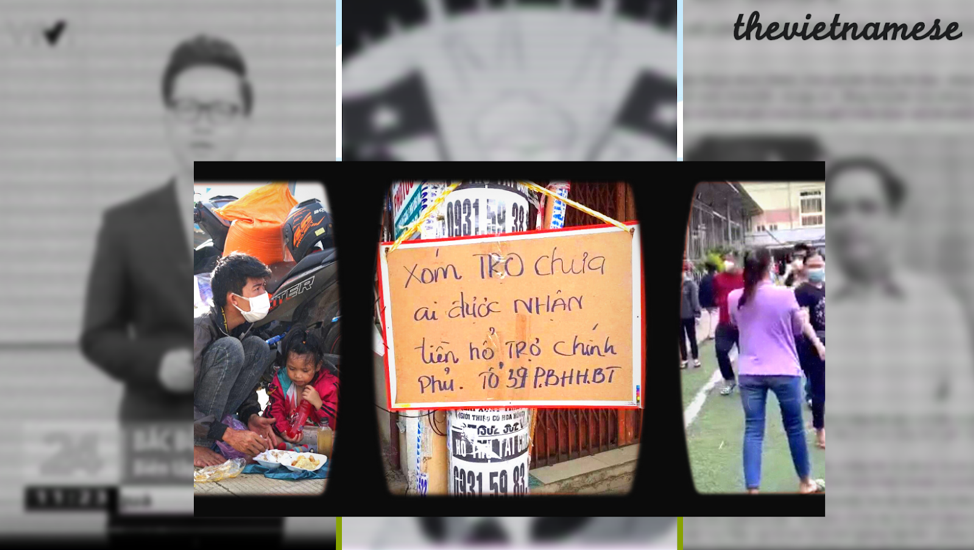
    Amid the worsening Covid-19 predicament, many social media users in Vietnam chose social networks to share their personal experiences and to seek financial and medical help from the community. This circumstance has thus created a stark contrast between the government’s efforts to portray a positive picture of the pandemic and the appalling stories shared by ordinary citizens.

    The Vietnamese Magazine has analyzed the contents from both state media and public postings on social networking sites in Vietnam to create a more comprehensive picture of the current situation through three main criteria: the reports of state-owned media regarding the death toll, the government’s assistance for affected individuals, and the vaccination program.

    The Death Toll Cover-up

    As of this writing, Vietnam has recorded [3] over 265,000 Covid-19 infections, with around 100,000 recoveries and more than 5,000 deaths. The country’s recent daily infections tally is about 6,000 to 9,000 cases.

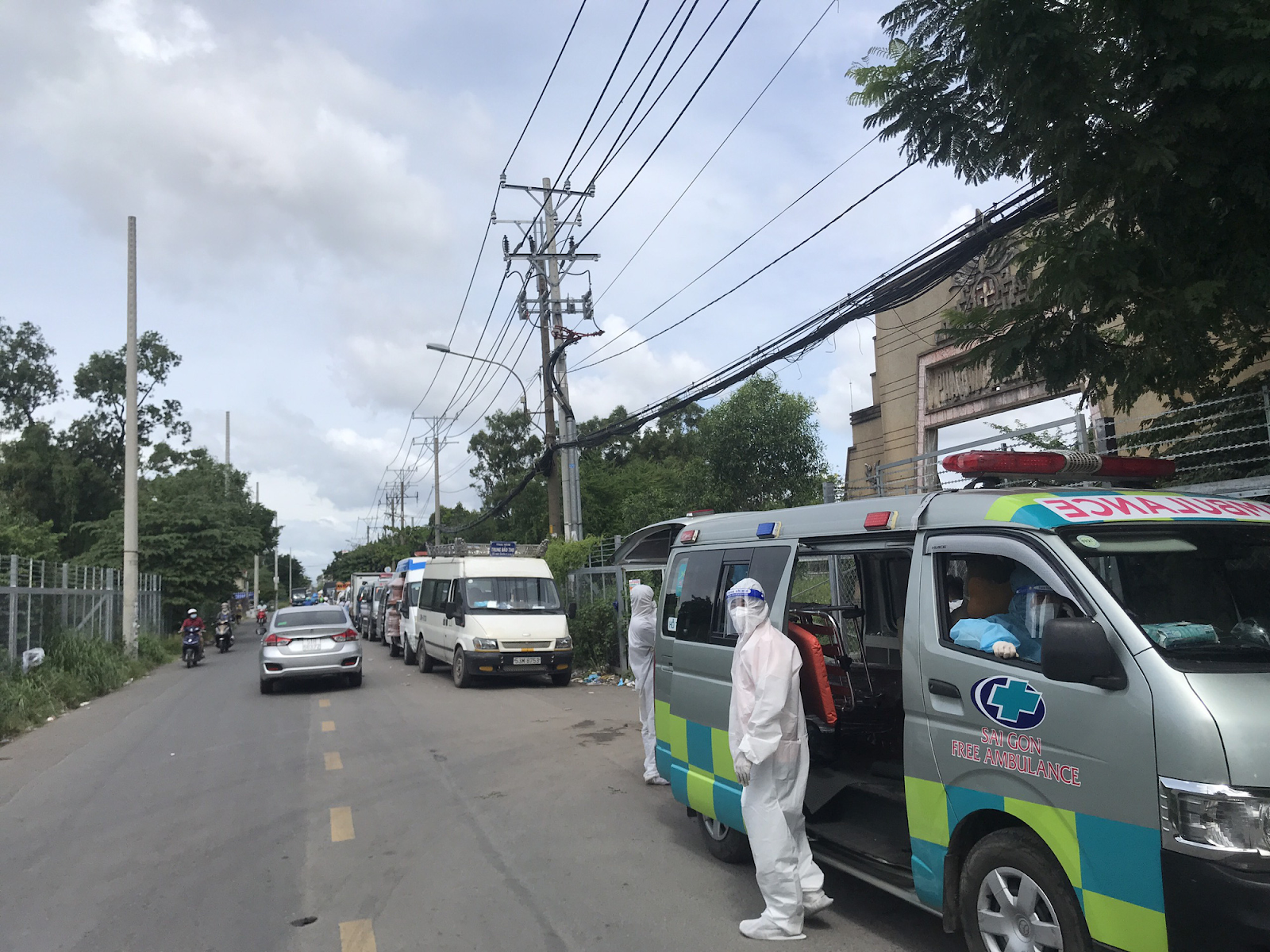
    Since the beginning of August, when the coronavirus situation began to worsen, numerous real-life stories and videos have started circulating on Vietnamese social media. These postings, which are done primarily by ordinary citizens, exposed the grim condition of Vietnam’s healthcare facilities, the struggle of impoverished people in quarantined areas, and the harrowing scenes of long lines of ambulances carrying the coffins of Covid-19 victims to cemeteries.

    Despite their accurate portrayal of the current situation during the time they were released, that footage was mainly absent on the country’s official news channels. On the other hand, state media has ramped up its censorship on these disturbing details and has also diverted public attention towards the mishandling of the pandemic by other foreign countries.

    A long trail of ambulances was seen parked on the road leading to Binh Hung Hoa Cemetery, Ho Chi Minh City. Photo: Le Phan/ Tuoi Tre Online.

    In the past few weeks, when daily Covid-19 mortality rates began to spike, almost all major newspapers and broadcasting channels in the country avoided mentioning or reporting [4] on the details of the death toll. Instead, their reports focused on the number of recoveries and emphasized the severity of the situations in other neighboring Southeast Asian countries.

    For instance, Thanh Nien Online, a state-owned newspaper, last reported [5] on coronavirus-related deaths in Vietnam on July 29, despite its previous regular updates of the number. This news outlet nevertheless diverted its reports on death tolls from Vietnam to Indonesia [6] and Thailand [7].

    Other online news outlets, such as Vietnamnet [8] and Tuoi Tre Online,[9] last reported on the number of Covid-19 deaths in Vietnam on July 30 and August 3, respectively. At the same time, VTV, the Communist Party’s most significant broadcasting mouthpiece, asked [10] its audience to spread “positive information” instead of dwelling on “negative and less optimistic” news to overcome the pandemic.

    This manipulative approach to the media further raises public concerns about the authenticity of the government’s official statistics, and at the same time, casts lingering suspicion among Vietnamese citizens on whether or not the actual scenario is far worse than the state media’s reportage.

    Welfare for the Poor: Promises and Reality

    Besides grappling with the surge of new Covid-19 infections, Vietnam is also facing an economic and welfare crisis as the livelihoods of millions of its citizens are being jeopardized for the sake of rigid anti-coronavirus measures.

    During the lockdown periods, a significant number of civil society groups on social media, as well as SOSmap.net, a project established by citizens, have begun operations in Vietnam. These social and technical incentives act as open platforms to connect bringers of goodwill to those in need. People can post their requests or promises to help on these platforms for a variety of purposes – from donating food and providing financial aid, to giving medical advice, and the like.

    These online platforms, despite differing in scope and geographic location, all have one thing in common: they are flooded with waves of hopeless calls for help from ordinary citizens, [11] of all of whom are negatively affected by harsh lockdown measures. In the majority of cases, the victims are contractors and manual workers who face financial difficulties or food shortages due to unemployment; many of them receive little or no support from the government.

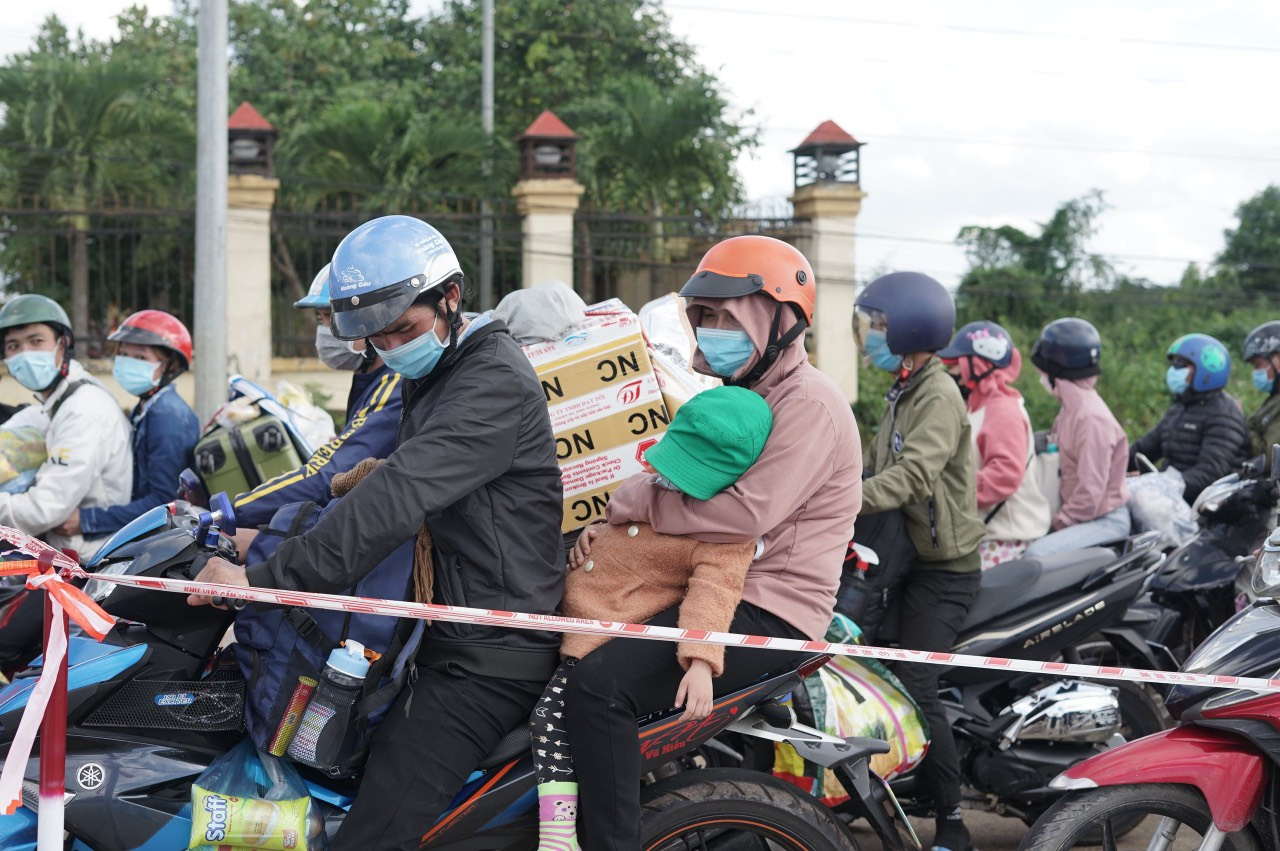
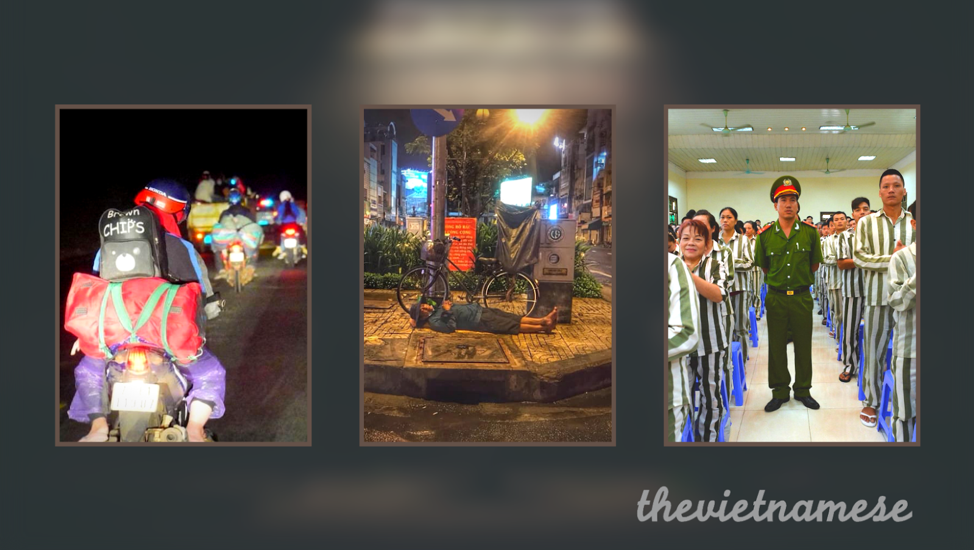
    A mass exodus of workers has also been seen fleeing [12] Ho Chi Minh City and other southern industrial provinces as the number of coronavirus cases surged in the region, while many factory workers and prisoners of conscience are at risk of getting infected due to poor working and living conditions.

    An exodus of people, mostly contracting workers, have fled Ho Chi Minh City to overcome financial difficulties due to strict lockdown measures. Photo: Thanh Quan/ Thanh Nien Online.

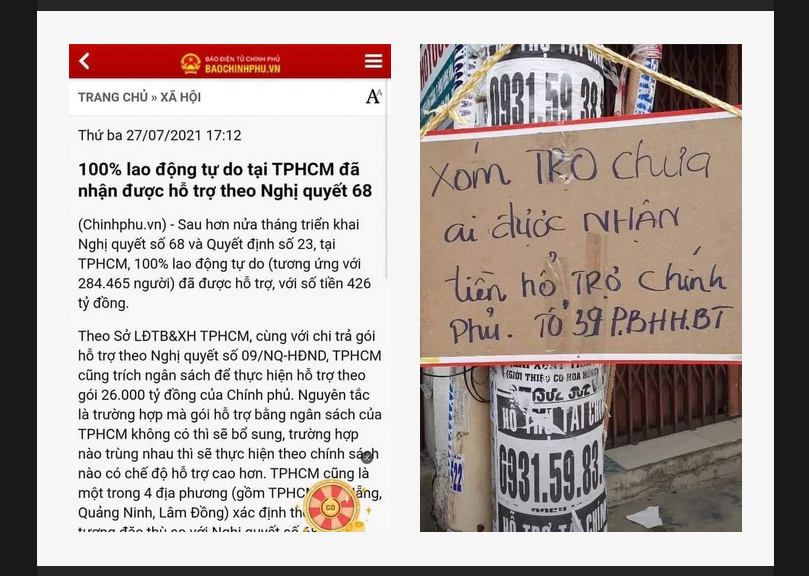
    But on state media, their hopeless voices are barely mentioned. They are often drowned-out to pave the way for a medley of political discourses,[13] victory speeches, [14] and firm guarantees of “letting no one starve” [15] from the government. According to our analysis, mainstream newspapers and broadcasting channels in Vietnam generally choose to report only on the positive sides of the migrant workers’ crisis, praise [16] the local authorities for their “timely” assistance for affected families, and simultaneously avoid mentioning the country leaders’ mistakes which helped lead to the current situation.

    Needless to say, the propaganda narratives mentioned above have two primary aims: placating the public and circumventing the Vietnamese authorities’ own failure in providing basic necessities to its people. Since freedom of the press is a concept that does not exist in Vietnam, the media is nothing but the Party’s effective tool to bend public opinion to its will.

    An article from a state-owned newspaper claimed that all contracting workers in Ho Chi Minh City had been financially supported (left), while a local neighborhood argued that they had received nothing from the government (right). Photo: screenshot/ Facebook post.

    The Vaccination Triad

    Meanwhile, as Vietnam struggles to contain the spread of Covid-19, its citizens are encouraged to get vaccinated to reach herd immunity [17] “in the shortest amount of time.” According to official statistics, [18] as of July 31, around 1.5 million vaccine doses have been given in Ho Chi Minh City, the country’s largest Covid-19 hotspot, while health authorities ensure that “around 99 percent of the population above 18 years of age [in the city] will be vaccinated.”

    The same rhetoric of hope and assurance, as expected, are also dominating the country’s state media.

    Although the vaccination plan sounds promising, state-owned media fail to consider three key shortcomings that could hinder the country’s progress towards achieving its immunity goal. These challenges include Vietnam’s ongoing shortage of Covid-19 vaccines, low rates of immunization [19] and the people’s hesitancy to get Chinese-made jabs.

    Earlier, a decision from Ho Chi Minh City authorities to use the Chinese-made Sinopharm in its inoculation program due to the vaccine scarcity problem has drawn public opposition and criticism. People’s concerns over the efficacy of these vaccinations, the significant lack of transparency of government officials about their vaccination status and which types of vaccines were given to the officials, and deep-rooted anti-China sentiments among many Vietnamese are believed to be the reasons for such reactions.

    On social media platforms such as Facebook, public opinion expressingobjections to Chinese vaccines have sparked thousands of interactions. At the same time, many of the commenters claimed that they would reject the made-in-China vaccinations if given a chance.

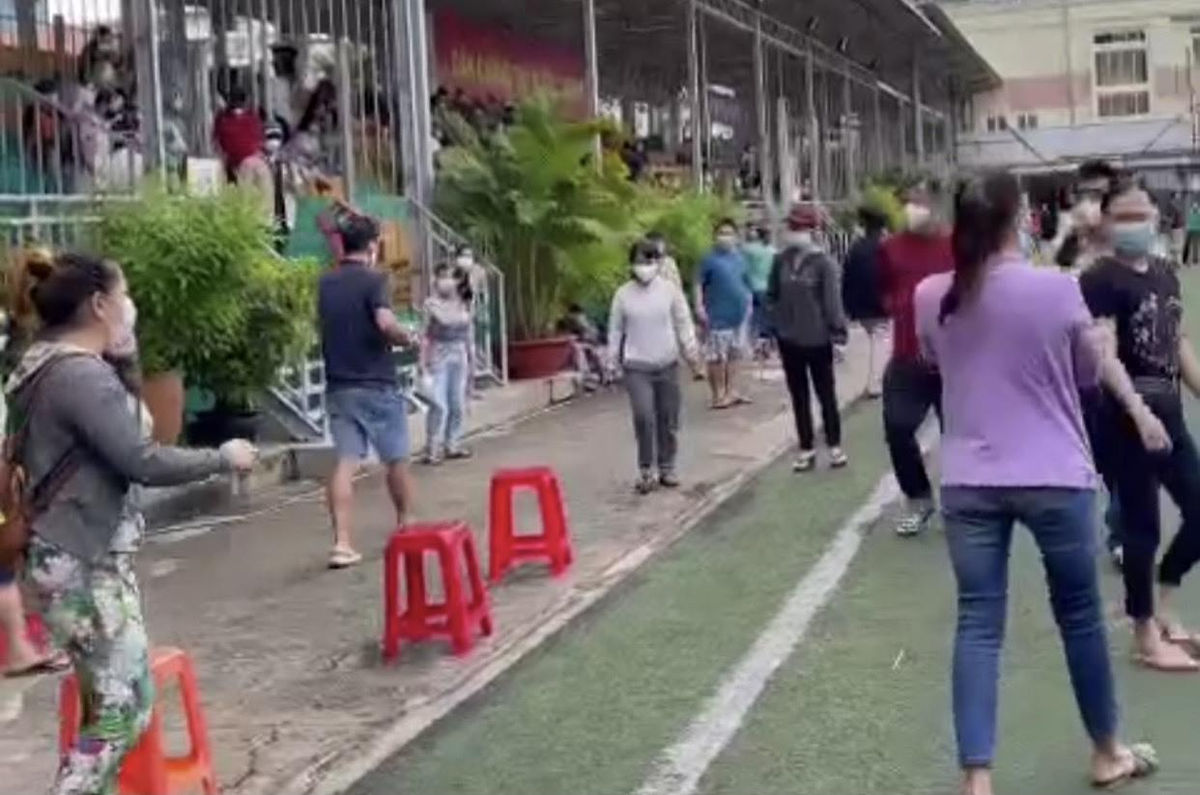
    The hostility also takes place under actual circumstances. A week ago, long lines of local people were seen angrily leaving a vaccination venue in District 1, Ho Chi Minh City. They were informed by the vaccination venue that they would be given Sinopharm shots since that center had run out of AstraZeneca vaccines.

    Local people seen leaving a vaccination venue in District 1, Ho Chi Minh City, after being informed that they would receive Chinese-made Sinopharm vaccines. Photo: screenshot/ VOV.

    On state-owned news channels, none of these stories has been adequately reported. Instead, the common headlines regarding the current vaccination campaign in Vietnam mostly boast [20] the country’s rapid rate of inoculations, reassure [21] the public of an abundant vaccine supply, or urge [22] the people to get Sinopharm while endorsing its high effectiveness against Covid-19.

    The ongoing vaccination fiasco is yet another example of the Communist Party attempting to control the flow of public discourse, debate, and opinion.

    The stories they peddle in mainstream media and the experiences of ordinary citizens rarely overlap; they portray two different truths: the alternative reality of the Party and the reality on the ground.

    Once again, the vulnerable people’s frantic calls for help are suppressed and overpowered by the Party’s extravagant mouthpieces.

    Bibliography:

    1. Lena, L. (2020, June 24). Nationalism, heroism and media in Vietnam’s war on COVID-19. East Asia Forum. https://www.eastasiaforum.org/2020/06/24/nationalism-heroism-and-media-in-vietnams-war-on-covid-19/
    2. Muyi Xiao, Drew Jordan, Meg Felling And Christoph Koettl. (2020, March 18). How China Is Reshaping the Coronavirus Narrative. The New York Times. https://www.nytimes.com/video/world/asia/100000007024807/china-coronavirus-propaganda.html
    3. The Vietnamese Magazine. (2021, August 16). Vietnam Briefing: Exoduses In Kabul And Saigon, At The Same Time, For Different Reasons. The Vietnamese Magazine. https://www.thevietnamese.org/2021/08/vietnam-briefing-exoduses-in-kabul-and-saigon-at-the-same-time-for-different-reasons/
    4. Minh, H. (2021, August 14). Điều VTV không nói: hơn 5.000 người đã chết vì COVID-19 ở Việt Nam. Luật Khoa Tạp Chí. https://www.luatkhoa.org/2021/08/dieu-vtv-khong-noi-hon-5000-nguoi-da-chet-vi-covid-19-o-viet-nam/
    5. Chau, L. (2021, July 29). Thêm 4.323 bệnh nhân khỏi bệnh; 233 ca tử vong do Covid-19 trong 8 ngày qua. Thanh Niên Online. https://thanhnien.vn/thoi-su/them-4323-benh-nhan-khoi-benh-233-ca-tu-vong-do-covid-19-trong-8-ngay-qua-1422364.html
    6. Vi, L. (2021, August 4). Số ca tử vong do Covid-19 vượt mốc 100.000, Indonesia đánh giá đã qua đỉnh dịch. Thanh Niên Online. https://thanhnien.vn/video/the-gioi/so-ca-tu-vong-do-covid-19-vuot-moc-100000-indonesia-danh-gia-da-qua-dinh-dich-164860v.html
    7. A, Đ. (2021, August 5). Nhân viên nhà xác Thái Lan ngất xỉu vì số ca tử vong tăng cao. Thanh Niên Online. https://thanhnien.vn/the-gioi/nhan-vien-nha-xac-thai-lan-ngat-xiu-vi-so-ca-tu-vong-tang-cao-1425575.html
    8. Lien, N. (2021, July 30). Việt Nam công bố thêm 159 bệnh nhân Covid-19 tử vong. Vietnamnet. https://vietnamnet.vn/vn/suc-khoe/viet-nam-cong-bo-them-159-benh-nhan-covid-19-tu-vong-761050.html
    9. Anh, L. (2021, August 3). Sáng 3–8: Thêm 3.578 ca mắc COVID-19, hôm qua là ngày tiêm vắc xin nhiều nhất tới nay. Tuổi Trẻ Online. https://tuoitre.vn/sang-3-8-them-3-578-ca-mac-covid-19-hom-qua-la-ngay-tiem-vac-xin-nhieu-nhat-toi-nay-20210802201648193.htm
    10. Chuyển động 24h tối – 10/8/2021. (2021, August 10). VTV. https://vtv.vn/video/chuyen-dong-24h-toi-10-8-2021-514933.htm
    11. Tinh, N. (2021, August 6). Dân kêu cứu khắp nơi, chính quyền thì đang làm gì? Luật Khoa Tạp Chí. https://www.luatkhoa.org/2021/08/dan-keu-cuu-khap-noi-chinh-quyen-thi-dang-lam-gi/
    12. Jason, N. (2021, August 4). Vietnam: In The Middle Of The COVID-19 Pandemic, They Are The Ones Being Left Behind. The Vietnamese Magazine. https://www.thevietnamese.org/2021/08/vietnam-in-the-middle-of-the-covid-19-pandemic-they-are-the-ones-being-left-behind/
    13. B.S. (2021, July 30). Cần chống dịch quyết liệt hơn với những giải pháp đặc biệt. Báo Công An Nhân Dân. https://cand.com.vn/Su-kien-Binh-luan-thoi-su/Can-chong-dich-nghiem-ngat-hon-quyet-liet-hon-voi-nhung-giai-phap-dac-biet-vi-an-toan-hanh-phuc-am-no-cua-nhan-dan-i622263/
    14. Truong, X. (2021, August 14). Thủ tướng: “Nhất định chúng ta sẽ sớm chiến thắng đại dịch COVID-19.” VTC News. https://vtc.vn/thu-tuong-nhat-dinh-chung-ta-se-som-chien-thang-dai-dich-covid-19-ar630743.html
    15. Hoa, Đ. D. (2021, August 2). Không để cho dân đói trong đại dịch. Vietnamnet. https://vietnamnet.vn/vn/tuanvietnam/tieudiem/khong-de-cho-dan-doi-trong-dai-dich-covid-19-761973.html
    16. Minh, B. (2021, July 20). Gói hỗ trợ 26 nghìn tỷ đồng: “Sự động viên kịp thời.” Dân Trí. https://dantri.com.vn/an-sinh/goi-ho-tro-26-nghin-ty-dong-su-dong-vien-kip-thoi-20210719210750222.htm
    17. Tiêm hết vaccine cho người dân TPHCM để đạt miễn dịch cộng đồng sớm nhất. (2021, July 31). Ministry of Health. https://moh.gov.vn/hoat-dong-cua-lanh-dao-bo/-/asset_publisher/TW6LTp1ZtwaN/content/tiem-het-vaccine-cho-nguoi-dan-tphcm-e-at-mien-dich-cong-ong-som-nhat
    18. Ibid., [17]
    19. Reuters. (2021, August 13). Vietnam concerned over vaccine supply as COVID-19 cases near record. Reuters. https://www.reuters.com/world/asia-pacific/vietnam-concerned-over-vaccine-supply-covid-19-cases-near-record-2021-08-12/
    20. Nguyen, T. (2021, August 11). Tốc độ tiêm vaccine COVID-19 đang tăng nhanh những ngày gần đây. Báo Tin Tức. https://baotintuc.vn/y-te/toc-do-tiem-vaccine-covid19-dang-tang-nhanh-nhung-ngay-gan-day-20210811181034442.htm
    21. L.Đ.O. (2021b, August 10). Bộ trưởng Bộ Y tế: Việt Nam sẽ đón số lượng lớn vaccine phòng COVID-19. Lao Động Online. https://laodong.vn/y-te/bo-truong-bo-y-te-viet-nam-se-don-so-luong-lon-vaccine-phong-covid-19-940407.ldo
    22. Nam, K. (2021, August 12). Đừng để thốt lên “Giá như. . .” khi đã quá muộn. Trang Tin Điện Tử Đảng Bộ Thành Phố Hồ Chí Minh. https://www.hcmcpv.org.vn/tin-tuc/dung-de-thot-len-gia-nhu%E2%80%A6-khi-da-qua-muon-1491882335
  • Vietnam Briefing: Exoduses In Kabul And Saigon, At The Same Time, For Different Reasons

    Vietnam Briefing: Exoduses In Kabul And Saigon, At The Same Time, For Different Reasons

    The Vietnam Briefing, which is released every Monday morning Vietnam time, looks at Vietnam’s political developments of the past week.


    Exoduses in Kabul and Saigon, at the same time, for different reasons

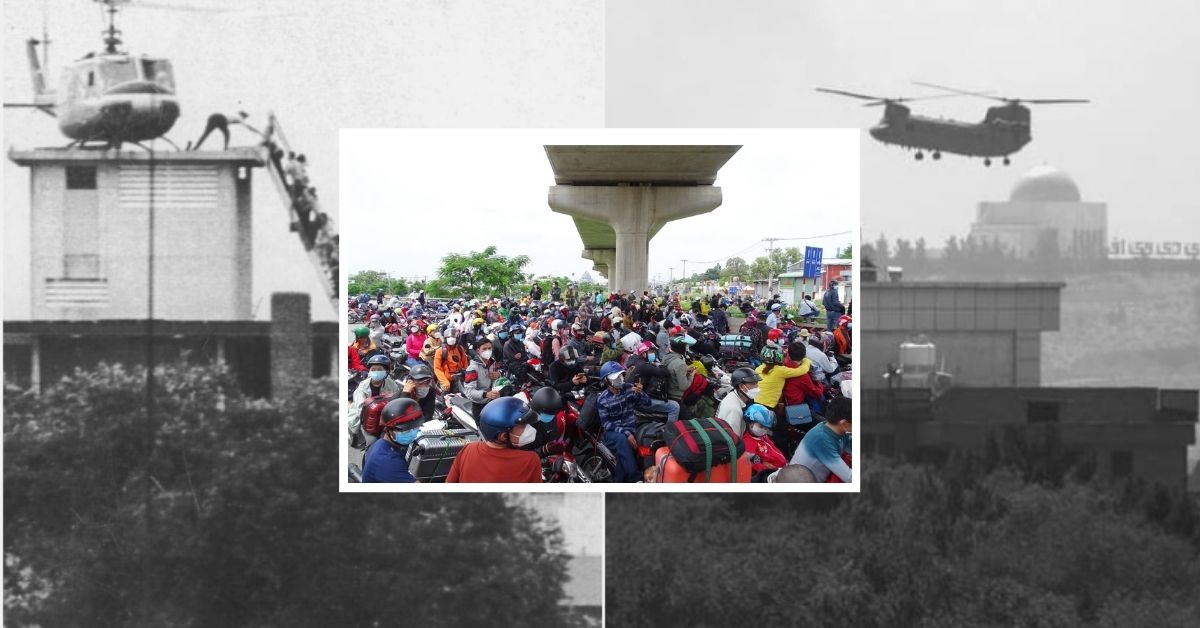
    The world is talking about people fleeing Kabul as the Taliban enters the city, with some comparing this to the similar situation in Saigon in 1975.

    Coincidentally, at the same time on Sunday, Saigon witnessed an exodus of migrant workers fleeing the city after the local government renewed the lockdown order for another 30 days.

    Quotes from VnExpress:

    • Thousands are setting out for their hometowns on motorbikes with suitcases and other belongings, creating gridlocks at the eastern gateway of Ho Chi Minh City (HCMC) and Thu Duc City.
    • “The area near my house has discovered a few Covid-19 cases, and more people have died from the pandemic, so I am very frightened and do not dare to stay,” said one man named Trung, adding that he has received no support from the local government. “I have no choice. I know that many parts of the country are keeping socially distancing, but if I stay I have no money to spend, and I’m afraid of getting infected.”
    • “Back home, I still have family and relatives, but in HCMC, I have lost my job and really didn’t know how to live,” said another person.

    COVID-19

    • Last week, Vietnam added almost 60,000 new cases and 2,187 deaths, pushing the total number of cases over 265,000 with total deaths almost 5,500.
    • Saturday witnessed the biggest daily tally with 9,710 new cases.
    • Hanoi extended the lockdown order until August 22.
    • The two biggest cities, Hanoi and HCMC, briefly introduced highly controversial COVID-19 measures to control the movement of people. Hanoi required people to present proof of assignments issued by their employers while HCMC forced people to fill in an online form at the city’s checkpoints. Local governments quickly reversed course after creating traffic gridlocks and receiving a backlash from the public.
    • Vaccines made in Vietnam: “Vietnam may be able to produce a COVID-19 vaccine in September if everything goes smoothly, Prime Minister Pham Minh Chinh told scientists, units and businesses participating in vaccine production and research at a meeting on August 12.” (VietnamPlus)
    • One thing to note: The state media has been playing down the number of deaths, instead emphasizing patient recoveries. Luat Khoa magazine cites an unnamed source saying the Communisty Party has instructed the state media to avoid highlighting the death tolls and concentrate on the “positive” side of the situation.

    Critics of the government’s COVID-19 response punished

    From RFA:

    “Authorities in Vietnam have arrested a Facebook user for posting mild criticism of government COVID-19 policies, while a university fired a lecturer after a student shared her comments faulting Hanoi’s pandemic response on the social media platform.”


    Learn more about Vietnam

    Was Vietnam’s Chinese COVID-19 Vaccine Debacle Just a Stunt?

    The Diplomat/Le Dong Hai Nguyen/August 13

    “There is a strong case to be made that the Vietnamese government leveraged ingrained anti-Chinese sentiment to boost vaccine uptake.”

    Vietnam human rights recap: Arrests of government critics continue in the first seven months of 2021

    The 88 Project/August 6

    “It’s been an eventful year so far in Vietnamese politics. Arrests of critics of the regime have taken place against the backdrop of the 13th National Party Congress, National Assembly elections, and rising Coronavirus infections. Twenty-three critics of the regime have been arrested during the first seven months of 2021, while 20 have been sentenced to prison. Article 331 was the most frequent charge levelled against critics, with 11 individuals arrested for “abusing democratic freedoms to infringe upon the interests of the State.” Eight people were charged under Article 117, a broad provision which criminalizes producing or disseminating information ‘opposing’ the State.”

    Kamala Harris has an important job to do in Asia

    The Hill/Williams Danvers/August 15

    “With her planned trip to Asia, specifically to Vietnam and Singapore, Vice President Kamala Harris will take on another foreign policy challenge: helping to implement fundamental pieces of the Indo-Pacific strategy.”

    New research: “Two years into CPTPP”

    CSIS/Kati Suominen/August 9

    “Trade in the CPTPP [Comprehensive and Progressive Agreement for Trans-Pacific Partnership] region after the agreement entered into force has largely paralleled members’ trade flows with the rest of the world. Vietnam has grown its trade in goods as well as inbound investment, possibly a positive signal to other Southeast Asian countries that are considering CPTPP membership, such as the Philippines and Indonesia. Japan and Singapore have led the region’s trade in digitally deliverable services, also a key sector for the Philippines and the United Kingdom, another aspiring member. To be sure, these early patterns should be interpreted with care and should not be read as caused by the CPTPP. Further papers in this series explore the extent to which these and other patterns can be attributed to the CPTPP, as opposed to other factors.”

    New research: “US Secretary of Defense Lloyd Austin’s Southeast Asia Tour: Assurances and Dividends”

    ISEAS/William Choong, Hoang Thi Ha, Le Hong Hiep and Ian Storey/5 August 2021

    “The choice of Singapore, Vietnam and the Philippines – as well as forthcoming high-level US engagements in these three countries – highlight their importance as ‘critical Indo-Pacific partners’ in the Biden administration’s Indo-Pacific strategy.”

    New book by Ted Osius, the former US Ambassador in Vietnam: “Nothing is impossible: America’s Reconciliation with Vietnam”

    “Ted Osius, U.S. Ambassador to Vietnam 2014-17, offers a vivid first-hand account of the various forms of diplomacy that brought about the reconciliation between two former enemies and helped bring new prosperity to Vietnam. Nothing is Impossible – with a foreword by John Kerry — tells an inspiring story of how international diplomacy can create a better world.”

  • Vietnam Briefing: Deepening COVID-19 Crisis; Bao Sach Charges; South China Sea Tension; Harris’ Visit To Vietnam

    Vietnam Briefing: Deepening COVID-19 Crisis; Bao Sach Charges; South China Sea Tension; Harris’ Visit To Vietnam

    The Vietnam Briefing, which is released every Monday morning Vietnam time, looks at Vietnam’s political developments of the past week.


    COVID-19 cases surpass 200,000

    • Last week, Vietnam added more than 55,000 new cases of COVID-19  and almost 2,000 deaths. The total number of confirmed cases has reached over 205,000 cases and 3,250 deaths.
    • Sunday witnessed a daily tally record with 9,684 new cases.
    • Hanoi has extended its lockdown order until August 22.
    • Ho Chi Minh city is running out of allocated vaccine doses.
    • Vingroup corporation will establish a manufacturing facility to produce vaccines.
    • Vietnam vaccine: “Nanocovax, the only made-in-Vietnam Covid-19 vaccine near completion, has an efficacy rate of 90 percent, its producer said.”

    The Bao Sach criminal case: 5 members were officially accused of “abusing democratic freedom”

    From RFA:

    “Five Vietnamese journalists accused by authorities in southern Vietnam’s Can Tho province of slandering government leaders in their investigative reports will now be charged only with ‘abusing democratic freedoms’ after an investigation failed to produce evidence of more serious State-secrets charges against them.”

    What to expect:

    • Can Tho’s People’s Provincial Procuracy Office will soon prosecute them.
    • Can Tho’s People’s Provincial Court will soon try them and the trial is expected to be short (one day potentially).
    • All the defendants are expected to be convicted with sentences of up to 36 months of imprisonment. Warnings and community services are not off the table.

    Meet the new vice chief of VCP’s Propaganda Committee

    From Nhan Dan:

    “Member of the Party Central Committee (PCC) and Editor-in-chief of Nhan Dan (People) Newspaper Le Quoc Minh has been appointed to serve concurrently as Deputy Head of the PCC’s Commission for Communication and Education and hold the position of Secretary of the Party Committee of the Vietnam Journalists Association (VJA) for the 2015-2020 and 2020-2025 tenures.”


    Vietnam demands China stop Paracel Islands military drills

    From VnExpress:

    • Vietnam has asked China to stop and not repeat military drills on its Hoang Sa (Paracel) Islands, asserting that they violate Vietnam’s sovereignty.
    • “China performing drills on Vietnam’s Paracel Islands violates Vietnam’s sovereignty over the islands, goes against the spirit of the Declaration on the Conduct of Parties in the South China Sea (DOC), complicates the situation, and is not beneficial for current negotiations between China and ASEAN on the Code of Conduct for the South China Sea (COC), as well as the maintenance of peace, stability and cooperation at the East Sea,” Foreign Ministry spokeswoman Le Thi Thu Hang said Thursday.

    US’ Vice President Harris to visit Vietnam on August 24

    From Bloomberg:

    “The global semiconductor shortage and other supply chain troubles will be a focus of Vice President Kamala Harris’s trip to Southeast Asia later this month, where she also aims to shore up U.S. relations with countries at China’s doorstep.”


    Learn more about Vietnam

    Controlling the Information Space: Big Tech and Free Speech in Southeast Asia

    The Diplomat/Andreyka Natalegawa and Kyra Jasper/August 05

    “Countries like Vietnam have mobilized ‘cyber-armies’ to monitor and report online content critical of the central government. These cyber-armies exploit the content moderation mechanisms on platforms like Facebook, reporting content en masse for violating ‘Facebook’s ever-pliable Community Standards, whether or not the rules were broken.’”

    Bad news for Vietnam’s Mekong Delta

    The Interpreter/Milton Osborne/July 29

    “The release of recent research from the Netherlands adds an additional insight into what is happening in Vietnam’s Mekong Delta, the country’s all-important food-producing region that contributes some fifty per cent to its agricultural GDP. In a stark conclusion, the research cites 2050 as the Tipping Point when the delta will no longer be able to cope with saltwater intrusions, a phenomenon that is already causing the loss of productive land.”

    Russia and Vietnam: An alliance of convenience

    The Interpreter/Nikola Mikovic/August 2

    “Russia is one of the biggest suppliers of weapons to Southeast Asia, with Vietnam alone a major customer for Russia’s arms. While it is estimated that throughout the 1980s, Moscow had provided Vietnam with an average of US$1 billion annually in military assistance and another US$1 billion annually in economic assistance, following the collapse of the Soviet Union, the Kremlin lost significant influence in the country. Now Russia is seeking to regain lost ground.”

  • Vietnam: In The Middle Of The COVID-19 Pandemic, They Are The Ones Being Left Behind

    Vietnam: In The Middle Of The COVID-19 Pandemic, They Are The Ones Being Left Behind

    Since the first infections were detected in the country, Vietnam has surpassed[1] 100,000 Covid-19 cases spanning 62 out of its 63 provinces and more than 1,000 deaths. As the pandemic shows no signs of vanishing anytime soon, especially in the southern provinces, this Southeast Asian country faces both a healthcare and economic crisis.

    The Vietnamese Communist Party, as usual, has been deploying propaganda, at maximum capacity, to placate the public. Vigorous slogans, from promises of “leaving no one behind” to “protecting people’s lives remain a top priority” [2], are dominating state media and pro-government online groups on social media.

    However, the reality is far gloomier than the Party’s political discourse.

    Besides revealing the darker side [3] of Vietnam’s epidemiological strategy, the pandemic also deepens the increasingly widening gap between the haves and have-nots and between the people with power and those without.

    The Workers

    According to the Vietnam General Statistics Office report, [4] nearly 13 million workers were negatively affected by the economic downturn caused by the third and fourth wave of Covid-19 outbreaks. This number includes [5] about 557,000 people who lost their jobs, 4.3 million people who had their working hours cut, those who had to take time off from work or had to rotate shifts, and another 8.5 million who had their income reduced.

    The pandemic has had an impartial effect on the Vietnamese labor market, but so far, freelance and manual workers are among those who got hit the hardest.

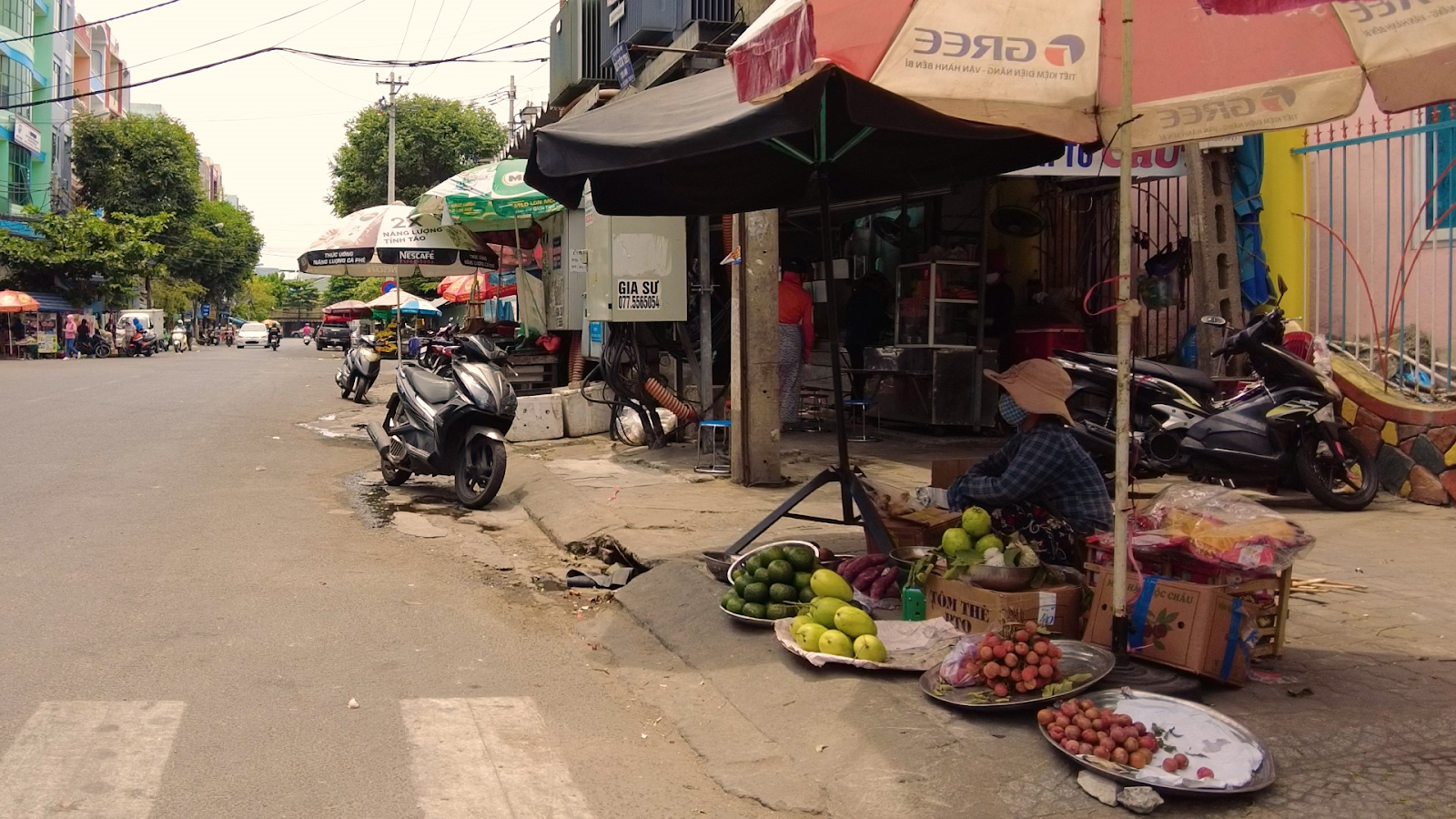
    In Vietnam, the term “freelance workers” has a very different connotation compared to the West. This workforce primarily consists of senior citizens, the impoverished, and college graduates, who lack physical health and certain skills that the average employer often deems necessary. They are known for doing various unskilled jobs, such as being street vendors, motorbike drivers, lottery ticket sellers, and the like.

    These freelance workers usually rely on their own labor to make ends meet daily while lacking health insurance and many personal savings, so they are at a greater risk of getting infected with the coronavirus or becoming financially strained under lockdown measures and other anti-coronavirus restrictions. Furthermore, stagnant economic activities, coupled with the government’s ineffective financial assistance schemes, seem to add [6] to their struggle.

    A street vendor in Da Nang City. Photo: RFA.

    At the same time, factory workers, the backbone of Vietnam’s export-oriented economy, are also facing another set of challenges in the midst of the pandemic.

    When coronavirus infections started to spread inside many factories during the latest outbreak, most workers were required to be quarantined inside their workplaces while continuing production in a strategy known as “dual goal.” [7] This strategy aimed to control infections while at the same time maintaining industrial production.

    However, risky working environments and the factories’ poor accommodations have sparked anger among many workers, causing them to flee their workplaces. Meanwhile, on social media, many people have also expressed their disagreement with the decisions of local authorities, repeatedly condemning[8] them for compromising workers’ health for cash.

    Besides rigid anti-coronavirus measures, the “ho khau” system, a household registration scheme used in Vietnam, has created another burden for these unskilled workers, especially for migrants from poorer provinces seeking manual jobs in big cities and industrial zones.

    More specifically, this household registration system denies migrant workers the eligibility to receive public services and welfare assistance where they temporarily live and work, such as healthcare and education, unless they register with local police.

    Many migrant workers chose to return to their hometowns by motorbikes. Photo: Người Huế ở Sì Gòn (Facebook group)/ BBC Vietnamese.

    Nevertheless, Vietnam’s bureaucratic public services, alongside rampant corruption in the registration process, leaves many of them living illegally without legitimate status. As a result, when several southern industrial provinces and the economic hub of Ho Chi Minh City remained under lockdown to battle the latest outbreak of Covid-19, a large number of these employees were left with no choice but to return to their hometowns to avoid infection and to overcome the financial difficulties caused by their unemployment.

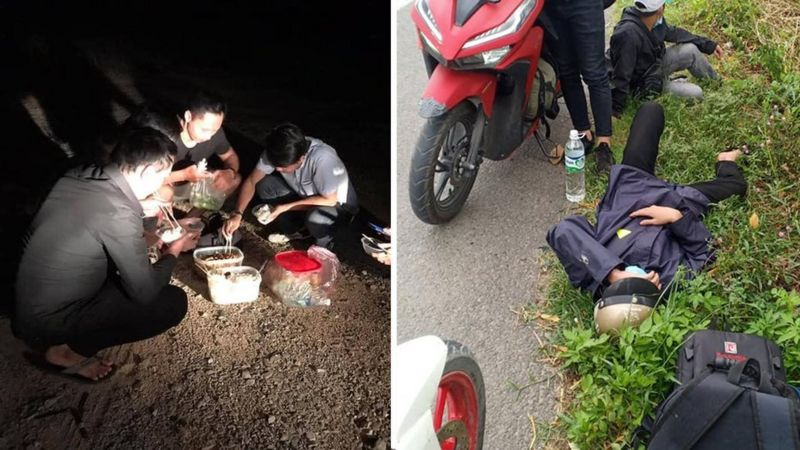
    Over the past few weeks, a massive exodus of migrant workers has been seen, with workers risking their lives on arduous journeys to go back home. Many choose motorbikes, and some attempted to make it on foot, [9] with several unfortunate souls losing their lives along the way. In response, several provinces have publicized official announcements citing the Covid-19 infection risk to urge migrant workers not to return home [10] or to “go back to where they started.” [11]

    This dire situation has led to an outcry on Vietnamese social media. Many users are questioning the government’s response and criticizing its failure to provide financial assistance to these people, secure safer means of homebound transportation, and provide housing in adequate quarantine facilities.

    A worker walked more than 180 km in 16 days from Dak Lak Province to his sister’s house in Binh Phuoc Province, as he did not have enough money for a bus ride. Photo: Zing News/ provided by the worker.

    Inmates, Prisoners of Conscience, and Addicts

    Multiple prisons and rehabilitation centers, especially in several southern localities, have also become new hotspots of infections during the fourth wave of the Covid-19 outbreak in Vietnam.

    On July 7, local authorities declared [12] that Chi Hoa Prison, a detention center located in Ho Chi Minh City, had recorded more than 80 people infected with Covid-19, including detainees and correctional officers. As the situation worsened, riots began to erupt [13] inside the facility as the rapid spread of coronavirus fueled fear among hundreds of inmates.

    A few weeks later, on July 23, all of the staff and addicts [14] at Bo La Rehabilitation Center, a facility located in the southern province of Binh Duong, tested positive for Covid-19. At the same time, a mental health hospital in Ho Chi Minh City also diverted a part of its functionality to treat Covid-19 patients, including many infected mental health patients, as surging cases overloaded healthcare capacity in the city.

    The infrastructure of detention and rehabilitation centers in Vietnam in general and other public facilities have long been infamously known for their degradation, poor living conditions, and maltreatment of prisoners and patients.

    Riot police vans were seen leaving the Chi Hoa Prison after reportedly being deployed to quell riots. Photo courtesy: Dinh Van/ VnExpress.

    Several family members of prisoners of conscience have also expressed their concerns over the safety of their relatives amid the Covid-19 situation. During interviews with RFA Vietnamese, [16] many expressed concerns that the proximity of sleeping quarters, poor living conditions, and limited information about the prisoners threaten the well-being of the people being kept inside the cells.

    Currently, prisoners, addicts, and mental health patients are not part of the official list [17] of 16 qualified priority groups to receive Covid-19 vaccinations, despite promises of future vaccination opportunities. However, given Vietnam’s ongoing vaccine shortage, these people will likely be the last to receive the vaccine.

    Other Vulnerable Groups

    The latest vaccination scandals [18] include a woman and her husband being prioritized to get vaccinated thanks to her father’s connections and a decision from Ho Chi Minh City authorities to lend Vingroup, a local conglomerate, 5,000 Moderna doses from the COVAX initiative to inoculate its staff, raise questions about equal access to the Covid-19 vaccine for all Vietnamese citizens.

    From a broader perspective, the political landscape in Vietnam is deepening the inequality in vaccine distribution. Government officials with strong connections or powerful corporations with economic clout can “cut in line” [19] to get vaccinated first, taking away inoculation opportunities from others, especially those who are most vulnerable once infected.

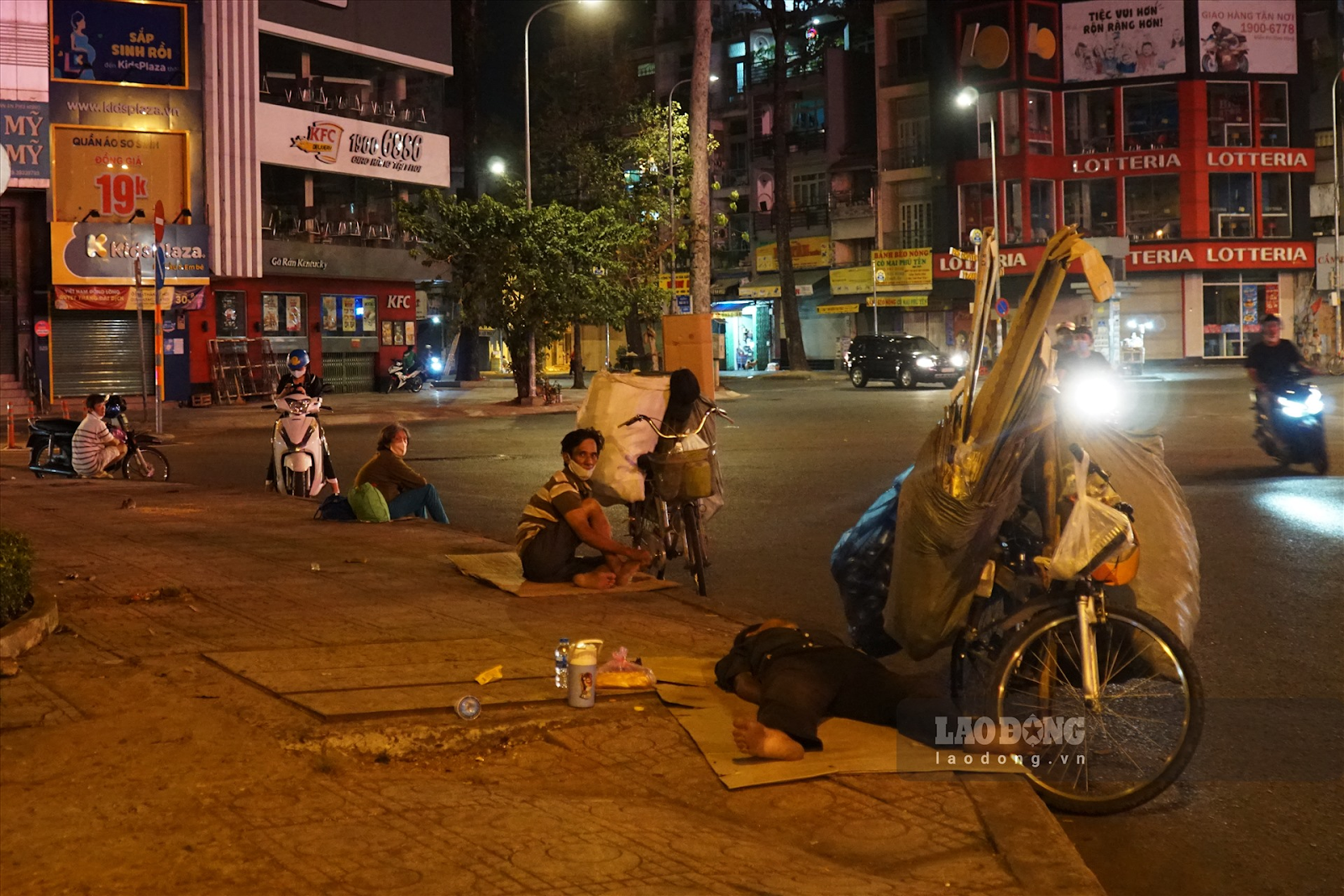
    As of July 19, [20] Ho Chi Minh City has officially begun vaccinating older adults and patients with underlying health conditions in the fifth phase of its inoculation campaign. Still, authorities have neither provided further information on the screening process nor medical assistance should side effects occur in these high-risk groups. Meanwhile, vaccination schedules for other vulnerable groups, such as the homeless, war veterans, and the disabled have remained undisclosed.

    Homeless people in Ho Chi Minh City amid the Covid-19 pandemic. Photo: Lao Dong.

    The Communist Party, since the very first days of its establishment, has prided itself on being “a Party of the people, of the working class.” [21] The Party manifests its ideology in the notion that their ultimate goals are “nothing other than the interests of the [working] class, the people and the nation” to build a more “democratic, wealthy and equal Vietnam.”

    Almost a century later, the Covid-19 pandemic has fully uncovered what the Party has been dedicating its whole lifespan to achieving benefits for itself and those living dependent on the corrupt system. Ironically, the poor, migrant workers or prisoners of conscience have never been of great concern to the Communist regime.

    As the dark clouds of Covid-19 continue to loom large over Vietnam, the tragic fates of those voiceless and powerless people mentioned above seem astoundingly more genuine than the Party’s empty promises.

    Bibliography:

    1. Số liệu Covid-19 tại Việt Nam. (2021, August 2). VnExpress. https://vnexpress.net/covid-19/covid-19-viet-nam
    2. Tiep, P. (2021, May 16). Quyết tâm đẩy lùi dịch COVID-19, bảo vệ sức khỏe nhân dân là trên hết. Báo Công An Nhân Dân. https://cand.com.vn/Su-kien-Binh-luan-thoi-su/Quyet-tam-day-lui-dich-COVID-19-bao-ve-suc-khoe-nhan-dan-la-tren-het-i605680/
    3. Jason, N. (2021, July 21). How The Latest Outbreak Reveals The Darker Side Of Vietnam’s Anti-Coronavirus Strategy. The Vietnamese Magazine. https://www.thevietnamese.org/2021/07/how-the-latest-outbreak-reveals-the-darker-side-of-vietnams-anti-coronavirus-strategy/
    4. Bang, L. (2021, July 7). Over 1.1 million people unemployed, nearly 13 million others affected by Covid-19 pandemic. Vietnamnet. https://vietnamnet.vn/en/society/over-1-1-million-people-unemployed-nearly-13-million-others-affected-by-covid-19-pandemic-753558.html
    5. VOA News. (2021, July 16). Vietnam Shops for Vaccines in Hopes of Avoiding More Lockdowns. VOA. https://www.voanews.com/covid-19-pandemic/vietnam-shops-vaccines-hopes-avoiding-more-lockdowns
    6. RFA. (2021, June 7). Lao động tự do chật vật trong đợt dịch COVID-19 thứ tư. Đài Á Châu Tự Do. https://www.rfa.org/vietnamese/in_depth/freelance-workers-struggle-during-the-fourth-covid-19-outbreak-06072021145713.html
    7. Việt Nam có nên vận dụng “mục tiêu kép” trong lúc này? (2021, May 27). Đài Á Châu Tự Do. https://www.rfa.org/vietnamese/in_depth/should-vietnam-maintain-dual-goal-now-05272021111728.html
    8. Ibid., [7]
    9. Nhi, T. (2021, July 26). Người đàn ông đi bộ 16 ngày từ Đắk Lắk về Bình Phước để tránh dịch. Zing News. https://zingnews.vn/nguoi-dan-ong-di-bo-16-ngay-tu-dak-lak-ve-binh-phuoc-de-tranh-dich-post1243231.html
    10. Nguyen, C. (2021, August 1). Xót xa cả gia đình gặp nạn trên đường về quê tránh dịch Covid-19. Người Lao Động. https://nld.com.vn/thoi-su/xot-xa-ca-gia-dinh-gap-nan-tren-duong-ve-que-tranh-dich-covid-19-20210801092125848.htm
    11. Ngoc, N. (2021, July 31). Từ 1/8, dân Quảng Ngãi buộc quay lại nơi xuất phát. Tiền Phong. https://tienphong.vn/tu-1-8-dan-quang-ngai-buoc-quay-lai-noi-xuat-phat-post1360999.tpo
    12. Tinh, D. (2021, July 7). TP.HCM: Ổ dịch tại Trại tạm giam Chí Hòa có 81 ca nhiễm Covid-19. Thanh Niên Online. https://thanhnien.vn/thoi-su/tphcm-o-dich-tai-trai-tam-giam-chi-hoa-co-81-ca-nhiem-covid-19-1410289.html
    13. Trại Chí Hòa: Hàng trăm phạm nhân nổi dậy sau khi 81 người nhiễm COVID-19 trong trại. (2021, July 7). Đài Á Châu Tự Do. https://www.rfa.org/vietnamese/news/vietnamnews/chi_hoa_riot-07072021052110.html
    14. Canh, N. (2021, July 23). Toàn bộ những người ở cơ sở cai nghiện ma tuý Bố Lá dương tính với SARS-CoV-2. Báo Công An Nhân Dân. https://cand.com.vn/y-te/Toan-bo-nhung-nguoi-o-co-so-cai-nghien-ma-tuy-Bo-La-duong-tinh-i621306/
    15. Anh, T. (2021, July 25). TP HCM lập bệnh viện điều trị người tâm thần mắc Covid-19. VnExpress. https://vnexpress.net/tp-hcm-lap-benh-vien-dieu-tri-nguoi-tam-than-mac-covid-19-4330137.html
    16. Son, T. (2021, July 7). COVID-19 xâm nhập trại giam: lo lắng cho an nguy của các tù nhân. Đài Á Châu Tự Do. https://www.rfa.org/vietnamese/in_depth/families-of-prisoners-of-conscience-worry-as-covid-spreads-in-prisons-07072021080636.html
    17. Thanh, A. (2021, July 11). [Infographic] Những nhóm mở rộng được ưu tiên tiêm vắc-xin Covid-19. Người Lao Động. https://nld.com.vn/thoi-su/infographic-nhung-nhom-mo-rong-duoc-uu-tien-tiem-vac-xin-covid-19-20210711011752387.htm
    18. The Vietnamese Magazine. (2021, July 26). Vietnam Briefing: COVID-19 Crisis Deepening While The National Assembly Convened To Elect State Leadership. The Vietnamese Magazine. https://www.thevietnamese.org/2021/07/vietnam-briefing-covid-19-crisis-deepening-while-the-national-assembly-convened-to-elect-state-leadership/
    19. Minh, N. (2021, July 22). Có bao nhiêu “cháu ngoại” đã trót lọt chen hàng để tiêm vaccine trước? Luật Khoa Tạp Chí. https://www.luatkhoa.org/2021/07/co-bao-nhieu-chau-ngoai-da-trot-lot-chen-hang-de-tiem-vaccine-truoc/
    20. L.Đ.O. (2021, July 19). Người già, người có bệnh nền tại TPHCM được tiêm vaccine tại bệnh viện. Người Lao Động. https://laodong.vn/y-te/nguoi-gia-nguoi-co-benh-nen-tai-tphcm-duoc-tiem-vaccine-tai-benh-vien-932236.ldo
    21. L.Đ.O. (2020, January 28). Đảng của dân tộc, Đảng của giai cấp công nhân. Người Lao Động. https://laodong.vn/thoi-su/dang-cua-dan-toc-dang-cua-giai-cap-cong-nhan-778528.ldo
  • Vietnam Briefing: Public Shaming On National Television Amidst Worsening COVID-19 Situation

    Vietnam Briefing: Public Shaming On National Television Amidst Worsening COVID-19 Situation

    The Vietnam Briefing, which is released every Monday morning Vietnam time, looks at Vietnam’s political developments of the past week.


    Vietnam’s national television under fire for using pseudoscience to humiliate people

    • The government-owned national television channel VTV1 has been under fire as it compared breaking social distancing rules with “having animal brains” in a national broadcasting session. It also compared people who ran away from the police and the authorities as “having reptile brains.”
    • This idea of people having “animal” and “reptile” brains is rooted in a theory that has long been refuted, according to Yale University School of Medicine. Even though the theory is considered by many experts to be pseudoscience, it still appeared on Vietnam’s national television.
    • VTV has deleted this video from its website along with other related articles and has since been silent about this broadcasting.

    COVID-19 in Vietnam

    • According to Reuters: “Vietnam’s daily COVID-19 infections hit a record 8,649 cases on Friday, taking its total tally to over 137,000.” Most of the new cases were recorded in the south, particularly in Ho Chi Minh City.
    • Even though the social distancing period for Ho Chi Minh City was supposed to end by the end of last week, Prime Minister Pham Minh Chinh imposed an extension for another two weeks starting August 2. By the end of this period, if no more extension is imposed, Ho Chi Minh City will have been in lockdown for 38 days.
    • Vaccination efforts have escalated in Ho Chi Minh City. It has been reported that Ho Chi Minh City will increase the number of vaccination sites from 600 to 1,000, with each site aiming to vaccinate at least 300 people each day.
    • Meanwhile, there have been heated debates about the type of vaccine being used in Vietnam, as Ho Chi Minh City received one million doses of the Sinopharm vaccine from China.
    • As of Friday, July 30, only around 6.2 million people have been vaccinated with around 620,000 people fully vaccinated nationwide in Vietnam, according to the University of Oxford. The population of Vietnam is around 100 million, so the number of people fully inoculated is less than 1 percent of the population.
    • The National Assembly gave Prime Minister Pham Minh Chinh the authority and the responsibility to decide on “special measures”regarding the COVID-19 situation. This shows the lackluster role of the National Assembly in the pandemic.

    US Vice President Kamala Harris to visit Vietnam in August

    • According to Nikkei Asia: “US Vice President Kamala Harris will visit Singapore and Vietnam in August, the White House said Friday, as Washington seeks to bolster ties with the two key Asia-Pacific partners.” This will be the first time an American vice president officially visits Vietnam while still in office.
    • Last week, US Defense Secretary Lloyd Austin also visited Vietnam and met with Vietnam Defense Minister Phan Van Giang to “deepen cooperation in security and pandemic recovery.”
    • Foreign policy experts see these visits by senior US officials as a sign that the US is broadening its presence in Southeast Asia and the South China Sea amidst China’s rising influence. There is also hope that deepening US-Vietnam relations would be beneficial for human rights advocacy.

    New (but expected) faces elected by the National Assembly

    • In the first meeting of the 15th National Assembly (elected in 2021), the legislative assembly has elected people to the 50 most important leadership positions for the next five-year term, including the prime minister, president, chairman of the National Assembly, chief justice of the Supreme People’s Court, prosecutor general of the Supreme People’s Procuracy, along with various ministers and deputies.
    • The full list of the 50 positions and the newly elected leaders can be found here.
    • As mentioned in previous briefings, even though these names have only been recently confirmed, many of the appointees have been known since as early as April.
    • Amidst the surge of COVID-19 infections, the National Assembly delegation to Ho Chi Minh City is not going to meet with voters as planned.

    Activist and ex-detainee summoned by the authorities despite widespread lockdown

    • According to BBC Vietnamese, on July 28, 2021, activist and ex-political prisoner Pham Thanh Nghien, who is living in Ho Chi Minh City, was summoned by the police in Hanoi for her book, “Slices of Life Behind Bars,” which was published in the US in 2017. She said that it is possible that she was summoned also due to her criticism of the government on her Facebook account.
    • It is unknown why the authorities wanted the activist to travel to Hanoi, despite social distancing measures in both Hanoi and Ho Chi Minh City, which make it much more difficult for anyone to travel around the country.

    Learn more about Vietnam

    COVID-19 Turned Vietnam’s State-Run Union’s Greatest Weakness Into Its Biggest Strength

    Joe Buckley/The Diplomat/July 29, 2021

    “The state-led Vietnam General Confederation of Labor (VGCL) is Vietnam’s only legal trade union federation. It is subordinate to the ruling Communist Party, embedded in the structures of the party-state, and receives a lot of funding from it. Government leaders often make speeches reinforcing how committed they are to strengthening the VGCL and reminding people that the Confederation is an arm of the state. You will find a union office, staffed by full-time officials, at almost every level of Vietnam’s administration, from the impressive and imposing national headquarters on Hanoi’s Quan Su street down to modest and charming ward and district-level offices throughout the country. In individual companies, union reps are often human resource managers or similar.

    Due to this, the VGCL has been heavily, and often rightly, criticized for being unable to represent and struggle for workers properly. The VGCL has never organized a strike, for example, and often serves as a channel to inform workers of government and company policies rather than to challenge them.”

    In Vietnam, Civil Society Is Picking up the Slack Where Authorities Struggle

    Luke Hunt/The Diplomat/July 28, 2021

    “The Communist authorities in Vietnam risk becoming increasingly marginalized after failing to curb the spread of COVID-19. Civil society groups are now taking the initiative in combating the pandemic amid harsh lockdowns in the country’s south.”

    America Can—and Should—Vaccinate the World

    Helene Gayle, Gordon LaForge, and Anne-Marie Slaughter/Foreign Affairs/March 19, 2021

    “The Biden administration is right to want to take the lead in vaccinating the world, for a host of reasons both self-interested and altruistic. But it should not fall into the trap of trying to beat Russia and China at their own game—handing out vaccines to specific countries based on their geostrategic importance and the amount of attention they are receiving from rival powers.

    Rather, Biden should pursue abroad the sort of “all in” unity approach that he has proclaimed at home. His administration should focus less on strategic advantage than on vaccinating the largest number of people worldwide in the shortest amount of time. In so doing, the United States would concentrate on what the world’s peoples have in common—susceptibility to this and many other viruses—regardless of the nature of their governments.”

    Research: “The Ambiguous Legacy of Ngô Đình Diệm in South Vietnam’s Second Republic (1967–1975)”

    Sean Fear/Journal of Vietnamese Studies/March 01, 2016

    “Although recent English-language Vietnam War scholarship has devoted considerable attention to reassessing the Ngô Đình Diệm era, contemporaneous South Vietnamese interpretations of the president’s tenure have been largely overlooked. Contrary to prevailing assumptions that his influence ended abruptly with his 1963 murder, Ngô Đình Diệm was a hotly debated figure long after his death. Moreover, his contested legacy came to symbolize South Vietnam’s enduring political, regional and religious schisms, contributing to and reinforcing his country’s profound social fragmentation. The fluid and ambiguous memory that Vietnamese had of his time in office had a substantial impact on subsequent political developments, establishing patterned dynamics of political conflict that endured throughout the Second Republic and providing conceptual yardsticks against which subsequent politicians and political developments were measured. Ngô Đình Diệm’s fraught symbolic resonance and significant posthumous political impact are therefore crucial dimensions to consider in evaluating his legacy.”

  • Vietnam Briefing: COVID-19 Crisis Deepening While The National Assembly Convened To Elect State Leadership

    Vietnam Briefing: COVID-19 Crisis Deepening While The National Assembly Convened To Elect State Leadership

    The Vietnam Briefing, which is released every Monday morning Vietnam time, looks at Vietnam’s political developments of the past week.


    COVID-19

    • Last week witnessed the daily COVID-19 tally reach an all-time high on Saturday, with 7,968 cases reported. The total number of cases surpassed 100,000 on Sunday, July 25.
    • According to data from Johns Hopkins University, only more than 4.5 million doses have been administered, which is equivalent to 4.6 percent of the population, with only 0.39 percent of the population having been fully vaccinated.
    • Hanoi, the capital city, started a 15-day social distancing period on Saturday, July 24.
    • Ho Chi Minh city started to impose a night curfew from Monday, July 26, prohibiting residents from leaving their homes after 6 PM without a legitimate reason.

    Vaccination scandals

    Vietnam’s public always speculates that government officials, their relatives, and big corporations have unfair access to vaccines. Last week, two scandals gave them legitimate reasons to believe that.

    • A woman announced on her Facebook page that she received a COVID-19 vaccine shot last week with help from her “grandfather.” The hospital that administered the shot explained that her father registered for her. The father happens to be a lecturer at the Academy of Military Medicine who taught one of the doctors administering vaccines. It’s a popular practice in Vietnamese culture for a woman who has children to call her own father “ông ngoại” (maternal grandfather), following the way her children call him.
    • The Ho Chi Minh City government “lent” 5,000 COVID-19 vaccine doses to the giant corporation Vingroup, city officials said on Saturday. They explained that this was done due to Vingroup’s large assistance to the government’s pandemic response and that they would do so again for other enterprises for the same purpose.
    • The two above-mentioned vaccination scandals angered the public as people questioned the fairness of the government’s vaccine rollout policy. Some public members were enraged at the Vingroup “lending agreement” because they believed the government did not have the authority to lend these vaccines since they were donated to Vietnam under the COVAX program.

    Meanwhile, the National Assembly convened to rubber-stamp the Communist Party’s decisions on personnel

    The pandemic is usually not a reason for a national legislative body to stop working. But while online meeting procedures have not been introduced yet, the National Assembly convened its first session of the new term on July 20 after the election in May to largely rubber-stamp the Communist Party’s major decisions on personnel.

    • The National Assembly always convenes shortly after the general elections to elect state leadership, including its own. On July 20, members elected Vuong Dinh Hue as chairperson of the body and 17 other top positions.
    • As expected, the National Assembly  Standing Committee has nominated Nguyen Xuan Phuc as state chairman (a.k.a state president).
    • On July 26, the National Assembly is expected to elect the state chairperson, the prime minister, the vice state chairperson, the chief justice of the Supreme People’s Court, and the prosecutor general of the Supreme People’s Procuracy. These people are expected to be the same officials who were elected to the same positions in April.
    • The National Assembly on July 23 voted to pass a resolution to maintain the current 22 ministry-level departments of the administration.
    • The National Assembly has also decided to shorten its first session due to the COVID-19 pandemic and end the session on July 28 instead of July 31.

    Facebook users sentenced to years of imprisonment

    Nguyen Van Lam, 51, was sentenced by Nghe An’s People’s Provincial Court to nine years in prison and three years of probation for “making, storing, spreading information, materials, items for the purpose of opposing the State” under Article 117 of the Penal Code. He was accused of using Facebook to spread information that is deemed to be anti-state.

    More cases:

    • Tran Hoang Minh, a Facebook user, was sentenced to five years of imprisonment allegedly for “abusing democratic freedoms” under Article 331 of the Penal Code, according to RFA. The Hanoi People’s Court convicted him based on the accusation of publishing 51 pieces of content on Facebook concerning the Dong Tam incident. Minh had no defense lawyer nor relatives present during his trial. It’s unclear whether or not he will file an appeal.
    • A former attorney in Hanoi, Nguyen Thi Thuy, was convicted of the same crime on July 21 and sentenced to 20 months of imprisonment: “In the process of protecting rights of Ngu, Thuy said he was wrongly accused and illegally arrested. She later wrote two documents that hurt the prestige and honor of several Party and State leaders and sent them to ministries and agencies, thus exerting pressure on them to follow her proposal.”
    • Nguyen Van Son, a relative of the detained blogger Le Dung Vova, was charged with concealment of crimes, Hanoi Police announced on July 22. He is accused of assisting Dung while he was in hiding before his arrest on June 30.

    Former mayor of Hanoi prosecuted for illegally interfering in bidding activities

    From VietnamPlus:

    “The Investigation Police Agency under the Ministry of Public Security on July 24 executed a decision on commencing legal proceedings against Nguyen Duc Chung, former chairman of the Hanoi People’s Committee, for the charge of “abusing position and power while performing duties” in the case related to the municipal Department of Planning and Investment and relevant units.”


    U.S. trade agency drops tariff threat against Vietnam over currency practices

    From Reuters:

    “The U.S. Trade Representative’s office on Friday said it had determined that no tariff action against Vietnam was warranted after its central bank agreed with the U.S. Treasury not to manipulate its currency for an export advantage.”


    US Defense Secretary to visit Vietnam

    From VietnamPlus:

    “US Secretary of Defense Lloyd Austin will pay an official visit to Vietnam on July 28 and 29 at the invitation of Vietnamese Minister of National Defence Gen. Phan Van Giang.”

    From VnExpress:

    “A former U.S. vessel donated to Vietnam Coast Guard arrived in the country earlier this month, according to the U.S. Embassy in Hanoi.”


    Learn more about Vietnam:

    In Vietnam, the Party’s Rolling Crackdown on Dissent Continues

    Stewart Rees/The Diplomat/July 23

    “Proponents of an EU trade pact said it would nudge one-party Vietnam towards greater respect for human rights. The evidence so far points in the other direction.”

    Vietnam Still Trolling Donald Trump With Economic Successes

    William Pesek/Forbes/July 22

    “Vietnam just made a deal with the U.S. Treasury Department: we won’t weaken the dong if you take us off the dreaded “currency manipulator” list. It’s actually a bigger victory for Hanoi than Prime Minister Phạm Minh Chính’s government may realize.”

    New research: “The Growing Salience of Online Vietnamese Nationalism”

    Luong Nguyen An Dien/ISEAS/2021

    “The growing salience of online Vietnamese nationalism has posed serious challenges and dilemmas for the regime. The authorities have had to encourage nationalistic patriotism without letting Sinophobia spiral out of control or turn against the regime.”