Category: Vietnam Briefing

  • Vietnam Briefing: Exoduses In Kabul And Saigon, At The Same Time, For Different Reasons

    Vietnam Briefing: Exoduses In Kabul And Saigon, At The Same Time, For Different Reasons

    The Vietnam Briefing, which is released every Monday morning Vietnam time, looks at Vietnam’s political developments of the past week.


    Exoduses in Kabul and Saigon, at the same time, for different reasons

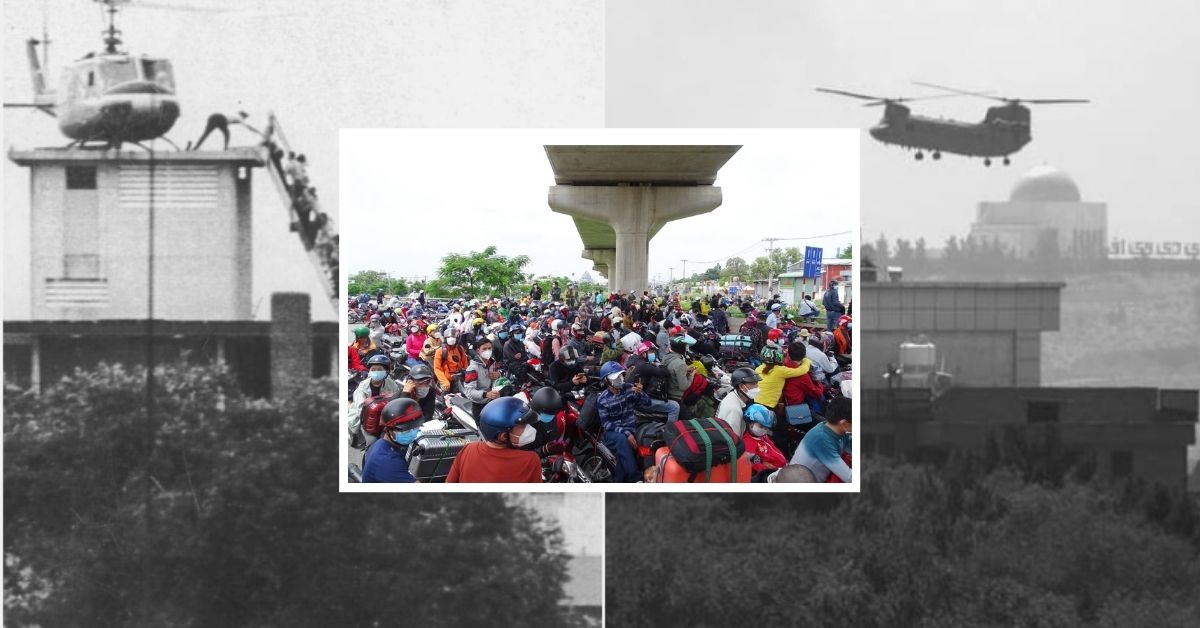
    The world is talking about people fleeing Kabul as the Taliban enters the city, with some comparing this to the similar situation in Saigon in 1975.

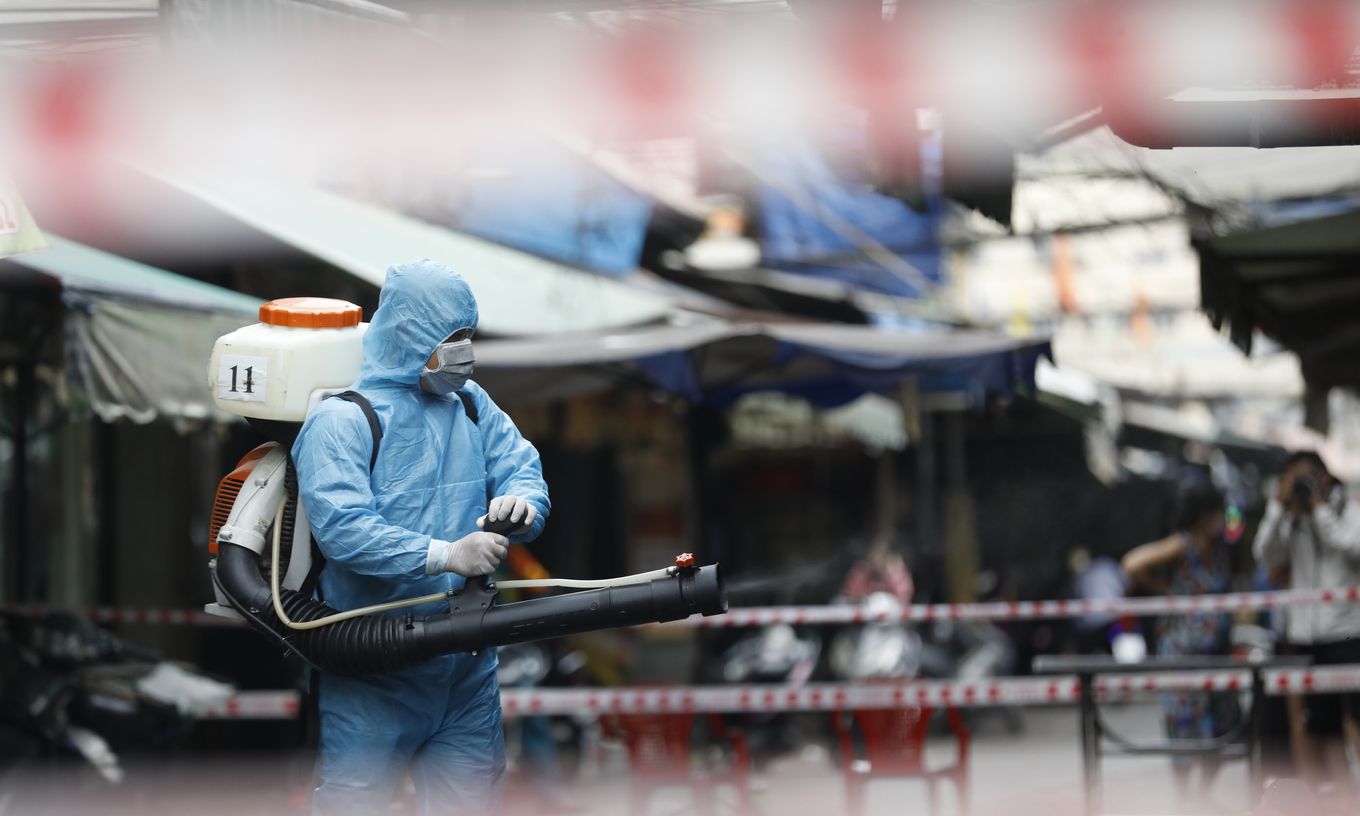
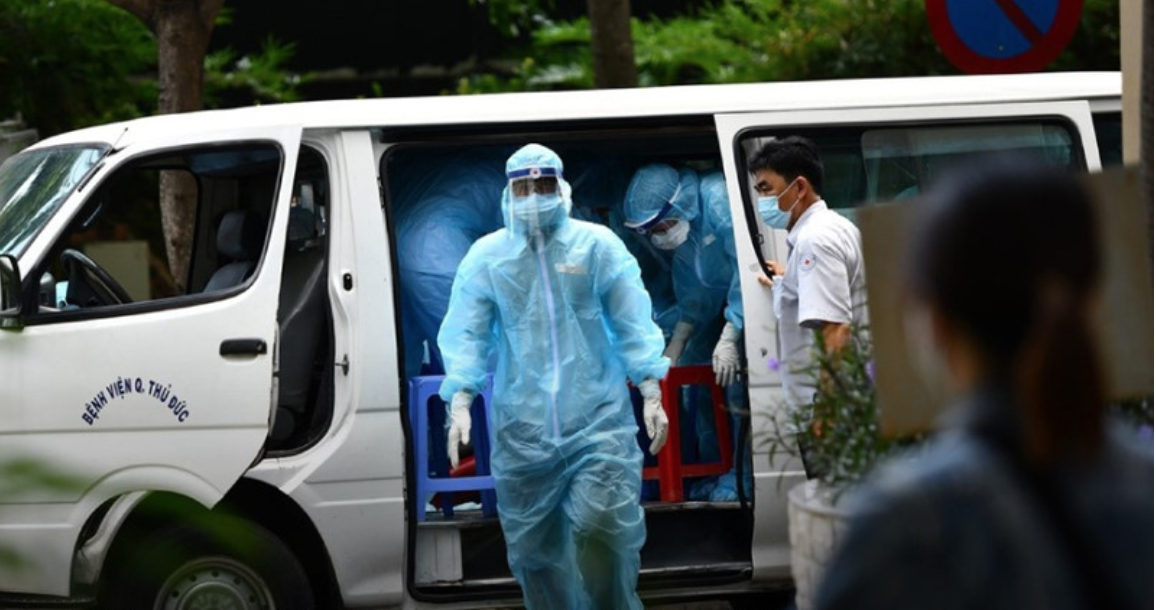
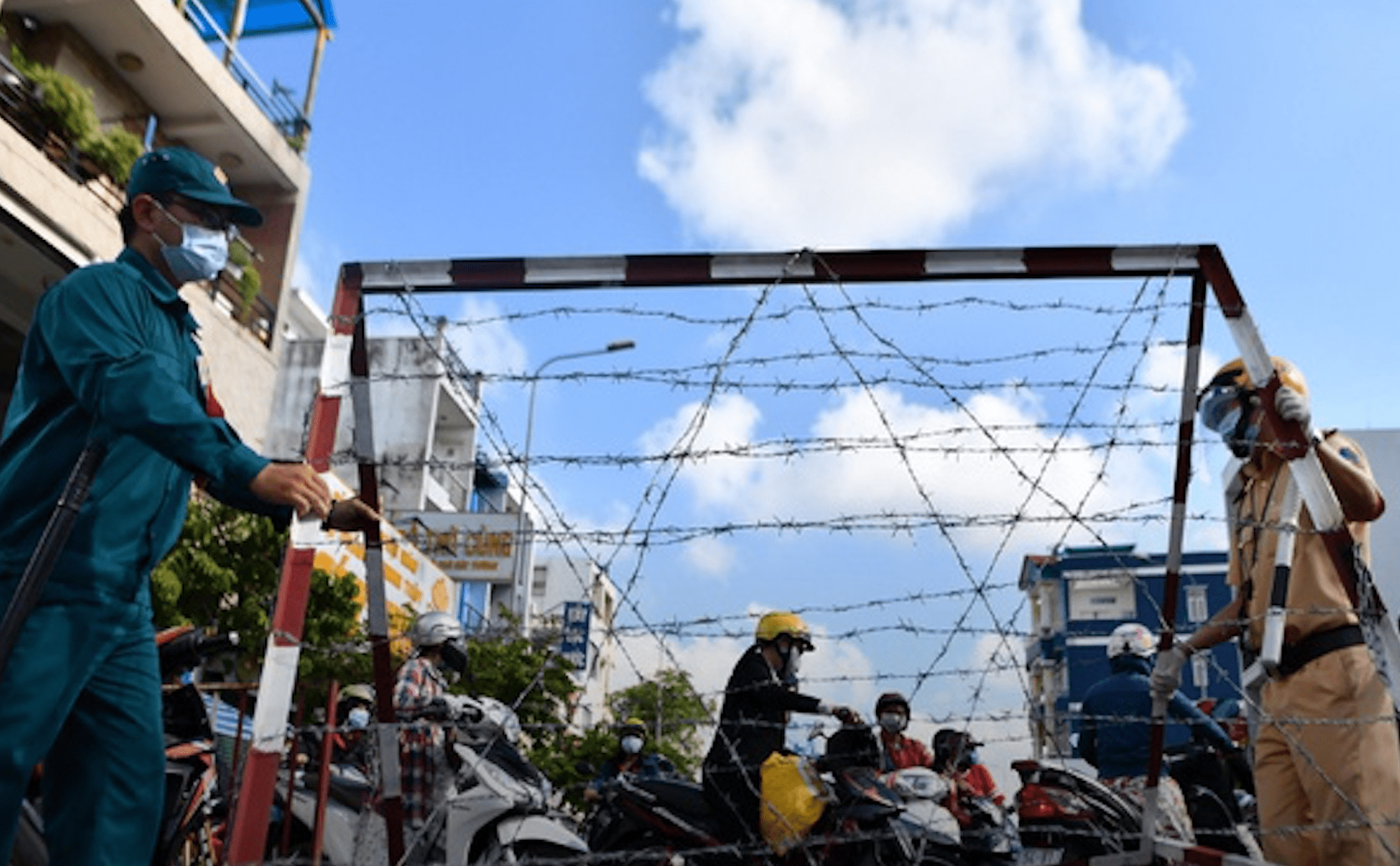
    Coincidentally, at the same time on Sunday, Saigon witnessed an exodus of migrant workers fleeing the city after the local government renewed the lockdown order for another 30 days.

    Quotes from VnExpress:

    • Thousands are setting out for their hometowns on motorbikes with suitcases and other belongings, creating gridlocks at the eastern gateway of Ho Chi Minh City (HCMC) and Thu Duc City.
    • “The area near my house has discovered a few Covid-19 cases, and more people have died from the pandemic, so I am very frightened and do not dare to stay,” said one man named Trung, adding that he has received no support from the local government. “I have no choice. I know that many parts of the country are keeping socially distancing, but if I stay I have no money to spend, and I’m afraid of getting infected.”
    • “Back home, I still have family and relatives, but in HCMC, I have lost my job and really didn’t know how to live,” said another person.

    COVID-19

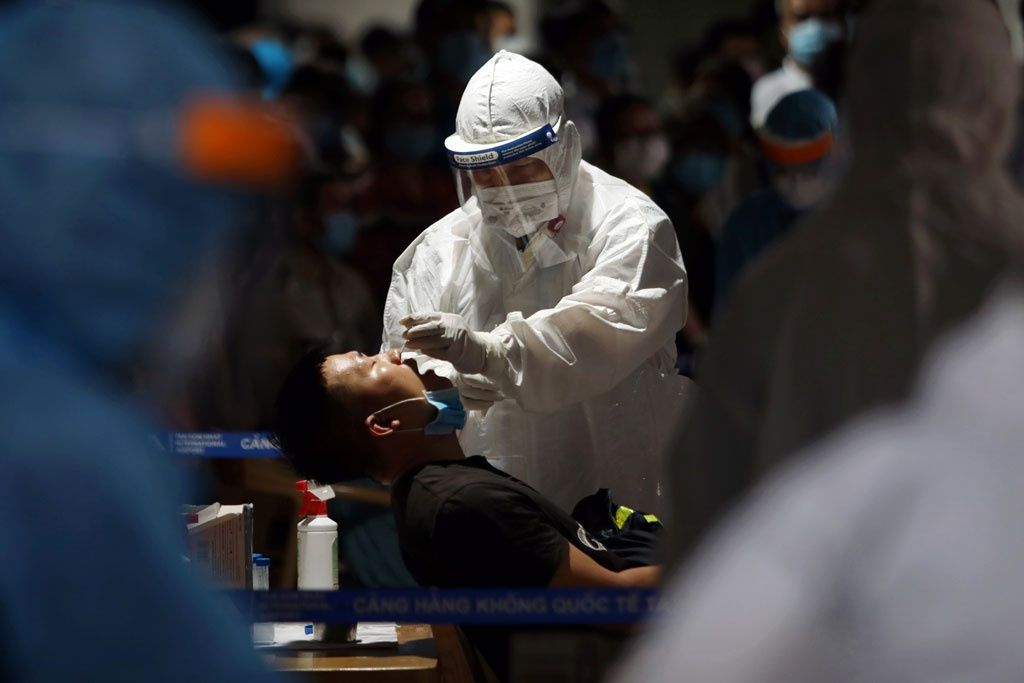
    • Last week, Vietnam added almost 60,000 new cases and 2,187 deaths, pushing the total number of cases over 265,000 with total deaths almost 5,500.
    • Saturday witnessed the biggest daily tally with 9,710 new cases.
    • Hanoi extended the lockdown order until August 22.
    • The two biggest cities, Hanoi and HCMC, briefly introduced highly controversial COVID-19 measures to control the movement of people. Hanoi required people to present proof of assignments issued by their employers while HCMC forced people to fill in an online form at the city’s checkpoints. Local governments quickly reversed course after creating traffic gridlocks and receiving a backlash from the public.
    • Vaccines made in Vietnam: “Vietnam may be able to produce a COVID-19 vaccine in September if everything goes smoothly, Prime Minister Pham Minh Chinh told scientists, units and businesses participating in vaccine production and research at a meeting on August 12.” (VietnamPlus)
    • One thing to note: The state media has been playing down the number of deaths, instead emphasizing patient recoveries. Luat Khoa magazine cites an unnamed source saying the Communisty Party has instructed the state media to avoid highlighting the death tolls and concentrate on the “positive” side of the situation.

    Critics of the government’s COVID-19 response punished

    From RFA:

    “Authorities in Vietnam have arrested a Facebook user for posting mild criticism of government COVID-19 policies, while a university fired a lecturer after a student shared her comments faulting Hanoi’s pandemic response on the social media platform.”


    Learn more about Vietnam

    Was Vietnam’s Chinese COVID-19 Vaccine Debacle Just a Stunt?

    The Diplomat/Le Dong Hai Nguyen/August 13

    “There is a strong case to be made that the Vietnamese government leveraged ingrained anti-Chinese sentiment to boost vaccine uptake.”

    Vietnam human rights recap: Arrests of government critics continue in the first seven months of 2021

    The 88 Project/August 6

    “It’s been an eventful year so far in Vietnamese politics. Arrests of critics of the regime have taken place against the backdrop of the 13th National Party Congress, National Assembly elections, and rising Coronavirus infections. Twenty-three critics of the regime have been arrested during the first seven months of 2021, while 20 have been sentenced to prison. Article 331 was the most frequent charge levelled against critics, with 11 individuals arrested for “abusing democratic freedoms to infringe upon the interests of the State.” Eight people were charged under Article 117, a broad provision which criminalizes producing or disseminating information ‘opposing’ the State.”

    Kamala Harris has an important job to do in Asia

    The Hill/Williams Danvers/August 15

    “With her planned trip to Asia, specifically to Vietnam and Singapore, Vice President Kamala Harris will take on another foreign policy challenge: helping to implement fundamental pieces of the Indo-Pacific strategy.”

    New research: “Two years into CPTPP”

    CSIS/Kati Suominen/August 9

    “Trade in the CPTPP [Comprehensive and Progressive Agreement for Trans-Pacific Partnership] region after the agreement entered into force has largely paralleled members’ trade flows with the rest of the world. Vietnam has grown its trade in goods as well as inbound investment, possibly a positive signal to other Southeast Asian countries that are considering CPTPP membership, such as the Philippines and Indonesia. Japan and Singapore have led the region’s trade in digitally deliverable services, also a key sector for the Philippines and the United Kingdom, another aspiring member. To be sure, these early patterns should be interpreted with care and should not be read as caused by the CPTPP. Further papers in this series explore the extent to which these and other patterns can be attributed to the CPTPP, as opposed to other factors.”

    New research: “US Secretary of Defense Lloyd Austin’s Southeast Asia Tour: Assurances and Dividends”

    ISEAS/William Choong, Hoang Thi Ha, Le Hong Hiep and Ian Storey/5 August 2021

    “The choice of Singapore, Vietnam and the Philippines – as well as forthcoming high-level US engagements in these three countries – highlight their importance as ‘critical Indo-Pacific partners’ in the Biden administration’s Indo-Pacific strategy.”

    New book by Ted Osius, the former US Ambassador in Vietnam: “Nothing is impossible: America’s Reconciliation with Vietnam”

    “Ted Osius, U.S. Ambassador to Vietnam 2014-17, offers a vivid first-hand account of the various forms of diplomacy that brought about the reconciliation between two former enemies and helped bring new prosperity to Vietnam. Nothing is Impossible – with a foreword by John Kerry — tells an inspiring story of how international diplomacy can create a better world.”
  • Vietnam Briefing: Deepening COVID-19 Crisis; Bao Sach Charges; South China Sea Tension; Harris’ Visit To Vietnam

    Vietnam Briefing: Deepening COVID-19 Crisis; Bao Sach Charges; South China Sea Tension; Harris’ Visit To Vietnam

    The Vietnam Briefing, which is released every Monday morning Vietnam time, looks at Vietnam’s political developments of the past week.


    COVID-19 cases surpass 200,000

    • Last week, Vietnam added more than 55,000 new cases of COVID-19  and almost 2,000 deaths. The total number of confirmed cases has reached over 205,000 cases and 3,250 deaths.
    • Sunday witnessed a daily tally record with 9,684 new cases.
    • Hanoi has extended its lockdown order until August 22.
    • Ho Chi Minh city is running out of allocated vaccine doses.
    • Vingroup corporation will establish a manufacturing facility to produce vaccines.
    • Vietnam vaccine: “Nanocovax, the only made-in-Vietnam Covid-19 vaccine near completion, has an efficacy rate of 90 percent, its producer said.”

    The Bao Sach criminal case: 5 members were officially accused of “abusing democratic freedom”

    From RFA:

    “Five Vietnamese journalists accused by authorities in southern Vietnam’s Can Tho province of slandering government leaders in their investigative reports will now be charged only with ‘abusing democratic freedoms’ after an investigation failed to produce evidence of more serious State-secrets charges against them.”

    What to expect:

    • Can Tho’s People’s Provincial Procuracy Office will soon prosecute them.
    • Can Tho’s People’s Provincial Court will soon try them and the trial is expected to be short (one day potentially).
    • All the defendants are expected to be convicted with sentences of up to 36 months of imprisonment. Warnings and community services are not off the table.

    Meet the new vice chief of VCP’s Propaganda Committee

    From Nhan Dan:

    “Member of the Party Central Committee (PCC) and Editor-in-chief of Nhan Dan (People) Newspaper Le Quoc Minh has been appointed to serve concurrently as Deputy Head of the PCC’s Commission for Communication and Education and hold the position of Secretary of the Party Committee of the Vietnam Journalists Association (VJA) for the 2015-2020 and 2020-2025 tenures.”


    Vietnam demands China stop Paracel Islands military drills

    From VnExpress:

    • Vietnam has asked China to stop and not repeat military drills on its Hoang Sa (Paracel) Islands, asserting that they violate Vietnam’s sovereignty.
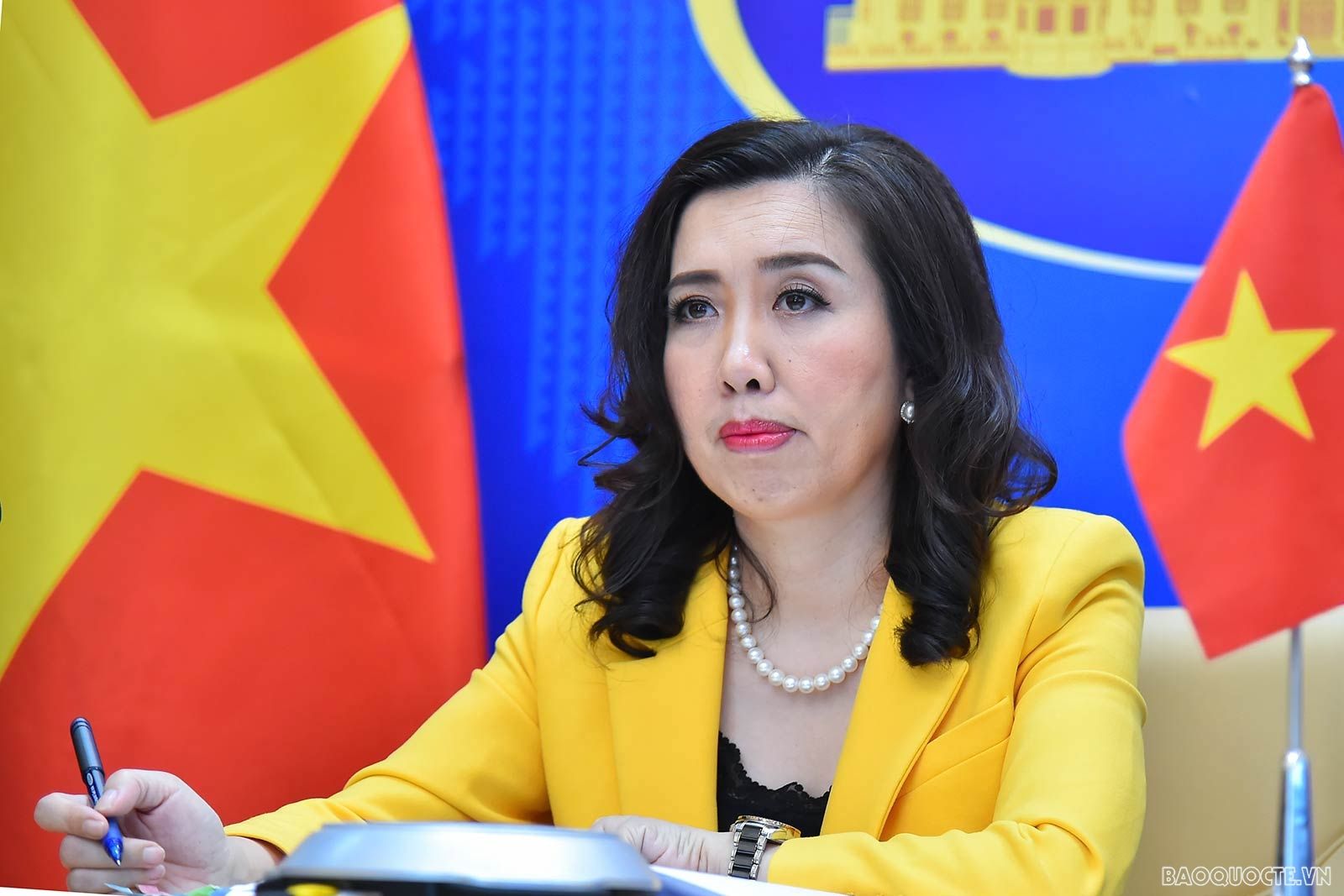
    • “China performing drills on Vietnam’s Paracel Islands violates Vietnam’s sovereignty over the islands, goes against the spirit of the Declaration on the Conduct of Parties in the South China Sea (DOC), complicates the situation, and is not beneficial for current negotiations between China and ASEAN on the Code of Conduct for the South China Sea (COC), as well as the maintenance of peace, stability and cooperation at the East Sea,” Foreign Ministry spokeswoman Le Thi Thu Hang said Thursday.

    US’ Vice President Harris to visit Vietnam on August 24

    From Bloomberg:

    “The global semiconductor shortage and other supply chain troubles will be a focus of Vice President Kamala Harris’s trip to Southeast Asia later this month, where she also aims to shore up U.S. relations with countries at China’s doorstep.”


    Learn more about Vietnam

    Controlling the Information Space: Big Tech and Free Speech in Southeast Asia

    The Diplomat/Andreyka Natalegawa and Kyra Jasper/August 05

    “Countries like Vietnam have mobilized ‘cyber-armies’ to monitor and report online content critical of the central government. These cyber-armies exploit the content moderation mechanisms on platforms like Facebook, reporting content en masse for violating ‘Facebook’s ever-pliable Community Standards, whether or not the rules were broken.’”

    Bad news for Vietnam’s Mekong Delta

    The Interpreter/Milton Osborne/July 29

    “The release of recent research from the Netherlands adds an additional insight into what is happening in Vietnam’s Mekong Delta, the country’s all-important food-producing region that contributes some fifty per cent to its agricultural GDP. In a stark conclusion, the research cites 2050 as the Tipping Point when the delta will no longer be able to cope with saltwater intrusions, a phenomenon that is already causing the loss of productive land.”

    Russia and Vietnam: An alliance of convenience

    The Interpreter/Nikola Mikovic/August 2

    “Russia is one of the biggest suppliers of weapons to Southeast Asia, with Vietnam alone a major customer for Russia’s arms. While it is estimated that throughout the 1980s, Moscow had provided Vietnam with an average of US$1 billion annually in military assistance and another US$1 billion annually in economic assistance, following the collapse of the Soviet Union, the Kremlin lost significant influence in the country. Now Russia is seeking to regain lost ground.”

  • Vietnam Briefing: Public Shaming On National Television Amidst Worsening COVID-19 Situation

    Vietnam Briefing: Public Shaming On National Television Amidst Worsening COVID-19 Situation

    The Vietnam Briefing, which is released every Monday morning Vietnam time, looks at Vietnam’s political developments of the past week.


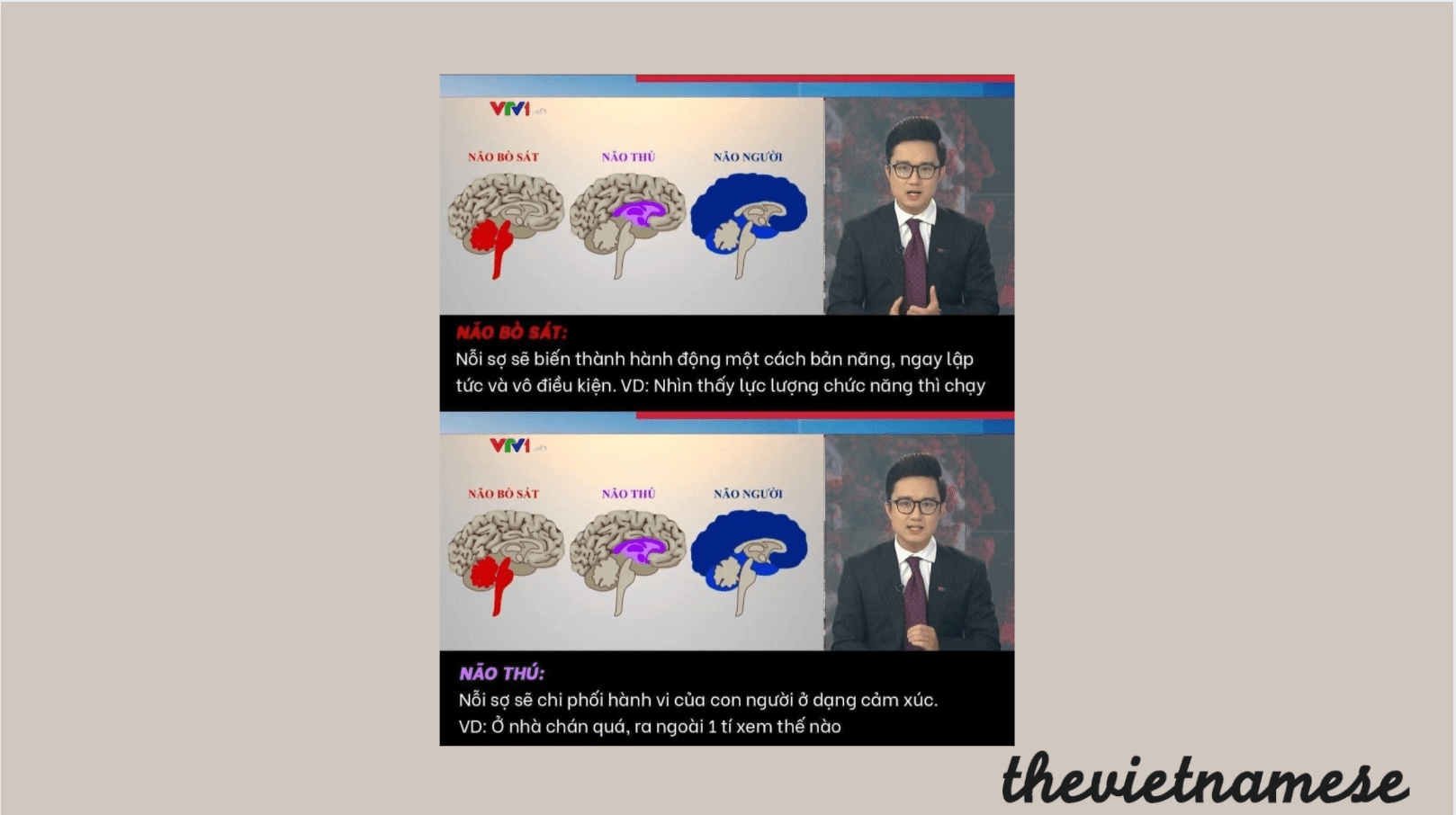
    Vietnam’s national television under fire for using pseudoscience to humiliate people

    • The government-owned national television channel VTV1 has been under fire as it compared breaking social distancing rules with “having animal brains” in a national broadcasting session. It also compared people who ran away from the police and the authorities as “having reptile brains.”
    • This idea of people having “animal” and “reptile” brains is rooted in a theory that has long been refuted, according to Yale University School of Medicine. Even though the theory is considered by many experts to be pseudoscience, it still appeared on Vietnam’s national television.
    • VTV has deleted this video from its website along with other related articles and has since been silent about this broadcasting.

    COVID-19 in Vietnam

    • According to Reuters: “Vietnam’s daily COVID-19 infections hit a record 8,649 cases on Friday, taking its total tally to over 137,000.” Most of the new cases were recorded in the south, particularly in Ho Chi Minh City.
    • Even though the social distancing period for Ho Chi Minh City was supposed to end by the end of last week, Prime Minister Pham Minh Chinh imposed an extension for another two weeks starting August 2. By the end of this period, if no more extension is imposed, Ho Chi Minh City will have been in lockdown for 38 days.
    • Vaccination efforts have escalated in Ho Chi Minh City. It has been reported that Ho Chi Minh City will increase the number of vaccination sites from 600 to 1,000, with each site aiming to vaccinate at least 300 people each day.
    • Meanwhile, there have been heated debates about the type of vaccine being used in Vietnam, as Ho Chi Minh City received one million doses of the Sinopharm vaccine from China.
    • As of Friday, July 30, only around 6.2 million people have been vaccinated with around 620,000 people fully vaccinated nationwide in Vietnam, according to the University of Oxford. The population of Vietnam is around 100 million, so the number of people fully inoculated is less than 1 percent of the population.
    • The National Assembly gave Prime Minister Pham Minh Chinh the authority and the responsibility to decide on “special measures”regarding the COVID-19 situation. This shows the lackluster role of the National Assembly in the pandemic.

    US Vice President Kamala Harris to visit Vietnam in August

    • According to Nikkei Asia: “US Vice President Kamala Harris will visit Singapore and Vietnam in August, the White House said Friday, as Washington seeks to bolster ties with the two key Asia-Pacific partners.” This will be the first time an American vice president officially visits Vietnam while still in office.
    • Last week, US Defense Secretary Lloyd Austin also visited Vietnam and met with Vietnam Defense Minister Phan Van Giang to “deepen cooperation in security and pandemic recovery.”
    • Foreign policy experts see these visits by senior US officials as a sign that the US is broadening its presence in Southeast Asia and the South China Sea amidst China’s rising influence. There is also hope that deepening US-Vietnam relations would be beneficial for human rights advocacy.

    New (but expected) faces elected by the National Assembly

    • In the first meeting of the 15th National Assembly (elected in 2021), the legislative assembly has elected people to the 50 most important leadership positions for the next five-year term, including the prime minister, president, chairman of the National Assembly, chief justice of the Supreme People’s Court, prosecutor general of the Supreme People’s Procuracy, along with various ministers and deputies.
    • The full list of the 50 positions and the newly elected leaders can be found here.
    • As mentioned in previous briefings, even though these names have only been recently confirmed, many of the appointees have been known since as early as April.
    • Amidst the surge of COVID-19 infections, the National Assembly delegation to Ho Chi Minh City is not going to meet with voters as planned.

    Activist and ex-detainee summoned by the authorities despite widespread lockdown

    • According to BBC Vietnamese, on July 28, 2021, activist and ex-political prisoner Pham Thanh Nghien, who is living in Ho Chi Minh City, was summoned by the police in Hanoi for her book, “Slices of Life Behind Bars,” which was published in the US in 2017. She said that it is possible that she was summoned also due to her criticism of the government on her Facebook account.
    • It is unknown why the authorities wanted the activist to travel to Hanoi, despite social distancing measures in both Hanoi and Ho Chi Minh City, which make it much more difficult for anyone to travel around the country.

    Learn more about Vietnam

    COVID-19 Turned Vietnam’s State-Run Union’s Greatest Weakness Into Its Biggest Strength

    Joe Buckley/The Diplomat/July 29, 2021

    “The state-led Vietnam General Confederation of Labor (VGCL) is Vietnam’s only legal trade union federation. It is subordinate to the ruling Communist Party, embedded in the structures of the party-state, and receives a lot of funding from it. Government leaders often make speeches reinforcing how committed they are to strengthening the VGCL and reminding people that the Confederation is an arm of the state. You will find a union office, staffed by full-time officials, at almost every level of Vietnam’s administration, from the impressive and imposing national headquarters on Hanoi’s Quan Su street down to modest and charming ward and district-level offices throughout the country. In individual companies, union reps are often human resource managers or similar.

    Due to this, the VGCL has been heavily, and often rightly, criticized for being unable to represent and struggle for workers properly. The VGCL has never organized a strike, for example, and often serves as a channel to inform workers of government and company policies rather than to challenge them.”

    In Vietnam, Civil Society Is Picking up the Slack Where Authorities Struggle

    Luke Hunt/The Diplomat/July 28, 2021

    “The Communist authorities in Vietnam risk becoming increasingly marginalized after failing to curb the spread of COVID-19. Civil society groups are now taking the initiative in combating the pandemic amid harsh lockdowns in the country’s south.”

    America Can—and Should—Vaccinate the World

    Helene Gayle, Gordon LaForge, and Anne-Marie Slaughter/Foreign Affairs/March 19, 2021

    “The Biden administration is right to want to take the lead in vaccinating the world, for a host of reasons both self-interested and altruistic. But it should not fall into the trap of trying to beat Russia and China at their own game—handing out vaccines to specific countries based on their geostrategic importance and the amount of attention they are receiving from rival powers.

    Rather, Biden should pursue abroad the sort of “all in” unity approach that he has proclaimed at home. His administration should focus less on strategic advantage than on vaccinating the largest number of people worldwide in the shortest amount of time. In so doing, the United States would concentrate on what the world’s peoples have in common—susceptibility to this and many other viruses—regardless of the nature of their governments.”

    Research: “The Ambiguous Legacy of Ngô Đình Diệm in South Vietnam’s Second Republic (1967–1975)”

    Sean Fear/Journal of Vietnamese Studies/March 01, 2016

    “Although recent English-language Vietnam War scholarship has devoted considerable attention to reassessing the Ngô Đình Diệm era, contemporaneous South Vietnamese interpretations of the president’s tenure have been largely overlooked. Contrary to prevailing assumptions that his influence ended abruptly with his 1963 murder, Ngô Đình Diệm was a hotly debated figure long after his death. Moreover, his contested legacy came to symbolize South Vietnam’s enduring political, regional and religious schisms, contributing to and reinforcing his country’s profound social fragmentation. The fluid and ambiguous memory that Vietnamese had of his time in office had a substantial impact on subsequent political developments, establishing patterned dynamics of political conflict that endured throughout the Second Republic and providing conceptual yardsticks against which subsequent politicians and political developments were measured. Ngô Đình Diệm’s fraught symbolic resonance and significant posthumous political impact are therefore crucial dimensions to consider in evaluating his legacy.”

  • Vietnam Briefing: COVID-19 Crisis Deepening While The National Assembly Convened To Elect State Leadership

    Vietnam Briefing: COVID-19 Crisis Deepening While The National Assembly Convened To Elect State Leadership

    The Vietnam Briefing, which is released every Monday morning Vietnam time, looks at Vietnam’s political developments of the past week.


    COVID-19

    • Last week witnessed the daily COVID-19 tally reach an all-time high on Saturday, with 7,968 cases reported. The total number of cases surpassed 100,000 on Sunday, July 25.
    • According to data from Johns Hopkins University, only more than 4.5 million doses have been administered, which is equivalent to 4.6 percent of the population, with only 0.39 percent of the population having been fully vaccinated.
    • Hanoi, the capital city, started a 15-day social distancing period on Saturday, July 24.
    • Ho Chi Minh city started to impose a night curfew from Monday, July 26, prohibiting residents from leaving their homes after 6 PM without a legitimate reason.

    Vaccination scandals

    Vietnam’s public always speculates that government officials, their relatives, and big corporations have unfair access to vaccines. Last week, two scandals gave them legitimate reasons to believe that.

    • A woman announced on her Facebook page that she received a COVID-19 vaccine shot last week with help from her “grandfather.” The hospital that administered the shot explained that her father registered for her. The father happens to be a lecturer at the Academy of Military Medicine who taught one of the doctors administering vaccines. It’s a popular practice in Vietnamese culture for a woman who has children to call her own father “ông ngoại” (maternal grandfather), following the way her children call him.
    • The Ho Chi Minh City government “lent” 5,000 COVID-19 vaccine doses to the giant corporation Vingroup, city officials said on Saturday. They explained that this was done due to Vingroup’s large assistance to the government’s pandemic response and that they would do so again for other enterprises for the same purpose.
    • The two above-mentioned vaccination scandals angered the public as people questioned the fairness of the government’s vaccine rollout policy. Some public members were enraged at the Vingroup “lending agreement” because they believed the government did not have the authority to lend these vaccines since they were donated to Vietnam under the COVAX program.

    Meanwhile, the National Assembly convened to rubber-stamp the Communist Party’s decisions on personnel

    The pandemic is usually not a reason for a national legislative body to stop working. But while online meeting procedures have not been introduced yet, the National Assembly convened its first session of the new term on July 20 after the election in May to largely rubber-stamp the Communist Party’s major decisions on personnel.

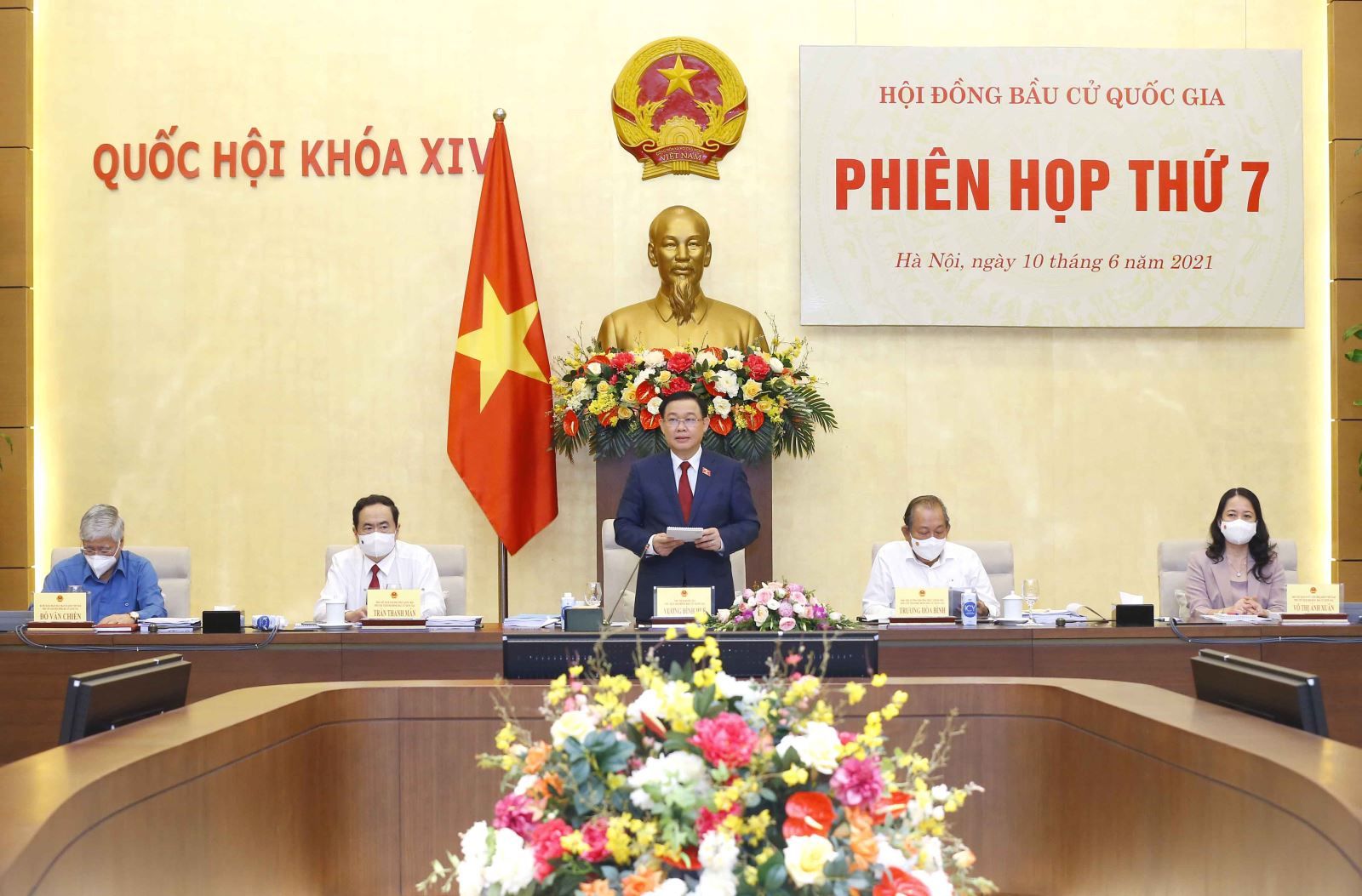
    • The National Assembly always convenes shortly after the general elections to elect state leadership, including its own. On July 20, members elected Vuong Dinh Hue as chairperson of the body and 17 other top positions.
    • As expected, the National Assembly  Standing Committee has nominated Nguyen Xuan Phuc as state chairman (a.k.a state president).
    • On July 26, the National Assembly is expected to elect the state chairperson, the prime minister, the vice state chairperson, the chief justice of the Supreme People’s Court, and the prosecutor general of the Supreme People’s Procuracy. These people are expected to be the same officials who were elected to the same positions in April.
    • The National Assembly on July 23 voted to pass a resolution to maintain the current 22 ministry-level departments of the administration.
    • The National Assembly has also decided to shorten its first session due to the COVID-19 pandemic and end the session on July 28 instead of July 31.

    Facebook users sentenced to years of imprisonment

    Nguyen Van Lam, 51, was sentenced by Nghe An’s People’s Provincial Court to nine years in prison and three years of probation for “making, storing, spreading information, materials, items for the purpose of opposing the State” under Article 117 of the Penal Code. He was accused of using Facebook to spread information that is deemed to be anti-state.

    More cases:

    • Tran Hoang Minh, a Facebook user, was sentenced to five years of imprisonment allegedly for “abusing democratic freedoms” under Article 331 of the Penal Code, according to RFA. The Hanoi People’s Court convicted him based on the accusation of publishing 51 pieces of content on Facebook concerning the Dong Tam incident. Minh had no defense lawyer nor relatives present during his trial. It’s unclear whether or not he will file an appeal.
    • A former attorney in Hanoi, Nguyen Thi Thuy, was convicted of the same crime on July 21 and sentenced to 20 months of imprisonment: “In the process of protecting rights of Ngu, Thuy said he was wrongly accused and illegally arrested. She later wrote two documents that hurt the prestige and honor of several Party and State leaders and sent them to ministries and agencies, thus exerting pressure on them to follow her proposal.”
    • Nguyen Van Son, a relative of the detained blogger Le Dung Vova, was charged with concealment of crimes, Hanoi Police announced on July 22. He is accused of assisting Dung while he was in hiding before his arrest on June 30.

    Former mayor of Hanoi prosecuted for illegally interfering in bidding activities

    From VietnamPlus:

    “The Investigation Police Agency under the Ministry of Public Security on July 24 executed a decision on commencing legal proceedings against Nguyen Duc Chung, former chairman of the Hanoi People’s Committee, for the charge of “abusing position and power while performing duties” in the case related to the municipal Department of Planning and Investment and relevant units.”


    U.S. trade agency drops tariff threat against Vietnam over currency practices

    From Reuters:

    “The U.S. Trade Representative’s office on Friday said it had determined that no tariff action against Vietnam was warranted after its central bank agreed with the U.S. Treasury not to manipulate its currency for an export advantage.”


    US Defense Secretary to visit Vietnam

    From VietnamPlus:

    “US Secretary of Defense Lloyd Austin will pay an official visit to Vietnam on July 28 and 29 at the invitation of Vietnamese Minister of National Defence Gen. Phan Van Giang.”

    From VnExpress:

    “A former U.S. vessel donated to Vietnam Coast Guard arrived in the country earlier this month, according to the U.S. Embassy in Hanoi.”


    Learn more about Vietnam:

    In Vietnam, the Party’s Rolling Crackdown on Dissent Continues

    Stewart Rees/The Diplomat/July 23

    “Proponents of an EU trade pact said it would nudge one-party Vietnam towards greater respect for human rights. The evidence so far points in the other direction.”

    Vietnam Still Trolling Donald Trump With Economic Successes

    William Pesek/Forbes/July 22

    “Vietnam just made a deal with the U.S. Treasury Department: we won’t weaken the dong if you take us off the dreaded “currency manipulator” list. It’s actually a bigger victory for Hanoi than Prime Minister Phạm Minh Chính’s government may realize.”

    New research: “The Growing Salience of Online Vietnamese Nationalism”

    Luong Nguyen An Dien/ISEAS/2021

    “The growing salience of online Vietnamese nationalism has posed serious challenges and dilemmas for the regime. The authorities have had to encourage nationalistic patriotism without letting Sinophobia spiral out of control or turn against the regime.”

  • Vietnam Briefing: COVID-19 Nationwide Crisis; Country’s Map May Be Redrawn

    Vietnam Briefing: COVID-19 Nationwide Crisis; Country’s Map May Be Redrawn

    The Vietnam Briefing, which is released every Monday morning Vietnam time, looks at Vietnam’s political developments of the past week.


    COVID-19 in Vietnam

    • Movement restrictions across Vietnam amidst outbreaks: Sixteen southern provinces are expected to undergo two-week movement restrictions as three-quarters of new cases were in the south, particularly in Saigon. In the north, Hanoi is also entertaining more restrictions. People are advised to stay at home, and non-essential establishments are closed.
    • The Vietnamese government said Pfizer would provide the country with 20 million more doses of the COVID-19 vaccine, which would be used primarily for children of 12-18 years old, and Pfizer may consider transferring the vaccine technology to Vietnam. Vietnam also said that the Pfizer dose would be offered to people vaccinated with AstraZeneca in the first dose.
    • Vietnam is imprisoning people on COVID-19 related charges: Last week, on July 16, a man was charged with 18 months in prison for “breaking strict Covid-19 quarantine rules, spreading the virus to others and causing financial damage to the authorities.” However, this was not the first time a Vietnam Airline flight attendant also received similar charges and was sentenced to a two-year suspended jail time in late March.

    Vietnamese hospital cremates body of Korean virus patient without notice

    From Korea Times:

    • A hospital in Ho Chi Minh city, Vietnam, has cremated the body of a Korean national who died from COVID-19 there, without giving prior notice to the bereaved family members in Korea, provoking protests from them and the Korean Consulate General in the city. According to the Ministry of Foreign Affairs, Sunday, a Korean man in his 50s died in the hospital after undergoing medical treatment for about 10 days following him testing positive for the virus in early July.

    The Vietnamese government is tightening free speech

    • According to Nikkei Asia, the government proposes a new draft decree that contains new regulations specifically targeting live-streaming activities on social media platforms, including Facebook, Youtube, and Tiktok.
    • This new draft decree is forcing international social media platforms to hand over to the government the information of popular individuals who live streaming with more than 10,000 followers or subscribers. The government also wants to tax those making money from these platforms.
    • Meanwhile, concern has been raised over Vietnam’s purchase of Israeli company Cellebrite’s phone-hacking technology. Attorney Eitay Mack, who conducted the investigation into the Israeli company, protested the company’s and the Israeli Defense Ministry’s decision to sell such technology to Vietnam’s Ministry of Public Security, citing concerns over crackdowns on journalists and pro-democracy and human rights activists.

    Incoming National Assembly’s first meeting since the 2021 election

    • Next week, on July 20, the 15th National Assembly will hold its first meeting session after the 2021 election ended in late May.
    • Originally, the first session was held from July 20 to August 5, but the session was shortened to end on July 31 due to complications of COVID-19 outbreaks in Vietnam.
    • In this first session, the representatives in the National Assembly will confirm 50 important officials who will hold the positions over the next five years, such as the chairperson of the Assembly, the president, the prime minister and his deputies, chief justice, chief of the Procuracy, etc. The identity of these leaders is already known at this point, and confirmation is largely just procedural. Vietnam conducted a similar event in April to elect the same individuals to the same positions. It has made the whole process of election, nomination, and confirmation started in May highly confusing to even the Vietnamese public, not to mention international observers.
    • The first session will also discuss financial and economic issues related to public investment for the next term.
    • It is also reported that 435 out of 499 National Assembly representatives have been vaccinated against COVID-19. It is unclear whether they have been fully vaccinated or only vaccinated with one dose. It is also unclear which types of vaccines were used for the National Assembly representatives.

    EU Domestic Advisory Group (DAG) denounces Vietnam’s arrest of civil society leaders

    • Two weeks ago, journalist Mai Phan Loi and lawyer Dang Dinh Bach were arrested for alleged tax evasion. They were both involved in registered civil society organizations in Vietnam and were both board members of the VNGO-EVFTA Network, which aims to raise awareness about civil society’s involvement in the EU-Vietnam Free Trade Agreement.
    • Last week, on July 15, the EU DAG denounced the arrests of the two individuals, citing concerns that the Vietnamese government is actively silencing those who try to raise human rights concerns.
    • Earlier this year in January, the EU DAG already affirmed that “civil society engagement and scrutiny of the EVFTA is not an optional element of the agreement,” and urged the European Commission to ensure that this element is fully implemented.

    US ambassador to Vietnam nominee promises to press Vietnam on human rights

    From Reuters:

    • In a US Senate hearing on July 13, Marc Knapper, the Biden administration’s nominee to become the new US ambassador to Vietnam, vowed to press the Vietnamese government “to respect the freedoms of expression, association, peaceful assembly, and religion or belief.”

    South Korea requests Vietnam’s involvement in North Korean dialogue

    From United Press International:

    • Last week, on July 15, during a phone call with the Vietnamese Communist Party’s Secretary General Nguyen Phu Trong, South Korean President Moon Jae-in asked Vietnam to “play a role in promptly resuming dialogue with North Korea,” according to South Korea’s Blue House.
    • In response to Moon’s request, Trong reportedly said that Vietnam “supports the denuclearization of the Korean Peninsula and dialogues for peaceful consultations.”
    • Moon also asked for Vietnam’s opinion on the situation of pro-democracy crackdowns in Myanmar, to which Trong replied that Vietnam will “continue to work for the restoration of peace and stability in Myanmar.”

    Will the Vietnam map be redrawn?

    • According to the state-controlled Tuoi Tre News, 20 Vietnamese provinces might be merged into other provinces due to their limited population or acreage.
    • Some of the provinces include Da Nang, Ha Nam, Vinh Phuc, Hung Yen, Nam Dinh, Bac Kan, Cao Bang, Kon Tum, Ninh Thuan, and Lao Cai, among a list of twentieth provinces.
    • Vietnam’s administrative provincial boundaries have been adjusted repeatedly over the past 50 years. By the end of the Vietnam War in April 1975, the country had 72 provincial units. A massive merging process was implemented shortly after that and the number of provincial units reduced to 38 in 1976. However, many provinces have started to be split since 1978 while a few others have been merged to other entities, making the number of provinces 63 in 2008.

    Learn more about Vietnam

    New research: The South Vietnamese Flag and Shifting Representations of the Vietnamese American Experience

    Tuan Hoang/Rising Asia Journal/July 13, 2021

    “The sight of the South Vietnamese flag in Washington, DC on January 6, 2021, has aroused curiosity and criticism. Missing in the commentaries, however, is the multiplicity of its symbolism to Vietnamese Americans who had come to the United States as refugees or immigrants. Although its visual symbolism is forever tied to the history of the former Republic of Vietnam, its underlying meaning has changed to reflect the experience of Vietnamese after the fall of Saigon, not before.”

    New research: A Multi-level Approach to Vietnam Foreign Policy: From Security Preoccupation to Middle Power Role

    Le Dinh Tinh/Strategic Analysis/June 13, 2021

    “Prior to 1995 when Vietnam joined ASEAN and normalized relationship with the United States, the overriding concern was security as could be well explained by realism. Vietnam has made several critical, strategic moves since 1995 and by 2030 the country may be able to act internationally as an emerging middle power. Taking a multi-level approach and empirical evidences of 35 years of Doi Moi (renovation), this article attempts to clarify as to how Vietnam has been in a better position to ensure the security goal by embarking on an ambitious development strategy and expanding its international role.”

    New research: Vietnam’s Foreign Policy in an Era of Rising Sino-US Competition and Increasing Domestic Political Influence

    Carlyle A. Thayer/Asian Security/July 31, 2017

    “This article examines the dramatic shifts that Vietnam’s foreign policy has undergone over time, from a country tightly allied with Socialist partners like China and the Soviet Union to one that has diversified its strategic partners and forsworn alliances in order to protect its strategic autonomy…. As public opinion and elite factionalism play an increasing role in Vietnam’s foreign policy, managing Vietnam’s external ties has become increasingly difficult. This article concludes that public opinion regarding relations with China has become so toxic that it poses a serious challenge to the political legitimacy of Vietnam’s one-party regime should it fail to deter Chinese assertiveness in the South China Sea.”

    Bittersweet: Vietnam’s Mixed Progress on E-Government During COVID-19

    Truong Thuy Quynh and Pham Thi Thuy Duong/The Diplomat/July 16, 2021

    “The government is in fact taking steps to remedy the system’s shortcomings, from timely adoption of more advanced technologies to smoothing the way for government-private sector collaboration.

    On July 11, Ho Chi Minh City introduced a new system that allows facial recognition and location tracking via smartphones to supervise self-quarantine, hoping to ease the pressure on centralized quarantine venues. The city is also using STAYHOME and HCMCovidSafe, smart wristbands produced collaboratively by governmental agencies, tech corporations, and scientists. Such cooperation has sparked the hope for a synergy in ICT capacity building in Vietnam in the near future.

    Nevertheless, problems like a lack of coordination within the governmental apparatus, digital inequality, an immature digital culture, and a dearth of ICT-qualified personnel within the public sector may remain pressing in the aftermath of COVID-19. All the experts we spoke to agreed that these issues should now rise to the top of the policy agenda, alongside infrastructure building and technological upgrades.”

    Vietnam to pilot virtual currency as crypto thrives in gray zone

    Lien Hoang/Nikkei Asia/July 12, 2021

    “After years of warning its citizens not to “gamble” on virtual money, the Vietnamese government has decided to explore creating its own digital currency.

    The surprise policy move came buried near the bottom of Prime Minister Decision 942, which lays out a strategy for digitizing the government by 2030. Released last month, it directs the State Bank of Vietnam to research, “develop, and pilot the use of virtual currency based on blockchain technology.”

    Why we should care about fate of the Mekong

    An Pich Hatda/Nikkei Asia/ July 12, 2021

    “More than 70 million people rely on the river, partly or entirely, for their livelihood, and its central role in the economies of the Lower Basin countries cannot be understated. Taken together, Cambodia, Laos, Thailand, and Vietnam represent around half the Mekong region’s entire production of rice and fish, a third of tourism, and a large percentage of the region’s energy demands, according to a recent study by the Mekong River Commission (MRC).

    But the Mekong’s enduring role as a source of life and livelihoods is facing multiple threats. These threats have been compounded by the COVID pandemic that has created unprecedented economic hardship and worsened environmental degradation.”

  • Vietnam Briefing: More Writers And Activists Silenced While The Country Struggles With Record COVID-19 Cases

    Vietnam Briefing: More Writers And Activists Silenced While The Country Struggles With Record COVID-19 Cases

    The Vietnam Briefing, which is released every Monday morning Vietnam time, looks at Vietnam’s political developments of the past week.


    Pro-democracy writers and activists persecuted

    Last week, multiple pro-democracy writers and activists were charged, and some were also convicted under Article 117 of the 2015 Penal Code, which prohibits “anti-state” writings, and Article 331, which criminalizes “abusing social media in order to erode the state’s rights.” The list includes the conviction of Pham Chi Thanh, a satirical writer, the arrest of Do Nam Trung, a human rights activist, and the charge filed against Le The Thang, a member of an independent journalism platform called Bao Sach (Clean Newspaper).

    Who are these writers and activists?
    • Pham Chi Thanh is a satirical writer who frequently criticizes Vietnamese political leaders through his online medium, a blog and a Facebook page, and books. He used to be the deputy editor of the state-controlled platform Voice for Vietnam but lost this position in 2007 when he wrote an article criticizing China. Human Rights Watch reports that he has been in a bad health condition since his arrest in 2020. On July 9, he was sentenced to five years and 6 months in prison, and five years of probation.
    • Do Nam Trung is a frontline human rights activist who focuses on democracy advocacy. In 2014, he was arrested and sentenced to 14 months in prison for anti-China and anti-authoritarian activism. Upon his release in 2015, Trung continued his activism, which led to harassment and serious threats from the government. In the early morning of July 6, he was arrested again. Under Article 117, which is “making, storing, distributing or disseminating information, documents and items against the Socialist Republic of Vietnam,” one can be sentenced to between five to 20 years in prison.
    • Le The Thang is a photographer and a filmmaker of the independent journalism platform Bao Sach. He was charged along with four other members of Bao Sach, Truong Chau Huu Danh, Nguyen Thanh Nha, Nguyen Phuoc Trung Bao, and Doan Kien Giang under Article 331 of the 2015 Penal Code. Article 331, which prohibits “abusing democratic freedoms to infringe the interests of the State,” stipulates prison sentences between six months to three years or probation of up to three years.
    What are the writers and activists’ lawyers saying?
    • So far, only Ha Huy Son, Pham Chi Thanh’s lawyer, has talked to the press.
    • The lawyer argues that Article 117 cannot be applied to Pham Chi Thanh as he was only criticizing Nguyen Phu Trong, the then-president and secretary-general of the Vietnamese Communist Party (VCP), while Article 117 covers “anti-state” writings.
    • The lawyer further argues that law enforcement cannot equate an individual with the state, even if such individual is the president or secretary-general of the VCP.

    Meanwhile, Vietnam continues to deny any violations of press freedom. Last week, Vietnam Plus, a state-controlled media platform, said that press freedom in Vietnam is an “undeniable objective reality” in response to Reporters Without Borders (RSF) ‘s ranking on freedom of the press.

    • In its 2021 ranking, RSF ranks Vietnam 175 out of 180 countries, only ahead of a few countries, like China and North Korea.
    • The state-controlled media is calling RSF’s classification “biased, unobjective, and completely groundless.”
    • The state-controlled media defends Vietnam’s press freedom by citing “diverse types and content of the press,” the fact that international media outlets can operate within the country, as well as the fact that Vietnam has widespread internet usage.
    • However, they completely ignored the fact that independent journalists and writers are being arrested and have been charged almost every week since late last year with questionable charges, that there are no independent journalists and journalism platforms allowed to operate in Vietnam, and that non-state platforms such as BBC Vietnamese or our own Luat Khoa Magazine and The Vietnamese Magazine are largely blocked out of internet access in Vietnam.

    New draft regulations on the Internet awaiting public consultation

    According to Baker Mckenzie, Vietnam’s Ministry of Information and Communications just released a draft amendment of the well-known Decree 72, which is the main set of regulations concerning the internet, social networks, and gaming services.

    The Ministry is awaiting public recommendations before officially enacting the decree amendment. This period of public consultation lasts for two months, with a deadline of September 9, 2021.

    Here are some important points about Decree 72, according to Baker Mckenzie:

    • The new set of obligations specifically for offshore social network services;
    • Broader scopes of illegal content under Article 5.1 that are subject to content takedown mechanism;
    • New regulations on the provision of data center service and cloud service;
    • New regulations on live-streaming services; and
    • New obligations for social network providers regarding child protection (e.g., age verification, content filter, and takedown).”

    COVID-19 in Vietnam

    • In total, as of last week, the country has 28,470 confirmed cases and 112 deaths, according to Johns Hopkins University. While the number seems modest, Vietnam has only fully vaccinated 0.28 percent of the population.
    • Vietnam received 2 million doses of COVID-19 vaccine Moderna from the United States under the Coalition for Epidemic Preparedness Innovations (COVAX), an initiative of the World Health Organization to ensure access to vaccines for every country in the world. The Moderna doses that Vietnam just received reportedly came from the United States as a part of 80 million vaccine doses being sent out to foreign countries under the Biden administration.
    • So far, Vietnam possesses four types of COVID-19 vaccine: AstraZeneca (5.8 million doses), Sputnik V (2000 doses), Sinopharm (500 thousand doses), and Pfizer (90 thousand doses). Moderna would be the fifth vaccine to be administered after the government approved Moderna two weeks ago.

    Learn more about Vietnam

    Important date: It has been 26 years since Vietnam and the United States normalized their relations on July 12, 1995 (Vietnam time).

    The US Military Should Return to Vietnam

    Charles K. Djou and Matthew B.Powell/Defense One/July 08, 2021

    “As a part of the Vietnam War effort, the United States built several major military facilities in Vietnam in the 1960s; all are strategically positioned to deter China’s aggression in the South China Sea and assure regional U.S. allies. The U.S. and Vietnam should consider the return of American military forces to these facilities in the next 5 to 10 years; such a move would also bolster Vietnam’s ability to resist coercion from China. After a series of high level diplomatic overtures in the last decade, the U.S. and Vietnam should now engage in more active and detailed staff level discussions about a return of U.S. forces to Vietnam.”

    How Vietnam’s ‘influencer’ army wages information warfare on Facebook

    James Pearson/Reuters/July 09, 2021

    “Force 47, as the Vietnamese army’s online information warfare unit is known, consists of thousands of soldiers who, in addition to their normal duties, are tasked with setting up, moderating and posting on pro-state Facebook groups, to correct “wrong views” online.

    According to a Reuters review of provincial-level state media reports and broadcasts by the army’s official television station, Force 47 has since its inception in 2016 set up hundreds of Facebook groups and pages, and published thousands of pro-government articles and posts.”

    Vietnam learns to exploit nationalist rage over Chinese maps

    Dien Luong/Nikkei Asia/July 09, 2021

    “Over the years, Vietnamese authorities have become well aware that any move to repress nationalism, anti-China sentiment in particular, only alienates the very audience whose support they need to shore up. In that context, Vietnamese authorities have displayed an acute sensitivity to nationalist sentiments expressed online, often using them to serve their own agenda.”

    U.S. Considers Whether to Take Step Toward Tariffs on Vietnam

    Eric Martin, John Boudreau, and Saleha Mohsin/ Bloomberg/ July 07, 2021

    “During the closing days of President Donald Trump’s administration in January, the U.S. labeled Vietnam’s currency actions unreasonable and restrictive to American businesses, but refrained from hitting the nation with punitive tariffs.

    The trade investigation remains open, however, and if the U.S. decides to formally propose levies on goods imported from Vietnam, it would need to allow time for public comments and hearings. That means that the initial step of publishing a proposed product list would need to happen in the next several weeks, according to trade experts.”

    Do Cambodia’s Human Rights Groups Ignore Ethnic Vietnamese?

    David Hutt/The Diplomat/July 06, 2021

    “The issue of ethnic Vietnamese in Cambodia is complex. For more than a century, Vietnam has been the bete noire of Cambodian nationalists (of which more later). According to official census data from 2013, there are around 63,000 ethnic-Vietnamese people in Cambodia, but the true number may be much higher. One organization puts it between 400,000 and 700,000. While some ethnic Vietnamese in Cambodia today are new migrants, many have lived in the country for generations. Yet official discrimination means that a significant number are unable to claim citizenship or proper legal documents – around 90 percent, according to the Phnom Penh-based Minority Rights Organisation. This means they are denied the rights of voting, land ownership, and even access to schools, and so are essentially stateless.”

  • Vietnam Briefing: The Military Faces Crisis Over The Death Of A Young Officer. More Arrests And Charges Against Civil Society Actors

    Vietnam Briefing: The Military Faces Crisis Over The Death Of A Young Officer. More Arrests And Charges Against Civil Society Actors

    The Vietnam Briefing, which is released every Monday morning Vietnam time, looks at Vietnam’s political developments of the past week.


    A young military officer found dead

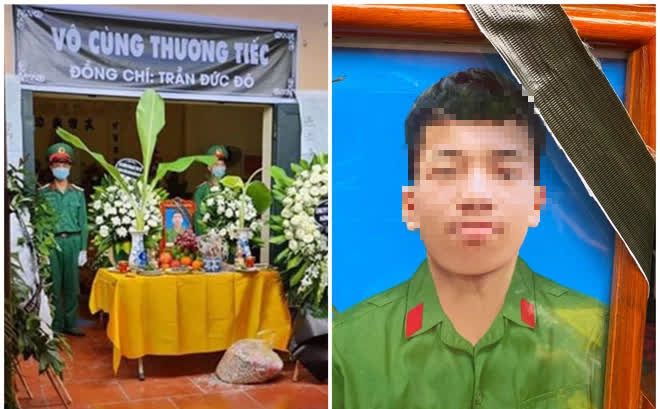
    On June 28, a 19-year-old military officer, Tran Duc Do, was found dead while undergoing compulsory military service. Both the military and the state-controlled media push the narrative that the young officer committed suicide and that no abuse or misconduct happened. The officer’s family has been contesting this narrative, as they said that bruises were found on his body, and their son had told them not long before his death that he was being bullied in the military.

    The death of the young military officer has caused an uproar on the internet.

    The Vietnamese military has a lot to answer for in recent months. This started in January with the military’s violent involvement in the Dong Tam land dispute near Hanoi, followed by the exposure of the military’s ties with the military junta in Myanmar through its telecommunications company, Viettel.

    However, unlike these two stories, the general public in Vietnam is particularly concerned with this case of the young military officer, and seems to be more critical of the military regarding this incident.

    The young officer’s family has been very vocal about his death, particularly to international press platforms like BBC Vietnamese. The officer’s mother said to the BBC, “If my son’s murderer is not found, the Vietnamese people will not trust the Communist Party anymore.”

    On Facebook, some activists also told stories of how the military has been mistreating the family of Tran Duc Do. Activist Nguyen Anh Tuan wrote on his Facebook that the military had been pressuring hospitals from Bac Ninh to Hanoi not to agree to preserve Tran Duc Do’s corpse when the family wanted to delay the funeral so an autopsy could be performed. The internet was also cut in the entire street of Do’s family. According to the activist, Do’s family had to purchase their own refrigerator to preserve his body before his funeral.

    On July 1, Tran Duc Do was finally put to rest as his family buried him. However, it seems that his family is still fighting to find the true cause of his death.


    Questionable arrests and charges against civil society actors

    Last week witnessed the arrest of prominent independent blogger Le Dung Vova, captured by the police a month after an official warrant was issued for his arrest. He was arrested for his “anti-state” writings on social media, a legal offense based on Article 117 of the 2015 Penal Code, one of the typical charges against independent journalists and bloggers.

    Previously, he had also been detained twice in 2019: when he and his colleagues at the independent platform CHTV live-streamed about the US-North Korea summit in Hanoi, and when they attended a workshop on the South China Sea, though he was released on both occasions.

    Last week also saw the ruling to detain journalist Mai Phan Loi and lawyer Dang Dinh Bach. They were both charged with tax fraud. These two were involved in the VNGO-EVFTA Network, a network of non-governmental organizations (NGOs) founded earlier this year in Vietnam to promote the involvement of NGOs in the implementation of the European Union-Vietnam Free Trade Agreement. They were both the Executive Board members of the VNGO-EVFTA Network.

    Loi was the chair of the Scientific Council of the Center for Media in Educating Community. At the same time, Bach was the Law and Policy Research Center for Sustainable Development director. Loi was also a member of civil society activists who met with President Obama in Hanoi during his May 2016 trip. Previously in June 2016, Mai Phan Loi’s journalist ID was revoked by the authorities for conducting a poll on Facebook about the accidents involving Vietnamese naval aircraft.


    Former premier of the Republic of Vietnam passes away at 95

    Tran Thien Khiem, second in command to President Nguyen Van Thieu of the former South Vietnamese regime, passed away recently on June 23 in California at the age of 95.

    During his time as a politician and a prominent military general in the former Republic of Vietnam, Khiem was considered the right-hand man of President Thieu. He was the regime’s premier from 1969 to its last days in 1975, and he was involved in many military coups, particularly the one leading to the death of former President Ngo Dinh Diem. After the war ended, he immigrated to the United States, where he lived a quiet life. Read more about his life here.


    Netflix removes movie showing nine-dash line map

    Last week, Netflix had to remove a movie from its service in Vietnam due to complaints from the Vietnamese authorities that the movie showed the nine-dash line map, which is China’s map for territorial claims in the South China Sea.

    This was not the first time either the Vietnamese authorities or the public were concerned about commercial products due to their showcasing of the nine-dash line map. In April, there was a widespread call to boycott the clothing brand H&M in Vietnam over the speculation that the brand supported the nine-dash line map.

    The conflict of territorial claims between China and Vietnam is particularly interesting as the country witnessed the rise of contemporary anti-China nationalism, in contrast to the Communist Party’s propaganda on China’s ideological brother. Read more about this topic in The Vietnamese Magazine’s article published last week, “Why Did The Vietnamese Communist Party Suppress Anti-China Nationalism?”


    COVID-19 in Vietnam

    New vaccination approval: Moderna was recently approved for emergency use in Vietnam. The other vaccines that have been approved include AstraZeneca, Sputnik V, and Sinopharm.

    Vaccination sites are causing fear of superspreaders, according to Nikkei Asia. The situation is leading to calls for better organization of mass vaccination during outbreaks in Vietnam.


    Learn more about Vietnam

    The U.S. Risks Losing Out From Its Own Trade Push in Vietnam

    Sheridan Prasso/Bloomberg/July 1, 2021

    “With China making a territorial grab in the South China Sea, American LNG shipments—which would be protected by the U.S. Navy—will continue to hold appeal for the Vietnamese. But without guarantees for U.S. companies, Vietnam could just as easily turn to cheaper and closer LNG sources, such as from Qatar, Australia, and Malaysia. Since President Joe Biden came into office, Vietnam is no longer being pressured by the U.S. the same way on trade. Signaling a less confrontational approach to trade policy, the Treasury Department in April declined to designate Vietnam a “currency manipulator,” as the Trump administration had done in December. U.S. Trade Representative Katherine Tai merely mentioned the concern in an April call with her Vietnamese counterpart.”

    Vietnam, Singapore Begin Negotiations on Digital Trade Agreement

    Linh Tong/The Diplomat/June 30, 2021

    “It is still too early to hail a digital economy agreement between Singapore and Vietnam. And it will be an even longer road before Vietnam can align itself with Singapore’s digital trade standards so that both nations can reap the full benefits of any potential agreement. But in agreeing to begin discussions, the two nations mark a recognition of the benefits of a liberalized approach in dealing with the emerging challenges of digital trade. At the very least, by taking the first steps along this road, Vietnam and Singapore have recognized that no single nation can fully enjoy digital trade benefits by imposing protectionist regulations, separating itself from the global digitalization standards. There must be win-win cooperation in order for digital trade to fulfill its full potential.”

    A Confused Biden Team Risks Losing Southeast Asia

    James Crabtree/Foreign Policy/June 27, 2021

    “The region should matter in Washington. It contains two U.S. allies: the Philippines and Thailand. There are other major partners, too, including Indonesia, Singapore, and Vietnam. Yet, economic ties in all these countries have shifted toward China as of late. Closer diplomatic ties are likely to follow in many cases, absent concerted U.S. action. Few regional policymakers relish a possible future under China’s sway and mostly want to maintain a balance between the two superpowers—which means they want the United States to stay closely engaged in regional affairs. But it is for precisely this reason that Southeast Asia is so attuned to signs of distraction or muddled thinking in Washington.”

  • Vietnam Briefing: Vietnam Refuses To Admit Human Rights Violations

    Vietnam Briefing: Vietnam Refuses To Admit Human Rights Violations

    The Vietnam Briefing, which is released every Monday morning Vietnam time, looks at Vietnam’s political developments of the past week.


    Ministry of Foreign Affairs: “Vietnam wholeheartedly respects and protects human rights”

    Last week, the spokeswoman of the Ministry of Foreign Affairs, Le Thi Thu Hang, said that Vietnam “always cares about advancing basic human rights” and that the country has “freedom of speech, freedom of press and freedom of information” because “the press in Vietnam is very diverse and more than 70 percent of the population has access to the internet.”

    This was in response to the European Union’s Annual Reports on Human Rights and Democracy in 2020, which Vietnam said was “lacking objectivity”.

    In a meeting last week of the United Nations Human Rights High Commissioner, Ambassador Le Thi Tuyet Mai also affirmed “Vietnam’s consistent policy on promoting and protecting human rights.”

    Such claims from the Ministry of Foreign Affairs are outrageous lies, deceptions and fabrications of the human rights reality in Vietnam. Though not surprising, the claims made by Vietnamese foreign affairs officials show that the country has continued to deny the state’s oppression of basic human rights principles, particularly freedom of speech.

    These claims were released in a rather ironic timing, as the country tried to tighten speech control on the internet by releasing a national conduct code just less than two weeks ago.

    There are countless examples of the government’s oppression of freedom of speech. For example, Pham Doan Trang, our co-founder and an internationally recognized pro-democracy journalist was imprisoned solely based on charges associated with her critical writings. Unfortunately, she was not the only non-violent writer or activist whom the state arrested. Those who follow The Vietnamese Magazine’s weekly Vietnam Briefing would remember that since the National Assembly election started to kick-off, there have been new cases of arrests and charges against independent journalists, bloggers and activists almost every week.

    Additionally, it is absolutely false to equate access to the internet with access to information and even more deceiving to equate the former with freedom of speech. While Vietnam is reportedly the seventh-largest user base in the world for Facebook, the company was pressured by the government to censor content upon the government’s request on the platform. In an article published last week on Revolutionary Press Day, The Vietnamese Magazine also documents how independent or non-state journalism such as ours is heavily censored in the country.

    While the government might declare that it is concerned about human rights and climate change, The Vietnamese Magazine also documents various human rights and environmental violations, from the outrageous Formosa case to the labor and environmental damages in Cameroon.


    Updates on COVID-19 in Vietnam

    China complains about Vietnam’s vaccination: Last week, after the Sinopharm vaccines that China donated to Vietnam arrived, the Chinese Embassy complained that Vietnam failed to honor the agreement to prioritize “Chinese nationals, people who need to travel to China for work, and people who live in border areas.”

    So far, Vietnam has yet to update its vaccination priorities and has yet to comment on the Chinese Embassy’s claim, which reportedly spurred a nationalistic outrage in Chinese social media. However, it is known that 500,000 doses of the Sinopharm vaccine have arrived in Vietnam.

    Vaccination priority in Vietnam: So far, access to vaccines in Vietnam is extremely limited. According to Tuoi Tre, a state-controlled media, vaccination priority in the country is mostly prioritizing frontline health workers, police officers, soldiers, and diplomats and diplomatic delegations. Some new vaccination priorities include teachers and staff at educational facilities, people 65 years old and older, and poor people.

    The country is also rushing to produce its own vaccine, particularly NanoCovax. This vaccine is “expected to be as good as foreign vaccines,” accord to one state media outlet.

    Good news: People who are fully vaccinated only have to fulfil a mandatory quarantine of seven days, a much shorter time than the previous 21-day quarantine, according to a new announcement last week. So far, it is still unclear when this new quarantine law will be implemented. Additionally, it is unclear whether this new requirement will be enforced in the entire country or only in a few locations.

    According to state media, Vietnam is also reportedly considering receiving visitors from countries it deems to have “managed COVID-19 outbreaks well, including those that have achieved herd immunity thanks to their vaccination programs.” It is, however, still unclear which countries will be qualified and whether this program will actually be put in place.

    This move is seen as a way to boost tourism and the number of foreign visitors. A month ago, the American Chamber of Commerce in Vietnam complained to the government that the lengthy quarantine restrictions discouraged foreign businesspeople from entering the country.

    Meanwhile, Vietnam is reportedly strengthening surveillance at the border with Cambodia due to COVID-19 fears, according to Khmer Times. Vietnamese border patrols have been increasingly preventing trespassing over the border in an effort to curtail domestic outbreaks.


    Learn more about Vietnam

    Vietnam: LGBTQ+ Pride in the Time of Coronavirus

    Hugh Bohane/The Diplomat/June 24, 2021

    “Khanh confided about having a “rough time” in high school, where he was sometimes bullied for feminine mannerisms and underwent what he referred to as a form of “psychological trauma.” He went on to say that he isn’t ready to come out to his parents but said he will soon. Even today in Vietnam, it isn’t uncommon for parents to send their children to see a doctor if they think they are gay or lesbian.

    A 2020 Human Rights Watch report outlining details of homophobia and stigma in Vietnam concluded with the need for necessary changes to occur. “The first steps will include correcting the persistent widespread notion that homosexuality is an illness and needs a cure,” the report stated.

    Even more disturbing is the prevalence of suicide within Vietnam’s LGBTQ+ community. ‘One of my lesbian friends tried to commit suicide… not long ago because of the family and societal pressure she was under,’ Khanh said.”

    Delta variants create roadblock on Asia’s path toward normalcy

    Akane Okutsu/Nikkei Asia/June 21, 2021

    “Virus expert Yong Poovorawan, of Chulalongkorn University, said new confirmed Delta cases are expected to rise substantially higher in the near future, which meant the efficiency of vaccines and protection measures could drop because the strain can resist some vaccines.”

    In Vietnam, Monsanto is guilty until proven innocent

    Dien Luong/Nikkei Asia/June 22, 2021

    “For nearly half a century, Vietnamese victims of Agent Orange have been fighting a losing battle against multinationals that manufactured the toxic defoliant. Their plights have been ignored, their lawsuits dismissed and their voices drowned out.”

    Vietnam Formulates Nationwide Code of Conduct for Social Media

    Sebastian Strangio/The Diplomat/June 21, 2021

    “Late last week, Reuters reported that Vietnam’s government had introduced a new national social media “code of conduct,” which encourages its people to post positive content about the country and prohibits anything that violates the law or affects “the interests of the state.”

    According to Reuters, which cited a June 17 document from the Ministry of Information and Communications, the code applies to state organizations, social media companies, and all of their Vietnamese users. It states that social media users “are encouraged to promote the beauty of Vietnam’s scenery, people and culture, and spread good stories about good people.”

    New research: “A virus and viral content: The Vietnam government’s use of TikTok for public health messages during the COVID-19 pandemic”

    Kylie P. Torres/Public Relations and Online Engagement/June 25, 2021

    “This chapter examines the Vietnam government’s use of TikTok, the world’s fastest-growing app, as a tool to spread public health messages during the COVID-19 pandemic. Although most creators of TikTok content are general users, the application is growing in popularity with brands and organizations. However, the potential of usefulness of the app for broader public relations efforts has yet to be explored. The researcher analyzes the Vietnam government’s COVID-19 TikTok influencer campaign in the context of the Structural Virality of Online Diffusion.”

    Events to watch:

    Webinar: “Consumer Finance and Credit Risk in Vietnam: Shifting Uncertainty to Family and Social Networks”

    ISEAS Yusof Ishak Institute/June 28, 2021

    Webinar: “Old Neighbourhoods and New Towns: Real Estate and Urban Policy in the Greater Saigon Region”

    ISEAS Yusof Ishak Institute/June 29, 2021

  • Vietnam Briefing: COVID-19 Is Surging Again While The Government Is Trying To Tighten Internet Control

    Vietnam Briefing: COVID-19 Is Surging Again While The Government Is Trying To Tighten Internet Control

    The Vietnam Briefing, which is released every Monday morning Vietnam time, looks at Vietnam’s political developments of the past week.


    While the situations in the US and Europe are rapidly reaching a state of normalcy, COVID-19 cases are, once again, surging in Vietnam

    It is unclear if the biggest story last week was the new surge of COVID-19 or the national football team’s journey in the World Cup qualifying round. Football seems to be a religion in Vietnam where one of the most circulated newspapers praised the team’s victories as a vaccine for the nation. But here we go, stories about COVID-19:

    • According to John Hopkins University’s data, the number of cases has reached an all-time high with 470 new cases on June 19, increasing the total number of cases to 13,117 and 64 deaths.
    • Ho Chi Minh city has been under lockdown since the beginning of May 2021.
    • Vietnam has received 500,000 Sinopharm vaccine doses donated by China. Naturally, this raises concerns among the public about the safety of the shots.
    • A few days earlier, nearly one million AstraZeneca vaccines were shipped to Vietnam as a donation from the Japanese government. The Vietnamese public warmly welcomed this.

    Read more about this topic:


    A national code of conduct for social media

    The pandemic has been a time of tightening internet controls in Vietnam, especially regarding social media. The Minister of Information and Communications issued a national code of conduct for social media on June 17 to push for what they call a “healthy” internet environment. This is what it says:

    • Users should behave appropriately under the good moral, cultural, and traditional values of the Vietnamese nation.
    • Users should provide their real identity and should only share news from trusted and mainstream sources of information.
    • Users are encouraged to share positive information about Vietnam.
    • Social networks should make their platforms safe and healthy by cooperating with the government to address law violations.
    • State employees should behave according to the code of conduct.

    However, this document is not legally binding as explained by The Vietnamese.


    World Refugees Day and the memory of Vietnamese boat people

    It was World Refugees Day on June 20, and it is significant to remember that a large part of Vietnamese people in the world are refugees or former refugees.

    After Vietnam’s own civil war, which is more known as the Vietnam War, the country’s name quickly became associated with a humanitarian crisis: the plight of the Vietnamese boat people. From the late 1970s to the mid-1990s, over a million people in Southern Vietnam and some from the North crossed the South China Sea, the Gulf of Thailand, and land borders to seek freedom in the Philippines, Malaysia, Indonesia, Thailand, and Hong Kong.

    Most of them later resettled in the United States, Canada, Australia, and some European countries; they eventually formed Vietnamese communities in their new homes. They now number in the millions and are vocal in criticising the communist regime in Vietnam. However, some of them, especially those who landed in Hong Kong, got sent back to Vietnam.

    It is worth mentioning that some Vietnamese people attempted to cross the sea recently, and their target destinations were Australia and Taiwan.


    Learn more about Vietnam

    Ho Chi Minh City looks to get its own back

    David Brown/ Asia Sentinel/ June 19

    “The city, has 10 percent of Vietnam’s population but generates 22 percent of Vietnam’s GDP. It is not just the nation’s financial and entrepreneurial dynamo, it’s also the still-not-entirely-reconciled former capital of anti-Communist “South Vietnam.” Since liberation, the sprawling city has sent most of its tax revenues to the central government for redistribution to poorer parts of Vietnam. Over the years, the city authorities seem to have considered it reasonable that they, not officials in Hanoi, should have the deciding voice in how to spend the fraction of locally generated revenues that it is allowed to keep.”

    Human trafficking in Vietnam on the rise amid Covid

    DW/Hugh Bohane/ VnExpress/ June 14

    “A surge in Covid-19 cases in Vietnam has prompted a spike in human trafficking and smuggling as people become more financially desperate, rights organizations have warned.  Despite Vietnam’s closed borders amid the pandemic, traffickers and smugglers have found new ways to transport people not only within the country but also across borders, they added.”

  • Vietnam Briefing: The Election Results Are In. Here Comes 5 More Years Of Party Domination

    Vietnam Briefing: The Election Results Are In. Here Comes 5 More Years Of Party Domination

    The Vietnam Briefing, which is released every Monday morning Vietnam time, looks at Vietnam’s political developments of the past week.


    The 2021 National Assembly Election Results Are Here

    Last week, the election results for the 15th National Assembly were finally released. The list includes 499 elected officials to the legislative assembly out of a list of 866 nominees in the competition pool. The members of this National Assembly will serve five-year terms until 2026.

    There are supposed to be 500 seats, but one elected candidate was reportedly disqualified due to health issues.

    A performative election? The highlight of the election was the election of “star candidates” – the well-known, high-ranking candidates of the Party who hold the most critical leadership positions in the Politburo.

    Notably, the “four pillars” of the Politburo have an extremely high number of votes, ranging from around 93 to almost 100 percent. The “four pillars” include President Nguyen Xuan Phuc, Prime Minister Pham Minh Chinh, Parath Secretary-General Nguyen Phu Trong, and the Chairman of the National Assembly Vuong Dinh Hue.

    Other Politburo members also have a very high number of votes of  at least 90 percent, with only one exception of about 75 percent.

    This was expected because elections in Vietnam are not democratic but rather a chance for the Vietnamese Communist Party (VCP) to demonstrate that its most important members are famously beloved by the people.

    As expected, the election resulted in Party domination: Out of the 499 elected officials, only four were self-nominated candidates.

    The list includes Hoang Van Cuong, vice-president of the public National Economics University; Nguyen Anh Tri, president of the state-controlled National Institute of Hematology and Blood Transfusion; Truong Trong Nghia, deputy chairman of the Ho Chi Minh City Bar Association, and Khuong Thi Mai, managing director of Namsung Aluminum Co., Ltd., a company established in 2014 with full funding from the state.

    All of the self-nominated candidates elected are members of the VCP. This is not surprising, considering the 2016 National Assembly election, in which only two self-nominated candidates were elected, both also Party members. The self-nominated candidates in this year’s election accounted for less than 1 percent of the entire legislative assembly.

    Originally, there were 75 self-nominated candidates, but only nine candidates made it to the final ballot after a rigorous process of elimination, which is known for filtering out dissidents.

    Additionally, it is reported that there are 14 non-party nominees who were elected. However, these non-party candidates were nominated by VCP organizations, making them still tied to the Party. The number of non-party officials only account for 2.8 percent of the whole Assembly.

    According to the state-controlled Vietnam News Agency, the election had a turnout rate of 99.6 percent. The turnout rate  in Vietnam has always been extremely high, and has always been used by the regime to argue that elections are democratic and representative of the people’s will.

    The state also reports that 30 percent of the new National Assembly are women, and around 17 percent are people of ethnic minorities. While this was supposed to illustrate how progressive and representative the new National Assembly is, this is mostly just performative. Since these officials are still tied to the Party one way or another, their independent decision-making power is extremely limited.

    Only less than 10 percent of the new members are people under the age of 40.

    Unfortunate, but not surprising: Luong The Huy, the first openly gay candidate to run in the National Assembly and the People’s Committee election in Vietnam, did not make it in either election. This was expected as Huy was not only a young candidate from a minority background; he was also not affiliated with the VCP and was not endorsed by any VCP organizations.

    To ensure its power in the legislative branch, the VCP has a history of vote manipulation against non-party, independent self-nominated candidates. The election system itself is also known to be rigged against non-VCP candidates.

    Read more on The Vietnamese Magazine’s coverage of Luong The Huy in this election here.


    Another Free Speech Crackdown

    For the past month, since the 2021 elections started to take shape in Vietnam, there has been at least one new case of the regime cracking down on political dissidents every week.

    Last week was no exception: Dang Hoang Minh, an ordinary Facebook user, was sentenced to seven years in prison under the charge of “making, storing, distributing or disseminating information, documents, and items” against the state. This is Article 117 of the Penal Code, commonly used by the regime to crack down on free speech. Just two weeks ago, the same charge was brought against Le Dung Vova, an independent blogger now wanted by the police.

    According to the state-controlled media, Dang Hoang Minh was arrested and charged for uploading to Facebook “information which falsely accused and insulted the leadership credibility of the Party…” Though the state media did not specify what Dang Hoang Minh was accusing the Party of, he was also said to be “insulting the great leader Ho Chi Minh.”

    Since the beginning of this year, at least 21 Vietnamese citizens have been arrested and imprisoned due to their activities on social media, according to Radio Free Asia. All of the dissidents in these cases were charged with Article 117.


    The Situation in the South China Sea

    Last week, Vietnam’s Ministry of Foreign Affairs was busy denouncing actions in the contested Paracel and Spratly islands (known in Vietnamese as Truong Sa and Hoang Sa islands).

    While these denunciations usually concern China, the actions last week came from the Philippines and Taiwan, though the Vietnamese official communication channels generally regard Taiwan as a part of China.

    Derek Grossman, a senior defense analyst of the RAND Corporation, wrote on his social media that the situation in the South China Sea last week was a “useful reminder that China isn’t the only maritime counterclaimant Vietnam is concerned about.”


    COVID-19 in Vietnam

    The Covid-19 situation has not evolved much since the last briefing. The only notable development was perhaps the US putting Vietnam into the “safest for travel” category, although the situation in Vietnam has been rather messy for the past couple of weeks.

    For more information on the general COVID-19 situation in Vietnam, see here.


    Learn more about Vietnam

    China moves forward in soft power struggle for Southeast Asia

    Mark Valencia/Asia Times/ June 10, 2021

    “Remarkably, the US has failed to take full advantage of China’s diplomatic “own goals” – its incursions into Indonesia’s EEZ, its massing of fishing boats in the Philippines’ EEZ, and its maritime provocations of Malaysia and Vietnam in their claimed waters.

    To regain and retain its moral leadership, the US needs to demonstrate that its values and system of government are the best of all for all and that it can and will maintain a competitive edge with China economically and technologically, not just militarily.”

    Why Vietnam Needs to Adopt a Biological Defense Strategy

    Phuong Pham/The Diplomat/June 07, 2021

    “Once regarded as a role model for its successful containment of COVID-19, Vietnam is now in the midst of its fourth wave, its worst since the beginning of the pandemic. Even worse, the stringent measures that previously helped Vietnam put the virus under control have been relatively ineffective, illustrated by the surge in infections since the end of April. This raises a great concern for Vietnam not only with regard to COVID-19 but also on its ability to counter biological threats writ large. With this in mind, Vietnam should establish a national strategy on biological defense in order to help it counter biological threats more effectively, given the current inadequacy of the country’s biological defense capabilities.”

    Vietnam Approves Chinese COVID-19 Vaccine, Reluctantly

    Sebastian Strangio/The Diplomat/June 09, 2021

    “Vietnam’s communist leadership has shown great caution in becoming further indebted to a nation that many Vietnamese – including many within the party and government – view with suspicion.”


    Events to watch this week:

    Webinar: Southeast Asia, the United States and China: Stumbling into the New World Order

    Date: June 18, 2021

    Organizer: ISEAS-Yusof Ishak Institute