Category: Vietnam Briefing

  • Vietnam Briefing: Dong Tam And The General Election

    Vietnam Briefing: Dong Tam And The General Election

    It’s a new week and Vietnam Briefing’s mission is to keep our readers up to date on developments in Vietnam. As we missed the briefing last week, here is the key news of the past two weeks.


    Vietnam has started to roll out COVID-19 vaccines

    The Vietnamese government started administering the first COVID-19 vaccinations doses on March 8. Frontline workers, including doctors, nurses and technicians at designated hospitals combatting COVID-19 are among the first to receive the vaccines produced by Oxford University and AstraZeneca.


    High court affirms verdict on Dong Tam case

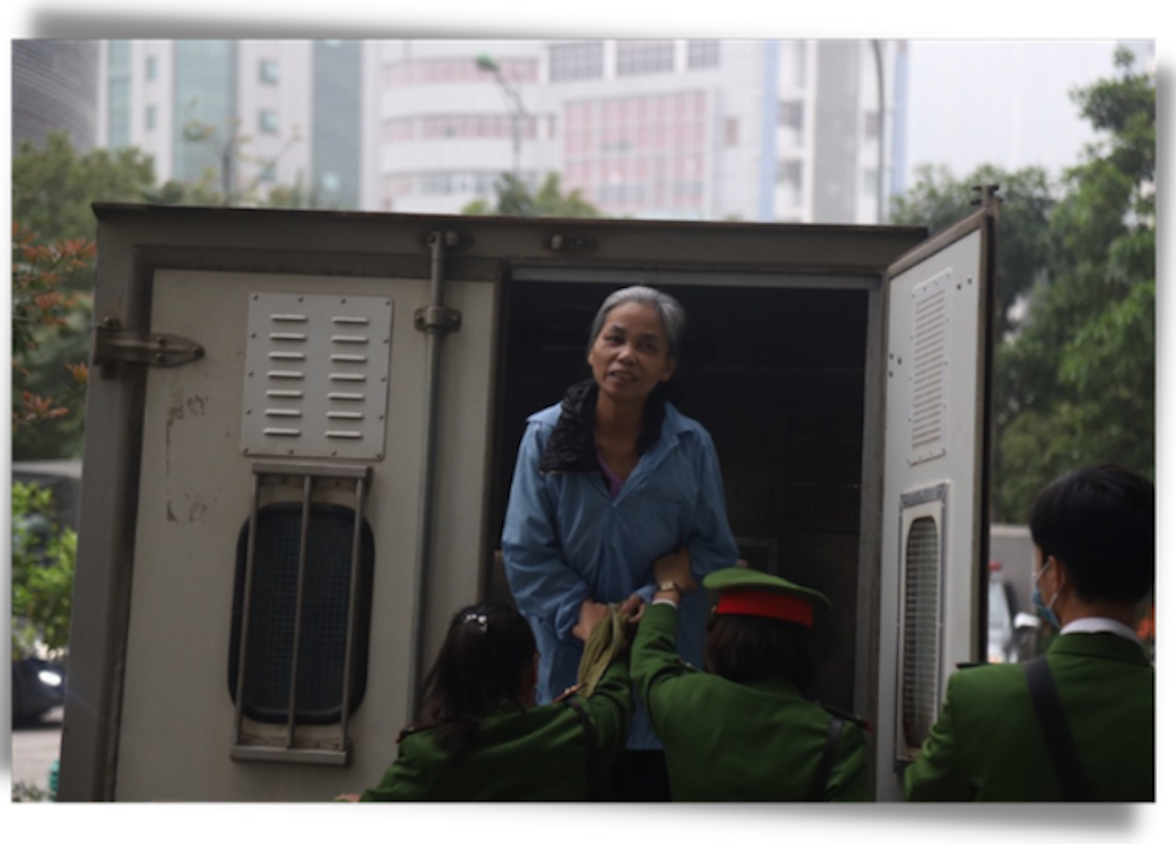
    The appellate trial of the Dong Tam case (March 8-9) went just as everyone expected: no overturning of any sentences and no amendment to the lower court’s verdict. The sentences of the six defendants remain the same, including two death penalties.

    A fair trial? It’s hardly a thing in Vietnam. Take the word of Phil Robertson of Human Rights Watch:

    “There are still many unanswered questions about what happened during the Dong Tam raid that authorities have never been willing to clarify.”

    “We are also deeply troubled by the information brought out in the defense lawyers’ report, stating that police used torture on some defendants to force them to confess, raising fundamental concerns about the fairness of the entire trial.”

    A historic case, yes. The Dong Tam case is undoubtedly one of the most important and consequential events in Vietnam’s post-1975 history. Those who wish to study the country’s history of land struggles and party-controlled judiciary should take a very close look into the case as it is among the most well-documented events and it provides an intensive account of the issues.

    Learn more about the case:


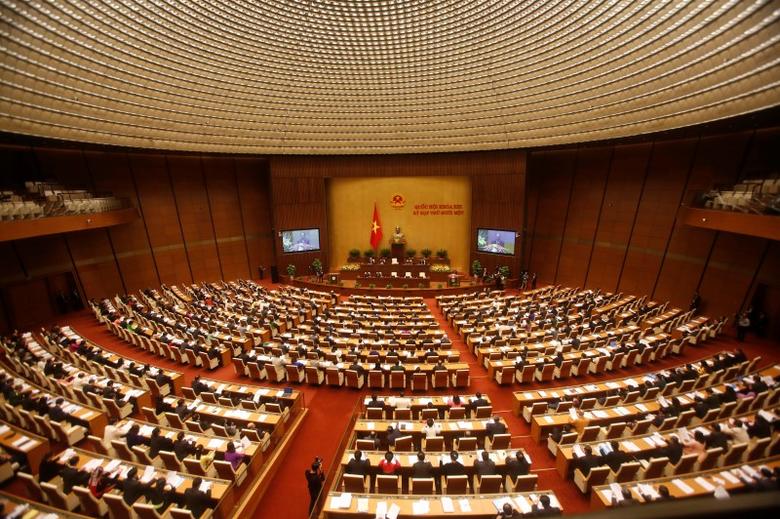
    The National Assembly is in the final days of its current term. Yet, it may elect new state leaders just before the election.

    In an unexpected, but not unprecedented, move, the Communist Party’s Central Committee is sending three candidates to the National Assembly’s last session of the term for confirmation of three top state positions: president, prime minister, and chair of the National Assembly.

    The Party and state media provided no information about who the candidates are, but you don’t need them to name names in order to know who these people are. Vietnamese people often read between the lines and listen to internet influencers – some they believe have inside information – to know what’s going on.

    So who are they? Current Prime Minister Nguyen Xuan Phuc for president, Pham Minh Chinh for prime minister, and Vuong Dinh Hue for National Assembly chair. VCP General Secretary Nguyen Phu Trong is not seeking reelection for the presidency, although he is now running for a National Assembly seat.

    What’s special about that? It’s not about who for what, it’s about timing. If elected in April during the last session of the current National Assembly, which is almost certain, the candidates will only serve a few months until the end of the current term. After the general election on May 23, the new National Assembly will convene in July and repeat the same process of electing the same people to the same positions. That’s what happened in April 2016, right before the last general election, which was held more than a month later. And we don’t think there are many people who can explain why the VCP has to rush to do such a repetitive process. The logic behind this remains a mystery to the public.


    Man arrested after declaring intention to run for office

    This is not something that happened the last time we had an election in 2016 (yes, I know how hard it is to call it an election, but let’s use the word for now). A 61-year-old man named Tran Quoc Khanh was arrested on March 9 and accused of “making, storing, spreading information, materials, items for the purpose of opposing the State of Socialist Republic of Vietnam” under Article 117 of the Penal Code.

    He is known for his frequent Facebook activities including live-streaming on human rights and corruption in Vietnam. The arrest was conducted by Ninh Binh Provincial Police shortly after Mr. Tran declared his intention of running for a National Assembly seat.

    Something to note: Unlike the exciting election season in 2016 when dozens of activists and independent candidates campaigned for office, despite all failing, there are almost no independent candidates running for office this time.


    Here is what the incoming National Assembly may look like

    Remember what we mentioned about this two weeks ago? Here is an infographic from the state news agency’s article titled “Expected structure of deputies of the 15th National Assembly.” Yes, the election is more than two months away, but the government has already “expected” the results.


    Freedom House drops Vietnam’s freedom score

    This time every year, the US-based human rights group Freedom House announces its widely-cited work: Freedom in the World Index. And unlike the recent years, Vietnam’s score dropped 1 point in the 2021 index, down to 19/100 and remains in the “Not Free” group of countries.

    What was Vietnam’s response to this? Ministry of Foreign Affairs spokesperson Le Thi Thu Hang said on March 11 that Vietnam has consistently protected and promoted human rights. That’s the government’s usual way of dealing with such queries from reporters who work for the international media. We have no knowledge of any reporter from the Vietnamese media asking about such issues, and we doubt anybody ever does.


    Vietnam joins China, Russia and India to block UN Security Council’s condemnation of Myanmar’s coup

    The United Nations, especially its Security Council, has been reluctant to make any strong statements on the military coup in Myanmar. On March 9, they failed to agree on such a statement, and Vietnam, as a non-permanent member of the council, jointly blocked the effort with China, Russia, and India.

    Context:

    • Vietnam is the fourth biggest foreign investor in Myanmar as of January 2021, with 19 projects and approximately US$1.5 billion invested there.
    • Vietnam’s military has close ties to Myanmar’s military businesses, such as Mytel.

    Vietnam commemorates the 33rd anniversary of the Gac Ma incident

    March 14 has been a sensitive date in Vietnam over the past 12 years since the public started to learn about the bloody incident of Gac Ma.

    The Gac Ma incident happened on March 14, 1988, when Chinese warships fired on a group of mainly unarmed Vietnamese troops in Gac Ma Reef (Johnson South), killing 64 of them. Gac Ma (Johnson South Reef), Colin and Len Dao (Lansdowne) Reefs are part of the Truong Sa (Spratly) Islands where the two countries both claim sovereignty. It’s rumored that Vietnam’s then-Minister of National Defense ordered that there be no resistance to the Chinese.

    Why sensitive? Not many things in Vietnam are as sensitive as the country’s relations with China. The Vietnamese government censored information about the Gac Ma incident for over 20 years until the early 2010s. Even now, many state media outlets do not mention China in their stories about Gac Ma Reef, although the government has increasingly tolerated open discussions about the topic.

    What to watch? Citizens, mostly dissidents and activists, spread information about the Gac Ma incident on social media, criticizing the government’s handling of China, and they also go to cemeteries and temples to commemorate the soldiers who lost their lives on that day. They often face government harassment due to these activities.

    Go deeper: Here is some useful material to understand more about the issue, including a video clip of the 1988 incident.


    French warship visits Vietnam

    Shortly after completing a patrol in the South China Sea in February, the French Navy sent a warship to Vietnam on March 9, where it spent four days in Cam Ranh Port (southern Vietnam) for helicopter repairs.

    The South China Sea is certainly a place global superpowers can’t afford to ignore due to its strategic position in terms of security and trade, especially when China has aggressively claimed sovereignty over most parts of the sea with its nine-dash line.

    Cam Ranh Port is a familiar name to those who study security in the region. It is a strategic deep water bay in the south of Vietnam and it played a crucial role in the Vietnam War. This is where the Soviet Union, and later Russia, stationed troops from 1979 to 2002.


    Events to watch:

    Mainland Southeast Asia: power, protest and participation

    March 23, 2021 3 pm, Auckland, Wellington

    Three expert scholars will contextualise developments in Thailand, Myanmar and Vietnam, followed by a discussant response and Q&A

    Speakers: Thitinan Pongsudhirak (Thailand), Wai Wai Nu (Myanmar), Nguyen Khac Giang (Vietnam). Discussant: Natasha Hamilton-Hart. Chair: Emeritus Professor Roberto Rabel

    Hosted by the Centre for Strategic Studies: NZ


    Learn more about Vietnam:

    Vietnam: Successfully Navigating the Pandemic | IMF, 10 March 2021:

    Despite COVID-19, Vietnam’s economy has remained resilient, expanding by 2.9 percent in 2020—one of the highest growth rates in the world—and with growth projected to be 6.5 percent in 2021, thanks to strong economic fundamentals, decisive containment measures and well-targeted government support, according to the IMF’s latest annual assessment of the country’s economy.

    How Economic Reforms of the 1980s Changed the Face of Vietnam | National Interest, 12 March 2021:

    “Back when the Heritage Foundation published its first index [of Economic Freedom] in 1995, Vietnam scored 41.7 points. By 2005, this had risen to 48.1 points and in 2010 it climbed further to 49.8 points. What is remarkable is the huge increase in economic freedom since 2015, when Vietnam was awarded a score of 51.7. Since then, Vietnam has added another 10 points to reach 61.7 points today—an increase of 20 points since 1995!”

    Vietnam, ASEAN, and the US-China Rivalry in the Indo-Pacific | The Diplomat, 13 March 2021:

    “China may not feel comfortable if Vietnam pursues stronger security ties with the U.S. and its allies, but it is China’s aggressive behaviors in the South China Sea that have pushed Vietnam into this course of action. China should adjust its approach or risk pushing Vietnam and other regional countries further toward the United States.”

    “Politically, certain reforms may also be explored, but mainly to streamline and increase the efficiency of the political system, not to democratize it. Vietnamese leaders believe that political stability is a precondition for economic development, and they will not tolerate any developments that may destabilize the political system.”
  • Vietnam Briefing: 2021 Is Going To Be A Busy Year Of Elections

    Vietnam Briefing: 2021 Is Going To Be A Busy Year Of Elections

    We release the Vietnam Briefing every Monday, Vietnam time, with an emphasis on politics and foreign affairs. The briefing today is mainly about the different kinds of elections Vietnam is going to have this year.


    COVID-19:

    • COVID-19 vaccinations will be rolled out this month.
    • Hai Duong Province will end lockdown from March 3.
    • Hanoi’s closure order for street vendors, cafes and historical sites has remained unchanged, but just as we briefed last week, many places are still open.

    We are starting to know what the next National Assembly will look like

    It’s true. We don’t need to wait until the general election ends on May 23 or for the results to be released in June. The National Assembly’s Standing Committee revealed in early February and last week the “tentative proportion” or “tentative allocation,” of seats for Parliament’s next term (2021 – 2026).

    This means we can now see which government and Communist Party bodies will tentatively hold how many seats in the National Assembly.

    The tentative number of seats is officially stated in the Standing Committee’s Resolution 1185/NQ-UBTVQH14, which is dated February 5, 2021 and which was debated again last week during the committee’s session that ended on February 23.

    More details:

    • Approximately 95 members of the National Assembly are members of the Communist Party of Vietnam’s (CPV) Central Committee, including 12-14 members of the Politburo and the Central Secretariat.
    • Outside-of-the-party members: 25-50 (5-10 percent).
    • Members from the central government: 207 (41.4 percent).
    • Members from the military: 12 (excluding the minister of national defense).
    • Members from the police: 2 (excluding the minister of public security).
    • Other seats are also planned to be allocated to other government and party bodies.

    Context:

    • The general election will be held on May 23 for both the National Assembly and local legislative bodies at all three levels (province, district, and commune). The results are expected to be released in June. The first National Assembly session will be held in July, mainly to elect top officials of all three branches of the central government.
    • General elections are held every five years, shortly after the Communist Party congresses.
    • Free and fair elections? That’s what the government says, but it’s not the view of Freedom House, a human rights organization, in its 2020 report: “Elections to the National Assembly are tightly controlled by the CPV, which took 473 of the body’s 500 seats in the 2016 balloting. Candidates who were technically independent but vetted by the CPV took 21 seats. More than 100 independent candidates, including many young civil society activists, were barred from running in the elections.”

    Curious about how this election works? Pay close attention to two things: the role of the Fatherland Front – the Communist Party’s external arm – as a vetting agency and how the government deals with independent candidates.


    Vietnam to run for a seat at the United Nations’ Human Rights Council

    That’s what the Deputy Prime Minister announced last week before a United Nations’ session in Geneva, Switzerland.

    Vietnam apparently doesn’t have a good record on human rights. But just like other authoritarian states such as China, Cuba, and Saudi Arabia, it has a chance to win one out of 47 seats on the United Nations’ Human Rights Council’s 2023-2025 term.

    Context:

    • Vietnam was elected to the very council once in 2013, serving a two-year term from 2014 to 2016.
    • Government persecution targeting dissidents and human rights defenders has been increasingly harsh over the past five years, according to the data collected by The 88 Project.
    • Vietnam has consistently been categorized as a “Not free” country by the international rights group Freedom House.
    • Vietnam is currently a non-permanent member of the UN Security Council, and it will serve until the end of this year.

    Vietnamese ambassador runs for re-election to International Law Commission

    It seems Vietnam is actively seeking more influence on the international stage. Here is another election at the United Nations that Vietnam is campaigning for, according to VietnamPlus:

    “Vietnam’s permanent missions to the United Nations (UN) in New York and Geneva have recently sent diplomatic notes to the UN and member countries informing them of the candidacy of Ambassador Nguyen Hong Thao to the International Law Commission (ILC) for the 2023-2027 term, marking the official start of the Vietnamese candidate’s campaign for re-election to the UN’s important law organ.

    In 2016, Ambassador Thao became the first Vietnamese to be elected as an ILC member. During the 2017-2022 term, he actively promoted ILC’s research results, delivered speeches and joined discussions at the ILC.”


    The Dong Tam appellate trial will be held on March 8

    Remember the high-profile Dong Tam trial in September? The appellate trial opens on March 8 and will last until March 10.

    Six defendants have appealed their sentences to the People’s High Court in Hanoi.

    What should we expect?

    • The trial will very likely result in the affirmation of the lower court’s verdict with little or no adjustments to the defendants’ convictions and sentences.
    • Similar to the trial in September, the appellate trial is expected to be closed to the public, with no independent and international media, and no independent observers allowed to attend; even family members of the defendants may be refused permission to observe the trial.

    Learn more about the Dong Tam case:


    Amnesty International’s new investigation into hacking group Ocean Lotus

    Two weeks ago, we mentioned the hacking group Ocean Lotus in our briefing, indicating that the Vietnamese government is likely behind the effort to target dissidents and foreign entities.

    Last week, another report on the matter was released by Amnesty International. Here is what it says:

    “Our investigation was not able to attribute Ocean Lotus’ activities to any company or government entity. However, the extensive list of people and organizations targeted by Ocean Lotus over years shows that it has a clear focus on targeting human rights and media groups from Vietnam and neighbouring countries. This raises questions about whether Ocean Lotus is linked to Vietnamese state actors. The consistent evidence linking Ocean Lotus to Viet Nam should trigger the Vietnamese authorities to undertake an impartial, thorough and independent investigation into the group’s unlawful activities and human rights abuses.”

    Context:

    • The Vietnamese government has kept silent on the issue.
    • The Vietnamese government also has accused Amnesty International of “distorting Vietnam’s reality” and of “intervening in Vietnam’s internal affairs.”

    Read more about Vietnam:

    Where to now for Vietnam after Trong? (East Asia Forum – Feb 27): “Events over the past year have brought major long-term trends in Vietnam’s domestic and foreign policy to the surface. The country will be less aligned with China. In the next decade, it will likely have its first non-conservative leader since the Cold War’s end but its leaders continue to value the Leninist state model.”

    Vietnam’s unresolved leadership question (East Asia Forum, Feb 25): “Pham Minh Chinh emerged as a new star. […] Chinh is also a potential candidate to succeed General Secretary Trong when Trong vacates his position. In that case, Chinh will have reached a position his predecessors — Nguyen Tan Dung and Nguyen Xuan Phuc — wanted but did not get. The question is whether Trong wants and has enough time to groom Chinh to handle the roles of general secretary and state president.”

    Supply chain bottlenecks in Vietnam (Bangkok Post, Mar 1): “Vietnam’s economy has fared better than that of almost any other country except China during the Covid-19 crisis. It grew by 2.9% last year while most other countries fell into recession. One consequence of the crisis was that manufacturers realised the importance of diversifying supply chains, and many accelerated the China Plus One policies that they had initiated because of the US-China trade war. This led to a surge of investment in Vietnam from global manufacturers last year.”

    Capital meant for Myanmar may seek havens in Vietnam and Cambodia (Nikkei Asia, Feb 27): “The military coup in Myanmar has forced investors who had earmarked capital for the country to look for nearby alternatives. Delta Capital, Anthem Asia and other funds that have solely focused on Myanmar are adopting a wait-and-see approach, and those with a wider geographic footprint are funneling money to destinations like Cambodia and Vietnam. Vietnam is especially frothy.”

    Mitsubishi pulls out of Vinh Tan 3 coal project in Vietnam (Reuters, Feb 26): “Mitsubishi Corp has decided to pull out of the Vinh Tan 3 power plant in Vietnam, two sources familiar with the company’s thinking on the matter told Reuters, as it shifts away from carbon intensive businesses in the face of climate change. Mitsubishi’s move to exit the estimated $2 billion project shows how willing Japanese companies and financiers are to drop their once-strong support for coal amid pressure from shareholders and activists.”

  • Vietnam Briefing: Military General Appointed To Lead Party’s Propaganda

    Vietnam Briefing: Military General Appointed To Lead Party’s Propaganda

    It was a week of Tet (Lunar New Year), containing COVID-19, a new draft decree on personal data protection, and an unexpected appointment of a military general to the top seat of the Communist Party’s propaganda commission.


    COVID-19

    • Vietnam is expected to secure 60 million doses of vaccines, Minister of Health Nguyen Thanh Long said on February 19. One day earlier, the health agency announced that 204,000 doses of the vaccine will be available in Vietnam by February 28.
    • The cafes, street restaurants, and historical sites closure order in Hanoi has remained unchanged, but in fact, many cafes and restaurants are still open.

    It’s been a long time since a military general led the Communist Party’s propaganda machine

    One needs to look back to the 1980s to see military generals running the Communisty Party’s propaganda departments. Le Quang Dao, Dang Quoc Bao, and Tran Do were the ones holding this position back then. General Tran Do later became known as the high-ranking member of the Party who called for a multiparty political system in Vietnam in the 1990s; he was expelled from the Party in 1999.

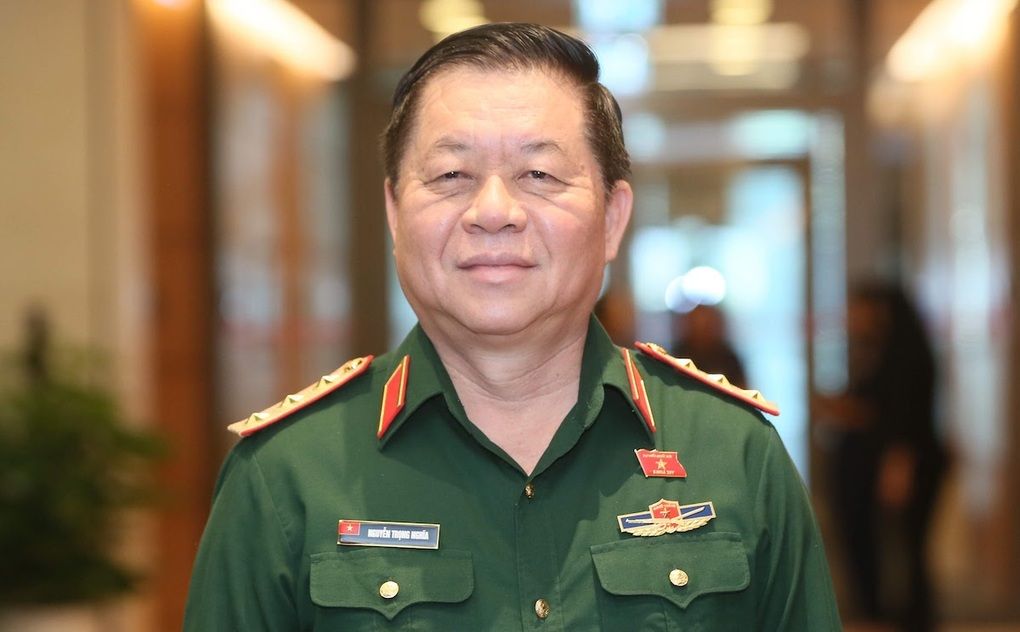
    Not until last week, however, had another general been appointed to the position. Sen. Lt. Gen. Nguyen Trong Nghia was named the chairperson of the Party Central Committee’s Commission for Popularisation and Education (also known as the Commission for Propaganda) on February 18. He previously served as vice chairman of the General Department of Politics of the Vietnam People’s Army.

    One unusual thing to note: He’s not yet a member of the Politburo, making him the first non-Politburo-member to chair the commission since the 1990s.

    Propaganda experience: RFA reported: “Nguyen, 59, had previously overseen the creation in 2017 of a 10,000-member army cyber unit, Task Force 47, which monitored political comment online, countering statements opposing Vietnam’s ruling party.”

    Context: The military has already occupied two out of 18 seats in the Politburo, which is also an unusually high number because over the past 20 years only the Minister of National Defence has held the position. If Gen. Nghia is going to be appointed as a member of the Politburo in the coming years, that would make a record three generals in that Party body.


    Here comes another attempt to detail the Cybersecurity Law

    It’s been almost three years since Vietnam’s National Assembly passed the highly controversial Cybersecurity Law. No guidance on the law’s implementation has been given as the central government usually does in the case of decrees, circulars, and decisions.

    A draft decree was made available to the public for comments at the end of 2018, but it quickly disappeared after a huge backlash from domestic and international actors.

    Earlier this month, the Ministry of Public Security’s website announced another draft decree to address personal data protection.

    You can find the full text of this document in Vietnamese here (Google Drive link). The draft decree is available for public consultation from February 9 to April 9.

    We have taken a look at the text and here are nine takeaways.

    Spoiler: The draft decree has a lot to do with the government dealing with foreign services, such as Facebook and Google. It is not necessarily good news for these companies.


    Vietnam – Myanmar relations amidst political instability in Myanmar

    Three things you need to know about Vietnam’s position on the political tensions in Myanmar after the military overthrew the elected government led by the National League for Democracy.

    • First, the government called on the international community to further support the transition to democracy in Myanmar, matching the wishes and interests of the people of Myanmar, as reported by VietnamPlus. This statement was made on February 15 by Ambassador Le Thi Tuyet Mai, Permanent Representative of Vietnam to the United Nations, the World Trade Organisation (WTO) and other international organisations in Geneva, during a session of the United Nations Human Rights Council.
    • Second, four days later, Ambassador Le Thi Tuyet Mai made another statement at a session of the WTO, saying Vietnam wanted to strengthen its trade ties with Myanmar. According to VietnamPlus: “Vietnam hails Myanmar’s achievements in structural reforms and impressive economic growth in the past year, and wants to continue bolstering the economic-trade and investment ties with the nation in the time to come, a Vietnamese diplomat said.”
    • Third, Vietnam’s military has significant investments in Myanmar in cooperation with the country’s military. A rights group named Justice for Myanmar released an investigative report in December 2020 accusing Viettel – a Vietnamese military telecommunications corporation – of assisting the Myanmar military in war crimes and crimes against humanity through Myanmar’s Mytel company.

    China’s police chief visits Vietnam

    Mr. Zhao Kezhi, the Minister of Public Security of China, visited Vietnam and was received by top government officials: CPV General Secretary and State President Nguyen Phu Trong, Prime Minister Nguyen Xuan Phuc, Minister of Public Security To Lam, and Minister of National Defense Ngo Xuan Lich.

    China’s Xinhuanet reported:

    “Zhao, during the meeting, expressed hopes that the two sides could enhance the synergy between the China-proposed Belt and Road Initiative and Vietnam’s ‘Two Corridors and One Economic Circle’ plan, expand and grow the economic, trade and investment cooperation, so as to better benefit the people of the two countries.”


    84 percent of Vietnamese choose the United States over China

    This is according to a survey released by ISEAS Yusof-Ishak Institute in Singapore on February 10, making Vietnam the second country in ASEAN that favors the United States the most.

    Survey question: If ASEAN were forced to align itself with one of the two strategic rivals, which should it choose?


    New report by the US Congressional Research Service on relations with Vietnam

    The US Congressional Research Service released a report on the US-Vietnam relations on February 16, 2021. This report is meant to inform US lawmakers on matters relating to Vietnam.

    Quotes:

    “China’s actions in the South China Sea have led the United States and Vietnam to intensify security collaboration. In 2016, the Obama Administration removed remaining US restrictions on sales of lethal weapons and related services to Vietnam. Applications to export all defense items, lethal and non-lethal, are subject to a case-by-case review by the State Department’s Directorate of Defense Trade Controls. The Obama and Trump Administrations prioritized bilateral maritime assistance, including providing 24 new coast guard patrol vessels, aerial drones, coastal radar, and two decommissioned U.S.”

    “Although the Trump Administration continued the annual bilateral human rights dialogue and criticized Vietnam’s human rights record in various annual reports and selected statements, it did not appear to assign a high priority to human rights in its overall approach to Vietnam.”


    We are happy to introduce our weekly Vietnam Briefing that will be published every Monday (Vietnam time). We will produce the briefings by carefully selecting worthy news stories from verifiable and trusted sources, including Vietnam’s independent and mainstream media, civil society groups, as well as our own sources. In line with the publication’s code of conduct, we will practice no self-censorship and we pledge to be truthful, honest, and fair.

    If you have any questions, please feel free to contact us: editor@thevietnamese.org.

  • Vietnam Briefing: Tet, COVID-19, Journalists, And The South China Sea

    Vietnam Briefing: Tet, COVID-19, Journalists, And The South China Sea

    COVID-19

    The COVID-19 situation continued to worsen throughout the Lunar New Year and serious measures have been put in place.

    • Hanoi has decided to temporarily close coffee shops, street restaurants, and historical sites from midnight, February 16.
    • Students in Hanoi will have to study online until February 28, following similar decisions by Hai Duong, Binh Thuan, Thanh Hoa, Binh Dong, and Binh Phuoc provinces.
    • Ho Chi Minh City’s students will continue to study online until February 28.
    • The chairperson of the Hanoi People’s Committee proposed that Prime Minister Nguyen Xuan Phuc close universities located in the capital until the end of February. These universities are under the authority of the central government, and not the local government.
    • Hai Duong, a northern province near Hanoi, will be locked down from February 16 for 15 days and citizens have been ordered to stay home. Only essential movements and businesses are allowed. Schools are closed until at least February 28.

    Vietnam – one of Asia’s top-performing economies during the pandemic

    Report from CNBC on February 10:

    “Vietnam was one of Asia’s top-performing economies in 2020 and among the few countries that managed to record growth last year as authorities globally scrambled in their battle against the coronavirus pandemic. It saw 2.9 percent growth in 2020, narrowly edged out by the Taiwan economy’s 2.98 percent growth.”


    A state-owned media journalist arrested for defaming provincial officials

    It’s not unusual hearing news stories about journalists being arrested in Vietnam. Mr. Pham Bui Bao Thy (Phạm Bùi Bảo Thy) – the head of the representative office of Giáo dục và Thời đại (Education and Era) newspaper in central Vietnam – was arrested and charged by Quang Tri provincial police with “abusing democratic and freedom rights to infringe on the State’s interests and rights and the interests of organizations and individuals” under Article 331 of the Penal Code, according to Tuoi Tre and the Vietnam News Agency.

    The provincial police have accused him of using anonymous Facebook accounts to spread baseless information and to defame some top government officials in the province.

    The police have put him under a two-month detention order.

    Another person named Le Anh Dung (Lê Anh Dũng) was also arrested in the same case. Voice of Vietnam (VOV) reported that Mr. Dung, 56, lived in Ho Chi Minh city and he is accused of administering the accounts.

    Article 331, previously Article 258 of the Penal Code, is widely condemned by rights groups such as Amnesty International and Human Rights Watch. Several human rights defenders and dissidents have been arrested and convicted of the crime, including well-known journalists such as Nguyen Huu Vinh, also known as Anh Ba Sam (2014), and Truong Chau Huu Danh (2020).


    Is a government-backed hacking group targeting dissidents?

    The lotus is seen as a symbol of Vietnam. Look at the national flagship airline’s logo and you will see it. And now, technology experts believe that a hacking group named OceanLotus, potentially linked to the Vietnamese government, is targeting dissidents and human rights organizations.

    The Committee to Protect Journalists, an international rights group, released an interview with Steven Adair, president and co-founder of Volexity, a US-based cybersecurity company that has studied OceanLotus, on February 1. Below is a part of the interview:

    “Question: Is it possible to say whether state actors are behind OceanLotus?

    Answer: We definitely believe it’s out of Vietnam, but whether it’s a government agency, a contractor working for them, or something else, we don’t claim that we know that. We look at the immense level of effort and resources to maintain all the infrastructure and identify the victims. It’s not something anyone’s going to do in their spare time.”


    Human Rights Watch: Vietnam among countries using COVID-19 to justify free speech violations

    A report released on February 11 by Human Rights Watch lists Vietnam among countries taking advantage of the COVID-19 pandemic to advance the governments’ agenda of suppressing human rights, especially the right of free speech.

    Quote:

    “Authorities in at least seven countries have blocked individual news reports or ordered online media or social media users to remove or edit Covid-19 related content. Vietnamese authorities summoned 650 Facebook users between January and March to question them about publishing false information relating to the pandemic, forced all of them to remove their posts, and fined over 160 of them. Vietnamese law does not only target incorrect information, but information that is deemed to defame or insult others’ reputation or honor.”


    France’s nuclear attack submarine patrols in the South China Sea

    On February 17, a lot of Vietnamese people inside and outside of Vietnam, as well as the state-owned media, will be speaking about the border war with China that started exactly 42 years ago. Anti-China sentiment has been strong in Vietnam, and many people wanted to see world superpowers harshly confront China on issues such as trade, human rights, security, and so on. Territorial disputes in the South China Sea are among them. Vietnamese people are desperate to see the United States and other countries on their side. Last week, France seemed to make a strong statement on the issue.

    Quoted from AFP:

    “The French nuclear attack submarine SNA Emeraude recently conducted a patrol in the South China Sea, Defence Minister Florence Parly announced this week, sparking questions over the timing and tensions in Asia’s hotly contested waters.”


    Xi Jinping urges Vietnam to “stand against the instigation of external forces” on the South China Sea issue

    It was Lunar New Year in Vietnam and China last week. The two countries’ top leaders, Nguyen Phu Trong of Vietnam and Xi Jinping of China, had a phone conversation on February 8 to exchange wishes and to discuss various issues, according to Xinhuanet, China’s state-owned media agency. Here are a few things to note from this conversation.

    Quote:

    “China, Xi added, is willing to work with Vietnam to accelerate the synergy of the Belt and Road Initiative with the ‘Two Corridors, One Economic Belt,’ promote the construction of cross-border economic cooperation zones between the two countries, and explore exchanges and cooperation in such fields as healthcare, digital economy and humanities.

    The two sides should strengthen coordination and cooperation on international and regional issues, firmly uphold the international system with the United Nations at its core, oppose protectionism and unilateralism, and support a fast entry into force of the Regional Comprehensive Economic Partnership agreement, Xi noted.

    China and Vietnam, he said, should properly manage the maritime differences and stand against the instigation of external forces to promote the development of regional peace and stability.”

    Vietnam’s major mainstream media outlets, such as The Government’s Portal, Nhan Dan, VOV, and Tuoi Tre, didn’t report the above-mentioned points of the conversation.

  • Vietnam Briefing: VCP’s Leadership Formed Amidst COVID-19 Resurgence

    Vietnam Briefing: VCP’s Leadership Formed Amidst COVID-19 Resurgence

    We are happy to introduce our weekly Vietnam Briefing that will be published every Monday (Vietnam time). We will produce the briefings by carefully selecting worthy news stories from verifiable and trusted sources, including Vietnam’s independent and mainstream media, civil society groups, as well as our own sources. In line with the publication’s code of conduct, we will practice no self-censorship and we pledge to be truthful, honest, and fair.

    If you have any questions, please feel free to contact us: editor@thevietnamese.org.


    COVID-19

    The situation has been worsening over the past week. After new cases were recently reported in Hai Duong, Hai Phong, Hanoi, Bac Ninh, Quang Ninh, Dien Bien, Ha Giang, and now Binh Duong, Ho Chi Minh City and Gia Lai also have identified patients with COVID-19. In addition, one staff member of Tan Son Nhat International Airport was found to have COVID-19, according to the Ministry of Health. The airport remains in operation though. This data was updated at 10:00 pm on Sunday.

    Tet, the Vietnamese Lunar New Year, is fast approaching (February 10-16) and many people are trying to find ways to return home for family gatherings. Unfortunately, the coronavirus is also finding ways to continue to infect people.

    Fireworks for the Lunar New Year’s Eve have been canceled in various parts of the country, including Ho Chi Minh City. In Hanoi and Hai Phong, each city will have just one show instead of 30 and 12, respectively.


    Meet the new leadership of the Vietnamese Communist Party

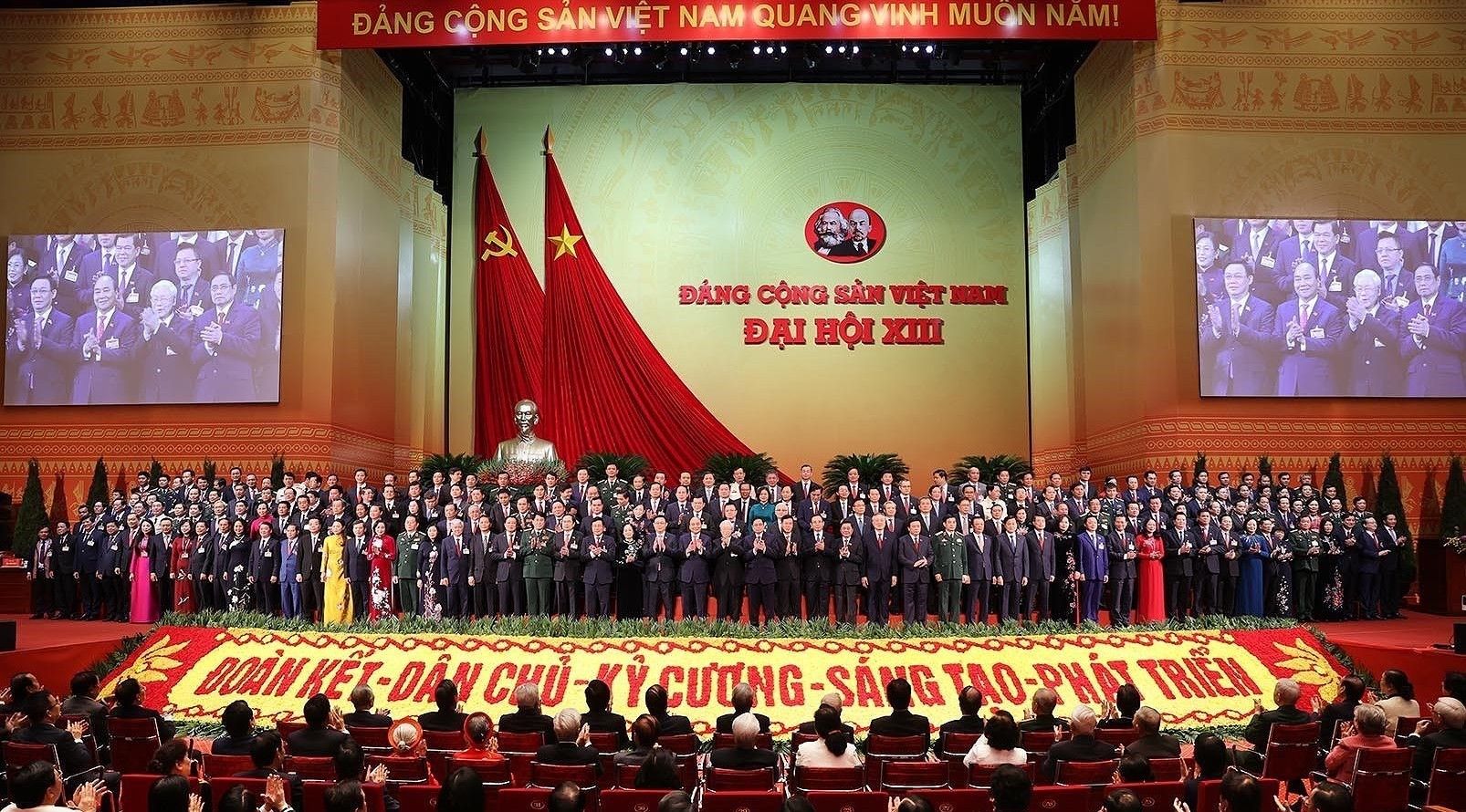
    The Communist Party’s 13th Congress ended last Monday morning, February 1, 2021, one day earlier than planned due to COVID-19 concerns.

    The main part of the Congress’s agenda was to elect a new leadership for the party. Two hundred members of the Central Committee were elected by the Congress on Saturday, January 30, and the Committee convened the next day to elect members of the Politburo, the general secretary, and members of the Central Disciplinary Commission.

    The results were announced the same day. Current general secretary Nguyen Phu Trong won re-election. The next three seats in line are current prime minister Nguyen Xuan Phuc, the head of the Party Central Committee’s Organization Commission, Pham Minh Chinh, and the secretary of the Hanoi Party Committee, Vuong Dinh Hue. Together, they are often called “The Gang of Four,” or the “Four Pillars,” holding the top seats of the Party and State.

    The public in Vietnam is often informed of the results well in advance by some Internet influencers who seem to have insider information. Now, the rumor is that Nguyen Xuan Phuc will be the president, Pham Minh Chinh will be the prime minister, and Vuong Dinh Hue will be the chairperson of the National Assembly.

    Of course, we have to wait until June or July, 2021, after Vietnam’s general election on May 23, 2021, to know if the rumors are correct. However, in the past, these rumores have often proved to be true.

    Hard numbers: Only 19 out of 200 members of the Central Committee – the elite club of the party – are women; and only one woman was elected to the Politburo, reducing the number from three in the previous term.


    After the Party Congress

    As we mentioned in an earlier article, the Communist Party’s Politburo would routinely convene right after the Party Congress to assign positions to its members. Now we have started to know at least two of those positions.

    February 6, 2021: In Hanoi, Vo Van Thuong was appointed the standing secretary of the Party Secretariat – a small but powerful Party body that is responsible for overseeing the daily activities of the Party, directly assisting the Politburo.

    Who is he? Thuong, 51, was born in the southern province of Vinh Long. He is a young and rising star in the VCP, and he will take the fifth position in the Party leadership. He previously served as the head of the Central Propaganda Commission, and was formerly the standing deputy secretary of the Ho Chi Minh City Party Committee, the secretary of Quang Ngai Province Party Committee, the secretary of the Central Committee of the Communist Youth Union, as well as having served in other positions.

    Context: No member from the South faction (in the South of Vietnam) won any of the top seats in the so-called Gang of Four (Party’s general secretary, president, prime minister, and chairperson of the National Assembly).

    February 6, 2021: In Hanoi, Tran Tuan Anh, who currently heads the Ministry of Industry and Trade, was appointed commissioner of the Party’s Central Economic Commission.

    Who is he? Anh has been the head of the Ministry of Industry and Trade since 2016. He was previously the deputy minister of that same ministry and also was the deputy commissioner of the Central Economic Commission. Anh was also the vice president of the Can Tho City People’s Committee and he also served as Vietnam’s consul general in San Francisco, in the United States.

    What is special about him? Now 57, Anh is notably a son of Vietnam’s former president Tran Duc Luong (1997 – 2006).


    Now, Vietnam’s general election

    The Communist Party’s election is now over, and the next general election will take place on May 23, 2021 to elect members of the National Assembly and local government representatives.

    The current chairperson of the National Assembly, Nguyen Thi Kim Ngan, wasted no time and immediately sprang into actions. She publicly announced that the national legislative body aimed to have 25 – 50 outside-of-the-party members; 207 members from the central government, 293 members from local governments; 50 members under 40 years old; at least 18 percent of members from ethnic minorities, and at least 35 percent women, according to Thanh Nien newspaper.

    Who formally decides the numbers? The Standing Committee of the National Assembly. It will meet on February 22, 2021 to discuss the matter further.

    Backlash: Nguyen Thi Kim Ngan’s statement immediately drew backlash from social media users who criticized her and the ruling Communist Party – the only legally operating political party in Vietnam – for trying to fake a general election.


    China’s construction of military bases near the border with Vietnam

    One of the most popular political news stories of last week was reports that China had been constructing two military bases close to the border with Vietnam. The following is a quote from Tuoi Tre News:

    “Vietnam is verifying reports of a Chinese surface-to-air missile base being constructed near the China-Vietnam border,” Le Thi Thu Hang, spokesperson of the Vietnamese Ministry of Foreign Affairs, said at a press conference in Hanoi on Thursday. The missile base is reportedly located in Ningming County in southwestern Guangxi, China, about 20 kilometers away from China’s border with Vietnam. The unverified information also stated that the missile base is situated about 40 kilometers away from another construction site, believed to be a military heliport.”

    More details with satellite images have been published by Dai Su Ky Bien Dong, a nonprofit research group dedicated to the South China Sea issue.


    Tran Huynh Duy Thuc ends his hunger strike

    Political prisoner Tran Huynh Duy Thuc ended his hunger strike on February 3, 2021. His family announced the news via a Facebook page named after him.

    He started his hunger strike more than two months ago, demanding the government consider his petition to reduce his sentence of 16 years imprisonment and release him in accordance with a new provision of the 2015 Penal Code. From his family, he only consumed milk during his strike. Tran Huynh Duy Thuc was convicted in 2009 for “conducting activities against the state” under Article 79 of the then-Penal Code.

    He told his family members via a phone call that he had achieved his main goal of the hunger strike which was to “keep a light burning during our country’s revolution.”

    Neither the family nor the government provided any information about whether or not his appeal petition is under consideration.

    Know more about him here:

    Rights groups snub Vietnam prisoner over hunger strike (Asia Times, January 17, 2021)
    Profile: Tran Huynh Duy Thuc (The 88 Project)


    Still no news about imprisoned democracy activist Pham Doan Trang

    Neither her attorney or family members have had any contact with jailed democracy activist Pham Doan Trang since she was arrested by Vietnam’s police on October 6, 2020. She has been held incommunicado in Hanoi since her arrest.

    Family members of Pham Doan Trang’s have visited the No. 1 Detention Center in Hanoi weekly to give her personal supplies, but they have not been allowed to meet her and no communication has been allowed.

    Vietnam’s Criminal Procedures Code allows investigative agencies to hold those suspected of national security crimes incommunicado until the investigation is completed.

    Pham Doan Trang is a co-founder of The Vietnamese and Luat Khoa magazines. You can learn more about her here and about the Party’s crackdown on the opposition movement under General Secretary Nguyen Phu Trong here.