Category: Internet Freedom

  • Internet Freedom In Vietnam: Prospects And Setbacks

    Internet Freedom In Vietnam: Prospects And Setbacks

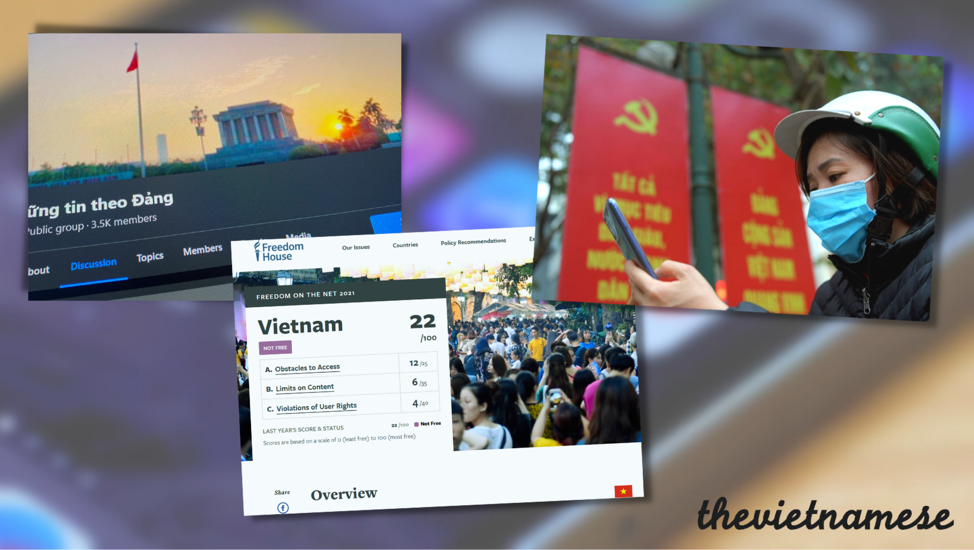
    On September 21, Freedom House, a non-profit organization based in Washington D.C., released its annual “Freedom on the Net” report, classifying[1] Vietnam as “not free” in its annual 2021 ranking.

    A Freedom House chart evaluates the state of internet freedom in 70 countries[2] this year, based on their performance in three different criteria: Obstacles to Access, Limits on Content, and Violation of User Rights. Trinh Huu Long, a co-founder of Legal Initiatives for Vietnam and an editor at The Vietnamese Magazine, is the author of this report’s Vietnam chapter.

    According to Freedom House, the scores are based on a scale of 0 (least free) to 100 (most free). Overall, Vietnam totalled 22 on the 100-point measuring scale, remaining the same as last year’s score and falling two points from the 2019 report.
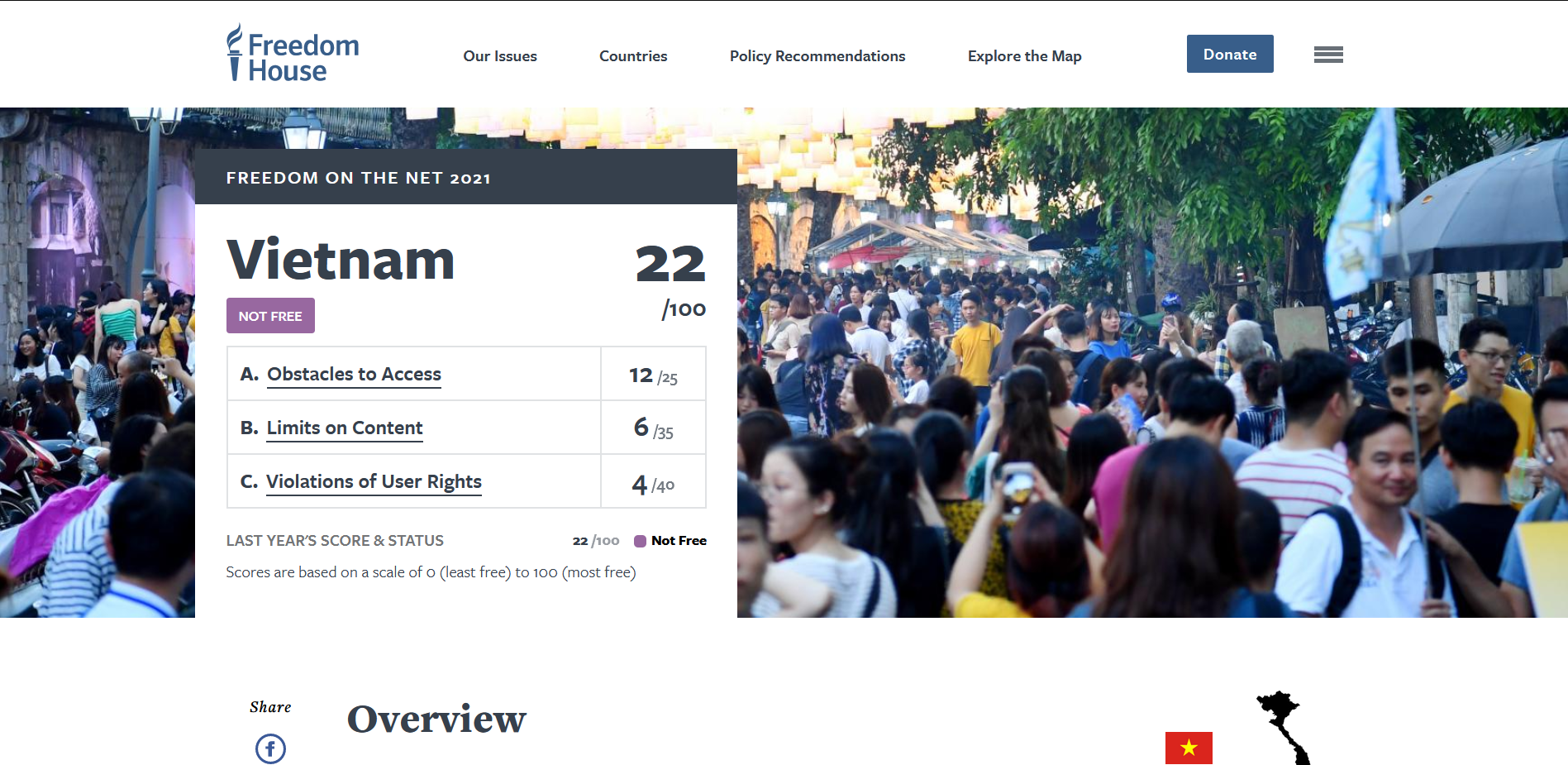
    Vietnam has been ranked “not free” on the Freedom House report this year. Photo: screenshot/ Freedom House.

    There could be several reasons, and one of them includes the Vietnamese government’s threats to shut down services of foreign social networks, such as Facebook and Google. If those companies refuse to comply with its censorship demands on critical content, the government will shut them down. Meanwhile, the Freedom House report also cites a Vietnamese draft decree on personal data protection released for public comments earlier this year. If passed, this law would require internet providers and technology companies to locally store Vietnamese users’ data in the country and hand it over to the government upon demand.

    Vietnam has also been ranked [3] “not free” in Freedom House’s annual “Freedom in the World” chart. For many local activists, these results are hardly surprising.

    Vietnam has experienced steady economic growth in the past decades, with its youth becoming increasingly active on social media. By the end of 2020, over 70 percent [4] of the country’s population, equal to around 60 million people, had access to the internet. These statistics brought about the development of a new civic space. However, as the Vietnamese Communist Party (VCP) perpetually controls almost every aspect of social life with an iron fist, this rapidly expanding cyberspace, which extends beyond the Party’s reach, is considered an underlying threat to the regime.

    To assert its control over this novel avenue of free speech and dissent, the VCP has employed multiple tactics. Some of their methods include deploying an army of “public opinion shapers” tasked with disseminating propaganda, punishing local dissidents, and applying pressure on foreign companies to aid in its censorship demands.

    Yet, the bigger picture is not as grim as it might look. Despite censorship, online threats, and other hindrances, there are still several bright prospects for the future of internet freedom in Vietnam.

    Opportunities for a More Liberated Internet in Vietnam

    Despite its poor record in limiting online content and history of violating user rights, Vietnam has achieved significant improvements in assuring equal internet access to its citizens, as clarified in the “Obstacles to Access” section.

    Improved internet infrastructure, which leads to faster connection speeds, decreased subscription costs, and high smartphone penetration, has played an essential role in making the internet more affordable and accessible to most people. Given that around two-thirds of the population currently lives in the countryside, social media platforms have become an alternate source of information for specific Vietnamese audiences who stand in opposition to highly propagandized and more traditional forms of media.

    Recent statistics [5] show that television viewership in rural areas fell to 86% while internet penetration reached 91%. Still, Freedom House emphasizes that “connectivity remains out of reach for those living in extreme poverty, which is found in many communities of [ethnic minorities] in mountainous areas.”

    As young Vietnamese become more educated and skilled in technological know-how, they are “increasingly turning to blogs, social media platforms, and other online news sources for information, rather than state television and radio [broadcasts],” Freedom House reported.

    These young tech-savvy internet users also actively acquire new tools, which are “well-known” and “can be found with a simple Google search, for circumventing censorship and bypassing firewalls.”

    Vietnamese people spend more time [6] on social media than their Asian peers, with Facebook and Google services (Youtube and Instagram) among the most popular platforms [7] in the country. As of January 2021, there were about 68 million [8] Facebook users in Vietnam; seven in every 10 Vietnamese people have an account on Facebook.

    While many of its authoritarian counterparts, most notably China, have constructed solid and massive firewalls fencing themselves off international internet services, Vietnamese internet users can still chat with their Facebook friends or watch videos on Youtube. Despite periodic blockages and slowdowns during “sensitive events,” full and comprehensive censorship currently remains impossible for the Vietnamese authorities to implement.

    Dien Nguyen An Luong, a well-known op-ed contributor to The New York Times, provides [9] some reasons to explain why it is too late for Vietnam to control social media.

    First of all, he states that this can be attributed to the country’s lack of financial and technological resources to build domestic social networking services that could challenge those coming from big tech companies in Silicon Valley like China has been doing. Dien adds that Vietnam’s “mild approach to keep internet business and e-commerce growing” has also helped create a “hybrid infrastructure that thrives on developing and adapting faster than the government’s ability to regulate and control.” And finally, he concludes that Vietnamese internet users “have always been able to find workarounds” to the restrictions imposed by their government.

    The Government’s Iron Fist

    Yet, Vietnam still faces several hurdles that hinder the country’s momentum towards a more liberal internet environment. Censorship is perhaps one of the most severe threats.

    As the Vietnamese government is intolerant and fearful of dissent, various methods have been deployed to silence critics and keep online discussions under control. Among these tactics are blocking “toxic” webpages, censoring sensitive content, and forcing social media companies to comply with the state’s censorship demands.

    Vietnam has scored poorly in most criteria in the “Limits on Content” section of the Freedom House’s report. Unlike China, the authoritarian Vietnamese government commonly uses methods to suppress the civic internet space while remaining seemingly “free” on the surface.

    For example, Facebook and Google are still accessible in Vietnam, but their users are always under constant surveillance from cyber security forces. Furthermore, the passing of the controversial and opaque Cybersecurity Law in 2019 has granted Vietnamese authorities more power to request social networking sites to remove and delete content deemed as “anti-state,” “malicious,” or “illegal.”

    Besides these “official” practices under the Cybersecurity Law, the VCP has also deployed “unofficial” methods, such as throttling the connection to local servers in order to coerce foreign companies to carry out censorship, harassing activists and journalists, restricting access to blogs or online newspapers which criticize the state, and mobilizing the Force 47 Cyber Unit [10]. Force 47 is an army of online “public opinion shapers” whose job is to steer online discussions in accordance with Party guidelines.
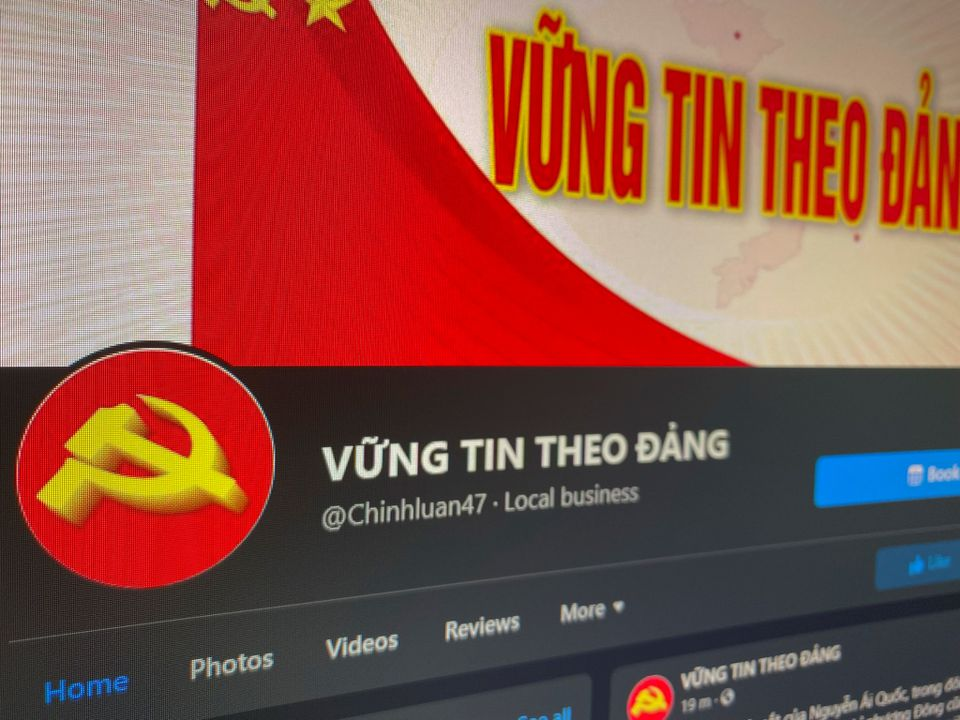
    Screenshot of a Facebook page called ‘Firmly believing in the Party,’ identified by Vietnamese state media as being controlled by ‘Force 47 Cyber Units.’ The photo was taken on July 6, 2021, by Reuters.

    Meanwhile, online speech and freedom of expression have continued to be suppressed, as reported in the “Violations of User Rights” category.

    In theory, the right to freedom of expression and access to information is enshrined in the Vietnamese Constitution. However, Vietnam fell short of its commitment to securing such rights for its citizens. The VCP continues to maintain control of all levels of cyberspace.

    Vietnamese authorities also warned high school and university students not to[11] share, comment on the country’s historical and political disinformation in cyberspace. An article from Luat Khoa Magazine in 2019 states [12] that the reason why there has not been a youth movement in Vietnam compares to other places, such as Hong Kong, is because students have been encouraged not to “read unauthorized posts, [and] circulate unregulated information on social media.” Otherwise, they might risk getting expelled.

    The watchful eye of the government constantly scrutinizes local activists, bloggers, and independent journalists. They can be penalized for simply engaging in online activities such as writing posts, live streaming newsworthy events, or publicizing any information that the government considers “sensitive” or “inappropriate.”

    Legislation [13] is being used to punish and silence online critics, such as Article 109 of the Penal Code, which penalizes citizens “carrying out activities aiming to overthrow the people’s administration,” and Article 117 for those “making, storing, disseminating or propagandizing materials and products that aim to oppose the State of the Socialist Republic of Vietnam.” According to Freedom House, since the legal terms found in these laws are vaguely defined and easily manipulated, the trials and proceedings related to online speech are “often brief, and predetermined.” If found guilty, offenders could also face “years-long prison sentences.”

    To further expand its total control over cyberspace in Vietnam, the VCP has compelled Facebook and Google to become its tools for censorship and harassment of citizens [14]. In a 78-page report, “Let us Breathe!”: Censorship and criminalization of online expression in Viet Nam,”[15] Amnesty International (AI) documents and exposes the current situation of social media users in Vietnam, along with how the repression of online speech is aided by world’s tech giants such as Facebook and Google.

    The AI report illustrates that Vietnamese social media users “face the constant threat of arbitrary arrest, prosecution, and other forms of harassment in retaliation for exercising their right of freedom of expression online.” At the same time, they could also get blocked on social media and have their posts deleted; their personal data could also be handed to the state’s security department if demanded.

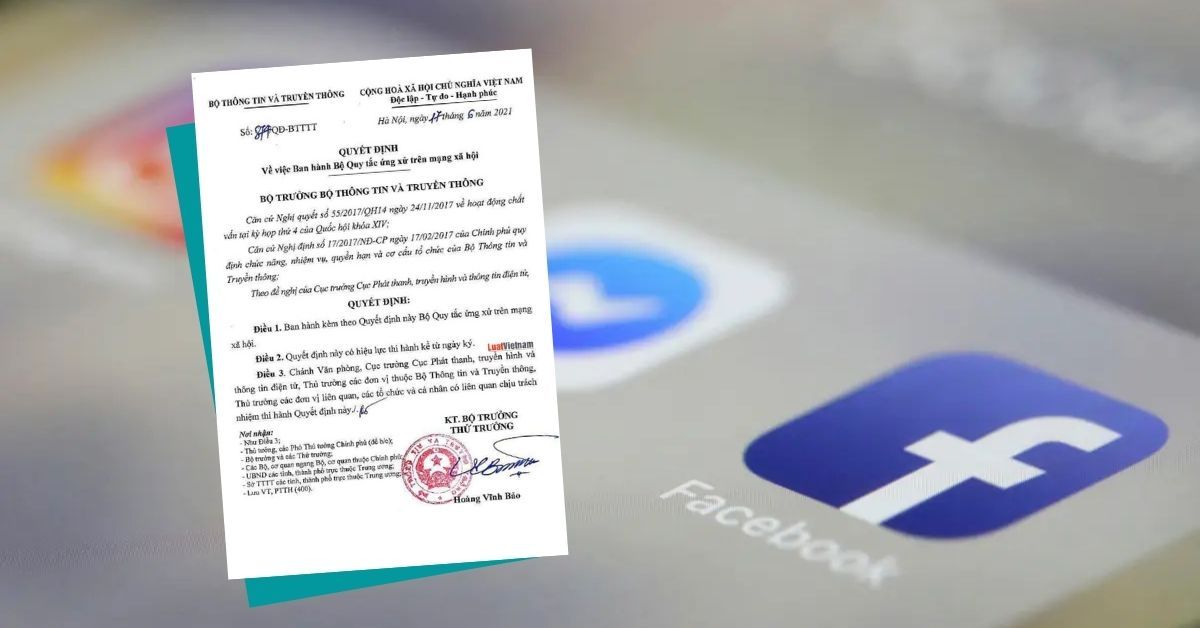
    The Vietnamese Ministry of Information and Communications recently introduced a code of conduct [16] to direct the online behavior of social media users, state organizations, and social media providers alike. The new code encourages internet users to “post positive content” about the country while prohibiting those which “affect the interests of the state” and requires social networking sites to “deal with users in accordance with Vietnamese law” by deleting content upon the government’s request.

    The new code, while it is not legally binding [17], has sparked considerable concerns for local internet users and social activists. Many of them fear that the new regulation is a warning sign from the government and will lead to further encroachments in the country’s already restrictive cyberspace.

    Building upon its insatiable desire to shape online discussions, censor “sensitive information,” and harass activists, the VCP wants to further infringe on the personal freedom of more than 60 million internet users in Vietnam by telling them what to think, do, or express on the internet.

    But what is truly disheartening is that Vietnam has all the conditions needed to make internet freedom thrive and prosper; it has the infrastructure in place, and cyberspace has never been more accessible. Yet, it will never reach this ideal if the government continues to maintain and strengthen its grip on freedom while refusing to let its people speak.

    References:

    1. Freedom on the Net 2021 (Vietnam). (2021, September). Freedom House. https://freedomhouse.org/country/vietnam/freedom-net/2021
    2. Internet Freedom Scores. (2021, September). Freedom House. https://freedomhouse.org/countries/freedom-net/scores
    3. Global Freedom Scores. (2021). Freedom House. https://freedomhouse.org/countries/freedom-world/scores
    4. Nguyen, M. N. (2021, July 23). Internet usage in Vietnam – statistics & facts. Statista. https://www.statista.com/topics/6231/internet-usage-in-vietnam/
    5. Lien, H. (2021, June 9). In rural Vietnam, Facebook finds a new approach to growth. Nikkei Asia. https://asia.nikkei.com/Business/Technology/In-rural-Vietnam-Facebook-finds-a-new-approach-to-growth
    6. Quy, N. (2021, February 6). Vietnamese spend more time on internet, social media than Asian peers: report. VnExpress. https://e.vnexpress.net/news/news/vietnamese-spend-more-time-on-internet-social-media-than-asian-peers-report-4232155.html
    7. Nguyen, M. N. (2021b, August 9). Leading social media apps in Vietnam in Q2 2021. Statista. https://www.statista.com/statistics/941843/vietnam-leading-social-media-platforms/
    8. Statista Research Department. (2021, September 10). Countries with the most Facebook users 2021. Statista. https://www.statista.com/statistics/268136/top-15-countries-based-on-number-of-facebook-users/
    9. Luong, D. (2017, November 30). Vietnam Wants to Control Social Media? Too Late.The New York Times. https://www.nytimes.com/2017/11/30/opinion/vietnam-social-media-china.html
    10. Reuters Staff. (2017, December 26). Vietnam unveils 10,000-strong cyber unit to combat “wrong views.” Reuters. https://www.reuters.com/article/us-vietnam-security-cyber/vietnam-unveils-10000-strong-cyber-unit-to-combat-wrong-views-idUSKBN1EK0XN
    11. Tuan, D. (2021, April 29). Nâng cao ý thức pháp luật trên không gian mạng cho học sinh. An Ninh Thủ Đô. https://anninhthudo.vn/nang-cao-y-thuc-phap-luat-tren-khong-gian-mang-cho-hoc-sinh-post464936.antd
    12. Bao, V. (2019, June 23). Vì sao sinh viên Việt Nam không thể biểu tình như sinh viên Hong Kong? Luật Khoa Tạp Chí. https://www.luatkhoa.org/2019/06/vi-sao-sinh-vien-viet-nam-khong-the-bieu-tinh-nhu-sinh-vien-hong-kong/
    13. Vietnam’s Proposed Revisions to National Security Laws. (2015, November 19). Human Rights Watch. https://www.hrw.org/news/2015/11/19/vietnams-proposed-revisions-national-security-laws
    14. Viet Nam: Tech giants complicit in industrial-scale repression. (2020, December 1). Amnesty International. https://www.amnesty.org/en/latest/press-release/2020/12/viet-nam-tech-giants-complicit/
    15. Viet Nam: Let us breathe! Censorship and criminalization of online expression in Viet Nam (ASA 41/3243/2020). (2020, December). Amnesty International.
    16. Phuong Nguyen, James Pearson. (2021, June 18). Vietnam introduces nationwide code of conduct for social media. Reuters. https://www.reuters.com/world/asia-pacific/vietnam-introduces-nationwide-code-conduct-social-media-2021-06-18/
    17. Long, T. H. (2021, June 19). Vietnam: The New Code Of Conduct On Social Media Is Not Legally Binding. The Vietnamese Magazine. https://www.thevietnamese.org/2021/06/vietnam-the-new-code-of-conduct-on-social-media-is-not-legally-binding/
  • The Threat Of A Free And Open Internet In Vietnam

    The Threat Of A Free And Open Internet In Vietnam

    We now live in the Age of Information, where we can access facts, data, or statistics with a simple touch of a button through our phones or computers. With enough time, commitment, and motivation, anyone can attain baseline theoretical knowledge in various fields with access to the internet.

    And if a private individual wants to share what they know, they can easily do so using the many avenues to spread information now available on the World Wide Web. Yet, this ease of access carries with it several caveats, one of which is the rampant spread of misinformation.

    Fake news, bogus statistics, and false narratives have sadly become common as we try to navigate our way through the internet. While trusted news outlets, publishers, and independent journalists are doing their part to weed out disinformation, their efforts are not enough to realistically stop, or at the very least, stifle the spread of these lies.

    And while these experts continue to research and learn about how best to deal with this issue, for now, the challenge falls on private citizens to exercise their judgment and recognize their biases to discern the truth from what is merely a constructed or false reality. Even though humans are far from rational beings touted by various thinkers and philosophers from the past, this should hopefully be enough to slow down misinformation coming from isolated sources.

    Yet, what if campaigns of disinformation were more focused? What if they were run not only by an individual or a small group but by an entire ecosystem that pushes a questionable goal or agenda? And what if this hive mind had enough power, money, and resources to censor alternate sources of information or silence anyone, or anything, that would compromise its meticulously constructed version of the world?

    The U.S Department of State’s 2020 Country Reports on Human Rights Practices: Vietnam tackles several issues plaguing the country: internet freedom. The report states that the Vietnamese government “restricted and disrupted access to the internet, censored online content, imposed criminal sentences for online expression, and monitored private online communications without legal authority.”

    Also mentioned are several restrictions on local internet service providers in the country, which the government controls. Those few that are allowed to operate are either in part or wholly owned by the state, which can actively monitor the online activities of the subscribers of these internet services.

    The report also states that websites that the Vietnamese Communist Party (VCP) considers “politically or culturally inappropriate” are also blocked on the Vietnamese internet and cannot be accessed directly. This group includes international sites owned and operated by Vietnamese people residing overseas and several credible news outlets such as Radio Free Asia, Voice of America, and the BBC Vietnamese news service.

    The meddling of the Vietnamese government does not end there. The report adds the situation of websites and social media networks – such as Facebook and Google – where Vietnam already gives the privilege to operate in the country. Yet, these companies are still being compelled to fully cooperate with the Ministry of Information and Communications to weed out and identify news and information that the government considers “bad” or “toxic.”

    They added that companies and organizations that operate social network sites, host blogs, or provide information about politics, economics, culture, or society must give comprehensive details about their plans and set up their servers within Vietnam. It is done for the convenience of the Vietnamese government so that when it requests the personal information of the account holders, it will undoubtedly have them. Hence, all information collected by these companies is stored for 90 days, with specific metadata being held for up to two years.

    The report highlights the government’s crackdown against private citizens, journalists, and bloggers who use their platforms to criticize and complain about the actions of the VCP or expose the many allegations and manifestations of corruption that plagues the Vietnamese government. These brave men and women, with our co-founder and co-editor, Pham Doan Trang, being one of them, bear the brunt of the government’s ire and often face the possibility of “arrest, short-term detentions, surveillance, intimidation, and the illegal confiscation of [their or their family’s] computers and cell phones.”

    Despite the severity of the restrictions on the Vietnamese internet, this is not something new; it is just another manifestation of the Vietnamese government’s ever-tightening noose around the neck of free speech and press freedom.

    The careful monitoring of websites, internet service providers, social media programs, and bloggers is the latest in a long line of the party’s transgressions against outlets that challenge the narrative the VCP tries so hard to instil as truth. And with the passage of the controversial Cyber Security Law in 2018, it is evident that the government is trying to replicate its success in controlling all forms of printed media in a more modern context, according to an article written in January 2019 by Thoi Nguyen in The Diplomat.

    Yet, with all their control and propaganda, what is this elusive narrative that the VCP is trying so hard to maintain? What is the story they want every one of their citizens to accept as gospel and as the absolute truth?

    The Party is perfect, and that the Party only has the people’s best interests at heart?

    The VCP’s version of reality has itself at the helm of Vietnam; it paints the Party as the almighty saviour of the country from the hands of the West. It construes itself as the central, and perhaps, the sole reason for Vietnam’s miraculous rebirth from conflict and civil war to its current state. The Party believes the VCP, guided by the spirit of Ho Chi Minh, should continue to carry the nation towards progress for all eternity.

    Such is the display of bravado, arrogance, and delusion of the Vietnamese government.

    Hence, it continues its charade, striving to censor masterfully, control, and monitor what occurs in Vietnam’s corner of the internet, a tactic not too different from what China practices. At the same time,  it continues to peddle its story to its citizens and the rest of the world,

    All this leads to a peculiar reversal of roles where misinformation comes not from the flawed thought process of the ill-informed or the writings of misguided conspiracy theorists. Instead, it comes from the precise calculations and machinations of the state, which can control most of what people consume in mainstream media. And if the people are constantly bombarded with lies and misdirection, they will eventually accept these falsehoods as fact and gospel.

    As such, the task of revealing new truths to the Vietnamese people and raising awareness about what is going on outside the government’s online information bubble lies in the hands of individuals. It falls on independent journalists, writers, bloggers, and small online publications to crack open the Vietnamese firewall, despite the risks, to make citizens question what they hold to be true. The threat to the free and open internet in Vietnam is genuine to the government as it exposes their lies and renders them obsolete.

    For when the state fails to provide the truth, it becomes our duty to do it ourselves.

  • New Research: Vietnam Remains “Not Free” On Internet Freedom, Freedom House Says

    New Research: Vietnam Remains “Not Free” On Internet Freedom, Freedom House Says

    Internet freedom in Vietnam has always been at the mercy of state censorship and strict government control. Journalists, bloggers, and activists face the genuine risk of harassment by state forces and even imprisonment. On September 21, 2021, Freedom House, a US-based organization founded to support and defend democracy worldwide, released its annual report titled Freedom on the Net 2021. Disappointingly, Vietnam continues to fare poorly in its metrics and analysis as the situation surrounding Vietnam’s internet freedom continues to worsen year after year.

    Freedom House’s Methodology

    In its annual report, Freedom House rates each country on a scale of 100 to 0, with a score of 100 representing the freest conditions and with 0 signifying the least free. The highest possible score of 100 is then divided into three categories, namely: Obstacles to Access (25 pts.), Limits on Content (35 pts.), and Violations of User Rights (40 pts.). These three categories are then further split into several specific questions, which are then used by Freedom House to determine a country’s appropriate standing.

    Countries that attain a grade between 70-100 are classified as Free, those with scores between 40-69 are noted as being Partly Free, and nations with a score from 0-39 are considered to be Not Free.

    Freedom House’s full methodology can be found here.

    Key Events

    Vietnam’s rating for 2021 in Freedom House’s report is 22, which classifies it as being Not Free. This score is 2 points lower than its rating of 24 in 2019 but is equal to its 2020 score, which was also 22. However, just because Vietnam’s rating is the same in last year’s report does not mean that the situation in the country has remained unchanged. For instance, in 2020, Freedom House reported a temporary connectivity disruption in Đồng Tâm coupled with Facebook’s servers in the country were taken offline in February 2020, which led to a lower accessibility score for that year. No similar issue has happened so far in 2021, which leads to Vietnam having a higher rating in this category. In the same vein, several issues in the past may no longer be present, and several issues today may not have been problematic one or two years prior.

    Freedom on the Net 2021 report begins by listing several key events that affect Vietnam’s overall score.

    Firstly, the report states that the Vietnamese government had threatened to shut down Facebook’s activities in the country if the company refuses to comply with the government’s requests to restrict content it deems to be “sensitive” or “critical.”

    Secondly, the report discusses the prior elections and the Vietnamese government’s censorship, arrests, and smear campaigns related to several independent candidates. Related to this are the long-running and ongoing arrests of activists and bloggers.

    Lastly, the report mentions the draft decree regarding personal data protection, which was released in February 2021; if passed, this would require online platforms to collect and store the personal data of Vietnamese users for the purposes of providing it to the government upon request.

    These events give us much-needed context into how Freedom House came to its rate for Vietnam in its 2021 report.

    Internet Freedom in Vietnam

    Regarding Obstacles to Access, Vietnam scores 12 out of a maximum of 25 points, or around 48 percent of the total. The report states that internet penetration in the country is at around 68.70 percent of the population and that smartphone penetration is at around 61.37 percent. Internet prices have also become more affordable, even to those in rural areas. Despite these positives, connectivity remains an issue for those in extreme poverty and for ethnic minorities who live in remote mountainous regions.

    Any business or firm is allowed to operate as an internet service provider in Vietnam; however, some informal barriers prevent many from doing so. Currently, the Vietnam Posts and Telecommunications Group (VNPT) and Viettel dominate the industry, with these companies controlling 40 percent and 38 percent of the market respectively. The mobile sector is no different, with Viettel accounting for 50.5 percent, VinaPhone 24.6 percent, and MobiFone 21.1 percent, comprising the lion’s share of all subscriptions. As such, smaller companies in both the internet and mobile sectors cannot hope to compete with these already established businesses.

    The Vietnamese government still retains the ability to restrict connectivity on a whim. Various government agencies tasked with regulating and overseeing digital technology remain secretive and operate without public oversight.

    Regarding Limits on Content, Vietnam scores 6 out of a maximum of 35 points, or roughly around 17 percent of the total.

    The Vietnamese government actively and continuously blocks or filters any form of content that, from their point of view, challenges the ruling Vietnamese Communist Party (VCP). High-profile blogs, individuals with many followers, content which promotes religious organizations, and local and international news websites which are critical of the regime are often the targets of government censorship. This 2021 Freedom House report states that Vietnam’s Department of Cybersecurity and High-Tech Crime Prevention has “monitored and blocked almost 3,400 overseas websites that have ‘published harmful and toxic information’ in 2020.” The regime has also threatened to shut down Facebook, and so, even this social media giant was forced to comply and agree to remove content that the VCP deems “anti-state.”

    The passing of the controversial Cyber Security Law in January 2019 has also led to the expeditious removal of content. State authorities have “imposed heavy fines and suspended online publications” for having comments that criticize the regime on their platforms. In addition, mounting government pressure has made social media platforms subservient to the government’s wishes, and in effect, they restrict content that the VCP deems inappropriate.

    The social media accounts of activists and dissidents are also under the constant threat of being suspended for “violating the platform’s community standards.” Even normal internet users, commentators, and journalists have to practice some degree of self-censorship or risk being detained or questioned by the authorities.

    This situation of mass censorship and control gives the Vietnamese government the perfect setting to be able to influence, sway, and dictate public opinion. The report quotes the Oxford Internet Institute (OII) which claims, “Vietnam employs a network of approximately 10,000 people that manipulates information on Facebook and YouTube [, and at] least one government agency is involved.”

    Regarding Violations of User Rights, Vietnam scores 4 out of a maximum of 40 points, or roughly 10 percent of the total.

    Even if the Vietnamese Constitution affirms the rights of freedom of expression, access to information, press freedom, and the like, these are not actually protected by the Vietnamese state. Freedom on the Net 2021 report states that “police routinely flout due process, arresting bloggers and online activists without a warrant or retaining them in custody beyond the maximum period allowed by law.” And it says further that the Cybersecurity Law also “prohibits a wide range of activities conducted online” in addition to putting additional pressure on internet users and social media platforms.

    As of June 2021, according to the report, 235 activists are being held in detention for practicing their freedom of expression. Several journalists, activists, and even ordinary everyday users were also given outrageous prison terms or made to pay hefty fines for their online activities for allegedly violating several provisions under Articles 117 and 331 of the Penal Code. Prominent journalist Pham Thi Doan Trang, a co-founder and editor of The Vietnamese Magazine, has been detained since October 2020 and charged with “creating, storing, and disseminating information, documents, items, and publications opposing the Socialist Republic of Vietnam” under Article 117.

    Also mentioned in the report is the controversy surrounding Bluezone, a COVID-19 tracing app. People were unaware that this application disclosed private user information to the government; in June 2021, the state announced that it would sanction people who did not have this app installed on their mobile phones when they entered certain public areas. This is a blatant infringement of a person’s right to privacy.

    Cases of intimidation and physical violence by the authorities are also noted in the Freedom House report and the names of prominent bloggers and activists who were put under surveillance and de facto house arrest. A notable case cited is the situation of Le Anh Hung, a blogger and democracy activist. Hung was arrested in July 2018 for criticizing Vietnam’s one-party communist state in online posts. He was “beaten with a metal folding chair, tied to his bed, and forcibly medicated while being held in a psychiatric hospital without his consent” in July 2020.

    Conclusion

    The state of internet freedom in Vietnam continues to remain abysmal and disheartening, with no improvement in terms of the protection of the rights of individual users. The state maintains its tight grip on the flow of information by pressuring or outright censoring social media platforms, journalists, and media outlets and by stifling any discussion by everyday people through the internet. It’s business as usual for the VCP even during the height of the COVID-19 pandemic in the country.

    Yet, the report points out that “young, educated Vietnamese people are increasingly turning to blogs, social media platforms, and other online news sources for information, rather than state television and radio broadcasters” and that “tools for circumventing censorship” exist and can be easily found. Hence, while the state may continue on its crusade to monopolize the flow of information, its efforts are failing; the truth is still being spread, and the Vietnamese people are always looking for ways to circumvent the walls being built by the regime.


    Trinh Huu Long, an editor of The Vietnamese Magazine and co-director of Legal Initiatives for Vietnam, is the author of the Vietnam chapter of Freedom House’s Freedom on the Net 2021.

  • Vietnam: The New Code Of Conduct On Social Media Is Not Legally Binding

    Vietnam: The New Code Of Conduct On Social Media Is Not Legally Binding

    On June 17, 2021, Reuters reported that Vietnam announced a national code of conduct for social media. This new code would be the national guidelines on social media behavior in Vietnam, where users are encouraged to post positive content about the country. There are certain prohibitions for social media users and companies, requiring that social media providers in Vietnam follow Vietnamese law when “requested by authorities to remove content from their platforms.”

    This national code of conduct is Decision 847/QĐ-BTTTT (Decision 847), and it was issued by the Ministry of Information and Communications (MIC).

    There are specific prohibitions throughout this decision, and it also lists the individuals and entities that are subject to the regulations. Yet, at the same time, the extent to which it is a legally binding document and how the government will enforce it is still ambiguous.

    Nevertheless, we can safely conclude that right now, under Vietnamese law, Decision 847 is NOT a legally binding document.

    Why is it not legally binding?

    This so-called national code of conduct on social media was issued as a decision from the minister of the MIC. These kinds of decisions in Vietnam are not legally binding documents under the Law on Promulgation of Legislative Documents 2015,

    Under its Article 3.1, the Law on Promulgation of Legislative Documents 2015 requires that legally binding documents should be “general rules of conduct, commonly binding, and applied repeatedly to agencies, organizations and individuals nationwide or within a certain administrative division, promulgated by the regulatory agencies and competent persons in this Law, the implementation of which is ensured by the State.”

    A minister of any ministry is deemed incompetent to promulgate legal documents if he or she issues only a decision, such as this Decision 847. Only a circular or a joint circular issued by a minister will be deemed legally binding documents. Therefore, Decision 847 cannot be treated as a legally binding document under Vietnamese law.

    Decision 847 cannot regulate social media users and providers.

    Technically, only binding legal documents can regulate its subjects, but Decision 847 is quite ambiguous.

    Article 2 of Decision 847 clearly defines the subjects that are being regulated, including official departments, state employees and officials who use social media. It also states that organizations and individuals who use social media and social media providers are all subjected to its regulations.

    Yet, under Article 8, which sets the implementation of Decision 847, it states, “the social users and companies are encouraged to fully execute the content of this decision and propagandize it to other organizations and individuals who are also on social media.”

    If Decision 847 only encourages its subjects to follow and propagandize it, it completely defeats the purpose of regulating users and companies on social media in Vietnam. Moreover, the vagueness and ambiguity of this decision reaffirm that it should not be a legally binding government document.

    Does the MIC want to regulate all the people, companies, and other governmental agencies in Vietnam with Decision 847?

    Typically, a decision from a minister would only affect his or her ministry. However, in developing this national code of conduct on social media, is it the intent of the minister of MIC to instruct and direct how citizens and other government departments should act on social media according to his standards of positivity and morality? Is it his or the government’s duty to coach citizens on behaving in our everyday life?

    Who will regulate the ethical and cultural values for the entire Vietnam? This country already lacks an independent court system, and this decision does not have any judicial oversight. So who will get to decide what ethics and culture are if Decision 847 is enforced? Is it the government’s decision to dictate good ethics, and what is a positive culture for Vietnam on social media? What will be the meaning of our freedom of expression if we actually behave and live like this?

  • 9 Takeaways From Vietnam’s Draft Decree On Personal Data Protection

    9 Takeaways From Vietnam’s Draft Decree On Personal Data Protection

    This article was written in Vietnamese by Trinh Huu Long and previously published in Luat Khoa Magazine on February 18, 2021. The translation was done by the author.


    It’s been almost three years since Vietnam’s National Assembly passed the highly controversial Cybersecurity Law. No guidance on the law’s implementation has been given as the central government usually does in the case of decrees, circulars, and decisions.

    A draft decree was made available to the public for comments back at the end of 2018, but it quickly disappeared after receiving huge backlash from domestic and international actors.

    Earlier this month, the Ministry of Public Security’s website announced another draft decree which was to address personal data protection.

    You can find the full text of this document in Vietnamese here (Google Drive link). The draft decree is available for public consultation from February 9 to April 9.

    We have taken a look at the text and below are nine takeaways.

    1. Two types of personal data

    The draft decree categorizes personal data as two types: basic and sensitive.

    Basic personal data includes information about personal identification, such as name, date of birth, place of birth, address, nationality, ethnicity, marital status, and ID number. One thing, however, is unclear: “data containing online activities and history.”

    Sensitive personal data includes political and religious opinions; health, genes, sex, biometrics; finances; sexual life; residence; social networking; and others.

    2. Individual right to personal data

    Individuals have a wide range of rights regarding their personal data as follows:

    • To consent or refuse data processing by others of one’s own personal data;
    • To be informed of personal data being processed by others;
    • To demand an end of data processing; to file complaints about violations;
    • To demand compensation in cases of data abuse;
    • Sensitive personal data should not be released. Plus, no release of basic personal data is allowed should it negatively affect its owner. The draft decree doesn’t specify the term “to release personal data” and whom the data is released to besides the public, but based on the wording of Article 6, the draft seems to be only addressing releases to the public.

    According to Article 10, all personal data, regardless of being basic or sensitive, is subject to being processed (collection, storing, and use) without consent in the following circumstances:

    • Matters relating to national security, public security, and public order;
    • Emergencies where the freedoms, or the health and life of the owner’s personal data or of the community’s are being involved;
    • Investigations and convictions of legal violations;
    • Conducting research and gathering statistics (after de-identifying the data);
    • Other circumstances according to the law and international treaties.

    The last circumstance, “other circumstances according to the law,” is a loophole that is widely used in the legal system of Vietnam to give the government’s executive branch, especially ministries, an almost unlimited ability to interpret laws and regulations using circulars and executive decisions.

    4. Personal data being processed without informing its owner

    According to the draft decree, the owners of personal data are normally informed should their data be processed by government agencies or other legal actors.

    However, there are three exceptions to the rule, and the most concerning is the second one (Item b, Section 3, Article 11): “In case the processing of personal data is constituted by the law, international agreements, and international treaties.”

    This is another loophole in an important matter relating to the transparency of personal data processing.

    5. The establishment of the Committee on Personal Data Protection

    A new government agency called the Committee on Personal Data Protection is going to be established. It will be set up under the central administration.

    The Ministry of Public Security (MPS) can appoint no more than six members to the Committee upon the cabinet’s approval.

    The Committee is closely tied to the MPS Department of Cybersecurity and Hi-Tech Crimes Prevention as it is headquartered at the department and chaired by the department’s head officer.

    6. Permit required for processing sensitive personal data

    Article 20 requires that parties who want to process sensitive personal data must register with the Committee on Personal Data Protection.

    However, the Article excludes activities by government agencies relating to law enforcement, judicial procedures, heath, social security, and scientific research. That means these agencies don’t need to register. Also, the Article leaves another loophole for other authorities to exploit by attaching a clause saying “other activities according to the law.”

    What remains after excluding the above-mentioned government agencies? Enterprises and non-governmental organizations, both domestic and international ones. Services such as social media, banking, and healthcare must register with the Committee.

    7. Permit required for conducting cross-border transfer of personal data

    This is directly related to foreign services operating in Vietnam or domestic services operating in other countries, especially technology companies.

    Article 21 states that four conditions must be met before a party can make a cross-border transfer of personal data:

    • Data owner’s consent;
    • Storing the original copy of the data in Vietnam;
    • Providing documents that prove the data receiving countries have personal data protection regulations at the same or higher level than that of this decree;
    • Obtaining a written approval from the Committee.

    The second and third conditions can be waived should the data processing party provide statements regarding their commitment on protecting the data.

    The data processing party must archive records of data transferring within three years, and stop transmitting data should data leaks or abuses occur, or should they no longer have sufficient capacity to protect the data, or the data owner is incapable/ having difficulties  protecting his/her rights and interests.

    The Committee on Personal Data Protection will routinely inspect data transmitting parties once a year.

    The requirement of storing data’s original copy in Vietnam will likely make it a bit more difficult for foreign social networks, email services, and e-commerce activities to operate in Vietnam. According to Google expert Duong Ngoc Thai, Facebook is unlikely to store users’ personal data in Vietnam but rather just cache data to make access to its services faster.

    8. Administrative fines can be up to 5 percent of the total revenue of a company in the Vietnam market

    Those who violate the regulations on personal data protection are subject to fines of 50 million dong or 5 percent of their total revenue in  the Vietnam market.

    Simultaneously, violators can also be banned from processing personal data for 1 to 3 months and may have their data processing licenses revoked.

    If not allowed to collect, store and use users’ personal data, online services will probably not be able to function the way they do currently.

    The decree doesn’t specify how the government can prohibit online services from processing personal data, but the Cybersecurity Law provides the government  with the authority to order the telecommunications companies to block services and sources of information that are deemed to be harmful to society.

    9. Effectivity

    The draft decree is expected to take effect on December 1, 2021, as stated in the document.

  • Vietnamese Activists React to Facebook Taking Down “Anti-state” Posts

    Vietnamese Activists React to Facebook Taking Down “Anti-state” Posts

    In mid-April, Reuters broke the news that Facebook agreed to censor so-called “anti-state” posts after the Vietnamese government put pressure on the social networking site and took local servers offline, slowing down traffic. Since the news broke, the activist and politically-engaged community in Vietnam has been determined to jump over another hurdle in its struggle for freedom of expression.

    Thao Dinh, an activist in Hanoi who formerly worked as director of communications for VOICE, a Vietnamese human rights NGO, said she has used Facebook much less since learning about the content restrictions and has switched to other platforms.

    “Diversity is important,” Dinh said. “The worst scenario is one platform becoming a monopoly. So I would recommend people use as many services as they want depending on their needs, such as Twitter, YouTube, Facebook, Blogs, LinkedIn, Reddit, Quora, Telegram, except the platforms spying on us for the government.”

    Additionally, Vietnamese activists are urging their fellow countrymen, if they choose to use Facebook, to be wary about sharing sensitive and personal information on the platform. Hoang Dung advised his network on Facebook to adjust their settings and clear their  “Off-Facebook Activity” which is a summary of activity that businesses and organizations share about your interactions, such as visiting their apps or websites.

    Vi Yen Nguyen, the training manager at VOICE, shared on her profile three other alternatives to Facebook: Signal, Telegram, and Wire.

    Vi Yen wrote, “Facebook was faced with pressure by the Vietnamese government and gave up. It is no longer a reliable platform. Although admittedly, in this censorship case, Facebook is only a victim.”

    (Vi Yen Nguyen’s quote was in Vietnamese: “Facebook đã chào thua trước áp lực của chính quyền Việt Nam. Nó không còn là một nơi đáng tin cậy. Dù phải thừa nhận rằng, trong vụ kiểm duyệt này, Facebook cũng chỉ là một nạn nhân.”)

    Human Rights Watch said that Facebook should have resisted.

    “Facebook has set a terrible precedent by caving to the government of Vietnam’s extortion,” said John Sifton, Asia advocacy director at Human Rights Watch. “Now other countries know how to get what they want from the company, to make them complicit in violating the right to free speech. The government of Vietnam shouldn’t have throttled the platform’s traffic in the first place, but Facebook shouldn’t have agreed to its demands.”

    In a statement, a Facebook spokesperson said that the Vietnamese government “has instructed us to restrict access to content which it has deemed to be illegal in Vietnam. We believe freedom of expression is a fundamental human right, and work hard to protect and defend this important civil liberty around the world. However, we have taken this action to ensure our services remain available and usable for millions of people in Vietnam, who rely on them every day.”

    The UN’s Guiding Principles on Business and Human Rights require businesses such as Facebook to “respect human rights,” including avoiding infringements and addressing adverse impacts in which they are involved. As a member of the Global Network Initiative, Facebook has pledged that it will protect the human rights of users when they are confronted with government demands inconsistent with international human rights standards.

    “It’s hard to see how Facebook can live up to its human rights obligations when it’s helping Vietnam censor free speech,” Sifton said.

    The pressure on Facebook coincides with a new decree by the Vietnamese government implementing monetary fines for people and internet companies for posting or publishing a sweeping range of items with “forbidden contents”, materials that promote “reactionary ideas”, “have not been allowed for circulation, have been prohibited for circulation or have been confiscated.”

    The United States and other countries should have better utilized their diplomatic leverage to support Facebook in their stance against pressure from the government of Vietnam, Human Rights Watch said. Other businesses and business groups should have stood more publicly with the company to prevent the government’s strong-arm tactics.

    The reluctance of Vietnamese activists to continue using Facebook has created new market opportunities for other social networks. Dinh recently got her Twitter profile officially verified.

    “Since #Facebook is lowering its standards to protect human rights in #Vietnam, Twitter and other platforms are having a great opportunity for growing in [the] Vietnam market,” she tweeted.

  • Vietnam Will Soon Follow China’s Social Credit System?

    Vietnam Will Soon Follow China’s Social Credit System?

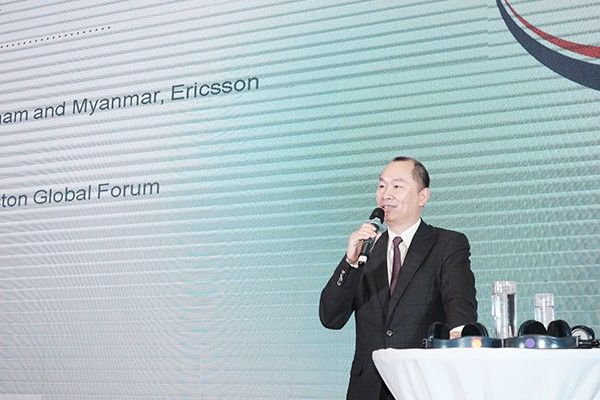
    Nguyen Anh Tuan, CEO of Boston Global Forum, during his presentation at the Vietnam Internet Forum 2019 recently took place in Hanoi on March 20-21, 2019, proposed that governments should use AI technology to grade their citizens’ social credit.

    The online business newspaper Cafe Biz Vietnam reported, Nguyen Anh Tuan suggested that blockchain technology should be used to reward “good citizens.”

    And while his definition of a “good citizen” described those who uphold the universal values of human rights and the rule of law under such standards set by the United Nations, the very idea of proposing a “social credit system” to grade citizens in a country like Vietnam worried people that it would be the same model China is currently implementing.

    It is probably a bit unrealistic at the moment to expect the government of Vietnam – who is among the worst violators of citizens’ rights in the world – to uphold international standards on human rights and the rule of law.

    Reporters Without Border continuously ranks the country among the bottom five on its World Press Freedom Index, a fact that was raised by the members of the UN Human Rights Committee during the country’s review under the International Covenant on Civil and Political Rights (ICCPR) earlier this month.

    CIVICUS insists on continue listing Vietnam as a “closed” society where views of political dissents are not tolerated and severely punished.

    Right now, 218 political prisoners are serving a sentence in Vietnam.

    At the very same time that Nguyen Anh Tuan was presenting his speech, Vietnam sentenced another man, Le Minh The, to two-year-imprisonment for posting on Facebook and calling for democratization and separation of powers.

    Nguyen Anh Tuan was not a name unfamiliar to the Vietnamese public. He was the founder of Vietnamnet, a state-owned media online newspaper which, at one time, was the leading online news site in Vietnam. He was once considered by the government of Vietnam as one of its up and coming stars, especially in the field of information and technology.

    After leaving his post as the editor-in-chief of Vietnamnet in about 2011, Tuan moved to expand his career in the United States. He attended school at Harvard Business School, served on the boards of various foundations before founding his own Tran Nhan Tong Foundation, and later the Boston Global Forum in 2012.

    His introduction on the website of Boston Global Forum states:

    “Tuan is recognized globally for his pivotal role as a Vietnam Government reformist, who has successfully fostered freedom-of-expression, vigorous open debate and private enterprise in a nation that has become a leader in commerce, culture, and the innovation as well as a close ally of the West.

    Tuan served on the Harvard Business School Global Advisory Board from 2008 to 2016. He also serves on the Board of Trustees of the Free-for-All Concert Fund in Boston.”

    His accomplishments are well-praised by American scholars and politicians throughout the years. Curiously, however, not one of them mentioned even once the worrying human rights situation in Vietnam while discussing Tuan’s contributions to improving the quality of life for Vietnamese people.

    While Tuan no longer has any relationship with Vietnamnet, this very newspaper has been promoting heavily for the new cybersecurity law during the past year.

    A quick search on Google for Vietnamnet together with the term cybersecurity law in Vietnamese (luật an ninh mạng) will yield dozens of articles in a few seconds.

    Concerns grow day by day over the new cybersecurity law of 2018 which many people see as a direct violation of Article 19 – Freedom of Expression – under the ICCPR.

    This new law allows police authorities to request internet service providers, both international and domestic, to turn over users’ data as soon as they open an investigation without warrants and with no judicial oversight.

    Last summer, in protest of Facebook’s potential collaboration with the Vietnamese government and the new cybersecurity law, hundreds of thousands of Vietnamese Facebook users started to sign up for Minds, another social media platform.

    However, once the Vietnamese users found out that Nguyen Anh Tuan of Boston Global Forum was among the members of Minds’ Advisory Board, they quickly grew cold of the new platform.

    Given the latest presentation from Nguyen Anh Tuan on AI technology and the proposed “social credit system,” it is, perhaps, that the Vietnamese users were correct in having their skepticism over any technology with his name on it all along.