Category: Human Rights

  • Pham Doan Trang’s Trial Postponed While UN Working Group On Arbitrary Detention Called For Her Immediate Release

    Pham Doan Trang’s Trial Postponed While UN Working Group On Arbitrary Detention Called For Her Immediate Release

    Vietnam arrested Pham Doan Trang on October 7, 2020, and charged her under Article 88 of its 1999 Penal Code for allegedly “making, storing, distributing or disseminating information, documents, and items against the Socialist Republic of Vietnam.” Her trial was originally scheduled to take place on November 4, 2021, but the court postponed her trial due to the prosecutors having come into contact with COVID-19.

    However, on October 25, 2021, the United Nations Working Group on Arbitrary Detention (WGAD), a team of five independent experts tasked with investigating “cases of deprivation of liberty imposed arbitrarily or inconsistently with the international standards set forth in the Universal Declaration of Human Rights,” released their opinions regarding the arrest, detention, and treatment by the Vietnamese state of internationally recognized independent journalist and human rights defender Pham Doan Trang.

    In this document, WGAD scrutinizes the formal statements given by the side of Doan Trang and that of the Vietnamese government in order to verify the authenticity of the claims regarding her situation in custody and to provide recommendations for the Vietnamese government.

    WGAD also stated that even though the Vietnamese government vehemently rejects the accusations alleged by the side of Doan Trang and that “[the Vietnamese government] cannot provide detailed information regarding this case to the press and other irrelevant parties,” WGAD will still continue with its investigation as part of its mandate “to serve the needs of victims of arbitrary arrest and detention worldwide.”

    WGAD concluded that “the deprivation of liberty of Pham Doan Trang, being in contravention of articles 2, 6, 7, 8, 9, 11, 19, 20 and 21 of the Universal Declaration of Human Rights and articles 2, 9, 14, 15, 16, 19, 21, 22, 25 and 26 of the International Covenant on Civil and Political Rights, is arbitrary and falls within categories I, II, III, and V.”

    Regarding Doan Trang’s arrest by state forces, WGAD believes that the Vietnamese authorities failed to present a warrant for her arrest and that Doan Trang was not informed of the charges lodged against her. She was also never brought before an independent judicial authority in order to challenge her detention.

    Likewise, WGAD upholds that Doan Trang was put under Incommunicado Detention which “is an environment conducive to torture and cruel inhumane treatment, as it may be used to coerce the individual to confess to the commission of the alleged crimes and admit guilt.” Furthermore, WGAD states that the initial charge under Article 117 of the Vietnamese Criminal Code is “so vague that it is impossible to invoke a legal basis for her detention.” Hence, WGAD concludes that the Vietnamese government failed to establish a legal basis for Doan Trang’s arrest and detention.

    WGAD also believed that she was detained for “peacefully exercising her rights to freedom of opinion, expression, and association.”. As such, it has referred this case to the Special Rapporteur on the promotion and protection of the right to freedom of opinion and expression and to the Special Rapporteur on the rights to freedom of peaceful assembly and of association.

    WGAD also stated that because Doan Trang was not allowed to speak to her defense lawyers until recently, and was denied legal counsel, her right to a fair and just trial has been violated.

    Likewise, WGAD found that Doan Trang was “deprived of her liberty on discriminatory grounds” due to her being a vocal human rights defender and because of her political stance and opinions.

    In light of all the information presented, WGAD requests that the Vietnamese government take all the necessary steps needed in order to remedy Doan Trang’s situation in order to “bring it into conformity with the relevant international norms.”

    WGAD believes that the best remedy would be to urgently and immediately release Doan Trang and compensate her in accordance with international law. WGAD also urges the Vietnamese government to ensure a “full and independent investigation” of Doan Trang’s arbitrary detention and to “take appropriate measures against those responsible for the violation of her rights.”


    The UN WGAD’s full statement can be found here

  • Pham Doan Trang’s Indictment Is Public Today; What Do We Know About Her Case?

    Pham Doan Trang’s Indictment Is Public Today; What Do We Know About Her Case?

    The indictment against journalist and democracy activist Pham Doan Trang was made public on October 18, Vietnam time. We are summarizing the main issues from the 15-page indictment, which you can read here in Vietnamese.

    The main points of the indictment are:

    • The indictment stated that the investigation was done between September 22, 2016 and October 7, 2020. October 7, 2020 was also the day that the authorities arrested Doan Trang.
    • The Department of Cyber Security and High Tech Crimes under the Ministry of Public Security (MPS), the national police in Vietnam, petitioned the investigation department to pursue legal proceedings against Doan Trang on May 4, 2020 and October 7, 2020 and included its documents and materials against her.
    • The Department of Information and Communications of Hanoi City also submitted two petitions with documents and materials to the MPS on December 26, 2017 and January 7, 2019, requesting legal proceedings against Doan Trang.
    • The Investigation Unit of Hanoi City’s Police formally opened the investigation on September 10, 2020.
    • The decision to initiate criminal proceedings against Doan Trang was issued on September 28, 2020.
    • Doan Trang was arrested under a warrant on October 7, 2020 in Ho Chi Minh City.
    • She refused to provide her laptop’s password to the police and accordingly, the police could not access its data.
    • She also refused to acknowledge the Facebook account of the name “Pham Doan Trang” belonged to her, and the investigative unit could not charge her for the information posted via that account on social media.
    • Doan Trang acknowledged that she was one of the authors of the “Report Assessment of the 2016 Law on Belief and Religion in relation to the exercise to Freedom of Religion and Belief in Vietnam” in both English and Vietnamese. This report was published on the website of Luat Khoa Magazine.
    • On February 19, 2021, the Authority of Information Security (under the Ministry of Information and Communications) submitted a document to the investigative unit which stated that it could not determine who owned and managed the domain name luatkhoa.org to pursue further legal proceedings against it.
    • The indictment stated that Doan Trang repeatedly committed unlawful conduct which can be used to increase her punishment.
    • The indictment also did not find any facts to reduce the punishment against her.
    • The investigation of her case was concluded on August 26, 2021.
    • The indictment stated that Doan Trang continued her unlawful conduct from 2017 to 2019 so both the 1999 Penal Code and the 2015 Penal Code (which took effect on January 1, 2018) could be used to prosecute her.
    • However, the indictment also stated that Doan Trang did not confess to any of these crimes and that the 1999 Penal Code would be more beneficial to the defendant since Article 88 of that penal code starts the sentence at 3 years imprisonment versus 5 years imprisonment under Article 117 of the 2015 Penal Code. Therefore, the government dropped charges under Article 117 and only prosecuted Doan Trang under Article 88.

    The Evidence against Pham Doan Trang under the indictment:

    • English document named “Brief report on the marine life disaster in Vietnam”;
    • English document named “General Assessments of the human rights situation in Vietnam”;
    • English and Vietnamese versions of the “Report Assessment of the 2016 Law on Belief and Religion in relation to the exercise of the right to Freedom of Religion and Belief in Vietnam”;
    • Two interviews with Pham Doan Trang by BBC News  Vietnamese and Radio Free Asia – Vietnamese (RFA) in 2018.

    Formal indictment:

    The Hanoi People’s Procuracy Office prosecuted Doan Trang under Article 88, Section 1, subsections a, b, and c for “propagandizing against the Socialist Republic of Vietnam ” of the 1999 Penal Code. The sentencing for this crime will be 3 to 12 years imprisonment.

    The indictment is dated August 30, 2021. However, it was only made public on October 18, 2021, in Vietnam, just more than two weeks before Pham Doan Trang’s trial. For almost two months, Doan Trang’s family and her attorneys, as well as the public, have been kept in the dark about the case Vietnam has against her.

  • Tightening The Noose: The Latest Developments In Vietnam’s Assault On Internet Freedom

    Tightening The Noose: The Latest Developments In Vietnam’s Assault On Internet Freedom

    On August 25, 2021, U.S. Vice President Kamala Harris met with several of Vietnam’s top leaders. According to a report by Reuters, while the focus of their dialogue centered on the South China Sea dispute and the strengthening of U.S presence in the region, she also brought up several human rights concerns with the Vietnamese government. Although Harris did not provide details about what they had discussed, the vice president assured the press that “[the United States] was “not going to shy away” from difficult conversations with countries the United States has partnerships with.

    Prior to her arrival, Vietnam was already dealing with a surge in Covid-19 infections, which resulted in lockdowns and travel restrictions in several places in the country, including Ho Chi Minh and Hanoi. As of September 26, Vietnam has tallied over 476,000 confirmed cases with 18,000 deaths. The Vietnamese government’s approach to containing the spread of the virus has been questionable at best with its use of state media and propaganda to control the narrative and deployment of the military to enforce lockdown measures.

    Yet, despite the ongoing health crisis and the dialogue with the U.S. vice president, Vietnam continues its crackdown, detention, and imprisonment of several online critics, journalists, and activists.

    Freedom on the Net 2021

    Freedom House, a US-based organization founded to support and defend democracy worldwide, released its annual Freedom on the Net report on September 21, 2021. This report analyzes the state of accessibility and censorship of a country’s cyber domain, alongside violations of internet users’ rights, and ranks each nation as being Free, Partly Free, or Not Free. It comes as no surprise that Vietnam continues to fare poorly in this regard; it has been classified as Not Free for three consecutive years and has been performing terribly under the standards set by Freedom House.

    This research highlights several aspects of the state of internet freedom in Vietnam. Regarding accessibility, Freedom House states that smartphone and internet penetration in the country has been good with internet prices becoming more affordable. However, connectivity continues to remain an issue for those living in extreme poverty and for ethnic minorities who live in the remote mountainous areas of Vietnam. Censorship also continues to be practiced by the Vietnamese government as it blocks or filters content coming from individuals and organizations that are critical of the regime. Predictably, Vietnam’s violation of internet-user rights is just as rampant compared to prior years with “police routinely [flouting] due process, arresting bloggers and online activists without a warrant or retaining them in custody beyond the maximum period allowed by law.”

    CIVICUS: Latest Developments in Vietnam

    On September 27, 2021, CIVICUS, an international alliance of various organizations that aim to strengthen citizen action and civil society worldwide, released its own report that details more recent events regarding the state of internet freedom in Vietnam. Similar to Freedom House, CIVICUS classifies Vietnam as Closed according to its own standards; a country with this rating exhibits “a complete closure of civic space” where “an atmosphere of fear and violence prevails, where state and powerful non-state actors are routinely allowed to imprison, seriously injure and kill people with impunity.” Criticism of those in power is also severely punished. Likewise, media freedom is virtually non-existent and the internet is heavily censored.

    The CIVICUS report begins by highlighting the cases of several Facebook users who were arrested or imprisoned under Articles 117 and 331 of Vietnam’s Criminal Code. Nguyen Van Lam and Tran Hoang Minh were both found guilty by Vietnamese courts of violating these statutes on July 20, 2021. Lam was sentenced to nine years in prison for “posting anti-state writings and sharing videos and other content, including broadcasts considered politically subversive,” and for “creating, storing, disseminating information and materials against the Socialist Republic of Vietnam.” Minh was given five years of jail time for “abusing democratic freedom” and for his objections to the Dong Tam land dispute incident.

    The report continues with the arrests of Facebookers Tran Hoang Huan and Bui Van Thuan, on August 10, 2021, and August 30, 2021, respectively. Huan’s recent posts voiced his objections and concerns regarding Vietnam’s use of Chinese-made COVID-19 vaccines. He was charged by the Tien Giang People’s Procuracy for “making, storing and spreading or propagandizing information or documents against the state under Article 117 of the Penal Code.”  Bui Van Thuan was arrested in his home by policemen who pretended to be medical workers. Bui Van Thuan’s wife, Trinh Nhung, stated with The 88 Project that Thuan had previously posted “biting commentaries against the government’s handling of COVID-19 and other political issues.”

    The more recent cases of Nguyen Thuy Duong and Nguyen Duy Linh are also mentioned in the report. CIVICUS states that Amnesty International had reported on September 2, 2021, that Duong had been fined 5 million dong (US$220) for sharing a Facebook post that accused Vietnamese authorities of neglect during the COVID-19 lockdown. This post blamed the government for the rampant spread of hunger among city residents during this time. Nguyen Duy Linh was arrested on September 14 and charged by state authorities with “conducting anti-state propaganda” under Article 117 of the country’s Criminal Code.

    Updates regarding the case of detained human rights defender, journalist, and co-founder of The Vietnamese and the Luat Khoa online magazines, Pham Doan Trang, are also included in the CIVICUS report. On September 6, 2021, the government informed Doan Trang’s lawyer, Luan Le, that his client would be “formally indicted with ‘conducting propaganda against the Socialist Republic of Vietnam under Article 88 of the 1999 Penal Code.” Despite her case being brought to the attention of the United Nations Working Group on Arbitrary Detention (UNWGAD), she still faces the very real possibility of being sentenced to 20 years imprisonment.

    Radio Free Asia’s coverage regarding the arrest of five journalists from the Facebook-based news outlet, Bao Sach (Clean Newspaper) is also mentioned in the report. Truong Chau Huu Danh, Nguyen Thanh Nha, Doan Kien Giang, Nguyen Phuong Trung Bao, and Le The Thang were charged with violating Article 331 of Vietnam’s Criminal Code for posting “anti-state and reactionary information” which delved into information that was “inappropriate, distorting, against the country’s interests, and slanderous of the people’s administration.” Thang is currently released on bail while the other four journalists are still in detention. Truong Chau Huu Danh, the founder of Bao Sach, also faces the additional charge of posting stories that “generated bad interactions between internet users in the cyber environment” which “propagandized, distorted, defamed and seriously slandered Party organizations and local Party committees.”

    Tran Huu Duc and Le Thi Kim Phi were accused by the authorities of using Facebook to connect with members of the U.S.-based Provisional Government of Vietnam, an organization founded in 1991 by former soldiers and refugees who remained loyal to the South Vietnamese government after the war. Than Huu Duc was arrested in January 2021 and charged under Article 109 of Vietnam’s Penal Code for “gathering information on Nghe An residents … for a referendum on naming [Provisional Government of Vietnam] member, Dao Minh Quan, as president of Vietnam.” Duc was also accused of “posting political content online” that opposed government policies and “slandering leaders of Vietnam’s ruling Communist Party.” In September 2021, Le Thi Kim Phi was arrested and charged under the vague clause of “carrying out activities to overthrow the government.”

    In January 2018, the Provisional Government of Vietnam was labeled a “terrorist organization” by the Vietnamese authorities.

    Additional Restrictions on Internet Freedom

    Following the passage of the controversial Cybersecurity Law in 2018, the CIVICUS report further mentions a draft of a government decree which further restricts internet freedom by limiting live-streaming on popular social media sites. CIVICUS states that, “under the terms of the decree, any account that operates on a social media platform in Vietnam and has more than 10,000 followers must provide contact information to authorities” and that “only registered accounts will be allowed to live-stream.” The draft also imposes additional responsibilities on social media providers, requiring them to block or remove content within 24 hours if they receive a “justified complaint” from an individual or organization.

    When passed this decree, coupled with the already draconian Cybersecurity Law, will serve to further cement the Vietnamese Communist Party’s (VCP) rule over the country’s already restrictive cyberspace, putting social media users more at risk of the government’s retribution and reducing social media platforms to tools of government surveillance.

    Freedom on the Net 2021 provides an overall look at the state of internet freedom in Vietnam while the CIVICUS report presents recent, documented, and specific events that support Freedom House’s outlook on the country. Both illustrate a very grim and depressing reality about Vietnam: that despite international pressure, in the form of U.S Vice-President Harris’ visit, and the ongoing COVID-19 pandemic, the VCP is more concerned about maintaining power and control over its people than prioritizing their welfare and safety during these difficult times; the Party would rather control the narrative than work to give actual aid to much of its struggling populace.

    In the end, the actions of the Vietnamese government serve only as a reminder of its ineptitude during times of crisis and its callousness to the plight of everyday Vietnamese; in its relentless attack against internet freedom and freedom of speech, the more pressing and immediate threats to the welfare of the Vietnamese people remain half-heartedly addressed.

    Citations:

    1. Bose, N. (2021, August 25). U.S. VP Harris offers Vietnam support to counter Beijing in the South China Sea. Reuters. Retrieved September 28, 2021, from https://www.reuters.com/world/asia-pacific/us-vp-harris-offers-vietnam-support-counter-beijing-south-china-sea-2021-08-25/
    2. Jaffe, A. (2021, August 26). Harris says she urged Vietnam to free political dissidents. – The Diplomat. Retrieved September 29, 2021, from https://thediplomat.com/2021/08/harris-says-she-urged-vietnam-to-free-political-dissidents/
    3. Nguyen, J. (2021, August 19). State media and social media during the COVID-19 pandemic: A tale of two cities in Vietnam. The Vietnamese. Retrieved September 29, 2021, from https://www.thevietnamese.org/2021/08/state-media-and-social-media-during-the-covid-19-pandemic-a-tale-of-two-cities-in-vietnam/
    4. Nguyen, J. (2021, September 12). Why did the Vietnamese Communist Party militarize its fight against COVID-19? The Vietnamese. Retrieved September 29, 2021, from https://www.thevietnamese.org/2021/09/why-did-the-vietnamese-communist-party-militarize-its-fight-against-covid-19/
    5. Shahbaz, A., & Funk, A. (n.d.). Freedom on the net 2021: The global drive to control Big Tech. Freedom House. Retrieved September 30, 2021, from https://freedomhouse.org/report/freedom-net/2021/global-drive-control-big-tech
    6. Reed, A. (2021, September 21). New research: Vietnam remains “not free” on internet freedom, Freedom House says. The Vietnamese. Retrieved Sept 30, 2021, from https://www.thevietnamese.org/2021/09/new-research-vietnam-remains-not-free-on-internet-freedom-freedom-house-says/
    7. Huu Long, T. (2021, September 21). Vietnam: Freedom on the net 2021 country report. Freedom House. Retrieved October 1, 2021, from https://freedomhouse.org/country/vietnam/freedom-net/2021
    8. C. I. V. I. C. U. S. (2021, September 27). CRACKDOWN ON ONLINE CRITICS PERSISTS IN VIETNAM AS NEW DECREE CONTROLLING LIVESTREAMING PROPOSED. Civicus. Retrieved September 29, 2021, from https://monitor.civicus.org/updates/2021/09/27/crackdown-online-critics-persists-vietnam-new-decree-controlling-livestreaming-proposed/
    9. Civicus. (2020, April 7). ONLINE DEBATE ON DONG TAM INCIDENT FOLLOWED BY PANDEMIC SILENCED BY VIETNAM AUTHORITIES. Civicus. Retrieved October 1, 2021, from https://monitor.civicus.org/updates/2020/04/07/online-debate-dong-tam-incident-followed-pandemic-silenced-vietnam-authorities/
    10. The 88 Project (2021, September 6). Vietnam free expression newsletter no. 34/2021 – week of August 30-September 5. The 88 Project. Retrieved September 29, 2021, from https://the88project.org/newsletter-no-34-2021/
    11. Finney, R. (2021, September 3). Vietnamese facebook user fined for ‘fake news’ as criticism grows of government’s handling of pandemic. Radio Free Asia. Retrieved September 30, 2021, from https://www.rfa.org/english/news/vietnam/fine-09032021182640.html
    12. Whong, E. (2021, September 10). Vietnam indicts five journalists from Facebook-based outlet. Radio Free Asia. Retrieved September 30, 2021, from https://www.rfa.org/english/news/vietnam/baosach-09092021174755.html
    13. Finney, R. (2021, September 14). Vietnam court sentences member of ‘Provisional Government’ to three-year prison term. Radio Free Asia. Retrieved October 29, 2021, from https://www.rfa.org/english/news/vietnam/court-08182021185109.html
    14. Gerin, R. (2021, September 14). Third Vietnamese charged for Facebook connections with US-based Exile Group. Radio Free Asia. Retrieved September 30, 2021, from https://www.rfa.org/english/news/vietnam/le-thi-kim-phi-09102021183034.html
  • Vietnam Says It Is Promoting And Defending Human Rights, But The Reality Proves Otherwise

    Vietnam Says It Is Promoting And Defending Human Rights, But The Reality Proves Otherwise

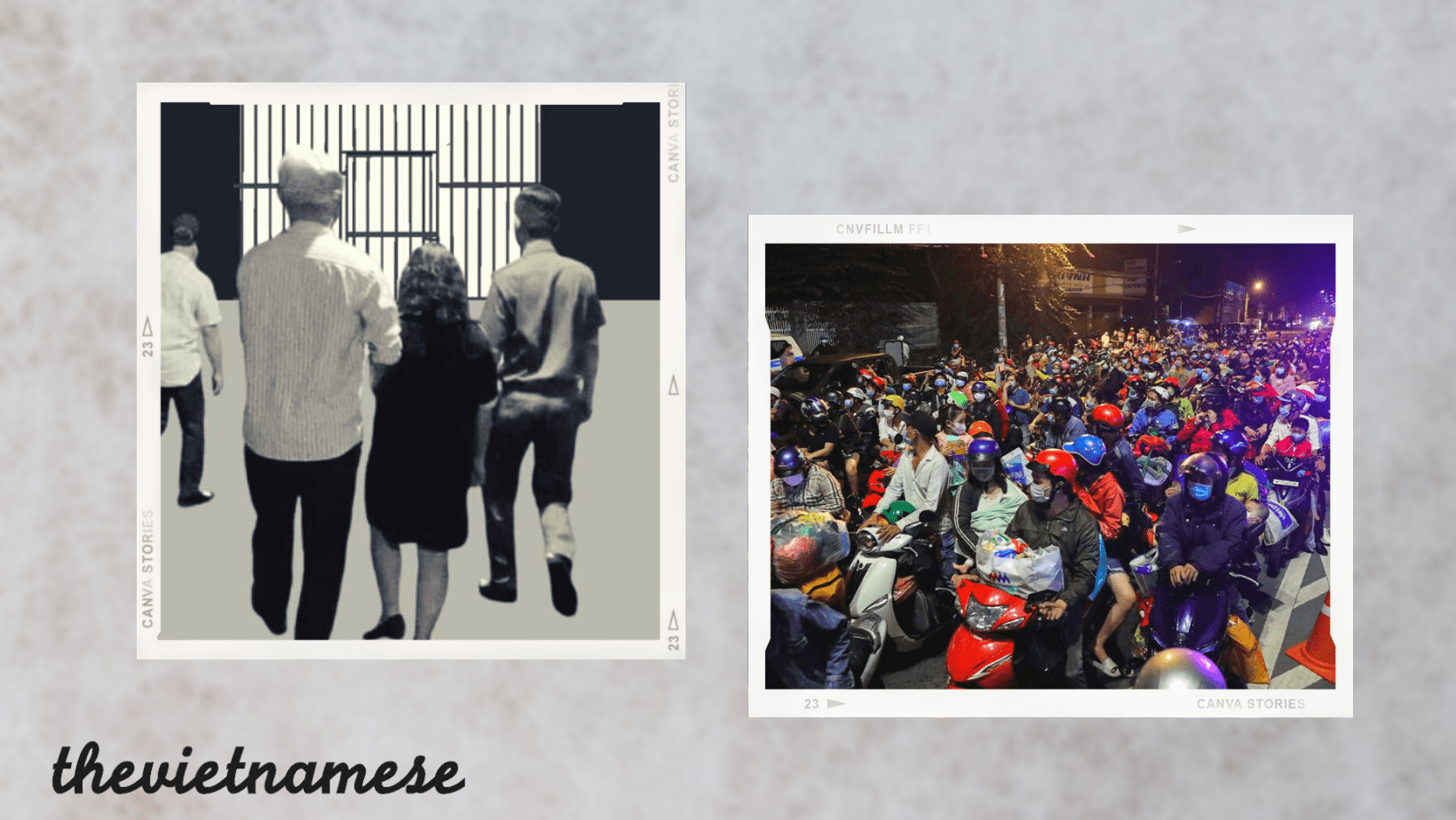
    In Vietnam, the beginning of this October marks two significant events that challenge and reflect upon the country’s actual circumstance over its commitment to uphold human rights values: the one year anniversary of the arrest of journalist Pham Doan Trang and the mass exodus of migrant workers who have had to use all sorts of means to return to their hometowns due to the lack of help from the government.

    Earlier, in March, Vietnam also announced its candidacy for the United Nations Human Rights Council (UNHRC) for the agency’s 2023-2025 term. This announcement has astonished many local pro-democracy activists and critics, who have expressed their opposition to such a move.

    According to the UNHRC’s membership requirements [1], member states running for the seats need to fulfill their “contribution to the promotion and protection of human rights,” and once they gain the council’s membership, the members must bear the responsibility to “uphold high human rights standards.”

    However, given the one-party Communist state’s poor human rights record and its consistently oppressive policies and actions in curtailing the people’s fundamental civil and political rights, Vietnam’s legitimacy to become a member of the UNHRC should remain out of the question [2].

    On the one hand, Vietnam’s state-controlled media has been seen praising [3] the country’s efforts in securing a seat at the United Nations body, betting on its early successful containment of COVID-19 and the donations of masks and medical equipment to other countries. From the government’s reasoning, keeping people safe and protecting their daily livelihoods are crucial to the promotion of human rights. “The country has tackled the pandemic head-on, putting the people at the center of all its efforts,” state media quoted Vietnamese Foreign Minister Pham Binh Minh as saying at the UNHRC’s 46th Regular Session.

    On the other hand, the apprehension of journalist Pham Doan Trang and the dire situation of Vietnamese migrant workers during the fourth wave of the COVID-19 pandemic in the country provide us with a contrasting narrative. Those unparalleled stories vividly portray an authoritarian government that shows virtually no tolerance for dissenting opinions, in addition to highlighting its disregard for the most basic human rights, which are recognized in the U.N.’s Universal Declaration of Human Rights and the country’s own Constitution.

    Pham Doan Trang and her freedom of speech

    Pham Doan Trang was arrested by the Vietnamese authorities at around midnight on October 6, 2020, and she has been held incommunicado since her detainment. Her arrest came only hours after officials from Vietnam and the United States held a video conference for the two countries’ 24th annual Human Rights Dialogue. However, Doan Trang, her friends and colleagues, and also the readers of her books, had long been anticipating her arrest.

    As a dedicated journalist and a prominent writer, Pham Doan Trang has devoted her career to documenting and writing about controversial social issues and human rights violations committed by the Vietnamese government. She also publishes books popularizing general knowledge about politics, laws, and human rights for the Vietnamese people.

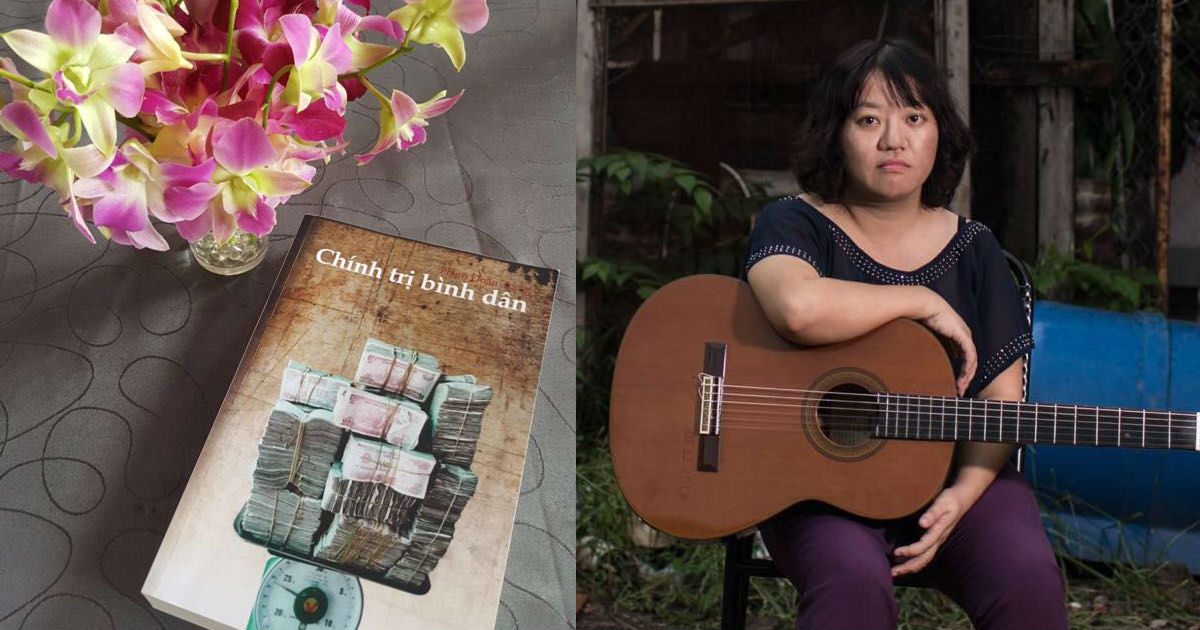
    Pham Doan Trang and her book “Politics for The Masses.” Photo: Luat Khoa Magazine.

    In theory, the Vietnamese Communist Party (VCP) has consistently trumpeted[4] its respect for the people’s right to freedom of speech, right to access to information, and press freedom, which were promised to its citizens under the Constitution. But in reality, the VCP has systematically harassed and detained independent journalists and activists [5], restricted access [6] to critical online newspapers and blogs, including The Vietnamese Magazine and Luat Khoa Magazine, and tracked down and intimidated [7] anyone who disagrees with its political doctrine.

    To the international community and admirers of her work, Doan Trang has only done what a journalist should be doing: report truthfully and inform the global audience about alleged human rights abuses by the VCP. What the Vietnamese government has been doing to silence opposition critics and dissidents like her only exposes the country’s serious violations of basic human rights and its lack of commitment to steadfastly protect those fundamental rights of its citizens.

    The homebound journeys of Vietnamese migrant workers

    Also at the beginning of October, heartrending photos and video footage of thousands of migrant workers rushing to return to their hometowns were widely shared on Vietnamese social media. These migrant workers decided to flee big cities en masse due to financial difficulties that affected them as a result of COVID control measures and the lack of help from the government. “We are tired,” one migrant worker said [8].

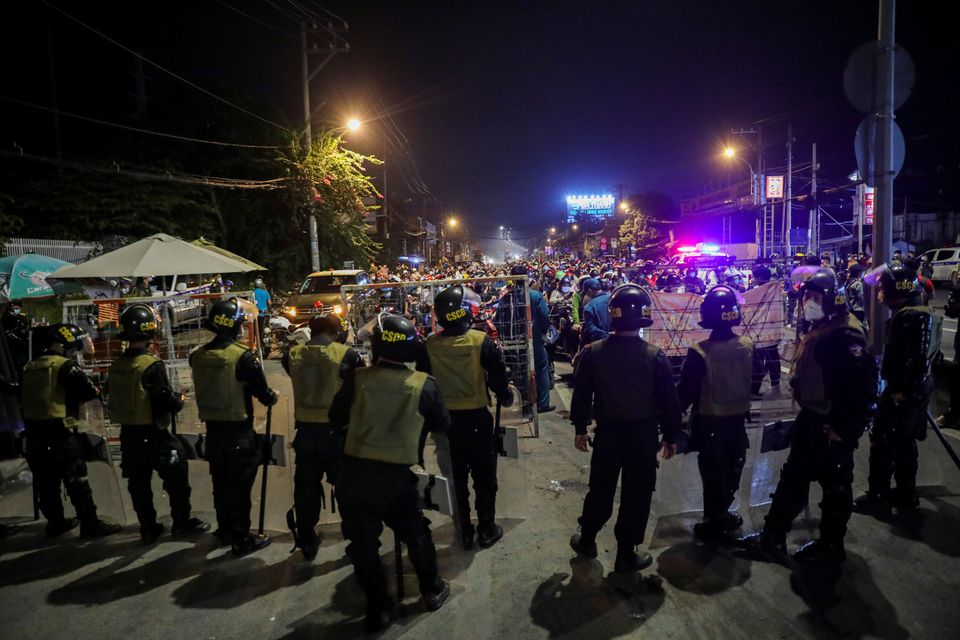
    On their way home, many of the laborers were seen breaking through the barricades at checkpoints set up by local authorities, with many beaten by security forces and some even seen begging the officers to let them through. According to the government, these methods were to prevent the wave of mass migrations that resulted from concerns about the transmission of the coronavirus. Despite facing many hurdles and uncertainty during their homebound journeys, those migrant workers hardly had any other choice.

    Police and security forces guard a checkpoint in Ho Chi Minh City as people, who are mostly migrant workers, attempt to return to their hometowns. The photo was taken on September 30, 2021, by Reuters/ Stringer.

    This abrupt and large-scale migration wave was a result of Vietnam’s months-long abusive lockdown mandates [9], which largely excluded human rights matters from its protocols, and the negligence of the government regarding the well-being, and more importantly, the dignity of workers.

    As written in the Universal Declaration of Human Rights, the Vietnamese people in general, and migrant laborers in particular, have the right to freedom of movement and residence within their own country; they also have the right to be treated with dignity and to seek their own security of life. Those allegedly unlawful actions by the Vietnamese government are clearly blatant violations of universal human rights, which are ironically the key conditions that the VCP must meet to gain its seat at the UNHRC.

    Steward Rees, an advocacy associate with The 88 Project, a non-profit organization that promotes free speech in Vietnam, suggests [10] that if Vietnam is genuinely serious about contributing to the development of global human rights, unconditionally releasing Pham Doan Trang would be a good place to start.

    References:

    1. Membership of the Human Rights Council. (2020). United Nations Human Rights Council. https://www.ohchr.org/en/hrbodies/hrc/pages/membership.aspx
    2. Jamal, U. (2021, March 17). Should Vietnam become a member of the UN Human Rights Council? ASEAN Today. https://www.aseantoday.com/2021/03/should-vietnam-become-a-member-of-the-un-human-rights-council/
    3. VNA. (2021, March 15). Vietnam stands for election to UNHRC in 2023–2025 tenure. VietnamPlus. https://en.vietnamplus.vn/vietnam-stands-for-election-to-unhrc-in-20232025-tenure/197570.vnp
    4. VNA. (2021b, July 8). Press freedom in Vietnam – Undeniable objective reality. VietnamPlus. https://en.vietnamplus.vn/press-freedom-in-vietnam-undeniable-objective-reality/204350.vnp
    5. Database of persecuted activists in Vietnam. (n.d.). The 88 Project. Retrieved October 6, 2021, from https://the88project.org/database/
    6. Freedom House. (2021, September). Freedom on The Net 2021 (Vietnam). https://freedomhouse.org/country/vietnam/freedom-net/2021
    7. Human Rights Watch. (2021). World Report 2021: Vietnam. https://www.hrw.org/world-report/2021/country-chapters/vietnam
    8. Reuters. (2021, October 4). “We are tired”: Workers flee Vietnam’s largest city as long lockdown eases. Reuters. https://www.reuters.com/world/the-great-reboot/we-are-tired-workers-flee-vietnams-largest-city-long-lockdown-eases-2021-10-04/
    9. Nguyen, J. (2021, July 21). How The Latest Outbreak Reveals The Darker Side Of Vietnam’s Anti-Coronavirus Strategy. The Vietnamese Magazine. https://www.thevietnamese.org/2021/07/how-the-latest-outbreak-reveals-the-darker-side-of-vietnams-anti-coronavirus-strategy/
    10. Rees, S. (2021, October 5). Vietnamese rights activist marks first year in jail. Asia Times. https://asiatimes.com/2021/10/vietnamese-rights-activist-marks-first-year-in-jail/
  • A Vietnamese Sentenced To Five Years In Jail For “Spreading Coronavirus”: Rules For The People But Not For The Government

    A Vietnamese Sentenced To Five Years In Jail For “Spreading Coronavirus”: Rules For The People But Not For The Government

    Last week, on September 6, when the news of a Vietnamese man being sentenced to five years in prison for “transmitting coronavirus” by a court in Ca Mau Province made international headlines, it vehemently startled a substantial number of foreign readers.

    One day later, in the country’s southernmost province of Ca Mau, a local doctor was officially prosecuted for having “irresponsible manners which cause serious consequences.” More specifically, he was accused [1] of spreading coronavirus by deliberately administering treatment to an ill patient without properly testing him for coronavirus and informing local authorities of the case. The patient later tested positive for COVID-19.

    Looking back a little further, in June, a Protestant church in Ho Chi Minh City, Revival Ekklesia Mission, became [2] an unlikely scapegoat for a wave of criticisms targeting them for hosting religious events, which are believed to have eventually led to a significant coronavirus outbreak in the city. The church’s founding pastors, a husband, and a wife were then officially charged under criminal prosecution for “transmitting dangerous infectious diseases to other people.” The wife, nonetheless, firmly believed that her church was not the source of the new cluster since they always correctly followed health guidelines from local authorities.

    In reality, these are just a few examples among dozens of similar cases where individuals have been targeted, fined, or charged under causes of “deliberately spreading disease” or “flouting anti-coronavirus measures” since the beginning of the COVID-19 pandemic in Vietnam. In most cases, the defendants are working-class citizens struggling to make ends meet day by day. Now, they are facing pending criminal prosecutions and harsh criticisms from state media for their alleged “recklessness and indiscipline.”

    Setting aside all legal grounds for imprisoning or penalizing citizens on charges of “spreading disease,” it is utterly unfair how criminal prosecutions are deployed to punish ordinary people. At the same time, the Vietnamese government is given a free pass, despite being responsible for mishandling the coronavirus through controversial policies and their fault in hosting mass gathering events that could have been the original cluster of the current COVID-19 outbreaks.

    Who is responsible for the current wave of infections?

    Not long before the current wave of COVID-19 infections in Vietnam, which has had a catastrophic effect on the country’s economy and healthcare system, the Vietnamese government was confident that it had put coronavirus under its heel through the conventional methods of isolation and contact tracing.

    The complacent attitudes caused by the nation’s initial success in containing the virus, according to Major General Vu Quoc Binh [3], a former military medical director, have led to a “perplexing” situation where the authorities made mistakes in allowing large crowds to gather before the ongoing outbreak, being assured that the situation was still controllable. Meanwhile, the government did not prioritize vaccination when case numbers were still low, he added.

    In late April, when the Delta variant was believed to have arrived in Vietnam[4], people were still allowed to freely travel across the country during a long holiday without being given any preventive measures. Only around 0,01 percent [5] of the country’s population was fully vaccinated at that time.

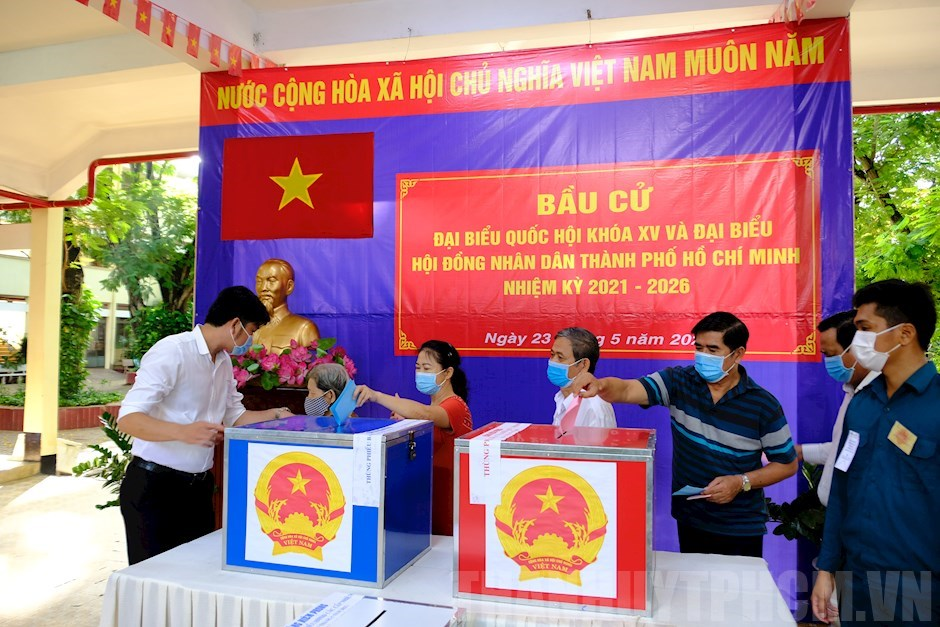
    On May 23, the country’s general election day, Vietnamese citizens were encouraged to directly go to voting polls to elect their National Assembly representatives in a large rubber-stamp legislative council; at the same time, COVID-19 infections started to break out in several northern provinces. On the other hand, the government vowed to “successfully organize” the political event at the cost of potential coronavirus transmission due to mass gatherings at the polls.

    A voting poll in Ho Chi Minh City. Photo: hcmcpv.org.vn.

    About one month later, in late June, the Vietnamese Ministry of Education still proceeded with [6] a plan to hold the national graduation examinations on July 7 and 8, which would take place in all of the country’s 63 provinces and municipalities. For instance, in Ho Chi Minh City, it was estimated [7] that nearly 90,000 students, along with 15,000 examiners, would be gathering in around 160 locations in the city to take part in the exams. At the time, daily coronavirus infections in Ho Chi Minh City stood at a 3-digit number; in late July, the city started to record [8] thousands of new confirmed cases every day.

    The examples mentioned above have not considered other significant missteps by the government, including an identity card registration program, where local residents were asked to replace their old identity cards with electronic ones at police stations, which nurtured an environment for disease transmission.

    In addition, there were the chaotic scenes of cramped vaccination venues [9] and congestion roadblocks [10] where people were crowded together to show their “travel permits,” a scheme used to limit the number of commuters on the streets. Overall, they exposed that the Vietnamese authorities’ mismanagement and inefficient plans harm more than good in improving the pandemic.

    Scapegoating the vulnerables

    From those experiences, it is conceivable that the current spread of virus infections is possibly the consequence of the Vietnamese government’s mishandling of the disease. However, none of the officials responsible for such failure has been held accountable, punished, or voluntarily resigned in the same way that other ordinary citizens have been fined, prosecuted, and jailed for “spreading infectious diseases.”

    Those indictments and the imprisonment of people for allegedly violating anti-coronavirus protocols are not only unfair, but they also do not effectively fix the root cause of the ongoing problem.

    In its purest form, the punishments applied have not necessarily been aimed at controlling or preventing the spread of the disease but rather to intimidate the public and shift blame to more vulnerable subjects through a scapegoating strategy [11].

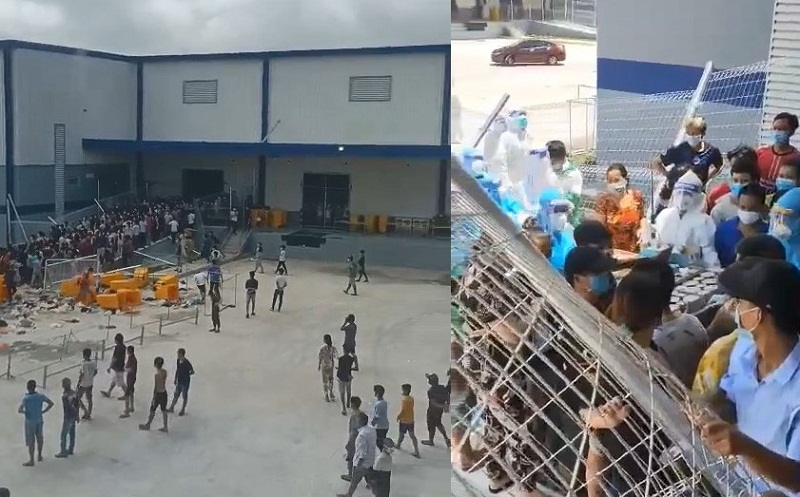
    Most of the time, violators of pandemic regulations have been blamed for their “lack of discipline” for flouting COVID-19 laws, such as avoiding complying with compulsory isolation rules or declaring health conditions. However, these indications are invincibly reflecting the true feelings of local residents during this tumultuous time: scared, hopeless and angry.

    COVID-19 patients protested in a quarantine camp in Binh Duong Province over the shortage of food and necessities. Photo: Tin Tuc Viet Nam.

    Most Vietnamese people have been in dire straits since the country went into periodic lockdowns earlier this year. They are scared of being taken to poor and unclean quarantine facilities if tested positive while no one can take care of their sick parents or young children. Some people face financial strains and have lost hope that they will not return to their hometowns due to strict lockdown measures. At the same time, many others become angry that high-level government officials were somehow immune to punishment for breaking social distancing rules [12] while ordinary people would receive heavy fines [13] for doing so. These stories provide us a more authentic picture of the ongoing anti-coronavirus scheme in Vietnam.

    If the “war against COVID-19 [14],” an ostentatious metaphor commonly used by the Communist Party, does exist, the ordinary Vietnamese people are the losers of this battle.

    References:

    1. Duc, V. (2021, September 7). Khởi tố bác sỹ làm lây lan dịch bệnh. Báo Công An Nhân Dân. https://cand.com.vn/Phap-luat/khoi-to-bac-sy-lam-lay-lan-dich-benh–i627297/
    2. Richard C. Paddock, Chau Doan. (2021, June 2). Spared for Months, Vietnam Faces a Wave of New Infections. The New York Times. https://www.nytimes.com/2021/06/02/world/asia/vietnam-covid-ho-chi-minh.html
    3. Bac Pham, Bennett Murray. (2021, September 14). Counting the cost of Vietnam’s Covid meltdown. Asia Times. https://asiatimes.com/2021/09/counting-the-cost-of-vietnams-covid-meltdown/
    4. Huong, L. T. (2021, August 11). Delta variant outbreak challenges Vietnam’s COVID-19 response strategy. The Brookings Institution. https://www.brookings.edu/blog/order-from-chaos/2021/08/11/delta-variant-outbreak-challenges-vietnams-covid-19-response-strategy/
    5. Coronavirus (COVID-19) Vaccinations. (n.d.). Our World in Data. https://ourworldindata.org/covid-vaccinations
    6. Huynh, T. (2021, June 26). Bộ GD-ĐT: 63 tỉnh, thành tổ chức thi tốt nghiệp THPT đợt 1 cùng ngày. Tuoi Tre Online. https://tuoitre.vn/bo-gd-dt-63-tinh-thanh-to-chuc-thi-tot-nghiep-thpt-dot-1-cung-ngay-20210626200317418.htm
    7. L.Đ.O. (2021, June 30). TPHCM “mạo hiểm” khi tổ chức thi tốt nghiệp THPT đợt 1?Lao Dong Online. https://laodong.vn/giao-duc/tphcm-mao-hiem-khi-to-chuc-thi-tot-nghiep-thpt-dot-1-925514.ldo
    8. Hang, T. (2021, July 24). 3.991 ca mắc COVID-19 sáng 24/7, nhiều nhất vẫn là TP Hồ Chí Minh. Báo Công An Nhân Dân. https://cand.com.vn/y-te/Sang-24-7-them-3-991-ca-mac-COVID-19-Long-An-bo-sung-them-1-288-ca-benh-i621409/
    9. Huong, T. (2021, June 25). TP.HCM: Hàng ngàn người xếp hàng chờ tiêm vắc xin Covid-19 ở Nhà thi đấu Phú Thọ. Thanh Nien Online. https://thanhnien.vn/thoi-su/tphcm-hang-ngan-nguoi-xep-hang-cho-tiem-vac-xin-covid-19-o-nha-thi-dau-phu-tho-1404282.html
    10. LĐO. (2021, September 6). Chốt kiểm soát “vùng đỏ” Hà Nội lại đông đúc: Có lúng túng, dễ lây nhiễm. Lao Dong Online. https://laodong.vn/y-te/chot-kiem-soat-vung-do-ha-noi-lai-dong-duc-co-lung-tung-de-lay-nhiem-950298.ldo
    11. Minh, H. (2021, June 4). Đại dịch, bản năng đổ lỗi, và những cuộc săn dê tế thần. Luật Khoa Tạp Chí. https://www.luatkhoa.org/2021/06/dai-dich-ban-nang-do-loi-va-nhung-cuoc-san-de-te-than/
    12. Chinh, Y. K. (2021, September 16). Ý thức chống dịch: dân trí thấp hay quan trí lỏng? Luật Khoa Tạp Chí. https://www.luatkhoa.org/2021/09/y-thuc-chong-dich-dan-tri-thap-hay-quan-tri-long/
    13. Thiet, K. (2021, August 10). Thêm 16 trường hợp bị xử phạt vì ra đường tập thể dục, bất chấp quy định phòng chống dịch. Báo Đồng Nai Điện Tử. http://www.baodongnai.com.vn/tintuc/202108/them-16-truong-hop-bi-xu-phat-vi-ra-duong-tap-the-duc-bat-chap-quy-dinh-phong-chong-dich-3072372/
    14. Jason, N. (2021, September 12). Why Did The Vietnamese Communist Party Militarize Its Fight Against COVID-19? The Vietnamese Magazine. https://www.thevietnamese.org/2021/09/why-did-the-vietnamese-communist-party-militarize-its-fight-against-covid-19/
  • Journalist Pham Doan Trang Can Still Be Freed In Vietnam. And The US Could Help Win Her Release.

    Journalist Pham Doan Trang Can Still Be Freed In Vietnam. And The US Could Help Win Her Release.

    While in Vietnam, Vice President Kamala Harris has significant leverage to make a change: free one of the most prominent journalists and democracy activists in the country.

    For the Vietnamese Communist Party, political prisoners are bargaining chips in international negotiations. They sell their own citizens to gain a trade deal or a more favorable security treaty. That’s because they know human rights are the soft spot of major powers, such as the United States and the European Union.

    Thus, they release political prisoners in exchange for economic and political gains. The problem is the prisoners are released conditionally: they are expelled from the country. Most of them settle in the United States.

    But journalist Pham Doan Trang, one of Vietnam’s most respected journalists, is a different case. Unlike other political prisoners, she has not been indicted or convicted yet; she is a detainee under investigation and still has a chance to be released in Vietnam.

    Once the police have determined that an accused person did commit a crime, there is absolutely no way that person can avoid conviction and sentencing. The only option left is to negotiate a settlement in another country, as had happened with some other political prisoners.

    Of course, the investigators have now gathered more than enough evidence to make a case against Trang and put her away for up to 20 years. Chances are, the Communist Party has not decided yet on how to move forward with her case to maximize its own interests. All options are still on the table.

    Doan Trang has insisted that she doesn’t want to leave the country until it becomes a democracy. As a close friend and colleague of hers for over a decade, I know how painful it is for her to be forced out of her only home, her beloved Vietnam.

    As one of the most prominent and talented journalists and democracy activists in Vietnam since the end of the Vietnam War in 1975, she has always aimed at breaking down the censorship curtain that puts the country at the bottom of Reporters Without Borders’ Press Freedom Index. Her writings and activism include various samizdat political books, two independent magazines (Luat Khoa and The Vietnamese), many protest movements, and international advocacy campaigns.

    As a result, she was awarded the Homo Homini Prize from People in Need (Czech Republic) in 2017 and the Press Freedom Award by Reporters Without Borders (France) in 2019. But more importantly, Doan Trang’s way of working and living inspires other Vietnamese to stand up for their rights and a better, kinder country.

    No authoritarian regime would tolerate her. After years of cat-and-mouse games with the authorities, and many physical assaults, the police have detained Doan Trang since October 7, 2020, charging her with spreading propaganda against the state. The criminal provision has been widely condemned by human rights groups as a way the government silences critics – a clear violation of free speech protected by the Constitution and legally binding international treaties.

    Doan Trang was on her way to meet then-president Barack Obama in May 2016 in Hanoi before the police kidnapped her and detained her for the rest of the day. Vice President Harris may not be able to meet Trang in the detention center, but she can surely do a lot to free her in Vietnam.

    The trade relations, especially the semiconductor supply chain and strategic partnership are believed to be the reasons Vice President Harris is paying a visit to Vietnam.

    In such circumstances, I believe that the United States, and Vice President Harris, in particular, have an excellent chance to push for Doan Trang’s release right in Vietnam while the case is still undecided. And there is a precedent for that.

    In June 2007, Vietnam released attorney and democracy advocate Le Quoc Quan after three months of temporary detention and two days before Chairman Nguyen Minh Triet visited the United States. Attorney Le Quoc Quan had not been indicted yet, and a major reason he was freed was a mountain of pressure from the United States government and civil society, such as the National Endowment for Democracy, where Quan did a fellowship before his return to Vietnam.

    It is now urgent to push for Doan Trang’s release, before it’s too late.

  • When Calls To Free Pham Doan Trang Are Not Enough

    When Calls To Free Pham Doan Trang Are Not Enough

    This op-ed article was written in Vietnamese by Trinh Huu Long and was previously published in the Luat Khoa Magazine on October 10, 2020.


    Every time an activist is arrested, several campaigns for his or her release emerge in response to the government’s persecution of human rights. This method is the oldest, most common, and most familiar form the common citizenry uses to call for justice.

    I have been a part of those movements and have even organized several campaigns many times in the past nine years.

    Yet, despite everything, I constantly ask myself if these calls to action actually do any good? “How long am I going to do this,” I ask myself, “and are there any benefits to this or not?” These are just some of the questions that constantly linger in the back of my mind.

    Most likely, those arrested will remain in prison; their sentence will be upheld. In fact, the length of the individual’s  imprisonment might even be made longer. Despite all our work, more and more people are still being incarcerated. There has been no change in our laws or institutions, despite all our efforts at home and abroad.

    And even if we’re blessed with the smallest amount of luck, those arrested are granted asylum in another country, defeating the primary purpose of our campaigns.

    Pham Doan Trang, imprisoned activist, blogger, journalist, and co-founder of The Vietnamese and Luat Khoa online magazines has put some of my concerns to rest.

    “I do not need my own freedom; I need something much more significant than that: freedom and democracy for the whole of Vietnam,” she wrote in a letter on May 27, 2019, her 41st birthday, and while she was on the run from the police. “This goal sounds grandiose and far-fetched, but reaching it is actually possible with everyone’s help.”

    Doan Trang wanted this letter to be released to the public only when she was indeed convicted and not when she was merely detained. Eventually, she was arrested and now faces a sentence of up to 20 years in prison.

    If Doan Trang merely wanted freedom for herself, she had at least two opportunities to attain this in the past.

    The first was after her nine-day criminal detention in 2009. If she was obedient and ceased all her activities regarding sensitive topics and cut all her ties with social elements deemed “anti-state,” she would have continued to live a safe and full life.

    The second was when she studied in the United States and could have chosen a path towards residency or citizenship. In fact, at least three agencies and organizations wanted to sponsor her permanent stay in America.

    So, why did Doan Trang choose to return to her homeland? It is because she understands that her freedom means nothing compared to the whole of Vietnam. Vietnam needs people to step up and work for the freedom of everyone.

    Such a concept is simple and easy to understand, yet making it a reality is challenging to attain.

    Doan Trang could have chosen to contribute to Vietnam’s fight from the outside as many others, including myself, are doing. Yet, she chose the most complex, most painful, and most difficult way to contribute to the cause. She returned home and faced the problem head-on. She published various works, wrote books, and even taught about democracy and freedom right in front of the police.

    Doan Trang often told me that the best way to fight is to be an example, to be an inspiration for others to do the same. Only then can we, as a society, start to see what democracy, human rights, and the rule of law look like in reality. Words without actions are meaningless.

    Sadly, I do not know how successful Doan Trang’s efforts have been, nor how many lives have been touched by her words and deeds. But regarding her arrest in October 2020, I would like to say this.

    Activists have a saying called “sharing fire,” which means sharing the tasks and responsibilities of dangerous activities with many people to reduce individual risk. Sometimes we coordinate with each other, but more often than not this is not the case; people passively participate in this phenomenon without discussing plans in advance.

    What if the deeds Doan Trang had done in the past five years were divided among five or 10 people, would she still have been arrested? More recently, if she had not produced the two Dong Tam reports, would she be in jail right now?

    She often told me that these things are not difficult to accomplish and that there are many people who share similar ideas with her. If so, why are there so few people standing up for what is right? Granted, some people do, and Doan Trang was one of them. Yet because of inaction, apathy, or fear, she and the handful of brave, noble souls like her shoulder the entire risk.

    Many of them will go to jail, while those who are content to watch from the sidelines will get angry again. They will once again clamor for the release and freedom of those imprisoned. But in the end, nothing gets done. Rinse and repeat.

    Will we Vietnamese forever play the same old games with the government? Will we continue to sheepishly and ineffectively demand the release of our friends? Then, when nothing gets done, will we once again forget and return to the tolerated normalcy of life in this great prison that the government has made?

    Things will be different if more people actively do their part to create social change, just like Doan Trang. Doing so has two advantages.

    The first is to “share the fire” with those still fighting to reduce their risk and limit their chance of getting captured. Government resources are limited, and they can only invest in monitoring and controlling a few people.

    Those outside Vietnam can do their part as well. For instance, to write something similar to the Dong Tam Report, we just need to collect data on the internet and conduct interviews online or through the phone. It is not necessary to live in Vietnam physically to accomplish these tasks.

    The second is to normalize press freedom, independent publishing, and political activities considered “sensitive.”

    When these activities become commonplace, the government will be forced to accept them. This was observed in the past when private businesses were considered illegal. Nonetheless, they continued to operate, and gradually the government had to admit that these establishments were a fundamental component of the country’s economy. Since 1986, the state no longer considers owning a private business a criminal offense.

    For me, the best way to help Doan Trang and people like her is to play a more active role. Eventually, everyone will benefit when the political space expands. No one will ever be arrested or imprisoned again for writing or publishing books. I will no longer have to clamor for one person’s freedom every single time someone gets arrested. I will finally be able to rest.

    Calls for Freedom are good, but they are often not enough. We should release ourselves from the shackles of fear, apathy, and apprehension to actively fight for progress and change.

    Doan Trang has completed her mission and the responsibility now falls on our shoulders. Even if she were to be released tomorrow, even if she chooses to stay in Vietnam or decided to leave, the fight continues in each one of us.

    And if you love Doan Trang, I implore you to do what she would have done.

  • A Prisoner’s Dilemma: The State Of Human Rights Defenders In Vietnam

    A Prisoner’s Dilemma: The State Of Human Rights Defenders In Vietnam

    Since the United Nations released the first World Report on the Situation of Human Rights Defenders in 2018, the many human rights violations committed by the Vietnamese Communist Party (VCP) have slowly come under international scrutiny.

    Many of the same issues presented in the report mentioned above, such as the VCP’s active restriction of the rights to freedom of expression, freedom of assembly and association, or a fair trial with due process, continue to persist three years down the line. Even though fewer Vietnamese citizens were convicted in 2020 than in 2019, more were persecuted through other means for simply exercising their supposedly protected rights.

    The 88 Project’s 2020 Human Rights Report on Vietnam explores, details, and highlights the many struggles that Vietnamese activists faced that year. And much to everyone’s expectations and disappointment, Vietnam continues to fail in its international obligations to protect the right of free speech and the well-being of its human rights defenders.

    People at Risk

    Sharing similarities with the data presented by the Human Rights Measurement Initiative, the report states that, “[o]f the 35 people arrested in 2020, nine were women…. The top areas of activism of those arrested in 2020 were democracy activists (16), land rights (11), human rights (9), and freedom of expression (8) [and] [t]he most common occupations of those arrested in 2020 were farmers (8), journalists (4), and teachers (3).”

    Of those arrested, eight were denied legal representation for the charges filed against them, four were not allowed to be visited by friends or family, six were part of small religious sects, and nine came from ethnic minority groups.

    Several high-profile activists were also jailed, such as Pham Doan Trang, a writer and co-founder of the Luat Khoa and The Vietnamese online magazines, and Pham Chi Dung, president of the Independent Journalists Association of Vietnam (IJAVN).

    Eleven online commentators were also taken into custody in 2020, and their number makes up roughly 31 percent of all arrests made that year. The most shocking thing is that these people were brought to jail even though they were not members of any specific civil society group; they were arrested for the sole reason that they chose to air  their grievances against the Vietnamese government.

    In summation, it is clear that no one is safe from the VCP. It hardly matters to them if you are an activist fighting tooth and nail for your principles and beliefs or an average citizen trying to be as discreet as possible. If you publicly express any discontent or disapproval with the government’s actions you run the genuine risk of being put under the spotlight and you will not be safe from the Communist Party’s malicious retribution.

    The Injustice of the Law

    The charges facing those arrested are based on specific provisions in the 2015 Vietnamese Penal Code.

    To be specific:

    1. Article 118: disrupting security
    2. Article 331: abusing democratic freedoms
    3. Article 117: conducting propaganda against the state
    4. Article 330: resisting officers in the performance of their official duties

    These statutes, according to Brad Adams, executive director of Human Rights Watch’s Asia Division, involve national security in Vietnam laws which “are vaguely defined and often used arbitrarily to punish critics, activists, and bloggers.”

    He adds, “it’s even more outrageous to lock up someone for five years just because the government arbitrarily decides that they are preparing to criticize the government.”

    Yet, this is far from the only maltreatment faced by those arrested.

    Several detained individuals have also been denied access to legal representation, meaning that they were sent directly to trial without consulting with a lawyer. And even if they were allowed to meet an attorney, the lawyers were often not given all of the relevant material they might have needed to help defend their client in court.

    Additionally, the appeals of political prisoners for reduced sentences or a retrial are often ignored by the judiciary or are not granted. In 2020, only two who appealed their case, Dang Thi Hue and Bui Manh Tien, successfully had their pleas heard. Yet, the sentences of each one were only reduced by three months.

    It is apparent that the Vietnamese legal system is skewed against human rights defenders and activists. They are not afforded the legal remedies that they are entitled to by law, and they are also not given proper and impartial trials or allowed to use arbitration to plead their cases.

    The Vietnamese government actively refuses to abide by the due process standards that it has codified into law. In any other democratic country, this kind of behavior would not be acceptable. But in a one-party state run by strongmen, this is sadly the norm.

    Life Behind Bars

    For those already incarcerated, their situation is far from ideal. According to The 88 Project’s report, political prisoners are often “forced into severe physical and psychological conditions” such as the “denial of family communications, denial of adequate healthcare, forced mental health treatment, solitary confinement, and punitive prison transfers.”

    The COVID-19 pandemic has only served as further justification for the Vietnamese government to deny people proper and humane treatment.

    The report also details the situations of several imprisoned activists in 2020, such as Hoang Duc Binh, Chau Van Kham, and Nguyen Van Tuc, who are not only barred from meeting or even speaking with their family but are also denied medical care for their severe and underlying health conditions.

    Le Anh Hung and Pham Chi Thanh are the names of other political prisoners made to undergo mental health treatments despite being perfectly sane and normal; they, and others like them,  are forced to take anti-psychotic medication and are made to undergo ethically questionable psychiatric therapies which border on torture.

    The appalling conditions that political prisoners face in Vietnam are vicious, nasty, and inhumane. They are treated even worse than livestock; they are seen as pariahs, not deserving of even the slightest modicum of respect.

    The prison situation reflects what the VCP thinks about the citizens of the country. The moment you become inconvenient, detrimental, or even a minor nuisance to their unchecked power and greed, they will not hesitate to use force, torture, or even to threaten you with the possibility of death to crush your body and spirit.

    ***

    The tactics used by the Vietnamese government and its state agents against activists and human rights defenders are nothing new; these actions are what they’ve been doing for decades now.

    However, due to the ongoing global pandemic, the VCP feels emboldened to further step on the necks of the people it thinks are a danger to its position in society. The Party is willing to toss away the humanity and decency of its citizens just to sate their never-ending lust for riches and power.

    The authorities use force and fear in tandem to scare the populace into silence and compliance.

    Yet, as imposing and threatening the VCP wants itself to appear, it has failed to acknowledge one simple fact: these acts of oppression against Vietnamese citizens betray the Party’s fear and paranoia.

    In reality, the authorities are the ones who are scared. They live in fear that one day, the people may grow wise to the truth: that real power lies not in the state or its corrupt institutions but within the farmer, the student, the teacher, the journalist, and the worker. It is found in the breasts of mothers, fathers, and their children, and in the hearts of all those who desire a better future for themselves and those they love.

    The Vietnamese government continues to act with impunity, not because of its abundance of strength but because of its lack of strength.

  • Vietnam: The True Victims Of Political Repression

    Vietnam: The True Victims Of Political Repression

    The Absence of Choice

    National elections in any part of the world are always interesting to observe. What occurs in them tends to range from comically hilarious, to shockingly horrifying, to essentially pivotal in the future progress and growth of a country. And as much as some people might say otherwise, whoever wins these elections matter; they are an important factor that determines the direction a nation will steer itself in over the coming few years.

    Living in a Communist state, Vietnamese citizens do not get the same opportunity afforded to other people in democratic countries during their general election. The Vietnamese people do not get to choose the top elected officials in their own nation; such a decision is left to the Politburo.

    In effect, the direction in which the leaders of Vietnam steer the nation tends to be a one-way street with very few deviations to the plan and to the overall end goal.

    While there are indeed some benefits to this kind of system, a long hard look at the failures of communist states of the past tends to raise more than a few eyebrows.

    Hence, it should come as no surprise that a significant number of Vietnamese citizens do not approve of how their government handles elections, or how their leaders run the country.

    Faces in the Crowd

    CIVICUS, a global alliance of civil society organizations and activists dedicated to strengthening citizen action and civil society throughout the world, released a report on March 29, 2021 detailing how several activists in Vietnam were targeted, arrested, detained, or tortured by the government.

    CIVICUS noted that leading up to the conclusion of the 13th National Congress of the Vietnamese Communist Party (VCP) on February 2, 2021, the Vietnamese government and state security forces had been intensifying a crackdown on whoever they perceived to be critical of the regime.

    An alarming  number of Vietnamese citizens were arrested, detained, or even tortured on the basis of trumped-up charges and the overuse of vaguely defined Vietnamese penal laws.

    Following are just some of the people mentioned in the CIVICUS report.

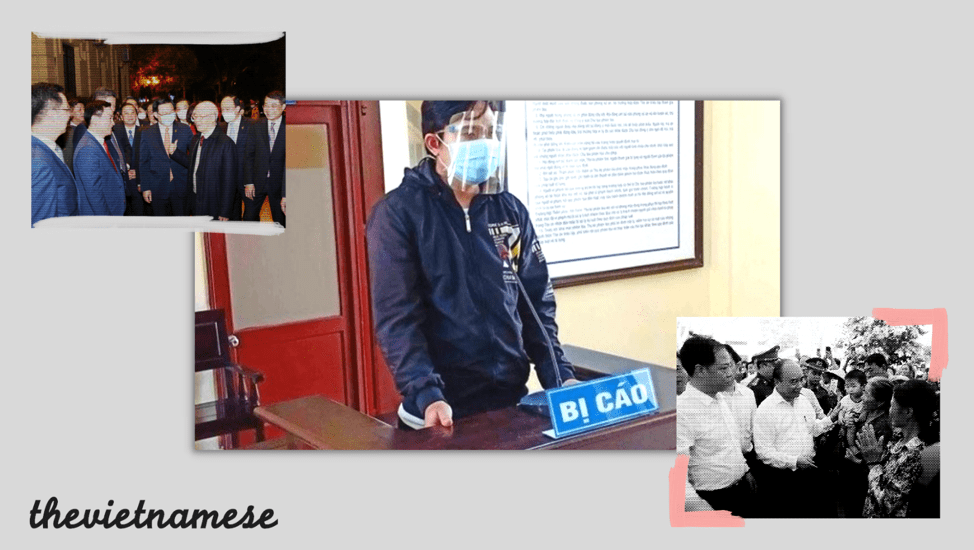
    Tran Duc Thach at his trial. Photo: Tuoi Tre

    Tran Duc Thach, an activist, writer, and co-founder of Vietnam’s Brotherhood for Democracy, was convicted on December 17, 2020. He was charged with subversion under Article 109 of the country’s criminal code and was sentenced to 12 years in prison and three years’ probation.

    State prosecutors claimed that his posts on Facebook “threatened social stability, encroached upon national independence and socialism, reduced people’s trust in the political institution of the state of Vietnam, and infringed upon national security and social safety and order.” On March 24, 2021, his appeal was denied and his sentence was upheld.

    In December 2020, Nguyen Dang Thuong, Huynh Anh Khoa, and Tran Trong Khai were sentenced to serve 18, 15, and 12 months in prison, respectively. The three were administrators of a Facebook political discussion group. They were arrested under Article 331 of the 2015 Penal Code for “abusing democratic freedom rights to infringe upon the benefits of other individuals and/or organisations.”

    Their Facebook group had a following of around 46,000 users before it was shut down.

    From left to right: Le Huu Minh Tuan, Nguyen Tuong Thuy, and Pham Chi Dung. Graphic: Luat Khoa Magazine

    On January 5, 2021, Pham Chi Dung, Nguyen Tuong Thuy, and Le Huu Minh Tuan were convicted for allegedly “making, storing, and disseminating documents and materials for anti-state purposes” under Article 117 of Vietnam’s Penal Code. The three men are all members of the Independent Journalists Association of Vietnam (IJAVN). They wrote blogs and articles critical of the Vietnamese government. Nguyen Tuong Thuy also testified in front of the US House of Representatives in 2014 regarding the lack of freedom in Vietnam.

    Dinh Thi Thu Thuy. Photo: The 88 Project.

    Dinh Thi Thu Thuy, an environmental activist, was jailed for seven years on January 20, 2021, after having been in police custody since April 2020. She was charged with “conducting propaganda against the state,” also under Article 117 of the Penal Code. Thu Thuy had made just a total of five social media posts that had garnered a total of 130 likes and 50 shares.

    Phan Bui Bao Thy and Le Anh Dung, two Vietnamese state media bloggers, were detained on February, 10, 2021, for publishing articles accusing provincial officials in Quang Tri Province of corruption. They were charged with “abusing press freedoms.” Phan Bui Bao Thy was the bureau chief of the online magazine Age and Education.

    More recently on March 9 2021, Tran Quoc Khanh was detained for “defaming the government and distorting its policies.” He had used his personal social media page to post about the state’s human rights abuses, corruption, and the South China Sea. He is currently held in pre-trial detention and if found guilty faces 12 years in prison.

    Tran Huynh Duy Thuc at his trial.

    Nguyen Van Hoa, a contributor for Radio Free Asia (RFA), and Tran Huynh Duy Thuc, an imprisoned blogger, started hunger strikes in protest against the appalling conditions in Vietnamese prisons. Hoa was arrested in the past for filming a toxic waste spill after the Formosa environmental disaster happened in Vietnam in 2016. Tran Huynh Duy Thuc has remained in prison since his arrest in May 2009.

    Nguyen Van Duc Do, an activist currently incarcerated for “carrying out activities aimed at overthrowing the people’s administration” under Article 79 of the 1999 PenalCode, has been in prison since October 5, 2018. Amnesty International reports that he has been in solitary confinement since May 2020 and has been subjected to various forms of torture. According to the human rights group, both his legs were bound by chains for 10 consecutive days. He was also fed food mixed with human excrement.

    The Measure of Their Reach

    These people are just a drop in the ocean compared to the total number of Vietnamese who are facing the ire of the government. In reality, it is difficult to ascertain how many people have been subjected to unjust prosecution by the Communist Party. Yet, the one thread that seems to be in common with all of them is that they were all very vocal in their criticisms.

    It would be easy to claim that only high profile individuals are the target of the ever watchful gaze of state authorities. Yet, Dinh Thi Thu Thuy only made five social posts and she was sentenced to 7 years in prison. Even members of the Vietnamese state media itself – like Phan Bui Bao Thy – were arrested.

    On social media, a person’s message can reach 10, a hundred, a thousand, or even a million people. However, the popularity of your posting hardly even matters in the eyes of the Vietnamese government. If the regime does not approve the message’s content, it will treat everyone equally, everyone as the same, because no one is above the VCP’s supreme authority. That would mean it will arrest and sentence anyone who dares to write in contradiction with its propaganda.

    Anyone is in danger, no one is secure, and even the slightest word critical of the government might be the last one you ever get to say.

    All the people mentioned above and the countless others like them are indeed victims of a government so thin-skinned that it responds to even the slightest whiff of dissent with arrests, coercion, and brute force. Yet, these journalists, activists, and human rights defenders account for just a tiny part of the whole. They are not the only casualties under the Communist regime.

    The actual victims of political repression are you, me, and everyone living and breathing under the iron heels of despots and dictators. And even though Vietnam always insists that it upholds and respects all of the human rights treaties it has entered into, in reality, all citizens are living in fear that one sentence or even one word may destroy our lives and the lives of those we love.

    We are not free, and we will never be truly free if we still condone this type of government Vietnam has.