Tag: Vietnamese Communist Party

  • Everything You Need To Know About Vietnam’s 13th National Party Congress

    Everything You Need To Know About Vietnam’s 13th National Party Congress

    This article is mainly based on Tran Ha Linh’s “Mọi điều bạn cần biết về đại hội toàn quốc của Đảng Cộng sản Việt Nam,” published in Luật Khoa Magazine, a sister publication of The Vietnamese, on January 15, 2021.

    ***

    Political party conventions are part of a country’s politics, but in Vietnam, it’s a special part. It’s not about the parties nominating candidates for public offices, but rather the only legally operated political party in the country deciding the government’s top seats and the country’s direction.

    No one needs to call the party by its full name. Often, people call it “the Party”, or “Đảng”; sometimes “our Party”, or “Đảng ta”. The word “Đảng” (Party) is almost always written with a capital “Đ”. Thus, unlike how Americans call the Democratic Party’s conventions the “DNC” and the Republican Party’s conventions the “RNC”, the Communist Party of Vietnam’s conventions, or congresses, are often called “the Party Congress” (Đại hội Đảng). Say it to anyone in Vietnam and they know exactly what you mean.

    Now, the next congress of the Communist Party of Vietnam (CPV) is approaching. Here is everything you need to know to understand the event.

    What is “the Party Congress?”

    The Party Congress, or its full name, the National Congress of the Communist Party of Vietnam, is “the highest governing body” of the Party as stated in its charter. The Party Congress  makes the most important decisions relating to Party leadership and direction as follows:

    • It reviews the implementation of the Congress’ previous term’s resolutions;
    • It determines the next term’s direction and policies;
    • It determines whether or not to amend the Party’s two highest instruments: the Party Platform and Charter.
    • It decides the number of members of the Party Central Committee and elects the next term’s members.

    How often does the Congress take place?

    Every five years as you may have heard?

    Not really. The party has only held 12 congresses throughout the 91 years of its existence. The approaching one is the 13th Party Congress. That means one congress every seven years on average.

    CPV congresses have only taken place every five years since the 6th Party Congress in 1986, the one that shifted the country’s direction away from a centrally planned economy towards capitalism with a widely known grand policy called “Đổi Mới” (Renovation). The previous congresses were held inconsistently in 1935, 1951, 1960, 1976, and 1982, mainly due to armed conflicts and wars with the French, the Americans, and the Chinese.

    How long is a Congress?

    The 13th Party Congress will run for nine days, from January 25 to February 2, 2021, in Hanoi.

    The previous congresses lasted four to nine days.

    Who participates in the Congress?

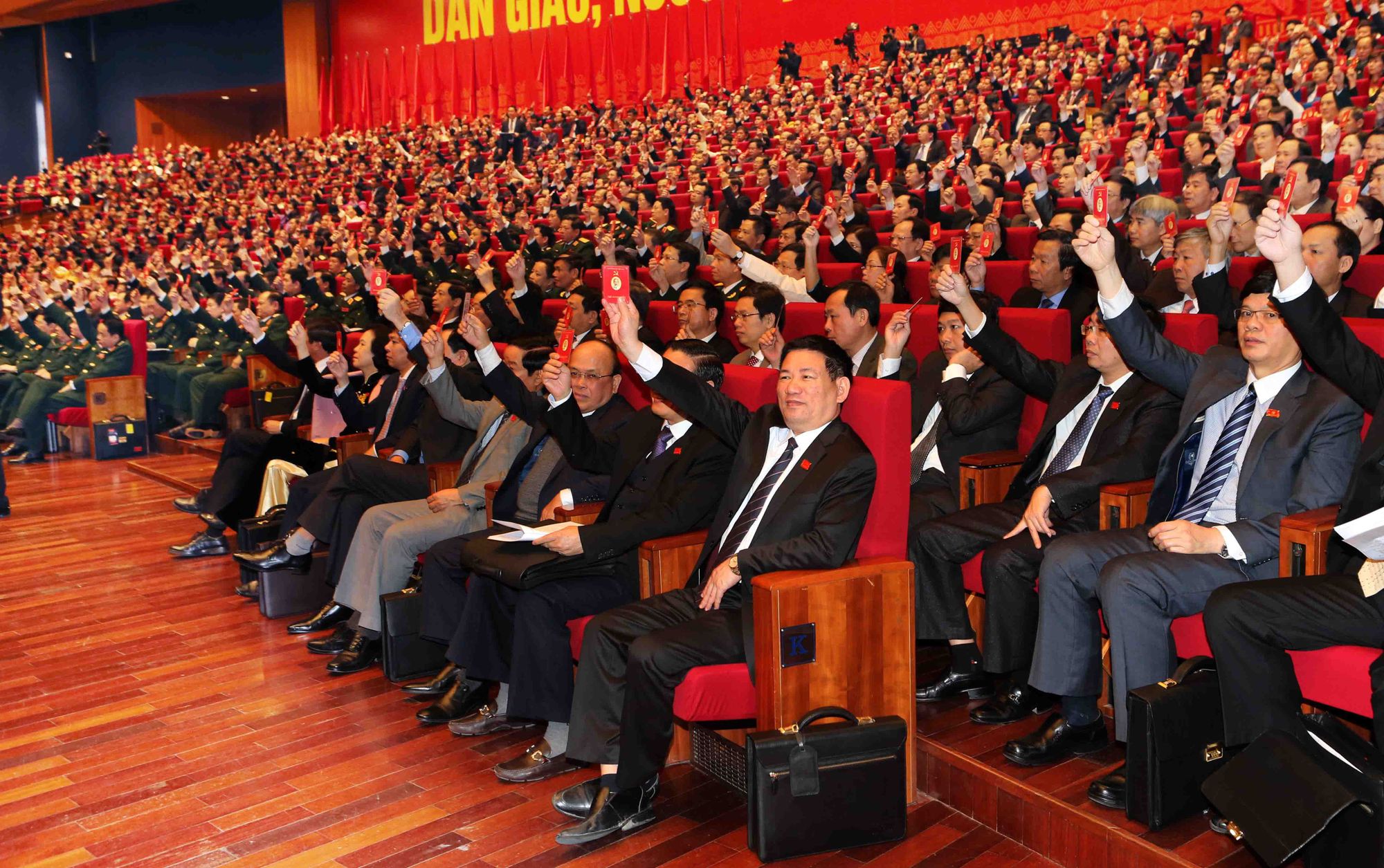
    A total of 1,587 delegates are coming to the capital to attend the 13th Party Congress, representing 5.1 million Party members, according to the CPV’s head of External Affairs.

    They come from the Party’s committees in provinces, central government bodies, state-owned corporations, the military, the police, etc. Among the delegates, 194 are entitled to attend the Congress without having been elected, while another 15 delegates are appointed. The rest are elected.

    Often, identities of delegates reflect one of the most popular concepts of the party’s governance: proportional representation, or cơ cấu. As a Communist party that claims to strongly uphold values such as equality for all, the proportional representation concept aims to make sure that delegates represent all groups within society, including from different classes, geographic regions, different genders, ethnicities, religions, occupations, branches of government, representatives from civil society – who are heavily controlled by the government, and the private sector. This broad membership makes the Party Congress look more representative and more legitimate on the surface while not actually having a more meaningful and substantial representation.

    How does the Congress elect the Party leadership?

    Do the Party’s congresses elect the top party leaders? It always looks like that, but it is not true, and many people have a misconception of how the Party leadership is elected.

    One needs to take a look at the CPV’s Central Committee Decision No. 244 to understand how the party’s elections work. And it turns out that the congresses only elect members of the Central Committee. The Central Committee, in turn, elects members of the Politburo, the general secretary, and members of the Disciplinary Committee during the Congress .

    The Congress will elect around 200 members of the Central Committee per the previous term’s Central Committee’s proposal, including some 20 alternate members who have the right to participate in the Committee’s conferences, but have no voting rights. The current Party leadership will introduce this proposal to the Congress, and the delegates will have to approve it before the Congress moves on to elect members of the Committee. The list of candidates consists of people nominated by the previous term’s Central Committee, people nominated by delegates at the Congress, and self-nominated candidates.

    Due to the Party’s principle of democratic centralism (nguyên tắc tập trung dân chủ) and the internal culture of making decisions collectively rather than individually, it’s rare to see delegates seeking candidacy themselves. Most candidates nominated at the Congress must be approved by their own delegations.

    After being elected, members of the Central Committee will convene  its first conference, called hội nghị trung ương, to elect around 15 members of the Politburo (Bộ Chính trị) – a party body that is considered the most powerful group of Vietnamese politicians. Again, the electoral process is pretty much the same as is an election in the Central Committee.

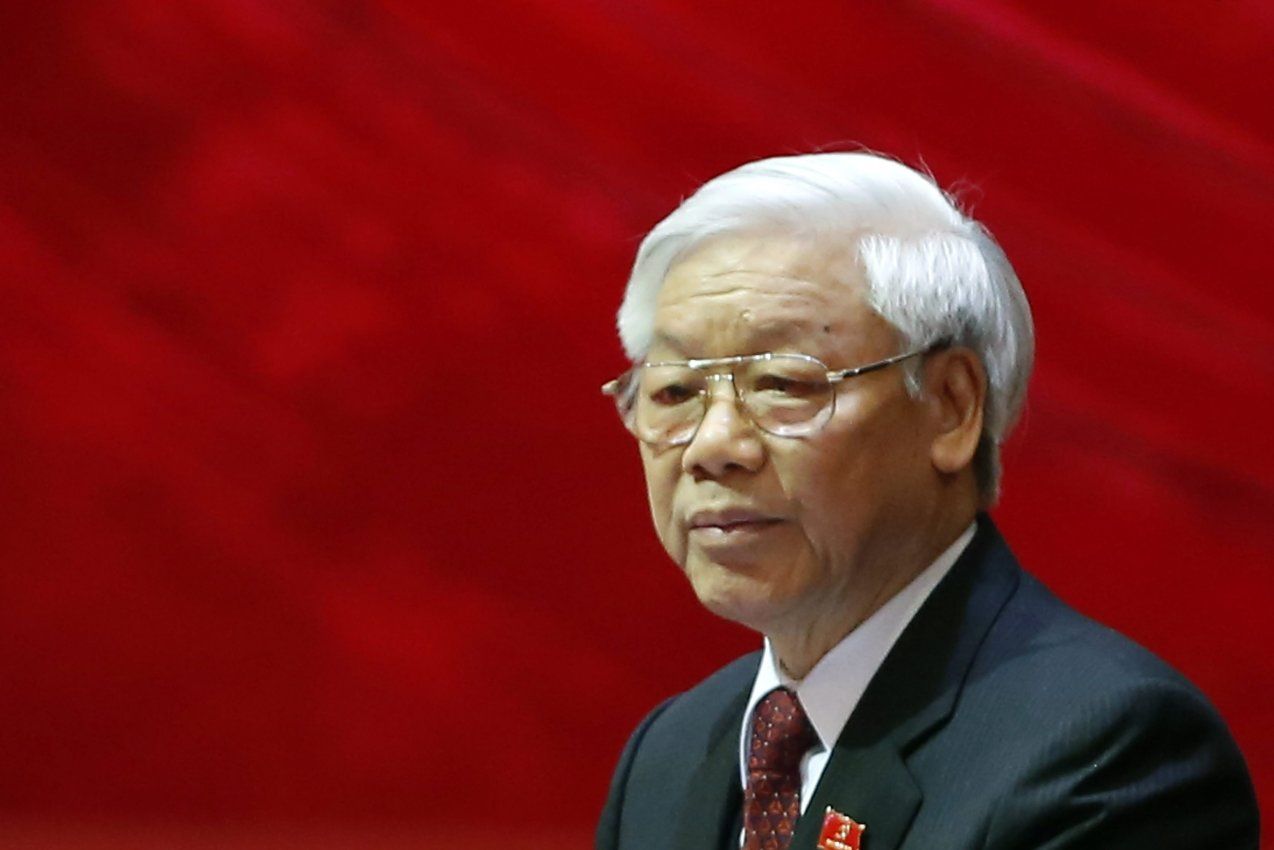
    The general secretary,  seen as the leader of the Party,  is the most powerful politician of the country, and is also elected by the Central Committee, chosen from among members of the Politburo. The seat has been held by Mr. Nguyễn Phú Trọng since 2011.

    After finishing the election, members of the Central Committee return to the Congress to report the results in a plenary session. The new members of the Politburo will go to the stage amidst long applause, a lot of congratulations, and flowers being handed out. The newly-elected general secretary will make an inaugural speech, and later the closing remarks. A new five-year term begins.

    By this time, the public knows who the members of “the gang of four” are, the top four Party members who share the four highest offices of the country: general secretary, president, prime minister, and chair of the National Assembly. The chief justice position, although the most powerful office of an entire branch of government, has never been important enough within Party ranks to be considered as a part of “the gang of four.” That says almost everything about how insignificant the judiciary is in Vietnam.

    Does the Congress hold actual power as stated in the Party’s Charter?

    Not really.

    The agenda of the Congress is largely set by the previous term’s Central Committee. Delegates are elected or appointed under a process entirely controlled by the previous term’s Central Committee. The Committee also decides a set of qualifications for members of the next term’s Central Committee, Politburo, and even the general secretary position. Only those who meet the qualifications can be nominated to the Congress, and with a very high likelihood of being elected. The majority of candidates are nominated by the Committee.

    For example, the 10th Party Congress in 2006 needed to elect 160 members for the Central Committee. There were 207 candidates approved by the Congress for the election, which included the majority of 174 candidates nominated solely by the previous term’s Central Committee. The other 31 out of 207 candidates were nominated by the Congress, and only 2 self-nominated candidates.

    Often, the Central Committee holds conferences up until days just before the Congress to determine the proposal for the Congress agenda, including the lists of candidates for Party leadership. Take the 15th conference of the Central Committee as an example. This was the last conference of the current Committee, which took place on Jan 16-17, 2021, one week before the Congress and began to approve “special nominees” and other personnel issues. One of the “special nominees” is believed to be General Secretary Nguyen Phu Trong, 67, because he does not meet the age requirement (that a candidate be no older than 65) to be elected as a member of the Politburo. Furthermore, he is not eligible to seek a third consecutive term under the Party Charter, unless the Congress amends the Charter.

    Drafted resolutions and any amendments to the Party’s platform are also prepared by the Central Committee.

    The Central Committee’s agenda, in turn, is largely determined by the Politburo. Therefore, the Central Committee and the Politburo, not the Congress, hold most of the Party’s actual power. The Congress has been seen mainly as a rubber stamp institution within the Party, formally approving almost everything the Central Committee proposes.

    What happens after the Congress?

    Shortly after the Congress ends, the Politburo will begin to hold meetings to assign roles to its members. At that time, it will announce members in charge of the party’s other committees (except the Disciplinary Committee), the Party committees of the capital – Hanoi City, the Party committee of the leading economic city, Ho Chi Minh City, and so on.

    Almost four months after the Congress concludes, on May 23, the nation’s general election will take place, electing members of the National Assembly – the legislative body of the central government. When the National Assembly convenes for its first session in June or July, we will see most members of the Central Committee holding representative seats, and the National Assembly will elect the Communist Party’s leaders for the offices of president, vice president, prime minister, deputy prime ministers, ministers, chair of the National Assembly, chief justice, chief prosecutor, and so forth.

    By then, the entire electoral process, started more than a year earlier at the grassroots level of the Communist Party, will be completed.
  • Vietnam: Citizens Must Pay Trillions Of Dong For The Party Congress, Regardless Of Party Membership

    Vietnam: Citizens Must Pay Trillions Of Dong For The Party Congress, Regardless Of Party Membership

    By the most conservative estimates, the amount of money citizens pay to fund Party congresses at just the local level is enough to keep the Government Inspectorate running for more than 25 years.

    ***

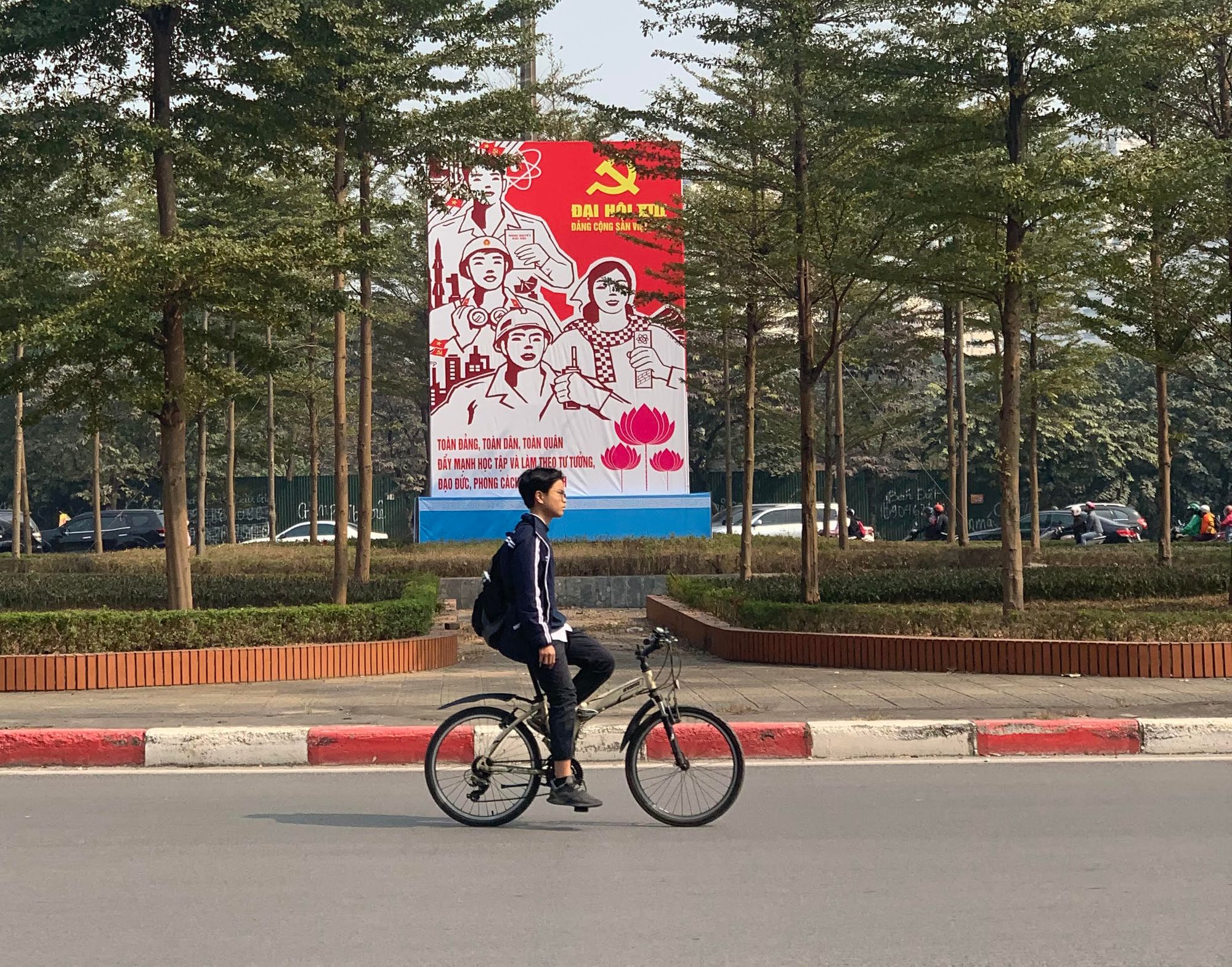
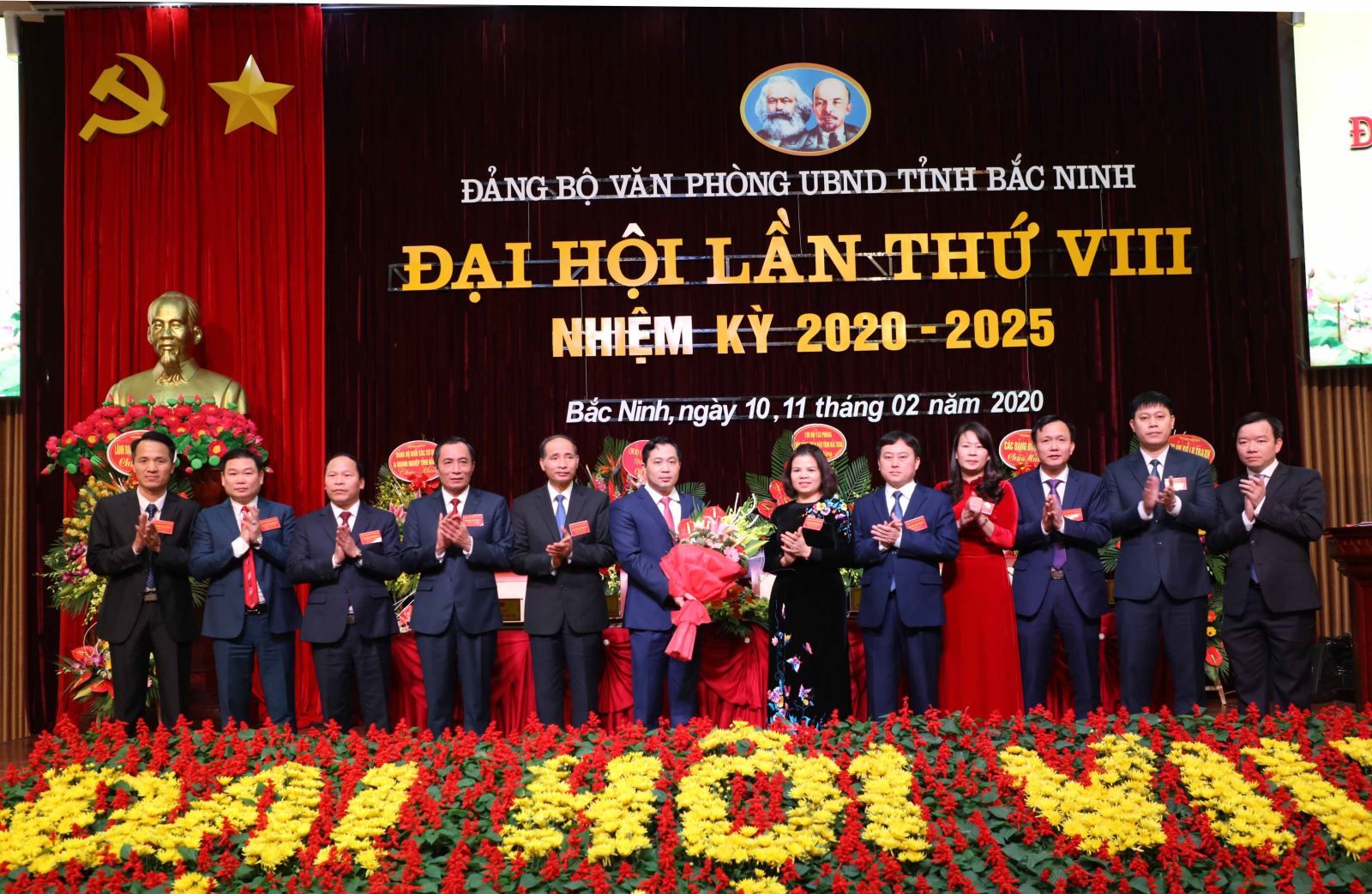
    Local party committees throughout the country have begun organizing party congresses to elect “elite” representatives to attend the 13th National Party Congress, an event which occurs every five years. They will elect members to the Party’s Central Committee, from which the Secretariat and the Politburo will be drawn, as well as those positions seen as stepping stones to Vietnam’s top leadership posts.

    However, these strictly party affairs actually draw from the government’s budget, tapping into taxpayer money that could be used for state administration or policies supporting people’s livelihoods.

    This article will summarize a number of counter-intuitive but actual political realities that Vietnamese citizens have faced for decades and will most certainly continue to face if fundamental changes do not occur.

    Total expenditures undisclosed, possibly quite large

    Before diving deep into legal issues, we’ll provide a general overview on how budgets are used for Party congresses. Currently, costs associated with organizing Party congresses remain ambiguous.

    The general scope of regulations in the Law on Access to Information excludes transparency regarding the operational finances of political and socio-political groups.

    On the other hand, the State Budget Law contains Article 15, which stipulates responsibility for publicizing the state budget.  However, the law only regulates this responsibility in regards to governmental bodies rather than political organizations.

    Finding information on the costs of organizing the Party Congress specifically, and the costs of running party organizations more generally, forced me to try my luck with reports from the Ministry of Finance, the state management body directly responsible for the budget and national expense.

    Accordingly, we found that the Ministry of Finance established a separate website that was quite easy to navigate and use. However, the detailed budget information provided was not helpful for readers, regardless of what they were looking for.

    Take this example from April 15, 2020:  the Ministry of Finance issued an estimated implementation of the 2020 Quarter I budget, that is, the time period during which finance plans and preparation costs for Party congresses are laid out beginning in May.

    However, the roster of expenditures only lists three accounts: normal costs (the highest, at 343 trillion dong, or US$14.7 billion), interest and debt costs, and salary reform costs. The estimate clearly is of no use to citizens who want to inspect and oversee financial transparency.

    Because of this opacity, I’m forced to look for sources of information at lower levels and with broader scope. Such a manner of research will reduce the ability to generalize regarding the financial “voraciousness” of Party congresses. However, this seems to be the only way to actually get an understanding of such expenditures.

    For example, this past April, official correspondence from the Lang Son Province People’s Committee sent to the Ministry of Finance asked for financial support in organizing the province’s Party congresses for the 2020-2025 term. The amount requested ran upwards of 85 billion dong for these fleeting party events.

    More specifically, the provincial People’s Committee requested nearly 10 billion dong for the provincial Party Congress and 66 billion dong for district-level congresses. There were even expenditures totaling more than 10 billion dong to “renovate and repair service projects for the Party Congress at all levels” (these fixed expenses should have been calculated separately according to the law; it is unknown how this is permissible).

    More importantly, it must be remembered that Lang Son is a mountainous and sparsely populated province, with few party members and a cost of living that ranks among the lowest in the country.

    In another document that I found from the Quang Tri Township People’s Committee (a district-level body), promulgated on February 28, 2020, the amount of money this committee requested that the provincial Finance Office send to the Central government in Hanoi for approval for its locale reached 5.7 billion dong.

    According to the document, money spent to cover the expenses of representatives and guests for the two-day Party Congress at the commune-level alone would amount to almost 800 million dong, propaganda work in service of the congress would be 150 million dong, and money “for direct supplement payment” would be nearly 300 million dong.

    Another district, Huong Hoa, requested 2.5 billion dong in funds for district-level Party congresses and 5.1 billion dong for commune-level ones, totaling approximately 7.6 billion dong.

    Quang Tri Province has 10 district-level administrative units, Lang Son has 11. The population of Quang Tri is about 600,000 and Lang Son about 800,000; both provinces have among the smallest populations in the country, and both economies perform below the national average.

    Therefore, if I use the figure for Lang Son (85 billion dong) as the average for each province, then I can extrapolate that the total costs for organizing Party congresses in all 64 cities and provinces is nearly 5.5 trillion dong, not including the central Party organizations and the National Party Congress. And this is a conservative estimate.

    According to the data Luat Khoa Magazine has gathered in previously articles, this amount is enough to keep the Government Inspectorate and the Government’s Committee for Ethnic Minority Affairs operating for more than 25 years, with enough left over to fund the Ministry of Agriculture and Rural Development—one of Vietnam’s pivotal ministries—for up to a year (the 2020 estimate is 5.3 trillion dong.

    Laws about the Party’s funding are regulated by the Party’s Central Office.

    This is not some kind of sensational headline to attract readers; it’s the truth.

    In the State Budget Law mentioned above, Articles 36 and 38 tell us that both local and central budgets are also responsible for funding the activities of political organizations (i.e. the Communist Party of Vietnam).

    In Items 7 and 8 of Article 8, which covers the state budget’s principles of operation, the operational expenses of sociopolitical-industrial organizations, social organizations, and socio-industrial organizations are handled according to principles of self-sufficiency; the state budget only covers tasks the government assigns. The state budget was created to help political and socio-political organizations balance their operational books.

    That’s the extent of what the State Budget Law says about the Communist Party of Vietnam’s coffers.

    Government Decree 163/2016 provides a bit more detail to the State Budget Law, stating in Article 9 that the government “entrusts the Ministry of Finance to lay out specifics in the management and use of the state budget for Vietnamese Communist Party bodies.”

    The Ministry of Finance’s Circular 40/2017 has regulations on business expenses and conference organizing fees which give us a bit of hope in understanding how the budget is used for Party activities more generally and Party congresses at all levels more specifically, by providing us a legal basis on paper.

    But right in the circular, the Ministry of Finance affirms that the use of the budget for “the National Party Congress of the Vietnamese Communist Party, Party congresses at all levels up to the national level, conferences of all bodies under the Vietnamese Communist Party” will be implemented separately according to levels of jurisdiction, but it does not specify which levels.

    So  we’re left to ask, which level or levels of jurisdiction ultimately decide the budget for the Party congresses?

    I gradually realized that it was difficult to find any kind of legal basis managing how the budget is used for Vietnamese Communist Party activities.

    The “legal” basis often cited in related documents mostly stems from Decision #99-QĐ/TW, issued May 30, 2012 by the Party Central Secretariat, promulgating regulations on Party business expenses, of Party organizations at the fundamental level and those directly above (“Decision 99”).

    Expenses of all Party congresses up to the 13th National Party Congress this year are regulated by Decision 3989-QĐ/VPTW, issued August 16, 2019 by the Central Party Office.

    As of now, I haven’t been able to find the entire text of Decision 3989, possibly because it was only circulated internally. But this, perhaps, demonstrates best the contradictory manner in which the Vietnamese Communist Party handles budget transparency.

    Particularly with Secretariat’s Decision 99, we can see that this document contains regulations that seem to carry more force than even legal documents issued by the National Assembly.

    In essence, Party organizations have jurisdiction over establishing and assigning expense estimates, as well as allocating funds and also regulations for balancing the books – all while using the state budget; this decision also regulates tasks by the people’s committees at all levels, as well as other government bodies responsible for ensuring funding for Party activities.

    A concrete example in Item 1, Article 5 of Decision 99, states:

    “Based on approved estimates, people’s committees in communes, wards, and townships are responsible for guaranteeing operating expenses at the committee level, must balance the books according to regulations in the State Budget Law, and must report to their committee level and the committee level directly above.”

    As such, when speaking of jurisdiction and general scope, documents issued by Party organizations are no less valid than laws passed by the National Assembly or decrees issued by the government.

    ***

    The problems that I’ve expounded on above are not new. They’ve existed in this political system over the whole of Vietnam for more than 40 years. However, when trillions of dong are spent simply for the Communist Party to pick its own board of leaders, then taxpayers all over the country should accelerate discussions on why this phenomenon keeps occurring.

    One budget nurturing two states—how can this be seen as the only way to manage Vietnam’s public finances?

    The original Vietnamese version of this article was written by Bui Cong Truc and published on Luat Khoa Tap chi. Translated by Will Nguyen.

  • Facilitator in EU-Vietnam Free Trade Agreement Fails to Disclose Links to Vietnamese Communist Party, Possibly Violating Code of Conduct

    Facilitator in EU-Vietnam Free Trade Agreement Fails to Disclose Links to Vietnamese Communist Party, Possibly Violating Code of Conduct

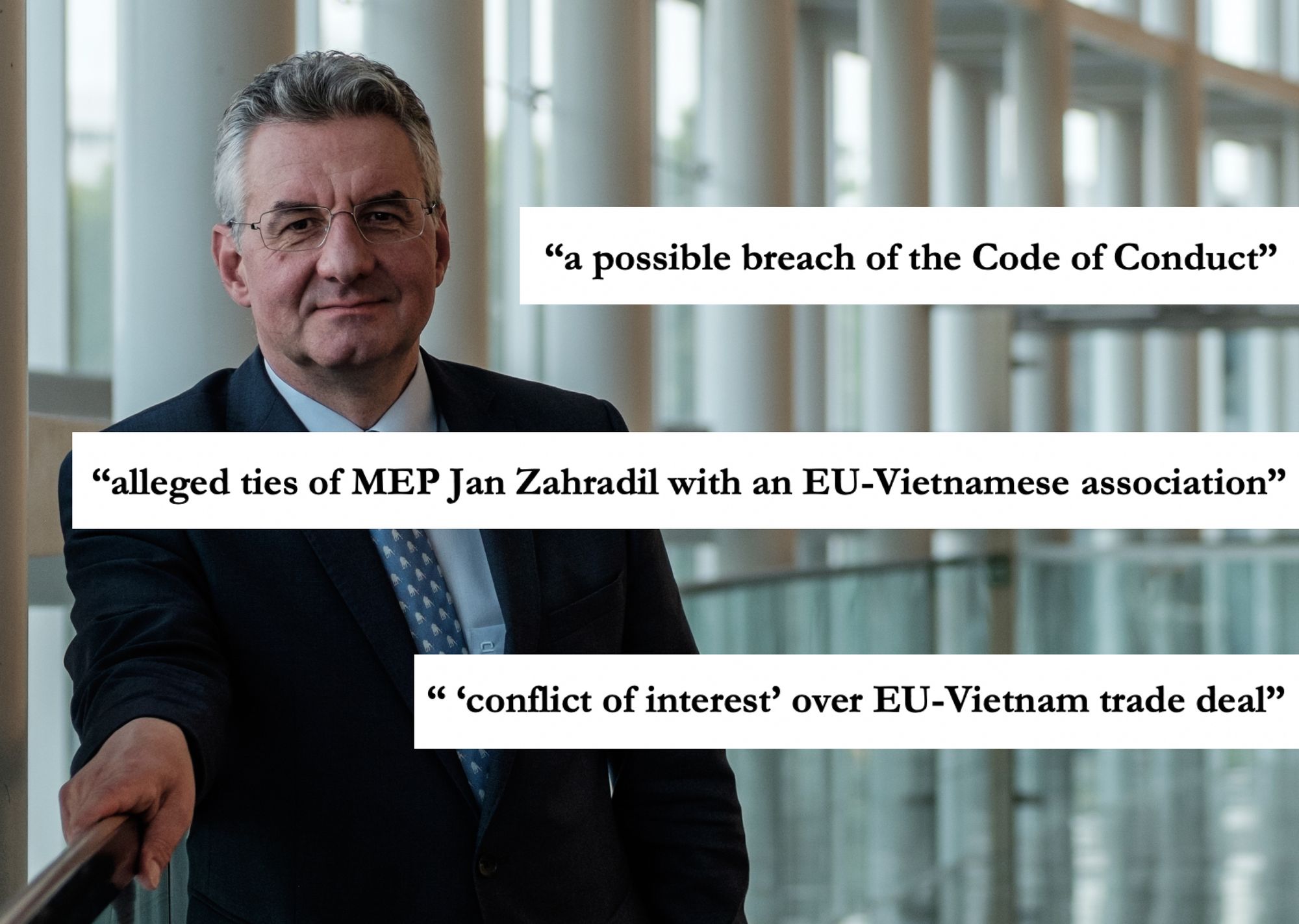
    Member of European Parliament (MEP) Jan Zahradil, who is currently the rapporteur (or facilitator) for a free trade agreement (EVFTA) and an investment protection agreement (IPA) between the European Union and Communist Vietnam, has failed to disclose his links to the Vietnamese Communist Party, in possible violation of the European Parliament Code of Conduct, a letter to the President of the European Parliament (EP) has revealed.

    The letter, sent by Philippe Lamberts, one of the co-presidents of the Greens/European Free Alliance Group, cites a recently published article by the EU Observer which accuses Zahradil of a “conflict of interest” after it was revealed that Zahradil failed to disclose that he was chairman of the Advisory Council to the Federation of Overseas Vietnamese Associations in Europe (FOVAE).

    The FOVAE is itself set up under the guidance of the Vietnamese Fatherland Front (VFF), a broad-based political organization controlled by the Vietnamese Communist Party. The Vietnamese Fatherland Front has been comparedto China’s United Front in its influence operations, and a 2016 official report from the Czech government confirmsthat the VCP uses the FOVAE as a means to control overseas Vietnamese communities.

    The EU Observer reports that Zahradil is also chair of a parliamentary “friendship group” to Vietnam, which is “[o]ften billed as a means to increase cultural understanding, promote values, and better inform the public […but is] in fact often backdoor entries for pariah governments seeking greater access to the European Parliament.”

    In response, Zahradil sought to downplay the FOVAE and friendship group’s significance, citing the former’s inactivity and the latter’s informality.  Ample evidence found by the EU Observer calls both of these assertions into question.

    In particular, the EU Observer cites examples from Vietnam’s own state-run media which show a healthy relationship between Zahradil and active FOVAE chairman Hoang Dinh Thang (who is also on the Presidential Committee of the VFF). Another articlefrom the Vietnam People’s Army website touts the efficacy of the parliamentary “friendship group” in advocating for the EVFTA.

    Regardless of these two groups’ relevance, Zahradil’s failure to disclose his links may directly violate Article 3 of the European Parliament’s Code of Conduct, which requires that “Members shall disclose, before speaking or voting in plenary or in one of Parliament’s bodies, or if proposed as a rapporteur, any actual or potential conflict of interest in relation to the matter under consideration”.

    Jan Zahradil is of Czech origin and has been an MEP since 2004. He is a member of the Civic Democratic Party and part of the rightwing Eurosceptic group “European Conservatives and Reformists” (ECR) in the EP. In addition to rapporteur for the EVFTA and IPA, he is also vice-chair of the EP’s International Trade Committee (INTA).

    Although the EVFTA and IPA have both been signed by Vietnam and their EU counterparts, the agreements (and their amendments) must be formally ratified by the European Parliament at its plenary session in February 2020 in order to take effect. NGOs and democracy groups insist Vietnam’s deteriorating human rights record must be improved before the EU proceeds with these agreements.

    Update: Jan Zahradil has resigned from his position as rapporteur for the EVFTA, effective December 10th.

  • Minister of Propaganda Says Vietnam’s Press Should Serve Party, Prevent “Self-Evolution”

    Minister of Propaganda Says Vietnam’s Press Should Serve Party, Prevent “Self-Evolution”

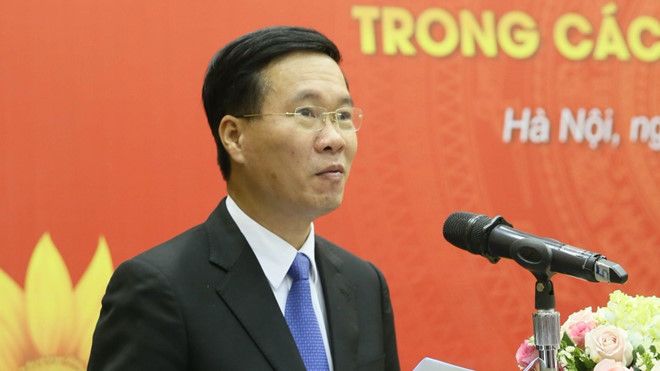
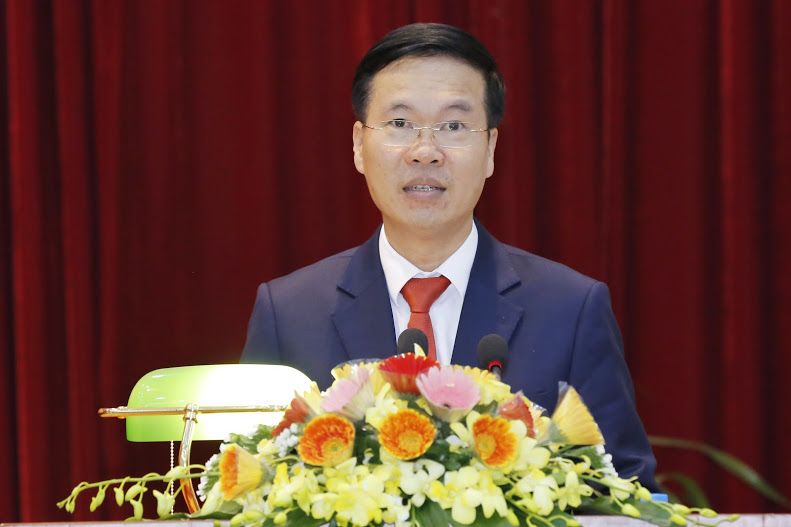
    At a conference on “Strengthening Party-building Work in Press Organizations” last Friday, Mr. Vo Van Thuong, head of Communist Vietnam’s Central Propaganda Committee, reminded attendees that the press must serve the Vietnamese Communist Party (VCP) and the revolution in order to function “stably” and “without error”.

    Referring to a government plan ratified earlier in the year to develop and manage press throughout the country until 2025, Thuong stated that the time for debate had passed and that strict implementation was now key. According to state media and in sentiment echoed by Thuong, the press serves as “an important channel to fight against incorrect information, fake news, news critical of the regime, and that which makes people lose trust in the Party-State.”

    In his remarks at the conference, Thuong stressed the importance of ideological work in press organizations and making sure Party cadres and Party members guard against signs of political, ideological, and moral decay. In particular, Thuong warned against signs of “self-development” and “self-evolution”, negative terms that refer to the shift towards liberal democratic values–values which are anathema to the ruling Communist Party.

    In this vein, Thuong took to admonishing journalists who lacked “proper training” and were critical of society but not sufficiently critical of themselves. He also stressed the importance of proper training for leadership and suggested greater oversight of the Party committees and organizations involved in press organizations, particularly when it comes to adherence to Party regulations.

    “In order to help press organizations develop self-awareness and a more proper nature, we should do as a number of comrades have stated: ‘Sometimes those who educate [Party members and cadres] must themselves be educated’,” Thuong stated.

    Thuong reminded attendees that Vietnam’s journalists were journalists of the revolution, journalists of the Party, and journalists of the state; as such, they should work closely with the Central Propaganda Committee, the Ministry of Information and Communication, various central Party committee blocs, and the Vietnamese Journalists Association, in order to strengthen the leadership of the Party.

    The plan approved April 2nd of this year also seeks to streamline Communist Vietnam’s press environment, limiting government bodies to one newspaper and one magazine, with a shift to electronic rather than print forms, and with the “Vietnamese Communist Party E-Newspaper” and the Central Propaganda Committee serving as the “core” of the country’s press structure.

    Along with head of propaganda, Thuong is also currently a member of the Politburo (short for “Political Bureau”, the leading body of the Vietnamese Communist Party), and the secretary of the Central Committee (from which members of the Politburo are chosen). In the past, Thuong was deputy secretary of the Ho Chi Minh City (HCMC) Standing Committee, first secretary of the Central Committee of the HCMC Communist Youth Union, and secretary of the Quang Ngai Provincial Party Committee.

    According to Reporters Without Borders, Vietnam ranks 176th out of 180 countries in terms of press freedom. Although freedom of the press is guaranteed by Article 25 of the 2013 Vietnamese Constitution, Communist Vietnam is a one-party, authoritarian state that does not tolerate challenges to its power. It controls all official media, newspapers, and publishing houses in the country and regularly censors material that does not conform to sanctioned historical or political narratives.

  • The Socialist Republic of Vietnam: The Country That Rejects Political Pluralism

    The Socialist Republic of Vietnam: The Country That Rejects Political Pluralism

    A colleague recently showed me a picture of a document entitled “Personal History” that her friend had sent over. This person was applying for a new job, and even in this day and age, he still had to submit this intrusive Communist-era form along with his employment application, even though the job was private-sector.

    This document, in particular, caught my attention because it asked detailed questions about an applicant’s participation in political parties, and quite interestingly, included whether or not he or she had an affiliation with any “reactionary” political parties before 1975, the watershed year in which Vietnam was de-facto reunited under communist party leadership.

    The idea of having to include a “Personal History” when applying for a job nowadays is quite perplexing, given the fact that Vietnam has been a “one-party-state” with the Vietnamese Communist Party (VCP) effectively controlling the state apparatus for the past 44 years. Vietnamese under 35 years old have always lived with only one party.

    After the Vietnam War, when the two former rival nations of North and South Vietnam de-jure reunited and formed the current Socialist Republic of Vietnam in July 1976, political parties turned into fiction, starting with the official dissolution of all parties previously existing in the former South.

    The 1980 Constitution, Vietnam’s first after reunification, granted the VCP absolute leadership over the state and its people with Article 4, a much-maligned article that has survived two rounds of constitutional amendments in 1992 and 2013.

    By 1988, the VCP officially became the only party remaining in the country. Two other political parties which had been the allies of the VCP in the North during the Vietnam War, the Social Party and the Democratic Party, announced their dissolution after having completed their “historic mission.”

    Even after admitting that these two parties had always followed its directives and never really acted as political opposition forces, the VCP implemented a zero tolerance policy towards other political organizations, allies or not. History, according to the VCP, had decisively chosen the one-party system for the country.

    Observers later commented that it was the looming revolutions in the Soviet Bloc at the time which had caused the VCP to quickly sweep away any remnants of a pluralistic past.

    It probably was the right decision for the Party’s survival. Vietnam to this day remains one of the last few communist countries in the world, with the VCP effectively consolidating power under its authoritarian rule. In 2006, dissident Hoang Minh Chinh, a former member and general secretary of the Democratic Party, announced his party’s re-establishment and openly challenged the authority of the VCP. His efforts, however, were short-lived. Hoang Minh Chinh passed away in 2008 after losing his battle to cancer.

    In March 2019, the Secretariat of the VCP announced that it would begin implementing Directive 33-CT/TW, to develop and strengthen the Party’s membership within the private sector. The directive called for recruitment of new Party members among the leadership of private enterprises, a move that strongly indicated the Party’s continued unwillingness to end its current political monopoly.

    It may be a surprise for many Westerners to learn that today, North-Korea has more political parties than Vietnam. As such, elections in Vietnam are probably even more pointless and uneventful than its neighboring communist brothers in Asia although all of them are close to 100% predictable.

    In Vietnam, all candidates must get their pre-approval from the VCP by going through a mandatory three-round-vetting process organized by one of its affiliated organizations, the Vietnamese Fatherland Front, before their names could proceed to the ballots.

    As the result of this rigorous vetting procedure, nearly all of the 500 seats in the country’s National Assembly (the legislative body and the only group that is elected by the people during elections) belong to the VCP. A handful of “independent” seats go to VCP-approved candidates who are not official party members but have already pledged allegiance to the VCP’s directives.

    The National Assembly – according to Vietnam’s Constitution – should be the most powerful branch in the government because it is supposedly “formed by the people, of the people, and for the people.” However, due to the Party’s total control of the electoral process and the complicity of the National Assembly, Vietnamese people do not have much to say in their country’s affairs.

    In June 2018, after members of the National Assembly showed overwhelming support for the new Cybersecurity law, with nearly 97% of member voting yes, citizens started calling their assembly representatives to question how they had voted. Over 90% of these representatives refused to respond, with the majority of them not even bothering to pick up the phone.

    Members who did pick up loudly shouted back at the callers and told them that they had no right to question their representatives’ votes. When confronted with the fact that the constitution explicitly affords citizens this specific right, representatives abruptly hung up.

    All of these interactions between members of the National Assembly and citizens were documented on social media. It became an awakening moment for some Vietnamese because it was quite clear to them that this legislative body was not working “for the people”.

    However, bringing up the issue of political pluralism with the current ruling party is harmful to those who dare to ask.

    Nothing could land a Vietnamese person in jail quicker than a public announcement that he or she will start a political party. The formation of any kind of political organization alone, like the Brotherhood of Democracy which involves dissident attorney Nguyen Van Dai, or the more recent Coalition for Vietnamese Self-Determination, would cost its members decades behind bars.

    All “national security crimes,” as defined in the Penal Code and as interpreted in actual cases at trial, equates any faint sign of opposition against the VCP’s directives and policies with subversion against the people’s government or propagandizing against the state.

    On October 23, 2018, VCP General Secretary Nguyen Phu Trong was confirmed president of Vietnam by the National Assembly with 99.79% of the votes. Trong was described as a “party builder rather than a reformist” in a recent piece penned by the experienced Swedish diplomat, Börje Ljunggren, who was Sweden’s Ambassador to Vietnam in the late 1990s.

    Trong is, indeed, a stern protector of the VCP’s manifesto, and his famous words in February 2010 is often quoted by the Party’s numerous propaganda materials:

    “Vietnam has yet to perceive the objective necessity of having a pluralistic regime, at least for now.”

    Former Ambassador Ljunggren, however, has suggested that to fully realize the country’s economic power in this new era, Vietnam must “dar[e] to move beyond the party-state [to] realiz[e] Vietnam’s huge potential.”

    His observation echoes that of other foreign governments and international human rights experts, who all recently recommended that Vietnam allows political pluralism to continue its progress.

    These messages, however, may not be enough to convince the Party’s leaders. The government stubbornly continues to credit the VCP for its economic development, again and again echoing Trong’s words from almost a decade ago that the Party does not need any political opposition. Indeed, the March 2019 directive doubles down on the Party’s determination to hold onto power.

    It is unlikely that the quest for political pluralism in Vietnam will find answers from within the VCP, including its reformists if there are any.

    The future for a pluralistic society in Vietnam is more likely to be found in the growing independent civil society movement and the younger generation. While observers from outside Vietnam may not always see the growth and tireless efforts of these activists, they exist. And while the VCP refuses to acknowledge them, these activists persevere.

    One example would be the organized advocacy against the recently-implemented Cybersecurity Law, which has been spearheaded collectively by many young activists across the country who remain hopeful for change. And while the law continues to be “in effect,” the government remains in a dilemma as it has not been able to provide an implementation decree for the law – a requirement in Vietnam if the law is going to be carried out in full force.

    The struggle, of course, continues. It is, however, important to acknowledge the fact that such a struggle for change, for democracy and abolishing the political monopoly in Vietnam, exists.

  • Vietnamese Communist Party Turns 89, And The People May Have Had Enough

    Vietnamese Communist Party Turns 89, And The People May Have Had Enough

    February 3, 2019, the Vietnamese Communist Party celebrates its 89th anniversary.

    In a recent speech to commend the auspicious event, Secretary General Nguyen Phu Trong wrote: “The Party stays strong, the country prospers, the people concur.”

    However, on Facebook, the people’s reactions to both Trong’s writing and other propaganda, do not seem to show a public consensus as to the VCP’s leadership role in Vietnam.

    Today, the users’ reactions to a posting on Facebook seem to suggest the Party’s legitimacy is being called into question by the very people it tries to lead.

    A Facebook page names Vietnam’s Politics (Chính trị Việt Nam) identifies itself as a source for government’s news and uses a webpage domain of www.nguyenxuanphuc.org – which also is the name of the country’s current Prime Minister.

    The website posted a piece of writing entitles “Our Party” (Đảng Ta) in celebration of the anniversary.

    The writing did not deviate far from other propaganda materials in past decades, praising the accomplishment of the VCP, reaffirming its leading role in society for years to come, and confessing the love of the Vietnamese people for the Party.

    However, Facebook users were not willing to let that slides and quickly took the opportunity to express their distrust and unhappiness with the way “Our Party” has been leading society and the country in the comment section.

    A few hours after its posting on Facebook, the piece received over 400 reactions from Vietnamese users, about one-fourth of them was the “laughing” icon.

    Not stopping at that, the majority of the people who commented also raised a series of issues, such as corruption and nepotism within the VCP. They also questioned the legality of the recent National Assembly’s election result and pointed out the wealth discrepancy between the VCP’s members and the non-member citizens.

    The overall picture of the people’s reactions on the post shows an alarming sense of distrust in the VCP, leaving doubts to the other readers as to whether the VCP could still maintain the position of the leading and only political party in the country indefinitely.

    Other reactions from the Vietnamese people to the political events in another country during the past few weeks may cause the leaders of the VCP more worries.

    The recent political turmoil in Venezuela has been receiving a lot of attention in Vietnam with the majority of the people supporting Juan Guaidó, the leader of the opposition front. When Nicolas Maduro used the example of another Vietnam to warn against an American invasion, he probably did not know that the majority of Vietnamese are strong supporters of the Trump administration’s decision to back his political opponent.

    Back to the comments on this posting, it is not difficult to detect that the support for the VCP among its non-member citizens is waning. While the VCP certainly can continue to enjoy the political monopoly for being the only political party in the country, even its top officials may not be sure of its future – if and when a political opposition surfaces.

    The lacking of confidence that it still has the mandate to maintain the legitimacy among the majority of Vietnamese people could explain the VCP’s enhanced oppression against political dissidents in recent years.

    Most recent was the Party’s effort to silent online criticisms with the new cybersecurity law of 2018.

    Vietnamese internet users appear to be very well aware of the purpose and intention of the government in passing such law.

    One comment on the post did mention the potential application of the new cybersecurity law against internet users in cases like this: “The page administrator purposely posted this (writing) to incite the people to react and then (the government) threatens us with the cybersecurity law.”

    At the same time, there are no clear signs that online activism in Vietnam has been slowing down since the new law takes effect earlier this year although it is true that just in January 2019, there have been reports of two confirmed arrests of Facebookers and one incident of police questioning a university student over his Facebook’s activities.

    Vietnam has been increasingly repressive in the past two years. Not only the number of arrests have been steadily on the rise, but the sentences in political cases also became a lot harsher compared to a few years ago, often in the range of one to two decades behind bars.

  • Vietnam: The Communist Party Declared Internet “A Battlefield”

    Vietnam: The Communist Party Declared Internet “A Battlefield”

    The Head of the Vietnamese Communist Party’s Central Propaganda Committee – Vo Van Thuong – declared, during his concluding remarks at the committee’s year-end congress on December 29, 2018, that “the internet (in Vietnam) has become a new battlefield” for the Party in the fields of politics, thoughts, and culture.

    A day earlier, Thuong also made another remark at a different congress held explicitly by and for the press, telling journalists in the country to overcome having “vague political thoughts” as news reporters, especially when it comes to posting on social media.

    For non-Vietnamese, Mr. Thuong’s position seems to be quite intrigued and puzzling. Why would he get invited to speak to the journalists in the country at their year-end congress? What does his message to the media representatives even mean?

    On the other hand, for some over 800 editors-in-chief of all newspapers in Vietnam, however, Mr. Thuong’s words equate to an ultimatum as he is the chief of all of them. They would write as his committee directs, and take down those articles when the same committee disapproves.

    The Central Propaganda Committee is part of the VCP’s cord internal structure, with a mission to establish “direction for political thoughts in the field propaganda, news media, publishing, arts, and culture” for the Party. In reality, this committee’s job is not only to control the political thinking and shape the ideology of the four million VCP members but also the society in Vietnam as a whole.

    Its job is so essential for the survival of an authoritarian regime which is to ensure that there would only be one political doctrine for every single citizen to follow: communism. Anyone dares to propose other ideas for a different political philosophy, in many cases, face prosecution and long jail time. Any sign of dissent would be deemed as not accepting the ultimate leadership of the VCP in the country, and is a criminal act.

    However, for more than a decade, the VCP has failed to take control of the internet and social media in Vietnam. As the result, the people indeed took such opportunity to create a vibrant online civic space where they openly criticized officials, exposed wrongdoings, and even organized themselves.

    While the government repeatedly applied draconian and vague penal codes to arrest and imprison dissidents and activists for “propagandizing against the State” and “abusing democratic freedoms”, social media – especially Facebook and Youtube – continues to play a vital role in disseminating information which the VCP may disapprove of, such as reporting on human rights abuses and calling for democratization in the country.

    The new cybersecurity law of 2018 is the latest attempt from the government to practice absolute control over the internet in Vietnam. It is then not a surprise for us to hear strong and determining words from the Head of the Central Propaganda Committee, declaring war on bloggers and freelancers on social media.

    However, in the first few days of the year since the cybersecurity law took effect, the discussions on social media in Vietnam remain active and critical of the government.

    The most recent “battle” between Vietnamese netizens and Mr. Thuong’s Central Propaganda Committee happened last week, concerning the news that the VCP’s Politburo has approved more money to fund the development project for a metro system in Ho Chi Minh City.

    On January 4, 2019, most of the major newspapers in Vietnam published one same article online, stating that the Politburo has approved more than 50 billion VND for the construction of two metro lines in Ho Chi Minh City. Immediately, prominent bloggers and dissidents on social media like attorney Le Cong Dinh[1], questioned the legality of that decision.

    In Vietnam, the power to approve funding of similar projects supposedly belongs to the most powerful governmental body – the National Assembly. However, in reality, the Politburo would be the ultimate decision maker.

    In April 2018, when the people of Vietnam questioned the National Assembly’s reasons to pass the Special Economic Zone draft bill, the Chairwoman responded: “the Politburo has already decided, and the draft bill is not unconstitutional. We have to discuss and come up with the bill.”

    Nevertheless, this time, the Politburo seems to have to forego a “battle” on social media. By the end of the day, all of the articles about the funding of the metro project were taken down, probably at the order of the Central Propaganda Committee.

    ***

    [1] Le Cong Dinh was tried together with Tran Huynh Duy Thuc for subversion against the state in January 2010 where he was sentenced to five years imprisonment and three more years under house arrest.

  • To Tell or Not To Tell Them About My Personal Assets: A General Secretary’s Dilemma

    To Tell or Not To Tell Them About My Personal Assets: A General Secretary’s Dilemma

    In a surprising move right before the 7th Party Central Committee plenary meeting, a group of Vietnamese Communist Party (VCP) members and citizens have publicly demanded – in a letter – that the General Secretary, Nguyễn Phú Trọng, discloses his personal assets in according with the VCP’s own rules.

    The demand was quickly spread on social media in Vietnam in the past three days.

    The plenary meeting, which commences on Monday, May 7, 2018, in Vietnam, concentrates on discussions involving the integrity, capacity, and merits of the Party’s strategic personnel.

    The timing of both the letter and the plenary meeting is at the high of the anti-graft campaign initiated by the Party’s chief in the past two years, right after his power was successfully consolidated at the last Party’s Congress in 2016.

    For a long time, the question concerning personal assets of Party’s leaders and high officials has been on the mind of the people in Vietnam where corruption is high.

    But this is probably the first time that a group of Party’s members publicly asking the Head of the Party to be transparent about his own assets and declare them.

    Mr. Trọng, of course, could keep silent and does not have to respond to the letter.

    Dr. Nguyễn Quang A, a long-time dissident intellect and one of the signatories of this letter, is not optimistic either: “I believe it is highly probable that he would not respond at all”.

    While Trọng could continue to stay in his safe zone and only respond to the public and the press in pre-arranged conferences as he has done in the past, this time, there are three important reasons for him to consider responding to this written demand from his own comrades.

    Trọng should have his assets declaration form ready because the laws required him to do so.

    Vietnam’s laws required that officials – which include the VCP leaders – have to prepare an annual assets declaration form.

    Accordingly, “officials are defined as Vietnamese citizens who are either elected, appointed, or approved to hold a position or title, according to their terms in the VCP’s system.” – (Article 4, Vietnam Law on Cadres and Civil Servants).

    Trọng is not only the General Secretary, he is also a current member of the National Assembly.

    Vietnam’s laws then also require that all candidates running for the National Assembly have to submit assets declaration forms prior to the election.

    This is done in according to the 2012 amendments to the Law on Preventing Corruption.

    If Trọng refuses, he indirectly declares he is above not only the law but the Party as well.

    As the General Secretary who famously declares: “the Constitution (of Vietnam) is the most important legal document after the VCP’s Manifesto,” Trọng must act according to the Secretariat of the VCP’s Decision 99/QD-TW, issued on October 3, 2017, where it clearly states that the assets of all Party’s leaders “must be public for the people to know.”

    One must understand the crucial role of the Secretariat in the VCP and how powerful this body is to appreciate Decision 99/QD-TW. According to the VCP’s rules, this is the body which governs the daily operation of the Party. Mr. Trọng is also a member of the Secretariat.

    If he refuses to comply with the Secretariat’s decision, then he has violated the core principle of the Communist Party: centralized democracy. The VCP operates in a system where the minority must obey the majority; subordinates must obey upper management; an individual must obey the organization.

    Thus, while an individual may disagree with a decision of the Party, that individual must still “strictly complies”.

    As a person who dedicates his life to sustain the Party, Mr. Trọng must know that this principle decides the VCP’s survival. If he doesn’t respect it, then he has put himself above the Party.

    No one will believe Trọng is committed to fighting corruption when he refuses to be transparent about his own assets.

    Transparency International ranked Vietnam as the second most corrupted country in Asia after India in March 2017.

    The VCP’s chief has initiated an ambitious campaign against corruption in the past two years, a Vietnamese version of Xi Jinping’s “killing tigers, swatting flies.”

    Earlier this year, he reaffirmed such commitment to weed out corruption at all levels by famously declared there would be “no off-limit zones” for the campaign.

    The slogan “Burn the Furnace” became well-known to many Vietnamese, where corrupted officials are seen as “wood logs” ready to be thrown into the fire.

    Trinh Xuan Thanh – a more famous “wood log” who was sentenced to life in prison earlier this year – gained international attention when German police alleged that Vietnamese secret services had kidnapped Thanh in broad daylight in the middle of Berlin last summer.

    Vietnam insisted that Thanh came back to Vietnam voluntarily to turn himself in.

    While the international community may think that repairing a deteriorating diplomatic relationship with Germany is crucial for Vietnam, such task is still secondary when compares to maintaining the VCP’s legitimacy with its own people.

    The public in Vietnam is clearly divided over Trinh Xuan Thanh’s case.

    One of the main reason for those who support the government’s conducts – including the alleged kidnapping – in such matter is because they want to believe in the commitment of the Party and of Mr. Trọng in fighting against corruption.

    But their belief does not come blindly.

    An important question has been lurking among the public in Vietnam – and yet no one has dared to raise it – was whether Trọng has ever committed corruption himself and if that is the case, then would he be prosecuted as well?

    An even more important question concerns over the legitimacy of this “Burn the Furnace” campaign initiated by Trọng. Is he really committed to fighting against corruption or is he using such a campaign to target and eliminate other factions within the VCP?

    For now, most people in Vietnam probably would not go that far to question Trọng’s intention over his anti-graft campaign, but they do want to know whether he is a “clean” official.

    And for this, Trọng would need to be transparent about his own assets by providing to the public his assets declaration form according to laws.

    Social activist Nguyễn Anh Tuấn comments, “whether Mr. Trọng is transparent about his own assets will say a lot about the legitimacy of the anti-corruption campaign he has initiated”.

    “If he is transparent about his assets, then it is great because his subordinates would have no excuse to delay declaring their own. The public and the press will have some basis for monitoring officials”.

    “On the contrary, if he ignores the people’s request this time, then they have reasons to question his commitment to fighting corruption”.