Tag: South China Sea

  • Vietnam Briefing: Prosecutions Against Bao Sach Journalists; Beijing Seeks To Reaffirm Its Influence In The South China Sea

    Vietnam Briefing: Prosecutions Against Bao Sach Journalists; Beijing Seeks To Reaffirm Its Influence In The South China Sea

    Prosecutions against members of online-based Bao Sach (Clean Newspaper) outlet

    RFA reports:

    • On Wednesday, September 8, Vietnamese authorities indicted five journalists from the Bao Sach group, an independent journalism project, on charges of “abusing democracy and freedom to infringe on state interests.”
    • According to the indictment issued by the Procuracy of Thoi Lai District, Can Tho City, the Bao Sach journalists posted “reactionary information and videos” and delved into information that was “inappropriate, distorting, against the country’s interests, and slanderous of the people’s administration,” in violation of Article 331 of Vietnam’s Penal Code.
    • The five indicted journalists are: Truong Chau Huu Danh, Nguyen Thanh Nha, Doan Kien Giang, Nguyen Phuong Trung Bao, and Le The Thang. Thang remains under house arrest, while the other four members have been arrested and detained.
    • According to state media, the indictment also states that the group’s members have allegedly “taken advantage of the freedom of speech and press” to write and upload “unverified, negative, biased and false” information on their Facebook fan page, Facebook group, and YouTube channel.
    • In the Freedom in the World 2021 report by Washington D.C.-based Freedom House, Vietnam scored three out of 40 in political rights, and 16 out of 60 in civil liberties. The Vietnamese Communist Party has consistently shown little tolerance for dissident and opposition voices, while many independent journalists and publishers in the country have continually faced harassment, arrests, or even imprisonment.

    Former vice president of the Vietnam Independent Journalism Association (IJAVN) denied citizenship rights

    RFA reports:

    • Vietnamese authorities have rejected petition letters calling for an investigation into legal proceedings against detained blogger Nguyen Tuong Thuy, a former vice president of IJAVN, who is currently serving an 11-year jail term for “making, storing, and disseminating documents and materials for anti-state purposes” under Article 117 of Vietnam’s Penal Code.
    • According to Nguyen Thi Lan, Thuy’s wife, her husband had called home from the An Phuoc Detention Center, Binh Duong Province, telling her that he had asked the detention center to send his petition letters to the procuracy and other agencies. However, the central authorities responded by saying that he did not have citizenship rights, which is ridiculous and unreasonable, Lan told RFA Vietnamese.
    • “The authorities did, however, suggest that he request an appeal to reconsider the court decision if he did not agree with it,” Lan added. “They said his petition was not valid because he no longer had necessary citizen rights to file it.”
    • Nguyen Tuong Thuy was indicted along with two other IJAVN members, Pham Chi Dung and Le Huu Minh Tuan, on November 10, 2020, for “making, storing, and disseminating documents and materials for anti-state purposes” under Article 117 of Vietnam’s Penal Code. He was sentenced to 11 years in prison along with Tuan, while Dung was given 15 years.

    Another member of the U.S.-based Provisional Government of Vietnam was charged for “carrying out activities to overthrow the government”

    RFA reports:

    • On Friday, September 10, Vietnamese authorities arrested and charged a woman with “carrying out activities to overthrow the government,” making her the third person this year detained for joining the Provisional Government of Vietnam, an exile Vietnamese opposition group based in Orange County, California.
    • Le Thi Kim Phi, 62, used a Facebook profile under the name “Phi Kim” to connect with members of the organization, said the investigation division of the An Giang Police.
    • The Vietnamese government designated the group a terrorist organization in January 2018 after members were charged with a plot to attack Ho Chi Minh City’s Tan Son Nhat International Airport with petrol bombs ahead of a major holiday the year before.

    COVID-19 situation in Vietnam

    • Overall, Vietnam has surpassed 600,000 confirmed COVID-19 cases with more than 15,000 deaths recorded. As of now, less than 5 percent of the country’s population has been fully vaccinated.
    • Vietnam sentenced a man to five years in jail for “spreading coronavirus,” reports The New York Times: “The man, Le Van Tri, 28, was convicted of “spreading dangerous infectious diseases” to eight people, one of whom died from virus complications. His sentence for failing to comply with Covid-19 quarantine restrictions also included a fine of 20 million dong, around $880.”
    • Hunger became a reality for tens of thousands of Vietnamese during the COVID-19 pandemic, writes The Guardian. “The government promised to feed everyone and enlisted the military to help deliver supplies to those in need, but vast swaths of the population have received nothing. Last week, Vietnamese media reported that more than 100 people in one district had protested over the lack of help.”
    • Standing at 4.95 percent, Ho Chi Minh City has the highest COVID death rate in Southeast Asia, reports Nikkei Asia: “The city’s death rate stands out in the region. The short-term fatality rate in neighboring Cambodia stood at 2.38% while Thailand’s was 1.34% although the kingdom is battling its worst outbreak of the virus so far, with around 15,000 new cases a day, according to Our World in Data.”
    • The Hayat-Vax coronavirus vaccine has been approved for emergency use in Vietnam, reports Reuters. The vaccine, which is manufactured in China and packaged in the United Arab Emirates, is the seventh vaccine to be endorsed in the Southeast Asian country.
    • European investors are considering relocating their operations in Vietnam over harsh COVID-19 restrictions, reports Reuters. “A sharp rise in coronavirus cases since late April has seen movement restrictions imposed widely, affecting workers and forcing many companies to suspend operations, which resulted in falls in August exports, industrial output and retail sales.”

    Chinese Foreign Minister Wang Yi’s trip to Vietnam

    • On Friday, September 10, Chinese Foreign Minister Wang Yi arrived in Vietnam for a three-day visit, with a goal of reasserting Beijing’s influence in the country following high-profile visits by U.S. Vice President Kamala Harris and U.S. Defense Secretary Lloyd Austin.
    • In an official statement, Wang warned Vietnam of interference from “regional outsiders” in the South China Sea issue, urging the country to “treasure the hard-won peace and stability” and refrain from unilateral moves that could “complicate the conditions” or “magnify conflicts” over territorial disputes between the two countries. “[We should] send a positive message to the international community that the people of China and Vietnam have the wisdom to manage conflicts, and further expand areas of cooperation,” he added.
    • China also offered Vietnam an additional three million vaccine doses during Wang’s visit, raising the number of vaccines donated from China to the country to 5.7 million doses.
    • Meanwhile, Japan’s Defense Minister Nobuo Kishi was also in Vietnam on Saturday, where he signed a deal allowing the transfer of defense equipment and technology from Japan to Vietnam amid China’s growing military influence, reports Associated Press. Minister Kishi said the signed deal elevates their defense partnership “to a new level” and that Japan plans to deepen defense ties between Vietnam and Japan through “multinational joint exercises” among other things.

    Vietnam Insight: Learn more about Vietnam

    US, China dueling for power on the Mekong

    Asia Times/ Bertil Lintner/ September 5

    “While in Singapore, Harris said that ‘our partnerships in Singapore, in Southeast Asia, and throughout the Indo-Pacific are a top priority for the United States.’ She also spoke against China’s excessive claims in the South China Sea, a message she repeated during her subsequent trip to Vietnam.

    But the odds are arguably stacked against Washington on the Mekong. China is moving ahead faster and with more determination than the US in asserting its influence on Mekong River nations.

    Because China sits at the river’s headwaters and has shown its power to turn it off at will, the MRC, Mekong-US Partnership, and Japan’s initiatives seem destined to become sideshows in another rising contest for regional influence.”

    Washington’s Challenge in Southeast Asia: The View From Vietnam

    The Diplomat/ Ngo Minh Tri/ September 8

    “If the U.S. wants stronger support and closer partnership with Vietnam and other Southeast Asian countries, it must change the approach, rebalancing its focus away from security to focus on the economic cooperation that is central to the future prosperity of Vietnam and other ASEAN members. Geographic proximity and economic interdependence mean that Southeast Asian nations are reluctant to treat China as a hostile adversary.”

    Vietnam in pragmatic balancing act between China, US

    Asia Times/ Hai Hong Nguyen/ September 10

    “Overall, the main purpose of Wang’s trip to Hanoi is to pull Vietnam back from getting closer to the US and at the same time floating a message to the US that China’s ties with Vietnam are unbreakable.

    Vietnam has been successful and greatly benefited from maintaining the balance in its relationship with both the United States and China. However, Vietnam’s approach is more pragmatic than it once was. It will not be dragged into the competition or rivalry between the two major powers.”
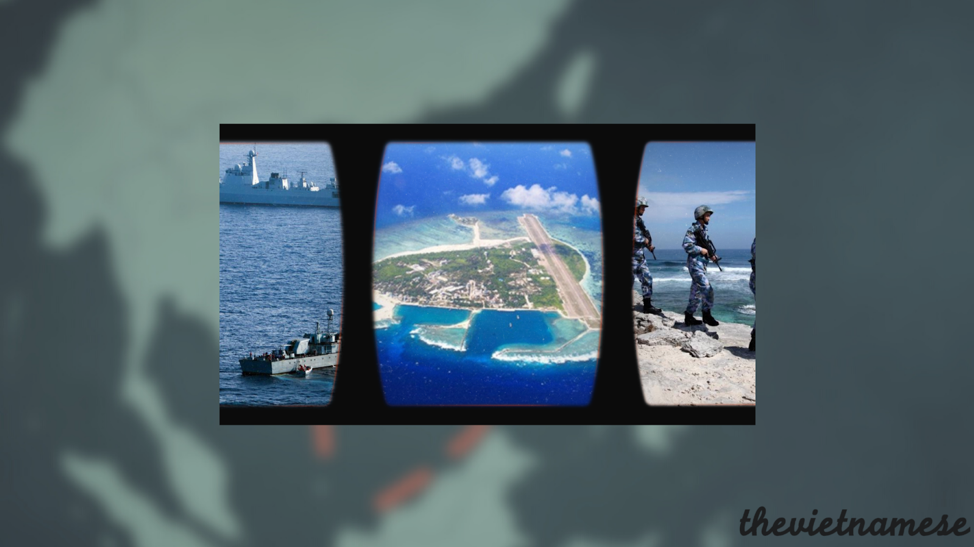
  • July 24, 2012: China Establishes Sansha City, Intensifying The Maritime Conflict With Vietnam

    July 24, 2012: China Establishes Sansha City, Intensifying The Maritime Conflict With Vietnam

    What happened?

    On July 24, 2012, China established a prefecture-level city called Sansha City (in Vietnamese: Thành phố Tam Sa) under Hainan Province, the most important strategic location for China to push territorial claims in the South China Sea [1].

    Sansha City covers 800,000 square miles of China’s nine-dash line map of claimed territories in the South China Sea, and it is 1,700 times the size of New York City, even though it mostly covers seawater. [2] According to China analyst Zachary Haver in a US Naval War College report: “through Sansha’s system of normalized administrative control, China is gradually transforming contested areas of the South China Sea into de facto Chinese territory.” [3] In other words, through the establishment of Sansha City, China is signaling that it is here to stay.

    The establishment of Sansha City has been extremely controversial in Vietnam because the city includes the Paracel and Spratly Islands, which Vietnam also contests as its rightful territory, along with other countries such as Taiwan, the Philippines, Malaysia and Brunei.

    What did Vietnam say?

    As expected, Vietnam did not take the news lightly. In 2020, the Ministry of Foreign Affairs spokeswoman said that Vietnam wholeheartedly rejected the “so-called Sansha City” as it violates the sovereignty of Vietnam. [4]

    The presidents of the People’s Committees in Khanh Hoa and Da Nang provinces, which Vietnam claims govern the Spratly and Paracel Islands, respectively, also had the same talking point. [5] They further affirmed that the two islands are under the administration of Khanh Hoa and Da Nang provinces and not the Sansha City of Hainan Province.

    Territorial conflicts and rising anti-China nationalism

    This event was just one among many others that intensified maritime conflict between China and Vietnam. Both countries have tried to establish both legal and historical claims to the Paracel and Spratly Islands. Because of the fierce conflict, many people in Vietnam have developed a unique version of nationalism: anti-China nationalism.

    Such nationalism is rooted in the reality of many Vietnamese who have held a deep-seated Sinophobic resentment towards a millennium of Chinese domination [6]. Still, this nationalism has proved to be more than about China’s military aggression. In fact, anti-China nationalism in Vietnam has been useful in anti-authoritarian mobilizations and call for better governance and democracy. Read more about the nuances around anti-China nationalism in Vietnam here.

    Bibliography

    [1] Li, M. (2019). Hainan Province in China’s South China Sea Policy: What Role Does the Local Government Play? Asian Politics & Policy, 11(4), 623–642. https://doi.org/10.1111/aspp.12495

    [2] Coy, P. (2021, February 19). China Has An 800,000-Square-Mile ‘City’ in the South China Sea. Bloomberg. https://www.bloomberg.com/news/articles/2021-02-19/china-has-an-800-000-square-mile-city-in-the-south-china-sea

    [3] Haver, Z. (2021, January). China Maritime Report No. 12: Sansha City in China’s South China Sea Strategy: Building a System of Administrative Control. U.S. Naval War College. https://digital-commons.usnwc.edu/cgi/viewcontent.cgi?article=1011&context=cmsi-maritime-reports

    [4] M.Q. (2020, October 15). Việt Nam phản đối Trung Quốc mở rộng hoạt động tại cái gọi là “thành phố Tam Sa.” Báo Thế giới và Việt Nam. https://baoquocte.vn/viet-nam-phan-doi-trung-quoc-mo-rong-hoat-dong-tai-cai-goi-la-thanh-pho-tam-sa-126319.html

    [5] Phản đối Trung Quốc lập cái gọi là “thành phố Tam Sa.” (2012, June 24). Tạp Chí Xây Dựng Đảng. http://xaydungdang.org.vn/Home/vankientulieu/Bien-dao-Viet-Nam/2012/5207/Phan-doi-Trung-Quoc-lap-cai-goi-la-thanh-pho-Tam-Sa.aspx

    [6] Lam, V. (2018, June 29). Vietnam: A month of mass protests. Lowy Institute. https://www.lowyinstitute.org/the-interpreter/vietnam-month-mass-protests

  • Vietnam Briefing: The Election Results Are In. Here Comes 5 More Years Of Party Domination

    Vietnam Briefing: The Election Results Are In. Here Comes 5 More Years Of Party Domination

    The Vietnam Briefing, which is released every Monday morning Vietnam time, looks at Vietnam’s political developments of the past week.


    The 2021 National Assembly Election Results Are Here

    Last week, the election results for the 15th National Assembly were finally released. The list includes 499 elected officials to the legislative assembly out of a list of 866 nominees in the competition pool. The members of this National Assembly will serve five-year terms until 2026.

    There are supposed to be 500 seats, but one elected candidate was reportedly disqualified due to health issues.

    A performative election? The highlight of the election was the election of “star candidates” – the well-known, high-ranking candidates of the Party who hold the most critical leadership positions in the Politburo.

    Notably, the “four pillars” of the Politburo have an extremely high number of votes, ranging from around 93 to almost 100 percent. The “four pillars” include President Nguyen Xuan Phuc, Prime Minister Pham Minh Chinh, Parath Secretary-General Nguyen Phu Trong, and the Chairman of the National Assembly Vuong Dinh Hue.

    Other Politburo members also have a very high number of votes of  at least 90 percent, with only one exception of about 75 percent.

    This was expected because elections in Vietnam are not democratic but rather a chance for the Vietnamese Communist Party (VCP) to demonstrate that its most important members are famously beloved by the people.

    As expected, the election resulted in Party domination: Out of the 499 elected officials, only four were self-nominated candidates.

    The list includes Hoang Van Cuong, vice-president of the public National Economics University; Nguyen Anh Tri, president of the state-controlled National Institute of Hematology and Blood Transfusion; Truong Trong Nghia, deputy chairman of the Ho Chi Minh City Bar Association, and Khuong Thi Mai, managing director of Namsung Aluminum Co., Ltd., a company established in 2014 with full funding from the state.

    All of the self-nominated candidates elected are members of the VCP. This is not surprising, considering the 2016 National Assembly election, in which only two self-nominated candidates were elected, both also Party members. The self-nominated candidates in this year’s election accounted for less than 1 percent of the entire legislative assembly.

    Originally, there were 75 self-nominated candidates, but only nine candidates made it to the final ballot after a rigorous process of elimination, which is known for filtering out dissidents.

    Additionally, it is reported that there are 14 non-party nominees who were elected. However, these non-party candidates were nominated by VCP organizations, making them still tied to the Party. The number of non-party officials only account for 2.8 percent of the whole Assembly.

    According to the state-controlled Vietnam News Agency, the election had a turnout rate of 99.6 percent. The turnout rate  in Vietnam has always been extremely high, and has always been used by the regime to argue that elections are democratic and representative of the people’s will.

    The state also reports that 30 percent of the new National Assembly are women, and around 17 percent are people of ethnic minorities. While this was supposed to illustrate how progressive and representative the new National Assembly is, this is mostly just performative. Since these officials are still tied to the Party one way or another, their independent decision-making power is extremely limited.

    Only less than 10 percent of the new members are people under the age of 40.

    Unfortunate, but not surprising: Luong The Huy, the first openly gay candidate to run in the National Assembly and the People’s Committee election in Vietnam, did not make it in either election. This was expected as Huy was not only a young candidate from a minority background; he was also not affiliated with the VCP and was not endorsed by any VCP organizations.

    To ensure its power in the legislative branch, the VCP has a history of vote manipulation against non-party, independent self-nominated candidates. The election system itself is also known to be rigged against non-VCP candidates.

    Read more on The Vietnamese Magazine’s coverage of Luong The Huy in this election here.


    Another Free Speech Crackdown

    For the past month, since the 2021 elections started to take shape in Vietnam, there has been at least one new case of the regime cracking down on political dissidents every week.

    Last week was no exception: Dang Hoang Minh, an ordinary Facebook user, was sentenced to seven years in prison under the charge of “making, storing, distributing or disseminating information, documents, and items” against the state. This is Article 117 of the Penal Code, commonly used by the regime to crack down on free speech. Just two weeks ago, the same charge was brought against Le Dung Vova, an independent blogger now wanted by the police.

    According to the state-controlled media, Dang Hoang Minh was arrested and charged for uploading to Facebook “information which falsely accused and insulted the leadership credibility of the Party…” Though the state media did not specify what Dang Hoang Minh was accusing the Party of, he was also said to be “insulting the great leader Ho Chi Minh.”

    Since the beginning of this year, at least 21 Vietnamese citizens have been arrested and imprisoned due to their activities on social media, according to Radio Free Asia. All of the dissidents in these cases were charged with Article 117.


    The Situation in the South China Sea

    Last week, Vietnam’s Ministry of Foreign Affairs was busy denouncing actions in the contested Paracel and Spratly islands (known in Vietnamese as Truong Sa and Hoang Sa islands).

    While these denunciations usually concern China, the actions last week came from the Philippines and Taiwan, though the Vietnamese official communication channels generally regard Taiwan as a part of China.

    Derek Grossman, a senior defense analyst of the RAND Corporation, wrote on his social media that the situation in the South China Sea last week was a “useful reminder that China isn’t the only maritime counterclaimant Vietnam is concerned about.”


    COVID-19 in Vietnam

    The Covid-19 situation has not evolved much since the last briefing. The only notable development was perhaps the US putting Vietnam into the “safest for travel” category, although the situation in Vietnam has been rather messy for the past couple of weeks.

    For more information on the general COVID-19 situation in Vietnam, see here.


    Learn more about Vietnam

    China moves forward in soft power struggle for Southeast Asia

    Mark Valencia/Asia Times/ June 10, 2021

    “Remarkably, the US has failed to take full advantage of China’s diplomatic “own goals” – its incursions into Indonesia’s EEZ, its massing of fishing boats in the Philippines’ EEZ, and its maritime provocations of Malaysia and Vietnam in their claimed waters.

    To regain and retain its moral leadership, the US needs to demonstrate that its values and system of government are the best of all for all and that it can and will maintain a competitive edge with China economically and technologically, not just militarily.”

    Why Vietnam Needs to Adopt a Biological Defense Strategy

    Phuong Pham/The Diplomat/June 07, 2021

    “Once regarded as a role model for its successful containment of COVID-19, Vietnam is now in the midst of its fourth wave, its worst since the beginning of the pandemic. Even worse, the stringent measures that previously helped Vietnam put the virus under control have been relatively ineffective, illustrated by the surge in infections since the end of April. This raises a great concern for Vietnam not only with regard to COVID-19 but also on its ability to counter biological threats writ large. With this in mind, Vietnam should establish a national strategy on biological defense in order to help it counter biological threats more effectively, given the current inadequacy of the country’s biological defense capabilities.”

    Vietnam Approves Chinese COVID-19 Vaccine, Reluctantly

    Sebastian Strangio/The Diplomat/June 09, 2021

    “Vietnam’s communist leadership has shown great caution in becoming further indebted to a nation that many Vietnamese – including many within the party and government – view with suspicion.”


    Events to watch this week:

    Webinar: Southeast Asia, the United States and China: Stumbling into the New World Order

    Date: June 18, 2021

    Organizer: ISEAS-Yusof Ishak Institute

  • June 5, 2011 – The Beginning Of The Longest Anti-China Protest Movement In Vietnam

    June 5, 2011 – The Beginning Of The Longest Anti-China Protest Movement In Vietnam

    Our newest section on The Vietnamese Magazine, the “On This Day” series, aims to introduce contemporary Vietnamese history of the twentieth and twenty-first centuries by explaining political events that occurred today in the past.


    What happened on June 5, 2011?

    Public demonstrations and protests are sporadic in Vietnam. But on this day, 10 years ago in 2011, it was the beginning of the longest anti-China protest movement in Vietnam after 1975.

    For almost three months of the summer of that year, a total of 11 protests happened across Vietnam every Sunday, primarily conducted in Hanoi and Saigon, where the Chinese embassy and consulate were placed. Many people call this movement “The Flaming Summer” (Mùa Hè Đỏ Lửa).

    Why were people protesting on that day?

    Since China established the eleven-dash line map (now the nine-dash line map) claiming sovereignty of various regions in the South China Sea, the Vietnamese people have always been angered by China’s claims to the Paracel and Spratly islands, known as the Truong Sa and Hoang Sa islands by the Vietnamese.

    In the summer of 2011, people especially felt provoked by the actions of Chinese vessels in the contested sea. In late May, the news reported that the Chinese vessels were harassing Vietnamese survey vessels and disrupting the Vietnamese vessels’ activities. Later in early June, Chinese ships once again harassed Vietnamese survey ships.

    What was the regime’s response to the protests?

    After supposedly tolerating the protests for a short period of time, the regime nevertheless decided to crack down on the protestors. In late August, the police began to detain people who participated in the protests, forcing 40 protestors onto two buses right after the last rally started on August 21. It was confirmed that at least 47 protestors were arrested. The Hanoi local government warned people against protesting any further.

    What is the legacy of the protests during that summer?

    The waves of anti-China protests in 2011 were not the first nor the last. Earlier in 2007 and 2008, there were also anti-China protests by many bloggers and pro-democracy activists, which also resulted in the government’s crackdown. Later in 2014 and 2018, there were also new anti-China protests.

    However, the protests in 2011 were significant because of their duration, scope, and effect on Vietnam’s pro-democracy discourse. In many ways, it was an unprecedented movement.

    Compared to other anti-China protests, the 2011 protest movement had the most prolonged duration, lasting the entire summer. The demonstrations were also massive compared to others, with the participation of hundreds of people. Some of the rallies were estimated to have around a thousand people. This fact is exceptionally significant for a country infamously known for repressing protests.

    Although the government repressed the protests, they still demonstrated to the Vietnamese government that the people could disagree with the government and willingly show it. Additionally, the protests also sowed the seeds of government criticism among the people. The movement provoked many intellectuals and highly-credited ex-government officers to speak out against the Communist Party and demand democracy.

    Many participants of these protests, such as The Vietnamese Magazine’s co-founder and editor Trinh Huu Long, would later become pro-democracy activists.

    The protests in 2011 were the beginning of “a prolonged civil society movement that still exists nowadays,” said Long.

  • Vietnam Briefing: Tet, COVID-19, Journalists, And The South China Sea

    Vietnam Briefing: Tet, COVID-19, Journalists, And The South China Sea

    COVID-19

    The COVID-19 situation continued to worsen throughout the Lunar New Year and serious measures have been put in place.

    • Hanoi has decided to temporarily close coffee shops, street restaurants, and historical sites from midnight, February 16.
    • Students in Hanoi will have to study online until February 28, following similar decisions by Hai Duong, Binh Thuan, Thanh Hoa, Binh Dong, and Binh Phuoc provinces.
    • Ho Chi Minh City’s students will continue to study online until February 28.
    • The chairperson of the Hanoi People’s Committee proposed that Prime Minister Nguyen Xuan Phuc close universities located in the capital until the end of February. These universities are under the authority of the central government, and not the local government.
    • Hai Duong, a northern province near Hanoi, will be locked down from February 16 for 15 days and citizens have been ordered to stay home. Only essential movements and businesses are allowed. Schools are closed until at least February 28.

    Vietnam – one of Asia’s top-performing economies during the pandemic

    Report from CNBC on February 10:

    “Vietnam was one of Asia’s top-performing economies in 2020 and among the few countries that managed to record growth last year as authorities globally scrambled in their battle against the coronavirus pandemic. It saw 2.9 percent growth in 2020, narrowly edged out by the Taiwan economy’s 2.98 percent growth.”


    A state-owned media journalist arrested for defaming provincial officials

    It’s not unusual hearing news stories about journalists being arrested in Vietnam. Mr. Pham Bui Bao Thy (Phạm Bùi Bảo Thy) – the head of the representative office of Giáo dục và Thời đại (Education and Era) newspaper in central Vietnam – was arrested and charged by Quang Tri provincial police with “abusing democratic and freedom rights to infringe on the State’s interests and rights and the interests of organizations and individuals” under Article 331 of the Penal Code, according to Tuoi Tre and the Vietnam News Agency.

    The provincial police have accused him of using anonymous Facebook accounts to spread baseless information and to defame some top government officials in the province.

    The police have put him under a two-month detention order.

    Another person named Le Anh Dung (Lê Anh Dũng) was also arrested in the same case. Voice of Vietnam (VOV) reported that Mr. Dung, 56, lived in Ho Chi Minh city and he is accused of administering the accounts.

    Article 331, previously Article 258 of the Penal Code, is widely condemned by rights groups such as Amnesty International and Human Rights Watch. Several human rights defenders and dissidents have been arrested and convicted of the crime, including well-known journalists such as Nguyen Huu Vinh, also known as Anh Ba Sam (2014), and Truong Chau Huu Danh (2020).


    Is a government-backed hacking group targeting dissidents?

    The lotus is seen as a symbol of Vietnam. Look at the national flagship airline’s logo and you will see it. And now, technology experts believe that a hacking group named OceanLotus, potentially linked to the Vietnamese government, is targeting dissidents and human rights organizations.

    The Committee to Protect Journalists, an international rights group, released an interview with Steven Adair, president and co-founder of Volexity, a US-based cybersecurity company that has studied OceanLotus, on February 1. Below is a part of the interview:

    “Question: Is it possible to say whether state actors are behind OceanLotus?

    Answer: We definitely believe it’s out of Vietnam, but whether it’s a government agency, a contractor working for them, or something else, we don’t claim that we know that. We look at the immense level of effort and resources to maintain all the infrastructure and identify the victims. It’s not something anyone’s going to do in their spare time.”


    Human Rights Watch: Vietnam among countries using COVID-19 to justify free speech violations

    A report released on February 11 by Human Rights Watch lists Vietnam among countries taking advantage of the COVID-19 pandemic to advance the governments’ agenda of suppressing human rights, especially the right of free speech.

    Quote:

    “Authorities in at least seven countries have blocked individual news reports or ordered online media or social media users to remove or edit Covid-19 related content. Vietnamese authorities summoned 650 Facebook users between January and March to question them about publishing false information relating to the pandemic, forced all of them to remove their posts, and fined over 160 of them. Vietnamese law does not only target incorrect information, but information that is deemed to defame or insult others’ reputation or honor.”


    France’s nuclear attack submarine patrols in the South China Sea

    On February 17, a lot of Vietnamese people inside and outside of Vietnam, as well as the state-owned media, will be speaking about the border war with China that started exactly 42 years ago. Anti-China sentiment has been strong in Vietnam, and many people wanted to see world superpowers harshly confront China on issues such as trade, human rights, security, and so on. Territorial disputes in the South China Sea are among them. Vietnamese people are desperate to see the United States and other countries on their side. Last week, France seemed to make a strong statement on the issue.

    Quoted from AFP:

    “The French nuclear attack submarine SNA Emeraude recently conducted a patrol in the South China Sea, Defence Minister Florence Parly announced this week, sparking questions over the timing and tensions in Asia’s hotly contested waters.”


    Xi Jinping urges Vietnam to “stand against the instigation of external forces” on the South China Sea issue

    It was Lunar New Year in Vietnam and China last week. The two countries’ top leaders, Nguyen Phu Trong of Vietnam and Xi Jinping of China, had a phone conversation on February 8 to exchange wishes and to discuss various issues, according to Xinhuanet, China’s state-owned media agency. Here are a few things to note from this conversation.

    Quote:

    “China, Xi added, is willing to work with Vietnam to accelerate the synergy of the Belt and Road Initiative with the ‘Two Corridors, One Economic Belt,’ promote the construction of cross-border economic cooperation zones between the two countries, and explore exchanges and cooperation in such fields as healthcare, digital economy and humanities.

    The two sides should strengthen coordination and cooperation on international and regional issues, firmly uphold the international system with the United Nations at its core, oppose protectionism and unilateralism, and support a fast entry into force of the Regional Comprehensive Economic Partnership agreement, Xi noted.

    China and Vietnam, he said, should properly manage the maritime differences and stand against the instigation of external forces to promote the development of regional peace and stability.”

    Vietnam’s major mainstream media outlets, such as The Government’s Portal, Nhan Dan, VOV, and Tuoi Tre, didn’t report the above-mentioned points of the conversation.