Tag: picks

  • Ho Duy Hai’s Cassation Trial

    Ho Duy Hai’s Cassation Trial

    On May 6, 2020, a cassation trial started for Ho Duy Hai – a death-row inmate in Vietnam. His mother has been requesting the courts to review his wrongfully convicted case for the past decade. In one of our previous articles, we detailed the facts of his wrongful conviction in 2008.

    This trial is expected to last for three days at the Supreme People’s Court of Vietnam in Hanoi which is the highest court of the country. It is led by Mr. Nguyen Hoa Binh, the current Chief Justice of Vietnam.

    Below is the summary of the first day of Hai’s cassation trial.

    What is a cassation trial?

    The Supreme People’s Court of Vietnam on May 6, 2020. Photo courtesy: Justice Newspaper

    The cassation trial is a special court proceeding in Vietnam to review the lower court’s decisions. There must be a petition asking the highest court for a review because of irregularities or illegal conduct in the lower court’s proceedings.

    This proceeding does not review the facts of the case. Rather, the review only focuses on whether there have been prosecutorial mistakes which influence the decision of the lower courts.

    The decision from a cassation trial could result in six different ways:

    1. Affirm the lower courts’ decisions and deny the petition for a cassation trial;
    2. Void the lower courts’ decisions and order a new investigation of the case;
    3. Void the lower courts’ decisions and order a new trial;
    4. Void the lower courts’ decisions and halt the case;
    5. Amend the lower courts’ decisions, and
    6. Halt the cassation trial.

    What is the stand of the Supreme People’s Procuracy of Vietnam on this case?

    In Ho Duy Hai’s case, after receiving a request for a petition in his case from Hai’s family, the Supreme People’s Procuracy of Vietnam petitioned for a cassation trial at the end of 2019. At the cassation trial on May 6, 2020, the Supreme People’s Procuracy of Vietnam stated its decision to request this trial as follows:

    Accordingly, as reported by Justice newspaper in Vietnam, the decisions from both the trial court and appellate court in Ho Duy Hai’s case were inconsistent with the objectivity of the case; the gathering and examining of evidence and data were not completed, and the case contained a lot of conflicting issues but was not clarified. The Supreme People’s Procuracy of Vietnam requested “the highest court to void both the trial and appellate decisions in Ho Duy Hai’s case for ‘robbery’ and ‘murder’, as well as issue an order for a new investigation.”

    Ho Duy Hai’s Lawyer, Tran Hong Phong, is the first attorney to attend a cassation trial in the history of Vietnam

    Attorney Tran Hong Phong. Photo courtesy: VNExpress

    Cassation trial is a review court, not for arguing facts or procedures. In Vietnam, cassation trial does not allow lawyers for the defendant. However, from Tuoi Tre newspaper, the highest court has made an exception in this case to invite Ho Duy Hai’s attorney to attend.

    Attorney Tran Hong Phong is the first lawyer for a defendant to attend the cassation trial. From Mr. Phong, the court invited him because it saw him as a person with related responsibility in the case as he got some evidence. The evidence raised by Mr. Phong and Hai’s family included the testimony of an eyewitness. The eyewitness had told the police at the time that he saw a young man at the crime scene, but that person was not Ho Duy Hai. The eyewitness did not know Ho Duy Hai at the time and he did not recognize the person he saw was Hai.

    However, after the morning session of the first day of the cassation trial, Mr. Phong was asked to not come to the other sessions of the case. The court will continue the case with discussions of the court and the other governmental entities.

    Ho Duy Hai’s family believes justice will come when Hai is exonerated

    Hai’s younger sister, Ho Thi Thu Thuy, stated: “I desperately hope that this trial will happen in a transparent, equal manner and that it will practice justice. If this trial exonerates my older brother Hai, then I will believe justice is still present in Vietnam. If it concludes like the other previous decisions to deem him guilty, then Vietnam does not have justice and the law in Vietnam would not worth our respect to upholding.”

    Some pictures during the first day of Ho Duy Hai’s cassation trial

    Ho Duy Hai’s family, including his aunt, his mother, and his younger sister and attorney Tran Hong Phong
    Chief Justice Nguyen Hoa Binh began the trial. Photo courtesy: Vietnam News Agency
    Member of the Supreme People’s Procuracy of Vietnam. Vietnam News Agency
  • Vietnam: Putting Up with Facebook

    Vietnam: Putting Up with Facebook

    This article was originally published in SEAPA.org on June 3, 2019. As Facebook recently announced that it would agree to significantly increase censorship of “anti-state” posts for Vietnamese users, according to Reuters, we would think this article is providing a glimpse of how life is for an independent news media in Vietnam while we have to deal with both Facebook and the government for our right to publish stories. Please note that the stories and incidents provided in here happened in 2018 and 2019.

    ***

    “No, no. I think Facebook is worse than your communist government.”

    That was a retort from a friend of mine, a foreign researcher on international laws on human rights, after hearing me comparing Facebook’s handling of its content restriction policies to the authoritarian ruling style of the Vietnamese regime.

    “At least,” my friend continued, “Vietnam will charge an activist with a specific Penal Code, 117, 109, 331, or whatever, for writing stories that it disapproves of. From what you are saying, you don’t even know why Facebook deleted your articles. That is even more arbitrary.”

    He made his comments as a joke. But he actually may have a point — a good one at that.

    We had been talking on the phone, and I was venting that Facebook had decided to unilaterally delete four articles from the fan page of Luat Khoamagazine, an online publication that I manage with Trinh Huu Long, another Vietnamese activist. The reason? According to Facebook, the stories have violated its “community standards.”

    No explanation was offered, our appeal was swiftly denied, and the decision was final. All four articles were gone a day after we posted them on Facebook.

    How did we manage to offend the “community” on Facebook that it had to delete our stories that quick?

    I wish that Facebook would care enough to explain to us why writing about the US-China trade war, Donald Trump’s life before he became president of the United States, and the border dispute between Vietnam and Cambodia, would be considered offensive.

    The fourth and last “offending” piece, however, was a long, detailed analysis of different “isms” and why people choose certain ideologies to follow. Its removal, in particular, has caused me to believe that the requests to delete our stories must have come from the Vietnamese government. After all, discussing these issues — especially dancing around the idea that people can choose different ideologies for themselves — could only be “offending” to a regime controlled by the Communist Party in Hanoi. The one that penned a constitutional clause to designate its own political party to be the only leadership force in Vietnam’s government and society.

    To add insult to injury, during the same time, Facebook allowed a comment from an Internet troll to remain on the review session of our page. The troll called us “animals that betrayed (the country and) not worth anyone’s attention.” Our report on this troll has remained unanswered to date; the hateful comment is still there, mocking us every day.

    I have had to use a lot of my own speculations in piecing together what was going behind the scenes between Facebook and our government in this past year because Facebook has been keeping secret everything about its operation in Vietnam.

    To start with, we do not have a country’s representative from Facebook to deal directly with civil society and independent media. Also, besides not telling the users which community standard a removed post has violated, the names of third-party firms that conduct fact-checking for Facebook in Vietnam are not disclosed. These entities, which hold such high authority to review and decide which content can be allowed and what should be deleted, function totally in the dark.

    That is why dealing with Facebook this past year, at times, has felt worse than writing and publishing in defiance of an authoritarian state like Vietnam: Because we have no idea who is on the side of Facebook.

    With the new cybersecurity law passed in 2018 — which took effect earlier this year, in January — I would expect that in 2019, the compliance rate from Facebook to remove contents in Vietnam will increase more drastically. Now the Vietnamese government can just say that requests that may well compromise privacy as well as freedom of expression are all supported by its “legal process” under the new law. Under the new legislation, the law enforcement’s power to make requests to service providers such as Facebook has become potentially boundless. As soon as they open an investigation, the police could start making requests for data, private and otherwise, without any warrant and without any judicial oversight.

    People outside of Vietnam may wonder, why do you still use Facebook?

    It is a legitimate question. My reply is, if it is solely for personal leisure, I will not use it.

    But we must put Facebook and its social-media platform in the context of a country like Vietnam. In Vietnam, we do not have a real-time civic space. People cannot organize or assemble peacefully on the streets without risking arrest and imprisonment. Independent media like our Luat Khoa magazine is slandered as a product of “reactionary forces” by state publications, such as the People’s Armed Forces online news site. Our website has been blocked by the government. If we attempt to open and operate from a brick-and-mortar office, it probably will get shut down by the police within 10 minutes.

    The Vietnamese government could not even tolerate the political satire stirred up by Kim Jong-un impersonator Howard X, swiftly deporting him days ahead of the summit between the North Korean leader and U.S. President Donald Trump in Hanoi in February 2019. It certainly would never allow the flourishing of an independent press.

    And so both the activists and the public in Vietnam have turned to online activism and utilized cyberspace as our civic space. Since the first mass protests broke out in the summer of 2011 (and lasted for three months), protests have been organized on Facebook. Incidents of corruption, social problems such as child abuse, sexual harassment — these stories and more have been reported first on social media. Usually, they then become viral and then get coverage in regular news.

    The online civic-space movement needs to continue and not lose its momentum. Until the day that we find another, more suitable solution, Vietnamese activists will have to engage with the people and with one another on this platform that now has over 50 million users. Yet while we continue to use Facebook, we also push for it to be transparent about its policies and business practices. We are not asking Facebook to help us with our work. We ask that it be frank and up front with us.

    “Secretive,” “non-transparent,” and “unaccountable” — these are words we often use to describe our government functions. We certainly do not want to start using them for Facebook.

  • Vietnam Reports Zero COVID-19 Deaths – Drawing Praise and Scrutiny

    Vietnam Reports Zero COVID-19 Deaths – Drawing Praise and Scrutiny

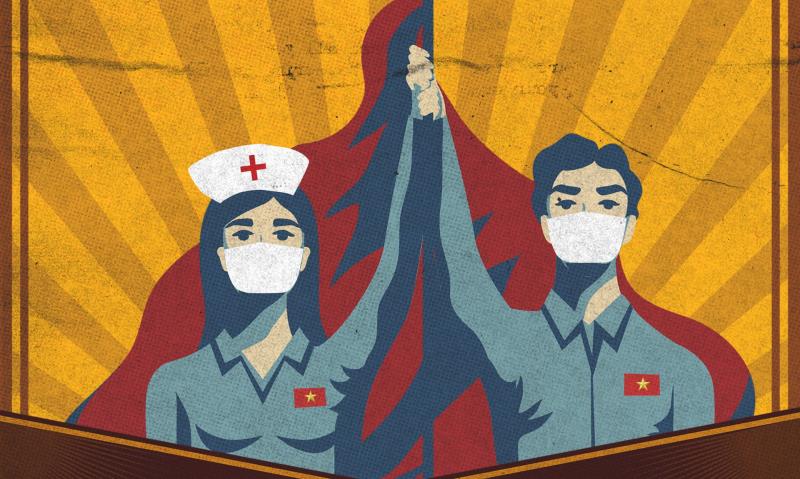
    With the government’s new decree against “fake news,” the official COVID-19 numbers are being questioned

    Photo credits: Screenshot from Ministry of Health, April 23, 2020

    While the world death toll due to COVID-19 has topped 190,000 cases and many countries around the world have reported an alarming number of fatalities — from 50 deaths in Thailand to more than 50,000 in the US — Vietnam, along with neighboring countries, Laos and Cambodia, has reported a total of zero deaths.

    Although the Vietnamese government has recorded 268 COVID cases and shown strong public health initiatives, including a handwashing song that went viral, nevertheless, the reported zero deaths and relatively low cases are questionable, especially coming from an authoritarian country with a record of bending the truth.

    A “Textbook Approach”

    Vietnam does deserve credit for having made an early response, even before the country saw its first case. According to The Diplomat, the Ministry of Health issued urgent messages on outbreak prevention to government agencies on January 16 and to hospitals and clinics nationwide on January 21. The country recorded its first cases on January 23 in Ho Chi Minh City, just two days before the Tet Lunar New Year holiday.

    Todd Pollack, an infectious disease specialist at Harvard Medical School who works with a Harvard initiative in Hanoi, Health Advancement in Vietnam (HAIVN), told Reuters that Vietnam learned its lesson after the SARS outbreak in 2003 and adopted a textbook approach in its early response strategy.

    On March 16, Vietnam began compulsory testing and a 14-day quarantine for persons in virus-hit areas as well as some arrivals from overseas. Some of the quarantine camps were set up at military bases. According to Reuters, the numbers quarantined reached at least 44,955.

    While democratic countries, such as Taiwan, South Korea, and the United States, have mostly enforced home quarantines, authoritarian countries like China and Vietnam have resorted to quarantine camps with questionable practices.

    Were the Government’s Actions Enough?

    The Vietnamese government’s actions have been praised as a low-cost model for developing countries. While wealthier nations like Taiwan and South Korea have been able to perform mass testing, Vietnam’s method of contact tracing and quarantining is relatively less expensive.

    Still, despite the country’s preventative efforts, Vietnam’s international border was still porous until March 25, when the country canceled international flights. As new data has revealed that one-fourth of carriers don’t exhibit symptoms, it is highly possible that asymptomatic carriers brought the virus to Vietnam and “super spreaders” exponentially passed it around in the same way the virus spread and  inflicted deaths in almost every country around the world – except for authoritarian countries.

    North Korea has also reported no deaths. Western officials suspect the reported numbers coming out of China, Saudi Arabia, Iran, Russia, and Indonesia.According to a U.S.-intelligence report confirmed by Bloomberg, China’s public tally of COVID-19 infections and deaths is false.

    In more developed Asian countries like Taiwan, South Korea and Singapore, which also share the recent memory of the 2009 H1N1 and 2003 SARS pandemics, they also reacted to COVID-19 with strong public health measures. But despite these countries’ greater wealth, resources and expertise (as well as the lack of a border with China), they have more COVID-19 cases and deaths than Vietnam: South Korea 240 deaths, 10,702 cases; Singapore 12 deaths, 11,718 cases; Taiwan 6 deaths, 427 cases.

    In South Korea, the fatality rate among confirmed cases is 2.2 percent; the United States is 4.3 percent and in Italy (with a large elderly population), the fatality rate is 12.8 percent. Compared to the rest of the world, Vietnam’s zero death rate among 268 cases is statistically significant.

    To further repress the sharing of information, Vietnam began fining people for spreading “fake news” with a new decree drafted in February. This decree (the official number is 15/2020/NĐ-CP) updates the cybersecurity law passed last year with more stringent measures, including penalties against anyone sharing banned publications or using social media to share false, untruthful, distorted, or slanderous information.

    “This decree provides yet another potent weapon in the Vietnamese authorities’ arsenal of online repression,” Tanya O’Carroll, director of Amnesty International Tech, told Reuters. “It contains a raft of provisions that blatantly violate Vietnam’s international human rights obligations”.

    Hundreds of fines have already been handed out, with fines ranging from 10-20 million dong ($426-$853), equivalent to around three to six months’ basic salary in Vietnam, Reuters reports. In March, a woman in Ha Tinh was fined for a Facebook post in which she incorrectly said the coronavirus had spread to her local community.

    Vietnam Under Lockdown

    Even if the international community were to believe that Vietnam’s reporting of zero COVID-19 deaths is accurate, it begs the question: Why did the government mandate a lockdown, put the economy in dire straits, continue to expend a great deal of resources quarantining thousands of people and encourage people to maintain a social distance?

    For instance, why not follow Sweden’s policy, which has steered clear of mandating a lockdown and only advised people to avoid non-essential activities. Four U.S. states also have no lockdown.

    Some observers believe that the Vietnamese government can earn a great public image by touting zero deaths and indeed, the Vietnamese government has been praising itself in state-owned media and winning acclaim internationally, including in NPR and The World Economic Forum.

    Furthermore, the zero death count helps to shore up a belief among Vietnamese citizens that the authoritarian system is better able than democratic countries to handle crises. Prime Minister Nguyen Xuan Phuc has described Vietnam’s actions to control the virus as the “spring general offensive of 2020,” referring to the 1968 Tet Offensive by Communist forces during the Vietnam-American war.

    “Autocrats love a crisis,” writes Michael Abramowitz and Arch Puddington of Freedom House in a Los Angeles Times op-ed. The writers describe Turkey, Venezuela and Russia using various crises to entrench their power, such as the 2004 school bombing in Russia and the failed coups in Turkey and Venezuela. It’s clear Vietnam has been taking notes from other authoritarian powers as it has exploited the health crisis to strengthen its power and take away freedom of speech from citizens.

    As the rest of the world continues tallying up its death count, Vietnam is now being closely watched by international observers to see whether the country will be able to control the spread of the virus – or suppress the truth – in the long run.

  • With Economic Development Comes Greater Government Oppression: Why the EU Must Reconsider Its Free Trade Deal with Vietnam

    With Economic Development Comes Greater Government Oppression: Why the EU Must Reconsider Its Free Trade Deal with Vietnam

    On the same day in 2020 that Vietnam chaired its first Security Council meeting in New York, just a few hours earlier and some 8000 miles away near its capital, Hanoi, the Communist Party of Vietnam directly attacked Dong Tam village for refusing to give up its land.

    The result? Police shot dead Dong Tam’s beloved leader and former Party village chief, Le Dinh Kinh, an 84-year-old veteran who had been a Party member for 57 years; three police officers also died after falling down a sky-light, ostensibly pursuing “suspects” who resisted the authorities. Twenty two villagers have subsequently been arrested, with twenty being charged with murder. If convicted, these villagers could face the death penalty.

    The Dong Tam land seizure event of last week is therefore a watershed moment in Vietnam’s post-war history for many reasons. First, it marks for the first time in the age of social media an open and deadly clash between the Party and its once loyal support base: villagers in northern Vietnam. According to a 2015 Bloomberg finding, almost 70% of Party members live in the north, even though the north is home to less than half of the country’s population of 96 million.

    Second, it shows the Party’s determination in ending the dispute, no matter the costs, and the great lengths it will go to muzzle public outcry afterwards, both on- and offline.

    Just two days after the incident, the Ministry of Information, which controls and censors all media content in Vietnam, called for Facebook – by far the most popular social media platform in Vietnam, used by some 55 million netizens – to be punished for ‘not following Vietnamese laws’ in allowing ‘distortion and fake news’ to be spread on its platform.

    Following official warnings and thanks to a large cyber-troop force the government employs, some users reporting on Dong Tam have been locked out of their accounts or had content taken down by Facebook, a fact Amnesty International has confirmed in recent days.

    Offline, the Party’s determination couldn’t be more clear. Less than 24 hours after the incident, the most senior member of the Politburo and Vietnam’s top leader, Party General Secretary Nguyen Phu Trong, posthumously awarded the officers killed the title of “martyr”, designating them as first-class heroes.

    A week later, in an elaborate ceremony held at the State Funeral House, the Prime Minister himself along with other Politburo members, including the powerful Minister of Public Security, attended the funeral, noting that the officers ‘sacrificed their lives to protect national security’.

    It is, indeed, not surprising that the Party views the incident as a matter of significant national security. After all, though land disputes are common in Vietnam because the government does not recognize private land ownership, never before has an entire village dared to resist government seizure of its land at all costs and announce its intentions accordingly on Youtube and Facebook.

    With Vietnam’s economy expected to grow faster in the next decade, land designated for development purposes and seized by the government will likely exacerbate the security situation on the ground if not dealt with decisively. In the case of Dong Tam, the land seizure was for Viettel Group, Vietnam’s military-run communications company. They had to act.

    But the timing could not have been worse. In the coming days, the EU Parliament’s Trade Committee is expected to vote on the EU – Vietnam Free Trade Agreement, worth 42 billion dollars annually and described by the EU as ‘the most ambitious free trade deal ever concluded with a developing country’. If passed, it will go to Parliament for a final vote on February 10.

    According to Human Rights Watch, already there is significant concern among some EU MEPs regarding Vietnam’s worsening human rights record. Just last month, they also discovered that the trade deal rapporteur, MEP Jan Zahradil, has institutional links with the Party, leading to his immediate resignation.

    With the latest incident in Dong Tam, it is also important for the 751 MEPs to realize that while the deal will bring more economic benefits to Vietnam, without clear and concrete human rights benchmarks, the deal will likely provide more incentives for the Party loyal and powerful to grab more land from the poor for developments without proper compensation and recourse.

    As a result, if passed in its present form, expect more land losses and tragic deaths in villages across Vietnam, not less. After all, 65% of Vietnam’s population still lives in rural areas.

    As for the Security Council of which Vietnam is the President this month, expect no resolutions on the matter. Dang Dinh Quy, head of Vietnam’s permanent mission in New York, is a Communist Party member himself.

  • Long-simmering Land Dispute in Hanoi Suburb Explodes in Violence, Killing 4

    Long-simmering Land Dispute in Hanoi Suburb Explodes in Violence, Killing 4

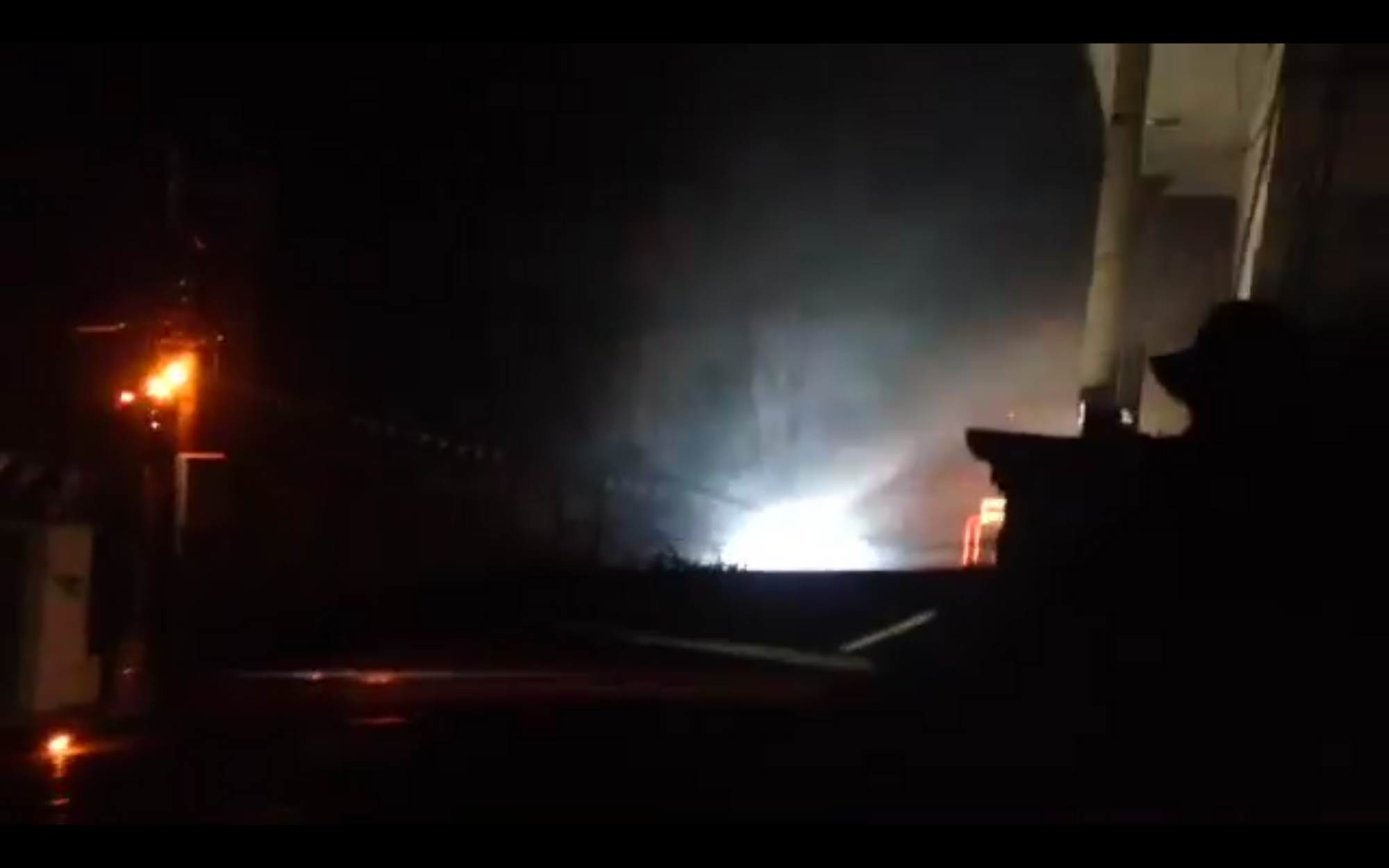
    Amid sounds of explosions, screams, and gunfire, the villagers of Dong Tam, a rural commune 35 km southwest of Hanoi, clashed with Vietnamese police in the early morning hours of January 9, killing three police and one civilian, state-controlled media reported this afternoon.

    According to the BBC, at 4 AM, police cordoned off Dong Tam in coordination with local ground forces and attacked villagers over a disputed piece of land. The villagers, who were never officially notified but had only heard through unofficial channels, declared in video recorded an hour before the attack that they would “fight to the death”.

    In a message to fellow Vietnamese citizens, a villager of Dong Tam states that the government is shooting at them. He declares that the villagers will “fight to the death”. Nguyen Anh Tuan

    The land had been earmarkedsince 1980 to form a part of the Mieu Mon military airfield, but in 2015, the plan was expanded to take up more nearby farming land and generalized to become an airport.

    Citizen-blogger social media reports say police burst into the village with tear gas and grenades filled with plastic ball bearings, and descended upon village leader Le Dinh Kinh’s house, shooting and killing one individual, who remains unidentified as of this report.

    Le Dinh Kinh and his son Le Dinh Cong have served as village representatives during repeated land disputes with the government. Media outlets have been unable to reach Le Dinh Cong for comment, but villagers say Cong’s family is in police custody and his father Kinh had gone into hiding a few days prior to the showdown. Prominent activist Anh Chi says those in custody include at least Cong’s daughter-in-law and two other family members.

    Village leaders direct statements to the country and to the world at 3 AM, January 9, an hour before police descend on Dong Tam village, demanding justice and protection against government oppression. Nguyen Anh Tuan

    Another witness describes “thousands of police officers rushing into the village” using flash grenades, firing tear gas, shooting rubber bullets, blocking off all pathways and alleys, and beating villagers indiscriminately, including women and old people. The witness stated that electricity to the village has not been cut, but the internet has.

    According to state media, which quotes an official statement from the Ministry of Public Security, it was villagers who attacked police with “grenades, petrol bombs, and knives” as officials tried to erect a wall delineating Mieu Mon airport. The statement accuses villagers of obstructing official duties and “disturbing public order”, a catch-all often used to describe anti-government actions in Vietnam.

    Dong Tam previously made international headlines in April 2017 when it held hostage 38 government officials and police officers in another land dispute with Viettel, a military-owned telecommunications company.

    Accordingto VNExpress, 46 hectares were granted to Viettel in March of 2015, only for villagers to complain to the government in June of 2016 that the land was being taken away from farming. Villagers were able to successfully fight off land reclamation from late 2016 until February 2017.

    The land dispute came to a head in April 2017 when villagers captured more than three dozen officials and police and held them hostage as leverage for government dialogue. All hostages were released by April 22, after the mayor of Hanoi, major-general Nguyen Duc Chung, came to negotiate with villagers personally.

    The villagers of Dong Tam, in a past meeting regarding the land dispute. Le Dinh Cong sits in green, first row, farthest right. His father Le Dinh Kinh sits two seats to the left, in peach. BBC Vietnamese

    Vietnamese activists and experts believethe central conundrum causing Vietnam’s land disputes lays in the country’s political regime: “how [does one] allocate land in a Communist country that allows quasi-private ownership rights but still considers all land to be state property”?

    Accordingto the NYTimes, “[i]n 2013, Vietnam tweaked its land law in ways meant to introduce more transparency into eminent domain [i.e. government land reclamation] cases. […] But experts say land disputes continue, in part, because the 2013 revisions do not allow private ownership or set clear definitions of what qualifies as the public interest in eminent domain cases.”

    Mike Ives of the NYTimes reports further: “[l]and disputes are common on the fringes of Vietnamese urban areas, where land values are often high; villagers are typically compensated at prices well below market rates for agricultural land that is later rezoned for other uses. John Gillespie, a professor at Monash University in Australia who is an expert on land reform in Vietnam, said in an interview that the disputes tended to be more violent when villagers perceived that business interests outweighed public ones.”

    Dong Tam, with a population of around 9,000, continues to be under siege, according to social media reports. All parties involved remain on edge, with activist Anh Chi stating that “Tuan Ngo, one of lawyers helping the villagers, came to Dong Tam but was stopped outside. He was threatened to be arrested by a man in plainclothes with aggressive words.”

    Images of one of the police officers killed in the clash have also begun circulating on social media, with those on both sides of the land dispute expressing sympathy. Nhu Quynh, whose 27-year old husband appears to have been involved at Dong Tam, inadvertently revealed in her caption that 3000 police officers were deployed. The image (screencaptured below) has since been taken down.

    Translated post: “Oh, my husband!!! Of 3 thousand officers, why did it have to be you?” The Vietnamese

    Le Dung Vova, a well-known activist and writer has stated of land disputes in Vietnam: “Things will not stop at Dong Tam. […] Similar incidents will keep happening everywhere [as in Loc Hung Garden], with different levels of intensity, especially as land resources become more scarce.”

    Update: BBC News has reported that Dong Tam’s leader Le Dinh Kinh has passed away January 10, after clashing with government forces in the early morning hours of January 9.

  • Ranked 32nd Most Powerful Country in the World, Communist Vietnam Set to Assume Greater International Role in 2020

    Ranked 32nd Most Powerful Country in the World, Communist Vietnam Set to Assume Greater International Role in 2020

    U.S. News and World Report ranked Communist Vietnam the 32nd most powerful country in the world in 2019, placing it ahead of nearly all of its peers in the region, with the exception of Singapore, which came in 20th. Of the 80 countries included in the survey, Indonesia ranked 47th, the Philippines 51st, Myanmar 53rd, Thailand 54th, and Malaysia 58th.

    The magazine defines powerful countries as those who “consistently dominate news headlines, preoccupy policymakers and shape global economic patterns” and forms its rankings “based on an equally weighted average of scores from five country attributes that related to a country’s power: a leader, economically influential, politically influential, strong international alliances and strong military.”

    Communist Vietnam rose two spots in the rankings from 2018, bolstered in particular by its high score for “strong military”. The country’s weakest attribute was its lack of “strong international alliances”, an area which is unlikely to improve, according to the country’s recently released defense white paper.

    Communist Vietnam released its 2019 defense white paper November 25, in both English and Vietnamese. It has released such reports irregularly, in 1998, 2004, and 2009. Photo: VNExpress

    The paper was the first of its kind released in more than a decade, and at its official launch November 25, Deputy Minister of National Defense Senior Lieutenant General Nguyen Chi Vinh highlighted the “4 No’s” that would guide Communist Vietnam’s foreign policy: “Vietnam will not join any military alliances, will not associate with one party to oppose another, will not allow foreign countries to set up a military [base] in the country…” and “will not use force or threaten the use of force in international relations” unless it is under attack.

    In an interview with VNExpress, Vinh defended the country’s policy of no military alliances, stating that “Being a part of such an alliance means you have to completely align with one side and possibly have to confront the other, which means more enemies. Vietnam does not stand by any side but peace, reason, justice, and international laws.”

    In writing the white paper, the Central Military Commission (CMC, the highest party organ in Communist Vietnam on military policy) and the Ministry of National Defense (MND) said they consulted with representatives of former senior military leaders, as well as with members of the public who expressed reservations about non-alignment.

    The CMC and the MND defended their position, equating non-alignment with independence: “Countries that are members of such an alliance will be placed under the leadership of one country, normally a large and powerful one, and will have to adhere to that union’s principles, even when they are not entirely compatible with the country. Member nations of such a bloc will no longer be independent and have the autonomy to decide things on their own.”

    Vietnam watchers have acknowledged that the country’s one-party regime is in a difficult position politically, and an active alliance with either the US or China would bring about its own set of challenges, some existential.

    The country’s policy of pacifism, self-defense, non-alignment, and multilateralism, however, belies the strong language it uses against encroachment in the East Sea and even stronger language wielded against “hostile forces” in the domestic realm.

    Without explicitly calling out China as the culprit of “unilateral actions” and “power-based coercion”, a section in the white paper makes Vietnam’s opposition clear:

    New developments in the East Sea, including unilateral actions, power-based coercion, violations international law, militarisation, change in the status quo, and infringement upon Viet Nam’s sovereignty, sovereign rights, and jurisdiction as provided in international law, have undermined the interests of nations concerned and threatened peace, stability, security, safety, and freedom of navigation and overflight in the region.

    Communist Vietnam uses even less-restrained language for its domestic opponents, whom it considers to be at virtual war with:

    The hostile forces who conspire with reactionaries and political opportunists inside the country have no given up their plots against the Vietnamese revolution. They focus on destroying political, ideological foundation with a view to eliminating the leading role of the CPV and the socialist regime in Viet Nam, “depoliticising” the VPA, sowing division in the entire nation’s great unity, and driving a wedge between the people and the CPV and the VPA.

    “Hostile forces” and “reactionaries” “against the revolution” are blanket phrases that the Vietnamese Communist Party (VCP or CPV) reserves for those who seek to end the Party’s monopoly on power. State media routinely uses these terms to describe activists, dissidents, and those who advocate multi-party democracy and liberal values. That the Vietnamese communist revolution ended in 1986 with capitalist market reforms has not abated the usage of these anachronistic and binary terms.

    The VCP also implicitly acknowledges the threat social media and online sources of information pose to “national defense”, and similar to other authoritarian, one-party states, conflates Party security with national security. A cybersecurity law that sparked nationwide protests in 2018 went into effect at the beginning of 2019, and the end of 2019 has seen an upsurge of Vietnamese citizens arrested for writing Facebook posts critical of the communist regime.

    According to the white paper, Communist Vietnam’s defense spending totaled approximately 5.8 billion USD in 2018, equivalent to 2.3 percent of GDP, an increase from 2.23 percent in 2010. For comparison, the United States spends 3.2 percent of GDP on defense, while China spends only 1.9 percent.

    The full English copy of Communist Vietnam’s 2019 defense white paper can be found here, courtesy of Carlyle Thayer, emeritus professor at The University of New South Wales, Canberra.

    Communist Vietnam is also set to assume the rotating chairmanship of the Association of Southeast Asian Nations (ASEAN) from 2020-2021, where according to Thayer, the country will be “in a position to exert strong leadership on Code of Conduct issues [in the East Sea] through bilateral consultations with other ASEAN members and by setting the agenda and issuing the Chairman’s statement at all relevant ASEAN meetings and at all ASEAN Plus meetings.”

    Though ideologically aligned with China, Communist Vietnam has often been the lone member of ASEAN to speak up forcefully against Chinese activities in the East Sea, a trend which looks to continue. Vietnam’s deputy foreign minister, Nguyen Quoc Dung, commented at a lecture at The Institute of Southeast Asian Studies in Singapore that he “hope[s…] during our chairmanship China will show restraint and refrain from these activities [that violate Vietnam’s Exclusive Economic Zone],” adding that “it wasn’t that other ASEAN countries supported China’s actions, but that they did not protest in the same way.”

    Disputed claims in the East Sea (also known as the South China Sea or the West Philippine Sea). Photo: The Economist

    The ASEAN chairmanship rotates through its ten members annually, in alphabetical order. Communist Vietnam last served in the position in 2010.

    Concurrently, 2020 will also see Communist Vietnam serve as a non-permanent member of the UN Security Council (UNSC), a position which it bid on and won by unanimous vote. The two-year term will begin in January 2020, and joining the country on the UNSC will be Estonia, Niger, Saint Vincent and Grenadines, and Tunisia.

    According to The Diplomat, “during [Vietnam’s] campaign for the seat and in comments thereafter, officials have indicated that [their goals] would generally include areas such as promoting sustainable development and advancing preventive diplomacy, drawing on Vietnam’s own historical experience with war and peace as well as contemporary events such as its hosting of the second Trump-Kim summit.” Communist Vietnam last held a seat on the UNSC in 2008-2009.

  • On International Human Rights Day, Dissident Dao Quang Thuc Dies; Vietnam to Bury Body Behind Bars

    On International Human Rights Day, Dissident Dao Quang Thuc Dies; Vietnam to Bury Body Behind Bars

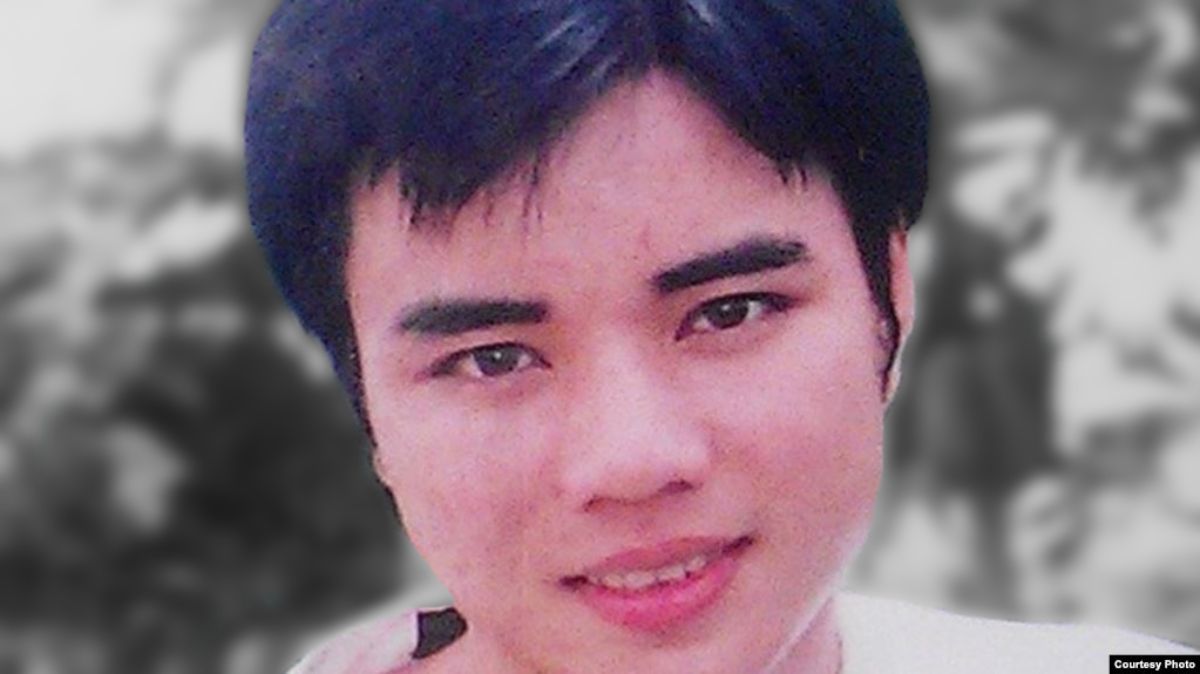
    Retired elementary school teacher Dao Quang Thuc passed away December 10 while serving time at Prison Camp #6, his son recently confirmed with Radio Free Asia. He was 58.

    Prison authorities in the north-central province of Nghe An claim Thuc suffered a stroke and died from a combination of brain hemorrhaging and bronchitis. Officials have denied the family’s request to return the body for burial and are currently holding it to perform an autopsy. Standard procedure dictates that Thuc will be buried at the prison cemetery, and the family will only be able to retrieve Thuc’s remains after three years.

    Prison Camp #6, in Nghe An province. Photos: Google Maps

    Thuc was arrested October 5, 2017 and convicted September 19, 2018 under Article 79 of the 1999 Penal Code for “attempting to overthrow the state”. He was serving his second year of a 13-year sentence and had previously staged hunger strikes in June and July of 2019 to protest poor prison conditions. Family and friends were brutally attacked by government-hired thugs for showing support.

    During his pre-trial imprisonment, Thuc himself had been tortured, beaten, and deprived of food, suffering a mental breakdown and high blood pressure, according to his daughter.

    Thuc was taken to Nghe An Friendship General Hospital on December 3rd after showing worsening symptoms; his family claims that prior to his time in prison, Thuc did not suffer from any health issues.

    “While we cannot say for sure what happened to Dao Quang Thuc, his death raises many questions that must be answered by the government,” Phil Robertson of Human Rights Watch has stated.

    Thuc had previously taught at Trieu Phuc Lich primary school in his home province of Hoa Binh, southwest of Hanoi. He often made Facebook posts critical of the government and had previously participated in protests against environmental degradation and Chinese territorial encroachment.

    Although freedom of speech and freedom of assembly are guaranteed by Article 25 of the 2013 Vietnamese Constitution, Communist Vietnam is a one-party, authoritarian state that does not tolerate challenges to its power. It stifles political pluralism and regularly punishes individuals who do not conform to sanctioned historical or political narratives.

  • Facilitator in EU-Vietnam Free Trade Agreement Fails to Disclose Links to Vietnamese Communist Party, Possibly Violating Code of Conduct

    Facilitator in EU-Vietnam Free Trade Agreement Fails to Disclose Links to Vietnamese Communist Party, Possibly Violating Code of Conduct

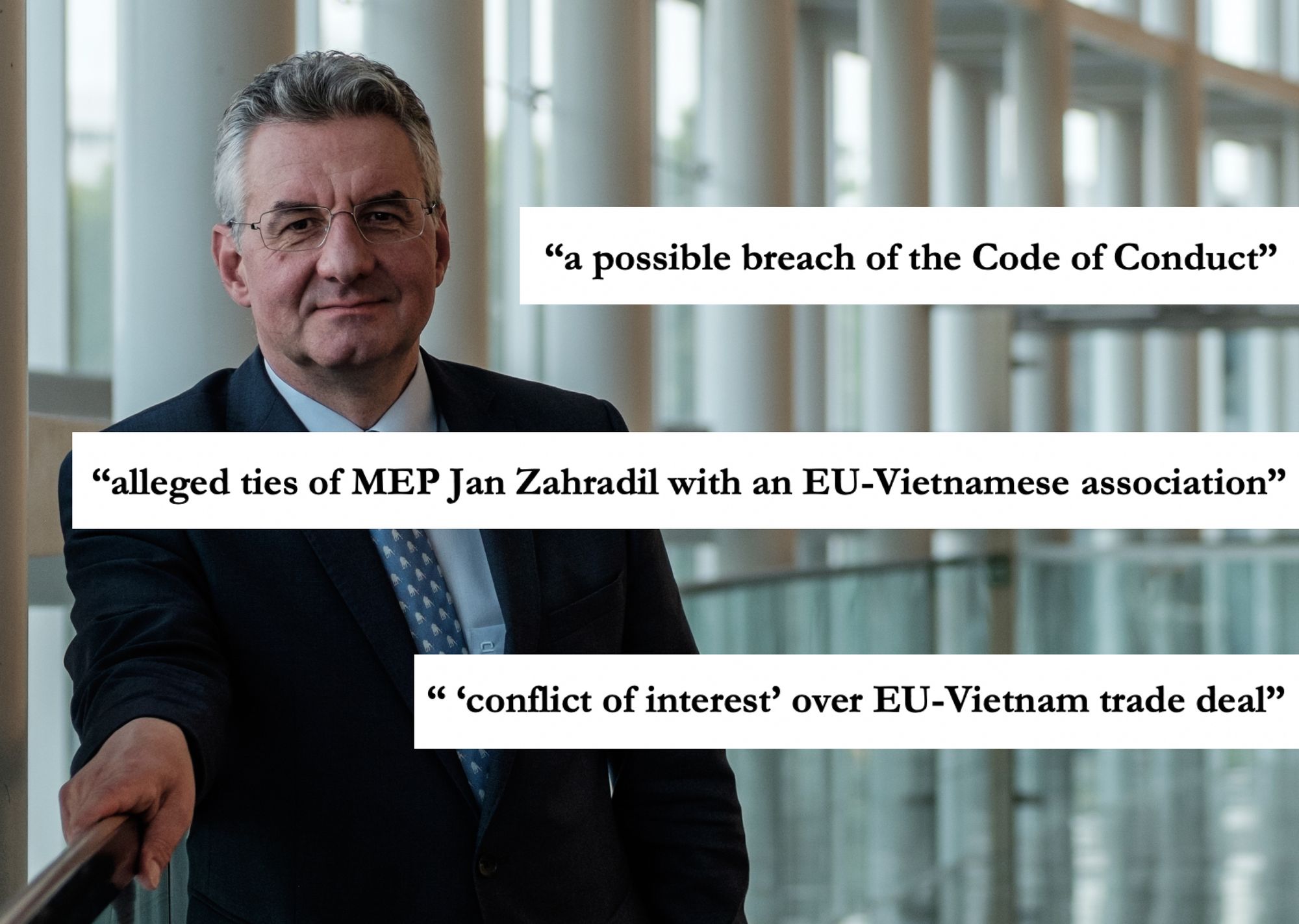
    Member of European Parliament (MEP) Jan Zahradil, who is currently the rapporteur (or facilitator) for a free trade agreement (EVFTA) and an investment protection agreement (IPA) between the European Union and Communist Vietnam, has failed to disclose his links to the Vietnamese Communist Party, in possible violation of the European Parliament Code of Conduct, a letter to the President of the European Parliament (EP) has revealed.

    The letter, sent by Philippe Lamberts, one of the co-presidents of the Greens/European Free Alliance Group, cites a recently published article by the EU Observer which accuses Zahradil of a “conflict of interest” after it was revealed that Zahradil failed to disclose that he was chairman of the Advisory Council to the Federation of Overseas Vietnamese Associations in Europe (FOVAE).

    The FOVAE is itself set up under the guidance of the Vietnamese Fatherland Front (VFF), a broad-based political organization controlled by the Vietnamese Communist Party. The Vietnamese Fatherland Front has been comparedto China’s United Front in its influence operations, and a 2016 official report from the Czech government confirmsthat the VCP uses the FOVAE as a means to control overseas Vietnamese communities.

    The EU Observer reports that Zahradil is also chair of a parliamentary “friendship group” to Vietnam, which is “[o]ften billed as a means to increase cultural understanding, promote values, and better inform the public […but is] in fact often backdoor entries for pariah governments seeking greater access to the European Parliament.”

    In response, Zahradil sought to downplay the FOVAE and friendship group’s significance, citing the former’s inactivity and the latter’s informality.  Ample evidence found by the EU Observer calls both of these assertions into question.

    In particular, the EU Observer cites examples from Vietnam’s own state-run media which show a healthy relationship between Zahradil and active FOVAE chairman Hoang Dinh Thang (who is also on the Presidential Committee of the VFF). Another articlefrom the Vietnam People’s Army website touts the efficacy of the parliamentary “friendship group” in advocating for the EVFTA.

    Regardless of these two groups’ relevance, Zahradil’s failure to disclose his links may directly violate Article 3 of the European Parliament’s Code of Conduct, which requires that “Members shall disclose, before speaking or voting in plenary or in one of Parliament’s bodies, or if proposed as a rapporteur, any actual or potential conflict of interest in relation to the matter under consideration”.

    Jan Zahradil is of Czech origin and has been an MEP since 2004. He is a member of the Civic Democratic Party and part of the rightwing Eurosceptic group “European Conservatives and Reformists” (ECR) in the EP. In addition to rapporteur for the EVFTA and IPA, he is also vice-chair of the EP’s International Trade Committee (INTA).

    Although the EVFTA and IPA have both been signed by Vietnam and their EU counterparts, the agreements (and their amendments) must be formally ratified by the European Parliament at its plenary session in February 2020 in order to take effect. NGOs and democracy groups insist Vietnam’s deteriorating human rights record must be improved before the EU proceeds with these agreements.

    Update: Jan Zahradil has resigned from his position as rapporteur for the EVFTA, effective December 10th.

  • Minister of Propaganda Says Vietnam’s Press Should Serve Party, Prevent “Self-Evolution”

    Minister of Propaganda Says Vietnam’s Press Should Serve Party, Prevent “Self-Evolution”

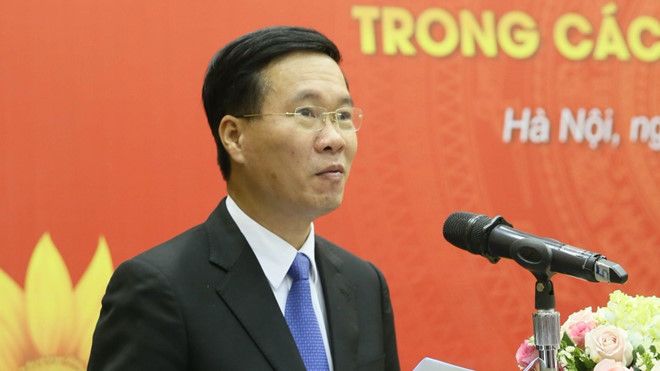
    At a conference on “Strengthening Party-building Work in Press Organizations” last Friday, Mr. Vo Van Thuong, head of Communist Vietnam’s Central Propaganda Committee, reminded attendees that the press must serve the Vietnamese Communist Party (VCP) and the revolution in order to function “stably” and “without error”.

    Referring to a government plan ratified earlier in the year to develop and manage press throughout the country until 2025, Thuong stated that the time for debate had passed and that strict implementation was now key. According to state media and in sentiment echoed by Thuong, the press serves as “an important channel to fight against incorrect information, fake news, news critical of the regime, and that which makes people lose trust in the Party-State.”

    In his remarks at the conference, Thuong stressed the importance of ideological work in press organizations and making sure Party cadres and Party members guard against signs of political, ideological, and moral decay. In particular, Thuong warned against signs of “self-development” and “self-evolution”, negative terms that refer to the shift towards liberal democratic values–values which are anathema to the ruling Communist Party.

    In this vein, Thuong took to admonishing journalists who lacked “proper training” and were critical of society but not sufficiently critical of themselves. He also stressed the importance of proper training for leadership and suggested greater oversight of the Party committees and organizations involved in press organizations, particularly when it comes to adherence to Party regulations.

    “In order to help press organizations develop self-awareness and a more proper nature, we should do as a number of comrades have stated: ‘Sometimes those who educate [Party members and cadres] must themselves be educated’,” Thuong stated.

    Thuong reminded attendees that Vietnam’s journalists were journalists of the revolution, journalists of the Party, and journalists of the state; as such, they should work closely with the Central Propaganda Committee, the Ministry of Information and Communication, various central Party committee blocs, and the Vietnamese Journalists Association, in order to strengthen the leadership of the Party.

    The plan approved April 2nd of this year also seeks to streamline Communist Vietnam’s press environment, limiting government bodies to one newspaper and one magazine, with a shift to electronic rather than print forms, and with the “Vietnamese Communist Party E-Newspaper” and the Central Propaganda Committee serving as the “core” of the country’s press structure.

    Along with head of propaganda, Thuong is also currently a member of the Politburo (short for “Political Bureau”, the leading body of the Vietnamese Communist Party), and the secretary of the Central Committee (from which members of the Politburo are chosen). In the past, Thuong was deputy secretary of the Ho Chi Minh City (HCMC) Standing Committee, first secretary of the Central Committee of the HCMC Communist Youth Union, and secretary of the Quang Ngai Provincial Party Committee.

    According to Reporters Without Borders, Vietnam ranks 176th out of 180 countries in terms of press freedom. Although freedom of the press is guaranteed by Article 25 of the 2013 Vietnamese Constitution, Communist Vietnam is a one-party, authoritarian state that does not tolerate challenges to its power. It controls all official media, newspapers, and publishing houses in the country and regularly censors material that does not conform to sanctioned historical or political narratives.

  • New Visa Rules Make It Easier for Foreigners to Work, Invest in Vietnam’s Coastal Economic Zones

    New Visa Rules Make It Easier for Foreigners to Work, Invest in Vietnam’s Coastal Economic Zones

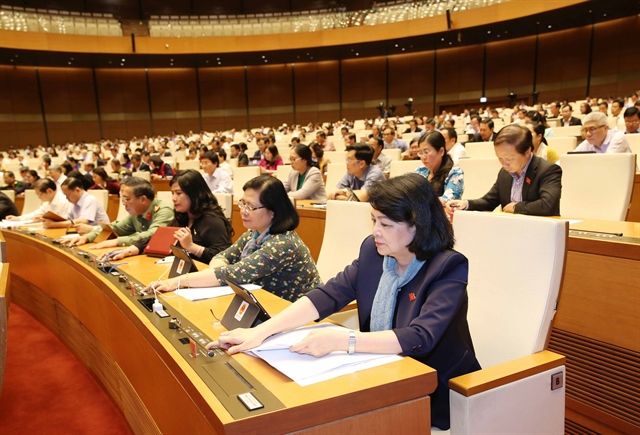
    On November 25, the National Assembly (NA) of Vietnam passed amendments to its Law on Entry, Exit, Transit, and Residence of Foreigners that would allow visa-free entry into coastal economic zones, as well as enable visa status changes from inside the country. The amendments were approved with 83.6% of the vote and go into effect July 1, 2020.

    The amendments stipulate that in order for a coastal economic zone to quality for the visa-free exemption, it must be separate from the mainland, possess clearly defined territory and boundaries, have an international airport, and must not compromise national security or national defense.

    Of note in the amendments is the alternate phrasing “special administrative-economic unit” used to refer to areas affected by the new law. The phrase “special economic zone” (SEZ) is considered sensitive after nationwide protests broke out in June of 2018, in opposition to a Special Economic Zones (SEZ) law that was being considered before the NA. The law would have established SEZs in Van Don, Bac Van Phong, and Phu Quoc, but widespread concern that the SEZs would be overrun by Chinese investors prompted the NA to shelve the law.

    Some Vietnamese have notedthat Van Don and Phu Quoc of the previously-shelved SEZ law both qualify for visa-free entry under the new amendments, sparking concerns that the government is attempting to circumvent popular opposition. Representatives of the NA themselves have expressedconcerns that opening up these areas to visa-free travel may pose a national security threat and have requested greater government regulation.

    But Vo Trong Viet, chairman of the NA Committee on National Defense and Security, has argued that “the amendments would make it easier for foreigners to stay in Vietnam to learn about the market, and look for jobs and investment opportunities without wasting time and money on immigration procedures.”

    Also included in the amendment is a stipulation allowing foreigners to change or renew their visa status while inside Vietnam, instead of having to leave the country entirely, as was previous practice. The amendment allows for visa changes by individuals in specific circumstances: “visitors who can prove they are investors or representatives of foreign organizations that make legal investments in Vietnam” and their family members, as well as foreign workers who receive job offers or enter with e-visas (provided they have the requisite work permit or work permit exemption).

    Vietnam’s National Assembly, elected in 2016 and currently in its 14th session, consistsof 496 members, 475 of which belong to the Communist Party (the remaining 21 are independents). Though largely considered a “rubber stamp” parliament due to a lack of public consultation and debate, discussions over pieces of legislation have increased in recent years, and the NA has begun to assume a larger political role in the eyes of the public. The NA meets twice a year to formally ratify laws, with individual members serving five-year terms.

    Elections for the 15th session of the NA are set to take place in 2021.