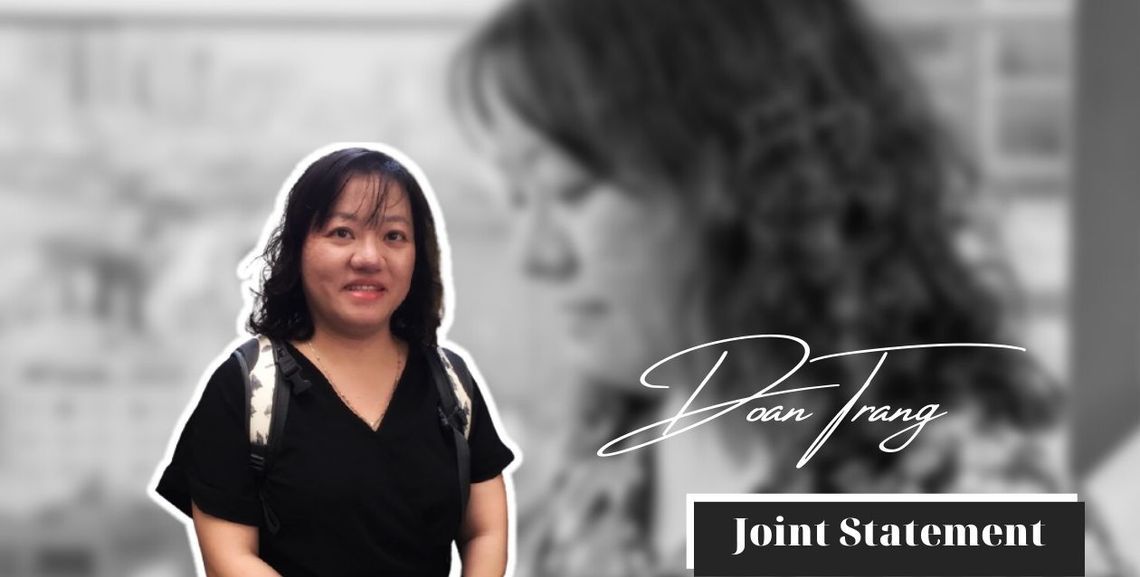
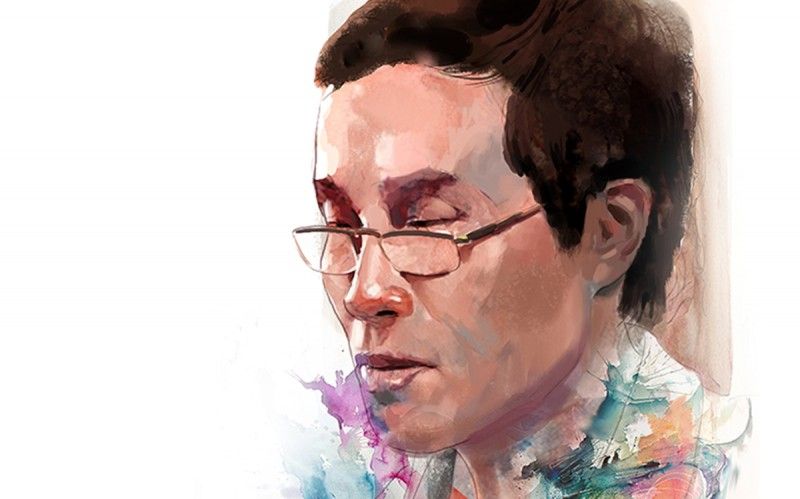
OCT 26 2021– Legal Initiatives for Vietnam (LIV), alongside 27 other non-governmental organizations (NGOs) released a joint statement calling for the immediate release of independent journalist and human rights advocate, Pham Doan Trang. Trang, one of the “best-known independent writers in Vietnamese civil society” who is also “recognized internationally for her human rights advocacy,” was arrested at her home in Ho Chi Minh City on October 7, 2020. She is currently being charged under Article 88 of the 1999 Penal Code which criminalizes ‘making, storing, distributing or disseminating information, documents, and items against the Socialist Republic of Vietnam.’
The statement comes ahead of Trang’s upcoming trial which is scheduled to take place on November 4, 2021. However, information about her trial was only made public on October 18, 2021, more than a year after her arrest.
The joint statement claims that Pham Doan Trang’s persecution is due to her “long-standing work as an independent journalist, book publisher, and human rights defender, known for writing about topics ranging from environmental rights to police violence, as well as for her advocacy for press freedom.”
Since her arrest, she has also been held incommunicado and has been denied contact with her family and her lawyers, only being allowed to get in touch with them on October 19, 2021, a day after the public announcement of her trial. Trang’s lawyer also notes that his client’s legs, which were broken in the past by the police in 2015, were in greater pain due to Trang being denied adequate medical care during her detention; she has also lost a lot of weight and has not been allowed to see any doctors to treat her other pre-existing medical conditions.
In light of this information, LIV and its allies unanimously call for the Vietnamese government to:
Immediately and unconditionally release and drop all charges against Pham Doan Trang and all other human rights defenders currently imprisoned solely for the peaceful exercise of their human rights and fundamental freedoms;
Pending her immediate and unconditional release, guarantee humane treatment and conditions, and ensure prompt access to medical attention;
Guarantee Doan Trang unrestricted access to and regular communication with her family and confidential access to legal assistance of her choosing;
Ensure that her chosen lawyers are promptly provided with timely access to all relevant legal documentation and granted unrestricted communication and access in confidentiality with Doan Trang and adequate time and facilities to prepare for her defense;
Ensure the trial is open to the public, including diplomatic and human rights civil society observers and the media, and refrain from any arbitrary restriction on travel or interference of trial observers, media, and civil society preceding and during the trial;
Repeal or substantially amend the Penal Code and other non-human rights compliant legislation, used to harass and imprison individuals—including independent journalists and human rights defenders—for the exercise of their fundamental rights, and bring them in conformity with the International Covenant on Civil and Political Rights to which Vietnam has been a State Party since 1982, and other applicable international law and standards.
———-
The full English text for the joint statement can be found here.
The Vietnamese language version can be found here.
The 88 Project commenced and was joined by 12 other human rights organizations to sign and publish an open letter, addressed to current U.S. Vice President Kamala Harris, ahead of her planned mission to Singapore and Vietnam.
The intentions of her visit, as previously reported by Nikkei Asia, are to strengthen U.S presence in the Southeast Asian region, and to discuss the issues of climate change, regional security, and the Covid-19 pandemic.
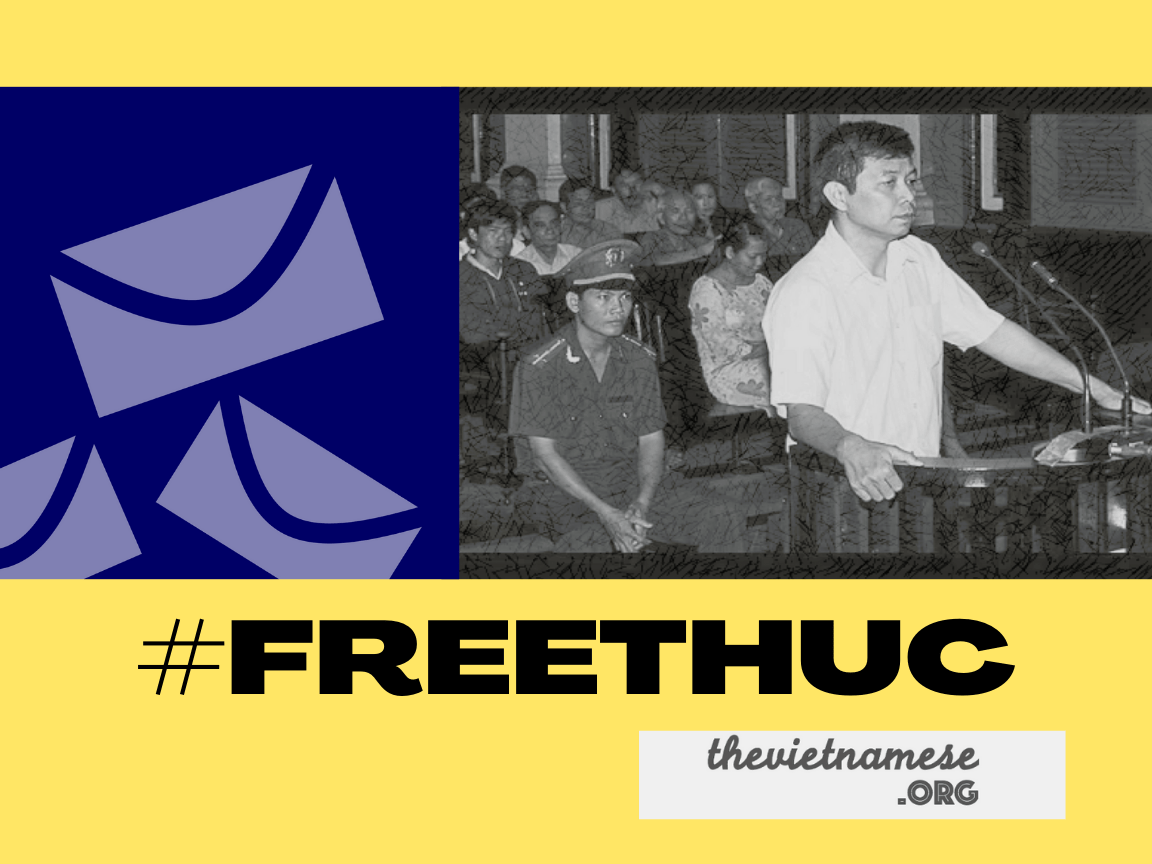
Released on Wednesday, August 18, 2021, the letter urges the Vice President to “empathize the importance of human rights with Vietnamese leaders” and also calls for specific action to be taken regarding the situation of Tran Huynh Duy Thuc, a prominent Vietnamese democracy activist whose health is slowly deteriorating due to his prolonged hunger strike.
In 2010, Thuc was sentenced to 16 years in prison for writing and publishing online articles calling for a multi-party democratic system in Vietnam. The letter also claims that Thuc’s imprisonment, detention, and subsequent treatment at the hands of Vietnamese authorities are blatant infringements of his right to a fair trial under the International Covenant on Civil and Political Rights, and the Vietnamese Constitution itself. He has also been subject to various forms of physical and mental duress which violate the international prohibition against torture.
The 12 signatories of the open letter implore U.S. Vice President Kamala Harris to express her concern regarding this blatant denial of Thuc’s human rights, in her discussions with Vietnamese leaders, and to call for his immediate and unconditional release.
After nearly 100 days of zero new confirmed cases in the local community, within the last 10 days, there has been a jump in the number of patients contracting the virus in various cities in Vietnam.
According to official figures, in the six months from January 23 to July 25, there were only 140 local cases, the rest were imported patients, and zero fatalities. Since July 25, in a period of less than two weeks, more than 300 new local cases have been confirmed with 10 deaths so far.
Da Nang, the third largest city of the country, has become the new epicenter of the pandemic.
While this new surge seems to have caught the entire nation by surprise, in reality it is a scenario that was long written on the wall, with the pandemic having never really ceased to rock countries after it first appeared on the world stage in January 2020 (the first reported case outside of China). And though it has created a new scare among citizens, it is a positive and necessary alarm.
Empty street in Hoi An city in August 2020. Photo Courtesy: The Vietnamese
To the moon and back
More than three months without domestic positive cases had put the whole nation in a complacent mode. Even the health care staff at hospitals had lowered their guard. Most of the initial cases from July 25 were linked to patients and their caretaker relatives in Da Nang hospitals.
Since then, the virus has quickly spread throughout the community and to other cities.
Fortunately, it does not take long for the whole system to restart and quickly return to crisis mode. Da Nang was almost immediately put under partial lockdown, with thorough contact tracing being carried out for every new case. People who had been in close contact with new positive cases were put under quarantine. Medical teams and personnel from Hanoi and Ho Chi Minh were sent to the epicenter to help relieve the pressure and the wearing of face masks in public in big cities became mandatory again.
There is reason to be optimistic about the ability of the country to contain the new wave despite it having caught everyone off guard.
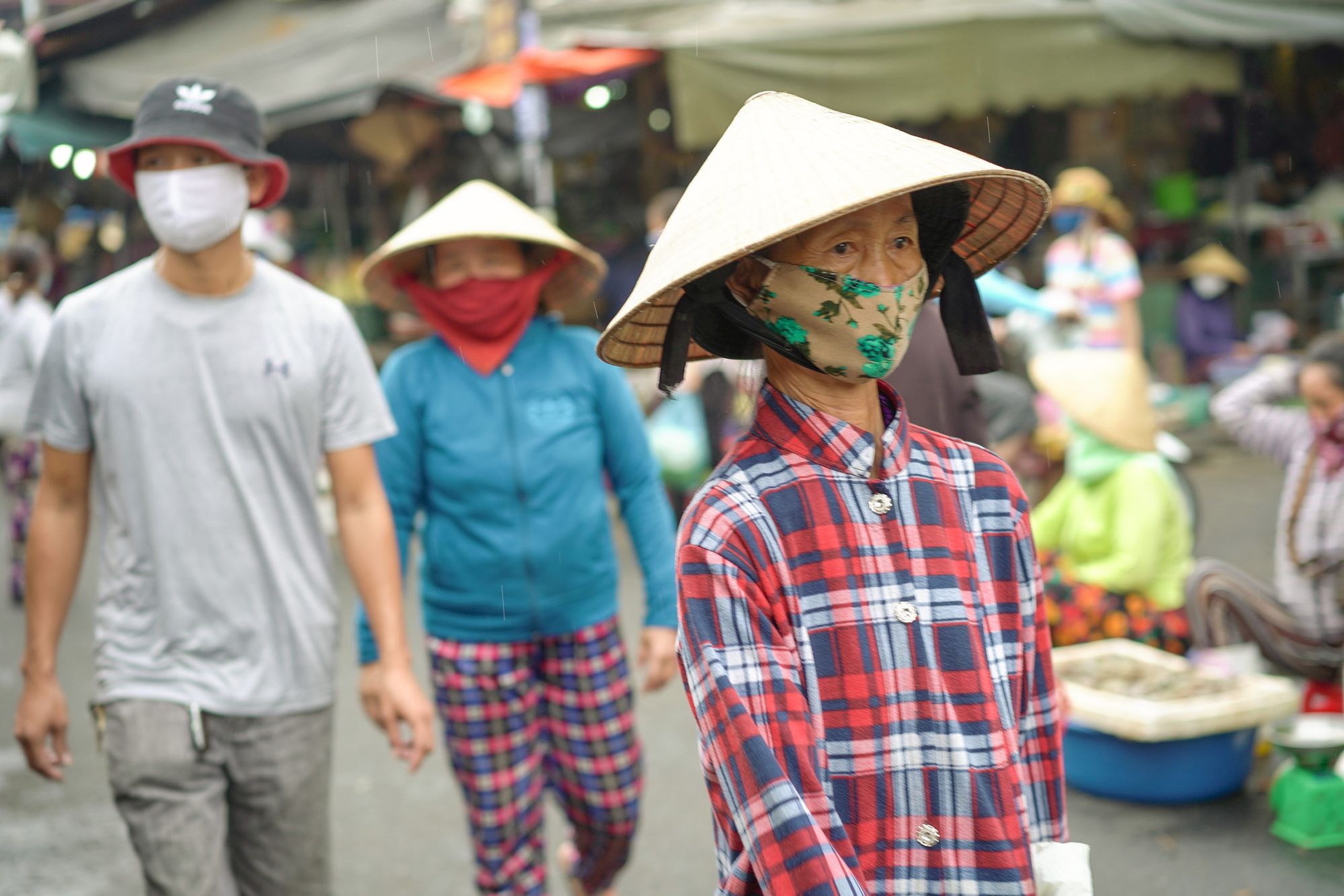
Local wet market in Hoi An City. Photo courtesy: The Vietnamese
Through the looking glass of Taiwan
With the initial success in containing Covid-19, there has been an ongoing debate among citizens on whether Vietnam’s authoritarian system is better equipped than other democratic societies to cope with a pandemic. However, focusing on governing systems might miss some critical points.
Comparing Vietnam with Taiwan, an exemplary success in the fight against this pandemic, may provide some useful insights.
At first glance, the two countries could not be more different. One is a communist state, the other one of the most vibrant democratic systems in the world. At closer look, Vietnam and Taiwan share some vital similarities in the fight against Covid-19.
They both are next to China, the origin of the pandemic. Both governments, and especially their people, have the same distrust of the Chinese Communist Party, hence the high alert mode from the very beginning, long before other countries took this infectious disease seriously. They also share painful experiences from the SARS pandemic in 2003, which also originated from China. With those scars still fresh in mind, going through this crisis is like bathing in the same river twice. They knew how and where to swim.
The culture and society also played an important role here.
Both countries are still dominated by Confucious-like ideals about the need for a harmonious society where collectivism trumps individualism. In the case of major crises like a pandemic, this kind of mindset helps glue the community together faster, quickly putting everyone into the same “for the common good” mode.
This particular pandemic, Covid-19, in which the elderly are the most vulnerable, also highlights one important aspect: how societies treat and value their aged populations.
In Vietnam, like Taiwan, most families have at least one senior member living under the same roof. Therefore, most people, even the younger generations, despite being in low-risk groups, still voluntarily took extra precautions to protect their family members.
Opportunities lie in the midst of every crisis, as the old saying goes. And there are many opportunities for a change-demanding society like Vietnam.
While the resurgence has shattered the illusion of exceptionalism, deflating many hardcore aficionados of the authoritarian system, it has also inflated the constant alert mindset, which is a life-and-death difference in the fight against most infectious diseases.
The health crisis also puts the whole governing system in the spotlight, pushing the need for greater transparency and accountability.
With the virus always seeming to have a head start, the authorities have had no other option than to constantly play catch-up. Around-the-clock updates and publicized data and numbers are now the new normal. Government officials are forced to focus on containing the spread of the pandemic. Even when the pandemic is over, it is hard to imagine returning to “the old normal”.
The virus has also created space for a newborn civil society. With the government’s resources stretched thin and vastly inadequate, citizens and volunteer groups have organized themselves for a wide range of mutual-support activities, from donating basic necessities to setting up coordinating teams to offer transportation for supplies and people in need. Again, when the pandemic is over, citizens who have trained themselves in this new normal will not be easily caged again. Instead, they will demand a greater place on the stage in building a common and better society for themselves.
A deadly pandemic is obviously not an ideal scenario to push for a positive change in any society. But as in any crisis, a good response brings along good reforms.
There are reasons to be optimistic about the emergence of some form of positive change after the country has gone through this extraordinary period.
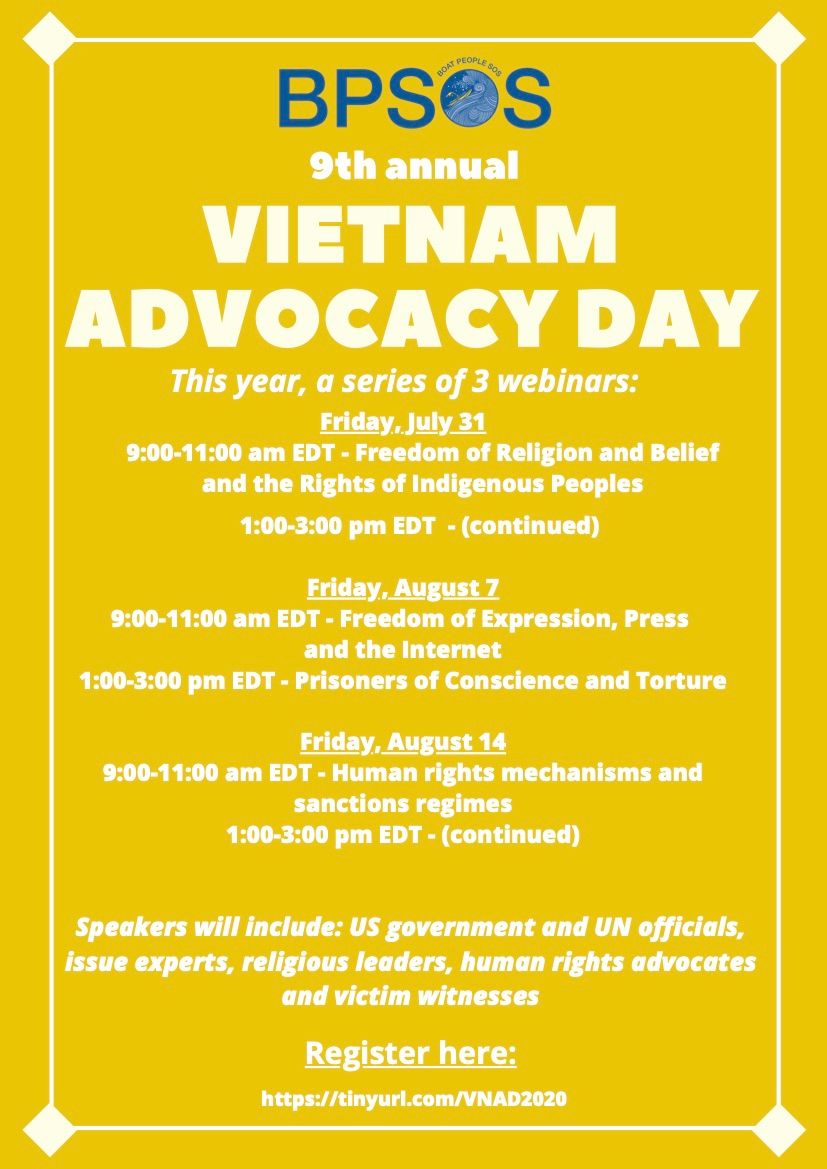
Vietnam Advocacy Day is an annual event, organized by Boat People SOS, where Vietnamese Americans across the United States come to Washington, DC to meet with their representatives to voice about human rights issues in Vietnam and to connect with other Vietnamese diaspora community, human rights witnesses and advocates. Due to COVID-19, the 9th annual VNAD 2020 will take place through several webinars.
Please register for the webinars at the links below.
Webinar 1: Friday July 31st, 9AM- 11AM EDT
Topic: Freedom of Religion and the Rights of Indegenous Peoples
While the world death toll due to COVID-19 has topped 190,000 cases and many countries around the world have reported an alarming number of fatalities — from 50 deaths in Thailand to more than 50,000 in the US — Vietnam, along with neighboring countries, Laos and Cambodia, has reported a total of zero deaths.
Although the Vietnamese government has recorded 268 COVID cases and shown strong public health initiatives, including a handwashing song that went viral, nevertheless, the reported zero deaths and relatively low cases are questionable, especially coming from an authoritarian country with a record of bending the truth.
A “Textbook Approach”
Vietnam does deserve credit for having made an early response, even before the country saw its first case. According to The Diplomat, the Ministry of Health issued urgent messages on outbreak prevention to government agencies on January 16 and to hospitals and clinics nationwide on January 21. The country recorded its first cases on January 23 in Ho Chi Minh City, just two days before the Tet Lunar New Year holiday.
Todd Pollack, an infectious disease specialist at Harvard Medical School who works with a Harvard initiative in Hanoi, Health Advancement in Vietnam (HAIVN), told Reuters that Vietnam learned its lesson after the SARS outbreak in 2003 and adopted a textbook approach in its early response strategy.
On March 16, Vietnam began compulsory testing and a 14-day quarantine for persons in virus-hit areas as well as some arrivals from overseas. Some of the quarantine camps were set up at military bases. According to Reuters, the numbers quarantined reached at least 44,955.
While democratic countries, such as Taiwan, South Korea, and the United States, have mostly enforced home quarantines, authoritarian countries like China and Vietnam have resorted to quarantine camps with questionable practices.
Were the Government’s Actions Enough?
The Vietnamese government’s actions have been praised as a low-cost model for developing countries. While wealthier nations like Taiwan and South Korea have been able to perform mass testing, Vietnam’s method of contact tracing and quarantining is relatively less expensive.
North Korea has also reported no deaths. Western officials suspect the reported numbers coming out of China, Saudi Arabia, Iran, Russia, and Indonesia.According to a U.S.-intelligence report confirmed by Bloomberg, China’s public tally of COVID-19 infections and deaths is false.
In more developed Asian countries like Taiwan, South Korea and Singapore, which also share the recent memory of the 2009 H1N1 and 2003 SARS pandemics, they also reacted to COVID-19 with strong public health measures. But despite these countries’ greater wealth, resources and expertise (as well as the lack of a border with China), they have more COVID-19 cases and deaths than Vietnam: South Korea 240 deaths, 10,702 cases; Singapore 12 deaths, 11,718 cases; Taiwan 6 deaths, 427 cases.
In South Korea, the fatality rate among confirmed cases is 2.2 percent; the United States is 4.3 percent and in Italy (with a large elderly population), the fatality rate is 12.8 percent. Compared to the rest of the world, Vietnam’s zero death rate among 268 cases is statistically significant.
To further repress the sharing of information, Vietnam began fining people for spreading “fake news” with a new decree drafted in February. This decree (the official number is 15/2020/NĐ-CP) updates the cybersecurity law passed last year with more stringent measures, including penalties against anyone sharing banned publications or using social media to share false, untruthful, distorted, or slanderous information.
“This decree provides yet another potent weapon in the Vietnamese authorities’ arsenal of online repression,” Tanya O’Carroll, director of Amnesty International Tech, told Reuters. “It contains a raft of provisions that blatantly violate Vietnam’s international human rights obligations”.
Hundreds of fines have already been handed out, with fines ranging from 10-20 million dong ($426-$853), equivalent to around three to six months’ basic salary in Vietnam, Reuters reports. In March, a woman in Ha Tinh was fined for a Facebook post in which she incorrectly said the coronavirus had spread to her local community.
Vietnam Under Lockdown
Even if the international community were to believe that Vietnam’s reporting of zero COVID-19 deaths is accurate, it begs the question: Why did the government mandate a lockdown, put the economy in dire straits, continue to expend a great deal of resources quarantining thousands of people and encourage people to maintain a social distance?
For instance, why not follow Sweden’s policy, which has steered clear of mandating a lockdown and only advised people to avoid non-essential activities. Four U.S. states also have no lockdown.
Some observers believe that the Vietnamese government can earn a great public image by touting zero deaths and indeed, the Vietnamese government has been praising itself in state-owned media and winning acclaim internationally, including in NPR and The World Economic Forum.
Furthermore, the zero death count helps to shore up a belief among Vietnamese citizens that the authoritarian system is better able than democratic countries to handle crises. Prime Minister Nguyen Xuan Phuc has described Vietnam’s actions to control the virus as the “spring general offensive of 2020,” referring to the 1968 Tet Offensive by Communist forces during the Vietnam-American war.
“Autocrats love a crisis,” writes Michael Abramowitz and Arch Puddington of Freedom House in a Los Angeles Times op-ed. The writers describe Turkey, Venezuela and Russia using various crises to entrench their power, such as the 2004 school bombing in Russia and the failed coups in Turkey and Venezuela. It’s clear Vietnam has been taking notes from other authoritarian powers as it has exploited the health crisis to strengthen its power and take away freedom of speech from citizens.
As the rest of the world continues tallying up its death count, Vietnam is now being closely watched by international observers to see whether the country will be able to control the spread of the virus – or suppress the truth – in the long run.
U.S. News and World Report ranked Communist Vietnam the 32nd most powerful country in the world in 2019, placing it ahead of nearly all of its peers in the region, with the exception of Singapore, which came in 20th. Of the 80 countries included in the survey, Indonesia ranked 47th, the Philippines 51st, Myanmar 53rd, Thailand 54th, and Malaysia 58th.
The magazine defines powerful countries as those who “consistently dominate news headlines, preoccupy policymakers and shape global economic patterns” and forms its rankings “based on an equally weighted average of scores from five country attributes that related to a country’s power: a leader, economically influential, politically influential, strong international alliances and strong military.”
Communist Vietnam rose two spots in the rankings from 2018, bolstered in particular by its high score for “strong military”. The country’s weakest attribute was its lack of “strong international alliances”, an area which is unlikely to improve, according to the country’s recently released defense white paper.
Communist Vietnam released its 2019 defense white paper November 25, in both English and Vietnamese. It has released such reports irregularly, in 1998, 2004, and 2009. Photo: VNExpress
The paper was the first of its kind released in more than a decade, and at its official launch November 25, Deputy Minister of National Defense Senior Lieutenant General Nguyen Chi Vinh highlighted the “4 No’s” that would guide Communist Vietnam’s foreign policy: “Vietnam will not join any military alliances, will not associate with one party to oppose another, will not allow foreign countries to set up a military [base] in the country…” and “will not use force or threaten the use of force in international relations” unless it is under attack.
In an interview with VNExpress, Vinh defended the country’s policy of no military alliances, stating that “Being a part of such an alliance means you have to completely align with one side and possibly have to confront the other, which means more enemies. Vietnam does not stand by any side but peace, reason, justice, and international laws.”
In writing the white paper, the Central Military Commission (CMC, the highest party organ in Communist Vietnam on military policy) and the Ministry of National Defense (MND) said they consulted with representatives of former senior military leaders, as well as with members of the public who expressed reservations about non-alignment.
The CMC and the MND defended their position, equating non-alignment with independence: “Countries that are members of such an alliance will be placed under the leadership of one country, normally a large and powerful one, and will have to adhere to that union’s principles, even when they are not entirely compatible with the country. Member nations of such a bloc will no longer be independent and have the autonomy to decide things on their own.”
Vietnam watchers have acknowledged that the country’s one-party regime is in a difficult position politically, and an active alliance with either the US or China would bring about its own set of challenges, some existential.
The country’s policy of pacifism, self-defense, non-alignment, and multilateralism, however, belies the strong language it uses against encroachment in the East Sea and even stronger language wielded against “hostile forces” in the domestic realm.
Without explicitly calling out China as the culprit of “unilateral actions” and “power-based coercion”, a section in the white paper makes Vietnam’s opposition clear:
New developments in the East Sea, including unilateral actions, power-based coercion, violations international law, militarisation, change in the status quo, and infringement upon Viet Nam’s sovereignty, sovereign rights, and jurisdiction as provided in international law, have undermined the interests of nations concerned and threatened peace, stability, security, safety, and freedom of navigation and overflight in the region.
Communist Vietnam uses even less-restrained language for its domestic opponents, whom it considers to be at virtual war with:
The hostile forces who conspire with reactionaries and political opportunists inside the country have no given up their plots against the Vietnamese revolution. They focus on destroying political, ideological foundation with a view to eliminating the leading role of the CPV and the socialist regime in Viet Nam, “depoliticising” the VPA, sowing division in the entire nation’s great unity, and driving a wedge between the people and the CPV and the VPA.
“Hostile forces” and “reactionaries” “against the revolution” are blanket phrases that the Vietnamese Communist Party (VCP or CPV) reserves for those who seek to end the Party’s monopoly on power. State media routinely uses these terms to describe activists, dissidents, and those who advocate multi-party democracy and liberal values. That the Vietnamese communist revolution ended in 1986 with capitalist market reforms has not abated the usage of these anachronistic and binary terms.
The VCP also implicitly acknowledges the threat social media and online sources of information pose to “national defense”, and similar to other authoritarian, one-party states, conflates Party security with national security. A cybersecurity law that sparked nationwide protests in 2018 went into effect at the beginning of 2019, and the end of 2019 has seen an upsurge of Vietnamese citizens arrested for writing Facebook posts critical of the communist regime.
According to the white paper, Communist Vietnam’s defense spending totaled approximately 5.8 billion USD in 2018, equivalent to 2.3 percent of GDP, an increase from 2.23 percent in 2010. For comparison, the United States spends 3.2 percent of GDP on defense, while China spends only 1.9 percent.
The full English copy of Communist Vietnam’s 2019 defense white paper can be found here, courtesy of Carlyle Thayer, emeritus professor at The University of New South Wales, Canberra.
Communist Vietnam is also set to assume the rotating chairmanship of the Association of Southeast Asian Nations (ASEAN) from 2020-2021, where according to Thayer, the country will be “in a position to exert strong leadership on Code of Conduct issues [in the East Sea] through bilateral consultations with other ASEAN members and by setting the agenda and issuing the Chairman’s statement at all relevant ASEAN meetings and at all ASEAN Plus meetings.”
Though ideologically aligned with China, Communist Vietnam has often been the lone member of ASEAN to speak up forcefully against Chinese activities in the East Sea, a trend which looks to continue. Vietnam’s deputy foreign minister, Nguyen Quoc Dung, commented at a lecture at The Institute of Southeast Asian Studies in Singapore that he “hope[s…] during our chairmanship China will show restraint and refrain from these activities [that violate Vietnam’s Exclusive Economic Zone],” adding that “it wasn’t that other ASEAN countries supported China’s actions, but that they did not protest in the same way.”
Disputed claims in the East Sea (also known as the South China Sea or the West Philippine Sea). Photo: The Economist
The ASEAN chairmanship rotates through its ten members annually, in alphabetical order. Communist Vietnam last served in the position in 2010.
Concurrently, 2020 will also see Communist Vietnam serve as a non-permanent member of the UN Security Council (UNSC), a position which it bid on and won by unanimous vote. The two-year term will begin in January 2020, and joining the country on the UNSC will be Estonia, Niger, Saint Vincent and Grenadines, and Tunisia.
According to The Diplomat, “during [Vietnam’s] campaign for the seat and in comments thereafter, officials have indicated that [their goals] would generally include areas such as promoting sustainable development and advancing preventive diplomacy, drawing on Vietnam’s own historical experience with war and peace as well as contemporary events such as its hosting of the second Trump-Kim summit.” Communist Vietnam last held a seat on the UNSC in 2008-2009.
Retired elementary school teacher Dao Quang Thuc passed away December 10 while serving time at Prison Camp #6, his son recently confirmed with Radio Free Asia. He was 58.
Prison authorities in the north-central province of Nghe An claim Thuc suffered a stroke and died from a combination of brain hemorrhaging and bronchitis. Officials have denied the family’s request to return the body for burial and are currently holding it to perform an autopsy. Standard procedure dictates that Thuc will be buried at the prison cemetery, and the family will only be able to retrieve Thuc’s remains after three years.
Prison Camp #6, in Nghe An province. Photos: Google Maps
Thuc was arrested October 5, 2017 and convicted September 19, 2018 under Article 79 of the 1999 Penal Code for “attempting to overthrow the state”. He was serving his second year of a 13-year sentence and had previously staged hunger strikes in June and July of 2019 to protest poor prison conditions. Family and friends were brutally attacked by government-hired thugs for showing support.
During his pre-trial imprisonment, Thuc himself had been tortured, beaten, and deprived of food, suffering a mental breakdown and high blood pressure, according to his daughter.
Thuc was taken to Nghe An Friendship General Hospital on December 3rd after showing worsening symptoms; his family claims that prior to his time in prison, Thuc did not suffer from any health issues.
“While we cannot say for sure what happened to Dao Quang Thuc, his death raises many questions that must be answered by the government,” Phil Robertson of Human Rights Watch has stated.
Thuc had previously taught at Trieu Phuc Lich primary school in his home province of Hoa Binh, southwest of Hanoi. He often made Facebook posts critical of the government and had previously participated in protests against environmental degradation and Chinese territorial encroachment.
Although freedom of speech and freedom of assembly are guaranteed by Article 25 of the 2013 Vietnamese Constitution, Communist Vietnam is a one-party, authoritarian state that does not tolerate challenges to its power. It stifles political pluralism and regularly punishes individuals who do not conform to sanctioned historical or political narratives.
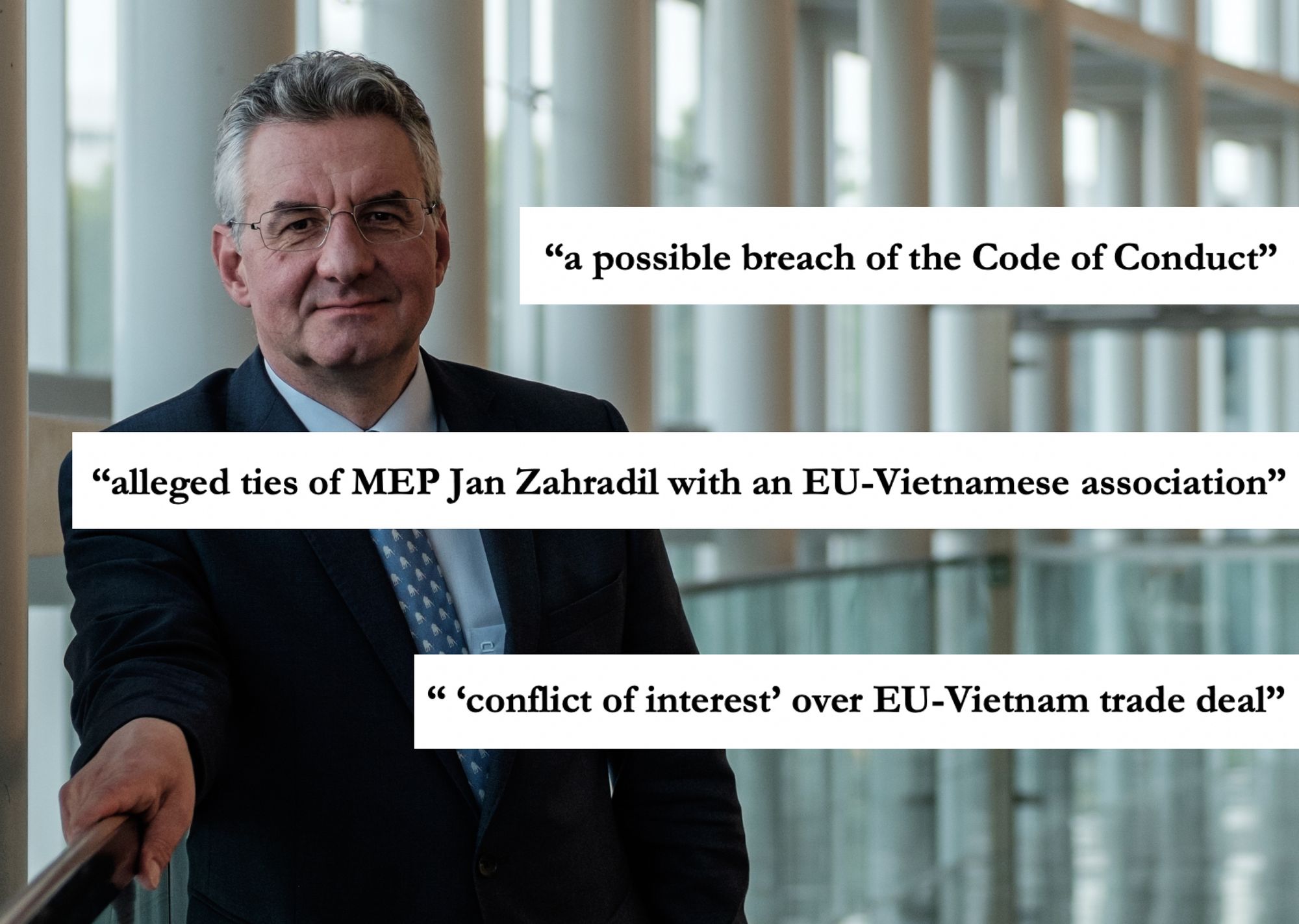
Member of European Parliament (MEP) Jan Zahradil, who is currently the rapporteur (or facilitator) for a free trade agreement (EVFTA) and an investment protection agreement (IPA) between the European Union and Communist Vietnam, has failed to disclose his links to the Vietnamese Communist Party, in possible violation of the European Parliament Code of Conduct, a letter to the President of the European Parliament (EP) has revealed.
The letter, sent by Philippe Lamberts, one of the co-presidents of the Greens/European Free Alliance Group, cites a recently published article by the EU Observer which accuses Zahradil of a “conflict of interest” after it was revealed that Zahradil failed to disclose that he was chairman of the Advisory Council to the Federation of Overseas Vietnamese Associations in Europe (FOVAE).
The FOVAE is itself set up under the guidance of the Vietnamese Fatherland Front (VFF), a broad-based political organization controlled by the Vietnamese Communist Party. The Vietnamese Fatherland Front has been comparedto China’s United Front in its influence operations, and a 2016 official report from the Czech government confirmsthat the VCP uses the FOVAE as a means to control overseas Vietnamese communities.
The EU Observerreports that Zahradil is also chair of a parliamentary “friendship group” to Vietnam, which is “[o]ften billed as a means to increase cultural understanding, promote values, and better inform the public […but is] in fact often backdoor entries for pariah governments seeking greater access to the European Parliament.”
In response, Zahradil sought to downplay the FOVAE and friendship group’s significance, citing the former’s inactivity and the latter’s informality. Ample evidence found by the EU Observer calls both of these assertions into question.
In particular, the EU Observer cites examples from Vietnam’s own state-run media which show a healthy relationship between Zahradil and active FOVAE chairman Hoang Dinh Thang (who is also on the Presidential Committee of the VFF). Another articlefrom the Vietnam People’s Army website touts the efficacy of the parliamentary “friendship group” in advocating for the EVFTA.
Regardless of these two groups’ relevance, Zahradil’s failure to disclose his links may directly violate Article 3 of the European Parliament’s Code of Conduct, which requires that “Members shall disclose, before speaking or voting in plenary or in one of Parliament’s bodies, or if proposed as a rapporteur, any actual or potential conflict of interest in relation to the matter under consideration”.
Jan Zahradil is of Czech origin and has been an MEP since 2004. He is a member of the Civic Democratic Party and part of the rightwing Eurosceptic group “European Conservatives and Reformists” (ECR) in the EP. In addition to rapporteur for the EVFTA and IPA, he is also vice-chair of the EP’s International Trade Committee (INTA).
Although the EVFTA and IPA have both been signed by Vietnam and their EU counterparts, the agreements (and their amendments) must be formally ratified by the European Parliament at its plenary session in February 2020 in order to take effect. NGOs and democracy groups insist Vietnam’s deteriorating human rights record must be improved before the EU proceeds with these agreements.
Update: Jan Zahradil has resigned from his position as rapporteur for the EVFTA, effective December 10th.
On November 25, the National Assembly (NA) of Vietnam passed amendments to its Law on Entry, Exit, Transit, and Residence of Foreigners that would allow visa-free entry into coastal economic zones, as well as enable visa status changes from inside the country. The amendments were approved with 83.6% of the vote and go into effect July 1, 2020.
The amendments stipulate that in order for a coastal economic zone to quality for the visa-free exemption, it must be separate from the mainland, possess clearly defined territory and boundaries, have an international airport, and must not compromise national security or national defense.
Of note in the amendments is the alternate phrasing “special administrative-economic unit” used to refer to areas affected by the new law. The phrase “special economic zone” (SEZ) is considered sensitive after nationwide protests broke out in June of 2018, in opposition to a Special Economic Zones (SEZ) law that was being considered before the NA. The law would have established SEZs in Van Don, Bac Van Phong, and Phu Quoc, but widespread concern that the SEZs would be overrun by Chinese investors prompted the NA to shelve the law.
Some Vietnamese have notedthat Van Don and Phu Quoc of the previously-shelved SEZ law both qualify for visa-free entry under the new amendments, sparking concerns that the government is attempting to circumvent popular opposition. Representatives of the NA themselves have expressedconcerns that opening up these areas to visa-free travel may pose a national security threat and have requested greater government regulation.
But Vo Trong Viet, chairman of the NA Committee on National Defense and Security, has argued that “the amendments would make it easier for foreigners to stay in Vietnam to learn about the market, and look for jobs and investment opportunities without wasting time and money on immigration procedures.”
Also included in the amendment is a stipulation allowing foreigners to change or renew their visa status while inside Vietnam, instead of having to leave the country entirely, as was previous practice. The amendment allows for visa changes by individuals in specific circumstances: “visitors who can prove they are investors or representatives of foreign organizations that make legal investments in Vietnam” and their family members, as well as foreign workers who receive job offers or enter with e-visas (provided they have the requisite work permit or work permit exemption).
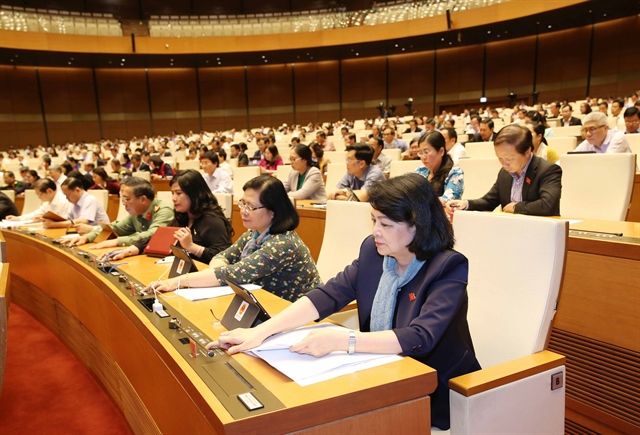
Vietnam’s National Assembly, elected in 2016 and currently in its 14th session, consistsof 496 members, 475 of which belong to the Communist Party (the remaining 21 are independents). Though largely considered a “rubber stamp” parliament due to a lack of public consultation and debate, discussions over pieces of legislation have increased in recent years, and the NA has begun to assume a larger political role in the eyes of the public. The NA meets twice a year to formally ratify laws, with individual members serving five-year terms.
Elections for the 15th session of the NA are set to take place in 2021.
Journalist Nguyen Huu Vinh (whose pen name is Anh Ba Sam) faced quite a few peculiar encounters in Prison Center Number 5, Yen Dinh district, Thanh Hoa province in recent months.
According to Le Thi Minh Ha, his wife, on December 9, 2018, a man in a police uniform came to visit Vinh in his prison cell and spent an hour and a half talking to him. At the end of their conversation, the man left behind an envelope full of money and told Vinh that after his release from prison he should support To Lam, the current minister of public security – the national police force in Vietnam.
Mrs. Ha told Luat Khoa magazine: “My husband recounted the story to me when I visited him. Neither one of us could grasp what was happening. Who was this man and who had directed him to do such a thing? Was he someone who works for To Lam or someone who wanted to harm To Lam? Nevertheless, it could also be intimidation. We think we should publicize this information to protect Vinh.”
Both Ha and Vinh went to college with the current Minister To Lam in the 1970s, where all three were studying at the People’s Security Academy. This school is where the Vietnamese government trains its future secret police force officers.
Vinh was arrested on May 5, 2014, and at the time, To Lam was the vice minister of the Ministry of Public Security (MPS). He was held in pre-trial detention for almost two years before being convicted of “abusing democratic freedoms to infringe upon the interests of the state, the rights and interests of other entities and citizens,” and sentenced to five-year-imprisonment on March 23, 2016. Before his arrest, he was the owner of the blog site Anh Ba Sam – one of the most famous online newspapers in Vietnam during the past few years.
Another event – which also caused Ha to have more concerns over her husband’s safety – happened on January 27, 2019, the day of her monthly visit to Prison Center Number 5.
She stated that one prison guard had requested to meet her in private and told her: “On the release day (which will be May 5, 2019), if there are only family members then the center will process the paperwork and release him at the gate of the prison. If there are other non-family members accompanying (you), carrying banners and posters with them, then the prison center will take Vinh to a remote area and leave him there by himself.”
“On March 4, 2019, my husband called me from the prison center in accordance with the monthly allowance of five-minute-phone calls, where he told me that the same prison guard met with him again in private and told him the same thing,” Ha informed Luat Khoa magazine.
Mrs. Ha had already sent a letter of complaint to Prison Center Number 5 on February 1, 2019, to report the previous incident. She received a response dated February 25, 2019, which insisted that no prison guard had communicated any such content to either her or Vinh at the center.
Luat Khoa indicated that its reporter contacted the prison center with the number Ha had provided in April 2019, but the person who answered the phone refused to acknowledge the name of the alleged prison guard. Instead, he stated that the name belongs to someone who lives near the prison center. When the Luat Khoa reporter pressed for the current condition of Nguyen Huu Vinh, the person then said he did not know.
Mrs. Ha had also lodged complaints regarding the threat to release Vinh in a desolate area with Minister To Lam, Prime Minister Nguyen Xuan Phuc, the National Assembly Judicial Committee and its Chairwoman Nguyen Thi Kim Ngan, as well as Ho Thanh Dinh – The head of the Prison Management Bureau. However, all of her complaints eventually were passed down to Prison Center Number 5 to resolve.
“The person who threatened me and my husband was an officer at Center Number 5, and if all of my complaints were making their way back to this same place, then it would be meaningless. Both of us are feeling anxious and scared now that they (the prison guards) might try to harm Vinh one way or another,” Ha said.
On March 4, 2019, she also sent a letter to an alumni group consisting of her and Vinh’s former classmates at the People’s Security Academy, to suggest that if any one of them is going to accompany her on his release day, then please don’t bring any banner or poster so that they would be “in compliance with” the prison center’s request.
*** This story was first written in Vietnamese by Tran Ha Linh for Luat Khoa magazine on April 12, 2019. The Vietnamese has reviewed all of the complaints and letters which Mrs. Ha submitted and the official reply from the prison center. But because we only received information from Mrs. Ha, we decided at this time not to reveal the names of the prison guard or of the man in police uniform mentioned in this story.