On this day, 12 years ago, a group of six democracy activists was sentenced to prison, with sentences ranging from two years to six years in prison, in addition to various months or years of house arrest. Their sentences prompted criticism from many international organizations, such as Human Rights Watch and Reporters Without Borders.
These activists were arrested earlier in 2008 for hanging pro-democracy banners on a bridge along the Hanoi-Hai Phong Highway. The government accused them of “spreading propaganda against the government and Communist leaders” under Article 88 of the 1999 Penal Code. Article 88 was one of the most frequently used charges to silence political dissent in Vietnam during the last decades.
The group of six activists includes well-known activist and novelist Nguyen Xuan Nghia, activist Nguyen Van Tinh, land rights activist Nguyen Kim Nhan and Nguyen Van Tuc, ex-Communist member Nguyen Manh Son, and Ngo Quynh, a university student. Nghia and Tuc are alleged to be members of Bloc 8406, a pro-democracy organization that used to be prominent but was violently suppressed during the early 2010s. At the time of the arrests, most of the activists were already in their 60s, but Ngo Quynh was only 25 years old.
Following the trial of these activists, other democracy activists were also sentenced in 2010, including teacher Vu Hung, blogger Pham Thanh Nghien, and activist Pham Van Troi. According to the BBC Vietnamese, the intensified crackdown of pro-democracy activities was due to the approaching Communist Party Congress in 2011.
While it has been more than a decade since the sentencing of the above activists, it is essential to remember that the Vietnamese government continues to crack down on peaceful pro-democracy activists and give them unjust sentences for their political longevity.
Where are these activists now?
The six activists detained in 2009 were all subsequently released when their prison terms ended between 2011-2014.
However, Nguyen Kim Nhan was arrested again in 2011, almost immediately after he was released from prison upon completing his 2-year sentence; he received another nearly six years in prison.
Nguyen Van Tuc, released in 2012, is currently in prison after being accused of “aiming to overthrow the government” in 2018 under Article 79 of the 1999 Penal Code. Tuc received a sentence of imprisonment for 13 years, and his family members have spoken out about his deteriorating health behind bars.
Nguyen Xuan Nghia, the activist who received the longest sentence of six years in 2009, was again harassed by the police in 2018 for “storing banned books.”
Examining the life of the democratic activists who have served years in prison shows us that the government has never treated them with respect despite how peaceful, intellectual or patient. It is as if the government is sending a clear political message: you have to be on our side, or we will eliminate you.
While the article today is about the sentencing of activists from twelve years ago, we keep seeing similar treatment patterns with democracy activists or writers throughout recent years.
In the past month, newly-elected Vietnamese leaders have been seen “touring” Western countries, from Europe to the Americas. From the chairman of the National Assembly Vuong Dinh Hue, who went to Europe, to President Nguyen Xuan Phuc, who went to the United States and Cuba, both are parts of the “four pillars” (tứ trụ) leaders – those at the very top of the Vietnamese political system.
Not only are they two of the most important leaders of Vietnam; they are also newly-elected: although they have re-sworn their terms in the office about three months ago in July, they have held power since April of this year. But that is a different topic for another day.
In other words, these trips are important. National leaders who were just elected do not just go to other countries on official trips for no reason at all. Whatever they were doing in Western countries, it must have been calculated to yield significant political impact on their new term in office.
But what exactly were they doing, or hoping to achieve from these trips?
Despite what the Vietnamese state media is telling you about “comprehensively promoting economic and international cooperation,” the most important reason is very simple: getting more COVID vaccines for Vietnam. Is it to genuinely help the people back home to access vaccines or rather it is to save face after the government’s poor handling of the crisis in recent months?
Vuong Dinh Hue in Europe
On the occasion of the fifth session of the World Conference of Speakers of Parliament in Austria and the ongoing European Union – Vietnam Free Trade Agreement (EVFTA), Chairman Hue’s six-day trip to Europe in early September seems to serve multiple purposes as he mainly visited Austria, Belgium, and Finland.
However, upon the conclusion of the trip, the most important highlights according to Vietnam’s state-controlled media were all COVID-related. In an article published by Vietnamnet about Hue’s achievements during the trip, it was all about him successfully bringing back foreign-donated COVID vaccines or equipment, with the exception of buying 50 million COVID vaccine doses HIPRA from Spain (this vaccine is still in trial, so the doses are not being delivered immediately to Vietnam). In an interview with a high-ranking diplomat accompanying Hue on the trip, more than half of Vietnam Plus’ article is about Hue asking the EU to send more vaccines to Vietnam. VTV coverage of his trip reflects similar patterns.
Nguyen Xuan Phuc in the Americas
While Vuong Dinh Hue might have had more reasons to go to Europe than Nguyen Xuan Phuc, the COVID vaccine agenda in Phuc’s trip to the Americas – the United States and Cuba – is significantly more obvious. According to the deputy minister of foreign affairs Dang Hoang Giang, President Phuc’s main objective in the United States was to give a speech in the United Nations General Assembly and to meet with pharmaceutical companies to talk about vaccine supplies. Additionally, Phuc’s trip to Cuba also coincided with Vietnam’s very recent approval of Cuba’s Abdala vaccine.
Questions arise about Vietnam’s plan to battle COVID
COVID vaccines being the priority of the two leaders’ foreign trips makes even more sense as we take into account the role of Prime Minister Pham Minh Chinh, another of the four pillars, who at the moment holds direct decision-making power over domestic COVID policy.
As we know that the COVID pandemic is shaping the “four pillars” priorities during their new terms, I believe that there are two questions that arise.
First, why did the Vietnamese government have to wait so long to actually conduct vaccine negotiations abroad?
Vaccine diplomacy is good for a rising middle power like Vietnam, and the country had an advantage last year as it had an extremely low infection and mortality rates. While the mentioned leaders did not hold de-facto power until April 2021, they seemingly inherited little concrete plans from their predecessors about obtaining the vaccines or conducting early vaccine diplomacy. This is why the government’s abrupt fundraising plan for a “COVID vaccine fund” in June seems to reflect a lack of preparation at least and systematic governmental incompetence at most.
This lack of preparedness eventually resulted in the newly-elected leaders literally begging for vaccines in foreign countries after Vietnam suffered from months of restrictions with the number of total cases approaching 1 million. Though the vaccination rates in Vietnam are getting better, and more vaccine supplies are always better for the people, it is definitely not a good look for these leaders and the government itself, despite what the state-controlled media tries to tell us.
Second, I believe that we should also ask the question: What is Nguyen Phu Trong, the remaining member of the “four pillars” elite club, and arguably the most powerful, contributing to the government’s COVID plans?
He is the oldest and longest-serving of the “four pillars” leaders. He also held the Communist Party’s secretary-general position over the past decade. While Chinh is tasked with the heavy-lifting duty of curbing domestic infections and Hue and Phuc are busy abroad, Nguyen Phu Trong seems to remain hidden behind the curtain. His most recent public appearances include an official meeting with leaders from Laos and Cambodia and speeches about corruption.
While this makes sense because, in theory, the leader of the Communist Party cannot interfere in the executive function of the government, we must ask ourselves if this is really the case, and whether secretary-general Trong is dodging responsibility for the most serious national and legitimacy crisis that the Communist Party and the Vietnamese government have faced in recent years.
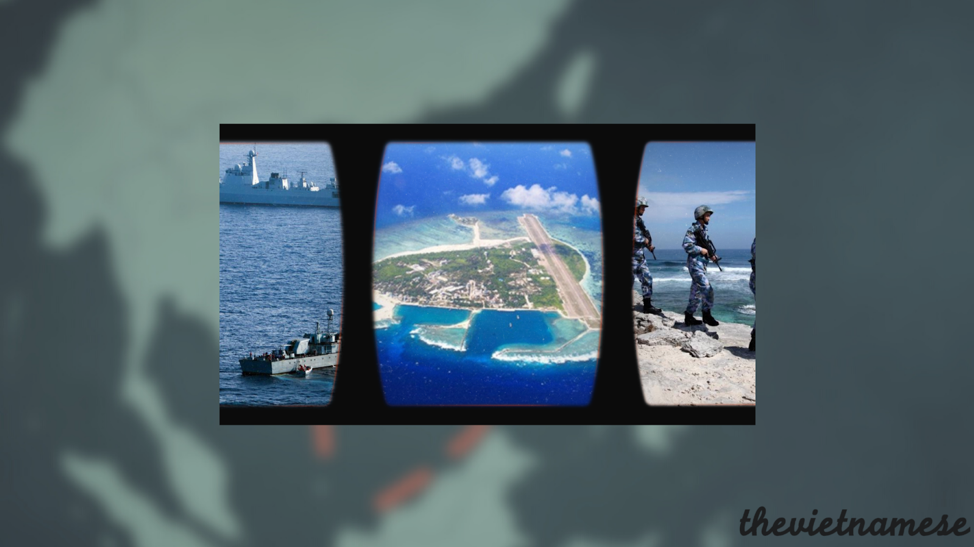
On July 24, 2012, China established a prefecture-level city called Sansha City (in Vietnamese: Thành phố Tam Sa) under Hainan Province, the most important strategic location for China to push territorial claims in the South China Sea [1].
Sansha City covers 800,000 square miles of China’s nine-dash line map of claimed territories in the South China Sea, and it is 1,700 times the size of New York City, even though it mostly covers seawater. [2] According to China analyst Zachary Haver in a US Naval War College report: “through Sansha’s system of normalized administrative control, China is gradually transforming contested areas of the South China Sea into de facto Chinese territory.” [3] In other words, through the establishment of Sansha City, China is signaling that it is here to stay.
The establishment of Sansha City has been extremely controversial in Vietnam because the city includes the Paracel and Spratly Islands, which Vietnam also contests as its rightful territory, along with other countries such as Taiwan, the Philippines, Malaysia and Brunei.
What did Vietnam say?
As expected, Vietnam did not take the news lightly. In 2020, the Ministry of Foreign Affairs spokeswoman said that Vietnam wholeheartedly rejected the “so-called Sansha City” as it violates the sovereignty of Vietnam. [4]
The presidents of the People’s Committees in Khanh Hoa and Da Nang provinces, which Vietnam claims govern the Spratly and Paracel Islands, respectively, also had the same talking point. [5] They further affirmed that the two islands are under the administration of Khanh Hoa and Da Nang provinces and not the Sansha City of Hainan Province.
Territorial conflicts and rising anti-China nationalism
This event was just one among many others that intensified maritime conflict between China and Vietnam. Both countries have tried to establish both legal and historical claims to the Paracel and Spratly Islands. Because of the fierce conflict, many people in Vietnam have developed a unique version of nationalism: anti-China nationalism.
Such nationalism is rooted in the reality of many Vietnamese who have held a deep-seated Sinophobic resentment towards a millennium of Chinese domination [6]. Still, this nationalism has proved to be more than about China’s military aggression. In fact, anti-China nationalism in Vietnam has been useful in anti-authoritarian mobilizations and call for better governance and democracy. Read more about the nuances around anti-China nationalism in Vietnam here.
Bibliography
[1] Li, M. (2019). Hainan Province in China’s South China Sea Policy: What Role Does the Local Government Play? Asian Politics & Policy, 11(4), 623–642. https://doi.org/10.1111/aspp.12495
Since the beginning of its history, the Vietnamese Communist Party (VCP) has been portraying itself as a group of nationalists who liberated the country from foreign intervention. History textbooks, propaganda, and official VCP narratives were all dedicated to showing that the VCP is the true heir of Vietnam and that the path to socialism is the destined path of the country.
However, this nationalistic sentiment contrasts with the Party’s cherished Marxist-Leninist Communist ideology, which states that nationalism is a bourgeoise illusion[1] that distracts people from their struggle with the bourgeoisie and that only international class struggle matters.[2] Such an ideological paradox is even more puzzling as we examine the regime’s responses to the rise of contemporary anti-China nationalism in Vietnam.
Anti-China nationalist sentiments have been rampant in Vietnam since the late 2000s, as expressed through various protests, demonstrations, and online debates. These sentiments are popular among the anti-communist Vietnamese diaspora and among the people residing in the country who were enraged by China’s territorial claims in the South China Sea. Since 1947, the Chinese Communist Party (CCP) has established an eleven-dash line map (now the nine-dash line map), claiming various islands in the South China Sea, including the Paracel and Spratly islands – or in Vietnamese, the Hoang Sa and Truong Sa islands.[3]
For years, the CCP has not relinquished claims to what Vietnamese nationalists insist are Vietnam’s rightful territories. Ten years ago, in 2011, anti-China nationalism manifested itself in the form of demonstrations, when hundreds of Vietnamese people protested in front of the Chinese Embassy in Hanoi, demanding China stay out of the Paracel and Spratly islands.[4] However, these demonstrations were met with repression from the Vietnamese regime.[5]
On the one hand, the VCP faces widespread nationalist criticism from its citizens for depending on China. Such criticism presented a considerable threat for the regime’s long-established narrative as nationalists fighting foreign influence and as the only legitimate ruler of the country.
On the other hand, the VCP faces the CCP, whom they have relied on for ideological and policy guidance and economic and military aid during wartime. Distancing itself from the CCP would also betray Marxism-Leninism’s internationalist agenda.
In a research essay, political scientist Tuong Vu, professor at the University of Oregon, examines contemporary anti-China nationalism in Vietnam as well as the Vietnamese regime’s responses. In a research essay titled “The Party v. the People: Anti-China Nationalism in Contemporary Vietnam,” Professor Vu argues that the suppression of anti-China nationalism is in line with the VCP’s international communist ideology, despite the Party’s nationalist image.[6] This article focuses on explaining the VCP’s repressive actions by analyzing their understanding of communism and nationalism.
Tuong Vu is a professor and head of the Political Science department at the University of Oregon. His research focuses on state formation, nationalism, ideology, and revolutions in East Asia.
The Construction of Communist Nationalism
In order to understand why the VCP suppressed anti-China nationalism, we must first grasp the VCP’s understanding of nationalism itself. The VCP sees nationalism as communism, with an emphasis on communist internationalism that promotes solidarity among socialist states. This suggests that opposition to other socialist states – in this case, China – is not seen as nationalism.
Since its foundation during the French colonial period, the VCP has always pursued two goals simultaneously: achieving national independence, which concerned the French and other foreign intervention, and carrying out a socialist revolution in the country.
To achieve the former goal, the VCP has always portrayed itself as a nationalist faction. Even foreign scholars seem to push the popular narrative that VCP leaders like Ho Chi Minh were nationalists first and communists second and that communism was a mere tool for them to achieve national liberation.[7]
However, Tuong Vu disagrees with this narrative. He thinks that the VCP has always been devoted to communism, even when it pushes a nationalist propaganda. But how did the VCP reconcile being both nationalist and communist, since being the latter means condemning nationalism?
Tuong Vu offers a simple explanation. Communism has always been portrayed as the best path to achieve liberation as well as decolonization for Vietnam. It was not just regarded as a tool for nationalism, but instead both the means to achieve independence, as well as the end goal for building the nation. Therefore, anyone who does not support communism is deemed unpatriotic.
In other words, the VCP ties nationalism or patriotism with being loyal to its own causes. This was demonstrated by the former Prime Minister Pham Van Dong, who declared that “to be patriotic is to build socialism.”[8]
As Le Hong Phong and Ha Huy Tap, leaders of the Indochinese Communist Party, the predecessor of the VCP, explained in 1936: “We believe in internationalism, not nationalism, but…we should raise the spirit for national liberation while tying it to the interests of the working masses….”
So nationalism for the VCP is communism. The VCP’s nationalism is particularly tied to its belief in internationalism, which says that “socialist brothers” around the world should find solidarity together instead of fighting each other like capitalist countries.
Additionally, the VCP also distinguished communist-nationalist movements from the other nationalist movements that it deemed to be bourgeoisie, and as a result it prioritized the former.
For instance, the VCP endorsed China in the Sino-Indian border war in 1962, even though the Communist Party of India criticized China and supported the Indian government. The VCP saw the Communist Party of India as having “sunken deeply in the bourgeois nationalist mud by colluding with the Indian bourgeoisie to slander a brother communist party,” based on archival materials collected by Tuong Vu.
This is important because it marks the VCP’s tactic when confronted with a reality that does not fit into their view of communist internationalism.
The VCP’s actions of justifying reality by creating more theoretical arguments to support its action do not stop there, as its idea of nationalism based on communist internationalism was further challenged by the fact of infighting among communist states the Sino-Soviet split (1956-1966), in which China was at odds with the Soviet Union, and the Sino-Vietnamese border war in 1979, in which China assaulted Vietnam’s border after Vietnam attacked the China-backed Khmer Rouge regime.
Justifying Reality
Accommodating reality, the VCP shifted its own narrative on nationalism by focusing more on domestic communist propaganda. Nevertheless, this new narrative still links Vietnamese nationalism with communism and internationalism. This shows that even when Vietnam was threatened by China, the VCP was still following communist internationalism instead of endorsing a more nationalist approach.
This is evident in the way the VCP has never acknowledged the Sino-Vietnamese border war as a war between socialist brothers. Just as when it justified endorsing China over India in 1962, the VCP argues that the border war was not about communist infighting. The conflict, argues the VCP, was “a fierce struggle between national independence and socialism on the one hand and aggression, expansionism, and chauvinism on the other, between Marxism-Leninism on the one hand and Maoism on the other.” This denial of reality demonstrates a deeply rooted ideological loyalty to Marxism-Leninism.
In order to demonstrate how the VCP justified the Sino-Soviet split, Tuong Vu looked into the VCP’s construction of historical narratives through the most basic and widespread document: the First-Grade Reader (Tập Đọc Lớp Một), a textbook used to teach first-grade children to read. He compared the two editions of the textbook, the one published in 1956, which was before the Sino-Soviet split, with the one published in 1972, after the split.
Data by Tuong Vu. Graphic by The Vietnamese Magazine.
Firstly, there was significantly more content on communist heroes and less content on other socialist countries in the latter edition. This was due to the prolonged war, which produced more “heroes”, and because the VCP seemed to focus more on glorifying internal communist mobilization after the Sino-Soviet split. Additionally, these communist heroes were portrayed as both nationalist and communist – their struggle was seen as both contributing to the country and the international construction of communism worldwide.
Secondly, the content on non-communist heroes and patriotism not linked to the VCP was consistently low in both editions, and particularly low compared to the amount of content on communist heroes.
This reaffirms that the VCP constructed nationalism not based on ethnic lines but rather on political ideology, which suggests that the Party is more likely to align with a foreign communist force than to align with Vietnamese nationalists who reject communism.
Protests and Deconstruction of Communist Nationalism
The VCP’s loyalty to communist internationalism as a part of its nationalism was fiercely challenged by the wave of anti-China nationalism in 21st Century Vietnam due to China’s territorial claims in the South China Sea.
Anti-China opposition in Vietnam is expressed through two main channels: protests and debates on alternative understandings of nationalism. Both of these channels pose significant threats to the VCP’s legitimacy.
Ten years ago, in 2011, massive anti-China protests broke out on the streets of Hanoi and Ho Chi Minh City, especially in the areas where the Chinese embassy and consulate were located, to protest China’s harassment of Vietnamese fishermen in the Spratly and Paracel islands.[10]
The protests did not happen just once, but rather multiple times throughout the summer of 2011 for almost three consecutive months. While these protests were significant, they were not the first. In 2008, many democracy activists and bloggers were also arrested or detained for protesting China’s claims in the South China Sea.[11]
Alongside the protests, many Vietnamese intellectuals started to question the legitimacy of the VCP as Vietnam’s only ruling party and its construction of communist nationalism. Many retired, high-ranking government officials joined in these debates.
For example, Tong Van Cong, former editor of the state-controlled newspaper Lao Dong, argued that the true wish of the late Ho Chi Minh was to establish democracy for Vietnam rather than achieving socialism at any cost, thus questioning the Party’s nationalism based on ideology, as well as its refusal to institutionalize democracy.[12]
While he joined the communist movement during wartime due to his love for his country, Dang argued that the VCP had failed to pay back the debt it owed the Vietnamese people after they fought for and supported the Party. This debt was piled on to the Party’s failed policies based on China’s policy advice, resulting in misery for many Vietnamese people. In contrast, he argued that the VCP owes China nothing. This argument contradicted the Party’s narrative that the country owed China for its generous support for Vietnam in wartime.
Joshua Kurlantzick, senior fellow on Southeast Asia for the Council on Foreign Relations, believes that the protests did not merely demonstrate anti-China sentiments, but also showed the protesters’ frustration with the government’s repressive actions towards dissents over the years, and the government’s failure to deliver democracy.[14]
This further explains why the VCP oppressed anti-China protests and saw the protesters as a threat. These protests were seen as opposing a foreign regime and opposing the VCP, the only “legitimate” ruling body in Vietnam.
Further Problems for the VCP
Currently, the VCP’s policies towards China are once again being challenged, this time by the COVID-19 pandemic, especially when it comes to vaccines. After resisting China’s vaccine diplomacy for a while, the government has recently approved the Chinese Sinopharm vaccine, and it was met with opposition and hesitation from a lot of Vietnamese people.[15] The VCP’s late approval was either because of its distrust of China’s vaccine diplomacy, or because the public opinion in Vietnam has been strongly anti-China.
In a survey conducted by the ISEAS-Yusof Ishak Institute in 2021, individuals from Vietnam are the most disapproving of China’s leadership in the pandemic among 10 ASEAN countries, significantly more disapproving than others.[16] In contrast, Vietnam is the most approving of US leadership in the pandemic among these countries, much more so than the average ASEAN country.
Vietnam is the most disapproving of China among the 10 nations. Data by the ISEAS-Yusof Ishak Institute. Graphic by The Vietnamese Magazine.Vietnam is the most approving of the US among the 10 nations. Data by the ISEAS-Yusof Ishak Institute. Graphic by The Vietnamese Magazine.
When it comes to the South China Sea, Vietnam also shows the most concern with China’s actions – its encroachment and military activities – rather than the US military presence or an escalation of the situation between the US and China.
Once again, this is a rather ironic situation, as the ideological doctrine of the VCP has been consistently promoting solidarity with other socialist countries while condemning capitalist and imperialist states such as the United States.
Data by the ISEAS-Yusof Ishak Institute. Graphic by Son Nguyen/The Vietnamese.
This shows that the VCP’s communist internationalism is not working. Arguably, it is even backfiring because Vietnamese public opinion is shifting towards supporting the United States – a capitalist and imperialist superpower according to Vietnam’s propaganda – instead of supporting China – a socialist brother.
Conclusion
On the surface, increasing anti-China sentiments among the Vietnamese people seem to be in the VCP’s favor, as it hopes to reclaim the Paracel and Spratly islands.
However, this anti-China nationalism also presents a great threat to the VCP establishment that is loyal to communist ideology which promotes solidarity among socialist states. It also presents a deeper ideological threat to the VCP, as Vietnamese nationalists begin to question the VCP’s version of nationalism that correlates being a patriot to being a communist.
The anti-China protests and data on popular opinions suggest that despite the VCP’s efforts, the Vietnamese people are feeling more and more detached from the socialist solidarity with China that the VCP has consistently promoted.
If the VCP continues to refuse to change its ideological approach to China, and if it continues to repress anti-China nationalism, it runs a grave risk of getting its own Marxist-Leninist legitimacy further questioned and challenged.
Bibliography
[1] Crawford, T. (1923, August 15). Bourgeois Nationalism. Marxists Internet Archive. https://www.marxists.org/archive/roy/1923/08/15a.htm
[2] McLellan, D. T. (1998, July 20). Marxism – Class Struggle. Encyclopedia Britannica. https://www.britannica.com/topic/Marxism/Class-struggle
[3] Xu, B. (2020, July 15). China’s Maritime Disputes. Council on Foreign Relations. https://www.cfr.org/timeline/chinas-maritime-disputes
[4] Ide, B. B., & Orendain, B. S. (2011, June 4). Hundreds of Vietnamese Stage Anti-China Protest. Voice of America. https://www.voanews.com/east-asia/hundreds-vietnamese-stage-anti-china-protest
[5] Vietnam breaks up anti-China protests. (2012, December 9). The Guardian. https://www.theguardian.com/world/2012/dec/09/vietnam-breaks-up-anti-china-protests
[6] Vu, T. (2014). The Party v. the People: Anti-China Nationalism in Contemporary Vietnam. Journal of Vietnamese Studies, 9(4), 33–66. https://doi.org/10.1525/vs.2014.9.4.33
[8] Le, H. N. (2016, February 29). Phạm Văn Đồng – Nhà Chính trị, Nhà Văn hóa lớn của Đảng và Dân tộc. Báo Nhân Dân. https://nhandan.vn/tin-tuc-su-kien/pham-van-dong-nha-chinh-tri-nha-van-hoa-lon-cua-dang-va-dan-toc-256438
[9] Nguyen, C. T. (2018, July 31). Tư tưởng Hồ Chí Minh Về Tinh Thần Yêu Nước. Tạp Chí Quốc Phòng Toàn Dân. http://m.tapchiqptd.vn/vi/theo-guong-bac/tu-tuong-ho-chi-minh-ve-tinh-than-yeu-nuoc-12158.html
[10] Vandenbrink, R., & Nguyen, A. (2011, June 5). Anti-China Protests in Vietnam. Radio Free Asia. https://www.rfa.org/english/news/vietnam/protests-06052011165059.html
[11] Human Rights Watch. (2020, October 28). Vietnam: New Round of Arrests Target Democracy Activists. https://www.hrw.org/news/2008/09/12/vietnam-new-round-arrests-target-democracy-activists
[12] Tong, V. C. (n.d.). Nhân Ngày sinh lần thứ 120 Chủ tịch Hồ Chí Minh: Vì Sao Hồ Chí Minh Đặt Dân Chủ Trước Giàu Mạnh? Bauxite Vietnam. Retrieved June 11, 2021, from https://boxitvn.blogspot.com/2010/05/nhan-ngay-sinh-lan-thu-120-chu-tich-ho_19.html
[13] Le, H. D. (n.d.). Suy Nghĩ Trong Những Ngày Nằm Bịnh. . .. Bauxite Vietnam. Retrieved June 11, 2021, from https://boxitvn.blogspot.com/2013/08/suy-nghi-trong-nhung-ngay-nam-binh.html
[14] Kurlantzick, J. (2014, May 16). Vietnam Protests: More Than Just Anti-China Sentiment. Council on Foreign Relations. https://www.cfr.org/blog/vietnam-protests-more-just-anti-china-sentiment
[15] Nguyen, S. (2021, June 7). Vietnam Briefing: Busy With The Pandemic, But The Government Still Cracks Down On Free Speech. The Vietnamese Magazine. /2021/06/vietnam-briefing-busy-with-the-pandemic-but-the-government-still-cracks-down-on-free-speech/
[16] Seah, S., Hoang, T. H., Martinus, M., & Pham, T. P. T. (2021, February). The State of Southeast Asia: 2021 Survey Report. ISEAS-Yusof Ishak Institute. https://www.iseas.edu.sg/articles-commentaries/state-of-southeast-asia-survey/the-state-of-southeast-asia-2021-survey-report/
Almost a century ago, a newspaper called Thanh Nien published its first issue[1]. Prior to the existence of Thanh Nien, other newspapers were existing in Vietnam. But Thanh Nien was not just any newspaper. It was a newspaper founded by Ho Chi Minh – the most important revolutionary figure of the Vietnamese Communist Party (VCP). Hence, the day Thanh Nien published its first issue became a day to celebrate “revolutionary reporters and the press” in Vietnam.
This day is still celebrated annually in Vietnam, with articles coming from the state-controlled press commemorating how journalism in Vietnam has “propagated and spread the Party and the government’s paths, as well as reflecting the true will of people from all socioeconomic backgrounds.” [2]
Because of the day’s history, it would be a mistake to think of this day as commencing the right of free speech or free journalism in Vietnam.
How is the state of journalism in Vietnam?
Despite the name “Revolutionary Press Day,” the state of journalism in Vietnam cannot at all be considered “free,” let alone “revolutionary.”
Ranked 175 out of 180 countries by Reporters without Borders [3], the Socialist Republic of Vietnam does not allow freedom of expression or independent journalism. While journalism is usually understood as a tool to “speak truth to power,” journalism in Vietnam is rather a propaganda tool to speak the truth according to power.
This is because journalism in Vietnam is all state-owned. While “official” journalists in Vietnam are sometimes allowed to report corruption, criticism of the Party is strictly forbidden, and those challenging it could face the consequences.[4]
Even among the state-owned journalism platforms, if an article is just critical of either the Party or anyone in power, it would most likely be taken down silently. [5] In more extreme cases, the authorities may punish the newspaper itself. For example, the Phu Nu newspaper was suspended for a month last year because it published a critical investigative article about the Sun Group, one of the largest corporations in Vietnam. [6]
This is further evident in the way journalism is taught in higher education. The most famous journalism school in Vietnam, the Academy of Journalism and Communication (Học viện Báo chí và Tuyên truyền), would actually be the “Academy of Journalism and Propaganda,” if the name was translated honestly from Vietnamese to English. Many university students jokingly call this school “a Party university” (trường Đảng), due to the school’s emphasis on the Party’s propaganda training.
The state of free speech and free journalism in Vietnam is very telling when you look at the very existence of our own organization, which includes The Vietnamese Magazine and Luat Khoa Magazine. The fact is that we cannot work and register in Vietnam, people are blocked from accessing our sites and that we are one of the only remaining independent Vietnamese-run media organizations. One more fact is that other than our directors, Trinh Huu Long and Tran Quynh Vi, all of the organization’s staff writers and editors have to work in the shadows to ensure our own personal safety and the organization’s continuity.
Since the beginning of the elections in 2021, the state has arrested independent bloggers and journalists almost every week, despite the chaotic situation with the COVID-19 pandemic. Many independent journalists have been detained. [7] Our own co-founder, Pham Doan Trang, an internationally recognized pro-democracy journalist, has also been arrested.
Independent journalists are not the only ones arrested by the state. Sometimes, even ordinary Facebook users are detained for critical comments on social media [8]. It is estimated that since the beginning of 2021, at least 21 Vietnamese citizens have been arrested due to activities on social media.
And there are many other examples of how independent and critical journalism in Vietnam has a very grim future [9].
It is puzzling to think about how Ho Chi Minh, the founder of the Socialist Republic of Vietnam, advocated so much for the right to freedom of speech and journalism to see his successors doing the exact opposite.
But why does the state have to go to such length to arrest independent journalists? Why is it so willing to damage its human rights records?
It is because the system is so corrupted with power so concentrated in the hands of certain political and economic elites, which VCP leaders know better than anyone else. They also know that if independent journalism is allowed, the people would be better informed about the system’s flaws and failures, and sooner or later, the VCP will lose its monopoly of power as the only ruling party of Vietnam. They know that their un-innovative propaganda strategies cannot compete with honest and scientific arguments that can only be nurtured under independent journalism. They know that they cannot win in a free speech environment.
So the VCP’s fight with independent journalism is actually a desperate fight to cling to power. Do not let their brand as a “socialist” government fool you. What the VCP is doing against independent journalists is anything but what their founder Ho Chi Minh advocated for during French colonial rule. Their monopoly as the only ruling party is so important that they are willing to arrest, suppress and surveil even the smallest seeds of independent journalism and critical thought.
This is now an authoritarian Party suppressing independent journalists. And on this day, the Vietnam Revolutionary Press Day, we hope you remember that.
Bibliography
[1] Những mốc son của nền báo chí cách mạng Việt Nam. (2021, June 21). Báo Tin Tức. https://baotintuc.vn/infographics/nhung-moc-son-cua-nen-bao-chi-cach-mang-viet-nam-20210621071016833.htm
[2] Nguồn gốc và ý nghĩa Ngày Báo chí Cách mạng Việt Nam 21/6. (2020, June 16). Báo Giao Thông. https://www.baogiaothong.vn/nguon-goc-va-y-nghia-ngay-bao-chi-cach-mang-viet-nam-216-d468998.html
[3] World Press Freedom Index | Reporters Without Borders. (n.d.). Reporters Without Borders. Retrieved June 21, 2021, from https://rsf.org/en/ranking
[4] Vietnam: State Violence v. Bloggers and Journalists. (n.d.). Reporters Without Borders. Retrieved June 21, 2021, from https://rsf.org/en/vietnam
[5] Chính, Y. K. (2021, June 21). Nhân ngày nhà báo, gửi lời trân trọng đến những bài báo bị gỡ bỏ. Luật Khoa Tạp Chí. https://www.luatkhoa.org/2021/06/nhan-ngay-nha-bao-gui-loi-tran-trong-den-nhung-bai-bao-bi-go-bo/
[6] Đình bản 1 tháng báo Phụ Nữ TP.HCM điện tử. (2020, May 28). Tuoi Tre Online. https://tuoitre.vn/dinh-ban-1-thang-bao-phu-nu-tp-hcm-dien-tu-2020052815202924.htm
[8] The Vietnamese Magazine. (2021, June 16). Vietnam Briefing: The Election Results Are In. Here Comes 5 More Years Of Party Domination. /2021/06/vietnam-briefing-the-election-results-are-in-here-comes-5-more-years-of-party-domination/
[9] Human Rights Watch. (2020, January 23). World Report 2020: Rights Trends in Vietnam. https://www.hrw.org/world-report/2020/country-chapters/vietnam
The “On This Day” series introduces contemporary Vietnamese history of the twentieth and twenty-first centuries by explaining political events that occurred today in the past.
What happened?
On this day, 67 years ago, Ngo Dinh Diem was tapped to be the prime minister of the State of Vietnam. His appointer was Bao Dai, the chief of state, who also was the last emperor of Vietnam under the Nguyen Dynasty, which ended before the formation of this regime.
This event could be considered one of the most significant political developments in South Vietnam in the post-colonial era. It was the foundation of a political entity that would later become a fierce rival to the Communist regime in the north.
What was the State of Vietnam?
The State of Vietnam was the predecessor of what would later become the Republic of Vietnam.
Because of the famous Battle of Dien Bien Phu, in which the Communist regime in the north launched a massive offensive against the French colonial government[1], the French decided to sign an agreement to transfer their administrative powers to a government headed by a Vietnamese, the former Emperor Bao Dai [2], who was chosen by the French.
This move by the French colonial administration is called the “Bao Dai solution,” which presented the French and the Americans with an opportunity to retain their influence in the region amid the rising power of the Communists. [3]
This new State of Vietnam had been under the French Union since 1949. However, this regime lived a short life as Bao Dai was stripped of power only a few years later by his own appointee as prime minister.
Who was Ngo Dinh Diem?
Ngo Dinh Diem is best known for his role as president of the Republic of Vietnam, the regime in the south of Vietnam that ceased to exist when the Vietnam War ended in 1975. He was a Catholic politician in a country with a Buddhist majority, which many say was one of the prime reasons for his downfall.
The Communist regime often portrayed Ngo Dinh Diem as an American puppet who led an imperial regime controlled by the United States. [4] The Communist regime also saw Diem’s rise to power as undemocratic and illegitimate. However, it also unexpectedly ignored the ironic parallels between such complaints compared to North Vietnam’s own pile of undemocratic practices.
However, many foreign-based scholars agree that Diem was much more complicated as a political figure than how the Communist regime portrayed him. Some even argued that Diem was as concerned with American intervention as the Communists were and attempted to create an alternative anti-colonial movement to the Viet Minh, leading by the Communists.[5]
Prior to being made president of South Vietnam, Diem held a role that was lesser known: prime minister of the State of Vietnam.
Diem was appointed because Bao Dai believed that the newly formed State of Vietnam would need American support and that Diem’s Catholic and anti-Communist background would be an appealing advantage. This was done despite Bao Dai’s alleged awareness that Diem was fond of Cuong De, a Nguyen Dynasty’s royal descendent who had challenged Bao Dai’s legitimacy. [6]
Later, Diem would overthrow Bao Dai in a referendum in October 1955, which designated Diem as the new head of state and established the Republic of Vietnam. Though the transition was not violent, it did not happen without smear campaigns against Bao Dai, who was viewed as a collaborator with the French colonialists.[7]
This is not to praise Diem and his administration. On the contrary, the scholarly consensus seems to agree that Diem’s referendum in October 1955 was staged and undemocratic [8], and many have pointed out the shortcomings of his administration. The shocking self-immolation of Buddhist monk Thich Quang Duc was one illustration of the Diem regime’s failure to handle religious affairs, making many Buddhists feel discriminated against compared to Catholics. [9]
However, it is important to remember that Ngo Dinh Diem was a politician and leader of Vietnam in an important historical chapter, and someone who remains a crucial historical figure to study and discuss. To completely demonize him, and to only study him from the viewpoint of the “winning side,” is to ignore a chapter of Vietnamese history that is scarcely discussed in an equitable manner.
[3] Hess, G. R. (1978). The First American Commitment in Indochina: The Acceptance of the “Bao Dai Solution”, 1950. Diplomatic History (Oxford University Press), 2(4), 331–350. https://doi.org/10.1111/j.1467-7709.1978.tb00441.x
[4] Nghiem, K. H. (n.d.). Khái quát về Việt Nam lưu trữ Cộng hòa (1955–1975), Phần 1. Faculty of Archival Studies | University of Social Sciences & Humanities. Retrieved June 15, 2021, from http://luutru.hcmussh.edu.vn/?ArticleId=4939505b-d8e6-43d2-b673-f53151a00181
[5] Miller, E. (2004). Vision, Power and Agency: The Ascent of Ngô Đình Diệm, 1945–54. Journal of Southeast Asian Studies, 35(3), 433–458. https://doi.org/10.1017/s0022463404000220
[6] The Editors of Encyclopaedia Britannica. (n.d.). Cuong De | Vietnamese prince. Encyclopedia Britannica. Retrieved June 15, 2021, from https://www.britannica.com/biography/Cuong-De
[7] Chapman, J. M. (2006). Staging Democracy: South Vietnam’s 1955 Referendum to Depose Bao Dai. Diplomatic History, 30(4), 671–703. https://doi.org/10.1111/j.1467-7709.2006.00573.x
[8] Chapman, J. M. (2006). Staging Democracy, 671-703.
[9] Nguyen, S. (2021, June 11). June 11, 1963: The Internationally Shocking Self-Immolation Of Buddhist Monk Thich Quang Duc. The Vietnamese Magazine. /2021/06/june-11-1963-the-internationally-shocking-self-immolation-of-buddhist-monk-thich-quang-duc/
The Vietnamese Magazine’s “Vietnam Insight” introduces background information on political and human rights issues in contemporary Vietnam.
Unlike other human rights issues, LGBTQ+ rights are among an extremely few issues in which Vietnam is not widely considered notorious.
For example, a famous travel blog ranks Vietnam 87 out of 150 countries in its index on safe destinations for LGBTQ+ travellers [1], cited by prominent media outlets such as CNN, USA Today, and The Guardian. While this number might not seem impressive, it is essential to remember that Vietnam was ranked 137 out of 167 countries in The Economist’s democracy index [2] and at the bottom in Southeast Asia.
However, this does not mean that Vietnam is a paradise for LGBTQ+ people.
According to a recent report published by the Asia branch of the International Lesbian, Gay, Bisexual, Trans and Intersex Association, many people in the Vietnamese LGBTQ+ community feel like the government is taking advantage of LGBTQ+ rights in Vietnam as compensation for other violations of human rights.[4]
But what is the reality of LGBTQ+ rights in Vietnam? What rights do LGBTQ+ people have? Is the Vietnamese public and government accepting of LGBTQ+ people? What are some issues that LGBTQ+ people in Vietnam still face? These questions are answered in this article as we walk you through a brief overview of the LGBTQ+ community’s situation in Vietnam.
Are same-sex relationships criminalized?
No. Even though same-sex relationships were banned in Vietnam in the early 2000s, the government decriminalized such relationships in 2013.[5]
In 2000, the law first mentioned same-sex relationships in legal documents. The Law on Marriage and Family was amended in 2000 to incorporate a ban on same-sex cohabitation and same-sex marriage, making it primarily illegal to have a same-sex relationship.
Under these regulations, same-sex couples who attempted to organize a wedding ceremony, and people participating in these ceremonies, could get fined by the authorities. However, this law did not crack down on same-sex couples who did not co-habit or attempted to get married, even though the police frequently raided many LGBTQ+ friendly establishments.
In the following years, Vietnam also outlawed various forms of same-sex relationships, such as the adoption of children by same-sex couples or surrogacy and same-sex marriages to foreigners abroad.
The situation got better in 2012, as the then-Minister of Justice Ha Hung Cuong expressed disapproval of the existing legal discrimination of LGBTQ+ people. It was the first time a high-ranked Vietnamese government official publicly talked about the LGBTQ+ community in a non-discriminatory tone.
In 2013, same-sex cohabitation and wedding ceremonies were decriminalized in Vietnam.
Can same-sex couples get married?
No. Up until now, the law in Vietnam does not recognize same-sex marriages.
However, as mentioned above, co-habitation among same-sex couples is now permitted, in addition to wedding ceremonies.
Can transgender people undergo gender transition procedures?
In principle, yes. However, the situation in Vietnam is more complicated.
In 2008, a law in Vietnam said gender affirmation surgeries were forbidden for “people whose gender is already correct”[6]. It means that while gender transition procedures were available for intersex people who were thought to have gender defects, they were banned for transgender people who were thought to have no gender issues.
The situation got better as the country passed a change to the Civil Code in 2015 recognizing the rights to gender transition[7], official recognition of transgender people in Vietnam, making it one of the most progressive countries in Southeast Asia LGBTQ+ rights.
Although this law was supposed to be implemented by 2017, the reality is that transgender people still faced extreme hardships in accessing gender transition procedures or getting their name and gender changed on paper.
This was due to the inefficiency of lawmakers, who failed to take into account various specific details on transition procedures. For example, they could not detail the eligibility criteria for pursuing gender transition, the criteria for health providers to accommodate gender transition procedures, or the circumstances in which transgender people could legally change their name or gender on paper, among various other considerations.
Therefore, even though transgender people technically could undergo gender transition in Vietnam, it remains extremely inaccessible.
Can transgender people get married?
Yes, but there are some additional issues.
Article 37 of the Civil Code states that “Individuals who have undergone gender transition have the right and obligation to change their civil status, and have the civil rights in accordance with this Code and other related regulations.”
This means that transgender people, after successfully changing their gender on paper, could get married to people of the opposite gender. For example, a transgender woman (male to female) could marry someone legally recognized as male. A transgender man (female to male) could get married to someone legally recognized as female.
As same-sex marriage is not legally mandated in Vietnam, transgender people cannot marry people of the same gender after the transition. Thus, for instance, a transgender woman cannot marry someone lawfully recognized as female and vice versa.
However, as mentioned above, the recognition of transgender people and their legal transition have not been implemented in practice.
Therefore, even though transgender people can marry someone of the opposite gender after transitioning, they still cannot get married and have their marriage legally recognized in practice.
Is there anti-discrimination law to protect LGBTQ+ people?
Up to now, there is no anti-discrimination law explicitly aimed at protecting LGBTQ+ people.
Is Vietnamese society accepting of LGBTQ+ people?
Even though the law in Vietnam has been more friendly towards LGBTQ+ people (or at least in principle) and the government has been pledging to improve the conditions of the community, LGBTQ+ people in Vietnam still face tremendous discrimination from society and pressure from their families to conform to a “normal” heteronormative life.
For example, there is an issue of homosexual individuals marrying people of different gender due to the pressure from either society or their family.[8] Homosexual individuals also engage in marriage arrangements with other homosexual individuals of a different gender to please their families on both sides.
Due to the government’s inefficiency in drafting regulations for transgender people, undergoing hormone therapy or other related medical procedures remains extremely difficult and dangerous, not to mention very costly.[9]
LGBTQ+ adults are not the only ones facing hardship in their social life. LGBTQ+ students and children in Vietnam also reported violence and discrimination. Oftentimes when students come out as LGBTQ+ people to their family, teachers or friends, they are told that they have “a disease.”[10]
While Vietnamese society is becoming more open and accepting of the LGBTQ+ community, it can be seen that it is still generally tough for many LGBTQ+ individuals to live a happy and fulfilling life.
Are there LGBTQ+ politicians or lawmakers?
So far, there are no known openly LGBTQ+ politicians or lawmakers in Vietnam who hold office in the National Assembly or the local People’s Committee in different regions – the most crucial legislative organs in Vietnam. In Vietnam’s conservative political climate, even the existence of women in Vietnamese politics is scarce.[11]
The 2021 elections for the National Assembly and the local People’s Committee in Hanoi saw the appearance of Luong The Huy, the first openly gay candidate running for both offices. He is also an independent non-party candidate. At age 32, Huy is much younger than the typical member of the National Assembly or the People’s Committee.
Unfortunately, despite the enthusiastic support from young people, Huy did not win in both elections this year.
There are very few notable non-governmental organizations which aim to further LGBTQ+ rights in Vietnam. The Institute for Studies of Society, Economy and Environment (ISEE) is currently directed by Luong The Huy in Hanoi and the ICS Center in Saigon.
In general, the voice of LGBTQ+ people in politics and policymaking is still meager. Because of this, LGBTQ+ issues remain in the “non-priority” bracket of the country’s legislation. As LGBTQ+ people remain unheard of [12], it is not surprising that the government is primarily inefficient in making decisions related to the community.
Bibliography
[1] LGBTQ+ Travel Safety – 150 Best & Worst Countries Ranked (2021). (2021, May 7). Asher & Lyric. https://www.asherfergusson.com/lgbtq-travel-safety/
[2] The Economist Intelligence Unit. (2021). Democracy Index 2020 In sickness and in health? https://www.eiu.com/n/campaigns/democracy-index-2020/
[3] NBC Universal. (2015, June 11). On Gay Rights, Vietnam is Now More Progressive Than America. NBC News. https://www.nbcnews.com/news/asian-america/gay-rights-vietnam-now-more-progressive-america-n285521
[4] ILGA Asia. (2021, June). Dare to dream: The ongoing voyage from invisibility to community empowerment, and foray into the region for LGBTIQ in Vietnam. https://www.ilgaasia.org/publications/2021/6/11/lgbtq-rights-report-vietnam-dare-to-dream
[5] UNDP & USAID. (2014). Being LGBT in Asia: Vietnam Country Report. https://www.usaid.gov/documents/1861/being-lgbt-asia-vietnam-country-report
[6] iSEE. (2019, January). Hiện trạng trải nghiệm y tế và nhu cầu chuyển đổi giới tính của người chuyển giới ở Việt Nam. http://isee.org.vn/wp-content/uploads/2019/01/Report_Need-experience-on-medical-intervention-of-Transgender-community-in-Vietnam-FINAL.pdf
[7] Human Rights Watch. (2015, November 30). Vietnam: Positive Step for Transgender Rights. https://www.hrw.org/news/2015/11/30/vietnam-positive-step-transgender-rights
[8] iSEE. (2018, November). Sống chung cùng giới: Trải nghiệm thực tế và Mưu cầu hạnh phúc lứa đôi. http://isee.org.vn/wp-content/uploads/2018/11/song-chung-cung-gioi-trai-nghiem-thuc-te-va-muu-cau-hanh-phuc-lua-doi..pdf
[9] Nguyen, S. (2019, June 21). LGBT rights: Vietnam recognises transgender people, but there’s a flaw in its law. South China Morning Post. https://www.scmp.com/week-asia/society/article/3015423/lgbt-rights-vietnam-recognises-transgender-people-theres-flaw-its
[10] Human Rights Watch. (2020, February). “My Teacher Said I Had a Disease” Barriers to the Right to Education for LGBT Youth in Vietnam. https://www.hrw.org/report/2020/02/13/my-teacher-said-i-had-disease/barriers-right-education-lgbt-youth-vietnam
[11] Trinh, H. L., & H.T. (2021, February 18). Vietnam’s 13th Party Congress: Women Have No Place In Politics. The Vietnamese Magazine. /2021/02/vietnams-13th-party-congress-women-have-no-place-in-politics/
[12] Nguyen. LGBT rights. South China Morning Post.
The “On This Day” series aims to introduce contemporary Vietnamese history of the twentieth and twenty-first centuries by explaining political events that occurred on this day in the past.
What happened?
On the morning of June 11, 1963, an elder Buddhist monk emerged from more than 300 monks protesting on a busy street of Saigon.[1] As the monks formed a circle around him, the elder monk, whose Buddhist name was Thich Quang Duc, stepped forward and sat down in a lotus position. The other monks poured gasoline on him, and one monk handed some matches to Quang Duc.
Moments later, in a horrifying scene, the elder monk was consumed by fire.
The onlookers were horrified, and the police present on the street tried to call fire trucks, but the accompanying monks collectively blocked the trucks. Without a doubt, Quang Duc’s self-immolation was a part of a coordinated protest by South Vietnam’s Buddhist monks.
In the following months after Thich Quang Duc’s self-immolation, at least five other Buddhists committed suicide by burning themselves. His self-immolation also inspired many other Buddhists and bonzes in South Vietnam to do so in the following years.
As Thich Quang Duc committed suicide publicly, Associated Press photojournalist Malcolm Browne captured the moment. The picture of the burning monk became one of the most circulated and haunting images of the Vietnam War.[2]
The conventional interpretation from the current Vietnamese Communist state sees the self-immolation as an act of protest against the South Vietnamese government, at the time headed by President Ngo Dinh Diem.[3] Though the leaders expressed some empathy with the Buddhists’ frustration, the South Vietnamese government and its supporters mostly saw them as misled by the Communists.[4] The international public saw the act as protesting the ongoing Vietnam War and the American intervention.
It is undeniable that the series of Buddhist protests in 1963 in South Vietnam were triggered by the Ngo DinhDiem regime’s mishandling of religious issues, which made the Buddhists feel like they were discriminated against while their Christian counterparts were given many more benefits.[5]
However, all of these narratives ignore the fact that the self-immolation and the series of Buddhist protests were a part of the more significant Buddhist crisis ongoing in South Vietnam throughout 1963, motivated by frustration and a unique political ideology.
According to historian Edward Miller of Dartmouth College, the crisis was the result of not only the regime’s mishandling of religious issues but also because of the Buddhists’ own vision of nation-building for Vietnam, which happened to clash with both the regime in the South as well as the Communists in the North.[6]
Their political beliefs were neither pro-North Vietnam nor anti-South Vietnam but instead purely Buddhist. They were a part of a more significant movement called Buddhist revival (Chấn Hưng Phật Giáo) that got started in Vietnam at the beginning of the twentieth century.
Under the belief of Buddhist revival, many monks and Buddhists subscribed to a particular Vietnamese-Buddhist nationalism, which saw Buddhism as the national religion and the only path to Vietnam’s future prosperity.
Followers of Buddhist revival had a distinctive historical narrative that saw Buddhism as the source of the prosperity of the ancient kingdom Dai Viet, the predecessor of modern Vietnam that flourished around the 10th to the 13th century. The followers of Buddhist revival thought that Vietnam was only weakened and became corrupted due to Chinese colonization and its import of philosophy, from Confucianism to Taoism. Similarly, they viewed both Communism and Ngo Dinh Diem’s Personalist Revolution[7] as Western-imported ideologies that were also unsuitable for Vietnam.
Thich Quang Duc was a part of this movement. According to Miller, when he came up with the idea of burning himself, Quang Duc understood it as an act of promoting Buddhist reforms and defending his Buddhist revival ideals.
Therefore, to call the self-immolation of Thich Quang Duc either pro-Communist, anti-Ngo Dinh Diem, or anti-American intervention would be insufficient. His self-immolation was highly political and was meant to express more than just opposition to any regime.
Bibliography
[1] Miller, E. (2014). Religious Revival and the Politics of Nation Building: Reinterpreting the 1963 ‘Buddhist crisis’ in South Vietnam. Modern Asian Studies, 49(6), 1903–1962. https://doi.org/10.1017/s0026749x12000935
[2] Lindsay, J. M. (2012, June 11). TWE Remembers: Thich Quang Duc’s Self-Immolation. Council on Foreign Relations. https://www.cfr.org/blog/twe-remembers-thich-quang-ducs-self-immolation
[3] Tưởng niệm 50 năm Hòa thượng Thích Quảng Đức tự thiêu. (2013, May 28). vov.vn. https://vov.vn/doi-song/tuong-niem-50-nam-hoa-thuong-thich-quang-duc-tu-thieu-263846.vov
[4] Vietnam’s Faiths Underlie Rising; Buddhist‐Catholic Disputes Sharpened Under Diem. (1964, September 14). The New York Times. https://www.nytimes.com/1964/09/14/archives/vietnams-faiths-underlie-rising-buddhistcatholic-disputes-sharpened.html
[5] Joiner, C. A. (1964). South Vietnam’s Buddhist Crisis: Organization for Charity, Dissidence, and Unity. Asian Survey, 4(7), 915–928. https://doi.org/10.1525/as.1964.4.7.01p1727l
[6] Miller, Religious Revival, 1903–1962.
[7] Hollingsworth, E. (n.d.). The Church of Ngo: Ngo Dinh Diem’s Personalist Revolution and the Making of Alternative Nationalisms in the Republic of Vietnam, 1954–1963 | MA/MSc in International and World History. Columbia University. Retrieved June 10, 2021, from https://worldhistory.columbia.edu/content/church-ngo-ngo-dinh-diems-personalist-revolution-and-making-alternative-nationalisms
Our newest section on The Vietnamese Magazine, the “On This Day” series, aims to introduce contemporary Vietnamese history of the twentieth and twenty-first centuries by explaining political events that occurred today in the past.
What happened on June 5, 2011?
Public demonstrations and protests are sporadic in Vietnam. But on this day, 10 years ago in 2011, it was the beginning of the longest anti-China protest movement in Vietnam after 1975.
For almost three months of the summer of that year, a total of 11 protests happened across Vietnam every Sunday, primarily conducted in Hanoi and Saigon, where the Chinese embassy and consulate were placed. Many people call this movement “The Flaming Summer” (Mùa Hè Đỏ Lửa).
Why were people protesting on that day?
Since China established the eleven-dash line map (now the nine-dash line map) claiming sovereignty of various regions in the South China Sea, the Vietnamese people have always been angered by China’s claims to the Paracel and Spratly islands, known as the Truong Sa and Hoang Sa islands by the Vietnamese.
In the summer of 2011, people especially felt provoked by the actions of Chinese vessels in the contested sea. In late May, the news reported that the Chinese vessels were harassing Vietnamese survey vessels and disrupting the Vietnamese vessels’ activities. Later in early June, Chinese ships once again harassed Vietnamese survey ships.
What was the regime’s response to the protests?
After supposedly tolerating the protests for a short period of time, the regime nevertheless decided to crack down on the protestors. In late August, the police began to detain people who participated in the protests, forcing 40 protestors onto two buses right after the last rally started on August 21. It was confirmed that at least 47 protestors were arrested. The Hanoi local government warned people against protesting any further.
What is the legacy of the protests during that summer?
The waves of anti-China protests in 2011 were not the first nor the last. Earlier in 2007 and 2008, there were also anti-China protests by many bloggers and pro-democracy activists, which also resulted in the government’s crackdown. Later in 2014 and 2018, there were also new anti-China protests.
However, the protests in 2011 were significant because of their duration, scope, and effect on Vietnam’s pro-democracy discourse. In many ways, it was an unprecedented movement.
Compared to other anti-China protests, the 2011 protest movement had the most prolonged duration, lasting the entire summer. The demonstrations were also massive compared to others, with the participation of hundreds of people. Some of the rallies were estimated to have around a thousand people. This fact is exceptionally significant for a country infamously known for repressing protests.
Although the government repressed the protests, they still demonstrated to the Vietnamese government that the people could disagree with the government and willingly show it. Additionally, the protests also sowed the seeds of government criticism among the people. The movement provoked many intellectuals and highly-credited ex-government officers to speak out against the Communist Party and demand democracy.
Many participants of these protests, such as The Vietnamese Magazine’s co-founder and editor Trinh Huu Long, would later become pro-democracy activists.
The protests in 2011 were the beginning of “a prolonged civil society movement that still exists nowadays,” said Long.