Author: Linh Nguyen

  • Vietnamese Activists React to Facebook Taking Down “Anti-state” Posts

    Vietnamese Activists React to Facebook Taking Down “Anti-state” Posts

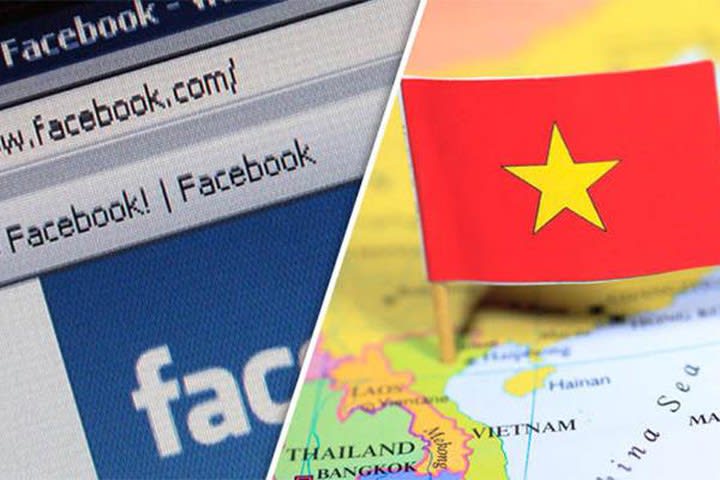
    In mid-April, Reuters broke the news that Facebook agreed to censor so-called “anti-state” posts after the Vietnamese government put pressure on the social networking site and took local servers offline, slowing down traffic. Since the news broke, the activist and politically-engaged community in Vietnam has been determined to jump over another hurdle in its struggle for freedom of expression.

    Thao Dinh, an activist in Hanoi who formerly worked as director of communications for VOICE, a Vietnamese human rights NGO, said she has used Facebook much less since learning about the content restrictions and has switched to other platforms.

    “Diversity is important,” Dinh said. “The worst scenario is one platform becoming a monopoly. So I would recommend people use as many services as they want depending on their needs, such as Twitter, YouTube, Facebook, Blogs, LinkedIn, Reddit, Quora, Telegram, except the platforms spying on us for the government.”

    Additionally, Vietnamese activists are urging their fellow countrymen, if they choose to use Facebook, to be wary about sharing sensitive and personal information on the platform. Hoang Dung advised his network on Facebook to adjust their settings and clear their  “Off-Facebook Activity” which is a summary of activity that businesses and organizations share about your interactions, such as visiting their apps or websites.

    Vi Yen Nguyen, the training manager at VOICE, shared on her profile three other alternatives to Facebook: Signal, Telegram, and Wire.

    Vi Yen wrote, “Facebook was faced with pressure by the Vietnamese government and gave up. It is no longer a reliable platform. Although admittedly, in this censorship case, Facebook is only a victim.”

    (Vi Yen Nguyen’s quote was in Vietnamese: “Facebook đã chào thua trước áp lực của chính quyền Việt Nam. Nó không còn là một nơi đáng tin cậy. Dù phải thừa nhận rằng, trong vụ kiểm duyệt này, Facebook cũng chỉ là một nạn nhân.”)

    Human Rights Watch said that Facebook should have resisted.

    “Facebook has set a terrible precedent by caving to the government of Vietnam’s extortion,” said John Sifton, Asia advocacy director at Human Rights Watch. “Now other countries know how to get what they want from the company, to make them complicit in violating the right to free speech. The government of Vietnam shouldn’t have throttled the platform’s traffic in the first place, but Facebook shouldn’t have agreed to its demands.”

    In a statement, a Facebook spokesperson said that the Vietnamese government “has instructed us to restrict access to content which it has deemed to be illegal in Vietnam. We believe freedom of expression is a fundamental human right, and work hard to protect and defend this important civil liberty around the world. However, we have taken this action to ensure our services remain available and usable for millions of people in Vietnam, who rely on them every day.”

    The UN’s Guiding Principles on Business and Human Rights require businesses such as Facebook to “respect human rights,” including avoiding infringements and addressing adverse impacts in which they are involved. As a member of the Global Network Initiative, Facebook has pledged that it will protect the human rights of users when they are confronted with government demands inconsistent with international human rights standards.

    “It’s hard to see how Facebook can live up to its human rights obligations when it’s helping Vietnam censor free speech,” Sifton said.

    The pressure on Facebook coincides with a new decree by the Vietnamese government implementing monetary fines for people and internet companies for posting or publishing a sweeping range of items with “forbidden contents”, materials that promote “reactionary ideas”, “have not been allowed for circulation, have been prohibited for circulation or have been confiscated.”

    The United States and other countries should have better utilized their diplomatic leverage to support Facebook in their stance against pressure from the government of Vietnam, Human Rights Watch said. Other businesses and business groups should have stood more publicly with the company to prevent the government’s strong-arm tactics.

    The reluctance of Vietnamese activists to continue using Facebook has created new market opportunities for other social networks. Dinh recently got her Twitter profile officially verified.

    “Since #Facebook is lowering its standards to protect human rights in #Vietnam, Twitter and other platforms are having a great opportunity for growing in [the] Vietnam market,” she tweeted.
  • Vietnam Reports Zero COVID-19 Deaths – Drawing Praise and Scrutiny

    Vietnam Reports Zero COVID-19 Deaths – Drawing Praise and Scrutiny

    With the government’s new decree against “fake news,” the official COVID-19 numbers are being questioned

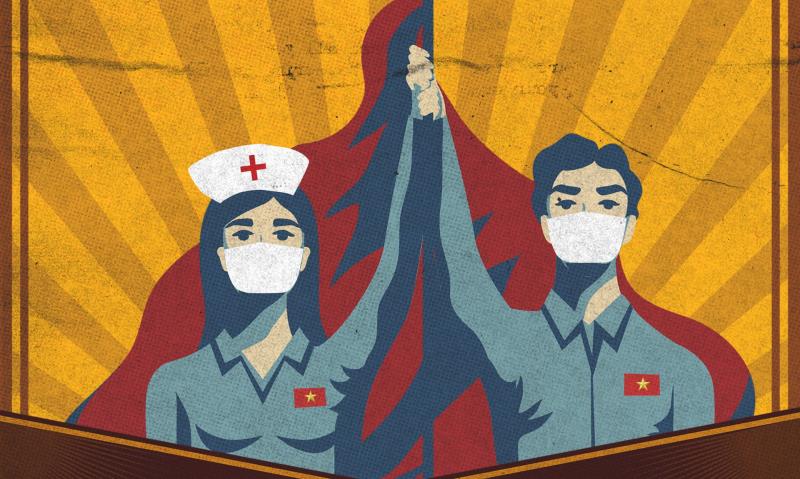
    Photo credits: Screenshot from Ministry of Health, April 23, 2020

    While the world death toll due to COVID-19 has topped 190,000 cases and many countries around the world have reported an alarming number of fatalities — from 50 deaths in Thailand to more than 50,000 in the US — Vietnam, along with neighboring countries, Laos and Cambodia, has reported a total of zero deaths.

    Although the Vietnamese government has recorded 268 COVID cases and shown strong public health initiatives, including a handwashing song that went viral, nevertheless, the reported zero deaths and relatively low cases are questionable, especially coming from an authoritarian country with a record of bending the truth.

    A “Textbook Approach”

    Vietnam does deserve credit for having made an early response, even before the country saw its first case. According to The Diplomat, the Ministry of Health issued urgent messages on outbreak prevention to government agencies on January 16 and to hospitals and clinics nationwide on January 21. The country recorded its first cases on January 23 in Ho Chi Minh City, just two days before the Tet Lunar New Year holiday.

    Todd Pollack, an infectious disease specialist at Harvard Medical School who works with a Harvard initiative in Hanoi, Health Advancement in Vietnam (HAIVN), told Reuters that Vietnam learned its lesson after the SARS outbreak in 2003 and adopted a textbook approach in its early response strategy.

    On March 16, Vietnam began compulsory testing and a 14-day quarantine for persons in virus-hit areas as well as some arrivals from overseas. Some of the quarantine camps were set up at military bases. According to Reuters, the numbers quarantined reached at least 44,955.

    While democratic countries, such as Taiwan, South Korea, and the United States, have mostly enforced home quarantines, authoritarian countries like China and Vietnam have resorted to quarantine camps with questionable practices.

    Were the Government’s Actions Enough?

    The Vietnamese government’s actions have been praised as a low-cost model for developing countries. While wealthier nations like Taiwan and South Korea have been able to perform mass testing, Vietnam’s method of contact tracing and quarantining is relatively less expensive.

    Still, despite the country’s preventative efforts, Vietnam’s international border was still porous until March 25, when the country canceled international flights. As new data has revealed that one-fourth of carriers don’t exhibit symptoms, it is highly possible that asymptomatic carriers brought the virus to Vietnam and “super spreaders” exponentially passed it around in the same way the virus spread and  inflicted deaths in almost every country around the world – except for authoritarian countries.

    North Korea has also reported no deaths. Western officials suspect the reported numbers coming out of China, Saudi Arabia, Iran, Russia, and Indonesia.According to a U.S.-intelligence report confirmed by Bloomberg, China’s public tally of COVID-19 infections and deaths is false.

    In more developed Asian countries like Taiwan, South Korea and Singapore, which also share the recent memory of the 2009 H1N1 and 2003 SARS pandemics, they also reacted to COVID-19 with strong public health measures. But despite these countries’ greater wealth, resources and expertise (as well as the lack of a border with China), they have more COVID-19 cases and deaths than Vietnam: South Korea 240 deaths, 10,702 cases; Singapore 12 deaths, 11,718 cases; Taiwan 6 deaths, 427 cases.

    In South Korea, the fatality rate among confirmed cases is 2.2 percent; the United States is 4.3 percent and in Italy (with a large elderly population), the fatality rate is 12.8 percent. Compared to the rest of the world, Vietnam’s zero death rate among 268 cases is statistically significant.

    To further repress the sharing of information, Vietnam began fining people for spreading “fake news” with a new decree drafted in February. This decree (the official number is 15/2020/NĐ-CP) updates the cybersecurity law passed last year with more stringent measures, including penalties against anyone sharing banned publications or using social media to share false, untruthful, distorted, or slanderous information.

    “This decree provides yet another potent weapon in the Vietnamese authorities’ arsenal of online repression,” Tanya O’Carroll, director of Amnesty International Tech, told Reuters. “It contains a raft of provisions that blatantly violate Vietnam’s international human rights obligations”.

    Hundreds of fines have already been handed out, with fines ranging from 10-20 million dong ($426-$853), equivalent to around three to six months’ basic salary in Vietnam, Reuters reports. In March, a woman in Ha Tinh was fined for a Facebook post in which she incorrectly said the coronavirus had spread to her local community.

    Vietnam Under Lockdown

    Even if the international community were to believe that Vietnam’s reporting of zero COVID-19 deaths is accurate, it begs the question: Why did the government mandate a lockdown, put the economy in dire straits, continue to expend a great deal of resources quarantining thousands of people and encourage people to maintain a social distance?

    For instance, why not follow Sweden’s policy, which has steered clear of mandating a lockdown and only advised people to avoid non-essential activities. Four U.S. states also have no lockdown.

    Some observers believe that the Vietnamese government can earn a great public image by touting zero deaths and indeed, the Vietnamese government has been praising itself in state-owned media and winning acclaim internationally, including in NPR and The World Economic Forum.

    Furthermore, the zero death count helps to shore up a belief among Vietnamese citizens that the authoritarian system is better able than democratic countries to handle crises. Prime Minister Nguyen Xuan Phuc has described Vietnam’s actions to control the virus as the “spring general offensive of 2020,” referring to the 1968 Tet Offensive by Communist forces during the Vietnam-American war.

    “Autocrats love a crisis,” writes Michael Abramowitz and Arch Puddington of Freedom House in a Los Angeles Times op-ed. The writers describe Turkey, Venezuela and Russia using various crises to entrench their power, such as the 2004 school bombing in Russia and the failed coups in Turkey and Venezuela. It’s clear Vietnam has been taking notes from other authoritarian powers as it has exploited the health crisis to strengthen its power and take away freedom of speech from citizens.

    As the rest of the world continues tallying up its death count, Vietnam is now being closely watched by international observers to see whether the country will be able to control the spread of the virus – or suppress the truth – in the long run.

  • The 88 Project: Bringing the silent voices of Vietnam to a larger audience

    The 88 Project: Bringing the silent voices of Vietnam to a larger audience

    As a Vietnamese overseas student working on her Ph.D. at Indiana University’s School of Law, Huong Nguyen was focused on her academic career but couldn’t stop thinking about the activist community she was involved with in Vietnam.

    This explains why she frequently reached out to students and gave presentations around campus, one of which was the student chapter of Amnesty International.

    It was there that she met Kaylee Uland, a blonde, blue-eyed undergraduate whose life growing up in Indiana was far removed from Vietnam and the communist government’s litany of human rights violations that she heard from Huong that day.

    “This was one of my first exposures to learning about political prisoners, and it gnawed at me learning that some people were in prison solely because of expressing their political or religious beliefs or a blog post,” Kaylee responded in an email.

    Fired up by Huong’s talk, Kaylee began to dedicate herself to advocacy efforts alongside Huong, conducting public outreach efforts on campus and letter-writing campaigns. Around the same time, Huong connected with Ella Gancarz, a filmmaker who wanted to create a documentary about human rights in Vietnam. At the junction of these partnerships, The 88 Project was conceived in 2012.

    The group takes its name from Article 88, one of the provisions of the 1999 Criminal Code traditionally used to prosecute activists. The 88 Project’s logo is a pair of handcuffs, which also represents the number ‘88’. According to their website, “the slightly open handcuff in our logo symbolizes the fact that not even prison bars can hold back the ideas of hope, human rights, and democracy.”

    From left to right: Ella Gancarz, Huong Nguyen and Kaylee Uland, the founders of The 88 Project. Source: the88project.org.

    Over the years, the members have volunteered and worked part-time, on top of their full-time jobs, to put together a weekly newsletter reporting and analyzing the news.

    “I believe that regardless of how busy we are if we care enough about something, we can make time for it,” Huong responded in an email. “I am grateful that our team members care enough about our mission to dedicate the time for the project despite their busy career and personal life.”

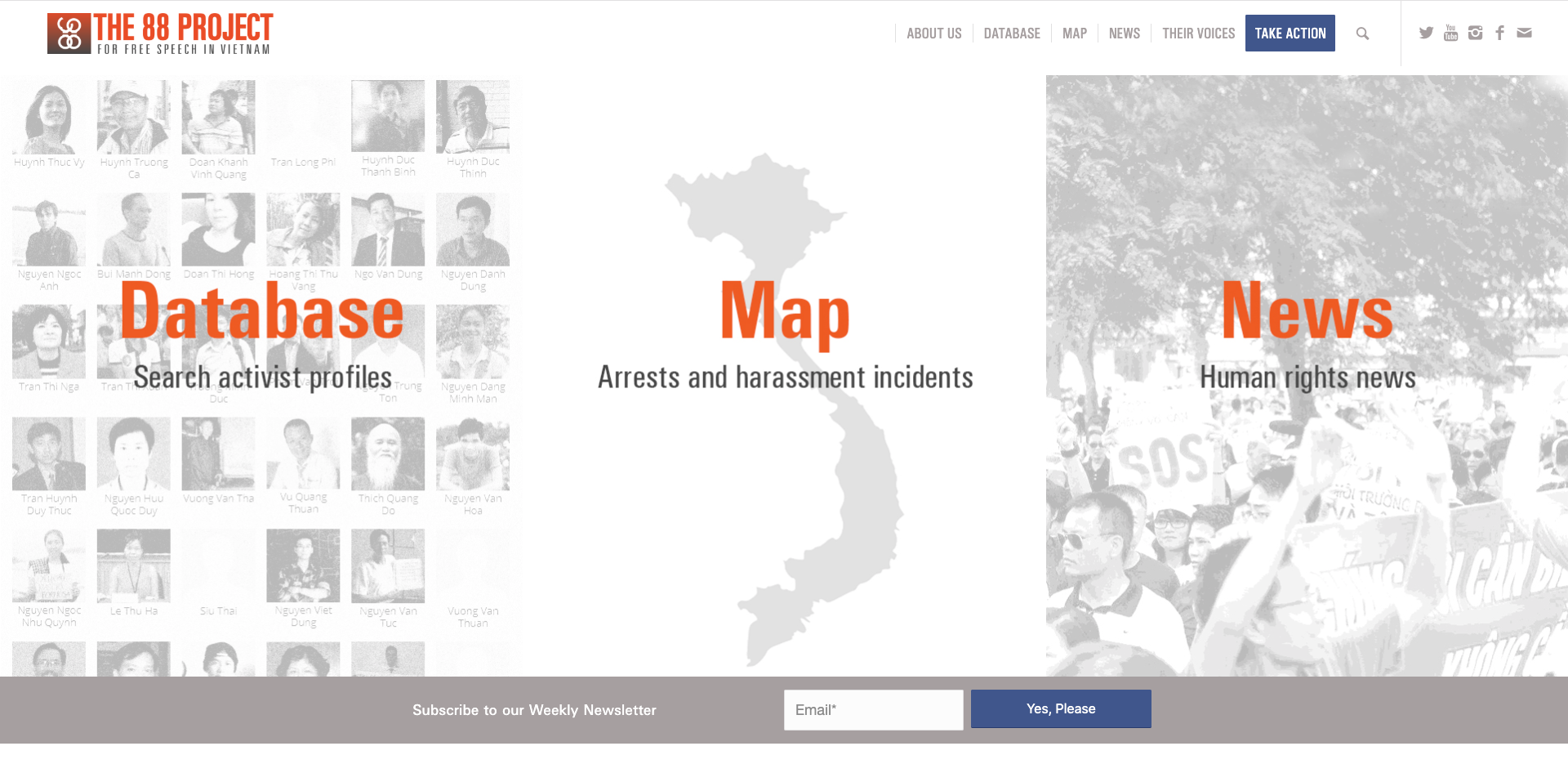
    Kaylee, who is now research director, was the driving force behind the recent expansion of their Database of Persecuted Activists in Vietnam, which now has functions that make it easier for users to navigate. The team has also unveiled the Map of Human Rights Violations.

    “We wanted to allow users to interact with the data in multiple ways, depending on their needs and learning style,” Kaylee said.

    Although Kaylee doesn’t speak Vietnamese, she is proud to be part of a team that provides an up-to-date English-based source of news on human rights issues, political prisoners, and activists at risk in Vietnam.

    “One of our largest challenges has always been gathering, verifying, and processing data from inside Vietnam,” she said. With Huong’s network and Vietnamese language skills, the 88 Project has maintained a strong backbone of research integrity through carefully vetting the information that goes into their news, database, and map. The group also takes security precautions to protect their sources, in-country contributors, and data.

    Online activity is heavily monitored and independent media does not exist in Vietnam. According to the 2019 World Press Freedom Index released by Reporters Without Borders, Vietnam sits at #176 out of 180 countries in terms of freedom of the press, one notch higher than China but one below Sudan.

    Despite the challenges facing human rights defenders in Vietnam, the 88 Project finds success in big and small ways, such as when its work is used to advocate for the release of prisoners or when the nonprofit organization is cited in news and journal articles.

    “There can be a lot of bad news before you get to hear any good news,” Kaylee said in an audio recording with Memria and the Norwegian Human Rights Fund. “But as a privileged person, as a white, educated, female American, the least I can do is to try to use my voice in some way to bring the very powerful and strong, but unfortunately, silenced voices of human rights defenders working on the front lines to a larger audience.”


    Linh Nguyen is a contributor to The Vietnamese. Linh can be reached at linhnguyen1251992@gmail.com and Twitter @LinhVietnam4.