Author: Jade NG

  • Vietnam: Seven State Secrets About Religions That May Surprise You

    Vietnam: Seven State Secrets About Religions That May Surprise You

    Stories from the past that the government wants to continue keeping them secretive

    In mid-April 1947, a prominent figure from the southwest of Vietnam disappeared after meeting with the Viet Minh. This mysterious disappearance created an eternal feud between the Hoa Hao Buddhist community and the Vietnamese Communist Party (VCP). The person who disappeared was Hoa Hao Buddhist founder Huynh Phu So.

    Over the past 70 years, no official documents have been released about Huynh Phu So’s disappearance. Millions of Hoa Hao Buddhists are still waiting for an official answer about what happened to their founder. “The day the teacher went absent,” or the date of Master Huynh Phu So’s disappearance, is still a formal commemorative holiday in Hoa Hao Buddhism. However, from 1975 until now, the government has banned the public celebration of this daywithout explaining.

    In a different and more recent event, a special task force consisting of high-ranking VCP military members was sent to the Central Highlands in April 2004to deal with the largest demonstration of the Montagnard people since 1975. Some 10,000 to 30,000 Montagnards protested against harsh government policies on land, religion, and ethnic groups in the region.

    How violent were these protests, and how were they put down? We may not know for sure, but there have been reports about many Montagnards who escaped Vietnam and travelled to Cambodia on foot after these protests.

    After the government quelled all of the protests, the Vietnamese state, international media, and human rights organizations released inconsistent information about the actual number of deaths. Furthermore, the Vietnamese government never published the total number of those injured or imprisoned during the protests; they refused to release the details of the trials and court hearings of those arrested. What happened in the Central Highlands in 2004 is still a mystery to the local people and the world.

    https://2xjs7y10oiyz26vqxu2hok6y-wpengine.netdna-ssl.com/wp-content/uploads/2021/01/AP_040722018930.jpg
    Montagnards in the Central Highlands fled from Vietnam to Cambodia to seek refugee status in 2004. Photo: AP.

    The wounds the government could have inflicted against these people will not heal until the truth behind the incidents should be transparent to the public.

    Huynh Phu So’s unexplained disappearance and the crackdown in the Central Highlands in 2004 are just two of these wounds that remain unaddressed in Vietnam, and they will continue to fester for as long as they remain as such.

    In 2020, Vietnam released a list of classified state documents, showing that the government kept confidential and secretive information on various religious groups.

    Nevertheless, while releasing this information might have been good news, it actually brought more issues because it raised more questions than answers. The released list and the information on these state secrets on religious organizations will continue to be kept secretive by the government indefinitely.

    The Law on the Protection of State Secrets in Vietnam

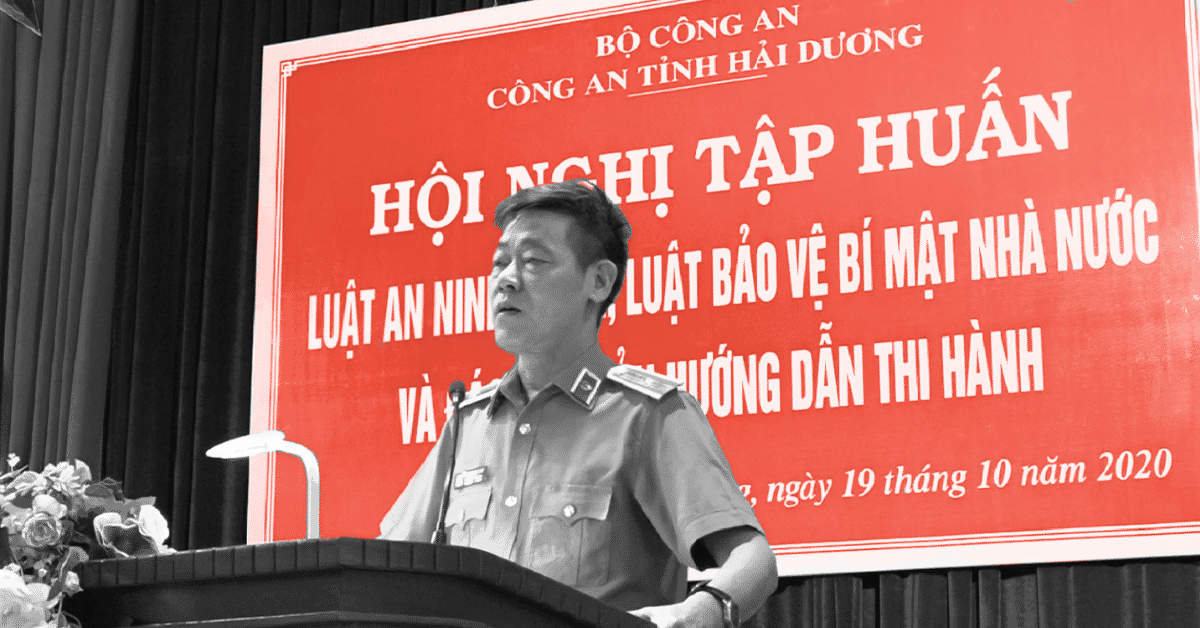
    In 2018, Vietnam’s National Assembly passed the Law on the Protection of State Secrets. According to this legislature, state secrets are classified into three levels: top secret, secret, and confidential. The government will protect the top-secret information for up to 30 years, 20 years for secret information, and confidential information gets the least duration of protection: only up to 10 years.

    Yet, the level of confidentiality of a secret does not matter much because the government can extend the protection of any state secrets indefinitely. Article 20 of the Law on the Protection of State Secrets gives the government the ability to continue extending the lifetime of any state secret.

    It should also be noted that when the government declassifies formerly sensitive information, it does not mean that those content will be disclosed to the public in Vietnam. Only the state gets to decide what gets released into the public sphere. Therefore, the authorities announce that they have state secrets on a certain religious group. Still, they do not have to disclose what this information is, and they will continue to keep them as state secrets indefinitely.

    In Thanh Tra (Inspection) magazine, Nguyen Phuong Vy of the Institute of Strategy and Science of the Inspector also believed the law regarding the scope of state secrets is too broad. She stated that, in effect, ordinary and non-sensitive information could also be classified as sensitive.

    This can be particularly observed in the field of religion. Here are seven of the top religious state secrets in Vietnam that may surprise you.


    1. The VCP puts its members among the religious leaders. Who are these people? It’s a state secret.

    Many people have been wondering whether or not the VCP assigns some of its members to be part of various religious organizations. Decision 1722/QĐ-TTg of the prime minister provided the government’s list of state secrets, released in November 2020.

    This specific list confirms that the VCP does indeed have its members present in the leadership of many religious organizations. However, information about how these Party members are “selected, arranged, and enlisted” is not disclosed; this falls under the confidential tier of classified information  (Article 3, Clause 7, Section c).

    Religious organizations are not state organs, but the party and the state can assign people to control them. This shows that the recognized religious organizations in Vietnam are not independent of the state and are under the government’s influence and coercion.

    1. The state uses “advocacy work” to identify critics against it, but how much does that work cost in tax money? That’s another secret!

    Vietnam uses the special term “advocacy work within the religions” to define how the government should mobilize religious dignitaries to support the state. The goal of this process, according to Dan Van magazine, is to “fight, educate, differentiate, and narrow down the number of people who have opinions or beliefs that oppose, disagree or contravene the policies of the party and the law of the State.”

    According to the information we have, the government has never disclosed the budget for this group to the public. The amount of money spent on these activities is classified as secret information by the State according to Decision 960/QĐ-TTg dated July 7, 2020, issued by the prime minister.

    1. Information of meetings between the state and the religious leaders in the country is confidential.

    Information about meetings between religious organizations, their leaders, and even certain members that have “influence” within a specific religion, with the government is considered the state’s top secret. The minutes of these meetings are also on the VCP’s list of confidential information.

    This regulation is extensive, with no restrictions on what can be discussed in these meetings. Likewise, any gathering with state leaders from the provincial level upwards can be considered a state secret. There are also no specific regulations or definitions on who can be considered an “influential” member of a religious organization.

    These ambiguities may cause problems for certain members of religious groups. They either must keep all of the information they have discussed in meetings with the state confidential, or they will face being accused of disclosing state secrets.

    https://2xjs7y10oiyz26vqxu2hok6y-wpengine.netdna-ssl.com/wp-content/uploads/2020/11/Untitled-design-9-1024x536.png
    Six religious leaders are members of the 14th National Assembly. Photo: National Assembly Newspaper, Dan Van magazine
    1. Veterans’ and Farmers’ Associations are considered “special forces” of the government in working with religions. There are a lot of secrets involving their works.

    It may be unclear to see the Veterans’ and Farmers’ Associations belong to the government’s organizations that work with religious leaders and religions in the country.

    The Veterans’ Association’s list of state secrets, according to Decision No. 872/QĐ-TTg dated June 19, 2020, issued by former Prime Minister Nguyen Xuan Phuc, affirms that one task of that association is to “enlist religious dignitaries in service of national defense and security.” They are also required to detect and report activities which “violate national security, social order, and safety.” Their reports on these topics to the government are classified as confidential.

    The Farmers’ Association also has the added task of “reflecting and evaluating the situation of farmers having changes in ideology and awareness, and to monitor activities which may affect politics, national defense, security and society in the areas considered to be hotspots of ethnic and religious issues.” The reports and surveys regarding this task are also considered state secrets.

    1. The Vietnam Women’s Union places its members among religions within areas that the government has considered to be “religious hotspots”

    The state also gave The Vietnam Women’s Union, like the Farmers’ Association, a mission in areas considered by the government to be religious hotspots.

    According to the list of state secrets of the Vietnam Women’s Union, Decision No. 1222/QĐ-TTg – issued by former Prime Minister Nguyen Xuan Phuc – identified that the Vietnam Women’s Union has provided “reports related to evaluating and commenting on the mobilization of union members in ethnic and religious hotspots” and maintained their confidentiality.

    In addition, this association also deploys its “key members” into areas that the government considered to be ethnic and religious hotspots. The list of these key members is also classified as confidential by the state.

    1. Information that the state has on educational activities organized by religious organizations which “affect national security” are classified as state secret.

    According to the list of state secrets in education and training (Decision No. 809/QĐ-TTg, dated June 10, 2020, issued by former Prime Minister Nguyen Xuan Phuc), information on the educational activities of religious organizations “influencing politics, defense and security” is confidential.

    The state has always considered the educational activities organized by religious organizations to be sensitive information.

    Since 1954 in the north and after 1975 in the south, religious organizations have been banned from participating in activities in the field of general education. The educational activities within these organizations are also controlled and monitored by the State. According to the Law on Belief and Religion, the state requires all religious organizations that if they want to teach law and history, they will have to follow strictly with the guidance of the Ministry of Justice and the Ministry of Education and Training.

    1. How the state handles what it claims to be “complex religious matters” in Vietnam is top secret.

    The “handling of complex religious matters” is classified as top secret in both the VCP’s state secrets list and the state secret list maintained by the Ministry of Home Affairs.

    The Ministry of Home Affairs considers the information it has on the “complex religious issues” to be more secretive and confidential than the information about the government’s personnel list.

    For these “complex religious matters”, because they are listed as utmost top-secret, even if the state does not extend the duration of the protection clause when it expires, yet it will take 30 more years from now for this information to be publicly released.

    If we think back about the story about the crackdown in the Central Highlands in 2004 mentioned earlier in this article, which the state considers a complex religious situation, the public may not know about the story’s facts until at least 2034.

    Currently, Vietnam does not have any law that defines how a religious issue can fall under this “complex matter” category; it all depends on the perspectives of the VCP and the state.


    This article was written in Vietnamese by Thai Thanh and was previously published in Luat Khoa Magazine on January 27, 2021. The English translation was done by Jade NG.
  • Chief Justice Nguyen Hoa Binh Elected To The VCP’s Politburo. What Does This Mean?

    Chief Justice Nguyen Hoa Binh Elected To The VCP’s Politburo. What Does This Mean?

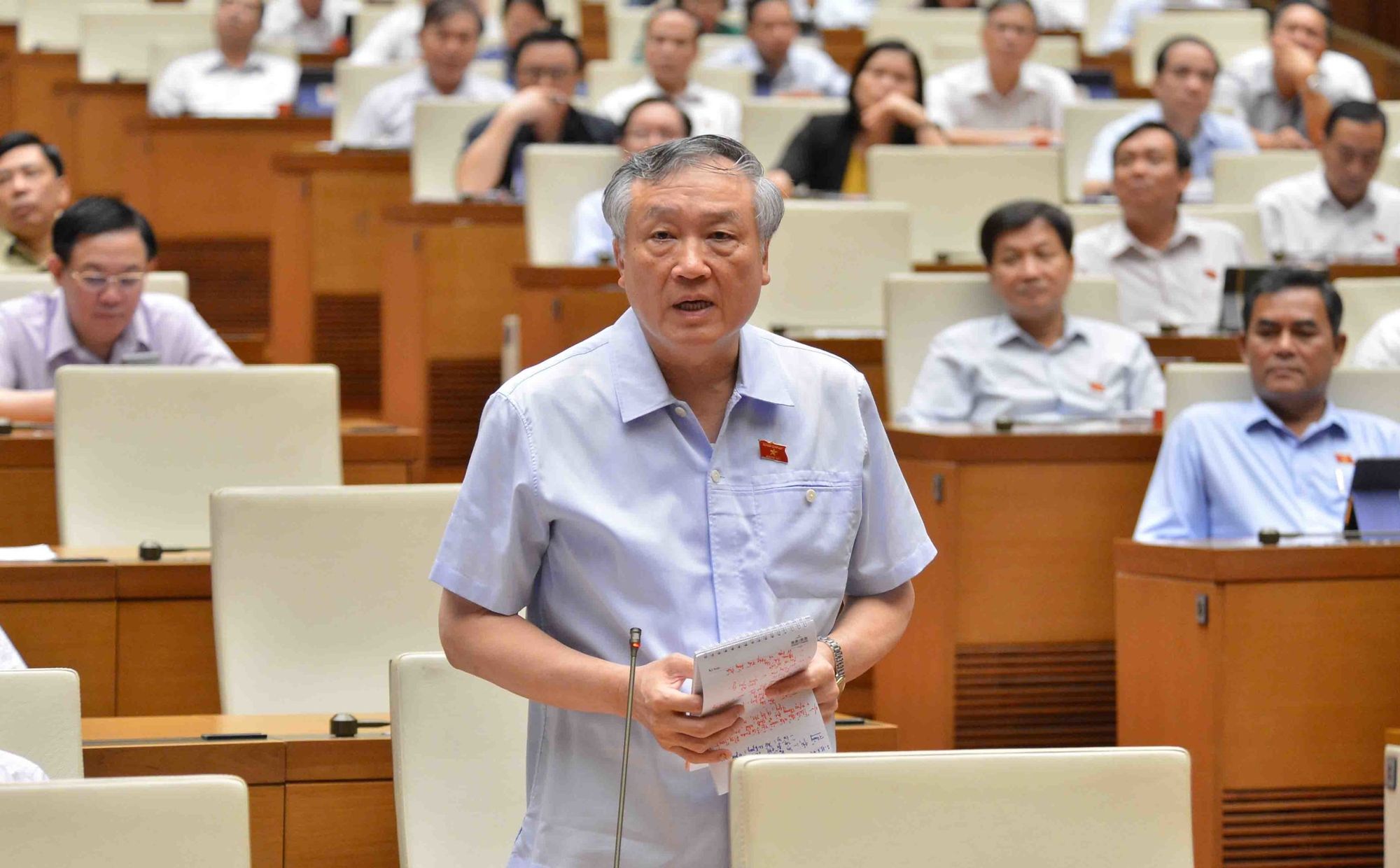
    First, it means that the chief justice of the Supreme People’s Court, Nguyen Hoa Binh, has been officially promoted. He was elected to the Politburo for the first time on January 31, 2021, at the first meeting of the VCP 13th Central Committee.

    Nguyen Hoa Binh is the second chief justice in the history of Vietnam’s Supreme People’s Court to be elected to the Politburo. The Politburo is the agency that chooses the most powerful politicians in the Party.

    The other chief justice on the Politburo was also named Hoa Binh, but had the surname Truong; he was elected to the Politburo in January 2016 at the 12th Party Congress. However, Truong Hoa Binh was moved into an executive position as the deputy prime minister almost immediately thereafter, when Vietnam’s National Assembly met in a special session during April of that same year. During that time, it was Nguyen Hoa Binh who replaced Truong Hoa Binh as the chief justice of the Supreme People’s Court and he held this position since.

    If Nguyen Hoa Binh can continue to be the chief justice for the next five years, it will be the very first time that the Supreme People’s Court has had someone with real power in the Politburo.

    A chief justice in the past was not a very meaningful position in the Party. Up to now, there have been only a few chief justices that were included as members of the Central Committee.

    In addition to the two “Hoa Binhs” mentioned above, there were only two others, Pham Hung and Nguyen Van Hien. The other three chief justices – Pham Van Bach, Tran Cong Tuong, and Trinh Hong Duong – were not even selected as members of the Central Committee. The absence of the chief justices in the Central Committee glaringly emboldened the Party in how it dealt with  the judicial branch in Vietnam’s political system. That is, the Party did not see the judiciary as a body with significant power.

    One would think that judges and justices should not be members of the only political party in the country so that they can be neutral and independent. One would hope that the judicial branch would remain neutral so that we can have fair trials in the country. However, in reality, this is not the case in Vietnam.

    Vietnam does not have an independent judicial branch and the above standard cannot be applied in this country. One’s position within the Party determines the actual political power of a party member, and not any state position one may also hold. The Politburo is the agency that Vo Van Kiet – at one time – had considered to be “superior” to the Central Committee, and gaining a position on the Politburo was the ultimate political goal for the most ambitious and successful Party members in Vietnam.

    Phiên tòa giám đốc thẩm vụ án Hồ Duy Hải ngày 6/5/2020. Ảnh: TTXVN.
    Chief Justice Binh (standing) in the cassation hearing of the Ho Duy Hai case on May 6, 2020. Photo courtesy: VNA.

    Being in the Politburo is a reward that the Communist Party gave Nguyen Hoa Binh. We do not know enough to say what he did to receive such an honor. But what he has done in the past five years may possibly offer us some clues.

    His appointment is most likely a reward for his role in directing the courts to hear a series of prominent cases related to the “anti-graft” campaign that General Secretary Nguyen Phu Trong started. For the first time in Vietnam’s contemporary history, many high-ranking party members were tried and convicted with extremely heavy sentences: Dinh La Thang, Nguyen Bac Son, Truong Minh Tuan, Trinh Xuan Thanh, and others.

    Other prominent cases may also include the cassation trial of the death row inmate Ho Duy Hai and the Dong Tam trial in 2020.

    Also, there were many political cases in the past five years which the Party deemed to be closely related to the security of the regime. These include cases related to the Independent Journalists Association of Vietnam (2020), the Brotherhood of Democracy (2016), Nguyen Ngoc Nhu Quynh (blogger Mother Mushroom, 2017), etc. From 2016 to date, the number of dissidents who have been tried has increased much higher than in the past, to the point that the opposition has almost been wiped out in Vietnam.

    If the VCP rewarded Chief Justice Nguyen Hoa Binh for the way he handled the cases mentioned above, then we can see that it only encouraged the judicial branch to be more of a supportive team player within the authoritarian regime the Party has created, and that trials cannot be considered independent or the place to resolve injustices in society.

    This means that people, such as wrongful death-row inmate Ho Duy Hai, a peasant who was tried and convicted for fighting for his land as was Le Dinh Chuc of Dong Tam Village, or those political dissidents like Pham Chi Dung and Tran Huynh Duy Thuc, who have almost no chance to plead for justice.

    Nguyen Hoa Binh was directly involved in the cassation trial of Ho Duy Hai in May 2020, and he was the person who continuously insisted that Ho Duy Hai was guilty, despite all the evidence that Hai’s attorney presented in court. Nguyen Hoa Binh was the center of widespread public criticism during the cassation trial, but he was still promoted by the VCP.

    The rise of Chief Justice Binh only proves that the Party is willing to disregard public opinion in order to keep its political power. Now, with his promotion, activists who are involved with the democracy movement in Vietnam may suffer more consequences. With this new position that makes him more powerful than before, Binh may begin to punish those who once made him lose face by criticizing him in public.

    It is true that the fact that Chief Justice Nguyen Hoa Binh was elevated to the Politburo may slightly enhance the status of the judicial branch in Vietnam’s political system. However, that doesn’t mean that the courts in Vietnam will be fairer and more independent. If Nguyen Hoa Binh’s promotion means anything, it is that the courts will act more like the powerful tools of the VCP so that the Party can continue to strengthen its one-party political power in the country.


    This article was written in Vietnamese by Trinh Huu Long and previously published in Luat Khoa Magazine on February 2, 2021. The translation was done by Jade NG.

  • Watching The US Presidential Election While Dreaming About Vietnam’s Free Election At The Commune Level

    Watching The US Presidential Election While Dreaming About Vietnam’s Free Election At The Commune Level

    This op-ed article was written in Vietnamese by Ly Minh and previously published in Luat Khoa Magazine on November 6, 2020. The translation was done by Jade NG.

    ***

    Although I am a Vietnamese citizen, I anxiously watched the US presidential election in November 2020. Many of my friends in Vietnam also did the same thing. We eagerly watched every turn of that election as if we were personally voting for our own head of state.

    The Vietnamese public’s interest in the US presidential election every four years can be seen through the headlines of our newspapers. The mainstream media updates many Vietnamese readers on every step of the thrilling race to the White House.

    Looking eagerly at the news every day about  the US presidential election, I cannot help but wonder whether or not the Vietnamese people earnestly wish to elect their own leaders.

    In the political context of Vietnam, I understand that this question is a taboo. Needless to say, everyone knows that the current political regime in Vietnam does not allow the Vietnamese to exercise their voting right as in the United States.

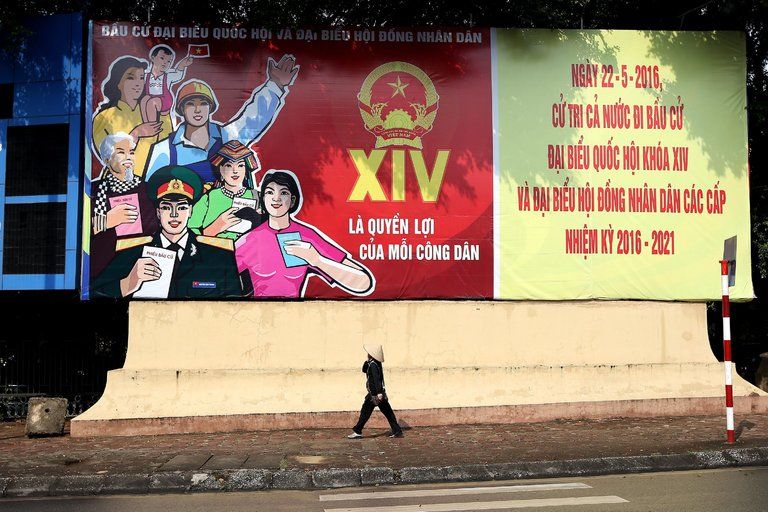
    Theoretically, the Vietnamese elect their National Assembly delegates through the National Assembly election once every five years. Then, on behalf of the Vietnamese people, the National Assembly delegates elect our national leaders.

    Thus, elections in Vietnam ironically have been going on smoothly, albeit with many predictable results. Surprises rarely happen in those elections. Throughout my own monitoring of the National Assembly elections in Vietnam, I found the saying “the Party selects, the People elect” a very reasonable way to explain the development and the results of elections in Vietnam.

    The secret desire of many Vietnamese people, including myself, is to have the freedom to make our decisions and to choose our state leaders, and even the National Assembly delegates who actually represent our voices when deciding the big decisions for the country.

    That desire is expressed indirectly by many people through monitoring and discussing the US presidential election, as if we were voting for our own state leaders. A friend of mine lamented on Facebook: “I look at the US election and all I  can feel is pain for the Vietnamese people.”

    It is impossible not to feel hurt.

    Governance is democratic when each vote of the citizens decides who the leaders will be. Every vote influences the final result. The thrill of the US election right up until the last minute was because those of us who watched the election’s progress could see the importance of each ballot cast by the American voters.

    Because each person’s vote is so important, the presidential candidates of the US must find ways to enlist the support of their voters, to specialize their campaigns for each state, to come up with policies that please local voters to gain support for the candidates, and even to try to entice the neutral voters.

    Meanwhile, looking back at the political situation in Vietnam, my country’s people have no decisive voice in deciding who will become our leaders. Therefore, in Vietnam, many people are not excited about politics and are not interested in who will become the general secretary, the president of the country, the president of the National Assembly, and the prime minister. It is simply because Vietnamese citizens do not have the right, through their votes to influence the selection of these above positions.

    Those who are knowledgeable about politics in Vietnam understand that the Party decides all the leadership positions in the country. Some three or four million members of the ruling Communist Party decide for almost 100 million Vietnamese people. Party members also decide all of the major issues of the country through their secret meetings, where the press is not allowed to cover any news. And the public? The public only knows about the results which are often announced by  Party officials after those meetings.

    This is the reality about the Vietnamese political situation that I, a Vietnamese citizen, am forced to accept. But I personally think that many people who also accept that reality do not comprehensively support it.

    Of course, I fully understand that some supporters of the current regime would argue that the Vietnamese people have the right to vote for the head of the country through the National Assembly delegates. However, I just want to ask two simple questions. First, do you remember who you voted for in a recent election? Second, do you feel happy when your delegate wins the election or sad when she or he fails?

    Having an election such as in the United States is a distant dream for the Vietnamese. Nevertheless, I have only a small dream, which is that our local people can one day elect the leaders of their wards or communes, free and fair, by themselves. Hopefully, my dream will come true soon so that in the future I can proudly tell my children and grandchildren that I have elected our ward president in a past election.