Tag: Vietnam Briefing

  • Vietnam Briefing: Busy With The Pandemic, But The Government Still Cracks Down On Free Speech

    Vietnam Briefing: Busy With The Pandemic, But The Government Still Cracks Down On Free Speech

    COVID-19 in Vietnam: From Panicking to Pointing Fingers

    For the past two weeks, Vietnam has been in a panic as it supposedly discovered a new COVID-19 variant in the country, which is the mixture of the variants found in the United Kingdom and India. As it turns out, the World Health Organization (WHO) declared that the virus found in Vietnam is not a “new hybrid variant” but rather a part of the existing strain found in India, according to Nikkei Asia.

    WHO’s representative in Vietnam, Kidong Park, said that more observation and monitoring are needed for the next few weeks. For now, the WHO does not alert a new strain of COVID-19 in Vietnam.

    How is the vaccination situation in Vietnam? As mentioned in previous briefings, Vietnam only has the AstraZeneca vaccine widely available in the country. It has been talking to Pfizer and Moderna to either import the vaccines or produce them domestically. Vietnam is also said to be producing the Russian vaccine Sputnik V, and the country is developing its own vaccine. Despite this effort, the country has a meager vaccination rate of only roughly 1 percent of the population so far. Most of those vaccinated have been health workers, diplomats, and the police and military.

    New vaccination developments last week: After resisting China’s vaccine diplomacy for a while, the Chinese vaccine Sinopharm was approved for emergency use by the Ministry of Health this past week. However, public opinion, filled with anti-China sentiment, seems to be resisting the Chinese vaccine. In contrast, people prefer Western developed vaccines and Vietnam’s homegrown NanoCovax vaccine, which is still in trial.

    This move by the Vietnamese government could be seen as a desperate effort to curtail the rising COVID-19 cases in Vietnam and expand the number of vaccinations done in the country. With the anti-China public opinion, however, the government will have a hard time popularizing the Sinopharm option for the Vietnamese people.

    The Vietnamese government has also set up a COVID-19 fund to manage financial resources for buying and producing COVID-19 vaccines. The government aims to reach a $1.1 billion benchmark for the fund to either acquire or make at least 150 million vaccine doses for the country of 100 million people. The government has been fund-raising from people inside as well as outside the country. So far, this fund has received around 200 million dollars (6,600 billion dong) in direct donations and donation guarantees.

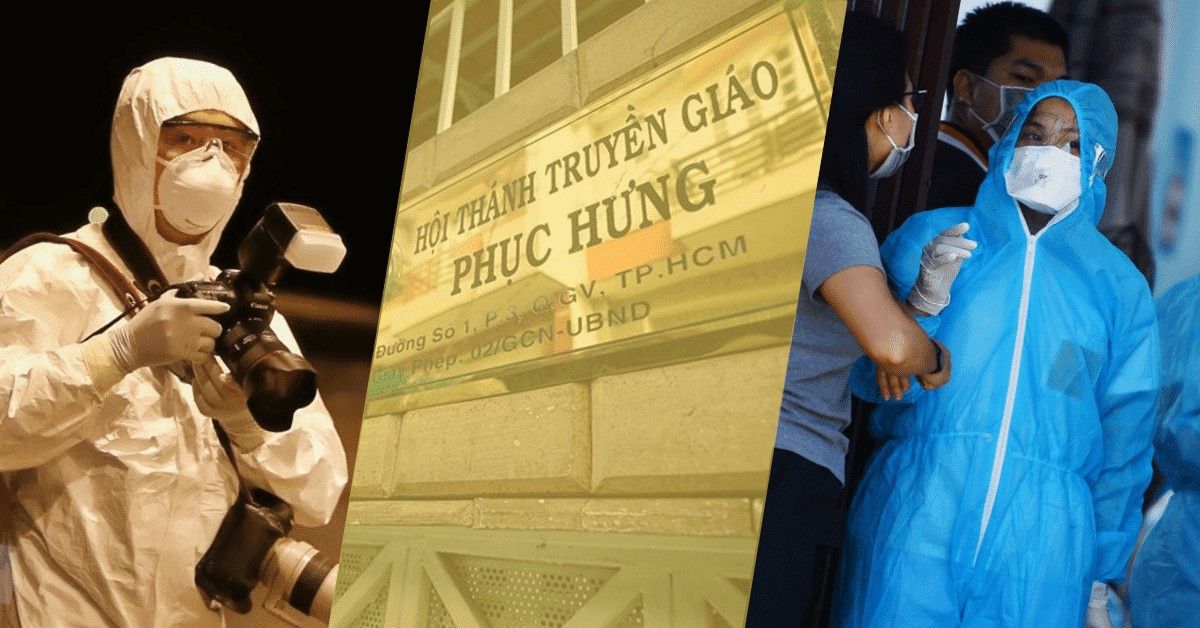
    A new pandemic scapegoat? Since the outbreak in Vietnam became worse, a group of Vietnamese Christian missionaries has been at the target of accusations by the Vietnamese state media. The Protestant group, known as the Revival Ekklesia Mission (Hội thánh Truyền giáo Phục hưng), has been associated with at least 145 cases of COVID-19 infections. The Vietnamese state press reported that the group did not impose social distancing and failed to use masks in its gatherings.

    With some inconclusive details, the state media and public opinion have been extremely harsh on the group, with people posting hateful comments all over the group’s social media. The situation leaves many wondering whether the state-controlled press was scapegoating the religious group as an easy target to blame for the new outbreaks, considering Vietnam’s stigmas surrounding non-Buddhist religious activities.

    Vietnam has now banned gatherings of more than 10 people. This move is seen as a response to the religious group’s new infections.


    The government is cracking down on another blogger

    Last week, the Vietnamese government issued a warrant to search for blogger Le Van Dung, also known as  Le Dung Vova, under the charge of “making, storing, distributing or disseminating information, documents, and items against the Socialist Republic of Vietnam,” according to Article 117 of the Penal Code.

    Le Dung Vova is a blogger who uses his independent platform CHTV to broadcast critical opinions about the government on social media. Previously, in 2019, he was detained by the government when he was live-streaming about the US-North Korea summit in Hanoi. He was detained again later in 2019 when he and his colleagues in CHTV were attending a workshop on the South China Sea. The blogger was eventually released on both occasions.

    Recently, in late May, the police tried to arrest him again under the same charge but failed. The police are said to have gone to his residence to arrest him, but only met his wife and children. According to a report published by BBC Vietnamese, the police confiscated a laptop and two smartphones in his house.

    Article 117 of the Penal Code is one of the typical charges that the regime uses against bloggers and political dissidents. Some other charges include “disrupting security” (Article 118), “abusing democratic freedoms” (Article 331), and “resisting officers in the performance of their official duties” (Article 330).


    The Communist Party celebrates 110 years since Ho Chi Minh’s departure to “seek national liberation”

    Occupied with the COVID-19 pandemic and cracking down on free speech, the government did not forget to continue its propaganda work. Last week, the state-controlled news in Vietnam was flooded with stories about Ho Chi Minh in foreign countries (France, China, Hong Kong, and Russia).

    110 years ago, Ho Chi Minh was said to have left Vietnam to embark on a journey to other countries in order to find a way to liberate the nation. Saigon, now named Ho Chi Minh City, also held a ceremony in the Ho Chi Minh Museum to celebrate “110 years since the late leader’s start on a journey to look for ways to save the country from the colonial yoke,” according to the state-controlled Vietnam News Agency.

    Ho Chi Minh, seen as the founding father of the socialist state and the nation’s liberator, has always been a prominent political figure used by the Communist Party for its propaganda efforts in order to retain power. The Vietnamese Magazine’s series on Ho Chi Minh and how his figure has been worshipped and utilized by the Communist Party can be found here and here.


    Learn more about Vietnam

    Coronavirus: Vietnam approves Sinopharm’s vaccine, but will people take it?

    South China Morning Post/Sen Nguyen/June 05, 2021

    “The news that theWHO has approved China’s Sinovac and Sinopharm vaccines for emergency use, allowing them to be included in the global vaccine-sharing Covax initiative, did little to ease the resistance against Chinese-made vaccines in Vietnam.”

    No Trade-Off: Biden Can Both Deepen U.S.-Vietnam Ties and Promote Human Rights

    Center for Strategic & International Studies (CSIS)/Bich T. Tran/June 03, 2021

    “To improve trust with Vietnam, U.S. policymakers should differentiate revisionist states like China from status-quo communist regimes like Vietnam. A revisionist state seeks to undermine the established international order for the purpose of increasing its relative power in the system. The concept, therefore, concerns a state’s behavior in international affairs. Meanwhile, a communist regime is a matter of domestic politics. China’s excessive claims, reclamation, and militarization of disputed features in the South China Sea; bullying of other claimants, including Vietnam; and engagement in unfair predatory economic practices are signs of a revisionist state. They are not necessarily characteristics of a communist regime. This distinction will help define and develop the U.S.-Vietnam relationship. Furthermore, the Biden administration should reaffirm its respect for Vietnam’s political system.”

    Keeping Strategic Anxieties at Bay: Growing Japan-Vietnam Bonhomie

    The Diplomat/Rahul Mishra/June 4, 2021

    “As one of the fastest emerging regional economies, Vietnam holds a key position in the emerging Indo-Pacific dynamic. A robust and long-term trade and investment partnership with Japan is significant in that context. Both countries are according greater importance to each other, which is manifested in recent initiatives taken by Japan’s Prime Minister Suga Yoshihide. For one, his first foreign visit as Japan’s prime minister was to Vietnam (and then Indonesia) in October 2020, which is a testimony to Japan’s commitment to Vietnam (and the wider ASEAN region). Diplomatic exchanges between the two countries had become regular and more institutionalized under former Japanese Prime Minister Abe Shinzo.”

    Research: Anglo–Vietnamese diplomatic relationship in the seventeenth century: the case of the English East India Company

    International Journal of Asian Studies (Cambridge University Press)/Ngoc Dung Tran/June 02, 2021

    “Drawing on primary materials from the English East India Company (EIC) archives in the British Library (London, UK), this article investigates the early diplomatic encounters between England and Vietnam (Tonkin and Cochinchina) in the seventeenth century. Previous studies have mostly focused on the English trade in Vietnam in that period and their diplomatic missions from the late eighteenth century to 1858 but partly neglected their diplomacy in their first connections with Vietnam (1614–1705). This article thus investigates how the EIC adapted its gift-giving diplomacy to the diverse and shifting political landscape of the Tonkin and Cochinchina kingdoms. While the Trịnh Lords in Tonkin severely limited diplomatic and trade exchanges with EIC agents and other European traders, the Nguyễn Lords in Cochinchina welcomed relations with EIC representatives as it served their ambition to facilitate trade and establish military alliances with other powerful actors in the region.”
  • Vietnam Briefing: The Elections Results Have Started To Be Released

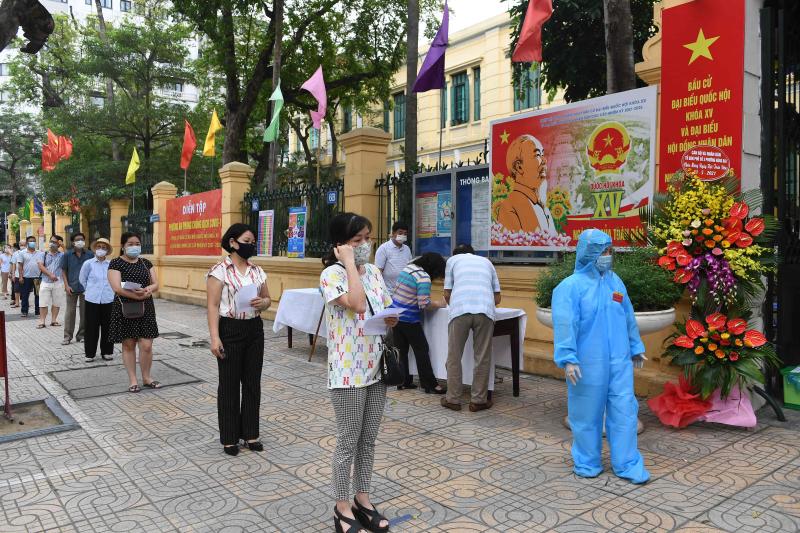
    Vietnam Briefing: The Elections Results Have Started To Be Released

    The Vietnam Briefing, which is released every Monday morning Vietnam time, looks at Vietnam’s political developments of the past week.


    The first openly gay candidate lost the People’s Committee election

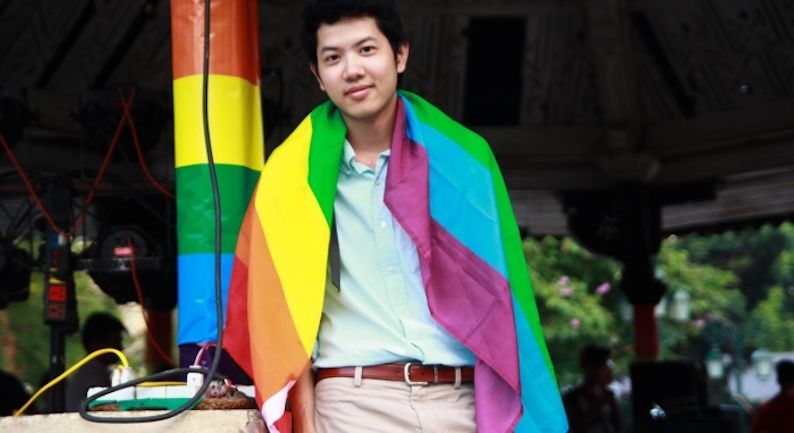
    Luong The Huy, the first openly gay candidate, and a non-Party member self-nominee lost his election bid to the People’s Committee of Hanoi. In the list of elected candidates published last week, Luong The Huy was not among the 95 elected representatives for Hanoi’s People’s Committee.

    In Vietnam, there are two elections: the People’s Committee election and the National Assembly election. Each province has its own People’s Committees at the provincial, district, and commune levels, while the National Assembly represents the central government’s legislative body. Luong The Huy ran for both the National Assembly and Hanoi’s People’s Committee.

    Both elections follow the bloc voting system, in which a province is divided into different voting blocs based on the province’s districts. Each voting bloc typically elects 3-4 representatives to the People’s Committee from the competition pool of around 5-6 candidates.

    For his People’s Committee election, Huy was placed in voting bloc number 04 in the Hai Ba Trung District. The people who got elected over Huy are all Party members with a prior history of either serving the Vietnamese Communist Party (VCP) or the People’s Committee of Hanoi. The list includes Nguyen Van Nam, the secretariat of the VCP in Hai Ba Trung District, Ho Van Nga, ex-representative on the Committee, and Duong Duc Tuan, ex-vice chairman of the Committee.

    All of these elected candidates are around 51-56 years old. For comparison, Huy is 32 years old.

    These elected candidates are going to serve on the People’s Committee of Hanoi for the next 5 years.

    What’s next? The National Assembly election has not released its results. However, it is very unlikely that he will be elected for the National Assembly.

    Why? Elections in Vietnam have always been rigged against self-nominated, non-Party candidates through various means. The number of self-nominated representatives in the National Assembly has never exceeded 15 percent. In the 2016 election, only two self-nominated candidates got elected – and both of them were Party members.

    Huy’s district was allocated three seats. Among the 5 candidates, apart from Huy, the others included the chairperson of one of the largest state-owned banks, a high-ranking legislator, a government minister, and a deputy principal of a local school. It’s not difficult to anticipate who the winners will be.

    Who is Luong The Huy? Luong The Huy is the first openly gay candidate to run for the National Assembly and the People’s Committee of Hanoi. He is a self-nominated, independent candidate, meaning any VCP institutions did not nominate him and had no VCP membership. Huy is a Fulbright Scholar who studied at the University of California, Los Angeles (UCLA) for his Masters of Law (LLM) specialization in sexuality. He is currently directing the Institute of Studies of Society, Economy and Environment (iSEE), a non-profit organization aiming to promote minority rights in Vietnam.

    As normal, there were many reports and accusations of vote tampering and online smear campaigns directed at independent, self-nominated candidates like Huy. For example, anecdotes of how high schools in Ha Dong District, where Huy’s voting bloc was placed for the National Assembly election, forced students to share false information about him on Facebook, claiming that he committed tax evasion that he was an anti-state foreign-sponsored reactionary. The students were rewarded with higher grades. In another example, voters in his voting bloc said that people at the voting locations instructed them to specifically not vote for him.

    However, as the state controls the official media channels in the country, there is no way to investigate or prove these claims. The state-controlled media has also been very quiet on these accusations.

    On the day of the election, many state-controlled online media channels deleted their posts on Luong The Huy.


    More propaganda is coming

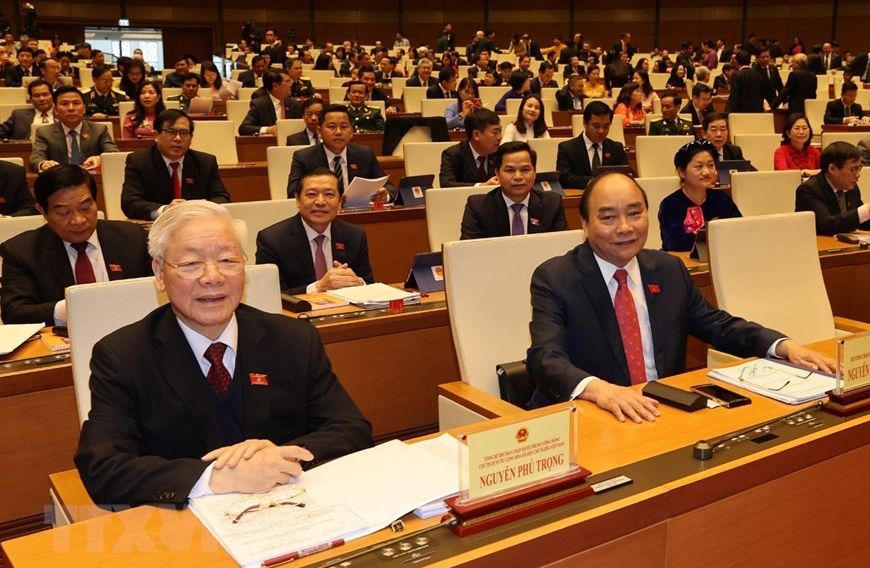
    Last week, President Nguyen Xuan Phuc met and discussed with the Communist Review (Tạp Chí Cộng Sản) to create a forum discussing the VCP’s “important theoretical issues.” In this meeting, the president affirmed that Vietnam’s path to socialism has “become increasingly clear” over the past 35 years since the launch of Doi Moi, a political and economic reform program and that “theoretical issues” (read: propaganda) should be explained and widely spread to serve this path to socialism.

    This seems to imply that the Communist Review is going to be more active and aggressive in defending the Party as well as spreading propaganda.

    In this meeting, Nguyen Xuan Phuc said that the goal of the socialist state of Vietnam is to establish rule of law, democracy and a “socialist-oriented market economy.”

    Though these terms are ambiguous, we could understand that the VCP’s visions of “rule of law” or “democracy”  are drastically different from how these words are used in non-authoritarian countries. Over the years, the VCP has consistently pushed the theoretical argument that the “rule of law” in Vietnam is essentially the rule of the Party, and “democracy” here just means the existence of elections, even if such elections always result in the overwhelming majority of VCP members in the government.

    What is the Communist Review? The Communist Review is a century-old mouthpiece of the VCP. Its main function is to create theoretical arguments to defend the Party’s policies. Even though it is named “Communist,” the Review does not support any communist theories or arguments that contradict the Party’s leadership and legitimacy. In hindsight, the Review is not a communist intellectual journal or a think tank that aids the Party in creating policies, but rather a propaganda mouthpiece that defends the Party’s decisions.


    A busy week with COVID-19 in Vietnam

    Last week was another week of panic for people in Vietnam, with approximately 100 new COVID-19 cases every day. So far, there have been more than 6,000 cases of COVID-19 infections recorded in Vietnam, with 47 deaths, according to the World Health Organization. While this number seems to be modest compared to other countries, it is worth noting that only around 1 percent of the population has been vaccinated – mostly front line workers, diplomats, as well as police and military officers; and only around 28,000 people have been fully vaccinated with a second dose, accounting for just around 0.03 percent of the almost 100-million people population.

    Vietnam’s percentage of vaccinated people based on population is among the lowest in Southeast Asia.

    What COVID-19 vaccines are not widely available in Vietnam? At the moment, only AstraZeneca is available in the country. Vietnam has been negotiating with Moderna to produce the vaccines in the country and is said to be getting 30 million doses of the Pfizer vaccine by the end of this year. It is producing the Russian vaccine Sputnik V in the country, though it has not considered the Chinese vaccines. Vietnam also has three types of vaccines developed domestically, but none of them have been approved yet.

    How strict is the entrance into the country? The Vietnamese government not only has extremely strict entrance requirements, but it even recently tightened the law surrounding entry to the country. Currently, everyone, whether having been vaccinated or not, is required to undergo 21 days of quarantine in a government-mandated location, instead of 14 days like before.

    Last week, the American Chamber of Commerce requested the Vietnamese government to reduce the number of quarantine days to seven days to allow more foreigners to enter the country. The government is considering the proposal, but so far, the entrance restrictions remain tight for everyone, Vietnamese citizens or not.

    Vietnam finds a new virus variant: “Vietnam has discovered a new coronavirus variant that’s a hybrid of strains first found in India and the U.K., the Vietnamese health minister said Saturday,” according to AP/VOA News.


    Learn more about Vietnam

    Cybersecurity in Vietnam: has anything changed?

    Loxology/ Le Ton Viet (Russin & Vecchi Vietnam)/ May 28, 2021

    “Since adoption of the Law on Cybersecurity in 2018, there has been an ongoing conversation opposing the strict regulatory environment that the Law creates. Strict enforcement, it is said, would disrupt the continuous flow of data so important to commercial development. While this conversation has gone on, the Vietnamese Government has not taken any real steps to provide clarification or to enforce the Law. Businesses continue to operate in the shadow of the Law, while awaiting further guidance. But lack of clarity is not new in Vietnam and often serves the Government’s purpose of hands-off control.”

    The Gulf between Chinese and Vietnamese alliance policies

    The Diplomat/ Ngo Di Lan/ May 27, 2021

    “…no matter how we define military alliance, for as long as Vietnamese national power has not caught up to China’s, China and Vietnam will continue to have significantly different alliance policies.”

    New research: “Vietnam’s tentative approach to regional infrastructure initiatives” by Do Mai Lan and Hoang Oanh

    ISEAS/ May 27, 2021

    Executive summary:

    • Vietnam’s Socio-Economic Development Plan 2021-2030 highlights infrastructure development as one of the three strategic breakthroughs.
    • However, financing for infrastructure development remains constrained. State resources fund approximately 90 percent of the country’s infrastructure projects, and mobilising private capital has proven difficult.
    • There are currently many foreign-financed connectivity initiatives in the region, such as China’s Belt and Road Initiative, Japan’s Expanded Partnership for Quality Infrastructure, and projects supported by America’s International Development Finance Corporation.
    • While competition among these initiatives provides Vietnam and regional countries with more funding options, they also come with challenges. Vietnam, therefore, has approached them with some reservations.
    • Moving forward, it is crucial for Vietnam to adopt stringent standards in approving new projects, improve the legal environment to attract private infrastructure investment, develop better national infrastructure master plans, diversify infrastructure investment sources, and refrain from taking sides in pursuing international infrastructure development cooperation.
  • Vietnam Briefing: The Election Is Over. But The Fate Of Party Critics Is Still Grim.

    Vietnam Briefing: The Election Is Over. But The Fate Of Party Critics Is Still Grim.

    The Vietnam Briefing, which is released every Monday morning Vietnam time, is a look at Vietnam’s political developments of the past week.


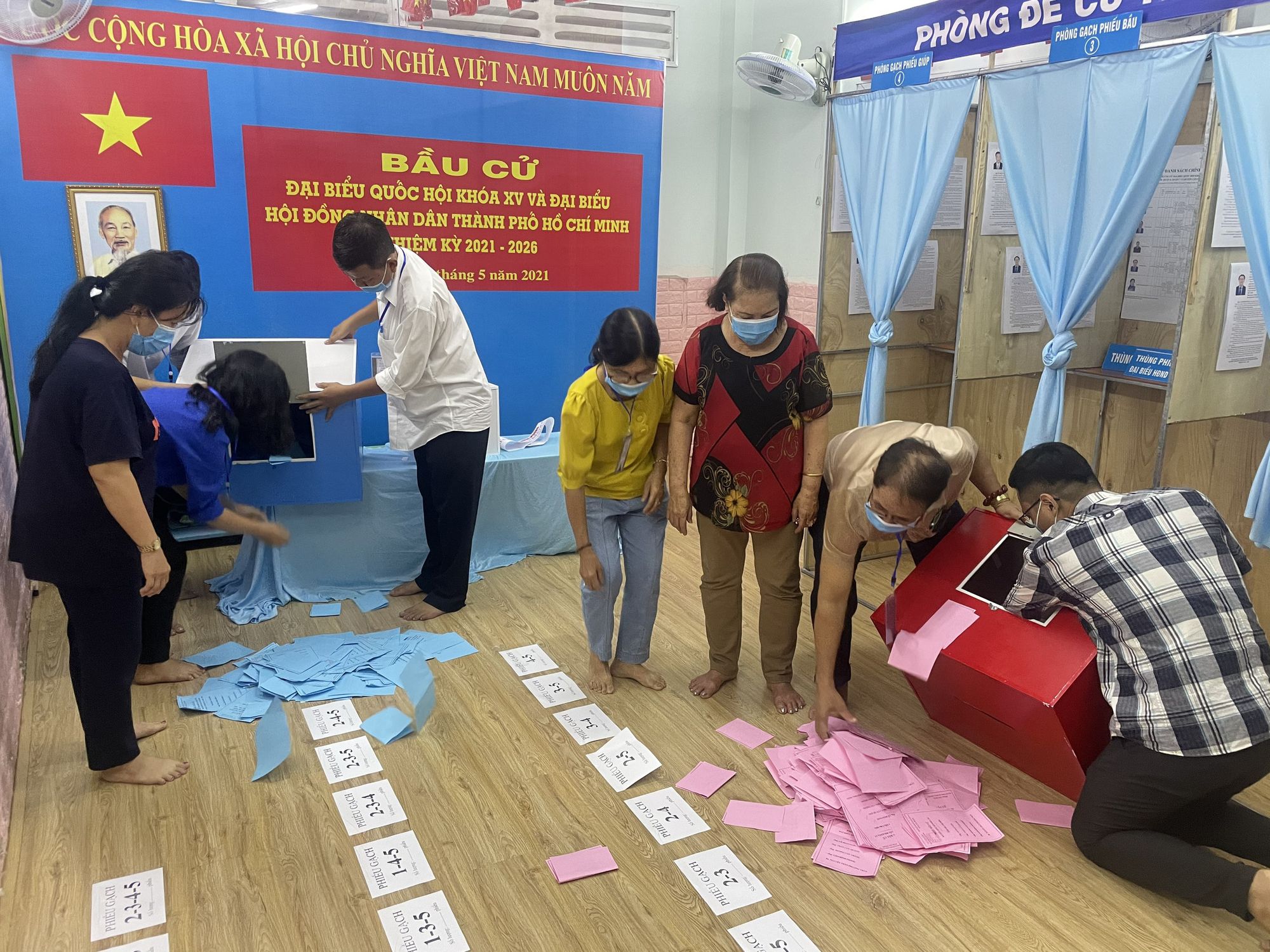
    The 2021 National Assembly election is over. Rumors are spreading.

    It is reported that almost 70 million people were expected to cast their ballots yesterday, Sunday, May 23. The election witnessed the nominations of 866 candidates, with 500 seats up for grabs in the parliament.

    The number of non-party candidates this year is lower than the last election in 2016, falling from 97 to only 74 candidates. Recently, the National Assembly includes just around 8 percent of independent members, while Party members account for 92 percent of the parliamentary seats.

    How does the National Assembly election work in Vietnam? Is it democratic? Could non-party members run for election? These questions are answered by The Vietnamese’s recently published articles: “The Odds Against Your Favor: How Does The National Assembly Election In Vietnam Work?” and “An Authoritarian Nightmare: The Self-Nomination Movement In 2016.”

    Surprise at the last minute: Published articles about independent candidate Luong The Huy on state media have disappeared since Saturday evening, as reported by BBC News Vietnamese service.

    Rumors are spreading on social media. This was expected. It happens as usual.

    • Some voters went on Facebook to report that they saw some voters holding several ballots in hand and election officers did nothing, suspectedly committing electoral fraud. This is probably the most common rumor about elections in Vietnam for decades now.
    • Some other voters said there were election officers instructing them who to vote for.
    • Those who had a chance to witness vote counting in previous elections said there was very suspicious and unexplainable conduct behind closed doors that didn’t follow official guidelines, such as the transfer of invalid ballots into valid boxes.
    • As the media in Vietnam is controlled by the government, there has been no known investigation by journalists to verify these rumors with concrete evidence. The existence of rumors in Vietnam’s politics, and how many ordinary people believe in them, say a lot about how intransparent the system is.

    Activist Pham Doan Trang recognized as an honorary member of German writer-activist organization

    Last Wednesday, the German branch of Poets, Essayists, and Novelists (PEN) recognized activist and prisoner of conscience Pham Doan Trang as an honorary member. PEN is an international organization aimed at defending “persecuted and suppressed writers” as well as advocating for freedom of speech.

    Using its announcement in German, PEN advocated for Trang’s immediate and unconditional release and condemned the Vietnamese authority’s brutal treatment of her. PEN also recognized Trang’s work as a co-founder and editor for The Vietnamese and Luat Khoa Magazine, as well as her human rights report on the Dong Tam land dispute, co-authored with activist Will Nguyen.

    Trang is a co-founder of Legal Initiatives for Vietnam (LIV), which publishes The Vietnamese and Luat Khoa. She is the author of many books focused  on educating the Vietnamese people about politics, such as “Politics for the Common People” and “Nonviolent Resistance.” In 2019, Trang was awarded the Prize for Impact from Reporters Without Borders.

    In 2020, Trang was imprisoned by the Vietnamese authorities and charged with “conducting propaganda” against the state. Up until now, after more than seven months in prison, she is still being held incommunicado. Her family and her lawyer have not been allowed to meet with her.


    Independent journalists face persecution

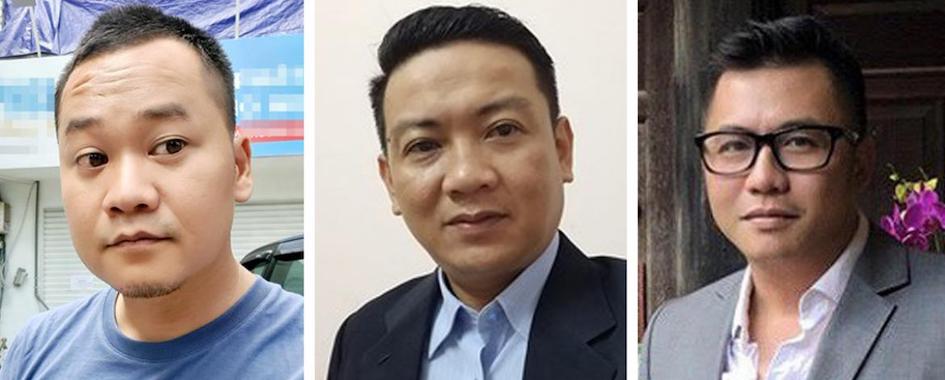
    The investigation of the Báo Sạch (Clean Newspaper) case has been finalized with Can Tho Police formally recommending the city’s People’s Procuracy to prosecute four journalists of the group: Truong Chau Huu Danh, Nguyen Phuoc Trung Bao, Doan Kien Giang, and Nguyen Thanh Nha.

    They now face up to seven years in prison, on the charge of “abusing democratic freedom” under Article 331 of the Penal Code.

    The investigative agency said it would continue to investigate other suspected activities of the group. They did not rule out the possibility of filing new charges against the group’s members under Article 337 of the Penal Code, which is “deliberate disclosure of classified information; appropriation, trading, destruction of classified documents.”


    COVID-19 in Vietnam: Panic, panic, and panic.

    Panic took over Vietnam as the country witnessed new surges of COVID-19 cases. Even though the number of cases in Vietnam has been low compared to other countries, only around 1 percent of the population has been vaccinated. The Vietnamese government has promised to distribute the COVID-19 vaccines for free, but those who have gotten the shot so far are mostly front-line workers, diplomats, and military officers.

    At the moment, only AstraZeneca is available in Vietnam.

    The desperation for COVID-19 vaccines has manifested itself in the form of tourism. According to Tuoi Tre News, a travel company in Ho Chi Minh City recently launched a new “vaccination tour” for their customers. This “tour” would take customers to the United States to get vaccinated with one of the three options: Pfizer/BioNTech, Moderna, and Johnson & Johnson. Pricing starts at almost $2,000. The travel package is said to target “business people, high-income earners, and white-collar workers.”

    The government has said it will buy and deliver 31 million doses of the Pfizer vaccine by the end of this year. Vietnam currently has three domestically produced vaccines, but none of them have been approved. Although Vietnam is producing the Russian Sputnik V vaccine, the country has not considered Chinese vaccines. Public opinion in Vietnam, filled with anti-China sentiment, has shown much distrust of China’s vaccine diplomacy.


    Vietnam’s stance on the Israel-Palstinian conflict

    Despite the VCP’s historical connection to Palestine as fellow anti-imperialist revolutionaries, the country has taken a moderate stance on the Israel-Palestinian conflict. While state-controlled media outlets dramatically state that Vietnam condemns violence in the conflict, the country actually has not taken a side in the conflict, only condemning general “attacks targeting civilians.” Dang Dinh Quy, Vietnam’s ambassador to the United Nations, only suggested that “both sides, especially Israel” should “respect international humanitarian law.”

    Why doesn’t Vietnam side with Palestine? Even though siding with Palestine would provide a chance for the VCP to demonstrate its commitment to anti-imperialist ideology, which is ideal for communist propaganda, Vietnam’s long-standing defense policy prohibits it from “siding with one country against another.” Although the defense policy does have some room for flexible consideration on a case-by-case basis, it seems that playing the ideological game is not Vietnam’s priority anymore.


    Learn more about Vietnam:

    Vietnam’s National Assembly Vote: A Futile Gesture

    The Diplomat/Mu Sochua/May 19, 2021

    “As in previous elections, the Vietnamese Communist Party (VCP), which runs one of the few remaining single-party states in the world, is expected to dominate the polls and extend its rule for the next five years. Voter turnout on polling day is also expected to be high, if previous elections are anything to go by, despite an intensified crackdown on human rights over the last few years.”

    Vietnam may not want China’s Covid-19 vaccines, but how long can it stay immune to them?

    South China Morning Post/Dien Nguyen An Luong/May 20, 2021

    “Leaving China-developed jabs off the table altogether risks derailing efforts to expedite a much-needed vaccination drive, which could dent extraordinarily high public approval ratings of the government’s handling of the pandemic. But a nod to Chinese shots is likely to force the authorities to grapple with an even more daunting challenge: how to talk an increasingly anti-China audience at home into taking them.”

    Full steam ahead on Vietnam’s anti-corruption campaign

    East Asia Forum/Hai Hong Nguyen, UQ/May 20, 2021

    “Public attention is being drawn to how Trong and the new 18-member Politburo will decide on the fate of the ‘three big fish’ and former members of the Politburo: former party boss of Hanoi Hoang Trung Hai, former party boss of Ho Chi Minh City Le Thanh Hai and former governor of the State Bank of Vietnam Nguyen Van Binh. All three men were disciplined last year.”

    Do China and Vietnam Have Similar Alliance Policies?

    The Diplomat/Khang Vu/May 18, 2021

    “Similar to China, Vietnam also has a formal alliance commitment to Laos that survived the end of the Cold War. Vietnam is famous for its “Three Nos” defense policy – no military alliances, no foreign military bases on Vietnamese territory, and no reliance on any country to combat others – but its alliance with Laos is the exception to its alliance policies the same way North Korea is to China. Scholars often consider the Sino-Korean alliance to be a deviant case that goes beyond the scope of existing alliance theories. However, the existence of another deviant Vietnam-Laos case implies that there is a pattern that is worth further research, especially so when Vietnam and China are communist countries that once fought a common U.S. enemy. Deviant cases are significant in the sense that they can be the exceptions that prove the rule. Ignoring them can risk selecting on the dependent variable, which could lead to biased results in studies of Chinese and Vietnamese alliance policies.”

    China and the US: Who Has More Influence in Vietnam?

    The Diplomat/Mengzhen Xia and Dingding Chen/May 21, 2021

    “As soon as the Biden administration came into power in the United States, Washington decided to strengthen its Indo-Pacific strategy, intending to highlight its presence in Asia and to deter the rise of China. Vietnam, fresh off a year of serving as the ASEAN chair and currently a non-permanent member of the United Nations Security Council through 2021, is becoming increasingly important in this effort. Washington seeks to upgrade U.S.-Vietnam ties and deepen their “comprehensive partnership” with an eye toward balancing and confining China. Both China and the United States are competing to exert a positive – and bigger – influence on Vietnam through various economic and political policies, such as the Belt and Road Initiative from China and maritime security cooperation from the United States.”


    Events to watch this week:

    Seminar: Responsiveness in the Shadow of Repression: Vietnam and China Compared

    Date: May 27
    Organizer: Southeast Asia Program, Stanford University

  • Vietnam Briefing: The First Openly Gay Candidate Running For Election

    Vietnam Briefing: The First Openly Gay Candidate Running For Election

    The Vietnam Briefing, which is released every Monday morning Vietnam time, is a look at Vietnam’s political developments of the past week.


    That’s it. The election is here.

    This is the last briefing before the general election on Sunday, May 23. Candidates spent the last week busying themselves with voter meetings and media campaigns.

    Changes in the final list of candidates: After the extensive vetting process and the finalizing of the list of candidates, the National Election Council made a few changes last week with three candidates removed from the list. The Council announced that those who had been removed had all filed to withdraw from the candidacy themselves, which had had been accepted by the Council.

    • Among them is the prominent case of Nguyen Quang Tuan, the director of Hanoi Heart Hospital, officially due to “physical conditions and other reasons.” He is reportedly involved in a corruption probe relating to the hospital during his time as director of the hospital.

    A candidate to pay attention to: Luong The Huy is one of nine self-nominated candidates who survived the vetting process and made it to the final list in the National Assembly election. He is also running for a seat on the Hanoi City’s People’s Council. Huy, 33, a leading civil society activist and gender expert, has already made history by being the first openly gay candidate to run for election in Vietnam.


    Nguyen Phu Trong talks about socialism

    On Sunday, Vietnam’s state media simultaneously published an 8,000-word essay about the country’s path to socialism written by the top political leader: Nguyen Phu Trong, the secretary-general of the Communist Party.

    Main message: As usual, Trong has only three points to make: denouncing capitalism and democracy in the world, delegitimizing the opposition, and justifying Communist rule in Vietnam as a regime truly “of the people, by the people, and for the people.” He also promoted the “socialist-oriented market economy” and “socialist democracy” to emphasize how significant it is that the VCP continues to take the role of leading the country.

    What’s missing? Although published one week before the election, the essay provided no account of multiparty, free and fair elections, while insisting that “democracy is the nature of the socialist regime.”

    Nothing new. The Party’s top leader usually has to play the role of the leading voice in philosophy and theoretical issues. The secretary general often gives speeches and publishes essays and books discussing the issues, proving he is philosophically knowledgeable enough to lead the Party and the country to the ultimate goal of socialism. Trong is even more than a party leader. He’s spent almost his entire career as the Party theorist and previously served as  the chair of the Party’s Central Council for Theoretical Studies, the top think tank that influences its platform.


    Learn more about Vietnam

    Vietnam’s tug of war with China over Laos

    The Diplomat/ Nguyen Khac Giang/ May 12, 2021

    “Hanoi’s geopolitical survival is also linked to Laos. Vietnam has land borders with only China, Cambodia, and Laos. Given the complex history and perpetual distrust of Beijing’s intentions, forming a unified ‘Indochina’ political bloc to safeguard against possible northern encroachment has always been a priority in Hanoi’s strategic thinking. The last time they failed in the late 1970s, North Vietnam had to fight wars on both sides of the country and was on the brink of total collapse. In addition, since China’s support for Cambodian Prime Minister Hun Sen’s government has drawn Cambodia securely into its orbit, Vietnam cannot afford to lose Laos.”

  • Vietnam Briefing: Land Rights Activists Jailed Ahead Of Election

    Vietnam Briefing: Land Rights Activists Jailed Ahead Of Election

    The Vietnam Briefing, which is released every Monday morning Vietnam time, is a look at Vietnam’s political developments of the past week.


    The general election enters the final stage

    The general election is two weeks away and will be held on May 23, 2021. Here are the key developments in the election thus far:

    • The National Election Council announced the final list of candidates on April 27 after a long vetting process (we have briefly explained this here). There are a total of 868 candidates running for the 500 seats in the National Assembly.
    • Only 74 non-party candidates made it to the final list, which is approximately 8.5 percent of the total. The Council planned to have 25-50 non-party members who will serve in the next term of the National Assembly.
    • Only nine out of 76 self-nominating candidates survived the vetting process. Among them, surprisingly, is a prominent LGBT activist named Luong The Huy.
    • From now on, candidates can campaign, including meeting with voters and media campaigning. However, campaigns are strictly controlled by the government and are primarily organized by the government.
    • All four members of the leadership (the Communist Party’s secretary general, the state president, the prime minister, and the chairperson of the National Assembly are running.

    Two prominent farmer activists sentenced to 8 years each in prison

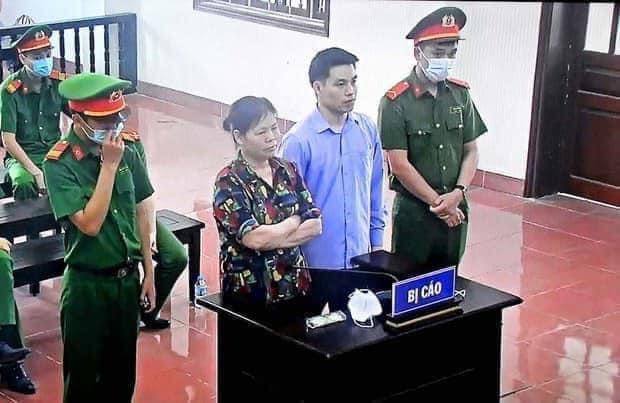
    Since this briefing was initiated in early February, not many weeks have passed without a dissident being persecuted. Last week, on May 5, this happened to two prominent land rights activists, Can Thi Theu, 59, and her son, Trinh Ba Tu, 32, during a trial in Hoa Binh Province.

    They both received an eight-year sentence for “making, storing, distributing or disseminating information, documents, and items against the Socialist Republic of Vietnam,” an activity that is criminalized under Article 117 of the Penal Code. Human rights groups, both inside and outside of Vietnam, have long condemned the criminal provision as an undemocratic and anti-human rights provision that is used to silence critics.

    Context:

    • The conviction is based on the two defendants’ live streaming videos on Facebook that were deemed to be anti-government, according to the indictment and state media.
    • Can Thi Theu is a longtime and prominent land rights activist who leads a group of farmers in Duong Noi (Ha Noi). The group claims that they are victims of forced land eviction. Her two sons, Trinh Ba Tu and Trinh Ba Phuong are both involved in her activism and are currently detained with Trinh Ba Phuong while awaiting trial.

    Talk about land rights in Vietnam:

    • The 2013 Constitution states that all land belongs to the people and is managed by the government. This is a legacy of the Soviet-influenced 1980 Constitution that was adopted during the height of Vietnam’s era of the centrally planned economy. Since 1986, the ruling Communist Party has adopted a capitalist economic model while still maintaining the old land regime.
    • Land disputes and land evictions have become a major part of Vietnam’s political and economic developments since then, leading to riots, protests, and widespread anger among the public. The most prominent incident was the deadly Dong Tam raid following a land dispute between farmers and the military.
    • Other prominent cases in recent history include Dang Van Hien (2016), Van Giang (2012), Doan Van Vuon (2012), Central Highlands (2001 – present), and Thai Binh (1997).

    Vinfast reports customer complaint to … the police

    The biggest story of last week is probably not the resurging of COVID-19. It’s the story of a major domestic automaker, Vinfast, reporting a customer’s complaint to the police.

    That’s what Vinfast announced in a statement after Tran Van Hoang, a customer who bought a car from the company, posted a video on Youtube complaining about technical errors of the car and how the company had dealt with it.

    “Although Mr. Tran Van Hoang proactively removed those clips, we saved all the evidence and have sent our complaints to the police. The police have received our submission and have scheduled a time to work with Mr. Hoang,” the statement said, according to Reuters.

    Vinfast’s statement created a huge backlash from social media users who say the company’s action is to silence critics using their good connections with the government. Their report to the police might result in criminal conviction of Hoang.

    Context:

    • Vinfast is a member of Vingroup, the biggest private corporation in Vietnam, which is led by Pham Nhat Vuong, the first Vietnamese billionaire, who is worth approximately US $10 billion.
    • Vingroup is the dominant player in the real estate industry in Vietnam, something that is not possible to achieve without extremely good connections with the government, given the fact that Vietnam is still ruled by the political monopoly of the Communist Party. Little transparency is practiced in terms of how land is distributed.
    • This is not the first time a Vingroup company has asked police to intervene in one of its conflicts with customers.
    • Such actions by Vingroup are condemned as examples of crony capitalism and potentially result in criminal charges and free speech violations in Vietnam. The Financial Times published one of the most popular and comprehensive accounts of the rise of Vingroup in 2019 that provides further details.

    New report on Vietnam’s religious freedom released by the US government

    Quote from the Annual Report 2021 by the US Commission on International Religious Freedom:

    “In 2020, religious freedom conditions in Vietnam generally trended the same as in 2019. The government actively enforced the Law on Belief and Religion, which, as written and implemented, contravened international human rights standards and systematically violated religious freedom, particularly of independent religious groups but also of government-recognized groups.”

    Five articles published by The Vietnamese are cited in this report.


    Learn more about Vietnam:

    Independent Journalists in Vietnam: The Clampdown Against Critics Continues

    The Diplomat | May 3, 2021

    “Vietnam’s independent journalists are under siege, and there is little cause for optimism.”

    The economic agenda taking shape under Vietnam’s new leader

    Le Hong Hiep/Nikkei Asia | May 4, 2021

    “Chinh’s idea is to create new growth centers supported by economic policies and administrative reforms beyond tax or land incentives that will drive the national economy toward sustainable and innovation-based growth. The goal is to help Vietnam escape the middle-income trap and achieve high-income status by 2045.”

    New research: The salience of the Northern and Southern identity  in Vietnam

    Asian Politics & Policy/Mai Truong

    “Abstract: This paper explores the salience of the north-south identity in Vietnam. Using focus groups and survey data, we argue that Vietnam is characterized by asymmetric ingroup bias, where southerners hold higher levels of ingroup favoritism and outgroup discrimination than the north. However,  while north-south identity exists, its salience is limited because it crosscuts with other social identities. Survey data show little difference between the north and the south regarding nationalism, support for redistribution, trade,  authoritarian values, and traditional values. There are differences with the south exhibiting lower trust in the government and generalized trust. Also, within Ho Chi Minh  City (HCMC) and Hanoi more specifically, we find lower support for China and higher support for the United States in HCMC than in Hanoi. However, these differences are  relatively muted, and combined with focus group evidence,  suggest that while identity differences exist, they are asymmetric and not as salient as often presumed.”

    New research: Vietnam and the search for security leadership in ASEAN

    Asian Security/Ralf Emmers and Huong Le Thu

    “Abstract: Indonesia has traditionally been viewed as a de facto leader of the Association of Southeast Asian Nations (ASEAN) and the regional body remains the cornerstone of Indonesian foreign policy. The paper addresses the question of whether other member states have become influential actors or even sectoral leaders in their own right by playing a direct role in a particular aspect of ASEAN affairs. This question is addressed by examining the regional policies of Vietnam, a country that has been mostly neglected in the existing ASEAN literature despite its strategic weight. The paper focuses on the evolving role of Vietnam in ASEAN and highlights its diplomatic initiatives, as well as various conditions to evaluate its potential to take up a leading security role in the regional body in the years to come.”

  • Vietnam Briefing: A Busy Week Of Cracking Down On Freedom Of Speech

    Vietnam Briefing: A Busy Week Of Cracking Down On Freedom Of Speech

    We release the Vietnam Briefing every Monday morning, Vietnam time.


    Three Vietnamese journalists arrested over reporting on ‘toll booth’ schemes

    Quote from RFA:

    “Police in southern Vietnam’s Can Tho City on Tuesday arrested three independent journalists connected with the publishing of articles online last year criticizing toll booths set up under a controversial infrastructure funding program, state media sources said.

    Nguyen Thanh Nha, Doan Kien Giang, and Nguyen Phuoc Trung Bao—all writers for the popular Facebook page Clean Newspaper, which discusses Vietnamese social issues—were taken into custody in connection with an investigation into the activities of journalist Truong Chau Huu Danh, who was arrested in December.”


    Vietnamese journalist gets eight years for ‘anti-state’ writings

    Quote from RFA:

    “A court in Vietnam sentenced a journalist to eight years Friday for writing anti-state stories and sharing them on social media, her lawyer told RFA.

    The People’s Court in the south-central coastal province of Phu Yen convicted Tran Thi Tuyet Dieu of violating article 117 of the Vietnamese penal code for ‘creating, storing and disseminating information and materials against the Socialist Republic of Vietnam.’”


    Vietnamese Facebook user jailed for two years for ‘abusing democratic rights’

    Quote from RFA:

    “A court in southern Vietnam’s Can Tho City on Thursday sentenced a Facebook user to two years in prison for posting articles and livestream videos criticizing Vietnam’s communist government online, family members and media sources said.

    Le Thi Binh, born in 1976, was arrested in December and charged with ‘abusing the rights to freedom and democracy to threaten the interests of the state’ under Article 331 of Vietnam’s 2015 Penal Code. Her elder brother, Le Minh The, had completed a two-year jail term on the same charge in July.”


    International Commission of Jurists (ICJ) filed new submission to the UN, detailing the government’s use of laws to suppress freedom of expression

    Quote from ICJ:

    “The ICJ highlighted in particular how new laws have been enacted in response to the COVID-19 pandemic that aim at or can be used by State authorities to control information about the pandemic. These laws contain provisions incompatible with human rights law and standards as their vague language makes them prone to abuses. In addition, some   prescribe excessive sanctions, including severe criminal penalties, which are incompatible with the principles of necessity and proportionality.”

    Read the full text here.


    On foreign affairs

    PM wraps up working trip to attend ASEAN Leaders’ Meeting (April 25): “On the Myanmar situation, Chinh affirmed that Vietnam, as a non-permanent member of the UN Security Council for 2020-2021. and the Council’s president for April 2021, has worked to create favorable conditions for the ASEAN member nations to collaborate closely at UN forums in mobilizing support for the bloc’s efforts in approaching and finding suitable solutions to the Myanmar issue.”

    Vietnamese President chairs UNSC’s high-level open debate (April 19): “In his capacity as President of the United Nations Security Council in April 2021, Vietnamese President Nguyen Xuan Phuc on April 19 chaired a High-level Open Debate on ‘Cooperation between the UN and regional organizations in enhancing confidence-building and dialogue in conflict prevention and resolution’, which was held in both online and in-person formats.”

    Japan targets Vietnam for first ASEAN oil-sharing deal (April 21): “The deal is part of Japan’s attempt to build oil-sharing arrangements with Associations of Southeast Asian Nations members. Under one proposal, each participant would build up individual reserves of crude oil, along with gasoline, diesel fuel and other petroleum products, to prepare for disruptions in supplies.”


    A busy week of the South China Sea issue, too

    Vietnamese, Chinese defence ministers hold talks in Hanoi (April 25): “ Both sides agreed that the year of 2020 witnessed complicated developments in the world and regional situation with great risks of instability, creating new challenges to the trend of peace, cooperation and development and greatly impacting the security and development environment of all countries.”

    China, Vietnam agree to boost trust amid South China Sea tensions (April 25): “China and Vietnam have agreed to work together to improve trust amid simmering tensions between the two neighbours over their territorial claims in the South China Sea.”

    Vietnam building up its maritime militia (April 25): “Vietnam is building up its maritime militia in the South China Sea in an apparent challenge to Chinese efforts to dominate the disputed waterway, according to a Chinese military magazine.”

    Indonesia, Vietnam renew calls to finish EEZ negotiations (April 25): “Indonesia and Vietnam have renewed calls to finish ongoing negotiations on the delimitation of the maritime boundary between their exclusive economic zones (EEZ) near the South China Sea to provide clarity and avoid incidents in the waters.”

    Japanese destroyer in Vietnam on friendly visit (April 20): “The visit is part of efforts to boost defense and security cooperation between Vietnam and Japan and maintain the countries’ strategic partnership, officials said.”

    India offers help to Vietnam in warship-building & maintenance (April 20): “India on Tuesday offered all possible help by its defence and other shipyards to Vietnam in construction and maintenance of warships, build.”


    New research on Vietnam’s politics

  • Vietnam Briefing: VCP Has Finalized The List Of Candidates In The Very Election They Are Running For

    Vietnam Briefing: VCP Has Finalized The List Of Candidates In The Very Election They Are Running For

    We release the Vietnam Briefing every Monday morning, Vietnam time.


    The Vietnamese Communist Party is finalizing the list of eligible candidates for the  upcoming general election

    The way elections in Vietnam work is to pre-determine the results, and the way to achieve that is to determine the list of candidates.

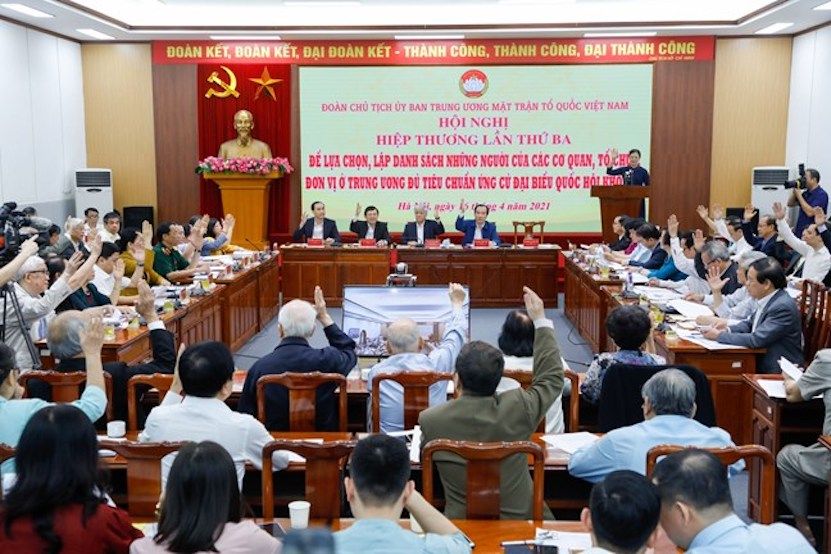
    Vietnamese citizens can’t just register themselves as candidates and expect their names will go straight to the candidate listings on the ballots. If they want to be candidates, they have to go through a vetting process called hiệp thương, which is conducted by the Vietnam Fatherland Front, the extended political arm of the Vietnamese Communist Party (VCP). After the third and final round of hiệp thương, the list of candidates will be released and voters can vote for only these candidates.

    The Fatherland Front’s local committees of Hanoi and Ho Chi Minh city did exactly that just last week. Similar events were held in other provinces as well.

    Context:

    • At least two independent candidates have been arrested before the third round of hiệp thương.
    • Dozens of candidates in Hanoi withdrew before the final list was adopted.
    • Almost no dissidents or activists are running for election this year. This is a major change compared to the last election in 2016, when at least 30 of them ran (and failed to make it to the final list).

    A prominent activist, Nguyen Thuy Hanh, was arrested

    Quote from VietnamPlus:

    “Hanoi’s police have taken a woman into custody as they investigate allegations of ‘making, storing, distributing, or disseminating information, documents, and items against the State of the Socialist Republic of Vietnam’ under Article 117 of the 2015 Penal Code.

    The Investigation Security Agency under the municipal Department of Public Security said on April 8 they had arrested Nguyen Thuy Hanh, born in 1963 and living in Thuong Dinh ward, Thanh Xuan district.”

    Context:

    • Nguyen Thuy Hanh has been a prominent advocate for democracy and human rights in Vietnam since 2011. She also participated in several anti-China movements.
    • Hanh ran for election in 2016 as an independent candidate but failed to make it through the VCP’s vetting process.
    • She founded and managed a well-known charity called the 50k Fund (Quy 50k) to assist family members of political prisoners financially for several years before shutting it down in late 2020.

    Read her profile in The 88 Project’s database and an op-ed about her.


    Vietnam unveils tools for taxing and tracking big tech

    Quote from Nikkei Asia:

    “Vietnam is proposing a pair of regulations that would compel global tech players such as Alibaba and Google to hand over more taxes and data, in a move to increase government oversight in one of the world’s fastest-growing digital markets.”


    US stops short of branding Vietnam a currency manipulator

    Quote from Reuters:

    “The U.S. Treasury Department on Friday said Vietnam, Switzerland and Taiwan tripped its thresholds for possible currency manipulation under a 2015 U.S. trade law, but refrained from formally branding them as manipulators.”


    US names new ambassador to Vietnam

    Quote from VnExpress:

    “U.S. President Joe Biden on Thursday nominated Marc Evans Knapper as the new ambassador to Vietnam.

    The Senior Foreign Service member, who will succeed Daniel J. Kritenbrink, is currently serving as the deputy assistant secretary for Japan and Korea in the State Department.

    He has previously served in the U.S. embassies in Seoul, South Korea, Baghdad, Iraq, and Tokyo, Japan, and the State Department’s Office of India Affairs and Office of Japanese Affairs.”


    What’s special about April for Vietnamese?

    April is a special month not only in Vietnam but also in Vietnamese overseas communities. It marks the end of the Vietnam War on April 30, 1975. The event widely divides Vietnamese people around the world with the winning side, which is the ruling Communist Party, celebrates and the losing side mourns. The losing side is millions of people in the South and Vietnamese former refugees as well as their families now settled in countries such as the United States, Canada, and Australia. Discussing the loss of the losing side and the nature of the fall of Saigon is still largely taboo in Vietnam.

    However, this day is not only about the war, it is also the end of the first and the only Vietnamese democracy in history thus far, the Republic of Vietnam.

    Curious about it? Here are the books you might be interested in:


    Learn more about Vietnam

    Why the #MilkTeaAlliance movement has little appeal to Vietnamese youth

    Dien Nguyen An Luong/South China Morning Post | April 16, 2021

    “Against that backdrop, outsiders may wonder why Vietnam’s internet-savvy youth have remained an outlier in the #MilkTeaAlliance. How have Vietnam’s leaders afforded to stave off such a movement? Will anti-government sentiment materialise any time soon in the country? A closer look at how social media and geopolitics have become increasingly interwoven provides some clues.  While some observers have talked up its role, there has been a growing body of evidence that social media alone could not have fanned the likes of Arab Spring-style uprisings.”

    Vietnam’s Great Debate Over Democracy

    Trien Vinh Le/The Diplomat | April 15, 2021

    “Inspired by the development stories of East Asian countries that have experienced the benefits of embracing democratic principles, there are official and informal opinions that Vietnam needs a second Doi Moi centered around political reform. If new political institutions and practices are allowed to emerge and lead to new ways of governing and fresh policy ideas, the economy can pivot to more open and more innovative activities based on science and technology. It is appropriate to ask how the current government system can usher in a new era of economic transformation when so many at the top benefit from the old model based on exploitation of labor and natural resources.”

    Vietnam restores regional balance to top leadership

    Le Hong Hiep/Nikkei Asia | April 14, 2021

    “In an attempt to address southern politicians’ grievances, the party appears to be taking steps to gradually restore the regional balance.  Soon after the 13th congress, the party installed Vo Van Thuong, a politician from the southern province of Vinh Long, as the standing member of its secretariat, the No. 5 position in the party’s hierarchy. Last week, the National Assembly also elected three southerners into senior state and government positions, including Vo Thi Anh Xuan from An Giang Province as vice president, Tran Thanh Man from Can Tho city as deputy chair of the National Assembly, and Le Minh Khai from Bac Lieu Province as one of the deputy prime ministers.”

    How a Vietnam-Malaysia Fishing MOU Could Ease the Wider South China Sea Dispute

    Ralph Jennings/VOA News | April 16, 2021

    “Malaysia and Vietnam intend to sign a memorandum of understanding that experts say could eventually help ease a decades-old, six-party dispute over sovereignty in the resource-rich South China Sea.  Maritime law enforcement agencies from the two Southeast Asian countries aim to sign the memo this year and resolve at least 15 years of trouble over the movement of Vietnamese fishing vessels, the official Bernama news agency in Malaysia reported in early April. Bernama quoted the Malaysian Maritime Enforcement Agency director-general saying he’s confident the deal, now in its final stages, will solve the issue of Vietnamese fishing boats that enter Malaysian-claimed waters.”

  • Vietnam Briefing: Meet The New State Leadership

    Vietnam Briefing: Meet The New State Leadership

    We release the Vietnam Briefing every Monday morning.


    The rumors were right. Meet the new state leadership

    We reported correctly in our first briefing on February 8 that there were rumors that current Prime Minister Nguyen Xuan Phuc, Pham Minh Chinh, the head of the Party Central Committee’s Organization Commission and Vuong Dinh Hue, the secretary of the Hanoi Party Committee, would be named president, prime minister, and chairperson of the National Assembly, respectively.

    What is happening in the last session of the National Assembly is proving the rumors are right.

    Vuong Dinh Hue took over the chairperson position of the National Assembly on March 31 after his predecessor, Nguyen Thi Kim Ngan, was released from duty the previous day by the legislative chamber’s resolution. The Communist Party quickly appointed the then-minister of finance, Dinh Tien Dung, to replace Hue as the party chief of Hanoi on April 3.

    The National Assembly also relieved Nguyen Xuan Phuc from the prime minister post and Nguyen Phu Trong from the president post on April 3, paving the way for elections of Nguyen Xuan Phuc to be president and Pham Minh Chinh to be prime minister this week. Phuc was already nominated to the post on April 2.

    When this entire process ends tentatively by the end of April 5, the political tradition of having a “gang of four” sharing four top seats of the party and the state will be restored.


    Another journalist is arrested

    Nguyen Hoai Nam, a former investigative journalist working for the mainstream media, was arrested on April 2 in Ho Chi Minh City. He is currently under pre-trial detention and is charged with “abusing democratic freedoms to infringe upon the interests of the State, lawful rights and interests of organizations and/or citizens.”

    Who is Nam? VnExpress says he was a former reporter at Thanh Nien (Youth), Phap Luat TPHCM (HCMC Law), Vietnam Television and Phap Luat Viet Nam (Vietnam Law). The news agency added that Nam had posted on his Facebook account several articles challenging police investigations into violations at Vietnam Inland Waterways Administration, which it said had  resulted in the arrest of its former deputy head Tran Duc Hai in 2019.

    According to VnExpress: “The reporter implicated 15 people who had allegedly committed violations regarding the case, 12 more than determined by police. He went on to accuse the investigators of ‘letting the criminals off the hook.’”

    The nature of the charge:

    • The charge is based on Article 331 of the 2015 Penal Code, previously known as Article 258 of the 1999 Penal Code.
    • The criminal provision is widely condemned by both domestic and international human rights groups as vague and as used by the government to silence critics.
    • Activists ran a campaign called the “258 Campaign” to advocate for the abolition of the provision.

    Four citizens convicted of spreading anti-state propaganda

    Publicly saying bad things about the Communist Party might well result in being imprisoned for years in Vietnam. That’s what happened to four citizens in Khanh Hoa Province on March 30.

    Nguyen Thi Cam Thuy, 45, was sentenced to  nine years in prison, Ngo Thi Ha Phuong, 25, to seven years and Le Viet Hoa, 59, to five years, VnExpress reported.

    Another person, Vu Tien Chi, was sentenced to 10 years in prison in Lam Dong Province.

    Just like Article 331 and Article 258, this criminal provision has received a high degree of criticism from human rights groups inside and outside of Vietnam.


    Read more about Vietnam:

    The US Department of State’s human rights report on Vietnam

    “The Socialist Republic of Vietnam is an authoritarian state ruled by a single party, the Communist Party of Vietnam, and led by General Secretary and President Nguyen Phu Trong, Prime Minister Nguyen Xuan Phuc, and Chairwoman of the National Assembly Nguyen Thi Kim Ngan. The most recent National Assembly elections, held in 2016, were neither free nor fair; there was limited competition among Communist Party-vetted candidates.”

    Drinking coffee in the US? Worry about forests in Vietnam, study says

    Mongabay | April 2, 2021

    “The U.S.’s thirst for coffee drives forest loss in central Vietnam, while Germany’s craving for cocoa is doing the same in West Africa, a landmark study that tracks the drivers of deforestation across borders found.”

    Vietnam Should be More Proactive in Global Governance

    The Diplomat | March 30, 2021

    “After its COVID-19 successes, Vietnam is well positioned to play a more energetic role on the global stage.”

    The Vietnamese Recovery Is Made in America

    Wall Street Journal | March 30, 2021

    “Vietnam’s economy is growing again, on the back of a strong rise in exports. The Southeast Asian nation looks to be one of the most clear-cut international beneficiaries of the U.S. stimulus package.”

    How The Vietnamese State Uses Cyber Troops to Shape Online Discourse

    ISEAS | March 3, 2021

    • The operations of Vietnam’s public opinion shapers and cyber-troops reveal that the online discourse is manipulated to enforce the Communist Party’s line.
    • Vietnamese authorities constantly grapple with the vexing question: How to strike a delicate balance between placating critical public sentiment online while ensuring that it does not spill over into protests against the regime.
    • When it comes to methods, targets and motives, there appears to be significant crossover between public opinion shapers and the government’s cyber troops.
    • The Vietnamese state cyber-troops have been encouraged to use real accounts to massreport content. This helps explain why it is the only Southeast Asian state to publicly acknowledge having a military cyber unit.
    • The lack of political and technological wherewithal presents an uphill battle for these cyber-troops in influencing Vietnam’s online information environment.
  • Vietnam Briefing: Another Congressional Candidate Arrested While Congress Elects New Leaders

    Vietnam Briefing: Another Congressional Candidate Arrested While Congress Elects New Leaders

    The Vietnam Briefing is released every Monday.


    Another congressional candidate arrested

    Independent journalist Le Trong Hung, a candidate for the National People’s Congress, was arrested on March 27 by Hanoi local police, VOA cited his family.

    He had filed his candidacy earlier this year and his application was approved by election officials.

    Hung is known for running his social media-based TV channel called Chan Hung TV, that broadcasted information about victims of injustice, including  farmers who had lost their land and people who had been wrongfully convicted.

    Besides Hung, another person arrested after declaring his candidacy is Tran Quoc Khanh, as we reported two weeks ago. The general election will be held on May 23, 2021.


    The National Assembly is convening to decide top state positions

    If things go as planned, Vietnam will have a new president, a new prime minister and a new chairperson of the National Assembly potentially by April 7.

    Some other top seats of the National Assembly and the cabinet will also be considered.

    It’s now officially announced that current Prime Minister Nguyen Xuan Phuc will be nominated to be president of the state.


    Tension in the South China Sea

    Not only has China sent warplanes into Taiwan’s air space over the past week, but also hundreds of Chinese vessels have also massed in disputed areas in the South China Sea.

    From Reuters:

    “Vietnam’s Foreign Ministry spokeswoman Le Thi Thu Hang on Thursday said the Chinese vessels at the reef, which Hanoi calls Da Ba Dau, had infringed on its sovereignty.

    ‘Vietnam requests that China stop this violation and respect Vietnam’s sovereignty,’ Hang told a regular briefing.

    A Vietnamese coastguard vessel could be seen moored near the disputed area on Thursday, according to ship tracking data published by the Marine Traffic website.

    Hang said Vietnam’s coastguard was ‘exercising its duties as regulated by laws’, including international law.”


    Rapping Vietnam Ambassador Daniel Kritenbrink tapped as Joe Biden’s top Asia envoy

    He made headlines last month in Vietnam by rapping in both English and Vietnamese. Now he’s nominated for one of the top seats in the US State Department.

    From The South China Morning Post:

    “The US ambassador who made a splash in Vietnam by making a rap video may soon get a promotion – to be the top diplomat for Asia under President Joe Biden. Daniel Kritenbrink, a career diplomat who speaks Chinese and Japanese, was nominated by Biden to be the assistant secretary of state for East Asia and the Pacific, a White House statement said.”


    Learn more about Vietnam:

    Vietnam proves immune to China’s vaccine diplomacy campaign

    March 27, 2021 | Nikkei Asia

    “It would be a stretch to accredit that one comment as an accurate measure of public sentiment in Vietnam toward the Chinese-made vaccine. But in Southeast Asia, Vietnam has remained a prominent outlier to China’s fanfare vaccine diplomacy campaign.”

    Biden can address Vietnam’s currency valuation without Section 301

    March 27, 2021 | East Asia Forum

    “While there were intense talks during the Trump administration — including a call between Trump and Vietnamese Prime Minister Nguyen Xuan Phuc — there are no reports suggesting any ongoing talks with the Biden administration.”

    China, Vietnam Lead Three-Speed Asian Recovery, World Bank Says

    March 26, 2021 | Bloomberg

    “A three-speed recovery is taking hold across East Asia and the Pacific, with China and Vietnam already beating their pre-pandemic levels of economic growth while other countries could take years more to heal, according to World Bank projections.”

    Vietnam’s New Government Election: The Sooner the Better?

    March 23, 2021 | Fulcrum

    “There is little reason for the Community Party of Vietnam to repeat its “fast track” procedure to get a new government in place. The Party’s reputation is best served by its playing by the rules.”

    Why Biden Sends Warships to the South China Sea, Just as Trump Did

    March 22, 2021 | VOA News

    “U.S. President Joe Biden is keeping pace with his predecessor in the frequency of American warships sent to Asia, analysts believe, a way to get a foothold in contested seas and routinize warnings aimed at the region’s strongest maritime force, Beijing.”

  • Vietnam Briefing: A Prominent Writer Dies, Sparking Discussions Of His Works And Censorship

    Vietnam Briefing: A Prominent Writer Dies, Sparking Discussions Of His Works And Censorship

    The Vietnam Briefing is released every Monday.

    Last week, we had a new chief of external relations of the Communist Party, a detained activist being transferred to an unknown facility, and a prominent writer passed away.


    Police transferred a detained land rights activist to another facility without informing his family of the details of the sudden move

    Detained land rights activist Trinh Ba Phuong’s family says they were informed by officials of Hanoi No 1. Detention Center on March 19 during a prison visit that Phuong had been transferred to another detention facility. The officials have given them no further information about the move.

    Who is  Phuong? He is a prominent land rights activist who is part of a group of farmers in Duong Noi, a rural area of Hanoi, who have been evicted from their land by the government since 2008. They claim the land acquisition was illegal and the compensation was extremely low. Phuong’s mother, Can Thi Theu, and father, Trinh Ba Khiem, have been imprisoned several times since then. Theu, and Trinh Ba Tu – Phuong’s brother, were arrested and detained again in June 2020 in the same case with Phuong. They are all charged under Article 117 of the Penal Code, which is “making, storing or disseminating information, documents, materials and items against the Socialist Republic of Vietnam.”

    One thing to note: In Vietnam, the government agency in charge of detention facilities and the investigative agencies are both under the authority of the Ministry of Public Security.


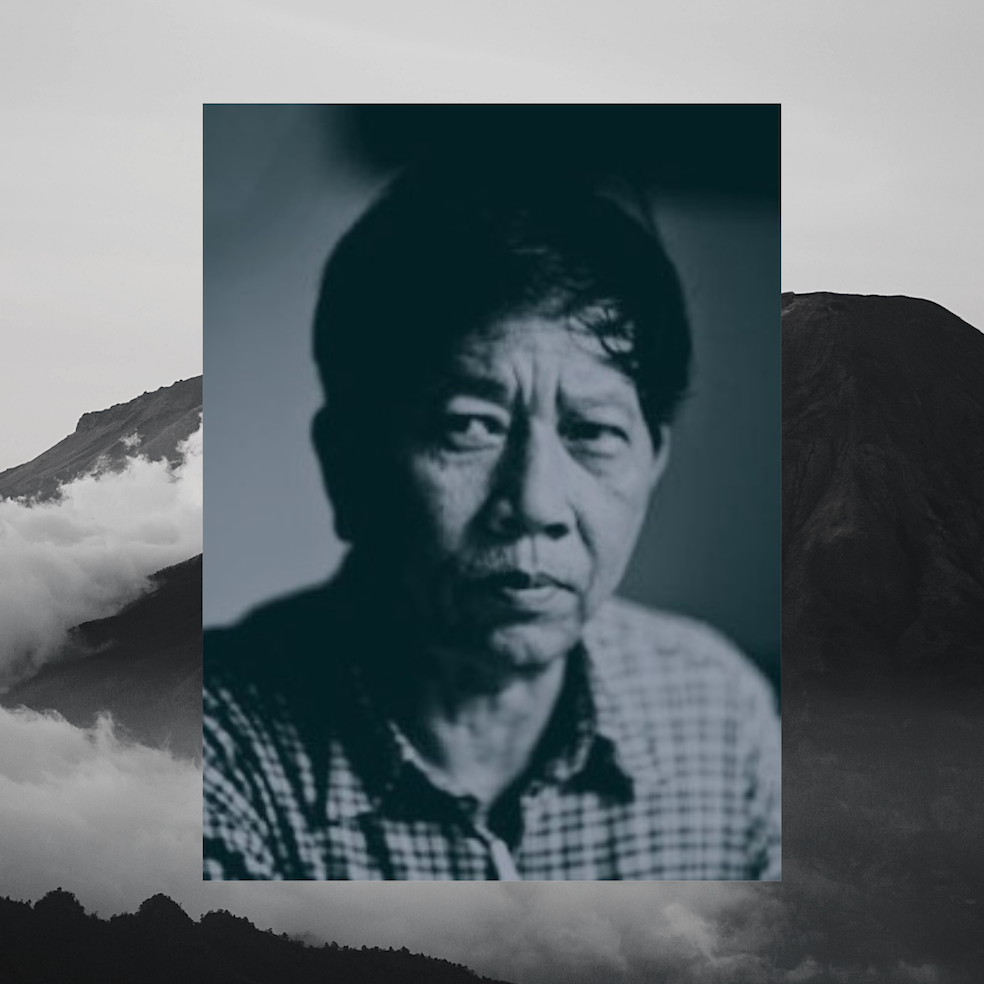
    Prominent writer Nguyen Huy Thiep passes away at 72

    If you talk about Vietnam’s literature and censorship, Nguyen Huy Thiep is the name you need to pay attention to. He is one of the most prominent Vietnamese writers since the Vietnam War. His death sparked discussions on social media on his work and how he suffered from heavy censorship.

    Scholar Thomas Bass wrote:

    “Thiep began his meteoric career in 1987, and already by 1988 he had published his collected works and celebrated what everyone was calling ‘the year of Nguyen Huy Thiep’. In 1989, the film of ‘The General Retires’ was released, and by 1990 Thiep was being installed as a member of the Writers’ Association. But this is also the year that copies of his works began disappearing from book stores. Nhan Dan, the party newspaper, published two essays attacking Thiep, claiming that he had ‘betrayed the Vietnamese Revolution by toppling sacred heroes in Vietnamese history’ and that he was ‘deceived by the chimera of pre-1975 Saigon’. The denunciation campaign continued until 1991, when the police raided Thiep’s house, carried off his books and manuscripts, and provoked a turning point in his life. This also marks a turning point in Vietnamese literature, when the country’s brief, five-year experiment with Renovation ended in the dark age that persists today.”


    VCP has a new chief of external relations

    Following the Party Congress in January-February, the Politburo continued to  appoint new personnel to top Party positions. On March 19, Le Hoai Trung was appointed head of the Commission for External Relations.

    Who is he? Trung served as deputy minister of foreign affairs since 2010, and Vietnam’s ambassador to the United Nations in New York (2011-2014). He was elected to  the Party’s Central Committee in 2016 and 2021.


    Learn more about Vietnam:

    Should Vietnam become a member of the UN Human Rights Council?

    ASEAN Today | 19 March 2021

    “The UNHRC should push Vietnam to implement existing action plans to improve human rights conditions in the country, rather than offering it a place in the forum. If Vietnam becomes a member of the UNHRC, it will not only discredit the UN body’s standing but will also legitimize Vietnam’s policies of oppression.”

    Vietnam Must Be Pleased With the Biden Administration… For the Most Part

    The Diplomat | 16 March 2021

    “…the Biden administration appears to emphasize not only shared national interests, but values as well, such as democracy, freedom, and human rights. For Hanoi, there is likely a certain amount of trepidation regarding the potential consequences of engaging with a more vocal Washington on these issues, which are extremely sensitive for Vietnamese Communist Party (VCP) leaders. Additionally, Hanoi likely has concerns about whether the Biden administration will take action against Vietnam for Trump-era allegations that it is a currency-manipulator as well as potential U.S. sanctions against Vietnam for purchasing Russian military equipment under the Countering America’s Adversaries Through Sanctions Act.”