Tag: Politburo

  • Chief Justice Nguyen Hoa Binh Elected To The VCP’s Politburo. What Does This Mean?

    Chief Justice Nguyen Hoa Binh Elected To The VCP’s Politburo. What Does This Mean?

    First, it means that the chief justice of the Supreme People’s Court, Nguyen Hoa Binh, has been officially promoted. He was elected to the Politburo for the first time on January 31, 2021, at the first meeting of the VCP 13th Central Committee.

    Nguyen Hoa Binh is the second chief justice in the history of Vietnam’s Supreme People’s Court to be elected to the Politburo. The Politburo is the agency that chooses the most powerful politicians in the Party.

    The other chief justice on the Politburo was also named Hoa Binh, but had the surname Truong; he was elected to the Politburo in January 2016 at the 12th Party Congress. However, Truong Hoa Binh was moved into an executive position as the deputy prime minister almost immediately thereafter, when Vietnam’s National Assembly met in a special session during April of that same year. During that time, it was Nguyen Hoa Binh who replaced Truong Hoa Binh as the chief justice of the Supreme People’s Court and he held this position since.

    If Nguyen Hoa Binh can continue to be the chief justice for the next five years, it will be the very first time that the Supreme People’s Court has had someone with real power in the Politburo.

    A chief justice in the past was not a very meaningful position in the Party. Up to now, there have been only a few chief justices that were included as members of the Central Committee.

    In addition to the two “Hoa Binhs” mentioned above, there were only two others, Pham Hung and Nguyen Van Hien. The other three chief justices – Pham Van Bach, Tran Cong Tuong, and Trinh Hong Duong – were not even selected as members of the Central Committee. The absence of the chief justices in the Central Committee glaringly emboldened the Party in how it dealt with  the judicial branch in Vietnam’s political system. That is, the Party did not see the judiciary as a body with significant power.

    One would think that judges and justices should not be members of the only political party in the country so that they can be neutral and independent. One would hope that the judicial branch would remain neutral so that we can have fair trials in the country. However, in reality, this is not the case in Vietnam.

    Vietnam does not have an independent judicial branch and the above standard cannot be applied in this country. One’s position within the Party determines the actual political power of a party member, and not any state position one may also hold. The Politburo is the agency that Vo Van Kiet – at one time – had considered to be “superior” to the Central Committee, and gaining a position on the Politburo was the ultimate political goal for the most ambitious and successful Party members in Vietnam.

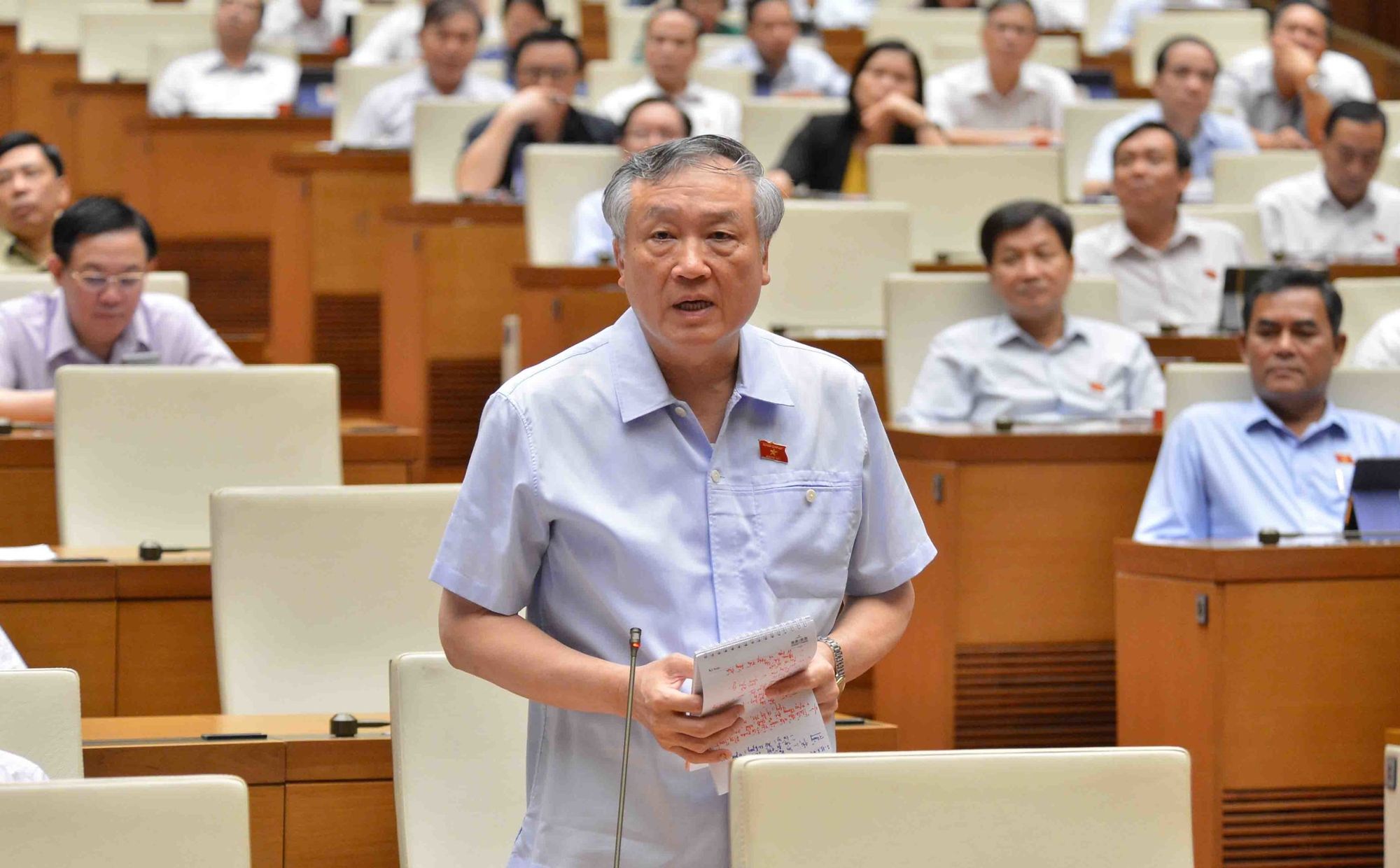
    Phiên tòa giám đốc thẩm vụ án Hồ Duy Hải ngày 6/5/2020. Ảnh: TTXVN.
    Chief Justice Binh (standing) in the cassation hearing of the Ho Duy Hai case on May 6, 2020. Photo courtesy: VNA.

    Being in the Politburo is a reward that the Communist Party gave Nguyen Hoa Binh. We do not know enough to say what he did to receive such an honor. But what he has done in the past five years may possibly offer us some clues.

    His appointment is most likely a reward for his role in directing the courts to hear a series of prominent cases related to the “anti-graft” campaign that General Secretary Nguyen Phu Trong started. For the first time in Vietnam’s contemporary history, many high-ranking party members were tried and convicted with extremely heavy sentences: Dinh La Thang, Nguyen Bac Son, Truong Minh Tuan, Trinh Xuan Thanh, and others.

    Other prominent cases may also include the cassation trial of the death row inmate Ho Duy Hai and the Dong Tam trial in 2020.

    Also, there were many political cases in the past five years which the Party deemed to be closely related to the security of the regime. These include cases related to the Independent Journalists Association of Vietnam (2020), the Brotherhood of Democracy (2016), Nguyen Ngoc Nhu Quynh (blogger Mother Mushroom, 2017), etc. From 2016 to date, the number of dissidents who have been tried has increased much higher than in the past, to the point that the opposition has almost been wiped out in Vietnam.

    If the VCP rewarded Chief Justice Nguyen Hoa Binh for the way he handled the cases mentioned above, then we can see that it only encouraged the judicial branch to be more of a supportive team player within the authoritarian regime the Party has created, and that trials cannot be considered independent or the place to resolve injustices in society.

    This means that people, such as wrongful death-row inmate Ho Duy Hai, a peasant who was tried and convicted for fighting for his land as was Le Dinh Chuc of Dong Tam Village, or those political dissidents like Pham Chi Dung and Tran Huynh Duy Thuc, who have almost no chance to plead for justice.

    Nguyen Hoa Binh was directly involved in the cassation trial of Ho Duy Hai in May 2020, and he was the person who continuously insisted that Ho Duy Hai was guilty, despite all the evidence that Hai’s attorney presented in court. Nguyen Hoa Binh was the center of widespread public criticism during the cassation trial, but he was still promoted by the VCP.

    The rise of Chief Justice Binh only proves that the Party is willing to disregard public opinion in order to keep its political power. Now, with his promotion, activists who are involved with the democracy movement in Vietnam may suffer more consequences. With this new position that makes him more powerful than before, Binh may begin to punish those who once made him lose face by criticizing him in public.

    It is true that the fact that Chief Justice Nguyen Hoa Binh was elevated to the Politburo may slightly enhance the status of the judicial branch in Vietnam’s political system. However, that doesn’t mean that the courts in Vietnam will be fairer and more independent. If Nguyen Hoa Binh’s promotion means anything, it is that the courts will act more like the powerful tools of the VCP so that the Party can continue to strengthen its one-party political power in the country.


    This article was written in Vietnamese by Trinh Huu Long and previously published in Luat Khoa Magazine on February 2, 2021. The translation was done by Jade NG.
  • Everything You Need To Know About Vietnam’s Central Committee Of The VCP

    Everything You Need To Know About Vietnam’s Central Committee Of The VCP

    This article is based on Tran Ha Linh’s “Mọi điều bạn cần biết về Ban Chấp hành Trung ương Đảng Cộng sản Việt Nam,” published in Luật Khoa Magazine, a sister publication of The Vietnamese, on January 28, 2021. The translation is done by Karie Nguyen.

    ***

    The Central Committee of the Vietnamese Communist Party (VCP) is a very powerful governing body of the VCP and it seems to be gaining more influence within the Party day by day.

    What is the Central Committee?

    In a previous article, we explained  that the Party Congress is the highest governing body of the VCP according to its own charter. However, these congresses only happen every five years, and at some times in the past, they could actually be held at longer intervals. Then during the five years between the two congresses, which body will lead the VCP’s activities?

    That body would be the Central Committee. In other words, the Central Committee is the second most important body of the VCP.

    Who are the members of the Central Committee?

    The Central Committee gathers together all of the most powerful members of the VCP. There are about 180 official members (who have the right to cast votes) and approximately 20 alternative members (who do not have the right to vote). This is an approximation because these numbers fluctuate when some members are disciplined (as in the cases of Dinh La Thang, Nguyen Bac Son, and Truong Minh Tuan), or when some pass away (Tran Dai Quang). There are also some members  who resign during their terms for various reasons.

    Almost all of the secretaries of the provincial committees, some of the deputy secretaries of the major cities (such as Hanoi and Ho Chi Minh City), and the secretaries of significant departments (such as the central departments and state enterprises) get selected to the Party Congress to be members of the Central Committee (both of the official and alternative members).

    We also see the prime minister, deputy prime ministers, ministers, and some deputy ministers of the major ministries (such as the Ministry of Public Security or the Ministry of Defense) and directors join the Central Committee.

    Vietnam Television (VTV), the Voice of Vietnam (VOV), the Vietnam Academy of Social Sciences, and the Vietnam Academy of Science and Technology all belong to the central government and have equal standing as the ministries. Therefore, the heads of these organizations can also become members of the Central Committee.

    The National Assembly chairperson, vice-chairperson, and the commissioners of all committees are all included on the Central Committee. There may even be deputy commissioners of some committees participating in the Central Committee.

    The prosecutor general and deputy prosecutor general of the People’s Supreme Procuracy along with the chief justice and deputy justice of the People’s Supreme Court also participate as members of the Central Committee. The leaders of the Vietnamese Fatherland Front, the Vietnam Farmer’s Union, and the Ho Chi Minh Communist Youth Union, etc. are also members of the Central Committee.

    Of course, the members of the Politburo (including the VCP general secretary), and the Secretariat, the heads and deputies of the VCP departments, are all members of the Central Committee.

    Who elects the members of the Central Committee?

    New members of the Central Committee are elected during the Party Congress. Almost all of the new members will be nominated before the congress by the former Central Committee. It is very rare to see any members of the Central Committee get elected if they are not nominated in advance by the Central Committee. Being nominated at the Party Congress or by their self-nomination would not help them get elected.

    In the time period between the two Party Congresses, the Central Committee may also elect more official members from its own alternative members group.

    What are the roles of the Central Committee?

    Because it is acting as the VCP’s main stage, the Central Committee can do the following:

    • Elect the members of the Politburo, the general secretary, the members and the Standing Secretary of the Secretariat, and the members and the commissioner of the Central Commission for Disciplinary Inspection. These are the most important and powerful departments of the VCP.
    • Organize to implement the political platforms of the VCP, the VCP’s charter, the resolutions of the Party congresses, and decisions regarding both foreign and internal affairs. It also focuses on the VCP’s mass mobilization and constructing the VCP’s organizational development, as well as summoning the Party Congress.

    How often does the Central Committee hold its plenary sessions?

    According to the VCP’s charter, the Central Committee will meet every six months, but it can meet more often if it is necessary. The meetings are officially called plenary sessions. If these sessions are held twice a year, then during the five years between the VCP congresses there will have been 10 meetings. However, in recent history, the Central Committee has held between 12-15 sessions, and there were years when they met four times a year, as in 2011, 2015, and 2016.

    It is not a coincidence that the plenary sessions always met before the National Assembly had its sessions. Before the National Assembly conducts its session, there must be a Central Committee plenary session. In that plenary session, the Central Committee, together with Politburo meetings, will not only decide the National Assembly’s agenda, but also the decisions that the National Assembly will make during its session. Of course, the sessions of the National Assembly will not always be conducted as planned by the Central Committee’s original decision. In 2018, the National Assembly was pressured by the public to halt the law on the creation of the three Special Economic Zones. That halt has continued to date and that decision was not something the Central Committee could have expected.

    The first plenary session of a new term of the Central Committee begins during the Party Congress to elect the members of the Politburo, the general secretary, and a few other positions. The Party Congress will end on the next day after the Central Committee finishes its first plenary session and the new leaders of the VCP will be introduced during that final day.

    Are the plenary sessions of the Central Committee open to the public?

    No.

    Even at the National Assembly, which is the nation’s elected legislative body, the Vietnamese people are prevented from attending and observing its sessions. Thus, the plenary sessions of the Central Committee – one of the top governing bodies of the VCP – are not open to the public.

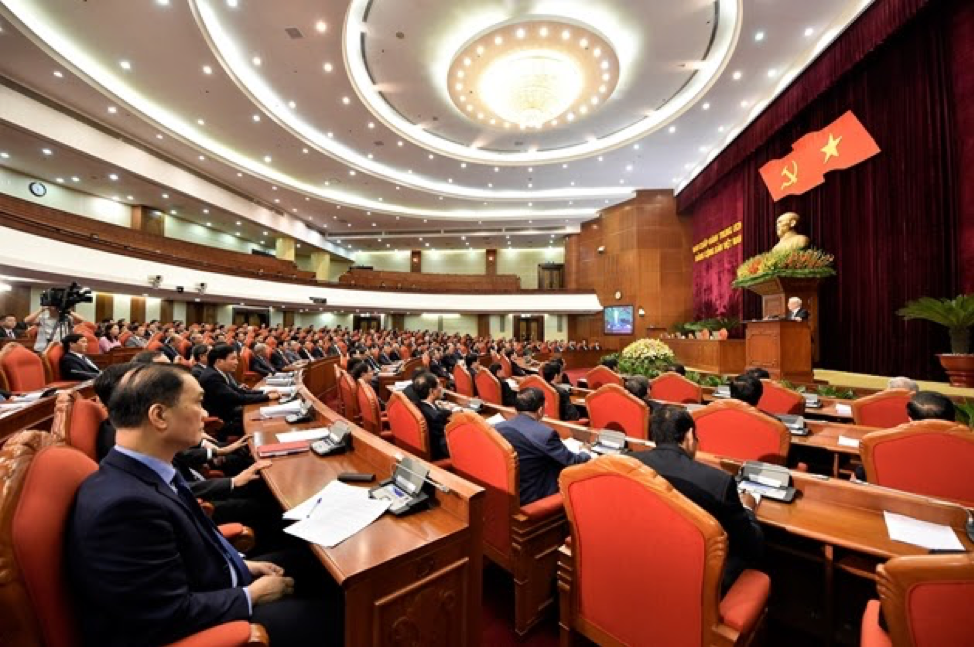
    The plenary sessions are conducted in the conference hall of the Office of the Party Central Committee located at No. 1, Hung Vuong Street, Hanoi, at Ba Dinh Square, the site of many historical events, and where Ho Chi Minh read the Proclamation of Independence of the Democratic Republic of Vietnam on September 2, 1945.

    Only representatives of a few of the special mouthpieces of the government – such as Vietnam Television, the Voice of Vietnam, the Vietnam News Agency, Nhan Dan (The People) newspaper, the VCP online newspaper, and the government’s online newspaper, are allowed to attend. However, these organizations only report on the commencement and the conclusion of these sessions. Everything else is kept secret.

    After the plenary session concludes, the Office of the Central Committee will announce the results of the meeting at a news conference.

    Does the Central Committee have actual power?

    Yes.

    Before Party Congress V (in 1982), the Central Committee had an insignificant role when compared to the Politburo. For example, the third Central Committee was active from 1960 to 1976 for a total of 16 years. Nevertheless, it only conducted 19 plenary sessions. All of the major decisions during those years came from the Politburo and the Party’s Central Military Commission.

    However, starting with its fifth term, and especially the sixth term, the Central Committee conducted more plenary sessions, having at least two sessions per year. During these sessions, the Committee decided and implemented more important policies with regards to the operation of the VCP.

    One reasonable explanation for this was the decentralization of the VCP’s power over the years.

    Before, people like Ho Chi Minh, Le Duan, Le Duc Tho, Truong Chinh, all had extensive influence within the VCP. Perhaps, that was mainly because Vietnam was in a state of war. At that time, the Politburo and the Central Military Commission, and even just a few top leaders, would have enough authority and power to execute their decisions on their own.

    However, beginning in the early 1980’s, the group of the heroic individuals who specifically contributed to the VCP development got older and died and so the group lost its influence in the Party.

    More than that, when Vietnam began to live in a peaceful period, each local province came to have its own individual and unique problems. Therefore, the authority in the VCP had to be shared among the members of the Politburo and also with the local governments, and with other governmental enterprises as well. The decentralization of power in the VCP and also in the government meant that more authority was disbursed to local governments.

    At the same time, there were issues that the Politburo could not decide, and it passed those on to the Central Committee. During the XI term, we had the example of two Politburo members, Prime Minister Nguyen Tan Dung and General Secretary Nguyen Phu Trong, who conflicted with each other a lot during their terms. Their conflict couldn’t be resolved within the Politburo, so they brought it to the Central Committee’s floor. At the 2012 Central Committee’s 6th plenary session, there was a plan to review the prime minister’s responsibilities during his term. The prime minister ended up not being disciplined and was able to retain his position.

    Even though the Central Committee possesses such significant power and has been gaining more control over the years, its agenda can still be dictated by the Politburo. In 2006, Prime Minister Vo Van Kiet penned his letter to the Politburo, asking it to respect the decisions that came from the Central Committee and to quit acting as the higher-level, supervising department of the Committee.

    Based on the VCP’s charter, the agenda and the nomination and election of all the positions in the Central Committee’s plenary sessions should be organized by the Politburo. However, it is still unclear which department has more power between these two most potent governing bodies of the VCP.

    We can only hope that with more research and analysis that we can better understand the organizational power of the VCP.