Tag: picks

  • Vietnam: Activists Refuse to Engage in Government’s Cat-and-Mouse Game

    Vietnam: Activists Refuse to Engage in Government’s Cat-and-Mouse Game

    Around noon on November 16, 2017, journalist Pham Doan Trang, a member of our editorial board, found herself stuffed in a car driven by plained-clothes police, some of whom she might have recognized from the dozen of times they have come and kidnapped her in broad daylight before.

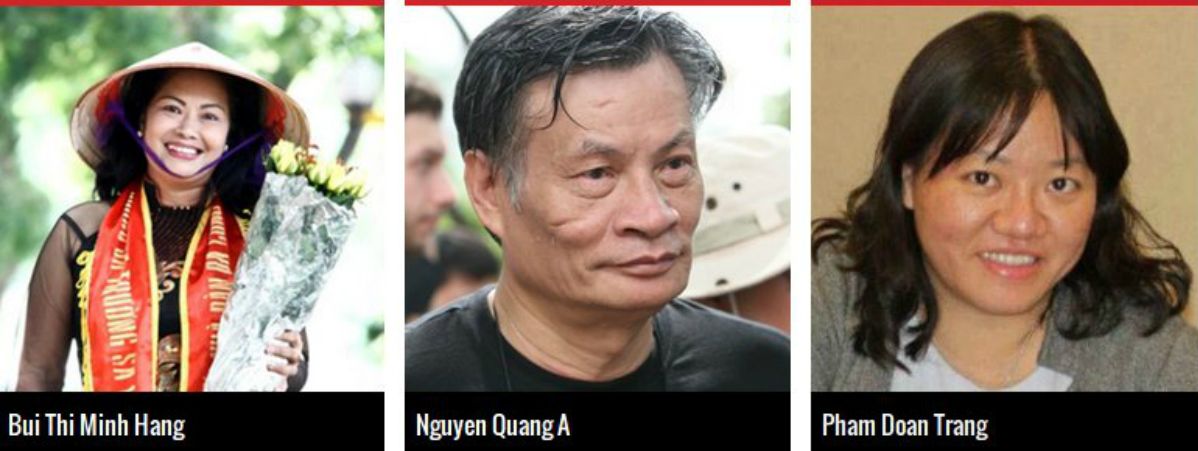
    Just less than half an hour earlier, she was an invited guest of the EU delegation at the swanky Lotte Building in Hanoi, Vietnam, together with Dr. Nguyen Quang A and two other activists, Nguyen Chi Tuyen and Bui Thi Minh Hang.

    All of them, except for Nguyen Chi Tuyen who managed to avoid police detection, was kidnapped by the authorities almost immediately after they left the EU meeting. It was the latest episode in a ludicrous game of cat and mouse that the Vietnamese government had orchestrated for years.

    While telling his Facebook friends about his experiences on November 16, 2017, where he was detained illegally and interrogated for five hours, the prominent pro-democracy intellect, Dr. A, also recalled that the police had done this to him 14 times just between last year and now. They also guarded and surveilled his home heavily, as well as almost followed him around all the time.

    Doan Trang alone has been taken against her own will to various police stations for interrogation a few times just this year, sometimes for the entire day. This last one on November 16 was for 12 hours, which ended when police drove her home around midnight.

    But she was not even certain that night if they were going to actually release her until the car stopped at her house.

    Because “the police like ‘the surprise factor’”, she said. “They would love to terrify you and make it impossible for you to expect what was going to happen next. They rule by fear and instilling fear in you is their favorite job. You just have to learn how to become fearless.”

    Fearless, determined, and completely devoted to the democracy movement in Vietnam would be the words to describe the woman many people view as one of the leading activists in Vietnam, journalist Pham Doan Trang.

    Last year, during Barrack Obama’s May 2017 visit to the country, Doan Trang and Dr. A were also kidnapped by the authorities to prevent them from attending a meeting which was specially arranged by the Obama administration, so that the U.S. president could meet Vietnam’s independent civil society’s representatives.

    For Doan Trang, in trying to make it to the meeting with Obama, she had to travel thousands of kilometers by car while still recuperating from a knees surgery. Her fellow activists had to accompany her, and one of them even also assumed the role of her personal nurse because Doan Trang was too weak to take care of herself. All the while, the group had to lay low and went under the radar so that they could avoid police detection.

    Her knees injuries also came from the police who had crushed them while breaking up a peaceful march in 2015. Doan Trang and hundreds of other residents of Hanoi were protesting against the city government’s decision to cut down some 6,700 trees.

    Back to the morning of May 24, 2016, despite their efforts to divert police attention, secret agents eventually caught up with Doan Trang’s group and found them at a motel about 100 km away from Hanoi, just a couple of hours before the meeting with Obama was supposed to start.

    They were all illegally detained and interrogated, and Doan Trang was held in her motel room until those who were guarding her received confirmation that the Obama meeting was long over. Only then they would let her and her friends go.

    Dr. A also received similar treatment. The police came to his neighborhood early that day in May 2016, around 6:00 A.M., and snatched him away. They confiscated his electronic devices, stuffed him in their car, and drove him around Hanoi and other local proximities like Hung Yen. After receiving confirmation that Obama had boarded his plane from Hanoi to Ho Chi Minh City, they took Dr. A back to his home and released him around 1:00 P.M. the same day.

    Neatly placed name cards left on the meeting table without the faces to match, and their empty chairs during the entire discussion vividly displayed the life of dissidents in Vietnam: The authorities do not hesitate to use whatever available means to subdue their bodies and silence their voices.

    And on that day, it particularly seemed as if no single world leader could change such fact, not even the U.S. president.

    Things did not change for the better this year either.

    Before and during President Trump’s visit to Vietnam earlier this month, dissidents and activists like Dr. A and Doan Trang had reported that they were surveilled and followed by both police and plain-clothes officers. Some said they were even prevented from leaving their houses on certain days when world leaders – like Donald Trump and Xi Jinping – were in town.

    So when it came to those events surrounding the kidnapping on November 16, the Vietnamese activists’ community was not exactly taken by surprise. However, because living under such oppression has become a way of life, it also prompted a quick response from them. Civil society organizations were not silenced, instead, they immediately condemned the authorities’ conducts.

    Without any probable cause, no arrest warrant, the forceful taking of individual citizens into police custody violates even Vietnam’s own criminal procedures, leave alone international legal norms and practices.

    Worse, this has been a routine violation.

    Back in December 2015, dissident attorney Nguyen Van Dai and his assistant Le Thu Ha were taken into police custody and had been held without trials ever since.

    In July 2016, dissidents Nguyen Bac Truyen, Truong Minh Duc, and Pham Van Troi were also taken into custody and later charged with Article 79 of the Penal Code for subversion against the State, together with previously arrested Dai and Ha.

    Doan Trang said no one in Vietnam could really tell for sure each time an activist got snatched by the police, that whether it would be just for a few hours of questioning, or the government would press charges and put someone away for a couple of years.

    Her take is to treat today as if it would be the last day she could still be a free person and try to make the most of it.

    In a country like Vietnam, she said, there would always be so much to do and so much more needed to get done. And getting things done she did.

    Doan Trang came to the EU meeting with an updated report on the Formosa environmental disaster, a new report on Vietnam’s Laws on Religion, and an update on the overall human rights situation in the country. She collaborated with others on these projects in 2017, and at the same time, published a book on introduction to politics. All were done while she still had not fully recovered from last year’s knees surgery and constantly been harassed by the authorities.

    So perhaps, now is also the time that the Vietnamese authorities must stop playing this insipid game of catch and release.

    It was like child-play, Doan Trang described her encounter with the police officers on November 16 on her Facebook status following her release.

    The EU delegation initiated this meeting with members of civil society organizations and held it right before their annual Human Rights Dialogue with Vietnam (which will supposedly happen later in December this year). The delegation wished to consult the civil society actors on issues regarding the country’s environment, labor rights, and the overall human rights situation, pending their ongoing EVFTA (EU-Vietnam Free Trade Agreement) negotiations with Vietnam.

    Ironically, all the while the EU delegation were wishing they could learn more about how Vietnam has been implementing human rights, the activists’ illegal arrest and detention happened right under their nose.

    The police grabbed these activists as they were leaving the building where the meeting took place. It seems as if the Vietnamese authorities could not wait to put their hands on the nation’s most valuable prizes in trade negotiations with foreign governments.

    But to Doan Trang and many of her fellow activists, being viewed as some prized pawns that Vietnam could use to exchange for economic interests, like trade agreements, undermines their cause.

    And they refuse to be treated as such.

    Rather, Doan Trang wishes the international community views her numerous arrests and others’ arrests and imprisonment during the past three years since she came back to Vietnam (after finishing her fellowship at the University of Southern California), as glaring evidence that the country is still ruled by a one-party dictatorship.

    Only by seeing the Vietnamese regime for what it is and not giving it the presumed legitimacy of a democratic government, one that respects human rights and the rule of law, then foreign governments – like the EU – could truly press Vietnam on matters like respecting the people’s will and peaceful democratization process.

    No one likes to see this cat-and-mouse game with the police to continue, except for the authorities themselves.

    This is how Doan Trang hopes the world would react to the Vietnamese activists’ arrests and imprisonment: Do not request Vietnamese authorities to release one or two activists on an individual basis for humanitarian reasons.

    Instead, the international community should call them out on their totalitarian characteristics, their disastrous human rights records, and inform them that their methods of oppressing dissidents and the democracy movement render them an illegitimate regime.

  • Press Release: On the Detention of Our Editorial Board Member Pham Doan Trang

    Press Release: On the Detention of Our Editorial Board Member Pham Doan Trang

    In the afternoon of November 16, 2017, the Vietnamese police kidnapped a member of The Vietnamese’s editorial board, Pham Doan Trang, almost immediately after she had left the meeting with the EU delegation in Hanoi held earlier that day.

    The police had illegally seized her personal property, including her cell phone and laptop, and kept them since. Pham Doan Trang was held incommunicado during the entire detention, and legal representation was not allowed.

    By midnight, the police escorted Pham Doan Trang back to her home in Hanoi and continued to surveil her, effectively putting her under house arrest.

    The meeting with the EU delegation was held right before the commencement of their annual Human Rights Dialogue with Vietnam, which is going to be in early December 2017. During the meeting on November 16, Doan Trang provided the EU delegation with an updates report on Vietnam’s current human rights situation, the report on the Formosa environmental disaster, as well as the latest report on the right to religion in Vietnam.

    We strongly condemn the kidnapping, unlawful taking of property and putting Pham Doan Trang under house arrest. These conducts are in direct violation of both Vietnam’s and international laws, and as such, they have put a member of our editorial board in grave danger where both her physical and mental health have been negatively affected, especially when Doan Trang is still undergoing treatment for her previous knees injuries.

    We, therefore, demand that the relevant authorities of Vietnam to immediately intervene and cease the ongoing illegal house arrest, investigate the unlawful individual conducts listed above, and prosecute those who have committed such crimes, in accordance to the current legal standards in Vietnam.

  • Vietnam: Free Press is Not Free

    Vietnam: Free Press is Not Free

    Vietnam always boasts an impressive record of having over 800 newspapers, thousands of publications, tens of thousands of journalists, a national news agency, hundreds of TV channels and broadcasting channels, as well as hundreds of online newspapers and magazines, as evidence that there is a free press in the country.

    Yet at the same time, it remains one of the top countries that practice the tightest Internet surveillance and censorship as evaluated by Freedom House in 2017 and has also been named one of the top five state enemies of the Internet around the world by Reporter Sans Frontiers.

    Obviously, the government and its supporters have frequently complained that the international human rights associations were biased with their reports and not treating Vietnam fairly.

    So, is Vietnam’s free press free, as claimed by its government?

    One of the latest administrative decisions from the country’s Ministry of Information and Communications (MIC) on November 14, 2017, could shed some light on the answer.

    The MIC-issued order effectively prohibited the online magazine Nguoi Quan Ly (The Manager), from engaging in any and all publication activities for three months, due to an article it had published in relation to the anti-corruption campaign in Binh Phuoc Province dated August 21, 2017. Further, the magazine was also fined 40 million VND (approximately 1,800.00 USD) for this piece and had to immediately and permanently remove such article.

    The offending article is entitled “Binh Phuoc: Newspapers are standing on the sidelines of the campaign to prevent and fight against corruption?”

    Given the fact that Secretary General Nguyen Phu Trong of the Vietnamese Communist Party (VCP) has long been tooting his image as a leader with a staunch stand on fighting corruption, it could be a bit confusing for some in trying to understand as to why Nguoi Quan Ly received quite a harsh fine for that particular article.

    But it is also this very call to fight corruption from the VCP that apparently had caused Nguoi Quan Ly such an agonizing fate.

    Corruption is one of the more sensitive issues to the Vietnamese government because it could carry the most detrimental effect on the VCP’s legitimacy. And in Vietnam, it is the VCP’s leadership that counts, not the civic government. Thus, the VCP has to defend its own legitimacy at any costs, and writings on the topic of corruption must be strictly monitored. In other words, the press should write about corruption as being directed by the VCP’s orders.

    Understanding the Party’s ultimate goal of keeping an impeccable image in the eyes and minds of its people, would further help us understand why the press in Vietnam cannot be free, as long as the VCP retains its leadership role.

    With plenty of traditional newspapers, as well as online magazines and news sites in Vietnam, none of them could really be free to write as they please. Instead, all of them are only allowed to write as instructed by the directives and missives they receive from the VCP’s Central Propaganda Department, not just on sensitive issues like corruption but apparently all issues.

    It has been an old joke in the country that Vietnam has many newspapers, but only one editor-in-chief, the Chief of the VCP’s Central Propaganda Department.

    Nguoi Quan Ly online magazine was shut down for three months and had to pay a hefty fine because the published article could probably be construed as a direct attack on the Central Propaganda Department’s authorities.

    In the offending article, the magazine criticized the Binh Phuoc’s Provincial Office of the Central Propaganda Department for hindering the media and journalists’ efforts in covering stories about corruption in the area, in particular, by the issuance of Missive No. 598-CV/BTGTU.

    According to Nguoi Quan Ly’s article, Missive No. 598-CV/BTGTU effectively ordered all media in the area to write only about “positive” results of the VCP’s fight against corruption. In other words, they were supposed to report only on how great the government had been in carrying out those anti-graft campaigns.

    The article further stated, if one was to follow Missive No. 598-CV/BTGTU, then it would mean he/she would not be able to raise any potential issues regarding the probable government’s wrongdoings, any incidents of corruption in the area, or present their investigation on the potentially corrupted officials. Instead, they could only praise the government and its officials on a great job that they had done with the anti-graft campaign. Therefore, the article continued to argue, the missive was in direct conflict with the VCP’s own anti-corruption mission as detailed by the Politburo.

    The article did not state any other information, except quoting and analyzing the contents of Missive No. 598-CV/BTGTU. But that was enough for the MIC to penalize it with a high fine and shut it down for three months.

    Speaking to BBC-Vietnamese edition, journalist Mai Quoc An said he could not understand why Nguoi Quan Ly was penalized so harshly for this particular article, as they were just reporting the correct contents of Missive No. 598-CV/BTGTU. On his Facebook account, An also published a photograph of the very missive, so that netizens could see its contents themselves and compared to what Nguoi Quan Ly had written.

    From An’s Facebook account, we also learned that the entire editorial board, writers, and staff of Nguoi Quan Ly had resigned from their positions on November 16, 2017, two days after the administrative sanction became public. That, however, is a rare form of defiance from Vietnam’s mainstream media in situations like this.

    What more often seen is that when faced with an administrative order penalizing them for exercising their rights under freedom of the press, none of the newspapers or their writers would fight back. They all rather accepted the sanctions, paid the fines, and lived with the reality that their publication may very well be closed indefinitely after the sanctioning period due to the competitive nature of the field.

    An also told BBC that he believed no one had ever challenged the validity of these administrative decisions in court. An is no stranger to this method of controlling the press in Vietnam. He used to work for Sai Gon Tiep Thi, a popular magazine that was forced to close its operation in early 2014 after 19 years of publication. Many suspected that Sai Gon Tiep Thi was closed down because it was deemed to have gotten too close to the VCP’s comfort in writing more and more about issues, which the Party considered to be, highly sensitive political matters.

    While the decision to fine Nguoi Quan Ly obviously did not spell out the exact reasons and instead stated that the offending article “contained misleading information which led to serious consequences”, once we compared the contents of the offending article to that of Missive No. 598-CV/BTGTU, the MIC seemed to have failed at their reasoning.

    If anything, this latest round of investigating and monetary fining publications (along with Nguoi Quan Ly, at least two other newspapers were fined for their articles) by the MIC indirectly reaffirmed the fact that free press in Vietnam after all, does not stand a chance to be free. One is only free to write as long as he or she keeps in line with the orders and missives of the Central Propaganda Department and the VCP.

    It is the so-called centralized democracy which operates the VCP, that also dictates an absolute obedience to the Party in many aspects of society, especially those that related to the news and media. And as such, newspapers like Nguoi Quan Ly was penalized not because their articles contain untruths or misleading information, but because they showed the slightest sight of disobeying the orders of the VCP and its Central Propaganda Department.

    Vietnamese journalists and reporters, after all, does have a duty to “protect the platforms, ideology, and policies of the Party,” according to the country’s Press Law 2016, which took effect on January 1, 2017.

  • “Piss on Trump” Opens Up Much Needed Debates on Individual Rights Among Vietnamese

    “Piss on Trump” Opens Up Much Needed Debates on Individual Rights Among Vietnamese

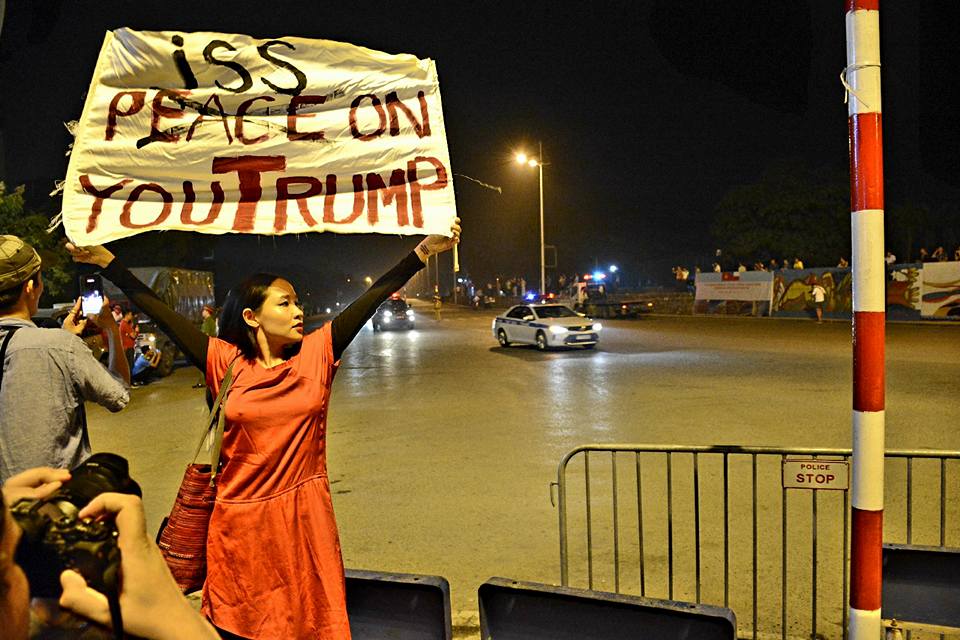
    In the late night of November 11, 2017, I saw the picture of Vietnamese singer Mai Khoi, a pro-democracy artist who has been dubbed “the Vietnamese Lady Gaga” by Western media in the past two years, holding a sign saying, “Piss on you, Trump” where the word “peace” was crossed out and written over by “piss”.

    She was protesting President Trump, who, in her words, was “a misogynistic man”, and unlike his predecessor Barack Obama, had failed to mention the critical conditions of human rights defenders in Vietnam during his trip for the APEC 2017 meetings.

    2017 marks the year that the pro-democracy movement there has experienced some of the worst crackdowns in recent times. During Trump’s visit, activists reported that they were being followed and that police guarded their houses, many also had to take refuge from their homes temporarily. Even before the trip, rumors have been circulating around that more arrests were to be made in the coming days, which worried many observers.

    Yet, for Mai Khoi’s one-person protest, I did not think much of it at first. I chuckled at her sign, and then because of the report on Twitter by American journalist Bennett Murray, who works for German media, that police had started to harass her, I became a bit worried. But still, I went to bed hoping she would not get into too many troubles with the government. She is a public figure, the police would have been a bit more careful, I thought.

    What I would never expect was to wake up the next day and found out not only that she was still being harassed by the police, but a backlash against Mai Khoi on social media in Vietnam also began. Even more perplexed was the fact that the critics not only were members of the general public or the government’s Internet trolls but also from some of the pro-democracy and pro-human rights camps inside and outside the country. And there were so many arguments being thrown around from everyone, myself included.

    Mai Khoi was criticized for protesting against Trump instead of Xi Jinping who also in Hanoi at the same time because some thought Xi is the bigger enemy of all Vietnamese. Afterall, it was China that went after our sea waters, not the U.S.

    There were people who complained that her message was too crude, or that it was not good manners to treat Trump that way. People even suspected that the Vietnamese government had allowed her to protest to make the U.S. president to “lose face.” Had she replaced the word Trump with Xi, she would have been beaten up right then and there by the Vietnamese authorities, some said.

    The worst criticism probably was about her choice of fashion. Mai Khoi was also scolded for not wearing a bra. No proper woman would dress like that, so she did not deserve the right to protest, was the explanation of one critic. Many people demanded that she must give a reason to protest Trump. Not liking Trump or just hating his guts was not good enough, they argued, we hated Xi Jinping because the Chinese took our islands, but why did you have to hate Trump? What did Trump ever do to Vietnam and Vietnamese people?

    Those who supported her simply stated that it was her right to protest and that it did not matter what her reasons were. Mai Khoi had the right to choose whom to protest against, and she did not have to offer a reason for why she picked Trump and not Xi.

    So you can see how one could come to tear her hair out, trying to understand the phenomenon, like I was. And as the events unfolding before my own eyes, with each and every Facebook status and comment of people debating over Mai Khoi’s conduct, it started to dawn on me. We, the current generation of Vietnamese, have all been scrambling for pieces of information on human rights and individual freedoms without any guiding light for so long. And as such, each person was trying to scratch the architecture of those concepts based on his or her own understanding, which may or may not be in line with the already existed international standards.

    And because the difference in understanding the very same concepts among us was so large that it seems as if everyone was fighting with each other, one way or another, about whether Mai Khoi had the right to protest the way she did. It was then that I could see why our thoughts and arguments were so different from each other, or why we had spent so much time to debate.

    But who could blame us for wanting to go through such lengthy debates to get to the bottom of our arguments with one another? We were born and raised in an extremely closed society for such a long time. And for about half of our population, it has also been two, three generations living under a one party’s rule, one way of life, where individualism was banished from society to give space to communal and collective living.

    Today, we are still living in a society that values uniformity and conformity over diversity, because our totalitarian political system controls our every single move. Worse, our ancestors also preserved a culture of obedience and filial piety and passed it on to us, where individual expressions were neither encouraged nor welcomed.

    Not only that none of us was taught about human rights and freedom in school, books on these subjects were not that easy to get printed and sold in Vietnam. We also have not experienced using suitable platforms to engage in meaningful debates or learn how to agree to disagree. Engaging in political debates was not something that we could claim we were particularly trained for.

    We had no experience living with different political views and diverse ways of life. In other words, we all thought we wanted to live in pluralistic society while in fact, we had no idea what it meant.

    The Internet was the miracle that arrived and took many of us to a different world when it introduced us to new, and at the time could have been somewhat strange to some, concepts.

    Nevertheless, instinctively, many of us knew that we wanted to experience living with the values of liberty, freedom, and individual rights. With every single aspect of our life, from our homes to our schools, from our bedrooms to our classrooms, from family life to society, being kept under a tight control, the pressure to take off the lid was unstoppable.

    And with that, in the past twenty years since the Internet was first introduced in Vietnam, each of us had slowly learned – mostly by ourselves – how to push up that lid, so that we could reach the definition of human rights and liberty that many societies had long been established as universal and common values.

    And though these values could have tasted like fresh dews in the early morning to us when we first had them, we also need to learn how not to choke on them.

    The Mai Khoi’s incident was just another example of us still learning how to best apply the definitions of individual rights and freedom in our everyday’s life. Pro-democracy activist Paulo Nguyễn Hồ Nhật Thành wrote on his Facebook this morning: “Mai Khoi (unintentionally) created a debate where both sides, for and against her, had to utilize all that they had learned in order to create their best arguments, while members of the public could watch and learn … Only by having more debatable incidents like this, could us then, as a society, truly absorb the concepts of individual rights and freedom”.

    I happen to agree with Paulo. As painful and uncomfortable as we are in having to debate with other people, including our dear friends who do not agree with us, we must continue this practice. At least, we are doing something that the generations before us were not afforded the opportunity to do so, and that is to open up dialogues and to engage each other in discussing our individual rights with our social issues as the backdrop.

    Only through practice then we can come to have a common, better, and more thorough understanding of the freedoms we are all fighting for. This, I believe, is something Vietnamese people and activists can agree on.

    We may disagree what freedom and individual rights mean, but nevertheless, we all want to have them and practice them. We may fight about what is the definition of pluralism, but there is no doubt that many of us do not want to continue living under the current one country-one leading party’s regime.

  • Joining UN Convention Against Torture Does Not Seem to Stop Police Brutality from Tormenting Vietnam

    Joining UN Convention Against Torture Does Not Seem to Stop Police Brutality from Tormenting Vietnam

    Vietnam soon faces the UN’s review compliance on the implementation of the 1984 United Nations Convention against Torture and Other Cruel, Inhuman or Degrading Treatment or Punishment (UNCAT), which it became the 81st signatory on November 7, 2013.

    Despite a showing of strong commitment from the Vietnamese Ambassador to the UN at the time of signing, Le Hong Trung, who condemned all “acts of torture and cruel, inhuman or degrading treatment of persons and to better protect and promote fundamental human rights”, police brutality and death in police detention remain some of the most urgent social issues in the country today.

    Less than a year since the Vietnam’s National Assembly ratified UNCAT in November 2014 and submitted the ratification to UN on February 5, 2015, 17-year old Do Dang Du died from injuries to the head and body while being held in police custody at Chuong My District, Hanoi on October 10, 2015. His death shocked the nation.

    Police records showed Do Dang Du was taken to Bach Mai hospital in early October 2015, where died from head injuries two days after. Photo credits: Anh Ba Sam blog

    14 lawyers immediately petitioned to the Minister of Ministry of Public Security (MPS), the Chief Procurator of the Supreme People’s Procuracy, and the Chief of Hanoi Police Department to get the details of his arrest and detention.

    As it turned out, Du’s death might have been avoided because he was not supposed to be detained at all.

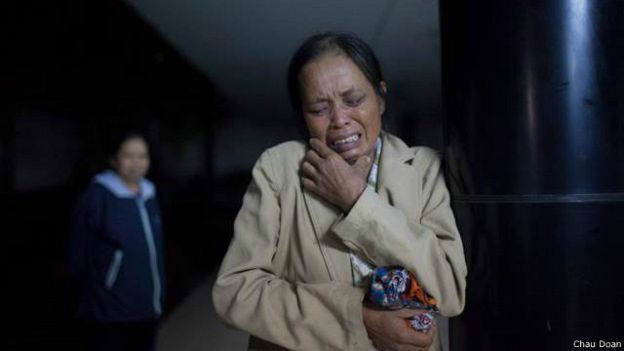
    According to some of the lawyers from this group of 14 who petitioned to review his case, under Section 2 of Article 303 of Vietnam’s Code of Criminal Procedures, a minor being alleged to have committed a “less serious” crime, such as theft, was supposed to be released on his own recognizance. Du’s mother confirmed that he was arrested in August 2015 for stealing two million VND (about 90 USD) from a neighbor and taken into police detention, where he was held until taken to the hospital due to injuries from a physical assault in early October 2015.

    Yet, Chuong My District Police stood by and continued to affirm that their detention of Du for some two months was done according to laws. However, other facts surrounding this case compelled people to question police’s involvement in Du’s death and demanded more answers.

    First, while Du’s three teenager cellmates were arrested and charged with the assault and battery which caused his death, their reasons for getting into an altercation with Du failed to convince the public and Du’s family. The main perpetrator, Vu Anh Binh, also 17-year old, confessed that he had assigned Du to wash their dishes, but because Du did not wash them well enough, leaving them still dirty, Binh got angry and beat him up.

    Attorneys for Do Dang Du’s family after being assaulted. Photo credits: Tuoi Tre newspaper.

    Du’s family then retained two attorneys, Le Luan and Tran Thu Nam, from the group of 14 to represent them in the matter of their son’s death, but the lawyers soon became victims of physical violence as well. On November 3, 2015, attorneys Luan and Nam were assaulted by a group of eight thugs on their way to visit Du’s mother. The victims identified one of the perpetrators to be Chuong My District police officer Cuu, and they also told the media that they believed the police had followed them since they agreed to represent Du’s family.

    Speaking to BBC News – Vietnamese edition at the time, Attorney Tran Quoc Thuan, former Deputy Director for the Office of the National Assembly, demanded that an independent investigation unit should have been convened to invest the police officers of Chuong My District to avoid conflict of interest. Attorney Thuan also mentioned to BBC that some 226 people had died in police custody in recent years.

    Attorney Thuan’s claim was based on Vietnam MPS’ own representation to his former employment, the Office of the National Assembly, in 2015 regarding deaths in police custody from 2011-2014, which curiously was not mentioned by the Vietnamese government in their report submitted in July 2017 to the UN regarding the first year of implementing UNCAT from 2015-2016.

    However, in the report to the UN, the government did admit deaths and other incidents of police brutality indeed happened. But the numbers from the government, of course, are nowhere near 226. In fact, it is difficult to decipher the exact number from the 51-page report, which also did not include any allegations of death in police detention that Vietnamese newspapers and social media had reported in 2015 and 2016.

    What more disturbing is the fact that the report from the Vietnamese government delineates the reality that police brutality often goes unpunished. Impunity is at the heart of this problem, and the government has yet to demonstrate they have dealt with it efficiently.

    For example, Paragraph 100 of the report stated: “From 2010 to 2015, People’s Courts had not handled any cases regarding the obtainment of testimony by duress and bribing or forcing another person to give false testimony or provide false documents”.

    Further, it provided that in the same five-year period, the Vietnamese courts “only handled and tried 10 cases with the total 26 defendants who committed torture offenses”. Eight out of those 10 cases involved police officers and prison’s guards. (In Vietnam, prison’s guards are also police officers because according to the laws, the MPS has direct control over all prisons in the country).

    The family of a victim in one the newest deaths in police detention in Vietnam took his body to the streets to demand justice in July 2017. Police of Ninh Thuan, Phan Rang Province claimed Nguyen Hong De (26-year-old) had hung himself in the temporary holding cell.

    Even when police officers were prosecuted and tried for having committed torture of suspects and/or prisoners, they often received very light sentence. Take for example the case of four police officers of Dak Trung prison in Dak Lak Province, listed in Annex 11 of the Vietnamese government’s report to the UN, none of the police officers involved in a prisoner’s death while in their custody was handed actual prison terms.

    These four police officers admitted to using “corporal punishment” on a prisoner, Truong Thanh Tuan, during the morning of September 23, 2010. Tuan died on the way to the hospital the very same evening from “respiratory distress syndrome and cardiovascular collapse”. The officers were tried and convicted of “using corporal punishment” under Article 298 of Vietnam’s Penal Code, and their sentence was the minimum “penalty of warning”, which translated into “no jail time”.

    Paragraph 45 of the report, the government acknowledged that their laws allow for many other penal code provisions to prosecute criminal acts that carry “torture nature”, some are specifically applicable to police officers, such as “causing death to people in the performance of official duties” (Article 97), “inflicting injury on or causing harm to the health of other persons while performing official duty” (Article 107), “ill-treating other persons” (Article 110), humiliating other persons (Article 121). Vietnam’s laws also allowed for charging perpetrators with multiple offenses for committing the same criminal conducts.

    But in reality, the same report also showed that Vietnam’s justice system had not prosecuted any of the listed perpetrators with multiple charges, even when their laws allow for it. In all of the reported cases, the police officers were charged and tried for only one crime, “using corporal punishment” under Article 298.

    Taking into consideration the facts and the applicable laws, people have to ask why the offending police officers were not charged with any other crimes besides “corporal punishment” and thus always received just a slap on the wrists for causing serious injuries and even death to suspects and prisoners?

    The difference between only charging the offenders with one crime instead of multiple crimes in Vietnam is quite large, and we could see it by studying the facts in one of the most talked about cases involving police brutality in the past five years, the case of Ngo Thanh Kieu of Phu Yen Province.

    According to the government report, the 20-year-old Kieu was arrested for theft in the morning of May 13, 2012. He was then interrogated by several police officers of Tuy Hoa District, Phu Yen Province that day, where he was handcuffed and beaten. He was interrogated multiple times on the same day and continued to be interrogated even after showing obvious signs of physical assault. By 5:40 pm, Kieu died on the way to the hospital from injuries to the head which had caused drama to his skull.

    The police officers defendants in Ngo Thanh Kieu’s case at trial. Photo credits: Zing news.

    While the involved officers were tried and sentenced to prison from nine months to eight years, they were charged, again, only with “applying corporal punishment” under Article 298. Moreover, the highest-ranking officer involved, Le Duc Hoan, Deputy Head of the Investigation Agency of Tuy Hoa District Police, was only charged with “negligence, causing serious consequences” while carrying out official tasks.

    It was Hoan who had ordered the other police officers to conduct the interrogation of the victim even after Kieu had shown signs of suffering rounds of physical assault during the first questioning. Yet in the end, it was also Hoan that received the lightest sentence of nine months and was allowed to serve it on probation, meaning he did not have to spend a single day in jail.

    The government’s report to the UN also failed to mention that two of the five defendants appealed and got their sentences reduced sufficiently in September 2016. Nguyen Than Thao Thanh was sentenced to eight-year imprisonment but got reduced to five years, while Nguyen Tan Quang’s two-year imprisonment became two-year probation.

    Had they been charged with all of the criminal provisions applicable to their illegal conducts, the offending police officers who caused the death of Ngo Thanh Kieu could have faced up to 30 year-imprisonment on a combined sentencing under Article 50 of the Penal Code if convicted.

    The story of Ngo Thanh Kieu is not the last to tell about torture and police brutality in Vietnam. In 2017, I have documented nine cases where people died in police detention from January 2016 to September 2017. To date, no one had yet been prosecuted in relation to these cases.

    As long as the problem with impunity continues to be as serious as police brutality in Vietnam, it seems that there is still a long way to go for UN CAT to be effectively implemented. At the very least, however, Vietnam should begin aggressively investigating, prosecuting, and trying the perpetrators according to the standards of their current laws, where multiple charges should be filed against those who committed such horrendous crimes against the victims’ basic human rights and took away their most sacred one, their right to life.

  • Vietnam’s Cybersecurity Draft Law: Made in China?

    Vietnam’s Cybersecurity Draft Law: Made in China?

    During the first part of last year’s November, the National Assembly of China passed the Law on Cybersecurity and established its effective date to be June 1, 2017.

    Then come June 2017, five days after said law went into effect in China, the Vietnam’s Ministry of Public Security (MPS) sent their own proposal regarding a draft of the Cybersecurity Law to the Vietnamese government. It has been claimed that this draft law was the result of a legislative process which began to take place since July 2016, when the National Assembly scheduled Cybersecurity Law as one of its agenda’s items then. The MPS then also established their own drafting team and an editing group to work on the drafts of Vietnam’s Cybersecurity Law in late March this year.

    After going through various collections of public comments and four draft versions of the law, the final draft (Draft Law) now is in the hands of the National Assemblymen and women. It would be among the items to be discussed when they meet at the end of 2017, and if all things go according to plan, Vietnam’s Cybersecurity Law will get approved and signed into laws by the middle of next year.

    Yet, whether purposefully or unintentionally, Vietnam’s Draft Law has shocked many people because it is almost identical to that of China’s.

    In their proposal submitted to the government, the MPS stressed that they have researched, and thus taken into considerations Cybersecurity laws from China, Japan, the Czech Republic, South Korea, and the U.S when drafting the Draft Law.

    I have to make it clear that I do not have any evidence to conclude the Vietnamese government has indeed copied China’s Cybersecurity Law. Moreover, if both countries are functioning under an identical political system, then the use of identical legislative tools would be very understandable. This is even more likely when the MPS openly admitted that they have considered Chinese laws as stated. Besides, copying or learning from other countries’ legislative experiences do not necessarily mean negative consequences.

    However, let’s just go straight to comparing Vietnam’s 4th draft of the Cybersecurity Law currently sitting on the desks of the National Assembly’s members and the English translation of the Chinese laws, to see how much they are alike to one another, and whether such similarities will bring negative consequences to Vietnamese people.

    1. Two documents, one technical term

    There is one technical term in the Vietnamese Draft Law that one should pay close attention to, which is the “critical information system regarding national security” in Article 9.

    In the China’s version, there is a similar technical term: “critical information infrastructure” in Article 31.

    Both laws centered on these two technical terms, and their definitions are also very much alike. Both are used to define any information, that if being under attack, they would bring harms to national security, social order and public safety.

    That information – as mentioned in both Vietnam’s and China’s Cybersecurity Law – would then include energy, finance, transportation, media, and publications, as well as electronic governance.

    However, the Draft Law of Vietnam also includes military-security, national secrets, banking, natural resources and environment, chemicals, medicine, and other national security structures.

    The Draft Law also does not distinguish between private companies and government agencies when applying the concept of “critical information system regarding national security”. Based on the context of said law’s wordings, the targeted entities are implied to be both of them. The government and the enforcing authorities could also interpret this law as broad as possible.

    Baker & McKenzie, in their analysis of the Chinese Cybersecurity Law, has warned all companies whose may have established relationships with those entities which fall under the regulatory perimeters of said law, that this law could very well be applicable to them.

    The agencies and enterprises who are within the application of this law shall abide the technical measures and regulations as set by the government, and submit themselves to be under the direct control and observation of the MPS. They will have to obtain all necessary business permits to operate and maintain their equipment while at the same time, must cooperate with the authorities in monitoring users’ information.

    These regulations between Vietnam and China are identical.

    2. Directly target information considered to be dangerous to the regime

    It is not surprising to learn that both Vietnam and China are extremely concerned about cybersecurity.

    As detailed in the proposal from the MPS, the Draft Law of Vietnam focuses on underlining the importance of “preventing, fighting against, and neutralizing all activities using cyberspace to intrude national security; subverting against the Socialist Republic of Vietnam; propagandizing to destroy the ideology, the internal affairs, and the common national unification; inciting mass protests; and obstructing cybersecurity, from the reactionary forces and those who are enemies of the State”.

    Further, Article 22 of the Draft Law clearly states that the Vietnamese government would apply all necessary technical methods to treat such information.

    Article 12 of the Chinese Cybersecurity Law has a similar provision when it prohibits Internet users from using “the network to engage in activities endangering national security, national honor, and interests, inciting subversion of national sovereignty, the overturn of the socialist system, inciting separatism, undermining national unity, advocating terrorism or extremism, inciting ethnic hatred and ethnic discrimination, disseminating violent, obscene or sexual information, creating or disseminating false information to disrupt the economic or social order, as well as infringing on the reputation, privacy, intellectual property or other lawful rights and interests of others, and other such acts”.

    3. Requiring all Internet users to provide true identity

    Article 47 of the Vietnamese Draft Law specifically demands all Internet service providers to require “users to provide true and correct personal information. If any user refuses to comply, the service providers shall have the responsibility to deny that user service”.

    At the same time, Internet service providers must establish their own verification system to ensure the accuracy and veracity of the information provided by the service users according to Article 33.

    Article 24 of the Chinese Cybersecurity Law has the same language as those contained in the Vietnamese Draft Law’s Article 47.

    Once businesses and the State can obtain users’ detailed personal information, there will be no guaranty that they would not use it for improper purposes, and would not harm such users.

    4. The server is required to be localized within Vietnam’s territory and the providers will have to transmit their data overseas

    This requirement has proven to be the most controversial in the past few days among the public in Vietnam.

    Article 34 of the Draft Law requires “foreign corporations and providers, in order to provide telecommunications and Internet services in Vietnam, must … obtain business permits to operate, maintain a local representative agency, and the server which manages Vietnamese users’ data shall be stored within the national territory of the Socialist Republic of Vietnam”.

    Article 48 further provides, all personal information and important data concerning national security shall be stored within the national territory of Vietnam. In the event that someone wants to transfer such information overseas, then a security assessment shall be performed according to the related governmental agencies’ requirements.

    These rules and regulations have caused many Vietnamese concerns, that Google, Facebook, other social media platforms, email providers, and cloud computing service providers will soon pack up and leave Vietnam’s market.

    Surprisingly, Article 37 of the Chinese version also provides for similar regulations as the two above-mentioned Draft Law’s articles.

    As recent as this past June, tech giant Apple had to cooperate with a Chinese corporation to invest in a database center to comply with this specific provision. Microsoft, IBM, and Amazon had complied as well.

    5. Forcing users and providers to act as informants

    If the Draft Law gets passed into law, Internet users, telecom and Internet providers must cooperate thoroughly with the government.

    Article 45 requires those who engage in activities using cyberspace must strictly comply with the government’s guidelines and shall allow the government to enforce their cybersecurity’s measures and safeguards.

    Moreover, all service providers must work with the government to provide actual identities of those Internet users, while at the same time, shall have the responsibility to fend off all information which is deemed to be detrimental to the State, according to Articles 46 and 47.

    Again, we find the same regulating language in China’s Cybersecurity Law. This time is located at Article 28, which demands that “network operators shall provide technical support and assistance to public security organs’ and state security organs; lawful activities preserving national security and investigating crimes”.

    6. Forcing tech companies to follow government’s technical standards

    Article 46 mandates all businesses involved in the production and putting in commerce digital products, as well as providing Internet services, shall be in accordance with the provisions of laws and with the “mandatory quality assurance of State standards”, before releasing their products to the market.

    The State also shall pass laws which set the standards for the hardware and software to be used with the above-mentioned technical measures, as well as make sure that the applicable entities shall comply.

    This provision also serves as the legal basis for the State to enact the necessary decrees and orders, regulating the specificity of the technical measures mentioned and how to enforce such measures.

    Compare to China, the Chinese government had required all new computers to be pre-installed with the automatic content-control software – Green Dam – and also forced businesses, including Google, to have this software installed on all their computers.

    The fact that the Vietnamese government had become increasingly more and more interfering with the technical measures regarding the high-tech market highlights the fact that it has opened the doors for corruption and abuse of power from the MPS, the Ministry of Defense (MOD), Ministry of Science and Technology, and other related governmental agencies.

    7. Forcing all entities that have relations with “critical information” to be evaluated by the State when buying hardware and software.

    Articles 11, 16, and 48 of the Draft Law gives the MPS, the MOD, and other State’s agencies, the authority to review equipment, networks products, and services which may be related to the national critical data system before they could be put into use or upgrade.

    This is similar to Article 35 of China’s Cybersecurity Law.

    Accordingly, this regulation means that any governmental agency or private business – who maintains an information system which related to energy, national finance, banking, transportation, chemicals, medicine, natural resources and environment, media, news and publishing, shall go through the MPS and/or the MOD when purchasing the necessary hardware, software, Internet service provider for their operation.

    It probably makes sense to see this regulation being applied to government’s agencies, but the fact that it is stepping into fields such as banking, medicine, news, and publishing, raises questions about the State’s ambition in controlling information in society at large.

    These regulations would grant the police and military the all-access key to both government’s agencies’ and private businesses’ hardware and software. This would be an opportunity for them to exert pressure on other agencies, businesses, as well as putting the whole society at risk for corruption and abuse of power.

    —

    The above were only seven strikingly obvious similarities between the Vietnam’s Draft Law and China’s Cybersecurity Law. With an in-depth reading of both documents, one probably finds, even though smaller, much more alike features.

    This article is translated into English by Tran Vi from the article “Dự luật An ninh mạng: Hàng Việt Nam ‘Made in China’?“ that was published on Luat Khoa magazine on November 4th, 2017.

  • Wrongful Death Sentences Sent A Loud and Urgent Cry to Reform Vietnam’s Criminal Procedures

    Wrongful Death Sentences Sent A Loud and Urgent Cry to Reform Vietnam’s Criminal Procedures

    Wrongful convictions almost always share a few disturbingly similar characteristics in Vietnam. First, they mostly happened in rural areas. And second, the majority of the people involved, be it the victims, witnesses, or alleged perpetrators, are often poor, and some even have little or little education.

    In any case, the defendants quickly found themselves victims of police brutality and thus were coerced to confess. Most of the time, no effective legal counsel would be available. Worse of it, it would be certain that the court will convict with little or close to zero credible evidence and hastily sentence them to the maximum terms. There have been many cases where defendants were sentenced to death based on almost nothing but the very confession that the police had beaten them into giving up.

    Therefore, the country’s need for criminal justice reform is real and urgent. And the death penalty cases below, featuring the stories of three young men in their twenties, all convicted, sentenced, and incarcerated to await their executions during the past decade, would convince even the toughest critics.

    Ho Duy Hai:

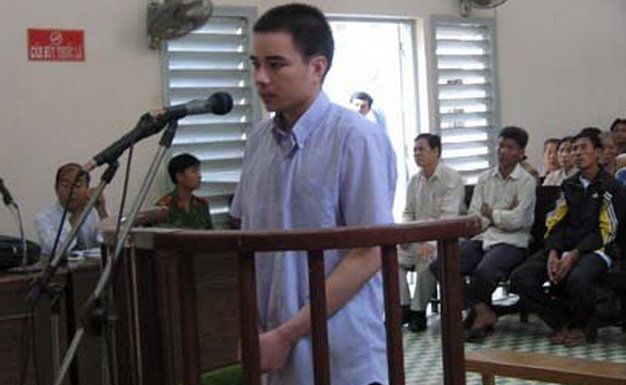
    Ho Duy Hai at one of his court hearings. Photo credit: Thanh Nien Newspaper.

    Hai was a 23-year-old recent college graduate, eagerly waiting to start his new life when he got convicted of double homicide and robbery in 2008.

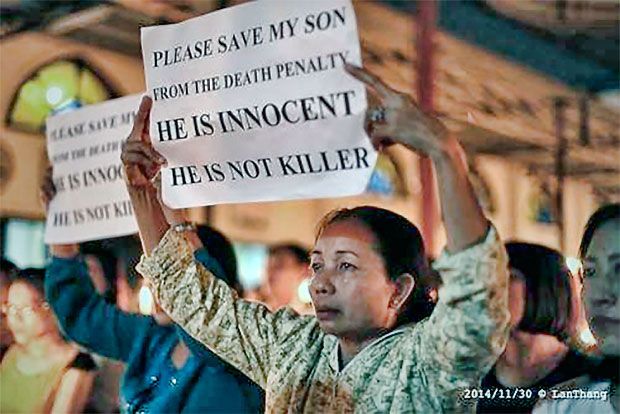
    Social media in Vietnam came to know of Hai’s case when his younger sister, Thuy, created a Facebook group in November 2014 to raise awareness about his conviction and plead for his life. At that time, Hai’s family had just received notice from the Long An Province Police Department that they would execute him on December 5, 2014.

    Devastated by the news, his family then desperately turned to social media, the dissidents, and various independent human rights groups to save Hai’s life. Vietnamese people began to learn about one of Vietnam’s most peculiar death penalty cases. Due to pressure from both the public in Vietnam and international organizations, on December 4, 2014, then-President Truong Tan Sang personally ordered a halt of his execution – which would have been carried out the next day.

    Despite the fact that a special team of jurists and legislative members was set up to investigate wrongful convictions in 2014 and 2015 and that the Deputy Commissioner of the National Assembly’s Judiciary Committee at the time – Le Thi Nga – already reported to Congress, there were serious violations committed by the police and prosecution in Hai’s case, he had yet been granted a review and remained incarcerated.

    By next March, it would have been ten years since the day his life as a free man was abruptly ended. And as flimsy as they are, the so-called evidence that sent Hai to the firing squad still soundly stands.

    The case dates back to the night of January 14, 2008, when two young women were killed at the Cau Voi Post Office in Thu Thua District, Long An Province. According to the case file, the victims’ throats were cut, and one of them received blow injuries to the head while another one was almost decapitated. The perpetrator allegedly took some 1,400,000 VND (approximately 70 USD), mobile phones, and pieces of jewelry from the scene.

    On March 22, 2008, Hai was arrested and tried for the double murder even when none of the fingerprints left at the scene matched his, there was no physical evidence to tie him to the case, and there were testimonies that other men were seen at the crime scene during the night of the murders.

    Even more disastrous, according to the indictment, one of the prosecution’s witnesses, Nguyen Van Thu, later purchased a knife at a local market and gave it to the police, vowing that it would have matched the size and shape of the knife from the scene. That was enough for the police to conclude that they had sufficiently determined the murder weapon. What happened next was more bizarre; this very “purchased” weapon was indeed admitted into evidence as part of the case file that convicted Ho Duy Hai of double murder and sentenced him to death in December 2008.

    During their visitation, Hai told his mother and aunt that he was beaten up by the police and tortured during his pre-trial detention to confess to the crimes. Also, according to his family, Hai’s appeal process began immediately after the conviction, but the court system repeatedly denied review.

    With his family, including his mother, aunt, and younger sister, on his side, Hai continues on what seems to be an indefinite journey to fight for justice.

    Le Van Manh:

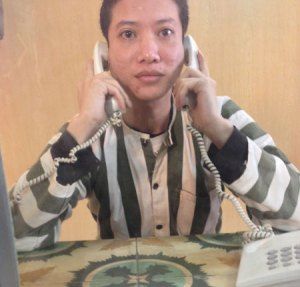
    Le Van Manh. Photo credit: Cong an Nhan dan Newspaper.

    Approximately one year after the campaign to save Ho Duy Hai appeared on Vietnam’s social media in October 2015, people again learned of the facts in yet another irregular wrongful death penalty case.

    On October 16, 2015, the family of death-row inmate Le Van Manh received a written notice from the People’s Court of Thanh Hoa Province, informing them about procedures to pick up and bury his body after execution, which was scheduled for October 26, 2015. Le Van Manh was convicted of robbery, rape, and murder of a 14-year-old girl in July 2005.

    On October 25, 2015, Amnesty International issued a statement on behalf of Le Van Manh, urging the Vietnamese government to spare his life and investigate allegations that he was tortured in police custody. Like Ho Duy Hai, Manh’s execution was halted due to domestic and international pressure. And also, like Hai, Manh continued to be incarcerated since then, with little progress in his plea for justice.

    From 2005-2008, Le Van Manh underwent a total of seven court hearings, including three trials, three appeals, and one cassation trial. In all of his court hearings, Manh vehemently denied all of the charges and retracted his earlier confessions, alleging that he had to confess after being beaten by both the police officers investigating his case and his cellmates who were acting under police’s instructions.

    According to the case’s official records, the victim, Hoang Thi Loan, whose date of birth was August 15, 1991, was raped and murdered in Yen Thinh Ward, Yen Dinh District, Thanh Hoa Province, in March 2005. The authorities believed that Loan went to the bank of the Cau Chay River within the Yen Thinh Ward to use the bathroom on March 21, 2005. By nightfall, her family realized that she had disappeared. The family organized a search for her but to no avail. By the 13:00 hour on March 22, 2005, Loan’s body turned up at the bank of Cau Chay River within Xuan Minh Ward, Tho Xuan District, also in Thanh Hoa Province.

    On March 30, 2005, the Thanh Hoa Province’s Forensics Office concluded that Hoang Thi Loan died from strangulation with signs of water asphyxia and that the victim was raped before she was killed.

    On April 20, 2005, Le Van Manh, who was 23-year old at the time, was arrested pursuant to a temporary arrest warrant issued by the investigative police unit of Dong Nai Province for an entirely different matter, suspected robbery and attempting to flee criminal custody, earlier that month.

    However, according to the criminal complaint, just three days later, by April 23, 2005, a confession letter, claimed to be written by Le Van Manh while in police detention addressed to his father, had surfaced, admitting guilt to the rape and murder of Hoang Thi Loan. The police were in time to confiscate this letter and used it to prove Manh’s guilt. The criminal complaint further showed that the investigation relied on the testimony of a 9-year-old child – who had limited education and was interviewed by the police without parental permission – for leads.

    As in Ho Duy Hai’s case, there was no physical evidence to tie Manh to the alleged rape and murder. The only evidence presented by the prosecution was Manh’s confession letter, which he already retracted. Nevertheless, Le Van Manh was charged with the rape and murder of Hoang Thi Loan, tried, and sentenced to death.

    Nguyen Van Chuong:

    Nguyen Van Chuong. Photo credit: Giaoduc.net.vn.

    Nguyen Van Chuong’s official case file reveals that it could probably be the strongest one among these three to demonstrate how police brutality affected criminal investigation in Vietnam because the suspects and witnesses also fell victim to such cruel practice.

    The only evidence used to convict Chuong was his and his co-defendants’ confessions. These confessions, again, were alleged by the defendants that the police obtained them through torture.

    His parents recalled how Chuong had described the police would handcuff him so that he was hanging and only the tips of his toes would touch the floor, then they would beat him repeatedly until he confessed.

    Court’s dockets confirmed that Chuong and other defendants had all petitioned for review after the appellate court confirmed their convictions in November 2008. From prison, on April 7, 2009, Chuong sent his mother a t-shirt where he had used bamboo toothpicks to sew on his plea of innocence.

    Not only the defendants alleged that they were tortured by the police during the investigation to confess, but Chuong’s alibi witnesses had also come forward and alleged they were physically abused by the authorities.

    According to the police’s investigation file, on the night of July 14, 2007, around 21:00 hour, a high-ranking police officer, Nguyen Van Sinh, of the Hai An District, Hai Phong City, was attacked by knives and suffered severe injuries. Officer Sinh died at 8:00 A.M. the next morning from the wounds he received during the attack.

    By August 3, 2007, police arrested Nguyen Van Chuong, who was born in 1983 and a resident of Trung Tuyen village, Binh Dan Ward, Kim Thanh District, Hai Duong Province. At the time of his arrest, Chuong was a factory worker in Hai Phong, married, and had no criminal records. Chuong was also the owner of Thien Than coffee shop in Hai An District, Hai Phong City. Together with Chuong, two other men, Do Van Hoang and Vu Toan Trung, were also arrested.

    On August 4, 2007, Chuong’s 20-year-old younger brother – Nguyen Trong Doan – obtained written declarations from various witnesses who swore under oath that they had met with Chuong in his hometown, in Kim Thanh District of Hai Duong City at the time Officer Sinh was attacked in Hai Phong City, which is some 40 km away. In other words, Chuong had an alibi and witnesses to support it.

    But instead of investigating the validity of his alibi, the police arrested Chuong’s brother, Doan, alleging that Doan manipulated evidence and witnesses to help Chuong conceal his crimes. Ironically, Doan was arrested at the police station in Hai Phong City when he came to provide the police with testimonies from witnesses who were with his brother during the night of the alleged crime.

    One of Chuong’s alibi witnesses was Tran Quang Tuat, who later told Tien Phong newspaper in November 2007 that the police had intimidated him into changing his testimony about Chuong’s whereabouts while Officer Sinh was attacked.

    Another person, Trinh Xuan Truong, petitioned to the People’s Supreme Procuracy Office on September 10, 2013, and claimed that the police had beaten him up, burnt him with cigarettes, threatened to arrest him, and ordered him to change his testimony from being with Chuong in a different city during the night of the attack to did not see Chuong that night.

    By January 27, 2008, the Hai Phong City Police Department finalized their investigation and concluded in their criminal complaint that Chuong, along with two co-conspirators, Trung and Hoang, had confessed to using a knife to rob Officer Sinh for money to buy heroin, resulting in his death from knife injuries the morning after.

    On June 12, 2008, Chuong and his co-defendants were tried for murder, and he was given the death penalty while the other two received a life sentence and 20 years imprisonment, respectively. It is worth noticing that Trung, the defendant who received the 20-year imprisonment, was the grandson of a woman who received an outstanding medal from the regime in the past; thus, the law allows him a lighter sentence.

    Nguyen Trong Doan, Chuong’s younger brother, was also sentenced to two years imprisonment for “concealing criminals” because he was trying to bring Chuong’s alibi witnesses forward.

    Like Ho Duy Hai and Le Van Manh, Chuong has been incarcerated since his arrest, and his execution could happen anytime. And also, like the other two families, Chuong’s parents, especially his father, became his strongest and most outspoken advocates on Facebook. During a teleconference with us in early 2016, Chuong’s dad, Nguyen Truong Chinh, disclosed that he had left their home to come to Hanoi to petition for a review of Chuong’s case. With all of their valuables sold to pay for Chuong’s legal case and appeals, his father had lived among land-grabs victims’ community and worked as a motorbiker for hire to earn a meager salary.

    Yet, the future looks bleak when courts refuse to grant review, and legal options are running out for Ho Duy Hai, Le Van Manh, Nguyen Van Chuong, and other death-row mates, unless major reforms regarding criminal procedures occur in Vietnam. Until then and there, their lives could only depend on other people’s mercy and how much and how often the international community exerted pressure on the Vietnamese government.

  • Why President Trump Will Be Much Happier as the Leader of Vietnam

    Why President Trump Will Be Much Happier as the Leader of Vietnam

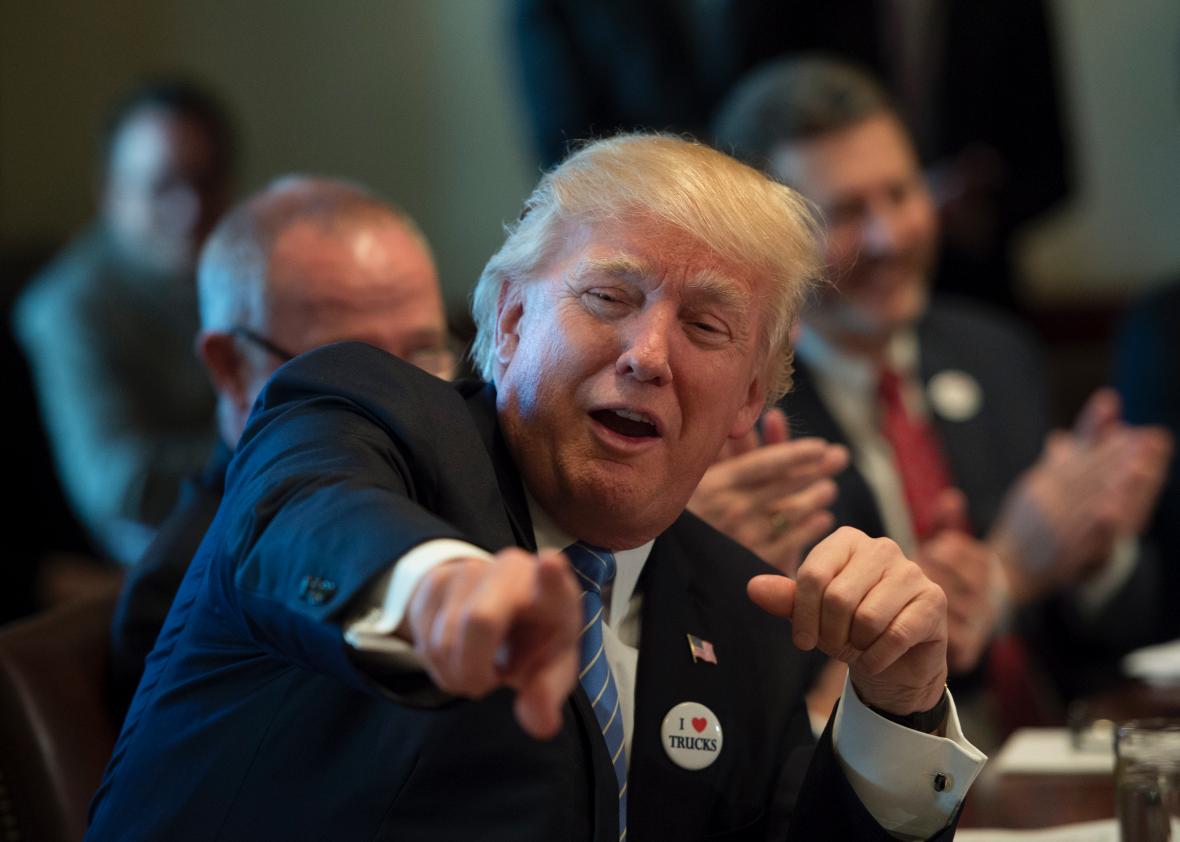
    President Donald Trump is coming to Vietnam on an official visit for the APEC meetings from November 10-11. He could have been in this country much sooner had he not avoided the draft during the Vietnam War.

    I am not sure President Trump knows where Vietnam exactly is on the map (which is quite usual for a lot of foreigners), but he will certainly fall in love with the country when he comes here this time, especially after hearing what I am about to disclose.

    Let me take this opportunity to send him a few words of regards and explain to him why I think so.

    But before I forget, let’s start with the same premise: one must be a member of the Communist Party of Vietnam to become the country’s leader.

    1. Forget about the Democrats: They are already extinct.

    The last time Vietnamese people saw a glimpse of a “democrat” was back in … 1988, when the fake Democratic party (yeah, we had such things back then – they were basically puppets formed by the communists themselves) disbanded under the order of the Communist Party. Basically, President Trump, you and your chosen party will enjoy absolute power here.

    The Vietnam’s Constitution clearly states that the Communist Party is the force which leads both the government and society. In fact, it is the only one ruling the country.

    So, no worries about the opposition. You’re far, far away from Hillary Clinton, Bernie Sanders, and Nancy Pelosi. You will win every election, and win big. When I say “big”, that means more than 90% of the popular votes where every single eligible adult in the country will vote, not just the “landslide victory” last year in the U.S.

    2. You have the entire Congress in your party’s hand, not just a simple majority.

    There is no need to battle with anyone in Congress. “Repeal and Replace” could be done very easily, right then and there. As well as the tax bill. And the annual budget bill. Basically, everything and anything.

    Congressional hearings are extremely rare for top leaders like you. Your cabinet members may be questioned by Congress, but in general, no one would throw stones in their faces like how the Democrats treat you, your staff, and the Republicans. Congress is also more laid back, as they only meet twice a year, each time for one month.

    How could Vietnam achieve such harmony between the Executive branch and the Legislative branch?

    Just imagine your Republican fellows occupy 95% of the seats in Congress and the remaining 5% are all your friends and good friends. This is because our unique election laws were designed to prevent non-communist candidates from running right from the first place. Nobody else but communist members and their close allies can go pass the three rounds of pre-election vetting, which of course are held by the communist-organized body called the Fatherland Front (such patriotic name, you will love it!).

    3. You don’t have to deal with the media because independent news does not exist.

    I know the media in the States is extremely annoying, and they just never leave you alone. Here in Vietnam, you are untouchable. What does that mean? It means you can do whatever and say whatever, not a single journalist dares to criticize you.

    Heaven on Earth! Why is that?

    Because you and your party control the entire media. So, there is no CNN, no Washington Post, no New York Times, leave alone Stephen Colbert and Trevor Noah. Only Fox News, Breitbart and the likes are allowed. Not only that, those that are allowed must also report news as they were ordered by you and your party. Imagine, even Steven Colbert must listen to and follow every word of yours! That’s true respect, isn’t it?

    Some crazy leftists at organizations like Freedom House and Reporters Without Borders may put your country at the bottom of the Press Freedom Index, but who cares, right?

    4. Just in case anyone criticizes you, you can always lock them up, for years.

    We have already put thousands of dissidents in jail already. In the past, we even made them…disappeared.

    Really, if you find anyone who writes some short statement about you on Facebook or Twitter that annoys you, then your police can come and arrest such person right away, then put him/her in jail for, says two years or more without trials. The courts – which totally under your direct control – could also sentence a lawyer to seven years of imprisonment if he dares to sue you. Or, they could put another lawyer who always criticizes you (imagine the ACLU and their lawyers, I know how much you hate them) in prison for five years because…he has criticized you.

    You often feel frustrated that it takes forever to lock up that woman, right? In Vietnam, we recently locked up a woman whom the government does not like very much in June – a female pro-democracy blogger called Mother Mushroom – for ten full years after a day of trial, sweet and simple. (By the way, your wife, Melania, gave Mother Mushroom the Women of Courage award earlier this year, though. So, I thought you would want to check with her on this, just to be safe.)

    5. There is no court that would stop you from issuing or enforcing executive orders.

    This is an interesting part. Of course, you must be very upset with those federal courts issuing restraining orders on your travel bans one after another. In fact, you also know that you must deal with Ruth Bader Ginsburg, Sonia Sotomayor, and others at some points. Furthermore, you cannot be certain whether Neil Gorsuch may turn his back on you one day and side with those leftists all the way on issues like abortion and affirmative action cases.

    But, here in Vietnam, every single judge will be your party’s members (I mean the “sworn allegiance to” kind of members, not just registered voters), and they will always obey your party’s rules from the top down. That means whatever is your call, they will follow. No questions asked!

    The so-called “judicial review” also does not exist in our country. A lot of executive orders and legal documents are clearly unconstitutional, but no one gives a damn. Let me give you an example.

    Four years ago, our Prime Minister Nguyen Tan Dung signed two decrees, 72 and 174, regulating that criticizing the government on the Internet was prohibited and could be fined up to $4,700 USD (about twice the average annual income for a Vietnamese). Those two decrees were not only unconstitutional, but also directly contradicting international human rights law, and were widely condemned by the international community, including your country back then. But so far, no one had been able to challenge them in any court in Vietnam because simply put, our judicial system was set up in such a way that such efforts would be futile from the beginning: no courts will accept those filings. Problems solved.

    6. The term “special prosecutor” is non-existent and will never come into existence.

    Investigating our country’s top leaders is absolutely impossible. In fact, none of them has been in such situation since the Communist Party took power in 1945.

    You would love this fact: Vietnamese prosecutors cannot investigate any communist member without the party’s permission. Thus, it is outright prohibited! Nobody is going to thumb their nose into your and your family’s business.

    There is no Robert Mueller here, believe me. Never.

    7. Tax returns? They are there, but rules don’t apply to you.

    In Vietnam, everyone knows our leaders are rich. Maybe some of them are even as rich as you are. But no one knows exactly how rich they are, and no one dares to ask them to show their tax returns.

    We have a huge (I mean really, bigly huge) problem with transparency. Another left-wing (perhaps fake?) organization called Transparency International ranks Vietnam at 113/176 on their Corruption Perceptions Index in 2016 with only 33/100 scores. But that’s a good thing for you, right?

    If you are the top leader in Vietnam, you don’t have to bother with the media complaining about your frequent flights to Mar-a-Largo or how much money you have made off your presidency because no one will have the guts to ask. And those who do, you can just put them in jail. What a life!

    8. Last, but not least: Endless golfing.  

    This, nevertheless, is as important as anything I have mentioned above. You love golf, and we, the Vietnamese, do too. We basically have golf courses popping up at every single corner across our country. And, you can play golf as much as you want, just remember to not disappear for too long during your term. The public doesn’t even know you go play golf, let alone complain about it – because there is no “fake news” here to report on that, only your news, remember?

    Is this the vision of the great country that you have been talking about, or perhaps, maybe dreaming of?

    Then, President Trump, welcome to Vietnam!

  • New Report: Four Ways the Vietnamese Government Controls Religious Practitioners

    New Report: Four Ways the Vietnamese Government Controls Religious Practitioners

    A new report suggests that there are four methods the Vietnamese government uses to control the practice of religion in the country: 1) using legal documents and other administrative regulations; 2) using the propaganda apparatus; 3) dividing to rule; 4) using physical violence (beating, intimidation, imprisonment).

    The report, “Assessment of the 2016 Law on Belief and Religion in relation to the Exercise of the Right to Freedom of Religion and Belief in Vietnam”, was researched and written by journalist Pham Doan Trang and other members of the Religions Research Group – an independent civil society group in Vietnam.

    Not only pointing out the government’s tactics, the report also analyzes the Vietnam’s Law on Belief and Religion 2016 and compares it to the international human rights standards.

    The report in English is available to download here (PDF) with the authors’ consent.

    The Vietnamese version of the report can be found here.

  • Vietnam Government Claims to Work with Google and Facebook to Remove Thousands of Anti-government Content

    Vietnam Government Claims to Work with Google and Facebook to Remove Thousands of Anti-government Content

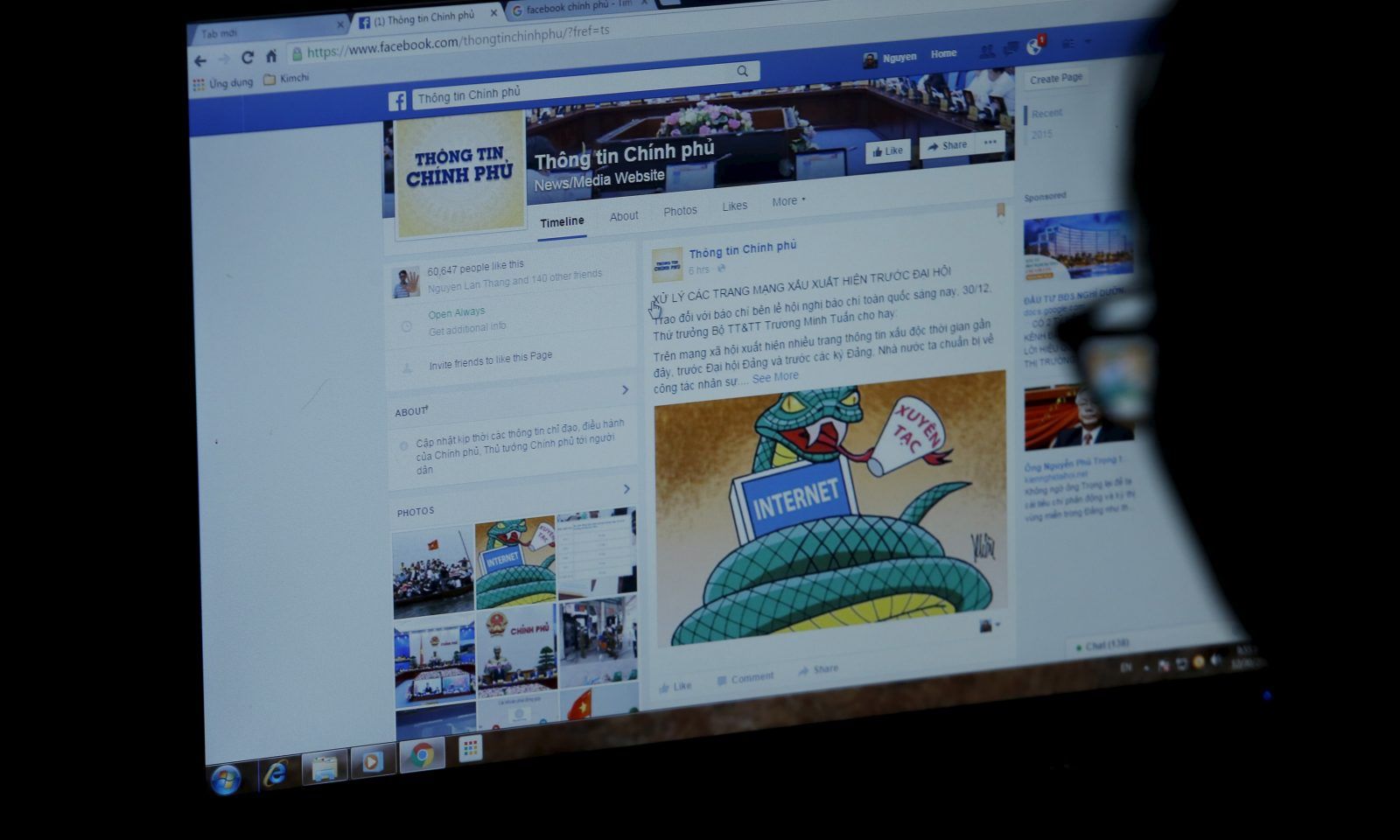
    Vietnam’s head of the Internet management authority, Nguyen Thanh Lam, has repeatedly claimed that the government has been working with Facebook and Google to remove thousands of videos and accounts from these tech giants’ platforms, according to the country’s mainstream media.

    During a press conference on July 7, 2017, the former prominent journalist made the announcement that Youtube, a Google’s product, had removed 3,000 video clips that contained “toxic content” and Facebook had also removed 600 accounts that were fake or contained information that distorted individuals and organizations.

    Among those 600 accounts are 132 accounts that frequently distorted or smeared the Communist Party, the government, groups, and individuals, VietNamNet reported.

    In an interview with VietNamNet, Nguyen Thanh Lam also expressed his appreciation to Google and Facebook for their cooperation with the Vietnam’s government.

    “They understand why we made such requests”, said Mr. Nguyen.

    Facebook sent Monika Bickert, Head of Global Policy Management, to Vietnam on April 26 to meet with the Minister of Information and Communication Truong Minh Tuan. According to the Vietnam News Agency, Ms. Bickert told the minister that Facebook was willing to cooperate with the Vietnamese government to block toxic content that violates the local laws.

    During the meeting, the Facebook’s representative also made a commitment that they would create a separate channel to process Vietnam’s requests.

    A month later, Eric Schmidt, the Chairman of Google’s parent company Alphabet Inc., met Prime Minister Nguyen Xuan Phuc in Hanoi. He reportedly said that “Google will cooperate with the government” to prevent and remove bad information on Youtube.

    Mr. Nguyen Thanh Lam noted that it had been easier to convince Youtube than Facebook: “There was toxic information that Youtube already removed or blocked but Facebook does not”.

    We found no information about Vietnam’s requests in 2017 on Google Transparency Report and Facebook’s Government Requests Report, potentially because they have only released reports until 2016.

    The Google’s report shows Vietnam has made five content removal requests to Google since 2010. It is not confirmed that Google has actually cooperated with the Vietnamese government to remove the mentioned contents.

    However, the tech giant’s website highlights two content removal requests made by the Vietnamese government. One is a blog that “allegedly contained information about the military and criticized the government”, and one is “to remove search results on a particular word that generated results that contained allegedly unflattering depictions of past Vietnamese leaders.” Google declined both requests.

    It has been 20 years since Larry Page and Sergey Brin created Google. It is the same period of which Vietnam has been connected to the Internet. The country currently has approximately 50 million Internet users which amount to more than half of the population, and 45 million Facebook users. Both platforms are the most popular search engine and social network in Vietnam respectively.

    Yet, the two tech giants are now considered as real threats to the government as they help people access uncensored information about the communist regime and generate political discussions.

    In October 2013, Dinh Nhat Uy – the brother of a jailed activist – was sentenced to one year and three months of probation only for using Facebook to criticize the government.

    A prominent human rights activist, blogger Nguyen Ngoc Nhu Quynh (Mother Mushroom), was also sentenced to 10 years of imprisonment in June 2017 partly for posting articles that “contain untruthful and baseless information” about the Communist Party and its sole-leadership over the political system of Vietnam.

    The government usually uses three internationally-condemned criminal provisions, Article 79, 88 and 258, to put dissidents and activists in jail.

    Not only criminalizing online expression, Hanoi also puts administrative sanctions on those who voice their dissents on the Internet. Websites’ owners, social networks, and Internet users may be fined up to US$4,700 for “criticizing the government, the Party or national heroes” or “spreading propaganda and reactionary ideology against the state”

    Many Facebook users and bloggers have been fined under these regulations, according to a Freedom House’s report.

    It is significant to note that the Vietnamese government has made claims about receiving cooperation from Google and Facebook since early 2017, in the middle of a new crackdown on the democracy movement that has led to at least 16 activists and dissidents being arrested or convicted.

    In 2014, Vietnam was named as an enemy of the Internet by Reporters Without Borders, a France-based human rights organization.